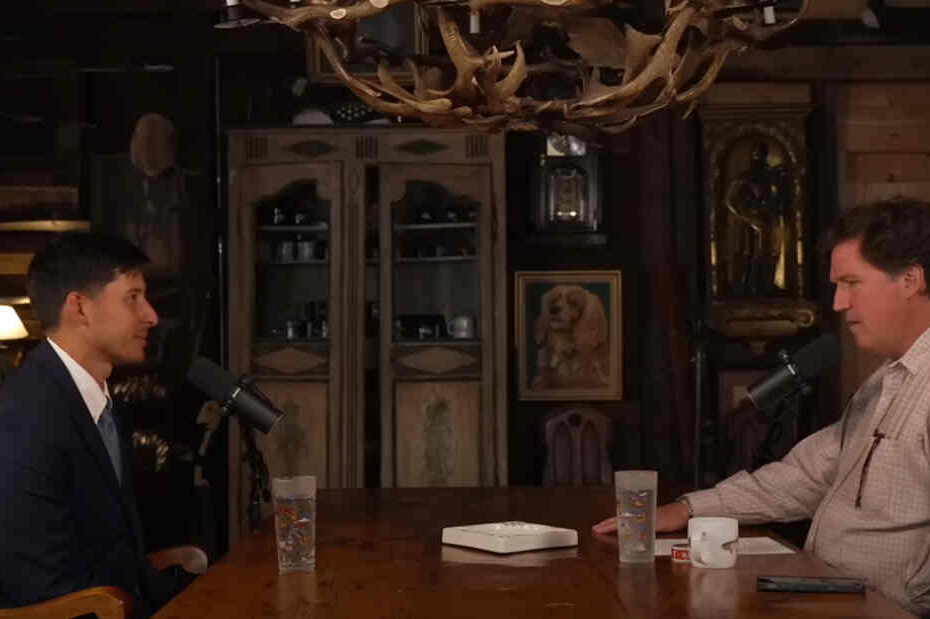
Read the full transcript of psychiatrist Josef Witt-Doerring’s interview on The Tucker Carlson Show titled “SSRIs and School Shootings, FDA Corruption, and Why Everyone on Anti-Depressants Is Totally Unhappy”, premiered August 29, 2025.
The Scale of Antidepressant Use in America
TUCKER CARLSON: I think this is one of those topics that if people understood the scale of the problem and the severity, that we would be talking about this every day along with immigration and foreign policy. This is, in my view, one of the most important things going on right now.
Give us a sense of how widespread the use. Let’s just start with SSRIs. Antidepressants. How widespread is our use? In the United States.
JOSEF WITT-DOERRING: About 14% of the population, total population of the total population is currently taking an antidepressant medication.
TUCKER CARLSON: Currently?
JOSEF WITT-DOERRING: Currently, yes. And that was actually as of 2014, the numbers have gone up since COVID. So I would say it’s probably between 15 to 20% of the population is currently on those drugs, are taking antidepressants on a daily basis.
TUCKER CARLSON: So that’s, I mean, compared to my childhood or even 25 years ago, that’s a massive increase.
JOSEF WITT-DOERRING: It’s an enormous increase. It’s likely, last statistics I looked at, I think it’s about a 500% increase from where things were in the 90s, in the early 90s.
The Paradox of Increased Usage and Worsening Outcomes
TUCKER CARLSON: Has America’s collective mental health improved?
JOSEF WITT-DOERRING: No. There’s actually more suicides, there’s more disability from mental health problems, and teen suicide is higher as well.
TUCKER CARLSON: Okay, so if there’s been a 500% thereabouts increase in the use of these drugs, but more people are killing themselves and the drugs are prescribed in order to make you not kill yourself, then that suggests that we’re getting the opposite of the intended effect.
JOSEF WITT-DOERRING: Yeah, big time. There’s more psychiatric prescribers now. There’s more drug prescribing, and the outcomes are actually getting worse. What we’re doing is not working on a national level.
TUCKER CARLSON: I’m going to skip ahead to my opinion, then I’m going to pull back. But that suggests that we should ban the drugs and imprison the people selling them. That’s my personal view. But you’re the psychiatrist, so what effect? And I will try to reduce my emotional outburst just to that, but it’s so shocking when you know the details.
Where do these drugs come from? What are they exactly? What is an SSRI? Who invented them? What do they do?
The Origins and Mechanism of SSRIs
JOSEF WITT-DOERRING: So SSRIs are kind of the latest iteration of antidepressants. They’ve been out since the 50s, but Prozac really changed history when it came out in 1987. So this was a drug that was designed to modulate the serotonin system. This is by blocking serotonin reuptake.
And so what that does is it increases the amount of serotonin between the neurons, and it actually has a drug effect. It will make people numb or emotionally constricted. And so that’s how those drugs are working.
The Chemical Imbalance Myth
TUCKER CARLSON: I remember the rollout for Prozac. I think it was on the cover of Time or Newsweek or one of the then popular newsweeklies in the United States. And it was hailed as a wonder drug that was going to fix America’s psychiatric problems. And it didn’t.
But it was also described as a drug that helped, as I recall, that helped regulate, and I’m quoting, “chemical imbalances in the brain.” It was not described as something that would numb you.
JOSEF WITT-DOERRING: Yeah, it’s essentially just a story that was sold. The chemical imbalance myth was a story that was sold to doctors and patients to make them feel better about taking drugs for their mood. Because I think intuitively, many people, when you say, “Hey, I’m unhappy, I’m anxious, I’m depressed,” if you went to that person and said, “Hey, do you want to take a drug that’s going to mask those symptoms?” Intuitively, people would say, “No, I’d rather get to the root cause of that.” Sweeping things under the rug usually doesn’t work that well.
But when you craft a narrative about these drugs fixing a chemical imbalance, like, say, a type 1 diabetic who doesn’t have enough insulin, you give them insulin, and it kind of sort of like a magic bullet kind of injects itself right into that pathological process and fixes it. That’s kind of a different message. The message to the person is that your brain is defective. There’s something wrong with it, and we’re going to give you this chemical to bring things up to normal. That’s a lot easier for someone to say, “Well, actually, I need my medicine because I’m broken.”
But that was essentially a lie. The idea that these drugs fixed a chemical imbalance simply came from observations that when you give people serotonergic drugs, they can become calmer, they can look less depressed. And so rather than the obvious explanation being, “Okay, this is a drug effect that we’re seeing, they are drugged, and that’s what we’re looking at,” people said, “Well, maybe they just had low serotonin, and now they’re looking better because we’ve fixed this chemical imbalance.”
And so that message has just been grabbed by pharmaceutical industry and psychiatrists to essentially lull people into this state where they feel more comfortable taking them.
The Transformation of Psychiatry
TUCKER CARLSON: It changed, among other things, the practice of psychiatry completely. And I remember this just because I grew up in an affluent area where people use psychiatrists, not in my family, but everyone else’s family. And the idea, it was Freudian psychiatry, and the idea was, we are going to treat the root causes now, whatever you think of Freudian psychiatry or Freud or whatever, but you’d sit on the couch and talk about your childhood by addressing the root cause of your problems, you would make it better. That was the promise of it, whether it worked or not.
And then it felt like in one day, right around the time Prozac came out, Freud was being denounced everywhere as a sexist.
JOSEF WITT-DOERRING: That is what happened. And I think what was going on was all of a sudden you had a billion dollar war chest of marketing spend that was trying to seize control of the narrative about medications. And so Prozac was like a blockbuster. Some people may not remember this, but that was the drug that made Eli Lilly a billion dollar company. I mean, it was a small company before then.
And so at every single level, there was an incentive to change how people thought about distress. No longer was depression and anxiety a complex thing where there could be relationship issues, problems at work and problems in your childhood. All of that stuff was now, it was almost bigoted in a way to talk about depression and anxiety as if it had these intuitive social and societal causes. It was now a medical condition.
And if you were going to say that it wasn’t a medical condition, you weren’t taking it seriously and you were stigmatizing people. So drug companies, they would platform, I guess through their influence with the universities and the media, they were able to push out this narrative and so they could shoot down Freudian analysis and therapy. And so the message essentially came out that was, “This is a chemical imbalance, these are medical conditions. And if you say anything otherwise, you’re stigmatizing the mentally ill.”
TUCKER CARLSON: I mean, it doesn’t, that’s obviously what happened. I saw it happen. But it doesn’t really make internal sense. You could say, “I think you’re depressed because all your relationships are dysfunctional, your parents are horrible or whatever, you’re failing at work.” Those are all common causes of sadness for sure, without dismissing or stigmatizing the person or his problems. You are taking it seriously. You’re just trying to find the actual cause of the problems, right?
JOSEF WITT-DOERRING: I mean, absolutely. I think to logical people, that makes sense. But the way that played out in public spaces and in medical schools was that that was actually a very backwards and kind of dismissive thing. People would say things like, “Depression just isn’t normal sadness. It’s a serious biological problem.”
And so to suggest that this is just some life issues going on, relationship issues, you were kind of branded as someone who really, you just didn’t get it. You didn’t understand the medical underpinnings of this new disease that was gripping the country and kind of evolving and making people suffer.
The Absence of Scientific Evidence
TUCKER CARLSON: Did the people making these claims understand the medical basis of this illness they were describing?
JOSEF WITT-DOERRING: No.
TUCKER CARLSON: I mean, that’s the irony, right? So, for example, they say it’s a chemical imbalance. Did anyone ever describe what balances?
JOSEF WITT-DOERRING: So the thing, this is like a white lie that people sort of rationalize to themselves because people have looked at the chemical imbalance and there is a clear way to do it. You can look at the brains of depressed people on autopsy, and you can actually look at receptor levels and say, is there any changes in the receptors. You can stick needles into people’s spine and you can draw out fluid, and you can look at the metabolites of things like serotonin.
And you can get depressed people and undepressed people and say, “Is there any difference in the actual amount of serotonin floating around in the brain?” Every time they’ve done this, they have not found that there is any difference between depressed and undepressed people.
TUCKER CARLSON: But there’s no difference.
JOSEF WITT-DOERRING: There is no difference because that’s why we don’t use any biological markers in the diagnosis of any psychiatric conditions. No brain scans, no blood tests. We can do all of those things. They are not useful because there are no ways, actual biological ways to differentiate depressed people from undepressed people.
TUCKER CARLSON: Are you serious?
JOSEF WITT-DOERRING: Absolutely.
TUCKER CARLSON: Okay, so, well, that’s not a white lie, then. That’s like a massive whopper. If you’re telling me there’s a biological basis for anything but you can’t show it, then you’re lying.
JOSEF WITT-DOERRING: Yeah.
TUCKER CARLSON: Or guessing at best.
JOSEF WITT-DOERRING: And the way they justify it was, “Well, okay, so we haven’t found it yet, but it must be a medical problem, and we’re eventually going to find it. And rather than admitting that, in the meantime, we’ll just tell people it’s a chemical imbalance because it’s an easy, it’s just an easy kind of metaphor for them to understand, and it helps us dish out the drugs without people asking too many questions.”
TUCKER CARLSON: But it’s untrue.
JOSEF WITT-DOERRING: It’s untrue.
TUCKER CARLSON: Therefore, physicians should not say that or they should lose their medical license.
JOSEF WITT-DOERRING: They shouldn’t. They shouldn’t have been saying it.
The Corruption of Medical Practice
TUCKER CARLSON: But I thought, I mean, strict adherence to reality, honesty. I thought that was a prerequisite for practicing medicine, getting a license.
JOSEF WITT-DOERRING: Yeah. Well, what’s happened in the space of psychiatry is almost like our field has become so overrun with pharmaceutical propaganda that it’s not really an issue of truth in a lot of places. It’s like a moral issue. Doctors feel the need to almost encourage people to take these medications and cheerlead them onto it.
It has been sort of cast as an issue where people, these medications are heavily stigmatized. There’s a bunch of rednecks running around telling people to pull themselves up by their bootstraps. That’s like the boogeyman that’s cast out there.
TUCKER CARLSON: Seriously?
The Medical School Indoctrination
JOSEF WITT-DOERRING: Yeah, yeah. And so people are like, you know, there’s rednecks out there. Yeah, there are rednecks out there stigmatizing the mentally ill, saying, you know, your suffering isn’t real. And so we need to pedal this narrative about there being a chemical imbalance and encourage people to take these medications, because mean society out there is telling people to just sit there and suffer in silence and to not take the drugs.
And so doctors see it as almost a… This is what medical school was like for me and residency. It’s like, you don’t question the drugs, don’t question the side effects. You need to encourage people to take them. So it’s hinged away from truth, and it has become more of this moral issue.
TUCKER CARLSON: Sounds like a religion.
JOSEF WITT-DOERRING: Yeah, I mean, that’s what decades of drug company propaganda has done to shape the narrative about how doctors and patients in the media view this issue.
The Ignored Connection Between Prescriptions and Suicide
TUCKER CARLSON: So you go to med school, you decide to become a psychiatrist. You spent, you know, go to residency, all that stuff. Did anybody during the whole course of that program note that as the prescription rate for these drugs has risen, so has the suicide rate?
JOSEF WITT-DOERRING: No. No, not at all.
TUCKER CARLSON: Yeah, they don’t notice that.
JOSEF WITT-DOERRING: They don’t bring that up at all.
TUCKER CARLSON: Isn’t the whole point of medicine noticing the connection between behavior and outcome? Like, people who smoke a ton of unfiltered cigarettes get a higher rate of lung cancer than those who don’t. So that’s why we know smoking’s bad.
JOSEF WITT-DOERRING: Yeah. You just get a version where it’s like, yes, mental health is getting worse, but instead of them saying, “Well, it’s because our treatments don’t work,” what they will say is that depression is rising. This is a serious medical condition. It’s occurring more and more. And us and our drugs, we are stemming the tide. If not for us doing this, this would be overflowing and getting out of control.
And so rather than actually reflecting on the fact that things aren’t getting better, they are just saying that this depression, which didn’t really happen that much before, it’s just happening more and more and more. And so that’s how they justify the worst.
The Basic Questions No One Asks
TUCKER CARLSON: I get it. I mean, they’re children, obviously. It’s just… You’re freaking me out here because these are just kind of basic, logical questions. And the first one is, if depression is rising, and it sounds like it is, why is this happening?
JOSEF WITT-DOERRING: Yeah.
TUCKER CARLSON: Does anyone ever ask that? Did you hear anyone ask that?
JOSEF WITT-DOERRING: You know, people do ask this question and I think it’s multifactorial. You know, from my vantage point, depression is rising because our treatments don’t work and they may actually make people worse. But then there’s also very legitimate things going on in society that makes depression rise. You know, housing is unaffordable.
TUCKER CARLSON: I agree.
JOSEF WITT-DOERRING: There are real things going on that are also making people unhappy.
TUCKER CARLSON: Society’s getting crappier and more dysfunctional. That makes people sad. I get it. But it just seems like if you’re treating an illness, the first question you would ask is like, where did this illness come from?
JOSEF WITT-DOERRING: Yeah, yeah.
The Transactional Nature of Modern Psychiatry
JOSEF WITT-DOERRING: You would be shocked if you could be a fly on the wall in what happens during psychiatric interviews. Because this is what I observed. So I came out of medical school really excited to do psychiatry. You know, I was like, I’m going to help people with depression and anxiety. I’ve always been someone who’s been really interested in self help and philosophy.
And then I get started and during my internship, what I see is that we spend hardly any time actually understanding our patients. The interaction is extremely transactional. You might spend 40 minutes during an intake with someone, but you’re hardly going to understand their relationships, you’re hardly going to understand their work life. This very limited time to know what’s going on with them health wise and whether they’re using any substances.
The visit, it’s almost like a checklist. And what I was witnessing is we weren’t spending any time really trying to actually understand the people and their lives and we would just default to using medications because it was really quick.
And the way we justify doing this is that we have this book, it’s called the DSM and you can diagnose people essentially off a checklist. You know, if you have five out of nine symptoms, you can say that person is depressed. And so you just ask them what symptoms they have. You don’t have to understand the complexity of their life.
And then you say, “Okay, you’ve got major depressive disorder and we’ve got this FDA approved treatment over here. We have this drug that’s safe and effective” and it allows you to be medically justified in having these very transactional visits and just putting people on meds and it just churns them through the system.
TUCKER CARLSON: Doesn’t sound like there’s a lot of concern for the patient.
JOSEF WITT-DOERRING: Well, the way doctors are trained nowadays is to view these issues as medical issues. So why be concerned about their life? If the person is just suffering from a brain illness and you’ve just diagnosed it with this checklist of symptoms and there’s an FDA approved treatment, you think that you are caring for the person and doing the justified thing.
The Reductionist View of Human Beings
TUCKER CARLSON: But what does it say about the way these physicians feel about human beings if they sincerely believe that something as complex as a human emotion has a purely organic origin that they can’t define? By the way, I mean, none of this makes any sense at all.
If there’s no difference between the brain of a depressed person and a happy person, then you can’t really say there’s a known biological cause for depression. Like, you just can’t say that because you can’t show it.
But even bigger picture, like just being a human being, you know that all of this is just wildly complex. And there are libraries full of novels written about human emotions, human experience, relationships. It’s like if you’ve gotten to a place where you’re just like, “Well, you need an adjustment of your serotonin levels.” You’re not treating people like human beings, right?
JOSEF WITT-DOERRING: No. Yeah. I mean, you have a very reductionistic view of people.
TUCKER CARLSON: Of people.
JOSEF WITT-DOERRING: Yeah. And I think it’s very sad and scary that the people, you know, the experts who lead the mental health teams, the psychiatrists, have such little care and appreciation for those issues. It’s very scary. It feels sad to me.
The Journey from Believer to Skeptic
TUCKER CARLSON: So tell us, okay, so you’re excited to become a shrink, a psychiatrist. Sounds like for all the right reasons, you want to make people better, happier, more fulfilled at purpose, all the good things. And then you wind up on this podcast with a totally different view of how your profession is helping or not. How did you get there?
JOSEF WITT-DOERRING: Well, what I started to notice in my intern year was that it just does not work. And I mean, this is the heart of it. You put people on these medications without understanding why they’re unhappy. You know, and so firstly, it’s like, how could you expect to fix someone if you don’t understand why they’re unhappy?
And then so putting that issue aside, like, maybe we’re just okay with drugging people, you know, that they’re unhappy and we put them on medications, maybe that’s okay. Although I don’t agree with that. The drugs, they just wear off over time.
You know, you put someone on 5mg of Lexapro as a starting dose, six months later, the effect has usually worn off and they need a higher dose. You know, 12 months after that they need a higher dose. And eventually they’re maxed out on it. And the person will say to you, “I don’t even know what this drug is doing anymore, or it’s hardly doing anything.”
And so at that point, they ended up getting put on more and more medications. And eventually you have people on 5 meds and the drugs aren’t really working.
The Honeymoon Period and Tolerance
And so I would see this pattern where you put someone on a drug, you get this honeymoon period where… And they work. This isn’t a placebo thing. These drugs, they turn down your emotional range, they are numbing. And if you’re someone who’s seriously anxious, you will experience that as therapeutic, maybe even life saving.
TUCKER CARLSON: Instant relief.
JOSEF WITT-DOERRING: Yeah, well, sometimes a couple of weeks, but practically instant relief.
TUCKER CARLSON: Well, for benzodiazepines it’s like instant relief.
JOSEF WITT-DOERRING: Yeah. For benzos, instant. For SSRIs, usually a couple weeks. And so people, they’ll get this experience where they’ll say, “This drug has saved my life. I’m more functional.” Yeah, during the honeymoon period, where your body hasn’t adapted to it, because our bodies, they just adapt to the drugs over time.
And so I would just see them wear off, and the people would start accumulating more and more drugs, and then they would get slowly sicker.
TUCKER CARLSON: Sicker, by which you mean what?
JOSEF WITT-DOERRING: Like, mentally sicker? They’re, you know, more fatigued, more brain fog, more depression and anxiety over time. And I saw that a lot. Lots of my patients were not getting better on these regimens.
And so I would talk to my attendings, and I would say, “Well, this doesn’t really seem like a sustainable way to help people. You know, putting them on drugs that essentially wear off over time, and they end up sort of stuck on, and they look worse.” And they would tell me, “You know, don’t worry, Josef. These drugs are safe and effective. They’re approved by the FDA.”
The “Safe and Effective” Mantra
TUCKER CARLSON: Do they actually use the phrase “safe and effective”? Yeah, they actually use that phrase.
JOSEF WITT-DOERRING: They use that phrase. Exactly. “These are safe and effective. They are approved by the FDA. Nothing to see here. Don’t worry about it. Why would you be concerned about this? The authorities have spoken.”
TUCKER CARLSON: Are these actual doctors?
JOSEF WITT-DOERRING: Yeah, these are professors.
TUCKER CARLSON: They look at you in the face and say, “Don’t worry, Josef. They’re safe and effective.”
JOSEF WITT-DOERRING: Yeah. Yeah. You’re freaking me out.
Inside Big Pharma and the FDA
And so I think I’m 26 at the time, but this does not sit right with me. And so I decide that, who am I? I don’t understand this research. I’m going to become an expert in it.
And so after residency, I go and I work for Janssen, which is the pharmaceutical arm of Johnson & Johnson, and I get involved in clinical development there, doing a fellowship so I could see how the pharmaceutical companies developed the drugs. I stay there for a year, and then eventually I go to the FDA and I become a medical officer in the division of psychiatry, where I’m overseeing the safety of the drugs on the U.S. market.
And it was by going through that experience and actually seeing how these drugs were developed over time that I realized that we are practicing so far outside of what the evidence shows, in an insane way.
TUCKER CARLSON: Like, outside of science.
JOSEF WITT-DOERRING: Outside of science? Yeah, the whole idea that it makes sense to put someone on an SSRI for years at a time is not supported by the clinical research at all. It’s a complete guinea pig experiment. It’s an experiment happening on a mass scale.
TUCKER CARLSON: Millions and millions of people.
JOSEF WITT-DOERRING: Millions and millions of people. Yeah. So, you know, I said before, probably between, I mean, let’s just call it 20%, you know, 15 to 20% of people are on these medications. Half of the people that use antidepressants are on them for over five years.
And so, you know, maybe 7 to 10% of Americans are essentially on an experiment where there’s no clinical trial evidence that says that these drugs are safe. You know, the scary thing is, you know, when my doctors used to say to me, these drugs, these medications are safe and effective, the thing that they would leave out was for the 12 weeks that they were studied in the clinical trial.
And then when you look at the research, there has never been a randomized, controlled trial that has gone, that has looked at this over 12 months.
TUCKER CARLSON: 12 months. But you said there are millions, tens of millions of people on this for years.
JOSEF WITT-DOERRING: Yeah. Taking them for years. And it is, and this is just insane because anyone who has their eyes open will see that these drugs clearly wear off over time. I mean, that’s why you have to keep on going up on the dose. And so it would be really important to actually see how effective these drugs are over time.
TUCKER CARLSON: Well, why wouldn’t they? They have the sample. It’s right here. It’s in America. There’s a lot of people to choose from.
JOSEF WITT-DOERRING: Yeah. They don’t do it. And a lot of this happens just because of precedent. And there’s a complete lack of backbone and leadership at the FDA to actually improve the way these…
TUCKER CARLSON: What was it like? You spent a year at the FDA?
JOSEF WITT-DOERRING: Yeah.
TUCKER CARLSON: What was that like?
JOSEF WITT-DOERRING: Yeah, it was really concerning, to be honest. Yeah.
TUCKER CARLSON: When was that?
JOSEF WITT-DOERRING: 2020. 2019-2020. Yeah.
TUCKER CARLSON: Why was it concerning?
FDA Regulatory Capture and Industry Influence
JOSEF WITT-DOERRING: So FDA receives a lot of funding from the pharmaceutical industry. And I’ll talk about a few things here. So I’ve always been interested in drug safety. That’s actually what I do now. You know, I help people come off meds after they’ve had side effects. And that’s always been my interest.
One of the issues is when, because the agency is funded by the pharmaceutical industry through PDUFA. This is a congressional law. I think they have like 70% funding. What it does is it tilts the agency towards activities. So when pharma hands over money to the agency, they say, “We’re going to give you this money, but every time we give you an application for a drug, you need to review it within nine months because you know our patents are going to expire. And so you need to get it done in nine months. Every time there’s a protocol that comes in, you need to look at it within 30 days.”
There’s nothing, I think, on face, you know, that bad about it. Hey, makes sense. There’s commercial interest here and they want to get something. But what it actually does at the reviewer level is that all of our resources go towards drug development activities. And so we’re reviewing protocols for the drug companies rather than following up on safety issues.
So there could be something like PSSD, which I’d like to talk about later on. It’s a serious sexual dysfunction problem, or all these different side effects going on that need reports and that need attention from medical reviewers. Those were all just put on the back burner. They were neglected because the way success in our division was measured was that we were just getting these things, these activities done in time. And so there was much more of an emphasis on drug development activities.
Now, the other thing that was really disturbing about being at the FDA, it’s not so much the agency, but it kind of speaks to academic psychiatry as a whole. Now, as I mentioned before, I think we’re almost brainwashed when we go through our training to internalize these beliefs that these psychiatric conditions, they kind of morph and they evolve and they can get worse.
Criticize the medications is to be morally bad and to be stigmatizing the mentally ill and scaring people away from medications. Lots of academics, they end up working at the FDA. That’s just a natural progression for them. And many of the people there had those beliefs.
And so I didn’t actually, when I looked at a lot of the colleagues that I was working with there, they were so hesitant to call out problems with medications. I think the really cynical side of me says maybe there was like a laziness component because if you identify a problem, you kind of have to deal with it and you have to do a report.
But I actually think it was more that they had been so kind of sucked into this narrative that they almost, they needed to protect the drugs and they needed to, yeah, they needed to be kind of advocates for them. So rather than actually doing good science and really having a critical look at all of the problems that were happening with them, like the withdrawal problems like PSSD, really clear issues. They were so hesitant to call people that call it out. So I feel like it had been captured by industry just through all of that messaging.
TUCKER CARLSON: Okay, I’m not surprised by that. That’s known, as you well know, as regulatory capture. And regulators are cut off from the effects of the drugs that they’re regulating because they’re not treating patients. So I’m not making excuses, but I’m not surprised.
What I am surprised by is the behavior of clinicians, of physicians prescribing these drugs to individual people with whom they’re in regular contact. And they somehow don’t notice that these people are not getting better and then killing themselves or going through all these other problems that are the results of side effects. Like, why don’t the doctors notice this? Like, where are the decent doctors?
Why Doctors Don’t Recognize Side Effects
JOSEF WITT-DOERRING: So there are some. I mean, there are decent doctors out there, and people are waking up to this. But a lot of the rank and file physicians, again, they have been marinating in a soup of just marketing messages. Like when you see someone who is getting worse, like you put them on an SSRI and they have a manic type reaction to it.
TUCKER CARLSON: Does that happen?
JOSEF WITT-DOERRING: That does happen, yeah. This is a side effect. Rather than saying, “Oh, we made you manic because we put you on this SSRI,” you can just say you have bipolar disorder. You were depressed before, but now because you’re manic, you have bipolar disorder. There was always this tilt towards viewing worsening as the underlying condition, and so many people are trained in that way.
TUCKER CARLSON: Is there evidence to support that?
JOSEF WITT-DOERRING: No, there’s no evidence to support it. It’s like, I mean, the whole diagnostic criteria in psychiatry, it’s just, it’s completely subjective. It’s just, you know, you just kind of, do you have these symptoms? Okay, maybe you have bipolar disorder, and there’s a very limited education about the side effects.
It’s also easier for doctors to look at worsening as the development of a new condition, because what that means is, one, you know, I’m not at fault, you know, because, you know, I put this person on the drug and they’re worse. But two, if I just diagnose them as having a new condition, I can just hand them another drug.
It’s very kind of quick to just say, “Okay, well, now you have bipolar disorder. Don’t worry, we got a drug for that.” And it allows you to kind of treat them in a very quick way rather than going through the mess of saying, “Hey, this was a drug side effect. Now we have to get you off of it.” That’s a much more involved process.
TUCKER CARLSON: It sounds like the culture of medicine in this country is really kind of anti-human. I mean, what about the people? I’m sorry, I didn’t mean, but I…
The Broken Medical System
JOSEF WITT-DOERRING: No, I mean it is, I mean, it’s a practice that has been really destroyed by a whole range of bad influences. I mean, one, we can’t trust our academics because so many of the academics that teach doctors are actually on the payroll of pharmaceutical companies. They are in positions of power because of assistance from the drug companies.
We also have a health insurance system that incentivizes people, doctors, to see patients in the shortest period of time. You don’t get incentivized to make someone well, you get incentivized to just kind of churn through them. And so you make nearly like if you were to see one patient for 45 minutes to an hour, you essentially make half as much as if you were to just churn through four patients within that period of time.
So even doctors have this incentive just to default to the fastest thing, which is to check, diagnose someone off a checklist and give them a drug. Because that’s a hell of a lot easier than understanding their life and their relationships and their work and their health and all of that. And so that’s really what’s happened.
TUCKER CARLSON: What are the side effects of SSRIs?
The Primary Side Effect: Emotional Numbing
JOSEF WITT-DOERRING: So there are a couple, but I want to start with one which really doesn’t get a lot of airtime. And that is actually the effect that everyone has. And so these drugs, they work through emotional constriction and there’s an opportunity.
TUCKER CARLSON: What’s emotional constriction?
JOSEF WITT-DOERRING: Numbing. Numbing. So if you’re having like a lot of anxiety, negative emotions, it kind of just sucks it in, but it’ll also take out the positive things. So many people will experience that as therapeutic.
But I mean, the risk of this is that you miss an opportunity to actually address the real reasons that you’re unhappy. Many doctors, they will not talk to patients about this. And most people have very clear issues why they’re unhappy. They’re having problems with drugs. They have relationship issues, they have work issues, they have, you know, they’re eating terrible foods. They have like massive insulin resistance or diabetes that has completely disrupted the energy system of their body and their neurons are just starving for energy.
If you’re having these legitimate problems, you just throw a drug on top of it to mask that anxiety. That is really like the smoke detector saying, “Problem, problem, problem.” Those issues, they just fester. They just kind of sit there and they just get worse over time.
To me, that is the number one problem with these medications is that you miss an opportunity to actually address the problem that is causing the anxiety.
TUCKER CARLSON: That seems, now that you’re saying it out loud, so obvious. People have anxiety for a reason. They feel sad for a reason. I mean, most of the time, anyway.
The Reality of Medical Ideology
JOSEF WITT-DOERRING: Yeah, I mean, it is correct. But to say that some people would say, Tucker, that is a really insensitive thing to say. These people have medical problems. You know, there’s… And that is what you could say.
TUCKER CARLSON: Sure. It’s a… Depression’s a medical… I’m happy to. Yeah, I’m happy to acknowledge it’s a medical problem with dire consequence. You kill yourself. It’s very serious.
JOSEF WITT-DOERRING: Yeah.
TUCKER CARLSON: It’s not, you know, reducing the seriousness of it or dismissing it as fake. It’s acknowledging just how real it is. It’s more real than a serotonin imbalance. It has to do with, like, your life. I just can’t believe there are people that stupid and shallow practicing medicine.
JOSEF WITT-DOERRING: Yeah, they’ve done a number on us.
TUCKER CARLSON: Yeah. Because, I mean, they’re not a lot of dumb doctors. They’re all pretty smart. Right. The screening, it’s for intelligence to some extent, but, like, that’s just so shallow. I guess that’s what I…
Professional Guild Interests
JOSEF WITT-DOERRING: You mentioned religion. I mean, I think we’re ideologues in there. We’ve been pushed into thinking about mental illness essentially, in a way that benefits drug companies and a profession, because psychiatry as a profession is also really into pushing this narrative because it gives us a primacy amongst their healthcare professionals.
TUCKER CARLSON: That’s right.
JOSEF WITT-DOERRING: We are the doctors, and we have the drugs. And because of that, we need to protect the reputation of the drugs, because to do so is to elevate us.
TUCKER CARLSON: So that is really deep and smart. No, that’s right. Because psychiatrists in this country, anyway…
JOSEF WITT-DOERRING: Yeah.
TUCKER CARLSON: Are unique among mental health professionals in that they can prescribe the drugs.
JOSEF WITT-DOERRING: Yeah.
TUCKER CARLSON: That’s what makes you fundamentally different. Right?
JOSEF WITT-DOERRING: Yeah. Yep. Yeah. And so, yeah, there’s guild interests at play as well.
TUCKER CARLSON: Guild interest, I’m sure.
JOSEF WITT-DOERRING: Yeah. Right.
TUCKER CARLSON: Because the marriage counselor can’t give you SSRIs.
JOSEF WITT-DOERRING: Yeah.
TUCKER CARLSON: But you can.
JOSEF WITT-DOERRING: Yep. And that’s why we’re special. And that’s why don’t question the drugs. Wow.
TUCKER CARLSON: That’s so plausible.
JOSEF WITT-DOERRING: Yeah.
TUCKER CARLSON: So the first… What you describe is… The first side effect is effectively ignoring the cause of the illness in the first place. And that has costs.
Post-SSRI Sexual Dysfunction (PSSD)
JOSEF WITT-DOERRING: Yeah. And you know, I’m going to mention a whole bunch of other things that are important. We’ve got PSSD, we have brain damage during withdrawal, we have homicidal behavior. Okay.
TUCKER CARLSON: So let’s just, let’s go in order.
JOSEF WITT-DOERRING: Yeah, yeah.
TUCKER CARLSON: PSSD.
JOSEF WITT-DOERRING: Yeah. So this is…
TUCKER CARLSON: What does that stand for?
JOSEF WITT-DOERRING: It stands for post SSRI sexual dysfunction. And from my perspective, this is the biggest scandal in psychiatry going on at the moment that has been not discussed. Now, there are people who get put on these medications that… Well, firstly, one of the big side effects of these medications is sexual dysfunction. It happens in, I think it’s like 70% of people who…
TUCKER CARLSON: 70%.
JOSEF WITT-DOERRING: Yeah, yeah.
TUCKER CARLSON: So and when you say sexual dysfunction, since you’re a doctor, we can just be totally blunt. What are you specifically talking about?
JOSEF WITT-DOERRING: Yeah, so it would be like loss of interest in sex, you know, loss of arousal, difficulty to reach climax, and erectile dysfunction.
TUCKER CARLSON: Wow.
JOSEF WITT-DOERRING: Yeah.
TUCKER CARLSON: 70%.
JOSEF WITT-DOERRING: 70%. It’s a really normal side effect. But the issue is, we tell people that this goes away when they come off the medications and this is just a temporary trade off to feel less depressed. You’re going to deal with the sexual dysfunction.
But what we’ve been seeing is that these drugs are causing permanent sexual dysfunction in people. Even when they come off of them, they develop… On top of all of those things I mentioned, they will develop genital anesthesia. And so this is a real, like, neurological issue. Like those areas down there, they lose erogenous sensation. People will say that when they touch down there, it feels like the back of their hand or the back of their arm. And so there’s sensory changes.
TUCKER CARLSON: Are you serious?
JOSEF WITT-DOERRING: Yeah. And so it’s totally frightening for how long. It can be permanent for some people.
TUCKER CARLSON: Come on.
JOSEF WITT-DOERRING: Yeah. And so the prognosis is actually really… It’s not good for that. Some people will recover in three years or so. But there are case reports out there where this has gone on for decades. What? Yeah, but it’s not just that. And here is the…
TUCKER CARLSON: Basically, you’re castrating people.
JOSEF WITT-DOERRING: You bet. You’re essentially castrating people. But it’s worse than that because…
TUCKER CARLSON: How could anything be worse than that?
The Complete Destruction of Human Experience
JOSEF WITT-DOERRING: Because along with the sexual dysfunction, and this is where the condition is misunderstood. People think it’s just a sexual problem, which is already horrific as is… it causes cognitive damage as well. People will… Along with that, they’ll have severe difficulty concentrating, focusing, paying attention.
And there’s also severe emotional blunting. And so people will talk about being completely dissociated as well from their emotions. Like, if you were to hug your child or your wife, you just don’t feel anything warm. If you were to hear a favorite song from your childhood that used to make the back of your neck kind of prickle from nostalgia, all of that gets nuked and taken out.
And so you have people who are essentially lobotomized with cognitive impairment who also have severe sexual dysfunction.
TUCKER CARLSON: So you’re basically destroying someone’s soul. I mean, the things that make you distinctly human. Yeah, your love, your emotional response, your sexual response, which is very deep. It’s not just, “I’m horny today.” It’s like it’s your life force. It’s your procreative force. It’s what keeps the species alive. That’s gone.
JOSEF WITT-DOERRING: It’s wiped out. And people become highly suicidal because when you don’t feel anything, you don’t feel any connection to life. It’s like there’s nothing to live for anymore.
TUCKER CARLSON: You…
JOSEF WITT-DOERRING: And so the suicide rate in this population is through the roof. And I want to say something.
TUCKER CARLSON: And this is all confirmed.
International Recognition of PSSD
JOSEF WITT-DOERRING: Yeah. So that’s what I want to say. Some people hearing this would be like, “This is so crazy. There’s no way this could be true.”
TUCKER CARLSON: Yes, that’s my response.
JOSEF WITT-DOERRING: PSSD is a listed side effect in the European Union. So the European Union has already acted on this. They’ve put it in the warnings and precautions of all of the SSRIs and SNRI antidepressants over there. So they have recognized it. Canada has recognized it. Australia has recognized it. Hong Kong has recognized it. The New York Times has run pieces on this.
This is being reviewed by the FDA right now. This is not a fringe issue. This is something that several regulatory agencies, like, the biggest ones in the world, like the European Union, second biggest regulatory agency in the world, they have acknowledged this and they put this in the drug labels to warn doctors so they can talk to their patients about this. This isn’t fringe. This is completely acknowledged by major health regulators, but doctors do not tell patients about it.
TUCKER CARLSON: Do doctors know?
JOSEF WITT-DOERRING: Most of the doctors don’t know. And that’s because… Well, there is no incentive to get this message out there. Now, when this came on… So when the European Union…
TUCKER CARLSON: Wait, so there… There’s a huge population of SSRI users, many of whom kill themselves out of despair caused by SSRIs, and yet for some reason, nobody knows this is happening. I’m confused like why don’t want to…
JOSEF WITT-DOERRING: Be able to talk about this again. It’s this issue where I think media doesn’t want to touch it because to do so would be to scare people away from “life saving” drugs.
TUCKER CARLSON: How are they life saving if they hike the suicide rate, they’re clearly implicated in mass shootings. Let me say that again. They’re clearly implicated in mass shootings and they castrate people and make them want to kill themselves. Like how is that life saving?
The “Life Saving” Myth
JOSEF WITT-DOERRING: I mean it’s just a slogan because they’re not life saving at all. Because when you look at actually the clinical trial data, it’s clear evidence that in people who are under age 25, it actually makes them… They engage in more suicidal activity than the people on placebo. It’s absolutely insane.
And then when reanalyses have been done looking at the adult populations, they also find higher rates of suicide in the clinical trials. But I want to have some nuance here. They can be experienced as life saving for some people. Like if you have a lot of anxiety and you get put on this medication and it blunts it. You will experience that as life saving in that moment. But in general, on a population level, they’re actually contributing to more suicidal…
The Vodka Analogy
TUCKER CARLSON: I feel that way about vodka really strongly. I’m being serious. Any heavy drinker can tell you you wake up and you feel completely out of control. Completely out of control. You know, you just feel like your head’s going to explode. You’ve got pins and needles, anxiety. You just, you’re so sensitive, you can’t even like live in this world.
And you have… I was a double screwdriver in the morning guy. Solves the problem, like right away.
JOSEF WITT-DOERRING: Yeah.
TUCKER CARLSON: By the time you get to the bottom of the glass, you’re under control. So I would call that, in fact, at the time, did call that life saving.
JOSEF WITT-DOERRING: Yeah.
TUCKER CARLSON: And then of course, the progression of alcohol and alcoholism is well known to most people. So it’s like people laugh at you and you say it’s life saving. “How is vodka in the morning life saving?” Well, if you’ve experienced it, you know why someone could say that.
JOSEF WITT-DOERRING: Yeah.
TUCKER CARLSON: But big picture, that’s insane. So SSRIs sound like exactly the same phenomenon.
JOSEF WITT-DOERRING: It is. I mean, on multiple levels, I think, you know, they… One, they make you ignore the real problems which fester and get worse and could actually push you eventually towards becoming suicidal. And two, I think they disrupt your brain chemistry over time and actually make you more likely to be depressed and develop other issues.
The Institutional Failure
TUCKER CARLSON: I just can’t believe basically the entire weight of the American medical establishment, the regulatory bodies, some of the biggest publicly traded companies in the world, they’re all basically prescribing vodka to desperate people.
JOSEF WITT-DOERRING: It sounds crazy, and it honestly does sound crazy. And people are going to listen to this and they’re going to say, you know, “This is crazy.”
TUCKER CARLSON: But the beauty of it and the reason I feel so good about having this conversation is that it’s provable. We don’t have to guess because we have the outcomes. Right. So the two numbers, as a layman that seem relevant to me: doses prescribed, suicide rate. Like that just seems like a pretty big picture way to measure success.
If more people are killing themselves, as you got more prescriptions for this garbage, it’s at very least not working. Can we say that? I mean, that seems logical.
The Population-Level Impact
JOSEF WITT-DOERRING: I think it makes sense when you look at that on the population level. But I also think it makes sense intuitively for a lot of people. I mean, with nearly 15 to 20% of people being on these medications, everyone knows someone who’s on these drugs in their family, in their social circle.
Just look, how are they doing? Are these people thriving? A lot of the times the stories that I hear is that person’s not doing that great or they’ve slowly gotten worse over time. I mean, you can look at it at a population level. This issue is so common. People actually see this in their real life, in the people that they know.
Sexual Side Effects and Medical Denial
TUCKER CARLSON: Have you ever spoken to someone who had numb genitals or no sex drive?
JOSEF WITT-DOERRING: Yeah, I’ve spoken to probably 20 to 30 of them. What do they say? What’s that like? It’s like they wake up in a horror movie. I think about a woman named Rosie. And I interviewed her and from my recollection, she got on one of these medications, beautiful young woman, and she ended up developing PSSD. She told the doctor that it had happened to her and she became incredibly distressed. “What is happening to me?”
TUCKER CARLSON: Her sex drive just gone.
JOSEF WITT-DOERRING: Sex drive gone. Cognitive damage, emotional blunting. It completely disassociated her from her family, from her emotions, and disconnected from her life. The doctor involuntarily hospitalized her saying that she was delusional and that she had health anxiety and tried to pressure her onto antipsychotic medication because they simply could not accept that this had happened.
They managed to briefly turn her family against her and just say, “She’s wrong, she’s delusional, she has another psychiatric condition” and so she ends up in a psychiatric hospital. Talk about a horror show. You get put on a medication that’s meant to help you, it destroys your nervous system, and then a doctor involuntarily hospitalizes you and turns your family against you. These people literally wake up in a horror show. I spoke to another person in India.
TUCKER CARLSON: Is the doctor still practicing?
JOSEF WITT-DOERRING: Oh, yeah. They’re still practicing. And this is not isolated.
TUCKER CARLSON: Why is that person not in jail?
JOSEF WITT-DOERRING: It’s so cruel.
TUCKER CARLSON: That’s cruel in my opinion.
JOSEF WITT-DOERRING: Yeah.
TUCKER CARLSON: Sorry, I’m interrupting. It’s making me mad again.
JOSEF WITT-DOERRING: You spoke to someone in India, the same thing happened. Yeah, because doctors, they’ve never heard of this condition before and it just seems too crazy to be true. How could these “life saving” drugs do something like this? And the same thing happened. He ended up being involuntarily hospitalized. This young man for months. And his family was turned against him.
He kept on trying to tell them that this had happened to him, and it took them months to let him out. And so, yeah, it’s about the worst thing that I could ever imagine happening to someone. And they lose people all the time. The suicide rate’s out of control in this population.
Polypharmacy and Compounding Effects
TUCKER CARLSON: So a doctor who refuses to see the obvious and is committed, knowingly or not, to a lie, it seems to me, would be likely in a case like this to prescribe a drug on top of the drug that clearly caused symptoms he’s trying to treat. Right.
JOSEF WITT-DOERRING: Yeah.
TUCKER CARLSON: What happens when you do that? A lot of these patients seem like they’re on all kinds of different drugs. How do they interact with each other? What’s the effect of that?
JOSEF WITT-DOERRING: Yeah, I mean, it’s awful, right? You have someone who’s highly distressed for legitimate reasons with a totally messed up nervous system, and you’ve just thrown them on an antipsychotic. So now they’re kind of blunted and even more dulled, dealing with the same problem.
Sexual Identity and Developmental Effects
TUCKER CARLSON: So if these drugs can eliminate your sexual response, numb your genitals for life, drive you to suicide, what other – is it possible that they have other sexual side effects?
JOSEF WITT-DOERRING: Well, having spoken to some of these PSSD sufferers, I’ve had two men, heterosexual men, tell me that they started to question their sexuality because of all of the blunting that was going on. These were men who were having encounters with women that were just saying, “I would find this person very arousing and attractive.” And that’s not happening anymore. And they start wondering whether they’re gay.
And so I think on that level, it can make people feel asexual. It can make people start to question their sexuality, which I’ve directly seen. And then the whole other issue, which is even more frightening is the data that’s coming out is some of the animal studies about what happens to mice who are exposed in utero to antidepressants.
Because this has always been a question that people have been curious about. What are the effects of exposing a developing nervous system during this period of life, where it goes from being like a speck to a fully formed brain in nine months? These drugs freely cross placenta. What is the effect on the development? They do. All of them do. Yeah. All psychiatric drugs freely cross.
TUCKER CARLSON: So mother’s taking these drugs. The drugs are in the developing child.
JOSEF WITT-DOERRING: Yes, yes, we know that. Yeah.
TUCKER CARLSON: But no study’s been done on what that means.
JOSEF WITT-DOERRING: Well, there have been some studies. And so firstly there’s the studies in rats and mice. And what they find is that the mice who are exposed in utero, they grow up with a higher rate of autistic like behaviors and also decreased sexual interest. So they mate less than the other mice.
Now you might be saying, “Hey, well that’s just mice. Who knows if that happens in humans.” I tell you what, I’m concerned enough about that already to worry about humans. I don’t need to see that human study. But we do have some studies in humans and what they’ve found is we have 12 MRI studies that have controlled for depression, which is essentially just a fancy way of making sure that depression isn’t a factor.
And they’ve looked at the brains and they find that there’s structural changes and functional changes in the brains of kids who are exposed versus those who are not exposed. They’ve then gone again and looked at this. When the kids have become adolescents and they’ve looked at their sensory processing and the kids who were exposed growing up had altered sensory processing.
When they looked at the amygdala, it’s a part of the brain that’s responsible for high emotions. And those changes, they have correlated with worse mental health outcomes. So that’s like a whole other topic that I was recently at the FDA talking about this with some of my colleagues, that many women are not actually being told that there are real risks to your child if you take these medications when their nervous system is developing.
TUCKER CARLSON: Are they prescribed to pregnant women?
JOSEF WITT-DOERRING: 10% are pregnant. I think 9 or 10% of pregnant women are taking antidepressants.
Societal Changes and Potential Connections
TUCKER CARLSON: There’s been a massive increase in, well, sexual changes of all kinds. In the way that people couple, in the way, literally in the way they have sex, in the outcome that are children who were born and in self identified sexual orientation. A massive increase in homosexuality, massive increase, mind boggling increase in transgenderism.
No one seems interested in why is it possible that if you’ve got 10% of the population on these drugs that there’s a connection there?
JOSEF WITT-DOERRING: I mean, I think that’s something to be explored because yes, you could make an argument, “Okay, the world is more accepting these days and maybe people are coming out,” but that’s bullshit.
TUCKER CARLSON: The numbers are so high that that’s not it.
JOSEF WITT-DOERRING: But I’m looking at these animal data. I’m seeing changes in sexual interest in the mice who are exposed growing up. I mean, we’re putting kids who are 6, 7, 8 who go through sexual maturity with their sex drive essentially blunted from these medications. I’m having people come to me and tell me that they’re questioning their sexuality because they’re not feeling attraction and arousal.
TUCKER CARLSON: Right.
JOSEF WITT-DOERRING: You connect the dots. I mean, it has to be playing a role.
TUCKER CARLSON: Is there currently an NIH study of this underway or is anyone saying, “Hey, wait a second, you could change the future of humanity with this kind of stuff?” There’s big consequences.
JOSEF WITT-DOERRING: No, I mean, the NIMH has essentially been useless. I mean, all they do from what I see is they’re essentially just looking for drug targets in the brain. They’re not doing any research into side effects. They’re not doing any studies comparing non drug alternatives to drugs for the treatment of anxiety and depression.
They are so captured and just obsessed with finding the next target to throw a drug at. I think the American public has been betrayed by the NIMH. I really do.
School Shootings and Psychiatric Medications
TUCKER CARLSON: Well, it sounds like a lot of people have been killed. What about going back to the question of side effects? I don’t think every time you raise the question like, “Hey, it seems like a lot of the school shooters that we know about, to the extent we know anything about a lot of them, they seem to be on these drugs.” Has there been research into that? I know you’re not allowed to say that. YouTube shuts you down if you say that. I don’t know why.
JOSEF WITT-DOERRING: Yeah, we’re throttled for sure for asking that question. Yeah, for asking that question. Yep.
TUCKER CARLSON: There weren’t school shootings, I mean, the biggest school shooting of American history took place at University of Texas. Chuck Whitman, who, turns out he had a brain tumor. So there was a reason that that happened. Went up in the bell tower, killed all these people. Then there was a lull and then Columbine happens and then there’s probably many reasons for this, but the increase in school shootings coincides almost precisely with this massive increase in the prescription of these drugs. So, is anyone studying this?
JOSEF WITT-DOERRING: Well, it’s actually really hard to study is the issue. I want to say this because this is a topic – I don’t think drugs are involved in all the school shootings. I do think there is a social contagion element to it. But I do think if you look at the side effects of all of these medications, it’s already in the label.
If you look at stimulants right there, it says it can cause aggression and hostility. If you look at antipsychotics like Abilify in the label, it says it can cause aggression. If you look at the antidepressants, it also says it can cause mania and aggression and agitation.
TUCKER CARLSON: Kind of the opposite of the intended effect. No.
JOSEF WITT-DOERRING: Well, these things are paradoxical side effects. And maybe an easy way to think about it is if there were 10 people in a room and there was smoking cannabis, you might have nine people giggling and you have one person becoming paranoid. There’s something just about that person’s genetics and the way they respond to it, that they have the opposite reaction.
TUCKER CARLSON: Yes.
JOSEF WITT-DOERRING: And so that can happen with psychiatric medications. And so these are rare side effects, but if you’re putting 15% of the population on these drugs, rare side effects are going to happen.
And so the next thing is, we know these drugs can do this. Well, has this ever actually happened? And it has because there have been lawsuits. For instance, there was one in the early 90s, it was the Tobin case. There was a gentleman called Don Shell who had had a bad reaction to Prozac. And then he was put on Paxil many years later. And shortly thereafter he became incredibly homicidal and he killed his wife, his daughter and his granddaughter and then shot himself.
Now, the surviving son in law, the husband of the daughter who he killed, ended up bringing suit against, I think it was Smith Klein at the time, it wasn’t GSK. They go to a jury trial and they win. It gets appealed and the appeal isn’t successful and he ends up getting paid out.
And so we even have legal cases where jurors have listened to the evidence of these cases and said if not for this drug, this awful murder suicide wouldn’t have happened. And so we know this happens from court cases and there have been many other cases like this. You just never hear about them because you’re not allowed to talk about this.
Censorship and Narrative Control
TUCKER CARLSON: Why would this video be throttled for broaching this topic? I’m confused.
JOSEF WITT-DOERRING: Well, because, I mean, the dominant narrative is essentially that school shootings are caused by guns. And if you are to…
TUCKER CARLSON: I have a lot of guns. It’s never occurred to me.
JOSEF WITT-DOERRING: Yeah, and so that, I mean, this is meant to be stigmatizing. This is meant to be something that scares people away from medications. And it doesn’t fit the mold. I mean, because if you were to accept that this can happen, you know, like, even if this is a 1 in 2 million type side effect that’s still happening a couple times a year, that people are becoming homicidal on these medications.
And so I think people, they don’t, you just can’t say it. It’s taboo.
TUCKER CARLSON: It shouldn’t be if you care about the murdered kids at the schools.
JOSEF WITT-DOERRING: It’s changing, though, and this is like a silver lining here that will make people like me seem a lot less crazy. Because through bipartisan support, the governor of Tennessee just instituted a new law mandating that following school shootings, there needs to be an investigation into the use of psychiatric medications.
This is the first state to actually try and get that data, to look into it, because oftentimes it’s redacted. The FBI has it, they don’t give it to anyone. It’s kind of like shoved away in a box. But in the state of Tennessee, with bipartisan support, they will now look at this for any school shootings. Good, good.
The Most Dangerous Psychiatric Drugs
TUCKER CARLSON: So what, okay, you are, you know, middle aged person going through the middle age, you know, the litany of middle age drama, and you find yourself sad, maybe even depressed, you go to the shrink and you are prescribed drugs. What are the most commonly prescribed drugs? Which are the drugs you should be the most afraid of? Assuming there’s a difference.
JOSEF WITT-DOERRING: I mean, I think the SSRIs, we’ve talked a lot about them, but the other class are benzodiazepines. These are awful drugs. They’re usually used for anxiety and insomnia.
TUCKER CARLSON: And what are the brand names on those?
JOSEF WITT-DOERRING: Xanax, Klonopin, Valium, Temazepam.
TUCKER CARLSON: Yeah, very common drugs in this country.
JOSEF WITT-DOERRING: Really? Yeah. Their use is declining, but they’re still quite common. The main issue with them is that they, God, they feel good. And I know we were talking about this before, and you had mentioned taking one before. I mean, it’s, it’s, I’ve taken them. It’s almost like immediate.
TUCKER CARLSON: I took one in high school, I never took another one because it was the most profound. I mean, they solve all your problems in four minutes.
JOSEF WITT-DOERRING: So super addictive, right? You know, to have something like that on hand. But the real problem with the benzos is when it comes to coming off of them, they can be incredibly difficult to stop.
TUCKER CARLSON: And what does that mean, difficult to stop?
The Horror of Benzodiazepine Withdrawal
JOSEF WITT-DOERRING: That, so because they have such a potent sort of anxiety reducing and insomnia and sorry, it’s sleep inducing effect. When you come off of them, your anxiety goes through the roof and you develop severe insomnia. Some people even die from coming off benzodiazepines. It’s so jarring to the brain.
And because of that, people can get trapped on the drug every time they try and come off of it. It’s so uncomfortable that they have to go back on. And they can also develop another condition called protracted withdrawal.
And so some people, when they’ve been on this medication for years and they try and come off, they develop a kind of a brain injury. And so they taper themselves off the medication too quickly and they go into a severe withdrawal and the symptoms never stop. They end up with ringing in their ears, light sensitivity, cognitive impairment, severe anxiety, burning in their hands and feet.
TUCKER CARLSON: Oh, come on.
JOSEF WITT-DOERRING: Yeah. And then they say to themselves, they go, “I’m just in withdrawal. I’ve been white knuckling through this for the last couple of months. I’m just going to start the drug again. I don’t want to deal with this anymore.”
TUCKER CARLSON: I get it.
JOSEF WITT-DOERRING: “I’ll find another way to come off.” They start the drug again. It doesn’t go away. And this is with the symptoms.
TUCKER CARLSON: Don’t go away.
JOSEF WITT-DOERRING: The symptoms don’t go away. And these are the patients that I actually treat in my practice. I’d say probably 70% of the people I work with now have neurological damage from coming off benzodiazepines and SSRI medications too quickly.
Thankfully, it actually has, I mean, it’s awful. It has a decent prognosis. Most people recover from it within two years. But for many people it can be two years of severe disability.
TUCKER CARLSON: And these are the people you treat?
JOSEF WITT-DOERRING: These are the people I treat.
TUCKER CARLSON: So you see this?
JOSEF WITT-DOERRING: So I see this on a daily basis. I see this multiple days a week. People who have brain damage from coming off these medications too quickly. Now again, I know most people haven’t heard about this before, so they’re going to be listening to this and saying, “This is crazy. How could I have never heard that coming off these medications could induce brain damage?”
Read the drug labels in the US. Every single benzodiazepine has a section in there that says that talks about the risk of protracted withdrawal.
A Patient’s Nightmare Experience
TUCKER CARLSON: So what does that look like? So describe obviously anonymously, but the experience of one of your patients.
JOSEF WITT-DOERRING: So the experience of one of my patients is man, I mean, it’s so bad. You are living your life. One day you decide to come off a medication. And then before you know it, your whole life is turned upside down.
Your brain, you are gripped with severe anxiety and obsessive dark thoughts that just torment you all the time. You never have a moment of rest or relaxation. You simply cannot relax. Some people feel so keyed up that they pace incessantly in circles. It’s a condition called akathisia. And they cannot stop moving.
They become social recluses because they cannot go out in public because it’s too bright, it’s too noisy. The nervous system is like a snail without a shell. Even interacting with people in their shopping center can cause surges in adrenaline. People have severe neuropathic pain when their feet burn and it destroys families.
I mean, people become disabled. People take their lives frequently. And this is, you know, I know I mentioned before about PSSD being the biggest story going on, but this would be just as big. Honestly. There are probably millions of people who are suffering from protracted withdrawal from benzos or SSRIs.
Thankfully, this has actually been picked up a lot by major news outlets recently. But this condition has, and it does kill people.
TUCKER CARLSON: How long do you have to be on benzos or SSRIs to develop physical dependency and to get these kind of withdrawal symptoms?
JOSEF WITT-DOERRING: So most people, it’s several years, and then it’s triggered by coming off the medication several years.
TUCKER CARLSON: I mean, is there any evidence it’s a good idea to put someone on a SSRIs or benzos for years?
JOSEF WITT-DOERRING: No, no, there isn’t. But I do want to say I have had some people develop this much quicker than several years. Within taking the medication for a few months, things like that. That’s much less common. Usually the way it happens is you’re on it for several years, five years, decades. You come off too quickly and then you get hit. Yeah, that’s really common.
TUCKER CARLSON: You’ve seen that.
JOSEF WITT-DOERRING: Yeah, yeah.
TUCKER CARLSON: Decades. What is the doctor thinking?
JOSEF WITT-DOERRING: Well, then when they put them on these drugs for decades.
TUCKER CARLSON: Well, I mean, if someone’s coming back to get a script filled, you know, after 15, 20 years of taking one of these drugs, does no one pause to say what does it do to something? The brain’s not designed for that. Right?
The Flawed Science Behind Long-Term Prescribing
JOSEF WITT-DOERRING: Yeah, there, well, they think that they’re helping the person. At the risk of getting a little technical, I want to go here because I think it’s important. So when a drug comes onto the market, there’s a study called a relapse prevention study. This is essentially the rationale for leaving people on these drugs indefinitely.
And so I think it’s important to talk a bit about the design of these studies because it’s so telling. Essentially, a drug company will get a group of people and they’ll put them on the drug for six months. And so you have 500 people on the drug for six months, 250 you then this is actually how the studies are designed.
250 people, at a certain point, they continue the drug, and the other 250, they rapidly stop it. And so they pull them off the drug either immediately or at the longest, about two weeks. And then they watch what happens to those two groups over time. And they’re looking for how many people become depressed in the two groups.
With the thinking being, well, if the patients who continued the drug become less depressed, then that means it works. But the issue with these studies is that it completely ignores the fact that people develop withdrawal.
And so if you stick a bunch of people on this drug for six months and then you stop it immediately or within two weeks, they are going to develop withdrawal symptoms that will look like depression. And so the study is flawed, essentially. It’s majorly flawed.
It’s embarrassing that the FDA even allows this and that doctors even believe this is a rationale for keeping people on these medications. And that’s it. That is the study that lets doctors feel good about filling these drugs up again and again and again because they say, “Oh, we’re preventing relapse.”
Because this poorly designed study that makes no sense, that is honestly just embarrassing even to believe in, showed that when you rapidly pulled people off the medication, there was more depressive relapse, which really it wasn’t. It was just withdrawal. And so just even at the heart of it is just bad science and faulty studies.
The Dehumanizing Medical Worldview
TUCKER CARLSON: I mean, even I, as a non scientist can understand the gaps in the logic there. It seems pretty obvious that doesn’t make a lot of sense, but I’m fixated on the worldview that allows this to persist.
How would you have to feel about other people to allow this kind of stuff to happen? And I just want to ask, when you were doing your training as a doctor for whatever, six or eight, 10 years, however long it took, did you get a sense that other doctors considered the human soul ever?
Or is there a sense that people are just a more evolved animal? Is there something special about people? Do they have, is there a spiritual component to a person? Did anyone ever acknowledge that?
JOSEF WITT-DOERRING: No, that’s not part of the training.
TUCKER CARLSON: So if you think people are just clever cattle, you can treat them like this.
JOSEF WITT-DOERRING: Yeah. You know, with biological systems, you know, where you can sort of just tinker with it with the right chemical. That’s what we are.
TUCKER CARLSON: That’s the belief.
JOSEF WITT-DOERRING: That’s the way biological psychiatry is taught.
TUCKER CARLSON: So it’s kind of inevitable you’re going to wind up in a place like this, isn’t it? Because that’s not true. People are not just machines.
JOSEF WITT-DOERRING: Right.
TUCKER CARLSON: And no other civilizations ever thought that they were.
JOSEF WITT-DOERRING: Yeah.
TUCKER CARLSON: Sorry, I don’t mean to bum you out.
JOSEF WITT-DOERRING: No, no, no. I’m just, I’m thinking about, I mean the only reason that happens is because there is such a massive incentive to recast the human experience in that way.
TUCKER CARLSON: Yeah, yeah, but it’s, that’s not reality. At all.
JOSEF WITT-DOERRING: Yeah.
ADHD and Amphetamines: Controlling Behavior, Not Improving Learning
TUCKER CARLSON: So what about amphetamines and their ADHD and the fact that every third kid on your street is taking this stuff? What is ADHD? Are amphetamines an effective way to treat it? What are the long term effects of those drugs?
JOSEF WITT-DOERRING: I mean, ADHD, I mean, I want to start here. So there was an awesome piece in New York magazine recently that summarized a lot of this research. But it really, the thing that most parents care about is usually academic improvement, that that’s why they want their kids on these medications.
When you look at the results, long term they do not improve academics. What they find is that the medications are mostly effective for controlling behavior. So when you have kids who are fidgety, who are having to pay attention to things that are boring, putting them on medications makes them easier to control.
TUCKER CARLSON: So if you’re a bad teacher.
ADHD and Societal Expectations
JOSEF WITT-DOERRING: Yeah, they’re good, they’re great. Now I mean there is some, I mean ADHD is interesting because it kind of hits at the societal expectations. Like in the US and a lot of developed countries, academic success is synonymous with your value as a person. You know, if you have to be successful at school to be worthy and a lot of parents believe that.
And so they will push their kids into subjects and university courses because they want to help them. They think they’re helping them by pushing them into these things. And the kids are really struggling and they’re not interested in it. And you can put someone on stimulant and it will make something that’s boring more interesting.
TUCKER CARLSON: Definitely.
JOSEF WITT-DOERRING: Yeah. And so there’s also, you have the—
TUCKER CARLSON: World’s most boring conversations on cocaine, but you have no idea they’re boring.
JOSEF WITT-DOERRING: Yeah, yeah.
Diet and Insulin Resistance in ADHD
JOSEF WITT-DOERRING: And so that’s the same with your studies. And then I think another thing that I believe is going on that really doesn’t get enough airtime is that actually a lot of lifestyle problems are leading to ADHD, especially in adults, and the main one being poor diet and insulin resistance.
As people become insulin resistant, they end up with more anxiety, more depression, and more brain fog. Essentially, they’ve broken their body because they’ve been eating too many refined carbohydrates, added sugars, all of that, and it makes it very hard for neurons to work when the system is disrupted. There’s too much insulin, they can’t pull energy in.
And so I think a lot of people out there have very legitimate, real problems focusing and feeling foggy, but they’re not really looking at lifestyle issues that are really clear. And oftentimes people, if they do things like they try ketogenic diets, this is a really big thing in the mental health space. And they work for a lot of mental health conditions because they reverse insulin resistance and they improve energy. You know, the way your cells work. And so I think the biggest thing that I worry about—
TUCKER CARLSON: It does work. The low carb diet.
JOSEF WITT-DOERRING: Yes.
TUCKER CARLSON: Affects your mental health.
JOSEF WITT-DOERRING: Yeah, yeah. In a major way. Some people even call Alzheimer’s “type 3 diabetes” because the correlation between the worsening of diabetes type 2 and your blood sugar levels correlates with cognitive decline. I mean, the insulin resistance, diabetes, all has very strong links to cognitive decline.
And so when it comes to ADHD, I think the thing that bothers me the most is there’s actually a lot of reversible things that you can do there. You can, if you have brain fog, it’s not that you’re just weak and you’re not trying hard enough or you’re lazy or something like that. I mean, if you can look at your diet and there’s things you can optimize there, if you can get moving, if you can stop smoking cannabis, there’s a lot of—and obviously, if you can actually try and do work that you genuinely find energizing and that you enjoy, you probably won’t need to be on stimulants.
Cannabis as a Gateway to Psychiatric Treatment
TUCKER CARLSON: Stop smoking cannabis. I thought cannabis was good for you. It’s medicine.
JOSEF WITT-DOERRING: It’s a medicine. It’s a herb. Cannabis is actually—this is going to get me on something that I’m really bothered about—is that cannabis is a massive gateway drug into the psychiatric industry. It is a huge trigger for mania and schizophrenia. It is completely downplayed by big cannabis because we’ve decided to legalize it in so many states now.
And many people, they’ll end up thinking it’s harmless. It’s this herb not realizing that the potency has increased, like, 40 times since what it used to be. And it triggers mania and psychosis. And then the doctors will see them, and the doctors will downplay the role of cannabis, and they’ll say, “Oh, you have schizophrenia or you have bipolar,” and then they put them on an antipsychotic, and then this person just ends up on antipsychotics for a really long period of time, when really the issue was that they had a psychotic reaction.
TUCKER CARLSON: Do you believe that cannabis use can lead to schizophrenia?
JOSEF WITT-DOERRING: I wouldn’t say schizophrenia. I would say I believe that cannabis use can cause psychosis, and that psychosis can endure sometimes for like a year or two after they have the psychotic break. Because to say something, it’s schizophrenia makes it sound like they just had a broken brain. Their brain was broken, and it was just inevitable to happen.
I’ve worked with patients who have smoked cannabis. They’ve had psychotic reactions, and even after they’ve come off the cannabis for a period of a year or two, they’ve still experienced periodic episodes of psychosis before it fizzled out. The only way I can understand that is that that drug, when they had that psychotic episode, it actually damaged their brain. It was like a big hit. And it took them a couple years afterwards to fully recover from that.
And I’ve looked into this with many other people who actually work in this space, and they see that when you have a psychotic reaction to cannabis, it can sometimes take months or even a year or two to fully go away. I think doctors misdiagnose that and tell someone, “This is a sign. You have a broken brain, you have schizophrenia. Time to put you on the drug.”
TUCKER CARLSON: So you’re saying that the drug companies wouldn’t necessarily be opposed to marijuana legalization?
JOSEF WITT-DOERRING: No, no. It’s creating customers.
TUCKER CARLSON: Do you really think that?
JOSEF WITT-DOERRING: I mean, I don’t know.
TUCKER CARLSON: That’s really dark.
JOSEF WITT-DOERRING: Well, I don’t think they—I don’t know if there’s, like, a drug company lobbyist out there just being like, “Hey, we really want to kind of push this” knowingly, but it sure helps them that big cannabis is out there, and it is sowing a message that essentially these drugs are safe herbs. These drugs are medicine when they’re—I mean, they’re Frankenstein drugs now. I mean, they’re 40 times more potent than how they used to be.
TUCKER CARLSON: So just to bottom line, as a practicing licensed psychiatrist, would you ever prescribe cannabis to a patient for mental illness?
JOSEF WITT-DOERRING: No, it doesn’t make any sense at all.
When SSRIs Might Be Appropriate
TUCKER CARLSON: Would you prescribe SSRIs?
JOSEF WITT-DOERRING: So this is where there’s a bit more nuance here. I think we have to use every tool that we have and I mean, there are a lot of people out there who will say, I mean, the fact is these drugs have saved people’s lives. I can say that even with a lot of the concern that the drug effect wears off.
But imagine someone who, they come in and they’re unhappy and this is rare. You talk to them about their life, there’s no relationship issues going on. It looks really good, works fine. You’ve tried to optimize their health, you’ve done everything that you could and they’re still unhappy. Something is still going on. Maybe they have really severe OCD or something like that.
I’m not going to sit there and just say I’m not going to give you any treatment. If I’ve tried all of the non-drug strategies to help you and you’re still suffering, I will give you informed consent about the medication, I will put you on it and I’ll monitor you and I’ll do my best to make sure that you’re functioning and if there’s side effects that come up, I’ll catch them early.
My issue with the medications is that they’re used first up without anyone trying, with minimal, with lip service, really to helping people with non-drug means first. But if you’ve done all of that and it’s still not working, I think it makes sense to use a drug to make someone more functional.
The Typical Patient Seeking to Get Off Psychiatric Drugs
TUCKER CARLSON: So if someone goes to your practice, you said your current practice is helping people get off these drugs.
JOSEF WITT-DOERRING: Yeah.
TUCKER CARLSON: What does that look like? Just give us the kind of typical patient who approaches you. How long has this person been on the drugs? Why does this person want to get off the drugs and how does this person get off the drugs?
JOSEF WITT-DOERRING: So a typical person might be a middle-aged woman who was put on a medication during a divorce. She’s been on it for maybe 15 years or so and she’s starting to notice that whatever she does with the medications, it’s not working. She’s gone up on the dose, she’s maxed out, she started a new one and she just feels terrible. She has brain fog, she has low energy and she feels numb.
And she’s realized essentially that psychiatry has kind of failed her, that the answer to her solutions aren’t really drugs anymore. And so she’ll come to us in this state and what we do is we look at the drugs she’s on. Usually she’s on several, and then we’ll just start to identify which drug is causing, is most likely to be causing a problem, the most amount of your problems. And we start there and we slowly taper that off.
Some drugs you can taper quite quickly. Others can take years to come off. Like things like benzos and SSRIs, they’re much harder. And so we’ll work with patients for several years, slowly untangling the medication regimen, meeting with them very frequently until we ease them off. At the same time, we introduce them to non-drug approaches to managing their mental health. If they need to do dietary modifications, lifestyle changes, if they need to learn some sleep, if we need to look at some of the substances that they’re using, we’ll use all of our non-drug tools while we’re bringing them off the medications.
The Tapering Process
TUCKER CARLSON: How long does it take to taper off the drug itself?
JOSEF WITT-DOERRING: So if you’ve been on these medications for several years, most people are coming off at around 18 to 24 months.
TUCKER CARLSON: Wow.
JOSEF WITT-DOERRING: Yeah. So this is what I see and I want to give a bit of nuance here. It’s hard to know why it’s so hard for some people to come off. I mean, there are some people and for reasons I don’t understand, their brains are really elastic. They might be able to come off the drug that they’ve been on for years really quickly. They have awful withdrawal for a couple of months and then they kind of, they come back together.
But then there’s another group of people that when they try that the suffering doesn’t end and it’s just, it’s brutal and the withdrawal doesn’t go away and then they have to come back on. And for them it can take them years to come off. Currently, I have no real way of predicting who is going to have an easy withdrawal and who’s going to have a difficult withdrawal.
TUCKER CARLSON: It was not related to age, sex.
JOSEF WITT-DOERRING: Health, not in a way that fully accounts for the variability. Like in general, young people have an easier go. In general, people who have been on the drug for a shorter period of time, it kind of skews things. But I’ve also seen young people who’ve been on the drug for not that long have a hell of a time coming off as well, and so it is. It’s hard for me to predict, but because I’ve worked with so many people who have developed this essentially this brain injury called protracted withdrawal, the way I’ve come to think about this is everyone needs to come off the medications gradually in a way that doesn’t trigger severe withdrawal.
That’s kind of the measure. You know, you do like a 10% reduction. You see how they go, okay, you’re fine, we do another one. But once they start to develop severe withdrawal, I then slow it down and I do smaller and smaller reductions to get them completely off. So without severe withdrawal. So they’re not at risk of this neurological injury called protracted withdrawal. And they’re able to work and they’re able to fulfill their household duties and all of that. That’s the way it should be done. So someone remains functional while the taper is going on.
Life After Psychiatric Drugs
TUCKER CARLSON: How do they feel when they’re off, when they’re finally done?
JOSEF WITT-DOERRING: A lot of them feel great, especially if they’ve—because people come to me because they’re dealing with side effects. You know, the drugs are actively harming them. They feel foggy and fatigued. And then to have that monkey off their back, they’re not dealing with the side effects.
But then they also have that, the self-esteem issues. Some people, they just go, “I’m not broken. I don’t want to be on a drug. I don’t believe there’s anything wrong with me.” So they love that. They love that they can go and travel and they don’t need to worry about losing a prescription or the prescription being stolen from them. And they love not having to line up at the pharmacy. They love not having to worry about the long-term side effects of these medications on their brain. And so many people are really happy.
SSRIs and Relationships
TUCKER CARLSON: How does being on SSRIs affect people’s relationships?
JOSEF WITT-DOERRING: So the question, yeah, I mean, it’s a question really about how does emotional blunting affect your ability to connect with one another? Yeah.
TUCKER CARLSON: Guess we just answered the question.
The Impact of SSRIs on Relationships
JOSEF WITT-DOERRING: Yeah. And so there is a Facebook group out there called “Marriage is destroyed by SSRIs” that I think has like nearly 5,000 people in there. And the stories you hear there are that, you know, we were in a relationship. My spouse was, you know, depressed, they got put on a medication.
And so in some instances they’ll say that the person became emotionally distant. They stopped being intuitive about their partner. They stopped recognizing that there were issues going on, and they became kind of harsh and neglectful. And so I think it can get in the way of empathy.
And this is a funny story, actually, because my wife and I, we both tried Zoloft. We got it from a friend of ours when we were in our residency because I wanted to see what it was like, these medications. I was prescribing them.
TUCKER CARLSON: This is a benzodiazepine.
JOSEF WITT-DOERRING: No, this is an SSRI. Oh, okay. Yeah, So I took an SSRI because I just wanted to see what it was like. And she hated me when I was on Zoloft.
TUCKER CARLSON: She did? Why?
JOSEF WITT-DOERRING: Well, she felt like I didn’t really care about her anymore. Like, she would, you know, we’d be having, like, you know, I mean, she’d be upset about something. I don’t know, the kitchen was dirty and I’d left a mess, and she’d be talking to me, and I’d just be, like, so zoned out.
Not caring about her emotions, emotionless, not aware, not being able to intuit things. Because in the past, like, if I walked into the house and I could pick up that she was upset and walk over to her and say, “Hey, you know, what’s going on? I sense something is wrong. Let’s talk about it.” That went away. That ability to kind of detect, you know, subtle kind of emotional changes in her went away, and she hated that.
TUCKER CARLSON: How long were you on it?
JOSEF WITT-DOERRING: I think two to three weeks. And then, I mean, that was enough of an experience to kind of feel what that was like.
TUCKER CARLSON: So you took it because you’re going to be prescribing it and you wanted to know what it was.
JOSEF WITT-DOERRING: Yeah, and my professors made me feel like this was like, the biggest lunatic idea ever.
TUCKER CARLSON: Seriously?
JOSEF WITT-DOERRING: Yeah, yeah. They were just like, “These are serious medications. You shouldn’t be taking them.” But I was just like, “I need to know what this experience is like if I’m going to prescribe.”
TUCKER CARLSON: It’s prescribed empathy.
JOSEF WITT-DOERRING: Yeah, yeah, yeah. So I’ve taken several psychiatric medications because I think it’s really important that I know what they feel like.
TUCKER CARLSON: Yes, I agree. What else have you taken?
JOSEF WITT-DOERRING: I’ve taken, like, Mirtazapine. I’ve taken Trazodone.
TUCKER CARLSON: What are those?
JOSEF WITT-DOERRING: These antidepressants and sedatives, and I’ve taken in benzodiazepines.
TUCKER CARLSON: What’d you think of those?
The Dangers of Benzodiazepines
JOSEF WITT-DOERRING: They may be worse, to be honest. The benzos were actually prescribed to me because after, and this is crazy, because I’m a drug side effect guy, that this happened to me after my life is wild. Yeah.
So after my daughter was born, I had just started working at the FDA, and I was a clinician. That’s what I was used to. And all of a sudden, I was a drug regulator doing reports every day. And that was really stressful to have a new kid and have a new job. And I was also totally overdoing it on stimulants. Like, I was drinking a large cup of coffee in the morning, two Diet Cokes during the day. I was probably packing, like, you know, five zins in my mouth throughout the day.
TUCKER CARLSON: First of all, Zins are only for rectal use. I don’t know if you knew that. You should be using alp.
JOSEF WITT-DOERRING: Should be using the alp.
TUCKER CARLSON: Okay, yeah, sorry. Excuse me.
JOSEF WITT-DOERRING: Yeah. And so my sleep deteriorated. I was having a really hard time sleeping just with all of the pressure and my daughter waking up in the middle of the night. So I got a script for Xanax from a nurse practitioner, and I would just take it once a night. And then very soon it became every other night, and then very soon it became every night, and it slowly wore off, and I started to become more anxious over time.
And this is what happens with benzos. I would be sitting there trying to concentrate on my reports, and I’d be getting obsessive thoughts about embarrassing things that had happened in the past. I mean, it was like, torturous. Like, just like they would just spring into my mind.
And thankfully, I had the foresight to realize that the drug was actually making me more anxious. And I see this with a lot of my patients. I was able to come off fairly quickly. Not many, many people aren’t, but that experience really taught me about how easy it is for these drugs to make you worse.
And, I mean, if I didn’t know what I was doing and I wasn’t interested in drug side effects, I could have gone in to see a doctor and they would have said, “Oh, you’ve developed an anxiety disorder. Here’s some Zoloft.” And then you get on this prescribing cascade, where you got started on one drug, you had a side effect, and then you get started on another one, and before you know it, you’re taking multiple meds.
The Rise of Telehealth and Its Dangers
TUCKER CARLSON: So you say you would go into a doctor and tell them this, but now post Covid, there’s something called telehealth, and my impression is that the bar has dropped. Maybe. What is telehealth and how has it affected this business?
JOSEF WITT-DOERRING: Yeah, I mean, telehealth is essentially being able to get medicines virtually, sometimes without even seeing a clinician. And it has essentially just exacerbated all the worst parts about the American healthcare system.
I recently did an investigation on a company, I think it was, it’s called Hims. The female version is for Hers. These are essentially online telehealth companies that sell lifestyle drugs, things like finasteride, female, patent baldness, but they also sell antidepressants.
TUCKER CARLSON: But they’re drug sellers. They don’t do orthopedic surgery or anything.
JOSEF WITT-DOERRING: They’re drug sellers. Yeah, they like a Silicon Valley startup to essentially just make it really easy to get certain drugs. And I was obviously horrified about this because I think psychiatric drugs are massively over prescribed.
And so I wanted to investigate what the oversight was like. And I essentially, I ended up signing up to make an account. I filled out a questionnaire. I supposedly spoke with a nurse practitioner on a chat, which could have just been boilerplate AI generated text. They diagnosed me with depression and then they sent me Lexapro in the mail three days later. And I never even saw anyone.
And then there was just like a little hyperlink that said, “Click here to learn about the side effects.” I videotaped the whole thing and I put it on my YouTube channel. But that, that is awful. I mean, that is not the kind of care that you would ever want for someone that you love.
TUCKER CARLSON: I mean, let’s not care.
JOSEF WITT-DOERRING: No, it’s not care. It’s drug dispensing. It’s drug dispensing and just milking insurance because you can just, it’s, you can just, you know, the person pays you 150 bucks a month or whatever it is, and you just keep on sending them, you know, SSRIs without really trying to help them at all.
And remember, these are the drugs that cause PSSD and can cause homicide, homicidal behavior and can cause brain injury when people try and come off of them and no one is even sitting with them to say, “Hey, I really need to make sure that you understand what you’re getting into. I really need to make sure that you understand that there are alternatives for this that are safer.”
These companies have just like, you know, there’s like a PDF that you could read on the way to like the checkout page. And they’re just like, “Okay, our job is done here.”
TUCKER CARLSON: But what’s wild is after, you know, an hour and a half of telling me, and I think making an airtight case that these drugs are really dangerous and are grossly overprescribed, you’re describing changes to the system that make it easier, that guarantee their use is more widespread and less regulated and less oversight and less actual care. I mean, it’s kind of weird that the evidence is in. It sounds like this is very serious, but not only are we not clamping down, we’re making it easier for people to get it.
JOSEF WITT-DOERRING: Yeah. Yeah, we are.
Illinois Mental Health Screening Law
TUCKER CARLSON: What, did something just happened? I don’t fully understand it. In the state of Illinois, Governor J.B. Pritzker, who wants to run for president, Democrat, signed a bill that brings some of this into the schools. Tell us what that is.
JOSEF WITT-DOERRING: So it was a bill mandating mental health screening for children as young as third grade in the state of Illinois. And so this was in response to statistics showing that mental health is worsening in a state, which are true, of course.
And so they, their response was, “Well, we need to get into the classroom, and we need to make these kids fill out mental health screeners to see if they have anxiety or to see if they have depression” with the goal that that is going to improve mental health outcomes, because if you detect it, you can treat it.
Now, why I think this is the dumbest law ever and it’s going to lead to more problems is our mental health care system is so dysfunctional. Like, screening is not a bad thing. Knowing that someone is depressed or anxious, that’s not inherently bad. I mean, we want to help people.
Yes, but what is going to happen with a law like this is it’s going to end up just scaring parents. They’re going to be saying, “Oh, you know, your kid has anxiety and depression. You should get that taken care of before they start becoming suicidal.” They will go into a mental health care system which is already broken, highly transactional, where doctors will have limited face time and will lean on prescribing medications.
I’m all for screening, but not when the mental health care system is dysfunctional, just funneling people into a broken system.
TUCKER CARLSON: But why? So they’re targeting kids for this?
JOSEF WITT-DOERRING: Yeah.
TUCKER CARLSON: Did anyone say anything about it?
JOSEF WITT-DOERRING: No, not this. This just seems to be going ahead as if it’s the greatest thing ever.
TUCKER CARLSON: But the irony is that the people who, I mean, there are all kinds of people grandstanding about, quote, “mental health.” And they’re all the same people who are pushing drugs that degrade mental health and hurt people. Have you noticed this?
JOSEF WITT-DOERRING: Yes.
TUCKER CARLSON: People say, “Do we have a mental health crisis in this country?” Well, yes, I couldn’t agree more. But those people seem totally uninterested in fixing it. They seem to be intent on making it worse.
JOSEF WITT-DOERRING: I mean, it’s grandstanding. I mean, that is what it is. It is, you know, talking about mental health and being an advocate for mental health is one of the, you know, it’s this, there’s, you know, this, you know, this morally righteous thing to do, and people want to jump on that bandwagon. And this seems like, “Oh, this is like, you know, this is a good thing for me to be doing. I’m such a good person.” Not understanding that the downstream effects could be really harmful.
TUCKER CARLSON: It’s like advocates for the homeless. The more of those we have, the more homeless we have.
JOSEF WITT-DOERRING: Yeah, yeah.
Advice for Mental Health and Well-being
TUCKER CARLSON: Okay, so last question. You do this for a living. And I think, unusually for a psychiatrist, you seem to really care about the outcome. And whether people are thriving or not, which is supposed to be the goal of the business, is to help people thrive. What advice would you give to people who are anxious or depressed or sad or struggling with what we call mental health? Like, what are the ways to restore happiness and vigor to a human life?
The Three Pillars of Mental Health
JOSEF WITT-DOERRING: I would say, I think a lot of mental health comes down to three things. I think it comes down to your relationships. I think it comes down to your purpose and what you do. And I think it comes down to your physical health.
And so I would want the person to audit their life. How am I doing in these three areas? And to treat the root causes. Don’t let someone tell you you have a chemical imbalance. If you look at your life and you’re using drugs that can mess with your chemistry, address that. If you’re eating foods that, if you have pre-diabetes because your diet is off, fix your diet, get moving, get in the sun. Do the things that our bodies are naturally designed to do.
So work on your health, and then just think about the next thing that needs to be addressed. Are you having problems with loneliness and relationships? You can find people that can help you with that problem. It’s not like a therapist, but someone that actually has a track record of helping with your relationships or helping with connections. If you’re having difficulty at work, you can find coaches that actually have a track record of helping you find more meaning in your work as well.
And so what I tell people is that there’s no – don’t believe the story that there is this magic pill that is going to fix pretty much the most complicated issues in your life. Your ability to connect, your ability to find meaning and purpose, your health. There’s no magic pill for that. These things are cultivated over decades with attention and effort, they’re the most important things in your life. Just start somewhere.
The Dystopian Future of AI Therapy
TUCKER CARLSON: Are you confident that AI therapy will help people’s mental health? Why are you laughing? This is the new frontier. I believe it’s very well funded.
JOSEF WITT-DOERRING: Yeah, that is so disturbing because I feel like AI therapy is like the most – it doesn’t give you – it just affirms what you put into it as well. It’s just like, “Oh, yeah, that’s so hard. That’s so rough. That must feel so bad.” I don’t know, it’s totally disturbing and dystopian.
TUCKER CARLSON: Talk to the machine. That’s worse than talk to the hand. But it affirms what you put into it. Can you flesh it out a little bit?
JOSEF WITT-DOERRING: Well, let’s say you have a conflict with your spouse. “Oh my God, I was so frustrated that they did this and that.” It could just say, “Yeah, that must be so frustrating.”
TUCKER CARLSON: Isn’t what we’re supposed to do is affirm people in their beliefs?
JOSEF WITT-DOERRING: No, we need – no, no, no.
TUCKER CARLSON: You sound mean.
JOSEF WITT-DOERRING: Yeah, I am mean. But that’s what you need. You need that paternal energy in there where someone is going to hold your feet to the fire and make you push, make you grow, kind of encourage you to get outside of your comfort zone. You don’t need that affirming energy.
TUCKER CARLSON: So it’s not helpful to say, “Yes, you are a person and that’s okay.”
JOSEF WITT-DOERRING: Not all the time.
Being Unpopular for Speaking Truth
TUCKER CARLSON: How unpopular are you among other psychiatrists?
JOSEF WITT-DOERRING: Yeah, I’m unpopular amongst other psychiatrists and also in the media. I’m a dangerous person.
TUCKER CARLSON: Why?
JOSEF WITT-DOERRING: Yeah, because I’m scaring people away from life-saving drugs and I’m stigmatizing them because I have a message that mental illness is much more than just chemicals in the brain and that there are other non-drug approaches that can be helpful.
TUCKER CARLSON: And that’s bad.
JOSEF WITT-DOERRING: That is bad.
TUCKER CARLSON: So anyone who says your problems are more complicated than a single pill can solve, that person is dangerous.
JOSEF WITT-DOERRING: Yeah, that person is dangerous. The person doesn’t get it and they’re making people with mental illness feel bad about themselves because, gosh, you should just let them accept that they have a broken brain and there’s nothing they can do about it. And to encourage them to look at it otherwise is just to harm them, to make them feel bad about something that they can’t change.
TUCKER CARLSON: Boy, that’s the cruelest approach I can imagine to human suffering. I mean, if you took that approach to cancer, what would that look like? You’ve got cancer. And here comes Dr. Josef saying, “Actually, I could help you and take the tumor out.” And then a bunch of people are like, “That’s mean. You got to affirm the person’s cancer.”
JOSEF WITT-DOERRING: Affirm their cancer. Yeah.
TUCKER CARLSON: I hope this interview is not throttled. I really appreciate your bravery and your directness and your very obvious compassion and empathy. I don’t think you’re a mean person. Obviously, you didn’t go into this to hurt people, clearly.
JOSEF WITT-DOERRING: Yeah.
TUCKER CARLSON: So thank you.
JOSEF WITT-DOERRING: Thank you for having me.
Related Posts
- Mel Robbins Podcast: w/ Dermatologist Dr. Shereen Idriss (Transcript)
- Diary Of A CEO: w/ Glucose Goddess Jessie Inchauspé (Transcript)
- How Microplastics Are Ruining Your Health And What You Can Do About It – Dr. Rhonda Patrick (Transcript)
- Diary Of A CEO Podcast: Jonathan Haidt & Dr Aditi Nerurkar on Global ‘Brain Rot’ Crisis (Transcript)
- Diary Of A CEO: w/ Sleep Expert Dr. Michael Breus (Transcript)