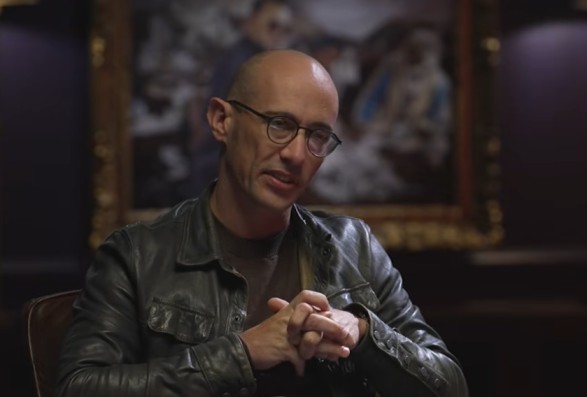
Here is the full transcript of Shopify’s CEO Tobi Lütke’s interview on Shawn Ryan Show (SRS #261), December 12, 2025.
Brief Notes: Shawn Ryan sits down with Shopify CEO and co‑founder Tobi Lütke to unpack how a small online snowboard shop evolved into a global e‑commerce platform powering millions of entrepreneurs. Tobi shares the origin story of Shopify, why he believes entrepreneurship is “perfectly positive‑sum,” and how empowering small builders became his life’s work. The conversation dives into craft, building when nobody’s watching, growing a market instead of just fighting competitors, and the role of AI, lean teams, and clear thinking in business. Tobi also talks about family, teaching kids to think, racing cars, taking risks, and his best advice for founders chasing their own first sale.
Welcome and Gratitude
SHAWN RYAN: Tobi Lütke, welcome to the show.
TOBI LÜTKE: So excited to be here, man.
SHAWN RYAN: I’ve been excited about this for a long time. But, you know, I want to start this off. I feel like I owe you a thank you. Because what you’ve done with Shopify has just—it is what brought success to my business and so many others. And so I’ll just give you a story.
You know, when I started this in around 2015, actually in December 2015, so almost exactly 10 years ago, this kind of started as a tactical training company and I had just left CIA contracting for the CIA. Didn’t really know what I was going to do. And I’ve always wanted to get into entrepreneurship. So I started this company. But I had no money and web development, you know, to create a website back then was—I mean, for me, it was a lot of money.
If I remember right, it was about $20,000 to $25,000 to get a website made. And I was like, man, I don’t have $25,000. But I did it. I did it and I got a shitty website from a developer who I needed to call meetings with about every day, every time I wanted a new product out there. And I was just selling courses and, of course, every time I wanted to add another product that was several thousand more dollars.
And then I think it was TV. I was watching TV and I saw a Shopify ad pop up. And, you know, it was talking about the do-it-yourself stuff. And I was like, man, maybe I should try this. And so I did. I got the free trial, I tried it, and I was like, holy shit. I just built an entire website in like four hours.
TOBI LÜTKE: That’s amazing.
SHAWN RYAN: And, you know, and that was 10 years ago. And we’re still on the platform to this day. So if I have a story like that—and we started selling my courses on there. And then really, the big win for me on Shopify was Gummy Bears, which we still sell today. That’s a bag for you. Made here in the USA. Sold on Shopify.
TOBI LÜTKE: Love it.
SHAWN RYAN: But such a good product. But it just—I mean, it’s just like unleashed a cheat code to entrepreneurship by being able to sell our stuff because web developers would hold us hostage. And so thank you for doing that.
The Philosophy of Entrepreneurship
TOBI LÜTKE: I mean, that’s so meaningful to me. Because this is my favorite story, right? Because I think entrepreneurship is incredible and incredibly important. It’s so important for society that people can reach for independence, that people can—instead of complaining about something not existing—they can actually do something about it. They can build something.
And there’s this wonderful market. You participate in it. If the market deems it to be of value, then it funnels coin back to you so you can do more of this thing. And it all kind of virtuously grows in a virtuous cycle. And it’s just so honest. It’s such a form of self-expression. It’s such a way to not just gain, but also give back. And it’s perfectly positive sum.
So from a fully philosophical perspective, it’s one of the greatest journeys people can go on. And it does require a good deal of courage to put yourself out there. But I’ve started early—my teenage years—with small businesses and just selling products and these kinds of things. And I’ve discovered this for myself and then later, surely going to get into some of these things with my snowboard shop and so on.
And I love that after discovering this sort of gift and trying to figure out how to build these businesses, that now we get to spend all our time, day and night, creating a product that we can share, which itself causes other people to share their products. Right? It’s millions of businesses out there that provide employment, that create new products.
But the important thing there from my perspective is I want to thank you for building something because, you know, especially for the builders, there’s nothing in the world more gratifying than someone using the product or being delighted by the product. So I think that’s honestly the best thing about the world of retail commerce—it’s accessible, it’s available and there’s a lot of camaraderie. There’s a lot of—because everyone has so much in common with each other, everyone’s engaged in it and respects each other for doing this.
The Impact of Shopify
SHAWN RYAN: I mean, you have just—I mean, I can’t stress it enough. I mean, you know, it’s not like I just took that $25,000 and spent that on bullshit. As an entrepreneur, it’s a huge lift.
TOBI LÜTKE: You could have caught it at this moment and then you would have been $25,000.
SHAWN RYAN: But I mean, I have just saved so much on web development and, you know, in taking what I saved and putting that into product or other areas of the business. Because, I mean, if I remember—I’m off on these numbers—but let’s say $20,000 to $25,000 to build a website, then Shopify, I find Shopify, and it’s like $20 a month.
So I was able to take all that capital and put it towards something else and build something real. And so I’m just one of probably millions and millions of people who use Shopify who found success in entrepreneurship because of what you built. And that is amazing.
I mean, I read something the other day that said Shopify is getting close to surpassing Amazon on web sales. And, you know, that is—wow.
TOBI LÜTKE: I don’t know exactly what number that is and what angle this is, but we are actually working very closely with Amazon. But yes, it’s big. You know, it’s millions of small businesses. And the thing that happens then, if you put a lot of small things together, you get a very, very large thing. Many, many, many little lights make a sun.
And it’s about 10 to 15% of all of commerce in the United States online now, when you put it all together. And yeah, I mean, trillions—over a trillion dollars, almost a trillion and a half has been transacted through the platform since its inception. And yeah, I mean, those numbers are insane to me, right?
I’ve been around for—I started the company 21 years ago, so in 2004. And so I remember when it was tiny, right? I remember when we had a party. Then I think it was $100 million was transacted through the platform which sounded like this incredibly high number. I think that’s like a couple seconds now. It’s just incredible.
So, you know, I’m really fortunate that this project worked so well. And again, I want there to be just more people experiencing basically what I did when I started my business. Like this moment of—let me ask you, do you remember still when you got your first sale?
The First Sale
SHAWN RYAN: I do. I remember it because I was putting courses up online. I couldn’t get anybody to buy a damn course. And I had a guy that told me, “Hey, mark everything sold out and then remarket it out there.” And I did. And the very next time I sold the course out like that.
TOBI LÜTKE: Do you remember what course it was? And did you remember what did you think when that happened?
SHAWN RYAN: I mean, it was incredibly meaningful. It was the first real transaction. It wasn’t somebody doing a favor like, “Oh, you know, you just started a business. Let me buy the product.” It was almost like pity, you know what I mean? I don’t know if you’ve ever had that happen where you tell a friend you start a business like, “Oh, I’ll buy a couple bags of those gummy bears.”
It was somebody that—it was a big deal because it was somebody that never had met me, you know what I mean, that believed in what I was selling.
TOBI LÜTKE: That’s right. You know, someone who—people do not like to part with their money. To purchase something means the thing that you clearly value very highly, you’re giving up because you think the thing that you’re getting there is of more value to you. And that’s an incredible—there’s no virtue signaling at all at play. This is just a transaction which is the most honest vote that anyone could make for this product existing.
Every single time anyone purchases from anyone else, it is a vote. It’s actually, you know, we talk about in politics, you get to vote every two years, every four years. We vote every day for the future. We vote because every single time someone purchases something, people purchase gummy bears, you vote not just for that product, but also for everything behind the product, for every part of how it was created, for the supply chain behind it, for the people who are employed at the places that manufacture it, for the postal service and so on.
So tomorrow looks infinitesimally much different because of today, because of the transaction. People have seen this at the local level. If people vote with their dollars for the local boutiques, they thrive. If they don’t and purchase everything from a corner, from the department store or supermarket, then they will go away over time. And so it’s actually a really, really important thing.
The Snow Devil Story
I remember everything about the day when I had my first sale. Again, I built my snowboard business, and it was a gentleman from Pennsylvania, who I’ve never met and I’ve never talked to, who purchased a snowboard from me. And, you know, I have a funny, somewhat unique perspective there because, of course, when the person purchased from Snow Devil, my snowboard store, he was interacting with software that I wrote.
Software you write will never do anything that you didn’t tell it to do, outside of bugs, which you’re trying to avoid. And so after the purchase, the software sends an email to me that there is a purchase that I now have to deal with. At some point, a couple of months earlier, I wrote that email hoping that at some point the software would have to send it. You don’t know, it could have been a failure.
I didn’t find any software in the market in 2004. There was nothing for starting Snow Devil that was at all possible to use or that I could afford. So I built the software myself. And I sit at a coffee shop, you know, staring at an email inbox, looking at an email that at some point a couple of months before, I wrote as a template, but this time with all the variables filled in—gentleman, Pennsylvania, buying this item.
And I just had this profound moment. It’s like, holy shit. I just went from being a builder to being an entrepreneur today, right this moment. My children think of me as an entrepreneur now, and maybe my grandchildren will one day because of that day. That’s a long distance traveled due to staring at one email.
And so again, it’s just been this—I think in my mind, I just couldn’t get that moment out of my mind. It was just like, this is—I wanted to share it. So I tried to tell people, but they’re like, “Oh, that’s good for you.” You can sort of describe it, but you can’t take people back to that moment.
And, you know, when Snow Devil grew a bit, and I got these messages from people saying, “Would you license your software?” And then, you know, make the decision to spend another year and a half. And then 2006 launched Shopify, which really is the software I wish I would have found back when I started to try to make it simpler for people to start.
And yeah, to this day, every time we make it slightly simpler again for more people to start, more people succeed, and it’s been super gratifying.
Making It Accessible
SHAWN RYAN: If I was able to figure it out, I think damn near anybody can figure it out.
TOBI LÜTKE: No, no, no. We can still make it so much better. There’s a lot to learn. It’s—again, tons of respect for every entrepreneur out there who puts themselves out there. It’s tough.
The Birth of an Idea
SHAWN RYAN: Let me give you an introduction here real quick. Tobi Lütke, entrepreneur, co-founder and CEO of Shopify. Shopify is an e-commerce ecosystem used by over 4 million merchants, generating billions in annual revenue. You’re a snowboarder, race car driver and philanthropist, board member at Coinbase since 2022.
In 2003, you moved to Canada from Germany where you became a citizen. You regained your German citizenship in 2022, holding dual nationality. You live in Ottawa with your wife Fiona and your three children. And once again, thank you for what you’ve built. We’ve been using that for 10 years and I want to do a journey on how you built Shopify.
And then we have just a whole bunch of topics to cover that all have to do with entrepreneurship. But before we get too in the weeds on your story, we have a Patreon account, built a subscription network. We’ve turned it into quite the community. And so one of the things that we do is we offer them the opportunity to ask every guest a question.
This is from Eric Alger: “What’s the single most overrated thing in tech entrepreneurship today?”
TOBI LÜTKE: Networking events.
SHAWN RYAN: Networking events. That is not what I was expecting you to say, but I can totally see where you’re going.
TOBI LÜTKE: I try and I really, really try and I try my work, but I can’t. I’m the wrong person to try. What can I share that’s actually actionable? I’ll stay on the topic and maybe make a modification. Advice. I think advice is overrated. I think gut instinct is underrated.
I think too many companies are building slightly different versions of something that someone else already sort of discovered or slightly different takes on things. And you do market research and A/B test everything. At least in my corner of the world in retail industry, you see more self-confident “this thing needs to exist.”
And I think it would be nice if tech becomes a little bit more weird, a little bit more eccentric and a little bit more self-confident and leaning into uniqueness rather than derivativeness more. Again, I think AI makes this so much more attractive for most, so I’d love more of that.
SHAWN RYAN: Right on, right on. I love that answer.
From Germany to Canada
SHAWN RYAN: So I know you came to Canada from Germany. What brought you to Canada from Germany?
TOBI LÜTKE: Well, the best reason, wonderful Canadian woman. My wonderful wife is Canadian and we were living in Germany and she decided to go back to study, do a master’s degree in Ottawa, Canada, and I moved with her.
SHAWN RYAN: Nice.
TOBI LÜTKE: I grew up in Germany being a computer guy. This is probably a surprise to literally no one. I spent my teenage years more in dark rooms exploring what computers can do than in dark rooms at raves. Probably should have.
And given this was the 2000s in Germany or late 90s, it’s funny, sometimes friends ask me, “Hey, how was the techno scene like in the 90s in Germany?” I’m like, “Yeah, I wish I knew.”
So being very much into computers, I knew of Silicon Valley. I never was there, but Canada was certainly closer to that. And I figured I’d just sort of make my way there over time and then learned everything about Canada and really, really fell in love with the place. So that’s where I am.
SHAWN RYAN: Nice. And you’ve been there ever since.
TOBI LÜTKE: Ever since.
Starting the Snowboard Shop
SHAWN RYAN: And so you moved to, if I remember correctly, moved to Canada, married your wife and started a snowboarding shop.
TOBI LÜTKE: Yeah. So funny story. I left school pretty early, I should say. This is not super unusual in Germany where you can, after 10th grade, decide to do an apprenticeship instead of doing three more years in school. And I apprenticed as a computer programmer because I basically was just like, “Hey, this is what I need to do.”
I wasn’t exactly a good student, but I was good at learning things quickly when I needed them. And computers were much more interesting. So I apprenticed as a computer programmer under Meister by the name of Jürgen, who’s a wonderful character and taught me the ropes.
And so coming to Canada, then none of this was officially acknowledged as education. And therefore there was no way to get a work permit properly. And so I was sort of on a visitor visa in Canada. And then eventually as we got married, my wife could sponsor me as family.
I say this for a reason. Turns out if you don’t have a work permit, you can’t work. Pretty simple concept. I tried to get hired and then people pointed this out to me. And luckily one of the lawyers that I asked, a lawyer friend of the family, what I should do said, “Well, I guess you can’t work, but you can start a company. You don’t actually need a permit for that. You’re not technically working for anyone because while you’re starting a company, your official status is unemployed.”
Right? Like, this is actually what’s happening. So I’m like, “Okay, cool. I mean, that makes sense.” I always sold products to my classmates in school. This is how I made money anyway. I can start an Internet business. I know computers really well.
And so again, this is when I decided, I was also, turns out Canada’s big cold. I noticed in Canada, you can’t run, at least in Ottawa where people are living, you can’t run the strategy of treat winter as something that just is temporary and you just wait inside until it’s summer again. It’s too long, it’s too cold, so you really need to get outside.
And so we began snowboarding is fun. And so I spent a lot of time snowboarding, learning, getting deep into gear and figuring out what’s good and what’s happening. So I just combined those two ideas at this point and just said, “Okay, I just know a lot about snowboards and I know a lot about technology. If I put them together, I’ll start an online store selling snowboards.”
And then I tried a bunch of software. I’m not going to bore you with all the details. This was all kind of, again, we are talking 2004. It is really a long time ago. Software was, we barely had broadband. We barely had web browsers. Internet Explorer 6 will either tell people in the audience nothing or will send a shiver of fear and dismay for them. It was terrible stuff.
Anyway, I’m a programmer. I just started programming. I built this online store just for myself. Loved the experience of making all my own decisions. I’m the kind of person who probably can’t truly work for other people anyway, so maybe not having a work permit wasn’t all that bad. So I just loved this independence that I was getting.
The Independence Factor
SHAWN RYAN: Had you felt that independence before this point?
TOBI LÜTKE: Certainly my parents have and probably my teachers too. So yes, I think so. I think there is a pretty large, probably larger than we generally admit, percentage of people who should not be working for other people and should be doing their own thing and creating their own music and so on.
It’s probably, I think everyone can acclimatize to other situations. But on balance, it’s a fairly common streak, I think, in most people. This is partly why I love those consequences of Shopify, is that more of these people can try. But I don’t want to get ahead of the story.
So I decided to build the software, use really esoteric programming languages which spoke to me and whatnot. And then I launched it in August 2004 and we had, you know, made this for sale, which was this life-changing experience for me.
And Snow Devil looked, and we sold snowboards. They were in my garage, my business partner’s garage actually. And we just took them to the post office. It just all kind of, it wasn’t a big operation, but we made money and we found success.
But then people stopped buying snowboards because it got warmer, at least most places. It just was kind of clear that the big discovery of the season wasn’t the business itself, but actually helping other people do the same thing. And that’s why Shopify exists.
The Pivot to Shopify
SHAWN RYAN: Holy shit. So within like six months of you creating the online snowboard business, it turned into the beginning of Shopify.
TOBI LÜTKE: The decision was made within six months. It took me way longer than I thought. The initial version of Snowdevil, it took me two months to build basically. And then turning it into something that other people could use took a year and a half. Me and a friend who came over halfway through.
SHAWN RYAN: But the idea was almost immediate.
TOBI LÜTKE: Not just immediate. It had power. You know, it’s hard to talk about these things in terms of energy, but there is…
SHAWN RYAN: You feel it.
TOBI LÜTKE: You feel it.
SHAWN RYAN: I got one cooking right now that I can feel. I know it’s going to go.
The Energy of Building
TOBI LÜTKE: And you just know, right? It’s an energy source that you could have. Building things is you converting something. You’re converting some form of energy. It’s coming from somewhere. Sometimes it’s passion, but I think it’s more like, I was angry actually at how shitty the software was that I found when I tried to do this thing.
I was like, “God damn it, I want to start a business here.” Again, I spent my entire youth cultivating skill sets, rare and luckily useful skill sets around computers. Most people didn’t. Why the f* is there not better software here for everyone else?
Why do I need, why is in 2004 the only people who can actually create new business on the Internet, which is clearly one of the things that happened that is of the greatest possible economic equalizer, or so we hoped of our times, why do I need to be a programmer to then become a retailer? That doesn’t make sense. That’s a small set of people.
And why is the software that I can find so unbelievably expensive or so incredibly bad? That’s not right. And to me, I can channel this sort of dissatisfaction with the status quo as this unending well of energy that I can convert into building. And I think there’s many other power sources that people tap.
SHAWN RYAN: Creates an internal drive.
Building From Passion and Craft
TOBI LÜTKE: But it got to come from somewhere. Room temperature does not lend itself to forging things. You can’t build something at room temperature. There needs to be a stronger emotion. There needs to be guilt, shame, anger, something strong. And then ideally something that doesn’t flame out fast, ideally something that lasts.
So therefore, everything that exists, everything that’s built is passion project by people. It’s people who pursued and created something, usually in the face of naysayers and people who wanted to detract from that.
And so that was it for me. It’s a combination of pride in my craft. Again, I’m literally a crafts person. I apprenticed my craft as computer programmer and dissatisfaction with what my priors have prepared before I needed it. And so I want to make sure that the people who come now to entrepreneurship find tools that are as good as I can make them.
They will always can be better. But that’s the fun puzzle of a company. It’s never perfect, but it hopefully is always better than it was before. And so that’s the thing that I just find to be the most fun things to dedicate my working life to.
SHAWN RYAN: We see it all the time here because, I mean, we use Shopify. But you know, I just want to say the backstory, you know, to summarize it and to kudos to you. I mean, you solved two problems. Just the fact that, you know, Shopify was legitimately born because you couldn’t get a worker’s visa. And the only way to make a living was to start a business because it was illegal for you work. I mean, that in itself is what a hell of a story. You know what I mean?
And then we move into the, so you solve your own problem right there. Okay, I’ll start a business instead. And then you solve, you know, a world problem for entrepreneurs year and a half later. I mean, that’s wild.
TOBI LÜTKE: Not to be fair, a year and a half later, while Shopify launched, I’m going to say it was pretty good if what you wanted to do was happen to also start a snowboard store. It just took a lot of additional work to make it work for most other products. You know, if a product was very simple, you could do it.
But it’s funny, you know, there’s this old sort of riff on the JFK quote that people say in the startup ecosystem: we do this not because it’s easy, but because we thought it would be easy.
SHAWN RYAN: Nice.
TOBI LÜTKE: So there’s a lot of ignorance that has also led to committing myself to this particular course of action. But it’s also a wooden trader for world, right.
Building When Nobody’s Watching
SHAWN RYAN: I have something in the outline that says, you know, building when nobody’s watching. And the importance of doing that. I mean, what is the importance of doing that to you?
TOBI LÜTKE: I see.
SHAWN RYAN: So building when no one’s watching. Years of thankless work before any recognition.
TOBI LÜTKE: I just, so, I mean, again, I do believe in craft. I do believe in honing craft. I’m sure you and I will find lots and lots of agreement there. It’s deliberate practice. And just, I find, again, it just matters what you do when it doesn’t matter as well. And it’s not just that you have to be on. It’s also the way you do anything is how you do everything is another way to put this.
To me, my core craft is computer programming. It’s not what I spent really most or any of my day doing at work, but it’s the trunk of the tree of my knowledge. It’s engineering principles and programming is the trunk and any of my business skills is a branch. And then what people sort of observe on outside are beliefs, if you will. If you want to follow the metaphor.
I want to still grow my trunk. I want to understand and play with tools. I want to go and spend the Saturday evening just sometimes just rebuilding something that I built in the past just to see what I’ve learned and if I can do it better now and have these kind of projects.
This is especially useful if you are building something that’s going to take a long period of time. It’s like there’s no attention on it. You need to be intrinsically motivated to want to move forward because there’s no one really holding you accountable.
Once your product is in market, things actually get easier. At this point, you have customers who delightfully will tell you everything that’s ever been wrong with your product every time you talk to them. And it’s like, which I love. And you know, it really motivates you and motivates me too, especially, you know, early days again.
Shopify is now out in the market. We’re in 2006. Customer support is support@shopify.com, which also comes to me because where else would it go? And I will respond from support@shopify.com, but it’s still me.
So when people send these essays about “how can you call yourself an e-commerce software and not even have feature like this?” My initial response is to write defending my product. And then I’m like actually very right. And then so next thing is I spent the night implementing a feature and then respond the next day saying, “What do you mean? It’s right here.”
So, you know, that’s how you make products better. This is the loop. And that’s just what you keep going. So how can you be intrinsically motivated to want to hone the craft?
SHAWN RYAN: I don’t know, I think it’s that internal drive. I mean, you know, the way I took that, you know, what we’re talking about right now is quit looking for a pat on the back. Quit looking for an attaboy. Quit looking for recognition. Just build your business. And all of that, all that shit will come later if you find success. But right now, what matters is building.
And you know, I mean, we had a saying in the SEAL teams before that that also relates to this where basically we had adapted the mindset that, you know, when you’re not training, the enemy is. An entrepreneur, if you’re not building, your competitor is while you’re out there around at the bar, you know, doing hob, not working, your competitors getting better and better and better and better.
And that, that is a, that’s a mindset that I took from the SEAL teams, because, you know, if the enemy’s turning and we’re not, then we’re dead. And I moved that over to business, to where if you’re not building, if you’re not innovating, your competitor is and they’re going to pass you up.
The Competitor Mindset
TOBI LÜTKE: That’s right. And the question is how to even, is it possible to disconnect even from the need to have a competitor that might be training?
SHAWN RYAN: I have mixed feelings on that. Do you? I mean, I think a competitor can be, for me, personally, when I built the podcast and I built the look and everything, and a lot of podcasts looked a lot different. I’m not tooting my own horn here, but I looked at the market, I saw what everybody was doing. Everybody wanted to be Joe Rogan. That was it. He had a purple curtain.
TOBI LÜTKE: Yeah.
SHAWN RYAN: A bunch of shit on a desk. That means something to you or it doesn’t mean anything to you unless you’re Joe. You know what I mean? Joe’s got all this stuff there.
TOBI LÜTKE: Every.
SHAWN RYAN: Everybody just copied Joe. Everybody just copied Joe and I, I took a look and I saw everything, and I said, this is, what we’re doing is going to be totally different than all of this stuff. Not that it’s never been done before, but it’s never been done in a podcast setting.
TOBI LÜTKE: And it’s, it’s yours, it’s mine, it’s your, yours. It’s something you build. It’s your aesthetic, and it’s not. And all the centerpieces are things that come from the visitors of your, of your podcast. It’s like, it’s, it’s, it’s situated in the center of the very community that you built, which is a completely different approach. It’s not better or worse. It’s just very, very different.
And this is what I mean with all the interesting things come from doing differently. It’s exploring the different paths. And it’s incredible how much people, so many people externalize so much of how they judge if something is good to running it through an internal focus group of how they think everyone else thinks.
And it’s like, how that sounds really exhausting. That sounds hard also. And I’m not sure it’s going to be precise, right? Because we don’t really know all the other people that well. We sort of maybe have a guess, but how about just doing things that you really, really want to exist?
And it seems like such a basic idea, but I just find so many people are just, they think there’s a game out there that they want to join, which is called the podcast game. And then they look at for the rules by looking at the podcasts that are most successful. And they think that if they apply, if they intuit and extract as many of the rules as laws and then adhere to all of them, they might get the same results.
You familiar with Cargo cults?
SHAWN RYAN: No.
The Cargo Cult Phenomenon
TOBI LÜTKE: It’s one of my favorite sort of World War II adjacent story. So Pacific campaign. Obviously, other than the, I think B-22s, none of the planes had any range, right? So to fly into Japan, you really had needed airfields very, very close to Japan. Some of the islands there had indigenous people on them.
And so the American bases were built, landing strips were created. In some cases, this was the first time any of indigenous people they had any kind of contacts with outside. Their private contact with outside came from, you know, every once in a while a wooden crate, which was how old shipping was done there, would wash up ashore with things in them, magical things, goods of society.
The people who then got these items, they call them cargo, of course, you know, just like that was a status symbol. And here the Americans, which of course all the people could observe in these airfields doing these things. And planes come and what we’re bringing more and more cargo, which of course means was a very, very rich individuals. And I don’t know if they thought about the people they observed as demigods, but we might, might as well.
So now World War II is over and no one’s going back to these islands for a while until people do. And what they find is that they’re still running the airports. There’s the shamans wearing coconut shells, headphones in straw towers, making sometimes noises that sound vaguely English. There’s straw airplanes on the runway.
And people are doing this because they want the cargo to come back. And it just tells you something really, really important. Think about a human condition. We copy behaviors to try to create the same outcomes, and we do it all the time.
So much of a business world, if you look at it, is just people cargo culting. It’s basically just putting flame stickers on the side of a car to make it go faster, really. It’s not principled thinking. And so other people live in everyone else’s mind.
And I think disconnecting from this as much as possible is important. And I think when you talk with the greats in some categories, artists or so, they just need to paint. They have so much painting in them, they need to get it out, and they just don’t care if there’s a market for it.
The Role of Competition and Rivalry in Business
SHAWN RYAN:
I got a question for you. I mean, just, you know, as a business owner, because I agree with everything you’re saying. Because I never, you know, I took a peek because I didn’t want to do anything that anybody else was doing. I still do that. I still do it every once in a while, but I also never want to look at something and then copy it, so I purposely stand back, you know, so it’s kind of contradicting myself.
But I’ll take a peek, you know, as I scroll and I’m like, oh, yeah, that looks good. That looks like shit. Whatever. You know what I mean? But I will never dive in and study what people are doing, because I don’t want to subject myself to wanting to copy what they’re doing or manipulate what they’re doing into, in my mind, into my own idea. I want everything to be 100% original, you know.
But at the same time, you know, I think competitors can drive you. I saw a lot of people that I thought were competitors start to copy what I’m doing. I mean, it’s funny when you start business, who you consider your competitors to be, and then if you do find success looking at who your competitors are years down the road, I mean, it is wild. You know what I mean?
And now, you know, my competitors are the top people in the game who are actually friends. But I guess what I’m saying is, you know, along my entrepreneur journey, I feel like maybe I may have needed competitors as a driving factor, because I’m very competitive. You know what I mean? I mean, I’ve been competitive since a young age, and I enjoy a healthy competition, and that competition drives me.
So I’m just curious. I mean, I can’t imagine a world where, you know, and also looking at competitors, I mean, somebody that’s a little bit ahead of you or maybe a lot ahead of you. I mean, it shows you what’s possible. Like, it’s a real living example of what’s possible within your realm, which can, you know, that can be a driving, I f*ing want that, you know. And because this person’s achieved it, it’s achievable. And they’re not that far from me, you know. Do you have any thoughts on any of that?
TOBI LÜTKE:
I completely agree. The difference, when you look at a competitor, it depends on what you do with information. Is it envy or are you looking to copy or again, like cargo cult of things? No, what you’re describing is a rivalry and that’s a totally different thing from competition. Galvanizing a rivalry is good for both sides. That makes everyone better.
Because I think this is an important thing. I don’t think Shopify and Amazon have ever really been competitors. We have been rivals at times, and I think we inspire each other, but we do it in a completely different way. And so I think that’s a really healthy thing.
I think what I don’t like is when people skip the step of having their own aesthetic, wanting to build their own picture, and then use everything else, everything they’re doing, everything else they’re perceiving and seeing as additional inspirations to do a better job creating the unique thing that they want to do. And I think that’s probably not a super simple thing that I’m describing here, and maybe the difference isn’t as important as I’m making it out to be, but somehow to me it is.
It’s like I really value rivalries and I find that obsession with competition is often, let’s put it another way again, I am a motorsport enthusiast. I love motorsport racing. I grew up with Formula One. I get to race cars myself.
SHAWN RYAN:
Were you at Formula One the other day?
TOBI LÜTKE:
I was not there yesterday.
SHAWN RYAN:
I want to go so bad.
TOBI LÜTKE:
Yeah, growing up in Germany, coming to Canada, suddenly no one gave a shit about Formula One and it was a hard adjustment for me. And thank you, Netflix. I suppose now everyone is into Formula One and I’m like, I’m so happy that this happened. This massively increased my quality of at least my Monday morning discussions at work.
So anyway, then I’m on track for position, maybe newer tires than the people in front of me. So I’m gaining a little bit. When I come around the corner and I see that there’s not one car for position, there’s two cars and they are fighting, I know I’m going to overtake them both very easily. It just, you lose a lot of time when you’re fighting with someone directly. And so I think that’s the difference.
SHAWN RYAN:
I mean, were you able to, this sounds like learned experience to me. So I’m curious when you started, when you started your Shopify venture or maybe even your snowboarding venture. I mean, did you, is that how you thought? Or were you looking for editors?
Growing Up with Open Source: A Positive Sum Mindset
TOBI LÜTKE:
I oddly grew up, so growing up with computers in the 90s, you’re familiar with open source software, right? Purely sharing. You build something, you share it. There’s massive open source projects, Linux kernels, these kind of things. The open source is fundamentally positive sum. No one loses by someone else making a copy. Because in the world of computers, everything is infinitely copyable just for the price of electricity, I assume, which is essentially free.
The real world is often much more rivalrous. Only one person can live in the house or on a spot, or only one person can have a physical object. But in the digital world there is actually positive sum. So I think because of that I was a bit predisposed towards positive sum thinking because I’ve just seen it more in my childhood.
So when you are creating a business, you are not competing with everyone else in that same space. You can very much grow the space because you bring something new. The way we talked about our snowboards, it’s just totally different. Everyone else had a grid with many snowboards and pictures and a price. We had essays about what we did with the snowboard throughout the day, right? We just took them to a mountain and then said what happened that day basically.
And it’s sometimes wasn’t even quite related to the snowboard itself. But that spoke to a new group of people who might not have bought a snowboard at all if it wasn’t like this, or might not have purchased such a premium snowboard. So there’s a growing market for more people aspect in this, which I always really try to emphasize.
But you’re right, it’s somewhat learned. So what happened is by 2015, so this is 10 years in the company’s history, I don’t think we truly had competition anymore for exact business sort of in the enterprise business that is like some players but there was no one going for the small and medium business market. In fact even really along the way there wasn’t. It just everyone deemed it as a terrible market to go after. And that was the surprising thing. It never seemed like this to me.
But I’ll tell you, in 2008 I was needed. We were running out. I had to hire some people, right? I had some support@shopify.com at some point. Needed to not just make it to me, right? I needed to hire some people. There were eight or something in 2008. Eight people and we made some money and I still had some savings from Snow Devil but I wasn’t taking a salary and you know, we were just living with my in-laws in their house, Fiona and I, and so we kept costs down. But it’s hard to meet payroll.
The 2008 Fundraising Journey
I went to Silicon Valley finally and just started fundraising. So I wanted to, you know, I had learned how to do all this and I did have a pitch deck and so on. And automatically people passed for one reason or another. One, the company, a very important big venture capital firm that everyone would recognize passed on the Shopify deal.
And years later I met with the partners again and a partner asked, “Hey Tobi, what did we miss?” So I was reminded, you passed because you decided for yourself that there’s a global market for 40,000 online stores, right? This is the Internet at the time. In 2008 there’s 40,000 and if Shopify is successful, it might get 50% of a market. That’s still not enough business to justify the valuation which would have been very low.
So what did we miss? Okay, here’s what they missed. Shopify itself was the solution to the very problem that they stated. There was only 40,000 online stores because no one made it easy to start them. The only online stores that existed were already rich businesses that had the $25,000 or $250,000 to make a web presence and build an online store. And they were all attached to existing businesses that are already rich.
No one built for the new entrepreneurs. And so Shopify grew its market instead of competing for percentage in a market. And I think that is a very different thing. I mean.
SHAWN RYAN:
So you started this roughly in 2004. I mean I feel like there were competitors of yours back then. I mean I remember, I remember GoDaddy was the first one that I tried to build a website myself on GoDaddy. Couldn’t. I did it, looked like shit, and that’s when I was like all right I need a web guy, a web developer, a website builder development guy. And then you know but there were other things that came along the way I think maybe Wix, Shopify.
TOBI LÜTKE:
Shopify is not a unique idea at all. In fact it’s one of the most, I mean there’s hundreds of companies that have and do ostensibly the same thing. The technology industry is never about who does something first, it’s always about who does something right. Which is what makes it so interesting.
All the commerce companies of that time, even if they started wanting to service new entrepreneurs, always moved up market because people had a lot of money. They serviced existing business and could make way more money. It was expensive to deal with small businesses. But general advice that I got when I asked around was just use eBay. Start your business on eBay. If it works then talk to a company called, the one I got recommended was Miva Merchant which would then take a lot of money to build an online store because now I have enough money to give it to them and then you would re-platform again afterwards.
And it was specifically for the new entrants. I’m not aware of anyone making that specific goal. That doesn’t mean it didn’t exist and no one did it. There was one, the closest analogy was a thing called Yahoo Stores which actually Paul Graham started with, an interesting character in his own right. He started Y Combinator later which of course became the origin source for so many of the tech industry’s greatest companies now. But his original project was a thing that got purchased by a company called Yahoo and then turned into Yahoo Stores. I tried to use that and could not make it work. So.
SHAWN RYAN:
I mean, what did it do?
Understanding Customer Needs Through Direct Engagement
SHAWN RYAN: So when you entered this, the competition thing, I love what you’re saying. I’m trying to, I just want to know, when were you able to totally detach yourself from the competition? Because I feel like with my business, I’m just now arriving there. I wish I would have arrived there a lot earlier because I also see that it’s a time suck. It’s a rabbit hole that you can go down and spend a lot of time discussing competition with the team. And it’s a subject that never ends.
And so I’m right at the point where I’m starting to detach. I don’t give a f* about what anybody else is doing. And I think part of the reason that’s happening is because we are launching other businesses in 2026. And the show will always be my staple and I’ll love it. But if I’m being perfectly honest, I’m more excited about a tech company called Glacier that we’re launching in 2026. And that is taking my brain out of it, is detaching my brain from competition within the podcast world, which is more bandwidth in my head to build more things to become more successful, is what I’m saying.
TOBI LÜTKE: Exactly. And I mean, again, back to my analogy of a tree. The podcast and the community built from it is the trunk and you can now fill out the tree with more branches, right? That are part of it. So again, and therefore you end up creating something that is not a direct analogous, has no other that are doing the same thing. It becomes unique. It becomes an oak, right?
And I think that it’s better to build something that’s a unique construct. It’s okay that this happened just one step at a time and didn’t come from some kind of crazy business plan ahead of time. In fact, I think the best businesses tend to be the kinds of businesses that would lose at every business plan competition, funnily enough.
And I mean, again, my company itself started like this. It’s snowboard store to e-commerce software to really what is Shopify’s retail operating system, I suppose now. But it’s so many things.
Learning From Competition Without Obsessing Over It
The comment on the we didn’t have competition, I feel like I should put some meat on that bone because it’s, again, obviously not true that there aren’t other e-commerce companies and so on. But what happened is we learned what we could learn from them. And again, I do think it’s very valuable to talk about competition, but in all this, from a perspective of what can we learn from them? What have they figured out? How do they uniquely handle their particular challenges?
Because we’re looking at the same problem space and find different solutions. And so in a way they can act as to fill in the blanks, the paths you didn’t travel. You can now see, well, they made a completely different decision solving a current problem.
At some point in the 10 years after we launched, mobile phones become more important than the desktop browser. But the entire Internet was built for the desktop browser. And suddenly all the sales were mobile. Every company in the space had to react to this. Some of them didn’t. And that told you a lot.
Some of them said, okay, well, we give a completely different interface to all mobile phones as a sort of companion system. You have your own brand on your own website. But if someone uses a mobile phone, you see the thing that our team created. To me, that seemed incredibly wrong.
Sovereignty and Brand Ownership
Because again, the beautiful thing about Shopify, again is almost everyone who’s on the podcast has used Shopify probably recently. I mean, especially your direct customers. You just don’t know it, right? Because if you bought something online and it didn’t come from Amazon and you liked the experience, it was probably Shopify.
We are not the brand, we are pushing from behind. We’re pushing other people’s brands from behind. So therefore, this is an article of sovereignty. What is ownable on the Internet? There’s two things that you can own. There’s your domain and what’s behind it. And there’s your email list. Everything else is rented, everything else is leased from others.
Your Facebook pages depends on Facebook, how much reach it has, and so on. That’s not a bad thing. It just is. If you’re selling through Etsy or so, that is also very good. But it is Etsy’s listing and Etsy will determine if your products show up for search query or not.
But on your own website, that is your space. You’re gaining sovereignty there. You can take that entire design that you have taken with you wherever you go. You can get all the data from Shopify. This is super important to us.
So when the mobile phone comes out, it’s your job. We have to figure out how to make it so that your brand looks just as amazing on mobile phones as it does on desktop software. And that’s what we helped everyone with. And that ended up being the right decision just as an example in this.
So again, looking at the competition from a perspective of what can we learn from it and can we have a friendly rivalry with them has always worked really well. Eventually, and here’s a reason why to do this, it makes everything else easier to have an enemy.
SHAWN RYAN: That is true.
TOBI LÜTKE: It’s much, much, much easier to say, “Hey, this other company wants us dead. Therefore we need to work really hard,” because everything else sounds hollow. It’s like, “Hey everyone, let’s work really hard because reasons.”
SHAWN RYAN: Did you, I’m curious, did you use that to drive your team?
Building Intrinsic Motivation
TOBI LÜTKE: So I ran out of credible things to point at at some point and so this is why I talk about intrinsic motivation a lot, because I had to think about it a lot. How do you create an intrinsically motivated company where everyone works really, really, really hard when they technically probably don’t have to, right?
Now you can talk about the future competitor might come out of the woodworks that does everything better. And of course companies constantly get disrupted because they become lazy and fat. But the way to, the only way I found is for people to fall in love with a mission. And the mission is to make just, make more entrepreneurship happen. Make entrepreneurship more tractable, make our customers more successful and know that if we fail to, if Shopify isn’t a representation of a sum total of our skills and beliefs and what we know how to build the best possible e-commerce software at this moment, more people will fail.
Right? Because this is what we see over and over in the data. Every time there’s an area that makes people give up in their entrepreneurial journey, if we then find a way to significantly make this easier, it’s the people who otherwise would have given up make it. Entrepreneurship stops via hurdles and it’s been some people at some point in some emotional state are too encumbered by self-doubt or the stresses of building a company and they encounter some kind of thing that is stumped them.
And if they’re in a wrong mindset, they might call quits at this moment. And if the obstacle wouldn’t have happened, you know what it’s like to be an entrepreneur. It’s a roller coaster. It’s ups and downs. It’s valleys and peaks over and over again. And sometimes in the valleys it gets pretty close, right? There’s pretty dark days in anyone’s entrepreneurial journey.
So again, I think falling in love with a mission or at least allowing, at least falling in love with being on a mission with people you really care about, doing difficult things for worthy people is an incredibly fun thing to do. In fact, I think it’s kind of an optimal way to spend your life, really.
Embracing Change and Platform Transitions
And I think we’ve succeeded significantly today. We have plenty of competition. I’m not going to say we have no competition left. It all came back. And again, much more easy to study what other people doing. AI is changing everything and there’s not a company that’s safe in the world. And I love it. It’s so much easier. It is so much easier. It’s so much better. It’s so much more fun, it’s so much more creative. It’s so much more driven.
I mean, I get to, I saw many transitions in my career in of a technology world. I saw the Internet arrive, basically. I saw Web 2.0, which, whatever that is. I saw the mobile phone coming. And now what happens with AI is just another platform. Usually people should be enormously lucky to see one transition of a platform in their careers. I’m four in now and it’s unbelievable how exciting this is to have to invent everything.
SHAWN RYAN: I mean, I want to move in. I mean, since you brought up AI, I would love to talk about what you think that looks like and are we at the, I mean, is this as big as the invention of the wheel or the invention of electricity?
Simplifying Complexity for Entrepreneurs
But before we go into that, I just, you know, one thing that, just talking to you now that comes to my mind is obviously probably one of the best engineers, I mean, in the world. And, you know, I’m not trying to blow smoke right now. What I’m getting at is, you know, what drew me to Shopify is how you were able to simplify everything on the platform for a dummy like me.
So, I mean, some of the things that stuck out to me, for example, I’ve always was always like, how do I connect my social media to my website? At the time that was really important to me and these web developers, “That’s going to be another $10,000 to make that connect,” you know, connect that.
I pull up Shopify. And I’ll never forget it because that was such a headache for me. I was like, I really want, I need social connected to the website. And I remember building the website and seeing, “Do you want to connect your Instagram account to your Shopify store? Click this button.” And I was like, are you f*ing serious, man? This is so, this is easier than putting a PowerPoint together. It’s prompting me to do the shit that I’ve always wanted to do.
And so, you know, kind of what I’m getting at is if you take a complicated mind, you know, you’re very into this, you’re way more advanced than 99.9% of people in the world when it comes to building this stuff. How are you able to get you and your team, how are you able to dumb it down and know what basic green entrepreneurs need in building their website? I mean, to go that granular, you know, from that advanced of a mind is just, it’s honestly it’s pretty mind boggling.
TOBI LÜTKE: Well, but it’s easy. It’s like you talk to them a lot. I mean it’s Monday now, Sunday evening. I watch videos of people using interviews of people and recordings of new entrepreneurs using Shopify that our teams create. And that’s lovely, right?
I have 150 of my customers in WhatsApp right now who will tell me, Shopify is collaboratively created with our customers, right? Because again, the best, if I want to grow my business, what I need to do is make my customers more successful. And that’s, it’s very rare to have a company that’s so aligned with its actual customers.
And also one of the funniest advantages this company has is that there’s very few companies on planet earth who have such inspiring customers. I mean, you are a customer. You’re a pretty inspiring guy.
SHAWN RYAN: Hold on, let me just, so you are watching video interviews of your customers every Sunday. I mean, I’m just going to bring another thing up. One, I got to thank Lulu for connecting us, but I mean, we just released our Psyops docu-series on Shopify. And I’m going to be honest, when we reached out, I thought we were getting the special treatment because of our mutual connection, Lulu. And maybe because it’s a big podcast or, I thought we were getting special treatment.
But after hearing, and I appreciate that, thank you. Because nobody else could launch the docu-series. It’s on Shopify. I think we’re the first ones to be able to do it. And it’s because your team jumped through hoops.
TOBI LÜTKE: And thank you.
SHAWN RYAN: But this, so that’s not a special thing. This is what you guys do. You get in touch with the customer, with the entrepreneurs, and you figure out what they need. And you do this every Sunday?
AI Integration and Customer Support Philosophy
TOBI LÜTKE: Yeah, I mean, I don’t do it every Sunday, but as many Sundays as I can. My team makes super cuts of the interviews we do and sends them to me so I can see how people get stuck and so on. I use Shopify myself, right? I’m a user. I have my own shops going and I sign up for new shops, go through onboarding, and talk to customer support from pseudonyms. I’m red teaming my own company all the time, right?
I’m a pain in the ass to work for because of that. But that’s kind of what you need to do when you’re trying to… Look, as a CEO and founder of a company, it’s dangerous to get disconnected from a product, right? People get really, really, really good at telling you a combination of words that makes you look elsewhere. I’ve had plenty of such experiences in my life, in my career. So being in all the details is important.
I review every single project that’s going on in the company every six weeks, and it takes two or four days, usually three days. We go through every single project. We have an entire system. We have an entire piece of software for that. Everyone uses it. We built it where everyone registers everything that’s going on. In fact, that was largely inspired by the military, actually a book called “Team of Teams” by General McChrystal. Excellent, excellent read.
Anyway, so we built an internal system that’s sort of an asynchronous distributed information system about what our teams are working on. All the projects, progress updates, who’s on them, and then this bubbles up into a six-figure view. Then we go through them and I have a super… sometimes a quick… But the team is there. We can quickly talk about how things are going, what’s stuck, and then keep going. Then we move, try to move all of these projects to build everything we can in such a way that it works well with everything else.
This is… I don’t think this is the only way to build software at this scale, but it’s certainly the only one I have discovered that allows us to build software like Shopify at this scale. Because automatically what you’re trying to accomplish is you want people to use it. And I believe that every user of every piece of software, of every product in the world, can intuitively tell you if a team that creates it gave a sh about the product. I think this is just known to us. It’s invisible and we don’t have good language. But I think everyone can tell.
So, well, if you want to build a product that people would answer this question in the affirmative, you have to give a lot of sh. There’s a lot of sh that has to be given about the tiniest of details, about minute architecture, the chunkiness of the buttons, of the design systems and stuff like this that no one… It would be so funny. I mean, I guess this is why the Silicon Valley show on HBO was so funny. Then people who are in the tech industry kind of get exposed to the sh that we discuss and have discussions and meetings about, right? It’s ridiculous, but unfortunately this is what it takes.
So yeah, so we go through everything and we talk to customers. Why? Because look, I mean, I don’t want to criticize you.
Learning Customer Connection
SHAWN RYAN: Where did you learn that? Where did you learn to reach out to your customers? It seems like the most successful tech entrepreneurs in the world all have a grasp of this concept, and there’s a whole hell of a lot of people that have no grasp of this concept. But I mean, where did you… I mean, when did that… how did you figure that out?
TOBI LÜTKE: Yeah, it’s… Well, I mean, I was customer support initially, right? I did it because I had to, and then I could hire people for doing it. And at some point along the line I started making choices that weren’t right because my sort of inner model of what an entrepreneur goes through when using my software was just starting to be dated. And I’m like, well, I have to figure out a way to be more connected.
You know, I actually haven’t done this in a few years now, but until a few years ago, I did an afternoon in customer support, you know, just maybe once a quarter, once a half year or so. And it was always very good for me, just a very humbling experience to actually help people, especially at that vulnerable time when they’re confused. They call for a reason. They call because something is important, really important happening and they need help, right?
So I don’t know, you need empathy for the people using the software. And I don’t know if I… Yeah, I just came back to doing it this way. Here’s my strongest belief: I cringe a little bit when people say, “I don’t know computers” or “I’m not technical.” Well, no one’s supposed to be technical. The whole thing that people have to be technical to use technology is because of skill issues of people like me, right? It’s completely unfair.
You don’t have to be technical to use a television. You have to turn it on and you go to a channel, right? That’s the engineers and product designers doing a good job with a medium. But if we were better, no one would ever feel like they can’t figure out something. Computers don’t get to make people feel dumb. That is not their role. They are tools. Hammers don’t make people feel dumb. You know, screwdrivers don’t make people feel dumb.
We have the only field, the only field of tooling, support and infrastructure that somehow is allowed to make humans feel not good about themselves somehow. And it’s just normalized. What we actually should do is give people superpowers because that’s what it does to us. To us, the engineers, to us, the technical people. Computers… the way I talk about computers will be clearly very different from how most people talk about computers. Why? Because I do love them for what they can do. They are incredible.
But to get the power out that I can extract out of a computer, again, I had to sacrifice my youth. It’s path dependent for people who for unexplained reasons wanted to cultivate rare but valuable skills around computer programming and understand them at an intrinsic level. And most people can experience them as the incredible, most powerful tools that humans ever invented. But everyone else should do that too.
And so I think, luckily, I think now with AI, we are getting there. This is the best thing about AI: we kind of get a do-over. But there are too many stories of people feeling inadequate, not being able to accomplish their tasks because we just cannot make software that meets people where they are. So no matter how hard I work and my teams work, it’s never going to be enough to really get all the way there because there are just limits.
But again, every single time someone doesn’t end up giving up on an entrepreneurial journey means there’s one more business that’s going to supply employment, supply… I think it’s just… that someone else becomes an entrepreneur in the eye of their own children, grandchildren, family. And again, I think it’s an identity-changing event. And so it’s important. It just feels really, really, really, really meaningful to be able to work on something like this.
The AI Revolution
SHAWN RYAN: It is. I can’t even imagine how many lives it’s transformed and put on a higher trajectory than what they were. But you know, moving into AI, a little rabbit hole here. I mean, you know, a lot of people are worried about AI. We’ve talked a lot about it on the show. You know, people are worried it’s going to take their job, probably is going to take a lot of jobs. It’s also going to make things a lot easier. I’m curious as to your thoughts. I mean, are we at something that is… is this as big as the invention of electricity or the invention of the wheel or the invention of the Internet?
TOBI LÜTKE: I mean, I think so.
SHAWN RYAN: This changes the entire way of life in the next five to 10 years?
TOBI LÜTKE: It does, it really… It’s… I know this is going to sound crazy and scary and probably will be quoted back at me various times when people are somewhat down on AI, but I just think AI is actually underhyped right now. And that seems almost hard to believe. I know, it’s just…
SHAWN RYAN: You think it’s underhyped?
TOBI LÜTKE: I think it’s underhyped.
SHAWN RYAN: Wow.
TOBI LÜTKE: It’s… For all the hype that’s already existed, it’s still underhyped in what it can do. It’s just… our ability to project intelligence at problems without losing, without having to allocate some of our rarest and most specialized people to everyday problems. It’s just huge.
It’s so easy to run into examples here. But I’m getting so many stories right now from family members and friends who are solving really, really, really tough medical problems for them that they couldn’t solve. And they’ve done all the right things. They have done every test, they’ve talked, they’ve gotten second opinions, they describe it, came prepared to every doctor meeting. But then, you know, at some point they just start one of these projects on ChatGPT or whatever and put all of this in there and then just let it go into deep research on this.
Again, this is something you have to be comfortable with, data and all these kind of things, and maybe people do it anyway. Well, and it just sort of figures out what’s actually going on in a way that you can show up to the next doctor and just finally get the thing that you were looking for.
And why does this work? It’s not because it’s smarter than the doctor. The doctors are way smarter, way better. But a doctor only has 15 minutes to sit down with you. They have 15 minutes, maybe 20, to look at the charts, talk to you, get information. And 20 minutes of a doctor’s time is probably worth hours of an AI doing something right now where I can put thousands of hours in. And some tasks just benefit from just intelligence being projected into this directory over a long period of time and can be solved.
And I think that’s a lot of things, but it’s usually tasks. It’s like, here’s the task of taking the information that has been collected, you know, all the scans and all the reports and all these kind of things, and sift through them, go through all the literature, figure out the latest developments, you know, compare and contrast it with all the medications that have already been used and the reports about… You know, just… this is… it’s just a thing that humans could do, but we just don’t have enough people for doing this. And so I think just that alone changes the world in a way, right?
AI and the Future of Work
And so it turns out that it’s true that jobs will change. Although this always gets into a really… everyone has sort of a different question and different jobs in mind. I think what AI really does is it automates tasks and allows more people to work like you and I, because we have teams for… if you need something researched, we have people we can email and they will research it for us, right? And send us back a report.
And I think more people should have the ability to have something like this. And frankly, you know, sometimes speed matters. Getting something back in a minute actually allows you to… it might not be as good, but you can then make modifications and ask it again and help yourself figure yourself out. So I think all this stuff is pretty remarkable.
But yeah, where I am most excited about with AI right now is just… we see this. So the thing I spend more time on than anything else at Shopify over the last couple of years is how to integrate a helpful AI into Shopify the software, right? Because for exactly the things we’ve just been talking about, I never… I see it as a personal failure and it’s almost physically painful for me when, especially my software, makes people feel inadequate.
I want my software to inspire people and make them more ambitious than they would otherwise be, not less. And so AI… we have it integrated in Shopify. It’s called Sidekick. Having a, you know, infinitely patient, extremely knowledgeable, you know, kind, non-judgmental AI Sidekick as part of your entrepreneurial journey is extremely game-changing from our perspective.
This exists. This is integrated. Everyone gets access to it. And the conversations people have with their Sidekicks are just… it’s remarkable. You know, the big businesses ask it to run reports. The new entrepreneurs ask, “Where do I have to go in Minneapolis to register my business?” You know, it’s like, “How do I open a bank account? How…” You know, it’s all the kind of questions…
SHAWN RYAN: It’s going to be embedded inside of Shopify?
Running Lean Teams and Building Trust
TOBI LÜTKE: It already is. It’s hundreds of thousands of people are using it daily. In fact, you can ask it to do jobs for you. You can say, “Hey, here’s my PDF from my supplier for the summer collection of products. Can you please create the products and add them?” It will go and do it. I hope it’s doing a great job doing it. It probably might get some things wrong, so you will definitely show your review screen for everything. But it’s increasingly able to just join your team as a team member.
And again, especially for the solo entrepreneurs, that is an incredible change because now they have a team of one. That’s cool.
SHAWN RYAN: Wow. They literally have an assistant.
TOBI LÜTKE: Yep, they have an assistant.
SHAWN RYAN: Holy s*. I can’t wait. I got to go ask my guys if we’re using this.
TOBI LÜTKE: You should check it out. It’s fun to have conversations with. I’m super biased here, but I’m really a big fan of this. Again, most of the intelligence there comes from the wonderful advances of labs like OpenAI and Anthropic and others. But Shopify is a bridge company. Fundamentally, we are bridged between the world of the global world of commerce and the technology world.
Our job is to go and get the best things that the technology industry can do and make them available for people who are trying to self-actualize. This is our native habitat. And so that power that we are getting for helping people with AI in doing this and what we can deliver to the people who are just going to sign up tonight and trying to build a business, it’s absolutely remarkable. And this way, I say it’s still underhyped.
SHAWN RYAN: That’s amazing. That is, wow. That’s incredible. Let’s take a quick break. When we come back, I’d like to talk about how you run your team. I know you run it lean and would like to just move into that.
TOBI LÜTKE: Sit down.
SHAWN RYAN: All right, Tobi, we’re back from the break. We were getting ready to dive into how you run your team. So I was picking through your outline and saw that you’d like to run small and lean teams.
TOBI LÜTKE: Who doesn’t?
SHAWN RYAN: And this is a growing pain that I’m trying to figure out right now. If we want to go and we want to bring everything in house, which is kind of originally what I thought I wanted to do at the beginning of the year. And now I’m starting to think, I don’t know if I like all these people running around and I don’t really want to get any bigger and deal.
I like to keep, I think the way I’m going is I like to keep my internal team extremely small and lean and nimble, and then start to outsource more and more to other companies, not individuals. Because I think companies might hopefully care more about their reputation than what I have been dealing with. So anyways, I just want to get your thoughts on that.
The Reality of Company Structure
TOBI LÜTKE: Yeah, I mean, at the end of the day, everything is about the team. A company is actually not a thing, really. If you think about it, a company is a collection of individuals that we just call a company. Every company is getting like, a company can’t gain skills by itself. It’s just the individuals in company might develop a skill or you might bring on someone new to gain a new skill.
So it’s kind of like, honestly, the beautiful thing about companies is that they get to align a lot of people’s incentives all in the same direction. And then everyone gets to spend their day together doing hard things, hopefully unique things, and so on and so on.
Reality is, there’s a huge amount of complexity in just getting these incentives aligned. It’s so often that lots of people just end up sort of grinding against each other. And all the energy is sort of diffused by the grinding noise they make by just being in each other’s way.
The solution to this is one of two things. It’s either you drive people towards making a consensus decision, or there’s going to be leadership. And those things are kind of opposite. And I don’t think that’s a commonly held belief.
The Optimal Team Size
So how do you set this up? I mean, I’m a big fan of small teams. I think small teams in general are, I mean, the best size team is one person. That’s just like anything that one single person can do should be done by one single person. Because you know, that requires zero coordination. If you have all the skills to do something, then you don’t need to coordinate with anyone.
Books tend to be so good because they’re written by one person, but usually with an editor. So now you have one person holding the pen and being able to construct an incredible fantasy world with all these characters and perfectly, everything written in the same tone of voice, the characters act consistent to previous chapters and so on and so on.
If you would give every chapter to another team member and write a book, there would be no cohesion between these kind of things. So especially if you don’t actually, if you try to do it all at the same time. Because then no one can coordinate. No one knows if you know who Bob really is. Bob shows up in one chapter different from another chapter.
A lot of companies unfortunately run like this and just try to write a book by accelerating it in such a way that they parcel out the tasks and give them to a bunch of people and then you end up with kind of a mess.
So at a certain size then a task is bigger than a book. You can’t do it at one person anymore. Now you do need a team. But you should understand every single time you do this, you are still trying to create something that feels to the people who are gaining on the other side, the product needs to feel like it was written by a single author. Even though you had in our case like 3,500 engineers building the thing.
So that requires an enormous communication challenge which isn’t to be underestimated. The second best size of a team is five, with an ability to flex to up to eight for short period of time. But it needs to be temporary. That’s what we found. It seems like that military came pretty much to a similar conclusion with sport sizes. I am not a military expert, but it certainly seems that way.
I found that these teams, I think parceling things into teams that fit that mold, that size is the best. As long as you have a clear person who plays a role of editor and someone who kind of knows what overall needs to be produced, how to make decisions, someone who can be escalated to if two teams disagree on something and who can help with coordination.
That’s basically what these six week reviews do at the global level. And then I work with lots of others who hold the editing pen in other areas at smaller levels.
I don’t know if that specifically answers your question, but I think what I found is there’s a lot of myths around that really are in people’s ways. And I think this is why a lot of scaling of small companies ends up going poorly.
Myths About Management
I have a pretty controversial take on this. I think part of the reason why there’s so many myths about teams is because only people who have time to write books are sort of middle managers. It’s not really the people who actually ended up making a difference or having the leadership position that truly end up writing the books.
Whereas usually the books are written by middle managers who ended up being in some industry that was just experiencing rapid growth for extrinsic reasons. Like telecom, the telecom industry in the 2000s, then for half a century of mega growth, it was like it started out at, let’s call it $100 million to billion size of industry event to multiple trillions just because of demand.
So if you had a pulse, whatever you were part of, grew a lot probably despite of everything you ever did. And then people make a lot of money and then retire and then write a book about their pet theories about how they did it. And that’s what everyone studies in business schools. And it just is completely independent of what actually matters.
So things like, “Don’t micromanage” is one of those things. No, micromanage. It’s crazy to not. Not micromanaging is an insane idea. You got to be in the details. Don’t micromanage if you don’t know what you’re doing. Don’t do the things that make your team do worse than what they otherwise could do by themselves, but always be there to help them do better if you can.
But you find so many people who are like, “Oh, I don’t want to be a micromanager.” But you guys are basically barreling down in this car at 200 miles an hour, going over a cliff that you just can’t see yet. And I know I have a map and I know it’s there. No, just actually help them drive around that thing. That’s a good idea.
And so that’s one of those kind of things. I got myself in a lot of trouble with just getting out of the details for a while because I thought I need to become, you know, I’m running a public company now. I need to be CEO from central casting. I need to trust but verify, or not even verify. Just trust. Trust faults everywhere.
And it’s like, that’s fine, but it just doesn’t lead to, eventually people will know what combination of words causes trust. And everyone’s allowed to be an intelligent actor in the local incentive system. So if you can basically do whatever you want and as long as you just use a particular way of explaining it, you will, because that’s expedient. And so eventually things that go poorly.
Building the Right Executive Team
What I found with my direct teams is I want people who have some strong specialization in something, usually come like it might be the law as background or it might be an engineering background or design or anything. I want to work with people who have been clearly excellent at something and then spend time adding more skills, building range and perspective.
I want everyone in the team to be able to, at least in theory, do a reasonably good job switching roles with others in my executive team. And I want people to be as little beholden to orthodoxy as possible.
In fact, I actually require for all my team members and leaders that at least once a year they go to some international conference or maybe a podcast and talk about how they do their area of the business differently from how other people do and therefore better. That’s a good topic for me to bring talk with them about in a one on one, but also just keeps them thinking about what opportunities do we have to do things better.
Because nothing is ideal in companies. We are not actually very good at building companies at this point, day and age. It’s understudied as a field.
The Trust Battery Concept
And then through these conversations, I try to build trust with them and make this an actual thing. We talk about trust as a battery essentially. It’s something that you charge over time with every interaction a little bit. We do something together, you use of a problem or you say what you, you do the thing that you said you would. That’s a small charge on a trust.
And then I know you show up late for every single meeting or you kind of phone in on slides or whatever, whatever. It loses some trust. And so I found it very helpful to just go and like, “Hey, here’s the things that added some trust and here’s the things that you lost some. So we are kind of even right now. And if you just eliminate the ones that lose trust.”
SHAWN RYAN: You say this?
TOBI LÜTKE: Yeah, I say this.
SHAWN RYAN: You’re very direct.
TOBI LÜTKE: I’m very direct.
SHAWN RYAN: That’s how I am.
TOBI LÜTKE: I’m German, so it would be odd if I’m not direct, so might as well lean into the stereotype.
SHAWN RYAN: I speak direct like this. It’s not always received the greatest, I’ll say that. But I like to speak direct because as uncomfortable as it can be to speak directly, you don’t get lost in the conversation. It’s very precise communications. This is what we need done. This is, don’t do this again. This is why, let’s brush this sh under the table and move.
I like to speak like that. I get feedback that I can be unapproachable, intimidating. I have very high expectations, which I’ve always had very high expectations. I mean, I grew up in the SEAL teams, and then I went to the CIA and then I built a company. And everybody that’s here right now I think understands, yeah, Sean has extremely high expectations.
People that don’t understand that don’t last here a night. But I think it can be, like you had mentioned, I could be a pain in the a to work for. I can be a pain in the a to work for. I have extremely high expectations. But we wouldn’t be where we are today if I didn’t have extremely high expectations.
We would just be like any other mediocre podcast, mediocre company. And so when I hear that, oh, Sean has high expectations, yeah, I do have fing high expectations because I want to be the fing best. And if you don’t want to be the best, then get the f* out of here.
TOBI LÜTKE: Exactly.
SHAWN RYAN: Is that how you run yours?
High Expectations and Company Culture
TOBI LÜTKE: You have to make it clear. I think the only problem in this entire story that I’ve heard is the people who can’t do it won’t last. Figure out how to make them not even show up, make this more obvious. And it’s funny how hard this is for companies because there’s this sort of belief that every company should be absolutely for everyone. No, that’s not right.
Companies, we want diversity in companies. We want there to be a company that’s excellent for people that it’s excellent for. If you take everyone’s favorite color and blend them together, you end up with mud brown, which no one likes. And we have enough mud brown companies.
Some people want something different out of their career. They want to work hard on worthwhile challenges for worthwhile people. And I think the earlier, as you said, the more you heighten the misalignment with the people who just probably wouldn’t, shouldn’t be joining, the better things go.
It’s actually an unkind lie to obscure this. The force of expectations and these expectations, the high expectations and the exacting standards and the behavior building something unique. And that is uncomfortable. But that is 100% load bearing for the success.
There is no chance this is an accidental success that happens to have these sort of downsides of high expectations along the way. And because of this it was harder than it otherwise would have, but now that we have arrived somewhere we can stop having these experiences. No, f*. They are the reason why everyone’s there and everyone who wants to work for you wants to work for you because that was part of the story.
And if not, then it’s not going to work. And it’s actually kind of unkind to not tell people early because our careers are not that long and people should only work for places where they can be one of, they have a potential to be one of the top performers at.
If we already figured that out in recruiting that, yeah, probably not going to be one of the top people or probably isn’t what they are going for but they’ll be a solid contributor. Yeah, that’s miserable. Someone who is a mediocre performer at your podcast will very likely be absolutely badass somewhere else. So let them go be top performer somewhere else.
I think that’s a hard lesson and it’s maybe even an unpopular thing, but it’s also just kind of true. And as they say, truth doesn’t care about everyone’s feelings. So it’s better to explain this.
The Perfect Time for Entrepreneurship
SHAWN RYAN: Thank you for that. I can tell that it’s very obvious that entrepreneurship is, you are very gung ho about that. That’s the whole reason you started Shopify is to jet launch entrepreneurs. And just through our discussion, I can tell you’ve found a lot of freedom in entrepreneurship.
And it sounds like you think there’s no better time to become an entrepreneur with everything that’s going on in the world right now. And so why is now the time to become an entrepreneur?
TOBI LÜTKE: I think it’s the perfect storm right now of where individuals and small teams have more ability to do greater and greater things than at any other time. If you look at global GDP through all time, there’s charts. I think Our World in Data is a great website which has these kind of things you can look at from Christ’s time.
We had for 2,000 years, GDP on planet Earth is exactly a map for how many people were on planet Earth. The only way to create productivity, if you will, which is what GDP measures, and of course these are approximated numbers because no one actually reported GDP in 800.
But the only time productivity on planet Earth went up is when a person was born or when a beast of burden was added. And so then we have industrial revolution. We figured out how to use steam to make kinetic energy and then electricity. And suddenly these things decoupled.
Suddenly we could use kinetic energy to make things. We could make factories and steel and railroads and all this kind of things. And wealth in the world due to productivity just massively increased. This is where everything we like about the world, about the economies we have, about work, standard of living, about how many people we can keep alive, all this stuff happens because of this one moment.
And now we have another thing that we put on top. Because not just kinetic energy, we can also project intelligence into worthwhile tasks in a loop forever until they’re fixed or until now they are not fixable.
So because of that we now have a small group of people who are not only have the skills that they show up with. They also have, not a work class, but if the best programmer is a 10 out of 10 programmer, every team, every individual on planet Earth currently has access to a 6 out of 10 programmer as well. And a 6 out of 10 designer and a 6 out of 10 entrepreneurial advisor and a 6 out of 10 lawyer.
Now there’s a lot you can do with this. And so it’s a great, it’s just a glorious moment for more people to reach for independence. Because we are at the beginning of something and there’s leverage in doing it.
And also because I also just almost want to persuade people to try it. Because I think one of the best versions of the future is one where many more people are active participants and put something out there again. We need more people to create products and services that other people find valuable.
The amount of new businesses being created has been declining for a very, very long time.
SHAWN RYAN: No kidding.
TOBI LÜTKE: It’s been a leaky bucket. Every generation has been slightly less entrepreneurial than the previous ones ever since the baby boomers.
SHAWN RYAN: Is this throughout the world?
TOBI LÜTKE: Throughout the west, yes. It recently starts leveling out again. It’s cresting. And even in some countries there’s been more new business formation again, which is really, really hopeful.
Now there’s a school of thought that says, well, this is because people are losing their job. And it is true that one thing that happens when people do lose their job is sometimes they make their plan B their new plan. A lot of people are, I’ve been sitting on an idea. I wasn’t looking for doing this right now, but I have an opportunity, so I’m going to make a go at this.
We saw this a lot in previous financial crisis of Lehman Brothers. This time before we were dead when this started happening. But it actually turned out that more and more people were starting to build businesses on Shopify and we could help a lot of people there in these times and during COVID again.
So it is a time where people should have a plan B in mind and see if there’s an opportunity to make this plan A and they can access so much more help than before. And so I’m very, very bullish on this.
Renting Versus Owning
SHAWN RYAN: Do you have any thoughts on renting versus owning?
TOBI LÜTKE: I think both. I don’t want to make a moral judgment. I just think it’s, I don’t want to get into that territory. Otherwise I think you should definitely own something. There needs to be a home base that you can fall back to, some base camp for you, which no one can take away. It’s very good.
People are generally more ready to improve, do home improvements on the house they own than when they’re renting. And I think all the same things apply. It’s just there’s more future expected value of working on your email list, on your website because otherwise it might be going away.
So I think it’s important to have a home base, but then also just take advantage of everything else that’s out there. So many of our customers grow massively through things like Facebook and advertising on Facebook and so on. These are amazing tools available to new businesses that again, 15 years ago you would have to go to a television network and probably have dinners with decision makers until, and figure out how to raise a lot of money to place a lot of ads.
It’s not just there was no possibility of just creating one ad or so. So it’s very expensive. Now you can just run a $100 campaign. You’re going to go right and that. So I think everything is just kind of ready and so much more accessible.
SHAWN RYAN: Yeah, I would definitely agree with that. Are you guys, are you seeing a spike at all in Shopify accounts opening?
TOBI LÜTKE: Usually during times, yeah. I don’t have, I’m not right now seeing one. But it’s generally, I mean COVID was crazy and well documented and before. It’s usually when things get a little bit more tough going that there’s more entrepreneurship.
In fact, it’s funny, almost all the company. This is something you can easily check with other people from tech industry and other industry. Other entrepreneurs. If you ask them, almost all of them ended up starting their companies during some kind of nuclear winter or something.
Shopify started in the shadow of dot com post. Remember that? That’s a long time ago now. But you know what dot com was. It’s mostly e-commerce. It’s like pets.com and webvan. And then it just, everyone’s like, oh, never mind. All this technology stuff, all this e-commerce stuff is useless now. It’s all falling apart and we never need tech companies again.
Yeah, it turns out the ideas were right. They just were too early. There’s not enough Internet there. So anyway, against this, I only learned really about this. I wasn’t paying that much attention. Then I tried to fundraise and then everyone told me, well, what e-commerce? Haven’t we tried this before?
Handling Failure in Entrepreneurship
SHAWN RYAN: Yeah, yeah. What about, I mean toughness and handling failure and entrepreneurship? I mean do you have any failures at Shopify that you want to talk about, how you got through them?
TOBI LÜTKE: I mean I think the best I can do there is essentially just confirming that what much more eloquent guests you have will also say. I mean I know you have a Jocko episode somewhere around here and he makes a point really well. It’s you got to roll with the punches. In fact, school of life is a school of hard knocks. You’ve got to learn from this stuff.
A common sentence around Shopify is, well if you have to eat sh, don’t nibble. Just go.
SHAWN RYAN: I love that. I mean I think that I’ve had a lot of failures. I mean while I can’t say I look forward to the failures, because nobody does. I mean, it is your, to me, it’s your roadmap. It’s all right. That happened. That sucked. That cost a lot of money. That cost a lot of time. That was painful, whatever it is. But now you know, I’m never going to do that again.
Teaching Entrepreneurship and Critical Thinking
TOBI LÜTKE: Exactly. Ever. Yeah. I mean, we have this case with like, I mean, we have had downtimes because someone made an avoidable mistake. Right. And it’s like, okay, well what happens then?
My sense is like, anyone who has enough professional pride is plenty fine on the self-flagellations about this. Like, we don’t have to add much. I’m just like, yes, this was expensive. Yes, we always wouldn’t have happened. See it as your tuition. Like it’s like a degree. You know?
One more thing that is going to be incredibly important for you to have learned for the rest. I know, like, people are like, well, are you firing people? Well, I mean, no, because I just paid a lot of money for them to learn this lesson. This is like, this is the worst time to fire people about this.
So I think I believe in second chances now. If the same thing fails the same thing a bunch of times, then my offer of second chance becomes highly conditional here. But I think, I don’t know, I’ve gotten to a point, I’m feeling a little bit like a veteran of the rollercoaster of entrepreneurship now.
Then I find out my company is actually like, I thought we were good at something. And then I look deeper and I realize we’re better at it. I’m excited. Like, it’s like, hey, we’re doing pretty okay. And we were terrible at this thing, which we now know. So now I know exactly how to become a better company tomorrow. You know, just like this is like my roadmap’s clear to your point, right?
Like, so I think you can adjust to this, but almost, this is almost not helpful, I think, to say, because I don’t think that makes it easier for people who have to go to hell. You just have to go for it. Like eat some shit along the way. You’re going to make mistakes.
I’ve made huge mistakes. I had to like, and like an entire department, a massive part of the company with thousands, over a thousand people that we thought was going to be part of Shopify is what we call main quest. Basically what we’re working on in logistics. And we had to exit this business.
And I wrote about it publicly about how I made this decision and because I also think people, you need to, you know, say when you make a mistake, it’s okay to say it. Right. Like, it’s, I think keeping decorum there is just fake. Like, it’s just like, I’ve made reason why I make good decisions and have good intuition is because I have added failure lessons more than most along the way, at least in this space. So.
Balancing Work and Family
SHAWN RYAN: As a husband and a father of three. This is another thing that I’m constantly battling about is how do you find the balance between work and family?
TOBI LÜTKE: Yeah. If balance is hard. Right. Like, I think balance is like, harmony, I guess, is better. I think I like working. I really just do like working a lot. I love my job. I love a puzzle that life drops on my desk every day. It’s a different set of puzzles every day. And I happen to like puzzles.
I do, if it’s at all possible, like, I mean, I’m, we’re having dinner together, right? Like, it’s, my wife insists on dinner at 6pm which I find inconveniently early as a European. But like, I’ve acclimatized and we have dinner together.
And then, yeah, my kids now, every boy is there, all sort of at 10, 11, 13, 15 now. So there’s plenty of things for us to do together, which is really, really awesome. And yeah, we played video games together and stuff. Like, we try to have hobbies, but like, I do, you know, I do try to be there as much as I can.
Luckily, we have phones. I know phones have a bad rep. They’re like, people are not present. But like, thanks to the invention of phones, I had a much, much, much larger presence in my kid’s life than I could have had if phones wouldn’t have been invented.
And so, you know, a little bit of multitasking, a little bit of like, hey, I can actually go with you to the thing, because in worst case, I need to step out and take a phone call. And the kids also knowing that, you know, that’s a choice that I make and I stand by and they will make different choices later.
But like, we’re building important companies that are meaningful, and that’s what our family does. We are builders. Right. And so I think that’s keeping all this in harmony rather than trying to think about it as like, rivalrous. Too much has spoken very, very well for us.
SHAWN RYAN: Are you able to be present with your family?
TOBI LÜTKE: Yes.
SHAWN RYAN: Or are you constantly thinking about how to improve and make Shopify more successful?
TOBI LÜTKE: Okay. That is a background process that can go on very low priority. But I don’t think I can turn it off. Truly. I don’t think I’m able to. It’s just, so does that mean I’m not present? I mean, it’s like, again, it’s me. It’s like as present as I can be. Right.
Like, like, am I as present with my family as I can project presence on any individuals? Yes, like, absolutely. But I don’t know, there’s like, I’m kind of, I think by nature a little bit like, predisposed for solving problems and wrestling with issues. And like, again, I like puzzles.
So I think, I don’t know, I’ve learned to be unapologetic about that because again, a lot of books say talk in absolutes, a lot of books talk. You are absolutely present in a way that I don’t think even think is accessible to people with ADHD, frankly or not. And somehow that is like, you know, all of the implied moral judgment of a book is now resting on your shoulders if you say no to this.
And I was like, yeah, like, I think I have a pretty good thing going and I have a deep and meaningful relationship with my kids, so. So anyway, I think that’s the goal.
SHAWN RYAN: Do you, are you teaching your kids entrepreneurship?
TOBI LÜTKE: Yep.
SHAWN RYAN: What age did you start?
TOBI LÜTKE: Like, as soon as I could talk. It’s like, no, I, like, how would you improve anything around you? Like, how you would redesign your toys if you were, if you have a question, I’ll answer every question. I mean, I have policies. I should say this stuff. Like.
SHAWN RYAN: So you asked them how they would redesign their toys?
The Cartel of Chocolate
TOBI LÜTKE: Oh, yeah. Oh yeah. Like, they don’t get an allowance, but they get a pitch. So like they can look for opportunities, like weak beliefs or whatever. And we negotiate what they would make and you know, the nice things.
We’ve all realized how lazy I am, so, or busy. And so therefore. And they completely intuitively, by the time of, I think the youngest was four, worked out how to make a cartel. And like, it’s just like we’re going through all business history here.
Like, they now have monopoly on all sorts of things. And they were stocking my favorite chocolate that I have a weak spot for. So like, it’s like, it’s all, it’s hilarious and I love it. It’s like I love them kind of hacking the system and just, because again, they are also little people and every person is an intelligent actor in a local incentive system.
And for all the designing of incentive system you can have and do as a as a parent, you can’t really prepare them. But you know what? They’re pretty good at preparing themselves. They’re pretty good to see through the games and figure out what’s behind it.
And I just, I think, I love all that we’ve done lots and lots of like, trying to expose them to hard problems. Like, that was really hard because like, COVID is a COVID period, especially Canada. And COVID was sort of like California COVID and a little bit more enthusiastic about somehow never going outside again than most places.
And so, you know, sort of the school of hard knocks was kind of hard to reproduce. So we did a lot of this with, you know, I just got them to play way too hard video games, like together as a team, you know, like, and like, basically inducing chaos and problem solving.
And, you know, Dungeons & Dragons, my wife ran a Dungeons & Dragons campaign with them, which was like, designed to be really hard. And so it’s like this kind of stuff. So this is other things we prioritized and it helped.
SHAWN RYAN: I love that. How would you reinvent your toys?
Everything’s Interesting
TOBI LÜTKE: I want to break the idea as early as possible with my kids that the world just is. Everything is changeable, everything is improvable. Everything around them is designed by people who are now more intelligent than they are and potentially didn’t even care as much about the thing as they care right now as kids.
Because there’s nothing more real than a kid’s, a kid that’s all in into something. There’s no, they don’t do that for any kind of external or extrinsic approval. It’s all intrinsic and true.
And the real motto of our family is really that it’s a super simple sentence. It’s just, “everything’s interesting.” And so we don’t allow our kids to say things like that they’re not good at something. They can only say that they’re not yet good at something. They correct each other.
At this point, I’m no good at public speaking. Everyone looks at them yet and then everything’s okay. The reason is like, everything’s interesting because it is like, like if people like, I don’t want my kids to treat anything as a black box, right?
Like, it just like, this just is like a computer is not allowed to be a computer. Like a computer actually does things. It’s a, it’s a, it’s a thing called a transistor, which makes something called a NAND gate, which then makes some other gates. And at some point you can do calculations and then there’s memory and accumulators and a CPU.
And eventually it does math. It doesn’t do anything magical. It just does a sequence of steps that manipulate memory really, really fast. And so magical things happens when you can do something very simple, very fast. And so, you know, just breaking black boxes with them is important.
So my policy is when one of my kids comes up at work from home, anywhere and asks me a question, I will stop what I’m doing. I’ll answer it always. And they know to not misuse that now, but they used to, which was also adorable and funny.
And usually I try to answer their question. If I can’t, I sit down with them and figure out with them how I would research the answer to the question now. And then I send them to go do it and then they have to report back, ideally, usually at dinner.
And so I think that was a set of little vignettes and how this all goes. And I think that’s, I mean, like, are we perfect parents? No one is. Right. Like, this is this book for us. Yeah.
SHAWN RYAN: You’re instilling critical thinking into your kids. I love that. I just started this with my, with my four year old now. Now when he asked me for help, I ask him if he’s looked for any other solutions and.
TOBI LÜTKE: Exactly.
SHAWN RYAN: Instead of helping him, I, he’s four. I make him look for other solutions. And then sometimes he can find one, sometimes he can’t, but at least he’s going through the motions of, oh, wait, maybe, maybe there’s another way out of this. Maybe there’s another way to solve this. Maybe there’s another way to fix this instead of just asking for mom and dad to help every single time.
TOBI LÜTKE: I love that. It’s exactly the same thing. What I love specifically is the.
The Power of Finding Interest in Everything
TOBI LÜTKE: The implication of everything is interesting is really, really helpful. Right? Because, you know, kids have to learn things in school that I just don’t find interesting initially. And it’s like, or some concepts is like, okay, why? But it turns out the story behind this is always interesting.
I remember I read a book about the history of, I have no idea why I read this book, but it’s a history of double entry accounting and why it got invented, what problem it solved. And it’s a crazy story. It was invented in Venice by the merchants and is literally responsible for the Venetian empire. And it’s like, holy shit, that’s double entry accounting. That sounds worse than watching paint dry. Right?
But it turns out that if you understand the story behind stuff, why someone did a thing or what problem it solved or at least what the characters were like that solved the, that had to solve a problem, everything is interesting. And it’s just so, finding the interesting bit to connect with the thing that you want to understand is actually also a skill.
It’s something I had to learn because I had to, man, trust me. I love computers. I love engineering. I did not need to learn finance. It wasn’t my first, you know, kind of had to do it. A public company CEO. And also there’s a lot. The cool thing about a job is it’s so super high expectations, right? In terms of the range, which is perfect because I like building range.
But I had to learn how to trick myself into wanting to learn things because as anyone with authority problems can attest to, I cannot just go learn stuff because someone taught me. I can only learn the solutions to problems I’ve had. And so I need to go and figure out how to construct the problem environment for myself or at least make it a story I want to explore deeper by tinkering with it or something.
I had to, no. So anyway, I’ve learned how to trick my own brain to do it and it’s been really important. And with the kids it’s just as fun.
SHAWN RYAN: Love it. Love that. I’m totally stealing now. How would you reinvent your toys starting today?
TOBI LÜTKE: You’re right for it, but.
SHAWN RYAN: Well, Tobi. Let’s take a break.
The Biggest Impact: Giving People a Chance
SHAWN RYAN: I talk about all the stuff that’s going bad because I’m concerned and I’m foolish enough to think that maybe I can make a difference. But you know, I think, and it’s weird because the interview that’s releasing today, we talk about this exact same thing.
But you know, I think the biggest, you know, we’ve made a lot of impact, you know, through this show on the, on for the country and the world and whatever you have, you know, but I think, but the thing, the biggest impacts that we’ve made are the guys like Justin Hughes who painted these paintings and veterans, which we’re going to talk about. It’s in the outline.
But people just, people that are coming out that are trying to build a business, trying to, you know, bring their gift to the world and nobody’s giving them the attention or the exposure. Just enough to let them see the light.
TOBI LÜTKE: Yep.
SHAWN RYAN: You know, and I think that’s the biggest impact that we’ve had in this show. It’s not about, you know, exposing corruption or stopping funding for the, any of that. It is, it’s people that have been able to make a new life because we gave them the time of day.
The “I’m Doing Fine, But Everyone Else Is F*ed” Effect
TOBI LÜTKE: Totally. I mean also, don’t get me wrong, I’m also plenty grateful for exposing. It’s just we need, it’s more automatically viral. Right? And so if everyone starts only exposing the stuff that’s wrong, we actually forget what’s going right.
There’s an effect. I don’t know if you come across this. I think Derek Thompson wrote about it. I was not Atlantic. That’s where I saw it for the first time. The “I’m doing fine, but everyone else is f*ed” effect. If you come across this, I think it’s 80% of people think, Seth described in the United States as I’m doing okay, but I think 80% of the people around me don’t. And that can’t be true. So how has our perspective so skewed? There’s some countries where it’s 90%, South Korea.
SHAWN RYAN: 90%.
TOBI LÜTKE: 90% of people think.
SHAWN RYAN: What do you think it is? I mean I think self indulgence and the inability to self reflect, if that’s what you think.
TOBI LÜTKE: But I think it’s not, it’s not as many people are doing, people are doing. Some people are doing poorly 100%. But it’s not 80% of everyone else. Right. This is the thing. It’s there’s fewer, in fact in a lot of ways it depends on how you look at things.
Again, I don’t know, it’s just, the richest person on planet Earth 100 years ago could not have had a cell phone. In fact, there’s a lot of things they couldn’t have had. They couldn’t, you know, just we’ve come pretty far and things. I just refuse to believe that everything is going down in the shitter.
I think what has changed is you’re gaining all the information. We are just, and we’re kind of fully prepared for it. We are moving, I think the net amount of bullshit on planet Earth has probably been reasonably static and the amount normal people will encounter in their life has exponentially increased. And I think that’s skewing people’s mind.
The problem is it might be self reinforcing because I think pessimism, taking pessimistic perspective just means people don’t do things that they otherwise. If you think you can succeed or, again, you need some optimism. You can’t start a company unless you are somewhat optimistic about the future. Right. You kind of have to know that at least your own tomorrow is going to be better after you start this company than not to engage in doing something.
And so yeah, I think if you all talk ourselves into everything is f*ed around us, then I think, you know, just we can talk ourselves into literally that happening. Even though it’s currently, at least by survey people would not have described as being in bad shape.
The Case for Rational Optimism
SHAWN RYAN: This is a good point. I mean do you feel like that Ben, do you consider yourself to be an optimist?
TOBI LÜTKE: Yeah, I mean I’m medium long term, I’m long term optimistic short term. I can be pessimistic too. I mean fundamentally. So there’s a study of this. Matt Ridley wrote great book called “Rational Optimist” and he sort of made a study of optimists throughout time.
And the conclusion of the book is everyone who made future predictions that were optimistic was ready fueled, underperformed the people who were naysayers about the future very much so, got a lot of shit for it. And all of them were too pessimistic for the future. For the future that actually ended up happening on every issue they were optimistic about.
So it’s funny, we just have a bias towards the negative. And so you know, I’m long term optimistic but I think the reason why we end up in the for optimistic outcomes is because the high agency pessimists help us steer us around the problems. Right? So the pessimists are really, really important as well. So you know, I think this is how it composes.
I mean we talked about the AI earlier. It’s clearly, I mean from an individual perspective there’s going to be a lot of disruption but from a society perspective there’s just a lot to that we might get to and frankly it’s there anyway. So even this is not even, you can’t stop it but I think there’s a lot of people are talking about the negative downsides without the clear and you know, kind of amazing things that could happen. And so I think it’s worth keeping both in mind too.
AI: The Optimists vs. The Pessimists
SHAWN RYAN: Just, I mean you live in this stuff. I don’t but I have interviewed a lot of tech giants this year. You’d be in one of them and you know, you know what’s funny with the AI stuff is that all the people that don’t understand anything about AI are the naysayers, the pessimists.
And you know, I have my own concerns. You know, I’m not saying that, you know that I don’t, because I do. I have a lot of concerns about AI, but I don’t understand it. But when I talk to people like, you know, Sriram Krishnan and anybody, Joe Lonsdale, Palmer Luckey, Trey Stephens, you know all, anybody. Alex Wang, you know, all these guys that are, that are in it, that in tech that understand it.
Not one of them, not one of them is wanting to pull the reins back on AI. Everyone’s an optimist. And so when you think about it like that, it’s like, well, everybody that actually knows what the f* is going on is an optimist. And everybody that doesn’t have a damn clue what the hell is going on, probably don’t even use AI at all in their daily life, are the ones that are pessimistic and saying that the world’s coming to an end because of AI in industry.
Racing and Hobbies
TOBI LÜTKE: It’s a bit more of a mix. There’s some people who have been absolutely instrumental to inventing AI who are quite on the more pessimistic side there. But I think what the pessimists also just take a very reductionist view of humans. Humans are a voluminous, adaptable species, right?
We always talk, the joke around nuclear war has always been it’s just for cockroaches left. Now it’s for humans. We figure out everything. We are way more resilient. We live in a lot more. I lived in Ottawa, Canada for 20 years. That place is cold. There’s just no way anyone could survive at this place without a huge amount of modern technology. We’re basically, you might as well be an outpost of moon in the winter.
You go out in 15 layers and whatever your cheek might be exposed is hurting. It’s crazy at those days. And yet we live there. And it’s a wonderful place to live outside of maybe most days. At some point, one of my sons asked, “Dad, why do we live where the air makes you hurt?” Which I thought was a pretty well put question anyway.
Technology is all around us and technology actually is there to make our lives better and make us be able to do more and make the ambitious people be able to accomplish more or in fact, inspire people to reach higher. I don’t know. I was inspired by the technology I used to build Snow Devil. I used random Japanese programming language. It’s not the programming language itself, which is ultimately more amazing than other programming languages. These are all just sort of dialects of each other.
But somehow it spoke to me. Or rather, I felt my brain spoke Ruby and I just didn’t know it. I found I could write better code. I was more inspired to sit down. This is technology doing this to me. And I find exactly the same thing with AI. It’s just the unbridled fun you can have just tinkering with it, just trying things.
There’s a new model that came out this week, and you make incredible infographics. I was reading a white paper on some rather dry stuff, and I just put the white paper into this new model and said, “Show me what an amazing professor would have at the end of a lecture on this topic on their whiteboard.” And it just made the whiteboard and it was all the concepts and connecting and showing, and it was beautiful.
It’s so much easier for me to learn this way because I just the visual thing. I just could sort of think myself into a classroom before eccentric but wonderful professor making blackboard sketches about the topic. And it just made all much more sense. And that’s crazy. That’s coming from a bunch of floating points that someone trained in a data center not far from here. How is this possible? This is modern magic.
The wonder of it is just wonderful. And so I want to be optimistic because what happens is when more people, I am not an artist. I can’t even with an actual whiteboard, after I know the topic perfectly, ever make such a beautiful, if any amount of time I could, I could not have done the same thing. But I have demand for this. I want the computer to do this for me. Now I know I can cause a computer to do this. Maybe there’s a business there.
If maybe you can follow this thought all the way to a new form of education, which then inspires more people and so on, so on. What we need to do is make services and products for each other. And that depends on the tools we get to use, and those are giving us leverage just like electricity did at an industrial revolution. So I just feel like it is quite predictable because we have played out this movie many times before in human history of what happens when you give everyone an incredibly powerful new lever and tool. I’m with you.
SHAWN RYAN: You know, I don’t use it that much, but my team here, they use it every day. They’re always wrapped up in it, they’re always talking about it. You know what I’ve noticed is that it seems to, it’s like you can offload bandwidth out of your mind into an AI and just frees up bandwidth to make it enables you to work on more important things, more innovative things because the AI, I mean you basically said this at the beginning of the interview at some point that, you know, it’s creating more bandwidth and people, people’s minds who learn how to use it.
TOBI LÜTKE: Yes.
SHAWN RYAN: And I 100% see it in my team here. And so everything that I’ve actually seen other than deep fakes is positive. You know that.
AI Distribution and Accessibility
TOBI LÜTKE: And both of fraudulent. So they are illegal. Right. This is the other thing, everyone’s like, well, what we do about the things that can now be done. Well, they are legal. Our existing body of laws is pretty clear on how we think about fraud. Right.
But it’s not like again, it now I feel the need as everyone who talks about this to acknowledge that there are, you know, anything that’s powerful can be used powerfully for good and for bad. What then matters is how distributed it is. And I think it’s awesome that we live in a time where, I don’t know, again, I run a company that makes billions of dollars of revenue and is worth hundreds of billions of dollars.
And I’m on WhatsApp of the people running and training these models at all the labs because I am of industry and I know them. I have no access to better models than everyone. The second they release something, it’s going into an API. That API can be called from everyone’s computer that’s connected on the Internet, which really is every computer with a write command that you can literally copy from a website and paste into a window of a program you’ve never launched called Terminal, and it will respond from that quality API for less than a penny.
And it’s awesome that we live in a world where we could live in an alternative world where these things are trained and someone pays $100 billion to purchase it and then there’s one and only one entity or one company could use this and we are not living that world. And I think that’s amazing. The open nature and the direct distribution is the thing that I’m so thankful for because it’s completely path dependent. This just happened. This is how the first one got released. It created an aesthetic for releasing these and therefore all of them are released. We’ll never think about it again.
But the world is incredibly path dependent. If slightly different choices than the first ChatGPT or GPT would have been released by a handful of people at an office in San Francisco would have created a different go to market strategy which then everyone would have copied that and we would be in a completely different world. So I think we are one of the most optimistic outcomes. These things are extremely well distributed and available and everyone can think of them and I think that’s great.
SHAWN RYAN: And you got a great way of thinking about things. I love chatting with you about all these random things. You know, we’re getting a little, let’s get into some of your hobbies, you know, on the break. By the way, nice shooting.
TOBI LÜTKE: Thank you.
SHAWN RYAN: That was amazing.
TOBI LÜTKE: I still smiling from us. I mean this is me smiling. This is about how much you can. That was amazing. God d* it. It’s kind of hoped it wasn’t as fun as it was because I have to go back to Canada and I can’t do this. So it’s a good time.
Gift Exchange
SHAWN RYAN: Well, I got you, I got you a present. So I don’t know how you’re going to get this back to Canada, but if you could find a way.
TOBI LÜTKE: Look.
SHAWN RYAN: Oh boy, oh boy, that is so, go ahead, open it up. Yeah, that’s the SIG P211 GTO. SIG Sauer’s first attempt at the 2011. That’s the same one you were shooting out there. So I got a friend at SIG, his name’s Jason. He’s a huge fan of Shopify too. And anyways, he wanted me to present that with you. So I’m going to connect you guys after the podcast.
TOBI LÜTKE: Thank you so much. That’s crazy.
SHAWN RYAN: And we will find a way. Find a way. We will find a way.
TOBI LÜTKE: That’s amazing. Yeah, I mean I told you, I actually again I grew up in Germany and then live in Canada. It’s not, let’s say, liberal laws related to weaponry. And so I just haven’t encountered. And just actually, I know this sounds really basic to you, but they’re beautiful. Just the objects are incredible. And anyway, it was so much fun. Thank you so much.
SHAWN RYAN: Maybe a new hobby for you.
TOBI LÜTKE: Have to spend more time in the United States, it seems. Thank you so much. Okay. I have something which I think you will find cool, too. For you. This is amazing. Thank you. All right. So one of my favorite things we do at Shopify, we just started this two years ago or so. It’s a bit more.
SHAWN RYAN: Yeah.
TOBI LÜTKE: When you split an online business, it just feels like, sorry, it feels like not, it’s a bit abstract. Right. It’s just, it’s not tangible. If you’re in a real store in a real space like this, it’s so tactile. It’s you can all take it in if it’s busy, you see, you can sort of. So you build an online business and it’s amazing. It can be very big, but there’s something about our brain that cannot. Even when you just look at numbers, it doesn’t matter.
So we were talking about your business and it’s going really well. It’s not just a little bit, you started 10 years ago. And we’ve started making these physical just moments to celebrate milestones for people. And then Harley, who’s my president of Shopify, we take them and sometimes when we travel, we get to give them to merchants as a, you know, appreciation for doing business with us and celebrating a milestone. So they checked. You’re not exactly there, but I feel like you pressure, so I’m jumping the gun. So we have this award, which you will.
SHAWN RYAN: Oh, man.
TOBI LÜTKE: Grow into.
SHAWN RYAN: Oh, dude.
TOBI LÜTKE: Yeah.
SHAWN RYAN: That is awesome.
TOBI LÜTKE: Yeah.
SHAWN RYAN: Congratulations to our marine show on reaching 100,000 orders. 2026. So, so we must be close.
TOBI LÜTKE: You’re close.
SHAWN RYAN: This is awesome.
TOBI LÜTKE: We’ve used AI and predictive models to model this and we believe just make it. And I feel like your listeners can help out and we’ll get some good sales going. And then you hit with 100,000 orders. And then you have a new perfect artifact here for, you know, to celebrate this.
SHAWN RYAN: This is awesome. Thank you. This is going in the studio. And now, now we have to hit it.
TOBI LÜTKE: You know, you have to hit it. And then I have one more thing. Which I want to show you. This is actually really cool. You were just about to say we were talking about hobbies. Have you seen, do you know what an LMP2 car is?
SHAWN RYAN: No.
Le Mans Racing
TOBI LÜTKE: Okay, so Le Mans prototype. This is what I’m racing in surveillance. So this is what the car looks like. This is the next, this is just the way the design looks. Yeah, I’m really excited for this. You know, cars are faster than they look. Cool. Right? So. And that is cool. And on that car we have a space reserve for Shopify merchants. So, yeah, 33. Yeah. Yes. Vigilance Elite. Holy.
SHAWN RYAN: This is awesome.
TOBI LÜTKE: Are you serious? It’s cool. We love repping our brands, so.
SHAWN RYAN: Dude, thank you. Holy. That’s cool.
TOBI LÜTKE: Yeah.
SHAWN RYAN: Thank you.
TOBI LÜTKE: If you come to one of us races, they are really fun.
SHAWN RYAN: I would love to come to one. Are you going to race?
TOBI LÜTKE: Yeah. It’s.
SHAWN RYAN: Yes.
Racing and Extreme Hobbies
TOBI LÜTKE: So fun. Every single time I get into these cars, I’m like, I can’t believe they let me do this. And then for first lap, I’m like, I can’t believe, like, how is this supposed to work? And then you just get used to it and you remember it and then it goes good.
SHAWN RYAN: But man, thank you. That is very cool. Thank you.
TOBI LÜTKE: I think that’s very cool. Thank you. And thank you so much for kind gift. That’s awesome.
SHAWN RYAN: My pleasure. So let’s move into, I mean, you have some extreme hobbies, calculated risks. Let’s talk about some of that.
TOBI LÜTKE: Okay, so I don’t, look, I feel extremely self conscious to talk to you about risk. I feel like I don’t, that’s not, maybe a little bit more on adrenaline side, let’s put it like this. But yeah, I mean, I like kiteboarding. That’s fun. But like, I think like the motorsport is just something I got into over last 10 years and have started taking much more seriously now as every hobby. It’s full of terms and lingo and so on. It’s hard to talk about it without falling into terms that people have no idea about.
But I love, I mean, the first time I got on a track, I was just like, it was kind of similar to the shooting earlier. It’s like, I thought I’m going to like it, but of course it was so much better than like I expected. God damn it. And so unfortunately, I know his movie anyway. And so, you know, I kept coming back to track and track days and eventually I did some races with friends, you know, like within, like master Miatas, right? Like you just like old, beaten up master, like rip out everything, make them light.
And we did endurance racing, which I like particularly. It’s like when you go and race with some other people, like some other drivers together for you know, six, eight hours and you shave a car. I didn’t take it initially too seriously and just had fun. I just, I mean my common story for me has always been like I love doing difficult things, surrounded by friends and to me entrepreneurship is like this, you know, just like racing with teammates is really good.
And yeah, eventually I get in the car that is called a, like a radical car. It’s like a track, like a car that’s like, it doesn’t look like a, I don’t know, McLaren or Ferrari or something. It’s just made for the track. It has like lots of downforce, right? Downforce, I mean as in like pushes the car to have extra grip the faster it goes. You hear these stories about Formula One cars who could drive on the ceiling of a tunnel, no problem because they can, it’s like they generate a ton of downforce.
Anyway, so like I got into this and that became my hobby. And the best thing about it is that it’s something, it’s one of the only things that you can do with professionals together. It’s like amateur and professionals drive in endurance racing together. And so yeah, I’m racing cars that are these high downforce cars. They’re called Le Manor Prototypes, LMPs, LMP2s to be specific, which is the top class of amateur, like pro am, amateur class, as an amateur and yeah, Daytona 24 hours base rates I’ve done. I am planning to do the 24 hours of Le Mans this year, which is the largest race in the world.
SHAWN RYAN: That’s awesome.
TOBI LÜTKE: And I just love it.
On Taking Calculated Risks
SHAWN RYAN: That’s awesome. I mean it seems like you talk about a lot about risk, calculated risk. It’s in, I mean it’s in, it’s in my outline several different times. I mean what do you say to people that go through life always playing it safe?
TOBI LÜTKE: Yeah. Curious what you do. Because it seems like for, I’ve had this observation, like I can usually tell who of the people I know like broke a bone as kid, you know, just because if they didn’t, they just spent a lot of their life trying to avoid, to ever break a bone. And the ones who did kind of know that it’s kind of, it sucks. But it’s not that big of a deal. And I think automatically it’s better to break a bone at some point as a kid, when you heal pretty quickly.
And then afterwards, I think people make too much of risk. I think, I mean, it’s clearly a factor, but like, to avoid risk, you have to be careful. But if careful, I don’t know, it’s better to be competent and careful. Just like, get good at things like that are worth doing and then like, figure out how to get there and just do. It’s like it’s, I don’t know, I, there’s so much like the total possible of the total possibility space for a company of moves that are good or ideal, that don’t also have a good deal of risk.
If that’s the only space you can operate on in a company, there’s no chance you’re going to make it compared to someone else in the same space that will take some risks. The problem is you will obviously look foolish at times. Like, you take risks. Again, it’s public. You will have to accept something doesn’t work and you do and you move on. And you do that once or twice and then you realize, well, that’s not so bad. Just like, we’re breaking the bones. And then you have so many more possibilities in front of you.
And so with hobbies, it’s kind of the same. Just have to take some risks. And I like adrenaline. And so I suppose it helps me. Like I call racing zen Buddhism at 300 kilometers an hour or whatever, 200 miles, I suppose, almost it grounds me and I can focus.
Advice for Future Entrepreneurs
SHAWN RYAN: Well, Tobi, we’re wrapping up the interview. I know you got a flight to catch, so I just have a couple of questions left. One of them being for future entrepreneurs, for people that are, that are on the edge right now, wanting to quit their job, wanting to take a stab at entrepreneurship, find their freedom. I mean, what advice do you have for new entrepreneurs coming into 2026?
TOBI LÜTKE: I think the most important sentence that everyone can internalize is you can just do things. I love that sentence. I love that. That’s a meme. That’s a kind of sentence that like, was sort of whispered amongst entrepreneurs and entrepreneurial get togethers in the past and now it’s like trending on social media. And I think this is one of the best things that can possibly happen.
Just honestly, reps I was talking with while ago, like, one of our customers, entrepreneurs, is a company called Gymshark, which I think a lot of people have heard about. And like Ben, the founder of Gymshark, did five other stores before Gymshark, and he was delivering Domino’s Pizzas the entire time. And Gymshark just hit and do the wraps. Just try it.
The thing that people need to understand about entrepreneurship is a failure case is not failure. The failure case is not learning anything. And I think it’s much more risky to not try building a business from that perspective. Everything you do, everything you learn, every skill you pick up along the way, is going to be with you forever. And the experience you do, even if the thing doesn’t automatically plan out, is something that you’re going to bring to literally every task you’ll ever do.
It’s the wonderful thing about but is our intuition is underrated. Our intuition is our entire past, all our life’s experience rolled out for us, brought to the moment to try to make the best possible choice for the conundrum in front of us. And if that involves what it’s like to start something, to build something, to negotiate deals, to potentially have employees, to be responsible for someone’s livelihood, if any of those things are in your path, you just will make a lot of quite valuable decisions with more accuracy afterwards and higher competency.
And so I think it’s incredibly valuable as a pursuit. And what do you know, it might actually work. It just turns out that unless you’re trying to build a business that is sort of another vision of something that someone else has already done without many modifications, if that’s what you’re doing, that’s really busy space. But again, on the Internet, you need to find your 1,002 fans. That’s it. That’s the job.
If you build something that a thousand people will be deeply into, you’ll figure out how to build this as a sustainable business afterwards. And that’s much easier to do when you build something that you yourself are incredibly excited about, than if you go and build something that other people might deem to be a good market for you to go into.
And I’ve seen this over and over and over again, that the best businesses on the system and in general in the world are things that solve problems that entrepreneurs that, you know, just like they spoke to them, they found, like, there needs to be founder product fit more than there needs to be product market fit. I think founder market founder product fit is actually one of those things which I think is often overlooked.
And I mean, I’m obviously incredibly privileged and lucky here because I found it very, very early. Again, you find your gift. Hopefully, if you’re so lucky. You then develop your gift and cultivate the skill set as I did with programming and then you end with building commerce software and then you figure out a path to giving it away which if then other people deem that of value and pay for it, which again is one of the most sincere ways of appreciation and a vote for everything you’ve built.
If that all comes together, you have a business that you, that can sustain you and then you can see where it goes. And you know, some of these journeys just go pretty far and you know, or in fact never end. It’s just the best like the best thing to encounter is one of those, those problems that you deeply care about trying to solve it but you can’t because it’s like infinite and you just like get to keep doing it. And that’s, I think it’s really amazing when it happens. And all of us is locked away behind entrepreneurship so it’s best to just get revs.
SHAWN RYAN: Yeah man, you are just, you need to get out there more.
TOBI LÜTKE: I mean I think you’re happy maybe.
SHAWN RYAN: You’re extremely motivating and I mean you’re.
TOBI LÜTKE: Kind of, kind of say that.
SHAWN RYAN: I’m not just saying that. I mean I’m, the motivation that you can bring towards future entrepreneurs is massive and I’m huge on entrepreneurship. I hope all, I hope all my kids are entrepreneurs. Like I never want them to have to f* work for somebody and I’m just, you know, we’re, I don’t even know if that was in the episode or out of the episode.
But you know, I mean I told you that you know the number one thing that I get out of this and I think that the biggest impact I can make is on future entrepreneurs. And I just f love doing it man. It’s just to be able to make somebody self sufficient and to find the freedom of entrepreneurship and all the things that come with it and you know, I am a pessimist. I will bitch. I will bitch with the best of them. But you know, in all honest like there is f nothing that I would rather be doing. And I bitch because I’m passionate about what I’m doing.
Every 24 Seconds, Someone Has Their First Sale
TOBI LÜTKE: They’re helping get to the optimistic outcomes. You know what’s craziest? I need to say this because I just like you will appreciate this. Like there’s like again public company you can put everything in a spreadsheet and it’s just like, like reduces the fidelity of a whole thing. You know the stat that shop like via Shopify or certainly I at Shopify, like, separate more than any other. It’s like every 24 seconds, someone has their first sale.
SHAWN RYAN: Man, that’s cool. Every 24 seconds, somebody has their first sale. That is awesome. It’s a great feeling.
TOBI LÜTKE: It’s great feeling because it’s like, I mean, this is like, it’s awesome to have a personal mission. It’s awesome to have. Again, I just, like, you care about entrepreneurship a great deal, and being able to build something that then causes more of it is incredibly gratifying. But that scale is just wonderful, and it just means there’s just so much demand.
And again, we can make it simpler and just like, it’s like such a good moment right now. But, yeah, like, you know, every 24 seconds, there’s a chance that this is someone else’s someone’s first sale, and they will remember that for their entire life. And again, their identity might change in that moment from being a builder to now being an entrepreneur that someone else has deemed valuable, like deemed or anointed to be a true entrepreneur by purchasing. Making my initial purchase. And, yeah, that’s what it’s all about, isn’t it?
SHAWN RYAN: That’s what it’s all about. Well, Tobi, it was an honor to get to know you, to interview you, to bring your story and just pick your brain and to listen to some of that knowledge. And I hope to see you again. And I love, love, love what you’re doing for entrepreneurs. So thank you.
TOBI LÜTKE: Awesome. Thank you. I enjoyed this great deal. This was fantastic. Thank you so much for having me.
Related Posts
- Michael Saylor Responds to Bitcoin Critics @ Coin Stories (Transcript)
- Why Multilingual Human Support Still Matters in Digital Banking
- To Buy Or Not To Buy Cryptocurrency? That’s The Question On Everyone’s Mind
- Ajay Banga on India, Migration and a Youth Jobs Time Bomb (Transcript)
- A Global Monetary Crisis Is Coming & AI Could Make It Worse – James Rickards (Transcript)