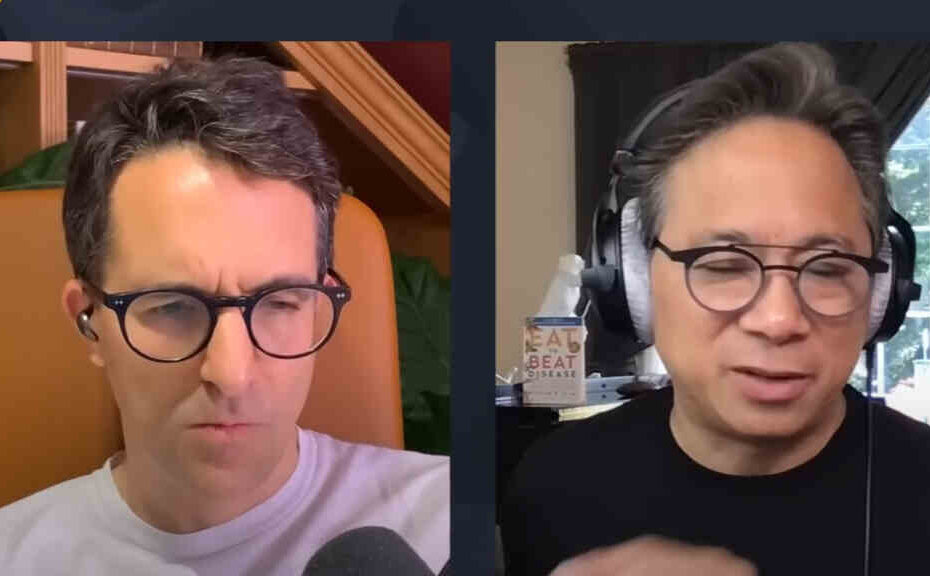
Read the full transcript of world-renowned physician and scientist Dr. William Li’s interview on ZOE Science & Nutrition Podcast with host Jonathan Wolf on “These Foods Reverse Blood Vessel Damage And Help You Live Longer!”, October 3, 2022.
Introduction to Blood Vessel Health
JONATHAN WOLF: Welcome to Zoe Science and Nutrition, where world leading scientists explain how their research can improve your health. Inside every one of us, there’s an immensely complex system of tubes that transports blood, oxygen and nutrients to the cells in our body. This system is 60,000 miles long. That’s enough tubes to stretch three times around the world.
If these tubes fail, the result can be fatal. In some cases, it’s a heart attack, in others, it’s a stroke where the blood supply to the brain is disrupted and brain cells are damaged or killed. Together, heart attacks and strokes are a major cause of death in developed countries.
High blood pressure can ultimately cause your blood vessels to burst or become blocked. For this reason, the condition has earned an ominous nickname, “the silent killer.” And it affects one in four adults. But there’s good news. We can take action to reduce the risks.
In this episode, you’ll learn how to keep your heart and blood vessels in good condition. You’ll also get a unique insight into how looking after this magical pipework really could slow down aging. My guest is Dr. William Li, a world leading specialist in blood vessels and preventative health and the author of countless papers on the subject. Luckily for us, Will has a gift for communicating this complex subject in terms we can all understand.
Dr. William Li, thank you for joining me today. Why don’t we start as always with our quick fire round of questions from our listeners. And the first question I have is, can food improve the flow of blood to your heart?
DR. WILLIAM LI: Yes.
JONATHAN WOLF: Can you reverse existing damage to your blood vessels with food?
DR. WILLIAM LI: Yes.
JONATHAN WOLF: Amazing. Can you reduce cholesterol without statins?
DR. WILLIAM LI: Absolutely. Yes.
JONATHAN WOLF: We’re going all the yeses today. Is there a link between the health of our blood vessels and dementia?
DR. WILLIAM LI: Yes.
JONATHAN WOLF: And finally, are there foods that can slow down aging?
DR. WILLIAM LI: Yes, absolutely.
Common Myths About Heart Health
JONATHAN WOLF: All right, well, I should have somewhere you’re going to say no, but I think that’s a great start. And I think our listeners are already surprised by some of this. What myth around eating for a healthy heart most annoys you?
DR. WILLIAM LI: You know, as somebody who studies blood vessels and circulation, which is what the heart is all about, the thing that really irritates me is when people think that just simply working out, whether it’s jogging, going to the gym, lifting, that that’ll actually guarantee that you’re going to be heart healthy. In fact, that’s only a bit of the solution.
JONATHAN WOLF: Oh, that’s fascinating. All right, we’re definitely going to talk some more about that. Will, what are your three tips for living longer?
DR. WILLIAM LI: Three tips. Number one, get good quality sleep. I’m a doctor, I went through training. I was deprived of sleep for years. That subtracts years off of your life. So get some good rest.
Second, eat healthy. And what that means is going to be different for every individual. But bottom line is that listen to your body, because your body knows what actually is not so good for you when you feel badly. And there’s a huge literature of studying what’s actually good for you. Mostly plant based foods. And we can talk more about that.
And then the third thing really is to stay physically active. That doesn’t mean you have to jog, swim, run a marathon. What it means is that you have to actually move.
Understanding Your Blood Vessel System
JONATHAN WOLF: Brilliant. I think everybody here knows that their heart is really important, right? Anyone for the last 100 years has been told about that? I think most of us, and I’m included, have never really thought about our blood vessels. And I know that blood vessels have been the center of your research. Can you start maybe by explaining why our blood vessels matter?
DR. WILLIAM LI: Yeah. Well, you know, I’m a physician, I’m a scientist, I’m a vascular biologist, which means I study blood vessels and the cardiovascular system. And here’s a little fact that most people don’t know. First of all, when it comes to your heart, which is about the size of your fist, that’s the best kind of surrogate measure of what it looks like in your chest. This heart, this beating muscle, is connected to 60,000 miles of blood vessels that course throughout your body.
JONATHAN WOLF: 60,000 miles.
DR. WILLIAM LI: 60,000 miles. Now, if you were to pull out all the blood vessels in your body and line them up end to end, you’d form a thread that would wrap around the earth twice. Now you can imagine how important blood vessels are when they’re connected to the heart this way. Because your heart, every beat, every pump jets out blood through these highways and byways that bring the blood, the nourishment, the oxygen you breathe, all the growth factors to every cell in every organ of your body.
The Heart-Blood Vessel Connection
JONATHAN WOLF: I’ve suddenly discovered that there’s 60,000 miles of blood vessel inside me, which is amazing. Wraps around the earth twice. Not something to try at home, I guess. How does it link then, from these blood vessels to actually impacting our heart health, which I think is the thing we think about. What’s going on and how does that link?
DR. WILLIAM LI: Yeah, well, you know, I’m sort of trying to give people a view that they may not have thought about.
So imagine just dropping a group of marbles on the ground and they randomly kind of fall on the carpet, they roll around, and they don’t look like anything. Those are your stem cells at say, day five, day seven after conception, when dad’s sperm met mom’s egg. Over the course of the next weeks, those marbles coalesce together and they begin to organize themselves to form these channels. They call them first lakes, blood lakes, before they form tributaries, before they form streams.
And that’s basically at the end of the day, they’re left with one additional area, which is the heart that is special because it actually has muscles, special muscles that will actually pump and its own electrical system. And so basically, when you think about how your heart and your blood vessels are actually connected together, they were formed together at the very beginning. All right?
So what happens to your heart will impact your blood vessels, your circulation, and therefore your organs. And what happens to your blood vessels actually impacts the heart as well. So if you have very stiff blood vessels now, blood vessels are actually very elastic. So basically, when your heart pumps, they will stretch to accommodate the blood, all right?
Because a normal capillary, the smallest blood vessel at the very, getting into your organs to feed your cells, that’s the thinness of a human hair. That’s a human capillary. Now, to jet blood through that, in fact, that that diameter of that blood vessels is smaller than a single blood cell. So even for a healthy blood cell to get through that end channel, it has to stretch to allow things through.
How Blood Vessels Function
JONATHAN WOLF: Oh, wow. So everything about this, these tiny little elastic things that are opening and closing to squeeze through, literally my blood cells.
DR. WILLIAM LI: That’s right.
JONATHAN WOLF: Without my blood cells, my organs are in trouble. Is that right?
DR. WILLIAM LI: Without your blood cells pumping through, delivering those oxygen carrying oxygen, rich red blood cells very quickly, and I’m talking about within seconds, and your organs start feeling starved. Think about getting choked, you can’t breathe, all right? And then soon it turns blue, just like you would be blue in the face. And shortly after that, your organs stop functioning properly.
And when they actually stop functioning properly, they start to malfunction the ultimate malfunction, whether it’s in the liver, whether it’s your kidney, whether it’s your brain. I mean, the ultimate brain malfunction is you have a stroke. And this, by the way, everything I’m talking about in your organs also can happen to your heart.
So when that, when there’s a malfunction of your heart because it’s not getting enough blood flow, it can also happen. The heart has its own circulation, which is pretty amazing. Not surprising, but amazing. When the heart’s own circulation gets clogged or too stiff and it blocks blood flow, then you have a heart attack. And so the things that we hear about heart attack, stroke, cardiovascular disease, these are all problems of that giant system. That 60,000 mile system that formed was one of the first organs that form in your mom’s womb.
The Importance of Blood Vessel Flexibility
JONATHAN WOLF: And so I need this stretchiness in order to deliver down these capillaries. And I think we’ve all maybe heard a little bit about this idea of it being blocked. How does that. Is that the same as not being stretchy or is that actually something different?
DR. WILLIAM LI: Well, right. Well, think about this. So think about a big sock that you’re putting your foot through. Right? So the sock has to stretch like the stock you pull out of the stool out of a drawer is actually pretty thin. That looks too thin for your leg to go through. But because it’s stretchy, you can actually put your foot and then your ankle all the way through it.
JONATHAN WOLF: Right, Yep, I’m familiar. I fought with my daughter this morning to do exactly that, as I seem to end up doing many mornings, because it turns out that it’s a lot easier to put your foot through the sock when the other person is helping, rather than pulling it in the other direction. So.
DR. WILLIAM LI: Right, right.
JONATHAN WOLF: I understand the analogy.
DR. WILLIAM LI: Now, when that sock is no longer stretchy, it’s stiff. Imagine spraying concrete around that sock or maybe even pouring concrete into the sock. Okay. And now try to put your foot through it. It’s not going to go through very easily. Right. It’s stiff, there’s no stretchiness. And that’s actually what happens as we naturally get older and particularly when we’re eating what is the so called Western diet. Now we can talk about that in more detail, but we eat a diet that’s not so good for our circulation.
What happens is that a blood vessel. Let me just kind of give you a little more detail about the stretch. The reason a blood vessel can stretch has to do with how it’s designed. A blood vessel has got different aspects of its wall. Cut a blood vessel in half and look at its cross section and you’ll see there’s a thin lining on the outside. There’s a little muscle on the out beyond that, so the muscle can allow it to stretch. And on the inside, there’s a lining of cells, very special cells called endothelial cells. Endo. Because they’re on the inside. Endothelial cells. These are the liner cells of a blood vessel. So think about Saran Wrap. That’s how thin it is. Okay. Aligning the inside of your blood vessel.
JONATHAN WOLF: Cling film for those of us in the UK.
DR. WILLIAM LI: Yep. Clear film that, by the way. So basically, that’s the blood vessel. The muscle helps it stretch, the wall helps it stretch. The clear sheet on the inside, that is a special layer. That layer is slippery. It’s like the surface of an ice skating rink that’s been polished and buffed before the first skaters got on it. And the reason is that endothelial slippery layer is so important is because blood cells slide right along it. They don’t stick.
JONATHAN WOLF: Got it. So I’m sort of thinking now, but it’s like you’re in a tunnel. But all the walls are covered in like a bit like Teflon, I guess, on my pans or something. Right. Like something very non stick. Is that a way to think about this?
DR. WILLIAM LI: We’ll have to talk about the Teflon in your pan from a healthy eating perspective.
But yes, that’s exactly what it is. And I use the idea of an ice skating rink because many people have spent a winter holiday looking. It could be outdoors, it could be in a skating rink. Or just think about the Olympics. Right. So when the ice is fresh and ready for the day’s first skaters, it is slick, it is smooth, and everything.
JONATHAN WOLF: Just starts at one end and goes all the way to the other end.
The Damage Smoking Causes to Blood Vessels
DR. WILLIAM LI: Take off your sweater and throw it on the ice and it’ll go all the way across the rink. As long as that lining is perfectly smooth, everything will glide right along.
Now, what happens when you actually smoke a cigarette? The nicotine, the chemicals, the harsh chemicals, it damages that Teflon layer. It damages that liner, that transparent liner. Going back to the ice skating rink analogy, it would be like if you took a rake and you just raked the ice and scuffed it up. Now try to throw a sweater on it. It’s just going to stick right there. It won’t slide.
And so that roughening up of the inner lining can actually make blood cells clot, stick and form a clot. That is the beginning of the end. When I say the beginning of the end, that starts to narrow the blood vessel. The blood vessel starts to get stiffer. You don’t actually have that stretchiness. Plaques, fat can actually build on the inside of the wall.
JONATHAN WOLF: And what is a plaque, Will?
DR. WILLIAM LI: A plaque is a thickening, like a plaque on your teeth. Is anything, any kind of a thing that builds up on your teeth, right? So a plaque in a blood vessel is similar to what you would find in your teeth, but it’s on the inside layer. And what it does is it makes it stickier, it makes it narrower, it makes it stiffer. All the things you don’t want in a healthy blood vessel.
JONATHAN WOLF: That makes sense. And I can see if you’re trying to deliver, if I’m trying to deliver anything through this and it’s starting to get more and more constricted. I mean, it doesn’t sound sort of obvious to a layman, right? It doesn’t sound good if I try to push something through and the pipe is getting more and more furred up.
So is there a, is there, you know, I have a toothbrush for my teeth, right? For this situation with plaque. Is there a toothbrush in this situation or is this a sort of one way direction? This is just going to get worse and worse as we get older and we fur up these blood vessels.
Traditional Medical Approaches: The “Plumber” Mentality
DR. WILLIAM LI: Well, this is actually the most exciting thing. When I went to medical school, we thought it was a one way street, meaning once you start narrowing and stiffening the blood vessels, the only way you could do it. We used to think about it like a clogged toilet, right? We’ve all experienced that. Toilet’s supposed to flush, goes all of a sudden it’s not flushing anymore. It backs up. Terrible. What do you have to do? You actually have to plunge it.
JONATHAN WOLF: Call the plumber, or you have to.
DR. WILLIAM LI: Snake something down it to clear it. Right? And so that’s what I was taught when I was in medical school. You got to call the heart plumber, the cardiologist, the interventional cardiologist, who basically will stick a Roto Rooter, which is like a coil in your groin, snake it up through the blood vessels in your groin into the blood vessels in your heart and literally Roto Rooter, basically drill out that clog to clear the toilet.
JONATHAN WOLF: So it is a bit like brushing your teeth. Well, fancier technology, but exactly well.
DR. WILLIAM LI: And then of course it would clog back up. And so what they then invented in the medical world are stents and which are literally little Teflon or metal coated stents that would strut the blood vessel open, right? So sort of like, think about Mission Impossible. You get this little thin thing, you put it into blood vessel and then boom, it opens up and now it’s actually stenting open, forcing open the blood vessel.
Now that sounds good because you solved the immediate problem of the lack of blood flow, but actually gets out what that actually also damages the natural elasticity stretchiness of the blood vessels. Now you’ve got basically an iron tube stuck inside your blood vessels. That’s not normal and that’s not good.
The Statin Solution and Its Limitations
So then we developed statins, which are drugs aimed at actually lowering the amount of stuff that could clog fatty deposits that can clog the plaque on the walls. Statins actually work pretty well. They work by metabolically lowering the amount of cholesterol and other lipids, fatty things that float around in your blood.
If you’ve ever cooked bacon, you know that after the raw bacon starts frying up and the wonderful bacony smell is in the air and you take the bacon out, you know that you’re left with a pan of grease. Right now you’re going off eating your brunch or what have you. You come back to the pan after breakfast and what do you actually have? You’ve got this congealed mess. Imagine that congealed white, creamy, thick stuff, the bacon grease. Imagine that is actually sluicing through your blood.
JONATHAN WOLF: Doesn’t sound good, right? Nobody’s going to suggest that this sounds like a good thing to be going on inside you.
DR. WILLIAM LI: No. And that’s what statins were designed to do, is to sort of try to cut through that grease like a detergent and lower the levels in your blood. Sounds like a good idea. But here’s the problem. Statins which are capable of actually preventing the buildup to some extent, have a lot of side effects.
Actually most. There’s, I mean, this billion dollar blockbuster area pharmaceuticals and many, many people are on them. But you know, statins can damage your muscles, can damage your kidney, can damage your liver. There’s all kinds of things. Every drug has an effect and the potential for a side effect or an unwanted effect. So not particularly a great solution and frankly not a, people shouldn’t take medicines.
Look, I’m a doctor, I was trained to write prescriptions. But my own practice, my own mindset of how to help a patient is really to try if you are forced to give somebody a prescription, my goal has always been to figure out from the beginning when you’re going to take the person off the prescription so they no longer need the drug. Now you need to find a different solution. So this is different than writing a prescription and putting somebody on a drug for the rest of their life.
JONATHAN WOLF: Right.
The Revolutionary Discovery: Food as Medicine
DR. WILLIAM LI: How many of us know people like that and. Or even doctors who actually think that way? My view is that medicines can be lifesaving. But if you put somebody on a medicine, the goal ideally is to figure out how you’re going from the beginning when you’re going to take them off it.
So now research actually has then discovered that there are foods and lifestyle issues that can actually reverse all the things that damage the elasticity, the flow that can block your circulation. I mean, we started at the very beginning, right? We just started saying, drop those marbles. They’re stem cell, they haven’t formed. And then they form and they work perfectly. When you’re a baby and over the course of your life, over eight, during aging, and over the course of maybe less than salutary dietary habits, you’re eating foods that are not so good for your circulation.
You get the clogging, gets a cigarette smoke damages that smooth ice and now it’s sticky. All right, you know, we can. Can we avoid stents? I think we can. Can we use drugs? Yeah, I think we can. But can we use diet and lifestyle to reverse that clogging? That prevent and reverse. That is actually what’s remarkable because scientists now discovered it’s possible to not rely on the drugs or the hardware that I was taught we. That doctor the medical community has to use and will.
JONATHAN WOLF: Before we talk about the food that you can, you know, we could use to do that. Could we maybe talk about the first half? Because you’ve given this example of smoking as being one of the things that can cause damage. And I’m sure most listeners here are saying either they once smoked and they stopped or that they no longer smoke because there has been this amazing decline in smoking. Right. Is one of the great sort of public health improvements. If I compare with levels when, when I was a kid, what else is causing this? And I think, you know, obviously this is a podcast where people are very interested in food. Is what we eat linked to the damage to these blood vessels in the first place?
How Our Blood Vessels Are Designed to Work with Food
DR. WILLIAM LI: Yeah, well, I mean, if we eat a. Well, let’s first talk about before we go to sort of how to fix the problem, let me tell you how. Our blood vessels are perfectly evolved to be able to function with our food. So let’s think about that. 60,000 miles of highways and byways, the lakes and tributaries and creeks and streams that are inside our body that we are very. Life actually depends on has to coexist harmoniously with the foods that we eat.
So just like a river and a stream, you know, there’s all kinds of things that float through your stream and your rivers, right? It’s not one thing. There’s a lot of different things. Similarly, we can eat lots of foods and our blood vessels can handle them. That lining can handle it just fine.
What are the things that our body’s designed to actually handle? Mostly plant based foods. So basically we eat fruits and vegetables, nuts and legumes, seeds. The nutrients that we absorb from it actually are beneficial and they protect that smooth lining. They keep the ice on, the ice skating very slippery. All right, that’s beneficial for our body.
And you know, every now and then you eat that piece of bacon, I talked about the bacon and the grease and you’re going to dump some of that grease into your bloodstream. It’s less than you would have in the pan after you make a, you know, a thing of bacon, a package of bacon, but it’s still there.
Now fortunately, that even though that will actually circulate through your bloodstream once or twice after you’ve had your big brunch with bacon, you. And it tastes great. The fact of the matter is, if you continuously live a life pattern of eating lots of fatty foods, saturated fats, red meats, I mean, look, I grew up and I actually love food. So I mean, I don’t love to eat, but I enjoy food and I appreciate the culinary history that cultures actually have.
So look, I’m not afraid to tell your viewers and listeners that, you know, I’ve enjoyed a great ribeye steak like anyone else, all right? But the problem is that if you actually have that all the time, you have bacon all the time, you have lots of greasy, fatty foods all the time, hamburgers all the time. What happens is that your bloodstream is not that well adapted for that huge amount of fat that continuously circulates.
That’s what your doctor’s measuring. You get your, go to your GP and get your blood drawn, PCP we call it in America, primary care. Doctor, physician. And what are you getting? You’re getting a cholesterol test, a blood lipid panel and that’s actually just a, that’s a test that looks at what are the levels of the lipids in your system? If you eat very unhealthy foods, your lipids will naturally go up because you’re flooding your system with fat.
The Gut Microbiome Connection
Now that can be on top of other damage that unhealthy foods are doing. We do know that, for example, and this is pretty brand spanking new, that the gut bacteria in our body, the healthy gut bacteria, there’s about 39, 40 trillion bacteria that we think that we know that are inside our gut. And these gut bacteria, we call it the microbiome, actually play a critical role in getting rid of the fats that are floating around in our bloodstream and helping our metabolism move smoothly.
So it’s not just eating the fat, but if we eat foods like ultra processed foods with lots of additives, synthetic preservatives, chemicals, all right, too much sugar, too much alcohol, all the things that, you know, I think present day conventional wisdom tells us is not so good for us. I don’t think there’s any mystery to most people who have access to the Internet or the media to be able to figure out what are the foods that are not so good for our health?
Here’s the latest breaking information. Those foods that are not just not so good for us not only can clog up our blood vessels, but they damage our gut microbiome, they damage our healthy gut bacteria. When we damage the gut bacteria, what do I mean, damage? Think about your gut bacteria as a ecosystem like the Great Barrier Reef, with this incredibly dazzling array of organisms that all live harmoniously and do something for the environment. In this case, the environment’s your body.
And then one of the things they do is they help to lower the lipids, they help to improve your cholesterol, they help blood flow smoothly, they help protect the lining of your blood vessels. Now you damage those protector bacteria, suddenly your blood vessels are even more vulnerable. And so it’s not just having the fat, it’s also damaging the bacteria. And so there’s all kinds of things that we can eat. Ultra processed foods, too much red meat, too much fatty foods. All those contribute, conspire together to thwart the natural resilience of our circulation.
JONATHAN WOLF: And these are topics I think, that we talk a lot about on this show. So it’s fantastic to hear these links back to heart health. Just before moving off that we had a lot of questions about high blood pressure. Does high blood pressure fit into this story about what’s going on with all of these vessels, or is this a completely different thing that’s going on inside us?
Understanding Blood Pressure
DR. WILLIAM LI: Yeah. Well, so let’s kind of review a little bit about what actually blood pressure means, right? So you go to the doctor’s office and, or you could do this at home. You put on a cuff, usually at the bottom part of your upper arm. You blow it up, and then there’s like a little meter that actually clicks off and the blood pressure is two numbers. They call it the systolic or the top number, and diastolic is the bottom number. Without having to go into the physics of what all that means, it’s two numbers. Blood pressure.
JONATHAN WOLF: That’s all I’ve ever understood. So that’s great that I don’t need to understand more. Thank you, Will.
DR. WILLIAM LI: Well, I’ll break it down in ways that actually matter to what we’re talking about. The first number, called systolic, is a reflection of how fast and hard the heart pumps the blood out. So if you look at the ideal blood pressure, which basically, it’s an ideal. It’s like 120 over 80 or 120 over 70. That first number, 120, that’s 120 millimeters of mercury of jetting out. That’s a good amount.
If you go to 130, 140, 150, 160, like you’re getting to – it’s like driving on a highway. You know, speed limit, 40 miles per hour, or I can’t translate my to kilometers, but, you know, in America.
JONATHAN WOLF: Our Canadian listeners will forgive you. It’s okay.
DR. WILLIAM LI: But then you actually put your pedal down, and now you’re going to 60. Now you’re going to 70. Now you’re going to 80, 90. Now you’re redlining the car, all right? And, you know, just from sitting behind a driver’s seat, you’re going too fast, all right? And your car is telling you you’re going too fast. That’s the similar way of jetting that blood out faster and harder with more force. And that’s when you start to get into high blood pressure. 140, 150.
JONATHAN WOLF: Why am I having to push it harder than I did when I was younger? Why am I now having to do this?
DR. WILLIAM LI: Because the heart has to actually get a healthy bolus of blood delivering oxygen and nutrients to all those cells 60,000 miles. When the arteries, the blood vessels that it’s pumping through are stiff, it has to pump a little bit harder in order to get it.
JONATHAN WOLF: Oh, and that compression, the thing that’s causing this problem is that entirely about the blood vessels through the rest of your body.
The Causes of High Blood Pressure
DR. WILLIAM LI: Not entirely because many things can cause blood pressure, high blood pressure, but because we were talking about clogging, that’s one of the consequences of the clog. Now, if the heart is actually racing too fast, it can also – and the body can’t compensate for it, it can also raise the blood pressure.
There’s another part of it which is the back pressure, that second number of the blood pressure, the diastolic. We talked about the two numbers. The first one is the jet. The second one is the back pressure, because there’s always a little pressure. If we didn’t have some back pressure in our body all the time, we’d be fainting. No blood to our brain.
So that back pressure is basically what we call the resting or diastolic pressure. If that’s too high, we’ve got a lot of tension in the circulation as well. That can be fluid overload. You can have too much fluid in your system. So there’s lots of things that can cause high blood pressure.
But here’s the consequence. When you have continued, relentless, unremitting high blood pressure, you got to think about what happens. Like that tension, that jetting, that pressure builds up and your organs suffer for it. Either they’re not getting enough blood or they’re actually – and they may be starved of the blood, or they’re actually not getting the right delivery of those nutrients in the right way. That is actually very damaging over time. That’s why high blood pressure is a silent killer. It sneaks up on you. It can exist and you don’t even know it.
JONATHAN WOLF: You don’t feel anything. Right?
DR. WILLIAM LI: Well, like you don’t feel it and become – until it becomes catastrophic.
JONATHAN WOLF: It can be related to your blood vessels, but it’s not entirely. Like how important is the blood vessel part of this story for high blood pressure? Is it just like a little part? Is it important? If I’m worrying about blood pressure, I…
DR. WILLIAM LI: I would say blood pressure and blood vessels are – they go hand in hand, but clogging of the blood vessels is not the only issue, not the only problem. There’s many other components, but I would say blood vessels are involved in every aspect of blood pressure.
And by the way, remember the stretchiness. If your blood vessels are elastic like the sock out of your drawer, we talked about when the pressure’s high, it just stretches a little more and the pressure comes down. And so when your blood vessels are stiff, when there’s a lot of jet, it can’t stretch. Now your blood pressure is going to go up.
Age, Genetics, and Diet’s Role
JONATHAN WOLF: Right, got it. And I know from another conversation we’ve had that I think, you know, on average, we lose some of this elasticity with age, isn’t that right? Because I happen to know my co-founder, Tim has ridiculously elastic blood vessels for his age. It was something that Sarah discussed out of a study we’ve done.
So how much of this is – I think, again, the question a lot of people are asking is like, how much of this is just inevitable, right? You’re getting older, so there’s nothing you can do about it. How much of it is just like it’s your genes? You know, my grandfather sadly passed away because of a heart attack. So clearly there’s some potential genetic predisposition. How much of it is explained by this and how much actually can diet really affect what’s going on over these years and decades?
DR. WILLIAM LI: Well, in the same way that we talked about how diet can help protect your blood vessels by eating healthy foods that preserve, protect, and even regenerate, renew the lining, that ice skating rink, the clear wrap on the inside your blood vessels, foods can actually help you maintain that youthful elasticity of the blood vessels.
So too, foods that are harmful can actually cause it to clog up. And so there is clearly value for longevity, for resiliency throughout your aging process, for eating healthier foods. And likewise, if you nurture an unhealthy lifestyle – you smoke, you don’t exercise, you eat unhealthy food. Right. By the way, a footnote on it back in the day, that’s actually how most doctors live their life. They had all the stress. I remember being training in a hospital and they had actually a smoking room for doctors, which is ridiculous. Right.
But the point is that you can do bad things to your circulation, your cardiovascular disease, your blood pressure, or you could do good things. So I think what you’re trying to get at is is it destiny that our blood vessels are going to get damaged over time, or are there ways that we can slow that process down or perhaps even reverse that process?
Reversing Heart Disease Through Diet
The answer is, and this is what’s quite striking, it’s possible to take somebody who has existing, established blockages in their blood vessels who would otherwise be requiring a stent, the plumber, call the plumber, put the equipment in, or requiring drugs like the statins. All right? That if you actually give them an intensive regiment of lifestyle change, starting with their diet.
You cut down the, you cut down or cut out the saturated meats, no red meat. Remove that. And you really switch that. You upend their dietary equation by putting them on high fiber foods, fruits and vegetables with high fiber. What does that do? Oh, it feeds your gut microbiome. Now your gut bacteria are happier. They restore their community, their ecosystem. Now they’re working in your favor.
All right, this lifestyle change. Now you can eat foods, more foods, fruits and vegetables, nuts and legumes, seeds that actually then renew, regenerate the damaged lining. So, you know, just like our skin renews itself and our hair for most people renews itself, right? Which is why we need a haircut and the skin sheds, which is why people have dandruff. All right, there’s a renewal of the blood vessels.
If you eat foods like lots of foods that actually have healthy bioactives, natural chemicals that can stimulate regeneration. So an example would be anthocyanins that are present in dark chocolate or they’re present in blueberries. They will actually eggplant. They will actually help to renew. Replacement those old damaged liner cells in your blood vessels. Now you’re actually regenerating damaged tissue.
So what’s quite fascinating with intensive lifestyle change, starting with diet, replace unhealthy fats with healthier fats. Omega-3s are better than butter and palm oil and lots of other less than healthy fats. Cut down the amount of oil. Omega-3s are a very healthy form of fats. You can get them from nuts and seeds. You can also get them from seafood, which is known to be heart healthy.
You’re actually protecting the liner. You’re starting to dissolve by replacing, regenerating the liner, you’re actually also dissolving some of the plaques that have accumulated. So it’s sort of like mother nature’s toothbrush. Using the natural substances that are present in your foods and you can replace and reverse heart disease.
Diet, by the way, is only part of the equation. There’s other things like regular physical activity that’s helpful. Why does that? It gets the blood, that your juices flowing, literally gets your blood flowing. That’s important for reversing heart disease, of stress, lowering stress and sleep.
Clinical Evidence for Lifestyle Interventions
JONATHAN WOLF: Is there because, I mean, this sounds great. It’s very much in line, interestingly, with the advice for things that have got nothing to do with blood vessels. It’s always interesting how much alignment there is at the maxim level. Are there real clinical trials and studies that support this because I think some people will be listening and saying, you know, well, reversing, you know, heart damage, that sounds a bit radical. You know, I know that Will’s a doctor, but you know, are you way out on the ledge? Is there the data to support what you’re saying?
DR. WILLIAM LI: Yeah, well, first of all, I was a skeptic on this for many years. Look, I’m part of a cadre of life scientists that actually I’ve been involved with biotech drug development. So for me, my wheelhouse actually has been to develop the latest new drugs. And actually I’ve been involved with developing stem cell therapies and gene therapies for heart disease. So I’m not a kale waiver. I’m not somebody that sort of stepped away from the fold.
JONATHAN WOLF: For those of you who are on video, you’ll see that Will doesn’t look like a kale waiver either. But if you’re just on audio, you know, it’s harder to tell.
DR. WILLIAM LI: But yeah, so I believe in medicines, I believe in advancing medicines. But I was a skeptic. I’m like, how can lifestyle do it? But I have to say from the very beginning, we know that after you have a heart attack, that if you go for what they call cardiac rehabilitation, cardiac rehab, that’s what every patient leaving the hospital undergoes to recover from a heart attack. It’s a manner of actually diet and lifestyle and reduction.
And if you really take it pure clinical studies that have actually compared interventions to lifestyle management. I would cite the work of Dr. Dean Ornish, who is a professor at University of California, San Francisco. He’s at the Preventative Medical Research Institute. He’s actually done a career worth, you know, probably 40 or 50 years worth of research looking at the reversal of heart disease. That does not require the hardware and pharmaceuticals.
And you know, again, it’s not a magic, it’s not a silver bullet, it is not a one step deal. Is a pretty big commitment to change. For somebody who’s lived their life to actually suddenly be, quote, “scared straight” and that because you’ve had a heart attack or you’ve had a big warning sign and now you need to actually change your diet and learn, find new ways to eat that bring you joy and then to learn how to lower stress. I mean, how many of us live in a continuous state of stress? Especially if you’re building a career.
JONATHAN WOLF: I’m running a startup, doing this podcast, have children. I’m 100% in a permanent state of stress, Will.
The Importance of Stress Management
DR. WILLIAM LI: And I can tell you, training in medicine, I mean, just being a doctor, going through the training, is high stress all the time. That’s not good for us. And so one of the reasons why people that work at a high level of stress, probably like you and me, that’s why we enjoy vacation so much, is that when we take a break, our body truly thanks us for it. Our minds also do as well. Our gut bacteria also thanks us for it because we tend to be more active and probably eat slightly healthier things and take it easy on ourselves.
And so I think this idea of self renewal is very important for not only preventing disease, but reversing disease. And that’s why I’m trying to emphasize it is definitely possible to reverse heart disease. It’s not, you know, just pop a pill in your mouth and swallow it, chase it down with a drink of water. It’s a commitment to a better lifestyle, a healthier lifestyle.
The Philosophy of Medicine and Patient Care
JONATHAN WOLF: And I think you’re not saying no one. I don’t think you’re saying to people that everyone should stop taking their statins who has currently got them from doctors? I think, you know, I don’t believe you’re saying that. Is that right, Will? You’re saying that there is ultimately this enormous impact that you can have through your diet and your lifestyle, which there’s real scientific data to support. Am I putting words in your mouth?
DR. WILLIAM LI: No, no, you are absolutely correct. And as I said, I’m a medical doctor trained in that hardcore, using all the tools in our toolbox. And as I said, I’m actually involved with developing the next generation of treatments for heart disease and stroke and many other cancer, many other conditions. So I’m a big believer in using the best tools.
But what I said at the very beginning, my own philosophy is that if you put somebody on a medicine, the goal should always be as a doctor, to figure out how to get them off the medicine. And if all you do is to renew the prescription over and over and you just tell the patient, “just take it. That’s what you need to do,” we’re not doing enough.
And I think what patients and people need to realize is that if you actually have cardiovascular disease, there’s a tour of health care that you could do for yourself doesn’t rely on a doctor. There’s no anesthesia required. It doesn’t require a pharmaceutical. It requires something that you do at home, which is caring for your heart health, and that’s done with diet, physical activity, sleep, and stress management.
The Connection Between Blood Vessels and Aging
JONATHAN WOLF: I think it’s brilliant. I want to make sure we don’t run out of time, because I really want to talk a bit about aging because we’ve talked a lot, obviously, about heart health, and we’re very conscious that that might affect your ultimate length of your life. But at first glance, aging doesn’t seem very linked to heart health to me. It doesn’t really seem obviously linked to your core research about blood vessels. But I know we were having a discussion prior to this call, and we’re talking about aging and dementia. Could you tell us a bit about how your research has taken you here, what the links are with sort of all of the things about our blood vessels?
DR. WILLIAM LI: Yeah. Well, I mean, first of all, people think of aging in a very particular snapshot sort of way. Right? We think about our grandparents. We think about a picture of an actor that we know who’s now at the twilight of their career or their life. And look at all that gray hair. Look at all those wrinkles. That’s a snapshot on time.
Here’s the reality. The moment we are born, the moment the doctor delivered us and gave it that little swat on the butt to allow us to take our first breath, that’s when the aging clock starts. We are aging from the moment we are born.
JONATHAN WOLF: That’s very depressing.
DR. WILLIAM LI: Well, but I would say that’s only because our social construct of aging is looking at the terminal components of our life. But if you think, rethink aging in a different way and say, “you know what? Aging is completely normal. It starts from the time we were born, and we just continuously advance.”
JONATHAN WOLF: Right. So don’t think about it as getting better and then getting worse, which I think, after all, my children are all terribly keen to be older. And then that suddenly switches, doesn’t it, for different people at different ages? You know, I think I remember a long time ago turning 30 seemed like somehow that was a tip. But I know other people who, frankly, didn’t get there till they were 50 or 70.
The Evolution of Human Longevity
DR. WILLIAM LI: Well, you know, so here’s an interesting thing. When I was in medical school, which was in the 90s, we were looking at the average longevity of people to be like, in the early 70s, 72. Now people live to 86, 87, 88 routinely. Right. And so think about that from a societal perspective. Our whole society, when we live in a country and a nation that has means and resources, everyone actually gets older.
By the way, here’s another thing for you. 100 years ago, most people only live to like, 40 or 50. So we’ve actually can, we’ve pretty much doubled our lifespan. I mean, here we are bitching and moaning about not living to 100 or aspiring to deliver 120. I would say step back and take a look at the big picture. A hundred years ago, we didn’t live half as long as we live now. So now we’re actually living into our 80s.
Key Takeaways and Summary
JONATHAN WOLF: Brilliant. Well, thank you so much. We’ve covered a lot of stuff and I always try at the end to try and do a summary. I think it’s going to be particularly challenging, but I’m trying to do that just to capture the key things that we discussed today.
So I think we started off with this amazing fact that there are 60,000 miles of blood vessels in each of us that over time, in fact, aging starts from the day we’re born. And specifically for our blood vessels, they start to stiffen, which is a big problem because you’re describing how tiny the ones are at the end in order to feed all of our different organs. And they can end up getting blocked, whether it’s from smoking, but also through the sort of Western diet that we tend to eat.
This is quite heavily related to high blood pressure, which you said is a silent killer because many of us aren’t really aware of it. But the good news is it’s not just destiny. We’re not entirely stuck with the genes we were born with. And in fact, even more positively is we can actually reverse some of this damage. There’s not just about stopping it. It’s possible to reverse it. We can actually reduce some of these blockages.
And of course, as medical, modern medical science, you talked about stents or statins, but actually, I think you were really saying that lifestyle change would be at the top of your proposal with these things really being secondary. Is that right?
DR. WILLIAM LI: That is completely correct. Well summarized.
JONATHAN WOLF: Brilliant. Well, thank you so much for coming on. I really enjoyed that. There are many other topics that we could have covered and I hope we’ll have a chance to talk about some of those other ones in the future.
DR. WILLIAM LI: Well, thank you very much. It’s a pleasure to always, it’s always a pleasure to speak to you and look forward to continuing our conversation.
JONATHAN WOLF: Brilliant. Bye bye.
DR. WILLIAM LI: Bye bye.
Related Posts
- Transcript: Harvard Scientist David Sinclair Interview: FO562 Raj Shamani
- Transcript: Diary Of A CEO Interview w/ Neuroscientist Andrew Huberman
- Mel Robbins Podcast: w/ Gut Specialist Dr. Rajsree Nambudripad (Transcript)
- Transcript of FO556 Raj Shamani Interview: w/ Andrew Huberman
- Transcript of Tukaram Mundhe Interview: Nation Wants To Know With Arnab Goswami