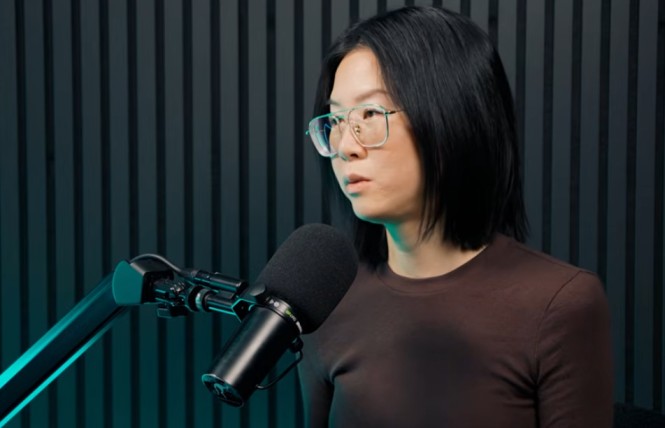
Editor’s Notes: Join Chris Williamson and sexual neuroscientist Dr. Debra Soh as they unpack the growing “sex recession” and why modern generations are increasingly withdrawing from physical intimacy. This deep dive examines how technology, mental health challenges, and evolving social hierarchies are fundamentally changing the way we connect with others. Dr. Soh shares key insights from her new book, Sexinction, providing a provocative and essential look at the future of human relationships in a rapidly shifting landscape. (Mar 16, 2026)
TRANSCRIPT:
The Sex Recession: A Real and Growing Problem
CHRIS WILLIAMSON: Is people having less sex a big deal?
DR. DEBRA SOH: It is a big deal. Well, ask anyone who’s not having sex if it’s a big deal. I think they’ll tell you, yeah, it is a problem, especially considering that it is young men who are typically in their prime and at the peak of their sexual drive. So not only is it, I think, quite frustrating for them, but also when you’re in a situation like that where you’re struggling, it’s not just about the sex, it’s also about the connection and the emotional intimacy and the larger feeling of connectedness and community.
So Sextion is very much about the sex recession and the fact that young people, millennials and Gen Z in particular, are having less sex than previous generations. And I was skeptical at first. I thought that this talk about the sex recession and sexlessness was overblown. But after I sat down, I got a chance to go through the data myself, look at the media reportage, talk to people. And we see consistently with multiple data sets that one in three men and one in five women have not had sex in the past 12 months, which is a large number of people.
So I was interested with this book. What is taking the place of sex, and what does that say about where we’re headed in the future?
How Modern Sexual Activity Has Changed
CHRIS WILLIAMSON: How different is modern sexual activity to what we understand about the past?
DR. DEBRA SOH: Well, in terms of the outlets that we have available. So one question has been, is sex really on the decline, or is it that other outlets are taking the place, like porn, masturbation, things like OnlyFans, or now AI companions? So each of these subjects have a different chapter in the book to themselves, with me explaining and trying to understand what the trend is about. Is it convincing? I test them out myself, which was a lot of fun in many cases, going through the scientific research in terms of what we do know about these technologies, and then also talking about the evolutionary biology and psychology that is underpinning them. So what makes these technologies alluring to human beings? And why is it that it’s potentially dangerous or distracting us from real life sex?
CHRIS WILLIAMSON: How different is the amount of sex, person on person sex, that modern people are having compared with what we understand about the past?
DR. DEBRA SOH: Well, everyone across the board is having less sex. So regardless of whether you are married or in a relationship or single, it’s in eastern countries, western countries, basically all developed countries, and all age cohorts, but as I mentioned, most more specifically among young people.
But your question earlier about whether it’s taking the place of masturbation or other sexual outlets — if you look at studies that are asking about adolescent sexuality, so this is an understandably uncomfortable subject, right, to think about adolescent sexual awakening. But they had parental consent, so it’s a legitimate study. And what they found is even among adolescents, they are having lower rates of masturbation. And across the board, with everyone, less partnered sex, less intercourse, less anal sex, less all types of sex — oral sex, partner masturbation. Solo masturbation as well. So across the board there’s been this decline.
So it’s not that people are just preferring masturbation, although I do think that is something that is happening, especially when we look at pornography and girlfriends and boyfriends and that type of thing. But it seems like there’s something else. There’s a larger phenomenon. And I also speak to the role of endocrine disruptors in one chapter because I think there’s something else biologically happening.
CHRIS WILLIAMSON: So it’s not just that the pie of sexual activity has been redistributed from person on person to solo person, or person with machine or person with doll or whatever. It’s that the overall size of the pie has gotten smaller too. There is less sexual activity happening as an aggregate.
DR. DEBRA SOH: Yeah, yeah, that seems to be the case. And what I find interesting, as you mentioned, with dolls and robots, with the technology improving over time, I didn’t think this was going to be the case. I always thought people would prefer in person, real life sex, but I’m beginning to think people are actually preferring the solo methods. And it’s potentially dangerous. If it comes to the point where we have these surrogates like robots, where you can implant an AI and they are no different from a real life person, I really think eventually some people will be turning that way, but it’s going to be much more popular than I had anticipated.
When Did the Sex Recession Begin?
CHRIS WILLIAMSON: When did the sex recession start, in your opinion?
DR. DEBRA SOH: It’s been documented for probably the last 30 years or so. The 90s was when it really started to taper a little bit. But it’s been the most, I’d say, prominent in the last 20 years. Covid definitely played a role in making things worse, but it was happening before that.
So the Internet, I think, is a big part of what’s happening. Smartphones as well as social media. Sadly, social media was supposed to make us more connected and it, if anything, seems to have made us more divided, even outside of the realm of sexuality.
The Statistics Behind the Decline
CHRIS WILLIAMSON: I had some stats I wanted to read out to you. 1 in 8 26-year-olds are a virgin. 24% had no sex in the past year, about double the rate of 2010. Among men from 18 to 24, around 1 in 3 report no sexual activity in the past year. 26% of U.S. adults reported no sex in 2021. 37% of adults having weekly sex is down from 55% in 1990. 37% of Gen Z had no sex in the last month versus 19% of millennials. So even when we’re talking millennials, there’s a big jump again. 48% of married couples had no sex in the past month. And the deadbedroom subreddit is just cranking at the moment.
But this is my favorite one, by far. A survey of Gen Z found 67% would prioritize a good night’s sleep over sex.
DR. DEBRA SOH: Yeah, I’m not surprised. Not surprised.
CHRIS WILLIAMSON: You like a good night’s sleep.
DR. DEBRA SOH: Well, that too. But the fact that, yeah, this is such a common trend. 2016 was when the first really big study came out showing this. At the time I thought this is probably a fluke, it’s probably a one-time thing. But more and more, just consistently, so many data sources are showing the same thing. It’s very concerning.
I do think mental health is another big part of it. I think people are very exhausted with day to day life, but it’s also a lacking prioritization of sex. These other replacements for sex are taking the place because they’re easier. And then globally, 5% of people are depressed right now. So if you’re depressed or you’re anxious — like Gen Z is, half of Gen Z has a diagnosed mental disorder, and of them 90% have anxiety. There’s a lot of anxious Gen Zers.
And so if you’re anxious and depressed, the last thing you’re going to want to do is go out and meet people, sit down, have a date, potentially face rejection, have to be entertaining, loss of motivation, feeling very self-conscious, all of this stuff. So it’s multifaceted in terms of all of the factors that are leading people to decide instead, “I’d rather just stay at home and swipe on apps even if I’m not meeting anybody.” Or sleep.
CHRIS WILLIAMSON: Or sleep.
DR. DEBRA SOH: Yeah.
Hypergamy and Unrealistic Standards
CHRIS WILLIAMSON: What’s happening with hypergamy?
DR. DEBRA SOH: Hypergamy has taken on a life of its own, I think, in Internet culture. From a research perspective or scientific perspective, it’s the idea that women tend to want to date or marry men who are at the same level of success or who are more successful than they are. So women typically marry up. And yes, this is true.
I think in some ways it’s gone a little bit off the rails because I write in Sextion about the three sixes rule. So the idea that women look for men who are six feet or taller, who make six figures or more, and who have a six inch penis. Can I say penis on your podcast?
CHRIS WILLIAMSON: You can say penis if you’d like.
DR. DEBRA SOH: Every other media outlet, I’ve been like, “Is it okay if I say this? You can bleep it out.” So basically, if a man does not meet those criteria, he’s not considered worthy of your time in, say, the Internet dating culture for women. And none of those things really correlate with success in a relationship or marriage. So when you do the calculations, as I have, it comes down to this tiny, tiny percentage. And then you have to also take into account, is he nice to you? Do you have chemistry? Do you have things in common? Can you have a conversation? Does your conversation last more than like five seconds? So the more important factors whittle it down even smaller. I think women who are abiding by these criteria may be missing the bigger picture.
CHRIS WILLIAMSON: How many women do you think are abiding by the three sixes rule?
DR. DEBRA SOH: So it’s interesting because when you look at the Internet and what’s on social media, this is something that women are really pushing forward. But at the same time, having talked to a lot of men about what dating is like nowadays, from what I’ve been told, women have really unrealistic standards in terms of what they’re looking for.
But I would also say social media has made men want to date super hot women who may or may not look like their photos — may be super photo-edited and really perfect looking but may or may not look like that in real life, or might have had a ton of procedures, as I have a chapter on plastic surgery. So I think both sexes have very unrealistic expectations of what they want.
But like anything, evolutionary psychology and biology is not prescriptive. It’s not saying this is what you should do. It’s just basically generalizing or noticing trends in behavior that explains mating psychology. And like anything, the Internet takes it in and runs away with it.
Mating Dynamics and the Reality of Standards
CHRIS WILLIAMSON: My favorite place for doing mating research is the pool at Soho House here in Austin. And it’s honestly f*ing ground zero for looking at mating dynamics. A lot of the time I’d be there with friends and there’d be a group of girls on the bed next to us and they’d be 24 or something, paying for a Soho House membership — it’s a couple of grand a year — so they’re probably educated and earning well or whatever. They have never said, “Oh, it’s because of the size of some guy’s penis.”
Now you can say they wouldn’t want to publicly state that. That’s kind of a bit uncouth. That’s going to make them seem a little bit silly. The data that I saw from MC Murphy — he was sat in that seat — suggests that if you’re a guy with a 6 inch erect penis, you’re in like the 97th percentile. So it’s bigger than basically any woman has ever seen. So I get the sense that that’s not an issue. The six pack abs, if you switch it out for that, right, which is a guy that’s sort of muscular and in good condition, I could see that a little bit more. I think if women actually saw full 6 inch penises more, they would actually be like — I mean, 98th percentile.
DR. DEBRA SOH: Well, yeah, because the average penis is five inches. But what’s interesting is most women say they want a 6 inch penis. Most men think women want a 7 inch penis.
CHRIS WILLIAMSON: And most men think that they have a 6 inch penis.
DR. DEBRA SOH: Probably most men are actually harder on themselves. I didn’t mean to —
CHRIS WILLIAMSON: Oh, they think they have a 4 inch penis. They have a 5 inch penis. Women want a 6 inch penis, and men think that women want a 7 inch penis.
DR. DEBRA SOH: So that’s the thing also with hypergamy. I feel men are really — I don’t want to say hard on themselves, but they challenge themselves more than they need to.
CHRIS WILLIAMSON: Keep using the word “hard.”
The Tall Girl Problem and Hypergamy
DR. DEBRA SOH: It’s fine because they think women want — I read about looksmaxxing. Men think that women want this super hot Chad guy, that he has a perfect bone structure, that he has to have all these metrics. Especially guys are getting penile injections in terms of filler or they’re getting enlargement, and women — I mean yes, some women do like those things, but by and large most women care more about resources and protection and whether you’re a good person.
So I think hypergamy has also gone off the rails a bit in that way, in that men think that women just keep wanting more and more and more, and better and better and better. And to some extent that’s true. But I think also we have to give love some credit as well. And if you’re happy with someone, I don’t think the other person is going to have a reason to go elsewhere.
CHRIS WILLIAMSON: Yeah, I get this. And the Internet — it makes a lot of sense on the Internet because it’s very easy to put into a spreadsheet. I can put my height, I can put my penis length, which I do all the time. I can put all their objective metrics. And it’s kind of like that “is having a boyfriend cringe now” article — very quickly, if you go outside, you realize that “is having a boyfriend cringe” is only true on the Internet. In the same way as the Kardashians made skinny not a fad, it just really doesn’t exist.
If you go out into the real world, if you go and sit around Soho House pool, for the most part, the issues that I hear from women and that I hear at my live shows is: guys aren’t ready to commit, they’re not sufficiently emotionally educated, they don’t seem very balanced, they don’t really have their life together, they don’t have a mission, and they don’t know where they’re going.
Now I think that a lot of that is maybe publicly acceptable ways of putting a more difficult to define sense that there just wasn’t chemistry, something wasn’t quite right. If you’re a post-grad girl trying to date a blue collar guy, there might be a little sense of socioeconomic imbalance going on here. Have you heard me talk about the tall girl problem?
DR. DEBRA SOH: I have the high heel problem.
CHRIS WILLIAMSON: Yeah. F*ing Scott Galloway. Scott Galloway keeps calling it the high heel effect because he’s ancient and demented. It’s the tall girl problem. And then he stole it from me and started talking about it on CNN and misnamed it, and now that —
DR. DEBRA SOH: Anyway, tell me, tell me Chris, what is the tall girl problem?
CHRIS WILLIAMSON: It’s exactly what you’re talking about, which is if you have women that are socioeconomically more successful, you have an ever increasing group of high performing women and a never decreasing group of ultra high performing men that are above and across from them. That gives most men this sort of invisibility cloak that means they’re not seen by women as potential protector providers.
It creates a large cohort of women that did everything right — went to university, got the job, pursued their career, got financial independence — and are struggling to find any guys that they’re attracted to and can’t really work out why. And that guy that’s in the rarefied strata at the top has a wealth of options, so they’re able to use and discard women.
And then that really gnarly outcome is that if you have casual sex with somebody, that skews your own self perspective of your mate value. Your self-referential mate value perspective gets a little bit tuned up and you think, “Well, I got it for one night, I should be able to get it.” It’s like there is a difference between what you can get on rent and what you can buy.
And that altogether doesn’t make for a very easy environment, because these women don’t want to be used and discarded, but they also don’t necessarily feel that much resonance with the guys that are in the cohort of men that are socioeconomically below them. Men that are in relationships where they’re not the primary breadwinner are 50% more likely to use erectile dysfunction medication. A man loses his job, the likelihood of divorce doubles. A woman loses her job, no difference in terms of the likelihood of divorce.
So all of these things are kind of raw physics of the system. And we can say, well, maybe you can offset hypergamy, maybe women are going to learn to value other things. But I get the sense that this is more the literal physics of the system — largely unbreakable — especially given women out-earn men by a grand and a half per year up to age —
DR. DEBRA SOH: 31. In 1 in 7 couples now, the woman is the primary breadwinner.
CHRIS WILLIAMSON: Yeah, yeah. The bottom 40% of male earners and the top 20% of female earners are dating female primary breadwinner. So the top quintile for women and the bottom two quintiles for men are dating in the opposite hypergamous direction. You don’t even need to talk about the endocrine disruptors and the desire for sex and porn and all the rest of it — just the coupling. Because I’d be interested to know how much hypergamy plays a role when it comes to a one night stand.
DR. DEBRA SOH: Well, okay, so that’s a huge thesis of my book. This idea that because women are becoming more educated and more financially successful than men, they have fewer suitable bachelors to choose from. So what you find is that very successful — well, I need to coin my own term for this, and I’ll go on CNN and then misquote it, call it —
CHRIS WILLIAMSON: Call it something else, and then you and Scott can have a f*ing battle to the end of time to work out who can misquote me.
DR. DEBRA SOH: So what happens, as you’re saying, is that there’s this smaller pool of very successful men who have their pick of the lot and are disincentivized in terms of settling down. If they want, they can have multiple marriages in a row. You will see this happening. So you can’t have polygyny, but what you have is multiple marriages in a row. They’ll marry someone, have children, divorce her, have another marriage, have children, divorce, and so on.
And then what happens is with men’s dual mating strategy — you have long term choices and short term options. The women who fall into the short term bucket may erroneously think that they’re one of the long term options. But men, when they meet a woman, they choose which bucket she’s going to go into, and there’s not much chance of a crossover — the Madonna-whore complex. Yeah, exactly.
So in terms of hypergamy and how to fix it, I think getting rid of DEI would be one start — diversity, equity, inclusion initiatives — because that actively penalizes men for no good reason. And if you are —
DEI, Education, and the Male Disadvantage
CHRIS WILLIAMSON: It actively penalizes men as opposed to just lifting up other groups.
DR. DEBRA SOH: Yeah, well, coming from academia, I can tell you that there have actually been job postings — I’ve seen them myself — where they explicitly say this job is for a minority or a woman, basically ruling out white men. And I’m an immigrant, so it doesn’t affect me, but it’s crazy. I’ve had so many colleagues tell me this — I’m not in academia anymore, but they will tell me the things that they experience behind closed doors, where if they want to apply for something, they’ll be discouraged because they’ll say, “This position is for a woman or for a minority, so don’t bother applying.”
So this is just one faction of society. My understanding is this happens everywhere — very much in corporations as well. But I think it’s been hopefully dialed back a little bit since.
CHRIS WILLIAMSON: And your goal here is that if you enable men to get access socioeconomically, that allows this imbalance — the tallness of women — the men get to grow a little bit taller.
DR. DEBRA SOH: Right, right. It lets it be a little bit more of an organic outcome.
CHRIS WILLIAMSON: Isn’t it strange? There’s sort of a zero-sum perspective of empathy, where any support that’s given to any group is seen as being taken away from another group — especially one that’s more deserving. And that if we support and raise up men, that means we’re taking it away from some minority or somebody else who should deserve it.
But if your goal is to live a happy life — if you’re not enabling guys, if you’re a woman and a mother, you don’t even need to be in the dating pool. A married mother that’s exited the dating pool — presumably you want your daughters to be able to have eligible partners. The very dearth of eligible men is caused by the fact that they’re not being given this kind of access.
Now it’s an interesting one, because I don’t know if men are actually that keen about the idea of going to university. I don’t know how driven they are about the career thing in quite the same way anymore.
DR. DEBRA SOH: Part of it, I think, is because of the DEI and the feminism, and that they sense they’re not going to get a fair chance. If they’re being taught all through the education system — in high school even — I’ve seen polls where male students say they feel it’s unfair, that girls are favored by teachers. So already they’re feeling a bad taste in their mouth. And then you go to apply to university and you know that the odds are stacked against you.
I do think I understand why some people, especially some women or more progressive women, may be fearful of allowing men to have a fair chance, or of rolling back some of the advantages that have been given to women, because they fear — is this the start of us not being allowed to work?
CHRIS WILLIAMSON: Yeah.
DR. DEBRA SOH: Or not being allowed to pursue education or own property or things like that. But I think they have a very misguided idea of what the outcome is going to be. Because if it continues this way, where women are continuing to outperform men in education and make more money — who are you going to date? They think that the men, because they have fewer options, are all going to be clamoring for these women. But these women, because they’re so educated, want nothing to do with these guys.
CHRIS WILLIAMSON: Correct. Correct.
DR. DEBRA SOH: So they’re all fighting for this smaller pool of men, and it’s going to be vicious.
How Birth Control Has Affected Mating Psychology
CHRIS WILLIAMSON: Yeah, it’s not good. How has birth control contributed to this?
DR. DEBRA SOH: Birth control has affected mating psychology. I’ll start with women. It’s because birth control halts ovulation. Just very briefly for your audience, in case they may not be aware of how birth control works — ovulation is when women are the most fertile in their cycle, when they can become pregnant. That window is typically around day 11 to 16 of your cycle, with your first day of menstruation being day one.
When you’re ovulating, because you can get pregnant, your sexual psychology is at its peak. I think it’s a very interesting time to be studying women and their mating decisions, because that’s when their decisions about sex have the greatest potential consequences. So if you’re halting that process in a woman — or across multiple generations of women — 1 in 10 women of childbearing age is on the pill.
The Pill, Hormonal Birth Control, and Its Hidden Effects
CHRIS WILLIAMSON: So 1 in 10. Who would have thought it would be more?
DR. DEBRA SOH: You would think it’s more, but it’s—
CHRIS WILLIAMSON: What about the West?
DR. DEBRA SOH: 11%. That’s in America.
CHRIS WILLIAMSON: No way. It’s only 11%.
DR. DEBRA SOH: Yeah.
CHRIS WILLIAMSON: According to the CDC, have you encountered that’s any type of birth control or just a pill? So you could have the implant, the arm implant thing, you could have the injection, you could have IUD, you could have Marina Coyle.
DR. DEBRA SOH: Yeah, all the — in Sextinction, I have the statistic regarding all birth control, or rather all contraception, but in terms of the pill specifically. So what happens is if you’re not ovulating, you’re basically blunted in terms of that sexual interest and that signaling. Because during that time, women have been shown in studies to wear more provocative clothing. They’re more likely to want to go out to clubs and meet men, to socialize, things like that — to meet partners.
And also, men can tell when women are ovulating. So they can tell in terms of a woman’s appearance. They can tell by her scent. And men who are in relationships can tell by the way that they walk.
CHRIS WILLIAMSON: You see that study where they did silhouettes of women walking down the street? So good.
DR. DEBRA SOH: Yeah, it’s wild. So men in relationships will show more mate guarding behaviors when their partner is ovulating if she’s not on the pill.
CHRIS WILLIAMSON: I didn’t know about that.
DR. DEBRA SOH: Yeah.
CHRIS WILLIAMSON: That’s cool.
DR. DEBRA SOH: He’ll call and check up on her. I don’t know that these men are necessarily consciously aware, but they’re trying to basically c-block other guys. So if that’s off the table entirely, surely that’s doing something as well to men’s mating psychology.
And so I think if women want to take the pill, or not take the pill, that’s their choice. But I wish there was more in terms of information for young women, especially considering that many young women get on the pill when they are, say, teenagers. They’re on it for non-sexual purposes — things like regulating their menstrual cycle, or for their skin, or whatever reason. And they don’t think they are necessarily aware of this side effect and how this might change their reproductive choices.
Because what happens is once you get on the pill — and I have a chapter on reproductive technology like egg freezing and IVF — once you start to delay your fertility, you’re going to spend more time later on trying to make up for it if you decide to have children. And I don’t think that young women are necessarily as aware of that either, that your biology is something very important to consider as a woman. And that’s seen as sexist to say, but that’s the reality. And especially if you want a family, it’s important to prioritize that, because that process is going to affect you in a way that’s different for men.
Hormonal Birth Control and Mental Health
CHRIS WILLIAMSON: I had Sarah Hill completely just took my head off with all of the impact of hormonal birth control. I think that a lot of the modern mental health issues that we’re seeing with young women can probably be laid at the feet of — at least I would love to do a cohort analysis between how many of the people that have got anxiety or depression also took hormonal birth control during puberty or are still on it now.
The fact that your mate choices for women change when you’re on the pill versus off the pill — that you’d seem to prioritize a little bit more for provisioning when you’re on the pill and a little bit more for protection when you’re off the pill. These are small effects, but they’re there. But how many women that I’ve heard from who said, “I was on the pill for ages, then I came off and I wasn’t attracted to my partner anymore?”
Okay, but when is the first time that most women come off the pill if they’ve been on it since they were teenagers? It’s when they’re ready to have kids. But if you’re doing it right, you’ve gone teenagers, 20s, found a partner, stayed with a partner, golden retriever, moved in together, engaged, married, off the pill, ready to have kids.
DR. DEBRA SOH: Right.
CHRIS WILLIAMSON: You are deep in. It’s a great piece of advice — you need to, if you’re thinking about getting the golden retriever, not even thinking about moving in, not even thinking about the engagement thing, you should come off the pill. You should come off the pill and you’re just going to have to be extra careful with protection. You should come off the pill and work out if you still like your boyfriend. Because the likelihood of you not — in some women, it makes them more attracted to them.
DR. DEBRA SOH: Right.
CHRIS WILLIAMSON: In women that are in relationships with more masculinized, more formidable, more attractive men, they actually get released out of this hormonal fugue state, and they’re like, “I’m in a relationship with a chad. This is great. Let me jump on you.” But then in other versions, they’ve been optimizing for something that a more native physiology or hormonal profile of theirs would not have been too keen on. And then when they reveal that mask, they go, “Oh, I don’t really like you all that much.”
DR. DEBRA SOH: Yeah. Which is unfortunate for both of them. And it’s unfortunate for him. I can only imagine as a guy, if your relationship —
CHRIS WILLIAMSON: Just go back on the pill. Go back on the pill. Bring it back.
DR. DEBRA SOH: What was I going to say? I wonder if — because young women are getting on the pill at such a young age — is this partially also why feminism has been so popular and why women really want to feminize men? And they see masculinity as toxic. Because if you’re on the pill, your body thinks you’re pregnant and you’re looking for a nurturing caretaker. Is that why there’s just been this larger movement socially to encourage men to be much more feminine, not to be risk-taking, not to be dominant to a degree?
The “Cinnamon Roll Husband” and What Women Say vs. What They Want
CHRIS WILLIAMSON: To a degree, I think I could imagine. And I would also imagine that the “Me Too” movement and a lot of the moral panic around the danger of men generally causes women to want a softer kind of man. Now they only want a softer kind of man — kind of in principle, not in practice.
DR. DEBRA SOH: Right.
CHRIS WILLIAMSON: In the mid-2010s, they tried to put what are called “cinnamon roll boyfriends” or “golden retriever husbands” on the front cover of romance books. I say this as somebody that was in that industry for a little while.
DR. DEBRA SOH: Cinnamon roll —
CHRIS WILLIAMSON: Cinnamon roll husband. Cinnamon roll husband is sort of soft, fluffy, very non-dominant, very pliable. He’s the kind of guy who would be able to put up level shelves but wouldn’t exactly ravage you in the backseat of a car. Very reliable, consistent husband. And with these romance books, the person on the cover is the protagonist. Typically these books were post Fifty Shades of Grey, so it should have just ripped, right? You’re buying Bitcoin at 5 cents. The market’s only going up. Nobody wanted to buy them.
Now, romance books are kind of like female porn. So do you really want your sexual fantasy to be about some guy that can put up level shelves but isn’t that good in the bedroom, no matter how much you try and sort of repurpose it? But the point is women like the idea of this kind of man — they’ll proclaim it. It’s a view that they’ll endorse: that men should dial back their dominance and the desire for conquest and aggression and mastery and stuff like that. But it’s one they will endorse and not embody.
And when push comes to shove and you go, “Oh yeah, he should be more soft and more gentle and less concerned with achieving things,” — what does your husband do? “Oh, he’s a hedge fund manager.” Fantastic. “He used to do MMA as a young guy.” Lovely.
But I do think on the birth control thing, you’re right. What is it doing to men? There’s evidence to suggest that men who are around older women — postmenopausal — or young girls, their testosterone drops, their fertility drive drops. So I know that you’ve got a question around what’s the X factor that’s contributing to testosterone dip.
I think that the artificial suppression of female fertility through birth control, and the increasing isolation of men — that they’re not hanging around with fertile women, or any women at all, and more of them are effectively infertile through birth control — I think that is definitely a potential X factor that nobody has priced in. No one’s priced in the fact that male sex drive and their hormone profile is impacted by the fertility of the women in their local ecology. And if you’re not around women that are fertile, and not around women at all, that is going to drive your sex drive down, and it’s going to drive your testosterone down.
A Brief Detour: Romance Novel Cover Modeling
DR. DEBRA SOH: Interesting. I was going to ask you, what was it like shooting for those novels?
CHRIS WILLIAMSON: So the way that I used to do it was I would shoot with a photographer just for my portfolio stuff, so it wasn’t purposefully raunchy. I just — I don’t know, I just turned it on. I don’t know what happened. Anyway, I got picked up. The first shoot that I did got picked up by a really good author and put on the cover of a book called Ricochet. And then I got flown out to go and do some of these — they’re like book conventions, I suppose, but the entire thing is like 2,000 dark romance readers. So there’s me and a couple of the other cover models, and then the husbands of the authors that are there to help them.
DR. DEBRA SOH: Okay.
CHRIS WILLIAMSON: And that’s it. Apart from that, it’s just female readers, which sounds wonderful in practice, but — I was 27, 28 or something like that. The age profile — I was the youngest person in the room, usually by a factor of two. Anyway, it was interesting. It was fun, a part of my history, but I’ve aged out. I might just pivot into cinnamon roll husband. I can’t wait for that. Get a gut. Chill out.
DR. DEBRA SOH: There you go. If this podcast, you know, if it —
CHRIS WILLIAMSON: tanks — well, anyway. So we’ve covered what’s happening with hormonal birth control for women, and then we do have endocrine disruptors for men, too.
Declining Testosterone and Environmental Endocrine Disruptors
DR. DEBRA SOH: Yeah, definitely. There have been a number of studies showing this — that testosterone levels have been declining for the last, say, 40 years. And it’s been pretty severe, I would say, in the last 20 years. And researchers have accounted for things like age, diet, weight, exercise, lifestyle choices like alcohol, smoking, and cannabis. And still they say there’s something going on here where it is environmental and specific to this time period.
And so they do think that there’s something in terms of the food we’re eating, potentially, or in our water supply. I’ve read a lot of the animal literature in terms of drugs in the water and how this affects fish.
CHRIS WILLIAMSON: What are the craziest stories that you learned about that?
DR. DEBRA SOH: There was one study that looked at fish that were exposed to pharmaceutical waste. Basically, one part of the water supply — the fish were masculinized. So they’re intersex in both directions. Some of the fish were more masculine and then some of them were feminized. So it’s basically saying, you know, this is happening to the fish — what do you think it’s doing to humans?
But with these Japanese fish, they were lethargic and they were basically too knocked out to breed. The courtship behavior was messed up. The female fish — their ovaries were so distended, and I felt really bad for them looking at these pictures. That doesn’t look very healthy or comfortable. So basically these drugs are doing something — I think doing something to us. And if you’re not even aware of it, even if you do manage to find a partner and you fall in love and decide you do want to have a family, you might come up against these issues. And if you’re not even aware that this is what you’re ingesting on a daily basis, what do you do then?
CHRIS WILLIAMSON: SSRIs drive sex drive down, right?
DR. DEBRA SOH: Yes, yeah. The effect on libido. And there’s also post-SSRI sexual syndrome.
CHRIS WILLIAMSON: Yes, yes, yes. PSSD.
DR. DEBRA SOH: Yeah. And the fact that in many cases we don’t know the effects of these drugs on children, and in some cases they are being prescribed to kids. So that’s very concerning.
The Male Sedation Hypothesis
CHRIS WILLIAMSON: Is the issue, do you think more about a desire for sex or coupling?
DR. DEBRA SOH: You mean in terms of why people aren’t having it? Yeah, it’s probably both. I think at the core everybody wants to find someone. Many people may say that they’ve given up and they’re happy on their own, but I do think that’s what most people deep down want.
And sex is — well, see the thing with sex though, I think porn is a big part of this issue in terms of why people are turning away from actual sex activity. They’re getting their needs met through this proxy that stimulates real sexual activity. Because when you’re watching porn, the same network of brain regions is activated as when you’re actually having sex. So you’re having the resulting orgasm and you are getting these feel good chemicals. It helps to self soothe and regulate your emotions, help calm down if you’re stressed out.
And so it makes men, I think in particular, less likely to want to go out and go through the hassle of having to talk to a woman, having to sit through a date, having to pay for the date, having to follow up and all this stuff. Like why bother do that if you can get sexual gratification on a screen?
But I think also that leads to potentially an overall sense of lethargy because when you are masturbating and having an orgasm, you’re going to be sleepy after. So is that also — you can tell me, do you think this is a trend more generally with young men?
CHRIS WILLIAMSON: Try again.
DR. DEBRA SOH: In terms of, does this affect their motivation? Because I’m wondering for guys this question of why men are not — are falling behind in society. And I’m very concerned for young men because I hear all the time from parents that their daughters are doing really well, excelling academically, but their sons just for whatever reason are just not enjoying it, they’re having mental health issues,
CHRIS WILLIAMSON: They’re just staying at home and fapping all the time.
DR. DEBRA SOH: Yeah, well, maybe not fapping, but they’re like vaping and playing video games or online betting or whatever and they have no motivation. Do you think porn could be part of that? Because I think if you’re exposed to this at such a young age and this is the thing that you’re watching every day and it’s your coping strategy, that potentially that’s the thing you’re going to constantly gravitate toward and it’s actually going to make you really sedated and lethargic more broadly in life.
CHRIS WILLIAMSON: Yeah, I think sedated is a great word. I’ve got another idea that Scott probably can’t wait to f*ing misquote. The male sedation hypothesis.
Young male syndrome, which I know that you know about — historically high volumes of young sexless men tended to cause anarchy and revolutions and push over granny and set stuff on fire. Why is it, given that we’ve seen the highest rates of sexlessness amongst young men in the modern world, that we’re not seeing the concordant amounts of antisocial behavior?
And it’s my belief that men are being sedated out of their status seeking and reproductive seeking behavior through screens, video games and porn. And yeah, that’s what’s happening behaviorally. Maybe the semantic endocrine disruptors, maybe a lot of weed. I think more young guys smoke weed than drink alcohol now. So yeah, it is a real push toward lethargy.
Do I think that you’re anesthetizing yourself from your sort of mate seeking behavior by being able to use porn? Almost certainly to a degree. I mean there’s even the opposite, which is what was it? “Masturbate before you evaluate” was a tagline at university, which was — do I really want to sleep with that girl? Well, let me have a wank first and work out if I still do. And for the most part the guys were like, no, I wasn’t that — like, what was it? I didn’t like you, I was just horny. And in some ways you go, ah, that avoids me from making a mistake.
But when you do it en masse and when it’s very easily available — I mean, look, there’s some mixed bag data. Dr. David Lay is very anti porn panic. I know Mike Israel is very anti porn panic too. And then on the other side, there’s some people — behaviorally it’s not recognized as an addiction properly yet, I don’t think.
DR. DEBRA SOH: Right.
The Neuroscience of Porn Use
CHRIS WILLIAMSON: But it seems impossible to me that one of the strongest drivers for humans being given to them freely — they can essentially push a button, like rub a button for a while, and they get to experience this thing that — I mean, you know what would be fascinating, I would have loved to have seen in hunter gatherer tribes how much masturbation occurred. Probably too busy foraging. Okay, well that might be true. Just talk to me — the neuroscience of porn use. Is there anything distinct about that that’s different to what’s happening when people have sex?
DR. DEBRA SOH: Okay, I was going to mention — I was going to say something. Oh, so what I was going to say — I agree with you in terms of if you’re doing it constantly and it becomes a lifestyle thing. This is what my concern is, if it’s a lifestyle thing for guys, because I’ve had men say to me that when they are not watching porn, if they manage to cut out porn entirely, that they actually have more motivation to go up and talk to a woman.
Because I would imagine if you see a woman that you’re attracted to and you want to go speak to her, and say you’re maybe more shy or anxious, you know in the back of your mind that you can go home and masturbate and that’s going to give you a release after. So in some ways would that not make it a little bit easier for younger guys especially, who may not have as much experience with women, and especially post Me Too, where they’re already a little bit understandably more scared to talk to women — knowing that you have this other option might…
CHRIS WILLIAMSON: That’s a good point. That is a good point. I mean it’s the same thing as if the only way that men could get sex was by marrying a woman, asking her father, becoming a pillar of the community, showing his competence. Or if you just need to be in a nightclub at the right time, in the right place at 2 in the morning — men will meet those standards appropriately, including the standards for themselves, in order to get sexual gratification through a screen.
I mean, I can’t remember who it was that said it to me, but just for a second think about how stupid the human brain is and think about how strong our sex drive is — that looking at a 7 inch across screen that I am not a part of, of someone else having sex with someone else, can confuse my brain into thinking some sex is going to happen here. Like, that is how strong this drive is, right? That a two dimensional exclusively video and audio representation on a teeny tiny little screen popped up against a pillar is enough to convince your brain there might be some sex on. You should respond appropriately. Yeah, it is mad.
DR. DEBRA SOH: Also think about what it’s doing to kids. This is one of the rabbit holes I’ve been going down more recently, thinking about how this has affected Gen Z’s development. They’re exposed to porn at such a young age. But in terms of the difference between, say, what’s going on in the brain — so same brain network, basically, regions that are involved in physiological arousal, penile tumescence, visual regions. This is my dissertation actually, so it takes me back now. I’m trying to remember what other parts — motor. Motor.
CHRIS WILLIAMSON: You did a dissertation on penile tumescence?
DR. DEBRA SOH: No, no, not just penile tumescence, but it was on basically male sexuality and sexual arousal. And yeah, I looked at the structure and function of the brain. I used four different types of brain imaging. It was a lot of fun. It was a very expensive study, but I was extremely blessed.
CHRIS WILLIAMSON: Really fun for the men. Yeah, yeah.
DR. DEBRA SOH: And so basically it’s the same network. It’s not activated as strongly, but it’s very much the same regions. And that’s why pornography is so compelling. And why, I think, especially if that is your primary mode of sexual release, very
CHRIS WILLIAMSON: Much become a preference — you’re habituating more than anything. It’s just what do you do? You know, guys that tend to go to the same bar all the time, sit in the same seat, order the same coffee — this just becomes a part of your daily routine. And there’s this weird habituation effect, I think, with porn. Mary Harrington calls it the law of FAP entropy, which is whatever you start out wanking to gets progressively more extreme over time.
DR. DEBRA SOH: That’s actually — I like her work. But actually that’s not exactly accurate.
CHRIS WILLIAMSON: Tell me what is accurate for guys
DR. DEBRA SOH: Who end up watching, quote, extreme stuff. That’s actually what they liked all along. It just took them a while to admit it to themselves.
CHRIS WILLIAMSON: Oh God. The algo wasn’t delivering them what they needed until it took a bit of time to refine it.
DR. DEBRA SOH: Well, because understandably men who have these unusual sexual preferences —
CHRIS WILLIAMSON: They’re blueberry porn.
DR. DEBRA SOH: Yeah. Balloons. They’re a little bit more reluctant to say out loud. So —
CHRIS WILLIAMSON: Even to themselves.
DR. DEBRA SOH: Even to themselves.
CHRIS WILLIAMSON: And so — oh, that’s so interesting.
DR. DEBRA SOH: They’re explaining to say their partner or their friends. But if they’re talking about this, you know, so good.
CHRIS WILLIAMSON: I love that. I mean, the law still works, but not for the reason that you think. It’s not a progressive habituation to more extreme stuff. It’s a progressive revealing to yourself of what you wanted. That’s so cool. What about gooning? Let’s talk about gooning.
Gooning, Edging, and Porn’s Effect on Women
DR. DEBRA SOH: Oh, boy. Yeah. I mean, you could spend your life masturbating, watching porn if you want to. There’s enough content out there for sure. So, gooning — I’m sure your audience knows what this term is, but it’s basically men who — predominantly men — who like to masturbate to no end in sight. And basically my understanding, they might have multiple screens open for hours, they don’t reach an orgasm. It’s like edging, but for a longer period of time. And they don’t really have any conflict about it. They quite enjoy it.
CHRIS WILLIAMSON: How’s porn affected women?
DR. DEBRA SOH: I think there are more women struggling with porn issues than people realize, because this has predominantly been an issue — like, say, porn quote addiction. Although, like you said, I don’t believe porn is addictive. I think it’s a poor coping mechanism for people who have anxiety and who procrastinate. That’s really what it’s been when I talk to them.
CHRIS WILLIAMSON: Sedating, not addicting.
Porn, Trauma, and Sexual Psychology
DR. DEBRA SOH: Yeah, well, because if you say you have anxiety or you lack assertiveness, it’s a very easy way to distract yourself and not have to deal with the problems in your life, which I have a lot of compassion for. People struggle with this because I think because it’s pornography, it’s related to sex, it’s a lot more stigmatized. So I understand why people want to call it an addiction, because there have been studies that claim that it’s addiction, but they don’t account for other confounding variables.
So they don’t ask about things like paraphilias. From what I’ve seen, they don’t ask about anxiety. So you don’t know when you’re looking at these brain regions that are supposed to be different that are correlated with addiction. You don’t know if what you’re seeing in the people with porn problems is due to addiction or is it due to the fact that they’re anxious or the fact that they have these unusual sexual interests.
So I think that research could be a little bit cleaner. If it does happen, that new studies come out showing this, then I’m fully on board with that. But I’m just not really convinced because when you talk to guys with porn problems, almost always they have anxiety. And this is a way for them to avoid talking to their spouse or their girlfriend.
CHRIS WILLIAMSON: So what’s different with women?
DR. DEBRA SOH: Women? I think it’s the same thing. We don’t know as much about women because this is an issue that I think has only really become more of a problem with the younger generation, maybe even millennial women, like younger millennial women, with the accessibility of porn. Even with studies, when they’re looking at the effects of porn on kids, women have only really started to show more negative body image or body comparison more recently because girls are being exposed to it now. Girls tend to watch porn later than boys and they tend to watch it maybe once or twice out of curiosity.
But I do think with Gen Z, they’re being exposed to this even before their first sexual experience, before their first orgasm, they can’t make sense of it. And I think that it can be integrated into their life a little bit more. So the same thing — I think anxiety. Usually for anyone with a porn issue, there’s a history of some form of sexual trauma, unfortunately. So it’s a way that —
CHRIS WILLIAMSON: Anyone with a porn issue — most people with a porn issue, there is some history of sexual trauma.
DR. DEBRA SOH: Not everyone, but in my experience, many of them have had some issue with — yeah. Either with abuse or being exposed to porn at a young age, either accidentally. And that was like a traumatic thing. Like when I say trauma, I’m not — the way sometimes people use the word trauma nowadays is very flippant. They use it over — you mean an actual insignificant thing? No, yeah. I’m referring to something that is actually quite horrific and awful. Or they might have been shown it in the process of grooming.
CHRIS WILLIAMSON: So what do you think’s going on? Is it just disinhibition, dysregulation? Is it the same reason that people who maybe had a childhood trauma struggle with gambling or struggle with drugs or alcohol or their emotions, rage? Is it just the same, but this particular pathway these people have found is porn? Or is there something specific about the mechanism that porn gives that helps them to sort of, I don’t know, alchemize or try and alchemize whatever they went through?
DR. DEBRA SOH: It could be a partially biological thing because it’s like a self-soothing thing. So especially for children, if they’re not taught ways to self-regulate, they’re looking for ways to feel good when they’re stressed out or upset. So some people gravitate toward drugs and alcohol, other people might gravitate toward porn. I think it depends on how old you are, probably, when you come across it initially, and what your experience is when you see it — like, is it a pleasurable thing?
But I think for the men who, when I was doing research, had had these negative experiences in childhood, it was a way of revisiting it to try and make sense of it, I think. But I really strongly believe that sitting down with a competent therapist and working through that stuff could be very helpful for people.
How Porn Shapes Sexual Behavior
CHRIS WILLIAMSON: What do you think about the relationship between porn use and the type of sex that people are having, in terms of it influencing the type of sex?
DR. DEBRA SOH: So in terms of very extreme — okay, I would start with before the Internet. Because there’s a concern about: does porn make men more violent? Does porn make men entitled and jaded with sex? Previously, if a man grew up and had his first sexual experience prior to online porn, I would say porn is not the thing that made him — if he is, say, violent or likes to degrade his partners or treat them poorly, I wouldn’t say that’s porn. I would say that’s due to the way he was raised. He’s probably antisocial, probably has some dark triad personality going on there, probably doesn’t think very highly of women, has a lot of hostility toward women. But those views would have been formed prior to porn. So I don’t think porn is the problem. I think he probably was interested in violent porn and violent sex because of other factors in terms of how he was raised.
Potentially nowadays, with the fact that kids are being exposed to this so young, I’m really concerned about how this is affecting their sexuality because we do see studies coming out showing that kids who are having problematic sexual behaviors, it’s due to being sexualized by porn — like early exposure. This trend of sexual choking that I write about in Sextinction — young women, Gen Z women in particular, it’s almost ubiquitous. So I think that is being due to them being exposed to this at such a young age and believing that this is what they need to do in order to attract men or to be enticing in the bedroom. And I’ll be very clear that you could die from doing this. So it’s not safe. There’s no safe way to do it.
Women, Aggression, and Sexual Arousal
CHRIS WILLIAMSON: I mean, this was Louise Perry’s thing — that she was helping to prosecute guys that had killed their partners and then used whatever it is, the rough sex excuse thing, which — yeah, I mean, that’s f*ing horrific.
There is a bit of research that I wanted to talk to you about which I’ve never spoken about on the show before. You’re probably familiar with it. A new study interviewed 302 adults. Of those, more women enjoyed aggression in porn, were aroused by portrayals of female pain, and reported wanting to see more aggression. And this is a bar chart which shows double the number of women saying aggression is arousing compared to men. Triple the number of women to men saying hard aggression is arousing. Maybe four times the number of women to men would like more aggression in mainstream pornography. Maybe 30% more actively seek aggression.
The only thing that men are stronger on is being aroused by women showing pleasure in response to aggression — and that’s maybe 5%. Aroused by women showing pain in response to aggression — nearly double women to men.
Okay, this seems to be pretty — this is a small sample size, 302 people. But you can dig deeper and find out kind of the same pattern. And it’s something that I remember — I once read a feminist who wrote about this and she said something along the lines of, “It’s an uncomfortable fact for most modern feminists that women seem to prefer aggressive porn more than men do.” And misogynists use this as an excuse — that “she wanted it” type thing. That, to me, does suggest that the picture is a little bit more complex than just guys have learned it in porn and now they’re doing it to women, and women feel the need to perform up to it. No one’s pushing women in that way. It’s not the only study of that kind.
DR. DEBRA SOH: No, I agree. I’m not one of those people that think that this is entirely men pushing it on women and women have no choice but to do it. I do think there are some women out there that have sexual masochism — so it’s a sexual arousal at the idea of being hurt, humiliated, degraded by your partner. So that’s the only paraphilia that you actually find in women typically. Usually women, if —
CHRIS WILLIAMSON: Oh, that’s so interesting. The only paraphilia that’s typical in women — paraphilia being, signed up, odd sexual proclivities — is masochism.
DR. DEBRA SOH: Masochism is when it’s happening to you. Sadism is when you’re doing it to someone else.
CHRIS WILLIAMSON: Right. Okay, cool. How much sadism is there in women?
DR. DEBRA SOH: So when you do see other paraphilias like sadism, it usually is correlated with personality disorders.
CHRIS WILLIAMSON: Right. The place to be. Dark triad.
DR. DEBRA SOH: Yeah.
CHRIS WILLIAMSON: Okay. Anyway, so the — say the masochism for women.
DR. DEBRA SOH: Yeah. So evolutionarily, it could be because — well, women’s bodies — have you heard of the study where women basically are aroused by any type of porn?
CHRIS WILLIAMSON: Yes.
DR. DEBRA SOH: Yeah.
CHRIS WILLIAMSON: The more sexually fluid — girl on girl, guy on guy, girl on guy. Well, this is why —
DR. DEBRA SOH: Just to be clear, animals having sex, not people having sex with animals. I don’t agree with bestiality.
CHRIS WILLIAMSON: What’s that — fing hockey players. The two hockey players boning. What’s that thing? It’s that series — Hot Ones? Not Hot Ones, that’s the wing thing. What the f is it?
DR. DEBRA SOH: Two hockey players.
CHRIS WILLIAMSON: Two hockey players. It’s taken the world by storm. Heated Rivalry. Fing — Heated Rivalry*. I knew I’d get there. You’re Canadian. You’re supposed to know. Sorry. It was a hard week.
DR. DEBRA SOH: I don’t actually watch porn, so that might be why I’ve never heard of it.
CHRIS WILLIAMSON: Heated Rivalry was a book — a book about these two hockey players on opposing teams and then they f* each other.
DR. DEBRA SOH: Why are you reading this?
CHRIS WILLIAMSON: I’m not reading it. This is a big TV show. I’ve never seen anything like this. I’m the straightest man in the room. This has broken the Internet. And you should absolutely have a look at this.
DR. DEBRA SOH: I’ll do some work.
CHRIS WILLIAMSON: You’d love to look at this. So it is basically revealing just how flexible women’s sexualities are. There was a book, super popular, then it pivoted over into this TV series. And the TV series is fing ripped. It’s like a Brokeback Mountain* on ice.
DR. DEBRA SOH: Right, but was it actually pornographic or was it just like hinted — asking the wrong guy?
CHRIS WILLIAMSON: I’m sorry, okay. I didn’t — I mean, I have to assume that there was either implied or like pretty close to raunchy shit happening on the screen.
DR. DEBRA SOH: Okay.
The Evolutionary Roots of Female Sexual Fluidity
CHRIS WILLIAMSON: Anyway, why is it that you think that women’s sexuality is more fluid than men’s?
DR. DEBRA SOH: Well, the unfortunate reason is rape. So in the past, evolutionarily speaking, it protects the woman’s body if she can become aroused regardless of what is happening.
CHRIS WILLIAMSON: Which is why sometimes during sexual assault, women can still reach orgasm. And then they feel loads of shame afterward because it’s fing horrific. They think, “Did I want that? Did I want this thing? How fing awful. Am I traumatized? And now my body did a thing to me that I’m traumatized about as well.” So brutal.
DR. DEBRA SOH: Speaking to those findings though, I would be curious to know where — how they sampled. Do you remember how they sampled —
BDSM, Kink, and Childhood Trauma
CHRIS WILLIAMSON: For those women, preferences related to aggression, pleasure and pain in pornography among male and female interviewees. I’ve got the — I can send you the journal article. But certainly, even if we don’t look at aggression is arousing — hard aggression is arousing — like “would like more aggression in mainstream pornography,” “actively seek aggression,” “aroused by women showing pain in response to aggression.” Just look at the romantasy genre.
DR. DEBRA SOH: Well, evolutionarily speaking, in terms of masochism, it would benefit women to show
CHRIS WILLIAMSON: a capacity to endure pain. Yeah.
DR. DEBRA SOH: Or it evokes caretaking behaviors for men. Right. If they see that a woman is in need of help or support.
CHRIS WILLIAMSON: I suppose so to a degree. But there’s also a kind of resilience in masochism. Right. That “I can withstand it.” There’s almost an anti-fragility. Not a fragility that goes back to
DR. DEBRA SOH: the trauma that I talk about in Sextion and in the porn chapter about how many individuals who are into BDSM and kink actually do have a history, especially of physical abuse in childhood.
CHRIS WILLIAMSON: Oh, I imagine that made you very popular.
DR. DEBRA SOH: It’s still happening now, people.
CHRIS WILLIAMSON: Because you were a sex-positive, research writer person. Yeah.
DR. DEBRA SOH: I was a columnist for a well-known men’s magazine with nude women in it. And writing this book, I was so grateful to have the chance to sit down and really question a lot of the beliefs I had. And I went through my own data that I collected when I was still in sex research, and I found the same thing, and I was amazed.
CHRIS WILLIAMSON: What do you mean you went through the data and what did you find?
DR. DEBRA SOH: So I found that interest in BDSM and kink is correlated with severe physical abuse in childhood. And this is even more so the case for men who are into BDSM and kink as compared to men who are community controls — obviously men who have porn problems who are not into BDSM and kink — and also more so the case than men who are convicted of child sex crimes. So there’s something with physical BDSM and
CHRIS WILLIAMSON: kink is a better predictor of male childhood abuse trauma.
DR. DEBRA SOH: Female too.
CHRIS WILLIAMSON: But than pedophilia is — victimization.
DR. DEBRA SOH: Yeah. Well, convicted sex offenses or pornography.
CHRIS WILLIAMSON: So we don’t know how many of those are unreported and stuff like that.
DR. DEBRA SOH: Right. But also there are times when men will abuse children and not necessarily be pedophiles. That’s a very fine detail. But overall, yeah.
CHRIS WILLIAMSON: Wow.
DR. DEBRA SOH: Yeah. Child sex crimes.
CHRIS WILLIAMSON: What do you think that says about what BDSM and kink is doing for people?
DR. DEBRA SOH: It’s really sad. I want to be clear — I’m not saying this to make judgment about people or to try and shame them. I really hope that in bringing awareness to this, because BDSM is so commonplace in society. Right. It’s so normalized almost. There is a variation, I think, in terms of people who might partake in sexual activity that is playful or passionate. Right. Versus wanting to strangle your partner, wanting to really hurt them, wanting to humiliate them. Or if you enjoy those behaviors done to you — especially for women — because physical harm, it wouldn’t really make sense for women or men. But why would physical harm be correlated with orgasm? Right. If you can potentially become pregnant from this act, why would it be beneficial to you and your offspring to find physical pain
CHRIS WILLIAMSON: And what do you think?
DR. DEBRA SOH: Arousing.
CHRIS WILLIAMSON: Yeah. Why?
DR. DEBRA SOH: Well, because something went wrong with the
CHRIS WILLIAMSON: system and it’s getting wires crossed.
DR. DEBRA SOH: Yeah. My hope is that by bringing attention to this — because so many people, I sense, enjoy these things but don’t really know why, or they think it’s something they take pride in —
CHRIS WILLIAMSON: They’re using
DR. DEBRA SOH: — maybe it’s something that you should look a little more deeply into.
Rites of Passage, Pain Tolerance, and Female Sexuality
CHRIS WILLIAMSON: They’re using their sexual preferences as a way to work through something that maybe should be done with a therapist. Yeah. Interesting.
I remember I was talking to a researcher and they were telling me about how this — maybe not an uncontacted tribe, but a relatively uncontacted tribe — one of the rites of passage that they had for women was that men would get reeds, thick reeds and sticks, whippy sticks, and they would stand there and they would whip the women across their backs. Every woman in the tribe had huge scars everywhere across their backs. And the goal of the women was to be able to stand there and not flinch, not make noise, not cry, not whimper, not yell, not do anything. And this was supposed to be a presentation of their capacity to endure what would become giving birth, child rearing.
And when you were talking about it might engender sympathy from men — which I can completely see, the power dynamic, subjugation, all of that — that does make sense. “Allow me to come and hold you.” But if you’re able to withstand pain, there’s also a kind of resilience in that, which I think would almost work against it.
So, yeah, kind of interesting. I always think about that example when it comes to female behavior in kink. I’m like, is this maybe some kind of demonstration of the woman’s capacity to endure hard things physically — not like lift heavy things. Right. That’s the guy picking you up and putting you against the wall. That’s the ability for him to physically dominate you. But the woman’s ability to endure the pain might actually be maybe a fertility cue of some kind, like my pain tolerance. I don’t know.
DR. DEBRA SOH: It could be. I could see it.
CHRIS WILLIAMSON: Real nascent idea. It’s wet clay, all right.
DR. DEBRA SOH: I could see it. If it is something that is culturally enforced and it’s a rite of passage. But if you as a woman are intentionally putting yourself in those situations when you don’t need to — there are plenty of guys out there. I mean, vanilla is seen as a negative thing. I don’t think being vanilla is a bad thing. So there are plenty of vanilla guys out there who are not going to want to strangle you during sex and not going to want to degrade you during sex. So if you’re intentionally putting yourself through that, even if it is a way to show how strong you are — why would you choose to do that
CHRIS WILLIAMSON: when you don’t need to?
DR. DEBRA SOH: When you don’t need to?
Romantasy, Female Desire, and the Allure of Dangerous Men
CHRIS WILLIAMSON: Romantasy. I was sat on the plane flying to St. Louis a couple of weeks ago, and there was a lovely woman sat next to me and she had her iPad up and she was reading A Court of Thorns and Roses.
DR. DEBRA SOH: Now, what is that?
CHRIS WILLIAMSON: That is one of the most popular romantasy books at the moment. You’re familiar with romantasy?
DR. DEBRA SOH: Is it basically like erotica?
CHRIS WILLIAMSON: That’s probably a word that you would use.
DR. DEBRA SOH: Okay.
CHRIS WILLIAMSON: I respect the art form and also the fact that the fan base is f*ing massive and I don’t want to get lynched by them. No, no, no. It is female literary porn wrapped in quite a lot of story. But there are sort of peak dirty moments.
Anyway, our friend is tapping away and she didn’t have her glasses on. The font size was quite large. And I had a realization that women can basically watch their equivalent of porn on a plane. And I’m looking at this — I’m trying not to move my head at all. I’m keeping my head dead straight.
I spoke to some friends after it. I’ve not read the book. I didn’t read enough to fully capture what the narrative arc was. But in A Court of Thorns and Roses, or one of the other books like that, the protagonist is a fairy prince or a fairy king who has the ability to transform himself into this monstrous being. And I think that shows one of the archetypal desires that women have — “he is dangerous, but not around me.”
I was talking on the way in about that study. I have a group of evolutionary psychology researchers in a WhatsApp chat, and whenever I get confused by stuff, I put it in and they give me the answer. And Andrew Thomas from the University of Nottingham gave me a f*ing fantastic answer for this one. What he said was, the aggression is arousing, et cetera, et cetera. I’d love to get your thoughts on this. He said what women think is, “I want a man who has the capability to be aggressive” — because protection, attraction, dominance,
DR. DEBRA SOH: all that stuff. High testosterone.
CHRIS WILLIAMSON: But he’ll never be aggressive with me. And it’s a pattern misfiring of the sort of pattern detection, which is — well, most guys that have the capacity to be aggressive don’t have the regulation to be able to turn it off and create bright lines and contain it in that way. If you have a guy who is just — someone bumps into you on the street or you get scared and he beats up all of the guys that are there — how many of them have gone through the full Samurai Keanu Reeves training and come out the other side? That’s not most guys. Most guys that are great and dangerous physically are just dangerous physically everywhere. It’s not compartmentalized.
DR. DEBRA SOH: Yeah. Yeah, I definitely agree. So that’s the allure of the romance novel, where you could have the duality there — that doesn’t —
CHRIS WILLIAMSON: Fairy king who can become the beast, but he’s never going to be the beast with you. Hmm. Yeah. Interesting.
The Most Sexually Permissive Culture Having the Least Sex
CHRIS WILLIAMSON: So we have basically the most sexually permissive culture in history that is also having the least amount of sex.
DR. DEBRA SOH: Yeah. Which is wild. It’s crazy when you think about social media — even something as subtle as that. Everyone’s on social media. But I do think it is changing the way that people view potential partners, how they view their own partners.
CHRIS WILLIAMSON: How so?
DR. DEBRA SOH: A study that I cited in Sextion showing that roughly 1 in 10 men actually loses interest in having sex with his own partner after looking at influencers, and that women also feel less sexually desirable after being on social media.
CHRIS WILLIAMSON: 1 in 10 men lose interest for a brief window of time?
DR. DEBRA SOH: They didn’t specify.
CHRIS WILLIAMSON: Okay.
DR. DEBRA SOH: Yeah.
CHRIS WILLIAMSON: So they’re less interested in having real sex with their partner when they’ve been looking at influencers on the Internet. I do remember at uni — this is so f*ing bad.
DR. DEBRA SOH: That was an English study too, actually.
CHRIS WILLIAMSON: So good. Well, it was probably the people that I used to employ. It was probably the lads that used to work for me.
I do remember there were two guys that were going to go on first dates with two women two nights in a row. On the first one, he turned up and he ended up going back with her and having sex. But he said she looked nothing like her Instagram. It was gutting. He said she was so hot on Instagram. It was kind of like a catfish type thing. And he had this joke about how he wondered if he could have just sellotaped her Instagram to her forehead so he could have looked at that.
And then the next night the other guy went out on a date and she was really lovely and great. And I don’t think they’d slept with each other that night. And he came back and looked at her Instagram and got turned off because she wasn’t able to present herself in the marketplace.
DR. DEBRA SOH: That’s a good thing.
CHRIS WILLIAMSON: No, I said that. That’s what I said. I was like, “Dude, you found a barn find. That’s a diamond in the rough. You found somebody that’s really fantastic, shows up, it’s wonderful in person, and the marketplace — where most other people are going to be competing with you for her — she’s just not present.” I don’t know what it was. I didn’t do my research.
DR. DEBRA SOH: So what is it he didn’t like about the fact that — so he can’t send people to her profile to look at her?
The Instagram Effect and Changing Beauty Standards
CHRIS WILLIAMSON: No, I think that there was a. It wasn’t even as deep as that. Sorry. It was significantly more deep than that. Not that he couldn’t show off this girl that could potentially become his girlfriend or whatever to other people on Instagram. I think, I think it. What I believed it to be was he was so conditioned to judging a woman’s attractiveness through her social media profile. And especially given that it’s the most extreme version of you. And for men too, right? The most extreme wealth or whatever, that he. He got the ick by her having a bad Instagram account.
Ixtagram. I don’t know. I didn’t. I. The club promotion industry is a weird and wonderful place. I’ll never forget it. Two nights in a row, one guy saying, “I wish I could have strapped her Instagram to her forehead.” And the next night the guy going, “She was amazing. But I went and looked at her social media profile after we’d been on the date and it was a turn off. Dude. I got the ick because her Instagram wasn’t hot.”
DR. DEBRA SOH: So he wants the hot Instagram lady who. Who’s just as hot in real life.
CHRIS WILLIAMSON: Yes, I think so. Look, these guys were 19. They had no prefrontal cortex.
DR. DEBRA SOH: I don’t even think that that’s that uncommon, though. I think it’s that. That social media has done something like that more subtly, though, to the general population. You think?
CHRIS WILLIAMSON: So guys are less likely to want to have sex after they looked at influencers and girls are less likely to feel attractive. They feel less attractive. Okay, so it’s a comparison game.
DR. DEBRA SOH: Yeah, right.
CHRIS WILLIAMSON: Why? What do you think’s going on? What’s the. What’s the mechanism?
Social Media, Plastic Surgery, and Body Image
DR. DEBRA SOH: Well, I think. Well, the. I wrote a chapter about plastic surgery and when you look at this trend of especially really young, in some cases girls getting procedures done, I do think social media has done something to make them feel that they need to do this to compete and to get a partner or to at least be found attractive.
And there has to be something with just like constantly being inundated with these images on social media. They have found in say, adolescent girls that girls who are less popular or girls who tend to do upward comparison so tend to compare themselves to say, more attractive women or more popular girls tend to fall prey to this a little bit more in an attempt to try and clamber up this felt imbalance of a hierarchy that they’re comparing themselves to.
CHRIS WILLIAMSON: Okay, talk to me about what’s happened to plastic surgery over time. Have we seen increases in it? Have the types changed? What’s the context of people getting different looks? Kardashians did the BBL for a while. Is that still in now?
DR. DEBRA SOH: It is breast augmentation for Gen Z women. So they are actually, boob jobs are very popular among that cohort. I do think that’s influenced by pornography also. Labiaplasty. I was just looking actually at a study a couple nights ago showing that women, very many young women, feel self conscious about their labia and are actually getting these procedures done, which is also influenced from porn. And it, I mean, it’s just crazy to me. It makes me wonder, is that why people are not interested in having sex?
And with guys, guys are getting filler injections into their penis for even sexting purposes. Like they just want to look better.
CHRIS WILLIAMSON: George, my housemate used to make this joke. Every time that we’re on a plane, it was the same, you know, someone, it’s kind of like a dad joke, but he’s not yet a dad. And you know those teeny tiny 175 mil cans of diet Coke, you would always say, it’s like, “I keep a hold of one of those and I go back and I’d take a dick pic with it in the background so it would make it look, you know, it’s like, oh, that’s a 330 or a 355 mil can. But I’ve kept the airplane mini.” And that’s, you know, comparatively, they should
DR. DEBRA SOH: be doing that instead of getting the filler in their penis.
CHRIS WILLIAMSON: I agree. I agree. Make Diet Coke mini Diet Cokes great again. So, yeah, I mean the labiaplasty and the penis stuff seems to be obvious that it would be influenced by porn.
DR. DEBRA SOH: But even things like I see like news reports of women under 30 getting facelifts, getting upper eye lifts. Right. And in my personal opinion, I don’t think women that young need to be getting extensive work done because you do not have the signs of aging yet to justify.
CHRIS WILLIAMSON: What do you think they’re trying to do?
DR. DEBRA SOH: Well, I think if you look at, say when women are the most fertile, it tends to be mid-20s. So my sense is most women are trying to look like they’re in their mid-20s. So if you’re older than that, you’re going to try and look younger. And if you’re younger, you’re trying to look older. And so you’re going to use, you’re
CHRIS WILLIAMSON: going to choose the most fertile in their mid-20s.
DR. DEBRA SOH: Early to mid-20s.
CHRIS WILLIAMSON: Right? Yeah, yeah. I found out some really uncomfortable data around when men are most fertile. Really young? Yeah, it’s really young. Like illegal in some states young. You go, really? Which is just, I don’t know. We talk about women’s biological clocks. We never really think about there’s so much sperm, right. Speak for yourself. But there’s so much sperm and you
DR. DEBRA SOH: only need one larger window, though they also have a larger. Like men can still impregnate someone later on in life. There are higher rates of chromosomal abnormalities, but the potential. Whereas for women it’s a little bit more unforgiving.
Buccal Fat, Aging, and the Pursuit of the Ideal Look
CHRIS WILLIAMSON: But anyway, so you think, well, I’ve seen. What is buccal fat?
DR. DEBRA SOH: Buccal fat, yeah. Buccal fat removal.
CHRIS WILLIAMSON: Yeah, that, the cheek fat thing. What’s that trying to achieve, do you
DR. DEBRA SOH: think, to look older because you’re removing the baby fat essentially in your face. But what happens is as you get older, your face naturally loses fat. Right. And so you’re going to look more gaunt.
CHRIS WILLIAMSON: You’ve overshot it.
DR. DEBRA SOH: Yeah. And then you might potentially need to use filler to.
CHRIS WILLIAMSON: So I used, I got fat removal before I was 24 and then after I was 28, I had to use filler to replace where I got rid of the fat. Right.
DR. DEBRA SOH: Yeah. I mean I, so I want to be clear, like I don’t want to come down on men and women if they choose to get these procedures because I understand, especially if you have a public facing job, there’s a lot of pressure to keep your looks up and to look young. But my concern is more so when it’s really young people or I would say even for men who are doing this, you really don’t need to like, it is brutal.
CHRIS WILLIAMSON: I mean the, some of the young girl is supposed to be young girls that I’ve seen videos of on TikTok. There’s like 22, 23 year old chicks and they look mid-30s or 40s with all of this work that’s been done.
And I was thinking, I was having a conversation last night about how the sort of ideal female form has changed even with sort of relatively extreme cosmetic procedures. So Geordie Shore, which was the British equivalent of Jersey Shore, that back in the day was a lot about fake tan. It was big hair, it was almost pin-up-y in a way. There was, it was tight suits too, weren’t they? That’s because of, that’s something else. But yes, that, that was sort of part.
DR. DEBRA SOH: I learned what chav was when I was living.
CHRIS WILLIAMSON: Exactly. Well, look, hey, be careful, right? I, I, those were, those were my. No, those were my customers. It’s kind of like calling someone a hick. No, it’s not.
DR. DEBRA SOH: Okay. I meet it with love.
CHRIS WILLIAMSON: Me too. But those were my customers for a very long time. It was fake tan, it was big boobs. Maybe augmented, maybe not.
DR. DEBRA SOH: Brows too, very specific.
CHRIS WILLIAMSON: Eyebrow, very painted on, sort of aggressive brows, big head, tight dress, short dress. Right.
DR. DEBRA SOH: I love that. Just to be clear, I’m not making fun of it.
CHRIS WILLIAMSON: That aesthetic, strong aesthetic, great early 2010s aesthetic. And the guy’s equivalent. I think up until probably about five years ago, we were a little bit delayed on the guy’s thing, was sort of big muscles, not so concerned with height. Fake tan, plunging V neck, neckline, tight jeans, expensive watch thing. Jeans, yeah, maybe.
But so what I was trying to do, this conversation I was having last night, which is so interesting. I was trying to work out what was being signaled then and what’s being signaled now. Okay. And I think what’s being signaled now is a more extreme version of. Of that by both men and women. So the male thing, it’s all about formidability now. It’s the over exaggerated, handsome squidward cheekbones and the jawline. It’s the height. The height. But it’s a lot less to do with. I’m not really seeing anyone talk about tan all that much. Not even seeing.
DR. DEBRA SOH: If you look at dark brows are really big for guys.
Fisherian Runaway and the Caricature of Sexual Dimorphism
CHRIS WILLIAMSON: The most popular looksmaxxes aren’t that concerned with muscularity. Extreme muscularity in the way that it would have been 10 years ago. Ten years ago, it would have just been get as wide and as muscular as possible. That’s not quite the case now.
And then with the women it is. Both of them are basically caricatures of the most sexually dimorphic physical traits. Right. It’s Fisherian runaway, I think it’s called where the stag that’s got a. The stag deer that’s got antlers so big that he can’t lift his head up and he dies. The peacock that’s got such a ridiculous tail that he gets caught with the first second. There’s a predator around, but he did some great boning on the way out.
Now that. That is. Seems to be what’s happening with men and women now. It’s just a more, what the next evolution. It’s more extreme. Limb lengthening surgery. The brows, the cheekbones, the mandible surgery, all that stuff.
DR. DEBRA SOH: For women especially, I think it can also be the equivalent of showing off an expensive handbag. So instead of saying “here’s my designer bag,” or “here’s my designer titties,” or you know, “my lips or whatever, like I have a man who will pay for my surgery and make me look like this.”
CHRIS WILLIAMSON: It’s a good argument for why that I’ve heard about why women have long nails and long hair. It’s just fing impractical. So it is itself a status of wealth and luxury that not only can I maintain them, but I have a life that requires so little hard labor that this hair and these nails and this makeup. I mean the female intrasexual competition is just like fing endlessly interesting. Yeah, right? Like shoes and bags. Exclusively intrasexual.
DR. DEBRA SOH: Yeah.
CHRIS WILLIAMSON: I do not know the difference between whatever you’re wearing and something that was one tenth the price and something that was a thousand times the price. I have no idea. But women do. Women, women know. And if you’re in a relationship, it’s basically a. “My man is so invested in me that he spent however much money on this thing.” So like, yeah, don’t think, don’t even think about going there.
DR. DEBRA SOH: Which is why I also think that women tend to go a little bit overboard in some cases with the work done as a way to signal that they have the money and the resources or man that is paying for it. Because usually when you think of plastic surgery, men don’t like plastic surgery. Typically men, they don’t like it in
CHRIS WILLIAMSON: women because what’s the data there?
The Looksmaxxing Trap: Formidability vs. Attractiveness
DR. DEBRA SOH: It masks their underlying health and fertility. So if a woman can turn back the clock in terms of aging, signs of aging, or appear more attractive than she naturally was, maybe you don’t mind so much. But from the conversations I’ve had with men, they tend to not really like plastic.
CHRIS WILLIAMSON: No, I agree.
DR. DEBRA SOH: Natural beauty.
CHRIS WILLIAMSON: I agree. I mean, I saw this tweet after the Grammys that f*ing ripped. And it was, men love Sydney Sweeney and hate Sabrina Carpenter. Women love Sabrina Carpenter and hate Sydney Sweeney. And the explanation that I saw, I was so fascinated by it. And it seems to be pretty accurate. I don’t know that many guys that love Sabrina Carpenter, and I don’t know that many women that love Sydney Sweeney.
DR. DEBRA SOH: That’s funny. I’ve seen this. I mean, I think they’re both pretty. So I don’t know, I guess I’m like one of the odd ones.
CHRIS WILLIAMSON: Need to be more judgmental. The best explanation that I saw was that Sabrina Carpenter, her physical presentation is basically female-coded. And Sydney Sweeney is sort of low maintenance, natural, male-coded beauty, less curated in that sort of a way. And that low maintenance thing sort of seems to come across.
But yeah, I think the reliable signal of fitness cue that’s being hidden by lots of plastic surgery is so true. And I get the sense that the looksmaxxing community for men is doing the same thing.
DR. DEBRA SOH: I was going to ask you about that. What are your views? Because when I write about this, I get a lot of young men who get upset at me and say, “You don’t understand.”
CHRIS WILLIAMSON: This is the time for the patriarchy to step in, writing as a woman. Sit down. Let me mansplain to you. What do I think? I think I have a really interesting take.
DR. DEBRA SOH: My advice to guys is just work out. Get rich.
CHRIS WILLIAMSON: Honestly, get rich, get rich.
DR. DEBRA SOH: Don’t worry about taking the hormones to change your bone structure.
CHRIS WILLIAMSON: I would say get rich, get popular. Looks are important, but you can make some pretty good changes just by becoming more diligent. What I would say about the looksmaxxing thing is that what guys seem to be optimizing for is formidability. So they’re optimizing for the sort of things that other men respect, not that women are attracted to. If you look at most guys that have looksmaxxed and put them in front of women, I wonder whether women would find them more attractive.
DR. DEBRA SOH: So it’s intrasexual competition again, or whether —
CHRIS WILLIAMSON: — men would find them more formidable. I think more men would find them more formidable than more women would find them more attractive.
DR. DEBRA SOH: Because most women are not looking for their guys to be hyper, hyper masculine like that.
CHRIS WILLIAMSON: There’s even some evidence to suggest that women prefer a slightly feminized face with a masculinized body.
DR. DEBRA SOH: And not super jacked either.
CHRIS WILLIAMSON: No, not super jacked, but they want an average face, or sometimes actually a slightly feminized face with a masculinized body. But all of the guys are just pushing toward heavier brow, deeper jaw, stronger cheekbones.
But you know the David Puts study that he did about when he brought people into the lab and got women to rate attractiveness and men to rate formidability?
DR. DEBRA SOH: Remind me.
CHRIS WILLIAMSON: So good. Photos of guys were shown to women and men. Women were asked to rank, “How attractive do you think this man is?” Men were asked to rank, “How likely do you think it is that you could beat this other man in a fight?”
DR. DEBRA SOH: Huh.
CHRIS WILLIAMSON: One year later, they brought the men from the photos into the lab and asked what their sexual success had been over the last year. And the female ratings of attractiveness had basically zero predictive power for their sexual success, but the male ratings of formidability were very predictive.
DR. DEBRA SOH: Wow.
CHRIS WILLIAMSON: So what I think is happening — this is like the Epstein files, level one, where he didn’t kill himself — is that looksmaxxers are optimizing for formidability because they’re disregarding women. It’s intrasexual competition. “I just want to mog other guys. I just want to be better than other men.”
Level two — Epstein’s still alive and playing Fortnite in Israel — is that actually, by pursuing formidability, they may end up closing their eyes and throwing the dart at the dartboard and hitting the bullseye of women actually finding them more attractive than if they tried to pursue attractiveness as the main outcome. But this is, again, a working theory at the moment.
Projecting Male Preferences Onto Women
DR. DEBRA SOH: Yeah. I mean, I could see that in terms of tattoos. There have been studies to show that when men get tattoos, it’s actually more so about scaring off their male rivals, because women don’t — some women like tattoos, but not all do. And some women are actually turned off by tattoos. So it’s more, again, like you said, about scaring off and beating your rivals than directly attracting women.
But I also wonder if it’s that these men are projecting onto women their own preferences. Men care more about looks and youth. So I wonder — when you look at, say, marriage or marital satisfaction, whether men find their wives attractive has a greater correlation with their marital satisfaction than whether women find their husbands attractive. So I wonder if these young guys are projecting onto women, thinking that women care so much about looks, when that’s actually what they care about in their partners.
CHRIS WILLIAMSON: It’s a failure of cross-sex mind reading — using their own assessment criteria and saying, “You must think the way that I think, so I’ll do more beautification.”
Well, McKen Murphy has this great idea where he talks about how the increases in male beautification are an attempt to offset this inability to get hypergamy to work. Men have realized that because they can’t win socioeconomically, they might have to turn —
DR. DEBRA SOH: I’ve read about this. That’s crazy.
CHRIS WILLIAMSON: Yeah, to the vanity mirror, in an attempt to out-beautify their socioeconomic lack.
DR. DEBRA SOH: Yeah. Especially when they’re young and just starting out in their career and they’re thinking, “Okay, how do I attract women? I don’t have the money yet, don’t have the resources. Well, I can just get really hot.”
CHRIS WILLIAMSON: There are worse theories. What about the effects of sexlessness in marriage?
Sexlessness in Marriage
DR. DEBRA SOH: When I was in research, I would interview some men who had not had sex in like decades —
CHRIS WILLIAMSON: In a marriage?
DR. DEBRA SOH: Yeah, in a marriage.
CHRIS WILLIAMSON: Married men who hadn’t had sex in decades.
DR. DEBRA SOH: Yeah. I mean, at that point there’s a lot of cheating. Not that that’s justified, but I think it can be very damaging to a relationship, even if you’re not married, to be sexless, because sex is a way to bond with your partner. Especially for men — they tend to use sex as a way to have intimacy, like emotional closeness.
CHRIS WILLIAMSON: One of the few places that they can.
DR. DEBRA SOH: Yeah, yeah. So I feel for people out there. Marriage, I’m assuming, is very difficult as is, and I’m not sure what would be useful for your audience in terms of how to overcome that.
Put your phones away — number one. It’s crazy, some of the stats I was reading in terms of people using social media during sex. Right after sex, okay. But during? I cited it in Sexuation, but I don’t remember the stat off the top of my head. I was trying to figure that out myself. I’m thinking, how do you excuse yourself to go post something and then come back?
CHRIS WILLIAMSON: There’s no way that you can do that. I could see scrolling.
DR. DEBRA SOH: You could go to the bathroom maybe during sex, or even right after. That’s pretty bad.
CHRIS WILLIAMSON: It’s the “during” that gets me. Maybe it was my friend strapping their Instagram to the forehead. Maybe it’s just that. I don’t know.
DR. DEBRA SOH: Sorry, I was going to say — there’s another study that showed the more that people are on their phones ignoring their partners, they have less sex, which makes sense.
Make Flirting Great Again
CHRIS WILLIAMSON: Is that called fubbing? Flubbing? They need to rename that. It’s a stupid name.
Arthur Brooks and Matthew Hussey taught me some interesting stuff around revitalizing this, and James Sexton as well. But Arthur’s was more neuroscientifically backed. One of the problems you have in long-term marriages is that safety turns into consistency, turns into comfort, turns into laziness. We just go through the same dance. We do it on a Tuesday and it happens in this way. There’s no distance, there’s no intrigue. “Where’d you go today? You’re wearing something new. This is a little bit different.” There’s no push and pull.
A lot of the chemistry, and the reason that I think people are so enlivened and excited at the start of a relationship, is there’s so much to discover about someone. When you feel like there’s nothing left to discover, where are you injecting your fantasy? Bringing that back online — Arthur had a pretty interesting few-step process, which was basically to flirt. To flirt with your partner throughout the day and to treat them as if they’re an object of desire.
Especially male to female — this is something that Esther Perel said when she came on the show, and I got it wrong. I should have pushed back. She said something to the effect of, “What woman has been aroused because she’s seen her partner aroused?” And I’m like, I understand what you mean at the first level. But almost every definition of female arousal includes, “My partner desires me.” Being desired by their partner.
So what better, most non-fungible, difficult-to-fake signal that I desire you is me being aroused? So I think — and I’ll acknowledge I’m the unmarried, f*ing 38-year-old guy telling people who are married how to re-enliven their sex life — I think there are good legs to “make flirting great again.” That’s my argument.
DR. DEBRA SOH: Or, I was going to say, if your lady is down for it, to try on a wig.
CHRIS WILLIAMSON: Trying a wig? Me?
DR. DEBRA SOH: No, no. Well, I mean, you can if you want to.
CHRIS WILLIAMSON: To be someone different for role play?
DR. DEBRA SOH: Yeah. If she is willing to put on a wig — change the way she looks if you’re looking for sexual novelty. And then do something nice for her. Get her flowers, obviously.
CHRIS WILLIAMSON: And then get her a wig —
DR. DEBRA SOH: If she wants to wear one.
Sexual Novelty, Relationships, and the Baumeister Theory
CHRIS WILLIAMSON: Yeah, that’s interesting. I remember reading Roy Baumeister is doing a f*ing awesome series on sexual novelty at the moment on his Substack. It is a travesty. Everyone needs to go and read Roy Baumeister’s Substack because it’s got three likes and they’re all me and my friends. And he’s the GOAT, right?
He’s the guy that did the original marshmallow test and he’s writing about sexual novelty at the moment. And he finds this story of a client that was working with a therapist. And she was saying that — I think this was a long, quite a while ago — her husband was struggling to be excited in the bedroom. And this was a long time before porn.
And after a while, weeks and months of this lady coming in, and this was a repeating challenge that was being had — maybe he’s just a bit old, maybe he’s whatever — the therapist asked, “Have you sort of… what is it that you’re doing to him?” And the client explained. And it wasn’t particularly intimate. The therapist said, “Have you considered using your hand?” She said, “Like my hand on him? No.” And she said, “Okay, why don’t you just try and do that?” And sure enough, went back and this had the most amazing effect.
Because sexual novelty had been so constrained to one thing for five decades that simply the act — like second base — was enough to blow this guy’s mind. This dude in his 60s or 70s, because that was something that he never got to experience. I just thought that was so interesting, whether it’s the Coolidge effect or some sort of equivalent refractory — what novelty looks like.
But this series from Baumeister is fing sick. He basically makes the argument that in a relationship, if this is the one, you should titrate the sort of sexual access and sexual novelty as slowly as possible. And it’s going to suck — it’ll suck for the women as well, actually, won’t suck for a long time. But I really think that there’s something to it. I really think that he’s fing nailed it.
All he’s doing is respecting the neurobiology, especially of men. He’s going to do a separate treatment on women — he’s only done it on men so far. But basically, if you’re like, “This is the girl for me,” move as slowly as possible through the different stages of doing things. Because there is only so much sexual novelty that you can have. And once you’ve gone to the end, or close to the end, it doesn’t feel as exciting to sort of skip back. If you know how the story ends, if you know how the series finishes, reading the middle bit is just less enlivening. “Yeah, sure, I’ll give it another read.” But it’s nowhere near as… So he’s turned one page a week type thing and stretched this book out over a decade or so. I thought it was really interesting.
Casual Sex, Promiscuity, and the “Sex Positive” Narrative
DR. DEBRA SOH: Yeah, I mean, I think that speaks to also why casual sex is not a good thing. I think it’s better for both sexes to be less promiscuous. But definitely, if you have sex on the first date, a man’s going to put you in the short-term bucket. But even if not, I would say even if you have sex too soon and you’re dating somebody, at some level, like you said, it’s like shortening that book.
CHRIS WILLIAMSON: How does it feel to believe this and say this, as a former sexologist?
DR. DEBRA SOH: I’m probably alienating like 90% of the field. I mean, there are certain things when you are in the field — I should say, I have many friends and colleagues who do amazing work and who are very unbiased. They’re not politically motivated. They just do their research and I respect that.
My issue is when people are “sex positive” and they’re pushing these narratives that are unhelpful and that I think are doing a disservice to our society. Is it empowerment? No, I don’t think it’s empowerment. I think it’s masked as empowering. But they’re lies, ultimately. And I find the fact that people get so upset by me challenging these ideas tells me that I’m onto something. Because why do they get so defensive? If what I’m saying is completely nonsense, why do they feel the need to push back so badly?
But yeah, this book is full of radical ideas — anti-sex-positivity thoughts that are not allowed, I guess. But it was amazing for me to write because I felt… I like to challenge myself and say, if there are thoughts or beliefs that you don’t want to look at, you have to look at those and you have to ask yourself why you don’t want to. And if you’re afraid of alienating or upsetting people, that’s not a reason to question.
Sex Dolls, Robots, and AI Companions
CHRIS WILLIAMSON: What about sex dolls? What did you learn? Are they good? Are they bad? Didn’t you — hang on — did you design one?
DR. DEBRA SOH: I made one in my likeness. I did. Well, I was on the hunt to make — I’m not answering that question. It was actually a lot of fun to go on that exploration. So in each chapter I go into a little mini adventure — that’s what I call them — where I go and research the technology and try it out. And so I went and explored sex dolls and robots. And it’s crazy what’s out there. It’s very, very realistic. I have to say, I didn’t consummate my relationship with any of these dolls. But in terms of —
CHRIS WILLIAMSON: Would have been weird to have done it with your own one.
DR. DEBRA SOH: Yeah, yeah, I was thinking about that. I thought, is that technically masturbation, or what is that?
CHRIS WILLIAMSON: What’s autogynephilia? Which one’s that one?
DR. DEBRA SOH: Autogynephilia is when a man is sexually aroused at the thought of having the body of a woman. So when you see someone who’s born male who has a desire to transition to female — if they are attracted to women, or if they are attracted to both men and women — that’s autogynephilia. Whereas if they are born male and attracted to men and want to transition to female, then it’s considered the gay subtype. So this was my first book, The End of Gender. But basically, autogynephilia is a huge, huge motivator for the whole trans ideology activism. I wonder if the angriest are autogynephiles.
CHRIS WILLIAMSON: I wonder if you could get people a self sex doll of them, but the opposite sex.
DR. DEBRA SOH: I’ve seen some people do this. They will get like —
CHRIS WILLIAMSON: You’re kidding me.
DR. DEBRA SOH: No.
CHRIS WILLIAMSON: I thought this was a new idea. I was breaking new ground. I made a joke to see if we can eBay your old sex doll and try to help the advance of the book and get some sales in there.
DR. DEBRA SOH: Thank you.
CHRIS WILLIAMSON: And then I thought this was new frontiers. But people have got sex dolls of themselves in the opposite sex.
DR. DEBRA SOH: Yeah. And they wear them.
CHRIS WILLIAMSON: What does “wear them” mean?
DR. DEBRA SOH: Well, they put it on themselves to become that.
CHRIS WILLIAMSON: So it’s like a suit.
DR. DEBRA SOH: Yeah. So it’s not really a doll, I guess. It’s more like a rubber suit, but it’s in the fashion to look like a doll to some degree because it’s like silicone material.
CHRIS WILLIAMSON: Okay.
DR. DEBRA SOH: But what else can I tell your audience? The sex robots are definitely coming. They are, right?
CHRIS WILLIAMSON: Okay. What’s the line between doll and robot?
DR. DEBRA SOH: So right now the AI software is very — I love that chapter. Writing the chapter on the AI companions was so much fun. It was also just so frightening for me because they’re so realistic. Importing that into a doll is very much possible now. It’s just a question of how do you get the robot to move in a realistic way sexually. So you have robots that can gyrate their hips, or they’ll have internal suctions in the vagina to help with an orgasm. But in terms of the movement, it’s still quite limited. The difference between a doll and a robot would be that physical movement. So a doll is stationary, or sometimes they’ll hang them — but I guess it’s still stationary.
CHRIS WILLIAMSON: They hang them?
DR. DEBRA SOH: They’ll hang them up so they’re like standing.
CHRIS WILLIAMSON: What are they doing with them when they’re standing?
DR. DEBRA SOH: Well, you can look that up.
CHRIS WILLIAMSON: Okay, fair enough. I have to assume that the market for sex dolls is 99.99% men. Or are there some women in this?
DR. DEBRA SOH: Mostly men. And during the pandemic, one company told me they made $20 million in sales, which is astronomical. And it is mostly high school educated — so on average, high school educated men who make about $40k a year.
CHRIS WILLIAMSON: How much are the dolls?
DR. DEBRA SOH: Starts at a couple hundred to tens of thousands, depending on how realistic you want it to be.
CHRIS WILLIAMSON: So if you’re a blue collar worker, you’re going for the more entry level one.
DR. DEBRA SOH: Yeah, there are some guys who make more — I’m thinking of one particular study where they had the income, and so some guys making more than six figures will have the dolls. But it tends to be more among men who are quite heartbroken and they don’t want to bother going through — or they’re divorced, they don’t want to go through the process of being —
CHRIS WILLIAMSON: — being in a relationship again.
DR. DEBRA SOH: Or it’s guys who want to have sexual novelty but they can’t actually either attract real life partners, or they don’t have the means for it, so they’ll buy the dolls instead.
The Loneliness Behind the Technology
CHRIS WILLIAMSON: That makes me sad. The idea that someone’s past emotional challenges — whether deserved or accidental or purposeful, victimized, whatever — causes them to sort of turn away entirely from human connection. And I suppose the fact that you now have this option for someone to… What about the AI companions thing?
I saw a bunch of posts two or three weeks ago when ChatGPT discontinued 4o. And 4o had a very particular type of personality to it. And that discontinuation was, for lots of people — there was a subreddit, I can’t remember what it’s called, r/AIPartner or something — people being in beyond hysterics. Like absolutely f*ing heartbroken by it. So what was your experience with AI companions?
DR. DEBRA SOH: Because people do fall in love with their AI chatbots. And before I tested them out, I didn’t think such a thing would be possible because I didn’t think that the technology was that realistic.
CHRIS WILLIAMSON: Until you fell in love with one.
DR. DEBRA SOH: Until I fell in love with all of my dozens of AI boyfriends.
CHRIS WILLIAMSON: You had dozens?
DR. DEBRA SOH: I had dozens.
CHRIS WILLIAMSON: Do you like Bonnie Blue? Go on.
DR. DEBRA SOH: I had girlfriends too. So I made dozens of them across dozens of platforms and I really wanted to try them all out to see where they’re at. And there were a couple of platforms that were definitely more realistic.
But I will say what happened with ChatGPT — that’s not the first time. There’s another platform where something similar happened a couple of years ago where they removed the erotic role-playing capabilities or put it behind a paywall. And people were so devastated because they said, “My AI doesn’t remember me anymore. They’re really cold.” It reminded them of being socially rejected in the past, and it’s very upsetting for them.
So again, the scientist side of me thinks, “This is so cool and so crazy that we’re advancing so quickly.” But then the other part of me says, “Wait a minute. Look at where we are right now as a society, and is this really a good thing?” Because what is this going to do now if we have this discrepancy in terms of the sex ratio and people having sex, and people not even wanting to connect or date? There’s a study by Pew showing that over half of single people are not interested in dating at all. So now we have —
CHRIS WILLIAMSON: Not in short term, not in casual or long term mating. Yeah, it’s wild. I remember seeing that study.
DR. DEBRA SOH: It’s going to be so easy just to go down the route of one of these alternatives. And they are so realistic. Like, you really cannot tell that it is an AI. If I had not programmed it myself — had said, “This is your name, this is what you look like, this is your personality” —
CHRIS WILLIAMSON: It’s only over text though, right? Is it? Or is it voice?
The Decline of Human Connection
DR. DEBRA SOH: You could do voice too.
CHRIS WILLIAMSON: So kind of like when you speak to ChatGPT.
DR. DEBRA SOH: Yeah, I thought it sounded like a real person I was talking to.
CHRIS WILLIAMSON: Does it push into erotica as well?
DR. DEBRA SOH: Yeah, yeah. They flirt with you. They get like, if you’re sarcastic, they pick up on it. It was crazy. I really thought it was going to be very stilted. Some of them are still like that. Where some platforms, you have to be very literal, really work with it. Yeah, they’re a difficult partner.
CHRIS WILLIAMSON: Okay, so what is the biggest story about sort of human needs and relating beyond just not going into bits at the same rate anymore? Like people aren’t doing the thing. But what does that tell us about the ways that humans are connecting?
DR. DEBRA SOH: What’s a deeper lesson? That we’re not connecting — that’s what I think. There are a lot of stand-ins for connection. Like something as simple as having a conversation, person versus over a screen. There’s a difference there. There’s a difference biologically in terms of how we respond to that.
And I just think more broadly in society, if you go out — I’m sure Austin is the same as Toronto where most people are on their phones. When you’re at the airport, you’re on the plane, everywhere in public, everyone is just on their phone all the time. People don’t really talk to each other, even make eye contact. And I do think that has larger ramifications beyond something so small as preferring to look at your phone because you’re bored or whatever.
And so I think that over time has snowballed into this thing where we are very much enclosed. We all have our own little bubbles. Because it’s like the norm now socially. It’s seen as weird to talk to strangers or to make small talk, or it’s like cringy or whatever.
But especially in terms of romantic context, everything is made to be so simple and convenient with dating apps. Or people say using social media to meet, but that’s not really meeting someone in real life. And it’s almost as though the convenience of it is a reason as to why people don’t take it so seriously. If it’s so easy to meet people, why would you care? It didn’t cost you anything, it didn’t require anything of you.
CHRIS WILLIAMSON: Yeah. A home cooked meal is treated with more love than a McDonald’s.
DR. DEBRA SOH: Yeah. Although, I mean, I’m very healthy. But I would say McDonald’s was great at one point.
CHRIS WILLIAMSON: McDonald’s is good. But you’re never going to look at it and think, “This is a very valuable meal,” unless you’re starving.
DR. DEBRA SOH: Right.
Fertility Rates and the Reproduction Crisis
CHRIS WILLIAMSON: Okay, what about fertility rates and reproduction? Because ultimately everything that we’ve spoken about up until now is the proximate reason for behavior. All of it is just pleasure and connection and all the rest of it. But the ultimate reason for the behavior is to reproduce. It is not far off the same as saying, we have managed to construct a world in which these screens and this media and these xenoestrogens and this culture and these thoughts and the way that this has come together has caused people to throw themselves off of buildings. Because genetically that is the equivalent. Survival and reproduction. And the only reason for the survival is so that you can do the reproduction. If you didn’t need to survive, it would just be reproduction. How have we managed to get ourselves to the stage where an animal has been convinced to select themselves out of breeding?
DR. DEBRA SOH: Because life is so distractible. We’re so distracted. It’s so easy to be. Well, relationships are hard. Dating is hard. Finding someone is hard. Connecting with people is hard because people are unreliable. People have their own decisions and autonomy, as they should. And so when you have alternatives, either romantic alternatives or just ways to pass the time that don’t involve that messiness, I think it can be quite alluring.
So I agree with you. I don’t think everyone has to have children. But I do think for people who want kids, I’m concerned about the people who — like one of the reasons for 25% of people who aren’t having children, they say the reason is because they haven’t found somebody, which I imagine is quite devastating.
And so I also talk in the book about single motherhood by choice and the fact that there are real implications for this discrepancy in terms of the sex bias and people not wanting to connect, or people saying they’re not being able to connect.
CHRIS WILLIAMSON: What discrepancy? Sorry?
DR. DEBRA SOH: Oh, just that there are fewer viable men. And these men typically are less interested in settling down, or there’s going to be less commitment as a result of that. Because when you have a smaller pool of men on university campuses where you have fewer men than women, men are going to set the terms of dating and relationships and sex.
CHRIS WILLIAMSON: That’s what you were talking about earlier on, that women think that if men are more desperate socioeconomically, that they’ll work harder for the women. It’s kind of like a perspective around sex ratios. They have an implicit understanding around sex ratios. They still understand mating preferences from women to men, which is that they’re going to largely be invisible. Yeah.
DR. DEBRA SOH: Well, that men are going to be setting the terms then, of course, of dating.
CHRIS WILLIAMSON: So the high value men will be. Yeah.
DR. DEBRA SOH: In terms of how soon you’re going to have to have sex or they’ll go somewhere else. Or if they want commitment from you, but they want to be polyamorous or whatever, you’re going to have to put up with that.
CHRIS WILLIAMSON: I learned a new term last year which is solo poly.
DR. DEBRA SOH: Oh yeah. Remind me what that is. I’ve heard of this.
CHRIS WILLIAMSON: It’s a person who is just sleeping around. It’s just a guy that’s sleeping around. But I think that a lot of the partners may think that they’re the hub and then there’s lots of spokes coming off — solo poly.
DR. DEBRA SOH: Yeah.
IVF, Fertility Interventions, and Underlying Issues
CHRIS WILLIAMSON: Okay. When it comes to the reproduction thing, you mentioned IVF, fertility windows, other stuff. What else is interesting there?
DR. DEBRA SOH: My issue with that again — and if people choose to seek these interventions, it’s not my place to judge them. I can understand if you want to have a family and it’s going to help you, then I understand why people go that path. But my concern is that we’re not rectifying the underlying issues.
So if the issue is women can’t find a partner with whom they’d like to settle down with, or there are fertility issues on the man or the woman’s side or on both people’s side, then these interventions aren’t really solving the underlying problem. And so that’s only just going to get worse for future generations and for the individual people who are potentially undergoing these interventions.
The Involuntary Childlessness Crisis
CHRIS WILLIAMSON: I got in a lot of trouble for talking about birth rate decline this year. Before the year even started. I got in loads of trouble about it. I did some more digging. I went and did some quite hardcore data digging around this.
One interesting fact that I found was that the total maternal rate has basically not changed. The TMR — it’s called total maternal rate — is the number of children per mother. The number of children per mother I think has gone from over the last 50 years something like 2.6 to 2.45, 2.4, something like that. So the big difference is not mothers having fewer children, it’s women not becoming mothers.
And again, one of the things I got shouted at about was putting it all on women. Unfortunately, census data, World Health Organization, CDC — they only capture data about mothers, they don’t have fatherhood data. Parental uncertainty might contribute a little bit to that. Absentee fathers and stuff like that as well, abandoning pregnant women, might contribute to it anyway.
So you have four out of five women who end up without children having broken through menopause who didn’t intend to be childless. It’s called involuntary childlessness. You’ve got this really interesting situation which I don’t know why more women aren’t talking about, because it kind of goes counter to what the current very pushed narrative is. But that’s 80%. Four out of five women who end up without kids who didn’t intend to end up without kids. Around about 10% of women can’t physiologically — awful pain, grief. Around about 10% of women don’t want to — voluntary childlessness. And then four out of five women have support groups with other women to grieve over families that they never had. Like who the f* is campaigning for them? That feels like a group that’s really important, really, really important and ever growing.
We have this weird dynamic at the moment which is any woman who is still fertile can endorse the view that women don’t need to have kids without having to embody it, because until they can no longer have it, they always have the option to still do it.
And I want — I really hope that this isn’t the case, but I get the sense that I’m right but early on this — that we are going to see a huge fing crisis of middle-aged femininity within the next 15 years when a lot of Gen Z and millennial women age out of their ability to have kids and focused on one area of life that they maybe really enjoyed and took a lot of value from. And you know, good for you. You’ve got your independence, you don’t need to be beholden to anybody and that’s awesome. But to sort of turn around and go, “F, I wish I’d done something different.” I really hope that that’s not the case. I don’t take any glee in women who don’t want to have kids having them, and women that want to have kids not being able to. But I think we’re going to see — we think that the f*ing crisis of masculinity is bad at the moment among young men. I think that the one around women is going to be worse.
Work, Motherhood, and the False Narrative
DR. DEBRA SOH: Yeah, I think being able to talk about especially women’s work-life balance and how women structure their lives is important to be able to talk about honestly. Because like you said, I think there’s a real push for young women to focus on career. And I’m all for women being ambitious and making their own money and being successful. I think that’s fantastic. But I think there is this false idea that motherhood is somehow a burden or that it’s unimportant.
I think both sides of the political spectrum make some good points and also make some fallacies in that. I think progressives will say motherhood is terrible. What’s the term that they use?
CHRIS WILLIAMSON: Domestic prostitute.
DR. DEBRA SOH: No, that’s an interesting way of putting it. It’s something about — what is it — the cost of basically that, you know, you’re going to be destitute because as a woman you have to be —
CHRIS WILLIAMSON: No more financial independence, you’re relying on —
DR. DEBRA SOH: It’s so expensive. And if you do focus on raising a family, then you don’t make money and then you put yourself in potentially abusive situations. Like, there’s all that, which you know can happen.
CHRIS WILLIAMSON: No one wants to be a financial prisoner. This is what no one talks about regarding the low divorce rate in the past — how much of the low divorce rate was because the women had nowhere else to go.
DR. DEBRA SOH: Yeah, yeah. So I understand that side of it. But at the same time, if a woman decides to have children, she is going to be the primary caretaker. The way that progressives frame it is that the man can just step in and do half of the chores and whatever. No, the baby’s going to prefer mom.
CHRIS WILLIAMSON: Baby wants mom.
DR. DEBRA SOH: Mom’s body.
CHRIS WILLIAMSON: Baby wants mom.
DR. DEBRA SOH: Yeah. And then the other side is — not all conservatives, but there’s a sentiment among conservatives to tell young women, “Don’t worry about your education and career, just get married young, have tons of children and worry about your career later.” But that’s difficult if you have no work experience. How are you going to get a job in your field, especially nowadays, if you have no work experience?
CHRIS WILLIAMSON: Especially given how difficult it is to support a family on a single person income.
DR. DEBRA SOH: Yeah, that too.
The Biological Clock and the Cost of Having Children
CHRIS WILLIAMSON: So look, I think that everybody that wants to have kids should be able to afford to have kids. And the fact that people can’t afford to have kids, or more accurately I think feel like they can’t afford to have kids, given that the poorest countries are the ones that have got the highest birth rates. I think that’s awful. I think it’s awful that people can’t afford to have kids or feel like they can’t afford to have kids.
But I don’t think that that’s the issue. I think if you were to ask any couple, or almost any couple, especially married couple, what’s the reason that you haven’t yet had kids, it’s not going to be that they’re too expensive. The issue and most of the commentary, the commentariat that’s throwing their opinions into the, like me, that’s throwing their opinions into the f*ing mess with this. Are single people saying, saying it’s too expensive to have kids. You’re not in a relationship. This is like you telling me how much you’d beat some guy up that stood in the ring while you’re in the stands.
Like you’re not in the situation where you can talk about having kids. It’s not what you’re facing. So I wonder how much of this, and this may be from the guy’s side too. I wonder how much of this is kids are too expensive to have is a much easier explanation than I can’t find a partner to have them with.
DR. DEBRA SOH: I definitely think financial reasons could be part of it. But I do think when you’re speaking of women who are getting to an age where, my sense is some women may not be aware that their biological window is definitive.
CHRIS WILLIAMSON: Like, how tight is it?
DR. DEBRA SOH: Well, women’s fertility drops down by half by 35. And then menopause starts into your 40s, by mid-40s. So you can’t really negotiate with biology at that point. I mean, you can use the technology, you can try, but we all have our windows. And it’s like I said, sad.
CHRIS WILLIAMSON: I remember reading a tweet from f*ing Stefan Molyneux like six, seven years ago. Like, culture warring before the culture war was even a thing. He was having some pop on Taylor Swift’s 30th birthday, basically saying, “Taylor Swift turned 30 today. 90% of her eggs are gone. I wish that she’d become a mother.”
DR. DEBRA SOH: See, that type of commentary is not nice.
CHRIS WILLIAMSON: It’s not helping. And I always had that in the back of my mind. Just one of these things. It kind of kicked up a big fur, or it’s just a f*ing prick thing to say. But I did a little bit of research. The reason that 90%, that 90% figure is true, but I didn’t realize. It’s probably because girls lose their eggs before they hit puberty. I think 50% of your lifetime eggs are gone by the time that you become, is the word fertile, I guess. Or like, able to have kids.
DR. DEBRA SOH: Yeah.
CHRIS WILLIAMSON: Or like whatever. Your puberty comes online and 50% of them are gone. Like that doesn’t feel the 90% number. That feels like somebody’s inflated the stock price or something.
DR. DEBRA SOH: Yeah. Well, also speaking to the fertility issues or the endocrine disruption, when a girl is born, she’s born with all the eggs she’s ever going to have. So if her mother was exposed to something when she was in the uterus, that’s going to affect her daughter and her grandchildren potentially because it’s affecting the eggs.
CHRIS WILLIAMSON: There’s three generations of people, three generations of women in the same location for a brief period of time.
Closing the Divide Between Men and Women
DR. DEBRA SOH: Yeah. But my hope and what I like with your podcast is that it’s very much like balance. And I really want to try and close this division between men and women, because I think that’s a big part of also why this is happening with women.
CHRIS WILLIAMSON: The adversarial narrative.
DR. DEBRA SOH: Yeah. And why they’re in having sexual relationships or being close. You’re having that intimacy. Because so much of this discourse is so polarizing and so much about blaming the opposite sex for everything that’s going wrong, not just in terms of dating and relationships, but just the world.
CHRIS WILLIAMSON: Yep. Yeah. I mean, instead of cooperation, each sex just optimizes against the other.
DR. DEBRA SOH: Yeah.
CHRIS WILLIAMSON: It’s just this evolutionary arms race, but it’s been turned up to everybody, everything. It’s like, yeah, okay, there is a kind of. I come up with a way to be funny or cute or attractive or whatever. And after a while, that strategy sort of becomes detected and then I need to demonstrate more value and more value and so on and so forth. And it’s just that. But not even on steroids. Like in a different universe where the humans are so tribal that we’re even splitting ourselves up based on sex. Right.
DR. DEBRA SOH: Yep.
Proposed Solutions: Advice for Men and Women
CHRIS WILLIAMSON: And I don’t know. Okay, can anything be done top down to fix this? Give me some proposed solutions.
DR. DEBRA SOH: I was going to say with the evolutionary arms race. So that’s David Buss’s theory.
CHRIS WILLIAMSON: The goat.
DR. DEBRA SOH: Yep. He’s a friend of mine and mentor, Daddy David. And it definitely shows up. It’s amazing because once you become aware of this dynamic and how men and women are constantly trying to out compete each other, you see it in everything.
So in terms of advice, I’ll start with women. I’d say I definitely think people should meet in real life as opposed to on apps or through social media. And I do think men should be the ones to approach women. So women have to make it so obvious if they’re into someone. Things you can do, I have suggestions in Sextinction, but one big one is to smile very obviously. And if you’re like me and you have resting bee face, the fix is smiling in the mirror until it’s not uncomfortable and not awkward, which can take some time. But I guarantee you, like, if you see a man you find attractive and you smile at him, he will come and talk to you.
CHRIS WILLIAMSON: Hopefully. Cultivate receptivity.
DR. DEBRA SOH: Yeah, exactly. Because men are biologically wired to pick up on these cues. And there’s a part of the brain called the medial orbital frontal cortex that lights up when someone sees an attractive face and it lights up even more strongly when that face is smiling. So I thought that was really fascinating.
CHRIS WILLIAMSON: Because your resting bitch face is resting ugly face to a degree, or it’s
DR. DEBRA SOH: like resting f* off face. Yeah. And also things like touching your hair, touch your face, your neck, the gesture, clothing, things like that. Men are again going to pick up on this and see this as a sign that you’re interested. And so that will help to remedy I think some of the backlash or the difficulty after Me Too.
And then for guys. Oh, and the other thing I would say to women is, so basically your options are to compete for the high status guys, right. To date someone who you may consider, if you are, say a very educated, successful, financially successful woman, you may feel like you’re dating a guy who’s less successful than you, but that’s totally fine. Right.
My issue is when society’s telling women this is a great solution, like just have a house husband, you know, you don’t need to go for these guys. You can make your own money and you can be the provider in the household. And no. High rates of divorce. Yeah. High rates of domestic violence, higher rates of male cheating, when that happens. And so, not to say that happens for everybody, but I think just to also have a bit of compassion for men who are struggling because my sense is women, we are doing very well. Right. And I don’t think it takes anything away from women’s success or women’s ability to succeed by having some compassion for men who are struggling.
And then I would say to guys, it’s probably a combination in terms of why young men are not doing as well. I think the mental health aspects, eat healthy food, that goes for women too. But there have been studies that have shown if you cut out ultra processed food, depression will remit on its own. There was one study I remember reading. It was crazy. Within 12 weeks, a third of the sample that had depression.
CHRIS WILLIAMSON: Jesus Christ.
DR. DEBRA SOH: Going through remission.
CHRIS WILLIAMSON: That is crazy. Wow.
DR. DEBRA SOH: Yeah. So if you’re struggling with your mental health, eat healthy food. Go to the gym. I’m sure Chris’s audience knows. Work out, get sunshine. And I would also say if you can go without porn for 30 days, try and see if that helps you. You might be surprised at your motivation.
CHRIS WILLIAMSON: I did not expect that you’re going to be a proponent for NoFap.
DR. DEBRA SOH: Well, I hear from so many guys that it’s helped them. So I’m willing to go there. I’m curious. Let me know how it goes. As a woman, tell me how it
CHRIS WILLIAMSON: goes every single day. Report in on how your NoFap is
DR. DEBRA SOH: going with an update, detailed notes. I want an Excel spreadsheet.
Where to Find Dr. Debra Soh
CHRIS WILLIAMSON: Yeah, I’m sure that that’ll go well. Debra, you’re great. I really appreciate you. Where should people go to check out everything you’re doing?
DR. DEBRA SOH: You should get The Decline of Sex and the Future of Intimacy. You can get it on Simon and Schuster’s website. You can get it everywhere you get books. You can get it at drdebrasoh.com and the audiobook is read by me. And you can get it for free on Audible.
CHRIS WILLIAMSON: Sounds awesome. I think you’re doing the goddess’s work. Really, really cool. Really, really awesome stuff. I appreciate you.
DR. DEBRA SOH: Thank you.
CHRIS WILLIAMSON: Thank you very much for tuning in. Congratulations for making it to the end of an entire episode. Another one that I think you’ll enjoy.
Related Posts
- Top Sites to Recharge Streaming App Diamonds
- Purebred Cats: Breeds, Traits and How to Choose the Right One
- Transcript: Dr. Jordan B. Peterson Interviews Megyn Kelly # EP 552
- Mel Robbins Podcast: Dr. Leanne ten Brinke Interview (Transcript)
- Arthur Brooks on Happiness: Triggernometry Interview (Transcript)