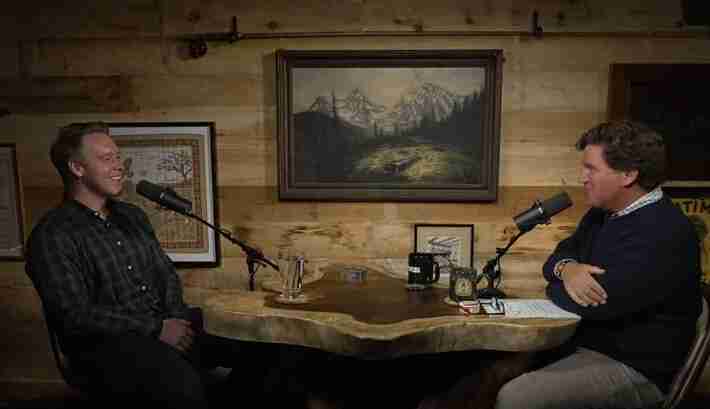
Read the full transcript of former Anheuser-Busch executive Anson Frericks’s interview on The Tucker Carlson Show episode titled “Bud Light’s Fall, Zyn’s DEI Agenda, & Why Big Business Hates You”, premiered on April 7, 2025.
The interview starts here:
The Downfall of Anheuser-Busch
TUCKER CARLSON: So what happened to Anheuser-Busch? If you don’t mind, since you’ve thought about this probably more than any living person, how exactly did a company, an American company like that, that you felt like had a sense of the country that it served, go off in a direction that was so obviously crazy and self-destructive? Like how could that happen?
ANSON FRERICKS: You know, Tucker, there’s a short story to it and there’s a long story. I’ll give you the short version, then we can get into the longer version of what happened.
The short version is it used to be a great American company. This was owned by the Bush family. The Bush family had started this thing in the 1850s. You know, this is the same time you have the Carnegies, the Vanderbilts, the Rockefellers. You didn’t have any of those folks still around 20 years ago, but the Bush family was actually still running Anheuser-Busch 20 years ago, which is crazy. I think they actually have houses right around here, as a matter of fact.
TUCKER CARLSON: So I know them.
ANSON FRERICKS: Yeah, you probably know them well.
TUCKER CARLSON: Very nice people, very nice. Not everyone in the family, but some of the people.
ANSON FRERICKS: It’s a big family.
TUCKER CARLSON: One of the former presidents. Great man.
From American Icon to Corporate Takeover
ANSON FRERICKS: Yeah, it’s a big family. So long story short, the company got so big and at some point it owned SeaWorld, it owned Busch Gardens, it owned eight helicopters, 10 private jets. And it got a little bit bloated. So it got taken over by this Belgian company, European company called InBev. InBev came in and bought it in 2008. And the culture really changed.
Whereas Anheuser-Busch was all about growing the brands, understood the US consumer, Budweiser, Bud Light, all these things. InBev had a different mentality. They were much more of a—they call it the world’s largest private equity firm that happened to sell beer. A lot of cost cutting went on, brought a lot of European people into the United States, changed the headquarters from St. Louis, Missouri, which is almost the geographical center of the country.
TUCKER CARLSON: Of the country and a wonderful town.
ANSON FRERICKS: Wonderful town. And they moved it to New York City and when they moved it to New York City, what a wonderful town. Very, very different town, different mentality. And then all of a sudden they had bought a bunch of different beer companies. After buying Anheuser-Busch, they got Group Modelo, SAB Miller, took on too much debt.
TUCKER CARLSON: You’re saying a private equity firm took on too much debt.
ANSON FRERICKS: Yeah, wouldn’t be the first time. Never happened before, right?
The Shift to ESG and DEI
ANSON FRERICKS: I think the bigger problem was that in 2018-19, for a bunch of reasons, the company, trying to grow, adopted a lot of the ESG and DEI philosophies that we’ve heard a lot about. Stakeholder capitalism, which is a European concept that businesses are supposed to serve all types of purposes. That pops up. And then two or three years later, all of a sudden, the company has really changed.
It changed from a great American company based in the Midwest, based on meritocracy values. And then all of a sudden, in the kind of post-Covid, post-George Floyd era, Anheuser-Busch started moving away from being a meritocracy, moving more towards diversity, equity, inclusion, moving more towards getting more involved in political issues.
And unfortunately, with what happened with Dylan Mulvaney and Bud Light, that was the product of maybe 10 years of mistakes. And now all of a sudden you have a company that’s lost 50% of its sales of the biggest beer in America, Bud Light, and they still haven’t turned it around. So that’s the short story. Now we get to the longer story about maybe more broadly, what happened.
The Disconnect Between Executives and Consumers
TUCKER CARLSON: Okay, so I mean, you’re describing so many American companies, by the way. That trajectory downward. But at the end of the story, there was this revealing moment where Anheuser-Busch executives or one of them basically admitted, “I hate our consumers.” And you wonder, where does that mindset come from? I mean, people have all kinds of dumb ideas about business and dumb ideas about everything else. But if you’re in the retail business, if you’re selling products to consumers and you find yourself in a place where you’re like, “let’s piss them off and humiliate them.” That’s so obviously insane. How could anybody say something like that?
The Philosophical Shift in Corporate Purpose
ANSON FRERICKS: Totally insane. And I think let’s back up because, I mean, really, I think this story starts almost 40 years beforehand where you really are starting to talk about what is the purpose of a corporation. Like, what are businesses in the business of doing?
In the United States in the 1970s, you had this view of Milton Friedman. Milton Friedman, famous economist, said the purpose of a corporation was to serve its shareholders. The people who actually own the business. How do you do that? Well, you focus on your customers, focus on creating great products and services. When you do that, you generate more revenue. You can hire more people and business continues to grow and do all the great things businesses do.
There was this other philosophy that was more this European view of the world that says the purpose of a corporation is to serve all stakeholders. That was started by Klaus Schwab. This is the World Economic Forum, Davos type of elite over in Europe.
TUCKER CARLSON: What’s a stakeholder?
ANSON FRERICKS: So that’s the problem. There are thousands of stakeholders.
TUCKER CARLSON: Anyone who has nothing to do with your company.
The Evolution of Corporate Purpose
ANSON FRERICKS: Nothing to do with the company, but you’re supposed to be in the business of maximizing value for all so-called stakeholders for the greater good of society. Sounds very European socialism. And that’s effectively what it was. And both of these systems, they purported to do the same thing. Forty years ago they said we’re going to make people more money and lead to better societal outcomes.
Problems over the last 40 years – if you just take a look at the US economic model versus Europe. Since the 1970s, US has trounced Europe on both of those premises. If you take a look at our stock market returns in the US, take an S&P 500. Over the last 40 years we’ve generated 10% a year on average. Europe, broad-based indices are like 6 to 7%.
Put that in perspective. If you had $100,000 invested in the US in 1970 and $100,000 in Europe, in the US it would be worth $4.5 million today. It’d be worth $1.5 million in Europe. So that’s a huge difference based on the compounding interest money.
And then separately, if you take a look at the US versus Europe – Europe might say, “Okay, well we didn’t make as much money, but do we lead to better societal outcomes?” And I would say no. If you take a look at the US, almost every broad-based prosperity metric – GDP growth, per capita income, interest rates, unemployment rates – the US trounces Europe in all of those. Our poorest states in the United States are generally wealthier than most of the European countries on a per capita basis.
Over the last 40 years, you kind of had these two systems that were developing. And the US model to me is just the superior model. I believe in American exceptionalism. I think our American model works.
The 2008 Financial Crisis and Corporate Image Repair
The problem is with the American model, every once in a while there are bumps in the system, bumps in the road. And the last time we had a real economic bump in the road was 2008-2009. You had the great financial crisis happen. And after the great financial crisis, there were a lot of people upset that banks got bailed out. It seemed like Main Street was the one that lost out, people lost houses.
All of a sudden business and capitalism had to repair itself and repair its image. Especially if you remember the Occupy Wall Street movement. Everyone said, “Okay, well banks and financiers and companies, they need to be a bigger part of the system and making sure that everybody can succeed at the same time.”
Then you had Obama as president, and he came up with diversity, equity, inclusion mandates that were happening within the broader government. And for the next three, four, or five years, you see a lot of companies trying to repair the image of business and capitalism in the United States.
McKinsey came out with a famous study that says “diversity wins,” where they said we’re going to force diversity initiatives on a lot of companies and those ones would do better. This study has been thoroughly debunked.
The Rise of ESG and Asset Manager Influence
You had a lot of asset management companies – the BlackRocks, State Streets, Vanguards of the world – they started really talking more about environmental, social, governance issues, which is a term that was coined in 2005, really never went anywhere. The United Nations originally coined it. If the United Nations coined something, usually be skeptical of it. It didn’t go anywhere for the first five or 10 years.
But after the Occupy Wall Street movement, a lot of big asset managers picked up this term, started talking about environmental, social, governance issues. And really a lot of these picked up tons of steam when Trump was first elected.
When Trump was elected and he pulled out of these supranational organizations, the Paris Climate Accords, pulled out of the human rights campaign coalitions – all of a sudden a lot of these more progressive institutions said, “Wait a minute, we thought government was going to solve these existential crises of climate change and banking systems and systemic racism and you name it. Now all of a sudden they’re not. And we need business to do this.”
By the way, a lot of progressive pension funds – State of California, European sovereign wealth funds like Norway and others – they have collectively trillions of dollars of assets. And they said, “Okay, now if a lot of these banks that had all of a sudden started talking more about environmental, social, governance issues are going to manage money on our behalf, we want them to solve a lot of the existential crises in this country that Trump was not going to do in 2016.”
BlackRock and the Big Three Asset Managers
At that time period, you had a really interesting thing happen with BlackRock, the largest asset management company in the world, managing about over $10 trillion worth of capital. BlackRock was really one of the leaders of this movement, along with State Street and Vanguard. Those three largest asset managers in this entire country manage about $20 trillion worth of assets. They’re the single largest shareholder in 95% of the S&P 500. And they wield a lot of influence in terms of telling companies what to do.
The problem with a lot of these big asset managers is that it’s not their own money that they’re managing. This isn’t like George Soros type money or Bill Gates, where it’s their own money and they ask companies to do all types of things. The problem with BlackRock, State Street and Vanguard is they were managing your money, my money, through 401ks or pension funds or others.
Because their largest clients, which again are more the progressive pension funds and others, are telling them that they want business to get more involved in politics and social issues, then all of a sudden, they’re starting to force a new agenda on corporations, telling companies that we want you guys to get more involved in environmental, social and governance issues.
Redefining Corporate Purpose
They even changed the purpose of a corporation in the 2018-2019 time period. There was a famous letter that Larry Fink, the CEO of BlackRock, wrote in 2018, essentially telling companies that we want them to now earn their social license. And you’re going to do that because we have evolved the purpose of a corporation with a group known as the Business Roundtable in the United States, to be more focused on your stakeholders.
So you’re no longer focused on shareholders. We want you to focus on stakeholders. And that is now who you are going to focus on for maximizing value – without defining again who those stakeholders are.
This becomes very problematic in this 2018-2019 timeframe because companies are frankly confused. And it set up really a lot of kindling for an event that happened in 2020, which was COVID.
COVID and Corporate Mission Drift
All of a sudden companies are being told they need to earn their social license. They’re being told that shareholders are no longer your primary focus, but you’re now serving all stakeholders without defining what that is. And in 2020, you have this event of COVID.
When COVID happens, it’s a crazy time period. Companies frankly lost their sense of direction about who they were serving, what their mission is. You remember we all had to “flatten the curve” in early 2020, and companies were essentially lost.
TUCKER CARLSON: Well, we’re under no such obligation, I noticed.
ANSON FRERICKS: Correct. But that’s obviously after this. In March of 2020, almost every company lost what its mission was. What do I mean by that? At Anheuser-Busch we were making hand sanitizer in 2020 all of a sudden because we need to flatten this curve and we’re all in this existential crisis of COVID.
You had Delta Airlines no longer flying passengers, but now flying medical supplies all around. You had General Motors making ventilators for the country, Walmart setting up facilities. All of these companies all of a sudden were told to focus on a lot of different initiatives besides just their typical products and services.
Frankly, a lot of these efforts – the curve was flattened very quickly. There was no real existential crisis like we thought there was. But the problem was that since all these companies had kind of been pushed off their mission, then we had this next issue which was the George Floyd issue that pops up in May of 2020.
Corporate Response to George Floyd and Social Justice
George Floyd dies, and now the next existential crisis that every single company in the United States is looking to solve is systemic racism – because their largest shareholders in the BlackRock, State Street, Vanguards of the world had told them that now we want you focused on solving more of these stakeholder and societal issues.
After George Floyd was murdered, you had 70 different companies in the United States donate over $200 billion to Black Lives Matter. That’s more than the GDP of Portugal, which is crazy in terms of the amount of money that was donated to these causes.
Banking donations just wasn’t enough. Even Zuckerberg at Facebook at the time donated some eight-figure sum to it. But then when that summer Trump had the famous tweet about “when the looting starts, the shooting starts,” then everybody wanted him to now all of a sudden be taken off of Facebook because it just wasn’t enough just to donate. You actually had to silence folks as well.
Shareholder Activism and Corporate Politics
On top of that, in 2020-2021, you had the BlackRocks, State Streets, Vanguards of the world – this is where the big problem comes in – because they control the largest percentage of companies in the United States, they have disproportionate power to advocate for policies at companies and then most importantly to vote for shareholder proposals.
If you own $25,000 of stock in any company in the United States, you can put up what’s known as a shareholder proposal that the shareholders of the company can vote on. What was crazy is in 2020-2021, you had a lot of these activists that, because the purpose of the corporation had changed in the United States away from shareholder value to this European stakeholder model, said “okay, now businesses have to maximize value for me.”
There’s a group called Color of Change, a nonprofit group whose mission is to stamp out systemic racism in the country. They went to Apple, bought $25,000 of shares at Apple, and put up this shareholder proposal that said, “Hey Apple, we want you guys to do a racial equity audit to figure out how you’ve contributed to systemic racism and white supremacy in the country.”
And Apple, which is a pretty liberal, leftist board and company – Tim Cook is a very liberal CEO – they said, “Guys, thanks but no thanks because Apple’s mission is to make magical devices at unbelievable prices. That’s what we do. These are important issues, but we’re going to recommend against this proposal because we don’t want to spend tens of millions of dollars hiring Eric Holder and Loretta Lynch to go and do a racial equity audit.”
But this passed by 52 to 48% because you had firms like BlackRock, which is the second largest shareholder of the company, voted for it. Vanguard, State Street, everyone else are voting for these issues, forcing corporate America to now get involved in social and political issues.
And this went the same for election integrity law issues that people were asking companies to get involved in. Defund the police initiatives. PETA – People for the Ethical Treatment of Animals – they put up a proposal telling Starbucks not to use cow milk anymore. I mean, it’s crazy, all these proposals that popped up in this post-COVID, post-George Floyd era. And companies were essentially forced by these large asset managers to get involved in a lot of political and social issues. So that was sort of the backdrop.
TUCKER CARLSON: So can I just give you my theory on this?
ANSON FRERICKS: Yeah.
The Economic Backdrop of Corporate Social Activism
TUCKER CARLSON: Here there’s a backdrop to all of this, which is the movement of the economic center of gravity upward in the United States. So Obama becomes president in 2008. Middle class is the majority in the United States. He leaves in 2016. The middle class is no longer the majority for the first time, maybe ever. And at the same time, we’ve got free money, we’re down to zero interest rates. And that money is being pumped way disproportionately into a certain sector of the economy, the banking sector.
And so basically, most people are getting poor, but a small number of people are getting way richer. I mean, it’s measurable. I live among them. Everyone’s got a plane now. That was not true in 2008. There’s just created a lot of wealth. The Fed created a lot of wealth. And so in a certain sense that’s like immoral or it’s certainly hard to defend.
And so rather than defend, wasn’t the companies that wanted this stuff, it was the debt holders, it was the finance people who wanted it because it was a cover for what they were doing, which is getting really rich. Larry Fink got super, super rich. A lot of like manufacturing concerns, family businesses went under or did not get rich at the same scale.
And so you just like throw out like race war, you know, hate people because of their immutable characteristics. Hey, let’s throw the trans stuff in there too, by the way. We’re all going to die from global warming. You basically just freak everybody out, throw the entire society off balance so they don’t notice the looting.
ANSON FRERICKS: Yeah, I mean, that’s essentially my view, but it is all about control and money. I mean, it’s control and it’s money.
TUCKER CARLSON: But all these social issues were always a cover for what was actually going on, which is like Larry Fink getting richer 100%.
ESG as a Profit Center
ANSON FRERICKS: And it’s so funny. So when he started talking a lot about ESG, environmental, social, governance in 2018, 2019, all of a sudden they started a scoring system. It’s almost like a social credit system you’d have in China or somewhere else. Scoring companies on how little carbon that they use, or scoring companies on did they do gender affirmation care for their employees.
These scores were used to essentially pick and choose companies that could be included in indices that Larry Fink and BlackRock and others. They could charge investors three to four times the amount of money for these ESG funds versus the regular funds. And the funny thing was these ESG funds underperformed their broad based counterparts. You ended up paid less money, but you were charged more for doing it, which is crazy.
TUCKER CARLSON: So do you think it would, since you studied this much more than I have, do you think it would be a mistake to think that there was any sincerity behind this? Do you think there was ever a moment where Larry Fink or, for that matter, Tim Cook or anybody at State Street or Vanguard thought, you know, we’re going to solve systemic racism by attacking the white working class, like we’re actually going to solve this problem? Do you think they really thought that?
ANSON FRERICKS: I mean, there might have been one or two people there, they’re just, you know. But no, I mean, I don’t really think, I think this was all just sort of a money grab and a feel good and being able to go to the right parties in New York City.
TUCKER CARLSON: That’s the way it seems to me.
European vs. American Corporate Values
ANSON FRERICKS: Is because it just doesn’t pass any of the first principle test whatsoever. And it’s funny, the companies that were the worst thing this tend to be more of a New York City kind of ideology, also a European ideology as well. I mean, there is some sincerity to it.
I mean, this is funny. You’ll appreciate this because I think where we’re going with all of this because you’ve seen obviously retreat with a lot of companies have backed away from DEI over the last couple of months. There’s other companies that are holding onto some vestige of it, but there’s others that are really all in on diversity, equal inclusion.
TUCKER CARLSON: To this day.
ANSON FRERICKS: You’re going to love this. And the worst of The Europeans, because they really, I think, believe in this sort of European stakeholder capitalist model. So you have. I’ll give you a plug for ALP right now. So if you talk about one of the worst companies that’s out there, America’s.
TUCKER CARLSON: Greatest nicotine pouch, America’s lip pillow.
ANSON FRERICKS: But who is your biggest competitor?
TUCKER CARLSON: That would be the Zyn Corporation.
ANSON FRERICKS: Zyn. Do you know who owns Zyn?
TUCKER CARLSON: I do.
ANSON FRERICKS: So it’s Philip Morris International.
TUCKER CARLSON: Yep.
Corporate DEI Quotas and Activism
ANSON FRERICKS: They are operationally headquartered in Switzerland. On their website to this day, I mean, you go on their website today, they have a massive diversity equity, inclusion piece on their website. And I would say it’s the worst aspects of DEI, which can be quota systems, race based systems.
And on their website today, they say, we’re going to hire 20% of our people. We want to be Asian. Literally on their website, just 20%. They want 40% women. I mean, literally quota systems they have on their website today.
TUCKER CARLSON: 100% African, by the way, if they’re really going to make a dent. But they’re racist, so they wouldn’t do that.
ANSON FRERICKS: Yeah. So, I mean, but the other piece is that on their website, and this is a company that makes Marlboro cigarettes and Zyn and other things. One of their big partners for Pride month that’s coming up is the Stonewall Org. And Stonewall Org is one of these LGBTQ+ organizations. And you know, fine, you can do that. But they are advocating for biological men to compete against women in sports.
TUCKER CARLSON: Zyn is all in on the gay thing.
ANSON FRERICKS: I mean, but like, this is what’s crazy. And I think this is the problem about where we’re going.
TUCKER CARLSON: That have to keep that out of my mouth. I mean, this is like, come on.
ANSON FRERICKS: So. But this is the problem of, I think where you’re seeing. I’m not making this up. You can literally go on their website, literally today and see all of this. And I think this is the problem we’re seeing is that you have these more like European based companies that I think might sincerely probably believe a lot of this, or the European mindset, which is very distinct from sort of the American capitalist model.
TUCKER CARLSON: Crippled by war guilt, bent on suicide.
ANSON FRERICKS: Yeah. And I mean, at least here in the United States and others, we have a democracy. We can throw people out if we don’t like them. But corporations, I mean, they’re transnational organizations.
TUCKER CARLSON: They operate, again, with an emphasis on the trans.
ANSON FRERICKS: Yeah, with an emphasis on. But they go across borders. And if you are sort of operation philosophically, sort of a European based company, but you have operations in another country and you’re imposing those values in another country, I think that’s problematic.
TUCKER CARLSON: You probably have no idea where your meat comes from. You probably should know. The likelihood is that the meat you’re eating pass through a massive industrial process plant, probably owned by a foreign corporation. Foreign meat.
ANSON FRERICKS: Did you sign up for that?
[Advertisement content removed]
TUCKER CARLSON: We eat it and vouch for it. It does feel like one of these. Like, in 10 years we’re going to look back and be like, you know, they were major consumer products companies that felt empowered to talk about your sex life and the sex lives of your children.
ANSON FRERICKS: I agree.
Corporate Overreach into Social Issues
TUCKER CARLSON: Back off with the gay stuff, by the way. Just stop. No one hates gays. Like, stop that. Stop that. Get out of my face with that stuff.
ANSON FRERICKS: Yeah, Like, I don’t care how people dress. I don’t care.
TUCKER CARLSON: Sick of it, actually. But, like, it’s just insane that, like, a nicotine pouch company would be lecturing me about people’s sex lives. Like, stop.
ANSON FRERICKS: I agree. And this is the other thing about authenticity. Authentically, what is a nicotine pouch? Cigarette company, Marlboro. Like, what are they doing working with organizations? I mean, another thing is Stonewall is like, hey, we want to do youth sex education if we’re LGBT.
TUCKER CARLSON: I get my gun when you do that, like, stay away from my kids. How’s that again?
ANSON FRERICKS: Just stand.
TUCKER CARLSON: I don’t understand that, like, why any society would put up with it, why Zyn would pay for it. And of course, it’s not just Philip Morris International. It’s like so many of these companies.
ANSON FRERICKS: No, it is. And like, here’s the other thing. It’s like, I don’t want Philip Morris to the others. I don’t want them advocating for the Second Amendment either. It’s like you’re cigarette company just do that. Yeah, just do that.
TUCKER CARLSON: They don’t even sell cigarettes. Well, they don’t even believe in what they do.
Global Corporate Influence and American Values
ANSON FRERICKS: Yeah. So I think what’s interesting about where we’re going is that you’re going to have some of these companies you’re seeing the same with China. I mean, why is TikTok being asked to be sold in the United States? Well, because it’s technically owned by Chinese company and the Chinese values. They’re collecting data and information that’s not going to work for the United States. So they might need to sell it.
TUCKER CARLSON: They got involved in some. They were considered a vector for unapproved foreign policy positions, and that’s why the Congress did that and they pretended it was about collecting data. These are people who are all in on warrantless searches of Americans and spying on Americans, and they have no problem with violating your civil liberties at all. They don’t think you have civil liberties. But they were under pressure to ban TikTok because it was considered radicalizing in ways that their donors wouldn’t accept. So that’s the truth. Sorry.
ANSON FRERICKS: Well, you know, it’s. So it’s not what they say it is, but I think the broader piece is, though, is that whether it’s TikTok, whether it’s Zyn in the United States or Anheuser Busch, which used to be American owned, I think you’re going to have a lot of these companies need to have choices about what they’re going to make moving forward.
I think it’d be very difficult to operate in the US if the US is leaning more in towards these radical ideas of free speech and religion and open dialogue and those things. Whereas we’ve always kind of been a city on the hill in the United States, we’ve always been this sectional difference.
TUCKER CARLSON: Now more than ever, really.
ANSON FRERICKS: Probably now more than ever. I mean, we’re almost more isolated than probably we’ve ever been.
TUCKER CARLSON: I think that’s right.
The Clash Between European Corporate Values and American Culture
ANSON FRERICKS: The last four or five years, yes, we were going more towards this quasi European socialism, government intervention and free speech and everything else. And we have now rejected that as a country. But I think what’s difficult is that yes, we’ve rejected it politically, but again, corporately there’s all these tethers from around the world, effects of globalization over the last 20 years that you have a lot of these companies that frankly might not hold sort of those same American values.
Yes, Philip Morris, Anheuser Busch, InBev based in Europe. In Europe they have quota systems for how many board members have to look this way or be that way over in Europe. And one of the reasons that I think, again going back to the original question, like how did this happen in the United States? Bud Light, the biggest beer brand in the United States, how do they have a partnership with Dylan Mulvaney? Well, they, I think have a lot of these European type values now. Diversity, equity, inclusion.
Bud Light’s Controversial Decisions
TUCKER CARLSON: I’m so grateful for that scandal, for the effects on the company of that scandal and for your writing this book because. And for what you just told me. Because I think most Americans, I’ll say myself, I have no idea. Like you know, you just use Crest toothpaste. You have no idea what they’re sending money to. I use Zyn for years. I finally realized it was a left wing company. I didn’t get that at first. But most Americans just don’t know what’s happening to their money.
ANSON FRERICKS: No, they don’t. And really I think the eye opening moment even for me where how companies have been co-opted is I don’t know if you meant to have the Black Rifle Coffee company cup on your—
TUCKER CARLSON: Yeah, yeah. I love Evan.
ANSON FRERICKS: So yeah. So I mean you’ll appreciate this story and I write about this in my book Last Call for Bud Light. But one of the opening chapters I have is so I was president of Anheuser-Busch in the US and I tried to do a distribution agreement with Black Rifle Coffee company because a lot of times the same people that were drinking a six pack Bud Light, you know, Budweiser at night were drinking six Black Rifle coffees in the morning.
And so we were going to put the Black Rifle coffee, their 16 ounce drinks on the same trucks that carry Bud and Bud Light, to Walmart, Kroger and 7-11. And I had this whole deal and we were going to make a bunch of money on it. But our legal team, which was now based in New York City and our external affairs team based in New York City—this is in 2021—killed the deal, said, you can’t do it.
I was like, what do you mean? Like, here’s all the financials. This makes tons of sense. Like, this is a great company. They’re growing like gangbusters. I said, can’t do it. Company’s too controversial. I was like, what do you mean controversial? I was like, you know, the company, like, their mission is to serve coffee and culture to firefighters, police officers, law enforcement, people who love them.
TUCKER CARLSON: And the coffee, just in point of fact, is excellent.
ANSON FRERICKS: Yeah, great.
TUCKER CARLSON: I drink it every day. It’s great.
ANSON FRERICKS: This is my thing. I mean, you know, this is, that’s their mission. That’s what they do. And you know, Budweiser, we had partnerships with Folds of Honor and other military. But in 2021, because of the whole DEI movement which said, like, “Ooh, you know, they fund the police” and like, you know, “defund the police” was a big thing kind of going on at the time. And, “Ooh, military, you know, I don’t know about that. That seems a little bit too controversial.” I’m like, guys, like we sell King Cobra 40 ounce bottles, you know, like all over the place, like America’s favorite malt liquor, you know, like, what are we talking about?
TUCKER CARLSON: You guys make Old English 800?
ANSON FRERICKS: No, we didn’t make Old English 800.
TUCKER CARLSON: No, that was a brand. I drank that as a kid. Yeah, that’s one of the reasons I no longer drink.
ANSON FRERICKS: Yeah. Did you ever do like the Edward Forty Hands with that one?
TUCKER CARLSON: No, no, that was a—
ANSON FRERICKS: Did you miss the Edward Forty Hands?
TUCKER CARLSON: I did. And it’s just, you know, everyone beats up on kids for being dumb, but actually the newer generations are way more brilliant than we ever were. Edward 40 Hands is like the funniest thing that ever happened.
ANSON FRERICKS: Yeah, Edward Forty Hands was amazing.
TUCKER CARLSON: So duct tape. I’m against drinking. I don’t know why I’m laughing. I don’t drink. I hate alcohol. But that is hilarious. Duct tape. Two 40 ounce malt liquors, to kids hands.
ANSON FRERICKS: That’s it, you know, and you couldn’t untape them until you finish both of them. So I feel guilty for laughing. Yeah, there were too many bad stories. Like, you know, someone get through one or half of them. Like, you know, you’re rumbling around and you fall and it’s like, you know, you get glass everywhere.
But anyway, so. No, not OE. There were other ones. Sorry. But I can’t remember where we were going with that. So we were talking Black Rifle, and yeah, so the deal gets killed because it was too controversial of a brand. Yet a year later, that exact same department, based in New York City now that killed the Black Rifle coffee deal, they greenlit the Dylan Mulvaney partnership.
And the Dylan Mulvaney partnership, like, it was incredibly puzzling if you’re a Bud Light drinker. And, you know, again, like, man, I don’t care how people identify or what they want to do with their lives, but, like, one of the reasons that Bud Light became the biggest, most popular beer brand in the United States is because it was remarkably apolitical. Like, it was a brand that was enjoyed by Democrats, Republicans alike because it was about fun, and it was humor. It was sort of this somewhat countercultural type of brand. It was about sports and music and backyard barbecues.
And all of a sudden, the Bud Light had just hired its first female head of Bud Light in the history of the brand. You know, no problem with that. I’m sure there are a lot of people that—a lot of girls I know, they’d be great VP marketers of Bud Light. The problem with it was the person they hired was a lady who had grown up in New York City, went to Harvard for undergrad, Wharton for grad school, had only lived in basically, the Northeast her entire life. I don’t know if she’d ever drunk a Bud Light in her life. And, you know, I don’t know if she ever knew anybody who had as well. And she was very—
TUCKER CARLSON: Why would she make her the head of the brand?
ANSON FRERICKS: Well, because, like, the DEI movement basically said that you need to essentially put different people in different roles.
TUCKER CARLSON: You need to—
ANSON FRERICKS: Yeah. Based off immutable characteristics and even the 21, 22 time.
TUCKER CARLSON: What was her name?
The Rise of DEI in Corporate America
ANSON FRERICKS: Alissa Heinerscheid. And I know Alissa. I mean, she’s, you know, nice girl. And I worked with her when I was at the company for a while. But she probably wasn’t the right person for Bud Light, but—yeah, she obviously wasn’t the right person. I mean, literally, like King of Japan. I mean, almost 50%. So obviously wasn’t the right person for the company.
But in this broader kind of narrative, in 2020, 2021, 2022, this is when I was deciding to kind of leave Anheuser-Busch. I’d mentioned the Black Rifle thing was kind of the final sort of last straw for me. But even before that, the principles of the company changed. When I joined it was a meritocracy. It was like, we want to hire the best and brightest and we want to reward them based on the results and, you know, pay them accordingly. Great.
But in 21, 22, all of a sudden that principle—there were 10 principles of the company that one around really hiring the best and brightest—changed towards: “We now reward people based off the quality and diversity” which was bolded by the company “and diversity of your teams.” And then all of a sudden the company starts putting in these diversity dashboards where we can see what the diversity makeup of your team is.
TUCKER CARLSON: White men did a pretty good job making beer. I think whatever you say about white men, they created the company, they made the beer. Why we hate them all of a sudden? They created Budweiser.
ANSON FRERICKS: Well, I think it was just more so the head scratching piece of like, it doesn’t matter if you’re again, like white or black or gay or—like don’t care. I just want the best people. Right.
TUCKER CARLSON: But the, you know, DEI is—the only people discriminated against in DEI are white men, obviously straight white men. So, like, I don’t understand.
ANSON FRERICKS: There are probably some Asians in there too, so.
TUCKER CARLSON: Well, they definitely have. Well, they have been a lot of—
ANSON FRERICKS: Indians and a lot of other folks as well.
TUCKER CARLSON: 100% Asian, South Asians. But the point of it was to reduce the percentage of white men in positions of leadership or with paying jobs. And I just, I felt like nobody had the balls to say that out loud. Like that was considered controversial.
ANSON FRERICKS: You would get fired if you said that out loud. I mean, this was in the 21, 2022 timeframe. But that’s the problem with where we were. I mean, you remember this is censorship regime. I mean, heck, you had the Biden administration—I got fired, thank God.
TUCKER CARLSON: But no, yes, I did get fired.
ANSON FRERICKS: So actually it’s kind of—so you remember this? I do, yeah, I guess I do, more so than anybody. But yeah, I mean, you couldn’t speak up there in this timeframe. And that was the problem. And then at the same time, you had all these companies that made all these pledges. I mean, the chief diversity officer—so this really wasn’t even a position before 2020.
TUCKER CARLSON: Diversity. What do you make? I make diversity.
ANSON FRERICKS: Well, I mean, but this is crazy. Like, you know, and then all of a sudden there was like a 400% increase in chief diversity officer positions. And these were all high six figure salary positions, all at the executive level.
TUCKER CARLSON: What do you do if you’re a diversity officer?
ANSON FRERICKS: This is the problem. You find things to do and this was the problem. So the first thing was the whole pronoun police comes in. “Well, let’s be more inclusive.” All the pronoun piece. And then, “Hey, let’s put in quota systems that we’re going to put in place. So we hire a certain number of people with this immutable characteristic or that immutable characteristic.”
TUCKER CARLSON: Did everyone buy into the pronoun thing? Did anyone say I’m not doing that?
ANSON FRERICKS: Yeah, a lot of people did. But this is the problem as well. A lot of people just went along with it because they felt if you didn’t then you could be called out by your HR team—cowards. And I think that’s what’s part of the problem now. What’s nice is that I think people have the ability to say “I’m not going to do that.” But three years ago you couldn’t. Three years ago was the whole thing.
TUCKER CARLSON: Is designed to degrade you.
ANSON FRERICKS: Yeah.
TUCKER CARLSON: And what are you really saying, by the way? When you announce your pronouns, what you’re saying is it’s not evident to people watching what your sex is. Yeah, like you’re Pat or something from Saturday Night Live. Like, “You may not know this, but I’m a man. Like, you can’t tell by looking at me, but I’m actually a man.” It’s like the most degrading thing I can imagine.
ANSON FRERICKS: I completely agree. And I don’t know. And if you’re unsure, just ask “How are you doing?” That’s it. You don’t have to use a pronoun if you’re unsure. But I think for 99% of time you’re pretty sure. And that’s the problem. It’s forcing these sort of agenda on 99% of the population that says, “Wait a minute, what is this?” The people who work there.
TUCKER CARLSON: I mean, now I’m being mean but I’ve lived it, so I feel it. There were so few noble, honest, brave people in American corporate culture that I was shocked. I was shocked by what sheep they were. You’d think at least 20% would be like, “Buzz off. I’m not giving you my—that’s disgusting. This is insane.” And by the way, you’re discriminating against white men, which is illegal and immoral. And we’ve got this monument on the mall from Martin Luther King telling us you can’t do that, but you’re doing it anyway in his name. You know, why don’t you go screw yourself?
Brian Armstrong’s Stand Against Corporate Activism
ANSON FRERICKS: Actually, yeah, I don’t think anybody said that. There were a couple brave people, but the brave people who stuck their neck out, I mean, they were eviscerated in the media. The first guy actually was Brian Armstrong. He was the CEO of Coinbase. I don’t know if you remember very well, and this is at the end of 2020, I mean, right after all of the BLM and everything. And Brian Armstrong said, listen, like, I’m not going to tithe to the BLM movement. I’m not going to make a statement that we’re in support of this.
Exactly right. Of BLM. I’m not going to do that either, he said, because the mission of our company, Coinbase, is to bring crypto to the masses. That’s what we’re doing. And if there’s something related to crypto regulation or policy, sure, we’ll have a view on that. But am I going to have a view on climate change or BLM issues or transgender policy? No, I’m not. And by the way, if you as an employee don’t want to be here, then go work somewhere else. I think they had, I don’t know, 50 employees or something, walked out. But then he had 5,000 people that applied to work there.
TUCKER CARLSON: Oh, yeah.
ANSON FRERICKS: But in the media, though, he was called bigoted and he was called racist and he was called, you name it all in the media because of him just having a view that says, I’m just not going to do this because that’s not important to the company and I want people to come here and work for our mission, not necessarily for all these orthogonal things that have nothing to do with bringing crypto to the masses.
TUCKER CARLSON: It’s funny how much just telling the story, I mean, of course, I remember when it happened. I defended him when it happened. But it seems like you’re talking about a different country. Like, things have changed so much, so much. That’s my perception. Is it yours?
Three Corporate Camps on Social Issues
ANSON FRERICKS: It is. Things have definitely changed. Definitely swung back. But as I mentioned earlier, it’s almost as if we’re going into, I would say it’s almost three camps with the purpose of business in this country.
In business, getting involved in social, political, ESG/DEI topics, you have the people that have backed off because they’ve said, you know what, getting involved in all these political and social issues wasn’t good for my company from the stock standpoint and wasn’t good because I lost money or divided my customer base. It wasn’t really good for the country either. You’ve seen Meta and McDonald’s and Walmart and Google. A lot of people have rolled back a lot of those policies.
You have a second group of companies that are trying to kind of rebrand the whole sort of DEI narrative. They haven’t realized it’s become a pejorative term to the majority of Americans. They’re calling it inclusivity, inclusivity and belonging or I don’t know, all these other words they’re trying to mash together. I would put probably more the JP Morgan’s and those folks in that boat.
But then you have the real adherents and these are the people, the Philip Morris internationals, even today, I mean Anheuser-Busch InBev on their website for the UK, Big DEI Diversity, Equity, Inclusion piece. Because I think you do have these real adherents. And then even certain companies in the United States, I mean Costco is doubling down big time. I think partly because they’re based in Seattle and Costco has doubled down big time.
TUCKER CARLSON: That’s like a warehouse store where you buy stuff by the pallet kind of thing.
ANSON FRERICKS: That’s it. That place has doubled down massively. Talking about that, we’re going to continue to have quota systems about who we actually give preferential treatment to, who gets their products in store based off race or sex or gender.
TUCKER CARLSON: Seriously?
ANSON FRERICKS: Yeah, they’ve been doubling down on this. So they’re one of the companies that have kind of dug their heels in.
TUCKER CARLSON: I hope they go out of business soon.
ANSON FRERICKS: So, the way that I think about it, I think the companies that have just moved on, I think we need to get them more to a corporate pluralism of whatever your mission is as a company, just do that. And however you need to recruit people, you know, the best and brightest to your industry, figure out how to do that. I would say probably move on from the DEI.
Civil Rights Law and Corporate Discrimination
TUCKER CARLSON: And I don’t think we can say that the United States has civil rights law at that point. If you’re openly discriminating against people on the basis of their race, then all the Civil Rights Act, it’s all bullshit. None of that means anything. And so like let’s just stop pretending. Okay, so if Costco wants to continue with racist policies, then I guess everyone gets to have racist policies if they want, on whatever basis of any race they want. Like, you know what I mean? It’s a principle. So either you’re against and in fact, banning through federal law discrimination on the basis of race or you’re not.
ANSON FRERICKS: Yeah, that’s it. And the Civil Rights Act 1964, it literally says, like, you cannot discriminate based on race, gender, national origin, etc.
TUCKER CARLSON: A thousand subsequent laws and regulations underscore that point.
ANSON FRERICKS: So, and you know, this is funny. So actually the Senate, the floor manager at the time was Hubert Humphrey, who became Lyndon Johnson’s VP. He was the one who was ushering through the Civil Rights Act 1964. He said, this is his quote, “If this leads to quota systems, I will eat my hat.” That’s his quote. And that’s exactly what we got.
TUCKER CARLSON: He’s been dead too long to do it. But, yeah, no, it kind of wrecked the country.
[Advertisement content removed]
The Fall of Bud Light
TUCKER CARLSON: So, just back to Anheuser-Busch. This disaster happens. And it seems to be, I mean, according to the video that everybody saw it really a product of this one decision. Well, it’s the end of a chain of a lot of decisions, as you said.
ANSON FRERICKS: A lot of bad decisions ably described.
TUCKER CARLSON: But the key decision in the fall of Bud Light was by this Alissa Heinerscheid, whatever her name was, who went to Harvard. And there’s this famous video where she’s saying, basically, I think the old white guys who drink our beer could use to be shaken up a little bit.
ANSON FRERICKS: The fratty and out of touch. That Bud Light’s been fratty and out of touch.
TUCKER CARLSON: Sorry, Fratty.
ANSON FRERICKS: Out of touch.
TUCKER CARLSON: Fratty and out of touch.
ANSON FRERICKS: Yep.
TUCKER CARLSON: And I just have to say, I mean, she didn’t run the company. She’s head of the brand. She has supervisors. If someone who worked for me… Well, we sell ALP, and if someone’s, like, in a meeting with me, like, the problem with ALP is its users suck, and they’ve got, like, antique retrograde attitudes, and we just need to give them the finger, I would say, you’re fired because you don’t love our people.
ANSON FRERICKS: That’s it, exactly.
TUCKER CARLSON: Why did no one say that?
ANSON FRERICKS: But that’s what’s crazy, is that she literally called the customer base, you know, the fratty out of touch. Like, you know, immediately lost trust for the whole entire customer base saying, what are you guys talking about?
TUCKER CARLSON: And do people like to be lectured, yelled at by a Heinerscheid from Harvard?
The Dylan Mulvaney Partnership Timeline
ANSON FRERICKS: And what’s crazy about this? So the timeline of events was so… Because we’re coming up on actually two years when this happened. So this partnership that Bud Light did with Dylan Mulvaney, a controversial transgender activist, happened on April Fool’s Day of 2023. And a lot of people originally thought this was a joke, like, oh, this is like, Bud Light must be joking about this, because there’s no way that they would ever do a partnership with somebody who was literally just at Joe Biden’s White House advocating for gender affirmation care and biological men competing against women in sports.
But this is all of a sudden Bud Light does a partnership with this person. I don’t understand this. Then two or three days later, that video comes out of Alissa essentially being like, Bud Light is fratty and out of touch. We’re going to be more inclusive.
TUCKER CARLSON: What?
ANSON FRERICKS: That’s the problem. Alissa was out of touch. I mean, this is who’s out of touch.
TUCKER CARLSON: I mean, self-awareness.
ANSON FRERICKS: It’s crazy with what’s going on. I mean, this is how out of touch I think a lot of the people in New York became. Where all of a sudden they’re saying, you know, no, no, no. Our customers out there, we need new customers, and the new customers are going to be whoever follows Dylan Mulvaney on Instagram, which I think was actually, like, mostly, like, underage girls, because there were literally all of these investigations going on, saying, wait a minute, you guys sponsored someone who just has a bunch of underage followers, like, what are you guys doing? This makes no sense.
TUCKER CARLSON: Dressed like a child. Some dude dressed like a little girl. First of all, who’s looking into that guy’s personal life? You know? Like, that’s dark.
ANSON FRERICKS: But yeah. So the partnership itself was obviously incredibly flawed.
TUCKER CARLSON: Is it true that Dylan Mulvaney is, like, a huge Zyn user? Someone told me that he loves Zyn.
ANSON FRERICKS: I don’t know. I’ve never met Dylan.
TUCKER CARLSON: I don’t know if that’s true or not.
ANSON FRERICKS: You should have Dylan on the show so you can figure it out.
TUCKER CARLSON: You know what?
ANSON FRERICKS: You should.
TUCKER CARLSON: I keep hearing, and I have no idea if it’s true. I’m not endorsing this, but that Philip Morris and Zyn are hiring Dylan Mulvaney. I don’t know if that’s true.
ANSON FRERICKS: I don’t know. I mean, based off what I saw on their website, it would make perfect sense. I mean, they’re almost like going to be the Ben and Jerry’s of nicotine. I mean, that’s what it is. And actually, you know, that’s fine.
TUCKER CARLSON: I don’t want that in my mouth, okay? I just don’t.
ANSON FRERICKS: You know what? I actually respect Ben and Jerry’s as a brand because they at least stand. They’re very clear about what they stand for.
TUCKER CARLSON: I completely agree.
ANSON FRERICKS: They say, we’re going to use ice cream to advance a socially progressive mission. Great. Hey, in this country, you can do that. There’s a customer base for that. Go do that.
TUCKER CARLSON: I couldn’t agree more. I find their ideas repugnant, but I respect their bravery and their principle. Their ice cream’s, like, unbelievable. I’m going to get diabetes if I eat it again. But it’s really good. And they’re consistent in their views. They’re consistent, but like, a company like Zyn or AB, like, you had no idea that they were spending money on causes that are in direct conflict with your own family. These people hate your family, and you’re buying their product.
The Bud Light Backlash
ANSON FRERICKS: And this was the whole deal. So obviously, the partnership itself made no sense, but the response to it was just as harmful, and that was just as problematic, really, because if you recall, Alissa goes on the TV where she’s saying “fratty and out of touch.” Kid Rock then lights up a pack of Bud Light with an AR-15, which was a big deal. So then all of a sudden, you have all of these sort of people saying, you know, screw Bud Light. People posting videos of them not buying it.
And then the company said, hey, there was a quick press release saying, yes, we do partnerships with influencers to celebrate milestones. In this case, we did this milestone of 365 days of womanhood. Everyone’s like, what are you talking about? Bud Light, dude?
The Bud Light Controversy
TUCKER CARLSON: Yeah, these are not women. These are men dressed as women. I mean, anything is so insulting.
ANSON FRERICKS: And in the same way, you probably wouldn’t at that time have sent a can to Donald Trump to celebrate his coming, because Bud Light was not a political brand. And so everyone’s really confused. And so the sales just tumble. And what’s really…
TUCKER CARLSON: Is that obvious right away?
ANSON FRERICKS: So, yeah. This is what’s really interesting. So boycotts tend to work for two reasons. And they actually had never worked almost in history. Everyone talks about it. I hated when the NFL had the whole kneeling thing going on, but NFL ratings were super high. Other people have called boycotts. Boycotts almost never worked. But in this case, it worked for two reasons.
One, if there’s an easily accessible substitute. So if you think about every week you buy Bud Light, you have Coors Light, you have Miller Light. I mean, you go to gas station, you have Coors Light six packs, Miller Light six packs, Bud Light six packs.
TUCKER CARLSON: Yeah.
ANSON FRERICKS: And then you also go to bar, you have Miller Light on tap. You have Bud Light on tap. And for 95% of Americans, Bud Light is indistinguishable from Coors Light and from Miller Lite. So the substitutes are easily there.
TUCKER CARLSON: You know, I quit drinking before light beer was a thing. I never have had a light beer in my life. Men just did not drink light beer when I quit drinking. Is it good? Sorry, I’ve never had a light beer.
ANSON FRERICKS: But if you like light beer, I mean, it’s a great light beer. It’s very consistent. They have great brewmasters. So it’s very good as a product. But so also is Coors and Miller Lights. But it’s almost like a commodity of a brand. So therefore, the only thing you actually did have was your brand itself, which Bud Light was funny, humorous, and apolitical.
The other reason that boycotts work is that if you actually feel like you’re having an impact and having an effect. And the other thing that happens, which is interesting, the beer industry, is every week you get data that’s reported by Walmart and Kroger and 7-11 and your big retailers, all these big retailers, about what sales look like, and that’s just reported every week. Usually people don’t care about that at all. I mean, no one ever cares what the real sales are. But in this instance, all of a sudden, the media was reporting every single week that Bud Light sales were down 10, 20%, 30%.
TUCKER CARLSON: So it snowballs.
Corporate Pressure and ESG Influence
ANSON FRERICKS: So it starts snowballing, and Anheuser-Busch, they can’t starve the media of information and data. And so all of a sudden, Anheuser-Busch is watching their sales decline a lot, and they realize, “Wow, we got to do something.”
The problem was they always say they’re stuck between BlackRock and a hard place. BlackRock was saying, “Hey, you guys need more DEI and inclusivity. And that’s the agenda we’re pushing.” There are corporations like the Human Rights Campaign that scores Anheuser-Busch every single year on their policies.
TUCKER CARLSON: Why would a beer company… I mean, Human Rights Campaign are freaks. I mean, they’re literally freaks. And they’re evil. Completely evil, in my opinion. It’s not about equality. It’s about crushing families and Christianity, obviously. So why would a beer company care what they think?
ANSON FRERICKS: Well, because the problem was, again, BlackRock, State Street, Vanguard, who are technically these large shareholders of your business, they have adopted ESG and DEI, and they’re saying, “If you want to get included in our ESG indexes, or Mike Bloomberg’s Bloomberg has a gender equality index. If you want to get included in these, you guys need to have a perfect score on the Human Rights Campaign.”
TUCKER CARLSON: Man, if I’m the Chinese, I’m encouraging this a lot. Wreck your opponent with this.
ANSON FRERICKS: I mean, it’s insane. Like, it made no sense. And when the Human Rights Campaign started, I don’t know, 20 years ago, like, the whole thing was like, okay, don’t make fun of LGBTQ. Okay, fine.
TUCKER CARLSON: I was never against Human Rights Campaign. I worked like, a block from them for 15 years in downtown D.C. on 17th Street. I was never against them at all. I was like, okay, I’m for civil liberties, including for gays. I’m not against that at all. I’m for it.
ANSON FRERICKS: But it became incredibly rigid.
TUCKER CARLSON: It wasn’t about that at all. It was about destroying American society, which they have done a lot to achieve.
ANSON FRERICKS: And now to get these perfect scores, then you had to have so many commercials that advertise to LGBTQ. You have to do all the gender affirmation stuff in your health plans.
TUCKER CARLSON: You got to sell gay beer.
The Stakeholder Capital Industrial Complex
ANSON FRERICKS: I mean, that was essentially what it was becoming. And even the company itself, I mean, they were trying to win these Cannes Lion awards over in Europe. So we used to always think our advertisement was successful if you won the USA Today Super Bowl ad meter award that showed you were in touch with the American consumer. And from like 2003 to 2013, Anheuser-Busch won it every single year.
Then when they brought in new European ownership and new marketers, all of a sudden they didn’t win it for 10 plus years. But they tried to start winning and showing they won these Cannes Lion awards, which over in Europe they had these awards in Cannes, France. And to win the Cannes Lion advertising awards, you have to have your DEI and your ESG policies and you have to do all of the advertisements that essentially sell beer.
TUCKER CARLSON: Why do you care about an award from Cannes, France?
ANSON FRERICKS: You shouldn’t. But again, to get included in the BlackRock, State Street, Vanguard indexes for ESG/DEI, you can highlight your awards that you won from Cannes Lion. You can highlight your perfect score from the Human Rights Campaign.
TUCKER CARLSON: These are just all control mechanisms run by people like Larry Fink.
ANSON FRERICKS: Like the worst. I mean, there was a whole, I call it the stakeholder capital industrial complex. And everybody was just trying to make money. McKinsey, they were the big consulting firm. They had this “Diversity Matters, Diversity Wins” report to sell consulting services for DEI. BlackRock had a whole DEI component to put people into certain funds to charge investors more money.
You had a lot of activists that wanted to show that they could get more money from Soros or whoever else, that they’re making progress by putting up activist proposals at companies that shareholders would then vote on. So it was this big, almost like industrial complex just kept feeding on itself.
TUCKER CARLSON: To destroy the meritocracy.
ANSON FRERICKS: I mean, essentially that’s where we were going.
TUCKER CARLSON: It destroys the country if you don’t have a meritocracy. If the best people can’t rise because they’re the wrong color or the wrong sex.
ANSON FRERICKS: Yeah.
TUCKER CARLSON: Then your country collapses.
Bud Light’s Breaking Point
ANSON FRERICKS: And Bud Light was essentially holding the pin when this whole bubble popped. This is the first time that people saw like, “Wait a minute.” You know, okay, I didn’t like when Disney got involved in the parental rights issues down in Florida. But Disney’s always kind of a little out there. And it didn’t make any sense that Disney was getting involved in this.
TUCKER CARLSON: Well, it’s the same attitudes.
ANSON FRERICKS: Kind of same attitude. But the problem with Disney is that, okay, you know, I don’t like Disney, but there’s only one Disney World. I don’t really have a lot of other places to go, so I’m still going to go to Disney World. But with Bud Light, people easily went to Coors Light and Miller Light. And so going back to this whole story about why the response was so damaging…
TUCKER CARLSON: Since you worked there and you’ve written a book on it.
ANSON FRERICKS: Yeah. And I had left by this point, so of course…
TUCKER CARLSON: But I mean, you know the business.
ANSON FRERICKS: Yes, yes, yes, yes.
TUCKER CARLSON: What’s the right answer? Before you explain what they did, what’s the right answer? So you’re running Anheuser-Busch right now. This happens. It’s a huge threat to your core business, which is selling beer. What do you do?
The Path to Redemption
ANSON FRERICKS: I mean, like, the answer is so simple. The first thing you do is that you fire the VP of marketing, who just called your entire customer base “fratty and out of touch.” And then you say, “We fired her because that was obviously not empathetic to our customers and not good for our business.”
TUCKER CARLSON: You hate our customers. You can’t work here.
ANSON FRERICKS: You can’t work here. Like, just, fair, done, out. And then separately, the biggest piece is like, then you just apologize. I always say the path to redemption goes through forgiveness.
TUCKER CARLSON: Amen.
ANSON FRERICKS: But the only way you’re going to be forgiven is if you admit you made a mistake. And then what you say is like, “Hey, this was obviously a mistake that this person made. And so we’ve moved on from this person because we’ve made a mistake hiring this person, putting them in this position.”
And then separately, also, “We made a mistake as Bud Light. We made a mistake because Bud Light was never supposed to be involved in controversial political issues. And Dylan Mulvaney was not the right choice of a person to get involved with.”
Because if you recall as well, the week this partnership happened, this was during the time when a lot of legislation was in sessions. There were, I think, 25 bills across the country to ban biological men from playing against women in sports. There was a bunch of bills banning gender affirmation care. And also leading up to this week, that was the week that you had the transgender shooter in the Christian school in Tennessee.
TUCKER CARLSON: Whose manifesto we weren’t allowed to see.
ANSON FRERICKS: Right, exactly. So this was a very big issue across the entire country right then.
TUCKER CARLSON: So Mulvaney…
ANSON FRERICKS: So this is why there was a lot of problems with Dylan Mulvaney, who’d become kind of the face of really the very progressive transgender movement. Why Bud Light never should have done the partnership in the first place and say, “Because Bud Light was always about fun and music and sports, we should have never had this person as a sponsorship.” Again, they shouldn’t have Donald Trump as a sponsor either.
TUCKER CARLSON: Of course they should.
ANSON FRERICKS: Just so that’s Bud Light. Now you sell beer. Just sell beer. “We’re going to get back to selling beer, guys. We screwed up. We apologize. We want our customers back. We’re selling beer.” End of story.
The problem is they couldn’t do that because they’d made all these other commitments to the Human Rights Campaign, who they highlighted every single year in their annual ESG report that they had a perfect score on. They had made…
TUCKER CARLSON: But the Human Rights Campaign is like, they’re not big shareholders of AB. They have no right to run a beer company.
ANSON FRERICKS: But they’re a stakeholder of AB, and that becomes the problem.
TUCKER CARLSON: They have no moral legitimacy. Even if you love the Human Rights Campaign, which is totally evil, that’s my opinion, having known them. But even if you love them, why do they get a veto over the behavior of a huge publicly traded company? It’s just crazy.
ANSON FRERICKS: Again, it all just feeds on itself. That’s called the stakeholder capitalism industrial complex.
TUCKER CARLSON: But the stakeholders are really the beer drinkers.
ANSON FRERICKS: But that’s the problem that became the least important.
TUCKER CARLSON: We cannot solve that.
The Bud Light Controversy Fallout
ANSON FRERICKS: Your customer became sort of the lowest priority, which is the problem. It made zero sense. So again, this partnership really happened on April 1st. On April 15th, that’s when you have the CEO for the first time, guy named Brendan Whitworth, who I know you know very well, he made a first public response. And it’s almost this comical letter. I think it was called, like, our letter to America or something, where he never acknowledged the situation they were in. They never acknowledged the controversy, never mentioned Dylan by name. It was just a, “hey, we’re going to get back to brewing beer.” And here’s a video for Clydesdale riding across America.
And as you can imagine, the outrage was palpable. Both on the right from their local customers that were like, “wait a minute, we wanted that exact kind of apology. And, hey, we fired the person,” but then now you have all these people on the left saying, “wait a minute. I wanted you guys to become like Ben and Jerry’s. I want you guys to be doing more of the Dylan Mulvaney campaign.” And so all of a sudden, the company’s sales declined even more. And funny enough, he’s still there, which is crazy. Everyone is still there. There’s been zero accountability for this.
TUCKER CARLSON: I don’t want to say so. You know, I don’t know the guy. I’ve met him and talked to him. Former CIA guy.
ANSON FRERICKS: Former CIA guy.
TUCKER CARLSON: Right. Extremely physically fit.
ANSON FRERICKS: Big, big CrossFit guy.
Corporate Leadership Observations
TUCKER CARLSON: Most CEOs I’ve met, and particularly the more disconnected from manufacturing they are, the more finance oriented they are, the better physical condition they’re in. Just cut jawlines. They all played lacrosse at Middlebury. They’re always on.
ANSON FRERICKS: The guy looks like GI Joe, 100%.
TUCKER CARLSON: I’m not against physical fitness. I could use a little more myself, but that doesn’t seem like a relevant criterion if you’re choosing a CEO. And yet every Larry Fink is kind of pudgy, so I’m on his side for that. But it feels like whoever’s doing the hiring here is doing it based on appearance. And these are white people, mostly, so it’s not DEI exactly, but it is a form of DEI.
Like, why? That guy seemed like every other CEO I’ve met in the last 10 years. Vapid, afraid, completely terrified. You could smell the fear on the guy. Obsessed with his physical appearance and totally lacking creativity. Are those fair descriptions? That was just my reaction from spending an evening with him.
ANSON FRERICKS: That’s amazing. I mean, you spent one evening with him. I spent—I don’t know. I’ve known Brendan for 10 years.
TUCKER CARLSON: I’m not saying he’s like a terrible person.
ANSON FRERICKS: I’m sure.
TUCKER CARLSON: You know, I don’t know that, but he is definitely—and I hate to single him out, though he is a former CIA guy.
ANSON FRERICKS: Yeah.
TUCKER CARLSON: I mean, which should be disqualifying right there, but—oh, I’m sorry. But, like, he seemed emblematic of an entire class of people who, in my pretty extensive experience around them, are deeply unimpressive. Like, not like I would not hire any of them to do anything in my life.
The Leadership Crisis
ANSON FRERICKS: I mean, I think the bigger issue is the lack of courage. And I think we saw this with a lot of CEOs, and especially with Brendan Whitworth. He reported into a global CEO which is this guy, Michel Doukeris who’s European and kind of—
TUCKER CARLSON: I’m sure he’s a good guy.
ANSON FRERICKS: Yeah, yeah. So, and I think this is again like French mastermind. But Brendan all of a sudden needed to take a hard stand and say, “you know what, we screwed up. We’re firing this person. We apologize. We’re going to get back to doing Bud Light commercials that are fun and humorous.” And he didn’t do it. He didn’t do it that first time in April. There was another really—
TUCKER CARLSON: So how does he keep his job?
ANSON FRERICKS: Well, I’ll get back to that in a second. But then this was really telling. Going into July 4th weekend of 2023, this is the biggest beer selling weekend of the year. Bud Light sales had tanked down 30, 40%. The stock lost $40 billion in market cap. The business had gone from making $6 billion—it lost how much market cap? Lost $40 billion of market cap. I mean the stock was around $70 a share when this happened. It went down to—
TUCKER CARLSON: So how can this Alissa chick and the CIA dude still—I mean, how could they ever work again in American business? $40 billion.
ANSON FRERICKS: You’ll love this. Alissa was placed on leave at some point along this. She’s actually now working for LIV, the LIV Tour, the Saudi golf tour. I swear to God, I feel like you can’t make this up. I swear to God. Yeah, according to her LinkedIn, she’s working for the LIV Saudi golf tour.
So anyway, going into July 4th week of 2023, for the first time, Brendan goes on national TV and he goes on CBS and he has this live interview where he’s going to try and get this back on track because he’s now missed twice with a response and it’s only antagonized people. Things have gotten worse.
So he goes on CBS and one of the hosts first off says, “hey, thank you for being here because most people in your seat, they would run for the hills. After what we’ve seen with millions of customers leaving you, billions of dollars being lost.” But they say, “hey, the question everyone wants to know is was this partnership a mistake and would you do it again?” And he gives some real wishy-washy mealy-mouth answer. “Well, there’s a lot of things going on in the world and culture and this and that.”
And after 30 seconds of kind of wavering around, the host comes back and says, “to be clear, like, you do realize the answer you just gave is the reason why millions of people left, billions have been lost. Let me ask again, was this campaign a mistake and would you do it again?” Again and again he gives a completely evasive answer. $40 billion lost.
TUCKER CARLSON: You can’t say it’s a bad idea.
The Aftermath and Accountability
ANSON FRERICKS: Can’t say it’s a bad idea. And what’s crazy is that literally that exact same week Dylan—and I can’t, I feel bad for Dylan in this whole thing because Dylan essentially comes out and says, “hey, if you can’t stand by a transgender person, then don’t do the campaign. Don’t do it. That’s worse than not hiring somebody at all.”
So Dylan essentially said it was a mistake because they couldn’t stand by it. Larry Fink, that week at the Aspen Ideas Festival says, “I’m not using the term ESG anymore because it’s become too controversial and it’s lost its meaning.” And you have this CEO of one of the most iconic companies in the United States, Anheuser-Busch, who can’t make a direct response about a campaign that has cost this company billions of dollars, millions of customers. They had to fire thousands of employees after this. Suppliers shut down.
TUCKER CARLSON: Not the CIA guy, he kept his—
ANSON FRERICKS: But he’s kept his job still.
TUCKER CARLSON: I don’t understand that. Like where’s—does the company have a board?
ANSON FRERICKS: Well, this is the problem. It’s a European based board. So it’s based over in Europe, it’s based in Belgium. They still abide by a lot of these different philosophies. And this is where we’re coming into an issue.
TUCKER CARLSON: So what’s the point of having a head of the company, a president of the company—
ANSON FRERICKS: If you’re just going to be a puppet? That’s the problem. And that’s where I almost think that for a lot of companies, I think Anheuser-Busch specifically, I think their company’s actually better off probably selling its US Business unit at this point because I don’t think you can serve this European system well. But I think people love a great American comeback story.
TUCKER CARLSON: I agree.
ANSON FRERICKS: Like they do. And to make that story, you have to admit again that there was a mistake and that you screwed up and you’ve taken accountability for it, and that we now have a different plan. It doesn’t matter how much money the company has subsequently spent on—I mean, it’s $100 million for Dana White in the UFC. They’ve hired Shane Gillis. They’ve hired Peyton Manning. They’ve done all these things to try and get the customer back, but all the customer wants is like, “guys, you screwed up.”
The Busch Family Legacy
TUCKER CARLSON: I knew the former head of that company pretty well. Wonderful man. And it’s probably still was true as of last year. He doesn’t run the company anymore—August Busch.
ANSON FRERICKS: August Busch III. One of the best meetings I’ve ever been in my entire life.
TUCKER CARLSON: He’s amazing.
ANSON FRERICKS: Unbelievable.
TUCKER CARLSON: He’s unbelievable. I could tell stories, but yeah, he’s an unbelievable person. But he, and this may be true today—you know, he’s an older man, mid-80s anyway, but he was still tasting Budweiser beer every single week that they send him. Every single US product. And he tastes it. He’s one of six or seven, you know, this because you worked there.
And the people who founded that company, that family, you could say a lot of things about the family. And it’s big, fractious family with all kinds of stories. But they all love beer. Like they truly love beer. They drink their beers. Like they think that Bud Light’s an amazing beer and they think Bud Heavy’s a great beer. Like they’re into the product.
It feels like that’s a product—like I use Alp from the second I wake up to the second I go to bed. That’s why we own the company. Because I love it. And I think if you don’t have that spirit, if the head of Philip Morris doesn’t even smoke Marlboro Reds, get out.
ANSON FRERICKS: Yeah, I totally agree.
TUCKER CARLSON: If you’re embarrassed of what you do, don’t do it.
ANSON FRERICKS: I completely agree. I mean the Budweiser family, they said they almost had Budweiser in their veins. I think there was a whole story that when you’re born, they literally give you a thimble of Budweiser. The first thing you drink.
TUCKER CARLSON: And if you’ve got a problem with it, don’t work there.
ANSON FRERICKS: That’s it.
TUCKER CARLSON: I don’t—why is that hard?
ANSON FRERICKS: Yeah.
TUCKER CARLSON: If you go to church and like the priest is like, “well, actually I’m an atheist.” I’m not saying you should go to jail for atheism, but I don’t think you should be preaching in a church.
ANSON FRERICKS: Yeah. Shouldn’t be there. Yeah. So completely agree. And I think that’s one of the problems that we have. And there’s a bunch of other brands as well. I mean, Jeep’s another great one. Jeep’s owned by now Stellantis, which is based over in the Netherlands. And you’re talking about, man, if you’re going to have an American brand like Jeep, should that really be owned by the Europeans? They just have a completely different philosophical system and they just have the European mindset. This is very different.
The Tucker Carlson Show: Bud Light’s Fall, Zyn’s DEI Agenda, & Why Big Business Hates You
TUCKER CARLSON: Like tiny little electric cars, gay cars.
ANSON FRERICKS: It’s so weird. You might be seeing a little mini Jeep. Yes. I have an eight-year-old daughter, she said one of those like Barbie Jeeps. That’s fine.
TUCKER CARLSON: I mean, I’m not like, go make a Stonewall Jeep if you want. But like there should be just like a regular Jeep too.
ANSON FRERICKS: Yeah. And that’s okay. And give that customer that regular Jeep as well. And so I don’t know. This is where I think these companies also need to go to. Actually, another company’s doing a pretty good job of navigating a lot of the cultural wars. I should give Netflix a lot of credit. If you remember, there was two or three years ago, Netflix getting a lot of pressure to cancel Dave Chappelle. Remember when there was this Dave Chappelle special?
TUCKER CARLSON: Well, they wanted to cancel Dave Chappelle.
ANSON FRERICKS: Well, a lot of other people wanted to cancel Dave Chappelle because he had jokes about the LGBTQ and a million other communities, by the way. I mean, Dave Chappelle doesn’t leave anybody unscathed. And there was a lot of pressure.
TUCKER CARLSON: He was tough on the trans thing, though. He’s like, this is not right. I mean, he wasn’t just mocking. He was like, men cannot become women, period. Sorry, I’m a Muslim. I’m not doing this.
ANSON FRERICKS: But you know, that’s… Hey, it’s freedom of speech in the country. I agree.
TUCKER CARLSON: No, I’m 100% on Dave Chappelle’s side. I’m just saying he was… it was more than just a joke. Like, he was serious about it, I think.
Netflix’s Culture of Excellence
ANSON FRERICKS: But the thing I at least give Netflix credit for is when all this was going on, they were told to cancel Chappelle. They came out with this Culture of Excellence document. And this Culture of Excellence document essentially said, like, we are not going to censor artists at Netflix. We are going to put out content for liberals, conservatives, whatever, you kind of name it. And people watch whatever they want to watch, but we are not going to censor it at Netflix. And if you have an issue with that, then go work somewhere else. I actually give Netflix a lot of credit for that because they’re based in Canada and everything else. And that’s great.
TUCKER CARLSON: They play the Obamas.
ANSON FRERICKS: Yeah, yeah, that’s it. Play that. But then also, well, I guess it was Amazon that picked up the Melania Trump deal, but great, like, put it all out there.
TUCKER CARLSON: I mean, who cares?
ANSON FRERICKS: America’s watch whatever they want. And so I give them a lot of credit for that. I think that that’s also where Anheuser-Busch kind of needs to go as well, is to say, listen, we have a whole portfolio of beers. I mean, hell, we have King Cobra 40 ounce bottles, but then we also have craft breweries like Goose Island, so.
TUCKER CARLSON: They make King Cobra 40s. And again, I don’t drink. I’m opposed to alcohol, but I love that. I live in a country that still makes King Cobra 40s. I do, I do. I can’t help it. And I assume they weren’t pushing Dylan Mulvaney on King Cobra drinkers.
ANSON FRERICKS: No, they were not putting that on. That would be hilarious. Maybe they should. That would be amazing. Bring that back.
TUCKER CARLSON: That would be a pin up of…
ANSON FRERICKS: Dylan Mulvaney on a King Cobra. Totally.
TUCKER CARLSON: If Alissa Heinerscheid or whatever her name is, like, “I think King Cobra drinkers are out of touch.” That would take some balls.
ANSON FRERICKS: Yeah, that would. That’d be amazing. That would take some balls. But they also have Goose Island, and Goose Island in Chicago. They have a “Sounds Queer I’m In” IPA and fine, you’re in Chicago and that’s what people want. Great. Give them to those folks for your craft as well. I’ve never had it. I don’t know. There’s a Beer Advocate thing that just one of these websites that rates beers. They say it’s great. So great. They can do that as well.
Athletic Brewing Company
TUCKER CARLSON: By the way, I haven’t had a beer in almost 25 years. But someone, the head of the Athletic Brewing Company, which is not a sponsor of the show, by the way, just sent me a couple cases of it. Have you ever had that?
ANSON FRERICKS: Oh, yeah, I have it in my… I actually traded emails.
TUCKER CARLSON: Best thing I’ve ever had.
ANSON FRERICKS: It’s great. So I like it a lot. I actually traded emails with Bill Shufelt, who’s the…
TUCKER CARLSON: That’s exactly who I… What a good guy.
ANSON FRERICKS: Yeah, great guy. So it’s funny because he’s did an amazing job and I respect the company.
TUCKER CARLSON: The product is just so…
ANSON FRERICKS: Product is very good. Great product. I wrote a post. He got almost a billion dollar valuation for this company, his latest round. And I just disagreed with the valuation. I do some consumer investing. So I wrote a post about like, hey, great job, kudos, congratulations. Here’s why I don’t think it’s going to be a $3 billion company. He had some issues with my post, but I said, hey, I respect what you’ve done and I just don’t think you’re going to be a $3 billion company.
TUCKER CARLSON: I don’t know anything about it. I like him. Nice guy. Again, they are not sponsors of this show, but he’s totally focused on the product.
ANSON FRERICKS: Yeah, that’s it.
TUCKER CARLSON: Like, he just thinks it’s the best product ever. He just thinks it’s amazing. And he’s right. It is.
ANSON FRERICKS: Yeah, it’s great product. It tastes just like regular beer.
TUCKER CARLSON: I think it’s better than… I haven’t had a beer in a while. But it’s really good.
ANSON FRERICKS: He’s done it.
TUCKER CARLSON: I had four at dinner the other night.
ANSON FRERICKS: Yeah, they’re great. Probably not good enough.
TUCKER CARLSON: They’re probably not good for me.
ANSON FRERICKS: I don’t know.
TUCKER CARLSON: He sent me… I don’t know. He sent me all kinds of different. One was called Tucker, actually.
ANSON FRERICKS: Oh, really?
TUCKER CARLSON: Yeah, it was. I think it was a wheat beer. It was the least good, but they were all amazing.
ANSON FRERICKS: Yeah. And it’s opened up what his non-alcoholic beer… I mean, it was terrible. And they’re really only…
TUCKER CARLSON: It was so bad.
ANSON FRERICKS: It was kind of a joke.
TUCKER CARLSON: Now that feels like a Dylan Mulvaney segment. You know what I mean? Like, go ahead, Dylan.
ANSON FRERICKS: You love the…
TUCKER CARLSON: That’s what it was.
ANSON FRERICKS: That was essentially what non-alcohol beer was. And he totally just reframed what it can be where it can be good.
TUCKER CARLSON: Cool.
ANSON FRERICKS: You have it after a run, you feel better.
TUCKER CARLSON: Like actually delicious.
Changing Drinking Habits
ANSON FRERICKS: Actually delicious. And there’s this whole movement now. I mean, it’s crazy. Even though I’m categorized a millennial, you know, I like to identify as the greatest generation here, Tucker, but I think I’m categorized as a millennial. But my cohort, 80% of us used to drink alcohol when we were in our twenties. And now that Gen Z is in their twenties, only 60% of them is drinking alcohol.
TUCKER CARLSON: Is that true?
ANSON FRERICKS: At this point? Yes. I mean, there’s been a massive drop off in the number of people drinking alcohol. And then across all cohorts, Gen Z, millennial, Gen X, boomers, everyone’s generally drinking less also because people are just becoming more health conscious. So he’s doing a great job of picking up people that still like the taste of beer or the occasion of beer, but they just don’t want to drink the six pack of beer and feel like trash.
TUCKER CARLSON: Forget how good hops are. Yeah, hops are amazing. And hops exist for a lot of reasons, but one is to counterbalance the taste of alcohol because alcohol does not taste good.
ANSON FRERICKS: Right.
TUCKER CARLSON: Take the alcohol out the hops, just… Pardon the pun, flower. Yeah, into this amazing… Now I’m getting very out of control. But like this bouquet of flavor. Yeah, I mean, we’re getting very Dylan Mulvaney now, but like…
ANSON FRERICKS: Yeah. And actually beer compliments food a lot better than wine does because it’s so diverse, because you have lagers and porters and stouts and IPAs. Usually with wines you’re kind of red and white and that’s about it. But there, it actually does a much better job with food.
TUCKER CARLSON: Have you ever seen Alissa Heinerscheid or whatever her name is? Alissa, German name from Harvard. And then CIA guy, CEO. Have you ever seen them drink beer at lunch?
ANSON FRERICKS: Probably not at lunch. I don’t know. I feel Brendan was more of like a… He would drink Budweiser, like, here and there, maybe one or so. But I think he was much more into the muscle milk. And that was kind of his thing.
TUCKER CARLSON: So come on now.
Corporate Accountability
ANSON FRERICKS: But I don’t know, man. And again, it’s… Brendan should have been more courageous. I don’t know, like the guy, he took a company who’s doing $6 billion of profits and now doing $4 billion of profits. I mean, just there, he lost $2 billion. You’re still here. That’s a problem.
TUCKER CARLSON: What is that?
ANSON FRERICKS: Yeah, it’s…
TUCKER CARLSON: Oh, you say, like, okay, he’s a puppet. He’s clearly a puppet. And he’s terrified. And again, I don’t mean to attack him personally, though of course, I am. But I’m sure he’s not a bad guy. I’m sure his wife and kids like him. But it does seem like the people pulling his puppet strings. That’s obviously true. They have an interest in making money. Like, I don’t understand the total lack of accountability in corporate America.
ANSON FRERICKS: Yeah, no one’s ever fired.
TUCKER CARLSON: It’s like the US Military.
ANSON FRERICKS: Well, but I think this is part of it again. We control this European corporation. They think they’re doing a good thing by trying to get involved in pushing more of the political issues. Also, I think there’s something to be said is that when you reach a certain level of wealth and money and you’re billionaire type class, well, that’s it. You want to be part of the right social scene. And I think that’s part of it because the whole company is more controlled by these Belgian families and a couple Brazilian families as well. And now their kids are on the board. And I think it’s just being in the right position.
TUCKER CARLSON: I bet their kids are pretty great, right?
ANSON FRERICKS: You know, I never met them, but billionaire kids…
TUCKER CARLSON: Let’s put some billionaire kids on the board. Yeah, let’s get James Murdoch on the board.
ANSON FRERICKS: He’s a genius, you know, so. So this is the bigger issue. And then what’s even funny about Brendan? I mean, you almost feel bad for him. Kid Rock actually went on Rogan’s show, and essentially he had a big conversation with Brendan as well, and he was talking about how Kid Rock was making fun of him for the whole CBS interview he did. He’s like, “I don’t get it, man. Like, why did you just get up there and you were like a puppet?” And essentially this Kid Rock’s words and telling the story was like, Brendan said he was coached. He was like, “Yeah, I was coached. I had to say what I have to say.” And that’s what’s problematic. And again, this is where you come back. This fundamental disconnect between the American sort of way and American business and the European way. He was coached by the board.
TUCKER CARLSON: But no one is served. So you have to ask, like, what actually is this? So the company’s not served. Its employees are not served. Its consumers are not served. Poor Brendan, who’s just like a hapless bystander to his own life, guzzling muscle milk and hitting the elliptical. He’s humiliated. And then the shareholders lose $2 billion a year. So, like, who is winning here? And you’ve got to think that maybe this is part of a bigger play to destroy the West. I mean, I think throwing that out there.
ANSON FRERICKS: I mean, who’s winning? It’s again, I think a lot of the board members who…
TUCKER CARLSON: China’s winning.
China’s Influence and America’s Challenges
ANSON FRERICKS: China’s probably winning in this thing. I don’t know if this is like as much of China winning. I don’t know if they have much to do with this. This is more of this, again, out-of-touch.
TUCKER CARLSON: European Black Lives Matter helped zero black people. Except the ones who stole the money from Apple.
ANSON FRERICKS: Except the big, lavish mansions.
TUCKER CARLSON: Exactly. No, but it didn’t help black people. I’m all for helping everybody. Okay, but it didn’t help black people. It didn’t help Kenosha, Wisconsin, which is destroyed and never will be rebuilt. Didn’t help all the Hispanic families who live in Kenosha. It didn’t help anybody, actually.
Trans. How many happy trans people are there? Zero. That does not help, actually. It just denies people grandchildren. It’s hard to see who the winners are. Like in an armed robbery, there’s the victim. There’s a liquor store owner. He gets shot, but then the guy who takes his money gets the money, so he wins. So I’m not endorsing that, of course, but there’s a logic to it. But some of the biggest social trends in the United States don’t seem to have any winners. And that freaks me out.
ANSON FRERICKS: Well, but again, I think the winners are more the Chinas, the big picture, et cetera. Because I mean, if you almost think about it, I mentioned this earlier, but the US was always exceptional. It’s always been a city upon a hill, that people are good. It’s always been unique and distinct and different and been, you know, it’s always been radical ideas in the United States to have free speech and American capitalism and freedom of religion. These have all been radical ideas for a long time.
And it’s allowed us to become the most successful, prosperous. You name a country, and I think that there’s been ways that sort of the Europeans, the Chinese, others, they’ve been able to infiltrate that and try and rebalance. I mean, going into the so-called oppressor versus oppressed framework. Like for the rest of the world, this US was always this oppressor type country. We’re always oppressed. How do you rebalance? Well, you try and social engineer and you try and you get the country to kill itself. Yeah, I mean, that’s essentially the way that you do it.
America’s Enemies and Corporate Attitudes
TUCKER CARLSON: And it seems that way if you’re thinking long term. And by the way, I don’t mean to blame China. I don’t hate China, I respect China. And they’re acting in what they think is their own interest, which I think is what countries ought to do. But I’m not blaming them for, you know, Melissa Schopenhauer or whatever her name is.
ANSON FRERICKS: Alyssa, I was going to let you just keep going.
TUCKER CARLSON: Because I love everyone.
ANSON FRERICKS: Everyone’s great. Yeah, no, I’m not going to correct it all.
TUCKER CARLSON: The German lady from Harvard, the CIA guy who drinks muscle milk. I’m not blaming China for their personal inadequacies, their mediocrity, whatever, that’s their fault. But big picture, like, it’s just like what is going on here?
ANSON FRERICKS: Yeah, I mean, so I think that is what’s going on, is that you have obviously governments that are antagonists towards the United States trying to—China, Europe, et cetera—trying to kind of pull us back, tear us down. But even a lot of these other companies as well, unfortunately, have a different view of what business should be. And I don’t think it’s going to be good for the business units in the US for everybody.
The Unhappiness of Corporate Leaders
TUCKER CARLSON: I was with someone the other day who knows Larry Fink really well. And I said, boy, I think Larry Fink has really been damaging to the country, to the world. And this person said, you know, I feel sorry for Larry Fink. Why? Why did you feel? He’s the single unhappiest person I’ve ever met.
ANSON FRERICKS: I’m not surprised by that.
TUCKER CARLSON: It’s so weird, like.
ANSON FRERICKS: But he has no principles. Because if you take a look at BlackRock, it’s just been blowing in the wind over the last couple of years when it was all about the ESG and stakeholder capitalism. We’re going to hold that flag and we’re going to carry it.
But then as soon as people with first principles started saying, “guys, you’re violating your fiduciary obligation because I just asked you to make money for me, not do social engineering policies that are losing money for me.” And so when people started pulling their money from them, they got pulled in front of Congress by a bunch of politicians. Now all of a sudden, Larry Fink is backing away. He says, “I don’t say ESG anymore.” He pulled DEI off their website.
TUCKER CARLSON: Why do all these people hate the United States? Like, the hostility you feel from someone like Larry Fink toward the US is unmistakable. It’s like you’re mad at the United States, but you’re American and you could only have done what you did in this country with all of our legal protections and all the freedoms that you have. Like, why declare war on your own country? And they all have.
ANSON FRERICKS: Yeah, I don’t know. It’s just because he lines his own pockets along the way, I guess.
TUCKER CARLSON: But there are lots of rich and patriotic, too. You could even, I don’t know, be unscrupulous in business and be patriotic.
ANSON FRERICKS: You know, you used to work at Fox in New York. A lot of people literally say, I wouldn’t say I worked at Fox. Who’s Kat Timf? She used to tell people she worked in the porn industry instead of saying Fox News in New York City.
TUCKER CARLSON: I’m not going to comment on that.
ANSON FRERICKS: But I think especially when you’re in New York, if you want to go to the right schools and go to the right parties, and get your kids into this and that. Like, you can’t be patriotic in a lot of cases.
The Anti-American Leadership Class
TUCKER CARLSON: And I don’t mean to single out Larry Fink. It sounds like he needs our prayers, not our scorn. But it’s that whole leadership class which is so angry. Going back to, you know, Melissa Hindenburg or whatever her name is.
ANSON FRERICKS: Hindenburg, sorry, whatever.
TUCKER CARLSON: GE girl from Harvard.
ANSON FRERICKS: I can’t believe that hasn’t been picked up. The Hindenburg ones. I haven’t heard that one.
TUCKER CARLSON: I was thinking of Paul von Hindenburg. Not the blimp.
ANSON FRERICKS: Whatever.
TUCKER CARLSON: The last president of Germany. The one who handed it to the Nazis. Actually, no, people like that. And it’s not just her, of course. It’s an entire class of people who I’ve lived around my whole life. I know them and I know their attitudes. And they’re all like, they just hate the country. There’s like a gut level contempt for the United States. And it’s like, what did America ever do to you, actually? Give you a ton of opportunity. You made way more than you deserved. Your life is a lot easier than it would have been in any other place. What are you mad about? But they all feel that way.
ANSON FRERICKS: No, I agree. It’s almost like you have to be apologetic about being here, but they work to undermine it.
TUCKER CARLSON: They want to wreck it. Like, what’s America? It’s a meritocracy. It’s like, that’s the whole promise of immigration, by the way. Immigration only works within a meritocracy. It’s like the smartest, most ambitious, fairest, most decent people around the world get to move here and just kick ass. Okay. Everyone’s for that. We’re not going to, like, move hundreds of thousands of Haitians into your neighborhood just to wreck it. Like, you can’t do that.
The American Dream Under Attack
ANSON FRERICKS: Yeah. You know, the greatest sort of asset that we have in this country, it is the American dream. I mean, that is the greatest asset. Why people want to move here, why people want to invest here, why people want to be here. And there’s a lot of other people that want to tear down that American dream.
TUCKER CARLSON: They’re all Americans who want to. I just find it so strange. If they took that destructive energy and focused it on our actual enemies, whoever those might be, you know, they could. We could get a lot done. That stuff is more dangerous than nuclear weapons.
ANSON FRERICKS: Yeah, well, I think that the pendulum’s swinging back. So we got a lot of people that have finally—
TUCKER CARLSON: That’s right.
ANSON FRERICKS: You know, I think a lot of brave people. It’s been amazing to see what’s happened in Silicon Valley over the last year.
TUCKER CARLSON: I agree.
ANSON FRERICKS: These are lot of smart, bright people that were afraid to stick their neck out there. I mean, thank God for Elon that all of a sudden came around and he gave people the ability to put their neck out there also.
Anheuser-Busch and American Heritage
TUCKER CARLSON: And the fact that he represents or owns or runs or whatever his relationship is companies that make things—physical things. That’s why it’s so sad to see it happen to AB because it’s like they actually make a product you can hold in your hand.
ANSON FRERICKS: And it’s a great product. And whether you like alcohol or not like alcohol, I mean, Budweiser to some degree was the American treatment of bottle.
TUCKER CARLSON: “This is the famous Budweiser beer. We know of no other beer that costs so much to brew and age. Our exclusive Beechwood aging produces a taste drinkability you will find at no other beer at any price.”
ANSON FRERICKS: You gotta be the only person who hasn’t drank a beer in 25 years that can recite that.
TUCKER CARLSON: That’s how much beer I drank.
ANSON FRERICKS: How did you. Is that what it was?
TUCKER CARLSON: For me, it was always a breakfast beverage. Yeah. I was never, you know, I probably should have worked there because I was never embarrassed. I think, Kevin. I quit drinking, but I was never embarrassed to drink in the morning, ever. It never even occurred to me. I just grew up in a different world and I always have felt my whole life.
ANSON FRERICKS: Breakfast of champions. Back in the day.
TUCKER CARLSON: If you’re embarrassed to do something, don’t do it. And so I was never embarrassed. Like, I’d like a beer, please. I’d like a Bud Tall Boy. Like a Bud Tall Boy for breakfast with French toast. You know what I mean? Just kind of get you an even keel. And I’ve never had a Bud Light in my life. But I did think that Budweiser was like a pretty serviceable beer.
ANSON FRERICKS: It was. It’s a great beer. Very serviceable beer. Great sort of Americana beer. And again, the history of the company is amazing. It’s almost intertwined with the history of the United States. It really started before the Civil War, which is crazy.
TUCKER CARLSON: Oh, I know.
ANSON FRERICKS: And then was a huge supporter in World War I, World War II, have Folds of Honor Foundation. I mean, hires thousands of veterans. And so more long term, I want the company to get back.
TUCKER CARLSON: I want to survive with American political and labor history. I mean, August Busch III, who is still alive, knew Jimmy Hoffa.
ANSON FRERICKS: Yeah.
TUCKER CARLSON: Not like post-prison get murdered Jimmy Hoffa, but like labor leader Jimmy Hoffa.
ANSON FRERICKS: Oh, yeah, definitely.
TUCKER CARLSON: I mean, this was at the center. There’s a huge employee lawyer. It was a builder of the middle class in this country.
ANSON FRERICKS: They built this distribution network of 500 independent family owned wholesalers across the country, which are amazing.
TUCKER CARLSON: And all those families got rich, like.
ANSON FRERICKS: Everything and everyone did incredibly well. And so, I mean more broadly, and I know a lot of the wholesalers and they’re all upset about what happened the last couple years because they lost tons of their business. They had to fire people.
TUCKER CARLSON: The CIA guy still has his job.
ANSON FRERICKS: Yes. Which is crazy. And it’s even funny as well. So this year he tried to, you know how beer on menus usually says domestic or import? And so he tried to reframe domestic beer as American beer, which sounds like a great idea. But if you’re not an American owned company, then where do you put Anheuser-Busch? Do you put them on the American beer or on the import beer? A lot of times the import. I think that’s one of the reasons they should actually either sell it back to the Bush family or sell it back to Warren Buffett.
TUCKER CARLSON: You know, I think it was. I don’t have any special knowledge beyond what’s obvious, but I think the problem with these family held companies like a family summer house, they’re just too many stakeholders, as you say, too many family members who want the money. And it’s hard to keep them going for that reason.
ANSON FRERICKS: No, I mean it is now, I mean, even in the Bush family, to their credit. I mean, they got through four generations.
TUCKER CARLSON: It’s amazing. No, I’m not criticizing them at all. I’m just saying at a certain point the family gets really big.
ANSON FRERICKS: Yeah, they didn’t own it anymore.
TUCKER CARLSON: And there are certain members who want to run it and own it because it’s their family legacy, it’s their history. And there are certain members just like, I live in Aspen, send me the money.
ANSON FRERICKS: Yeah, no, you’re right. So I mean, you got to find that right person at some point. Just nepotism just doesn’t work. And there’s going to be somebody outside better. But I think that you can have actually US Open ownership again of the business. Whereas Anheuser Busch InBev, it’s a global company, they have operations in China and Africa and South America and everywhere. The US at this point is only about, I think 20% of their revenue and maybe a quarter of their profits.
So it actually, to me, it makes tons of sense. And the company this year will do, I don’t know, $4.5 billion of called profits. I think there’s somebody like Warren Buffett could come and maybe he buys the thing for $30 to $40 billion when he’s sitting on $300 billion of cash. And maybe all of a sudden you put actual real authority to US leadership.
TUCKER CARLSON: So move it back to St Louis.
ANSON FRERICKS: Move back to St Louis. Move back to where it was.
TUCKER CARLSON: Great town.
ANSON FRERICKS: Yeah. I mean, put its whole corporate headquarters back there. Put it back in the Midwest somewhere. I think that’s going to… That would make a lot of sense because otherwise you’re going to continue to have a lot of competitors coming in and taking jobs and who knows? Or give opportunities to folks like yourself. I mean, you’re already going after the Zen folks with Alp. So, yeah.
The Future of American Brands
TUCKER CARLSON: The Stonewall brand. This is the non-Stonewall brand. It’s just out American lip pillow.
ANSON FRERICKS: You can put it in your mouth.
TUCKER CARLSON: You don’t have to worry about where it’s been.
ANSON FRERICKS: It’s good.
TUCKER CARLSON: Thank you. That was absolutely fascinating.
ANSON FRERICKS: Yeah, appreciate it. Thank you very much. And then if you don’t mind, just plug it at the end. But talk about all this in Last Call for Bud Light, which is the book that we just released on this this past month. So I love it. People to go check it out.
TUCKER CARLSON: I know your editor, Paul Schwa, one of my favorite people.
ANSON FRERICKS: Oh, he’s great. I love Paul.
TUCKER CARLSON: He’s the best.
ANSON FRERICKS: You probably know Keith at Javelin as well.
TUCKER CARLSON: Certainly do.
ANSON FRERICKS: Yeah.
TUCKER CARLSON: Great to see you.
ANSON FRERICKS: Yeah. Thanks, Tucker.
TUCKER CARLSON: Thank you. So it turns out that YouTube is suppressing this show. On one level, that’s not surprising. That’s what they do. But on another level, it’s shocking. With everything that’s going on in the world right now, all the change taking place in our economy and our politics, with the wars we’re on the cusp of fighting right now. Google has decided you should have less information rather than more. And that is totally wrong. It’s immoral.
What can you do about it? Well, we could whine about it. That’s a waste of time. We’re not in charge of Google. Or we could find a way around it, a way that you could actually get information that is true, not intentionally deceptive. The way to do that on YouTube, we think, is to subscribe to our channel. Subscribe. Hit the little bell icon to be notified when we upload and share this video. That way you’ll have a much higher chance of hitting hearing actual news and information. So we hope that you’ll do that.
Related Posts
- Transcript: The Other Side of the Bitcoin – Crypto & Corruption w/ Ben McKenzie
- Tokenized Gold vs The Bitcoin Standard: Peter Schiff vs Saifedean Ammous (Transcript)
- Mel Robbins Podcast: w/ Shark Tank star Barbara Corcoran (Transcript)
- The SILENT Financial Collapse Nobody Sees Coming: Lyn Alden (Transcript)
- Is Another 1929 Crash Coming? w/ CNBC’s Andrew Ross Sorkin (Transcript)