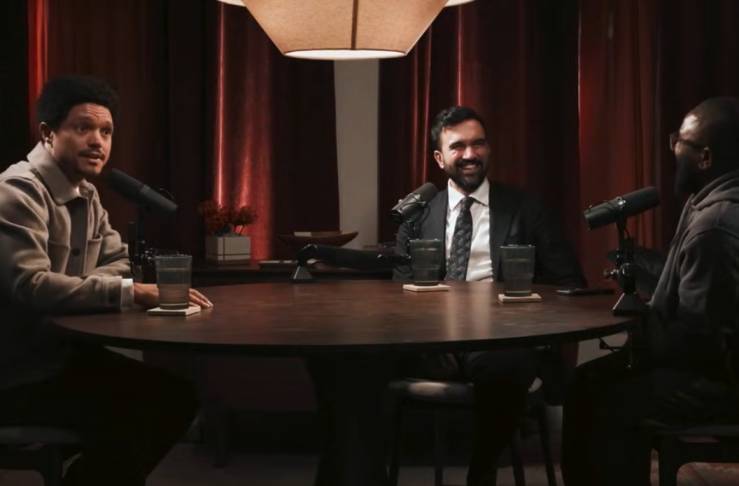
In this episode of What Now? With Trevor Noah Podcast lived Dec 16, 2025, Trevor Noah is joined by New York City’s new mayor, Zohran Mamdani, for a candid conversation about what it actually takes to make the city livable again for working and middle-class people. Mamdani traces his journey from Kampala to Queens, how public life has quietly reshaped his private world, and why he thinks a mayor’s real power lies in using existing tools differently rather than waiting on miracles from Washington or Albany.
He lays out his three core promises—free, fast buses; a rent freeze for tenants; and truly universal childcare from six weeks to five years old—and explains how those policies could tackle everything from gridlock and crime to families getting priced out of their own neighborhoods. Along the way, he and Trevor dig into why Americans lost faith in politics, what “socialism” actually means in the context of dignity and daily life, and why movements succeed only when they’re built by teams instead of lone heroes.
The Art of Off-the-Record Conversations
TREVOR NOAH: So what I was saying is, I was always intrigued by how people would trust just like a handshake agreement everywhere. People like, “Oh, this is off the record.” But there’s a camera rolling and the sound recording and we’re like, “This is off the record.” And then 10 years later or five years or even a day later, the clip comes out and then people are like, “But… but that was behind the scenes.” You’re like, “Yes, there’s a camera when you’re wearing a microphone. When there’s a microphone, when there’s a camera, it’s somewhere.”
EUGENE KHOZA: Because the editor was like, “I’m not part of your agreement.”
TREVOR NOAH: It’s somewhere. Remember, “Grab them by the pussy”?
EUGENE KHOZA: I wasn’t there. But why are you saying, “Do I remember?” It’s not…
ZOHRAN MAMDANI: I’m leaving this between you guys.
EUGENE KHOZA: The way he said, “Do you remember?”
TREVOR NOAH: You’re right, actually, I shouldn’t have done it.
ZOHRAN MAMDANI: Made it seem…
EUGENE KHOZA: I accept your apology.
TREVOR NOAH: Yeah, I apologize. But my point is, that was all off camera. You know who also owes… that was all off camera?
ZOHRAN MAMDANI: Who?
EUGENE KHOZA: The editor that edited Zoran’s dad out of the company. He recorded.
ZOHRAN MAMDANI: But that’s how you…
TREVOR NOAH: Yes.
EUGENE KHOZA: Oh, by the way, this is… this is a special.
TREVOR NOAH: This is…
ZOHRAN MAMDANI: I was like, how do…
Ugandan Connections
TREVOR NOAH: How do we make this time special with you? And I thought to myself, you’ve got Zoran Mamdani on the podcast. But I was like, how many… you know how many tie-ins we have in our lives, right? So born in Africa. Born in Africa. Then Ugandan, right? Born in Uganda.
Then I was like, “Do you know how many Ugandans I have in my life?” In my head, I thought to myself, I was like, “I collect Ugandans.” And I was like, “But you can’t say that. Don’t say it like that.”
ZOHRAN MAMDANI: No. Anyway.
EUGENE KHOZA: No, no, no.
TREVOR NOAH: But no, no, I’m saying… I wasn’t going to say it.
EUGENE KHOZA: This is off the record.
ZOHRAN MAMDANI: You’re taking us through the…
EUGENE KHOZA: This is off the record.
TREVOR NOAH: I’m letting you know.
EUGENE KHOZA: I was in my head.
TREVOR NOAH: This is off the record. So you can’t use it against me. So then I was like, “I collect Ugandans.” And I was like… but you can’t say it like that. So you got to be like… I mean, I have a lot of you. I don’t know how this happened. I have a lot of Ugandan friends in my life. A lot of Ugandan friends.
ZOHRAN MAMDANI: You say it like it’s a… like, a what? Problem?
TREVOR NOAH: No, no, no. You made it sound like a problem.
ZOHRAN MAMDANI: Zor…
TREVOR NOAH: Don’t put that on…
EUGENE KHOZA: See how it feels…
TREVOR NOAH: Don’t put that on…
EUGENE KHOZA: Someone puts you in a scene, you…
TREVOR NOAH: Owe me an apology. I’ll take my apology now.
ZOHRAN MAMDANI: Which camera? Not to me.
EUGENE KHOZA: No, this is not about them. The deposition. This is straight to me.
TREVOR NOAH: Straight to me. I’ll take my apologies or apologize. Thank you. Thank you very much. So then I was like, “I’m just going to bring them all in.” So I was like, my best friend who’s Indian, my other best friend who’s Ugandan and South African. They’ve even got microphones. They can just throw things in.
Kampala Roots
EUGENE KHOZA: Where in Uganda, by the way?
ZOHRAN MAMDANI: Kampala.
EUGENE KHOZA: That’s where I was born.
ZOHRAN MAMDANI: Where were you born?
EUGENE KHOZA: In Kampala, Margaret.
ZOHRAN MAMDANI: Okay. Nsambya Hospital.
EUGENE KHOZA: Oh, wow. Yeah.
ZOHRAN MAMDANI: Yes.
EUGENE KHOZA: I moved to South Africa. Like you.
ZOHRAN MAMDANI: I can hear.
EUGENE KHOZA: Yeah, yeah. And to New York, like you. You guys hated that place. Which place? South Africa or Uganda? Two places before you were like…
ZOHRAN MAMDANI: It…
EUGENE KHOZA: Actually is a crazy story.
TREVOR NOAH: Think about it.
EUGENE KHOZA: Yeah.
TREVOR NOAH: You guys both came from Uganda.
EUGENE KHOZA: I mean, you’re not helpful to me because my parents are like, “I mean, look at Matt Zorin.” I’m sorry. He’s raised the ceiling they thought you had achieved. And now they’re like, “Wait, you could have done this? This is what you could have done.”
The Shock of Success
TREVOR NOAH: How many people are shocked? Eugene and I were talking about that the whole day. There’s got to be a section of people in your life who are still shocked at the idea of you being the mayor of arguably the most important cities in the world.
EUGENE KHOZA: Hub.
ZOHRAN MAMDANI: Yeah.
EUGENE KHOZA: Hub.
TREVOR NOAH: Not Hub. Different Hub.
EUGENE KHOZA: Hub.
TREVOR NOAH: Think of Hub. No, but there must be, genuinely, just on a personal level, there must be a ton of people out there who go… they just know you as Zoran.
ZOHRAN MAMDANI: Yeah.
TREVOR NOAH: And then now you are Zoran Mamdani, the next mayor of New York City.
ZOHRAN MAMDANI: Yeah, I mean, it’s… it’s true. Not just in Kampala, but also here in New York City. I mean, there are people I would play on a rec soccer team with. And I was just reading this article today about a lot of their reactions and reflections.
TREVOR NOAH: Do you still play with them?
ZOHRAN MAMDANI: I haven’t in a while.
TREVOR NOAH: Why not? I saw you still have the skills, by the way. I was very impressed.
ZOHRAN MAMDANI: Highly edited.
TREVOR NOAH: No, no, no, no, you can’t edit those skills. No, no, you’re lying. You can’t. No, you can’t edit those skills. You play… what position did you play?
ZOHRAN MAMDANI: I have the classic journey of someone who played up top and then lost all of their speed and now plays at left back. That’s… that’s where I am.
TREVOR NOAH: I started my journey at left back.
EUGENE KHOZA: You know what? You know when people say it is… you know when people say “I fell”… yeah. I used to be good, and then now I play where you play all the time.
ZOHRAN MAMDANI: That’s…
EUGENE KHOZA: That’s me, Trevor. That’s me.
Life as Mayor-Elect
TREVOR NOAH: I genuinely love that for you, man. I just… how much has your life changed now? And I don’t know if this is just anecdotal, but we were chatting with Ryan about this. We were going, “It feels like your social media has gotten a little more serious now,” which makes sense, but I don’t know if that’s just how it looks online. Do you feel a more serious shift in your life?
ZOHRAN MAMDANI: I think I don’t feel burdened by it. I feel like sometimes that’s implicit in the sense of the seriousness. You can both take it for the weight that it has and also not lose sight of the fact that it’s an incredible opportunity.
And I think, for me, the idea that it’s my job to represent this city that I love, and that my job means I get to speak to New Yorkers and go across the five boroughs and see people in their own lives… it’s amazing.
And then there’s also… there are parts of it that are absurd. You know, I told my landlord I was moving out, and she was, you know, jokingly saying, “You know, make sure you clean up the apartment. If you don’t… I know where you’re moving to.” I remember. Everybody knows.
TREVOR NOAH: Yeah, everyone knows everything about this.
ZOHRAN MAMDANI: Pretty. This is.
TREVOR NOAH: This is your life.
ZOHRAN MAMDANI: Yeah.
TREVOR NOAH: Forevermore.
ZOHRAN MAMDANI: This is.
TREVOR NOAH: This is your life. It’ll never be the same after this one.
ZOHRAN MAMDANI: It won’t. But I think that’s what I love, though, is that you learn different parts of the city because of what your life is like now. You know, I think for my wife and I, going out at night, going for a walk at night, it has a different kind of meaning now because it’s where we can find a little bit of anonymity.
And so you start to appreciate the city at an hour that you otherwise wouldn’t have gone before because you didn’t have to make that kind of a decision.
TREVOR NOAH: Oh, okay. Do you have a night voice? It would be… “I’m Zoran.”
EUGENE KHOZA: Yeah. You can’t still be Zorin with a night voice. Who?
TREVOR NOAH: “Mr. Cardamom.”
EUGENE KHOZA: Yeah. Yeah.
ZOHRAN MAMDANI: “Mayor Cardamom.”
TREVOR NOAH: Mayor Cardamom.
EUGENE KHOZA: Mayor Cardamom to you.
TREVOR NOAH: “When the knights of New York get rough and Zoron can’t do it, I’m here.”
ZOHRAN MAMDANI: Yes.
EUGENE KHOZA: Sense it.
TREVOR NOAH: And if you’re responsible for the main course, I mean, they’ve got spiral cut ham bone in rib roast. The heavy hitters. One year I showed up with king crab legs. People were silent, they were stunned. They weren’t really impressed. They were confused because nobody expects king crab at Thanksgiving, but it tasted good, so they got over it.
And to round everything out, I grab 365 by Whole Foods Market. Staples, green beans, stuffing, dinner rolls. The fundamentals. The 365 brand is basically how I fill the table without filling my stress levels.
And here’s the part people don’t think about. The gifts. Whole Foods Market has cookie gift boxes, beauty gift sets, candles, flowers. I even built a cheese board as a present. Yeah, not the board, the cheese on top of it. It’s one of those gifts that looks thoughtful, but it’s really just cheese that’s put in the shape of something. People love it.
So, yeah, my holiday hack is really simple. Whole Foods Market does the work. I take the credit. Everybody wins. And honestly, that’s what the holidays are about. Good food, happy people, and lies told with love.
That’s what I’m talking about. All right, so I know we don’t have a lot of time with you, so I wanted to—I spent a lot of time thinking about this. I was like, you’re a very busy person now, and, you know, you’re doing all these things. And I was trying to think, if somebody was watching this episode, what would they hope to get from the conversation? There were only three things that really, really stuck out for me.
ZOHRAN MAMDANI: Like, three.
TREVOR NOAH: Three larger ideas. One was how you see the future of New York City, how you want to build it, how you want to change it, what you want to improve, what you think the challenges will be, et cetera. It’s like the job job part of it.
The second part of it is the human being. And the reason I say that is because in everything that I’ve seen of yours, genuinely, it’s either like, caricatures of people who hate you or just, like, pieces about what you want to do, but people sort of don’t know you.
ZOHRAN MAMDANI: You.
TREVOR NOAH: And I think a lot of people would like to know who the human being is behind some of these ideas. And then the last part is just, like, random shit that we’ll talk about, like—because you’re also, like, a person you see, like, now you did a joke with us. I think you’re the first politician I know who’s ever told me, like, a joke. Maybe Obama was the first time where I was like, oh, this person actually knows humor. Do you know what I mean?
ZOHRAN MAMDANI: But you’re just like a—
TREVOR NOAH: Like a dude.
ZOHRAN MAMDANI: He’s just like, a guy, just a guy. He is at night.
EUGENE KHOZA: Oh, man.
ZOHRAN MAMDANI: So let’s—
EUGENE KHOZA: Okay.
TREVOR NOAH: Let’s talk about New York.
ZOHRAN MAMDANI: Wait, hold on. Where are you from? South Africa. We’re in South Africa.
EUGENE KHOZA: Born in Pretoria.
ZOHRAN MAMDANI: Okay.
TREVOR NOAH: But now living in our time.
ZOHRAN MAMDANI: By the way. Sorry.
EUGENE KHOZA: You know I love you, Eugene. I just want to know if this counts against our time. Wait, what did you say?
TREVOR NOAH: Does this count against our time?
ZOHRAN MAMDANI: No, before that.
TREVOR NOAH: You know I love you, Eugene.
ZOHRAN MAMDANI: You finally got it. You finally got it. How many podcast episodes does this take?
EUGENE KHOZA: Fifteen. Thank you.
ZOHRAN MAMDANI: You are loved.
EUGENE KHOZA: Thank you.
ZOHRAN MAMDANI: You are seen.
EUGENE KHOZA: Thank you.
ZOHRAN MAMDANI: You are enough.
EUGENE KHOZA: This is what it took. So is this—
TREVOR NOAH: Come on. Johannesburg by way of Pretoria, South Africa.
ZOHRAN MAMDANI: Josie, stand up. Come on.
TREVOR NOAH: You know. You know this. You know this. So let’s talk about New York, and then we’ll go—
EUGENE KHOZA: We’ll go through your life. Sorry, Eugene.
ZOHRAN MAMDANI: Sorry.
EUGENE KHOZA: Because now they’re going to be like, you’ve—
TREVOR NOAH: Run out of time.
EUGENE KHOZA: And then I’ll be like, some of that time was taken by Eugene. You know what we can even do? We can edit you in saying things about your life. We just will. When you leave, you—you’re just going to sit here and just be like. And then I—and we’ll put that in. Call Ryan. And then we’ll put a stunt double in. Ryan, you’ll be Zoran’s stunt double. And then you must just like—
TREVOR NOAH: Yeah, but anyway, so let’s—
ZOHRAN MAMDANI: Let’s. Sorry.
TREVOR NOAH: Actually run us through the process.
ZOHRAN MAMDANI: Right.
TREVOR NOAH: Like, what’s—
EUGENE KHOZA: What’s—
TREVOR NOAH: What are the orders of business that you—that you’re doing right now? Like, let’s—let’s—let’s go from the shortest term, and let’s build out as—
ZOHRAN MAMDANI: As—as—
EUGENE KHOZA: As your—
TREVOR NOAH: Your job as mayor. So what are you doing right now?
The Transition Period
ZOHRAN MAMDANI: Right now is the transition period. Okay. So right now is the time where we are vetting applicants who are making hiring decisions. We’re building out the team. So it’s this—it’s—it’s a bit of a strange period because everyone knows about the election, everyone knows about January 1st. And then you have these two months in between.
And so typically in these two months, it’s a lot of kind of pomp and pageantry. Yeah, we want to get ahead of January 1st. We want to make the decisions and the appointments in advance of January 1st. And what this also means is we want to build that team. Okay?
So so far, we have made a few decisions of first deputy mayor, you know, chief of staff, police commissioner. And then in the next few weeks, we have to start filling out additional top positions.
TREVOR NOAH: What do you base that on when you’re picking it? And the reason I ask this is because you’re such a unique candidate. Right. So if you had come through the regular pipeline of, oh, establishment. Establishment. I almost feel like it would have been pre-picked for you in a weird way.
ZOHRAN MAMDANI: It would have been who you knew. Yeah.
TREVOR NOAH: Because we always see that happen. Right. It’s like when Hillary Clinton was running, then you’d be like, the person she’s going to pick is the person who used to be the person who used to be the person you’re like, oh, it’s all like the same team, and then you just shift around who’s where. You get what I’m saying. Yours is different, though. So how do you pick and where do you pick?
Building a Team Without Owing Favors
ZOHRAN MAMDANI: I think it’s on an assessment of the work that people have done. And it’s quite liberating, actually, to come into this position and not have to owe favors, you know, not—not be, like, unburdened. You know, you’re just actually making decisions based on, do you think this person can do the job? How can they show you that they’ve already done the job?
And you’re looking for this combination of a fluency with what it looks like to work within government and an imagination that is unburdened by the difficulties of working within that government.
TREVOR NOAH: Okay, right.
ZOHRAN MAMDANI: So sometimes you would think that the more time you spend in government, the less ambitious you become about what you can do with it.
TREVOR NOAH: Yeah.
ZOHRAN MAMDANI: But one of the reasons that I hired Dean Fuleihan to be my first deputy mayor, he had served forty-seven years in working in government at the city and the state level is the first time we sat down for Adani chai at Kahwa House. He—he told me about how he treated—like the drink. Like the drink.
TREVOR NOAH: Okay.
ZOHRAN MAMDANI: You ever heard—
TREVOR NOAH: I was making sure. Ryan, have I had it? I’m assuming I’ve had variations of it.
EUGENE KHOZA: No, no, no, no, no, no, no, no. The closest. India. The closest. Yeah, but you weren’t with me drinking. You owe. He monitors.
TREVOR NOAH: He monitors.
EUGENE KHOZA: You owe.
TREVOR NOAH: I apologize.
ZOHRAN MAMDANI: I accept. Chap.
TREVOR NOAH: But, yes, I’ve had chai. Yes.
EUGENE KHOZA: So—
TREVOR NOAH: So, yeah, so you were sitting down—
ZOHRAN MAMDANI: Having chai, and he talked about how he transformed the culture of the Office of Management and Budget from a culture of no to a culture of how. And to me, that is an example of what we’re trying to do with government.
Because when you’ll say you have an ambitious policy proposal, you want to deliver universal childcare, you want to make buses fast and free. There will be so many people you can find who can tell you it’s impossible to do that.
TREVOR NOAH: Right?
ZOHRAN MAMDANI: And the people you’re actually looking for are not the ones who tell you it’s easy. They’re the ones who tell you it’s difficult. And here’s how they’re actually going to do it.
TREVOR NOAH: So you’re interviewing people for the job, or you’re picking people for the job and you’re trying to find a balance between the people who’ve shown that they can do it. But then I’m assuming you’re also interviewing people who, like you, are new to a position, because that’s—that’s the weird paradox, right?
You’ve never been mayor of New York, and now you are going to be mayor of New York. So how do you then judge a person who’s never done the job? Like, what are you looking for in those people where you go, hey, you haven’t done this, but I think you can—vision.
ZOHRAN MAMDANI: You’re looking to hear from them about how they would actually transform the position that you’re asking them about. There’s a real temptation, especially when you’re looking at a job of this scale and you’re looking at, you know, we’re talking about positions that oversee agencies of tens of thousands of people.
There’s a temptation to say, I’m just going to keep the trains running on time. But that’s not enough. That’s not enough in a city that’s the most expensive in the United States of America. It’s not enough in a city where one in four people live in poverty. You have to both be able to continue to operate things as they are and push them forward to delivering the city we deserve.
The Paradox of Imagination in Politics
TREVOR NOAH: Why do you think, or do you think? Because, I mean, I do. So I don’t want to bias you, but, like, it feels like, particularly in America and maybe other parts of the world, it feels like conservatives have been pretty good at imagining and hoping. And then liberals or progressives or however people want to, you know, left side of the spectrum have sort of adopted this idea of like, hey, hey, hey, hey, hey, hey, let’s just keep it working well. And you can’t really change much.
ZOHRAN MAMDANI: You can’t.
TREVOR NOAH: Like, do you know how many interviews of yours I’ve watched where people say, Zoran, now I agree with your politics. I love what you’re saying, but I just don’t know that we can do it. I just don’t think you’ll be able—
ZOHRAN MAMDANI: To get it done.
TREVOR NOAH: I just don’t—but not once have I seen somebody interviewing like Trump, for instance, on a right wing platform go like, ah, dawg, I don’t know about that wall. I don’t know, man. That’s a big ass wall. How are you going to do it? Do you get what I’m saying?
EUGENE KHOZA: I do.
ZOHRAN MAMDANI: I think it’s—you have people. It seems like Republicans have a limitless imagination. Yeah. And as Democrats, we’re constructing an ever lowering ceiling of possibility.
TREVOR NOAH: It’s right here.
ZOHRAN MAMDANI: Yeah. You know, and we are robbing ourselves of ambition and imagination, and we’re telling people that their choice is between settling or sacrifice. And neither of these are enough. You have to have an affirmative vision of how life can be better than this, because this life already is suffocating people.
TREVOR NOAH: I sometimes think it’s because of the decline of religion on the left.
ZOHRAN MAMDANI: Hmm.
EUGENE KHOZA: Tell us more.
TREVOR NOAH: I could pro. I. Look, if I’m wrong, I’m wrong. And you know, you will tell me.
EUGENE KHOZA: Wait, if there’s one thing I will tell you. Hello. Is when I’m wrong, am I allowed to speak?
TREVOR NOAH: Yeah, I like that you say that into a microphone as if the microphone wasn’t placed there for the possibility that you may speak. Am I allowed to speak? You literally look, you know what you look like right now? You look like somebody at those town halls where they came from the crowd, and then they don’t know how anything works. Or Ed Checkers, he’s about to make an announcement. But let me say this point, and then, yes, let me say.
EUGENE KHOZA: So, before you say this point, though, okay? Did you steal this point from me?
TREVOR NOAH: There’s a distinct possibility as friends.
EUGENE KHOZA: Okay, no, no, continue, continue as friends.
TREVOR NOAH: I mean, I don’t know how you are with your friends, but if my friend has a great idea, it’s mine. It becomes a part of my thinking. This point might have come by way of a friendship.
ZOHRAN MAMDANI: Tap away.
EUGENE KHOZA: That’s exactly what it is. And when it was open, no one was taking responsibility. For what? Preach, Eugene, preach.
TREVOR NOAH: Tell people about these relationship Tupperwares, huh? Instead of focusing on where the Tupperware ends up, you should focus on the fact that your friend took the meal that was inside the Tupperware, enjoyed it, and enjoyed it and shared it.
EUGENE KHOZA: But he may return it with another meal inside.
TREVOR NOAH: That’s true. That’s true. Many of the ideas that you have came from me.
EUGENE KHOZA: And some of that. Which idea of yours did I know? So the owner of the idea, to me, the owner of the idea is not important.
Faith, Politics, and the Power of Belief
TREVOR NOAH: I think good ideas should live beyond people. But if you think about religion and how in most parts of the world religion is declining, but it’s declining in areas where people are particularly left leaning or progressive or, you know what I mean? You see it.
EUGENE KHOZA: I don’t think religion is declined. I think faith.
TREVOR NOAH: Yeah, the two have been combined for a long time.
EUGENE KHOZA: Yeah, absolutely.
TREVOR NOAH: And one of the things that faith requires of you is the ability to believe that this current state that you are in is not the end. There is a possibility that something can be greater. And even though you cannot see it, you believe that it can happen. It requires literally everything that you just said. Do you know what I mean?
EUGENE KHOZA: Yeah.
ZOHRAN MAMDANI: And I think that I’ve found over the course of the campaign that it’s often in houses of worship where New Yorkers still have that trust, really still have that faith, and it’s by and large lost when it comes to politics. You know, I mean, there are so many people who look at politics as irrelevant to their material struggles on a day to day basis. And part of that is because of their own experiences of believing in politicians who have not delivered and thinking that the rational decision is to take as much space as you can.
EUGENE KHOZA: How do you find…
Judging Political Success and Failure
TREVOR NOAH: Just real quick, I just want to know, like this is a difficult one, like with delivery. How do you think the public should judge a politician’s delivery or lack thereof? Because some things that people set out to do won’t be achieved because that’s how life is. You aim for something and you fail. Right. And then some are because of regulation or kickbacks or, you know, corporations or lobbyists or.
So one part of it is because of like a mud and a sludge and the other one is because just life is like that. So how would you like people to judge you when you’re in the mayorship and go, all right, Zoran, this thing you did achieve, so that’s one side. But for the things that you didn’t like, how would you want people to judge your failures, which are inevitable in anything that people do?
ZOHRAN MAMDANI: We built a campaign around three policy commitments. Freezing the rent for rent stabilized tenants, making the slowest buses in America fast and free, delivering universal childcare. We have to deliver these things. Okay.
TREVOR NOAH: And that’s non negotiable to me.
ZOHRAN MAMDANI: I think it’s every day I’m going to wake up pushing these three things forward. And there’s no question there are, this is incredibly difficult work. There are things you will try and you will fail. I think what frustrates so many is that there are so many things where it looks like someone is not even trying. Yeah, they are just admitting defeat from the beginning. You know, they are describing something as unrealistic or impossible. Madiba said it always seems impossible until it’s done.
TREVOR NOAH: Nelson Mandela, for those who don’t know.
EUGENE KHOZA: Can I ask a question?
TREVOR NOAH: You’re going to say Nelson Mandela took that from you as well. I know how you work. I know the sh*t that you’re going to say. He’s going to be like, where did he get that idea? Where did he get that idea? Who was in prison?
EUGENE KHOZA: Oh, I’m the only person with ideas. Please share some with us, Dave.
ZOHRAN MAMDANI: Before he says something, I’d like to say it probably wasn’t his idea. Because he’s been quiet.
EUGENE KHOZA: When you started speaking, he didn’t say anything. The title was my idea. You know when you get those movies that have the same title but it’s a different movie. The title was my idea, but like the one where the…
ZOHRAN MAMDANI: Oh, no, never mind.
Understanding Mayoral Powers
EUGENE KHOZA: Okay, so now may elect Mamdani. Do you know your powers? You know, like because you run for mayor, but at some point there’s like you have powers, certain powers. Do you know them all? Do they give you like a book? These are your actual powers.
ZOHRAN MAMDANI: They don’t give you a book.
EUGENE KHOZA: You. No, I’m saying. You know what I mean? Like.
ZOHRAN MAMDANI: No, I do. I have definitely an awareness of what power this jobs comes with. I’ll give you an example on the three policies I was speaking of. The first one, freezing the rent for rent stabilized tenants. City of eight and a half million people, about two and a half million live in housing called rent stabilized housing.
TREVOR NOAH: And what does that mean? Just because I see people conflate stabilized versus rent control is a very…
ZOHRAN MAMDANI: Small proportion we’re talking about. What is rent stabilized? What does that mean?
TREVOR NOAH: Rent stabilized basically applies to half of all tenants in New York City. And it means that their rent, whether it will increase or stay the same, is determined by a board called the Rent Guidelines Board. Okay, so the board is composed of nine appointees, all of whom are appointed by the mayor.
ZOHRAN MAMDANI: Yes.
TREVOR NOAH: So we have seen this board freeze the rent in the past. We have seen this board raise the rent like it has under Eric Adams, more than 12%. So when I talk about freezing the rent, I’m talking about this board composed of mayoral appointees finally giving tenants the relief that they deserve.
EUGENE KHOZA: Okay, so that’s…
ZOHRAN MAMDANI: Sorry.
EUGENE KHOZA: Just to clear that up. So that is like, you know. You know the question. Because sometimes when it comes to politics, people will be like, you know, you vote the person in, then later on it’s like, no, technically, I didn’t have that power because, you know, you know that kind of thing.
ZOHRAN MAMDANI: No, people try to obfuscate what their responsibility is. I think the second and the third points that I brought up of making buses fast and free, delivering universal childcare, these are things that have to be done in partnership with Albany state government.
TREVOR NOAH: Right.
ZOHRAN MAMDANI: The reason that it was at a core part of my campaign, though, is any mayor with an agenda that is as ambitious as the crisis in front of them will require state partnership because the city is effectively a creature of the state, especially after the 1970s fiscal crisis.
So one of the most impressive achievements in city politics in the last few decades was the creation of universal pre K. That was done by the previous mayor, Mayor de Blasio, who ran on that as part of his agenda, needed Albany to get it done. There were all these articles written about how it was unrealistic. He went up against a governor who was very much opposed to it, and he won the funding for that because of the coalition that he built. Okay.
And so my point here is that there are some things you can do directly yourself. There are other things you will have to build the coalition around you to do, but all of these things have to be part and parcel of it. Because I can tell you, to my mind, one of the most frustrating things you can tell a New Yorker when they call your district office is, oh, that’s not, that’s not actually my jurisdiction. You should call this person or you should call at that level.
Being the mayor of this city comes with immense power, not to say total power at all, but immense power to at least start an agenda and then start to deliver that agenda when you build the coalition you need. That’s where I see the possibility in these three things.
EUGENE KHOZA: So, okay, great. This is great. Wait.
The Book of Power
TREVOR NOAH: You know, when you say the thing about the Book of Power, it makes me think of, like, I think you and I actually had this conversation. We talked about how…
EUGENE KHOZA: Mostly me giving ideas.
TREVOR NOAH: We talked about how, again, I don’t care where good ideas come from. No, you know, my idea is people shouldn’t worry about their egos. But we had this conversation about, we’re talking about Trump, and we literally joked and we said, it feels like Trump was the first person to read that book. Do you know what I mean?
Because there’s so many things. No, because there’s so many things where Trump is doing it. And then people are like, can a president do that? And then it’s like, oh, yeah, he can. And you’re like, wait, wait, wait, wait. We didn’t know that you could do all of these things. And I think that’s sort of what the question is.
ZOHRAN MAMDANI: Yeah. And I think it’s, look, we have this transition. We have four incredible co chairs. One of them is Lina Khan and Lina Khan.
TREVOR NOAH: Can we get Lina Khan on the show? By the way, she’s one of my favorite human beings.
EUGENE KHOZA: No.
TREVOR NOAH: Can I tell you, I, we’ll have a separate conversation about this.
ZOHRAN MAMDANI: I’ll tell you why I take away from our time.
TREVOR NOAH: Yes, but it’s…
EUGENE KHOZA: But it’ll add time value.
TREVOR NOAH: It’ll add value. No, I’ll tell you why. Lena Khan, like you seen on a wall of like, superheroes. The way I hate monopolies. Mergers acquisitions. And you know this as my friends.
ZOHRAN MAMDANI: Orlando Pirates.
TREVOR NOAH: I don’t think that counts.
EUGENE KHOZA: What about the Orlando Pirates? What about that story? But thank you for the counting. Cheesy hate. What the hell? Merger acquisitions. Kaiser chief. Oh, man, my brain. Like Orlando Pirates. Cortes with no Russian. No. Anyway, she’s…
TREVOR NOAH: I’ll tell you, she’s a hero because I think she tapped…
ZOHRAN MAMDANI: She’s amazing.
TREVOR NOAH: And I think that’s maybe why you picked a part of it is she taps into the understanding that not everything is happening on the surface the way you think it is. And then you go, like, why did that happen?
ZOHRAN MAMDANI: Why did that happen?
TREVOR NOAH: And she’s like, oh, let me show you where it started. Like, she’s at the origin story of a lot of these things.
ZOHRAN MAMDANI: And she spoke about that when she first got to her job. She felt like she was experiencing the great forgetting where she got there. And it felt as if so many people working in government had forgotten the tools they had at their disposal. You see, that’s what I wanted. And I think we, it’s, there is a need for imagination, for the new kinds of policies and proposals you put forward, and also an ambition to use your existing set of tools to actually transform people’s lives.
TREVOR NOAH: Yeah.
ZOHRAN MAMDANI: To actually transform people’s lives.
TREVOR NOAH: Don’t go anywhere because we got more. What now after this, Do you think?
EUGENE KHOZA: Can I just, one more question.
TREVOR NOAH: Just.
ZOHRAN MAMDANI: Sorry, Sorry.
EUGENE KHOZA: Really? This is. Now. He’s not sorry now.
ZOHRAN MAMDANI: Okay, I’m sorry.
The Ambulance Question
EUGENE KHOZA: Okay. One more question now in, just to wrap up the powers thing, do we all agree as New Yorkers that ambulances are too loud? Oh, I feel like this has turned. This is literally turned into those. It really has turned into a town hall. No, I’m just, no, your posture. Can I tell you, I always look at.
TREVOR NOAH: When I watch town halls and people come up and do this thing, I’m always like, who are these people?
EUGENE KHOZA: I didn’t know I’m friends with one of them. Like the posture, the everything. Just like.
Can we all agree that ambulances are too loud also? And speaking of power. Yes, exactly. Here’s my pet issue. But yes, he’s like, we’re talking about mergers and acquisitions. I like how Dave gave himself citizenship as citizens. Hey, hey, you kind of. Wait, wait, wait. Dave, Dave, wait. No, but actually, I do like this.
TREVOR NOAH: Question because I think you know why. As I get it, macro versus micro. I think these are like the nice things to try and understand. I’ll interpret for you. Yes.
EUGENE KHOZA: So now one, we all agree that ambulances are too loud.
TREVOR NOAH: Way too loud in New York. Way too loud. I agree.
EUGENE KHOZA: They’re too loud.
TREVOR NOAH: They’re way too loud.
EUGENE KHOZA: One ambulance and the entire Manhattan knows that you know that.
TREVOR NOAH: Yes, I agree.
EUGENE KHOZA: You don’t even know. About to lose their lives. You don’t know.
TREVOR NOAH: You don’t even know. Is that too much of a difference? No. Eugene tells you. No, let me explain. Eugene, wait.
Let me explain. Let me explain.
ZOHRAN MAMDANI: I.
TREVOR NOAH: This is what Dave means. Really. You don’t even know where it’s coming from. It’s pointless.
EUGENE KHOZA: At some point, it’s like, not where it’s going that’s the most important.
TREVOR NOAH: Nobody knows where it’s coming.
EUGENE KHOZA: But anyway, finish asking it.
TREVOR NOAH: Cool.
ZOHRAN MAMDANI: So.
EUGENE KHOZA: So now would you say that, that in some way or form, the citizens of New York, both documented, undocumented. I’m not even joking because you’re trying to expose me, but crying. But would you say that it is that you pledge to have a, like some sort of database? Not a database, but link so that we can see what’s inside the ambulance, what’s going on? Oh, because I never.
ZOHRAN MAMDANI: I never knew where the next.
EUGENE KHOZA: Welcome to Dave. Welcome. Today, if there was a review of Dave. So if it’s too loud, you want to know what’s happening inside? Can I tell you? No. Can I tell you? You want to know? I think. I think what he wants to know is, is it justified being loud?
ZOHRAN MAMDANI: Yes.
EUGENE KHOZA: Has the person stubbed their toe? Yes. Or is this person in cardiac arrest?
TREVOR NOAH: No. But more importantly, are you asking or.
EUGENE KHOZA: You decrease the volume? Do you know what I mean? If not, everybody is having an emergency the way these ambulances tell us that’s not possible. So do you regret being mayor yet? I’m saying this is your life, you know? This is your life. In your book of powers, you’re going.
ZOHRAN MAMDANI: To be my life.
EUGENE KHOZA: Anyway, you’re going to be having dinner. You’re going to be having dinner, and.
TREVOR NOAH: This guy’s coming up.
EUGENE KHOZA: I know too many guys like this. Anyway, no, now I’m the mayor. I still know, because you have these. You have these big ideas. That’s what I’m saying. In your book, I’m sure you can say that. And most people will agree. Most people will. No, no, no, because we all agree at some point we’re going to need an ambulance.
TREVOR NOAH: Small injury, small. Small siren.
EUGENE KHOZA: Small siren, Big injury, big siren. No.
TREVOR NOAH: Now, on a real, though, can you, like, are those the kinds of things that you actually can do unilaterally or do you need to, like, is there a board? Is there.
EUGENE KHOZA: No, I think it’s a.
ZOHRAN MAMDANI: On this question.
EUGENE KHOZA: Yeah, yeah.
TREVOR NOAH: I mean, it. I mean, I know it sounds crazy. No idea. Okay. Okay. What about.
ZOHRAN MAMDANI: What about.
EUGENE KHOZA: You don’t know what’s in the book. I am not going to sit here.
ZOHRAN MAMDANI: So.
EUGENE KHOZA: You don’t know what. I even know the process by which you would consider trading volume for severity. No, you don’t know what’s in the book. That’s the thing.
TREVOR NOAH: Thank you, sir.
EUGENE KHOZA: Thank you, sir. It could be in the book. Thank you for your time, sir. Thank you. Thank you.
The Three Big Policies
TREVOR NOAH: As you can see. So Dave definitely lives in New York and experiences this. This is actually what I, what I love about it is, like, as you, as you’re building up in this transition and you’re getting ready for these things, how do you find. So you have these three big policies that you’ve run on. You’ve gone rent. We are aiming to freeze the rent, especially where we can immediately. And then work on helping other people. The second thing you’re going with is the buses. They need to be faster, they need to be free. And the third thing you’re working on is the childcare.
ZOHRAN MAMDANI: And number four is Dave.
TREVOR NOAH: Number four is Dave.
EUGENE KHOZA: Right. So, I mean, you’ve made it, you’ve made it, you’ve made it, you’ve made it. At this point.
ZOHRAN MAMDANI: Yeah, it’s the only way out.
TREVOR NOAH: So my, my question is, when you’re in that, is there. Is there a system for you as mayor to go, these things are small but annoying and they actually make a difference in people’s lives. Like, like this, the sound of sirens or for instance, or like, how do you. How do you find those balances?
EUGENE KHOZA: I think this is.
Small Issues Matter Too
ZOHRAN MAMDANI: It’s, it’s not just that government has often said a crisis is too big, we cannot tackle it.
TREVOR NOAH: Yeah.
ZOHRAN MAMDANI: It’s also that government has said this issue is too small, it’s not worth our time. And as much, as much as we laugh, issues of this scale, whether it be the sound of something or the noise of something or these two New Yorkers are examples of a city that’s not working for them. Yes, it is, actually, whatever it may be. And you need to be able to prove that your city government takes it seriously.
Because wherever you are losing people’s faith, losing people’s trust, that’s also where you’re losing their faith and trust in an ambitious agenda. You know, I was at a town hall with an incoming city council member. His name is Ty, at Rochdale Village in southeast Queens, and an older woman got up and she had a question for me. She said, “Will you honor a promise that was made to be multiple mayoral administrations ago?” And I was like, what is this promise going to be? And she said, “They promised to put a speed bump at this corner,” and it hadn’t been done for more than a decade.
And I was thinking to myself, how could I ask her to believe in the possibility of delivering universal childcare if the same government couldn’t even get her.
TREVOR NOAH: A speed bump that they had promised.
ZOHRAN MAMDANI: That they had promised more than a decade ago? Because when you betray that promise, yeah, you are telling that New Yorker that they should not look to city government as something or someone that could deliver on their needs, and they start to turn away. And then when you ask ourselves, why aren’t more people voting? Why aren’t more people invested? Why aren’t people engaged?
A lot of it is based on experiences like this where the best that they can hope for from their city government is neglect or ignorance. And we have to win people back through the power of example. You can’t finger wag your way to getting someone invested in the politics of their own city. You have to prove it to them. You have to prove that you were right to believe. And here we are actually delivering it. I don’t know if I can prove it to you, Dave, but.
TREVOR NOAH: Can I say, although I joined the mob in laughing at you, I will say, though, this is an issue that I fully stand on.
ZOHRAN MAMDANI: Which part of the issue.
EUGENE KHOZA: No, no silent ambulances or silent.
Perception Versus Reality
TREVOR NOAH: I’ll tell you why. No, I’ll tell you why. It’s an idea that I’ve had that maybe I got from you. And this idea has always been. This idea has always been. There’s a disconnect in politics and in the management of cities, countries, states, et cetera, where there are the things that will dramatically change your life, that are actual things that you need to happen. And then there are things that make you think your life is getting better or getting worse, but they aren’t actually.
And it’s a strange thing that people have in society. You know what I mean? Some things can make people feel safer. Some things actually make you safer. Some things can make you feel like a city’s functioning. Some things actually make it function. And I’m always intrigued.
ZOHRAN MAMDANI: Perception and reality.
TREVOR NOAH: I’m always intrigued around, like, how a politician manages that. When you get into that position, how do you manage that perception? So sirens is a good one. When you live in a city where you constantly hear sirens, it seems like something’s always going wrong. Recently when I traveled to London, Amsterdam, all these, I was, I was shocked at how quiet it was. But it took me a while to realize something was like, missing. And then you’re like, wait, it’s quiet. And the quiet just makes you feel.
ZOHRAN MAMDANI: Like, where’s Dave.
EUGENE KHOZA: Man? Can I tell you something? Can I tell you something? Your timing is impeccable. This Uganda on Uganda violence, I’m here for it. I’m here for it. All I’m waiting for Zoran to turn and do is look at you and be like, why are you Dave? Why are you Dave? Are you not Dave?
Why These Three Policies?
TREVOR NOAH: Okay, so help me, help me understand why you chose the three. The, the freezing, the rent that, I mean, I hope is self explanatory to everybody. The cost of living is, it’s unsustainable in New York and in many places in the world, if people cannot afford to live, then they don’t even want to be part of that society. The buses help me understand why. Faster buses and free buses.
ZOHRAN MAMDANI: So these are the slowest buses in America. Okay.
TREVOR NOAH: That’s not like. What do you mean by that? Like the speed that they go.
ZOHRAN MAMDANI: Right. We’re talking about an average speed in certain parts of Manhattan, around five miles an hour. There’s like.
TREVOR NOAH: That’s walking.
ZOHRAN MAMDANI: You can.
TREVOR NOAH: You can be running something. Yeah, yeah.
ZOHRAN MAMDANI: And what we see is that more than a million New Yorkers ride the bus. It costs $2.90. That is out of reach for one in five New Yorkers. So when you make the bus free, you not only provide economic relief where you ensure that it’s universally accessible, you also actually make it safer.
We did this at the state legislature. I’ve been a state assembly member for a few years. And I worked with Mike Gianares, a state senator. We made five bus routes free in New York City. When we made those bus routes free, after a year, assaults on bus drivers dropped by 38.9%.
TREVOR NOAH: On the bus drivers?
ZOHRAN MAMDANI: On the bus drivers. Because unlike the train, the act of fare collection on the bus happens on the bus.
TREVOR NOAH: Yeah, it’s there.
ZOHRAN MAMDANI: And bus drivers and unions have shared anecdotally that about 50% of assaults happen around the farebox. So when you eliminate the farebox, you make for a safer experience for the bus driver, for everyone on the bus.
And what’s fascinating, back to the point you were just making about perception, reality is when they made a few bus routes free in Boston under Mayor Wu’s leadership, they found that even more than the safety that was provided is that people felt safer to even higher degree than that. We saw this as well in Kansas City to varying extents in different parts of the country.
And it has the economic benefits, has the public safety benefits, and even has benefits of bringing people who would otherwise be driving their car or taking a taxi and getting them on the bus. More than 10% of the new riders on these five bus routes were otherwise going to use private.
TREVOR NOAH: So it becomes economically viable for them.
Making Transit Fast and Accessible
ZOHRAN MAMDANI: And I think what it comes back to is that if you pair the making of the bus free, which then also enables you to use any door to board, you don’t have to wait behind anyone who’s looking for their Metro card or used to be looking for their coins. You can just board and exit. You speed up the time at each bus stop. In Boston, you cut the dwell time by 23%. So there’s a speed that’s incorporated in this.
And then the other part of this is that the city owns its own streets. The city can speed up a bus through the infrastructure it chooses to build or not to build.
TREVOR NOAH: Got it.
ZOHRAN MAMDANI: Bus lanes, busways, bus rapid transit. It’s a political choice that that bus is traveling at five miles an hour. You can make that bus be the most obvious way to get around the city. Right now, so often New Yorkers are taking the bus because they have no other option. We want it to be such that it is the option you choose. So that’s what it comes back to.
And the other part of this is this is disproportionately hurting working class New Yorkers.
TREVOR NOAH: Yeah.
ZOHRAN MAMDANI: Because a bus rider, the average salary of a bus rider is around $30,000 a year. We are talking about the most working class New Yorkers who are dealing with some of the most substandard public transit. And it’s a political choice.
TREVOR NOAH: It feels like New York has, like many cities in the world, fallen into the trap of fixing what needs to be fixed for the wealthy and then sort of ignoring or pushing aside the problems that affect the poor. I mean, I think about—
ZOHRAN MAMDANI: I think about when you fly.
TREVOR NOAH: Yeah.
ZOHRAN MAMDANI: We have made it such a difficult experience to go through TSA that there’s now a financial incentive to sign up for a separate program that can move you through it quicker. I mean, we have monetized the dysfunction of flying.
TREVOR NOAH: Do you think that’s by design, though?
ZOHRAN MAMDANI: I’m going to leave that to you and Dave, man.
TREVOR NOAH: Yeah.
EUGENE KHOZA: Convenience is up for sale. Absolutely. Convenience has been up for sale for the longer.
ZOHRAN MAMDANI: But it’s absurd to me that you should have to pay for the experience that you should already be getting.
EUGENE KHOZA: You were already paid.
ZOHRAN MAMDANI: Anyway.
Universal vs. Means-Tested Programs
EUGENE KHOZA: This is a real question.
TREVOR NOAH: I thought you said no more questions.
EUGENE KHOZA: No, no. Oh, on that topic. Oh, on that topic, there’s a real question on the buses. How come you didn’t go with the people who were paying can, you know, because some people don’t mind paying, but they can pay in a way to keep the revenue coming in. And then people who can’t pay—
ZOHRAN MAMDANI: This is a good question.
EUGENE KHOZA: Can’t pay. Then they have a way of—
ZOHRAN MAMDANI: Okay, so this is in effect a question about universal approach versus means tested. Means tested would say if you make a certain income or less, then you should be eligible for a reduction in your fare or the elimination of your fare.
There already exists a program in New York City called Fair Fares where if you make a certain amount of money or less, you’ll get a reduced fare. The MTA, by last estimate, when they were testifying at the state, they said about 40% of eligible New Yorkers are enrolled. The question was asked to them, what would success look like? They said 50%. So success looks like leaving 50% of your eligible population out of your program.
And so whenever you create a means tested program, you are comfortable to some level with saying goodbye to people who would be eligible for it. Because you know the hurdles of creating a bureaucratic system of proving eligibility, of applying, of receiving, and then of using versus if you make something free at point of use, you capture the entirety of everyone you’re looking to serve.
And this is the difference is that the safety of that bus, the efficacy of how it is moving, the question of the doors, all of this is tied to the elimination of fare at once. And when we made those five bus routes free, we found the most significant increase in riders was among New Yorkers making $28,000 a year or less. They’re already eligible for Fair Fares, but less than 20% of them were enrolled in that program. So that, to me, is if you are serious about reaching everyone, then here’s how you do it.
TREVOR NOAH: You know what it’s similar to? Funny enough, it’s similar to what I feel like they’re doing with voting in America. They are systematically making it harder and harder for people to vote, but basing it, the premise is, no, no, no, it’s super easy to vote. All you have to do is, all you have to do is, all you have to do is, all you have to do is, all you have to do. You know what I mean?
It’s like, get this ID. Oh, but this new type of ID needs this type of identification. And then it’s like, well, which ones do you accept? Oh, your gun one. Oh, we take the gun one. NRA will work. Oh, but this one doesn’t work. And this one. Do you know what I mean?
ZOHRAN MAMDANI: It should be.
TREVOR NOAH: And then to your point.
ZOHRAN MAMDANI: Yeah.
TREVOR NOAH: And more importantly, it’s the trick of saying it’s free. You’re free to enter, but then the process of coming in is not really free. Do you know what I mean?
ZOHRAN MAMDANI: Yeah, yeah.
TREVOR NOAH: It’s like the trick of the interns. To be an intern, you’ve got to be a pretty rich kid. I work for free. Yeah, but do you know how much you have to earn to work for free? And I feel like that’s what you’re tapping into with the childcare thing. Is that a similar—
EUGENE KHOZA: No, wait, wait, wait.
TREVOR NOAH: But there’s similar principle. With the childcare thing, what do you think? I mean, it seems obvious. Some people would go, and we’ve seen discussions around this, you know, privatization and—
ZOHRAN MAMDANI: They’d be like, oh, the private—
TREVOR NOAH: Sector should be dealing with this. Why is the government getting involved in childcare? Shouldn’t just, you know, companies provide childcare? Why do you think it’s important for the state to step in, for the city to step in?
The Case for Universal Childcare
ZOHRAN MAMDANI: Well, look, when the city and the state doesn’t step in, companies have to put forward childcare benefits, childcare services. Why should that be a company’s job? You are seeing companies having to provide a service that should be provided by the city and the state.
I mean, quite literally, you have companies that have childcare on site. You have companies that are giving annual stipends for paying towards childcare. The point of this is that if we do not treat this as the social crisis that it is, we are going to pass this cost on. And this is actually a cost that we should be bearing at a city and a state level.
And the average cost of childcare in New York City for one child is $22,500.
TREVOR NOAH: But that’s close to what you just said the earning, the average earning was for. I mean, that’s insane.
ZOHRAN MAMDANI: It is cheaper to send that same child 18 years later to the City University of New York than it is to find childcare for them. That’s how expensive it is.
And we often talk about delivering universal childcare in the language of how much it will cost and how difficult it will be, as if it doesn’t already cost this city and state an immense amount. Today in 2022, we lost $23 billion in economic activity because of the absence of universal childcare.
TREVOR NOAH: Explain how.
ZOHRAN MAMDANI: Because you had people leaving this city, leaving this state. After housing, the number one thing driving people out of this city, childcare. They are going anywhere they can find childcare for cheaper.
And it’s not just people whose kids they can’t get childcare for. It’s also childcare workers who cannot live off of the average salary at a home based setting of $10 an hour. People cannot live off of that. And we keep asking ourselves why is it so hard to raise a family in the city? It’s like, look at the cost.
TREVOR NOAH: Yeah.
ZOHRAN MAMDANI: I was sitting on the M57, the slowest bus in Manhattan a few months ago and a city worker was seated behind me. She started speaking to me about how she had two kids. The only reason she could make it work here was because her 84 year old grandmother would take care of those kids every single day.
And she told me that when her 84 year old grandmother has to go to the doctor or she feels sick, the only option this mother has is that she has to take a sick day from work because she can’t afford childcare.
We are pushing people out of the city and frankly, people are feeling it. When they’re making $40,000 a year, they’re feeling it. When they’re making $100,000, they’re feeling it. $200,000. Because $22,500 is an immense amount of money after tax and we could be providing—
EUGENE KHOZA: This question, this is a real question, real question. Based on, we’re going to run out of time. Choose your last question. Well, yes, based on childcare. What is this going to look like? Practically, do you know? I mean, what does it mean?
TREVOR NOAH: Zohran’s going to come look after your child.
EUGENE KHOZA: No, man, come on. You see, you are now wasting my time. What is it? It’s never a waste of time when a joke is in. Can we all agree? Never.
TREVOR NOAH: Thank you.
ZOHRAN MAMDANI: Never. Never.
TREVOR NOAH: Jokes are never a waste of time.
ZOHRAN MAMDANI: In fact, never.
EUGENE KHOZA: Anyway, you know, what is it? What is it? That’s a great question by the way.
Building Universal Childcare Infrastructure
ZOHRAN MAMDANI: Practically, you will see a system that is building on the infrastructure we already have. And what that means is it’s going to be something built out that includes both center-based care and home-based care. Right?
There are many New Yorkers who feel more comfortable sending their child to a neighbor who is providing childcare for a few children on that block. There are other New Yorkers who prefer sending their child to a childcare center.
And we can look at Universal Pre-K, which we were talking about earlier, as a model for both how it took an immense cost burden off of the backs of working families, but also how it stood up an entire infrastructure. Because this is the thing that’s also missing in so much of city government is a sense of urgency, of actually being able to scale something up.
And that to me, the commitment we’ve made delivering childcare for New Yorkers from ages 5 down to 6 weeks of age. And so what we have right now is we have Universal Pre-K, we have 3K in New York City, but it is broken. The first order of business is to fix 3K. And then we look at 2K, we look at 1K.
We look at delivering childcare for children right now that if their parents don’t have the money or they don’t have a family member, we see that those parents often leave. I mean, 80% of New Yorkers with children under five cannot afford childcare in this. 80%. 80%.
Labels, Socialism, and What It Actually Means
TREVOR NOAH: I find myself wondering about labels a lot and how they limit our ability to think, you know, because your name synonymous socialist. And then people who are trying to be disparaging, communist. And but you see a lot, “Oh, this socialist, he’s trying to turn America into…” This guy doesn’t like.
And yet every time I hear you speak, you talk about how much money the thing will generate for businesses, for people themselves, for… Do you—
ZOHRAN MAMDANI: Do you—
TREVOR NOAH: When you think of how people process the label of socialism or the idea behind it, do you think they themselves have an understanding of what it actually means versus what they’ve been told it means? Do you get what I’m saying?
ZOHRAN MAMDANI: Yeah, I think as a Muslim socialist, I’m familiar with bad PR.
EUGENE KHOZA: Good old MS, you know, those damn MS’s.
ZOHRAN MAMDANI: It’s a long journey to explain, but I think, you know, many people have caricatures in their head as to what it means. Yeah.
I often turn to Dr. King to describe socialism. He said, “Call it democracy or call it democratic socialism. There must be a better distribution of wealth for all of God’s children in this country.”
It comes back to dignity. It comes back to ensuring that whatever you need to live a dignified life that you have, that you should not be priced out of a necessity. We’re not talking about want or like, we’re talking about need.
You should not be priced out of being able to have a home to call your own, of being able to send your kid to school, being able to ride the bus. And I’ve found, actually, that when you’re speaking to New Yorkers one to one, they’ve actually had far fewer questions of how I describe my politics and far more of does my politics include them? Are their struggles part of my focus?
And I found that there are many people who might describe themselves in a different way, but when I speak about what this would mean for New York City, they start to see themselves in that vision. And that’s, I think, the key of this is how is this a politics that actually reflects the struggles of working people?
The Power of Team and Collective Action
TREVOR NOAH: Do you think your politics and your campaign connected with people because you actually connected with people?
ZOHRAN MAMDANI: I think a lot of it also had to do with the incredible team I had around me.
TREVOR NOAH: Yeah.
ZOHRAN MAMDANI: To be honest, someone was asking me the other day about people trying to make videos the way that we made videos. And I was saying that part of it is, it misunderstands that it’s not as much who’s in front of the camera. It’s also who’s behind the camera.
You can see a distinct moment in the campaign when I stopped making the videos. It’s the moment when the campaign became legitimate.
EUGENE KHOZA: Right, right.
ZOHRAN MAMDANI: And I think that losing sight of the collective and thinking it’s all about the individual, it means you lose sight of how this campaign was built.
TREVOR NOAH: All right, your team is telling us we gotta wrap up. Do you promise?
ZOHRAN MAMDANI: Don’t even talk about Mzansi.
TREVOR NOAH: That’s why I’m saying. Do you promise to come back? Give me one. That’s the only promise I want. Dave wants ambulances.
ZOHRAN MAMDANI: I promise to come back.
TREVOR NOAH: You promise to come back? You don’t have to, by the way. You can say no and then I don’t—look, then I don’t have the promise.
ZOHRAN MAMDANI: This is my only way.
TREVOR NOAH: No, no. Then I don’t have the promise.
EUGENE KHOZA: I don’t mind.
TREVOR NOAH: I give you the promise.
ZOHRAN MAMDANI: All right then, because I’ll take—
TREVOR NOAH: Three minutes and then I’ll let you go.
ZOHRAN MAMDANI: Here’s a few things that I wanted to talk about.
TREVOR NOAH: Yeah, go away.
ZOHRAN MAMDANI: I want to talk about Cape Town.
TREVOR NOAH: Yeah, they really have to go. Right now. Your team is like, right. What did you want to talk about? Cape Town.
ZOHRAN MAMDANI: Cape Town and Casper Nyovest.
TREVOR NOAH: Open the door and come get him. Casper Nyovest.
ZOHRAN MAMDANI: I wanted to talk about Kwesta.
TREVOR NOAH: Wow, this guy’s missing. This guy’s deep in South Africa.
ZOHRAN MAMDANI: I want to talk about Ricky Rick. This guy. Rest in peace, man. Boss Zonke. Yeah, I love that song.
EUGENE KHOZA: I want to figure out how we—
ZOHRAN MAMDANI: Can get Major League DJs on Spotify.
TREVOR NOAH: You know what we’re going to do?
ZOHRAN MAMDANI: I have listened to Sly Zotzi on YouTube.
TREVOR NOAH: This guy. We’re going to—we’re going to do a trilogy. This was just the policy stuff. Part two, we’re going to do Zohran’s life stuff.
EUGENE KHOZA: Also, we’re having the elections of mayor of Joburg next year. Part three, just South Africa, if you are available.
TREVOR NOAH: Thank you. Thank you. Thanks for—thanks for taking him.
EUGENE KHOZA: It’d be so funny if you’ve just got a dinner reservation.
TREVOR NOAH: That would be so blazing.
TREVOR NOAH: No, no, no, I would—I’m just saying it would be funny. Anything for a joke. I don’t care if you take him, if this ends in a joke. If Zohran’s like, “I gotta go, I gotta go, go.” And then he gets in for two.
EUGENE KHOZA: Table for two, please. And then he gets in.
TREVOR NOAH: Zohran Mamdani, thank you very much. Take your man. Way to be continued. We’ve never ended a podcast like that. To be continued, Part one.
Thank you so much for watching the episode. If you enjoyed it, pass it on to a friend. If you didn’t enjoy it, pass it on to your friends. Still, let them suffer for a change.
And don’t forget to engage with us in the comments if you want to suggest a guest. Maybe there’s questions you want, maybe there’s ideas that you have. You can chat to us. We will read through the comments and we’ll get into it.
Either way, I appreciate you taking the time. Thank you for hanging out with us on What Now. And remember, we do this for you, so we would like to hear from you. Till next time.
ZOHRAN MAMDANI: Thank you.
Related Posts
- Peter McCormack Show: AI’s Five Kings and Their 8 Billion Tenants w/ Liberman’s (Transcript)
- TRIGGERnometry: w/ Sir Antony Beevor on Russian Mindset (Transcript)
- Transcript of John Kiriakou’s Interview: This Past Weekend #661
- PBD #812: w/ Mehdi Hasan – Iran War, Qatar/China DARK Money (Transcript)
- SRS #310: w/ Josh Duhamel – Survival Skills, Off-Grid Living, Billionaires Building Bunkers (Transcript)