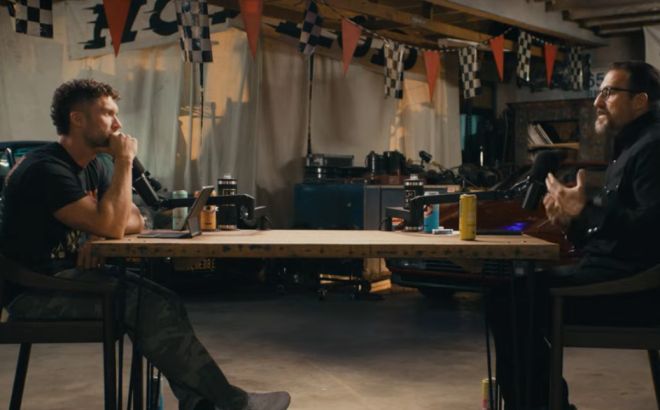
Here is the full transcript of neuroscientist Dr Andrew Huberman’s interview on Modern Wisdom Podcast with host Chris Williamson, January 5, 2026.
Brief Notes: In this profound episode of Modern Wisdom, Chris Williamson is joined by neuroscientist Dr. Andrew Huberman to explore science-backed protocols for peak mental performance and emotional stability as we navigate 2026. Huberman deconstructs the “cortisol awakening response,” explaining how morning light and hydration serve as the first dominoes in regulating your energy and sleep cycles.
The conversation shifts from pure biology to the psychological, as Huberman shares his personal journey with prayer and the neurobiological benefits of relinquishing control to a higher power. From the “anti-forgetting” power of self-testing to the dangers of digital overstimulation, this masterclass provides a vital roadmap for anyone looking to break free from the addictive loops of the modern world.
Understanding Cortisol: The Misunderstood Hormone
CHRIS WILLIAMSON: Most people think about cortisol as a bad thing that you want less of. Is that the right way to think about it?
DR. ANDREW HUBERMAN: Not at all. Cortisol has been labeled a stress hormone and it is involved in stress. You have a bout of stress, you get a spike of cortisol, so to speak. Cortisol, like other stored hormones, is bound to things. And there’s a free form of cortisol that’s the active one.
You don’t want your free unbound cortisol to be chronically high. But we need to really think about why it was called a stress hormone in the first place. And the main reason is cortisol’s job is to deploy energy sources for your brain and body to be able to react to things, think, and move.
So cortisol naturally goes up a bit during stress and it comes back again, provided you don’t ruminate on that stress too much. On the stressor that is.
The big eye opener for me was when I actually went into the modern textbooks on cortisol, not the ones that most medical students learn from, but what the endocrinologists, the specialists really learn from and what the circadian and sleep biologists now understand, which is the reason you wake up every single morning, even if you have an alarm clock, is because of something called the cortisol awakening response.
The 24-Hour Cortisol Cycle
So if we just step back from a typical healthy 24 hours, it looks something like this. A couple hours before sleep, your cortisol is low, your heart rate’s low, you’re calm, hopefully it’s dim in the room, you go to sleep, your cortisol is then at its absolute lowest levels for the entire 24 hours.
And by the way, this is the same time when melatonin, the sleepy hormone, is at its highest levels after about four or five hours of sleep. And typically in that first four or five hours of sleep is when you get your most deep sleep, slow wave sleep, non-REM sleep.
Many people experience a transition into the sort of last third of their sleep for the night, and they tend to wake up around that time. And often they use the restroom, go back to sleep. Why did they wake up?
Well, it turns out that your cortisol is starting to rise about two-thirds of the way through the night. I mean, it’s really creeping up throughout the entire night, but it’s gone from this nadir to it’s starting to climb.
And then at some point, let’s assume you get back to sleep or you slept through the night at some point, maybe 6am, maybe 8am. Depends on who you are and what your schedule is. You wake up, maybe your alarm clock goes off, you wake up. You wake up because the cortisol level reached a certain threshold is literally the cortisol awakening response. It is healthy, it is good.
And if I were to measure your cortisol at that moment and compare it to what people might call a stress episode in the afternoon, you would say it’s much higher than what stress induced.
The Critical First Hour After Waking
Okay, so then your cortisol continues to rise, and there’s this unique opportunity in the first hour, maybe 90 minutes, but in the first hour after waking, where viewing bright light can increase your morning cortisol spike, as I’ll refer to it, by up to 50%.
Bright light can come from sunlight, ideally, or from a bright artificial light, like a 10,000 lux artificial light, or even a very bright indoor, artificial, LED or incandescent light.
Okay, why is this important? Well, we could explore all the biology of cortisol and we can summarize it by saying you have this hypothalamic pituitary adrenal axis that sets off cortisol, self-regulates negative feedback loop, et cetera, et cetera. That’s the normal regulation of cortisol, which basically can be summarized as, it never allows you to have your cortisol too high for too long. It feeds back on itself and shuts it down.
However, in the first hour after waking up, your brain’s circadian clock has a unique privileged pathway that is separate from the HPA axis, where it can amplify cortisol only in that first hour.
So you say, why would that be? This is nature’s evolutionarily hardwired mechanism for giving you the opportunity to boost your cortisol so that you have energy to lean into the activities of your day. And when I say energy, I’m not saying, you know, it’s not like we happen to be in California at the moment. But not energy. Energy. I’m talking about glucose mobilization. If you’re on a low carbohydrate diet, you’re going to mobilize other energy sources.
Your brain and body wakes up because of cortisol, you have the opportunity to boost that wakefulness even further by viewing bright light. Yes, you could exercise, yes, you could drink caffeine. Turns out, caffeine, if you’re a chronic caffeine user, such as me, such as you, doesn’t actually increase cortisol that much.
You could jump in a 40 degree Fahrenheit cold plunge, doesn’t actually increase your cortisol. All this nonsense going around the Internet about, you know, women shouldn’t do cold plunge, and if they do, not as cold, okay, maybe, but it’s always attributed to increases in cortisol.
Why Morning Cortisol Spikes Matter
So cortisol makes you alert, it makes you focused. And here’s the key thing. Spiking your cortisol in that first hour after waking is so, so important because that negative feedback loop mechanism kicks in about three hours after you’ve been awake. And that’s why your cortisol then starts to drop late morning, early afternoon, later afternoon.
And in the afternoon, if you have a bout of stress, no problem, you just have a little bit of cortisol bump, adrenaline bump, and it goes back down.
If you don’t spike your morning cortisol, what ends up happening is your cortisol system. Essentially, the HPA axis is primed for stress events to give you big lasting increases in cortisol later, which make it hard to fall asleep, which make it hard to stay asleep, which are part of the reason why people have afternoon anxiety, all sorts of things.
So you’re actually supposed to feel a little stressed first thing in the morning. This is normal, this is healthy. And it sets you up for being more calm in the afternoon.
Now, none of this is tied to whether or not you wake up at 8am, 6am, 4am or 11am. This is not about chronotype. This is simply about the first hour after waking. But after about 90 minutes post waking, that opportunity to spike your cortisol goes away.
Practical Protocols for Optimal Cortisol Timing
So if you can’t view bright light in the form of sunlight, get it from artificial light, you would do well to compound that with hydration, which, by the way, for reasons that still aren’t entirely understood, probably has to do with some electrolyte balance, et cetera. First thing in the day will also burst your cortisol.
If you can’t get in exercise right away, even just some skipping rope, jumping jacks, this kind of thing, getting the body into a high cortisol state early sets you up for being in a low cortisol state in the afternoon and evening. And any cortisol that you might trigger through a stress event will quickly subside unless you, what’s called, flatten your cortisol curve by not spiking in the morning.
And by the way, the curve that I’m describing, high in the morning, lower into the afternoon, low, low, low, as you get into the first hours of sleep. This is the healthy cortisol curve for men, women, kids, pregnant women, postmenopausal women. It tends to flatten out a bit, and they need to do additional things to get that spike earlier.
So this is when I hear all this stuff about don’t cold plunge. It increases, it doesn’t increase cortisol. And also this notion that we’re supposed to avoid stress entirely. Not true, you and I both generally agree on that. But how you time your stress is important.
The Impact of Late-Day Exercise
And the last point I’ll make is that if you were to do, say, a very intense workout in the late afternoon, evening, it’s been demonstrated that will triple or quadruple your baseline cortisol levels for a few hours. Not a problem. You can take a hot shower afterwards, do some slow breathing, and calm down. Provided you didn’t fill up with caffeine prior, you could probably fall asleep just fine.
But because you spiked your cortisol late day, what you find is that the next day cortisol is lower, which is one of the, not the only reason, but one of the reasons why you’re a bit more sluggish the next morning. So, and this is why people, if they exercise too late in the day, their rhythm starts to shift.
When we talk about your circadian rhythm shifting in response to light, it’s the cortisol peak that’s shifting or flattening, which in turn adjusts your melatonin peak and trough.
CHRIS WILLIAMSON: But cortisol is the trigger, cortisol.
DR. ANDREW HUBERMAN: Think of it like the. Think about this morning cortisol spike as the first domino in establishing essentially all the rhythms that you’re interested in if you want daytime mood, focus, alertness, nighttime sleep.
And so these are things I’ve talked about for years and that we’ve talked about for years, but only recently has it become clear exactly why cortisol is that first domino in the chain. And we hear so often about dopamine, epinephrine, norepinephrine, all of which are important, all downstream of cortisol.
So chronically high cortisol, Cushing’s disease, the things that give people moonface, that cause memory deficits, all these sorts of things. That’s when the cortisol curve is too flat for too long, meaning too high in the afternoon and evening.
But there is, I won’t say there’s no upper limit to how high cortisol can be in the morning. There are people who have pathologically high levels of cortisol in the first hours of the day. Most people, even people with Cushing’s, have pathologically low cortisol early in the day, pathologically high cortisol late in the day.
CHRIS WILLIAMSON: They’ve inverted that.
DR. ANDREW HUBERMAN: That’s right. And getting this curve right is so critical. It predicts longevity, it predicts recovery from everything from chemotherapy to pain relief. You know, it’s one of the things that I’m. You seem to be doing all the right things, plus these sort of outrageous, outrageously ambitious health protocols as well. Although I will commend you, if you’re going to clean anything, including your blood, I do suggest doing in Austria or Switzerland.
CHRIS WILLIAMSON: Because those are very clean, wonderful places.
DR. ANDREW HUBERMAN: Well, they’re very clean countries.
Understanding and Addressing Burnout
CHRIS WILLIAMSON: Yeah. What about the relationship between cortisol and burnout? You know, you talked about sustained chronically elevated cortisol, but I’ve also heard you talk about burnout is basically being wrongly timed cortisol over time.
DR. ANDREW HUBERMAN: That’s right.
CHRIS WILLIAMSON: Stretched out. What have you come to learn about handling burnout? Somebody feels that sense, or I feel like I’m sort of close to that. What’s going on, and how can they try to intervene in that?
DR. ANDREW HUBERMAN: So there seem to be two general forms of burnout. One is the “I’m exhausted in the morning and I just can’t get into gear.” And then it’s like caffeine, caffeine, caffeine, exhausted. And then late day, okay, finally, you know, I caught the wavefront and then I’m having trouble sleeping. And then the whole thing repeats.
CHRIS WILLIAMSON: Wired but tired.
The Science of Cortisol and Burnout
DR. ANDREW HUBERMAN: Wired but tired. The other form of burnout is where people just… it’s like their cortisol is like a square wave function. It’s just up in the morning and all day long. It’s sort of how I would describe my graduate school years, probably undergraduate, graduate school years, postdoctoral. I think I hit a wall during my postdoc year. So that would be 30 or 35. And then at some point you realize you just can’t keep this going.
And I think most entrepreneurs feel that way. At some point, you’re just like, “I can’t do this.” I mean, even the David Goggins and the Cam Haines, they do sleep, right? They get sleep eventually.
So I think the main way to think about burnout and exhaustion is to ask oneself, okay, if I had total control, when would I naturally wake up? When would I naturally go to sleep? Like, what would be my preferred times to do that? And then whatever your wake up time is to really treat that first three to six hours of your day as go time and to do the things: bright light, hydration, exercise, caffeine, et cetera, that really push you into the day. But then really essentially doing all the opposite things that you do in the morning in the last, ideally four, but most people won’t do that, last two hours of your day.
Dim the lights, caffeine, forget it. It should have halted that probably eight hours before sleep. Limit your hydration, right? Unless you’re dehydrated, limit your hydration. Long exhale breathing, anything that can bring your cortisol levels down and bring your melatonin levels up. Which is why we were so bullish about dimming the lights later in the day.
The Impact of Light on Sleep and Glucose
And you know, we were talking about the red lens glasses to block out short wavelength light, which by the way, a lot of people have said, well, you know, the studies showing that screen disrupt sleep, very variable between people. People have different levels of retinal sensitivity, so how much screen light will disrupt their sleep. But it’s not just about sleep.
There’s a beautiful study published in Proceedings in the National Academy of Sciences that showed that people who sleep in a room with an overhead light of 100 lux, which is extremely dim, show abnormally elevated morning glucose levels. Makes perfect sense. Cortisol mobilizes glucose. And this is through closed eyelids. Okay, so you have to get the light down to maybe 1 to 3 lux.
And you say 1 to 3 lux, like it’s basically dark, dark, dark. A candlelight is very low. A bright full moon where you say, “Oh, it’s so bright out” is actually only about 1 to 5 lux. So we think of these sources as very bright. But nature set us up to have bright mornings and dim dark nights.
And some people will say, “Well, there’s no light where I live.” You know, listen, you don’t need to see the sun as a delineated object. If you compare how bright it is, let’s just say even in the dead of winter in the UK, at 9 a.m., walking in a place with no artificial lighting outside, no street lamps, versus midnight the night before in the same location, you’d say you can navigate in the one case without any artificial lighting, without a flashlight, you call a torch.
But in any case, the idea is that there are a lot of photons coming through and you want all of that early in the day and you just want to do the inverse in the last part of the day.
Getting Your First and Last Hour Right
So I think to avoid overwhelming people, because people have so much to do and think about: get the first hour of your day right, get the last hour of your day right, and you’ll greatly improve this morning cortisol peak, late day cortisol reduction, which is what you want. And you’ll get your natural clearing out of any melatonin that happens to be in your system.
Because bright light quashes melatonin through a different pathway, but that also originates with the eyes, goes through the suprachiasmatic nucleus and a couple other relays to your pineal, shuts down melatonin production. And then late in the day, you just make it dimmer, darker, darker, darker. And you bring up your melatonin, you bring down your cortisol.
But if you think about what’s happened with screens, that it’s stimulating. I think late last night I made the mistake of, I watched this extended 60 Minutes interview. I actually fell asleep to it.
CHRIS WILLIAMSON: Is it the Petrotea one?
DR. ANDREW HUBERMAN: No, it was the Trump one.
CHRIS WILLIAMSON: Okay.
DR. ANDREW HUBERMAN: I was curious. I hadn’t heard an interview with him for a long time, and it was sort of combative, but it was an interesting one. And I was curious to see how that would go. And I fell asleep in about the minutes, but that… I wouldn’t recommend doing that normally. It would be screens off in the last hour. I just, you know, I got a little loose with my protocols.
The Matthew Walker Effect
CHRIS WILLIAMSON: Yeah, we’ve been… I’ve seen you talking about daylight savings time changes and stuff like that. This has been nearly a decade now since Matthew Walker was first on Rogan. I think it was nearly, almost 10 years ago. And I was still a club promoter at the time. And up until then I just assumed that sleep was… it’s just like this thing that got in the way of me working. It was just this bullshit. There’s an…
DR. ANDREW HUBERMAN: In your 20s, that’s kind of true.
CHRIS WILLIAMSON: You’re made of rubber and magic, dude. You know what I mean? Caffeine and big dreams and sellotape and cable ties. You just f*, strung together with this stuff.
Anyway, he came on and basically did the “scare them straight” equivalent. You ever have that in school? Scared them straight. So they bring a prison officer in and he tells you about how horrible life is in prison and all of the horror stories. How old are you, like 12, 13? Yeah, yeah, yeah. And he’s saying, you know, they put boiling water into a cup and mix loads of sugar in it and it’s syrup and they throw it on people and then they have batteries and they put them in socks.
And I remember he hit this sock filled with batteries down on the table, and it made me jump. I was like, “F*. I really don’t want to go to it.” Honestly, it worked for me. My particular psychological makeup, that thing…
DR. ANDREW HUBERMAN: Absolutely.
CHRIS WILLIAMSON: I don’t think I was the sort of person that was probably going to go to jail anyway. But, yeah, I learned sleep is okay. Really, really important. You’ve been talking about daylight savings. The more that I learn about it, the effects of sleep deprivation are just terrifying. It’s just everything gets broken.
Understanding Chronic Stress
DR. ANDREW HUBERMAN: Yeah. I mean, sleep is the ultimate reset. We could talk about some of the newer data that point to exactly why. I will say just, you know, for people’s peace of mind, if you don’t spike your cortisol for a couple days in a row, you get one poor night’s sleep for a couple days in a row, you’re going to be fine.
The human body and brain evolved under conditions that were extreme. Right. New parents will tell you how difficult sleep can be. I mean, you can pull it off. The thing that we call chronic stress is, frankly, when that cortisol curve gets disrupted in any number of ways. But typically, it’s late day cortisol spikes that don’t come back down afterwards for three, four, five days in a row.
Your hippocampus, this memory center in the brain, is chock-a-block full of cortisol receptors. And cortisol, unlike adrenaline, can pass through the blood brain barrier. All right, so it has a number of docking sites that allow it to engage the memory system. You know what, stress will engage your memory system, but that, over time, will start to deteriorate these structures.
So if somebody hasn’t been sleeping well, you know, I’m not just saying this to make them feel better. You don’t want to send them into a panic. And all of these systems can be recovered. You know, when Matt went on Rogan, I think it was an important, truly important…
CHRIS WILLIAMSON: I’ll say it was seminal. He has saved… that one episode has probably saved thousands of years, if not hundreds of thousands of years of combined human life.
Beyond Fear: Actionable Sleep Solutions
DR. ANDREW HUBERMAN: Yeah. Oh, I agree. I mean, I think that the challenge, and I think that Matt would say this, I’m sort of borrowing his words, is that he sufficiently scared everybody. There were fewer things to offer to do to promote good sleep at that time. And there were more of a lot of, “Here’s what happens if you don’t sleep.”
CHRIS WILLIAMSON: Yeah. The stress of trying to be perfect will kill you more quickly than your imperfections, that over-optimizer obsessor thing.
DR. ANDREW HUBERMAN: And you want to give people a sense of real agency, right? Yeah. Dimming the lights if you’re light sensitive in particular and you know, limiting caffeine, I mean all the things that are sort of obvious to us now, the morning sunlight thing. I think most people don’t tether to their sleep because it’s not obvious how doing something in the first hour of your day to be more alert and spike cortisol creates a situation 14 hours later where you are a better sleeper.
So over time Matt’s started to adopt that. I mean I think he also pointed out the detriments of alcohol and cannabis on sleep, which I echo. I think also if you think just back even six years, seven years, we weren’t aware of the number of over-the-counter compounds that can be helpful for sleep. People were still thinking about drugs, prescription drugs for sleep, which you know, have their place for certain people.
But most people hadn’t considered mag 3 and 8, theanine, chamomile. Now I would add to that saffron, tart cherry. We know can increase apigenin. Apigenin and chamomile extract. Yeah, similar. Lemon balm. Lemon balm. Skullcap. You know it sounds kind of crazy, right? It sounds like we’re behind the counter at some herb medicine shop, right?
CHRIS WILLIAMSON: Eye of newts and a f* wizard tail.
Natural Sleep Compounds That Work
DR. ANDREW HUBERMAN: Right. I mean I didn’t come here to do an AGZ plug, but basically I’ve played around with a number of different non-supplement things for sleep over the years. Because I’m an experimenter in and out of the lab. And I mean I can tell you a wild story from high school where the girl sitting behind me, I remember her name, it was Erin Kernard. Her mom had some tablets, some Chinese medicine tablets and I took one because I was having some issues sleeping.
And she gave me one and I… the whole night I was wide awake hearing music blaring from behind my head. And I think I was in a pseudo sleep state. Thought I was awake. I was like, “That’s really scary.” But I was like, “Wow, there are compounds that really work for sleep.”
And then there are things like the peptide pinealin I experimented with a bit. Not a lot of human studies at all. Some interesting rodent studies may regenerate the pinealocytes in the pineal. It gives me two hours a night of REM sleep. But I will say having completely… salted pineal. And I did a short run experiment with it.
I will say that the formulation that’s in AGZ has me sleeping with double the amount of REM sleep and at least a third more slow wave deep sleep every night. And I can only drink about two-thirds of that stuff before it’s almost too much. Not because it’s too much volume, but because anymore in my dreams are just too elaborate.
And what’s magic about it I think is that it has a bunch of different things in it. So again, I didn’t come here to plug AGZ, but I think that they really nailed it in the sense that in the last 10 years the scientific community, the health and wellness community has really come to the conclusion that there are things that can nudge your sleep in the right direction.
So just being told “if you don’t sleep you’re going to die of dementia” is scary. You want to give people agency.
Hydration and Sleep Fundamentals
CHRIS WILLIAMSON: In other news, if you’re feeling tired, you might not need more sleep, you might not need more caffeine, you might just be dehydrated. And proper hydration is not just about drinking enough water. It’s about having sufficient electrolytes to allow your body to properly absorb those fluids.
What would you say to people who are struggling to fall asleep? Maybe they’ve done most of the things sort of through the day that you’re supposed to. They’re not taking caffeine too late at night. They’re maybe having a hot shower. The room’s cool, it’s quiet, it’s dark. They’ve seen some morning sunlight. But calming down a racing mind at night is a challenge that I think a lot of hard chargers will deal with. What are some strategies for slowing that down?
The Role of Starchy Carbohydrates in Sleep
DR. ANDREW HUBERMAN: Yeah, well, one thing that I think is really important is that if somebody’s very health conscious and a hard charger, they’re very likely eating pretty clean. And one of the challenges for many people, not all, to falling asleep, is that their starchy carbohydrate intake is just not high enough.
You know, if you go on a very low starch diet, like, let’s say you just go meat, fruit, vegetables, or you go pure keto, you’ll have a lot more energy. Some people who follow that kind of regimen can sleep well. Some people, like myself, find that unless I have some rice or oatmeal at some point during the day, especially if I’m doing resistance training, it’s actually very hard to fall and stay deeply asleep.
And if I just add, you know, I guess you call it porridge, we call it oatmeal, but have a small amount of starch in the form of whatever starch is fine for you. I eat starches. I realize this is heretical in the health and wellness space, but I have some rice or some homemade pasta or some sourdough bread or oatmeal or something. If you’re having trouble falling asleep, take a look at how much starch you’re having.
I don’t recommend gorging yourself with starch late in the day, but having some starchy carbohydrates in your final meal, which probably comes what, two, three hours before sleep or something like that, can certainly help a number of people fall and stay asleep. I’ve heard that many times.
CHRIS WILLIAMSON: I certainly know I did meat and fruit as a part of trying to fix my health because brain inflammation was really high. I was getting a lot of brain fog, memory loss. One of the things that I found that could counteract that a little bit was going very, very low carb. But that also impacted my sleep. And I felt wired, but tired. Very adrenaline.
DR. ANDREW HUBERMAN: Yeah.
CHRIS WILLIAMSON: All the time. Like sort of always on as if I… My caffeine was limited as well because I was trying to limit stimulants. I always felt on edge.
DR. ANDREW HUBERMAN: Yeah.
CHRIS WILLIAMSON: Sort of ambient anxiety thing. And it impacted my sleep. Fragmentation was f*ing horrendous. And like, well, can I have a rice cake or like two rice cakes an hour before I go to bed to try and sort of kink me into this a little bit and experimented with a bunch of that?
But yeah, if you are carnivore meat and fruits, keto, I wonder what the net effect is when you account for what’s happening to sleep. And I’m sure that many people can sleep well on low carb of different stripes, but I, for one, couldn’t. And then I’m like, having to weigh this up, like, how many carbs can I have before brain inflammation makes me feel a little bit more sluggish and more tired and I need to have some in order to make me… So that was a… Yeah, it becomes…
Understanding Cortisol and Low-Carb Diets
DR. ANDREW HUBERMAN: A little bit of a devil’s dance. I mean, if we return to our discussion about cortisol from earlier, cortisol’s job is to deploy energy into the body and for the brain under conditions of stress or just getting up in the morning. I mean, the transition from sleep to awake is a massive state shift. It’s a normal, healthy one, but it’s a massive state shift in terms of mobilization requirements and thought requirements and just the ability to linearize your thought, which is nerd speak for the ability to think, not dream, or be unconscious, essentially.
So when you have low circulating glucose or energy stores, cortisol’s job is to mobilize glucose. So when you’re on a low carbohydrate diet, your baseline cortisol is a little bit higher. This actually has been examined.
Okay, so here’s the deal. If you’re on a low carbohydrate diet for a period of time, I think in this case it was three weeks or more, your cortisol curve, that high in the morning, low in the afternoon and evening, kind of normalizes a bit. It’s still a little bit higher at every point than it normally would be.
But if you suddenly switch from eating carbohydrate, when I say carbohydrates, I mean starchy carbohydrates. Okay, let’s leave aside sugar and fructose and et cetera, which of course is a form of sugar. But if you shift from a sort of standard macronutrient distribution of 40, 30, 30, or whatever it is where you’re eating starches to a low carbohydrate diet, your cortisol levels go up significantly. This has been explored over time. They normalize.
So I think the important thing for people to remember is when we talk about comfort foods, people have taken that phrase to mean junk foods, pizza, ice cream. Those aren’t the comfort foods that were originally described as comfort foods. The comfort foods that were coined comfort foods are starchy, warm foods which, guess what, suppress cortisol.
Because when those foods are available, your brain and essentially your adrenals know that you don’t have to mobilize from stored sources. It’s already circulating, so it makes perfect sense.
So, I mean, this is just one kind of… you asked for what people could do. I say take a look at your nutrition. Are you exercising too late in the day? Can you move that to the morning? Can you… You never want to tell people, reduce the intensity because frankly, you know, as Dorian Yates has been saying so beautifully lately, like “reps in reserve are results in reserve.” We could talk about that.
But you know, I think most people are probably not pushing hard enough, but some people are just pushing way too hard in the gym, way too late, and then their cortisol levels are elevated and makes perfect sense why you couldn’t sleep.
So I would say look at your diet, make sure you’re getting enough starches at some point throughout the day, maybe even taking in a few starches in the couple of hours before sleep, and just see how your sleep does.
There’s some interesting data, although people should talk to their doctor about taking very low dose 1 milligram lithium. I think it’s the orotate form in order to encourage the ability to fall asleep and get more deep sleep. But of course, we’re talking about lithium here, so people need to definitely talk to your doctor.
Eye Movements and Proprioception for Better Sleep
There’s some other things too, you know, look at your lighting environment, of course. But I think for a lot of people, the major issue with falling asleep is that they can’t forget about the position of their body. And this is where the data becomes super interesting.
There are some technologies that are being spun up right now, some of which I’ve had the opportunity to dabble with and I have no financial relationship to, but I sure wish I did because it is so cool. Imagine a sleep mask that could put you to sleep.
CHRIS WILLIAMSON: Okay.
DR. ANDREW HUBERMAN: How would it do that? Well, it turns out that eye movements are not just present during rapid eye movement sleep, but one of the prerequisites for falling asleep is that you forget about your body position. You’re not like, “oh, this is uncomfortable. That doesn’t belong there.” You shut down what’s called proprioception, your awareness of body position.
So there’s actually some interesting data. And here I’m kludging from a few places. I want to be fair because what I’m about to say sounds kind of kooky, but this works for many, many people who are having trouble falling asleep or getting back to sleep. You can try this tonight. I do this. It works for me.
You keep your eyes closed or you close your eyes. You move your eyes relatively slowly to one side, then the other side, one side, then the other side. Then you move your eyes in a counterclockwise circle and then a clockwise circle, then up, then down. And then you sort of do a kind of faux cross-eyed attempt. You sort of look down towards the bridge of your nose and you exhale, which is going to slow your heart rate down.
Now, what is all this nonsense about eye movements? Did I just do this as a joke to see if you would do it? The truth is, if you do this when you’re trying to fall asleep, your vestibular system, which is essentially working in concert with your eyes for reasons we could talk about, but your cerebellum and your vestibular system are essentially transitioning from where you need to be very aware of your body position and make adjustments all the time to one in which you’re forgetting about body position.
And we know, and there are great data showing that a very slow rocking of a bed will help put you to sleep. When you rock back and forth, your body doesn’t have like a little metronome in it that says “I’m rocking it.” It’s your eye movements that compensate in the opposite direction which tell your cerebellum, “hey, we’re rocking.”
This is why if you’re on a boat and the horizon’s going like this, you get seasick because you can’t orient to kind of dead zero for pitch, yaw and roll.
And so anyway, I don’t want to get too technical here, but if you have trouble sleeping, try what I just described a few times. Many people find that it helps them fall asleep because you stop thinking about your body position. And of course, bed coolness, room coolness all can help.
But what I just described can be very, very helpful for a number of people whose minds are racing. Because if their mind is racing, you also need to give people something to do with their mind. You can’t just say like, “don’t think about it” or “stop thinking” or “just go to sleep.” That doesn’t work. You can say “just wake up,” but you can’t say “just go to sleep.” There’s a weird asymmetry built into our autonomic nervous system that way.
The Mind Walk Technique
CHRIS WILLIAMSON: So funny, two things that I found because “wired but tired” has been kind of the f*ing summary to the last 18 months for me, fighting with the health stuff. One from Matt, which is a mind walk. You take me through this.
DR. ANDREW HUBERMAN: Yeah. You go through a walk that you’re very familiar with.
CHRIS WILLIAMSON: Yeah.
DR. ANDREW HUBERMAN: Has that been helpful?
CHRIS WILLIAMSON: Wonderful.
DR. ANDREW HUBERMAN: Oh, great.
Improving Sleep Quality Through Mental Techniques
CHRIS WILLIAMSON: One of the things that I found by doing that, so for the people that didn’t listen to the episode, they can go back and listen to the one I did with Matt a few months ago. Brilliant. Basically, you can imagine that you are going for a walk somewhere that you know unbelievably well and try and do it with as much resolution as possible.
So I go to the cupboard. I open the cupboard doors. I’ve got my shoes in there. I take them out, my right hand that reaches in and put them on the floor. I get the shoehorn. Everyone needs a shoehorn. Left foot in, right foot in. I get the key, I know the sound of the key. I close the doors, I turn around, I go toward the door, I put it in, I turn it. Like that’s the feeling of the door. I get outside, I feel the brush. Like all of that stuff.
At least what I found is when I’m falling asleep, the sort of “I’m on a journey, this is an adventure” thing is like reading fiction. And the “I have problems to solve, this is executive function” is like reading nonfiction. And for me, the former helps me fall asleep way more than the latter. So that’s the first thing.
HRV Resonance Breathing Technology
The second thing is resonance breathing. I think this, if I was to pick, if I was to flick a little bit of money onto the roulette table of the next five years of health, I think HRV resonance breathing is going to be huge. And there’s a couple of products. One in particular that I’m super, super excited about. It’s this cool lamp.
So imagine a bedside lamp, and on the top of it is a little divot, like a little pocket. And that’s got a stone in it. You take the stone out. The stone’s got an FDA HRV sensor. You just hold the stone in your hand and you can either turn the light of the lamp on or off and sounds and all the rest of the stuff. But it does 3, 6, 9, 12 minute sessions with like a super high fidelity sensor.
And it means that if you’re struggling to fall asleep on the nighttime, you can just sort of grab it, put it in your hand, do the breathing based on like a tactile vibration coming from the stone, too. So it can all be silent. So if your partner’s in the bed next to you, you can do that. And it knows when you hit Resonance as well. When you get into that maximum vagal tone and then you just pop it back on the top and the top of it is an induction charger for the stone. I was like, this is the f*ing sickest.
DR. ANDREW HUBERMAN: Who makes this?
CHRIS WILLIAMSON: It’s a company called Ohm. Ohm. It’s currently, currently in dark mode I think. Ohm Health.
DR. ANDREW HUBERMAN: Not anymore.
CHRIS WILLIAMSON: Well yeah, you just told the world that’s true. I don’t even know if you can buy. I don’t think buy them. So. But yeah, Jay Wiles, who’s my sleep coach from Absolute Rest, he’s Andy Galpin’s guy. Jay’s a part of it and I think I’m the first person outside of the company to have got one.
And I was like this rules because HRV resonance breathing is great and makes you feel really good. But if you’re going to use Elite HRV and you’ve got to put the like strap thing around your arm or your wrist and then you’ve got to press it and you’ve got to connect the Bluetooth and it’s got to be up to. Then you got your phone in front of you and all. There’s no just standalone pick it up and go of this and the fact that it’s a lamp. It looks really beautiful. The all the rest of s*. Anyway, I’ve been using that.
So between those two, the mindwalk thing for me was very, very powerful. But some days you need a more like physiological intervention and the resonance breathing. Those two things for me I think if I’m struggling to fall asleep on a nighttime. But the eye movement stuff I think has got a lot of legs. So stack all of those together. I’m going to be cross eyed imagining that I’m going for a walk holding a stone in my hand.
The Neuroscience of Eye Position and Sleep
DR. ANDREW HUBERMAN: Not excessively cross eyed, it’s just more like you sort of look. It’s like you’re sort of looking down and you know there are these nuclei in the brain stem that literally control levels of wakefulness. When you look up, it’s essentially activating the arm of your autonomic nervous system which makes you more alert. It’s wild. And eyelids open. It’s really interesting.
And when you look down and when bring your eyelids down, you’re actually pedaling on the circuits that promote sleepiness or at least that are more parasympathetic. I mean it makes good sense.
CHRIS WILLIAMSON: In other news, I’ve been drinking AG1 every morning for years now. Dude, you tried to fastball me that that was down the plate and I’ve just. Shohei Ohtani did. I’ve been drinking AG1 for as long as I can remember. It is the best all in one drink that I’ve ever found. And that’s why I’m such a fan of them and that’s why I partnered with them as well.
I have got my mum to start taking it, my dad to start taking it, and all of my friends as well. And if I found anything better, I would switch. But I haven’t. Why do you keep throwing it at the mic? Stop throwing it at the mic. See? Anyway, over 75 vitamins, minerals and whole food source ingredients. It’s got probiotics and prebiotics, also NSF certified, meaning that even Olympians can use it. And in the throat. In the throat. How dare you. I hit the. Ah. This isn’t even an ad read anymore. It’s just a war zone. Oh, okay, okay.
Anyway, if you too want something to throw at your friends or a tasty blend of 75 vitamins, minerals, probiotics and whole food source ingredients designed to drink first thing in the morning in one scoop, it’s here. Go to drinkag1.com/modernwisdom for stuff. Thank you.
Glymphatic Clearance and Head Elevation
Talk to me about this raised head for glymphatic clearance thing because I’ve. If you. If anyone’s got an eight sleep with the mattress raising functionality, one of the things it does for sleep is it actually raises your head a little bit. Is that related to what we’re talking about here? You want head above feet?
DR. ANDREW HUBERMAN: Yeah, I think they designed that for snoring, but it has other benefits. So without doing an entire lecture on the lymphatic system, because we did a solo on that recently in my podcast. I mean, I’ll just say the lymphatic system is amazing. It’s amazing.
And I liken it to the microbiome where 10 years ago, 15 years ago, if you talked about the microbiome, people were like, that’s just crazy. Like fermented low sugar foods. This is health food lunacy now. I mean, probably close to maybe 500 million or a billion dollars, even in federal grants. Certainly in the US and around the world. Looking at the microbiome, it’s important for everything. Mental health, physical health. We just know this, right? The gut is so important.
The lymphatic system, I think is going to follow a similar trajectory. And all the stuff that we hear about rebounding, bouncing on a trampoline or skipping rope and all of that stuff turns out to be absolutely true. Or lymphatic massage, which is essentially where you’re clearing.
CHRIS WILLIAMSON: I love lymphatic massage.
DR. ANDREW HUBERMAN: It’s interesting because lymphatic massage, for those that are accustomed to deep tissue, it feels like nothing. It feels like nothing. But the lymphatic vessels run so superficially that if you press on them too hard, you actually cinch them off.
CHRIS WILLIAMSON: It feels like you’re being stroked by somebody.
Understanding Lymphatic Massage
DR. ANDREW HUBERMAN: Yeah. So I think they talk about a light brushing and then that, you know, maybe a little bit more motion. There are deeper lymphatic vessels that can take more pressure. But people who are trained to do this do it right. And there’s some tutorials online. There’s a great account. I don’t know the guy, but he was referred to me by Kelly Starrett tells me that stop chasing pain guy. He has this big six.
I don’t want to describe them here because I’ll get them wrong, but he has a number of videos on Instagram and YouTube. The Big Six describes ways that you can encourage lymphatic massage. I always thought that the tapping here was kind of silly. It’s actually because the lymphatic ducts drain back into the. Essentially dump all the lymph that’s been surveilled by your immune system, et cetera, back into the vascular system just below your clavicles.
And as another point, then we’ll get to glymphatic clearance. I gave a shout out to someone I’ve never met. Don’t have any association with business wise or anything. This Anastasia Beauty fashion. Is this woman, I think of Middle Eastern. Excuse me, is this woman of Eastern European? Certainly not Middle Eastern appearing of Eastern European origin.
Talking about non surgical, non botox interventions for facial augmentation, you know, for, you know, higher cheekbones and clearing away puffiness underneath the eyes. For men and for women. But mostly what you see there are women. But what you find is that the before and afters that these people list often insist that I think they take an oath or something that they’re not doing any injectables or surgeries are striking.
And it’s lymphatic drainage from the face and from the scalp and from around the jaw. And you go, this is. I mean it is unbelievable. Okay, so in any case, the glymphatic system is glymphatic.
CHRIS WILLIAMSON: Lymphatic, Is it the same thing?
The Glymphatic System Explained
DR. ANDREW HUBERMAN: So they’re analogous. So for many, many years it was thought that there was no lymphatic lymphatic system in the brain. It was thought that it was actually for many years we thought that the brain was immune privileged. Turns out that’s not true. You have all sorts of immune genes and proteins in the brain.
But it turns out, and this was discovered some years ago, 2012, it was actually discovered prior, but as science goes, it was kind of suppressed. And then it was finally discovered that during sleep, in particular deep sleep, the story goes, the spaces around the vasculature of the brain get bigger.
Okay, you have these little cell types in the brain called astrocytes. They’re among the different types of glia and they have these little end feet and they literally push the brain tissue out and away from the arteries and vessels and capillaries, allowing more cerebral spinal fluid which is circulating in your brain all day long and collecting the waste from your cells.
And mind you, there’s a lot of waste from your brain cells because your brain is the most metabolically active organ. And then that needs to get washed out and actually goes out near the surface of your brain underneath what’s called the meninges. And then it flows down and then Dr. The vascular system.
If people can remember nothing else about lymphatic drains, remember this: muscular movement clears lymph in the body, okay? So you need to walk low level muscular contraction, it essentially moves the lymph up because it’s fighting gravity. These are one way valves. It brings it in from your limbs and it essentially dumps it back eventually into the blood supply.
Inactivity of the body is what drives glymphatic clearance in the brain now. And so it’s when you’re essentially immobilized during sleep that you get the maximum amount of glymphatic clearance. Sleeping on your side, right or left side, doesn’t seem to matter with the head slightly tilted, does seem to be the preferable position. So all you back sleepers like me, you know, some people, you’re a back sleeper. I have been a back sleeper.
CHRIS WILLIAMSON: With that neck, huh? With that neck.
DR. ANDREW HUBERMAN: Unless I’m spooning, I’m a black sleeper.
CHRIS WILLIAMSON: Okay, yeah, yeah, yeah.
DR. ANDREW HUBERMAN: Back sleeper. Okay, yeah, yeah, my back sleeper.
CHRIS WILLIAMSON: So.
Optimizing Sleep Position
DR. ANDREW HUBERMAN: But I’ve been working on sleeping on my side and I heard actually maybe Andy Galpin’s involved in some studies where subjects wear a fanny pack so that they can’t sleep on their back, they have to sleep on their side.
CHRIS WILLIAMSON: He sent me from absolute rest this huge f* off roll thing which looks like soft furnishing.
DR. ANDREW HUBERMAN: That’s probably what it is.
CHRIS WILLIAMSON: Yeah. Well, I mean this was, it’s A big roll that goes down the middle of your back. So there’s no way that you can be on your back at all.
DR. ANDREW HUBERMAN: Okay.
CHRIS WILLIAMSON: So that’s much more. Calling it a fanny pack or a bum bag is a wild disservice to how like, colossal this thing is. It’s a.
DR. ANDREW HUBERMAN: You’re just going to have to hire somebody to spoon you, Chris. It just means that you’ll have to give in.
CHRIS WILLIAMSON: Well, I mean, it’s interesting that you mentioned that you sleep well on your side. You’re on Huberman sleep doll.
DR. ANDREW HUBERMAN: Yeah, I like sleeping on my side. And it does feel good to hold somebody. I suppose if you’re a back sleeper. You know, I do use the nasal strips to open up my breathing.
CHRIS WILLIAMSON: Have you tried intake? What do you use?
DR. ANDREW HUBERMAN: I just. I order some nose strips that online. I.
The Neuroscience of Sleep and Facial Aesthetics
CHRIS WILLIAMSON: Let me allow me to f* fix your nose strip problem. Everyone has a nose strip problem if they’re not using it. So these guys, they’ve got patents on it. Instead of it being a flexible disposable thing, this is a hard 3D printed piece of plastic that’s got magnets attached on both sides. And then you put two magnet patches on the skin of your nose and then you…
DR. ANDREW HUBERMAN: But no magnets up my nose.
CHRIS WILLIAMSON: No, it’s all on the outside. So two patches on the outside and then you snap this non-disposable thing on and it’s… I’m not kidding. It must be three times, four times, five times stronger than the normal ones. And that’s like…
DR. ANDREW HUBERMAN: Great. Yeah. Because I have pretty good respiration through my nose. But years ago I… stupid accident, actually, in a lab and I cracked a sinus, stood up, hit a freezer door and it was a… there’s a whole story there. So now we talk about over… not beers, since neither of us drink.
CHRIS WILLIAMSON: Do you drink intermittently? When did I have… I had beers recently. When did I have beers? After the show. Thank you.
DR. ANDREW HUBERMAN: No shame in that. I haven’t had alcohol in a long time, but… but we could talk about some of the injury stories are always fun offline.
But yeah, I think that for glymphatic clearance, the data are very clear that you want to… if you can sleep on your side, you’re still going to get glymphatic clearance. If you sleep on your back, have your head slightly elevated, not too much, but keep in mind that your body is fighting the lymphatic clearance in your legs is fighting gravity. So in theory, you want to be… if you want to be super bowed, a little bit bowed, but not too much. Right.
Now, what we do know is that if you sleep in a chair, these studies have been done in various sleep labs. If you sleep in a chair, like on a flight or something like that, you would think, well, you must get a lot more glymphatic clearance, and you probably do, but you probably get a lot more lack of lymphatic drainage from the body.
So there’s some really nice pictures in these studies. Every mammal, it seems, puts its head down to sleep. I think giraffes actually just kind of drop their forehead onto the ground. But there are no mammals that… and someone will probably tell me I’m wrong here, and they’ll… I’d love to see the examples because I love animals. But the argument that’s been made in these papers is that every mammal puts its head down to sleep.
And if you think about take a picture of yourself sometime before sleep and after sleep, or worse, take a picture of yourself after one really terrible night’s sleep. Just look at your face. A couple of things become clear. You’ll look bloated. The bags under people’s eyes, that’s buildup of lymph. Okay, it’s… you know, a couple hours.
CHRIS WILLIAMSON: That’s what that is.
DR. ANDREW HUBERMAN: That’s what that is. It’s buildup of lymph, which is why this Anastasia beauty fascia thing is about learning to kind of increase the portals for lymphatic drainage. And it has a lot to do with the fascia because they run so closely together. They cord the vessels, of course, at different depths relative to the fascia. But so that’s a lot of what lymphatic drainage for aesthetics is.
But look at yourself after sleep. Your brain fog. The brain fog you feel after lack of sleep. The buildup of crap is within the cerebrospinal fluid. It’s all the ammonia, the carbon dioxide, some protein fragments that have built up during the day. And the more active you are with your brain, the more they build up and the more they need to be cleared out at night.
And then what’s equally impressive, if you ask me, is take a look at that picture of yourself sleep deprived. You get a good night’s sleep the next night. Take a picture of yourself the next morning. You look like a completely different person, including the brightness of the eyes.
So it turns out around the iris of your eye, that black dot in the middle, and around it, you can actually see when people haven’t slept well. There’s actually a change in color of the eyes that has to do with the accumulation of lymph in the anterior chamber of the eye and the posterior chamber of the eye, which is where the light sensing tissue is.
The retina actually shares the same glymphatic clearance system as your brain. And by the way, everything I’m talking about for brain, for glymphatic clearance is true for spinal cord too. So for all this stuff about motor learning and people are so concerned about their spinal cord, all the athletes are thinking, yeah, you need a brain, but mostly need a spinal cord. Just kidding. But you need both.
But the idea here is that when people look tired, the eyes look tired. It’s not just in the eyelids being hooded. The eyes look glassy, they don’t look quite right, and then they sleep well and their life comes back in the eyes. It’s because they cleared the lymph from their eyes.
CHRIS WILLIAMSON: Who knew that the ultimate looks maxing solution was to just get a better night’s sleep and raise your head about right?
DR. ANDREW HUBERMAN: Well, I think…
CHRIS WILLIAMSON: Is a pillow enough?
DR. ANDREW HUBERMAN: Yeah, yeah. You don’t have to… it’s not too much. What you don’t want is your head tilted back. And that’s also of course a risk for apnea. Right. I mean, this is, you know, why all the bodybuilders and big guys drop dead in their sleep, you know, often is because they just basically asphyxiating themselves. So I do think fixing snoring is important. The nose strip sound great.
Sleep Apnea and Craniofacial Development
CHRIS WILLIAMSON: I’m about to try a mandibular device, you know, like a special mouth guard to try and adjust.
DR. ANDREW HUBERMAN: Do you have apnea?
CHRIS WILLIAMSON: A little, yeah. It’s REM induced apnea. So it only happens in REM, you know.
DR. ANDREW HUBERMAN: And I should take a trip up to Stanford together. Seriously, that… there’s a couple up there, Paul Ehrlich, who wrote “The Population Bomb” many years ago, I think he would say it probably didn’t pan out, but… and Sandra Khan, who’s I think is in craniofacial surgery or orthodontics or something.
They were the ones that wrote the book “Jaws,” not the “Jaws” with forward by Robert Sapolsky. Jared Diamond, I think wrote the introduction. These are heavy hitter, serious science academics and they were the ones that talked about the, you know, the transition to soft foods to packet based foods to baby food has created this kind of massive explosion in the industry for orthodontics.
CHRIS WILLIAMSON: And so was Nestor’s work downstream from them? James Nestor’s?
DR. ANDREW HUBERMAN: Yes, yeah, yeah, Nestor is kind of… his book was kind of the modern iteration of a lot of what they were saying, but, you know, they are… I think they’re coming out with another book that’s really pushing this thing that the nasal breathing is real.
The ability to… I can’t quite do this, but can you close your mouth and put your entire tongue on the roof of your mouth without having to kind of curl it back behind your teeth? Is there space for your tongue? A little.
CHRIS WILLIAMSON: My palate I can do with a bit of expansion because I had six teeth removed as a kid. Four from the top and two from the bottom, I think. So… I mean, Max, who isn’t here, my videographer had really… he’s going through two or three really serious dental procedures, and with one of them, he was trying to do it through Invisalign, and it was a slow palate expander. Invisalign, do a palate expander. Now he’s like, dude, this is going to take three years for me to do this. But they can do it a little bit more aggressively.
DR. ANDREW HUBERMAN: Sounds like he’s a kind of extreme case because Khan and Ehrlich have this association with, you know, the mewing guy.
CHRIS WILLIAMSON: You know, is that true? Is that real?
The Science Behind Mewing and Hypnosis
DR. ANDREW HUBERMAN: Well, the mewing thing is it plays into this notion of getting your nasal breathing right. It’s close your… you know, close your mouth, put your tongue on the roof of your mouth, and then can you swallow while, you know, pushing the… I’m describing this, you know, coarsely.
You know, the problem is, anytime you get a figure like dad, and I’ve never met him, I think his name’s Mike Mew, right? Anytime you get somebody who’s extreme off of the normal thrust of a one branch of medicine, that person is either going to be ostracized or they’re going to have to go through some serious gymnastics to get acceptance.
Look, my colleague David Spiegel, vice chair of psychiatry at Stanford, right? Very serious scientist, clinician. His father and him developed hypnosis as a tool for pain management, smoking cessation, anxiety, even people going through chemotherapy. And the data are beautiful.
CHRIS WILLIAMSON: They had 25% of people that do hypnosis for smoking cessation have it in one session for life.
DR. ANDREW HUBERMAN: It’s amazing. I mean, it’s a brain plasticity accelerator. But had it not been David, right, who’s very thoughtful in how he approaches these discussions, how he frames it with science, how he explains what’s going on, and just his… and I’m not saying Mew isn’t this way. I don’t know him. Haven’t met him, although I’ve read some of his work, you know.
But David has a special gift of the ability to frame what for many people would be like hypnosis. Are you kidding me? As a brain plasticity accelerator.
CHRIS WILLIAMSON: Gentle, convincing demeanor in David, yes.
DR. ANDREW HUBERMAN: And also broad training in all of psychiatry and in acceptance of other branches of medicine. He’s not saying this is the way and this is the only way. And there’s this problem with my limited tribalism. I’m here to fix the field. No, he’s saying here’s one tool in the toolkit and there are other tools in the toolkit.
He’s also… and again, I’m not saying anything about Mew tacitly here. David Spiegel is exceedingly smart. He’s on a whole other level of intellect, and yet he doesn’t talk over anybody. He’s extremely kind. So, you know, bedside manner and how you bring your stuff forward is very key.
CHRIS WILLIAMSON: Especially if you’re going to be a revolutionary or somebody that’s at the sort of cutting edge, cutting frontier of this stuff. No, I agree. I’ve been thinking about this a lot this year. What do we need to know about the neuroscience of making habit setting more easy? I imagine that there must be some really interesting…
The Neuroscience of Learning and Focus
DR. ANDREW HUBERMAN: Oh, man. I just had James Clear on the podcast and it’s so interesting when you sit down with somebody who’s like the habits guy and you compare it against the neuroscience. And so there’s two ways into this, and James has done a magnificent job of explaining things that people can do to improve their habits and reduce bad habits.
The reason I’m so bullish about people understanding a little bit of mechanism behind the checklist of things to do is that I do think that when people understand mechanism, it gives them flexibility over the so-called protocols. And I think it also allows them to customize those things for themselves.
Let’s face it, if you want to go online now and just say, “What are the top 10 things I can do to improve my sleep?” And you get a list, you put those on your refrigerator, put them next to your bed. Why doesn’t everyone just do that? It’s because the way that people go about learning information strongly drives whether or not they apply that information.
Okay, so in fairness to James and the incredible work that he’s done, I’m going to just kind of look at this a little bit through the lens of neuroscience and I’m really glad that we’re talking about this because one of the things that he said that I think is so, so true is that the thoughts, and by extension the emotions, but really the thoughts that you have right now, your ability to focus right now is strongly driven by the inputs you received in the preceding hours and even days.
So one of the things that’s really interesting about focus and attention and a lot of habits have to do with, “I don’t want to procrastinate, I want to do this.” We can talk about exercise, but let’s talk about cognitive stuff. It’s very, very clear that if you have a hard time getting into a bout of work or even staying focused, there’s a very good chance, I believe, that your breaks between work and what you were doing before work was too stimulating.
I’m a big advocator for boring breaks and I’m a big advocator for silence before and after bouts of work for a couple of reasons. Let’s think about it on the back end. Let’s say you’re trying to learn something or read a book or just do something that you’re not reflexively doing. You want to create this habit.
It’s very clear that neuroplasticity, yes, requires alertness, requires focus. You need sleep later that night. I’ve been beating that drum for a number of years. It’s also clear that reflection on what you were doing at some later time, just kind of like post-learning reflection, walk into your car, sitting on the plane for a second, thinking about a podcast you did earlier or something you heard or a discussion, strongly reinforces the memories and the ability to work with the memories of new information.
And this is something that we’ve given up largely because of our smartphones. You’re constantly bringing in new sensory information. All the data. I did an episode on how to best study and learn. I went to the data to find out because I have my methods. But that doesn’t mean they’re the best methods.
The Power of Self-Testing
Reading, rereading, note-taking, highlighting, it’s all fine. But it turns out the biggest lever is to self-test at some point away from the material. So testing is not just something for evaluation of others. It’s a way that we should think, “How much can I remember about that conversation? What was tricky? Okay, I don’t remember that piece. I’m going to go back and look it up.”
All learning is, and this will sound like a giant duh, but all learning is anti-forgetting. How do we know this? Because if you have people read a passage 1, 2, 3, 4, 5 times versus one time and they self-test, one time in self-testing, significantly better.
CHRIS WILLIAMSON: You ever had Peter C. Brown on the show?
DR. ANDREW HUBERMAN: No.
CHRIS WILLIAMSON: Author of “Make It Stick”?
DR. ANDREW HUBERMAN: No, but I like the title.
CHRIS WILLIAMSON: You need to bring Peter on. Peter was episode, I would guess like 30 on Modern Wisdom. You’ll be 1030. And the best synopsis that I got from him, learning how to learn was “learning is repeated recall, not repeated exposure.”
DR. ANDREW HUBERMAN: Yes. Beautiful, right?
CHRIS WILLIAMSON: F*ing money.
DR. ANDREW HUBERMAN: Exactly.
CHRIS WILLIAMSON: And that’s the…
DR. ANDREW HUBERMAN: Exactly.
CHRIS WILLIAMSON: And this is the Ebbinghaus forgetting curve.
DR. ANDREW HUBERMAN: Guys like him, guys like James Clear that they have a real, when I say unconscious genius, I mean clearly they put thought into and structure into what they teach. But the neuroscience supports everything you just said, which is what he just said.
And reflecting on what you were trying to do or learn or solve, even if you don’t remember, even if you’re still puzzled by it, is so vitally important to the anti-forgetting process.
Understanding Thoughts and Sensory Integration
Okay, now in terms of actually being able to focus, actually being able to do work work, it’s so clear that thoughts, and this is the beautiful statements and work of a woman named Jenny Groh, who’s spelled G-R-O-H at Duke University, who’s a neuroscientist. Been studying sensory integration for a long time.
You know, I’ve long thought about, and I think we now understand as a field what sensations are. So sensations are the physical stimulating environment, photons of light, mechanical pressure, volatile odorants in the environment that lead to sight, touch, smell, et cetera. How that gets converted into chemical and electrical signals in the brain. We understand as a field, we understand sensation, we understand perception.
Perception is which of those sensations you happen to be paying attention to. Okay. We understand emotions now more as a subset of something that we think of more broadly as states that are set by your autonomic nervous system. How alert you are, how not alert you are. And then emotions are kind of layered on top of that. Lisa Feldman Barrett has beautiful descriptions of these and so on. And there’s some debate about what emotions really are. But we know what they are neurobiologically and psychologically.
And behaviors, we know what they are. Right? It’s a behavior. And then there’s the don’t-go behaviors, the suppression of behavior. And then there are memories. Right? But for the longest time it’s been unclear what are thoughts, what are they? Are they just like spontaneous geysering up of memories or like what’s going on there?
And Jenny Groh, I think, has the absolute best description of these. And this is based on experimentation. If we seed some idea. So let’s say I say to you, let’s not talk about cats because I’m a dog person. But I say, okay, Chris, and this isn’t a trick question, I promise, because it’s always weird when people start doing this. I’m not Oz Perlman or something. I’m not going to tell you your pin code. Think about a dog. Okay, what kind of dog is it?
CHRIS WILLIAMSON: Golden retriever.
DR. ANDREW HUBERMAN: Golden retriever. Okay, so as you think about the golden retriever, what other things come to mind about the golden retriever?
CHRIS WILLIAMSON: It’s got a little neckerchief on. Okay, red neckerchief.
DR. ANDREW HUBERMAN: Great. Red neckerchief. What else about golden retriever?
CHRIS WILLIAMSON: Fluffy.
DR. ANDREW HUBERMAN: Fluffy. Okay, so there’s a tactile thing. Okay, anything else about golden retrievers? This is very specific to you.
CHRIS WILLIAMSON: Bouncing up and down, rolling on its back. Smells a little bit, but I like it. Great.
DR. ANDREW HUBERMAN: Okay, so there’s a, “I like it.” You like the… Okay, so Jenny Groh’s and others’ data point to the fact that thoughts basically start with some seed element, some noun, some pronoun, something, some event. And then what the brain does is it essentially starts to call on more and more sensations and starts layering those in, more and more prior sensory events.
It’s red handkerchief. Okay, brain. It’s fluffy. There’s a tactile. And that thoughts really are the layering on of more and more sensory memories. And thoughts are really a layering of the senses in abstract thought space.
Now, this is not meant to make something from nothing, but it’s so important that we understand this. Because you think, “What is the ability to think?” Well, the ability to think is constrained by the number of different senses I’m trying to place on a bunch of different things. And so that’s how we navigate through environments, which is what Jenny Groh’s main work is about, how you find yourself in space.
I can’t look at everything in this garage. I have to focus on certain things. Find the Phillips head screwdriver, go over there and you’re discarding all the other information.
Now, when you think about sitting down to do work or to learn something or prepare a podcast, it is so important that you limit the number of sensory inputs coming in, not just during that event, but before. Because the sensory stimulus that kind of sets off this cascade of layering in more and more sensory memories and understanding is begun before you sit down to read your book.
This is why you read a portion of a book and then like, “Oh, wait, I wasn’t even paying attention.” Your brain is still working with the sensory inputs from before. It’s not thinking about them consciously.
Limiting Sensory Inputs for Better Focus
So this is vitally important. If you go back and you look at the history of attention and thinking, and I have, you can find these incredible pictures that they would give kids who had trouble, probably had ADHD or just kind of rambunctious boys in most cases. And they literally gave them helmets with two eye holes so they couldn’t look at anything else. I couldn’t hear anyone else. Right. Used to be, you know, kid with the hoodie on and the cap.
And you’d write, now what have we done? The challenge is that we’ve brought an infinite number of sensory experiences into the thing that you’re looking at.
CHRIS WILLIAMSON: Oh, wow.
DR. ANDREW HUBERMAN: So we brought all the sensory inputs through the device that you’re holding.
CHRIS WILLIAMSON: So the narrowing of your perspective hasn’t helped you to narrow the distractions.
DR. ANDREW HUBERMAN: That’s right. Cognitive space is still infinite, even though your spatial, the spatial limitation of where you’re placing your attention is very restricted.
So the fact that you have so many competing thoughts has everything to do with that, and it also has everything to do with what you were doing in the 10 or 15 minutes before you sat down to try to work.
Now, in China, they’re doing some very interesting experiments of having kids stare literally at a focal point on the wall for a number of minutes before beginning their work. Sounds a little extreme, a little military. But one thing that I’ve been doing before I prepare to do any writing, any podcasting, any work is I try and make myself as bored as possible. I try and remove as much sensory input as possible.
I might think about my breathing because it’s hard to not think about anything. But I really have started to limit the amount of sensory information coming into my space. I have an entire floor of where I live now. I live in kind of an odd structure now, but the entire bottom floor is a no-phone zone. Once or twice I brought my phone down there, but it’s a no-phone zone. I’m going down the stairs. There are no phones in there. I’m trying to figure out how I can have no Internet there.
I have this little tent sauna that I use now with incandescent, which I love because I couldn’t use my barrel sauna where I was at. I think it’s Sauna Space makes these incredible. I like them because they get hot right away and it’s got the red light. I go in there, it’s grounded, and there’s no wifi in there. The phone goes dead the moment you go in there.
CHRIS WILLIAMSON: You’re in a mini Faraday cage.
DR. ANDREW HUBERMAN: Yeah. And I don’t like bringing the phone into the sauna even.
CHRIS WILLIAMSON: Your same place that I went to, or is this a new one now?
DR. ANDREW HUBERMAN: No. So I actually converted an art gallery into a living space. I’ve always wanted to do this. So now I have my, no, it’s not the same space. I have my gym. I’ve got an upstairs loft where I live, and then the downstairs is a workspace. I have an octopus now. I have a tank with an octopus in it. Although it’s a bit shy, so I’m probably going to…
CHRIS WILLIAMSON: You’re becoming increasingly esoteric.
The Challenge of Focus in the Modern World
DR. ANDREW HUBERMAN: Anyway, and I have my discus fish and my gym and I’m doing all the illustrations for my books. I spent a lot of time drawing down in the basement. I mean, I’ve always wanted to do this. At some point I was like, yeah, you have to live in an art gallery at some point if you’re able. Okay, but that’s my unique kind of weird space.
But it doesn’t matter if you’re in an empty box. If you are not good at clearing the slate before you try and focus, you’re going to have a very hard time. For understandable reasons. In fact, I’m amazed that anyone can think at all. I’m amazed that anyone can focus at all.
I don’t believe everyone has ADHD. I think we’ve just not understood what thoughts are built up from. And once you understand, you go, oh, yeah, it makes perfect sense. Am I supposed to walk around with my eyes closed and not take in any sensory input? No. But am I supposed to take in an infinite number of novel items through this device?
The Casino Algorithm and Digital Addiction
In fact, Mike Easter, the author of “The Comfort Crisis,” told me something super scary when he came on the podcast. He said that the person who developed these algorithms, the people, excuse me, who developed the algorithms for social media, borrowed heavily from the casinos.
And I didn’t realize that some years ago, slot machines were like a small fraction of the total casino income, maybe like 10, 20%. Now it’s 80%. And it was one guy who watched kids playing video games who realized that the kids would play video games for hours and hours and hours, and what they were playing for was novelty.
And so they switched the slot machines in casinos on his suggestion to, instead of just spooling numbers and fruit or whatever it was, because they’re now electronic, you can get a near infinite number of combinations of novel items and people will play while losing for novelty and think they’re winning. The brain is tricked into thinking that it’s winning.
Finding Your Focus Trench
And so at some level, I love social media, teach on social media, I partake in it as a consumer and the creator there. But I think we need to really scruff ourselves and go, okay, I need to read this book, I need to write this chapter, I need to do this drawing.
And you’ll notice once you drop into that trench, the brain has these attractor states. It’s like a ball bearing on a flat surface. As you get more into a thought trench or activity trench, it’s like that ball bearing drops into what’s essentially a deep valley and it’s actually hard to leave.
You’ll notice you’re walking out and unless you pick up your phone, you’ll still be thinking about that. And this is how the brain works. The brain is not working in step functions. The brain, none of us are supposed to do the same thing all day long and none of us are supposed to be able to think and focus easily.
You just have to ride that sort of layering on of thoughts, going from bored to sensory input to deeper and deeper and then work for bouts of 90 minutes or a couple of hours and then give yourself a little bit of time, pause, reflect. And it doesn’t mean you can’t have a conversation, but people are texting in between. It’s unbelievable what we’ve done to hamstring ourselves against being able to think.
The good news is, as Goggins would say, nowadays it’s very easy to be spectacularly good in pretty much any field.
CHRIS WILLIAMSON: The bar is low.
DR. ANDREW HUBERMAN: You just have to do what no one else is doing now. He’s an extreme case and I have immense admiration for David. I mean he’s just so David, you know. But if you want to be the best in your class at anything, or best in class at pretty much anything, it’s become so much easier now. You just have to not constantly be projecting things out to the world or paying attention to what other people are doing.
CHRIS WILLIAMSON: The bar has never been set so low.
DR. ANDREW HUBERMAN: It’s just sad. And yet it’s an exciting opportunity for people.
Fragility as Competitive Advantage
CHRIS WILLIAMSON: Dude, I get it. The rampant fragility that seems to be destroying your classroom or your country or the world with constant distraction and people not being able to focus or deal with a little bit of discomfort or resilience is not great. But from a selfish perspective, that widespread fragility is your competitive advantage.
And if you’re one of the people, you’re not going to be able to change the world, certainly not before you’ve changed yourself. And that means that the first step is, huh, this is an opportunity for me. I can step into this.
So you mentioned that you sort of touched on some of the bad habits that distract people. I’ve always been interested in this. From a neuroscientific perspective, is it truly possible to deprogram bad habits? Or once those neural pathways are down, is that locked in for life? Are you just creating deeper fissures somewhere else in order to replace those ones? How do you think about getting rid of bad habits? The process of overcoming those?
The Neuroscience of Bad Habits
DR. ANDREW HUBERMAN: Yeah, I think, you know, if we look at the data on neuroplasticity, it’s much easier to reactivate a pathway that was laid down early in life, even if it’s been suppressed. There’s beautiful data of a guy named Eric Knudsen, who was actually my next door neighbor in my lab before he retired at Stanford, showing that, you know, once learning takes place, those maps are forever there.
You can unveil those maps again later. They’re kind of like never forget to ride a bike kind of thing. But when you’re talking about bad habits, then you get into sort of contingencies like rewards and punishments.
You know, these days, because of my own interests and trajectory, I think a lot about the seven deadly sins and the virtues. Right. I mean, if you look at any of the sins, okay, they’re all very hypothalamic in nature. Right. They’re the extremes of hypothalamic function. In fact, you could probably map the seven deadly sins onto the hypothalamus and say that nucleus, the ventromedial hypothalamus, those neurons are responsible for rage, for unbridling.
CHRIS WILLIAMSON: Okay.
DR. ANDREW HUBERMAN: Those neurons are responsible for unbridled sexual activity. I’m not talking about merged with violence. I’m just saying independent of that, those are consummatory behaviors. So eating, hyperphagia, these are anorexia, you know. So, I mean, all…
CHRIS WILLIAMSON: I have a question on that. Because envy is the only one of the seven deadly sins that doesn’t feel good.
DR. ANDREW HUBERMAN: Yeah. So you, right. And I hadn’t thought about that. But envy is probably not easily mapped to a hypothalamic nucleus.
CHRIS WILLIAMSON: Isn’t that an interesting insight? Envy is the only one of the seven deadly sins that isn’t something that can be enjoyable at low or high dose.
Envy: The Enemy of Personal Development
DR. ANDREW HUBERMAN: Yeah. Our good friend Paul Conti talks often about how much of the ills of the world are based on people’s envy. When people don’t have, when they have an uncomfortable feeling, most people will turn that into self destruction or destruction of others. And people who are successful in life transmute those uncomfortable feelings into self support and creating things and supporting others. Same feelings, divergent paths.
And envy, you know, Paul has said many times, is the enemy of all personal development. Right. You see something. I always noticed, you know, coming up in science, if something bad happens to somebody, most of the time, unless we really dislike them, but even then you kind of go, oh, that sucks. Really feel bad.
But if something good happens for somebody, you know immediately how you feel about that person. Are you happy for them? Or is there that feeling of…
CHRIS WILLIAMSON: Yeah, exactly. You know immediately.
DR. ANDREW HUBERMAN: That’s such a good litmus test. Yeah. How do you feel when this other person wins and when somebody else loses? I guess even with that, it’s an interesting one. Is there some weird sense of satisfaction or are you like, f*, I wish that person was okay or whatever it might be? Okay, bad habits.
Mapping Virtues and Vices to the Brain
DR. ANDREW HUBERMAN: Yeah. So with bad habits, I mean, so I think about the sins and bad habits mapping to hypothalamic nuclei because I’m me and that’s my nerdy perspective. But then you also think about the virtues, right? And overcoming bad habits or the virtues.
I mean, I believe that most people are inherently good. I do. It may be true, Jung may be right, that we have all things inside of us, but I think most people are inherently good. I think there are a subset of people that given the opportunity to do things and not get caught, would do really bad things. But I don’t think that’s most people. Okay. Or most dogs by example, cats. I’m still on the fence about cats.
CHRIS WILLIAMSON: Cats can f*.
Breaking Bad Habits Through Top-Down Control
DR. ANDREW HUBERMAN: Sorry, cat people. I know some nice ones. But in all seriousness, I think that the bad habits thing involves breaking bad habits, involves a lot of top-down control. Prefrontal cortex suppressing the activity of these hypothalamic and other subcortical neurons.
And how do we know this? Well, if you want to summarize how the prefrontal cortex works, you’d say it’s the structure in the brain. It’s that “No, don’t reach for that cookie.” It’s that “No, don’t say that thing.” It’s the “don’t do the thing” that your hypothalamus and other structures are creating some internal activation of the autonomic nervous system. That kind of vibration of you want to do it. It smells so good, it tastes so good. You just want to. “I don’t know why I did it.” This kind of thing.
So that top-down control can be learned. And the beautiful thing, and this answers your question more directly, the beautiful thing is that at some point that top-down control is not required anymore. Unless you do the thing you’re not supposed to do. And then it requires top-down control again.
The Role of Spirituality and Higher Power
Now, the reason I’m so interested these days, one of the reasons I’m so interested in spirituality and notions of God, et cetera, is that the virtues also, I believe, can start to arise through things that are outside of us. Now, I realize that sounds very unscientific, but if you look at the science around religious belief or belief in higher power, or the notion that humans don’t have all the answers, not even the collective consciousness, what you find is that for everything from recovery from addiction to recovery from immense, immense loss—I mean, the kinds of losses that go way beyond, you know, a death of a family member, although that’s intense, you know, death of all one’s children, for instance, horrible things that people have been put through—almost without fail, moving through that with any kind of sense of self-preservation and not engaging in just self-destruction, which is what most people do, almost always involves some notion of top-down control from outside.
You know, being encouraged or even instructed to do the right thing, feeling as if something is coming through oneself. Now we often hear about this in the creative process. People like Rick Rubin, and I’m a big Twyla Tharp fan, the choreographer will talk about, you know, most creatives will talk about sort of downloading things from outside of them. It kind of moves through them as opposed to arising purely within them because of all that sensory experience.
But they can get into kind of these higher realms of spirituality. But when we’re talking about breaking bad habits, overcoming immensely difficult scenarios that normally would throw people into complete self-destruction or just giving up, which is a bad habit in its own right, it’s as if the top-down control is so immense, like the going against oneself that’s required is so immense that when people hand that over to God, whether or not it’s Christ or whether or not some other form of God that they are attached to, you know, it seems as if they get some relief from the process. And yet it’s very effective.
And you can’t deny this, right, just as a phenomenon. I mean, let’s take off our hats as scientists and people who parse things. How could it be that the thing that’s hardest for humans to do for themselves becomes far easier when they stop trying to do it for themselves? It’s a wild mind bend that neuroscience doesn’t really understand.
The Example of Addiction Recovery
But you know what we’re really talking about, let’s say this were alcohol and I’m not an alcoholic, fortunately, but let’s say I had immense difficulty in refraining from alcohol and this would be the precise environment where alcohol would be attractive. The amount of top-down control that’s required is immense for somebody who’s recently sober. They have to, you know, hopefully they’re in 12-step, they have to call their sponsor. It can be jarring anxiety, that anxiety eventually subsides.
I mean alcoholics eventually can hang out in bars and not have a drink, but there’s a long period of time where they can’t and many never will be able to do that. But the notion of a higher power is central to almost every alcoholic, at least who goes through AA getting sober. It’s almost a prerequisite. And in some sense it is a prerequisite and it’s so brilliant that it is because it takes away the need for constant top-down control. You give that over to something else. This notion of a higher power.
For some people that’s God, for some people it’s Christ. For some people it’s, you know, just general higher power. Because 12-step is very agnostic as to what people consider higher power. But I think it is not a coincidence that the Bible writes in these kinds of things about sins and virtues and the need, not just good works, but avoiding sin, and acknowledges in some sense that it’s in some cases near impossible for people to do on their own.
And yes, community can help, and yes, reward processes can help, and yes, punishment can help. These all work. We know this, you see this in animal learning studies. Where humans are different is that they can, as far as we know, humans are unique in their ability to give this top-down restriction process over to some other entity. And it makes it easier, not harder, and it makes it more concrete somehow, not more abstract. The only abstract piece of it is that you can’t shake this entity’s hand, at least not in the standard sense.
CHRIS WILLIAMSON: What do you think’s going on?
DR. ANDREW HUBERMAN: As usual, you always ask the question, which is why I’m stumped, right? I mean, I’m trying to parse what could be going on, but it always lands me back in neural circuits and neural structures. I mean, I’m excited by some of the data that are starting to look at how consciousness might involve things from outside the brain and maybe multiple brains.
And all I know is that having spent nearly three decades thinking about and researching and talking about neuroscience, that we know a great deal about how sensations, perceptions, thoughts, memories, emotions and behaviors are constructed. What we do. And yet we don’t know how this piece comes about. But this piece has been central to the human historical perspective and human experience.
And I don’t think we’re any longer in a place where we can even talk about human evolution without this. Right. I think humans evolved in the context of this. And that’s why I don’t see them as mutually exclusive.
CHRIS WILLIAMSON: Much more a part of our history than the anterior mid-cingulate cortex is.
DR. ANDREW HUBERMAN: Yes. In fact, no one needed to know that the anterior mid-cingulate cortex existed to know that there’s this thing called tenacity and willpower. I think that the fun twist is that it’s a highly plastic structure that we can engage and grow and that reinforces the sets of behaviors that are involved and I think adaptive.
But I absolutely think there’s something real there. And I say that completely as a scientist. Right. I mean, I’m used to immunostaining for proteins and running westerns and recording from neurons and looking at neural circuits using any number of labeling techniques. I mean, I’m a man of science.
But there’s just no doubt in my mind that this process of giving over to the understanding there’s something much greater than us and that we are not in total control, at least not in total control. That feels very comforting to me because of the way I’ve seen it help so many people.
And you know, I won’t be shy about it. It’s helped me tremendously. I mean, I’m in a very serious prayer practice daily now, every night before I go to sleep without fail. I’m going on a couple years now where I’ve not missed a single night. I’ll get out of bed if I fall asleep and do that. It’s like—and then also just prayer is a thing. Let’s say it’s just purely neurobiological. Let’s say there’s nothing outside of us in the real sense. I don’t believe that. But let’s just assume for a moment.
Well, then my neurobiology seems to be responding to all this very, very well. And I don’t think I’m alone with that. In fact, I think there are too many burdens in life for anyone to be able to navigate life extremely well without these notions of higher power. I don’t think people can do it.
And you could show me the most successful, wealthiest people in the world and I would say, yeah, but they are highly deficient in this area. Not because I’m judging them, right, we are all deficient in some area, but it must be, it has to be because there’s this huge gap in the knowledge.
The Paradox of Relinquishing Control
CHRIS WILLIAMSON: I’ve never thought of that paradox, the fact that for a lot of people, billions of people, relinquishing control, the exact opposite of what it is, that for most of the habits that, okay, we’re going to suppress the anterior mid-cingulate cortex, we’re going to use our cognition to limit our distraction, we’re going to narrow our focus. All the rest of it, it’s intention, it’s lean in, it’s agency, it’s taking control.
And then there’s this other bit that literally billions of people and up until a hundred years ago, almost everybody did assume was the seat of where their motivations and their discipline and for a while with the bicameral mind, maybe even the voice inside the head came from. That was the thing that was real. That was the source of this.
DR. ANDREW HUBERMAN: We evolved in that context. The brain independently.
CHRIS WILLIAMSON: Right. This was convergent evolution from like 50 million different corners of the universe.
DR. ANDREW HUBERMAN: Absolutely. And, you know, I love teaching science. I love learning and teaching science. I hope that’s obvious to people. But it’s my one wish for people that at some point in their life they at least explore the possibility and get morning sunlight. But, you know, be—
CHRIS WILLIAMSON: Open to faith and get morning sunlight.
Finding Peace Through Faith
DR. ANDREW HUBERMAN: I just hit 50 recently. And I will say if I look back on my life, sure I wish I had done certain things differently. I mean, who doesn’t, right? This notion of like, “no regrets,” like, yeah, I wish I had made certain decisions, not others. But by and large, I’m very, very happy with the decisions I made, by and large.
And I was happy to discover resistance training and running and neuroscience and cuttlefish and ferrets. I had a pet ferret and I don’t recommend bulldogs. And I have an amazing relationship to family and friends and I’m very blessed in my personal life and my romantic life is feeling awesome these days and it’s just like, it’s overwhelmingly positive despite a lot of strain and hardship.
But the one thing that I wish that I had done earlier was to stop resisting the voice in my head that said, you know, “I think there’s a God and I’m going to pray.” I kept pushing that away. It was like incompatible with my notion of what it meant to be a scientist. It was just incompatible with things I just kept pushing down and yet at the same time wishing for it.
And recently on my 50th birthday, I had to give an uncomfortable toast because believe it or not, I’m somewhat introverted, especially in large groups. I’m happy to talk science and talk like this with you. And I said it then and I’ll say it again now, like, I’m 50 and for the first time in my life, my entire life, I’ve experienced sustained times of real deep peace. Like, just peace, like, just the, like, “everything’s okay, everything is as it should be,” not just some little mantra that you say when you’re on the Big Sur coast.
And why? I think it’s because I stopped fighting so hard to try and control everything inside me and in my life. And as a consequence, everything’s become much easier. It’s still challenging, but much, much easier. And it’s 100% because of giving over to notion of higher power. I’m very direct about God. Higher power for me, right. Reading the Bible, this kind of thing, prayer, I mean, these are practices. This isn’t just “I believe in God,” these are practices, those are faith-based practices.
And it’s become a source of immense intellectual stimulation for me and also just relaxation. And it’s really, it’s my wish for anyone that’s struggling or doing well because I’m certain that it holds so much power. And again, even if it turns out, and I’ll never know, but even if it turns out that it’s all filtered through standard neurobiological mechanisms, okay, I’m good with that. But in the meantime, I’m going to keep praying.
And you can look at examples all around and all through history where people have said similar things in circumstances far more challenging than mine. And they’ll always point to the same thing. I mean, people can be pretty irrational, but at the same time humans are also pretty miraculous in what they’re able to build and develop. And this whole thing of, you know, God and religion has not been discarded. If anything, it’s growing. Right? I mean, you know the data on that better than I. So anyway, I don’t have a whole lot more to say about that.
CHRIS WILLIAMSON: You said something to me over three years ago now you said “it’s all internal.” Can we revisit that?
The Power of Internal Work
DR. ANDREW HUBERMAN: Yeah, I guess. Now I would say it’s all internal except for the stuff that’s coming from outside the human awareness. Yeah, but it’s all internal in the sense that, good on you for remembering that, it’s all internal in the sense that I think that the big mistake that I made for a number of years was trying to find the thing that comes from outside that’s going to change things.
And you know, Lord knows I love caffeine and I love doing certain activities and learning. But at some point you realize that the ability to withhold reflexes that you don’t want to have, like getting your temper sparked or something. People say no one can make you feel anything. And I say that’s crazy. People can make you feel things all the time.
You know, the ability to not speak from your first thought, but your second or your third. You know, you hear these kind of clichés, right? But all of that ability comes from inside. It’s from doing internal work. And it’s kind of amazing how much we can accomplish, and I’m certainly not the first to say this, how much we can accomplish by just stopping and listening and going, “Wow, like, my brain’s crazy. It’s like all these thoughts, all this stuff. Oh, too much input coming into this. Like, I’ve got to shut down this thought path.”
Also realizing that, you know, because these thoughts layer on themselves, our sensory memories layer on top and we feed our thoughts. I mean, Jenny Grow’s description of how thinking works makes you think that, yeah, like if you’re ruminating on something that really bothers you, you probably do want to distract yourself. Unless you’re really going to work on that thing, you really can feed thoughts like embers and a fire. And it’s important to not do that if it’s not adaptive.
CHRIS WILLIAMSON: A quick aside. If you have been feeling a bit sluggish, your testosterone levels might be the problem. They play a huge role in your energy, your focus and your performance. But most people have no idea where theirs are or what to do if something’s off. Which is why I partnered with Function, because I wanted a smarter, more comprehensive way to understand what’s happening inside of my body.
Twice a year they run lab tests that monitor over a hundred biomarkers and their team of expert physicians analyze the data and give you actionable advice to improve your health and lifespan. Seeing your testosterone levels and tons of other biomarkers charted over the course of a year with actionable insights to improve them gives you a clear path to making your life better.
And unfortunately, getting your blood work drawn and analyzed like this usually costs thousands. But with Function, it’s just $499 and you can get an additional hundred dollars off, bringing it down to $399. Get the exact same blood panels that I get and save $100 by going to the link in the description below or heading to functionhealth.com/modernwisdom.
Well, also, as you said when we first spoke, if you finish a marathon in first place, nobody is coming along and dripping dopamine into the back of your brain.
DR. ANDREW HUBERMAN: That’s right, it’s all internal.
CHRIS WILLIAMSON: This is self-generated stuff. The satisfaction that you get for finishing a hard workout, the love that you feel from being with the people that you care about, the peace that you have for lying in a hammock in a, you know, sunny spring afternoon or whatever. At no point are you being sort of flicked different neurochemicals and sensations. Like this is a part of your system.
Understanding Dopamine and Modern Addiction
DR. ANDREW HUBERMAN: Yeah. And if you hit the system hard, like, you know, like the thing I absolutely suggest people never do is, you know, something like methamphetamines, right? It’s going to a what, a thousand-fold increase in dopamine within moments? I mean, is that what that is? Yeah. As compared to, or even more as compared to cocaine, which I think is like 200, you know, like a 200x. And I mean it’s, or maybe a doubling. I mean, I forget the exact numbers, but there’s this chart that Anna Lembke will often put up and methamphetamine is going to, you’re basically going to dump as much dopamine as you ever could in that moment. And then the trough is obviously proportional to that.
It’s kind of fun too to think about how because of conversations from me and you and others and Matt Walker, like the world kind of understands dopamine now. They understand the nuance of every little bit of every one of the four different pathways and there’s probably five, et cetera. No, but that’s okay. Do people understand everything about cortisol? No, but I think the world is now armed with a lot better knowledge of their own physiology and psychology and how those merge.
I also think that we’re starting to understand, actually, on the way over here, my producer and close friend Rob was talking about this, that, you know, everything now is gambling. Social media is a form of essentially gambling for dopamine. You know, likes and follows, you know, markets, you know, I mean, my team, their team, the politics. I mean, a good friend has said, you know, that all addiction is gambling. You know, all addictions maybe are gambling in different forms.
I would say it all boils down to the same neural circuits of anticipation and reward anticipation. And the scariest thing was I have a good friend, Ryan Serhant, who works with addicts and he’s a trauma therapist as well. Incredibly talented guy. And he said that the scary thing is he’s known many gambling addicts that get addicted to the shame from losing. And we said that you’re not chasing…
CHRIS WILLIAMSON: The wins anymore, you’re chasing the losses and the way that you feel about yourself after you’ve lost.
DR. ANDREW HUBERMAN: Yeah, it’s almost like the wins were not big enough and so they’re just chasing the self-shame and the hatred and the… It’s really sad. Gambling addicts struggle big time.
The Gambling Epidemic
CHRIS WILLIAMSON: Coffeezilla just did a huge new video about gambling and sort of how endemic it is. And there’s banking apps that allow you to gamble inside of the app now. And he’s done, I learned an awful lot about gambling from watching a bunch of the videos he’s done in the past. And it really is kind of wild to me that it’s legal. And the only way that I can, I’m sure, like you, we’ve been offered like an unlimited number of gambling, sports betting partnerships and stuff like that.
DR. ANDREW HUBERMAN: I like gambling actually, a little bit, but I don’t have a problem with it.
CHRIS WILLIAMSON: I don’t have a problem. Which is exactly why we should go to Vegas. But it’s kind of mad to me that this is legal and, you know, fing don’t hate the player. You know, the game is much bigger than any individual person that’s contributing to it, like fair play. But it is really fing destructive for some people. But then so’s alcohol. So is driving fast cars on motorbikes.
DR. ANDREW HUBERMAN: Or the hypothalamus isn’t going anywhere, right? I mean, everyone’s got one. And so you’ve got to find the things that allow you to be adaptive and functional in life, not crater the things you’ve created. And also to feel like you’re in the hunt. I mean, the hunt was the original gamble, right? Hunting for animals, hunting for food, hunting for mates.
CHRIS WILLIAMSON: Seeing that thing grow closer on the horizon, working out the anticipation of it coming towards you. I’m getting closer. I’m getting closer and getting closer.
DR. ANDREW HUBERMAN: Surviving a storm probably felt like a big win at some point. I mean, you know, the number of women who used to die in childbirth, and then they were, you know, and then someone solved that puzzle. Right? It was hand washing, I think had a lot to do with it. Right.
I don’t know if this story is true, but it goes that there used to be a ton of death in childbirth. And some of the same physicians who were trying to figure out why were handling and dissecting the cadavers of these poor women who died in childbirth and then delivering babies the same afternoon without hand washing in between. Because we didn’t understand bacteria. We didn’t understand the importance of hand washing. I don’t know if that’s true. That’s been what’s been reported. But once they started washing their hands between, between essentially doing autopsy and delivering babies, rates of death in childbirth went down.
The Cassandra Complex
CHRIS WILLIAMSON: There it is. So I wrote this article about the Cassandra Complex. Do you know the Cassandra Complex?
DR. ANDREW HUBERMAN: No.
CHRIS WILLIAMSON: Oh, dude, this is…
DR. ANDREW HUBERMAN: And I don’t know anyone named Cassandra.
CHRIS WILLIAMSON: Ah, well, let me…
DR. ANDREW HUBERMAN: Maybe you do.
CHRIS WILLIAMSON: Allow me to teach you about the Cassandra Complex. There are a few feelings worse in this life than being right. But only you correctly predict a future catastrophe, trend, opportunity for growth or important area of focus, only to be castigated for how short-sighted, xenophobic, judgmental, out of touch, left wing, right wing or alarmist you are.
The Cassandra Complex is when someone accurately predicts a negative future event or truth, but no one believes them. And they’re often dismissed, ignored or even ridiculed. It’s named after Cassandra, a figure in Greek mythology. The God Apollo gave her the gift of prophecy, but after she rejected his advance, he cursed her so that no one would ever believe her warnings. She foresaw the fall of Troy, warned everyone and was met with scorn. The city burned anyway.
Rachel Carson, in her book 1962 “Silent Spring,” warned about the environmental damage caused by pesticides. She was mocked by chemical companies and even some scientists. But her work eventually led to the environmental movement and the banning of DDT.
Ignaz Semmelweis in the 1840s realized that doctors were transmitting childbed fever from autopsies to mothers by not washing their hands.
DR. ANDREW HUBERMAN: Hands.
CHRIS WILLIAMSON: He begged his colleagues to adopt hand washing. They laughed at him. He died in an asylum decades later. Germ theory proved him right.
DR. ANDREW HUBERMAN: Wow.
CHRIS WILLIAMSON: Let me give you this. I’m going to, the one, the best example of the Cassandra Complex I love is the comparison between Copernicus and Galileo. So obviously people that are right but, oh, get mocked, castigated, you know, pushed to one side, which is incentive for someone to not speak up if they feel like they are telling the truth, but that the world is not going to be sufficiently receptive to it. And Copernicus and Galileo like so great as an example of this.
Copernicus in the early 1500s quietly proposed something radical. The Earth orbits the sun. Humans, once the unmoving center of God’s design, were now spinning through space on a planet among many. But Copernicus hesitated. He delayed publishing his heliocentric model for decades. His great work, “De Revolutionibus,” came out only as he lay on his deathbed, likely to avoid the wrath of the Church and academia. His truth was too disruptive. And so for most of his life, it went unheard.
Galileo, a century later, took that same Copernican spark and shouted it from the rooftops. He saw the moons of Jupiter, the phases of Venus, and the imperfections of the moon’s surface. All evidence that the heavens were not as fixed or divine as taught. The Church responded with fear. Galileo was dragged before the Inquisition, forced to recant under threat of torture, and sentenced to house arrest for the rest of his life.
In retrospect, it is not surprising that Copernicus kept his mouth shut, given how Galileo was treated. This is a core truth of the Cassandra Complex. Being right isn’t enough, and being early can feel like being wrong.
Scientific Discoveries and Recognition
DR. ANDREW HUBERMAN: Wow. Yeah. I mean, much lesser example than what you just described, but, you know, the glymphatic system was discovered many years earlier by a woman at NIH. Oh, excuse me, at University of Maryland. A larger, more powerful scientific group tried to repeat the experiments, made a methodological flaw, couldn’t repeat it. Everyone believed that there’s no lymphatic system in the brain.
Fortunately, she became an NIH program officer, which is somebody who has some degree of control over where funding gets directed, and funded the work that later verified her findings. But it was purely by virtue of the fact that the power structure was arranged in a certain way. This happens a lot in science.
I think you’d enjoy, Chris. Everyone thinks of Darwin and natural selection, but there was another guy, Alfred Russel Wallace, who essentially discovered all of it in parallel and should have been elected to the Royal Academy and all of this stuff as well. Like Darwin, but was not in the club. In the in-club. And Darwin knew it and actually was very, from what I understand, very conflicted about not sharing the credit.
CHRIS WILLIAMSON: It was only because of that rivalry that Darwin ended up pushing his study out, his work out.
DR. ANDREW HUBERMAN: Right.
CHRIS WILLIAMSON: I think he had it. He sat on it for a while, he wanted to work on it more. He had a little bit of sort of hypervigilant uncertainty and insecurity about himself. And then finally, upon hearing, “Oh, I might be beaten to the punch,” published. Is that right?
The Sociology of Science and Medicine
DR. ANDREW HUBERMAN: Yeah. Nobody associates Alfred Russel Wallace with the theory of evolution, natural selection. I mean, most people don’t even know who it is. I mean, because my dad’s a physicist and because I grew up in science, I know a lot of these stories.
I’ll keep this intentionally vague. There’s a very, very famous and accomplished physicist that probably should have won a Nobel Prize, but he made one error, which is that he stole the girlfriend of one of his graduate students. Married her. That graduate student did reasonably well. It must be very uncomfortable to work in the lab where your girlfriend is now sleeping with your boss.
He went on to marry a Swedish woman, and let’s just say that guy that stole the girlfriend never won a Nobel Prize. The Swedish community is very close knit, you know, so I mean, the number of stories I could tell you, story after story after story like that, but I try and avoid those stories even though they’re true. I’d much rather tell stories about the great scientific discoveries that were made.
CHRIS WILLIAMSON: That stuff goes right.
DR. ANDREW HUBERMAN: So when stuff goes right, because that stuff’s very enticing. It’s the drama that we are drawn to as humans just naturally. We have a proclivity for that. But I think that there’s so many stories of people making incredible discoveries through serendipity and hard work and things like that. So I mean that’s the good stuff.
And so I always try and if I mention a story like that, I like to balance it out and remind people that I do think that most scientists are well intentioned. I do think most physicians are well intentioned.
I just had a guest on the podcast, David Fagenbaum, who’s a physician at UPenn and scientist. And you know, he was a football player, big dude, jacked, he’s like 6’3″, jacked, he’s playing football, he’s in medical school. And he gets this Castleman’s disease, which is a cancer-like disease of the lymphatic system. He’s told that he’s going to die. He basically was near dead.
And then he decided to just start trying all these already approved prescription drugs that nobody thought had anything to do with Castleman’s or cancer. And he’s alive now, 11 years later and he’s developed this not-for-profit called Every Cure where they, it’s completely not-for-profit. And his lab focuses on taking all the diseases that we have, like 14,000 diseases we have no treatments for, and taking existing approved drugs that basically stand to make companies very little money because they’re all in generic form now and using AI and doing these things in combination.
They’ve saved kids from non-verbal forms of brain illness. They’ve saved people, adults and children from cancers. Turns out that women who have breast cancer surgery that involves lidocaine as a local anesthesia have a 30% less chance of getting a clearance. Different uses for aspirin for colon cancer. I mean, you know, and so his…
CHRIS WILLIAMSON: Belief, repurposing old drugs for current unanswered…
Repurposing Existing Medications
DR. ANDREW HUBERMAN: So his belief as a physician, as a card-carrying member of that community is that the field of medicine has many cures in hand and excellent treatments in hand for the things that people are struggling.
So then when I hear this stuff about well, low dose lithium, everyone maybe pinging that once a year for offsetting the potential for Alzheimer’s. Or now we’re hearing a lot about the particulate, and certain air pollution might be one of the primary players in causing dementia. When I hear this stuff, it’s like, we need to be testing existing medications.
So the field of medicine, the fields of science, having been in this field of science for a long time, although now I’m in public education, still a faculty member at Stanford. The key thing to understand is that it is a business of people. There’s a sociology to the business, just like there’s a sociology of podcasting and media, which is a discussion to itself.
But this is actually what really made me understand Rogan a lot better. I remember at one point, some years back, I asked him, I’m like, where does your belief or skepticism in certain things come from? And he just looked me dead in the eye, and he just said, “Because I know people.”
And anyone who knows Rogan knows he has a lot of different kinds of friends, and he interacts with a lot of different types of people. He’s not narrow. He’s extremely broad in his interactions, not just on his podcast. And I realized in that moment, I was like, okay, got it. He cast this really wide net, but he has a very selective filter about what he integrates.
And it’s because he understands people, you know, good and bad aspects of people. And I think that’s the kind of acumen that is only developed through life experience. And if you’re a scientist or you’re a physician and you’re very entrenched in your field, you can be the best oncologist, the best ophthalmologist, the best neurologist.
And if you’re considered the best because of your knowledge within that silo or even multiple silos, but you don’t have life experience and know people from different areas of life, I guarantee you are not the physician I want to be treated by or that I want a family member treated by.
Because you have to understand not just the information and the source of the information in terms of paper and rigor and laboratory. You have to understand the motivations and almost the personality types of the people behind that work.
Understanding Human Nature
CHRIS WILLIAMSON: It’s so true. I mean, this was the beautiful baptism of running nightclubs for so long. I met a million people in person.
DR. ANDREW HUBERMAN: And their inhibitions are down because they’re…
CHRIS WILLIAMSON: Absolutely. And some things are tuned up, you know, aggression or openness or their humor or, you know, whatever it is that they’re trying to do. It really reveals and kind of, I guess, exaggerates who people are.
But you become really, really good at judging people and really, really good at assessing this person’s motivations. It’s been a couple of times on the pod where I’ve sat down with someone and I’m like, I don’t know what I think about this person. And after I’ve sat down with them, I know and I know in one of a couple of directions, I’m like, that was good or whatever. But when I…
DR. ANDREW HUBERMAN: You didn’t believe what they were saying.
CHRIS WILLIAMSON: We’re not going to go. We’re not going to go.
DR. ANDREW HUBERMAN: I’ve had that experience. I won’t mention, I guess, obviously I would say, you know, 95%, 98% of our guests, I’ve felt that way. There’s only one or two instances that I got any kind of inkling that they weren’t as sure as they sounded or something of that sort.
But I think that that’s the good thing about podcasting is that it’s not just an interview. Right? You can ping people for ideas and you can ping people around those ideas. You’re not trying to catch them in anything, but you really, I mean, it’s funny because we’re sitting across from, it’s like how you would get to know anybody. You would sit across from them and you would talk to them.
The Art of Unconscious Mastery
CHRIS WILLIAMSON: It’s in the smallest. I use this example of watching musicians on stage. So one of the things that I find coolest about anybody that does anything a lot is not them doing the main thing, it’s their transition activities within the thing.
So, for instance, I spent a long time at university. If you put a pen in my hand, it just immediately starts moving through my fingers.
DR. ANDREW HUBERMAN: You’re one of those. They’re my students. If I look out, I kind of blur my vision. I’m not teaching in the classroom much these days, although soon I will again. And it’s like watching a bunch of…
CHRIS WILLIAMSON: Propellers, a Mexican wave of pen twirling. Yeah, I just, because I did, I put a pen in my hand and I do that. One of my friends, Zach, the way that he takes, if one of his guitar picks goes while he’s playing, he’s warming up for me on tour. If one of his guitar picks goes, the way that he fing just seamlessly snags another one. That’s what’s fing cool.
Because that is this moment of unconscious betrayal of pattern would be a way to think about it. A drummer that snaps a stick and you’ll just see and he’ll switch seamlessly or he’ll be playing. He was playing the hi-hat with his right hand and his right drumstick goes. So he’ll switch and you’ll see him move with his left and then it’s back out and you’re like dude, that’s so f*ing cool.
I love seeing people are the way that the guys will set up their cameras. I’ll see the guys taking a shot and they’ll need to change something. And I’m like, you just did six things in two seconds.
DR. ANDREW HUBERMAN: It’s hyper proficient.
CHRIS WILLIAMSON: It’s so f*ing cool. Right. I think that’s so sick.
The Politicization of Protein
I want to touch on what you said before which was sort of the fixation that people have, groups, different groups have on stuff. What do you make of the attempt of legacy media to turn “get more high quality protein” into a political issue?
I think this has been one of the most interesting patterns to see that protein has become politically coded somehow. And obviously this is kind of for the health and wellness industry kind of old hat now to talk about. Protein is prioritizing. Protein is something that you probably should consider or at least beware of. But yeah, what do you make of the fact that protein consumption has become politicized?
DR. ANDREW HUBERMAN: And resistance training for a little while. Although I think the wave caught to stimulate the idea that everybody, men, women, young and old should be resistance training. So you can no longer kind of bro-science resistance training.
Although I have to say even though I have respect for certain elements of bodybuilding, I do think that the bodybuilding culture has kind of distracted from what’s possible with resistance training as a positive health stimulus. A lot of people are still averse to it because you look at people…
CHRIS WILLIAMSON: Who are bodybuilders and don’t exactly see the picture of health. Yeah.
DR. ANDREW HUBERMAN: And I think it’s also the way that bodybuilding changes the entire relationship to food in general and to life in general. And look, anything that’s, so look, I think Dorian Yates is an amazing athlete. Right. I can think of him as an athlete and what he did and the way he did it. And I knew Mike Mentzer and he was a…
CHRIS WILLIAMSON: The one that you knew Mike Mentzer?
Mike Mentzer’s Influence
DR. ANDREW HUBERMAN: I knew Mentzer. He sold me my first training program by phone. I can tell you the story. I’ll tell you that in a moment. Knew Mentzer. I write about him in my book that comes out next year. Knew Mentzer, had a lot of conversations about Mentzer, not just about resistance training, but also about school and philosophy. He was one of the people that really encouraged me to get serious about my academics.
CHRIS WILLIAMSON: Mike Mentzer was part of your origin story.
DR. ANDREW HUBERMAN: Yeah, Mike Mentzer, who, I’ll get back to the trad media thing. But yes, I signed up for a program. He’s the reason why still to this day, you know, since I was 16, 50 now, as I mentioned, still train three, maybe four days a week, not one set to failure, but, you know, keeping set volume low.
One thing that isn’t advertised a lot, Mike didn’t talk about in his seminars is that a lot of what determines total set number is how well you can really direct the effort toward the muscle you’re trying to target. So some people are exceptionally good at that. I think Dorian was. Other people, no matter how hard they try and curl with just their biceps and forearms and anterior delts, it’s going everywhere. And so a lot of it is…
CHRIS WILLIAMSON: About being able to muscle connections.
The Mentzer Method and Training Philosophy
One thing he was very clear about is that as you get better at training the neural component of contracting the muscles that you’re trying to contract, you actually can get by with fewer sets because you’re able to direct more intensity to those muscle groups. So over time, I found, yeah, I probably do somewhere between six and eight sets per muscle group. But with two, I can not slaughter the muscle, but I can get where I need to go. But I like training, so sometimes I’ll do more.
But yeah, Mentzer was great. I signed up for this program. My mother was like, I was 16 or maybe even 15 years old. And she was like, “Why is this grown man calling the house?” Because back then you do like a phone consultation. And Mike didn’t talk. Mike Barker marked. He’d be like, “Listen.” And the only thing you know. And he would say, he’s like, “And the number one thing is you don’t want to listen to anyone else besides me.”
He told me, he said, “Most people in gyms are f*ing morons.” He said, “They’re morons.” He kept saying, “These people have the intelligence of a toad.” And he would just like, yell and yell, and then he’d recommend these six sales calls, and then he’d recommend these Ayn Rand books.
And then, I even had some sleep issues when I was in college because my dorm was really loud. You know the advice he gave me? This is so wild. And I have a friend from college who’s now a fertility doctor here in LA, and he remembered the story. Mentzer, this is terrible advice. He said, “Get a jug of white wine and just have like a half mug of white wine. If you wake up in the middle of night, you’ll fall back.” First of all, it doesn’t work at all.
CHRIS WILLIAMSON: Okay, so like hit and miss.
DR. ANDREW HUBERMAN: Oh, listen, Mike was an extreme guy, but he actually said, “Stay away from anabolics,” which I did. He said, “Enjoy learning to train hard. Enjoy your training hard.” He said, even though he wasn’t a fan of cardio, like get out and live life. And he said, “And read really good books.” And we gave him his book list. And what a sick time. To that day I still follow the same. Yeah, Mike was amazing. And then when he died, I heard later I was very sad. I mean, we’d been touched a little bit because I was in Santa Barbara and he was down in LA at that time.
CHRIS WILLIAMSON: Okay, so Mentzer protein politicization, what kind of going on?
The Politicization of Protein and Traditional Media
DR. ANDREW HUBERMAN: Well, traditional media is like, will take anything at this point as an attempt to gulp for air because they’re really struggling, right? I mean, there are some decent journalists in traditional media, right? There are. I think that they, but they’ll, not just by quote unquote, politicizing something gives them something to say about it, right?
One gram of protein per pound of lean or desired body mass is kind of the standard thing now. Some people less, some people a little bit more. Okay, fine, fine. I think we all get that. That’s the goal. If you get a little less, you’re probably fine. If you get a little more, you’re probably fine. If you get tons more, you’re probably not fine. You get tons less, you’re probably not fine.
Animal protein is clearly superior as a quality protein to calorie ratio, right? You get an eight ounce piece of steak or you have to eat half a jar of peanut butter, which is not protein, it’s a bunch of fat with a little bit of protein.
Okay, so why do they politicize it? Well, because they’re struggling. They’re struggling big time in terms of how to generate revenues. I mean, people expect to get their news. Two things have certainly happened. I believe Ezra Klein on this, that people are no longer digesting their news as local news as much. It’s more national level news and international level news. And look, putting your name in a title or Rogan’s name and a title or, you know, is going to generate clicks. And saying great things about people, kind things about people generally doesn’t get…
CHRIS WILLIAMSON: He’s such a nice guy.
DR. ANDREW HUBERMAN: Doesn’t. Yeah. I mean, listen, I’ve had a few nice articles written and some of the health magazines will pull protocols and things, and I love it. And, you know, I would say things in the health section. The New York Times very often parrot what I’ve covered and other people have covered and they do it differently. But you can often predict what they’re going to cover by looking at the various health podcasts, Peter’s, et cetera. Peter was just on 60 Minutes. Peter Attia.
CHRIS WILLIAMSON: So I texted him about it and he said, as, he said, “Nice to see traditional media not accusing me of something unspeakable for once.”
DR. ANDREW HUBERMAN: Yeah. I mean, they seem to focus a bit much on, like, how much he charges his clients and this kind of thing.
CHRIS WILLIAMSON: As the fact that he said that that was a sort of clean and fair interview, despite the fact that there is some f*ery going on in there.
DR. ANDREW HUBERMAN: Yeah.
CHRIS WILLIAMSON: It just goes to…
Traditional Media’s Declining Power
DR. ANDREW HUBERMAN: Well, listen, they’ve, to say they’re losing power is an understatement. They’ve lost power to some degree. There’s still some trust there from a number of people. And to some degree, you know, every topic, health topic in particular, seems to go through the same arc.
It’s like nobody knows about it except in niche cultures. Let’s just take the glymphatic system. Nobody knew about it. This one woman discovered it. It was not suppressed, but it was kind of knocked back. Then it came out as all the rage. Then a few years ago, there’s study. Not as much glymphatic clearance as we thought. And occasionally someone said, “Oh, it’s not a real thing.” One mouse study. One mouse study didn’t see it, right? And I know the history of the glymphatic research, so it’s very clear it’s there.
Okay, so then the arc is, okay, exciting, exciting, exciting. Take dopamine, Dopamine Nation, Anna Lemke’s beautiful work. Then about 18 months later, it’s, “Well, it’s not, you know, it’s just…”
CHRIS WILLIAMSON: My own P value.
DR. ANDREW HUBERMAN: Listen, creatine the next, like you can guarantee that in eight weeks or six months or whatever it is, it’s going to be creatine. Not as important as we thought. There’s just the natural arc, right? And then it’s the, yes, the things that work, still work and the things that don’t, don’t. It’s very rare for anything to sort of capture and then just get completely obliterated.
Like, I was talking about delaying caffeine by, you know, 90 minutes or so. If you crash in the afternoon, it’s a great thing to try. Then there was, so it got a lot of positive attention. Then there was the pushback. “Show me the clinical trial. Show me the benefits.” It’s like, no, it’s, show me whether or not you crash in the afternoon. Try it if you want or don’t like, hey, easy. It’s a suggestion. It’s grounded in mechanistic science. But even the coffee accounts on YouTube were pissed off about this.
Listen, the big thing, I guess the direct answer to your question is you’re taking their paycheck. Do you know how much these reporters make?
CHRIS WILLIAMSON: Make?
Podcasting and Content Creation
DR. ANDREW HUBERMAN: You’re taking their paycheck. The irony of it is if you look at some of the advertisements in traditional media, it’s like Fendi bags and, like, all these fancy things and in some cases, dietary supplements. So they are our competitors. But, and this is the critical caveat, they’re competing with us. I never think about what they’re doing. I never, look, I don’t care if somebody said, I’m like, okay, I’m never going to modify my content on the basis of what any of these traditional media houses are doing. They are in the chase position now, 100%.
Now, does that mean that we will always be, you know, leaders in this space? No one has to be very careful to not assume that, right? There’s some kid, some guy or gal someplace who’s going to take my lunch someday. That’s the way, you know. And I’m not a kick out the ladder from you. I’ll give, I’ll hop on Instagram live and give people 100 suggestions about how to get their content out more broadly and from, based on what I know. I’m just not that way.
I was weaned in a culture of science where you train people. My students are now on the job market or have labs, et cetera. That’s the way it’s done. But traditional media are competitors of podcasts. That’s why they’ve started podcasts. You and I are very fortunate that we started podcasts in the, I wouldn’t say the first wave but like, if we were making analogies, second wave punk.
CHRIS WILLIAMSON: I mean, listen, when did yours launch?
DR. ANDREW HUBERMAN: 2021.
CHRIS WILLIAMSON: Did it really?
DR. ANDREW HUBERMAN: Yeah, January 2021.
CHRIS WILLIAMSON: F*ing hell. I thought it was before that.
DR. ANDREW HUBERMAN: In 2020, I was going on a lot of podcasts. I went on, like 30 podcasts. And prior to that, I was starting to teach a little bit on Instagram and that kind of thing. But, I mean, podcasting is growing like crazy. I mean, I want to encourage people to make content, but the content that I think is most important is not content about content. This is the really dangerous hook for people. Content about content.
And also, you’ll find that the people who have very successful podcasts tend to be people who are successful in something else from first. You certainly have that. Lex, Me, Rogan, Rick Rubin, I mean, Theo, Whitney, it goes on and on. I mean, Tim Dillon, et cetera. And there’s a bridge. There’s a natural overlap between what people were trained to do and what they’re doing in their podcast.
But there are very few podcasts. I mean, I’m sure there are some that are just like, someone decides, like, “I’m a podcaster.” So the person who wants to be influential, for lack of a better phrase, in media, they want to teach. They want to teach science, they want to encourage thinking and make a living doing it, encourage health practices, make a living doing it. I would encourage them to go do something else first that they really enjoy, because that, the structure of that and that very thing is going to inform their content. Very few people are going to, like if they start giving out degrees in media, social media. I don’t think it’s going to be very useful.
CHRIS WILLIAMSON: Whitney Cummings got the best take on this. She says, “In order for art to imitate life, you have to live life.” So good. And it’s one of the challenges you get is people become more successful that their ability to generate new ideas decreases because their life is increasingly out of touch. It’s a comedian who only talks about dinners, shows and airports and hotels on stage because that’s the entirety of their life experience.
DR. ANDREW HUBERMAN: Or their craft. Or, sorry, gingerbread. Or their craft. I mean, you said I’m leading an increasingly eccentric life. I mean, the reason I have a pet octopus is I always wanted one. I had cuttlefish. I love aquarium. I have this art project with someone who’s a kind of…
CHRIS WILLIAMSON: Are you going to try and justify buying an octopus as, like, inspiration for…
DR. ANDREW HUBERMAN: I’m going to teach an octopus how to use an iPad. Okay. And I’m going to decode what the camouflage patterns of the octopus mean for thinking.
CHRIS WILLIAMSON: Does that mimic octopus? What is it?
The Narrow Bridge of Digital Life
DR. ANDREW HUBERMAN: No. Well, right now I have an Indonesian octopus that’s not very interactive. I want a Pacific two spot. This is a whole thing. It’s going to open up some trauma for me. But no, I just came back. I’m getting a new octopus soon. Caribbean Day octopus is probably on the way.
But the idea is actually to use AI to try and deconvolve what the octopus is thinking and maybe even communicate with the octopus. They are very smart. I had 40 cuttlefish in my lab in San Diego. They are so smart. And they’re also cephalopods, cousins of the octopus.
So the reason I’m doing that, the reason I have my art projects, the reason I extended my book for a year to add more studies, because I like learning. And as my friend of mine said, he’s a very intelligent guy. He’s a tattooer, among other things. He’s an exceptional artist. And he said “people with interests are interesting.”
You know what’s not interesting? Other people’s failures, other people’s minor wins. There’s nothing more boring than this. But it hooks in the short term.
So social media, I think of as a very… we should go up to Clouds Rest sometime and hike Clouds Rest in Yosemite. It’s beautiful, but there’s this very narrow rock bridge out to the top, and on either side it’s slide to your death. Slide to your death. And so I’m always doing… I don’t get down on all fours, but it’s precarious.
But it’s beautiful. When you get to the top and it opens up into a big flat spoon, you’re above Half Dome. It’s gorgeous. I go there as often as I can, but on either side, you fall to your death.
And I always think of the Internet and much of life like this. On one side is the fall to your death that is numbing out by going online. And the other one is drama. Recently there was an online drama in the fitness community. And I was like, I unfollowed a bunch of accounts. I was like, this is the most boring, boring, stupid thing I’ve ever seen in my entire life. And this is seeding my thoughts. This is seeding my… I’ve got to go back to reading good books. I’m going into my basement.
You’re allowed to unfollow accounts that you’re not learning from or that are pulling you into either numbing out or drama. The drama piece is very serious because it gives the illusion that there’s something meaningful there. But you realize this is just… it’s nothingness.
The Empty Calories of Content
CHRIS WILLIAMSON: That’s a fascinating way to look at it. It is kind of the empty calories of the content world that you leave this having been given the sort of simulacrum of learning something. But if somebody said, okay, after watching this 10 minute, half hour, one hour expose or deconstruction, what do you know that you didn’t know at the start?
You go, well, I know about what this person and this person said to each other, about each other and how the interplay… and look, deconstructing someone’s psychological profile, understanding how human motivations work. I’m fascinated by the way that sort of social interaction, hierarchy, status games, all of that stuff. But I’m not learning that. I’m not reading the Status Game by Will Storr.
DR. ANDREW HUBERMAN: Well, you’re a thinker. I mean, so when I mentioned this rock bridge, I mean, it’s the visual I keep in mind when I’m trying to get into solid work or solid thinking or going on social media. There’s a narrow band of very useful things to learn and participate.
CHRIS WILLIAMSON: I think that infinity of bullshit.
DR. ANDREW HUBERMAN: You know, numbing out or drama on either side, the fall to the death, little by little. But what I think is that because you are somebody who thinks deeply about human nature… I mean, I listened to your episode with Scott Galloway and I’m not just saying this, what they call glazing on. We used to just call it kissing somebody’s ass. So I’m not trying to kiss your ass because… but this is an awesome episode and your command of statistics and data and understanding, your ability to frame it and remember these, it’s world class.
CHRIS WILLIAMSON: Thank you.
DR. ANDREW HUBERMAN: And you do that through hard work, but also through life experience. So I do think that living life in a way where you’re collecting data, so to speak, and you’re understanding things is wonderful.
But I guess what turned me off to this one particular drama in such a strong way was it’s yet another example of something I’ve seen thousands of times before. There was no new learning for me there, except that humans are just being humans.
And so at some level, the novelty of life, the excitement of life, the enriching parts of life are about new experiences. Sometimes it’s about experiencing the same thing and going, oh, yeah, this is a general theme of me or of them or of life and understanding human nature.
But at some point you’re like, this is just yet another drama on the schoolyard. This reminds me of… and it’s sometimes useful to make the parallels. This is like in junior high school when so and so said something about so and so. You go, there’s no new data.
This would be like running… you know, I publish some papers. I don’t want to do those experiments again because if, especially if I get the exact same result. Now, if I get a different result, that’s different, but I’m seeing the same thing again.
And so I think in order to develop a healthy relationship to social media, which is really a big slice of life now for many people of all…
CHRIS WILLIAMSON: Ages and a skill that’s only been around for 10 years, right.
DR. ANDREW HUBERMAN: I mean, I think you have to be extremely conscious of when it got you and why. You know, I mean, you had a nightclub, you couldn’t… you might have to respond to a catastrophe or something happening, but you can enjoy yourself there too. But you were there to work. You were able to navigate that chaotic environment and get things done.
Post Content Clarity
CHRIS WILLIAMSON: Well, a good example of this, you know, post nut clarity, after copulation, “the devil’s laughter can be heard.” I think Schopenhauer said that. An equivalent is post content clarity.
So after you’ve finished consuming a thing, how do you feel? Do you feel enlightened, hopeful, peaceful? Do you want to ring your mom and say that you miss her? Do you want to talk to your friends? Or do you feel like the world’s out to get you and that there’s less than is needed for everybody and you shouldn’t really trust people and you’re a bit sort of tight and tense and your shoulders are up and there’s a ringing in your ears.
DR. ANDREW HUBERMAN: Well, here’s my litmus test. After I spend a bit of time on social media, I ask myself later, do I remember anything from being on there? You know, the reflection. Was there any learning? Did I learn anything?
Listen, I learned some things from your discussion with Scott. I still got a little bit more to go in the discussion, so don’t quiz me on it just yet, but I intend to think about it. In fact, this morning I went out for a run. I listened to a podcast of somebody that I’m not particularly big fan of, but I wanted to get their perspective. And I thought a bit about some of the things that you and Scott had discussed. And I was reflecting on it. Right, because that’s learning and that’s the anti forgetting process.
I can’t recall something I saw on social media yesterday that was very stimulating, but I watched that 60 Minutes episode and it gave me some ideas and insights about what’s going on in the world or what might not be going on in the world.
And you know, thinking about your experiences is so critical to placing value on them, making them meaningful for you. What I’m not interested in is just an endless deluge of sensory input that goes nowhere, especially if it impedes other things.
So a little bit more reflection. 10 minutes, 1 minute, 5 seconds of just asking, did I remember anything?
CHRIS WILLIAMSON: Do I want to do that again? As opposed to just the infinite… Will you mentioned, I think this is a f*ing great take. The arc of something new gets introduced. There is excitement, there is reaction, there is criticism and then usually acceptance. Presuming that this thing is… that’s like true or valid or whatever.
The Cycle of Public Acceptance
DR. ANDREW HUBERMAN: Like creatine, right? It’s been around forever. I was laughing so hard.
CHRIS WILLIAMSON: That’s what I want to talk about. So what do you think is the next frontier for public acceptance? Because I would say vitamin D3 was…
DR. ANDREW HUBERMAN: Check.
CHRIS WILLIAMSON: Yeah, that’s already done.
DR. ANDREW HUBERMAN: It’s gone through the cycle. Correct.
CHRIS WILLIAMSON: It’s out.
DR. ANDREW HUBERMAN: We should actually plot this out. Be fun to do at those. We should do a post together which is… by the way, public careers follow the same tradition trajectory. You show up, people are like, who’s this person? Then it’s like, oh, you’re very excited. And then there’s always the… here’s the flaw.
And then there’s a very simple equation as to whether or not that they are going to continue and continue to have popularity. Very simple equation. Was the sort of event more useful or interesting than what they contribute? And if the answer is, yeah, that was actually more exciting than any one thing they’d ever said in terms of usefulness, then they’re gone.
CHRIS WILLIAMSON: That owned by.
DR. ANDREW HUBERMAN: They fade out at different rates. They’re half life and it disappears. But if what you’re providing is useful, if the person is… if they still… people still want you around, so to speak. It outlives that.
I mean this recent drama, I don’t want to dance around it too much, but this recent drama, I was like this. Nothing could be more trivial or stupid. But I realize the reason it’s probably… I’m not portending this and I don’t wish ill on anyone, but it’s probably going to pseudo end the career of this online person is because it was much more interesting in its drama than any value add that they had given.
CHRIS WILLIAMSON: That’s interesting.
DR. ANDREW HUBERMAN: Yeah. And they had projected a fair amount of arrogance in their delivery of content and things. And if you do that, you’re setting yourself up. Right. That’s a very… that’s a big attractor early on.
CHRIS WILLIAMSON: People like a sort of deserved downfall of the person who’s out of touch. 100%.
DR. ANDREW HUBERMAN: Yeah. There’s no coming back from that in a real way.
CHRIS WILLIAMSON: Okay, so vitamin D3. Yeah, vitamin D been through the cycle. Creatine is in the cycle. Right. Creatine is protein.
DR. ANDREW HUBERMAN: So it’s a vitamin. I would say vitamin D came first, then protein. Right, protein. And the protein thing is politicized a little bit too because there’s something about meat that’s considered… right.
CHRIS WILLIAMSON: Coated, which is.
DR. ANDREW HUBERMAN: And then creatine.
CHRIS WILLIAMSON: You know, the reason that creatine I don’t think is going to get politically coded is it’s been so heavily pushed by women for women. Rhonda Patrick, a lot of like Kelly Levesque, if you know her super hardcore female led audience. It’s important for women. Despite the fact you’re probably going to gain, you know, three pounds of weight.
DR. ANDREW HUBERMAN: Water. Water weight.
CHRIS WILLIAMSON: Yep. Weight you’re going to… scale’s going to be heavy. Maybe you’re going to look a little bit fluffier, but you can get rid of it by stopping it. Right. It’s, you know, it’s like having a scale that’s off. It’s like as soon as you… curves are in. Yeah, true.
DR. ANDREW HUBERMAN: It’s a one way in which things are not mimicking the 90s when everything was super weird. I mean I came up in the 90s when it was like the expectation on women was really extreme.
The Environmental Security Hypothesis
CHRIS WILLIAMSON: You know, the environmental security hypothesis. Sit back, let me give you this one. So there is evidence to suggest that men prefer thicker women during times of economic downturn and thinner women during times of economic uplift.
So if the study, original study was done on students that were in halls of residence and they were eating, meeting at you know like dinner time together where it would be provided by the halls of residence and they showed men images of women of varying sizes before they ate and after they ate, multiple iterations all over the place.
Before men ate, they preferred the bigger women. After men ate they preferred the thinner women. And you can track the…
DR. ANDREW HUBERMAN: There’s an alternative interpretation.
The Environmental Security Hypothesis and Body Size Preferences
CHRIS WILLIAMSON: Yes, yes, yes, yes. You can track the sort of public popularity of body size, not shape. Waist to hip ratio always remains the same typically. But of body size overall to how the economy is doing. And it’s called the environmental security hypothesis, basically the human behavioral ecology stuff. MC and Murphy taught me about this University of Melbourne. He’s brilliant. He’s out of Candice Blake’s lab.
And what it seems is happening is if you feel secure in your environment, you are not queuing for a minute mate or, well, she can survive a tough time of a famine because times aren’t that tough. Resources are abundant. Therefore, I don’t need a woman who can signal that she can get extra calories and is more sort of metabolically well reserved. You might be able to say the opposite is also true. And this tracks the economy, tracks with the preference of body size.
DR. ANDREW HUBERMAN: Wild. Wild.
CHRIS WILLIAMSON: I love that.
DR. ANDREW HUBERMAN: I love your command of this literary. It’s awesome. I mean, I just remember the 90s being a time of very, like, waify models. And because I came up through the skateboarding thing when I departed from biology before I went back to it, I mean, they had models like Kate Moss who are extremely thin.
And actually in friends of ours who were skateboarders in New York, like in Washington Square Park, our friend Peter B.C. was kind of discovered in New York and ended up in Calvin Klein ads, like, skinny skateboarder. I mean, he became a firefighter. So now he’s like, he’s jacked. He’s still around, a super good guy, but, and really into his health now and stuff.
But we can kind of chuckle about the fact that like in the 90s, like, that was the look. It was the Kurt Cobain look and that whole thing. And the larger guys are like, you know, it wasn’t Mark Wahlberg back then. It was Marky Mark and the Funky Bunch. Remember? And he was in the Calvin Klein ads with Kate Moss.
CHRIS WILLIAMSON: Look at the size of him now.
DR. ANDREW HUBERMAN: And he was, well, he was pretty built then by those standards. So, but now, compared to the sort of typical sort of expectation of muscularity in men.
CHRIS WILLIAMSON: That big inflation thing is huge. You watch Bigger, Stronger, Faster, Mark Bell’s thing?
DR. ANDREW HUBERMAN: Oh, yeah, that’s a great movie.
CHRIS WILLIAMSON: Yeah.
DR. ANDREW HUBERMAN: Watched it some time ago.
CHRIS WILLIAMSON: Yeah, yeah. It’s 2007, I think. Anyway, so D3.
DR. ANDREW HUBERMAN: Yeah.
Essential Supplements: Creatine and Magnesium
CHRIS WILLIAMSON: Protein. Creatine. Creatine’s in it.
DR. ANDREW HUBERMAN: Creatine’s made the cut. Although I think because it’s a powder and they’re trying to put in gummies, and the flavored versions are really, the flavored, momentous version, by the way, is awesome. I always had a hard.
CHRIS WILLIAMSON: It’s a little pastel thing, right? It’s like a chewable.
DR. ANDREW HUBERMAN: Tastes like sweet tarts. It, they taste too good.
CHRIS WILLIAMSON: They’ve just.
DR. ANDREW HUBERMAN: Yeah.
CHRIS WILLIAMSON: Jeff sent me. In fact, I had their candy. Yeah.
DR. ANDREW HUBERMAN: Creatine, right.
CHRIS WILLIAMSON: With one gram of like a one gram.
DR. ANDREW HUBERMAN: Problem is, I, so I, I’ve been taking creatine since I was probably 15, 16. I do a, I actually do the loading thing where I’ll take like 30, 40 grams a day for a week and then cut back to 10 grams a day. And then I do a washout every 16 weeks or so where I stop taking it completely. I know this is very unconventional. A week and you drop some weight. It’s actually interesting to see how much strength you hold on to in that week.
CHRIS WILLIAMSON: This is what I am without the assistance of 10 grams of creatine.
DR. ANDREW HUBERMAN: I just do it for me. I, I don’t.
CHRIS WILLIAMSON: Well, look, you’re talking to the school of Mike Mentzer.
DR. ANDREW HUBERMAN: You’re a little.
CHRIS WILLIAMSON: Okay, what’s, what’s next? What do you think?
DR. ANDREW HUBERMAN: Magnesium.
CHRIS WILLIAMSON: Okay.
DR. ANDREW HUBERMAN: Magnesium, threonate or bisglycinate. I know there are multiple forms. You know, you, malate for soreness, you know, et cetera, et cetera. Citrate, laxative, you know, I would say, but bisglycinate and threonate cross the blood brain barrier more readily. I would say pre sleep, you know, 30, 60 minutes before sleep.
But, you know, I had our chair of otolaryngology, head and neck surgery at Stanford, came on my podcast, obviously studies the hearing system, and she said that magnesium is protective against hearing loss. First of all, hearing loss, low level hearing loss is associated with dementia. Less sensory input. Okay. Deaf people can be obviously very cognitively strong, but they have other ways of bringing in sensory input. But partial hearing loss strongly correlated with dementia.
Hearing loss very common after concerts in industrial workers, things like that. Magnesium protects against hearing loss. Why? The endolymph, in which the hair cells that vibrate in response to sound, that endolymph is like a thick kind of fluid, viscous fluid. Magnesium is a prominent feature of that endolymph, and it gets depleted by very loud sound to some extent, but encouraging more magnesium in the endolymph is protective against hair cell loss, which is hearing loss, which is permanent.
Even though it’s low level, it accumulates over time. So magnesium, magnesium for cognition, magnesium for sleep. The whole argument that there’s less magnesium in the soil nowadays because of the way farming is done, it’s just been depleted. So you can get less of the.
CHRIS WILLIAMSON: Virome and the biome.
DR. ANDREW HUBERMAN: Yeah, your kale of yesterday is not your kale of today, so to speak. So I think magnesium supplementation is going to go through a wave of like, ah, they’re just talking about that. Like Chris and Andrew are talking about that on podcast. This is Rosa. Then it’s going to show up. Oh, wow. Like, you know, we’ve got the, you know, chair of otolaryngology, head and neck surgery at Stanford talking about magnesium supplementation to offset things like tinnitus, maybe a bit, but also protect against hearing loss, et cetera, et cetera.
And then it’s going to be like, magnesium, everyone should be taking magnesium. And then you know what will happen. You know, it’s only an 11% difference in this population, et cetera, et cetera.
The Truth About Alcohol Consumption
I think this is one moment where revisiting, just very briefly, the data on alcohol is worthwhile. It’s been so many years of alcohol isn’t a problem then. Alcohol is actually good for you. One or two drinks a night, as long as it’s red wine, then it’s bad for you. And then recently it was, no, it’s actually not that bad for you.
And then now finally, Stanford, Keith Humphries and colleagues at Stanford did an analysis of all those previous papers and essentially found that the control groups in those studies that concluded moderate drinking is good for you were completely off. They were comparing sick people to less sick people in one case.
And it turns out that when you normalize for proper controls and you look at all the studies, you do the meta analyses, without fail, zero is better than any one or two per week. You’re probably fine, still do all the things that you’re supposed to promote your health. Moderate drinking is bad for you in terms of elevating cancer risk, certainly disrupting sleep and microbiome and a bunch of other things that aren’t good.
If you want to drink, drink. But we are now landed squarely in zero is better than any. And those aren’t my data. Those are data from the best people for analyzing the large scale studies, the smaller studies across the board. And I can refer you to the analysis of the analysis.
CHRIS WILLIAMSON: Dude, the fing quite solid that Lancet article, that Lancet study from what, 2016, 17. So the reason that my company in the UK is called Six Months Sober Limited is because the first thing that I ever did before I even launched the podcast was I was like, elective sobriety as somebody who didn’t have a drinking problem was so fing beneficial to me as a productivity strategy.
As a guy in his 20s, that because northeast of the UK club promoters stopping drinking was revolutionary addiction decade ago. Like, what? Oh, my God, like, he’s crazy. It’s like the, you know, Brian Johnson penis injection. Like the Ben Greenfield that, crazy. Yeah. Yeah. It’s like, oh, my God, like, why are you doing this thing now? You know, low and no is very sort of common.
And I was like, I want to get other people to do this. I think that would be cool. And I was like, if I can teach people to go sober for six months, that’ll be sick. And instead of registering it as like, Modern Wisdom Limited before I did Modern Wisdom, I was like, I’ll do, I’ll do Six Months Sober and, like, I’ll teach people that this is like, real good for them.
And I one to one coached four people through, I think six months of it to like, test whether or not my approach had done it was daily coaching and people would follow this course and do all the rest of it. But yet that Lancet thing was like the, my foundational scientific justification. But it’s like, okay, these are all of the reasons that the outcome is good.
As you said, it’s like, just do the thing and see if you feel better. Like, do push your caffeine by 90 minutes and tell me if you don’t have a crash later that day.
DR. ANDREW HUBERMAN: Easy experiment.
Morning Walks and Anxiety Reduction
CHRIS WILLIAMSON: I don’t need to explain to you the mechanism. If you can get the outcome that you’re looking for. The same thing as I learned from you. What is it? A locomotion with lateral eye movement on a morning walk down regulates anxiety big time.
DR. ANDREW HUBERMAN: Not if you’re looking at your phone.
CHRIS WILLIAMSON: I’d been doing that. I’d been doing morning walk thing from maybe Mark Bell’s like, postprandial thing for as long as I can remember. Right.
DR. ANDREW HUBERMAN: Like, an efforting has been big.
CHRIS WILLIAMSON: Yeah. My total, like, obsessive bro era when I had this ridiculously convoluted, diluted morning routine which, like, escape velocity me out of being the adult infant I was as a club promoter and like, I’ll do meditation and blood of gratitude and all the rest of it.
And I was like, if I wake up and I’m on the wrong side of the bed and I go for a walk and I come back like, huh, doesn’t feel as hard as it did before. So I didn’t need you to tell me that it’s because of the locomotion and the passage of stuff moving past you as your focal point stays the same and the lateral eye movement downright.
I’m like, I didn’t, it’s great that I now know the mechanism, as you said earlier on, because it sort of justifies the buy in. I have this sort of odd kind of investment and I’m almost more, the fact that I found it myself then it gets justified by the science. I’m like, f*ing yes. Like I.
The Value of Understanding Mechanisms
DR. ANDREW HUBERMAN: Well, I think there’s an interaction there. Look, I mean the placebo effect is very real. The mechanism underlying what you’re describing, also very real, independent of placebo effect. I think that what I’m referring to is the buy in of people understanding a bit of underlying mechanism for the things that clearly work.
Like, do you need to understand that there are three forms of a stimulus for hypertrophy? You know, damage to the muscle, hyperplasia.
CHRIS WILLIAMSON: Hypertrophy.
DR. ANDREW HUBERMAN: Yeah. Do you need, no. But can it inform better choices about training? Yes. Do you need to understand what those are in order to grow a particular muscle group? No, but if you understand a bit of what’s likely happening under the hood, it affords you tremendous flexibility.
It’s also, look, I also believe that knowledge and gaining knowledge, not only learning, but learning and doing, is what humans thrive on. I believe in the pursuit of knowledge, in learning. I mean, a lot of my podcast content, like I’d love to tell you the protocol for this, but it’s actually just really effing cool. And if you don’t think it’s cool, that’s okay.
CHRIS WILLIAMSON: Which is why you do this. You do your essentials thing, right, which is kind of the stripped back protocols.
DR. ANDREW HUBERMAN: Only, hyper diluted critical science protocols only. But what you’ll find is that people who do the buy in of learning a little bit about how something works, hopefully they learn something about cortisol and sunlight day, these kinds of things.
CHRIS WILLIAMSON: Things.
DR. ANDREW HUBERMAN: It starts to make sense as to why you actually feel better when you, you feel more energized. It’s not, it’s not a placebo effect. What you’re explaining is why it’s not a placebo effect.
CHRIS WILLIAMSON: That’s a good. So yeah, so you get more buy in. What I think is for me is cool, and you said it earlier on, is if you know why this thing works, you can be a little bit more robust and flexible with how your strategy goes. You know, not just do this thing, if you don’t know why you do the thing or what the mechanism is, even at a very basic level, as soon as you don’t do that precise thing, you have no f*ing idea what.
The Principles Beneath the Principles
DR. ANDREW HUBERMAN: You’re doing or when things don’t seem to go so right. So, for instance, if you exercise late in the day, and then the next morning you’re like, “I’m feeling sluggish. Like, is there something…” No, actually, you had a cortisol bump last night. It’s a negative feedback loop. Your cortisol is naturally suppressed. Get a bit more sunlight.
The mechanisms—excuse me, the protocols—start to bridge together what to do in case A, B, C or D. Because you understand the principle below it, which is cortisol at one time impacts cortisol at another time through this thing called the negative feedback loop.
Well, Josh Waitzkin, the great Josh Waitzkin of…
CHRIS WILLIAMSON: You know, I love the side between.
DR. ANDREW HUBERMAN: Dude, you guys should sit down and have a conversation.
CHRIS WILLIAMSON: I had to text you about it. I was like, this guy, me and George, my housemate, I like have obsessed over Josh the Art of Learning.
DR. ANDREW HUBERMAN: He’s got another book in progress. I’m going to connect you guys because you guys would hit it off.
CHRIS WILLIAMSON: I f*ing love.
DR. ANDREW HUBERMAN: So, well, he comes to the States pretty often. He lives out of Costa Rica. Yeah, he moved down to the jungle at one point. But he talks about knowing the principles below the principles or underneath the principles. So the principles underneath the principles, and then being a practitioner as well of some of those principles. Right.
And then being connected to people in your field and related fields that deeply understand a stack of principles as well. That’s what expertise really is. And this is why—and I’m not taking a dig at doctors—but this is why… Listen, recently I had a weird medical thing. I took a new prescription drug, as somebody said. Then I had what I thought was a vestibular thing. Turns out it was low blood pressure. Was diagnosed in one moment by a superb physician. By that afternoon, I was fine, but I could have just chased, gone down the rabbit hole. I was getting all sorts of crazy suggestions about what to do.
Look, just like they say in music, sport, I’ll say it for podcasting, and in medicine and science, there are levels to this. Some people are way better because they have principles understood. And underneath, those principles are understood, underneath, they understand how they connect up and connect down, and they know people.
It’s one thing for a physician to say, “This will handle your cholesterol,” but more often than not, what a physician in one siloed aspect of medicine will suggest will create a side effect that will create a job someday for another physician in a different silo. And it’s just the way the training is done.
And Fagenbaum would say this is also the way that drugs are categorized. You know, this drug is for this, this and this, and therefore nothing else. And you say, “Wait, no, that drug could potentially cure or treat many other things.” And so he’s exploring that in a serious way. And getting results, curing disease, literally.
So I think it’s not to say that people with degrees are idiots. It’s that—let’s hope not, right? I spent a lot of time getting degrees. It’s that just having degrees in some cases, not always, are necessary but not sufficient. But most what is absolutely necessary and sufficient is to understand the major principles, the principles below those and how those connect and then to be able to contact people and to talk to people and to be a practitioner.
It’s very clear to me that your training as a nightclub owner informed you so strongly about human nature, also about biology. Not just because you were staying up late and sleeping into the day, but the themes of what you experienced and learned are carried forward in the themes of every discussion that you have. And that’s what being a real expert is.
This is why Derek from More Plates, More Dates, love him. The first time I saw it was like, “What’s this guy? What’s these guys’ credentials?” The guy’s credentials are he’s an actual expert, a true intellectual and a true expert practitioner understands something at every level with granularity.
CHRIS WILLIAMSON: He’s a perfect…
DR. ANDREW HUBERMAN: And Derek is a really good example.
CHRIS WILLIAMSON: Great example of necessary but not sufficient, given that he’s outside of academia. He’s not doing…
DR. ANDREW HUBERMAN: The academics are now going to him. Yeah. I watched Peter Attia, who’s a physician trained at Stanford and Johns Hopkins, asking Derek about hormone and hormone each other, holding each other.
CHRIS WILLIAMSON: Peter is a super smart guy and he has his expertise. And so what you saw there was people who have different stacks of principles connecting, so called. Right.
Diet, Fiber, and the Gut Microbiome
CHRIS WILLIAMSON: All right, I got a… You mentioned protein. Kind of the…
DR. ANDREW HUBERMAN: Or at least it’s very vitamin D, creatine. Vitamin D protein creatine. I think it’s going to be magnesium.
CHRIS WILLIAMSON: But what about diet? And if I was to put my little bet down from what I’m… The whispers, as Rick Rubin would say, that I’m hearing fiber, I think the push toward fiber, because it’s kind of been the forgotten element of diet. I think that I’m beginning to hear an awful lot more about that.
DR. ANDREW HUBERMAN: I think in a nuanced way, I hope. Because here’s the deal. I had Mike Snyder, our former chair, or maybe still current chair of genetics at Stanford. He talked about blood sugar regulation. Incredibly smart guy. He’s really into biomarkers and he’s almost 80. You got to look at it. He looks like he’s 55. Incredible, incredible health.
And he and I were discussing that fiber, certain forms of fiber, fiber cause inflammation in some people. Why a lot of people say they can’t eat a lot of vegetables and this kind of thing. Some fibers inflame the gut and body of certain people. Other fibers do the opposite.
Justin Sonnenberg and Christopher Gardner ran a study looking at low sugar fermented foods versus fiber effect on the gut microbiome. The outcome was very clear. Eating low sugar fermented foods decreases the so-called inflammatory, they call it as opposed to genome, et cetera, proteome. Okay. So reduces inflammation body wide.
So eat low sugar fermented foods. Sauerkraut, the brine, kimchi beer. Doesn’t quite count.
CHRIS WILLIAMSON: Kefir.
DR. ANDREW HUBERMAN: What’s that?
CHRIS WILLIAMSON: Kefir.
DR. ANDREW HUBERMAN: Kefir. These sorts of things. Yeah. So people can pick their favorite ones. I’m not a big kimchi fan. Only because it’s cut too coarse. If they would shred it, I would like it. But it’s like I have a hard time chewing it.
CHRIS WILLIAMSON: Dude, kefir is a hack.
DR. ANDREW HUBERMAN: That kefir is great. I love the full fat Bulgarian yogurt. Listen, I love Greek food, but Bulgarian yogurt makes…
CHRIS WILLIAMSON: You’re a Bulgarian supremacist when it comes to the yogurt world.
DR. ANDREW HUBERMAN: Careful. You call me a Bulgarian supremacist. The Bulgarian people seem like very nice people. I’ve known a few. But the point was that it… Low sugar fermented foods reduce inflammation. They support the gut microbiome in a major way.
The fiber group was divided. Some people who intentionally ingested more fiber had reduced so-called inflammatome markers inflammation. And they looked at a lot of markers. The other half had greatly increased inflammation.
This is why I think people like Paul Saladino and forgive me, what was the original Carnivore MD Big guy, forgive me. Oh, darn it. He’s been on Rogan. He’s Big Jack.
CHRIS WILLIAMSON: Dude, he could be anybody.
DR. ANDREW HUBERMAN: He’s just always eating a steak.
CHRIS WILLIAMSON: Okay.
DR. ANDREW HUBERMAN: Oh, forgive me, I…
CHRIS WILLIAMSON: Okay, okay.
DR. ANDREW HUBERMAN: Anyway, shout out to him. I think Dr. Shawn Baker. Yeah. Will they talk about vegetables causing inflammation? Right. I think some people do experience inflammation from vegetables. I think so.
I think fiber is going to make a big comeback, but we’re going to have to discern between what… And Mike Snyder really understands this best. Certain types of fiber are going to help people and harm others. Harm in the gentle sense, you know, increase inflammation, which could be severe for some people. Autoimmune conditions, et cetera. Other forms of fiber are going to be beneficial.
I don’t think there are any specific forms of fiber that everyone is going to tolerate well. So this is going to be an issue. If fiber is the next thing. I do think fiber is critical. I eat sauerkraut every day. I drink the brine off the sauerkraut. I actually drink the brine, then I put water back in it, add some salt, put it back in the fridge. Because I just like that after I go for a run or workout. It’s just delicious, right? It’s delicious.
And also, if you go buy these fermented brines as a product, they’re outrageously expensive. And you’re supposed to have this much. Okay. I’m a grown man. I’m not going to have this much of anything. Okay. Certainly not food or drink. I’m like a thimbles full of brine. It’s like, no, I want to drink the whole thing. Come on. Okay.
So, you know, and it greatly supports the gut and the healthy bacteria thrive in that environment. So, yes, I think this is the way it’s going to go. If I were to say, okay, what other things. Things, you know, melatonin. We didn’t talk about melatonin, which I’m not a huge fan of, as you know, but melatonin had a run a long time ago. It was like a hormone in a supplement form. And people were just downing this stuff. It’s amazing it ever broke through.
The Melatonin Debate
CHRIS WILLIAMSON: And you can get 50 milligram, 20 milligrams.
DR. ANDREW HUBERMAN: It’s crazy. And it’s… And people will fight me all day on this and I’ll fight right back until they quit because they’re amazing. Animal data showing that it can suppress the hypothalamic gonad action axis, delay puberty in adolescence. Yes.
And it’s also true that there’s melatonin in all the cells of your body that are not light, that are not suppressed by light, but rather stimulated by light, acts as an antioxidant. You don’t want to be taking large amounts of melatonin in supplement form. Maybe a tiny bit every once in a while.
CHRIS WILLIAMSON: I was told a little recently that after a flight a 5 milligram dose of melatonin was good. And I was like, yeah, it’s f*ing tons. Because one milligram is pretty much bottom of the U of effectiveness. Right. And then you get over into more fuckery going on. And I’m like, 5 milligrams. Why? And that was the reason. “Oh, well, you’ve been exposed when you’re flying. Typically you’ve been in a little bit of a dangerous environment. Inflammation and antioxidant.” I’m like, is melatonin the tip of the spear of the antioxidant world?
DR. ANDREW HUBERMAN: I mean it’s a player. I mean, as long as we’re on this, I think that something that’s not a supplement, but there’s likely going to, and hopefully going to be in the mainframe of discussion is that it’s clear that long wavelength light, red light from sunlight, infrared, near infrared light is beneficial for us. Right. It’s low energy, but it can pass into our body. It does support mitochondrial health. It sort of charges the mitochondria.
I recently learned that the water surrounding the mitochondria actually absorb the red light the same way the ocean absorbs red light. And that’s why the ocean appears blue, reflects red.
CHRIS WILLIAMSON: They’re like little mini oceans.
DR. ANDREW HUBERMAN: Yeah, yeah. And you know that mitochondria were essentially got in their back. Originated as bacteria that got into eukaryotic cells.
CHRIS WILLIAMSON: No way.
DR. ANDREW HUBERMAN: Yeah. They have their own little genome. Yeah. They were initially not part of us. Some distant version of us.
CHRIS WILLIAMSON: I go to injector. Just hold that in your mind.
DR. ANDREW HUBERMAN: Yeah.
CHRIS WILLIAMSON: Do you know how you inherit mitochondria through…
DR. ANDREW HUBERMAN: Through mom.
CHRIS WILLIAMSON: Yeah.
DR. ANDREW HUBERMAN: Yeah.
CHRIS WILLIAMSON: She’s the mother of… How f*ing wild is that?
DR. ANDREW HUBERMAN: Well, you want to know what you… You seem to… I can…
CHRIS WILLIAMSON: Sex difference.
DR. ANDREW HUBERMAN: You seem to like sex difference and you’re hyper focused on mating and reproduction. So let me… You should have kids, man.
CHRIS WILLIAMSON: I can’t wait. I’m ready.
DR. ANDREW HUBERMAN: Kids are, well, you know, two things. One, one of the only challenges I have with having you as a friend is that I have to constantly tell women in my direct messages that I’m not going to relay messages to you. Coming here today, I had several people. Anyway, a lot of women try to get to you through me. Okay.
The second thing is in terms of sex differences, what were we talking about?
CHRIS WILLIAMSON: Here that your f*ing mitochondria comes…
Three-Parent IVF and Mitochondrial DNA
DR. ANDREW HUBERMAN: Yes, sorry, different brain circuit turned on there. There’s something now happening in England, okay? This has been approved for mitochondrial diseases. So there are people who have mitochondrial diseases and they want to have children, right? And so they don’t want to pass along these mitochondrial diseases.
When the egg is fertilized, the sort of splitting of the egg into multiple cell types that forms the blastocyst, which just means balls of cells, which is the early embryo, et cetera. The mitochondrial DNA are intensely important for the physical pulling apart, the spindles and things that pull those apart. They come from mom, okay? So it’s actually been solved that you can do three parent IVF to bypass.
CHRIS WILLIAMSON: No f*ing way.
DR. ANDREW HUBERMAN: But this is now being done. So think about it. As women age, right, and their ovarian reserve declines, right? So does the quote unquote quality of the eggs. We talk about quality of sperm because this definitely plays a role in terms of what are called Day 3 crashes. You know, when the embryo doesn’t even become a blastocyst, it doesn’t get past day three. It’s typically attributed to the sperm. But a lot of the process is coming from the spindle and therefore the mitochondrial DNA of mom.
CHRIS WILLIAMSON: So there’s now a process where you…
DR. ANDREW HUBERMAN: Get two parents and let’s say the woman has, let’s say she has a mitochondrial issue, genetic issue she doesn’t want to pass on. Or let’s say that she’s in her late 40s or early 50s, or maybe even mid-50s. They can take eggs, presumably presuming she still makes eggs. Take the nuclear DNA, put it into essentially an egg that’s had its nuclear DNA taken out, but maintains its mitochondrial DNA, and then fertilize with the sperm, obviously with the sperm from the father.
You end up with a child that has the nuclear DNA of the intended mom and has essentially surrogate mitochondrial DNA in the cytoplasm.
CHRIS WILLIAMSON: Dude, this is so f*ing…
DR. ANDREW HUBERMAN: That’s actually being done. Okay, that was being done actually fairly often from what I understand in Ukraine prior to the war. There were people in the United States traveling there. It’s not legal here. They do it, I believe, in some places in the Middle East, in Mexico, and certainly in England for mitochondrial disease. So this has been done, it works. But it brings up all sorts of interesting ethical considerations.
CHRIS WILLIAMSON: Who is this child?
DR. ANDREW HUBERMAN: Well, the child has the nuclear DNA of one mom and the mitochondrial DNA of a different mom.
CHRIS WILLIAMSON: This is so sick.
DR. ANDREW HUBERMAN: Yeah.
The V12 Engine in a Honda Civic
CHRIS WILLIAMSON: I only learned about the mitochondrial only comes from mum thing like three months ago and I kind of not really been able to stop thinking about it. The reason is when you look at somebody and I’m going to use Kanye West as my example for this. I didn’t think I was going to go there.
DR. ANDREW HUBERMAN: You really want this podcast flagged? You might as well invite Lex and Kanye.
CHRIS WILLIAMSON: Yeah, I know. Sit down. What I think about and this is total like the most bro science that we’ve done today is if you have a person who has the mitochondrial function of a V12 engine but the psychological chassis of a Honda Civic. You have this sort of crazy out there energy, but you don’t necessarily have the handling to be able to sort of direct it.
DR. ANDREW HUBERMAN: You described a lot of teenagers and early 20s males.
CHRIS WILLIAMSON: Well, yeah, of course.
DR. ANDREW HUBERMAN: Especially where I went to school in Santa Barbara.
CHRIS WILLIAMSON: Yeah. With the testosterone pumping. But I just thought about that. When you go, okay, well you’ve got this combining of psychological profile. But this almost uniheritability when it comes to mitochondria, apparently it’s like 99 point something percent.
And I don’t know if the other percent comes from the father. If it’s like some weird… I don’t understand what was it? Mito something. I did a mitochondrial test so I’ve sent off a bunch of cheek swabs which will be cool. I’ll get to see those when I come back home.
Anyway, I just thought about mum could be like this powerhouse or the opposite. You could have quite a low mitochondrial function, however that presents energy disposition, all the rest of it, but kind of the psychological predisposition of somebody that’s like a f*ing hard charging go getter. Lots of conscientiousness, industrious, highly disagreeable, low politeness, all this stuff. I just thought it was real interesting about how those combine.
Brain Areas and Genetic Inheritance
DR. ANDREW HUBERMAN: Well, you’re still going to get, absolutely, you’re still going to get genomic DNA from mom, right? You know those 23 chromosomes, I mean you’re going to get genomic DNA from mom and from dad.
What’s really a mind bent, no pun intended, is there’s a woman whose laboratory is at Harvard named Catherine Dulac, who’s a luminary in the field of neuroscience, who did some beautiful experiments showing that different brain areas are genetically identical to mom or to dad. Even in you and me, you have entire brain areas that are 100% the genes from dad. It’s not… it’s a myth that every cell is a 50/50 mix of genes from mom.
CHRIS WILLIAMSON: Wow.
DR. ANDREW HUBERMAN: Independent of the mitochondrial DNA piece. Right. We’re talking about genomic DNA. In fact, they did some marking studies and you could actually… well, you see this two ways you can do it. If you mark the cells and blue ones are mom and et cetera, they do those kinds of studies.
The more convincing studies, of course, are where you have genes that are passed specifically through the Y chromosome. Right. And you can actually either post mortem or in terms of the requirements of having a gene present in a given brain structure, you can realize that you have brains where a given brain area carries the disease mutation and another brain area doesn’t. And even though it all came through dad on the Y chromosome, it should be everywhere, but it’s not. Because you have some structures that are essentially purely X axis.
CHRIS WILLIAMSON: There’s these little territories, domains that they…
DR. ANDREW HUBERMAN: Correspond to entire brain structures that drive of all things hypothalamic function. There’s a condition of hyperphagia of like very obese kids. They can’t stop eating. This kind of thing comes through, I forget if it’s mom or dad.
So these things show up in the human genetics. I mean, human genetics is often more complicated than we think about. In terms of Mendelian genetics, you can get hypomorphs where you have kind of reduced gene expression as opposed to just lacking a gene completely. This exists. We could talk about this for hours, but so when people say see an attribute and they say, “Oh, that you clearly got that from your mom or from your dad,” that’s actually could be true. Right. That they’re much more like their dad in certain ways and much like more like their mom in certain ways based… because we’re never going to know.
CHRIS WILLIAMSON: But their brain is entirely separated out.
DR. ANDREW HUBERMAN: Yeah, very well could be. It’s going to be fun when your kids play with my kids and we can… well, Lex, that’s you, that’s… well, Lex and I have this… well, we’re not going to have kids together. I don’t want to give people the wrong impression.
What I was referring to is the fact that Lex and I always have this discussion about timing the delivery of our independently generated kids so that they…
CHRIS WILLIAMSON: Can grow up to…
DR. ANDREW HUBERMAN: Well, he wants his kids to beat up my kids in jiu jitsu. I have more a theory about enrichment of sort of the engineering offspring versus the nursing. Yeah.
CHRIS WILLIAMSON: Much more pro social than him. He’s very competitive in this regard.
DR. ANDREW HUBERMAN: Yeah, I mean I’m competitive in certain things, but mostly trying to compensate for Lex. My interests are so like I don’t really find many people looking at my collection of interests in an overlapping way.
CHRIS WILLIAMSON: I’m going to beat him at octopus training or whatever it is.
DR. ANDREW HUBERMAN: Well, the octopus raising community is a little… people are a little guarded, but so is that. It’s a whole thing, man. It’s a whole different podcast, whole thing.
Health Journey and Medical Interventions
But I did want to ask you something. I want to make sure. So you put out this video about your health journey, or I guess it’s your sickness journey and seek in search of it. You seem really good. Can I wager a hypothesis? Because I’ve experienced this myself at one point.
Do you think that at some point, sounds like I’m leading the witness, but that it’s possible to like that in pursuit of recovering one’s health that along the way, because I’ve done this, you do something or take something that layers in another health thing that makes the direction increasingly confusing?
I took this on the suggestion of some conventional doc recently. I decided to try and knock down my ApoB a bit, a little high, and it created a whole set of cascade of gallbladder issues for a couple days. I stopped taking it. I feel fine again and I probably don’t need to take it in the first place.
CHRIS WILLIAMSON: Place.
DR. ANDREW HUBERMAN: So I believe medications work. I think they can be very useful. I also think that some of them work so well that they can drive the system in directions we don’t want to go. And so when I hear about these blood cleansing methods or I hear… I worry as your friend, I worry a little bit that, listen, I don’t want you to struggle with the symptoms of Lyme, but I do worry a little bit because these things are really extreme.
CHRIS WILLIAMSON: Yeah. Okay. So the health documentary that we put out, which is episode one, the reason that I did that was I’d assumed at the start of last year, the day that I got the diagnosis, I knew that something was up. I knew that I was tired all the time. I knew that I wasn’t recovered no matter how long I slept. I knew that I had brain fog and I knew that my mood was low. I’m like, maybe this is just getting older. Maybe it’s something, whatever.
And the day that I started filming with my videographer was the day that I got a “Hey, we’ve done an Eko test on your stool and it turns out that there’s Lyme. We don’t know if it’s IgG or IgM. We don’t know how prevalent it is, when you got it, don’t know if it’s Borrelia” because it…
DR. ANDREW HUBERMAN: Could have been way back when you got, right.
CHRIS WILLIAMSON: It almost certainly was vestigial. All of the stuff, all of the basic shit that wasn’t exciting, I did, right?
DR. ANDREW HUBERMAN: I did doxycycline.
CHRIS WILLIAMSON: Yeah, doxycycline, minocycline, like all of the usual treatments. This was not me jumping straight to going to Tijuana to have an intrajugular line put in and me live in a hospital. It wasn’t me going straight to Vienna to get a f*ing hypothermia treatment. Like, teaser about what the next episode is. It wasn’t me going straight to those. I’d gone through all of the standard pro…
It’s Gabrielle Lyon that’s looking after me. And she is as like, great person, great physician, Western by the book as you’re going to get, but she’s just a bit more like integrative than most people would be. So we’re trying to make changes to diet. And we’re trying to make changes. So, well, my training had to get backed off from like 10 out of 10 to 6 out of 10 for a while and, oh, well, maybe we need to do…
And then I had a migraine with aura that I thought was a stroke. I thought I was having a stroke. So, have you ever had a migraine with aura?
DR. ANDREW HUBERMAN: No.
CHRIS WILLIAMSON: Okay. You know what?
DR. ANDREW HUBERMAN: They are like a ring.
CHRIS WILLIAMSON: So some people get it visually, but other people get it olfactory and I get it olfactory. So I’m on an assault bike doing Norwegian 4×4 Rhonda Patrick, and my heart rate’s coming back down. It’s been 165, something like that. And it’s coming back down and like, it was as if someone shoved a piece of burning toast under my nose. Like, that was all I could smell.
DR. ANDREW HUBERMAN: That worries me because normally when somebody gets the sort of phantom smell of burning toast, we worry about temporal lobe seizures. And so immediately I go, immediately strokes.
CHRIS WILLIAMSON: That’s why I thought I’m like, this is how I die. I die on an assault bike in Onnit Gym, Austin, Texas.
DR. ANDREW HUBERMAN: Kind of bad.
CHRIS WILLIAMSON: This is how I f*ing got… Yeah. But I just didn’t know what to do.
DR. ANDREW HUBERMAN: It’s not super badass, but it’s… it’s me.
CHRIS WILLIAMSON: Is that how I got… I get taken.
DR. ANDREW HUBERMAN: You weren’t just like on social media.
Health Challenges and Medical Journey
CHRIS WILLIAMSON: That’s true. So anyway, I immediately go and get CT scan. No, it’s not. I go in to get a, what is it? A transient ischemic attack TIA. Yeah. I’m like, we go and do another one with contrast. So now I’ve got f*ing gadolinium in me, and I’m going to have to detox again.
DR. ANDREW HUBERMAN: People creatine after TIAs now, it doesn’t surprise me.
CHRIS WILLIAMSON: It’s neuroprotective. So the amount of s* that wasn’t included in that vlog that I went through, crew, hundreds of sauna sessions with cholestyramine or charcoal body wash as a binder to try and get the mold out of me.
DR. ANDREW HUBERMAN: So what, you had mold and Lyme?
CHRIS WILLIAMSON: Oh, the litany of things. Mold.
DR. ANDREW HUBERMAN: I mean, I saw that in the video, but the mold is confirmed.
CHRIS WILLIAMSON: Mold was through the roof. I’ve done, who does Total Tox? Can’t remember who does the test. Anybody that’s got it. Total Tox is kind of the gold standard test.
DR. ANDREW HUBERMAN: We’re going to need to chelate our metals after being in this garage.
CHRIS WILLIAMSON: That’s true.
DR. ANDREW HUBERMAN: Smells like bumper in here.
CHRIS WILLIAMSON: Heavy metals were in there. BPA. But I mean, the problem is, and I said this in the doc, if you do a huge battery of tests, loads of s*’s going to come back and be out of whack. But if you don’t feel bad, it doesn’t matter.
DR. ANDREW HUBERMAN: Yeah. If you have antibodies to chocolate or strawberries, you probably developed those as a kid. And I love dark chocolate and strawberries, but I’m sure I make antibodies to them. That doesn’t mean I have a food allergy.
The Challenge of Invisible Illness
CHRIS WILLIAMSON: So if you do a lot of tests, stuff’s going to come back and what you’re doing is you’re basically like a Guess Who, Sherlock Holmes-ing your way through a list of potential suspects for why you don’t feel good.
And one of the problems that I found and have found since the doc came out, even though lots of people, especially people from the ME, CFS community, chronic fatigue syndrome stuff. I had tinnitus for a long while. That community was like, somebody is talking about this and they’re saying it’s kind of a silent suffering that nobody really appreciates.
And this was met at least in large part by people going, “Chris looks fine. This is all psychosomatic. It’s in his head. It’s because he’s pushing himself too hard. It’s because of blah blah, blah.”
DR. ANDREW HUBERMAN: That makes it worse.
CHRIS WILLIAMSON: Right.
DR. ANDREW HUBERMAN: And I’m certainly not suggesting that. I mean I think you’re doing an important public health service by talking about these things. You know, I think I’m hearing more and more lately from people, young men who took drugs to avoid hair loss, post finasteride syndrome.
The medical community, the standard medical community thinks it’s nonsense. But you talk to these guys that are having serious and at least till now permanent, hopefully some of this stuff can be reversed, sexual health issues, psychological issues. I mean it’s cratered the lives of a lot of young guys.
And there’s actually a scientist physician out in Florida who I may end up posting on the podcast. There needs to be more discussion about these things. I always thought that you could kill Lyme with high dose or just long duration doxycycline treatment. And you found it helped or didn’t help?
CHRIS WILLIAMSON: Yeah, it helped. But there’s just when you start to get deep into these things called FISH tests. You do a FISH test for it. And I’m working with Dr. Carsten.
DR. ANDREW HUBERMAN: It’s like fluorescent in situ hybridization.
CHRIS WILLIAMSON: Yeah. There’s this Dr. Carsten who is German guy who’s the number one on the planet. Matt Cook out of San Francisco, San Jose is the guy that’s leading this more forward thinking. He does a lot of stuff, forward thinking sports medicine doc who’s now doing peptide stuff and just not quite right and not quite fixed.
All of that is to be said, I got inverse pretty privilege which is you look fine on the outside, you’re in good condition, you’re a young dude that seems to still be performing at an okay level. But it’s kind of the same as saying to Usain Bolt, “Oh, you ran a sub 10, you must be great.” It’s like, yeah, but I should be running 9.54s or 9.5s.
And I know where I’m supposed to be at and I know where I want to be at and I don’t want to surrender to entropy in this way and just accept a lower standard of living for myself.
And that was the main thing I wanted people to take away was there are so many people who don’t have the inclination, the time or the resources like I do to be able to text you or a Tier or Rhonda or whoever I want or Matt Cook or fly to time off to go to Mexico, do all of this, that are just like, “This is life now. This is my life now.”
Yeah, I’m just a bit more forgetful. I don’t think I used to be that forgetful. Yeah, I fall asleep at 8pm. I don’t think I used to fall asleep at 8pm. Yeah, my mood’s a little bit low, but maybe it’s just because of… And it’s explained away and explained away and explained away by lifestyle, environment, psychological disposition, aging, something.
And you’re like, oh no, there are chronic underlying infections that you’ve got. And to treat them is so fing complex and so expensive. But the mold was the COVID and mold were the two things that really fing pushed me over the edge.
And then when you get into autoimmune, all you need for autoimmune is genetic predisposition, permeable gut lining, and environmental stressor. And if you live in a house with mold for two years, I challenge anybody that’s got those two to do the third and not get f*ed.
Mold Issues in Austin
DR. ANDREW HUBERMAN: Is it true that mold is a prominent issue in Austin? I hear this.
CHRIS WILLIAMSON: It’s one of the highest. Texas is one of the highest states in the country.
DR. ANDREW HUBERMAN: Is it the, you know, hot, humid days, subtropical?
CHRIS WILLIAMSON: I mean, for some reason this country decides, your country decides that it’s going to build houses out of wood. It’s an organic material, but while it’s being built out of wood, it’s exposed to the elements. So it gets wet and hot and wet and hot and wet and hot.
And now the skeleton of the thing that you literally live in has been wet and hot and now it gets covered in cladding while it’s being wet and hot. And sometimes it’s wet as it gets covered.
DR. ANDREW HUBERMAN: I mean, home design is something I think a lot about from the lighting perspective. We didn’t get into it, but you know, we hear so much about the benefits of red light, but long wavelength light can really offset some of the toxicity of blue light. It’s not just about sleep.
But going back to what you were just describing, do me a favor. I’d love for you to talk to David Fajgenbaum, who cured his own Castleman’s through an intelligent approach of taking these already approved drugs to treat Castleman’s. I mean, he cured himself. He’s alive 11 years now. He’s got kids, he’s married with kids. He was going to die, like dead.
But he has this not for profit, Every Cure, where they use AI and hardcore scientific methods, basically, I mean, not to sound loose about what exactly they do. But he’s a serious scientist and physician to try and declare code different diseases and try different existing drugs to cure them.
So I think it’d be worth talking to him. He’s very open minded and he understands the medical profession and he understands that if the solution hasn’t been handed to you yet, it’s because people aren’t aware of it. But it’s very likely that it does exist. So I think it’d be a good conversation for you.
The Journey Back to Health
CHRIS WILLIAMSON: I like it. I mean, look, if I was to track my journey, we were here, here in this location, a lower, a different angle about 14 months ago or so, I think. And just after that, September of last year and sort of spring of this year were the two worst times for health.
Brain was so slippery. I was so forgetful. It was insane. It was like trying to think through mud. I love the agility of my own thoughts and the fact that that was taken from me through, you know, no fault of my own. I, f*ing hell. Oh God. “You were too hard charging.” I focus on sleep. I’m in bed for…
DR. ANDREW HUBERMAN: At least you’re a vigorous guy. I don’t buy though, like you’re just pushing too hard. I mean there are ways in which people push too hard. But you’re like you said, you have a 12 cylinder engine. That’s you. You built yourself to that and you came into the world presumably with some forward center of mass. I’m feeling like you were born, started nursing, finished nursing and got into the world and started doing stuff.
CHRIS WILLIAMSON: Yeah. So but that period, the last time that we were here, you can even go back and watch the vlog from after we’ve recorded. And I think I finish up with Eric and I’m outside, I’m half asleep, falling asleep on this couch.
And it was if two and a half years ago were a 10, if that was Chris at where he’s supposed to be, 14 months ago I was at a 4 or a 5. And then the start of this year and for much of the start of this year I was like a 3 or a 4.
I would say I’m up to now I swing between 7 and an 8. And the fact that I was able to do the live shows in New York and Toronto last week and I’ve got LA coming up and then Boston, Denver, Boston, Chicago, Nashville and it feels like this color back in the world because it felt very grayscale for a long time.
I mean there’s a, I say it in the doc, but there was a day when I forgot how to tie my shoes. I looked down at my feet and there were laces that were undone and I didn’t know the combination to tie my laces to be able to get them to be in a bow anymore.
And I’m like, I’ve gone from that, which was like a 3 out of 10, to now I feel okay, and there’s some color in the world and I can have fun with my friends and I can fing send it. And I can stay out after 11 o’clock without fearing that the next day is going to be ruined. Not drinking. I’m 37. Treating myself with that much fing fragility. No, I don’t think so.
DR. ANDREW HUBERMAN: I mean, it’s almost like you’re describing a kind of having a sort of dementia for a while.
CHRIS WILLIAMSON: It felt like. Have you ever taken an anticholinergic?
DR. ANDREW HUBERMAN: No.
CHRIS WILLIAMSON: I took one. This is funny.
DR. ANDREW HUBERMAN: I like to stimulate the cholinergic system. Well, you should do, but I’m not a big nicotine guy. But every once in a while…
Overactive Bladder and Anticholinergics
CHRIS WILLIAMSON: If you have overactive bladder stuff syndrome, which I and a lot of men developed during COVID because we were right next to our bathroom and we had nothing else to do. So we were drinking fluid and going to the bathroom and drinking fluid and going to the bathroom.
And I was like, I found myself urinating more frequently when I didn’t need to. And I’m like, prostate problem. Going to the doctor, I tell him. And he laughs. In the UK in 2020, laughs. I was like, is this funny to you or what?
And he was like, “You would not believe how many men I’ve seen over the last couple of months that have come in with this problem.”
My business partner at the time in the nightclub stuff, Darren, comes around. We have a meeting. It’s the first meeting we’ve had in ages after I ruptured my Achilles. So my foot’s up on this thing. And while we’re having this meeting, he drinks half a glass of water. And it’s still in the back of my mind, right, because I’ve just gone to see my doctor that week.
During the meeting, an hour and a half, he goes to the bathroom three times. I’m like, “Mate, are you finding yourself urinating more frequently?”
DR. ANDREW HUBERMAN: It’s not just from sitting too much because certainly during the pandemic there was a lot of sitting.
CHRIS WILLIAMSON: I had a standing desk.
DR. ANDREW HUBERMAN: Oh, yeah.
CHRIS WILLIAMSON: Anyway, you’ve detrained the little muscle in between the bladder and the urethra to be like the sensitivity that you’re supposed to be at, which is a f*ing podcaster. Right? Is one of the primary things you need to develop beyond your working memory is your bladder.
DR. ANDREW HUBERMAN: If you’re going to be a podcaster or a touring musician, you got to learn how to, you’ve got to learn how to hold your piss.
CHRIS WILLIAMSON: So one of the things that they give you is an anticholinergic, which gets that little sense of things.
DR. ANDREW HUBERMAN: And then you probably feel like you’re floating.
CHRIS WILLIAMSON: It’s horrible.
DR. ANDREW HUBERMAN: That’s what they used to give. I mean, this was the whole thing of witches, you know, like that to give them the. They would take it to give themselves the sensation of flying. This taps into the muscarinic cholinergic system, different than the nicotine cholinergic system.
So nicotine cholinergic system, it’s the stuff of muscle movement and contraction and focus and all the reason people take nicotine. The muscarinic stuff is what you took. Muscarinic agonists are going to give you a sensation that you’re floating. It’s going to make you depersonalize, your pupils about this big. But you’re relaxed.
Normally if your pupils are big, you’re more alert. You’re going to feel dissociated. This was actually recreational witch drug use.
CHRIS WILLIAMSON: Dude, it sucks. Yeah, you can’t remember anyway.
DR. ANDREW HUBERMAN: Don’t touch that stuff.
CHRIS WILLIAMSON: It felt like that. I remember I was talking to Michaela Peterson at the time and I was like, I’m being forgetful and I’ve got this thing. And obviously she was experienced from dealing with her dad and she was like, “Taking any new medications recently?” And I was like, yeah, like I’ve taken 10 milligrams a day of this anticolonate. She was like, rings me immediately. She’s like, “Stop taking that stuff right now.”
DR. ANDREW HUBERMAN: Prescription drugs work very well to hit the mechanisms they’re supposed to hit.
CHRIS WILLIAMSON: Which is why they often blast radio.
DR. ANDREW HUBERMAN: Often. Listen, some of them are great, some of them create real problems. I mean, I’m. Oh, man.
CHRIS WILLIAMSON: Anyway, so it sounds like things were.
DR. ANDREW HUBERMAN: Just getting layered in and layered in.
CHRIS WILLIAMSON: And you’re fighting through this stuff and yeah, you’re right. As you try to treat one thing, maybe something else comes up. Like if there was H. pylori, Candida.
DR. ANDREW HUBERMAN: SIBO leak, did the H. pylori treatment. Yeah, that’s like four different antibiotics.
CHRIS WILLIAMSON: Correct. Ruthless. All timed with different sequence, sequence, sequence, sequence, sequence.
The Autoimmune Response and Pushing Too Hard
DR. ANDREW HUBERMAN: And you’re a hard driving guy. So the thing about autoimmune stuff is like a lot of men, women too, but a lot of men who tell me like, “Oh, I’ve got this weird skin thing” or these like, you know, and they freak out. It’s because if you’re the kind of person who can push and not get sick too often, oftentimes it means that your immune system can really ramp up in parallel with your kind of levels of drive and activity.
The “I don’t get sick” people who always end up getting sick sooner or later. But the just push, push, push, push, push. You get high levels of interleukins and things and you end up, you know, essentially deploying so much cortisol, but also anti-inflammatory molecules. Right. It’s not just cortisol that you can start, you know, getting skin conditions because people get lichen planus. You really want to get scared, look up lichen planus. Some scary.
CHRIS WILLIAMSON: Photos like a moth.
DR. ANDREW HUBERMAN: Well, they’re like, you’re right. But it’s an autoimmune condition where the immune system, because of stress and excessively long days, et cetera, excessive caffeine, push, push, push. People will get, it’s almost like looks like bruising on the wrists. They can get them on their genitals, on the tops of their feet. People get very, very scared and it’s actually just they’re pushing themselves too hard.
Some relaxation. Look, I think humans can tolerate a ton of stress provided they get enough sleep at night and sleep well.
CHRIS WILLIAMSON: Let me give you this, but what.
DR. ANDREW HUBERMAN: You’re telling me is you’re looking down at your shoe. You don’t recognize them as shoelaces even. This is how I know I’m too sleep deprived. When I used to pull all-nighters and I’d work on grants and papers really late, I’d look at the word “the” and I go, “That’s misspelled. That has to be misspelled.” I’m like, it’s time to go to sleep.
That was my, I mean, just to show you how unhealthy perhaps I was, that was my redlining. When the word “the” looked like, “I’m not sure if that’s spelled correctly,” I’m like, I’m sleep deprived.
The Reality of Being Overworked vs. Under-Rested
CHRIS WILLIAMSON: I think I’m going too far. But yeah, dude, dude, I have come to believe that there is basically no such thing as being overworked, only under-rested. And I was resting, I was going to bed. I mean, I can even show you my f*ing Whoop data and Andy’s got it all, the team have got it.
I was, dude, I was in bed. I’m not kidding you. I was in bed from 7pm till 7am for like weeks, months at a time. I’m like, I’m dedicating so. And I’d wake up having been asleep for all this time and I’m like, I’m so drained and it’s not.
Anyway, I’m now moving between like, if it’s a really bad one, like a six up to a seven and sometimes up to an eight. And dude, when it’s an eight, like today’s probably a seven and a half. I woke up this morning, I’m at the W in West Hollywood. I’m surrounded by. I saw a homeless guy literally pissing into a wine bottle this morning. And I’m like, “Hey, what’s going on? The sun’s shining.” F*ing shit.
DR. ANDREW HUBERMAN: The sun’s always shining.
CHRIS WILLIAMSON: Go to a Dunkin’ Donuts, we have.
DR. ANDREW HUBERMAN: A serious homeless slash mental health slash addicted people.
CHRIS WILLIAMSON: The world just felt like color. Like, this is so good.
DR. ANDREW HUBERMAN: It’s back in Technicolor.
CHRIS WILLIAMSON: It honestly feels a little bit like I kind of got a second. It feels like I died a bit. Feels like me, who I am, kind of died and now I’ve been so gentle with myself this year. I’ve gone to bed early and I’ve restricted my diet and I haven’t had any fun and I haven’t really adventured and I’ve worked and I haven’t got to do new stuff. I’ve just tried to hold on, you know.
I used to have this, I still do, this really long end of year review. I had two goals for this year. Usually it’d be a list. I mean, meditation practice, training, muscle gain, all this stuff. Two goals for this year: fix my health, don’t let the show drop. That was it.
If I got to the end of the year and I hadn’t f*ed the show and my health was fixed, I’m like, that would be. And as I come into land, you know, we’ve got a few months left in the year. I’m like, I think we might just sort of bring this into land there.
So it’s been a really real. It’s been a real sort of adventure that I wouldn’t wish on anybody. Especially the hopelessness, having hope, expectation that being dashed, that really sucks. Like that’s the hardest part, that you think that things are going to change or be improved and then they don’t and then you have to deal with the expectation and then the disappointment. And the disappointment was the worst thing.
But if nothing else, Brian Johnson’s on the show later this week. Very few people want to be Brian but appreciate some of the things that he’s learned by the stuff that he’s done. I’m like, dude, if I can tell you 20 different modalities that I think didn’t move the needle and two that did, at least there’s a bit of silver lining on the fact. And now, obviously, I’m hopefully on the trajectory of being back to being better.
DR. ANDREW HUBERMAN: Seems like, sounds like it. I’m being hopeful.
Cosmic Unfairness and Finding Meaning
CHRIS WILLIAMSON: It feels like that to me. And, you know, I did, to sort of round it out, I did Piers Morgan’s show a couple of weeks ago, and Michaela came on and was talking about dad, and Jordan’s having a really rough day, how he’s doing. Super rough. Like, just not good. The answer is not good.
And she finished up with like, “So we think it’s because of mold, and we think it was maybe because of this and autoimmune, but then we also think that it might be because of demons.” And like, that was what she left the conversation with. And then Piers turns to me and is like, “Chris, you’re ill. I think it’s the work of the devil.” And I’m like, why do I have to clean up this? Like, this is her claim.
DR. ANDREW HUBERMAN: She just said, yes.
CHRIS WILLIAMSON: Well, look, my point is, I understand why. Because it feels so cosmically unfair after a while that you’re like, this has to be a curse. Like, this feels so much bigger and greater and more painful than it should be. I can only attribute this to like, some cosmic retribution that is owed to me for some past slight, something. And that’s when you start to ask.
DR. ANDREW HUBERMAN: Yourself, being excessively hard. I mean, whatever the reasons. Let me ask you a question. I mean, we’re on a podcast, but in all sincerity, how can I and your other friends support you? And since we’re doing this as a podcast, I’ll also say, how can the people who listen support you?
I mean, but really, I mean, do you want them? I mean, I’ll be praying for you. I decide that. Do you want people to pray for you? Do you want people to send you suggestions? Do you want people to not send you? You know, oftentimes when somebody’s struggling, like, my or anyone’s impulse is to be like, I’m like, talk to Fagan. Mom.
CHRIS WILLIAMSON: Dude, let me fix it.
DR. ANDREW HUBERMAN: You know, we all want to do that, but I hear you. It’s clear. This is like, you know, what started as Lyme, it’s opening up all sorts of doors and cupboards and stuff in there. And I mean, as your friend, I caution you against exploring whether or not you did something in a past life or did. I think my understanding of you is that you’re sufficiently in touch with your mistakes and your good choices.
CHRIS WILLIAMSON: Overly in touch with you.
DR. ANDREW HUBERMAN: No, no, I don’t think overly. I think you’re an introspective person and flagellating yourself is certainly not going to help, but yeah, how can I support you?
The Value of True Friendship
CHRIS WILLIAMSON: You do already, man. You know, I had a close run-in over this weekend, which we’ll see whether or not that ends up surfacing. Perhaps relevant to our conversation about what’s going on with mainstream media and how they are garnering momentum by attaching themselves to industry and platforms that have momentum. Very interesting that it never happens before there’s any status associated with trying to unearth. Imagine that something you are.
Dude, like, I really cherish our friendship. Like, the fact that I can take your, one text away from like, giving me a f*ing essay. You even sent me, this is to break the fourth wall, how good of a friend you are. You knew that I was like, sad and worried this weekend. So not only did you give me a ton of different bits of advice, you then decided to peel off to give me like, a miniature novel about a black ferret who repopulated an entire like, female colony of ferrets. And this entire.
DR. ANDREW HUBERMAN: He saved the species.
CHRIS WILLIAMSON: Saved the.
DR. ANDREW HUBERMAN: And I’m like, you’re like Scarface, dude. You’re going to save the species.
CHRIS WILLIAMSON: I appreciate you. I appreciate all of the stuff that you do for me. That’s it. I really do. I really cherish our friendship.
DR. ANDREW HUBERMAN: Likewise.
CHRIS WILLIAMSON: When does the book come out? People want to know.
DR. ANDREW HUBERMAN: September 2026.
CHRIS WILLIAMSON: Let’s f*ing go, dude. 12 months later, we’re going to be back here. I can’t wait.
DR. ANDREW HUBERMAN: Would love to. Yeah, I delayed it to add some things, change some things, and do some illustrations. And I apologize in a real way for the delay, but I’ll make it worth people’s while.
And thanks for the kind words. You’re an amazing friend. You know, I mean, I’ve been so fortunate to be part of this colleague set that we called, you know, podcasters and the more or less same vintage of podcasters, although you got into it before me.
I will be praying for you. And I also will do everything I can in terms of my connections and resources in the medical and scientific community to try and figure out what’s going on. I do think you’re on the recovery slope now, and I’ll be praying that that continues and do anything to support you.
CHRIS WILLIAMSON: I appreciate you, man.
DR. ANDREW HUBERMAN: You’re an equally, if not more amazing friend. How to quantify these things, right? And it’s such a pleasure to be in the same field, to call you a friend. And you’re going to beat this f*ing thing, no doubt.
CHRIS WILLIAMSON: Thank you, man. Until next time, thank you very much for tuning in and congratulations for not being so TikTok-brained that you switched off partway through an episode. If you enjoyed that with Huberman, you will love this one with Rhonda.
DR. ANDREW HUBERMAN: Patrick, come on.
Related Posts
- Mel Robbins Podcast: w/ Doctor Mike on Top Health Lies (Transcript)
- The Inner Child: Who Is It And Why We Need to Hear Them
- Bialik’s Breakdown: w/ Anita Moorjani (Transcript)
- Gut Microbiome Crisis w/ Dr. Trisha Pasricha @Mel Robbins Podcast (Transcript)
- Joe Rogan Podcast: #2476 with Shanna H. Swan (Transcript)