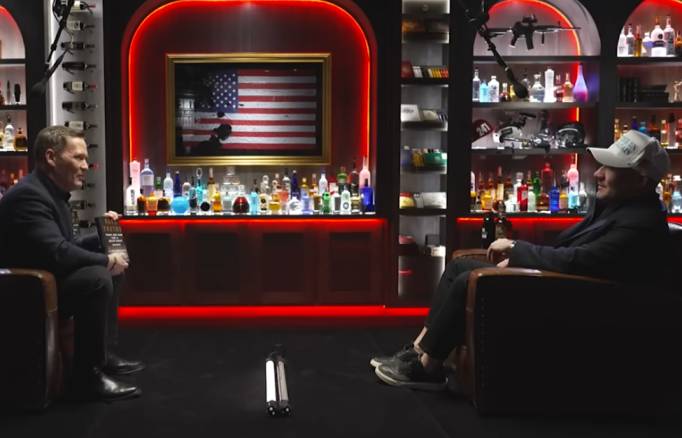
Here is the full transcript of ambassador Mike Waltz’s interview on Shawn Ryan Show SRS #268, January 6, 2026.
Brief Notes: In this high-stakes episode of the Shawn Ryan Show, Shawn sits down with Mike Waltz, the first Green Beret elected to Congress and current U.S. Ambassador to the United Nations, to discuss his journey from combat to the highest levels of global diplomacy.
Waltz provides a rare look at the disconnect between D.C. policy and the “ground truth” of the battlefield, detailing his mission to “Make the UN Great Again” (MUNGA) through radical transparency and historic budget reforms. The conversation tackles the existential threat posed by the Chinese Communist Party’s industrial dominance and the critical importance of domestic supply chain resilience in the current 2026 geopolitical landscape. Finally, Waltz reflects on the “spiritual” state of the nation following the 2026 assassination of Charlie Kirk and issues a rallying cry for veterans to step into political leadership to restore mission-focus to the American government.
Introduction
SHAWN RYAN: Ambassador Mike Waltz.
MIKE WALTZ: Thank you, brother.
SHAWN RYAN: Welcome to the show.
MIKE WALTZ: Honored to be with you, man. And I’m so proud of you and what you’ve done with this platform, what you’re doing with it. Really honored to be here.
SHAWN RYAN: That means a hell of a lot coming from you. Thank you. Thank you. And it’s an honor to have you here.
MIKE WALTZ: Yeah, it’s been a heck of a year.
SHAWN RYAN: I’ll bet it has.
From Jacksonville to the United Nations
SHAWN RYAN: But, man, congratulations to you, too. I mean, you know, very interesting breakfast, but growing up in Jacksonville, Florida. I mean, sounds like you came from damn near nothing. And Green Beret, congressman, entrepreneur, ambassador of the UN, National Security Advisor. I mean, holy s*, dude. It’s impressive.
MIKE WALTZ: It’s quite the arc, you know. It’s been a blessing. It sounds cliche, but I mean it. Only in this country, the most amazing country the world has ever seen.
I think I was telling you at breakfast that there was this moment. I grew up on the west side of Jacksonville, which is definitely the poor side of town, one of the poorer sides of town. Big Navy town. Grandfather was in the Navy, father was in the Navy. I obviously defected and went Army.
But there was this moment a couple years in the Congress during the presidential campaign, and I’m standing up on this big stage, thousands of people. The mayor of Jacksonville had just walked off, and President Trump’s rolling in with Air Force One. Boss move, rolling in the backdrop.
And we’re on this Navy base, Cecil Field in Jacksonville, and I’m looking out at the PX where my grandmother and I used to go to buy her cigarettes because they were subsidized back then. And I mean, you know, look out and see my mother, who literally… My dad, when I was an infant, just went out to sea and we never saw him again. I mean, he just left her and left us.
SHAWN RYAN: Oh, s*.
MIKE WALTZ: Yeah. So I never really knew him. I saw him once before he passed when I was an adult and I was at VMI, Virginia Military Institute. I was like, who the hell is this guy? It’s my dad. Wrote him and went and saw him.
SHAWN RYAN: You went to see him?
MIKE WALTZ: Yeah, I went to see him.
SHAWN RYAN: What was that like?
Meeting His Father
MIKE WALTZ: Mixed, right? You know, as a teenage boy, you build up a lot of anger, I think, and resentment when you see your mother struggling like she was.
But, man, I didn’t expect you to go there right out the gate, Shawn. But at the same time, you don’t know who your dad is. And I’d always had this kind of military bug and I knew this family history of Navy chiefs and seeing all the photos and stuff and went and saw him.
And, you know, he kind of had some reasons and excuses, but I was just there to get to know him. And thank God I did it because he died a few years later.
SHAWN RYAN: Holy s*. How old were you?
MIKE WALTZ: Oh, 20, 21, 22.
SHAWN RYAN: So you did not meet your dad until you were 22 years old?
MIKE WALTZ: I was 19. I mean, I had met him, but I didn’t really remember him. I had not met him where I could really remember him and have a relationship, have a conversation with him until then.
A Mother’s Sacrifice
But the point is, my mother was my rock. Is my rock. Worked three jobs: night security guard, dental hygienist, Pick ‘n Save clerk. But then put herself through college on nights and weekends. We actually ended up graduating the same year. Took her 15 years so that I could get through in four.
SHAWN RYAN: Are you serious?
MIKE WALTZ: And then as you well know, the military becomes such a pathway, you know, not only for you personally, but has been for the United States really since World War II, out of poverty and into the middle class.
And now my daughter is… I’ve got a 21-year-old and a three-year-old. That’s a whole other conversation. But my daughter’s about to graduate school on the GI Bill.
SHAWN RYAN: Right.
MIKE WALTZ: No kidding. So to go from… Because you can pass it on now to your kids, great thing that Congress did a few decades ago. But to have that full arc and to have been standing with the President of the United States in the Oval Office, to have been representing… Every congressman represents about 800,000 people.
To have now been a part of the Republic that you and I and so many others were willing and did die for has been an honor and an amazing ride, man.
SHAWN RYAN: I’ll bet.
MIKE WALTZ: Yeah, man.
SHAWN RYAN: The childhood stuff, man.
MIKE WALTZ: Wow.
SHAWN RYAN: We’re going to dive into that, I hope.
MIKE WALTZ: We’ll go anywhere you want.
SHAWN RYAN: Perfect.
MIKE WALTZ: Yeah.
SHAWN RYAN: Cool.
Official Introduction
SHAWN RYAN: But, well, Mike, everybody starts off with an introduction, so let me do yours.
Ambassador Mike Waltz: an American politician, diplomat, author, businessman and retired combat veteran, U.S. Army Special Forces colonel. First Green Beret elected to Congress and still served in the Reserves while you were in office.
While in Congress, you represented Florida and served on the Armed Services, Intel and Foreign Affairs committees and the China Task Force. Co-founded a bipartisan veterans caucus called the For Country Caucus of Veteran Members of Congress to work issues together and increase the number of vets running for office. F*ing amazing, by the way.
You come from a family steeped in military tradition. Is the son and grandson of Navy chiefs. Author of three books, including “Warrior Diplomat,” which recounts your military and policy experiences. Also a successful business owner, founding Metis, a strategy and intelligence firm.
Husband to Amy, an Army veteran. Father to son…
MIKE WALTZ: Let me stop you.
SHAWN RYAN: Sorry.
MIKE WALTZ: Husband to Julia. Well, yeah. Excuse me. Julia’s my wife.
SHAWN RYAN: Husband to an Army veteran, right. Father of son, Army, and most importantly, you’re a Christian.
MIKE WALTZ: Yeah, man.
SHAWN RYAN: Welcome to the show.
MIKE WALTZ: I got to throw in my daughter Anderson in there, too.
SHAWN RYAN: Yeah, perfect.
MIKE WALTZ: Thanks, man.
The Impact of Fatherless Childhoods
SHAWN RYAN: My pleasure. My pleasure. Like I said, man, very accomplished career. That’s very impressive. But I’d like to… You know, one thing that I wasn’t expecting to go here, and if you don’t want to, that’s okay, but the childhood stuff that comes out on this show is… It just always surprises me how many people go through some type of abuse or parentless childhood.
It’s just… It makes it real to me how many people there are in the world and in the country that go through that. And I think a lot of America’s youth find answers to things that they’re going through from people that have been on the show because we go in so deep on that.
And just, I mean, so many people I’ve had on the show have grown up without fathers. And you hear about this, you know, all these kids that do this. So what was it… Can you just describe going back to your dad?
Not Becoming a Victim
MIKE WALTZ: Well, look, I don’t want to make too much of it because my mother did such an amazing job of filling the void. I mean, she was provider, mother, father, rock, inspiration. Kick you in the ass when you needed it.
Forced me… I wanted to go hang out with my friends, but I had tested for this gifted program, and she forced me to go to this charter school because she could see that I was just going to screw around and not apply myself. I didn’t want to do it. She made me do it. And it was a fantastic education. Graduated with 36 college credits right out the gate.
But I also remember her sitting me down and saying, “Look, I’ve got to work, I’ve got to provide. I can’t be here to make you do your homework. I can’t be here. You’ve got to have a sense of self-motivation. If you want to do these sports and other stuff, you’ve got to get yourself there. You have to get ready.”
And it just, I think, imbued in me this level of independence and self-motivation. I hear you on the lack of fatherhood, but at the same time, you can’t let yourself become a victim…
SHAWN RYAN: Well, that’s what I’m getting at.
MIKE WALTZ: …of your circumstances.
And just quick as a side, because she’s an amazing woman. You know, my wife is one of five raised by a single mom who literally was an immigrant from Jordan. Christians that fled persecution and came here. Their dad died in an accident when they were young. She being the oldest, became the quasi parent and they now are doctors, lawyers. She’s an Army veteran and a diplomat herself. I mean they pulled themselves up from a one-stop-light little town because of the strength of their mother.
The Revival of Strong Men and Women
So if anything, I just… I think two things. One, there’s been a revival of men. And I would put myself as one of those that are determined to be good parents, to be, as Christianity calls us to do, to be the moral leaders of your family.
And you’re seeing that revival post-Charlie Kirk and his assassination and others. You’re seeing that, I think, revival of people focused on family and being good fathers and leaders. But also just the strength of the women in this country.
And you see in this administration, strong women from the chief of staff, the Attorney General and on down. I forget which journalist made some comment that the president doesn’t like strong women surrounded by him.
And so, I don’t know, you know, bootstrap yourself, suck it up, dust yourself off and move forward. And the greatest country in the world, you have opportunity here.
SHAWN RYAN: Yeah. Yeah. Did you have any brothers and sisters?
MIKE WALTZ: I have a half-sister, but it was really mainly just me and my mom.
SHAWN RYAN: Is she older or younger?
MIKE WALTZ: My sister’s older.
SHAWN RYAN: Okay.
MIKE WALTZ: Yeah.
SHAWN RYAN: Okay. So just you and your mom growing up?
MIKE WALTZ: Yeah, pretty much.
Seeking Positive Role Models
SHAWN RYAN: What did she…
MIKE WALTZ: But I also sought out too, and my mother pushed this. I remember her walking up to a group of men at my church saying, “I heard you guys are doing a men’s Bible study.” And they said, “Yeah, we are.” Her name’s Brenda. And they said, “Good, I’ve got a teenage boy and he’s coming to it this Sunday.”
And so she sought out for me positive male role models. My priest went to VMI. That’s how I got really focused on Virginia Military Institute. And then through him, my two favorite generals: George C. Marshall, who’s by the way, the only general to also win the Nobel Peace Prize for the Marshall Plan, who led the entire effort in World War II. And of course, Patton went to VMI.
And through him, got steeped in history. And then, my friends’ fathers. You can surround yourself by positive role models. And the old saying, you become who you surround yourself by. But again, that was back to my mom, man.
SHAWN RYAN: Great insight for your mom. Wow, that’s awesome, man. I love stories like this, you know. I mean, it’s sad, but it shows… I mean, you just see so many people who victimize themselves.
And I can’t talk about childhood because I had a great childhood, you know. And so to me, for me to get up on a soapbox and, you know what I mean, would be asinine. But for somebody like you or a lot of the other people on the show, I mean, it shows you can still f*ing make something. You don’t have to victimize…
Early Life and Military Inspiration
But I even feel, I don’t even feel like it was a bad, you know, I mean, we didn’t have much. The only place my mother could afford was literally in the flight line of Naval Air Station Jacksonville. So P-3s, those, you know, four engine submarine hunters were buzzing our house every 20 minutes and rattling the whole thing.
But I think part of it is, is serving now abroad across Africa and the Middle East where you really see true poverty. Yeah, I don’t even want to, I don’t want to come out of the show that I had a, you know, a tough childhood compared to others. Yeah, I’m not.
SHAWN RYAN: But.
MIKE WALTZ: But I could have easily. And we’ve all seen people that just fall into victimhood and they never leave where they are and they never push themselves and, and, you know, thanks to great parenting and a kick in the a when a young man needed it.
SHAWN RYAN: Yep, yep.
MIKE WALTZ: I think we’ve done okay.
SHAWN RYAN: Right on, man. Well, I forgot to give you your gift too. Oh, there you go. Vigilant Elite gummy bears. Legal in all 50 states. Made here in the USA. Probably the only reason you came. I don’t blame you.
MIKE WALTZ: This is it. I’ve got one for a couple for you, actually. I don’t mean to turn this into a whole thing, but first and foremost, I’ve got to add to your collection over there. Bottle of Horse Soldier bourbon. This is distilled by the Green Berets who went into Afghanistan, dropped off in the middle of the night, linked up with warlords, and rode into liberating that country and kicking the sh out of Al Qaeda on horseback.
And that team, those guys have now become entrepreneurs, much like yourself and me and so many others. I’m so proud of them. They’re building a massive distillery, 9/11 themed, veteran themed in Kentucky. But they batched this bottle for the 250th anniversary of the Army.
SHAWN RYAN: No kidding.
MIKE WALTZ: That was their original batch, man. I’d love for you to have that.
SHAWN RYAN: Add that.
Make the UN Great Again (MUNGA)
MIKE WALTZ: Same team that made the president’s iconic red hats. And this just captures, people ask you, what the heck are you doing at the UN? Which is a whole other conversation. How we need to clean house and doze that place, but also save some of the goodness. Make the UN Great Again.
So when all the world leaders come together, one place in the world once a year, the President was just there speaking to prime ministers, presidents. They call it UNGA, the UN General Assembly, but we’ve now relabeled it MUNGA. Make the UN Great Again. My mission.
And then finally, of course, copy of “Hard Truths,” my latest book. So you mentioned “Warrior Diplomat.” That was really about my time in the Bush White House as a civilian policy person. But then, as you know, both the SEALs and the Green Berets have reserve units, so I was a reservist.
I had a day job. My day job was in the Pentagon and then the Bush White House. I had to be the only idiot in Washington that was writing the strategy. But then I would get mobilized and have to go do it. That was my first book, “Warrior Diplomat.” I’ve done a children’s book. And then we’re happy to give you this copy of “Hard Truths,” which talks about the lessons I learned in combat and how I’ve applied them now to Congress.
SHAWN RYAN: And is there combat going on over there in Congress?
MIKE WALTZ: You know, man, thank you. There are many days I thought the tribes of Afghanistan were easier, herding those cats than the tribes of DC, man. I don’t know which were more dangerous. Right, right. For sure.
SHAWN RYAN: What a disaster over there. Well, Mike.
MIKE WALTZ: Yeah.
Path to Military Service
SHAWN RYAN: Let’s get into your story. All right. So, grew up in Jacksonville. Single mother. What got your interest in the military?
MIKE WALTZ: Was always a history guy. My, I remember mom would, she was a runner, and I would literally ride behind her on my bike. She tells the story better than I do. Talking about Pearl Harbor, Midway, Battle of Coral Sea.
Your mom was talking to you about Coral Sea? No, I was. I had read, I literally read every World War II history book, military history book, in our elementary school library. In fact, they brought in more from the local high school that I was just devouring these things.
But I would ride behind her and recite how Yamamoto got shot down and his strategy for having shallow torpedoes to come after our fleet. And then also, obviously in Europe and Africa. Patton, Eisenhower, Marshall, all the greats. Wow.
SHAWN RYAN: Right.
VMI and the Honor Code
MIKE WALTZ: So, so that was there. I always knew I wanted to serve. My, really, my high school or childhood priest was a VMI grad, and I went up and then tortured myself through. I, you know, told you about a great education I had through high. And rather than go and party at Florida State, like a lot of my friends did, I went and got my head shaved every Monday and the snot kicked out of me for four years. Right on.
But proud to say I graduated a distinguished military graduate, commissioned in the Army. Got a full ride to go there. So at least I didn’t pay to suffer. But it is actually an amazing education. You want to talk about another place that’s completely steeped in both discipline and history? My barracks room was Stonewall Jackson’s classroom. Wow.
And, I mean, there’s all kinds of stories about having ghosts and what people saw and didn’t see. We had to literally prop up our beds like these plywood, we call them racks with all thin mattress on them. Every day, we’d prop them up. You’re in the, you know, gray uniform. Formation every morning.
But it taught me a couple of things. One, the rules that are the most important, you have to appreciate. And that was our honor code. “I will not lie, cheat, or steal, nor tolerate those who do” in that period. And we had a ceremony there that if someone was convicted by their peers of violating the honor code, they called it a drum roll.
You gathered everyone up at night, at 2, 3 in the morning, you’d hear this drum roll starting to come out, and everyone would line up against the rails, and they would announce the cadet’s name that had been found to be dishonorable, and they were banished. Right.
So there’s that, but then there’s all the rules that are bendable. And I think that served me really well in the unconventional warfare space of knowing when you can push the rules and then which ones are sacrosanct.
And again, another male role model, the Sergeant Major, Sergeant Major Bill Goodson, Green Beret, E9, became. The guy was probably 45, 48 years old, still outrunning all of us. Great looking, charming, funny, knowledgeable of the world, spoke multiple languages and is that what captivated you? Yeah. Yeah, it is.
Journey to Special Forces
I started out so in Army Special Forces, you have to do something in big army first. You can’t even try out until you’re a captain or a staff sergeant. Right? Unlike the SEALs, where you can just go right in. They want you to go season in kind of big army.
So I started out in armor and tanks. Loved it. But it was the 1990s army, and I remember we had to get a colonel or one star general’s permission to basically start and move your tank because we were so short on money, on fuel and everything, parts, the whole deal.
I used to take my platoon out on golf carts that I would just go rent to my own to practice our formations. And so that was pretty frustrating to say the least. And, but I loved the Special Forces mission where one day, you know, you’re out with your medics building a clinic.
Actually, this actually happened to me downrange. Just to take a step back on the story real quick, but we were embedded with Australian Special Air Service, Australian commandos and also some SEALs. They were doing the traditional kill capture. They had sniper teams out that they were watching this really bad guy, this really bad Taliban commander who had beheaded a couple of police officers, tortured a kid on radio live.
SHAWN RYAN: You guys are listening to this.
Medical Clinic Operation
MIKE WALTZ: Just bad guy to force his tribe to listen to it because they weren’t working with him anyway. They had their snipers out. They’ve been out there for days. We all know what happened. For example, Operation Red Wing and “Lone Survivor,” really worried about getting compromised.
My medics come up to me and say, “Why don’t we just host a medical clinic right down from where we know this guy is?” We did. We got a bunch of local doctors and as, and sure enough, people are lined up down the road because they haven’t seen a doctor in forever. And we got a bunch of local doctors, and as they come in, we’re fingerprinting them, getting the biometrics and whatever, and then they get treated.
Sure enough, this guy steps in before we can take his picture. He turns around and bolts. One of my guys goes to go after him. No, no, no, no, wait. We didn’t go after him. We call the local police chief, he goes and gets him, wraps him up. It’s our guy.
And now the police chief is a hero. We’ve treated all kinds of villagers. One of the village chiefs so appreciated us treating their kid. They gave us information on three of his other lieutenants that we went and rolled up.
And the cool thing is I was able to go back to the Australian commander and say, “We got him. You can bring your guys in.” So what I loved about the Special Forces mission was one day you can be doing that. You have to learn local languages, specialize in a certain part of the world.
And as we saw in one of my tours, there were three of us embedded in a UAE Arab task force, partnered with 180 Afghans. Right. It’s the closest I’ll get to Lawrence of Arabia in my entire life. And by the way, if I never eat goat again, I’m good because we were just out there living off the land.
It was me, a medic and a commo sergeant. Three Americans, 90 Arabs, 180 Afghans out in the mountains.
SHAWN RYAN: Say that again.
Working with UAE Forces
MIKE WALTZ: Three Americans, 90 Arab soldiers from the United Arab Emirates Special Operations task force that was deployed in Afghanistan. We were embedded with them, partnered with 180 unit of 180 Afghans. We were holy out there, man.
SHAWN RYAN: Yeah.
MIKE WALTZ: What? Completely out there.
SHAWN RYAN: What are the UAE guys like?
MIKE WALTZ: I’ve never even.
SHAWN RYAN: I’ve never seen them. I’ve never worked with them.
MIKE WALTZ: At the operational level. No, the operational level, they were great. Sometimes at the command and control level, we had to, you know, we had to work with them. That’s what we were there to do with the close air support, with the drones, with the fire support, coordinating with other units, the whole deal.
At one point, I got caught. We had a miscommunication. I mean, I had an interpreter that was doing four way translation in combat. He was doing Pashto, Dari, the two languages spoke by the Afghan unit, Arabic and English. Holy. That guy was worth his weight in gold. Right. By the way, he was left behind by the Biden administration, but we’re still working on getting him out.
So that, you know, that complexity of mission I found fascinating. And so as a captain, I went and tried out. And I’m one of those, it took me twice. Right. And I say that because I talk to, when I talk to student groups or young soldiers, it’s okay to fail. You know, it’s set up oftentimes for you to learn to fail.
SHAWN RYAN: So.
Bridging Policy and Combat
MIKE WALTZ: But I got through it, got through Ranger school, and then somebody turned me on to the fact that you could do this in the reserves, and I fell into this kind of policy world. And this, like I said, this back and forth of there I am writing it, there I am deployed.
And then the really fun part or sad part, and I write about this in my first book, is coming back and saying, “Hey, Mr. President, I was there in the room when you said do this. We’re now out there on the ground not doing what you said” and coming back and speaking that truth to power.
From Policy to Battlefield: The Back and Forth
SHAWN RYAN: I know we’re on a time constraint, so we’re going to skip some stuff, but I think that is one of the things in your story that I found most interesting. At some point in time after Special Forces, you were writing policy and then living out that policy in a wartime environment as a Green Beret. I mean, how did you go from Special Forces to writing policy back to Special Forces?
MIKE WALTZ: Well, my first office in the Pentagon that I worked in as a civilian was actually set around dealing with the narcotics problem in Afghanistan. The office was originally stood up to go after the narcotics problem in Colombia. Relevant again today, what we’re seeing in Venezuela under what was called Plan Colombia in the 90s and early 2000s.
I think one of the real success stories, Green Beret success stories, American success stories, if you remember where the Medellin and other cartels were basically about to take the place over. Blew up an airliner attacking parliamentarians. Just a few Green Berets in their train, advise and assist the Colombian military and they defeat the FARC insurgency over time.
We were looking to do the same thing with how opium was funding international terrorism in the Taliban. So they were attracted by my background. We did that. I helped craft that policy. And then that started the back and forth, right?
SHAWN RYAN: So they sought you out?
MIKE WALTZ: No, no, I applied. It was through a mentor of mine.
SHAWN RYAN: Were you still in the military?
MIKE WALTZ: Yeah, I was at this point in the reserves. At this point, both the SEALs and Green Berets actually have National Guard units, and went in with that background. Started really working on not just the counter narcotics piece, but then the broader Afghan policy.
Went back out and did the tour where I was embedded with the Emirates and with the Jordanians. They were there to a smaller extent. And with the Afghans, just a few of us. I had others embedded with NATO Special Operations.
So I saw at that time that the Europeans were in way over their heads in terms of what they were willing to do politically. The soldiers out on the ground were great. But I tell a story in my first book where this Danish unit had to call back to their parliament to send us a QRF because it violated their ROE.
Or the Germans were in the north, wouldn’t send us a medevac or wouldn’t send us close air support because we couldn’t identify the enemy the way their what they called national caveats demanded it. And I think it’s one of the reasons that we struggled so badly in that conflict.
SHAWN RYAN: Yeah, yeah. Damn. What are some of the things that…
MIKE WALTZ: I mean…
SHAWN RYAN: It just is so wild to me. You’re writing policy and then you’re living it.
Bottoms Up Leadership: Bringing Ground Truth to Policy
MIKE WALTZ: But then bringing that knowledge back to policymakers. And that’s one of the reasons I stayed in the Reserves while I was in Congress too, was to have that ground truth to bring in when I was on the Armed Services Committee, the Intel Committee and others.
And it’s part of what I write about in the book. You have to stay, I call it bottoms up leadership, where you are talking to the soldiers. Or as a CEO, I would always end my staff meetings with my team on what decisions are you waiting on from me? What resources do you need from me? How can I empower you?
And that’s that kind of Green Beret mentality. You empower the teams, you empower those out there. But I’ve tried to do it as a CEO, as a member of Congress, and now as ambassador to the UN.
One of the couple of things that I have really focused on that I write about and that I’m trying to instill now and to live that I think we really need more of. One of the stories that I write about, if you don’t mind, is discipline and how that applies not only as a leader, but as a Christian leader.
The Skittles Story: A Lesson in Discipline
And I know you have people who’ve been through Ranger school here. The difference there is they starve you and they sleep deprive you. And one of our patrols, they give you, normally when you’re going out, like five MREs for seven days, right? And you’re supposed to have the discipline to kind of ration your food. Nobody does.
I mean, they’ve eaten like all five MREs by, like, day two because you’re starving and you’re moving 23 hours a day. You’re getting like an hour sleep a night out on these patrols. And so by the time you come to day six or seven, it’s time for the resupply mission.
And man, that is the most important mission. I’ll never forget this second lieutenant got tapped. “Hey, you’re in charge. Get us to the resupply site.” And we’re moving all night long. We’re trying to get to this thing. I mean, you’re hallucinating. I’d lost 31 pounds by this point.
As you’re over mountains and across streams, and as we were getting near the site, we could hear the helicopter, the resupply helicopter that was going to drop a bundle with our next batch of MREs circling. They’re only circling for a certain window.
And this poor kid got us so lost. I mean, I’d never forget seeing him in there looking at the map, and he’s stopping. We can hear the helicopter, and everybody’s bitching and grumbling, and the worst sound you’ll ever think of, that helicopter flies off.
I thought the whole platoon was going to beat his a, because we were… And I forget the Ranger instructors, like, “Ah, man, I think there was a big, big batch of Snickers on that one. That sucks, guys. I hope you’re not too hungry.”
Well, I had had the discipline to remember the MREs. They had those little Halloween packs of Skittles.
SHAWN RYAN: Yeah.
MIKE WALTZ: I had saved my Skittles from every one of those. Everybody else had inhaled everything. And as we’re trudging through the mountains again, I decided every 500 meters, I was going to treat myself to a single Skittle.
And this thing was like a burst of energy and happiness. And I mean, just, it just kept me going. Every 500 because I was on the verge of either just falling flat on my face or quitting. It was so demoralizing to hear that damn helicopter fly off.
And I’ll forget we’re laying down in a fighting position. I pop one in. I look over, and the two guys next to me are, I mean, they’re just staring a hole through me, and they’re like, “Give me one.” And they’re like, “Come on, man, you didn’t share.”
We’re having this argument. I thought they were going to come after those Skittles. They wanted them so bad. Anyway, long story short, I ended up, I’ll never forget, it was a purple one, and I throw it, and I hit him in the face.
And I’m thinking, I had the discipline to ration my food. These guys didn’t. They didn’t help me out. Whatever. Fast forward. Finish the phase. You go in for your final evaluation.
So big burly master sergeant, I don’t forget standing there in front of me. He’s got big dip in. And he’s flipping through my stuff. And I could see, I mean, you get evaluated by them, but also by your peers.
SHAWN RYAN: Yeah.
What Would Jesus Do?
MIKE WALTZ: Which is incredibly important. Had all goes. He said, “Ranger Waltz, you did great. You got all these good marks, except you got two bad peers. Must not pass from two of your fellow squad mates.”
And I could see the red slip sitting on his desk. And I’m like, “Those… If I don’t get my tab over those aholes and Skittles,” I mean, it’s just rolling through my mind as I’m sitting there.
And he said, this is the point of the story. He said, “I see you put down your site profile that you’re a Christian.” “Yes, Sergeant.” He said, “I see you kind of describe your leadership style as servant leadership.” “Yes, sergeant.”
He said, “Well, I have one question for you. This is for all the marbles.” He said, “In that situation, what would Jesus have done?”
And I was like, “He would have given him… He would have shared his Skittles, Sergeant.”
“Yeah, you’re right. He would have shared it. You’re damn right I’m right.” Like dip spit. You don’t ever tell an NCO he’s right. “I’m always right. I’m a Ranger instructor,” and like, spit’s flying. And I’m like, “Oh, man, I’m screwed now. I pissed him off.”
And I’m standing there with dip spit all over my face going, “I blew it.” And he sits back down and he says, “I’m going to let you have your tab.” Said, “But don’t you ever forget. Earning it was the easy part. Living it is the hard part. And as an officer, officers always eat last. And if you have the discipline…”
SHAWN RYAN: …
MIKE WALTZ: …to do the right thing, you pay that forward when your men don’t, right? And so I’ve tried to apply that my whole life.
The Campaign Trail: 210,000 Doors
Fast forward, there I am in Congress, running my first, my first not in Congress yet, running for the first time to be in Congress. I get the call that you dread when you’re doing this, that my opponent just had millions of dollars dumped in their account by Pelosi, super PACs, Bloomberg, the whole thing.
By the way, Bloomberg dumped money into 24 races. This is in 2018, Trump’s first midterm. Pelosi comes back in. He dumped money into 24 races and won 21 of them, right? And you get that call. I couldn’t compete with that. But what I could do is outwork them.
So my team of volunteers and I ended up knocking 210,000 doors. And I’ll never forget. And so what I started doing was popping a Skittle every successful door knock.
And I’ll never forget, I’ve taken up too much time. But at my last door, a woman opens up. And I saw as I was walking up, there was a little shrine in her yard. And I asked her who it was, and I introduced myself and she said, “Oh, I know who you are, Colonel. I’ve seen all the negative ads on you on TV.”
And I said, “Well, that’s not who I am. And this is who I am.” And she said, “You’re pretty conservative for me, but you know what? If you’ve had the guts to do what you’ve done, you’ll have the guts to do the right thing in Congress.”
And it turns out her son was an E4 that was killed, 2nd Ranger Battalion in Panama. And she had a little shrine to him. And as I was thanking her and hugging her, and she said, “Don’t ever forget him and be worthy of him when you’re walking up those steps in Congress. Be worthy.”
And so I think about that. I think about one of my Green Berets. I didn’t bring back Matt Pacino and his sacrifice and all of them.
SHAWN RYAN: What happened to him?
Remembering Matt Pacino
MIKE WALTZ: Matt was an absolute stud. Former police officer up in Massachusetts before he became a Green Beret. And the shorter version was he always volunteered to go on point, keep his story alive.
SHAWN RYAN: You want to keep his story alive? Yeah. Give me the full version.
The Cost of Service: Remembering Matt Pacino
He was probably, if I had to rank all of my guys—at that point I was commanding a special forces company, about 90 of them—I’d have ranked him top five. I mean, he was just incredible. Smart, sharp, good looking, built like a linebacker.
But this was kind of a bigger story of the war. The enemy had gone to IEDs. We had all of these jammers and antennas and whatever, and that, you know, the good news is they had worked. So what did the Taliban do? They went back old school. They went back to tripwires.
And the difference in Iraq, where they tended to come in from the side, in Afghanistan, because it was dirt roads, they tended to come up through the bottom. And the conventional units and what have you didn’t know how to deal with it. And a lot of them shut down. Not this team. And these are, you know, I’m sure you’ve seen them. They just got after it.
And they were going out one night after a commander and Matt started volunteering to go out on either motorcycle or four wheeler ahead of our armored convoy so that he would be close enough to the ground to see if there was any dirt disturbances or tripwires or what have you.
I don’t forget stopping them before they went out on a mission. I was a commander approving the missions and saying, “Guys, you guys are pushing it. I said, Matt, you’re volunteering to go out every time.”
And he said, “You know what, Mike? If I miss something or we miss something, I wanted to get just me, not my four or five brothers in the car behind me.”
Like who thinks that way? I mean, this is the best America has to give. And you know, they were going out one night, successful hit, came back, alternate route. We think somehow it got compromised because they set up the tripwire at night, which was highly, highly unusual. And he was on an ATV when it came up and killed him.
But his family is amazing. They have set up, of course, a foundation. They work a lot with Gary Sinise. It’s the Matthew Pacino Foundation. I’ve donated the proceeds from my books to him and his family to pay it forward.
Veterans Serving Again: A Call to Action
So those are the ones. You know, it’s one of the reasons that I’m so passionate about now, veterans serving again. It doesn’t have to be in Congress. It can be city council, state rep up in Congress.
And you know, you mentioned in the bio, I co-founded a bipartisan veterans caucus because, you know, if we were all willing to die together a few years ago, we can figure out things like health care policy or taxes or whatever together as veterans in office.
When I ran in 2018, we were at a record low. 15% of Congress were vets. That was down from 75% in the 1970s.
SHAWN RYAN: In the 70s.
MIKE WALTZ: In the 70s, three quarters. Now, a lot of people would say, “Okay, of course that’s because of the draft.” But after 20 years of warfare in the Middle East, we’ve had a lot of veterans go through. They’re just not taking that next step to run for office.
SHAWN RYAN: I mean, I think that’s great that you did that, Mike. I’m just curious. Why do you think it’s important for veterans to continue service in Congress and the Senate and local politics? Why do you feel that that’s important?
MIKE WALTZ: You’re not done serving. Just because you went overseas and came back, that doesn’t mean you get to sit in the VFW hall and drink beer and tell war stories.
With such a small percentage of Americans now post-draft serving, the country needs you. Leadership, teamwork, followership, discipline, mission focus. If you look at, no offense to lawyers out there, but if you look at the type of profession that’s gotten into politics now, lawyers largely and activists have largely replaced business owners and veterans. And we’re looking to right that shift.
SHAWN RYAN: Why do you think that is?
MIKE WALTZ: Well, I think on the veteran side, you used to, back in the day, you’d go serve a couple years and you’d come back to your hometown, pick up your life, get well known in the community, and perhaps run for office.
Now you’re running around the world for 20, 25 years, and then you come back home and decide you want to do this as I did, and people try to call you a carpetbagger. Like I’ve been around defending you. Thank you very much.
But so I think it’s the nature of service that shifted somewhat over time. I also think it’s the amount of money involved. And there’s a number of organizations out there that are focused on getting veterans back in. And again, we’ve seen that uptake coming back.
But at the end of the day, it’s the ability to overcome differences, focus on a mission for the betterment of your country and get things done.
SHAWN RYAN: I mean, I just, I can’t remember, I think I can’t remember if I just had this conversation with Jocko or Mapis and that is—
MIKE WALTZ: This is not a beer, by the way, just for everybody out there.
SHAWN RYAN: No beer. But, you know, we were kind of discussing, I think it was with Jocko and we were talking about, you know, how in SOF units and military units, I mean, we have to work together because our f*ing life depends on it, you know, and then we look at what goes on in Congress. What goes on—
MIKE WALTZ: You have to work together. Your country depends on it.
SHAWN RYAN: Exactly. Now, and it, you know, from the outside looking in, it doesn’t seem like much is getting done.
Getting Things Done: Beyond the Dysfunction
MIKE WALTZ: Yeah, part of that is the media loves to focus on the dysfunction. We’ve had a defense bill get passed. A lot of veterans on that committee consecutively. First, it’s the only piece of legislation for 61 years running that has passed. And there’s a lot of good stuff in it.
But like case in point, several years ago, impeachments going on, everybody is hating President Trump. Everyone’s calling everyone a racist or this or that. I sent a note out to all the veterans in the House and said, “Meet me 6:30 a.m. tomorrow morning.”
You know what? Over 40 did. How many veterans at the Vietnam Memorial Wall? And we linked up with the Park Service, who himself, the head park ranger there at the Vietnam Memorial Wall is a disabled veteran who lost his leg. And we washed the Vietnam Memorial Wall together.
And we had a camera crew out there. Brett Baier from Fox and others have come. America needs to see that. They need to see we can get over it and come together to solve their problems. Quit bitching, bickering, fighting. Now we need to fight for what we believe in. But at some point you move the country forward.
And you know, other things we’ve done, I mean, to share with you a fun one. And it was actually the Horse Soldier bourbon guys that put this together. I brought 10 veteran members of Congress together. We went over to Normandy for both the 75th and the 80th anniversary of D-Day.
And we jumped out of the original C-47, Shawn, that led the 101st Airborne in the invasion in 1944. And we did it, by the way, with a 97-year-old paratrooper. I remember it was tandem. Buddy of mine, I never forget landing, his name was Tom Rice. And I walk up to him, “Tom, you okay?”
It’s like, “Hell, yeah. That was a hell of a lot more fun than last time, you know, shooting at me.”
But the point is, you know, if I could get every high school class over to Normandy, where you see more American flags flying on French homes, you see all these French kids running around with American flag T-shirts and big banners that say, “Thank you for our freedom. Welcome to our liberators. Thank you, America.”
You would think D-Day had happened like last year, not 80 years ago. By the way, last time I took 10 members with me. I’ll never forget, Speaker Johnson stops me on the way out. He said, “Mike, I heard you’re doing this.”
“Yeah, it’s going to be amazing. And this is good for people to see.”
He said, “You know, we only have a two seat majority and you’re going to be out there jumping out of original planes.”
“That’s right. The parachutes are new. The parachutes are new, Mr. Speaker.”
SHAWN RYAN: Everything else double check them.
MIKE WALTZ: Everything else is vintage. He’s a little worried.
SHAWN RYAN: I remember seeing you doing that. That was really cool to see.
MIKE WALTZ: But the country needs to see that, right? And I think the next generation needs to see that and always appreciate and be worthy of those who made the American country what it is.
SHAWN RYAN: Yeah, be an American worth dying for. I want to go back to veterans and serving in the political sphere. You know, do you—in your mind, have veterans lost interest in serving in politics or have the American people, do they just not give a shit anymore and they’re not getting elected?
The Path Forward for Veteran Leadership
MIKE WALTZ: I think it’s more, I think it’s more the former. Nothing’s 100% one way or another. I think it’s more of the former. There’s organizations now that help them set up. You know, how do you set up a political campaign.
There’s a lot of consultants out there that are shysters and ripoff artists. They know someone with your profile can raise a lot of money. They’re happy to spend it, even if it’s a hopeless strategy or race.
So I became very passionate about helping them navigate. I mean, you look at Sheehy who just came in, you know, you look, I mean, just great veterans. Markwayne Mullin, Tom Cotton, you know.
SHAWN RYAN: This morning, Brad Hudson running for Senate in Alabama.
MIKE WALTZ: Right.
SHAWN RYAN: You know, but get in it, you know.
MIKE WALTZ: You know, yelling at the TV and throwing shit at it and saying, “This is what I fought for,” not good enough. Get in there, roll up your sleeves, be part of this amazing republic that we were willing to die for.
SHAWN RYAN: Do you think veterans are leading the way in Congress?
MIKE WALTZ: And I think, and I think American people have been incredibly responsive to those who step up. Not always. Look, I’m not going to say that always makes the best politician. And I certainly don’t agree with—there’s not that many progressives that are actually veterans, which are odd, but it doesn’t mean we always agree.
We disagree on all kinds of things, but we do agree almost always that America has been a force for good historically and certainly it’s not systemically racist, misogynist and, you know, a terrible country.
So in that sense we have that commonality and that leads to mission accomplishment, getting things done.
SHAWN RYAN: What do you think the pulse of veterans within the sphere is? Are they hopeful?
Restoring the Warrior Mentality
MIKE WALTZ: I think they’re hopeful. Now, not to sound overly partisan, but they’re hopeful under President Trump’s leadership. The recruiting numbers show it.
Pete Hegseth is restoring that warrior mentality. Dan Driscoll at Army is taking the military mindset with technology into the next level. We have great leadership in Navy and Air Force. So it’s about leadership.
I was the chairman of readiness, the readiness subcommittee, and we were focused on everything but putting two bullets or bombs on foreheads when you have to and that pointy end of the spear. Everything else should be to support that, not these social experiments that were going on.
I pushed the Biden administration, fought back left, right and center on gender neutral standards. The rucksack’s—the rucksack, the artillery shells, artillery shell—doesn’t matter. Black, white or brown, man, woman. It’s about standards. Not all of that other stuff.
And so now to see that being enacted, you’ve seen the recruiting numbers follow and I think the mentality and the retention numbers have followed, all of which were at a record low just a year ago. Just a year ago.
And you know, the amazing thing about President Trump is he puts the right people in the right seats in the bus, gives them a vision and says, “Go,” and expects results.
SHAWN RYAN: Right on.
MIKE WALTZ: And that’s what I think our military members want. It’s what I loved about being a Green Beret is you were given a broad mission set and you were dropped off in the middle of nowhere and told, “Be a warrior, diplomat. Figure it out. Win that guerrilla chief over, win that government official over in line with what America needs.”
And you know, nobody’s going to micromanage you on how to get it done.
Escape and Evasion in Helmand Province
SHAWN RYAN: Yeah, I want to. I just have to ask you this. Totally off, totally off subject right now, but I met you through Scott Mann at Tyler Andrew Vargas thing in D.C. that I spoke at. That’s when we first met. I met you through Scott and Scott told me about this operation you were on where it sounded like you were a singleton on escape and evasion, and Scott was in the TOC, kind of walking you through where to go. You got to tell me this. He never told it to me.
MIKE WALTZ: Yeah. I want to hear a young Captain Mike Waltz.
SHAWN RYAN: I mean, this sounds badass.
MIKE WALTZ: Major Scott Mann, who I think is one of our legendary Green Berets in his own right, is a thought leader, speaker, founded Task Force Pineapple, by the way. Got so many of our Afghan allies out in the Biden withdrawal debacle.
But this was actually in the tour where I was embedded with the Arab task force with the UAE task force. So it was just three of us. The first call I get from them, by the way, we’re out in Helmand Province, middle of nowhere. This is back in 2005, 2006 or less. Less than 50 Americans in the entire province. Ten years later, there were over 20,000 Marines. Back then, there was just none of us.
SHAWN RYAN: One of the hottest zones.
MIKE WALTZ: One of the hottest. I mean, it was an everyday firefight. This is the amazing thing about our mission set. I had worked with the UAE command and my command and reached back to D.C. because I was this reservist back and forth and convinced them to build an airfield out in this hottest Taliban zone where we were going to get an Arab partner now with all of their assets. Oh, by the way, in this hot Taliban zone, not that far from Iran either. This strategic asset.
We were taking the survey Emirati Air Force survey team up there and got into a run and gun battle. My only medic got shot with a femoral bleed. So I’ll never forget, he was left handed. Round goes through his arm, bounces off his chest plate and shoots down and, you know, with a femoral artery, you got minutes.
I’m down there working on him, calling in the medevac, literally put my knee on his artery while we’re running and gunning. And I think it’s got to be the only deployment of the Taliban navy because the road where they were ambushing us, cliff on one side. So they had us pinned and we’re trying to drive out of it. They had barges with mortar and RPG teams.
SHAWN RYAN: Are you serious?
MIKE WALTZ: That were paralleling us that we couldn’t get out of. So we eventually fought our way out of that. I broke some rules. And when we called in the medevac and told them that the LZ was clear, it wasn’t. The bird got a little shot up. But we got our guys and a couple of UAE guys out as well that got shot up, got them out of there.
The Insider Threat
So the first call I get that night is from Scott Mann. And you know, the satellite radios, everybody can hear it. I mean when you call up that TIC, that troops in contact, everybody hears it. You’re directing fire, directing the fight. When you get the notice to, hey, step off of the satellite radio that everybody can hear and have a one on one on the sat phone, something’s up.
First call, he calls in and says, “Hey, we think someone’s inside your perimeter.” What do you mean? “Well, we just got an intercept that the Taliban think they can capture you and two other Americans are with you if they overrun. But they were just offered a bounty from a guy that was in Pakistan to get you alive. And we think they’re working with somebody on the inside. Mike, if you have to go full E and E, you do what you gotta do.”
SHAWN RYAN: Holy shit.
MIKE WALTZ: And this was so remote back then. There weren’t many assets. I mean we were probably a solid hour, hour and a half flight from Kandahar. And oh, by the way, when they had tried to send in some QRF, it got shot up.
SHAWN RYAN: So this is in 2005?
MIKE WALTZ: This was, what is this? 2006. Wow. This was in 2006. I mean longer story. What had happened was the British were supposed to come down as the transfer to NATO. They were delayed. So it was just us and our little UAE task force out there. Trying to establish this air base, trying to pacify the region. Doing the best we could.
The next call I get was even better from Major Mann who’s up at the headquarters. “Hey, Mike, you need to get out of there. Your mission is canceled.” I was pissed. I’ve been working on this for months to get this air base, strategic air base set up. “You’re done.” I was ready to fight my way forward. He said, “No, you’re not.” Gave me a direct order.
He said, “They believe they have you surrounded. They’re going to overrun you. When I give you the next call, you need to get under anything you can. It’s going to look like Apocalypse F*ing Now.”
And he had B-1s, Preds, F-18s from carrier strike group just stacked up and just laid waste. Including, I saw the footage later where everybody was celebrating.
SHAWN RYAN: I don’t know.
MIKE WALTZ: I hope this doesn’t get you in trouble, Scott. Everybody was celebrating in a mosque and they just blew the snot out of it. I mean, body parts flying everywhere. So we ended up, yeah, we ended up fighting our way over the next…
SHAWN RYAN: Where did you, where, so you hunkered down?
40 Hours of Combat
MIKE WALTZ: We hunkered down as Scott was commanding, controlling every Air Force asset they had in theater. Just as we were trying to get out of where they had us surrounded and fight our way out. He ended up staying on the phone with me for probably the next 40 hours on just constant as they were guiding us through these various ambushes that we had till we could get back to our base, which, by the way, was everybody who served out there was FOB Robinson, who’s named after Chris Robinson, one of the Green Berets we lost that tour.
SHAWN RYAN: Holy shit, dude.
MIKE WALTZ: So that was Scott, and he’s a great friend. He’s written several books on the Green Beret mentality.
SHAWN RYAN: 40 hours of kinetic…
MIKE WALTZ: Yeah, off and on. As you know it. I mean, rounds aren’t flying every minute, but it was, you know, you don’t know that. And so I’ll never forget. I don’t know why it seemed like every AC-130, which is my favorite platform in the Air Force, by the way, the big cargo gunships, right, that have that 120 millimeter cannon and the miniguns, it seemed like every targeting officer was a female. And I’ve never asked the chief of staff of the Air Force why this was.
But I’ll never forget my guys, I mean, she was like an angel, and then the angel of death in every minute. “Target eliminated. Ambush. 50 meters to your left. Boom.” Damn, they’re gone. And then my guys are running bets on whether she was blonde, whether she was brunette. And of course, they’re all tripping over themselves when we get back to the base, back to finally get back to Kandahar and then Bagram Air Base to go thank her in person.
And, yeah, I mean, it was a hell of a fight. UAE fighters were fantastic. The soldiers were fantastic.
SHAWN RYAN: But, man, what was going through your head when they said it was an insider, somebody inside the perimeter? I mean, did they ever figure that out?
MIKE WALTZ: You know, I don’t. They didn’t that tour. But a year later, I saw some traffic that the Emirates themselves rolled a guy up, and he just kind of disappeared. And then fast forward a few years later, I’m actually in Abu Dhabi, the capital of the UAE, and we have, you know, it’s a bunch of people, but we have a kind of a meeting and greeting with the Crown Prince, Mohammed bin Zayed.
And the ambassador at the time is introducing everyone. And then as he comes and introduces me, he says, “Your Highness, this is the American soldier that was embedded with our forces,” and walks him through what had happened a couple years prior. And he stopped and locked eyes and said, basically, “We’ve carried each other from the field of battle and we will defeat the extremists together.”
The Power of Arab Partnership
Look, it’s an amazing country, and not to sell UAE, but I mean, I’ve been to Paul McCartney concerts, and they were a key member now of the Abraham Accords. And you can go there and go to a church, you can go to a synagogue, and you can go, of course, to a mosque. Very tolerant, very open.
Take it back to Afghanistan with those guys. We would go into these villages that hadn’t seen a Westerner probably since the Russians, right up in the mountains. And, Sean, I can’t tell you how powerful it was to be standing there with an Afghan officer, an Arab officer, and then me, but I’m bearded up and just kind of trying to blend in, because you’ve got a whole sea of Afghans sitting there with black eyeliner and AKs on their laps. They’re all Talibs.
But for the Arabs to say, “This isn’t the way forward. This isn’t true Islam. Look at Jakarta, look at Dubai, right? Look at Istanbul. You can have a better life for your children and not follow these, you know, basically these al Qaeda losers.” That was incredibly powerful.
What was even more powerful is they would then turn to me and say, “Look at what the United States did for Germany. Look at what the United States did for Japan. Look at what America does. Even though they were once enemies, that’s what they’re trying to do here for you. Stop attacking them. And, oh, by the way, don’t let al Qaeda and ISIS attack America. You could have a better life.”
That coming from them was worth its weight in gold. It turned whole areas. I’ll take that over a division any day. That strategic messaging was critical.
SHAWN RYAN: That’s, wow, that’s great to hear.
MIKE WALTZ: Yeah.
SHAWN RYAN: Mike, let’s take a break.
MIKE WALTZ: All right.
SHAWN RYAN: And when we come back, we’ll get into all things UN. I know you’re a big fan. So cool.
MIKE WALTZ: We’re going in. We’re cleaning house. All right.
The Reality of Policy Feedback from the Battlefield
SHAWN RYAN: We’re back from the break. We’re getting ready to get into some UN stuff, but I know we got a couple of things left to wrap up here. One of them being a story, I believe, from your service.
MIKE WALTZ: Yeah. So much of today’s discourse is punch back harder if you’re punched, get ahead of it, be aggressive, hit hard. Which, look, I’m all for it, but you have to also know when to show restraint.
And one of the chapters that I talk about in Hard Truths, and I know you know a lot of other veterans that have faced this scenario, but we were told to hold the line in a valley. We were holding a flank. And as you know, in Afghanistan, as soon as you’re static for a while, eventually you’re going to come under fire.
And I had a coalition element because, again, you know, Green Berets were always embedded. Sure enough, we hadn’t been there 30 minutes, mortar rounds start coming in. Next one comes in, it’s closer. Next one comes in, it’s closer.
Pretty quickly one of my snipers spots probably 10, 12 year old boy up on a hill. Every time this kid brings a phone up to his ear, unarmed, but every time he brings a phone up to his ear, brings binos up, another round comes in closer.
And after about the third time that happened, sniper asked for permission to take him out. He was sitting on a Barrett. You know what a 50 cal round is going to do to a 10 year old boy.
And I thought about it for half a second. He’s screaming four letter words at me, giving permission to take the shot. You start thinking about your own kids. I was thinking about my daughter.
Another round comes in, actually wounded one of our Afghans, starts screaming. And I ended up telling the sniper, take a warning shot. Took a warning shot, splashed rocks right at his feet. Kid dives behind the boulder, comes back up, takes another shot and kid ends up running over the hill. And we didn’t kill him.
Moments of Restraint in History
And if you think about it for a moment, like kind of take a step back. And I wrote about times when we’ve shown restraint as a country and whether that was a right thing.
Grant showing restraint with the surrender of Lee, I think prevented an insurgency in the south for many years following, helped the country heal. Truman in Korea didn’t hit China. MacArthur fired over it, but showed restraint. Bush 41 stopped in Kuwait, didn’t keep going all the way to Baghdad in the Persian Gulf War.
But one of my favorite stories that I think is really untold in history was during the Cuban Missile Crisis. A Soviet submarine executive officer, the number two, so Soviet submarine is coming in under the US Navy’s blockade of Cuba. They get picked up, Navy destroyer starts dropping depth charges on them.
And the Soviet submarine captain believes that World War Three has broken out over the Cuban Missile Crisis and orders his executive officer to turn the keys, the dual keys, to launch a nuclear tipped torpedo into our fleet, which had he done that no doubt would have kicked off World War Three.
Vasily Arkhipov was the Soviet Russian XO, refused the order, didn’t do it. Can you imagine? Soviet Navy depth charges are dropping, he refused to launch a nuke at our fleet. They eventually ended up surfacing and found out no, World War Three had not kicked off.
And I mean that restraint saved all of us. So I mean back to the story, we ended up following the kid into his village, lined up all the elders, reading them the riot act.
And one of the elders stepped forward and said, “Look, the Taliban were here this morning. Told us every family to give their oldest son to go attack the Americans. Al Qaeda had been in and out of that village telling him the same thing. One family refused and they hung a seven year old boy. His body was laying right there.”
So I don’t know, man. Was that the right call? I’m sure a lot of people watching this saying you should have taken the kid out. I say that in the sense of, we’ve got people making these life or death decisions every day. They stick with you one way or another.
If I had been sitting, if one of my guys had been killed by one of those mortar rounds, could I explain that to the family?
A Similar Dilemma in Baghdad
SHAWN RYAN: I mean, I just, I don’t know. I think that showing some mercy, having a heart is definitely a good thing. I mean, I was in a similar situation in Baghdad where the MSR was getting IED every f*ing day. Americans are dying every day.
They sent us out, we go sit up outside of, it’s happening right outside of a schoolyard. And so we’re all in a rural environment. And so we were all gillied up. And convoy goes by first within the first 24 hours.
And right before the convoy comes in, school gets out, these kids come and they set up. I mean, it was 10 yards from me right there. They did not even, I mean, I could have reached out and grabbed him. And there’s three of them. One pulls out a cell phone. I’m like, please don’t do this.
MIKE WALTZ: And this is all rules of engagement, right? Like, you make a bad call, you’d be prosecuted.
SHAWN RYAN: And convoy goes by. We called it in, said, “Hey, we got a group of kids sitting here.” And they said, “Don’t engage.” Convoy goes by. They hit the IED. They missed. We asked if we could restrain them. Nope, let them go.
And then, I mean, you just thinking back, it’s like, I didn’t want to kill that kid. I did not want to kill that kid. But then on the same accord, what happens tomorrow? Whose convoy comes by here tomorrow with this kid sitting in this exact spot, knowing I could reach out and touch him, at least restrain him, kill him, anything to save an American’s life, and f*ing nothing.
And I just, I don’t know what the right call is in those scenarios. Well, but in yours, I didn’t have that kind of closure.
Supporting Our Warriors and Law Enforcement
MIKE WALTZ: I’ll say as now, as leaders, you have to give our junior officers and leaders and NCOs the latitude to make those calls. The right training, the understanding of what you can and can’t do.
But, I mean, President Trump, God bless him, pardoned a number of guys who were just prosecuted to the hilt. One was put in jail for 19 years.
SHAWN RYAN: Four of them are right up there. There are their pardons. The Blackwater guys.
MIKE WALTZ: Yeah. Right. You know, we saw what happened.
SHAWN RYAN: Three for 35 years, one for life.
MIKE WALTZ: We saw what the media tried to do to Eddie Gallagher.
SHAWN RYAN: Yeah, there’s Eddie Gallagher’s murder charges right there.
MIKE WALTZ: Right. And it’s one of the many things I love about our president, but he instinctively knows you let your warriors be warriors. They’re inherently good. If one goes way off the reservation, fine. But in these kind of life or death, seconds go by calls, same goes for law enforcement. Oh, even more so for law enforcement.
I have so much respect. I tell this to all my sheriffs, my district, my state, all of them. You know, we go downrange and we’re in it. But then when we come home, we can psychologically turn off.
Police officer can never, never psychologically switch off. They’re never off duty, and they’re one cell phone away from a riot for making a bad call. At least we make one, it’s out in the mountains.
I don’t know. In this case, I talked about those times in history we showed restraint on a strategic level. I made that call then. I remember again back to one of my campaigns. Early on, this guy accused me of stolen valor on the Bronze Stars and stuff. And I swore the next time I was going to see him, I was going to punch the guy in the mouth.
And I wanted to go back out in the media and online. He was putting all this stuff online. Thank God for my amazing wife Julia and my team said, “Rise above it. Show some restraint, some dignity and don’t crawl in the mud with them.”
So I just, I think it’s important for people to think about sometimes the discretion is the better part of valor and take a step back, rise above all the noise. I think that is a major, not easy.
SHAWN RYAN: People that could learn right about now. You know, I wanted to ask you, but I lost my train of thought earlier. When you were coming out, when you were creating policy and then going back into the field and fighting and living that policy and seeing the repercussions of it, and then going back and giving the feedback on the, I mean, I’m curious, how seriously did they take you? Did you feel like they gave a shit when you were given the information?
The Value of Ground Truth in Washington
MIKE WALTZ:
I’ll tell you, even though I disagree with a number of policy decisions they made in the Bush administration, Iraq being one of them, and I hope that’s not too hurtful to people out there, but I think it was a strategic mistake. The intelligence got it wrong, but they valued that ground truth. They knew they were being fed. I mean, the most politicized thing in Washington is what’s coming into the White House. And they knew they were in a bubble.
And so for me to come back from the field was very valuable to them. They appreciated it, and I appreciated that they appreciate it. I also broke a lot of China, but I had to have the guts to speak truth to power.
And I’ll never forget one general piping in saying, “Mr. President, Mr. Vice President, the Afghan army will be operating on its own, independent of us, kicking ass and taking names within 18 months. We’re going to get it done. Here’s how we’re getting it done.” Oh, by the way, this was 2007, by the way, right? And, oh, by the way, guess what? His tour was 18 months. Shockers, right?
Like, it was all going to be unicorns and rainbows, and the Afghan army was going to be fighting like the British army by the time his watch. And I’ll forget he turned off. And they looked at me, I said, “Mr. Vice President, they can’t even count.”
Look how long. Not that it’s a perfect analogy, but we’ve been partnered with the South Korean army for 70 years. By the way, the South Koreans had a higher illiteracy rate after years of occupation and devastation. No army, no police force, no government by Japan up until World War II. We’ve been 70 years.
I’m not saying we should do that and should have done that in Afghanistan or elsewhere, but we have to appreciate what we’re dealing with, number one. Number two, decades to defeat communism, world war to defeat fascism, Islamic extremism. We can’t take our eye off the ball. It will follow us home, and we’ve just got to find a better way to deal with it.
We can’t do nation building. But a counterterrorism approach partnered with, by, with and through small teams. I would have fought over there, not here. So yeah, I mean that speaking truth to power, you had to do it. And whether it’s as a captain coming back from a tour, a major coming back for a tour or now in Congress or as ambassador of the United Nations.
SHAWN RYAN:
I mean did you feel like the generals were fighting against you for their own self interest? I mean obviously that one, his self interest was oh no, we have to f*ing continue because I need this extra star after man.
The Incentive Problem in Modern Military Leadership
MIKE WALTZ:
This is a longer conversation, but I think an important one. I think we have, you know, the incentives have changed so much since the all volunteer from the draft army. Don’t get me wrong, all volunteer service, the best the world has ever seen. But it is different.
A tour on an otherwise very promising 20, 30 year career, which you’ve sacrificed a lot. A tour is a blip on that otherwise career. Back at the draft army it was get over there, fight until you win and don’t come home. Take every risk necessary that you need to.
Now, you know, don’t have a base get hit too hard, don’t take any casualties. Don’t take too many risks. God forbid you don’t lose a sensitive item. And so you never see anybody relieved for the enemy actually making gains. It’s really, I mean we, you…
SHAWN RYAN:
The biggest risk you can take is to actually go to war.
MIKE WALTZ:
Correct, I’m with you.
SHAWN RYAN:
That’s the biggest risk. So we take the big risk and then we, and then we, and that’s when we do the risk mitigation and the risk analysts.
MIKE WALTZ:
Yes. The default action becomes inaction because nobody gets fired for kind of getting through, getting through your tour. And we had an accumulation of 20 years of that.
I mean I’ll never forget. We switched to the MRAP, right, which was the, in order to deal with the IEDs had a V shaped hole, armored hole, great in the sense of how it protected people. But the vehicles were too heavy. They made you use predictable roads. They were often broken.
And we had this accumulation of rules. I’ll never forget dealing with this platoon. It was a conventional platoon. We had to get our guys in there and clean out Al Qaeda and the Taliban out of this area that was right next to the hill that this platoon was on.
I go up and talk to the platoon leader. We had a tough conversation, but he made me realize that it was this accumulation of rules that tied his hands. He couldn’t leave the base unless he was in a minimum, first of all, unless he was in an MRAP, even though he had all these armored Humvees that he could have taken various routes or gone at night or what have you.
So he had to be in the MRAPs, he had to be in four. He only had five, and two or three were always broken, so vehicles were out. He had to have a certain number of soldiers to go out on patrol, but he had to have a certain number of soldiers to defend the base. It didn’t add up to the right total. So he basically sat, right?
SHAWN RYAN:
I mean, look, what am I going to do?
The Bureaucracy of War
MIKE WALTZ:
You know, what are you going to do? Or, you know, this was back to my point on VMI, where you learn which rules to bend to get the mission done but that doesn’t cross the line.
I mean, at one point we had this village chief who really wanted to be on our side. Every time Al Qaeda, ISIS, the Taliban would come in, this one commander in particular, he would call us. But the third or fourth time we didn’t show up and take care of business, he and his entire tribe gave up.
And what turned out, and the generals would tell you to answer your question, they never declined a mission. I laid out the 12 different headquarters that we had to ask permission of, 12 to get approval to go out.
And if you went out on helicopters regular, you know, Chinooks or Blackhawks, you had to have an Apache escorting ahead of it because you didn’t want the birds to get shot up. So then you had the Apache. Well, then if you had the Apache, those were getting shot up. So you had to have a Predator ahead of that.
Then you had to be within an hour of a medevac. Then you had to have a certain size QRF. And all of these risk mitigation measures added up means we were tying our own hands. And I think that that added up in many ways to strategic defeat.
I do want to say Sean, though, because there’s a lot of, I think our generation out there hurting and what was it all for? We didn’t have another 9/11 for 20 years. And they had every intention of hitting us again. I’ve seen the intelligence of plot after plot after plot that was thwarted.
The more they were running around worried about whether they were going to, where they were going to sleep at night, the less they were plotting and planning to hit us. We kept an entire generation safe. We’ve got to find a better way to do it now. But I don’t want people to think their sacrifice was in vain. It was not. It absolutely was not.
SHAWN RYAN:
Yeah, I wonder that a lot too. I know everybody does.
Fighting to Fix What’s Broken
MIKE WALTZ:
We all do. And again, for those out there that are really wondering, saying this and that was all screwed up, get in position to make a difference, right?
One of the first couple of things I did when I got into Congress was address things that I saw that were f*ed up when I was downrange. One of them, I think I told you, one of my guys I lost. The Pentagon wouldn’t pay to bury him in two different places.
So I get a call from my sergeant majors that the Green Beret I lost was Brian Woods. And the family wanted him celebrated in one place, but his wife wanted him buried in another. And they tried to hand him a bill, said, absolutely not. We ended up passing the hat around our unit to pay for it, you know, $800 billion budget. But anyway, we got that into a bill, we got it passed.
We got a guy by the name of Richard Staskel who was misdiagnosed. The military doctors missed him with lung cancer until it was stage four. And on his deathbed, rather than enjoy his life or enjoy his family or as he was heading into stage four anyway, he’s up on the Hill making it happen.
And we ended up getting the law changed to where you can sue for malpractice if it’s here stateside, not a medic downrange. But if you’re misdiagnosed here, we got service dogs introduced into the VA, right?
Believe it or not, the VA were saying, “We’re not paying for service dogs. They don’t do anything. Here’s your bag of pills, here’s your therapist appointment.” I can’t tell you how many veterans I know that got off their meds, got out of their house, are out socializing again because of a well trained, good service dog. We fought through the bureaucracy and got the legislation.
SHAWN RYAN:
We got all this stuff pushed through.
MIKE WALTZ:
We got the stuff pushed through, not just me. I mean, this is a team effort. It’s a team effort. Right. But my point is, the service wasn’t in vain. We kept the country safe as best we could. And for all the stuff that pisses you off, get in there, knock the doors, put you in touch with people to help and get in there and keep serving, man. Yeah, right. Next generation deserves us pushing all the way through to the end.
SHAWN RYAN:
Yeah, I agree with you.
MIKE WALTZ:
There’s a lot, it’s frustrating.
SHAWN RYAN:
There’s a lot of, I mean, I got a lot of buddies in there, too. I mean, you were in there, but I got a lot of buddies that are in Congress. I got buddies that are in the Senate, you know, and they’re just so distraught. They really are. Some of them are thinking about not running again because they haven’t been able to make it the difference. But then, then you come in here and you talk about these things that you’re able to get pushed through. That’s, we never…
The Fight Worth Fighting
MIKE WALTZ:
The media doesn’t cover half of it. They cover the drama. And look, I get the frustration, but this is the greatest country the world’s ever seen. We’ve got a, you know, as Reagan said, we’re one generation from losing it all.
SHAWN RYAN:
Yeah.
MIKE WALTZ:
So, and with fewer and fewer of our population serving those attributes, we’ve got to get, we have to get in there and fight the fight.
And then, look, I mean, this administration, in just a year, you’re turning the military around. Recruiting numbers have turned around. We’re getting focused on the right things in terms of technology. The legislation’s moving to rebuild. It’s going to take a lot to rebuild our shipyards and our shipbuilding.
At the same time, you have new technologies like Saronic and Andro and others that will leapfrog us, that will leapfrog us forward.
Look at the Middle East. I mean, I just got back from Israel, Jordan, looking at the whole Gaza situation. We got the entire UN Security Council unanimously to support the President’s 20 point peace plan.
Just a few months ago, you had hostages and tunnels. A lot of people would have lost a lot of money betting that you’d see all of them come out alive. And now all of the remains except one left. I met with the family of Ron Gavili, one left that have come out.
Ceasefire in place, Hezbollah on its back foot, the Assad regime gone. Decisive action from the President. Iran no longer chasing a nuke, the Houthis no longer using our ships as target practice. That’s what leadership comes, that’s what leadership brings you from a commander in chief who gets it.
SHAWN RYAN:
What is the plan with Gaza now?
MIKE WALTZ:
So what the UN Security Council resolution and the President’s peace plan established is a board of peace led by him that will have…
SHAWN RYAN:
Led by who?
The Sharm El Sheikh Peace Agreement and Middle East Stability
MIKE WALTZ: Led by the President. So President Trump. American leadership will continue. Just underneath that, there’s three things: a funding mechanism, not the UN. It’s independent. It’ll be run by the World Bank that countries like the Gulf Arabs can contribute to for reconstruction.
One, two, a technocratic Palestinian committee that everybody’s going to agree to, who’s sitting on it, not Hamas, to restore government services, water, sewage, basic services. And number three, an international stabilization force. Countries like Indonesia, Azerbaijan and others.
What the President did that was so brilliant, he actually did it at the UN, was pulled together not just the Gulf Arabs, but countries like Turkey, Pakistan, Indonesia, Muslim majority countries, and said, “We’re going to tell Hamas this is the way it’s going to be.” And that united pressure got us to the peace plan, got the hostages out and I think will get us to the next phase.
And the President’s been clear, like, look, a lot of valid questions. I asked it, others are asking it, is Hamas really going to disarm? He’s been clear they’re going to disarm one way or another, either the easy way or the hard way. And I think only he could pull together the Arabs, Palestinians, the Israelis, the Europeans.
It really, I think history is going to look back on that Sharm El Sheikh peace agreement and say it was one of the turning points in history towards Middle East peace.
SHAWN RYAN: You think this is going to bring Middle East peace?
MIKE WALTZ: You know, I think if anybody can do it, it’s him. And that’s not just coming from me, that’s coming from Prime Minister of Israel, it’s coming from the Palestinians, the leaders of the Gulf Arab countries, the Europeans and others. I do.
And the team that he puts around them, Steve Witkoff, Jared Kushner, Marco Rubio, the Vice President, Suzy Wiles, they’re very business oriented. Why does that matter? They’re not beholden by “this is the way it’s always been and has to be.” They’re focused on results.
DC is horrible for a priority, means more people, more money, more inputs. They’re focused on the outputs. Even if they’re unconventional, they’re not held back by the way things have done in the past.
And the business people he’s put around them, and I’ve worked with all of them and still am, are incredibly focused on commercial diplomacy. Business binds people together. And that was the brilliance of the Abraham Accords was, you know, the more we’re talking about rail and ports and data centers and just a better life for everyone by working together, the less we’re talking about 2,000 year old animosities.
Is it going to be bumpy? Is it going to be difficult? Absolutely. But again, just look in the last decade. No one would have believed you would have had Arab countries and the Israelis coming together like they have under the Abraham Accords. And the next step is going to be expansion of it. And being at the UN, you know, we have a key piece of that.
Opportunities in Lebanon and the Region
SHAWN RYAN: What else did you learn on that trip? Israel and Jordan trip?
MIKE WALTZ: Yeah, I think there’s, it’s a real fragile moment, but it’s a moment of opportunity. You have a real opportunity in Lebanon. We have a…
SHAWN RYAN: What’s the opportunity?
MIKE WALTZ: Well, you have a former general, the head of their armed forces, President Aoun. So you have a non-Hezbollah line. Actually he’s committed to fighting Hezbollah. Now elected as president.
You’ve got Hezbollah, if you remember the beeper and pager operation plus taking out their leader Nasrallah. They’ve been decimated. They’re trying to rebuild, but they’re on their back foot right now.
Iran is on its back foot that has supported all of these guys and the Assad regime, which was also a puppet of Iran, is gone. So you have this window, I think, to get everyone moving in a common direction. It’s going to be a lot of work, but it is a real opportunity.
Had the opportunity to sit with the King of Jordan, King Abdullah. I think I told you, my wife’s family as Jordanian Christians came over as immigrants through Ellis Island in the 1950s and built an amazing life here. He’s a real leader in the region. Has a real clear eyed view. Not always seeing eye to eye with their neighbors, the Israelis.
But if you look over the arc of time, have been a great ally. And I do believe under this President and this team’s leadership, is it going to be, I don’t know, you know, they’re going to be Switzerland? No, but we can get to a level of stability.
And the key, as the President said recently in an interview, was knocking the Iranian regime back so that they’re not meddling nefariously and against us, against Israel and against stability in the region and all the Arab allies. I think that was a critical, critical step.
The Humanitarian Crisis in Gaza
SHAWN RYAN: Yeah. What, I mean what about the humanitarian crisis that’s going on over there? I mean, did you go into Gaza?
MIKE WALTZ: I went right into the edge of it. And there, you know, it depends on the security situation. It looks like, I mean it’s devastated. I mean it looks, it is just, it’s not even, it’s absolutely devastated in many ways.
So in my role, you know, a lot of the key agencies that are providing humanitarian aid are aligned with the UN. Some of them. One of them called UNRWA, the UN Relief Works Agency, has been completely infiltrated by Hamas over the years, has radicalized the Palestinian youth through radical educational material and curriculum, and has to be completely dismantled and reformed. So that was a piece.
There’s a humanitarian corridor coming through Jordan. By the end of my trip, we were able to get that border crossing reopened. Look, we’ve gone from almost nothing going in to, by the time I left, nearly 1,000 trucks a day were going in, screened and acceptable by the Israelis. So that it’s not smuggling in all the things that Hamas used to build all of these tunnels.
I mean, we can’t forget who started all of this. And the miles and miles and miles of concrete and generators and fuel that they could have used to improve Gaza. They used to build the most nefarious, incredible tunnel network I think the world has seen ever, and that the Israelis are still working to destroy.
SHAWN RYAN: So.
MIKE WALTZ: It’s a challenge. And I think we all have to appreciate that President Trump has taken this on. He could have just said, you know, “You guys work it out.” But ultimately, what it’ll lead to is an expansion of the Abraham Accords.
SHAWN RYAN: Do you think it would?
MIKE WALTZ: And that will lead to broader stability and so that finally we can, you know…
SHAWN RYAN: What do you think would have happened if we wouldn’t have interjected ourselves into that?
MIKE WALTZ: I think, I know. The hostages would either still be there or no longer be alive. Remember, we had a number of Americans pulled out. Israel will be bogged down in the most vicious urban warfare. There will be no expansion of the Abraham Accords, and Iran would have the opportunity to reassert itself in the most nefarious of ways.
So it’s only with American leadership and really only with this presidency. Look, look where we were under Biden. I mean, the whole world was on fire and continuing to spread and to get worse.
Look what happened under the Obama administration when he just completely walked away with no plan. You had attacks all over Europe and attacks here in the United States. With ISIS expanding and growing, a caliphate the size, you know, a caliphate the size of Indiana, with an economy the size of Austria.
So I just don’t think we can afford to ignore the problem and wish it away. It’s just, how do we get it to a place that, you know, we can focus on, as the President’s also doing, on our own hemisphere? We have all of the energy, food supply, critical minerals that we need in the Western Hemisphere. We just have to pay attention to it.
And he is. From the Arctic to our own border to South America and Central America. We have to continue to focus on the Pacific, on what I think is the greatest threat this country has ever faced, which is the Chinese Communist Party.
Only the President can uniquely work with them and get this to a place that’s workable. But if the Middle East is constantly on fire, I don’t think it could be ignored. The President is putting this on a trajectory with this peace plan that we can have an expansion of the Abraham Accords and get this to a much more stable place.
Foreign Aid vs. Domestic Investment
SHAWN RYAN: You guys know the performance in work and in life starts with sleep. For a long time I focused on everything except the most important part of recovery. My bed. My old mattress was terrible. I was waking up sore, overheating and not getting real restorative sleep. So I made the switch to Helix Sleep and the difference has been immediate. I started with the Helix Sleep quiz. They used that to match you with the right mattress. Not a one size fits all solution for me. It eliminated the night sweats and the back pain and I’m finally sleeping deeper and waking up rested. Helix even ran a study showing that 82% of people saw an increase in deep sleep on their mattresses. And you can feel it better. Sleep changes everything. They also make it easy. Free shipping, 120 night sleep trial and they’re happy with Helix guarantee. So there’s literally zero risk. If you’re serious about improving your sleep, Helix is the brand to check out. If you’re serious about optimizing your life, you have to be serious about your sleep. Right now Helix is running a limited time offer and they’re giving my listeners an exclusive deal. Don’t miss this. Go to helixsleep.com/srs for 27% off site wide. That’s helixsleep.com/srs For 27% off site wide. Make sure you enter our show name after checkout so that know we sent you. Want to stay up to date on all things SRS? You bet your ass you do. Our newsletter brings you the latest SRS news and critical updates. Get instant alerts on the newest episodes. Never miss a beat. Exclusive intel briefs from counterterrorism expert Sarah Adams. You’ve seen her many times on the show. She’s going to give unfiltered insights on global terrorist activity for Patreon exclusives. You’re going to get epic range days with me and damn near every Guest that’s come in the studio. You’re also going to get behind the scenes content and guest updates. You’re going to get first dibs on new merch drops and limited edition items that will never be sold again. Plus exclusive offers from our partners you won’t find anywhere else. So subscribe to the Vigilance Elite newsletter right now. I’m just going to ask a couple questions.
MIKE WALTZ: Yeah, it’s okay.
SHAWN RYAN: And you know, I mean, when we talk about, and I don’t know the money. I know, I just, I know we sent another, what, 60, was it 60 billion to Israel a couple week ago maybe or so?
MIKE WALTZ: No.
SHAWN RYAN: Okay, whatever.
MIKE WALTZ: What?
SHAWN RYAN: Throw all the numbers out?
MIKE WALTZ: Yeah.
SHAWN RYAN: We spent a ton of money in Ukraine. We’ve spent a shit ton of money on Israel, Gaza conflict.
MIKE WALTZ: No longer spending money on Ukraine.
SHAWN RYAN: You know what I mean? Like if you, if you take all the aid that we have sent all over the f*ing globe and I’m not talking about this administration, the last one, the one before, I’m just talking in general, right?
We have, we have Chicago, f*ing disaster. San Francisco disaster, New York disaster.
MIKE WALTZ: Yeah.
SHAWN RYAN: Detroit disaster, St. Louis disaster, North Carolina, East Tennessee from the hurricane, fing disaster we get. I mean, lots and lots and lots of American cities are damn near fing destroyed.
And we are sending 60 billion here, 100 billion there, a billion here. I mean, all over the place. What? And we’ve been doing this strategy for f*ing ever.
Why aren’t we taking, and maybe, I don’t know why we aren’t. But why aren’t we taking the 60 billion here and the 100 billion there? Why aren’t we not taking all that aid and going, “You know what? F* you. I’m going to take the 60 billion and I’m going to dump it into Chicago.”
That doesn’t mean free phones and free food and free everything for Chicago. But that means I’m going to, I’m going to get the f*ing, I’m going to build up the police, I’m going to build up the sheriff’s departments, I’m going to build all this shit up.
MIKE WALTZ: Look, you know, I mean, I mean.
SHAWN RYAN: I’m going to fix the education system and we’re going to go city by city by city. We’re going to go and we’re going to invest 60 billion dollars in our Southern border.
Because if we’re going to sit here and say we need, we need X country to go Islamic terrorists for us, okay, great. We’ve been doing that method for a while. We were over there for 20 years ourselves doing this, you know.
But what we haven’t done is dump all of that into our border. We haven’t dumped that into our border patrol. We haven’t dumped that into our police departments. We haven’t dumped that into our, just our infrastructure.
MIKE WALTZ: Sure.
SHAWN RYAN: Our infrastructure.
The UN’s Role and America First Policy
MIKE WALTZ: We have not dumped that into our infrastructure under this president. We are first. He started. First thing you have to have, which, you know, I mean, security is the oxygen, commerce, everything else needs to breathe. Started with D.C., our own nation’s capital. In the National Guard there, you’ve seen from carjackings to robberies to murders drop dramatically just by the presence of security.
You’ve got Jeanine Pirro in actually prosecuting people that commit crimes and keep them in jail. You saw what he’s done in L.A. You saw what he’s trying to do in other cities to establish a modicum of security.
First, $150 billion, that’s almost the entire budget of the entire United States Army in the big beautiful bill to go to our border, to go to CBP, to ICE and others. And you’ve seen encounters in our borders which we were told it was impossible. Go from over 12 million people coming in unvetted to now virtually zero.
You have down in Venezuela, you have the Iranians, the Russians, the Chinese, massive amounts of trafficking. An individual that is the head of an international cartel that’s now under a hell of a lot of pressure from this administration. So I would argue that exactly what you just laid out, which is an America First policy this administration has done, and I’m proud to have been a part of it.
And then separately, what is that abroad? It’s American leadership, but it’s also burden sharing. No, I mean, I was there at NATO ministerial after NATO ministerial. I told you about the fact that their soldiers were there with their lives on the line in Afghanistan, but their governments were tying their hand.
And at these NATO ministerials, where I think seven countries at the start of the first Trump term were meeting their bare minimum 2%. Now, second term, he’s got them all signing up to 5% of their GDP to contribute to their own militaries. Oh, by the way, we’re not providing any more money to Ukraine. The Europeans are buying the hardware from us, creating jobs from us, also reinvigorating our industrial base and they’re paying for the defense of themselves.
Reforming the UN
And then, you know, where does the UN fit on that? Look, first of all, we’re doging it. We’re cleaning it up. I already have a commitment from the UN Secretary General to cut 2,600 UN bureaucrats. These are international bureaucrats. We pay for a fourth of everything they do. 2,600 gone. 25% of global peacekeepers gone. Overall 18% budget cut, first real cut they’ve seen in their history. They’ve only been there a few months. We’re working on it. This is all because they see what’s coming with President Trump.
But here’s the other side of that on the, you know, why don’t we just, why does President Trump say, “Look, it has potential, help it find its potential,” rather than just get completely out. There needs to be one place in the world. If he’s the peace president, we take a diplomacy first approach, which we should, backed by the big stick of a rebuilt military. There’s got to be one place in the world where everybody comes together to talk. I want that to be here in the United States.
And if we didn’t invent it, somebody would reinvent it. And I don’t want it in Beijing or EU or somewhere else. Every year, every world leader comes to New York to try to hash things out. That’s one.
And then number two, burden sharing is a key part of America First principles. So, for example, talk about cartels. Haiti has been completely overrun by gangs right off of Florida shores. They are moving people, guns, drugs, fentanyl, you name it, working with the cartels in Venezuela and Colombia over into Europe, the United States, what have you. Much less if we have a migration crisis because the country’s collapsing onto our shores.
Under the last administration, they spent over a billion dollars trying to take care of it ourselves. Now we’ve shifted that to the UN. You’re going to have other countries coming in and we pay a quarter of that. I don’t think we can just completely ignore it and wait till it’s a total crisis. But we’re now sharing the burden. Others are taking that on.
Same thing in Gaza like I described. I don’t want us boots there. We talked about the problem with having the Israelis go back to war like it was, at least. So there’s a burden sharing aspect to that that I think is important.
International Bodies and Global Commerce
And then finally, this is the piece that I’m only fully coming to appreciate. There’s all of these international bodies that kind of govern global commerce. Everything from international shipping to the seabed, the ocean bottoms, which by the way, President signed an executive order to begin mining critical minerals out of that. How is that all regulated? To space, to telecommunications, to international civil aviation?
If we just walk away, 193 other countries, Europeans, Chinese, Russians are all calling the shots. I want us calling shots. We have to get in there and block and tackle. We talked at breakfast. A recent win, the International Maritime Organization was on the verge of putting in place a carbon tax on blue shipping. Yeah, what the f* is that?
SHAWN RYAN: What? Who the f* would we even pay that tax to?
MIKE WALTZ: Well, it would be levied on shipping companies that didn’t have, that basically had fossil fueled chips as a way to reduce the carbon footprint and to force them in. Kind of like what they’ve tried to do with EVs with cars. Here’s the problem. It would have passed on an estimated billion dollars a month onto consumers, would have constant, would have created a slush fund for the UN, would have pushed ships towards biofuels that the EU subsidizing and that only Chinese shipyards could transform.
Right. And so we got, I mean Secretary Rubio was engaged, our Secretary of Energy. Right, Duffy. The President got involved. They called us diplomatic gangsters. But we got in there and fought the good fight and defeated.
SHAWN RYAN: Mike before we…
MIKE WALTZ: So I guess my point is, is the President has charged us with cleaning it up, but also with the burden sharing and diplomacy aspects of working in line with our interests.
The Cartel Threat: Mexico and Venezuela
SHAWN RYAN: Before we go into everything we’re going to talk about at the UN, I just one more thing. On the Venezuela stuff. It’s been Mexico, Mexico, Mexico, Mexico, Cartel, cartel. All this cartel s* coming out of Mexico, China, sending in the precursors to Fentanyl to Mexico, to the Mexican cartels. I’m not saying we shouldn’t be in Venezuela, but why are we not in Mexico? Because it’s been Mexico, Mexico, Mexico, Mexico, Mexico. Now we’re around in Venezuela, Mexico’s on.
MIKE WALTZ: Our border, we’ve been talking about, we’re pressuring the hell. I mean, why aren’t we going? The Mexican government sent back several dozen major leaders of cartels that they had refused for years. And definitely under the last administration, they extradited all of them into our court system. That was a huge win from just a few months ago.
The Mexican government put 10,000 of their own guardsmen onto their side of our northern border and they’re sending security forces to their southern border, which President Trump had them, you know, worked with them to do his first term. Biden let it go. Now that’s back again.
I think the bigger piece, and when I was in Congress, I pushed for us to be able to go on offense against these cartels. You know, I tell people this all the time. Back in the 90s, the FBI was running around the world trying to arrest Osama bin Laden. And remember that, I mean, in Sudan and other places, and Al Qaeda lieutenants and oftentimes didn’t, because it wouldn’t stand up in court. They viewed it as a law enforcement problem.
After 9/11, we saw it squarely for what it is, a national security problem. We have to move in the same direction with these cartels. They are killing Americans. They are attacking our inner cities. They are poisoning more people than we lost in a year, more people than we lost in 10 years of Vietnam. This is a national security threat, and we have to treat it as such.
And these cartels aren’t like, you know, I don’t know, your mafia groups back in the 60s of organized crime. They are armed to the teeth.
SHAWN RYAN: They’re armies.
MIKE WALTZ: They are many armies, and they control whole swaths of Mexico. And they have a state backer in Venezuela. So that’s the kind of the mental shift. I just, you know, the media doesn’t want to talk about that. This administration has brought Kristi Noem, Homeland Security, Stephen Miller in the White House, the president, of course, vice president, and that’s squarely America First.
But it, I just pushed back. It’s Mexico, too. I think Venezuela’s getting all the media, but it’s Mexico too.
SHAWN RYAN: Oh, good. All right. Moving into the UN. So it’s just been a question on my mind.
MIKE WALTZ: And from the D.C. swamp to the international swamp up in New York.
Understanding the UN’s Purpose and Structure
SHAWN RYAN: So the UN, I mean, what is the UN’s purpose? What is its purpose supposed to be? And where are they getting off the rails?
MIKE WALTZ: It was established Post World War II by basically the victors, led by the United States, for the victors of World War II, to prevent another world war, certainly to prevent World War three with nukes. And I think in that sense, looking through the Cold War, it was largely successful.
Unfortunately, since then, much like many of our own federal agencies, it’s now trying to do everything for everybody. Eighty years of bureaucratic bloat focused on all this nonsense. I mean, Sean, there’s seven agencies, seven major agencies with massive budgets focused on climate. So set aside the whole debate on climate. You don’t need seven. You arguably don’t, you know, get it down to one. And then, oh, by the way there, let’s talk about energy independence. Talk about all of the above solutions and the right things.
But so just cutting this massive bureaucracy down is first and foremost. And I just laid out to you. Step one, how is the UN building doing that? So it shows it. So it has, think of it as kind of, you know, like a legislature in the sense it has a General Assembly, 193 countries participate. Think of that. It’s a rough analogy, but kind of like the House, the bigger body, smaller body, the UN Security Council that has the five permanent members, UK, US, China, Russia, France.
SHAWN RYAN: Right.
MIKE WALTZ: We all have a veto. And then you get elected members that rotate on and off, 10 other elected members. What the UN Security Council passes is binding international law. And then it has a Secretary General that’s kind of the administrative head, that’s over the peacekeeping forces and the humanitarian agency.
But it’s also got a lot of these independent agencies that you heard of, like World Food Program, UNICEF that focuses on children, and then the IAEA focused on the International Atomic Energy Agency and others. Right. World Trade Organization. Keep going down the list.
Again, there is a body that governs from space to telecommunications to, I mean, there’s an international civil aviation organization under the UN. Wow. Well, I want pilots as I fly around the world, international travel to all speak English, the air traffic controllers to be trained up to a certain standard, the mechanics to be trained up to a certain standard.
So I just worked with Secretary Rawlins, Secretary of Agriculture, because as our farmers export food, the Europeans and others through these international agencies are trying to put all of these crazy regulations on it. So just as we’re deregulating in D.C., I’ve got a mandate and mission from the President to deregulate, get out of the way for American businesses and industries in these international organizations.
How the Chinese and others are in there trying to overregulate AI, we’re making sure they stay out of the way so our entrepreneurs can win that race. Right. But my argument is we have to be in there and block and tackle, like I told you, on that international shipping vote. If we walk away, they’re going to do it without us.
SHAWN RYAN: And so there’s 193 countries in the US there’s more.
MIKE WALTZ: So the UN is this international, kind of like the Vatican is in Rome. It’s this international entity in New York. That’s where we established it post World War II. And all of these countries have embassies to the UN in New York. There’s actually more in New York than there are in Washington, D.C. because there’s countries we don’t have relationships with, like Iran, North Korea, Venezuela, Cuba and others that by treaty can be in the UN but not in Washington.
The other interesting thing about it is New York, because of that dynamic, is one of the most active spy versus spy cities like Vienna, where a lot of these other organizations are in the world because you’ve got all these other players there. Yeah, yeah.
UN Funding and US Leverage
SHAWN RYAN: How is it funded?
MIKE WALTZ: So everybody contributes, but we contribute the most. Number one, China, number two, now with the world’s second largest economy. And then on down the list.
SHAWN RYAN: We’re at, we contribute 25% but…
MIKE WALTZ: We are, we have withheld that funding until we see the reforms that we want to see. So that conversation and negotiations ongoing.
SHAWN RYAN: Interesting.
MIKE WALTZ: And so how is the, we need to see salary reform, bureaucrat reform? We see all kinds of things before they get another dollar, the taxpayer.
SHAWN RYAN: Do we have more poll than everybody else since we put in 25%?
UN Voting and Security Council Authority
MIKE WALTZ: Yeah, we—not always. We should. One of the flaws is that everybody gets an equal vote in the General Assembly. Where we have more pull than anybody else is in the Security Council where we have a veto. Something’s going against our interests, then we’ll veto it.
But you know, again, things like getting UN to get Haiti under control, we just got that through. Why did we go to them for Gaza? Well, a lot of these countries that are willing to contribute forces so that we don’t or others don’t have to, they need the stamp of international law for their own domestic reasons to be able to do that.
So in order to get that, the presence plan now endorsed by the international community unanimously was a big deal. And there’s other crises around the world that we’d rather them deal with than us.
SHAWN RYAN: How are you—I mean, how is it introducing reform into the UN? I would imagine that—
MIKE WALTZ: I mean, it’s—
SHAWN RYAN: Oh, here comes the new ambassador.
Introducing Reform to the United Nations
MIKE WALTZ: How’s that look? Well, first of all, a number of administrations haven’t even really tried. We’re determined to do it. And the President’s going to use, and I on his behalf, whatever leverage we have to—I, as a former member of Congress, standing before a town hall of firemen, nurses, doctors, lawyers, everyday Americans, need to be able to look them straight in the eye and say, “We’re going to get this organization to work for us.”
And look, I know rightly a lot of skepticism. Look where the President took NATO since the beginning of his first term back to real—you know, they’re at least on a pathway to burden sharing, a real partnership. I think what he’s done with NATO and what we’ve done with NATO we can do with the UN in the second term.
SHAWN RYAN: What would happen if we don’t see the reform?
MIKE WALTZ: If we don’t see the reform, we don’t pay.
SHAWN RYAN: Will we leave the UN?
MIKE WALTZ: That’s up to the President. That’s ultimately up to the President. The President just gave in his speech at the UN General Assembly—he said, “Look, we need to get back to basics. We need to get back focused on stopping wars, maintaining the peace, preventing wars and stop all of this gender climate, all of this other nonsense.”
Same conversation we’re having in Washington D.C., but we’re having it with the world, especially if we’re going to be the biggest bill payer. So back to basics. Fight for American industry in these international bodies and then it can provide a platform for issues that we really care about.
I did not have on my dance card, man, that I was going to have Nicki Minaj at the UN talking about the persecution of Christians, mostly in Nigeria, but all over the world. She has, I don’t know, a quarter billion followers. I mean that’s incredibly powerful.
So as much as it needs to be cleaned up, it does have that 80 years of kind of a brand, a platform for people to do that. We want to focus on human trafficking, we want to focus on a number of things, anti-Semitism and others that are righteous worthy causes that the administration cares about and that this can be a platform to touch the global community.
I told you tribes of Afghanistan are easier some days. I mean it’s tough. Yeah, it’s tough.
SHAWN RYAN: I’ll bet it is. I mean, do you have any—what I don’t have a whole lot of insight into, you know, how this all works within the UN. So I mean, the way you’re kind of describing, we have like Congress for the world.
MIKE WALTZ: Yeah.
Building Coalitions at the UN
SHAWN RYAN: You know, and so what I want to ask is, you know, when you were in Congress, I’m sure you had allies, you know, people that you were working with to get stuff pushed through. Do you have anybody within the UN? Do you have other ambassadors from other countries that you consider to be friendly, that you have a common agenda, a common goal?
MIKE WALTZ: Yeah, look, I mean Shawn, this is where kind of so many of the lessons being a Green Beret comes in.
SHAWN RYAN: Right.
MIKE WALTZ: You know, I mean we’re dropped off in the middle of nowhere, in the middle of a tribe or allied military. Half of them would soon kill us than they would the bad guys. And it’s through relationships, it’s through influence, it’s by, with and through, it’s building coalitions, it’s negotiation. Right. It’s all of those, bringing all of those skill sets.
Oftentimes in Special Forces, we can’t make that partner military or that tribe or whomever, guerrilla force do exactly what we want to do. But we’re the United States of America. We come with that moral authority, we come with that leadership. We come with—in the case of the horse soldiers, the backing of the United States Air Force and the leverage that comes with that. So it’s bringing all of those tools together. Right?
Yeah. I’m, you know who I work with? Argentina, I work with Italy, of course with the United Kingdom. You know, we have a lot of like-minded leaders, a lot with the Gulf states. Now that Gaza resolution we had all of the same countries that were with the Abraham Accords, plus the ones that President Trump had developed these relationships with come with us publicly.
That led to the Palestinians, that kept the Israelis comfortable. And then we had to tell the Europeans, “You can’t be more Catholic than the Pope here. You can’t care about the Palestinian issue more than the Palestinians and Arabs and Egyptians, everybody that’s right there dealing with it.” And we got everybody on board. But it was a lot of sleepless nights, a lot of work.
SHAWN RYAN: I mean when you’re talking about, you know, fighting that carbon tax, wokeism, all this kind of stuff, what goes through my mind is I just don’t see any other countries fighting against that.
MIKE WALTZ: Well, we ended up winning the vote right on that carbon tax. But we had to lead. We had to give a little bit of “you’re going to work with us or else.” We had to, you know, we had to lean in and use the leverage that the United States has and that President Trump uniquely does.
And there’s no other—you know, the head of NATO in our first meeting in the Oval Office said, “Only you could get the Russians and Ukrainians, could get Zelensky and Putin on the phone from where they’re annihilating each other to now at least we’re talking.” We’re not there yet. And I don’t want to get ahead of the President and these negotiations or his team. But that’s only the United States. And I’m convinced only this president could have gotten us this far.
The CCP Threat
SHAWN RYAN: You know, earlier you had mentioned that you think that the threat that you’re most concerned about is the CCP. Why is that?
MIKE WALTZ: Not the amazing, wonderful Chinese people, Chinese culture, but we have never faced an adversary—not the Soviet Union, not Germany, Japan—never faced an adversary with rival economic might that openly talks about surpassing us technologically. That is building ships at a rate of three to five to one. You could fit every shipyard in the United States inside China’s one largest shipyard. You know, we have 1 to 2% of shipbuilding.
SHAWN RYAN: Yeah, 50%.
MIKE WALTZ: And the rest is South Korea and Japan. Right. That is increasingly dominating—not dominating, but challenging us in space that intends to put a station on the moon, the ultimate high ground by the end of this decade.
Thank God for Jared Isaacman and the renewed push. I had the northern—I touched Cape Canaveral in my old congressional district and you know, in 2018 the Chinese launched more into space than us and the rest of the world combined. By last year, SpaceX was launching more than the rest of the world combined. That’s American ingenuity right at its best.
So no other adversary has ever had the ability to challenge us in all of those domains, add cyber to that. And has such an aggressive influence operation here at home in academia through Confucius Institutes. Many of these Chinese students are wonderful young people, but if their family’s threatened at home, they don’t have a lot of choice. And it’s a challenge unlike any we’ve ever faced.
SHAWN RYAN: Now.
MIKE WALTZ: Ultimately, I’m convinced we will prevail. It’s a real competition.
SHAWN RYAN: How close is it?
MIKE WALTZ: Ultimately, we will prevail. We always have.
SHAWN RYAN: What’s the biggest thing in the way?
Supply Chain Resilience
MIKE WALTZ: I’ll tell you. Well, right now, and a number of us and the President is laser focused on this—supply chain, supply chain, supply chain. If there was any lesson from COVID, it was that seemingly inexpensive things that cost pennies like masks, gowns and gloves can become a national security risk.
I’ll never forget in 2019, the Pentagon—I was on the relevant committee in Armed Services Committee—comes to us kind of in a panic about ammunition, the cost of ammunition. And they need more money. And we’re all shooters. We know how expensive a bullet is these days and need more money, need more this.
We dug into it and it turns out the biggest missing piece was an element called antimony. There were formerly five mines in Idaho and Utah. They’d all been shut down by overregulation, environmental regulation. The investors and the owners had walked away. Three countries in the world that mine and refine antimony: Tajikistan, Russia, China.
Go back to the Pentagon like, “This is a crisis. What are you going to do about it?” This was actually I think by this time it was 2021, 2022. And they said, “Oh no, we’re demarching,” meaning sending a strongly worded letter on why these countries have withheld shipments from us. You kidding me?
So like-minded group, mainly veterans, we forced the Pentagon to create a stockpile at least so we have some emergency supply until what we see now with Secretary Bergum and Wright and the President and others are revitalizing our mining and refining industry. And if it can’t happen here fast enough, at least it’s happened with allied countries, seabed and in other places. Right.
So supply chains across the board. We have to be self-sufficient. I mean the arsenal of democracy has to be there and present. It’s what President Trump so uniquely realizes. The big stick isn’t our military. The big stick is the strength of our economy and our supply chains and our resilience. And it’s taken all kinds of measures to revitalize that. And I have to—my small piece of this is blocking and tackling in these international organizations.
The Path Forward for UN Reform
SHAWN RYAN: What do you think your biggest challenge is going to be as ambassador to the UN as far as the reform goes?
MIKE WALTZ: Well, it’s a challenge, it’s an opportunity—we’ll have a new Secretary General, so kind of, you know, the administrative head of it all elected this year. Again, China, Russia, Europeans, we all have a veto. So it has to be somebody that we come to a consensus on.
But this needs to be—has to be somebody that is reform-minded. We have to save this institution from itself. It’s just sinking under its own bureaucratic weight. And it should be the Secretary General, it should be the UN that’s solving things like Cambodia, Thailand and India, Pakistan and Azerbaijan, Armenia. They should be in there.
Fine. President Trump has stepped in as the peace president. I think he’ll get the Nobel Peace Prize for it. I’m now getting the UN in a supporting role, but with the next Secretary General they should be in a leading role. Again, back to basics. Not solving all this, trying to solve all this other woke nonsense. Yeah, yeah.
SHAWN RYAN: Well Mike, is there anything we didn’t cover that you want to cover?
A Tribute to Family and Service
MIKE WALTZ: Well, I would be remiss if I didn’t just very publicly thank my amazing wife. She is herself a combat veteran, both Afghanistan and Iraq, a family of immigrants. She also established the State Department’s hostage negotiation office. She was one of the first hostage envoys and was President Trump’s homeland advisor in his first term.
So man, you know, as husbands, we try but we never win an argument. I really never, ever win an argument. And, oh, by the way, she’s drop dead gorgeous. So, you know, I say that because my wife’s amazing and my family’s amazing, but I say that as a Christian, but I also say that as a veteran in the sense that it’s the families that bear the burden of service.
You know, we’re out there being commandos or diplomats or whatever, serving this amazing country in ways that are incredible. The families—we don’t come home. We come home missing limbs, or we come home not right up here anymore. Right.
So I just have for both the Gold Star community and all the families out there, whether you’re in the intelligence community, diplomatic service, military, whatever, just a deep, deep appreciation.
President Trump and the Gold Star Families
And one last thing. We don’t want to go too long. I think my most amazing moment with President Trump, and I talked about this in my speech at the Republican National Convention, was with the 13 Gold Star families of Abbey Gate.
These families were—it’s bad enough the loss and how the loss happened, but they literally couldn’t get an audience with the previous commander in chief, with Biden. They were so distraught, and they come to us in Congress. And this is what I love about him.
I said, “Let me give him a call.” Called him. He’s, “Yeah, Michael, get him up here tonight. Tonight.”
And so we get him up to Bedminster. The scheduler calls me and, you know, a little bit distraught and says, “All right, we can—we had a lot going on. We can carve out an hour.”
He ended up spending the entire night with them. He shook every one of their hands and heard the stories, talked about their loved ones, then invites them up to dinner.
Sean, by the end of the night, he had one of the couples who was having a really hard time with it all up dancing. The moms were laughing. A couple of the moms came up to me and Julia, my wife, afterwards, and said, “This is the best thing that has happened to me since I lost my son.”
So I just say that in a sense, that’s a side no one ever sees. I appreciate it, and I think your viewers would appreciate it, too.
SHAWN RYAN: Yeah. Thank you, Mike.
MIKE WALTZ: Yeah, man.
SHAWN RYAN: Best of love to you.
MIKE WALTZ: I’ll take prayer.
Related Posts
- Transcript: World’s First AI Actress Interview on Piers Morgan Show: ft. Tom Conti, Tom Bilyeu & Prof Jiang
- In Vivo Podcast: w/ Cathy Tie and Prof. Jiang on Editing Embryos (Transcript)
- Transcript of Evy Poumpouras Interview: Read People, Spot Lies & More – FO563 Raj Shamani
- DOAC AI Emergency Debate: ft. Ed Zitron, Andrew McAfee, Nate Soares & Roman Yampolskiy (Transcript)
- Transcript of Norman Finkelstein Interview: Tucker Carlson Show