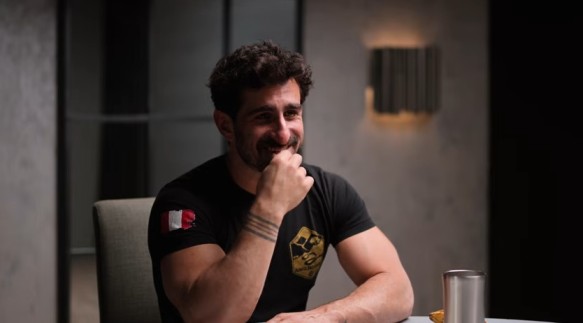
Editor’s Notes: In this gripping episode of The Diary Of A CEO, host Steven Bartlett interviews Paul Rosolie, an explorer who has spent two decades living in the Amazon rainforest to protect its wildlife and indigenous tribes. Rosolie shares harrowing tales of survival, from dodging narco-traffickers and surviving rare diseases to the life-altering moment he was nearly eaten alive by a giant snake. The conversation explores the urgent need for environmental conservation, the deep connection between humans and nature, and the psychological transformation that occurs when living in the wild. It is a powerful testament to the resilience of the human spirit and a call to action for the last generation capable of saving our planet’s most vital ecosystems. (Feb 2, 2026)
TRANSCRIPT:
Living in the Amazon
STEVEN BARTLETT: Paul, you live an extraordinary life. A very atypical extraordinary life. What have you spent the last 20 years of your life doing?
PAUL ROSOLIE: Trying to find a way to explore the wildest parts of the Amazon and figure out a way to save them.
STEVEN BARTLETT: The Amazon. For a lot of people that don’t know anything about this part of the world, they’ll think of it as a bunch of trees where lots of wild animals live. What is the sort of central misunderstanding of the true nature of the Amazon?
PAUL ROSOLIE: I think it’s a problem of scale. People don’t understand the importance of the Amazon. This is one of the most crucial things on our planet. It’s one of the most physically defining features of our planet.
If you look at Earth from space, you see this giant green belt over most of South America. That’s the Amazon rainforest, and that’s where one fifth of our freshwater is contained and another fifth of our oxygen is produced. This system is irreplaceably valuable to all life on Earth.
STEVEN BARTLETT: And you live in the Amazon?
PAUL ROSOLIE: For the last 20 years, I’ve lived mostly in the Amazon. I’ve slept more nights outdoors than I have in my adult life because I befriended the indigenous people of the upper Amazon rainforest. And that’s what the book is about.
I went down there at 18 years old because I needed adventure. And then the quest for adventure led for this call to meaning. And then that led to the discovery that we were the only ones who could do anything to stop the bulldozers and the chainsaws from destroying the thing that we loved.
The Most Important Moment in History
STEVEN BARTLETT: A lot of people have clicked on this conversation for whatever reason. What are we going to talk about today that you think might be interesting to them in their lives? And what is the wide variety of things from the conversations you have every single day that compels people? Because I want to give them a bit of a TLDR before we get into the details.
PAUL ROSOLIE: I think that what people are going to find, and this is what I tried to write about, was that I didn’t know where I was going at first. I just knew what I loved. And so over the last 20 years, it’s been following a dream in a direction.
And that dream was finding a way to relieve the incredible stress that I felt over the state of the environment we live in. These times where people feel like the world is ending, there’s nothing we can do. Our oceans are collapsing, the rainforests are vanishing, elephants are being hunted to extinction. And I wanted to know, are there solutions to these problems? Is there a way to change the narrative of conservation and come up with an alternative reality where everything’s okay?
STEVEN BARTLETT: And do you think your message is more timely now than ever with everything that’s going on with technology and AI and this sort of great transition we’re in?
PAUL ROSOLIE: I think that this message is timely now because whether we like it or not, we’re alive at the most important moment in history. And the reason that that’s true is because never before as a global society have we been all faced with the same problem.
If our ecosystems collapse, life on Earth is not possible. And we are the last generation in history that’s going to have a chance to restore those ecosystems and those sacred cycles before it’s too late.
Disconnection from Nature
STEVEN BARTLETT: And as it relates to mental health, young kids are growing up attached to screens and to technology and all these things. You’ve lived almost the opposite life, it appears, for the last 20 years. I’m wondering if there’s anything, you know, because you said today on your way here that you didn’t know how to get out of the Uber.
PAUL ROSOLIE: Yeah, no, it was a mess getting here. I almost got run over by a guy who recognized me and said, “Get out of the road, anaconda guy.” And then I’d never opened a door with a button before, but I couldn’t figure out how to get out of the Uber. And then I had a whole adventure in the bathroom that should have been filmed.
But no, I mean, I have lived what we used to call the Barefoot Machete Days. A lot of my early learning in the Amazon took place under the tutelage of indigenous experts. And these are people that, like JJ, who I meet when I first go down to the Amazon, he didn’t have shoes until he was 13 years old.
So he lived a life where if you wanted fish, you have to go to the river and if you want to eat, you have to go out into the forest, not to the supermarket. And so when you see kids today that are only using their thumbs, it’s not too surprising when people are disconnected and disoriented and sort of don’t know what’s real and what’s not real anymore.
Because you go to the mountains and the rain and the sky and the rocks will teach you what’s real real quick.
STEVEN BARTLETT: Have you been able to make sense of the life that someone like me lives more because you’ve spent time in the Amazon? Do you look at us differently? I know that sounds like a crazy thing to say, but in the same way that people might look at the way you choose to live your life and say, “This is very, very strange,” do you look at people that, you know, like me, that work seven days a week behind a screen and think, “That’s a very strange life”?
PAUL ROSOLIE: I just know that I couldn’t do it. I’m so reliant on nature. I have to be around trees. I fall asleep to frogs. I mean, even being in a city, I go seek out a place where there’s a lot of trees. I am like a forest creature. If you take me out of my environment, I start to stress and die. And there’s a part of me that, yes, starts to die.
If you keep me locked in concrete or if you were to relegate me to, I was just in a hotel last week on the book tour, and I realized nothing in the room with me was natural. The carpet, the table, the windows, the television. Everything that was in this room with me was composite materials. And I couldn’t even open the window to get to the outside air.
And it did occur to me, I said, “I wonder if other people feel this type of societal claustrophobia.” Where to me, I have to have my feet in a river at some point. Every night before I fall asleep, I have to look up. It’s a ritual. I have to look up and look at the stars. How else can you pray?
And so for me, being in a city has become a very different reality to what I’m used to. I mean, just taking a shower. Trust me, it’s not as much fun standing in a cold tile box and spraying water on yourself as it is running through the jungle, diving into the river and swimming and the whole river rushing around you. It’s a whole different experience. And so when I come back, I get a little bit, you know, I miss the frogs and the birds and sort of my neighbors of the jungle.
A Collective Delusion?
STEVEN BARTLETT: Do you think there’s a collective delusion in terms of the way we live our lives? Do you think we’ve gone a bit crazy? Kind of like the frog in the frying pan? It’s happened so gradually, this sort of technological creep of our lives that, you know, and we’re looking at young kids that are more anxious and depressed than ever before. Loneliness is at an all time high. More people are taking antidepressant medications than ever before.
PAUL ROSOLIE: I think that yes, is the simple answer to your question. We’re a species perpetually, we’re a fish perpetually out of water. That is humans, because we’ve taken ourselves away from forests and away from deserts and away from mountains and the ocean.
I mean, we used to be fishermen and we used to be farmers. And now the life that we live is so incredibly different than that. If you ask kids, where does their meat come from? There are kids that will say the grocery store. They don’t know that chickens exist before it’s in the package.
And so, you know, there was that generation which I think that you and I are both a part of, where it was like we were the bicycle generation. We might be the last one, where it was like you went out in the morning and you were on your bicycle or you were running around with your friends and you would come home for dinner.
And I was incredibly lucky to have, you know, on the weekends I would go to the woods, I would take a steak and I would take one match and I’d take my golden retriever and we would go get lost up the side of a mountain and we’d just go camping. My rule was no shelter, one match, one steak, dog, so you couldn’t mess up the match.
STEVEN BARTLETT: At what age?
PAUL ROSOLIE: I would say 12 or 14, I was doing this. I had a little hunting knife on my side.
STEVEN BARTLETT: Not typical for a 12 year old.
PAUL ROSOLIE: But I needed it.
STEVEN BARTLETT: Why?
PAUL ROSOLIE: I don’t know. I needed adventure. I think because being stuck in a desk and being told you can’t get up and you can’t even go to the bathroom and you look down, do what we say, just being controlled was so counterintuitive to my essence.
And so I grew up with this need for adventure. And then somewhere along the way, the fact that I couldn’t drink the streams that I was exploring, or the fact that even when I was deep, deep, deep in the forest, I knew that if I really hike for another four hours, I’ll come out the other side.
I wanted to experience wilderness. I wanted to experience wilderness where it never ended. I wanted to see the really wild places on the planet. And for some reason, that was inside me since I was very young.
Journey to the Amazon
STEVEN BARTLETT: So how’d you go from there from being that 13 year old to setting off at, what, 17 years old with your Amazon research in Peru? You didn’t go to university. You were actually really, really smart, I hear.
PAUL ROSOLIE: I was smart enough that they had me both suspended and in detention and in American Mensa. I was really all over the place. And the thing is, they make you feel stupid when you can’t do the assignments. So I’d say, “Why are you failing math and why can’t you read this book? And you didn’t do your homework?”
But I was like, I know I’m smart. And in the forest, I was good at tracking and I could survive and I could make it through a weekend and I could build shelter. And so I always just gravitated towards that.
And so I spoke to my parents. I dropped out of high school. You can take your GED and get out two years early with a one day test. And I did that. The rule was I did have to go to university, so I had to start taking semesters. But in between semesters, I was free to go to the Amazon rainforest.
And so I booked the most remote position that I could at a place where it took two days by boat from the nearest city to get to this tiny little research station. And it was run by this Peruvian guy and his partner, and his name was JJ. And that’s the guy that opened the Amazon for me.
STEVEN BARTLETT: He opened the Amazon for you.
PAUL ROSOLIE: Well, JJ grew up in the Amazon as an indigenous person. So what he was learning, the first chapter in this book is called “The Rarest of Species” because he’s the only unicorn in the Amazon rainforest. He’s an indigenous person. So he’s been learning from his grandfather’s grandfather’s grandfather’s grandfathers all the way back.
STEVEN BARTLETT: And indigenous means?
# Learning from Indigenous Knowledge
PAUL ROSOLIE: Indigenous means his family is from the jungle. Their heritage, their lineage going back. They are jungle people. They’re from the Ese’eja tribe. And so his father, Don Santiago, there, they knew the medicinal plants, they knew how to fish for piranha. Then he can cut a piece of callus off of his foot and put it on a hook, using himself as bait to catch a bait fish. He can mash up a barbasco root and put it in a stream and then all the fish float to the surface. He can track a deer, he could track a jaguar, he could track a person.
So these people know everything about the forest, and they’re the people that I came in with. And because I knew about snakes, he knew everybody. He knew everything about the forest, the medicines, the habits of the animals, the systems. The only thing I knew was I said, I know how to handle snakes. And he said, I’m scared of snakes. I said, I could teach you snakes. I said, you teach me everything else.
And he goes, you like snakes? He goes, come with us. He said, we go on a family hunting trip once a year, where we go on this expedition 10 days into the jungle where no one’s allowed to go, only people with indigenous status. He said, you’re our guest, you come with us. And so there I was, going up the river into parts of the world that have yet to be named, into the wildest places in the Amazon rainforest, and learning from these guys through experience how to catch fish out of the river, how to navigate through difficult parts of the stream when the storms are coming, how to survive them. And then we found anacondas. And so it was like this. I had this very, very unorthodox training and introduction into the jungle.
The Scale of the Amazon
STEVEN BARTLETT: How big is the Amazon rainforest? Try to get my head around the scale of it.
PAUL ROSOLIE: I’m bad with numbers. What I do know is that it’s larger than the lower 48 states. Wow. It’s absolutely tremendous. It’s the largest contiguous rainforest on Earth.
STEVEN BARTLETT: And other parts of it that people have never been to?
PAUL ROSOLIE: 100%. There are still parts of the Amazon rainforest that are unexplored. There’s parts of the Amazon rainforest that no one’s ever been to. And if you really want to blow your own mind, the canopy of the Amazon rainforest is about 150, 160 feet up above our heads, which is far. And half of the life in a rainforest exists in the canopy.
So you’re talking about the most mega biodiverse biome that has ever existed. There’s never been more terrestrial wildlife anywhere on Earth than in the Amazon rainforest. And right now, in the entire fossil record, we’re at the apex, the climax community of the Amazon rainforest. It’s that brilliant. Where the Andes rainforest cloud forests meet the lowland tropical Amazon, there it is. That’s the most life we know of in the entire universe.
Uncontacted Tribes
STEVEN BARTLETT: And in terms of human life, I hear there’s lots of human life there that we’ve never contacted.
PAUL ROSOLIE: There are various tribes living through the western Amazon and you have the Ese’eja and the Machiguenga, and you have the Yine. And then further out beyond all of these, there were always rumors that there were uncontacted tribes. And for the first many years that I was there, it was always someone’s uncle, someone’s brother, someone’s cousin would come back with these crazy stories that someone had seen the tribes and that they were tall and naked and they still hunted with bows and arrows.
And then every now and then somebody would come back with a seven foot arrow, a spear tipped with bamboo, huge bamboo tip, this big razor sharp like a machete. And that was the only proof we had that they existed until the day we met them.
STEVEN BARTLETT: When did you meet them for the first time?
The Mission to Save the Amazon
PAUL ROSOLIE: So in order to explain how we met them, we should probably explain why, where we got to in how the 18 year old researcher became the director of a major organization.
STEVEN BARTLETT: Please.
PAUL ROSOLIE: Okay. Well, somewhere along the way, as we did these expeditions through the Amazon and I became closer and closer with the indigenous people, you know, JJ, as a teacher, kept telling me, and that’s what the first chapter of the book is about is, you know, him just teaching me the incredible interconnectedness.
There’s this moment that I write about where he’s going, look at this beach and tell me the news. And I said, what? And he said, yeah. He said, every day the ground is like last night’s newspaper. It tells you what happened. So I look at the beach and there’s jaguar tracks, and there’s like a mess of jaguar tracks and some jaguar scat. And I made no sense of it.
And he was like, this is where she came yesterday to drink. That’s where she pooped. This is where she came today to drink. You can see the newer tracks. And then he’s like, and what you didn’t notice, you didn’t see the vultures above us. And I look up and there’s vultures above us. And he goes, notice they’re not looking at us, they’re looking at the jaguar. And so they’re looking that way. Jaguar had a fresh deer kill and had continually been eating and then coming to the river to drink.
And so he can decipher all of these incredible things. And so as he’s taking me through these worlds of butterflies and interconnected species where there’s a mist river flowing over the rainforest, this avatar on Earth. And then they burned it down.
STEVEN BARTLETT: Who burned it down?
PAUL ROSOLIE: The loggers. And so the first time I saw ancient forest, a place that I love, with trees significantly bigger than this room, vanished, there’s this cacophony of life, this orchestra, this symphonic roar of life that you get, especially in the morning in the Amazon. And then at night, there’s the night chorus. And when you hear that silenced, it’s one of the most horrific things that you can experience. Because places that we loved, trees that have been standing for a thousand years, species that had never been described by science, were all incinerated.
And I said to JJ, I said, how do we, this can’t be allowed. This can’t possibly be something that’s permitted. And I said, isn’t there somebody that we can call? We were standing on the side of the river, and he leaned forward, he looked this way, and he looked that way, and he goes, do you see anybody? He goes, because I don’t see anybody. He goes, you have to do something.
I said, I have to do something. I said, I’m 19, 20 years old, so what am I going to do? I said, I don’t have a PhD. I don’t have a trust fund. I don’t have a media presence. I don’t have anything. I had a machete, and I had bare feet. We both had machetes and bare feet.
And so that was the start of the journey where we said, the thing we love is being destroyed. We could see the smoke on the horizon. The trees that we had explored and become to love were laying smoldering on the ground in front of us. And we said, okay, now we have to figure out a way to change the narrative. The wildest place on Earth is about to be destroyed, bulldozed and burned. How do we save it?
And so that’s where, when you ask the question of how does life in the jungle sort of translate to what your listeners are going to find interesting? It’s taking on a task that’s so gigantic that at the start of it, we couldn’t even come up with, we couldn’t even conceptualize how it could be possible, even with the right tools.
STEVEN BARTLETT: To save the Amazon?
PAUL ROSOLIE: To save the Amazon rainforest, let alone for two guys with zero qualifications, bare feet and machetes. And so we started behind zero. And today we’re at the point where we’ve turned loggers and gold miners into conservation rangers. We’re protecting 130,000 acres of the river. We’re on the cusp of creating a national park. Me and JJ are the directors of Jungle Keepers, and we’re about to make history because we’re going to save the entire watershed and all the trees and animals and heartbeats that are left. And that’s the story that I’m trying to tell. That’s the whole reason for my existence. That’s why I, that’s what I wake up and do every day.
STEVEN BARTLETT: And you’ve really taken on that responsibility in a very personal way, I can tell.
Finding Purpose Through the Wild
PAUL ROSOLIE: Yeah. Yeah. There’s a point where, you know, I remember because you grow up. I mean, I was born in Brooklyn, and then we, you know, I grew up in Jersey for a while, and then we moved to the Hudson Valley. But when you start, you start going to the Amazon for months and months and months out of the year, and you come back with scars and stories where a jaguar is breathing on your neck and you go out on a solo and you come back, and then suddenly standing and making conversation at a barbecue feels different.
It’s almost like, I imagine I have a lot of veteran friends and sort of, you almost get addicted to the action, and then you also get addicted to the team. Sebastian Junger writes about this, about the need for community, the tribe, and sort of the mission. And I think that that’s one thing that people are missing today where they don’t know, you know, we’ve been disassociated from religion and community and immediate sort of connection with other humans. And so then, well, then, what else is there?
STEVEN BARTLETT: How do, where?
PAUL ROSOLIE: Where to? What do you, what’s your, what’s your purpose? What do you wake up and do every day? And so I think, you know, in the old days, it was like, you know, we have to, we have to defend ourselves from the outside world, from warring communities, you know, or even just providing for your family. We have to bring water every day. We have to chop wood every day. We have to figure out how to survive.
And like today when I’m here, I wake up and I go, well, there’s water in the fridge, so I don’t have to do that. And I’m like, the air conditioner is on. And I’m like, I guess I’ll check my phone, you know, and so I, you know, I think we have, like you said, become somehow we’ve gotten really far away from what we are built for.
And one of the beautiful things that happens when you go into the wild and this can be any wild, is that it starts to change you. And so you go into the wild and you start picking up logs and throwing them. You start splitting firewood. And the first day you’re going to have calluses on your hands. But then after a few weeks, you’re going to have tough hands. You start walking barefoot. Same thing. The sun starts to make your skin thicker and tanner and more resilient. And then the rain will hammer that home.
And you start to get, your eyes start to get sharper and you start to pay more attention to what you’re hearing. And so you start going through this whole transformation where you start to be almost become a different animal. You become the jungle version of yourself, you become the mountain version of yourself. Your legs start to get strong again. And so the wild puts you through this gauntlet of transformation and you become connected to your environment. And then that feeling of disassociation tends to alleviate a little bit.
The Neuroscience of Doing Hard Things
STEVEN BARTLETT: I heard about this particular part of the brain that changes as well. You talked about transformation.
PAUL ROSOLIE: Yeah.
STEVEN BARTLETT: They discovered something not so many years ago called the anterior mid cingulate cortex. Andrew Huberman, I heard him say that he thinks it was one of the most important discoveries in neuroscience of the last century. The anterior mid cingulate cortex is a part of the brain sitting between your emotional brain and your executive control center that essentially grows when you do hard things, not when you do things that, specifically when you do things that you don’t want to do, but you do them anyway.
So not running a marathon because you enjoy it, things you don’t want to do and you do it anyway. And it went through some of the studies I saw said that younger people that have been brought into this sort of doom scrolling generation have smaller ones. If you are obese, it’s smaller. Athletes have bigger ones and people who live longer have even bigger ones. And it’s, they kind of call it like the muscle of the brain of doing hard things.
And so when you were talking about that physical transformation, I weirdly thought about, I think it’s Roosevelt who, after losing his mum and his wife on the same day after his baby girl was born, he went out to the badlands and spent two years doing pretty much what you said, putting himself in intentional discomfort. And he came back and all of his friends described him as being transformed.
He went on to become the youngest president in American history. He got shot and carried on doing the speech. He led the charge. I think it was the Spanish Crusades or something. The Spanish War, the Rough Riders. Yeah, the Rough Riders and they all pointed at the moment when he went out to the badlands. They said it shaped him into becoming a completely different man. That, that discomfort.
The Quest for Understanding
PAUL ROSOLIE: Yeah, 100%. And that’s why Native American cultures for the initiation of the young men would have vision quests or they would send them out into the wilderness. And there’s all different types. Aboriginal cultures have similar things. And I wanted to put myself through that.
And so I went out on, that’s what I described in my first book, is going out on. That’s where J.J. taught me enough to survive in the jungle. And then I started going out on 10 day solos into place. I’d have people bring me to the last place that had a name, like I’m talking about poachers. And then I would start hiking and I would go so deep in the Amazon rainforest that I was just off the map and I would try and survive out there.
And so I had a lot of adventures that I should not have survived. But it was very important to me to put myself through that because I grew up with that discomfort. I grew up with the overwhelming, crushing stress of being told that we’re at the end of days, we are losing. I mean, I saw it at the Bronx Zoo. They said, you know, we’re losing our rainforests and they had the sound of the chainsaws and you see the trees going over and they said, we’re losing elephants. You’d see somebody shoot and the elephant goes over and they just said, everything that you, for me, everything you love is being destroyed and pretty soon we’re not going to be able to drink and everything’s going to be polluted and our fisheries are being destroyed.
And I said, wait a second. I said, I have to know if it’s really that bad. So when I got old enough, it’s not just that I was inspired to go out on a mission, it was that I wanted to find out for myself because I don’t like finding out through a screen. I don’t want other people filtering my information. I want to find out for myself, is it really that bad? And so I was going out on a quest to understand what the reality was.
Transformation Over Twenty Years
STEVEN BARTLETT: If I sat 18 year old you at this table, he sat there and you know, this version of you at what, 37?
PAUL ROSOLIE: 38.
STEVEN BARTLETT: 38. You’re sat there. So 20 years difference.
PAUL ROSOLIE: Yeah.
STEVEN BARTLETT: What would the notable differences be between these two men?
PAUL ROSOLIE: Well, he didn’t know how to fish with his feet. That’s for sure, his machete skills would be terrible, but the noticeable difference would be that that 18 year old, his greatest dream was to alleviate the environmental stress that he grew up with, escape the world of rules, find purpose in life, and to just have adventures.
My greatest dream was to see the Amazon rainforest. I looked at people like Teddy Roosevelt and Jane Goodall and I said, man, they had such incredibly, like, extraordinary lives. And I said, how come my life can’t be like that? I’m over here in detention, you know, I’m over here being told I didn’t do my homework. And I’m like, I want to chop wood and carry water. I want to go to war. I want to be scared. I want to be challenged. And so for me it was, I was. That would be the difference, is that I would be hungry for all of that.
Whereas the person sitting across from you today, my body is a Jackson Pollock painting of scars, crocodile bites, tiger bites, infections, times that I’ve been almost crushed to death by elephants. I’ve been hunted by the narco terrorists. And at this point, the responsibility, that kid got to see all the things he wanted to see. We found the biggest anacondas. I lived through the amazing adventures. And that’s great.
The person sitting across from you today is responsible for protecting millions of animal lives. And my job is to explain to people that we, that everyone reading this message or listening to this message has the chance to help the indigenous people save the Amazon before we lose it forever. And so that’s the main difference, is that at that age, I was just, I just wanted some swashbuckling adventure. And now I found that adventure became meaning. I found it along the way. And then now I’m on a whole other journey. Now it’s, now it’s, can we bring it home? Now it’s, can we achieve something that we thought was impossible and change the narrative of how it’s done?
The Uncontacted Tribes
STEVEN BARTLETT: And I guess this kind of brings us back to this question about the uncontacted tribes. You said you and J.J. were talking about how you might go about saving the Amazon. Was highlighting the uncontacted tribes in the Amazon part of the mission there?
PAUL ROSOLIE: No. Very much no. That’s a great question. Because what we started doing was we looked at this river basin and we said, okay, we love this, this one really wild river. And now we said, why is this river been so wild? You know, so you think of the Amazon as a tree of rivers. You have the main Amazon channel and then all these billions of branches. And so the Upper Amazon, the uppermost branches of the Amazon rainforest, those tip tip tops. People are only just getting to them.
Now the main Amazon channel is a shipping port. And then you have these huge tributaries going off of it. And you can get in as far as Iquitos with a steamship. Like you can go all the way through Brazil, thousands of miles, and get all the way to Iquitos, Peru, to almost the back end of the Amazon. I’ve been there and it’s beautiful. We are at the southern edge. In the tributaries down there, there’s one tributary.
STEVEN BARTLETT: What’s a tributary?
PAUL ROSOLIE: A tributary is an offshoot from a larger river. So a stream is a tributary of a larger stream which goes into. And then eventually you reach the Hudson River. And so this is a tiny little tributary. And what we discovered is that the reason people hadn’t developed this tributary, the reason other indigenous communities hadn’t formed, was that for hundreds and hundreds of years this particular river had been protected by the violent, mysterious Mashco Piro, nomadic, uncontacted tribes.
And that had kept it wild. They were the original jungle keepers. But by the time I got there, they were sort of just a myth. And so they were something that they said they lived really far upriver, past the last indigenous community. And when I say indigenous community, I mean people that we can talk to, people that we can interface with, that I can speak a little Spanish to, and they’ll understand me.
STEVEN BARTLETT: I think that’s an important distinction.
PAUL ROSOLIE: Yes.
STEVEN BARTLETT: Because can you make that distinction between indigenous and these tribes?
Indigenous Communities vs. Uncontacted Tribes
PAUL ROSOLIE: Yes. So within Peru you have Lima and you know, Michelin star restaurants and all this amazing food. And then you travel down to Cusco where you have Machu Picchu and you have the Andes and all of that incredible culture. And then you go down to the jungle and that’s a little bit like going to the back end of Alaska. That’s where it’s like you are very far away from LA or New York, but it’s the same country.
And out there you’ll reach these communities where they are indigenous. And so in the reserve that we currently protect as jungle keepers, there’s two indigenous communities there. And we work with them to sort of support them. Because as these loggers and narco traffickers and gold miners come in, they see them as a mark. They’ll go in and say, oh, there’s these helpless indigenous people. How can we exploit them? How can we get their trees, their fish? They’ll go and take those things from them or they’ll sell them something that’s not worth what they think it is.
And so we’ve been working with these indigenous communities to say, do you want the loggers to come in and cut down all of your trees? And they go, no. And they go, but at the same time, we need a little bit of gasoline, because what if we’re having a baby and we have to get our daughter to a hospital in town? And so we’ve been working with them to provide sustainable jobs as rangers, protecting their own land. It’s such a simple solution, whereas otherwise they would go and be loggers to get that cash.
And so we were working with these communities and now they’re rangers and boat drivers and guides and handymen. And they called us about a year ago and they said, something incredible is happening and it’s going to be dangerous. But you are the directors and you’re part of this family and you’re part of this story and we need you here for this. But the tribes are about to come out of the forest and we were in town and what we do now is, and we can explain this later, but we raise money and we bring it to the Amazon where the local people have the opportunity to set aside huge acreage of the Amazon to protect it.
We’re changing the narrative of destruction where we just protect it before they get to it. And so we were in town with J.J., who’s now the director of this major organization, and we’re talking to our lawyers and we’re in the office and we get this call that the tribe is out.
STEVEN BARTLETT: The tribe is out.
PAUL ROSOLIE: The tribe is out.
STEVEN BARTLETT: What does that mean?
PAUL ROSOLIE: It means the mythical uncontacted tribe that when I arrived in Peru, the president of Peru had been saying, these are a myth, they don’t exist. And it’s just, it’s the boogeyman. It’s been made up as a story to scare the loggers. So their existence was contested. They were almost on the fringes of imagination.
STEVEN BARTLETT: Could we not have flown a plane over there or something? Is that, you know, this sounds like a dumb question, but presumably we have satellites and we can zoom in.
First Contact with an Uncontacted Tribe
PAUL ROSOLIE: The BBC did do a piece where they were flying a plane and they were looking at an uncontacted tribe from miles away. And they said, we were being very careful not to disturb them. But there is a tribe in the rainforest that has no contact with the outside world. And you could see these people bending and they’re looking at the plane, but the plane’s not close enough to really scare them or to cause them any distress. And so we have done that.
But then on our river, out in the middle of nowhere, where no one’s heard of the BBC, you just hear stories from loggers who’ve come downriver from three weeks upriver. You can go for three weeks up the river and hit nothing. There’s nothing human. It’s like the last endless forest.
And so when the community called and they said there’s arrows on the beach, the tribe is coming out. It’s the first time in 10 years that the tribe seems to be coming out of the jungle to make contact. And so they got the directors of Jungle Keepers up there. We had to rush to be there. They begged us to be there so that we could see it because they were worried that we wouldn’t believe them.
And so we got there and we went all night. And when you go up a river at night, we do a two day boat journey in one night. And so the guy right there, the picture with the guy who has the scar on his forehead, that’s Ignacio. That scar is because he was shot in the head by a seven foot arrow while he was trying to make peaceful contact with the uncontacted tribes. He was trying to give them a gift and they got spooked and they scared and they shot him in the head and he almost died from that.
When we heard that this was happening and he’s now one of our best Jungle Keepers rangers, we said, can you do a two day boat journey in one night? And he went, yes, sir. And he put on a headlamp and he got in the back of the boat and we took an open top canoe and we drove from 6pm until 9am the next day through the worst thunderstorm I’ve ever seen.
Navigating Through the Storm
I was on the front of the boat with a flashlight, using the crocodile eyes, the caiman eyes on the side of the river to navigate. Because they shine, the eye shine comes back. The storm was so bad that we couldn’t see anything. We couldn’t see the side of the river. And because of the light igniting the raindrops, you can’t even see what’s in front of you.
So we were using the croc eyes to navigate where the edges of the river was. So I was spotting and telling him which way to go and he drove and we did that all night long. Got to the indigenous community and said, okay, so what’s going on? And they said, oh yeah, they left. Tribe’s gone.
The only thing that they had was that one guy the previous day had been shot by an arrow. And he had been fishing and he had seen the tribes, so he said, and they had shot an arrow at him. The first thing they had done was shot one of these seven foot arrows at him. And the way it had hit the boat ricocheted and then hit his thick leather belt and blunted the tip of the arrow. And he had the arrow. And so he said, so there are people here.
And then a native anthropologist from another region showed up. And he said, they know me as the grandfather. I can speak to these people. I speak a little bit of their language. And so we stayed another night, two days deep in the jungle. And the following morning we said, okay, we’re getting out of here. There’s obviously nothing here but stories and footprints and arrows and we have important work to do back in town.
STEVEN BARTLETT: And did you believe them?
PAUL ROSOLIE: I’ve learned one thing working in the Amazon. Always believe the locals. Always. If they say it’s there, they’re not wrong. And that’s part of the reason that I’ve gotten to go on these adventures. You know when J.J. told me there’s places you can go that are so wild that it’s like the Galapagos, the animals don’t know a human, but you have to go for days on foot to the topmost reaches of the rivers to find this.
Well, that’s why I went on these solos. And so I write. That’s what I’m, that’s, as a writer, that’s what I do, is try and take people on these adventures through the Amazon. And so when they said, the tribe is coming, Ignacio, the guy who’d been shot in the head, he said, listen to me. He said, you’re, he said, you’re my boss, right? I said, yeah. He goes, I need to speak to you like a friend. I said, speak, speak, speak. And he said, they’re coming. You’d be an idiot to leave. And so we posted up, we waited.
STEVEN BARTLETT: Yeah, I’m wondering how he knew.
The Tribe Emerges
PAUL ROSOLIE: He just knew, man. They just know. It’s like they can tell. And then, I mean, these are guys who know when there’s a jaguar close by, by the sound of the birds. They know when a storm’s coming before the storm is audible. They have higher tuned senses than we do.
And so he said, look, the tribe is coming. There’s the arrow. They’re in the region. He goes, and when they come this close, they generally, they want to talk. I said, but this is. And sure enough you hear “Mashko” and everyone starts screaming. And it was just this moment of absolute panic where women were lifting babies and chickens are flying around and dogs.
And we’re in this tiny little indigenous community on the side of a river with hundreds and hundreds of miles of jungle around. And we run to the edge of this, the edge of the river where this cliff is, and across the river we see them coming towards us. And they’re walking out of the jungle and they’re naked from head to toe. They just have some string tied around their waists, penises tied up to their bellies. They all have seven foot long bows and arrows. And they’re crouched over and they’re looking at us and we’re standing there and you go, you sort of like, you go. I just, I wanted to see this. And now I’m not so sure I want to be here.
Because there are warriors coming out of the jungle and they’re from a thousand years ago. So I asked the anthropologist, I said, they’re like Stone Age people. And he goes, they don’t have stones. He said, they’re still in the bamboo age. He said, these people are living such a primitive lifestyle. They’re hunter gatherers and they’ve been isolated so deep in the jungle for so many centuries that it’s like a time capsule.
So there was a thousand years between us. We were standing on either side of the river with a thousand years between us and this aperture into the history of what humankind used to look like. And these people came out holding their bows and arrows that they had made out of the jungle. And they held up their hands and they were talking to us across a river. And it was sort of shirts versus skins. We were just two tribes separated by a little bit of water.
The Exchange Begins
And they wanted to communicate with what language? With their language. They, I mean, it’s, we don’t even know really what to call them. For a while they were calling them the Mashko Piro, which means the wild Piro people. And then more recently and partly because of our encounter, they held up their hands and the first thing they said was, “No mole. We are the brothers. Brothers.” And so then our side said the same thing. The anthropologist said, “Nomole brothers.” And then this exchange began.
And it’s like, as a Spanish speaker, when I’ve been in Italy, I can use my Spanish to kind of get through in Italian. And I feel like it’s like that, the Yine people can speak to the Mashko Piro. And it is an approximate translation and the first thing that they said after coming out of the jungle a thousand years late, the civilization was, send us bananas, they said, send us food. And they demanded that we send them plantains as an offering.
And our side said, you put down your weapons, we will talk to you, but we do not want this to end violently. We want this to be peaceful. If you want to talk to us, put down your bow and arrows. Because a shotgun, a shotgun only goes how many meters? You know, it’s not even going to go 100 meters, 50 meters, maybe. Buckshot. A longbow arrow is going to go 300 meters. It’s going to go far.
STEVEN BARTLETT: And needless to say, they’re very good with those arrows.
PAUL ROSOLIE: They are very good with those arrows. These things will fly. And so even standing on the other side of the river, we were not safe. And so we were all standing behind trees. We were watching. Ignacio, who’d been shot before, was watching with the binoc. And he’s going, whenever you see them walking, he said, they let you see them. And then they clever girl, you in the forest, where there’s one watching you from the shadows.
And he would grab me by the shoulder and go, look, there’s one. And you would just see this red face paint in the shadows of the forest. And he’d have the bow trained on us. And so while some of them in the front were putting the bows down, there was others of them in the shadows that were making sure that they still had support. But we asked the guys in the front to put down their arrows. The anthropologist got in the river and gave them an offering of bananas.
STEVEN BARTLETT: I think I have a video here of this.
PAUL ROSOLIE: Yeah, this is world first footage.
STEVEN BARTLETT: I’ll let you. You know how to use an iPad, right?
VIDEO CLIP BEGINS:
PAUL ROSOLIE: There we go. Yeah. So this is just a random moment from the earlier days, but this is that moment where everyone starts screaming, “Mashko.” And we’re all running. And this is what I was talking about, where they are moving across the beach. And you can see the sort of the posture they’re using there. I mean, he’s got, they have their bows and arrows in hand, and then they showed up and see, they’re pointing.
They were worried that our cameras were guns, and so they were asking to put down the cameras. They were curious about various members of our tribe, and they were all talking at the same time. So it was very difficult to understand what they wanted.
VIDEO CLIP ENDS:
STEVEN BARTLETT: What’s he doing with his finger there? He’s doing this. Yeah.
First Contact with an Uncontacted Tribe
PAUL ROSOLIE: I don’t know. This is the moment that we gave them the bananas. And what’s haunting about this is the desperation that you see on them where they’re all rushing to get the bananas. And they’re not necessarily taking them like they’re going to share later. They’re taking them like, I get my bananas, you get your bananas. You see this? They’re all rushing to get this little boatload.
And these are people that don’t have boats. And as they’re doing this, they’re all talking at the same time. It was like a flock of parrots. It was just a cacophony of sound. And they’re all fighting over these plantains. And then once they get them, each person held their own. They have rope and plantains.
And this interaction went on for several hours. And we negotiated with them. And this is just the footage. This is the footage that we’re allowed to release right now. And this is them moving back off into the jungle. There’s a lot more that happened. And again, that’s why we’re releasing this now. I should say that that’s why we waited a while to release this footage, because footage like this is incredibly sensitive for a number of reasons.
A, you don’t want people to think that we went out and contacted these people that want to be left alone. You also don’t want to encourage other people to indulge their misconceptions. People go, oh, these are the last free people on Earth. They live perfectly in balance with nature. No people will go looking for them.
Whereas for hundreds of years, these people have asked for one thing and one thing only. To be left alone. And they’ve enforced that, kind of like the Comanches with arrows. And on this day, they said, please give us food. Please give us rope.
And they had one other question. They said, how do we tell the bad guys from the good guys? And we said, what do you mean? Who are the bad guys? And they said, some of you shoot at us with the jiu jitsu, with the fire sticks, the guns. And we were going, who? Who does that? We said, we are not the bad guys.
And they said, no, you also. They said, we know you cut down our trees. They were speaking to all of us. There’s no, like, you know, white guy, brown guy, Peruvian foreigners, none of that. It was just, all of you outsiders, stop cutting down our trees. Our trees are our gods. It was sort of like, you don’t do that.
And then when they left just a few weeks ago, we learned that the narco traffickers view them as a threat. And there was actually a mass grave found of a similar clan. And so these people are being boxed in by deforestation and hunted by narco traffickers and gold miners and loggers.
And so I think that them coming out of the forest was their way of saying, hey, we’re trying to get a read on what’s going on in the outside world. Who is it? Who are the good guys? Who are the bad guys? They don’t know that Jungle Keepers is protecting the land that they live on. They’ve never heard of a spoon or the wheel or Jesus or World War II or the country of Peru.
And so they’re coming out with so many questions. And the only way to care for these people and to give them the rights that they deserve is to protect the forest they live in.
STEVEN BARTLETT: Do you know why some of them seem to be touching their nose?
PAUL ROSOLIE: It’s funny, I didn’t notice that. I think this is going to be your discovery to anthropology. I did not notice that, but it does. You see this? A lot of them are doing this. Yeah.
STEVEN BARTLETT: And the outfit.
PAUL ROSOLIE: The outfit.
STEVEN BARTLETT: What is this outfit? It looks like there’s kind of rope tied around their midriff with their penises out.
PAUL ROSOLIE: Yeah. The head of the penis is covered by rope.
STEVEN BARTLETT: Oh, they’ve got the penis up into the rope?
PAUL ROSOLIE: No, the head of the penis is up. And that makes sense, given the jungle where there’s mosquitoes and bot flies and sand flies. That’s a smart move. And then rope seems to be. I mean, what is. It goes like fire rope ladders. I think it’s like man’s second invention. They are obsessed with rope. That’s how they make their bowstrings. That’s how they make their arrows. That’s how they lash things together to make the limited structures that they make.
And some of what we know about them is, you know, we find their camps after they leave. So we know what they eat. They eat primarily turtles and monkeys. They don’t fish. They don’t have fish hooks.
STEVEN BARTLETT: They don’t eat humans, do they?
PAUL ROSOLIE: They do not eat humans. They are not cannibal tribes.
STEVEN BARTLETT: That’s a rumor people have talked about before.
PAUL ROSOLIE: People have said, yeah, there’s even a couple versions of my voice in AI saying that on the Internet, but it is not true.
STEVEN BARTLETT: And their haircuts, they all seem to have this sort of mullet stole a haircut from the side.
PAUL ROSOLIE: It seems like they all grab the front and just find a way to cut it. There might be, like, one guy with a machete who just does the haircuts.
STEVEN BARTLETT: And for a lot of them, this is the first time they’ve seen a human.
The Women’s Strategy
PAUL ROSOLIE: So actually this was first contact. The anthropologist who came to the scene who managed this interaction, he said he had met an uncontacted tribe before in the region. He said none of these were men that he’d met. And the other thing. Notice they’re all men.
STEVEN BARTLETT: Yeah.
PAUL ROSOLIE: The women were hidden in the forest, and while the men were making a distraction in front of us, the women were raiding the farm behind us.
STEVEN BARTLETT: Raiding?
PAUL ROSOLIE: Raiding the farm.
STEVEN BARTLETT: Your farm?
PAUL ROSOLIE: The indigenous people’s farm. Our community’s farm.
STEVEN BARTLETT: So the women went to steal while they were distracting you?
PAUL ROSOLIE: That’s right.
STEVEN BARTLETT: And did you catch the women on tape?
PAUL ROSOLIE: No, no, no, no, no, no. Everyone was. We were all huddled up very, very close. I mean, this was an incredible encounter. But let me explain. The prevailing emotion during this entire thing was fear on both sides. They were scared, we were scared.
The indigenous people naturally have shotguns anyway. Everyone had their shotguns out. They all had. Some of them had put their bows on the beach, but they had archers waiting. And so everyone was sort of, you know, it was like, put down your guns and we can talk. But nobody really wanted to put down their guns.
STEVEN BARTLETT: And how do you know the women were stealing from your farm?
PAUL ROSOLIE: Because after this was all over and we went to the farm, everything had been pulled up. All the yucca, all the plantains, all the sugar cane. The entire farm was ruined.
STEVEN BARTLETT: How’d you know it was the women?
PAUL ROSOLIE: The women in the village told me it was the women. They went, ah, that was the women also. You see the smaller footprints these men have. Wide, big man. They’re from walking barefoot their whole lives. Their feet get ancho. They get really thick. And I have jungle feet like that now.
But these guys have almost duck feet at this point. Like big, fat, calloused feet that get wider. You ever see a farmer’s hands, but they just grow?
STEVEN BARTLETT: Yeah, like that. They’re all young as well. Where are the older people?
The Mystery of the Tribe’s Demographics
PAUL ROSOLIE: We’d love to know. We don’t know. There’s some tribes in the Amazon where the elderly people have more permanent settlements. There’s been rumors of some extreme tribes where the elderly people, if they can’t keep up, are just left to perish. But we saw people between the ages of probably 12 and 45. I don’t think anybody looks like they’re in their 50s.
So we left with more questions and answers on that day. They did get a potential that they stole from, you know, the community. You know, they have their farm. And so there was also a machete at the farm. Somebody just whacked it into a log.
And so as they were leaving, one of the best things that we caught on video that we have, we’re not able to share yet, is that one of these guys. And this is at the end, after, while everybody was going home, the anthropologist held up his hands and he said, you know, nomole brothers, go in peace.
And these guys actually asked about me. I was the only person there with a big beard. And they said. They said, that one. They said, show us that one. And so I came forward. I stood at the edge of the river, which my heart was pounding. And the anthropologist said. He said, hold up your hands. Show them that you don’t mean any harm.
I held up my hands like this. And they held up their hands and they sang. They said, no, mole. They knew that I wasn’t from the indigenous community. And that was an incredible moment of we couldn’t communicate, but it was just sort of that basic, I acknowledge you. And they said, I acknowledge you. And we just had this thing across the river in about a thousand years, and just. And then that was it.
And as they left, you know, one of the guys had a machete, and he was. He showed it to us over his shoulder like this. And one of my friends was going, o in the local language. He was saying, put down the machete. Leave the machete. And the guy just smiled and looked at us like, yeah, come and get it. Come and get it.
And then just as they left, one of the warriors walked out to the beach, put an arrow on the string, smiled at us, and just shot. It was like, ha.
STEVEN BARTLETT: Up into the air, just at us.
PAUL ROSOLIE: In general, just to spook us. And then they all turned on the laugh and left. So they have a sense of humor. We saw them smile. You know, we exchanged a little bit of that with them as well.
STEVEN BARTLETT: They look cold.
PAUL ROSOLIE: They are cold. I mean, it’s 95 degrees on that day. The other thing is, it was cool as they’re coming. If you go to the part where they’re coming across the beach, there was millions of butterflies. That beach was covered in just millions of butterflies. And so as these people are walking out, the butterflies are just swarming around them.
Go back to the beginning. That right there, if you just notice. You don’t notice it at first, but as they’re moving, look at that. The world is swirling with lepidopteran colors. Just absolute insanity. How beautiful this scene was.
And, I mean, when you see this? You know, if a Tyrannosaurus rex walked out behind them, I wouldn’t have been surprised. It was such a strange, literally unbelievable thing to see because, you know, these literally are the last people on Earth that are still living in this way, where society, we have planes, trains, automobiles, iPhones, all of this technology, we’re talking about going to other planets.
They don’t have metal, even a knife, unless they get it from someone else. And so it’s just an incredible. You know, the other thing is they do have medicinal technologies. They’re able to stay infection free living in the tropical, wet jungle.
STEVEN BARTLETT: That’s pretty incredible because they’re virtually naked.
The Urgent Need for Protection
PAUL ROSOLIE: I mean, essentially naked. I think that’s how they carry their rope. I don’t think that’s so much of clothing as we need rope, and that’s how we carry it. It’s very, very complicated because the loggers shoot at them, the narcos shoot at them. People shouldn’t be getting into the places that they live.
And if you think about in the last few centuries, how many indigenous cultures have been annihilated by the outside world coming in, there’s no shortage of these stories. And in this particular case, in 2026, when we have the communication and people are able to hear this story, this is why we’re releasing this footage.
Because the only hope these people have is if we protect them. They can’t come on a podcast. They can’t address the United Nations. They can’t write a petition. The only hope they have is if we are able to protect the forest that they live in. That’s it.
And that’s why we’ve released this footage now, because for a long time, we said we can’t release it. We said, what if crazy hippie people go down there thinking that these are the last free people and they want to go live with them? That will kill them. The outside pathogens that you and I carry on us every day, the common cold that we have immunity to could wipe out an entire tribe.
STEVEN BARTLETT: And how many tribes like this do we believe are in the Amazon rainforest?
PAUL ROSOLIE: Several thousand little tribes, little clans that move nomadically through the Amazon.
STEVEN BARTLETT: Were they tall?
Uncontacted Tribes: Physical Characteristics and Leadership
PAUL ROSOLIE: They looked like they were at least, you know, 5’9″, 5’10”. They were pretty tall. Especially because the Peruvians and the indigenous communities that we work with tend to be on the smaller side. They are taller than the average. Some of the other tribes. There’s another tribe that we ran into down there called the Nahua, and those people were absolutely tiny. They were below 5 feet, all of them. These guys were tall. Yeah.
STEVEN BARTLETT: And is there a leader here? Is someone in charge?
PAUL ROSOLIE: Another great question. It seems to be that there’s two. They look like brothers. There seems to be two guys who do most of the talking. One in particular who seems to be doing the most gesticulating, and he was communicating more forcefully. He had a smile, that guy. He had a smile on his face at certain times.
STEVEN BARTLETT: This one?
PAUL ROSOLIE: Yeah, I think so. And he was the one that would walk the furthest out into the river. Yeah. And he seems well muscled, healthy.
STEVEN BARTLETT: He’s the biggest as well, in size, by the looks of it.
PAUL ROSOLIE: Yeah.
The Deadly Reality of Contact
STEVEN BARTLETT: Okay. These tribes have been known to kill people.
PAUL ROSOLIE: These tribes kill people all the time. The day after this happened, we went downriver, and one of the people who had been maintaining the peace during this negotiation across the river was my friend George. And George kept saying, “Don’t worry. It’s going to be okay. Don’t worry. No mole.” And he’d say, “Let’s get them more bananas.” And he said, “You stay behind the tree. Hey, please put down your camera. They don’t understand that it’s not a gun.” He was making sure that everyone was calm.
Well, George was driving the day after this in the river, as he does every day, and he rounded one river bend and the tribe was out again. They were further upriver. And usually when they leave, they go deep into the jungle. But on this day, they had been walking up the river, which nobody expected. And so when his boat came around the river, they hadn’t expected it. And they opened fired.
Everybody else on the boat was able to get down under the benches, which is made out of heavy, thick wood. As he was driving, he caught an arrow over the scapula, came out by his belly button, so it collapsed his right lung and cut through his whole body. And he had to be helicopter evacuated out of the indigenous community. And somehow he lived. But he’s never going to be the same.
And there’s a hundred stories I could tell you of people that have been killed by them. But now, and more and more, there’s stories of that they are also being exterminated. So their violence is in response to the fact that the outside world has been cruel to them. And the only way that they can ensure that they survive is by keeping the outside world out.
STEVEN BARTLETT: This might be a bit of a dumb question, but there’s no consequence to that, is there, from the Peruvian government or anything? The Peruvian government aren’t trying to, you know, if this uncontacted tribe kills somebody, they’re not necessarily going to go there and try and enforce any kind of law.
PAUL ROSOLIE: That’s actually a great question, because it illustrates something that I think a lot of people fundamentally don’t understand about this, is that, you know, if this banana is the last town, and then you imagine just our river is the size of a football field. Right. How are you going to get to the other side of it?
In the jungle, it takes you about an hour to cover half a mile through dense jungle. If me and you were going with machetes, right now, through dense, dense jungle, about an hour for every half mile. That’s with no trail. With trail, you can go a little faster. With a boat, you can go a little faster.
But the police have no jurisdiction outside of the city. The only reason the police have power is because everyone has agreed that there’s a government and that they have power and that there’s. But it’s all made up. And when you get out in the jungle, you realize that there is no law in the wild. It’s just whatever happens, it’s who has a bigger stick.
And so they’re still playing by that game. They’ve never heard of a law, and so they’ve been known to find something interesting. Just the way today, if we’re interested in a bird, we take a picture of it and then we study it. Or we can capture it. We can study it. Sometimes people will criticize Teddy Roosevelt for being a hunter, but a lot of the species, if he saw a new species, he would shoot it so that he could study it. That was what they did back then.
But they do this with humans. They’ll be like, “That’s an interesting pair of pants.” They seem to think about life and death very differently.
Communication Through Animal Calls
STEVEN BARTLETT: And I was watching something, a podcast that you did, where you said that they also speak the same language, some of these uncontacted tribes as the monkeys.
PAUL ROSOLIE: Yes. So what they do is they will emulate capuchin calls, bird calls. The undulated tinamou goes the capuchins. I can’t do their call. But these guys have it down perfectly.
STEVEN BARTLETT: Capuchins being capuchin monkeys.
PAUL ROSOLIE: And they’ll use those sounds. And JJ’s father, Don Santiago, had told us years and years, they said, we thought he was just trying to scare us. He said, “If you’re ever in the forest and you hear the animals sound a little off, if you ever just feel like something’s not right about the way the animal.” He said, “They’ve surrounded you and they’re all watching with their bows and arrows.”
STEVEN BARTLETT: The tribes have.
PAUL ROSOLIE: Yeah. And so they’ll go, and you’ll go, and he’ll go, and you go, “Wait, wait, you don’t hear three tinamous in a row. That’s not how it works. One tinamou talks to the other tinamu.” And all of a sudden I got five tinamous around me. And then, you know, you got the tribe around you.
So this is where the local people know how this stuff works. And to anyone from the outside, they go, “There’s no such thing as uncontacted tribes. And they don’t communicate with you.” They do. And one of my friends was in that exact situation where they were communicating with animal calls in a circle while he was in a stream with his father. And unfortunately, they shot his father in the stomach and his father died. And then he ran for it. And he lived to tell the tale.
And the next day his community, our friends, came back and they found this guy who had just bled out through his stomach. And why they killed him, we do not know.
STEVEN BARTLETT: So they pretend they’re animals? Well, they use animal sounds to communicate with each other.
PAUL ROSOLIE: Yes.
STEVEN BARTLETT: Because then the prey, which in this case might be a human. Yeah. Won’t know that it’s.
PAUL ROSOLIE: Exactly. Okay, so if I’m going, if we go. Okay, let’s split up and surround. We’re uncontacted tribes now. And we go. Okay, there’s loggers over there. Let’s split up, surround them. We’ll see how many of them there are.
STEVEN BARTLETT: And use the monkey’s language.
PAUL ROSOLIE: Use the monkey language. They don’t think anything of it. They’ll just keep doing what they’re doing. And then when we give the go ahead, everybody, we just slice them with seven foot arrows and they’re all going down.
Survival Over Happiness
STEVEN BARTLETT: I was going to ask about happiness, but I don’t even know the context in which to ask the question about their happiness.
PAUL ROSOLIE: No, I think that there’s some Cormac McCarthy quotes that would probably do better justice to their reality than the idea of happiness. I think that they are living in a world where they’re more concerned with calories. They’re more concerned with how much blood does it cost to walk a mile. They’re more concerned with stealing the women from other tribes. They’re not concerned with happiness. It’s more Apocalypto than Downton Abbey.
You know, they were in a state of desperation. You could see it in their face. And that’s where there’s a further anthropological question of what happens in the future for these people. But one thing that we know for certain is that rapid contact destroys them. It’s happened before. All of this has happened before.
You know, when the outside world reaches an uncontacted tribe, the pathogens kill them. When the outside world reaches even an indigenous community, alcohol, outside pathogens, money can destroy an indigenous culture and take away their language in a single generation.
So these types of severely isolated cultures, if they want to come out and make contact with the indigenous communities that are their neighbors, that has to happen over time and they have to have the agency to do it, which means their forest needs to be protected. And so that’s all we know. We don’t know what their birth rates are, what their infant mortality rates are, where their old people are, what are their creation myths, what are their beliefs. We have no idea.
STEVEN BARTLETT: Do we even know where they live in terms of. Do they live in huts, houses? Do we know that?
PAUL ROSOLIE: No, they don’t. In fact, at this very moment right now, I would imagine that there’s several of them hunched around a campfire in the darkness beneath 160 feet of canopy. You know, because when you’re in the jungle, there’s these pillars going up. But then it’s a 4D environment because it’s just, you’re walking, it’s like you’re walking along the bottom of the ocean. You’re this tiny thing, and above you is all of this slithering life and frogs and things moving through the branches.
And so they’re huddled down there in the below, the Amazon rainforest, and somehow they figured out how to make fire, which if I handed you a lighter and a full cup of gasoline and said, “Have all the sticks you want in the jungle,” you still couldn’t make me a fire right now.
STEVEN BARTLETT: How’d you know they can make fire?
PAUL ROSOLIE: Because we see them cook stuff, we find their camps. But it’s also conceivable because they don’t have pots, it’s conceivable that some of these people haven’t seen water boil, right? They just drink water and it falls on them from the sky. They certainly don’t know that water freezes.
STEVEN BARTLETT: On this point of happiness, you said you saw desperation in their faces. But does that mean that you think they’re not happy? Or do you just think that that isn’t even a sort of a paradigm that they even consider. It’s all about survival.
PAUL ROSOLIE: I think that we have, we’re inbuilt to enjoy moments of joy. I think that humans enjoy moments of interaction, moments of play. And not just humans. I think that animals in general, you look at two puppies chasing each other, they’re having fun, you know, even on this day with shotguns loaded and bows cocked, and we still found the time to smile a little bit at each other.
“Give me that machete.” And he said, “Yeah, come and get it.” And we kind of like, you know, it was kind of like, you’re just as scared of us as we are as you. And it was a. It was, we were on the same level for that smile, you know, And I was like, “Oh, okay, yeah, none of us want to do that.” So there is happiness there.
But I’m saying, you know, knowledge comes with benefits. There’s a lot of things that they may believe. I remember when I was in college reading about an anthropologist group that got to somewhere in New Guinea and all the people were hiding in trees because they’d gotten to a point in their civilization where they believed that everything that was bad came from magical spells.
If I fall and break my leg, it’s because you set a magical spell on me, and if I get sick, it’s because of a magical spell. And everybody was so scared of upsetting each other that they’d all just started living in the trees and hunting and they were living in this constant fear state.
And so, you know, at times like that, you need someone to go, “Okay, guys, look, here’s what, you know, here’s what’s happening. Let’s get on the same page.” And they, maybe they would be helped by having a small plantation of plantains. And so if they have a bad week of hunting, they can just come in and they can take some of their own, get some of their own food. They don’t need to start being agricultural. They can still be nomadic hunter gatherers.
But maybe having some supplemental food out there in locations that they know about would help. But these are things for the local people and for anthropologists to figure out over time.
Lost Memories
STEVEN BARTLETT: I heard you say that children from the tribe who were raised by outside communities claim to remember nothing about their time in the tribe.
PAUL ROSOLIE: It’s haunting.
STEVEN BARTLETT: What do you mean by that?
The Uncontacted Tribes
PAUL ROSOLIE: I mean that a child washed down river on a log to one of the very remote communities in the Amazon rainforest and was adopted by an indigenous community, people that speak an indigenous language as well as Spanish. And when he was old enough to be asked questions, someone said, hey, by the way, when you were living with Los Calatos, with the naked people. That’s what they call them. What was it like? And he just went, I don’t remember, and walked away.
But I mean, when he came down, he was 8 years old. You can’t tell me you don’t remember anything. But it was a guarded, I don’t remember. It was a, I don’t remember. No. Access denied. It doesn’t. I mean, you got, you know, and that’s what people get wrong, where they go, oh, these people still live, you know, in communion with nature. And it’s like, yeah, and there’s a lot of rape and murder and warfare and probably needless death from infections and disease. And they’re living a very different lifestyle.
But it certainly is fascinating that they’re out there. And I think that it only goes to illustrate that we, what we’re protecting here is truly that wild, because a lot of people will say to me, well, how come you guys are so focused on protecting this river? There’s thousands of tributaries in the Amazon. Why protect this 300,000 acres right there?
It’s like, well, this is the wildest part. John Muir took Teddy Roosevelt on a camping trip when he wanted him to protect the Yosemite Valley and the sequoia trees. And he said, you have to see this. And so he took Roosevelt and showed him how amazing it was. I mean, sequoia trees like that exist nowhere else on Earth. They’re the biggest trees on the planet. If they hadn’t protected them, they’d be gone. And so them having the foresight to protect those trees, then we still have sequoia trees.
And so that’s what we’re doing on this river. It’s like by protecting 300,000 acres of forest, we ensure that those millennium trees, those skyscrapers of life, continue to have monkeys, reptiles, amphibians, birds, mammals that these tribes continue to live out in the far reaches. And then again, to use the football field analogy, in this vast expanse of wilderness, we found a way to use, just like a little pinprick, to actually bring people and let them see this amazing place.
And so the whole 99.99% of the thing is wild. And that’s why we built that treehouse, to let some of our donors, some of our people, because now people from all over the world are helping us save this river and the treehouse, that was a dream.
The Invisible Mist River
There’s a mist river that flows above the Amazon that’s invisible, and it’s larger than the Amazon river itself. There’s an invisible mist river above the Amazon that’s larger than the river.
STEVEN BARTLETT: Mist, mist, okay.
PAUL ROSOLIE: And so the first time I saw it, I had climbed the tallest tree in the jungle, which took hours. And I was standing on a branch at dawn and I saw the sun illuminate the mist river going across the canopy. And I went, I have to share this with people.
STEVEN BARTLETT: People.
PAUL ROSOLIE: And so we built that treehouse on a promontory at the edge of the terra firma, looking out over the jungle so that people can see the reserve, see all the forest that they’re protecting. Because at this point, the way we’ve see this and see that picture below it, that’s the wasteland. That’s what happens when you don’t protect the Amazon.
STEVEN BARTLETT: Are you at all, on some level jealous of how these uncontacted tribes live? Is there any part of you that wants to go and experience their world for a day or wishes you could spend some time living how they live?
PAUL ROSOLIE: No, no, no. I really enjoy hanging out with my native friends, like when spending a day piranha fishing. But I also really love my camera roll and doing photography and having modern medicine and being able to FaceTime my mom when I’m in the jungle, like, you know, I have no romanticism about their state. That seems like stress and destiny. I don’t need to. I certainly don’t want to do that. Now.
STEVEN BARTLETT: Is there anything that you learned or gleaned from them that I know a Westerner like me who’s spending a lot of time on screens and stuff, and the way we live our lives might find useful?
PAUL ROSOLIE: I don’t think that we’re at the point where they’re imparting lessons. I think we’re at the point where we’re learning which questions we want to ask. That was first contact. And so at this point, our job is to figure out how do we move forward, what do they need? How do we ethically proceed in protecting this forest?
STEVEN BARTLETT: I’ve got so many photos here.
PAUL ROSOLIE: What do you got?
Catching Anacondas
STEVEN BARTLETT: I mean, in so many of these photos you’re holding massive snakes. And when I say massive snakes, I don’t mean the snakes you guys listening are thinking about. I mean anaconda sized snakes.
PAUL ROSOLIE: Like, oh yeah, this was me and JJ’s first, first big anaconda that we, big anaconda we caught. It was only about 12 feet. And yeah, that one, that one. This was a great snake because I’d never caught a big snake before. I’d always been, you know, you catch a small snake and I’d learned from Steve Irwin. You know, you catch a, catch a snake by tail and it might try to bite you. If you don’t get it by the tail, snake’s going to run away every time. Snakes are not never going to attack you, period.
So I learned you catch a snake by the tail and then once you get it by the tail, it’s going to come back at you and try and stop you from grabbing its tail. Great. And if you need to, you can get it by the head and you got control of the snake. But if you have the head, you have the snake.
So that first snake, I mean, I’m talking about a 12 foot snake that’s, you know, that’s at least as thick as my leg. And I ran in there and I said, JJ, you come from that side, I’m going to come from this side. We get the snake, we’re going to measure just because we thought it was so fascinating. I ran in and I dove and I grabbed the snake by the head. Big mistake. Wraps around my arms.
And the first thing that I realized was I had an anaconda. Handcuffs. Now I couldn’t. I couldn’t release the snake if I wanted to because it was around my wrists. And then the second coil came around my shoulders. And now I’m feeling that I can actually hear my collarbone start to flex the way a stick sounds right before it snaps. And JJ grabbed the snake by the tail and pulled the tail off. And then his other brother, they got to me right as I was about to. I mean, literally, the eyes were going to come out of my head. He was going to crush you. That’s what happens. And so he pulled that right off at the last second. So that was about as close as I came to knowing what it feels like. But that’s not even a big one.
STEVEN BARTLETT: I think you came a little bit closer.
PAUL ROSOLIE: Yeah. Nah, that’s.
STEVEN BARTLETT: That.
PAUL ROSOLIE: That’s a.
STEVEN BARTLETT: Explain this to me. So for anyone that can’t. What, can’t see it, I would highly recommend you look at the screen now, please.
PAUL ROSOLIE: Look away, look away. Don’t listen to him.
STEVEN BARTLETT: This is an absolutely crazy story. What’s going on in this photo? And why did you do that?
The Discovery Channel Stunt
PAUL ROSOLIE: Sure. This is actually a very important story. You know, you hear these people talk about how if you’re going to succeed at anything, you have to become very familiar with losing. You almost got to learn to love it. And so as we set out on this journey to explore the Amazon and to build relationships with the indigenous people and to study anacondas and to find a way to protect this place.
At around 24 years old, I got approached by Discovery Channel, and they said, kid, we’ve never seen one like you. Let’s do a show where we take people into the Amazon rainforest and show them anacondas. And I said, that’d be amazing. I said, I would love to do that. I could teach people about the forest. Let’s go.
They said, great. The only thing is, they said, it’s not a good enough show if we just show them the science that you’re going to do. Because we wanted to use as the apex predators of the ecosystem. If there’s mercury in the system, they’re bioaccumulating. Any toxins that are in the Amazon, they’re going to absorb. It’s going to get into the fish and then into the caiman, into the birds, into the anacondas. They’re the apex predator. We were doing groundbreaking research on anacondas. They said that wasn’t good enough.
They said, imagine if. They said, no one’s, you know, reticulated pythons have eaten people. They said, no one’s ever had on record an anaconda eating a human. And I said, it happens. It happens. I know a few people whose grandmother or uncle was eaten by an anaconda. It happens. But it doesn’t happen where people. No one’s taking a picture of it.
And so they said, well, if we make you a really expensive suit, will you get eaten by an anaconda? I said, I’ll try. I said, it’s not going to eat snakes are sweethearts. It’s not going to try to eat me. And they said, but look, we’ll call the show Expedition Amazon, send you out there with a team of scientists. We’ll film the whole thing.
Long story short, I agreed to it because what I thought at the time was, I keep seeing forests getting burned. I keep seeing my millennium trees go down, all of those monkeys and birds and snakes and beautiful animals that are getting incinerated. And they’re telling me all I got to do to get a TV show that’ll reach millions of people and let me get that message out there. All I got to do is at the end, do the silly stunt to show people that snakes aren’t that bad. And so we filmed this show for six weeks.
STEVEN BARTLETT: You agreed to what?
PAUL ROSOLIE: I agreed to potentially be eaten by an anaconda.
STEVEN BARTLETT: Hmm. Okay.
PAUL ROSOLIE: I mean, if it wanted to. If it wanted to. I had a breathing tube and I had a. It theoretically could have eaten me. But I knew it wouldn’t because I know snakes. But the producers were very, you know, these are people that have never left the office building and have watched too many movies and they wanted to see a guy get eaten by a snake.
STEVEN BARTLETT: And you volunteered?
The Anaconda Documentary
PAUL ROSOLIE: Of course I’d volunteer. I would have cut off my foot to save the forest. I’ll do anything to save the forest. And so when somebody gives you a chance like this, and it’s funny, I actually spoke to Jane Goodall about this, I said, there’s this chance I have and I think I could use, I think I can navigate this in such a way that we take people on an expedition through the Amazon and at the end I’ll get in the pit in a special suit and I’ll let the snake wrap around me and I’ll show people that anacondas are really these sweethearts. And she said, I don’t think it’s going to go well for anyone.
STEVEN BARTLETT: Doesn’t know who Jane Goodall is.
PAUL ROSOLIE: Jane Goodall, the famous primatologist, the earth shattering scientist who redefined humans from man the toolmaker to what we are now. The one who did more for conservation, wildlife, women, science than just about anybody else.
STEVEN BARTLETT: And she’s also the person that quoted on the front of your book saying, “On behalf of the forests that I love, thank you, Paul, for writing this book.” Clearly, from reading through your story, she’s quite a hero of yours and has been for a long, long time.
Meeting Jane Goodall
PAUL ROSOLIE: Yeah, I mean, and going from when my parents were reading us, me and my sister, they’d be reading us stories at night, you know, Jane Goodall in Gombe with the chimps and how she didn’t listen to the rules, she named them even though her colleagues said, you never name your study subjects. And she said, they have names, they have personalities, they have names. She broke all the rules. And so I grew up with Jane as sort of this historical figure, but she was still like a living historical figure. And so then when I actually met her, it was so incredible.
STEVEN BARTLETT: I.
PAUL ROSOLIE: Met her at a talk that she had given and this informed the rest of my life. The grace and wisdom that she showed changed me as a person because I met her at a talk that she was giving in New York City and I had printed out a couple of chapters. I’d printed out one of the chapters that became my first book where I’m taking care of a baby giant anteater. And I had printed out a chapter where me and J.J. were looking for our first anaconda, this story.
And I put those together with a little cover and letter that just said, hey, I love wildlife. I’ve been working in the Amazon for, like, five years, and you’ve always been an inspiration to me. If I write a book, would you endorse it? And so I gave this to her in the manila envelope while there was a line of 500 people, and, you know, you take the picture and she said, thank you very much. She puts it aside. And I said, all right, you know, I tried my best.
And 48 hours later, her team reached out and said, Jane read the material, she read the chapters, and she thinks that they’re wonderful, and if you find a publisher, let them know that Jane will endorse your book. And so then I went to the publishers and I said, I have the endorsement of Jane Goodall. And they said, well, that’s basically Mother Earth herself. And they said, so that’s what got me in the door to become an author with my first book was Jane.
She was this titan of conservation, this legendary figure, and her just, first of all, for someone that was on the road 300 days a year, that’s an icon of science and conservation and hope. For her to have the presence of mind and the patience and the sense of responsibility, to actually read something that some kid handed her, that’s incredible. That’s magic to me, even to this day, and it matters to me, and it informs how I act even to this day. But without Jane sort of waving her wand in my direction, I would have no career, there’d be no Paul, no jungle keepers, no book. We wouldn’t be sitting at this desk today. Jane Goodall saved my life.
STEVEN BARTLETT: She’s an iconic scientist, as you say, known for groundbreaking research on chimpanzees and her work generally and globally on conservation. So you decide that you’re going to be eaten by an anaconda?
PAUL ROSOLIE: Oh, yeah, that was a tangent. Yes.
STEVEN BARTLETT: So is this a wild anaconda or is this an anaconda held in captivity? How did you get the anaconda to eat you?
PAUL ROSOLIE: So let me see that next one on the picture.
STEVEN BARTLETT: This one?
Eleanor: The Largest Snake Ever Measured
PAUL ROSOLIE: Yeah. This is a snake called Eleanor. And we named her this after my dear grandmother, who was an incredible woman and the matriarch of our family. Now, Eleanor is the largest snake ever measured at the time, verifiably, scientifically measured. She was 18 feet 6 inches and over 100 kilos. And she was skinny. She hadn’t eaten in a while. But imagine if she’d eaten a capybara. She would have been 200 kilos.
But my team caught her while we were filming this show. And again, we were told the show would be called Expedition Amazon. The call sheet said Expedition EA. Then when we were done doing our research in the Amazon, they said, look, fly to, I forget if it was like Kentucky or Louisiana. They said, fly to some state, there’s a guy with a snake. No one will know the difference. We’ll blur it out. And they said, do this little stunt. And so we’ll put it the last five minutes of the show just to show people and then we’ll hype it up in the news. They’re like, we got you a lot of handshakes, right?
The day before, I was supposed to go on the Good Morning America show with Mr. Matt Lauer, who got mad at me for doing push ups on the set. The day before, I was supposed to go on the, I’m here, I’m a kid and I’m going, I think we got it. I think we did it. We caught the biggest snake ever. The footage of us catching that snake is insane. We’re all jumping in the river and wrestling this kraken and we catch the snake and we learned from her.
It sounds crazy, but we were developing field methodology for studying the species. And we learned all kinds of things about anacondas because we fed her a transmitter and we learned how she moves through the environment. This is research that had never been done before.
STEVEN BARTLETT: For context, feeding her a transmitter is putting an electrical device, yeah, basically in her throat that she eats, she consumes and it stays with her till she dies. So you can see what she’s doing.
PAUL ROSOLIE: It stays with her until she defecates it, which for snakes, thankfully is months. And so we’re doing this groundbreaking research. We caught this tremendous snake. We’d survived a six week expedition in the Amazon. We had all this incredible footage.
And the night before I’m supposed to go out on the morning shows, they showed me the film. It had none of the science, it had none of the conservation message that I was promised would be in the show. And instead they focused on the stunt at the end and they changed the name of the show to Eaten Alive. And then they sent me out the door to do the shows.
And the public was mad because I didn’t actually get eaten. And they felt like they were lied to. People were mad because they felt like I had put a snake’s life in danger. Somehow. Somehow. Somehow the animal rights people were furious. And then the scientists were mad because they said, okay, you’re just a, you know, a shock person. You’re just in this for the thrill and you’re not really a conservationist. So it put me out of work for years.
STEVEN BARTLETT: Really?
PAUL ROSOLIE: Yes. It set me back about 10 years.
STEVEN BARTLETT: Really?
The Fallout and Recovery
PAUL ROSOLIE: I tried. I took a big swing because I thought it would help my forest and I hit my head on the ceiling and fell down hard the next day. The news, I mean, you know, all of the late night shows are making fun of it. Jimmy Kimmel was like, you should, for your next stunt, you should try having sex with a hippo. I mean, people, the comments were just, I went to India and lived at the herd of elephants for a while. I mean, I had to get out. I couldn’t, I literally couldn’t. I said, my dream of being a conservationist is over. I was told by one prominent conservationist not even to come to South America.
And again, the thing you have to remember through all of this is through the Barefoot Machete days, through going to the Amazon, the first 15 years of my 20 year journey, I had no support. So I was living out of a backpack, living out of a boat in the Amazon, barefoot, with no paycheck, no health insurance, no security, no pathway forward. So it was very uncertain times, you know, that you actually, I think it may have been on your show, there’s this great quote where I think it was, Alex Hormozi was saying that confidence comes from giving people irrefutable proof that you are who you say you are.
And when I heard that quote, I thought, that’s great. And then the next thing I thought was, well, but you have to start building that proof in a direction. And for a lot of people, I think they find themselves standing on a high hill looking at a set of mountains, and you have to choose which direction you’re going in. And for me, I was a high school dropout who was never going to be a conservation biologist. And I was trained by the local people and sort of adopted by their tribe. And so I knew how to survive in the jungle and work with snakes and do all these crazy things. And I tried, I tried to take that message to television. And I got Hollywooded hard. I got lied to and I got taken for a ride.
But that failure ended up being the best thing that ever happened because what it did was it sent me right back to the drawing board, said, you’re not ready yet. And so sometimes the things that you want are not the things that you need. And it’s this beautiful thing where life sort of moves aside, says, I know you want that. But I’m going to give you what you need, not what you want.
And so this was a case where I really, I took it hard. I mean, at the time it was a devastating loss and it was the best thing that ever happened because it was the slap on the head that sent me back out into the jungle for years and years and years of more experience doubled down. What do you really care about saving the forest? Well, if you care about saving the forest, how the hell are you going to do that? And we had to develop a system to do that. We had to develop a new technology as a way to save the forest.
STEVEN BARTLETT: What actually happened here? So we didn’t, I know you don’t want to, it sounds like you don’t even want to talk about it.
PAUL ROSOLIE: It’s just wasted airtime to talk about it because we rolled around in the mud with a 16 foot anaconda and nothing happened.
STEVEN BARTLETT: A lot of people will probably want to know why nothing happened, and I think part of that is because of what you’re wearing.
PAUL ROSOLIE: No, the reason nothing happened is because they had snake handlers wrapping the snake around me while I was in this ridiculous suit. I mean, the things I will do, the things I will do to protect this forest. That snake, if it was left on its own, would crawl off. Any snake would. If there was, if I had a black mamba in my hands right now and I put it on this table, it would slide off the table and find the darkest spot in the room and it would go hide. If I had a spitting cobra, same thing. No snake wants to deal with you. They just want to go hide. They want to go back to sleep.
STEVEN BARTLETT: Most people are terrified of snakes.
Understanding Snakes
PAUL ROSOLIE: Most people are terrified of snakes. And that’s why I think you’re going to like what I have for you.
STEVEN BARTLETT: What do you mean?
PAUL ROSOLIE: I brought a friend today.
STEVEN BARTLETT: You brought a friend?
PAUL ROSOLIE: I did bring a friend. And I want you to meet him. Now, this is a very, very small ball python. This is a baby. And one of the first things I try to impress upon people when they meet a baby snake is remembering that even if you’re scared of snakes, you’re the large apex predator. And this is just a tiny little reptile that is all alone in the world. They’re born and they have to fend for themselves.
And for some reason, ever since I was a little kid, I was fascinated with snakes. I thought they were beautiful. I loved the way they moved. I thought the way they can hold up their bodies and flick their tongues. I find snakes calming and beautiful and fascinating.
STEVEN BARTLETT: Is that snake dangerous?
Meeting the Snakes
PAUL ROSOLIE: You could hand this snake to a baby. This snake is so harmless. I mean, the worst thing that this snake could do, if I was to, let’s just say, pinch her and hurt her, she could bite me, but even that would barely break my skin. This is a snake that’s going to look for baby mice, little birds, maybe a frog, and try and grow to a larger size. Now, have you ever held a snake before?
STEVEN BARTLETT: No.
PAUL ROSOLIE: You’ve never held a snake?
STEVEN BARTLETT: I don’t think so, no.
PAUL ROSOLIE: Oh, wow, that’s wonderful. Well, this is such an easy one to start with, and I’ll give you a few pointers.
STEVEN BARTLETT: I think my hands are sweating.
PAUL ROSOLIE: So a few things is that even a baby snake is going to interpret your inner state a little bit. If you’re very nervous and jittery, the snake is going to pick up on that. But you see how she’s sort of just fitting to my hand. She’s done a few things here. She’s got her anchor, she’s got her tail around these two fingers. And the next thing is, she’s flicking her tongue to scent what’s going on. She’s looking around, but she’s also, she’s not excited.
STEVEN BARTLETT: She doesn’t mind sweat.
PAUL ROSOLIE: She doesn’t mind sweat. My hands sweat quite a bit as well. And so I’m just going to place her in your hand, nice and easy. And what you want to do is let her sort of grab on now. Now, what are you feeling right now? Let’s just see what she feels.
STEVEN BARTLETT: I feel a little bit tense.
PAUL ROSOLIE: That’s okay. You can feel tense now if you feel tense. The thing is, she’s probably going to return to me because she probably knows I love her, and I think she’s right.
STEVEN BARTLETT: Yeah.
PAUL ROSOLIE: And that’s okay. Why don’t we just let her do that and then you can get a sense for how she moves. And I’m going to give her a little hole to crawl through like that. And so what they do is they have all these muscles running along their body and you can feel that, right?
STEVEN BARTLETT: Such a beautiful animal. I do have to say.
PAUL ROSOLIE: Yeah. They’re called ball pythons. They also call them royal pythons, but that beautiful black and gold.
STEVEN BARTLETT: Can I touch it with my thumb?
PAUL ROSOLIE: You can. They don’t love being pet. That’s one thing about snakes. A lot of people, when they come around to suddenly loving snakes, they go, well, I want to pet it the way I want to pet a dog. And snakes will retract from that. So if you do it, touch her with your thumb. See how she moves away?
STEVEN BARTLETT: She moved away?
PAUL ROSOLIE: Yeah, she moves away. She doesn’t like that. So usually with snakes, my rule is you sort of have to be the tree.
STEVEN BARTLETT: Okay. And is she a baby?
PAUL ROSOLIE: Absolutely. This is quite small. And so in the jungle on cold days, I’ll find snakes like this and literally warm them up in my hands. I’ll put them in here. And just, if you can, just look at that. Just look at how sweet she is. She’ll just stay like that.
STEVEN BARTLETT: She likes that.
PAUL ROSOLIE: She likes that. She likes the warmth there. We are endotherms. They are ectotherms like all reptiles. They depend on their environment for their body temperature. And so on the cold days, see that? See that? Move my hand closer. She got a little spooked. She went back into the again. This is just a tiny baby.
There’s another one that is a similarly awesome example. This is her larger relative, same species. Right. So this is a small ball python and this is a larger ball python. And notice that both of these, there’s no risk, right? There’s no danger here. It’s not like I can’t put these near my face. Again, both of these are sort of the golden retrievers of snakes. These are snakes that have been handled by responsible snake owners.
STEVEN BARTLETT: So will that small one grow into the big one? Or are you saying they’re the same sort of cousins?
PAUL ROSOLIE: Yeah, this is a larger ball python. This is a smaller ball python.
STEVEN BARTLETT: So this one will eventually be the size.
PAUL ROSOLIE: Absolutely. And this one could grow to be double that size. Really? I’ve seen ball pythons be double that size. Now this one, slightly different game for holding. But see, like that. Look who’s scared here.
STEVEN BARTLETT: Me.
PAUL ROSOLIE: Well, and him. And so, look at that. He’s beautiful. So look, I’ll just give you a sense of, look at the power in a python. You think pull ups are hard. He’s holding on with no legs, no claws, just strength. And he’s just going to climb back up onto my arm. So what I’d like you to do is hold out your wrist. Yeah, you got this. Just straight across the table. Hold that right like that. Now remember, if he does bite.
STEVEN BARTLETT: What do you mean if he doesn’t bite?
PAUL ROSOLIE: I’m kidding, I’m kidding. Just hold him up high enough that he’s not touching the table. Yeah. And then I’m just going to coax him up. He’s okay. You’re okay. You’re okay. You’re all right. You’re all right. There we go. There we go. So he’s just going to, just feel that power as he moves, which he will eventually. But see, you can feel the power on this snake. It’s a little bit more musculature.
STEVEN BARTLETT: They are stunning.
PAUL ROSOLIE: You see that? That’s it. He’s like, okay, cool. You’re holding me here. They’re pretty relaxed animals. So he’ll go and eat a small prey item, go back into his burrow, and then digest for a week before going back out. And now, if you want, you can take your other hand and put it under him to support him. And then he’ll start to move over both of your hands. Why don’t you try that? Put your other hand very gently, right under his coil right there. He got scared of that. That’s okay. Or you could put a thumb through the loop.
STEVEN BARTLETT: Could do good, Mike.
PAUL ROSOLIE: Yeah, you could do that. You’re loving all these suggestions. All right, now watch. Let’s see what happens when we put him on the table. Because I bet you anything he doesn’t enjoy. You feel that power? You feel that little bit of power there?
STEVEN BARTLETT: Yeah.
PAUL ROSOLIE: Now that’s a snake this big. Wait till you see, like with an anaconda or something. Now, a table is sort of unfair. There’s nothing for him to, see this. He’s going to flop a little bit. They’re not supposed to be on a table. So this is what I’ll do. I’ll be the grass around. Because then, see, look. Now he’s pushing with all those little belly scales. See how he can cruise that incredible snake locomotion. Now watch. If I take away his lucky, he holds on. They don’t want to. Now he’s got nothing to push off of. So he’s going to do the inchworm thing. But you get a sense of how snakes move. They need that. They need the ground, they need pebbles, they need rocks.
Now catch them. Oh, come on, Mike. Catch him. No, seriously, not by the head. Start by the tail. Just right here. Just pick him up. And then once you pick him up, you can give him to me and then we can be done. But Steven, you have to catch the snake.
STEVEN BARTLETT: Pick him up here.
PAUL ROSOLIE: Just pick him up.
STEVEN BARTLETT: He’s not going to do anything now.
PAUL ROSOLIE: Nice and slowly too. Because he’s a friendly snake. You don’t want to offend him.
STEVEN BARTLETT: He seems to be tense.
PAUL ROSOLIE: I mean, he is side eyeing you right now.
STEVEN BARTLETT: That’s what I mean. He seems like I’m side eyeing him. He’s side eyeing me.
PAUL ROSOLIE: But I’m telling you that this snake, all you got to do is just pick him up.
STEVEN BARTLETT: And then when I pick him up, what do I do?
PAUL ROSOLIE: Just pick him up and hand them to me. That’s all you got to do. And then this is all over.
STEVEN BARTLETT: Oh, my God. I can’t believe this. Oh, my gosh.
PAUL ROSOLIE: Beautiful. Right? Up, up, up, up, up, up. Amazing. Wonderful.
The Burmese Python
PAUL ROSOLIE: Now I have one more snake that I really need you to meet. Come here. You can’t hold on to that. This is a different story. And this is sort of the closest thing that we’re going to get to an anaconda. I think the easiest thing I could do here is just let her get around my neck.
STEVEN BARTLETT: What the f* is my life?
PAUL ROSOLIE: So now what you don’t want snakes to do is to close that gap, right? You don’t want them to wrap around your neck.
STEVEN BARTLETT: Could she kill you?
PAUL ROSOLIE: She could.
STEVEN BARTLETT: Then don’t bring it over here.
PAUL ROSOLIE: Well, I thought you wanted to meet her too.
STEVEN BARTLETT: But what if she does something to me?
PAUL ROSOLIE: No, no. So this is a different type of snake. This is a Burmese python. And when you talk about large constrictors, those are small constrictors. They’re the ball pythons. This is a larger constrictor. And Burmese pythons get to be big. These can go up to 18 feet long. And now what I think you’re going to really appreciate is the power that these things have. When you feel that power and that, just don’t move. Yeah. Now give her your hand. Take her. Take her with your hand. Good. Very good. Now hold this hand out. Good, just like that. Now be the tree. Just be the tree. That’s great, right?
STEVEN BARTLETT: Yep.
PAUL ROSOLIE: You want to come this way, girl?
STEVEN BARTLETT: Come here. Her tail is hot.
PAUL ROSOLIE: Yeah.
STEVEN BARTLETT: Why? Why is the tip hot?
PAUL ROSOLIE: Maybe she likes you. Okay, now she’s just going to move behind your head. And I just want you to feel the muscles of that snake.
STEVEN BARTLETT: What was that?
PAUL ROSOLIE: Oh, yeah, that’s great.
STEVEN BARTLETT: Is she hissing?
PAUL ROSOLIE: She’s breathing. That’s just her breathing. Because she’s holding on. She’s a ground snake. She’s not really a tree snake. Now Burmese pythons, they grow to be 18 feet long. They can take down deer. And so what you have right now is this beautiful Granite Burmese python crawling on your shoulders. And you’re doing great, by the way. You look very calm. Breathe. Don’t forget to breathe.
STEVEN BARTLETT: And she can kill a deer.
PAUL ROSOLIE: No, no, she’ll grow. She’s still a baby. She’s still small. She’ll eventually be able to kill a deer. Now I just, I don’t want her to. Now here’s the thing. I think she likes you. And so when I try to take.
STEVEN BARTLETT: Oh, the strength.
PAUL ROSOLIE: The strength. Yeah.
STEVEN BARTLETT: She could like break my pinky finger off.
PAUL ROSOLIE: Yeah. So let’s just see what we do. So we know a few things. We know that she’s not going to hurt us. We know she’s not going to eat that banana. I know what she’d like to probably. Come on. You want to come up, girl?
STEVEN BARTLETT: Yeah.
PAUL ROSOLIE: See, I think they come to me. I think they know.
STEVEN BARTLETT: You hear that?
PAUL ROSOLIE: Hear that breathing. Have you ever done a podcast with a ten foot snake across the table before?
STEVEN BARTLETT: No, this is my first.
PAUL ROSOLIE: This is amazing. It’s such a joy to be here with a Burmese python there. So I really, this is the closest I can get you to an anaconda. I wouldn’t bring an anaconda here. Their personality is a little different.
STEVEN BARTLETT: Their personality is different.
PAUL ROSOLIE: Oh, yeah. Different snake species. Just like you’d be a little bit more careful around certain dog species than you would others. Certain snakes. Now notice look, now I’m pulling a good deal here and she’s not budging. So now what you’re going to do is just massage the tail.
STEVEN BARTLETT: What do you mean massage?
PAUL ROSOLIE: I would like you to massage the tail. Just maybe rub back and forth on her tail and there’s going to be an instant reaction. Yep, just keep doing that. She’s not going to love that. Oh, she’s hissing.
STEVEN BARTLETT: Because there might be something back here that she can’t see.
PAUL ROSOLIE: Well, exactly. She doesn’t want something interacting with her tail.
STEVEN BARTLETT: She seems to be stuck to my… the diary.
PAUL ROSOLIE: The diary itself. Okay, girl. Okay, girl. Okay, girl.
STEVEN BARTLETT: She doesn’t like that.
PAUL ROSOLIE: Well, actually, why don’t you just lift that coil over up onto the table. You got this. Just like you lifted the other snake. You’re going to have to do this to get through this.
STEVEN BARTLETT: Just lift.
PAUL ROSOLIE: No, see the part that’s hanging over? Just lift it up onto the table.
STEVEN BARTLETT: Oh, my gosh.
PAUL ROSOLIE: Yeah.
STEVEN BARTLETT: Oh, my gosh. It’s so…
PAUL ROSOLIE: How would you describe it?
STEVEN BARTLETT: It’s like really soft, but then like he feels like pure muscle.
PAUL ROSOLIE: Pure muscle. Yeah. She’s very… she’s… this is a very strong snake.
STEVEN BARTLETT: It’s so heavy, I can’t even pull it up.
PAUL ROSOLIE: I need you to try.
STEVEN BARTLETT: I think she’s resisting.
PAUL ROSOLIE: Come on. You’re not going to hurt her. Just right around the edge of the table. Just up onto the table.
STEVEN BARTLETT: I can’t. It’s too… okay, I’m going to…
PAUL ROSOLIE: Come on. You got this. You got this. Believe in yourself. Pretend we’re in the Amazon and this snake is strangling me to death. And the only way to save my life is to take that snake’s tail up.
STEVEN BARTLETT: Steven, she’s gripping to this tape.
PAUL ROSOLIE: My eyes are popping out of my…
STEVEN BARTLETT: I’m being serious. She’s like… I can’t move her off.
PAUL ROSOLIE: She’s like, yes, you can. Come on, pull her out. Bring her around. You got this. Look at your arms.
STEVEN BARTLETT: I know, I know. I’m scared.
PAUL ROSOLIE: You got this. You got this. Believe in yourself. Come on, get her up. Just… just do it. There is no try.
STEVEN BARTLETT: She really doesn’t want… then I’m going to make…
PAUL ROSOLIE: Don’t make me. Come over to the other side of that snake and get her. Come on. You got… yeah, there we go. There we go. That wasn’t so bad.
STEVEN BARTLETT: She’s wrapped around the diary again. She’s gone inside the diary.
PAUL ROSOLIE: Okay, listen, the diary has to remain intact, girl. So, yeah, this is… this is a beautiful, beautiful snake. But you sort of see how people have a misconception about snakes. Now, what she’s trying to do right now, even this snake that knows what… what humans are, she’s just trying to say, all right, get me out of here. You know, she’s going, where can I go rest?
STEVEN BARTLETT: And what… what does she eat when she grows up? What do these…
What Burmese Pythons Eat
PAUL ROSOLIE: Well, Burmese pythons, they get big. So she’s going to start with rats and birds and frogs, and they start small. They start just like the ball python. But when she gets big, you’re talking about… I mean, Burmese pythons, deer, dogs, humans.
Burmese pythons, I don’t think are confirmed eating humans. Reticulated pythons, which is actually the longest… interesting fact. Anacondas are the biggest snake on earth. Reticulated pythons are the longest. And they’re the only ones that are on YouTube having eaten humans. They’re confirmed man eaters, but these berms, they’re just big, powerful snakes. And they’re… they’re pretty placid.
STEVEN BARTLETT: It’s such a beautiful animal, even though it is a little bit scary for some reason.
PAUL ROSOLIE: Yeah.
STEVEN BARTLETT: I think maybe because we’ve all grown up watching films like Anaconda. Yeah. That we think of snakes as being terrifying, but it’s such a beautiful, majestic…
PAUL ROSOLIE: See what you mean with the table.
STEVEN BARTLETT: Yeah, exactly.
PAUL ROSOLIE: She’s really latched on there. Yeah. All right, maybe you were right. So this is interesting. Anacondas have bigger… yeah. They don’t like being touched on the head and they don’t like… they don’t like their cloaca touched. The base of their tail, their vent.
STEVEN BARTLETT: Should people be scared of snakes?
PAUL ROSOLIE: I think people should be respectful of snakes. The same way you’re respectful of heights. Go get Steven. Good girl. Good girl. Go get him. Go get the diary.
STEVEN BARTLETT: Would she eat the banana?
PAUL ROSOLIE: No, no. They are what we call obligate carnivores. They can only eat other animals, but I mean, whatever they can fit. Unfortunately, Burmese pythons have been introduced to Florida. And there’s no predators in Florida that can handle the Burmese pythons. So they’re eating the alligators, the birds, the native wildlife. They become a terrible invasive species, which is sort of bad PR for Burmese pythons. But when they’re in their native habitat of Southeast Asia, they’re just wonderful, big apex predator snakes.
STEVEN BARTLETT: Can she bite?
PAUL ROSOLIE: 100%. They have big teeth. If she was to bite one of us right now, it would draw quite a bit of blood. I mean, she has to be able to latch onto her prey. Right. So all the more credit goes to her for not doing that. Go get Steven. Good girl. Good girl.
STEVEN BARTLETT: Maybe you should have the head down that end.
PAUL ROSOLIE: I think… I think… see, now what I’m doing is I’m massaging the tail because I know that she’s going to go for you. Good girl. Yeah, right at him. Right at him. Now come on, come on. Let her get… yes. Good girl. Oh, this is so great. This Burmese python wants to know what is inside the diary of a CEO.
STEVEN BARTLETT: She’s trying to hide.
PAUL ROSOLIE: Yeah, she is trying to hide. And so you know what, we’re going to let her do that. She’s been a very good sport. I’m going to take her. That’s fantastic.
STEVEN BARTLETT: It is a beaut. It’s such a majestic animal. Like I… slightly scary, but also…
Advice for Young Dreamers
STEVEN BARTLETT: What would you say to a young person who’s probably in the pursuit of a completely different dream? Are there anything that you consider to be transferable for anyone in the pursuit of their dreams that you learn in those 15 years in your barefoot machete days?
PAUL ROSOLIE: Yeah, I think that you have to log your time as a beginner in order to earn your time as a master. And there’s this beautiful saying that I start the book with, which is that “the master has failed more times than the beginner has even tried.” And that to me is beautiful.
And so it was like when I went down there and began even trying to catch a fish. You know, I didn’t know how to do anything. And I would look at these conservation biologists and just think, my God, I’m never going to be one of them because I’m never going to have the grades to be a conservation biologist.
Now at the point we’re at now where we are, we have this global movement around conservation. We have this huge conservation organization that’s fighting to do something historic. I do get messages from kids all over the world that say, I really want your job or I want to get out there and I want to do, I want to follow my dream.
STEVEN BARTLETT: What would you say to them?
PAUL ROSOLIE: Well, I had a kid recently that he messaged me and he said, I really want to study great whites. And he said, but Marine biology is so competitive, and none of the professors will give me… I said, listen, forget all that. I said, do your school. Get it done.
I said, but go to the dock. Find out where the preeminent marine biologists are going to go do their great white research. Go to that dock. Help them with their bags. Get off your phone, get off the Internet, stop asking permission, get on your feet and go there to the waves.
And sooner or later, they’re going to need help with their bags. Sooner or later, they might invite you on the boat. And after you’ve been helping with their bags and invited on the boat, maybe you take some pictures of a pivotal moment that they use to communicate their work to the world. At some point, you can find a way to make yourself useful to them. And if you do that for long enough, you might just end up being somebody that’s a core member of their team.
STEVEN BARTLETT: People at those family barbecues must have asked you if you had a plan B. Are you a fan of Plan Bs?
The Struggle of Following Your Dreams
PAUL ROSOLIE: I actually think that I’m not the example to follow, because I went, so I burned the boats. I had no plan B. And now, as I’m sitting across the table from you, it’s very easy. I remember being younger and hearing these people, and you listen to a successful business person go, “You know, if I could do it, then anyone could do it. If it could happen to me…” Shut up. You already made it.
And it’s like if you read the pages of that book and how many times I almost died, had infections, almost fell off a cliff, got bitten by animals. Also the internal struggle of being 32, you know, 18, they say, “Oh, go follow your dreams.” 25, they’re like, “Yeah, that’s cool.” And then something happened when I was around 32, 33, that was sort of the lower point for me, right?
My dad was dropping me off somewhere one day, and my dad was always supporting me, bringing me to the jungle, taking me to the airport, bringing me home. I didn’t have the money to get myself there with taxis and Ubers and stuff. But there came this moment where I’d written my first book, Harper College. I’d gotten a real publisher. The book came out and it went nowhere.
So even that, I tried to be on Discovery Channel. I tried to write a book. I wrote a good book. I knew people liked it. It had a high rating, didn’t do anything. That didn’t change anything. I’d started an organization. I started Jungle Keepers. I’d turned loggers and gold miners into conservation rangers. We protected like 50,000 acres of rainforest, but still there was some feeling like it just wasn’t, you know, you’re striking flint. And I’m like, it’s just not. The fire’s not catching. There’s something missing. It wasn’t happening.
My dad went, “You know, we love you no matter what.” And I went, “Don’t do this.” He said, “No, no, no. You know, if you eventually, if you need to jump ship and start over,” he’s like, “You know, we’ll help you with whatever you need.” And I said, “What do you mean start over?” And he was like, “Well, you know, I mean, what, are you going to do this jungle guy thing forever?” And I went, “Oh, God. Oh God.” Like, no.
And, you know, and then he said, “And if you do need to do that forever, it’s okay.” And it’s like, but they couldn’t conceptualize it. And it was very, very soon after that on that graph. It was very, very soon after that. It was actually right at the point that I quit, right before COVID.
The Lowest Point
And this is sort of the lowest point that I was supposed to never tell anybody. And I wrote about it in the book where before COVID, when COVID hit, I couldn’t get to the jungle. Our whole team had COVID. Peru was the hardest hit country in the world. I mean, all of my staff, my friends, my family in Peru, they were all on oxygen tanks, whose mother, whose sister, whose daughter was dying.
We bankrupted ourselves sending money. We took the whole ecotourism business and sent all the money to Peru to get our friends oxygen tanks and to keep our family alive. And it was also during that time that I realized I have nowhere to go. Like in this world. I was like, I don’t make sense in this world anymore.
And I called my best friend, I called Mohsen, my best friend. And I said, “Don’t tell anybody what I’m about to say.” But I said, “I’m going to go get a job.” I said, “I’ve been doing this for so long. I tried really hard. I tried for 15 years.” I said, “I’m out of gas. I’m out of ideas. I have been burning so bright. I’ve been literally making the fire myself.” I said, “I got no more ideas.”
And of course he said, “You shut up.” He said, “You inspired me. You started Jungle Keepers. I don’t want to ever hear this from you again.” And he hung up on me. But I told him, I said, “I quit.” I said, “I’m out. I’m done. I’m done. I have no hope left.”
And exactly a week after I made that phone call where I quit, our first big funder reached out. A billionaire named Dax da Silva had seen my video of saying, “The Amazon is destroying. We have the people, we have the plan, we have the infrastructure. All we need is the funding and we can save this river.”
And the week after I quit, in the alchemy of the universe, that’s when he called me and said, “You know what, green light, let’s do it. How about a five year commitment where I fund Jungle Keepers and we turn the local loggers and gold miners into conservation rangers. We get you and some of your guys a salary and we make this whole thing viable. And by the way, let’s protect another 100,000 acres of forest.”
The Turning Point
And if we hadn’t spent years and years and years chipping at the same piece of granite, just whether or not you can hammer through granite depends whether or not you continue to whack the hammer. And so for me and JJ, for Mohsen, who was sort of the first iteration, the first person that came and took the photos that allowed us to communicate all of those photos of burning forest and the wreckage, he was the first.
He came in the barefoot machete days and he said, I mean, that was at a time where I didn’t even know anything was ever going to happen. And he said, “You know, what you guys are doing here is special. We have to show it to the world.”
And so on that graph, nothing, nothing, nothing, nothing, nothing. And then a little blip. All of a sudden we had a funder. And then once you get a funder, when you’re doing it all by yourself, nobody’s rooting for you. And then once you start, once you start to get a little momentum and a little notoriety, all of a sudden, then everybody comes.
So then I quit. And that was the lowest point. And then all of a sudden he rescued us and we started going up and then we started sharing it, and then we got to the United Nations and then we got to, and all of a sudden we started gaining this momentum. And that magic that Jane had given us with her words also served as sort of a blessing that carried us forward. Because people said, “Well, if Jane Goodall gave you this Excalibur sword of her blessing, then go forth and save the Amazon.” And everything changed.
When to Throw in the Towel
STEVEN BARTLETT: How do people know in the pursuit of their dreams whether they should throw in the towel or not? Based on your experience there, if someone came to you and said, “Look, I’ve been doing something for a long time, and I don’t know whether to keep going or not,” is there a framework or an idea that you might offer them?
PAUL ROSOLIE: I think that in my case, if I follow the rational advice, I would fail. If I was giving myself advice as a rational person, I would say, after the first 10 years, cut your losses and stop. What are you doing? It doesn’t make any sense, because then, even after 15 years, what am I going to do? Go, go, go. Then enter the workforce with no skills and no resume and no nothing. It just, it was getting more and more extreme, and I was like, “Okay, well, I’m just going to be this Jack Sparrow jungle character. I don’t know.”
For everyone, it’s going to be different. But I can tell you this much. If you’re not willing to go all in, you’re not going to win. You have to take that risk to get that reward. And so you go, “Okay, I’ve been doing this thing for 10 years, and I just…” Well, you’re 100% not going to get it if you stop.
But at the same time, there’s this haunting quote in “The Razor’s Edge,” this book where they say “many are called and few are chosen.” And I think that goes for whether you’re starting a business or a band or trying to be a writer or whatever it is, you have to know when it ceases to be chasing your dreams and becomes sort of a sad suicide. And then at what point, I was very worried that it was going to become my identity, that I was the jungle guy. So I’d just keep being the jungle guy. And then there’s no getting out of it. I’d have to do it because I said I would.
And so I think for people, maybe having an option B is a good idea. That might be one of the things that I learned is that having some sort of an option B might be good.
STEVEN BARTLETT: This is, as you’ve highlighted, the great risk of giving people advice when you’ve…
PAUL ROSOLIE: Reached the top of the mountain, because…
The Problem with Survivorship Bias
STEVEN BARTLETT: It’s easy from the top of the mountain to recite how you manage to climb. But you, even when I think about myself as a podcast, if someone came and asked me, “How do you build a podcast? Or how do you build a business?” Whatever, I probably won’t point at the luck and the timing and the fortune as much. I’ll point at the things that I did intentionally.
And I’m completely unaware of the fact that actually, even with the podcast, starting a podcast in 2020, when we first came to YouTube, was the perfect timing.
PAUL ROSOLIE: Yeah.
STEVEN BARTLETT: And at the time, we didn’t know it was the perfect timing.
PAUL ROSOLIE: Yeah.
STEVEN BARTLETT: We were just out there on the wave, and then as it came into shore, and so, but you look at the statistics and go, “Look, there’s a lot of people that want to be conservationists, and there’s lots of people that want to be podcasters or entrepreneurs, whatever. Most of them don’t make it.” So they’re not sat here talking. They’re not here now.
PAUL ROSOLIE: Yes.
STEVEN BARTLETT: Because they, you know, something happened, they gave up, they couldn’t make it, the business went bust. And there’s a really interesting, I’m probably going to butcher this, but it’s an interesting story. I read about these fighter jets. I think it was in World War I, and you might have heard the story, these fighter jets come back with holes in them.
So everybody sat there, all these engineers said, “Well, if we want to figure out how to make better fighter jets, let’s study where the bullet holes are, because then we know where people are shooting.” So they took the jets down, they looked at where the bullet holes were, and they said, “We’ll reinforce those sections.”
An engineer at the back, and I’ve forgotten his name, but I’ll put him up on the screen, shouted out, “Shouldn’t we look at where there isn’t holes? Because where there isn’t holes, those ones didn’t come back.”
And this is the whole problem with survivorship bias, is actually maybe you should be getting advice from the people in the graveyard, not the people that came back. Maybe you should be looking at where the bullets didn’t hit, because that’s the fatal area, if that makes sense. And I think there’s a lot, it’s really, in the last couple of years, I’ve got more cautious about giving people advice for the same reasons you said.
The Price of Ambition
PAUL ROSOLIE: Yeah. I mean, you got to remember, every one of the frozen bodies on Everest were once a highly motivated rich person that thought they could succeed, and now they’re an icicle. And so, I mean, it’s surreal to be sitting here, especially today on the day that I got the news that this book is a New York Times bestseller.
And again, now I’m immediately having that reaction to myself, where I’m going, don’t give advice, because they should not do that. I did very dangerous things there. Very, very dangerous things. Including risking my life. I don’t mean risking my life with anacondas and risking my life with being hunted by narco traffickers. I mean risking spending my life doing something that would have no benefit. Risking spending my life simply just being an adventurer. Great. Okay, well, how am I contributing?
The whole thing was that I wanted to have purpose. I wanted to have a meaning and change things. And so this is not a blueprint for people to do what I did. It’s a blueprint of, oh, look what this person did. But people have to, I mean, that’s the whole game, right? That’s the other thing we’ve become very precious about, you know, curating our lives and making sure.
But you know what? One thing that the uncontacted tribes or reading about the Comanches or watching an animal hunt, you know, you watch a tiger hunt. And in every single hunt that the tiger goes on, they are betting all the chips. A large deer can kick and split their skull or knock their front teeth out with a hoof. And that might be the last hunt that tiger ever goes on. But sort of betting the house is part of the game.
And so that’s part of where I got to. Once we got to a certain point, once we, you know, there was that dip where I said, maybe I’m not this guy. And you have to choose who you are. Right? It’s like, you know, the Oracle said to Neo, she goes, you know, you’re not the One. And he goes, okay, you know, and I did that to myself. I went, well, I’m not. This isn’t going to work.
But then once, then a few years later, if you talked, even if you talked to me two years ago, I would have said, I don’t care what happens. I’m just going to keep riding boats through the Amazon. It’ll be fine. I didn’t know that it was going to go like this and that now we’re all of a sudden, now we are the ones responsible for carrying on Jane’s message of hope, of reminding people that you can turn around a seemingly terminal situation where the entropy of global modernization is destroying one of the largest ecosystems on Earth. What could one person possibly do? Well, we found a way.
STEVEN BARTLETT: There is something poetic in the idea that you were pushed to your edge of being able to survive. And at the moment when you got right to the edge of your own survival, the torch of helping the Amazon to survive was then passed to you.
The Archetypal Journey
PAUL ROSOLIE: When I was a kid, you learn these stories. You hear the old stories where the young man goes on an expedition, and along the way he meets a beggar, and he helps the beggar cross the bridge. And then he’s going through this way, and he meets some bird that’s stuck in a net. And he helps the bird. And then later on when he finds the princess and he’s trying to fight the dragon, and then all of a sudden, the beggar helps, and then the bird gets him out of the thing, and it’s like, oh, these people come in and they help.
That was the archetypal story that I got. And I think that that’s also the archetypal story that then I ended up living, where it’s like, you know, JJ said we should, I’m local and we should protect this forest, this place. We should protect. I was like, that’s amazing. And I watched, and he had the keys to the Amazon. We got to go on adventures.
And then it was like, Mohsen showed up. He was like, I got the camera, man. I could show the world what you do. And then we had this guy Stefan showed up, and other people showed up, and all of a sudden you start to amass this team of Avengers where you go, wait, wait, hold on. These people, really talented people that have. And we didn’t realize. JJ’s the jungle man. Mohsen’s a photographer. Stephane came in. He was running teams at Apple.
STEVEN BARTLETT: Jane’s the mentor.
PAUL ROSOLIE: Jane’s the wizard. Jane’s the Gandalf. Jane was the one saying, this is what you got to do. You got to get the ring to Mount Doom. And then suddenly it happens. But you can’t tell people that they’re going to, you know, that whole thing of in the movies where it’s like, you know, there’s 10 guys with guns and you go, how they getting out of this one? You know?
And it’s like, I’ve been in that situation so many times, and I think in order to have the luck of getting bailed out, you either better be a mega black belt and have some real good friends, and they better show up when it counts. And so it’s like, you don’t want to give people advice to do that, because then you’re telling them to take risks they shouldn’t be taking. But coming from someone who took all the risks, who bet my entire life on becoming a jungle keeper and saving a river and who bet my entire life on going on these expeditions and jumping on anacondas and running from elephants. When I was in Africa and India, I happened to have made it.
Unusual Actions for Unusual Outcomes
STEVEN BARTLETT: In my job as a podcaster, I meet lots of people who have climbed to the top of their proverbial mountains, whether it’s in comedy or sports or business or as a conservationist. And I think one of the things they do all have in common is at some point in their hero’s journey, they took a unusual set of actions for an unusual period of time.
And so I think about that as a principle, maybe that can be transferable, is if you do want an unusual outcome, whatever that means. Unusual behavior of some sort is the precursor. And actually, at moments in my life where I hit fatigue or things are more challenging, I always remind myself of that these days. I always say, this is probably why most people don’t get an unusual outcome, because this was the logical moment to pack, throw it in, pack up the bags and go.
And when I look at some of my great mentors in the different fields that I’m in, that’s exactly what they did. They just persisted for an unusual amount of time. And I think persistence in your story is such a through line.
PAUL ROSOLIE: Yes. I would say relentlessness is the most powerful element if you’re trying to achieve your dreams, because you’re going to get knocked down again and again, and you find yourself in the rain, lost in the forest, and you can’t even see the trail. I always say that, you know, we didn’t even know where we wanted to go, you know, and it’s like we just kept doing it.
It’s like the painter who just goes, I don’t even know what I’m painting. But I’m just going to keep learning how these colors work, you know, just keep going. Because it’s an obsession, and you can’t really, obsession, right. If you’re going to spend 10,000 hours throwing a basketball through a hoop, you’re doing that because you love it. And there’s work and there’s discipline, and there’s times where you’re going to feel that dip and that rise.
But if you’re really doing it, if you’re even in the game, it’s because you love it. So if you can find something that you love, then you can start building that irrefutable proof of who you are, because you can go, okay, well, I’ve logged a certain amount of time doing this thing.
STEVEN BARTLETT: I love what is meaning to you in your life? What is that? Is it responsibility? Is it something else?
Finding Meaning in Simplicity
PAUL ROSOLIE: Well, there’s that thing of that the more, your meaning is directly correlated to how much responsibility you take on that we’ve all heard a hundred times. But to me, I’ve lived in a world where things are reduced to such an incredibly basic level. It’s like I’ve lived in the mud with a machete and if I want to eat, I get a fish. And so the truth of the rain and rocks has become my sort of religion and the way that I connect with God through the very simple chemical, physical elements of the universe.
STEVEN BARTLETT: Do you believe in God?
PAUL ROSOLIE: Absolutely.
STEVEN BARTLETT: Absolutely.
PAUL ROSOLIE: Absolutely.
STEVEN BARTLETT: Have you always believed in God?
PAUL ROSOLIE: I think everybody goes through that period in their teens and twenties where you sort of go, I can believe in whatever I want, or I can not believe in whatever I want. And then I think as you mature, I think a lot of people come back. It’s also societally, it became very, very uncool for a while to say that. You almost couldn’t say it. You almost had to sneak your ass to church. You know, the people that wake up and go, all this is very unimpressive to me. I’m a walking miracle and I think there’s no God and I’m unimpressed. It’s like you have a lot of delusions, my friend.
We are floating on a rock through space right now. Not a single person has an explanation of what we’re doing here. All these incredible chemical processes are happening in the river’s, in our veins and in the Amazon. When I dip my hands into the river and I drink from the river, and you hold your arm up in the sun and you watch the vapor come out of your skin, the same moisture that you just drank and it joins the clouds, rains back on the jungle and becomes the river again. And you are part of the cycle. You just tend to believe in God. Because you feel like it’s flowing. The river and the sky are flowing through you. And that’s the nature version. I mean, it can also just be hugging your grandmother.
STEVEN BARTLETT: I wondered if your deeper understanding of science and evolution and all these things might have made you more atheist or agnostic.
PAUL ROSOLIE: No, I think science is the language of God. I don’t think that there are opposing forces.
STEVEN BARTLETT: Do you believe in evolution and natural selection?
The Meaning of Life and Our Role on Earth
PAUL ROSOLIE: It’s not a matter of believing in evolution. We have animals in transitional forms. It’s very clear through the fossil record that absolutely evolution is happening. I just think that everyone, I’m not sure where this black and white argument even came from. I don’t think it makes sense to me. The wild is the church. And so when I see trees cut down, I feel it. I feel like people are, if we have a role as humans, and you said, what’s meaning? If we have a role as humans on this planet, it is to care for each other and the other things. Seems like that’s the game, right?
There’s drugs and addiction and cheating and stealing and lying. There’s all these pitfalls that you can fall into so easily. The game is rigged so that all these things feel really good, right? Real good while you’re doing them, but you can literally lose the game permanently. You do a little bit of meth because it felt good. All of a sudden you’re a meth head, and all of a sudden you’re dead. It’s like you can very quickly get a couple of drinks a day over the course of a couple of decades, and you miss a couple of birthday parties, and all of a sudden it’s like you can very quickly get in the wild.
It teaches you that fastidiousness, you know, if you don’t check your boat every day before it rains, after it rains, make sure it didn’t fill with water. It’s like the line between survival and death is so small. And so I think that the meaning I found is that we are floating on a rock in space and there’s only so many animals and people here. And life is the antithesis to all of this, the frigid blackness that is the universe. And this is the only place that we know for certain that life exists, right?
And we live at this moment in history when we’re losing animals like elephants and polar bears and tigers and the rainforests and the ocean fisheries, the whales. And we still have a chance to save them. And if we save them, then our children have clean air, fresh water, beautiful places. The world continues to work as it always has. And so the relationship that we have to the people around us and to the creatures around us and to the environment around us is incredibly meaningful.
There was a little meme I saw where it said, if you’re overwhelmed by the events of the world, go outside and look at the birds. You are as meaningless as a sparrow. And I went, man, as an ecologist, each animal plays a crucial role in the ecosystem. You know, hummingbirds are transporting pollen and the snakes are eating the rats, and the predators are regulating all of the prey animals and the trees are providing shade and the animals are engineering the forest, and the forest is engineering the animals. You are not. The birds are not pointless. Whoever wrote that was stupid. And the people reading it aren’t pointless either is the point.
STEVEN BARTLETT: Many humans think that we are a dominant, more important species than the snake that you just wrapped around my neck or the sparrow in the trees. Do you believe that’s the case? Do you believe that humans are more important than…
PAUL ROSOLIE: If you were to remove humans from planet Earth, everything would get better in like days, just like in Covid, like the national parks. The bears are frolicking on the trails and everything. If you were to remove ants from planet Earth, nature would collapse, right? So if you want to talk about ecological importance, we’re not that important. You have to think more holistically. We’re just one of many different species.
STEVEN BARTLETT: But we were able to rule the world because of our intellect.
Humans as Stewards of the Planet
PAUL ROSOLIE: But we are the apex. The human brain is the most complex thing that we know of. And so in that way we are the stewards, we are the jungle keepers. We are the ones that are supposed to be caring for the rest of this. And so again, whether or not we can, I mean there’s sort of this, people say that, you know, that times are worse than they’ve ever been. And it’s like I go, I’m down in the jungle, right? So I’m down there, I miss out on a lot. I come out, I come up here and people are irate about some new news thing, right? What someone said to someone or what someone.
And I always come up and I’m like, man, civilizations rise and fall. The health of our oceans, the existence of our rainforests, we’re dealing with a one way door in history right now. You think World War II was big. The ecological collapse of our planet is pending. But it’s not too late. Jane was right, there’s still hope, but we’re the last generation that’s going to have it.
And so it’s like, first of all, if you feel meaningless, go put your boots on and help. You know, if Churchill the day before D-Day was going, oh, it’s probably not going to work, what would have happened? And it’s like, we are alive at the most exciting time in history. Not only is there a million things that need to be done, there’s people all over the world that’s doing it.
So one of the things I’ve started telling to young people, the advice that I can give is go find someone that you admire. Go find a master who’s doing the work that you want to emulate and put five years in working for them. Don’t go try to start your own project right away. Don’t go try to start saving the world before you know how it works. Go find the guy that’s tracking the snow leopards that’s up in the mountains and find him, follow him, learn from him.
If it’s a business, go find the person that’s doing whatever it is you want to do. Learn from them. I’ve seen brilliant people with great business ideas that don’t have the people skills. Go learn those people skills. Go work with the people that have those people that easy, common touch where they can just shake your hand and all of a sudden you feel like they’re your best friend.
My whole thing, I mean, us starting an organization that can protect the jungle. Me and JJ could whack and machete and catch all the anacondas we want. Mohsen was taking pictures of them. We had this team that was doing the motor. It was going, but it wasn’t starting. And then I mentioned the guy Stephan, who was running teams at Apple. Now this guy, this man knows how to run a spreadsheet. This man knows how to run teams of people. He knows how to organize things.
So he came in and went, wait, what are you trying to do? You’re trying to do this? Why don’t you do it this way? You save a bunch of money by doing it this way. And he started running the teams. And so we realized we needed things that we didn’t even know existed. And so again, the relentlessness, you survive to another day, but for people going out, find those people. Because we learn things from these people that we meet.
I mean, even from Dax. He came in and provided the funding. But also, this is a man that won capital as a billionaire. He’s someone that knows how to run a business. He said, okay, so this is how you’re going to run your ranger program. Tell me how you’re going to do this. Just as a friend and consultant, you end up learning so much from him.
Technology, AI, and the Future
STEVEN BARTLETT: The very antithesis of what I saw when you played the video of the uncontacted tribe is some of the things going on at the moment in California and Texas with humanoid robots and AI. It’s the opposite.
PAUL ROSOLIE: You know, we live in opposite worlds.
STEVEN BARTLETT: I wondered if you had any thoughts about this world we’re heading into where people might have microchips in their brain. And we’ll have humanoid robots. They’re forecasting there’ll be a billion of these humanoid robots in the future. And AI is now so intelligent that they’re saying within a year or two, there’ll be AIs that are smarter than every human that’s ever lived.
And even one example of the humanoid robot situation that blew my mind is when one of the robots learns something, all of the robots learn it. And obviously you were just talking there about having to learn from mentors with humanoid robots and the future that we seem to be hurtling towards, it seems like they might be the apex species. I wondered if you’ve thought much about the technological acceleration of the Earth and the risk of that, because it’s the opposite of everything you’re talking about.
PAUL ROSOLIE: In so many ways, it is and it isn’t. I mean, I love living in modern times. I think that heart surgery and your iPad and the cameras. I think I love so much of modern technology. Flight. My God, how I love flight. We can go anywhere. Would have taken them eight months.
This new obsession that everybody has. Not a lot of things get me biblical, but it makes me think of the thou shalt not with the false idols. Everyone is so obsessed about AI. Shut up. Go outside, touch some grass. Don’t worry about the robots. We don’t live in Minority Report yet. And it’s like, if it’s coming, first of all, we are the engineers of our reality. Right? It’s us. So where are these robots going to come from unless we make them? And if they’re so smart, well, then get on your knees and pray to them. You know, it’s like, do whatever.
But I think that as more and more people rebel against the AI slop they see in their feeds, as more and more people appreciate real human art and what it takes a person to stare at a wall with some paint and create something that could move you to tears. I think that we’re going through a period of delirious adolescence with a new technology. Just like at Y2K. Everyone was like, everything’s going to shut down and nothing’s going to work. And I was like, okay, great. I’ll be on a hike. The world’s going to continue to work.
And, you know, they’ve been saying we’re going to have flying cars for how many years we still don’t have them. Everyone’s like, we should go colonize Mars. Like, great. F* Mars, though. Yeah, let’s fix this planet. Prove that we’re capable of managing it’s like the kid going, I want to take over the company. And the father going, get your room clean.
STEVEN BARTLETT: I think what you do might be hugely benefited by everything that’s going on with technology and AI. In part because I think people are, people’s appreciation for community, for nature, for things that are irreplaceably human, is only going to increase.
I have a couple of wild hypotheses, and one of them is that people are going to want to, in a world where we no longer need to gather in cities for collective labor, which is basically why cities exist in large part. They will then want to be out in nature because our Maslovian need of being out in the trees, and that all we get. And the mental health benefits are going to remain the same, even if there is robots. And actually, if I don’t need to be in a city, where would I rather be?
PAUL ROSOLIE: In beautiful nature.
STEVEN BARTLETT: In the beautiful nature. I was saying to my friends the other day, I think people are going to start buying up farmland and natural places.
PAUL ROSOLIE: Because you notice that when everyone sort of makes it and gets rich enough that they can do what they want, they go get a house in the country.
STEVEN BARTLETT: Exactly.
PAUL ROSOLIE: Where they can raise their kids, breathe some air. Not just traffic exhaust. But what I’m not understanding, though, is why everyone’s so worried about it. I mean, everyone’s acting like it’s the beginning of Terminator 2, except no one’s catching on, right? But again, if you listen to, what’s the guy’s name who runs Nvidia?
STEVEN BARTLETT: Jensen Huang.
PAUL ROSOLIE: Yes. I listened to him on Joe Rogan. It was amazing because Rogan has the ability like most, which is why he’s so good at it. He asked the questions we all want to ask, and he was like, when is AI going to take over? And Jensen was like, listen, AI is going to optimize how effective humans can be at their jobs, right?
I think he said with radiologists, he goes, we thought we’d not need any more radiologists. He’s like, it made radiologists better at their jobs. And it’s like, I think that the hysteria of robots taking, it’s like, well, that’s good. Let’s use some robots to deliver packages. Like, great. But I don’t think that this anticipatory doom that everyone’s feeling on these fallen times of everything’s about to change again.
Literally, actually, guys, go touch the grass. It’s, I’m serious. It’s not. I come back from the jungle where I’m fighting to save the trees that make the air that these people are breathing. And I’m a little bit shocked by the amount of hysteria that I’m seeing. And I’m down there getting hunted by narco-traffickers and running from the flames. And these people are like, you won’t believe what I saw on the news today. And I’m like, I got it. I’m going back.
STEVEN BARTLETT: Do you consume this stuff? Are you on social media? Do you have apps and social media apps on your phone?
The Power of Perspective and Curated Information
PAUL ROSOLIE: It’s funny, I got into a fight with somebody. I’m sure that we’ll get this reaction for this conversation, but people kind of get mad at me about this. Where I go, I don’t want to… That sort of civilization’s rise and fall thing. A lot of people get very offended because they’re very invested in the news cycle and they’re very hysterical and they almost want to hold on to their hysterics, right?
And to me, it’s very important. I was just sitting at a table with people and they said, “You know, the world’s going to shit. It’s never been worse.” First of all, we live at the most peaceful time in history. There’s better technology. We can save your life. We can almost cure so many different diseases. We’ve had this expanding compassion where our species has learned to be more compassionate, that differences don’t make us less right.
And now we’re even expanding that to understand, like, oh, wait, the other creatures on this planet matter too. We’ve never been more dedicated to compassion. I mean, I was just at a conservation conference and I was meeting people who were making period pads for girls in Africa who don’t have access to them. I know people who are trying to save cheetahs. I’m seeing people doing amazing work all over the news.
And you know what the news is reporting? It was, you know, that there’s an assassination in the Philippines. We’re tribal. We’re supposed to only know what’s going on in our village. Not doom scrolling through a thousand tragedies a day. That’s of course it’s going to send your brain on fire.
So I have none of that. I go onto Instagram. I’ve curated it so that it’s my feed. I see conservationists rescuing elephants. I see a couple of artists that I really like. I have a couple, like, just all really cool stuff. I never go to that, like that page that just shows you the Internet. I never do that. Just don’t do it. Just don’t do it. It’s bad for you. It’s really, really bad for you. I watch people doing it. Scary.
The Ayahuasca Experience
STEVEN BARTLETT: When I did go to the Amazon, I went with my now fiancé and she wanted to do some plant medicine.
PAUL ROSOLIE: Yes.
STEVEN BARTLETT: As I said to you before we started recording, I couldn’t do it because apparently I hadn’t followed the diet regime properly. But I know that you did ayahuasca. And for anyone that doesn’t know, ayahuasca is a powerful psychoactive brew from the Amazon used traditionally by indigenous cultures. How did your experience with ayahuasca change you? What happened and how did it change you?
PAUL ROSOLIE: Oh, God, again, I don’t know why I’m very… Because I’m just, I’m just in a mood today. There’s no filter. I don’t, I don’t know. This is one of the chapters I didn’t know if I should put in the book because I go, I take people through the whole thing. Because the shaman that we knew was the old shaman, it was JJ’s old father’s best friend. And so he old guy, he was been mixing ayahuasca and the forest for decades and learned from the ancient guys.
Now the first time I did it, it wasn’t such a big deal. I saw some geometric patterns. I threw up, I had a conversation with a tree. It was okay. The problem is the old shaman, at 80 something, fell asleep while he was boiling the ayahuasca. And it became more intense in its potency. And so when we drank the normal dosage, we were receiving a mega dose.
And I went on a trip that I would never ever ask to go on. I’m talking about the creation of the universe, the big bang. I mean, I went through worlds for a while. I was shapeless in outer space between solar systems. I mean, it was like, like it was horrifying. And when we woke up, the shaman was gone.
You know, people drink ayahuasca and they go, “I’m going to go on a journey. I’m going to focus on this. I want to, I have my intentions over here and I want to…” This was, this was just wormholes and explosions and, and, and just, just craziness. And in the morning we found the shaman and he was laying in a stream naked, like the way they find ET at the end of the movie.
And so what the hell happened? And he said, “I over boiled the ayahuasca.” And he said, “By the way, I retire.” And he retired as shaman for a whole week. But, like, that was my experience, was that it was so intense that I was just happy to have physical form again. I felt like I died and came back. It is very, very powerful.
STEVEN BARTLETT: You said in the book, “I felt changed.”
PAUL ROSOLIE: I felt changed in the sense that I had never… You know, I’d come close to dying a bunch of times I’d come, but I mean, to be removed. And, you know, if you go for surgery, they put you out and it’s black, and then you come back. This was… I mean, who the hell even knew? It’s like, it’s like opening… It’s like you’ve lived in a gigantic mansion with 3,000 rooms your entire life, but you’ve only ever lived in, like, one.
And then you take this stuff and all of a sudden you go, “Whoa. There’s so many rooms and you have access to them and the doors are all open and you’re being sucked through all them at once.” And so it was like… I mean, at one point I was… I mean, the jungle vibrates through you. I took the form of different animals. I mean, it was, it was insanity. I don’t, I wouldn’t recommend it to anybody.
STEVEN BARTLETT: What do the local people think it is as a compound, as a psychoactive? What do they think is happening? Do they think it’s a religious experience?
PAUL ROSOLIE: Absolutely. That’s… Most of them believe that this is the gift of the gods to humans, and it is linked between the spirit world and our world. And they say that the Amazon was formed when the anaconda God slipped out of the Milky Way and carved the rivers. Right.
And if you take the 40,000 species of trees in the Amazon and did trial and error to try and figure out which ones would interact with each other, it doesn’t really make sense that ancient peoples came to this by accident. And so the shamans say that the gods gave this to humans so that we could interact with the other side.
Jungle Keepers: A Mission to Save the Amazon
STEVEN BARTLETT: What is Jungle Keepers? We’ve used the word several times now, and, you know, it’s word on the front of your new book, and I see it’s written there on your chest. But for anyone that doesn’t know what Jungle Keepers is, what the mission of it is, how they might be able to get involved and help. What is it?
PAUL ROSOLIE: Jungle Keepers is the method we developed to find a way to save the Amazon. And what we did was this. We worked with the local people. We spent years understanding what the reality was on the ground. Jungle Keepers is the system with which we actually are saving the Amazon rainforest. It’s how we employ the loggers and gold miners as conservation rangers.
But it’s the way that we do that, that what we’ve done, usually conservation is done through grant writing and government deals. We’ve done this using modern technology, using social media for good. We’ve used… I mean, it was through Instagram that we got our first big funder. It was through Instagram and podcasts that we’ve reached a lot of our smaller funders.
And today, Jungle Keepers is the most direct way for people around the world to help the indigenous people protect the Amazon.
STEVEN BARTLETT: Amazon.
PAUL ROSOLIE: And what that means is we have a donor program. People go to junglekeepers.org and whether it’s for $5, $10, $100, some people do $1,000 a month, they can directly protect the land and provide jobs for the local people. And it’s saving more animal heartbeats and endangered species and those entire uncontacted tribes, all because people all over the world care and they’re willing to part with the price of a Starbucks coffee once a month.
STEVEN BARTLETT: So if people have been inspired by this conversation, they can go to junglekeepers.org and on the website I’m on there now that you can give once in a small donation or you can give monthly, anything from, as you said, the price of a coffee up to bigger donations, if you’re able to. And there’s some superb information and resources and videos on the website that explains more about the work being done. I’m certainly going to sign up to a monthly subscription.
PAUL ROSOLIE: Thank you. No, it means a lot because it’s the shopping cart principle. It’s like, if none of us do it, it won’t work. Yeah, if all of us do it, it will work. We’ll make history.
STEVEN BARTLETT: Well, I’m going to sign up right now.
PAUL ROSOLIE: Amazing.
STEVEN BARTLETT: Definitely. And I’ll give my monthly donation and I implore anyone else that can, has the means to, to also do it because it’s such an, you know, it’s such a, such an important, beautiful part of the world for all the reasons we’ve discussed in a way that I think is often unappreciated and not, not thought about enough. Because in part, these messages don’t get out there.
And most people don’t realize that the oxygen we breathe comes from this part of the world. And many of the medicines we’ve discovered and the research that we continue to do originates from this part of the world. I mean, there’s so many… I wanted to talk to you about this. There’s so many medicines and sort of medical research taking place in, in this ecosystem that is incredible. Incredible.
And I was hearing, I heard you talk about how one day you got an infection antibiotics couldn’t touch, and someone took you into the jungle, gave you some sap from a tree bark, and it cured the infection.
Ancient Medicine from the Jungle
PAUL ROSOLIE: Yeah, you see this where it looks like somebody put a cigar out on my arm right there, little smooth bit. That was a very rare disease. I was living in a mud hut in India trying to track tigers. There’s only 3,000 tigers left, although now it’s gone up to five. Tigers are coming back. So, you know, there’s a success story.
But I was living in a mud hut in India trying to track tigers, and I got this disease called tularemia, and it’s so rare that when I got it, I brought it back to New York, went to the infectious disease doctor when he figured out what it was, and I’d been in bed for like a month with this horrible infection in my… This deep pocket of pus, and I was on antibiotics.
And he went, “This is so rare.” He goes, “Do you mind if I call in my students, my fellows?” He goes, “Guys, you’re never going to see this again. It’s a disease that’s tick borne through rabbits and somehow gets into people and manifests with an infection on the right elbow.” He goes, “This is one of the rarest ones you’re going to see. He goes, this is rare.”
They put me on double antibiotics. I had already had a MRSA infection. They were like, “Look, we got to really kill this thing.” And it was 2012, and my parents said, “Whatever you do, do not go back to the jungle with an infection, because the jungle is just going to make it worse.” And of course I went to the jungle. We had stuff to do. Our station was in danger of dying, so I had to go back with JJ and fix it up.
And I showed up and he looked at my arm and goes, “Why is your arm taped up?” And I said, “Well, I have this terrible infection.” I said, “I’ve been in bed for two months.” I said, “I have no energy. I’m on all these antibiotics.” And he looked at me, went, “This is okay.” And he goes, “No, no, come with me.”
We walked out. He marches out into the jungle, hits the tree with the machete, collects the white sap, rubs it over this. And now these saps have like a latex quality, and when you heat them, they form almost like a rubber. So it formed a rubber cap over the infection. Now, if you had pushed on it before, pus would leak out. He just went like this until it formed a seal, and then he put a little bit into a concoction of leaf juice that he made. Made me drink that.
STEVEN BARTLETT: Either way.
Marriage and Finding the Right Partner
PAUL ROSOLIE: Next day, I woke up and the infection was denatured. It was still a wound, but it was no longer infected. Killed the infection in one night. The antibiotics hadn’t been able to kill for two months. So stuff like that, where he not only knew what to do, he knew where to find it.
Recently, when I was stung by a stingray and I was in agonizing pain, two of my friends collected bark, which was JJ’s nephew and brother. It’s good to be part of an indigenous family. They collected two different kinds of bark. They boiled it into a poultice, and they sucked the venom out of my foot with plant medicine. It’s incredible.
And these are technologies we don’t have, by the way. Yeah, we’re losing physical animals. We don’t want to lose species. But we’re also losing indigenous cultures. We’re losing dialects. And anthropologists like Wade Davis will say that, you know, each language, each culture is a different manifest. He has a beautiful quote where he said, “Other cultures are not failed attempts at being you.” You know, each of these is a different manifestation of the human, different blossoms on the same vine.
And we’re losing languages because what happens is roads come in to these communities. They’ll learn to speak Spanish, let’s say. So they stop speaking, you know, and the same thing in India where you guys have seen this happening where, like, the kids in the village might speak a really local language. And then all of a sudden, everybody wants to go to the big city. Everybody has the Internet and Instagram and TikTok and wants to make a little more money. And they go, and we’re losing languages.
And each of these languages is a different way of expressing ourselves. And so this is just this very interesting shift happening in the world right now where there’s a lot of beautiful things that can still be safe. And that’s why it’s like we’re at this amazing time where there’s still the old amazing things, and we still have all this amazing new technology flooding in and more knowledge at our fingertips than ever before. And so the feeling of apathy, I don’t get. I don’t understand how everybody isn’t stoked.
STEVEN BARTLETT: I see you’ve got a wedding ring on.
PAUL ROSOLIE: Oh, this?
STEVEN BARTLETT: Yes, I am. You know, I know you’re recently married, like.
PAUL ROSOLIE: Yes. Two weeks ago.
STEVEN BARTLETT: Two weeks ago. One would ask how it’s possible for someone that spends so long living in the jungle to hold down a successful romantic relationship.
PAUL ROSOLIE: Yeah, I think that the same thing happened with this that happened with the career where I said, I think right around the time where I gave up, I said, it’s never going to happen. Because what girl, what girl could keep up with repeated seven months in the jungle and all the bot flies and infections and anacondas and then forget now that we’re being hunted by the narco traffickers and all this stuff. Nobody fit into the life.
And then actually, it was on a, I was giving a talk about the Amazon in California actually over a year ago, and I met this girl, and instantly we had a connection. And it was the same thing. It was like we kind of had both reached that same point. We’d both gone, yeah, it’s never going to work because of our different lifestyles. And then it just occurred. You just, when you know, you know, we got to know each other.
And then the only way I could know if she was really the one was to take her catching. We went crocodile catching for caiman catching. First night that she arrived, she came up the river on the boat and we went out and we caught a crocodile. Held it together. I got to show her the nictating membrane and the spikes coming out of it. And it was this beautiful smooth front caiman.
And then as we were floating down the river up to our necks in the black water with the Milky Way above us, and we were just sort of holding hands, and I just looked over and I was like, oh, I think this is it. And then I proposed to her in the treehouse. So on top of the jungle canopy with all the mist and all the animals singing. But that, you know, that makes me say, I’m so glad that I waited. You know, it’s like you have to wait until the time where it makes sense on that thing. And I think you probably feel the same where it probably took you a while to find the right person.
STEVEN BARTLETT: And she comes on these expeditions with you now or?
PAUL ROSOLIE: She’s way more than that, man. I mean, look, there’s, like I said, there’s a lot of things I’m not good at. The planes, trains, automobiles, the human world, the Ubers, the fact you have to push a button. Apparently, like I learned on my way to you, the Tesla handles work differently. She knows all that.
And so she’s very good at keeping me organized. And when we go to the jungle, she’s very good at being like, hey, don’t forget to thank those donors. Hey, don’t forget, you think this is normal? It is not normal. Teach people about those leaf cutter ants. And it’s like she’s really good at, you know, so she’s totally integrated, loves being in the jungle. It’s just incredible. It’s the most wonderful part of the journey so far.
The Leaf Cutter Ant Incident
STEVEN BARTLETT: I’d love to, actually, you just mentioned leaf cutter ants and I did watch your video on Instagram about the leaf cutter ants and I think that was the moment I said to you before we started recording that I really wanted to go and do some sort of survival expedition in the jungle.
PAUL ROSOLIE: I could make this happen for you.
STEVEN BARTLETT: I think you might be the guy. But I did take a moment of pause when I watched this video.
VIDEO CLIP BEGINS:
PAUL ROSOLIE: One of the worst episodes yet of why you think you want my job, but definitely don’t really. Right now, my tent is being dismantled by leaf cutter ants. It’s about 2 a.m. and I’ve been trying to sleep and there’s about 10 million leaf cutter ants outside of this tent. And all they are doing is cutting leaf size holes out of my tent. They are carrying away the nylon into the night.
And because the leaf cutter ants are working to dismantle every single thing that I own, they’re opening up holes big enough for me to put my fist through, which means everything else in the Amazon is coming into my tent. And because of that, I keep turning on the lights. I just woke up because there’s a leaf cutter ant using its pincer jaws to bite my ear to try and carry off a piece.
And inside this tent right now are ants and termites and mosquitoes, some sort of centipede hoppers, moths, and some insects that I can’t even identify. This is one of those times where, you know it’s four more hours until morning. If you get out of the tent, you’re going to get destroyed by mosquitoes. It’s raining outside, you’re going to get wind. This is what camping in the wild is. Sometimes you put your tent in the wrong place and the leaf cutter ants and the gods of the jungle decide it’s going to be the worst night ever.
All I can do is try and get some sleep and I wake up every few seconds to try and slap something off my face or something flies up my nose. This is one of those nightmare nights, man.
VIDEO CLIP ENDS:
STEVEN BARTLETT: I didn’t think of ants as being the problem, the thing that might derail my journey to the jungle. But there’s a lot of scary things in the jungle that.
The Jungle as a Recycling Machine
PAUL ROSOLIE: You read about life being a moment of stasis amongst the churning death march of the, everything you see in the jungle is going to be eaten at some point. Every jaguar, every butterfly, every leaf. If the Amazon didn’t have fungal mycelium growing through everything, it would bury itself in leaves and cease to exist. It is a recycling machine.
And so, yes, every time a baby is born, they try to survive. You look at that baby snake, that baby snake might come out of its egg. Now that’s an African ball python. But you say like a baby boa constrictor comes out of its mother, starts crawling around the jungle and it might just get eaten by a bird. Done. This is sort of back to what you’re saying about when should people give up on the dreams. Like, look, sometimes you get eaten by a bird right out of the hatch.
But in the jungle, the ants, the mosquitoes, the fungus, the infections, it’s all trying to take you down. You are calories. The leaves, which you don’t realize, the jungle is an energy economy, right? Those trees are stretching up to 160 feet because they’re trying to reach above the other trees to get to the light because they want the sunlight. That tropical sunlight is what gives them the energy to grow those big trunks.
And then all the other epiphytic plants, the orchids and the lichens and the pitcher plants, those are all growing on the branches. And then down there in the shadows, there’s trees waiting that have no access to light. Less than 3% of the sunlight in the rainforest hits the ground. And they’re waiting beneath these Titans and they’re waiting for a little bit of sunlight. And once a day a little bit of sunlight comes by and they grow that much.
And then when one big tree falls over and all of a sudden you have this rush of sunlight capital, all these trees shoot up. And now those trees shoot up and what’s happening? The leaf cutter ants are taken. There’s little bits of those leaves that have heavy chemical compounds to stop the leaf cutter ants from doing this. But they take it and they bring it underground and they farm it. They’re one of the only other species that farms, they farm fungus off of the leaves that they eat.
But the entire thing is this vast interconnected matrix of competition for sunlight energy. You carry so much, our skin, we are these gods of energy. We’re a large animal walking through the forest. And so the mosquitoes and the leeches and the jaguar and the like, all those things are like man, if you died, you realize how many animals you’d make happy. Like the jungle is saying, come here, come to me. I’ll recycle you.
Fear and Optimism for the Future
STEVEN BARTLETT: Are you scared of anything?
PAUL ROSOLIE: I’m scared that people won’t wake up quick enough to save the systems that keep us alive. But I also am an optimist and I believe that we’re at this point where people feel very lost and things look really dire, and then it pulls back, you know.
And I’m a big believer in, I mean, tigers went from 100,000 tigers in 1900 down to just like 3,000 tigers. Now we’re coming back up. We’re up around 5 or 6,000 tigers. Humpback whales, before whaling, you think you had like 130,000 humpback whales. They went down as low as a thousand humpback whales. We almost lost humpback whales. Then they banned whaling, and now humpback whales are back to almost pre-whaling numbers.
Same thing goes for bald eagles. There’s been so many conservation successes. We had a hole in the ozone layer. Everybody forgets this. We had a hole in the only thing that protects us from being incinerated by the sun. And we found a way to fix it.
So I’m an optimist, I’m not scared. And this is my best confutation to the darkness. This is my best way of saying, look, that title, when they told me that, I didn’t come up with the subtitle. The what? What does it say? “What It Takes to Change the World.” I didn’t come up with that, but I thought it was too hefty. I didn’t want it. I felt uncomfortable. But I do think that the idea that we can change the fate of things is an important thing to remember in these times.
STEVEN BARTLETT: “Jungle Keeper: What It Takes to Change the World.” This book is about the profound power of saying yes. Yes to one’s calling, yes to sticking with your dream when it comes at a high cost, and yes to taking a stand to save what might otherwise be gone in a generation. It’s a story of vocation, connectedness and hope. What a brilliant, beautiful rare book. I’m going to link it below for anyone that wants to continue this conversation and wants to learn more and go deeper. You’re a brilliant storyteller.
PAUL ROSOLIE: Thank you.
STEVEN BARTLETT: It’s one of your great skills. I don’t know where you learned it because I don’t think they do classes for storytelling in the Amazon. But it’s certainly one of your great skills, and it’s a very important skill to wield when you’ve got a message you need the world to hear.
PAUL ROSOLIE: It’s a very important story. I think I learned it from Tolkien and from Arthur Conan Doyle and from Jane Goodall. I mean, those were the people my parents read to me growing up.
The Final Question
STEVEN BARTLETT: We have a closing tradition, Paul, where the last guest leaves a question for the next, not knowing who they’re leaving it for. And the question left for you is, if you only had three years left to live, what would you regret not doing? And are you working on that now? If no, why not?
The Mission That Cannot Be Left Unfinished
PAUL ROSOLIE: If I had three years left to live, I would very much regret not finishing the mission that I started. And so whether we like it or not, we’re going to. We’re either going to win and save it or we’re going to lose.
Three years would be like, just barely able to see it. I would regret so much coming so far and then not coming to fruition because you mentioned before the idea of a wave. And it’s like so much has happened and we have come to this place where so much is possible, but we’re still in the barrel and we’re not done yet.
So if I had three years left to go, I know that all those heartbeats are dependent and that would be my answer.
STEVEN BARTLETT: Paul, thank you. It’s incredible work you’re doing, and I’m so glad that there’s people in the world like you that are doing this. And if anyone has been inspired by your conversation, I really do highly recommend you go and make a donation or pledge support in some way over on the Jungle Keeper website.
Because not all of us have the means or the ability to go out and do what you’re doing on the front line of this issue. But as you say, it makes a huge amount of difference. Even people donating small amounts of money because it compounds into something much more bigger. And those small gestures can save all the heartbeats that you’re describing.
PAUL ROSOLIE: Thank God for it. Thank you.
STEVEN BARTLETT: Thank you. We’re done.
Related Posts
- Peter McCormack Show: AI’s Five Kings and Their 8 Billion Tenants w/ Liberman’s (Transcript)
- TRIGGERnometry: w/ Sir Antony Beevor on Russian Mindset (Transcript)
- Transcript of John Kiriakou’s Interview: This Past Weekend #661
- PBD #812: w/ Mehdi Hasan – Iran War, Qatar/China DARK Money (Transcript)
- SRS #310: w/ Josh Duhamel – Survival Skills, Off-Grid Living, Billionaires Building Bunkers (Transcript)