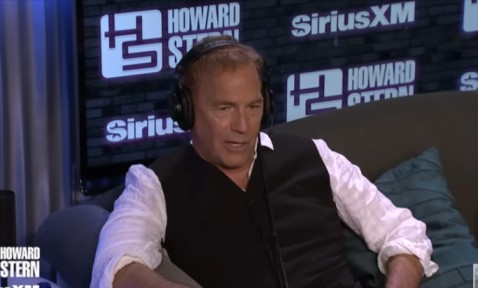
Editor’s Notes: In this candid interview on The Howard Stern Show, Hollywood legend Kevin Costner opens up about the defining moments of his life, from his strict upbringing and early musical training to his rise as a cinematic icon. He shares behind-the-scenes stories from classics like The Bodyguard, including his special bond with Whitney Houston, and provides rare insights into the circumstances surrounding his departure from the hit series Yellowstone. Costner also discusses the deep personal conviction behind his latest epic, Horizon: An American Saga, and why he continues to bet on himself as a storyteller. This episode offers a fascinating look at the man behind the movies, revealing the integrity and passion that drive his creative journey. (April 11, 2026)
TRANSCRIPT:
Kevin Costner on Music, Family, and Life
Howard Stern: A lot of people don’t know this about Kevin Costner. Forget the movies for a second. You were a very accomplished musician in terms of piano, right? You played when you were young.
Kevin Costner: Yeah, I had that going, and it was kind of a bummer. It was one of those classic parent things, those therapy moments, which is when I decided to take piano, I felt really happy about it. But I had this kind of very strict teacher, and I had a very conservative background, and she said, if he’s going to learn from me, he’s not going to play any rock and roll, he’s not going to play anything.
And this was back in the ’60s, and my parents went along with it, and after about 4 years of staring out the window seeing everybody play, and I’m thinking I could transpose— it was all the classics, but what chick wanted to sit next to you playing Greensleeves or something that was about as rock and roll as you could get? And I gave it up, and my mom said, “You know, you’re going to be sorry, Kevin.” And I knew she was right, and it has all disappeared. It’s gone away, and I’ve actually 2 or 3 times went to— I wonder if I could get this back through hypnosis, if I could go back, because I was trained classically.
Howard Stern: You mean to tell me you, as a young, young person— I don’t know, what, were you 13? Yeah, around that age. Okay, you took these piano lessons, you learned how to read music and all that, and when you say it’s forgotten, you can’t read music now?
Kevin Costner: I can’t, no. It’s really difficult. And all the memory that everything goes with it. And I have done hypnosis 2 or 3 times. Because it’s obviously back there. I mean, I was able to transpose all the classics. If you said drop it down 2 keys, so I’m suddenly playing Mozart 2 keys down, I could just do it.
But if they would have just let me play one song, if one girl would have sat next to me on the bench, I would have never stopped. But I went cold on it because it was— I was in too deep of a lane. It’s like, wow, can I get out of this?
Howard Stern: I’m doing the craziest thing. I’m 70 years old and I just started guitar lessons 4 months ago, and now I can read music. If you just took a few lessons and brushed up, it would probably pop right back in. Forget the hypnosis.
Kevin Costner: It’s funny, sometimes we get to stay in the best rooms in the world and there’s this grand piano sitting there, and I might as well be an animal just going over sniffing it.
Howard Stern: Really?
Kevin Costner: Yeah, I’ve sat and it’s just not there.
Howard Stern: But you play guitar, don’t you?
Kevin Costner: Yeah, it’s a very average guitar, enough to write songs.
Breaking Free: Fathers, Fear, and Finding His Own Path
Howard Stern: It’s such a great language to learn. It is such a great thing to be able to pick up a guitar and play, and I’ve always wanted to do it, but I had a father that would tell me, you know, too stupid to do everything. So I started to believe that I couldn’t learn anything. And when I was looking back on your early life, I know maybe publicly you don’t view your father as a tough guy, but it seemed to me like your father, every step of the way— he’s deceased now, I assume?
Kevin Costner: Yeah, yeah, yeah.
Howard Stern: Every step of the way, he seemed to really— I know it’s out of fear. They want their sons to get a good job and be able to earn a living and have a family. But I feel like your dad was one of these, kind of Debbie Downers, like, oh, Kevin, you can’t do that. You can’t be a director. You’re not going to be an actor. You can’t—
Kevin Costner: There was a lot of fear. There was a lot. He came out of the Dust Bowl. He was a fistfighter. He was a very tough guy, hardbark. And they lost everything. And so he had one job. And he would just let me know that I just couldn’t have another man outwork me. He said, if you borrow somebody’s lawnmower, you fill it up with gas, you do this, you clean that thing— and I would be so— and finally I’d look up, I said, I’m 5 years old. And so I was getting these lessons when I was really early.
But I do a song in my band called “90 Miles an Hour,” and it’s about that same thing you’re talking about. It’s like I had to break free. It seems funny. I didn’t kind of go through that rebellious moment with my parents because I knew how nervous they were. My brother was 17. He joins the Marines in ’67, ’68 and goes to Vietnam.
Howard Stern: Does he talk about that kind of thing? Most Vietnam vets have seen such s* they can’t even talk.
Kevin Costner: Yeah, it affected him his whole thing. There’s one reason why I didn’t do Platoon. I had a chance to do Platoon, and it dealt with that murder thing with a lieutenant that got fragged. And at that point, almost all the Vietnam movies in the ’60s, ’70s were about guys unhinged, and I thought I couldn’t do that to my brother. And it was such a great movie. I really liked it, but my brother passed away about a year and a half ago. Agent Orange finally caught up with him.
Howard Stern: Oh, how awful.
Kevin Costner: So that “90 Miles an Hour” is just about breaking loose. Don’t tell your parents what you’re going to do. And just what happens is they wake up and they look at you and you’re the biggest radio person in the world. It’s like they’re so worried about us. Just let it alone. There’s a line in “90 Miles an Hour” which says, “I thought the world was flat for way too long.”
The Band, the Music, and the Movies
Howard Stern: When you write songs, is it pretty much the same process of writing for movies and things like that? You sit down and you kind of struggle and bang it out? What’s the process?
Kevin Costner: I really struggle with music because in my band I’m easily the worst songwriter of the group. So more than half of my stuff just doesn’t make it. I mean, the one thing I do with my band is I just break all the ties, and I was really clear about that. And so I decide what gets to the top, and probably 80% of the time my stuff just doesn’t— it’s just not as good as the other guys.
Howard Stern: Is it weird having a band? Because when actors have a band— Bradley Cooper played a musician in A Star Is Born, and the dude had 2 hit songs. Real big hits. But he doesn’t see himself as a singer— he was just playing a character.
Kevin Costner: Listen, I’ve had this band together for 20 years. I don’t really publicize it. I’ve played around the world. I played the Kremlin, I played the Grand Ole Opry about 5 times. I don’t really talk about it very much.
Howard Stern: Yeah, that doesn’t get much attention.
Kevin Costner: I really don’t say a word about it. I just kind of show up. It’s kind of pretty par for the course for me. I just kind of do what I want to do.
Howard Stern: Because you could get goofed on, you know what I mean? It’s like, oh, look at this guy, wants to be a musician. Like, you’re not allowed to be an actor and a musician.
Kevin Costner: Yeah, well, that happens anyway. And so I don’t just go begging for the fight. I just kind of do what I do.
Howard Stern: That’s interesting to me. Johnny Depp now is all in music and all that kind of stuff. And people kind of go, you know— maybe I’m one of them.
Kevin Costner: Well, when I play, I don’t separate the idea of the movies and the music. It’s not my moment to put on black leather pants and say, let’s just deal with the music, shall we? I don’t separate them at all because most of the songs that we do were written on the sets of where I was working. So they remind me of where I was. I kind of include the movies in the music.
Protecting His Brother, Losing His Brother
Howard Stern: When you casually say, gee, I could have been in Platoon, but I did it to protect my brother because it might have maybe f*ed his head up.
Kevin Costner: Yeah, it would have. I think it would have.
Howard Stern: And by the way, how do you know it was Agent Orange that did him in? Because sometimes as human beings, we look for an explanation for someone’s death.
Kevin Costner: It was the first time it came up, Howard, believe it or not. It was about 3 years ago when he was really going down. It was the first time he said to me— when you mentioned you don’t talk about things— it’s the first time I heard that word come out of his mouth.
Howard Stern: Wow. So he figured Agent Orange did this to me.
Kevin Costner: Yeah.
Howard Stern: Were you close with him?
Kevin Costner: We broke apart. There was a moment where there was distance, and I needed to have it. But we remained brothers, and that’s how that went. That’s how that went down.
On Fathers, Attention, and Learning to Fight
Howard Stern: That’s heartbreaking. I thank God I never had a brother. I think I needed so much attention. There was so little attention to get. That it would have been hard for me to share any kind of love or attention with my parents.
Kevin Costner: What was hard about getting attention?
Howard Stern: My parents didn’t give me a lot of what I needed.
Kevin Costner: Yeah.
Howard Stern: So imagine if you have to share that with a brother. Whatever small crumbs you can get. My father was very cold and distant. So now there’s a— my sister’s 4 years older than me, and we didn’t have a clash, but a brother and the both of us struggling to get a relationship with my father.
Kevin Costner: Could have been a disaster. That’s too bad because when there is love, there’s enough love to go around. It’s just somehow the pie doesn’t get cut up in pieces. But when it shrinks and there’s a coldness and a distance— yeah, you got to walk into your room and go, really, is this how it is with everybody?
Howard Stern: Yeah. Have you ever been in a fistfight? Have you ever had to? You have? What were the circumstances?
Kevin Costner: I’ve been in 5 or 6. But the one that I remember was I was in junior high. My dad fought with us. My dad had anger. I knew how to fight, but I didn’t have the same anger. And it was—
Howard Stern: He taught you how to fight?
Kevin Costner: Yes, he made me fight. He’d get on his knees and he would be faster than you. And he understood. And he talked about how hard you had to go when it happened.
Howard Stern: Would he punch you in the face?
Kevin Costner: No, never. But he would touch my face and let me know that I was vulnerable.
Howard Stern: He was nice. He taught you how to fight. I wish a man would have taught me.
A Schoolyard Fight
Kevin Costner: Yeah. And he would show me. And I remember I was a kid. His name was David Madison, and he was in the 9th grade. I would think I was in the 7th. And I was running. He was a surfer, and I was running over to be with my friends, and I jumped over a bench and my toe caught it, so I fell. And so there was the normal laughter, right? Which was fine, the normal laughter. But this one guy was laughing too much for whatever reason. And I pushed him. I pushed him square in the chest. I said, “Shut up.” And he did.
And then, not unbeknownst to me— I watched it happen right in front of my face— some kids that I knew that lived in my neighborhood said to this guy, “You can beat him.” And so what happened was the kid was humiliated. I had pushed him and let him know that this was where it should end. And now he got emboldened because somebody said, “You can beat him up.”
And I remember he was going to fight. And I put my hands up. I knew exactly what I was doing. My hands went up and I started to circle him. And I talked to him really quietly. I said, I had my hands up, I said, “We don’t have to do this.” But I kept moving to my left and he’s looking at me and I could see, I don’t think he knew really how to fight. I said, “We don’t have to do this.” And I said, “F these fing people.” And I was talking really quiet and he didn’t listen to me.
And I hit him 2 or 3 times in the face with just my left, just hit him 2 or 3 times. I just didn’t let him get close. And now the fight was over and he was bloody and we both were in the principal’s office and the adrenaline was so weird that when I was sitting in the principal’s office, I remember just outside, I remember I started to cry. Just the— whatever you call it, the adrenaline or whatever, was over.
Howard Stern: Intense. You mean?
Kevin Costner: Yeah, I hit him really hard. 3. It was a very clean fight. It wasn’t like a messy fight. Didn’t end up on the ground. It was like, wow, I hit him 3 times straight in the face. But yeah, I have been in some. I don’t like fighting.
Howard Stern: But isn’t it true— that’s real fighting. Most fights, 1 punch, 2 punches at most, it’s over. That’s it. Somebody goes down. It’s not like you see in the movies. It’s a different kind of thing when somebody gets hit.
Leaving Home and His Father’s Approval
Howard Stern: When you left home to just start your journey in life, was that liberating for you? Like, was it like getting out?
Kevin Costner: Yeah. I’ve worked ever since I was young. I mean, I really just worked. And my parents finally came to me at one point. They said, “We can’t even remember, did we put you through school?” And I said, “No, you didn’t.” And it was okay. And I looked at my dad. He was like, “Did you have the things you needed?” I said, “Dad, I was fine.”
There was this moment. He goes, “Well, you know, I had one job. I never took a risk. But you, you had what you needed.” I said, “I’m fine. I’m fine.”
He’d watched me that day. I had almost sunk a tractor— a really expensive tractor— and I was in the water for about 7 hours trying to get this thing out. Had to get another thing to come in. And he watched from up on the hill, and he’d always kind of made me feel like I was a bit of a daydreamer. And it was like a monumental task. I was in this cold water just getting this thing out.
And I took a— I was in Aspen. I was in there and I had this great bathtub with a fireplace. It’s huge. And I’m very rarely in it. I don’t really take baths, but I was so filthy. I took this bath and my dad walks in. I’m in the bathtub. My dad walks in. I kind of slip under the water a little bit more. I’m not sure what I’m doing. His hand goes on the hearth. Elbow. And he says, “Did you have all the things?” He came in and kind of was confessing to me, like, “Did I give you enough?” And I’m in the bathtub. I got no clothes on. And he’s going, “You had everything that your mom—” And I said, “Dad, I did.” It was an odd, odd moment. He wanted to know if he’d done well as a parent.
Howard Stern: And were you bullshitting him by saying he had done well because you wanted him to feel good, or did you really feel he had done well?
Kevin Costner: I really felt that he had done well. I know what I was missing, and I felt really selfish at that moment because I can tell when somebody gives all that they can give. There’s a difference. I know he gave everything to me and my brother. It was just— sometimes it was just too tough. Sometimes you wanted to say, “I’m 5 years old.”
Howard Stern: Yeah, lighten up. That’s why I thought it was so peculiar when I read about you that sometimes when you were directing a film— I think it happened a couple of times— you would have your parents come to the set and sit there and watch you direct. And I got angry because I used to do this. If somebody wrote an article about me or they wanted to put me on a television interview, I’d bring my parents because I only wanted to please them. And I wanted to— I had to give them this impossible thing, putting them on television.
Kevin Costner: It was a quid pro quo. Yeah.
Howard Stern: And so I assigned that to— I go, “Look at Kevin Costner. This guy’s the biggest movie star, the biggest director. He’s winning awards. He’s got to bring those parents and give them something spectacular so he can earn their love.” But maybe I’m wrong. And they wanted to come.
Kevin Costner: I didn’t. And I was like, “Oh, you don’t need to come.” And they go, “We’re going to be out of the way.” They would literally stay on a hill in a trailer and in two lawn chairs, almost 300, 400 yards away. And I’d see her in silhouette stand up and wave to me. And I went over and I remember my first day of shooting, I just kind of looked at the crew. I said, “They’re probably going to be there a while.” And there was some—
Howard Stern: But you didn’t get angry? You didn’t say to yourself, “Oh, you mean this is now you’re coming to look at me?” No?
Kevin Costner: My harsh father. They were at everything. I will say this— when you asked me, did he do well— he did. My dad was at everything. His kids were everything. He was just, “Are you going to be able to make a living?” And it was like, “You’re lazy, you’re daydreaming.” Daydreaming, me dreaming, storytelling— it was code for “you’re lazy.”
Howard Stern: Isn’t it unbelievable? Here you’ve made a living by daydreaming, dreaming about the West and dreaming about all this stuff. And your parents are like, “Don’t be a daydreamer.” In a way, I admire your strength to buck them because I still to this day struggle. F*ing those parents of mine— like a mama’s boy, you know what I mean? It’s tough.
Kevin Costner: I don’t think anybody thinks of you that way. I mean, they think of the world you’ve carved out for yourself. It’s a universe, man. These relationship things are just delicate.
Bringing a Gun to Show and Tell
Howard Stern: The story that I love about you too, from your youth, is that you brought— I don’t know how old you were, like you were a little kid.
Kevin Costner: Yeah.
Howard Stern: It’s show and tell and you bring a shotgun? Your dad’s shotgun? A .30-30. You bring the gun to school to show and tell, and they threw you the hell out of school, right? They pinned a note to your chest. Yeah.
Kevin Costner: And when you can’t read, you go home and you bring your own death sentence with you. It’s insane. I did a speech really about my relationship with guns. You might look it up because it’s kind of— it will tell you a lot. It was a Park City Quail Conservation Group— not Park City, Utah, but Park City Quail Conservation out of Texas. And these people, I hunt and they do this thing. But I did this speech and it just kind of explains a lot of stuff about what my life was.
I usually take those things way too seriously when it comes to speeches that I have to give once in a while. And I really try to avoid those speeches— maybe made 6 or 7 in my life— but that was one I felt particularly good about. To this particular group, like, what am I going to tell them about guns? Because the world’s so particular about that thing right now. And I just kind of went right straight at it. It was good fun.
Howard Stern: What was your point of view? I’m curious.
Kevin Costner: It was my life, and it started early. It started between two strong women. My grandmother gave me a BB gun when I was 5 years old. And my mom said, “Absolutely not.” These two women squared off. And my grandmother held that gun and looked at her and said, “If he misuses it, you can take it away from him.” And I was between them looking straight up. And my mom went, “Okay.”
I learned really early. I understood exactly what my grandmother said. And no one ever took that gun away from me till I was a senior in college. And I went hunting on an illegal place and I got caught and had to go to court. I was sitting amongst a bunch of criminals that maybe had killed somebody or not, and I’m in a row with them and they’re going, “What did you do, hombre?” Some of them were in there for murder. They were getting up to go see the judge. I said, “Well, I killed this duck in this place where I wasn’t supposed to be hunting.” And they go, “He killed a duck?” And there were like 7 or 8 of them and they’re all going to be facing some weird sentences. And they were all snickering.
And I remember the judge looked down and I’m thinking, “S*, I’m going to get in trouble because there’s a little comedy going on in this thing.” But I decided I didn’t want to lie anymore. I’d say, “Yeah, I killed a duck.”
Howard Stern: And I can’t imagine what that’s like when you’re sitting amongst hardened criminals and they go, “What are you in for?” And you go, “Oh, I got a parking ticket. Oh yeah, I killed a duck.” I figured they’d just beat the s* out of you.
Kevin Costner: No. Yeah, I was like 17 and they were all leaning down the aisle. They go, “He killed a duck.” It just rolled down the row. “You’re in for a duck.” And when the judge finally said, “It’s $100, come get your thing,” as I’m walking out of court, they’re all giving me the thumbs up. They’re going, “Yeah, man, you made it.” And they’re probably on their 50th tattoo, you know.
Howard Stern: Oh my God. It’s so funny. You think about— I’m thinking about my mother, she wouldn’t even give me a toy gun. I had to beg her for a toy gun when I was a kid because we wanted to play. I had a holster and my toy gun. I had to promise her that I understood that it wasn’t a real gun.
Kevin Costner: But at that moment— I was actually 5— I really knew what words meant. “If he misuses it, you can take it away from him.” And I thought, “All right, no one’s ever going to take this away from me. They’re just not going to do it. I’m not going to let that happen.” You were responsible. I’m not going to be stupid with this. Yeah.
Whitney Houston’s Eulogy
Howard Stern: Speaking of speeches— you say it’s a handful of times you had to give speeches. Certainly one of my favorite movies is The Bodyguard. And I know Whitney Houston— I’ve watched you— you did a 17-minute eulogy for Whitney Houston. Somebody you worked closely with. That movie was— I don’t know how many— it made half a billion dollars or something, some crazy number like that. It was such a perfect movie. The chemistry between you two was so perfect. I was convinced the two of you were going to get married in real life. The chemistry was really palpable. It was there, you know?
And then I was shocked because you’re standing there giving her eulogy for 17 minutes. Is it true somebody said to you, “You need to shorten it up, do not go on for 17 minutes,” and you were like, “F* you, I’m going to do what I want to do?”
Kevin Costner on Whitney Houston’s Eulogy
Kevin Costner: Yeah, what happened was, it was a thing I didn’t want to do. When Whitney passed, the microphone was going around for a week, everybody getting on TV talking about her, and I’m thinking, Jesus, the last thing I want to do is get on a radio and talk about her. After all, it was just a movie, really.
But there was this weird thing that I didn’t take into consideration. I think sometimes maybe you and I can miss what the real momentum is, that we don’t really gauge it because we either intellectually dismiss it or we just don’t care. But people wanted to hear what I had to say about her, which baffled me. It was a make-believe relationship we had. And so I avoided it.
But about the 6th day in, it started to turn a little negative. “Well, why isn’t he talking?” And I still avoided that because actually that will make me dig in even deeper when people try to think what I should do. And I had avoided a thing. There was an award possibility on BET, and they said, “Could you mention her?” And I said, “I can’t talk about her in 30 seconds. You’re going to give me a canned thing about her.” So that kind of dug me in a little deeper hole.
And then I got a call from Dionne Warwick. And I could tell her voice was broken. Her responsibility was that ceremony. And I listened. She started to say, “Could you?” And I said, “Yes.” I just said yes immediately. And I hated myself for saying yes, but I just said yes immediately because I knew that it was just hard on her.
I think I was writing that speech with a friend of mine, Armin Bernstein. We talked about her at length, about both our stories about her. I think I wrote on the plane all night. I was miserable for 4 days. I wrote on my way to Newark and walked in that church, and I came up in the middle of the church and these 2 bands were playing and it was electric, man.
But all of a sudden somebody came up to me and said, “CNN is here.” And I said, “Okay.” And they said there was this idea that there were going to be commercial breaks, and they’d like to see if they could— And I said, “What are you talking about? I know CNN was going to be here. They can do what they want.” I wasn’t so bold. I said, “Look, do what you want to do. I’m not changing this.” And they went, “Oh, okay.”
And I remember thinking that I was such the wrong guy to be there. And I saw Oprah behind me and I saw Diane Sawyer. I looked at them, I turned back, and I just mouthed the words. I said, “Could you do my speech? Would you do my speech? I wrote it. You could just do it.”
And I went up there and I spoke. And at that moment, I was glad I did do it. But there was a 5-day period that I wish I had said no.
The Chemistry With Whitney Houston
Howard Stern: The chemistry in that movie— I mean, I understand why people wanted a comment from you. And I think there’s this weird trend where when somebody famous dies, I see on Twitter or one of these things, everybody rushes to post pictures of themselves with that celebrity. And it’s sort of a morbid thing, almost like, “Hey, I’m trying to prove you knew the person.” I understand your resentment or unwillingness to say something because it’s like, “What am I doing? I acted in a movie with her. What could I possibly say? It’s a tragedy that this woman is dead, and what can I say?”
But when you made that film and the two of you had to test to see if there’s chemistry, and she’s not an actress, she had never acted before, how the hell do you know she’s the right person?
Kevin Costner: We’re living in this moment, this woke thing, where people have to spread it around. Somehow you have to compensate, overcompensate. And I’m thinking, I don’t really get any of that because when I did Bodyguard, that was written for— it could have been Michelle Pfeiffer, it could have been Julia Roberts, it could have been anybody. But when I looked at it, I thought, “No, it should be Whitney Houston.”
It’s like, I don’t need somebody to tell me to try to even things out in this world. I know how unbalanced it is. I know how racist things are. I get it. But for me, it was so easy to go, “Well, this is the most beautiful girl. This is the one who can sing.” It didn’t say black or white in the script, but to everybody in the world, it was assumed, “Well, it’s white.” And I said, “No, in this instance, it’s not. I’m sorry. This is the girl.”
Howard Stern: And people were shocked by that, too.
Kevin Costner: I didn’t really know that either. I didn’t think it was that big a deal. I didn’t think it was that big a statement. It was like, “No, this is the best girl.”
The A Cappella Moment
Howard Stern: As a musician, though, because you have a musical background, it was your idea for her to sing the opening of that song a cappella.
Kevin Costner: Yeah. No music. It was really clear to me why. We had this relationship, and my promise was to protect her. And we had rough moments as characters, meaning she railed against me. And in the end, she’s going to go off and be a star, and people who want us to be together— I wouldn’t let that happen either. But I said, if she’s going to sing a song, the way she could really show that she really loved me was she would do it without a single note. And that will prove how brave she is.
Howard Stern: I’ve watched that film so many times. It just makes me feel good.
Kevin Costner: I talked about her that day in that eulogy. The skinny little girl who could really sing.
Howard Stern: Yeah. Wow.
Kevin Costner: What a voice. But she was the right girl, right? This is not— I didn’t need anybody to tell me who the right girl was. And I’m not trying to be arrogant. It’s like, “Well, look, if none of you can vote on this, I’m just going to take the vote myself, and I’ll take the heat, whatever it is.”
Coaching Whitney on Set
Howard Stern: And look how successful it was. She was green. Like, were you able to go to her and say—
Kevin Costner: She made a moment, she made a choice in this film because she had difficulty with this director. He was— I think he was afraid of her. I think there were a lot of things going on. And I looked at her and my promise to her was— because number one, the director didn’t pick her. I did. I picked the director. And I said to her, “I will take care of you.” And she looked at me and she didn’t really know me. And she made that choice.
So I talked to her about her first line in the movie. She goes, “Get up and talk to this man.” And she didn’t really know how to do that line. And I said, “We have to find the acid in you and the kind of diva moment in you.” And she goes, “How do I do that?” I said, “You just pronounce ‘up.’ You just really push that P. ‘Well, I’m up.’ And everybody’s going to know at that moment you’re used to being in control of every situation.”
I said, “If you’re uncertain about things, Whitney, just look at me and tell me, and we’ll drift off in the corner and I’ll make this right for you.”
Howard Stern: So in other words, as a director, or as an actor who has directed, you can envision what that piece of film is going to look like and the audience’s response to going “Up.”
Kevin Costner: She was like disgusted. She wasn’t going to get up. She’s a little entitled, and I needed that to be her entry. And I said, “You can do it if you hit that P.”
The Instinct Behind Filmmaking
Howard Stern: “I’m up.” I am blown away by stuff like that because I saw it with Ivan Reitman, who produced my film. And I would sit and watch the film with him, and he’d say, “You’re not getting a laugh here because you’re not turning your head. I have an alternate take where you turn your head and you’ll get a laugh.” And then we test it in front of an audience and the audience was screaming, laughing. I was like, “Well, how do you know that? How do you know if I turn my head?” He goes, “I just know it. I just know it’d be bad.”
Kevin Costner: Yeah, yeah.
Howard Stern: It’s a weird talent to know that. You see it on paper.
Kevin Costner: I mean, I know where the jokes are. I can see them in timing. Once in a while, something will be a little bit different, but you see it. That’s why I’m so anal with these scripts, because when I go to the set, even though the script for me is like the Bible, right? And it might be boring stuff to a lot of people, but I’m not so stuck in a lane though.
I go to the set every day and I have what I call a window of opportunity. And if I see something that the set provides— the background, somebody’s done something— I’ll step right through it and we’ll improv. We’ll put that in. But for the most part, I don’t do that. I go every day with the window open that I can step through it. Otherwise, I really trust what’s written.
Howard Stern: Isn’t it funny? You can see people who get a lot of money to be in a movie and then finance a movie, they get to the set, the script’s not even finished. I know people have done this and they sort of say, “We’ll ad-lib this. We’ll write it on the fly.” And it never works, very rarely. Everybody needs to know their lane.
Field of Dreams and the Architecture of a Film
Kevin Costner: There’s an architecture that can lead. You take a movie like Field of Dreams and it’s kind of a movie that just could have fallen because it’s kind of goofy. It could have gone a lot of different places, and it didn’t have a car crash. It didn’t have a fistfight. It didn’t have anything.
So I remember reading it and thinking this thing had gold dust on it, but we were going to have to get all the way to the end where our big moment is, “Do you want to have a catch?” Could we earn that thing, that sentimentality that goes with things unsaid between fathers and sons, mothers and daughters? That was our big moment. Can we earn that moment?
And so the architecture all the way through— you had to kind of hold a line because it was a movie that was goofy, but there had to be a believability. And I’ll tell you, the director and I had this one discussion about it. I think I literally told the story last night.
I said to the director, there was a moment where I thought it was a good choice that Robin Williams was going to play that role. And I thought to myself, “Yes, Robin’s funny. Robin’s the right choice.” But I end up doing the movie and I talked to the director and I said, “Robin Williams?” I mean, to me, he was a big star. I always go through life like I’m a sophomore and the seniors are all men. I’ve never really gotten comfortable with what my position is in this community to begin with.
But I said, “Why didn’t you take Robin?” And he said, “Well, for as great as Robin is, I think he hears voices in the corn, and I don’t want that. I want somebody who doesn’t hear voices to be in that corn.” And that was the edge we needed to ride.
Howard Stern: And we needed a sane kind of guy who would be freaked out by hearing voices in the corn.
Kevin Costner: That’s right.
Howard Stern: You can’t be a wild character.
Kevin Costner: You can kill a movie very early with bad choices. I always think a movie’s like a salmon heading upstream, that even a kid with a treble hook can kill you. Let alone the chemicals and eagles and nets and gillnets and things like that. Movies are hard to navigate.
And so when I do them— why I do Horizon, why I do Open Range, or why I do Dances— I want final cut on it because I don’t want somebody to go through that movie with a fine-tooth comb and take out the stuff that I’m in love with. It turns out I’m in love with all of it. And so I’m kind of a baby. If you’re going to take a little thing out, it bothers me.
Editing Yourself and Trusting Your Vision
Howard Stern: Yeah, but don’t they say that’s the biggest mistake, that actors fall in love with their own material? So if you’re the director and you’re watching yourself, you’re mesmerized by what you’ve done, maybe on camera, and you’re maybe not the best judge of what should be taken out. Obviously you’ve proven that wrong, but there is a danger in you editing yourself, I would think.
Kevin Costner: Yeah, just like the band. I don’t have to understand that I’m the worst songwriter. I’ve always kind of got the room. I know who’s smarter than me. It’s okay. I’m not jealous of that. I really embrace that. So I can see my own movies. And by the way, what if everybody’s wrong? It doesn’t really matter. You look at things and I have an audience on my shoulder. What I don’t have is the conventions of, well, it’s got to be this long or it’s got to be this or it’s got to be that.
Horizon is not a movie, for instance, that’s rushing to its gunfight. I get there, it’s there. I’m going to have that trapping because I understand what that’s all about. But I would rather watch a woman who wants to bathe because she feels so dirty and actually have that be almost voyeuristic, elegant, beautiful, but also ill-advised. Because we’re going to find out later that this is— no, that’s not what you do. And not just say water is important and leave it at that. I like to go 8 or 10 lines deeper because if there comes a time when we have to choose water, maybe you don’t get any, and kind of spell it out.
Howard Stern: But don’t you think audiences have become so used to consuming entertainment in a quick way with TikTok, all this stuff? They go and see a movie that has some air and lets it breathe and you can kind of— audiences are just changing, man. I don’t disagree.
Kevin Costner: I don’t disagree, but that doesn’t mean I have to. And what happens is my movie now will be what it wants to be for the next 100 years. That’s what’s kind of important. If you live for the moment, if you live for the weekend, if you try to anticipate the trend, if you need to be in vogue, I’m going to be lost. I swear to God, I won’t even know myself.
Horizon: An American Saga
Howard Stern: By the way, Kevin’s not here for his health. He’s here because he has this new project, Horizon: An American Saga. I am shocked because it really shows people what it was like to go out west in a time where Native Americans were being wiped out and what it meant to settle the west and go out there. It was like going to the moon where there’s no oxygen. It was that dangerous. What people had to live through, it’s f*ing crazy. And you were so fascinated by that period of time. I think more than baseball, more than anything. I think you and the Wild West, you tell that story the best.
Kevin Costner: Thanks. I do. There’s this promise, right, in America that if you’re tough enough, if you’re mean enough, if you’re resourceful enough, you can have what you hold. And that was a promise that drove people for 200, 300 years. We’re not talking about a land in Disneyland. And we’re not talking about, oh, once you get there, everything’s settled. You had to fight for it.
But what no one bothered to say was that there were people here for thousands of years who had sorted this out. And so those stakes— I mean, the first image in that movie when I throw a stake in the anthole, for me, it’s like, this is what we did. We turned the world of another group of people upside down and they never recovered.
Howard Stern: It’s amazing in the film, which I’m sure Kevin wants you to go see, and I think it’s really great. There’s a scene where the settlers have— the white man has made a nice little settlement, and these Native Americans, they come down and they burn that settlement to the ground and they kill everyone, women, children, everyone, because they’re so fing pissed. They’re like, “You have fed our whole lives up.” It’s so true.
And it’s a great scene because you feel really bad for the Native Americans. You understand why they’re killing everybody. It’s so effective, the film. It’s really quite remarkable. That one scene says it all to me. It’s just a horrible story, that part of our history.
The Architecture of Dilemma
Kevin Costner: Yeah, and inside it there’s these awful things that are happening. And people say, “Well, you let that thing go on quite a while.” I said, “Yeah, I absolutely do.” It was a hellish night for people who lived through it. There were people just living one breath at a time. There was a young man who made a fatal choice to stay with his father. And I said, if that doesn’t break your heart, if you can’t have a level of pride about that decision and also be horrified at the same moment.
And then the final nail is, “Are you ready, son?” And he says, “I think so, Daddy.” He understands. And this happened a million times out there. But there’s something noble about that choice.
So in the dark, when you watch a Western that actually creates an architecture of dilemma— and dilemma is just a thing I try to strive for because in dilemma, by definition, you don’t know what you’re going to do, right? Do we go left? Do we go right? In that moment, if you create that in drama, an audience sitting in the dark, if you’ve also made the costumes right, if you’ve made the landscape right, if you’ve made the story right, and you bring people to a decision, “What would you do?”— in the dark, you can sometimes bow your head because you don’t know what you would have done.
Howard Stern: Yeah, I was watching it thinking, wow, I know we live in fed up times and there’s a lot of weird sht going on in the world with Ukraine, and everywhere in the world is a hotspot. But looking at what it was like to live in America and settle the West, I’m sitting there going, “Thank God I was born in this time.” I mean, I get a few years on the planet. It is so— like, there’s no time for music.
Kevin Costner: There’s no time for— no, yeah. And these things are— there’s no time for nothing. You’re right.
Howard Stern: It’s like you’ve got to go find food and worry about some health issues.
Kevin Costner: Now we take pictures of these same places with sunsets and we say how beautiful it is and we build hotels there because look how beautiful it is. But back then, people were eating. It was a 24-hour gig. And women basically worked themselves to death. And generation after generation— we are not talking about a plane ride across the United States, which is what? A meal, a movie, a little bit of a nap, and you’ve got to put your seatbelt on.
Back then, when you said goodbye, goodbye was goodbye. You didn’t go back. So when a woman looked up and said, “This is what we bought, honey, this piece of paper, you got bullshitted on in Chicago, said if we’re out here, this is ours.” What the f*? Really? And where were they going to go? And so what does he tell his family? “We’re just going to be luckier than these people. We’re going to make it.”
And this was just nonstop for 200 years. And then ultimately, the sheer amount of people and technology, we just crushed these Native Americans. We crushed them. We crushed them.
Howard Stern: I mean, even just being clean, like just washing yourself, it was a struggle. It’s just unreal. And then in your movie, when you see those Native American guys, they’re living up in the mountains because they’re hiding from the white men, and the whole thing is so f*ed up. I can’t even—
Kevin Costner: Well, they’re trying to make sense of it. And like, we’ve got one trying to make a bath, and then her husband goes to this other guy, “Could you go talk to these people?” Because there was no law. And that’s what’s scary. The West is simpler? No, it wasn’t. Today’s simpler.
Howard Stern: That’s what fascinates you, right? The idea of growing up in a time where there’s no law. What are you going to do? You’re going to be moral? You’re going to be immoral?
Kevin Costner: I’m walking up with a guy who’s just killed somebody, a bloodlust. He’s also been humiliated by his older brother. He is looking to hurt somebody, and he makes a mistake with me. I’m the wrong guy, but I’m just as spooked as he is. It’s a 7-minute scene walking up a hill to see a girl, the same girl. And you can construct dilemma out of that. What do you do? At the end, I draw behind his back and I cock my gun. I’m not going to wait for him.
A Genre Nobody Else Is Doing
Howard Stern: This project, Dances with Wolves, Yellowstone— that era to you is the thing movies are made for. Like, there’s no one really doing it anymore. There’s not a lot of great movies about that time period.
Kevin Costner: And I’m like a knothead. I’ve been in like 4 of them. When nobody would do the first one, I’m a little discouraged. And I started to think about this Western a lot, this one in 1988, right? And I couldn’t make it. Then I actually started to think about something, Howard— and it didn’t dawn on me until I started to think about it— which was every Western I’d ever seen, the town’s already there. Everyone you see, it’s already there.
But the reality is, in Tucson, in Phoenix, in Denver, in St. Louis, in every town you see across America, there was a moment where a stake went in the ground. What was the fight at that moment? Because Native Americans were really smart. They lived in the good spots. We coming over, bumbling around, we look down and go, they’re in the best spot and we need to take that. And what happens is we put them into conflict immediately.
Borders that had been set— now instead of them being able to go across the river, they have to go to the right, they have to go to the left. And what happens? They run into people that they’d settled their bullshit with 200 years ago, who said, “You’re there, we’re here. As long as that’s the way it is, we don’t have a problem.” Same with going the other direction. And that’s the anger that burns that town down and keeps burning it down. These towns that we come to know— it’s like every Western, there’s always a town. I go, but what was the struggle?
Howard Stern: I love when you talk about putting a stake in the ground. Like, this one guy’s there and he’s putting the stake in the ground. He’s mapping out where his new town’s going to be. And these Native American guys just take them. They kill them. That’s it. You’re done.
Kevin Costner: They’re trying to say, “Dude.” And that dude’s a drunk. He’s in Chicago. Somebody offered him a bunch of money. He doesn’t even know how to survey. He goes out and does it. I’m telling you, the Horizon people are a mixed bag. They’re whatever. And ultimately, whatever you think you think, Howard, it’s a lie.
Howard Stern: I mean, think about what we learned in school when we were kids about how the country was founded. It was all bullshit.
Kevin Costner: Yeah. It was probably like half a page. In the fourth grade.
Howard Stern: And I remember I go to college and there’s Howard Zinn teaching people about what really went down, how Native Americans were the ones who were invaded and they got f*ed over. And I was like, oh, I never considered that.
Kevin Costner: Yeah, how about— cut your hair, lose your religion, lose what you know, anything you know. And then we look at them as a group and we’re Americans. We go, “Look, get over here and get some industry going, you’ll be okay.”
The Sioux Ceremony
Howard Stern: Yeah, no problem. When you made Dances with Wolves and the Sioux tribe inducted you— I don’t know what that means to be inducted as an honorary member of the Sioux tribe. Did you actually go somewhere and have a ceremony where you’d be given honor?
Kevin Costner: No, but they came to me in Washington, but I’d done sweats with them out in South Dakota and stuff. And you just go.
Howard Stern: You mean where you go in a tent?
Dances with Wolves, Westerns, and Gene Hackman
Kevin Costner: Yeah, yeah, yeah. There’s a lot of people that have done that. And it’s brutal in there, but it’s different. And you stop and you’re quiet and Jesus is— I almost wilted like a daisy in there, honestly.
But no, yeah, there’s— listen, whenever people always think of Dances with Wolves, “Oh, it’s a story about the Indians.” And I kind of look at everybody and I go, you’re wrong. It is not. It’s about a white guy who just kind of got out there because he did something crazy in the war and now he’s out there.
And so I said, what you’re really seeing is not a movie about Native Americans, because I don’t want to pretend that I know all about them. I don’t want to be the guy that’s setting history straight. I don’t want to be the guy that is the authority. I said, but what I do know is that they’re people. And so when I’m going to depict them, I’m going to find the selfishness in them, the humor in them, the compassion, the empathy, and they’ll be— they can still be ferocious. They can still be confused.
Here’s a weird analogy. You’ll get it. It’s like, I don’t need to see the hero of a Western knock down a buffoon. You want to see a tough moment? Watch Liberty Valance. Watch Lee Marvin and John Wayne, who, some people can start to laugh at sometimes because certain movies started to be the same movie or whatever. But if you take two formidable guys and you put them in a deathlock, and that’s what happened in this little diner scene between Lee Marvin and— Lee Marvin now being a really tough— he was also cornered too. And who breaks it up? Jimmy Stewart.
But that’s what I would call architecture of dilemma. You watch that scene and you think, “Holy shit, these are the two toughest guys in high school, and now they’re going to fight.” And it’s like somebody needs to break this up or this is going to go— because you’re not sure who’s going to win. And when you’re not sure who’s going to win, you have a better scene. So when we make stupid guys for our lead guys to knock down, it’s not good filmmaking.
Were you a fan of Clint Eastwood’s Westerns? I like Clint. I tried to make Unforgiven. For 8 years I chased it. It was called Whore’s Gold. Then it was called The William Money Killings. And for 8 years, and finally about 8 years ago, I said, how come I can’t get this movie? And they go, well, Clint has the rights to it. So that was a movie I wanted to do as a bookend to Dances with Wolves. And when he made a movie with Gene Hackman and with Morgan Freeman, that’s his best Western.
You know, I’m asked all the time, who’s the best actor you work with? And that list gets really crazy. But if you want to pin me down, I say, okay, well, look, maybe Gene Hackman. What makes him great? I don’t know. I’ve worked with great actors, but Gene was so present. And if somebody said the biggest star, that’s simple too. Sean Connery. Really? Yeah. The biggest star in the world. I mean, you could just feel who he was.
Howard Stern: So there are some people who are movie stars— like Julia Roberts, and this is not a put-down, this is a compliment. I mean, she smiles on camera, you’re like, “Oh, I’m in love.” You know, that smile, whatever it is. But there are some people who are great actors, and I’m not saying she’s not, but I’m using that example. There are some people who respond in a scene beyond what other people can do. And is it that you get lost in the scene with them where you actually think you’re living it?
Kevin Costner: Well, Rod Steiger isn’t— Sean Connery, but the guy was an amazing actor. These guys that came into these scenes and they’re just incredible. I have a guy in Horizon, Kim Coates, who I have worked with 3 times. He’s just an amazing actor and kind of invents things above and beyond his part.
Feeling Lost on Screen
Howard Stern: And have you ever done a movie where you’re doing a scene, and it dawns on you— in other words, this is not working. No one’s going to believe this. I feel embarrassed and I feel self-conscious because I don’t know who I am here. I’m lost. Like, where you just totally feel lost in it.
Kevin Costner: No, because I got to make sure that doesn’t happen in the writing. I don’t put myself into a place where I can just clear out a bar. Clint Eastwood could do that. Stallone could do that. These guys, there’s this thing. But I know that I would have to figure out how one by one I would dismantle some situation. I just knew inherently that I’m not the guy that just goes and cleans out a bar. I could tell you how to do it.
Howard Stern: You are that guy in the scene in The Bodyguard where you take that dude, you beat the shit out of him, and it’s in the kitchen.
Kevin Costner: Yeah, the one guy. But those guys that can just clear bars out of things— I knew that I shouldn’t be in that scene. And so I didn’t let myself get there. I don’t put myself in that spot.
The Bodyguard Sequel with Princess Diana
Howard Stern: I don’t want to forget to ask you this. Did you want to do a sequel to The Bodyguard with Lady Diana, Princess Diana?
Kevin Costner: We were going to do it. Yeah. That sounds like an unbelievable idea. Well, that was— it was right. And you know who was so important in that process was Sarah Ferguson, who could have easily said, “Well, Kev, I’m a princess too.” She didn’t. She was an incredibly cool woman. She said, “I will put you with Diana.” There was a decency about the way she did it.
And I called Diana. And by the way, this was an interesting moment in time because almost like Whitney, when Diana passed, the radio, the mic was going into everybody’s hands for 2, 3 weeks. And I had this real interesting story about her. I didn’t say a word, not a word about it. And I was arguably as good a story as anybody would have about her. And I don’t know what it is about me, but I just didn’t want to.
And about a year later, it leaked out that I had been prepping Bodyguard 2 with her. And what happened was the royal family kind of turned on me a little bit. And I started talking to her through Sarah. And I said, “Look, I’m going to do Bodyguard 2, and I think I can build this around you. Would you be interested?” She goes, “Yes.” She goes, “My life’s about to change.” And I said— I didn’t really go into depth with it, but I thought I understood what she’s saying— “I’d like to kind of open up my life. I think that I would like to do this.”
And she was very sweet, and we talked. And the second time we talked, she said, “Is there going to be a kissing scene?” And I said, “Do you want there to be one?” And she said, “Then we’ll do that.” And I wasn’t going to make the full romance about her. It was going to be about this Asian woman, but there was going to be a moment where we did. And she was so sweet about this. And she said, “I’m going to send you this movie, and I’m going to make it just like Whitney. I’m going to make it so you don’t have to do all that much, but you’re going to be great.” And she said, “I’d like that.” And then we lost her.
And I didn’t— if I couldn’t have done Bodyguard with Whitney, I don’t think I was going to make it with anybody. I think that’s maybe the difference in me is that I don’t just go down the list. When I made Open Range, I knew that I was going to have one or two guys that are formidable guys in their 70s. It was going to be Gene or it was going to be Duvall, and if it wasn’t, I wasn’t going down the list to do a character actor— not that there’s anything wrong— it’s just that when I try to present a movie to someone, I need it to feel like it’s just right.
Howard Stern: Wow, that is real. First of all, my head is spinning with how great an idea I think it was for you. Would she have been a princess?
Kevin Costner: It was great. You’re right.
Howard Stern: Would you have been the bodyguard to her as a princess?
Kevin Costner: No, no. It was so perfect. What happens is I go over to Hong Kong. There’s a horse race. It turns out I’m talking to some woman when the start of the movie is, and I’m whispering sweet nothings to her. Really sexy shit. And all of a sudden you pull back and you realize I’m talking to a horse.
And what it is, true to character, he’s not going to guard celebrities. There’s a horse that’s going to race from Kentucky. It’s going to Hong Kong. He gets to Hong Kong, he’s on a plane. Princess Di’s up front. Jesus Christ. Everybody has to wait for her to get off the plane. I’m noticing this young couple, this young girl about 18 and this young guy with her, and they go back in the bathroom and they f*. So now Di gets off the plane first.
She goes into Hong Kong because she’s going to this big race too. And I get off the plane. I meet my longtime friend who I worked with in the service. I’m hugging him and off comes a plane— the same little girl and this young guy. And it turns out it’s his daughter. It also turns out it’s her bodyguard. So she’s f*ing her bodyguard on the plane.
I don’t say anything, but I look at my friend, I look at her. And that night, as we go into Hong Kong and the great cities and this town he’s living in, this great house— I look at this dude and late at night I go over and fire him, because you don’t— you’re not even— you don’t even know this family. I know, but I’m f*ing firing you. You’re done. And of course, the young girl hates me.
But Princess Di, I meet her the next day, essentially at a party, and I’m looking at her like everybody else. And she finally walks over and she goes, “I know who you are.” And I said, “What are you talking about?” She goes, “I know you’re here to watch over me.” And I said, “No, I’m not, actually. I’m watching over a horse.” And so in the story, she had broken with the royal family.
A Meeting with Prince William
But I will tell you one more sweet thing that I don’t think is talking out of school at all. About 12 years later, I’m in Scotland. I’m somewhere, and I’m playing golf. And I don’t play golf very much— it’s the movie people think I do, but maybe it’s once a year for me. Takes too long.
And I get this call and it says, William would like to see you— her son— and he’s now a young man. So we meet, and we meet in a room. There’s nobody in the room. The chairs are turned upside down on each other. You know what I’m talking about? A big room. And it’s him and I. I kind of could have been meeting a gangster, you know, like, I want to explain something to you, in a moment. And he sits down across from me, incredibly a gentleman. And he said, “My mom fancied you.”
And it was the sweetest, gentlest thing. Not “she lusted after you,” not “she wanted to have it.” But he just— instead of him— he believed the story. And believe it or not, after the talk with the royal family, about 2 years later, the butler came out and said, “Yeah, that was the truth, what Kevin was saying. That she was going to do it.” But William— so sweet man. “My mom kind of fancied you.”
Howard Stern: You know, who knows what might have happened, you know, between the two of you. There might have been some romance.
Kevin Costner: I don’t know. Did you fancy her?
Howard Stern: There was a poetry— But Kevin, did you fancy her?
Kevin Costner: No, I thought she was right. I just thought she was right. And I thought that she was elegant. I thought that it was perfect because I was going to fall in love with this Asian woman. There was one I fancied. That was how that story was going to work. I wasn’t going to put too much pressure on her, but she was going to be elegant. She was going to be unforgettable.
Howard Stern: Can you imagine the pressure on you in that situation? It’s a very unusual thing to say to a non-actor, “Trust me.” But that’s a big responsibility.
Kevin Costner: It is because it’s a promise, and you can’t sleep without fulfilling your promise. It wasn’t going very well for Bodyguard for a while. There was a moment where Clive said, “Look, this movie’s not working,” and it wasn’t. I knew that it wasn’t.
Howard Stern: You mean while you were filming, you knew it wasn’t working?
The Bodyguard’s Final Cut
Kevin Costner: No, after. After, when we were putting it together in the edit, it wasn’t working at all. And I knew why it wasn’t working, but it wasn’t. And ultimately— Why wasn’t it? It had moved away from its character. It was just wrong.
And I remember after the second screening, it wasn’t testing well at all. And we went into the round room at Warner Brothers, and it was like, well, I guess this is as good as the movie’s going to be. And I said, no, it’s not. They go, what are you talking about? And I hated to have to do this, but I did. I said, this movie needs about 12, 15 minutes more of story. A person said, well, I hardly think that’s the problem. We’re long already and you want to add more minutes. And I said, yeah, I actually do. They said, well, how are you going to do that? I said, by taking 28 minutes out. I’m going to put 12 back in. They said, well, I hardly think that’s possible. And I said, really? And they said, yeah, well, how are you going to do that? I said, 20, 15 seconds at a time, I’m going to do it. And over the weekend, I took out 28 minutes and put back in 12. And I think we barely got out of Dodge, to be honest. We barely made it out.
Howard Stern: Is there a moment for you, on a very human level, you go, “F* you, you assholes.” You know, you said I didn’t know and I know. Like, is there some satisfaction in being right?
Kevin Costner: I thought, “F*, we just barely made it.” And I felt like I kept my promise to Whitney and to Clive. That’s what I felt.
Blockbusters, Disappointments, and the Art of the Edit
Howard Stern: You had so many huge hits, monstrous hits. Do you get humiliated when all of a sudden it’s not the Kevin Costner blockbuster that everyone is expecting?
Kevin Costner: No, I get disappointed when we moved away from what the movie was. I don’t direct very much. I always feel like people are better directors than me, so I’ve only directed 4 times, and now if you add up these next 3, it’ll be 7. I’ve always kind of given it up to other people. I’m always still the sophomore, everybody’s the senior.
What happens is I make these movies and I know how to direct all of them, I just think the other people are going to do it. What happens for me is on paper they’re really good. I told you at the start of this, I’m really anal about script. So what happens is I know how all the movies I did work. But what happens is sometimes the conventions of finally a movie getting down to its final edit, it eliminates too many scenes because it doesn’t fit into the conventions of what’s got to— we got to get this many showings, we got to get this many airings. I go, these omissions are going to hurt this movie.
And so what I’m usually most upset about is not the money. Because I love the idea that somebody can revisit my movie well beyond its opening weekend. I don’t care about that shit. I mean, I do from an ego standpoint, I guess I do. But the reality is, I know if a movie is what it’s supposed to be, then I’m going to feel really good. This may sound lofty. It’s not, but it’s the truth. 20 years from now, if you find that movie, you’re going to see every detail you want in Horizon. So if you don’t like Horizon, then that’s on me. I made those choices.
Winning the Oscar Over Scorsese and Coppola
Howard Stern: So when you won Best Director, I mean, you won an Oscar for Dances with Wolves as a director, you really think you’re not a great director? I mean, you beat Scorsese, you beat Coppola that year. I mean, it’s such a ridiculous kind of thing. Was that meaningful to you?
Kevin Costner: Yeah, it was meaningful to me. And all it meant to me was I trusted my story. I think those guys know how to handle their camera better than me. They know these things. There’s a lot of stuff. Some people ask me, well, what’s your ratio? Your aperture, your thing. I don’t f*ing know. I don’t know.
Howard Stern: That’s why you get a good DP.
Kevin Costner: Yeah. And I said, “I don’t know that.” I said, “But I know how people move. I know how they talk. I know when I’m boring someone in the process.” And I think that I just have to understand what my style is because this is my style. And so it’s like I’m willing to live with that however it falls, as long as it is what it’s supposed to be.
Auditioning for Schindler’s List
Howard Stern: I love these stories where you wanted to star and direct Schindler’s List. I think about these movies, what would they have been like? Do you ever go see Schindler’s List and say, hell, I would have been so much better in this, this would have been my movie?
Kevin Costner: I didn’t say that about that one because I didn’t feel it. I thought he made so many good choices to go black and white. I’m just saying that I’m not surprised that I love that movie. I loved it. I saw it. I went to Stephen and said, I— and he said, no, I think I am going to direct it. And so I said, okay, because I would have directed it. I said to my agent, I’d love to direct this and I’d love to be in that particular movie. And Stephen and I talked about this, so I feel like now I can talk about this. I have some of these stories that I just keep in a treasure chest for a long time.
And I’ll tell you this because it’s a little bit humiliating. We really bonded over this story. I went from wanting to direct it to wanting to act in it to, I’ll come screen test for you, Stephen. And Stephen, I probably put him in an incredibly awkward spot, and he goes, okay. And I flew out to New York on my own. I put on a bald cap. I look like the guy. I auditioned for him in his kitchen, and in the end I wasn’t the right guy for him. So I flew back on the plane and so now I’m telling this story.
But I never felt bad about that. So when actors talk to me about stuff, I said, “If you want something, you go try for it. You go audition. You humble yourself.” And Steven just made the right choice for his movie. But I think Steven always understood that I would come across the country and I would put on a bald cap. I would put on a German accent. I wanted that, Howard, and I didn’t give a shit about what anybody thought. And I felt bad flying home. But if I tell somebody, I said, you can’t wilt. You have to go try. It’s like, well, I’m at a point in my life I don’t have to read for anybody. Well, bullshit. Okay, then that’s where you’re at. I get that.
Memorizing the Entire Script
Howard Stern: But that’s what I was going to say to you. An actor of your caliber who has had success, a lot of actors, and I think this is why you’re telling the story, will go, “You know what? I’m not. How dare he? I’ve been in bigger movies than he’s made, and f* him. I’m not going to do it.” But you’re right. I would think you’d want to audition so that you’re secure in knowing that he likes what you’re doing.
When you do a movie, do you actually— I read this, I want to know if it’s true— you memorize the entire script? In other words, even with Yellowstone, did you sit there and say, okay, I’ve got to work today, and you memorized everybody’s lines?
Kevin Costner: Yeah, I’m more interested in what they’re saying. I have to— I’m really slow. It takes me about a month to memorize something and own it. Some people seem to be able to do that overnight. There’s a lot of actors that say, I like to be really fresh, I like to be really spontaneous, so I’m just going to do it for the first time, and I go, okay. And that’s a style. So I don’t want to get in the middle of that. But for me, JFK, I worked a month and a half just to be ready to do that speech. How long was that monologue? I mean, that monologue was like 11 pages.
Howard Stern: It was like, oh my God.
Kevin Costner: And so what happened is I remember that day because we decided that we would rehearse in the courtroom, and I did my entire thing, and Oliver— wait a second, it was going to take 3 days to shoot this, and Oliver said, “Wait a second. Do you know all this?” I said, “Yeah, I know it all.” And he said, “Do this. Listen, get a massage. Go back to the trailer. I’m going to set up these 6 cameras, and we’re going to do all this, and come back in a couple hours. I’ll be ready for this.” And so I said, I don’t need to go get a f*ing massage. I don’t know what I said, but just, you just set your cameras up. And we did that and we went through it 6 times and we were done by 1 o’clock that afternoon.
Dealing with Unprepared Actors on Set
Howard Stern: Oh, directors must appreciate the hell out of that, right? When you come to the set prepared. What do you do when you’re directing a film and some asshole shows up and has not prepared?
Kevin Costner: It’s hard and it’s hard on the other actors. And I haven’t had that, but it’s like, I don’t know what I would do. There’s this idea, man, that if some actor started really acting up on me, I don’t know what the f* I would do. I would probably— I would have to leave because I’m not going to put up with that, begging somebody to come out of the trailer or something like that. I’ve never had that happen to me. If somebody would have to go, and I probably would go myself because I don’t do that.
Howard Stern: Real quick, getting back to the Spielberg thing where he rejected you for Schindler’s List.
Kevin Costner: He didn’t reject me. He just already had somebody in his— well, I guess there’s a word, but I got it completely.
Howard Stern: Yeah, but what is it like? It’s probably so uncomfortable. You’re standing there in the guy’s home auditioning for him, which has got to be the most vulnerable thing in the world.
The Lesson of Giant: You Never Stood Taller
Kevin Costner: I felt it. And the thing about Steven is I think he knew how much I felt. I don’t even think I was spot on. I was nervous. I had a bald cap. I just wanted it. The only thing I could do about it is, that’s how much I wanted it. So it doesn’t matter if you get something or not.
Do you see the movie Giant? Rock Hudson, you see him, he’s a bigot, right? He’s a big shot in Texas, the biggest, got the prettiest woman in the world, Liz Taylor, right? She’s a little more evolved than him. He’s this Texas oil guy. And ultimately, as they wind their way through their life, they have children who get married, and his son marries this Mexican woman. And he has been a bigot his whole life. He doesn’t like that relationship at all.
But the movie winds itself down, and suddenly, Rock Hudson is still a big deal in Texas, but he’s not. He’s out on the road with his wife, with his Mexican daughter-in-law, with their baby. They’re in a diner in West Texas somewhere, and a guy won’t serve his grandchild. And this guy who has been this thing is confused by that and suddenly sees his daughter-in-law crying, suddenly sees her weeping, and the anger in him grows. The same bigot starts to grow. He sees his child. He looks at his wife who has coached him on not being a bigot his whole life. And suddenly he’s seen the repercussions. He’s seen the ugliness of it.
And he stands up and he fights this Korean vet. It’s an all-out fistfight and he gets his ass kicked all over that diner, back and forth. That doesn’t happen in American cinema. He’s getting beat up and the baby’s crying and the daughter-in-law’s crying and the Yellow Rose of Texas is playing. I mean, it’s an amazing kind of scene. Liz Taylor is crying, and Rock Hudson is doing the impossible. He’s losing.
And in the end, he’s beaten to a pulp and he’s laying on the floor, his back’s against the wall, his legs are spread out. The guy throws a sign down on him, you know, he can serve whoever he wants. This is America. I’ll do what the f* I want. And there’s Rock Hudson. And Liz Taylor looks over at this man she loves, the hero. He’s beaten, he’s broken, he’s on the floor. And she goes over and she leans, bends down to him and says, “You never stood taller.”
And I think to myself, that’s who I got to be. So if I got to go across the country to go get a role and don’t get it, I got to tell my children, that’s what you do. You go, you try, and you don’t always get it, but you know exactly who you are.
The Struggle Before Stardom
Howard Stern: You know what’s interesting too about you? I think people look at you as like this good-looking guy who had it pretty easy because of your looks and your talent. You know, you kind of walked into Hollywood and you got everything you wanted in life, and you really struggled for a long time. There had to be a period— yeah, there had to be a period of time where you said like, maybe this—
Kevin Costner: I’m not going to make it. There’s no question about that. It’s interesting you say that. I mean, when I finally did decide I was going to be an actor, there’s no— that yellow brick road, for as good as it felt me intellectually, there’s no guarantee that you get to the Emerald City. It’s just not going to happen. So I take a job as a stage manager. It was $3.25 an hour, and I was just out of university, but I was happy as hell.
But the truth was what you’re saying was true, because when I was trying and when I was learning, when I was— it was Timothy Hutton, it was Richard Gere, it was Mel Gibson, it was Nicolas Cage, it was Sean Penn, it was all of them. And I’m thinking, I’m not getting past these guys. I’m not— how am I going to get past whatever this situation was? But I did have those feelings. But I begin to feel—
Howard Stern: Did you start to feel like this is the stupidest profession in the world? Like, I know I have talent, I know I can do this, but I’m not getting any breaks and nobody’s— I mean, was there a close moment where you just kind of almost walked away?
Reading Every Script: The Strategy That Changed Everything
Kevin Costner: Actually, no. But I realized how desperate— I realized how seemingly big a mountain it was. You know, people always complain about their agent or don’t complain about their agent. They get 10% or whatever. They go, f you. I said, you need to do 90% of the work. Quit bagging on your agent. They get 10%, you get 90%. Fing think for yourself.
So I remember going to my agent and I said, look, I want to see every script these guys turn down. Because I think I know good writing. So they can only do 2 or 3. I’m like this kind of, you know, real logical guy at this point, not artistic. It’s like, f* it, what are they turning down? Let me take a look at this stuff. And if I see these things— and so I really went about that.
And quite honestly, that thing led to a big break in my life. Not that I was able to take advantage of at that moment, but when I had done Silverado, the movie. Suddenly things were going interesting. And Orion Pictures called me, said, “Hey, we’d like to make movies with you.” And I said, “Well, good.” And so they showed me all their movies and none of them made sense to me. I said, “Well, none of these really make sense to me.” And they said, “Well, there’s anything you want to do.”
Well, I went back to that time when I was reading scripts and I saw a good one and I saw this. I remember a movie that I really liked and I said it was called Finish with Engines. And I thought, I said, “I’m going to do this.” I said I’d do this movie. And they said, “You would?” And I go, “Yeah, but Warner Brothers have it. They took the movie.” And I said, “That’s the movie I’d make.” And so they made it, and they changed the title to No Way Out.
But “Finish with Engines” was a naval term for shutting down a ship. You know, have you ever seen those brass things that go full ahead, one-third back, three-quarters, blah blah blah? You know, Titanic, the whole thing. The last thing on those brass things is a thing called “finish with engines,” which means a naval term. You’re shutting it down. And so, that process, I didn’t really talk about the big break. I’m just saying that essence of me saying, “I’m going to read every script that’s going around.” That’s what I did.
Howard Stern: How many years were there from when you, let’s say, graduated high school?
Kevin Costner: Probably 7, 6 or 7.
Howard Stern: 7 years where you’re just knocking around and you’re taking odd jobs. That’s it. And you’re just going, you’re auditioning for things, and you constantly get rejected. And also probably some of your old buddies have real jobs and are making money.
The Big Chill and the Moment Everything Changed
Kevin Costner: They’re making— they’re on their second houses, Howard. They’re on their third or fourth car. And what was I hoping for? An audition a month from now that maybe got f*ing canceled. So, you know, there’s this— and listen, and you feel, you know, I’ll tell you where you felt it the most was at the Christmas parties and at the New Year’s parties when everybody’s talking to you thinking, Jesus, these guys are really getting far ahead.
But I knew one thing, to be honest. I was happy with where I was going. I felt like, no, no, this is the right thing for me. This is where I’m going. I always kind of had that. And, you know, when people say, “Well, what was your moment? What was your moment? What’s your big break?” It’s really clear to me. Everybody else can see the mountaintops of my life and decide which one was my break. My break was really simple. When I was in The Big Chill and I got the job and I’m driving home on the freeway, I f*ing knew that it had happened for me.
Howard Stern: And it’s so funny because The Big Chill, you’re the guy who got cut out of the movie. But “it had happened for me.”
Kevin Costner: Right. And I was on the freeway. So the way everybody measures your life or my life, they don’t measure it the same. I’m on the freeway. I don’t care anymore what happens. I know I’m in the right room with the right guy. With the right people, and I knew it was on. Not when the movie came out. I knew it was on when I left the audition and I had the part.
Howard Stern: The day you said to yourself, “I’m an actor.” That’s exactly right.
Kevin Costner: And Wally Nacita was a casting director, and she had a force of will, and she helped me with Lawrence Kasdan. But people look at the obvious, and if you want to say, “When was the moment?” It was two moments. The moment I said, “I’m not going to worry anymore about what people think about me. What— I’m not going to let my parents feel worried. I don’t care. They’re going to catch up with my life. It’s the song 90 Miles an Hour. They’ll catch up with me.” That was the moment. And getting The Big Chill, driving home, were the two most important moments in my life.
Horizon, Baseball Movies, and Yellowstone
Howard Stern: Yeah, I mean, you know, a lot of people are making a lot out of the fact that with Horizon you’re putting your own money in. And listen, you did that with Dances with Wolves, and it paid off. I even think back on your career doing back-to-back baseball movies, you know, like people don’t do that really these days because they don’t want to get typecast. You don’t want to be the guy who’s always—
Kevin Costner: Yeah, there was also the thought that baseball was like box office poison. I remember hearing that word. It was kind of like, what are you talking about? Is this a really good movie?
Howard Stern: Yeah, it’s crazy. I don’t understand all the confusion. I’m a huge fan of Yellowstone. I love that. Are you in it? Or you’re not in it?
Kevin Costner: I’m not in it. I was in it for 5 years. I guess I could be in it again if the planets wanted to line up, which means the storyline, the scripts, and then I want to work more than once a year. And to do that, the times have to be set aside for things. And when that couldn’t happen, then that can’t work for me anymore. So I—
Howard Stern: That’s a ballsy move. I mean, what a great show. What a great character you developed. It was great. Oh my God. And what about this dude who plays like, you know, the big— I don’t know his name— the big burly guy with the black beard and the guy who sort of becomes like a son to you and marries your daughter. That guy’s good. I like his interaction with you. There was a good chemistry there, you know.
Kevin Costner: Cole Hauser. That’s it. Yeah, Cole was fabulous. And Kelly was great. And it was fabulous. Look, I love the show. I went and sold it for them before it was a show. Taylor wrote a beautiful script. I went overseas. I stared at 300 people, and they go, “What is this show?” And I said, “I don’t know. I think it could be good.” “Are you going to be in it?” I said, “I’ll be in it for 3 years, but then I’m not sure.” But I said, “I think it’s good.”
I then turned around and went to Cannes, and a day later, because it went so well, and talked to all the advertisers, Builders and Pour and Chili’s, everything, “What’s this thing about?” I said, “I don’t know, but I think it’s pretty good. It’s modern-day ranching.” And so I love the show. I supported it 5 years. I’d like to go forward, but it has to be under a different set of circumstances.
Howard Stern: In other words, you need to be free to make a movie like Horizon. You can’t be only doing that thing, Yellowstone.
Kevin Costner: And I can work around Yellowstone if Yellowstone can find a way to be contained. They gotta do it.
The Yellowstone Standoff
Howard Stern: I mean, do you think this thing goes on without you?
Kevin Costner: I don’t. I do. You’re the— I never thought—
Howard Stern: No, you don’t. Be honest. You can be. I can really be honest.
Kevin Costner: Shit, I’ve been honest this whole show about stuff because that’s a pact that you and I have. So I really do believe it. What happens to it, I’m not sure. But I never take the position, “Oh, well, here’s my leverage. The show’s no good without me.” I don’t believe that for a f*ing second. I believe it would be different. How that works, honestly, I don’t actually even dwell on that. My friends tell me that, but I don’t myself believe that. It will go on. But I like the idea of doing that show, and I like the idea of what my character was doing in it. You know, I’m never surprised if something’s good, honestly. I’m sometimes surprised if it blows up and is bigger than anybody thought.
Howard Stern: Do you think these guys, whoever these guys are at Paramount or Taylor Sheridan, are they disrespecting you, Kevin, in the sense that they know you’re a big star, you’re also a director, you develop projects? I think that’s it, right? It’s kind of like, “Hey, f* you, fall in line like everyone else.” I think that’s what’s going on here. Am I correct?
Kevin Costner: Well, I’m not going to be the “f* you, fall in line” guy. I have this opportunity. Can we make this work? And if we can’t make this work, I do have another life. And I have tried really hard for this show and continue to try hard for it.
Howard Stern: Has anyone contacted you and said, “We’re going to make this work”? Has Taylor picked up the phone and said, “Kevin, I love you”?
Kevin Costner: We talked one time, and we both said what was important to us, and it doesn’t seem like we can meet given what’s both important to us. Doesn’t feel like it. And listen, in fairness to the whole other situation, they’re doing 4 or 5 other shows and he’s writing them. So that’s what he does. But there’s a moment in your life that— not a moment. My whole life has been about, am I going to stand tall even in some kind of desperate situation where it doesn’t work for— I’m looking at you.
Howard Stern: You look damn good. I mean, you’re close to my age. I mean, what the hell are you doing? I mean, you don’t look like you had any work done or anything. I’m looking at your face.
Kevin Costner: Yeah, well, that’s why this bottle’s so blue. You don’t know what’s in it.
Howard Stern: What are you drinking? Seriously, what is going on with you, looks-wise here? Are you on some kind of regimen? Are you doing any kind of—
Kevin’s Lifestyle and Diet
Kevin Costner: I mean, you look— I’m so fing undisciplined. I wish I could go in and push weights. You know, number one, I wouldn’t join a gym because it’s like, God, you got to figure out even what to wear when you go see a bunch of fing people. So I’m not a disciplined guy. The thing I like— oh, picking up a bunch of lead, that really doesn’t work for me. I don’t know. I just don’t really work out. I eat terrible food.
I really like sugar. You know, I put an inordinate amount in my f*ing iced tea. If I want to lose weight, I quit drinking milk. I like— even to this day, I drink milk and everything that goes with it. Cake, cinnamon toast. I can just sit by the toaster and make 15 pieces. Like when I used to do a lot of marijuana in college, I could just eat cinnamon toast.
Howard Stern: And when you go to the doctor and they do the blood test every year, they say to you, “Listen, Kevin, there’s something wrong with you here. Your blood sugar is way high.”
Kevin Costner: They haven’t ever said that I have to cut back. I mean, look, I don’t smoke, I don’t drink really. I’m not a teetotaler, but I really don’t. I don’t know when I’ve had a whole complete beer in 30 years. And so I just don’t do it. So if I want some f*ing sugar, everybody has to back down a little bit.
High School Years and Lost Confidence
Howard Stern: Yeah, I know. I mean, I’m living the life like a monk. I mean, but I don’t look like you. I mean, jeez. Were you always considered like— were you a popular guy? I’m talking about before you became famous. Were you always a good-looking guy who could walk in the room and women would just—
Kevin Costner: No, no, no. I had— I didn’t have a date in high school. I went to 4 different schools: 9th, 10th, 11th, 12th.
Howard Stern: No high school girlfriend?
Kevin Costner: No high school girlfriend. I went to the senior prom by default because I thought I should have a date. I only went to those backward dances where the girl asked the guy, and I was of course never dancing with the girl I wanted. She was like 3 people over. No, it didn’t work for me that way. I haven’t been back to any of those reunion things, to any of those schools, ever.
My best year was junior year in Visalia up there in Central California. It just really spoke to me. But true to life, I think that was one reason why my dad walked in, because he moved me 4 times. And I looked at my mom and she says, “Look, a family follows their father. We support your dad. We realize we’ve taken you out of school 3 or 4 times at a critical point in your life.” And I didn’t complain, but I lost a lot of confidence during that time.
Howard Stern: Right. I understand that. You’ve got to go to one of those high school reunions though. Can you imagine what those people look like compared to you? I mean, it would be a real ego boost. I mean, it would be fantastic.
Kevin Costner: That’s what I need. I’ve had so much good luck in my life. I have been bruised for sure. Bruised right now, trying to sort things out. But I have found my way. I know what I—
Howard Stern: What do you mean? What do you mean? You mean from marriage?
Kevin Costner: Yeah. That whole thing. Yeah.
On Love and Jewel
Howard Stern: You in love right now? Yes or no?
Kevin Costner: No. You’re not? No, no. But I like the idea of that. I mean, I think— You and Jewel?
Howard Stern: That kind of thing?
Kevin Costner: No, Jewel and I are friends. We’ve never gone out ever. She’s special. She’s special. And I don’t want these rumors to ruin our friendship because that’s what we have. And I don’t want the press to ruin this for us because there was— I’ve had conversations with her text-wise and she’s so smart and she’s been through a lot herself. And so we have a friendship. We don’t have a romance, and we’ve not dated. She’s beautiful and smart enough for all those things. It just has never happened for us.
Howard Stern: I mean, I was having fantasies myself of what was going on between you two.
Kevin Costner: It hasn’t, but she’s everything you might think, but it just hasn’t happened. And I have to explain to my kids, no, because— well, she goes, “Well, where is she?”
Howard Stern: They’re like, “Well, why are you hiding Jewel?”
Kevin Costner: “Let’s have her come over and sing a little.” Yeah. So that’s the truth. You can’t stop that. But she’s special. But I would like that. I love women. There’s just something about them.
Horizon: An American Saga
Howard Stern: Sitting and talking to you, I could do this all day. You are one fascinating human being. I’ve seen Horizon: An American Saga. You will not see a movie that depicts the horror of growing up in that era, going out west and trying to settle the West, with what you had to deal with. It is startling to me. So you got to see Horizon: An American Saga. And it’s funny, you’re putting it in theaters. Yeah, people don’t do that anymore.
Kevin Costner: But no, it’s— listen, when you see horses running and you see towns burning, you want to see it on that big screen.
Howard Stern: And you should brag, you got an 11-minute standing ovation at Cannes Film Festival. And those pricks, they don’t stand up for anything.
Kevin Costner: A lot of them, very— yeah, there were real questions as to should I go over there, but because I’m pushing this movie, I said the world’s going to see the movie, why are we trying to hide? Go play it for them.
Howard Stern: Yeah, no, I saw you on The View, I saw you everywhere, I saw you on Jimmy Kimmel. I mean, you’ve been out really pushing this thing. I know you want people to see it. I can tell you really, man, you put your heart and soul into this. It’s really something else. So, Horizon. And you know what, f these guys at Yellowstone. You got to make Horizon*. That’s it. They got to give you time to do it. I’ll say it. I don’t care.
And I believe you will find love very soon also in your personal life. I’m telling you, you’re not going to be alone much longer. You know, if I was a woman, I’d be with you. I truly would. What a life. Now he’s glad he came. Robin, were you just running in the hallway? No, Robin is single. She’s riveted with every word.
On Confidence and Women
Kevin Costner: Oh yeah. So happy you’re here. Thank you for coming. That’s a confident woman who didn’t even feel the need to say anything because it was being said. I appreciate that, Robin. You guys are such a team, and yet you just felt like— not for no reason. No, but that’s confidence. That’s total confidence. That I can fall in love with. Total confidence. Because you know what? As men, we need a woman with confidence around us. Period.
That’s why Horizon is dominated with women. It didn’t figure to be, but it’s dominated with women. Well, if I was going to say anything to you, it would be, I love the women you cast— when you do a project, they have always been spectacular.
Howard Stern: Thank you. Yeah, it’s been some career. Yeah, that’s huge. Anyway, I’m so glad we got to meet you today. I want to thank you for all the time. I know I kept you way too long.
Horizon Part Two and the Grind
Kevin Costner: You probably think I’m all talked out. No, I think I got one more thing. But you know, we almost met out in the Hamptons at one time, and I want to get the second movie out so you can see it. I saw the second one, right? I saw it on Saturday and I wasn’t sure. So shooting you the straight shit, I go— so there was something off with it, and I decided I would add some stuff to it. And I saw the rough version of it on Saturday, and I can officially say I’m really glad to be able to say this, that it’s as good as the first one. It might even be better.
Howard Stern: How the f* do you have time for all that? I mean, what is your schedule every day? I mean, it must be—
Kevin Costner: This last month, it’s been 7 days. It has. I’ve been working Wednesday through Sunday. I’m directing 5 days, and then I get on a plane. And on Mondays and Tuesdays, I go to some cities and try to talk about my Western.
Howard Stern: You still love it or you just like it?
Kevin Costner: I do like it. The press is hard, but I like long-form conversations because they wind somewhere. Because a lot of things I know about, whenever we start shooting the shit, we hit some of those things, but we also traveled on new ground.
Wrapping Up
Howard Stern: Yeah, yeah. I know what you mean. It’s like, I was watching you on The View. I’m not putting them down. I’m really not. Wow, Kevin Costner sitting there and they all have a card in front of them and each one reads their question to Kevin Costner off her card. And I was like, f* that. Like, I would be revolting if I was those women. I’d say, let them ask what they want and let the conversation flow. It would be so fascinating. I mean, you’ve done everything there is to do in show business and you’ve lived an incredible life. But anyway, thanks, Kevin. Thank you, guys. We appreciate having you in here. And I guess that’s it, unless you want to cap it off by giving some wisdom.
Kevin Costner: No wisdom, but sweet girl Robin, I love that you just listened. I thought it was really cool. It was a pleasure. Yeah, there’s a— he can do it, but you guys have done it together, and it’s very cool.
Howard Stern: What about Robin Costner? All right, listen, Kevin, thanks so much. Great to just sit and talk with you. Really fun.
Kevin Costner: Thanks. We’ll see you guys around.
Related Posts
- Call Her Daddy: w/ Cara Delevingne – Sobriety & Self-Love (Transcript)
- Paris Jackson On Grief, Music & Growing Up In The Spotlight (Transcript)
- LIVING Room Podcast: w/ Robert Downey Jr. – Discipline & Happiness (Transcript)
- Akon: The Truth About My Multiple Wives & The Real Cost of Fame (Transcript)
- Michelle Heaton’s Interview on We Need To Talk Podcast (Transcript)