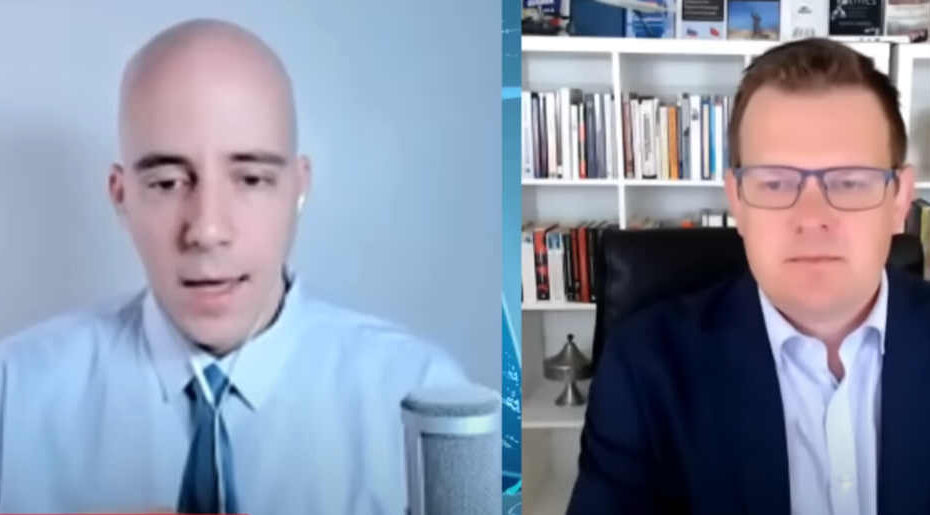
Read the full transcript of former US Marine and international security analyst Brian Berletic in conversation with Norwegian writer and political activist Prof. Glenn Diesen on “U.S. Involvement in the Thailand-Cambodia Conflict”, July 28, 2025.
INTRODUCTION
PROF. GLENN DIESEN: Hi everyone and welcome. We are joined again by Brian Berletic, former U.S. marine, geopolitical analyst and also the host of the new Atlas, which I will leave a link to in the description. So welcome back to the program.
BRIAN BERLETIC: Thank you so much for having me back.
The Historical Roots of the Border Dispute
PROF. GLENN DIESEN: So I could have had you now reside in Thailand, which fits very well the topic of today’s conversation, which is, well, more specifically the border conflict between Thailand and Cambodia, which many people, including myself, have, I would say, a poor understanding of. So I was hoping you can shed some light on this because it does have many layers.
You have this bilateral tensions or conflict. But as in all strategic regions, you will have always some interest by the great powers who will then often use these local conflicts to its own advantage. I was wondering if you could perhaps maybe start to outline the roots of this conflict. It’s often presented as a conflict over temples or how would you explain.
BRIAN BERLETIC: Is a border dispute? It’s rooted in French colonialism. The French, just like the British all around the world, left these ticking time bombs carelessly or deliberately drawing up maps that would ensure future division and conflicts after they left the region.
There are spots along the Thai Cambodian border that are in dispute. There are these ancient temples that are there that are contested and then the territory around the temples are contested. And this is because this issue has been brought over the years to international institutions, Western institutions posing as international institutions and their decisions were deliberately ambiguous to maintain an unresolved ticking time bomb of a border dispute.
And so the temples are recognized as Cambodian and the territory surrounding the temples are recognized as Thai. So you can see how deliberately this has been set up and left as a ticking time bomb. Nobody genuinely trying to resolve this issue would have left it that way otherwise.
The Real Drivers Behind Current Tensions
However, this is not why there is conflict taking place right now. This has been an issue, a border issue since the early 1900s. And for the vast majority of time, including especially we should focus on the 21st century, this has not been a point of contention. There has been vastly more peace in this area than conflict.
And it only flares up at very specific times. And it only seems to flare up at junctures where the US is trying to work a client regime into power here in Thailand or a US backed client regime is being removed from power here. This border issue, along with extremely ugly violence in Thailand’s deep south seas, separatist violence as well as internal pressure by NED U.S. national Endowment for Democracy funded organizations, they will create pressure within.
And so the US has an array of pressure points that they start pushing on when they’re not getting their way with Thailand. People have to understand there are nations the US controls entirely, like Ukraine, where it’s just an extension of US Power. There are nations that the US has almost no influence over at all, nations like Russia and China. But in between, there is a spectrum where nations lie, where the US has some influence.
But there are institutions, political parties, special interests within a country that are preserving their sovereignty against this influence, this influence the US is reaching in and taking inside the country. Thailand is one of those countries. So there are the military, the monarchy. There are special interest businesses that want to preserve Thailand and its sovereignty.
And the US has built up political opposition groups, political parties. There’s two big political parties led by two billionaires, Thaksin Chinawat, these two billionaires, and they are trying to get them into power, consolidate control over Thailand, and then pivot it away from China because it has a really close and growing relationship with China and turn Thailand into a battering ram against China like they have with the Philippines or as they have with Ukraine against Russia.
So it’s very important for people to understand it. It’s not as black and white as Cambodia has Chinese weapons. They’re backed by China. Thailand is using F16s in this conflict. Those come from the US so the US is backing Thailand. It’s simply not true. And at this point, both countries have a close relationship with China. And I guess we’re going into the geopolitical aspect. Big picture of this. Both nations have bought weapons from China. They have a close relationship with China. But Thailand’s relationship with China is much larger than with the US and much larger than Cambodia’s relationship is with China.
U.S. Influence Operations in Thailand
PROF. GLENN DIESEN: What is the inner working then of Thailand? How great influence is that of America? Because you mentioned they’re on the spectrum. Is it primarily then through these NGOs, or is it direct the business interest or financing of certain political leaders, or where does it get its influence from?
BRIAN BERLETIC: Yes, it is the National Endowment for Democracy, USAID, which are still active here in Taiwan despite the misconception that it’s been defunded and dismantled. They build up a network of political support for political parties the US Is also backing. So the US through the NED, has created media networks. They have infiltrated the education system through NED funding. And so they hold tremendous sway over the media and education. And then they also pour millions of dollars into these political opposition groups.
The Thaksin Chinawat, this, this billionaire who is de facto leader of the current ruling party in the coalition government in Thailand and also Tanah Tan Juang Rong Ruangit, which is a large party in opposition in the Thai parliament.
And I say de facto because again, the Thai military has tried to remove these US proxies at various points in recent years. There was a coup to oust Thaksin in 2006. There was another one in 2014 to oust his sister. His daughter is Prime Minister now, even though he openly runs everything illegally, I might add. And the Western media reports on this and they don’t really bring that point up.
So that, that is how they’re doing it. They’re doing it through information space and the political space. The Thai military is an independent institution that serves as a check and balance against complete political control being exercised over all of Thailand. And so there are certain red lines that cannot be crossed.
And that is how this current border issue flared up. Thaksin Chinawat, his daughter were making concessions to the Cambodian government regarding this disputed territory that the Thai people never agreed to or even were given an opportunity to debate and territorial concessions that the Thai military was simply not going to accept. And so they, what they did was they conspired with Cambodia to put the Thai military into a position where now they are forced to fight this conflict.
That is, it is a senseless conflict that does not need to be fought. And as I said in the past, 2008, 2011, these were other junctures where Thailand’s, if you want to call it a deep, deep state, was trying to remove this US backed client regime. And then suddenly this violence flares up. It is being coordinated between Thaksin Chinawat and the government of Cambodia. Hun Sen is President of the Senate, his son is Prime Minister of Cambodia and they are close family, friends and political allies with Thaksin China and his political organization here in Thailand.
People are claiming that there is some sort of fallout between the two. But again, in 2008 and 2011 they were very close together and this violence took place anyway. So the timing is very suspicious. And it looks like the US is using a very similar strategy on Thailand that it uses to other countries, strategies we’re familiar with. I’ve talked about the Rand Corporation and the Extending Russia Policy paper where they have all of these options to put pressure on Russia everywhere along its periphery, geopolitically, economically, socially and in every realm that they can. They do the same thing to other countries like Thailand. It’s just not covered as widely as of this conflict between the US and Russia.
America’s Strategic Objectives in Southeast Asia
PROF. GLENN DIESEN: Well, given that the main geopolitical or even geoeconomic rivalries between the United States and China. What is the main objective in for? Well, what does America need Thailand for in this regard?
BRIAN BERLETIC: Well, it’s not that the US needs specifically Thailand. It needs all of Southeast Asia the same way it needs Europe to transform into battering rams and use against Russia. They want to do the same thing here with Southeast Asia against China in the Philippines. They’ve already succeeded.
If they cannot politically capture a targeted nation, say like Myanmar, which is Thailand’s neighbor to the west, if they cannot politically capture it, they will then just create a violent conflict that creates a quasi failed state that denies a constructive partner for China to trade with, to invest in, to build up its Belt and Road initiative infrastructure across. And so that is the strategy that they’re using across all of Southeast Asia, including here in Thailand.
Current Military Situation and Casualties
PROF. GLENN DIESEN: What do we know by the way so far about the extent of damage or the casualties? Is it one side dominating the other or because the Thailand appears to have some military superiority, at least a stronger army and technical equipment. But how is the situation there and how durable is it for this to go on for a long time?
BRIAN BERLETIC: I don’t think historically these clashes do not go on for a long time, although this seems much more serious and more intense. If you, you know, Thailand is a larger country. Its population is four times greater than Cambodia. Its military is about three times larger, three to five times more powerful. The GDP is 12 times greater than Cambodia. There’s, there’s 70 million people here in Thailand. There’s 17 million people in Cambodia. Just to get, to give you an idea.
And the, the military forces, when you put them on paper, it is lopsided in Thailand’s favor. But the Thai military does not want to escalate this out of control. They were kind of forced into this conflict in the first place and they’re being very measured in the response to Cambodia.
Civilian casualties however, are higher on the Thai side because Cambodia is using multiple launch rocket systems, BM21s. These are GRAD rockets, They’re unguided rockets. They, they cause area effect damage, they fire it at a general area and then everything in that area gets damaged and people are maimed and killed in that area. They cannot hit a specific target with these systems and this is primarily what they are using.
And then Thailand responds with counter battery operations to target these rocket launchers. There’s positional fighting along the border. Troops are entrenched on both sides and so the majority of Thai casualties are coming from that type of fighting. The majority of Cambodian military casualties are coming from Thailand’s use of artillery and airstrikes to target these rocket launchers.
And then again because the Cambodian side is using indiscriminate multiple launch rocket fire, it’s hitting people’s homes. There’s footage of a 7-Eleven, a gas station, two hospitals have now been severely damaged by this rocket fire. Over 100,000 people have had to evacuate the area to refugee camps.
Essentially in terms of numbers, the last time I checked it was 14 civilians killed on the Thai side. Cambodia is not reporting on their side, although they have reported military losses, including a general who was killed over the last several days. So civilian casualties, it seems lopsided on the Thai side because of the indiscriminate rocket fire, military casualties on the Cambodian side. The actual, the fighting, the territorial game seems to be stalemated at the moment.
Western Media Coverage and International Positioning
PROF. GLENN DIESEN: Yeah. So. Well, something you posted, the BBC reporting on Thai airstrikes on Cambodia complemented with pictures of the attack on Thailand. So I thought this was an interesting spin, but how are Western countries besides the United States still positioning themselves in this conflict? Do they have as much skin in the game as the Americans?
Thailand-Cambodia Conflict Analysis
BRIAN BERLETIC: It’s hard to tell at these early stages. As we know, the Western media likes to play games. For example, at the beginning of the Arab Spring, even though a lot of these Western media organizations in years prior worked with the State Department to prepare the protest, when they started they pretended like they had no idea what was going on.
So there’s a lot of that. There’s this narrative that I see taking shape across the Western media trying to claim Thailand is US backed, Cambodia is Chinese backed. In some cases they are reporting that Cambodia struck first. And so what they’re trying to do is implicate China in this aggression against Thailand and then again the use of indiscriminate rocket attacks on Thai populated areas. And so you can see how they’re creating confusion.
They’re not sorting this out, they’re not zooming out and looking at the big picture. They’re not talking about the division here in Thailand between the military and the civilian government. The fact that the US has been behind the civilian government, this billionaire and his various political parties for the entire 21st century. He was Prime Minister as early as 2001 and the US was fully behind him even back then.
And so it’s a muddled picture and it’s a lot for people to wade through. And that’s why I’m posting all of this information even though there’s a lot of it. People need to understand the background. It’s a little bit more complicated than say the conflict in Ukraine where it is just outright a US proxy war with a US proxy against Russia. It’s a little bit more complicated and the goal is a little bit harder to define.
I would say the US simply wants to create conflicts. It sets the whole region back. This is a time where all of Asia is working together and rising together with China. We have countless US policy papers on the US State Department’s Office of the Historian website where they literally say “our goal is to keep Asia poor.” Well, how do you do that? You interfere internally and divide these countries internally against themselves and then you pit them against their neighbors. And that is exactly what this is a part of – that is the strategy they’re using.
Thai Public Perception and Media Coverage
PROF. GLENN DIESEN: Is it working though in Thailand? How do they see this? Again, I know this is hard to speak on behalf of all of them, but how is this portrayed in the media? Do they see this as, as you said, what America wants to sell as like a Chinese backed Cambodia which fuels some negative sentiments towards China or do they see America as a puppeteer? Is it mainly seen as a bilateral conflict between the Cambodians and the Thai or do you see their political leadership as being flawed as well? Or how is this being received on the Thai side?
BRIAN BERLETIC: It’s a good question. I would say it’s seen as a bilateral conflict and it is creating division between Thai people and Cambodian people and that is on both sides because I checked the media on both sides and there is a deliberate attempt to stir up animosity against the other state which for the region as a whole, for China or for all of Asia that will set things back and that is a deliberate objective of a conflict like this.
There are, there is a large group of people in Thailand who know the current government is backed by the US. There were actually protests not that long ago against this current US backed government. A lot of people were looking in the news and they saw the protesters out and they were wondering “are these NED backed?” No, these are the protesters that come out to protest against the NED backed political parties that are installed into power.
And there have been color revolutions here, NED backed color revolutions and then there have been Thai backed counter color revolutions. So it’s very important to sort out who is who and what’s going on when you see these protests. So there is a large segment of the population that knows there’s a little bit more to this, they know that the, I mean, of course the Cambodian government played a role in precipitating this, but they also recognize the current civilian government as complicit in this as well.
So they’re not just rallying behind this current government, although they are outraged when they see Thai people being burned to death in a 7-Eleven. Young people as clerks just trying to get their life started over a senseless conflict that was avoidable from the very beginning.
ASEAN Mediation and Ceasefire Talks
PROF. GLENN DIESEN: Well, there’s now ceasefire talks being mediated or they’re meeting in Malaysia. I assume this is because Malaysia is chairing the ASEAN. But to what extent is this moving forward if it doesn’t seem as if either side has much to gain from making this a prolonged war?
BRIAN BERLETIC: Yes, well, I think that the Thai military ultimately has an unofficial veto they get to exercise. So if they feel like there needs to be something accomplished militarily, then they will continue. And they are at odds with this civilian government. And the civilian government has no legitimacy because it has been built up and installed into power by foreign interests.
And so the representatives of this civilian government are in Malaysia. You’re correct, it’s because Malaysia holds the ASEAN chair attending. This is our representatives from China, but also from the United States. And you have to ask yourself, why China? It makes sense because this is their region. Why is the United States there? People have to ask themselves why? Why do they get an invitation and a table at these talks? Very suspicious, very telling, I would say.
I think, as has been the case in the past, this will be resolved bilaterally. But it depends on what the ultimate goal was of provoking this in the first place. If the US and the client regime they put into power or whatever deal that they made with Hun Sen in Cambodia, whatever that objective is, if they haven’t achieved it, then they may continue this regardless of what happens with these talks in Malaysia. So we have to keep a very close eye on it.
Trump’s Involvement and US Position
PROF. GLENN DIESEN: I see. Also Trump has put himself into this by calling for the sides to accept ceasefire. Of course, it’s always a bit unclear what is actually happening. He also took credit for stopping the conflict between India and Pakistan, even though what I hear from both India and Pakistan, that he had nothing to do with it. So it is everything with a grain of salt, I guess. But what is the US position now? Does it seek to reduce this or what is the United States doing to actually end the conflict?
BRIAN BERLETIC: Well, if you look at the US backed political parties, there’s one that’s in power, there’s one that’s in opposition because they’ve divided them and they’re using a good cop, bad cop approach where the one in power right now seems more moderate and reconciliatory with the interests here in Thailand. The other one wants to overthrow the military and monarchy. And so that’s how they’ve divided it and try to advance their agenda.
If you look at the US backed party in opposition, it’s called People’s Party, they want this. As soon as President Trump made his announcement, they immediately repeated it. They said, “This needs to end. We have to protect our trade with the United States.” And they want to rush through negotiations over the tariffs.
And as we see with other countries, the tariff deal the US is making is really just extortion. And then it’s a lopsided deal. The US gets all the benefits and the receiving country receives none of the benefits. They still get tariffs. They have to remove all trade barriers for the US and then they don’t even get to apply their own standards for incoming imports from the US.
So this is what Thailand is being told. “You need to wrap this up so you can do this trade deal.” So whether it’s intentional or not, it’s serving as a distraction away from that. And there’s no proper debates or opportunity to protest this tariff deal as it’s being pushed through at the same time this conflict is taking place.
China’s Role in the Conflict
PROF. GLENN DIESEN: And what is the role of China again? I thought it was interesting from the photos of the peace talks in Malaysia that you do have the United States and China sitting in the back. But what is the role of China in all this? Because again, they’re not having any bloc politics ambitions. So what are their contribution here?
BRIAN BERLETIC: Yeah, it’s hard to say. China, just as they always do, they’re not taking sides. They urge both sides to stop fighting, to reconcile. I think their message really has been to settle it bilaterally. They’re not appealing to Western dominated international organizations or institutions regarding this.
If you see China at a talk like this, it makes sense because this is something happening in Asia and they are the largest, most powerful nation in Asia and this affects them because they’re doing trade with both of these countries. They’re building infrastructure for the Belt and Road in Thailand. They’ve tried to build a closer relationship with Cambodia over the last couple of years. And this conflict hurts business. So I think that’s their interest – resolving this, returning peace and stability so that everybody can go back to pursuing collective prosperity.
Thailand’s Strategic Importance to China
PROF. GLENN DIESEN: What does China have to risk though or lose in Thailand because it has the Belt and Road initiative. I haven’t really been following what’s been happening with this, the canal, which were being discussed at some point. But how central is Thailand in this whole Belt and Road plan of China at the moment?
BRIAN BERLETIC: Yeah, so I will just give an overview of Thailand’s relationship with China because a lot of people have misconceptions regarding it. China is Thailand’s largest export and import partner, is depending on the year, the largest investor, the largest source of tourism to Thailand. More tourists come from China than all western countries combined. And then after that tourists from Asia. So Thailand, China, they’re interested in their bilateral relationship and also regional stability because both of their economies depend on it.
They’re also building a high speed rail line. This is already under construction for several years. They’ve already built a brand new Grand Central station in Bangkok that will serve as a terminal station for the first stage of this. It will connect to a high speed rail line that’s already in operation in Laos which is Thailand’s neighbor to the north. And then Bangkok will be connected to China’s high speed rail network through Laos. Once this is all completed and people see the F-16s and they say “well those are American made.”
But in the last 10 years Thailand has been buying far more Chinese military systems, weapons, munitions and also jointly developing weapons systems with China which is something the US doesn’t do with nations ordinarily. And so they have been replacing their older American hardware with this newer Chinese equipment including a fleet of main battle tanks, infantry fighting vehicles, armored personnel carriers, air defense, even naval vessels and the high speed rail line.
And there was also a submarine deal which would have been Thailand’s first modern diesel electric submarines. This has all been opposed by the US backed political parties. The one backed by Thaksin Shinawatra and also the other billionaire Thanathorn Juangroongruangkit. And this second billionaire, Thanathorn, literally openly opposes the Thai Chinese high speed rail line. He said it should be canceled. He advocated for the hyperloop which doesn’t even exist.
And he openly said the reason why is “we” – you know where he means Thai people – “we’re getting too close to China and we need to rebalance to the US, Europe and Japan” even though they have nothing to offer even remotely equivalent to the opportunities China is offering.
And so it is a huge and growing relationship. It is larger than the relationship Thailand has now with the United States. It’s also much deeper and more significant than any relationship Cambodia has with China, considering the size of its GDP, its population and the political situation there, which is one single family runs the whole country and there are no checks and balances. And if you go to Cambodia, it really shows the tragic results of that arrangement.
So I hope that gives people a clear overview of what is actually happening now in the 21st century versus people’s perceptions, which are mainly based on when Thailand was hosting US troops during the Vietnam War 50 years ago.
PROF. GLENN DIESEN: Just as a last question, where do you see this going based on, well, the actors in the game here, how this has played out in the past. Do you think it’s going to come to a rather quick end or do you think some of these goals in terms of decoupling Thailand from China would be successful?
Regional Implications and Historical Parallels
BRIAN BERLETIC: Again, it’s hard to say because it all depends on what this part of the US Strategy is trying to achieve. Ordinarily, Thailand sees this, the US is obviously putting pressure on them. The military will have to make some sort of concession to get back to peace and stability and something close to a status quo.
And I think they will try to do that with the thought in mind that in the long term time favors Thailand, Southeast Asia, all of Asia, including China. And short term concessions to the US over time can be reversed if things keep going in the general direction that they are and if this conflict continues because the US wants it to, or they have convinced Cambodia to.
Cambodia spent weeks preparing for this operation before they launched it. And again, it’s much more serious this time than in the past. It’s hard to say how far they will go with this. And in many ways it’s very reminiscent to the attack Georgia, Georgia’s attack on Russian peacekeepers in 2008 and the way the US used Georgia to try to pressure and destabilize Russia. So I think it’s very similar to that.
Hopefully it’ll be over soon, like within a few days. Hopefully. But we’ll just have to keep an eye on it because of the unprecedented nature of geopolitics today, the way the world has been shifting away from US dominance.
PROF. GLENN DIESEN: Brian, thank you so much for the input. I do think it’s growing importance in the world. It’s a region with growing importance in the world and something like this could have real ramifications, not just for these two countries, but beyond. So thank you again for shedding some light on this.
BRIAN BERLETIC: Thank you.
Related Posts