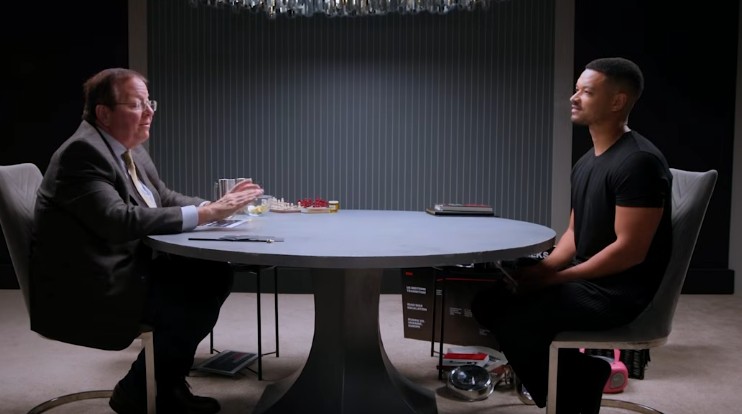
In this Diary Of A CEO interview, political scientist Robert Pape tells Steven Bartlett why the 8 weeks after the US midterms may be the most dangerous of our lives, as violent populism at home, possible new US strikes on Iran, and Putin’s threatened winter escalation in Ukraine all come together. Pape explains the “escalation trap,” the 3-day plan modeled on Instant Thunder, the Insurrection Act, the risk of World War III, and the 3 firebreaks he believes can stop the spiral. Read the full transcript of this interview which was recorded on October 29, 2026 below:
The 8 Most Dangerous Weeks of Our Lives
STEVEN BARTLETT: (00:01:39 – 00:02:14) Robert Pape, every time I speak to you, I feel like I start with the same question, but it is the question that is front of mind for me, which is what the hell is going on in the world at the moment?
ROBERT PAPE: (00:02:15 – 00:03:24) What’s going on is we are getting deeper and deeper into an escalation trap and we are moving up rungs in escalation where risk is growing and we are about to enter the 8 most dangerous weeks since this war began, and they may become the 8 most dangerous weeks in our lives. We are going to see the coming together of 3 fundamentally dangerous issues.
We’re about to see the US midterms where the voting has now stopped, but we are now in the process of counting the vote, certifying the vote, and in 2 months, and it will take 2 months, seating the victors. That’s the transfer of power where the real danger zone, of political violence, what I call violent populism, is starting now. It began the moment the voting stopped and the counting began, because that’s the transfer of power.
Understanding the US Midterms
STEVEN BARTLETT: (00:03:25 – 00:03:30) Okay, so most of my audiences around the world probably won’t know, including myself, what a midterm is.
ROBERT PAPE: (00:03:31 – 00:04:02) In the presidential system in the United States, we have 4-year terms for our US presidents. Then for our Congress, we hold an election every 2 years, and we have 2 houses in our Congress. Sometimes it dovetails with the election of the president, in which case we just call it the general election. But when the president is not up for reelection, we call it a midterm, meaning midterm of the president’s term.
STEVEN BARTLETT: (00:04:02 – 00:04:09) So let me explain this to you and you tell me if I’ve got this. There is this House of Representatives and then there’s the Senate.
ROBERT PAPE: (00:04:09 – 00:04:09) That’s right.
STEVEN BARTLETT: (00:04:10 – 00:04:14) And both of them work to vote laws into power.
ROBERT PAPE: (00:04:14 – 00:04:14) That’s right.
STEVEN BARTLETT: (00:04:15 – 00:04:36) And as we stand here right now, the Republicans, Trump’s party, has a majority in both. So it’s quite easy for them to pass new laws. What you’re saying is in these midterms that are coming up, there’s a prospect that Trump might lose his power in the Senate and in the House, which would mean he wouldn’t be able to get his laws passed very easily.
ROBERT PAPE: (00:04:37 – 00:05:37) It’s not just about passing laws, Steven. It’s about a system of check and balance. The way the Constitution was set up is that the Congress and the president, and then also the Supreme Court, which is not an elected body, they check each other. So what’s supposed to moderate the policies in the United States where we don’t go to the extremes is when different parties control the Congress, and the president.
When you have the same party controlling both houses of Congress and the president, by definition, there’s very little check and balance on the president. The president can pretty much do what the president wants, especially in international affairs, but also very heavily in domestic. That’s why the president’s power is going to be severely checked if Republicans no longer control the House and the Senate.
Violent Populism and the Transfer of Power
STEVEN BARTLETT: (00:05:38 – 00:05:41) So why is this the 8th most dangerous weeks in your view?
ROBERT PAPE: (00:05:41 – 00:06:49) It’s the 8 most dangerous weeks because political violence, especially in the era of violent populism when tens of millions of Americans support political violence on both sides of the aisle, the most dangerous time is the transition of power. And we saw this 6 years ago with January 6th.
It’s important to remember that in November 2020, President Biden was elected. However, That did not prevent President Trump from taking steps to prevent that transfer of power. We saw it come to a head on January 6th, and that occurred over a 2-month process. It was when the voting stopped and the counting began, and then the certification of the votes began, and then the transfer of power.
That was the most dangerous moment that we have seen in American domestic politics since the Civil War. We are heading to a very similar situation again, and it’s worse now.
STEVEN BARTLETT: (00:06:50 – 00:06:50) How do you know?
ROBERT PAPE: (00:06:51 – 00:07:14) For 30 years, I’ve studied political violence around the world, but for the last 5 years, Steven, I have devoted myself to understanding what’s happened in the United States. We are seeing a transition of power in the context of literally this fact.
STEVEN BARTLETT: (00:07:15 – 00:07:15) What does that fact say?
ROBERT PAPE: (00:07:15 – 00:10:25) That fact is that today, as of a month ago, over 40 million Americans support the use of the US military to suppress Democratic protesters against the Trump agenda. Think of this as 40 million Americans who support political violence for Trump, And 60 million Americans, over 60 million, support the use of force to prevent Trump from being president.
I’ve been doing these national representative surveys for 5 years.
And we are coming into the most volatile election in our lifetimes, really, because this really will determine the fate of President Trump’s administration for the final 2 years. If it turns out that at the end of these 2 months that the Democrats control one, or especially if they control both the House and the Senate, this is going to mean the virtual political destruction of the Trump presidency.
The Democrats in control of both houses of Congress, they will not only have the power of subpoenas to be able to compel on penalty of going to jail and prison testimony from members of the Trump administration, they’ll have the power of impeachment. And it’s not just impeaching President Trump, it’s impeaching the members of his cabinet. Think Secretary Hegseth, think the Attorney General, think the Department of Homeland Security Secretary.
And if in fact they also control the Senate, now with just a few more Republican votes, and there are many disgruntled Republicans already and many Republicans that have moved away from President Trump in recent months. They have the possibility of literally removing them from office. That would create a spiral down. There’s no political bottom there, Steven. This is not like, “Oh, it’s just once you get rid of one cabinet secretary, everybody calms down.”
What we are witnessing is a true watershed period for the political power of President Trump. And that means also the power of the MAGA agenda, whether or not there will be mass deportations in the country.
STEVEN BARTLETT: (00:10:26 – 00:10:27) How would that be impacted by the midterms?
ROBERT PAPE: (00:10:28 – 00:10:54) If starting in January, there are months and months of turmoil in the Trump administration where literally the heads of the cabinet offices, including the Department of Homeland Security, are on the block to be removed. The idea that you’re going to have consistent operations within the departments. Very, very, very difficult, Steven.
Three Dangerous Issues Converging
STEVEN BARTLETT: (00:10:54 – 00:10:57) What do you think is going to happen then over these 8 weeks?
ROBERT PAPE: (00:10:57 – 00:12:09) It starts with the midterms. It starts with the issue of violent populism. It starts with the issue of the consequences of President Trump’s presidency. But it doesn’t stop there because you see, this is not happening in isolation. It’s happening during the Iran War.
And so what happens in this midterm transition period could also easily dovetail with more escalation in the Iran War. And in fact, President Trump has promised over and over and over again that he will escalate after the elections. Well, now we’re after the elections.
And at the same time, as if that was not dangerous enough, we have a third issue, which is that President Putin in Russia is threatening to escalate strongly against civilian infrastructure in Ukraine, to target electric power in Kyiv, in Kharkiv, and in Odessa in a dramatic way.
STEVEN BARTLETT: (00:12:09 – 00:12:10) I thought they were doing a deal.
ROBERT PAPE: (00:12:10 – 00:12:34) President Putin has done nothing to say. That this is off the table. And there’s every sign, and in fact growing signs by European governments, that they’re extremely worried about what’s coming in the Ukraine war, that there will be, as the phrasing is now called, a “dark winter” in Ukraine.
Week by Week: Trump’s Post-Election Iran Strike Plans
STEVEN BARTLETT: (00:12:35 – 00:12:36) So these 8 weeks.
ROBERT PAPE: (00:12:36 – 00:12:36) Yes.
STEVEN BARTLETT: (00:12:37 – 00:12:39) Talk me through them week by week.
ROBERT PAPE: (00:12:39 – 00:13:31) Let’s start with the beginning. Which is the election results. And now the question is, will President Trump accept the election results? Or if they ultimately go against the Democrats, will the Democrats who are built up this giant set of hopes, expectations of victory, would they accept not taking control of Congress? This is really step one.
And this is coming right on the heels of another step. President Trump has promised that the United States and Israel will conduct strikes against Iran, heavy strikes, right after the midterms.
STEVEN BARTLETT: (00:13:31 – 00:13:43) When did he say that? I was looking for his quotes on this and he seems to be pretty cryptic in saying that. Trump described it as “decision time,” stating he faces a choice between reaching a deal or taking action to finish them off.
ROBERT PAPE: (00:13:44 – 00:13:44) Yes.
STEVEN BARTLETT: (00:13:44 – 00:13:50) And asked directly by reporters whether strikes would resume, he remarked that “anything is possible” and declined to take options off the table.
ROBERT PAPE: (00:13:50 – 00:14:48) As he is putting on the table the distinct possibility of him deciding to do these strikes, he’s taking serious steps with his administration to literally prepare for the strikes. Step number one, that’s a costly step, is to remove embassy personnel, the families of the embassy from the region. This has happened in Saudi Arabia. This has happened in multiple of the frontline Gulf states.
The second big thing that’s happened is he has asked the military for a detailed set of attack plans. These detailed plans, we have the leaks of them. He has not just had the plans drawn up, but he’s given the orders for CENTCOM that within maximum 96 hours of his go code, They are to execute the plan.
The Escalation Trap: Chess vs. Roulette
STEVEN BARTLETT: (00:14:48 – 00:14:57) So I’ve got your book here, Bombing to Win: Air Power and Coercion in War, and you actually spend a long time modeling what would happen if the US decided to bomb Iran before they did.
ROBERT PAPE: (00:14:57 – 00:14:58) That’s right, 20 years.
STEVEN BARTLETT: (00:14:58 – 00:15:28) And what you said to me in these previous conversations we’ve had has played out in a really very interesting but very accurate way. Actually, when we first met and you first told me about this idea of an escalation trap and that the US might be stuck, I didn’t really understand that idea. The US military is so big. Of course they would just go in there and they’d win. But you were right.
And so I ask you now, we’re now, I don’t know, 5, 6 months into the war. How does this end?
ROBERT PAPE: (00:15:29 – 00:15:59) An escalation trap, Steven, is when a strong country like the United States and Israel attacks a weaker country and they have tactical success. The bombs hit targets, the bombs kill leaders. That the weaker country gains power. And in this case, that happened almost immediately as Iran gained heavy control of the Strait of Hormuz, and with it, heavy control of 20% of the world’s oil.
STEVEN BARTLETT: (00:15:59 – 00:16:00) What happens next?
ROBERT PAPE: (00:16:00 – 00:16:30) What happens next is humiliation for the side that started that attack. This might be a good time, Steven, to let me explain what a lot of people think is strategy. And a lot of people think that what strategy is, Steven, is a chess game. But let’s play that out and show you what the escalation trap looks like in a chess game. So this is white, and white plays an opening move.
STEVEN BARTLETT: (00:16:30 – 00:16:32) Is that America in this analogy?
ROBERT PAPE: (00:16:33 – 00:19:56) This is America. This is President Trump. White plays an opening move, and red then makes a move. And what does white do? Takes a pawn. Now it looks like White is ahead. Now Red makes another move, and let’s just say Red brings out a knight, of course threatening the pawn. And now White makes another move, putting the bishop here, thinking threatening the queen. But as we know in chess, the queen, the red queen, can now just simply take the bishop.
The opening has opened. There was an initial gain, but what happened very quickly is red is now more powerful than it was before. At this point in a chess game, Steven, what happens is white offers red a draw. Trump and Israel started this. Iran got ahead. And so everybody’s been saying for months and months and months, “President Trump, just take a deal.” Well, that would make perfect sense if what we were doing is we were playing a chess game.
International politics, especially when a strong power is ahead, is not a chess game. Let me explain what I mean by that. A better analogy for international politics is roulette. You see what happens in a game of roulette, and anybody who’s been to the casino will know this. You can go and you see that, “Oh my goodness gracious, the odds of me winning here if I bet on a number, they’re not very good. But the odds, if I just decide I’m going to bet on, say, red, I’m just going to put a bet down.”
And what happens is, it’s not quite 50-50. The house still has an advantage, but nonetheless, a lot of roulette players think, “Well, I’m going to start out there.” But what happens, Steven, when they lose? Now you’re the house. You’ve just won there. Now what happens is a lot of gamblers will suddenly dig in deeper. “I’m going to double down,” or in this case, “I’m even more than doubling down, and I’m going to bet even more on red because since I lost on red before, surely it’ll come up red again.”
But now the wheel spins and guess what happens? It comes up black again. Now the house has taken even more chips. Now I’m way behind. And you know what I also did here, and a lot of gamblers do that? They made a deal with a bookie and they said, “You know what, let me borrow some of them chips here because I’m going to get it back.”
And what are they going to do? They’re going to bet an even bigger pile of chips. They’re going to bet all those chips on red 36 because see, now the odds are riskier, but if they win, and again, they’re betting on red, they’re hoping, they’re finally, their number’s finally coming due. They’re going to make back the money they lost and even more money.
At each rung, President Trump has made a bet. He’s bet that if he attacks the Supreme Leader, kills the Supreme Leader, this will weaken Iran. It didn’t work. He lost the chips. So he bet on a 6-week air campaign. And then he thought, “Okay, well, I’m going to increase. I’m going to go not just for 2 or 3 days of bombing, I’m going to go for 6 weeks of bombing.” He lost on red again.
STEVEN BARTLETT: (00:19:56 – 00:19:57) How did he lose that?
ROBERT PAPE: (00:19:58 – 00:20:15) Because Iran did not concede and kept control of the Strait of Hormuz. That is what is wrecking and putting the gas prices up high. So as time has gone on, it’s literally the chips that he is risking here are American gas prices.
STEVEN BARTLETT: (00:20:16 – 00:20:17) And American lives.
ROBERT PAPE: (00:20:17 – 00:21:07) And American lives and American interest rates. All of that is the equivalent of the chips that we are But now he’s bet again on the blockade. And guess what? It’s been 6 solid months, Steven, and he’s lost again. Because what’s happened after 6 months? Iran has not caved. It’s not collapsed. Those gas prices are going up. This is why he’s in so much pressure in the midterms.
But it gets worse than that. So now, Steven, he’s lost again. Take these. Now you’re the house. You’ve got all those chips. Now he’s way behind, and he’s got a deadline. Because in The Gambler’s deadline, all these chips that I’ve just been playing with, I’ve borrowed them. I borrowed them from the bookies.
STEVEN BARTLETT: (00:21:07 – 00:21:11) Are you saying that he’s borrowed the chips from somewhere?
ROBERT PAPE: (00:21:11 – 00:21:35) He’s borrowing the chips, and in this case, the chips are the political support of his party, MAGA, and the control of the party. In order to win back everything, because come January 3rd, there’s going to be a new Congress. That’s the equivalent of the bookies wanting all those chips back in your hand.
STEVEN BARTLETT: (00:21:36 – 00:21:41) So you’re saying with this last bet that he’s making, because he started the war in Iran—
ROBERT PAPE: (00:21:41 – 00:21:42) That’s right.
STEVEN BARTLETT: (00:21:42 – 00:21:46) Sentiment towards the Republicans and Trump has gone down, as we’ve seen.
ROBERT PAPE: (00:21:46 – 00:21:48) Hugely down. Lost all those chips in your hand.
STEVEN BARTLETT: (00:21:49 – 00:21:55) And now Well, senators and congresspeople are going to potentially lose their jobs on the Republican side to Democrats.
ROBERT PAPE: (00:21:55 – 00:22:07) That’s right. They’re going to lose their jobs. And as they lose their jobs, they’re not going to want to support him in the future. They will pull away from him more and more and more.
Why Trump Won’t Just Walk Away
STEVEN BARTLETT: (00:22:08 – 00:22:20) Why doesn’t he just— he’s got 2 years then. Is it not conceivable that he just decides to relax for 2 years? “Okay, I can’t get laws passed and I can’t get things done, but I could just— I’ll chill at the White House.”
ROBERT PAPE: (00:22:20 – 00:22:54) Yes. So there’s 2 big problems with that idea, Steven. Problem number one is presidents don’t just abandon their party, their agenda, and their legacy. We see this not just with President Trump and MAGA, but we saw this with Lyndon Johnson in the Vietnam War.
Lyndon Johnson went through a very similar game of roulette where he kept doubling down as each rung of the escalation ladder cost him more and more support. As the American people were turning against the war, he kept going up the ladder.
STEVEN BARTLETT: (00:22:54 – 00:22:55) Chasing his losses.
ROBERT PAPE: (00:22:55 – 00:23:50) He’s chasing his losses, hoping even though each risk is riskier, each bet is riskier, he sees it as the only way to dig out of this doom loop that he is in. And there are deadlines. The equivalent of the bookie wanting their money back in 2 weeks is the election. And it’s not just the day of the election, it’s the elections mean transfer of power where the whole legacy comes unglued. And the legacy of the losing president is the worst of all.
And so this would mean President Trump, when you say, shouldn’t he just go to St. Andrews to play golf? He becomes Jimmy Carter and Lyndon Johnson combined, the worst president that we’ve ever had in anything, any of our lifetimes. This is a huge problem for any president to just simply absorb.
STEVEN BARTLETT: (00:23:51 – 00:23:52) So that was the first point.
ROBERT PAPE: (00:23:52 – 00:25:07) The second point is the crypto. So President Trump has made enormous money for himself and his family on various investments, and a lot of it is in crypto. And crypto is ultimate confidence investment. So that what you have with crypto, the final gold piece here is this can go up, poof, when President Trump’s power goes up.
So the problem with crypto and his money in crypto is that this is heavily dependent on President Trump’s power. And when President Trump’s power goes poof, a lot of crypto, not all of it, but a lot of it will go poof. And that will be true not just for him personally, he’s 80 years old, but for his family, for his friends, those people that have made enormous fortunes on this.
So when President Trump looks at this, this isn’t just ego humiliation, this is massive loss in history, and this is also massive personal financial for his family.
STEVEN BARTLETT: (00:25:08 – 00:25:26) His family are quite involved in the gambling laws and prediction markets in the United States as well. I think his son is actually on the board of 2 of the big prediction market companies, and as they’ve sort of held back the laws and regulations so that prediction markets can exist. So I understand it from that perspective as well, that they do have financial interests that could be at risk.
ROBERT PAPE: (00:25:26 – 00:25:32) And what happens with the gambler here? They keep going until what? They lose it all.
STEVEN BARTLETT: (00:25:33 – 00:25:33) So—
ROBERT PAPE: (00:25:33 – 00:25:35) They lose it all.
STEVEN BARTLETT: (00:25:35 – 00:25:35) In Iran.
ROBERT PAPE: (00:25:36 – 00:27:03) So let’s go back to the board. Now that we understand the escalation trap that President Trump is in, what we can see is there’s reality to why he wants to escalate and double down again, because he is looking for a way to turn around this pessimistic view of President Trump as he can’t win the war.
This is now critical because if he doesn’t find a way to hold onto the final set of chips of MAGA support, which depends on him being the winner, he’s going to lose those chips going forward. So this is the big pressure, the pressure I call the pressure of humiliation for the loser to keep doubling down. And this is why this step is a serious risk as we go forward.
He hasn’t given the go code yet to actually strike Iran. And we’re going to play out the rest of this because once we see where this could all head, it’s important to understand that I’ve advised every White House since 9/11, and I’ve seen that in the White Houses, Even though there are heavy commitments to policies, until the final go order is given, it is possible to reverse course.
The 3-Day Plan and Instant Thunder
STEVEN BARTLETT: (00:27:04 – 00:27:07) I’m pretty sure he’s learned that now, that just dropping more bombs doesn’t work.
ROBERT PAPE: (00:27:07 – 00:28:55) This is the mistake that many folks are making in the media because they have gone from being white belts to green belts with their strategy, but they haven’t gone to brown belt and black belt. The leaks that are coming out about the 3-day plan are consistent. The 3-day plan is— President Trump is describing here the plan that’s on his desk is a plan to hit targets in Iran over a 3-day period.
And as soon as the media, I believe, saw the word 3 in the 3-day, “Oh, this can’t be anything. This must be a truly minor issue.” But what we’re talking about in the target sets that are coming out are a whole new level of leadership targeting, a level of economic targeting hitting refineries, economic power, and bridges.
And this looks to me an awful lot like what was Instant Thunder, the 3-day, it was supposed to only be a 3-day, plan that opened the war against Iraq in 1991 that was targeting 84 leadership and infrastructure targets where it was meant to paralyze Saddam Hussein’s regime.
This is exactly the air campaign that has been at the heart of many air strategists since the 1991 war. This is when I am debating air strategy. I am literally debating the people who came up with that plan originally and are still pushing that plan.
STEVEN BARTLETT: (00:28:56 – 00:29:34) It says the 3-day plan is a Pentagon military contingency for a rapid, high-intensity aerial campaign against Iran if post-election negotiations break down, presumably the midterm elections. It is designed to hit missile sites, drone launch hubs, IRGC command centers, and energy infrastructure over 72 hours to force capitulation without triggering a prolonged ground war.
Trump paused major strikes until after the November 3rd midterms, but he has explicitly characterized the post-election window as a final choice to either strike a diplomatic deal with him or initiate these strikes to finish it off.
ROBERT PAPE: (00:29:34 – 00:29:46) That’s right. This is much more than the word 3 days would communicate. What you just read there is exactly the full set of Instant Thunder.
STEVEN BARTLETT: (00:29:48 – 00:29:53) If he does this 3-day plan thing, does it fail? And if it fails, what happens?
ROBERT PAPE: (00:29:54 – 00:30:23) It fails. And then what happens is we go to stage 3, which is a 3-day bombing campaign becomes a much longer bombing campaign. So the 3-day bombing campaign drags on, Steven. This is exactly what happened with Instant Thunder. It was planned as 3 days with an extra 3 days of backup strikes, but it went on for 43 days. Never did succeed in paralyzing the military of Iraq.
STEVEN BARTLETT: (00:30:23 – 00:30:32) And the hope here, the success, as far as Trump would see it, would be that they come to the table to make a deal to reopen the Strait of Hormuz and to vouch never to have nuclear weapons.
ROBERT PAPE: (00:30:33 – 00:33:45) No, not only that. That’s part of the deal. See, once you do this, there’s nobody to come to the table. You are destroying so much of the leadership stratum that the idea of coming to the table, President Trump has occasionally said he’s not sure who to negotiate with now. Once you’re in day 6 or 7 of this, you are really not going to know who to negotiate with because the whole point of this plan, Steven, is to paralyze the government so it cannot function.
Their goal of the plan is not to tilt the balance of hawks and doves inside of the government the way a lot of people, again, who just kind of generally know about bombing but don’t know the full details of the way the strategies work. This is a plan, Steven, that is meant to completely paralyze the body of the military. And then the problem here is because you’ve paralyzed it, who are you going to negotiate with? No, that’s not likely the next set of steps.
You see, once you do this, now if you haven’t fully paralyzed the military, and that’s what I’m telling you is very likely, what’s going to happen is the Iranian military that is left, and there’s going to be quite a bit of it left with a lot of power to strike back, they’re going to start lashing back and they can lash back in a whole variety of ways, Attacks against airports in the region.
This is the time when Saddam Hussein, after we did this, this is when he bombed our sites in Riyadh. So this is when US personnel were killed in Riyadh. And in fact, we could never stop the Scud missiles of Iraq. And so what happened is, so we’ve seen the breaking of this threshold. This is why this is credible. It’s because we’ve seen the beginning of this with Iran’s ally, the Houthis, which is the group in Yemen.
So what happened is as the escalation between Saudi Arabia and the group in Yemen called the Houthis was escalating, the Houthis directly with missiles struck Terminals 3 and Terminals 4 on separate days, in the Riyadh International Airport, killing over a dozen people and wounding over 300 people. And this is the first time in this war that we saw the direct targeting of civilians, intentional targeting of civilians.
And it wasn’t just one day, it was multiple days. And what I’m pointing out is this is the pattern that you would expect as this progresses so that what you’re doing is you’re getting deeper in. And who are you going to communicate with to tell them to stop?
STEVEN BARTLETT: (00:33:46 – 00:33:46) What’s number 6?
ROBERT PAPE: (00:33:47 – 00:34:26) Number 6. Now we need to understand that what’s happened, Steven, is look how deep we’ve gone in. We started with what was supposed to be just another limited strike. This time, however, it’s building its own momentum. And as it builds its own momentum, Now we have that decentralized structure in Iran striking back in ways it decides on its own.
But there’s another problem. That other problem is these attacks, Steven, are likely going to kill thousands and thousands of civilians in Iran.
STEVEN BARTLETT: (00:34:26 – 00:34:27) Which attacks?
ROBERT PAPE: (00:34:27 – 00:34:58) The 3-day and the 6th day and the continued attacks here on these Instant Thunder style airplanes. Is exactly the air plan we executed against Saddam Hussein in ’91, but it was against his regime. It was against the economic infrastructure. We hit his oil refineries, we hit his electric power, and we killed somewhere between 5,000 and 15,000 civilians in doing this plan. This is not a plan where no civilians die.
Inspired Attacks and the Tel Aviv Plane Incident
STEVEN BARTLETT: (00:34:59 – 00:35:02) So you’re saying that lots of people are going to die through this period. Lots of people are going to die here.
ROBERT PAPE: (00:35:03 – 00:36:45) And that leads to inspired attacks. What an inspired attack is, is a terrorist attack that is not command directed by a government. It is not coming from the Supreme Leader. The Supreme Leader may even be dead as a result of all this. An inspired attack is what we saw in the Tel Aviv plane incident.
So we just literally saw, the last time I was on your show, I was warning you that we will likely see civilian attacks. It could well be inspired attacks. It’s because in the aftermath of the 10 million plus who came out to support the Supreme Leader, they called for revenge. That is exactly the pool of sentiments that is likely to inspire individuals on their own. I don’t mean command directed by Iran, on their own to carry out terrorist attacks or suicide terrorist attacks.
Well, what happened in the Tel Aviv incident, this was a copilot who the plane took off from the airport in Dubai, and it had about 170 civilians on the airplane. About 100 of those civilians were Israelis. And after 2.5 hours, that copilot took a hatchet that was in the cockpit. Most people didn’t even know there was a hatchet in the cockpit. And he tried to take control of the plane. He tried to kill the pilot, and he was only 30 minutes from Tel Aviv. So I’ve studied 8,000 suicide attacks in detail.
STEVEN BARTLETT: (00:36:45 – 00:36:46) Steve, you’ve written a book about it.
ROBERT PAPE: (00:36:46 – 00:36:48) 2. You’ve got 2 there.
STEVEN BARTLETT: (00:36:48 – 00:36:49) Yeah.
ROBERT PAPE: (00:36:49 – 00:37:23) Yeah. Cutting the Fuse as well. So studying all those attacks, once I saw exactly the location of where the copilot tried to take control of the plane, that told me very heavily this was likely a suicide attack. Because if he just wanted to kill himself, the copilot, he likely would have done that almost immediately after the plane had taken off. He wouldn’t wait to just get so close to Tel Aviv that then he could have the possibility of driving it into a target in Tel Aviv, killing people on the plane and people on the ground in Tel Aviv.
STEVEN BARTLETT: (00:37:23 – 00:37:39) And looking at some of the reports here from CBS News, they say various sort of Israeli officials have linked it to Iran. But Trump also said, “Based on what I’m hearing, the copilot had direct links to Iran,” warning that any state actor behind the incident would face devastation.
ROBERT PAPE: (00:37:39 – 00:38:51) Well, so we don’t know for sure it wasn’t command directed, Steven. I’m telling you that it wouldn’t need to be command directed. Some of the best information we have has come from the pilot himself. So now that he’s healing, he’s giving interviews here, and he has described A situation where everything is fine in the flight. There’s no sign whatsoever that he’s sitting with a mentally disturbed individual looking to somehow off himself or so forth.
And then suddenly, he feels a club on his head. Then he realizes and starts to put two and two together. And that’s when he makes every effort to keep the door open. And essentially, what you saw here was— we can’t say it’s 100% certain it was a suicide terrorist attack, But my estimate is that it’s gone from being, say, 75% certain to 90% certain that this is an individual who wanted to not just kill himself, but to kill everybody on that plane, and to take control of the plane just in time to be able to ram it into Tel Aviv.
STEVEN BARTLETT: (00:38:51 – 00:38:53) The pilot said, “The morning started very normally.”
ROBERT PAPE: (00:38:54 – 00:38:54) Yep.
STEVEN BARTLETT: (00:38:54 – 00:38:59) “The first officer asked to pray. Then struck him from behind with the crash axe.”
ROBERT PAPE: (00:39:00 – 00:39:12) Yep. And notice the pray. So this is a very common religious suicide attacker. They commonly will go through a certain ritual before they do their suicide attack.
STEVEN BARTLETT: (00:39:13 – 00:39:54) The pilot thought that a heavy piece of equipment had fallen on his head before realizing he was under assault. As his vision tunneled from blood loss, his sole focus was releasing his seatbelt and crawling towards the cockpit door release. He explained that each burst of physical effort caused him to fade in and out of consciousness. He noted the terrifying sensation of feeling the aircraft plunge violently nose down while he was on the floor.
Believing he would not survive, he pushed through to unlock the reinforced door before collapsing face down, which allowed other passengers to see him and rush in. And then I think from what I heard in the report, reports, passengers rushed through the door, restrained the copilot, and I can’t— I don’t know who landed the plane. Was the pilot able to land it?
ROBERT PAPE: (00:39:54 – 00:40:38) Oh, no. There was actually somebody on board who was a pilot, had the knowledge to land the plane. This was an unintentional backup pilot that just happened to be there, and that was extremely fortuitous. But what you see here, Steven, are the telltale signs, because if it was suicide, then you would’ve expected it to happen right away.
And if it was a suicide attacker, the first thing that would come to their mind is if they took control of the plane 2.5 hours from Tel Aviv, remember it’s a 3-hour flight to Tel Aviv from Dubai. If they took control of the plane too far out, well then that would create the opportunity for Israel to scramble jets to prevent it from striking Tel Aviv.
STEVEN BARTLETT: (00:40:39 – 00:40:41) So you think that they were trying to crash the plane into Israel.
ROBERT PAPE: (00:40:42 – 00:40:46) Yes, I think it’s very strong. And this is what I mean by inspired attacks.
STEVEN BARTLETT: (00:40:46 – 00:40:47) Okay.
ROBERT PAPE: (00:40:47 – 00:40:55) When I saw the first command-directed attack, that’s the Houthis on civilians. We’ve seen an actual inspired terrorist attack that has already happened.
STEVEN BARTLETT: (00:40:55 – 00:40:56) What comes next?
ROBERT PAPE: (00:40:56 – 00:40:57) Well, let’s keep going.
How the Crises Feed Each Other
STEVEN BARTLETT: (00:40:59 – 00:42:58) So why did you jump up to the other level?
ROBERT PAPE: (00:42:58 – 00:43:03) Because we need to see the interactions of— this is a crisis that’s unfolding.
STEVEN BARTLETT: (00:43:04 – 00:43:04) Okay.
ROBERT PAPE: (00:43:04 – 00:44:00) See, what you are seeing here is that the election results are creating incentives to go down this road, but this doesn’t just stay on its own path. It starts to play a role and come back up and start to affect events here. Because as this is occurring, we need to expect gas prices are going up. We need to expect diesel prices are going up. We need to expect the housing market, which is already frozen up is going to freeze up even more.
So this, as we start to see the interaction here or the effects, the effects are not simply what’s happening in Iran or even what’s happening in the economy. And this will be in the world economy. It’s going to be what people think. And we just got a big lesson in what people think in France. And what happened in France wasn’t just a one-day problem and it wasn’t just a one-off. It’s started to spread to other parts of Europe?
STEVEN BARTLETT: (00:44:01 – 00:44:01) The riots.
ROBERT PAPE: (00:44:01 – 00:45:14) The riots. And a big part of the riots, not the only reason for the riots, so we have some actual opinion poll data on this, so I’m not just speaking generally, but a big part of the reason for the riots are the rising prices due to the Iran war. Well, this is exactly recreating and making those dynamics worse.
So now we’re back over to the possibility here of protesters and federal agents starting to clash. This is a moment when they’re still counting ballots. So now there’s more and more protests occurring, but it’s also at a point where the ballots have not been certified yet. So notice where we are. We have moved through November and we have nowhere near come to the end of transfer of power to the new Congress.
So we have this whole very contentious election, we have the process here where we still have the counting and the certification of the ballots. We have that occurring not in isolation, but in addition to an international set of events that are just—
What Putin Wants from Ukraine
STEVEN BARTLETT: (00:45:14 – 00:45:15) And also the Russia.
ROBERT PAPE: (00:45:15 – 00:45:20) And also the Russia. So we’ve skipped over Putin. So what’s happened here also—
STEVEN BARTLETT: (00:45:21 – 00:45:22) In week 4?
ROBERT PAPE: (00:45:23 – 00:45:59) Well, roughly week 4. This would be around Thanksgiving possibly. Can’t really Polymarket it to the day, Steven, but we’re just giving the sequence. So as the Iran war is escalating, now we have the issue of will there be an actual deal with Trump and Putin that prevents Putin from escalating on Ukraine?
Putin isn’t just interested in some sort of photo op with President Trump. What he wants out of President Trump is he wants there to be real pressure on Ukraine to cave to Putin’s demands.
STEVEN BARTLETT: (00:45:59 – 00:46:03) What do you think Putin wants from Ukraine? What do you think he wants generally?
ROBERT PAPE: (00:46:03 – 00:46:05) Well, let’s look at some of the maps.
STEVEN BARTLETT: (00:46:05 – 00:46:06) I’ve got a map.
ROBERT PAPE: (00:46:06 – 00:48:57) Yeah. So a really good way to understand this, what you see is in this map, which is August of 2022, 4 months after Putin invaded Ukraine, you can see that the lines here have settled down into Eastern Ukraine. You can see there’s no longer Russian forces around Kyiv. It’s all on the edges of the south of Ukraine and the east of Ukraine.
And what you can see is this is Donetsk. These are some of the areas that Putin has already annexed. He’s officially annexed them. And also this is Crimea. What you see is that Putin is still wanting to gain at least the rest of this territory right around here. These are the pieces of these 4 oblasts that he has not conquered yet. He has officially annexed them into Russia. He’s actually passed laws in Russia, but he has not physically taken control of them.
So at a minimum, he’s interested in controlling this bit of white around here and here. And notice at this point, he’s pretty far away from that. Now he may also, and he’s talked about an area called Novorossiya, which is, this would be the next set of oblasts just behind the first 4, and that is this area called Novorossiya, which is also where vast numbers of Russian speakers also live in Ukraine. So the debate here is whether Putin only wants this white territory around here, or does he also want this?
Well, let’s look where he is 4 years later. After 4 solid years, and the loss at a minimum of 250,000 dead Russians. This is the minimum, Steven. There’s accounts that go far higher than that, but these are the counts based on obituaries so that we’re really sure by name that at least that number of Russians have died.
Look at how far he is away. Look at the white. He’s gained a little bit of territory, About 1% of Ukraine territory. But look how far away he still is from that white area I just pointed out. This is July 2026, and he of course is nowhere near the second force.
So when we say that Putin wants a deal, this is not Putin settling for some sort of a signed piece of paper where he’s just going to have a photo op with Trump. What he wants Trump to do is deliver the territory that he wants in Ukraine.
STEVEN BARTLETT: (00:48:57 – 00:48:57) What do you think’s going to happen?
ROBERT PAPE: (00:48:58 – 00:49:18) I don’t think Putin is going to get— Trump is not going to be able to deliver. Trump can say that he’ll deliver it, but he can’t do that on his own. Only Ukraine could deliver that territory. For Zelensky to truly surrender that territory, there’s a good chance he’ll be killed by his own people, his own military, his own—
STEVEN BARTLETT: (00:49:19 – 00:49:20) Would kill him if he gave it up?
ROBERT PAPE: (00:49:20 – 00:50:01) Oh my gosh. Yes. Yes. Yes. So what people don’t know about international politics, I mean smart people don’t know, people who even know a lot of history, is leaders take dramatic risks when they’re losers. I just explained to you the risk that Trump was taking here with it.
For someone in Putin’s position or Zelensky’s position where they’re literally talking about whether or not they will gain or surrender pieces of territory, for Zelensky to actually surrender not just the territory Putin currently has, but even more, this is taking his life in his hands and his family’s life in his hands.
Putin’s Own Escalation Trap
STEVEN BARTLETT: (00:50:01 – 00:50:02) What’s number 7?
ROBERT PAPE: (00:50:03 – 00:51:14) So let’s keep looking. This is when Putin, because doesn’t get the territory, this is when Putin escalates. This is the most likely time after Putin is sure that Trump can’t deliver any more territory. This is right around Thanksgiving. This is a likely possible time here when Putin is going to start to realize he can’t get territory from Trump, Ukrainian territory from Trump.
So he moves to his next plan, which is the winter attacking the electric power stations in Kyiv, Kharkiv, Odessa. That is the capital city of Ukraine and 2 of the major cities in Ukraine near the areas he wants to control. And by attacking those electric power areas, he’s not looking to just cause a couple of days of brownout where you don’t have your air conditioning or your heating for a couple of days.
The plan is to knock out 90% of the power in those cities, and that would keep that out. If you truly knock that out for that amount, this is probably going to last a month or two.
STEVEN BARTLETT: (00:51:15 – 00:51:17) This is very much his own escalation trap.
ROBERT PAPE: (00:51:18 – 00:52:11) Very much. Putin is in an escalation trap because Putin started this by launching almost 200,000 Russian troops in order to not just take the southern part of Ukraine and eastern part of Ukraine. Remember, they were surrounding Kyiv. The idea here was to take Kyiv. So this was to take almost half of the country and he lost.
So he is in his own escalation trap, Putin is, because if he accepts surrender, if he accepts capitulation, now he has his own military to deal with and he faces in the And not just humiliation and a horrible legacy in history, but he really faces the fate of a lot of authoritarian leaders do when they lose major wars, which is being killed.
STEVEN BARTLETT: (00:52:11 – 00:52:13) What do you think’s going to happen with both of these wars?
ROBERT PAPE: (00:52:14 – 00:52:29) I think they’re going to happen at the same time. What this chart is doing, what we’re really showing here on this chart is all 3 of these dynamics are occurring at literally over literally the same 8 weeks.
STEVEN BARTLETT: (00:52:29 – 00:52:30) And what happens next?
ROBERT PAPE: (00:52:30 – 00:52:45) What happens next is they start to interact with each other. So now as we see that we’re starting to see the escalation here of violent populism starting in a small way for real in the US.
Violent Populism as a Wildfire
STEVEN BARTLETT: (00:52:46 – 00:52:49) And when you say violent populism, what does violent populism mean?
ROBERT PAPE: (00:52:50 – 00:53:42) Violent populism is when political violence moves from the fringe to the mainstream, where you have not just small numbers of violent actors, but large numbers of violent actors. You don’t just have an isolated political assassination attempt, you have strings of them over a period of years.
And you don’t just have a protest that’s a localized protest over, say, a police beating Rodney King would be the classic example of a localized protest where in LA there were 4 days of riots, but only in LA. That was in the early 1990s. With violent populism, this starts to spread. It starts to spread and become much, much more significant.
STEVEN BARTLETT: (00:53:42 – 00:53:45) Was that kind of like the Black Lives Matter protests which spread across the world?
ROBERT PAPE: (00:53:45 – 00:55:02) Exactly. It happened was a single focal point event, and I’m going to show you how these actually occur in just a moment, can spread like wildfire because with violent populism, political violence takes on a whole new dimension, Steven. Let me explain what I mean.
I like to use the analogy for violent populism of a wildfire. And part of the reason for that is because a lot of people know about wildfires. And they know that why we have a wildfire is we have this combustible material. It’s often dry wood that’s been sitting there, and maybe with global warming, we’ve gotten more of it. And this is predictable. We can actually predict the size of the combustible material in a wildfire season.
But what we can’t do in wildfire season is predict the spark. What is the spark that’s going to set this off? These are always unpredictable, and the sparks can be a cigarette butt that’s thrown in. So let me just show you what that might look like.
STEVEN BARTLETT: (00:55:02 – 00:55:05) So just in this analogy, what is the combustible material?
ROBERT PAPE: (00:55:06 – 00:55:40) In this analogy, the combustible material with violent populism are the millions of Americans on both sides of the political who support political violence for their goals. And today, we have over 40 million Americans who support political violence for Trump’s goals. We have over 60 million Americans who support political violence against Trump’s goals. They are the combustible material that can be set off.
STEVEN BARTLETT: (00:55:40 – 00:55:51) So you’re saying with that that pretext with the sort of anger and with people being more supportive of violence to achieve their political goals, all it’s going to take is a spark.
ROBERT PAPE: (00:55:51 – 00:58:57) All it’s going to take is a spark. And imagine, let’s use also, because we already mentioned George Floyd, let’s use January 6th as an example. What happened on January 6th is President Trump used his rhetoric, a tweet on December 19th, 2020, to call a MAGA to Washington to listen to him at the Ellipse. Then when they were there at the Ellipse, he told them to march on the Capitol, still kind of channeling where all the dry combustible material were.
Then what happened is there was the true spark. And what was that true spark that set off January 6th? It was another tweet by Trump where he told them Mike Pence had let them down. At that moment, that’s when the crowd burst through into the Capitol in multiple places in response to that tweet. And that’s when you can hear the chants, “Hang Mike Pence, hang Mike Pence.” That’s violent populism in action.
And notice what we need is just like what you did, which is we need a firebreak and we don’t want to wait until the next fire because if we wait until the next wildfires to occur, it may happen and spread so quickly, Steven, that we may be in a situation like France.
So notice in France that this wasn’t just a localized event where it was a protest that got out of hand against one government building. This was a series of protests that got out of hand, and they got out of hand not just in Paris, but in multiple cities in France. And then a week later, that happened again and wasn’t just limited to Paris and cities in France. It spread beyond respond against itself.
So this is what I mean by violent populism starting to emerge. And these clashes between the federal agents and protesters over, say, possibly ballot counting, this is what I mean by a focal point event. It’s literally an event here that can act as a spark and it can touch off those sentiments. And that is violent populism in action.
So now we have, notice we have actual major problems starting to happen inside the United States. We have major problems in Iran that are just getting worse, and these are feeding each other. We have major problems that are happening in the Russian-Ukraine war, and this too is going to increase energy prices. These are not disconnected events anymore, Steven.
The UK’s “Be Ready” Campaign
STEVEN BARTLETT: (00:58:57 – 00:59:03) Is that I think it was Wes Streeting that said we in the UK need to stock up on this stuff.
ROBERT PAPE: (00:59:04 – 00:59:20) That is exactly why I think they are asking the public to stock up on batteries so that in case the internet goes down, why would you stock up on batteries? Because there’s more problems down the road here.
STEVEN BARTLETT: (00:59:20 – 00:59:23) Someone that told me he said this, I actually missed that piece of news.
ROBERT PAPE: (00:59:23 – 00:59:24) Yes.
STEVEN BARTLETT: (00:59:24 – 00:59:27) You’re saying the UK government has asked people in the UK to stock up on batteries?
ROBERT PAPE: (00:59:27 – 01:00:51) On batteries, beans, flashlights, water. Because what can happen as this pattern, as this escalation gets worse and worse, is you can start to see that Ukraine will start to lash back here against Russia, and then Russia may start to punish the supporters of Ukraine in Europe, including right here in London, right here in Britain. And that’s why the defense minister is calling for preparations.
Not saying there’s a tactical intelligence that there is a threat coming tomorrow, but I believe looking at something like this board that we are outlining, Steven, and looking at this and saying, “Well, wait a second, wait a second. The risk here of this starting to get out of control is starting to become real.”
And rather than wait for a panic to ensue after there would be a cyberattack that would say knock out the internet for several days or knock out electric power in Britain for several days, Go ahead, stock up on some stuff now so you can ride out some of those issues.
STEVEN BARTLETT: (01:00:52 – 01:01:29) So the UK government has officially told households to prepare for national emergencies, launching the Be Ready campaign, which advises every family to stockpile at least 3 days’ worth of essential supplies to survive potential hostile state attacks, cyber warfare, or major infrastructure collapse. Britons are being asked to store 3 liters of bottled water per person per day, a 3-day cache of non-perishable tinned food alongside battery-powered wind-up torches, radios. That’s why this—
ROBERT PAPE: (01:01:30 – 01:01:30) Yep.
STEVEN BARTLETT: (01:01:30 – 01:01:31) Little Britney Spears radio.
ROBERT PAPE: (01:01:31 – 01:01:32) Battery-powered radios.
STEVEN BARTLETT: (01:01:32 – 01:01:38) Power banks, first aid kits, and physical cash.
ROBERT PAPE: (01:01:40 – 01:01:43) And the reason for physical cash, Steven, is because ATMs won’t work.
STEVEN BARTLETT: (01:01:44 – 01:02:08) Pointing directly to the reality of modern conflict and state-sponsored sabotage, the stark question being put to the public is how ordinary people would cope in a moment where electronic payment systems or local supermarket supply chains suddenly collapsed. A warning that has already driven panic buying, stripping supermarket shelves of bottled water and canned goods while sparking a massive run on emergency supplies across the entire country. That is fucking crazy.
ROBERT PAPE: (01:02:08 – 01:02:45) It is. And it’s showing, Steven, that governments are already paying attention to the risks that we’re laying out here. So when we see the United States pulling back its personnel and families from embassies around the Middle East, when we see the British government initiating a Be Ready 3-day preparation campaign, what you are seeing is governments are understanding the risks that are starting to emerge.
Cyberattacks and Media Silence
STEVEN BARTLETT: (01:02:47 – 01:03:50) So what happens next?
ROBERT PAPE: (01:03:50 – 01:03:51) So as we keep going, now—
STEVEN BARTLETT: (01:03:54 – 01:03:56) US water systems forced to manual.
ROBERT PAPE: (01:03:56 – 01:04:51) Yeah. So this is where the real danger starts to come in. Once we see cyberattacks, we need to understand that this summer in Minnesota and in a number of other states in the United States in July, the power and the water went out. So we had a water problem and the New York Times was the only paper to cover this. And the New York Times quoted directly from US intelligence that said this was most likely a Iran doing a cyberattack inside the United States.
That story was never followed up again. That story was not repeated by other agencies. That has all the hallmarks of US intelligence telling the papers not to cover the story. Now, what happened in the case is we know as a fact—
STEVEN BARTLETT: (01:04:51 – 01:04:52) You think that’s what happened?
ROBERT PAPE: (01:04:53 – 01:05:40) Well, I’ve spent a lot of time with US intelligence community. So in the ’90s, I had a clearance, but in the last 20, 30 years, I’ve spent an enormous amount of time with our intelligence community. And the quotes, the language in that article, if people will go back to the article, you’ll see that the article is quoting specific people and saying that it has Iran’s fingerprints for cyberattack.
Now, that’s important. That phrasing is very important, Steven, because that’s exactly the phrasing, the unclassified phrasing that is used to understand the cyber capabilities of different actors, China, Russia, Iran, North Korea.
STEVEN BARTLETT: (01:05:41 – 01:05:44) Do you think the water went out in Minnesota because Iran didn’t attack and then—
ROBERT PAPE: (01:05:44 – 01:05:53) I think it’s most likely Iran. Yes, I do think, we can’t say for certain, but I would not put it forward if I didn’t think that was a credible report.
STEVEN BARTLETT: (01:05:53 – 01:05:56) And then you think the US government might have had a word with some journalists and said, “Listen—”
ROBERT PAPE: (01:05:56 – 01:05:59) Yeah, “Take it off the table. Don’t talk about it.”
STEVEN BARTLETT: (01:05:59 – 01:05:59) Do they do that?
ROBERT PAPE: (01:06:00 – 01:06:57) They do. They do. Gulf War in 1991, there was a big effort by the Pentagon to work with CNN, ABC, others in the news to in fact control some of the news that was coming out. And up to the 2003 Iraq War, this continued.
And one of the times I was on the set, so I was on the set, I don’t want to embarrass the journalist, but I was on the set in CNN and they flew me into New York and I was literally on a set similar like your team. I was just talking about how great your team is compared to theirs.
And sitting around the table and the reporter who’s a famous reporter had me on with certain generals. And before the cameras rolled, she said, “So let’s start with the ground rules. What should we not say? What should we not ask you? What should we not talk about with the public?” Just imagine that, Steven. Imagine that.
STEVEN BARTLETT: (01:06:58 – 01:07:04) They would ask you to tell them what they can’t share with the public.
ROBERT PAPE: (01:07:05 – 01:07:43) They asked people from the administration who were— this was the Bush administration, where the normal role of the journalist is to do the opposite. In fact, CNN very famously got started by interviewing Saddam Hussein in the 19— or not got started, but One of the big things that they got a lot of prominence was interviewing Saddam Hussein when the US military went apoplectic when they did.
So this is what I mean by when you ask me, would it be possible for the US, for intelligence, US government to ask media to, for the good, they would say for the good of national security, to cool it on a story? And the fact is I’ve seen it myself.
American Troops in American Streets: The Insurrection Act
STEVEN BARTLETT: (01:07:44 – 01:07:45) Wow. What’s next?
ROBERT PAPE: (01:07:45 – 01:08:10) So now this is the big problem we worry about. I can’t tell you this is certain to come, would not want to do that. I’m telling you this is the pathway. And if we get all the way down to this part of the pathway, and that’s an if, then we have to worry about real troops in the streets. When? In the weeks just before the Congress would be seated.
STEVEN BARTLETT: (01:08:10 – 01:08:12) So American troops in American streets?
ROBERT PAPE: (01:08:13 – 01:08:15) American troops in American streets.
STEVEN BARTLETT: (01:08:15 – 01:08:16) That before?
ROBERT PAPE: (01:08:16 – 01:09:29) Not since the ’50s and the ’60s, when in the ’50s this was a completely different environment. So President Trump, just to put why this is even credible at all, on October 1st in Time Magazine, he was interviewed about would he declare the Insurrection Act? And he said specifically that he might and he wouldn’t take it off the table.
Well, the Insurrection Act would be the use of US military, or it could be the National Guard or the reserves. It wouldn’t have to be exactly the serving military, but the use of the military in American cities. And that is a huge step. It’s rarely been used.
And that’s a step which under the circumstances of the environment I am explaining, you can see that first of all, there would be an ongoing escalation in just one war, but we now have 2 wars, and this could be building and building at this point in time, that would create the environment in which there is an actual international emergency that’s occurring. So the Insurrection Act is where—
STEVEN BARTLETT: (01:09:29 – 01:09:31) And what does that mean, the Insurrection Act?
ROBERT PAPE: (01:09:32 – 01:10:45) The Insurrection Act is where the president has emergency powers to use the US military, or as I said, National Guard or the Reserve, within the borders of the United States against the citizens of the United States. So normally we have a policy called posse comitatus where the president not using the US military inside of our own borders.
It’s for obvious reasons, Steven, which is anybody just takes a moment in history knows that authoritarian states have routinely used their military to suppress their own population. So the United States, the leading democracy in the world have gone way out of its way to not go down that road. That’s why it’s particularly striking when President Trump will not take that option off the table.
And if there was not a war, one could look at the courts and one could think, well, if President Trump tried to invoke the Insurrection Act, it could be taken to court and the courts would oppose that act and it wouldn’t come into being.
US Ground Troops in Iran and a Forever War
STEVEN BARTLETT: (01:10:45 – 01:10:47) What happens next in Iran?
ROBERT PAPE: (01:10:48 – 01:11:27) What happens next is now we’ve pushed all the way to look at how much danger there is that’s occurring here, how much economic pressure that’s occurring, but also notice that the Iranian military, although it’s still able to do some strikes, they probably are pretty significantly paralyzed. They’re not 100% paralyzed by any stretch. They’re able to launch drone strikes, probably missile strikes, probably even cyberattacks. But that doesn’t mean it’s the same military as exists today before the 3-day war, the 3-day air war.
STEVEN BARTLETT: (01:11:28 – 01:11:30) So you think there’ll be US ground troops in Iran?
ROBERT PAPE: (01:11:32 – 01:13:34) Yes, I think this is why the Marines are moving because under the circumstances of the sequence I’ve just laid out for you. A lot of people think that when President Trump is talking about moving US Marines for limited ground operations, this would be necessarily a suicide mission. Now, it could be a suicide mission, but this is very unlikely.
Much more likely would be the way this played out with Instant Thunder, which is you would paralyze as much as you could of the Iranian military. The Iranian military would still have remnants that are able to attack us pretty severely, Now you have the ground force option to go in to try to deal with localized areas of those remnants, and you have a real reason to do it.
And once we go down this road, Steven, in fact, I’m quite concerned that once we start the 3-day bombing campaign, this sequence is going to be almost impossible to stop. Because once you start the 3-day bombing campaign, this is going to unleash responses by the remaining elements of the Iran military that can fire at us, and they will be maximally incentivized to fire at the Gulf states, infrastructure in the Gulf states.
Once you go all the way down this far, now you’re in the true forever war. Now you’re in the forever war that we can’t really get out of, and we are now into a world where this is a true emergency. President Trump will be able to start declaring more and more emergency powers because this will be a true emergency and it won’t be over by Christmas.
These 8 weeks are the most dangerous 8 weeks, but if we go all the way through this trajectory, Steven, this will lead into a devastating 2027.
Russia, Europe and the Risk of World War III
STEVEN BARTLETT: (01:13:35 – 01:13:37) And lastly, what happens in Russia?
ROBERT PAPE: (01:13:38 – 01:15:31) Russia, we see that if in fact what the defense minister in London is worried about happens, if those cyberattacks happen, there’s going to be enormous pressure on Europe to retaliate directly against Moscow. This is not a situation where cyberattacks— see, people haven’t really experienced cyber warfare. They’ve heard about it, they’ve read books about it, there’s science fiction books written about it, but they haven’t experienced it.
So what I think many people think is, “Well, the internet goes out for 30 minutes and it just pops right back in, right? So what’s the big deal?” This isn’t the real set of cyberattacks our government has been worrying about for decades. The real set of cyberattacks are much, much more costly on publics, the American public, the European public.
And under those circumstances, Those publics are going to demand payback. Then that’s when you actually have Europe retaliating against Moscow. And you know what that means? You know what that word, the word is for that when Europe does that, Steven? World War III. That’s what World War III looks like.
Many people for months have been discussing, are we in World War III? The answer is no, we’re not in World War III. We have war happening around the world and in major parts of the world. What World War III means, Steve, when the world’s largest powers attack each other’s homelands and their militaries kill each other, directly engage each other. That is not the situation today. And we’ve been nowhere near that, even with all of the escalations that have happened in the Ukraine war,
STEVEN BARTLETT: (01:15:31 – 01:15:44) But aren’t we doing that by proxy? I.e., Britain just announced yesterday they’re going to give another $10 billion to the Ukraine. Presumably that money is going to be spent on killing Russians indirectly or directly. So aren’t we in these proxy wars already?
ROBERT PAPE: (01:15:45 – 01:16:06) We were in proxy wars during the Cold War almost every year from 1947 until 1989. We were in proxy wars in Africa. We were in proxy wars in Latin America. We were in proxy wars in Afghanistan. So remember the Soviets went into Afghanistan, we sent in the Mujahideen.
STEVEN BARTLETT: (01:16:06 – 01:16:08) Difference is when they attack each other directly.
ROBERT PAPE: (01:16:08 – 01:16:32) Exactly. So proxy wars, we have faced proxy wars almost every year during the Cold War since 1947 and after the Cold War. That is not a world war. We’re going to use the phrase we’re in World War III, then it should have some semblance to World War I and World War II. And what the real— Pardon me?
STEVEN BARTLETT: (01:16:32 – 01:16:32) That’s likely?
ROBERT PAPE: (01:16:34 – 01:17:09) I hope everything we’re doing here, Steven, will prevent it. So I believe that what we are starting down now, I don’t mean 8 weeks from now, I mean literally from today forward, we are living through the 8 most dangerous weeks in our lives. I believe that if we allow this momentum to carry on on its own, that it’s going to lead to very, very bad outcomes at this part of the— and we can do a lot.
Three Firebreaks to Stop the Escalation
STEVEN BARTLETT: (01:17:09 – 01:17:10) What can we do?
ROBERT PAPE: (01:17:11 – 01:18:39) Number one is every member of Congress who’s still in the lame duck Congress now and who’s just been elected to Congress can say one thing: “No escalation by the Trump administration in Iran until the new Congress is seated, unless Iran strikes first.” Very simple declaration. This is the core firebreak. The core firebreak is no escalation on Iran. The Trump administration called for by every member of Congress sitting now who’s in the lame duck Congress and who’s just won election to the new Congress on step 1.
Step number 2 is now that we’re actually in counting season and certification season, there should be every governor and every mayor should call on President Trump to hold a 2-month moratorium on all federally armed agents in their cities unless the governors and mayors call for it. A 2-month moratorium so we take off the table the possibility of violent populism getting out of control. The key sparks. We can’t take every spark off, but we can take the key sparks off.
STEVEN BARTLETT: (01:18:39 – 01:18:40) Is there a third one?
ROBERT PAPE: (01:18:40 – 01:20:08) A third one, incredibly important, which is that in all of the conflicts we have just laid out, we have the United States in the middle of them, we have Iran in the middle of them, we have Russia in the middle of them, we have Iran very central, of course. We now have Saudi Arabia. We should have the core countries that are calling themselves mediators.
And who are those countries? Pakistan, Qatar, and increasingly India. India has been playing a quiet role behind the scenes with Russia and Ukraine. Those 3 countries that have played this role as mediator should call on all of the countries to do one thing, “Hands off civilians.” Hands off civilians. No direct targeting of civilian infrastructure or civilian residential areas by states.
Those are the 3. If we do those 3 things, what we’re doing is we are establishing firebreaks on that momentum of the 8 most dangerous weeks in our lives. And We do not have to simply watch as those 8 weeks unfold, Steven.
What Ordinary People Can Do
STEVEN BARTLETT: (01:20:08 – 01:20:13) What about the general public? What should they be doing? Do you take the advice of Wes Streeting? Do you think we should be stockpiling?
ROBERT PAPE: (01:20:13 – 01:20:58) No, I’m personally not doing that because what will happen is— Let’s bring that back up for a moment. Let me show you what’s really going to happen. Now we’re at day 1, and let’s say day 1, we still have a lot of water in bodies. So day 1, we use 1 bottle of water. Now we go through day 2. Day 2 of the outage, we have to go through both bottles of water because we’re now starting to run out of water.
Now we’re at day 3. That’s what he’s told us to do. Now we’re at day 3 and we’re definitely going through our bottles of water. Here’s the fundamental problem, Steven. The attacks can happen again.
STEVEN BARTLETT: (01:20:59 – 01:21:00) You’re saying there’s no point?
ROBERT PAPE: (01:21:01 – 01:21:48) What I’m saying is there’s no point. And what I’m saying is everybody will come to that realization on day 1, that this is not going to prevent the panic. This is not going to truly buy time those 3 days. The way the governments can buy time are those 3 fire breaks.
And what can every ordinary person do? They can email, they can text, and they can call their favorite political leader, whoever that is, and tell them to adopt those 3 firebreaks. That is how we can navigate this journey and do something about it. Otherwise, we’re just letting the events control all us.
STEVEN BARTLETT: (01:21:49 – 01:21:56) I was going to ask you the question in the book, and the question in the book is basically, what can people do now to prepare for the next 5 years? But I think you might have just answered it.
ROBERT PAPE: (01:21:57 – 01:21:58) I think I did.
STEVEN BARTLETT: (01:21:58 – 01:23:00) You have this wonderful book that’s out now, Our Own Worst Enemies: America in the Age of Violent Populism. You’re someone that’s so incredibly well-read, decades and decades and decades of the most interesting experience. Anybody who’s interested in these subjects that we’ve talked about today, is the definitive book on the subject matter. It is evidence-based. There’s lots of stats and graphs and figures in here, but also so deeply read on history as you are, Robert.
Thank you for coming here and thank you for continually keeping the lights on for me because I remember the first time you came and I thought, “What’s he talking about escalation trap? There’s no chance.” But it’s completely changed my mind on what’s going on in the world and it’s actually helped me to understand reality and the complex, messy reality of war and incentives and ego and humans and the human cost on the other end of it.
And again, we always talk about Ukraine and Iran, but I think it’s worth also remembering that there are millions, tens and tens and tens of millions of people, probably what, 130 million people combined, 40 million in Ukraine, 90 million in Iran.
ROBERT PAPE: (01:23:00 – 01:23:01) Absolutely.
STEVEN BARTLETT: (01:23:01 – 01:23:16) That are right in the heart of all of this. And it’s all well and good, me sat here in our big office and studio, lamenting about what’s going to happen to them, but there are very real people that are living there, trying to live their lives amidst all of this absolute craziness and chaos, and my heart goes out to them.
ROBERT PAPE: (01:23:16 – 01:24:30) And Steven, I just want to say that one of the most important things that’s happening is social media is not just a problem, but you’re seeing with your show, social media can be a tremendous help. On the times I’ve come on your show, we have really laid out some pretty dark scenarios. And after the show, because of so many people, what happens is the questions come to the key leaders.
One of the key things when I was on just the last time in July, we talked about we were just about to unleash a whole series of attacks with CENTCOM to go after Iran’s their own network. This would’ve been a disaster. This would not have ended in improving matters here. And there was tremendous momentum building for that. And this was generals, others in the military, ex-military.
And I know because what happened after our show is things changed and suddenly what was the reality, the real issues came to before. And that’s one of the big reasons I believe we didn’t go down that dark road.
STEVEN BARTLETT: (01:24:30 – 01:24:31) It’s because of—
ROBERT PAPE: (01:24:31 – 01:24:57) I think it’s because of the diary. I think it’s because of the diary. And I think it’s not just the diary. I think it’s because on social media, what we’re able to do today that we could not do 20 years ago when we went into Iraq and Afghanistan is we’re able to have serious substantive conversations where we lay out the actual risks and consequences, the true worst cases that could come.
Has the White House Reached Out?
STEVEN BARTLETT: (01:24:57 – 01:24:59) Have you been contacted by anybody at the White House?
ROBERT PAPE: (01:25:00 – 01:25:02) Advised every White House since—
STEVEN BARTLETT: (01:25:02 – 01:25:03) Are you advising this one?
ROBERT PAPE: (01:25:03 – 01:25:05) I’ve advised every White House since—
STEVEN BARTLETT: (01:25:05 – 01:25:06) You’re being coy, Robert.
ROBERT PAPE: (01:25:06 – 01:25:07) I’ve advised every White House since—
STEVEN BARTLETT: (01:25:07 – 01:25:09) Have you been contacted by the White House?
ROBERT PAPE: (01:25:09 – 01:25:15) I’ve advised every White House since 9/11. And if there’s any contact I have, I can’t—
STEVEN BARTLETT: (01:25:15 – 01:25:16) You think I’m letting you off the hook?
ROBERT PAPE: (01:25:16 – 01:25:21) Nice try. Any contact I have, I can’t— I can never, ever. And let me just simply—
STEVEN BARTLETT: (01:25:21 – 01:25:31) I could sit here all day. Robert, have you been contacted by the White House? You don’t have to tell me who, but since you’ve come on this show, have they contacted you for advice?
ROBERT PAPE: (01:25:32 – 01:25:39) So I’ve advised Chief of Staff of the Air Force and I’ve advised every White House since 9/11.
STEVEN BARTLETT: (01:25:39 – 01:25:39) We got this.
ROBERT PAPE: (01:25:39 – 01:25:54) I’m incredibly proud of that. And the fact of the matter is, your show, among other shows, but your show is a leading show raises the profile of the consequences.
STEVEN BARTLETT: (01:25:54 – 01:25:55) And then you’ll talk about—
ROBERT PAPE: (01:25:55 – 01:25:58) The— And that is incredibly important as we go forward.
STEVEN BARTLETT: (01:25:58 – 01:26:02) Okay, Robert, I’m not going to ask you about the White House, but have people contacted you in positions of power?
ROBERT PAPE: (01:26:02 – 01:26:03) Yes.
STEVEN BARTLETT: (01:26:03 – 01:26:15) Okay. Because I remember last time you were on the show, I remember I asked you, I said, “Would you advise this White House? Have they reached out?” And you said no to me when we first met. So subsequently, you’ve been contacted by people in positions of power?
ROBERT PAPE: (01:26:15 – 01:26:33) Anytime somebody in a position of power reaches out, and that can be in America and outside of America, it is an incredible honor for me to give the best advice I possibly can, and I will continue to do that every day.
STEVEN BARTLETT: (01:26:33 – 01:26:35) Are you advising the White House?
ROBERT PAPE: (01:26:35 – 01:27:12) I’m just telling you, Steven, that I— He’s advising the White House. No, I’m not telling you I’m doing that. I’m telling you that I am incredibly honored when people of power reach out. And the fact of the matter is, Steven, that the best way to influence the world is not always behind closed doors. It does happen sometimes. I’m really trying to tell you that what happens when we explain the actual consequences or the danger zone we’re moving into— I get it.
STEVEN BARTLETT: (01:27:12 – 01:27:13) I get it, Robert.
ROBERT PAPE: (01:27:13 – 01:27:13) I’m saying—
STEVEN BARTLETT: (01:27:13 – 01:27:18) This is how it raises I’m saying, so are you advising people in power in the United States?
ROBERT PAPE: (01:27:19 – 01:27:25) I’m just telling you, people in power have contacted me. It’s been a tremendous honor and I’m very glad to do that.
STEVEN BARTLETT: (01:27:26 – 01:27:30) I’m glad they’re listening. Are they listening? These people in power?
ROBERT PAPE: (01:27:30 – 01:27:48) Steven, at some point we’re going to be able to look back on this and be able to say, how did we get through this period time and we’re going to have those conversations. But the way we’re going to do this is—
STEVEN BARTLETT: (01:27:48 – 01:27:56) Listen, listen. I’m asking, are they listening? Are the people you— I’m not asking who they are, what they’re asking you about. I’m just saying, are they listening?
ROBERT PAPE: (01:27:57 – 01:28:20) So the people in power who have contacted me do believe are listening, whether they’re in the United States or around the world. And I do believe that, again, I just want to point out that one of the big issues here is communicating the true risks that we’re running in powerful ways.
Closing Thoughts
STEVEN BARTLETT: (01:28:21 – 01:28:42) Robert, thank you. Thank you for turning the lights on for so many of us and bringing and simplifying complexity. It’s all so complex because there’s so much rhetoric and propaganda and stuff. So it’s nice to sit with lots of different people that have lots of different perspectives and have the wealth of experience that you have and have it laid out to me that I can really comprehend And so hopefully we avoid this escalation.
ROBERT PAPE: (01:28:42 – 01:28:56) I believe this is how, if we’re going to avoid it, I’m an optimist and that’s why I’m excited to be on your show, not because I want to see the doom loop, but because I want to see us come to a better world.
STEVEN BARTLETT: (01:28:56 – 01:29:01) I’ll tell you, I’m glad the White House reached out. Thank you, Robert. Well done.
ROBERT PAPE: (01:29:01 – 01:29:02) You tried.
STEVEN BARTLETT: (01:29:02 – 01:29:20) You were good.
Related Posts
- Victor Davis Hanson: What the Democratic Midterm Sweep Means for 2028 (Transcript)
- Max Blumenthal Interview: Can Trump Salvage His Presidency? (Transcript)
- Douglas Macgregor: Midterms & Revolution in Europe – The Cost of Strategic Failure (Transcript)
- Judge Napolitano: Midterms Fallout & the Great Unraveling of Trump and America First (Transcript)
- Transcript: Trump Remarks Following The Democratic Midterm Victory