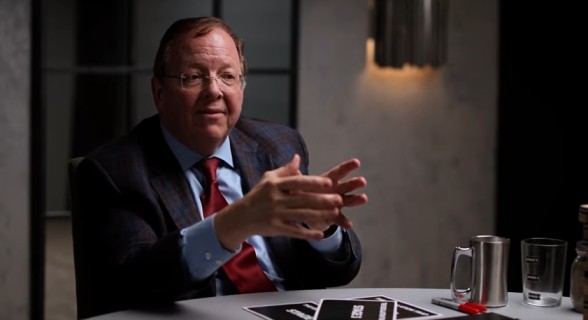
Editor’s Notes: Is the world on the brink of an irreversible conflict? In this episode of The Diary Of A CEO, Steven Bartlett sits down with Professor Robert Pape, a world-renowned military strategist who has spent the last 20 years simulating a war with Iran and advising every White House since 2001. Pape warns that we are currently falling into a “smart bomb escalation trap” where tactical successes—like hitting targets with precision—are leading to massive strategic failures. With Iran now possessing the material for 16 nuclear bombs and the recent assassination of their supreme leader only clearing the path for a more aggressive successor, Pape delivers a chilling prediction: there is a 75% chance that the U.S. is about to escalate to Stage 3—putting boots on the ground. (March 12, 2026)
TRANSCRIPT:
Introduction: Who Is Robert Pape?
STEVEN BARTLETT: Professor Robert Pape, what the hell is going on in the world? Now, I should ask first. Who are you and what have you spent the last several decades of your life studying and doing? And how does that relate to what’s happening in the world right now?
ROBERT PAPE: We are going through a crisis, very intense right now, but it’s a crisis that we have been through before. 20 years ago with the Iraq war, even we saw the bombing of Gaddafi, we saw the reactions there. Now I have been studying military strategy, air power, international terrorism, now terrorism inside the United States and also political violence in the United States. It’s not related to particular groups. So I’ve been studying political violence for 40 years.
Bombs Don’t Just Hit Targets — They Change Politics
STEVEN BARTLETT: What is the headline that people need to be aware of when you’ve looked at 30 years of these types of wars?
ROBERT PAPE: Bombs don’t just hit targets, they change politics.
STEVEN BARTLETT: What does that mean?
ROBERT PAPE: That means that before the bombs fall, and even as the bombs are falling now, we tend to focus on the tactical success of bombing. We tend to ask did the bombs hit the targets? And with the smart bomb age, it’s almost mesmerizing. They hit the target and destroy the target. Crater, crater, dirt crater, concrete, destroy buildings 90% of the time.
The problem is wars are not just about the hardware. They’re not just about the military operation of putting a bomb on a target. They’re about politics. And when the bombs start to fall, the politics in both the target, the enemy change and the politics in the attacker, the initiator change.
And that threshold is the beginning of what I’m calling the escalation trap. Because you get at stage one tactical success. Often what’s missing here is the next consideration, which is politics.
Robert Pape’s Background: Advising the White House
STEVEN BARTLETT: Who have you advised and at what level have you advised them on strategy, war, et cetera, et cetera?
ROBERT PAPE: So when I finished my PhD, right away we started to fight the first Gulf War, which was an all air power war. And I found my work from the 1980s suddenly more relevant than ever. I was in the Washington Post, USA Today, Frontline, designing the stories because we didn’t have the talking military heads at the time.
And then I get a call from the US Air Force and they’re asking me to come in and help, not just teach, but to build the curriculum. Then what happens? As time goes on, I end up advising every White House from 2001 to 2024, including the first Trump White House.
Simulating a War With Iran
STEVEN BARTLETT: I also heard that you’ve been running simulations on a war with Iran.
ROBERT PAPE: Yep, the last class of every strategy for 20 years. In fact we did it just last May, just before we started the bombing, and 90 minutes. So the class goes a whole quarter — strategy in all kinds of different ways. And we ended with the bombing of Iran.
And what did that mean? That meant we looked at, took out the whole target. We have the target set laid out, we have the attack plans. We really go through the bombing of Natanz, Fordo, Isfahan — there’s a number of these facilities and so forth. And then we play, and then we look at what’s going to happen. And what you see right away is 90 plus percent — those B2s are going to destroy those targets.
STEVEN BARTLETT: B2s being the aircraft, the stealthy aircraft —
ROBERT PAPE: — that can penetrate the airspace. Very small risk of loss. And then you see. But we don’t know where the nuclear material is. The whole point of this is not to destroy a building. It’s to get at the 5%, 20%, 60% enriched uranium. That’s the material for bombs. And last May it was very clear they had the material for 16 bombs.
STEVEN BARTLETT: Now, not 60 nuclear bombs — 16 nuclear bombs.
ROBERT PAPE: Yes, nuclear bombs. Not to produce them all in a single week, but over a period of months. And then after we did that simulation, we didn’t know where a single ounce was and we weren’t going to know for months after.
So at the end of every simulation, I make some predictions. I say what’s going to happen? What’s going to happen is after about a year, we are going to panic because that material could be dispersed anywhere in Iran, anywhere in that country. And that country — look how big that is compared to the United States — could be dispersed anywhere now. And how many of those are actually developing toward a bomb, we will not know. So what will we do? Regime change.
What Are We Missing? The Escalation Trap
STEVEN BARTLETT: From all of your years — I mean, 31 years old, you start teaching about air power and war in this regard.
ROBERT PAPE: Yeah.
STEVEN BARTLETT: What is the — from everything you know, 30 plus years studying this stuff, Iran, running simulations on Iran, advising the White House, being a master and probably arguably the most informed person in the United States right now about air attacks like the one the US is performing on Iran — what is the headline that you are trying to send to the world at this moment in time? Like, what is it we’re missing? Because we’re seeing Trump come out and say it’s going well, everything’s amazing, we’ve taken out all their guys. What are we missing?
ROBERT PAPE: We’re missing that we’re stuck in a trap of our own making. I’ll explain what that trap is. But the key consequence of the trap is we’re losing control. We are losing control of the situation. And what you were seeing with President Trump is he’s trying to regain control.
Now, the problem is that starting not just a week ago Saturday, but starting back in June when we took out Natanz and Fordo, we started to lose control. And what are we losing control of? Knowing where that nuclear material is.
And we now have civilian satellites and you can see them moving things. What would they be moving around the nuclear areas, I wonder? What are they moving here? It’s most likely going to be that nuclear material. Because their plan — you can see they have prepared for this war just as we have, except they’ve been preparing for how to be resilient, how to now lash back in increasingly aggressive ways. They are winning the escalation part of the war. And that’s not an accident. You can see this coming in stages.
Iran’s Nuclear Enrichment: A Simple Breakdown
STEVEN BARTLETT: For anyone that doesn’t know, we’ve got leaders that have different levels of information and knowledge here. I’m going to try and summarize this and butcher it in the most indelicate way I possibly can. So earlier last year, the United States suspected that Iran were very close to enriching uranium. They’re at 60%.
ROBERT PAPE: They’re at 60 already.
STEVEN BARTLETT: If they get to 90%, they have a bomb.
ROBERT PAPE: Yes, but possibly even with the 60%, Steven, it depends on just how good their scientists are. And we’re not really sure. So somewhere right at 60%, we’re already very worried. You go to 90, it’s a gimme.
STEVEN BARTLETT: And then the United States dropped these big bunker-busting bombs. They flew those B2 airplanes in, dropped these bombs, smashing up the site, and then it felt like it was over. And then the United States went into negotiations with Iran to try and get some kind of deal done to get —
ROBERT PAPE: — the material we didn’t get. Oh, okay, you see — why are we even talking to them? If this has really obliterated the program, why are we bothering to talk to them? What exactly are we talking about here? Do you notice the inconsistency here? So when you say we thought it was over, that’s the public. Now the public need to understand — they’re very busy people. They’re worried about the price of eggs. They’re not supposed to be able to be up on this.
STEVEN BARTLETT: That’s a good point I’ve never thought about. Yeah, why would we be talking to them?
The Nuclear Material: Where Did It Go?
ROBERT PAPE: Why are we talking to them? You see? So right from the get go. And by the way, all of the — it’s the Israelis. We have a thing called the Defense Intelligence Agency. Their reports that were done after the bombing were leaked. And they all say the same thing, which is, we created holes. We probably shook these underground chambers. We’re not sure because we had no eyeballs on that. But we have no idea where that enriched uranium is.
And we have good reason to worry they got them out because we actually have a satellite picture that shows two days before we bomb Fordo, there’s a bunch of trucks moving stuff out. What do you think you might move out if America’s about to bomb your site? Again, I don’t think they’re moving out the popcorn.
This material can be moved in what look like large scuba tanks. They call them scuba tanks, but they’re actually as large as this table. So you need basically trucks — trucks like that satellite photography shows that they took out. So we can’t say for sure. But what you see is these are the indications that you worry they’ve dispersed the material even before we hit the site.
STEVEN BARTLETT: And then we attack.
ROBERT PAPE: Yep.
Regime Change: The Next Phase
STEVEN BARTLETT: The United States attacks in February — February 2026, which is —
ROBERT PAPE: Yep, February 2026. February 2028. We start again, this time with regime change. Notice we don’t go even after the fissile, the nuclear material. We don’t know where it is.
STEVEN BARTLETT: So for the average person, the average person would think if you take out the Supreme Leader, then the war is over. Drop the bomb on the person and the war is complete.
ROBERT PAPE: So let’s talk about your Jenga thing here, because what I find, Stephen — keep in mind, I am advising and teaching some of the most brilliant minds in the country. Now, a lot of these smart people, though, they don’t know that they’ve been given like one inch deep briefings, maybe even one sentence briefings. So their image is often like this, and it’s wrong.
This is what they think the regime looks like. And they think that because they’ve basically been consuming, probably for years, one or two sentences about the structure. They know there’s a Supreme Leader. They might know there’s nuclear facilities, missiles command. And so it looks like, oh, my goodness gracious — if you could just simply take out the right node, you would be able to make this whole thing fall down.
But that’s the wrong image, Steve. This is the way smart people think. The problem is this is a false image of most regimes, even the bad ones, and certainly the Iranian regime.
Let me just focus on the Iranian regime. The Iranian regime is more like a matrix. It’s not brittle the way this is. So you can keep trying to pull things out, but with a matrix — or I think the corporate structures now are built to be adaptive, to change, because you have so many changes that happen. The structure needs to adapt to change. That is basically the structure of revolutionary regimes going back to before World War I.
The Fatwa That Died With the Supreme Leader
STEVEN BARTLETT: Okay, I want to ask a dumb question.
ROBERT PAPE: Yep.
STEVEN BARTLETT: When they took out the Supreme Leader in Iran, who’s going to give out the instructions?
ROBERT PAPE: The adaptive system adapts and fills in the holes. It fills in the holes, usually with what’s left. And in this case, the Supreme Leader that we took out — this particular hole — this was the guy who had two fatwas. They’re called fatwas. These are religious edicts. It’s like a papal edict against nuclear weapons. It’s a religious — he’s the leader of essentially the religion, a little bit like the Shia pope. And he is actually issuing religious doctrine. And that’s called a fatwa. And as a religious doctrine, he issued two that said Iran should not have nuclear weapons. The guy we killed was one of the guardrails against nuclear weapons.
STEVEN BARTLETT: How does that — he was developing them.
ROBERT PAPE: No, no, he’s developing the enrichment material. They hadn’t been fashioned yet — that we know of — as nuclear weapons. So we’re worried about, again, this enrichment going from 5% to 20% to 60%. But they hadn’t actually taken that next step, which is more of an engineering step, to develop the nuclear weapon.
Now we took out the person who, at the very tippy top, was balancing the hawks and doves, and he had decided over four decades to issue these fatwas. He did it not just once, but twice. His son, who took over as the new Supreme Leader — no fatwa yet. That fatwa died with this guy. So will the new leader come in? It’s not clear he’s got the religious authority to do anything like what his father did.
STEVEN BARTLETT: This is —
ROBERT PAPE: This is a very different world. And he’s known to be way more aggressive than his father. He’s been in charge of the Basij — basically the police that like to go and kill the protesters. He’s been the guy who’s been very, very strongly supporting, if not leading, that particular effort.
STEVEN BARTLETT: And last night, it was announced that he has been appointed as the new leader.
ROBERT PAPE: He’s the new Supreme Leader.
The Escalation Trap: Iran’s Strategic Response
STEVEN BARTLETT: Did. Did Trump expect this?
ROBERT PAPE: I think that he expected it because he kept trying to talk the Iranians out of it. This is what he meant by last week, when President Trump was saying that he wanted. Not this guy, he specifically said not the son. And then he had a problem because people kept pushing him, and they said, okay, well, if you don’t like the son, who would you pick. And he said, well, it is a problem because when we kill the Supreme Leader, we killed the leader, 20 or 30 others who we actually thought were better. So we actually took out the best alternatives when we killed the Supreme Leader.
So everybody scratching their heads going, what are we talking about here? So we actually helped by killing the competitors to the son. We made it more likely the son. And so what I’m trying to explain, Stephen, is this adapts, okay? So that you’re not really taking these pieces out, you’re rearranging them and you are moving up. In this case, you’re moving up the next Supreme Leader.
Well, there’s the Supreme Leader. But what we’re not showing here, you’re seeing the target sets that are being discussed. You’re not seeing the Revolutionary Guard.
STEVEN BARTLETT: What is that?
The Revolutionary Guard and the Incentive to Retaliate
ROBERT PAPE: That is part of the army. Iran has a million men in arms. A million. That’s as many as we have in our 300 million people. They have 92 million. They have a million in arms. And about 150 or 200,000 of them are what are called the Revolutionary Guards. These are the most aggressive, the most well trained. These are the most dedicated to the regime.
The son, who just took over, is the prime candidate for that group. So when we took out a link here, it’s not just being replaced by another cog, it’s being replaced by a very aggressive individual who’s backed by some of the most aggressive part of that Million Man Army.
So this is what I was trying to explain in my substacks, where when you take out the leader, you may kill the leader, but you get in its place a harder regime, a more resilient regime, a tougher regime that wants to lash back even more aggressively because you killed dad. You killed dad. And also if you don’t lash back, how does the new leader get his credibility with everybody else? If he’s a wimp, why doesn’t he get a bullet in the back of the head?
You see, the new leader — just because he’s appointed a new leader, he’s still just, just like when you’re the head of a new company. Let’s say you take over a company that’s in shambles and they get rid of their CEO and they bring you on. Okay, well, you’ve got to have a plan, you see? And if you don’t have a plan to turn that thing around pretty soon — Elon Musk had to have the big plan — if you don’t have that plan, guess what, you’re out.
Same here. So you have an incentive structure here for not just replacing, not just wimpy replacements, certainly not pro-American replacements. You have incentives for lashing back against the attacker, which is why when we tried to kill Gaddafi in 1986, he lashes back and takes out Pan Am Flight 103, killing 271 civilians, 190 Americans. When we try to take out the Milosevic regime to degrade it in March ’99, Milosevic lashes back, sending 30,000 ground forces in to cleanse — that is, get rid of — a million civilians in Kosovo. This over and over.
Suicide Terrorism and the Escalation Stages
STEVEN BARTLETT: I mean, you have written books about suicide terrorism.
ROBERT PAPE: That’s right.
STEVEN BARTLETT: I’ve got one of them in front of me here called Dying to Win. So I mean, you know a lot about this subject. And this is one of the concerns that actually my fiancée had said to me. She said, I explained to her, I was like, you know, Iran, they really just have drones at the moment. So I think that’s fine. And then she posed a question to me. She was like, yeah, but what about suicide terrorists?
ROBERT PAPE: Let me just explain. So here we are. Here is of course Iran. And imagine it’s back in June. So I’m going to start the story in June. This is the beginning of the smart bomb, the escalation trap.
Stage one, we hit Fordow, which is right around there, and then we hit Natanz and some other sites right around here. And what does Iran do here? They lash back. And who are they lashing back against? Israel. Here they have their missiles focused on Israel. They’re not really hitting our bases here. They’re hitting Israel. And they send 3,000 Israelis to the hospital, the most since the ’73 war. So a long time. That is stage one.
Okay, now what happened on February 28th? They’re lashing back a bit against Israel for sure. But now they’re at stage two. This is why I published this piece today in Foreign Affairs about how Iran’s winning the escalation. It just came out just a few hours before we came on.
And what’s happening here is called — I call it horizontal escalation, because what they’re doing now is they’re using drones, mostly a few missiles, but mostly drones. This was almost all missiles, no drones. And they’re using their drone capacity, which they have a lot of. And it’s precision. These drones are like precision-guided weapons. They go right to the target. And what they’re trying to do is break this coalition —
STEVEN BARTLETT: For anyone that can’t see at the moment, they countered with horizontal escalation against Saudi Arabia, the UAE —
ROBERT PAPE: The coalition that had been formed against them. They’re trying to break the coalition, you see, and they may well do that.
Breaking the Coalition: The Strategy Behind the Drone Attacks
STEVEN BARTLETT: Why would they want to break that? Why? My friends are escaping Dubai at the moment. I’ve got a friend staying in my house in Cape Town because he doesn’t want to be there.
ROBERT PAPE: Because they want these countries to kick the Americans out of their country. Get rid of the embassies, get rid of the bases if you can. Then we don’t have the platform to plaster them. You see, these are our basically ground-based aircraft carriers.
STEVEN BARTLETT: I thought they were attacking Saudi Arabia, for example, because that will make Saudi Arabia call Trump and say, “Listen, stop please, we’re losing our tourism, we’re shutting our airport.”
ROBERT PAPE: Well, they do want to. They are threatening the tourism, hitting the economic nodes, they’re hitting hotels, they’re hitting the airports. What they are trying to do is, by threatening tourism which varies from 5% to 10% of the GDP of these countries — it’s not trivial amounts here — they’re basically trying to drive wedges between these countries and America.
And America right now, I don’t see any movement through Congress. Where is this hundred billion dollars going to the region to make up for their lost tourism? I don’t remember seeing that bill come through Congress last week. So I’m just putting that a little humorously to point out these countries are losing a fair bit right now, and that tourism may not come back for a while.
STEVEN BARTLETT: I’ve got friends that have moved. I’ve got friends — one of my friends was thinking about leaving, is now in my house in Cape Town, and he’s been there for five years. He’s leaving and he’s going to move to America. I’ve got so many friends that have —
ROBERT PAPE: Called you. And imagine that we have 500,000 American citizens here and we have the State Department on CNN saying, “Call this number, we’ll help you escape.”
STEVEN BARTLETT: It’s kind of — even the media in the U.K., you see it, it’s like the BBC showing evacuations of U.K. citizens as they’ve been greeted in the airport, putting a microphone —
Public Pressure and the Soft Underbelly of the Coalition
ROBERT PAPE: So this is putting a lot of pressure here. And there’s something else that’s not widely known, which is there’s a big gap between what the leaders of the countries are willing to support — the US and Israel — and their publics. You see, this coalition that’s been built against Iran here is not clearly going down well with publics. These are publics that may not like Iran, they may be Sunni and Iran Shia, but they don’t want to be part of an Israeli expansion plan where Israel is going to conquer more and more territory and so forth.
And so this is where the soft underbelly here of this — this isn’t just about the tourism. That’s the short term. The longer term is bottom-up pressure. Sadat, he was a leader of Egypt in the 1970s. He cut a deal with Israel. It’s called the Camp David Accords. Peace for land. But it was very favorable. Well, after Sadat did that — the president of Egypt in 1981 — in a military parade, his own security guards at the military parade marched with their guns, came up to his place, and they shot him dead.
So this is the real world here. This is very, very dangerous for these leaders. Now that’s stage two. Now what happens if we decide to have one of these limited ground deployments here? Because after all, we still don’t know where this material is.
The Possibility of Ground Deployment
STEVEN BARTLETT: What does that mean? So for anyone that doesn’t know anything about the war, what does a ground deployment mean? Because I saw Trump being asked about this on the plane yesterday and he didn’t seem to deny it was going to happen.
ROBERT PAPE: It means you try to control a limited amount of, say, the space around Fordow or the nuclear facility that you bombed in June, and you would send the, say, 82nd Airborne in to control the space.
STEVEN BARTLETT: I don’t know any of this stuff.
ROBERT PAPE: I see. So the 82nd Airborne is a division that we have that’s especially equipped to go into a hostile area and land and control, say, airports, control space — think about controlling all the size of LAX. So if you want to control LAX, you bring in the 82nd Airborne. They will have 5,000 men and women, not just guys now. And they will come in and they will control that space like LAX.
But they will also be doing this probably not for a day, not for even a week. They’re going to have to spend weeks and weeks to search for that material because we don’t know where it is. And it’s all deeply buried. And a lot of the stuff — the entrances have been blown up. So this means long-term presence there. You might also secure some of the oil fields to cut off some of the money for the regime. That is where that book comes in.
STEVEN BARTLETT: Do you think that’s likely? That America will put boots on the ground — American soldiers in Iran?
The 50/50 Chance of Boots on the Ground
ROBERT PAPE: I think it’s at least 50/50, if not immediately. So people keep expecting the escalation to be continuous. And then when there’s a pause, as there was between June and February, they think, “Oh, it’s over. I’m going to go now, worry about something else.” And then, believe me, there’s plenty else to worry about. So we’ve got Minneapolis, we’ve got plenty to worry about here, even with violence. But that’s not how escalation operates.
Escalation can happen, have a ratchet effect that’s spaced out by months of what seems like peace, only to come right back and you’re stuck in that escalation momentum, which is what we’ve seen. Which is exactly what we’ve seen. And for the reason I’m telling you, we don’t know where that nuclear material is.
That has been the $64,000 weakness in this entire idea of using air power — not just in the last 10 days, going back to June. It’s not just even about the regime change. It’s about how are you going to get that nuclear material out.
We had a deal — this deal with Obama. Trump did not like it. But with that deal that held, Iran took out almost all — virtually just only a tiny bit was left, not enough for a bomb — all out of the country. And we watched it, we monitored it. We had 24/7 cameras to monitor this. We had human on-site inspections to monitor this. 2018, Trump just ripped it up, walked away unilaterally. And from that point on, it’s been pedal to the metal by Iran in upgrading that enriched uranium. And that’s how you got to that material that would be enough for 16 bombs. And right now we don’t know where that is.
STEVEN BARTLETT: So yeah, stage one is okay, stage —
The Escalation Trap: From Tactical Success to Strategic Failure
ROBERT PAPE: You are beginning the escalation trap. In this case, it’s a smart bomb trap. Because it’s with smart bombs where you have tactical success, near perfect, call it a hundred percent, because it really is. But that doesn’t mean you have strategic success. Tactical success plus strategic failure — then that strategic failure weighs on you over time because the enemy still got the thing that you wanted to get in the first place.
Now you do stage two, which is regime change, because after all, you’ve already hit the targets, you can make the rubble bounce. But what more? That’s why we didn’t bomb them in the past 10 days. We might go back and bomb some more. Okay, but we already bombed it, so there’s more we’re watching the rubble. But now we’re at stage two, because what are your options? The only other option is, well, let me get rid of the regime, because then the regime I will control and the next regime will just give us the material — that’s not working now.
And you hear today, Trump is dancing, trying to figure out what to say. He doesn’t want to say the war’s over. Doesn’t want to say the war is going on. But the bottom line is we don’t even — he won’t even be clear about why we’re fighting the war anymore. And I’m telling you, there’s a real problem. The nuclear material is still there and it can still be fashioned into those 16 bombs over time. So this is where then you get this horizontal escalation, where now they’re really, really working on this because now it’s a long war.
STEVEN BARTLETT: They start attacking their neighbors and try —
ROBERT PAPE: — to make it a long war, the consequences go on for months. So just imagine when are your friends exactly going to move back? So let’s say the war is over tomorrow. Are they moving back tomorrow? And when was the last time have you started to plan for your next vacation in Dubai?
STEVEN BARTLETT: I’ve been to Dubai. I was planning, speaking there in a month’s time, but it’s been canceled already.
ROBERT PAPE: Well, just, yeah, just start to think about that and, you know, a minor thing like a drone attack could suddenly come out of nowhere. You’re not even — you think like it’s — I’m just trying to point out that this is the world now, that a lot of people — this was a luxury market. This was the playground of the rich and famous. This is really now changing. And it may come back a year or two from now, but it took two years for air travel to come back after 9/11. Just think about that now. We haven’t gotten to stage three yet, which gets to your girlfriend’s point.
STEVEN BARTLETT: How do we move from stage two to stage three?
Stage Three: Nuclear Uncertainty and Global Escalation
ROBERT PAPE: Well, because you still don’t know where the nuclear material is. And we don’t have to move beyond stage two to stage three this week. We could do it a month from now, six months from now. The problem is we’ve now put in place a much more aggressive leadership, much more aggressive regime. We’ve taken away some of what may have been guardrails. We can’t say for sure, for the nuclear weapon. This new regime is much more likely. And we’ve given them every incentive to develop the nuclear bomb. We’re killing them. So what exactly is their incentive? Their best way to survive is to have a nuclear weapon. And you’ll say, “Well, we’re going to kill them.” Well, we’re already killing them. So we’ve taken away their incentive not to have a nuclear weapon.
So we will start to worry as each week goes by. Not because we have great intel, not because our human intelligence is great — it’s because of the opposite. We don’t have the exquisite intelligence we had with the Obama deal to know we had frozen the program. Now we have Swiss cheese at best. And what we will see in the holes of the Swiss cheese are indications of nuclear development. And that will make us worry because — what happens with the nuclear weapon? Is it going to go to Hezbollah and is Hezbollah going to help put it in Haifa? Are they going to give it to the Houthis? So these are the kind of worries we will have that will push us to the ground options. And that is stage three — the retaliation approaches the homeland.
STEVEN BARTLETT: Is that realistic?
ROBERT PAPE: If ISIS, with its 30 to 40,000 — remember, ISIS was not a state. Iran is an actual state with 92 million people. So if ISIS command-directed, inspired suicide attacks and other attacks in San Bernardino — just to kind of bring it a little bit closer to home here — across the United States, Paris — remember the big Paris attack. So why exactly is Iran not — I mean, ISIS was a lot weaker than Iran.
STEVEN BARTLETT: Do you think in Iran at the moment they’re working on that? They’re working on a terrorist attack?
The Chechen Parallel: How Retaliation Escalates
ROBERT PAPE: Well, I think that my work tells me that it’s most likely to come with the presence of ground forces by us. Doesn’t mean it’s a necessary condition, but it’s just most likely. Russia in 1996 — with our help, we played a trick on them — assassinated the Chechen leader. It’s a leader of its republic in Russia called Chechnya — Dudayev — only a million people, and Russia killed the guy. And we actually have pictures of him seeing the missile hitting him because we can put the cameras right in the nose cone.
Then the new guy took over. His name was Basayev, and he launched within three months — not the next week — Operation Jihad. And his Operation Jihad was much more vicious tactics, kicked the Russian forces out. Russia is a big country, you know, almost 200 million people compared to this little province of a million. Kicked the Russians out after three months, launched waves of suicide attacks, massive kidnappings. This really went on for years and years.
So when you say, “Are they planning it?” — I don’t think it’s quite right, Steven. It’s not like they have the detailed plan they’re about to execute. They have the next wave of possibilities, which would come, I think, most likely with stage two, so stage three. So as this is expanding, as the war expands, it will go global, really. You are already seeing it global with the supply chain and you’re seeing it with the oil. So that’s already happening.
So what Iran said today — the response to Trump’s press conference today, that just literally happened before we came on — is, “Okay, we will allow Gulf states, your oil tankers to come through if you kick the Americans out.” So kick the Americans out and we’ll —
STEVEN BARTLETT: — let you pass. If you don’t —
ROBERT PAPE: If you don’t, we got drones. So they didn’t put that in there, but everybody knows they got drones.
The Strait of Hormuz and the Price of Oil
STEVEN BARTLETT: And again, if you were explaining this to a 16-year-old, just to keep it super simple — there’s this passageway across the water where a lot of the oil tankers go.
ROBERT PAPE: Yep. It’s the Strait of Hormuz.
STEVEN BARTLETT: Hormuz, yeah. And it sounded like the tankers are refusing to go through there.
ROBERT PAPE: Oh, sure, because one has been hit. But it only takes one to be hit with a drone. Only one. Because the people driving those tankers — they’re doing it for a paycheck, not a bullet. They’re not really wanting to die for this. This isn’t a nationalist cause to ship the oil.
STEVEN BARTLETT: Explain why it matters to the world. If oil doesn’t go through this Strait of Hormuz, what happens?
ROBERT PAPE: Yeah, well, we can talk about it in technical terms, but the big thing to say is this is what’s going to increase the price of gas at the pump. And it’s already gone up. When you cut the flow of the oil, it has global effects. It doesn’t just affect this little region here, it doesn’t just affect China over here. It affects everybody. And that’s why the Europeans are starting to freak out, because this — every government worries about affordability. That’s about to change.
STEVEN BARTLETT: And is this your point about how it changes the politics at home? Because people go to the pump today and go, “Why is the oil higher?”
ROBERT PAPE: That’s right. We now have 4.4% unemployment. And President Trump was trying to say it’s all getting better, the interest rates are going down. Well, that’s all predicated on us not having inflation. You see, when the oil is cut, the inflation goes up, the affordability becomes a problem. That is what is panicking a lot of the businesses right now because they’re going to lose business. And it’s a problem of risk. It’s not just about the damage. So a few of these drones can have an inordinate effect on risk.
Now let’s bring in another piece, which is Russia. We find out Russia is providing targeting intelligence to Iran, much the way we provide targeting intelligence to Ukraine to hit targets in Russia. And what does that mean? That means those drones, which are precision-guided now, can more easily find exactly which ship to hit.
Russia’s Role and the Political Underbelly of American Power
STEVEN BARTLETT: So they know that Russia are doing that.
ROBERT PAPE: We’ve got it pretty well confirmed. You would hear much more pushback here. And what you’re hearing from Secretary Hegseth is not, “It’s not happening.” You’re hearing, “Oh no, well, let’s not over-worry.” No, it’s happening. And they’re worried because that’s again the dancing around. They’re not denying the fact that it’s actually happening.
STEVEN BARTLETT: I think Trump actually, when asked, said something to the effect of, “I wouldn’t blame them because that’s what we do to them.”
ROBERT PAPE: Exactly, exactly. And why is he talking to Putin today? He was just on the phone with Putin before he did his press conference. What’s he talking to Putin about? That intel, I’m sure, and maybe cutting a deal, which is, “We’ll deny the Ukrainians the intel if you deny —” you see, this is the cascading effects of the politics dominating the tactics.
STEVEN BARTLETT: And that’s exactly what Trump said. He said on March 7, when asked about Russia teaming up with Iran on intelligence, he said, “If we asked them, they’d say we do it against them. Wouldn’t they say that we do it against them?” It’s almost justifying it.
ROBERT PAPE: Trump often just speaks his mind. Sometimes he kind of hides things, but often he speaks his mind. And what you’re seeing here is this is the natural thing. Russia is — what’s good for the goose is good for the gander. They’re doing the same thing to us that we’ve done to them, and they’re doing it to hurt us.
So rather than just a spasmodic response here — which we often think the foes we’re up against are stupid, we essentially think they’re dumb, we call that irrational — what’s really happening, Steven, is since the Vietnam War, we have been up against foes that have understood something about America, which is the way to get at us is politically. Make it a long war, play the politics. You can’t go toe to toe with us on the battlefield. We’ll just clean their clock over and over. They don’t often try. They don’t go toe to toe with us.
We lost the Vietnam War without ever losing a battle. How did we lose? We lost the long game. 58,000 dead. No end in sight. A forever war. “What are we doing this for?” That is how the North Vietnamese won, and that’s how the Afghan Taliban won. That’s how the bad guys typically beat us. They don’t always win, but the bottom line is we have a soft underbelly. It’s not the military.
What Happens Next? Trump’s Dilemma and the Escalation Trap
STEVEN BARTLETT: What do you think happens next? If you had to predict what you think happens next, what would you predict?
ROBERT PAPE: Well, I say this at the end of the Foreign Affairs article that just literally came out a couple hours ago, which is President Trump is on the horns of a dilemma and he has no golden off ramp. He’s looking for off ramps, but there’s no golden one where he comes out politically ahead.
So he’s got a choice, sometimes called a Hobbesian choice, where you cut your losses, accept political loss now. And right now if he pulls back, what does it mean to pull back? You got to pull your forces back. It’s not enough to say you’re just doing a pause. If you want to stop for real, you take those aircraft carriers and you send them out somewhere. You send them to Asia, you send them here. You got to actually do something here.
So choice one is you stop your bombing campaign. You cut your losses. You do your best to say, “We just wanted to destroy missiles,” even though nobody will believe it. But that means you accept a modest loss now. Or the other is you double down and you go on for more weeks, hoping you’ll kill this leader and maybe the next one won’t be so bad, or you’ll have some other sort of outcome that you can’t imagine.
And Trump is nothing — I call him a chaos kid. He thrives in chaos. And he often comes out of this with something happening, like down the road, you didn’t expect it. He probably didn’t expect it. But in this case, the price is more likely going to be a political failure of the first order because we have the midterms coming.
So if he’s got a choice — stop now, cut your losses, accept a limited political defeat, or double down, go on for a few months, go through more stages of this smart bomb trap I’m explaining — you’re really now in Lyndon Johnson territory. Remember I mentioned before, we’re in Vietnam. He kept escalating, kept moving up the escalation ladder every rung. He said, “Well, no, we have escalation dominance. We’re just going to double down, we’re going to hit him harder the next time.” Sound familiar?
And then what happened is it became absolutely clear that this was going nowhere. And the ’68 election was coming, and Lyndon Johnson’s own Democrats said, “Mr. President, we can’t ride your horse into that. We got to do something.” And the problem is they didn’t pull the plug fast enough. That’s how they lost. They don’t pull the plug fast enough, so you end up having a bigger
STEVEN BARTLETT: loss later. When you talk about the underbelly that the United States has where they can’t prolong these wars — am I right in thinking this is basically a function or a consequence of living in a democracy where every four
Wars of Choice vs. Wars of Necessity
ROBERT PAPE: years — I think it’s a function of a war of choice. So when we were attacked at Pearl Harbor, we were attacked. We were reluctant to get in World War II and we didn’t get in until we were actually struck at Pearl Harbor. That was enough to really make us angry. We were pissed off as a country, and we were going to get payback, not just for a month, but we were getting some real payback here. And that’s how vicious that island hopping campaign was and why it was so vicious. And that went on and on.
And when we ended the war by dropping those atomic bombs, 22% of the American public wanted us to forget the Japanese surrender and drop more atomic bombs. 22%. We are that angry. So when we are attacked first, we have the politics in our advantage.
When we do a war of choice, we can make up all the reasons why it was a good idea to start, throw the first punch — “They were going to hit us.” But when we throw that first punch first, that’s a war of choice. And this puts the politics in the other camp’s advantage. And that’s the problem that we’re facing here. Iran didn’t hit us first. They didn’t hit us first in June. They didn’t hit us first before that.
Was the Attack Justified? The Role of Israel
STEVEN BARTLETT: So on this point of war of choice, there are really two questions I have front of mind. One is, was Trump right that if he didn’t attack then they would have enriched uranium? They would have made a nuclear weapon. And that would have put not just the region, but the world in danger, in your view. And then the second one is this sort of ongoing debate around the role of Israel in this war. And I think it was Marco Rubio that came out and — I think maybe accidentally — said that the reason why they attacked Iran was because they heard that Israel were about to attack Iran.
ROBERT PAPE: So let’s go back to the Friday, the day before we start the bombing campaign. This is February 27th, literally 3:15 Washington time. That’s when Trump makes the go decision. But what is he choosing between? He has an offer on the table from Iran for a better deal than the Obama deal for America. It’s not absolutely perfect — they still want to have some minor enrichment — but with verification and lots of things here.
Now, maybe it’s still not perfect, but President Trump has a choice on that Friday afternoon. He can go back and he can work this deal. After all, deal maker, right? Let’s assume he’s good at deal making, so he can go back and work the deal. But that’s not what he does. What he does is he throws that deal away. And also the Supreme Leader — when he was killed — the Supreme Leader was on board with that deal too.
So the choices here, Steven, were before we got to stage two. We were in stage one. In stage one, we had hit four — there were negotiations and Iran was coming up with a better deal than the Obama deal. And what does he do? He goes to stage two. So I don’t think this story you’re hearing — “They were going to do X, Y or Z” — holds up. There was a deal on the table.
STEVEN BARTLETT: And why did Rubio say that then? Why did he say that they attacked because Israel were going to attack? I want to play this video, which is what I’m referring to.
VIDEO CLIP BEGINS:
ROBERT PAPE: If we stood and waited for that attack to come first before we hit them, we would suffer much higher casualties. And so the President made the very wise decision. We knew that there was going to be an Israeli action. We knew that that would precipitate an attack against American forces. And we knew that if we didn’t preemptively go after them before they launched those attacks, we would suffer higher casualties and perhaps even more killed. And then we would all be here answering questions about why we knew that and didn’t act.
VIDEO CLIP ENDS:
ROBERT PAPE: So what that shows you is that it’s the tail wagging the dog — that Israel is going to attack, as I’m saying, just happened in June. It’s a replay of what happened in June. Israel may well have — we don’t know why Israel decided to attack and kill the Supreme Leader. It was actually Israeli bombs that killed the Supreme Leader and also those other replacement leaders as well.
But Israel may well have been thinking that, “My goodness, Trump is getting too close to a deal.” That’s what happened in June. Trump was on the edge of a deal with Iran and then Israel goes and kills the negotiators. You see? So just think about that for a moment. Trump is negotiating with the Iranians and then they say, “Well, okay, come back the next day.” And what is there the next day? Israeli bombs killing them.
STEVEN BARTLETT: So I mean, that’s not a great way to handle a partnership.
Can Trump Control Netanyahu?
ROBERT PAPE: Well, it’s just showing you we had another choice. We could have told Israel not to do it. We could have told Israel, “If you do this, we’re going to cut off all your military aid for the next three years.” That would put some pressure on Israel. Now, then Trump would have to pay a price politically. So I’m not saying that’s an easy thing to do, don’t get me wrong.
But we need to understand that these are the pressures for escalation in the escalation trap. So I’m trying to explain why this isn’t just randomly happening, Steven. It’s not like, “Oh my goodness, I can’t follow what’s occurring.” That’s why when Trump says in today’s briefing he talks about stopping the air campaign — is he going to stop Israel’s campaign? That’s the question that did not come up today. One of the big questions that did not come up is: “President Trump, are you going to call Netanyahu and tell him to stop bombing Iran?”
STEVEN BARTLETT: Does Trump control Netanyahu in your view?
ROBERT PAPE: Well, again, it’s about pressures here. It’s about what are the ways — it’s not about a matter of personal loyalty relationship. This is politics of the first order. That’s what I’m trying to explain. So for President Trump to stop Netanyahu from doing this, he will be paying a price. There are a big part of his MAGA constituencies that are very pro — not just Israel — pro Netanyahu’s version of Israel. So this is the tension and the politics that I’m trying to explain, which is why you don’t really want to start the trap in the first place.
The Likelihood of Ground Deployment
STEVEN BARTLETT: And I asked you a second ago, what happens next in this war, based on everything you’ve studied for the last 30 years?
ROBERT PAPE: I think it’s more likely than not that — maybe not in the next week or two, I’ve said on my Substack — it’s more likely than not we will get to a limited ground deployment here. Because of the fizzle, because of the enriched material that is floating around. And we know it’s dispersing. We don’t know where it is.
And there could be literally hundreds of rooms not much bigger than this size — maybe two or three times this size — that could be used to fashion a Fat Man-style bomb. Not to miniaturize it to put on a warhead — that would be more sophisticated. But if what you want to do is have a Hiroshima bomb that can kill 75,000 people in a second, that is what we’re talking about here. We’re not talking about can they miniaturize the bomb to put it on the nose cone of a missile. They don’t need that. That’s very sophisticated stuff. We couldn’t do that for 10 years.
Trump’s Legacy and the Iran Nuclear Strategy
STEVEN BARTLETT: So I guess there’s two questions that come to mind. The first is to understand someone’s behavior, you have to understand their motivations. And I think a lot about where Trump is in his career, legacy, how much that matters to him.
It appears from what I’ve seen, the whole thing around him wanting to win the Nobel Peace Prize, the peace board, the being the president that stops all. It appears that he’s thinking about how he’s going to be remembered. And when I’m looking at some of his interviews recently, he’s saying things like, “I don’t want it to be the case that in 10 years time or in five years time, the US have to go back in again because I didn’t do a good job.”
And it made me start to believe that actually one of the reasons why we might escalate this war further from a United States perspective is because legacy changes in hindsight. And if we think about George W. Bush —
ROBERT PAPE: I think you’re putting your finger on it, Steven.
STEVEN BARTLETT: George W. Bush’s legacy now is completely tarnished because of this one war and actually how it ended. But it’s a mistake in hindsight.
ROBERT PAPE: But also now mirror image that to the Iranians. Why aren’t they thinking about their legacy? Think about that for a moment. Why would the supreme leader, 86 years old, decide he’s not going to take too many more precautions? How many more months does he have? Cancer, apparently. How many more months does he got? How does he want to go out? How does he really want to go out? What does he want to be remembered for? A coward? Or does he want to be remembered as somebody who stood up for Iran, the revolution, the whole thing he built his whole life for?
You talk about Trump. When the cameras go off and I get a chance to go to the West Wing, I’m not seeing people being picky, minor, petty. I see them worried about their legacy. The national security advisors, their assistants, they’re worrying about their legacy. Do they want to go down in the history of American history as X, Y or Z? And this is how humans are. It doesn’t stop with how much money you have. It’s what’s going to happen with your legacy.
STEVEN BARTLETT: So with that in mind, if you think Trump is legacy motivated, does that increase —
ROBERT PAPE: In part. I want to be careful.
STEVEN BARTLETT: In part, it’s always about being re-elected. So I’m like, that’s not motivating him because you play differently if you think you can win a second term, which I knew would be important to him. But if he is legacy motivated now, when you think about which direction he’s going to go in, it does appear on the balance of things that he’s not going to want it to be left a mess.
ROBERT PAPE: And the biggest mess that could really embarrass him and his legacy internationally is if Iran has a nuclear bomb and they detonate a test, say next September. Let’s just imagine what would happen next September.
The discussion of Iran and nuclear bombs here is not very strategic. It’s to scare you. It’s, “Oh, they’re going to get a bomb and the first one’s going to go on Tel Aviv, the second one’s going to go on New York.” I don’t think that’s the sequence. Why would they, if they’re willing to commit suicide to take out Tel Aviv, they don’t need 16 bombs. If they’re willing to have their entire population destroyed, they just need one bomb. Take out Tel Aviv, they’re done. That’s not what’s going on.
They’re following the North Korea plan. The North Korea plan that North Korea figured out when we went through this with North Korea in the 90s. We didn’t do the bombing because we avoided the trap. What they want is multiple bombs at the same time. So what they want to do, if they can do this, is have, say, five bombs working at the same time, and the first bomb goes off as a test in the mountains. And then what do we say? “Oh, they blew it. They’re stupid. They blew their one test.” And then they do a second test, still in their mountains.
When we dropped the first bomb on Hiroshima, it wasn’t clear we had any more. When we dropped the second one, nobody needed to wait for a third or fourth. They knew more would come. So with Iran, this is the brown belt or black belt strategy. They have been very smart in their escalation. What you would do is the North Korea strategy, which is you want multiple bombs, and then you want to do some tests. And even if one doesn’t quite work, you want to have another. You want to have multiple bombs so that you can do multiple tests. And that is how North Korea basically stopped Trump trying to kill the leader.
Notice that Trump wants to say it was just his winning personality, because Trump is so charming. But North Korea now has 60 working nuclear weapons, as best we can tell. And the idea that we’re going to start killing leaders in North Korea anytime soon — I’m not sure that’s going to happen.
STEVEN BARTLETT: They’re kind of immune now, right?
ROBERT PAPE: And notice that Ukraine had a bunch of nuclear weapons in the 90s, gave them up, and there are a lot of people in Ukraine right now saying, “Boy, I wish we had those nuclear weapons back, or else we wouldn’t be fighting this war.” So you start to look at the history. Why does America have nuclear weapons? Are we an evil country? The reason we have them is not because we’re evil. We want them for our security. So why doesn’t Iran want them for their security? This is the strategy part that we have to — the politics Steven and I keep trying to talk about.
Stage Three: Ground Forces and the Escalation Trap
STEVEN BARTLETT: So you’re saying your prediction is that we’re going to move to stage three, where —
ROBERT PAPE: Trump puts — okay, I’ll go 75/25. 75% that we will send in some ground forces to get that dispersed material. The only 25% would be if somehow, magically, the Iranians gave it to us. So that’s where the 25% comes from. There is some chance of that. I don’t want to — I mean, we live in the real world here.
But I think the problem we’re going to face is it’s going to become more. And if you’re in Iran right now, exactly — why aren’t you fashioning the nuclear weapon? We’re already killing you. We can pause for months and say, “We won’t kill you,” and then you wake up one day and you’re dead. We’ve done this movie now several times on Iran. Your best chance of survival is a nuclear weapon. And so we now know that our intel knows that, Israel now knows that, we’ve taken these options. So unless Trump will make a deal — that’s that 25%. I think if he makes a deal, then there’s a chance that Iran will go forward here.
STEVEN BARTLETT: If the 75% path plays out — yeah, we put boots on the ground —
ROBERT PAPE: Yep.
STEVEN BARTLETT: What happens then?
ROBERT PAPE: Now we’re at stage three. We’ve moved to stage three because we have to search very — not just — so we will start by deploying ground forces in a very limited area. Say we’re going to go to Fordow — that’s the — do we have a — I mean, you —
STEVEN BARTLETT: Could you try and write on that? Does that work?
ROBERT PAPE: The thing I’m trying to explain? Yeah. Assume this is Iran. We will start by putting in a small footprint. And again, we have several options here to do it. And so the hunt will be for the enriched material.
But let’s say that we even find it, Steven — how do we know that in the intervening almost a year since the bombing, 10 months since the bombing, they haven’t enriched more somewhere else? Because this is what happened with the WMD and Iraq and Saddam Hussein in the 90s through 2003. We had inspectors in. We could never be sure there wasn’t material. And the problem was, over time, the fear got worse and worse and worse. And the fear is a nuclear handoff or the radiological handoff. You hand off some of that material to Hezbollah, to the Houthis, who are —
STEVEN BARTLETT: Hezbollah and the Houthis — they’re like terrorist groups.
ROBERT PAPE: We call them terrorist groups. And Hezbollah, which is this famous terrorist group, started in 1982. How did Hezbollah start? Where did it come from?
STEVEN BARTLETT: Is it the CIA again?
ROBERT PAPE: No, it’s Israel. Israel invades southern Lebanon in June of ’82 with 78,000 combat soldiers, 3,000 tanks and armored vehicles. Think about that — that’s like invading Chicago or LA with 78,000. So they invade southern Lebanon with 78,000. Israel does. One month later, Hezbollah is born as a resistance movement. So Hezbollah was born out of resistance to Israel. They have hated Israel from the beginning because that’s how they were born.
So what you have is a group that’s been radical since 1982. This has been going on since ’82. Israel just can’t put that Hezbollah group out of business. And what are they doing? Literally this week, they’re trying to depopulate Beirut, the city of Beirut. Because what happens when you go up against terrorist groups — the terrorist group here is like a group that’s in a sea of people. And you keep saying, “All I want to do is get rid of that terrorist group.” The problem is that in all that military effort to get rid of the terrorist group, you do kill them, but they regenerate and they regenerate and they regenerate, just as Hezbollah has for almost 45 years. And so what do you then push to do? Get rid of all the people.
STEVEN BARTLETT: So you think — genocide?
ROBERT PAPE: I don’t want to use those terms because I’ve written about that. That has very specific meaning — so that’s a whole conversation. But I just want to point out how it is that Israel got itself into the idea they were going to cleanse, expel large portions of the 2 million out of Gaza. That happened because they got into stage three of the escalation trap in Gaza.
So this isn’t just about America. We’re only talking about the escalation frameworks with respect to this one conflict, but really it applies much more broadly. I’ve developed these since I taught for the Air Force because I needed to find a way to help our government and our military understand how the transition from the bombing or the military piece to the outcome works, and what’s in the middle is the military. The bombs change politics — they change politics in the enemy, they change politics for us. We don’t want to lose. And that’s why we got stuck in two forever wars. And now we may well just get right back into another. Not because Trump wants to — he’s being sucked into it.
The Danger of Stage Three: Historical Lessons
STEVEN BARTLETT: So what happens after stage three?
ROBERT PAPE: After stage three — this is what America has faced in Vietnam, and President Biden faced this in spades. When you try to pull out after you’re in stage three and end these ongoing conflicts, usually it ends poorly for your legacy. And you saw that with Lyndon Johnson, and you saw that with President Biden.
Actually, President Trump is the one who was negotiating with the Taliban to pull out. But President Trump didn’t leave before — who did he hand it off to? He handed it off to Biden. Biden pulled out. And what has Biden’s legacy been? It’s been negative ever since. If you look at his opinion polls, you will see he was riding high until he withdrew from Afghanistan and he never recovered. Yes, inflation hurt too. But the bigger hit was the Afghanistan problem.
And this is why President Trump is really stuck. He’s on the horns of a dilemma. Does he want to accept the short-term price, which is real? Or does he want to go and double down and then face the potential long-term price of becoming LBJ?
The Escalation Trap and Trump’s Decision-Making
STEVEN BARTLETT: I have to ask then, you said when you’re in the White House, they’re very smart people.
ROBERT PAPE: Yeah, pretty smart.
STEVEN BARTLETT: Presumably Trump knew this stuff, or someone around him knew that, by the way, when you drop bombs — these sort of very specific bombs we have now that can hit a very narrow target and take out a leader — you get into an escalation trap. Surely he knew this.
ROBERT PAPE: I believe General Kane told him almost this, in so many words. I believe it. I don’t have the exact evidence for it, but we have some inklings of it.
STEVEN BARTLETT: What do you think he thought was going to happen?
ROBERT PAPE: I think I’ve described Trump as the ultimate chaos kid. There are people who thrive in chaos. They feel the best when they’re in a chaotic situation. And I think that he believes he can navigate the chaos better than anybody else.
STEVEN BARTLETT: So what I want — the answer to the question I was looking for is, what did he think was going to happen? Did he think, “I’ll drop these bombs, Khomeini will be out, someone else will come in, then we’ll negotiate with that guy, and then we’ll get a better deal”?
ROBERT PAPE: I think that’s not quite right. I think that’s too specific. People keep looking for that. In my experience here, that’s too narrow of a way to understand what I think happened here. And again, we’re reading quite a bit into very few tea leaves here, because this will come out over time.
But I believe that what you’re seeing with President Trump is he likes to do what’s called mixing it up. He wants to get the chaos going and then he reads the chaos very well. And when it’s a media storm, man, there’s very few people that have beaten him. Just think about that. That’s why he’s president twice. He’s beaten quite a few black belts at this.
But this is a different story. So if you take that same MO and you apply it to political dynamics now, you have these other actors, you have this other set of momentum. You have Israel playing this big role, you have the Iranians playing a big role. You suddenly now have more players that can trap you in the chaos. And this is, I think, what has happened.
Now with Venezuela, he also went through the first stage of the trap, and notice that with Venezuela, he just said, “Oh yeah, we’re just going to forget about developing these oil fields.” No second stage. So with Venezuela, there’s a reason why that has paused. It’s because he didn’t go to stage two, because the oil company said, “We’re not going to die for you to build that oil.” So he basically took out one person — just literally one person — that person’s not even dead yet, and he’s not really developing any of those oil fields in Venezuela. They’re just not being developed.
STEVEN BARTLETT: He said he has a good relationship with the Venezuelan government now, as long as —
ROBERT PAPE: Because he’s not doing anything. The Venezuelan government — he’s leaving them in place. He’s basically declaring victory and moving on.
STEVEN BARTLETT: He removed Maduro, kept the others in, and it sounds like he kept the regime. It sounds like that might have somewhat inspired his move to bomb Iran, because it appears on the surface that Venezuela kind of didn’t go too badly. It kind of was a political victory.
ROBERT PAPE: Chaos kid — chaos snatched him out of bed, but then he stopped. So this would be the equivalent of last June. He went through stage one and he tried to stop. What made the difference here? It wasn’t Trump. It was the intel he got from Netanyahu — the phone call from Netanyahu — which was: “President Trump, we’re getting ready. We’re about to assassinate the Supreme Leader and about 20 of his associates and other leaders here. You decide how you want to handle this, but we’re taking off.”
And that did not happen with the Maduro regime. So just imagine that there was another country that had, after Trump took out Maduro, decided they were going to keep assassinating the regime in Venezuela. Now you would be in a different story.
America’s Declining Superpower Status and the Rise of China
STEVEN BARTLETT: You made a quite famous prediction, Professor. You predicted in 2009 that America’s era as the world’s only superpower was ending.
ROBERT PAPE: Oh, yes. And I think that is true. We haven’t talked about China, but I believe that since Trump has come into office, he’s making China number one. His tariffs have done nothing but help China. China’s been on a charm offensive since the tariffs have been imposed, and they’re picking up all the pieces.
I just spent two weeks in China in June while we were bombing Iran. I said I had to learn how to do social media. I toured advanced industries in China for two solid weeks — one of the most amazing trips I’ve ever had in my whole career. And it was stunning.
Stephen, since COVID, almost nobody has gone to China. And if they have, they’ve gone to Beijing or Shanghai. They haven’t gone to Wuhan, they haven’t gone to Shenzhen, visited the BYD electric car factories, seen the robots that are now doing the metallurgy. And you can’t see it very well on the web because China’s keeping it to themselves. They don’t want to brag about it. They’re just motoring ahead.
So Wuhan, to give you an example, is kind of like Pittsburgh — it’s a bigger version of Pittsburgh. It’s an old steel area. But that’s not Wuhan today. Wuhan today is developing AI. Not just robotics — they’re uplifting 9 million people in Wuhan. Their medicine is improved, their infrastructure is improved. They have more construction jobs than ever before because they have to build so much to uplift the whole 9 million people.
This is what Pittsburgh should have been and hasn’t been. And I know — I’m from Western Pennsylvania. It’s heartbreaking to me to watch what’s happened to Pittsburgh over the last 30 or 40 years. Wuhan had exactly the same trajectory. An old steel city is now one of the leaders — they have a robotic Silicon Valley there that I visited, and so forth.
STEVEN BARTLETT: And why does this matter? If the US are no longer the world’s superpower, what then does history tell us is the consequence of that?
ROBERT PAPE: The consequence is, first of all, you get enormous tension and violence. So when you see big hegemonic shifts — hegemonic meaning when the world’s number one becomes replaced by another — bad things happen.
This is what happened in the wars between Britain and France when they were fighting their wars. This is essentially how you got World War I, because of the rise and fall of Germany versus Russia versus Britain. These rising and falling powers make a huge difference. It doesn’t always happen — the one time it was peaceful was when America replaced Britain as number one. But other times it’s been very tense.
China’s Strategic Advantage from Middle East Conflict
STEVEN BARTLETT: So how does China feel about the US now being at war with the Middle East?
ROBERT PAPE: What’s interesting is, to get ready for coming on here, I listened to the All In Podcast — and I hope that’s okay to talk about somebody else’s podcast. I think they’re brilliant, by the way. I love it. But what they said just in the most recent episode is that Trump is playing a game for China. What they said is China is shaking in its boots, and that what this is about — Venezuela plus Iran — is all about causing Xi to be shaking in his boots so that he will somehow make some bigger deal with Trump.
I think this is just wrong. China does absolutely buy 90% of Iran’s oil — we’re not disagreeing with the facts of the matter. It’s the interpretation and the consequences for who’s going to be number one down the road.
My assessment is that China is probably thrilled that we’re on the verge of getting into another quagmire in the Middle East, and that they would gladly give up — they have about 20% of their energy, not GDP, that turns on the oil issue. Most of their energy is not generated through oil. And so I think they would really, if they had to give up all of the Middle Eastern oil to suck us into another forever war with Iran that would go on for years and years — oh my goodness gracious. Because they see themselves as growing through Asia and spreading their wings through Asia. And so to get us pinned down in the Middle East with an even bigger problem than we had with Iraq — this is manna from heaven for China. And that’s what I saw when I was there.
STEVEN BARTLETT: If I was Putin, or if I was running China, based on everything you’ve said and based on everything I know, I would really want this war to go on for a long time.
ROBERT PAPE: Oh, for sure.
STEVEN BARTLETT: I’d really be helping Iran prolong this thing. And also because Russia are in their own situation at the moment with Ukraine — so it’s quite a distraction from whatever Putin’s objectives are in Ukraine. No one’s really talking about Ukraine this week.
ROBERT PAPE: And it’s bad for the Ukrainians because what’s happening is by the little bit that Putin has gotten himself involved here, there is a chance he set the stage for a deal which is, again, America stops the intel to the Ukrainians. If Russia will stop the intel to Iran, that is much, much, much to Putin’s advantage with Ukraine.
So I think that you have a situation here, Stephen, where Putin, it’s not so much he’s itching to get in the fight, he’s trying to do it in ways that he gets something out of it in his relations war with Ukraine. Think about that.
With President Xi, I don’t think the Chinese want to get in the fight. I think, in fact, right now, if I’m assessing this correctly, they’re probably not wanting to get in the way of an enemy who’s shooting himself in both feet. So right now, America’s damaging itself a lot more than China could. And if China inserts itself, there’s a very good chance then that would help Trump again pull a rabbit out of a hat. I don’t think they want to do that.
I think right now, you just look at this from we’re running out of what’s called standoff PGM. Remember Secretary Hegseth said, “Well, yeah, okay, we’re running out of standoff PGMs, but we’re going to do something from the bombs that we can drop more over country.” Well, that’s the problem for Taiwan. If we’re going to defend Taiwan, we’ve got to do this with long standoff precision weapons. And everybody who studies this knows that. So if we’re really running low on standoff precision weapons, Xi’s just licking his chops, saying, “My goodness, how much better does this get?”
What Trump Should Do Now
STEVEN BARTLETT: If Trump was listening — probably not the case, I think he just watches CNN and Fox News — but if Trump was listening, what would you say?
ROBERT PAPE: What I would tell him is take the deal. I would say stop right now and do everything possible to go back to the deal you rejected the day before you started bombing. And what your goal should be is to get as much of the 60% enriched uranium out of the country as possible. If you could also get the 20% enriched uranium out, that would be good too. But you’re probably not going to get as good a deal because the Supreme Leader you were dealing with is gone and you now have a much tougher one. So you might have to accept, President Trump, a worse deal.
Is Iran Getting Nuclear Weapons Inevitable?
STEVEN BARTLETT: Are we just kicking the can down the road here? Because if you’re an Iranian, like you’ve said, you’ve watched bombs drop, you’ve realized that the reason why you are such a target is because you don’t have these nuclear weapons. So is there not an element where Iran getting nuclear weapons is inevitable in some way?
ROBERT PAPE: So, Stephen, this is the myth of 100% security. We see this in not just America, but in lots of conflicts in history where the idea that you don’t have 100% security leads you to essentially do things that look like suicide for fear of death.
We know that there is a long-term problem out there, and sometimes a really good solution is to freeze it for 20 years. Just freeze it for 20 years. And you know what you’re doing — you’re right, you didn’t permanently take it off the table. But if you can freeze a problem for 20 years, that’s actually a lot. You might get lucky, you might get something good. Like the Soviet Union might just fall apart on you out of the blue — not because you did anything, it’s just because something else changed in the world.
So the way to think about this, Stephen, is not this idea that we’re going to take an action and have 100% security. This is how big powers lose wars. Big powers are up against these little countries and think about how often they lose. We lose to Vietnam — that’s how I got into this business in the first place, I wanted to understand that. And so this idea of the search for perfect security is often getting us into trouble. Kick the can down — you’re right, it’s only 20 years. I’ll take that. That’s better than where we are right now.
The Real Long-Term Threat to American Primacy
STEVEN BARTLETT: Professor Robert Pape, of all the things that we’ve talked about — which has been a wonderful conversation, very diverse, but really focused on this subject of what’s going on in the world at the moment with Iran and Trump and America’s decline — what is the thing that we should have talked about that we didn’t talk about?
ROBERT PAPE: The big thing — well, we’re finally getting to it at the end — is the real consequence of what President Trump has done since coming into office. The real consequence of the tariffs, the real consequence of not just threatening discussion of Greenland, but becoming very aggressive with our European allies on Greenland, being very aggressive to the point of taking out a leader from Venezuela, which is in our western hemisphere.
What this is really doing is it’s threatening America’s primacy. I am a big believer that America should be the strongest, most secure state on the planet. I think that is good for us. It is valuable to be the top dog, to be the number one strongest economic and military power. But in order to do that, you have to be the world’s number one economy for real. And with $40 trillion in debt, with us pushing away our trading partners, with us engaging in hostile actions here which are scaring the rest of the world to further drift away from us — and maybe not side with China, but be neutral — oh, my goodness gracious.
And again, as I said before, China is motoring ahead on the AI revolution. We’re talking AI, but are we really doing it? I think it would be interesting for folks to go to Wuhan and actually visit, or go to Shenzhen and visit, or go to Hangzhou and visit and see where Alibaba is, and see that it’s not just one company — it’s not just DeepSeek — that there are clusters being built that are uplifting 10 million people at a swath. And my goodness, why aren’t we doing that in America?
STEVEN BARTLETT: We’re too distracted.
ROBERT PAPE: We’re too distracted, which is what I’m trying to say is to China’s advantage. And I think this is the real long-term price — are we actually eroding our position as the world’s number one? I think our primacy is in danger.
Closing Question: A Prediction Most People Don’t Want to Hear
STEVEN BARTLETT: Professor Robert Pape, we have a closing tradition on this podcast where the last guest leaves a question for the next guest, not knowing who they’re leaving it for. The question left for you is: what is the prediction you have for the future that most people do not want to hear?
ROBERT PAPE: Well, this is going to lead into the conversation. I have a book coming out in September called Our Own Worst Enemies. As bad as all this problem is, Stephen, as bad as it is, I have spent the last several years focusing on what’s happening with political violence in the United States and its normalization. The biggest danger that we face — even bigger than Iran and all the problems we’ve just talked about — is the normalization of political violence in our own country.
STEVEN BARTLETT: And by political violence, you mean…
ROBERT PAPE: I’m talking about in the last 10 years. We have seen a surge of violent riots. We have seen a surge of political assassinations that we haven’t seen since the 1960s. On top of that, we’ve just had Operation Midway Blitz in my city, Chicago — that is the surge of militarized immigration enforcement, which surged ICE into neighborhoods over almost 300 times.
STEVEN BARTLETT: Crazy.
ROBERT PAPE: Not just a small number. And then what happened after they left Chicago is they did even more of that in Minneapolis. So this trajectory, Stephen, that we’re on, where we are seeing the incredible normalization of political violence — and it’s happening on both the right and the left, I’m not trying to make moral equivalents, but the book will explain — this is probably the greatest danger that we face. Because if we are our own worst enemies, think of what that means for us being that great power that is so important for us and the great future we want for our families and our communities. We are in danger of becoming our own worst enemies. Not for a day, not for a month, but for years.
Where to Find Robert Pape
STEVEN BARTLETT: Professor, thank you so much. If anyone wants to go and read more about many of the things we’ve talked about today, where do they go? Substack — I’ll link that up.
ROBERT PAPE: You can read my books on it, you can get them from Amazon. I would go to Substack — and that’s The Escalation Trap. And I would also just be aware that there will be more discussion of political violence. So it’s not just political violence abroad and it’s not just political violence at home. It is both happening at the same time.
STEVEN BARTLETT: Professor, thank you so much.
ROBERT PAPE: Thank you very much. Really, really enjoyed it. Thank you very much.
Related Posts
- Transcript: “India Lacks the Ambition to Achieve Viksit Bharat by 2047” – Economist Surjit Bhalla
- Transcript: Mara Brock Akil Interview on Her New Novel: Oprah Podcast
- Transcript: Tucker Carlson Interviews USS Liberty Survivor Bryce Lockwood
- Wisdom From North: Robert Edward Grant Interview (Transcript)
- Transcript of Amy Webb Interview on Peter McCormack Show: Work Is About to Break