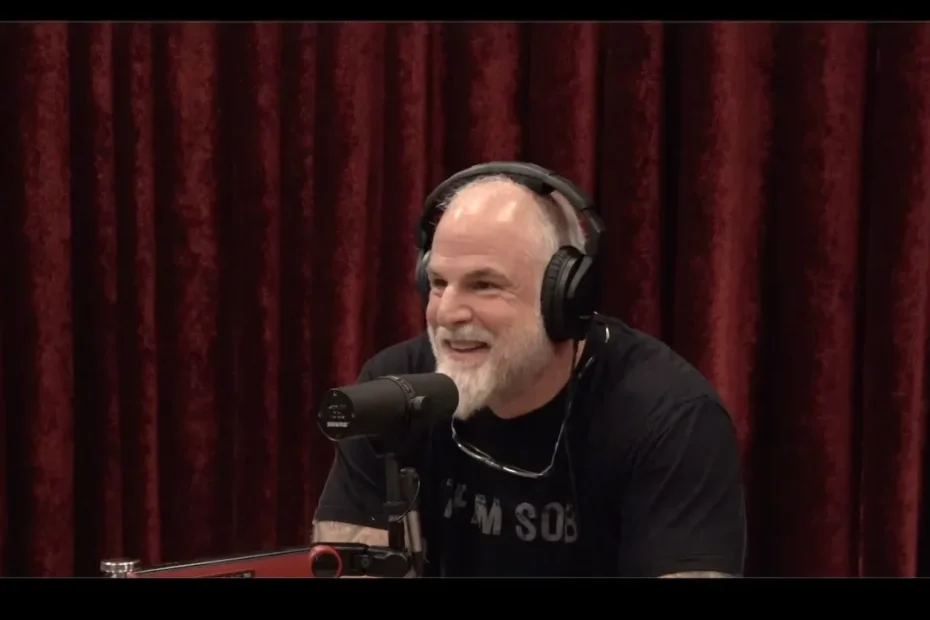
Here is the full transcript of John “Shrek” McPhee’s interview on The Joe Rogan Experience #2238, December 4, 2024.
Brief Notes: In this visceral and wide-ranging episode of the Joe Rogan Experience, Joe sits down with John “Shrek” McPhee, a legendary Tier 1 operator and “The Sheriff of Baghdad.” McPhee opens up about his harrowing childhood and how surviving early trauma forged the mental grit required for a career in the Army’s most elite units. He shares rare, firsthand accounts of his “Singleton” missions—highly dangerous solo operations in Afghanistan and Iraq where he had to rely solely on his wits to survive behind enemy lines. Beyond the battlefield, McPhee brings “evil” into the studio, showcasing personal items captured from Saddam Hussein’s inner circle, and offers a masterclass in shooting mechanics, eye dominance, and the evolving world of Brazilian Jiu-Jitsu.
Meeting at F1 and First Impressions
JOE ROGAN: Good to see you, brother.
JOHN MCPHEE: Yeah. How are you, man?
JOE ROGAN: Great, great. It was nice to meet you at F1 and I really loved your episode of Shawn Ryan. I f*ing love that dude.
JOHN MCPHEE: Thanks, man. Yeah, Shawn is—he’s the man. He’s awesome. I love Shawn.
JOE ROGAN: I’m so glad there’s guys like him doing this. There’s more people like him that are finding new ways to—you know, media is so wide open now, and you don’t have to get hired by a television station anymore. You can just start your own sht. And Shawn’s show is fing great.
JOHN MCPHEE: Yeah, he’s great. Shawn’s—I love him as a person.
JOE ROGAN: Yeah, I love him too. He’s great. He’s an awesome dude. And I loved you on that show, but God damn, man, that show was crazy. Your childhood was so nuts. Dude, hearing about you living in a brothel when you were 12 years old. F*, dude, your whole story was so nuts, man. I was listening to it in the sauna this morning and I was like, oh, my God. So I’m there cooking at 195 degrees, listening to you struggling. I was in there for a half an hour.
JOE ROGAN: I usually do 20 minutes, but I kept going. I’m like, his life was so f*ed up. I feel like I shouldn’t bail right now. I should keep listening.
Childhood Trauma and the Extra Gear
JOHN MCPHEE: I feel like—but I’m not the only one, you know what I mean? I feel like where I was in the army is full of guys just like that.
JOE ROGAN: 100%. Yeah. 100%. Yeah. And I think in some—well, fighters as well, you know. A lot of fighters I know, like Sean Strickland. A lot of guys I know had f*ed up childhoods. And I think it gives you an extra gear. I think when you can get through a childhood like that, you got an extra place that you can go to that other dudes can’t go to. And in your line of work, that comes in very handy.
JOHN MCPHEE: Yeah, well, I think it works like this. I never heard it as an extra gear, but here’s the way I always equated it. You know, you’re going to get a beating and it’s coming at 5 o’clock, you know. After dinner, they’re going to be hammered. And this is another argument in fight. And it’s a pattern, right? And you know this as a kid, right?
And what happens is you got to take that beating and then put your church clothes on, we’re going to church. You know what I mean? And the truth is, in a moment, I think my brother more than me, but I think my mom actually had him convinced that we were super bad kids. And we were—I don’t know, a couple years ago I was like, you know, you ever met an actual bad 4 or 6 or 8 year old?
JOE ROGAN: No. If it’s raised right.
JOHN MCPHEE: And then it was kind of like—I think that was an eye opener for him, but it was always our fault.
JOE ROGAN: Well, that’s the thing. You can convince kids of almost anything. You can convince them that’s their fault. You can convince them that they’re bad kids and then they feel bad for the rest their fing life. They feel like a piece of sht.
JOHN MCPHEE: Yeah.
JOE ROGAN: There’s a lot of people out there that didn’t do anything wrong. They were just raised by sh*theads and for their whole life they feel like garbage.
JOHN MCPHEE: Yeah.
JOE ROGAN: And they don’t know why.
JOHN MCPHEE: Yeah, I agree.
JOE ROGAN: So hard to snap out of that too. And it takes something for you to do that makes you feel valuable and worthwhile. You have to kind of relearn who you are as a person. And some people never do.
JOHN MCPHEE: Yeah.
JOE ROGAN: And then they find meth or heroin or something that takes the edge away.
JOHN MCPHEE: Yeah.
JOE ROGAN: They can just exist.
Finding Purpose in the Army
JOHN MCPHEE: Yeah. Well, I’ll tell you, that was the army for me. The first time I ever felt like I fit in or I was with people like me was when I was in Ranger battalion.
JOE ROGAN: I think fighting is the same way. A lot of those guys, the only time they ever feel normal is when they’re in a gym with a bunch of other savages.
JOHN MCPHEE: Yeah.
JOE ROGAN: It’s like guys who want to do that for a living, you know. Generally, something f*ing terribly wrong happened when you were young that put this anger, this monster inside of you.
JOHN MCPHEE: Well, I tell you, I tell people all the time, jiu jitsu is my sanity.
Jiu Jitsu as Meditation
JOE ROGAN: Yeah. Jiu Jitsu is meditation, man. Because if you are doing Jiu Jitsu, you can’t be thinking about anything else.
JOHN MCPHEE: Right.
JOE ROGAN: So it cleans your mind up.
JOHN MCPHEE: Yeah.
JOE ROGAN: I think that’s the same thing. I think in a different way. It’s just when you’re doing that, it’s so difficult, you can’t think about anything else.
JOHN MCPHEE: I love when I’m—I don’t even care if I get or see an elk today. The places I go to get these elk, right, I could just sit there all day. Anyway, I know, you know what I mean? The fact that one of these majestic beasts is going to walk 20 yards from me, f*ing bonus, you know what I mean?
I just—you know what I’m saying? And I feel the same about Jiu Jitsu, you know. In Jiu Jitsu, when someone does what you call high level Jiu Jitsu to me as it’s happening—I don’t care if you’re smashing my f*ing face. That was amazing. Are you kidding me? Let’s take a moment here. You know what I mean?
JOE ROGAN: It’s amazing that someone can do that.
JOHN MCPHEE: Yeah.
The Humbling Power of Jiu Jitsu
JOE ROGAN: You know, I remember when I was first starting Jiu Jitsu, I was 30 years old, and I thought I was a badass. I had kickboxed, I had won a bunch of Taekwondo tournaments. I thought I knew how to fight. And I remember one day when I was a white belt, this purple belt just raped me. I mean, he was my size. This was what drove me crazy. He wasn’t bigger than me, and he just destroyed me. Just destroyed, just did whatever he wanted. Triangled me, arm barred me, choked me.
And I remember walking out of there going, I can’t—first of all, what a shift of who you are in the world, knowing that someone can just do that to you. Not a bigger guy, someone your size can just—you’re helpless. And then I remember thinking, I got to get good at this. Having that as a skill, that’s one of the greatest things you could ever have. Because that’s what martial arts was supposed to be when we were kids. That the smaller person could beat the larger person just with technique.
JOHN MCPHEE: Correct.
JOE ROGAN: Until Royce Gracie came along, you never really saw that. The bigger guys always won. And then Royce Gracie, all of a sudden, he’s killing people from his back. We’re like, what is going on?
JOHN MCPHEE: Yeah, this is crazy. He’s losing. He’s not losing.
JOE ROGAN: All of a sudden he’s strangling some guy with his legs. We’re like, what the f* is this?
Meeting the Gracies
JOHN MCPHEE: Yeah, I agree. I agree. I tell you, I met Royce. You know, in the early days, we’d bring Royce in. And Rorian was actually the first Gracie I met before Royce, right? But we’d bring Royce in. And watching these guys—you know, we’d get 60 guys up on the mat, and this is hard to do. This is a lot of guys because it’s Royce, you know. And he would run through every dude. Every dude.
And it was like, not like it was a close match. It was like whatever dude from the unit stepped in front of him was the 12 year old child against the fing adult. You know what I mean? He just fing handled everybody.
And I remember one of those times he just fing—I did something and he cinched down on me like a spider and I couldn’t fing move. And he goes, “Yes, I did not think of this. This is good move.” And I was like, I don’t know what the f I’m doing. You know what I mean? I wasn’t even a white belt yet. It was just, he was just fing me up, you know. But I knew right then and there, I was helpless.
JOE ROGAN: Yeah, it’s a weird feeling.
JOHN MCPHEE: And like, yo, unacceptable. You know what I mean? Right? Unacceptable.
JOE ROGAN: Yeah, you got to learn this.
JOHN MCPHEE: You got to know some of it. You know what I mean? And even back then, we would all tell Royce, you know, because we were more Muay Thai, we would train a lot of Muay Thai boxing, right? Wrestling, a lot of wrestling, you know, before the gi. And we would tell Royce back then, as soon as you learn to punch, you are super dangerous. Which is, I think, where it is now.
The Evolution of MMA and Wrestling
JOE ROGAN: Yeah, well, I think wrestling is kind of—there’s so many elite wrestlers now that have learned submissions. And that extra skill of being able to throw bodies around is another level.
JOHN MCPHEE: I agree.
JOE ROGAN: Because wrestlers can learn jiu jitsu pretty easy. An elite wrestler, you take a guy like a Bo Nickal or a Daniel Cormier, teach him jiu jitsu, they’re going to—Khamzat Chimaev is the best example of that.
JOHN MCPHEE: You’re going to—
JOE ROGAN: You teach a guy like that submissions, he already knows how to ragdoll people, so he has this ability to take everybody down. And then on top of that, he’s going to break your neck. It’s like that extra—I think wrestling is the foundation. That’s the one thing. Because then you can dictate whether the fight goes to the ground or stays up, you know. And then once you learn submissions, which is pretty easy for a wrestler to learn, it’s pretty similar.
JOHN MCPHEE: It’s the same sport. I used to wrestle. And it’s like the cradle for the pin versus an armbar.
The Evolution of MMA Rules and Fighting Positions
JOE ROGAN: Darce chokes, all these different things come from similar positions. But then stand up, you know, you have to have stand up today because every… I think, you know, I’ve been talking about this a lot. I don’t think… I think you have a fight and it’s five rounds, say of a fight. If a guy’s mounted on top of a guy at the end of the first round, I think the second round should start with that guy mounted on top of you.
I don’t think they should start standing up because it doesn’t make any sense. Like, you didn’t earn that stand up. That guy took you down, he got on top of you. He’s mounted on you. You’re about to get f*ed up, and then all of a sudden, you have a reprieve from the governor because the round is over. And now you’re standing up again.
And if you’re a striker, that’s your world. But you didn’t earn that position. It’s one fight. It’s not five fights. It’s one fight. So why should you have a beginning of every round where you’re standing up?
JOHN MCPHEE: Yeah, I agree. I agree with that.
JOE ROGAN: If I could change the rules, that’s the first rule that I would change. I would say whatever position you were in at the end of the round, that’s where you start.
JOHN MCPHEE: I completely agree with that. And I always feel like that it just f*s shit up. You know what I mean? And then, you know, this doing jiu jitsu is like, seconds matter, and this fight could turn around in seconds. But those seconds can’t happen if we stop this early.
JOE ROGAN: 100%.
JOHN MCPHEE: Yeah, I agree with that.
JOE ROGAN: Well, the early days were wild, right? Because there was no time limit.
Training with the Gracies and Early UFC Days
JOHN MCPHEE: That’s what I watched. The early days is my heyday. Like, I could not get enough. I was, you know, fight dummy for Hoist. For Saka Rabba. Who else? Oh, hoisto. Okay, I’ll tell you a quick story about Hoist. He comes out, we’re doing jits with him, and I’m a new guy. So I’m like, hey, you could share my wall locker, right? And you got a wall locker and you got, like, your towel. Because the shower’s down the hallway. You know what I mean? Like, I have my clothes, right?
And then, so Hoist put his family pictures. And I didn’t notice this, but they slowly did this. Him and my team re-tagged everything, name and team numbers with Hoist, right? So they re-tagged all my gear as Hoist, right? They Hoist put his kids pictures up over mine, right?
At one day, I’m in the… I’m in my locker. Like, is this my locker? Like, what the f? What the f is going on? And I’m like, whose kids are these? Like… And then Hoist is like, you know? Yes, you like my kids? And I’m like, oh, those are your kids. Like, no, this is cool, right?
Like, years later, I’m in Iraq and I’m like, I got to go for, like, one of these surges into Fallujah with another squadron. And, like, their Opsar major calls me by name, and it’s like, I’ve been in Iraq like 30 seconds. These guys are calling me by name, like, what the f*? You know?
And then he was like, we’re getting your stuff. It’s on… It’s on the helicopter. You need to get on this little bird. We’re leaving like 20 minutes. And literally I got on the little bird, they bring my kid over, I get my shit on, right? And they’re like, yo, whose shit is a Royce? Is there a Royce Royce? You know what I mean? And then like, my bag is what is f*ing still tagged with hoist. His name. That’s hilarious.
JOE ROGAN: Yeah, that’s hilarious. So you started training martial arts in when you were in the military?
JOHN MCPHEE: In the unit? Yeah, in the unit.
JOE ROGAN: So did they have like, was it like technical training? Did they teach you? Did they have like real instructors?
Military Hand-to-Hand Combat Training
JOHN MCPHEE: How does it work? Yeah, so in training, when you kind of make it to the unit, there’s a hand to hand program. A lot of the hand to hand program is like, traditionally, like, you got to cuff people. You know what I mean? Like, which is all Japanese wristlocks, which is a foundation for a lot of shit, right?
But, you know, you learn that stuff like how if you have a weapon, how to like approach somebody if they grab your weapon, what to do? So it was all like weapon focused. Like more like self defense. But I think back then in my day, right, in the 90s, it was still, bro, come at me like this, you know what I mean? And you’re like, why the f would I stand like this ever? Like, what the f was I doing that got me here? You know what I mean?
Like, so it was always some back then, there was a lot of hocus pocus. So we kind of had our own training program. And then as my years, the training program got better because we started getting hoists, we started ground fighting, you know. I think the premise for everything they taught in my day when I was a student was like, you know, weapons retention, Japanese wrist lock to get someone cuffed. You know, two man cuffing procedures, searching, and then like how to defend yourself if someone grabbed your weapon or if you went to the ground. Right, right.
JOE ROGAN: Which is all stuff you have to know, right? But there wasn’t a lot of, like just one on one.
JOHN MCPHEE: No, no. It’s like, you know, you’re in the, you’re in the gym, they roll out the wrestling mat and it’s like, okay, come at the guy, like, with, you know, a bunch of fing white belts, basically, like out there fing around, basically.
JOE ROGAN: Was it like, was there a system like a training system. Was there like…
JOHN MCPHEE: There was a system back then, and the system was really, I think, kind of four things without really knowing what they did back then. I went through the training, but I don’t really know what the hand… The hand was back then until later when I was like in the hand to hand program or fighting with guys. You know what I mean?
But I would say this back then. I’d say it was wrestling. It was Muay Thai. Right. It was a little bit of Japanese wrist locks and some Filipino martial arts. Kali. Yeah. We had guys that would do the sticks. I know a little bit of the sticks. You know, like, first time I got smacked 37 fing times around the head with another guy with his dick. It was like, what the f was that? Like, how do these sticks move so f*ing fast? Dudes are good with that, are very impressive. Yeah, super impressed.
So I think that was really the foundation, like… And, you know, maybe like some, I don’t know, like, dirty boxing, I would kind of imagine. You know what I mean? Yeah. Clinching, punching, stuff like that.
JOE ROGAN: How did the Filipinos develop that? Stick fighting? Like, where’d that come from? Weird.
JOHN MCPHEE: Weird.
JOE ROGAN: Like, one culture is known for their stick fighting.
JOHN MCPHEE: Yeah.
JOE ROGAN: Kind of odd.
JOHN MCPHEE: Yeah. But, hey, I love all that that… The stick fighting. What do they call it? Pontoocian or whatever. The dirty boxing. They do, like, all very… Make your opponent off balance at the same time, you can strike. Or if they are trying to strike you, knock them off balance. Stuff like that.
Cultural Differences in Fighting Styles
JOE ROGAN: I’m just… I’ve always been so fascinated how different cultures have a completely different approach to fighting. Like, the ties figured out the best way to fight. Stand up.
JOHN MCPHEE: Yeah.
JOE ROGAN: Kick the shit out of the legs.
JOHN MCPHEE: Yeah. F*ing kick his legs.
JOE ROGAN: Elbow the f* out of people in the clinch. Plum knees.
JOHN MCPHEE: Yeah. The body.
JOE ROGAN: Knees to the face. They figured out striking in a way that nobody else had. It’s weird that they did it.
JOHN MCPHEE: Yeah.
JOE ROGAN: And I think it’s just because of the competition all the time and the betting.
JOHN MCPHEE: Yeah.
JOE ROGAN: Because, like, they were fighting so often and they had so much money on the line for fighting that they developed a very pragmatic way of fight. Because they were fighting all the time.
JOHN MCPHEE: Yeah.
JOE ROGAN: As opposed to, like, karate or any of these other things. I don’t think they were really fighting as much.
JOHN MCPHEE: Well, we don’t… I mean, think about America. Like, prior to Mike Tyson, boxing was kind of like Americans. If they would have seen, like, Hicks and Gracie, you know, if Hicks and Gracie would have been popular in, like, the 70s or 60s, people have been like, well, that’s not civilized fighting. You know what I mean?
Like, right, get your dukes up. This has got to be fair. You know what I mean? Americans have a… A very fair sense of what fighting should be like. Americans hate, like, dirty fighting and… But, you know, all the Muay Thai and Kali and all that, they… That was all seen. You know, those guys would come from Asia, fight around the States here, f*ing kick everyone’s ass, and people still weren’t attracted.
The Fight That Changed Kickboxing
JOE ROGAN: Did you ever see there’s one fight that’s like one of the most important fights in kickboxing, where Rick Rufus, who is like the king of American style kickboxing, like above the waist kickboxing, fought this Thai guy. I forget how… I can’t pronounce the guy’s name correctly, so I don’t want to butcher it, but this… And Rick Rufus was f*ing him up in the beginning. He dropped him. He had him in real trouble. Rick Rufus was really good, but this dude just kept chopping at the legs.
JOHN MCPHEE: Chopping at the legs.
JOE ROGAN: And by the end of the fight, Rick’s in a heap on the ground. And his own brother, Duke Rufus, who became a world Muay Thai champion himself later and became one of the best trainers in MMA. So this is the fight. What happened?
JOHN MCPHEE: I’ll show you his name.
JOE ROGAN: Oh, that’s how his name. Good luck saying that one. But, oh, this is not… This is like a compilation of a bunch of different people fighting. That’s not… This is it, the fight that changed kickboxing. So this… This fight. Well, this isn’t it. This is a bunch of other shit. Good. Go into the fight itself.
JOHN MCPHEE: F*ing no. Just go, Doris. I seen Chuck in there, was legit. Chuck was very lit.
JOE ROGAN: So this is the fight. So in the beginning, Rick Rufus, who’s like this above the weight kick, see, drops him with the left hand. Rick was really f*ing good, man. He was really good, but they just didn’t know anything about the leg kicks. And after the fight, like, his brother Duke was like, well, I don’t think there’s any skill involved in kicking the legs. And he was saying that.
Look, he drops him again. So he dropped him two times. Looked like Rick is f*ing him up. But this Thai guy just… He’s probably had 200 fights. Yeah, he just keeps kicking at the legs. And after a while, Rick’s legs are just dead. I mean, the tie guy’s getting lit up. But Rick became an unbelievable leg kicker himself after this. But no one knew. They just didn’t know.
So as the fight goes on, and this is like a huge, like, challenge match to see, like, he drops him with this leg kick. After a while, Rick just can’t move anymore.
JOHN MCPHEE: And this dude, he ain’t even running away.
JOE ROGAN: Well, no, he’s… His legs are dead right now, and he’s just getting… Every time this ties kicking him, he can barely walk. And at the end of the fight, he winds up in a heap because he just doesn’t know, you know, he doesn’t know yet. And he’s getting dumped, too. Like, look at these f*ing low kicks. Devastating low kicks. And at the end of the fight, he’s just in a heap on the ground.
JOHN MCPHEE: Yeah, his kick had no power there.
JOE ROGAN: But the thing is, like, Rick was really f*ing good back in the day. So when you… That didn’t show the end of the fight, but at the end of the fight, he just… He brutalized him with just low kicks. The ties had figured something out that nobody had figured out. And it’s kind of shocking that this one area of the world, like this one small island. Yeah, they figured it out.
JOHN MCPHEE: Yeah.
JOE ROGAN: Kind of crazy.
JOHN MCPHEE: Love it.
JOE ROGAN: Yeah, I love it, too.
JOHN MCPHEE: It’s just…
JOE ROGAN: And then Brazilian jiu jitsu, right?
JOHN MCPHEE: Yeah. Yeah.
The Evolution of Martial Arts and Brazilian Jiu-Jitsu
JOE ROGAN: Until, you know, Maeda comes to Brazil in, like, the 1930s or some sh*t, whatever, whenever that was. And then they go, the Brazilians, like, huh, I think we can fix this. Yeah. And they start, like, you know, because Elio was a small guy and Helio is like, going, well, what about if we just did it this way with leverage and just instead of using strength, we used technique and changed everything.
JOHN MCPHEE: Yeah.
JOE ROGAN: Changed martial arts forever.
JOHN MCPHEE: Yeah. Wild. I love all. Yeah. I’ll tell you, that leg kick is my go to in Iraq and Afghanistan. You know what I mean? Like, I get about this far from you. This is good distance for me. You can’t grab my weapons. But what I would do is I’d throw the Thai leg kick, but I wouldn’t aim for the middle of the thigh. I don’t care about your pain. I’d hit your knee. And either it’s going to break your knee or it’s going to knock you out of your little f*ing sl. And then I just stand on your neck.
JOE ROGAN: Yeah. It’s one of the most effective things you could do. You take away someone’s base and, you know, it’s a crazy thing about MMAs. Now we’re learning that kicking in the calf is actually even more effective than kicking in the thigh because there’s no meat there.
JOHN MCPHEE: Yeah.
JOE ROGAN: And you slam a shin into that, and all of a sudden your foot goes floppy. It doesn’t work anymore. Your leg’s useless. It’s crazy. And we’ve got figured that out over the last five or six years, which is really nuts. Like, Michael Bisping, who was a world champion, told me he went his whole career without ever getting kicked in the calf. Wow. And that was like, you know, four, four or five years ago, he was a world champion and went his entire career without getting kicked in the calf. Nuts. It’s nuts. It’s like it’s constantly changing and evolving. Like, people find something that works, and they’re like, oh, what about this?
JOHN MCPHEE: I love that. It’s always evolving, too.
JOE ROGAN: Well, martial arts have evolved more in the last 30 years than they have in the last 30,000 years.
JOHN MCPHEE: I agree.
JOE ROGAN: That’s a fact. Yeah, that’s a fact. And that’s kind of shocking. You think about how long people have been fighting.
Myths in Shooting and Combat Training
JOHN MCPHEE: I don’t know. You know, I see this. You know, I shoot every day. I teach people to shoot all over the country all the time, right? And it’s kind of interesting to me that I don’t think it works like that. You know what I mean? Like, you would, you would think people would have been doing this, right, the whole time, but there’s, like, a lot of myth involved and, and it gets watered down over time, I think. A lot of shootings, even in shooting. Yeah.
JOE ROGAN: Like, what are the myths in shooting?
JOHN MCPHEE: Oh, so many, man. Like, do we got the time? I shred this. The NRA. I go to, I speak at the NRA shows. Like, the NRA hires me. I speak at all the NRA show. This year, I actually got roofied in Dallas at the NRA show. Yeah.
JOE ROGAN: Do you know who did it?
The Dallas Roofie Incident
JOHN MCPHEE: So is f*ing, this is crazy, right? But okay, I have an assistant, right? I don’t know. She’s like 30, blonde girl, pretty girl. Her and her husband are with me, and I’m with, like, the Surefire representative. Like, yo, sorry, we got you roofied, by the way. And then, like, some other guys, right? And we get done with the show and we just go have a drink or two, and we’re going into, like, the hotel restaurant to eat a nice steak dinner, you know what I mean? We’re.
JOE ROGAN: So.
JOHN MCPHEE: We get around to drinks, and it was like, well, old fashions is what it was. Well, old fashions. And my assistant’s like, I sit next to her. She’s like, I just can’t drink anymore. You know what I mean? Like, these are horrible old fashions. I just can’t, just can’t drink these anymore. And it was like, hey, we’ll be at dinner in a minute. They got good booze at the good restaurant. We’ll get anything you want, right? So she’s like, okay. So I was like, here, I’ll take it.
So I held my cup up, and then I kind of held my cup up. The Surefire guy, her husband. And she kind of fills us all up equally. And so.
JOE ROGAN: So somebody was trying to ruby her.
JOHN MCPHEE: Her, right? So, yeah, this is in Dallas, right? So, okay, so we go to dinner. I don’t know. I get this wagyu burger. It’s f*ing delicious. I’m kind of buzzed. I’m drinking good whiskey, you know what I mean? We’re having a good time, right? I love good food, right? So I’m having a great time. Her husband’s at the end of the table, and all of a sudden, and this is like within 45 minutes of that drink, which I also didn’t know, right?
So his head hits the table. Boom. And I look at him and I’m like, like, like, is he okay? And then, like, you know how, like, you know them blow up pools where you pull down the side and the water just kind of.
JOE ROGAN: Yeah.
JOHN MCPHEE: Glides over the top. You know, his mouth opens and it was just like, whoa, across the table, you know what I mean? And I was like, I pushed it away from the table, like, so it didn’t leak on me. And I was like, we got to go. You know what I mean? It’s time to leave. You know what I mean? I’ll get the check by the front door or something, you know what I mean? But we definitely, it’s time to leave.
JOE ROGAN: And you weren’t feeling it yet?
JOHN MCPHEE: No, I wasn’t. I didn’t, I didn’t feel anything yet, right? So, okay, so it was like, I never seen this happen to this guy ever, right? So he, this isn’t him. Like, so it’s kind of weird, right? So my assistant’s like, hey, I’ll take him up to the room. I was like, okay, well, we’re going to go have a few more drinks at the bar, right? So me and the other guy go to the bar. She goes up to her room, right?
I don’t know any of this is happening. But as soon as they get to the room, the head of security’s knocking on the door. So my assistant answers, and I guess the guy was like, is, is there a guy that threw up in the restaurant here? And she’s like, he’s in the bathtub naked right now, like, and then the head of security, like, hey, we watched the tapes. Ton of info comes out, right?
JOE ROGAN: So I don’t know who did it.
JOHN MCPHEE: I think so. But, like, and then did it tell you? No, no, no. They, they talked to my assistant and then her husband, right? Like, so I go down to the bar, right? I put my credit card on the bar, and, like, I f*ing party till all hours of the night, yo. What did I learn? If you roofie me? Like, you’re going to wait six hours to get that booty. Because once you give me drugs, I want a party, baby. You know what I mean?
Like, so I’m out. Like, I don’t know what the f that, the Surefire guy fing peters out on me. And I’m probably just in the lobby alone. Like, it’s f*ed up. I don’t know.
JOE ROGAN: Do you know what was in it?
JOHN MCPHEE: F* no.
JOE ROGAN: There’s just something. It wasn’t necessarily roofy roof and all. Yeah, probably something.
JOHN MCPHEE: I don’t know what it was. Yeah. So the next day, we check out, right? Shows over, we check out. So my assistant’s knocking on my door, right? And I’m a get up early guy. I do my cardio, you know, so I’m normally up early, and she’s knocking on my door, right? So I answer my door, and I’m like, thinking, the f* is she doing here so early, right? Both of her and her husband.
And she’s like, you know, I’m glad you’re okay. And I’m like, what? You know what I mean? And she’s like, what? What? She looks, she’s looking at me. She’s like, not you, too. And I’m like, me, too what? You know what I mean? I’m kind of foggy, right? It was like fing, it was, checkout is after checkout time. I slept till like, fing one in the afternoon. The next day, I had the worst fing hangover ever. Like, if that was roofies do the hangover, I understand why people don’t do them recreationally. You know what I mean? Like, I had the worst fing hangover. So she’s like, does anybody get tested.
JOE ROGAN: To find out what it is?
JOHN MCPHEE: No. They had a fly home that afternoon. They got me in my sprinter van. I had to go do a class, like, somewhere else. I was on the f*ing road. So, like, she got me. They drove me to breakfast, got me something to eat. Kind of sobered me up a little bit, right? And then they went to the airport dropped me off, and I drove somewhere else in Texas. I was working here.
And then, you know, the, the head of security talked to her and her husband, called them a couple days later, check on them, make sure they were okay. But long story short is we had a round of drinks that none of us ordered come to our table, and they came to our table from the same waitress that we had. You know what I mean? So somehow we got a round of drinks and we even paid for them. And when I got the bill, like, I don’t know, we had two drinks and we were getting ready to go, and then a third one came. And I just figured someone, one of these, someone ordered it. You know what I mean? It’ll be fine. And then I just paid for it all. Did not even think of it.
JOE ROGAN: And so did the security know who roofied you?
JOHN MCPHEE: I think so.
JOE ROGAN: They didn’t tell you?
JOHN MCPHEE: I think they told my assistant. I think they.
JOE ROGAN: And you didn’t ask her?
JOHN MCPHEE: No, I didn’t care. Yeah. I think it was like a targeted thing where they just f*ing rob you. Oh. You know what I’m saying? I, like, I don’t think, I mean, all right, first and foremost, I think everyone’s trying to burgle booty holes this day and age, and you got to keep your safe, so there’s that. Right. But I also think, like, I think it was like, they know all these people are in for these conventions, so they try to drug somebody and just rob them. Could have just took my, I’d have handed you my wallet. You know, there’s not a crime.
Hans Kim’s Similar Experience
JOE ROGAN: Hand to a buddy of mine recently.
JOHN MCPHEE: Oh, yeah?
JOE ROGAN: Yeah. He met this girl, and they go back to his place, and then he wakes up the next day and he’s robbed. Stole his Rolex, stole $25,000 in cash from him. But he got tested and he had, I think it was Xanax. She piled a bunch of Xanax into his drink, and he was just out. Didn’t know what the f happened. Came to the club afterwards. He was like, all fed up. Came to the comedy club. He’s a comedian. Hans Kim. Shout out to Hans. Hilarious guy.
So he’s like, something happened. I don’t know what happened. We were like, hey, man, go to f*ing, go get tested right now while it’s still in your system. So he goes and gets his hair tested, and they, they found that there’s roofies in.
JOHN MCPHEE: Damn. I didn’t even know you could be tested.
JOE ROGAN: Yeah, you could be tested.
JOHN MCPHEE: Oh, sh*t.
JOE ROGAN: But there’s like a time period. If you test hair, it’ll like, last a little longer. And I think he waited a day. So they had to test hair. But within a certain time period, they could test you and find out what it is. And they said, did you take any Xanax? He’s like, no, you have a lot of Xanax in your system. And apparently that’s one of the things that they give people to rob them.
JOHN MCPHEE: Dang. Does it cause a hangover?
JOE ROGAN: I’m sure got to. If you’re going to drag me, it’s going to whack you out.
JOHN MCPHEE: Drug me, yo. If you’re going to rob me, like, I just want to say this to the world. If you’re going to fing rob me, like, give me the non hangover sht. You’re getting my sh*t anyway.
JOE ROGAN: What is the non hangover sh*t?
JOHN MCPHEE: F, I don’t know. Whatever that sht is. You know more about drugs than me. I was in the army my whole life.
JOE ROGAN: I don’t think it exists.
JOHN MCPHEE: Damn it, Joe.
JOE ROGAN: I think it’s prescription stuff or GHB. I know a lot of people give people GHB.
JOHN MCPHEE: I’ve heard of that.
The Reality of Evil
JOE ROGAN: That just gets you. Like you don’t know what the f is going on. I’ve heard of people getting roofied. If I was a woman, I’d be fing terrified to accept a drink from anybody. Dudes are. I’ve talked to so many ladies that have had their alcohol drugged by someone.
Women go to bars, they keep their f*ing hand over their drink all the time, even when they’re turning around, looking away, because they just never know. Some guy just drops something in there real quick. Next thing you know, you’re going home with them. You don’t even know where you are.
JOHN MCPHEE: I had a buddy, he doesn’t even drink. Like, someone convinced him, have, like, a glass of wine. Small town, North Carolina. And like, the cops pulled him over, like, you know, not far down the road. And he was like, “I don’t know what’s going on, but I can’t feel my hands,” you know what I mean?
And he’s like, he’s just a regular guy, you know? And they brought him back to the station and someone had put, I think it was a little bit of fentanyl or some s* in the wine. And, like, he left and he said he felt fine. And he was driving. He said, like, “I don’t feel right.” Even though, like, he doesn’t really, he had one glass of wine, like, might, he doesn’t even drink, you know, I don’t even know why he had a glass of wine. Someone probably talked him into it, you know what I mean? He probably didn’t even finish it.
But he’s like, he, you know, he said he was lucky, he felt lucky. Fing non-human people out there, I’m telling you, that’s one of the things I wanted to talk about today is like, there’s fing real evil in the world. And in Iraq, we’re in Afghanistan, you go into these fed up places where they’ve been like, I don’t know, fing raping, beheading people, fing tribal s forever. Forever.
Like there was buildings I didn’t even want to fing go in. Like you, you’d go and you’d be like, every fing hair on my body just be standing up. And I’d be at the doorway and be like, “I don’t even want to clear this fing building.” You know what I mean? And I don’t know fing why, but I know there’s f*ing old evil in this world.
JOE ROGAN: Evil’s real.
JOHN MCPHEE: It’s f*ing real.
JOE ROGAN: And if you’ve never experienced it, you could walk around delusional, think, oh, come on, it’s real.
JOHN MCPHEE: You can feel it. Like when I’m around real evil s. Only two places I felt real evil s in my life is Gettysburg and f*ing in Iraq, Afghanistan. Yeah, I felt that. Like I did because I felt evil before and it like makes me want to throw up. It hurts my stomach.
The Haunting of Gettysburg
JOE ROGAN: You mean in the area of Gettysburg?
JOHN MCPHEE: Yeah, yeah, on the battlefield.
JOE ROGAN: Stepfather felt the same thing. And he’s not woo woo at all. He’s like a real straight edge guy.
JOHN MCPHEE: F*, man.
JOE ROGAN: And then he said it felt so.
JOHN MCPHEE: Creepy, I was almost going to. Me and my son were out there ghost hunting, right? And we were both going to throw up. And I didn’t tell him, but like I had felt that feeling that you.
JOE ROGAN: Said that about Gettysburg. Because my stepdad’s never said anything like that before. And he said just the feeling. It was so sad and creepy and you just wanted to get out of there immediately.
JOHN MCPHEE: Makes me want to throw up, that feeling.
JOE ROGAN: I think places have memory. I really believe that.
JOHN MCPHEE: Well, I think it’s energy and I don’t think it can be created or f*ing. You talk to science guys, right? Energy don’t go away, right?
JOE ROGAN: Well, I think you just don’t see it and you can’t measure it, so you assume it’s not there. But I think that’s one of the reasons why when someone gets murdered in a house, they have to tell you about it, right? They have to. Because, like, people, they know.
Like, there was JonBenet Ramsey’s house when I lived in Boulder. I lived in Boulder for a while, and we were looking at houses to buy, and there was this one house was, like, really cheap for the house. I was like, “This is a nice f*ing house.” They had changed the name of the.
JOHN MCPHEE: Street so they could try to sell.
JOE ROGAN: This house because everybody knew that it was the house that JonBenet Ramsey had been killed in. They couldn’t sell the house. And we were, look, yeah, that house. We were looking at the house on, like, Zillow. We’re like, “Oh, this is a beautiful house. Maybe we should go check out this house.” And then we found out, like, “Oh, that’s why they can’t sell it.” Like, “Oh, man.” Like, they changed the name of the street to try to sell this house.
JOHN MCPHEE: Yeah. Should have just bulldozed it.
JOE ROGAN: They should have bulldozed it. And then what do you do about the ground? It’s still there. Would you want to live in a place where they bulldozed a house for a little girl getting killed? F* that.
JOHN MCPHEE: Not even. Not even joking about it. I don’t want to live there.
JOE ROGAN: No. No one wants to live there. I don’t even know what it is now. I mean, I don’t know if anybody ever bought it.
JOHN MCPHEE: Yeah. I grew up in old houses in the Chicago area. You know what I mean? And, like, some of them houses were creepy for no reason and some weren’t. You know what I’m saying?
JOE ROGAN: Like, yeah, yeah, there’s something. There’s something to that.
Inside Saddam’s Palaces of Evil
JOHN MCPHEE: But, hey, I was in Iraq, and I was in one of them, like, you know, Uday and Qusay, like, raped people. Them guys were evil.
JOE ROGAN: You went to, like, their, like, their palace.
JOHN MCPHEE: That kind of all of them. My, yeah, I carried, I carried their bodies off an airplane and had a guard on until they got cleaned up by the morgue and DNA tested. But them guys, them palaces, like, they would pick up, like, 12 year olds off the street. They didn’t. The lions. We found them.
So Uday had lions, and the lions were, it’s not funny, but, I mean, it’s kind of humorous, but I think it’s funny. But the lions were, like, on the, the army side, the big army side. And they were inside this fence, right? And then the lions were like this lazy as f*. Didn’t care about no army guys.
And then one day, I seen a lady and kids walk by, and they’re just behind chain link. And them fing lions went nuts. And I knew like only feeding them. F yeah. F yeah. They were fing evil.
JOE ROGAN: I read so many horrible stories about those guys that they would find a woman who was getting married and they would rape her and then feed her to their dogs.
JOHN MCPHEE: Yeah, or the f*ing carp outside the palaces, you know them big lakes full of these giant carps. It just going to eat bodies like you read about. Yeah, but so I was down in one of those one night just because like I could be and I had my flashlight. Always been fascinated by ghost hunting by the way.
So I’m down there by myself, just exploring, you know what I mean? And like fing door slammed on me, you know what I mean? I was freaked the f out. I’m the one down there, you know what I mean? Like freaked me the f* out, man.
And the energy down in those like rape rooms or whatever, the f, I don’t know what the f you call it, like they did bad s* there. It’s just like, I don’t know, like, like you ever ride like a roller coaster and it like turns your, turns your stomach? Yeah, that’s how it feels to me in them rooms. I don’t know what that is, but it makes me almost want to throw up. And the stronger it is, the more I feel like I’m going to throw up. But those guys were such monsters.
JOE ROGAN: It’s just so crazy that, that that story repeats itself over and over again. Like the sons of kings that grow.
JOHN MCPHEE: Up that way are always super evil.
JOE ROGAN: Because they have unchecked power from the time they’re a child.
Raising Kids Right
JOHN MCPHEE: Yeah. Yeah. I got to be honest, if I could clone myself and I’d had like a mini me right now, I would abuse them just to make sure he grows up right. I would raise him right. You know what I mean? Yeah, I don’t. And when I say abuse him, I.
JOE ROGAN: Mean like force him to work hard.
JOHN MCPHEE: Yeah. Fing earn his s his whole f*ing life. I mean like, yeah, I had a guy, like, I had a, I don’t know what he was. I was in the Middle East somewhere and one of the guys asked me like, “Are American babies stupid?” And I’m like, “What?” And he’s like, “Are American babies stupid?” And I’m like, “Why?”
And he’s like, “Well, in America, like there would be a fence at the edge of the cliff so the baby can’t go over. In my country, like, the baby knows don’t go by the cliff.” And I’m like, “I don’t know, like f, what the f?”
JOE ROGAN: I bet they don’t. I bet the babies that don’t know, go off the cliff and those genes never propagate again.
JOHN MCPHEE: Yeah, yeah.
JOE ROGAN: That’s the most harsh form of natural.
JOHN MCPHEE: Selection, Darwinism, right there.
JOE ROGAN: The most harsh form of it. Yeah, yeah, yeah. No f*ing. I mean, kids that grow up outside latchkey kids, like, when I was a kid. Yeah, you just left out of that house.
JOHN MCPHEE: Bye.
JOE ROGAN: Have fun. And you figure out who’s the child molester.
JOHN MCPHEE: Yeah, yeah.
JOE ROGAN: You figure out who’s a creep, who’s what’s dangerous.
JOHN MCPHEE: Don’t.
JOE ROGAN: Don’t go near the train tracks. Can’t hear the train till it’s too late.
JOHN MCPHEE: Stay away from the kids that gets hit.
JOE ROGAN: Yeah.
JOHN MCPHEE: At the liquor store. Exactly. Yeah, Yeah. I did the same thing.
JOE ROGAN: You learned about danger.
JOHN MCPHEE: Yeah. I tell you, my I lot. I got my first key. I was six. I f*ing lost it, like, the same day. My mom’s yelling at me, and she’s like, “You know, what do you got to say for yourself?” I was like, I still remember. It’s like one of my oldest memories. It’s like, I’m six.
JOE ROGAN: Yeah.
JOHN MCPHEE: And she was just kind of like, “Yeah, I’m sick.” Like, I had it one fing day. Like, I never carried a key in my life. Like, of course I’m going to f this up, you know? And she was like, “We can’t afford all these keys.” You know what I mean? But at the same time, like, I’m f*ing six, you know?
So we ended up having to hide it somewhere. And then, you know, because my brother wasn’t good at fing keys either. Like, you know, it’s fed up that.
JOE ROGAN: I don’t want that to happen to my kids. Like, I don’t want Mike. I mean, my life was nothing like your life, but I was definitely, like, let loose in the world, you know, and not really given any guidance.
JOHN MCPHEE: Ton of let loose with no guidance.
Forged Through Hardship
JOE ROGAN: But that’s how you make a person like you. Like, a person like you doesn’t come from a home that has, like, you know, you’re coddled, you’re taken care of, you’re always protected. Like, the only way you make, like, a legit beast of a man is that that man has to go through a lot of s* through their life, and then they come out on the other end hard.
JOHN MCPHEE: Right.
JOE ROGAN: It’s the only way. Right? You don’t. You know, I’ve never met, like, a world champion fighter that came from, like, the happiest of childhoods. Just doesn’t exist.
JOHN MCPHEE: I don’t a lot of, a lot of unit or Special Forces or Ranger guys, like, I used to call it the fatherless. You know what I mean? And it works kind of two ways. Either you had a dad, but he worked and he came home and he passed out and he woke up and he was gone before you got up. And when you got home, he was asleep on the couch or already out for the night because he fing works fing a lot of hours, or you kind of just didn’t have a dad. You know what I mean?
Right. Those people make Special Forces soldiers. Just like, you know, dad issues for a chick or put her on a pole. Those same issues in a dude puts them in Special Forces, I think. And I’ll take the fatherless all day long.
JOE ROGAN: Yeah. Well, those are the world champions. I mean, that’s Mike Tyson, right?
JOHN MCPHEE: Yeah.
JOE ROGAN: He was 13 years old, no family, gets adopted by a guy who’s a psychologist, who’s a hypnotist and is a great boxing coach and teaches him to become this elite fighter. And I kind of think that you don’t become that guy unless you’re dealing with all sorts of unspeakable tragedy and horrors when you’re a child.
JOHN MCPHEE: Well, you wouldn’t have that kind of focus without that.
JOE ROGAN: You wouldn’t have that monster inside. Like, you have to. That monster has to grow because it needs to be there. Right?
JOHN MCPHEE: Yeah.
JOE ROGAN: Yeah.
JOHN MCPHEE: Yeah. I would say, like, and I don’t know what the ratio is, but I would say, like, one out of every fing hundred or 300 is like the fing high school quarterback who married the f*ing prom king.
JOE ROGAN: Very rare.
JOHN MCPHEE: Yeah.
JOE ROGAN: Very rare.
JOHN MCPHEE: I think I only knew one of those guys.
JOE ROGAN: Yeah. And those guys, I bet if you dig into their childhood, their dad was probably a little abusive.
JOHN MCPHEE: Yeah. Or their mom or a brother. Yeah. Something.
The Power of Sibling Rivalry
JOE ROGAN: There’s another thing. Older brothers, it’s like you want to find the young brother. The young brother’s the beast.
JOHN MCPHEE: I’m the little brother.
JOE ROGAN: The young brother gets beat up by the older brother and just constantly in battle his whole life. Like, so many fighters, the best fighters have, like, Chris Weidman’s got a great story like that.
JOHN MCPHEE: Well, I mean, think about this. If you had to fight your bigger brother off your whole life, you would be good at jitsu. Why? Because you understand leverage, you understand patience, wait for the take, some punishment, move later. You know the deal.
JOE ROGAN: You’re so accustomed to being in battle all the time with your brother, right?
JOHN MCPHEE: Yeah. Hickson was a little brother to Rolls.
JOE ROGAN: Yeah, yeah.
JOHN MCPHEE: Same thing.
JOE ROGAN: Yeah. And Horian.
JOHN MCPHEE: Yeah.
Hickson Gracie: The Complete Fighter
JOE ROGAN: Hickson is, he’s such a unique guy because he was like, the first guy that figured out, like, that physical strength, yoga, all the gymnastic, natural stuff that he did.
JOHN MCPHEE: Flexibility, breathing.
JOE ROGAN: Yeah, he was like a physical specimen on top of being super technical.
JOHN MCPHEE: Yeah. So he had, like, both things. Yeah, he had it all. Yeah. Way before people, way before. Like, he knew the winning mindset and how to keep that mental edge with all the other things. And the fighting was just something that he grew up to do, I think, in my opinion. You know what I mean? Yeah.
JOE ROGAN: He had that samurai mindset.
JOHN MCPHEE: Yeah. I’m telling you, I think he’s like, I talk to a lot of people. I know some legendary guys from the army. Right. When he talks, it’s like this weird time vortex. You ever talk to him? Like, seriously?
JOE ROGAN: Yeah, I’ve had a couple of podcasts with him.
JOHN MCPHEE: Wow. Like, it’s incredible.
JOE ROGAN: You know, I went over his house once in, like, 2000, and him and his son, and we were watching Coliseum. So Coliseum was like, the last time he fought, when he fought Funaki, and we were watching all the different fights, he had a tape of it, we were watching it, and he was breaking down all the things that all these guys were doing wrong. It was such a fascinating education.
He was like, “There’s too much space. You start here, there’s too much space.” And he goes, he had this philosophy.
JOHN MCPHEE: Good accent, by the way.
JOE ROGAN: He goes, “We started a neutral point. We started a neutral point. If I get to one, I’m not going back to zero. I’m going one to two, to three, to checkmate.” He goes, “I’m not going backwards.” He goes, “These guys, they lose position, they go for here, go for there. All this extra space.” And he was, like, breaking it down while we’re watching the fights. It was such an education.
JOHN MCPHEE: Love that.
JOE ROGAN: It was f*ing amazing. It was amazing.
JOHN MCPHEE: Yeah. He’s a legend.
JOE ROGAN: Oh, man. Like, one of the great legends of martial arts. You know, if you, like, go into the history of martial arts, Hickson Gracie will go down as, you know, there’s a Mount Rushmore of martial arts legends. Him and Royce are right up there.
JOHN MCPHEE: Yeah, I agree with that.
JOE ROGAN: And Royce will tell you, like Hickson, he goes, “My brother was a hundred times better than me.”
JOHN MCPHEE: Yeah. Well, when Royce used to come to us, he would tell us straight up, “I’m not the family fighter.”
JOE ROGAN: Yeah.
JOHN MCPHEE: You know, and I think what he told us back then was like, I don’t know. Hickson was Pride, contracts. UFC was different. Couldn’t figure it out. That’s why Royce even fought. Right. I thought that was kind of the deal back then, but I don’t. That’s a long time ago.
JOE ROGAN: There was a bunch of different thoughts on it. You know, Royce jokes around. He goes, “Look how beautiful I am. That’s why they wanted me.” But it was also because Hickson was very physically dominant. And the idea was like, let’s have this guy that doesn’t look physically impressive to show Jiu Jitsu, to show the power of Jiu Jitsu.
But if that doesn’t work, then we bring in Hickson. But obviously I didn’t know that Royce beat everybody. And then Hickson went over to do Japan Vale Tudo in like 1994, I think it was.
The Golden Era of Vale Tudo and Pride
JOHN MCPHEE: I used to love all those. The Vale Tudo Pride. I thought that was the best.
JOE ROGAN: Oh, the great. The golden era of martial arts is when everybody was learning.
JOHN MCPHEE: Yeah.
JOE ROGAN: Like, holy s*, there’s so much out there.
JOHN MCPHEE: Yeah, I agree. I loved every minute.
JOE ROGAN: And then Fedor Emelianenko comes on the scene.
JOHN MCPHEE: He’s just like, Fedor is my favorite.
JOE ROGAN: One of the all time greats. He’s another one. I mean, if there’s a greatest heavyweight of all time, you have to, he’s got to be in the conversation.
JOHN MCPHEE: I feel like back in the day we’d be like, we’d be talking about fighting and it’d be like, “Man, I wonder if anyone’s ever like, done this from like the mount.” Yeah. Fedor won like six fights like that. And then like, “I wonder if anyone’s ever done like something like this.” And like, well, Fedor won his last fight just like that. And you’re just like this guy, like.
JOE ROGAN: You know, in his prime, he was a monster.
JOHN MCPHEE: Yeah, I agree.
JOE ROGAN: And so stoic, like, his expression never changed.
JOHN MCPHEE: Yeah.
JOE ROGAN: He gets head kicked, he gets suplexed. Yeah. Nothing.
JOHN MCPHEE: It’s like no one’s home in there. You know what I mean? Just.
JOE ROGAN: Just didn’t register.
JOHN MCPHEE: He was just a machine.
JOE ROGAN: Yeah. Yeah.
JOHN MCPHEE: I loved him. And I liked when he, I seen an interview one time. Remember his brother Alexander? Sure. He was like, “Alexander is better than me. If he just wouldn’t party so much.”
JOE ROGAN: Yeah, he was an animal.
JOHN MCPHEE: And I was just thinking, Fedor saying his brother’s better than him. You know what I mean? Well, his brother was bigger and taller.
JOE ROGAN: And was a nasty striker, man. His brother was a vicious striker.
JOHN MCPHEE: Had good kicks, too.
JOE ROGAN: Oh, my God, he was f*ing good, man. But that was, that was the days where, you know, everyone’s just kind of figuring out what worked and what didn’t work.
JOHN MCPHEE: Yeah, yeah, yeah. You had Vanderlei the Axe.
The Steroid Era in MMA
JOE ROGAN: Oh, man. It was also a time where everybody was juicy. The whole organization was like, I had a friend who was going to fight over there, and he was 170 pounds. And they said, “No, we want you to fight at 185. Go do steroids.” Like, go do steroids. Come back to do steroids.
When Ensign was on the podcast, he told me in the contract, it said, like, in capital letters, “We do not test for steroids. Go have fun.”
JOHN MCPHEE: Yeah, come back yoked up.
JOE ROGAN: Come back juicy. Yeah, everybody was juicy back then because it was the wild days. It was like the Wild West, right? They just wanted the best, most exciting fights possible.
JOHN MCPHEE: I think that’s what people want now. Oh, yeah.
JOE ROGAN: You know what I mean? There’s a real argument for that.
JOHN MCPHEE: I don’t think the fans give a f about drug testing. You know, I don’t think, look, and I think this is for all, like, the Olympics. I get it. But the NFL, like, seriously, why even fing, why?
JOE ROGAN: What, do you want the sport to suck?
JOHN MCPHEE: Like baseball?
JOE ROGAN: That was the thing when they were doing, like, Mark McGwire and all that s. And, Sammy, why are you testing these guys? It’s the most exciting thing is to hit a home run. These guys are doing something that makes them better at hitting home runs. Everybody should do that thing, whatever the f that is.
JOHN MCPHEE: Think about how much more money that bring those organizations.
JOE ROGAN: Yeah, but there was this thing back then that it was cheating, but what it really is is science. Like, they figure out there’s a way where you recover more, you get stronger, you get faster. Like, hey, do that, guys. And by the way, everybody else is doing it, too. They’re just, like, hiding it in some sort of a weird way. You know, they’re just masking it and taking weird stuff.
And there was, you know, that BALCO scandal where they’re all taking this stuff called the Clear.
JOHN MCPHEE: I never even heard of that. Never heard of that? No.
JOE ROGAN: I had that guy, Victor Conte, on the podcast who created the Clear and what he was. He’s a scientist, and what he did is he, BALCO labs, they figured out that when they’re testing, they’re testing for very specific metabolites. So they took steroids, and then they changed it slightly so that it didn’t show up in the test. And they’re giving them the same stuff, and they would all pass clear. And they were all f*ing just monsters.
JOHN MCPHEE: Like Barry Bonds.
JOE ROGAN: He was a monster. I met Barry Bonds in 1994. I was on this television show called Hardball. And Barry Bonds was, you know, he was still a major league player, a big time player, famous, a regular guy. Like you look like a regular athlete. And then he started getting juicy. And then years later, he gained like 60 pounds. It was just f*ing smashing home runs. Like that would be good. Like, you should keep doing that, whatever you’re doing.
JOHN MCPHEE: I think that’s all sports. Yo, jump as high as you can. Take your f*ing gear. Jump high, run far, smash each other. Let’s go.
The Enhanced Games and the Future of Sports
JOE ROGAN: Well, that’s the Enhanced Games. You know the Enhanced Games doing that, they’re developing this whole protocol right now. And the Enhanced Game is going to let people do whatever the f they want that works. And their idea is we are going to develop the best athletes in every discipline and then we’re going to give them a lot of money and we’re going to like, f the Olympics.
The Olympics is a giant scam because the Olympics, the athletes don’t make any money. And NBC and all these broadcast networks and the IOC, they’re making billions of dollars off the backs of these athletes’ hard work. And no one is going to see them. They’re going to see the athletes. Right. The athletes aren’t even compensated. It’s a crazy scam. It really is. Because it’s not like.
JOHN MCPHEE: No.
Performance Enhancement and Professional Sports
JOE ROGAN: If no one made any money, including the networks, including the IOC. Great, great. That’s not the case. Yeah, someone’s making a fing shit ton of money. But it’s not the people that are putting in the hard work. It’s the people that are pointing cameras at them. Yeah, it’s the dumbest fing thing of all time.
So the Enhanced Games is like, let’s throw out the drug testing, let’s encourage people to do whatever the f* that works, and let’s give them a lot of money. So, like, whoever wins, whatever, they give them a million dollars. Yeah, and then you’ll get like, the elite athletes will be like, well, why am I wasting my time competing for free? Maybe I blow out an ACL or herniated disc and my career is over and I don’t have shit to show for it. Or I can do steroids and then win and have money for the rest of my life.
JOHN MCPHEE: Yeah, I want to watch the steroids, of course. Yeah. I mean, the Enhanced League or whatever it’s called. Like, that sounds to me like the NFL is going away. I want to see the mountain hit another mountain, you know what I mean? Like, let’s go.
JOE ROGAN: If they just got they told the NFL. Let’s just say everybody get juicy. F*, those guys are already freaks.
JOHN MCPHEE: They’re already doing it, probably. You know, I mean, I only imagine. I don’t know. But my two cents is like, you’re doing it anyway. Just f*ing go with it.
JOE ROGAN: The way I understand it, they let them know when testing is happening.
JOHN MCPHEE: So then everyone waste the f*ing money. You know what I mean? Like, phone it in. Let’s just phone that in. You know what I mean? Like, yo, I took that drug test. Okay, Click. Save some money for everybody.
JOE ROGAN: The drug test should be multiple choice. We’ll fill it out.
JOHN MCPHEE: No, nothing. Yeah, the drug test should be, we’re just kind of curious if you’ve had any success. And we want to know what works so we can recommend better stuff to people.
JOE ROGAN: But there’s a weird thing about, you know, protecting the athlete’s health. Like, hey, fface, they’re playing football. If you really cared about their health, you would tell them, don’t play football. There’s no way you care about their health. Yeah, there’s no fing way.
JOHN MCPHEE: Yeah.
JOE ROGAN: You know, it just doesn’t make any sense.
JOHN MCPHEE: I mean, there’s inherent natures of danger there. Concussions, knees, shoulders.
JOE ROGAN: Right. Everything gets blown out. Yeah, how about vaccines? How about you making them get vaccinated and they have f*ing heart attacks on the field? Does that make any sense? No. You don’t care about their health. You’re full of shit.
Those guys didn’t have to worry for a second about COVID. They’re elite athletes of the highest order. Do you really think that something that is literally only kills like 0.03% of the people who get it? And those people, or most of them, have comorbidities? You really think elite athletes of the highest order had to worry about that? Of course they didn’t. It’s all bullshit. You don’t care about them. Yeah, let them get juicy.
JOHN MCPHEE: Yeah. Juice, get that gear, you know what I mean? Hey, let’s take those piss cups and turn them into drink cups and serve them some whiskey in the locker room. Let’s get this going. And I want more fighting in my sports, you know what I mean?
Hockey and Fighting in Sports
JOE ROGAN: That’s why I like hockey.
JOHN MCPHEE: Yeah, I love hockey.
JOE ROGAN: The last sport that allows fist fights normally in the middle of a sport. Yeah, it’s the only sport that allows the occasional fist fight.
JOHN MCPHEE: Yeah.
JOE ROGAN: Which is kind of crazy.
JOHN MCPHEE: I live in North Carolina and there’s a little local hockey team at Bragg, and like every. I go to a lot of hockey games because it’s like, it’s like seven bucks for like a long time. You know what I mean? And they’ll fing blood on the ice on the Thanksgiving Day, you know, they’ll throw like, they’ll have like a non-league team come in and it’s fing blood on the ice, man. These like the Southern Provisional Hockey League. Like, I love this hockey league.
JOE ROGAN: It’s just wild that that’s the only sport where fist fighting is a part of it.
JOHN MCPHEE: Yeah.
JOE ROGAN: It’s kind of crazy because it’s grandfathered in.
JOHN MCPHEE: Yeah.
JOE ROGAN: Because it’s basically bare knuckle boxing in the middle of a sport.
JOHN MCPHEE: Yeah.
JOE ROGAN: Which is real weird.
JOHN MCPHEE: Yeah. Well, then you got soccer where like, you know, you rubbed elbows with the guy and he falls over and you’re like, what the f? You’re faking it. Like, yeah, I have children. I know the faker. What the f? Like, I’m a parent. You can’t fool me.
JOE ROGAN: Well, anybody could see it’s the dumbest thing.
JOHN MCPHEE: Like a hand. Yeah, yeah. They fall on the ground and they’re…
JOE ROGAN: F*ing holding their side, they’re holding their chest. It’s so dumb. But it’s also one of the reasons why it’s not really accepted in America. Watch that flopping. We’re like, come on, get up.
JOHN MCPHEE: This is so crazy. Yeah, I totally agree.
JOE ROGAN: Especially when people watch football. You’re watching guys get f*ing waylaid by a 300 pound super athlete. They get up and shake it off.
JOHN MCPHEE: Yeah. And then they’re right back on the field. Yeah. The guys like adjust his helmet a little bit, you know what I mean? Takes his mouthpiece out. You’re good. All right, move on.
The Brutality of Football
JOE ROGAN: I just started watching football literally this last year. And you know, when I see guys collide, I’ve had so many injuries, knee surgeries and jiu jitsu injuries. I see guys get hit. I just like hold my knees, I hold my back, like, oh, it’s the most brutal of all time. A guy who’s 290 pounds is running full blast and colliding with you with 100% of his strength.
JOHN MCPHEE: Yeah. Yeah. It’s f*ing crazy, man. I used to, when I was 38 as a sergeant major in the army and like, I don’t know, hand to hand jiu jitsu kind of got boring for me. So like, I was looking for other hobbies. I was at the PX and I seen like the Fort Bragg rugby team practices like Tuesday at 6 or something. So I just went out there for something to do, man.
And I’m going to tell you, you think jiu jitsu fs people up, go play rugby. Matter of fact, stay the f away from rugby. Like, it’s f*ing brutal.
JOE ROGAN: And no helmets.
JOHN MCPHEE: No, nothing, man. And like, when I was a kid, I don’t know if I can say this, but we played smear the queer all the time. Like, I don’t know what you call that, but that’s what it’s just called. When we were kids, I come home, my shirt would be ripped. I’d get another beating because, like, you ripped another shirt. These are expensive, you know what I mean? But, like, it’s my brother’s anyway, right? Like, not like he bought me a shirt, but, man, it was like, crazy.
My first practice, like, the ball sitting there, and then one of the coaches…
JOE ROGAN: Is like, grab the ball and run.
JOHN MCPHEE: I just f*ing grabbed a ball and just ran everywhere. One of these little over. And then, like, guys are like, man, what college you play in? I was like, none. I never played a rugby a day in my life, you know. My first game, you know, was like in my third practice. You know what I mean? That’s crazy.
But in doing jiu jitsu and fighting people in Iraq every night, like, I thought rugby was kind of easy. The guy’s running at me, and I just got to take him down double legs. And I started getting more tackles than anyone in my coach. You know, they keep stats and be like, you had like 80 tackles a game. How do you do that? And it’s like, double, double, double leg, takedown, single leg, maybe a trip. Yeah. You know what I mean?
And then, like, one of the times, you know, one of the coaches was like, hey, will you teach us how? You know, how would you, how do you normally tackle? You get the most tackles and like, double single legs.
JOE ROGAN: So you’re basically teaching them wrestling.
JOHN MCPHEE: I just thought wrestling, why don’t they teach them that? That would seem to be like, I bet that, I bet the pro level f*ers are doing that. They have to, like, have to. Yeah. I mean, because think about this. Like, I know a lot of linemen do Cali for hand speed and stuff like that. You know what I mean? Right? Because they got to win the hand fight.
So I know there’s a lot of sports that use a lot of discipline, so I would imagine they would have to be f*ing having, you know, wrestling practice or take down practice. Right? I would imagine they’re doing same shit as everyone else.
JOE ROGAN: Well, just understanding leverage and how to manipulate a body, right?
JOHN MCPHEE: Yeah. Right. Well, there’s no pads, so, you know, you can’t come 30 miles an hour into this tackle. You might have to come in at 10 miles an hour, you know what I mean? Because you got no pads. Right.
JOE ROGAN: You know, well, that’s the argument against pads in football, is that these guys, the only reason why they can play the way they are and collide with each other full blast, because they have helmets and pads.
JOHN MCPHEE: Yeah.
JOE ROGAN: Which is totally true.
JOHN MCPHEE: I want thicker helmets and more collisions. Let’s go. Come on.
JOE ROGAN: It would be a wild game if you had American football and no pads. I mean, that’s what they used to do way back.
JOHN MCPHEE: They had those little leather helmet, like, you couldn’t pay me to wear one of those. Get the f* out of here with that.
JOE ROGAN: I wonder how many guys died playing that.
JOHN MCPHEE: Imagine how many concussions, how many head…
JOE ROGAN: To head collisions, running full blast. And then, you know, if you’re Samoan, you’re like some big giant dude. You’re going to go head to head with guys because you know you’re going to win it.
JOHN MCPHEE: Yeah. F*. Every time.
JOE ROGAN: So you’re just f*ing headbutting everybody.
Rugby Stories and Tongan Warriors
JOHN MCPHEE: Yeah. The army team has a lot of Tongans. Fort Bragg. Tongans are paratroopers. As people. I don’t know how that works, but they are, man. They all play rugby. A buddy of mine was like, I was like, you know, you, how, you know, when, when he started playing rugby, he was like, I was like three, you know, huge guy.
Like, I knew I was doing pretty good at rugby when the Tongans were like, we’d pick, they’d pick teams, and all the Tongans would be like, we want big John. You can have the rest. And I’d be like, yeah, me and the Tongans would get some, right? We’ll f*ing crush the people.
But, like, they start playing with, like, a coconut. Imagine holding a coconut and just going down ribs on a coconut, like. And I’m like, why would you play with a coconut? And he was like, well, there was only one rugby ball on the island, and the bigger boys had it. Jesus. Okay. Yeah.
But, yeah, I played rugby for a while, and I stopped doing MMA to play rugby. But what I realized is rugby is way more injury prone and dangerous. So I kind of went back to jiu jitsu.
JOE ROGAN: Oh, yeah. One on one is definitely, you can control a lot more what’s going on than a bunch of dudes.
JOHN MCPHEE: Yeah.
JOE ROGAN: Colliding into each other.
JOHN MCPHEE: Yeah, I agree, man. So hard. I know. Rugby’s awesome.
JOE ROGAN: It is awesome. It’s weird how it never took off at all in America. It’s kind of strange, you know, because we love violence. You would imagine that rugby would be something that we would have adopted.
JOHN MCPHEE: I think the only reason it’s not popular is because of the time. Like, it’s like soccer. Once it starts, it doesn’t stop. Americans want to go take a piss and get another beer and come back and then they want you to, commercials.
JOE ROGAN: Yeah, that’s the big thing about soccer.
JOHN MCPHEE: And the game never stops.
JOE ROGAN: Tough to sell commercials, right? You can’t stop the game.
JOHN MCPHEE: Right.
JOE ROGAN: Whereas football, you have a f*ing, you have half time, bro. You got a whole half hour.
JOHN MCPHEE: Well, you ever see the apps that just show you the plays of football? The whole game’s like 12 minutes of actual work. You know what I mean? 10 minutes. You know what I mean?
Soccer and Combat Sports Cardio
JOE ROGAN: Soccer, those motherf*ers are running the entire 80 minutes.
JOHN MCPHEE: Let’s go. And it doesn’t stop. You know, you have to be in insane shape to play soccer. The cardio is just nuts. You’re basically sprinting for the entire game.
JOE ROGAN: I never played soccer, but I don’t think I would enjoy it.
JOHN MCPHEE: Well, we went to watch they have a professional league here in Austin. And these dudes have these f*ing quarter horse legs.
JOE ROGAN: Yeah.
JOHN MCPHEE: They’re like thin upper bodies and these fing gigantic legs. Because they’re just constantly doing plyometrics. They’re just constantly sprinting and going side to side and left and right and fing crazy cardio. But it’s never going to sell in America if you can’t have commercials.
JOE ROGAN: Yeah, I think that’s why rugby’s not popular also.
JOHN MCPHEE: Yeah, I mean, that makes sense. Maybe they just change the rules a little bit.
JOE ROGAN: Right?
JOHN MCPHEE: You know? Okay, give us a little break.
JOE ROGAN: It’s kind of crazy. Here’s what we’re saying is rugby starts and stops without a ton. That’s the same thing we want for. You just said for MMA. Oh, yeah, right.
JOHN MCPHEE: That’s the problem with MMA too, right? You can’t have a no time limit.
JOE ROGAN: Fight, because how you going to get the next fight? At midnight, dudes would kind of fight to the death.
JOHN MCPHEE: Like, if you get the best of the best today, where they’re so evenly matched and they’re brawling four hours, five hours, like, and then it would probably end your career. Like, at the end of it, you might not ever be the same again.
JOE ROGAN: You’d be spent. Like you got one of those in you, right?
The Toll of Fighting
JOHN MCPHEE: Because there’s a lot of guys, like, there’s a fight. And you could point to that fight and say, he was never the same Tony Ferguson. Justin Gaethje. A lot of people point to that fight. Justin Gaethje battered Tony Ferguson so bad. He was undefeated up until that point. Or maybe he lost a couple of times, but he was the boogeyman.
Tony Ferguson was the scariest dude in the sport. And then one bad beating and he was kind of never the same again. Because one bad beating just changes everything. You just never really recover.
JOE ROGAN: Yeah, well, once you lose the mental edge, right, there’s a little bit of that, but there’s also like a bad beating to the brain. Like, he got hit so many times in his head. A bad beating to the brain after a certain. I mean, no matter who you are, if you’re sparring and if you’re fighting, you’re getting hit in the head, period.
And so over the course of your career, you’re already accumulating a certain amount of abuse. And there’s one fight that could break the camel’s back. Yeah, like in boxing, I always point to Meldrick Taylor, Julio Cesar Chavez, like, Meldrick Taylor was the f*ing man won the gold medal in the Olympics.
And Chavez just methodically broke him down and then stopped him in the last round of their fight. Like, literally two seconds to go. Richard Steele stops the fight. And from then on, he was never the same. It was just he took so much of a beating in that fight that he was never the same again.
Combat Trauma and Mental Resilience
JOHN MCPHEE: Yeah, I think that happens with soldiers, too. I’ve seen a lot of guys were like, we got mortar to rocketed. And then next deployment, guy doesn’t want to. You know what I mean? Yeah. I think there’s a. There’s a time where everybody says enough’s enough, right? Like, yeah. Whether you want to or not.
And then once you reach that point, like coming back from that point. Right. Become that mental champion again. It’s a f*ing long road.
JOE ROGAN: Is there anything like you as a leader, when you see a guy who’s maybe crossed over in that way? Is there anything that you would do to try to bring him back? Or is there nothing that can be done?
JOHN MCPHEE: That’s a great question. Define bring him back. Define what’s wrong with him.
JOE ROGAN: Right. I guess a confidence thing or just being terrified. Like new fear being introduced. You know, a lot of guys think they’re indestructible until they’re not.
JOHN MCPHEE: Not.
JOE ROGAN: And then all of a sudden, now this is a new factor.
Ending the Nightmare
JOHN MCPHEE: Yeah. I used to teach tandem jumping and bundle jumping in the military. And I don’t know if you ever see my social media, but, like, I’m in the sky flying, and there’s that huge barrel under me. I used to teach that. And what would happen is, if you had a bad jump, a bundle jump, you would have to cut away.
And we called it the nightmare, right? And you got to end the nightmare, and this thing starts spinning you out of control. It’ll be so many Gs that, like, you’ll pass. The parachute will open later, right? You’ll be fine. But we used to tell guys, right? Like, end that nightmare. Makes sense. Now you’re the captain of the ship.
So a guy would have to end this nightmare, however he ended the nightmare, right? And then what would happen is, afterwards, we’d review the video, and I’d have to show a guy, right? And then we’d leave him in the classroom for a minute, and we’d tell him, hey, gather your emotions. Whatever you need to do, and then get on the next plane.
JOE ROGAN: Get right back on the horse.
JOHN MCPHEE: Get fing back on that next plane. You know what I mean? And guys would do that, you know what I mean? A lot more SEALs needed that time than, like, unit guys. Because unit guys like, yo, I’ll fly this motherfer up your ass. We ain’t going to have no problems today, son. You know what I mean? I’m not f*ing. I don’t know.
I think the difference is the unit is always more mature than SEALs. It’s an older culture. It’s older guys, more experienced guys, more methodical guys, more planned out. So, like, in a lot of times, like, you know, younger guys, normally the SEALs, they’ll have their jump numbers, but they’re like their core. They’re what makes you you. Confidence, dexterity, strength. F*ing hell. It ain’t there yet.
And they kind of freak out once in a while. Younger guys, it’s a maturity thing, I think, normally happens to the SEALs. Most unit guys are pretty mature and have been through so much shit by the time they get to the unit that, like, you’re probably unshakable by then.
JOE ROGAN: But you see that in fights, too. Like young, undefeated guys who fight like a world champion who’s, like, in their 30s, and that guy breaks them down. And then you see, like, they don’t know what to do when things are going sideways. Yeah. And mentally, they fall apart.
JOHN MCPHEE: Yeah, yeah, yeah, that’s right. That’s when the bad decisions will start. You know what I mean? And the reality is you got to snap your fing self out of that. You got to fing put your parachute back on and get the f* back on that airplane.
I had plenty of those jumps. I’ve cut away more. F, I had a cutaway training for D Day last year. Fing put my cut away. You can see how fing low I am and everything, you know what I mean? And I have procedures. I have another parachute, like we’re all going to die. Am I going to let it ruin my day? Kind of thing. Like, let’s fing move on. You know what I mean?
Building an Unshakable Core
JOE ROGAN: But how did you develop that mentality just over time?
JOHN MCPHEE: I think that comes with what I just said is the core of a person. And I think this is what the army is really good at, is developing this core, right? And this core in this core, right? How do I develop your confidence? Well, I don’t fing know. I couldn’t even define fing confidence because I went to Chicago public f*ing school system.
But I could tell you this, if I taught you to rally race car drive, and you got pretty fing good at it, if I taught you jiu jitsu, eventually you’re pretty fing good at it. I show you skydiving, eventually you’re pretty f*ing good at it, right? Why is. Because every one of these things I showed you world class level, and we brought world champions in to show you, right? Eventually you’re going to gain confidence.
It’s the taking your daughter to karate or little kids jiu jitsu, they have confidence that other kids don’t have, right? That’s what you got to build. So it takes a lot of different skills and getting guys good at a lot of different skills to build that f*ing unshakable core. You know what I’m saying?
JOE ROGAN: Yeah, yeah. And it’s, it’s a matter of when do you introduce them to like extreme adversity? Do you build them up slowly?
JOHN MCPHEE: Right? Right. And it has to be built slowly, right? And then we used to say this like aircraft training, right? Let’s say you got a breach, an airplane, right? And you got to climb a fing 20 foot ladder because these motherfers ain’t low to the ground, right?
And you’re hanging on a ladder and you weigh fing 280 pounds in your shit, but you’re on these fing ladders with fing six other guys who all the same as you or more. You got to crack the door, get the f in this airplane right now. Let’s just say this is your first time, and you crack that door the first time.
And as an instructor, I know you’re cracking the door. And as soon as you crack that door, I f*ing shoot you in the face. You know what I mean?
JOE ROGAN: Yeah.
JOHN MCPHEE: And with a training round, right. How fing embarrassing. Right? And then the reality is, yo, you just move. Ruined this motherfer for.
Breaching Aircraft
JOE ROGAN: How do you breach an airplane? What’s this? What’s a successful protocol for breaching an airplane?
JOHN MCPHEE: Mechanical or explosive?
JOE ROGAN: What do you mean?
JOHN MCPHEE: Sometimes we open doors, sometimes we blow doors. It depends. So which one you want to know about?
JOE ROGAN: Okay, let’s go with mechanical.
JOHN MCPHEE: Yeah, most. Most doors have a lever on the outside that can be activated. And most doors, there’s a certain way they open. Right. My team, I was always kind of like a primary door guy. Then there’s a certain way doors open, there’s latches. So all airplane doors open from the outside, so.
JOE ROGAN: But once you breach it, though, you’re in a tube and everybody knows where the door is.
JOHN MCPHEE: Yeah.
JOE ROGAN: It’s a very vulnerable position.
JOHN MCPHEE: Yes.
JOE ROGAN: So what’s the protocol for breaching a door when you’re in a tube like that?
JOHN MCPHEE: So what you have to do is breach as many doors as possible and get as many people in as possible as quick as possible. And everyone goes to positions, right? You got cover, guys, you got runners, you got searchers. It’s a lot of shit that needs to go on on these fing aircraft. Same with a fing big cruise liner. Right?
So everybody’s going to. Once the door is open, everyone’s going to flood in and kind of like go to their places, you know what I’m saying?
JOE ROGAN: Right. So you plan it out, you know where you’re going to be, and then you’re still dealing with the chaos of you’re in a tube and there’s only one way in.
JOHN MCPHEE: Yeah.
JOE ROGAN: And things are coming at you no matter what.
JOHN MCPHEE: Yeah, yeah, yeah.
JOE ROGAN: So there’s no clean way to do that?
JOHN MCPHEE: Not even once? Not even once, no. F*, no, man. You know what I mean?
JOE ROGAN: What a crazy f*ing task.
JOHN MCPHEE: I know. But the back to the point is, if a guy cracks that door, any door, let’s say it’s your first time. I’m showing you, like, all right, Joe, I’m going to show you some, you know, close quarter battle. I’m going to show you how I clear a door. And then just joking around like you’re about to go through a door and I shot you in the forehead. You wouldn’t mentally never want to go through that door again. Right?
So I have to build you up to where. Well, the first time you come through the door, why just let you come through the door.
JOE ROGAN: Right.
JOHN MCPHEE: And then it builds from there. And then there’s a point where it’s like, well, this motherfer shooting through the crack of the airplane. Wait till I’m in this. I got two pistols on me. This motherfer’s going down. You know what I’m saying?
JOE ROGAN: Yeah.
JOHN MCPHEE: So as your, as your confidence, your core, that core of a human being, like that core of an operator, right? As that like becomes fing concrete, a guy’s just unshakable, like, let’s go. I don’t give a f what this position. I don’t care. Like, I don’t care if I f*ing die. Let’s do this, you know?
JOE ROGAN: And it’s consistent training over and over.
JOHN MCPHEE: And over and over and over. Do you think that this is what’s missing in the police force?
JOE ROGAN: Oh, man, are you kidding me?
The State of Police Training
First off, I work in a lot of police departments. I love police. I support police all the time. It’s a f*ing thankless job, I’ll say that. But I would say, like, think about this, Joe, if you trained police better, right? I work at a lot of police academies. I’ve helped a lot of police academies. They don’t fail people anymore. I show them what I do, I train them to do what I do. They have great success with it.
I would say this in a police academy. Academy, let’s say it’s six months long. Whatever they do, I don’t fing know, probably about four months of that is fing paperwork. And then, you know, you get a little hand to hand, you get a little driving, you get a little shooting, and then you learn what? Yeah, but I’m going to tell you this as a cop, you got the rest of your life to do that paperwork.
And when you’re in training, right, as soon as you like get your first arrest, your training officer is going to be like, “don’t write it that way. Hold on, let me see your paperwork.” Like this, the paperwork could be OJT and they could spend them time, right, training these guys. And if. Now I’d also say this is if police were trained better. And truly uniform officers are probably the only guys like stopping crime as it happens. If we train those guys better, why would we need SWAT teams, right?
JOE ROGAN: You would have SWAT team teams through the whole thing.
JOHN MCPHEE: Everyone, everyone could be SWAT. And if we got 10 and 10 of us come together, yeah, we’re our own SWAT team. We don’t. And then we can operate independently. We could operate one or two. And like, I think police don’t do the force multiplier thing. Like each guy is his own f*ing bastion of the law, you know what I mean?
Like, I just think they kind of shed injuries they don’t do hand to hand. Right. Shooting could be dangerous, right? And then most shooting is, you know, the instructor is God, and you are f*ing stupid. That’s how most training is. It’s like basic training. And like no one learns well like that either. You know what I mean?
JOE ROGAN: Right? Yeah. I’m always shocked when I see fat cops, like really fat cops. And I was like, how your whole life is your body. Like your whole life is. You have to be able to physically defend yourself. You have weapons, you know the law and the uniform and bulletproof vest and all that. But your physical body is almost useless.
Yeah, I was at a football game the other day and there’s this like obese cop, like enormous belly. I was like, this is disgusting. It’s ridiculous.
JOHN MCPHEE: Yeah.
JOE ROGAN: You’ve let yourself get to this point where I know you can’t even run. You can’t, you can’t, you can’t last 30 seconds. All someone have to do is grab a hold of your arm that you would use to take your gun and control that arm. Get you to the ground and you’re f*ed.
JOHN MCPHEE: S. I just baseball collar the back of their fing collar their shirt. Where the f* are you going? You know what I mean? It’s crazy. Yeah. Look, okay, first off, I think also police should have different jobs, like the army.
So, okay, if you were 400 pounds, maybe you’re the computer guy at the police force or a desk guy or you know what I mean? Like, right. Think everyone needs to be the fittest human being ever. However, if you’re on patrol, get the young 6 foot kids in there, man, you know what I mean? They can handle themselves. They’re young, they’re bigger than normal. Right. This is why a lot of troopers, state troopers used to have like a 6 foot 6, 162 height requirement. Because a 6 foot 2 man can generally handle most people.
JOE ROGAN: Right.
JOHN MCPHEE: You know what I mean?
JOE ROGAN: Especially a fit one who’s trained.
JOHN MCPHEE: Yeah. So I think the fit guys need to be on the four side. I think there’s room for everybody. But I think with police is your police officer or you’re a detective and then that’s it. But really you’re always a cop versus like, well, the army, right? Okay, there’s drone pilots, there’s all these army jobs that kick the infantry kids out the door.
JOE ROGAN: Right.
JOHN MCPHEE: Why don’t police kind of organize like that and that way like the guys are going to run. People down can run.
Defunding the Police
JOE ROGAN: That’s what drives me crazy about this whole defund the police horse s. Like, are you fing crazy? You should be funding them more.
JOHN MCPHEE: F*ing crime is real. Yeah, it’s real.
JOE ROGAN: Evil’s real.
JOHN MCPHEE: Evil’s f*ing real. Yeah, yeah.
JOE ROGAN: To pretend it’s not, well, that just means you haven’t experienced it.
JOHN MCPHEE: Yeah. You’re living with blinders on. Yeah, yeah. I say. I agree.
JOE ROGAN: Yeah. It’s just bizarre that we expect these people to encounter danger and evil all day long. Their whole lives. Lives. Like 25, 30 years. And, you know, you don’t. You don’t train them properly, you don’t fund them properly, and then they get disrespected by the public.
JOHN MCPHEE: Oh, that’s the worst. The worst. I think the worst is when, like, the mayor or the police chief is, like, not supportive of all of the f*ing guys. And it’s like, you think the guys have bad intent. You know what I mean? I get it. There might be bad apples or whatever. Everyone’s got 10%. Say what you want.
JOE ROGAN: But, like, how about Kamala Harris when she was running for president. President. She was all about defund the police.
JOHN MCPHEE: I don’t know how that sells with anything.
JOE ROGAN: 2019, 2020. I mean, it’s f*ing crazy. It’s a crazy thing to say. It really is a crazy thing to say.
JOHN MCPHEE: Yeah, yeah. I mean, if we defunded the police, we’d be Mexico quicker than we thought. Yeah, right, right. Because the cartels would just drive over the border.
JOE ROGAN: Yeah, that’s real.
JOHN MCPHEE: Yeah. Yeah.
Fighting the Cartels
JOE ROGAN: What do you think about this idea of using special forces guys to fight the cartels?
JOHN MCPHEE: This is first and foremost. Like, if you were like, “yo, we’re going to wipe out a cartel tonight,” I’d have been like, “I’ll load my frags extra careful. Like, let’s go.” Right? But the reality is, is, like, I know all my buddies are like, “yeah, we’ll f them up in a night. We’ll fing.” You know, yo, f*ing. Let’s back up a second here.
The cartel have fing men. They own the ground. They have fing technicals. They have machine guns. They have fing everything an army has, right? And they’ve had decades to train waiting for this number two and number three, our government’s fing compromised. So if you think they ain’t going to know you’re coming. You know what I mean? I think you’re f*ing high. Jesus Christ. That’s a terrible, terrifying thought.
JOE ROGAN: So government so compromised, the cartel was going to get the word out before.
JOHN MCPHEE: Well, how are we going to look. We’re not good at being fing sneaky. We’re not the Israelis doing that fing pager s, you know what I’m saying? Yo, that needs to be the model for every fing thing we do in the future.
JOE ROGAN: No matter what you think about the Israelis. What’s going on in Gaza, That Hazer s* was wild.
JOHN MCPHEE: Which tells me America should go back to making its own cell phones and its own. We shouldn’t have our comms made overseas at all in any way, shape or form, in my opinion.
JOE ROGAN: No, I’ve been saying that forever. We should have our own cell. And the fact that we’re buying so much s* from China.
JOHN MCPHEE: F*.
JOE ROGAN: Especially after they banned Huawei because they know that Huawei stuff was compromised and they’re having third party input and be able to spy on people. It’s f*ing crazy.
JOHN MCPHEE: Well, this is why we got to go back to making America like it used to be. We made our own s. We used our own s. We wouldn’t have to worry about none of this.
Chinese Infiltration
JOE ROGAN: Yeah, it’s a very strange thing what’s happening in this country where China’s allowed to buy land that’s near military bases. They supply cell phone towers. They put all these different. They sell us all this different s. And we don’t really know, I mean, I don’t know how many experts are investigating these fing cell phone towers.
JOHN MCPHEE: Fing zero. I bet. Fing zero.
JOE ROGAN: Mike Baker was on here and he was telling me about how around military bases, like China has installed their equipment and all these military bases, like at Formula one where we were, my buddy owns the track, and they found these Chinese boxes they had attached to the wi fi. So they were just scooping up everybody’s data. They called in Homeland Security to have them remove it and investigate it.
JOHN MCPHEE: F*ing racetrack.
JOE ROGAN: A racetrack. But they knew everybody was going to be using this public WI fi, probably no VPNs, probably no security. And these people are getting their. All their s sighted up. They’re so sophisticated in how they’ve infiltrated, it’s fing crazy.
JOHN MCPHEE: And we just allow it to happen.
JOE ROGAN: It’s very strange because you can’t buy s in China. If you think you’re an American company going to go over to China and operate with autonomy, you’re out of your fing mind. Yeah, you can’t buy s*.
JOHN MCPHEE: Yeah, they don’t. They’ll never let an American. No, they don’t want a Chinese would never buy communication devices from America. No.
JOE ROGAN: And they certainly would never let American buy farmland right next to their Military bases. They’d be like, f* you.
JOHN MCPHEE: Yeah, we’re like, sure, we’ll sell it to you.
JOE ROGAN: Are you going to pay more?
JOHN MCPHEE: Oh, boy.
JOE ROGAN: We’ll take your money. It’s weird. It’s weird how goofy we are.
JOHN MCPHEE: I know. And then, like. Well, I think it’s this, Joe. I think people don’t realize how fing dangerous the rest of the world is and how, like, people are, like, plotting against us. And it’s fing real out there. The world is a crazy place.
I say this like you don’t know how fing safe you got it and how fing great we got it here. You know what I mean? Like, people don’t know that because they don’t never leave here. So they’re stuck in their own fing bad attitude of, like, their own grind or whatever the f they do. And, like, look, I’m telling you, the world is fing evil. People will fing rape you, kill you. No one gives a f*. Like, protect yourself all the time.
The Reality of Evil
JOE ROGAN: Well, you’ve been to parts of the world where you seen this firsthand, and I think it’s one of those things where if you don’t see it, you don’t believe it.
JOHN MCPHEE: Yeah. I’ll tell you one of the. I think the biggest thing I saw in Iraq, I think in maybe 2009 ish, there was like, the most fing US soldiers ever been in Iraq. Right? Like, whatever the numbers are. I don’t fing know. Right? But when Iraq had the most f*ing soldiers it has ever had in Iraq is when Iraq was the same. Safest. Think about it. You know what I mean?
All we had to do was flood, put a tank under every overpass, in every neighborhood. There’s a machine gun and f*ing 50 cal humvee, right? Like, who’s around? They’re everywhere. And that’s the safest Iraq ever was. I’m telling you, we have that here. And people don’t understand that in general. So if you want to defund the police, man, we’re. You know what I mean?
JOE ROGAN: Yeah, like, it’s.
JOHN MCPHEE: It’s a crazy.
JOE ROGAN: But, you know. Do you know Evan? Evan Hafer?
JOHN MCPHEE: Yes.
JOE ROGAN: Yeah, Evan was. We were in Elk Camp and he was explaining some of the s that he saw when he went from Iraq to Afghanistan. Just how he’s like, “Afghanistan is so fed that you can’t even comprehend it until you’re there.”
JOHN MCPHEE: Yeah.
JOE ROGAN: Once you’re there and you see it and you understand it, you. You become so stupid, cynical. You’re almost like this culture is, like, unfixable. And he’s like most people just don’t know that a place like that exists. That’s so just down to its core. So f*ed. We was talking about how these guys have these boys that they have as.
JOHN MCPHEE: Their harem the number nine boy.
JOE ROGAN: What’s that?
JOHN MCPHEE: The Egyptian special forces called him the number nine boy. He’s the boy that gets f*ed.
JOE ROGAN: Why number nine?
JOHN MCPHEE: I don’t know. That’s what the Egyptian special forces called. But every Afghanistan village had a f*ing number nine. What do they call it?
JOE ROGAN: The Chogie Boy or something like that?
JOHN MCPHEE: Yeah, but basically the 12-year-old that gets raped.
JOE ROGAN: He was saying these guys have harems and they would parade them down the street to show they have the most boys.
JOHN MCPHEE: Yeah, this was. This happened to me on my solo mission in Afghanistan. The book “Kill Bin Laden.” Ever hear of it? Yeah, I brought a hardback for you.
JOE ROGAN: Oh, nice.
JOHN MCPHEE: I’ll sign it for you if you want, but it’s hard to get a hardback. It’s got library stuff in it. I had to buy it because people always ask me to sign it. I didn’t write the book, I’m just in it. And people always ask me for a signature on it, right. So I bought like, I don’t know, family or friends telling one. I bought a lot from a library. They didn’t use them no more because they don’t sell the hardbacks no more.
But I went out on a mission alone in Afghanistan. I was going 10 days. First, I think first successful mission of the war. My opinion, I don’t know. I don’t know if there’s other missions were more successful than mine, but so I went out alone and then I do the recon. I have the footage I need. I have every f*ing thing I need to launch a raid.
I’m alone, we stop. I’m in a fing jingly truck, right? I’m in this truck. I hitchhiked basically from Jalalabad into the Tora Bora Mountains. I’m in a jingly truck with this fing driver.
JOE ROGAN: What’s a jingly truck?
JOHN MCPHEE: You know where they like, it’s like a fing, like a six-wheel like dump truck but like they hang the chains and bells and they paint it like 17 different bright colors and they. You never seen a jingly truck? Because it fing jingles, man.
JOE ROGAN: What the f* is that?
Navigating Checkpoints in Afghanistan
JOHN MCPHEE: Yeah, so I’m in one of these with this driver, right? He’s like a logger. He runs the valley. He’s always in the area. But like, I don’t know any of this. I can’t even talk to the guy. I don’t speak. You know what I mean? And then like, it’s dangerous. I had to go through checkpoints. I had to act like a retard to get through a checkpoint.
JOE ROGAN: What did you do, man?
JOHN MCPHEE: I was at a checkpoint, and the dude was like, there’s this. The checkpoints in Afghanistan are sketch, you know, they got like one piece of yarn across the road. You better fing stop or you will be shot. They don’t give a f about you. And like, so the car in front of us, I think the fing like, this dude, like, stole bread from a little kid. You know what I mean? Little kid was eating a piece of bread. He just snatched it out of the fing car, yelled at the people. I thought he was going to shoot him because I didn’t have anything to give him that he wanted.
So I’m in this jingly truck comes next, fing AK in the chest. I don’t know what the f he’s saying, right? But I know if I speak English, I’m dead, so not an option. So he’s like, yelling at me, right? And then finally I just figured I’m going to do like, volume level 12 and just yell in his face, right?
So I just get super close to his face, which he didn’t like, and I’m like, “No, no, no, no.” And the guy’s like, what the. And then like, back up. And then motion, like, motion, like, get the f* through here with AK. Wow. Yeah.
JOE ROGAN: So what you just on the spot.
JOHN MCPHEE: Another one. I had a. I picked up like, a dirty towel or blanket off the floor, and they took that, right? But what I learned, being out alone, one of the things I learned is, you know, you like, you watch the movies and like, they pull out a wad of cash and they’re like, “Ah, wink. Get me across the border there, friend.” You know these guys that just shoot you in the face and take everything you got. Don’t whip that out. You’re going to get murdered. They’re just going to take it all.
I mean, they’ll steal bread from a kid. You think they give a f about your life, you know what I mean? And they just throw you on the side of the road and let you rot. Like, they don’t even care about the smell. Like, so like, yeah, I had to act like a retard through this one. Man, they don’t give a f. Man, they don’t give a f*.
JOE ROGAN: You just figured that out on the spot?
The Impossible Choice
JOHN MCPHEE: On the spot, yeah. So we get. I get in a truck, we do the recon. I like, had a. Literally, I had a cigarette bag. I think it’s like, Kent. I don’t fing smoke, but like, Kent cigarettes. I had a plastic bag with my fing sat phone. And anyway, how to get a camera out, get it under my arm. And I kind of filmed the house, right? US eyes on. And then I had to get the footage back.
So we get to the end of the valley. It’s fing dark, you know, no way we can get out of the valley before light. So we stop at this house, and the driver’s like, you know, motion us in, right? It’s the Muslim right of they can’t turn you away, right? So we go to this house, we’re in the room. Bunch of old fing grumpy men. They don’t f*ing like me at all. And the driver. And the driver, I guess, goes there and crashes all the time when he’s in the valley, right? So this is normal for him to be here.
And then so in that room, they had like, this boy, and they fing drug him into another room. And you could hear yelling and stuff. And I just like, what the f do you do? I have everything I need to pull off the first successful mission in Afghanistan for the American government. Okay, do I save this kid and compromise my mission, or do I just get the f* out of here and pull this off?
And the reality is I had to look the other way. And I didn’t like it, but so I took my speed. You know, they give you speed. I took my speed, stayed up, everyone went to bed. They fed me dark opium tea. They tried to put me down. That’s why I drank the tea anyway, knowing it was spiked. And then I took my speed to kind of counteract it.
And then everyone went to bed. I laid there just wide awake. I laid there wide awake. Like, I shut an eye. These are going to cut my d* off and stick it in my mouth because that seems like what they like to do. And then finally, the middle of the night, I got my AK, I stuck it in the driver’s face. I drug him out to the truck, like right before sun up, and we left the valley. But like, you know, compromise the mission or save the kid. What do you want? What’s it going to be, man? And then like, you just see this all over the place.
JOE ROGAN: So you. You were like, one of the first guys to do these Singleton missions.
JOHN MCPHEE: Yeah. Yeah.
JOE ROGAN: So when. When they set you off to do something like that, like, what’s the protocol? Like, how do they. How do they even.
The Singleton Mission Briefing
JOHN MCPHEE: Good luck. You know what I mean? I don’t know. Like, what do you think? What do they say to you? Well, back then, it was that guy, Dalton Fury, right? The guy who wrote “Kill Bin Laden” was my commander. And okay, it’s a long story. I wrote. I’m writing a book. It’s finished. Maybe someone would want to publish it. But it’s called “The Singleton,” and it’s about my going out alone.
But I was like. They see. I was. I was at my base, I was in Jalalabad, and we were just getting rocketed and mortared every day. It’s kind of like mortar bait, whatever. And then we had like, fing zero lickies and chewies. No fing candy, no beef jerky, no fing Pop Tarts, no fing nothing, right? And we’re just sucking it up. And like, I got to eat these. Afghan cook us food. And like, I’m eating vegetables. I don’t even know what the f* that vegetable was. I don’t even recognize it as a vegetable. You know what I mean?
Yeah, I know that’s goat because it tastes horrible, but I don’t know what the fing. I don’t even know what the f they cook me. You know what I mean? It’s like. Anyway, so I go to my boss and I’m like, “Yo, hey, I want to fing go to the main base,” right, “and steal pogi from the fing chow hall.”
JOE ROGAN: What’s pogi?
JOHN MCPHEE: Pogi bait is a term for like, beef jerky snacks, candy, cookies, like, any kind of like, snack food, right? So and my boss is like, “Yeah, if you. You schedule the airplanes, you make all the coordinations, you can go.” I was like, “Bet, man.” I scheduled the helicopter. You don’t know how resourceful I can be. You know what I mean?
So I scheduled everything for the next night. And then like, I drove my. I had a red Toyota truck. I drove my Toyota truck in the back of the Chinook, right? So tight in there, you can’t even get out. You got to just sit there hoping. Got to piss. They fly me to the main base. Fing land drive in the main base. Like, by this time, like, the Army’s like, taking over, where like, you got to like, fing salute. Fing. The army base in Afghanistan, like, two weeks ago, like, a fing SAS guy lost a leg to a landmine, you know?
But so I go to the base, and then the commander sees me, and he’s with his sergeant major, another guy, and they’re like, “This is our guy right here.” So like, “Hey, what are you doing?” And I’m like, “About to raid the chow hall.” You know, like, what the f* does it look like I’m doing? You know what I mean? Like, if it’s one thing, I’m honest, right?
So I was like, “Yeah, I’m getting pogi for the. For our base. Like, what’s up?” And they’re like, “Hey, we got a mission for you.” And I told them, “Hey, I’ll do it,” right? “But you just got to tell my. Ask my boss if it’s all right,” because I didn’t work for these guys. And they’re like, “Okay, cool.” They’re in my squadron. But like, not my direct boss, right?
So they call my boss. My boss says, “Fine.” And like, they sit me in this room, and they’re like, “Hey, we want you to go out alone.” And I’m like, “Okay.” And they’re like, explain everything to me. “We want you to go out alone. Like, do you have any questions?”
And I was like, my. My only question was. And it wasn’t a question, I looked the commander in the eye and I said, “Tell me you’re going to cover my a if something goes wrong.” And he was like, “Oh, yeah, we’ll cover you.” Like, “Yo, you could have gave a fing better man up with that answer.” You know what I mean? Like, you know what I mean? He gets this like, weak answer, and I’m just thinking, “Well, f, man, you know what I mean now.”
JOE ROGAN: So what were they telling you they wanted you to do?
JOHN MCPHEE: Go out alone. US eyes on Pentagon get footage of this guy at his house so we could launch, right? Because the generals back then weren’t in line with Bush’s dead or alive, and they were. I believe the Pentagon was a bigger hindrance in the beginning of the war than they were f*ing. Than they were worth.
JOE ROGAN: How so?
Pentagon Bureaucracy and Rules of Engagement
JOHN MCPHEE: Well, the general at the time that was in charge of us, our task force, right? And we’re talking about tier one. Like, the guy in charge then had like, two rules. Number one, you can leave the wire if you get us eyes on a target, okay?
JOE ROGAN: Okay.
JOHN MCPHEE: And number two, no one leaves the wire. Well, how the f* are we going to do number one without. If we can’t leave? Figure it out. So the commander. I was. Because I was.
JOE ROGAN: When you. When you say leave the wire.
JOHN MCPHEE: Yeah.
JOE ROGAN: What do you mean?
JOHN MCPHEE: Like, go out hunting for bad guys? Leave your base. You know what I’m saying? Go out and.
JOE ROGAN: But you can’t le.
Solo Reconnaissance Missions
JOHN MCPHEE: But you can leave the base, but you got to get these eyes on to launch a target. So you got to get your recon guys out there doing reconnaissance because we need these reconnaissance and USIs on to hit these targets. Okay? We want to launch reconnaissance. Yeah. No one laser wire. That’s kind of how it worked, man. Right.
So the reason they used me is according to the army, the army at every level is great at accounting ability, 100%. We need to know where everyone is at all times, right? So when I flew to the other base, I was in transit, right? So they left me in transit for a week. So instead of saying I left the wire, I was just in transit because I was in transit anyway to go get Pop Tarts.
So they lied to everybody, left me my stat. And I didn’t know this at the time. I like, this could have mattered less to me. I learned later, but they paperwork nutshelled the general and sent out reconnaissance, and that was me. Wow. And then they came back with the eyes on, and the general agreed to launch the mission, and it was a success. And no one asked, “How the f* did someone leave the wire?” Because no one cared because we were successful. You know what I mean?
JOE ROGAN: Wow. So what are you thinking when you’re out there doing this? What is going through your head when you agree to do this?
JOHN MCPHEE: F. Figure it the f out. I don’t f*ing know. I’m not trying to have anything in my head right now. That’s what’s crazy.
JOE ROGAN: It’s like they just let you figure it out.
JOHN MCPHEE: Yeah.
JOE ROGAN: So you have to feel very vulnerable.
JOHN MCPHEE: I don’t know. I wouldn’t say vulnerable, Joe, but I do think this is, like, there’s guys that, like, f*ing make it happen. You probably got guys like this. Any task you give a guy, he’s just like, “Wait, you’re done with that already?”
JOE ROGAN: Like, some people could just make happen.
JOHN MCPHEE: And then I’m one of those guys that’s like my, one of my better qualities. Make it happen. So, like, fing go make it happen, motherfer.
JOE ROGAN: Go act like a retard when you get pulled over, man.
JOHN MCPHEE: Do what you got to do, baby. Like, f*ing survival of the fittest.
The Singleton Mindset
JOE ROGAN: So the problem is once you do one of these, now you’re the guy that can go do these things.
JOHN MCPHEE: Yeah. And I did hundreds in Iraq and f*ing loved it.
JOE ROGAN: Yeah, you loved it.
JOHN MCPHEE: Loved it. He loved being alone, man. That yo, you, okay, think about this, Joe. And you do jiu jitsu and you fight, right? You want to depend on yourself or you want to depend on yourself and people you don’t know what the f they’re made of? Who the f are you going to trust?
JOE ROGAN: Don’t trust yourself, right?
JOHN MCPHEE: So it wasn’t really a big stretch for me to be alone. You know what I’m saying?
JOE ROGAN: Yeah, I do. But it’s still a very unusual mindset.
JOHN MCPHEE: Yeah, maybe. I don’t know. And then my other mindset is like, no matter where I am, no matter what I do, everyone in a 25 yard radius is going to fing die just so I can make it home. And if I had to kill everyone in the whole village, goddamn right, everyone in that fing village would be come home.
So I just figured, yo, be ready to fight at all times. I learned a hundred to one lessons, learned leadership lessons. A hundred to one being alone versus being a pack of 30, right? Like, yo, let us come ram this down your throat and we’ll call it Tuesday, you know what I mean?
Where when I was alone, like, you got to make better decisions. You’re a fing coyote. You’re a ghost, you know, you got to make ghost decisions. The fing, you know, the bravado. Like, “We’re going to kill everybody. Everybody.” The f we are. We’re not going to fire a shot. Why? Because like you, you fire one shot as a singleton, you better be ready to kill everybody because gunshots is a fing dinner bell for psychos. You know what I mean?
So are you ready? You know what I mean? And the reality is, is like I had to think of other s, do other s, had to act like a retard, you know? And then I had to get along with people. I had a how to do so much s* that is out of like even the commando norm as a singleton, you know, I think of no one that can really teach you this. I mean, no.
JOE ROGAN: How to breach an airplane, right? How the f* are you going to teach a guy to act like a retard if you get pulled over? How are you going to teach a guy to be a singleton?
Training to Think, Not Just Shoot
JOHN MCPHEE: Right? Right. Well, we used to tell guys, I used to tell my guys all the time, and this is a unit thing, but like I could train a monkey you to shoot. I’m training you to think. I don’t care about the shooting. Because if you’re thinking right, the shooting will be easy. You know what I’m saying?
Yeah, but yeah, man, I’ll tell you, I thought about writing a leadership book, calling it “The Singleton.” And just kind of the lessons I learned, you know, like, so few guys have done that, you know?
Like, I see all these, like, you know, I don’t know. I don’t look at the Internet. I don’t watch the news. I don’t do any of that. I don’t do social media. I have it. I don’t fing look at it. I don’t have it on my phone. It’s not worth my sanity. So I’m like a fing time capsule for the 2000s, you know what I mean?
And, like, I never understood some of these other, like, veteran stories, you know, I never, I never kind of look the “Lone Survivor.” I never understood the full story because I went out alone all the time. That s didn’t happen to me. Motherfing seven Taliban on my a. You want to see seven f*ing bodies super quick? You know what I’m saying? Bring them up here, you know?
So I never really fing understood some of these other stories because I had such a different experience. I can’t fathom if I was with five, you know, the times I was with five guys, you know how many people I was with three guys. You know how many people we killed in the battle of Tora Bora? Fing hundreds. I just stopped counting on my first day.
Like, so having said that, like, I don’t understand some of these stories because, because I had the experience I had. You know what I’m saying?
JOE ROGAN: It’s a very unusual experience. Like, how many guys were singletons?
JOHN MCPHEE: I don’t know any. You don’t know any? I mean, a couple of my buddies, but, like, not like me.
JOE ROGAN: Wow.
JOHN MCPHEE: Yeah. And then once I did it, it was kind of my lot in life.
JOE ROGAN: How many pages is this book that you wrote?
JOHN MCPHEE: I don’t know, like 20 chapters. I wrote a big book.
JOE ROGAN: It seems like it have to be five hundred pages.
JOHN MCPHEE: Yeah. So wait to read that book. Shameless plug. If you know anybody who buys.
JOE ROGAN: Someone needs to buy that book 100%. Yeah, we’ll get that book sold.
JOHN MCPHEE: All right?
JOE ROGAN: We’ll get that book sold 100%. So that I need to read that book right now.
JOHN MCPHEE: I’ll give it to you. I’ll get it. I’ll text it to you.
JOE ROGAN: Okay.
JOHN MCPHEE: I’ll text it to you today. For real. I’ll text it to you. I’m done with it.
JOE ROGAN: Okay.
JOHN MCPHEE: I think it’s as good as I could get it. And I’m just a reg. I mean, Chicago public school system. F*. I didn’t even take a book home. Because if the school loses the books, they can’t teach. So it was like, half my class was in the book, and the other half was homework, and he left the books in class, so, like, I didn’t have homework.
JOE ROGAN: Well, it’s probably better because you’re going to get it, like, from you?
JOHN MCPHEE: Yeah.
JOE ROGAN: With no gloss.
Hundreds of Solo Missions in Iraq
JOHN MCPHEE: Yeah. No bulls. But which leads me to Iraq, where I did hundreds of solo missions as a taxi driver. I had, like, I don’t know, fing 30, 50 vehicles in Iraq.
JOE ROGAN: So once they realized you can do this.
JOHN MCPHEE: Yeah.
JOE ROGAN: Like, oh, call McPhee.
JOHN MCPHEE: Yeah. Well, no, it’s just kind of my thing. Like, you don’t have to call me. Just tell me what you need.
JOE ROGAN: Wow.
JOHN MCPHEE: Yeah. I mean, my bosses knew how to use me like that.
JOE ROGAN: So you started enjoying the craziness of it?
JOHN MCPHEE: I love being alone.
JOE ROGAN: Why did you love it so much?
JOHN MCPHEE: I don’t know. I hate to say this, but, like, guys like me are generally fing aholes. Like, you’ve met a few guys like me, and they’re like, “Yeah, I was afraid someone would get away.” Like, shut the f up, man. God damn it. You know what I mean?
Like, so not really a fan of a lot of, like, alpha males. They can be dicks at times. So, like, yeah, kind of set me down my path is I just stayed away from the dicks and did my own thing. You know what I mean?
JOE ROGAN: Right. So you just had, you had your mission and you enjoyed the fact that it was all up to you.
JOHN MCPHEE: And I didn’t have to f with no one else. It’s on my timeline. Fing. And I will make this happen. Like, I will make happen that other people can’t. I don’t know how. I don’t know why, but I just will. That is such a wild experience.
JOE ROGAN: Like, your experience in war must be so different than everybody else’s just because of that.
Show and Tell: Saddam Hussein’s Hat
JOHN MCPHEE: Yeah. So having said that, we’re talking about Iraq. I brought some show and tell items.
JOE ROGAN: What’d you bring?
JOHN MCPHEE: I brought something I have never f*ed up shown before.
JOE ROGAN: What do you got?
JOHN MCPHEE: And I believe it’s evil. You want to see it?
JOE ROGAN: Yeah, I do. What is it?
JOHN MCPHEE: I got, I got to get it out of my box.
JOE ROGAN: Oh, you got a box?
JOHN MCPHEE: I brought a box.
JOE ROGAN: I’m kind of scared. What’s that?
JOHN MCPHEE: Hey, can you Google Saddam Hussein Mauser?
JOE ROGAN: This is his hat.
JOHN MCPHEE: Yeah. Jesus. It’s the one where he shoots the Mauser in the air at the parade grounds. I was given that to Bias Taylor.
JOE ROGAN: Wow.
JOHN MCPHEE: Yeah. That one. The liner fell out. The liner’s in here. Look, it’s, you can see what kind of hat it is. The glue fell out of the liner, but look.
JOE ROGAN: Whoa.
JOHN MCPHEE: That’s f*ing crazy. I rolled up his tailor and all his butlers. Anybody who touched his a, fed him, or touched his dick, I rolled them up.
JOE ROGAN: Wow.
JOHN MCPHEE: Saddam was captured nine days after I left. I had to leave for Christmas. This is Christmas crazy.
JOE ROGAN: This was on his head. Now it’s here.
Saddam’s Inner Circle and the Christians
Yeah, yeah, yeah. Wow. Yeah. But it’s a Piccadilly fox fur hat. I also have a sweater. I took a. I had all his clothes. Like, man, I had everything that guy had. But, yeah, his tailor.
Okay, so Saddam’s inner circle, right? When I was working Saddam, we were working at Saddam piece, right? Some fing legendary hits that no one’s ever fing talked about. Like, we did the cleverest sht fing during Saddam. And I will tell you this is. I learned on my fing singleton mission, Afghanistan. The first one. We need to be a lot fing smarter if we want to crush these motherf*ers.
And I’m not talking like, we captured two bad guys. I’m talking we go in, kill everyone needs to be killed, capture everyone that needs to be captured, and do this right, Right?
So, yeah, with the Saddam piece, right? His tailor and his butlers, and Saddam’s inner circle was all Christians. F*ing every one of them was a Christian. And Saddam believed that Christians, if they martyr themselves, go to hell. Muslims martyr themselves, you go to heaven. So he surrounded himself with Christians.
So his tailor, his butlers, his Jawalas, all those guys, they’re washing his a, feeding this. We’re all Christians. And it’s why Christians flourished in Iraq, which they’re, you know, like, I’d like to. I’d hope all these guys are still alive, but the reality is, is, like, ISIS probably got rid of them after Saddam’s gone, you know?
JOE ROGAN: Yeah, ISIS killed so many Christians.
JOHN MCPHEE: You know what I’m saying? Yeah, but they were all Christians. And so his. I. It started with the ex ambassador. Excuse me. To the US and then I met the tailor and started talking to the tailor. And then one day he brought this hat and he brought some clothes. And I was like, what was this? And he was like, you know, he told me this is the one where he shot the mouser.
And he had some clothes. I grabbed a sweater. I wear the sweater on Christmas Eve. And then, hey, when I was. When I was fatter, it’s like. It’s like a halter top. My bellies have my belly fats hanging out, you know, My family’s like. I don’t know, they think I’m nuts. But I normally wear that sweater on Christmas. I forgot to bring it around. I brought it. But.
JOE ROGAN: Wow.
JOHN MCPHEE: Yeah. Now that I lost weight, I think I’m actually Saddam size, you know, saying spooky. You know what I’m saying? I ended up being the same. I could have wore all those clothes, you know what I mean?
Wow. But, yeah, they were Christians, right? And we rolled up the tailor. The tailor gave up a butler. Like, I was. Me and another guy were at the tailor’s house, right? And we were going to snatch this guy, right? This butler. And the butler is the guy who used to wash Saddam. Like, he bathed Saddam every f*ing day.
So Saddam had someone bathe him. Yeah, he didn’t bathe himself. No. Crazy, right? Yeah, weird. But he had a lot of. Lot of. But they were all Christians and they were all. Honestly, they were all f*ing nice people, to be fair. Like, all the Christians were great people.
Anyway. Yeah. So I’m in the house with another guy, and the guy’s early, so we f*ing shoot up on the roof. The guy comes. I call my guys. They’re. They’re not really in place yet. So he comes, he leaves. He only stays a minute, and he’s gone. You know what I mean?
And these. I think all these inner circle Saddam folks know they were valuable to us, and. And, like, they realized they were going to get snatched at some time. So he was like. He was out, right? I called my guys, right? And then literally, my guys were, like, two blocks away. As he was leaving. He ran into their Humvee. He ran into my guys, and they’re like, hey, this guy just ran into us in, like, this vehicle. I’m like, that’s the dude.
JOE ROGAN: He got an accident.
JOHN MCPHEE: Yeah. He ran into our guys in a Humvee. He was trying to drive away and, like, crashed into, like, the guys that were going to snatch him.
JOE ROGAN: Wow.
The Clever Snatch Operation
JOHN MCPHEE: Yeah. I’ll tell you another snob story. This is. This is my. One of my favorites. Saddam Tom had, like, regular pieces of a. And, like, his favorite piece of a was this butter face lady. I don’t know what she did for him, but she wasn’t a looker, you know what I mean?
So, like, look and feel are different things. Saddam knew what felt right to him, obviously. And she was married and we wanted to get to her. I mean, maybe Saddam favorite sex partner wouldn’t know where he is, right? So we have the tailor. The tailor knows who he Is. So we have the tailor kind of invite him to the tailor stop shop. This tailor had a store in downtown Baghdad.
So he comes in the store, and I told my guys, if he doesn’t come out quick, to. I had a couple. I don’t know what they’re called now. Mohawks, I think, is what they call the Iraqi counter terror guys. Well, before they were even established, like, the guys were with us, you know?
So we had a couple of those guys, and I have them start fighting in front of the store, right? So literally everyone piles on. On the street to see these guys fighting, right? Like, everyone piles out of all the shops, stores, and everyone’s watching these two guys fight. Fight, literally. The guy we’re looking for, like, walks up to see the fight, and his back is to the van door. The guys that are going to snatch him.
Wow. So I called him, like, yo, you see that tall guy? That’s our guy. Snatch him. And no van door bandor open. Nobody even knew where the guy went. The tailor later was like, where did he go? Did you take. Who took him? Where did this guy go? Where’s this man at? You know what I mean? Like, no one even seen him get snatched, right? That’s such a clever idea. Yeah.
JOE ROGAN: Have two guys fight in front.
JOHN MCPHEE: And then later, my boss was like, who are those guys fighting? I was like, it’s our boys. And he was like, wait, did you do that? And I was like, I didn’t want to be there for like, six hours. Like, you know what I mean? Like, how do we speed this up? We got sh*t to do today. Like, you know what I mean? That’s my efficiency, my thing. Like, that’s genius.
Yeah, that’s one of the. And we did so much. Hey, all right, I’ll tell you another one. My first Saddam hit. I worked a lot of intel side for Saddam, me and a couple other guys. So we worked somewhere not with our squadron, and we worked with another government agency. Makes sense.
The First Saddam Raid
So we get the call, the squadron’s doing a hit, There’s a Saddam sighting, right? So this is like the beginning, like, 2003, Iraq. We were ken blocking it with maps. Like, hit the third traffic circle, go out on the 9 o’clock. Like, literally. I get us to Ken Block and navigating through a sh*tty Baghdad street map. I get us to the target, right?
Humvees are already there. The rest of the guys are already there. Rangers got that block and pull positions all set up. So we get there, we raid the house, right? We get all these guys and Then finally there was like, no Joe. There was like, I don’t know, 15. It was like a Saddam look alike contest. They all had the mustache. There’s like, short, fat Saddams. There’s like tall, skinny Saddams. So it’s like body doubles. Well, I don’t know if it was body doubles.
JOE ROGAN: It just all looked like.
JOHN MCPHEE: Yeah, because, like, the Saddam look was popular, the mustache and I mean, not that they all look the same, but they kind of all look the same, you know, from my perspective at the time, right? So, like, it was like, well, no wonder someone called this in. It’s f*ing like they all look like Saddam, you know what I mean?
And then on the outside, like, f, man, the Rangers shot up these vehicles at the blocking position. I have my squad. My. My sergeant major was like, hey, go fing clean up the bodies. And I’m like, why the f am I on brains detail? I didn’t fing shoot nobody today. And he’s like, you’re the only one with a regular pickup truck that could haul the bodies. And I’m like, f*er, already thought it through. This is why this guy’s the boss, you know what I mean?
Like, and then lesson learned. That day is, you know, like, in Iraq, you just drink water out of bottles and then throw them in your truck, man. We were loading bodies in. There’s f*ing a hundred water bottles in the back of the bed. Someone just come by the bed of the truck and throwing EMP bottle in, like, at the house or whatever, right? And like, I’m throwing bodies and in the back of my truck, and there’s like, bloody water bottles squirting everywhere. It’s a mess, man. So I learned that day, like, my vehicles are always clean. Always clean from that day on. But, like, is a mess.
And then, man, they shot up these. This old man, this old lady, like, they ran the checkpoint. They were about. They’re about to hit the Humvee with the ra. So the kid shot at the driver, but, like, the kids didn’t. The Rangers back then didn’t know as much as Rangers know now. You know what I’m saying?
And the kid, like, shot the warning shots at the driver, but he hit the brakes. And the fing vehicle will never stop if you shoot the brakes. If. I don’t know if you know that, but. And it fing hit the Humvee at like, f*ing 40 miles an hour. Broke the transmission. I had to clean up the bodies, had to set up an hlz, take them later to the hlz, you know what I mean?
And that was like my is my first Saddam raid in Iraq. And it was my first experience in Iraq with the Rangers. And like that day I was fed up with them, you know, like there’s some young 18 year old kid, medic in the back of the truck and like, I’m like, hey, give these people morphine. He’s like, I’m not supposed to give the enemy morphine, Sergeant. You know what I mean?
I’m like, like, yo, does anyone look like a enemy to you here? Anyone fighting you in the back of the truck? Then there is no enemies here, bud. Give these people some drugs so like, at least we ain’t got to hear them moan and you know what I mean? And like the kid, like, I had to force him to like, be humane, you know what I mean? Because he was just trying to follow orders.
Later, later would they be so much better, right? But beginning of the war, like my first. That was my first, first Saddam hit, you know what I mean? And I was just thinking, this is going to be awesome, man. That kid was shooting down the street with the .50 cal. Like, imagine just a city street in Austin, right? And you’re parked in the middle of the road and you just shoot with a .50 cal off the top of a Humvee, you know, like eight feet off the ground through those tracer rounds would skip down the road.
It was breaking glass, going through cars, you know, 500 yards down the road, like people scattered, like, it’s amazing, you know, wow, 50 Cal is amazing. You know what I mean? And then I had a f*ing pickup. Guts. But.
Thriving in Chaos
JOE ROGAN: Well, this is the f*ed up thing about it is like, you, you went through all this chaos. You’re uniquely qualified for chaos. For some strange reason.
JOHN MCPHEE: Love chaos is my jam, man. As soon as this gets confusing, yo, I got this. You know what I mean? But why is that? I don’t f*ing know. Seems to be what I do best. Yeah, I think so.
JOE ROGAN: Does that something that, like, you accumulated this mindset over time or did you just always have it?
JOHN MCPHEE: I think it was beat into me. Really? Yeah. Like, think about it. When I was a kid, the house was chaotic.
JOE ROGAN: Yeah.
JOHN MCPHEE: You know what I mean? You learn the chaos, right?
JOE ROGAN: And then it’s just. You’re designed for that break glass in case of war.
JOHN MCPHEE: Yeah. Yeah, I guess so. I don’t know. I think I’m a normal guy, but like, people tell me I’m not.
JOE ROGAN: Yeah, I mean, I understand you. I understand you. It’s not normal, but I understand you.
JOHN MCPHEE: Yeah, I mean, like, look, I just feel like, okay, we’re all going to die. I’m not going to let it ruin my day. I’ve been through bad sht. I’m not the fing victim. I’ve done bad sht. I’m not the fing bad guy. You know what I’m saying?
Like, and then having said that, it’s like, I don’t know, man, I think it affects everybody different. But I think, you know, before I retired, I was burned out. I didn’t know I was burned out. I was an ahole every day, fing I was, you know, you, I mean, I just. Fing guys would come in my office, what do you want? Yeah, too slow. Get the f* out. When you know what you want, come back and you got to be like, okay, sorry.
JOE ROGAN: Well, you were operating at 10.
JOHN MCPHEE: Always.
JOE ROGAN: Always.
The Weight of Command and Finding Humor in Darkness
JOHN MCPHEE: Yeah. And then I learned, man, like, I was having a lot. I f*ing hated my life. I was miserable. I hated being a sergeant major. I hated being army management is what I called it. I’m not a leader, I’m not a follower. I’m not a soldier. I’m army management. And that is dry toast, you know what I’m saying?
And I just got out of Baghdad in ’06. Killing people like, ’06 was a great year, you know? And then I got to sit on the staff and do this. Like, it’s just killing me, Joe. And then, so, like, I wasn’t a very good sergeant major.
So I realized one day, like, man, I think I used to be funny. Like, you know, like when I was a kid, like, I’d catch that beating. If I could say that one fing smart ass comment to you, I might get beat more, but I fing said my piece, you know what I mean? Even as a little kid, I’ll take the beating to f*ing call you an ahole, right?
So, like, I kind of maybe have that mindset going into it or something, you know what I mean? But yeah, man, I just think, like, I think a lot of it just goes back to my childhood and being able to manage the chaos. One minute we’re fighting, the next minute, you know, someone’s at the front door, like, go answer.
JOE ROGAN: The crazy thing about it is that if you are, you’re running, you’re running any branch of the military and you’re asking a lot of people to find someone like you, that you can find someone who doesn’t just accept this, but thrives on it. That’s like, try recreating that in a lab, you know what I’m saying? How do you, how do you make that? You can’t.
JOHN MCPHEE: I don’t know. I’ve only seen, like. I don’t know. In my experience, of all the guys I know and all the combat I’ve seen, I’d say there’s like, just. I mean, you know, we’re not. We’re not the common guys. You know what I mean? Maybe a dozen in my life.
JOE ROGAN: You guys on a group chat?
JOHN MCPHEE: F, no. Now, you don’t talk to nobody, you know what I mean? You’ll never know who they are. They ain’t talking to you, me, nobody. You know what I mean? And some, you know, of the. You know, I maybe know a dozen of those guys, eight probably still work for the dark side of the government as old men, wherever that is. And the other guys are, like, raising families and don’t want you fing with them.
JOE ROGAN: Right?
JOHN MCPHEE: You know what I mean? They don’t do s like this. Yeah, guys like me don’t do s like this.
JOE ROGAN: But the thing about it is, if you didn’t talk about it, people wouldn’t know, right? Like, I think it’s great that you talk about it.
JOHN MCPHEE: I think it’s important.
JOE ROGAN: I think people need to. I mean, people need to. You know, we’re trying to, like, fill in an understanding of the world. And until you’ve talked to someone who’s experienced a part of the world in a way, in a way that no one else has, you don’t know that that’s a thing.
JOHN MCPHEE: Right?
JOE ROGAN: Like, the fact that you can come and talk about this is a very good thing for everybody.
JOHN MCPHEE: Thank you.
JOE ROGAN: Because people see, like, okay, like, this is super complicated. Like, this. The whole thing was super complicated. And to have a guy that could talk about navigating, probably the most complicated aspect of this super complicated thing and to actually thrive in it is very strange.
JOHN MCPHEE: Thank you. I still think I’m normal, Joe. I think I’m a regular guy.
JOE ROGAN: You’re definitely not normal. But like I said, I understand you.
JOHN MCPHEE: No, thanks.
JOE ROGAN: I get it.
Relics of the Republican Guard
JOHN MCPHEE: But, yeah, man. And look, I got some more items. You want to see something else? I’ve never showed off, so, yeah, I talk about stories in some of my videos about being a taxi driver. I also had another vehicle that was an Uday Kusay secret police vehicle. So when I drive this vehicle downtown, like, the sea would part, the road could be packed, and I drive in my vehicle, and people just moved.
JOE ROGAN: What kind of vehicle was.
JOHN MCPHEE: Was like a Maxima, a Nissan Maxima, but it’s what the Uday secret police drove. You know what I’m saying? And then they carried these, and I’ll show you. Wow. So the lion is the Babylon lion, and that’s the symbol of the Republican Guard. But I used to carry that as a taxi driver. And when I get out of the taxi, people would see that gun and just walk away.
JOE ROGAN: Wow.
JOHN MCPHEE: And that’s a Republican. That’s what the Republican Guard rock, those silver guns. I say it’s a pearl handle, but it’s like plastic. Yeah. There’s nothing fancy about it, but specific to them. Yeah. Wow. Yeah, I had a guy make it for me.
JOE ROGAN: Elk ribble tool handle.
JOHN MCPHEE: Yeah.
JOE ROGAN: Bozeman, Montana.
JOHN MCPHEE: There’s only so many guys that’ll do AKs, you know, like. Right. You know what I mean? You want to. You want like a silver AK? What are you, the cartel? No. Get the f* out of here. You’re not serious about guns. You know how many no’s I had to collect up? They’re like. Anyway, but that’s my Republican Guard. That’s my taxi driver.
JOE ROGAN: So you had that made specifically because you knew they carried that?
JOHN MCPHEE: No, I captured that on the battlefield and carried it in Iraq.
JOE ROGAN: So that is what. But why does it say Bozeman, Montana?
JOHN MCPHEE: Because. Well, because. Okay, so if you bring one home, you get fired. But what I did, what I did is I took the handguard and the pistol grip and then I had a guy make a copy of what I had. Yeah. Yeah. Okay. So it’s, it’s. I mean, it’s legal and everything, but.
JOE ROGAN: So the handguard and the pistol grip.
JOHN MCPHEE: Is from the original gun. Right. But that’s exactly what the original gun looked like. Because I didn’t look. When you’re in the defo, like you want to get fired for bringing back an AK, right? You know what I mean? Like dumb, like. You know what I mean? Like, it’s not worth the risk. Right. But like, it’s like, hey, can I bring this handguard back? Like the f* you want that garbage for? That’s a yes. You know what I mean?
JOE ROGAN: Yeah, yeah, yeah.
JOHN MCPHEE: And then it took me a while to get. But yeah, that guy built. Built it for me. Just got it kind of matches the hat. Everybody I know likes to take a picture with that and that. So it’s kind of popular. But yeah, the hat’s been in Texas here for a very long time. Been stored in Texas. Got it documented about as much as possible as I can. Some nightmares, I don’t know. Hey, you know anybody that would. Might want it.
JOE ROGAN: Well, you were selling it.
JOHN MCPHEE: Yeah, I bet somebody wants it. I don’t, I don’t want it.
JOE ROGAN: Yeah.
JOHN MCPHEE: And if someone at my house? No. F no, Joe. Why you think I keep it in a black fing box? Yeah, yeah, yeah. I don’t want it. But I know there is people out there that would treat it better than me. Like, you know, I crammed it in a box. Yeah. And the guy that stored it for me put it in glass. You know what I mean? Like, he kind of knew what he was doing. Actually, I had it stuffed in a bag.
JOE ROGAN: You know what? That would be good for Zach Bagan’s Haunted Museum.
Dark Collectibles and Cursed Cars
JOHN MCPHEE: Do you know Zach? No. I hear that place is creepy. My brother said it was creepy, and my brother likes creepy, and he was freaked out.
JOE ROGAN: Oh, he’s got everything in that place. He’s got a Kevorkian’s van where he killed all those people.
JOHN MCPHEE: Hey, he’s got the Camaro from the Waco. What’s Koresh. Does he. And like the cereal?
JOE ROGAN: I don’t think so.
JOHN MCPHEE: I thought he bought the Camaro from Koresh. You were going to. Wasn’t the serial number, like, I am God or something? Wasn’t that the serial number?
JOE ROGAN: It’s a ’68 Camaro, and it was for sale, And I came that close to pulling the trigger on it, but I was like, I don’t want that bad juju in my life. That’s it. ’68 Camaro from Deadly Siege. Zach Beggins.
JOHN MCPHEE: Oh, he does have.
JOE ROGAN: So he bought it. So Zach bought it.
JOHN MCPHEE: Yeah, the one selling it, I think.
JOE ROGAN: Oh, he’s selling it now. So he got it. It was for sale.
JOHN MCPHEE: 2023.
JOE ROGAN: This was from a year. No, this. It was for sale quite a. A while ago, and I was going to buy it. Somebody emailed me and told me that they know I love old muscle cars, and they said, Koresh’s Camaro’s for sale.
JOHN MCPHEE: I was like, oh.
JOE ROGAN: And I went like this. Let me buy it. Then I was like, no, the. Am I going to do with this?
JOHN MCPHEE: Yeah, yeah. I’d rather buy one that has no history.
JOE ROGAN: Yeah, I have a ’69. Yeah, I love them. I love old muscle cars. So I was thinking about it, but I was like, no, no, no, no, no, no. You don’t want that in your life.
JOHN MCPHEE: I had a ’67 Camaro. I was a kid.
JOE ROGAN: Look at the title. David Koresh, Waco, Texas.
JOHN MCPHEE: Jesus Christ. Does the serial number say I am God or something? No, it seems normal.
JOE ROGAN: Look at the VIN numbers.
JOHN MCPHEE: Normal.
JOE ROGAN: It’s a normal VIN number.
JOHN MCPHEE: Crazy ahole.
JOE ROGAN: Yeah, that guy. I.
JOHN MCPHEE: When.
JOE ROGAN: You know, you went to the mothership last night. Yeah, I was going to buy another building before that. That was run by a cult and they moved out here. It was called. I forget what the.
JOHN MCPHEE: What was the name? The Bodhi Tree.
JOE ROGAN: Is that what it’s called? Anyway, there’s a documentary on it. It’s called Holy Hell. So this guy. This guy, he was a yoga teacher in West Hollywood, and he was a gay porn star and a hypnotist.
JOHN MCPHEE: So this f*ing guy, he got a lot of ass.
JOE ROGAN: So what is the Bodhi field? That’s it.
JOHN MCPHEE: Thank you.
JOE ROGAN: So Waco goes off, right? And then the cult Awareness network starts investigating him. And he’s running this cult in West Hollywood. So he escapes in the middle of the night and drives out to Texas, moves to Austin, tells everybody come here, and they all move out to Austin.
And then he has them build this place. It’s called the One World Theater. And all the cult members ran this place for years until they figured out that this guy was fing everybody. One guy sends out a mass email saying, hey, this guy’s been hypnotizing me and butt fing me for the last 10 years. And everybody’s like, me too.
JOHN MCPHEE: So then they all find out that.
JOE ROGAN: He’s fing everybody, this guy. So they all leave. The cult falls apart. The building’s for sale. So I swoop in. When I move here, the building’s for sale. Ron White tells me about the building being for sale. He’s like, this building, fing awesome. I performed there. You should get. You should buy it.
So Ron White’s my hero. So I’m like, I’ll buy it. F it. Yeah, you know, I need a. We’re going to open up a comedy club. Let’s open it up in the. This place. All sorts of problems with the building code, this, that. A lot of environmental, lot of s. So I get out of it.
But I bought the building before I watched the documentary. So I watched the documentary and I’m like, oh, no, same thing. It’s like, these fing people. All the lives lost, they lived 20 years. These poor people wasted 20 years of their life following this fing ahole.
And he got this building, but the reason why he bought the building was because of Waco. So when Waco pops off, they were like, oh, jeez, these cults are f*ing dangerous. So the Cult Awareness network starts going after everybody. So this guy moves here and changes his name. Back then you could kind of change.
JOHN MCPHEE: No Internet.
JOE ROGAN: You kind of change your name and know, oh, it’s a different guy. And so he builds. He has his whole. All his followers build him this theater. So for a brief period of time I was under contract for that theater.
JOHN MCPHEE: Did you go in their building?
JOE ROGAN: Oh, yeah.
JOHN MCPHEE: Yeah. Was it creepy in there?
JOE ROGAN: It was a little weird. This guy would, like, he had this theater, this beautiful theater. He had it built so he could dance in front of his followers, so he could perform in front of his followers.
JOHN MCPHEE: He was a weird cat.
The Cult Leader’s Transformation
JOE ROGAN: He was, like, a really handsome guy when he was younger. But then as he got older, he started getting plastic surgery. He looked real weird, and he would, like, be thinking about getting something done, so he’d force one of his followers to go get it done.
And so they’d get it done. They’d come back with their fing cheeks, and you’re like, “Hmm, I kind of like that.” And then he would go and get the surgery done. At the end of it, the end of the documentary, he looks really fing weird because he’s got Botox cheeking all weird shit to his face.
But the feeling in the building was just like, of loss. That’s what it felt like. Loss. Just, oh, no, you don’t want to buy a house from some people that they went bankrupt and they lost everything and their family fell apart. And you’re in the, oh, yeah, this house feels like sadness.
JOHN MCPHEE: Yeah.
JOE ROGAN: I felt like we could burn some sage and party in there for a few days.
JOHN MCPHEE: We’ll clean it up, get some good energy.
JOE ROGAN: Now I’m glad. I’m glad that didn’t happen.
JOHN MCPHEE: Why even go through that?
JOE ROGAN: Yeah, well, it was kind of funny.
JOHN MCPHEE: At first.
JOE ROGAN: I thought it was funny until I found, you know, a cult owned it. “Oh, this is funny.” And then my buddy Adam called me up because, “Hey, you watch a documentary on that cult?”
JOHN MCPHEE: I was like, oh, no, there’s a documentary.
JOE ROGAN: Never. Yeah, they don’t make documentaries about the good cults. No. And it was a f*ing…
JOHN MCPHEE: It was horrible.
The Reality of Cults
JOE ROGAN: At the end of the documentary, like, you’re tearing up, you’re like, “Oh, these poor f*ing people.” Because there’s so many people. Some people are just gullible, and they’re not bad people. They just want someone better than them to tell them how to live life.
JOHN MCPHEE: Yeah.
JOE ROGAN: That’s all it is.
JOHN MCPHEE: They need something.
JOE ROGAN: Yeah.
JOHN MCPHEE: They need someone.
JOE ROGAN: If they’re missing something, whatever it is, something went wrong, and they’re willing to believe a lot of really ridiculous shit. And then 20 years later, they realized they wasted their life.
JOHN MCPHEE: People do a lot of weird shit. Call it religion.
JOE ROGAN: Exactly. Yeah.
JOHN MCPHEE: Yeah.
JOE ROGAN: And that was this place.
JOHN MCPHEE: Yeah.
JOE ROGAN: But that was because of Waco, that this guy built this thing.
The Waco Raid
JOHN MCPHEE: Yeah. Damn. The Waco thing’s f*ed.
JOE ROGAN: You ever watch the raid?
JOHN MCPHEE: I know, yeah. I mean, the raid. Kind of like, we got the briefings back in the day. Like, you know, the raid was a couple years old, but yeah, I know about the raid.
JOE ROGAN: It was pretty, I mean, they just cooked those people.
JOHN MCPHEE: Yeah, they burned it down. Oh, yeah.
JOE ROGAN: I can see the tanks, like, shooting fire into the buildings. “I don’t know what happened. Caught fire.”
JOHN MCPHEE: Yeah.
JOE ROGAN: It was back in the 90s when you could kind of get away with something like that and people didn’t really know.
JOHN MCPHEE: Yeah, yeah. Like, well, we didn’t know it would burn. Well, it is made of wood, like, yeah. But, I mean…
JOE ROGAN: And we shot fire at it.
JOHN MCPHEE: Yeah.
JOE ROGAN: I don’t know what happened.
JOHN MCPHEE: Yeah. Crazy. All right, you ready? I got some other stuff.
JOE ROGAN: What else you got? What else you got?
The SOB Swag Bag
JOHN MCPHEE: So check this out. I got a swag bag for you. Okay. I got a bunch of stuff I make that I do, right? So I just kind of want to, I like to do this right. Look, I got you the SOB hat. This is the best hat we sell right here. It’s the one. I wear this on the range every day.
JOE ROGAN: Okay.
JOHN MCPHEE: I got you same T-shirt. Shirt is me, team SOB shirt. Right? Well, welcome to the team, Joe.
JOE ROGAN: Thank you.
JOHN MCPHEE: We’re glad to have you. One of my second favorite shirt of all times is this. And I wear this every day when I elk hunt. Do you really? Oh, wait. Oh, no. It’s the wrong one. I got a shirt. I sell these shirts. They’re called slaughter things, and it’s all I wear in elk hunt. You know what I mean?
But look, we got you shut up, hippie shirt. I sell a ton of these. Like, I wear these other knives. They’re bullets. Got your shut up, hippie shirt. When I go to California, teach California classes, I wear a shut up, hippie shirt all the time, and then tons of guys buy them.
I had a guy, he comes to my classes. He’s a younger kid. He’s tall. Got a young family, right? They go to, I think, Asheville, North Carolina, and they’re eating it like some destination. Like, you got to go eat here. And it’s a bus. So he’s a big guy, right? And he’s in this, like, school bus. And that’s where you got orders in this old school bus.
So he said, like, my shoulders almost touching the ceiling, and he had to put his head down, and he had a shut up, hippie shirt on behind him and some hippie behind him was like, “Better be careful wearing that shirt. You’ll get your ass kicked around here.” Right?
And he says, he looks back and he pulled up his shirt and he said, “Better make it couple a gunfight.” And they shut the f* up. Oh, that’s hilarious. Yeah, well, North Carolina, you’re going to get your ass kicked.
JOE ROGAN: That’s so funny.
JOHN MCPHEE: By hippies.
JOE ROGAN: That’s so funny.
JOHN MCPHEE: Okay.
JOE ROGAN: That’s the most gentle ass kicking of all time.
Holsters and Gear
JOHN MCPHEE: Yeah, thank you for that. You know what I mean? Okay, I got your condom holster. I make these 365. It’s your EDC.
JOE ROGAN: You make these out of leather, right?
JOHN MCPHEE: Yeah, they’re made out of leather.
JOE ROGAN: I saw this on Sean’s show.
JOHN MCPHEE: Yeah.
JOE ROGAN: Nice.
JOHN MCPHEE: Yeah, it’s all I use. It’s all I wear. It is the most comfortable holster here. And that’s all this stuff for you. I’ll give you the bag too, also. Okay.
So check this out. Here’s another thing I use all the time, the cooling schmog. So basically, I saw this too. You know what the, you know, the schmogs, right. Basically, I made a cooling towel the size of a schmog. Okay?
So, like, when I’m on the range, literally, I just dump a bottle of water in my neck. The f*ing thing absorbs it. What’s it made out of? It’s the cooling material. You know, like the cooling towel material. Right. But the problem with most cooling towels is they’re not big enough.
So it’s like one layer on your neck, and it dries in like two minutes. This, right, this you could kind of get, double it up, pour water on it. It’ll stay cool for a while.
JOE ROGAN: Because I’ve seen people, they’re making gear and clothes out of, like, this cooling material. What is it?
JOHN MCPHEE: I don’t know. I think it’s like, the way it’s woven to where when the water drains out of it, it cools quicker. And it’s materials that cool quicker or feel cool to the touch.
JOE ROGAN: Yeah.
JOHN MCPHEE: Kind of deal without knowing what it is.
JOE ROGAN: I’ve heard, like, people talk about clothes that they make out of this. They’re like, it’s really legit. Like, for whatever reason, it, like, keeps you cooler.
JOHN MCPHEE: I would wear T-shirts on the range made of that shit every fing day I’m outside. Yeah. Yeah. F yeah. Especially in the heat, you know what I mean?
Okay, so check it out. I got you a couple slings. I don’t know if you have rifles, but okay, 100% made in America. Everything on the sling is made. There’s a QD on there. I make traditionally QDs in the gun world.
JOE ROGAN: If somebody wants to buy any of this stuff, where do they get it? Online.
JOHN MCPHEE: Sheriff of Baghdad Joe.
JOE ROGAN: Sheriffofbaghdad.com, that’s right.
Punch Daggers and Combat Gear
JOHN MCPHEE: That’s right. Okay, here’s another thing I got you. Punchers punch daggers. So it’s G10. I got a few of them here.
JOE ROGAN: Oh, okay. So this doesn’t even go through a metal detector?
JOHN MCPHEE: That’s right. There’s no metal in the sheath. It’s all plastic. Plastic screws cleans up easy. And it won’t, no DNA. You can clean it in diesel fuel, it’ll wash all the DNA off.
JOE ROGAN: Diesel fuel?
JOHN MCPHEE: Yeah. You watching anything alcohol? Yeah, diesel fuel is the move. I think so just go to the gas station. You could do dish soap, but you can’t permeate the plastic. It’ll come clean. And I sharpen them with, I sharpen them normally with like 400 grit sandpaper.
JOE ROGAN: Did you really?
JOHN MCPHEE: I just resharpen it with sandpaper. But the reason I made it is I always wanted something where like you, I was always wearing my body armor, right? And I wanted to just put the punch dagger right in the center.
That way if something happened, I could get it right, boom. And just start f*ing punching. I mean, the whole problem with knives is you got to learn how to use a knife. But with a punch dagger, if you could throw a punch right, you could bury that thing in someone’s neck. You know what I mean? Which what I would tell anyone.
JOE ROGAN: Jamie’s been looking for one of those for a while, haven’t you, Jamie?
JOHN MCPHEE: When Carl gets out of line.
JOE ROGAN: Yeah.
JOHN MCPHEE: Hey. It’ll clean the DNA off, sand it down a little alcohol. Okay. Another thing I made, and this is super important, I call these combat bands. It’s a high temperature silicone, but it’s a rubber band.
So what here is when, like when I carry this rifle, I’d put a sling on it. But if I’m in and out of vehicles, the sling is always just hanging somewhere, right? So I put the rubber band on the gun and then I just weave the sling underneath the rubber band so…
JOE ROGAN: If this touches the barrel, it doesn’t melt, right?
JOHN MCPHEE: Right. And then back in the day, I had to use actual rubber bands for parachutes. And it f*ing lasts a day. Like in the heat in Texas. A rubber band will last one day in a car. Well, that’s only one day I might. I got to go to out every day in my car, right?
So when I retired, it’s one of the things I wanted the most. So I made them. The guys use them, like, put suppressor covers, hold them on their, you know, on their suppressor.
Instructional Content
JOE ROGAN: You have great videos online, like instructional videos, like how to fight out of your car.
JOHN MCPHEE: Yeah, thank you.
JOE ROGAN: Yeah, they’re really like, informative. Like…
JOHN MCPHEE: Yeah.
JOE ROGAN: Like, things I didn’t think I was interested in learning. Then I started watching this. Like, this guy’s f*ing thought this shit through.
Mastering the Fundamentals
JOHN MCPHEE: It’s all I did, Joe. Look, I’m a simple guy. Let me just show you how I did this, right? Maybe you come up with a better way. I don’t know. Right. But I think this is the difference between the army and the unit in the army.
They’re like, “Here’s a gun, kid. Go use it.” In the unit, they’re like, “Let me show you to the nth degree how to use that rifle.” So when something happens, guess what? You know what I’m saying?
So it’s the difference between showing someone something and teaching someone something. And I think those are different. And I think that’s what the unit was good at.
Here’s some of my favorite things. The boot kits. Salomon boots made for the military. I’ve been wearing Salomon boots. You’ll see a set of Salomon boots in the Saddam picture.
JOE ROGAN: I hunted with them this year.
JOHN MCPHEE: Yeah, yeah. It’s all I wear. Salomon’s, right? Well, if you got the Quests, you know how the laces kind of come—
JOE ROGAN: Yep.
JOHN MCPHEE: So like the running shoes. Yeah, yeah, yeah. So I turn them into, like, the running shoes.
JOE ROGAN: Nice.
JOHN MCPHEE: Yeah, we sell a ton of those. Okay.
JOE ROGAN: And what do you do with the extra lace?
JOHN MCPHEE: Cut it off. I cut it off. I loosen the boot where I get my foot out, and I cut the excess off and put the end on. So I don’t have like three feet of laces. I only have like eight or ten inches, whatever it is.
Okay. These are some of my best things. This is a—I would call it a scribe tool. Right in the fact set that it’s a carpenter pencil. Makes sense, you know, a carpenter pencil. But the middle is G10. Same thing as the punch knife. So it’s for stabbing.
A lot of guys carry them, go through metal detectors. A lot of guys carry them. Airports, like, these things. I get pictures of these things everywhere. I made it fist size so you could punch with it or kind of get a good stab with it if you wanted. You know what I mean? Something I always wanted.
JOE ROGAN: Smart.
JOHN MCPHEE: Yeah.
JOE ROGAN: Yeah. I have a pencil like that. Yeah, someone gave me.
JOHN MCPHEE: Yep, yep. Okay, so check this out. Here’s a bunch of stickers. We make some of the things that happen on the range. Blind guys. I always tell them they can’t see sh*t. You know how, like when you shoot and guys, like really push their butt backwards? I call that the prison wallet. You know what I mean? I mean, like showing me your prison wallet, you know what I mean?
So there’s a lot of stickers or like funny sht. I tell guys all the time. Like, a guy will be shooting good all day long. The end of the day, he’ll f something up and I’ll just come up. All I got to do is whisper to a guy, be like, “Sucks to suck, don’t it?” And the guy be like, you know what I mean?
So all the stickers are just funny sht that happens on the range. Right. And then look, this is the premise of the NRA show we talked about earlier is I made a little card. The gun world is sketchy information at best. Generally speaking of where your bullets go and why. Like, it’s fing magic.
JOE ROGAN: It’s about eye dominance.
Understanding Eye Dominance
JOHN MCPHEE: Yeah. One side’s eye dominance, the other one is how to fix yourself where the bullets go and why. Make sense? Yeah. So look, this. Yeah, so like this edge, tension on the left hand. Yep. And then like, you use this edge. So if your group is generally tall, right, you got stance issues. And then as you see your group, whatever angle it’s on, the arrows point to it and tell you how to fix it.
JOE ROGAN: Interesting.
JOHN MCPHEE: Now, backside eye dominance, this is where the gun world f*s up. And I’ll tell you this. The gun world talks about two things for eyes. Primary hand, primary eye, right handed, right eye dominant. They talk about being cross eye dominant. Right handed, left eye dominant. Right, Right.
Okay, here’s how division I think really works, okay? Being primary hand, primary eye is the guy who makes all the rules in shooting. “You should open your eyes, you should do this,” right? He makes all the rules, but the reality is his vision is his right eye. On a scale of one to ten, he’ll tell you both. Borderline eleven. Because it’s that f*ing good. You know what I mean? Borderline eleven in the good eye.
Ask him the vision in his other eye and he’s going to tell you, hard eight. It’s not really so good. This guy will always be able to keep the other eye open. Makes sense.
Okay. Now these are the same thing. Whether your primary hand, primary eye, or cross eye dominant, it’s the same thing. You have a strong eye and a weak eye, and the strong eye takes over. Doesn’t fing matter. Strong eye takes over. Right? Fing easy for you.
Okay, this is one out of ten. The other nine are what I call eye neutral, right? They don’t have a dominant eye. And either I could take over at any time because either eye on a pistol could see the sights at any time. And this is where people get f*ed up.
JOE ROGAN: That makes sense with archery too.
JOHN MCPHEE: One hundred percent. It’s the same.
JOE ROGAN: Don’t like to keep both eyes open. I tried it.
JOHN MCPHEE: Yeah, well, that’s because you’re what I would call eye neutral. Say what I’m saying. And I would also say this. If you have a gray hair on your head, you’re closer to being eye neutral than any eye dominant, any f*ing thing. Because of life, right?
And the reason I would tell you that is because the part of the brain that works the eyes is like the part of the brain that works the ears. It’s the part of the brain that works the legs and the arms, right? They work all these things on your subconscious, I think, work better together and are stronger together.
What do I mean by that? You know, you know, when it comes to leg days, dudes are like, “Dude, man, bro on a squat, five hundred on leg day.” Okay? Does that mean you can do two hundred fifty pounds with one leg? No, you can’t probably, right? Because the legs are stronger together than they are independently, right? And this is a function of the deep part of your brain, the fast part of your brain, right?
So having said that, you can’t choose an exercise ear, can you? Right. The only way you can choose an eye is the eyelid, which has nothing to do with vision or dominance. See, what I’m saying makes sense.
JOE ROGAN: I’ve never heard anybody say that before, but now that you’re saying it. Yeah, like, okay, yeah.
JOHN MCPHEE: So if you look at the card, right? If you’re like right handed, right eye dominant, you should be hitting in the middle of the circle there, right? But if your left eye takes over, look where the rounds will go. And it’ll always look. It’ll always be eye distance apart on your target. So people that have eye issues, they don’t shoot one group. They shoot two groups, one for each eye. And the gun goes left eye, right eye, left eye, right eye.
Training Both Sides
JOE ROGAN: Evan was telling me that he learned to practice left handed a lot.
JOHN MCPHEE: Yeah.
JOE ROGAN: And he practices things. Even though he’s right hand dominant, it helped the right side to practice with the left side. Do you subscribe to that?
JOHN MCPHEE: Yes, I do. And I’ll tell you why. Before I retired from the army, I tore my bicep out of my, out of my left arm. I’m left handed. So I went and turned in all my left handed holsters and got right handed holsters. And I was like, “I’m going to train myself to be right handed from here forward.” Because the VA said I’d never use my left hand again.
So I was like, “Okay, f you guys. I’ll be a righty. You can’t slow me down,” you know what I mean? And then I started training as a righty. Took me about two weeks. I was fed up. It was tough, you know what I mean? I had to stick with it. Fing a lot of frustrating days. And after about two weeks, my brain just transferred all that skill to the right hand and I just fing rocked it from then on out.
JOE ROGAN: It makes sense because you have this mental memory of excellence with one side.
JOHN MCPHEE: You just have to, well, think about this. If you actually knew perfect practice, you could switch out to the other hand. But if you never knew perfect practice, the other hand would get the same garbage.
JOE ROGAN: Right? That makes sense. Yeah, I think completely makes sense. And I’ve never heard anybody say it before. Everybody says you should keep both eyes open.
JOHN MCPHEE: Well, you should, but the guy who made that rule has a strong eye and a weak eye and he can do that. Where you, your brain. When I say someone is eye neutral, your brain treats your eyes as equal. What does that mean? Your vision could be sh*t, it could be great. But the brain says, “I got two windows. I look out of this one, let me look out of that one,” and—
JOE ROGAN: You’re going back and forth.
JOHN MCPHEE: You’ll see the gun move, you’ll see the head move. And then most of the time it just like it’s no good. You’re just not seeing it. Good. Make sense?
JOE ROGAN: It does.
Red Dots vs. Iron Sights
JOE ROGAN: Are you one of those guys that resists red dots or do you?
JOHN MCPHEE: I don’t give a sh*t. You know what I mean?
JOE ROGAN: Did you ever resist it at all? Or do you? So because iron sights never fail you, they’re always there. No batteries.
JOHN MCPHEE: I am not a red dot guy. I’m an iron sight guy. However, let me explain myself. The Internet knows me as a red dot hater. But you know, I’m taking that video and I’m going to draw one line through that red dot back to your face. And if it don’t point exactly to your eye, you’re shooting and not seeing sh*t. And every time I show this to somebody, like, “So you’re against red dots.” No, you’re never going to catch the red dot unless you get better technique.
JOE ROGAN: And you get better technique with iron sights.
JOHN MCPHEE: Well, no, you can have good technique with a red dot also. If you had f*ing good technique and someone showed it to you, but no one shows it to you, right?
The next thing with the red dot is the red dot is great for guy stick who don’t see well. Because what happens is the red dot becomes in between you, your eye and the target. Makes sense, essentially, right? So you’ll be able to see that. But what no one tells you is it’s harder to learn, harder to master. So you need it, but you need to train with it properly or it’s not doing.
JOE ROGAN: Why is it harder to learn?
JOHN MCPHEE: Few reasons. You know the—if you look at pro shooters, high level pro shooters, guys that are like f*ing insanely fast winning, you know, national IPSIC champs, Rob, Rob Latham, Dave Sevigny. You look at these guys, what you’ll see is like, they’re so much more efficient than anyone else, right?
And they’ll use a way bigger sight. Like, I think the winningest site of all time in, like, gun games is it’s like the Seymour STS, but it’s like more of the size of a beer can. Thank you. Than it is the little tactical sight, right?
So now when you shrink that thing down to a postage stamp, they put a coating on it so it doesn’t fing reflect or whatever, but you can’t see through it well. And they curve the glass, which anyone who shoots rifle scopes will tell you fisheye is a fing real thing. But this red dot has all these things going on. And it’s supposed to be better for a guy who don’t see sh*t that’s interesting. And it just becomes harder to do. And then once you show them how to get it right, like, they’ll never have problems again.
JOE ROGAN: But it’s all about showing them how to get it right, right, Right.
JOHN MCPHEE: And then no one talks about that because they’re stuck on you can’t use the right eye or they never get past that.
JOE ROGAN: How important is it to teach people the right way the first time so they don’t have to unlearn sh*t?
JOHN MCPHEE: Man. Everyone has a preconceived notion of what they think they should do whether you shot before or not. And I’m going to have to unf* that.
JOE ROGAN: No matter what.
Training Philosophy and Incremental Improvement
JOHN MCPHEE: No matter what. So it’s like, you know, it’s kind of like in the dojo where it’s like, okay, I want you to do like 20 good, 20 sh*tty arm bars, and then we’ll get the hips better on the next 20. We’ll tweak the hand on the next 20. Well, you know what I mean? Like, get some of them bulk movements down first.
JOE ROGAN: Right.
JOHN MCPHEE: And then we keep fine tuning. Right? Fine tuning. Yeah. So it doesn’t matter if—I mean, look, even if you learned how to punch from Jon Jones on your first day, you wouldn’t go out and win a match that night.
JOE ROGAN: Right.
JOHN MCPHEE: You know what I mean? So I think it’s like, I always tell people this all the time, 1% better a day. Just 1%. That’s what I’m looking for today. If I can be 1% better today than I was yesterday, well, that’s 365% by the end of the year. And I didn’t do much every day, you know what I mean?
So I always tell people, shooting or a skill like this is a marathon, not a sprint. Right. So it’s better.
JOE ROGAN: That’s with everything, right?
JOHN MCPHEE: Yeah, I think so.
JOE ROGAN: Yeah.
JOHN MCPHEE: You know, and I tell you, if you think you’re going to have to pull a gun and save your family one day, you should be practicing a few times a week. Yeah. You know, it doesn’t have to be much, but you should be practicing a little bit.
JOE ROGAN: Yeah.
JOHN MCPHEE: Getting this gun out shouldn’t be a shock to you when the time comes, because it’s not going to come to you then, right? Yeah.
JOE ROGAN: It’s great advice.
JOHN MCPHEE: Yeah.
Teaching and Maintaining Passion
JOE ROGAN: Do you enjoy teaching?
JOHN MCPHEE: I love teaching. I love helping people. Now that I’m doing jits again, a lot of people want me to show them cars or guns and jits and guns. And I don’t know if I’m ready to take my sanity pastime and turn it into work. You know what I’m saying?
So I play with guns now, and a lot of guys have told me I need to be like, you know, the car bailouts, like, all this sht. I’m afraid to ruin Jiu-Jitsu as work, so I’ve been reluctant. And I always tell people I’ll never teach Jiu-Jitsu, but I fcking teach anyone everything. I mean, if we can get better today, let’s talk about it once. I can try it. Teaching Jiu-Jitsu though, is—
JOE ROGAN: I think it makes you better at Jiu-Jitsu. I think it’s selfish. It’s a good thing for you.
JOHN MCPHEE: Well, okay, you know this. You’re a black belt, right? Every day you went to a dojo, you were trying to hand that black belt his ass. And then you get your black belt. And now everyone, every day, the rest of your life is trying to hand you your ass. You know what I mean? It’s a thankless job.
JOE ROGAN: Yeah, no, no one’s trying to hand you—
JOHN MCPHEE: Yeah. Yeah, let’s go.
JOE ROGAN: That’s the beautiful thing about Jiu-Jitsu, too. You don’t really—
JOHN MCPHEE: Yeah.
JOE ROGAN: You don’t catch any breaks. You might get one day where there’s only blue belts here.
JOHN MCPHEE: I love it when someone forces me into real survival mode. Now, I’m not talking about, you got a triangle and I’m just going to ride this. I’m talking like, someone—I’m fcking—I got to do something now. I fcking love that, man. How are you?
Injury Prevention and Recovery
JOE ROGAN: How are you avoiding injuries?
JOHN MCPHEE: Okay, so first and foremost, I started out—I don’t even take Motrin. I try to take no drugs. After I got off the pills from the VA and started getting active, and, you know, I try not to take any medicines at all.
I went to Master Worlds and are yoked up and the gear is out. You know what I mean? Like, these motherfckers are working out since last year just to stroke a motherfcker today, right? So I was a little unprepared this year for Worlds in that aspect, but I’m all for the Peptides. I’m all for the TR. I’m not against any of it, per se. And I think that’s—I did the Peptides. I just—I’m not—I don’t—I don’t like shots. Right. And I won’t give myself a shot.
JOE ROGAN: You were talking about that on Sean Ryan.
JOHN MCPHEE: You know, piercing your skin. Yeah. I don’t like that. I don’t know why. Right.
JOE ROGAN: It’s so weird. A guy who’s been through everything that you’ve been through. Needles sketch me out.
JOHN MCPHEE: I mean, it doesn’t hurt. I’m not a sissy about it, but it’s like, peptides are so easy. I know. Well, I took the pills. I took the pill once.
JOE ROGAN: BPC-157. Yeah.
JOHN MCPHEE: And I tell you, super legit. Was it Gary Brecka, that guy? He talks about redheaded people. I’m a redheaded people. I got pale skin.
JOE ROGAN: You know, redheaded people have better pain tolerance.
JOHN MCPHEE: Yeah, well, I take drugs different.
JOE ROGAN: I think there’s a thing about that, though. See, Google that. Redheaded people have better pain tolerance.
JOHN MCPHEE: My whole life I’ve taken drugs differently. I don’t get Percocet. I get Dilaudid. So I think—
JOE ROGAN: Like when you got roofied, everybody else conked out.
JOHN MCPHEE: Yeah, I’m just in over party mode.
JOE ROGAN: You were also talking about on Sean’s show that you take—you have the thing that Jamie has where you can take a lot of edibles and you don’t feel it.
JOHN MCPHEE: Oh, yeah, the weed gummies are freaking worse.
JOE ROGAN: Look at that. Some studies have found that redheads have a lower pain threshold, but other studies have found the opposite. Oh, okay. So it’s all f*cked up.
JOHN MCPHEE: Inconclusive.
JOE ROGAN: Inconclusive.
JOHN MCPHEE: Yeah.
JOE ROGAN: But yes, it depends on the individual.
JOHN MCPHEE: But I will tell you this. It healed my stomach, and my healing went from a week or two to like four days.
JOE ROGAN: BPC-157 is very legit. Yeah.
JOHN MCPHEE: And then, so anyway, I want to do more in the future. I’d like to—I kind of want to do it all. I mean, I’m f*cking—I’m 54, man.
JOE ROGAN: Yeah, that’s why I was asking you what are you doing to avoid injuries?
Fitness Regimen and Weight Management
JOHN MCPHEE: Okay, so besides that, I do cardio. A couple years ago, my first elk hunt, my first elk bow hunt. And we ride up to like 9,000 feet. And then walked up through three miles from there. Yo, I was 280 at one time. That was a hell of a walk for a big fat up that mountain.
And then I hunt with these old guys. And then the two guys I was with, two of the guys have hearing aids from guns. I don’t know. Just older. Yeah. Yeah. They’re hunters, right? Yeah. So both of them got hearing aids. And the front one looks back to the second one. Both good friends of mine, and was like, “Turn your hearing aids down so you ain’t got to hear him breathe so fcking loud.” And I’m like, I heard you, motherfcker.
So I told myself I was going to start walking 30 minutes a day, and that was f*cking hard. And then now I do like an hour cardio. I could run, but I don’t. But I started again. I need to be running a little bit for cardio.
I treat strength as two different things. I spent about a year with 15 pound dumbbells. Just rehabbing motion, movement, joints. And it was a lot of pain. And then, you know, now I’m getting stronger every day. I’ve been, you know, power athlete, Big John, but I kind of look at strength two different ways.
I try to do strength days where it’s the traditional squats, deads, all the big ones, push pulls. All of it covered all. And then I see it as a conditioning, something separate. Right? And conditioning would be lighter weight, like CrossFit, like round. Right. Without knowing how to say it better.
JOE ROGAN: Yeah.
JOHN MCPHEE: So, but the steps. Fcking, I’m going to tell you this, I’ll tell anybody this. You want to fcking start losing weight? It starts at 10,000 fcking steps a day. Get your ass out there, start fcking walking.
And then the next thing I did is I went to a competition class by Sean’s in Tennessee. And I got a diet. I got work, I got an app. I tracked my diet. I did right before Worlds. I was at 170 grams of protein, 1,800 calories a day. Very strict about it. Yeah. And I shredded weight. I cut—I cut down. I was probably 240. I cut down to 222. As the smallest human being in the 222 because everyone’s yoked up like mad men, probably all cut weight.
Well, my coaches were like, you know, and I can’t believe I even listen to this, but they’re like, “Man, it’s the 55 bracket. It’s guys like you, this is their pastime, you know what I mean?”
JOE ROGAN: Today is not the same.
Master Worlds Competition Experience
JOHN MCPHEE: Yo, these will come. This is killer season out at this. You know what I mean? I was unprepared for, man. I had this big Mongolian, you know, Edwin—Edwin Jammy, you know Edwin. Edwin Gracie Barra, Tarzana, California, right? Edwin’s like a Jiu-Jitsu legend. He’s at Worlds. “Who’s your coach?” I don’t f*cking have a coach. It’s me and my backpack and a gi. Let’s get this fight going.
And he’s like, “Well, I’ll coach you.” And I’m like, okay. You know what I mean? I don’t got a coach. And then right before we walk out on the mat, he’s like, “Yo, ref, are they the same weight class?” And I’m like, yo, my man Ed, this is my coach right here. My man. You know what I mean?
But this dude was f*cking huge. And he was one of them Mongolian jacket wrestlers. You’ve done this?
JOE ROGAN: Oh, I’ve seen that.
JOHN MCPHEE: I couldn’t—I couldn’t get the takedown. And then we went down on the ground. He hit me with a fcking paper cutter. Pop my head out. Tried to choke me again. Fcking got out of it. But as I was getting up, I knew I needed to keep this guy on the ground. But guess what, man? When you get in trouble, guess what you do? You stand the fck up and this dude stand up. And I knew I wasn’t getting my two points back. And then I was just fcked up, exhausted like I was.
JOE ROGAN: Decided to ramp up their conditioning.
JOHN MCPHEE: Yeah. Yeah, man. This year I’m winning where I’m world champion, Joe. I’m the toughest old—I know. You know? God damn it, let’s go. I’m going to figure this out.
But I will tell you, I think what I didn’t know is you got to train to compete, to compete well. And I fight and I want to fight and I want to get smashed and I want to—I want to almost lose this fight 10 times to finally get that submission. And that’s a great fight to me. And yo. Yeah. You just lost 13 points on that, right? And then if you don’t get the submission, you just lost 13 points on that. You know what I mean? It’s a different animal.
JOE ROGAN: Treating it like the sport versus what you get out of it, what you like.
JOHN MCPHEE: And I’ll tell you, this is—I probably could have changed the match if I would have pulled guard around three minutes in. I never pulled guard in my life. What kind of fcking sshole pulls guard? Well, I figured it out. I’ll tell you what kind of *sshole. When you can’t take a bigger down.
JOE ROGAN: Yeah.
JOHN MCPHEE: This is maybe what pulling guard’s for. Or in the real world, walk the fck away. Yeah. Before you just get fcking smashed out here. You know what I mean? Thinking you’re something you ain’t.
Training Strategy and Rolling Philosophy
JOE ROGAN: Do you spend a lot of time practicing off your back? Because a lot of times with big guys—
JOHN MCPHEE: Don’t start there. Fcking get my neck. Let’s go. You can’t take—I will give you my back just to fcking get out. I don’t give a—man, I always, honestly, when I’m just at the dojo, girls or smaller people. Right? Right. I try not to smash them, right? And I’ll tell them, “Hey, if I get on top, just fcking sweep me. Right? Stay on top of me the whole time.” And I just fcking let them go at me.
JOE ROGAN: Yeah.
The Evolution of Brazilian Jiu-Jitsu Training
JOHN MCPHEE: I would just pretend that I’m weak. Yeah.
JOE ROGAN: When I would roll with someone who’s weak, I would pretend I’m weak. Like, that’s—I think that’s the best way to do it. Like, no strength. I’m never going to use strength.
JOHN MCPHEE: Yeah, I think that’s—
JOE ROGAN: Hickson always said that defense was more important than anything. He said, “I am always safe. No matter where I am, I am always safe.”
JOHN MCPHEE: Defense. You’re f*ing—hey, your Hickson is great, by the way.
JOE ROGAN: You see Choke? You seen the documentary?
JOHN MCPHEE: I have not seen Choke, but I just finished his new book, the Dark One. Dark—Hickson came out with a new book I just audiobook.
JOE ROGAN: Because he’s got Parkinson’s now.
JOHN MCPHEE: Yeah. But, you know, he’s got the Breathe book, but he just came out with a new one. I just listened to it, like, last week. You know what I mean?
JOE ROGAN: Yeah, but you got to watch Choke. I got to—one of the greatest documentaries of all time.
JOHN MCPHEE: I know, I’ve heard—
JOE ROGAN: For a martial artist, I’ve heard incredible. It’s Hickson in his prime, competing in Japan, Vale Tudo. And just you see him training and doing his yoga and all the crazy breathing where his stomach sucks up inside. Yeah, I know. Don’t even even know how to do that.
JOHN MCPHEE: Yeah, he—when he was testing me, my purple belt, he was like, “Yes, yes. Yeah. When I lay on the ground, I am flat.” He’s like, “When you lay on the ground, you are not flat. You should roll more.” I’m like, are you—I know you know enough English just to call me fat. You know what I mean?
JOE ROGAN: But God damn it, roll more.
JOHN MCPHEE: Yeah, I should. Really. Yeah. And he’s showing me, like, rolls from side control, getting out of stuff, because I am more round than I am flat. And it’s kind of like, you know, fat guy should roll more. It’s hard to stop, you know? Right.
So he had—there’s some real wisdom in there, you know what I mean? But it’s like, I always like, how, like, they know enough English to insult you, but they’ll say it like their way, you know. Yes. You—
JOE ROGAN: It’s just being practical.
JOHN MCPHEE: Yeah, yeah. No, it’s just real talk. And that’s what does. Yeah, yeah.
JOE ROGAN: It’s pretty cool getting your purple belt from that guy.
Getting Certified Under Hickson Gracie
JOHN MCPHEE: I am the only person, so—okay. I had to do the paperwork. You know, there’s other, like, big time Hickson black belts out there that kind of police up all everybody. So when you go to Worlds or you fight, you know, like these guys, and they told me they would—they’d get me under their paperwork, but literally, I did the paperwork with IBJJF and I sent it to Hickson and he filled out the paperwork.
But, like, I didn’t know I sent him the paperwork. And it’s like one of them forms where you just sign it with your finger on your phone, like, super easy. I sent it to Hickson. I was like, “Hey, Coach, we got a form, we got to sign.” And he’s not—he’s not a member of any of these organizations anymore. So, like, I didn’t know how this would go.
And they, like, sent me a f*ing paper copy and, like, “Have Mr. Gracie sign this signature,” right? So I text it to Hicks and I’m like, “Hey, Coach, can you sign my paperwork for Worlds real quick?” And he texted me right back and he’s like, “Hey, champ, I’m looking for a printer now. As soon as I find one, I’ll sign this.”
And I was just thinking, f, I don’t even know who’s got a print. I don’t even have a printer in my fing house. Like, if Hickson’s looking for a printer, I think he just told me no, you know what I mean? Like, like, f*. And then like, a couple days later, he sent it back to me, signed, right? I think probably his wife was like, “Oh, Hickson. Yeah, look,” you know what I mean?
I just didn’t—I think he kind of didn’t know, but he got back to me. And then they sent me—I had to do this a few times. And then I was the only guy. I’m the only belted guy fighting under Hicks in Masters, right? Wow. Yeah.
JOE ROGAN: That’s pretty f*ing cool.
Training Across Multiple Dojos
JOHN MCPHEE: Yeah. And then I would say this for Jiu Jitsu, for me is like, I’m so glad it is where it is these days, because back in the day, I mean, think about this. Back in the day, I travel all the time. I’m in a different dojo fing weekly, you know, I might be here for four days. I try to get three days of jits, I’m in fing Waco. I’m going, going to f*ing places. I’ve been in 26 different dojos this year. Like, doing jits.
Back in the day, that was Creonte day, you know what I mean? Monsters in Portuguese. Right, right. Because you don’t have no loyalty. You don’t have no—and the reality is, like, yeah, I’m just never home, right? I don’t want to be unloyal to anybody. I’m loyal to everybody, but I just want to get rounds.
And I’m so glad the jiu jitsu world is so f*ing welcoming these days. Meaning like, like I don’t have to show up and fight. Right.
JOE ROGAN: Much more open minded. They’re happy to welcome people from other schools.
The Fight Sports Experience
JOHN MCPHEE: The only, the only, the only person that was like, “Why are you here?” was Cyborg at Fight Sports. Oh, really? Yeah, you know Cyborg? Yeah, sure, he’s great. And you know, you know Roosevelt, you know Roosevelt, the tall guy that hangs out with him?
JOE ROGAN: I don’t.
JOHN MCPHEE: Tallest black belt I ever seen. Tallest Brazilian I ever seen, right? So he’s one of the black belts down there with, with, with him, with Cyborg. And I’m out there and then like at the time I was blue belting it, you know what I mean? And I was probably, I don’t know, 250, I was kind of fat.
And like, Fight Sports is like old school Brazilian Jiu jitsu, where we’re going to shrimp across the mat. We do all this, I don’t give a f* if you loot in Jiu jitsu today, but you’re going to be tough, right? So it’s that kind of shit.
JOE ROGAN: And that’s how Carlson Gracie’s was.
JOHN MCPHEE: Yeah.
JOE ROGAN: Before you even got to the class, you were f*ing exhausted.
JOHN MCPHEE: Yeah, the class hasn’t started yet, right? So I’m out on the mat, I’m breathing hard, I’m just kind of doing my thing. And Roosevelt, the big tall black belt, comes over and he was like, “Man,” he’s like, “You are my inspiration.” I’m like, “I am, coach? I’m your inspiration?” He’s like, “Yes.” He’s like, “You are out here. You are doing this, man.” He was like, “You are everyone’s inspiration.”
And I’m looking around and like, everybody, everyone’s rolling like, and then, and then like everyone stops because, like, he’s talking to me, you know what I mean? And like now everyone’s looking at me and I’m like, what in the f* is going on? Right?
So he was like, “You are here, you are doing this. You were old. You are my inspiration.” And I’m like, “Thanks, coach.” I was like—and then like, I didn’t need a break. But I was like, f*, after that talk, maybe I do need a break. So I was like, “Maybe I do need a break, coach,” you know? And he was like, “Okay, fix your gi.”
So I fix my gi, I tie my belt. He’s like, “Run laps around the practice until you’re ready to practice again.” It was like, “Man, that’s fing worse. I wasn’t—I didn’t even need the fing break.” And he gave me the old speech, so I agreed. And then, like—and then I had to run. I thought that was more embarrassing, running laps around everybody, right?
But, like—like, when he said he wanted to give me a break, like, the fing brakes just, like, screech to a halt. Everybody was like, “Did he just say, like, does that guy—why the f does that guy get a break?” You know what I mean?
JOE ROGAN: Break was do laps.
JOHN MCPHEE: Yeah. And—and then Cyborg came up to me, and I didn’t have a gi yet. I hadn’t bought a gi, and I hadn’t found a gi that fit me, so I just bought a gi. But I only had a white belt, right? I got the gi at Gracie Raleigh, my home dojo, right? And then they only had a white belt, so I had a white belt. So I was white belt in it, but really I was a blue belt.
So when it came to rolling, Cyborg is like, “Who are you, man?” And I’m like, “Coach.” And he’s like, “Who are you, man? Who are you?”
JOE ROGAN: I thought you were, like a spy. Yeah.
JOHN MCPHEE: He’s like, “Why are you here?” And I’m like, “I just—I just—well, my brother lives here, coach. And I called ahead of time and I asked if I could come do jiu jitsu. I’m just trying to get a couple days while I’m on the road.” He’s like, “Man, you are no white belt. Who are you? What are you doing here?”
And I was like, “Well, I’m actually a blue belt, coach.” And he was like, “Why didn’t you—” And then they got a wall of, like, old belts, which is, like, the coolest thing I ever felt. Scene like a hundred—just old, different, all kinds of belts. It’s fing cool as f, my opinion.
But he was like, “Why didn’t you get one off the extra belts?” And I was like, “Well, you didn’t have one, coach.” And he—look, he thinks for a second, he was like, “You are right. There’s not one your size on the wall.” And I was like, “Holy—” there’s a ton of belts there for him to even know that, because I went through all of them and couldn’t fit one, you know? And he was like, “Okay.” So he was just concerned you were—
JOE ROGAN: Sandbagging or trying to get information.
JOHN MCPHEE: Yeah, I don’t know. Yeah. And then—but they were great with me. Like, shout out to Cyborg and Roosevelt. Hard dudes. Yeah, they’re f*ing—they’re hard down there.
JOE ROGAN: Rocha, all those guys down there.
JOHN MCPHEE: But I’ve been in 26, I think 26 dojos this year. That’s wild. And then—
JOE ROGAN: So you’re all in.
JOHN MCPHEE: I’m all in, man. I’m in—I’m in all the time. And then, like—so one of the things is, like, I can only go to Hickson to get promoted because I’m never in one dojo long enough, right, to, like, earn a stripe or earn a—so I think it’s like a—I don’t know. I feel like I’m fortunate of where I am. You know what I mean? And then, honestly, the reason I went to Hickson is because I could.
JOE ROGAN: Yeah.
JOHN MCPHEE: And I figured if I need to be tested for a belt. Yeah. Like, who else should test me? You know what I mean?
Legendary Black Belts
JOE ROGAN: When you get your black belt, you get a black belt from Hickson, it’s like, there’s very few black belts that hold that kind of weight.
JOHN MCPHEE: Yeah.
JOE ROGAN: There’s like, Enzo.
JOHN MCPHEE: Yeah.
JOE ROGAN: Jean Jacques Machado. There’s a few of those, like, old school legendary belts.
JOHN MCPHEE: Yeah, yeah.
JOE ROGAN: It’s like a few of those legendary old school belts, you know?
JOHN MCPHEE: Yeah. Pedro Sauer, Hegan.
JOE ROGAN: Yeah.
JOHN MCPHEE: Hegan. Yeah.
JOE ROGAN: Yeah.
JOHN MCPHEE: I love Hegan. I know. I love—
JOE ROGAN: I actually was Hegan’s corner guy when he was in Abu Dhabi in 2003. I was—you were yelling his time out. Yeah, because I—I was there with Eddie Bravo.
JOHN MCPHEE: Oh, yeah, that’s right.
JOE ROGAN: You know, we all trained in the Machados, so I know Hegan and then he was like, “My friend, do the time for me.” And so, like, he was like—he was kind of out of shape and he’s still fing people up. But he wanted to know, like, “Give me—tell me when there’s, like, a minute to go so I can really fing hit the gas.” Like, coast for a little bit and then decide when to go.
The Beauty of Brazilian Jiu-Jitsu at Any Age
JOHN MCPHEE: Yeah, I love. I call it fat guy jiu-jitsu, and I think people are shocked when I say that term, but really, it’s like the Danaher ageless stuff. There’s stuff that bigger guys, less athletic are going to have to do because they can’t do a flying whatever. They can’t. You know what I mean?
And like, I love his smash game. And I, so I was at a, I went to the Machado camp. It was him, Roger, Carlos and John. Oh, John Machado. I love that guy, too. You know John. Sure. He carries condom holsters.
JOE ROGAN: Nice.
JOHN MCPHEE: Yeah, he’s great, man. But I went to their summer camp and I was like, “Hey, Egan, can I get a picture?” And like, he was sitting on the couch and Carlos is like, you know, typical bigger brother sht, “Get the f up, you lazy.” Kind of dogging him.
So I was like, I was like, “You don’t have to get up, coach.” So I sat on his lap and he was like, “What the f*?” That’s hilarious.
But yeah, I went to a Machado camp this year. I spent a lot of time with Rafael Lovato. I love that dude. That guy’s a legend.
JOE ROGAN: Yeah, he is.
JOHN MCPHEE: I got invited to Felipe Acosta’s kind of affiliate training with Raphael. Like, shout out to Raphael. He’s amazing. Every one of his black belts gave me time, like, and then Philippe Acosta, like, just next level, man.
And look, it gives me hope as an old guy. Like, I know I’m 50 and I know I want to win the fing 55 year old bracket, but why the f do I need to be in the 55 year old bracket, you know what I mean? If my Jiu-Jitsu is good enough, I should be able to fight anyone, right?
And that’s what gives me hope of f*ing carrying on that one day. Like, because I know all I do is fight these young guys. And yeah, sure, they beat me right now, but like, you know, how many times did Helio get crushed, right? You know what I’m saying?
So, like, it’s the beauty of Jiu-Jitsu is the age should be f*ing the least in this equation, you know? So that’s kind of where I stand.
And I’ll tell you, man, anytime someone can fing put it to me where I’m about to go down, I couldn’t be fing happier, man. I had this black belt the other day, out of nowhere, just f*ing smash me. And like, and then he lets, I tap, he lets me up and just got the biggest smile on my face.
And he was looking at me and I was like, “That was amazing, coach.” I was like, “You ain’t never smash me like that, right?” And he, he just kind of looking at me and just tackled him again.
JOE ROGAN: You know what I mean?
JOHN MCPHEE: Went right back to smashing me, you know what I mean? Like, I just love it, man. Yeah.
The Importance of Continuous Learning
JOE ROGAN: What’s the best attitude for learning? No better.
JOHN MCPHEE: Well, I, as a human being, I need to learn something every day. I think you’re the same way in a lot of ways. Like, I don’t care what it is.
JOE ROGAN: I think it’s good for you.
JOHN MCPHEE: Yeah, I do, too. I think it keeps your brain healthy 100%. I think it keeps Alzheimer, fing all that bullsht away. Yeah.
JOE ROGAN: I think that’s why people get old. It’s one of the reasons, other than your body failing, is your mind gets old.
JOHN MCPHEE: Yeah.
JOE ROGAN: You’re not stimulating it.
JOHN MCPHEE: Yeah. For real, right?
Wrapping Up
JOE ROGAN: John, this is a f*ing awesome conversation.
JOHN MCPHEE: Thanks.
JOE ROGAN: I really appreciate it.
JOHN MCPHEE: Yeah.
JOE ROGAN: I had a great time.
JOHN MCPHEE: Yeah. Thank you.
JOE ROGAN: And I can’t wait to read your book, so.
JOHN MCPHEE: Okay. I’m going to get some rounds in the future when you’re healthy. Yes. All right. I’d love to get some rounds with you. Yeah, I definitely want to come back.
Kill Tony last night. F*ing amazing. It’s like, bucket list. You can come to the club anytime you want, man. I couldn’t thank you enough. Like, I know I came here yesterday. Not a big deal to me, right? Because, like, yo, I got Kill Tony out of this deal.
Like, last night was funny, man. This guy told a joke last night. It’s funniest joke I think I ever heard in my life. I don’t know if I could say it or not. There was a guy, just kind of shorter guy, white guy, beard. And he just read jokes. He just said, like, random jokes.
JOE ROGAN: I was one of the bucket poles.
JOHN MCPHEE: Yeah. As a bucket pole guy. And then, like, he said this joke. You want to hear it?
JOE ROGAN: Sure.
JOHN MCPHEE: Okay. This is the f*ing funniest thing I heard in a long time. Why don’t police have turtles as pets?
JOE ROGAN: Why?
JOHN MCPHEE: Because you can’t kneel on their neck. I was like, oh, f*ing God. Like, next level right there.
JOE ROGAN: Listen, brother, anytime you want to come to the club, thanks more than welcome. Thank you very much for being here.
JOHN MCPHEE: Oh, man, anytime.
JOE ROGAN: It was a great conversation. I really enjoyed it. Thanks for all the swag. Thanks for letting me hold the evil hat.
JOHN MCPHEE: Yeah. Yeah. Well, I got to put it back in its box if people want to find you online.
JOE ROGAN: Sheriffofbagdad.com Sheriff of Baghdad, SOB Tactical. Either one will get you to me. Like, you just, you die, you type in Sheriff of.
JOHN MCPHEE: Baghdad, and a ton of me pops up and someone. Whoever the publisher is. Yeah, hop on it.
JOE ROGAN: Yeah, sure. Hit me up.
JOHN MCPHEE: I’m sure that book’s insane. All right.
JOE ROGAN: Yeah.
JOHN MCPHEE: Thank you very much, brother.
JOE ROGAN: Appreciate you.
JOHN MCPHEE: All right, bye, everybody.
Related Posts
- Transcript of Elizabeth Lane Interview on Propaganda Network: Tucker Carlson Show
- Transcript of Justice Ketanji Brown Jackson Interview: IMO Podcast
- Transcript: Mary Talley Bowden Interview on Tony Fauci’s Diary @ Tucker Carlson Show
- Transcript of CIA Whistleblower Jim Erdman Interview: Tucker Carlson Show
- Transcript of Shawn Ryan Interview: Trump’s Betrayal – Tucker Carlson Show