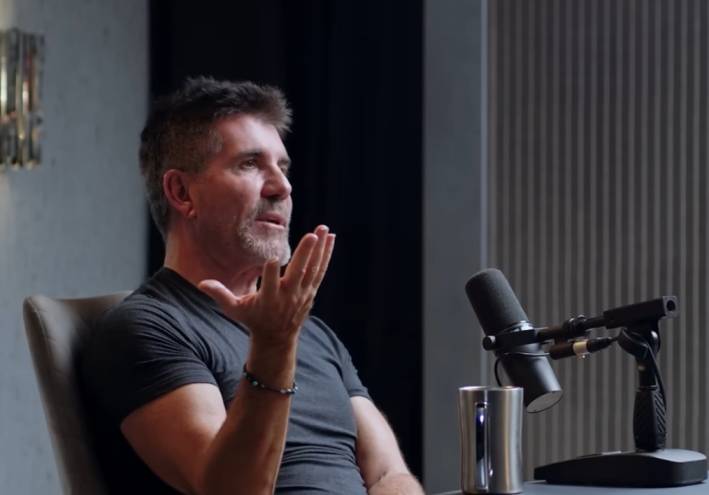
Here is the full transcript of world-renowned record producer Simon Cowell’s interview: ‘From Bored Schoolboy to Music Mogul’ on The Diary Of A CEO Podcast with host Steven Bartlett, June 10, 2024.
Brief Notes: Steven Bartlett sits down with music mogul Simon Cowell for an unusually vulnerable conversation about grief, work, and the cost of success, beginning with the “most devastating” moment of his life: losing both of his parents and wondering what he had left to live for. Cowell retraces his climb from bored schoolboy and broke 30-year-old who moved back in with his mum and dad, to record executive betting everything on acts like Sinitta, WWF wrestlers, and eventually Westlife and One Direction.
He opens up about depression, breaking his back in three places, how his son Eric forced him to redraw his boundaries, and why manners, respect, and making people feel important remain non‑negotiable values he inherited from his parents. Finally, Simon reflects on the rise of bullying and social media pile‑ons, his regrets around One Direction—especially not owning the band’s name and not giving them more creative control—and his belief that legacy now matters more than ratings or chart positions.
The Early Years: A Happy But Bored Childhood
STEVEN BARTLETT: Simon, in order to understand the man that sits with me today, what is the early context that I must know about that will help me to understand the Simon Cowell that all of us know so well? What is that early context, the oven that you were cooked in?
SIMON COWELL: Well, I had a happy childhood. I was always bored, though, really bored at school. I always wanted to have a life where I would be interested and have fun.
When I was told the school days are the best days of your life, I’m thinking, “Oh my God, this is terrible,” because I hate school. So I was really determined to do something where I would be actually just having fun. That’s what I kept thinking to myself, and I want to start making my own money.
One thing my parents did do when we were very, very young—because in those days you could actually, even at the age of about seven or eight, you know, in our neighborhood—is go round to people’s houses, knock on their door and say, “Can I wash your car? Can I mow the lawn?” Because my mum and dad said if we pay for the holiday, you’ve got to earn your spending money.
So I’m like, fine. But I used to love it. If you got 10 quid for washing a car, I mean, it was like bingo. It was the best feeling.
The Influence of Julie and Eric Cowell
STEVEN BARTLETT: So you mentioned your mother there. Can you tell me about the influence that your mother and your father, Julie and Eric, had on you?
SIMON COWELL: When I lost them, particularly when I lost my mum, because then it was kind of final, it was the most devastating thing that ever happened in my life. I mean, it was as bad as things could possibly be. And we just had the most amazing relationship.
My mum was a disciplinarian. I remember I must have been about four years old, maybe even younger. And I remember where I was—I was sitting in the car and she said something to me and she said, “Manners maketh the man.” And I’m like, “What does that mean?” She goes, “Manners maketh the man.”
And then she explained what that meant. And it’s always stuck in my head because it’s such an old-fashioned way of saying, be polite. Both my parents were very kind of old school. They were very respectful to everyone. I always remember that.
And I looked up to both of them and I always knew at any time I could go to them when I needed advice and they would always give me the right steer and they were always there for me.
The Origins of an Insane Work Ethic
STEVEN BARTLETT: Your work ethic is renowned.
SIMON COWELL: Yeah.
STEVEN BARTLETT: I’ve spoken to a lot of people in your team currently and one of the things they always described is that much of what got you to where you are today is an insane work ethic. And when I say insane, I mean insane with every sense of the word.
Where does that come from? Because, you know, you said your childhood was happy, and typically when someone has a pretty insane work ethic, there’s some kind of trauma at some point, you know. But for you, I couldn’t quite identify what that was.
SIMON COWELL: It probably comes from my dad. He worked for a large corporation, and before he retired, he said to me, “Don’t work for a large company because when you’re, you know, 65 or whatever, they’re going to retire you and you’ll never hear from them again.”
And that is exactly what happened to my dad. And it was heartbreaking because he did work hard. He was a very loyal person, you know, to the company he worked for. When he passed away, you know, he didn’t have any money.
That’s probably what made me realize, A, I don’t want to be in that position. And secondly, the only way I can achieve that is by working for myself.
And I always had this crazy vision of if I work for a company and I don’t get on well with the boss, he’s going to probably invite me to his house and talk about golf. I just always had this in my head, thinking I couldn’t think of anything worse than having to suck up to a boss who doesn’t like me.
And the reason I kept thinking my boss would never like me is because I was so bad at school and my teachers were quite strict with me. So I thought work was probably going to be the same. So that’s what drove me.
And, you know, my dad also, you know, he knew, because I didn’t do very well with my exam results.
And I said, “I want to do something, I think in entertainment. I’m not sure what.” And he said, “Look, whatever you do, you’re going to have to be patient because it’s not going to happen overnight. If you want to do well, you’ve got to learn to be good at it. And it could take 20 years, it could take 30 years, but understand that.”
And I’m like, “I’m fine with that.” And I really was fine with that.
Lessons That Stuck: Make Everyone Feel Important
STEVEN BARTLETT: Your dad seems like a man that gave a lot of actual advice, a lot of advice that, frankly, I read your book as well, that you can still remember to this day. Because my parents taught me things, but vicariously, by watching them. I can’t think of a single sentence that my parents said to me that was advice. But you’ve got so much advice that you recite from your father, which I think is pretty remarkable.
SIMON COWELL: Well, yeah, I mean, one of the things that always stuck in my mind and it was quite an odd thing to say to a 12-year-old. He said, “Everyone in life, Simon, has a sign on their head and it says, ‘Make me feel important.’ And I want you to think about that.”
I’m thinking, “Sign on there? I have no idea what that means. Why do you say that?” Maybe he’s had a couple of drinks. And then I forgot. When I realized what it meant, boy, did that stick in my mind, which was, if you want to do well in life, it’s going to be a team effort and make sure you recognize every single person on that team.
And so if I walk into a room, I instantly, I think pretty much from the point I understood it, is that I can walk into a room and I can see—I see everything in one moment. I see the person who’s opening the door, I see the person who’s doing a particular job. So in other words, I see the room always as a team.
STEVEN BARTLETT: And you did that the minute you walked into this room because there was what, 10 people here? From the person that opened the door, the person that got the coffee, the people, you know, taking care of the cameras. And this is rare. And obviously I’ve done 300 of these conversations. You went around to every single person in this room and took an interest in every single person, which is—it’s not typical, especially when you’re dealing with people that have a big sort of public profile. We’ve had people walk in, completely ignore me for 10 minutes, sit down and text and get a phone call.
SIMON COWELL: Unfortunately, I’ve seen a lot of that as well. And I see an awful lot of hypocrisy, which are people who on the outside, they show one side of it. I then always see that person when they’re off camera and who they really are and they are the opposite. They will just, like you said, completely ignore everybody.
The worst thing is, and I had this as I was trying to get my career started, there’s nothing worse than when you’re talking to somebody and as they’re talking to you, they’re looking for someone more important than you. I remember feeling that, you know, at an early age in my career and how that felt and it was very demeaning.
And I suppose, you know, those two stories about my mum and dad, they were really, really, really important things. And they must have known that that would mean something for me later on in life.
And I’ve said the same thing to my son Eric. You know, I remember the first time I said to him, “Eric, manners maketh the man.” He was about 2, he’s like, “Give me.” And he repeated it back completely right. “Say it again.”
And then eventually I think he must have been about 4. And he was very polite to someone. And I said, “I’m very proud of you, Eric.” And he went, “Manners maketh the man, Daddy.” And I’m like, “You’ve got it.”
Finding the Path to Music
STEVEN BARTLETT: Maybe you need a little bit of patience trying to indoctrinate the two-year-old. But you turn to your father and you express that you’ll pursue entertainment and music at sort of 12. How old were you when you first said that to your father?
SIMON COWELL: I probably, I was, yeah, I would have been about 12-ish. There was nothing I excelled in at school at all.
STEVEN BARTLETT: You were surrounded by music people and entertainment people where you lived. I think your dad at one point worked at EMI.
SIMON COWELL: Yeah, he worked for their real estate division.
STEVEN BARTLETT: Is that where music—because I’m trying to figure out where music came from. I’ve got this kid that’s naughty, not paying attention in school. I read the stories about you holding up a bus with a spud gun, that you were drinking. But they called the—you were holding up a gun. And I’m thinking, where does music come into it? Because it doesn’t appear that you were playing a huge amount of musical instruments.
SIMON COWELL: Well, I loved buying records. So just, you know, going into a record shop and saving up enough money for you, you know, to buy a single or an album was just everything. So most of my spending money would go on records.
I can vividly remember going into my bedroom with a brand new album and just loving listening to every single track on it. It was such an exciting feeling.
The Failed Jobs and the Sliding Doors Moment
STEVEN BARTLETT: So when you leave school and you go off and try and find your own career, you worked a few jobs. You were a trainee at Tesco, I think at one point.
SIMON COWELL: My dad, he said, “Okay, you failed all your exams twice, so you’re going to have to get a job.” And since you’re not qualified, what about Tesco’s? I don’t know where that came from. I’m like, “Doing what?”
And he said, “Well, you know, you could end up maybe managing a store or something.” And I’m like, “Okay.” So I put this interview and I remember I wore jeans. And before I even sat down, the guy said, “How dare you? How dare you come in here wearing jeans.”
And I’m like, “I’m sorry.” He said, “Well, how dare you?” And I was so annoyed, I said, “You know what, I’m really glad I came here because I never want to work for you or your company. And by the way, your office looks like sh*t.” So that didn’t go that well.
My mom made an application for me to work for the civil service. So I was interviewed to be, I think like a law clerk or something. And they actually had a chart which told you exactly how much money you would make at the age of 64. And I’m like, “That’s not going to happen.”
Then my dad thought I should be in the building trade and I was going to have to work at this sort of building site, whatever it was, for two years to learn everything. And I thought, “No.”
And then eventually I got a job as a runner at Elstree Studios. And the second I got that job, it was like brilliant. I was so happy and it was hard work.
STEVEN BARTLETT: Why was that job—you described it, I think, as a sliding doors moment in your life. Why was that job? Why was that your captured heart?
SIMON COWELL: I’d kind of worked out that how to become a director, you know, you have to become a third assistant, second assistant, first assistant, two years in editing suites, blah, blah, blah. And I was up for that. I thought, “This is something I think I would love.”
Unfortunately, the contract I had only lasted for two months and the executive producer was so mean that he said after two months, “Well, that’s it, we don’t need you anymore.”
But the PAs liked me so much, they paid for my salary, really. But he was so awful, this guy. Every time he would come into the building, I used to have to hide under their desks. And he caught me one day and he said, “What are you still doing here?”
And I said, “Well, nothing.” He said, “Well, who’s paying you?” And I said, “Nobody.” He said, “Well, you’re not allowed to be here.” And he threw me out.
And then I nearly got a job on—actually, I was offered the job as a runner on The Shining. They were just making that. I saw the hotel being built on the lot when I was a runner.
My mum at the same time had made an application for me to work in the post room at EMI Music Publishing.
STEVEN BARTLETT: You’re how old at this point?
SIMON COWELL: I was 16, 17.
The Choice Between Film and Music
SIMON COWELL: Yeah. So I had this choice of I could become a runner at big film studio on what looked like a great movie, or I could go in the post room, any of my music publishing. And something made me go. And I’ll tell you what it was.
I passed the studio where I was going to work as a runner one particular day, and there was a queue of people just outside the building. And I went up to someone and I said, you know, what’s everyone queuing for? And they went, “Work.” I said, “What do you mean?” They said, “Well, no one here is on contract, and when a new production happens, it’s pretty much first come, first served.”
And I’m thinking, God, this doesn’t sound very reliable. I don’t like the idea of that. So I think I’ll take my chances and I’ll work in the music publishing post room.
STEVEN BARTLETT: In the, when you say the post room.
SIMON COWELL: Yeah.
STEVEN BARTLETT: Do you mean where the post is sent?
Starting in the Post Room
SIMON COWELL: Yeah, yeah, literally. So it was, it wasn’t a very nice building. And our, it was almost like being in a garage where we were. It was definitely a basement. There were two guys who used to work. I think one of them was called Harry or something. They were probably in their mid to late 60s.
And I turn up all cocky, you know, right, I’ve got a job at the post room and I’m going to do this and I’m going to do that. And they were like, “Just make us a cup of tea, son,” and blah, blah, blah. But it was good because I did get a chance to understand what everybody did in the company.
And I think I was making £18 a week at that point. And as the months wore on, because I thought, someone’s going to realize I’m really talented and offer me a great job. And I literally would walk into everyone’s offices pretty much every day and say, “Can I have a job, a better job?” And there’s nothing going.
I literally, even the managing director, I just walked in one day and I said, “I’m Simon. Can I have a job? Because I’m really passionate.” And it just threw me out of this office.
STEVEN BARTLETT: Were you asking questions about the industry to those people in those offices?
SIMON COWELL: Always, yeah. Every time. Every time. There were a few people who were really, really kind to me and they explained what they did. They explained to me how music publishing worked, what they do for the writers, the catalogs, everything. So I started to get an understanding of how the music business worked.
I also glimpsed some of the checks that were coming in, being in the mail room, and my jaw dropped. Seeing how much Kate Bush, for instance, earned. It was like, bloody hell, if you do one in this business, there’s a lot of money. I had no idea.
The Power of Curiosity
STEVEN BARTLETT: There’s something about that in terms of, like, career advice, because I really heard that you were, even though you were in the post room, you were peppering people with lots of questions.
SIMON COWELL: Yeah.
STEVEN BARTLETT: Now there’s a lot of, you know, there’s a lot of people working a lot of jobs right now who might not have understood the importance of being curious, even if you’re at the very start of your career or the bottom of the proverbial ladder.
SIMON COWELL: Yeah.
STEVEN BARTLETT: But that seemed to be really pivotal because there’s a lot of people that would work in a post room and know nothing else but the post room.
SIMON COWELL: Yeah, but you.
STEVEN BARTLETT: You were annoying people.
SIMON COWELL: I was actually, maybe in a kind of a charmingly annoying way. I was always, you know, very polite. I was very on time. I would always say, “Here’s your mail, sir, ma’am, is there anything else I can do for you?” And while I’m here, blah, blah, blah, blah, blah. And so I was sort of like the company pet.
However, it did start to gall on me after a while about how little money I was making and my brother making a lot of money now being an estate agent. And I wasn’t offered a job out of the mail room. I thought it was going to happen after about a year, after 18 months, nothing.
And so I said, “Right, nothing’s happening here. I’m going to become an estate agent.” And my dad, because he did have connections with property, he got me to work property for a company called Hillia, Parker, May and Rowdon. Now, even by the name, you can just tell the kind of people who work. I mean, they were just awful, awful people. Really snobby, really mean, really rude.
And after a month, my mum said to me, “You’re really unhappy, aren’t you?” And I, “Yes, I’m really unhappy. I hate this.”
The Break at EMI Music Publishing
And then my dad knew the guy who ran EMI Music Publishing. Now, this is where I was, in the post room. And I don’t really think he connected me with my dad because my dad actually said to him, “I can’t believe after 18 months, you didn’t, you know, give Simon at least a little promotion.” He went, “I didn’t realize that was your son.” Or so he claims. I’ll never know.
Anyway, the next thing is an opening suddenly arrives and my mum, I remember her face, she said, “I’ve got some really exciting news for you.” And I said, “What?” She said, “I think there’s a better job for you at EMI Music Publishing. And you’ve got to have an interview.”
And it was working in the international department of EMI Music Publishing, which basically means that writers that were signed, say in America, Germany, whatever, this department administered their copyrights, right? And the job that became available was a song plugger, which meant all of the hundreds of thousands or if not millions of songs they published. My job was to get other people to cover those songs so they could generate more money.
And to do that, it was quite a difficult job because it was the country music division. Now, at that point, country was not very popular in the UK and a lot of these songs were unknown. And what made it really difficult was, is that this job was actually promised to somebody else in the company.
And obviously it got out that I got the job because my dad helped me get the job to get into that. I’d already worked there for 18 months. It just looked like I was given, even though it paid, I think 30 quid a week or something, it wasn’t like a high paid job. And no one would talk to me for the first six months.
So I’m like, terrible. So I locked myself into this room and I just thought, no one’s talking to me. I’m just going to listen to every one of these terrible country songs. And I listened to literally thousands and thousands of songs over six months, compiled a list and then just went out to all the record labels, met up with all as many A and R people as I could and said, “I think I’ve got a great song here and it will be perfect for one of your artists.” And I did get a lot of the songs covered.
STEVEN BARTLETT: Are you 8, what, 17, 18 years old?
Starting His Own Company
SIMON COWELL: I was about, probably about 18, 19 at that point. And then my boss said, “I think you’re really bright, Simon, why don’t we start a company together?” And I was like, “It’s a bit early, isn’t it? Like 19.” And he said, “I’ve been here for 16 years, you’re never going to make much money, let’s just do it.”
I’ve actually found, he found someone to back us. So I met these people, they owned a recording studio, had a really, really bad feeling. And I said, “I just, I don’t think I can do this, it’s too early. I don’t even know what I’m doing at the moment, let alone run my own company.”
And he said, “Well, I think you better go and meet these people and tell them that the answer is no.” And it was, he did it, you know, he knew it was going to happen. Because I went and they persuaded me and I knew I’d made a mistake.
So we started this company. We had about £40,000 seed money. Our offices were in an NCP car park. I think it actually used to be a loo, our office. It was just so bad. And I’m like, “Oh, God, what have I done? I just got this job with EMI and now I’m working in a loo in a car park and this is not going to work.” And after about 18 months, I just left.
STEVEN BARTLETT: Your own company. Ian, was it?
SIMON COWELL: Ens? Yeah.
STEVEN BARTLETT: Alice and Simon, right?
SIMON COWELL: Yeah. But then I met somebody who was a manager who managed Hot Gossip, and he had a really cool office in South Moulton street and I just really liked him. He was really funny. And I said, “Can I work for you?” And he went, “Doing what?” I said, “I want to start a record label.” He went, “Seriously?” And I said, “Well, you got this great management company. I think I know how to make records. Let’s just do it.”
And he went, “I’ll pay you £40 a week.” And we agreed on 55. And I’m like, “Brilliant.” And I don’t know, I just suddenly from feeling really, this isn’t working, to I’ve really got a feeling this is going to work.
STEVEN BARTLETT: You were quite naive, weren’t you?
SIMON COWELL: Oh, yeah. I mean, seriously naive.
STEVEN BARTLETT: Yeah, because it’s like a kid is like, trying to take on the world with, like, his own music publishing company, which fails in the car park loop. And then he goes from there to, I’m going to start my own record label at what, 20, 26, 25 years old. So you start this record label. Is that Fanfare Records?
Meeting Sinitta and “So Macho”
SIMON COWELL: Yeah. So I met Sinitta in this club, the Embassy Club, which is a brilliant nightclub. I liked her, she liked me. And I said, “Oh, I run my own record label.”
STEVEN BARTLETT: Nice.
SIMON COWELL: And I thought, it’s a great pickup line. And she said, “Oh, I’m an artist.” I went, “Really?” I said, “Have you made any demos?” And she said, “Yeah.” So I said, “Well, can we meet again?” And we did meet again and she did pay me some demos. And I said, “Actually, you’ve got a really, really good recording voice.”
And at the time there was this particular kind of sound, dance music, which was really becoming popular. It was all originating from, I think, the French part of Canada, where a lot these records were originally made. They were all breaking out gay clubs across the UK.
And I just had this idea for Sinitta, which was, she was so beautiful, so much fun. And I thought, I know what I’m going to do. I’m going to make a record with her and I’m going to break it through the clubs across the UK. And I just had this crazy idea in my head for a title.
And I said to this guy I met, he hadn’t had a hit before. “This is Sinitta. Blah, blah, blah, blah, blah. I want a record. This is how I think I’m going to break it. I want it to be called ‘So Macho.'” And he looked at me like, right, so we made two records. One was called “So Macho.” The other one was called, God, you’ve got it. Is the other side “Cruising”?
STEVEN BARTLETT: This is the record.
SIMON COWELL: That’s it. Oh, my God. That’s a great sleeve, by the way.
STEVEN BARTLETT: It’s fantastic.
The £5,000 Gamble
SIMON COWELL: Yeah, that’s right. “So Macho” and “Cruising.” The problem was, is the guy I was working with says to me, “I’m expanding into book publishing.” I’m like, “Okay, fine.” So he didn’t really take any notice of what I was doing.
And then he said to me, “I’ve been a public company, you know, basically wants to buy my business. Blah, blah, blah, blah, blah. Great. I’m shutting down the record label.” “Are you kidding? I’ve just, I’ve just made this record. I think it’s going to be a hit.” And he went, “No, I’m shutting it down.”
And I said, “And what does that mean for me?” He said, “Well, you have a job.” And I said, “Look, you, I know you’ve made a lot of money. You’re probably going to make a ton more. Do me a favor. Will he just give me £5,000? I don’t want a salary, but with that money, I will make the video, I’ll get it distributed, blah, blah, blah, recorded video, everything.”
And he went, “Let me think about it.” And I kept calling him over the weekend and eventually said, “Okay, fine, 5,000 and that’s it.” So I thought, okay, that, I think, should be enough. And that was, you know, I suppose, one of the biggest turning points in my life. If he had said no at that point, I’m not sure what I would have done.
STEVEN BARTLETT: What would you have done?
SIMON COWELL: I would have hustled it from somewhere because I really did believe in this. The minute I heard the record from, I just thought, this is going to be a hit.
STEVEN BARTLETT: How’d you know?
The Birth of an A&R Philosophy
SIMON COWELL: Just felt it, you know. The funny thing is, when I first made my first record, the producer said, “Do you want to come down to the studio?” And I said no. And he said, “Why?” I said, “Because I don’t want to know how a record is made.” He said, “Why?” I said, “Because I want to listen to it as anybody who buys records. If I know how a record’s made, it’s going to sound different to me.”
So to this day, I don’t know how a record is actually made. I don’t know how it started. Does someone play a bass line or keyboard? I mean, I literally haven’t got a clue because I know it would be enormous. It’s like when people do magic on my shows, I’m not the person who goes, “I know how you did that.” I go, “I believe in magic,” and I will literally make myself believe in magic.
And with music, it was sort of the same thing, which is I don’t want to know too much. I just don’t want to pretend that I can read music, because I can’t. I don’t want to make myself believe that I can be a producer, because I probably couldn’t be a very good producer. But I think I could be a very good A&R person, which is find an artist, find them the right song, and then, you know, break the record. And it took me about a year and a half to break that record. It was tough.
STEVEN BARTLETT: I just want to pause on that. What you said there about not knowing anything about music or how a record is made, what I heard there, I guess in between the lines, is you want to remain the listener and not the creator because you think it’s more valuable to maintain the perspective of the consumer.
SIMON COWELL: Completely. A hundred percent. I mean, you’ve hit the nail on the head. This is exactly that. And also, I didn’t want to ever, you know, because I’d met some successful producers over the years, and I had this vision of, because I heard stories of A&R people who went into studios pretending they understood how to make a record and hadn’t got a clue.
In fact, one guy actually had literally a piece of metal, like a train track or something, literally a piece of iron. And he had it on his studio wall, and he called it the “Wacometer,” because all these idiot A&R guys used to come in, “Yeah, don’t really like the mix of the record.” And he’d go, “Yeah, I know exactly what you mean. Let me just adjust this.” And so he would just pull the lever down and the guys would go, “Night and day.”
And I couldn’t think of anything more embarrassing. So I’ve always been the first to say, I don’t know how a record’s made. I can’t read music. I haven’t really got a clue. But I think I do have a good ear for a hit or a potential hit.
The Consumer Perspective
STEVEN BARTLETT: There’s something really transferable to marketing. I’ve obviously spent the last 10 years working in marketing, and one of the most passionate things I’ve said on stage a gazillion times to my teams is trying to get us out of the perspective of the creator and into the perspective of the person that’s going to see it out in the world. And I have to say, it is like an impossible task.
SIMON COWELL: Yeah.
STEVEN BARTLETT: It sounds so simple.
SIMON COWELL: Yeah.
STEVEN BARTLETT: And what you’re describing is what I’ve fought so hard to try and convey to people.
SIMON COWELL: Well, I think you can do that if you believe it yourself. And I did have this strong belief in myself that finally I’d found something I could do, which was make a record, you know, make a terrible video. And I mean, because obviously we used to have to physically manufacture the records, so I didn’t have a lot of credit, so I had to do a lot of deals, you know, with these people. “Look, I’ll pay you if you’ll make me 10…” I think 10,000 was the minimum or something.
I mean, the whole thing I had to go through to get this record into the charts, and it was all about getting into the top 40. And it took me three times. First time it flopped, second time it flopped. And then what I did was I said to the warehouse, I said, “What is the problem?” They said, “Well, the record’s selling, but it’s not keep selling, Simon. But it’s not enough to get it into the 40.”
So I said, “Well, why don’t we hold the order?” And they said, “Well, we’re not really supposed to do that.”
STEVEN BARTLETT: What does that mean?
SIMON COWELL: In other words, just say it’s out of stock on the computer, but it’s not out of stock. Just don’t let them have the record when they order it. In other words, let’s build up the backorders. So we built up whatever the backorder was, and then all the people who’d ordered a record three months ago, four months ago, suddenly all these records arrived that week. And it worked. It got the record into the top 40, it squeezed in and I got a breaker on Top of the Pops and the record just exploded after that.
Financial Collapse and Moving Back Home
STEVEN BARTLETT: Because of circumstances heavily outside of your control, Fanfare Records collapses, owing the bank $500,000 and you’re left with about five pounds in your pocket and you move back in with your parents at 30.
SIMON COWELL: Years old, my age. Well, it wasn’t the label that owed the money, it was me, because all of us were encouraged to buy shares in this company because we were told the company was doing really, really well. So the bank manager was practically forcing me to borrow money, you know, because he said the shares are going to go up in value.
And at the same time, I thought everything was just going to be wonderful. So I bought a house, I bought a Porsche. Of course, I had a gold credit card, which no one explained to me how that works in terms of the interest rates. So I’m living it up. And when it all came crashing down, yeah, I owed the bank nearly £500,000.
So I had to go in and see the bank and they had the nice guy and they had the not so nice guy. And the not so nice guy was, “Okay, where’s the money?” Right? “Well, you lent it to me, you know, where it’s just gone.” And the other guy’s like, “Yeah, well, you know, it was partly our fault and blah, blah, blah, blah, blah.”
So I said, “Look, all I can tell you is if you bankrupt me, I don’t care, because I don’t have anything. I don’t have a job, I don’t have any income, I’ve just got this debt.”
STEVEN BARTLETT: What about the Porsche?
SIMON COWELL: What about the Porsche? It all went, the whole lot. Even when I sold the house, I still owed money on the mortgage, so I was, on paper, bankrupt. Yes. So I moved back in with my mum and dad and that was really told me what great people they were, because there wasn’t one moment where either of them said, you know, “You failed,” or this or that. It was like, “It’s a life lesson, Simon, and you’ll get over it.”
And I managed to find a bank, amazingly, to lend me, because basically I negotiated the debt down. We worked out what the interest was over the period of time, what the capital sum was, and then I got them to half that. And I said, “Somehow I’ll pay it back to you.”
So I found another bank who just backed me. I just sold myself and I said, “Look, you know, my first record I ever made went to number two, whatever it was in the chart, sold a million copies. This is what my career is going to be. What happened was out of my control.” And he said, “I don’t know, I’ve got a feeling about you. I’m prepared to lend you some money to pay back the other bank,” which meant I didn’t become bankrupt.
The Five Pound Taxi Ride
So I went back to live with my mum and dad. And it was actually quite an interesting time because I remember, and I’ve told this story a lot, is that I had to get from a particular destination in the West End to where my parents lived and I had about five pounds cash. And I remember thinking, “It’s literally all the money I’ve got left in the world.” And I’m not sure the five quid’s going to cover the taxi right home. And I think I know we just about made it. Yeah.
And I said, “I’m sorry about the tip because I haven’t gotten any more money.” It was about 10p or something.
Fortunately had a very, very good lawyer, a guy called Tony Russell. And I said to Tony, “Look, I’m in not in a great place.” I’d met him actually, because he represented George Michael and he sued me when I made a mega mix, which we used to do. We used to literally get in session singers and say, “Kylie Minogue, just record 8 Kylie Minogue records with someone who sounded like Kylie Minogue,” mixed them. So we used to call them mega mixes. And they would sell about 10, 20,000 copies. We used to export them all over the world.
I did a Wham one. We got sued by George Michael. That’s how I met my lawyer, because he was representing George. And I said, “I’d rather you represent me next time.”
The Comeback Deal
And he was brilliant because he said, “Look, I think Simon, weirdly, what’s happened to you is the best thing that’s ever happened.” And I said, “Why? I’m broke, I don’t have a job.” He said, “But you succeeded so far, Simon, with everything you put out.” Because I had had, you know, success with some other records along the way. He said, “I think you should get a label deal, which means that you own part of the company with a major label.”
So I’m like, “Okay, if you can get me one, brilliant.” And we went to meet two companies on the same day, BMG and Universal. And literally that day, at the end of the day, Tony calls me. He said, “I’ve had two calls.” I’m like, “Go on.” “Universal has said no.” I’m like, “Shit.” “BMG has said yes.” I’m like, “Seriously?” “There’s a caveat. Got one year and within that one year you’ve got to sell X amount of records.” And I’m like, “I’ll do it.” And I did.
And that was kind of how I got myself back up and running again. By the way, the other thing I should mention is I said to Tony, “By the way, I don’t have any money to pay you.” The lawyer. I said, “So, you know, I’m not sure I can afford you.” And he said, “Well, I believe in you, Simon. I think one day you will end up repaying me and I’ll always remember that.”
And years later, of course, you know, we did a lot of deals together and of course I repaid him. But I mean, the fact that he was there for me at that moment, I mean, that was again, a life changing moment for me.
The Importance of Mentors
STEVEN BARTLETT: There’s these people throughout your story that seem to be so critical. Mentors, people that were there to catch you when you fell and treated you in a pleasant way. One of those as well was Peter Waterman. You described meeting, “The day I met Peter Waterman was easily the most important day of my career.” You said that in your book. I don’t mean to be rude, but
The Power of Television and Unconventional Thinking
SIMON COWELL: Well, it was because I realized very, very quickly that it was unlikely I was going to be able to sign or find singer-songwriters. So I was going to have to find artists who needed songs written for them. So I needed to find the best pop writers, literally in the world.
I heard this record on the radio and I just thought, wow, whoever this is, this record is brilliantly made. And I found out it was produced by Stock, Aitken and Waterman. No one had heard of them at this point. So I call up Pete and I said, hi, my name is Simon Cowell, and can I meet you? And he went, yeah.
So I went down to his studios and we met. We were sitting on these literally wooden boxes. The studio was like a real mess. And I said, I’ve got this record I’m about to put out. And he put on “So Macho,” took it off. That’s a hit. I went, yeah, I know. Will you produce her follow up? And he went, no.
I said, what do you mean no? I thought I was doing him a favor. And he went, I’m too busy. And I said, doing what? I mean, literally the place was falling apart. And he gave me this awful wink. He went, you’ll see.
And then the next three to six months, the whole Stock, Aitken and Waterman explosion just happened. Because obviously Pete had been making other records in the meantime, which no one had heard, and out of nowhere, all of his records were just hits.
So I thought, okay, I’ve got to persuade him to write Sinitta’s follow up. So I just used to turn up at his studio literally every single day and make tea, sit in the studios. And they were so busy, they didn’t really notice me.
And after about a year and a half, Pete was in the studio and he turns and he goes, why are you always here? And I said, well, I’m trying to work out how you do it. And he went, I’m not paying you. I said, I don’t want to get paid. I just want you to one day write her follow up.
And a few months after that, I was in my office, I get a phone call. “I’ve got your hit, mate.” And I got the cab, went down to his studio and he played me the demo of “Toy Boy.” And I thought, that’s going to be a gigantic record for her, internationally as well. I could feel it.
And Pete made everything. Because Pete again, I mean, Pete will pretend, unlike me, he’ll say, oh, of course I know how to produce records. He may do, but Pete’s skill is—I’ve always described Pete as the best DJ in the world. He could go to any city in England at one in the morning and he would know instinctively what records to play to the audience that were in that venue.
And he made everything simple, which is, you find a great artist and you match them with a great pop record, and that was it.
Television as a Distribution Platform
STEVEN BARTLETT: When you got that job at BMG, one of the things that I read was that you were really focused on television, which was unusual. Television as an outlet for the music and as a distribution platform to make the music successful, which is unusual at that time to think about television. Why did you think about television and why were you pushing that upon your bosses at BMG?
SIMON COWELL: I took the view it didn’t matter to me what the record was as long as it sold a lot of records. So it just occurred to me one day, I forget what it was. It might have been, I think it was the Wrestling Federation or something. Someone told me they’d sold out Wembley Stadium. You know, the American wrestlers? Yeah. 80,000 seats in like 27 minutes. And I’m like, what?
And so I learned a bit more about them. They’re selling everything. And I’m thinking, actually, their fans are so crazy about them, they’ll buy an album. So I met with them and I said, have you ever considered doing this? And they went, no. And I said, well, I’ll pay you X as an advance.
I phoned up Pete Waterman. I said, how do you fancy making an album for the wrestlers? “I’ll do it.” Instantly, he just got it. And we flew all these wrestlers over from America. They all turned up as their characters. It was hysterical. The Undertaker, Hulk Hogan, you name it, they were all there.
And my boss at the time was so desperate for me not to do this, she actually got down on her knees, seriously, and was praying, said, look, Simon, I am begging you not to do this because it’s going to be such a catastrophic failure. And I’m like, well, I’m doing it. I just don’t understand why you don’t get it.
STEVEN BARTLETT: Have you felt like that a lot in your career where you feel like you can see something others can’t? Because you’re thinking more from first principles there. You’re thinking, they sold out an arena. They have an avid fan base. We can attach music to an avid fan base equals hit.
SIMON COWELL: Yeah, you summed it up very eloquently and that is exactly it. However, and you know this, what is very straightforward to us is not straightforward to other people. They’re thinking, he’s gone completely mad. I mean, no, but I’m thinking, yeah, but you’re not a seven-year-old boy. You know, this is who’s going to buy the record. This is somebody who’s going to buy a board game or cereal with the wrestlers on it, whatever. You know, I did it with the Power Rangers, Zig and Zag. I didn’t care as long as it sold records.
STEVEN BARTLETT: Which were this one.
SIMON COWELL: That’s it. Brilliant. Oh my God. We had so much fun doing this. We really, really, really did. And you know what was interesting is actually when I made the video, I kind of turned myself into a kid again because you sort of have to believe it for it to work, because I treated it as if this was a serious record. The record had to be a great record.
STEVEN BARTLETT: Doesn’t this go back to what you said earlier on about being able to embody the listener, consumer?
SIMON COWELL: Yeah, yeah.
STEVEN BARTLETT: Because your boss at the record label there was saying, no, this is not how it’s done. This is not what we do here. Whereas you’re thinking again from the mind of a seven-year-old or an eight-year-old and that’s hard.
SIMON COWELL: Yeah, well, I thought logically it made a lot of sense. I used to sit in these A&R department meetings with really, really serious A&R people who would literally go bright red with anger when I would play them something like this. “You’re making a mockery of this label and the music business.” It’s like, well, who cares? It’s number one in the charts in 28 countries. I just didn’t understand why people would take it so seriously.
STEVEN BARTLETT: And this sold millions and millions of copies. You sold millions of copies for a wrestling album?
SIMON COWELL: Yeah.
STEVEN BARTLETT: Using a passionate fan base as the—
The Robson & Jerome Success Story
SIMON COWELL: And you know what? It actually was a fun project. And when I worked at BMG, I got to know a lot of the people who worked in the telesales department. And these were the girls who would literally get orders from the record shops. And I got to know all of them and they were really, really fun people, but they were like the background, you know.
But I used to call them the punters. They completely got it. And I always used to say, if you hear anything, just let me know. Is there a demand for something? I just want to know what’s going on every day.
And one particular day, I said, anything happened this morning? And they went, yeah, we’re getting a lot of calls about something that was sung on Soldier Soldier last night.
So, anyway, cut a long story short, I tracked down Robson and Jerome and I said, hi, I’m Simon Cowell. I kind of got Jerome to say yes. Robson just wasn’t having it, so I was like a stalker. I would not let it go. I got hold of his parents, everyone, his friends, I mean, to the point, I think I got a legal letter saying, could you stop harassing my clients? And it’s like, well, when he says yes, I’ll stop harassing him.
And eventually he agreed to a meeting. And I’m so excited, I’m in the cab going to the meeting. And then I suddenly went, Christ, I don’t know what he looks like because I’ve never watched the show. What do I do?
So we were meeting in this wine bar or something, so I just walk in and I’m like, hi, I’m—and then this hand shot up. Robson. I’m like, hi. And we sit down, I said, here’s the deal. I’ll pay you both £50,000 each to go into the recording studio, lay down your vocals, and if you say no, you keep 50 grand each.
And he looked at me and he went, you serious? I went, yeah. So literally the following day, they said, right, we’ll do it, thinking we’re about to make 50 grand each for a day’s work and we’re never going to put the record out.
So I get them in as quickly as possible and I get a phone call from Robson. “I want to see you.” Oh, dear. So I walk in, they’ve laid down the vocals and I said, what’s the problem? And he goes, you are a complete c* word. And I went, why?
He said, because you knew exactly what was going to happen, didn’t you? And I said, I don’t know what you’re talking about. He said, yes, you do. He said, put it on. And they played me the record and they both realized at that moment the record was going to be a hit record and I kind of forced them into doing it and they were happy and angry at the same time.
For two years, they were the biggest selling artists in the UK. I mean, they outsold Oasis, everybody.
STEVEN BARTLETT: Really?
SIMON COWELL: Yeah, it was absolutely—I cannot tell you, we had some—we couldn’t make enough records. We sold so many records.
STEVEN BARTLETT: And this particular track was number one for, I think, seven or eight weeks or something.
SIMON COWELL: Yeah, something like number one. I mean, I think all their records went number one. It was actually quite incredible. And that was probably the thing that really cemented this thing about my career, which was absolutely, trust your gut. Go completely in an unconventional way.
And that more than anything else, made me realize the power of TV. Because also when I eventually did see the episode and I saw how it was cut and the storyline and just how everything worked and why there was such a demand for that record, it was, wow, that’s a great lesson.
Trusting Your Gut
STEVEN BARTLETT: But, Simon, what about if your gut is wrong? Because you’ve worked with people that trust their gut and they’re continually wrong. They just don’t have it. They just don’t have it.
SIMON COWELL: Right. Yeah.
STEVEN BARTLETT: Whether they’re musicians or they’re A&Rs, you know, there’ll be a lot of people listening now that are like, okay, Simon said, trust my taste, trust my gut, just go for it. And then in reality, it’s a question of self-awareness, I guess, which is difficult.
SIMON COWELL: Well, I can relate to what is happening to a lot of people in the music business right now, which is the frustration they must feel, which is, I’m talented, I’ve uploaded my music and I’m not getting anywhere. What do I do next? And I know what that feeling is.
And what I decided to do was, why don’t I go with a slightly different direction from everybody else? I don’t want to be part of the herd. If I follow everyone else, I’m just going to be a sheep. I don’t want to be a sheep. I’d rather be somebody slightly unusual but successful rather than safe, cool, whatever.
So I always say, particularly today, you’ve got to make noise amongst the noise. And that means, you know, do your research. If you’re going to cover a song, don’t copy the original. Find a song that could have been written 12 months ago, but actually was written 30 years ago and rearrange the song, do something different with it.
There’s so many things you can do which are different to what other people are doing, because that really is about getting your first step on the ladder, which is prove that you can make some noise amongst everybody else. And I do know what that feeling of frustration felt like. However, it’s also about trusting your gut as well.
Making Noise Amongst the Noise
STEVEN BARTLETT: When you make noise amongst the noise, there’s a cost. And you talked a little bit about the cost of that. It’s the skepticism, it’s the negativity, it’s the criticism, it’s the get back in line. And a lot of people, especially if they weren’t rebellious kids that had a problem with authority and such, can’t deal with straying from the conventional path where other people have walked the blueprint, how things have always been done. You have to go through the thorns, through the bushes.
SIMON COWELL: Yeah, yeah.
STEVEN BARTLETT: It takes a certain type of rebel, which one of which is that in front of me, that is willing to go through the thorns in life.
SIMON COWELL: Yeah. And don’t be afraid of what other people say about you for doing that, you know, because, you know, when people say it’s not cool or whatever? Well, who defines what is cool or what isn’t cool? You know, this is just about you, your career, your passion.
And if other people, you know, mock you for being different, then I would rather be mocked for being different than being safe. That would just bore me. I’ve been called so many terrible things from serious people in the music business, but it just doesn’t really matter, you know?
STEVEN BARTLETT: Did it ever bother you? Is it a muscle you’ve had to train?
SIMON COWELL: Do you know? The only thing that bothered me was, like I said, when I first tried to get my record played on Radio 1 and I saw the process and I thought, this is something I can’t change. I cannot change a stuffy old producer’s mind about liking a record he knows nothing about.
So I have to find a way to force that person to play the record. And the way I can do that is to get it into the charts. So I have to find a way to get it into the charts that forces them to play the record on the top 40 countdown. That’s always what I had in my head.
In other words, if you really, really believe in it and the conventional path isn’t open to you, then you’ve got to go right. Then how do we navigate a slightly different path that eventually gets us what we want? Let’s not go the obvious route.
And you know, I’m not going to lie, every time I do anything new, there’s always part of the thrill is it may not work. And, you know, every time I film a series, BGT, AGT, whatever I’m filming every year, there is one day where I’m like, it’s over, it’s over. I hate the acts, I’m bored, that’s it.
And then the following day I’m like, my God, I love this show so much. I mean, I am so up and down like that because I can’t fake how I feel. You know, when I’m bored, when I’m miserable, it really shows. And when I’m happy, then it, you know, I’m happy.
The Westlife Story
STEVEN BARTLETT: I’ve got another single here. It’s a single, but it’s part of an album. Do you remember this one?
SIMON COWELL: Oh, yeah, Westlife.
STEVEN BARTLETT: So you’re sort of, I think, 39 years old. And your band, Westlife, their album hits number one.
SIMON COWELL: Yeah. And you know what this is. My dad passed away right at this time as well. So this was a real bittersweet time for me because my dad, he never knew this, but my dad was amazing at spotting hit records. You know, I would play him certain things I was making. Oh, bless you.
STEVEN BARTLETT: We’re afraid of him here.
SIMON COWELL: Yeah, yeah. When I first started to have some success and my records went to number one, he was so proud. And again, when I signed this band, he said, I think they were going to be huge for you, Simon. Really? Yeah.
And but this was a really crazy story about how we signed the band because Louis Walsh was always calling me. “I’ve got the best band in the world. I’ve got this.” And that’s okay, Louis. Okay, I’ll come to Dublin. I went to Dublin. He showcased this band. I absolutely cannot bear them.
And I said, “This is never going to work. They just don’t look right. Louis. I don’t think, I just, the answer’s no. I think a couple of them are okay, but you’re wrong.” I said, “Okay, fine, I’m wrong, but I’m not signing them.”
And then three months later, he calls me and he goes, “I’ve taken your advice. Will you fly back?” I’m like, okay. So I fly back. They start the showcase for me within 30 seconds. I said, I mean, call you here for my lawyer. Do you want to hear any more? Nope. I can see it. They sound great, they look great, blah, blah, blah. We sign them.
And then a month later, it turns out that he has dyed one of the guys hair blonde to sneak back into the band. And that, Shane. Because when we auditioned them the second time, they all had blonde hair. I don’t know why that made a difference, but it’s a typical Louis story.
STEVEN BARTLETT: They still succeeded, though.
SIMON COWELL: They did fantastically well. Yeah. And in fact, I think we still have the record of the, I think it was their first seven singles went to number one. And I don’t think that’s ever happened again.
A Bittersweet Moment
STEVEN BARTLETT: You described that moment as bittersweet. In your book, I read that you called home to tell your sort of family that, yeah, this album had gone to number one.
SIMON COWELL: Yeah.
STEVEN BARTLETT: And the news that you got back was that your father had passed away from a heart attack.
SIMON COWELL: Yeah. Yeah. I went to Germany to this big conference and, you know, I did quite a big presentation on the group and the reaction in the room was huge. And so, and I also was hearing the record was really selling and I called and I could just tell something wasn’t right.
And I think someone said to my mum, “Don’t tell Simon while he’s there.” And then I phoned back and she told me and I’m like, God, I can’t believe it. Because I genuinely, at that point in my life, I just believed my parents were going to live forever. I mean, it was that. And yeah, it was tough.
However, I do believe in God and I do believe because the hardest thing when you lose your parents is you can’t even think about them afterwards because it’s too difficult. You know, everything is. And then after a while, it’s like when I have a question in my mind, I do talk to them in my mind, what would you do? And I know what they would say, so that I really do still believe they’re with me.
But that was very bittersweet moment, you know, and probably, you know, at that, you know, I would have swapped everything I’d succeeded, you know, kept him around, you know. And all the things that, you know, he taught me over the years, it all just, you know, it was the longest trip home to America, you know, that flight, it was bad.
STEVEN BARTLETT: It’s a credit to the man.
SIMON COWELL: Yeah. And, you know, like I said, look, thank God, you know, he was very wise and he did give me a good steer. And like I said a lot of things I still do now. I still think of what would my dad say, you know, because he only lost his temper with me once and boy, when he lost it, it was, I don’t want to go there again.
But, you know, he never hit me, nothing like that, you know, but he raised his voice once at me and that was enough, you know, but he was very, when he was angry at you, you knew it. But I also, you know, I think he would have got a real kick out of seeing me on a TV show. I know he would have just found the whole thing really, really funny.
STEVEN BARTLETT: He didn’t see you on a TV show?
SIMON COWELL: No, no, no, that came a few years later. But, you know, at least he’d seen me, you know, succeed, you know, and that meant as much to him, I know, as he did to me.
Perspective on Loss
STEVEN BARTLETT: Does the purpose and the meaning of all the work you’re doing change when you lose someone who was so central to why you are where you are? I’m thinking about your, this sort of immediate people often describe. They understand the nature of what their priorities should have been in their life when they experienced the loss of a parent. Because you’re right, we grew up and even now, it’s almost like, I think my parents are going to live forever.
SIMON COWELL: Yeah.
STEVEN BARTLETT: It hasn’t crossed my mind. I’m living my life as if they’re going to live forever.
SIMON COWELL: Yeah. Yeah. Well, like I said, having gone through, you know, which was no question in my losing, you know, both my parents was the hardest thing that ever happened to me. But I can sit here and honestly look you in the eye now and say, because everyone says, you know, when you lose them, you know, in time it’ll get better. And you think, no, it won’t.
And the truth is, it does, as long as you believe. And you have to believe that their presence is still there with you. And I do genuinely believe that with my mum and dad and, oh, gosh, my mum, you know, she started to get dementia, but, you know, fortunately, you know, saw Eric. She really wanted me to have a kid and she bought him this brown blanket and he still has it.
Literally everything is about the brown blanket. You know, where’s, where’s my brown blanket? And he said to me, when he was about 2 or 3, after, you know, she passed away, he’s just looked up at the sky one night and he said, “I’m thinking about Grandpa Eric and Julie.”
And it was just the way he said it, it was like, gosh, why would you say that now? And that’s when I genuinely really started to believe they are still somehow with us, you know, it’s not a total. And I think, you know, maintaining that amazing relationship with both of them, you know, up until the point both of them passed away, they were my best friends, you know, I could tell them anything, we could talk about anything.
And, you know, it’s how I feel for Eric, you know, it’s just that pure love, you know, they just want the best for you and in return you feel the same about them. And it’s how I feel about Eric, you know, it’s everything starts to become full circle. Thank God. You know.
STEVEN BARTLETT: You described the loss of your father in an interview in your book where you said it put everything into perspective. “All the things I thought were important, chart positions, doing showcases with the band and everything else, none of it meant anything anymore.”
SIMON COWELL: Yeah, that’s true.
STEVEN BARTLETT: Really?
SIMON COWELL: Yeah. Genuinely, I can say that because of course, I really, really enjoyed every successful moment of my career. Even when things haven’t gone quite to plan, there’s still a story. You know, or something to be learned from it. That combined joy versus the devastation you feel when you lose someone. It’s, there is, you know, it’s, it really is meaningless.
Life Before Eric
STEVEN BARTLETT: Your life really seemed to change drastically when Eric was born.
SIMON COWELL: Yes.
STEVEN BARTLETT: I think that’s even like a bit of an understatement because.
SIMON COWELL: Yeah.
STEVEN BARTLETT: When I speak to your team about Simon pre Eric, they describe a man that is a workaholic, to say the least. I was reading about you staying up till 8am in the morning frequently to work and, yeah, just this absolute obsession with detail and working Sunday, Saturday.
SIMON COWELL: Yeah.
STEVEN BARTLETT: Calling people at all hours. True Pre Eric Simon give me a true reflection of that man. If I was a fly on the wall in his life, what was, what was I seeing every day?
The Darkest Period: Loss and Depression
SIMON COWELL: Well, I think particularly when I lost my mum, I just was on a downward spiral at that point. It was like I lost everyone. I’ve lost my parent, this finality now. And what I said about the material things I’ve got, everything just meant nothing at that point. I was desperately unhappy. I wasn’t particularly enjoying my work and I just thought, you know what, I’m just going to become a vampire then.
And I would work through till 7 o’clock, 8 o’clock in the morning. I would wake up at 2 or 3 in the afternoon. And I actually got addicted to that kind of lifestyle, which was—I just loved the intensity of it. It was almost like because of the loss I’d had, I’ve got to find something else to fill it. And it was, I’m just going to become a ridiculous workaholic.
And I was very successful, but I wasn’t happy. Really, really wasn’t happy. And it was like the expression, “Is this as good as it gets?” That’s how I felt. There were certain people in my life at that point giving me advice who just shouldn’t have been in my life.
And then when I got the call from Lauren, which starts—any call which starts with “Are you sitting down?” you know what’s coming next. It was like, “Are you sitting down?” Yes. Well. And she told me and yes, it did absolutely change everything in my life. I mean, it made me happy again.
For me, it was perfect because, we were talking earlier on about our childhood, it was just brilliant. It’s like fantastic. I remember the first time I watched Jungle Book with him and I’m looking over and seeing the joy he had watching that movie. It was like, oh my God, I remember how I felt when I saw the Jungle Book.
STEVEN BARTLETT: He saved you in many respects, didn’t he?
SIMON COWELL: Without question. Without question. Yeah. I really, really had reached the point where nothing mattered, even to the point where I almost can’t even remember everything from that period. It hit me so hard. I was like—because the hardest thing also was being on television as well, because I’m like, God, I feel like a clown here, because I’m dying inside.
And yet, I’ve still got to do what I’m being paid to do, as best as I could. But I was eating just junk. I put on a ton of weight. It was like if I had got hit by a bus the following day, well, I’d be dead. But I wasn’t worried about anything like that.
STEVEN BARTLETT: Was there a darkest day in that period that you recall?
SIMON COWELL: Yeah, the whole time was dark. Yeah. I can absolutely relate when people reach the lowest levels you possibly can, where essentially, being alive doesn’t matter anymore, because you just go, what have I got to live for?
STEVEN BARTLETT: Did you have those thoughts?
SIMON COWELL: Yeah, yeah. Not thinking I want to take my own life, but thinking if something terrible happened, it wouldn’t bother me, to myself. What I have learned, fortunately, is, unfortunately, we are all going to go through this and it’s how we cope with it and being able to talk about it.
I mean, I’ve spoken publicly about mental health, particularly men’s mental health, because there’s no question I’ve had—I do still suffer from depression at times. I’ve really suffered from depression in the past. I am actually very thin-skinned at times, particularly when someone is disloyal. I take things like that very, very badly.
The Importance of Loyalty
STEVEN BARTLETT: I noticed this because I read—it’s interesting. I was reading loads of articles and loads of things, obviously doing all this research, and the word “loyalty” came up over and over and over again as something you would say sometimes in interviews as being really critically important to you.
SIMON COWELL: Yeah.
STEVEN BARTLETT: I was thinking, why is—of all the people I’ve ever interviewed, why is loyalty the word that he uses when he describes artists he’s worked with and bands? Louis Walsh.
SIMON COWELL: Yeah.
STEVEN BARTLETT: I watched an interview where Louis Walsh said, “The thing Simon loves about me is I’m loyal.”
SIMON COWELL: Yeah. Because of a lot of what we spoke about today. My upbringing, my working life—nothing was ever handed to me on a plate. But when people took the time, like Pete Waterman, there have been—fortunately, a lot of people over the years who’ve been amazing have come in and helped me achieve, because I could never have done what I did without the people who worked with me over the years. I’ve just been very lucky in the main. 99% of the people have been just fantastic.
However, I take it really badly when someone who you consider to be a friend rewrites the narrative afterwards and they become—because things haven’t worked out for themselves, they have to blame somebody else. Right? And it’s like, but we’re all in that position. There’s certain things I can’t talk—I would talk to you privately about why that particular time, some other people I was working with.
Look, again on the bright side, as long as you’re happy today, which I am, thank God, and I’m at peace today, thank God, then a lot of the bad things that happened previously, it’s like, well, that’s your destiny. If the lights had been red instead of green on a certain day, Eric may not have been conceived. And that’s how I look at life.
Life After Eric: New Boundaries
STEVEN BARTLETT: Your new work-life balance. I find it quite interesting you’ve put a lot of sort of parameters and boundaries in place in this new—with this new post-Eric Simon Cowell, some of which are, you don’t work Fridays. I read that.
SIMON COWELL: Not really. No, not really.
STEVEN BARTLETT: Okay. You don’t engage in emails after sort of 5:36 p.m.?
SIMON COWELL: Never.
STEVEN BARTLETT: Interesting.
SIMON COWELL: Never.
STEVEN BARTLETT: You have social media?
SIMON COWELL: I have it, but I don’t look at it.
STEVEN BARTLETT: Okay, so how do you stay away when you log on your phone?
SIMON COWELL: Well, you know, I don’t have a phone.
STEVEN BARTLETT: You don’t have a phone at all?
SIMON COWELL: Well, I have a car phone, which I occasionally use, which is actually an American phone, and I swear I don’t even know how to use it.
STEVEN BARTLETT: You don’t have a mobile phone?
SIMON COWELL: I have one that sits in the car. Okay, nine times out of ten, I’ll use somebody else’s phone because I don’t even know how to work any anymore. I hate them so much because I tell you why. I think they’re boring. It’s almost like, for me, it’s like having a toaster with you all the time. It’s like it’s a toaster and a phone is just as boring. Toast is nice. And occasionally a telephone call’s nice, but not all the bloody time.
STEVEN BARTLETT: When did you make that decision to get rid of your phone?
SIMON COWELL: When I realized by not being on it for about three or four months a year, I was happy at that time. And then when it was, “Oh God, it’s time to turn my phone back on,” I start to dread it. And then one day I thought I’d lost it, and it’s, “Oh God, I’ve lost my life.” And it’s, oh, stop being so dramatic. It’s a stupid telephone. I don’t use 99% of the things on it.
And I actually really like talking with people. Like, we’re talking now. I like meeting people, and I like talking from a landline if I have to, because the sound’s nicer as well.
STEVEN BARTLETT: I think people would be pretty shocked to hear that Simon Cowell doesn’t have a phone. Because you’ve got this business empire you have to run. You’ve got all these people, these artists, these TV, all these things. How do you navigate? I’d have an existential crisis if someone told me that I had to get rid of my phone because I think, well, my business is going to crumble.
SIMON COWELL: Well, obviously, it depends what you do. So what I do, weirdly, it kind of helps because you hear about the important things in life. You don’t hear about the unimportant things. And that’s the best way, I suppose, describing the advantages. So when something really serious happens, within seconds, you’ll hear about it. When it’s just some piece of gossip or something, which I’m really not interested in, and someone said, “Did you hear about so and so?” It’s like, no, and I’m not interested, because I’m not.
STEVEN BARTLETT: So someone has to get hold of you. How do they contact you?
SIMON COWELL: I always say, honestly, if you want to get hold of me, and you know me, you’ll get hold of me. You just will. Promise you really will. You will get a hold of me. Obviously, I have a PA. I have a partner, I have friends.
STEVEN BARTLETT: How does she get hold of you?
SIMON COWELL: She calls me at home. And, I mean, it drives me crazy.
Advice to Workaholics
STEVEN BARTLETT: What would you say to the workaholics out there, including me, that I haven’t quite yet had life teach us the hard way?
SIMON COWELL: Oh my God, I don’t know where to start.
STEVEN BARTLETT: Like, what would you say to Simon at 31 years old?
SIMON COWELL: I would say work out genuinely from the good things that have happened. How much time are you spending—time where your gut is telling you this isn’t worth the effort, but your ego is sort of saying, but it’s your idea, so it must work. There are always going to be moments where you have made the wrong decision and sometimes it’s bailing out earlier than you should rather than just, let’s just hang on to that.
Or also understanding that certainly when you’re doing something creative, I believe that you can only really be creative when you’re not tired. I’m certainly at my best when I slept well, I’m feeling fit, I’m feeling happy, then I’m in a completely different mindset.
I still see each episode before it goes out about three or four times. So don’t forget these episodes are about the length of a movie. So I’m watching the equivalent of two movies a week—every second, every sound cue, every audience shot. I mean, it’s the focus you’ve got to give it. It’s unbelievable.
So I think I would have said, you know what, Simon, why don’t you enjoy what you’re doing a little bit more? Is the fifth day going to really make a difference if you’re working better on the four days? It’s not really going to make any difference, is the truth. By the way, it’s much more fun having a three-day weekend than a two-day weekend. And it’s just stuff like that, I suppose.
STEVEN BARTLETT: Did you used to think that if other people weren’t working at the same tenacity as you, they weren’t as interested or they—because I’m thinking about how you now interact with the people you work with. If back then you’re working till 8 a.m. in the morning, I imagine you’re dragging a lot of people with you.
SIMON COWELL: Yes, I was.
The Cost of Success
SIMON COWELL: Yeah, I did drag a few people along with me and I apologize. Having said that, one thing you can’t escape is that to be good at anything, you got to put the hours in. It is hard work. I mean, look, yes, people win the lottery. You hear about these crazy success stories, but they are one in literally a billion.
I mean, for me, the majority of people I’ve met who haven’t inherited anything, but have just built something on their own, they’ve done it because they’re talented, they’ve got great instincts and importantly, they have really, really put the hours in.
Because if somebody, you know, comes to work for me at say 21 years old and says, you know, 5:30, right, I’m off and don’t bother calling me on the weekend, I’m going to go. Well I’m not going to bet the house on you. You know, when I was younger, genuinely, I didn’t even think about weekends. It was like when I was a runner, you know, I would do 18 hour days and loved every second of it because for every day I was doing it, I was learning something more.
And then I think, you know, there is a point where when hopefully you realize that you’ve kind of got your groove, you know what you’re doing, you’re being successful, you’ve got a good team around you, then I think it’s a question of, okay, well then don’t kill yourself in the process. I mean seriously find. And this is, you know, going back to phones, you know, which is, and I’m the same with emails is if even if it’s great news and you get the news at 7, 8 o’clock at night, you can’t just go, right, I’m going to sleep now because your brain’s going to go into overdrive.
And I think, you know, getting good sleep is crucial, absolutely crucial. You hear about these people who survive from four hours sleep at night, how, you know, I need like 10 hours if possible. I really believe that sleep is the best medicine your body can have and the ability to be able to sleep peacefully, you know, that’s really, really important.
STEVEN BARTLETT: Imagine if old Simon had you say that.
SIMON COWELL: He’d be like, yeah, right.
Breaking His Back
STEVEN BARTLETT: You said “don’t kill yourself in the process.” But 2020, you had a very, very serious accident which was unfortunately at the time of the pandemic. So we’re all trapped inside anyway. You were on an electric motorbike where you had an accident and broke your back in three places. You had a very intense six hour surgery which included having a metal rod put into your back to stabilize it. And according to all the accounts that I’ve heard, you were very lucky to be alive.
SIMON COWELL: Yeah, yeah, yeah, actually, yeah, it was pretty bad.
STEVEN BARTLETT: I think that’s an understatement. From what I’ve heard.
SIMON COWELL: Again, there is a silver lining. Because I wasn’t fit prior. I thought I was fit, I looked okay, but I wasn’t fit. I was really getting up. Even though I changed my hours, I was still getting up, going straight to the telephone and I would sit by that telephone for hours and hours and hours and I really wasn’t getting the steps in, I wasn’t eating properly and all this kind of stuff.
So once I, you know, it was a bad accident and I knew it was bad the second it happened, and the recovery was pretty difficult. However, I had a fantastic nurse and she literally, she was lighting up. You know how a cuckoo just pushes the bird out? She just one day said to me, just get out into your garden. You can walk 20 paces. Just do it. And I did it. And it was hard. And then I just built up, built up, built up.
And then I started to build up my step count over time. And then when I really had to put the proper steps in per day, my feet were just like ragged because they weren’t used to walking. So it was weird. If I had to go back in time again to get to where I am today, I would have gone through that again. As bad as it was, the upside was worth it because if I hadn’t broken my back, I don’t think I would have ever realized how unfit I really, really was.
The Mental Health Impact
STEVEN BARTLETT: You spoke about, because the pandemic is an interesting time to have a, like a debilitating injury like that because you’re trapped inside as it is when you have a back injury or any severe injury like that, you’re immobilized.
SIMON COWELL: Yeah.
STEVEN BARTLETT: And all of this has a really significant impact on your mental health. Because I’ve sat here with people who have had a back injury, like Craig David. I remember him telling me the darkest depression he had in his life was when he injured his back and couldn’t move much anymore.
SIMON COWELL: Yeah.
STEVEN BARTLETT: And how that has a knock on effect of all things. But then you have the pandemic as well, which is keeping you indoors. And I heard you were, you’re in inside for a long period of time because of that injury, because of the pandemic. You stayed in your house there for a long time. Was it almost a year or something? Crazy.
SIMON COWELL: Yeah.
STEVEN BARTLETT: What was, if I was a fly on the wall in that house during that time, what would I have seen?
SIMON COWELL: Well, again, the hard, really the hardest thing was because, you know, the guy had to. It got so bad I had to sign a form, you know, just before I had the operation, which was, you know, if this doesn’t work out, will you allow us to switch the machine? Or I’m like, well, that’s encouraging, just before I’m about to go under. So I’m thinking, oh, this could be, this could be it. But I was in so much pain. I was just thinking, just please, please just get me out of this pain.
And it, the first three days afterwards, I was like, actually, it’s painful, but not as bad as I thought. And the doctor said, yeah, you’ve got pain receptors in your spine right now. They’re going to wear off at the, a couple of days. Get ready. And when they wore off, it was like, whoa. It was unbelievable.
And then I’m on all these painkilling drugs, blah, blah, blah. And you know what I’m doing? I’m phoning my lawyer saying, where’s my will? And then I’m also trying to sell a show at the same time. Unfortunately, my PA knew I was just all over the place. And she was saying, yeah, the person you’re trying to get hold of isn’t available right now. But, you know, obviously I was just so delirious. I was just all over the place for the first three days because after traumatic injury like that, you are.
But I had a fantastic surgeon. I really got off the painkillers much earlier than they thought I would like a month earlier. And that was, for me, really significant. And then when I started to put the steps in and getting up to 20, 30,000 steps a day without my feet falling apart, it was like, actually, it was worth it. Genuinely worth it.
Going to Therapy
STEVEN BARTLETT: Is this when you first went to therapy around this time?
SIMON COWELL: It was, yeah. And I think it was probably because it, after that injury and all the time I’d had to think about things, I really had a chance to kind of really think things through and go, it would be actually crazy for me not to go to therapy after everything I’ve gone through and talk to somebody who is an expert, who you can trust and who can advise you.
And it’s a bit like really going to the gym. You know, it’s like, wow, you feel great afterwards. And it’s, you know, you think initially, oh, it’s going to be embarrassing. How do I start the conversation? But they’re so good and they’re so well trained at what they do. It gave me, I don’t know, it just made me feel better in so many ways because stuff that used to bother me, I would talk to them about and you almost kind of get the answer. You know, it’s going to be. But someone needs to tell you other than yourself, if that makes sense. You know the answer, but you kind of need someone to validate it.
STEVEN BARTLETT: Yeah. Did you go to the, I’ve been to therapy. I’ve also been to therapy with my partner. Do couples therapy.
SIMON COWELL: Yeah, I’ve done that.
STEVEN BARTLETT: Which is really useful.
SIMON COWELL: Yeah. My God. Ours would make the best reality show.
STEVEN BARTLETT: Keep thinking.
SIMON COWELL: Seriously.
STEVEN BARTLETT: What was the, when you went to the therapist, was it because of how you were feeling following the back injury and the pandemic, or was it just more broadly that you hadn’t processed a lot of things throughout the last couple of decades? Was there a specific issue you went with?
SIMON COWELL: That’s a good question. I think I met a few people who had, who were in the entertainment business and we spoke a lot about how do you deal with this, how do you deal with that? And they all, two people in particular said, we went into therapy and they said, have you tried it? I went, no. They said, try it once, see how you feel.
And when I went, it was very interesting because what you realize is, is that most of us have actually bottled stuff up somewhere in our bodies and it’s like a release. And we all need that release because there’s something in your brain which you haven’t spoken about or something that’s bothered you and you don’t know who to talk about or whatever, whatever, whatever.
And actually, it’s not a weakness. If anything, it’s the strength to be able to admit that we are all vulnerable, that we’re, none of us are perfect, that we do need help. And there are people much smarter than us who can just help you. And why not take advantage of that? Because I promise you, I don’t believe there’s a single person in the world who would go to a great therapist and then walk out and go, yeah, I didn’t need that.
But we all do in the same way. We’re discovering things about nutrition and, you know, food and the importance of that and, you know, a lot of what we were talking about, social media and some of the negativities, all these things, you know, we’re not programmed, I don’t believe, to deal with so much so quickly. So we’ve got to find, you know, different ways of not just sorting your bodies out, but sorting your mental. You know, it’s not even mental health. It’s just life, you know, it’s that, you know, just having someone who’s trained to give you better priorities, other things to think about, things you don’t have forgotten about. All those kind of things I learned through doing it.
STEVEN BARTLETT: Has it had a big impact on you?
SIMON COWELL: Massive. Yeah, massive. Yeah. And in fact, I got out the habit only because of my schedule and due back, I think, in about two or three weeks time. And I literally can’t wait because I really do think I found someone special. His name, his name’s Justin. If he’s listening. Justin, you are the best. I adore you. And he’s, I consider him, you know, a friend. I really, really like him and respect him.
Expressing Gratitude
STEVEN BARTLETT: Sometimes we don’t get to say to people how much we appreciate them and all the impact we’ve had on them until they’re gone. Because especially as men, sometimes we can be a little, well, I’m just speaking for myself here. I can feel a little bit, I think, how I was raised a little bit about expressing my emotions sometimes.
SIMON COWELL: Yeah.
STEVEN BARTLETT: So Justin, for example, what would you say to Justin, as in terms of how he’s helped you? If he was listening?
SIMON COWELL: I think he, if we had a list of what’s the most important things, the top 10 list of priorities, he’s changed the order of what would have been my 1 to 10. He shuffled the order. So something that might have been number eight might become number three now. And he’s simplified my way of thinking, which is. He said to me, “Simon, I think you actually overthink a lot of things, by the way.” And I’m like, actually, you’ve got a point. I do, actually.
And a lot of what, you know, we’ve been talking about today, a lot of this has come from working with Justin and like I said, having absolutely no embarrassment whatsoever about the fact that I needed it. I think, like I said, a lot of people, in my opinion, do need help, full stop, at some point in their lives. And it is nothing to be embarrassed about. It isn’t.
Advice for Eric
STEVEN BARTLETT: Eric comes to you and says, “Dad, you’ve built an incredible business, you’ve been incredibly successful. Dad, I need some advice. I want to be successful in my career, too. I’m planning on doing something special, which I don’t know what it is yet, dad, but I want to be successful in. When I go into the professional world, what do I, what advice would you give me, dad, based on the career you’ve had, what are those foundations, those fundamentals?”
Finding Your Passion and Purpose
SIMON COWELL: I’m going to say to him, be good at what you do and therefore be patient and learn. And the learning and the getting there is as enjoyable as being there, because in my opinion, it is. Having gone through both sides, I’ve been at my happiest when I’m broke. I’ve been at my unhappiest at times when I’ve been wealthy. And I’ve also been happy when I’ve been successful.
The most important thing is on a Sunday night, you want that feeling of excitement that Monday is coming and it’s something to look forward to, and that this is what we’re supposed to do in our lives, is do something which we enjoy. And it’s not a question of having more than other people or less. It’s irrelevant. There’s always people who have less than you and more than you. That’s not really the measure of your happiness.
Your happiness stems from achieving something, believing in something, and just loving what you do. I’m very lucky because I still love what I do. I mean, yes, there are times I’m like, “God, this is a long day today.” Or, you know, it hasn’t been a great day. But overall, I pinch myself still because I’m fortunate enough that I am able to do something which I really, really love doing.
I love creating things. I love thinking of things. And I also like the idea that somehow I’ll make it happen. And even if it takes me 10 years, if I still have that strong belief, somehow I’ll try and make it happen. And if it doesn’t quite work out, at least I can say, “Well, I gave it a shot.”
I’d also say to him, don’t blame other people if it doesn’t work out. You know, you have to trust your instincts and you have to have a strong work ethic, but enjoy that. And that’s why, you know, as I said, finding something which you’re passionate about is, for me, the most important thing more than anything else.
Because, like I said, you know, going back to the time when I was in the post room and an estate agent, you know, I loved being in the mail room a thousand times more than being an estate agent. It just, you know, it was a great example, you know, when I changed jobs to make more money, it actually made me more unhappy because I didn’t like the people, you know, hated the job. I don’t say all the estate agents are bad, by the way. This particular company, at the time, they might be all right now, were awful then. But that’s what I think I would say to anyone I like or didn’t like. You know, find your passion and then try and be the best of it.
Legacy and What Matters Most
STEVEN BARTLETT: Legacy.
SIMON COWELL: Legacy, yeah.
STEVEN BARTLETT: That’s been front of mind a few recently, hasn’t it?
SIMON COWELL: Yeah. Yeah, it is a lot. Yeah. And to your point, you know, when you are, when we’re doing something like this or something I’ve made in the past, I’m always aware or if I’m editing a clip on a great contestant. I’m very aware that that is their legacy as well. And I want to make that clip like perfection in my mind, you know, I want every second of it to be beautiful and cinematic, you know, and could they live on life online forever, these clips now?
But yeah, legacy is, I think about this a lot, definitely. And I think somewhere I read it was a great quote about, I’m going to say this really badly, but it’s along the lines of if you live your life with your eyes open wide enough, you will eventually find the person you’re looking for, i.e. my Pete Waterman, you know, because don’t think certainly when you’re younger that you’ve got all the smarts to do it yourself.
You know, being smart is finding the person who is smarter than you, who is willing to take you under their wing. But to get that person to take you under their wing, you’ve got to show them, “I’m prepared to put the work in as well.”
STEVEN BARTLETT: And if you could, to paint the picture of your own legacy, the legacy that Eric will remember of Simon Cowell. What is that legacy that you would like to leave him with and I guess the world with?
SIMON COWELL: Oh, well, I think I like people. I mean, I genuinely like people. I remember being about 6 years old and seeing somebody. I think it was the ideal home exhibition. And I went, “Oh, my God, it’s so and so.” I’m completely starstruck. And I just went over, “Hi, can I have your autograph?” And he went, “No.” And I was like, I was destroyed.
And I have never, ever said no to somebody. It drives Lauren and even Eric sometimes crazy because I don’t care. In the middle of dinner or whatever I’m doing, if someone wants a picture, an autograph, I’ll always say yes because I take it as a compliment, you know, because they watch something I’ve made and I also know in reverse what it feels like if someone’s rude to you. Because if you don’t like people, you can’t do this job.
So I hope my legacy will be that, you know, I kind of achieved everything, you know, without a head start, and I’ve treated people well. That’s what I would like to think. I’ll hand over to Eric, both of those things.
Life After Eric: Priorities and Balance
STEVEN BARTLETT: Although you have changed your life in many ways.
SIMON COWELL: Yes.
STEVEN BARTLETT: Pretty extreme ways. Very extreme ways. From the sort of the pre-Eric Simon to the post-Eric Simon, who has put boundaries and balance in place and is focusing more. You know, you talked about that priority list of 10 things with your therapist. It’s quite clear in everything I’ve read that number one priority right now is the family.
SIMON COWELL: Yeah.
STEVEN BARTLETT: And everything is secondary to that. That’s accurate, right?
SIMON COWELL: Yeah, yeah, it is. But I think what concerns me a lot at the moment is, and I hope things are going to change, is that I do see bullying on the rise and I think that is partly due, well, actually a lot to do with social media. I do see, unfortunately, people unhappy because they think they need material things in their life to make them happy.
And look, of course, it is better to have money than not, but it’s not everything. And, you know, like I said, I can genuinely say that because I’ve experienced both. I preferred it when I had money, but it wasn’t the end of the world when I didn’t, you know, and so I just, I get sad a lot of the times when I think about people who think, “Well, you know, I’m not great at school, so what am I going to do with my life? Or I need everything by the age of 21.”
It’s like, actually, you know what, it doesn’t have to be that way. You know, if you really, really do have the patience and like I said, you might have a friend who’s got a more flashier job and blah, blah, blah, but if you’re in it for the long term, you’re going to be better off at the end. You know, it’s trying to get that message to people.
One Direction: Success and Its Price
STEVEN BARTLETT: You know, I was just thinking then about One Direction. In fact, I’m friends with some of the boys. I say some of the boys. One of the boys from One Direction and how do you make them ambitious? But at the same time, because I sat with Liam and he was on the podcast and he talked about his struggles, struggling with all of these things that the change in his life, we all wish and dream for that.
SIMON COWELL: Yeah.
STEVEN BARTLETT: But then the reality is something that no one can be prepared for.
SIMON COWELL: Yeah.
STEVEN BARTLETT: The brain is not set up in such a way to deal with that amount of hysteria.
SIMON COWELL: Yeah.
STEVEN BARTLETT: Around you. So has your thoughts around this changed or evolved based on your own experiences as Simon and the things you’ve been through?
SIMON COWELL: Well, personally, I think it’s better to have success than not. Yeah. What is great? I mean, what I said to the boys and, you know, it was quite obvious once they were on the show, they were going to be really, really successful with the right records. I mean, they just, for me, they were like the perfect group.
STEVEN BARTLETT: I think the most successful artist you’ve ever developed.
SIMON COWELL: Ah, gosh, I actually don’t know the answer to that. No. I mean, I know they were very successful. They sold a lot of records. They made a lot of money. I said to them, a lot of what we’re talking about, which is, don’t ever complain about paparazzi because they are going to take your pictures. Don’t complain about invasion and privacy because people are going to always want a picture taken with you. Don’t complain about the long hours, because there are going to be long hours.
So if none of this, if any of this is a problem, just do something else. I mean, because I promise you, all of this is going to come with it. There’ll be times where you’re going to go, “My God, this is a grueling schedule. And oh, my God, can’t someone just leave me alone for one minute because I want to have my dinner. Why are you taking my picture?” That is going to come with the territory.
And the truth is, it’s worth it. It’s a very, very, very, it’s not even a price to pay. It just comes with it. It’s hard work. You are going to become well known and you are going to lose a lot of your privacy. If you want to be an accountant, you’re not going to have any of those issues. It just won’t be as much fun. So, you know, some people want to be accountants. Some people want a more exciting life.
I’ve always been a huge fan of bands because it’s a much easier way. First of all, I think it’s more fun being in a band than being a solo artist. Yeah. Particularly if you like your band mates. It’s a brilliant way to get noticed if you want to become a successful solo artist like they’ve all become. And being in the band was the catalyst to that. You know, I’m about to do it again this year.
The Search for the Next Great Band
STEVEN BARTLETT: Yes, I heard about this. You’re searching for another boy band.
SIMON COWELL: Yeah, and I’m doing it because, you know, right now there isn’t, I don’t think, a band who has been as good as One Direction since One Direction, in my opinion. And if you look at the amount of solo artists versus bands right now in the world in pop music, it is unbelievable. I mean, if you think of Motown and that whole era, it was as many bands as there were solo artists. So something has gone amiss.
And the only way I know to put a band together is somebody has to audition them. So we just thought, you know what, if I don’t do it this year, I’m going to really regret it. So let’s just do it. And we’re going to document the whole process. So this time you’re going to see exactly what happens. From the minute we go, “We’re going to do it” to how you logistically do it, how do you choose the people, blah, blah, blah. Because I think it will be interesting.
But there’s no safety blanket on this in terms of I haven’t gone to a record label and go and say, “Right, I’m doing this. Will you guarantee me a record deal?” I’ve got to hope that the band are good enough to get a record deal.
STEVEN BARTLETT: What’s the secret sauce, people?
SIMON COWELL: I mean, it is personality. I mean, I think that’s the one thing about One Direction is they all had great personalities and they were just interesting people. And as the first time I saw them as a band, after we asked them to be in a band, I was in Spain and I saw them walking up the beach. And as they’re walking up the beach, everyone’s looking around. No one’s ever heard of them at this point.
And I thought, “It’s unbelievable. Everyone’s looking at these five boys as if they’re already stars.” And there was something. There was just this glow about them. And because, you know, I’ve had hits with bands, I’ve had misses with bands, and it could be that I was 1% off or I was 80% off, I don’t know. But when it doesn’t work, there’s no money in the world that will make something that isn’t going to work work. It’s just one of those things. You just got to hope you get lucky and find the right people.
STEVEN BARTLETT: Have you got better at it?
SIMON COWELL: I don’t know. It could be that I’m completely useless now. All I know is, if I had to trust anyone to do it, I would trust me more than anyone else. I would.
STEVEN BARTLETT: And are you waiting for a feeling? Is it like, or is there like some kind of data and AI and some Excel spreadsheet that ranks them based on, you know, these things? Is it a feeling?
The Art of Letting Artists Be Themselves
SIMON COWELL: Yeah, it has to be. And this is the difficulty: you are selling an act to somebody. Your fans are going to be primarily teenagers. So you’ve kind of got to guess what that audience are going to like. But don’t overthink it.
I’ve seen a lot of people, particularly recently, put bands together and they walk out and within one second I’m thinking, all of this is wrong. I can tell that someone’s told them what to wear. I know what their spiel is going to be. It’s all rehearsed, nothing spontaneous. And I’m thinking, why does that person, whoever’s behind the scenes, why can’t they let them just be themselves?
That’s why I said to One Direction, “Look, I can just give you a broad overview. This is what’s going to probably happen when you’re successful and then after a few years you’re going to want to leave the band. That’s going to happen.” And they said, “No, no, we’re going to be friends forever.” I said, “Yeah, whatever, do what you like.”
And that was sort of it. I just said, “Look, when you’ve got a problem, come to me. And it’s really down to you to make this work. You’ve got to love the records you make. You’ve got to influence the records you make. You can’t dance, so don’t try and dance. Don’t ever hire a stylist because you’ve already got great taste. And just be yourselves and really, really have fun.”
Because like I said, there will be days where you’re going to go, “Oh God, I’m really tired, I don’t like this. No one will leave me alone.” And then in 10 years time, you’re going to look back on this and go, “Wow, we had a blast.”
Harry Styles: The Unexpected Megastar
STEVEN BARTLETT: Could you have predicted… I know all the boys have done really well in their own endeavors, but Harry has become, well, he still is a megastar. And often with boy bands, once they break up, some of them fizzle out and whatever. But Harry seems to have just taken on, he’s really managed to find his own groove.
SIMON COWELL: Yeah. I’m not going to lie. I mean, the first time I met Harry, he sang a Stevie Wonder song. I’m not sitting there thinking you’re going to become one of the most successful artists in the world in 12 years time. I mean, no one would have thought that. I just thought you’re unbelievably charismatic and you’re fun and the audience like you and great.
Then for whatever reason, it didn’t work out, in my opinion, for them as solo artists in that part of the show. And then we just had this idea in the moment to put them in a band. And then like I said, pretty much all of them have done great. They’ve used the group as a vehicle to go where they really want to go in their lives.
And would Harry be Harry without One Direction? Well, none of us could answer that. I couldn’t tell you. All I know is being in the group definitely made it easier, of course.
The Decline of British Artists Breaking Globally
SIMON COWELL: That’s why I thought, interestingly about seven or eight years ago, I thought there’s not going to be any need for these shows anymore because of social media. And here’s the crazy thing: the amount of UK artists that have broken globally in the last, say, seven years has fallen off a cliff, literally. If you think about how many global artists British have broken globally in the last seven years, it’s possibly three, which is crazy.
STEVEN BARTLETT: I think it’s three.
SIMON COWELL: Well…
AI and the Future of Entertainment
STEVEN BARTLETT: So is AI a concern, an opportunity? Does it cross your mind?
SIMON COWELL: I think both. I don’t think you’ll ever beat the real thing. Having said that, it’ll happen. I mean, sooner rather than later. I think there already is a Japanese artist who really doesn’t exist and she sells out stadiums. So there’s no question it’s going to happen, but people are always going to be more interested in the real thing. If you go to a concert, you want to see those people, you want to say, “I was within touching distance of that person.” Not something that doesn’t exist.
STEVEN BARTLETT: I would agree to a big extent. I actually think that a lot of the people that are actually building AI, like Sam Altman the other day, he said he believes that there’s going to be a huge surge in people’s demand and desire for real, in person entertainment and experiences. Especially in a world if AI causes a little bit of a displacement in the job market and we have more free time, which is what… He’s the guy that’s building ChatGPT. He says that we’re going to see the industry boom around entertainment.
And I’ve actually got a billionaire friend that lives about five minutes from here in a penthouse. Billionaire in biotech, AI, everything. He’s just a super smart guy. And when I sat with him, he said the same thing to me. He said, “You know what’s going to boom? People’s need for entertainment in a world where a lot of the work can be…” Even being a driver is the biggest employer in the world. The autonomous vehicles that are driving around San Francisco as taxis now are a glimpse of that future. So all these people that are going to be displaced in some way will have a lot of free time.
SIMON COWELL: Yeah.
STEVEN BARTLETT: And that will cause us to really go back to in real life experiences. And I did a post the other day about this, how you see opposites rise, polar opposites rise together. Like digital music surged, vinyl records become a little bit popular and bowling alleys and these sort of in person experiences because we’ve become so digitalized. And I see entertainment as one of those things like the entertainment industry. Concerts, festivals. It’s being a nice place to run to from headsets.
SIMON COWELL: No, I think you’re right. I think it’s a good point you make about the two opposites.
STEVEN BARTLETT: Fast fashion, slow fashion. We saw that rise as well.
The Enduring Power of Classic Artists
SIMON COWELL: What is so fascinating as well is seeing these brands which are 50, 60 years old suddenly become super huge again. Whether it’s Lego, whether it’s Mario Brothers, whether it’s Barbie. Because sometimes there’s this feeling of, “Am I just saying things were better because I’m just getting cranky?” which is quite depressing. And then I go, “Actually no, Queen or David Bowie or Elton John are the best artists of all time.”
I mean, George Michael just is. And I don’t think there’s anybody in the world as good as George Michael today. I genuinely don’t. I wish there was. Because by the way, he was one of the nicest people I’d ever met in my life.
STEVEN BARTLETT: Really?
SIMON COWELL: Yeah. But no, I think we’re just going through a very interesting time right now and I’m a great believer: embrace anything that’s going to help you. Don’t dismiss it. But I still think again, when I was talking to One Direction, I remember saying to them, “Our goal is for you to have enough hits that if you ever reform that you can do stadium tours. That means you’ve got to have about 10 hit singles because that’s what people want to hear. They want to hear the hits.” And if they ever did reform, that’s exactly what would happen.
The One Direction Reunion Question
STEVEN BARTLETT: Are they going to come back?
SIMON COWELL: I doubt it.
STEVEN BARTLETT: You doubt it?
SIMON COWELL: I doubt it.
STEVEN BARTLETT: Spice Girls came back. Spice Girls came back many years later.
SIMON COWELL: The one thing I regret is I should have kept the name.
STEVEN BARTLETT: Oh, you should have owned the name?
SIMON COWELL: I should have owned the name.
STEVEN BARTLETT: You didn’t own the name?
SIMON COWELL: No.
STEVEN BARTLETT: Who owns the name?
SIMON COWELL: They do.
STEVEN BARTLETT: Oh, okay.
SIMON COWELL: That’s the problem. Could have made an animation or whatever, but when you give an artist the name, it’s not yours. And that’s my only regret. So if you’re listening, I’ll buy it back from you.
STEVEN BARTLETT: So they all find out the movie.
SIMON COWELL: Do it as a partnership.
STEVEN BARTLETT: Well, I mean, yeah.
SIMON COWELL: I mean, sure. There we go. Yeah, you were there. But that’s the only thing I do regret. Because if one of the band members, for whatever reason, say they don’t want to tour, it can stop the others touring. So if it was me who owned the name, it wouldn’t be a problem.
STEVEN BARTLETT: You could do a tour with three of them. So that’s what’s stopping a tour. Because they all own 25, 20%?
SIMON COWELL: I believe so, yes. I mean, I can be very naive at times, and that was me being very, very naive. So next time, that will be part of the deal. I have to own the name. They can still make most of the money, but I need to own the name.
Closing Question
STEVEN BARTLETT: We have a closing tradition on this podcast where the last guest leaves a question for the next guest, not knowing who they’re going to be leaving it for. So the question that’s been left for you by a previous guest was: what one decision could you make today that would have the most positive impact on your life long term?
SIMON COWELL: Don’t eat sugar. Really? Yeah. Yeah, seriously.
STEVEN BARTLETT: That’s true. I can’t argue with it.
SIMON COWELL: Sugar is not good for you. Yeah. Yeah.
STEVEN BARTLETT: Thank you so much.
Related Posts
- Call Her Daddy: w/ Jackson White on Toxicity and Tell Me Lies (Transcript)
- This Past Weekend #640: w/ Chris Hemsworth (Transcript)
- Elizabeth Banks’ Interview on Call Her Daddy Podcast (Transcript)
- This Past Weekend: #638 w/ Actor Kevin James (Transcript)
- Louie Spence On Addiction Inside His Family@ We Need To Talk (Transcript)