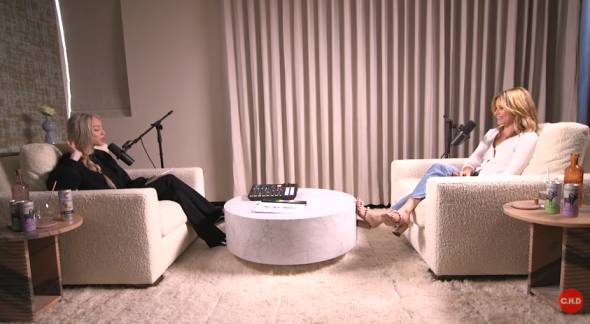
Editor’s Notes: What if the love of your life walked into your world on the very first night of college—and actually stayed for 30 years? In this episode, American actress and filmmaker Elizabeth Banks opens up about meeting her husband at 18, navigating long-term commitment, and keeping passion alive while still honoring her own identity and ambitions. She also shares her deeply personal journey to motherhood through surrogacy, the grief and shame of unexplained infertility, and why women must have real autonomy over their bodies and futures. (Feb 13, 2026)
TRANSCRIPT:
ALEX COOPER: Elizabeth Banks, welcome to Call Her Daddy.
ELIZABETH BANKS: Thank you.
ALEX COOPER: You are an actress, writer, producer, director. You’ve starred in movies such as The Hunger Games, 40 Year Old Virgin, one of my personal favorites, Pitch Perfect, another one of my personal favorites, and many more. And you’re in the wine business. Okay. Your team reached out and was like, are you down to drink? And I was like, am I down to drink? Give me an excuse to drink during the day on a Wednesday. I’m game. I’m ready. So we have your wine here.
ELIZABETH BANKS: Yes. It’s called Archer Roose.
ALEX COOPER: What are you starting with? I started with Sav Blanc.
ELIZABETH BANKS: Okay, so. And then I think we have. This is the Malbec.
ALEX COOPER: Yeah.
ELIZABETH BANKS: Yeah. So I like the Malbec chilled. It’s amazing.
Breaking Into the Wine Business
ALEX COOPER: Would you consider yourself a sommelier?
ELIZABETH BANKS: No. In fact, one of the reasons I liked that this Archer Roose was canned wine, was that I kind of feel a little wine shamed. You know what I mean? I’m a grown a woman, but I don’t know. I don’t. Why I can’t learn everything about wine. It’s just not my thing.
ALEX COOPER: Right.
ELIZABETH BANKS: But I also know what I like. And okay, this is. I mean, I love a sommelier who’s very cool and chill and telling me what’s good and I love that vibe. But I really, when I go to shop for wine, I’m like, I don’t know.
ALEX COOPER: See, this is what I didn’t know. First of all, cheers. Cheers. Let’s have a taste.
ELIZABETH BANKS: L’Chaim. Oh, it’s good. It’s yummy.
ALEX COOPER: I forget there’s something about drinking wine in a can that’s like bringing me back to life.
ELIZABETH BANKS: You’re on the beach.
ALEX COOPER: I’m on the beach.
ELIZABETH BANKS: In your mind, I’m already on the beach.
ALEX COOPER: I’m like in Italy.
ELIZABETH BANKS: Yes, yes. I’m in Marbella, Spain. My feet are in the sand.
Growing Up and Early Influences
ALEX COOPER: Growing up before you were like of age at 21. What was your parents’ relationship to allowing or not allowing you to drink?
ELIZABETH BANKS: My high school graduation, my dad bought a couple cases of beer. He was like, you can’t. You’re 18. This is weird, but he was like in the Navy at 18, you know what I mean?
ALEX COOPER: Okay. So they were pretty chill.
ELIZABETH BANKS: They were pretty chill. Yeah. I was a bit of a goody two shoes in high school, so I was somewhat weirdly responsible.
ALEX COOPER: Well, I feel like, because we’re going to get that because I know you went to an Ivy League school, so I was wondering, did you spend all of your high school time preparing to try to get to college, or did it come naturally for you?
ELIZABETH BANKS: I loved school. I’m a. I love learning. And so school was not overly stressful for me. To me, it was about getting out of my small town, and I’m super grateful for where I grew up. I love Pittsfield, Mass. Shout out Western Massachusetts.
But I had city blood from birth, and I just knew I was meant to go live in a city somewhere. Somehow. I was not meant to party with kegs in the woods while it was raining on me off of George’s Farm Road or whatever. So, to me, the whole situation in high school was about getting, what’s the best school I can get into? How can I get out of here? How can I make real money in my life?
I grew up working class, and my parents wanted more for me, and I wanted more for me.
ALEX COOPER: Totally.
ELIZABETH BANKS: I was ambitious.
The Reality of Attending an Ivy League School
ALEX COOPER: I can relate to that because I’m from Pennsylvania.
ELIZABETH BANKS: Yeah.
ALEX COOPER: What was the most challenging aspect of adjusting to going to a school like UPenn?
ELIZABETH BANKS: It was passing, frankly, as somebody who belonged there. They have programs now for this in college, which they didn’t have when I was there, which is basically socioeconomically to be on scholarship and grants and all that, which is how I went to Penn. I worked the entire time. I never went on spring break. I never went anywhere. I stayed at school and worked. I did not go. I worked all summers.
So that was the part of it that, for me, I was there living and hanging out with and going to class with people who just never have to worry about that stuff. They were not worried about a winter coat with a hole in it. And I was like, f*, my winter coat has a hole in it. This is my coat. Let me sew this myself.
I had to miss shifts because I had to study. I literally was choosing between a shift at work or studying for a test. And it’s like, all right, well, I got to maintain this grade point average so I can stay at this school. And so, okay, now I’ve missed a shift. So now we’re going to have bagels this week at every meal, you know?
ALEX COOPER: But when you look back, do you feel like that also propelled you to a different level for yourself?
ELIZABETH BANKS: Look, it’s just.
ALEX COOPER: Yeah.
ELIZABETH BANKS: I really only try to speak for myself at this point. You know, that was my experience. I had to work a lot. I missed out on a lot of things. But of course, it makes you a person who is respectful of the dignity of work.
I was a chambermaid in a bed and breakfast and don’t flush condoms down toilets, assholes. Stop it.
ALEX COOPER: Such a good specific PSA. We don’t need the condoms in the toilet.
ELIZABETH BANKS: So that’s not where they go. They don’t go down there. That’s not what you do. And it’s people like me that have to clean that up. So, you know, I just have that mentality now of really appreciating work, the dignity of work and people just doing their job so they can go home to their families, you know.
The Path to Acting
ALEX COOPER: When did you realize you wanted to be an actress?
ELIZABETH BANKS: It was pretty late. It’s just not something anybody, where I’m from, dreams about. And I loved doing it. It provided me a real sense of pride and self worth and I felt good at it. I really liked entertaining people and I made people laugh early in my career. And it just was very addicting.
That all being said, I did not go to school to be an actor at all. The path was like, I couldn’t move at 22 to New York and become an actor. Because I had no idea how to do that.
ALEX COOPER: Of course.
ELIZABETH BANKS: And so instead I just kept going to school. Because I knew how to do that.
ALEX COOPER: This I know.
ELIZABETH BANKS: This I can figure out. And honestly, it worked out really well for me. I did my showcase and I got an agent and I got offers and I was in a commercial like a month later. And then that was that. And I started paying off my student loans and here I am.
Advice for Finding Your Path
ALEX COOPER: I love that story. Just because I feel like something I’ve been talking about recently is a lot of people will write in being like, I feel like I’m on campus and everyone knows what they want to major in and what do they want to do for a living. And I’m like, I have no f*ing idea. I am just as lost as the person.
So I think it’s nice to sometimes hear people be like, yeah, I didn’t grow up and from like five was like, I’m going to be an actress. And that’s totally fine if that’s what you are envisioning for yourself. But it is nice to hear sometimes people who are so successful like you are to be like, yeah, no. I didn’t have it all figured out until after college almost. I started to lean into what do I want to do? Which I appreciate you.
ELIZABETH BANKS: I mean, you’re a podcaster, one of the best. How did you come to this?
ALEX COOPER: I had literally no idea. I wanted to podcast. I wanted to do, when you’re…
ELIZABETH BANKS: Like, this is going to be my job. You know what I mean?
ALEX COOPER: Are you kidding me? I didn’t even know podcasting was a thing.
ELIZABETH BANKS: Right.
ALEX COOPER: I would consider it radio, and I never wanted to be a radio personality. If anything, I wanted to produce and direct TV or film.
ELIZABETH BANKS: Yeah.
ALEX COOPER: And then it just came about. I think sometimes it comes off like, we’ve all got our s* together. It’s not the case. It’s really not. And I think it’s helpful.
ELIZABETH BANKS: I loved doing it. I’ve always loved doing it, but I did not consider it a realistic dream to have. You know, it just was. My mindset at the time was not big enough. And now looking back, and I tell people this all the time, dream bigger. Dream bigger. Dream bigger.
Go, it might not happen tomorrow, but put something on the map of your life farther out, and if you work towards it, you probably do it.
ALEX COOPER: I completely agree. Or you’re going to get some version of it that you didn’t even want.
ELIZABETH BANKS: That’s exactly right. You’re at least going to. You don’t have to know exactly what you want to do. It’s interesting. I have young sons. And when you, if you ask them right now, what do you want to be when you grow up? They’re like, I’m 11. They don’t have a dream job. They have a dream life.
And we talk about this a lot. What does that look like? You know? And my son will say, because he’s very wise, I hope I’m doing a job that I enjoy. And I go, yeah, that would be nice. And I hope I have enough time to spend with my family. Yeah, that would be good. And I hope I stay connected to the friends I’m making right now. And I’m like, yeah, I think that’s a really good recipe for a happy life.
ALEX COOPER: I think your son is wiser than most of us.
ELIZABETH BANKS: I know.
ALEX COOPER: That actually is so. No, that’s so cute, because I feel like when you’re that young, sometimes we need to listen to the youth because they’re so unscathed by the world yet.
ELIZABETH BANKS: That’s right.
ALEX COOPER: This is what we should. And we’re like, that is what we should be doing.
ELIZABETH BANKS: But I also, I’m trying to teach him not to dream about work. And I think about that. For me, in high school, when you asked about that, it was the vision of my life, was like, I’m living in a city. Do you know what I mean? I make enough money that I don’t worry about paying the bills. That was the dream.
ALEX COOPER: Yes.
ELIZABETH BANKS: That was what I was thinking about. You know, that’s what I was putting on the map.
Creating Employability and Success
ALEX COOPER: I think that’s such a good bit of advice. It’s like, you don’t have to have the exact thing in mind, but have at least one thing that you know you want for yourself.
ELIZABETH BANKS: And be employable. Okay. You can’t make money if you don’t create employability for yourself. And the more specific you can be, the more money you can make in life. Okay. I mean, I truly think there’s actually a simple formula to this.
ALEX COOPER: Yeah.
ELIZABETH BANKS: So the more specialized you get. Right. That’s how you end up actually earning. But in the beginning, just think about what makes me attractive to employers. What brings the money to people. And it’s like, broad mindset. I can do anything. Be confident, you know, work hard.
Any job you’re doing. When I was cleaning those toilets in the bed and breakfast, you better believe they were spotless, you know. Take pride in what you’re doing, no matter what it is. Learn that skill set early. Don’t be like, oh, I got to do this thing. Guess what? You’re there, you took the job, you’re cashing the check. Show up.
ALEX COOPER: It’s such good advice. And I think it’s like standing out is something. I think, like, I always was like, mom, stop making me, like, put this on my resume or write this. And she’s like, I promise you. Like, and now that I would be hiring people, I now see it. I’m like, people just write in these generic things. And I’m like, do something wild to stand out.
That’s my piece of advice is like, just send something that maybe you think is like, even if it’s a little ballsy, you’re going to catch people’s attention. Let’s talk about a little bit of romance. Okay. You met your husband.
ELIZABETH BANKS: Yes.
ALEX COOPER: The first night of college.
ELIZABETH BANKS: Yes.
ALEX COOPER: What do you remember about that night? Can you explain to us what happened?
Meeting Her Husband on the First Night of College
ELIZABETH BANKS: The main thing I remember is that he was not that interested in me. He would say otherwise, but he was pursuing me a little bit. I was pursuing him for sure. And he was also pursuing this really cute girl named Kate. I can say girl because we were 18 at the time. Who was like a nursing student. Had a twin sister and they were super cute and she had like a sexy deep voice. I remember Kate. Hi, Kate, if you’re out there listening.
Anyway, I went to school. I knew one person from school, I hope she’s listening to, and her brother. Her name was Penny Feldst in Massachusetts before I went to Penn, which is in Philadelphia. So I show up in Philadelphia on campus, and she had said, my brother goes to the school, so when you get there, call me because he’ll like take us around, whatever.
So I get there, I call Penny and she’s like, my brother’s fraternity is having a party tonight. So I went to her room and we walked up to the frat house together. I met her brother, Mark Feldstein. And the second person I met was my, he happened to be standing with my now husband. Yeah.
ALEX COOPER: And the vibes were like, chill. But he wasn’t like obsessed.
ELIZABETH BANKS: Neither one of us, we were coy, you know, it was like September 6th. I know exactly what it was. But September 6th, it was like 100 degrees still in Philly. So everyone was like, I was in like cut off jean shorts. I mean we were all half naked and he was really cut. He had a really great body and he was tan because it was the end of summer, right? Ever looking great.
ALEX COOPER: Wow.
ELIZABETH BANKS: It was shiny. Happy people everywhere. And it was like college. I was like, hell yeah, I’m here.
ALEX COOPER: But it’s such a good story and I’m sure it’s like you’re asked about it probably in every interview because like it is such like a cute way to now be like 30 years later. I’m still married to the same man, but it’s a very cute story. How quickly did things like progress between the two of you?
The Early Days of Their Relationship
ELIZABETH BANKS: We got lucky. You know, I’m not like a, I believe in fate person particularly, but I do think, you know, it’s almost like when you, if you’re, you see something, you’re made aware of something and suddenly like you see it everywhere. I was made aware of him and then I kind of felt like I saw him everywhere for the next few days.
So I met him, we hung out for, you know, not that long that night. I tried to give him my number. He was like, I don’t have a phone. Which was true. He just hadn’t hooked up his phone yet. But I was like, if you don’t want my number, dude, like, you can just say so. Don’t pretend you have, like, no ability to ever figure out how to call me. Like, there are phones in the world you might not have. You can find a phone if you care.
So that was a fun laugh. And he didn’t call me because he didn’t take, he didn’t have a phone. He was like, oh. So he, and then the next night, I saw him again with, like, a totally different group of people. And then he started rushing a guy who lived on my floor because he was older than me. And so I happened to literally, like, walked in my hallway, and he was standing there.
And so, you know, it was just, like, little things where I was like, wait, why do we keep seeing each other? And we had a great energy between us from jump. We were very attracted to each other. And then he asked me out on a date, and we went on, like, the greatest date of my life.
You know, we were underage, and we went to a jazz club in Philadelphia. Like, I’m from a little town. We have, like, three bars. Like, do you know, and they’re all, they’re all, like, roadhouses, basically. So going to a fancy jazz club. This woman sang. I remember she sang all the classics and sang, you know, What a Wonderful World, and, like, walked through the room with the microphone and sang at our table.
And we, I, we drank beautiful old fashions out of beautiful crystal glasses. And then he paid. He said to the taxi driver, he’s like, I just need two back. And I was like, oh, my God. He knows how to, like, tip. He’s so fancy. I was blown away.
ALEX COOPER: You’re like, okay, I guess we can date now, because you know how to work it.
ELIZABETH BANKS: It’s going to be great.
ALEX COOPER: And then the rest is history.
ELIZABETH BANKS: And we’re still here. Yeah. So long later.
Pros and Cons of College Relationships
ALEX COOPER: Having a relationship in college. What was like, the best part of that and the worst part of that, because there can be pros and cons to having it, like, immediately starting freshman year and through.
ELIZABETH BANKS: I mean, the big pro is you don’t need to muck around. Right? Figure out who to f*, what’s, what you’re doing, who cares about you, what you. Oh, my God. I can’t even imagine now with the texting and the ghosting and the. Oh, my God.
ALEX COOPER: It’s not great. It’s not great. Oh, it’s not good.
ELIZABETH BANKS: The worst. I had a great relationship in high school too, so that really prepared me. I had a great boyfriend. And, you know, I went to college being like, I’m here. I wanted to get laid and, like, sew my oats and have fun. That was really it. And I happened to meet. I, turns out I’m a serial monogamist. I didn’t know. I didn’t realize.
ALEX COOPER: High school to college, I just honed in on one and that was it.
ELIZABETH BANKS: Stayed together for 30 years.
ALEX COOPER: But then, but wait. And where was he from?
ELIZABETH BANKS: Portland, Oregon.
ALEX COOPER: Okay, so you guys graduate?
ELIZABETH BANKS: Yes.
ALEX COOPER: I think there’s so many people that write into me and are like, I’m graduating college. I have a partner. What the hell do we do? We have to move to different states or should we stay together? Like, what happened with that dynamic and how did you guys make it work?
Making It Work After College
ELIZABETH BANKS: I mean, he made it work, honestly. He made really, he made decisions that were about us staying together. I mean, we both did eventually do that, but I, you know, he was not, he left school not really knowing what he wanted to do with his life. Again, very common, you know, took some great jobs and had a lot of great opportunities, but I was not living his passion.
So, like, we both did things that were for us. You know, we didn’t try to, like, merge our lives when we were 23. Like, that’s crazy. You don’t need to do that. But you do need to be honest. I think about, like, are we doing this together or not? And of course, back then, too, I was crazy and emotional and like, what is this? And is this forever and not. And whatever. I questioned all that, too. I didn’t really know.
I really liked being with him. And we were not, we never broke up. It’s not like I was like, I can’t wait to date other people. I was not really interested in that. It was more about, I want to do things for myself and am I bringing him along? Is he going to come? Or what’s happening? And he, the answer to that was like, he came. He said, yes, I’m going to go.
ALEX COOPER: See, that’s what I wanted to hear. Because I’m like, okay. There had to be a moment where one of you is like, what are we doing? Because if you never broke up, I was going to say, like, was there ever a moment that you had a freak out of? Like, is this the one? Am I going to look back and regret it? Like, okay.
ELIZABETH BANKS: We didn’t have major freakouts, but I think it was more about, is our life going to keep going together or is it going to die? Is it going to, you know, are we going to, are we on the same path or are we going to diverge? And that, that’s a question that everyone has to figure out. You know, you can’t, you can’t force those things to happen.
I wanted to be, I wanted to follow my dreams and be my own person and make sure I always had my own sense of security. I didn’t need him to do things. And I know he felt the same way. He wanted to feel like he was his own man, his own person, all of those things. Like, we, even though we had this, we have this identity now more than ever, that we are totally together. We needed to feel as young people that we had our individuality and that we were our own people before we could, like, join each, join up with each other. Right.
I love that and that, that was what we were, that’s the balance we were trying to do. So we spend a lot of time apart from each other. We still do.
ALEX COOPER: Yeah.
ELIZABETH BANKS: I’m a heart, I’m a makes the heart grow fonder person. Like, I don’t mind being, I mean, I mind being away. It’s not the greatest, but it always makes me appreciate what I have at home. And that has been true our entire lives. Like, I’ve always had to travel for work, and he’s always had to come visit or da, da. And we’ve always come back together, and the coming back together has always been awesome.
ALEX COOPER: I think that’s something that’s very underrated, is like, using moments apart that actually make you way closer and stronger because you miss them and you want to be with them.
ELIZABETH BANKS: We end up being, like, on the phone for, like, three hours a night. Like, we’re, it’s in high school again. Do you know what I mean? Like, it’s cute. It’s cute.
Keeping the Passion Alive After 30 Years
ALEX COOPER: That’s what I was going to ask you. I’m like, okay, 30 years of marriage. How do you keep the passion alive? How do you keep it interesting? Give us the secret.
ELIZABETH BANKS: You know, it’s funny because most people ask, how do you stay together for that long? Like, people are not actually interested in the, like, those.
ALEX COOPER: Yeah. No, I.
ELIZABETH BANKS: That’s so funny, because most people are like, how do you, how do you, like, commit to someone and then not f* it up?
ALEX COOPER: They’re like, Elizabeth, how are you still with the same person? They’re like, eyes twitching. You’re like.
Marriage and Commitment
ELIZABETH BANKS: And meanwhile, I’m like, if you choose well, right, and you state and you keep recommitting to it, it’s actually not that hard. The hardest, like, keep. I’m always like, don’t cheat. Yeah. That’s the big, like, what do most people break up over?
ALEX COOPER: Cheating.
ELIZABETH BANKS: That’s what most people break up over. Let’s be clear. That’s it.
ALEX COOPER: Is there a conversation you guys had that was, like, a very specific conversation about that, like, when you got married or something?
ELIZABETH BANKS: I mean, I remember we went to, we were in San Francisco. We went to a restaurant. We were probably, like, 26 then. You know, we had some drinks, and we got a little drunken. It was more of just like, look, if anything’s happened, if you’ve flirted, if this has gone on, what. I literally don’t care. Not care about anything that happened in the past. Let’s just talk about what the future looks like for us.
Like, are we doing this? Are we saying, like, it’s me and you and we’re going forward? And we said yes. I remember kind of coming to the conclusion. I was like, oh, okay, so eventually I’m going to marry him and we’re going to have kids. We’re going to make a family together. And that kind of came out of, out of a conversation that was like, whatever’s ever happened. Yeah, let’s not care because we were babies and you weren’t. It’s fine. We weren’t meant. You know, we didn’t know that we were going to be committed.
ALEX COOPER: Right.
ELIZABETH BANKS: But now tonight, we’re kind of in a place where we know we’re going to.
ALEX COOPER: Yeah.
ELIZABETH BANKS: So let’s, like, you know, kind of acknowledge it and kind of say, like, all right, well, then let’s be real about this. Like, let’s commit.
Having the Conversation
ALEX COOPER: I appreciate that because I think there’s a lot of people that can get scared to bring it up if they don’t know where their partner’s at.
ELIZABETH BANKS: Yeah.
ALEX COOPER: And it’s a very scary feeling when I’ve had women write in being like, I know, like, I’m ready for the next step. And he has never brought it up. And I’m like, you have to have the conversation.
ELIZABETH BANKS: Yes.
ALEX COOPER: Because what are you going to do? Sit around for a couple more years and then you finally ask him and he’s like, oh, no, I’m out.
ELIZABETH BANKS: Well, also, I think it’s okay. Look, people are afraid of the answer. It’s fear based. So because you’re putting yourself out there and you don’t want to hear that they don’t want to do it. But I think often what happens is, by the way, we didn’t get married at 26. There was multiple years went by after that before we actually married each other. It was more just like, let’s start making decisions that will lead us to the same place, which is we want to get married and start a family.
ALEX COOPER: And.
ELIZABETH BANKS: And that was it. By the way, I have, I mean, I have friends, family that are, don’t want to get married, but are like, I want to move to LA. Do you want to come with me? Are we going to commit to this life together? It’s the same idea, you know, like, we were living together, so it’s like, totally.
ALEX COOPER: That’s what I was interested. Like, you didn’t get married right away. How much open communication did you guys have? About, like, we want to get married. When are we getting engaged? Because I think sometimes, like, when I.
ELIZABETH BANKS: You didn’t talk at all. Well, meaning once we were like, once I knew we were going to get married eventually, I kind of had that in the back of my. But I was like, there was no rush. I wasn’t in a hurry.
ALEX COOPER: Right, Right.
ELIZABETH BANKS: But my only hurry was, literally, I’m a little traditional. I didn’t want to accidentally get pregnant before I was married.
ALEX COOPER: I guess that was it. Okay. Okay.
ELIZABETH BANKS: That was it. I was like, oh, I’m going to feel really bad if I.
ALEX COOPER: You wanted to do it?
ELIZABETH BANKS: I wanted to be traditional about it. I just thought we’d been together since we were 18, and I, by the way, this is no judgment. Anyone who has a kid and then gets married, I don’t really care what anyone does. I’m just telling you that for me, I’m a little traditional. I wanted to be married before I had kids.
The Proposal
ALEX COOPER: Were you surprised when he proposed?
ELIZABETH BANKS: Yes, he surprised me because he was like, f* you. You’re a know it all. I didn’t want you to know. And he knows me really well, and he wanted to create a scenario where he did it. There was him. It was not. He’s a little traditional, too. That’s why we work together. Do you know what I mean?
I think he called my dad and the whole thing, and so it was like, he went with, like, my good friend to, like, buy a ring and got her advice, and, like, you know, he did all the work. And I think, and he deserves all the credit for it because I was kind of like, did to do, like, I was working. I knew, you know, we’ll figure it out eventually, blah, blah, blah. And then he was like, no, we’re doing it now. And I was like, oh, shit. All right, we’re doing it. Okay.
ALEX COOPER: Can you share how he did it?
ELIZABETH BANKS: Oh, it’s not that crazy. I was working on this movie, Seabiscuit.
ALEX COOPER: Okay.
ELIZABETH BANKS: Of course. I traveled all around for it. And I was in Kentucky. We were shooting a sequence at Keeneland, and he came to visit in Kentucky. He was in business school at UCLA at the time, getting his MBA. And so I honestly thought he wasn’t going to do anything until he had graduated, you know what I mean? I didn’t think he was really ready to get married.
And he showed up, we went, we went tailgating. So there’s a big Kentucky, Louisiana football game. We love sports, so. And I was with these world class jockeys in Kentucky, where jockeys are literally the celebrities of Kentucky, right? So we were these big time jockeys, hall of famers. And they were like, we’re going to go. You know, they have a suite at the thing. What are all these rich horse people? And so we went, we started drinking bourbon because it’s Kentucky at 11am. We were off our asses by the end of the game.
The game was blowout amazing. They shot off fireworks like the game was over and Kentucky won. And then Louisiana ran a touchdown into the end zone and actually won the game. So it was like this crazy ending and it was like, it’s one of these like top 10 all time, like ESPN moments, blah, blah, blah.
So we go back to the hotel after this. We’re done. Like, I’m done and we’re taking a nap and I wake up and I’m like, let’s just get a stick to the room and like, you know, hang out. Like, we’re already kind of hungry. He’s like, no, we are going to dinner. He had this big plan and he had asked, like, what’s the best steakhouse in Kentucky or whatever it’s called Malone’s. I don’t know if it’s still there. It was in a shout out to Malone’s. That’s where I got engaged.
So we go to Malone’s. We have a driver. He like has it all arranged through the concierge. We go to Malone’s and it is a party because Louisiana has won and all these people are there for the game and they’re all wearing their Mardi Gras beads and it’s purple everywhere and there’s a magician walking around doing stuff.
And my husband is kind of horrified. He’s like, oh, shit. He was wanting like Musso and Frank’s, like, he wanted a classic, like, you know, like a red velvet banquet, right? Kind of a situation where we were going to eat a medium rare steak and have martinis and he was going to ask me to marry him and it was going to be great.
Instead, we’re in a, we are in a party. I mean, it is a massive party there and we’re hungover because we’ve already been drinking all day. So I think I ordered a ginger ale because I was like, I, I’m going to die. And you know, so we were there for like two and a half hours. He just wouldn’t let the dinner end. He kept ordering things. He wasn’t asking me. And honestly, he just wanted. He didn’t want to do it in front of, like, a table full of strangers, and he did not want to do it in front of a magician.
ALEX COOPER: Nope. I think we could do without. I feel like that’s not as romantic as It. It doesn’t even sound romantic.
ELIZABETH BANKS: No, it wasn’t. It wasn’t. So truly, the restaurant was, like, closing. Like, the staff was kind of, like, giving us the dirty. Like, you need to get out of here. I. And we. I was like, why don’t we get the check, babe? Like, let’s go. What are we doing? Why are we still here?
And then he just pulled out this ring and, like, yeah, everyone. And we were basically alone at that point in the restaurant. It was really lovely. And I was in shock. In shock. And then we went home and we called our entire family. It was like one o’clock in the morning. I woke my parents up and, and then his family’s all west coast, so they were. It was early enough for them. It was like 10. And we called everyone, and it was great.
ALEX COOPER: Okay, That’s a great story. Yeah, that’s a, that’s an absolute great story. Because I think sometimes there’s pressure to do, like, on the hot air balloon, like, skydiving. Like, no. Like, it can be.
ELIZABETH BANKS: That’s not us. That’s just not us. Like, if that’s you, great. Go for it. That was not us. He did it exactly how he and I were supposed to.
ALEX COOPER: Totally, totally.
Family Life
ALEX COOPER: So you have two beautiful children?
ELIZABETH BANKS: Yes, two boys.
ALEX COOPER: Did you always know you wanted children?
ELIZABETH BANKS: Yes. I mean, when I was… I mean, I did not want children when I was young. Of course I wanted to plan my family, right, Alex? That’s what I was most interested in.
ALEX COOPER: Like I have a whole plan.
ELIZABETH BANKS: Yeah, I had a plan. I did always want to have kids. Yes, especially when I… Once I knew I was marrying my husband, I wanted us to make a family together.
ALEX COOPER: Then it made sense for you.
ELIZABETH BANKS: Yeah, 100%.
The Journey to Motherhood
ALEX COOPER: You’ve been open about your journey to becoming a mom. Can you talk about that?
ELIZABETH BANKS: Well, I’ve never been pregnant. And when I was young I thought it was because I was really good at taking the pill, which I definitely was. But I have no idea. So I have… There’s a small percentage of women who basically have unexplained infertility. And that is me. I’m in that category.
And really what it came down to for me… And I know there are other women that have other stories and there are rumors out there about my story. So I just want to say this. I’ve never been pregnant. I’ve never had a miscarriage. I think people mistook my story for like maybe I had a lot of… I’ve never had a miscarriage.
So for me, I had always had plenty of eggs. I never had trouble making embryos. They did not implant. For whatever reason, my uterus is hostile. I don’t know what’s going on, but they just will not stay in there. So a broken belly is what I told my kids. Mommy had a broken belly.
So, my husband and I… It’s funny because I remember when I went to the fertility doctor for the first time, he was like, “You’re going to surrogate?” And this is a long time ago, before surrogacy was like a Kardashian thing, right? Nobody was doing it back then. And I thought he was crazy. Like, what are you talking about? No, I’m not. I’m like, you know, first of all, I don’t know what that is and that sounds nuts and expensive and we’re not doing that.
And but he was right because he’d seen my case. Like, he’s basically like, I can solve like eggs. Like, we have a lot of ways to like get women, like create embryos. You know, we can solve bad sperm or whatever causes infertility. They have a lot of solutions. They do not… They do not know to this day why an embryo implants or doesn’t. They don’t know.
And so he was like, this is… You have an unsolvable problem. Which is not the language he used with me. So at the time I thought like, we’re just going to do IVF or ART, which is assisted reproductive technologies. And we’re going to figure it out. Because, other women I knew were doing that and they were getting pregnant. It was not a problem. Like, they take their Clomid and they do their this or that. Everybody’s going to, you know, it’s going to work for us.
And then, dude, it did not work for us. We did… I think I did, like, seven procedures that were all resulted in zippity doo dah. And we were really despondent. And then there was a totally crazy scenario that I’m actually not going to talk about here, but involved, family members and a cancer scare and, many things going on where we kind of thought, this is the challenge for us. Like, we are really lucky people because we found each other and we’re in love and we’re just going to be a really good auntie and uncle and we’re just… We weren’t meant to do it, you know.
And then I had some incredible conversations with people and I had a doctor that was, you know, like, you know, you can use a surrogate. Like, it’s really okay. And long story short, because it’s a very long story. Met somebody, had an incredible conversation with her. Still to this day… It’s my… Actually my son’s 10th birthday today, and I’m going to send her a picture of him. Yeah. Because she helped, you know, she helped make our family with us.
Her mom had been a surrogate. That’s how she got into it. She had three beautiful kids of her own with her awesome husband because it takes, the whole village to do this. And I was given advice that, you know, nobody comes to surrogacy, willing, excitedly. At least I didn’t, you know, it was like a last resort for me. But the advice I got was, you will be so grateful.
And the other advice I got was, because back then, it’s like… And by the way, it’s illegal in most states. And, you know, it’s very… It’s… The whole abortion conversation is very right now mixed up with IVF. And, you know, all of this stuff is so fraught. So there was a lot of judgment around this back then especially.
And people were like, guess what? At the end, you know, I had a great friend who was like, at the end of the day, there’s going to be a baby and you’re going to be a parent, and, nobody’s going to care how it happened.
ALEX COOPER: And yeah, it’s…
ELIZABETH BANKS: It was really good. The other great advice I got was, is your goal to be pregnant or to be a mom? And I was like, oh, sht, it’s just to be a mom, right? I don’t need to be pregnant. F. I just want the baby, right? So it was like, what’s the best way to get to the ba… Like, what are you doing? Like, who cares about the pregnancy?
Overcoming Shame and Grief
ALEX COOPER: Get the baby, whatever the situation is. Like, there’s a lot of shame, I think, for women so much, right? If you’re not able to do it the exact way that, everyone envisions it going. And obviously, we’re so fortunate that we’ve progressed in the medical field that we’re able to actually have so many different ways to go about bringing life into this world. But can you talk a little bit about that shame? Because I think sometimes women go through it and it’s hard to articulate, especially when you feel so alone and going through it.
ELIZABETH BANKS: I also look that it’s… Your fertility is such a part of your life. Men and women, right? I mean, but for women, especially in a society that’s like, this is your… Why we value you, right? We don’t… We don’t value you because you could be a CEO. We value you because you can procreate and keep the race going, right? So if you can’t do that, you are less of a woman. That’s the messaging.
And my fertility was something that had to mourn. I had to grieve for, was a loss, and I had to really work through that before I could invite someone else to help me make my family. That’s really what, for me, how the journey to surrogacy was really about that.
And it was confusing, too, because it’s like, we could… My husband, I could make these beautiful baby cakes, and I just didn’t have an oven to bake them in. And so it really was my fault. Do you know what I mean? It was on me. And I felt that deeply like I’m the prime, the problem.
And, you know, you blame your lifestyle and you blame your… Oh, my God. And I did everything and I was like, I stopped drinking, I stopped eating. Then I started eating because someone was like, you’re too thin. You’re too this. You know, I… You use that cream and it’s got a chemical in it. It’s like, okay, everything has a chemical in it. I don’t know. You know, it’s like, don’t eat this, don’t do that. So it’s like everything you’re doing is wrong. And truly, I went through all of those things. I really did.
And at the end of the day, I remember a really good friend of mine. Her name is Anna. I hope she hears this. She was like, listen, I was pregnant, and I love being pregnant, and I felt cool, and it was great. And I gave birth, and then they handed me a baby, and they were like, go home and parent this baby. And being pregnant was like a distant memory, as if it never happened. Because suddenly, now, actually motherhood is happening. Because now you’re responsible for this other person when you’re pregnant. You’re still just responsible for you.
And, you know, there’s… I’m not denying, the connection and all of those things. I don’t… I mean, I don’t know it intimately because it didn’t happen to me, but of course, I’m not denying anyone else’s experience. I’m just saying my friend was like, they gave me a baby, and then I took over from the hospital. And, truly being present, what? That was like, nothing compared to, the rest of my life is taking care of this other human being.
ALEX COOPER: Right. That’s nine months. Like, now it’s for the rest of your life.
ELIZABETH BANKS: Now it’s the rest of your life. That’s what I had to focus on. Just refocusing on parenting and my actual child that was in my arms. And man, oh, man, it made everything else so stupid, so silly. Everyone’s judgment was, off because now they get to judge me for how I parent.
ALEX COOPER: Right.
ELIZABETH BANKS: It starts all over again. It’s a whole other side of the cycle. But, no, you gotta mourn it. Absolutely. Like, it was really… It’s a journey. It’s not… It’s hard. It’s not easy at all to feel like you can’t do something that you really want to do, that you feel made and built to do and you don’t understand and you’re with a great person and, everything was right and it still didn’t work for me.
ALEX COOPER: I really appreciate you sharing that because one, recently, for me, women having autonomy over their bodies is the cause I care most about. And I think hearing women talk about their individual journeys is so, so powerful. Because as much as we all are never going to have the same exact story, it’s helpful to hear, we’re all going to go through, but we can support each other in how different our stories are.
ELIZABETH BANKS: That’s right.
Call Jane: A Story of Empowerment
ALEX COOPER: Your new movie. Yeah, Call Jane, is truly the movie I think everyone in America should see right now, especially with what’s going on.
ELIZABETH BANKS: Yeah.
ALEX COOPER: Can you explain what your character goes through in this movie and her character development?
ELIZABETH BANKS: So the movie’s called Jane. It’s based on the true collective of women in Chicago in the late 60s, early 70s, before Roe v. Wade was the law of the land that provided abortion health care to around 11,000 women that sought them out. Right? So basically illegal abortion care was what they were providing.
And in the film I play this woman, Joy, who is a kind of conservative housewife who never in a million years thinks she’s going to seek out abortion health care and finds out that she’s pregnant. You know, she’s 40 years old, so she’s having a pregnancy that is, that’s life or death for her. Basically it’s putting a strain on her heart and she’s told like, you’ll probably die if you don’t get rid of this pregnancy. And she’s got a life that she’s living and she’s got a child that she’s already raising, a daughter.
And she makes a decision that she prefers her life and she has to seek out an illegal abortion through the Janes. And then once she meets this network, and really for me it was when she makes this very life affirming choice for herself to save her life that her, that everything begins for her. Right?
I read the script a long time ago and I remember thinking this is like a coming of age story for a 40 year old. You know, you read coming of age for a 17 year old, right? But you know, or Jane Austen or something. But this is a woman who’s well into what she thinks is a very comfortable life and then realizes, oh my God, I’m living in a bubble. I had no idea all these other things were out there and I had no idea that I had could find things purpose in my life. And you know, she’s, she just becomes a totally invigorated new person.
Standing Up in Male-Dominated Spaces
ALEX COOPER: But I do think that’s also the beauty of growing up, because I’ve talked about it on my show a lot. We are raised a specific way and, you know, God bless your parents, but it’s really an extremely exciting time when you get away from where you were raised and away from your parents, if you have the ability to do so. Changing your mind’s okay.
ELIZABETH BANKS: Change your mind’s great.
ALEX COOPER: It’s great.
ELIZABETH BANKS: Well, it’s a measure of your life experiences because it tells you that, oh, I was able to be open to something new, a new idea, a new person. It’s mostly people that change us, though, isn’t it?
ALEX COOPER: Yep.
ELIZABETH BANKS: It’s meeting other human beings and building empathy for them and going like, oh, they’re just a regular Joe that wants to do blah, blah, blah with their life and live their dreams. Oh, and they happen to be trans, right? Or, oh, that happens to me, you know. Oh, they happen to be an ex felon.
ALEX COOPER: Yeah.
ELIZABETH BANKS: But they, you know, it’s just, I just think that the idea of people’s whole humanity is just more interesting than archetypes, tropes. It’s just like there’s so much more going on.
ALEX COOPER: I agree. I feel like even recently, I felt like, oh, my God, I never want to judge anyone again because we just have no idea. And it’s actually, I judge myself. I know, I know. But then it’s like, oh, my God, we have no clue.
So I think a really interesting scene that struck me in the movie was when you’re in the boardroom.
ELIZABETH BANKS: Yeah.
ALEX COOPER: Surrounded by all men, telling you, no, you can’t get an abortion. Correct. And your character is like, wait, but even if it means the death of her mother, like, what? And they’re like, yeah, no, that seems so powerful because I think how many times I’ve been in a room with all men and it’s just so profound to look back when I was younger. I wish I could have stood up for myself in certain situations.
But have you experienced being in a room with men in an industry dominated by men? Like, of course. How have you evolved with your relationship to sticking up for yourself and trying to have a voice in a room where—
ELIZABETH BANKS: Well, that’s what that scene really is about. Right. It’s about the spaces where women’s voices are not valued.
ALEX COOPER: Yeah, of course.
Women’s Voices in Hollywood
ELIZABETH BANKS: I’ve had many experiences in my life. I mean, you know, I’m an actor in Hollywood. I go to set. I’ve gone to many sets where I’m the only female actor in the cast or, you know, one of a very few. I mean, I’ve mentioned Seabiscuit. I had an amazing time making that movie, but there weren’t gal pals on that film. I mean, it was me and a bunch of dudes. So, and that’s true of a lot of movies I’ve done. So that was my experience for a long time.
And now, you know, I see it for what it is. It’s really, it’s so interesting as you get a little more distance from that time in your career. But also when you look, everything was anecdotal for a really long time. So I think pre-Me Too, pre, we want to have more women on boards of Fortune 500 companies, there’s this whole movement right now that is about equality in a way. In a way. And then there’s a backlash, which is about abortion rights, which is all about inequality.
So there is a sense of women deserve more, you know, more representation. And that comes, you know, I like to remind people that we are women as having political and economic power is brand f*ing new in the scope of human history. Our grandmothers did not work outside the home. Women did not work outside the home, make their own God dang money.
Until the 70s, you could not have a no fault divorce. Until the 70s, you could not leave a husband just because you wanted to. Until the 70s, you had to have his permission to leave. So women have not had a sense of autonomy really or any political clout or economic power until my lifetime, my, you know, 40 something years. That’s it.
So it’s fresh as a daisy when it comes to the patriarchy. The patriarchy’s like, wait a minute. We had a system, right? We loved it. We were very happy with the system. What do you mean? You’re going to work and have opinions. You’re going to want things, you know, hashtag Me Too. F* you. And you’re like, no, no, stop abusing us. Maybe stop doing that.
And I think it’s what people, why did it take so long for, for instance, you know, I won’t say his name for a Hollywood mogul to get taken down. You know, why was he allowed to do that for so long? And you’re like, because there were young women who had no careers and no money and no safety and no security, right?
And then they grew up and they had husbands and families and money and lives and security and careers. And they were like, hey, that guy, that happened to me. And they were finally safe enough to say it. And it takes feeling safe to actually stand up for yourself. That’s what it took me. It took me feeling safe in spaces. And that comes with my own sense of security. If I say this out loud, I will still work in my industry. I will not be punished for saying this. It’s my safety that has allowed me to speak out.
Finding Safety and Speaking Up
ALEX COOPER: It’s a privilege to feel safe. I currently feel safe. And I experienced something where I didn’t feel safe back in college. And it was a power dynamic that was abused. And I now look back and I’m like, the reason I didn’t speak up or didn’t say anything was because I needed a job. I needed to get my foot in the door. I need—
And so I wonder if you have advice for young women maybe that, I mean, are in the workforce right now trying to figure out, I don’t have that safety or security right now. I don’t know if you have any advice of how to navigate. I know it’s very difficult.
ELIZABETH BANKS: It is. I would say there’s safety also in numbers, right? We do feel that. So hashtag Me Too was about numbers. It was about there were these anecdotes that were whisper campaigns and this. There’s also now there’s so much data. We just know. We’re like, no. 70% of women experience XYZ. Stop saying you don’t do this to us. Do you know what I mean?
So I think partly it’s that we actually have data that supports our feelings, you know, things that we could be dismissed now. It’s like, no, no, there’s studies now. We’re actually looking at it, which, by the way, also fresh as a daisy, super new to actually give a shit what’s happening to women in the world. Haven’t been studying us for very long. So that’s wild, too.
My advice is you’re almost probably never alone. So, you know, and you don’t need to compete with other women. There is, it’s not a pie with only so many slices. There really is opportunity out there for everybody. So I find that when people feel like they’re competing again, they don’t feel safe, they don’t feel secure where they are. So they feel like they can’t reach out to somebody, say, you know, the other woman on the team or the other woman in the room, or the, look for those mentors.
Talk to older ladies. Look, you know, reach out across your network. Talk to your friends about it. The shame and stigma around all of these issues is still so deeply felt by people, and it’s really hard to break out of. And it’s why people stay silent. And that is the best tool the patriarchy has. They are creating a sense of fear, stigma and shame that allows women to sit silently at home and go, I guess I’m the only one. And you aren’t. You are not alone.
ALEX COOPER: You’re not alone. And I love that advice. Find the other people. Even though it’s scary, it’s better to, you will feel better not being alone.
ELIZABETH BANKS: That’s the main, yes. Yeah. It’s the first step.
ALEX COOPER: Yep.
ELIZABETH BANKS: Right. Is feeling on, is you’re being isolated on purpose. It’s a tool. Don’t let yourself be isolated.
Abortion Rights and Democracy
ALEX COOPER: How do you respond to someone in conversation if they say that they think abortion access should be banned?
ELIZABETH BANKS: I think that if abortion is not for them, they should not get an abortion. But I don’t think that they have the right to tell other people what to do with their lives and bodies. We don’t live in a theocracy. We live in a democracy. Democracy. And I am trying to live the values of the constitution of our country. Life, liberty, the pursuit of happiness, sense of equality and fairness.
And that is not possible if an irresponsible ejaculation changes a woman’s entire life. And for pregnancy, with our maternal mortality rate, especially in the south, especially for black women, forced pregnancy is, could be a death sentence. It’s just unacceptable.
ALEX COOPER: Yeah. It is inhumane. And I did a short documentary episode on, I went to North Carolina and I sat down with a bunch of women. I saw that it would, it changed my life because it’s so, there’s so many people that are so ignorant to what’s going on. It’s so convoluted, and it’s really disheartening. But I do feel positive in the sense that I feel like the generations coming up, if they use their voice, things are going to continue to change and hopefully get better.
ELIZABETH BANKS: Well, the midterm elections, I think, were a big, you know, win for abortion rights across the country. I think women, turns out women like having human rights and they vote, so who knew? But I do, look, I really, it’s not the law of the land right now. I mean, Dobbs overturned Roe v. Wade, and there were, you know, there are states where abortion, health care cannot be accessed.
And I think that the, you know, I think about the real harm that’s happening to women in those places. And, you know, that’s my first thought. And then I’m thinking about, well, how do we, how do we get it back? But, you know, this is the patriarchy. They steal our time. They’re making us do it all over again. My f*ing grandmother fought for this, by the way.
Nobody gave us the right to vote. Nobody gave us Roe v. Wade. Nobody gives us, it has to be fought for and won. They don’t want to give us anything, so we have to keep fighting. And that’s where my sense of unaloneness comes from. I know so many women in this fight, and I also know that I’m on the side of the, you know, that it’s morally correct. An unwanted child is a tragedy. It’s a tragedy.
ALEX COOPER: Yeah.
ELIZABETH BANKS: Yeah. And I am not taking anything away from the holiness of a wanted baby by saying that.
ALEX COOPER: Right, Right. Yeah. It’s like, but it should be the woman whose body, it’s her body. Let her decide. How does that affect you?
ELIZABETH BANKS: It truly just is, to me. It’s not fair.
ALEX COOPER: Yeah.
ELIZABETH BANKS: Dudes ejaculate inside ladies, and every time out, if that sperm meets the egg, you’re supposed to stop making it into something it’s not. It’s science. It’s a sperm meeting an egg.
And nobody had—here’s the thing. Abortion exists because we as a society, and this is our lived reality. This is not some fairy tale. We have sex for fun. We don’t always have sex to make children. We just have sex for fun.
And so abortion is the insurance policy against unwanted pregnancy when we’re just trying to have sex for fun. That’s it. That’s our lived reality.
Stop pretending that we’re all sluts and people who have sex outside of marriage are going to hell. Not true. Also, by the way, I’m good with my God. You don’t need to get involved. You’re not my God. You don’t get to tell me what’s going to happen to me at the Pearly Gates. I’m good. I’ll get there. I’ll have my own conversation. Thank you so much. Don’t worry about my soul.
ALEX COOPER: Right? You worry about you. I’m good.
ELIZABETH BANKS: I’m good. Thank you. Worry about your own self.
ALEX COOPER: That it?
ELIZABETH BANKS: You worry about your God and what you think your God’s going to do to you. I’m good. My God’s cool with me.
ALEX COOPER: Yeah, I feel good.
ELIZABETH BANKS: I personally feel straight with my guy.
The Power of Storytelling
ALEX COOPER: Exactly. No, that’s why I do love the movie, because no one wants to be preached at. No one wants to be told what to do. No one’s homework. I get it.
If you watch this movie, you feel how imbalanced the power dynamic is, and you feel how isolated your character is in this moment, and it’s incredible.
I think people in the world in 2022 have gotten a little bit better with understanding that feminism is just us wanting to be equal to all people and equal opportunity. Thank you. But do you think being a feminist at all hurt you and your career?
ELIZABETH BANKS: No. No. I do not make decisions out of fear. I really try not to.
You know, I don’t stay with my husband because I’m afraid of being alone. I stay with my husband because it’s awesome to be married to my husband. Positive, positive, positive.
So I don’t make decisions about the roles I take or the movies I make, the stories I tell, the things I do, how I spend my time because I’m afraid of a reaction from somebody who doesn’t like what I’m doing. I do things from a place of positivity and wanting the world to be more equitable for people.
Because I truly believe my life is enriched when I invite that kind of energy into it. That’s it.
ALEX COOPER: Period.
ELIZABETH BANKS: Full stop. I just don’t worry about haters.
ALEX COOPER: Totally.
ELIZABETH BANKS: People who don’t know me. You know, I try to act correct. I am going to make mistakes. I do make mistakes, and then I just try to learn from them.
I don’t know. I really don’t have a lot of regrets. I think about it all as learning, and my life hopefully will be long and I will continue to learn and be a better, bigger person. I know I have become that. I’m definitely wiser.
I feel really great being the age I am, raising my kids the way I am in the life that I have right now. I do feel like, okay, I have figured a few things out, and that feels good.
Standing on the Shoulders of Women Who Came Before
ALEX COOPER: You figured a lot. You are so accomplished. And I think that—I mean, I felt it being in this industry and starting to kind of use my voice. There’s people that are like, “Don’t get political. Why are you now just being feminist?”
And it’s such a privileged mentality to avoid. Sure, I guess you could enjoy your life and just enjoy your privilege.
ELIZABETH BANKS: I hate to tell your friends that want to say that to you, but when you say you’re a feminist, you are simply honoring the fact that you would not be sitting here talking to me if women before you—if you were not standing on the shoulders of the women who came before you. That’s it.
So if you have any gratitude in your life, you, as a woman, you have to kind of be a feminist. Because we only have these opportunities because of those women who left the house and took jobs and proved that women could work, could earn money, that women could make their own decisions, that women can be in office, that women can have jobs, that women can have a podcast that’s f*ing super successful that other people want to listen to.
You’re not the only one who did—you know what I mean? There’s people that came before us that did this for us to have these opportunities.
ALEX COOPER: And to keep it going.
ELIZABETH BANKS: That’s—you got to—guess what, if you want to pay it forward, you’re a feminist, right?
ALEX COOPER: I really appreciate you coming today because you are so wise and have that experience that I just respect you and your career so much, and you have such a great outlook on how to navigate a man’s world. And I can’t thank you enough for coming. You’re really incredible.
ELIZABETH BANKS: Thanks for having me. I’m a huge fan of yours, too. Look at what you made. You did it. So did you. Look at us.
ALEX COOPER: Two women sitting here thriving. Here we go…
Related Posts
- Transcript: Druski Interview on Diary Of A CEO Podcast
- Transcript of Alanis Morissette Interview: Anger, Attachment, & Postpartum – Call Her Daddy
- Transcript: Dolly Parton Interview on Dumb Blonde Podcast
- Transcript of Dolly Parton Interview: Khloé In Wonder Land Ep. 23
- Short Videos on Hanimax: A New Way to Enjoy Animated Stories