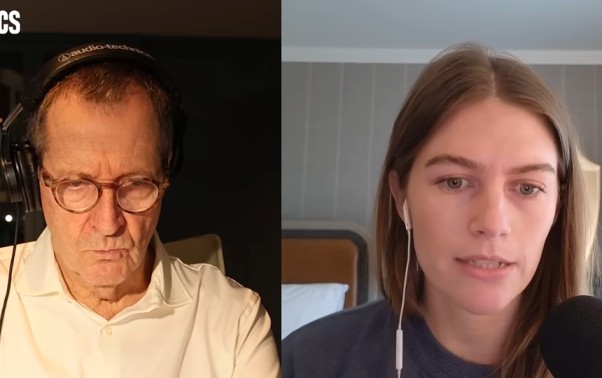
In this Question Time episode of The Rest Is Politics, Rory Stewart reports from southern Ohio, 20 miles from J.D. Vance’s hometown, while Issy Stanley joins from San Antonio, Texas, to explain why Trump appears to be losing voters ahead of the consequential US midterms. With Alastair Campbell, they discuss whether James Talarico can turn Texas blue, why Latino voters are swinging back to the Democrats over ICE enforcement, the toxic politics of data centers, unhinged attack ads, and what lessons the Democrats should draw for the presidency. Read the full transcript of this interview which was premiered on October 30, 2026 below:
Reporting from the Heart of the Midterms
RORY STEWART: (00:00:00 – 00:00:49) I’m speaking to you 20 miles from J.D. Vance’s hometown in Middletown, Ohio, and I’m right in the heart of the midterms. And with the TRIP team, I’m traveling through southern Ohio, down into Appalachia and West Virginia, trying to understand Trump voters, swing voters, and what might happen in the midterms.
And I’m really looking forward to discussing with Alastair both the big questions around US policy and the real perplexity of trying to understand individual motivation on the ground. How does an ordinary American voter think? Do they think that much about politics? How much do they care about the kind of things that horrify me about Trump? And are there parts of the US midterms, these midterms which are so consequential for the world, which we barely understand, and which maybe we’ll uncover a little through the conversation today?
ALASTAIR CAMPBELL: (00:00:57 – 00:01:00) Welcome to The Rest Is Politics Question Time with me, Alastair Campbell,
RORY STEWART: (00:01:00 – 00:01:01) and me, Rory Stewart.
Why Are the US Midterms So Important?
ALASTAIR CAMPBELL: (00:01:02 – 00:02:22) We’re going to devote this entire Question Time to the midterms. Let’s start off with this question from Lawrence. “Why are these US midterms so important and what are the key issues at play nationally and state by state?”
Well, we don’t necessarily want to go through every single state, but I guess the reason they’re important is because they’re going to be a huge test of the popularity or otherwise of the Trump administration. There is a sense, I’m a little bit cautious about this, there is a sense that they are in really deep, deep, deep trouble. People are even talking about a blue wave where the Democrats take the House. And looking at where the money flows, it seems to me that the Republicans have pretty much given up on ever thinking they could hold the House.
But in the Senate, 35 seats up for election, and the Democrats need to win a handful to get a grip on the Senate as well. And that would then change things. Trump would probably ignore it and just carry on sort of signing executive orders and doing lots of foreign policy. But it would mean that the Congress would be able to find its teeth again. And that would make a difference to America.
But listen, Rory, there’s no point me blathering on. You’re there and you’ve been there for some time. So why don’t you answer the question? Why is it so important and what the hell’s going on?
RORY STEWART: (00:02:23 – 00:03:14) So firstly, on why is it so important? Long held the view that we overemphasize the importance of the midterms because Trump doesn’t do much legislation and the Democrats are never going to get a two-thirds majority to allow them to really impeach him or the kinds of supermajorities to drive through their own legislation. So what they’ll be able to do is create endless embargoes through investigations and committees and this kind of thing, but it may not be the sea change that many Democrats are hoping for.
Ohio and the Story of Left-Behind America
However, it will be really interesting in places like this. So I am in Ohio. I’m speaking to you 20 miles from J.D. Vance’s childhood home. And for those members who listen to Alastair and me do the J.D. Vance miniseries, in a sense, this was the absolute epitome of the story of left-behind America.
RORY STEWART: (00:04:00 – 00:04:58) And why white working-class voters moved from Democrats to Trump. And why people who didn’t have graduate degrees moved to Trump. So the story that you read in J.D. Vance’s book is a story about the Rust Belt, a town that was supported by big steelworks collapsing, particularly under pressure from China. But it’s also a story about opioid epidemics, left-behind America, flyover states. This is the Midwest.
So all those elements and I don’t know. I mean, let me maybe just start with this. This is sort of a weird question to ask you, Alastair, but how well do you know Ohio? Places like Middletown and Dayton and Cincinnati? Is that kind of part of the states you know particularly, or is it other bits you know?
ALASTAIR CAMPBELL: (00:04:59 – 00:05:01) No. Where do I know? I know Maine very well.
RORY STEWART: (00:05:01 – 00:05:19) What would be the impression that you got if you were reading about Ohio from Hillbilly Elegy or thinking about it from, I don’t know, the kind of earnest articles you read in The New Yorker or The Atlantic or The New York Times of endless journalists heading out to look at real America.
ALASTAIR CAMPBELL: (00:05:20 – 00:05:38) My impression of Ohio, as via the pages of J.D. Vance, is of a pretty tough, slow— he always bangs on about the importance of the Scots-Irish influence there. But I think what you’re about to tell me is related to race, isn’t it? Am I right?
RORY STEWART: (00:05:39 – 00:08:18) Yeah, there’s a big race element. I mean, it’s interestingly Ohio is very white and weirdly getting whiter and less educated. It’s one of the only states where that’s happening. It’s also a state that is very defined by towns of between sort of large towns, small cities, 15,000, 20,000 up to sort of 50,000, 60,000, lots of them.
But I suppose the other thing that’s surprising when you’re on the ground is it looks bloody prosperous in many bits. Right. Even in the heart of what’s supposed to be deep Trump country. So I was in Butler County yesterday, 2/3 voting for Trump. At a state level, Ohio has become very Republican, 2/3 majorities in the state house, Republican governors.
And yet by UK standards, a lot of it looks pretty wealthy, I’m afraid. I mean, if you just look at median incomes, they’re 25% above those of the UK. There’s a lot of people driving around in fancy trucks. Compared to the UK, the property prices, which people grumble about, pretty affordable. A lot of median household incomes above $100,000 and housing that you can buy for $200,000. So you can buy a house with 2 years of income. And that’s sitting alongside pockets of terrifying poverty.
So yesterday I was looking for people to interview in Middletown and the most obvious way to do that because the town centers are very, very empty. I mean, that’s part of the story that maybe is an equivalent of the high street story in the UK. The main street story here is there’s not a lot going on. There’s not a lot of foot traffic going on in the center of these towns.
So I go out to suburbs and one striking thing about the United States is that a lot of poverty isn’t expressed in the way that it would be in a British inner city or the way that it might be if you watch The Wire. It’s not large apartment blocks, it’s detached clapboard houses on mown lawns. And from the outside, it’s quite difficult to tell what could be a pretty comfortable middle-class family home from quite a poor home.
But it can be very surprising door to door. So if I just take one example, yesterday I went up to one of these homes and sitting on the front step was a man who I guess was about my age, smoking a crack pipe who had very few teeth left and who I didn’t think it was appropriate to interview because he would’ve been too vulnerable and too out of it to do an interview. That’s not something I’d normally see openly on a British doorstep.
ALASTAIR CAMPBELL: (00:08:19 – 00:08:19) Interesting. Yeah.
Why Ordinary, Decent Ohioans Still Vote for Trump
RORY STEWART: (00:08:20 – 00:09:50) So there’s that story. And then the final thing, and I’ll come back to you on this, is that when you are in a place where 2/3 of people are voting for Trump, what of course you’re dealing with is the fact that most of these people are very normal, ordinary people. They’re not in any way MAGA, they’re coming for my guns, QAnon conspiracists, Hillary Clinton’s kidnapping kids.
They’re just— I rode around with a farmer in the cab of his combine as we were taking some corn. I stayed the night in a farm. I was out with another farmer yesterday. These guys are just ordinary, decent, courteous, generous Americans who for some staggering, bewildering reason that I still haven’t got to the bottom of, seem to think it’s okay to vote for the most disgusting, humiliating, bullying, foul-mouthed, destructive, corrupt villain in the world.
And when you ask them about it, they’re just, “Well, yeah, I don’t like everything he does, but I guess all politicians are pretty corrupt, and at least he’s trying to clean up corruption. And yeah, maybe not be working in Iran, but at least he’s trying to do the right thing. He’s the first president who’s tried to do anything about Iran in 30 years, and he’s trying to deal with the nuclear weapons. And may not be working out with the tariffs, but at least he’s trying to do something. At least he’s trying to clean up Washington.”
So it’s really interesting, and I think it would drive you absolutely bananas, these very, very reasonable nice people basically parroting Trump’s lines.
ALASTAIR CAMPBELL: (00:09:51 – 00:10:47) Have you found anybody who was a Trump supporter who is now saying, “No, I’ve had enough”? Because I’ll tell you, my Rory has been in the States. He has been to Ohio and he’s been to Texas and he’s been around in different parts of the country. And his conclusions, he said to me, thinks that the size and the strength of the Trump base is overestimated. He thinks that’s an exaggerated thing. He says that on Iran, he has found nobody who really understands what the strategy is and nobody who thinks that prices are coming down, as Trump keeps saying.
And the other observation he made, I’d be really interested if you agree with this, that the corruption issue is finally cutting through to people, that they’re fine when their lives felt okay. They didn’t mind a bit of Trump doing what Trump does. But now that their lives are being hit by Iran and he’s still going on about ballrooms and how much he’s making and the family, this and the book about Kushner, he says that’s starting to cut through. I just wonder whether that was your take as well.
RORY STEWART: (00:10:47 – 00:11:10) Well, I think Rory’s right, but my guess is that what will turn out to be the case is it’ll be a small percentage of people who are going to flip away from Trump, and that’s all it needs to take. That’s all it needs to take in somewhere like Ohio for a Democrat to become senator, Sherrod Brown to win the senator race against Husted, for Amy to take out Vivek in the governor race.
The Vivek Ramaswamy Ad and the Ohio Governor Race
ALASTAIR CAMPBELL: (00:11:11 – 00:11:15) Oh, you’re on first-name terms with them already? Amy and Vivek.
RORY STEWART: (00:11:15 – 00:11:26) Yeah, exactly. No, that’s how all the voters talk about it. It’s not me. It’s how all the voters talk about it, weirdly. Even people who hate Vivek Ramaswamy.
ALASTAIR CAMPBELL: (00:11:27 – 00:11:31) Vivek, who was responsible for the most disgusting ad of the campaign so far.
RORY STEWART: (00:11:31 – 00:13:27) Yeah, well, just a quick explainer on anybody in the world who didn’t see this. Was absolutely unbelievable. So Vivek Ramaswamy is a businessman who is close to J.D. Vance, who had a go at being presidential candidate. He’s a billionaire investor who had links into Cincinnati, and he is running for a Republican governor position that should have felt pretty safe in Ohio, and it doesn’t feel very safe anymore.
Running against him is a candidate, Amy Acton, who was the head of public health in Ohio. She’s a Democrat. She has a very, very sad personal story because when she was young, her mother married again and stepfather abused her and her brother. All this recorded in court documents from when she was a child.
And Vivek Ramaswamy managed to track down her mother, who seems to have been living in a car outside a church, and persuaded this woman, who appears to be pretty vulnerable and who sided with Amy Acton’s stepfather against her daughter, so decided to believe her partner against her daughter about this sexual abuse claim, to give an interview saying, “My daughter is a liar.”
And it’s completely disgusting. I mean, it’s horrible playing in family politics and it’s going entirely against what the court found. And it’s shocked people so much. The Republican Senator Jon Husted, the incumbent Republican governor have demanded that this get taken down. But Trump has doubled down. Vivek Ramaswamy’s doubled down. And it’s just a sense of how kind of coarse and disgusting American politics has become.
I mean, I keep coming back to this, the weirdness of the fact that these very, very nice, welcoming, moderate farmers— one of the guys who invited me in was a big The Rest Is History listener. That’s how he got in touch with me. And I actually occasionally listen to The Rest Is Politics. It’s sort of unbelievable that this guy can be voting for Trump comfortably, given all that.
ALASTAIR CAMPBELL: (00:13:27 – 00:13:31) He’s probably listening to Dominic Sandbrook’s right-wing propaganda. That’s probably what’s going on.
RORY STEWART: (00:13:32 – 00:14:19) So my point, I guess, is that Rory is almost certainly right that there’s absolutely no doubt that the fuel prices are pretty crazy. People are saying that they’re paying almost twice as much to fill their trucks. The diesel prices for farmers are terrible. So farmers is a big issue in Ohio, and I’ve been with farmers and they’re being hit every which way by Trump on their diesel prices.
The tariff war is making it difficult for them to get the prices on exports on soybeans. The deals he did with Milei on Argentinian beef are undercutting their beef prices, et cetera, et cetera. Their fertilizer costs are going up, et cetera. But my guess is most of them will still stay with the Republicans and Trump. And what Rory’s identifying is a key group of voters who’ll flip over, which will be very, very beneficial for the Democrats. But my guessing is Butler County’s still voting Republican.
Can James Talarico Turn Texas Blue?
ALASTAIR CAMPBELL: (00:14:19 – 00:14:28) Let’s bring in Issy, who writes our newsletter, because she’s also in the States and she’s currently in Texas. So if the technology works and Issy can join us.
RORY STEWART: (00:14:28 – 00:14:40) It turns out another enormous advantage to the US, Alastair, is that Issy and me are coming in on massive super fast broadband from the wealthiest country in— well, it’s actually pretty slow and choppy from you in London there.
ISSY STANLEY: (00:14:40 – 00:14:45) I was going to warn you that mine’s been dropping out. So yeah, America might be letting us down here.
ALASTAIR CAMPBELL: (00:14:45 – 00:15:14) Yeah, it wouldn’t be the first time. Issy, Carl wants to know, “What is our take on James Talarico’s chances of turning Texas blue?” Now, just for context, Texas turning Democrat would normally be sort of considered genuinely, genuinely sort of eye-opening. Talarico does seem to be making an awful lot of impact. Elon Musk is spending an absolute fortune to try and stop him, but you’re there. Tell us what you think is happening.
ISSY STANLEY: (00:15:14 – 00:17:36) Yeah, I mean, it’s probably the most closely watched race right now in the midterms. Texas hasn’t elected a Democrat statewide in 30 years. It’s now seeming a lot closer than that, so it’s very interesting. The thing that makes it particularly interesting, the reason that I’m down here, is the Latino population.
So, Texas has a 40% Latino population, and in San Antonio, where I’ve been, it’s 64%. And the New York Times this week called them “America’s most important swing voters.” So, they hold a lot of power at the minute. They hold a lot of power in the Texas race, and they have been— they’ve leant Democrat for sort of decades. And in 2024, there was a big swing towards Trump. Now, it seems like that swing is coming back the other way, and they’re coming back towards the Democrats.
ICE Enforcement and the Latino Swing Back to the Democrats
So we wanted to find out why did so many Latino people vote for Trump in 2024 and what’s changed since? So, I mean, I’ve met with people all across the political spectrum. I’ve been with Democratic church pastors, with Republican group leaders. And the thing that you hear the most is sort of gas, groceries. Yes. Like you were saying, same thing in Ohio. That’s really hitting home. But then also crucially, it’s ICE enforcement.
I was in a church on Sunday and I walked in, it’s a Latino congregation, and there was a woman crying in the aisle and there was sort of a group of people around comforting her. And I said to the friar, “What’s happened? What’s going on?” And he sort of looked at me like I was a bit mad and didn’t know. And he said that the Monday before, her husband had been taken by ICE and detained.
And this woman, she’s a grandmother, her children are the altar boys in the church. Her husband doesn’t have a criminal record. He’s sort of a normal guy, and he’s been detained in a center just south of the city, and she doesn’t know if or when he’s going to be released.
So that’s happening everywhere. 1 in 5 Latinos, I think it was a recent poll, says they know someone that’s been detained or deported, and it’s really hitting home and really sort of taking precedent over anything else or anything that might have drawn them to Trump in 2024. So that’s sort of the main thing that’s come across, the economy, yes, but then also this fear that’s set in around their families, their friends, their communities, and the targeting by ICE.
RORY STEWART: (00:17:37 – 00:18:27) One of the extraordinary things there is that paradoxically, this is why people assumed that Latino community wasn’t going to vote for Trump, because immigration had been absolutely— he didn’t make any secret of what he was going to do. This whole ICE thing was the core of his whole campaign. And yet there was a massive Latino swing towards Trump.
So 2020 election, Biden 61%, Trump 36%, Democratic lead 25 points amongst Latino population. By 2024, and this is one of the reasons that I and others got it wrong, is something unbelievable happened. Harris was 51%, Trump 48%. So a 25-point Democratic lead amongst Latino fell down to a 3-point lead. And so one of the reasons that polls and everybody got wrong is that Latinos in huge numbers swarmed to vote for Trump, right?
ISSY STANLEY: (00:18:27 – 00:18:27) Yeah.
RORY STEWART: (00:18:28 – 00:18:36) And now you’re telling us that they’re very upset because it turns out that Trump is anti-immigration and pro-ICE, but that was what his whole campaign was promising.
ISSY STANLEY: (00:18:36 – 00:20:11) No, absolutely. That’s, I think, what makes it so interesting is, so someone that I was speaking to, she’s sort of a community leader, and she was saying that 2024 was essentially a single-issue vote among Latinos. And that was on abortion, and it was on culture war issues like transgender rights, because a huge proportion of the community is Catholic. So they’re very closely aligned. Obviously, this is sweeping statements, but they’re more closely aligned with the Republicans on those cultural and social issues.
And they’re also, for the big part, anti-unchecked immigration. They don’t want loads of people coming. They want it to be safe. They want their families who have been there maybe a lot for generations to have that safety. But what’s happened now is it’s gone beyond that.
So this leader of the Republican group that I was speaking to, she’s third-generation American. Her grandparents came over from Mexico. And even she was saying that Trump has now gone too far. It’s reached a point where ICE has got so bold that they’re parking up outside of churches on Sunday mornings and taking people in.
And now it’s this friar that I met was telling me it’s All Souls’ Day this weekend when you go and you take flowers to your loved ones’ graves, and people are afraid to go and do that. He said that he has people asking him to take flowers to their children’s graves. And he said, “I never expected part of my priesthood to be protecting my flock from my own government.”
So I think the sense is that yes, they were aligned with Trump on social issues in 2024 and on immigration in many ways in 2024. They didn’t think Biden did enough. But now they just think it’s gone way too far.
Elon Musk’s Money and the Texas Senate Race
ALASTAIR CAMPBELL: (00:20:12 – 00:21:25) The current interview that’s out on Leading with Michael Lewis, who’s written this book Blockers, which is partly about Elon Musk and the work of DOGE. And of course, one of the chapters is about the attempts that they made to get the kind of addresses of all the illegal undocumented people. And there’s this guy who’s sort of saying, “No, you can’t have them.” But eventually they kind of, I think, get what they want.
But I’ve been fascinated to watch the way that Talarico has been, it seems to me he’s really making an issue of Elon Musk’s attempt to influence the race. Musk has pumped in $158 million into this one Senate leadership race alone for the Republican candidate Paxton. Now Tesla and SpaceX have both got big bases there, but it seems to me he’s rather than just sort of hope that it goes away.
Talarico is now— he’s got this wonderful line, “I’m standing for every Texan who can’t afford their own senator.” He’s making an issue of the money in politics. I just wondered whether that is something that you’ve picked up and whether you think actually that he’s turning what sounds like a disadvantage, big money against him, to his own advantage.
ISSY STANLEY: (00:21:26 – 00:22:13) Hugely. I mean, I think the corruption— people see it as sort of corruption at the very top of politics and yeah, both parties on a local level. The interesting thing, if you watch sort of their adverts on— I was watching Fox News and watching their adverts, and they’re almost indistinguishable. So both parties on a local level are hamming up the exact same thing. So Social Security, safe border, healthcare, and eradicating corruption in politics.
So they, I think, recognise there’s very little mention of sort of the national parties on both sides. I think they recognise that that populist message of maybe an elite who is working against the everyday American is really catching on. And that’s something that you hear a lot on the doors as well. I went block walking with a Democrat’s campaign and that was coming up a lot.
Ohio vs. Texas: Campaigning in a Vast and Diverse Country
RORY STEWART: (00:22:13 – 00:24:01) Can I come in, Alastair, and just see if we can develop with Issy a sort of contrast between Ohio and Texas? Because one of the weird things about America is it’s just so bloody big and it’s so difficult to generalize. I mean, I find this even traveling around Ohio, you kind of get it into your head that industrial cities are in a particular direction.
Then you turn up in Cincinnati and it turns out that Procter & Gamble has invested in regenerating it and it’s all looking quite on the rise. And then you turn up in Dayton and it’s not quite clear whether you’re in Connecticut or whether you’re actually in Ohio. And then suddenly you’re in Middletown where it feels like you’re in Baltimore.
So broadly speaking, we’ve got these 2 battlegrounds, which are a really good way, I suppose, of talking about how one tries to think about American politics. And both of them, the Republicans might suffer very serious upsets and the Democrats might come through in a way that perhaps people didn’t predict, particularly at the Senate level 6 months ago.
And yet they are really, really different places. Texas has a rapidly growing population. Ohio’s got a pretty stagnant population. Texas is much younger. Ohio’s older. Texas, as you said, is very Latino. Ohio is very white.
So I just wanted to sort of raise that and then maybe throw back to you, Alastair, about how on earth one thinks about unified messages and unified campaigns in a country which is quite as big and diverse as the US, where almost every state you look at— I mean, I haven’t even got onto Kentucky, which went from being a moderate median state in the 1990s and is now Pikeville, Kentucky, is the most Trump place in the whole of the United States, despite the fact that everybody’s really poor and white and are suffering under Trump policies.
ALASTAIR CAMPBELL: (00:24:02 – 00:26:17) Yeah, no, look, it is, as you say, a very, very large country. And the politics, as you’re defining in Ohio, it can change very quickly place to place. One of the reasons why I think the Democrats are feeling a bit more confident maybe than they did is because essentially you have a national leadership. And in Trump’s case, it seems to me that his messaging is all over the place.
He did a— it was almost like his closing event for the campaign where he was basically— because Obama got under his skin the other day, he was attacking Obama’s record. He then said this extraordinary thing about, “I’m going to give everybody $5,000, and if you get $5,000, maybe some of you can come to Mar-a-Lago, but you can’t buy very much for $5,000, maybe a burger and a round of golf or something.” It’s like he couldn’t have been more out of touch.
Whereas I think the demo— and so, for example, my Rory was saying that Obama, he is being used very, very strategically. So, for example, he went to Michigan where Abdul El-Sayed is the subject of the most extraordinary racist campaigning. But Abdul El-Sayed does have a bit of a problem with some of the Black population apparently don’t like him very much. Okay. So Obama is being used there. I don’t think you’re going to see Obama in Texas. They use that.
So you have the national campaign message carrier. You use them strategically, tactically according to specific interests. And by the way, Obama’s speech in Ohio for Abdul in Michigan was pretty impressive. And then you do have a national message. But as Issy says, what’s really weird is how sometimes they can sound like very, very similar things. They’re basically saying vote for us for the same thing that the other guys say we can’t deliver.
But I think then what you get in America, partly because of the money, you have a lot of radio and TV advertising, but they also have massive mobilization exercises as well. So when you say, Issy, you’ve been out and about doing these walking, they’re presumably in the key swing areas, they are covering every sidewalk, as they call it. They’re covering every area they have to because they employ people to do that. It’s just a different scale of campaigning.
Super PACs, Ruthless Funding and Corruption
RORY STEWART: (00:26:18 – 00:27:09) I mean, the other thing I’ve been picking up on is just how ruthless they can be. So in the congressional district we were in yesterday, there’s the Republican candidate, this guy called Conroy, who was meant to be taking out Greg Landsman, who’s the Democrat congressperson, and at one point looked like he was going to win and he seemed to be central casting for the Republicans. He was a guy who’d been a CIA special operative and before that a special forces guy.
I don’t know if I was allowed to talk so openly about having been a CIA special operations guy, but he then dropped a couple of points behind in the polling and the Republican super PAC has pulled all his funding. He has literally no money now. Meanwhile, $10 million has then been moved over to Ramaswamy and Ramaswamy’s using another $10 million to put his same accent I had to sound. Anyway, Issy, over to you.
ISSY STANLEY: (00:27:09 – 00:28:11) Yeah, I mean, I went on a block walk, which is the equivalent of door knocking in the UK. And it was fascinating because it’s so different. I mean, I don’t know if you guys remember at the local elections in the UK when I went out with the local Labour candidate councillor in Islington, and that was him. And he was on his own, this sort of, I think he was 25 or something year old guy going up to every door. And he was very sweet, but it wasn’t the most professional operation.
Out here, it’s insane. I went with this guy who, as you say, is paid to go and knock doors from 10 to 4 PM every day, and he’ll go and he’ll— that’s his job. And I think the main difference is the parties have very similar messaging on a local level. The main difference is just, from what I could see, who they blame for the problems that they have. So it’s either corrupt Ken Paxton or Talarico, depending on which party you are in. And other than that, it’s just how much money can you pour into it and how much time can you spend knocking on doors?
RORY STEWART: (00:28:11 – 00:29:08) Corruption’s a huge, huge thing here too. I mean, I’m mesmerized by corruption in the US, particularly at the local state level. I mean, the Ohio state situation, the kind of senior figure in the Republican state party has been put away in jail for 20 years for racketeering. So a lot of the election stuff, and then as you say, Paxton’s stuff is kind of eye-watering. I mean, this kind of amazing sort of video of him stealing people’s Montblanc pens going through x-rays and things. And it’s kind of really kind of colorful, mad stuff that again, British democracy feels very tame by comparison.
And again, this point about all the ads being the same, everything in Ohio, they’re all being attacked for supporting data centers. Both Republicans and Democrats, the ads running against them as “this guy supported a data center.” They all obviously were supporting data centers 2, 3 years ago, and now it’s considered toxic. So they’re all using that against each other.
ALASTAIR CAMPBELL: (00:29:08 – 00:30:28) This thing about the money, so, and these super PACs, and of course you’ve got people like Talarico who are saying we’re going to get, we need to get rid of all the sort of super PAC stuff. But the one that’s controlled by the Republican Party leadership, they have been pulling funding. You said there, Rory, they just pull the funding when they think the guy’s just not going to win. They were not going to waste any more money on a losing candidate.
They’ve been pulling out, according to my Rory, they’ve been pulling out money from Republican-held districts in Nebraska, Iowa, New Jersey, and in one district that Trump won by 18 points, they’re now spending money. Now, so that does suggest that they’re spending money in Nebraska, they’re spending money in Kansas, they’ve spent $5 million in South Carolina for Lindsey Graham’s sister.
Now, they may just have so much money that they can sort of shovel it out everywhere. But what you’re saying is they’re actually normally very ruthlessly targeting with their money. They spend money where they think they might be losing. So that does suggest they’re panicking a bit.
Who Will Win in Ohio and Texas?
So come on, I’m going to put you both on the spot. Who’s going to win in Ohio, Rory? And who’s going to win in Texas, Issy? You’ve been there long enough, you’ve got to know, you’ve got to tell me.
RORY STEWART: (00:30:28 – 00:31:33) Well, look, again, it’s all about turnout, says he, going with a big cop-out. But if the turnout happens in the way in which people anticipate, we’re going to see a massive upset in Ohio. So current polling suggests that this state, which was Republican. I mean, it went from being the great hinge state, the bellwether state, which was won by Clinton and Obama and predicted every presidential election from the 1960s through.
Suddenly something happened under Trump and it went very Republican. And we ended up with these two-thirds majority in the state legislatures and things. It looks as though if the polls are right, that’s going to change. They might actually lose the governorship. Amy Acton might take the governorship. Sherrod Brown looks like he’s on course to come back in as the senator, and we could see some real upsets at the state level too.
So that’s what people are saying. I think I’m going to be careful about letting my optimism get away with myself and getting in too hard behind the polls this time round. But over to Issy.
ISSY STANLEY: (00:31:34 – 00:32:05) Yes. I mean, you two have always told me that predictions are a fool’s game. So, I will not be drawn into predicting the outcome of the Texas elections. Polling currently has it neck and neck. Something that I did— someone told me that was interesting is that in 2024, people voted for Trump at the top of the ballot, but actually, as you went further down, it was more blue in places. So, that suggests that at the midterms, there could be more different results during 2024. But yes, I will not be making my prediction after 3 days in Texas.
RORY STEWART: (00:32:06 – 00:32:13) Alastair, should we take a quick break? Because there’s some great listener questions which we can come back to after the break.
ISSY STANLEY: (00:32:14 – 00:32:36) And just before I leave you guys, I’m going to be writing about this in more detail in the newsletter. And then I’m also going after this to Louisiana, which is one of the poorest states in the US, and then Chicago. So we’re going to be doing lots of dispatches. Rory’s also going to be doing a diary. So look out for that in the newsletter and sign up if you haven’t already. And you can do that at therestispolitics.com/newsletter.
Are Data Centers a Political Flashpoint?
ALASTAIR CAMPBELL: (00:33:43 – 00:34:08) Now, you mentioned data centers before, and I think I said to you a couple of weeks ago, this Republican strategist, he said he’d never known an issue like data centers for uniting a different coalition of people against them and as a result against AI right now. Rory, data centers have been a huge part of this campaign. Are data centers actually a political flashpoint?
RORY STEWART: (00:34:08 – 00:36:00) Well, I mean, the first thing is this weird thing that we were discussing just before the break, which is how both parties are using data centers to attack their opponents. The second thing is I was out in Wilmington, Ohio, on the site of a data center. It’s very difficult to generalize, but a lot of this is about the fact that the data centers are placed in places where you have good access to electricity substations and sewage. And that is a shorthand for saying you dump the data centers right next to people’s houses and schools.
And so we are literally standing in a brand new housing estate where people have spent $400,000 buying houses which was supposed to be looking over an agricultural field. And now the farmers just sold the field for $88 million to Amazon. And there is a huge factory site about to go in about 50 yards, as far as one can see from your sort of back door. You’re going to be sitting right on top of an industrial facility.
And so as you can imagine, the residents are furious, although one of the residents weirdly wasn’t. One of the residents whose house was about to be right next to it was very pro-data center. And there’s a lot of questions about industrial zoning and how much benefit people are or are not going to get.
And you have these very, very strange coalitions coming together. So the man that was standing there with us in Wilmington was a former tech employee who had grown an enormous white beard, so he basically looked like a hippie. But he actually was a sort of— he’s become a professional Santa Claus. One of the ways in which he gets employed is as a professional Santa Claus. Now he’s leading a part of the campaign against this data center.
ALASTAIR CAMPBELL: (00:36:00 – 00:36:03) Sorry, does that mean he just works one week every year?
RORY STEWART: (00:36:04 – 00:36:05) Yeah, it doesn’t sound like a great job to me.
ALASTAIR CAMPBELL: (00:36:05 – 00:36:06) That’s not a full-time job.
RORY STEWART: (00:36:07 – 00:37:14) No, it doesn’t sound like a great job. Although actually, I think in America, Christmas goes on for many, many months. I think in the new marketing of the United States, you probably can run for a good 3, 4 months. In Ohio. And I think he’s also an example of who is the American voter, right?
So this guy, he says he’s teased for being a “socialist communist Republican.” So he was very much on the pro-Israel side. He thought that Ilhan Omar, who is a Somali-born woman who’s the congresswoman representative from Minnesota, is an illegal migrant who needs to be— it’s the real kind of racist stuff. But then he also said he wasn’t sure he was very comfortable with Trump. He also looked like a kind of ’68 hippie. He also was very pro-transgender. He was relaxed about gay rights.
So I mean, I do think without, as usual, overcomplicating everything, the idea that it’s easy even in Ohio to find a kind of classic voter even around data centers, pretty difficult. What’s your sense of this data center stuff? Because this covenant, you talked about it with a budget.
The UK’s Data Centre Covenant
ALASTAIR CAMPBELL: (00:37:15 – 00:37:16) I’m
RORY STEWART: (00:37:17 – 00:37:46) not quite sure how to read what Andy Burnham’s just done there. And I’d love just a second from you on that because that covenant could be an amazing way of accelerating data center building, which is I suppose the way the government would spin it. But it also could be a charter for all communities around the country to say, “Nope, sorry. We’ve got nothing against data centers in principle, but it doesn’t meet the following regulatory standards here. So no, you can’t have it here.”
ALASTAIR CAMPBELL: (00:37:46 – 00:39:22) Yeah, I think it’s an attempt to do 2 seemingly contradictory things. One, to show the people that if we are going to develop the modern economy that we say we want to do, then we are going to have to get into this AI world whether you like it or not. Data centers and sovereignty. He talked about sovereignty on this. They are going to be part of that. So you have to make that argument first.
And then I think they’re trying to say, we will have the covenant idea is that it will be incumbent upon the AI companies to adhere to certain standards that are set by government. So I guess it is the beginning of the opening of the door to some sort of regulation, which of course, in the States, they don’t want.
So a lot of the complaints you see in the United States. There was a huge piece in one of the newspapers the other day where people just feel because AI, because Trump’s basically saying “AI is the future, we’ve got to lead the world,” they can do what they want. They’re literally just getting planted here, there, and everywhere. Now, some of them have been rejected, but it then depends on local politics.
So I think what Andy Burnham is trying to do is to have a standard, a standard that these companies have to meet. And then, and I do think it’s interesting, this idea that they can either, if they’re connected to the grid, fine, but, and then they’re going to have to pay for that, or they generate their own energy and that again subject to standards that fit our broader environmental objectives. So I think that’s what it’s about, but all I know is what John Healey said in the budget on Wednesday.
Why Is US Political Advertising So Unhinged?
RORY STEWART: (00:39:23 – 00:39:59) Here’s a question for you from Francesca. “Why is US political advertising so unhinged?” I mean, we’ve been sitting here watching a lot of ads. We’ve been sitting in sports bars which has had Fox Sports on and the ads— I mean, we talked about Amy Acton. And then there’s the ads against Vivek Ramaswamy. He’s accused of being a fraudster who tried to sell a fraudulent Alzheimer drug. I don’t think he’s been convicted of any of this stuff. I mean, these allegations are so close to libelous being made by both sides of the political spectrum and are so much rawer and more personal than anything we ever see in the UK.
ALASTAIR CAMPBELL: (00:40:00 – 00:41:28) I’d love to know what effect they actually have. I think part of the problem is that, I mean, American advertising has always been pretty unhinged in parts. But I wonder, given that Trump is the loudest voice in American and global politics, and given that he is unhinged a lot of the time and ever more extreme, it becomes harder and harder and harder to get attention without going beyond the extremities that you’ve already passed.
Now, funnily enough, the only advertising I’ve seen in this— I haven’t seen as much as you because I’m not there, but I’ve been following some of it. Some of the adverts that Talarico has done in Texas have been absolutely stunning, stunning pieces of work, beautifully filmed, beautifully set, really strong messaging. And even when he’s attacking, he’s a bit like Burnham on this. Even when he’s attacking, he comes over as saying something positive.
Now, in answer to the question why they sound unhinged, why are they so negative? Because historically negative campaigning in American politics has been shown to be more effective unless somebody comes along who does the positive campaigning well. As Bill Clinton did, as Barack Obama did, as James Talarico is doing. So I think we shouldn’t get too worried about it. When you’re in these bars, how much are the people in these bars even watching what’s on? Are they even noticing it?
RORY STEWART: (00:41:28 – 00:41:54) Not paying any attention. They’re watching the sport. They’re having a beer. This stuff comes on and I don’t think they pay any attention at all. Not least because I think it’s the same ad being run in every break. So how can you watch the same Vivek Ramaswamy attack on Amy Acton replayed 8 times in a sports game? You’re not going to watch it every time, are you? It’s really weird.
ALASTAIR CAMPBELL: (00:41:54 – 00:42:56) But they have, again, they raise so much money. Look, the advertising spend, you can relate it. And if you go back to historically through presidential elections, the advertising spend definitely has an impact on the outcome. I think there’s no doubt about that. But I wouldn’t say that just because some of the ones that we see are relentlessly horrible, unhinged, to use the word that was in the questioner’s question, I still think that positive messaging has a place. And I’m hoping that those guys who’ve been identified as positive messaging messengers are going to win.
I actually think some of Abdul El-Sayed’s communications has been phenomenal. I think we mentioned last week that guy Tommy who turned up clearly trying to get him going, and he just turned it beautifully into— he exposed the guy as a racist without calling him a racist. James Talarico— really check out Talarico’s ads. They’re very, very, very smart, really professionally done, and they carry a sense of positivity which I just think— I think there’s more of a market for that than people think.
RORY STEWART: (00:42:57 – 00:45:39) I think the sad thing, of course, is that some of Kamala Harris’s ads were very positive and warm and beautifully put together. And I thought some of the communication that we saw around the Democratic Congress was very positive. And it’s interesting here that when I talk to people about why Kamala Harris didn’t win, the story that I’m hearing from almost everybody is that Biden clung on too long and that there wasn’t a primary.
What I’m not hearing anymore is that she was too woke, too Californian, that she wasn’t a good candidate. So much of the blame is now being put on Biden and the lack of a primary that they sort of are almost suggesting if Biden had gone earlier and that Kamala Harris had won a primary, she would’ve had a decent chance against Trump.
The other statistic I keep worrying about in relation to your negative ad point is that in a poll done in 1964, roughly 77% of Americans trusted the government in Washington to do what is right just about always or most of the time. 3/4 of Americans. 3/4 of Americans. And today the number is 17%. 17% of people trust. So presumably one contributor to that is if every ad you see is saying that the 2 main candidates are corrupt, dishonest crooks over 50 years, that really— I mean, and this feeds into this narrative I keep hearing when I’m saying, “Now, how can you possibly support Trump?” Which is the question I sort of want to get onto now. So many of them say, “Well, they’re all the same, aren’t they?”
How Can People Possibly Vote for Trump?
So let me come onto this. This is a question from Jim, which is literally that. “How can people possibly vote for Trump?” And I want to kind of bring you into this because I mean, you must kind of feel my pain. It’s really weird, right? This is a guy who, I mean, we can’t even remember the things that he’s done. It’s beating Mark Carney with an ice hockey stick. It’s Greenland. It’s setting up something called Alligator Alcatraz for immigrants in Florida. It’s ICE. It’s NATO. It’s cozying up to Putin. It’s defunding the universities. It’s cozying up to Musk. It’s making money off shifts in the oil price. It’s an irresponsible war on Iran.
It’s so disgusting and horrible. And yet here I am sitting with these very nice, decent Americans who are just, “Yeah, well, I guess I don’t agree with everything he does, but I’m going to be voting for him.” Over to you.
ALASTAIR CAMPBELL: (00:45:40 – 00:48:32) Well, so what I think it is, is that he— this is something Michael Lewis talked about, not in the interview that’s out this week, the first time, he said he’s got this visceral connection to other people’s anger. He’s such an angry man deep inside. And Mary Trump— I mean, I love that interview we did with Mary Trump because I think it was the best explanation of the kind of sheer emptiness inside him. But he’s got— he is an extraordinary communicator. He’s got energy.
And you say they’re in these sports bars with Fox Sports on there. But an awful lot of the MAGA base, although I think Rory’s right that it’s probably exaggerated in terms of its intensity now, but they’re listening to Fox News and these right-wing talk shows all day long. They’re getting this stuff at them all day long. And they’re getting relentless propaganda in one direction.
Added to which, for most of them, politics is probably playing a fairly slight part in their lives. I don’t know if you’re getting that sense, but okay, there’s an election going on. They don’t— it’s not the most political nation in the world. It’s not like Europe where people tend to talk about politics all the time.
But the other thing where you need to get a bit of hope, Rory, I mean, because you sound to me like you just— you’re going out there looking for people who agree with you about Trump, but you’re not finding enough of them. Right. But he’s going into these elections with the— as the least popular president. The only one who even got close for about a few weeks was Harry Truman.
Okay, 75% of voters rate the economy negatively. 73% think he’s handling gas prices wrongly. Disapproval on cost of living, 69%. Disapproval on Iran, 65%. Disapproval on the economy, 64%. And the other thing, this goes back to what Issy was talking about before. He managed to get this coalition, which was founded, a lot of it, on Latino voters. And young voters and first-time voters. He’s way behind on all of them. Latino voters, -38%. Voters under 30, -63%.
And his approval rates, even amongst the white working-class, non-college-educated people, which was at 66%, it’s now down at 51%. And strong approval, that’s people who are absolutely going to vote for him, it’s only at 35. And then you go through all the issues, he’s way behind.
So I think there’s a disconnect, which now the one thing, the only thing I’d say is I think he has always outpolled the polls. That is true. But I think there was a point where he was an asset on the ballot. I think he’s now become a liability. It’s why you don’t see these candidates, you don’t see many of them demanding that Trump come to help them out in the campaign. They’re wishing him to stay away.
Top Issues and the Shy Anti-Trump Voter
RORY STEWART: (00:48:33 – 00:49:20) The Pew voting, top voting issues in the midterms, they list the economy up in 82 to 88% of voters. Future of democracy, high for Democrats, less high for Republicans, but number 2. Healthcare, high for Democrats, but only about 50% of Republicans. Does it really matter? Education, and then immigration. And then you are coming down quite steeply.
I mean, foreign policy, just over half of voters care about compared to sort of 80% on the economy. I guess that kind of makes sense. But when it gets down to investigations into Trump and his administration, only 7% of Republican candidate supporters care about it at all.
ALASTAIR CAMPBELL: (00:49:21 – 00:49:22) Yeah. Yeah.
RORY STEWART: (00:49:22 – 00:50:26) Woke issues are well down this time. Policies related to gay, lesbian, transgender people don’t feature much for either Republicans or Democrats. So I think that’s probably what Rory’s picking up, your Rory’s picking up when he’s going around saying that this increase in gun custody.
I wonder whether there isn’t a phenomenon of the shy anti-Trump voter. You remember we always used to talk about the shy Trump voter who wasn’t being picked up in the polls. I wonder whether with some of these people, because being a Republican for the last 10 years has been being a Trump Republican and it’s become quite tribal and it’s a big cost emotionally to say, “I’m going to defect away.” And you’ve become associated with defending Trump for 10 years.
So it’s quite difficult to say to a visiting British podcaster that the guy’s a monster, but maybe quietly, you might not turn out, you might not vote because you’re p***ed off about these things, but you’re not really prepared to say it to the British podcast. How about that? The secret anti-Trumper.
ALASTAIR CAMPBELL: (00:50:27 – 00:51:14) If you go back to what we were talking about in the main episode about those elections, a lot of it was about mobilization and motivation. So the people voting for the Arab parties who maybe in previous elections sat it out, the people in the Lula second round of the election who thought, “No, I’m really worried about Bolsonaro, I’m coming out.” I think if the Democrats really can mobilize and really can motivate, they should be pretty strong.
The last poll that Rory sent me, by the way, was from Fox News of all people. And it listed— they had the top issue, 88% of voters were concerned. This was a list which included kind of everything you’ve listed, was corruption, interestingly. Now that’s a relatively new thing. And I think that’s what he meant by corruption’s cut through. And it didn’t matter when things were good.
What Lessons Will the Democrats Draw?
RORY STEWART: (00:51:15 – 00:51:57) Well, that’s really interesting because that wasn’t showing in the Pew research. So that’s really interesting. It’s coming through. A final question from Susie, which I’d love some thoughts on, is “If the Democrats do well in the midterms, what lesson will they draw in terms of the kind of candidate they’re going to run for the presidency?”
And I guess maybe what Susie’s getting to is, will this convince the Democrats that the strategy is to go more Bernie-AOC, or is the strategy going to be go more of the kind of middle-of-the-road centrist stuff that we were getting from Jim Himes when we were interviewing him, the Connecticut congressman who we were interviewing? Which direction are we going to see the Democratic Party going, do you think?
ALASTAIR CAMPBELL: (00:51:58 – 00:53:39) Well, the truthful answer is we don’t know because they have yet, I think, to come together and make that strategic decision. And you’ve seen it in this campaign. You’ve seen some very different styles of campaigning from different leaders. You’ve seen some very different, in terms— I mentioned the strategic use of Obama, but likewise where Bernie Sanders is going, where AOC is going. There are some national figures who are not necessarily, to me, I don’t get a sense of where this is going to head. And I think that’s a problem. I think that’s a real problem. I wish to hell they could just decide and get on with it.
And I’ll tell you the other worry I have for the Democrats if they do well. And they’re going to get— Congress will get its teeth back and it will have a purpose again because Trump has absolutely just sort of made the thing a bit of a— I don’t know what it is. I don’t know how it even sees itself right now.
I would worry if the Democrats, I understand, will understand the temptation just to make the whole thing about Trump and his family and corruption. And that is a big issue and they should go for it. But if the whole of America thinks that is all that they care about, is kind of getting revenge because they’ve got the chance to do it, I think that might backfire. Ultimately, they do have to have an agenda. They’ve got to have an agenda for the economy. They’ve got to have an agenda for America’s place in the world.
And Trump, in a way, is giving them it. He’s giving them it because not being— I am absolutely convinced that once Trump is gone, reasonable, decent people, including some of the people that you say are reasonable and still say they’re voting for him. I think they will have a think. There’ll be a real collective, “What the hell was that about? What on earth was that about for our country?” And so I think what would be far better—
RORY STEWART: (00:53:39 – 00:54:26) Well, we’ve got to hope, except, Alastair, except let me push back on that. I mean, that’s what we all thought would happen after 2016. We all thought in 2020 these people are going to come to their senses. They’re going to be, “What the hell was that about?” And then he’s convicted of 7 felonies and January 6th rolls around. “The Democrats f***ed it up. The Democrats screwed it up. Okay. The United States had a momentary aberration. These Republicans are going to come to their senses. The congressman of the Senate is going to repudiate Trumpianism and MAGA stuff, and America’s going to regain its senses.”
Instead of which, they elect the guy in by kind of thumping. He takes the Senate, takes the Congress, wins the popular vote, and all the senators and congressmen just roll over. So I’m much less confident. I think we’ve got a potential J.D. Vance run with still a lot of MAGA elements behind it.
ALASTAIR CAMPBELL: (00:54:27 – 00:56:03) Yeah, maybe. But J.D. Vance can’t do what Trump does in terms of public connection. I just don’t think he can do it. But no, but look, you’re absolutely right. But don’t underestimate the role that the Democrats played in allowing that to happen. And that is why I say, in the end, this is about the Democrats getting their act together. They have got to get their act together. They have got to get the right leader for these times. They’ve got to decide who that is. And that could be a big battle. They’ve got to have that battle. And somebody has to emerge from that.
But I sort of, I feel that there’ll be, I think rather than having a kind of Congress inquiry into this inquiry into that, you almost want a sort of a commission of inquiry into the state of American democracy, rule of law, role of the media, just a bigger picture thing where you don’t make it all about Trump. If you make it all about Trump, I think the Democrats will be making a mistake post-midterms.
Trump will do what he does. Trump will probably become crazier on the foreign policy field because he won’t want to deal with Congress. But I think that the body politic has got, surely got to face up to the damage that has been done to America.
The fact that you and I, every audience we do, by the way, have you done any American audiences yet where you’ve asked them about America and China? I did one the other day asking “Which is the greatest threat to global stability?” I promise you, Rory, it was 95% said America. The damage he’s done to their soft power around the world is off the scale.
What Comes Next for Trump and the TRIP Team
RORY STEWART: (00:56:05 – 00:58:14) But the most worrying thing you said to finish on is that, as you say, potentially what happens is that he loses the midterms. And rather than this meaning a kind of Trump who is more moderate, neutered, crippled, lame duck, it’s instead a Trump who causes more chaos in foreign policy because the midterms is out the way. He doesn’t have anything to lose and he’s not going to be able to get much of his domestic agenda through.
So potentially we could have a story which sounds like good news for those of us who think Trump is a real clear and present danger of the Democrats doing well in the midterms, but bad news because actually Trump may turn out to damage the world more over the next 2 years than he has in the previous 2 years, which is quite difficult to envision.
Anyway, thank you, Alastair. I’m now, as Issy heads up towards the former industrial heartland of the United States and the kind big manufacturing cities. I’m heading into the hills. I’m going in reverse in J.D. Vance’s family history from Middletown back into West Virginia and the Kentucky Appalachian Hills, these smaller, very, very white communities, some of the poorest parts of the United States, small villages, small towns, very, very deep, deep Trump country, and asking the questions there about a very different type of United States.
So when we come back to you, with the midterm results in a week’s time, you’ll have, I hope, lots of different bits of the United States being presented to you by the TRIP team.
Very good. And just to follow up, as Issy’s mentioned, she’s writing in the newsletter. For those who haven’t signed up, go to therestispolitics.com/newsletter. It is getting better and better and better, that newsletter. So Issy’s going to be writing detailed stuff on her journeys. I’m going to be writing again next week a midterm diary about all of this.
And I hope listeners appreciate what we’re doing, which is getting out of the kind of big abstractions into pretty granular stuff. I’m in a better position now to tell you about the micro differences between voting in Wilmington, Cincinnati, Dayton. I can take you congressional district by congressional district while Alastair tries to keep the big picture in mind.
ALASTAIR CAMPBELL: (00:58:15 – 00:58:24) Exactly. Exactly. All right, Rory, I’ll see you next week when we’ll know the results and we’ll be doubtless finding a time to talk about them. See you soon.
RORY STEWART: (00:58:24 – 00:58:25) Thank you very much. Bye-bye.
Related Posts
- Transcript: Steve Cortes and Mehdi Hasan on Trump’s Broken Promises – Head to Head
- Max Blumenthal: Who Will Rule Israel and How? (Transcript)
- Liz Cheney On Trump’s Future And The High-Stakes 2026 US Midterm Elections (Transcript)
- Transcript: The Truth About France Protests w/Richard Wolff
- Tucker Carlson Interviews Jeffrey Sachs on Israeli Election (Transcript)