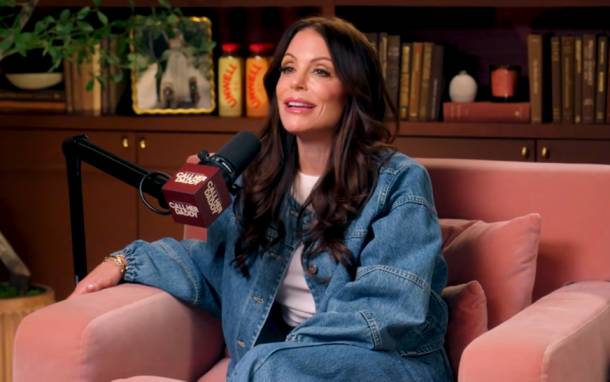
Here is the full transcript of American entrepreneur and TV personality Bethenny Frankel’s interview on Call Her Daddy Podcast with host Alex Cooper, December 3, 2025.
Alex Cooper welcomes Bethenny Frankel for a raw, funny, and unfiltered conversation about hustling her way from reality TV villain to business mogul and media powerhouse. Bethenny opens up about growing up amid chaos, addiction, and generational trauma, and how that past shaped her drive, boundaries, and no‑nonsense attitude online. She reflects on Housewives fame, being a polarizing public figure, and why she treats social media like a “TV business” instead of real life. The two also dive into healing toxic relationships, parenting differently than you were raised, and Bethenny’s new approach to dating and building intentional connections.
The Interview Begins
ALEX COOPER: Bethenny Frankel, welcome to Call Her Daddy.
BETHENNY FRANKEL: Thank you.
ALEX COOPER: You look stunning. Had we picked the outfit?
BETHENNY FRANKEL: Thank you. I don’t. It just arrived at some point in the last six months and I just park it and my outfits are like Toy Story, like they’re just waiting to be played with. And so I just—this is the one I picked out today. I thought it was very you.
ALEX COOPER: It’s perfect. Wait, what are you doing in LA?
BETHENNY FRANKEL: What was I doing yesterday? Oh, I was doing a commercial for Synergy Kombucha with Flava Flav yesterday.
ALEX COOPER: Oh, how’s Flava Flav doing?
BETHENNY FRANKEL: He’s the best. He’s great. He’s really fun. I met him on my podcast before, and he’s really cool and really fun. So we had a great time, spent the day with him.
ALEX COOPER: Fun.
BETHENNY FRANKEL: Yeah.
Living in LA vs. New York
ALEX COOPER: Okay, wait, do you like LA?
BETHENNY FRANKEL: I lived here for 10 years minimum, and as a kid as well, and I do like LA. I mean, I don’t like it now as much, but I appreciate it and I’m enjoying it. It’s like, it definitely feels very viral, like all the cutesy places and the cookies and the things, and there’s 75 matcha places and boba and acai and playa and like. So I like that you come here to be, you know, to overpay for coffee and I’m into it 100%.
ALEX COOPER: No, I like it, weirdly more now living here than I thought that I would. But I think it’s similar to New York, where I think you have a better time living in New York than visiting New York, because you don’t know where to go when you’re in New York. And so you just go to all the viral places, but you’re not going to the dive bars in West Village and knowing the little pockets, which I’ve learned about in LA now.
BETHENNY FRANKEL: Well, that’s funny. Okay, so when I lived in LA, I loved it. Coming back to visit, it can be strange to your point, because you’re coming instead of just being in a hotel and it’s so big that you don’t know where you’re supposed to be. You have some FOMO in a way.
ALEX COOPER: So you’re like on the Sunset Strip and you’re like, wait, why am I here?
BETHENNY FRANKEL: Yes.
The Florida Life
ALEX COOPER: Okay, wait, you have a house in the Hamptons?
BETHENNY FRANKEL: I have a house in the Hamptons.
ALEX COOPER: You moved to Miami?
BETHENNY FRANKEL: I have a place in Manhattan and the Hamptons. I have a place in Miami and then further north in Florida.
ALEX COOPER: Do you like living in Florida?
BETHENNY FRANKEL: I love living in Florida.
ALEX COOPER: Really?
BETHENNY FRANKEL: Yeah.
ALEX COOPER: Tell me everything.
BETHENNY FRANKEL: So I’m a beach person. I’m a water sign, and I’m a water person. And walking is the only thing I do for exercise and the beach. To walk on the beach every day. It’s one of the only times—yoga, which I don’t do that often, but when I do yoga at the end, I say thank you. Like, I actually say thank you. Just every time. I can’t help myself. When it’s done, I thank myself. And I’m not like faux spiritual like that. I just actually—it comes to me.
So every time I do a beach walk, I say, I am so grateful. I can’t believe I get to do this. I can’t believe I’m swimming in the ocean every day. It feels like a dream.
ALEX COOPER: You are.
BETHENNY FRANKEL: Every day I’m in the—so it’s healing, and I just feel like I feel so lucky.
ALEX COOPER: Well, because I feel like I was going to ask you. Miami just gives such party, nightlife energy. Are you partaking?
BETHENNY FRANKEL: Not really. I only go if it’s paid or laid. Do you know what I mean? Like, if I’m—if it’s an event and it’s a moment or if it’s like a date. But I’m not just randomly on a Tuesday getting dressed up like a hoe to go out to dinner.
ALEX COOPER: Are you going to 11?
BETHENNY FRANKEL: I’ve been to 11 once after the Sports Illustrated show. That’s it.
ALEX COOPER: Okay.
BETHENNY FRANKEL: Yeah. That’s not really—no. I don’t want to be out all night. I’m work and I’m with my daughter. For the most part. It’s work and my daughter.
Strip Clubs and Steak
ALEX COOPER: Do you have—have you enjoyed strip clubs before or?
BETHENNY FRANKEL: No, I—in New York, I’ve enjoyed strip clubs. And a good strip club is amazing. And shockingly, strip clubs have good steak.
ALEX COOPER: What?
BETHENNY FRANKEL: Well, like there was a place in New York, I think it was called Penthouse VIP and they had an excellent steak. And it would make sense because the clientele for an upscale strip joint would be—would want a big—
ALEX COOPER: Oh, that’s a good point. I’ve never thought to order food while I’m at a strip club. That’s a good point. I’m going to try that next time.
BETHENNY FRANKEL: I mean, goals.
ALEX COOPER: I’m going to—a big porterhouse. Be like, let’s go with a great a in my face.
BETHENNY FRANKEL: F*ing lovely.
The Hamptons Vibe Shift
ALEX COOPER: Sorry. Love this for us. Hamptons. You recently said that you kind of were not feeling the vibes. The Hamptons are like weird vibes now. Like, what has changed?
BETHENNY FRANKEL: Well, I mean, it’s sort of the way that LA has changed. The vibes are off because of the entertainment industry. And so LA—I mean, the Hamptons. I love the Hamptons. And I used to go year round and it’s an amazing place that’s very misunderstood because, you know, if you don’t live there, you don’t understand it and you try to visit and dip into like the nightlife. And it’s wrong. You have to live there to understand it.
So just from observing it, it’s the traffic for everyone. I don’t experience it that much because, like I said, I’m there year round and during the week. But I’m observing the fact that people are just saying they don’t want to leave their house because all the influencers—you’re welcome. I mean, guilty—have ruined it for many people. But it’s fine. Real estate’s up more than—the Hamptons are always going to be great.
ALEX COOPER: We met in the Hamptons. That’s how we met.
BETHENNY FRANKEL: What are you talking about?
ALEX COOPER: My 30th birthday.
BETHENNY FRANKEL: Oh, that was the first time we met.
ALEX COOPER: You’re thinking I’m going all the way back. Like, I’m about to trick you. Like, one day I was at a coffee shop. You were a c*.
BETHENNY FRANKEL: And you’re like, yes, I came to your party intentionally, like to see why. This is exciting.
First Impressions
ALEX COOPER: It was so lovely. I remember you showing up and it was such a crazy configuration of where the VIP section was. So like all the VIPs kind of had to go through the entire section of all of these fans, which was so fun to just see people like uproar whenever someone showed up. And I just hear people screaming your name. We had never met before you showed up. What was your first impression of me?
BETHENNY FRANKEL: My first impression? I think you had—did you have a bandana on your head backwards or whatever? She had a bandana on your head. And you seemed so genuinely happy to engage with everyone. Like, you were very positive. You were giving them a positive experience, which I really appreciated. It was hot and everyone wanted to talk to you.
And I later—what’s the show that you’re obsessed with, the show with all the—Love Island? I didn’t know. I’ve never seen the show, but my daughter, in a video of me, saw the two—the Rob and the girl. And so she was freaking out. And a lot of people I knew there, a lot of the gays I know from the Hamptons were there. So I actually had a great time. And it was like a drive by, but it was really satisfying.
ALEX COOPER: It was fun. I felt the same way about you where you have this aura and this energy that when you walk into a room, it’s—it was so cool to see you basically kind of show up alone and you were able to immediately mingle, hang out with everyone, talk with everyone. And I was like, oh, that’s my kind of person. Where like you can fit in any room and people are going to gravitate towards you, which I love. What would it take for someone to have you have a bad first impression of them?
BETHENNY FRANKEL: An energy, a negative, better than a put upon.
ALEX COOPER: Yeah.
BETHENNY FRANKEL: You know, but by the way, that can happen if someone’s distracted. And people do, as a public person, people do read into the first moment, which is why you do have to make an extra effort because just a nuance, just something just happened to you before can make you distracted or—you know, I’ve had people come up to me to take a picture in a bathroom and it’s been a little jarring and I’ve been like, can we just have a minute?
And then they might—then I don’t see them and I’m running through the airport to like, can you? Because I feel like I have to fix it, right?
ALEX COOPER: Because they’re like, Bethenny Frankel’s a f*ing ahole. And you’re like, babe, I was just finishing putting the tampon up my vagina. But I was quickly just trying to—
BETHENNY FRANKEL: That horse has left the bag. No. But also just for me, it’s their moment. And like, I don’t, you know, and it’s funny because I’ve seen videos on social media about people talking about influencers at like influencer trips or influencer this. And I have—I won’t spill the tea on exactly who because I just—there’s no upside for that.
But like, I have seen some of these younger girls act like that and I can’t imagine why they would. Like, you know, you’re out. They can’t help themselves. I can see the—listen, I’m so much older than these young girls, but I see between them, the competition is fierce. I was just at this Amazon party and there were literally hundreds of influencers. And I saw it’s dark, full frontal c*iness.
ALEX COOPER: Like it’s really crazy.
BETHENNY FRANKEL: Full frontal c*iness.
Influencer Culture and Competition
ALEX COOPER: No, no, actually, because it’s crazy to see. I agree with you. I’ve met some people where I’m like, whoa. Like, okay. And then you wonder how long they’re going to make it in the industry, because then you go to their page and they’re so different online. And when you meet them, you’re like, oh, s*.
BETHENNY FRANKEL: And I’ve seen them really turn it on for like the brands, but be really bitchy to the other people. And I’ve seen it. I’ve seen it.
ALEX COOPER: And it’s also like, I guess this is life. This goes past our industry. There are people at work that like suck up to the boss, and then they’re a f*ing dick in the room that everyone’s hanging out in. And you’re just like, you got to suss people out. And it’s interesting, but when you’re seeing—
BETHENNY FRANKEL: Millions of people think it’s one thing and you know it’s another, it’s very triggering.
ALEX COOPER: Yeah, I agree with you.
BETHENNY FRANKEL: Yeah.
Being Polarizing
ALEX COOPER: Okay. You recently went on a podcast, and I feel like the Internet had basically something to say for every single thing that you said.
BETHENNY FRANKEL: It was a lot.
ALEX COOPER: What—why do you think you got so much backlash? Commentary?
BETHENNY FRANKEL: Well, it’s—why there’s almost no upside for me to do podcasts. But then everyone say, you know, and you do them and you know every sentence. Because the person who has the podcast, yourself included, is going to want to feed out the comments that are going to get them—we’re not—you’re here for a business, so. So I’m polarizing. It’s what it is.
No, and actually, I think it’s great. If they stop talking, start worrying. And also, like, I can’t believe that at this age, at this stage, things I say are still so relevant and so they generate views. So good. It’s business. It’s business.
ALEX COOPER: I was going to ask you in, aside from that podcast, like, do you in general read into the comments or do you not care as much?
Social Media Perception vs. Reality
BETHENNY FRANKEL: No, I mean, it depends on what side of social media I’m on. I don’t have a Google alert on myself, so I’ll just see it from flipping, from going through TikTok, and then I’ll see something and people will go, but, yeah, and it’s different comments that get picked up. But I don’t care. I don’t really care at all. Unless I think I did something wrong.
You know, if I think I did something wrong or if I could have hurt someone, then I care because I don’t want to drag them into something I’ve said. But not everything needs to be said, you know, not everything needs to be said, but I don’t really ultimately care.
ALEX COOPER: I don’t think you can, to some degree, if you want to last in this industry, because I think I remember, like, years ago, I would talk about it with my therapist, and she helped me literally be like, that is like your Sims character online. And like, when people are talking about her and hating on her, if, you know you didn’t actually do anything wrong and it’s misconceptions, okay?
So then your character is like, over here for the day. And then as you continue, it’s going to be like this for the day. Like, I know who I am. And then there’s also the perception online that can happen. And if it gets spun in a way that you didn’t have control over, then what are you going to do? They’re talking about you.
BETHENNY FRANKEL: It’s not real, though. You live. You have a primary residence inside TikTok, as do I. And you have a secondary residence and Instagram. Okay. And you have tertiary residences other places, but this is your primary residence, right?
So you think that everybody else lives in that town and they don’t, so it’s not really real. I’ve had actors, like, A-list actors, call me. I could think, name five. I’ll tell you after. You’ll freak. To be like, “Wait, how do you deal with something?” Like, deal with what? And someone’s like, “Well, this happened. And this was on this podcast. And then I got picked up on TikTok today,” and I go, “Okay, who cares?” And he’s like, this was a he. He’s like, “Well, should I say something?”
ALEX COOPER: I go, no.
BETHENNY FRANKEL: What, are you going to add a can of gas? No, this isn’t real. He’s like, “But it was in pa…” No, none of this is happening.
ALEX COOPER: If you turn your phone off and you go down the street, it doesn’t exist.
BETHENNY FRANKEL: It literally doesn’t matter. So he doesn’t have a residence here. So he doesn’t know. He thinks because he’s in here. I’m like, no, this isn’t happening on the other blocks.
ALEX COOPER: You can literally just shut it off and go to the party and no one will know. No one will even bring it up. Even if they know, they won’t bring it up.
BETHENNY FRANKEL: Even in business. I’ve been selling books, thinking I’m going to walk in there, and the agent’s like, “What are you talking about?” They don’t care about that.
ALEX COOPER: A hate view. A like view. It’s a view is a view. You can’t differentiate if it was someone hating or loving. It doesn’t f*ing matter. It’s a view is a view. A talk is a talk. Like people commenting on you. It’s like, it’s all good for business because we’re both business women and that’s all we care about. As long as you know yourself.
BETHENNY FRANKEL: 100%. The more hate posts that are going on about you, the more views you’re getting. I mean, even in like 100%. Yeah. So it’s the upside down.
ALEX COOPER: I wanted to talk a little bit more about your childhood because I was thinking about it and this is you. I think I have so much respect for you where you’ve had so many different lives in the public, right?
And so there are people that are watching today that may be like, “Okay, I’m Millennial girly. I loved her on Housewives. I love her so much.” And then there are girls that are like, “I’m Gen Z. I literally know her from her f*ing supermodel. What do you mean? Like, she was a housewife. Like, what do you mean?” So I want to go back a little bit. Where were you born and raised?
Growing Up in Chaos
BETHENNY FRANKEL: I went to 13 different schools, but I was born in Queens and then was in Long Island and did live in California as a child. Florida for boarding school for two years. I’ve lived many places. New York City? Yes.
ALEX COOPER: You were four years old when your parents got divorced. How was that explained to you?
BETHENNY FRANKEL: I don’t think that it was explained to me. It wasn’t explained to me. I was moving back and forth. As a matter of fact, my real father was a horse trainer, and there were a lot of, like, unsavory cocaine characters around and young women taking care of me. And my mother was with another horse trainer, my stepfather, in New York. And she asked my father for child support, but he said that he would only pay her if I was with him.
So I was, like, sort of like a pawn back and forth. And I remember being very, very sad and wanting to be with her. And then I entered into the crazy life of her and my stepfather, which was extremely crazy and extremely abusive and a lot of interesting.
ALEX COOPER: So with your father, talk to me about your relationship with him. Like, what did you think of him?
BETHENNY FRANKEL: Um, I think you just love your parents because they’re all that, you know, and you don’t know that you’re growing up at the racetrack and with all these unsavory characters. But I did know that I really. I did miss my. I did want to be with my mother.
Um, and he. I didn’t speak to him. I don’t think from the time that I was 4 to, like, 13, for the most part. He was a horse trainer. My stepfather was a horse trainer. A horse trainer. So, you know, like, derby, like, racehorses. So there was a lot of competition between them, and they, obviously, they’d run together as buddies. So she was with both of them.
And she was stunning. She actually looked just like Michelle Pfeiffer in Scarface at that time. And she did a lot of wear and tear on her body over the years and didn’t look like that in the end. But she was very, very charismatic and beautiful, and everyone wanted to be with her. So there was that between them. And it was, like, constant. I was like a pawn, and there was a lot of competition between them over the course of my life.
ALEX COOPER: 13 years old, you reconnect with your dad. You said, like, did you. Was there anything you admired about him or you saw in yourself, or was it very polarizing?
BETHENNY FRANKEL: To be honest, I knew that he was this Hall of Fame famous horse trainer, and he lived in California, and so there was something, like, rich and intriguing about him. Like, I would watch movies like Sixteen Candles or Pretty in Pink and want to be in this life and live with him. But he didn’t really want me per se, and I didn’t. I kind of. I didn’t want to be in either world. I sort of fantasized about the life with him that I didn’t have just because of movies, but it really wasn’t like that.
ALEX COOPER: So are you. You’re an only child?
BETHENNY FRANKEL: I’m an only child.
ALEX COOPER: Okay. So that’s like full pawn.
BETHENNY FRANKEL: They weren’t really fighting about me, only at certain big ticket item times. Like for you, like child support for over child support and over my real father seeing me in winner circle pictures of my stepfather. And it was. Yeah, I mean, I kind of really wished that my real father wanted me and he didn’t.
And then my stepfather told me that my mother never wanted me. And she had me on her 20th birthday, which is why usually my birthday is challenging. And this year it was a breakthrough, so. And it actually was related to her and like brought back a lot of that, so.
ALEX COOPER: Oh, Bethenny, it’s a lot. It’s a lot.
BETHENNY FRANKEL: I don’t think it’s a lot and then that you ask it like that and I think it’s a lot. So.
ALEX COOPER: Yeah, I mean, it’s a lot because I’m also hearing like your stepfather and your dad, like there’s like this like pissing competition between two men and you’re. Yes. Kind of this pawn that. It’s kind of like who.
BETHENNY FRANKEL: It wasn’t about me.
ALEX COOPER: Right. But it was about them. But then they used you to make it. And it seemed like to them they were like, “Oh, it’s about…” But it’s not about. Yeah, it was about them.
BETHENNY FRANKEL: Yes. And they were all very, very messed up characters. Like really, like equally messed up people.
Life with Mom and Stepfather
ALEX COOPER: When you had to go live with your mom and your stepfather, how was that?
BETHENNY FRANKEL: My mother was stunning. And her deadliest sin was vanity. I’m not. I’m not. I was talking to Chris Appleton today about this. I’m not a vain person. Meaning, like, now I’ve made. I make more of an effort and. But I’m not intrinsically a very vain person. I think that’s actually evident in a lot of my social. My content. Like, you see, I don’t care. Like, so I’m not intrinsically a vain person.
And my mother was vain to a fault. So she had a lifelong eating disorder and I caught her for the first time when I was seven years old. She was throwing up and she used to binge on everything and sauces and like torture waiters if it didn’t come out, like, raw and like, it was just like a constant, like, torment about her. And then she’d be in the bathroom for hours after every meal.
So my mother was a lifelong bulimic, alcoholic cigarette smoker, and she always wanted to be a model. And her sister was six feet tall and always wanted to be a jockey. And my mother was 5’4″, so she. And back then you couldn’t be 5’4″ and be a model. So she was very vain. And that was a big character in my childhood. And she married an Italian horse trainer who had a lot of mobile ties and would, like, tell us that we had to move from one house to another and that.
And there were like, they were. He had. There were guns in the house, in the car. And like, he was. She would go out to Studio 54 till all hours, and he. And then she would like, punch her fist through the window because he wouldn’t let her in. And the cop. I would have to call the cops. And he would physically abuse her with the phone.
And it was we. After she died, I gaslit myself, like, blaming myself for a lot of these. A lot of things. And I had to call friends from my childhood after the funeral to say, like, “What was it like?” And they were trying to be polite because you don’t speak ill of the dead. And they were like, “Well, she had a lot of interesting characters around.” And you’re. And I go, “No, I need you to tell me because I’m now gaslighting myself because I read a letter she. One letter she wrote that was nice to me, and now it’s all my fault.”
And my friend Matt from high school was like, “No, your house was criminally insane. Like, they were calling child services and there were cops there all the time. Like, that was not a house to be in.” So it was a chat. It was a very. There was a big transformation in me in the last year since my mother passed away. I, like, really went through something.
ALEX COOPER: I have a. Someone in my life that had that similar. When their mother died, it was this weird feeling of I’m weirdly.
Breaking the Cycle
ALEX COOPER: Relieved, and that’s the most f*ed up thing to say. But I’m having weird things of, like, was she as bad as I remembered or was it me? And, like, you go through this because you essentially have to dissociate when you’re in those environments at that young of an age and you’re just trying to survive.
And then as you come to more reality and slowly start to piece it together, you’re like, was this as bad as I remembered. And to believe that your parent could be as tough as it was, you naturally probably are going to defend your parents in your mind, because what else are you going to do?
BETHENNY FRANKEL: No, it’s more that you’re clinging to some version of purity in your childhood. But what actually happened was, in mourning my mother’s death, I was like a dog that just, like, was by myself in my bed. And it was wild that I just one day just started turning on all the music of my childhood.
Like, all the Karen Carpenter, all the, which is ironic because she died of an eating disorder, but all the 70s music, the James Taylor, the Carole King, and, like, I would walk every day and I would just cry all day, all night. And I was literally going through the movie of my childhood, like, digging through pictures, and I was going through things were coming up that I was just, like, living in it.
And I developed this sort of compassion for me as this little girl and felt so, like, sad for her. And then I also felt a compassion for my mother, who was 20 when she had me. And her father. Her father was very abusive, and her brother, at 11 years old, had to take a shotgun to his father, like, for, like, to stop beating on his wife. So it was generational trauma.
So I had so, and I called him. I was calling people to, like, get stories, and I want, I had to. Like, I didn’t have to. I just ended up forgiving her or just, like, letting it go because I had compassion for her.
ALEX COOPER: You know, I do think it’s very relatable that you’re sharing that. Like, there’s a weird thing that happens, too, where you’re finding the forgiveness, but it also doesn’t mean that everything that happened to you was okay. Right?
Yes, it’s generational trauma, but also, like, you as an active adult now, I’m assuming, are actively making sure that you’re giving your daughter a very different life than you had when you were in that household. So as much as it is generational trauma is someone eventually, hopefully, that stops the pattern which it appears that you’re doing.
But when you look back at that younger version of yourself, like, how do you think you would cope in those moments where you’re alone in this house and there’s abuse and there’s all. There’s guns and there’s all these things like, what, what did you do to survive?
Parenting Differently
BETHENNY FRANKEL: Okay, hold the coping thought, because I want to answer that, but you just said, like, basically break the chain. But what you said reminded me of the parenting of my daughter. It’s actually the pendulum swinging in a good way. But where it’s, I think of when Jennifer Aniston said that Brad Pitt was lacking a sensitivity chip.
With my daughter, I have to intervene in myself to validate and have compassion for things that she’s going through that are so superficial and teen because of how I grew up. Like, the life that she has and the private planes that we’ve been on and the experiences of L’Oréal Paris Fashion Week and sports.
So, like, it’s very hard when she’s really upset about something that is when something’s real, it’s real. But that’s like, so I have to, like, just turn it and be compassionate. Because inside I feel like, I mean, you don’t even know what it’s like. But that’s not, that’s not something to compare it to. That doesn’t invalidate what she’s going through as a normal teen who feels like her hair looks ugly or her skin or something. So, or so I have.
ALEX COOPER: I’m just saying it’s all relative to your circumstances. And so you’re comparing it to your childhood and Bryn’s like, what are you talking about?
BETHENNY FRANKEL: No, and I don’t say it to her. I mean, she knows. She’s aware of some of my things. I’m just saying it’s something that goes on inside. It’s drastically different. So you have to, like, and I do. She’ll cry over something that’s not that big of a deal, and I’ll make a big deal out of it, but.
ALEX COOPER: And you’re like, wait, this matters.
BETHENNY FRANKEL: Yes. Yes. And I’m a strict parent, so the coping as a child. I believe that that is why I’m the way that I am now. And so, like, resilient and pros play hurt and like a beast. And, you know, I work. I very few things flap. I’m unflappable in ways because I think I was just very, I was very analytical. I was always alone. I was with adults. Unsavory situations happening with adults. And I was always, the only friend I had was my mind to, like, analyze things like why they were happening. So I think it’s why I’m emotionally intelligent because I was always analytical.
Father Figures and Money
ALEX COOPER: How do you think that your relationship with these father figures in your life influenced you as a woman with men?
BETHENNY FRANKEL: Well, my mother would say, I married these men because of you, because I wanted to take you. I gave up my life for you. So she would say that. But she did instill in me, never, ever will never be with someone on the racetrack. But she said never be with someone for money like she really was. Or I just got that. I’m not sure if she ever said that, but I feel like the choices she was making were monetary.
And so that is probably very, that in addition to my real father being a very hall of fame race horse trainer, like a very successful person, I think I, it was just ingrained in me to, to get it for myself even when I was tempted to not get it for myself and wanted someone to take care of me. But the money noise was instilled real young.
Addiction and Food
ALEX COOPER: Having a parent who has addiction, having alcohol addiction and, you know, an eating disorder. How did that impact your relationship to food and alcohol? Alcohol?
BETHENNY FRANKEL: Not as much like I remember my mother with all her different cocktail phases and like feeling somewhat glamorized and me being given champagne at seven years old. But I don’t have an addictive personality except for to organization. Have an addictive personality. So because I’m, because of all the chaos in my life, I have to be in control.
So I have never really had a worry. I love a cocktail. But it’s ironic that I created a cocktail business and had an alcoholic mother. It’s ironic that it’s called Skinny Girl. It’s a brand called Skinny Girl that, and I had it. Yeah. But I’ve never had. I’ve had probably like in my 30s, always on a, always on, always on a diet. On a diet. You can’t have this. I wrote a book about this which released me. Unshackled me because I was always trying to control and constrict.
But because I also had a mother who took me to an obesity clinic when I was seven years old. You know what I mean? Because I weighed 81 pounds and should have weighed 78.
ALEX COOPER: So, pause. What?
BETHENNY FRANKEL: What? Yes. Was it St. Mary Mercy Hospital? How did she explain this to you?
ALEX COOPER: Why you were going to.
BETHENNY FRANKEL: She had a confusing, she would say to me, like, I want to come back as you. And there was a competition with me. And as you probably saw, there’s a lot of poetry, probably in that costume, the Scarface costume, I looked just like her, just with dark hair. I had the same features. And she was the most stunning woman ever. I can’t imagine why she was like, jealous of me or competitive.
But she used to tell me like, that foods that like fried tempura. She would say to me that it was really light and that because it was the Japanese fry it differently. So you can’t gain weight on it. So she would be like one direction of like wanting me to eat and then other directions of like having an eating disorder. So you were seeing like her trolley of laxatives and her like stopping the car on the highway to, you know, because she had had too much coffee. She would say it was just a lifelong, it was a, it was a, it’s a big character in my life. It was a massive thing.
ALEX COOPER: That’s huge too, because that is a. Yes.
BETHENNY FRANKEL: I was a cop. I was always trying to. I was always chasing her, trying to catch her. And she, I’ve never met another human being that never admitted it their whole life. I’ve never met someone that to the day they died, held onto it.
ALEX COOPER: But that’s a complete product of an eating disorder. A lot of people like to watch other people eat because it makes them feel whatever. It’s making them feel better, whatever. But then also looking at you as a mini version of herself than catching moments like you need to look this way. But then it also kind of gets her off when you’re looking a little bigger than her and it’s a competition.
BETHENNY FRANKEL: And then she get really triggered. When I looked small, she didn’t like when I lost weight.
ALEX COOPER: Right. So you go to an obesity, what, what do you, what do you remember about that?
BETHENNY FRANKEL: I just remember knowing every single diet and every single rip out and every single magazine and every single, you know, that used to be called the stewardesses diet and the Atkins diet and all the Scarsdale she had. All the, everything was, it was just, but she didn’t have to diet because she was just, I never, I could never, I could never throw up.
And I’ve never had an eating disorder. I’ve had, I mean, I’ve never made myself sick. I’ve never starved myself. But I’ve always been aware of it until my 30s when I wrote that book, because I realized you could really eat anything you want as long as it’s like you’re not binging. But she could eat every, she, I had a bad relationship with the food because I was always restricting. She was always eating cheeseburgers and all the things because she was throwing it up. So she, she was just like able to eat everything.
ALEX COOPER: Well, Ann, as a woman, like having the woman who’s raising you have such an innate just like issue with food and it being her whole personality, like, it’s like, how would it not affect you? But then to hear also that’s one part. Then it also being your mother and impacting the dynamic because in moments you can feel this manipulation. She’s wanting me to eat the tempura. It’s like your sense of reality, of, like, truth and what’s not truth with your mother must have been like, oh, my God.
BETHENNY FRANKEL: And then, but how about fast forward to now? Like, the reason I know so much about food is because that, it was an endless, and my, but both my father’s too. It was, it was like a, it was a character in my house. Also, like, food and the Häagen-Dazs ice cream and the bagels from drive 45 minutes to get the bagels in this place.
Food was a massive character my whole life because my mother was either frying chicken cutlets at 2 o’clock in the morning when you came home, or we were at a restaurant every single meal. So that’s why I have so much food. I know so much about every scintilla of food.
Cutting Off Contact
ALEX COOPER: I think something I remember reading about you is you did eventually cut your mother off, right?
BETHENNY FRANKEL: Yes, after my wedding. After my first wedding.
ALEX COOPER: Can you talk to me a little bit about how you knew it was time to make that decision?
From Childhood Trauma to Cutting Ties
BETHENNY FRANKEL: Well, it’s been very interesting to have people who are all about family and therapists advise me not to contact her. That was sort of validation because there are many people that I dated who are like, “but your family. But it’s your family.” And then when they really would either meet her or get under the hood or really understand the details, they would say, like, “I really think…” especially when my daughter was born, and I only reconnected with my mother because my daughter asked me so many times to meet her and I would not.
I never wanted her to pass away and then my daughter to have this vision. So she met her and she experienced a bit of what it was even, you know, my mother. My daughter was… How old was she? She had to be, like, between 8 and 11. And maybe it was, how old is she? Not for, like, let’s call it like 11 or 10.
And so my mother, she’d get on the phone with her. My mother would be nice to her and talk to her about art, because Bryn was into art. But then Bryn would be like, “how are you?” “I think I’m going to die.” Like, she would be like, “I think I’m going to die.” Or I’d be… And I’d say, “that’s not appropriate, I don’t think.” And she’d go, “oh, I can’t f*ing stand you.” Like, with my daughter on speaker, which… And then she’d be like… When I… We saw her in person one time she’d say, “no, I lost… I’ve gained like 15 pounds.” She was literally like 80 something.
I mean, we don’t talk about weight in our house. Like, it would have been… It would have been like a damn opening up if we had any relationship with her. Everything, everything she said was like a landmine for something I don’t want for my daughter. So it was hard to do that. But to cut her off, to answer your question, it was so… It was so vicious. Like, it was just… It was impossible not to cut her off. Like, she was really… She was scathing to like you. You think I’m abrupt and abrasive. Like, it was… It was… I’m a stuffed animal. Like, it was, it was… It was mean and scathing because in…
ALEX COOPER: In order to cut them off, it’s obviously the scariest. But then all of a sudden, I’m sure there’s like first a moment of like, “wait, should I have done that?” And because you’re still a kid to your parent, but then once you experience life without them for a second, it doesn’t mean it’s easy. But I… I have someone close to me in my life that was like, “but it has to be this way to protect my children, to protect my sanity.”
Doesn’t mean it’s easy, but it sometimes is exactly what needs to happen. And I agree. There’s a lot of therapists that are like, “family is family.” And then there’s other therapists who have had a narcissistic parent or abusive parent. They said, like, “the best thing you can do for yourself is to remove yourself.”
The Energy of Toxic Relationships
BETHENNY FRANKEL: It depends on… It’s 50 shades of gray. I don’t know. Everyone listening has their own story and their own version, but like, mine is like that movie the… With what’s… What’s that good looking guy, Jeremy Allen. What’s that show? He was in The Bear. Okay, so there’s a scene in that show in the kitchen with his… Which I’m going to… I’m literally just had a nervous laugh coming on with his mother at Thanksgiving when she like literally loses her mind and smashes that. Everyone was like, “that was your mother.”
Or Firefly Lane. My friends were like, “I think that was… Movie was about.” So it’s so extreme, it was almost impossible. But most importantly about what you said, it’s not really just an intellectual thing. It’s like bad energy with anyone with bad friends. Negativity, jealousy. It actually… It’s contagious. It’s physical. It seeps into your pores. It becomes part of you.
You will not succeed as much. You will not thrive as much. You don’t even realize it’s happening. It’s low grade. You’re absorbing it. So you need to stay away from people that are really negative and bad energy. And it doesn’t… I don’t care if they’re your family or your friends like, that you’ve had forever. If someone’s jealous of you, if one of the calls coming from within, inside the house, and you’re on a phone with your friend and you tell them something and they’re like… Like, “oh, that’s not… You really can’t…” You got… You can’t be friends with people like that.
ALEX COOPER: You can’t. And half the time, it’s usually so much harder with family because the boundaries are so crossed, because they are so comfortable with you in a way that maybe friends don’t think they can fully, fully cross the boundary. You’re living with these people. This… You’ve come out of this woman. You are this woman. You know what I mean?
So, like, the boundaries with family are so corrupt and can get so crossed that it’s so much harder. So to have the strength to actually end a relationship like that is beyond measure of strength. And I think I wanted to talk to you about this today because I’m like, I think there’s so much of you that’s online, of course, and you have this digital footprint that’s amazing. But there is this, like, hard exterior that has allowed you to survive your childhood, but then it’s made you really f*ing successful, right?
BETHENNY FRANKEL: Yes.
ALEX COOPER: And so, yes, it was a bad that you turned into good. Doesn’t mean it didn’t hurt. But I remember reading somewhere you talked about how, like, because of your childhood, you gained this, like, hustle mindset, essentially, right?
The Hustle Mindset
BETHENNY FRANKEL: Yes. But also, I think that I’ve connected to an audience because they know that that other part is underneath, because I don’t wear my story, but it comes out sometimes. And so they’re aware. If I was only hard, that’s too much, you know, and that’s not intentional. It’s just… I’m not only hard. I’m just… That’s the shell that is so easy to be there.
And, yes, that’s made me so resilient, you know, but we always go back to the dynamic of who we are with our parents. Someone could be a billionaire who invented the spaceship, and the minute they get back with their father or mother, they’ll, like, be back in that dynamic.
ALEX COOPER: You regress fully. Okay. We need to talk about… So you’re going through all this, but then you become… Yes, this hustler. Early days. Talk to me about how you would start to make money, Ms. Bethenny Frankel.
BETHENNY FRANKEL: Or what is like high school?
ALEX COOPER: Like, what were you up to?
BETHENNY FRANKEL: High school? I had big high school. I had parties at hotels. I would rent out hotel rooms and I would charge the entire grade and have like full blown party parties.
ALEX COOPER: And how did you even like think to do that?
BETHENNY FRANKEL: I don’t know. And, and, and, and I would also have house parties in Old Westbury in the house that Howard Stern actually moved into after us. And I would have the local volunteer cops in Old Westbury work to help clean up the next day. And I would charge everybody and you’re insane. I love it.
I worked at a bakery. I’ve had every… There’s not a job. I, I can’t think of a job I haven’t had. I was a hostess at La Scala. I was Jerry and Linda Bruckheimer’s assistant. I was Kathy Hilton’s assistant. I worked at Island Pictures for Chris Blackwell. I worked under Lorne Michaels, A Broadway video for this guy Barnaby. I worked everywhere.
ALEX COOPER: When you get in these rooms, how the f* did you do this?
BETHENNY FRANKEL: Totally accidental, totally connected.
ALEX COOPER: It’s just like each moment in time.
BETHENNY FRANKEL: Hostess at La Scala, met Kyle, started working for Kathy. Hostess at La Scala met a woman who was going away and worked for the Bruckheimers. I was a temp and then got, I mean, I was just always working. I’ve always…
Work Ethic and Opportunity
ALEX COOPER: Don’t you believe Bethenny? Like, I think even advice for young people listening, especially with careers. It’s like you would think, you know, being a hostess at La Scala, the fact that you spoke to Kyle and then had the wherewithal to like, it’s a personality thing where then you’re like, “no, I’ll follow up, I’ll get the phone number, I’ll do the thing.” Because a lot of people will be like, “oh, I don’t want to step…”
BETHENNY FRANKEL: I was a hot walker at the racetrack. I used to walk the horses when they come off the track to cool them off, I would give them the bathroom and then you have to cool them down. So I’ve had every job, but it’s more about work ethic and people now because of social media and they think like, everything’s just easy. Nothing’s easy. And to sustain is to work hard.
And I’ve always been a worker. And you don’t do any job if you won’t do it to the best of your ability. So being the best hostess, being the best person, printing copies at different studios for different shows, working as a PA On Saved by the Bell. No one in this entire industry will ever say that I didn’t work hard. I’ve always worked hard.
ALEX COOPER: But what did you actually want to do? Like, what was your dream?
The Acting Dream That Never Was
BETHENNY FRANKEL: I thought I wanted to be an actress because my mother, which was a defining, traumatic moment, told me when I was probably in high school, that she had been offered a Disney contract for me when I was little, but she turned it down. I don’t even know if that was true, but my whole life, it tortured me because I thought it would have been much easier.
And I used to beg her to take me into the city for auditions, and she wouldn’t. And I used to beg her to ask friends because she knew this one guy who used to produce commercials. I would beg her, and she was an actress in college, and she never helped me. And I wanted it so badly, and I probably wanted it just for, like, the fame, just for, like, the attention and the love.
I didn’t understand what acting was, and I don’t think I was good at it in the Lifetime movie, but I didn’t think I was very good at it because I wasn’t, I don’t think, good at playing someone else.
ALEX COOPER: You’re better at yourself, I think.
BETHENNY FRANKEL: I think I figured that out, but that didn’t exist as a genre.
ALEX COOPER: Isn’t that so crazy, though, that, like, with parents… The fact that there is a big chance that that is a complete lie, and she used that to make you feel small so that she can feel also better about, like, her acting, you know, like…
BETHENNY FRANKEL: Or it was true. And she didn’t ask me if I would want to do it.
ALEX COOPER: I was going to say, so there’s that or, and like… Both is pretty bad.
BETHENNY FRANKEL: It wasn’t great. I tortured myself over it for years because I thought I could have had a life, you know, it could have been on the Mickey Mouse…
ALEX COOPER: And then look what the f* you did, bitch. Like, here we go. So you get into your 30s and you taught… You’ve talked about how, you know, in your 30s, you were at a very different place than most of your friends, and you’re still hustling and you’re still trying to figure it out. Then you end up getting cast on Martha Stewart’s Apprentice Show. For anyone who is not familiar, first of all, you need to explain to them what that show was and how did you get this show?
The Apprentice Journey
Well, I was out with a group of people at a dinner, and they were talking about the Donald Trump Apprentice. Now, keep in mind, it wasn’t the Celebrity Apprentice, it was the regular person Apprentice. And I just overheard them saying, I didn’t watch a lot of TV, I don’t believe, and I didn’t know about the show.
And they were saying that people were competing and having, like, lemonade stands and, like, it almost felt like an adult scavenger hunt for a job. Now, I was broke. I was living in New York, and I believe then it was a studio apartment. And I said aloud something about, like, I’d be good on that.
And this one guy that I’ve mentioned in my books, I won’t say him again, he sort of taunted me and said, “You’ll never get on that show.” And I said, “You mark my words, I’ll get on that show.” But I was talking about the Trump Apprentice because Martha wasn’t on yet.
So I went and got this guy I was working with to buy. I said, buy the least expensive, smallest video camera you could find and film me selling my cookies at this trade show. So he sent it in, and there were thousands of people that sent it in. And I went not only to the callback, to the interview, to the callback, flown to LA to be sequestered for a week, went from 50 people down to 18.
And I was like an alternate, like 19, but they didn’t end up needing me. And so I didn’t get it. And I was begging and crying in my room every day. I was like, please. Like, I remember listening to Jessica Simpson and Britney Spears songs and, like, manifesting it. And you weren’t allowed to leave your room. You were sequestered. It was torture.
And I. It was at a Doubletree and they had those good cookies and. And I was, like, tortured. And then I didn’t get it. But this is about connecting and networking. Most people think it just dissolves. I. I kept in touch with the casting people. I kept texting them, I kept whatever.
And they, I guess because I was a natural food chef, had me in mind for the Martha one that Marc Burnett was going to do when she got out of jail. She launched a talk show and a reality show, the Apprentice, on the same literal day. And I was like, this makes sense.
ALEX COOPER: Holy.
BETHENNY FRANKEL: I mean, so I went back for the sequestering again, went through the whole thing for the whole week. And I handled it differently because I realized in that, in between those two moments, that the first time I was going for a job interview. And I wanted the job.
Like, I thought it was a job interview and to tell them how proficient I was and how smart I was. But I didn’t realize until the second time they really wanted someone who’s going to be good television in addition to having the accolades. But, like, I brought Bethany the second time.
ALEX COOPER: Was it natural for you, or were you watching eyes and being like, oh, I got to ramp it up. I got to pull it down? Were you producing yourself?
Learning Reality TV
BETHENNY FRANKEL: No, because I didn’t even know that was a pos. I didn’t understand. I’d never been on television. And the first minute of it, I stared into the camera, and they had to tell us not to stare into the camera. It was the greatest training for what later became to be what most people know as reality television.
Because this experience was all about the competition. They don’t care about funny Bethany. They don’t care about what’s going on in my personal life. It’s all about the competition. So anything I say is only interesting as it pertains to the other people.
And my friends at home were like, wait, they didn’t, like, show how funny you are. What the f*? You’re so funny. Why didn’t they show how funny you are? Like, it was really about the competition. So I was a good character, but I took it very seriously because I wanted to win.
Because I grew up at the racetrack coming in second, which I did. No one ever remembers who came in second, except for this one. Except for this one experience. So I went through the whole thing hardcore because I was broke and I wanted the job. And I was like, Martha, she democratized style, and I’m going to democratize health. I’m going to be a natural food chef. And I had the job in my mind.
So I was an animal going through that, like an animal. But I was trained. When I went on to Housewives later, I thought, like, you’re never supposed to talk to the producers. They don’t exist. I mean, Mark Burnett is a military operation. It’s another story. It’s like, you do not look at the. You don’t look at the producers. They don’t exist.
Those are. Those are cameras. They do not exist. Like, you’re really living this. And there fly, you’re there flies on the wall.
ALEX COOPER: And then you get to Housewives, and like, Bethany, can you fix your hair?
BETHENNY FRANKEL: People say that, and you’re having sleep. People are marrying producers. Literally. Kandi Burris married a producer. That’s not the same. But, however, Martha’s daughter slept with a producer, a camera guy. So that’s different.
The Martha Stewart Dynamic
ALEX COOPER: Okay, wait, Martha, you ended the show and you compared Martha, you said to an ex boyfriend who you hate but you’re still in love with. Where was this tension coming from? And, like, how did you actually feel about her?
BETHENNY FRANKEL: Oh, my God, I’m so glad that you’re okay. Okay, so during. During the whole show, this is all just how I perceive it to be. I was out on a reward with. I was out on a task or something. After we won and Martha came to the loft and visited. I had dated a guy.
Now I was broke going into it. I had, like, not a lot, like a couple thousand dollars to my bank account. But there was a guy that I had dated that had given me a Louis Vuitton suit. And I brought it, and Martha clocked it in the closet. And one of the contestants said to me, Martha goes, “Oh, let me guess. This is Bethany’s.”
So she had, like, a feeling about me because before I got on, Paul Allen, the founder of Microsoft, thought he was doing me a favor, but said to Martha that he knew me. And I was like, no, no, I don’t want her to think I’m coming. Like. Cause I always knew people. I always just had connections to people.
ALEX COOPER: I don’t want to give Nepo baby no.
BETHENNY FRANKEL: And I’m not. I wasn’t. I just. In Malibu, David Geffen had a dinner party, and Paul Allen was there.
ALEX COOPER: And I was like, I’m a networker, but I’m not.
BETHENNY FRANKEL: I was Jerry Bruckheimer’s assistant, so I had to take care of his house. And it was next to David Geffen’s house, and he asked me to come to a dinner party. And that’s how I met him, Paul Allen. And he tells Martha Stewart that. And I’m like, I don’t want to seem like no. So I was like, f*, yeah.
So anyway, that’s my perception. She would probably deny that. I’m saying that is my perception. And that is what I was told from someone in the loft, that she mentioned my suit. It was a nice, gorgeous suit. So I go through the competition, and when I don’t win, she says, “You’re pushy. Your show off. You feel the need to make physical impression, which is not entirely necessary here at Martha Stewart Living Omnimedia.”
So I was brokenhearted, and I went. This is like a book. I went as Elise Slain from the Housewives Beard to St. Barts with her on a trip that she invited me on, a trip that was all paid for in St. Barts. And I didn’t realize that it was with a guy that she was dating because he just was the three of us on the ship. I didn’t realize, like, because she was kind of cagey about it.
So we go with this guy, and they put me in this cottage above Latwani Hotel, and they’re like, I guess in a room, and I’m by myself, so I know people. So I go to New Year’s Eve party on Paul Allen’s boat, and I get off the tender, and I wear. I know she’s going to be there, and I don’t know why. I think he might have said it.
So I wear the sickest dress you’ve ever seen in your life. It’s a Dolce Gabbana dress. It is. I mean, listen, I was in my 30s. It is laces going down the side, a big opening gap down it. I get off the tender. I walk on the boat. The first person I see is Martha Stewart and Jon Bon Jovi.
So she’s facing him, and I walk on and I see her. I’m so nervous every time I’ve seen her. I have 10 stories like this with her over the course of time. I’ve seen her so many times, and I always, like. Not anymore, but, like, I always pay homage to her. She’s still going to be the queen, and she’s doing great now, and we’re good now, and it’s like a great All About Eve nemesis. Like, it’s amazing.
So I get on the boat and I walk up to her and she says, “John.” She calls him John. “This is Bethany.” Something like what she said. She said, “I didn’t,” because he knew about her show. “I didn’t choose her. She didn’t win.” So she’s mad at me.
And I said, “Martha, I’m not mad at you. You’re like an ex boyfriend that I hate, that I’m still in love with.” And that was all that I said. And it, you know, it landed, but it threw me off. And I got off the boat shortly thereafter and, you know, lived my life.
You have no idea how many things she said to me over the years. The most insane. I could write a book on the comets just. And give her the credit, the props. Like, it’s like, she would have been a great housewife because when I ran. And even though she’s not, like, over the top and doesn’t. When I ran into her at Nobu, she had a comment there, too, and I had a comment back, too.
She and I would have been good. She. She wanted to do a show with me years later. She wanted me to be. Yeah, there were. We have so many stories, Martha and I. And then I saw her at the Jingle Ball, and she. She was like, let’s take a picture. And, like, it was, like, all good. But I. I gave her the flowers. I always kissed the ring with her.
ALEX COOPER: Yeah, kissing the ring because, like, she’s. She’s always going to be an actor.
BETHENNY FRANKEL: I respect her. Gangster. And she gave me respect on. On. On a show. And she was asked, wait, you didn’t pick her? And she said, “I was wrong.” Like, for her to say I was. We’ve respected each other. It’s been. I like. I like it. The room stops for me if she’s somewhere and I’m there.
ALEX COOPER: If you had to choose, would you rather go back and do another season of Housewives or the Apprentice?
BETHENNY FRANKEL: Housewives. Because. Because there’s no upside to not winning the Apprentice.
ALEX COOPER: You’re so competitive. I love it.
BETHENNY FRANKEL: You know what I mean? There’s no upside.
ALEX COOPER: Who’s a better boss, Martha or Andy?
BETHENNY FRANKEL: Andy wasn’t my boss.
Entering the Housewives World
ALEX COOPER: So you start filming Housewives in your mind. Did you have any expectations of, like, what you wanted to get out of the experience at that point?
BETHENNY FRANKEL: I was a natural food chef who wanted to be on some. Some version of a cooking show. The head of the Food Network, tell me, told me, “Stop coming in here with all these different production companies. You’re never getting on TV.” And his name was Bob Tushman.
And he, literally, because he was annoyed that these different production companies, like, I think it was Gordon Ramsay’s or there was another Gordon. Gordon Elliott, maybe different guys. Bobby Flay’s company, Rock Shrimp. They would be interested in me and they would want to come in, but I got cock blocked from the guy running the place who later left.
And other people wanted to do shows with me, but I wanted to do a food show. After starting to film the Housewives, I didn’t have a contract yet, and I went in and met with people in Bravo, in LA, about a food show. And when New York got wind of that, they got real nervous, and they gave me a contract real fast.
They didn’t want me to take the food route. They wanted me to take this route, but I thought I had a boyfriend at the time, and he would say, just only be a natural food chef. Only show your cooking. We didn’t know what this was. This was a new animal. This wasn’t a proven concept.
So I thought I was going to be able to just walk in there and just like, only be cooking. And literally days into it, I said, there’s going to be an. If there’s an audience, they’ll be tuning in and investing. So I’m going to give them the real me. I’m going to give them all of me. I made that decision. I wanted to get out of it success and to have a business. I had no idea what, though. I wanted to be a chef.
The Birth of Reality TV Entrepreneurship
ALEX COOPER: This concept of reality television was such a new concept. So to actually think that you could become something from it, but also become a businesswoman and entrepreneur and create products and lines off of it was so new and not even a thing when you started. So it’s like—
BETHENNY FRANKEL: Like, oh, no, I started that.
ALEX COOPER: That’s what I’m getting to. It’s like it wasn’t a thing. So it’s like you’re kind of dipping your toes into something. There is no blueprint yet, which eventually you start and you create. But talk to me early days, you become a fan favorite, obviously. Why do you think you were a fan favorite?
BETHENNY FRANKEL: Okay, so it wasn’t a thing at all, what you’re saying. And I didn’t even understand what the show was. They had Orange County, but to Ramona’s credit in the comments, she got killed for when she said New York put it on the map. It was because they weren’t in a media city. They were in Orange County.
So, yes, the show was on and they were getting 800,000 viewers or whatever. And I remember seeing it peripherally. But New York, there was a New York magazine article, and it was a media city that we were in. And it enraged real socialites. For the media to be calling us socialites, for Jill Zarin to be showing invitations, it enraged.
And I know this because of the night I accidentally crashed the Met Gala after party, totally accidentally, was eating dinner in, like, not even nice clothes. And some of those real socialites were saying it was like driving them crazy because, like, this person’s not a socialite, they’re real socialites, and they would never do this show.
So the show, I got paid $7,250 in my contract for the whole season. That was my first contract. And for me, I turned it down for a month. And then I said, it’s not that easy to get on TV and if it fails, no one will know about it. And if it succeeds, then it’s something.
But we didn’t think it could succeed to this. We didn’t think it would be a cultural phenomenon. I said that to someone. I said, this feels like it could be. And they laughed at me. It was Billy Joel’s publicist. She was like, please, it’s not a cultural phenomenon.
It was a joke of a show that it was preposterous that we were being called socialites when we were train wrecks. I really was an iconic, amazing time. And we all were fresh, and it was the best time that reality TV has seen. Oh, it was.
Building a Business Empire
ALEX COOPER: Let’s talk about business, because I am, like, beyond impressed that you had the wherewithal. I don’t know if it was something in your gut. Someone gave you advice when you went to sign that Bravo contract and you decided to be like, actually, I will take way less so that I don’t have to give you anything that I create during the show. And all of your IP will be your IP and they don’t get a cut. How the f* did you swing that one, Bethenny?
BETHENNY FRANKEL: I don’t know because I’m not good to this day at contracts, but I am to this day good at concepts. I will sit and ruminate and think about something and what it means. And I don’t sleep a ton. So when I’m between sleep and wake, some other angle of something will come up.
And my whole career and for business people out there or future entrepreneurs, people only focus about the money. And I don’t only focus on the money. I focus on the other things that end up making you so much more money.
So if it’s that, it’s the bigger picture about freedom in the future and I had nothing. So there’s no reason for me to think of that. There’s no, I don’t know why it’s a gut instinct or for me to not play any games in a negotiation. At a certain point in Housewives because I know I’m going to get a spin off or for me to play nice with Housewives because I know that then they’re going to let me do the talk show or this other thing or to do the, to sell Skinny Girl prematurely in my mind because of the street cred that I’m going to have as a business person and not just be pigeonholed into a reality person.
Because being on the cover of Forbes magazine is more valuable to me than another $50 million.
ALEX COOPER: No, it’s fascinating because again, like, this was such early days that there was no concept of a personality being on a show. And I guess, yes, Martha Stewart and like the 1% had done it where they took themselves branded, got a product out of it.
But a lot of these people, even you look at the Disney kids or whoever, most of these people sign their life overs to Disney or whoever it be and to these IPs that they walk into and they walk away with nothing. Most of these people, there’s a character that they’re known for, they own nothing. They don’t have one f*ing thing that they can be like, I own that.
You were able to, yes, start Skinny Girl when it, you didn’t even have the idea when you started the show. You said the wherewithal that again, back to the beginning of this episode, you had this innate like, I’m always going to rely on myself. I’m always going to trust myself. You’re a fing hustler in high school. You’re throwing these fing parties and you’re making a profit.
Like you had business acumen, but it was like street style. Also business acumen, which actually, I believe, worked so well because you were beginning in an industry that had so much. As much as it probably looked like, there wasn’t flexibility, there was nothing rigid about it because no one knew the rules yet. So you kind of were able to be like, no, I’m not going to do it unless I get to do this.
BETHENNY FRANKEL: And who the f*—
ALEX COOPER: They’re like, sure.
BETHENNY FRANKEL: Well, no, that’s why I told you the story that we were filming already, and they, we didn’t have a contract. Right. We filmed a month without them giving us a contract until they heard that I went in to go talk to the other people.
ALEX COOPER: Even imagine that right now, it would never happen without a contract.
BETHENNY FRANKEL: That’s the same f*ing thing. No, when we started, it was favored nations, too. So two things. One, the Bethenny clause was a result of that, because after the Forbes cover, they let it go for a while. After the Forbes cover and the Hollywood Reporter article, the industry implemented the Bethenny clause, which meant that anybody on any reality show had to kick up to the top. So that was very instrumental. But to the point of what? Wait, you were just saying something that I thought of something.
ALEX COOPER: Just like, there was such flexibility in the industry because it wasn’t even, it wasn’t set.
Breaking Favored Nations
BETHENNY FRANKEL: Oh. So I was, so Jill Zarin said to me, when we were all favored nations, who decided that we’re all going to, it’s what happened on Friends. Everybody gets paid the same thing on Friends. Okay. And the show, to be fair, if we all had the same thing for years, I guess we all would have stayed on. It would have been one cast, just like Friends.
But I was like, I said to Jill, no, immediately, no, we’re not favored nations. So she pulled away from the blonde Ramona, and she pulled away from the other girls and said, I’m sticking with you. And I remember being in her Hamptons closet negotiating. She just left it to me. She was like, Bethenny, you, whatever you do, do it for me, too. I’m with her.
And it was scary. It got scary because people play. They play. They bluff, and they say, everyone else is doing this and you’re not going to be on the show. And I was like, stop.
ALEX COOPER: You don’t.
BETHENNY FRANKEL: We’re not. They’re not. They’re not. Take the train. Ain’t leaving without us, Jill. So I was the one who broke favored nations on the Housewives. I never told that anyone before because we got a different amount, and then everybody was on their own. And that’s how all the fee structure changed.
ALEX COOPER: Well, that’s really fascinating because should all the four women be paid the same amount? You can say yes, but then it’s like, like, but if you’re going in and you’re going to renegotiate, you’re not going to be like, I’m going to renegotiate for all of these three other women. I’m going to go for what I can get as a woman in this industry where I know this could be fleeting. I’ve got my chance. I’m going to go fing renegotiate. And if these other women are so pissed, they should go do the same fing thing.
BETHENNY FRANKEL: What is that? What do you mean? Should everybody negotiate the same. Is LeBron the same as the schmuck sitting on the bench? You talking about LeBron’s LeBron.
ALEX COOPER: But do you think people would argue? Well, you were all doing the same job.
BETHENNY FRANKEL: No, because not everybody does it well. Some people play it safe, some people fly under the radar, some people don’t get dirty. I could name five people that I’ve been like, hi, there’s a camera there. And if you think I want to get this f*ing muddled and shit for my, I mean, I’m doing it for the, for the better of the good. Yeah, yeah.
No, like, that’s why, like Ramona. Yeah, Ramona deserves her coins. She’s talking. Yeah. But there are others who would do one thing on camera and then another off camera.
ALEX COOPER: Can you name one person?
BETHENNY FRANKEL: I do not.
ALEX COOPER: You don’t want to get into it?
BETHENNY FRANKEL: No, I just don’t. I, like, it’s not worth.
ALEX COOPER: I had to ask.
BETHENNY FRANKEL: Fing I’d get. Isn’t worth the fing I’d get.
The Skinny Girl Strategy
ALEX COOPER: Okay, but, you know, I had to ask. Guys, don’t get mad at me. The other thing I think, because I want to talk about Skinny Girl is again, because the industry was so in the early stages, it was so green, you coming in and not having a product. Then you start talking about this product. And I’m going to use the product that I’m on to promote the product that I fully own and I’m now building.
BETHENNY FRANKEL: But what ended up later happening was they would put, they, there was such resentment because of other sponsors and also they wouldn’t include my product, but they would include a fake product that was a fake storyline of someone else.
So then you’re like, mine’s real. So that’s a reality show and this is what you really do for a living now. You really have a Skinny Girl brand. But they’re sort of cock blocking it because it’s become too real and too successful. But this monkey business stuff that you’re going to possibly kick up, that’s not even a real storyline. They can do the bullshit business. Cause it’s like a joke.
ALEX COOPER: Slowly, they’re going to start to get advertising dollars from a different alcohol company. They’re like, why are we going to promote Bethenny? But you’re like, but this is my whole f*ing storyline, motherfucker. So take it.
BETHENNY FRANKEL: And they’re getting the advertising dollars for liquor because of Skinny Girl. Because that, it’s like, it’s a circular reference, but yeah, don’t hit the player.
ALEX COOPER: Hate the game 100%. How did you come up with the name?
The Birth of the Skinny Girl Margarita
BETHENNY FRANKEL: I said to Luann, it’s a—she was making—”Darling, you’re drinking tequila.” And by the way, go look at the stats. Women weren’t drinking tequila then before the Skinny Girl Margarita. Because in college people would drink brown tequila, but women weren’t drinking tequila sodas.
So I had already come up with this recipe, not to be a drink just because it was what I wanted to drink, to not be drinking sugary margaritas. And I ordered it. And she was so appalled by the fact that I was drinking tequila in that scene, that she was like, “You’re drinking tequila.” So it was not something people drank. Women did not drink tequila on the rocks. And so she was aghast at that.
And then I told her, “It’s a Skinny Girls margarita.” I had come up with skinny girls. And later I didn’t want it to be skinny with a capital S and a G with a capital S. I wanted it to be just all lowercase flow together, no S at the end. And it would have been skinny Margarita, which I would have been a multi-billionaire by now.
But you can’t own the word skinny. So everywhere you go, you can order skinny Margarita. You’re welcome. But you can’t own the word skinny. Just like you can’t own the word bread. You can’t own the word skinny. So I had to pick a name for it, which is enraging, because every man that I’ve ever been with, my exes, all said, “Do you know what?”
ALEX COOPER: It’s like?
BETHENNY FRANKEL: “Every date I’ve ever been on, every woman orders a skinny margarita.”
ALEX COOPER: I’m in your dreams, motherf*er. I’m everywhere. You can never get rid of me.
BETHENNY FRANKEL: Yes. But for me, I cringe when people next to me—they don’t even know I invented—I’m at a bar and I’m like, ugh.
ALEX COOPER: Right, you needed to have more than just the one word.
BETHENNY FRANKEL: So now I can’t make it. It’s okay. We’ve done well. But it’s still—it’s hysterical now.
ALEX COOPER: How do you feel about the name?
BETHENNY FRANKEL: The name is great. I don’t have any—and nobody. Yeah, it’s almost like Banana Republic. You started out as a safari store.
ALEX COOPER: Isn’t it crazy? So we all forget that.
BETHENNY FRANKEL: Yeah, Apple is not a fruit. It’s okay.
Navigating the “Skinny” Controversy
ALEX COOPER: But you’re okay. Because I think now, obviously, I feel like in the climate of social media, everyone is a bit more sensitive to things. And I think a lot of conversations for women around weight and being to this or promoting skinny eating or this or that is problematic. Have you—
BETHENNY FRANKEL: I know. For some reason, because we were an established brand and you forget what it actually—the words you just are like, “It’s skinny girl.”
ALEX COOPER: It’s almost like if you launched this today, people would be like, “You’re f*ing done. Canceled, bitch.” But since it was already an established and it was a thing of the time.
BETHENNY FRANKEL: Yeah. And because it was in a category that is problematic for calories because a margarita was the highest calorie drink that would go up to 1,250 calories for a margarita. So it was not that I was saying skinny girl and everything. It was really the solution to that being fewer calories.
But it wasn’t that big of a thing. And I’m surprised. Some people would ask it, some reporters would ask it, but people never said it. Once in a while someone will say, “Well, isn’t that ironic? Because it’s that.” But then Sydney Sweeney in her jeans ad made it fine to be skinny again. So it’s okay.
Hate Following and Social Media Strategy
ALEX COOPER: Obviously I’m getting your opinions on all things business, but now I want to get your take on a few things that are more social media.
BETHENNY FRANKEL: Okay.
ALEX COOPER: Talk to me about your thoughts on the concept of hate following. What?
BETHENNY FRANKEL: Great question. I think I like hate follows to me when people are hate following me because I—it’s a great time to clap back and give a little nice slap. You know, I think I like that.
I don’t know if I hate follow anyone. I’ve never had a separate account. People say they’ll go have a secretive account. I’m not that person. I’m not a snooper in someone’s drawer. I just have things that are surprising to people.
So I don’t think that I hate follow many people or I do and then I stop some. Some people that I follow that—yeah. It’s not that I hate follow. It’s that I follow some people that I greatly dislike. But it doesn’t mean I don’t like their content.
ALEX COOPER: Yeah, yeah, yeah.
BETHENNY FRANKEL: You know what I’m saying? I might like something that they’re doing, but I might not like them. But—
ALEX COOPER: But I like that for you, where you’re like, but please bring all the hate follows to my account.
BETHENNY FRANKEL: Sure. The more—sure, win is a win.
What It Means to Be a Girl’s Girl
ALEX COOPER: Okay, next. What do you think it actually means to be a girl’s girl? And do you think we’ve lost the plot?
BETHENNY FRANKEL: Well, I think “you don’t support women” is an overused statement. It’s—and it’s faux. I don’t like faux female support. So, for example, these two influencers came to my birthday party. These amazing housewives came to my birthday party and one of them said, “She’s totally a girl’s girl.”
And I was like, “I’m not an every girl’s girl.” Because I don’t want her to fakely think that I’m just girling out in a sorority with everyone. You know, I’m not. I’m a certain girl and I’m my girl’s girl because I am a very, very protective and insular private person, ironically, that likes my crew. And I don’t let that many people in.
So what do I think it means to be a girl’s girl? I think it means to choose the people that you’re loyal to. And I think it means—I think it means when you’re unhappy, you’re probably not going to be as much of a girl’s girl because you’re unhappy. And so it’s hard to watch other people be happy.
And I think when you are happy, it’s going to be easier for you. And I think that it changes. And I think that to get older, you understand why people do and say the things they say and you have compassion. And it’s why I see the housewives and certain things differently from back then. And it’s why I do see why some of my success would be frustrating at times for other people in that environment because we all start off in the same place.
And so then it was just kill or be killed. But I like being away from that experience and getting older and having a daughter and just being happy, just finding a way to be happy. So I think ebbs and flows.
Anybody who pretends that at every moment of their life they’ve been a girl’s girl and that they’re not jealous or that people in an all female environment aren’t looking at what someone else has or does or who they’re with—it’s making the world go around. These people are talking about other people. It’s why there are gossip magazines. It’s human nature. So you got to just try to find the best version of yourself and try to be that love.
Social Media as the New Reality TV
ALEX COOPER: Okay. How do you feel about using TikTok to expose men who might be cheating?
BETHENNY FRANKEL: It’s like a reality show. When the guy didn’t sign up for this, I actually don’t—and you don’t know the story. You don’t know the story. There might be another side if a guy’s cheating, but maybe she was mean to him and her friends are going to say she was abusive to him verbally and she emasculated him.
I don’t know that I’m going to err on the side of the woman, but I think that social media is the modern reality show. And people say to me, “Why aren’t you going on TV?” I’m like, I’m asked to do TV all the time, but it’s a dinosaur. I am on TV. This is TV.
ALEX COOPER: This is TV.
BETHENNY FRANKEL: Yes. Yeah. So if this is TV and you’re not going to put somebody who didn’t sign the release and be on TV with you on the Housewives, which is—I look, I frown upon that. Then you shouldn’t be doing it on social media because it is TV.
ALEX COOPER: Yeah, that is interesting. No, no, no, it is. It’s interesting because social media has completely become television, 100%. So I agree. Maybe in the beginning of social media, people were looking at it more as a casual thing and now has become where people are creating businesses, people are putting shorts up. People are literally funding scripted television shows. And they’re not television as in going on syndicated TV. They’re going on YouTube as television shows.
BETHENNY FRANKEL: Well, it’s so—it’s like this is why it’s getting—
ALEX COOPER: Crazy out here, Bethenny.
BETHENNY FRANKEL: Yes, but this is what it was like when I was on reality TV, but even more so the Wild, Wild West. So if someone has to sign a release to be on reality television, but doesn’t on social media in the back of your video in a restaurant, why, when this is getting more views, way more eyeballs. It’s so crazy, right?
So if a guy’s cheating behind me, he can’t sue because he was just behind me. But why could you sue on a television show that didn’t—you didn’t sign a release.
ALEX COOPER: Everything is on the Internet. So then should the Internet now be held to the same standards as—
BETHENNY FRANKEL: Because the FCC has gotten involved? No. Because we want to get away with murder. Absolutely. I’m like, please don’t. Yes.
ALEX COOPER: But it’s fascinating.
BETHENNY FRANKEL: Yes.
The Best Friend Cheating Debate
ALEX COOPER: Interesting. There was a trend that was recently going on where I saw people saying, if your best friend cheats on the guy—
BETHENNY FRANKEL: If your best friend cheats on the guy.
ALEX COOPER: Yeah.
BETHENNY FRANKEL: Yes.
ALEX COOPER: Do you tell the guy?
BETHENNY FRANKEL: What are you—it’s your best friend. What are you talking—why is this a question?
ALEX COOPER: Okay, so this is talking about—this is—I thought this was obvious where you’re like, I don’t give a—what if she cheated on a man?
BETHENNY FRANKEL: You’re talking about, of course.
ALEX COOPER: I mean, baby, best friend.
BETHENNY FRANKEL: Yes.
ALEX COOPER: Your best friend.
BETHENNY FRANKEL: Your best friend has a body in a dumpster with duct tape on its mouth. You’re not calling the cops. What are you talking about?
ALEX COOPER: So that’s what I think. There was a huge uproar because people were like, “I don’t give a f*. Cheating is cheating and I don’t care. Then that’s not my best friend. If their morals are cheating.” I’m like, I don’t care.
BETHENNY FRANKEL: Who said that?
ALEX COOPER: Listen, if my friend cheats on a man, my first question is, “What did he do?” And then if she says, “Actually, nothing. I’m just not into him,” I’d be like, “Okay, well, let me know how you’re going to handle this.” But I’m not going to the f*ing man talking. I don’t know what you’re talking about. Telling you. This was a thing on social media, and I’m watching it.
BETHENNY FRANKEL: That’s because you thought it was real for the five minutes that it was happening. Nobody’s—
ALEX COOPER: Bethenny, I’m telling you that these people are like, “I would—” Again, it’s one thing if it’s acquaintance and it’s in a friend group where you’re like—but still, I’m always going with the woman over the man.
BETHENNY FRANKEL: Snitches get stitches, bitch. And by the way. Yes.
Dating and the Core Community
ALEX COOPER: Can you talk about your love life?
BETHENNY FRANKEL: What.
ALEX COOPER: What’s going on with you?
BETHENNY FRANKEL: What’s going on with me is this is for—this is for women who are at all ages dating, is that at each stage that I’ve been single and open for business, I’ve thought I had either aged or priced myself out of the market, because that’s what everyone tells women.
And it’s not true because I have a new dating concept that happens has exploded beyond—do you want to share? Yes. It’s called the Core Community. It’s a dating membership community and it’s based on intention and integrity. And you have to want a partner right now. And you can—there are rules and you can be kicked out.
But it is completely debunked that men only want younger women, that there are no good women and we have so many couples already. And it’s the most amazing thing I’ve ever done. I did it as a social experiment and it’s exploded.
ALEX COOPER: So are you launching an app?
Launching the Dating Platform
BETHENNY FRANKEL: And so I will launch the tech eventually. First, it won’t be for a while because I’m building on the culture first. Like, it’s almost like what Soho House was in the beginning, but much stricter and people are begging.
ALEX COOPER: Have you, are you working with tech? Have you gotten like—
BETHENNY FRANKEL: I had three tech billionaires want in. I’m not taking any money because it’s cash flow positive already. And I am, yes, I am going to build white label tech. Like, I’m taking white label tech to put it in. But it’ll be very simple and I’m going to try to—I could tell you some of it, but I’m going to try to keep a lot of the back of the house because I don’t want other people now to know exactly how we’re doing it.
ALEX COOPER: So when are you rolling it out?
BETHENNY FRANKEL: It’s happened already. But when am I announcing it? Probably in the next couple weeks. We will have a very, very basic, simple website so people can come in and apply. But the community, the membership will be smaller and it’ll be only in large markets for now.
The community will be larger and people will be able to get dating advice and inside info articles on what’s really going on. And also deals and deals on vacations and anything pertaining to anything related to dating. But get exclusive content and deals that you can’t get anywhere else.
But it’s the actual aligning and the connecting that is shocking me. And I’m learning so much. And so it’s actually helping my dating at the same time. And I’m dating and it’s going very well and it oddly opened up everything. Like, it’s been really amazing.
Dating with Intention
ALEX COOPER: And you’re dating kind of multiple people right now. Just kind of like—
BETHENNY FRANKEL: I have been dating and I haven’t fully committed to anyone. There are, there have been individuals that I’ve met that I definitely like a lot more than others. And now it’s getting a little more. It’s becoming a little more serious.
ALEX COOPER: Serious.
BETHENNY FRANKEL: But I was—it’s been—I’ve been so transparent that I’ll say to someone, “I’m not committing to anything.” I took nine months off. I was celibate for nine months, and I came into dating a full person.
Like, my mother had died. I took all this time off and I was just like, I’m now, like, I’ve done the work. I’m now ready and I know what I want. And I’m intentional. And I’m not settling. I’m not just, “Oh, sure, sure, I’ll go out with the guy from that geographically undesirable place,” or, “Oh, sure, that guy has three too many kids that I don’t want.”
I’m sticking to the diet of what I said. Like, and it’s been—it makes you focus. Because if you’re not focused on the right—if you break that, you could miss the right thing. You have to be super patient, and you can’t get full on a bunch of crap food that makes you feel sick. You’ve got to wait and eat the good thing. So does that make any sense?
ALEX COOPER: No, no. I love this advice so much because I agree with you. It’s almost like if you continue to entertain sh*t that in the back of your head you’re like, “I know this is not what I want, but like, I need someone right now.” You literally could be missing that.
You actually, instead, if you were single and you didn’t entertain that, you would have been going on a solo date or you’d be out with girlfriends and you would actually potentially met the love of your life. So stop going for the crap. I agree.
If You Don’t Know, It’s a No
ALEX COOPER: In an op-ed you wrote back in the day, you basically talk about how you initially wanted to call off your first wedding, right? And your friend kind of talked you out of it. But there was this gut feeling and I think for so many women listening to this podcast, I have so many young women who are probably at that point right now where they’re actually trying to decide, like, is this the one? Is this not? What do I do?
Like, can you talk to me a little bit more about what your gut was telling you and why you decided to go against your gut?
BETHENNY FRANKEL: First of all, if you’re trying to decide, then the answer is no. If you don’t know, yes, it’s no. And if you don’t love it, if you don’t love it, you don’t like it, no matter what it is. It could be a shoe, a meal. If you don’t love it, you don’t like it. And I did that more than once because I had no role models as a good relationship.
And my biggest problem has been allowing someone to love me and me convincing myself that that’s enough for the both of us. So I’m always chosen instead of now being intentional and choosing.
So my first husband, who was a great guy, I fell in love with him because of how much he loved me. And so I was trying to convince myself because I just wanted anything but my childhood. So I wanted to be loved properly and be with someone healthy who would be a good father. And I did it again for the same reasons.
And now I’m not. I’m going to not be with someone and commit to anyone until I choose. So right now, no one’s getting my commitment, even though people would like it. Because right now I’m saying I need to be 100% sure before I commit to someone I’m not. And now I don’t have the time to waste back then.
Listen, you’re in your 20s, your 30s. However, this is working for people in their 30s, too, because they might be intentional about getting married and having a kid. 40s is challenging because 40s is a different age. But like, there are a lot of people in here in 50s and a lot of people in their 30s. But you have to be intentional and know what you want.
ALEX COOPER: But do you think—which we don’t need to get into the whole thing, but I know with your ex, who you had your child with, that was a lot, and it was very—from what I read there, you were harassed and stalked during this divorce, and your accounts were hacked. Like, yes. Can you talk to me about what was the most painful but also, like, the hardest lesson you learned from that experience?
The Trauma of Divorce
BETHENNY FRANKEL: Okay, so first of all, there are just the rules and guidelines. Doesn’t matter who the moneyed person is. You must have a very, very clear and good prenup. You must invest in it. You must show it to five people with experience. If you can’t afford a good one and a good lawyer, then you can get the sh*t lawyer. But have five people who’ve been through a divorce look at it.
This is so critical. I cannot express it enough, because when you want to be out of something, you have no idea. Second of all, you have to go with your gut. And cracks become craters.
I was—you guys heard a little bit about my childhood. It is nothing, literally. I have seen my mother slit her wrists. I have lived a life, my whole life of chasing her into bathrooms, trying to catch her throwing up. I’ve been around guns, the mafia, the racetrack. I’ve been through everything. I’ve seen her beaten within an inch of her life with a phone. I have seen everything.
Nothing compares to what my divorce was for 10 years. Nothing. It is that. That is child’s play compared to the trauma of someone wanting to torture you and telling you that they’re going to do it. And you are the person who’s the more successful. So you look like the powerhouse tyrant. And it’s like optics look like this person’s just a victim and someone again with the pawn as a child.
Like, it is so important. It was so traumatic. It was 10 years of my life. I lost hair. I thought I would never survive it. I didn’t want to. I had to because of my daughter. I literally thought, “I’ll never be happy again. I will never have—I will never.”
And I treated it like a marathon. And I went one mile at a time and I checked every box. I mean, it was fraud. It was stealing. It was hacking. It was harassment. It was abuse. It was googling me 60 times a day. It was staying in bed and staring into my face. It was calling me every bad character in the books. “Ursula the witch and you’re ugly.”
It was torture. And I cannot—literally. The only thing that got me through was saying, “One day I’ll be able to help people.” It was millions of dollars. That’s not even important. It was millions. “One day I’ll be able to help people.”
Like it was—it was—you’ve—no. It was literally FaceTime to a toilet because I—so I couldn’t talk to my daughter. “I know, Bryn. I know you don’t want to go with your mama. I know. I know you want to be—” It was torment from one minute to the last minute of the tenth year.
I can—and I don’t even care if I get sued. I don’t care. Like, every woman needs to know. Do not f* around and find out. It was the worst thing I could ever wish upon a person.
ALEX COOPER: I am so sorry because I can—like, I can feel you in this room right now. Like, the weight even just talking about it. It will live in you forever.
BETHENNY FRANKEL: It was every single branch and every lawyer said they’ve never seen anything like it in their—like, it was insane going through this.
Protecting Her Daughter
ALEX COOPER: Obviously, the dissolution of that marriage obviously didn’t just affect you and your ex. Like, you have Bryn and you have this child that you share. Can you talk about how you navigated conversations with your daughter as you’re essentially navigating this nightmare and this monster? And how have you been able to help her kind of through that?
BETHENNY FRANKEL: I never talked bad in front of her. I mean, she energetically, I believe, felt it because it cracked open during the pandemic when she was 11. Kids. And that’s a lesson for people at home, too. Just because you’re not saying it in front of the child and it doesn’t mean they don’t feel. And it doesn’t mean. And for those of you who have young kids and you think that, let’s say you have young kids and you’re going through a divorce and you think, like, you can’t win or you can’t. You can’t compete. It’s a long road.
Your kids will become cognizant and they will understand. You don’t have to say it to them. You don’t have to prove it to them. You don’t have to. You should never, ever say a bad thing about the other parent, ever. Because it is the worst thing you could do to a child. It is the worst thing you could do. So I have navigated it by always telling her that she is loved, telling her and, you know, letting her know a lot about what my childhood was like.
Because everybody has something and everybody thinks things make you stronger. And, you know, therapy is a big thing in my house, and I’ve been on it. And she is a beautiful, happy human being. She really is.
ALEX COOPER: There’s a lot of women, understandably, who will, you know, fantasize about leaving one day or fantasize about, like, oh, I wish I could, but, like, we have kids together and all of this. And.
BETHENNY FRANKEL: And of course I’m like, you’re not promoting divorce. No, no, no, I know.
ALEX COOPER: And not only am I not promoting divorce, I also understand, like, everyone’s situation is different. I don’t know your financial situation. They’re everyone. You don’t know your safety or all of this. But if it was for a child that you’re staying, from what I’m hearing from you, which is like such a beautiful sentiment, is like, this child is eventually going to become an adult and they can feel things and so don’t actually just stay in something bad for the child because it actually will alleviate so much more if you’re able to get out of that toxic situation for them.
BETHENNY FRANKEL: Children want to see their parents happy to get together, apart. They. It’s very hard and people wait too long. And if there’s a. It’s again, back to the toxic energy, back to negativity, you know, it doesn’t mean you should pull the rip cord. And I also believe in working through and I believe in therapy and I believe in phases and I believe in the seven year itch, and I believe in ride or die and I believe in honoring a commitment.
And every time I hear someone say they’ve been together for 20, 30 years, I’m envious. I think it’s beautiful. I genuinely do. There are some circumstances that nothing ever did better than my divorce podcast. Nothing. It was out of control. Women are begging and they are just. They want help. They feel trapped, they feel suffocated. They can’t get out.
And you can get through. You, you just can’t play games. You can’t have sideshows. You can’t focus on the minutiae. You have to be very calm and cool and collected and get through. Like I said, it’s a marathon. You are one mile at a time.
ALEX COOPER: I mean, Bethenny, you saying 10 years.
BETHENNY FRANKEL: Like on a two year marriage, babe.
ALEX COOPER: If you can get through that, a lot of us can get through anything.
BETHENNY FRANKEL: Yes.
Would You Get Married Again?
ALEX COOPER: Would you be open to getting married again now?
BETHENNY FRANKEL: I say yes, which is a very evolved thing. Yeah. Yes, I do. I would get. I would get married again. I think there’s a difference. And I always want to believe in hope and, you know, believe in love. And also, like, there is a thing when I believe in the gender roles, because there is a thing when a woman is more successful and has more money than a man.
And it can create dynamics that you think in the beginning are okay and they might not be okay later. And I just really. Have your eyes open. Have your eyes open and go with your honest gut. Not what society tells you. And not feeling shame for wanting to get out of something either before it or during it.
Looking Forward
ALEX COOPER: It’s beautiful. Okay, last. What are you really looking forward to in 2026?
BETHENNY FRANKEL: In 2026, I’m looking. I don’t really. I’m a very. I’m in the moment, present person. I’m not thinking about 26. I’m thinking about today here with you. I’m not even thinking about the next thing I’m doing. I love it. I like to be in the moment and be present about where I am right now.
ALEX COOPER: I am so happy you came on my show because I think I was hoping we would do a little bit of everything. But I am always so fascinated by women and business women and founders and women who are making it in this industry, because there is no denying. And. And I’m not saying that our jobs are the hardest. I’m saying that, like, having public opinion and a lot of, like, commentary in your life, like, it can either make or break you.
And I think you’re someone who has been through the wringer, and you’ve gone over and over and over and over every single mountain and all the things, and you’re still here, and you’ve recreated yourself, and you’ve also stayed true to yourself. But she also has a sensitive side that I don’t get to see as often. So thank you for trusting me and sharing your story.
Mutual Respect
BETHENNY FRANKEL: Well, thank you. Can I say something to you?
ALEX COOPER: Sure.
BETHENNY FRANKEL: Okay, so a couple of things, and after, I’m going to spill some tea with you in the other room. But a couple of things. Number one, when a couple people that I told I was coming on or I might have done a video that I won’t post until it airs, I was like, she’s a boss b*h. And I’ve watched her work. Like, there’s an essence to you, and you’ve been busy both times. You’ve been at a party with a bunch of people, and then we were at your show and in Phoenix and then Vegas. Right.
And I didn’t get to talk to you that much. Not in a way that’s, like, I thought about it because you’re so busy, but I can see, like, the passion and the integrity and the work and the fact that you care about the details. And I really, like. I really get it. But additionally and importantly for sitting here, I’ve seen this with different people. I’ve seen. I remember going on with Gayle King and her knowing every chapter and having, like, bookmarks in my book when I went on for my book and being like, wait, she, like, read the damn book. How many books?
But here, today, the preparation that I can see that you did that this is, like, a real. This is, like, your major job. Like, this is like your. This is your primary residence. Like, it’s. I have said to. People have said they want to go deeper into my podcast and stuff. Like, I was like, that’s not my main. Like, I like it. It’s. I like it. But, like, I’m fine at it because I just sit down and just like, riff. And it’s like, a throwaway, right?
But, like, you deserve the success in this podcast because this is like hard work. You’re sitting here with, like thorough, copious notes and research and things you knew about me that no one’s ever asked. So, like, you deserve your flowers in this space because I very much respect hard work and preparation and like, you’re excellent. Like, I shouldn’t even be doing this. After this experience today, I may, like, give my podcast to someone as a charity. Like.
ALEX COOPER: Like.
BETHENNY FRANKEL: No, I’m being serious.
ALEX COOPER: I appreciate that. I really, really appreciate that.
BETHENNY FRANKEL: And mine’s Cheeto. Yours is like a love slow roast that’s been the oven all day. Mine is like a bag of pork rinds, takes five seconds. No nutritional value whatsoever.
ALEX COOPER: But both are so different and fun to consume. But I really appreciate that and I appreciate you. It was so fun to interview you.
BETHENNY FRANKEL: Thank you.
ALEX COOPER: Bethenny Frankel, thank you for coming on Call Her Daddy.
BETHENNY FRANKEL: Thank you.
Related Posts
- Call Her Daddy: w/ Jackson White on Toxicity and Tell Me Lies (Transcript)
- This Past Weekend #640: w/ Chris Hemsworth (Transcript)
- Elizabeth Banks’ Interview on Call Her Daddy Podcast (Transcript)
- This Past Weekend: #638 w/ Actor Kevin James (Transcript)
- Louie Spence On Addiction Inside His Family@ We Need To Talk (Transcript)