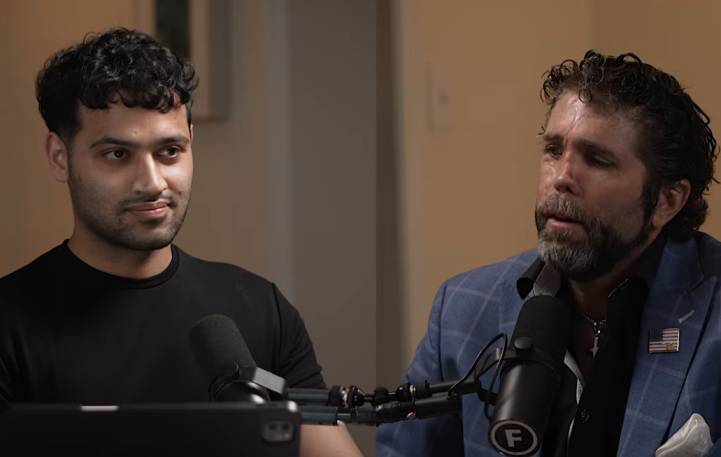
Read the full transcript of retired US Navy SEAL Lieutenant Jason Redman’s interview on Figuring Out With Raj Shamani, May 28, 2026.
Editor’s Note: In this intense and gripping episode of FO515 Raj Shamani, host Raj Shamani sits down with retired US Navy SEAL Lieutenant Jason Redman to dive deep into the harrowing realities of modern warfare and elite military training. Redman opens up about surviving a brutal al-Qaeda ambush where he was shot eight times, sharing invaluable insights on developing an elite mindset, enduring severe adversity, and finding the resilience to keep pushing forward. The conversation also takes a hard look at the complexities of global conflict, breaking down the strategic failures in Afghanistan and the ongoing tensions involving Iran.
Introduction
RAJ SHAMANI: First of all, I’m really grateful that you took out time to actually do this conversation. It’s an honor to be sitting right next to you, especially because of the kind of strength and inspiration that you have shown to people just by being an example. I think people like me and millions like me can use just bits of your world and your mindset into our world and make our lives better. So thank you for doing that. And thank you for coming here.
JASON REDMAN: Yeah, my honor. Thank you.
RAJ SHAMANI: Okay. So first, tell me, if somebody’s watching you for the first time, and for that 1% people who have no clue who you are, what you do, where you come from, how would you introduce yourself to them?
Jason Redman’s Background
JASON REDMAN: I would say that I am an average everyday human, no different than many of them. I wasn’t born into money or anything like that, but I did come from a family who believed in our country and patriotism and service. Everybody in my family had served, so I grew up with a love of our country and a love of our military and an appreciation for what I like to call the protector community — law enforcement, our police, fire, military. And as a young boy, that’s what I really aspired to do.
I learned about my grandfather, who was a decorated pilot in World War II. So originally I wanted to be a pilot. I think like many of us, pop culture sometimes drives the things we do. The movie Top Gun — I was 11 when Top Gun came out, and my grandfather was a pilot, so I was like, I want to be a pilot. But later I learned about special operations, special forces, warriors, and that really intrigued me.
I’m not the — I don’t think I’m the average person. In movies, most special operations people, or ideas they have, are like these great big muscle-bound rocks. And I’m not that big a guy. And I don’t think anybody in my high school when I was younger, if they had said, “Hey, he’s going to go become a Navy SEAL,” they would have laughed. But that’s what I wanted to do. And I set my sights on it and went after that. So that’s why I say I’m really no different than anyone that’s out there. I’m a young man or a human that had a dream, and I set my sights on that dream and I went after that dream.
And don’t get me wrong, it was hard. SEAL training is brutally hard, but I focused on that dream and I went after it. And so I would say, young man, dreamer, warrior, leader, failure. And I think that’s an important thing because all of us will fail in this life. So often when you read resumes of people or you read their background, very rarely do people hand you, “Hey, these are my successes, but here’s all my failures too.” For the most part, as humans, we only focus on our successes, but we learn the most out of our failures. And our failures really, they either destroy us or they define us, and we grow from that.
And my failures helped me to grow, to become the better version of myself. That’s why my book, The Trident, is called The Forging and Reforging. It was the reforging after I messed up and I broke and I made mistakes that I had to grow up. And I think all humans go through this journey, some on a larger scale than others.
So, a failure and then grew into a leader, became respected, saw combat and encountered more adversity and learned a lot about that. I saw combat in Iraq and Afghanistan, so I got to see the world. I got to see poverty. I got to see extreme violence. So anyways, warrior, leader, failure, redeemed. Father, husband, and entrepreneur now, author, entrepreneur. So there you go. That’s me in a nutshell. Let’s break it down.
Why Join the Navy SEALs?
RAJ SHAMANI: Let’s break every part of it. So, first you said Navy SEAL. Tell me in simple words, what motivates you to join Navy SEAL? You could be anything in the world. You could be an entrepreneur, you could be working somewhere. America has a typical American dream which is being sold to everybody, and you have a real shot and opportunity to actually go make a difference. Plus, your country is not at the border wars with anyone, right?
So it’s not even like — in countries like, let’s say, India, it’s very natural if you’re born around the border because you’ve seen so much atrocities around you that you want to serve and protect your country and you want to go join the army and want to do it. In America, it doesn’t happen like that. So you could be anything in the world and you have a fair shot and opportunity to become someone, probably a millionaire, multimillionaire, I don’t know what. Why do you join Navy SEAL, Army? Well, no different.
JASON REDMAN: I mean, you said it.
Now, depending on how you were raised, some families — and I think in the last probably 30, 40 years, that’s not as popular. And that’s sad to me because I believe that that foundation of this idea of fighting for your freedom is a very powerful thing. And this idea of freedom is born out of a willingness to fight. So if you were raised that way, which I was — I was born in 1975. So that was only 30 years after World War II. That was very fresh in the minds of my parents and my grandparents. Both my grandfathers fought in World War II. So as a young man, I was raised on these stories.
RAJ SHAMANI: But then when you went to the Army, you opted to become Navy SEAL. That training is hard. It just can’t be done because you aspire to be in the Army and you watch G.I. Joe and you wanted to actually be in there, right?
JASON REDMAN: That must be brutal. It is. Yeah. I mean, it is considered the hardest training in the entire United States military. We have an 80% attrition rate, so only 2 out of 10 people that start training graduate.
SEAL Training: The Three Phases
RAJ SHAMANI: So tell me about the training routine, entire routine, like from day one — how many phases is the training? What goes on? What’s the hardest part?
JASON REDMAN: Yeah, the training is 7 months for just the first part, just to qualify. And it’s broken into 3 phases. The first phase is really just designed to break you mentally. There’s lots of physical evolutions, and most of the time you’re wet and coated in sand for everything you do. So you’re constantly chafing sores on your body, and you’re freezing cold all the time because the water in California where training occurs is very cold. And you’re constantly in that water until you’re shaking. And then you’ll go do different evolutions, and then they put you back in the water, and it’s just a constant cycle of that. So it breaks you down mentally.
But at the same time, you still have to perform. So they teach you that even though you’re uncomfortable, even though you’re in pain, you still have to focus and accomplish the task at hand. And so you learn a lot about yourself.
So for me, why did I want to do that? I was told it was the toughest training in the military, and there was something inside me that said, “That’s what I want to do. I want to accomplish that.”
And I think I was fortunate enough to have — I think there’s a genetic side of that. I think somewhere in my DNA — I think there’s two things that make Special Operations people, whether they’re SEALs or Army Rangers or Green Berets. You guys have the Marcos Paracé? Yes, absolutely. So it would be the same for them. It is the ability to endure pain and discomfort for long periods of time, more than the average person. And it’s the ability to process information very quickly in chaos. Meaning if you’re in a gunfight or things are happening, you are able to ignore the fact that, “Wow, I could literally die any moment,” and you’re still able to process information and execute.
And some people can’t do that. Some people just shut down in the middle of chaos and they’re not able to task organize and compartmentalize their mind. And I think those two things are what make special operations forces, because we’ll actually have individuals who are physically strong enough to make it through SEAL training, but then when they get to the next phase where now we’re starting to do more high-speed shooting and complicated things, they end up leaving because they can’t process information in chaos.
Hell Week
So going back, the first phase of training culminates with a pretty legendary week of training called Hell Week. And Hell Week is notorious. It’s considered probably the hardest week of training in the US military. You’re basically not allowed to sleep for a week. You’re constantly moving. In regular SEAL training, you’re wet and sandy like 60% of the time. In Hell Week, you’re wet and sandy 95% of the time. You’re almost never dry.
RAJ SHAMANI: What happens the entire week? Tell me like step by step, the Hell Week.
JASON REDMAN: It starts with something called breakout, where it simulates combat. There’s gunfire and explosions and just chaos. And then the week goes from there.
We have these rubber boats. You’re in a boat crew and those rubber boats — everywhere you go, you’re carrying them on your head. Those boats weigh probably 250, 300 pounds dry. But because you’re constantly in the water and on the beach, they get filled with sand. So they probably end up weighing 400 pounds or so. And the sand gets in between your head and the bottom of the boat. So you have a sore on top of your head usually within a couple of days. Your neck is aching because you carry it everywhere. We estimate that the average student covers 200 miles during Hell Week. So you’re always either walking or running with that boat.
You’re doing swim evolutions. You’re doing an evolution that we call surf torture, where they put you in the water. If you think of a beach, the beach has a little bit of a gradient. The waves crash onto it, but the sand line goes down. So what they do is the whole class has to lock arms and you walk out into the ocean till you’re at about knee level. And then everybody turns around and then you sit down and then they have you lay down. So the waves are crashing over your head and you lay in the water — anywhere from 50 to 60 degrees — until you become hypothermic. And then they pull you out and they check everybody. They have a doctor and medical staff there and they make sure that no one is at the point they’re going to die. But then they make you go do physical things to try and warm you up. And you’ll do that all through Hell Week. Again and again and again.
So you’re either carrying the boat around on top of your head where your neck hurts and your body hurts, or you’re laying in the ocean freezing to death. All week long, you’re shivering so hard that the muscles lock up in your back and in your legs. And on top of that, there are running evolutions, classroom evolutions, obstacle courses, physical training, and it doesn’t stop because you don’t sleep.
RAJ SHAMANI: How long do you sleep in a day?
Hell Week and the SEAL Mindset
JASON REDMAN: The average student will only get 3 hours of sleep on average for the entire week. That’s it.
RAJ SHAMANI: For the entire week?
JASON REDMAN: Entire week. You don’t sleep. And when you do finally get to sleep too, and it’s not like they let you go lay in a bed, you’re like laying on the ground and your body’s so sleep deprived, you’ll instantly go into REM and deep sleep. And then they’ll wake you up like only 20 minutes later. And it’s so painful because it’s like you’re unconscious and they’re screaming at you to get up and go and you’re trying to figure things out. So it’s just chaos. It’s chaos and it’s painful.
By the end of the week, by 3 or 4 days in, so 96 hours, by Wednesday or Thursday, you’re starting to hallucinate. I remember I was hearing voices. I was seeing things that weren’t there. Like, I remember we were rowing our boat in the middle of the ocean and I was seeing fences. I kept trying to steer the boat away because I thought we were going to hit this fence in the middle of the ocean.
And I remember on Friday, getting to the last day, you would start to— they call them micro sleeps. You’re so tired and your body’s so sleep deprived, it doesn’t matter what you’re doing, your body will go into like instant sleep. So I was running under the boat, and I remember we were running by the compound where the SEAL training compound is. And I was asleep. When I woke up, we were like a mile down the beach. So I literally just— my body shut down, my brain shut down.
So it’s kind of crazy. But what it’s teaching you— and this is something everyone in SEAL training goes back to— Hell Week. I think about that the night I was wounded. It teaches you to hang on and keep pushing through pain and discomfort, that your body can do 10 times more than what your brain tells you. Your brain will tell you you have to stop, you can’t keep going. But the reality is your body can keep going. You just have to endure.
RAJ SHAMANI: Does it ever get to a point where you think, “I’m not doing it anymore”?
JASON REDMAN: Oh yeah. I mean, I thought that on Thursday night. I think everyone— I joke with people that I’ve met guys who say they never thought about quitting, and I’m like, you’re a liar. I don’t believe that. Everyone hits a breaking point, and the difference is they choose not to quit. They hit a point where they’re like, “I don’t think I can do this anymore,” and then they’re like, “Okay, no, I need to stay the course.” Other people, they hit that point and they quit. As a matter of fact, the majority of people hit that point and they quit.
Violence of Action
RAJ SHAMANI: You have a concept in SEALs which is called “violence of action.” What is that?
JASON REDMAN: Violence of action is, in combat or in a fight, it’s a flurry of violent activity that overwhelms your opponent. In a gunfight, it’s a lot of firepower. It is just a massive amount of machine gunfire, massive amount of explosions, massive amount of very targeted shooting. So the enemy is absolutely overwhelmed by the amount of firepower and explosions that just got unleashed on them.
We train to be able to do this, and you only have so much bullets and bombs that you can carry. Now, you can call in airstrikes and things like that, but it is a very concentrated amount of massive violence in a small period of time. It’d be no different in a fight where you unleash just as much damage as possible in such a short period of time that your opponent is totally overwhelmed.
RAJ SHAMANI: But then in a real combat situation, when you’re doing this, usually the accuracy goes from probably 90% in training to real life, probably 40-50%, right? Because the adrenaline and everything in your body is so high. When your accuracy is not that great and everything is happening, how do you perform, or how are you actually able to execute the violence of action very accurately?
JASON REDMAN: I would say that’s not the case for us. We train to such a high level. We train so hard in most special operations units, and I know this is true in the SEAL teams, that we are prepared for combat. We try to simulate the chaos of combat as closely as possible. So much so that it’s not uncommon that at least once a year someone will die in training. We never want that. We try to put risk management procedures in place, but we push our guys so hard so that they’re prepared, so that their mind is prepared for the chaos of combat, so that we’re able to execute and shoot and move and think and do the things that need to be done in the midst of gunfire and explosions and all the chaos of combat.
I would say for regular troops, that degradation may be true. Some of that is just limited resources, training, or experience level. So yes, I would probably say until they become very combat proven, there is a degradation. Whereas I think the SEAL teams are a unique group, and I would equate our Rangers and Green Berets on the same level. We train to a level so that even when we go into combat— maybe in training we’re operating at 95%, and in combat, if you’ve never been in combat, maybe it dips to 85%. But very quickly, once you’ve been through several combat missions, you’re right back up at 95%.
Training the Mind for Combat
RAJ SHAMANI: But isn’t it more difficult mentally, no matter how hard you train? When you’re training, you’re in a facility where you know there’s backup, there are going to be doctors, there’s going to be things which are more controlled in an environment versus when you are in, let’s say, Afghanistan in the middle of nowhere. I don’t think it would be the same mentally.
JASON REDMAN: I know it’s hard to wrap your head around that, but it is the same, just because of the way we train. You don’t compartmentalize your mind to say, “Hey, this is a different environment.” You train for that environment. So it doesn’t matter where you are in the world or what you’re doing, you train and you build your mindset.
And this is where compartmentalization comes in— where you have the ability, before I went into combat, to mentally prepare yourself all the way up to the final thing, which was usually watching a video of my wife and kids. And then I didn’t think about them again. I resigned myself to the fact that, “Hey, this may be the last mission I ever go on. I may die on this mission. And okay.” I think if you can accept that, then you’re able to execute.
Not only that, I think a lot of people, if you haven’t trained to that level, your thought would be, “What if I die? What if I’m injured?” But if you’re training to the level where you’re like, “I’m going to crush anything in my path,” and even if you encounter adversity, you’re still trying to continue to drive forward and crush and deliver and execute regardless of the situation— we train for it. We train for injured guys. We train for wounded guys. We train for guys being killed. We train for only having a few. We train for our leadership being eliminated. And we train guys to step up and continue to lead and continue the attack and continue to press and continue to fight, so that when it happens in real life, guys are able to operate at the highest level.
That’s an elite mindset. How do you train yourself to that level? You can do it in life. It’s just a belief and a commitment to do it regardless. Adversity is common, and whether it’s combat or the real world— that’s why I often talk about how do you become the elite version of you?
If you look at yourself in different areas— let’s break your life into 3 buckets. You’re the physical you, so your physical abilities; the personal you, relationships; and the professional you. If you push to the elite level in all of those areas for you— here’s the thing, you can’t look at me and you can’t look at other people. Only you can get to that elite level. But here’s the thing: if you accept good instead of elite in any of those areas, you will always slip to the lowest level you’re willing to accept in your life.
So if your mindset in training is, “Oh well, I’m okay because I’m in training,” that’s an average mindset too. And you’ll have an average mindset on the battlefield. We do everything in our power to simulate chaos and hell. Don’t get me wrong, I was a SEAL training instructor for a while. We did everything in our power to make it as chaotic and violent and scary and overwhelming as possible. We wanted to simulate combat as closely as we could, minus shooting guys. Obviously, we can’t shoot people in training. But if we could, we would do everything in our power to try and get it as close as possible to that, because that’s combat. And if you have that mindset, then the degradation that you talked about is minimal.
Battlefield vs. Training
RAJ SHAMANI: What’s easier for you, battlefield or training?
JASON REDMAN: Oftentimes training was much more difficult, because most of the time the battlefield is not like the movies. It’s not like every single day you go out, it’s this massive gunfight and chaos and people are being shot. Those are maybe 1 in 20. Most of the time, for Special Operations, we do things to try and prep the battlefield. We try to stack the deck in our favor. So most of the time, if we were taking down a target or going after a bad guy, we were already on top of them before they ever knew we were even there. And oftentimes not a single bullet was ever fired. We would capture people and take them with us and there was never a gunfight or anything.
Training wasn’t like that. Training was designed to be chaos. So I would say frequently combat was easier than training, because we wanted training to be as hard as possible.
Training for the Unthinkable
RAJ SHAMANI: You said you were a trainer as well for a while. What was the scariest thing you trained your boys for?
JASON REDMAN: We would do live fire shooting in the woods at night where individuals are in the woods, it’s dark, and you’re all shooting. This was live fire, so you would be offset and we killed people. People have been shot doing this training. Not while I was doing it, but it’s happened before. When you’re coordinating that, a split second makes a difference. If the guys aren’t paying attention or they lose someone in the darkness, you have shooting lanes. So even though it’s all chaos and everybody’s spread out, theoretically, wherever that line is, they’re shooting lanes. But if you cross that lane, if somewhere in the darkness—
So this is where it’s on the instructor to be watching what’s happening, and to find the balance where we want it as close to realistic as possible. But okay, hey, we need to stop it because someone’s going to get shot or killed. And so that’s hairy. Your heart’s pounding in your chest because you can’t see anything.
RAJ SHAMANI: Is it pitch dark or are you wearing night vision goggles?
JASON REDMAN: We did it both ways. We did it without night vision goggles, and we did it with night vision goggles. With night vision goggles, it’s obviously easier, and the technology has gotten better. When I was younger, originally we didn’t even have night vision goggles, and then that tech came along. But anyway, that’s probably one of the more dangerous evolutions.
RAJ SHAMANI: You were saying something. Go ahead.
JASON REDMAN: It was just a different scenario. Blue on blue is a scary scenario, which means friendly forces are shooting back at each other. Individuals have been killed in combat by friendly fire, they call it. Most units would not train for that because they would just tell guys, “Hey, you got to be aware of this.” We actually try and create real-world blue on blue situations and know it’s coming. As instructors, you’re having to watch it to train guys to understand that this can happen in combat and you need to be ready for it and hopefully not shoot each other.
RAJ SHAMANI: That’s insane.
What Makes Navy SEALs Different?
JASON REDMAN: What do you think? Well, is it insane or is it training? I mean, look at the success of American special operations forces. Is it insane or is it strategic and calculated training? And it works. We’ve proven it on the battlefield for almost 20 years. No doubt in my mind that right now the American military is probably the most capable military in the world coming off 20 years of warfare in 9/11. And we’ve also proven it with the recent operations we did in Venezuela and Iran. It doesn’t mean you’re invincible. I mean, combat is the great chaos.
RAJ SHAMANI: What do you think what makes you different, like Navy SEAL? What’s one thing which make Navy SEALs different? Have you worked with other special forces? I have. You have, right?
JASON REDMAN: Which all special forces you worked with? I’ve worked within the American military, obviously our Green Berets and Rangers. Within other countries, I work with many of our South American special operations forces. I work with our British SAS forces and SBS forces. I worked with the German Kampfschwimmers and their special operations units. I work with the Canadian special operations units, Polish, the New Zealand Special Operations. Who are the most lethal? Us.
RAJ SHAMANI: Apart from you.
JASON REDMAN: No, man. Who comes close second? Let’s just put it that way. I would say that a lot of your European countries are pretty — they’ve built very successful special operations. Like which one? The British SAS are formidable. They’re phenomenal. The French with their combat swimming. I mean, a lot of these units.
But I think the difference — I think many of us were probably on a level playing field, meaning we were pretty comparable up until 9/11. But when 9/11 happened, I mean, the SEAL teams alone probably conducted over 10,000 missions over the 20 years of combat. And nothing can teach — I don’t care what level of training you can imagine or create, nothing duplicates combat.
So no different in life. There’s no amount of education, there’s no amount of training or books you can read, there’s no amount of virtual reality you can do that simulates real-world experience to be able to think and execute based on real things that are happening around you, whether that’s in business, whether that’s in sports, or whether that’s in combat.
RAJ SHAMANI: True.
Technology vs. Human Spirit
RAJ SHAMANI: But you said that, let’s say you are the best ones. Have you ever considered a thought which a lot of other special forces talk about, American forces, is, “If they take away your technology, it’ll be very difficult for you to survive.” Do you think so?
JASON REDMAN: No, I don’t think so.
RAJ SHAMANI: Because a lot of other countries where they have limited technology, limited resources, they have to probably walk for kilometers and kilometers and miles and miles, which probably an American Navy SEAL doesn’t have to because you have a lot of good support from the airspace stuff.
JASON REDMAN: I don’t know. I mean, yeah, that’s kind of curious, that thought process. Yeah, there were people that thought that about — once again, it’s training. We look at every aspect of the world and we train to it. So for Afghanistan, the Taliban are formidable fighters. Their ability to navigate in some of the roughest terrain on the planet in the Hindu Kush, the mountains there — but our guys trained to that. So we were able to execute and oftentimes outmaneuver them. That had nothing to do with aircraft, that had nothing to do with technology. That had to do with physical toughness and conditioning against individuals who had grown up in those mountains. And we were able to outmaneuver them because of the way we trained and our mindset.
I would never say — I’m joking about we’re the best. Anyone who thinks that there’s no one out there better than you is lying themselves. There is always someone who is training and working to be better. And if you’re not prepared for the fact that someday you will encounter that, that’s why you need to train harder, because someday you’re going to find it.
RAJ SHAMANI: True.
JASON REDMAN: And I think that’s a naive mindset to say, “Oh, we’re definitely the best and no one can equal us.” That — you’re setting yourself up for failure.
Now, don’t get me wrong, technology is amazing on the battlefield. Look at the Ukrainians. I mean, look at what they have done against the Russians. Everyone thought that Russia was going to invade Ukraine and that war would be over in a few months, that they would just overrun the Ukrainians. But there’s something about the fighting spirit of humans and the incredible things they can do when they’re truly pushed to the limits of what they think their capabilities are. So with brain, that’s become a combination of just will and human spirit and fighting ability that’s met technology. And they’re holding off one of the bigger military powers in Asia right now.
RAJ SHAMANI: True.
Survival in Hostile Environments
RAJ SHAMANI: So tell me one thing, somebody who’s been born and brought up in those mountains and tough terrains, where there’s lack of infrastructure, probably lack of good food or water in that environment. When you fight them in their own battlefield, does your survival instincts get tested? Let’s say you don’t get the clean water to drink at the right time and you can’t drink that water. Like, does that test you at some point? Yeah. To survive, without getting the water and food from your military?
JASON REDMAN: I mean, once again, we’re trained to do that. We’re trained to live —
RAJ SHAMANI: You can survive on any water, any food in the world?
JASON REDMAN: Well, we have —
RAJ SHAMANI: Because your water also comes from your country, right? That’s what I’ve heard of.
JASON REDMAN: Yeah, but we’re in country. I mean, when I was in South America, I wasn’t being resupplied with water. There are water purifiers and there are things to kill bacteria. And don’t get me wrong, our guys get sick. I mean, it happens and you still train. I mean, you drive forward.
Don’t get me wrong. I mean, at the end of the day, we’re all human at some point, but some people have a stronger overcome mindset than others. So some people would get sick and say, “Oh my God, I can’t function.” And other people will get sick and they’re able to function on a higher level than normal people because they’re willing to push through and drive.
And once again, I think that goes back to the foundations. If you have been trained to deal with the most pain and discomfort and still function, then create a scenario — oh, you get sick and you get Giardia from drinking bad water. I mean, don’t get me wrong, there’s a limit to what the human body can do. But once again, you can push yourself 10 times farther than what the average person would be willing to do.
But we’re also smart. Okay, well, how do we prevent that? We’re trained to be deep behind enemy lines for long periods of time, not to be resupplied. We’re not getting water and food. You have to bring that in or you have to hunt and kill your own food and you have to go find your own water and then you have to purify it so that it doesn’t make you sick. So you can survive that.
RAJ SHAMANI: You will be able to if you have that mindset.
The Overcome Mindset: Awareness, Preparation, Action
JASON REDMAN: Yes. Preparation. I talk about the overcome mindset. And this applies in life, no different than combat. The overcome mindset is built on 3 principles.
The first one is awareness. What can happen? What can go wrong? You brought up that if you’re in this austere environment, you don’t have water, you don’t have food, you’re exposed to things that you might not be exposed to. Okay, so we’re aware of all that.
Number 2, preparation. What can we do to prepare for that? Some of that is training. Some of that is, well, what do they eat? We’re going to eat what they eat. We’re going to expose ourselves to their water so our body can get used to that bacteria before we ever go in there. Is there medicine that we can take that could fight against that if we were sick so that we could immediately address it if it happens.
And then number 3 is action. So now we’re aware, we’ve prepared, and now we’re ready to take action when it happens. Most people, if they haven’t gone through that process, then when something happens — like let’s just say hypothetically they get super sick — they stop functioning. They’re not able to take action.
RAJ SHAMANI: True, true.
Day One in Afghanistan: The Lone Survivor Connection
RAJ SHAMANI: Tell me about your time in Afghanistan. You went there day one. Why did you go there? What was the reason? What convinced you to be out there? And what happened on day one to the time when you actually — and what did you discover about that region after going there?
JASON REDMAN: I got to Afghanistan in 2005, and my first introduction was the movie — if many of you saw the movie or read the book Lone Survivor, that was my troop. So I was in Germany when the helicopter got shot down, and those were my friends on that helicopter. And we flew to Afghanistan. Once I got there, they were still recovering some of the bodies, and then we had the memorial ceremony. So that was my first introduction to combat, like, “Hey, this is for real, like people will die.”
Not that I wasn’t prepared for that. I mean, we had already lost guys. I mean, that was the closest people I knew. These were like friends of mine I had served with them. So there was a sadness to that, but there was also a — Afghanistan tied back to Al-Qaeda and the Taliban was sympathetic to Al-Qaeda. A radical Islamic ideology that they believed in. And many of them leveraged that religious belief against us as Americans, which led to 9/11. And they continued to leverage it on the battlefield in Afghanistan.
RAJ SHAMANI: And what was about Al-Qaeda that you guys knew before you went out? You were there to just — you were there to eliminate Al-Qaeda, right?
JASON REDMAN: That was the main thing. And the Taliban. I mean, the Taliban had — How were they different? I mean, they had similar ideology. Al-Qaeda was an extremist group that wanted the downfall of America. The Taliban was an extremist group that basically wanted to install Sharia law that followed an extreme, the Wahhabi sect and mindset of Islam. And they wanted to impose that on the people of Afghanistan.
And obviously because we have a Western mindset, they didn’t agree with that mindset. They viewed us as the infidel and that we deserved to die. So many of them saw us as the enemy and were willing to and wanted to fight us. So that became — the Taliban had partnered with Al-Qaeda and allowed them to train, which is where they trained to launch the 9/11 attacks. So different groups, but they were partners against you guys.
Shot 8 Times: The Moment That Changed Everything
RAJ SHAMANI: Yeah. So they were at one point — they came close. Al-Qaeda came close to killing you. Yeah. Like you were shot 8 times. Yes. In a close combat, I think 45 feet away from you, you were shot with machine gun. Correct. Right. And it did something to your head as well. I have your skull.
JASON REDMAN: Yeah. Which is — pretty crazy, huh?
RAJ SHAMANI: Yeah. So like, walk me through what happened and why is this the way it is right now?
The Ambush: Walking Into Enemy Fire
JASON REDMAN: So we were going after a senior Al-Qaeda leader who was in— he was the leader in charge of the Anbar province of Iraq, the western province, and Fallujah, Ramadi, and Habaniyah are the bigger cities out there. He was a dangerous individual. He was responsible for a lot of deaths. He led multiple cells. He had planted a lot of IEDs that we knew had killed Americans and coalition forces. He ran sniper cells. In the fall of 2006, his team managed to shoot down a Marine Corps helicopter.
One of the first missions of our deployment, I wasn’t on this mission, but our guys ended up encountering him and his crew and it killed a fellow SEAL. Petty Officer Clark Schwedler was killed on that mission. So we knew this guy was bad and his cell was bad.
We went after him that night and we took down the first target we thought he was going to be in and no one was there. I mean, it happens. And then we saw some activity on another building about 150 yards away and I took my team and we moved on that building and we were moving through some really thick vegetation. And walked into an ambush. They had set up an ambush line in that vegetation with two machine guns.
What happened? They opened up on us. Well, actually what happened was our medic, also a SEAL, we were moving out of the vegetation into the open at this point. My medic actually stepped on one of their fighters, and the fighter rolled over to try and engage our medic, and my medic shot him, and that started the gunfight. Everybody started shooting, so it was just kind of chaos.
I was out front, and I was yelling at the guys when both of those machine guns turned on me, and that’s when, right out of the gates, the machine gun caught me across the body armor. And it struck me in the arm. I thought my arm was shot off.
You ever hit your funny bone? Okay, so it kind of felt like that but amplified by like a thousand. It felt like a lightning bolt struck me in the arm and it traveled up my arm and kind of just spiked me in the back of the head. And I was like, “Holy s*, my arm got shot off.” Because when I reached over, I didn’t feel it. I think it just caught on my gear, but it killed all the nerves. So I couldn’t feel anything in my hand. And when I reached over, I was like, “Oh my God, my arm got shot off,” which I write about in my book. I would find out later that my arm did not get shot off. It was still attached, but it just mangled.
In the body armor, helmet. I took rounds off my gun. I would take rounds off my right side plate, and my left night vision tube was shot off. I continued to try and shoot, and our guys fell back to a large tractor tire and one tree. There was like one tree that one of our guys fell behind. Everybody else got behind like this big tractor tire. So I laid down fire and then I turned to try and move back to them.
And I caught a machine gun round from behind. It hit me right in front of the ear and traveled through my face and exited my nose and blew out my cheekbone. It vaporized the orbital floor, broke the bones above my eye. It broke the head of my jaw and shattered my jaw kind of to my chin. So this was a 3D acrylic model they did of my skull about 2 weeks after I was wounded. But that is the actual damage that it did that they had to fix later.
Shot 8 Times: The Sensation of Being Hit
RAJ SHAMANI: What was the sensation when you got hit and you were 8 bullets down?
JASON REDMAN: You got shot 8 times. Between body and body.
RAJ SHAMANI: Yeah, like what was that one sensation, what was your body feeling at that exact second? Because you still walked after that.
JASON REDMAN: So when I was— before I got shot in the face, I was in a lot of pain. It just hurt. When I got shot in the face, I don’t remember. It knocked me out. So I don’t remember when it happened, and it definitely— if anybody’s ever been knocked out, there’s kind of a little bit of time where you’re trying to figure out what happened. You kind of got this fog and you’re trying to sort through the fog.
And when I came to, I wasn’t feeling any pain, but I knew I couldn’t think straight and I knew something was really wrong. When I came to, I was laying flat on my back. And I was kind of looking up at the sky and literally tracer fire. So machine guns have a tracer, meaning it looks like a laser beam traveling through the air. And what it is, is there’s phosphorus in the gunpowder that makes it look like that laser beam. And that’s how machine gunners adjust fire to hit what they’re shooting at. And I was seeing these tracers travel directly over me. So this gunfight was happening above me while I was shot and pinned down.
And that was kind of my first cognizant thought, like, “Holy s*, I’m super messed up.” I remember reaching up to my face and feeling this hole in my face and like, “Oh my God, I got shot in the face.” And I remember calling out to my team leader, I’m assuming on the radio because he wouldn’t have heard me. And I said, “Hey man, how long to the medevac?” And he was like, “Oh my God, Red, you’re still alive?” Because they had seen me get hit and fall. We don’t know how long I was out, 5, 10 minutes. And I said, “Yeah, how long to the medevac?” And he said, “5 minutes.”
So it would end up being, I don’t know, 15, 20 minutes before we were able to win the gunfight, because that’s first and foremost. Our guys have to win. I mean, you can’t run out in the middle of a gunfight to save a teammate in the middle of a hail of gunfire because then you’re going to get killed or you’re going to be injured. Now we have bigger problems. So I knew I had to be patient and I focused on that, like, “Hey man, stay awake to stay alive.”
And we would end up calling in a close air support mission. We had an aircraft overhead and we called in bombs on our position, which would be the closest bombs ever dropped in the entire Iraq War. We literally called rounds right on our position. My team leader did, and my team managing that— I was out front, but the bombs impacted the ground right in front of me, where the machine gunner was, kind of blew up over me. And then my team leader ran out and got me and dragged me back to the tire. And I drifted in and out of consciousness. Guys continued to fight. We called in a few more air missions, fire missions, before we called in the medevac.
What It Feels Like When a Bullet Hits You
RAJ SHAMANI: Explain me like, what I really want to know in this experience is— because you’ve probably relived in your mind and you’ve told the story so many times, so it’s very obvious for you to just drop it out. But I’m getting goosebumps at this point just by imagining what you must have went through. Explain me like a probably like a 5-year-old, what happens when a bullet gets inside your body? Like, what’s the first second and then what next? What exactly happens?
JASON REDMAN: So I mean, two different things. It was two bullets that hit me in the arm. I had a bullet that struck me in my lower bicep, and I had a bullet that struck me inside my forearm. It felt like I had been struck in the arm with a baseball bat and shocked at the same time, like a lightning bolt. That’s why I try and tell people, if you bang your elbow, you get that kind of electrical tingly. It felt like that, but times 1,000, like literally. And immediately I couldn’t feel my arm.
It had broken, it had destroyed my elbow. It had broken the bones up in the upper part of my arm and blew all that bone out the back. Blown apart my elbow. So it was just pain, but I didn’t have time. I’m in the middle of a gunfight. I remember dropping to a knee and I’m like, “Oh my God, I just got my arm shot off.” And I shot a few more times. And then the guys said they saw me stand up and turn to move back. So I imagine what I did is I looked back and I saw them at that tire and I was like, “Hey man, I’m— bullets are coming everywhere. I need to go get behind—” we call it cover— something that’ll stop bullets.
So when I got up to turn to them, that’s when that round hit me in the face. So that one I don’t remember. I can’t describe what it felt like. I mean, it knocked me out. I don’t remember any pain after that until my team leader started trying to drag me to the helicopter. And then suddenly I felt all the pain at once. And I was like, “Stop, stop, help me get up.” And he helped me to my feet.
I remember, I thought my arm was shot off. So I’d taken my helmet off, which took a round in it as it was laying next to me. And I remember hearing this. It was laying— I took my helmet off and it was laying next to me and I must have— I imagine it was sitting upside down or I’m not sure how, but it took this round. And that’s where the bullet hit.
RAJ SHAMANI: Did it get through or just— the helmet stopped it?
JASON REDMAN: I think it shot through. You can see where it— so I told my team leader, “Hey man, grab my helmet and grab my arm,” because I thought my arm had been shot off. I was like, “Grab my arm.” And he helped me to my feet and I walked to the helicopter.
And there are certain things in life, vivid images that stay in your brain. And one of those is while I was walking up to the helicopter, they have like these low lights, they’re not bright lights, they’re just low lights that kind of ambient, that amplify the light around the helicopter. And that light gets reflected off the rotor blades. And there’s like this static electricity that’s happening with the rotor blades. You can almost see it. And I remember walking under that up to the helicopter and all this blood was pouring out of my face. I had to walk with my face down. I remember seeing the blood just kind of fall out of my face as I got into the helicopter.
The Will to Survive: Anger, Faith, and Family
RAJ SHAMANI: What inside you at that point kept you surviving? Like, what kind of mindset did you build? Because at this point, I’m sure majority of people would quit and they’ll be like, “This is it.” Like, they wouldn’t even have this inch of survival hope left inside them that they will make it through.
JASON REDMAN: I mean, Hell Week and SEAL training teach you to keep pushing despite pain and discomfort. So that was one thing I kept telling myself. The fatigue I felt was unlike anything I can ever explain. I don’t know, I felt like every breath took effort, and I was so— all I wanted to do was go to sleep. Like all I wanted to do was, “Let me just shut my eyes and sleep for a little bit.” But I knew, or I was convinced that if I went to sleep, I’d never wake up again. So that’s why I was like, “Stay awake to stay alive.”
Part of it was anger. I was angry that the enemy had shot me. That’d be a great victory for Al-Qaeda. That’d be a great celebration for them to kill a special operations member and an officer. And I didn’t want to give them that satisfaction. So part of it was anger. Part of it was I have a wife and kids and I was thinking about them. And I’m a man of faith. I called out to God and I said, “Hey, I need help to go home. I want to see my wife and kids again.” Whatever you believe, I felt like I suddenly had energy and power. So those things are what drove me.
RAJ SHAMANI: So the anger, the Navy SEAL training, the family and faith, combination of all these 4 things gave you hope that you’ll survive.
JASON REDMAN: And I tell people those same things can help you too. You don’t have to be in combat.
RAJ SHAMANI: True. True.
The Combat Vest: Up Close
RAJ SHAMANI: Okay. I want to get down to, I was fascinated by the vest that you got. I want to talk about the details of the vest. Is that okay? Yeah. So this is what you were wearing. This one’s heavy. How much would it weigh?
JASON REDMAN: I mean, fully loaded, anywhere from 25 to 30 pounds. And it could be more depending on the job you have in combat, what you’re carrying. If we have special missions, you may be carrying additional gear.
RAJ SHAMANI: But then, so if you’re wearing this, you’re not protected at this side. You could get hit by a bullet here. Sure. And that would cost you damaging your arm. Or kill you. Or you will get killed here if you get a bullet from here?
JASON REDMAN: I mean, the body armor protects your vital organs, protects you pretty much straight on. I mean, I was lucky my body armor caught it straight on. That outcome could have been a lot different if I had been shot anywhere else.
RAJ SHAMANI: It would have been. Yeah. Bullet can come from here, but that from straight.
JASON REDMAN: So if you— in my gear that I wore in Iraq, that body armor. So the side pieces that come around and clip in. Yeah, there’s actually body armor plates that you can put in there. So it protects your side. And I actually had those plates in that night and I took a bullet off that plate on my right side.
RAJ SHAMANI: Oh, so that plate would protect you? Yes. So if you get a bullet from right where you are sitting, like if I get a bullet here, will this protect me?
JASON REDMAN: Straight up, it should, depending on— I mean, if it was a handgun, 100%.
RAJ SHAMANI: But if it was a machine gun, what kind of bullets can stop?
JASON REDMAN: I mean, it should stop up to a machine gun if we were this close. I don’t know if it would. I’d be curious to see. Yeah, I think you need a little bit of distance for the bullet to slow down just a little, but I was pretty close. I was 45 feet away, so it did a good job.
RAJ SHAMANI: And this one, what, this close machine gun would probably damage, but this close handgun, no damage. And machine gun from a distance wouldn’t get through.
JASON REDMAN: Depending on the level of armor, yes. What would get through?
RAJ SHAMANI: What is the kind of bullets which would get through this?
JASON REDMAN: I mean, armor piercing. I mean, they make armor piercing bullets.
RAJ SHAMANI: Yeah. And armor piercing bullets. Okay, is that a very common thing that people use?
JASON REDMAN: No, but they exist. Yeah. So.
RAJ SHAMANI: And do they use that in snipers?
JASON REDMAN: It depends on the sniper and the mission and what they’re doing.
RAJ SHAMANI: And sniper can get through this?
JASON REDMAN: Well, sniper probably, I mean, he’d probably aim for your head.
RAJ SHAMANI: And okay, so then there’s no— and the helmet that you had, will that stop a sniper bullet?
JASON REDMAN: It can. It can, depending on the angle. I mean, there’s all kinds of combat, kind of chaotic. There’s plenty of guys that have been protected. But like you said, I mean, there’s areas of the body depending on the gun, the size of the gun, the caliber, the distance, the angle. I mean, there’s so many variables.
That’s why I’ve never quite understood when we lose a guy. And the reality is two people could be shot in the same place, but one would die and one would live. Just the angle’s a little different, or your physiology is just a little bit different. Maybe your rib bone is a millimeter down from my rib bone, so mine goes under my rib bone and just punches right through, but yours hits the rib bone and then goes down and hits you in the heart and kills you.
So that’s why combat’s kind of chaos. Nothing’s fair. It doesn’t— which is one of my rules, like, hey, combat’s unequivocally not fair, and life’s not fair. You can do everything right and you’ll still be wrong. And the reality is a 12-year-old kid with an AK that throws it over the wall and pulls the trigger can kill you just as fast as a 30-year sniper on the battlefield.
Inside the Gear
RAJ SHAMANI: What all does it have? These are—
JASON REDMAN: Those are shapes. They’re not real magazines. They’re just designed for weight and the same weight and feel. But I mean, there’s—
RAJ SHAMANI: How many bullets can these each magazine hold?
JASON REDMAN: 30.
RAJ SHAMANI: 30, 30, 30. So you have 90 bullets.
JASON REDMAN: And typically you’d probably carry, you might carry 2 of those, so you’d have 6. It just depends on the mission and what you’re doing. 2 of those because at the back is web? No, you can fit additional.
RAJ SHAMANI: Okay, you could fit 2 here?
JASON REDMAN: Mm-hmm.
RAJ SHAMANI: And then what’s this?
JASON REDMAN: That is a— so they’re called trauma shears. So if someone was wounded, we can cut the clothing off or flex cuffs or whatever it is.
RAJ SHAMANI: Clothing, there would be like sharp scissors, what? Okay. And then what else does it have? Like, is there—
JASON REDMAN: There’s not much in that because this is not designed for combat. I put this together just to train with.
RAJ SHAMANI: So I do pull-ups and I do runs and stuff with this because it’s heavy and it gives you the extra load. Yep. You still do that? Yeah. Oh, I still train.
JASON REDMAN: I’m not dead. And what’s this? It’s a tomahawk. So it’s a small axe that can be used for utility purposes or for fighting. But do you carry that when you’re at the— I did not carry this in combat. I encountered it later and I had a lot of respect for the American Indians, who were tremendously talented fighters. I have a lot of respect for them, tremendous warriors. And they used the tomahawk a lot. And I just have a lot of respect for it. American Indians. Yeah.
RAJ SHAMANI: They use this a lot. Oh yeah.
JASON REDMAN: For? Fighting. Fighting, hunting. Interesting. Can this save this?
RAJ SHAMANI: If you hit? Yeah, it wouldn’t. Would it get through?
JASON REDMAN: Most likely not.
RAJ SHAMANI: Like if you— got it. So it won’t get through. So then this one’s pretty safe.
JASON REDMAN: I mean, the spike might, but I doubt it. That’s a plate. Soft armor, yes, but that’s a plate. So that is a body armor plate. So that’s a level 4 plate that’ll stop high velocity rounds. Soft armor, like the— which there’s no soft armor there. It depends on the type of soft armor, whether it will stop penetrating like a knife or something, a sharp penetrating object. Fair. Yeah.
RAJ SHAMANI: But like when you hit it with an axe, it won’t get—
JASON REDMAN: Not that, not the hard armor, no.
The Afghanistan Question
RAJ SHAMANI: You were in Afghanistan. I was in both Afghanistan and Iraq.
You were in Afghanistan, you served there, you saw your men going there, getting wounded, probably few of them dying for the nation. You served there for America and you also built an army of about 300,000 people. For the Afghan army. About 300,000 soldiers, right? You build that army and you spent trillions of dollars over the years and you left it. You came back and that army that you guys built, the America who, where you spent millions of dollars to build that army, that army fell through in like weeks. And you came back. What was the whole point of doing Afghanistan?
JASON REDMAN: What do you think? I agree. I think it’s one of the greatest failures that America has had in the last 40 years. I disagree highly with those decisions, the fact that we negotiated a deal with the Taliban, the fact that we didn’t maintain a presence to support the Afghan military, the fact that we didn’t maintain Bagram Airfield as a forward operating base to maintain stability in that region and support both the Afghans and other members of the world in that region is mind-blowing to me. And I think it was one of the worst political leadership decisions I’ve seen in my lifetime. But why do you think they did that?
RAJ SHAMANI: Why do you think America failed in Afghanistan?
JASON REDMAN: I think we were making success in Afghanistan. I don’t think we failed up until the point that we withdrew and allowed it to collapse like it did.
RAJ SHAMANI: Like right now, the mission, you would call it unsuccessful?
JASON REDMAN: I would call it a total failure. Yeah. 100%.
RAJ SHAMANI: So it’s a failure right now.
JASON REDMAN: It wasn’t a failure though, but what happened is the American people, this is one of the flaws of America in my opinion, and maybe it’s a flaw of all humans, I don’t know, but we don’t like to be uncomfortable. So the war was creating an impact. There was a financial impact of money. There was obviously the impact of life, losing warriors. And there were a lot of American people and politicians run on platforms, “I’m going to fix these problems.” And I think both Obama, even Trump said, “Hey, we’re not going to get into these forever wars, so we need to withdraw from there.” But the problem was the job wasn’t done, in my opinion.
And if we’re going to go in someplace, in my opinion, we need a plan to assist and then support and whatever that looks like. But we can’t just leave because when it collapses, then you create bigger problems. Like now Afghanistan has failed. It’s a failed state with the Taliban leading, the same terrorist group that we fought against 20 years ago or over 25 years ago. We’re now fighting again, or they’re now in power again, which is mind-blowing to me. I mean, how could we have allowed this to happen?
Bigger than that, all the people who believed in us for 20 years, we were there, and so many of the Afghan people were hungry for the opportunities that were available, not living under this hardline Sharia law theocratic regime. Women had been living under oppression for many years under the Taliban. And suddenly, over the 20 years we were there, you had women in leadership positions, you had women in the military, you had women in law enforcement leadership positions, political positions. All that went away.
Many of the people that believed in us, many of them lost their own family members by supporting us as Americans. Or supporting America. And there were over 50,000 special immigrant visas that were pending for many of the Afghan people that had supported America when Afghanistan fell and America turned their back on them. Our State Department turned their back on them.
And the problem with that is, number one, who the hell is ever going to want to work with us again? So if we go do something in the world and we’re like, hey, we need your help, they’re going to be like, nah, I remember what happened in Afghanistan. I’m not going to help you. You’re just going to drop me.
Which is why I think it’s so critical. We need to finish the job in Iran. You started it and now you have to finish it. I think we owe it to the people and we owe it to the future of our country because the problem with Afghanistan, I worry Afghanistan collapsed in 2021, right? I think so. Or maybe ’22, I can’t remember. Anyways, it’s only been a few years. So any young man or woman who’s there and saw their parents killed or siblings or family members killed because of the Taliban, because they supported America, what level of hatred are they going to grow up with towards our country? And if there’s a hardline oppressive regime that’s saying America is the enemy, I mean, that’s just a terrible thing. We need to do a better job. And I hope that we don’t repeat the same mistake in Iran.
Losing the Will
RAJ SHAMANI: But what do you think? What makes it less dangerous for America? Like right now that they just left it. 20 years ago, they thought it’s super dangerous. So they’re going to invade, they’re going to get in, they’re going to make sure they will bring peace to that area and they will kill terrorism from the world, right? Now, 20 years later, they don’t think it’s a fear. It’s not dangerous at all.
JASON REDMAN: No, it absolutely is. They just lost the will.
RAJ SHAMANI: And why do you think they lost the will?
Rules of Engagement and the Law of Armed Conflict
JASON REDMAN: I think political pressure, the politicians want to maintain power. I mean, I think in any nation it’s this way. If it’s a democracy and the people vote their leaders into power, then they are pressured by the people based on what they want. So Americans don’t want that, you think so?
RAJ SHAMANI: No. No one wants war.
JASON REDMAN: We don’t want our young Americans to go to a war and fight and die if there’s not a purpose to it.
RAJ SHAMANI: You think Americans believe now that there’s no purpose to kill terrorism in some other part of the world?
JASON REDMAN: No, I think they still believe that, but not at the scale that they were doing it. But I think that we should have maintained a level of stability and a presence there to continue the pressure on a fallen and broken Taliban regime at that time.
RAJ SHAMANI: Is there a rule, like some blanket rule that you follow? I know that Indian Special Forces, they follow this rule in areas where there are a lot of insurgencies, that if they see somebody with a weapon which is unauthorized, only then they’re allowed to take a call and shot. Like, even if they have a confirmed target and that person doesn’t have a weapon, it’s very difficult that they’ll take a target. Is that something like that?
JASON REDMAN: 100%. Is there a rule with you as well? Yeah, those are called the rules of engagement. And they vary depending on the time. But yes, typically, I mean, for us, there was periods of time where even if they had a weapon, we couldn’t shoot them unless they shot at us. Why? Those are the rules of engagement.
RAJ SHAMANI: Do you follow rules of engagement every time?
JASON REDMAN: Well, yeah, because you can go to prison if you don’t. That’s called the Law of Armed Conflict in the Geneva Convention. And there are a lot of countries that don’t follow it. The Taliban and Al-Qaeda sure as hell didn’t follow it. But we did.
People want to paint American forces as these bad guys. And don’t get me wrong, there’s always individuals who make bad calls in combat. It’s chaos, and sometimes mistakes are made. But I would say, from what I witnessed being there, the American military did an amazing job, probably one of the most honorable groups I’ve seen. Did innocent people get killed? It’s combat, 100%. But look at the difference between World War II where they carpet bombed cities or they nuked Nagasaki and Hiroshima as opposed to today. I mean, very strategic.
RAJ SHAMANI: But aren’t they doing something like that in Iran now?
JASON REDMAN: I don’t know how many, strategically I’ve seen that the numbers are low compared to what they were in World War II. Millions of civilians were killed. But then that doesn’t justify the actions, right?
RAJ SHAMANI: Like today, they’re dropping bombs left, right, center. What makes you believe that they’re doing the right thing?
Iran, Proxy Wars, and the Threat to America
JASON REDMAN: Well, the Iranian people have actively targeted both us and the Israelis for almost 50 years. I had members of my own team killed in Iraq because of the Iranians. Iranian special forces officers that put, they made, they were called EFPs, electronically fired projectiles. They were specially made IEDs that were designed specifically to penetrate our armored vehicles. And on July 6th, 2007, they killed 3 of my teammates.
So yeah, Iran has been targeting Americans through their direct efforts and their indirect efforts. I mean, they’ve waged entire, they built entire armies through Hamas and Hezbollah and the Houthis, all to fight their proxy wars across the Middle East and against us. So it is a clear and direct threat to the United States of America, and it has been for almost 50 years.
I think if they got their hands on any kind of unconventional weapon, they would use it because they believe in their cause. That’s the downside. So you can say, “Well, they see you as the enemy.” You’re right, they do. But that’s war. All war is at the end of the day is one man fighting against another man.
RAJ SHAMANI: But don’t you think that America has also punished Iran equally, times and again. Whenever they’ve tried to do something, America has done something as well. I don’t know who’s right, who’s wrong, because you can read 5 news channels, they’ll tell you a different story versus 5 different, right? The real crux is very difficult to understand. But what we see right now is pure atrocity on human life. Don’t you feel so?
JASON REDMAN: Well, I think unfortunately it’s trying to break the will of the Iranian leadership. That’s the goal. But then how often have you seen — so you’ve been to America and you engage with Americans sometimes. How many Americans have you said, “Man, death to Iran, we want to wipe that place off the map?” Never. Yet Iran says it all the time. For 50 years, they’ve been saying it.
RAJ SHAMANI: But not Iranians would be saying that. Someone from their leadership or some 5 people would say that. Leadership here also talks about 20 countries who they want to wipe off. Right? So leadership, let’s just put leadership aside because — but leadership is driving it.
JASON REDMAN: The Iranian leadership isn’t elected by the people. It’s a theocratic regime that has a stranglehold on that country. They’re not making the decisions based on their people. They’re making the decisions based on their own leadership and their belief system.
And it’s a nation’s right, it’s their sovereignty to protect themselves and to protect their people. No different than India. So it’s not a good thing. I don’t like it, but I also think that any nation must protect itself and its citizens. That is a duty of the leadership of that nation.
And it would be great if we could wage war by specifically being able to target only the bad people and never have any collateral damage. That’s one of the things that makes special operations forces effective and why we get used a lot — it’s called surgical. So we’re able to surgically go into a target and take out the key people, which is why I didn’t see the collateral damage that others potentially see. But it doesn’t always work that way. War is a terrible thing, man. It is. It’s terrible.
But to say, “Hey, this is terrible, and America, they did all these things to you, and they’re still committed to that, but you should just back off and leave them alone” — I don’t know. We have to look at what is a threat to us in this case. Iran is 100% committed to getting a nuclear or chemical biological weapon.
RAJ SHAMANI: Do you think America will be able to win this?
JASON REDMAN: I believe so. I believe we have the ability. The question is how much are we willing? We’re not going to be able to do it through an aerial campaign.
RAJ SHAMANI: You’ll have to put forces on the ground.
JASON REDMAN: I believe so.
RAJ SHAMANI: Which you have already started implementing, right?
JASON REDMAN: No, there’s nobody on the ground yet. They’re there.
RAJ SHAMANI: They’re there. They’re planning to do so. I think I saw the news that about a couple of thousands are going there.
JASON REDMAN: They are. But that can just be tactics to pressure the Iranian leadership. But I think the Iranian leadership is hardline. Remember I told you about the 10% who fought to the death every time? I think the Iranian leadership is the same.
RAJ SHAMANI: So it’ll be difficult for America to be able to win in this?
JASON REDMAN: It will be difficult.
RAJ SHAMANI: And you believe no war can be won without — or at least the war in Iran can’t be won without boots on ground?
JASON REDMAN: It’s very difficult.
Can the Most Powerful Army in the World Win?
RAJ SHAMANI: Any war. Any war, and the most advanced and the powerful and the richest army in the world is not able to win or be able to achieve what they want to in a small country. Why?
JASON REDMAN: Because you’re fighting against the human spirit. I mean, you’re fighting against someone who believes in their cause too. In Iraq and Afghanistan, I saw one person with a weapon can make a stance against — that’s why I’m a big fan of Second Amendment rights here in the United States of America. George Washington and our founding fathers understood that the last check and balance against a tyrannical regime is for the people to be able to have weapons to fight against a tyrannical government.
It’s kind of fascinating to me, both Trump and Netanyahu were like, “Hey, the Iranian people, now’s your chance, step up and overthrow.” Well, with what? They don’t have any weapons. What are they going to do, throw rocks at them?
Becoming Elite: The Pursuit of Dangerous Excellence
RAJ SHAMANI: You know, stability and peace, if we are able to create that, that’s going to be the best thing for the rest of the world and for all of us. But is that the right way? I don’t know.
But coming back to the conversation, you were talking about freedom. One thing which is fascinating in both of our countries is right now the freedom to dream big and to be able to implement on those dreams and actually be able to achieve something in the entrepreneurial world, in the job world, or in whatever field you are in, you’re able to do that. But to be able to do that, you need to really become an elite. In yourself, or else you won’t be able to become or achieve your dreams, right?
And I also feel there is a part of you which is elite. There’s a part of you which is where you have to become dangerous, right? What do you think about that? Do you think somebody needs to become dangerous in themselves, or become the most dangerous version of themselves in order to achieve their dreams?
JASON REDMAN: So when you say dangerous, do you mean physically dangerous or just relentless in your pursuit?
RAJ SHAMANI: Relentless in your pursuit. You’re willing to take risks. Yeah, that does, the latter one.
JASON REDMAN: I believe both of those things. I think that so many people are content to settle in this life because it’s comfortable and it’s easy. It’s easy to get an average job. I don’t want to say it’s easy, but it’s much easier to get a regular job than it is to build success. It’s hard. You’re going to fall down, you’re going to grind, you’re going to fail. You have to take risks.
In business, man, we’ve tried multiple things and I often have had people say to me, “Man, how can you do that? How can you take that risk?” Well, one, because I’m willing. And I think there’s a commitment to that. No different than to become a Navy SEAL. I had to take risks. I had to risk my body. I had to risk pain and discomfort and endure that. I had to risk my body later going into combat. But there were so many things I learned out of that.
No different than in business when you’re going after those things and you’re willing to take those risks. I personally believe most of the time you don’t learn as much from success as you do from failure. And when you take risks, at some point you’re going to fail. How’s your path been? Have you tried some things that totally did not work?
RAJ SHAMANI: Absolutely. Almost every year, every month.
Personal Success vs. Financial Success
JASON REDMAN: But you learn from it and you were like, “Okay, that didn’t work. So how do we either A, change it and figure out how to make it work, or how do we decide, yeah, that’s never going to work. We need not to do that.”
I think that’s what people need to believe in themselves. Think big. If you want to be successful, if you want to grow success — and I think there’s two different levels of success. I’ve often talked about this to people. There’s personal success, which comes from titles and accomplishments and things like that, and then there’s financial success, and they don’t always go hand in hand.
Being a Navy SEAL did not make me money, but it taught me a lot. There’s obviously a lot of respect that comes with it. I have a friend, he is a martial artist, he’s amazing. He has 25 black belts. And he has devoted his life to the warrior mindset. But none of those things — that by itself, 25 black belts did not make any level of financial success. He didn’t receive like, “Hey, here’s your first black belt. Here’s a million dollars that comes with it.” It wasn’t like that. Now he has done a good job of starting to build a business and scaling and things like that.
But I try and tell people, having a family, being a husband and a father — those are personal success things that are important to me, but they don’t translate into any kind of financial success. So you’ve got to figure out what do you want to accomplish in your personal life, and what do you want to accomplish in the financial, and how do those work? There’s a balance. You could totally sacrifice this and sell your soul for this, or you could totally focus on this and never accomplish this. So those risks and finding some of that balance, I think, is key.
RAJ SHAMANI: Do you think people who solely focus on just financial success, they end up achieving more in life? They lose their soul.
JASON REDMAN: They might achieve more financially, but oftentimes what I’ve come to find is they’re empty and they hate their life.
The Sign on the Door
Because this life, man, at the end of the day — so there are 4 things that I talk about. We’ve talked about two: leading always, the overcome mindset, mission and purpose. So my sign on the door…
RAJ SHAMANI: I loved it, by the way.
JASON REDMAN: Thank you. Let’s talk about that for a minute. So when I was wounded and I was in that hospital, I was broken. I was physically, mentally, emotionally broken. I thought I was going to be forever disfigured. My face is blown out. I had no use of my arm. The original plan was to amputate my arm. I thought my Navy SEAL career was over, and I was really struggling.
There were a lot of people who were feeling sorry for me for what had happened, and I was initially feeling sorry for myself. But once again, when bad things happen, it is a choice — your ability to lead yourself through that, your ability to overcome. And I chose to say, “Hey, you know what, I’m not going to feel sorry for myself. I’ve got to drive forward.” And I wrote out that sign and we put it on the hospital door. So that sign has become my new mission.
In the military, we have a mission. Companies have a mission. What’s fascinating, what I’ve come to learn, is for years when I was speaking, companies would ask me to come in and talk about their mission. And what I came to realize is, laying there dying that night on the battlefield, I didn’t think about the mission of the SEAL teams. I didn’t think about, “Hey, it’s our job to go get bad guys.” That sure didn’t keep me alive. I thought about my wife and kids.
It’s your own personal mission that will make the difference in this life, that’ll help you navigate. I think that’s what will enable this balance of personal success and professional or financial success. And that sign — even today I look at it and I’m like, “Hey man, that’s who you are.”
RAJ SHAMANI: Can you read that for me?
JASON REDMAN: Yeah, it says:
“Attention to all who enter here, if you’re coming in this room with sadness or sorrow, don’t bother. The wounds I received, I got a job that I love doing it for people that I love, defending the freedom of a country that I deeply love. I will make a full recovery. What is full? That is the absolute utmost physically I have the ability to recover, and then I’m going to push that about 20% further through sheer mental tenacity. This room you’re about to enter is a room of fun, optimism, and intense rapid regrowth. If you’re not prepared for that, go elsewhere.”
And we signed it, “The Management.”
RAJ SHAMANI: Why did you write that?
JASON REDMAN: Because it was more for myself than anybody else. It was a statement that I’m not going to feel sorry for myself, and I’m going to be positive and I’m going to drive forward and I’m going to overcome these injuries that I’ve had. And that’s why this is so powerful, even for me today.
Why it’s so powerful to millions of people now — this sign has been featured in documentaries here in America. It’s been written about in books. The Secretary of Defense, Robert Gates, wrote about it in his book. First Lady Michelle Obama wrote about it twice in her book and sent me a handwritten note on how much it moved her.
Write Your Own Mission Statement
I tell people, “What do you want your sign on the door to say?” Everyone has their own sign on the door inside them. And maybe it’s not as elaborate as this, but it’s about who you are and a reminder so that in the hard times it keeps you grounded and it keeps you moving forward towards your hopes, goals, and dreams. So this is my new mission.
Most people have never written it down. I’ll ask them, “Have you ever written down a mission statement?” And they’re like, “No, but I know what mine is. I don’t need to write it down.” And I’m like, I disagree, because humans, we have short-term memory, and when we’re in pain or uncomfortable, we forget. That’s why so many people quit SEAL training. Their goal — they came there to be a Navy SEAL, but when they’re in pain and when they’re being yelled at and when they’re cold and all these things, they start to focus on that pain and discomfort and they lose sight of why am I here.
RAJ SHAMANI: Thank you so much. Thank you for spending time with us.
JASON REDMAN: Yeah, Raj, thank you, man. I’m honored. I appreciate you having me on. Big shout out to India — I appreciate all of you that are out there and you’re on this entrepreneurial journey or you just want to be the better version of yourself. Thank you for allowing me to share.
Indian Special Forces and the Navy SEAL Connection
RAJ SHAMANI: Do you know one cool fact, just an interesting fact? I think it’s really important for you to know. Indian Special Forces, which is one of the most elite forces — MARCOS — they were literally some sort of born out of the DNA of Navy SEALs. You know that?
JASON REDMAN: I did not know that.
RAJ SHAMANI: So there were 3 men who came and trained with the Navy SEALs. They went back and they started some kind of force, and then the fundamentals of that training became the training for MARCOS. And now we have one of the most elite forces in the world.
JASON REDMAN: That’s awesome. Well, good. I never got the opportunity to work with them, so I love to hear that.
RAJ SHAMANI: Thank you so much for watching this episode till the end. Now you have to do 3 things. Number 1, subscribe to this channel right now. The more you subscribe, the better the guests we will be able to get for you. Number 2, please comment and let us know what did we do wrong and what did we do right, because the more you give us feedback, the better we will be able to make episodes for you. And number 3, please share this episode with at least one person because one conversation can change someone’s entire life. I’ll see you next time. Until then, keep figuring out.
Related Posts
- Transcript: President Trump Hosts a Cabinet Meeting, Jul. 31, 2026
- Transcript: President Trump’s Remarks at Sen. Lindsey Graham’s Funeral
- Transcript: Trump’s Michigan Rally Speech Ahead of Midterm Elections
- Transcript of Nick Fuentes Interview ft. Hunter Biden – Channel 5
- Transcript: Trump Remarks at White House Correspondents’ Association Dinner