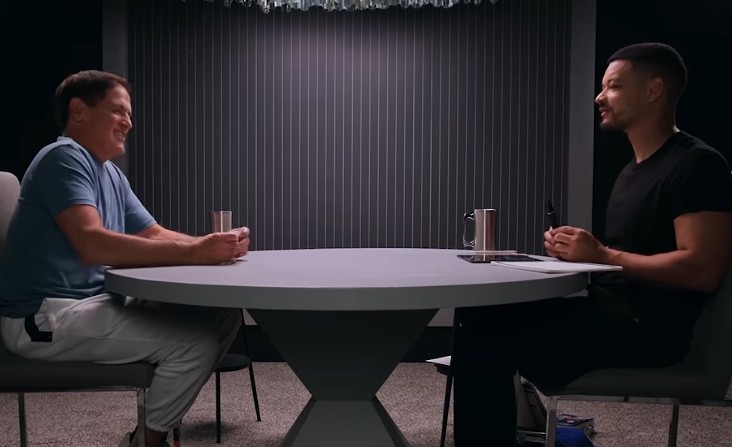
In this Diary of a CEO interview, billionaire entrepreneur Mark Cuban sits down with Steven Bartlett to share how he went from selling garbage bags door to door in Pittsburgh to building MicroSolutions, Broadcast.com, and the championship-winning Dallas Mavericks. Cuban explains why sales is the ultimate skill, why he believes AI is powerful but “not smart,” the risk of an AI-fueled debt bubble, and how family, mortality, and Cost Plus Drugs now shape his priorities. Read the full transcript of this interview below:
Business Is Like a Sport
STEVEN BARTLETT: (00:01:42 – 00:02:38) Mark, there are so many things happening in the world at the moment, and just specifically focusing in on business and technology and AI, one of the remarkable things I often reference about you is in spite of your success, you continue to self-educate.
And I’ve watched this in you over multiple cycles of technology. When crypto became a thing, when AI showed up, one of the first things I see on my timeline is Mark Cuban going back to school.
MARK CUBAN: (00:02:39 – 00:02:39) Yeah, for sure.
STEVEN BARTLETT: (00:02:40 – 00:02:41) What’s going on in your head at the moment?
MARK CUBAN: (00:02:42 – 00:03:03) To me, business is like a sport. And if you don’t keep on getting better and improving your game, you’re not going to be able to compete. And if you’re going to do anything with technology, media, whatever it may be, you better be ahead of the curve.
Otherwise, there’s going to be some kid in high school somewhere who’s going to kick your ass. And I want to be the one doing the ass kicking instead of getting their ass kicked.
Growing Up in a Blue-Collar Family in Pittsburgh
STEVEN BARTLETT: (00:03:03 – 00:03:13) What are the most sort of foundational things I need to know about your earliest context to understand the Mark Cuban that we’ve all grown to love and know from those Shark Tank and the businesses and the Dallas Mavs?
MARK CUBAN: (00:03:13 – 00:03:25) And I think I just grew up in a regular family and just had the piss and vinegar in me to always want to compete, like I said. And I was able to turn an idea into a business and be successful.
STEVEN BARTLETT: (00:03:25 – 00:03:27) And you had very formative parents by the sounds of things?
MARK CUBAN: (00:03:28 – 00:03:39) Yeah. I had a great upbringing. My dad did upholstery on cars, pure blue collar. My mom did odd jobs. Yeah, that’s my grandparents and my mom. My mom was only 20 when I was born.
STEVEN BARTLETT: (00:03:39 – 00:03:41) We’ve got some more wonderful photos here.
MARK CUBAN: (00:03:41 – 00:03:46) That’s my brother Brian, who’s the middle brother, and my dad. That’s when we lived on Meadowlark in Pittsburgh.
STEVEN BARTLETT: (00:03:47 – 00:03:49) Your father never made more than $40,000 in his life? Never.
MARK CUBAN: (00:03:50 – 00:04:05) No. He would be up at work and gone by the time we were leaving for school. He actually lost an eye when he was doing upholstery. There was a staple that broke when I was in 6th grade. But he just always was a grinder and just— yeah, amazing.
STEVEN BARTLETT: (00:04:06 – 00:04:08) I miss him. You miss him? I miss them both.
MARK CUBAN: (00:04:08 – 00:04:17) Everywhere we went, he always had friends. And if he didn’t know people there, they quickly became his friends. And I think that set a great example for my brothers and I more than anything.
STEVEN BARTLETT: (00:04:18 – 00:04:22) What are some of those sort of high-level lessons that you always reference come from him?
MARK CUBAN: (00:04:22 – 00:04:34) He would say things that, “You don’t live in the world you were born into.” “Today’s the youngest generation you’ll ever be,” that type of thing where, no matter what hustle I had going on, he was always supportive. Always.
Selling Baseball Cards and Garbage Bags
STEVEN BARTLETT: (00:04:34 – 00:04:37) And what did you think you were going to be when you were older at that age in those photos?
MARK CUBAN: (00:04:38 – 00:04:38) Oh, a baseball player.
STEVEN BARTLETT: (00:04:39 – 00:04:39) Really?
MARK CUBAN: (00:04:39 – 00:04:46) Yeah, I was good, but not good enough. But then after that, it became apparent that I was going to be a business guy.
STEVEN BARTLETT: (00:04:47 – 00:04:48) I think it was apparent from your—
MARK CUBAN: (00:04:49 – 00:04:53) Yeah, selling baseball cards when I was a kid. Oh my God, you got some good ones.
STEVEN BARTLETT: (00:04:53 – 00:04:55) You also started selling some of these, I hear, as well.
MARK CUBAN: (00:04:55 – 00:06:12) Yeah. So what I would do is— yeah. So when I was 9 or 10 years old, I would go to the local pharmacy and they would sell packs of baseball cards. And I would buy a bunch of them with my allowance. And then I would repackage them using the comics and everything from the paper. Buy these for— cost me a quarter. Buy them for $0.50. You’re guaranteed to get a Pittsburgh Pirate like Roberto Clemente or Willie Stargell. And I would sell them and make money. Then I’d go and turn it around and make more. And that literally was my first start in hustling.
And then one day my dad was playing poker with his buddies. They’d rotate to each other’s houses and he, they were at our house and I went in there to grab a donut and I was like, “Dad, I want a new pair of basketball shoes.” And he looks at my feet and he goes, “Those shoes work. When you have a job, you can buy whatever you want.” I’m like, “Dad, I’m 12.”
And one of his buddies who had to have been drunk was like, “Hey, I got something you can sell.
Why Sales Is the Ultimate Skill
STEVEN BARTLETT: (00:06:13 – 00:06:27) This idea of selling is sort of very top of mind for you in terms of one of the ultimate skills of building, becoming an entrepreneur. And it’s so funny because I spent a lot of time in call centers when I was younger doing cold calls, but I always say that the best sales experience is door-to-door sales.
MARK CUBAN: (00:06:27 – 00:06:42) Or call centers, right? Every no gets you closer to a yes, right? Just knowing how to deal with people telling you no and how to deal with objections and how to respond quickly. It just trains your mind to be quick. And once you can sell, you have a job for life.
STEVEN BARTLETT: (00:06:43 – 00:06:46) Why is selling so important as it relates to becoming an entrepreneur?
MARK CUBAN: (00:06:46 – 00:07:04) No business has ever succeeded without sales. And if you don’t think your product or service is so good that you’re dying to sell it, that you think that by talking to somebody about whatever product it is, you’re not helping them, right? ‘Cause that’s the whole point of sales. When you were in that call center, what did you sell?
STEVEN BARTLETT: (00:07:05 – 00:07:07) Everything, windows, doors, conservatories, double glazing.
MARK CUBAN: (00:07:07 – 00:07:24) Right, and it was all about helping them and you’d have the objections and I’d go sell it. I was selling magazines door to door. Once you learn how to sell, once you learn how to deal with objections, once your mind is spinning, waiting, and reacting just like you did in a call center, what can’t you sell?
STEVEN BARTLETT: (00:07:24 – 00:07:30) Are there any principles of being a good salesperson or even on Shark Tank when you see someone come in and they’re great at sales.
MARK CUBAN: (00:07:31 – 00:07:31) Yeah.
STEVEN BARTLETT: (00:07:31 – 00:07:32) What are those principles?
MARK CUBAN: (00:07:32 – 00:08:28) You care, you know your product, you want to help people. You’re not trying to convince them to do something against their interests. You’re trying to understand and learn their interests and help them achieve their goals or whatever your product may happen to do. It may be, “Hey, you don’t have to go to the store and pick up a bag.”
Or it may be when you’re selling something, windows, you don’t want to look through those dirty windows. You know there’s a crack, you know your electricity bill is up way too high because of your windows and we’re here to replace them. And for only $17 a month, we’ll save you, it’ll more than pay for itself in the electricity bill, right?
On Shark Tank, when somebody walked in and told me about their company, I knew exactly how I would sell it or could not sell it. And once you can do that, you’re always going to be able to get a job. And if you are an entrepreneur or want to be an entrepreneur and you find something that you love and a product or service you love, then selling it’s easy.
The Biggest Misconception Young Entrepreneurs Have
STEVEN BARTLETT: (00:08:28 – 00:08:45) Oftentimes we hear about people becoming wildly successful billionaires because they came up with some tech idea. It was their first thing, like a Zuckerberg, right? And it becomes this huge success and they’re 25, right? So sometimes when we’re 32, we miss the boat, right? We miss the boat.
MARK CUBAN: (00:08:45 – 00:08:45) Yeah.
STEVEN BARTLETT: (00:08:45 – 00:08:51) But then when I read your story, I think you were 31 years old, 32 years old, and your first business had sold for $2 million, which is a—
MARK CUBAN: (00:08:52 – 00:08:54) Well, it sold for $5 million. I netted $2 million.
STEVEN BARTLETT: (00:08:54 – 00:08:54) You netted $2 million.
MARK CUBAN: (00:08:55 – 00:08:55) Okay.
STEVEN BARTLETT: (00:08:55 – 00:09:06) What is the big misconception that young people these days have about what it takes, whether it’s in terms of sacrifice or time or patience or compounding skills? Because they are incredibly impatient, I think.
MARK CUBAN: (00:09:06 – 00:11:10) Yeah. I was just as impatient, but I think it really depends on your personal circumstances. I had nothing to lose. I was broke. I had gotten fired from a job. So starting MicroSolutions was an easy choice. I was living 6 guys in a 3-bedroom apartment, didn’t have my own bedroom. So it was like, why not?
And I remember being terrified and thinking, “Okay, I’ve been in business 1 month. That’s a win. 3 months, 6 months, 9 months. I have $15,000 in accounts receivable. I’m on my way of moving outta this s***hole I live in.” So it really depends on your personal circumstances.
But I always tell young entrepreneurs, if you’re broke and you got nothing to lose, even if you’re working a job, I was working as a bartender and go out and do what you gotta do and start what you’ve gotta start.
I think one of the big misconceptions is A, you have to raise money, and B, if you do raise money, hitting big sales numbers is the ultimate end-all be-all as opposed to being profitable. For MicroSolutions, our entire 8-year existence, we were profitable every single month. We made sure that we sold enough and kept our cost in line so that I was going to be able to stay alive and keep on moving forward.
And I think kids today, they hear the stories about the Zuckerbergs and Sam Altmans, and it’s billions of dollars by the time you’re 12. And they think, “Okay, that’s the way I’ll do it.” They went out to Silicon Valley and they raised all this money and they don’t even realize that the greatest number of successful people aren’t the billionaires, right?
It’s the people that have made a few million, $5 million, $10 million, $25, $50, $100 million. There’s a multiple number of people in that, those set of circumstances. And I’m not saying it’s easy to get there, but it’s doable, right? It’s not a Silicon Valley dream, it’s the American dream. And it’s where you are and what you can do and what skills you have to accomplish it that makes the difference when you get started.
Find One Thing and Be Great at It
STEVEN BARTLETT: (00:11:10 – 00:11:25) What are, if I’m trying to become a millionaire, let’s say. Yeah. What are the sort of consistent themes amongst all people that become millionaires, 10, a 10 millionaire, 100 millionaire? Is there certain principles that you’re going to need regardless of what industry you’re playing in?
MARK CUBAN: (00:11:25 – 00:11:25) Of course.
STEVEN BARTLETT: (00:11:25 – 00:11:26) So we talked about sales.
MARK CUBAN: (00:11:26 – 00:11:54) Yeah, sales obviously. But to be a millionaire, I think you’ve just got to be really good at something and then find a way to turn that something into a business. It may be sales, it may be programming, it may be tinkering, it may be drawing, it may be a create, being a creator, whatever it may be. But if you’re not good at it, there’s no business that you start that’s going to make you a millionaire. You got to be good at something.
STEVEN BARTLETT: (00:11:54 – 00:12:06) This brings me to the point about focus, because lots of entrepreneurs, I’m sure you get this a lot in Shark Tank, but outside of the tank is they think that having 3 ideas or 3 things is increasing their odds.
MARK CUBAN: (00:12:07 – 00:12:40) Right. No, that’s ridiculous. Or they say, “I want to be an entrepreneur. What should I do? Right? What business should I start?” I’m like, “Oh my God, no, you’ve gotta find one thing and be great at it.” ‘Cause once you’re great at something, doors open up wide. Because if it’s not your company, then they gotta keep you because you’re great.
And whoever you compete with in that company, they’re looking and saying, “Wow, Steven’s great,” or “Mark’s great.” And then you’re like, “I’m great at this. Maybe if I want to be an entrepreneur, I can start a business about what I’m great at.”
STEVEN BARTLETT: (00:12:40 – 00:12:42) What are you most likely to become great at?
MARK CUBAN: (00:12:42 – 00:13:31) Where you spend your time. People think it’s about passion. “Oh, I’m passionate.” I was passionate to be a baseball player, basketball player. Didn’t help me at all, right? And I think when you realize where you’re spending your time is where you find things that you like to do. And when you like to do something, if it’s convertible to a business at all, then you keep on getting better and better and better.
Because it’s like anything else, whether it’s tech, selling windows, right? Whatever it is, installing windows. When you start realizing you’re better than the people around you, your confidence goes up. Your willingness to learn more goes up. You want to find how you can be even better so you could be the absolute best. When those things happen, you can start a company and there’s no limit to what you can do.
Buying the Dallas Mavericks
STEVEN BARTLETT: (00:13:32 – 00:13:43) I’ve spent a lot of time recently thinking about long-termism as an idea. And what I mean by this is it’s just interesting that when you take a longer-term view to almost anything, like you have in many sort of endeavors in your career.
MARK CUBAN: (00:13:43 – 00:13:45) Yeah, right.
STEVEN BARTLETT: (00:13:45 – 00:14:03) I was thinking about the Mavs there. It’s interesting how today’s decisions change and how that creates a moat. Because we live in a world, I think, where people plan sometimes in quarterly cycles or sometimes they plan their lives in 5-year seasons. But there’s a couple of entrepreneurs that I look out into the world and think, “Oh, they were thinking 10, 20 years.”
MARK CUBAN: (00:14:03 – 00:14:04) That wasn’t me.
STEVEN BARTLETT: (00:14:04 – 00:14:07) Oh, really? Yeah. Oh, what about with the Mavs though?
MARK CUBAN: (00:14:07 – 00:14:09) So when I got into the—
STEVEN BARTLETT: (00:14:09 – 00:14:12) With the Mavs and I bought the Mavs, which is a basketball team for anyone.
MARK CUBAN: (00:14:12 – 00:15:52) Yeah, in the NBA. And so I was a basketball junkie, right? And I was a season ticket holder and went to a game and I was like, “Wait, maybe I could buy this team,” right? ‘Cause I just made all this money. And I was like, “That sounds fun.” And I did it not because it was a business, not because I saw this long horizon of owning the team. I thought this could just really be fun. And what could be better than going and shooting baskets with Dirk Nowitzki or Steve Nash or Michael Finley? So that’s what got me into it.
But I didn’t even really look at it as a business. I looked at it more as an intellectual endeavor, right? An intellectual challenge. Can I take a team that was awful and got voted the worst professional sports franchise of the previous decade and turn it into a winning team? And that was my goal. And for a long time it was stressful ’cause I’m so competitive losing a game. It would take me 2 days to get over a loss.
But then it got to the point not long before I sold, where in my opinion, it went from being about basketball to being about valuations. And it went from, “Hey, I love basketball and this is all about basketball,” to the NBA being more about, “Okay, how much are these teams worth?” And the conversation is not being about how can we make the game better, but how can we make it more valuable?
And to me, that just created more stress, because in order to compete, you had to be good at real estate and the things that had nothing to do with basketball. So I wish I could tell you that I was like, “Okay, I have this 25-year horizon,” but I can’t tell you. I never thought I would sell, but then things changed around me. And I guess having kids changed me as well.
STEVEN BARTLETT: (00:15:53 – 00:15:54) You bought the team for, is it $200 million roughly?
MARK CUBAN: (00:15:54 – 00:15:55) $285 million, yeah.
STEVEN BARTLETT: (00:15:55 – 00:15:56) And you sold it for?
MARK CUBAN: (00:15:57 – 00:15:59) $4.3 billion. Yeah.
STEVEN BARTLETT: (00:16:00 – 00:16:20) What I find interesting is the point you just made about you’ll become great at the things where you want to spend your time on them. And again, the point you made before that was entrepreneurs, when they come to you and say, “I want to be an entrepreneur,” and then they go looking for an idea, tend to fail. This is a prime example of you doing exactly what you described, where it was somewhere you wanted to spend your time, which meant that you became good at it. I loved it.
MARK CUBAN: (00:16:20 – 00:16:21) Yeah. Yeah.
STEVEN BARTLETT: (00:16:21 – 00:16:37) I saw how the team’s performance drastically improved over the years that where you were the majority owner, but also some of the things you implemented around data and performance and technology into the Mavs. And it becomes a great business.
MARK CUBAN: (00:16:37 – 00:16:40) Not a great business. Yeah. Not a— it turned out to be a great business.
STEVEN BARTLETT: (00:16:40 – 00:16:40) Yeah.
MARK CUBAN: (00:16:40 – 00:16:51) You just don’t know. But when you’re doing something you love, right? It’s the old cliché, you don’t work a day in your life, but it’s true. How do you define success? Waking up in the morning with a smile on your face, excited about the day.
STEVEN BARTLETT: (00:16:51 – 00:16:51) Mm-hmm.
MARK CUBAN: (00:16:51 – 00:17:36) And that’s hard. Most people can’t do that. Most people look and they say, “Okay, I gotta go to work. I gotta do this. I’ve got these 5 things I gotta get done.” Or whatever. I always, even when I was broke, I was fired up, and the Mavs got me, it was amazing. ‘Cause sports are so much different than every other business.
You can work for a company like Google and they have the best quarter ever. They set records. Apple becomes the most valuable company in the world. Nobody throws a parade. If you win a championship, the whole city’s on fire and they’re throwing parades and half a million, 1 million people converge on downtown in 100 degrees heat to scream at the players and everybody. So that’s just so different. And that’s what made the Mavs special.
Winning the 2011 NBA Championship
STEVEN BARTLETT: (00:17:37 – 00:17:40) Is that amongst your best days in your life, winning the championship?
MARK CUBAN: (00:17:40 – 00:18:05) Business-wise, yeah, for sure. Yeah. And I’ll tell you this, it was so anticlimactic internally for me. I’ve seen so many games where we thought we were going to win and ended up losing them. And they had LeBron and et cetera. And I was like, “Okay, we’re up by 10 points with 30 seconds to go. There’s no chance that we’re losing this.” And then they hit a 3. I’m like, “Oh, shut the f*** up, Mark.”
STEVEN BARTLETT: (00:18:05 – 00:18:05) Right?
MARK CUBAN: (00:18:05 – 00:18:16) And then we got to the point where we won. I’m like, “Okay, the clouds should open up and the sun should shine.” And I just realized, “Oh, this is great. I’m screaming and yelling, but now what?”
STEVEN BARTLETT: (00:18:17 – 00:18:18) What comes next?
MARK CUBAN: (00:18:18 – 00:18:41) And it wasn’t so much how I felt and hugging all the guys and hugging everybody, but it was how the city felt. And that’s what really made it special. When I would take the trophy to schools, I would take it to bars, I would take it to restaurants, I would take it to my kids’ events, whatever it was, and to see their eyes light up, just that communal joy. That’s what made it special.
How to Escape Feeling Stuck in a 9-to-5
STEVEN BARTLETT: (00:18:42 – 00:19:04) You said there’s many people that are listening that are basically trapped. Well, they feel trapped. They feel stuck in a 9-to-5 job. They’re living paycheck to paycheck. I’ve been there. You’ve been there. What advice would you have for them? They might have $1,000 in savings and they’re trying to get out of that situation. Is there some type of life raft? Are there principles of how to escape?
MARK CUBAN: (00:19:04 – 00:20:11) I say this to new college graduates all the time. “Don’t go get the best job, ’cause that’s the hardest to find. Don’t get the perfect job, ’cause those are hard to find. Just get a job.” And when you have a job, just work to be really good at it.
The second part of that is you have to be brutally honest with yourself, ’cause nobody looks at the job they’re doing and says, “I suck,” right? They’re like, “Oh, I’m great at this.” They just don’t realize it. No, you have to be honest and talk to people around you. But when you’re really good at something, that’s when doors do open up.
And even in the worst possible job, you could be working at a McDonald’s, at a Dairy Queen, but there’s a path. And if you understand how to move up that path, even though your life mission isn’t to be the manager of a McDonald’s or a Dairy Queen or whatever, the fact that you can show a future employer that you moved up the line and then when they asked for a reference, they said, “Steven was incredibly valuable. We’re really sorry that he’s leaving. We tried to keep him.” That’s what you need.
And that can happen in 2, 3 years. It’s just most people don’t want to think like that. You get in your head and you get inside yourself. It’s just, “Oh, this is miserable, yada, yada, yada.”
STEVEN BARTLETT: (00:20:11 – 00:20:20) And it’s funny looking backwards on journeys like yours where it’s often jobs that most people wouldn’t think were glamorous that end up being the most sort of important or formative to your skill stack.
MARK CUBAN: (00:20:21 – 00:20:21) Yeah.
STEVEN BARTLETT: (00:20:21 – 00:20:32) You were talking about door-to-door salespeople. Yeah. You mentioned, what was it, Dairy Queens there or McDonald’s? I think I remember that Jeff Bezos worked at McDonald’s and this is really where he learned about this sort of customer obsession, customer service. Yes.
MARK CUBAN: (00:20:32 – 00:21:30) You start to understand. Yeah, boy, Motley’s Pub. But yeah, you learn how to deal with people, how to deal with customers. That can happen in any job. It’s just, I read this book in high school. It was called Why Men Rebel. And it said, most people have aspirations that are up here. And when their real lives, they feel are down here, a lot of people won’t just accept it. Okay. ‘Cause no one wants to think “I’m not going to do or not to accomplish anything.”
So that’s when they start fighting and rebelling and joining groups that are counter to what’s happening in society. And I think understanding that in yourself, you have to be at least self-aware a little bit to understand that it’s okay to be frustrated, but you can’t let it overtake your life. You’ve got to be able to put yourself in a position to at least feel better about yourself, even if it’s not perfect.
STEVEN BARTLETT: (00:21:30 – 00:21:31) Did you rebel?
MARK CUBAN: (00:21:33 – 00:21:59) Oh, my whole life. Yeah. I was always counterculture. I remember being in high school, and I was— 4 inches shorter, 25 pounds heavier. You can’t tell here, but these 2 teeth are caps. And because my parents didn’t have any money, I ran into a bicycle, it broke my teeth, and I got caps that were aluminum— steel, that’s what they were. They were steel. And I’m 16 years old.
STEVEN BARTLETT: (00:21:59 – 00:21:59) Wow.
MARK CUBAN: (00:21:59 – 00:22:09) And people, my friends would be like, “Ah, the reflection.” But you just have to find your path. You can’t get down on yourself.
The Sacrifices Behind MicroSolutions
STEVEN BARTLETT: (00:22:09 – 00:22:37) One of the things that a lot of people who feel stuck are probably thinking about is they’re probably trying to weigh mentally the amount of sacrifice it’s going to take. And when I’ve heard you talk about hard work and the sacrifices that you had to take to build yourself from this sort of 22-year-old who is in Pittsburgh, I believe at the time, to starting your first business, which ended up being acquired, MicroSolutions. What does the sacrifice look like? If I was a fly on the wall when you were— So presumably you had a job at that time.
MARK CUBAN: (00:22:37 – 00:22:37) Yeah.
STEVEN BARTLETT: (00:22:37 – 00:22:42) And then you started building the business. What would I have seen in terms of your— how did your life look?
MARK CUBAN: (00:22:42 – 00:25:04) So when I got to Dallas, moved in with, like I said, 5 roommates, didn’t have a bed. I just slept on the floor. That’s an example of sacrifice, living in a s***hole. Got a job working at night as a bartender, but then almost immediately got a job working at a software store. And that was going to be, for me, my first step into a real job, right? Where I could have a future. But I got fired 9 months later.
And I wanted to move outta the s***hole I lived in, and I was going to be looking at a $1,500 commission, which would’ve done it for me. So I called my boss and I’m like, “I need to go pick up this check. You’ll make money, I’ll make money. And I have somebody to cover opening up the retail store that I worked in.” And he was like, “No, I need you in the store.”
And I made the executive decision to go pick up the check thinking when I brought it in, everything would be well. He fired me on the spot. Fired me, and I’m like, “Okay, I suck as an employee. This is not what I want. I’m going to start my own company.”
And I don’t know if I’d call it sacrifice, but I’d call it deferring immediate gratification. I knew that it was going to take time for me to get any level of success to move out of that apartment. I was going to have to sell hard, learn stuff I didn’t understand. This was the early days of the PC revolution when PCs were starting to happen. I don’t know this s***, but either does anybody else.
In my mind, when it came to software, there was only going to be one person who understood any given software better than me, and that would be the person who wrote it. And that if I busted my ass, I was tied for second, right? When that’s a new program like Lotus 1-2-3, if you remember that one, kid. No, shut up. It was a very— it was the second spreadsheet that was a big spreadsheet.
And so anyways, my idea was I was going to put in the time to learn that software however many software packages that is, more than everybody. And I literally would stay in that retail store overnight, or I’d take the computer back to the s***hole apartment and just sit there and teach myself and teach myself, read the manuals over and over. Because if I can get ahead of everybody else to be in second by myself, I would have a huge edge over everybody else for MicroSolutions.
And it’s the same with AI. New AI comes out, new model comes out, new software comes out, there’s the creator and everybody else is tied for second. And I’m going to kick their ass by learning it faster, better.
Why AI Dwarfs Every Other Technology
STEVEN BARTLETT: (00:25:05 – 00:25:10) And AI is obviously the term of the moment in business. How significant do you think this is?
MARK CUBAN: (00:25:10 – 00:25:44) Oh, I’ve been in the tech business a long time. This dwarfs everything else in aggregate. This is, yeah, this is so much bigger. With AI, you can just say, “Hey, I need to learn more about Steven Bartlett. Tell me everything there is to know.” It’s able to make me a lot more productive. And I think you can make anybody more productive. And I think that’s the beauty of artificial intelligence.
And from an educational perspective, if done right, it’s a democratizer of information. You have access to every library, every book, every speech everywhere. And so if you’re interested, there’s nothing you can’t learn.
STEVEN BARTLETT: (00:25:45 – 00:26:36) Everywhere I go around the world, people are asking me whether this technology is the real deal. And business owners and entrepreneurs are asking how they should be responding in a moment like this. Because in my life, I’m 34 years old now, there’s almost no precedence of such a disruptive technology.
It can be quite threatening to many people because there’s this sort of process of, they call it creative destruction, where it rips down the old way of doing things. And in that, it could be ripping down your identity, your degree, your job.
And so there was a psychologist called Leon Festinger that coined a term called cognitive dissonance, which even hearing the term helped me understand myself and my feelings, which is the discomfort you feel when something sort of threatens or conflicts with what you know. The whole world is experiencing this right now. All at once globally. And what people are doing, some people are doing, is they, in an attempt to alleviate the dissonance, bury their heads in the sand, deny it. “It won’t come for me. I’ll be fine.”
MARK CUBAN: (00:26:37 – 00:27:01) Right. Yeah, that’s not going to happen. Yeah, not going to happen. For me, with AI, I see it as an opportunity. Wherever there’s change, there’s opportunity. Something’s changing. And to your point, the cognitive dissonance, people are avoiding it and not dealing with it at all. And then there’s others who are picking up on it and saying, “Let’s go, let’s go.” And that’s always been my approach because most people aren’t going to do the work.
STEVEN BARTLETT: (00:27:01 – 00:27:01) Yeah.
MARK CUBAN: (00:27:03 – 00:27:28) There was an old basketball coach, Bobby Knight, from Indiana University. And when I was in college, he was on 60 Minutes, and he had this one line, and my jaw just dropped. I’m like, “Oh, s***, that’s it. That’s my line.” He goes, “Everybody’s got the will to win, but it’s only those with the will to prepare that actually do win.” And I’m like, “Bingo!” That’s all I needed. You get one little line as a kid in your head, and I’m just like, “Let’s go.”
The Illusion of Overnight Success
STEVEN BARTLETT: (00:27:28 – 00:27:30) Problem is, you never see people prepare.
MARK CUBAN: (00:27:31 – 00:27:32) You may not see it, right?
STEVEN BARTLETT: (00:27:32 – 00:27:32) Yeah.
MARK CUBAN: (00:27:32 – 00:27:34) So there’s no role model preparation, right?
STEVEN BARTLETT: (00:27:34 – 00:27:47) No one gets to see you going and taking the software from the store and taking it home to the s***hole apartment because there was no cameras. There was no interest at that point. So we almost don’t appreciate that that’s part of the win. But they probably saw you on the double-decker bus with the trophy with the Mavs.
MARK CUBAN: (00:27:47 – 00:27:48) Yeah, right?
STEVEN BARTLETT: (00:27:48 – 00:27:51) So this is the illusion of success, I guess, in this context.
MARK CUBAN: (00:27:51 – 00:27:53) That’s why we have conversations like this.
STEVEN BARTLETT: (00:27:53 – 00:27:53) Yeah.
MARK CUBAN: (00:27:53 – 00:27:56) Yeah, to convey that. That’s why you’ve been so successful.
STEVEN BARTLETT: (00:27:56 – 00:28:04) Well, no, it’s— but this is why I love having these conversations because it’s almost counter-narrative to Instagram to hear that you spent years— Oh, it’s even worse.
MARK CUBAN: (00:28:04 – 00:29:42) Right? It’s even worse. Okay, so my 16-year-old son, 17-year-old just turned, right? Drove me nuts because you know how the algorithms work, right? Whatever you see, you get more of. And each of us have our own unique algorithm on Instagram, TikTok, YouTube, right? Nobody sees the same stuff.
And obviously he was interested in business because he would come up to me and show me these get-rich-quick schemes. “You’re going to drop ship, you’re going to do shoe drops.” Even there was one where they had a blaster, water blaster so you can clean sidewalks. And I’m like, “No,” right? If those were good businesses, they wouldn’t be telling you about them. They would just be doing them or make all this money in the stock market. Nobody who has an edge in the stock market is selling it. They’re using it.
And the point of all that is, people, particularly now in this social media world where you just get more of what you want, they get misled. Section 230, the protections on the internet, and the fact that that protects algorithms, I think, really is a big part of holding kids back these days. Because that’s why you talk about not seeing people do the preparatory work. Not seeing what happens behind the scenes. Because that doesn’t get more views or more engagement on Instagram or TikTok.
No one’s going to— “Okay, Mark’s looking at this, reading a manual.” No, right? And it’s tougher for society today. We talk about socialism or capitalism. No one knows what it actually means. They just— whatever is presented to them in a 10-second bite and you see it enough, you presume it must be true.
STEVEN BARTLETT: (00:29:42 – 00:30:06) That’s why I think I asked about long-termism is because I’m trying to figure out what the sort of— you said earlier, you said, most people won’t do it. And right now with algorithms and a certain sort of online narrative that I think there becomes a winning opportunity to do the opposite. So get-rich-quick schemes, the opposite of that is taking a long-term approach, doing the preparation, mastering a skill, and setting yourself a 10-year time horizon as opposed to “I’m going to be rich next year.”
MARK CUBAN: (00:30:06 – 00:30:16) Even Charlie Munger used to say it all the time, right? “There’s no delayed gratification anymore.” Never. And if you don’t realize you have to do the work first, you’re not going to get the gratification.
Are We in an AI Bubble?
STEVEN BARTLETT: (00:30:17 – 00:30:20) And Charlie and Warren are obsessed with compounding.
MARK CUBAN: (00:30:20 – 00:30:23) Oh yeah, for sure. And they were the kings of it. Yeah, for sure.
STEVEN BARTLETT: (00:30:24 – 00:30:31) That’s one of the things I always found fascinating about them when I started reading about why they were such great investors is that I read that there’d be a couple of years where they wouldn’t invest any money at all.
MARK CUBAN: (00:30:32 – 00:30:32) No.
STEVEN BARTLETT: (00:30:32 – 00:30:33) What the f***?
MARK CUBAN: (00:30:34 – 00:31:12) No. And I’ve tried to do the same thing. And again, just trying to not— don’t just jump into the market. Jump in the market. There’s always going to be a bear market and that’s where the money was made. During COVID I just started buying up everything when it hit. And I crushed it. You can say that’s wrong in some respects, right?
But now it’s just you see these stocks and everything just go, AI-related stuff just going to the moon and all this debt. I’m like, “Just be patient.” You can invest a little bit for the fun of it, but be patient, have some cash because at some point it’s going to turn. And when that happens, that’s when the real magic happens and where the real money is made. The delayed gratification.
STEVEN BARTLETT: (00:31:12 – 00:31:14) You do think we’re in a bubble, don’t you? I heard you talk about this.
MARK CUBAN: (00:31:15 – 00:32:17) We’re in a bubble, but not the same as the internet bubble back in 2000, 2001. I think what’s different now is everything’s a meme stock. Bitcoin is a meme stock, right? Pick Micron, pick Google, Apple, they’re meme stocks. And the reason I say that is by watching how stocks move with just a little bit of news.
So a company might miss earnings by a penny or only beat by a penny and their stock will be down 18%. The intrinsic value of that company hasn’t changed 18%. It’s just that buyers and sellers move in and move out very quickly based off of anticipated information as opposed to the net present value of the future cash flows and all that.
We’re trading them like baseball cards. There’s no intrinsic value to this. It’s just perceived value and what do you think somebody else will pay for it? And I think we’re in a bubble for that very reason. What causes it to burst? I have no idea.
STEVEN BARTLETT: (00:32:17 – 00:32:27) Because we said this technology, AI, is without precedence. It is quite tempting for someone like me to put a couple of dollars into Nvidia or something. Yeah, of course.
MARK CUBAN: (00:32:27 – 00:32:28) Yeah, for sure.
STEVEN BARTLETT: (00:32:28 – 00:32:30) Because you think maybe this is the last technology. Right.
MARK CUBAN: (00:32:30 – 00:33:04) Because even, I don’t think it’ll be the last technology because something will always happen. There’ll always be somebody smarter than the AI, I believe. But look at Dell and Amazon. They were companies whose stocks went from way up high, got crushed when the internet bubble burst. Amazon was losing money hand over foot. People used to give them a hard time because they were losing so much money.
Now they’re worth trillions of dollars. And if you would just stuck it out with them. So there will be winners. I just don’t know which company. Is it Anthropic? Is it OpenAI? I don’t know.
Why Mark Cuban Says AI Is Not Smart
STEVEN BARTLETT: (00:33:04 – 00:33:06) You think there’ll always be someone smarter than the AI?
MARK CUBAN: (00:33:06 – 00:33:07) Yeah, for sure.
STEVEN BARTLETT: (00:33:07 – 00:33:09) What do you mean by that? I’ve never heard that.
MARK CUBAN: (00:33:09 – 00:35:01) Take a model from Anthropic, AI model from Anthropic, or Google Gemini, or ChatGPT, OpenAI, right? It gets released. It’s immediately out of date. Immediately. The brilliance of this conversation is not incorporated in any model anywhere, right? AI is not smart. It just knows how to use statistics basically to predict the next word.
It’s predictive, it’s not deterministic. Meaning if you asked 4 different AIs the same question, you’re going to get 4 different answers. If you modify a question to the same AI just marginally, that shouldn’t change the meaning, it’ll give you a different answer every time. That doesn’t work in the real world.
AI doesn’t know the consequences of its actions. AI doesn’t have inherent ethics. AI can’t take video and consume it or absorb it, at least not yet. If I’m standing at a 4-way intersection and there’s cars going back and forth and I have video in my phone and the best models ever, and I have a seeing eye dog right here, I’m letting the seeing eye dog take me across the street before I let the AI take me across the street. It’s always going to be behind. There’s always going to be a latency.
And so many things can change in a blink of the eye in this world that there’s always going to be a human who says, “Oh, you know what? I can do this better.” Because while all these other companies are competing with their models to try to hit these benchmarks and outperform in these benchmarks or do recursive self-improvement, so it just keeps on training itself more and more, it doesn’t have access.
A 2-year-old sitting on a high chair with a sippy cup knows that if it pushes the sippy cup up off the high chair, mom’s going to come running and it knows it’s going to crack up, right? AI is not going to figure that out ever.
STEVEN BARTLETT: (00:35:02 – 00:35:28) Do you know, if you plot, if you think of it as an exponential technology, this is what I always try and, because it’s tempting to think of it as a sort of a static state. I’m thinking of a graph here, where it kind of goes like this. But these technologies, from even what I’ve observed with every new release, seem to be almost like this. So it’s quite hard. Even think about full self-driving. My Tesla drives itself, and apparently the crash rate is significantly lower than if a human was driving.
MARK CUBAN: (00:35:28 – 00:35:28) Of course.
STEVEN BARTLETT: (00:35:29 – 00:35:35) And if I imagine that as an exponential, at some point this s***’s going to be pretty—
MARK CUBAN: (00:35:36 – 00:37:38) Except, except, just like you see the protests about data centers. When we talked about Why Men Rebel, a book I haven’t thought about since high school, right? People are going to rebel. People are going to create their own communities where there is, if it’s that dominant, there’ll be people say, “I don’t want that in my life.” There’ll be communes and kibbutzes where there’s no technology.
There’s something called adversarial actions for AI where with full self-driving, there’s certain things that when it sees it, it reacts in the wrong way. And once you know how to do that and you can cause AI to do things that it doesn’t want to do or you don’t expect it to do, then you’re going to get people who do that all the time.
And you’re also seeing it, when I go and talk to hospitals and researchers for Cost Plus Drugs, right? What I tell ’em is you’re crazy if you publish everything or if you try to patent everything, ’cause it’s immediately available to every model and you lose control of your intellectual property. And you’re starting to see more and more and more people, instead of patenting it, it’s a trade secret. Instead of publishing it, “I’ll put it in my model or I’ll sell it to you.”
And so you get this bifurcation with each model where Gemini is not trained on the same data as ChatGPT, as Claude, as Grok, et cetera. And if they’re all giving you different answers, kind of defeats the purpose in a lot of respects. And if they can’t deal with live video or they always have latency.
And look, when I say this, I’m not saying AI is useless. No, exact opposite. AI is incredible. But having 4 of the smartest people next to you, they’re not all going to give you the same answer. And you have to have the skillset to be able to ask the right question and ask the right question of multiple sources and be able to take the output from each of them, the responses from each of them, and come to a conclusion that you think is in your best interest or whatever interest that is.
Will AI Take Our Jobs?
STEVEN BARTLETT: (00:37:40 – 00:40:02) What do you make of all these AI CEOs saying that it’s going to transform how we work and there’s not really going to be any jobs left.
MARK CUBAN: (00:40:02 – 00:40:24) Well, it will transform how we work, but I think there’ll be creative destruction. I went to school at Indiana University in Bloomington, Indiana, and right by Bloomington is Terre Haute, Indiana. Terre Haute, Indiana used to be the location for RCA Records, which then became CDs, right? And then they made DVDs. You probably don’t even remember that s***, right?
STEVEN BARTLETT: (00:40:24 – 00:40:26) I remember CDs and DVDs.
MARK CUBAN: (00:40:26 – 00:40:26) Okay.
STEVEN BARTLETT: (00:40:26 – 00:40:28) But cassettes was gone.
MARK CUBAN: (00:40:28 – 00:40:45) Gone, right? But it’s still— It’s not like there aren’t people making money on music. And so there will be creative destruction. There will be new things that pop up that leverage this new technology that create different kinds of jobs. Is the path going to be painful for people? Yeah, just like the people in Terre Haute, Indiana, it’s going to be painful.
STEVEN BARTLETT: (00:40:45 – 00:41:07) Because this technology feels so different because when you start to think about how much of our lives run both on the internet, but just based on intelligence, driving is not something I considered would be impacted by AI, for example. And then now I’m experiencing, I heard you talking about your use of AI agents, but I’ve got, I don’t know, 25 AI agents on my phone now going through all of my stuff.
MARK CUBAN: (00:41:07 – 00:41:08) It’s great, right?
STEVEN BARTLETT: (00:41:08 – 00:41:08) It’s amazing.
MARK CUBAN: (00:41:08 – 00:41:09) It’s amazing.
STEVEN BARTLETT: (00:41:09 – 00:41:10) But you go, “F***, oh my God.”
MARK CUBAN: (00:41:11 – 00:41:51) But it’s not smart. I hadn’t read a nonfiction book in 25 years. And the only reason I had the time to do it was I have these agents. All the s*** that I had on my to-do list that I would have to go search for this, read that, do this, boom. My agents, just like I’m sure you use it for the same thing, right?
All the tedious bulls*** work that you didn’t want to do or always couldn’t get to or thought you had to hire somebody for, now you have an agent that does it. And your biggest decision, do you use Grokbot? Do you use Dot? Do you use Cowork? And then you try them all and you see they all give you a different answer. And then you have to use your brain again.
STEVEN BARTLETT: (00:41:54 – 00:41:57) But you said that you would’ve otherwise hired people to do some of those things, right?
MARK CUBAN: (00:41:58 – 00:43:10) I would— yes, that’s true. But now I can do— get more done, just like you can get more done. And when you get more done using your agents, you have better opportunities to use what you know to create other things. So I might have brought in an intern and paid them $15 an hour or $20 an hour, whatever it was. Now maybe it creates a new business idea, and with that new business idea, I need to hire people to do that because—
So I’ll give you a perfect example of what I use agents for. For CostPlusDrugs.com, I’m trying to break the healthcare industry. And there’s these big conglomerates who I think are the real problem. And now I have an agent, every time they get sued, it comes to me and tells me. Every time there’s a bid that they’re bidding on, right, it comes and the agents tell me. And I can use the agent to create an email to send to the Open Records Act to get me copies of all those contracts.
S*** I could never have imagined doing before unless I hired somebody, but that man then I had to take the time to hire him and train them and manage them. So it never got done. Now it gets done. And now I have other types of people that I hire to do different things that are at a completely different level. And it takes less of my time to do all of that.
STEVEN BARTLETT: (00:43:11 – 00:43:12) And for your son, your son’s 16?
MARK CUBAN: (00:43:12 – 00:43:13) 17, just turned, yeah.
STEVEN BARTLETT: (00:43:13 – 00:43:23) 17. When he’s saying, “Dad, you know a lot about the future. You’ve been able to predict the future several times. So what should I be focused on?” He’s 17.
MARK CUBAN: (00:43:23 – 00:44:07) My kids are 17, 20, and 23. The one thing they never say is, “Dad, you know a lot about fill in the blank.” Never, never, ever. My oldest daughter though, when she was at college, I told her she had to learn how to do agents. And she was like, “Yeah, whatever, whatever.” And then I went and watched one of her presentations and she was like, “Yeah, I got an agent to do this. I got an agent to do that.” I was like, proud papa, right?
But yeah, but I tell them, you have to learn this stuff because if you don’t, the person who does is going to be so much more productive than you are. If you have access to a smartphone or a PC or laptop at the library that has access to Claude, Gemini, et cetera, there’s no question you can’t ask.
STEVEN BARTLETT: (00:44:07 – 00:44:08) Does hard work matter?
MARK CUBAN: (00:44:09 – 00:44:38) Yes, of course. You got to take the time to ask the question. You have to take the time to consume the information it gives you and learn how to ask better and better questions to get better at it. But people always talk about mentors and having access to a network. I never had any of that s***, right? I just sat and learned and read and did it by reading. Now I don’t go grab a book, right? I just go right to Claude or Cowork and I’m like, “Find all about this and tell me what Warren Buffett thought about that.” It’s insane.
What’s the Edge When Everyone Has the Same Information?
STEVEN BARTLETT: (00:44:39 – 00:44:42) What does the edge become in such a world where everybody has the same information?
MARK CUBAN: (00:44:43 – 00:46:35) Because you’ve gotta know how to take what you’ve read or seen and integrate it and apply it to what you’re trying to accomplish. Because it’s cool, I can say, “Write me a business plan for this business,” and it’ll create all the agents, it’ll create the bots, it’ll do all that stuff. But I’ve got to be the one to say, “This is right, this is wrong, this is right.” And then I’ve got to be the one that goes out and sells it or teaches the agents how to sell when we get to that point so that the business could actually work. AI is not smart. It just grinds and grinds and grinds.
When you hear about the risk profile, the doomers, right? When I talk to security people, I ask this very specific question. “We’re hearing these stories about AI breaking in here or doing that. Did they invent anything? Did they come up with a new approach for hacking into this system or for stealing this data?” No, they didn’t do anything new. What they did was get the same list that every security person has. And because you can create an unlimited number of agents to go through and try it in every possible combination. It’s all brute force.
Where AI has a huge advantage is in doing brute force approaches to things because we’d always done security by trying to catch all the problems, knowing that unless it’s a DDoS attack, right? Nobody has the resources to do a full brute force to have more resources than we do. Those days are gone. But what we don’t talk about is using that same brute force on the defense. That you can go out there and find all the holes in yourself and go be proactive to attack the bad guys.
So I don’t think, I’m not a doomer at all. There’ll be instances of s*** that happens, but I’m more afraid of what people do because of their concerns and lack of understanding of AI than I am about what AI will do.
STEVEN BARTLETT: (00:46:36 – 00:46:38) AI is not smart. No.
MARK CUBAN: (00:46:38 – 00:46:51) Even when we call it intelligent, remember how we talk about book— Somebody who can read a book, remember what’s in it, they’re book smart, get A’s on tests because they memorize everything. That’s AI.
STEVEN BARTLETT: (00:46:53 – 00:46:56) So what is, I want to be clear on your definition of smart.
MARK CUBAN: (00:46:56 – 00:48:03) Smart is being able to aggregate information and inputs. Smart is being able to know where to look for the inputs and being able to take them and then aggregate them to solve a problem. And also being able to identify the problem you’re trying to solve. AI doesn’t do that. And again, you have to be in the real time. We’re having this conversation. I didn’t know what questions you were going to ask, right? It’s just whatever, right? AI is missing all that.
There’s no way to feed AI everything that humans have access to. We talk about replacing doctors. Okay? If I’m a doctor and Steven’s there, this speeds it up. I have access to every research report, whatever it may be, article. And then Steven pukes all over me. AI can’t help me with that, right? “Steven, what’s wrong?” It’s like, I can’t say to the AI, “What’s wrong with Steven?” I have to use my senses, look, take my experience, and be smart enough to ask the right question.
STEVEN BARTLETT: (00:48:03 – 00:48:17) Is there a probability that something could happen that changes your mind on this point? Whether it’s the recursive self-improvement that they all talk about where it starts improving itself or some kind, what evidence would you need to see to go, “Do you know what, I think AI is smart”?
MARK CUBAN: (00:48:18 – 00:48:57) I think where you take a minimal resource AI and it can ask and solve questions with minimal resources, meaning you can have a 12-year-old kid who comes from the worst part of the world be brilliant? No access to resource, just sees and figures things out, finds places, sources of information.
Now, when you talk about AI, more GPUs, more power, better algorithms, and whether it’s recursive self-improvement or not, where it teaches itself to try to get better, I don’t think we reached that point where you can do it with no resources.
STEVEN BARTLETT: (00:48:59 – 00:49:12) Do you think the people like Elon who talk about how basically working is going to become a choice and how smart this technology is going to be and the humanoid robots that are going to be empowered by AI, are those forecasts overblown?
MARK CUBAN: (00:49:13 – 00:49:38) Elon’s amazing. He’s a brilliant entrepreneur. Don’t get me wrong. He’s the best entrepreneur of our lifetimes for sure. But he’s a sales guy. And he has to raise a lot of money for all the things he likes to do. And he’s good at that. And so I don’t begrudge Elon anything, even though he gives me s*** on Twitter or X and I give him s*** right back. But I think he’s got to sell what he’s got to sell. And I think that carries the day for Elon.
STEVEN BARTLETT: (00:49:38 – 00:49:53) Yeah, it’s funny because I sit here with so many different people from the world of AI safety experts and then some of the frontier labs team members or CEOs or ex-employees. And one of the remarkable things is I hear everything.
MARK CUBAN: (00:49:54 – 00:50:31) Yeah, there’s no one continuous theme, right? No 2 people give you the same answer. That tells you all you need to know, right? Yes, it’s because it should be obvious. If it was so dominant and there was a destination that everybody understood is where we would get to, it would be obvious to everybody and we all would see it. Again, you have to have more power and more GPUs than— And the history of power in GPUs prior to last year, that’s not intelligence. There’s a reason why you have to have all that. It’s just brute force.
STEVEN BARTLETT: (00:50:32 – 00:50:34) Computers started a bit like that, didn’t they?
MARK CUBAN: (00:50:34 – 00:50:35) No, it’s the exact opposite.
STEVEN BARTLETT: (00:50:35 – 00:50:35) Really? They started—
MARK CUBAN: (00:50:35 – 00:51:28) Yeah, because they were minimally capable. And so it took brilliance to program on Fortran on cards and put them into this huge mainframe that didn’t have a hundredth of the power of your phone. So they start off with minimal power and smart people figured out how to encode them. And then you got Moore’s Law and we saw chips, silicon and all this stuff, and it just got faster, faster, and faster.
And maybe that’s why I’m prejudiced in this, right? Because I’ve seen computers get incrementally faster, faster, faster by the minute, day, and year, and the output and the capabilities that they create. And so maybe that holds me back, right? My experience holds me back, but I think it’s indicative of what’s coming. What comes next pretty much all the time with technology, that it’s going to get more powerful for sure. It’s going to get more capable for sure. But as long as there’s latency, people have the edge.
STEVEN BARTLETT: (00:51:29 – 00:51:31) It’s going to get cheaper.
MARK CUBAN: (00:51:33 – 00:51:46) Yeah, it’ll get cheaper for sure. It already is a lot cheaper than it was 2 weeks ago. It’s getting cheaper because those companies keep on borrowing and spending more money to get more power in order to power all of the AI.
The Risk of a Debt Bubble
STEVEN BARTLETT: (00:51:47 – 00:51:54) I think this is surprising to hear from you because you’re someone who built Broadcast.com at a moment when we were living in an exponential era.
MARK CUBAN: (00:51:54 – 00:51:55) Yeah, an analog era.
STEVEN BARTLETT: (00:51:57 – 00:52:00) Yeah. And the internet was, people were skeptical about the internet.
MARK CUBAN: (00:52:01 – 00:52:54) Yeah. When I said we were going to stream or netcast is what we called it, they were like, “You’re an idiot. I’ll just turn on the TV. You’re an idiot. I’ll just turn on the radio.” I’m not a naysayer on AI. I am the biggest proponent of AI that there is. But in order to really get the benefit, you have to be honest about it.
I said one time that a lot of these data centers will turn into pickleball courts, right? As a metaphor, not that literally they’d be pickleball courts. Because in order for AI to reach the pinnacle that everybody wants to reach it, you have to have less power doing more, not more power doing more. Because then you run into constraints like we’re running into right now. We literally could get into a debt bubble in the United States of America because there’s so much debt being taken out by all these hyperscalers.
STEVEN BARTLETT: (00:52:54 – 00:52:55) You think that’s possible?
MARK CUBAN: (00:52:55 – 00:54:11) Yeah, of course it is because our deficit keeps on rising in the United States, which means we have to borrow more money. And the hyperscalers are borrowing more than they’re making. And so they’re borrowing more and lenders are competing for that business or they’re competing to get lenders to lend to them. Rates keep on going— If you’ve got a $40 billion debt and your interest rates keeps on going up, at some point you can’t raise money anymore. There’s a lot of praying going on right now.
I’m a huge fan of Nvidia and Jensen Huang, but they’re basically subsidizing half the industry because they have the cash to do it. And you’ve got, was it Google? No, Meta, I think it is, borrowing more than they have in cash flow. By a factor of— If it were the brilliance of brilliant, it should be the opposite, right? And at some point it may get there.
But until then, we’re in this private credit debt environment where there’s a lot of uncertainty and a lot of things can go wrong. If you read what Ray Dalio says, Ray says we’ve already crossed the curve, right? We’re already past that point where we could be a debt-laden society where our currency becomes worthless at some point.
STEVEN BARTLETT: (00:54:12 – 00:54:18) Where are we in this at the moment in terms of the symptoms or markers of the next big collapse?
MARK CUBAN: (00:54:18 – 00:54:33) Well, we’re over in this vicinity over here. The US, the UK, a number of other countries are later in that cycle when there’s the loss of the things that we’ve been talking about.
STEVEN BARTLETT: (00:54:33 – 00:54:39) Overindebtedness, more overindebtedness, the loss of— So we’re in the collapse period of the decline.
MARK CUBAN: (00:54:39 – 00:54:41) Yeah, the decline. I’ll call that the decline.
STEVEN BARTLETT: (00:54:42 – 00:54:47) It’s hard to imagine that for America, especially when you’re 34 years old, because you’ve just always seen the dominance of America.
MARK CUBAN: (00:54:47 – 00:54:52) Right. No, as an American, it’s hard to imagine and you think we’ll figure it out.
STEVEN BARTLETT: (00:54:52 – 00:54:52) Yeah.
MARK CUBAN: (00:54:53 – 00:55:08) We’ll always figure it out. And I’m optimistic enough to think that we will, but there’ll be pain associated with that. Our politicians are great at sloganeering. They’re really bad at actually doing things. And I think that’s going to be tough in this country and all countries.
STEVEN BARTLETT: (00:55:08 – 00:55:14) I think a lot of people think AI is the life raft out of the debt as well, because if you hear this age of abundance idea— It’s a race.
MARK CUBAN: (00:55:15 – 00:55:51) It’s a race, right? Will lenders lend to AI companies if interest rates hit— now the 10-year is like 5.2%. If it goes to 6%, 8%, 10%, something’s got to give. And right now at current interest rates, we’re paying $1 trillion in interest every year in this country, $1 trillion.
And if the interest rates keep on going up and what we have to borrow keeps on going up, and then you’ve got all these hyperscalers competing to get access to that money, something gets crowded out. I don’t know which or what. I’m not enough of a financial expert to do that, but something’s going to give.
STEVEN BARTLETT: (00:55:52 – 00:55:54) Are you playing defense in any way just in case?
MARK CUBAN: (00:55:54 – 00:55:55) Yeah. Yeah.
STEVEN BARTLETT: (00:55:55 – 00:55:56) What does that look like?
MARK CUBAN: (00:55:56 – 00:56:16) I’ve got money in this country, in that country, and I haven’t invested nearly as much. It’s the old Warren Buffett thing. I’ll wait and see as things happen. I might lose a little bit because I’m not as protected as I should have been, but I want to give it some time to see how things play out.
STEVEN BARTLETT: (00:56:16 – 00:56:43) I often wonder for the average person that’s listening now, what is the advice for them when they hear about this AI stuff going on with all these big San Francisco CEOs and this geopolitical race of AI, they’re thinking, “What should I be doing?” And I think some of the advice that springs to mind is what you said earlier on about actually what you can do in these moments is get good at something. That feels like the bucket that nobody can sort of unfill is your skills and your knowledge at the end of the day. 100%.
MARK CUBAN: (00:56:43 – 00:56:48) Yeah, you’re exactly right. And you said it well, because what else are you going to do?
STEVEN BARTLETT: (00:56:49 – 00:56:59) And why would you give— And the other thing I think a lot about is people skills. In a world where maybe my agent’s going to run my computer for me, but I’m still going to have to interact.
MARK CUBAN: (00:56:59 – 00:57:00) It becomes more valuable, doesn’t it?
STEVEN BARTLETT: (00:57:00 – 00:57:01) Yeah, exactly.
MARK CUBAN: (00:57:01 – 00:57:20) Yeah. Yeah. Some of the investments I’ve made, smaller investments are a company that does silent discos, and Brentwood, and it’s face-to-face communications. And that’s part of the reason why you’ve seen sports valuations go up so much. They think that it’s AI-proof, but it has other issues.
Insecurity and the Drive to Prove People Wrong
STEVEN BARTLETT: (00:57:20 – 00:58:48) You mentioned earlier on having your teeth knocked out. And you were sort of alluding to the fact that this made you a little bit of an insecure young man to some degree.
MARK CUBAN: (00:58:48 – 00:58:48) 100%.
STEVEN BARTLETT: (00:58:48 – 00:59:04) Yeah. Oftentimes when I interview someone like yourself, the audience and me will assume that you are very intentionally, consciously driven. But the more I’ve interviewed people, sometimes you figure out that sometimes they’re a little bit dragged.
MARK CUBAN: (00:59:04 – 00:59:05) Oh yeah.
STEVEN BARTLETT: (00:59:05 – 00:59:06) By their insecurities or anything.
MARK CUBAN: (00:59:06 – 00:59:53) Oh, 100%. Right. I was the fat kid. Right. And I would do anything I could. I actually wore a shirt to school that said “bulls***.” My mom’s like, “You’re going to get suspended.” 20 minutes after I got there. I had a pair of jeans that I ripped up from the bottom all the way up to my hip, and then I stapled it together just to stand out and get attention.
Because after I became famous, people went back to my high school peers, kids in my class. They had no idea who I was. My friends did, right? The people I was close— And I saw something where somebody took one of the pictures from my high school yearbook, and they circled it as being me. It wasn’t me. So, yeah, I was not somebody who stood out or was considered to be most likely to be successful at all.
STEVEN BARTLETT: (00:59:53 – 00:59:56) Was that sort of shame, insecurity part of your drive?
MARK CUBAN: (00:59:56 – 01:00:08) Oh, yeah, for sure. Just to prove people wrong. That’s one of the reasons I went to Indiana. And I remember getting to IU and saying, “Here’s my chance for a fresh start. I get to be whoever I want to be. Act like it.”
STEVEN BARTLETT: (01:00:09 – 01:00:16) Did you think becoming successful and/or famous would fix the insecurity, the thing that was invalidating you at some level?
MARK CUBAN: (01:00:16 – 01:00:39) No, I didn’t think about it that directly. I didn’t— one or the other. I just thought I hated being broke. I wanted to control my own destiny. That was a big thing. And I wanted to be able to control my own time. After I sold MicroSolutions, I didn’t immediately say, “I’m going to take this money, invest it, and I’m going to go out there and make as much money as I can.” I did the exact opposite. I bought a lifetime pass on American Airlines.
STEVEN BARTLETT: (01:00:40 – 01:00:40) I heard about this.
MARK CUBAN: (01:00:40 – 01:01:15) And my mission was to go out there and get as f***ed up as possible with as many people as possible in as many countries as possible. And just to enjoy, I have an iWatch now ’cause all the data. And the day I sold MicroSolutions, I took off my watch and I said, “I’m never going to wear a watch again because that means I’m working on somebody else’s time.”
When by not having a watch, by being successful, it’s my time. Why I don’t get dressed up, why I won’t wear a tie. It’s like swag isn’t how you dress. Swag is being able to tell somebody else how they dress. And I just want to control my own destiny and my own time.
Broadcast.com and What Money Really Changes
STEVEN BARTLETT: (01:01:16 – 01:01:22) And you made a couple million dollars from selling MicroSolutions as a young man. You then start the Broadcast.com company in your early 30s?
MARK CUBAN: (01:01:23 – 01:01:24) Oh, 37.
STEVEN BARTLETT: (01:01:24 – 01:01:29) Yeah. Oh, you’re 37. And that sold 4 years later to Yahoo for $5.7 billion in stock.
MARK CUBAN: (01:01:29 – 01:01:30) In stock, yeah.
STEVEN BARTLETT: (01:01:30 – 01:01:34) Which gave you a paper net worth of somewhere between roughly $1.5, $1.7 billion.
MARK CUBAN: (01:01:34 – 01:01:36) Paper, yeah.
STEVEN BARTLETT: (01:01:36 – 01:01:37) Did that change anything?
MARK CUBAN: (01:01:37 – 01:01:39) Oh, yeah. Changed everything.
STEVEN BARTLETT: (01:01:40 – 01:01:40) Inside?
MARK CUBAN: (01:01:41 – 01:02:18) Yeah, because it meant instead of hustling and worrying about what came next, I got to do whatever the f*** I wanted to do. And that was the beauty of the whole thing. Buying the Mavs, never in a million years would’ve crossed my mind that I would own an NBA team.
And again, going back to, I wanted to control my own time. That was something my parents never had the option to do. They always were obligated to somebody else. They had to show up at work. They had to be nice to so-and-so. They had to do such and such. And just being able to come home and eat dinner and watch TV was their joy.
STEVEN BARTLETT: (01:02:19 – 01:02:21) Your dad got to see you become a successful man.
MARK CUBAN: (01:02:21 – 01:02:22) Yeah.
STEVEN BARTLETT: (01:02:22 – 01:02:22) What did he think?
MARK CUBAN: (01:02:23 – 01:02:25) Oh, he would just cry and cry and cry.
STEVEN BARTLETT: (01:02:25 – 01:02:25) Really?
MARK CUBAN: (01:02:25 – 01:02:27) We’re an emotional family. Let’s put it that way.
STEVEN BARTLETT: (01:02:27 – 01:02:27) Yeah.
MARK CUBAN: (01:02:29 – 01:02:37) He obviously was proud of all of us, and he would just shake his head and he goes, “I don’t know where you got it. It certainly didn’t come from me or your mom.”
STEVEN BARTLETT: (01:02:37 – 01:02:44) And are there anything— is there anything else that acquiring lots of money has taught you about meaning, happiness, or what this is all really about?
MARK CUBAN: (01:02:45 – 01:03:17) Yeah. If you’re miserable when you’re poor, good chance you’re going to be miserable when you’re rich. Money can’t change who you are. Money can’t change your approach to life. Money can’t change how you feel about yourself. It really won’t. It’s nice. I like being rich a whole lot more than I like being broke.
But I really take pride in the fact that I still have the same friends. My high school buddies are still my high school buddies. I’m still close to my brothers. I’m still close to my rugby teammates. I’m still close to the same people that always have meant something to me. Those are my friends.
Why You Don’t Have to Be Ruthless in Business
STEVEN BARTLETT: (01:03:17 – 01:03:19) Do you have to be ruthless in business?
MARK CUBAN: (01:03:19 – 01:03:40) No, absolutely not. That was one of the biggest mistakes I made in MicroSolutions. I used to scream. And then Todd Wagner, my partner at Broadcast.com told me, “Mark, people are afraid of you. It’s counterproductive. You have to chill out.” And he was right. And I found that I got a lot further by being nice than by being a dick.
STEVEN BARTLETT: (01:03:40 – 01:03:43) This idea of being nice is another lesson that your father was quite clear on.
MARK CUBAN: (01:03:43 – 01:03:54) Yeah, for sure. He was nice to everybody. I can be mad, but it’s not going to change anything. And if it’s not going to change anything and it makes me feel worse by being mad, f*** it.
STEVEN BARTLETT: (01:03:54 – 01:03:57) But aren’t people going to f*** with you if they don’t know that you have it in the locker?
MARK CUBAN: (01:03:58 – 01:03:58) What are they going to do?
STEVEN BARTLETT: (01:03:59 – 01:04:06) People might— again, I’m playing devil’s advocate here, but if people think you’re a soft touch, aren’t they going to—
MARK CUBAN: (01:04:06 – 01:04:23) I’m not writing them checks for nothing, right? I’m just not going to be— Look, if you saw me with referees at a basketball game, that was my outlet, right? That’s where I got it out of my system. But in business, it’s just not worth it, particularly now. When I was first getting started, I’m in my 20s, and I didn’t know any better.
STEVEN BARTLETT: (01:04:23 – 01:04:23) I didn’t really—
MARK CUBAN: (01:04:23 – 01:04:44) I didn’t have any role models. I was just learning. As I went, then I was a jerk. I would yell, I would scream. But once I got to Broadcast.com, AudioNet, Broadcast.com, I got a lot more done and I was happier about it. It just made it easier and people reacted better to me. And so it worked out.
STEVEN BARTLETT: (01:04:45 – 01:04:51) Because we hear about these stories of Steve Jobs and his anger and his rage. And I was just reading Ari Emanuel’s book about rage.
MARK CUBAN: (01:04:51 – 01:05:03) Yeah. Ari can let it loose. Yeah. But everybody’s different. What works for you and just for me, now, why would I get mad at somebody? What good does it do me?
STEVEN BARTLETT: (01:05:03 – 01:05:05) You seem like a very happy person.
MARK CUBAN: (01:05:05 – 01:05:06) I try to be, right?
STEVEN BARTLETT: (01:05:07 – 01:05:11) On and off camera, I felt like you were a very optimistic, happy person.
MARK CUBAN: (01:05:11 – 01:05:12) Yeah, because why not?
STEVEN BARTLETT: (01:05:13 – 01:05:22) It’s actually quite rare to meet someone who is a billionaire who has that positive energy and sort of contentment for some reason.
MARK CUBAN: (01:05:23 – 01:05:45) Money changed my life, but it didn’t change my life. The things I could buy, not having stress about where I lived or paying the bills, all the stuff that money can do, but it didn’t make me a better person or a worse person. It didn’t change my relationship. Honestly, being a celebrity was a lot harder than being rich.
STEVEN BARTLETT: (01:05:45 – 01:05:45) Really?
MARK CUBAN: (01:05:46 – 01:06:13) Yeah. Particularly as social media became more prevalent. And when Shark Tank blew up. It was, the Mavs had just won a championship. Shark Tank now is at the top, at its peak ratings and everything. And celebrities everywhere. “Oh, I love Shark Tank. It’s my new favorite show.” You know how all that stuff goes, right? And being rich doesn’t give you attention, right? It just changes how you deal with things. Being a celebrity brings you attention, some good, some bad.
Big Brother, Fame, and Brian’s Letter
STEVEN BARTLETT: (01:06:14 – 01:06:30) And you are, you’re an older brother of— Yeah, 2 younger brothers. How has that been formative to you? Because I’m a younger brother of 4, but I always think of older brothers as being more likely to lead. Is that an accurate reflection of what it was like being an older brother?
MARK CUBAN: (01:06:30 – 01:06:59) It was not so, yeah. Because they both followed me to Dallas. Both super smart guys, great guys. We’re close, but they always copied me. And there’s a 2-and-a-half-year difference to Brian, my middle brother, and a 6-year difference. So I was gone— ‘Cause I left early for college. We weren’t as close then because they were super young and I was out of the house. But then I went to Indiana, and they would come visit me. And then I came— after Indiana, I went to Dallas, and they came and lived with me. Both of them lived with me at some point, and that’s when we got close.
STEVEN BARTLETT: (01:07:00 – 01:07:02) What role do you think you’ve played in their lives as big brother?
MARK CUBAN: (01:07:04 – 01:07:47) That’s a great question. I hope I’ve been able to set a good example. I think I’ve been a double-edged sword for them as a big brother in that I think I’ve set a good example in many ways, and I tried to be supportive and help them where I could. But then, you know what it’s like when it comes with celebrity, right? That creates a whole different set of pressures.
And I think, particularly living in Dallas, as things started to really take off for me, was tough on them. And I could tell. It’s not that they weren’t supportive, but it’s not like Cuban is Smith, right? Where it’s like, “Cuban, oh, you must be related to…” Or, “Your brother, how are you related to Mark?” And I know that that put a lot of pressure on them.
STEVEN BARTLETT: (01:07:48 – 01:07:49) Put a lot of pressure on them. Yeah.
MARK CUBAN: (01:07:50 – 01:08:06) Yeah, because, “Well, what are you doing?” right? Or, “You just live off your brother,” or this or that. And both of them are smart, and both of them have made their own way, have done really well. But, and we haven’t talked about it a lot, but we— it was definitely tougher on them as things really started to take off for me.
STEVEN BARTLETT: (01:08:07 – 01:08:11) Brian struggled. Yeah. We actually spoke to Brian.
MARK CUBAN: (01:08:12 – 01:08:12) Oh, you did?
STEVEN BARTLETT: (01:08:12 – 01:08:16) We did speak to Brian. Yeah. And he sort of spoke to some of those struggles.
MARK CUBAN: (01:08:16 – 01:08:17) Yeah.
STEVEN BARTLETT: (01:08:17 – 01:08:20) But he also, he wrote you a letter.
MARK CUBAN: (01:08:20 – 01:08:23) Oh my God. I’ll probably start crying.
STEVEN BARTLETT: (01:08:24 – 01:08:24) Can I read it?
MARK CUBAN: (01:08:24 – 01:08:25) Yeah.
STEVEN BARTLETT: (01:08:25 – 01:08:28) I read it and I found it to be very emotional.
MARK CUBAN: (01:08:28 – 01:08:33) Do you want me to read it out loud?
STEVEN BARTLETT: (01:08:34 – 01:08:34) Yeah.
MARK CUBAN: (01:08:35 – 01:10:01) “We have so many great childhood memories. It’s hard to pick one. So I’ll go to the one that feels most personal to me. July 2005 is the lowest moment of my life, wanting to end it. You and Jeff were there for me, as you both always have been. I wouldn’t be here today if not for you both.
As our dad told us growing up, no matter what happens or where you go, always stay in contact with your brothers. It’s no accident that after so many decades, 1,200 miles from Pittsburgh, we all live within walking distance of each other. I love you, Brian.”
Yeah, it was not a good time in 2005. He— and again, that goes part and parcel to being my little brother. And being out and about in the social scene. And I bought the Mavs in 2000. I was becoming famous. And all of a sudden, it wasn’t a burden he chose, right? Or it wasn’t his choice. It was just the way things turned out.
And he took a turn. He just had issues, had problems, and Jeff called me. I was out of town. I came back in, and we went and got him and put him in rehab. And he’s been sober ever since. So, thank God for that.
STEVEN BARTLETT: (01:10:03 – 01:10:05) Puts things into perspective, doesn’t it?
MARK CUBAN: (01:10:05 – 01:10:05) Yeah.
STEVEN BARTLETT: (01:10:05 – 01:10:06) In so many ways.
MARK CUBAN: (01:10:07 – 01:10:30) It’s crazy because it’s not like we were all best friends and did everything together, but we always connected and stayed together. Family trips, going places with my dad or my mom, or to this day, we’re texting each other, I don’t even know how many times a week, or if there’s a Steelers game or Pirates game or something going on, we’re still connected.
Losing His Parents and Facing Mortality
STEVEN BARTLETT: (01:10:31 – 01:10:42) Your mother— you mentioned missing your father. Your mother and your father passed over 2017 and 2022. Did that moment bring the family together or bring your siblings together?
MARK CUBAN: (01:10:43 – 01:11:12) In the obvious sense, yes. At that point in time. But I think it makes you feel— when your parents pass, it makes you feel your own mortality. Everybody’s time comes at some point. And my dad made it to 92, my mom made it to 85. And that sounds like a long time until you realize it’s not as long as you hope. And so, yeah, it definitely connected us even more strongly than we were.
STEVEN BARTLETT: (01:11:13 – 01:11:20) When I read about some of these things and I thought about some of your more recent decisions around leaving Shark Tank, selling the Mavs, they felt like they were part of the same puzzle.
MARK CUBAN: (01:11:20 – 01:12:05) 100%. Yeah, definitely. Because again, when you start feeling your own mortality and you start recognizing what’s important, my kids, my family, that next business trip didn’t seem nearly as important as it used to. And missing a birthday and telling myself, “Well, I’ll be there for the next one,” became a mistake. And it was just, “Okay, what’s the point of doing this?”
I’m— they were 13, 16, and 19 when I sold the Mavs and a little bit older when I got outta Shark Tank. And it wasn’t going to be all that long until they were on their own. And I just wanted to be there as much as I could.
Should Everyone Be an Entrepreneur?
STEVEN BARTLETT: (01:12:07 – 01:12:08) Should everyone be an entrepreneur?
MARK CUBAN: (01:12:09 – 01:12:12) No, not everybody’s built to be an entrepreneur.
STEVEN BARTLETT: (01:12:12 – 01:12:13) What are they missing?
MARK CUBAN: (01:12:14 – 01:13:07) If you have to ask yourself if you can be an entrepreneur, you’re probably not an entrepreneur. There’s something that you want to accomplish, or there’s a skill that you have that you want to use to your own benefit, financial benefit. But not everybody’s willing to do the work like we talked about earlier, to do the preparation, to fight the battles.
And I think a lot of people think that when you become an entrepreneur, you get more control of your life as opposed to being subject to the whims of your bosses. It’s the exact opposite. You have no control of your life as an entrepreneur because your customers, your employees, there’s always something.
Some employee’s child is sick and you have to work it through because particularly if you have a company that has under 100 employees, everybody’s family at some level. And you know everybody, you talk to them, you know what’s happening in their lives. People don’t expect that when they become an entrepreneur.
“Poverty Sucks”: 21-Year-Old Mark vs. Mark Today
STEVEN BARTLETT: (01:13:07 – 01:13:09) If I sat Mark there, 20-year-old Mark here.
MARK CUBAN: (01:13:09 – 01:13:10) Yeah, programmer Mark.
STEVEN BARTLETT: (01:13:11 – 01:13:41) Just give you the preface on why I’m asking this question. I think that the journey you’ve been on changes a man in several ways, small ways. It’s kind of like being pelted by hail, especially if you’re a famous person. So I think people become clearer on their principles and they learn principles, but they also become clearer on their principles. So if I sat 21-year-old Mark there, and then you’re sat here now. How has this journey being pelted by the world, good and bad, shaped you? And what’s changed?
MARK CUBAN: (01:13:41 – 01:14:20) That’s a great question. I think family obviously changes you the most, but from a business perspective here, and it’s great that you brought this picture. So you see that poster right there that hadn’t been hung up yet? It says, “Poverty sucks.” And I used— I just moved into the house. That’s the second bedroom in my house. Every house or apartment that I lived in, that was on the wall. “Poverty sucks.”
And I think that’s the big difference. This Mark was, I would sit there for 25, 26 straight hours writing software for customers because I knew I had to do it.
STEVEN BARTLETT: (01:14:20 – 01:14:22) And you had no degree in software engineering?
MARK CUBAN: (01:14:22 – 01:14:46) No, I had to teach myself everything. So anything I didn’t know, I had to learn, teach myself. And that’s what I would do. I would get a bucket of ribs. It’s so gross. No, but I would sit there because I would start concentrating so hard and I would look up thinking it’s 3 or 4 hours later and it’d be 28 hours later because I was just so consumed by what I was doing because I wanted to get to that next level.
What Mark Cuban Is Awful At
STEVEN BARTLETT: (01:14:47 – 01:14:52) You found out what you were good at and what you were capable of. Did you also find out what you were not capable of and what you were not good at?
MARK CUBAN: (01:14:53 – 01:14:55) Oh yeah, a lot of stuff. What are those things? What do I suck at?
STEVEN BARTLETT: (01:14:56 – 01:15:03) I want to just preface this by saying I think this is also really important because sometimes people look at a billionaire successful businessman like you and go, “He must just f***ing be—”
MARK CUBAN: (01:15:03 – 01:15:47) Oh no, no. There’s a lot of things I’m awful at. At MicroSolutions, I had a partner, Martin Woodall. Martin Woodall was anal. He was just a perfectionist about everything. I’m not. I’m ready, fire, aim. Go, go, go, go, go. And if you go outta the baseline, so be it, right? If it goes into touch, so be it. It doesn’t matter, right? That’s for somebody else to deal with.
When I got to Broadcast.com, Todd Wagner, same way. His skillset complemented mine. It wasn’t that I needed a partner, it’s that I needed a partner. And recognizing that I never was going to be good at the details. Dr. Oshmyansky now at Cost Plus Drugs, very detail-oriented. I need that complement to my skillset because I’m awful at the details.
STEVEN BARTLETT: (01:15:47 – 01:15:51) What about finance? Were you good at finance? ‘Cause you didn’t have a finance degree, did you?
MARK CUBAN: (01:15:51 – 01:16:02) Oh no, but I had taken finance classes, I had taken entrepreneurship classes. So yeah, I get finance. I might not be able to structure the most advanced M&A deal, but I’m going to understand it.
STEVEN BARTLETT: (01:16:02 – 01:16:04) What about hiring and leadership?
MARK CUBAN: (01:16:04 – 01:16:30) ‘Cause, well, that’s another thing, right? Let’s separate hiring and leadership. Mm-hmm. Leadership is one thing I think I’m good at, right? Hiring, suck at it. As a salesperson, I would see Steven sitting across from me and Steven would gimme an answer to a question. I’m like, “Okay, I can help Steven. I can make it work. I want it. I want this guy to be successful at my company.”
And I would hire the worst possible people. “Why did you hire this guy?” “Well, I thought it’s like a Shark Tank deal.” “This company sucks. Why were you investing in this guy?”
STEVEN BARTLETT: (01:16:30 – 01:16:30) “Oh, I can make it work.”
MARK CUBAN: (01:16:32 – 01:16:41) “I can make it work.” And so people are like, “Hey, Mark, can I get a job? Can I send you my resume?” I’m like, “Don’t send it to me. ‘Cause I’m awful at it.”
STEVEN BARTLETT: (01:16:42 – 01:16:45) How important is it though as a skill in terms of outcomes, do you think?
MARK CUBAN: (01:16:45 – 01:17:01) Oh, hiring is critical, right? If you don’t have the right people and the right culture, the people that fit into that culture, you’re going to suck. But we would hire slow but fire fast. So if there’s somebody that these guys hired and I’m like, “They’re not going to work,” they would know and it’d get resolved.
STEVEN BARTLETT: (01:17:01 – 01:17:10) People, founders don’t talk about that enough. They talk about creating a fancy, shiny product that does something awesome, but the actual art of building the team is more important. Yeah. Yeah.
MARK CUBAN: (01:17:10 – 01:17:25) You got to have the right product, the right service, but it makes me think about this again. Yeah, that as well. Yeah. You’ve got to have culture and particularly in sports, you can have the most talent, but if they don’t fit together as a team, they’re going to suck.
Building a Winning Culture at the Mavericks
STEVEN BARTLETT: (01:17:25 – 01:17:27) Is that what you found when you went into the Mavs originally?
MARK CUBAN: (01:17:27 – 01:20:16) Oh, yeah. Yeah. When I got there, nobody wanted to be there. Literally, people in the office, people on the court, we were just a way station. If you couldn’t get a job with the Lakers or the Celtics or whoever, right? “Okay, the Mavs will hire you, and that’s fine.” So, when I got there, it was the most important thing that I focused on.
I sat there in front of the players. I’m like, “We’re going to win. And this train is speeding up. It’s internet time. It’s 2000, right? And if you want to stay, let me know. And if you don’t want to stay, let me know and I’ll trade you. I got no problem with that ’cause we’re going to do things differently. I expect you to win. I’ll give you the tools you need to win.”
One of the things I did, when I took over, we had a head coach and 3 assistant coaches, and they were responsible for all the training and player development. And that’s the way the entire NBA did it. And we were literally spending more money on computer training and support than we were on player development. For players, we paid more than $1 million. So I’m like, “This is the dumbest s*** I’ve ever seen.”
And so I asked our general manager and assistant general manager and coaches, I’m like, “Go find former Mavericks, and I want you to bring them in, and we’re going to assign to each of them one player who has a similar skill set that they had when they were in the NBA, and they’re going to do nothing but work with them. That’s it. Just work with them.”
That made perfect sense to me because all these former players wanted to get in, and we hardly had to pay them anything. They just wanted to be part of the game again. And now, all of a sudden, all of our players had somebody focusing on them. And not only did it improve their skills, but it made them realize that the culture of this organization is to win, and we will do whatever it takes to win. And it paid off.
But the rest of the NBA, oh my God, they hated me. They hated me. I went out and bought a plane. I spent about the same amount on the team plane because I’m like, we leave Oakland, California at 3 in the morning or whatever. I don’t want us flying on this little ratty plane that they rented or a typical commercial plane when your guy’s 7— we’re going to go guy, Shawn Bradley, 7’6″. He’s not fitting in a regular seat, and he’s making his living with his body, right?
So I bought a plane, and I told the guys, “Okay, we’re going to f*** with everybody. I want you to tell everybody that there’s a weight room on the plane, a steam room.” We didn’t have any of that s***, right? And to this day, people ask me about the weight room that we had on the plane.
And just stuff like that where it’s not only is it effective and improves outcomes, but it sends a message that, “Hey, this is what we’re trying to do. This is our culture. We’re going to win, we’re going to support each other, and I’m going to get you all the tools you need.” Even things like a nutritionist or preparing food for them, things teams didn’t do back then. And it just made sense to me.
STEVEN BARTLETT: (01:20:16 – 01:20:18) Did you see the culture changing of the Mavs?
MARK CUBAN: (01:20:18 – 01:20:19) Oh, like that.
STEVEN BARTLETT: (01:20:19 – 01:20:20) It was quickly.
MARK CUBAN: (01:20:20 – 01:20:24) Oh yeah. We went, when I took over, we were 9 and 23.
STEVEN BARTLETT: (01:20:24 – 01:20:24) What’s that mean?
MARK CUBAN: (01:20:25 – 01:20:27) We, 9 wins and 23 losses.
STEVEN BARTLETT: (01:20:27 – 01:20:27) Oh damn.
MARK CUBAN: (01:20:28 – 01:20:33) And we finished the season, the next 50 games, we were 31-19.
STEVEN BARTLETT: (01:20:33 – 01:20:34) Wow.
MARK CUBAN: (01:20:34 – 01:20:34) Yeah.
STEVEN BARTLETT: (01:20:35 – 01:20:36) The next season?
MARK CUBAN: (01:20:36 – 01:20:38) No, we’re talking about that season.
STEVEN BARTLETT: (01:20:38 – 01:20:38) That season.
MARK CUBAN: (01:20:38 – 01:20:51) So when I took over in January, the season runs towards April. When I took over, we had 9 wins, 23 losses. And for the remaining 50 games of that season, we won 31 of them, lost 19 of them.
STEVEN BARTLETT: (01:20:51 – 01:21:05) Since you took over, the Mavericks had the 2nd highest regular season winning percentage of any NBA team. The team went from 39% win rate to almost 50%. A 60% win rate under you. The Mavericks made their first finals but lost to Miami Heat in 2006.
MARK CUBAN: (01:21:05 – 01:21:06) That was brutal. Yep.
STEVEN BARTLETT: (01:21:07 – 01:21:10) And then the Mavericks won the NBA championship in 2011.
MARK CUBAN: (01:21:10 – 01:21:10) Yes, sir.
STEVEN BARTLETT: (01:21:10 – 01:21:15) When you were 53 years old. And then you sold the majority ownership. 2023.
MARK CUBAN: (01:21:15 – 01:21:15) Yeah.
STEVEN BARTLETT: (01:21:16 – 01:21:17) But you still have a significant stake.
MARK CUBAN: (01:21:18 – 01:21:18) 27%.
STEVEN BARTLETT: (01:21:18 – 01:21:30) Yeah. I always find teams as the great analogy for learning about how to build businesses because it is, there’s a scoreboard and you get the scores back quick. Whereas in business, there can be, it’s kind of a bit more vague as to what’s happening or the problems.
MARK CUBAN: (01:21:30 – 01:21:33) Oh yeah, sure. There’s always a new season in sports.
STEVEN BARTLETT: (01:21:33 – 01:21:33) Yeah.
MARK CUBAN: (01:21:33 – 01:21:47) You can make trades, you can cut people, replace them. In business, it’s 24/7 by 365. It’s the ultimate sport, which is, if you have competitive juices, business is the ultimate way to fill that need.
Bringing Analytics to the NBA
STEVEN BARTLETT: (01:21:48 – 01:21:54) Is there anything else you learned from Mavericks, the Mavs that might be applicable to building businesses or hiring teams or creating teams?
MARK CUBAN: (01:21:55 – 01:23:08) I think you have to be innovative because it’s so competitive. Things like using statistics. It’s a quick story. When I was at Indiana, I snuck into the MBA program when I got there as an 18-year-old and I started taking MBA classes. And the first MBA class I snuck into was a statistics class taught by a guy named Wayne Winston.
But fast forward 6 months after I bought the Mavs, whatever it was, and I’m watching Jeopardy! on television and he’s on there killing it, right? Killing it. And then weeks later, I’m at Indianapolis, we’re playing the Indiana Pacers, and I hear “Mark, Mark, Mark” from the crowd. And it’s like, if I hadn’t watched him on Jeopardy!, I wouldn’t have recognized him as my professor from when I was 18 years old.
And we started talking and he started telling me about what he was doing with statistics for sports, and I hired him on the spot, and he became the first analytics person in the NBA full-time. And that helped us grow our way into winning games and winning championships or a championship. And the point to your question is you have to keep on innovating in sports like all businesses. You can’t rest on your laurels.
STEVEN BARTLETT: (01:23:09 – 01:23:16) People don’t always like the idea of data and statistics because it seems to be a threat against their instinct and judgment and creativity.
MARK CUBAN: (01:23:16 – 01:23:37) No, it’s true. The eye test versus the numbers, and you have to do both. You can’t exclude one or the other. There are some players that just shoot ugly, don’t make as many shots, but in aggregate, they impact winning a game and winning championships more than the guys who score 25 points. Tiffany.
Tiffany, Kids, and What Matters Most
STEVEN BARTLETT: (01:23:37 – 01:23:41) Uh-oh. I spoke to Tiffany. I’m joking. I didn’t really.
MARK CUBAN: (01:23:41 – 01:23:46) Oh, okay. It wouldn’t be bad, but I’m just like, “Okay, I’m surprised she talked to you.”
STEVEN BARTLETT: (01:23:46 – 01:23:52) You nearly choked on your drink. Maybe I should have. Tiffany, you met Tiffany, I think, in a gym when you were 39?
MARK CUBAN: (01:23:53 – 01:23:54) Yeah, late 30s, let’s say. Yeah.
STEVEN BARTLETT: (01:23:54 – 01:23:55) You got married?
MARK CUBAN: (01:23:55 – 01:23:58) In 2002. So I was 44.
STEVEN BARTLETT: (01:23:58 – 01:24:01) 3 kids so far? So far.
MARK CUBAN: (01:24:01 – 01:24:03) No, I got snipped.
STEVEN BARTLETT: (01:24:03 – 01:24:08) Oh, okay. So total. How does that feed into everything we’ve talked about around happiness and meaning and purpose and success?
MARK CUBAN: (01:24:08 – 01:24:10) Oh, supersedes everything.
STEVEN BARTLETT: (01:24:10 – 01:24:10) Really?
MARK CUBAN: (01:24:10 – 01:24:36) Yeah. You’ve got one part of my brain that is business, business, business, business, compete, compete, compete. And then you’ve got the better part of me that’s my kids and my wife. And they’ve just changed me for the better in a million ways I can’t even describe. And there’s nothing more important to me, nothing. I may not be great as a dad, they’ll tell you, or a husband, but I do my best.
STEVEN BARTLETT: (01:24:36 – 01:24:40) Why is that so important? So many of us sacrifice relationships in the pursuit of—
MARK CUBAN: (01:24:41 – 01:24:55) And I’m not saying I didn’t, right? When I had MicroSolutions, I was dating a woman and it— So it was, I was on a mission. I didn’t settle down immediately in terms of family in front of business, but I got to that point.
STEVEN BARTLETT: (01:24:55 – 01:24:57) In hindsight, do you think it would’ve been possible to do both at the same time?
MARK CUBAN: (01:24:58 – 01:25:02) Not as well as I did it. And I regret that in a lot of ways.
STEVEN BARTLETT: (01:25:03 – 01:25:03) Which part?
MARK CUBAN: (01:25:03 – 01:25:21) The fact that I didn’t do as many of the little events with my kids as I probably should have. I would tell myself, “They’re too young to really—” And so I would go do what I needed to do with business. But in hindsight, I probably would’ve done more of that.
STEVEN BARTLETT: (01:25:21 – 01:25:25) Where does that regret come from? Does that come from you or does that come from them?
MARK CUBAN: (01:25:25 – 01:25:37) No, it’s— they remind me of certain things for sure, but I think it’s from me, just in hindsight. And it took me a while to get there, but that’s why I left Shark Tank, why I sold the Mavs, or a big part of it.
STEVEN BARTLETT: (01:25:38 – 01:25:52) I ask this for my own reasons. Obviously, I’m in the season of life where I’m about to have kids, hopefully, touch wood. And I hear over and over again exactly what you’ve just said from successful people. So when I ask, where does it come from? I’m like, is it feedback the kids give you when they grow up or is it just a feeling you have?
MARK CUBAN: (01:25:52 – 01:25:52) Both.
STEVEN BARTLETT: (01:25:52 – 01:25:53) Both. Yeah.
MARK CUBAN: (01:25:53 – 01:26:44) Both. Because teenagers are teenagers. I’ll never forget when my oldest, she was 12 years old, I was saying something to her. She was— And it’s different for them, right? I feel bad sometimes because they’re under a spotlight and I would always, with each of them over and over, I would have the conversation, “Look, if you go out and do something, or if one of your friends goes out and does something stupid, your friend did something stupid. If you do something stupid, it’s on the front page of the paper and every social media feed around the world.”
And so I think that puts some unfair pressure on them. But I think they’ve adapted. They’re great kids. Don’t get me wrong. They are amazing, amazing kids. And I can still tell you with absolute certainty that my favorite word in the world is “dad.” And they know I’m a crier.
STEVEN BARTLETT: (01:26:45 – 01:26:47) I can see it gets you emotional just saying it.
MARK CUBAN: (01:26:47 – 01:26:51) Yeah. Yeah. That means a lot to me.
STEVEN BARTLETT: (01:26:52 – 01:26:52) Why?
MARK CUBAN: (01:26:56 – 01:27:25) As you get older, you start to recognize your mortality. And with my parents being gone, I have their pictures in my closet and I say hi to them every morning. Every night. And I want my kids to be the same way after I’m gone. I want them to be proud of me. I want them to remember me positively as much as possible. And I want them to carry on anything that we all can do together.
STEVEN BARTLETT: (01:27:28 – 01:27:31) I have no doubt they will be. I have no doubt they are.
MARK CUBAN: (01:27:31 – 01:27:36) Who knows? Who knows? They’re at that age where we can’t have that. We don’t have that conversation.
Fixing American Healthcare With Cost Plus Drugs
STEVEN BARTLETT: (01:27:36 – 01:27:49) As you look forward, Mark, you’ve talked about your mortality. You’ve talked about leaving Shark Tank, which I’ve just become a guest shark on the show. Yes. Unfillable seats.
MARK CUBAN: (01:27:49 – 01:27:49) They told me you were great.
STEVEN BARTLETT: (01:27:49 – 01:27:52) Oh, good. Thank you. You’re 68 now?
MARK CUBAN: (01:27:53 – 01:27:54) Yeah. No, I’m 48.
STEVEN BARTLETT: (01:27:54 – 01:27:56) 48. You look 48, to be fair.
MARK CUBAN: (01:27:56 – 01:27:57) I appreciate it.
STEVEN BARTLETT: (01:27:57 – 01:28:05) Thank you. But you play a lot of sports still, right? So I see you playing basketball and stuff like that. Yeah. What do you want to accomplish in this next season? Your career. Cost Plus Drugs is this—
MARK CUBAN: (01:28:05 – 01:28:21) Yeah, Cost Plus Drugs. Obviously, I want to change healthcare in America. It’s a mess. And it was great when with the Mavs, someone would say, “Oh, great game,” or whatever. But when somebody walks up to me now and says, “Yeah, I got my drugs from CostPlusDrugs.com, it saves me $1,000 a month and now I can afford them.”
STEVEN BARTLETT: (01:28:21 – 01:28:23) That’s really something, Mark.
MARK CUBAN: (01:28:23 – 01:28:24) It’s crazy.
STEVEN BARTLETT: (01:28:24 – 01:28:36) It’s crazy that someone like you would commit your life to this because regardless of what you’ve just described there, I think personally the biggest thing you’re doing is just shining a massive light on an issue that doesn’t want a light on it.
MARK CUBAN: (01:28:37 – 01:29:24) Oh, and I’ll fix it. I promise you I will fix it because there are 3 basically big companies that dominate all of healthcare. Hundreds of billions in sales. It’s crazy. And you’ve got 67% of people who get health insurance from their employer get it through an employer who’s self-funded. And I bring that up because that means they take all the responsibility for the bills, that employer does, which means it’s their responsibility in who they hire to do all their insurance and take care of all that stuff.
And so I just go door to door with these CEOs and I just give them s*** left and right. And if I can get them to do the right thing to save themselves money and improve the health of their employees and families, I’ll get a win there and I’ll completely change healthcare in this country. That’s the mission.
STEVEN BARTLETT: (01:29:24 – 01:29:31) You and Trump have had a bit of an interesting relationship, rollercoaster relationship. But I saw you stood next to him talking about this initiative recently.
MARK CUBAN: (01:29:31 – 01:29:31) Sure, yeah. Yeah.
STEVEN BARTLETT: (01:29:31 – 01:29:32) Yeah.
MARK CUBAN: (01:29:32 – 01:29:58) Look, anything that makes people healthier and saves them money on their healthcare, that’s fine by me. I don’t care. You can give me some s***. I don’t care. The goal is the goal. And the goal is to change healthcare in this country so that it is what it is, truly a right. And in order to do that, we’re going to have to make it so that those big companies no longer dominate the industry.
The Closing Question
STEVEN BARTLETT: (01:29:59 – 01:30:03) We have a closing tradition on this podcast where the last guest leaves the question for the next, not knowing who they’re leaving it for.
MARK CUBAN: (01:30:03 – 01:30:04) Okay.
STEVEN BARTLETT: (01:30:04 – 01:30:13) And I only get to read it when I open the book. The question left for you is, this is a f***ing unbelievable, it’s an interesting one. “What’s the hardest question you weren’t asked?”
MARK CUBAN: (01:30:14 – 01:30:16) What’s the hardest question I wasn’t asked?
STEVEN BARTLETT: (01:30:17 – 01:30:18) I’m not going to ask you the question just for the record.
MARK CUBAN: (01:30:19 – 01:30:27) The family questions you asked, what hits you most emotionally effectively is the hardest questions that I don’t get asked.
STEVEN BARTLETT: (01:30:28 – 01:31:04) Mark, thank you so much. Thank you for many reasons, for being a personal inspiration to me, because I remember multiple times where I stumbled across your life story or your work or your ideas at a critical moment that either gave me a bit more belief, that gave me some patience, that gave me some wisdom.
But also the other layer of context I now have is just having spent some time with you as a person. And one of the real things outside of the wisdom that I come away with and outside of the sense of purpose and family is the realization that you can be both very, very successful and you can be a good person and a happy person and a positive person.
MARK CUBAN: (01:31:04 – 01:31:04) Let’s not go too far.
STEVEN BARTLETT: (01:31:05 – 01:31:12) But that’s how you feel. That’s the energy you have. And obviously I’ve sat here with 700 people, so you get to see lots of things. So it’s been a real pleasure and thank you for inspiration. Thank you.
MARK CUBAN: (01:31:13 – 01:31:14) Thank you, Steven. I really enjoyed it. It was great.
STEVEN BARTLETT: (01:31:14 – 01:31:32) Amazing. Thank you.
Related Posts
- Stephen Semler Interview: Poverty and Inflation Crush Americans – Tucker Carlson Show
- Transcript of President Zelenskyy Interview: Diary Of A CEO Podcast
- Transcript of Megyn Kelly Interview: Cornell 7 Case on Tucker Carlson Show
- Transcript: Suhel Seth Interview – WTF Is Going On With India? – Azzallure Podcast
- Transcript: TRIGGERnometry Interview w/ Historian Andrew Roberts on Napoleon