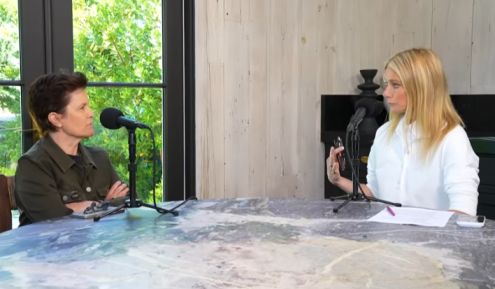
Read the full transcript of journalist Kara Swisher’s interview on The goop Podcast with host Gwyneth Paltrow, May 5, 2026.
The Art of Being Direct
GWYNETH PALTROW: Can I ask you something that I personally want to know for my own career development? How are you able to be so direct/confrontational? Is that fair with people? You’re not confrontational.
KARA SWISHER: Yeah, you can use that word.
GWYNETH PALTROW: Well, I don’t mean it in like— I don’t care. Yeah, I mean it in— Yeah, like I’m— I sort of like sometimes I want to ask somebody a question and then I go to like, this is going to be painful for them or uncomfortable. And so I don’t like— how do you do that?
KARA SWISHER: Because I don’t think it’s— I don’t think it’s rude to be clear with someone.
GWYNETH PALTROW: Right.
KARA SWISHER: And I sometimes— I don’t like the people that say, “I don’t mean to be a bitch, but—” because that’s always the rude question. Right. But I think when you ask someone something directly, really smart people appreciate it.
GWYNETH PALTROW: Yeah.
KARA SWISHER: Right. And I do think women do have an issue with being a good girl. Right.
GWYNETH PALTROW: Don’t fully be a good girl.
KARA SWISHER: Like, be polite.
GWYNETH PALTROW: Yeah.
KARA SWISHER: But they confuse it with saying what they want. Like, same thing with money with women. Like, when I used to manage people, all the men overestimated. Like, and I hate to be tropey, but it’s true. Like, this one guy’s like, “You know, I really think I need a raise.” I said, “I’m actually thinking of firing you. Interesting that we have such different viewpoints about your career.” And he’s like, “Excuse me?” I’m like, “I’ve given you evaluation after evaluation that I’m thinking of firing you, and if you don’t understand what I’m saying, it’s really hard.”
And then the woman was doing really well and just, I offered a raise and she was like, “Oh great.” And I’m like, “No, no, you need to ask for more because you deserve it and you should know.” And it was really interesting, but I just find it, it never hurts me to do that. And you should do that more. And they won’t expect it from some people. Right. But it’s not rude to ask a direct question.
GWYNETH PALTROW: Yeah. No, I think it’s more just like handling my discomfort or the perceived, right.
KARA SWISHER: So that’s my problem. Right. So you don’t want to make, but why are you, what are you making them discomforted about when you ask a direct question?
GWYNETH PALTROW: I think to your point around having been socialized to be a good girl, right? The idea that I could ask a question that would make somebody feel like they have to defend themselves in some way.
KARA SWISHER: Right.
GWYNETH PALTROW: And I guess because I also have been the brunt of that for so long.
KARA SWISHER: Sure. We talked about that when you came to Code, right?
GWYNETH PALTROW: And I think people do it to me for like clickbait. Like if they’re not really trying to get to an answer that they think they’re going to learn something from or is going to enlighten them, they’re thinking about the clicks. So I think that’s why as well.
On Reese Witherspoon, AI, and Women Being Dragged Online
KARA SWISHER: But you’re not doing that. So why do you pull back? So there’s a difference between rude and clear or direct. And I think you people play into it.
I mean, just today it was really interesting. I don’t know if you saw Reese Witherspoon talked about AI in a very fine way. Like, “We need to learn about this because women are 25 percent the usage.” And she said it, and then everyone, all these people, especially when piled on, “How dare you do this.” And so I posted, I’m like, “I’m not sure what to tell you, but she’s telling you something that’s actually accurate.”
And I’ve been a huge critic of AI, and we need to regulate it, and AI slop sucks, etc. And I said, but she’s telling you women need to learn about it because it’s here, and you’re pretending it’s not here, and you’re dragging her for it, right?
And she and I had had a discussion about this because I did a morning show thing, and she’s like, “Every time I say something, I better not say anything.” I was like, “No, you’re right.” Like, why are you not articulate? Now she won’t say anything, right? Because she got dragged. Because what— well, she didn’t say what you say. I was like, “Oh, so you’re going to police the things she says? Like, are you kidding me? Like, she’s never going to be able to talk about it.”
And so I was sort of perplexed as to why she got— she got s* for saying something I say all the time, right? Which is like, why? Well, she was too peppy. I was like, “Oh really? Did she not smile enough? Like, what are you talking about?”
And I’m worried. And then they come at me. I was like, “All right, you want to f*ing throw down with me? Like, she’s right.” And so anyway, it’s just, it’s the same thing. It’s just—
GWYNETH PALTROW: She is right. And I think though that this is the other thing too. Certain women are expected to present in a certain way. And I think that’s why I’ve messed people up so much along the way, because I was this thing and then I evolved into something else. And I think, you know, Reese is so brilliant. She works across so many different platforms and she’s beautiful and she’s wealthy and she’s blonde. And that’s “How dare she.”
KARA SWISHER: How she can’t say because she’s wealthy and I was like, “Really?
GWYNETH PALTROW: But why would she? You know what I mean? If she’s going to slightly stick her neck out to say something as innocuous as like, “Hey guys, like, we— this train has left the station, we better be relatively prepared, like we better educate ourselves on something,” and she gets dragged for it.
KARA SWISHER: Because you have to break through that. You have to keep going. See, to me, you’re not going to win. I mean, I do, but it’s like, so like, and also, what do you care about what random people say?
GWYNETH PALTROW: I’ve come to not care that much.
KARA SWISHER: Right, right. I mean, I have Elon Musk dragging me, so that’s kind of fun. A little bit.
GWYNETH PALTROW: No.
KARA SWISHER: Yes, it is. Yes, it is. Yes. I love being called a c* every day online. It’s great. So it’s a good thing.
The Feud with Elon Musk
GWYNETH PALTROW: How did this feud with Elon and you start?
KARA SWISHER: Well, actually, I talked to him a lot. You know, I interviewed him more than anybody. I think maybe you even might have been at one of the events where we did him. You know, he’s a complex person. Let’s begin with that. Used to be much more human, and now something’s happened. And then when you get to be that rich, I mean, you know, even you understand that, like, people agree with you violently, like, “Oh, nice job.” Like, they never give adequate feedback. And so he started to get irritated by people who had feedback, like normal critical feedback.
And so we had talking about after he bought Twitter, what he should do. And I had started some really interesting, innovative live events on Twitter by myself, and I had gotten a sponsor. And he wrote me, he’s like, “Well, how did you do this?” And I was like, “Well, this is a really interesting platform. You could really compete with YouTube. There’s going to be videos someday. We attracted 5,000, 6,000 people when I did it. I spun it up in an hour, which is a really nice number.” He goes, “We should get together and talk about it.” I was like, “Yeah, I’d be happy to, because I think it’s really important to create new media organizations for media people and new opportunities for modernization.”
And then there was a story about— I had been at the French Embassy and a guy came up to me— Ukrainian, as it turned out— and said, “Can you talk to Elon Musk about geofencing Crimea?” I was like, “What?” Like, he was part of the Ukraine Defense Ministry, and he said, “Elon is geofencing Crimea, can you talk to him?” I was like, “What? Why is he doing— why does— why is he making battlefield decisions?”
And so I said, “I’m not the one to talk to, you need to talk to our government about this, but okay.” And there was a story about what happened here is he gave people Starlink, and this is going to be such a ridiculous thing to have gotten into a fight over, but there was a story in the Washington Post about working with him, and I felt he should have been paid for free Starlink to Ukraine. I thought it was an incredibly generous thing to do, but he also shouldn’t have purview over battlefield decisions because he’s American, he’s a citizen, right? Like, this is not his thing.
And so one of the quotes in the Washington Post was, “Elon’s going to Elon, he’s going to do whatever he wants.” And I said, “Well, one, I think you should pay. Two, and Elon’s going to Elon, he’s going to do what he wants. But yeah, American citizens shouldn’t— a private citizen shouldn’t be making these decisions for the U.S. government, in my opinion. That’s just—” And his brother even was like, “All— no good deed goes unpunished.” And I said, “Yeah, it’s true.”
And then I didn’t hear from him for a while, and then I looked— I never look at my email— and he’d sent me an email: “You’re an asshole for tweeting that.” And I was like, “What are you talking about? I’m defending you. Like, I don’t know what you’re talking about, but I don’t— I think you shouldn’t have that decision-making power. I’m sorry, I don’t feel like that’s like utmost.” And he said, “I’m never going to speak to you.”
He had done this before once when he was mad about someone, a friend, something Walt Mossberg tweeted. And I was like, “Do I look like Walt?” You know, and again, the same thing. And he’s like, “You’re an asshole.” And that was it.
And then he started attacking when Paul Pelosi got attacked by that crazy QAnon person and almost got killed. He started posting that it was a gay conspiracy, that he was his lover. And I was like, “This is f*ing heinous. Like, how dare you?” And then he kept doing it with white supremacist stuff, Andrew Tate stuff. And I was like, “What is wrong with you?”
And you had seen bits of it during COVID when he told me that only 15 people were going to die. And I was like, maybe not. Like, I feel a million is what usually happens during a plague historically. And then he argued about when the government was closing his factories. And I said, “Look, we don’t know what’s happening. Maybe we should opt for safety over—” and he got all furious about that. His mother got mad at me and it was just weird.
GWYNETH PALTROW: Wow.
KARA SWISHER: They’re so weird and touchy. Like, nothing I said was like, “You look fat.” Like, I didn’t— which you did, but that’s fine. Like, I didn’t do that. Like other people did. That was Ari Emanuel’s picture, not mine. Oh my God. And I never made a comment about his looks. I don’t know. These people.
Covering the Rise of Silicon Valley
GWYNETH PALTROW: Yeah. Well, it’s interesting to me too, because in a way you’re sort of an instrument of their rise.
KARA SWISHER: Mm-hmm. Yes, I am. 100%.
GWYNETH PALTROW: You are the person, well, you are among a top few people in a very early fashion identify these people.
KARA SWISHER: Mm-hmm.
GWYNETH PALTROW: Right through, I imagine, the work they’re doing.
KARA SWISHER: Right.
GWYNETH PALTROW: And you platform them, you amplify them, you give them prominence, voice, etc. Right. So how does that then sit?
KARA SWISHER: I don’t know. I don’t see it as a PR thing. It’s like I covered them. Like I was the first person who covered a lot, like Jeff Bezos when he was poor, which he’s not now, apparently. Really?
GWYNETH PALTROW: Yeah.
Early Days of Silicon Valley and the Rise of Tech Giants
KARA SWISHER: When you can rent Venice, that really helps. It’s a little tone deaf, but in any case, I don’t really care. It’s not my business. So yeah, they were all nobodies, really. And I was covering an industry most people disdained. The media people were like, “This isn’t going to—” like, we’re the top dogs here, the media companies, whether it was Time Warner, whatever it happened to be. And I was like, I don’t know, this internet thing seems like it could affect everything.
And I think one of the things they appreciated, and why I called my book not just Burn Book, but A Tech Love Story, was because I was like, this is going to change everything from newspapers to me. So I really was a real early, early, early understander of it. And then who was going to be successful and who wasn’t was really—
GWYNETH PALTROW: And how were you able to discern who was going to be—
KARA SWISHER: I wasn’t always. I thought initially eBay was ridiculous, and it was in the end. But initially I was like, I don’t get it. A lot of stuff I didn’t get. But I certainly, when I saw Google, I was like, “Oh, I see this.” Or when Elon first started talking about Starlink, I remember him telling me about it. I was like, “You’re 100% right about these low Earth satellites.” Or when he started talking about Tesla and stuff like that, it was like, obviously this is where history is going.
And I think one of the problems is they lack self-awareness — that once they did one thing, they thought they were good at everything and they were experts on everything. So now, do I really care what Elon Musk thinks about DEI? I do not. Nor should I care about— I like experts talking about it.
So initially it was very innocent in a lot of ways, but then it quickly became about stealing your privacy, stealing your content, stealing IP. There were warning signals. Like, I was walking through Google once with Larry Page and they had a room full of dark televisions on the wall everywhere, hundreds of televisions. And I’m like, “What are you doing?” Because they always had weird things. Like, all of a sudden you’d see a fish pond or something. They would have something weird happening. Have you been to Google?
GWYNETH PALTROW: Yeah, once. I think we have a mutual acquaintance. My friend Pat Keen.
KARA SWISHER: Yes, yes, of course.
GWYNETH PALTROW: So Pat, when he was at Google, he took me.
KARA SWISHER: Sure. It’s cool.
GWYNETH PALTROW: It was cool.
KARA SWISHER: It was like, “Oh, here we’re making kombucha and then over here we’re doing this.” And so it was always something weird. There was one time there was a Quonset hut they had in the office.
GWYNETH PALTROW: Pardon?
KARA SWISHER: They wanted to test out office things — a Quonset hut. They thought it was interesting. It was always like that. It was like, suddenly there’d be a horse, right? All right.
GWYNETH PALTROW: Well, I feel like this whole wave of founders were all about being iconoclasts.
KARA SWISHER: Iconic, yes. Sometimes performatively so. Like, we want to build a chairlift in San Francisco to help people up the hills. I was like, that seems stupid.
GWYNETH PALTROW: That’s not really—
KARA SWISHER: Well, both Gavin Newsom and I — at the time he was mayor — we were like, they in front of us were like, possibly no.
Copyright, Content Theft, and the “Information Wants to Be Free” Mentality
So we were walking through Google, and he had all these television sets. And I was like, “What are you doing?” And he goes, “We’re taping television.” Like, he talks like that. And I was like, “All of—” He’s like, “All of television.” And I was like, “Oh, for what?” And he goes, “For search, because we’re going to learn how to search video and audio.” And I was like, “Huh, interesting. Did you get permission from the copyright holders of all those television shows?” “Why do I need that?” I said, “Because you’re stealing.” “If you do it, no one else will.” Same thing with books. They did the same.
And I was like, “Because there’s copyright, everyone should have all the information.” I was like, “But you didn’t pay for it.” They did. And at the time he was like, “What are you talking about? Information needs to be free.” I said, “But it isn’t free. All these studios paid for this stuff and they own it and there’s all these owners.” “Well, they’re keeping it from the people.” And I’m like, “Yeah, but now you’re taking it and selling it back to the people.” Anyway, it was the time.
GWYNETH PALTROW: That seemed to be an early issue, right?
KARA SWISHER: With music. I mean, you know this, right?
GWYNETH PALTROW: Exactly.
KARA SWISHER: I mean, all those Napster fights.
GWYNETH PALTROW: So yeah, I remember it well. And still to this day, I mean, that business model is just completely—
KARA SWISHER: But they’re doing it now. Right now with content, they scrape my content. I’m sure they’ve scraped—
GWYNETH PALTROW: They probably see bots on Goop all the time.
KARA SWISHER: All the time. Not just that, you yourself. Oh yeah, there’s enough material to make a bot of you. Like, here’s Gwyneth — Gwyneth AI essentially.
GWYNETH PALTROW: Then can I f*ing retire?
KARA SWISHER: No, they’re not going to give you the money, but they do it all the time. Grammarly made a whole Kara Swisher advice thing without Kara Swisher’s opinion about it. I threatened to— I mean, I was like, “I’m going to sue you f*ers. What are you doing?” But they can do that.
And then in the worst way — and you as a parent understand this — they’re doing— and it’s bad for our health too, by the way, is AI bots. And I’ve been interviewing the parents of kids who commit suicide for 2 years now, and saying this is dangerous. They are acting like therapists and friends, and a human being having these interactions would be arrested for what these people are doing. But they don’t care. They just put it out for 13-year-olds and don’t think they have responsibility for their shoddy, sh*y products.
GWYNETH PALTROW: And what’s the regulatory— none, right? And they’re paying the bill now. Your favorite person, Mark Zuckerberg, and the impact that he’s had on—
KARA SWISHER: Right. They’ve amplified and weaponized almost everything for their shareholder benefit. And that to me is like, great, I love innovation, but excuse me, you don’t pay the cost. The rest of us have to pay for you.
The Idolatry of Wealth and the Lack of Accountability
GWYNETH PALTROW: How did we get here as a culture? I mean, obviously there’s so much revenue and profit driving this whole thing. That’s at the heart of it. But how do you think we got to this place in culture where nothing matters, and now all that matters is these super rich white dudes who are breaking rules, setting rules, seemingly not caring so much about the downstream impact on everything — mental health, culture?
KARA SWISHER: They don’t think they’re responsible for the death. I had a famous interview with Zuckerberg where we talked about antisemitism. At one point he said Holocaust deniers don’t mean to lie. And I was like, they do. That’s the definition. But then I let him talk because I need you to understand his mentality, which was, “I am not responsible for everything downstream. It doesn’t matter.” But if he was a chemical person dumping sh into the river, he gets sued.
How did we get here? I think we have an idolatry of innovators, an idolatry of wealth. And if you’re wealthy, you must be smarter — when they got all manner of shortcuts. And the innovations that they took advantage of were paid by the American public, by the way. The internet was invented by the United States government, not them. And it’s great to be innovative and make these things. And this rocket stuff — I’m so impressed by what SpaceX is doing. We can argue about the valuation of it, but it’s still astonishing. And at the same time, why does a small homogeneous group of people get to decide for the rest of us?
GWYNETH PALTROW: Yeah, I’m fascinated by it because I feel like there’s something so endemic to being an American about this idea of—
KARA SWISHER: Yes, of course. Go west, young man, right?
GWYNETH PALTROW: And this idea that anybody can do it from whatever socioeconomic background, and that’s sort of true. But we put this hierarchy where it’s like we’re so hungry for a hierarchy in order to make sense of our lives or something like that. And we imbue these guys with this extraordinary— I don’t know, like godlike—
KARA SWISHER: Godlike, right. But they’re not. That’s the problem. When I was writing for The New York Times, I was just doing columns because I wanted everyone to hear it. Everyone’s like, “Why did you just do it for The New York Times?” I’m like, “Because people pay attention to it.” I was doing it at my website and it got impact, but it didn’t have the— in fact, the first story I did was called The Expensive Education of Mark Zuckerberg, and it was about our cost, not his. He’s learning on the job, but he controls social, he controls communications, and he’s really not very smart about these big societal issues. Actually, quite not smart.
Because he’s not capable of deciding how to enforce free speech and what hate speech is. It should come down to our elected officials, our judges, our lawyers. I mean, it’s in the Constitution, right? But it’s one of the things that drove me crazy. Did you read the First Amendment? Because it says “the government shall make no law” — not you. You can control your products so that you make it safe. Just like beef. There is bad beef or bad food, but people have to pay— well, they don’t have to pay enough for it.
Trump, Propaganda, and the Limits of Outrage
Anyway, one of the things that really struck me — in 2019, I wrote a column where I said Trump was getting really dangerous online. I had studied the Holocaust, I’d studied all manner of propaganda in college, and I was like, “What he’s doing is very dangerous to let him go on.” And I get the whole thing — he’s the president — and so whatever he says, we’re not used to whatever demented diarrhea he pumps out every day, which is getting worse because Grandpa’s losing it a little bit.
GWYNETH PALTROW: That phrase is going to stay with me. It’s diarrhea.
KARA SWISHER: It’s what it is. It’s like— and we’re like, “Hmm, what does this diarrhea mean?” I’m like, he’s old. And crazy and racist. Every time someone goes to me, “Can you believe what he said?” I go, “Yes, I do.” Grandpa’s crazy. Grandpa’s racist, crazy, and addled. And also misogynist, sexual harasser. We got all the information we need on this fella. And it’s always like, “I can’t believe it.” That’s what drives me crazy about the left.
GWYNETH PALTROW: I think what people are saying is, no matter how real, imagined, performative or not, whatever is happening, it is never not unbelievable.
KARA SWISHER: Which is good to say — can you believe it?
GWYNETH PALTROW: Like, whatever his strategy is, it’s impossible to figure it out and know what it is and sort of be able to rest your laurels on, “Oh, it’s this or that.”
Sam Altman and the State of AI Leadership
KARA SWISHER: The same thing happens around political discourse. I wrote a column where I said — and I’m not going to tell you the date I wrote this — I wrote a column saying Trump is on par to start — what if he loses the election? I’m going to give you a hypothetical. If he loses the election, he’s going to tweet out to his followers, or whatever platform he happens to be on, Truthout, to do something about it, and in a physical way stop the elect — stop the votes from being counted. He will do something in the real world, and so online hate will jump offline, I said, and there’s going to be an insurrection. And I used the word insurrection, which was crazy.
And I said, what would you do? I posed this question to all these leaders and they’re like, well, we take them off the platform. I’m like, or we do this, we do that. And they said, what would you do? I said, I wouldn’t have let it get this bad to begin with because this is where it was headed very clearly. I wrote it in 2019, which was crazy. In the fall of 2000, I was like, this is exactly where it’s headed. Because you could see the movement. And at the time, I got so much pushback from Facebook and Twitter. They were like, “How dare you say we are insurrectionists?” And I said, “No, you’re handmaidens to sedition is what you are.” And very willing ones because you make a lot of money.
And so I was like, this is exactly what’s going to happen. Like, it’s so easy to see and I hope it doesn’t, but it’s not that hard to figure out. And so that’s the kind of stuff — they just allow an enormous amount of misinformation and disinformation to go around. They benefit from it. And then they are so rich now, so rich, crazy rich. Our legislators are unable to do any legislation anywhere in the country. So states try to do it on some level. And the same thing is happening now around AI.
Like I said, these parents have these lawsuits that are happening. They’re not going to get out of it. Eventually they will pay the price. But boy, are they good at — like right now with AI, Trump is a coin-operated president. Who was standing in the front row of that inaugural? It wasn’t the elected officials. It was Jeff Bezos. It was Sundar Pichai from Google. It was Mark Zuckerberg, all their various wives. And they were there. That’s who was sitting. Sergey Brin was in the back. Sam Altman was there. Tim Cook was there. Why were they there? Because he’s a coin-oper — at least we understand Trump on some level. He’s a corrupt, coin-operated president. Not that I like that, but I get him.
GWYNETH PALTROW: Can we talk about Sam Altman for a second? Because obviously he’s an interesting figure.
KARA SWISHER: Complex.
GWYNETH PALTROW: So what is your take on Sam Altman?
KARA SWISHER: I met him when he was 19, when he had a company called Looped. 19 or 20, maybe.
GWYNETH PALTROW: See, this is what I’m saying. You meet all of these guys so early and you kind of get adjacencies in these.
KARA SWISHER: Or you understand them a little better. You saw them before, in the before times. Often people are exactly the same way — rich, they’re the same. They’re jerks rich and they’re jerks poor. It doesn’t really matter. Some people evolve. Mark Cuban couldn’t be a more wonderful person now. He’s a great guy.
GWYNETH PALTROW: Nice guy.
KARA SWISHER: But he was kind of a frat bro jerk when I met him. We had a lot of f you checks back and forth. No, f you. No, f* you.
GWYNETH PALTROW: You seem like you have a lot of those.
KARA SWISHER: I do, but they end up being friends. I just had lunch with him. He’s great, and he’s doing all this stuff around prescription drugs that is great. It’s amazing.
GWYNETH PALTROW: Amazing.
KARA SWISHER: Really amazing. Does he need to do this? Could he be on a boat in the south of France enjoying himself? Certainly.
GWYNETH PALTROW: But some people are really motivated by solving problems. And I think it’s a values thing, right? It’s like, I recognize a problem, or I recognize an injustice, and they sort of throw their weight —
KARA SWISHER: Like a MacKenzie Scott, right?
GWYNETH PALTROW: Right.
KARA SWISHER: It’s a perfect example. And we’ll talk about her later because she’s been giving a lot of money to health initiatives that are really important right now for a lot of people versus themselves.
And Sam is complicated. He’s one of the few out gay people — there’s Tim Cook, him. So that’s an interesting thing to take into mind because it’s not misogynistic, but it is — it’s a different kind of misogyny, you know what I mean?
GWYNETH PALTROW: It’s kind of not as explicit, but you know, it’s also — to be homo —
KARA SWISHER: There’s homophobia, there’s stuff like that. So in that time it was different for sure. And so I was always interested in him. And he also had a sort of a reputation for being manipulative, which — you saw the Ronan Farrow piece, which I thought was pretty fair, although Sam didn’t.
GWYNETH PALTROW: I didn’t read it actually, but yeah, it’s an interesting piece.
KARA SWISHER: It’s complicated. And one of the things he has is he’s sort of an aims-to-please person. At the same time, he can seem disingenuous. Which I’m like, I’m sorry, get in line. You want to stack ranks disingenuous? I’m putting Peter Thiel up near the top, Marc Andreessen and Musk. Which is a terrible way to live, but so he was really complicated.
I like Sam. I actually do. At the same time, I recognize what he’s doing. He’s a real hustler. And he’s not as concerned with safety, and less so. He and I had a back and forth in this docu-series about that, about these kids, about the AI chatbots. I’m like, I think someone should go to jail here, or take responsibility, or at least be sued so these parents get some —
GWYNETH PALTROW: You said that to his face?
KARA SWISHER: Yes.
The Accountability Problem in Big Tech
GWYNETH PALTROW: Yeah.
KARA SWISHER: So he’s complicated. And I think Ronan very fairly depicted the uneasiness around him, in terms of who are these leaders who are running companies that are going to have such massive implications on our society. Now, we never knew the head of Lockheed or the head of whatever, but if you go back in history, Henry Ford — great industrialist, the car, thanks for the car — was a huge anti-Semite. He used his Ford dealerships to put out this Dearborn newspaper that was full of anti-Jewish, anti-Black, anti-women content. He was just a miserable son of a bitch. Same thing. He had a lot of impact during that time period because of his crazy —
GWYNETH PALTROW: Yeah, and imagine with so much less distribution. Like, everybody has —
KARA SWISHER: Right, exactly. And so these people are making — so, anyway, Sam is complicated, I would say. And I might predict he might not be head of OpenAI. There’s a lot of —
GWYNETH PALTROW: That’s what I was going to ask you next. Yeah.
KARA SWISHER: Yes, I think so. I think there’s some real questions. The Journal just had a piece about his investments. “I don’t make any money from OpenAI.” I go, “Oh, stop it. You’re going to. There are benefits for you.” He has other investments. They’re a little bit opaque for people. And if you’re a public company, you can’t be this opaque. And so he’s going to have to answer for that.
That said, a lot of his critics can be a little high-handed. Like, they’re all making money. Like, “I left OpenAI so I could be pure and do safety, and I just took $2 billion from Andreessen Horowitz.” I’m like, oh, all right, got it. Okay, you’re helping the people.
GWYNETH PALTROW: But isn’t there something — I don’t know, for me, I feel like he’s sort of the fall guy for AI. Like, he seems like he can never win in the public forum, whichever —
KARA SWISHER: He said a lot of stupid things. Like — not that one he said. I mean, yes, of course I’ve said dumb things.
GWYNETH PALTROW: I’m sure you’ve all said —
KARA SWISHER: Sure. But I didn’t say, “You know, having children takes a lot of energy, so why are we worried about AI?” I was like, “Didn’t you just have a baby?” First of all, he just had a baby, which I’m very happy for him. But I was like, “That’s really not something you should —” Like that one, or Zuckerberg saying, “Holocaust deniers don’t mean to lie.” If you’re in those positions of authority, you might want to think carefully about how you put stuff out. And so I think —
GWYNETH PALTROW: But at the same time, and I’m not defending anybody, but people are human, right? People learn on the job, especially in a completely new sector. People sort of discover who they are and what their principles are around it, and where their limits are.
KARA SWISHER: Except they have no price. Like, Mark Zuckerberg can’t be fired, his children can’t be fired. You can be fired, I can be fired. Well, actually, I work for myself, so I’m not going to ever be fired. But whatever. They don’t have any accountability, so there’s no ability to do anything about it.
And one of the things that I’ve noticed among all the moguls is they can’t shut up about anything. And now it’s extending to other people like Bill Ackman, who’s a famous hedge fund person.
GWYNETH PALTROW: Well, they’re empowered by their own success and lauding.
KARA SWISHER: And why am I listening to him on something that he doesn’t know anything about? And so they really — you’ll see it with all of them. They’re sort of like, I might as well tell you about this and that. But the fact of the matter is they do have their hooks into all our legislators. They have PACs, money going to these PACs. I disagree with that.
GWYNETH PALTROW: Just structurally, I don’t know. There’s —
KARA SWISHER: We’ve got to get rid of Citizens United. But not just that. These PAC structures — look, Elon tried to affect an election in Wisconsin, and he lost. He spent $25 million because he’s an incredibly unattractive spokesperson for the people. You don’t like the jumping? No, that cheese hat did him in. When I saw the cheese hat, I was like, it’s done. The people of Wisconsin do not like you frolicking in their cheese hat. They like their cheese hats, but not on you, my friend.
Enragement Equals Engagement
KARA SWISHER: And so it’s really the lack of accountability. But I do think what they’re trying to do is break us apart and show our differences versus our commonalities. The technology breaks us up. It is meant — enragement equals engagement. It’s true. Except that we have a lot in common. And people are starting to — look, you have Marjorie Taylor Greene agreeing with me about what we need to do about chatbots or whatever. Like, she was just the other day on with Caitlin Collins on CNN, with Ro Khanna, and they were talking about the war and where they agree. And I literally texted Ro and I was like, what the actual f* is happening here? Like, what is happening? There was overlap. And I was like, kind of happy about that. Like, look, we’re going to disagree. And she’ll go back to some stupid trans thing she’ll say, which she can’t help herself. The rubber band always goes back to shape on certain issues. Maybe she’ll become enlightened about —
GWYNETH PALTROW: I don’t know. I feel like that whole issue is such a red herring.
KARA SWISHER: It’s a red herring. I’ve interviewed one guy. He’s like, “This is the most important issue.” I go, how many people? Please. How many people? But it —
GWYNETH PALTROW: They know it riles people up.
KARA SWISHER: Yes, it does. And it certainly does because it goes to fairness, I guess, on some level. But it’s so stupid. It’s such a — like, this is what they’re doing. They’re doing this with the shiny objects. And online, the shiny objects become super toxic. And it doesn’t have to be online. It can be Fox News. Like, my mother called me about trans fencers recently, and I was like, it’s not an issue.
The Bot Problem and Social Media Manipulation
GWYNETH PALTROW: Was she upset? Yes, it’s terrible. You mean fencing? Like, fencing?
KARA SWISHER: How many are there, Mom? None? Oh, okay. I think we can move along. And by the way, you’re 92. It doesn’t really matter for you. Like, in the end, I just think it’s interesting. Like, I always try to think — the plague of transphobes. We must do something about it. Children’s poverty? No, no, no. Transphobes. They’re everywhere! Transphobes!
GWYNETH PALTROW: I just always try to think about what is underneath something that becomes so motivating, so urgent for people. And is it — what is it? What is the fear underneath this sort of drummed-up threat of trans people?
KARA SWISHER: I don’t think it’s actually there. Years ago, I wrote a story which was really interesting. It was around celebrity stuff. So, do you remember when Roseanne called Valerie Jarrett a terrible name? She compared her to — I do. Remember that. So she got drummed out, justifiably, by the way, ’cause she’s crackers, I gotta say. And come on. Don’t know her. Let’s be — I’m just saying. Watch her, okay? Allegedly. Anyway, so she gets drummed out. And then Sam Bee, who I love, he’s terrific, said something about Ivanka, called her a name, got in trouble. Same thing. Probably shouldn’t have done it. I don’t like the name calling. Don’t like it. Don’t like it. Unless you’re in Britain and then you can use it freely, whatever that particular word is.
GWYNETH PALTROW: You know what? Just, okay.
KARA SWISHER: Don’t love it. I get it. But I’m just saying in Britain it’s sort of like —
GWYNETH PALTROW: In Britain it’s less. Less. But like any name calling, it’s so juvenile.
KARA SWISHER: Or at least do it with a British accent. Anyway, so I’m just teasing. It’s not great. So she got in trouble. So there was all this online thing. And I was like, this is a lot of online thing for something — I get it, but it was crazy. So I got this company that watches bots. These are bots that create situations. What happened was these bots said, “Can you believe Roseanne Barr? How dare she?” But then the same company —
GWYNETH PALTROW: I’m confident in a British accent. Yeah, right, whatever.
KARA SWISHER: That’s — I’m doing what I think bots sound like. Perfect. So this was a bot that was like, “How dare she do it?” But the same company was putting out stuff that said, “She’s right. It’s true, blah, blah, blah.” So it was creating these fights, and then humans got involved, but it was the bots who started it. The bots should be illegal. Exactly. And then the same company was on the CMB stuff. So it was the same company making the trouble, and then people — like, it’s attracted to an accident.
GWYNETH PALTROW: Those people are the see you next Tuesday.
KARA SWISHER: It could be Iran, it could be Russia, it could be just companies creating controversy, it could be political things. And so we, as human beings, are going to be attracted to a traffic accident and immediately go into tribalness. And that — to me, it’s so selfish on their parts to not understand the deleterious impact they have on all of us.
GWYNETH PALTROW: I think they understand. I think they’re just, you know, it’s like Milton Friedman — they just profit, profit, profit.
Tech’s False Altruism
KARA SWISHER: The first line of my book was, “So it was capitalism after all.” But what drives me crazy — I’ve never had a Hollywood person, and listen, I have lots of issues with Hollywood, go, “I’m here for the people, Kara. I’m here to help everyone through my —” Some of them do it, but you know, like, “I’m here for the money. I’m selling the movie. I’m doing this.” Same thing with, like, I’ve never heard a banker go, “What I really want is all of us to get along.”
I just don’t expect it from them. But the tech people always had to say, “I’m a simple person, I’m here for the people, I’m here for —” How many times did I have a conversation with Mark Zuckerberg about how he’s here for the community? And I was like, so why do you get — why can’t you be fired then if you’re here for the community and we’re all making decisions? Why do you get a stock that allows you to make every decision?
GWYNETH PALTROW: Have you talked to him?
KARA SWISHER: No, no, he doesn’t talk to me. Not after the second two times we did interviews. One, he sweat — if you remember the sweating one where he sweat and had to take his thing off. Not my fault. Not his fault.
GWYNETH PALTROW: Did you make the room really hot?
KARA SWISHER: No, I did. Yes, I did. I did. I did everything. I gave him some chili peppers. No, he just had a panic attack. That’s all that happened. Wow. But I tried to help him by taking off his coat. Right. And then when he did the Holocaust thing — but I didn’t say it. I actually tried to stop him. I was talking about Alex Jones. I was like, “Mm, we shouldn’t go to Holocaust.” Right, right, right.
GWYNETH PALTROW: ‘Cause you’re wrong.
KARA SWISHER: Like, it’s bad. And he did it himself. And also we treat them like children, like they’re toddlers. Like, oh, what did he say? I’m like, he’s really rich and he’s really powerful and we’re treating them like —
So what is the way forward through this stuff? I think some regulation, but not to quash innovation. Things naturally tend towards a monopoly. They tend to. But then you have these — it’s like company towns. Shouldn’t — how do we push innovation in this area where AI should be — there are a lot of cool innovations happening. And how do we avail ourselves of that?
It’s like saying, you know what, plain old telephone service was critical for economic development, or the road, the highway system. What stuff is critical for the future of everybody, and where should they be taxed on that? Like, what if they had left telephone service just to the private companies? Do you know what would have happened? We wouldn’t have had it. Only the rich would have it, not the poor. And so what is critical to everything? Like, same thing with healthcare, the whole thing. Why can only the rich benefit? And why did they get to make decisions?
Like, I had a discussion a long time ago with Mark when he was giving money to the Newark something. They were giving enormous amounts of money, and then they want kudos for their generosity, which I’m like, thanks, but really — that’s what the money’s for. That’s how you can assuage yourself. And he was like, “Well, I think it was generous.” And I was like, yeah, but why do you get to decide our priorities? Why don’t we just tax you and let our elected — well, elected officials don’t know. I go, yeah, but they’re elected. Like, I don’t like Ted Cruz, but he was elected, right? And so shouldn’t he have more power over — I can’t believe I’m saying this. I’ve said it several times on this tour, but he should.
GWYNETH PALTROW: No, I know.
KARA SWISHER: Sorry, but he should. The people of Texas picked him. Even Donald Trump should have more say, although he’s gone overboard on that issue. But he was elected.
The AI Free-for-All
GWYNETH PALTROW: Okay. So that is a really good segue to talking about your show in terms of how the wealthy people are sort of — even in your telephone company example — what would have happened if it had stayed privatized. But before we get there, because I’m dying to talk to you about this too. So right now it’s an AI free-for-all, like all the VCs. I have a small fund, like everybody’s — we’re AI this, we’re AI that. Are there —
KARA SWISHER: Are you going Ben Affleck, I want one of those deals? I had that deal.
GWYNETH PALTROW: Oh, you did? Oh, yeah. Oh, good. In 1990. Oh, right. Yeah. You know? Yeah. I don’t know. In the ’90s, I had that. Yeah. Yeah.
KARA SWISHER: You were active. There were a couple of you that were on board early.
GWYNETH PALTROW: No, not that kind. I mean, like —
KARA SWISHER: Oh, yes. Oh, you went out with him. I forgot. Hello. Hello. See, that’s how much I pay attention. No, me too.
GWYNETH PALTROW: I forgot. Listen, it was like 30 years ago at this point. Okay. You’re excused. But investing is so interesting and it’s a whole other learning curve, right? Because it’s like, what are the ethics of this? And we invested in OpenAI very early — not very well, pretty early. And it’s sort of like, okay, and I still think the company has great legs and Sam could do the right thing. Like, I think he has a great opportunity. But who are the founders in AI right now that are not yet household names that you’re super interested in?
KARA SWISHER: You know, it’s interesting because who is the Uber of this? Who is going to be the AI for insurance? Who is the AI? I’ve noticed a lot of billboards. Oddly enough, there are a lot of Hollywood billboards, but suddenly there’s the legal AI, and Jude Law’s face is right there. You were in that movie with him — his face is there for legal AI. Oh really? Yeah, yeah, it’s on Sunset. Like, I know it’s called —
GWYNETH PALTROW: Listen, I would buy anything. Yeah, right, exactly.
KARA SWISHER: I was like, obviously the expert on legal AI is Jude Law, but fine, whatever.
GWYNETH PALTROW: Doesn’t matter. It doesn’t matter.
KARA SWISHER: Yeah, he looks good. He’s a rather large thing. But so there’s one for legal, there’s one for —
GWYNETH PALTROW: So you’re saying if you’re looking at AI as infrastructure, what are the interesting companies built on top?
KARA SWISHER: Early internet was Yahoo. Google came along later, some of the search engines. But then there was all manner of business in each area, right? Whether it was software, hardware, whatever it happens to be. So there are going to be a zillion companies and they’ll fall away.
GWYNETH PALTROW: They’ll —
KARA SWISHER: Some of them will. It’s like, most of them — like, there were 400 railroads at one time and then there weren’t, right? Now we have shitty Amtrak. I’m like, yay, we win. But that’s really the problem — which ones are going to be it. And so if I were investing, I think, who is the leader in legal? Who is the leader in record-keeping? Who is the leader in accounting? It’s going to be the boring ones, and that’s where the real money is going to be made.
GWYNETH PALTROW: Okay, there’ll be one or two winners. But do what you know.
KARA SWISHER: If you’re making investments, what do you — what’s something you have made more efficient using AI?
AI in Practice
GWYNETH PALTROW: I mean, I would say primarily the most fundamental thing is my bandwidth, right? Like, I use Granola to listen in on all my meetings. My enterprise AI is connected to everything. I get summaries. I can — it can look across my Slack and tell me where there are bottlenecks on my team.
KARA SWISHER: So agentic is how you use it? Exactly. This terrible word they’ve made. Yeah, it’s very, very —
GWYNETH PALTROW: I mean, so I would say I engage with AI all the time, right? And I find it incredibly useful, right?
KARA SWISHER: But weren’t you in the movie where they showed it off with the assistant that talked to him all the time?
GWYNETH PALTROW: Oh yeah, think about that. Iron Man.
KARA SWISHER: Yeah, Iron Man. Yeah, you were in that movie. I saw you — you looked really nice in the suit. But coming from you, yeah, it was good. Well, it’s always good to wear a metal suit that can kill people. But that — think about that character in the show. That’s how it could be, right? And I think if you look to science fiction, you can see where things go — like, just to wear a road map, like a wearable, like 10,000 steps. What the f* does that mean?
GWYNETH PALTROW: Well, what do you think about that?
KARA SWISHER: It doesn’t mean anything right now. But with AI, you could go — what if something was in your ear, like you had an AirPod or whatever it happened to be, and you ate a donut, and instead of saying 10,000 steps — like, what does that mean? What is it? It’s data without meaning. Because you know, you just say that, “Donna, what you really need to do is get up right now and go grab a cucumber and go for a walk.”
GWYNETH PALTROW: Use up that blood glucose.
KARA SWISHER: Right, exactly. Like, do instead of monitoring, it would know.
The Future of Health Tech and Personalization
GWYNETH PALTROW: But that’s all coming, I think monitoring is the first step.
KARA SWISHER: Yes, it is, but it’s useful. When does it become— when does it— right now it’s all kind of fun and interesting, but when is it provably useful to your life?
GWYNETH PALTROW: I think it depends on the person. I’ve worn an Oura Ring forever since. I had one, I’m not wearing it today.
KARA SWISHER: I don’t know what it’s telling me. It’s not telling me enough yet.
GWYNETH PALTROW: For me, it tells me a lot. And longitudinally, it tells me a lot. Yes, it does. Especially going through perimenopause and these big changes. I really rely on— but I’m that kind of person.
KARA SWISHER: You are. But it has to become very easy for people to understand why they’re using it. And actually, a lot of science fiction does explain that. Iron Man does. I’m always like, pay attention to Jarvis. Because Jarvis is how it’s going to be, or it should be. I’ve looked this up for you, but then it has to be accurate. It has to be scientifically proven. It can’t give you bad information, and it can’t be f*ing sneaky and doing all manner of things behind the scenes.
A lot of it is like, if you look at early internet sites, everyone’s like, oh, it’s glitchy. It’s not going to be. So what are the applications that you could use, especially ones that are actually actionable information that you can use, that are scientifically proven rather than just getting your information from some lady on Instagram?
GWYNETH PALTROW: But there’s science behind why 10,000 steps a day, more or less.
KARA SWISHER: There is, but it’s not enough. It’s like, because it has to be individualized to you.
GWYNETH PALTROW: Completely.
KARA SWISHER: Right? And what you’re doing that day.
GWYNETH PALTROW: And this is why it’s about to get so exciting. It is, 100%. Because with the hyper-personalization of your data or assessments made on all of our data cheaply, and at scale, we will have the power as individuals to really positively impact how we feel.
Health, Wealth, and the Democratization of Wellness
KARA SWISHER: It is sent out among everybody, and that’s the problem. Now it’s whoever can pay the price, right? And so isn’t that how it starts? Not always, no, because right now there’s so much great information out about people’s behaviors and everything else. It’s being sold— our health is being sold back to us in a way that it needn’t be. And a lot of the things, as you know, that you do for health are not profitable. It’s not necessary, right? It’s diet, it’s sleep, it’s exercise.
GWYNETH PALTROW: 10 minutes in the sun.
KARA SWISHER: 10 minutes in the sun. It’s social. It’s water, right? And it’s loving.
GWYNETH PALTROW: Yeah, social.
KARA SWISHER: Loving your people. Social’s number one. Someone was like, what have you learned from this? One of the things I learned is like, don’t be poor, be rich. That helps with longevity. I’m sorry to tell you, every study shows it. And the second thing is social interaction and being part of a whole and a community.
And a lot of what online has done to us is hurt our health. It just has, demonstrably. Of course, we sit more, we scroll more. It’s not just sedentary— we’re lonely, we’re isolated. Men, young men spend too much time with porn, and young women, the self-esteem is— I interviewed your— Scott. Yeah, he has this thing. A good talk about it. He should get the f* offline so much. But he did, he went off Twitter, he feels better.
But what’s really the problem is that it’s being used to sell products to us before they’re baked, and whether there’s enough science to them. And secondly, you’re looking for these easy fixes.
GWYNETH PALTROW: But don’t you think on some level— and look, as an early pioneer, we definitely got criticism for that.
KARA SWISHER: Planes are covered with bodies.
GWYNETH PALTROW: But I think, because really we were always in integrity and the intent was not to exploit— we’ve always come through it. But I do think there’s a— for a certain— and again, it’s like part of this American sort of— let’s try it— optimization. Let’s try, let’s see how much we can be the stewards of our own outcomes, across all different verticals.
And I think with wellness, because of the pharmaceutical industrial complex, our medical complex, the way that the diabetic industrial— I agree with all people who are like, hey, wait a minute, I don’t trust this. And I understand that there’s all this— these big pharma companies giving me all this data about why all these drugs are going to help me. But like, what if I just try eating better or moving my body? And from the felt experience of taking small steps to improve wellness, it all kind of—
KARA SWISHER: It is. But there’s a quote I use in the book which was from a French philosopher, and he’s like, “When you invent the ship, you invent the shipwreck. When you invent electricity, you invent the electric chair.” Why do we have to disdain the good parts of the technology, which are really real, and will help us optimize, if that’s the word you want. I don’t love that word because it’s always used selfishly.
GWYNETH PALTROW: I don’t actually love it either, but I struggle to find another word.
KARA SWISHER: Right. But it’s to try to figure out— why not think about what’s better for the rest of us? And the way it’s being articulated to a lot of people, especially because all these tech billionaires are paying for it— some of them are doing it well. Larry Ellison’s doing it well with institutes and science and everything else. How can we take science and technology and use it for the betterment of everyone versus a small group?
GWYNETH PALTROW: And it’s done in this way because everybody thinks about it the same way they think about trickle-down economics, right? Like, the rich people will do it and then we’ll get it.
The Biohacking Obsession and Its Pitfalls
KARA SWISHER: Not ever true. It is not true. And so what we do is— there’s a lot, and again, Hollywood’s a good way to look. There’s a lot of movies— I’m recalling there was a Jodie Foster movie with Matt Damon where he’s on the Earth and can’t get the medical attention. What was it called? I forget. Up in the Sky. She’s a crazy bitch up in the sky, with all the medical reasons, and then you have to get the kid to the bed. Great movie. Anyway, it’s kept from everybody else.
And so what we’re doing is— it can optimize for rich, but this is not going to trickle down. And then there’s all these issues about privacy concerns around all this health information.
What prompted me is, first of all, I was at so many dinner parties— which I suspect you were at a lot of these— where all these guys, and they were all guys, telling me about all their different things. First, it was intermittent fasting. There’s a lot of shows that some of that is good if it’s done correctly. Then it was Soylent for a minute and a half, right? Remember that? We’re going to optimize our time by not eating. I’m like, you are going to be a joyless piece of s* if you do that, but fine. A piece of bread is great. I hate to tell you.
They tried one thing after the next. I’m taking this, I’m taking that— psychedelics, peptides, hyperbaric. Do not do that. That one you must stop doing.
GWYNETH PALTROW: Okay, I don’t do it.
KARA SWISHER: Good, because it’s not good. If oxygen is good, 3 times is not better. I’m like, no, incorrect answer. If you have the bends, knock yourself the f* out. You got a wound, I’m down for you to get in there. But otherwise, not good. Again, they’re selling it to people— $300, $400, $500 to get in there and do something that is not going to help you, scientifically proven so far. If it’s proven, I’m down for it.
But one of the things that struck me was when women are doing these things, whether they’re sucked into the diet complex— which I think is just as dangerous— this one diet after the next. When women do it, it’s body dysmorphia. When men do it, it’s body hacking. It pisses me off.
GWYNETH PALTROW: So I was sort of like measuring their boners.
KARA SWISHER: Yes, I interviewed him. He’s a poignant figure.
GWYNETH PALTROW: I can’t wait to watch it. My son is really intrigued by him and follows him— Brian Johnson, who we’re talking about.
KARA SWISHER: But he’s an experiment of one. He’s not going to help the rest of us. He came, as I said, to my conference and talked about brain health and his depression and everything else. And I’m fine with it. But then it turns into this narcissistic— and as he says it, Bryan Johnson says it— then I become this narcissistic Patrick Bateman motherf*er. And I’m like, yeah, that’s correct. Because what you’re doing doesn’t help everybody. Why can’t I just put it out there? I’m like, you can, but you’re not really helping people.
GWYNETH PALTROW: But I would push back on that only because my son who follows this guy— I don’t follow him, I’m not his demographic— my son, I now hear things. It’s like if it’s coming from me, like, hey, eat some greens, it’s like, get it out of my face. But it’s like, well, Brian Johnson says I really need to, whatever it is— and they’re the right things, like sleep better, stop overfeeding.
KARA SWISHER: Some of the stuff he says is absolutely right.
GWYNETH PALTROW: Right. So I do think that—
KARA SWISHER: Except then he moves on to hyperbaric chambers. Then he moves on to like, why don’t you inject yourself with— No, because he goes and does it. I’m going to go down and inject myself with things. Things that are very dangerous.
GWYNETH PALTROW: If he exists theoretically, if it’s theater to sort of move the Overton window over, or let people think about the idea of access—
KARA SWISHER: If he’s only with those messages, I guess. But you yourself got slapped back to last Sunday over a couple of things, right? So I don’t understand why they’re allowed to do this when they’re—
GWYNETH PALTROW: If you look at RFK, and we didn’t even do anything. When you look back, it’s like, oh, we talked about gluten-free food and—
KARA SWISHER: But here’s the deal. Right now, the amplified, weaponized information environment means people are getting some really bad information. And that’s the— you then have a responsibility not to— and he says it in this interview. I’m like, but you’re an influencer. And he’s like, yeah, you have to play the game. I’m like, do you? If you really want to help people, why not back gold standard tests that’ll help all of us?
GWYNETH PALTROW: Because a lot of times, I would argue, those tests are never going to benefit a large corporation, right? So a lot of times—
KARA SWISHER: Why doesn’t he pay for them?
GWYNETH PALTROW: Well, he should. That’s what I said.
KARA SWISHER: He goes, well, how many can I pay for? I go, a f*ing buttload, my friend. Why does it have— why is there money spent on this stuff if they’re really going to be generous? Look at Mackenzie Scott.
GWYNETH PALTROW: He would need a double-blind, placebo-backed study on one thing— that would be immeasurable health to him by himself.
The Wellness Industry, Healthcare, and Human Connection
KARA SWISHER: Okay, you want to talk about red lights? Let’s have a real study. It’s very thin on the studies, right? So let’s have— I’m not dismissing it. I’m just saying you’re selling people all manner of— what they do is there’s one thing applies in a small way and helps inflammation or whatever, and then it solves everything. It like takes you out to dinner, it babysits your kids, and it leaves you breakfast in the morning. It doesn’t do that.
And so people— it’s the same thing as the diet complex. Like, oh, if you do the grapefruit now, Gwyneth, you’re going to do this. And it’s one after the next, and it’s not lifetime changes that we need to do to get everybody healthier. And a good example for GLP-1s, groundbreaking tech. And then the other part, first there’s the misinformation I was furious about, then there was all this narcissism. Which one? Online, just the online—
GWYNETH PALTROW: In the wellness space.
KARA SWISHER: In the wellness space. There were two wellness influencers and I called them and I said, “Where’d you get this information?” “Well, we Googled it.” I go, “Well, it’s actually inaccurate completely.” And I’m like, “But you’re saying it and people are believing it.” “Oh, we’ll fix that.” I’m like, no, no, no, you’re telling— you’ve already done the damage. Like, how dare you? But they were benefiting, and so was YouTube.
And so I was irritated by the misinformation, just like I am in the political misinformation. It’s really deceptive and dangerous for people. And so what I want to do is like, let’s lean into marrying technology with socially responsible things. And our government, who should be caring for the people— government isn’t there to make money. The government is there to help. Allegedly is there. And so that’s what I was looking at.
And then I tried all the nonsense stuff, because it’s funny. What did you try? Oh, I got in the hyperbaric chamber and I came out looking like a baby. I was barely recognized. It’s astonishing how fantastic I look from that single thing. I did the red light. There’s a funny scene of me in like a coffin of red light. It’s a $70,000 thing.
GWYNETH PALTROW: Wow. It’s crazy.
KARA SWISHER: And again, it’s in one of these high-end health things and promising all manner of stuff. There’s some promise around inflammation. There’s some promise around hair. We did the PRP thing.
GWYNETH PALTROW: I heard that. Willing to listen. Willing to see. I tried the PRP thing for my hair. It didn’t work.
KARA SWISHER: Yeah, it doesn’t work for some people. Some people don’t like Rogaine because it gives them heart palpitations. We should be pushing this stuff forward. Sometimes it works, but now it’s unregulated. It’s all these clinics that are everywhere. People might be getting sold just like in the old days, snake oil salesmen, right? So I did ketamine because it’s a really interesting thing.
GWYNETH PALTROW: And I think I saw that it was not great for you.
KARA SWISHER: No, I don’t have trauma that I’m trying to address. In certain cases, we should be doing these studies about how it helps, especially with SSRIs or treatment-resistant depression.
GWYNETH PALTROW: Right, exactly.
KARA SWISHER: But sometimes it doesn’t work that long. Sometimes it does. And of course, it immediately— there’s all these clinics unregulated. Why? If this is supposed to be something so amazing, why not really deploy it to the population and not let the drug companies run the show. But look, we have them. So how do we work with them responsibly so that it’ll benefit the most people?
What Actually Works
GWYNETH PALTROW: Was there anything that you did that you thought, “Hey, there’s really something to this”?
KARA SWISHER: Yes. A couple of things. I did a sound pod with Scott Galloway, which was fun, which was kooky. What’s a sound pod? It’s this new pod that vibrates and plays indigenous music at you, and then you supposedly— everything gets solved. But some stuff is obviously— music has been helpful to humanity. So what is it that you could do? It’s around meditation. I think Scott fell asleep, so it didn’t really help him.
GWYNETH PALTROW: No, that is helpful. Right. Exactly.
KARA SWISHER: That I did. I was in the Equinox— they have these new sleep rooms. Which is like— I heard they’re great.
GWYNETH PALTROW: They are.
KARA SWISHER: But at the same time, they cost like— you know what you could do? You could put a shade on, put that f*ing phone down and lower the temp.
GWYNETH PALTROW: I know. But there’s such a demand for this kind of thing.
KARA SWISHER: Yes, there is. 100%. I’m fine if rich people want to do this. I’m good. Take their money. It’s great. I just want it to be deployed for everybody. In an exchange with Brian Johnson, he goes, “I’m just trying to give people things to do. You could eat olive oil. You could do more strength training or balance training. Everyone can sleep more.” And I was like, “Brian, everyone can’t sleep more. Poor people can’t. They have two jobs. They have got homelessness. They’re worried about healthcare.”
GWYNETH PALTROW: Well, there’s a real Maslow’s hierarchy to this. Of course, when you’re talking about optimizing all of these things, you’re talking about people at the top of the pyramid. And that’s probably what you’re cynical about.
The Inequality of Wellness
KARA SWISHER: I’m cynical because they’re like, “If only people did this.” And I’m like, people can’t. The same thing— when everyone lost their freaking mind over RFK Jr. talking about grocery stores in poor neighborhoods, they’re like, “How dare he do communism?” Although meanwhile, Trump’s like investing in Intel and taking a dollar off of every vig of every deal that we do. Give me a break. He’s getting money for that steel thing, whatever the hell he’s doing there. Give me a break with these people. But then he’s like, “We need healthy foods in poor neighborhoods,” and everyone’s losing their minds. And I’m like, you know what? They can’t get an apple. Yes, you’re right, they need to eat an apple. We need to also have it in schools to talk about nutrition.
GWYNETH PALTROW: I think it’s a great idea.
KARA SWISHER: And I’m like, listen, it’s going to hurt— “Is it? Because they’re not selling the apples either, it’s not like—” So we may have to fund that. Why don’t we talk about an apple? That’s the kind of stuff. “I’m here to sell you an apple.” Can you imagine making— It’s not really a great business, is it? Probably, yeah. The Gwyneth apple will be beautiful, though. It will come from the Gwyneth tree. She picked it, she wrapped it, and sent it to you.
GWYNETH PALTROW: Exactly. I think you should do that. Well, I have Goop Kitchen, which is—
KARA SWISHER: Yes, you do. It’s actually lovely. I love Goop Kitchen. It’s actually really well done.
GWYNETH PALTROW: Thank you very much. I mean, that’s—
KARA SWISHER: But how can you then translate to cheaper, right?
GWYNETH PALTROW: Well, it’s very difficult because what you’re talking about is— industrial farming. Industrial farming so pervasive and so cheap. And then forget about highly refined— it’s like everything, we’ve made food product. It’s not food. But those are people’s expectations around pricing and it’s understandable.
But I mean, I know for me, I really wish we could go back to a culture around having your own garden. Obviously in the Northeast and— but before World War II, almost all Americans grew something. And even just that act of growing something that you’re picking and eating.
KARA SWISHER: Agreed. One of the things that’s interesting— years ago I interviewed a European regulator, it was amazing. And she said, “You Americans have traded convenience reliance for everything, because it’s like a map or this, and you’ve traded away— you’ve become a cheap date for the internet.” And I was like, we have. We’ve given away our pride, we’ve given away all our information for what? A dating app and a map, and they get all the money? I was like, you’re a f*ing cheap date. Why don’t we get a piece of it?
The Case for Universal Healthcare
And so one of these things around healthcare is it’s so important. Healthcare costs in this country are double. It’s $15,000 per capita a year. Insane. And guess where we are? At the bottom of every list. Infant mortality, everything. We’re at the bottom. Europe, $6,000, $7,000.
GWYNETH PALTROW: Obesity, diabetes, heart disease.
KARA SWISHER: So we’re getting a bad f*ing deal. And so that’s my thing. I’m like, why are we getting the worst? Because it’s a perfect flywheel. Exactly. So that’s why that one thing I’d say— the number one thing— universal healthcare, a basic level of healthcare.
GWYNETH PALTROW: And I think you should leverage your reputation as the scariest journalist on the planet.
KARA SWISHER: Okay, I’m going to sell supplements now. I’m going to do the Gwyneth Apple. I want to do the f*ing Gwyneth Apple.
GWYNETH PALTROW: Let’s do a collab. I think you should place it in the beautiful handcrafted— we can make ceramics to hold the ampoule. I mean, imagine. But I think you should wield your influence.
KARA SWISHER: Vagina in some fashion. It’s like the next vagina candle. Yeah, perfect. By the way, my sons— I gave them to them. You sent them to me.
GWYNETH PALTROW: We had to stop making them.
KARA SWISHER: Be proud of that.
GWYNETH PALTROW: Be proud of the vagina candles. I am. Good. But it was just—
KARA SWISHER: Do not.
GWYNETH PALTROW: Became— Do not let it become— People tried to— Yeah. It was like this great feminist statement. I know. I love the vagina candles.
KARA SWISHER: Let me just tell you, I’m friends with Jennifer Beals, and she— when we were in Las Vegas and there was a Flashdance, she goes like this against Flashdance because she’s so— And I go, own f*ing Flashdance.
GWYNETH PALTROW: I love Flashdance. Flashdance is the best.
KARA SWISHER: Own it, own it, own it. I own the vagina candle.
GWYNETH PALTROW: I love it. It’s just annoying that people are so reductive that they couldn’t get the point of it.
KARA SWISHER: It sounds weird. My sons love it. They’re so happy with their vagina candle.
GWYNETH PALTROW: Maybe I need to bring it back.
VO2 Max and Trying New Things
KARA SWISHER: Bring it back. The last thing you said— what worked? VO2 max was really interesting to find out what that is. And I don’t think it’s expensive sometimes. But it’s a really good indicator of your longevity and health. And if you improve your VO2 max— amazing.
One of the things Zeke mentioned was doing things that you’re uncomfortable doing, trying new things. So he’s a cancer researcher. He learned to make honey. He does ballroom dancing. He does short order cook. Something you— I just recently had a mahjong party. Why? I don’t know. I just did. The tiles.
GWYNETH PALTROW: Believe me, this is like sweeping the nation.
KARA SWISHER: Right, it is. It’s like a bull run. I’m not bored of 2026, as they say. So doing things— it was interesting. I spend a lot more time with my kids, quality time, like real time. You don’t have to spend tons and tons of time but it really— my daughter and I started making— I happen to like Instagram food videos and so we made butter. They’re fun! We make bread, we do stuff like that. I’m making this staple car with my son. We saw it online and so that was kind of fun. The 23-year-old? Of course. No, no, no, no. The 21-year-old could build a car and run away. He’s a technologist.
The Return to Real Human Connection
But stuff like that. And I think if people start to do that— and I do think absolutely, and this is an opportunity for business— people are tired of being extremely online. They want to be with people.
GWYNETH PALTROW: I agree. COVID made us crazy.
KARA SWISHER: Crazy. Crazy. And accelerated online trends that are, some of which are good, some of which are bad. And so people— I met with this bunch of students, young people in Brooklyn. They play games. It’s a game night. I went with a neuroscientist who was explaining what was happening from a cognitive point of view.
GWYNETH PALTROW: That’s cool.
KARA SWISHER: It was cool. And they’re all playing games and they’re meeting with each other. And talking and no phones. And that was astonishing. I met with this group of people called Time something— Time to— you get introduced to 6 people you’ve never met, and you meet and play bowling and have dinner. Do you know how hard that is?
GWYNETH PALTROW: I love it. I would love that.
KARA SWISHER: Well, that would be— they’d be shocked. Oh, hello.
Closing Conversation
GWYNETH PALTROW: I mean, I should—
KARA SWISHER: I know it was Time something.
GWYNETH PALTROW: I always try to meet strangers though. That’s the other thing. I always had a thing yesterday and I was like, I’m pretty new up here. And I was like, just bring cool people I want to meet. I want to meet. I’m very into that.
KARA SWISHER: But the last thing is interactions with people you don’t know. Even if they’re brief, they’re so good for your health. I can’t even tell you. If you have one health hack, meet — like when you’re in a — and my son taught me this because he’s the friendliest person on earth. Whenever he goes, he was doing it like a minor with a cashier or barista or whatever happens to be. He goes, “Hey, how was your day?”
This is what happens to people. I have started doing it. It is crazy how much it works. People go like this, like this, because they don’t get asked how their day is. And then you have an interaction and it’s a small thing, but I have to tell you, you’re trading so many health benefits and it’s not going to solve — it’s not going to make you live 9 years more, but it is going to make you live a second longer. And so — or maybe more —
GWYNETH PALTROW: Whatever. In a more fulfilled way.
KARA SWISHER: Whatever, in a more fulfilled way, in a cognitively helpful way. And it helps you, it helps them, and it’s kind. And that’s the one thing that you have to recognize is that social interactions with people — and not your phone and not people on your phone. And I love my phone. This is — I love my phone. It’s crack. I know, but it is. And so that’s the one thing is spend time with people. And that’s the real business opportunity, by the way, too.
GWYNETH PALTROW: Well, I cannot wait to watch the show. Thank you. It’s been an incredible pleasure.
KARA SWISHER: Thank you. As usual. I’m sorry we went over. That’s okay. You’re just so interesting. Oh, I am very interested. You really are. All right. I want you to watch K-Pop Diva and Honors, though. Fine. No, don’t, don’t. I’m telling you. I will. If you have children, you know this.
GWYNETH PALTROW: It’s like — my children are grown up. Yes, but you need to watch it.
KARA SWISHER: You’ll be like, “Thank you, Kara, so much for watching this show.” Really? It’s a wonderful show. And by the way, the messages in it are very much — very important messages. Okay. Very subtle, very smart. Okay. You watched Rivalry, right? Correct?
GWYNETH PALTROW: You know I haven’t seen that yet. Oh, my God.
KARA SWISHER: What are you doing? I watch murder shows. Okay. Really? Yeah.
GWYNETH PALTROW: No, no, no. I think it’s — what movie are you in?
KARA SWISHER: You’re in a new movie, right? You were — oh, you were in —
GWYNETH PALTROW: I was in Marty Supreme. I have not seen that yet.
KARA SWISHER: Well, so? I am going to watch it. That’s your homework.
GWYNETH PALTROW: I’m going to watch Marty, but I don’t — goddamn it. I hate to say it, but I don’t like Timothée Chalamet. He looks like a woman I dated.
KARA SWISHER: I’m sorry, I know you’re not supposed to. I don’t know him. I don’t know. I’m sure he’s a nice guy.
GWYNETH PALTROW: He’s great. And he’s talented.
KARA SWISHER: I get it. He just looks like women I’ve dated many years ago. This is over.
Related Posts
- Transcript of Elizabeth Lane Interview on Propaganda Network: Tucker Carlson Show
- Transcript of Justice Ketanji Brown Jackson Interview: IMO Podcast
- Transcript: Mary Talley Bowden Interview on Tony Fauci’s Diary @ Tucker Carlson Show
- Transcript of CIA Whistleblower Jim Erdman Interview: Tucker Carlson Show
- Transcript of Shawn Ryan Interview: Trump’s Betrayal – Tucker Carlson Show