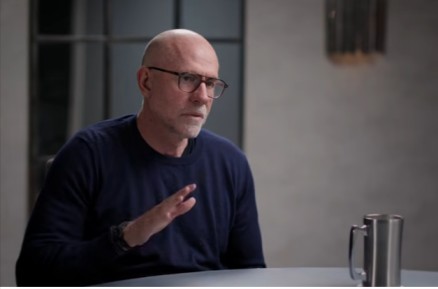
Editor’s Notes: In this compelling episode of The Diary Of A CEO, Steven Bartlett sits down with marketing professor and entrepreneur Scott Galloway to dismantle the hype surrounding artificial intelligence and its impact on the future of work. Galloway offers a provocatively skeptical view of AI valuations, arguing that much of the “catastrophizing” is a calculated strategy by tech giants to inflate their worth. Beyond technology, the discussion delves into the “storytelling” behind modern innovation, the changing landscape for young entrepreneurs, and a deeply personal reflection on masculinity, family, and the profound lessons learned from loss. This episode serves as a vital reality check on the tech industry’s promises while offering heartfelt advice for navigating life and business in an increasingly uncertain world. (May 4, 2026)
TRANSCRIPT:
The Falling Brand of AI
STEVEN BARTLETT: Scott, welcome back. I often come to you to help myself form my opinions on some of the most consequential issues going on in the world because I find you always have a very interesting perspective. And one of the things that’s been front of mind for me, and I think the audience as well, is this subject of artificial intelligence. It’s moving incredibly quickly. It feels like a moving target. And I think I saw some stats the other day that said the subject of artificial intelligence is less popular as an industry than even ice in the United States. In part because the big CEOs of these companies are saying that our jobs and our way of life is going to be fundamentally disrupted and people don’t feel like they have a say in that. We didn’t choose this, right? What’s your perspective on everything that’s going on?
SCOTT GALLOWAY: There have been few brands that have fallen further faster in the last 18 months than two brands. The United States brand abroad. We used to be the enforcer, the operating system to keep rogue nations in check. The US is now that rogue nation. So the US brand abroad, for the first time in history, more people feel that China is a force of good in the world than the US. That’s never happened before. So the brand US has fallen furthest, fastest.
The second greatest fall is AI. Your view of AI is directly correlated to your wealth. The only cohort that has a positive rating of AI is people making over $200,000. Because generally speaking, wealthy people look at AI as something that’s fueling their portfolios, and wealthy people are the biggest users of AI. So they see it as a positive. They see it as innovation. They see it as the S&P going up.
But if you are an average middle-class person, what you may see is that your electricity bills have gone up and you don’t even have access to invest in these companies. And you see some statements from people, Sam Altman saying, “Stop complaining about energy costs. Think about the amount of energy it takes to raise a child.” So they haven’t really managed the brand well. In the last 18 months, it’s come from something kind of scary, but we can be optimistic and a wealth creator, to something that’s very scary and something that’s a wealth creator for the wealthiest already. The brand in the last 18 months has had tremendous, tremendous erosion.
What Are the AI CEOs Actually Saying?
STEVEN BARTLETT: When I look at some of the quotes from the CEOs of these AI companies, I’ve got one here from Elon that says, “AI and robots will replace all jobs. Working will be optional, like growing your own vegetables instead of buying them from a store. The challenge will be fulfillment. How do you derive fulfillment and meaning in life?”
And Sam Altman said, “By the end of 2028, more of the world’s intellectual capacity could reside inside data centers than outside them.” And when I went through Sam’s blog several times, he’s talking about a fairly dystopian future. And many of the CEOs — even Dario Amodei of Anthropic — talks a lot about his bear case for AI and the job disruption that will follow.
And so I think I’m trying to get clarity for myself really on what is the truth. What’s marketing and what’s the truth? And I want to add another point, which is I hire a lot of people.
SCOTT GALLOWAY: Yeah.
STEVEN BARTLETT: And I’m already finding that our framework specifically for entry-level roles has quite radically changed. And so I didn’t believe this stuff. A lot of people told me about, oh, Sam Altman, these guys, they’re doing marketing to make their company seem powerful. But then when I noticed a change in my own behavior, when I’m sifting through these CVs, I thought, oh, maybe things are going to change.
Is the Job Apocalypse Mostly Hype?
SCOTT GALLOWAY: I think it’s mostly bullshit and catastrophizing and a means of fundraising. Every technology in history goes through a similar arc. There’s some catastrophizing, there’s some job loss. That increase in productivity results in additional margin, new business opportunities, and employment growth. I don’t see any reason why this would be any different.
And I think that catastrophizing and talking about this massive destruction in jobs is a way of justifying the massive investments these companies want enterprises to make in their companies. Because if you look at the amount of capital they have committed and the valuations of these companies, one of two things needs to happen in the next 5 years, at least in the US.
There either needs to be $1 trillion in incremental revenue from new products from companies that have licensed AI. So L’Oréal does a big site license with, say, OpenAI. Does it come up with new products? Like, how does it justify that investment? We’re not seeing a lot of AI moisturizer or cars that are built by AI. AI has hit industrialized robots at Amazon, but there’s not a lot of what you would call new AI-driven products.
So in order to justify these valuations, then they have to say, all right, there’s going to be massive cost savings or efficiencies. And there’s some examples. Meta has just announced new layoffs because of efficiencies they’re getting with AI targeting. So one of two things needs to happen in the next 3 years. Either these companies’ valuations need to be cut by 50 or 70%, or you need a massive destruction in the labor market that creates tons of efficiencies that their customers can then flow to the bottom line.
And I think what the CEOs are saying is that there’s going to be massive efficiencies. I also think that you sound more interesting and it makes your technology sound more seminal when you say it’s changing the world and we don’t know how to control it. And quite frankly, I find it a little bit obnoxious that some of the founders and key figures in AI catastrophize just about the time they take a secondary and peace out to the Côte d’Azur. That’s not helpful. “I’m Dr. Frankenstein and I’ve created this monster, but I don’t know how to deal with it, so I’m going to go peace out to Saint-Tropez.” That’s just not very helpful.
They always talk about the peril. So the first big fear, the catastrophizing, is just this unprecedented job destruction. They’ve been talking about that for 3 years, but let’s look at the data. The unemployment rate in the US is 4.5%. Among youth, it’s 8.8%. That is slightly below the historical average. The number of new business permits or new businesses started per capita in the United States has doubled in the last 10 years.
And we hear about, well, what about Meta? They announced they were laying off, I think, 8,000 or 10,000 people yesterday. 2019 to 2025, they went from 16,000 people to 80,000. So even if they go back to 60,000, it takes them back about 24 months.
So I don’t doubt that there’ll be a real dip or a severe V down in certain industries — customer service, probably the legal field. But I believe over the medium and the long term, it’s actually going to create more jobs than it destroys. And I think some of the catastrophizing is nothing more than a thinly veiled attempt to say, “My technology is so devastating that it’s going to shift society and you should invest at this crazy valuation.”
Could Scott Be Wrong?
STEVEN BARTLETT: Could you be wrong?
SCOTT GALLOWAY: Oh, 100%. I’m wrong all the time, Steven.
STEVEN BARTLETT: No, but I mean, what would have to be the case for you to find out that you were wrong in terms of how you’ve reasoned up from the first principles of your thinking there?
SCOTT GALLOWAY: Job destruction, layoffs.
STEVEN BARTLETT: But what would you have misunderstood for that to be the case? What would you have misestimated for that to be the case?
SCOTT GALLOWAY: Ground zero for the job that was going to go away was radiologists. You could scan billions of images, and radiologists — “Kid, mama, don’t let your daughter grow up to be a radiologist because that job’s going away.” The new job listings for radiologists in 2026 is up. Because what it ends up is that while scanning the image is important, it’s a small part of the job. The value out of a radiologist is diagnosing the illness and then coming up with a treatment plan. And that’s as important as ever.
The number of coders, job listings for coders, year on year is up 11%. So people who understand how to use these technologies and come up with different prompts or different means of vibe coding — that demand has gone up because now AI can be applied to almost any startup.
Where I will be wrong is if there is sustained job destruction and the new jobs created and new businesses and the employment those jobs create doesn’t keep up with new jobs. And there is a scenario. You don’t need 100% unemployment like Musk is predicting. At 20% unemployment, the French had a revolution and Weimar Germany turned very ugly. At 20% unemployment, especially among youth, especially young men, tend to get very angry and take to the streets. So you could see a V that’s so severe, even if there’s a job recovery, if it hits 20% unemployment, that could cause real civil unrest.
But I just look at the data. I look at the employment numbers. If you didn’t know there was this seminal technology that very smart people were predicting a job apocalypse around, and you just looked at the data, you wouldn’t know there’s anything going on. The data doesn’t reflect that there’s some big exogenous meteor coming for the employment market.
Is This Revolution Different Because of Its Speed?
STEVEN BARTLETT: Is there a case that this technology, because it’s built on the internet, so it has inherent rapid distribution — every day Anthropic releases a model, ChatGPT releases something, it spreads across the world very quickly and everybody’s updating their technology at the speed of light, unlike the Industrial Revolution where you had to build physical infrastructure — is there a case that because of the speed of this technology and the proliferation of it, that it will be unlike the revolutions of the past?
SCOTT GALLOWAY: That’s the fear, that the V is so severe and so vicious that we don’t have time to recover. And even if there are more jobs on the other side, that there’s too much civil unrest around the V. But so far, the V doesn’t appear to be decelerating or diving as quickly as people had predicted.
I was kind of reminiscing on the way over here. I moved here almost 4 years ago. The first thing I did, I got off a plane at night and I went to this amazing party at Annabelle’s, this Brazilian party with all these hot people everywhere. And I thought, I love London. And the next morning I woke up feeling pretty hungover, and my team said, “You have this podcast with this young guy.” And I said, “Cancel, I’m hungover.” And they said, “No, he’s really up and coming. You’ll like him. He’s a nice kid.” And I came into this little place in Shoreditch or wherever with all these cool coffee houses. I had no idea who you were.
And within 2 years, you were f*ing everywhere. It was like — I’m in the airport and I see your banner on your book, and then I get on the plane and the safety video has you in it. I’m like, “Make him stop.”
And my point is, where I’m going with this is, this place feels like the Googleplex. You’re hiring like crazy. You’re one of the most technically sophisticated people I know in media, and yet you’re hiring a bunch of organic things walking around and eating and going out and drinking and having kids. So you’re the example. Old media is going to lose jobs, but you’re creating — how many people have you hired in the last 24 months across all of your companies?
STEVEN BARTLETT: About 220.
SCOTT GALLOWAY: Okay. And those are high-paying jobs. Those are young people probably making six figures plus. That’s a lot of employment. So is the BBC or is the Daily Mail or whatever laying off people? Yeah, but I’m not sure they’re laying off people faster than you’re hiring them.
AI Fluency and the Future of Hiring
STEVEN BARTLETT: Yeah, and what I found is we’re hiring a different type of person, and AI fluency is becoming increasingly important. I’d say the other thing is the only thing I noticed was 60 days ago — I consider myself to be the head of recruitment. We have a recruitment team downstairs, and I own a recruitment business. But as I go through that inbox, people that I otherwise, 2 months ago, would have been jumping to hire, I’m now pausing because there’s new technology that’s been launched by these companies in America that means there are alternative solutions. And that’s what’s giving me pause. People do need to consider ways that they can upskill themselves with these technologies.
The Reshaping Labor Market and AI’s Impact
SCOTT GALLOWAY: The labor market is definitely reshaping and it might reshape faster, but I’m not sure it’s going to be the apocalypse. There’ll be winners and losers. For example, for the last 30 or 40 years, the unemployment rate among college grads has been lower than non-college grads. It shifted this year. The unemployment rate among non-college grads because of the boom in vocational work is now lower than the unemployment rate among college grads. And if you think about it, you’re like, okay, well, that’s bad for new college grads. But at the same time, all of these data centers need carpenters, welders, plumbers. So there’s been booms in other parts of the employment market.
But yeah, the employment market’s absolutely reshaping. But when I graduated from business school, a lot of it, quite frankly, is your generation is spoiled. What do I mean by that? When I graduated from Berkeley in 1992, 40% of us had a job on graduation day. Meaning 60% did not have a job. I would bet the kids in my class at Stern, I bet 40% of them are starting their own business because with AI — when I graduated, there were two entrepreneurs in my class, and the second person was my co-founder. We were the only business started in the Haas School of Business from 1992. I would bet there’s going to be 30 to 50 businesses that are started on graduation day. There’s kids dropping out of their second year of business school to start businesses because they just raised $10 million in a Series A. Now you have to have certain skills, a certain type of personality, a certain facility with technology. I’m actually quite excited about this.
We’re starting to see an uptick in productivity, which should result in incremental profitability. Will some people be on the wrong side of the trade? Absolutely. Do we need to do a better job of providing more unemployment, more retraining? Denmark spends 2% of GDP on retraining and vocational training. We spend 0.2% in the US. So we’re not good at retraining. We’re really bad at it, actually. We’re not good at taking care of the people on the wrong side. But as a global, in terms of global employment, I just don’t — I think the catastrophizing is dressed up fundraising.
Optimus Robots and the Convergence of AI and Physical Power
STEVEN BARTLETT: What do you think about what Elon’s doing with Optimus? Because if you bring those two forces together, you’ve got Optimus robots, these humanoid robots where he says — I mean, some of the quotes that he said, it might be marketing, but he’s predicting that you won’t need to be a surgeon because there’ll be so many Optimus robots that are more advanced than any surgeon on Earth. So Optimus robots will be doing surgery. And if you combine intelligence with sort of physical power that comes from these robots, it does beg the question where human skills remain outside of the relational stuff and serving Maslow’s hierarchy of needs.
That’s one of the things I contend with. I’m like, you’re seeing in China especially how robots are really changing production lines. And I saw this video the other day of, I think it was in India or Bangladesh, where they had the factory workers have cameras on their heads so that they could film their hands because they’re intent on replacing them with robots. This combination of intelligence plus robotics feels like it’s two tsunamis at the same time.
SCOTT GALLOWAY: I think that’s right, but let’s use the surgeon as an example. I think the robot in the context of surgery will be not a replacement, but a supplement. And that is, there’ll be a large class of surgeons who know how to weaponize robotics to be better surgeons and quite frankly do two surgeries a day instead of one. I think most brain surgeries take 4 or 6 hours. Using robotics and precision instruments, a great neurosurgeon will be able to increase the productivity and the accuracy of their surgeries.
My big tech stock pick of ’25 was Alphabet because it was trading at a P/E of 17. I just saw it as being ridiculously cheap because everyone thought OpenAI was going to put it out of business. My big tech stock pick for ’26 is Amazon because I think where robotics really hits the rubber meets the road in terms of shareholder value is the collision of AI and industrialized robots. And there are 400,000 industrialized robots in the US. And there’s a million at Amazon. So a million at Amazon is 2.5 times the number of industrialized robots as the rest of the nation combined.
But the notion that we’re going to have someone in our house bringing our tea, a robot — I don’t buy that at all. I think that automated robotics, the collision of advanced manufacturing in China and using AI with robotics will yield tremendous advantage. Amazon is saying they’re going to double their largest business, which is their retail business, by 2032 without an incremental hire. Using robotics, industrialized robots. And they were early. They made an acquisition 10, 15 years ago of a robotics company called Kiva. But the notion that there’s going to be a robot bringing me my tea here — oh, that’s bullsh. The scary thing for me that I’d want to know more about is weaponized industrialized robots as warriors. Because I wonder, you know, there’s just, you can go some weird places. But again, I think AI and robotics, yes. This notion that we’re going to have robots serving us our food or in our house — I don’t see that.
Robots Already in Our Homes
STEVEN BARTLETT: It’s interesting because I guess one could argue that we already have robots in our houses, but they just don’t move. So the leap really is, would you allow a robot to move through your house? Because a Hoover’s a robot, a fridge is kind of like a robot, especially the smart fridges. One could say a TV is a robot, a smart TV, but the difference is they don’t move through our house. So would we allow the Hoover to move itself? And then once we allow that, would we allow it to potentially bring us something?
SCOTT GALLOWAY: Yeah, I get it. I just don’t — the stuff I’ve seen on actual applications of these robots. And keep in mind, these individuals — the job of the CEO now, it used to be to under-promise and over-deliver. Now it’s over-promise and under-deliver and create a vision that creates cheap capital so you can pull the future forward. My understanding is 3 years ago we had a million autonomous Tesla taxis on the road, and that did not happen. In 2016, Musk said, or 2017, there was going to be autonomous driving 2 years away. So their job is to predict a very exciting future.
I also think Musk in particular is very good at saying, “Look over here,” as he stuffs a rabbit into a hat. I mean, Tesla’s an automobile company, so he’s got to create a story to justify its 155 times earnings when most automobile companies trade at 10 or 15. So it’s robots, it’s space, it’s connectivity with AI and autonomous and robots. It’s constantly, “Look over here,” because I think it’s very difficult to justify the valuations he’s raising money at.
So, and to be clear, he, as much as anybody, is able to pull that vision forward. He’s launched — 90% of the rockets sent into space have been by SpaceX. But this is a company that has $16 billion in revenue with $8 billion in profits, and it’s going to go out in its IPO at a projected valuation of 90 to 110 times revenues. When Google went public, it went out at 10 times revenues and it was growing 10 times as fast. So what is this? The key attribute of an innovator right now is storytelling. And that is to make sure the promise is way ahead of the performance such that you can access cheap capital and pull the future forward. But a lot of this stuff I find is a lot of jazz hands.
Elon Musk: Wrong on Timelines, Right on Magic
STEVEN BARTLETT: He’s often known for being wrong about his timelines, but he does seem to deliver magic to the world.
SCOTT GALLOWAY: The two products that have changed my life from a technology standpoint — the most underrated product is AirPods. If AirPods alone were its own product, it’d be a Fortune 50 company. I think it’s the most profitable, ubiquitous piece of jewelry in history. I just walk around with them in my ears now. And then the best product I think in the last few years has been Starlink.
STEVEN BARTLETT: That’s amazing.
SCOTT GALLOWAY: I just think it’s absolute. I’ve done podcasts from planes. I can talk to my sons on FaceTime. That product — all airlines are flying the same tin can, same routes, same bad food. A real point of differentiation for them. And that’s also in maritime. I think Starlink is the best tech product. So power to him. When they go public, is it an amazing company or is it overvalued? The answer is yes. Two can be true at the same time.
Tesla, SpaceX, and the Musk Valuation Story
STEVEN BARTLETT: What do you think of Tesla? Because for me, it’s magic. I don’t think people in Britain realize this or other parts of the world, but for me, the first time I got in the Tesla that I got in LA and pressed the location and took my hands off the wheel. All I had to do is occasionally look forward, which they’re removing now. And it took me 3.5 hours to Joshua Tree without any intervention. And the safety record in it is safer than if I had driven myself there. It’s just magic to me. And then when I watch the space rockets come down and be caught with the chopsticks. Incredible. Again, this is just magic.
SCOTT GALLOWAY: Incredible.
STEVEN BARTLETT: And so when he — I’ve got to be honest, when he says that these Optimus robots are going to be — I go, do you know what? He’s delivered a lot of magic in the past that no one would have thought possible. Can you even imagine 10 years ago him saying that? What people would have said if you said, we’re going to launch this massive sort of 70-foot skyscraper into the air and then we’re going to catch it on chopsticks.
SCOTT GALLOWAY: Staggering.
STEVEN BARTLETT: And then we’re going to relaunch it again and then we’re going to catch it again. You would have gone, impossible.
SCOTT GALLOWAY: Edison of our generation. But you asked about Tesla. I bought a Tesla. Incredible product, far superior to anything on the market. He deserves credit for inspiring the EV race, which will be good for the environment. But the reality is everyone’s caught up. The fastest growing automobile company in history is BYD. BYD is basically an 80% of a Tesla. Some people would say 100% of a Tesla for 40% of the price. If there weren’t tariffs, if there wasn’t a ridiculous tariff war right now, BYD, I think, would be the number one EV in the United States. It’s eating Tesla’s lunch.
In addition, what I think is going to happen about Tesla — credit where it’s due, changed the market, inspired the EV race, good for the planet. But when you look at its valuation right now, I think what you’re going to see is when SpaceX goes public, there’s a lot of money in the market that wants to get some of that Musk rizz, what you were talking about. This guy is incredible. I don’t care how expensive it is. I want to invest behind Elon Musk. I get it. That money is about to come out of Tesla, which people are finally figuring out is just a great car company that should be trading at 30 times earnings, not 150, and it’s going to go into SpaceX. So I think the boost, the retail surge in SpaceX you’re going to see, and the valuation they’re planning to go out at is just extraordinary. Some of that is going to come at the cost of Tesla. I just think people are waking up to the fact that Tesla’s a great auto company. It should be trading at about a fifth of the valuation it is now.
Jobs Most at Risk from AI and Automation
STEVEN BARTLETT: On that point, what jobs do you think will be impacted by AI? I’ve heard you talk about logistics and transport. I think London have just announced that Waymo and Tesla’s full self-driving technology are on the way. They’ve greenlighted Waymo, for example.
SCOTT GALLOWAY: I’d hate to be a truck driver. To me, a long-haul truck driver is the first place. Trucks can drive between 10 PM and 4 AM when there’s no traffic on the road. I don’t think it’s a very good job. What’s interesting about, or one of the things interesting about truck drivers, is the biggest employer of non-high school grads in America. Of non-high school graduate males. It’s the biggest employer.
STEVEN BARTLETT: Really?
The Impact of AI on Jobs and Skills
SCOTT GALLOWAY: It’s actually one of the 2 or 3, I think, biggest jobs by number of people in the United States. I would think within 10 years we’re going to have very few long-haul truckers. Obviously customer service, it feels like that will likely go away.
But where I see job destruction in my world is that I used to, anytime I got an agreement from anybody, an advertiser for a contract, an employment agreement, whatever it is, I’d send it to my lawyer and say, can you review this? And because the bills, there’s latency in the bills, it probably costs somewhere between $400 and $2,000 to review every contract, right? Because I’m a narcissist and I think I signal by having a name brand law firm. And so they hire some kid at $80 to $120 an hour and they charge me $400 to $500, right?
Now I say to the person in charge of that project, and they say, well, I’m sending their contract review to our lawyer. I’m like, no, no, no, no. Put the agreement. Describe what we’re looking for. Ask Claude or ChatGPT to pretend it’s a $1,200 an hour lawyer, employment lawyer or contract lawyer, and ask them to review this document, redline it, and do the same thing at another LLM. And then you make those changes. Congratulations, you are now a senior associate at a law firm. I probably spend $100,000 to $300,000 a year on legal fees across my organization. I think I’ll cut that easily by a third this year.
So that’s one way I see it. But I have a podcast company, not nearly the industrial behemoth this thing is, but I keep asking everybody, how do we use AI to do this? And I find that they’re getting better at it and it enhances our work, but we’re still hiring. Again, I think it’s a supplement.
And if you want to protect against AI, it’s pretty easy. I’ve said this for a while, AI is not going to take your job. Someone who understands AI is going to take your job. So what I tell people is have a second screen, and that is always have a second screen open that has nothing but AI on it, LLMs, and anything you get digitally, port it into your AI screen and start playing with it.
STEVEN BARTLETT: Do you know that quote’s so interesting? Because I’ve heard that quote a lot, that AI won’t take your job, someone that understands AI will take your job. And as you said it then, I thought, I was thinking about different roles in my team and my open roles that we haven’t hired for. And I thought, someone with AI will take your job, but they won’t just take one job. They’ll take 5 of those jobs.
And so if you think about an analyst, right, we’ve got Molly downstairs, analyst for my investment fund. We were well intent on hiring maybe 5 analysts for my second fund. We only need Molly now because Molly’s got 2 agents that she works with and 2 Mac Minis, and she’s got a setup that screens the inbound interest and also goes proactively into the market looking for new opportunities and pulls them back into her. Runs them through a framework, scores them, prepares them for the IC. So Molly, enabled by AI, she’s probably taken out 5 jobs.
And this is, I think, even with the law example, that lawyer that’s using these models probably doesn’t need to have 5 junior lawyers now if they’re really, really competent with AI. And if you think about an executive assistant, so with executive assistants, we might, for our executives, would have hired maybe probably 10 EAs in total. Now you really need one that is powered by AI to do all of travel, one that does all of the scheduling, and then one that meets people at the door. So you need 3 versus potentially 10.
And this is kind of what I’m broadly seeing in most roles, but not all of them. There are still some roles when I looked at the org chart where I go, actually, this sales, a lot of the sales we do from a media perspective are take someone for lunch, wine and dine, call them, relationships, pitch the deck. Those kinds of things seem to be completely untouched.
SCOTT GALLOWAY: But let’s continue down that path. You no longer need 5 Mollys, you need 1.
STEVEN BARTLETT: Yeah.
SCOTT GALLOWAY: That creates additional EBITDA and margin. It’s a more profitable Diary of a CEO empire. Means you can raise more money and then you go buy more podcasts or invest in them who hire more people. So it creates a faster cycle of money and new ideas.
And when we were walking in here, you’re talking about acquiring podcasting and you’re getting into CPG and you’re getting into different forms of media and you’re driving growth and innovation. Will some people be on the wrong end of it? My mom was a secretary. She started as a typist. Typists went away. She oversaw the secretarial, the typist pool at a law school downtown. And I worked in the mailroom in high school.
But my mom realized that the hard part of her job was interacting with a senior-level executive, and she became an executive assistant. And she never made a lot of money, but she made good money, realizing that typing was the easy part of her job. The hard part was managing some dude’s life, right?
So accounting should go away, but what you’re seeing is there’s actually more accountants this year than there was last year because accountants, the smart ones, are moving into wealth management and tax optimization, which keeps getting more and more complicated.
So yeah, do you have an onus to update your skills to understand these? I remember when I first moved to New York and they hired an assistant for me and she came in and said, oh, I don’t use computers. And I’m like, well, you can’t work here. So it’s like to say you’re not going to learn AI or at least the basics on how to use it is like being in 1998 and saying, well, I don’t use PCs.
So yeah, you’ve got to update your skills. The cycle time’s decreasing. A lot of people will find themselves on the wrong side of the trade. I have to force myself to use AI. The part of your brain around understanding new technologies begins to die, right? I can no longer perceive a calendar. I can’t tell you what I have next for some reason. I used to be able to do fantastic, I could do a Scotsman accent, Steven, like no one’s business a few years ago. That part of my brain has died. And when I try to do an accent, it sounds like a dead language that twins speak to each other and it offends everybody.
There’s parts of your brain that die. And the part where you can understand new technologies, or at least have the will to learn them, starts to go away as you get older. I have to force myself to play with these new technologies. Everyone who wants to make more money or wants to hold on to their job should have the same onus to learn these new skills.
The Skills of the Future
STEVEN BARTLETT: On that individual level, there’s people listening now that want to make sure that they have the skills, their kids have the skills of the future. What are some of those important skills? I mean, you’ve got kids. What would you say to that?
SCOTT GALLOWAY: I get asked that all the time. What is the skill? So the honest answer is I have a view, but nobody knows. You realize 10 years ago in private schools, the biggest incremental investments in curriculum were two things: computer science and Mandarin. How’s that worked out? Like, thank God my kid knows Mandarin. I mean, said nobody right now, but they thought it was going to be computer science. And you could argue that hasn’t worked out as well as everyone thought.
I would say that the enduring skill is storytelling, and that is your ability to look at data, create a narrative arc, and then communicate that story in a compelling way via all the different mediums, whether it’s podcasting. I think you have to write well to be a great storyteller. But if you think about the most successful people in the world, at the end of the day, they’re usually storytellers.
The great CEOs — I read Jeff Bezos’ 1997 letter to shareholders where he focused on those three principles, and I’m like, take my money, right? I see even a guy like Alex Karp at Palantir walking around doing a live earnings call on his phone. It’s very compelling. Jensen Huang, when he does these giant Buffett-like stadiums where he gets up and he’s like a rock star, that’s storytelling.
Technology is, I think, going to create equalization among the product. Reverse engineering created parity among manufactured products. I think most technology or technologies are going to converge, and we’re seeing that convergence in AI models. So I think the point of differentiation is relationships, right? Do I want to work with this person? Do I know about their kids? Do I like them? At the end of the day, I have 3 different law firms pitching me business, 3 different investment banks, 3 different CRM companies. Who do I have the best relationship with and who do I want to work with?
So storytelling, it sounds very passé, but the ability to establish strong relationships with other sentient beings. I still believe that everything reverse engineers to biology. I think a certain fundamental understanding of the sciences, those seem to be pretty enduring.
My oldest said he wanted to be a marine biologist. I’m like, who are you kidding? You get seasick. I mean, at 18, what you want — you want them to be smart, good people, aggressive, support them becoming their own person, which I’ve had trouble with. I want them to be mini-mes. And then helping them find something they’re great at. But telling your kid, no, you need to go into this ’cause this is where the future’s going — no, we don’t know.
We know the basics. I would want my kid to be able to write well, to be able to look someone in the eye, to be competitive. I encourage them to play sports, to do chores, which they do none of. But other than that, I don’t know. What do you think are going to be the skills of the future? I think it’s really difficult to know.
STEVEN BARTLETT: I think what you said about relationships is really important. You said storytelling, and I think storytelling is a proxy of sales and persuasion, and whether that’s persuading an investor to believe in you or people to come and work for you or customers to come and buy your thing. So I think storytelling in sales is going to be an enduring skill.
The Importance of Resilience and Rejection
SCOTT GALLOWAY: The skill that is the biggest threat that people are, young people are losing, especially young men, and this is a skill and it’s hugely underrated, is the ability to endure rejection. And because of AI and because of these frictionless relationships that people are engaging in online, I think a lot of young people, especially young men, are losing the perseverance, endurance, willingness to hear no, whether it’s expressing friendship, whether it’s applying for a job you’re not qualified for, whether it’s approaching someone and expressing romantic interest.
I think a lot of young people, especially young men, think they can have a frictionless relationship online and they’re losing a sense of resilience and aggressiveness. So I think that skill, when I mentor young men, the first skill I try to reincorporate back into their life is what I call “no.” And that is, I need you to go out, I need you to go put yourself in the agency of strangers, whether it’s a church group, a sports league, a writing class, and I want you to make an overture, an expression of friendship. “Hey, do you want to grab the Arsenal game or come over my house and watch it?”
And then most of these kids, when you ask them what they want, they usually want two things, the men I mentor. They want to move out of their parents’ house and they want a girlfriend. And so once we do the friend approach, then I say, okay, find someone you may be potentially interested in, ask them out for coffee. And this is the goal. The goal is no. Because what’s going to happen is you might get a no, probably going to get a no. And then I’m going to call you the next day and I’m going to say, are you okay? And the answer is going to be yes. Is he or she okay? The person who said no? Yeah, they’re fine.
And I’m boasting that the secret to my success is rejection. I ran for sophomore, junior, and senior class president in my high school. I lost all 3 times. And based on my track record, I decided to run for senior body or student body president, where I went on to lose. Never bothered me. I mean, I mourned and I moved on. Every entrepreneur, how many nos have you gotten?
STEVEN BARTLETT: Oh, f*ing hell. Yeah, more so than anybody.
Selling Yourself Long
SCOTT GALLOWAY: I mean, so any person you look at and think that person has made more money than I would’ve thought, or any person who’s hanging out with someone much higher character and hotter than them, has one thing in common. They either have very rich parents, or more likely, they’re comfortable with no.
So, and unfortunately, I think young people, especially young men, are becoming less and less resilient to no. Apply for jobs you’re not qualified for. Apply to graduate programs you shouldn’t get into. Approach people who you perceive as being cooler and hotter than you and express friendship and romantic interest. That is the key. You want to punch above your weight class? Get out a big spoon and get ready to eat shit. That is the only thing that is common across all great entrepreneurs who are self-made, is they have the ability to mourn and move on.
STEVEN BARTLETT: I’ve been thinking about this a lot lately. I was inspired by listening to Adam Neumann on that podcast a couple of weeks ago. He did one with Rick Rubin, I think it was. And in it, he tells the story of sitting in the back of the cab with Masa, who’s the owner of SoftBank, and he was going to ask him to give him $300 million. And Masa turns to him and says, “You’re just not ambitious enough.” And he says by the time that 23-minute cab drive had finished, Massa had offered him $4 billion and he had signed a little napkin thing that Massa had in the back of the cab.
And that story and other stories like it have inspired, have made me realise that some of the game in life and success is what I now call selling yourself long. And most of us go through our lives selling ourselves short. And I think in part because we don’t see ourselves on an exponential curve, we see ourselves as a fixed state. “This is who I am, this is what I’m worth.” But you’ve almost got to factor in your own exponential improvement. If you take you from 21 to now, how your intelligence and wisdom and connections have all compounded, but you would’ve sold yourself at the value of you at 21 years old.
So I actually now think in every season of my life I’ve sold myself short. When I was 18 years old, I sold 20% of my company for $5K, $5,000. And then I thought that was— I couldn’t believe it. I was celebrating in my room at the time. I was stealing Chicago Town pizzas to feed myself. And then a couple of years later I sold another 30% of that company, 30% of my company for 300K. And I thought I’d hit the EuroMillions.
SCOTT GALLOWAY: All right.
STEVEN BARTLETT: That company ran up and was on the stock market for many hundreds of millions many years later. And I thought, God, I’ve sold myself short my whole life. So assume I’m doing the same now. And if I assume that, how, what would I say? What opportunities would I go for? And I think that for me, that should apply to everybody. I think it’s self-fulfilling.
SCOTT GALLOWAY: Yeah, there’s something about imagining where you want to be in 5 years outrageously and then reverse engineering back. But at the moment you took that $300K, you really needed it. I mean, that was— so it’s a function of your opportunity set and what’s actually the market says to you.
I think pricing is a signal. I struggle with pricing and what I tell whenever we’re writing a proposal or whenever I’m like, okay, whatever I get back, I’m like, okay, increase the pricing 30 or 50% more because pricing is a signal. And you can always take the price down and the client, the person will always come back and ask for the price down.
But quite frankly, and this is sexist, I think men are better at imagining an unrealistic self and women are more measured. And I think that’s one of the things that has held back women as entrepreneurs and the fact that not as much capital has been available to them because the people allocating capital have been white dudes from Stanford or Harvard. 40% of VCs are from two schools.
I think it was Charlie Munger who said, someone who has a crazy vision of their own potential, that’s stupid and obnoxious. His attitude was never bet against that person, because occasionally they’re right. And so for, we talked about Musk, for a guy to think, “I’m going to raise so much money and command technology that I can be responsible for 90% of launches and control 70% of the Earth’s low-orbit satellites,” that’s pretty arrogant. So yeah, I agree with you. And let me put it this way. If you’re going to err, err to the upside, because the market will bring you back on its own.
STEVEN BARTLETT: Yeah, that’s so true.
Sam Altman and the AI Brand Crisis
So Sam Altman has been in all the news lately, in part because of this article that The New Yorker did, two reporters there, Ronan Farrow and Andrew Marantz, which was this article. And then he responded with this blog post here. Two years ago, I thought Sam had a really good brand because he was out in Congress. He was saying this tech, he was asking for regulation. It seemed it has turned unbelievably quickly, unbelievably fast.
SCOTT GALLOWAY: Well, we said this before, he’s a proxy for all of AI. I think the greatest brand destruction other than the US over the last 18 months has been AI and also Sam Altman. But we keep falling into this trap over and over.
And that is something happened through the ’70s, ’80s, and ’90s. And that is America used— its heroes used to be athletes, government officials, and actors. And then there was a dramatic decline in attendance to religious institutions. But people still have really big questions and want sort of an authority or a godlike figure. The closest thing we have to religion is technology. Most people don’t understand it. It has a mystical feel to it. I have no idea how my phone works. I can ask it anything and it comes back with a relatively authoritative answer that I trust, similar if I was talking or praying.
I think most of the time when we’re on AI, we’re kind of praying. We’re sending a question into the echo to a being thinking it’s smarter than us and it’s going to come back with an empathetic, loving, correct answer. So the new Jesus Christ was born in the ’90s, and that was Steve Jobs. And he was taken from us early, like Jesus Christ. The idolatry of innovators has absolutely gone crazy. And the new Jesus Christ, if you will, are these tech CEOs.
And here’s what we fail to understand: they do not have our best interests at heart. They’re not concerned with our emotional well-being. They are not going to comfort us when we’re older. They are there, and they play a key component in capitalism, to do anything that is required to get their earnings up 1 cent per share every day, and they will make incremental decisions that justify the harming and self-harm of teen girls. Sheryl Sandberg. The weaponization of our platforms to make our— the coarsening of our discourse. Mark Zuckerberg. The radicalization of young men, the people running YouTube.
We keep thinking that the newest tech CEO is going to save us, that this guy cares. Sam Altman was the gay son we all wanted, like super nice, super friendly, hushed voices. “Well, Senator, I’m worried about that as well, right?” These guys would sleep with their cousin for a nickel. That’s their job. Their job is to increase earnings. They’re not here to save us. We’re supposed to elect people who put in guardrails for them.
So everyone is saying or asking me, “Can we trust Sam Altman?” I’m like, no, and we shouldn’t have to. We should have regulators putting in guardrails on AI. We should be testing these things. Government agencies should be testing these things. We should be ensuring that these technologies are not used to surveil Americans, right? That we would still have cartoon-like characters on cigarettes marketing to 12-year-olds if we hadn’t put in place regulation. And the tobacco executives would claim that they weren’t marketing to young people. Ford would still be pouring mercury into the river if we didn’t have an EPA and regulation.
So Sam is doing exactly what he’s supposed to be doing. The latest hero that’s going to save us is Dario Amodei. We’ve decided he’s the good guy now. The villain’s journey in tech is the same. Some compelling person we think is a wonderful guy, and it’s almost always a guy, occasionally a woman. You know, we need to do better gender balance. That was Sheryl Sandberg in the workplace. And then we find out that they are doing their job, and that is doing anything they can legally to increase shareholder value regardless of whether it prevents a tragedy of the commons or not. And then we get angry at them.
The journey from Anakin Skywalker to Darth Vader gets shorter and shorter, but they all follow the same path. And then 18 months later, we realize that they too will say and do whatever they can to try and delay and obfuscate regulation. And that sometimes when we don’t have a government with a lack of domain expertise, with a lack of insight, with people who are crossed between the Land of the Dead and the Golden Girls and don’t understand these technologies, that when these technologies are allowed to run just free with no regulation, they do bad things.
So Sam Altman is the latest person we’ve discovered as Darth Vader who’s gone to the dark side. It happens with all of them because they’re doing their job. We as citizens aren’t doing our job, and that is we’re not putting in place elected officials that regulate these companies. So yeah, can we trust Sam Altman? No, but we shouldn’t need to trust him. We should be able to trust that we have smart elected officials that will regulate these companies.
Threats Against Sam Altman
STEVEN BARTLETT: Did you see this article he wrote in response to being— having a Molotov cocktail thrown at his house?
SCOTT GALLOWAY: I read this article without reading it. So there’s been death threats on his life and let me be clear, there’s absolutely no justification whatsoever for this. And it needs to be— I don’t even like it when people yell at JD Vance when he’s skiing with his family. We don’t want to be that nation, or in the West, we have a certain— if you’re operating within the confines of the law, which Sam is, he deserves to live in peace.
It is sad. Do you realize in the US now there are more people working in private security than there are cops? Really? Because there’s always going to be a number of people who are likely— I don’t know about the perpetrator here— who are mentally ill and who will find an excuse. Essentially, the makeup usually of these perpetrators or these criminal actors is they’re usually young men looking to restore their social capital through what they perceive as a historic act of violence against a famous person. This has gone on for a long time.
He’s now famous. I don’t think it’s fair. I’ve seen some people try to equate AI’s dangers as if these acts of violence are somehow justified. They’re not. There’s no justification for a healthcare executive being executed in the streets. There’s no justification for violence against Sam or attempted violence against Sam and his family. I think it’s young men with a lack of opportunity, mental illness, and unfortunately access to firearms everywhere. But it’s always happened. I don’t make the connection that somehow it’s more justified. I think famous people— one in three presidents has been shot at.
STEVEN BARTLETT: Crazy, isn’t it?
SCOTT GALLOWAY: So the more famous you get, quite frankly, the more personal risk there is, because someone is going to decide that taking you out for whatever reason is going to restore their social capital. Actually, if you look at assassination attempts and violence, it’s actually gone down. But these stories are cinematic and very interesting, and they get a lot of attention.
But I think it’s a shame we live in a society where, especially in the West, where they have to endure that kind of risk. One of the really most lovely moments I’ve seen— I don’t know if it was the Danish or the Norwegian prime minister who stepped down, they applauded, and he got on a bike and rode home. I thought, you can’t do that in the US. You know, Obama’s kids still have Secret Service protection.
So there’s definitely something— I quite frankly blame it on Big Tech that tries to convince people that this person is their enemy and this person is evil. Sam’s not evil. I don’t know him personally. I sat next to him at this party I went to, but he’s doing his job. Quite frankly, we’re not doing ours.
The Nihilist Vein in Big Tech
STEVEN BARTLETT: Do you think he’s a nihilist? I don’t really know the definition of the word nihilist, but I guess it’s someone who believes that life is essentially meaningless.
SCOTT GALLOWAY: I think there’s a nihilist vein running through big tech where a lot of them have go bags. They have a plan for if shit gets real, if there’s a zombie apocalypse or there’s a revolution or there’s a massive pandemic, they have definitive plans and they’ve spent tens of millions of dollars. They meet their pilots at Oakland Airport, they get on their Gulfstream 650, they fly to New Zealand, to Auckland, and they have a bunker built out.
STEVEN BARTLETT: Is this true?
SCOTT GALLOWAY: Oh, there’s a lot of them.
STEVEN BARTLETT: Really?
The Nihilism of the Ultra-Wealthy
SCOTT GALLOWAY: There’s a lot of go plans amongst the wealthy. And sometimes it’s not as dramatic. Sometimes it’s just a home, nuclear attack, cyber attack, revolution. But I would say amongst billionaires, I would bet conservatively 1 in 3 have some sort of go plan. And that’s nihilist. And also, to a certain extent, I think wanting to be an interplanetary species is a little bit nihilist.
STEVEN BARTLETT: Also, if they’re saying that in the future people aren’t going to have jobs and there’s robotics and there’s this AGI, this superintelligence, which is going to be smarter than everybody, and even if there was a 1% chance, a 1% chance that these doomer predictions around AI could come true, I would stop. A 1% chance of humanity sort of self-imploding or destroying itself, wouldn’t a rational person stop?
SCOTT GALLOWAY: Well, okay, you’re Oppenheimer. It’s going to take 3 million American deaths to invade Japan. Japan will not surrender. And you’re in charge of splitting the atom. There was much more than a 1% chance that our ability to split the atom and then show we would use it against a civilian population would result in the end of the world. Should he have stopped development of it?
So a lot of scientists, nuclear scientists, killed themselves. They committed suicide because they were convinced once we’d split the atom and used it against civilians, it was the end of the world. It was just a matter of time before we were all using nuclear devices. So I don’t— I think you keep moving forward.
The nihilism— where nihilism impacts these people— let me go back to the go bag. I talked to one of these people. He outlined his plan for me, right?
STEVEN BARTLETT: He’s a billionaire.
SCOTT GALLOWAY: Yeah, outlined his plan. His plan B if things get really ugly, right? And my view was, okay, boss, let’s play this out. Something happens, there’s an event, it’s too dangerous to stay here. You meet your pilots at the airport. I mean, s really gets real. People scouring for food, people become feral. Like, you don’t think your pilots are going to kill you and f your wife? Like, what do you think’s going to happen? You don’t think the people in New Zealand are going to be like, “Let’s go take the rich guy’s s*.” Like, it strikes me that these are such misallocated efforts in capital that if you’re really focused on your own future, whether you’re wealthy or not wealthy, that your resources and your talent should be allocated towards trying to make this place a little bit more habitable. Not trying to colonize Mars, not having a go-back.
And this is part of the problem with the 0.1%. There are 900 billionaires in the United States, and I would imagine 300 of them give money. They’re responsible for 20% of all political donations. And that 20% number is misleading because they can be more strategic. So unions are big givers, but they just give money to whoever’s pro-union, so it’s not that strategic. Billionaires can allocate capital to a specific issue, really ramp it up, so they have a disproportionate amount of control over our elected population.
And the problem is the 0.1% are not invested in the health of America. Why? They don’t have to put up with TSA lines. They fly private. They don’t have to put up with shitty healthcare. They have concierge medicine and access to the best medicine in the world. They don’t have to put up with 40% of third graders can’t read or write. Their kids go to amazing schools that spend on average $75,000 a year on their kid, versus $15,000 at a public school, $10,000 at a public school in a low-income area. They don’t need police. They have doormen and security.
Where I live in SoHo, there’s no homeless. As far as I can tell, there’s no crime. There’s no cops. There’s cameras everywhere and doormen everywhere. My point is, they are no longer invested in the well-being of America. They’ve totally dissociated from the investments required to make America a better place because they’re sequestered from it. They’re no longer invested in the well-being of America. And what I find strange about this nihilism is that these individuals think that they are no longer as invested in the well-being or the safety of the world. I think that’s very unhealthy.
Playing a Video Game With Our Futures
STEVEN BARTLETT: These are some of the most concerning conversations I’ve had. One of the things that happens when you have a podcast and interesting people come on and you start hanging around with more interesting people and more powerful people is you get little peeks into new worlds that you didn’t know existed. You kind of get to see behind certain curtains.
And I remember having a particular conversation in London at a kitchen table where someone was describing one of these AI CEOs to me and basically making the case that they believe there’s a roughly 10% chance— I think they said 7%, if I’m not misunderstanding— percent chance that it will result in the end of the world, some sort of catastrophic event. But they really didn’t care because they think that being the person that summoned this new intelligence amongst us was probably more consequential than whatever happens.
And if I wasn’t privy to, again, hearing this secondhand from someone I know who knows this person extremely well— I know he knows him extremely well because they hang out— him telling me that, I wouldn’t have believed this. I would have thought it’s nonsense. I would have thought to myself, they must be kind because they have kids. But actually now I very much believe what you’re saying about this nihilism where I don’t actually believe they give a f. Some of them. I actually don’t believe some of them give a f. I actually think some of them are playing a game and they’re playing a video game with our futures.
The Incentives of Extreme Wealth
SCOTT GALLOWAY: Or are they? There’s the incentives. In the United States, when I was growing up, my dad’s boss had a slightly bigger house and he drove a Cadillac and we drove a Gran Torino, but we were members of the same country club. And his house was a 5-minute drive away. And maybe my dad’s boss got to fly business class and we flew coach. The delta in having money, having a decent middle-class life and an upper-class life was like this. Now the delta is this.
Let’s look at air transportation. Flying on Spirit Airlines is a humiliating, dangerous experience. United Airlines, economy, economy comfort, economy plus. Business class, first class. Oh wait, that’s not enough. Let’s go to private. There’s charter, there’s fractional, there’s a Cessna Citation, there’s a Bombardier Challenger 300, there’s a Global 650. Now there’s a new G7.
The delta in your life, in your healthcare. My mom was very sick when I was very young, and when I think about how humiliating it was for the two of us having her endure cancer when we were underinsured, it was a devastating, traumatic, humiliating experience. Now, if I need— I take Lunesta when I travel because I have trouble sleeping. I have a medical concierge company. They get me the drug delivered within 2 hours to my house. I have NAD treatments. They arrange for someone to come to my house when it’s convenient for me and do it in my living room. I can text my doctor. I have a medical kit with all these things in it. If I’m abroad, I can text my doctor and say my son’s— I’m not feeling well. They FaceTime me, I open the kit, they can tell me exactly what to do.
The healthcare I am receiving right now— I have my blood taken every 3 months. They send it to some bond lair in Norway with PhDs who can tell me that I have less than a 0.7% chance of any cancers, as evidenced by a lack of whatever it is, antibodies, the cancer cells. The healthcare now for the 1% is dramatic. And it’s all the same thing. The bottom 99% of Western societies are essentially being optimized and monetized to make the life of the 1% just unbelievable.
The life you can lead in the 1% is so dramatic and so incredible. Broader selection set of mates. Your kids have better healthcare, better educational opportunities. You have influence. People want to know you. So the incentives to not be rich, but to be very rich are so incredible. And the way you get very rich is through stock options, typically in technology.
The incentives are so great that people will make incremental decisions and ignore the fact that, oh, 1 in 8 teen girls who are self-harming in the UK cite Instagram as a reason for that. Well, let’s find research that maybe creates some doubts, because once I become a billionaire, I’ll be a better person. And they’re getting so much criticism and so much s*posting, and it’s so competitive, and there’s fewer and fewer winners that become much bigger, right? It used to be 5 companies won and got hundreds of millions of dollars. Now 1 company wins and gets tens of billions. So you can see how incrementally this path to Darth Vader is pretty tempting.
I think they just get caught up in this competition and they lose all sight. Also, my co-host on the Pivot Podcast said something that was illuminating to me. During COVID I was walking down the street with my sister and a homeless person kind of stirred. There was a lot of homeless people because the homeless shelters turned out everybody, and she jumped out of her skin. And I said, well, that was a bit of an overreaction. He’s not going to hurt us. And she said, “You’re 6’2″, 190. Easy for you to say. You don’t understand. Women walk around in a constant state of fear, and that fear is rational.” And it really struck me.
And then Kara said, these guys don’t understand anything about victimization because they’ve never been victims. They’re traditionally white males who have grown up in upper-income households, and they’ve never really understood what it’s like to be a victim. So they don’t put in place the safeguards. It’s so competitive that it’s just easier for them to give money, some strategic money, to key people and ensure that they’re not regulated such that they can get to be billionaires, because all the incentives are do whatever is required to win.
Sam Altman isn’t going to be remembered for being a good or a bad guy. He’s going to be remembered for the guy who either was the number one AI company or blew it. That’s what he’s going to be remembered for. And right now he’s blowing it, it appears, right? But people aren’t going to look back and say, “Well, he didn’t go public. Anthropic ended up being worth more. It was kind of a disappointment financially, but he was a good guy.” That’s not what he’s going for, and quite frankly, that’s not what our society rewards.
The Future of AI, Loneliness, and the Middle East
STEVEN BARTLETT: I think your assessment of AI in terms of it creating more opportunity than it destroys is accurate. I also think that in the near term, all of our lives are going to be quite, quite different. I spend a lot of time on this podcast. We’ve spoken to a lot of the big CEOs from AI companies and tried to parse through this, and I’ve never really gotten to a solid conclusion of what the future looks like.
But do you have a case for the future where this technology is the first that actually delivers on the promise of making us more human? There’s talk about loneliness, there’s talk, you know, algorithms are going to get more retentive. But I have this thesis that potentially, you know, social networking said it was going to connect us and make us more human. That’s kind of the narrative of all these tools. But maybe this technology renders us only useful for that which humans can do, which is the relationships thing you were talking about. And connection and being out touching grass with our friends and family? Is there a utopia?
SCOTT GALLOWAY: Just as social media has some real upsides, I would argue at this point Meta is actually a net negative. It’s, I think, done so much damage. But with AI, there’s a lot of upsides. A really encouraging piece of data I saw is that when you spend time on social media, it takes you to the extremes. The algorithms see money and more Nissan ads in figuring out if you’re conservative or liberal and then demonizing the other side and tickling your sensors, right?
I’ll get served a video of Ted Cruz or Viktor Orbán looking like an ass because I’m a progressive and that makes me happy. And then they elevate content of some progressive, of AOC calling out somebody, and I start to hate the other side. What they’re finding with AI is it’s actually moderating people’s views, because AI is about taking the medium or the average of every piece of data. Also, do you notice how nice AI is?
STEVEN BARTLETT: Yeah.
SCOTT GALLOWAY: “Great question, Steven.” No matter what you say or how stupid it is, it won’t say, “That’s a really stupid idea, Steven.” It’ll say, “I can understand why you’re asking this question.” And generally speaking, because it looks for the median of things, it looks for the average — what is the most often used 7th word after these 6 words are strung together — it’s pushing people towards the middle. It’s actually having a moderating effect, which I find very encouraging.
I think old people in senior care who maybe have lost family members or don’t have a lot of relationships in their life, I can see AI characters playing a big role in their life.
The Loneliness Crisis
SCOTT GALLOWAY: I’ve believed for a long time that the biggest danger of AI is not weapons. It’s not income inequality. We voted for income inequality, or contamination of our elections. I mean, all of these things are big issues. The biggest downside of AI in my view is loneliness.
AI is convincing people they can have a reasonable facsimile of life on a screen with an algorithm. Why go through the effort of having friends when you have Discord and Reddit? Why go through the hassle of getting a job when you can make money on Coinbase or Robinhood, supposedly? And why would you go through the effort of trying to have a romantic relationship when you have lifelike synthetic porn?
And the young male brain, I think, is especially susceptible to this. Men aged 20 to 30 are spending less time outdoors than prison inmates. 42% of men 18 to 24, and we talked about this on your last show, have never asked a woman out in person. So people are starting to believe they can have a reasonable facsimile of life. And what they need to know is that 40% of the S&P, our economy, is trying to sequester you from the most important and rewarding thing in your life, and that is your relationships.
So my prediction for America is we will never be as prosperous — incredible prosperity, incredible economic growth — and massive loneliness, depression, anxiety, and obesity.
Trump, Iran, and the Middle East
STEVEN BARTLETT: I wanted to get your POV as well on all this war stuff that’s going on over in the Middle East, what you thought Trump was trying to do, and actually what happened. Because, you know, he’s talking about, “Oh no, we said it would be 6 weeks, it’s 5 and a half weeks, everything’s going to plan, we’re winning the war.” And you’re good at seeing through things. What would actually happen in your view here?
SCOTT GALLOWAY: I think that he was talked into by some of his security advisers and Netanyahu that his legacy could be restoring or making the Middle East more peaceful, and being the president that severely diminished the capacity of what has been arguably the number one source of terror in the region and maybe even around the world for a long time. That this was his defining moment as a president to go in, that they were weakened, they were hobbled. And we had the military assets and the intelligence to go in and topple the regime, and he would be known as the president that liberated the Middle East. I think he bought into that off the back of Venezuela.
STEVEN BARTLETT: Well, which was a kind of a success.
SCOTT GALLOWAY: Not kind of. That was arguably one of the greatest military operations in history. But it was a military operation. It wasn’t a war. I mean, supposedly his guards didn’t know what happened. All of a sudden they were on the floor throwing up because there was some sort of crazy radiation or radio waves. Not a single American soldier killed. Lifted him out. I mean, that was an incredible operation.
I think he got drunk on that macho and that success and thought, well, I can do the same thing. And the problem with wars is that the enemy has a say. And what we have found is that a lot of our leaders believe that wars could ultimately, if you have a bigger army, will result in unconditional surrender on the other side. And there really hasn’t been unconditional surrender since World War II. And all the enemy needs to do, whether it’s the Viet Cong or the Taliban or the IRGC, all they need to do is survive and they win.
Strategic Incompetence
SCOTT GALLOWAY: In addition, I would describe the war as being operational excellence and strategic incompetence. I actually believe there was justification and some merit to the idea of a military operation that tried to take advantage of a weakened Iran whose air defenses were down. To take out the IRGC, or at least maybe provide cloud cover for a revolution against the IRGC, to diminish their navy, diminish their nuclear capabilities, diminish their missile launch capability. I think there was real justification for that.
The problem was the strategic incompetence here — not enlisting some European allies, not briefing Congress, not coordinating with Gulf allies, not recognizing the game theory around what happens if they start firing at ships in the Strait of Hormuz. It just was strategically incompetent.
And now we’re in a situation where we want to diminish their nuclear capacity. But the reality is, if they can maintain an ability to turn off and on the Strait of Hormuz, that is probably more powerful than them having nuclear weapons. If you look at what happens if the fertilizer, or the products that create fertilizer, are further sequestered, you could have a mass starvation event around the world. And so we’ve essentially given them potentially a weapon that’s more powerful than a nuclear weapon.
Also, we look like we have a bit of a glass jaw. We go in, we lose 14 soldiers — tragedy for them and their families. The Russians are losing 1,000 people a day, and they don’t show any signs of giving up. We look like this giant boxer who’s the most skilled and biggest boxer in the world. We go in — argument over whether we should go in or not — but now if we were to draw, what incentive do the Iranians right now have to negotiate when every day this goes on, they look like the little guy that stood up to evil America and Israel?
I think this has been a disaster from a US brand standpoint. And I would argue that them blocking inbound and outbound traffic from Iranian ports is actually the way to go. But that lends itself to the argument we should have just continued with economic sanctions.
But I have to own it. I thought military action was a good idea. I would argue — I apologize for the word salad here — that we’ve been at war with Iran for 47 years. Their first act of this regime in 1979 was to take 110 Americans hostage. 70% of the IEDs in Iraq were built in Iran. We have been at war with Iran for a long time. The question is whether or not this military action slash war was worth it.
And it looks as if it was so poorly executed on a strategic level that it has really diminished our brand. And we’re now in the definition of a quagmire. If we leave, we look weak, and any nation we perform military action against just says, start firing missiles at their neighbors.
You know who summarized every war for the US right now is in this war? It was Ho Chi Minh. When he was describing Vietnam, he said, “They will kill a lot of our people, we will kill some of theirs, they will tire, they will go home.” We killed a million people in Vietnam. We lost 58,000 and we left.
So Americans’ tolerance for pain — and I’m not suggesting that we should go on military misadventures — but this right now is no doubt turning out to be a giant win for the IRGC and a pretty severe loss for America that further alienates us from our allies and shows our soft tissue around our willingness to actually finish the job.
The other statement that kind of perfectly summarizes this war is, “We broke it, now you fix it.” We’re leaving the world a much more insecure place, much more economically vulnerable. Gulf states thought that having a US military base was kevlar and ended up just putting a giant bullseye on them. So people are going to think twice before they cooperate with the US military by hosting bases.
We appear to have not thought through getting our expats out of the Gulf, protecting the Gulf states. And I’m biased — I think the Trump administration will be known for corruption and incompetence, and that incompetence is bubbling up.
STEVEN BARTLETT: I watched a press conference of his last night where he said this, which kind of links to what you were saying.
SCOTT GALLOWAY: They’re delaying it because we don’t know who to deal with. They know who the leader is in this country. We don’t know who the leader is in Iran.
STEVEN BARTLETT: And I just thought, you know what, if I was running Iran, that’s exactly what I would want. “We don’t know who to deal with, Trump. We don’t even know who to negotiate with.” If he can’t negotiate, he can’t do anything. So I think the Iranians, potentially the IRGC, are saying, “No, we don’t even know who’s leading,” because then what can you do? You can’t just keep bombing. That’s not going to work. You also can’t negotiate. So it runs the clock down.
SCOTT GALLOWAY: You can’t affect regime change from the air. The Iranians are smart. They have distributed power.
STEVEN BARTLETT: Yeah.
The Iran Conflict and Its Geopolitical Implications
SCOTT GALLOWAY: So there’s no kind of head of the snake to cut off. But also, a lot of this is incompetence on our part. Do you know what we have done in the US to our diplomatic corps? We’ve absolutely gutted it. When Vance goes to Islamabad thinking he’s going to do a deal, if you look at the history of every truce, of every deal, of every summit, 97% of the work is done before they hit the tarmac by diplomats who go through line by line and iron out and talk to each other and negotiate. We’ve gutted our diplomatic corps. Our counterintelligence operations have been gutted. So we’re kind of flying blind without instruments.
And they think that JD Vance going to Islamabad for a TikTok moment where he tries to look presidential and then blames it on the IRGC, it’s just not going to work. So I think a lack of investment in key areas, a lack of soft power, whether it’s through cutting USAID, a lack of respect for our diplomatic corps and the engine room, actually working with people and talking to them. I think this level of incompetence and arrogance is all bubbling up. And they— you’re right, they don’t even know who to talk to.
STEVEN BARTLETT: That’s good.
SCOTT GALLOWAY: They don’t even know who, who do we negotiate with. And by the way, you got to look at incentives. If I’m the IRGC, I’m like, all we need to do is survive. Yeah, every day this goes on. And by the way, we’re in the middle of what I’d call the first AI meme war. And that is Trump is communicating with truths on Truth Social and these macho videos and memes of him as Jesus Christ. But he’s been bested by kind of the slopaganda or the AI memes of the IRGC.
Have you seen these Legos memes? They understand him better than he understands them. They are outstanding. And it’s a group of 18 to 25-year-old, probably people who look like this crew. None of us were involved in Tehran. Iran, figuring out AI-driven means, highly produced, highly effective, very strong message going right after the portrayals of the Epstein Island. And I mean, they are doing a much better job because, as Lincoln said, and it goes back to basics, you can’t win a war without public support and you can’t lose a war with public support. And right now, Iran is winning what you would call the “sloppa grande” war. They are putting out better information and propaganda than us right now.
STEVEN BARTLETT: And how do you predict this ends? Because as you said, we can’t back out of this war as the West. Trump can’t back out of it, but he also just can’t keep doing it. His— the midterms are coming up. His approval ratings are, I think, an all-time low because of this war. His base is turning on him, so he can’t— it’s like lose-lose at this moment.
How Does This End?
SCOTT GALLOWAY: Yeah. So the honest answer is I don’t know because he’s unpredictable. If I had to pick anything, I think there’ll be a multinational force that has a vested interest in ensuring the Strait of Hormuz is open. There’s so many things we’ve taken for granted in the West, and one of them is freedom of navigation. If Malaysia, Singapore, and Indonesia decide we need money or we need geopolitical power, we’re going to close the Straits of Malacca or the Strait of Singapore. What if China closes off certain straits in the South China Sea where something like 60% of trade goes through?
We have always enforced— we’ve gone to war over this basic notion of freedom of navigation, that pretty much any ship goes, pretty much gets to go anywhere with pretty much anything on it. So I think that European nations, Asian nations all have a vested interest in ensuring the Strait of Hormuz is open. The way to do that is by sequestering or blocking offloading and onloading of oil into Iranian ports, because at some point it not only shuts them off economically— I didn’t know this, but within, I think, about 12 weeks, if you can’t offload the oil and get it somewhere, it backs up and actually starts to damage the source. It like stops up.
So I think ideally the optimistic scenario is there’s a multinational force that enforces the Strait of Hormuz. He comes up with a series of objectives. If he had in his first— if he had outlined, “We’re going to take out most of their navy, we’re going to give the Iranian people an opportunity to overthrow the IRGC, we’re going to take out the majority of the missile capability.” And after 72 hours said, “This is a win,” and got the hell out, and coordinated with Gulf states to say, “What can we do to ensure your safety?” I think it would’ve been a win.
But now I don’t even know what his objectives are. Can you list what his objectives are? I don’t know what they are. They seem to keep— “We’re going to be out very soon,” which is why we need to continue this war. The communications here and thinking has been so sclerotic and difficult to track. I’m like, who’s boarding what ships? Is it a ceasefire? Isn’t it a ceasefire? He claims that them commandeering two Western vessels is not a violation of the ceasefire? Of course it is. That’s it. Actually, that’s an act of war. So we don’t even know what to look for.
You ask me, how does this turn out? I think a multinational force that opens the Strait of Hormuz— too many people have too much vested interest in free navigation.
STEVEN BARTLETT: But in such a scenario, they’re probably building up drones right now in the ceasefire underground. They’ll be building drone factories in every bunker in Iran right now. The minute you do a multinational force in the Strait of Hormuz, those drones start hitting ships and then the big companies say, I’m not putting my ships through there.
SCOTT GALLOWAY: I think that’s a fair point. And actually not that many ships have gone down, but it’s actually an insurance problem because if you have 2 million barrels on a tanker, you’ve got a $160 million payload. Someone has to take receipt of that. Someone has bought it. So there needs to be middlemen in the form of insurance and no one wants to insure— take that kind of risk right now. So it’s a lack of insurance more than it is a lack of safety from the threat.
But I do think the reality is the Iranians, the IRGC— I say the bottom line is you go after the money. You don’t bomb civilian infrastructure. That’s a war crime. But making it very difficult for them and creating a carrot, you can have free flow of oil. If you look at the Arab Spring, if you look at revolutions, they’re usually a function of unemployment or economics. So if you were to inhibit their ability to export oil, that brings them to the table because the IRGC has been able to survive because millions of families in Iran are dependent upon the IRGC for their check. They control the most profitable, biggest parts of the economy.
So if you cut off their economics, or threaten to, I think that brings them to the table. I think that’s the most optimistic scenario is the straits opened by a multinational force and there’s a feeling of safety because it’s enforced. Iran agrees to keep it open, and somehow we develop a series of objectives that we claim those boxes we’ve been checked and we declare victory and get the hell out of Dodge. But every day this goes on, we cede, in my opinion, advantage and power to the IRGC because they just look like they’re winning.
Trump’s Contradictions and the Market’s Disconnect
STEVEN BARTLETT: I think it’s clear that Trump miscalculated this situation quite horrifically. And you do just to be logical— you don’t have to be a genius to look at what he’s saying and see the contradictions, the constant contradictions week over week. And the big one he’s now got himself trapped in is he was handing out a 6-week timeline at the start of this, and we’re approaching 6 weeks. So if you watch this press conference from yesterday, he is incredibly irritated because all the journalists are saying, you said 6 weeks, it’s 6 weeks. And for the first time, there’s a real measurable contradiction in what he said at the start versus now. And so if you watch it, he’s so agitated. He’s calling the reporters a disgrace. I think in this press conference yesterday, he personally insulted around 10 journalists.
SCOTT GALLOWAY: He’s crashing out.
STEVEN BARTLETT: He’s crashing out.
SCOTT GALLOWAY: Yeah.
STEVEN BARTLETT: And for me, I was like, this guy’s lost it.
SCOTT GALLOWAY: But I find the most interesting thing about this, one of the most interesting things as someone who follows the markets, if you didn’t know there was a war in Iran that threatens geopolitical safety, world oil flows—
STEVEN BARTLETT: Yeah.
SCOTT GALLOWAY: If you looked at the market, would you know? No. The market just hit an all-time high in the US. And again, it goes back to something very unhealthy, and that is there’s certain elements of our economy, specifically the wealthy, that have totally disassociated from—
STEVEN BARTLETT: They can’t feel it at the pump.
SCOTT GALLOWAY: Do you feel it? No. So 50% of consumer spending in the US is the top 10%. The top 10% don’t give a s* if gas is at $6 a gallon. It doesn’t matter. Young, poor people, lower income people spend 22% of their household income on energy. And when energy prices are going up, it really impacts them.
So unfortunately, we’ve again outsourced the downside of war to less wealthy nations who are very oil dependent, to the Gulf, which is incurring damage here. But America is somewhat sequestered other than reputational risk and who gets elected president. We’ve quite again outsourced the pain to military families, to people who spend a disproportionate amount of their income, lower income households, on energy. But it’s somewhat dangerous that the most powerful people in the world, and to a certain extent, the most powerful nation in the world, seems to be unaffected by some of this. Stocks are at an all-time high.
AI Overinvestment and Market Corrections
STEVEN BARTLETT: On this point of stocks, the average person, and tying it back into what we were saying about AI, because there’s been this overinvestment in artificial intelligence technology companies, you said earlier a kid in Stanford right now or anybody could raise $10, $20 million for some AI idea they have, and I’m seeing it everywhere. The companies are overinvesting in infrastructure. I mean, it was crazy. I think OpenAI did the biggest ever fundraise. Was it almost $200 billion? Yeah. To build data centers on revenues of, I don’t know, is it $30 billion or something? Craziness is going on in the markets. At some point, things correct.
The AI Bubble and Market Correction Risk
SCOTT GALLOWAY: Oh, 100%. If you look at the greatest spends on infrastructure, when they get above 2 or 3% of GDP, there’s almost always a crash afterwards. It happened in the railroads. It happened in electrification. It happened in the internet. It happened in the huge telco buildout of global crossing.
Now, having said that, that doesn’t mean those companies don’t come back at some point, but there’s almost always a dip or a correction afterwards. I incurred, or I absolutely was on the wrong end of that dip in 2000, again in 2008.
But if you look at the most valuable companies in the world, they have in a single year, all of them have had a 40 to 97% correction. Amazon went down 94, 97% from ’99 to 2001. Facebook was off 72% in 2022. The difference now is if those companies go down, they’re such a big part of the market. If they sneeze, the global economy could catch a cold.
So I think the technology will absolutely survive. I do think it’s seminal, it’s breakthrough, but that doesn’t mean that we’re not going to incur a pretty massive correction from a stock market perspective.
Also, let me catastrophize for a moment. Your generation and the majority of investors right now are under the impression that any breakthrough in technology results in a small number of companies over time that are able to use IP distribution, ability to raise capital, to sequester and capture trillions of dollars in market cap. E-commerce, that’s Amazon, eBay, Shopify, social media, whether it’s obviously Meta or Snap or YouTube. Or AI.
The problem is, is that what we forget is there have been seminal technologies that have not necessarily resulted in any small number of companies being able to capture shareholder value. Let me give you some examples. If someone said to you right now, for the next 36 months, you either have to go without AI or jet transportation, what would you pick?
STEVEN BARTLETT: Without jet transportation or without AI?
SCOTT GALLOWAY: Prop planes for the next 3 years.
STEVEN BARTLETT: Oh no, I would keep the AI.
Seminal Technologies That Never Created Lasting Shareholder Value
SCOTT GALLOWAY: Okay, hands down, jet transportation. I use AI every day. I invest in AI companies. Jet transportation is much more important to me. I think that’s skirting along the surface of the atmosphere at 8/10 the speed of sound has unlocked emotional and financial well-being across the world. It’s an unbelievable innovation.
If you added up all the shareholder value, the losses and the gains, the profits and the losses, right now, as we sit here now, the entire airline and jet manufacturing industry is at break-even. It still hasn’t made money. If you look at all the airlines that have gone out of business, if you look at the government subsidies of all the jet plane manufacturers, it has been a shitty business. It’s at zero.
PCs. I was on the board of Gateway Computer. I realize that’s the weakest flex in the world.
STEVEN BARTLETT: I have no idea what that is.
SCOTT GALLOWAY: You don’t know what Gateway is? God, I feel so old. It was this company, Ted Waite, who was sort of the Michael Dell of his generation, figured out a way to assemble computers in, I think, South Dakota, and it became this hugely valuable company. It was the second — when I was on the board, it was the second largest computer manufacturer by volume in the world. We were ahead of Apple. We got sold for $600 million or maybe $760 million, which is what Alphabet will lose in about 3 trading seconds or gain today.
No one’s been able to capture a lot of money around PCs. People say Apple. No, it wasn’t PCs. It was the iPhone. Vaccines. I think vaccines are the second greatest innovation in history, only bested by the American middle class. Millions of lives saved through vaccines. Moderna is down 90%. There’s no one company that’s been able to capture, sequester shareholder values.
So my thesis is that there’s a 1 in 3 chance that AI becomes as important as vaccines, as important as jet transportation, as important as PCs, but there’s no one or small group of companies that are able to capture shareholder value. Why is that? AI puts AI out of business. And that is, if you look at the convergence of the technologies, all the models are converging.
STEVEN BARTLETT: Yeah.
SCOTT GALLOWAY: AI reverse engineers any feature, and basically they’re all kind of, they all started with this delta, they’re all converging towards the same thing. So I wonder if the big winner or the stakeholder that wins in AI is us. And that is we have amazing vaccines, PCs, transportation, but a small number of companies haven’t become worth trillions of dollars. And I wonder if the same thing might not happen with AI, with open weight models out of China, with basically great models that are for free.
My prediction would be to go short the AI ecosystem from a shareholder standpoint, but from a stakeholder standpoint, I think it’s going to be great.
GLP-1: A More Important Technology Than AI?
And let me back up. I think a more important technology in terms of how it’s going to change the world is not AI. Every year I say this is my technology of the year. In ’24, I said it was AI. ’25 and ’26, I’ve had the same technology that said this is more important than AI. Any guesses? Talk about this a lot. You would not know this technology or use it. That’s a hint.
STEVEN BARTLETT: Okay. Testosterone replacement.
SCOTT GALLOWAY: That hurts because you know I’m on it. That hurts.
STEVEN BARTLETT: Okay, no, just — okay, a Zempac.
SCOTT GALLOWAY: Okay. GLP-1.
STEVEN BARTLETT: GLP-1, yeah.
SCOTT GALLOWAY: Talk to somebody who’s on GLP-1 and uses AI every day and ask them which one they would give up. I think GLP-1, if you look at what’s really going to have an impact on people’s lives and what will create more shareholder value, I think it’s GLP-1 than AI. And a lot of people much smarter than me say, “You’re full of shit, AI is going to change everything.” I don’t. I think GLP-1 is more important technology than AI.
And my thesis is there’s a 1 in 3 chance that AI ends up being more like vaccines than e-commerce or social, and that it’s going to be impossible for a small number of companies to capture all the shareholder value they’re raising money at.
China’s AI Dumping Strategy and the Risk of a US Market Crash
The other kind of, what I’ll put, fun to speculate or catastrophize. If someone were to say the US economy crashed in the next 24 months or valuations came down not 30%, but the market dropped 40 or 50%, which has happened before, I wouldn’t think it’s because of its misadventures in the Middle East.
I think there’s a decent chance if I were advising Xi in China and I saw America as a real adversary and said, “We are sick of these guys, messing with us, treating us so poorly, these ridiculous tariffs,” very difficult to understand what they’re thinking or how we deal with them. I would do what I think they’re doing, and that is I would engage in modern-day steel dumping.
So back, I think it was in the ’80s or the ’90s, China wanted to ramp up, they wanted to consolidate the global steel market, so they began dumping cheap steel into the US, and US steel manufacturers could not compete. And the idea was price it below market, consolidate the market, and then you get margin power. That’s basically what Amazon and Netflix have done. They’ve sold you a dollar worth of goods for 80 cents until they wrapped up the market, then they started raising prices.
I think China is beginning to engage in what I’ll call AI dumping, and that is they’re going to have a series of open-weight models. About a third of corporations now are supposedly using Chinese lightweight open-weight models that are cheaper. If I were Xi, I would just dump cheap AI into the US market, and the moment large corporations start announcing they’re not engaging these multimillion-dollar site licenses with Anthropic or OpenAI, they’re using these inexpensive Chinese models, and the market realizes that there’s no way they can justify these incredible valuations, I think the US market crashes because 40% of the S&P now is directly or tangentially related to this giant bet America is making on AI. The majority of GDP growth over the last 2 years has come from AI CapEx. If that slows down, we’re immediately in recession.
STEVEN BARTLETT: That’s such an interesting idea that if you’re sat in China as a leader now, you go, “Do you know what, give Americans cheap AI and you’ll kneecap their economy.”
SCOTT GALLOWAY: 100%. That’s what I would do.
What History Tells Us About Surviving a Recession
STEVEN BARTLETT: It does make sense, right? It makes a lot of sense. I’ve heard a lot of founders get quite scared that there will be an economic crash in the next 12 or 24 months because of the overinvestment in AI. And investors are going to start to realize that the returns just aren’t there. For a lot of these companies that have raised a $100 million valuation on an idea. And so the market will contract. And if the market does contract, what does history tell us that the individual should do? The person listening, the average person in such a market, because they’re scared they’re going to be laid off. If all this investor money suddenly contracts, investors go risk-off, they might be laid off.
SCOTT GALLOWAY: Well, again, so Jamie Dimon was asked, “What is the definition of a recession?” And he said something that happens every 7 years. Your generation isn’t used to a recession. I was on the board of the New York Times, and within like 60 days, 70% of our revenues went away. 2008, the credit crisis, advertisers, 70, 80% of the New York Times revenue was advertising. In May we’re doing X million in revenue.
STEVEN BARTLETT: And then you joined the board and then —
SCOTT GALLOWAY: Yeah. No, I think I joined the board at exactly the wrong time. I raised Quickster. I raised $600 million to become the largest to share with the New York Times, and overnight I turned it into $200 million. But yeah, that was a learning experience for me. Anyways, just about the time I started having kids. God, that was stressful.
Anyway, they basically within 60 days lost 70% of their ad revenue, and we had to go and find a Mexican billionaire, basically Carlos Slim, to bail us out. Your generation really doesn’t know what a recession looks like. Like, everything stops. Imagine 70% of your subscription and advertising revenue from one month to one month declines. What would that do to your business?
STEVEN BARTLETT: You’d have to consider letting people go and you’d have to cut costs.
The Investing Part of Life
SCOTT GALLOWAY: And, but here’s the thing, to a certain extent, it’s healthy. You start developing all these fatty deposits. And the best time to start a business is coming out of a recession because people are cheaper, things are cheaper, people have a new way of looking at stuff. And also for your generation. People don’t realize, I mean, quite frankly, if I’m a 28-year-old who’s talented and doesn’t have kids and dogs yet, I think a recession that takes down the asset prices might not be the worst thing in the world that happens to your generation.
Because when ’08 crashed, when there was the crash of ’08, we let the banks fail. We, I’m sorry, we bailed out the banks, but we didn’t bail out the economy. And I was coming into my prime income earning years. I was in my early 40s. And I was still lucky enough and talented enough to make good money. So what did I get in 2009? Amazon, Apple, and Netflix for $8, $10, and $12 a share. Those companies have 20x’d. We don’t let anything fail now. We bail out the markets. Where do you and your colleagues find value? Like, what’s cheap right now? Where do you find value?
And here’s the thing. When you— there’s two parts of your life. From a financial standpoint. There’s investing part of your life and there’s harvesting. You’re in the investing part of your life. There’s a certain advantage to getting to invest when asset prices are low. There’s nowhere for you to find value. Yeah, I’m pretty comfortable saying Apple and Nvidia aren’t going to 20x from here. Where do you find value? Real estate? What, Brooklyn is $3,000 a square foot?
So while you’re in the investing part of your life and you can survive a bit of a shock, I don’t know if, quite frankly, a good thing to happen for your generation wouldn’t be a correction in asset prices, ’cause the economy has an unbelievable malleability and resilience to reform, reshape, and come back. Recessions usually don’t last longer than 18, 24, 36 months. And I think a correction in asset values would be good.
But what we decided, the leadership of my generation has decided, we’d rather pull out your credit card and artificially prop up the markets through deficit spending or bailouts. They’re talking, we mentioned Spirit Airlines, they’re talking about a $500 million government loan to Spirit Airlines to bail them out. That’s nothing but you transferring money to me. Because who owns shares in Spirit? People my age. Who’s trying to buy shit for cheap? People your age. It should be allowed to go out of business. It should decline in price. Asset value should go down.
When we bailed out every baby boomer owner of a restaurant or a small business in COVID, that just robbed opportunity from the new graduate of a culinary academy who wanted her shot to go buy a restaurant for pennies on the dollar. Everyone in my generation has had those asset dips where if you were resilient, and coming into your prime income earning years, you could buy assets for a lower price. We’ve decided that the government is here to bail my generation out and smooth out our assets, make sure that our assets never go down by too much. All that does is rob opportunity from your generation.
The Algebra of Wealth: Where to Invest Now
STEVEN BARTLETT: You wrote this book, The Algebra of Wealth: A Simple Formula for Success. Brilliant, brilliant book. And linking to what you were just saying there, where are you investing now? Like if you’re a young person that’s trying to defend your money, or just really anybody at any age that’s trying to find a place to put your money where you’ll make a return, I guess there’s actually two questions here, which is the investing part. And they’re like, how do I set myself up just to make more money? Especially if there’s going to be an economic collapse, things might get a little bit uncertain.
I think I heard you say before that less people are leaving their jobs. It’s harder for entry-level people to get into newer roles potentially at the moment. So in such a world where there is uncertainty and I want to make sure that I don’t go broke, I have $10,000, let’s say, and I want to make sure I increase my earning potential. What’s one’s advice for those dual strategies?
SCOTT GALLOWAY: Well, I’ll tell you what I’m doing. So, and it’s different. I’m at a point where I’m not looking to get rich. I’m looking to not get poor. So I just diversify like crazy. I don’t put more than, I don’t invest more than 3% of my net worth in any one thing.
STEVEN BARTLETT: Yeah.
SCOTT GALLOWAY: And I’ve been diversifying out of the US market into Latin America and European markets because the reality is nobody knows. The only Kevlar against the unknown, which is everywhere, is diversification. Now, a younger person can take more risks, right? I mean, what am I doing? I’m diversifying and I’m investing in Pokémon because I do it with my son and he loves it. And I think collectibles are actually the only place where there’s value right now. Everything to me just looks crazy overvalued. I look at everything and think, that’s going to get cut in half. Oh, that’s going to get cut in half.
But you always want to be in the market. It’s very hard to be a stock picker. So if you’re your age, you’re a talented entrepreneur, you’re investing in yourself. There’s no ROI like finding a business you’re good at, trying to invest, and working your ass off. That’s how you get wealthy in this, for young people in this generation. Or you find a company that’s going fast, you do well there, you get stock options.
But the key is to make sure that a certain amount of your income never comes into your hands. People your age can’t save money. If they get $100, they’ll spend $105. So the key is to find every matching program or every vehicle or hack to make sure you never see the money. And from an early age, it goes into low-cost index funds. Take 30% of your capital and have fun with it. Buy NVIDIA, whatever you want. Do you think you’re smarter than everyone else? And then you’re going to find out you’re not, and the market outperforms you.
But how do you get rich? The only answer I have is slowly. And that is figure out a way to make sure that money every month is invested in low-cost index funds. In terms of trying to pick the next big thing. Oh Christ, your guess is as good as mine. I just don’t. And anyone who tells you they know doesn’t know.
So I know how to get you rich. That’s the good news. The bad news is the answer is slowly and it requires some discipline. But people your age, just find out a way to start saving when you’re a teenager, $25 a month, then in your 20s, $100, then $500, then $1,000. And regardless of whether you have a platinum record or a bestselling book or a podcast empire, you’re going to be fine.
But I don’t, I can’t look at a sector and say, oh, it’s AI. Well, AI’s overvalued right now. I don’t know. Your job is to find something you’re good at, to focus such that you can be great at something which commands margin, to show some discipline, save some money, to diversify like crazy, and then to let time take over.
‘Cause I look at you and I think, oh, I’m like Steven. I’m a young entrepreneur. And then I look at the mirror, I’m like, f*. And I’m like, oh my God, I’m 5 years from death. It goes, but it happened in a blink. So take advantage of that. Because if I gave you a magic box and said, if you put, like, you’re making real money now, if you put $100,000 in a box, by the time you’re my age, it’s going to be worth a million bucks. And imagine that that box is like a second. $100,000 in, a second, it’s a million dollars. This to this feels like a second. So how much money would you put in that box?
STEVEN BARTLETT: Oh my God, yeah.
SCOTT GALLOWAY: So the moment you have some capital, just think about trying to, at a young age, show some discipline and put some money in that box because it just— compound interest is just— it’s staggering, the power of it. But trying to predict where you should invest other than investing in yourself, additional skills, certifications, investing in relationships, trying to be as— do as many nice, kind things for other people, I think that compounds, especially when you’re younger.
People remember people who helped them when they were younger and maybe not that powerful. I imagine you’re very loyal. The person who gave you $5,000, do you resent the money they make? They made?
STEVEN BARTLETT: No. I actually emailed them this weekend. It’s called Alistair. Thanking him again, sent him a big letter.
SCOTT GALLOWAY: Because that person took a chance on you. There was a certain amount of kindness there, right?
STEVEN BARTLETT: It wasn’t even the $5,000. It was that a smart person said, “I believe in you.” And that meant that I could go back to my mother who was ignoring me and saying, “Look, this smart person believed in me,” and therefore it made me believe in myself. That’s really the investment they made.
SCOTT GALLOWAY: That’s everything. And they took a chance and it probably was, they wanted a return, but what they wanted to do was help out a young man. Those people, your opportunity to make those investments as a young person, whether it’s helping someone get a job, being kind, a kind word, a kind text, telling them how impressive they are, whatever it might be, that stuff, it’s like investing, it compounds and you wake up at 50 and you find those relationships are really powerful assets. So look, I don’t have a silver bullet here. Save money, diversify, compound interest, invest in relationships early. Those compound too.
The Biggest Wealth Decisions: Resilience Over Strategy
STEVEN BARTLETT: What are the most important decisions you made that resulted in the biggest sort of wealth upside for you? And they could be any kind of decision. It’s not like I invested in this, but just, I don’t know, a philosophy, a mentality, an approach that when you look back on your career, you go, it was that, that was the biggest step change in my money.
SCOTT GALLOWAY: Well, my superpower is I’ve gotten shot in the face a couple times, personally and professionally, and I mourn and I get up and I go try and raise money again and start another company. I had an e-commerce incubator. It was basically out of business 6 months from starting it. My e-commerce company that went public in 2002 went through restructuring, which is a fancy word for bankruptcy, in 2008. I started a video delivery company that went out of business. I mean, you know, people talk about their successes. I think generously, I’m sort of like 3, 4, and 2. I’ve had more losses than wins.
Every time I’ve been rejected from a school, I had my affections weren’t returned from a potential romantic partner, I got fired, I had a company go out of business, I had investment. I’ve always been able, and I think this is a key skill, I think you have to do whatever you need to do, whether it’s be around people who care about you, exercise, you have to be able to stand in front of metaphorical mirror and go, “I can add a lot of value to a company. I can raise money again and start a business if I need to. I can make someone really happy.” That’s been my superpower.
So the seminal moment in my professional success was a willingness to say, “Okay, I just got shot in the face. The whole world says I’m a failure because my business, I raised a ton of money and I had to call my investors and say we’re shutting down.” That’s humiliating. It’s public failure. I mourn. And then I go out and I raise more money and I try another company because only 1 in 7 businesses succeed. So I started 9, and I knew at some point, if you work hard enough, I mean, you can’t guarantee success, but so much of it is out of your control. You just want to step up to the plate as many times as possible. You want to have a great swing, you want to be in shape, you want to be a good person. But a lot of it is resilience.
I have a lot of really talented friends who came up through the alternative investments community, masters of the universe, making 1, 2, 3 million bucks a year working for hedge funds in the ’90s and the aughts. And then they went out on their own, raised a bunch of money, hit some bumps, and then closed their funds. Or they had a business. I have friends who are entrepreneurs who left a good job and started a business, and they get stuck. These are people who’ve never known anything but success. They got into an Ivy League school, they got a great job. Everything has been this. And then they hit a failure and they just get— they lose their mojo. They just get stuck. They can’t get over it. They lose the confidence to go out and raise more money. And that’s the key. The key to success is getting shot in the face and then just getting up again.
STEVEN BARTLETT: I’m 30 years old.
SCOTT GALLOWAY: How old are you, Scott? I’m 61.
STEVEN BARTLETT: You’re actually 61.
SCOTT GALLOWAY: No, I’m lying. Yeah, I’m 61. It’s the testosterone therapy.
STEVEN BARTLETT: No, I thought— I didn’t think you were 61.
SCOTT GALLOWAY: I appreciate that.
STEVEN BARTLETT: I thought you were a lot younger than 61.
SCOTT GALLOWAY: 62 in November.
Life Lessons and the Power of Relationships
STEVEN BARTLETT: If you’d said to me anywhere between 49 and 61, I think I would have believed you. So—
SCOTT GALLOWAY: I’m sorry, let me take that back. I’m 49, Stephen.
STEVEN BARTLETT: What is it that you’re 61, I’m 33.
SCOTT GALLOWAY: Yeah.
STEVEN BARTLETT: What is it that I don’t know as a 30-year-old that I’m going to find out in the next 30 years? That I should know? What is the most important thing that I should know about the next 30 years?
SCOTT GALLOWAY: Nothing’s ever as good or as bad as it seems. You’ve raised a ton of money. You’re on fire right now. Be humble. Because a lot of this is now out of your control. If there’s AI dumping in the US, or this war gets out of control and the market shuts down, I’m fired. This goes away. And it’s not your fault. But nor is your success.
So when things are going really well, be really humble and invest a lot in other people and realize, be careful not to believe your own press. In 1999, my company was going public. I was looking at jets. I just thought I was the man. Wasn’t very kind to my ex-wife. I really thought a lot of myself and I credited my character, my grit for my success without crediting enough to how lucky I was that I was in the right place at the right time. So be humble when you’re successful.
At the same time, when you fail, and I failed a lot, realize a lot of that isn’t your fault too, and forgive yourself and move on. So a lot of your success and a lot of your failure isn’t your fault. And when you look back on your life, when you look back on the biggest disappointments, and my sense is, I don’t know much about you, but my sense is you haven’t had a lot of tragedy or real disappointment, at least professionally. It feels like it’s been upward for you.
When you look back on the most disappointing things that happened to you in this decade, you’re not going to be disappointed about the thing that happened. You’re going to be disappointed about how upset you were. So forgive yourself and realize this will pass. Because at the end of life, people wish they’d allowed themselves to be happier. They think, “I wish I had not beaten myself up over that breakup, over that loss of job, over that loss of money.” They’re upset about how upset they were, not about what actually happened. So nothing’s ever as good, as bad as it seems.
And to really try and embrace— and I didn’t do this— embrace relationships. And that is, I got on a hamster wheel. I just never had enough money. My whole identity was professional. And from like the age of 25 to 45, I don’t think I established many healthy relationships. I just didn’t invest in them. I was always good with friends. I always stayed in contact, but I kind of woke up in my early 40s. I just decided I wanted to move to New York and not have any obligations. I got divorced. I didn’t say left my friends, but I didn’t have money. I was living like a caveman, just occasionally leaving for food or alcohol or a good time. And I liked having absolutely no obligations and no connection to anybody. I actually enjoyed it.
And then I realized, I started reading a lot of literature on happiness and longevity, and I realized if I do this, I’ll be dead at 55 because I don’t have any connection to anybody. And so I started investing in relationships, started making an effort to reinvigorate friendships, really started to think thoughtfully about, I want to be around people a lot more. I was becoming very much an introvert and isolated. I mean, I was like a poor version of Howard Hughes at some point. So I would say really focus on, as much as you can, relationships and investing in them in your 30s. I think it’s super rewarding and it pays off. But more than anything, just forgive yourself.
STEVEN BARTLETT: And become a dad?
On Fatherhood and Finding Purpose
SCOTT GALLOWAY: Well, look, I didn’t want to have kids, so— and I think you can be happy without kids. I kind of got forced into it. I was with someone who— much higher character, much more attractive than me. And she decided she wanted to have kids. And I said, “I’m never getting married again.” And she called my bluff and said, “We don’t have to be married.” So I go, anyways, so I didn’t want kids.
But now, and this goes back to purpose, everyone talks about finding your purpose. And the way I approached life, which was really screwed up, is I approached it from a capitalist standpoint. I want more out of this friendship than I’m getting. I want more out of this investment than I invested. I want to pay this employee less than the value they’re creating. I saw everything as a transaction that I wanted to be on the right side of. And what I figured out is that finding your purpose is finding that thing that you can never get a real positive return on.
STEVEN BARTLETT: What do I mean by that?
SCOTT GALLOWAY: I will never get a positive return for my children. They’re never going to be up at 2 AM worried about me, right? They are costing me so much money. I don’t care how nice the senior home is that I’m putting them in. The amount of love, concern, and anxiety I feel over my boys, it would be almost impossible for them to return that. And that’s the point. I finally have something where I feel like that sense of purpose.
The most loyal, proud Americans are veterans because there’s no way America can really pay them back for leaving their families and risking their person. That’s an unparalleled investment. They’ll never get that investment back. But what they get back is purpose. And I didn’t realize that finding something you were so passionate about, whether it was a nonprofit or saving dogs from kill shelters or getting involved in a woman’s right to have bodily autonomy, where you give so much that there’s just no way you’ll ever really get the kind of tangible ROI. And what I realized is when you find that, that’s your purpose.
And I didn’t realize that. So having kids for me has given me purpose. I enjoy it, but that’s my thing now. I realize that’s my job, is to overinvest, is not to measure it because I’m just not going to get that back. So for me, having kids has been my purpose.
Also, building something with a partner is really rewarding. You travel a lot. Inevitably, I don’t know if this happens to you, I always get upgraded to the presidential suite when I’m alone. And it’s like, it doesn’t happen if you don’t have someone to share with. It doesn’t happen. And the most rewarding businesses, the most rewarding things in my life have been when you build something with a co-founder or you build something with a partner.
And when you have kids who go up and down in terms of their health and wellbeing and they end up being good kids, which my kids are, and you’ve built that with somebody, that’s immensely rewarding. It’s like the most rewarding businesses I’ve ever had have been with co-founders where we build something together and it pays off. It’s just so rewarding. And when you don’t build something with someone else, when you build it on your own, it’s like getting upgraded without anyone there.
STEVEN BARTLETT: It’s like it didn’t happen. So, so true.
SCOTT GALLOWAY: So, yeah, what I tell any man, there’s never a good time to have kids. You want to be somewhat financially stable. That was my problem. The biggest source of stress in my life was when I had kids in ’08 when I went broke. That was hugely stressful. And I think you want to make sure you have a, not only a partner you’re committed to, but I didn’t realize how important confidence was in a partner. Because once you have kids, it’s like operating a Panzer tank division. There’s a lot of moving parts and you have to have a competent partner.
But I think if you’re economically somewhat secure and you have a competent partner— for me, I’m not going to tell anyone what to do— having kids has given me my purpose. Hands down, the most rewarding thing I will ever do. That is the last thing I will think about when I die.
The Emotion of Fatherhood
STEVEN BARTLETT: I see so much emotion in you when you talk about it. Your eyes filled with tears as you start talking about your boys.
SCOTT GALLOWAY: Yeah.
STEVEN BARTLETT: Because I know a lot about you because I’ve interviewed you a couple of times now and I’ve read your books and so on. I find that fascinating because I don’t know what it is, where that emotion comes from because lots of people sit here and talk about their kids, right? But when you, the minute you started mentioning them and the impact they’ve had on you in terms of helping you find your purpose, I could see the emotion in your eyes.
SCOTT GALLOWAY: Yeah. Well, there’s some things that surprised me. One, I didn’t fall in love with my kid. I didn’t love my kids when they first came out into the world. I felt a sense of responsibility and anxiety. I did not like having babies. I was able to be selfish up until that point. I didn’t feel this immense level of love and support that you were supposed to. I fell in love with my boys. It was a sort of slow, incremental thing.
And for me, and I think everyone’s a little bit different, the reason I’m just fascinated and obsessed with my older one is he’s me. I look at him, the bad skin he had in his junior year, it’s scrawny, 6’1″, 130 pounds, the way he laughs. When I hug him, I’m hugging me at 17 or 18. It’s so rewarding. And that’s why I love him so much.
My second is a different species than me. I observe him with fascination because I can’t get over the fact that I made that, because he is so different than me. So I’m fascinated by him in just such a different way, right? My oldest is a pleaser, used to come into the bedroom on a Sunday and get in bed with us and then stand up and say, “Let’s make a plan.” And I’d be like, “Where are the cameras? This is like a Hallmark film, right?”
My youngest is a terrorist assessing the household for vulnerabilities so he can strike when we’re at our weakest. The only thing— one recommendation I make to anyone who has a kid: have two, because it’s fascinating. The only thing I can guarantee when I meet someone with one kid, I’m like, the only thing I know about the second is it will be entirely different. If you want to believe in nature over nurture, have two kids, because they just could not be more different, and it’s fascinating. We just haven’t treated our boys that differently.
STEVEN BARTLETT: I don’t—
SCOTT GALLOWAY: We just haven’t. Birth order, whatever. There’s something in the batter. First Lady Michelle Obama said something that really struck with me. She said, “They come to you.” I forget, I think you’ve had that guy on, the child psychologist guy. We think we’re engineers and that we get to make the sheep. We don’t. We’re shepherds. We get to point them in the right direction. We get to pick what food they have. But they come to you.
I’ve seen that. And I like to think— I always thought that my kids were going to be super into World War II movies and CrossFit because that’s what Dad is into and they just want to hang out with me. No, no, no. The reason I’m up at night looking at Pokémon cards is because my kid is interested in it. And what you realize as a dad is if you want to be a good dad, you have to lean into their interests. I’m not fascinated by Pokémon. That’s not something I will do once my kid is out of the house. But what you realize is you have to engage in their interests and get into it.
And it took me a while because I was very selfish to fully embrace that. I hated giving up my weekends. I liked having fabulous brunch with interesting people. I liked going to St. Barts. All that went away and I resented it for a while. And then there’s a certain ease and relaxation that overwhelms you where you’re like, I’m not trying to be fabulous. I know what I’m doing this weekend. I’m going to some lame birthday party for 4-year-olds and I know I’m taking my kid to the soccer game. And there’s a certain ease about it that’s relaxing and liberating.
Building something with somebody, seeing the way they evolve is just fascinating. Just fascinating. The things they start asking you and you find your purpose. So I would recommend it to anybody. But I also want to be clear, it’s not one size fits all. Some people can be very happy not having kids.
Closing Reflections and Farewell
STEVEN BARTLETT: So many of the themes we’ve talked about today, especially at the end of this conversation, are in your new book, Notes on Being a Man: How to Address the Masculinity Crisis, Build Mental Strength, and Raise Good Sons. I’ve had so many of my friends, actually both men and women, talk to me about this book because I think so many of us have been looking for a roadmap on exactly these subjects. Notes on Being a Man. Some of the themes are here on the back about being kind, about being a good dad and what that means. But a lot of the stuff you said about getting out of the house and really attacking the world and who one should become in such a world. So I highly recommend anybody who is raising sons, who is a son, who is a father, or just wants to understand what it is to be a good man in the modern world gets this book. And I’m going to link it below.
SCOTT GALLOWAY: Thank you. All of you.
STEVEN BARTLETT: It’s been such a smash hit and it’s really rare that some of my close friends will send me messages thinking about one particular friend about this book. And I think it’s a testament to the impact it’s having on the world. So thank you for writing this. I know you took a long time to write this book ’cause we talked about it for a couple of times when we had conversations, but it is finally here. Who is it for?
SCOTT GALLOWAY: I write with only one objective. I hope my sons read my stuff in 30 or 40 years and feel like they understand me and the world a little bit better. That’s it. And I try to— I use that as a means of trying to be fearless because there’s so many comments and so many— there’s such a narrative out there trying to shape your views around the orthodoxy that whatever your political leanings are, it’s pretty easy to be intimidated into having a certain narrative. So I try to write as if no one’s going to read it but my sons in 20 or 30 years.
The Closing Question: On Setbacks and Lessons
STEVEN BARTLETT: We have a closing tradition where the last guest leaves a question for the next, not knowing who they’re leaving it for. The question left for you is, in one sentence, what is the most challenging setback you’ve experienced and what’s the lesson you want to pass on to others?
SCOTT GALLOWAY: That’s easy. My mother dying. And you can never tell your parents how much you love them. Too much. Forgive them. And my mom died slowly, which is bad for her, but it was good for me because nothing went outside.
STEVEN BARTLETT: What is the emotion you’re experiencing?
SCOTT GALLOWAY: I miss my mom terribly. I’m a middle-aged man who hasn’t gotten over the death of his mother. Light of my life. Raised me on her own. Secretary salary gave me confidence. Everything.
STEVEN BARTLETT: Is there a way to— you said you’re a middle-aged man that hasn’t gotten over the loss of his mother. Is there a way to—
SCOTT GALLOWAY: I don’t want to. I think the receipts for love is grief. I hope my boys feel the same way about me. Hasn’t gotten in the way of my life. Makes me be more bold with my emotions. Yeah, I don’t— I see it. I used to see it as a problem. I went to grief counseling. Now I see it as a— not a bug, but as a feature.
The receipts for love are grief and anxiety. And so what I would tell every young person is I hope they have a lot of joy in their life. I also hope they have a decent amount of grief because that means they have people they love immensely.
STEVEN BARTLETT: Amen. Thank you, Scott.
SCOTT GALLOWAY: Thank you, Steve. Good to see you. Congratulations on your burgeoning empire. Jesus Christ, man, this is out of control. Every time I come here, I’m like, where are the helicopters?
It’s like pretty soon I’m going to see like a nuclear tower power plant powering next to it. It’s just amazing. And you’re like everywhere. At one point, at one point I was on, I was at the airport with my boys and I’m staring at this like 100-foot testimonial deal and I’m like, make it stop. God. Jesus.
Related Posts
- Transcript: “India Lacks the Ambition to Achieve Viksit Bharat by 2047” – Economist Surjit Bhalla
- Transcript: Mara Brock Akil Interview on Her New Novel: Oprah Podcast
- Transcript: Tucker Carlson Interviews USS Liberty Survivor Bryce Lockwood
- Wisdom From North: Robert Edward Grant Interview (Transcript)
- Transcript of Amy Webb Interview on Peter McCormack Show: Work Is About to Break