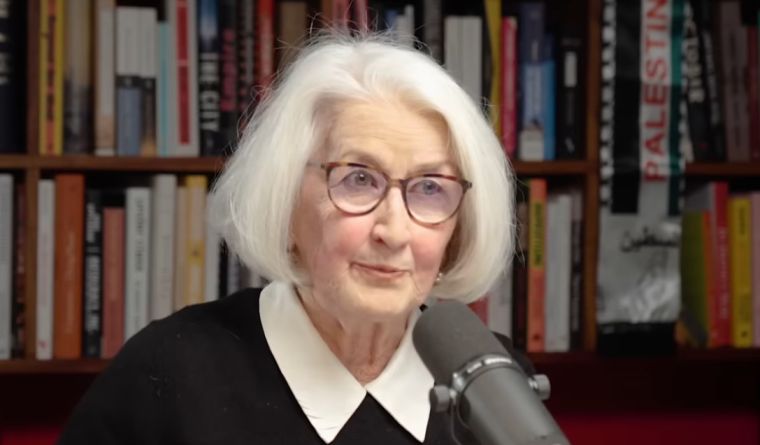
Editor’s Notes: In this compelling interview from Novara Media, host Ash Sarkar sits down with renowned economist Ann Pettifor, one of the few who accurately predicted the 2008 financial crisis. The discussion exposes the “international casino” of globalized finance and the massive shadow banking system that operates largely beyond democratic control. Pettifor breaks down the impending threats of the “next big crash,” offering critical insights into the bubbles of AI and the “scams” of cryptocurrency. This deep dive is a must-watch for anyone seeking to understand how to reclaim economic power from unelected technocrats and rebuild a stable real-world economy. (Jan 25, 2026)
TRANSCRIPT:
Introduction: A Journalist’s Confession
ASH SARKAR: Before I start today’s Downstream, I want to tell you a really stupid story. A few years ago, when a bunch of redditors basically had Wall Street hedge fund managers by the short and curlies by buying shares in GameStop, I decided to write about it for Novara Media. And so that meant researching what a short position was and finding out the difference between retail traders and big hedge funds.
And I did the thing that journalists do, which is I read about something for 10 minutes and I got 1,000 words worth of article copy out of it. And the next thing I know I ended up on the news sat between two hedge fund managers feeling like a dog in a trench coat. Because while I could tell this story about GameStop, I was like, oh my God, if anyone asks me what an interest rate is, I’m toast.
Which is probably a weakness for the left, right? Our next guest argues that if we really want to achieve anything politically, we have a duty to get our heads around what’s actually going on in the global money market. Because the stuff we think about as being within the domain of politics—fiscal policy, tax and spend—it’s actually pocket change compared to the hundreds of trillions of dollars housed within the shadow banking system.
That’s why I’m so pleased to be joined by Ann Pettifor, who was one of the few economists to see the 2008 financial crisis coming. In her new book, she explores what’s actually happening in the murky world of globalized finance, how it disempowers governments and democracies, and crucially, what we can do to get our power back. I hope that you learn as much as I did from this interview. Maybe you won’t. Maybe you’re not as dumb as me, but enjoy the interview either way.
Ann Pettifor, welcome to Downstream.
ANN PETTIFOR: Thank you. It’s such an honor to be here with you.
ASH SARKAR: You’ve been such an influence, I think, on the organization in ways which are obvious ones. We’ve read your books, but also concepts like the Green New Deal, where I didn’t even realize that that was something you’d had a hand in until I started looking a bit deeper into it. And I was like, oh, your thumbprints are all over the British left.
ANN PETTIFOR: Yeah.
The Journey Into Economics
ASH SARKAR: As a place to start, I mean, you’re best known as an economist and you’re known by many as someone who correctly predicted the 2008 financial crisis before it happened. What was your journey into economics? Why did that seem like the field you wanted to enter?
ANN PETTIFOR: So it’s really funny. I was talking to a friend just this morning about growing up in South Africa in a gold mining town. And my parents had moved to this gold mining town after the war because my dad had lost his job, even though he was a hero in the war. But they’d heard there was gold, and where there was gold, there were going to be jobs and things.
And I used to—my dad used to—we lived way out of town and my dad used to drive me into town every morning and we would talk politics and we would talk current affairs. He was good about that, although he himself had left school when he was 17 or something. And I used to say to him, “Now, dad, why is the price of gold fixed at $33 an ounce? And all the other prices move up and down?”
And my dad starts to explain to me about the Bretton Woods system. And of course he didn’t fully understand it and I didn’t fully understand. But from that comes an understanding that here’s my small town, we grow gold, we sell the gold and we get a lousy price for it because there’s an international financial system and architecture which has determined the price of gold and which we can’t change. And what is, you know—so I think that’s where the seeds began.
And then when I grew up and I got a proper job, I ended up working on the sovereign debt of the poorest countries. And we ran a campaign, the Jubilee 2000 campaign. We got about $100 billion of poor country debt written off. And at the end of that, I went to the New Economics Foundation. I thought, why before 1971, these countries had no debt and there were no sovereign debt crises. Why were there any since then?
And then, of course, I found out about Nixon and the demolition of the Bretton Woods system and the liberalization of finance and easy money, et cetera, et cetera. So I sort of did a—what I would call an informal PhD at the New Economics Foundation. And then I edited a book called “The Real World Economic Outlook,” attacking the IMF and saying, your world economic outlook isn’t real.
And we published that in 2003. And we said, there’s going to be a big blow up, the thing’s going to blow up. And the IMF in the meantime is saying, oh, everything’s hunky dory. Right until the very eve of 2007, the IMF thought it was all going to be okay.
But in the meantime, in 2005, I wrote another book which the publisher—this is where publishers can be really difficult—she had the rights over the title.
And I said, I’m sorry, but you can’t do that because, A, I don’t like First World, Third World, and secondly, it’s not coming. It’s going to be here. By the time my book’s published in September 2006, the place will have blown up and my book will be out of date. And she said, sorry, tough. It’s my decision.
And I owe that publisher big time, really, because people haven’t read the book, but they remember the title.
ASH SARKAR: I mean, that’s the key. That’s the key point.
ANN PETTIFOR: You can point at it.
ASH SARKAR: You can tap the sign and be like, yeah, exactly.
ANN PETTIFOR: And so, you know, when it appeared, it fell like a lead balloon. Nobody took any notice and said, oh, that lefty, you know, she’s not serious. And then with time, oh, she’s one of those people that predicted the crisis. So that’s where it comes from.
Reading the Signs of Crisis
ASH SARKAR: What were the signs of the crisis? Because I remember it primarily as a news story because I was 15, 16 when it happened, and I didn’t understand what words like credit crunch meant and I didn’t know what subprime meant. And there were just all these words sort of floating around and then—and I remember journalists in real time having to get their heads around it.
So for you, what were those signs that it was coming? And then when it was unfolding, did you feel that everyone finally understood what you had known for a while or did you feel like you guys still don’t get it?
ANN PETTIFOR: Two things. Well, so first of all, because I’d been working on sovereign debt and I’d been working mainly with countries in Africa and Latin America and so on, I was already out there, this sort of global high view of the world really. And I was obsessed by debt. I wanted to understand why countries had got into debt, basically.
And I had worried about the fact that poor countries owed about—I don’t know, they owed about—we wanted about $300 billion written off. In fact, only $100 billion was written off. But the amount they owed was in that territory. And I kind of looked up at the Anglo-American economies and their debts were massive. And I thought, if I think the poor countries are going to blow up under this, what the hell’s going to happen to Anglo-American economy?
And that became blindingly obvious. That basic Anglo and not necessarily all economies—the Germans and the French were far more conservative than we were. We had borrowed crazy money on international capital markets, both as private citizens and as governments. And the Americans had borrowed crazy money and built up massive first trade deficit and other kinds of deficit. And this had created huge imbalances.
And at some point the debt which was there when actually income was down here was never going to be repaid. I knew it was so blindingly obvious. It’s like you take out a massive mortgage and your income is low or is falling. The day is going to come when you ain’t going to be able to pay the mortgage and you may have to give up the house. And that seemed to me so obvious.
And that’s what the credit crunch was. They called it credit crunch. It was really a debt crunch. They had borrowed a lot of money and now suddenly it wasn’t being repaid.
And the wonderful thing about the financial crisis was this, that Wall Street had lent money to poor people, especially poor people without homes. And I don’t know if you saw that movie, “The Big Short.” I love that movie. There’s that scene where the Wall Street guy goes to Florida and he goes to a saloon bar and this woman doing pole dancing and he takes this pole dancer into a separate room, the champagne room.
And he says to her, “Now tell me, darling, have you got a mortgage?” And she says, “Yeah, of course I’ve got a mortgage.” And he’s looking and she’s earning dollar bills. And he said, “Oh, really?” And he looks surprised and she says, “I haven’t got one mortgage.” She says, “I got five mortgages.”
And he goes, bizarre, because he knows that she’s been given far too much money, credit, mortgage than she’s able to repay because—and at very high rates of interest, because she’s risky, because she’s a pole dancer, she’s paying way above what, you know, a professor of economics would be paying for that loan and she’s going to blow up.
So then he thinks, yeah, it’s going to—they’re right, this is going to happen. And that was that. And what I love about it is that the poorest people in America, you know, on the lowest incomes were the ones that blew up the global financial system.
ASH SARKAR: So do you see that as a form of leverage?
ANN PETTIFOR: Well, you know, I don’t think they realized it at the time, but it wasn’t a top down break, it was a bottom up. It was the fact that they defaulted on their mortgages because she just couldn’t repay that. To have five mortgages and to have, you know, dollar bills, your income, which is a very uncertain kind of income, means that ultimately you’re not going to repay those.
And when you default on them, because you do default on it, what are you going to do? You lose your house. That blows up the whole system. And I mean, none of it is conscious, but it is actually what happened.
ASH SARKAR: Just interrupting this interview for a shameless bit of self promotion because I wrote a book and the paperback edition is coming out in February. And to celebrate, we will be hosting a conversation between myself and Aaron Bastani at Earth Hackney. You can get your tickets over on Dice. There will be a link in the description and we’re going to talk about all sorts of things.
We’re going to talk about liberal identity politics, why the right is winning, and crucially discuss some of the political developments that took place between publication and the present day. So get your tickets over on Dice.
Where Does the Economy Really Live?
ASH SARKAR: I want to ask you a question which might seem really big and vague, but it’s how do you determine the health of an economy? Because there are numbers on a screen which I don’t understand. And then there’s the go outside and have a look and have a look at the kinds of economic activity taking place in your neighborhood or what your high street looks like, or how much olive oil costs.
And I think that this was one of the things about the 2024 presidential election, which is Democrats were saying the economy is great and it’s, you know, everything’s improving and you have people going I can’t afford eggs. So where does the economy live? Does it live in numbers? Or does it live in these tangibles that we see and interface with and experience every day?
ANN PETTIFOR: So that’s a really profound question, Ash, because the economy really lives in the real world. It’s where you and I work and we produce stuff and we earn income. As a result of that, we may borrow money to buy a house or to invest in our—expand our business, make it look better.
And then there’s the economy, the financialized economy, which is really numbers. It’s really a lot of it. I mean, the reason I’ve used the casino parallel is because, you know, there’s the real activity going on in the world. And then people go into the casino and they don’t take their money with them. They’re forced to use chips, and they deal in—they gamble in these chips.
And there’s a kind of disassociation from real money from the real world as long as they’re inside the casino. But they can mess with those chips so that they make loads of money. And that’s the financial system. That’s how the financial system works, really.
And there’s lots of—it is numbers, but ultimately it’s based on credit, you know, money that’s borrowed. And that credit at some point has to be repaid, and it can only be repaid with income that’s generated from real economic activity, which is mainly investment and employment and real income, really. And so if you look at the global economy in terms of numbers, and I don’t want to use numbers because they tend to befuddle everybody.
ASH SARKAR: They befuddled the f* out of me.
ANN PETTIFOR: So there’s something like $500 trillion of financial assets out there for the global economy.
ASH SARKAR: And that’s chips.
ANN PETTIFOR: That’s chips. That’s bets, that’s borrowing, that’s liabilities as well as assets. And down here, there’s real income being generated by the world economy, and it’s called the GDP, and that’s $100 trillion. So this is $500 trillion, effectively liabilities out there. And then here the guys doing the real income stuff, really.
And when that blows up, everybody has to go back to the real economy. And we saw that happen with the global financial crisis. You know, these guys blew themselves up. And immediately they turn. They are tethered to our public institutions, the central bank, the treasury, et cetera, et cetera.
And those public institutions, in turn, only exist because we are engaged in economic activity and we pay our taxes. And that empowers the treasury and it empowers the central bank and makes the central bank powerful. There’s 30 million of us by law paying taxes, right? No business generates that kind of income by law.
And so with these fabulous public assets, these gamblers come home and they say, please, we are capitalists. We believe in making profits when we invest and take risks. But we’re against making losses when we take risks and do stupid things. We would like you to bail us out. And that’s what we do.
They want public support for when they make losses. This is like a Soviet style economics really. You’re allowed to make profits, but when you make losses, you know, it becomes risk free. And actually Wall Street today is a risk free business. There’s no way that a Wall Street bank today is ever going to go bust. And I have that from Mr. Jerome Powell himself, the governor of the Federal Reserve.
The Casino Economy and Public Bailouts
ASH SARKAR: I want to come on to Mr. Jerome Powell, but it sounds a little bit like my mum’s approach to finances in a marriage, which is my money is my money and your money is my money. So the profits are mine, but you will cover the losses. And that’s how the sort of big banking sector works with the relationship to the public purse.
I want to talk about one of these gamblers because you tell an extraordinary story in this book about Masayoshi Son. Who is he, where did he come from and how did he become so powerful?
ANN PETTIFOR: Yeah, his story is extraordinary. So he is the son of a Korean Japanese. And the Koreans in Japan are heavily discriminated against. There’s terrible racism towards them. And his parents are first of all engaged in sort of pig farming, I think. And then his father opens a pachinko which is one of those slot machine things.
And this kid, I don’t know, I just don’t know how he takes the leap from that working with his dad because he could see that pachinko wasn’t really making enough profits. Although the family were quite happy with how they were doing compared to the days when they were pig farmers.
And then he sort of has the imagination, basically falls in love with America. So America and California and Apple Inc. et cetera, they all become massively attractive to him. And he goes there and he learns a little bit about what’s going on with tech, but he is never really a tech innovator. He just wants to gamble with it. He wants to say, I know what the next best thing is in tech terms. And he’s smart enough to do that, really. He makes himself big, big money.
And he comes back. His father is very nervous about this. He insists on his Korean name, which the family have been trying to use a Japanese name to protect themselves. He said no. And he hangs on in there. And he does extremely well. And eventually the Japanese government get behind him and central bank gets behind him as well.
So I don’t fully understand how he made that great leap, but he does. And now he’s the biggest investor in Communist China and the biggest investor in the United States. And he runs a company which has huge amounts of debt. Huge amounts of debt. So he’s got to bet. He’s got to be confident that his bets pay off. Because if they don’t.
And he’s constantly, he’s a lot like Donald Trump. Donald Trump, as you know, ran several casinos, borrowed crazy money, and because of his charisma, managed to attract millions of people to come into his Atlantic City casinos. Bankrupted every one of them and made shed loads of money and got out. And of course, had connections with the criminal classes as well.
But really, that’s how the system, the international financial. Right now, I think Marx would have called it the rentier economy. It’s people who make money from money. It’s people who suffer from this obsession with the love of money. It’s a sort of morbid obsession with having loads. I mean, you can understand poor Korean boy developing a morbid obsession for money.
The WeWork Delusion
ASH SARKAR: I think one of the things that was most striking in that story about Masayoshi Son was how he comes up with a $10 trillion valuation for WeWork when at the time, the total value of the US stock market was $30 trillion. So how does that happen? Is it as simple as you’ve got some guy who, you know, in the words of Scarface, gets high on his own supply looking at an iPad, and he’s just like, yeah, f* it. Ten trillion. Why not? Is that all there is to it? Or is there some other sort of mechanism to finding valuations like that?
ANN PETTIFOR: So what Newman had when he set up WeWork was he had a bunch. He buys up a bunch of blocks of residential blocks or office blocks and turns these into workspaces. And the thing about property is that it generates rent. It generates income. And it’s really important when you have a property. When you take out a mortgage, you’ve got an asset. And that asset can earn you rent if you rent out your property.
But also the very fact you’ve got that asset means you can leverage. You can borrow more money if you live in a council house and you don’t own an asset, you can’t borrow money and nobody will lend you money. People need to know that you’ve got collateral, that you’ve got an asset behind you.
So Newman had collateral, he had properties all over the place. And Masayoshi Son just was convinced that he could buy up properties all over the world and the rent would just keep coming forever and ever. It was delusional. And his fellow investors soon forced him to climb down from there.
But it was those kind of gambles which, if they do pay off, in a world of liberalized finance, you could make loads of money. And he did, and he has, and then he goes bust every. So he’s a bit like Trump. You know, Trump put loads of money into his casinos, cheated, and God knows what he did, but he bankrupted them not once, not twice. But in one case, he bankrupted a casino five times. Right. And he still made shed loads of money, you know, I mean, so it’s a bad old world, Ash.
ASH SARKAR: I mean, he’s currently gone super hard on AI data centers and so financing data centers, and part of, he’s a part of these projects with OpenAI and Oracle.
ANN PETTIFOR: Yeah.
ASH SARKAR: If you think about how WeWork went belly up, is that a sort of kiss of death for AI? If you’re like, all right, this guy’s in there, it means the whole thing must be a Crocker ship.
The AI Bubble
ANN PETTIFOR: I think it is. You know, I think it’s a huge bubble. It’s much bigger. These bubbles get bigger and bigger and bigger. And the thing is about the financial crisis, you know, that’s when we should have cleaned the place up. We should have said, no, you guys can’t borrow this kind of crazy money. You can’t speculate on the scale and we’re going to manage this more.
But they didn’t. They said, sorry, we’ll bail you out, and let’s go on as before. And that applied as much to Gordon Brown and Britain as it applied to Wall Street and the Americans. And so they now know they can go as far as they like, really.
And I think the AI is absolutely huge and it’s got to blow up. And the question is, you know, is blowing up around data centers. Now, what’s fascinating about what’s happening there is that these guys are so rolling in money, sort of the Silicon Valley crowd, that they’ve had the cash to invest in AI and they’re investing in each other and they’re all supporting each other. It’s really quite criminal, in my view.
ASH SARKAR: It’s kind of like a cartel. Like, it’s a cartel model.
ANN PETTIFOR: It’s a cartel model. But now they’re running out of money. Facebook had to borrow $100 billion the other day in order to finance the investment in data centers. And they’ve now, what they’ve tried to do is shift that off balance sheet so that we don’t see that they’ve now run out of cash and they’re borrowing money.
And that’s a sure sign that Facebook has overreached itself, really. And things are going to go wrong. I mean, ask Facebook, what happened to Metaverse, you know, disappeared. It’s not there anymore. And they invested loads of money in that.
ASH SARKAR: I remember when they announced it, I was like, we had this when I was a teenager. It was called Habbo Hotel. And it was lame then and it’s lame now.
ANN PETTIFOR: Yeah.
ASH SARKAR: I mean, there’s something about AI and I sort of wonder your take on it, which is, even though it’s unable to fulfill the much vaunted promises of replacing human imagination, human criticality, so on and so forth, because it’s cheaper, it’s already playing a big role in creative content production. Yeah.
So even though it’s unable to have the kind of valuable contribution that its creators say that it’s going to, it’s already having an impact on culture and changing the nature of the workforce. You know, is there a road where the bubble doesn’t really burst? There’s so much capital and so much political power behind it that it’s going to get applied anyway. Just our culture will get worse.
ANN PETTIFOR: Yeah, no, I mean, I think it’s quite possible that our culture will get worse. Although I have to say, the other day I watched a video where John Maynard Keynes was reproduced as a real person and spoke in the sort of very hoity toity accent that he had. And that was all done through AI. I remember thinking, God, but the point is this, that it’s kind of not real. And that’s what I think we must keep coming back to.
So much of it is speculation. So much of it. I mean, I don’t think it should be called artificial intelligence, because it’s not that. By calling it that, it’s really scary to think our intelligence is going to be replaced by that technical intelligence. It’s actually something called complex information models or something. That’s what it is. It’s gathering.
ASH SARKAR: Yeah. LLMs, large language models.
ANN PETTIFOR: Yes. Gathering all that information and spreading it around. But it’s not intelligent. But by doing that, they’re kind of creating this impression. And that’s terrifying. But it’s what convinces me that this ain’t intelligence, this is not human. And ultimately, you know, we’re going to win out on this, in my view.
The Cryptocurrency Scam
ASH SARKAR: I want to ask you about cryptocurrencies because they were intended to separate money from the state. They were intended to act as a store of value. I think it’s very telling that they emerge right after the financial crisis when trust in the state and state management of money is at an all time low.
And now instead of, I think, seeing a store of value which is more resilient than the state currencies, instead what we’re seeing is the proliferation of, like, meme coins where, you know, the hawk tuah girl or Eric Adams or whoever else it is can scam buyers and run a pump and dump scheme.
You’ve said that this isn’t a sort of happenstance consequence, that this was inherent to the model of cryptocurrencies itself, that it’s sort of inherently corrupt and fraudulent. Why? Because a lot of our viewers would have put some of their faith in crypto.
# The Shadow Banking System and Your Pension
ASH SARKAR: I was telling Sam just before I came that I’d go home to South Africa and I have family that aren’t particularly well off. And Auntie Ann sits at the table and says, “this is criminal and bad and naughty.” And they say, “I made loads of money out of this already.”
So it’s true that people do make money, but the point about it, it’s based on Hayek. It’s based essentially on deeply reactionary theory, which is that money is a commodity. It’s not a social construct, it’s a commodity. It’s a thing. It’s like gold.
Now, we’ve always used gold to represent money, to represent the credibility of money, to represent the credibility of the person lending money. You know, in the old days, the Florentine banker used to leave their gold bars at home and go and buy wool from the English. All they had to say was, “look here, I’ve got a piece of paper and it says I’ve got gold in the vaults of my bank.” And that was enough to satisfy the English sheep shearers. It’s not itself money, it just represents money.
ANN PETTIFOR: But anyway, Hayek says money is a commodity and there’s only a little supply of it, like gold. There’s only so much gold in the world, really. And it’s true, there’s a finite supply of gold, and therefore we want to create crypto, which is going to be like gold. It’s going to be finite. There’s only going to be that many mined or whatever it is they do to it. And then that creates a sense of scarcity.
And for me, the great civilizational advance that is our monetary system is that there is never a shortage of money. Money is something that we as people, as human beings create. There are limitations to our ability to create that, and there’s limitations to the degree—there’s ecological as well as human social limitations. But there’s never any shortage of money because money is a social “I promise to pay.”
I can go on promising as long as I can actually promise to pay, as long as I can uphold that, really. And that’s all I have to do. And my credit card, I love this. For me, this is the clear parallel, which is when I go into a shop to buy a washing machine and I take in a credit card, there’s no money in my credit card account. The bank won’t let me keep money there. But this credit says you can trust Ann Pettifor to afford 350 quid for a washing machine.
If I’m from Dubai and I’m the daughter of some Saudi prince, and my God, this gold fancy credit card, you can trust her to pay £3,000 for a… And so what money does is it represents my credibility, my income and who I am and what I contribute to the economy.
Now, if you say to me, “look, I’m sorry, Ann, but there’s only that much gold or that much crypto in the world and you can’t have any of it, because really, you’ve got to be able to afford its price as it goes up and up in prices,” that’s a way of saying, “sorry, we’ve got to have austerity.”
So the whole of our fiscal policy at home is based on this notion that money is like a commodity and there is only so much of it and we’ve spent it all and there is no money left. You know, our politicians cannot stop saying there is no money. “We’d love to help, but we are powerless and there is no money.” I mean, it’s absurd.
Except, of course, when there’s a Covid and all, and then suddenly we find we do have money, or when Wall Street goes down, suddenly we do have money. So the public are beginning to see through this facade, but it’s so deeply embedded in mainstream economics and in our thinking.
And then crypto comes along and says, “oh, we’ve got a substitute for gold,” but it’s designed… You know, the thing about credit is that I say, “I promise to pay for my washing machine.” There’s got to be a way of me upholding that promise. You know, the shop might say, “sorry, you know, you haven’t paid. You said you would promise. But when it came to the end of the month, your credit card didn’t deliver, I’m afraid, Mrs. Pettifor.”
Then there’s got to be some accountability for that. And that requires regulation and that requires the law. I could go to jail if I promise $10 trillion and I don’t deliver, or I should go to jail. But what crypto does is to avoid all of that. And to say they’re doing that because “for freedom and independence” and all that crap is just crap. It’s about avoiding the law.
And you need to be able to avoid the law when you’re doing criminal transactions across the world, basically. And that’s what it was for. It’s for drug dealers. And the fact that my family gets involved is just a byproduct of that process.
But, you know, and right now we’re seeing the price of gold go through the roof because all the central banks are panicking over the dollar. So they’re all getting out of the dollar and going into gold and that’s immediately inflating gold. And when there’s a panic around something else, it might go into crypto. But as soon as the panic’s over, it all goes down again anyway. No, it’s just a scam. And it’s based on Hayekian theory, monetary theory, and I’m so totally opposed to that.
ASH SARKAR: I mean, maybe this is humanity’s brain kicking in, but from the way in which you’re explaining it, it sort of seems that at every level of remove that you get from this idea that what is being represented is a person’s credibility and their real life productivity, whether it’s, you know, contributing socially productive or useful goods or services or whatever, that every layer of abstraction you get from that, one, the more sort of money there is to be made, and that’s the sort of, that’s what’s being traded in the global casino. But it’s also at such remove from actual human activity. That’s the problem.
ANN PETTIFOR: Yeah, and that’s what they’d like, for it to stay like that. The fact of the matter is that ultimately, and it comes back to your point about the real economy, ultimately the real economy is where everything happens. It’s where we grow stuff, where we make stuff, where we create stuff. And that process is the economy. And we will always do that. And we’ll trade. We’ve always traded. We’ve traded over five… Read David Graeber and you’ll know how long we’ve been trading and trading with credit, by the way.
But when you take the finance sector out of that economy and you put it up here and you turn it into really a sort of… It’s kind of a playground where they fool around in what’s called the shadow banking system. And the thing that’s terrifying about this, and one of the reasons I wanted to write the book, Ash, is because I want to say to people, you think this is all remote and exotic and complicated, but it affects your daily life. I want to know where is your pension?
ASH SARKAR: So I was going to ask you that as the follow up question, which is where is my pension?
Where Is Your Pension?
ANN PETTIFOR: That’s a very good question. We know that pension funds are getting out of the US dollar right now. Why are they in the US dollar? Why are they there? Why aren’t they invested in productive activity which would perhaps help the green economy? Why aren’t they invested in helping farmers to become more regenerative? Why aren’t they invested in training young people and getting jobs for young people? Why aren’t they investing in countries with very high levels of unemployment and creating jobs?
ASH SARKAR: I mean, why aren’t they?
ANN PETTIFOR: Well, because they’re rent seeking. Here we come back to Marx. You know, it’s much easier to make money from gambling and speculating than it is from investing in the land on the one hand, in the broader sense of the word, or investing in labor. And labor can be difficult and create friction and so on. That’s hard graft for a capitalist.
Fooling around in the international casino is not hard graft. You just sit on your butt and you collect the rent, you know, or you collect the interest. And it’s effortless activity which is not real activity. And you can do that for so long and they do periodically that all blows up and it’s going to blow up again because it’s not real. This is what’s real. This is where we should be investing money. And we’ve allowed them to escape and go and do that.
ASH SARKAR: I mean, this is the same. The key point of the book that what we think of as the banking sector or what we think of as the remit of government policy, even for the left, is actually just a tiny, tiny, tiny part of the financial activity that takes place on global markets. And you sort of say, look you can, you can fanny about with, you know, tax and spend all you want, but the real stuff is up here. I mean, not real in the sense of tangible, but real in the sense of power. Could you get into that a bit? What is the shadow banking sector? How does it function?
ANN PETTIFOR: Right, so what it is, and we get back to your pension, is that back in the day in Chile, pensions were privatized and Mrs. Thatcher thought, “what a good idea this is.” So we privatized our pensions and we give it to something called BlackRock, which is a huge, what is called an asset management fund.
We give it to our pension fund and they say, “oh, if I give it to BlackRock, which is based in Wall Street, they could make much more money and they could give you a good return in the future. So I’m putting your pension in BlackRock.”
And BlackRock accumulates all these savings and because they’re in our city, they’ve collected everybody’s pensions. They’ve got all this money. They can therefore say, “oh, I shall invest in that and you’ll do this for me. And I can raise money this way. I can borrow more money because I’ve got all this stuff in my vaults.” And, you know, so they are fooling around. God knows where the money is going. But we agreed to it and we allow that to happen.
You know, we have this thing between defined benefit, defined benefit pensions and defined contribution pensions.
ASH SARKAR: What’s that?
Defined Benefit vs. Defined Contribution Pensions
ANN PETTIFOR: So in the old days, we all paid into a pension fund as well. Pay as you go. And the point is, we all collectively as a society, managed that money, right? And we ensured that our pensioners had incomes after they retired.
And then we decided, no, that we couldn’t afford that anymore. You know, the government couldn’t… Well, the government was collecting our tax revenues to help to pay pensioners, but suddenly we couldn’t afford that anymore. And it would be much easier if we created what are called defined contribution pensions, where actually you take responsibility for your individual pension and your individual pension is invested in the market and it ends up in BlackRock’s asset management outfit.
And BlackRock says, “right, well, I might invest it over there or over there, and you might make gains there or losses there.” The gains and losses doesn’t fall on BlackRock, they are just managing this. It falls on you, the individual.
And we’re now in a situation where individuals are exposed to the global financial system and to its volatility. And that’s terrifying. The thing I’m most worried about is what’s going to happen to pensions in those pensions.
But of course, not only have we all come round to defined contribution pensions and abandoned this idea of collectively insuring each other, we’re selling it all to the poor countries as well. Poor countries are also taking on defined contribution pensions. And the guys out there in the financial sector can’t believe their luck. You know, they’re just raking in all these savings and then they use those for gambling, blah, blah, blah, and they make more and more money and it’s getting bigger and bigger and bigger.
And of course, we’re also living longer and we’re more healthy. And so actually there’s more and more money going into pensions than there were before. And that’s terrifying, really. I want to go back to the situation where we collectively insure each other for the future for our elderly. But that’s going to take another crisis before we get there.
Trump’s Attack on Central Bank Independence
ASH SARKAR: I want to talk a bit about central bank independence because you mentioned Jerome Powell. For our viewers, Donald Trump has sort of launched this multi-pronged attack on Federal Reserve independence and in particular, the rate at which or the speed at which they’re going to bring down interest rates. Donald Trump wants it quickly. Federal Reserve is saying hold your horses.
And so using his political power, power he has over different parts of the American state, he’s launched a Department of Justice investigation into Jerome Powell. The Federal Reserve chair fired Federal Reserve Governor Lisa Cook because she’s black.
And one of the things I’m so interested in, and I wanted to ask you about is that the political case for central bank independence seems to have been weakening over time. People’s sense of investment, political investment, ideological investment in central bank independence has been weakening. You know, yes, it’s a political attack on Jerome Powell, but no one’s staging school walkouts in support of him.
So how do you sort of thread that needle? Because you’re a critic of the way in which central bank independence has played out. How do you sort of thread the needle of what Donald Trump is doing versus being able to hold the space for saying this isn’t a sacred cow?
# The Power of Central Banks and Democratic Accountability
ASH SARKAR: You’re right to use the term “thread the needle” because I am weaving my way through. I’m with him on this. Okay, I’m with—so what’s happening? America is a complicated tale, but they’re absolutely right. The Federal Reserve serves the interests of Wall Street primarily. And you know, the workers in the Rust Belt understand that fully well. They’re not stupid. And he represents that in a funny way.
He’s also absolutely chaotic and criminal in his activities. So I can’t in any way endorse what he’s doing in this very personal and stupid attack on Powell. But he’s right that interest rates have been too high and that central banks keep—and interest rates are really important. This is rent on loans, essentially.
And when you are in the power to make a loan, when you have enough power to create credit, which is what central banks have, the rent on that should be very, very low for your customers, for the government, for the state, basically. But on the other hand, if you’re a bank, if you’re Wall Street, you don’t want low rent on your loans. You want very high rents on your loans. And so the Federal Reserve rarely serves the interests of Wall Street and they keep—
Now the entrepreneur, you know, and for all that we dislike Trump, he was an entrepreneur at some point and he had to borrow money. And the banks do make a lot of money out of entrepreneurs, out of people trying. And Keynes was very clear that interest rates ought to always be really low in order to enable people to take credit and invest and create jobs and generate income and tax revenues and balance the system. So he’s got a point, has Donald Trump. And that’s why I’m a little bit torn about all this, really.
The other thing, by the way, is doing—saying private equity shouldn’t be buying individual single homes, which, you know, why doesn’t the Labour government say that? But the point about this is that, you know, the central bank is the foundational power of the state. It is the most extraordinary power.
And we’re now in the situation where that power is exercised by, on one hand, technocrats like Jerome Powell and number two, by Wall Street. And politicians over here are playing pretend powerlessness. “I’m only a politician, I’m only elected, I’m only Democrat,” blah, blah, blah. And, you know, and anyway, it’s very complicated. “Not me, girls, not me, nothing to do with me.” And I’ve got this very clever man at the Bank of England who knows all about this stuff. And, you know, I’m much too humble and powerless.
I mean, for me, it is shocking because what we’ve done is we’ve given that power to a technocrat who’s never elected, who’s never accountable and who gets things badly wrong. When countries build up piles of debt, they put up interest rates, which actually makes it worse. It makes bankrupts everybody. When there’s inflation, they put up interest rates. It does absolutely nothing for inflation. Inflation kept rising. Even, you know, they get it badly, badly wrong. And the politicians say, “Well, you know, sorry, nothing to do with us.”
So what we see is a situation where centrists or social democrats, if you like, have decided to disarm themselves, to disempower themselves, to disempower society, disempower the economy and to leave it to tech—religious and technocrats have become incredibly arrogant. You know, they’re running the world, basically. They have this huge power.
So the power that the Bank of England has is the power to decide how much credit should go to the government and how much credit should go to banks, commercial banks, to lend money to the real economy. And they sit there and they think, you know, “I don’t think I like this government. I might,” you know—so they actually intervene in fiscal policy in the sense that they decide how much a government should be allowed to spend.
ANN PETTIFOR: Well, I want to talk about price. I want to ask you this question then: who’s more powerful, Donald Trump or a bond market vigilante?
ASH SARKAR: Well, Donald Trump is, and the Federal Reserve is much more. I work with a lovely bond trader who is very clear. He said no bond trader will ever take on a central bank. And so we’ve created this bogey man or woman who is a bond trader. And so we can say it’s their problem, it’s their fault. The reason why Liz Truss got into trouble had nothing to do with the bond market. It had everything to do with the Bank of England.
ANN PETTIFOR: This is interesting, okay, because she would go, “I’ve been telling you, I’ve been telling you.”
The Liz Truss Case Study
ASH SARKAR: Now the thing is, her big error was, you know, she’s a politician and she has institutions at her power, at her command—the Treasury, the Bank of England. And what she chose to do was to sack the key guy at the Treasury and refuse to talk to the Bank of England. “But I’m going to go and spend loads of money giving tax breaks to the rich.” And of course that wasn’t going to work.
And if you are going to spend loads of money giving tax breaks to the rich, the very first thing, you go and see the bank and you arrange it, right? And she hadn’t done that. Now, the Bank of England—then what happens is the pension funds, in fact, defined benefit pension funds get into trouble and the Bank of England jumps in and bails them out straight away. They don’t bail her out, they’re bailing out the pension funds.
ANN PETTIFOR: And that’s a political choice.
ASH SARKAR: That’s a political choice that they’ve made. Now I’m not supporting what she did. I don’t believe in tax breaks for the rich and I don’t believe in being reckless as a politician. But she’s getting to something and so is Trump, which is, you know, why are we being run by these unelected governors? They call themselves governors, these unelected technocrats who are never answerable to us. And our politicians are totally powerless.
ANN PETTIFOR: Why are they powerless?
ASH SARKAR: They shouldn’t be powerless. This is their institution. This is a—you know, the Labour government nationalized the Bank of England in 1945 because it had so fundamentally messed up in the 1930s. It had crashed the global economy in the 1930s, right? And so they nationalized it and it’s a nationalized bank. And we walk around saying, “Oh, you know, this is beyond us really.”
So this is about pretend powerlessness of the politician, which I think is like a refusal to adopt the responsibility of managing the economy, instead saying, “Let’s leave it to that man at the Bank of England.”
The Chinese Model of Central Banking
ANN PETTIFOR: Do you think it would be preferable to move towards or to replicate something like the Chinese model of central banking?
ASH SARKAR: Yeah, I do. You know, I think China—so China, I mean, China makes big mistakes as well, no doubt about it. But their central bank works for China. It doesn’t work for foreigners, it works for China. And you know, we look at that quite longingly thinking, “Gosh, we wish we had—we have got a central bank that could do that for us,” but it doesn’t and we don’t ask it to.
So, you know, in a sense you can’t blame the technocrats because they’ve been given all this, you know, the OBR, the Office for Budget Responsibility, has been given huge powers to run the economy and decide how much the government should spend. And these are just small time guys who are officials in the Treasury. You know, suddenly they’re these big shots and they appear before the House of Lords Select Committee and they’re terribly important. But who are they? They have no accountability to the rest of us, you know, and it’s our taxpayers’ money that’s making all this happen.
ANN PETTIFOR: I mean, so I obviously only learned what central banking independence was yesterday. And speaking—that’s what journalists do, right? We learn about something so that we can talk about it for five to 15 minutes and sound like we’ve been learning about it for years. And you know, deep down we’re going Federal Reserve—like it’s, that’s the trick.
But my understanding was that central banking independence is a way to say, okay, there are certain things which are going to be insulated from democracy and from political volatility. All right, so governments can change, but that’s not really going to change what’s going to happen to investors’ money all that much, because these things are going to be within the hands of technocrats.
And China says, “Well, look, you’re not going to get democratic volatility from us. Like, yeah, you know, things can change, but it’s actually a sort of—it’s a much slower, very delicate process of how that occurs through the party first. So you’re not going to get a huge amount of political volatility from us. That’s why we can be trusted with stewardship of the central bank.”
And it sort of sounds to me that you’re saying, no, actually you can have both. You can have democracy and an empowered electorate without it becoming hugely, you know, risky for someone to take a bet on your country.
The Golden Age of Economics: 1945-1971
ASH SARKAR: Sure, I can say that we can have that because we had it between 1945 and 1971. This whole point about having an independent central bank is the private sector saying, “Get out of the way. Public spending is crowding out private spending. If you reduce public spending, you’ll give the private sector the powers. And they are, after all, the only entrepreneurs. They’re the only ones that can do real,” blah.
And it’s part of that idea that you must crowd out the government from the central bank and leave it to manage the private financial system. We’ve got to stop that nonsense between 1945 and 1971. Now, look, I’m not saying you should put Donald Trump on the board of the Federal Reserve. I want to have intelligent experts on the board of the Bank of England or the Federal Reserve.
ANN PETTIFOR: But they’re elected positions.
ASH SARKAR: Well, they can be appointed, you know, because they’re very, very skilled and they know, they understand monetary theory really well. That’s fine. What’s important is that they should be accountable to me, the politician, the chancellor, the person in charge.
And if I say that I want to create jobs in the British economy and I want to improve the incomes of my people and I want to increase the tax revenues I need to balance the books, you, old central bank, are going to help me do that. You’re going to lend me the money and you’re going to keep the rate of interest on that low and make it sustainable for me to do. You’re here to help me.
Now, that worked between 1945 and 1971. Now, what it means is that they work in tandem. I think there is a—that, you know, you’re always going to have experts in there, economists, people who’ve got into the weeds of all this stuff, which the politician shouldn’t be expected to do, but the politician should have that power over what is happening.
And we did that between 1945 and 1971. And that is known as in all economic circles, in right wing and left wing economics, as the golden age of economics. It was with high levels of employment both here and in places like Africa, high levels of investment, high levels of income, balanced books. We didn’t have unbalanced books.
We get them now because we have so many financial crises that distribute—this unbalances the public finances. We didn’t have public finance problems. We didn’t need an Office of Budget Responsibility, because actually things were stable. And they were stable because these two, the Treasury and the Bank of England, worked in tandem to sustain the economy, to support the economy. Now they work in tandem to sustain, if you like, the private sector and the global financial system.
The Political Context of Economic Stability
ANN PETTIFOR: How does political analysis come into this? All right, because I sort of look at that period of, you know, 1945 to 1971—
ASH SARKAR: Yeah.
ANN PETTIFOR: And I think of it obviously as an era of high trade union militancy, like trade union density as well. Also you have actually existing communism, which creates a sort of ideological threat to whatever model of capitalism you have in the West. You’ve got empire being rolled up. And so that means you’ve got all these African and Asian countries kind of up for grabs.
And you’ve also got—I think the really important thing is demobilization always creates threats of revolution because you’ve got all these guys coming back to an economy that doesn’t have a place for them. They also have military training, so manage that. And so that’s the sort of political disciplining force which gets you a social democratic consensus.
And obviously we don’t have those things in the same way now, you know. We talk about economic policies and what are the changes you could introduce as an elected government. But how do you do that in this historical context with the balance of power, the distribution of class forces being what it is today?
The Power of Education and Transformation
ANN PETTIFOR: Yeah, I don’t know. I mean, so I have this pathetic belief. I’m a Rosa Luxembourg fan, basically, and Rosa Luxembourg was very clear. The revolution wasn’t burning down buildings and murdering people. It was transformation. And to get there, you start with education, you educate the masses and then you agitate and you get to a point where that brings about the transformation.
And so for me, that’s the way I go. I ran the Jubilee 2000, I helped run the Jubilee 2000 campaign. And when we started it, people said, well, you can’t explain to people how the international monetary system works. Sovereign debtors and sovereign creditors. It’s far too complicated. And I said, I don’t think it is. It’s not.
And I was so proud of the way in which we helped people understand how the system worked. And if I could just tell you a quick story, which is my favorite story, was that a guy from the treasury came to me one day and said, “What the hell is going on?” He said, “We get letters on pink pieces of paper with a bunch of roses in the corner, and it says, ‘Dear Sir, I understand that you’ve decided to calculate Uganda’s outstanding debt on the basis of a cutoff point which was set in 1981. I think this is outrageous.'”
Who ever told her about Uganda’s cutoff date? I said, we told her it’s not rocket science. But what that showed me was that when people understand, you begin to get the transformation, and they empower themselves and things happen. So I have that naive view of how to bring about change. But in reality, what’s going to happen is there’s going to be another bloody financial crisis and there may even be a catastrophic war before we wake up again to what we have to do.
ASH SARKAR: I think you can bastardize the Truman quote. So, I’d say class consciousness, but carry a big stick.
ANN PETTIFOR: I love it. Yes.
ASH SARKAR: I want to move on because you tell a phenomenal story in the book, which is about what happened when the US nearly ran out of gold.
ANN PETTIFOR: Oh, God, yes.
ASH SARKAR: Phenomenal story.
ANN PETTIFOR: I mean, defaulted on their debts.
ASH SARKAR: I mean, could you explain what happened?
Nixon’s Default: The End of Bretton Woods
ANN PETTIFOR: So what happened was the Vietnam War and the building of the Great Society and that cost the Americans, and they ended up having to buy stuff from abroad. They ended up having to fight wars abroad. And the system as it worked after the war was that your currency had to be linked to the amount of gold in your vaults of Fort Knox, essentially.
And if you got into too much debt, foreign debt, and you had to pay back General de Gaulle because he insisted on being paid in gold, next thing, there’s not enough gold in Fort Knox. You’ve spent all the money because of this link between the dollar and gold.
So what does he say? He says, drop that. He said, we’re not going to pay in gold anymore. We’re going to give you greenbacks. And I mean, it was just, you think Trump is a disaster. Nixon was the greatest disaster, actually.
So we had an international financial architecture, the one that I grew up under, which kind of kept balance between states. And they tried. I mean, the dollar gold thing was not something Keynes wanted, but the Americans wanted it. But it helped to keep countries from getting into too much of a deficit or too much of a surplus, because they’d worked out in the 1930s when a country had huge deficits and another one huge surpluses, that creates political contention, which gives you trade wars, which gives you real wars. So let’s not do that again.
ASH SARKAR: I can see where that one’s going.
ANN PETTIFOR: Yeah, exactly. So the point is, they’re at this point. So Nixon just unilaterally, one Sunday night, after a great cowboy series that ended on American television, he goes on. He’s discussed it with three other people, five maybe, and he goes on the telly and he says, “I’m breaking down the whole international financial system, the architecture we call Bretton Woods and foreigners can stuff it,” really.
ASH SARKAR: And he’s going, we’ve got enough aircraft carriers that you’re not going to be a problem for us.
ANN PETTIFOR: He says, more or less exactly what Stephen Miller says today about the rest of the world. Complete contempt for the rest of the world, because it’s true. America’s got a huge market, you need us, we don’t need you, blah, blah, blah. And so go and jump in the lake.
Now, that was a sovereign default. When Peru threatened to default on her sovereign debts in the 1980s, boy, did the system bang down and destroy the President of Peru.
ASH SARKAR: So IMF is like, knock, knock, it’s restructuring time.
ANN PETTIFOR: Exactly. Nobody went to Nixon and said, restructure your economy and restore balance. You’ve got to stop shopping abroad for stuff to go to war with. You’ve got to kind of invest in and start making stuff yourself. But he said, no, no, I’d much rather just sit around and wait for people to give me money.
So it’s wicked, really. And it was transformational. And that’s one of my reasons for hope, is that it shows you that in 1933, Roosevelt transformed the system, and then in ’71, he transformed it again. It can be done, and he did it in the wrong way for the wrong reasons.
ASH SARKAR: But, I mean, I never knew that this happened. But like the French President Pompidou sent a battleship to recover gold from the US.
ANN PETTIFOR: Yeah, they didn’t trust, de Gaulle didn’t trust the Americans. So pay your debts. Your debts are supposed to be paid in gold. I’ve paid you in gold.
ASH SARKAR: Can you imagine if Macron sent a battleship to the United States now? There’d be B-2 bombers over Paris like that.
The Tailor Analogy
ANN PETTIFOR: No, exactly. So, it was just, it’s rather evil. And then they said, the Americans said, well, I’m sorry, if you don’t like greenbacks, what I’d like you to do is to lend me money, and you can do it by buying a Treasury bill. It’s called a bond, and I’ll repay, and you can hold that as collateral for the debts that I already owe you.
And it’s extraordinary. And there’s an analogy that a French economist made, which was…
ASH SARKAR: That was the tailor one, right?
ANN PETTIFOR: Yeah, the tailor one, which is really. And you go to your tailor and ask him to make you a suit and you pay him and then he lends you the money back again. And then you think, oh, well, if I’ve got this again, I’m going to buy another suit. And that’s what the Americans are doing.
We’re lending this money and they just keep buying. And as Nicholas Kaldor so rightly predicted, it’s going to end in tears. And this is, we’re in the phase now of tears, basically.
Trump’s Miscalculation
ASH SARKAR: I mean, so I want to start talking a bit more about Donald Trump and his sort of theory of power.
ANN PETTIFOR: Right.
ASH SARKAR: So I think that you can see how he conducted himself in business and how he views the office of the presidency. And his vision, I think, for the Liberation Day Tariff was, I’m going to choke you until you come squealing to the negotiating table and we’ll make deals on the basis of me having beaten you into it.
A bit similarly with Greenland, it’s like, well, I want it. I want it. And you need the Americans to fend off Russia, and we’ve got armies. Anyway, in both cases, he’s had to back down somewhat. Why is that? What was it about his assessment of his own power that didn’t turn out to be quite right?
ANN PETTIFOR: Wall Street, that’s all it was. I mean, it happened yesterday. He just goes back into the back office and I say, oh, Wall Street says they don’t like you messing around with Greenland. Oh, okay, I won’t do it anymore.
I mean, it’s terrifying, really. It’s terrifying the power that the financial system has over him. But, I mean, he’s a thug. And I think he’s corrupt. The corruption is so blatant, it’s unbelievable.
ASH SARKAR: How did he miscalculate, particularly on Liberation Day Tariffs?
ANN PETTIFOR: Well, that’s a miscalculation in the sense that actually it’s not the foreigners paying those tariffs, it’s the American people. They’re paying more for their bottle of whiskey now than they paid before. And that’s going to show up in the American economy. And it’s already showing up in the American economy.
So he doesn’t really have a proper understanding and it’s a complicated thing to understand, but we are now in a position where we have, where China has a massive surplus, she produces very export-oriented economy. Everything’s happening along the coast. They’re churning out stuff, they’re selling it to the Americans and instead of taking the cash back home to China and investing it in the rural areas where they don’t have a welfare state, essentially they take the money and they buy Treasury bills.
And what that does is they buy in American debt. And what that does is the more money they pour into American debt, the better it is for Wall Street, by the way, because Wall Street manages all the transactions, but it strengthens the dollar. And the dollar being strong is very bad for the Rust Belt. No longer can the Americans sell stuff competitively.
And so they’re blaming foreigners for the fact that this architecture, this system where they have benefited for the last, since 1971 from being able to consume the world’s resources just with the use of the reserve currency, the dollar. Actually what that does has done in the end is to victimize the Americans.
So Trump represents the fact that the Americans have been made victim by the international financial system and these imbalances. It seems easy because they’re just eating the iPhones if you like, and China’s making them, but actually it’s hurt them because they’ve lost their productive capacity essentially. And that’s what’s wrong with having a single hegemonic currency as your reserve currency.
And he represents that reaction. I mean, I think he doesn’t fully represent it. I feel very sorry for, I mean, trade unions in America are backing him because he said, look, I’m going to protect you from the Mexicans and the Canadians and the Chinese. He’s not protecting them at all. If he were to protect them, he’d have to tackle Wall Street.
He’d have to say to Wall Street, you can’t undertake those. Now, very interestingly, he has an economic adviser, Stephen Moran, who is arguing just that case, who is saying we’ve got to tax these Chinese when they stop, we’ve got to stop them effectively buying. We’ve got to weaken the dollar because that will make our products more competitive.
So, and the thing is, these are the way it’s working because there is something, there’s a real, he’s reflecting real anger in America and it’s justified, but it’s a misunderstanding of the way the system has worked and the fact that the Americans designed that system in 1971 effect.
The Role of Consumerism
ASH SARKAR: I mean, you could sort of see the case for weakening the dollar. Again, this is like English literature student tries to talk economics. But you could sort of see the case for it which is like, okay, well, we are a net energy exporter. We don’t have to import an awful lot of food.
Where it is that, of course America imports a s* ton of stuff is consumer goods. So like electronics, clothes, blah, blah, blah, blah, blah, furniture, all those sorts of components. You can sort of see a case for going, okay, a weaker dollar would mean we can actually start invest in industry again and start making the goods we consume ourselves.
But I mean, that would be, I mean, this is one of the things that I found interesting in the book, and it was a thread I’d pick up every now and then, but then couldn’t quite hold onto it, is where does consumerism fit in in your analysis of not just, I suppose, how the global economy works, but the sort of democratic consent to how things are? Because people go, yeah, this is fed, this is fed, this is f*ed. But ultimately I want my cheap clothes from Zara or Shein or TEMU or whatever else it is.
The Global Economy: Overproduction vs. Overconsumption
ANN PETTIFOR: Well, I think there’s a misunderstanding about that and I’m very glad you asked me that question. So the point is, what we have post-1971 is the decision. And this is imperialism really. And I always like to cite the South African experience and Cecil John Rhodes.
So what happens at home is that a surplus is built up, it gets swept up into the City of London and the rich get hold of that surplus and they say, “Oh, why should I invest it in Manchester and in working people here at home when I can invest it in Kimberley in South Africa and employ black people at slave labor fees and make huge profits?” So that begins the whole process of imperialism, an export orientation of the economy. And that’s currently what China does, right?
China is now wholly export oriented, neglecting big chunk of Chinese people who struggle to get by and who don’t have a decent welfare system, but she’s export oriented and is creating all that stuff and selling it into the United States. Now the point is that with this export orientation at home, the domestic economy is suffering from what economists call under-consumption. Incomes are falling. We see this in our own economy. Incomes at home are falling.
I can’t afford to buy all that is produced. Actually, of course I can afford to buy lots of stuff cheaply. But in aggregate terms in the economy as a whole, we have an excess of production over consumption, right? And so when you accuse people of being consumerists and over-consumerists, in fact they’re not. In fact their incomes have been stagnating or contracting and they’re not able to purchase everything that is produced.
And the imbalance in the global economy is all of this stuff churned out and not consumed. In China, they can’t consume everything they produce because their incomes are too low. I mean the incomes on the coast are not, but back in the rural areas incomes are really, really low. And the same applies here. We have a cost of living crisis. The same applies to the United States.
But that means you’ve got to look at the global economy as an aggregate economy and understand it in those terms. And in those terms we’re not over-consuming, we’re under-consuming. But then of course there is the whole more micro story of how we all just want stuff and we have far too much stuff. But the reason we have far too much stuff is because of overproduction, right? And that makes it cheaper.
So it’s really important. It’s hard to see that when you’re looking at economies in a bilateral way. But if you’re looking at the aggregate global economy, that’s what is happening. We’re producing too much stuff. Whereas what China should be doing is reorient her economy back home into the domestic economy, raising living standards there. And you can do that without having to produce loads of stuff. You might have to produce welfare, you might have to produce the arts, you may have to produce higher education or research and development and so on. Those are all things you can do without just more stuff.
The Psychology of Consumerism
ASH SARKAR: But I suppose, you know, I know that I have been changed as a person by consumerism. When I feel a bit of the old low self-esteem, I get my ass onto the Internet and I start scrolling goods that I might want to buy, right? It’s become a self-soothing thing and it’s become part of my own personal psychology, where it’s like, oh, no, I feel a bit crap about myself. What if I buy something?
And so I think that this is the part that I’m interested in, which is books like yours can sort of lay out, this is actually what’s going on in the economy. And the thing I’m really interested in is, how do we transform the political subject to make us capable of changing it? How can I, as a person, wean myself off the desire to buy something new so that I can actually focus on achieving communism in my lifetime or whatever? Do you know what I mean?
ANN PETTIFOR: I think that’s such a wonderful way of putting it. And by the way, I’m exactly the same. So I think we can’t do that as individuals. You know, it’s got to be collective effort, it’s got to be transformational. And the reason I wrote the book is that we’ve got to lift our sights up and understand what’s happening in this aggregate economy and this whole thing. We’ve got to see the overproduction and not just the consumption, and we’ve got to see the role of the financial system.
But then we need to change that architecture. And again, it seems like, how can we do that? Well, we can do that. I mean, we can do it the way we did it with the Jubilee 2000 debt campaign, with understanding and so on. And, you know, I’m a Karl Polanyi fan and Karl Polanyi argued that capitalism evolved alongside regulation.
Regulation as a Democratic Process
And what that means is this, which is that as the capitalists began to develop markets, society immediately reacted to manage and regulate those markets to avoid exploitation. And regulation has got a bad reputation in our world and we must stop doing that. We must think, and I give the example of the London Underground. You know, when I first started going on the London Underground, which was like a hundred years ago, it was like the Flintstones.
ASH SARKAR: You had to run on it with your feet.
ANN PETTIFOR: But everybody smoked on the London Underground. And you get into the coach, you know, and you just took for granted, because I wasn’t, I’ve never been a smoker. And then what happens is society realizes actually smoking causes cancer. And the tobacco companies have been hiding that knowledge from us. But as we acquire the knowledge, we start to say, “Hang on. This market in tobacco, we want to regulate it.”
And so what happened, first of all, was there was one coach reserved for the smokers and the rest of us had clean coaches. And now, you know, smokers can’t get on the Underground, and that is regulation. That is society, democracy, engaging with the market and managing and regulating the market. And that’s why regulation is a democratic process. It’s not something just imposed by bureaucrats and technocrats. It’s society saying, you know, I want to engage with this, and I now want society to engage with this global market and say, look, we’ve got to do something about it.
The Future of the Green New Deal
ASH SARKAR: The Green New Deal is one of the most important things that you’ve contributed to. And I sort of remember it entering the political consciousness for me and for, you know, my political cohort, sort of 2015, 2016, 2017. Right. That’s when you start hearing Green New Deal. The mood feels really different now. And there seems to have been a kind of abandonment of, you know, Green New Deal, green industrial revolution.
I think that the spirit of international cooperation has really broken down. Sort of a low trust model of geopolitics. And when I was on the tube coming to work today, and I don’t know if this is just because I’m in a bummed out spoke in my hormonal cycle, but I was like, I’m part of a species that’s killing itself and that sucks. How do you see the political trajectory of the Green New Deal? Can it come back? Or does it have to come back as something else? Has its moment passed?
ANN PETTIFOR: Well, very funnily, yesterday I read about someone in Europe saying, talking about, you know, the Europeans adopted a thing called the Green Deal and I thought it was dead in the water. And someone, number two at the European Commission said we should be calling it the Freedom Deal and get free of all this lot. So I think it’s dead in the water.
And what I think is thrilling is that the Chinese take no notice of all this stuff. They understand that they have the Mongolian desert there and that dust and that heat is going to, you know, and they can see, they listen to their scientists. So there’s transformation happening there. It’s transformation happening just by itself, regardless of the propaganda coming out of Washington, really.
Climate Change and the Financial System
But what’s so extraordinary is that the system will eat itself. Last year, Los Angeles had these awful fires. And the really important thing about that was the fires and the suffering of the people. And of course they tended to be the poorer people, but they weren’t insured. And the insurance companies were not going to take the risk of insuring people living in Los Angeles because of course, you know, they’re capitalists and they’re risk averse.
But the point is this, that when the insurance companies withdraw, as they did from there, the mortgage companies have to withdraw. You know, you can’t get a mortgage unless you’ve got insurance, right? And so what we’re going to see, we’re going to see the climate forcing the insurance companies onto the defensive and killing off the mortgage companies, the bank lending companies. And so the system will destroy itself, really.
I mean, it already is in the process of doing that, I think. You know, it’s very hard for Americans in Florida. There’s this lovely little town in Suffolk called Thorpeness, which is literally falling into the sea as we speak, right? This is happening regardless of all the propaganda about the environment and whether or not it’ll come back in the form of the Green New Deal.
But my point is this, Ash, that we cannot tackle the environmental crisis until we first of all tackle the monetary system. And what I’m most proud of, the British Green New Deal, is that it understood, you start with Wall Street, you start with the City of London, because until they are providing the rocket fuel that’s turbocharging the oil and gas industry, until you’ve managed them, you ain’t never going to manage the oil and gas industry.
So for me, that’s what the Americans were very nervous about, taking on Wall Street and AOC and that crowd didn’t particularly take that on, and quite rightly too, because of how powerful this is. But, you know, that’s why I’ve written this book, because I want us to understand we’ve got to change that financial system before we can really tackle the climate problem.
The Importance of Doing Your Homework
And the question is, you know, the thing that bugged me about the 2007-2009 crisis and the left, and I’m beginning to lose my voice, is that when it happened, the left stood there saying, “I didn’t know this could happen.” You know, we’re a bit like Greenspan. Oh, I didn’t think this could happen. Why were we like that? Because we hadn’t done the homework on the way the system worked. We had no Plan B.
And the Green New Deal is a Plan B and it is still there and we can still draw upon it. But we need to understand, we need that because the system will probably…
ASH SARKAR: It’s a good place to end, which is, do your homework, do your homework. Don’t be like me and be so scared of learning about numbers and economics that you come to it a little bit late in life going, what is an interest rate? Read the book. Ann Pettifor, thank you so much for joining us for what turned out to be a marathon interview.
ANN PETTIFOR: Thank you so much.
Related Posts
- Transcript of PBD Podcast #860: w/ Tony Robbins & Christopher Zook
- Transcript: Mark Carney’s Keynote Speech at Canada Investment Summit 2026
- Escaping Interface Debt: Migrating to a Unified Icon System Before Series A
- How to Decide Which Home Improvements Are Worth the Cost
- Transcript: Howard Lutnick Interviews Nvidia CEO Jensen Huang at G20 Innovation Summit