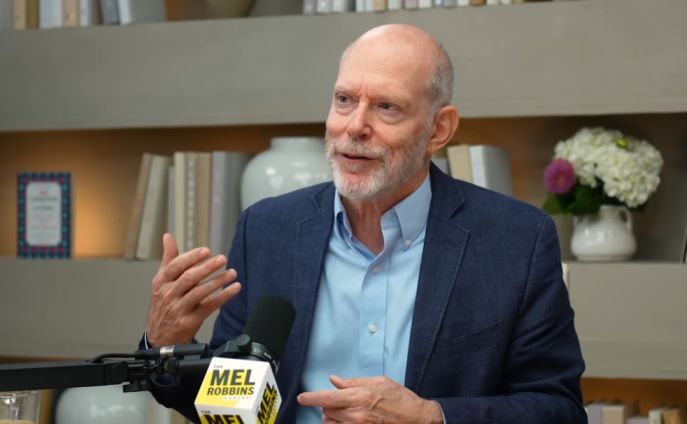
Here is the full transcript of American sociologist and gerontologist Dr. Karl Pillemer’s interview: ‘The Legacy Project: Life Lessons from America’s Elders’, on The Mel Robbins Podcast, November 20, 2025.
Brief Notes: What if you could sit down with your 90-year-old self and get a step-by-step roadmap for a life with fewer regrets and more meaning? In this powerful episode, Mel Robbins interviews Dr. Karl Pillemer of Cornell’s Legacy Project, who has spent decades collecting life lessons from thousands of people in their 80s, 90s, and even 100s. They break down the biggest end-of-life regrets, the simple mindset shift that makes happiness a daily choice, and five core rules for living well—like saying yes to opportunities, choosing your partner with care, and saying what needs to be said while there’s still time. If you’ve been waiting for the “right moment” to change your life, this conversation is a wake-up call to act now, while you still can.
Welcome to the Conversation
MEL ROBBINS: Please help me welcome Dr. Karl Pillemer to the Mel Robbins Podcast.
DR. KARL PILLEMER: It is such a pleasure to be here, Mel. I just can’t wait for our discussion.
MEL ROBBINS: I have been waiting nine years to meet you in person, so I’m thrilled that you’re here. And here’s where I want to start. Could you speak directly to the person who’s with us right now and share with them what could change about their life or the life of somebody that they care about who they share this episode with? If they take everything that you’re about to share with us and teach to us today and they apply it to their own life.
The Lesson Most People Learn Too Late
DR. KARL PILLEMER: I want to share with you a lesson that many people learn too late. One of the things older people have told me over and over is that life is incredibly short. It passes by faster than you think it will.
There’s a corollary to that which is even more important, and that’s that happiness and fulfillment and purpose are not a destination that you will arrive at when conditions are somehow perfect. Instead, happiness and fulfillment and purpose are the product of choices you make amidst the kind of circumstances in which you find yourself.
So it’s a question of discerning what you can control and what you can’t. And what would you do if that was the wisdom you were going to base your life on?
Well, there are some things you really would do. One of those is you would stop waiting for things like to travel or express love or find a more meaningful job. You would make more conscious choices to be happy and to optimize your current situation. You would focus on what’s working rather than what’s not.
You would savor small things throughout the course of the day. And the elders told me all kinds of things: a colored bird on the lawn, a phone call from a friend, the silly antics of the dog.
You would treat moments and conversations and days with people you love as precious rather than routine that you’re just walking through. Those are all part of what you can do if you embrace this elder wisdom about life being extremely short and that life can’t be deferred.
And so that’s kind of where—I mean, I think that’s really the essence of it. You know, these are sailors on the sea of time. They’ve gotten to the end of this journey and one of the things they really know about is how to use this extremely limited lifetime that we have.
What Is the Legacy Project?
MEL ROBBINS: Dr. Pillemer, you’ve spent over 20 years at Cornell researching the biggest life lessons, the biggest regrets, the tactical advice that people in their 80s or 90s, even 100 and beyond have. You call it the Legacy Project. Could you tell the person that is listening right now a little bit about the Legacy Project and what it’s about?
DR. KARL PILLEMER: Sure. I’d been a gerontologist for around 25 years. I was in my early 50s and I had a powerful revelation that all I was studying was the problems of older people and older people as problems. So I really had the idea: what do older people know that younger people don’t? And could I find that information and distill it in a usable form?
The one thing people don’t realize and one thing that we’ve lost in our age-segregated society, which is one of the most age-segregated now that’s ever existed, is that it’s only been in about the last 150 years or so that people have gone to anyone other than the oldest person they knew for advice about life.
We know from anthropological studies that older people were absolutely critical to human survival. If you were in your 50s and everybody else was dying in their 20s and 30s and you knew what to do in a drought or what to do in a famine or where better land was—people have found that older individuals were key to human survival.
We’re at the risk of losing what is honestly an extremely natural human process, which is not asking older people for their stories or their anecdotes, but asking them for their practical advice for living.
The Moment Everything Changed
If I can tell one story, there was a moment in which this revelation occurred. I was starting to think that I was on the wrong track. Because also we scientists get funding for solving human problems, so you don’t get so much money for trying to figure out why people are happy. So I had that problem focus.
And I was doing research in a nursing home. And the nurses knew I liked interesting older people. And they introduced me to somebody who I called June Driscoll in the book.
And I asked her how she was doing and in this strong voice she said, “Just great. You know, I’ve had my bath, I’m watching my programs. It’s a nice day outside.”
And I was so surprised that I asked her, “How could this be?”
And she said, “Look, I grew up in terrible poverty. I didn’t have three square meals a day. Now I’m being taken care of. I have a place to live. I have people who are caring for me. Why would I be unhappy?”
And that’s when she said the thing that got me to write the book. First of all, she said, “Young man”—and in my mid-50s, that was nice. But she said, “Young man, you will realize that when you get to be my age that happiness is a choice and not a condition. And that you learn to be happy in spite of things.”
So I thought that—I mean, it just sent me on this quest. You know, I’m sure you’ve had this. Every once in a while, something happens when you realize you’re about to go on a journey that for me led to talking to these hundreds of people over many years. But I just had to understand: how can there be this paradox of happiness in aging where many older people, despite all the problems they have, have solved some of life’s individual problems and are very happy? How could we find that out and not waste that resource?
The Power of Limited Time
MEL ROBBINS: You know, I’m actually reading from your blockbuster bestselling book, 30 Lessons for Living. This is page 232. “What’s different about aging is that you don’t have 50 more years when you’re 80.”
And if you really take that into consideration, there’s something about limited time that focuses the aperture that you have, the lens that you have on life about what matters. Because if you really—let’s say that you’re listening right now and you’re in your teens or twenties or thirties or forties or heck, like me in my fifties—if you knew you only had one year or a week to live, notice how quickly you would only focus on the things that actually were important.
And so much of the crap that occupies your mind and your energy would just drift to the side because you would suddenly know you have limited time. So you focus on what matters.
And what I love about your work is the practical advice that you’re about to hear. And the specific things to really think about and focus on and change now come from a group of thousands of people who had that exact experience. “I have limited time, so by God, I’m going to wake up and spend that time on the things that actually matter because I’m learning from the things that I regret that I didn’t do earlier.”
And I think that’s the opportunity of this conversation. What is the biggest takeaway from your research about how to live a happy, successful and healthy life?
The Secret to a Fulfilling Life
DR. KARL PILLEMER: There are some runners up. Okay, so like a runner up is that even though a lot of these people grew up in the Great Depression, they think you should find work you love and not work just for money. They have many other kinds of specific advice that we can come to.
But I would sum up—and this is one piece where I see a real interaction with Let Them theory as well—if I were to sum up maybe that core piece of advice, or really one of the big ones, is the secret to a fulfilling life is to be able to distinguish and act on the difference between what you can control and what you can’t.
So it’s a difference between controlling your own actions while acknowledging that you can’t always control outcomes.
So what you can do is you can make a decision to value people and experiences over things. What you can do is very carefully devote time and attention to personal relationships. What you can do is make a daily decision to put mindless worry aside.
And by the way, about worry, I know that we’ll come back to it, but imagine 2,000 grandparents yelling at you, “Stop worrying so much. You’re going to regret wasting the time on it.”
You would act as much as you can with honesty and integrity because you know you’re going to regret it later on. You would stop worrying so much about things that you can’t control. You can’t control exactly how your children turn out. You can’t control exactly how your older parents treat you. You can’t control how long you’re going to live. No matter how much you believe in body hacking, you have to focus on these aspects of your life that are controllable and understand what the difference is and really take action on those things.
So I think it’s this difference. People get paralyzed by this kind of despair about things that are going on, be it the political situation or something else. The elders want you to believe that these things that you do in life to become happy and fulfilled and purposeful are the result much more of choices you can make than they are of some abstract force governing outcomes.
Optimization with Compensation
One of the ways that you can look at it, if I can use a little more social science terminology, is that there’s something called—and it’s another big one—optimization with compensation.
MEL ROBBINS: Optimization with compensation.
DR. KARL PILLEMER: Optimization with compensation.
MEL ROBBINS: Like I’m getting paid for something.
DR. KARL PILLEMER: Well, almost, but as you grow older, people who age successfully learn to optimize what they have left and compensate for what they may have lost. Okay, so rather than being upset, as one of my interviewees said, “I can’t climb this mountain anymore, but I can still go hiking. I’m going to optimize what I have left.”
Instead of reflecting and ruminating about all the losses, they argue that you take action on what you can control.
Stop Wasting Time on Worry
MEL ROBBINS: You know, one of the biggest takeaways from the Legacy Project research, because I’ve been a fan of your work for almost 10 years, is this sense that “I wish I didn’t waste so much of my life worrying about things that never happened or worrying about what people thought.”
Are there a couple key things that you should focus on? You know, when you talk about living intentionally and what’s in your control, what are like the top two things to really focus on from the study that are within your control?
The Cost of Worry: Wisdom from the End of Life
DR. KARL PILLEMER: Can we touch on worry? Of course. Well, I asked these very, very old people what their major regrets in life were. Well, I actually asked it differently. I asked them, what can a young person do to avoid getting to your age and having regrets? So how can they avoid it?
First of all, almost everybody said, if you get to 90 or 100 with no regrets, you haven’t lived a very interesting life. And it means you haven’t taken any risk, so we can come back to that. But that’s not an aspiration to completely avoid regrets.
But in general, I asked them about this and I was ready to hear people talk about big ticket items like a shady business deal or an affair. I was not ready to hear, and it was so surprising: “I wish I hadn’t worried so much.” I wish, and people gave many examples. One of the, but here, just a couple I can think of.
One woman said there were going to be layoffs in my company and we were going to learn in three months. I could do nothing about it. There was nothing I could do. I worried constantly. And she paused and looked a little wistful and said, “I wish I had those three months back.”
Somebody else said, “I wasn’t able to get pregnant and I just worried and worried and ruined my life about it. And then I got pregnant.” And people use the same phrase: “I wish I had that portion of my life back.”
So when you get into mindless ruminating worry, here’s one action step. Know for a fact that when you reach the end of your life and you look back on it, you will say a lot of the things I worried about didn’t happen. Things happened I didn’t even think to worry about. And I wish I had that time back that I had spent mindlessly worrying and ruminating.
So one technique I use is I imagine this auditorium full of old people, because it was a universal part of elder wisdom, yelling at me, you know, “Stop worrying about X.” Now I’m such a worrier that I could actually have a calendar scheduling in worries. You know, daughter one, daughter two, grandchildren, job, climate change. I mean, so this for me was immensely helpful.
The second thing that they argue, and I think it’s very actionable, is they really believe in planning. So they aren’t saying don’t plan, don’t live through rose colored glasses, but they really urge for whatever it is that you’re worried about, conscious planning. So that’s the sense of what, take advantage of what you can control rather than what you can’t.
I think they would also argue, because this particular insight, even though they didn’t know it, is so consistent with principles of cognitive behavioral therapy, that if you are an incessant worrier, there are therapies that can help you. And taking that time to work through the elimination of these negative ruminating thoughts, putting in the effort really can pay off for an entire lifetime.
Taking Control: Planning Over Worrying
MEL ROBBINS: Well, if I take everything that you just said from the “I wish I didn’t waste periods of my life worrying about things that either didn’t happen or things that happened and they weren’t so bad or that happened and they were bad and I survived anyway, I wish I could get that time back.” And if we also take the advice of you should just plan because it’s something in your control.
And then I take the example from one person in your study who remembers a three month period where they knew layoffs were coming, they felt like a sitting duck and worried about it, which in the study is they’re now reflecting, “I wish I could get those three months back.”
And how many of us can look backward and go, wow, I really allowed six months in that relationship to just go right down the toilet because I was worrying. I allowed three months of my life, a year of my life.
The advice is in there because if you take the example of you think layoffs are coming, well, that’s not in your control, but what is? You can plan. So if you think it’s happening, start looking for another job, start brushing up on other skills, start asking yourself, am I really happy here anyway?
And if you lean into that tactical piece of advice, you’ve now learned two things. When you’re worrying, you can take control. And by taking control, the worrying disappears and you don’t poison the time.
So the biggest regret: “I wish I wouldn’t have wasted so much of my time worrying about things.” What are some of the other big regrets that people near the end of their life have?
The Regret of Not Investing in Relationships
DR. KARL PILLEMER: If I were talking to your listeners, I would say one thing that you are likely to regret is not investing enough time and energy in people you love or like and making sure that they are aware of it.
So I would say that that’s one key thing. When I analyze all the regrets that people have, they are much more about people than they are about career. And they are much more about not engaging with, attending to, as I said at the beginning, being present and intentional about relationships.
So, for example, not investing time in relationships. In the studies I did, we learned that what children really want is your time. They really aren’t interested in anything else you can give them. They want time spent with you, as does your partner.
One example of this that I talk about in the books is something I called the middle age blur, but maybe be better called the activity blur. People in their 30s to 50s, often people would say, “I almost don’t remember that time.” You know, it was so filled with work and building a career and getting my education done and housing and then have kids thrown in. It passed by like a nanosecond. It occurred in this blur.
And people very often in that blur lose track of relationships. And the odd thing is, or the ironic thing is, is that older people would tell me, either directly or indirectly, that they spent these enormous amounts of time pursuing happiness in other ways, and happiness was essentially already there if they had invested in these, you know, had acted in compassionate ways in rewarding relationships.
People and Experiences Over Things
So I would say the one thing you’re going to believe as an older person, there’s no question that when you come to the end of your life, you are going to value people and experiences over things. I’ll say again, and this is one of the things that’s been quoted very heavily from the book, if you want data.
So out of the 1,200 people for “30 Lessons for Living” who we survey, not one person, and it’s going to sound a little absurd, but not one person, not a single person said, “I wish I’d spent more time accumulating more things.” Not one person said, “I really should have just tried to make more money. Really. That’s the thing I just did wrong. If only I’d invested a lot more time trying to make more money so I could buy more stuff.”
Now, that does sound absurd when worded that way, but I deal with a lot of young people in my job, and that is a very present motivation for a lot of people. No older person towards the end of their life is going to endorse that, so you can think about that, you know, that you are going to value experiences and people way more.
And let me say one other thing about that. They don’t, the older Americans don’t want you to be starving artists. I mean, a lot of them, I’m sorry, apologies to starving artists. That’s fine, but they want to make sure that you prioritize that what you do is enjoyable and fulfilling.
One of my favorite interviewees who was a very successful entrepreneur, summed it up. He said, “I loved what I did and I made money doing it.” So it was in that order.
So I do think this notion that I would say principal regret is failing to be present, failing to be intentional, and failing to be active towards people who we love and like in our life, and being distracted about so many other things. And I can guarantee almost everybody that’s what you’re going to think about at the end of life.
The Trap of Worrying What Others Think
MEL ROBBINS: You know, another, you know, when I think about your work, the regrets that really stuck with me were, first of all, wasting too much time worrying about things in the future that never ended up happening. The second one was not spending time with the people that mattered while they were still here.
And the third one that had a really big impact on me personally was worrying so much about what other people thought that I didn’t let myself be or do the things I actually wanted to do. Can you talk a little bit about that one?
DR. KARL PILLEMER: If I could sum up their advice, I think they would be fairly radical, looking back over their own lives, and would endorse a statement like, “Don’t do anything because you think it would impress somebody else.”
That is, don’t make a purchase, don’t make a choice as much as you can. Don’t do something because you think it would increase other people’s opinions of you. Now, it’s not bad to want people to like you. It’s not bad sometimes to try to fulfill other people’s expectations. But as a major motivation, to give something concrete, if you’re buying a car, extract from your mind what other people will think of that car.
So I think that that’s the insight you’ve said is really, really key to them, that you waste an extraordinary amount of time and money focusing on what other people think.
Now, let me qualify that, okay? There are some times where they really want you to consult other people and really want you to be concerned about what other people think. Well, one of the examples I really like, one of their strongest pieces of advice about finding a mate is really listen. If nobody else likes your prospective partner, that is, if not, hold on.
MEL ROBBINS: So, like, if none of your friends, really listen to your friends and your family, if they don’t like the person you’re with.
DR. KARL PILLEMER: They said over and over, they said, “If only I’d listened.” If it’s just one person, but if everybody you know is saying, “This guy is not right for you,” and they’re repeatedly saying it and your impulse is to say, “You’re all wrong, you don’t understand him,” over and over, that was a major life regret because very often your friends and family have your interests at heart.
So they do want you to listen to other people around those kinds of decisions. But that’s very different from doing something just because you want them to think better of you. You know, they want you to listen to others. Now, not, of course, if it’s because of a prejudice, if it’s because of, you know, some kind of stereotyping, but if everybody thinks this is not the person for you, there’s a chance they could be right.
MEL ROBBINS: Well, typically when that happens, it’s because your family and friends notice that you’re not yourself.
DR. KARL PILLEMER: Exactly.
MEL ROBBINS: That they’re not bringing out the best in you. I notice as a parent, it’s very, very clear when my kids have been in a relationship with somebody where they completely change and they don’t seem like themselves, versus when they’re with somebody where I see the best of them being brought to the surface.
The Importance of Family Relationships
One of the other big regrets from the Legacy Project you write a lot about this is that people later in life, near the end of their life, regret not having close relationships with their family.
And I’ve noticed, as I’m getting older, I’m 56, I think a lot about my family and I think about the fact that my dad’s in his 80s and how many Christmases do I have, how many visits do I have? If you only see somebody a couple times a year, you might be talking about a dozen or 20 or 30 more times and that’s it.
And so it sort of makes you think about the value and the importance of that. But this was a big takeaway that people really both regretted not having close relationships with family and regretted not making amends with people in their life.
The Weight of Unresolved Estrangements
DR. KARL PILLEMER: You’re right. You know, I mentioned that. So one of the biggest regrets that really surprised me again, as I said, I was expecting, you know, affairs or criminal behavior or whatever.
The other thing that really surprised me and actually started me on my most recent book was I would ask older people about their major regrets in life. And I was also really unprepared for how many of them said that their major life regret was an unresolved estrangement of some kind with their own parents, with their siblings, and especially with their children.
And there was an exact moment when I decided to embark on yet another five year research project about people’s advice was when I was talking to a woman sort of in her 80s in Texas, and she was this vibrant, feisty, you know, liked a good glass of bourbon at night and told lots of stories about, you know, her second husband, et cetera, and things they did.
And when I asked her the questions, I asked about her children, it was a complete change in mood. Like, it was like a cast came over her face. She—and then she actually literally began to pound her fists on the arm of her chair and say, you know, “I just don’t know what happened. I never hear from them and it’s continually painful.”
So we talked about it. She said it had been more of a slowly developing estrangement. She married a second husband who the kids didn’t like that much. But they’ve traveled the world, they had some money, they kind of lost contact. Now, at the end of her life, her most profound regret was that these relationships weren’t there.
MEL ROBBINS: So for the person who’s listening or watching, who finds themselves saying that to them, “Well, I never hear from them.” And you’re starting to get that edge. “Well, I never hear from them.” What is your advice to that person who is noticing that? They say that “I never hear from them.”
Understanding When Distance Is Necessary
DR. KARL PILLEMER: As we talk about distance and estrangement, I think that we have to remind ourselves that there are some family relationships where there’s been a history of abuse, either physical or sexual, where the person is currently a damaging or dangerous person, or where the relationship can be so emotionally stressful that there are some people who are right, at least temporarily, to break off contact.
And if they decide that they want to resume or stay in contact, doing so with the help of a psychological or counseling professional is a good thing. So we have to acknowledge that. But our studies have found that’s really the minority of cases.
And so with many of the people who were estranged in permanent estrangements, I said, “What could have, you know, what can you do to find help?” They would say, “I need a time machine. I mean, I would go back and stop this before it occurred.”
So what you can think about is anticipatory regret, which is something psychologists talk about. We don’t just regret those things that we did, but we think about things that we might regret. And I think that’s a key message here.
So for one example, you and your brother are having a horrible conflict and you decide never to speak to one another. Well, that’s going to have ripple effects down to all the next generations, how the cousins aren’t going to speak together. There won’t be family reunions, there won’t be family gatherings.
So the idea is to use anticipatory regret. If I let this happen, will I regret it? I think that’s a very powerful way to think about these things. In your family, you grew up with your sibling, you have strong attachment to them. You have biologically based attachment to the people you grew up with that you can’t overcome rationally. So do you really want those to deteriorate to a point, even if it seems right in this very moment?
Taking Responsibility for Family Relationships
MEL ROBBINS: I love that you’re breaking this down because I think you can intellectually know that at the end of your life, you want to be surrounded by your family. You want to have made amends, you want your friends to be there. And it’s easy to let the small little cuts build up and resentment to take hold.
And as a parent myself of three adult kids, what’s interesting to me is that I believe that my relationship with them is 100% my responsibility.
So if you could take these very emotional interviews and reflections from the 80 and 90 and 100 year olds that wish they could go back in time and make one change, what would be the one change that you would want that you would tell the person listening tactically that they should make?
Because I think that this is a conversation that both people will reflect on for themselves personally as a parent. But a lot of adult kids or kids in their teens might share back to their parents in the hopes that you will be able to have somebody have an epiphany about a small shift that actually creates a major positive ripple throughout an entire family and generations.
The Power of “Let Them”
DR. KARL PILLEMER: You know, I am, let me answer it. You know, in one way, and I’m not saying this because I’m on this podcast. I’m saying this because it fits with all of our work. The general principle with your older parents or your adult children of something along the lines of “let them” is the actual advice that they would give. So that, and it works both ways.
So I have tremendous, if I can confess to the world, I think that my children would agree. I have lots of ideas about how my children should have different health habits. And you know, actually, fortunately they’re great at raising their children. I can’t complain about that. But I have lots of ideas of what they should do. And it’s a daily process of not saying them.
And so I think what I had said to them both eventually is, “Look, I’m going to work on this. The only exception I’ll make if I think something is actually dangerous.” Yeah, like if there’s something that I think is going to be life threatening to somebody which hasn’t occurred, but otherwise I’m going to try to withhold my advice.
Very similarly, for adult children, you don’t need to go home at Thanksgiving and try to convince your parent that it’s time for them to sell the house and move into assisted living. I mean, you know, in that situation, you let them make their own mistakes and accept natural consequences.
It doesn’t mean that you can’t give advice. I would say one of the strongest things is don’t give unsolicited advice. I mean, just get out of the habit. There are 30 or 40 years of research showing that unsolicited advice about a problem you’re having is stressful, especially if it’s somebody who hasn’t been through the same issue.
I will give another strong principle for this. These relationships need, to some extent, if they’re successful, to translate into something a little more like friendship, so that you want to think about shared interests, for example, things you can do together.
There are those kinds of things. Many people who overcame an estrangement didn’t do it by having a huge conversation about the past. They started to go to a bingo parlor together or they went to a—
MEL ROBBINS: Weaving workshop together or played golf together.
DR. KARL PILLEMER: Played golf together. They did so. So this idea. So I would say there, you know, a real key piece for making these intergenerational relationships work is in these family relationships. Lighten up. Lighten up about them.
I mean, you know, if somebody, you know, makes goofy jokes or whatever, I mean, everything is not something that has to be done. So over and over, this is a message of older people again and again and again in all these relationships. Lighten up about some of these things. Everything doesn’t have to be, you know, darkly serious.
And especially in marriage, that was a strong one. Everything doesn’t have to be this battle of the wheels. You can lighten up. So there’s a discursive answer to your question.
MEL ROBBINS: No, I actually love it. It helps me apply because I do think the vast majority of people that have strained relationships with family members, whether it’s siblings or parents or kids or whatever, kids, partners, or in laws, is the slow burn and the fact that all this stuff just builds up and then everybody gets together and you’re so tense that it’s stressful to be together and it just becomes easier to avoid it.
You know, one of the things that I want to talk about, because you summarize this on page 193 of your bestselling book, 30 Lessons for Living, there are five lessons from people in their 80s, 90s, and even their hundreds for living a really good life.
And those lessons are: always be honest. Say yes to opportunities. Travel more. Choose a mate with extreme care. Say it now.
I want to take these one by one. Let’s start with the first one. Always be honest. Most people suffer from serious regret later in life if they have been less than, quote, “fair and square.”
Lesson One: Always Be Honest
DR. KARL PILLEMER: Yeah, because of course, the people I interviewed, that term “fair and square” was something they often would have used in the 50s. And so, and that was the idea that you offer people a square deal. You offer something that’s really fair. Yeah.
That was another surprise for me. And I will say to listeners, I know you may have in your mind a little sign going off, a cliché alert, because who wouldn’t want to be honest? But for them, it meant something deeper and more profound because it was such a source of regret.
People who had deceived someone, actually, let me say, if you were on the receiving end of some kind of major dishonesty or betrayal, you know, that was a major regret in your own life. So people, of course, had been on the receiving end of that kind of thing, of infidelity, and it was often—so it really would shake their faith, you know, in the grounds of human relationships.
But I would say one of the strongest regrets was a person’s own dishonesty. So I had many cases. One man told me about his marital infidelity, and he wasn’t able to overcome his feelings of guilt about it, how he had never been able to be faithful, even though he tried. His wife had put up with it.
I talked to other people who had been involved in questionable business deals so that, you know, and they had those same kinds of regrets.
So, honestly, integrity, having your life narrative at the end of your life. Because, by the way, narratives towards the end of life are extremely important. You do really want to be able to sum up your life in some kind of a meaningful narrative. And we could come back to that.
But that’s an important way of feeling like you’re ready for whatever’s next. Having acted with integrity turns out to be a major thing that people value when they’re summing up their life narrative.
So when you’re thinking now, it’s like, if you’re doing something that is less than honest, if you’re doing things that you know are deceitful or deceptive in some way, you can be pretty sure it’s something that’s going to interfere with your understanding of the value of your own life.
MEL ROBBINS: Well, I think it’s a question you could ask yourself, Dr. Pillemer, like, where am I not being honest with myself? Or where am I not being honest with other people?
DR. KARL PILLEMER: Exactly. It’s a way you can use right now. So it’s something that, for people, it’s extremely actionable. Ask yourself right now, is there something I’m doing that is on the borderline of honesty, even that I will later regret.
Now, I say in the book, we aren’t talking about, you know, the answer to the question, “Do these pants make me look fat?” I mean that we aren’t talking about some kind of radical honesty in which you can never be strategic, but it’s more honesty and integrity in actions.
And yeah, like it might, I would say, you know, like it might feel good now and it’s not going to feel good as you review your life.
Being Honest With Yourself
MEL ROBBINS: Well, I think that there’s an even deeper way to apply this because you know, most people that are doing something really dishonest until they either get caught or they just can’t bear it anymore, they’re not going to come clean.
But there is a level of self betrayal and lying to self where I do believe there’s an opportunity as you’re listening or watching right now, to truly ask yourself, am I being honest with myself about whether or not I’m enjoying what I do for a living?
I love the quote that you said that, you know, somebody summed it up best. “I loved what I did and I made money doing it.” That loving what I did first was the priority because I spent so much time in my life at work.
And so maybe the honest thing for you is to admit to yourself that you’re not enjoying where you are right now, kind of gaslighting yourself about your current habits, that you’re not actually taking care of yourself like that you’re—I need to be honest now because if I’m honest with myself that I’m not happy or honest with myself that I don’t want to live another decade doing life the way I’m doing it, I need to make some changes.
That right there is wisdom from an 80 or 90 year old that you can apply if you’re 18, you hate your major, you’re 20, be honest.
The Importance of Honest Self-Assessment in Career and Relationships
DR. KARL PILLEMER: It’s absolutely true. And it’s being honest with yourself too as you’re thinking about a partner. Am I deceiving myself in this? Do I not really have that powerful in-love feeling, but I simply just feel it’s time?
One of the strongest arguments they would make is what Mel just said. If you are in a job right now that is unfulfilling and you’re doing it mostly for the money, really be honest with yourself. I’ve learned after these studies to cringe every time one of my students says, “I want to be a chef, but I’m going to go work in the financial services industry and then I’ll do that later.”
They argue that it is always too late to make that kind of change. That if you are in a job that is unfulfilling, really, really think about changing it. Their rule was if you don’t feel good to get up in the morning and go to your job and you’re staying in it, exactly like Mel said, you’re not being honest with yourself.
And I would say that is to me one of the most impactful things. They really argue that you need to choose work for its intrinsic value, not for the extrinsic rewards. As I said, the one thing older people know about is time, and they’re amazed at how younger people use time. It’s like a desert tribes person would look at our profligate use of water—they just can’t understand it.
So the idea of taking five years slogging in a job that is really unfulfilling rather than taking a risk for something else—you know, obviously you have to plan out your own life and what’s feasible. But to the extent it is possible for you to honestly assess if you really hate this job and make a change, you know, as soon as you can, they would say it’s urgent.
MEL ROBBINS: This is coming from a generation of people whose life experience was you stay in a job and you actually do that for your whole lifetime. Whereas we now live in a reality where the average person is probably going to have, I don’t know, 19 different jobs by the time that your career is over at least. And the wisdom is still, be honest with yourself. Do not waste your life toiling away at something you don’t enjoy doing. Figure out how to make a change.
DR. KARL PILLEMER: It was one of the biggest surprises of the study. People from the Depression era generation who I figured would say, “Oh, find a stable job, make as much money as you can.” Not a single person said that.
And you know what? It was especially powerful from older women who had not had opportunities that younger women have today. Over and over they said, “I would give anything for your opportunities. Make use of them. You know, don’t languish in a bad job.” So anyway, I think that’s absolutely right.
Say Yes to Opportunities
MEL ROBBINS: Well, that brings us to the second thing that people say that you need to do in order to live a good life, which is say yes to opportunities. When offered a new opportunity or challenge, you are much less likely to regret saying yes and more likely to regret turning it down.
DR. KARL PILLEMER: Yeah, I got that in. That first insight first came from a successful entrepreneur who just said, “Look, here’s my lesson. Unless you have a compelling reason to say no, always say yes.” If you’re offered a new responsibility, offered a new opportunity in general, have your principle be, “That may take me out of my comfort zone, but I’m going to say yes.”
You know, this may also sound like a cliche, but I’m telling you that thousands of people told me this. You absolutely are much more likely to regret things that you didn’t do than things you did. You are more likely to look back on a missed opportunity that you could have done.
So, I mean, one thing, they would also argue you can be a little more cautious about decisions that are irreversible. But in many cases they would say you can experiment with a change that isn’t so extreme. So say yes to the initial steps in a new career. Say yes to exploring something.
I think they say, and I’m sure you see it in your work, people become inert, that they become stuck, one day blends into the next. And that’s where this being honest with yourself, being present and intentional as you look at your life. And absolutely, they want you to say yes rather than say no if you can. So if you’re wondering about some decision, some new opportunity, I would encourage you folks to say yes rather than no.
Travel More While You Can
MEL ROBBINS: Another thing that 80, 90, 100-year-olds say is the secret to a good life: travel more, travel while you can, sacrificing other things if necessary to do so. Most people look back on their travel adventures, both big and small, as highlights of their lives, and they regret not having traveled more.
DR. KARL PILLEMER: So there are times when what sounds like a very specific piece of wisdom sheds light on bigger issues. So the most interesting thing is a lot of very old people hadn’t traveled very much when they were younger.
I interviewed a 93-year-old nun in Rochester, New York whose idea of adventure was her family would leave the Polish enclave and go to the German enclave for dinner. Or I interviewed people in East Texas who until the World War II or Korea, had never been outside of their own county.
So they knew what it was like not to go anywhere and they valued travel incredibly. I had one woman say to me, “You know, if you’ve got a choice between a kitchen remodel or a trip, I say take the trip.” I would say that was something we had to resolve in my own marriage. But I think we now do take the trip rather than the kitchen remodel.
But the idea there is, it didn’t have to be adventure travel. It could be anything but something that takes you out of your normal daily route. So people who were unable to travel much when they were young think that this is a critical thing for young people, in part because it symbolizes an attitude of openness and receptivity and adventure.
We think of older people as being more conservative than younger people, but in terms of what you should do with your life, they’re generally radical. It was over and over. “Don’t waste your life.” You know, the one woman told me, “You know, you have only a few years here on earth. You have to cram as much into it as you can. You know, don’t take for granted these things.”
And travel is that symbol. It’s a symbol for doing things that they were unable to do and discovered later in life and felt that it was too late. So as I would think of it that way, I thought it was an interesting insight.
MEL ROBBINS: Well, I also love that you’re saying big and small, because these are the things you can remember. And I as a kid remember actually the one summer I remember was the summer that we rented a motorhome and went on a tour of a bunch of the US national parks as a family. I remember that as clear as day. One of the highlights of my childhood. It was probably a two-week period. It wasn’t some big fancy trip.
I also remember the fishing trips that we would take that were just an hour from the house. And so I love that reminder. Cram it in.
Choose a Mate with Extreme Care
MEL ROBBINS: Another thing that 80, 90 and 100-year-olds say is the key to a good life: choose a mate with extreme care. The key is not to rush the decision, taking all the time needed to get to know the prospective partner and to determine your compatibility over the long term. I’ve heard that choosing your life partner is the single most important decision you will make.
DR. KARL PILLEMER: I, at least I believe it is. And you know, because most people, we have to remember, despite our times right now, one thing that hasn’t changed in 20 years and since Jane Austen’s time, still, if you look at surveys, most young people want to get married. Most young people plan to get married. And most young people have as a value in that marriage, being married for a lifetime.
So those values, even though people are doing it later, they’re living together first, the core desire to have a life partner is still there. So I want to clarify that because it’s not like nobody cares about this anymore. I mean, this really is, you know, the most important decision that a lot of people make because you can change your career.
So yeah, they believe that younger people aren’t careful enough. They, you know, observe their own children. People get to a certain age and it’s time to get married and that sort of thing. And they have certain rules for choosing a mate that I think are useful.
One, I have mentioned already that it’s okay to listen to the impressions of people who love you about your future mate. You should absolutely choose carefully. They argue that you should make sure that you have—it’s very interesting—they all talk about a gut feeling so that people who violated that gut feeling that this was the right thing regretted it.
But one thing that may sound a little controversial, but was their strongest piece of advice in this choosing a mate carefully is we may like to think of that “opposites attract,” but they really go with “birds of a feather flock together.” They argue that you should marry somebody—or, you know what I’ll say, marry, even though we know that this could mean a long-term partnership, but just to make it so I don’t have to say that every time, I’ll say marry—marry someone who’s a lot like you, who is fundamentally very similar to you.
So the idea is this is a fact, one of the strongest facts from research on social relationships of all kinds. Unfortunately or fortunately, we like people who are similar to us. For example, you’ll notice that when you first have a child, pretty soon your social network consists only of other people who have children because you gravitate towards them. And so your friendship network consists of people who also have children and your other folks drop out. That’s just one example.
We like to be around people who are fundamentally similar to us more than we like to be around people who are very different. And most, most important is people who share similar values. So I think that’s one of the things they mean about choose carefully. You have to go beyond attraction.
Another feature of choose carefully is that nobody wants to lose passion in your relationship. They say you have to nurture qualities of friendship. And I’m going to give one very specific piece of advice. People who are in long marriages offer this piece of advice and I want to offer it, you know, directly to your listeners. Embrace your partner’s interests.
So rather than being angry that she’s playing golf on Sunday, learn to play golf. Rather than—and I can use my own daughter as an example—that one of your husband’s loves is fantasy football. Rather than being angry about that, join the fantasy football league.
I had many older people say, you know, people I call in the book “Tough Old Guys,” opera. “I never thought I’d go to opera, but I just decided my wife likes that and I’m going to do it.” People started to do the other practical step in so many relationships of the anger that mounts because a person has a specific interest and the partner thinks it’s ridiculous.
So here’s one of the things that people—because I interview older people across the racial and ethnic spectrum—and one piece of advice that came through from many of them is, when you’re choosing a mate, watch how your prospective partner plays games.
MEL ROBBINS: What do you mean by that? Like cards or basketball or all of it?
DR. KARL PILLEMER: When you’re actually playing a game, like when they’re doing a leisure activity, like playing a game. And so to make it concrete, one of my interviewees, who was Dominican, from the Dominican Republic, if you go to many social clubs or anywhere where there are lots of Dominicans, you will see people playing dominoes.
MEL ROBBINS: Yeah.
DR. KARL PILLEMER: And they play very cutthroat dominoes. And she said, “I observed my—the guy I was interested in. I saw he was competitive, but he was a gracious loser.”
I saw there was someone else who said, in a Chinese senior center, “I watched my future wife play mahjong, and I could see how she related to the other people.” And somebody else said, “I tried to play something like a tribute, some game with my guy I was interested in. And he threw the board up in the air and stormed out of the room.”
So watching how your partner operates, again, being the researcher. So that was one concrete thing.
Practical Relationship Advice
DR. KARL PILLEMER: The other piece of advice I took to heart is if you’re having a lot of serious arguments, you find there’s a pattern to arguments. Rather than therapy, the cure might be a sandwich. Because my wife and I, we’d be traveling and we’d forget to eat. And our argument, like, who chose the bad hotel or why we got there after the museum closed would be unbelievably intense until we realized that we were hungry.
And there’s good research on this, Mel, showing that you should not argue when you’re hungry. And so one of the things the elders said, like one of their little lessons, is if you’re having an intractable argument, get something to eat and see what happens.
Learning to Let Go of Arguments
MEL ROBBINS: I love that advice. And here’s what I’m realizing. My mouth is kind of open because I’m now processing what you’re saying. My husband and my kids do that with me because I will get so lost in what I’m doing. And then next thing you know, I’m bickering about something just so stupid. And I’m the jerk, right?
And somebody in my family will go, when’s the last time you ate? And sure enough, five or six hours ago.
DR. KARL PILLEMER: Try out a cup of tea and a biscuit if you’re having a terrible argument. So that was one of their key points.
MEL ROBBINS: I love that.
DR. KARL PILLEMER: Yeah, I think it’s a good one.
MEL ROBBINS: I think it’s a really good one.
DR. KARL PILLEMER: Well, you know, like another piece of, there’s one piece of advice I think that really sums up a little bit too, of this whole area, if I could share it. So sometimes a cliche is way more than a cliche. So sometimes a saying or an expression has this real power, even though it’s been used a lot. And when I asked older people for their advice for a long marriage, you can imagine one thing I heard. I’m sure your listeners can.
MEL ROBBINS: Don’t go to bed angry. Yes.
The Power of “Don’t Go to Bed Angry”
DR. KARL PILLEMER: So I really wanted to unpack that. Like, what did that mean? Why was that so critical when you were in your 80s and 90s? Beyond, why was that a piece of advice that you wanted to offer younger couples? Why was it so important?
And one insight was from long experience, really, if an argument carries over to another day, it’s just more of a problem and you should really be dealing with it. But it also has to do with the sense of the shortness of life because they realize that, you know, any night could be the last night. So you need to resolve things beforehand.
Now, you don’t need to think that as a young person, but I thought that they really felt very strongly that a grudge that continues for more than a day or two is very diagnostic. You know, it really calls for attention and that, you know, their sense of the fragility of these relationships. So I thought that was interesting too.
MEL ROBBINS: Well, I also think that if you go to bed angry and then you have one of those sort of cold standoff days, it gets less and less likely that you’re going to address it.
DR. KARL PILLEMER: Yeah.
MEL ROBBINS: And then the thing that was the source of the argument, because it’s never the thing you’re arguing about, it’s some deeper feeling goes unaddressed. Whereas if you force yourself to lean toward the person and lean into, well, what’s really upsetting you, then you now are starting in your relationship to just be willing to talk about the deeper thing.
And that’s almost nine times out of ten, at least. I find in my marriage of 29 years that just being curious about the deeper thing, being willing to apologize without going to bed, holding the grudge while you sleep, or being pissed off while you, it releases that pressure valve and it allows you to kind of resolve this thing quicker, and it gives you a baseline understanding of where those sort of trigger points and landmines are emotionally for your partner and yourself.
DR. KARL PILLEMER: I totally agree. And it also, it’s like a mediation. You know, you set a deadline and so, you know, like, it gives you a deadline by which, yes, you have to apologize or express understanding, right?
MEL ROBBINS: Yeah. Because you might want, you know, it is helpful at times to step outside the room. I’m going to take a step outside the room for an hour and cool off. I’m going to go eat a sandwich so I’m not angry with you.
But if the deadline is with yourself personally and with your partner, we don’t go to bed angry. We actually discuss what happened and unpack it and apologize for what we need to before we go to bed. That’s really helpful, practical advice.
Say It Now: Don’t Wait Until It’s Too Late
And another thing that people in their 80s, 90s and hundreds say is the secret to a good life, say it now. People wind up saying the sad words “it might have been” by failing to express themselves before it’s too late. Don’t believe the ghost whisperers. The only time you can share your deepest feelings is while people are still alive.
DR. KARL PILLEMER: This was one of the most profound regrets. Over and over people said, I wish I had expressed love more. I wish I had asked for forgiveness. Because that is a truly time limited possibility. Unless you believe in seances, it’s going to be too late eventually to ask forgiveness, to offer an explanation, to offer an apology.
Like, you know, what else it’s too late for sometimes? Asking for information. You may desperately want to know what, you know, your father did in Vietnam or something like that, and it will be too late even to find out things.
So I would argue that that is a very actionable thing for listeners. If you are pondering saying something now, if you have something on your mind, if you’re wondering about whether to do any of those things, you know, use the five second rule. I mean, sort of. I mean, if I can bring that in, I mean, I would say just do it. I mean really, really just do it.
One of the things I found in the estrangement work is how often people who had been waiting and waiting and waiting that were going to call the brother they hadn’t talked to for ten years. More than one person, you know, described it as a backpack. They’d been wearing this very heavy backpack. One man said, yeah, you know, I woke up the next morning and realized I don’t have to think about why I don’t talk to my brother Ed anymore.
So that saying things now is beneficial for you. But I would say that cropped up.
MEL ROBBINS: Meaning when you’re waiting for the right time to say something, you are wearing a weighted backpack and you’re carrying it around. And the second that you, five, four, three, two, one, pick up the phone or drive over to their house or write the letter, say what you need to say, you take the backpack off, and you free yourself of the emotional weight of waiting for the right time.
And that freedom is available to you, literally right now. When you’re done listening to this, you could pick up the phone or write the letter like it’s available right now.
DR. KARL PILLEMER: Mel, I wouldn’t even suggest that people think, is there something I should be saying that I’m not? So, for example, I know parents don’t tell their kids because, well, because parents think their kids know it. Don’t look their kid in the eye and say, you know, I’m just really proud of how you’ve turned out. You know, like, I just want you to know that we’ve had our issues, but what you’ve done is really remarkable.
You know, I did a thing even, like, I had a beloved college professor who was nearing the end of her life, and I didn’t think about it, but I sort of five seconded it. I said, I’m just nearby. I’m going to go see her. And the feeling before the end of her life of expressing the gratitude for advancing my career.
I think it’s an excellent exercise. What am I not saying right now that if it were too late, I would really regret? You can’t assume that people understand how much you love them, how much you care about them, how proud you are of them. It doesn’t have to be negative things or forgiveness, but we often don’t.
You know, it’s what I said early on. You treat these moments as precious rather than routine because our relationships get routine. I think that’s an excellent piece of advice, is what might you not be saying that needs to be said now?
Self-Acceptance and Letting Go of Perfectionism
MEL ROBBINS: One of the other things that you write about, this is on page 194, is another piece of advice, which is go easy on yourself regarding mistakes and bad choices you have made. And there is this lesson around self acceptance that so many people in their 80s, 90s, their hundreds, wish they had learned when they were way younger.
And this is what one person in your study said: “What I’ve learned from them is mistakes that I’ve made is that you can’t change what’s happened in the past. You have to accept yourself, warts and all. That was hard for me because I came out of a background that was telling me if you just keep trying harder, you really could do it all right and be perfect. It took me some time to accept the fact that it’s not going to work out that way and it’s okay that it doesn’t work out that way. Once a decision is made or a direction has started, you don’t get anywhere by looking back and second guessing.”
And as somebody taught me years ago, if you’ve bought a pair of shoes, don’t look at the shoes in the next door window. Did these 80, 90 and 100 year olds have any tactical or practical advice on how to start learning how to be more self accepting and kinder of yourself for the mistakes you’ve made or the decisions that you wish you could change?
DR. KARL PILLEMER: Yes, and I love that shoes in the store window metaphor. I mean, I think that that really is the concept that if we’re constantly comparing ourselves to what we could have done, it is a really dangerous and damaging possible thing.
I would say one thing you could do if you’re listening in here is you could reflect on this. Am I making certain kinds of decisions or do I tend to second guess myself? Is there something I’m second guessing right now that would be better just to let go or just to leave it alone? So you can analyze yourself. Where are you doing this kind of emphasizing your own regrets? So one thing is just awareness and you can definitely look at what’s going on and you can let it go.
Another thing you can do is become aware that you’re being pushed towards a kind of perfectionism by our culture. And the more you are watching so called influencers showing you their perfect refrigerator, their perfect bedroom, their perfect body, their perfect face, you are going to be pushed towards perfectionism. So you can inoculate yourself against that.
But finally you need to practice self compassion. You need to actually begin to understand that you’re not going to express perfection and have this kind of a self compassion and self forgiveness. So I think a number one thing is definitely being aware of it.
Taking the Long View
I will give one piece of elder wisdom I think which is really critical about this. It applies to other things. But I would sum it up as you’re criticizing yourself, worrying about things you might have done, kind of thinking about, you know, this pair of shoes you bought is really taking the long view.
There is a certain logic to asking, will I really care about this when I’m 80? But this particular thing I’m worrying about myself, you know, taking that view as if you were one of the elders looking back on your life. So people tend to torture themselves in the moment about missed opportunities or mistakes. But by taking the long view, will this really matter over the longest period of time, I think that you can get a certain amount of peace with it.
So I would say those are, you know, kind of the essence of elder wisdom on that. You know, the other thing about this kind of regret is one thing is to focus on what you learned from it rather than on how bad it was or whatever you did or failed about it. So you can reframe it, you can shift it to, here’s what I learned from it rather than here’s how I messed things up.
Learning to Be Happy in Spite of Everything
MEL ROBBINS: One of the big things that I learned from your work is this concept that you call “learning how to be unhappy.” Learning how to be happy in spite of. And I want to read to you from page 208:
“Lots of unpleasant things are going to happen to you in life, and when they do, you have two choices. You can mope and sulk, and you can feel sorry for yourself, or you can put on a brave face and get on with your life.”
I have come to call this attitude “happy in spite of.” This viewpoint contrasts with that of many people, which I’d call “happy if only.” The dominant perspective among young people is “I’ll be happy if only I…” If only I lose the weight, if only I find a partner, if only I get divorced, if only I find a different mate, if only I get healthy, get rich, and on and on.
The experts believe—meaning people in their 80s, 90s, and even 100—that “happy if only” attitude is futile and leads to disappointment.
And one of the reasons why this is something that has been a huge change in my life is that it’s occurred to me that it’s so easy to be waiting around for happiness. It’s so easy to be disappointed with where you are. It’s so easy to wake up and be in a bad mood for no reason at all.
That it’s a skill that you can learn that I practice now—to be happy in spite of everything that’s going on, to be happy for no reason at all. And I’d love to have you unpack this choice that you have, that if you could embrace this attitude, that you can choose how to have a good attitude and be in a good mood and not dwell on your expectations or disappointment, or make it a habit to be unhappy. How important this is and how much it changes your life.
DR. KARL PILLEMER: Yeah. And here’s where you get to a core of wisdom that is in some ways unique to older people. So in some ways, that insight, to me, justified the project because you can say “choose to be happy,” and someone can very reasonably say back to you, “Well, that’s just a platitude. What about that?”
But when you get to be 70 and beyond, just about everybody—and no body hacking is not going to fix this—just about everybody bears some burden of chronic disease and sometimes crippling chronic disease. And just about everybody has experienced loss. You’ve certainly lost your parents, you may have lost siblings, you may have lost your partner.
So you have a whole group of people who have experienced many of the things that young people worry about.
Second, we have a fascinating finding from hundreds of studies that on average, older people are happier than younger people. So if you ask a survey item like, “How happy are you on a scale of 1 to 10? Have the past five years been some of the best of your life?” People over 60 or especially over 65 are happier than younger people.
So you’ve got those two things. How can people who are experiencing an accumulation of loss and negative life events still be happier than younger people are? How would that occur?
And that’s where—and one of the things that we found, and it’s supported by other research—is this conscious choice to be happy. Not because of all circumstances aligning perfectly, but choosing to be happy given the current circumstances in which you now exist.
And there are various techniques they employ which do map on to other ones that people do use in psychology, but these are their own indigenous ones. They would argue that it involves things like waking up and saying, “I’m going to make this as good a day as it can be.” It’s waking up and saying, as one of my interviewees did, basically, “This can be a good day. How can I make this count?”
And it does involve trying to tamp, trying to consciously avoid negative emotions about your situation, to look for what’s working in my life rather than what isn’t working in my life.
So they would argue again and again, “We’re a group of people—if I could speak as one—we’re a group of people that a lot of crap is happening to.” I mean, if you’re going to be an old person, unless you can choose to be happy in spite of your circumstances, you’re never going to be happy. Every single old person would be miserable.
Because if you at 30 got the level of arthritis and your friends are dying off and all these things are happening, you would just hate it and be miserable. They are obliged to find a way to get around this. So that’s why I think again, this notion of 2,000 older people yelling at you, this one insight is one way to get yourself moving in that direction.
MEL ROBBINS: And just think of how much it would change your life. Yeah, and the—it’s not the year. What I love that saying that it’s not the years in your life, it’s the life in your years.
And if you could teach yourself to default toward choosing intentionally to look at what you do have, choosing intentionally to look at what is working, choosing intentionally to wake up and make today a good day simply because you woke up, what a difference that would make in your life.
The Secret to Staying Healthy Through Life
You know, one other thing I wanted to ask you is that you likely aren’t going to make it to be very old if you’re not taking care of yourself. So what do 80, 90 and 100 year olds say is the secret to staying healthy through life? What do they wish they had done earlier?
DR. KARL PILLEMER: The one—this is one of the insights that when I give talks on this that people want to hear the least. So the one thing I, when I tell them elder wisdom about your health, I get this feeling of fingers and ears and “I’m not listening.”
But they had, I think, a profound insight that I wish people trying to do public health messaging would embrace. And I’ve tried to argue that in different venues.
Young people, when they think about their health—and I imagine some of you out there have said this or know people who said it—”I like smoking, I like eating junk food, I like not exercising. And I don’t care how long I live, I really don’t. If I enjoy these things so much, if I die at 69 rather than 78, who cares?”
What America’s elders know is you will not just die at 69. Medical science is going to keep you alive in a state of incredibly burdensome chronic disease for one or two decades. So your worry isn’t dying. They say don’t worry about dying, worry about chronic illness.
And we know now from increasingly powerful research what you do in your 30s and 40s and 50s can be more important than what you do in your 60s and 70s. So these sort of heart healthy chronic disease prevention lifestyles in midlife are really critical.
So one of the main messages that they want to say is anytime you hear yourself saying, “You know, I don’t really care about this unhealthy habit, you don’t really need to live that long.” That’s not your worry. Your worry—you aren’t going to live unhealthily and then drop dead. You’re going to be burdened with chronic disease.
And when you see it in lots and lots of older people and hear them talk about it, many of them are so regretful that they couldn’t stop their spouse from smoking. They couldn’t get someone to become more healthy. And it sort of ruined not just one year, but a decade or two of life because you will be kept alive in a state of very burdensome chronic disease.
So I’ve tried to argue over and over, that should be your motivation that you want to do everything you can right now to avoid this.
The Power of Gratitude for Another Day
MEL ROBBINS: One of the main takeaways from people in their 80s, 90s and hundreds in your research is that as you near the end of your life and realize you don’t have 50 more years, you have a handful, that knowledge creates gratitude. The grateful knowledge that today is another day.
Every day, one of your respons—one of the people in your research study said, “Every day I say, yes, I’m alive and every night I say thank you. I always pick the most simple, most mundane thing to be thankful for because that’s where the meaning of your life is at.”
What did you learn about the power of being just grateful for another day and thankful for the mundane thing that actually matters in life?
DR. KARL PILLEMER: I’m not sure if you’ve ever had anybody on who’s sort of a gratitude, the kind of gratitude happiness researcher. So this sense of gratitude for small things is a key part of this. Well, this sense of gratefulness for small positive things is a key part of this broader concept of that happiness is a choice rather than a condition.
So it is a shift in focus to again, gratitude for those things in your life that are working rather than focusing on those that aren’t.
I’m going to metaphorically pound my fist on the table and say that if that this is something that your listeners should really absorb and take to heart because it’s practical wisdom that is so evidence based that if you are in a very bad time, things are extremely stressful. If you can infuse a positive emotion into that, your negativity will drop.
So one thing that has been extensively studied is people who are caring, say for a person very debilitated with Alzheimer’s disease, those people who are unbelievably stressed—constantly up all night, the person is wandering—but who are encouraged to think, “I’m doing something great here. I’m fulfilling my filial or marital responsibility. I am showing that I am a competent person because I can do this,” simply in infusing or “I’m grateful I still have this person.”
You can infuse positive emotions. It’s not like you have to get rid of the negative ones. But there’s pure scientific evidence. If you bring in positive emotions into a very negative and stressful experience, the negativity drops.
The Big Takeaway: Live Like Your Life Is Short
MEL ROBBINS: So Professor Pillemer, after immersing yourself in all this research and really extracting the wisdom from 80, 90 and 100 year olds on how you can improve your life, what is the big takeaway that’s changed your life the most?
DR. KARL PILLEMER: I want to, I have a big one. And then I have a smaller piece of advice for your listeners, but I would say for all of it, of all the things I learned can be summed up in an expression which also reflects some earlier things we’ve talked about. But I’m going to take the risk of re-emphasizing it.
And that is live like your life is short lived. That is, understand that every older person I talked to, and the older they were, the more likely they were to say life is short or life is really short or life is really, really, really short. Or as one retired engineer said, “It seems like it passed by in a nanosecond.”
I had a 99 year old—actually, one of my favorite quotes in the book is a 99 year old looked at me and said, “I don’t know what happened because the next thing you know, you’re 100.”
I can guarantee to every person listening to this that when you get in your 80s, 90s, beyond, you will say, “I cannot believe how quickly this passed. It seemed like my life passed by almost in an instant.”
Now the thing about older people is they’re telling you, don’t let that depress you. Use that as a superpower. I mean, use it as an understanding to both take the long view. Whether my colleague has a nicer office than me isn’t going to make any difference to me in 60 years.
And in the short term, life is going to seem so short that I cannot waste it in things that aren’t ultimately fulfilling.
So I would say the one message that came in all the books I’ve done, all the research is this overpowering sense of how short life really is. And over and over people said, “There’s not enough time to cram everything you want to in it. Don’t waste your life.”
So I would say, it’s in the—I think in the Hebrew scriptures—”Teach us to number our days so that we may get ourselves a heart of wisdom.” It’s very hard to do because it’s so depressing for people. But if you live like your life is short, you will make very different decisions about how long you stay in a crappy job, about how long you stay in a bad relationship, about how long you wait to express love to people you love, about how much time you spend with your children when they’re growing up.
That’s what older people have to tell you—that you’re going to come to my age and you’re going to say, “Wow, this was a short time I had.” And you’re going to want and you’re going to reflect very seriously on how you spent your time. And I think if you live like your life is short, you have a pretty strong chance of a better life.
A Final Message: Start Living Intentionally Today
MEL ROBBINS: I am so grateful that you’re here. I feel so inspired by everything that you shared with us, because it is true. I don’t care how old you are, whether you just finished high school or you are in your eighties, when you look back, it feels like it went in the blink of an eye.
And what you shared today, you gave us the practical tools and the powerful insights and the life-changing wisdom that we need in order to start living more intentionally, choosing happiness, making amends, and doing the things that are well within our power starting today to change the course of our lives.
And so I just want to say thank you. Thank you, Professor Pillemer, for being here. Thank you for the research that you’re doing. Thank you for showing up and sharing all of this with a sense of urgency, that this is not only something to pay attention to and to share and to be inspired by, but it is a gift and an opportunity for you to start changing your life right now.
And thank you. Thank you for choosing to listen to something that could change your life. Thank you for caring about the wisdom of people in their eighties, nineties and hundreds.
And I guarantee you, if you could get in a time machine and you could go and time travel and see yourself at the age of 90 or 100, you would tell yourself right now exactly what you just learned today. So don’t just listen. Go do something about it.
And in case no one else tells you, I wanted to be sure to tell you as your friend, because remember, he said one of the five big things that you need to do is to say it. So I’m going to say it.
I love you and I believe in you, and I believe in your ability to create a better life. And now you have a roadmap. Wisdom from people in their eighties, nineties and hundreds that you can use to create a better life, starting right now.
Alrighty. I’ll see you in the very next episode. I’ll be there to welcome you in the moment you hit play.
Related Posts
- Transcript of Arthur C. Brooks Interview: Success, Family & Love – PBD Podcast #853
- Transcript of Kendall Jenner Interview: Jay Shetty Podcast
- Top Sites to Recharge Streaming App Diamonds
- Purebred Cats: Breeds, Traits and How to Choose the Right One
- Transcript: Dr. Jordan B. Peterson Interviews Megyn Kelly # EP 552