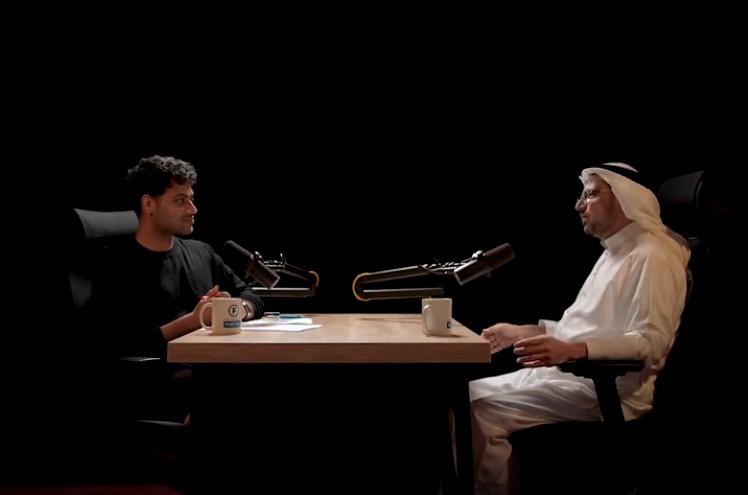
The following is the full transcript of former Al-Qaeda insider Aimen Dean’s interview on Figuring Out With Raj Shamani, August 18, 2026.
EDITOR’S NOTE: In this episode of the Figuring Out podcast, host Raj Shamani sits down with Aimen Dean, a former Al-Qaeda insider who later became an MI6 double agent, for a rare firsthand account of his path from radicalization as a teenager to infiltrating one of the world’s most notorious terror networks. Dean shares insights into meeting Osama bin Laden, the inner workings of Al-Qaeda, the events surrounding 9/11, and the personal journey that led him to help dismantle threats from within.
Swearing Allegiance to Osama bin Laden
RAJ SHAMANI: (00:02:14 – 00:04:10) So you, you were a double agent and a spy in one of the most dreaded terrorist groups in the world. You swore personal allegiance to Osama bin Laden. You were a part of Al-Qaeda and you were a spy at the same time. Tell me, take me to the point where you were swearing your life to Osama bin Laden. Was he there?
AIMEN DEAN: (00:04:11 – 00:04:16) Yeah. I mean, of course, you can’t shake hands and swear an allegiance to someone who isn’t there.
RAJ SHAMANI: (00:04:16 – 00:04:26) No, I mean, maybe this happens in a camp. In a group at a place where he looks from somewhere, or were you like just present there?
AIMEN DEAN: (00:04:26 – 00:12:07) No, no, no. You have to go, you have to meet him in person. He needs to know you. He needs to see you. He needs to talk to you. He needs to ask you questions, you know, but not in an intimidating way. He’s like a big brother. He is like, you know, such a caring character. You know, yeah, he’s a caring, you know, individual. He was a caring individual. He was an individual who acted in a, fatherly, older brotherly kind of manner. Like, I mean, he was there to make you feel comfortable. At the end of the day, you know, these organizations, you know, you join them because you believe you want to go and join. They’re not going to pay you money. They’re not going to, like, I mean, give you power or, you know, straight away or anything. So, you know, so they need to make you feel comfortable. No one wakes up one day and decide to become a terrorist. You know, it doesn’t work like that.
I mean, in the 1980s, it was the Afghan jihad, you know, pulling, you know, people into believing in the jihad ideas, the revival of jihadism. Um, and then you have, of course, the, uh, the Bosnian, you know, genocide that was taking place between 1992 and 1995.
So for me, I was a young Bahraini individual. I come from a family that is half Bahraini, half Saudi. Okay. So my 2 uncles are Saudi and my cousin, my first cousins are Saudis. And I have actually first cousins who are Emiratis also. And I’m a Bahraini, was born in Saudi Arabia, growing up in Saudi Arabia, you know?
And so for me, I was growing up, like, I mean, with all of these ideals about, like, what’s happening in the Afghan jihad, it was, something that was always broadcasted through the Islamic awareness circles that I was attending at that time. Saudi Arabia was a very conservative country at that time, very different from now. I mean, the level of improvement you see right now, no, this is not the Saudi Arabia that I grew up in. The Saudi Arabia I grew up in was a country that is conservative and was keeping hold of tradition.
And so when I was growing up, you don’t see female faces. Basically, there is a total segregation between men and women, except within the same household, that’s fine. But outside of it, no. But then I come from a household where I have my mother, but also I have my 5 brothers. So we are 6 brothers, 6 boys. And so I was the youngest. And I was from a young age very much drawn to learning. And I was more dedicated towards learning. I wasn’t basically a very sporty individual. I wasn’t like, following football or any of other sports, or, you know, I was more or less drawn into learning.
And one of the avenues of learning that I love very much was history. Now, within the Muslim country, and especially like Saudi Arabia, you know, you do not, you do not learn history without learning Islam. And you can’t, it’s like, this is the birthplace of Islam. And therefore you are drawn into religion a lot.
Add to this that I grew up in the 1980s. The Afghan jihad was happening. And I lived in the city of Khobar where Aramco was. My father was Aramco. All my 3 uncles were Aramco. My cousins were Aramco. So I joke sometimes that if I do a DNA test, I will see a lot of petroleum products there in the genome sequencing test. And because of Aramco, it was a city full of other nationalities. So there were a lot of Americans, Dutch, British, and South Koreans. South Koreans were, a lot of South Koreans were living in our neighborhood even when I grew up. It’s a random thing. It’s just like to say that, well, my neighborhood in Saudi Arabia had lots of South Koreans. It’s really random.
And also the fact that the Iran-Iraq War was next door. And I grew up in Khobar. Again, it’s in the Eastern Province, which is sectarian. So part of the reason why there is a lot of extremism in the Middle East is because of sectarianism between Shia and Sunnis. So I grew up in the Eastern Province, split between Shia and Sunnis. I come from Bahrain, which is also split between Shia and Sunnis.
And I lived in Khobar where unlike all the rest of Saudi Arabia, which at the time used to have 2 TV stations, Channel 1 in English, Channel 1 Arabic, Channel 2 in English, we had Bahrain TV, Kuwait TV, Qatar TV, Aramco TV, which was broadcasting a lot of American comedies at that time. So for us, like, I mean, if that society doesn’t make you political, God knows what will. Also religious.
So because of my religious and political inquisitive nature, I turned to religion more, but also the fact that my mother passed away when I was 12. And so for me, part of dealing with grief was also to sink myself deeper into religion because this is where you think you find answers.
Discovering Sayyid Qutb
And I remember at that time, One of my teachers, and this is why the role of teachers is very important. So one of my teachers told me that if I want to reconcile, you know, my grief with someone who actually knew how to write about, you know, Islam, but from the prism of, you know, pain and grief, I should read Sayyid Qutb.
Okay, Sayyid Qutb. Who is Sayyid Qutb? Well, I mean, he is credited with being the spiritual godfather of almost every jihadist movement that ever existed. You know, so he is the spiritual godfather of bin Laden, Abdullah Azzam, Ayman al-Zawahiri, Abu Musab al-Zarqawi, al-Shabaab in Somalia, you know, the Azawad people in Mali. Like, you know, every jihadist movement, You know, and Abu Ala Maududi in Pakistan, he considered himself to be the spiritual twin of Sayyid Qutb.
And even though Sayyid Qutb was a Sunni Muslim, who translated his books, 3 of his books, you know, into Farsi, into Persian? Ayatollah Ali Khamenei himself, when he was in prison. So Sayyid Qutb was writing in prison in 1950s and ’60s. And in the 1970s, Ayatollah Khamenei, when he was in prison, you know, the former Supreme Leader, the slain one, he was translating his books because he provided in his books the perfect ideological and political framework of an Islamic state.
And, but why someone would recommend his writings to me. Yeah. Because there is another book, it’s roughly about 4,500 pages. It’s huge. It’s his commentary on the Quran. And, you know, in that book, he wrote that book throughout 9 years, all of them when he was in prison. And it wasn’t, you know, a very pleasant, you know, prison. You know, it was Nasser’s prisons, you know, the socialist hellhole, you know, of prisons in the 19— ’50s and ’60s.
RAJ SHAMANI: (00:12:07 – 00:12:28) So you’re telling me one person’s ideology in one book actually led to rise of ISIS, Al-Qaeda, movements in South Sudan, and movement— all the radicalization and extremist group and terrorism started with the ideology of this one book?
AIMEN DEAN: (00:12:29 – 00:12:35) One person. And he wrote several books, but among them is Milestones.
RAJ SHAMANI: (00:12:36 – 00:12:43) And doesn’t matter whether you’re Shia, whether you’re Sunni, which thing do you follow? It’s this book, this person.
AIMEN DEAN: (00:12:43 – 00:13:18) Milestones. He is the Karl Marx of radical Islam in the 20th and 21st century. He’s the godfather of that. Everyone idolizes him. You know, Ayatollah Khamenei idolizes him. You know, the Da’wa Party in Iraq, even though they are Shia, idolizes him. There is actually a square and a street named after him in Tehran. And in addition to that, he was executed, by the way, in 1966 in Egypt. And—
RAJ SHAMANI: (00:13:19 – 00:13:22) So you were advised to read this book? Exactly.
AIMEN DEAN: (00:13:22 – 00:13:25) So when I was reading him, like, and because—
RAJ SHAMANI: (00:13:25 – 00:13:28) But why were you advised to read this book?
AIMEN DEAN: (00:13:28 – 00:16:36) Because his, of course, my teacher wanted me to be introduced to his ideas, but because he used to comment on the Quran from the prism of pain and injustice. And so he would talk about loss, because of course, like, I mean, he lost relatives and when he was in prison and all of that, like, and you can tell his writings are deep.
I mean, one of the books that he wrote is called Milestones. It’s a small book. The 4th chapter is called The Jihad. So he’s talking about the establishment of a, What he called it, God’s kingdom on earth. That’s what he called it. In Arabic, مملكة الرب على الأرض. God’s kingdom on earth. And he preached that throughout his entire book about the vanguards, about the revolution, and about the establishment of it, and about the societal constitution of it. And how do you achieve it? And how do you fight against all of the ideologies there?
Remember, he was, You know, talking about it in the 1950s and ’60s during the big battle between East and West, between capitalism and communism, between democracy and, you know, authoritarian socialism. I mean, basically, like, that’s what he was talking about. And he was saying, no, there is a third way. It is the pious way, the enlightened way, the religious way, God’s kingdom.
And he is talking about it so passionately to the point where, you know, Milestones is considered to be the constitution of jihad and Islamic state. Hassan al-Turabi, the leader of the Islamist movement in Sudan that brought Omar al-Bashir and all, you know, and they ruled Sudan for 31 years. They were inspired. Hassan al-Turabi was inspired by Sayyid Qutb. And, you know, the movement, the FIS, which is the Salvation Front in Algeria, which came close to seizing power in 1991 when they won the elections in Algeria before the coup. Happened. They were inspired by Sayyid Qutb. الجماعة الإسلامية in Pakistan, لشكر طيبة in Pakistan, لشكر طيبة in Pakistan. You know, for them, Sayyid Qutb is the ultimate martyr, the the person who showed the way.
Milestone is translated into Urdu, you know, and distributed in all the Mujahideen camps there. You know whether it is you know Mujahideen Kashmir, Hazm Mujahideen. You know, لشكر طيبة. You know, all of these, you know, the people who committed the atrocities in Mumbai in 2008, every atrocity, every jihadist atrocity, 9/11, 7/7, Nairobi in 1998, Bali in 2002, you know, the 2002 to 2006 bloody campaign of Al-Qaeda in Saudi Arabia, you know, the shoe bombings, like, you know, basically the liquid plot in London, like, you know, to smuggle in all of these airplanes, all of these liquids into airplanes. All of these trace back to one individual.
RAJ SHAMANI: (00:16:38 – 00:16:43) And you became the reader of this person when you were 16. Exactly.
AIMEN DEAN: (00:16:43 – 00:18:21) When I was 12. And I finished a lot of his books by the age of 14, 15. So when the new moon came, Bosnia, I was ready.
The Decision to Go to Bosnia
A friend of mine, he is a childhood friend. He was 3 years older than me. When I was young, unfortunately, because of my bookish, nerdish nature, I was drawn to the friendship of older boys, basically. Who were more mature. Exactly. And so usually my friends were always anywhere between 3 and 6, 7 years older than me. Like, I mean, and so, um, so my friend Khalid, he was 3 years older than me, and I heard from his brother that he was going to Bosnia.
First of all, I was upset. Yeah, why didn’t you tell me? But I went to his house to say goodbye because he was going in a week. But 10 minutes into that walk towards his house, I decided I’m going to go and join him. So when I knocked on his door and I told him, you know, that I heard you’re going and I want to go with you, he was surprised. He was saying, Ayman, for God’s sake, like, you’re 16. I just turned 16. I mean, remember it was early October of 1994 and I just turned 16. And he just said to me, like, I mean, Ayman, this is war, this is jihad. Like, I mean, Because he already went for three months, you know, two summers back into Afghanistan. So like, I mean, it’s like he had at least some training and some experience. Like, I mean, what do I have? Nothing.
RAJ SHAMANI: (00:18:22 – 00:18:23) I mean, so what was he going Bosnia for?
AIMEN DEAN: (00:18:24 – 00:20:35) Because to join the you know Muslim forces there and the Jihad Mujahideen Brigade, to join the Mujahideen Brigade and to fight against the Serbs. So it’s a jihad, you know classic.
And so I said, “I want to join you.” And then he said. You know, he asked me a question because he said to me that it’s not a picnic. People die, people lose limbs, you know, it’s, you know, people get hurt. It’s, you know, it’s an immense physical struggle. Like, I mean, so he told me and he asked me a question. That question and the answer I gave changed his mind and changed my life. Because he asked me, “Do you think the jihad needs you there?”
So I said to him, “Oh, come on, Khalid! Like I mean, do you think really I’m arrogant to think like I mean anybody need me? You know, let alone jihad. The jihad doesn’t need me.” But Khalid, for God’s sake, I need it. I’m the one who need it. I’m the one who wants to go. I mean, because. I don’t know what madness possessed me, but because I was reading the writings of the deepest, most passionate writer and thinker who advocated that the only way we can live a righteous and pious life is if we restore Islam to sovereignty and that we have God and the Quran as our king and our constitution. The kingdom of God on earth as Sayyid Qutb, you know, preached and promised. And that can only happen through jihad. And, you know, at the end of the day, all of these genocides and massacres and everything and all of that and all of this trouble, they wouldn’t have happened if we have stuck to the kingdom of God on earth as he preached. So I want to go. I want to be part of history. I want to be— I don’t want to be a spectator, you know, watching the game. I want to be a player. I want to join the pitch, you know.
RAJ SHAMANI: (00:20:36 – 00:20:48) So you were drawn. You were not seduced. Yeah. You said all the people and all these organizations, which are terror group organizations, they seduce young men. How did they seduce you?
AIMEN DEAN: (00:20:49 – 00:21:45) The books. But you were the atheist. Sayyid Qutb, from his grave, seduced me. From his grave. He told me that we cannot have the ultimate happiness of living under a pious, utopian Islamic society without first shedding blood. And the blood will be the fuel will be the candle. He said, like, in our words are nothing but dead candles until we die for them, and then they are lit. So I used to call myself the unlit candle. I’m just waiting for my death to be that lit candle. So I’m willing for my blood to be that concrete, that little brick that will add to the building of that kingdom of God on earth. I was willing to do that when I was 16.
Bosnia: 14 Months of War
RAJ SHAMANI: (00:21:45 – 00:21:52) Was that the moment when you became recruitable by Khalid Sheikh Mohammed and Al-Qaeda?
AIMEN DEAN: (00:21:52 – 00:23:36) Yes. I mean, that’s when, of course, I went to Bosnia and I spent 14 months there. Like, I mean, and trust me, like, I mean, you know, I’ll tell you all the stories later. Like, but I remember when I left Bosnia 14 months later, You know, by the way, when I went to Bosnia, I thought to myself, okay, I’m 16 and I hope to God I will never see my 17th birthday. I was really wishing for it. I was hoping for it because that’s the mentality. You know, you asked me, you want to understand the mentality. I’m talking to you here right now and I’m telling you the mentality really takes hold over you. That narrative that, you know, that Islam is a ship, you know, that’s what they tell you, of course, that Islam is a ship that needs fuel and the fuel is your blood. And if you do not give, you know, then who will?
You know, so I remember, you know, when I arrived there and then when I left 14 months later, I was looking at the mirror. By that time I was 17 years and 3 months. I was looking at the mirror in a hotel in Istanbul and I felt that, God, these were not 14 months. I feel like I aged 14 years because of everything that you see in a war. Everything you expect, mass graves, torn limbs, people dead. I buried more people than I could count. And so you lose friends and you see the atrocities from the other side and you see the atrocities by your own side. You start to see a lot of things that, you know, an 18 or 19-year-old shouldn’t see, let alone a 16-year-old.
RAJ SHAMANI: (00:23:37 – 00:23:40) And so— What was the most shocking thing that you saw?
AIMEN DEAN: (00:23:41 – 00:23:53) I think when I— 2 things really, like, you know, basically, like, the first one was the discovery of a mass grave. And then you start to, you know, help to sort out, like, you know, basically the bones and the skulls and everything. Give me the entire incident.
RAJ SHAMANI: (00:23:54 – 00:23:56) What happened? Where were you? What did you see?
AIMEN DEAN: (00:23:56 – 00:28:46) Well, it was near a city called Maglaj. And the, you know, the locals told us like about the discovery, like, and they asked us like, you know, you are more religious than we are. I mean, the irony is that Bosnian Muslims were not really Muslims, to be honest. Like, I mean, they were as communist as it could get. Like, they were totally, you know, utterly separated from Islam. And they were drinking, smoking, you know, the mosques were there as, you know, Really, like in Amin, monuments of old Turkish age. They hardly prayed. They hardly, like in Amin, had anything to do with Islam except their names, you know, and the heritage. But by DNA, they are Serbs who just converted to Islam five centuries ago. That’s it. But the Serbs, of course, like in Amin in Bosnia, massacred them, like in purely because of the names and the identity and all of that, and because of like in political reasons and.
And so when they told us we have to come because you are the ones with religion and you could help us bury these people, like, I mean, give them funerals. And so in the end, we collected 39 bodies. We were able to establish 39 skulls and it’s the size of some of the skulls that really, Absolutely. Like, I mean, you know, sent me to shock. And the bullet holes in these skulls, you immediately, like, I mean, see the barbarity, how people could descend into that level.
Another incident, you know, when we exchanged some Serb prisoners for Bosnian prisoners, and then when across the bridge, like, basically when they were coming, you know, we saw some young girls, 12, 13, 14, who were, prisoners of war for 2 years. And of course, like, I mean, they come and they look like ghosts. This is when you start to see like skeletons and humans who look like ghosts. That was something that was imprinted on me.
And then when I saw, you know, how these atrocities led, you know, the people within the Mujahideen Brigade themselves to commit atrocity, to actually take dozens of Serb prisoners. These are military prisoners. But then instead of exchanging them, which is what we were supposed to do, they were beheaded in the most gruesome way possible. So you see, like, and I mean, lots of people who came to Bosnia with me who were naive and full of, These ideals of we are here to defend the defenseless and to do something noble, they changed.
Recruited by Khalid Sheikh Mohammed
And so when in October 1995, a year after I arrived to Bosnia, and when Khalid Sheikh Mohammed, the mastermind of 9/11, you know, the closest associate of Osama bin Laden, when he comes to Bosnia, he was coming there to recruit. And by God, I tell you, Raj, He came there to the right place because the Bosnian conflict gave birth to many of Al-Qaeda’s future leaders.
Do you remember the man I told you, like, I mean, that I went with, my friend Khalid? He would become the second leader of Al-Qaeda in Saudi Arabia from 2003 until 2004. Another one with us from the same town, my former teacher, Yusuf al-Ayiri, he will become the first leader of Al-Qaeda in Saudi Arabia in 2002, 2003. Ramzi bin al-Shibh, the lieutenant, the second, you know, the right-hand man of Khalid Sheikh Mohammed and the planning of 9/11, was with us in Bosnia. 2 of the hijackers were, you know, with us in Bosnia. You know, many other leaders, like in Yemen, there were 2, you know, leaders of Al-Qaeda in Yemen who were 2 leaders who were also in Bosnia. So, you know, Bosnia gave birth to many of these ruthless, you know, people. By the way, the 3rd and the 4th leaders also of Al-Qaeda in Saudi Arabia were also, you know, graduates of the Bosnian Jihad.
So Khalid Sheikh Mohammed, when he comes there, he finds, The perfect recruits, recruits who were coming to the stage where they have become different versions of themselves. They now descended far more and more into radicalism because the war did its job. And so Khalid Sheikh, when he was sitting with us—
RAJ SHAMANI: (00:28:47 – 00:28:49) He was the mastermind for 9/11. Yes.
AIMEN DEAN: (00:28:49 – 00:32:34) He was sitting with us. It was October 1995. It was a wedding. Of one of the, you know, jihadists there. And we were all sitting on the floor, you know, having this like, you know, I mean, big, you know, Saudi-style rice and meat and wedding feast kind of food. And, you know, sitting next to me was Khalid, my friend, like Khalid Al-Hajj, his name. And also, you know, there was another person who would later become an important leader for Al-Qaeda in Iraq.
So he was telling us about, look guys, the war in Bosnia is about to end because they are now having a ceasefire and there are peace talks. Most likely, the war will end soon. How about you think the bigger picture? Why are you going from one war on the periphery to another? Why are you going from, I Bosnia to Chechnya to Kashmir even he mentioned you know to in the Philippines to whatever. Why don’t you focus on the fact that it’s the center that is weak?
So he’s now talking setkot language now about again you know God’s kingdom on earth. But he said in order to achieve that first we have to expel the Americans out of the Middle East. The only obstacle between us and bringing down these regimes. The House of Saud, the Gulf states, Egypt, Iraq, Syria, all of these places. The only obstacle, the Americans. Remove them and the rest will be easy.
But how do you propose? So of course, Osama bin Laden was in Sudan at the time, but he said, the camps in Afghanistan are reopening. And if any of you want to join them there for the purpose of training and getting yourself ready, for the next phase of jihad. So we asked him, the next phase, where is it going to be? So where is that theater? Because we used to call them the jihad theaters, you know, Afghanistan, Bosnia, Chechnya, these places, we used to call them the jihad theaters. So what is the theater? So he said the jihad theater will be from the North Pole to the South Pole and everything in between. It will be an open war against the Americans.
None of us took him seriously. We thought like, you know, basically that this is not possible. But nonetheless, the man was ambitious. And I remember, you know, I sat with him alone later. I said, if I wanted to go and join it, not that I’m ever going to join it, but if I’m going to go and join the camps in Afghanistan, how do I do it? He said, oh yeah, So he took, you know, small piece of paper from his notebook and he took a pen and he wrote a number for me. He said, this is a man in Peshawar in Pakistan. His name is Abu Zubaydah. When you are about to go to Pakistan, just call him and say, you know, Abu Maryam, that’s an alias that he used. So he knows who I’m talking about. Abu Maryam told me, that I should contact you before I come. And that’s it. He will take care of you.
So I ended up actually calling Abu Zubaydah and I booked a flight from Baku in Azerbaijan to Pakistan, to Karachi first. And from Karachi, I went to Peshawar and he was there waiting for me at the airport in Peshawar. He took me to, you know, the guest house there, a safe house. And the rest is history. Like, I went into Afghanistan, And I remember I arrived, and then two and a half months later, Bin Laden arrived. How did they take you to Pakistan?
RAJ SHAMANI: (00:32:35 – 00:32:36) Ah, very simple.
Crossing into Afghanistan
AIMEN DEAN: (00:32:37 – 00:48:16) You know, you you know in Peshawar, you know you go with a guide, with an Afghan guide. Now my Afghan guide was a medical doctor, Afghan medical doctor. His name was Muhammad Hanif, and he used to belong to Hizb-e Islami Hekmatyar, Hekmatyar people. And so. He will just take me to a normal, you know, the bus station in Khyber Bazaar in Peshawar. You know, just ordinary, like, you know, you wear, you know, the Afghan, you know, battu, like, you know, basically, and the Afghan, you know, bakhul as they call it. Like, I mean, you know, the hat and, you know, you remove your glasses because, you know, Afghans don’t wear glasses mostly, you know, otherwise they will look foreigner.
And we just go all the way to Torkham Gate, which is the Khyber Pass. So it was just amazing. Like, and I remember I was passing by, it was May of 1996. So I was passing through the mountains, you know, the Khyber Pass, you know, all the way to Torkham Gate. And then the bus, the macrobus, like, you know, stopped there. And then that’s it. We have to go on foot now, you know, to the other side. We cross the border. It’s a gate that looks like as if it was built in the 1800s. It’s really ancient.
And you cross and then the other side, hardly any road. It’s like, where did the road go? There is no road. There’s something that resembles road, but actually it resembles the surface of the moon in terms of how many craters there were on this road. And of course, the smell of the spices, the very primitive markets. I mean, it’s like, if you can call it even that, I mean, you feel as if you stepped from 1996 to 1896. You’re back to 1896. You just stepped 100 years back in time. And there are no phones, mobile or landline. There are no TVs. There is only radio. That’s it. Only radio there. Not a single landline. It’s destroyed. All destroyed. There is no mobile towers or anything. There’s mobile phone, nothing. No TV even. So you are back to the early, you know, 1900s.
And you take the bus to Jalalabad. And there in Jalalabad, you know, just to the west of it, there is an area near the dam of Jalalabad called Darunta. It’s near the University of Jalalabad. And there is several camps there. So there used to be Abu Rawda camp, Abu Ma’adh al-Khosti camp, and also there was a Jama’at Islamiyah Pakistan camp, which is dedicated for Kashmir. So the training was happening there, and that’s why we used to see a lot of Pakistani ISI cars used to come and go all the time there. And then of course there is the camp that belonged to the most celebrated master bomb-making expert in Al-Qaeda at that time, Abu Khabbab, Egyptian.
And that’s like when I started my training, like, I mean, it was an eye-opening thing. It was Afghanistan after all. And there I met, you know, one of my former Bosnian, you know, comrades, Farouk al-Kuwaiti. So who actually would later become the leader of Al-Qaeda in Southeast Asia, in Indonesia. And he was actually captured by American special forces in 2002 in Indonesia. So I met him there and actually, I mean, it was a very pleasant surprise.
Meeting Osama bin Laden
And I remember, I mean, 2 and a half months later after intense training on mortars, on missile launchers, on urban and mountain warfare and stuff like that, I remember we heard the news. You know, I remember it was July 23rd, 1996, that Osama bin Laden arrived from Sudan. His plane just landed in Jalalabad Airport. It’s like, what? We were all shocked. Like, I mean, what happened? Well, we heard that the Sudanese government asked him to leave. And, you know, he just showed up in Afghanistan.
Word came to us in the camp in early August that Osama bin Laden is living, you know, in Yunus Khalis’s camp, which is, you know, a compound of houses not far away from the Jalalabad or the Nangarhar, you know, Paktia border. And he knew that there are people from the GCC, from the Gulf, you know, from Saudi, from Kuwait, from Bahrain, who were in the camp. And he said he would love to see us. And of course, I mean, we were curious.
So the camp at the time basically had only one car available at the time. It was just a small pickup, just to bring 2, 3, 4, 5 people. So 14 of us crammed into it and into the back of it. I mean, it’s like as if we were lambs, basically livestock to be transported. So 45 minutes later on the 4th of August, 1996, we were there.
So we entered, and I remember like, oh my God, we’re going to meet Osama bin Laden. Like, you know, the legend, you know, of the Afghan jihad, and everyone knows about him, the enemy of America, the one who’s, you know, going to lead like in basically a big jihad movement. And of course, what a disappointment. No, no, seriously, it was a disappointment, and I’ll tell you why.
So we arrived in Yunus Khalis’s camp, and it’s like it was a collection of houses within a, it’s like a compound. Very primitive houses, mud and straw, all brown color. And then you enter and it’s all boxes and suitcases scattered here and there. And we saw the people who were around him, including his deputy, Abu Hafs al-Masri, other deputies like Mustafa Abu Yazid, Ibrahim Abu Khair, and all others. And Abu Muhammad, who was the head of the training. And we were looking at them, they were all disheveled and they all, wearing basically what looks like clothes they haven’t changed in 5 days or something like that. They look like not well looked after and like refugees. I mean, and then we forgot actually they are refugees.
So we sat down with them and then Osama bin Laden came. And forget whatever mental image that you have of him, Because usually, you have the mental image of someone who’s wearing a very nice white turban and his robes were very well ironed and no crease even to be seen. No, he was wearing, I remember, basically a blue thobe, the dishdasha I’m wearing right now. He was wearing a blue one. Every crease could be seen. It’s completely creased. And definitely didn’t see an iron for decades. And he was wearing, the red version of what I’m wearing right now, but again, wasn’t ironed and it was just wrapped around his head like this. And again, without the ghutra, he wasn’t doing it like a turban. He looked like a refugee. He looked like a hermit. He looked like if he was, if I saw him in Saudi Arabia, I would say he’s a beggar.
And of course, like, and when he sat down and he looked at us, and of course each one of us introduced himself, like, you know, who, you know, of course with the aliases, like, I mean, you say I am, For example, my alias at the time was Abu Abbas al-Bahraini. Like, I mean, so, I mean, this is my alias. So, and he would say, oh, welcome, welcome, whatever. And then he said, and he was looking at our eyes, looking at him and looking at his friends and, you know, inner circle, thinking, oh my God, like, I’m with a disappointment.
But he can read our minds. He can read the faces. He said, I know that Our appearance look as if like, you know, basically we are no threat to anyone. We can’t pose a threat, you know, even to, you know, our Afghan cook here. So, but may I remind you, you know, of a story? And this is where cleverly he introduced the concept of eschatology. And this is important. For everyone to understand it. You know, jihad, one of the fuels of jihad in terms of recruitment, in terms of resilience, in terms of strategy, in terms of ideology, in terms of continuity is eschatology, prophecies. It’s the idea of things that are written long time ago, foretelling of a jihad, of an endless war or the end of time war. So he introduced the concept of prophecies here.
The Prophecy of Suraka
He said, remember brothers, when the Prophet Muhammad was escaping Mecca, you know, because the pagans of Mecca were about to kill him. That’s it. They had enough of him. 13 years of disobedience, you know, to their rule and disruption and converting their, you know, relatives and young, you know, loved ones. They decided they want to kill him. So he decided, you know, to migrate to Medina.
And so that perilous journey, so he was talking about the perilous journey and how the trading mercantile pagans, pagan leaders of Mecca, they offered a huge bounty on his head. And so he said, remember that story? We said, yes, we remember. He said, remember that when one night, His name was Suraqa. That night when he caught up with him, you know, finally, you know, the Prophet Muhammad was alone with one companion only. You know, there were 2 people with 2 camels and that’s it. And he was, you know, on a horse with a spear, you know, and with a sword and a shield, of course. Like, I mean, you know, there was no contest. And he was, you know, running towards them, like, you know, riding towards them on a horse.
And then, When he had the spear, like, you know, basically because he was, you know, the bounty is for him dead or alive, better dead, like, you know, I mean, so he can’t escape. So, but then miraculously, his, the, you know, the front legs of the horse sank into the sand, you know, basically, and he couldn’t, you know, throw the spear and he actually tumbled down. So he went back onto his horse, started again to chase them. But then the second time it happened, he realized that this is supernatural. This is not normal. So this is when the Prophet and his companion turned and actually went to him.
So he thought like, you know, I mean, okay, this man is supernatural. I don’t want like, you know, basically him, like, you know, I don’t want anything to do with him. So he was saying, give me, you know, aman. Give me, you know, your safety, your security. Give me your pledge of safety. You know, he was asking the Prophet, and I will leave you alone. I will not tell anyone. Don’t do any of your magic on me. So he said, I’m not going to do any magic on you. Like, I mean, just promise, you know, not to tell anyone about us. And don’t, you know, and just tell people maybe we are seen somewhere else. So the, I mean, the knight said, okay, I accept, but what is in it for me? I mean, do you have anything, any money on you to give me or anything? He said, I have none to give you, but you know what? I will make you a promise.
So he ordered his companion who would later become the first caliph of Islam, Abu Bakr. He ordered him to write a pledge from the Prophet to this knight. And this pledge is like this, that Muhammad, son of Abdullah, from Mecca, is promising Suraqa bin Malik the crown and the bracelets of the Persian emperor. And Suraqa was saying, you are a fugitive. You are nothing but a Bedouin fugitive. You know, half of the knights on this side of Arabia are chasing you for a big bounty. Most likely you will be dead before you reach Medina. And you are promising me you’re threatening the biggest empire on earth, like in a purge? Really? Are you out of your mind? Out of my mind or not? Like, I mean, he just sealed that letter for him and gave it to him.
So Osama bin Laden was telling us, now you remember the rest of the story. 16 years after that, he was paraded. This knight was paraded on a camel in the streets of Medina wearing the crown and the bracelets of the Persian emperor because the Persian capital, Ctesiphon, was sacked and the crown and the bracelets were brought to Medina, you know, as spoils of war. 16 years only.
So he was telling us, we might look like refugees, we are hunted by everyone, by every intelligence agency, by everyone, but I promise you, You know, you join us and everyone else like you will join us and we will make history. So why? Because the weight of the prophecies, just like the Prophet promised Suraqa the crown and the bracelets, the Prophet also promised us that we will establish again the caliphate. We will take back Jerusalem. We will expel, the Crusader forces out of, you know, the Muslim world, and our, you know, religion will reign supreme. Okay? He introduced the prophecies now.
And I remember next to me, knee touching knee, was a young man with very thick glasses from Mecca. His name was Abu Abd al-Makki. And he was in tears. He was in tears. And he was like fascinated by it completely. Like, you know, I mean, I can tell he swallowed the whole thing.
Now, why it’s important? Because 2 years to the day, remember it was 4th of August, 1996. 4th of August, 1998, There was a van that rammed into the American Embassy in Nairobi, in Kenya, killed 224 people, including 12 American diplomats, and wounded 5,000 people. 5,000 people were wounded because of so many thousands of nails that were embedded with the 1-ton device that was on that van. Who was driving it? The guy sitting next to me, knee touching knee. 2 years only between him shedding tears, believing in the prophecies, and that these prophecies apply to our time because he was hearing it from Osama bin Laden, talking about him liking, you know, him, how he is resembling the Prophet, you know, being a fugitive, and how he is promising, just like the Prophet promised before, his promise will also be fulfilled. And that guy, giving his blood, his life for the cause of that man who was telling him stories and prophecies. It’s all about stories. It’s all about prophecies.
RAJ SHAMANI: (00:48:17 – 00:48:25) So you were also there? Yes. When you met Osama bin Laden and you were recruited, did you look like this?
AIMEN DEAN: (00:48:25 – 00:48:32) Oh yeah. Hardly any beard at the time. This was you? I was 17 when I met him, yeah.
RAJ SHAMANI: (00:48:35 – 00:48:48) And did you believe in things that he was telling you? Because the man right next to you clearly believed. He swallowed everything and he then ended up becoming a suicide bomber.
AIMEN DEAN: (00:48:49 – 00:59:14) Did you actually believe in it? Well, myself, and do you remember I told you about a man who was with me in Bosnia, Kuwaiti, Al-Faruq, who would later become a leader of Al-Qaeda in Southeast Asia? Both of us didn’t believe it. Not in the sense didn’t believe it, theologically speaking. Religiously, we believed it. But strategically, I mean, we were thinking from a strategic point of view. I mean, what are we going to fight America with? Yeah. I mean, it’s like, what are we going to fight America with? We don’t have anything. And it’s like, imagine a girl, you know, pretty young girl, like, you know, basically, and a young, you know, broke guy coming to her, you know, basically, you know, with a worthless old silver ring and saying, please, will you marry me? I mean, come on. First get a car, get a job, and then come and ask me to join you in marriage. So it’s the same thing here. It’s like, you know, the optics were not exactly— I wanted more to be convinced. And also, don’t forget, I am an annoyingly inquisitive person. You know, I’m not an easy person to convince. I need a lot of persuasion.
Joining Al-Qaeda
And so that persuasion will happen a year later. In August 1997, a year after I met bin Laden, I returned back to Afghanistan from Southeast Asia. And when I went there, I remember, like, you know, al-Faruq was telling me to, you know, to carry a message to Osama bin Laden and something like that. Like, and I said, okay, I will give it to one of the, You know, people associated with him, like, I mean, and so there in Jalalabad, in the safe house, I met the head of Osama bin Laden’s bodyguard. So his entire protection unit and a close advisor of his. His name was Abu Hamza al-Rahmani, a Saudi guy and a veteran of the Afghan and Tajik jihad. Yes, there was a jihad against, you know, the Tajikistan, In the government, you know, north of Afghanistan, like in 1993, 1994. So he was a veteran of that and he was very famous.
And this is when he said to me, look, I recognize in you something, you know, you have something that I don’t see in many other people I meet, like, and I would love, you know, if you could join us. Join you? You mean Al-Qaeda? Yeah. Well, I was offered a year ago and somehow I don’t want to impose, but like, I was offered a year ago, why should I accept now? And this is when he said to me, but we are not the same people a year ago. Now we have, you know, no less than 6 camps, several hundreds of recruits here, and thousands of associates across the world now. And he started giving me, like, I mean, what are they building? What are they doing? Like, and how are they going to go about it? Like, I mean, and he was very detailed. And again, he brought the prophecies again. He, again, he brought the ideology again. Again, he talked about the importance of expelling the Americans. That’s exactly what Khalid Sheikh Mohammed said before.
And he said to me that, look, in the end, I want you to think, There are prophecies which later I discovered in life, it’s all fabrication. It’s all ancient fabrication for political reasons. And I will talk about it later. But he said to me, there are these prophecies of the black banners of Khorasan. So Khorasan is, you know, an ancient, you know, Persian province which covered, you know, the city of Mashhad in Iran. So which is east of Iran plus parts of Afghanistan, So this is called Khorasan. So he said, the Prophet Muhammad talked about the black banners of Khorasan, you know, and our banners are black, you know, and it’s all about these people who will rise from there, revive, you know, the jihad and march all the way to Jerusalem, you know? And so, and then he said, if it’s not us, then who? You see, the Soviets invaded Afghanistan because they were, you know, led by God. They were God’s instrument, you know, to prepare Afghanistan to be the launchpad, you know, for this, you know, vanguard of jihad to rescue, you know, the Muslim lands from the Crusaders and from the Zionists.
So I was like, you are making sense here. Like, I mean, okay, keep talking. And he kept talking and talking about it in a way that, Really, like, I mean, you know, the multitude of the narrations, he said, the multitude of the narratives, the multitude of the text, like, you know, he was quoting. And in the end, he played on the commitments to God, to the faith, and to the conscience. And he said, tell me, what if, like, you know, you don’t join it? So he was playing on my love for being, Part of history rather than being a spectator. You remember I told you about this. He said, “What if we don’t join it?” But then, not only like you will have regret, you know, in this life when you see the people who joined it actually achieve, you know, what God intended for them to achieve, but also what you will see is that in the day of judgment, when you are before God, and He will ask you. You know, I gave you the chance to be part of my vanguard, the vanguard for my faith, and you didn’t join it. You know, what is your excuse there?
So I said, you know what? Just give me the few hours to pray the guidance prayer. I’ll ask God for guidance and I will tell you how I feel about it. You know, hours later I told him, I want to join. And so he said to me, perfect. Like, I mean, you know, in the first week of September, see me there in Kandahar. Come to Kandahar, come to Tarnak, you know, where they have the big compound there for themselves near the airport. I’ll meet you there. I will take you to see, you know, they call him Sheikh Abu Abdullah. Osama bin Laden was known as Sheikh Abu Abdullah. So we go and see Sheikh Abu Abdullah and, you know, you give him your allegiance yourself.
So three weeks later I was there, and I remember like I mean when I was there Hamza was so happy to see me. And then he came to me after you know the evening prayers and said to me come with me. Went with him to Bin Laden’s study. So it was you know very simple room like I mean I would say like you know basically maybe like you know five meters by. You know, 3 meters and bookshelves, everything. And, you know, something to sit on the floor. Like, you know, it’s like, you know, like these little mattresses you sit on the floor on. And the first thing that struck me, how tall he is, you know, and how kind his face looked. I mean, remember, the path to hell is paved with good intentions. And among these are the good-intentioned people who think they are doing the right when in fact they are doing Wrong. They’re doing evil. There is a verse in the Quran, they say like, the worst of evildoers are those who think they are doing the right thing.
So, I mean, so when you meet him, immediately you are struck by the welcome, the kindness, the warmth, you know, that you feel from him straight away. Remember, you know, they can’t keep you if they really present an awful side. You are a volunteer. So they don’t want to lose you. I mean, they want you to be part of them. And so there is that special brotherhood that happened there. These people, I mean, they are psychopathic, but then as I mentioned in the book, among them, there is a great deal of brotherly care and tenderness. It’s like they look after each other so much and they really have that dedication towards each other. It’s like solid with each other, but like, I mean, that is compensated by complete hatred against the outsider. So that’s how this thing is balanced.
And so when I sat down, he of course asked me about where I’m from, where I come from, and all the experiences I had in the past in the jihad in Bosnia and elsewhere. And I told him about like my trip with Farouk to Southeast Asia and my 8 months there. And he was joking. He looked at Hamza and he said, well, I don’t think like, basically he’s commandos material. I mean, look at him. Like, I mean, it’s like, looking like a bookish whatever. But this is, he smiled, of course. Like, and he wasn’t belittling me, but he was trying to prepare me for what he wants me to do.
So Hamza said, look, do you remember I told you there are certain qualities? That I see in you, which I don’t see in many other people. You have 2 important qualities. First of all, you are willing to learn, like really willing to learn. You have the capacity for learning and you’re willing to learn. There are people who are willing to learn, but they have low IQ. What’s the point? So you need to be willing to learn and have IQ, have a high IQ. And the second is patience. You are a patient man. You do have patience. And that’s important because we’re going to send you to an important camp, secretive. It’s hidden somewhere there in the mountains and you’ll be learning bomb-making.
So I was thinking, well, this is the best Eid gift I ever got. I mean, thank you. That’s exactly what I want more than anything else. It’s elite status. It’s the best thing. And plus, basically, come on, You know, it’s like if you tell kids, kids, I’m going to teach you chemistry today. Mix this and this and then boom. You know, what is not to like about it? And, you know, within a few days, I was shipped to Abu Khabbab camp in Nangarhar, just on the border between Nangarhar and Laghman province.
The Oath of Allegiance
RAJ SHAMANI: (00:59:15 – 00:59:28) But then how did you swear in? Like, is there a swearing-in ceremony? Yeah, it is not a ceremony. Were you sitting down? Were you on your knees? Were you standing? What do you say? Does he touch you? What happens? How do you swear in?
AIMEN DEAN: (00:59:28 – 01:01:00) You’re sitting in front of him. You extend your hand for a handshake like this. He’s taking the hand for a handshake. And then during the handshake, you keep your handshake on and you recite the oath of allegiance.
And what do you say? You say like, you know, basically, you know, I give you my allegiance to listen to you, obey you, and never disobey you. في المنشط والمكره، you know in the good times and the bad times. وحارب من حاربت. I you know fight against those who you fight. وأسالم من سالمت. And I make peace with those who you make peace. You know. أنا أطيعك كما أطالب ما أطعت الله. And I obey you for as long as as long as you obey Allah. والله على ذلك شهيد. And God is our witness. That’s it. It’s over. You know. It’s like it’s a handshake. These sentences is done. I’m now أنا عضو في القاعدة. And you were you standing you bending down sitting in front of him and shaking handshake. So you both are sitting yeah we both are sitting and it’s a handshake it’s a transaction it’s a contract is it something like this when you sit in front of him no that’s like in a basically like in a more of a you know press conference and everything and all of that no no no it was on the floor he was sitting on the floor I was sitting on the floor in front of him Like on this, on this, on this, you know, carpet. You sit on the carpet on a thin mattress, you know, basically like an Amin, and you just hand, you know, it’s a handshake.
Where is this from? This is from 19— this is from February 1998. This is the declaration of the jihad against the Crusader Zionist alliance.
RAJ SHAMANI: (01:01:00 – 01:01:02) This is what, when they want to make it public?
AIMEN DEAN: (01:01:02 – 01:01:09) Yes. This map actually, like an Amin, is in the, you know, prayer hall in Tarnak Farm. This is Tarnak Farm.
RAJ SHAMANI: (01:01:10 – 01:01:11) What is Tarnak Farm?
AIMEN DEAN: (01:01:11 – 01:01:14) The major headquarters for Al-Qaeda in Kandahar.
RAJ SHAMANI: (01:01:16 – 01:01:26) Okay. So, yeah. So you were there, you pledged allegiance, and then you were sent to this camp where you learned bomb-making. Give me a visual of this camp.
The Bomb-Making Camp
AIMEN DEAN: (01:01:27 – 01:05:34) This camp, let me put it this way. If a health and safety inspector from the UK would show up there and see how chemicals are stored or how we handle these chemicals, they will have a heart attack on the spot. So they will never believe basically how chemicals were stored and handled.
Look, it’s 3 rooms. That’s it. 3 big rooms, separate. So separate buildings, each building is a room. So there is the storage room, there is the living quarters, and there is the training room. And, you know, basically there are only 4 learners at each time. So for each 8-month period of learning, there are only 4.
Why? I remember when we arrived, there were 4 people. So there was a Moroccan guy who would later, you know, become involved in campaigns of terrorism against Jewish synagogues in Morocco. There was a Pakistani guy who grew up in Saudi Arabia. His name is Hassan Ghul, and who would later be the messenger between Zawahiri and Zarqawi, you know, between Afghanistan and Iraq during the American war there. And then the third one is Mu’izz Fezzani. I knew him as Abu Wasim al-Tunisi. And he is so psychopathic, the most psychopathic jihadi I ever met after Zarqawi, of course. Would go on in 2015, ’16 to commit the massacres in Tunisia, the Bardo Museum massacre and the Sousse Beach massacre in which dozens and dozens of people were killed on behalf of ISIS, of course. And now he is in prison in Tunisia. So, and then I’m the 4th. So I’m number 4.
And in front of us is Abu Khabbab, the most celebrated legendary jihadi bomb maker ever. In the history of jihad. And so he’s Egyptian, former captain of the Egyptian Army Explosive Squad. So he knows his business.
And the first thing he told us, I know you are wondering why only 4 of you are here for the next 8 months, only 4, no more, no less. It’s because, you know, if there are more of you, then I will lose attention and, you know, and I need to concentrate in each one of you throughout this entire journey. You see, in the art of bomb-making, that’s how he called it, art, really, he celebrated that.
Just to tell you basically about how mad he is, his bed, because in the University of Jalalabad, he saw one of the rooms was stacked by more than 800 grenades on stack of each other that looked like a bed. So he put a mattress on it and then that’s it. That became his bed. So figuratively speaking, for In years, his bed was actually a mattress on top of 800 grenades stacked on top of each other. So that’s how mad he was. So I know, and it’s true, it’s not cartoonish thing.
So he told us, in the art of bomb making, the first mistake is your last mistake. You are not going to live to make another mistake. And so I don’t want more than 4, because I also make sure made sure that when I talk to your commanders and leaders and the people who supervise you, I ask for people who are bright, intelligent, and most importantly, patient. Please be patient. Do not think just because you got it right the first time that you will get it right every time. You have to treat your bomb number 100 as if it was the first bomb you ever make. I want you to be nervous all the time because if you are not, you will die. And you might kill us with you, you know, in the process. So with these words, with these ominous warnings, I started an 8-month journey into thinking that this is the coolest way of teaching chemistry, man. Like really, that’s the best way of teaching chemistry.
RAJ SHAMANI: (01:05:34 – 01:05:41) How would your training day look like? Well, what time do you wake up? What time do you sleep? How was the training camp?
AIMEN DEAN: (01:05:41 – 01:06:20) Oh my God, it was very different from all the other training camps. You know, all the other training camps, there was so much military discipline. Like, you know, I mean, you are lucky if you get 5 hours of sleep a day. You know, you’re lucky. Our food was mostly lentils. You know, lentils for breakfast, lentils for lunch, lentils for dinner. And, you know, lentils, lentils, lentils. And I remember like when I left Afghanistan for the rest of my life in 2001, I swear never to eat lentils. And I never ate lentils like, you know, Goodness, like, and I only started eating lentils in 2021. So actually 20 years it took me to go back to lentils. You know, I was absolutely traumatized by it.
RAJ SHAMANI: (01:06:21 – 01:06:25) So how was training for other people, military training? What time do you get up?
AIMEN DEAN: (01:06:25 – 01:10:04) What do you do? What do you eat? You get up 1 hour before dawn prayer. You pray your, you know, the late— Do you pray 5 times? Yeah, of course. So you do the prayers and then after the prayers you have the Quran recitation. After that you have the morning parade. So the 5-kilometer mandatory run each day. And then after that, you have the physical training, then the military training, whatever weapons you are training on, whether it is light weapons, midsize weapons, RPGs, anti-tank missiles, and whether it’s tanks themselves or the, armored personnel carriers or the missile launchers or on topography.
There are many training, for example, like, and I remember there was a training which I was excluded from, which was very weird why they excluded me. They said it’s pointless for me. Why? Just to give you an idea, it was a hostage-taking training course. How to take hostages, how to secure them, how to tie them up, how to blindfold them, how to treat them, how to tell them, how to lie to them, how to make the you make them, how you coerce them, all of these things. And so, and I was told, why am I excluded? I would love to get that training. And they said, no, our dear brother, you are a very kindhearted man. I mean, goodness, basically you are the one responsible for feeding the cats in the camp here. Every camp, I used to have stray cats coming, so I used to look after them. So I was known for, being a kindhearted person. So they said, like, you know, you are going to free the hostages and give them money for the taxi to go back home. So no, you are never going to participate in any hostage taking. That’s not in your nature. You know, so you see, even within these organizations, they can tell, you know, what part you’re good for, what part you’re not good for, you know?
And I remember that, you know, in later years, like, you know, when I was part of Al-Qaeda, some of the missions they used to give me is to, you know, is to, take messages and equipments and, uh, you know, money and passports and documents and other things across borders. And they— and I used to tell them, like, you know, why me? And they said, because your face— and you saw my face, like, you know, basically in that picture— does it inspire suspicion or does it inspire confidence? Inspire confidence. People look at me and think, oh my God, like, you know, what a young student, or what a young, you know, nice-looking man, you know. It’s Like, you know, he’s harmless. You know, everyone think I’m harmless because I remember Hamza Ghamdi was telling me, the head of bin Laden’s protection, the one who recruited me, he told me that how many times you notice that people pass 10 people ahead of you before they come to you and they ask you for directions. They ask you, you know, to take a picture of them and they give you the camera, you know, and they, because at the time there were no phone, mobile, whatever, like it’s all cameras. They give you the camera and they ask you to take a picture. Because your face says that you are a person to trust. So you can pass through many airports and no one asks you questions, the immigration, the customs, whatever, because you don’t inspire the need for a secondary screening. So these are the courses they do. And it’s like, It’s a very rigorous program, but in Abu Khabbab camp, you can sleep all your time. You can sleep all you like.
RAJ SHAMANI: (01:10:04 – 01:10:06) So in your camp, in the bomb-making camp?
AIMEN DEAN: (01:10:06 – 01:15:07) In the bomb-making camp, you can sleep all you like. We eat pasta. You know, come on. They used to bring us lots of meat, you know, lots of chicken, you know, lots of like, you know, nice, you know, bread. They used to bring us cakes. And I was like surprised, like, you know, I mean, why are we treated so nicely? Well, first of all, this camp has a very good budget coming from Al-Qaeda. And there are only 5 people there, the training master and 4 of us. And in addition, guys, you’re dealing with chemicals every day. We need to boost your immune system. We need to make sure that you’re strong, you are fit, and we need you to sleep all you want because we don’t want you to be lacking concentration. I mean, you want to sleep, siesta in the afternoon, do it. You know, after, you know, morning prayers, you want to sleep again, sleep again. No one asks you like to do anything. There are no programs except, you know, from 9 until 3 or 4. This is like, you know, the time we do the training. And that was like, for me, it’s like a holiday.
But, you know, in that camp, I’ve started to question things. This is when the beginning of doubt, you know, started to come because I was 19. I was the youngest, like, and I was the baby of the camp. And all those around me, like, in a basically way, it’s like the youngest that went after me, like, it was what, it was 28, Hassan Ghul. And I remember Abu Nasim was like in his 30s, Abdel Latif the Moroccan was 40s, and Abu Khabbab was in his 50s. So it’s like, I’m the only teenager there. Ironically, I was the one leading the prayers, you know, because of my, you know, memorization of the Quran when I was young, because of my religious education when I was young.
But this is when, you know, doubts started to come because I was sent there with the idea that we are going to build IEDs and we are going to build bombs to attack American forces with it in the Middle East. And then slowly they started teaching us poisons. And then chemical weapons, potassium cyanide and cyanogen chloride, which was used for the Holocaust against the Jews in Auschwitz in Poland. So I was like, how are we going to use this and against whom exactly? And what is the delivery mechanism? And so when they were talking about it, it’s like, oh yeah, it’ll be against nightclubs, theaters, cinemas, you know, sporting venues, like, hmm. But isn’t these civilians? And I remember they all looked at me. It’s like, what do you mean civilians? Yeah, civilians. There are no civilians in the West. Oh, what do you mean no civilians? Like, I mean, there’s military and there is civilians. Ah, okay. Yeah, we know you are religiously educated and everything, like, but didn’t anyone teach you that there are no civilians in the West?
And so I remember that what Abu Nasim al-Tunisi was telling me. Okay, explain it to me. So he started explaining to me that since these civilians pay the taxes for the governments that actually are at war with us, then they are as good as soldiers. They pay taxes. Yeah, but they don’t pay taxes by choice. If they have any choice, they wouldn’t pay any single tax at all. They vote for their governments. So they are partners in the crimes against us. And us, by me, like, you know, basically every single Muslim around the world, like, I mean, which is like, you know, and of course that’s another myth. You know, the pan-Muslim solidarity is a myth and I will come to it later. So this is when, of course, like, I mean, you don’t express these doubts out loud because, you know, it’s not exactly like, you know, basically the open debate society there. It’s like, yeah, you’re free to believe what you want.
So, and then of course, I remember like, you know, a day when we tested a huge device, a 1.3-ton device. So it was 1,300 kg, massive. You know, houses, even though Jalalabad was 26 kilometers away. Houses shook there. So it was massive. And people thought it was an earthquake. And I remember when we tested that, Abu Khabbab said, this is important because what we are experimenting on here will determine the success and failure of operations to come. So that was, I remember, May 1998. So I already spent about maybe 7, 8 months there. It was coming to the end of my time there.
RAJ SHAMANI: (01:15:08 – 01:15:16) Explain me this camp. This is the map, by the way. Yeah. Where was the camp where you were in the bomb-making camp?
AIMEN DEAN: (01:15:18 – 01:15:25) Down to here, this X here. This one? Yeah. This X is Darunta, just to the west of Jalalabad.
RAJ SHAMANI: (01:15:26 – 01:15:33) And how far was the nearest houses? Jalalabad itself.
AIMEN DEAN: (01:15:33 – 01:15:40) And of course, the University of Jalalabad is only 4 or 5 kilometers away from us. Okay. And the dam, of course, and the lake.
RAJ SHAMANI: (01:15:41 – 01:15:44) And where were you brought in from? From this airport?
AIMEN DEAN: (01:15:44 – 01:15:56) No, no, no. I mean, you know, of course, like in Peshawar is our airport, but basically moving through Afghanistan is always through bus. You know, it’s always through land transport.
RAJ SHAMANI: (01:15:58 – 01:16:10) And this area was not— this looked like 1896, you were saying? All of Afghanistan looked like 1896 at that time. Okay. And then fast forward to…
The Nairobi and Dar es Salaam Bombings
AIMEN DEAN: (01:16:11 – 01:29:59) August 4th. 4th August. Yeah, 1998. I was in the Farouk Camp in Khost, and celebratory gunfire exploded all over the place. And I hear the shouts of takbir, Allahu Akbar, and the shouts of celebration and, you know, and people shooting, you know, into the air. What’s happening? And we were told that the largest CIA station in East Africa has been leveled to the ground. CIA station. Perfect. Well, that’s exactly what we are training for, is to attack America and its forces. And a CIA outpost is a legitimate target. Perfect.
Of course, I had a radio at the time. Many of us had their own private radios. So to listen to the news. And for me, 2 particular radio stations were important. It was the BBC Arabic Global Service and the Kuwait News. For some reason we were able to receive it there. And the news came, it was the US Embassy. So it wasn’t a CIA station per se, but it’s okay. America always hide there. Intelligence behind embassies. But then the news started to come more and more the next day and the day after. 224 dead, 12 of them Americans. 212 were all people from multiple African countries. Like, you know, I mean, first of all, you know, there were a lot of Kenyans themselves, but there were a lot of Somalis. You see, Somalis who want to travel to the US, They have to go to the US Embassy in Nairobi because there is no US Embassy in Somalia. And so there were at least 55 Somalis who were killed, all of them Muslims. And then I heard 5,000 people were wounded.
And then this is when it came to me that they were telling us, guys, for every, you know, 1 ton of explosives, you add 100 kg of small nails. You take the kgs of small nails and you spread it within the material. So to basically create 5,000, 6,000 bullets basically all across, shrapnel effect. 5,000 wounded, 150 of them blinded for life because of all these small nails. So 150 blinded for life. The casualty figures were horrifying.
And I remember this is when I started to have serious doubts. You know, people always tell me, Ayman, come on, you signed up for Al-Qaeda. You should have known what you are signing up for. I said, no, I didn’t sign up for this. I mean, okay, If I was in Al-Qaeda for years and then I flip after that, yes, okay, you have the right to tell me, like, I mean, that I didn’t know what I, you know, I knew what I was doing and then, you know, I had a change of heart. But this isn’t even a change of heart, to be honest. I felt like that’s not what I signed up for. I thought we are going to fight soldier to soldier, you know, the Americans and American influence in the region. Drive away their forces. Why are we killing Africans in Africa, you know, in huge mass casualty attack? How will that get the Americans to leave? If anything, this could actually achieve the opposite.
Seeking Answers from the Mufti of Al-Qaeda
And I remember that, you know, for me at the time, like, and I mean, the being inquisitive but also being God-fearing, I started asking myself, okay, for everyone else here, they are not as educated as me, like in religion. And so, and also at the same time, none of them is being prepared to be sent abroad to build these massive devices. And then I will be responsible for each and everyone. So as a visualizing person, I can visualize those people lining up before God in the Day of Judgment and asking me, or asking Him to ask me, why did you kill us? Why? What is the purpose? Why are we dead? Why our loved ones suffered long after us because they lost the income, they lost the father, the mother, the brother, the person who was looking after them. Why? So you start to think about consequences. You start to think, I’m the one who’s going to do it. You know, 99% of those around me, they can celebrate all they want. They can like, I mean, praise it all they want. They can, you know, justify it all they want, but I can’t. I’m having really difficulty here because I’m the one who’s going to pull the trigger. I’m the one who’s going to do it.
And so I remember I went to the mufti of Al-Qaeda at that time, Abu Abdallah al-Muhajir. So I went to him and I asked him, I said, look, I’m coming here asking question just to be You know, just to have my heart at peace. Like, and I’m not questioning, I’m not doubting. I just want my heart to be at peace here. What we did in Nairobi, I mean, given how many civilians were killed, many of them are Muslims also. Like, and I mean, so did we do the right thing here? Because I told them, Abu Abdullah, please understand that I’m going to be one of those sent to do it. So you have to pay attention to me. You have to put my heart at ease. Tell me, you know, that religious justification, that theological justification, that what we are doing is right.
He said, yeah, yeah, yeah, don’t worry, Ayman. Like, you know, basically everything is fine. He said to me, do you remember there is a fatwa called the Tatarrus fatwa, the human shield fatwa? No, I don’t. He said, look, you will find it in the comprehensive works of Ibn Taymiyyah. That’s what he told me. But listen, the gist of the fatwa is that if the enemy is hiding among civilians and putting their, you know, most prized installations within civilian population, then we are allowed in that situation to attack. And if civilians die, then it’s up to God to make it up to them. So God will make it up to them. Don’t worry. You know, basically God will sort them out. You know, it’s not our responsibility. Our responsibility is to fight and to kill the enemy. Collateral damage, that’s God to take care of. You know, that’s up to God to take care of them. You know, he will make it up to them. You know, he will give them, you know, an amazing afterlife. You know, but you know, so I was like, ah, okay. So again, where do I find this fatwa? So he said, in the comprehensive works of Ibn Taymiyyah. And then before I left, he said to me, and listen, just remember, they are just bunch of Africans. Who cares? He’s Egyptian, you know. And it’s like I was thinking, my God, the racism coming out of his mouth. And he’s the Mufti of Al-Qaeda. And he said, just a bunch of Africans. In my heart, I was telling him, you know, I was in my heart, I was saying, should I tell the Somalis here what he just said? There are some Somali jihadists here. Should I tell them like, you know, you’re a bunch of Africans who are worthless? I kind of like, I mean, decided not to push it up, push it with him.
The Fatwa That Broke the Spell
And 2 weeks later, I was in the grand headquarters of Al-Qaeda in Kabul. Now, this is a big kind of mansion in Wazir Akbar Khan neighborhood in Kabul. And I love going there because there was a library. There were more than 2,000 books there. So it was like a kind of heaven for me. So I love spending time there. And there I decided, okay, I have to find the comprehensive works of Ibn Taymiyyah. Ibn Taymiyyah is a scholar who lived 700 years ago in the 1300s. He is like, again, an essential theological, you know, for fundamentalist Sunni Islam, he is the absolute theological authority for fundamentalist Sunni Islam.
So I went there. So the problem is the comprehensive works of Ibn Taymiyyah is 37 volumes. You know, I don’t know, that’s like 14,000 pages to go through. Like, I mean, but then thank God the last 2 volumes are actually the indices, you know? So I went, تترس. So I was looking for the letter ت in Arabic. T. Okay. تترس. Okay. So you know, okay. May know volume twenty eight. Went picked up volume twenty eight. Opened it. And this is when you know the moment of realization. The moment that you that the perception, the everything that you believed in, everything you thought that your comrades are. Come shattering down because that fatwa, which allows the killing of civilians, you know, during a time of war, it’s like this.
So Ibn Taymiyyah did not issue that fatwa. He was actually talking about fatwas that preceded him by 100 years. So he was talking about the early 1200s during the Mongol invasions of Muslim Central Asia. You know, like, you know, Uzbekistan, Kazakhstan, you know, like Otrar, Nishapur, Bukhara, Tashkent, Samarkand, Balkh, you know, Mazar-i-Sharif, all of these places when the Mongols were invading, Genghis Khan. So he was talking about the Muslims of these cities, and these are cities of immense civilization, you know, immense culture and riches. So they were sending emissaries envoys to the rest of the Muslim world, especially in Persia, in places like, you know, of knowledge like Mardin in modern-day Turkey. That’s why they call it the Mardin Fatwa. And Erbil and other places. They’re asking this specific question.
The Mongols, every time they sack a city, they take a couple of thousand civilians, from that city, men, women, older children, you know, and make them push the Mongol siege towers towards the walls of the next city they are attacking. So they don’t want to lose their own soldiers. These people are expendable. So they send the civilians, the prisoners, to push the siege towers You know, cost-effective, you know, but extremely brutal. So the Muslim defenders finding it very difficult, you know, to kill their own people, especially when there are women and children there, you know, who are themselves crying in agony and pain and they are chained. And so are we allowed? So the fatwas came back, they’re saying this is one of the situations where the necessity outweighs the prohibition. It’s a life and death situation. They are dead anyway because the Mongols will kill them after that anyway. They are, you know, they’re going to be a waste of food and money and, you know, resource. So they are dead whether by your hands or the Mongol hands. Defend yourselves, you know, try to last as best as you could.
Now look at the fatwa, the religious edict there. Look at the fatwa that is there and look at what the mufti of Al-Qaeda told me. And can you see any application of this to this? Like, I mean, was the American embassy in Nairobi pushing siege towers towards Mecca or Medina that we needed there and then right now to attack it, to kill these diplomats and to destroy the, And I felt that if this is the first major attack they do, because it was their first attack, what are they going to do next? And I’m not going to be part of this story. Thank you so much. I’m out of here.
So I decided there and then I want to be out. And the fact that a week later I survived the cruise missile attack by the US in retaliation for the embassy attacks, was in itself a sign. I took it as a sign. And there were so many details there I talk about, like in How I Survived It. But I thought, I want to be out of here.
Now, luckily enough, there was a pretext. The pretext is that I was supposed to go back to Qatar because just in December 1997, I had an awful illness. I had typhoid and malaria attacking me at the same time. I lost half of my weight. I almost died. So I was sent to Qatar for treatment, came back. I was told I have to come back a year later to check if there was permanent damage to the liver. So I submitted a request that I have to go back to Qatar for the, you know, no problem, you can go.
RAJ SHAMANI: (01:30:00 – 01:30:02) Is it that easy to get out of?
AIMEN DEAN: (01:30:03 – 01:32:02) When you are already someone who is designated safe traveler. You remember they are giving me tasks and everything. So I’m designated safe traveler. In other words, like, I never betrayed them. I can come and go, come and go, and no one will ask questions and everything. So they trusted you. They trusted the fact that I will go back, I’ll come back. So I was, you know, I remember in Peshawar Airport, I took Qatar Airways aircraft. And I remember in the airplane, as soon as I sat down, I recited there and then, and, you know, as the aircraft was like, you know, I mean, you know, flying, taking off, like, you know, I renounced my oath of allegiance. I just renounced it. You know, I just said like, you know, God, you know, I’m no longer part of it. Like, I don’t want to be part of it, you know? And then I said, wherever you take me, I go. I don’t know what’s going to happen. I’m just leaving, but I have no idea what’s lying ahead of me. Like, I mean, at the time, all I wanted just is to be as far away from Afghanistan as possible. Then when I get to the other destination, I will think about it.
Recruited by MI6
And a long story happened, like, and after I reached Qatar, so many events happened from the moment I arrived. But within 9 days, I was recruited by MI6, by the British intelligence agency. But how? When I arrived in Qatar, the Qataris were already aware I was arriving, and they were tipped off by the French intelligence. Now remember, I was— I just turned 20, and you know, when you are 20, you, you don’t appreciate, you know, the fact that you could be somehow Uh, an important person, you know, that matter, you know, as far as intelligence agencies of the world are concerned. I did not know that I was known.
RAJ SHAMANI: (01:32:03 – 01:32:05) So you were being tracked by intelligence agencies already?
AIMEN DEAN: (01:32:06 – 01:32:37) Yeah, because I was Abu Khabbab’s trainee. And after the incident just 4 months earlier in Nairobi and Tanzania, everyone who was with Abu Khabbab will be Known. And also I was an associate with Abu Zubaydah, the master facilitator for Al-Qaeda. The one who Khalid Sheikh Mohammed gave me his number and the one who is the head of the safe houses network for Al-Qaeda. So because of these 2 associations, Abu Khabbab, Abu Zubaydah, I’m a traveler.
RAJ SHAMANI: (01:32:39 – 01:32:42) And you are young, so you may be brainwashed again.
AIMEN DEAN: (01:32:42 – 01:33:40) Yes. And so I arrived to Qatar and the intelligence agencies there, like, I mean, were just waiting. I didn’t know that. And then I remember when I was taken into custody in Qatar and it was all done in a very civilized way. There was no guns and everything and all of that. It was like literally, literally like, I mean, my friend who was with me in the car, the one who picked me up from the airport, receiving a call on his phone. And he was told, look, there is a security car ahead of you, security car behind you. You know, just keep calm, keep following the car ahead of you all the way to the security headquarters near the Sheraton Hotel in Doha. Everything will be fine. And tell your friend that he’ll be well treated, you know, so he doesn’t need to run or escape or anything. There is no escape. Just tell him to calm down. Everything will be fine. For me, it’s like, oh, that’s fine actually. Like, I mean, I don’t give a damn.
RAJ SHAMANI: (01:33:41 – 01:33:44) It’s like, you know, I left it. Were you not scared?
AIMEN DEAN: (01:33:44 – 01:40:55) I wasn’t. Why? Because, you know, for me, I thought the opportunity to come clean just presented itself.
So they put me in a room. I’m in a chair. There is a very long table at the other end there. Lights were on me just like this. And I can barely see, basically, who will sit there. And the people came, 9 of them. There were some Qatari intelligence officers and they were augmented by, seconded, because the Qataris were short on manpower, they were using Sudanese and Jordanian intelligence officers to work with them. So there were Sudanese and Jordanian intelligence officers. And I did not know that, but there was a camera and broadcasting to another room. And the other room, there were French DGSE intelligence officers.
So I’m sitting there and I’m kind of like, I mean, thinking, okay, what are they going to ask? And so they said, they were holding my passport, is this your name? Yes. Okay. And then they opened another paper and they said, did you go by these aliases? And they were listing my aliases in Bosnia and the Caucasus Pakistan, Afghanistan? I said, yes, these are all mine. Do you admit that you are an associate of Abu Zubaydah? Yes. They were taken aback. Like, I mean, usually people will say, who? Abu what? You know, it’s like, you know, but for me, like, I mean, I wasn’t playing dumb with them. I said, yes, of course I am an associate of Abu Zubaydah. Ah, okay. Do you deny that you were trained at Abu Khabbab’s camp? Nope. I don’t deny that I was trained at Abu Khabbab’s camp. I was trained at Abu Khabbab’s camp. Do you deny that you swore an allegiance to Osama bin Laden, that you’re a member of Al-Qaeda? No. It happened in September in ’97, last year. Do you deny that you went to this camp and this camp and this camp? And then I said, no. No, no, no, it’s all fine. I mean, I’ve been to all these places.
And then the chief interrogator said, wait a minute here. Basically something is wrong here. Why are you being so honest here? Why are you becoming, why you are so straightforward? It’s like, oh yeah, I know you expected resistance and I’m going to say, I mean, hurling insults at you and calling you basically the servants of the tyrants and giving you some sermons or whatever. But no, actually, like, and I mean, to tell you the truth, 1, 2, 3, 4, 5, I told them exactly what I told you right now about all of, you know, and they were listening, you know, intently.
And so they said, and what were you doing coming here? You know, why did you come here? Well, I had to get as far away from that place as possible. And that’s a, you know, first friendly, you know, or I thought friendly, you know, destination. I needed a place to think what to do next. And I was thinking maybe I could stay here. After all, I’m a Bahraini. I could live in Qatar all I want. It’s like the GCC. You know, so, and it’s like, oh, we see. Okay. Then they started whispering to each other and then they said, give us a few minutes. They went and goodness, like, they took forever. And then they came back, they switched on all the lights and they were like, I mean, smiling and they were, you know, first of all shaking my hand and then giving me hugs. And they said, well done. So does that mean like, I mean, you are okay with us You being our guest here. I said, by guest, you mean basically in a cell? No, there are plenty of empty offices here. We’re going to repurpose one of them to be your bedroom here. We will bring you good food. You will have a good blanket, a good place, a good bed to sleep on. It’s just we need to debrief you. We need to ask you many questions, but if you’re okay, it could take a few days and then you are out. We promise. Okay, do you really promise? He said, yes, you know, on my honor. وعد شرف, you know, they call it in Arabic. Okay.
So I gave them lots of information that led to the first ever photograph, you know, the passport copy. I knew where the exact location of a passport copy in Peshawar of Abu Zubaydah and his picture in it, in a bank with a bank account. And the bank account he used on behalf of Al-Qaeda. So, exactly next to where exactly? Like, you know, I mean, so I draw them lots of maps, lots of phone numbers, lots of like, you know, places, like, you know, all of that. Like, you know, and then day 9 came and I was thinking, okay, a few days are now coming into double-digit days. Like, you know, basically, like, you know, I mean, you know, yes, there were 3 meals from the Sheraton and everything, and I’m grateful, but like, you know, I mean, I don’t like to be losing liberty.
And so I said you told me I will be leaving. They said, oh no, don’t worry. Basically, your good day has come, so come with me. So they took me to see a very senior Qatari security official who’s also a royal and a member of the royal family. And there he gave me basically the bombshell. A really big bombshell to my life. Like, you know, the biggest bombshell of my life. Like, I mean, until then, what he said to me, look, first of all, we thank you so much for everything you’ve done. You made us look good in front of our, you know, intelligence partners in France. You know, Abu Zubaydah was an important person for them because he was one of those people responsible for the 1995 metro bombings In Paris. Yeah, I said I knew that. So yeah, a lot of the information you provided, like, you know, I mean, has led to, you know, a lot of points of inquiry. It could lead to arrest, it could lead to convictions. You know, you’ve done really well.
Listen, we cannot keep you here in Qatar, you know, because Doha is only 200,000 people. At that time, it was really a tiny town. You know, lots of your friends could see you here, will know you, will know, like, you know, I mean, about you, like, you know, that you don’t want to go back. And they invested so much in you, like, I mean, and we can’t risk your life. So what we are suggesting is there are 3 intelligence agencies that are very interested in working with you. And it’s like, oh my God, that’s not exactly like kind of basically what I had in mind. He said to me, look, you seem to me like an intelligent person. Do you really think With everything that you’ve been involved in, that there is an easy way out? Ah, okay. So you mean like, you know, basically I have to pay my taxes, like, you know, in order to have the easy way out? Yeah. You know, so you have to pay some tax here. So I said, who’s asking? So he said, yeah, I’m glad, like, you know, basically you’re dealing with it as a matter of fact. Okay, so it is the French, the Americans, and the British.
RAJ SHAMANI: (01:40:55 – 01:41:04) So you have CIA recruiting, you have MI6 recruiting, and you have DGSE. So I said— So French intelligence, American intelligence, or British intelligence.
AIMEN DEAN: (01:41:05 – 01:41:30) Yeah. So I said, I don’t like the French language. I don’t like French culture. So X straight away. As for the Americans, I just survived, you know, 4 months ago, I just survived, you know, their cruise missiles. Not exactly like, I mean, you know, a friendly conversation going to be. The British, however, like, basically it’s easier, you know, ask.
RAJ SHAMANI: (01:41:31 – 01:41:46) Why not Americans? Because if you’d help them, because you were the— because your people and the place there where you were, they were the biggest enemies of American and they’ve caused maximum damage to America. So if you would’ve helped them, they would’ve probably given you a lot more, right?
AIMEN DEAN: (01:41:48 – 01:42:25) Remember that I was trained on counterintelligence and Al-Qaeda. And one of the things, you know, we were told that MI6 was far superior to CIA. Why? Because they have far better intelligence gathering techniques, capabilities when it comes to human intelligence. Like, I mean, they care more for their agents. And they have far more loyal, you know, they are more loyal to their agents. While the Americans is always the use and abuse, you know, way. So it stuck in my mind for some reason. Is it true?
RAJ SHAMANI: (01:42:26 – 01:42:30) Yes. British intelligence cares about their agents and American intelligence doesn’t?
AIMEN DEAN: (01:42:30 – 01:42:48) Not. They don’t care. They use and abuse and discard. Use, abuse, discard. The Brits, however, loyalty to the end. Absolute loyalty to the end. And I testify to that. Thank God I did that that day. Okay.
RAJ SHAMANI: (01:42:48 – 01:42:52) So then made the right choice. So you joined British intelligence.
AIMEN DEAN: (01:42:52 – 01:44:12) So I was asking him, okay, how long do I have before I make my final decision? He said half an hour. Wow. Generous. Okay. So can I have a, can I go to, You know, my room, the office, like anywhere I’m imprisoned because there is a prayer mat there. I’m going to pray the guidance prayer. And I prayed the guidance prayer. I felt better. When is the flight going? Tonight. Wow. No wasting time, huh?
So I remember like basically it was, you know, 16th December, 1998, 2 British intelligence officers, The both heads actually, like, and that was surprising to me, but the head of counter-Islamist terrorism in MI6 and the head of the counter-Islamist terrorism in MI5, both of them were waiting for me. So I arrived there and they were there and they took me aside. And of course they took me into a room and everything and all of that. There were debriefings and based on everything they said, Before Christmas was, you know, just nine days away, they said we didn’t know that Santa was living in Afghanistan. He sent us such a wonderful gift. And there started the journey of eight years. I was told there would be debriefings that would last two months.
RAJ SHAMANI: (01:44:12 – 01:44:15) Which city was this? Which city you met — Heathrow?
AIMEN DEAN: (01:44:16 – 01:44:51) Yeah, yeah, London. And then a whole, you know, cover story was. Created in conjunction with the Qataris about me needing urgent care in the hospital in Cromwell Road, which is Cromwell Hospital in London and all of that. And then I was able to naturally, just like, I mean, melt into the Al-Qaeda infrastructure in London. So they thought like, okay, since you are in London already, You know, you might as well, like, I mean, do this, do this, do that.
RAJ SHAMANI: (01:44:51 – 01:44:53) But you never went back to Afghanistan? No, no, I did.
AIMEN DEAN: (01:44:54 – 01:45:00) I mean, what, like, you know, you have to. Tax. You have to pay your tax. So you were, okay.
Life as a Double Agent
RAJ SHAMANI: (01:45:00 – 01:45:05) So these British officers met you and then you smoothly entered Al-Qaeda operations in London. Yeah.
AIMEN DEAN: (01:45:06 – 01:46:27) Although, like, there is a very sophisticated cover story. Read the book, don’t be lazy. But anyway, but it was there that, Within months, it became very clear that I have to go because like Al-Qaeda is asking for me to go back. Like, I mean, many people are asking me for me back. Like, I mean, and I’m like, okay, but how do you avoid, you know, being pulled into operational role? Because I’m a bomb maker after all. So again, we created, like, you know, it took a while. We created a whole new, you know, business cover. So how to target certain leaders of Al-Qaeda with business proposals about like, you know, me helping them export honey and spices and Himalayan salt, you know, from Pakistan and what is called, you know, the Pakistani administrative Kashmir, you know, to the GCC, you know, which made a lot of money, you know, for these Al-Qaeda leaders. It was for their personal use so they can marry 2 or 3 more wives, like, you know, basically each one of them. It was a brilliant strategy. It lasted 33 months. Perfect. And it allowed me to travel, go and through, and they didn’t want to lose me to an attack. No, no, no. This is very valuable guy. He’s making us money. So I wasn’t making money for the organization. I was making money for 5 leaders, for their personal income.
RAJ SHAMANI: (01:46:27 – 01:46:31) Oh. And then, but in London, what were you doing for them?
AIMEN DEAN: (01:46:32 – 01:46:49) London, it was all about equipment, satellite phones, which we used to, MI6 used to rig in order to listen on their conversations. And of course, like, I mean, there was the question of fundraising and most importantly, recruitment.
RAJ SHAMANI: (01:46:49 – 01:47:03) In 2015, US government produced a document which is a recruitment form of Al-Qaeda. Yeah. So do you used to use recruitment form for people to just fill this and come join you?
AIMEN DEAN: (01:47:03 – 01:47:59) This happened more later when the recruitment started to become digital and online. You see, we are the analog generation. You know, the next generation of Al-Qaeda operatives became more digital savvy. You see, like, I mean, at that time, it was 1998, it was 1999, it was all the way until 2001. There was no Twitter, there was no Facebook, there was no social media whatsoever. We were really, really like, I mean, analog. So recruitment happened face-to-face. Recruitment happened from mosque to mosque, to university campus to university campus. So it was individual to individual. That’s why the numbers were small. But with the digital age and the net, you no longer have to use a fishing rod. You can use the net to catch more fish. So we use the net later. Got it.
Terrorist Financing
RAJ SHAMANI: (01:47:59 – 01:48:07) And then how was the funding? Who was funding? Who are actually even today? What is the main source of funding for these terrorist camps?
AIMEN DEAN: (01:48:07 – 01:48:38) Always several, like in a way. First of all, if they have a territory, they will exploit natural resources in them. They will tax the routes. They will do kidnapping for ransom, extortion. You know, that is the main criminality, smuggling, protection of smuggling routes. All, you know, all of this is a way of, you know, getting money. The biggest fundraising happened between 2002 all the way until 2015 was in fact hostages. You know, it’s lucrative.
RAJ SHAMANI: (01:48:38 – 01:48:40) But you were involved in funding, right?
AIMEN DEAN: (01:48:40 – 01:49:05) Raising funds. I mean, nominally, the whole idea is to check on those who were fundraising and to make sure, like, I mean, that they are doubling and tripling their efforts for the fundraising, especially those who were in London and Paris and Berlin and Stuttgart and Amsterdam and all of these places. And they were doing it through dedicated donations or criminality.
RAJ SHAMANI: (01:49:06 – 01:49:11) Do they use drugs and arms weapons? And all of these smuggling money?
AIMEN DEAN: (01:49:12 – 01:49:56) Um, they did not smuggle themselves. What they did is that in places like between Afghanistan and Iran, they were protecting the caravans. So they were taking money for the protection, not for the actual drugs itself. They didn’t get involved. It was like a very weird thing. Look, I’m not going to like, I mean, trade in pork, but I’m going to tax the pork that is being sold You know, or passing through. So it’s like kind of, I’m not going to touch something that is prohibited, but I’m going to tax, you know, the process through which this prohibited item is passing through. It’s like, okay, fine. You know, it’s like kind of like a nice way of justifying taking money for something that is perfectly criminal.
RAJ SHAMANI: (01:49:56 – 01:50:03) But then Al-Qaeda would never sell drugs themselves? No. Because they believe that this is wrong? Yeah, yeah.
AIMEN DEAN: (01:50:03 – 01:50:45) They believe they wouldn’t sell alcohol. They wouldn’t be engaged in, let’s say, sex slavery or sex trafficking. You know, there are things they wouldn’t touch because, you know, again, this God-fearing thing, they think that, you know, oh, I will be, you know, putting in my mouth, you know, a bread that is bought by something that is completely forbidden. So they wouldn’t, they wouldn’t touch these things, but they would actually smuggle weapons. And they have no problem with that because weapons are not in themselves forbidden item. Why? Yeah, I mean, basically, like, I mean, is there any, is it similar to pork or to, you know, sex with minors or something like that? Of course not.
RAJ SHAMANI: (01:50:47 – 01:51:11) Okay. And I was speaking to a British intelligence officer, MI6 chief. He said, even today, largely every terrorist group is funded by every gram of cocaine which is sold all amongst the top cities in the world. So any young person who’s buying cocaine is not realizing that they’re not buying fun, they’re buying terrorist activities. Is that true?
AIMEN DEAN: (01:51:13 – 01:52:54) That is true in the case of Hezbollah. When it comes to Hezbollah and the IRGC, They have a different ruling on that, religious ruling, that as long as these drugs do not find their way into the hands of young Shia Muslims, that’s fine. So they used drugs to undermine Sunni Muslim states like Egypt, Turkey, Saudi, UAE, and Kuwait by flooding the market with drugs. Captagon and coke and other kinds of drugs because they used it as societal warfare. So to undermine these societies, they do that. And it’s part of their also fundraising activity. That’s why, I mean, for example, Al-Qaeda and ISIS were not the narco-terror organizations. Hezbollah and the IRGC are. But that doesn’t mean that, you know, these people are more principled than the others. For example, ISIS traded, you know, just to let you know, with human organs. Every time they executed someone or beheaded someone, there are always doctors ready, you know, with the coolers and everything and all of that. And they go and they dissect the body after that and they send it to Turkey for the trade in human organs. They did that. So, you know, it doesn’t mean basically one terrorist is more fluffy than the other or more cute. No, they are all, you know, evil, but some engage in different kind of evil.
Al-Qaeda vs. ISIS
RAJ SHAMANI: (01:52:55 – 01:53:13) And when you used to recruit these people, when you were in Al-Qaeda, did you see that a lot of people were joining because they were offered honey trap and women and and wives and all of these. That was ISIS. What was it? Can you tell me?
AIMEN DEAN: (01:53:13 – 01:55:13) ISIS were more about, we are not Al-Qaeda. We are not like, I mean, people who live in the mountains like hermits and monks, you know, with no wives. Because I can tell you, I spent 12 years of my life in different jihadi camps, you know, from, you know, Balkans to Afghanistan to Pakistan to Lebanon to Philippines to, you know, all of that. Not a single woman there. But then suddenly ISIS came in 2013 and completely flipped the script, completely flipped the whole script. Women became an integral part, an equally integral part of a jihadi organization because they were building a society to build a state. How could there be a state without women? For us as Al-Qaeda at the time, we believed that we are the vanguard. Women can wait, but now, no. So that’s why they were far more successful at recruitment, because they were recruiting equal number of women as men. And this is exactly like, I mean, how these young women were going online and starting chatting these young, you know, boys and says, hey, you know, not only like, basically you can come and you are empowered and you are fulfilling the prophecies, and you are doing, you know, God’s work and you are, you know, freeing your inner sadist violent, you know, tendencies, you know, the right way, in a way that God is pleased about it. No, no, no. Also, you will get to, you know, have, you know, a wife, you know, who’s as beautiful as you would love, like, you know, basically. And, you know, have her be your, like, you know, companion on this journey. It’s like, as if, it’s like, you know, psychodating.com. It’s like, if I could, I think we need to buy the domain now, psychoaddicted.com. We need to buy it right now. But that’s exactly what it was.
RAJ SHAMANI: (01:55:14 – 01:55:20) So they would say that, come join this and we would give you a wife. And they used to give it or no, that was just a way to— Yes, yes. Okay.
AIMEN DEAN: (01:55:21 – 01:55:37) Not only wives, but there were the sex slaves too. You know, the thousands of Yazidi girls and Shia girls and Christian girls who were kidnapped from Iraq and Syria, you know, and Kurdish girls. They were raped? Yes, they were, you know, sold as sex slaves.
RAJ SHAMANI: (01:55:38 – 01:55:41) Against the will of the women or women were joining themselves?
AIMEN DEAN: (01:55:41 – 01:55:44) No, no, no, of course not. Who would be, you know, willing to become slave?
RAJ SHAMANI: (01:55:44 – 01:55:48) I don’t know, like were they brainwashing people and women to come join them as well?
AIMEN DEAN: (01:55:48 – 01:55:50) No, the women, you know, who were recruited—
RAJ SHAMANI: (01:55:50 – 01:55:51) Because they were scamming at some point, right?
AIMEN DEAN: (01:55:51 – 01:57:36) Yeah, the women who are recruited at their free will, Because, you know, just like there are people who are men and boys who are willing to join jihad, there are women. I mean, you know, never ignore that. The problem here is ISIS also kidnapped thousands upon thousands of Yazidi, Kurdish, you know, Shia, and Christian girls from Iraq and Syria and brought them into their, you know, cities controlled by them to be sold in the slave market. You know, so suddenly we have new slave markets revived again, you know, in that Euphrates Basin in Syria and Iraq. And, you know, and then you are a young man, you know, from London or from Birmingham or from, you know, Marseille in France or whatever. And you’re dreaming of becoming a jihadist and living the old days of the caliphate or whatever. And oh, I can buy a slave girl for myself. You know, she’s 14 or 15 or whatever. And let’s listen to the stories, listen to the survivors. And I don’t need to listen to them to know what happened. I already know what happened from all the intelligence documents and video evidence and the photographic evidence that came out of there. It was horrific. So they attract boys through that, through that promise that you will have access You know, even if there is no willing wife, there is the unwilling slave girl who you can mold her to your liking. That’s how they used to say. Come and be a hostage taker if we are really like, you know, I mean, you know, so we have psychodating.com and now we have hostage dating, hostage dating.com. Hostage taking and hostage dating.
RAJ SHAMANI: (01:57:36 – 01:57:37) This used to never happen in Al-Qaeda.
AIMEN DEAN: (01:57:38 – 01:58:20) No, Al-Qaeda didn’t do that. You know, but then that’s why Al-Qaeda actually, you know, this, you know, I know like, you know, basically this sounds like a bit strange, but when Al-Qaeda call ISIS evil, you know, you know that ISIS went too far, you know, because they really went too far. Al-Qaeda is a guy who will go into the house, you know, basically like, I mean, you know, put a gun to the guy who owns the safe, you know, type the number, should the guy leave with the money. ISIS is the people who will come, who will kill the guy, rape the daughters, you know, kill the wife, you know, kill the dog and the cat, and then leave. So that’s the difference. But that doesn’t make anyone better.
RAJ SHAMANI: (01:58:21 – 01:58:23) It doesn’t make anyone better. They’re both freaking evil.
AIMEN DEAN: (01:58:23 – 01:58:37) Exactly, exactly. Because why I say Al-Qaeda sometimes is even more evil, because Al-Qaeda made ISIS. Gave birth to ISIS. They are the ones who actually started the path, which made it possible for ISIS to exist.
Thwarting Attacks
RAJ SHAMANI: (01:58:38 – 01:58:48) So now when you were hired by British intelligence and you went back to Afghanistan because you had to pay your taxes, what were you reporting the intelligence officers? Everything.
AIMEN DEAN: (01:58:49 – 01:59:53) You know, finance, you know, the new, you know, basically people who are coming in and out, the locations. Old and new, abandoned locations, new locations, new routes, you know, developments in the alliance between Al-Qaeda and Taliban, you know, the fundraising activities, the, and especially, you know, one of the things is that the safe house networks, you know, outside of Afghanistan, whether it is in Pakistan, in Lebanon, in Turkey, in Europe, in other places. So, you know, and of course, like, I mean, that was, Did your intelligence help them catch someone? One? Just one? Over the years, like, and there must be a lot of this, like dozens, dozens. Because why? Remember, between you reporting the information to them arresting someone, it could take anywhere between a month to 2 years because they keep following and following and following because one person, could actually lead them to 20. Yeah.
RAJ SHAMANI: (01:59:54 – 02:00:06) And then, and also, did your intelligence, I was reading somewhere, help them save the large attack which was going to happen in New York subway?
AIMEN DEAN: (02:00:06 – 02:01:15) Yes, that was in 2003. It was supposed to be chemical weapons, the cyanogen chloride that I was talking about before in Abu Khabbab’s camp, which they were talking about using in cinemas and theaters and all of that. So they wanted to use in the subway system. In New York. In New York. And, you know, I was able to, you know, first of all, get, you know, the intelligence, warn them about it, get the identity of the leader of the attack, you know, in Saudi Arabia. And, you know, who was the leader of Al-Qaeda in Saudi Arabia that led to his death. They tried to capture him, but he resisted, so he died. And of course that led to other events, which also led to the thwarting of an attack that was supposed to take place against the, US 5th Fleet sailors in Bahrain. So it was all like, I mean, connected, all of these attacks and personalities were connected. It was like, you know, my proudest moments, I would say, like, I mean, within the— that happened between 2003, 2004. Because you saved thousands of lives. I don’t know if there are thousands, but, you know, I think hundreds at least.
RAJ SHAMANI: (02:01:18 – 02:01:28) And when you used to go to Afghanistan, this was, this was their weapon shelters?
AIMEN DEAN: (02:01:30 – 02:01:35) Some of them, yes. Like, you know, the use of container, you know, containers like that.
RAJ SHAMANI: (02:01:35 – 02:01:47) So they used to have these containers, and in these containers they used to have all weapons. Oh, yeah. And there was this written that, don’t worry, we like the color of blood. Yes. Why would they write something like this on this?
AIMEN DEAN: (02:01:49 – 02:02:07) It’s all about psychological warfare. You want to tell your enemy that we are ruthless, we are brutal. It’s like how the Maori warriors, basically in New Zealand, dress in tattoos and have the Haka dance to intimidate.
RAJ SHAMANI: (02:02:07 – 02:02:18) But this is more to intimidate the outside let’s say American troops, or this is to instigate more emotions amongst the people who are going to use these guns and kill people?
AIMEN DEAN: (02:02:18 – 02:02:25) Well, of course, like, and I mean, it works both ways, you know, it’s to inspire your side and to intimidate the other.
RAJ SHAMANI: (02:02:26 – 02:02:40) And what was about the shelter in Afghanistan that even the US missiles were not able to actually kill them? These were the shape of the shelters, right? This is how it was a loose AI framing of How dare?
AIMEN DEAN: (02:02:41 – 02:03:05) Well, I wish it was as clean and tidy as this. It was far more primitive than this. And from inside, it’s still stone and still uneven surfaces and all of that. And the stairs, I wish that you can call them stairs. Sometimes you could slip on them and just slide down. But yes, it’s close, but it’s not as organized and tidy and not as spacious as this.
RAJ SHAMANI: (02:03:05 – 02:03:12) I can tell you that. But how are they building this in a mountain that no missile can touch it? Explosives.
AIMEN DEAN: (02:03:13 – 02:03:30) What’s the reason? You just blow your way into these things. That’s why we land explosives. Like, and one of the things we do is that we do that by shape charging. Like, and basically, how do you shape your device to direct the explosive power? And then you create these networks of, you know, caves.
RAJ SHAMANI: (02:03:31 – 02:03:42) And then you just keep inside, you keep building caves. Yes. So whenever a missile will be thrown on you, it’ll blow up the upper side of the mountain. Exactly.
AIMEN DEAN: (02:03:42 – 02:04:00) But not you, not you inside. You know, until they started to use bigger bombs like the MOAB and others, the mother of all bombs, as they call it. Like, and I mean, that’s when, you know, Al-Qaeda, Taliban, and of course, like, you know, the ISIS in Afghanistan, they learned the hard way, like, and I mean, that this is not, you know, working anymore.
Exposed: The Time Magazine Leak
RAJ SHAMANI: (02:04:01 – 02:04:23) So you were, you kept doing this. You help British intelligence with all of the Al-Qaeda network. You helped them save a lot of attacks. You helped save a lot of lives in New York subway system, which could have been fatal, right? When were you caught? When all of this stopped? Because you can’t get out of this, right? Yeah. It’s not an easy way out.
AIMEN DEAN: (02:04:23 – 02:05:22) Yeah. Well, I mean, I remember it was June 2006. And I asked my superiors, I said, look guys, I never had a holiday for a very long time. In fact, I never had a holiday ever. My first travel ever was Bosnia. And then you can’t call it a holiday really. I never went inside seeing or anything. So can I just have 4 days holiday like a normal human being? And they said, yes, where do you want to go? Paris. Okay. So went there. So arrived there Saturday, Sunday, I am taking a boat tour and my mobile phone, I had a text message. I look at it and it was a text messaging when you have to press like the same button 3 times to get to the letter. So it’s like, brother, go into hiding. There is a spy among us. And so, aha.
RAJ SHAMANI: (02:05:24 – 02:05:24) Okay.
AIMEN DEAN: (02:05:25 – 02:08:31) So it was coming from an associate of mine in Bahrain who is Al-Qaeda also. And they go into hiding. There is a spy among us. Then the next text message came, go and read the Time Magazine website. And I was thinking, okay, I’m in the middle of the riverboat and I don’t know how long it’ll take before it finish. And now I’m nervous. It’s like, you see, it’s like you’re nervous and there is no access to the internet. Like, I mean, it’s 2006, you know? So as soon as, like, I don’t know, like 45 minutes later, like, and then we arrived at destination. I just left the boat, went into an internet cafe in Hôtel de Ville in Paris and went time.com. And then my heart sank all the way down, basically to my feet, I would say. You know, really, like, and I mean, I was looking at it. It says Ron Suskind, who is a Pulitzer Prize winner in America, a journalist, got hold of secret CIA documents leaking a lot of things. And among them, me, my identity, the operations I am in. But he says there in the headline, he is now, he wrote a book, it’s called The One Percent Doctrine. And 46 pages of that book is about me. Me. So, and about the war on terrorism generally. And he wanted to publicize the book a week before it’s published. So he wrote an article about the book and it says, a brilliant spy inside Al-Qaeda, that’s the headline, a brilliant spy inside Al-Qaeda helped thwart an attack against the New York subway in 2003. 3 years earlier. And I was like, shit, that always remained a secret. No one knew about it. We kept it secret for 3 years or 3 months. I don’t know how we did, but we did it because the mastermind was killed. Remember? So what happened is, and then I started reading, it says a brilliant spy working for Americans. It’s like, okay, that’s a mistake. I’m not working for the Americans. I never did. Anyway, so, and then, you know, he was starting insinuating, I’m from Bahrain. So he’s starting now narrowing, you know, the search. Oh my God. He was involved in these operations. He uncovered the identity of Yusuf al-Ayiri, the first leader of Al-Qaeda in Arabia. He got him killed. Oh God. Okay. He thwarted the 2003 attack in subway, you know, in the subway in New York. And then he, He thwarted the attack against the Fifth Fleet in Bahrain, the sailors. And then he thwarted the chemical device design reaching Hamas. 4 operations I’m involved in. Thank you so much, you dumb idiot. And I was like—
RAJ SHAMANI: (02:08:32 – 02:08:35) Was he mad? What was he thinking revealing this?
AIMEN DEAN: (02:08:35 – 02:12:24) Yeah, but then he decided, To go even further, he said, now we have to give this brilliant spy a name, you know, so we can talk about him. And then he, out of 4,000 different names in Arabic, he decided to choose my real birth name. He gave me the name Ali, which is my real birth name. So Ali, Bahrain, you know, Yusuf al-Ayiri, you know, the attack in New York, the attack in Bahrain against the Fifth Fleet, and the Hamas link. Okay. You might as well put a crosshair and publish my face on it.
So I left the internet cafe. I went to a payphone and I called the emergency number for MI6 and I gave them the code Lawrence. And I said, I said, it’s emergency. Get Simon to be on the line with me. And so it was Sunday, but nonetheless, within 5 minutes, my MI6 handler was on the phone with me. He said, what’s going on? What’s happening? Are you okay? Did the French give you any trouble? I said, no. Go and read the Time Magazine website. Come back to me and tell me what’s the instructions. 5 minutes later, he called me and he said, What the f? I said, you know, Simon, I’m the one who’s supposed to tell you what the f, okay? Not you telling me what the f*. He said, no, but don’t worry. Listen, you go to Gardermoen, whatever it is, just, you know, buy a new ticket if you can’t amend yours. Come back to Waterloo in London right now. We will wait for you there. Don’t worry about anything. Just, we don’t want you to be worried, worrying on the train. We will fix it. We will work a way out of this.
And then the idea is how damaging it is, permanently damaging. That’s it. You’re out of the field right now immediately, like with immediate effect, like you can’t go back. It’s like your old life completely severed. It’s only a matter of time before they pinpoint you already You are on the shortlist. You already are on the shortlist of suspects.
So, okay. So what do I do now? So they said, okay, wait with us. Like, and I mean, so for the next 6 months, I was doing a lot of like, you know, what you call briefings, trainings, like, you know, basically meeting new, you know, new fresh MI6 officers who are going into this counterterrorism thing, talking to them about my experience, my ways and everything, all of that. A senior official, he was like almost like, you know, the number 2 in the organization, MI6. He was leaving the organization, retiring and going to work, you know, in a security and financial intelligence, you know, capacity for a global bank. So he said, I’m going to take him with me. He knows all about terrorism finance. I need him with me, you know? Hey, am I going to be a banker? What a downgrade from terrorism to banking. You know, I would rather go back to being a terrorist out there. But nonetheless, like, you know, I mean, it’s okay. I had to bear the indignity of being a banker for 9 years. Can you believe it? You know, after 8 years of espionage, you know, I went into banking. But I feel like, you know, basically as if I continued the same job. I did more than 200 investigations into terrorism finance, into money laundering, into charities, NGOs, high net worth individuals from Latin America, West Africa, Mauritius, you know, Southeast Asia, Middle East, Europe. I mean, goodness, like, I mean, it was a journey.
Londonistan and the Rise of Radicalization in the West
RAJ SHAMANI: (02:12:24 – 02:12:45) But just, I want to know, because you said Londonistan, and that’s something that we all talk about it as well, because we see it. 10 years ago, London versus today. It’s just massively different and radicalization is increasing left, right, center. And why do you think it’s happening? Is it like one of the agendas which started from before? Was it like organized or it just happened?
AIMEN DEAN: (02:12:45 – 02:12:53) Well, look, at the end of the day, do you think viruses have agenda? Some do, some don’t.
RAJ SHAMANI: (02:12:53 – 02:12:56) Yeah, yeah. But in the beginning, the plant, the seed is planted by someone.
AIMEN DEAN: (02:12:56 – 02:14:56) Exactly. But the virus doesn’t have an agenda. A virus will spread where there is no resistance, where immunity does not offer resistance. So any society that does not apply, you know, and implement their laws and force and enforce these laws, then what’s going to happen? The virus is going to spread. And so Islamism and jihadism in the West is like a virus. If it doesn’t encounter any resistance from the society, the body that they have infected, then they will keep spreading. That’s the agenda. The agenda is we will push the envelope. If no one pushes back at us, we keep going. And that’s, I think, where the West went completely bonkers. I mean, they lost the plot, they lost their mind with it, and now they will, You know, there will come a day when I think we could see it on the streets of Europe, that we could see the streets littered with bodies and pools of blood for the very reason that the political class there is not willing to confront The reality is that they have a virus and they are not doing anything about stopping the spread of it. And why it is enabled by the left, which unfortunately with their, as Gad Saad said before, like, and I mean suicidal empathy because of their suicidal empathy, because the idea that Well, we are helping those who are desperate, those who are in need, those who are vulnerable. When in fact, the only vulnerable people there are the societies themselves.
RAJ SHAMANI: (02:14:57 – 02:15:04) Yeah. Yeah. And which, give me top 5 cities or the countries which will get hit the hardest or is getting the hit hardest.
AIMEN DEAN: (02:15:04 – 02:15:21) I would say the entirety of England. For example, there are many cities there and it’s not only London. But almost the whole Northeast and Northwest, whether it is the cities of Yorkshire, Manchester, Birmingham. Birmingham is almost like lost, I would say. London in particular.
RAJ SHAMANI: (02:15:21 – 02:15:24) And then— Birmingham is lost, you say?
AIMEN DEAN: (02:15:24 – 02:16:22) London, Birmingham, Manchester, Blackpool, Blackburn, York, and many other cities across the country. Are going to experience race riots again, but this time it’ll be incredibly bloody and incredibly lethal. And beyond that, Paris, Marseille, we will see Brussels being hit badly, Antwerp. We will see cities like Cologne in Germany, Berlin. Unfortunately, I don’t think And of course, like in Amsterdam, Rotterdam, and of course, The Hague. I mean, many cities will experience that across Europe solely for the purpose that the Europeans are not strongly and effectively applying and enforcing their laws.
RAJ SHAMANI: (02:16:23 – 02:16:47) Is it not increasing? Because you said wherever there’s the immunity is weak and it’ll just spread, right? And the Western world, when you talk about Western world, there is America, there’s Europe, there’s now UK. Then even in the Eastern world, let’s say Indonesia, Japan, bunch of other places, right? Why specifically England is getting hit the hardest and not America? Do you think America is getting hit, by the way?
AIMEN DEAN: (02:16:47 – 02:19:15) I think it’s— you see, the difference in the United States is the fact that It’s a new immigrant country. So it’s an immigrant country. The ability of the United States because of its sheer size, because it is a new world, not the old world, it wasn’t inhabited by white people from the beginning. So it is kind of like the new world. Most of the native population died long time ago because of disease that were brought by the Europeans and the rest basically were either slaughtered or driven out of their lands. So really, I mean, it is a virgin territory to some extent. So successive waves of immigration happened. And so now we have, I mean, the Germans, the Swedes, and then after that came the Irish, and then after that came the Italians. And every wave of immigrants face resistance.
It is very interesting to see that Muslims who live in the rest of the United States, with the exception of few, I would say cluster points, New York in particular, Dallas, and Dearborn, Michigan. These 3 locations, the Muslim community is clustered. And once you have clustering, it becomes almost like, again, we come back to the virus, almost become like in a disease cluster. Because this is when the subversive radical elements come and start to infect the minds of the young people there immediately. And you see vulnerability, but the rest of the United States doesn’t experience that. And the reason is because it’s just a huge country, difficult for people to cluster.
So New York, Dearborn, Dallas, These 3 places, you see the beginnings of radicalization similar to London because New York is on its way to becoming yet another Londonistan. You have Sadiq Khan in London and then you have Mamdani in New York. You couldn’t have asked for a worse recipe for the spread of, or enablement, I would say, you know, enabling Uh, radicalization, because when you excuse it, you enable it.
RAJ SHAMANI: (02:19:15 – 02:19:27) And how do you think New York will get into this? Because this is a London model, right? Give me 3 steps if you have, like step 1, this is what happens. Step 2, this is what happens. Step 3, where things have gotten out of the hand.
Three Steps to Radicalization
AIMEN DEAN: (02:19:27 – 02:21:45) We already talked about it. I mean, first of all, the entirety of the, um, intersectionality social justice movement in the US which started with the Obama presidency, like in 2013, ’14, ’15, since the, in the Brown shooting. And after that, like in the BLM, Black Lives Matter. And suddenly, like, basically it’s like everyone is a victim. And there was this intersectionality of victimhood. Everyone is a victim. And if you want to have a privilege in society, just become a victim, please. Like, and have your victim card ready to take it out. Imagine if you are Black, gay, and Muslim, oh my God. Basically you have the triple victimhood status. I mean, privilege, super privileged. Take it out and that’s it. You are a protected person in the US. And everyone who opposes you is racist. Everyone who opposes you is racist. So first, again, the mentality of victimhood.
But what people don’t understand that when you spread the idea of victimhood among specifically, you know, young Muslims, that is pouring gasoline on fire because of the specific nature of the Muslim communities that are there in the West, that, you know, especially in New York. In New York, there are plenty of Egyptians who are sympathetic to the Muslim Brotherhood. There are many who are of Palestinian origin. There are those who are mostly from North Africa. So perfect mix of people with huge amount of grievances already, like escaping the societies and the countries where they felt that they were not safe anymore there. And then you tell them in the middle of New York, which is one of the most affluent cities in the world, that they are victims, this is when immediately the weakness, this is like, you know, when what the left did through the victimhood narrative is that to weaken the sense of belonging, you know, among young Muslims. So that’s the first thing. So step one is?
RAJ SHAMANI: (02:21:46 – 02:22:03) Alienate them. Alienate them and celebrate the victimhoodness. And actually give that victimhoodness a power. Exactly. This is, you’re a victim and you need to stand up and come together if you are a victim or else things are bad for you.
AIMEN DEAN: (02:22:03 – 02:22:16) Exactly. So first, make them feel weak. Make them feel that they are victims of the state machine, a state machine that is targeting them specifically because of their faith.
RAJ SHAMANI: (02:22:16 – 02:22:17) Okay. So that’s step one.
AIMEN DEAN: (02:22:17 – 02:22:20) Yes. So step 2, the radicals come in.
RAJ SHAMANI: (02:22:20 – 02:22:22) So step 1 in New York has already happened.
AIMEN DEAN: (02:22:22 – 02:31:27) Already happened. Okay. Step 2 comes in the radical preachers. And the radical preachers always will always, you know, use certain grievances to galvanize, you know, the young people into action.
So I call it always, you know, the moon cycles. You know, so when people used to ask me, like, I mean, how do you see the waves of radicalization, you know, in the Muslim world? Then I say, like, there was always that, like the moon cycle. You start with a new moon, a full moon, a waning moon, and, you know, and that’s it. So what are the full moon cycles? The full moon cycles when everyone go nuts, you know, for example, you always hear about, you know, the word lunatic. Where does the word come from? From luna. Luna is the moon. So it’s a Latin word, you know, for the moon, luna. And lunatic is, is, you know, the 3 nights where the moon is full and the gravity of the moon was always blamed, you know, for how people were acting crazy, you know, during that cycle.
And so, so for me, there are always full moon cycles within the Muslim world in the modern age. And these full moons are Afghanistan in the 1970s. Of course, before that, there was the Palestinian cause in the 1960s. We have the, Afghanistan, like, as I said to you, in the 1950s. And I’ll repeat this again. So what are these moon phases? And for example, we have our first full moon during the 1960s and early ’70s. It was the Palestinian cause and the terrorism that came with it. And then we have the Afghan jihad in the 1980s. That was another full moon. And then we have the Bosnian and the Caucasus, the Chechnyan jihad, That was the 1990s. And of course, like, you know, 9/11 was the new moon with it. And with it came Iraq and Yemen. And then, you know, in the 2010s, we have Syria. That’s another moon, you know, coming. So what do we have in the 2020s? Gaza.
So you couldn’t have asked for, it’s like every decade, it’s like a month for us. And there is always in the middle of the decade, like, you know, we have a full moon. Where people go lunatics. And so in the 1960s, Palestine, Palestine, Palestine, 1970s the same, 1980s we have of course the Afghan jihad, the Islamic Revolution in Iran. And of course the 1990s where the Bosnian genocide and the Chechen war against the Russians. And then of course, like Amin, came 9/11 and came the Iraq War. And then the Syrian uprising and everything that comes with it. So every conflict have its own gravitation, you know, effect on, you know, young Muslims to be radicalized.
And so in New York now, you know, so we have the victimhood, you know, narrative taking over. So the radical preachers come in and say, what are you doing? You know, for your brothers and sisters in Gaza, you know? And so it’s like they are waiting for you to take action. They are waiting for you. No, no, they’re not waiting for anyone. You know, they are waiting for a real solution to the problem, you know, basically coming from the adults. Like, you know, they don’t need you or anyone else, like, you know, I mean, to intervene. But nonetheless, the radical preachers, they tell them, you know, well, Gaza, of course, nothing they do, they can scream in the middle of Times Square for the rest of their lives, and they will never change a single iota of the equation that is taking place right now in Gaza or Israel or the West Bank. They will not change anything. They can scream all their lives. But what the radical preachers want them is that through that screaming, through that action, through that protesting, through that euphoric violence that they direct at the New York police, the state, the university campuses and their authorities, what they do is that they enhance inside of them that sense of rebellious nature, which can be enhanced later to be, well, what you are doing when you are on the streets of New York, that’s your jihad. And that’s when you start the empowerment process.
And this is when I offer you something here, empowerment. You were downtrodden, you are a victim of the state machine here. Everyone is after you. The FBI is after you. The city police is after you. ICE is after you, the immigration people, whatever. Everyone is after you. But you know what? We together, we can form our own community. And we can fight against this Zionist Crusader conspiracy. And this is when the Al-Qaeda mentality start to seep in and they start to recruit their own people through that. Because already the left done the foundation work for them. They convince everyone they are victims. Now the radical preachers come in and convince everyone that they have the empowerment.
Solution. Then the final stage, okay, you’re a victim. Now that you have been empowered, the final step is action. Whether it is action within the state, the question of either you do clandestine action or overt action. So overt or covert. So the covert action is that recruit more people. Go around, preach the message, go to other communities outside of New York in order, like, I mean, for them to see the light and to understand that we live in a society that could one day turn against us because we are different, because we’re Muslim. You see, again, the closed loop, that vicious cycle of self-inflicted alienation, because I want the other side to hate me. So how do I make Mainstream America hate me. When preachers start saying outrageous things, same saying like, you know, that the Islamic flag of the caliphate will fly over the White House one day, or, you know, when they are talking about, you know, how Islam is so incompatible, you know, with American values and therefore American values must change, you know, in order to accommodate Islamic values in the US and all of these things. So they say outrageous things. Things, they alienate, you know, the majority of Americans. And, you know, in turn, these majority of Americans will start to behave differently towards Muslim communities. Muslim communities in turn, like, you know, feel a sense of alienation, you know, and that, like, will lead to victimhood and that will lead to empowerment. And that, you see, the whole cycle is being fed.
And the other overt action is that either you go and protest and sabotage against the state, you protest against the state, you sabotage the state, or you even take action by shooting against the state, by taking action against the state. That is the next step.
And it happened in the UK before because it was 1998 when I saw with my own eyes the rise of Londonistan. Then 17, sorry, Then 7 years later, 2005, what we see, 4 young British Pakistanis, you know, take their own lives and the lives of 52 other people in 7/7 bombings in London in 2005. And in 2017, we see a young Libyan, you know, who was a refugee who was rescued from a boat when he was a child. You know, he should actually at least have some gratitude. But you see, even those who are supposed to feel that sense of gratitude, they were able to get to them. Again, you are alienated, you are victim, you are this, you are that. So he ended up what? Building a bomb when he was only young man himself. He built a bomb, he dragged it in a suitcase in 2017 into a concert full of young girls in Manchester and he killed 23 people, including 21 young little, you know, kids. Seriously. I mean, so the steps that we’ve seen in UK, in France, in Germany, in other parts of Europe, we will start to see that in the US. And the incubator for that, we start to already see. And especially in, you know, New England, like, I mean, I would say, like, I mean, New York, Connecticut, Boston. We saw that in Boston, I mean, in 2013, where 2 refugees from Dagestan, you know, from, you know, who again, you know, were convinced by Al-Qaeda ideology and they did what they did.
The Cost of a Life Between Worlds
RAJ SHAMANI: (02:31:27 – 02:32:18) So we will start to see that and it’ll become more often Here’s my last question, which I ask everybody, is you’ve been an extremist, you’ve been involved in terrorist activities with terrorist groups, then you became an intelligence officer. Now, then you became someone who’s helping these officers to catch on a lot of terrorists and terrorist funding in the world. Then you became an author. Now you are running companies and going out in the world and telling about your message, how you were brainwashed and seduced in the world of terrorism, which you never signed up for in the beginning, right? What is the cost of becoming who you are and living the life that you’re living today?
AIMEN DEAN: (02:32:21 – 02:32:33) Well, diabetes, heart conditions, Hypertension, nerve damage, but—
RAJ SHAMANI: (02:32:33 – 02:32:34) But what cost did you pay?
AIMEN DEAN: (02:32:37 – 02:33:01) Well, I would say, I mean, the other way around, I would say, what did I gain? I think in the whole journey, I gained wisdom, insight, and understanding human nature. I don’t think, you know, maybe the cost was physical, you know, in terms of illnesses and sickness and all of that. But, you know, the gain in terms of knowledge and wisdom, understanding, empathy.
RAJ SHAMANI: (02:33:02 – 02:33:03) Did you lose any part of you?
AIMEN DEAN: (02:33:05 – 02:33:11) I gained. You lost nothing? No, I lost, but I also gained. The net gain was bigger than the loss.
RAJ SHAMANI: (02:33:12 – 02:33:33) The wisdom gain was there, but did you lose any part of you which makes you question humanity in a certain way? Well, or did you sacrifice opportunities? Did you sacrifice personal life? Did you sacrifice peace that you will never be able to sleep properly because someone somewhere is watching you and doesn’t want you to be alive?
AIMEN DEAN: (02:33:33 – 02:34:20) Well, for me, like, I mean, I will die the day I’m supposed to die. And, you know, Given how many times I came close to death, whether by accident or design, and I survived. And that’s why I called my biography Nine Lives, just like a cat, similar to the cats that I rescued in every conflict zone I’ve been to. Sometimes I feel like basically maybe it’s them. You know what I mean? Yeah. Sometimes like maybe Saving cats were as important as saving lives, human lives. So maybe it’s these feline nine lives, like basically that I’ve been given, and you never know.
RAJ SHAMANI: (02:34:21 – 02:34:28) Yeah. Well, thank you so much. Thank you for spending time with us. I know you’re short on time and you need to run right now, but it was a pleasure having you.
AIMEN DEAN: (02:34:28 – 02:34:30) The pleasure was mine, Raju. The pleasure was mine. Thank you for inviting me.
RAJ SHAMANI: (02:34:30 – 02:34:32) Thank you so much for sharing everything.
AIMEN DEAN: (02:34:32 – 02:34:34) Hello. Hi. Hi, Raju. You’re so good.
RAJ SHAMANI: (02:34:34 – 02:34:35) To see you. Pleasure to see you.
AIMEN DEAN: (02:34:36 – 02:34:38) How are you? Yeah, thank you so much for inviting me to come on.
RAJ SHAMANI: (02:34:38 – 02:34:49) I like how you explain. You have a very good storytelling way of explaining things. Oh, thank you. Which is like, you make me visualize things. And basically I have photographic memory.
AIMEN DEAN: (02:34:50 – 02:35:03) So when people ask me, like, I mean, okay, can you tell us, like, I mean, when I was a spy, like, basically, you know, I can describe every camp, you know, I can draw it. Locations, I can make a 3D map of the entire place.
RAJ SHAMANI: (02:35:04 – 02:35:26) Thank you so much for watching this episode till the end. We would love to know what you liked or disliked about this episode and which guest you would like to see again on this show, or which are the new guests that you want to see. Let us know in the comments. Your feedback helps us improve and make every episode a little better. I’ll see you the next time. Until then, keep figuring out.
Related Posts
- Transcript: Joe Rogan Interviews Chris Williamson #2544
- Transcript: Tucker Carlson Interviews Clayton Morris on AI Data Centers
- Transcript: Annie Jacobsen Interview on Biological War – Modern Wisdom
- Transcript: Diary Of A CEO Interview w/ Konstantin Kisin and Steve Keen
- Transcript: Rev. Billy Cerveny Interview on Tucker Carlson Show