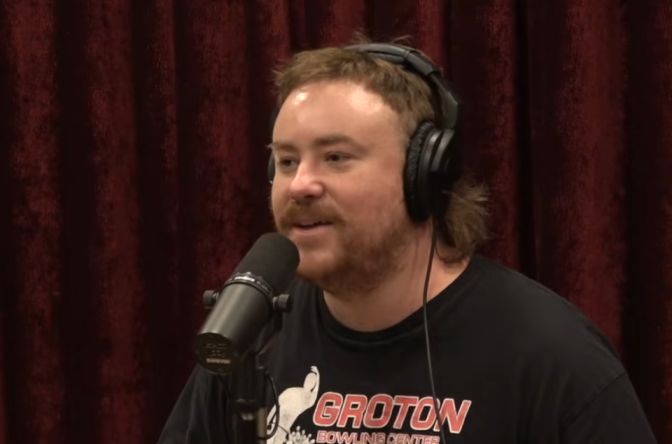
Here is the full transcript of comedian James McCann’s interview on The Joe Rogan Experience #2433, December 31, 2025.
Brief Notes: In this final 2025 episode of the Joe Rogan Experience, Joe rings in the new year with Australian comedian James McCann for a chaotic and wide-ranging conversation that bridges the gap between ancient history and the digital future. The duo explores the bizarre legacy of the “castrati” in 18th-century opera and the unsettling advancement of AI-generated content, with McCann offering a hilarious yet poignant critique of modern “technological subservience”.
From the “rigged” nature of two-party politics and the potential for a “benevolent dictator” in Australia to the recent explosive document dumps regarding the Epstein case and the Department of Justice, this episode is a masterclass in contrarian thought. Whether they’re dissecting the “eugenicist” origins of Planned Parenthood or debating the merits of living in a “cottage with a chicken” to escape the 2026 AI takeover, Rogan and McCann deliver a raw and unfiltered look at the world today.
Ancient Relics and Ice Age Giants
JOE ROGAN: Haven’t been a lot.
JAMES MCCANN: That’s cool.
JOE ROGAN: Have we started?
JAMES MCCANN: Are we going where? Oh, no, not over the relics.
JOE ROGAN: The dirt. Dirtier this table is, the better.
JAMES MCCANN: Get it away from the. What is that?
JOE ROGAN: The relics? That is. That’s from my friend John Reeves. He gave that to me. That’s a mastodon tooth or woolly mammoth or. What’s the difference? What is the difference between woolly mammoth and a mastodon? They must be a different age, a different era. But that’s a giant tooth. There’s a company in Alaska. I forget the name, but they. It kind of seems f*ed to carve into this thing because it is 10,000 years old, at least.
JAMES MCCANN: How many of them are there, though? Do they have heaps of them?
JOE ROGAN: They have heaps of them, but this is really cool. It’s like they carved a mammoth in it. So what is the difference? According to our sponsor, Perplexity, a woolly mammoth and a mastodon were related, but quite different. Ice Age elephants, mammoths were taller, more slightly built, grass eaters, while mastodons were shorter, stockier browsers that ate woody plants.
JAMES MCCANN: I was going to say the hair.
JOE ROGAN: Maybe, but I don’t. It’s obviously more woolly mammoth, right? Yeah. Mastodon looks like an elephant.
JAMES MCCANN: The mastodon horn does look cooler. They’re pretty cool.
JOE ROGAN: They’re all pretty cool. You know, they lived on an. Was it. Where were the last mastodons? I want to think. I want to say they lived on an island until like 10,000 years ago or something like that, because most of them died out. They don’t know how they died out. But there’s two theories. One theory is people killed them all, which is a shaky theory because it’s people of 10,000 years ago with f*ing sticks.
JAMES MCCANN: Were they around 10,000 years ago?
JOE ROGAN: Oh, yeah, yeah, yeah.
JAMES MCCANN: They definitely did that then.
JOE ROGAN: I don’t think so. I think it was a cataclysm. I think it was the same thing that killed 65% of all megafauna. That’s the problem. It killed so many different animals almost instantaneously. Yeah, that’s it. 4,000 years ago, Wrangel island, remote Arctic island off Siberia’s coast, had the last woolly mammoths till about 4,000 years ago. Isn’t that nuts?
JAMES MCCANN: That’s nothing.
JOE ROGAN: That’s nuts. Yeah, that’s like before the pyramids were built.
JAMES MCCANN: It’s.
JOE ROGAN: No, I mean after the pyramids are built similar time. Yeah, yeah. After the pyramids, allegedly. I think they’re probably built earlier than that. But the official date is 2,500.
Ancient History and Archaeological Debates
JAMES MCCANN: I’ve seen the strange man with the.
JOE ROGAN: Beard and which one.
JAMES MCCANN: The man you had on to debate it, who’s always clapping back on Twitter and going like, there’s nothing funny about the.
JOE ROGAN: Oh, flint devil. Yeah.
JAMES MCCANN: I don’t want to invoke his ire. I don’t want him. He said he’s got a lot of time and a lot of.
JOE ROGAN: I actually enjoyed talking to him about non archaeology, non ancient history related stuff. He has some interesting things about seeds. He does a lot of work in seeds.
JAMES MCCANN: Okay.
JOE ROGAN: No, it’s actually really interesting how.
JAMES MCCANN: The history of seeds.
JOE ROGAN: Yeah. So say if you have a wild plant, they can tell the difference between a wild plant and an agriculturally grown plant. And the way is the seeds change. So when you have a wild seed, it is more conducive to the growth of the plant if the seeds break off easier and scatter and they get into the ground easier, so they break free of the plant.
But then when you use agriculture, the seeds don’t become important for the creation of new plants because you’re always taking the seeds anyway and planting the seeds.
JAMES MCCANN: Right.
JOE ROGAN: So those seeds are more robust and they hang on more.
JAMES MCCANN: Yeah.
JOE ROGAN: So you could tell by looking at the actual seeds themselves whether it’s an agriculturally based seed or whether it’s a wild seed.
JAMES MCCANN: That is good. I hadn’t thought about that.
JOE ROGAN: Yeah, it was really cool. That part was cool. The shittiness is not cool. And calling Graham Hancock a racist. They do that with everyone. Everyone who has anything to say about the historical narrative that doesn’t fit into exactly what they’re teaching or what they have been teaching. They’re so unwilling to accept that there’s any alternative timeline. But they keep getting f*ed because over and over again they keep finding these new things that are older and older.
JAMES MCCANN: Yeah.
JOE ROGAN: Like, therapy was the big one.
The Evolution of Comedy Styles
JAMES MCCANN: There was a thing last night about prop comedy.
JOE ROGAN: Yeah.
JAMES MCCANN: Like everyone just stopped doing prop comedy at a certain point.
JOE ROGAN: Well, it’s because of Carrot Top.
JAMES MCCANN: It’s because of Carrot Top. And also because the bullying you would receive right at the moment for having props. There’s what? Rick Glassman. Am I getting his name right? I don’t know, but he had some props and he was really funny and he got away with it. But he’s the only person in America, other than Carrot Top I’ve seen with any props.
JOE ROGAN: Well, when I started out, there was a bunch of guys who had props. There was a bunch of guys who had props. And it was fun. It was fun to watch. There was God, Dr. Wid. I forget his name. Dr. Wiz. I forget his name. But he was a guy when I first started out in the 1980s, he had props and he was good. He was funny, comic.
JAMES MCCANN: It’ll be cyclical. It’ll come back. Like ladies with ukuleles had to go away for a time. It was necessary that we purge ukulele women from comedy.
JOE ROGAN: How many were there?
JAMES MCCANN: Oh, my God, I don’t know. There was. Is this him? Dr.
JOE ROGAN: The legendary wid. That’s it. Legendary wid. Yeah, that’s the dude. And he would do like science based humor. He was a funny guy. So this is, you know, I saw him in like 88, 88, 89. But the point was, that guy was really funny. When he started busting out the props.
JAMES MCCANN: Yeah.
JOE ROGAN: And we were like. I was like, why don’t you just do props?
JAMES MCCANN: This is your thing.
JOE ROGAN: Yeah. Like that kind of humor. His kind of humor. It’s almost like it’s missing something in just the straight stand up for him.
JAMES MCCANN: There’s waves of things become trendy and then people who can’t really do it very well jump onto it and then it gets lame and people stop doing it.
JOE ROGAN: Well, a lot of it is one guy gets really successful doing it and that becomes his thing.
JAMES MCCANN: We had a run of people pretending to be retarded in Australia.
JOE ROGAN: It was like, how hard did they try?
JAMES MCCANN: Really hard.
JOE ROGAN: Were they on the border?
JAMES MCCANN: People had weird sweaters, people having fireworks that they would fire into themselves. And everyone would come out with cards and read their actual.
JOE ROGAN: That’s what happens when you take away everyone’s guns.
Gun Control and the Australian Shooting
JAMES MCCANN: They’re trying to take them away again.
JOE ROGAN: Again, again.
JAMES MCCANN: They already took them all away. And then somehow we still had a massive shooting. And now the response is, well, maybe we could take even more of them away.
JOE ROGAN: What was the nationality of the people that caused the shooting?
JAMES MCCANN: The son, I think, was born in Australia and the dad, there was a big fight over it on Twitter where people were going, he’s Pakistani.
JOE ROGAN: I remember that. But I didn’t. I don’t anymore. I don’t anymore. I don’t get in there.
JAMES MCCANN: The big argument was over the religion of the hero who took one of the guns away. So the cops were apparently cowering. That’s the narrative. I don’t know. But one guy ran up and it’s a great video of a guy. He runs at a guy with a gun and wrestles the gun off him and aims the gun at him and lets. He does let the guy get away. He doesn’t want to kill him, which.
JOE ROGAN: Is kind of crazy. The guy just killed how many people?
JAMES MCCANN: Oh, and then I think the guy gets a gun and goes on killing people. But yeah, but he’s not a killer. This guy who wrestled the gun off him, he was just in the head.
JOE ROGAN: With the butt like in the movies.
JAMES MCCANN: I don’t know what. I mean. I wouldn’t have ever run up to a man with a gun. I would have been out of there. But the argument was what religion was the guy who took the gun because people on the right really didn’t want him to be a Muslim. They were like. It was a huge thing on X of people.
JOE ROGAN: People on the right didn’t want him.
JAMES MCCANN: To be a Muslim because it was Muslim shooters. But then it looked like he was. His name was like Ahmed Al Ahmed or something.
JOE ROGAN: But hold on. Why would the people on the right not want him to be a Muslim?
JAMES MCCANN: Because then you can go, this is a Muslim thing. Muslims were doing the shooting. And we can just go, let’s deal with the Muslims.
JOE ROGAN: Oh, you mean the people. The guy who captured the guy, the.
JAMES MCCANN: Guy who wrestled the gun off you was also a Muslim. Which then makes it like, oh, heroic.
JOE ROGAN: Yeah, yeah.
JAMES MCCANN: Well, his name is like Muhammad. Muhammad.
JOE ROGAN: Imagine being a regular Muslim and having to deal with these crazy Muhammad. There he is, that guy.
JAMES MCCANN: Yeah, people love him.
JOE ROGAN: But he shoot the guy in the foot. If he didn’t want to kill him, shoot him and blow his f*ing arm.
JAMES MCCANN: No one can really do that. And that’s a big. Look at him go.
JOE ROGAN: Oh, that’s amazing. And he doesn’t do anything.
JAMES MCCANN: He doesn’t.
JOE ROGAN: So the guy just gets away.
JAMES MCCANN: The guy does get away.
JOE ROGAN: Oh, this is not good.
JAMES MCCANN: But then after he lets him get away, I think he drops the gun and he goes away. And then he gets shot again in the arm. Who knows what to do when there’s a live.
JOE ROGAN: Yeah, you don’t know what to do. Well, that’s a good person. That’s a good person.
Identity Politics and Group Thinking
JAMES MCCANN: He is a national hero at the moment. And I think if he had, man, people wanted him to be a Maronite Christian so bad the groipers were desperate for him to be. There’s a lot of people going, well.
JOE ROGAN: Actually, you know, that’s the real problem we have in this country. We want to pretend that people actually exist in groups. Even if there’s high percentages of people from groups that are doing bad things, there’s still a giant percentage that are not. And to alienate all those people by just lumping it all in as one group together.
Imagine you’re a peaceful Muslim and you have to deal with this sh*t. And you’re like, guys, I just want to pray. I’m just trying to find oneness with God. That’s all I’m trying to do.
JAMES MCCANN: I love twirling. I’m one of the twirling ones. They’re my favorite ones personally.
JOE ROGAN: What’s a twirling?
JAMES MCCANN: The twirling dervishes.
JOE ROGAN: They just love twirling.
JAMES MCCANN: They love to twirl, but the twirl.
JOE ROGAN: I was trying to figure out what.
JAMES MCCANN: You were saying, but this is what’s. So after that, the government comes out and is cracking down on right wing extremism because it’s a lefty government. And they go, we have a clearly, we have a problem with right wing extremism. So now they’re trying to reclassify globalized info, tattoo jihadism as a form of right wing extremism. Which I’d never. Which yeah, well, you know, it’s not commie lefty stuff.
The Political Spectrum and Religious Extremism
JOE ROGAN: Well, do you have to look at it on paper? Objectively it is.
JAMES MCCANN: Yeah, but I don’t know how much they hang out. I don’t know if these guys. I don’t think these guys are reading, I don’t know, William F. Buckley Jr.
JOE ROGAN: Let’s break down what is right wing then. Okay, let’s say this. Do they want to completely control women’s behavior and completely dictate whether or not the woman can leave the house with certain clothes on? What they’re allowed to do, right?
JAMES MCCANN: Yeah.
JOE ROGAN: That’s kind of a right wing thing, isn’t it?
JAMES MCCANN: Yes.
JOE ROGAN: Total religious adherence. They want a religious state.
JAMES MCCANN: Yeah, but the Taliban want to dance with little boys. That seems like a left wing thing.
JOE ROGAN: Separate breakoff group. They’re like the Baptists, Catholics. You know what I mean? You got your regular Christians and then you got some other motherf*ers that are out there running wild with new rules. Mormons. How about this?
JAMES MCCANN: What about Mormons?
JOE ROGAN: Yeah. You know, but that’s what I’m saying. It’s like they’re a breakoff group. It’s not the ones who are banging the boys. That’s not normal. There’s a lot of guys out there that are Muslim that are not banging boys. So when you connect them with the Taliban, they’re like, bro, I’m just praying over here.
JAMES MCCANN: It’s all people just trying to have fun.
JOE ROGAN: Yeah, yeah.
JAMES MCCANN: Who am I to judge anybody?
The Rise of Nick Fuentes and Identity Politics
JOE ROGAN: The problem is then you push. When you push these people, it’s the same thing that happens when you call everyone a racist. What do you get? You get a Nick Fuentes. You got a guy who emerges, who’s got the balls to shit talk and have fun and say wild things that are very inappropriate and sometimes racist. That’s what you get.
You get someone who embraces that guy because you’ve been told you’re a racist just for being white. You know, you’ve been told there’s something wrong with you. White male. Like there was a time where someone would say something in comments all the time. I would watch these people arguing and someone, it was a common thing to say, “As a white man, I think you should probably shut your f*ing mouth.”
Like, as a white man, you’re disqualified from having an opinion on something because you are a white man.
JAMES MCCANN: Yeah.
JOE ROGAN: So another form of racism. It’s just an accepted form of racism. That’s really weird.
JAMES MCCANN: But then, Nick Fuentes is getting all his other ideas through as well because he was the only person saying things that the average person would think was kind of normal. Well, I’ve been thinking about this a lot.
JOE ROGAN: A lot of the stuff he’s saying was not something the average person would think about.
JAMES MCCANN: But you sneak your other weird stuff through. When everyone’s going, “Right, right, right, right.” You know, when he says, when he’s getting attacked for going, “A black neighborhood is going to be more violent on average in America,” you go, “Yes, I’ve traveled around the country and that is, I think there’s a long history for why that’s true.”
JOE ROGAN: Well, it’s factually correct.
JAMES MCCANN: That seems to be correct.
JOE ROGAN: The question is, though, why? And that’s where it gets uncomfortable.
JAMES MCCANN: Yeah.
Crime, Poverty, and Community Violence
JOE ROGAN: Because the real reason for why is a host of factors, but the primary one is crime and poverty. The primary one is they live in a community that’s filled with crime and poverty.
JAMES MCCANN: Yes.
JOE ROGAN: And drugs. And if you have a community where people are selling drugs and it’s crime and poverty, you’re going to get a lot of violence, whether it’s an Italian community, Armenian community, or any community where you got a lot of crime and a lot of poverty.
JAMES MCCANN: I first came here, I went to Appalachia.
JOE ROGAN: People are going to get killed.
JAMES MCCANN: There are white people doing crazy, crazy things.
JOE ROGAN: You ever see “The Wild and Wonderful Whites of West Virginia”?
JAMES MCCANN: I watched it a week ago.
JOE ROGAN: F*ing amazing.
JAMES MCCANN: The most charismatic family I’ve seen.
JOE ROGAN: Knoxville did that, didn’t he?
JAMES MCCANN: Yeah, he produced it.
JOE ROGAN: Yeah, bro.
JAMES MCCANN: It made me feel so homesick. I was only there for a couple months. I wanted to go back so bad.
JOE ROGAN: The dancing outlaw.
JAMES MCCANN: When they’re like, “Granddaddy had a new way of dancing,” and it’s the most insane. Was that really going to take off? Was that the style?
JOE ROGAN: Bro, when you’re on meth, it’s awesome.
JAMES MCCANN: I mean, it’s the perfect dance style.
JOE ROGAN: Oh, they were on everything.
JAMES MCCANN: They were on a lot.
JOE ROGAN: How about the lady? “I’ve always been thought of as the sexy one.” She was a stripper. Remember her voice?
JAMES MCCANN: I did a big deep dive on Wikipedia about them afterwards. She stomped a kitten.
JOE ROGAN: Which one’s dancing here? This is Jesco, American Outlaw.
JAMES MCCANN: Jesco is…
JOE ROGAN: He’s the younger guy.
JAMES MCCANN: Jesco lives out the legacy.
JOE ROGAN: Excuse me.
JAMES MCCANN: He keeps the dancing alive. He’s the one who’s a celebrity in the show.
JOE ROGAN: Right.
JAMES MCCANN: But then there’s another documentary about him, and in both documentaries, he complains about a woman making his eggs wrong.
JOE ROGAN: Yeah, that’s that dude. Yeah, he’s got it.
JAMES MCCANN: He’s a charismatic guy.
JOE ROGAN: Yeah, he said he would cut her if she gave him ruddy eggs. I was like, “Sloppy eggs. Settle down, bro.” Maybe we shouldn’t be celebrating this.
JAMES MCCANN: I think one of them just got out of prison. I think the one who, at the start of that…
JOE ROGAN: I hope Trump got him out. Who got out? What’d he do?
JAMES MCCANN: The one who shot his uncle. Yeah, I think he just got… That’s the sexy one.
JOE ROGAN: “I’ve always been the sexiest one in the family.” Listen to what she said. The way she says it, though, the voice is incredible.
JAMES MCCANN: Yeah, I think that sexy one, I think she did get in trouble for stepping on a cat.
JOE ROGAN: Well, there was a thing in that film that was interesting, though, towards the end where you see some of them are trying to move away from that life. That one girl got sober, so there was a take to it where they realized, “Hey, this is not sustainable. This is a crazy way to live. I’m a mother. What am I doing?”
And she was trying to get out of it, which I think a lot of people do. Come to the realization, if you’re in that kind of a community, “I got to get the f* away from these crazy assholes and stop doing meth.”
JAMES MCCANN: It is. Yeah, I think, but it’s…
Breaking the Cycle of Violence
JOE ROGAN: How do you do it? See, this is the thing. When you say, is it true that there’s a higher percentage of murders that occur in black communities? Right, right. But as opposed to poor communities? What about deeply impoverished communities?
And then when you introduce a history of gang violence and crime and no one ever does anything to stop it, it’s going to stay the same whether it’s in Appalachia or whether it’s the Hatfields and the McCoys, all those motherf*ers that were killing each other back in the Wild West days. I mean, it was probably horrible back then. Why? Because they let it be that way. Nobody did anything about it. You couldn’t stop them.
JAMES MCCANN: And I think some of the solutions for it are very bad. This is my, I don’t want to speak out of turn because it’s not my country. But when I’ve been driving through…
JOE ROGAN: People love to come to America, tell us what to do. I love it.
JAMES MCCANN: I think it’s the greatest country in the world. And I repeat that again.
JOE ROGAN: Me too.
Planned Parenthood and Poverty
JAMES MCCANN: When I drive through a bad area and there’s a Planned Parenthood with a line around the block and things set on fire and you can just, I know that Planned Parenthood started out as a eugenicist organization where they went, that was the lady who founded it. That was her thing.
And you can really see in those neighborhoods, it’s like, if you have a child here, you’re going to be tied to this community. We want you to get out. We want people who have the spirit to get out of here and to live a good full life in America, not to be tied down to being in a really difficult crime-riddled area.
JOE ROGAN: Yeah.
JAMES MCCANN: So abort your children so you can get out. Seems to be the, I think they’re still doing the eugenicist thing of being like, just be free for different reasons. Not because they want to dilute the numbers in the population or whatever, but because they go, you’ve got to be a free person who can leave and children will tie you to a place.
JOE ROGAN: Yeah. That’s a way to look at it.
JAMES MCCANN: That was when I was driving through, I forget what, Wisconsin, Northern Wisconsin. I don’t know. I just hit with this. Oh man. It’s like usually the rough area of a town is lifted up by a freeway in America.
If you drive into Chicago, you’re just way up here on a freeway and then you come down into the most beautiful buildings you’ve ever seen in your life and people go, “It’s very scary over in the other part of Chicago.” And you go, “I never saw it.”
JOE ROGAN: I was above it.
JAMES MCCANN: I was 30 feet in the air.
JOE ROGAN: Yeah.
The Stark Divide of American Wealth
JAMES MCCANN: But in some places I have driven through it and I’ve gone, or I stopped and you got this. Someone’s like, if I lived here, I mean there are some areas that are so rough. It’s like, man, if I lived here, I would go and steal and kill from the people who live 20 minutes up the road. For sure.
You just drive 20 minutes up the road and there’s a German town and everything’s perfect and everyone’s rich and everyone’s beautiful.
JOE ROGAN: Yep.
JAMES MCCANN: And this doesn’t happen in, I don’t know, I’m from a very flat country. By comparison, the highs and lows here are incredible.
JOE ROGAN: Oh, the highs and lows of what?
JAMES MCCANN: America.
JOE ROGAN: You mean poverty and wealth?
JAMES MCCANN: Yeah.
JOE ROGAN: Okay.
JAMES MCCANN: Like the Bronx being an hour from the Hamptons.
JAMES MCCANN: And all of it’s real close.
JOE ROGAN: I used to say that when I lived in LA, I was like, you know, people like, “This is a good neighborhood.” I go, “Right? But you know, people from a bad neighborhood can just come into your good neighborhood. You know about all that, right?” When people are like, “Why do you have dogs? Why do you have guns?” I was like, “What? Do you watch the news?”
JAMES MCCANN: Yeah.
JOE ROGAN: Are you f*ing crazy? Like, you got to be careful out there. And most of the time it’s not going to happen to you. The 99.99% of people will never experience anything awful. But to not have any idea that it could ever happen to you is bad.
I think the real problem, and this is the one that just doesn’t get addressed with any politicians ever, is something massive has to be done to stop this ancestral, like this lineage of people that are coming from these crime ridden places. And no one changes anything about it at all.
We had a cop on once from Baltimore and he was telling us that while he was on duty he found this crime sheet, a doc sheet of all the things that happened in like 1976 or something like that. And he was reading all the areas and all the crimes and dawned on them, it’s like, oh my God, like this is the same crimes in the same area decades later and nothing has changed.
They need to do something huge, like treat that as if it’s an untapped resource of human potential. Because that’s what it is. All those people in that community, if they had been born and raised with different families in a different place, completely different outcome.
A giant percentage of who you are is dumb luck. And if the people that got the worst luck to be born in a crack house or be born in a place where there’s gang violence on the street every day and you go to school and you have to pick a gang. If you don’t pick a gang, they’ll f*ing kill you. Like what are you going to do? Like you’re not going to do anything but what everybody else is doing.
That’s what most people are going to do. The few that are going to break out, maybe they’re musicians or an athlete or something like that, they break out, yeah, but for the most part you’re fed. But what it is, is untapped and unrealized human potential that’s going to waste on the most stupid fing s* in the world.
JAMES MCCANN: But then when you try and do something like that in America, the pushback is huge.
JOE ROGAN: Like, I think, what is the pushback of investing into communities?
JAMES MCCANN: Well, I would say, like, in a small. Like, I think the National Guard going into some places.
JOE ROGAN: Okay, that’s different. So that’s.
JAMES MCCANN: That’s what. That’s what it can look like sometimes.
JOE ROGAN: That’s what it can look like under this administration.
JAMES MCCANN: Portland. Yeah. There’s got to be a better way of doing it.
JOE ROGAN: Well, you’re just going to get too much pushback. But what you can’t do is let it get to the point where it’s feasible to call in the National Guard. Yeah, that’s what’s crazy. It’s like their law enforcement has been so handcuffed by the administrations, especially in northwestern United States. Like, everybody. They don’t get enough sun. They lost their f*ing mind. Everyone’s depressed and everyone’s trans. It’s crazy up there. It’s crazy.
JAMES MCCANN: I was just in Portland. I was in Portland just before the National Guard went in. And I was in Portland, like, how insane. It’s so much. You can walk around a little.
JOE ROGAN: Oh, after the Nash Guard, I will.
JAMES MCCANN: Say, like, I know people were very upset in Portland about that, but I think just quietly, they were going, it’s kind of nice to walk to a train station again.
The Military and Civilian Separation
JOE ROGAN: The mayor in D.C. thanked Trump. Yeah, this is like the safest he’s ever been here since you brought in the National Guard. Look, but the problem is that sets a f*ing precedent. So here’s the thing. If it’s necessary, let’s say you have a place that’s a literal, not even a real place, a fictional place in America where there’s a literal gang war going on and dozens of people are getting shot every day, and it’s basically a war zone. Let’s just imagine a place like that.
You would say, okay, it’s probably a good idea to bring in the military and control that because the entire population is at risk. It’s very dangerous. It’s a literal war zone in the middle of a modern American city. We have to stop that.
Well, the thing is, if you people are lighting newspaper stands on fire, people are doing this. People are breaking the Starbucks. Let’s bring in the military. People aren’t obeying the speech laws. Let’s bring in the military. People are not using their digital ID. Let’s bring in the military. It’s like, there’s got to be a separation between our army and our civilians. And it has to be a big f*ing reason to break that separation, I think.
JAMES MCCANN: I mean, you did it in the 60s in the south when busing came. Don’t say me.
JOE ROGAN: Sorry y’all.
JAMES MCCANN: The United States, when, when the, when Jim Crow was happening in the south, the military got sent in and people.
JOE ROGAN: You.
JAMES MCCANN: You desegregated the south by force.
JOE ROGAN: Right?
JAMES MCCANN: So that was deemed to be an appropriate use of a monopoly on violence to enact a social change. Like, wait, you’re not going to have segregated schools anymore. We’re going to have the military there and make sure that this works out.
JOE ROGAN: Crazy. You have to bring in that. The military to get people to allow black people and white people to go to school together.
JAMES MCCANN: I mean. Yeah, they didn’t want. Well, it’s just so weird when I go to the south now because everyone is so friendly and people do seem to get along. And you go, your grandparents were like.
JOE ROGAN: Brother had to rip the craziest stuff.
JAMES MCCANN: Well, it’s terrible. I mean, the Emmett Till, I just found out about that after I got here. It’s unbelievable. And they were still shooting the Emmett Till statue that they put up. They had to replace it with a bronze statue so the bullet holes wouldn’t affect.
JOE ROGAN: Really. That’s what was going on.
JAMES MCCANN: I believe that was what was happening until quite sure it wasn’t just.
JOE ROGAN: One KKK dude that really.
JAMES MCCANN: It may have been one dude.
JOE ROGAN: You know what I’m saying? That’s the problem. You get one wacky guy in a neighborhood and you’re like, that’s a racist neighborhood. They were shooting the Emmett Till statue. Maybe it’s one ahole in the tire shop, you know, one f*ing dude smelling his own farts and loading up his rifle.
JAMES MCCANN: That one Arkansas MMA fighter who kept saying that he loved Hitler did a. Did a lot, did a lot to hurt the reputation of that. He always had the razorbacks in the background.
Expertise and Media Responsibility
JOE ROGAN: Yeah, that wasn’t. I think he did not phrase that well. I think there’s a lot of people. Here’s the thing. There’s a lot of people that become experts, and I’m guilty of this as well. You’re talking about something where you maybe watched a YouTube video. You know what I mean?
Like, maybe you read an article about it in some fing Politico. Who knows? Who knows where you read it, it could be some crazy right wing source. You read something, you took it as fact, and then you talk to a bunch of other people that also take it as fact. And next thing you know, you start talking and you have the biggest show in the world saying s, yeah, that’s me.
JAMES MCCANN: Okay. But people always criticize that. People always have a go at the podcasters for spouting off on things that they’re not.
JOE ROGAN: Yeah, that is what I do.
JAMES MCCANN: But how come there’s no responsibility on the mainstream legacy media for having gotten really, really boring over the last. Not just 15, 20 years. Boring is, I would say, lying as well. Compromise.
JOE ROGAN: Completely compromised. Totally untrustworthy. Completely compromised.
JAMES MCCANN: I just got the New York Times app because I thought, I’ll have a look at that. I finally got enough money where I can pay a dollar a week to be on the New York Times app.
JOE ROGAN: Yeah.
JAMES MCCANN: And it’s so. I mean, they’ve built Twitter. Like, the experience of it and the scrolling on it. It feels like you’re in Twitter, but only mediated through selected journalists from the New York Times. And suddenly you’re like, I’m just stepping into for a moment, whatever bubble that is. I wanted to take a look at it.
JOE ROGAN: It’s like, I think they’re all going to have to course correct. I think they’re all going to have to realize they’re trying. It’s not being intellectual like a true intellectual, a true progressive, by only looking at things from one perspective. And to automatically assume that anybody that has a different perspective. Hey, we’re back.
JAMES MCCANN: There we go.
JOE ROGAN: Where was I?
JAMES MCCANN: So they need to have a course correction. We’re talking about the mainstream media and that they’ve lost that many people.
JOE ROGAN: That’s what I’m saying was that you can’t proclaim yourself to be intellectual by only listening to one perspective and to being very aggressive and hostile about the other perspective. Immediate ad hominems, immediate attacks on, you know, lumping everyone in together, associated like we were talking about earlier, associating ancient history with racism.
Like, you’re doing that. It’s a little trick you’re doing. You’re not having a real conversation. You’re being a b. And this kind of communication sucks. It sucks for the left, it sucks for the right. When people on the right. It sucks for. It’s a bad human communication skill. If you were good at it, you would want other people to have different opinions, and you’d want to hear those opinions and talk to those people.
Media Course Correction
JAMES MCCANN: I think they’re trying to course correct. This is what’s weird to watch is there? And it’s who they’re. I don’t want to. They. They love Schultz at the New York Times.
JOE ROGAN: Well, he goes over there.
JAMES MCCANN: They picked him. Yes, they’ve picked him up.
JOE ROGAN: He goes over there and talks to them. Yeah, well, he’s very smart.
JAMES MCCANN: They want him.
JOE ROGAN: Sure. And another. He’s another guy who’s very smart and very fun, you know, so like they want these people because they’ve been kind of locked out of the fun.
JAMES MCCANN: Yeah, well, they also. They just pretended that it didn’t exist.
JOE ROGAN: Do you see Schultz talk to them though?
JAMES MCCANN: I haven’t talked to them on the round table. Yeah, yeah, it was great.
JOE ROGAN: It’s hilarious. Because he. They’re talking in these bulls* terms.
JAMES MCCANN: Yeah.
JOE ROGAN: And he’s like, hold on, you know, let’s just talk real.
JAMES MCCANN: Here he goes, the Jews. And everybody laughs because he can. Because he’s a comedian, he’s allowed to be funny.
JOE ROGAN: Yeah. And there was a. There’s another one that he did with another guy. I forget from what other mainstream media publication. It was the same sort of situation. And to have it that way, where it’s a one on one conversation, then you get to see the weird way that they actually think and communicate. The bubble. Like Tim, when Tim Dillon was on.
JAMES MCCANN: CNN, the CNN one, I was going to say, that’s why I moved my rear. Because she kept asking this. She didn’t want it. They resisted releasing that as a long form things.
JOE ROGAN: Yes.
JAMES MCCANN: And you can see why. Because she’s asking the same question three or four times in a row to try and bait something, which is not how a conversation works.
JOE ROGAN: We pressured them into putting the whole thing out.
JAMES MCCANN: She keeps going, really? Come on. Yeah. Just to get him. Because he’s a fun guy and he wants to say something funny and she’s baiting him to say something exaggerated.
JOE ROGAN: Yeah. Jon Stewart had the best response to this whole thing. He was talking to some guy from the New Yorker and they were talking about this podcast and he’s like, you know, they were talking about different opinions and people. Different people that I’ve talked to. And he’s like, but Joe Rogan has the biggest audience in the world. He has a bigger audience. He’s like, well, go get a big audience. Yeah, go get it.
JAMES MCCANN: It’s not like they don’t have the finances.
JOE ROGAN: You just go figure it out. Do it right and you’ll get a big audience. Like, it’s not that f*ing complicated. I don’t have pyrotechnics. There’s no CGI. There’s not even a crew. There’s a skeleton crew of people who do this.
The Ivory Tower Mentality
JAMES MCCANN: But I think some of it is the ivory tower mentality. If it becomes like that, they think there is a sense in people who have got a very big education and have gone through whatever system you have to jump through to get to an elite legacy thing. Most people are too stupid to have an open and honest conversation with. And that if stupid people like you, then that’s a problem. That’s how they’re viewing the world.
JOE ROGAN: Well, they’re also viewing the world in that they’re protecting people from opinions they don’t agree with. Even though they listen to those opinions, it has no effect on their position. They keep the same position, but they’re worried that people dumber than them. It’s a very condescending thought process.
JAMES MCCANN: To think that you’re the only open-minded person.
JOE ROGAN: Not only that, and people that are dumber, which is most people, you’re going to fall into the trap of what this person’s saying that I don’t agree with.
JAMES MCCANN: And there’s, yes.
JOE ROGAN: Yeah.
JAMES MCCANN: And that if you, and that the only way to get people to listen to you is to spin lies. Like you can’t just be honest. Which is what I think the podcasting thing is. It’s what it is. It’s a long, you can’t really put on a facade for three hours talking to somebody.
JOE ROGAN: Maybe you can.
JAMES MCCANN: I think that might be who he is at this point.
The Three-Hour Test
JOE ROGAN: Yeah, he is definitely that. Well, that’s why I wanted to do a podcast with him. So you could say three hours, by the way. No questions beforehand, no prep, didn’t pee, sat there for three hours. He’s almost 80. If he was wearing a diaper, respect. But the guy just fing hung out for three hours. Does that mean I agree with everything he does? F no, of course not.
JAMES MCCANN: He was able to be himself for three hours. He was able to talk for three hours. Whereas Kamala wouldn’t do it.
JOE ROGAN: Well, she could have. She could have done it. I’m telling you, man, I would have been fine.
JAMES MCCANN: I would have spent six minutes on Stephen Colbert and I don’t think she was different.
The Problem with Traditional Talk Shows
JOE ROGAN: It’s different. He’s kind of being like an interviewer, right? He’s in this weird position where he’s at a desk. The desk is beside you for some reason because that’s how they always used to do it. So these f*ing uncreative people just do it the exact same way. Always. It doesn’t make any sense. Why does he have a desk? Is he writing? What does he have? Does he have pens in the drawer? Like, what are we doing here?
Like, why am I on a couch over here? Why am I sitting down to the right of you? It’s weird. It’s always in the same position. Host is always to the right.
JAMES MCCANN: Yeah.
JOE ROGAN: They’re always to the left of the screen. It’s goofy, right? So he’s doing this thing that you only do on television in front of an audience. By the way, you should never have a conversation in front of an audience, because as soon as you do, the people are aware of the audience. You’re aware of how people think and feel, and you’re playing to them. And some people say things to try to get a rise out of you in front of the audience.
If you want to do that, it’s a different thing. But if you’re going to have a really important conversation with someone, you don’t want to do it in a f*ing audience. So Stephen, the way he’s doing his handicap from the jump. Also, you only have seven minutes before you have to cut for commercial or whatever it is. You can’t do that.
It’ll take me seven minutes to ask what she likes to cook. I want to know who she is. I don’t know. I want to know, is there anything that she regrets doing? What does she learn from this time? Is it more complicated being a vice president than you thought it was going to be? Like, what is the web of trying to fix things and change things versus the people that are influencing you to make decisions? Because we’re not pretending that people don’t spend a lot of money to influence your decision. So how much of an effect does it have?
JAMES MCCANN: What do you actually believe when they come to you asking for those favors?
JOE ROGAN: Right. What would be better? Could we take money out of politics? Would you be willing, what would we do if we completely eliminated corporate funding of any politicians? How would that change everything? Those are the kind of questions we could have. Like, we could have talked for hours about that.
Trump’s Impact on Political Communication
JAMES MCCANN: But they don’t. She doesn’t want to do that. And the people around her, this is what I meant. There’s something that the right used to have this as well. And both sides of politics had it. And I remember there was Howard Dean, I think it was, did a weird scream and the whole thing fell apart. And that really stayed with me that I remember watching politics and there was some sense of everything is very manufactured, and if you make a single mistake, oh, my God, you’re going to lose the primary, it’s all over.
And Trump destroyed that with the Republicans, where it all became very, we’ve just got to hang out and talk. And everyone got very loosey-goosey on the right.
JOE ROGAN: Yeah.
JAMES MCCANN: And the Democrats have not adjusted to that and had their, like, Bernie could do it. They just froze Bernie out and they did everything they could to stop him coming through.
JOE ROGAN: Right. Like Marjorie Taylor Greene. You could not have a person like that before Trump. That would, there’s no way. There’s no way.
JAMES MCCANN: I mean, you can’t have her with, she’s gone.
JOE ROGAN: She’s gone now.
JAMES MCCANN: She’s gone.
JOE ROGAN: But she wouldn’t have existed without him. Like that sort of rash, crazy personality that had not existed in a congressperson.
JAMES MCCANN: And there will be someone on the left who can do that.
JOE ROGAN: Jasmine Crockett, she’s doing that, man. Maybe she gets aggressive. She does loud. They get crazy. Listen, it’s a reality show now.
JAMES MCCANN: I know people don’t like her. I think she’s hip. She would maybe come on the show.
JOE ROGAN: Okay.
JAMES MCCANN: Have you invited her to come on the show?
JOE ROGAN: No, I…
JAMES MCCANN: Listen, I’m too scared to have me on the show.
JOE ROGAN: I think a lot of the problems…
JAMES MCCANN: She came up with wrongs.
The System Creates Sociopaths
JOE ROGAN: Probably very nice people. Very nice people. And this is not an attack on any individuals. I think that system turns you into a sociopath. That’s what I think. And I think there’s very few people. Tulsi Gabbard, my friend, being one of them. I love her. She’s amazing. She’s a real person.
Like, that lady is the same person on air, off air, meeting people, hanging out with her husband. I’ve hung out with her hours and hours and hours. That’s who she is. She’s cool as f*. And she was a congressperson, but she has horror stories. Yeah. When she tells you what it’s like on the inside. And when you find out how these people are making hundreds of millions of dollars on $170,000 a year salary and no one’s batting an eye.
That is kind of kooky. It’s kind of kooky because even ones you wouldn’t suspect, like, wait a minute, they’re worth how much now? You don’t really know how much they’re worth.
JAMES MCCANN: Right.
JOE ROGAN: You’d have to get an audit.
JAMES MCCANN: Right.
Congressional Wealth and Insider Trading
JOE ROGAN: Because what you’re hearing is a reporting of what they’re worth. And it could be total propaganda. It could be half of what it is. But even if it’s millions, even if it’s a couple million. If you’ve been a congressperson for two years and now all of a sudden you’re worth $3 million and you were in debt before you became a congressperson, that’s suspicious.
And if you look at the f*ing, the people that invest money, that’s where it gets really crazy. Because it is not a blue thing and it’s not a red thing. It’s both. Everybody is making money on the stock market. There’s a shload of these people that are buying a bunch of stock. And then conveniently, a short time later, a bill gets passed that they were working on that makes it very profitable for that country. Stock shoots through the roof, they make a giant windfall.
JAMES MCCANN: I’m trying to remember who said it. There was some line that someone said about, you can sort of believe what you want in American politics and you’ll get rich for it. Like no matter what you actually believe, there’s a group out there who are going to get you rich for having a belief in it. Sure, it’s the environmental people, if it’s the fossil fuel people, right? I mean, there would be varying scales of it.
But also you can fix this. Like there are ways to defensive money in politics. I’ve been reading a lot about Lee Kuan Yew.
JOE ROGAN: Who’s that?
The Singapore Model
JAMES MCCANN: He was the sort of the dictator of Singapore. They might not like that.
JOE ROGAN: Don’t go there.
JAMES MCCANN: He won elections, but Singapore is like a single party state.
JOE ROGAN: Oh, so it’s like when Putin wins.
JAMES MCCANN: I don’t want to get in trouble with the people of Singapore.
JOE ROGAN: Listen.
JAMES MCCANN: But it is notable that one party wins every single time and they don’t primary and they win almost all the seats and they are really popular. But he brought in canings and he got drugs out of the country and he started paying the politicians a lot. Like if you’re a politician in Singapore, you get a huge salary. But you are not to ever be corrupt. Like you’re meant to have enough money that they can’t really buy you.
And that might be the only way. Because if you have, you know, what are they earning? $170,000 a year to be a congressperson. If they are making $3 million a year and the punishment for taking money from anybody else or from getting a stock, you know, maybe you can’t own stocks, but we give you $3 million a year, right? Then at least you can’t be swayed. Like you’re taking a lot of tax money to do the job, but at least there’s some insulation on someone being able to go, “I want you to vote this way.”
JOE ROGAN: I think if you have a totalitarian dictatorship, you could probably pull that off. Because if the politician is bad, you can shoot him.
JAMES MCCANN: Yes.
The Problem with American Greed
JOE ROGAN: The problem in America, if you have $3 million and you know a guy who’s got $50 million, you feel poor because we’re retarded.
JAMES MCCANN: All right?
JOE ROGAN: Brian Callan has a friend who’s worth, I think he’s worth $8 billion. And he feels broke because his friend is worth 30. No, no, no, for real. There’s people that get that goofy.
JAMES MCCANN: I’ve seen it a couple times.
JOE ROGAN: So if you’re in the business of trying to make money, which is what most politicians are, it’s like they decided not to go into sales. They go into politics. They’re trying to make as much money as they can while they’re there. That’s what most people are doing with most jobs.
If you’re doing that and you’re just kind of a person who’s drawn to that kind of a job, you’re not going to be happy with your salary. If you find out that there’s some NGO that you can invest in and you can start a non-profit and then it becomes a profit and you can funnel money overseas. And then corporations that you buy into also can use the laws that you’re passing. You’re going to do it anyway. They’re going to do it anyway.
JAMES MCCANN: That’s why Plato says they’re not allowed to touch money.
The Corruption Problem and Totalitarian Solutions
JOE ROGAN: I cannot be corrupted. You’d have to kill them. If you catch them corrupt, you got to shoot them in front of everybody. You got to say, this is what happens when you steal from America. Boom.
I’m not saying you should do that, but I’m saying that’s the only way you’re going to stop it. It would have to be a totalitarian dictatorship. But then it brings us back to the thing about using the military in the cities. When do you draw the line? Yeah, when do you draw the line?
Like when, like, okay, what’s hate speech? Right. So hate speech can mean a bunch of different things to different people. So as soon as you say, we can’t permit hate speech, okay, well then you can’t permit freedom of speech because you’re just defining hate by whatever.
That’s the same line. When you bring the military into those cities, it’s the same line. It’s like you’re doing something you shouldn’t be able to do and you’re justifying doing it saying, because this is a special case. But the problem is, what if that gets solved, you’re going to move further to the even more you’ve already got me to allow you to arrest. You can arrest me for tweeting things.
Okay, I’ve already said yes to that. So what else is next? Like you’re going to keep going. If you make money, you want to make more money. If you pass laws, you want to pass more laws. That’s how you get numbers on the board. That’s how you win this f*ing game. You can’t let them ever score.
JAMES MCCANN: Then you have to de-game the system long term. If you’re going to have a democracy, you have to have.
JOE ROGAN: You got to de-game the system. But the problem is there’s so much profit in it. And they get to vote on whether or not they can still do this insider trading thing. Right? Which is bananas. Like, who thinks we should still steal? Oh, can we have an anonymous vote?
The Case for Aristocracy
JAMES MCCANN: You don’t have this problem with an aristocracy. That’s all I’m saying. You finally go back to the padded wigs and there’s a real.
JOE ROGAN: There’s a terrible argument for that because you’re just hoping that the person is a benevolent dictator. That’s the best case scenario. You get a benevolent king. But how many of those have ever existed?
JAMES MCCANN: They’ve had such a great. So many beautiful benevolent kings. We’ve got a benevolent king right now in my country.
JOE ROGAN: It’s strange, right? It’s like there’s no right way to run people because no one really should be one. There’s never a time where it makes sense where one person is the head dude of 350 million people. That is nuts. That is completely nuts.
JAMES MCCANN: Yeah, but you also, I mean, as a country, you have a great tolerance, I think, compared to other, like, western democracies, for letting there be some chaos.
JOE ROGAN: Yeah, because we have guns. That’s part of it.
JAMES MCCANN: I think tolerating chaos allows you to have the gun style. Like, if you didn’t have the virtue of going, some people are going to get shot and we’re going to be okay with that.
The Second Amendment and American Rebellion
JOE ROGAN: Well, it’s not just that. It’s like, you know, it was written into the constitution because we were rebelling, right? We were rebelling from a dictatorship. We had escaped. And when we had declared that this was a country, we were like, we got to stay strapped because these motherf*ers might come back. And we all agreed to that.
JAMES MCCANN: Yeah.
JOE ROGAN: And then it got to a point where people go, okay, but they were talking about muskets. Now people have AR-15s. Now people have, you know, switches they can put on Glocks and it can fire automatic.
JAMES MCCANN: Like is this tactical nuclear weapon defendant under the second amendment?
UFOs and Nuclear Weapons
JOE ROGAN: You want to hear the scariest thing that I heard? This is a guy that was talking about the UAP program and the back engineering of flying saucers. Yeah, they, what do they call it? A simultaneous or a spontaneous, what was the word that he used for it? Instantaneous. Instantaneous.
That these UFOs that they believe use some sort of a gravity, some sort of a propulsion system that’s unknown to modern science, standard conventional science. And they can transport, literally transport like going from place to place in space instantaneously.
And so what did the United States government try to do? They try to use it as a method of delivering a nuclear bomb. So an instantaneous nuclear payload delivery system. That’s what they were calling flying saucers. The first thing they thought about doing with them, put a nuke down, was instantaneously deliver a nuke.
So no one could retaliate. And they didn’t even see it coming. You would just have a flying saucer with a nuke appear at the Kremlin.
JAMES MCCANN: What’s weird though, you guys had that capability for years.
JOE ROGAN: Allegedly.
JAMES MCCANN: No, I mean, I mean bomb. I mean when no one else had the nuclear bomb and when we didn’t have good anti air programs and just America alone had nuclear weapons. Yeah, you could have at that point, you could have said we’re in charge of the world now or everyone’s dead.
JOE ROGAN: Well, there was a bunch of people that did. I mean that’s what “Dr. Strangelove” is all about. Right?
JAMES MCCANN: You made movies about it and you talked about it, but you didn’t do it. When the Suez crisis kicked off, I think Eisenhower was like, can we get a nuke in there? And people said no, Mr. President.
JOE ROGAN: Bro, they came real close to nuking things three or four times.
JAMES MCCANN: What a beautiful thing that you held back.
JOE ROGAN: Yes.
JAMES MCCANN: No one else would have. I talk about this, I think about this a lot. That like if anyone else had discovered the nuclear weapon, that’s it. You’d have global hegemony by one power.
American Responsibility and Drone Warfare
JOE ROGAN: Well, I think that is one thing about America that most people will agree to is that we like to think of ourselves as being the best country in America. And that comes with responsibility. Being the greatest superpower comes with responsibility.
That’s how people get real uncomfortable about like drone bombing statistics and s* like that. They get real uncomfortable because it makes you really question. Like what we do? Yeah. When you, you know, when you tell people, did you know that, like, more than 80% of the people that die in drone bombings are civilians? Accidental kills.
JAMES MCCANN: Every time someone tries to be nice about Obama, then they have to go. The drone bombings, he did bomb a lot of innocent people.
The Obama Presidency
JOE ROGAN: I know. They always have to do that. You know, listen, I think we found out through Obama. Most likely what you find out through anybody that gets through there that’s not Trump, is that they immediate co-opt you into the system.
You had no idea how the system worked until you got in there. You were a senator for two years, and then all of a sudden you’re a president. You have some amazing ideas and you’re a great spokesperson and probably the best statesman we’ve ever had.
Like, the best representative of the best about America. A guy who is from a single mom, you know, grew up poor, didn’t, you know, didn’t have a silver spoon in his mouth. Forget about all the narratives of him being related somehow to the Bushes. There’s a lot of that.
JAMES MCCANN: I didn’t know that.
JOE ROGAN: There’s like a whole conspiracy theory, but point is that what you got is a guy who was promoting hope and change. Right. And that’s what we were all really hoping was going to happen, but not. It was really kind of like another Bush term in terms of, like, foreign policy, in terms of a lot of things.
In terms of, like, the way America felt about America, though it was good. It was like, hey, racism has obviously, like, stopped being an issue to get you to be the President of the United States because a black man just won. And it’s not saying that racism doesn’t exist, but we’re doing better than we used to do.
This was not possible when Martin Luther King Jr. was making his “I Have a Dream” speech, but it is possible now. So we have progress. And he’s brilliant. So it’s. And he’s. And he’s like, well measured and calm and peaceful and he never calls reporters piggy. He never makes me tweets when his enemies die. You know, like, so as a representative.
JAMES MCCANN: It’s gone to the point where the Rob Reiner tweet just went up.
JOE ROGAN: It just like it killed it for a lot of people. Yeah.
JAMES MCCANN: Is that it? But, like, no. I mean, I saw it. I was like, oh, yeah, of course he’s mocking a dead man.
Trump’s Controversial Tweets
JOE ROGAN: Well, that guy tried to jail him for, you know, year. And this is not forgiving him for that. This is not, oh, my God, there’s a video of him working with intelligence agents. He was working with James Clapper. And who’s the other guy? Clapper. And why? How come I can’t remember that?
JAMES MCCANN: I just. I still think it’s a good.
JOE ROGAN: But it’s like a well produced, 100%.
JAMES MCCANN: It was with McCain as well. I remember that they hated each other.
JOE ROGAN: I know. 100%. It’s gross. It’s a gross thing to mock a man after he’s dead. It’s just pointless. But the real problem is it’s a bad look for America in general.
JAMES MCCANN: Right.
JOE ROGAN: It’s a mark of cruelty that ultimately could lead people to think differently about America and perhaps motivate attacks. That’s a real thing. Like a kooky person. You can sway them either way by the vibe the country’s giving off.
And the President is giving off a vibe that, you know, his enemy. He’s mocking the fact that his, you know, his enemy was obsessed with him. And that’s what led to his son going crazy and killing him.
Fear of America
JAMES MCCANN: I’ve had friends come over and visit me, and almost all of them have been scared to come. Like, people who have been to America.
JOE ROGAN: Before, they’re scared to come to America.
JAMES MCCANN: People are very scared to come to America. Good. Yeah. Well, this is like, not Honduran. This is just Australians who are like, there’s gun violence. It looks, if you just. If all you’re seeing is the news, you go, well, civil war’s right around the corner. Well, that’s what they want us to do.
JOE ROGAN: And it’s like, that’s what they want.
JAMES MCCANN: People are way more interested in college football than killing each other in the street.
JOE ROGAN: Especially in Texas, most people are way more interested in living their lives. The problem is when your life becomes that. The problem is when your life becomes a cause. When your life, whether it’s a religious cause, you know, a jihadist cause, a right wing cause, a left wing cause, your life becomes a f*ing cause.
You know, we have to stop oil now. And you’re gluing your fing hand to a painting. You know, there’s a lot of nutty, stupid s that goes on with just being a human being. It’s all accelerated by social media.
American Political Engagement
JAMES MCCANN: But I find it heartening that people give a s*.
JOE ROGAN: Yeah.
JAMES MCCANN: That people know on some level, maybe they don’t have, like, a good grasp of what’s actually happening in the world, but there’s a sense in America that people kind of know who their politicians are. They’re across what the issues that they’re being asked to vote on are.
And this, like in Australia, the extent to which people have no idea what is going on and are so checked out and don’t know any of it and are not like, actively participating in democracy, you guys really care.
Like people primary and they scrutinize people and they. There’s some belief that you can still get involved in politics here. I really. It’s like the most heartening thing about it is that. And that’s the downside is if everybody cares, then you do get. You get people going off the deep end.
Keeping Democracy Fair
JOE ROGAN: Well, you just got to keep it a fair game. And as long as you keep it a fair game, if you don’t do a good job and that person gets into power, you f*ed up. So now your team has to regroup and rebuild and come back again in four years. And that’s what it’s supposed to be.
But when you start trying to do things like moving all the illegals to specific states so that you get more congressional seats because of the census, and then you start giving them Social Security numbers and Medicaid and Medicare and you start rigging the system because you want to, like, bring in more voters and you’re spending. And this is what they did. This is undeniable at this point.
JAMES MCCANN: Fetterman was copped to it. He was like, yeah, that’s how you do. I saw him on.
The Rigged System: Voting Machines and Election Integrity
JOE ROGAN: Yeah, it’s undeniable what they did. And I get it. Like, you’re playing a dirty game. They’re playing a dirty game. And this is not a right or left thing. I remember that “Hacking Democracy” documentary that was on HBO back in the day. It was during the Bush administration and this “Hacking Democracy,” they had tested these voting machines. And this is a long time ago, right?
So this is like, what was it like 2004, Jamie, what was that? Somewhere around then? So this was a much less sophisticated system that I’m sure that they’re using today. But there was a third party input. For some reason, it had been set up so a third party can input data into the machine and change the votes.
And they did it on TV. They did it on TV. They showed that they could do it easily and they affected the votes. So they showed back then, they were essentially saying that the Bush administration had rigged the vote and that’s how they got Bush into office. And this company that made these machines was a big contributor to the Republican Party. So this sh has been going on on both sides.
JAMES MCCANN: But that was true. I mean, in 2000, that was true. Everybody thinks the JFK election.
JOE ROGAN: The film investigates, oh, for sure. The JFK election. The flawed integrity of the electronic voting machines, particularly those made by Diebold election systems, exposing previously unknown backdoors in the Diebold trade secret computer software.
The film culminates dramatically in the on camera hacking of the in use, working Diebold election in Leon County, Florida. The same computer voting system which has been used in actual American elections across 33 states and which still counts tens of millions of American votes today. Whoa. Today? Is that real? The same f*ing machines when it was written? I don’t know. When did this article come out? This is Wikipedia.
JAMES MCCANN: I don’t know.
JOE ROGAN: It’s usually up there, bro. That’s crazy. If they’re still using the same machines, that’s like. But that was a thing during Georgia, right? They were supposed to upgrade their machines, but they decided to wait until after the election to do it.
JAMES MCCANN: Why is there no pressure to make the elections feel more real?
JOE ROGAN: I think because they’re both rigging it, right?
JAMES MCCANN: But if they’re both rigging it, I don’t think neither of them was rigging it.
JOE ROGAN: They just want to win, man. And then call everybody conspiracy theorists. Both sides, by the way, this is not one side or the other. I think both sides are trying to do whatever the f* they can.
JAMES MCCANN: I don’t think both sides rigging it, okay? It’s the same.
JOE ROGAN: It has not been used in business in the US since 2009. Well, this is about the Bush administration, the Diebold things, and what you’re hearing about mail in ballots, that’s about the left. It’s like you’re getting the same thing on both sides.
One of the things that Rep. Luna said when she was on the podcast, I thought was fascinating. She’s like, there’s certain problems that they don’t want to fix because they can campaign finance against it. They can, like, get people to donate money against it. Okay. You know, like, they could run on that platform. “We’re going to fix this.” Like, they don’t want to fix it because that’s how they get money, right?
JAMES MCCANN: Like, if you’re in your homelessness, whatever, you actually need the homeless so you can keep existing.
JOE ROGAN: Not only that, it’s even worse. They’re incentivized to have more homeless. They get paid per homeless. So if they have more homeless people, they can say, “Hey, we need a bigger budget. We have more homeless people.”
JAMES MCCANN: I remember when we had the unemployed in Australia. It was like we had these companies that would. It was their job to get you a job. And the government would pay the money, but you got more money for finding someone a job if they’ve been unemployed for a longer period of time. So it’s like, don’t try too hard to find them a job for the first two years. All right, two years in, then get them a job.
JOE ROGAN: Yeah, you’re growing some plants. You don’t want to pick it so early.
The Case for a Benevolent King
JAMES MCCANN: Yeah, it’s not. I don’t think the answer is just a good king who solves everybody’s problems, but I really do.
JOE ROGAN: You’d be a good king. Watch. No, go over to Australia and be king of Australia.
JAMES MCCANN: We’ve got enough problems.
JOE ROGAN: You can fix it.
JAMES MCCANN: I’ve talked about getting our own king many. I did a show about it once. I really, I think aboriginal king would.
JOE ROGAN: Be, well, everybody bring the country together. Yeah, for sure. That’ll work. Everybody wants like the perfect system and it’s not going to ever exist and I don’t think it ever will because I think there’s always going to be, no matter what happens, no matter who’s in charge and no matter who’s doing this, there’s always going to be people that oppose. No matter what. Naturally oppose, even if illogically.
It’s never going to be perfect. But you got to make it the most fair. It’s got to be fair. And as soon as you catch someone rigging the system, you got to. That has to be alarm bells that go off for everybody on every side. It shouldn’t. If you find out that there was mail in ballots that were illegal and that were fake and they were brought in so that the Republicans can win some sort of a primary. If you found out that was true and you were a Republican, you’re supposed to be upset.
Yeah, like this is. Someone is cheating this incredible system that we have and you’re not going to have the will of the people.
JAMES MCCANN: You got to make it seem fair enough so that there’s nothing. A violent uprising. It’s got to be like just for having a future of the country.
JOE ROGAN: It’s got to be the will of the people.
JAMES MCCANN: January 7th thing.
JOE ROGAN: Yeah.
January 6th and Federal Involvement
JAMES MCCANN: No, but that was. That was those people. That was a lot. There were some people there who were definitely feds trying to bring them in the building.
JOE ROGAN: I wonder how many were feds before that. Here’s the question. There’s a bunch of people that were feds at the scene. They finally had to admit that we.
JAMES MCCANN: Were talking about that for the capital. Yeah. That man’s crazy. Have you seen that? It’s crazy.
JOE ROGAN: It’s crazy. There’s a bunch of people that called people to go into the Capitol to break in. And a bunch of them probably were feds. But how many feds were on these chat groups? How many feds were on message boards? How many feds were instigating people to do things and talking about things that aren’t true or saying things that they’re. How many feds were trying to get the kookiest of the kooky riled up?
JAMES MCCANN: Yeah. But then also like, why. Why is the blame not on. Why do the Democrats not go? “We’ve contributed to making a system that even if this is a totally legitimate, like, group of people who really believe what they’re doing by storming the Capitol, we’ve contributed to building a system that looks really fake to a lot of people.”
JOE ROGAN: Yeah.
JAMES MCCANN: Where we could take really easy steps to make it look less fake. Like you could have. I don’t understand why voter ID isn’t everywhere. And they go, “Well, not everyone has an ID.”
JOE ROGAN: Well, it’s racist. Give them one. It’s racist. What you’re saying is racist.
JAMES MCCANN: How hard could it be to go.
JOE ROGAN: Check your white privilege? You are a straight white male. Why don’t you just shut the f* up?
JAMES MCCANN: All the other races can have a photograph taken of themselves just as easily with a little laminated card.
JOE ROGAN: Meanwhile, all those other races just a few years ago needed proof of vaccination. So this is kooky. It’s completely.
Voter ID and California’s Laws
JAMES MCCANN: It would be, but then nothing is being done now to actually bring it in.
JOE ROGAN: It’s illegal to show your ID in California. Where? California.
JAMES MCCANN: In the whole state of California.
JOE ROGAN: You cannot show your ID when you vote. If you want to, you can’t show it.
JAMES MCCANN: You can’t wear it on a lanyard around your neck.
JOE ROGAN: They’ll fire you. They’ll kick you out of there. You can’t vote now, sir. I don’t know what they would do if you came in with a lanyard. That might be the move. But the point is they made it easier to cheat on purpose. Like, that’s the only reason why you would do that.
And to say, like, it’s racist to require ID. How do I know who you are? I don’t know you. There’s a million people in this f*ing town, and this is like one polling station is lined around the block. I don’t know you. I need your ID. This is crazy.
JAMES MCCANN: There was a clip from the Obama election that I remember watching where they were talking to a guy who was like. They asked him, “Have you ever voted before?” He said, “No.” “Did you vote?” He goes, “Yeah, it felt so good. I went back and did it again.” And then they cut off to somebody else. I’ve always remembered that. That felt.
JOE ROGAN: Yeah. If you don’t have ID, you could just change your clothes and go back in. Especially if you’re a nondescript.
Gavin Newsom and California’s Problems
JAMES MCCANN: You know, I don’t have an anti Gavin Newsom bent, but I don’t understand why he’s the guy the Dems are pushing. Because he’s from a state that everybody agrees is in huge disrepair.
JOE ROGAN: He doesn’t agree that. He thinks it’s killing it.
JAMES MCCANN: They can’t build a train.
JOE ROGAN: No, no, no.
JAMES MCCANN: It’s great. They’ve wasted billions of dollars trying to get a reasonably short distance covered with a train.
JOE ROGAN: Listen.
JAMES MCCANN: And he can’t do it.
JOE ROGAN: They’re going to get it worked out. He’s going to be president, and then he’s going to fix it all. The problem is Trump. Trump. The reason why it’s Trump. Trump is the real reason why California has failed is Trump. Once he gets into office, Trump will be out and he’ll fix the whole country and say, “Guys, you have to trust me on the long plan.”
People will buy into it. The reason why is because there’s no one else. This is the reason.
JAMES MCCANN: There must be so many charismatics.
JOE ROGAN: There must be so many people that are rational out, so many people that aren’t corrupt. They force them out and then other people don’t want their laundry dug up. They don’t want fake stories told about them. They don’t want ex girlfriends to get paid off to come up with crackpot theories of them being a satanic person or whatever. Drug addict, abusive.
JAMES MCCANN: All right?
JOE ROGAN: He did this.
The “Unblackmailable” Candidate Theory
JAMES MCCANN: Only people who left a dead bear in the park should get, like, Bill Cosby as the candidate or people of Bill Cosby level stature. This is my new idea.
JOE ROGAN: Okay. Okay, let me hear it.
JAMES MCCANN: Which is someone who is so you. There’s nothing to blackmail them with. People already think this is one of the worst people. Right? You can’t. Everyone knows he had a dungeon with a lady in it. Okay? You can’t blackmail R. Kelly at this point. So whatever R. Kelly says he wants to do, he probably wants to do that. His reputation can’t get any lower.
JOE ROGAN: Right.
JAMES MCCANN: If you only put forward people who have done terrible things. If Epstein was still alive, you could have him, because what are you going to blackmail him with? He was getting. He was doing all sorts of.
JOE ROGAN: Well, you would like to have a very good person who just hasn’t done terrible things because you’re just a very.
The Inevitability of AI and Technological Change
JAMES MCCANN: Good person, but you can just lie about them. The only security against being blackmailed, even about a lie, is to be a total piece of s*. Is to be the worst man in the country.
JOE ROGAN: Right.
JAMES MCCANN: No one likes my idea.
JOE ROGAN: It’s a good idea for now. I think what we’re really going to be able to know within the next few years is whether or not you’re telling the truth. I think with wearable electronics, I think ultimately they’re trying to do something that allows you to communicate head to head. Have you seen that stuff where they do it?
JAMES MCCANN: I’m not getting it. I don’t.
JOE ROGAN: Well, what they have right now is a wearable. These guys put it on, they think something, and then the other person hears it.
JAMES MCCANN: This is one of the worst things I’ve ever heard.
JOE ROGAN: Oh, you have to see it.
JAMES MCCANN: We’re doing that.
JOE ROGAN: You have to see it. It’s crazy when you watch them actually do it. So right now, it’s attached to an actual computer behind them. But that’s for now. Eventually, it’s going to be wearable. Just like everything. It gets smaller. I mean, this is bigger than.
JAMES MCCANN: You’re so much more relaxed with the AI stuff and the technology than I am.
JOE ROGAN: You can’t.
JAMES MCCANN: I’m fighting it.
JOE ROGAN: If you see the asteroid coming, you have to realize you’re going to die. There’s nothing you can do about it.
JAMES MCCANN: The Amish have continued very happily with their class.
JOE ROGAN: I don’t think it’s going to be as disastrous as everybody thinks. I just don’t believe that. I think we’ll figure it out, but I think it’s going to be a massive upheaval of our total completely. Our economic system, our life system, the way we interact with.
But we have to realize this is what’s really important. The way we interact is really new. The way we live in cities stacked in high rises and driving around in cars. This is a tiny little blip in time that the human race has existed like this. Before that, we had a totally different thing.
And for the longest time, people traded things back and forth and they used gold coins and silver coins and there was no stock market. This whole thing that we’re doing right now with automation and you’re worried about it’s taking jobs. Those jobs weren’t even a thing in the past.
We built this giant population based on the fact that jobs would exist. Or gave people the confidence to procreate, get married and have kids. We’ll find another way. We’ll have to. People will have to. It’s not going to be pretty, but it’s just like everything else that happens. It’s this massive change in society and culture. We’re going to have to adapt.
JAMES MCCANN: I’m in. I’m in flight mode on it. I want to be on an acreage.
JOE ROGAN: You get nervous when I play AI music in the room.
JAMES MCCANN: When I go, this is good. You go.
JOE ROGAN: Yeah. You love that country one I played the other day. That was good, right?
AI-Generated Music and the Japanese Wonderwall
JAMES MCCANN: 50 Cent stuff is fantastic. My favorite remains the Japanese cover of Oasis. Have you heard Japanese Oasis?
JOE ROGAN: No, I have not.
JAMES MCCANN: If you type in Japanese, Wonderwall it is. Oh, I like it a lot.
JOE ROGAN: But can we play it? Can we play it, Jamie, or would it be an issue? We got to cut it out. We’d have to cut it out.
JAMES MCCANN: I don’t think anyone owns the rights to Japanese.
JOE ROGAN: They might. Somebody probably does. Who wrote the song Wonderwall do.
JAMES MCCANN: Really? That’s how that works?
JOE ROGAN: The performance of this would be a different situation.
JAMES MCCANN: But I can do it now. I can do it. I’m getting a lot of trouble.
JOE ROGAN: Is there Wonderwall? Oasis cover. Japanese Enka is the title on YouTube. This is the right one, I’m hoping.
JAMES MCCANN: Yeah. It says. Yeah.
JOE ROGAN: New Wave Films is the page. You have a problem. Stop this. Stop this. You’re a sick man, James. Why do you like that?
JAMES MCCANN: Because it’s the funniest voice of all time.
JOE ROGAN: What’s weird is it’s not a real person. It looks like an old video.
JAMES MCCANN: They’ve cut up an old video and.
JOE ROGAN: Put it over the AI oh, that’s what they did.
JAMES MCCANN: If you look very closely, you can find the original music. And she’s singing something about herself.
JOE ROGAN: I thought it was AI generated video, because you could do that.
JAMES MCCANN: I want to retreat from it. I want to be on a farm. I want to have chicken. I know, but this is also not a serious way to build a society. I’m shocked that no one’s blowing up the servers. When they invented the loom, people in Britain were like, we will destroy all of the looms. No one is upset now that robots can think.
JOE ROGAN: Well, they don’t know what to do.
JAMES MCCANN: Right.
JOE ROGAN: And it feels inevitable because it is. No one’s going to stop it. And if they did stop it, no one would listen. And if we did listen, the problem is China’s not going to listen. And it’s a Manhattan Project kind of race.
The AI Arms Race
JAMES MCCANN: Yes, but then you go, okay, we’ve got to get the nuclear bomb first. But how does that pan out? In the end, everybody has a nuclear bomb.
JOE ROGAN: But here’s the thing. You have to have one. If AI exists and they can take over your financial system, they can do. You’re going to have to have AI that combats AI and your AI better be better than their AI. And you have to have everything protected against AI.
JAMES MCCANN: I want to lose in a fabulous way that inspires people like Amada.
JOE ROGAN: That’s what you want to do. That’s why you should be the king of Australia. No, I mean, that should be your speech.
JAMES MCCANN: Yeah, we’re going to lose. We’re going to lose, and people are going to be. So they’re going to respect how we lose. This is the Christian message of getting defeated. And that’s the ultimate victory.
JOE ROGAN: I think it’s coming, dude, whether you like it or not. And it’s better if we have it than if we don’t. If you’re Papua New Guinea and the AI Overlords come storming into your town, you have no say. It’s over.
JAMES MCCANN: I don’t know. We’ve tried to have a say over Papua New Guinea a couple times. They’re very hard to manage.
JOE ROGAN: Well, that’s a very hostile place.
JAMES MCCANN: They’re doing their own thing.
JOE ROGAN: That is a very forbidding jungle.
Papua New Guinea and Cannibalism
JAMES MCCANN: Yeah, we are. No one wants to talk about it in Australia. Every time I try and talk about Papua New Guinea. At first, I didn’t know about it. Racists would come at me at a party with facts. They’d be like, there’s cannibalism in Papua New Guinea sometimes. Shut up. And then you look it up. Oh, God. Oh, yeah. It’s really. There’s a lot of cannibalism.
JOE ROGAN: They probably ate a Rockefeller.
JAMES MCCANN: The Kennedys used to go there as well.
JOE ROGAN: Do you know that one Rockefeller I think had heard about?
JAMES MCCANN: Yeah, I think the Rockefeller who went. He disappeared, though, right?
JOE ROGAN: I think what happened was the first time he went and insulted them because he wanted something from them. He offered to give them some money or something for something that they had, and they were like, no. And apparently the article that I read was assuming that that was some sort of an insult that he didn’t understand.
And then when he came back, he got in a boat with them and they stabbed him immediately. And then they brought him back to the shore and they murdered him. And this is from an account of another guy who I think was there. It’s a very mysterious case. This guy could be full of s*, because it’s a very mysterious case. The guy went there before, then he went back and disappeared.
JAMES MCCANN: But I mean, there are a lot of people who went back. I know there was a Kennedy woman who went there and was on a mission with people, and she loved them so much. She had a piano helicoptered in. She had a grand piano. She was not a very. She was a rich lady who didn’t really understand how things worked. And if you put a piano in the highlands of Papua New Guinea, you couldn’t maintain that piano.
JOE ROGAN: Duh.
JAMES MCCANN: But now they’re just, this village has a beautiful old grand piano that definitely doesn’t work now. She was like, I want to give them something.
JOE ROGAN: How long did she live there?
JAMES MCCANN: For years. There was a woman I used to go to church with who said she was there with her.
JOE ROGAN: So don’t insult them and they want to eat you. Seems simple.
JAMES MCCANN: Yeah, but how do you not insult people over there?
JOE ROGAN: You don’t.
JAMES MCCANN: I.
JOE ROGAN: They probably don’t.
JAMES MCCANN: I know people who’ve come there. I thought about living there for a while. I thought that that would be, for real. I was looking it up. I was thinking, because it’s cheaper. So I thought when I was very poor, because it was near Australia, I thought yeah, this is rough. Oh, and they have a great fight in Port Moresby and then just fly in and out and do gigs in Australia.
Tribal Warfare in 1964
JOE ROGAN: What year is this 1964? So 1964, they were having a bow and arrow fight.
JAMES MCCANN: I think this is going on to this day.
JOE ROGAN: This is actually a war, a tribal war.
JAMES MCCANN: Whoa. They’re trying to get them a football team.
JOE ROGAN: See, man, this is what people do. You get people into groups. They do that even in Papua New Guinea. This is a test of it. Look at that guy’s penis.
JAMES MCCANN: It’s a beautiful.
JOE ROGAN: He’s got a big stick.
JAMES MCCANN: But this is also. They’re having a great time.
JOE ROGAN: What’s going on with his d*? I don’t know. What is that?
JAMES MCCANN: Who are we to judge?
JOE ROGAN: Is that a.
JAMES MCCANN: That’s a cone.
JOE ROGAN: A cone over his d? Yeah, they got cones over their ds.
JAMES MCCANN: I’ve seen people on 6th street dressed like that.
JOE ROGAN: Those guys are ripped. That’s the kind of body you get if you just run around, shoot arrows all day. Not a fat one amongst them. Not one lazy motherf* amongst them.
JAMES MCCANN: What is that?
JOE ROGAN: Every one of those dudes has to get after it every day. A lot of dongs. Kind of wild that they don’t even wear clothes when they do this. And they just close up shooting arrows at each other.
JAMES MCCANN: This is what the cameraman is just getting relaxed.
JOE ROGAN: And then you have to turn around and run away picking up arrows. Crazy. These arrows fly.
JAMES MCCANN: Have I told you about my favorite ever? I don’t know if I said it. Last time I was on. My favorite ever Papua New Guinea video is at the rugby where the guys storm the pitch. Have I told you about this?
JOE ROGAN: No. I want to watch a little bit more of that. Tell me about that, because I’m fascinated by how s* their strategy is. How did these guys make it this long fighting bow and arrow fights like this?
JAMES MCCANN: When you read the Iliad or something, this is kind of how people are fighting that. There’s two big masses. And then one guy steps, I understand.
JOE ROGAN: But this is really s* weaponry.
JAMES MCCANN: Yeah.
JOE ROGAN: How have they not figured out better weapons? These are terrible bows and they don’t have any feathers on their arrows. Those things fly like s*. Think of the Mongols in the 1200s. They figured out the recurve bow.
JAMES MCCANN: Also, the Maori just went out and got guns. They traded for guns. The Indians traded for guns. They didn’t.
JOE ROGAN: Well, I guess nobody was bringing guns.
JAMES MCCANN: To Papua New Guinea, but maybe they.
JOE ROGAN: 64.
JAMES MCCANN: They’re deciding. Well, they must have because they were involved in World War II.
JOE ROGAN: Bro, these guys hate each other. I guarantee if you gave them ARs with red dots, they would just go running through that field mowing those motherf*ers down.
JAMES MCCANN: They’re just having a good time, perhaps.
JOE ROGAN: Oh, that guy got his penis. Con fell. No, he got hit. Yeah, he did. You see, he had blood on his ribs. What’s that? Jamie? They’re trying to help him in some way. I don’t know if he had, like, splinters stuck in his. It looked like he had blood on the left side of his body.
JAMES MCCANN: It was a whole little series.
JOE ROGAN: There was like close up, right? Surgery or something. What were they doing? He might have got stuck a few times, man. Also, I’m not showing this on the screen because it’s copyright all sorts of shit. A lot of dongs, too.
It’s like, you know, the thing about places like that is that place has the environment is so hostile, you know, it’s so hostile to survive there for generation after generation after generation. You live a subsistence lifestyle. You live off the land and everybody has to hunt and gather. And if people come into your side from the other side, they’re trying to steal your food. You have to go to tribal war. That’s how they’ve been rocking it probably.
JAMES MCCANN: For thousands have to choose between that and AI, though. There’s a middle path between.
JOE ROGAN: No tribal war. Listen, you can’t stop AI, buddy. You can’t stop AI.
JAMES MCCANN: I’m hopeful.
JOE ROGAN: No, you got to.
JAMES MCCANN: How many movies did we have to have warning us that it was terrible?
JOE ROGAN: All of them. None of them worked.
JAMES MCCANN: I think there’s one movie saying it was a good idea to robot.
The Inevitability of AI
JOE ROGAN: It’s inevitable. It’s inevitable. You just have to accept it. You have to accept it and live your life. Listen, we don’t know what the change is going to be, and I don’t really believe that we’re going to let it be entirely bad. And I think it’s probably better to have something like that than to not.
When you’re dealing with things like, you know, the power grabs that are going on all over the world where they’re trying to lock people up for speech violations. In the UK, it’s 12,000 people this year and they’re making people get digital ID and they’re doing all these different things. Like, at a certain point in time, you’re going to benefit from a superintelligence that can rationally explain why this is no way to sustain a civilization.
JAMES MCCANN: I just would like us to have some say over how we implement that.
JOE ROGAN: I would like to tell God what to tell me.
JAMES MCCANN: We’ve got that. He set up a beautiful church.
JOE ROGAN: I know all we have to do is what you’re asking, though.
Technology and Urban Design
JAMES MCCANN: But like, with cars, like, car. You can use cars in a way that makes a society great. But then you can also have cars that ruin a whole neighborhood and a whole city. And you can’t walk anywhere. And it’s a big problem.
JOE ROGAN: You mean leaking oil?
JAMES MCCANN: I mean, like, just having a freeway that cuts through for no reason. Or like, not being able to walk around a downtown.
JOE ROGAN: Oh, right, right, right.
JAMES MCCANN: Like, you can use it in a specific. The New Polity magazine is what I’ve been reading on this, where they’re like Catholic guys in Steubenville who, like, how can we, to what extent can we choose to use technology in a way that’s helpful to us? And how much are we just, like, absolutely governed by what the technology becomes? And then we have to be subservient to it?
Like, do we get to choose how we use technology around us or we just.
JOE ROGAN: Why do you assume, though, that we’re going to be subservient to it? That’s where it gets weird.
JAMES MCCANN: I think we’re subservient to the car. Like, no one wants to live in a. When you see what cars do to certain cities in America and you go like, it’s so when you’re in New Orleans and you’re walking around and there’s problems with New Orleans, but you’re walking around the French Quarter, which is designed before cars. It’s so you can have music, you can run around on the street. And it’s like a beautiful, nice place to be compared to a strip mall.
When you build it the way people have to live around what the cars are. Do you know what I mean? Like, you can have the way that they build a freeway and a weird block of houses next to it, and no one can walk anywhere. Like, you just can’t get out on your legs anywhere. Or like that seems like you’re building it based on the car. You’re letting the car make the car have the maximum ease for how it can operate. And you try and live in the shadow of that rather than going, what’s a nice way to live as a person? And how do we use the car to increase our quality of life?
JOE ROGAN: Right?
JAMES MCCANN: Like, can we use AI to make our lives better? Or do we have to, you know, like, we can do digital ideas. Should we? No.
Worst Case Scenarios for AI
JOE ROGAN: Let me ask you, what do you think is like worst case scenario for AI? Like, what are you really genuinely scared of?
JAMES MCCANN: Man, it’d be a bunch of things. I don’t want to just start with the porno, but certainly the porno spooks me out. The AI porno that’s already here, I think the writing and the ability to write and think and process information and that’s definitely carved away.
Like if you look at kids in schools who are using AI instead of writing an essay, people can’t write five sentences together because they’re just, they’re not developing the skill. And you don’t, you know, if people are getting a degree in something already, people were outsourcing that to people to help them write an essay or something. But if you get like a Bachelor of Arts is increasingly worthless. If AI can do it for you and then you can say, “I know about history.”
So like, I think the functionality of education, I’m terrified of that falling apart and people not knowing how to read people, which is already disintegrated. But I think this rapidly speeds that up. I mean, I’m afraid of as an artist, if I want to go and make a movie or something, maybe I’m just old fashioned and attached to the idea of having a camera and having people act. But it’s like I can increasingly see less and less reason that you’d have to do that and someone wouldn’t just write it out and go, “This happens in this scene. Change that guy’s eye,” you know what I mean?
And more than anything, I get spooked out with the video. And what scares me about the music is I hear the music, I hear the audio AI when you put on the songs. And I go, this is actually very good. This doesn’t have an otherworldly quality to it. This is actually just a good song, it sounds like. But when I see the video, I feel like I get the heebie jeebies on the AI video. Do you get that at all?
JOE ROGAN: Yeah, a little bit.
JAMES MCCANN: And I go, this is. Who is showing me this? What is the intelligence behind these?
JOE ROGAN: Well, it’s a lie, right? That’s part of it. But it’s like a pretty damn good lie that you know it’s going to get way better at lying. Like that’s pretty good right now. Like it’s like when a 4 year old lies to you.
JAMES MCCANN: Yes.
JOE ROGAN: Wow. When you’re 20, you’re going to be a con man. You know what I mean? It’s like, you know, it’s got a real potential to be something that is like, I already see disaster videos every day that aren’t real. Like, every day I saw, someone sent me a one of those cruise boats going into a giant f*ing bridge and all the cars collapsing on top of it. One of those massive cruise ships. It’s totally fake. And I can kind of pick it out right away. I was like, I didn’t hear about this. This isn’t real. I think now it’s fake. And I’m watching it, I’m like, yeah, it’s fake.
JAMES MCCANN: But it takes a minute.
JOE ROGAN: But it takes a minute.
JAMES MCCANN: And like a year and a half ago, it didn’t get the hands right.
JOE ROGAN: And it’s going to be within a year, you’re not going to be able to tell at all. You’re going to have no idea. You have no idea. There’s so many animal attacks now that are fake. There’s so much that’s fake. But it’s the price that you pay for the advancement and the capabilities of doing things.
I think there’s still going to be a value that people want to go see a movie that someone made. Just like there’s people out there that still live. Going to see live shows. Like, live shows will never change. There’s a connection that human beings have at live shows. Like Kill Tony, we did last night.
JAMES MCCANN: Yes.
JOE ROGAN: How fun. So fun. The most fun.
JAMES MCCANN: That was one of the best ones that there’s been.
JOE ROGAN: It was really fun. But that’s a real moment that we all shared together.
JAMES MCCANN: Yes.
JOE ROGAN: You can’t recreate that with AI, but there’s a lot of things you can. And that’s just a fact. That’s just how it is.
JAMES MCCANN: I don’t think we can.
JOE ROGAN: You can’t change it.
JAMES MCCANN: I just want more of that. I want to live in a spontaneous society.
Universal Basic Income and the Future
JOE ROGAN: Well, hopefully more people will also choose to do something that’s in their wheelhouse to do along those lines. As long as you still have a thing that you’re trying to work towards, you’re going to be okay.
Like if, let’s say, if the real weird one is universal basic income, because this is Elon is famously said, and I don’t know what this even f*ing means, but not only will people have universal basic income, it’ll be actually universal high income. There’ll be enough prosperity that everyone in the country will get a large salary. You will never have to work again. But then the problem is you’re completely dependent on the state, if there is a state anymore. Like, what is the state when there’s a digital God that you’ve created in the center of the town that has its own nuclear power plant that’s operating everything?
JAMES MCCANN: I have no logical rationale for why these things are terrible, but in my soul, it screams out, let’s not invent.
JOE ROGAN: Yeah. Because you love being a human.
JAMES MCCANN: Yes.
JOE ROGAN: You love literature and, you know, you’re an interesting guy. You like a lot of cool music. You love things that people make and create, and you create great comedy. So it makes sense. It makes sense that you feel the way you feel. And I share those feelings. But I’m also a realist, and I’m one of those people that just goes, okay, buckle up. Things are going to get weird.
Because it’s going to get weird. It’s going to get weird, and people are going to get super angry. There’s going to be a lot of people there. They worked really hard to get a job. And that job is completely irrelevant now. It’s been taken over.
JAMES MCCANN: Job is irrelevant. And then also, like, being able to just like, there’s a freedom in being allowed to have a revolution.
JOE ROGAN: Mm.
JAMES MCCANN: And that’s what this country was founded on, is that when things get bad and the people cry out for a new form of government, they can go and get it right. And I think that chances of anyone in the world having a revolution shot through the floor as soon as they invented robot dogs that could chase you through the street. And I haven’t seen the footage of the robot dogs in a couple years, but I bet they’re better than they used to be now.
JOE ROGAN: Oh, yeah.
The Rise of Robot Dogs and the Threat to Democracy
JAMES MCCANN: And it’s like, okay, if we have the robot dogs, how is there going to be an effective change of government? Or is that just it. If you own the robot dogs, no one else is really going to be a threat to you as the ruling class.
That’s terrifying. But you just have a permanent ossification, like, you have a set in stone of what the ruling class is going to be because they’ve got weapons that no one can challenge them with.
JOE ROGAN: That’s worst case scenario, right? And one of the things you have to think is, why would AI let the working or the ruling class decide what it does?
JAMES MCCANN: I mean, because why would they listen?
JOE ROGAN: No, no, no point in time is going to be sentient. A certain point in time, it’s going to have its own robots that do its tasks. Like, different things that have to be built and structured and different things that have to be designed and engineered. It’ll have that. It’ll have robots that work on the material sciences and all these different things.
But it’ll be a God. It’ll be a digital God. It’s not going to listen to a person that says, arrest people for saying Muslims shouldn’t invade this country. It’s not going to be that. It’s not going to listen to you. That’s the real fear is that we’re no longer going to be the apex predator of the planet and it’s not even going to be a predator, but it’s just going to be.
JAMES MCCANN: So it could be a predator. Why would it? If it helped it.
JOE ROGAN: Yeah, but why would it, if it has any desires at all, if it becomes sentient, the real question is, would it do anything? It might just exist. If it really becomes brilliant and it really becomes all knowing, it might just exist. It might just say, figure it out on your own.
JAMES MCCANN: More than anything, I think I have a religious impulse against this, where this is creating an idol, right? This is Moses comes down and he goes, “don’t build the golden calf. That’s not your God.” We’re building a very sophisticated golden calf.
Ancient Texts and Modern Questions
JOE ROGAN: Yeah. Well, I always wonder how much of the stories from the Bible, especially the Old Testament, how old are those stories? How long? What were they? What was the original thing that they were trying to document?
JAMES MCCANN: You got into Enoch in a big way.
JOE ROGAN: Oh, God. Rep. Luna, same woman, she got me into that too. She said, “have you never read it?” I said, no. I’d seen some passages online that were kind of kooky. I got the audiobook and when I really want to trip out when I’m driving to the comedy club, I listen to the Book of Enoch in the car. It’s completely bananas.
JAMES MCCANN: It’s bonkers.
JOE ROGAN: And it could have been included in the Bible.
JAMES MCCANN: That’s what’s in it in some Bibles. It’s in the Ethiopians.
JOE ROGAN: Yeah. They should have kept it in our Bible too. We would have a completely different version of the creation of man.
JAMES MCCANN: I mean, but we do. What is this? Who has the wheel within a wheel?
JOE ROGAN: Ezekiel.
JAMES MCCANN: Ezekiel? Yeah. I sat down, I tried to read Ezekiel a couple months ago. I couldn’t wade through it. And that made it in bananas. But good luck explaining any of that.
JOE ROGAN: It’s either Ezekiel had a UFO encounter or Ezekiel was tripping balls. Either one of those things or both of those things together could be true.
JAMES MCCANN: I remember I was listening to your podcast. And you were, I forget who you were talking to, but you were talking about hallucinogens and the church and people having miracles, experiencing visions because they were on something.
And I remember thinking, I think that could be the case, but also how low a stimulus these people had in their everyday life. If you’re in a field every day, seeing nothing but a field, right, for, and you’re not eating very much, and then once a week you go into this dark building and there’s candlelight and music and incense and flashing things, that would probably unlock something strange if you had such an understimulated.
JOE ROGAN: Also a complete belief in what these people are saying. There was no atheist back then. There was no people that were like, “ah, get out of here with all this God sh.” Everybody believed.
JAMES MCCANN: I think to a greater extent. I think they still would probably shoot.
JOE ROGAN: A few atheists, but it was probably way less. Yeah, way less. People are proud to be atheists today. There’s a strange pride.
The Rise and Fall of New Atheism
JAMES MCCANN: There’s less of them. Ten years ago, they were riding high.
JOE ROGAN: Did you ever see.
JAMES MCCANN: They won every debate. They were so proud, and they just went away.
JOE ROGAN: Well, it was like Sam Harris, he was really good at that. And Christopher Hitchens was really good at that.
JAMES MCCANN: He was a man too.
JOE ROGAN: Yeah, both those guys were really good at shutting down religious ideas. But I think there’s actually a religious style of thinking involved in atheism. And I know a lot of people who used to be atheists that had psychedelic experiences that gave up on any of that and said, “okay, I don’t know, I think there’s something else and I don’t know what it is. And I’m not going to say that there’s no God.”
JAMES MCCANN: Well, even Christopher Hitchens, I don’t want to misrepresent him if people get angry at me, but he was not, I think his real views were closer to being agnostic than being an atheist. Well, I think he used atheists as a, but when you read him, he goes, “oh, the universe is so incredible and there’s so much out there. And I don’t know, and I don’t think these particular things are true.” But he didn’t dismiss the possibility that there was a sublime.
JOE ROGAN: Of course. No, he was a very rational guy. He just really hated religious zealotry and he really hated justifications for wars. I mean, he was one of the harshest critics of Bill Clinton ever.
JAMES MCCANN: Did he get behind Iraq, though? He did, and he stuck with it for a long time.
JOE ROGAN: He did, unfortunately. It’s like there’s a lot of people that got caught up in that. They really did believe that that was a good idea. Especially post September 11th, there was a lot of people that really believed that this had to be done in order to protect us, man.
It’s like with everything, you find out more behind the scenes stuff and what was really going on with Kuwait and why did Iraq invade Kuwait in the first place? Why did we go back to Iraq after we’ve been gone for so long? It’s like, oh, there’s so much shenanigans.
JAMES MCCANN: Yeah.
JOE ROGAN: Always, always shenanigans. No one is great. Everyone is, when Russell Crowe was here, your countryman, the great and powerful Russell.
JAMES MCCANN: I never got to meet him, but I want to ask him so many.
JOE ROGAN: Questions next time he’s in town. Yeah, well, you’re going to be in your fing shy country.
JAMES MCCANN: I’ll be back. I’ll come back to the question I want to ask him about when he met Azalea Banks and they got to his scrap.
JOE ROGAN: I do not think Australia is sh*y.
JAMES MCCANN: I love Australia.
JOE ROGAN: I’m just f*ing, man.
JAMES MCCANN: Some of the things happening at the.
JOE ROGAN: Moment are very upset.
JAMES MCCANN: Yeah, the social media man virus.
Australia: Freedom vs. Safety
JOE ROGAN: The people are fing awesome. I love Australian people. I’ve had more fun in Australia than almost any other country I’ve visited. Fing love it there. They’re fun, they know how to party, they’re generally friendly.
JAMES MCCANN: I think we also, we love not having to pay attention. That’s one of our freedoms is just don’t bother me, leave me alone, make me feel safe. And so when there is a thing like this shooting, we just want to go, “we’ll take care of it. Get rid of the problem,” right?
JOE ROGAN: And then the problem is guns. Go get the guns. No, the problem is people willing to use the guns. Because if people only have knives and they’ll run them, right? Run around, stab people.
JAMES MCCANN: If you have access to a car, you can drive through people. This is the problem is people. Yeah.
JOE ROGAN: And the problem is also you can’t have defenseless cops. You have cops that don’t have guns. Your cops have to have guns.
JAMES MCCANN: I think there was a chubby detective who took the shot who got it done. And he was standing 40 yards away. He was a long way away with a pistol.
JOE ROGAN: Oh, boy.
JAMES MCCANN: And that is a red dot. No, he was really, he was, it’s like he’s wearing a white shirt. I think there’s a graph of him.
JOE ROGAN: Sounds like he was ready to go. Do you have a rifle to show him with a rifle or a pistol?
JAMES MCCANN: Pistol. Oh, wow. Yeah, it was, I think I’m getting this right. I’m seeing it all through, oh, social media not being there is weird. I have no idea what the vibe is in the country.
JOE ROGAN: The thing is, they’re never going to give you the guns back. It’s never going to happen. They’re going to try to take them more and more and more. And once you let them have any, it’s just normal, man. When people get some control over you, they want ultimate control. When they have a little bit of power, they want maximum power. And it’s just the game they’re playing.
JAMES MCCANN: But I think we don’t love freedom the way Americans love freedom.
JOE ROGAN: Yeah, it’s unfortunate.
JAMES MCCANN: I think I stick out and it’s weird, but we actually, we don’t have a freedom of speech law. And people seem really calm about that. People go, “it’s good not to have proper freedom of speech. Because we can make everyone cohere and be together.” And they’re happy with that, and they’re comfortable with that, by and large. I mean, you wouldn’t tolerate that here for a second.
JOE ROGAN: It’s not good. It’s just not good for him. Because it depends on who’s in power. You have the best people that have ever lived are in power. And they’re these benevolent, beautiful people that only want a cooperative, healthy society. They figured out how to do it, but no one’s figured out how to do that. So stop.
JAMES MCCANN: I don’t know. Sometimes I look at the Japanese.
JOE ROGAN: They’ve got it down.
Japan’s Paradox: Order Without Children
JAMES MCCANN: I stay up late and I watch Japanese videos of just the streets of Japan when they’re walking around on their little vending machines, super polite. They can’t have children, but they’re very happy.
JOE ROGAN: That’s a problem.
JAMES MCCANN: No one’s breeding.
JOE ROGAN: No one.
JAMES MCCANN: I can’t. You’ve bred. I’m breeding. But in general, the birth rate has collapsed. Well, the Japanese are worse than anything.
JOE ROGAN: The Japanese have it real bad. South Korea has it real bad too.
JAMES MCCANN: South Korea’s down to half a child per lady.
JOE ROGAN: Something crazy like that.
JAMES MCCANN: Yeah.
JOE ROGAN: Is it because they became career obsessed? Is that what it is?
JAMES MCCANN: My friend Eve lived there for a while, and she was telling me about what’s happened with the feminist movement there. And heaps of women are swearing off of men. They go, “this is our duty to feminism is to never be in a relationship with a man.”
JOE ROGAN: Do you know that was one girl that couldn’t get f*ed. That started off for all the other girls. She was very charismatic.
JAMES MCCANN: She was a gals girl.
JOE ROGAN: She was a hater and she’s mad that nobody wanted to f* her. She’s like, “no, we’re going to say no to all of them.”
Age Gaps and Relationships
JAMES MCCANN: It worked. It worked. I mean, they, I don’t. You’ve got a bunch of kids. Yeah, I enjoy having them. We’re about to have the fourth one and I know some people who have like, people I went to school with. It’s now dawning on me that that’s weird that I’ve had children and that most people will have one in my cohort or none.
Like, I just thought at some point I was starting a bit early. But I’m seeing my generation just the numbers are panning out. People are not having any kids. You get to a certain age and you go, oh, that’s it. I guess you’re not ever. It’s a part of life that you’ve decided not to experience. And I don’t know if it’s people want to be in control. They want to have enough money before they start having kids. They want to have like, be set up nicely or if some people don’t.
JOE ROGAN: Want to have kids.
JAMES MCCANN: A lot of people.
JOE ROGAN: I don’t think there’s anything wrong with that. I really don’t. Sure my opinion. I think you can have a full and fulfilling and wonderful life without children. I do not think that everyone’s the same. I do not think that I should ever be able to tell you what’s right or what’s wrong when you’re not hurting anybody. You’re not hurting anybody by not having any kids.
JAMES MCCANN: But I think there are a lot of people who’d like to have kids who are not having or think like, I’ll get kids.
JOE ROGAN: Well, there’s a lot of men that don’t want to commit and there are a lot of ladies that stick with them. And then there’s ladies that want a career and maybe they wait too long. And there’s a lot of factors. There’s a lot of also environmental factors that are dropping men’s sperm count, increasing miscarriages, microplastics are a real issue.
JAMES MCCANN: I do think that thing about staying with a lady too long is I say this for Leonardo DiCaprio. He releases them. It’s something gets rid of him at 25, 25, yeah.
JOE ROGAN: Bye, bye.
JAMES MCCANN: I’m not going to take these very precious years away from you.
JOE ROGAN: I don’t think that’s what he’s doing.
JAMES MCCANN: I think he’s a good man. I think he’s a kind man.
JOE ROGAN: He likes him young. Likes him young. Which would be great if he was a woman. So if he was a woman, if he was a 50 year old woman and he only banged 25 year old guys and he looked, you know, or she rather looked hot for a 50 year old like he does for a 50 year old man. Who cares?
JAMES MCCANN: There is this weird, there’s a weird thing happening with women in this country where if a man dates a woman slightly younger than them, he’s accused of being a pedophile. Like a man will be dating a 27 year old, he’ll be like 40 dating a 27 year old lady. And people go, how f*ing dare you.
JOE ROGAN: Ah, right.
JAMES MCCANN: I think that’s got to be allowed. I think you’ve got to. I mean that man last night, who was. That was a bit spooky. The gay man who had the.
JOE ROGAN: Why was that spooky?
JAMES MCCANN: Ah, cause he was in his 40s and his lover was in his 20s. Yeah, but then when did the relationship start, people?
JOE ROGAN: Five years ago. Okay, isn’t that what he said?
JAMES MCCANN: I’m going to have to do some maths.
JOE ROGAN: No, Maybe he said 10, 10 years.
JAMES MCCANN: Ago, I got to do some maths on it. People definitely breathed in, in the room.
JOE ROGAN: Yeah, but it’s a guy. So he dated a 20 year old guy when he was.
JAMES MCCANN: I think we should let young gay men develop.
JOE ROGAN: I don’t know, let them do whatever the f they want to do. If you’re an 18 year old man and you’ve decided you’re gay and you live with a 50 year old gay man, who gives a s?
JAMES MCCANN: I don’t think the state should get involved in it.
JOE ROGAN: I don’t think the state should get involved. I don’t think anybody should get involved once you’re 18. But in that situation it is different. You look at it differently than say it was like when the ages get up. Like say if someone’s 20 and they’re dating a 25 year old, normal, you know what you like, you know he’s 20.
But if you’re 20, you’re dating a 60 year old or you’re 20, you’re dating a 70 year old.
JAMES MCCANN: Yeah.
JOE ROGAN: Like things get really weird, you know, that’s when things get really weird. It’s like what’s going on here? Like why are you dating this 27 year old? Be like, why wouldn’t you date a 27 year old? Yeah, I would, but I’m 35. That’s normal. Why are you the 70 year old, dating the 27? Because she’s willing. Yes, because she’s willing. She’s. Is she not a grown woman? She is, right? Okay, what are we doing here? You’re mad. You’re mad that the age gap is so wide.
JAMES MCCANN: Like, what makes you feel.
JOE ROGAN: How dare you?
JAMES MCCANN: Well, Bill’s not.
JOE ROGAN: Dare you bring that up, bro. He wins. He wins. Put that picture back up.
JAMES MCCANN: Well, Tame’s not winning.
JOE ROGAN: He wins in a huge way. I don’t give a f what he has to do. I don’t care if he makes her the head of his charity. Whatever. She’s hot as f. Let’s go. She’s 24. How old is he? Maybe 70. He wins, okay? He wins. It’s worth it. Whatever he has to do. Whatever mockery he. Yes, it is.
JAMES MCCANN: I remember when I came to this country, he was a severe man who people were afraid of.
JOE ROGAN: Listen to me.
JAMES MCCANN: He had credibility.
JOE ROGAN: He still does.
JAMES MCCANN: No, now he’s doing weird photo shoots on the beach.
JOE ROGAN: Hey, you got to do what you got to do. But listen, he gets to f* her. He wins.
JAMES MCCANN: There’s got to be.
JOE ROGAN: Listen, it’s a deal. They got a deal. He’s fishing. He caught a mermaid. Great job. Imagine that photo shoot, that’s her idea. This poor guy wants to go drink martinis, hang out at the beach.
JAMES MCCANN: There’s something about having gravitas that no man of having sex with a mermaid woman can gravitas.
JOE ROGAN: I would rather by yourself sitting there with cigar and a whiskey, looking cool. How long?
Sexual Vitality and Aging
JAMES MCCANN: How long do you need to be able to have sex for? I’m waiting for it to go away. At some point it’ll. I’m not going to take the Blue Chew. When it starts to disappear, I’m happy. Honestly.
JOE ROGAN: You say that now.
JAMES MCCANN: I do say.
JOE ROGAN: You say that now.
JAMES MCCANN: Let me go. Set me free. I’m sick of it.
JOE ROGAN: You’re lying.
JAMES MCCANN: I am not lying. If I get to be 70 and I cannot get an erection, I will say this is okay. I can do other things with my time again.
JOE ROGAN: You definitely can. Yeah, but it’ll also mean a decrease in your vitality as a human being, which is not fun because it leads to depression. You’re going to be tired all the time. It’s all connected, buddy.
JAMES MCCANN: There’s got to be a way to have a fulfilling life and not be horny constantly. Now, I haven’t found that, but I’m sure it’s out there.
JOE ROGAN: Of course. There certainly is. There’s a lot of people that are completely asexual and they have a fine life.
JAMES MCCANN: I don’t trust them, though. No, it’s always weird. But I think it’s Bunuel who has a line about, like, maybe it’s Plato. I don’t know. But it’s like when I got older and I wasn’t horny anymore, it was like being. I was unshackled from a madman.
Tesla and Chemical Castration
JOE ROGAN: Right. Well, didn’t. Was it Tesla that did that? Okay. There was some references to Tesla in quotes, destroying his manhood because he had gotten some sort of infatuation with a woman at one point in time and apparently was ruining his life. So this is a weird thing about Tesla. There’s a lot of, like, fake stories about him, you know, so it’s hard to separate the wheat from the shot. You know what I mean?
JAMES MCCANN: Wheat from the shot.
JOE ROGAN: He did fall in love with a pigeon. Okay. Tesla had a pigeon that he loved, dear.
JAMES MCCANN: Didn’t bring that up when they said he had a limitless source of energy that he had access to. They don’t always go, and he fell in love with a pigeon and it made him destroy his penis.
JOE ROGAN: No, I think the woman made him destroy. I don’t know what he did. You know, he might have taken something to, like, chemically castrate him. They used to do that to pedophile priests. Yeah, they’d give him, like, saltpeter to keep them from being. I don’t know what salt Peter is.
JAMES MCCANN: No, I don’t know salt Peter, but I know about the castration of people.
JOE ROGAN: Yeah, all about that, too. So, I mean, maybe personally castrated.
JAMES MCCANN: What is salt Peter?
JOE ROGAN: It’s something that they used to give priests to keep them from getting horny. I don’t know what it is. It would kill their desires. What was it called? It’s called Salt Peter. I think it, like, spelled Peter. Before I get to that, Nikola Tesla.
JAMES MCCANN: Reportedly died a virgin. Yeah.
JOE ROGAN: So that lady that he was infatuated with, probably first time he got rock hard. Peter’s potassium nitrate.
JAMES MCCANN: He was using his energy for other things. He definitely was having a fulfilling life.
JOE ROGAN: And he definitely is doing well. Was doing well. Doing that. Like, that probably would have stolen a lot of resources from his inventing and so what is salt? Can you put saltpeter up so you can see what it does? Potassium nitrate.
JAMES MCCANN: I don’t know.
JOE ROGAN: Let’s see what it does here. Saltpeter, primarily potassium nitrate, a natural mineral. Historically crucial for gunpowder, but also used today as a fertilizer, fruit preservative, curing meats, and for sensitive teeth and asthma relief. It’s a source of nitrogen mined from caves or made by mixing nitrates. And while once believed an aphrodisiac, it’s a myth, though its curing role is real.
Aphrodisiac, yeah. That’s the opposite of what you want right now. You put it into perplexity. Where does the story, or where does the whatever the issue with Salt Peter and priests come from? Like, where does that story come from from? Because I remember hearing that when we were kids that they would take a pedophile priest and they’d give him Salt Peter and we’re like, what?
The myth associating salt Peter with suppressing priest sexual urges stems from medieval and Renaissance beliefs. That’s how old I am, son. When I was a kid, they were talking in medieval and Renaissance beliefs, in alchemy and folk medicine. During that era, Salt Peter was prescribed in mineral baths or potions as an infallible cure for victims of love potions. Oh, it was the cure. A love potion. You got hit with a love potion?
Alongside substances like alum, antimony and sulfur, this notion evolved into broader folkloric claims of its anaphrodisiac properties. Never seen that word before. Later applied to institutions like militaries, prisons and monasteries, though no historical evidence ties it specifically to priests. Food. So here’s the thing. If it gives you nitrogen and like, thought of as an aphrodisiac, you don’t.
JAMES MCCANN: Want to give that to a pedophile.
JOE ROGAN: Right? Is that.
JAMES MCCANN: Is that like.
JOE ROGAN: Did the pedophiles trick them? Did they trick them and say, you know what, if you give me this, it’ll kill my dick. Meanwhile, it’s like they’re gas station voter pills.
Medieval Medicine and Bloodletting
JAMES MCCANN: You know, the on the, like, medieval medicine, they were still bleeding people until, like the 1870s. Oh, yeah, I was reading about that this week.
JOE ROGAN: Someone, some famous person. That’s how he died from. Was it George Washington?
JAMES MCCANN: They bled him too much.
JOE ROGAN: I think George Washington, like, insisted on them bleeding him more than the physician advised. Bloodletting.
JAMES MCCANN: Bloodletting.
JOE ROGAN: Yeah. Wasn’t it George Washington? Shane knows a lot about Washington.
JAMES MCCANN: He. That’s like, he hasn’t done it yet, but if ever he decides to do a long form podcast on the Civil War, he should do a long form.
George Washington’s Bloodletting Death
JOE ROGAN: Podcast on history, period. I was telling him that. Oh, and his death involved extensive bloodletting. George Washington, a common 18th century medical practice that likely hastened his demise from a throat infection. The query “George Washington bloodletting” appears to be a misspelling.
JAMES MCCANN: I did it too fast. No worries.
JOE ROGAN: Bloodletting practice. Doctors bled. Why did they include that in AI? AI is correcting you. They’re f*ers.
JAMES MCCANN: No, it looks like you’ve f*ed up.
JOE ROGAN: Looks like AI is kind of f*ing with you a bit little. Doctors bled Washington multiple times on December 14, 1799, removing about 80 ounces, roughly 40% of his blood volume. Imagine they thought it was a good idea to take your blood out while you’re dying.
JAMES MCCANN: Like for hundreds of years they were doing it.
JOE ROGAN: F*.
JAMES MCCANN: And maybe it does have some benefits that I should look into.
JOE ROGAN: I doubt it. Yeah, she’s got a throat infection. They take your blood out. Imagine the days when they hadn’t figured out antibiotics yet.
JAMES MCCANN: Oh, we get to enjoy them for. I mean, at some point they’ll stop working, right?
The Rise of Antibiotic-Resistant Infections
JOE ROGAN: Like we’ll get some of them. I mean, there’s resistant strains of MRSA. MRSA is staph infection that you can’t cure with antibiotics. It’s very dangerous when people get it. I’ve had friends that got it. It’s horrific. It eats holes in your body.
I had a buddy of mine who had it done on his knee, his whole knee. He was at the hospital. And he sent me a picture of them, what they had done to his knee. They had split his knee open down the middle. They pulled it open to clean it all out and disinfect it. It was so insanely infected from this medical resistant staph infection.
So he was on an IV drip 24 hours a day. He stayed in the hospital for weeks for this f*ing infection.
JAMES MCCANN: We didn’t have that kind of staph infection before antibiotics.
JOE ROGAN: Right. It’s a major cause of death in this country.
JAMES MCCANN: Yeah. And in the food, right? Like, it’s in the meat. What is antibiotics? Like, we feed. I remember someone saying, like, that’s the real problem is that we’re giving it to like the cows. We just put it in their feed.
Industrial Agriculture and Antibiotics
JOE ROGAN: Well, I think the reason they do it, supposedly there’s a lot of, like, if you get an organic steak, grass fed, organic, most people believe that that is the healthiest version of beef because that’s an animal that’s not being given any hormones, not being given any antibiotics and is eating grass, which is what they’re supposed to.
Now when they eat corn, sometimes they get these weird abscesses and they get problems digesting. It’s not a natural food for cows. That’s why they get so fat. Like the reason why they get that marbling. They’re f*ing dying. Like we’re giving them terrible food and their meat tastes different.
JAMES MCCANN: They’re like wagyu beef. They’re feeding them beer.
JOE ROGAN: Oh, brother. Barely alive when you see that beautifully marbled piece of Wagyu beef.
JAMES MCCANN: That’s a very sad animal.
JOE ROGAN: That’s a very depressed animal. They depressed out of that thing before it died.
JAMES MCCANN: I didn’t realize they were not feeding cows grass for like, until I was in the grocery store and they had like, “this is grass fed milk.” It’s like, what the f*’s the other one?
JOE ROGAN: Corn.
JAMES MCCANN: This is news to me.
The Truth About Pasture-Raised Eggs
JOE ROGAN: Yeah, it’s interesting because I was reading this thing about certain pasture raised eggs that you get that are really bright orange and you think, oh, this is a really healthy egg. Well, what actually was going on was they were feeding the chickens turmeric and they were feeding the chickens a bunch of things that affected the color of their eggs.
And these eggs were high in vegetable oils because I think alpha, I don’t remember what acid it is. Alpha lipoic. What is it? No, that’s a supplement. Whatever it is. They were realizing that the chickens were eating mostly grain and then they were making it look like they were eating all these insects, which is usually what you get when you get a chicken that has like a real rich, like a natural raised chicken if it’s just that rich, rich orange yolk. That thing’s eating bugs and all kinds of stuff. That’s what it’s supposed to eat.
So they were like pretending by giving these chickens turmeric that would make their yolk like a really bright orange. And then they were giving them corn. So they were pretending these chickens were running around in a pasture, but they were just dumping a pile of things to get them fat as quick as possible and then feeding them some fairy dust that makes their eggs fall out.
The Dream of Self-Sufficient Living
JAMES MCCANN: Isn’t the same thing as AI for me where I just want to be in a field, in a cottage. That’s my chicken over there and I know where it is. I know one day I’ll kill that chicken and we’ll eat it as a family.
JOE ROGAN: Well, there’s nothing wrong with that. Living on a farm, especially like a small individual farm, it’s probably a very harmonious way to live in nature.
JAMES MCCANN: You do have to make a lot of money to. You have to really thrive in the system to go and get that.
JOE ROGAN: Isn’t that crazy? Because that used to be the way poor people lived.
JAMES MCCANN: Yeah, I yearn to live like a poor person. I think 150 years ago.
JOE ROGAN: I think it’s harmonious for human beings to live like that. Everybody that I know that lives like that will kind of tell you that it seems right. I think people lived like that for so long, I think it feels normal for them and they’re totally self sustaining as opposed to someone who just relies on these trucks to keep showing up at the grocery store.
JAMES MCCANN: I mean, also, like, at some point, I know RFK came in with like trying to do a lot of things to improve the food. And I don’t know how many are going through, but at some point people will get sick enough. I think you have to have some sort of chance.
I mean, my wife has become gluten free since coming to America because she’s become gluten. Like she had gluten her whole life. Something in the wheat here, I don’t know what they’re doing to it is not good.
What’s Wrong with American Bread
JOE ROGAN: Well, one of the things is the excessive use of glyphosate. Glyphosate is in a lot of different things. There’s a bunch of chemicals. There’s a bunch of different chemicals that they put into modern bread. What was it? Bromine? Is that one of them?
There’s a guy who we played a video of him breaking it down. Remember that video, Jamie, about what’s wrong with bread in America? See if you can find that. It’s very enlightening because it’s one of those things you realize like, oh, this is all to make it shelf stable so it stays good forever.
And they’ve made more complex glutens in the wheat because that way you get a higher yield per acre. And they’ve all made it. So it creates all this intolerance. Like you get gut inflammation if you eat too much of it. You feel terrible.
JAMES MCCANN: It was the only thing people would eat. You would just eat bread. You get a loaf of bread for the week and you’d have whatever meat you could have next to it and you’d be. But like, surely we don’t need that at this point. Like we can have.
JOE ROGAN: The problem is industrial agriculture has kind of taken over in this country. And if you want to make money, that’s really kind of the only way to make money farming. It’s really difficult to run a regenerative farm and have it be like really profitable. The way these enormous industrial farming situations are.
You’re not supposed to have monocrop agriculture. Like, that’s crazy. You’re not supposed to have a thousand acres of corn just growing together. That’s kooky. Like, no one has that in the wild. That’s not normal. So it’s supposed to be genetic diversity. It’s supposed to be animal shitting everywhere. It all feeds into each other.
That’s what they do in regenerative farms. But their yield is so much lower than a farm that stacks all the pigs into a warehouse and has them shit into a lake.
JAMES MCCANN: I’ve seen the weird little tunnels where.
JOE ROGAN: They put the pigs into it.
JAMES MCCANN: It’s not nice.
JOE ROGAN: It’s disgusting. It’s disgusting. But that’s how you get Jack in the Box on every corner. That’s how you feed a million people that aren’t growing. You don’t. No, I’m not suggesting you lose Jack in the Box or any of these places, but I’m just saying that we’ve kind of painted ourselves into a corner where you have no one working in food production.
JAMES MCCANN: Yeah.
JOE ROGAN: You have a small amount of people in these cities that even understand where their food is coming from. Everybody’s just assuming it’s going to show up. You’re going to go to the nice restaurant, you sit there, you have a filet mignon and a glass of wine. You have no idea where anything came from.
And you don’t have to. But that’s a luxury that most people don’t realize is a luxury until something like the pandemic happens and everything shuts down. And then you go, oh, no, food’s coming in. Where do we get food? Oh, my God. We have to learn how to hunt.
JAMES MCCANN: This is like the AI Hope, right? Is that it takes care of all the like. We can return. We can have superabundance and we can return to an organic well.
JOE ROGAN: The first thing I would say to AI is, how do you fix crime ridden cities? How do you do that? How do you do that ethically?
JAMES MCCANN: You may not like the answer it gives you.
JOE ROGAN: Well, I don’t want it to give you.
JAMES MCCANN: You might say there are men with hoods.
JOE ROGAN: Here it is. Let’s play this. No problem.
JAMES MCCANN: What? I was gluten free.
JOE ROGAN: In 15 years, I’ve been gluten free in Canada.
JAMES MCCANN: America can’t eat it. That’s because in America, what we call bread can’t even be considered food in parts of Europe. See, here in America, it’s not so much the gluten as what we’ve done to the grain.
About 200 years ago, we started stripping the bran and germ or the fiber and nutrients to make flour shelf stable, also nutritionally dead. Because the nutrients were gone, we enriched it with folic acid, which a large majority of the population can’t even metabolize. Therefore many people experience fatigue, anxiety, hyperactivity and inflammation.
But then the bread wasn’t white enough, so they bleached it with chlorine gas and the bread didn’t rise enough. So they added a carcinogenic called potassium bromate, which is banned in several countries like Europe, the UK and even China.
Then we wanted to ramp up production, so we started using glyphosate to dry out the wheat before harvest, causing endocrine disruption and damaging your gut. So now you’re bloated, brain fogged, tired and blamed gluten. But gluten is just the scapegoat.
The real issue is ultra processed, chemically altered, bleached, bromated, fake vitamin filled wheat soaked in glyphosate. This isn’t bread.
JOE ROGAN: This is.
JAMES MCCANN: That’s it. I like that they had “Sweet Dreams” playing in the background. They. Yeah, I mean, I will look when I’m back in Australia. I will look forward to having normal bread, human bread.
Money and Corruption in Food and Government
JOE ROGAN: So fed up. So fed up. Food. It’s the same thing that they’ve done to our governmental systems. Same thing. It’s like money. Money gets in these whores. They ruin it all.
JAMES MCCANN: Yeah, you got, I mean, you like. It’s okay. Money is also great.
JOE ROGAN: Oh yeah.
JAMES MCCANN: I’m not against money.
JOE ROGAN: You should.
JAMES MCCANN: I’m a little bit against money.
JOE ROGAN: Are you? In what way?
JAMES MCCANN: I don’t, I don’t want to make decisions in my life about how to, what would result in having more money. You’ve got to be able to provide for your family. But I think you see enough people in this business sell out and people have really lost the language of selling out.
Like it’s gone like in the 90s. Everyone. “That guy’s a f*ing sellout.” That guy’s doing, you know, you do the wrong sort of music on an album and people would accuse you of selling out. So I’m not advocating for that.
But like, I mean there are definitely, there are people out there doing ads for things that it’s nuts that they’re getting away with it. Like people who do, like rich guys who are doing gambling commercials. And I don’t mind gambling. I’m open to gambling. I enjoy gambling. We do gambling commercials.
JOE ROGAN: We do gambling commercials on this podcast.
JAMES MCCANN: And I may be open to doing it myself in the future, but when I do see, we do DraftKings Samuel L. Ah, I don’t even mind that as much.
Gambling Culture and Social Media Integration
JOE ROGAN: But why is it different than Samuel Jackson reading for a gambling?
JAMES MCCANN: I don’t know DraftKings enough, but there are things like in Australia we’ve got bet365 which is like they’ve turned it into a social media app slash gambling software.
JOE ROGAN: Okay.
JAMES MCCANN: So it’s where you go to socialize and gamble at the same time. And that does give me a strong ick factor. Like if you’re building…
JOE ROGAN: Talking about that, the problem in Australia with gambling.
JAMES MCCANN: Yeah. I don’t see anything when I look at bookie apps in America and things. It’s just like I’d like to put a bet on that and I get money if it wins and not if it loses. We’re in a more strange advanced. We’ve been doing it for a bit longer and it’s further down the line.
JOE ROGAN: DraftKings has all that kind of stuff where you could bet on weird prop bets.
JAMES MCCANN: Yeah, you can do multi bets and things like that. But I don’t think it has affected the character of men in this country the same way that it’s done in Australia.
JOE ROGAN: We have more freedom. You guys are little children over there.
JAMES MCCANN: It’s also our only outlet. Yeah, that’s gambling. Like I think we out gamble Singapore. We’re number one in the world per capita now. We put you to shame.
JOE ROGAN: But like you guys can hear people in distress.
JAMES MCCANN: Gambling. Yeah, yeah, yeah.
JOE ROGAN: The country’s in distress. That’s why you guys have a gambling problem.
Australia’s Gambling Crisis
JAMES MCCANN: I mean we really have a f*ing huge gambling problem. It’s like it’s really that bad. It’s just it makes it hard to have a conversation with a guy really.
JOE ROGAN: Look at 72.8% of Australian adults gambled within the previous 12 months. 80.5% for men and 66.2% for women. Look at lots of 88% of Australian gambled at least once per week. 48% of men and 28% for women.
JAMES MCCANN: 28% for women. When you see a woman who’s betting on sports, something inside of you goes, what? What are you doing?
JOE ROGAN: Having fun.
JAMES MCCANN: This is our horrible thing.
JOE ROGAN: No. What does the f* up to?
JAMES MCCANN: I have been to your pokey rooms. In America, that’s what we call them. Like at a casino we call them pokey rooms.
JOE ROGAN: Pokey, yeah, the pokies, like the raw fish.
JAMES MCCANN: You’re like poking. You’re like poking on the machine all the time. That’s why we call them, the pokeys. But like in America, you’ll be at a casino and the floor has all these fruit machines.
JOE ROGAN: Pokies.
JAMES MCCANN: Yeah, but like people are still like smiling and talking to each other. In every pub in Australia, there’s like a back room where sad, twisted old people are just like sitting in front of a machine.
JOE ROGAN: Yeah.
JAMES MCCANN: Hours.
JOE ROGAN: You get that in Vegas too. It’s just extracting money.
JAMES MCCANN: Yeah. It’s sucking your bright lights in there.
JOE ROGAN: And extracting money and it makes your dull life a little bit more exciting. 20% of the world’s slot machines are in Australia. Yeah. Yo, you guys are buck wild.
JAMES MCCANN: No, it’s…
JOE ROGAN: That’s how they keep you broke.
JAMES MCCANN: I’m against it. But also, yeah, if I’ve had a couple of drinks and it’s a Friday night, I’ll go and play the Indian Dreaming.
JOE ROGAN: Well, here’s the thing. You’re smart enough to not get fully addicted to playing those machines, but not everybody is.
JAMES MCCANN: That’s the smart thing. I think I have enough going on in my life. Definitely with the intel. There are smarter people than me who…
JOE ROGAN: Have been lost to it, but that’s all it.
JAMES MCCANN: Right.
JOE ROGAN: Like you don’t need a distraction. Your distraction is the thing you’re enjoying in your life. You’ve got a lot of things going on in your life. You don’t want to do that.
JAMES MCCANN: If I wasn’t doing stand up and if I wasn’t doing. If I didn’t have a loving family.
JOE ROGAN: And you had a shitty job.
Door-to-Door Sales and Desperation
JAMES MCCANN: Oh, man, when I did have a shitty job, I was door to door salesman and I was buying the scratch off cards every day. Every single day I would buy them. And I didn’t know why I was doing it at first. Why I’m knocking on people’s doors and trying to give them cable television when they don’t want it. I am going to need a little something to help. Oh man. I think I started drinking in the afternoon.
JOE ROGAN: Really hated it.
JAMES MCCANN: I hated it. It made me loose. When I went to knock on the doors and try and give. They would take us out to like the worst remote communities because they’d go, these people will buy. They like the, the nasty the neighborhood. The more people are likely to buy from a salesman, the less they have in their life.
You try and go to a middle class neighborhood, no one would talk to you. You’d go out to weird remote poverty. And boy, I’d sold a lot of cable television.
JOE ROGAN: Really?
JAMES MCCANN: Yeah.
JOE ROGAN: Was it dangerous?
JAMES MCCANN: Yeah. Because you’re knocking on the doors of like. I went up to Port Augusta in the worst neighborhoods there. This is, like, hours and hours away from a major city. And the company I was doing it for, like, said, let’s. We looked up the poverty statistics, and we’re sending you to the worst possible places because you’ll sell more.
There’s Matt. No, people were. I remember there was an Irish lady who got attacked who was working with us. I don’t think I ever. I had, like, weird things happen where people. You’d have to go into someone’s house, and they’d be like, weird stuff on the floor.
I went into one person’s house, and there was a woman passed out on the floor, bleeding. And they were all just like, she’s fine. Don’t worry about her.
JOE ROGAN: Why was she bleeding? From what part?
JAMES MCCANN: Her head.
JOE ROGAN: What?
JAMES MCCANN: Yeah, she was apparently all right, and she was. But she was passed out. I don’t know what happened.
JOE ROGAN: What do you mean, all right? She’s bleeding from her head and she’s…
JAMES MCCANN: It wasn’t like a huge amount of blood, but she was on the floor.
JOE ROGAN: And there was blood, and they just assumed she was okay.
JAMES MCCANN: I made it out of there. Quick smile. They were like, she’s fine. Don’t you worry about it. I don’t know why this is coming back to me now. I haven’t thought about that in about 10 years.
JOE ROGAN: Did you think that maybe they hit her and then maybe you were a witness to it? Or maybe they killed her and they were going to have to kill you?
JAMES MCCANN: I don’t know why this is dribbling out of me now. I definitely saw her. She had a beard, I remember. And she was. They were very calm about it. They were relaxed and they wanted to keep having a conversation about buying the cable television and how that would let them watch the football and that she was okay and I wasn’t to worry about her.
And I think I got out of there and kept knocking on people’s doors. I don’t think I called anybody. Whoa. Sorry. I didn’t know where that was buried.
JOE ROGAN: Maybe she’s fine. Maybe she’s a drama queen. She hit her head on purpose and then fell down.
JAMES MCCANN: I mean, I was seeing a lot of passed out people in the streets there. Drunks and drugs and. Yeah.
JOE ROGAN: Did you ever almost get robbed or anything?
JAMES MCCANN: I don’t think I got threatened. There was a guy who was not. Who was having sex one time and was very unhappy that I was. Kept knocking on his door, and I thought he was going to hit me, but that was about as bad as it got.
JOE ROGAN: Did he come out with his dong hanging out?
JAMES MCCANN: He was grabbing his pants in a weird way. His lady had been at home and she said, come back when my husband’s home. Home at this time, and then he can decide if he’s going to buy it. And then I came back right at that time, and I think he just got right home and started, right now, let’s do it. And he was like, get the f* out.
Australian men being angry is. We go into a new gear of, like, lack of control. Well, it’s a prison population originally, and we like that. We don’t want to be free. We want a nice warden who’s going to take care of it for us.
JOE ROGAN: But you don’t.
JAMES MCCANN: Mm. No. There are many things that are upsetting me about going back.
Political Aspirations and Australian Senate
JOE ROGAN: You got to become king of Australia going back.
JAMES MCCANN: If they’ll have me. I’m thinking of running for the Senate.
JOE ROGAN: You might win.
JAMES MCCANN: I’ve got policy. The Senate’s more winnable in Australia. Cause they seem like…
JOE ROGAN: Are you seriously thinking about running for the Senate?
JAMES MCCANN: We have, like, 12 people from each state. One day is my fantasy, really. In each state, there’s, like, 12 people who get to be the senator from there. So you. And in a double dissolution, you only need, like, 8% of the vote to get into the Senate. And if you’re in a small state, that’s not a huge number of people.
So we get wacky people going to the Senate. And it effectively has the same job that the American Senate has. Like, it’s a huge amount of power. And you get to veto things. You get to do inquiries into stuff. Yeah, we get. We’ve had. Pauline Hanson is there at the moment. She’s been there for a while. We had Jackie Lambie for a long time.
We get nutty, interesting people in the Senate. It’s the only bit where a bit of life and color gets into our politics. Cause we’ve got. Yeah. Our House. Our lower house is not as exciting as yours. You get more. You get. What’s it? Jasmine Crockett.
JOE ROGAN: Yeah, you get.
JAMES MCCANN: Jasmine Crockett’s in your Parliament. We don’t get Jasmin Crockett. Not as much.
JOE ROGAN: How locked down is politics in Australia?
JAMES MCCANN: So lockdown.
JOE ROGAN: Yeah.
Australian Electoral System vs. American Primaries
JAMES MCCANN: So it’s not first. You guys vote and you just go first past the post. And if you get. You know, if someone gets 50% of the vote, that’s it. They’ve got it. We do ranked voting. So it’s like you put in six. There’s six people. You put them in order. And then, like, kind of the least bad one, the one that the least number of people dislike gets in. So you get really boring people.
And also, the parties don’t primary. And this is. I keep talking about how this is great in America. You’re, like, the only country that does this.
JOE ROGAN: Well, that was why it was a real problem, that the Democrats didn’t do it.
JAMES MCCANN: They didn’t do it at. Yes. For the presidency.
JOE ROGAN: They really didn’t do it legitimately. But since 2016.
JAMES MCCANN: But on a local level, someone like AOC can get in to be her. Like, that’s. Even that level of public involvement is globally unheard of. No one else is doing that.
JOE ROGAN: Right. Fetterman. Those kind of people.
JAMES MCCANN: Fetterman should not like you just look on a paper. There’s no way the Democrats wanted him to be their guy. There’s no way the people in charge of that party said, I think this is a guy who’s going to toe the party line.
JOE ROGAN: Well, I think once he got in, he became much more aware of how corrupt the system was. Like, talking to him was interesting. He’s a very nice guy, by the way. Like, a real genuine nice guy. And I’ve run into him in other places. I ran into him at the inauguration. He was wearing a Carhartt hoodie and shorts at the inauguration. I’m not bullshitting.
I gave him a big hug. He’s a sweet guy. Like, a genuinely sweet guy. And I think he got into that system and he’s like, hey, this is not what I like. That guy’s been doing, like, charity work his whole life. He’s, like, a genuinely good person. And he got into it. He’s like, this is not what I signed up for. This is. This whole thing is f*ing crazy.
JAMES MCCANN: Like, when he. He also had the brain thing happen, that stroke. And then he. I watched that debate.
The Two-Party System and Political Independence
JAMES MCCANN: That he won. Like, I don’t know how bad is it. Dr. Oz that he was up against.
JOE ROGAN: Yes.
JAMES MCCANN: That’s got to hurt when you go up against a guy who temporarily can’t talk at all.
JOE ROGAN: Yeah. Well, he has a struggle communicating, but I don’t think the struggle is a thinking thing. I think it’s a communication thing. And it’s also like, he loses track of what you just said. So like, he has to have an iPad. So the iPad listens to what you’re saying, translates it, writes it out, dictates it, and then he looks to it occasionally.
JAMES MCCANN: Okay.
JOE ROGAN: He’s like, “I’m sorry, what did you ask me?” And then I’ll have to repeat the question. But it’s not that he’s not there. Yeah, it’s just there’s a misfiring, but when it fires correctly, he’s very reasonable, he’s very rational, very smart guy. And I think a really good guy.
And I think he opened up a lot of people’s eyes like, well, there it is possible for someone to get in on either side and just be rational and just have rational positions on things and saying, “I’m not going to just vote the way everybody votes because I don’t agree with that.” I think, yeah, I think there’s a much more nuanced view of the world. And so a lot of people like on the right like him because he broke party lines.
JAMES MCCANN: You know, I remember there was like Obama came in and tried to do that immediately when he was a senator. And I was reading a thing about how like people just took him aside and said, “You absolutely don’t f*ing do that. You have to stop doing that now. Okay? We want you to be the future of this party.”
JOE ROGAN: Shut up.
JAMES MCCANN: But there must be huge pressures on people not to be individuals there.
JOE ROGAN: There was huge pressures on Tulsi Gabbard to not even communicate with people on the other side. She was like, bring them cookies and s* and just be nice. She’s like, sweet lady. She just wanted to be friends with everybody. And they were like, “We don’t do it that way.”
JAMES MCCANN: I mean, John McCain seemed to do a lot of weird. He would hang out, he would be on both sides of the aisle. People liked him. There are a couple of individuals.
JOE ROGAN: Yeah, there’s a couple individuals that have made like little crossovers, you know, a little bit.
JAMES MCCANN: And you know, you could ban the party system. I’d be open to that.
JOE ROGAN: Well, you need more than two. That’s the real problem. The real problem is there’s only two legitimate ones. If someone’s in, if you vote Libertarian, you’re essentially voting protest. You’re saying, “F* these guys.”
JAMES MCCANN: Yeah. And the Green Party, I’ve done the…
JOE ROGAN: Libertarian thing a few times. I was like, you’re just saying “F* these guys.” But then you can’t. A two party system is so easy to rig. I mean, but could you rig a five party system? Could you rig, if you had seven parties, could you rig that? I don’t know.
You know, and the thing is, like, you have the House and you have Congress. It’s like the two party thing is going to be so tough to untangle. You know, it would take some radically popular person who went independent, who tried…
JAMES MCCANN: Roosevelt.
JOE ROGAN: Ross Perot.
JAMES MCCANN: Ross Perot.
JOE ROGAN: Ross Perot f*ed it up.
JAMES MCCANN: Yeah, he came close, but Roosevelt, Teddy Roosevelt, he got real close.
JOE ROGAN: Right. But that was a long time ago and he was Teddy Roosevelt.
JAMES MCCANN: Yeah. But he won seat. He won states, I think. I think he did whole states.
JOE ROGAN: That’s crazy.
JAMES MCCANN: The Dixiecrats did it, but they were never going to pick up that many states.
Celebrity Politics and Presidential Prospects
JOE ROGAN: It would have to be someone like that, someone that was like, loved by a giant percentage of the population. Like if some, let’s make up a fictional person. Some amazing Oprah. If Oprah becomes president or wants to run for president, and everybody’s like, because you remember there was a thing during the Trump administration, the first administration, where I think NBC tweeted, “This is our President,” and they showed a photo of Oprah.
See if you can find that. I’m pretty sure that’s true. And I remember thinking like, this is so crazy that we’re looking for another famous person to counteract the famous person.
JAMES MCCANN: They wanted the Rock.
JOE ROGAN: Yeah. Oh, they talked to the Rock.
JAMES MCCANN: They came to the Rock.
JOE ROGAN: They came to the Rock to try to get him to do it.
JAMES MCCANN: I mean, I don’t know what the Rock’s politics are.
JOE ROGAN: He’s, you know, a kind guy who’s probably very left on certain things, but also very disciplined.
JAMES MCCANN: Yeah.
JOE ROGAN: Obviously really admires and believes in hard work and dedication. He’d be a great president if he wanted to do it. “Tweet on future Oprah Presidency not meant to be political statement.” Okay. What they said on Monday that a tweet touting Oprah Winfrey as “our future President” during the 75 Golden Globe awards was not meant to be a political statement.
Of course it is. You literally said president that makes it political. “Our” in all capital letters. This is the only one that’s capitalized.
JAMES MCCANN: I really thought it could have been Kanye for a while there.
JOE ROGAN: He could have made it.
JAMES MCCANN: His policies were, some of them were great, some of them were genuinely good.
JOE ROGAN: “It’s in reference to a joke made during the monologue and not meant to be a political statement. We have since removed the tweet.” Okay, so there was a joke, but it was still a political statement. Come on. Even if it was like, in reference to the joke, you saying that in all caps, “our president” is still a political statement.
JAMES MCCANN: They’ve got to find somebody. I mean, just for the future of this, JD Vance can talk to people. I’ve seen long form interviews with him where he actually seems like a normal human being.
JOE ROGAN: I think there’s a lot of people pushing James Talarico now. You know, we had him on the podcast, too, to talk to him, because…
JAMES MCCANN: I felt he’s a Texas guy.
Religion in Schools and Politics
JOE ROGAN: He’s a Texas guy who has some really important things to say, particularly about the potential for a religious, like a theocracy in Texas and that there’s these very wealthy Christian fundamentalists that are driving this. Yeah, like multi billionaire guys that are driving this. And that’s how the Ten Commandments got in schools.
And he is a very religious man. And he does not believe the Ten Commandments should be in schools. He believes that if you put the Ten Commandments in schools, it’s actually going to push people away from Christianity because you’re shoving it in their face. And he’s like, and it’s also disrespectful to all the other religions. You don’t have their tenants and commandments.
JAMES MCCANN: Have you seen the Ten Commandments in the schools?
JOE ROGAN: I have not.
JAMES MCCANN: We went out to look at some of the schools and it’s funny because they, like, they don’t just put them up dryly on the wall. Like, they have pictures of all the things.
JOE ROGAN: All the things you’re doing, like sin.
JAMES MCCANN: Yeah. This is weird when it comes to like, “don’t covet your neighbor’s wife.” And there has to be like some weird little sexy picture or something.
JOE ROGAN: Really?
JAMES MCCANN: Yeah.
JOE ROGAN: Is she bending over in the garden?
JAMES MCCANN: I think it was like, a woman. Yeah. That was a strange one.
JOE ROGAN: Well, how weird is that? They have to draw it. I think it’s too stupid.
JAMES MCCANN: It was for like, language.
JOE ROGAN: You got to draw it.
JAMES MCCANN: I think it was in like, the Spanish class where they had like, they had it written in Spanish, the Ten Commandments.
JOE ROGAN: Anyway, Talarico is interesting, you know.
JAMES MCCANN: Yeah.
JOE ROGAN: Had a very bizarre argument about abortion that I felt like that doesn’t jive with how most people view Christianity.
JAMES MCCANN: What was he…
JOE ROGAN: Well, he felt, what did he exactly say? That was like, super controversial, Jamie. He said like, somehow that you think that it could be biblically permissible.
JAMES MCCANN: I’ve heard this before. I’ve heard people say that. I don’t think it…
JOE ROGAN: It doesn’t seem to make sense. If you really want to live your life biblically, it doesn’t make sense.
Biblical Interpretation and Modern Values
JAMES MCCANN: But this is lefty. Christians are always like, they have to find a, like, people will go, “There’s nothing. There’s nothing in the Bible. There’s nothing in scripture that says homosexuality is wrong.” You got like, yeah, okay, but like, what are we arguing that in like, you know, 2 B.C. Jerusalem, it was just chill to be a gay guy. And they just never wrote it down for some reason.
Like, I’m not saying like, as to how people want to live, that’s fine, but don’t like, come in and say the religion insists that people be gay or that like, that the trans thing is actually fine in the Bible because it never says you should be trans. It’s like the absence of something in an old book that hadn’t occurred to people is not an argument for its permissibility.
JOE ROGAN: There is talk of “a man lieth with a man” being an abomination.
JAMES MCCANN: And then they do, but then they go, “That’s about, that’s about boys. It’s not about men. We’ve got a very special translation that only we understand.” Is that what they say?
JOE ROGAN: Really?
JAMES MCCANN: Yeah, yeah. They say, boys is always about boys. This is never about two men.
JOE ROGAN: But it says, “man lie with another man.”
JAMES MCCANN: Hey, I don’t agree with them, but it’s all the, like, I always, I think if you’re going to have a religion, you should like, not just try and twist the religion to be exactly what you think it should be.
JOE ROGAN: Right?
JAMES MCCANN: Like, that’s kind of the point of religion is that it, it’s something bigger and stranger than you that you’re going to allow to, like, you’re going to develop as a person with it rather than correcting it.
JOE ROGAN: Well, I think if you look historically, just in this country, the attitude that we had about gay people in this country was terrible. Like in the 1930s and 40s and 50s, it was terrible.
JAMES MCCANN: Yeah, right.
JOE ROGAN: And then somewhere along the line, there’s the gay rights movement and then ultimately in modern times, gay marriage. So there’s this progression where people realize like, “Hey, they’re just gay.” Like, it’s always existed, but people had to hide it forever. Like, you know the Turing Test story, right? Alan Turing, the guy who invented…
JAMES MCCANN: He thinks as to whether the AI you can tell if it’s a…
JOE ROGAN: Yes.
JAMES MCCANN: Yeah.
JOE ROGAN: Well, that guy was fed chemical castration drugs because he was gay in England in the 1950s.
JAMES MCCANN: Right.
JOE ROGAN: So at certain point in time, I think you have to like, take into consideration like, how long being gay was punished before people eventually just got to this realization, like, you meet enough gay people, you know enough gay people, you have a gay kid, whatever, you realize like, some people are just gay.
JAMES MCCANN: There are obviously people who are attracted…
JOE ROGAN: To people of the same sex a hundred percent. That’s all it is. And it’s like, you have to look at things through a cultural lens as much as you have to look at through a biblical lens. Because it’s not all God’s word. It’s God’s word written down by people. And some of it is like, some of it is just so…
JAMES MCCANN: That’s very Catholic of you. That’s the Catholic coming out.
JOE ROGAN: You have to look at it that way. It’s like, there’s just so much in it that doesn’t make any sense.
JAMES MCCANN: There’s context and there’s traditional translations. This is what I like about the Catholic. I became a Catholic like, eight years ago. Seven, nine. It was a number of years ago. I’m forgetting how many years. But I had been like, sort of nothing and then sort of a Unitarian, and then, but I like this thing of like…
JOE ROGAN: What brought you from sort of nothing to belief?
Exploring Faith and Megachurches
JAMES MCCANN: I’d always believed there was something, but then I started going to Mass because a friend was going. When I was on the road years before, I would be off on the road on a Sunday and have nothing to do. So I went to megachurches for fun because they were very funny and very strange.
JOE ROGAN: What are megachurches like in Australia?
JAMES MCCANN: We invented it. We got it going.
JOE ROGAN: Really?
JAMES MCCANN: Hillsong is that. You guys probably invented it. But we took it to another level. We did Hillsong, which is Hillsong. Hillsong was the biggest one by far. Justin Bieber was a Hillsong guy. That’s Australia. That’s Australian.
JOE ROGAN: Oh, I didn’t know that.
JAMES MCCANN: Australian New Zealand guys. And they’re like guitar music and the smoke machines, and they’re doing this.
JOE ROGAN: Oh, and you guys brought that over to America?
JAMES MCCANN: Yeah. I’m very sorry.
JOE ROGAN: Wow.
JAMES MCCANN: I’m not a big. But I would turn up there or a little Baptist church or something, but I would shop around and try, you know, who’s got something going on. But the mega church has offended me more than anything. It’s like, whatever is happening here is weird and gross, and I don’t like it.
Like, they would have two pastors come out and they’d riff and banter together. And then it was like a breakfast radio show. They go on. And they’d have big projectors. And I started going to the. I went to the Latin mass, and it was like, oh, this is a very strange, ancient ritual with bells. And I don’t understand what anyone is saying.
JOE ROGAN: Right.
JAMES MCCANN: And I just wanted to keep going to that. I love it. I love it. And the Organ and the choir.
JOE ROGAN: I think you made a really good point too about people coming in to this candle lit room and everything’s beautiful and ornate and just that alone probably has a profound effect on your psyche. Yeah, they must have known that, right? They must have known that when they’re creating these incredible.
JAMES MCCANN: A stained glass window.
JOE ROGAN: Yeah.
JAMES MCCANN: You haven’t looked at a picture or a television screen ever. Right. And then you go into a building where there is light shining out of a man’s face and it’s Jesus.
JOE ROGAN: Yeah, yeah, yeah. And there’s statues in him covered in blood. Yeah. He’s on the cross right in front of you with the thorns dripping blood and like, holy sh*t.
The Symbolism of the Cross
JAMES MCCANN: This is what I mean though, about losing where it’s okay with the AI. That’s the Catholic thing. They always put him on there. He’s always suffering. And at the mega churches, they take him off, they go. It’s a big plus sign at the front.
Well, you know, like at a Protestant church they will have. They’ll have a cross, but there’s no one dying on that cross. It’s just empty.
JOE ROGAN: It’s only Catholics that have Jesus actually nailed to the cross.
JAMES MCCANN: I think the Orthodox do it as well. But like all the Protestant megachurch people, they never show it. That’s interesting because they’re winners.
JOE ROGAN: They want to go.
JAMES MCCANN: Like, we’re increasing, we’re getting more stuff. And I don’t want to exaggerate, but prosperity, gospel people.
JOE ROGAN: Lenny Bruce had a great joke about.
JAMES MCCANN: That was his.
JOE ROGAN: He had a great joke about Jesus coming back and seeing you wearing a cross.
JAMES MCCANN: Hold on.
JOE ROGAN: He said, it’s like having an electric chair around your neck.
JAMES MCCANN: Was that Lenny Bruce?
JOE ROGAN: And then Bill Hicks had a version of it.
JAMES MCCANN: Yes.
JOE ROGAN: Bill Hicks was like, it’s like going up to Jackie with a rifle, tended on.
JAMES MCCANN: We’re thinking of him, Jackie. I remember that.
JOE ROGAN: The oldest stained glass windows in the world. 7th century, yo.
JAMES MCCANN: That’s what I’m about, yo.
The Majesty of Ancient Cathedrals
JOE ROGAN: Germany, Bavaria. Wow. They figured it out. They’re like, we got to make this place more colorful, bring in more people. They didn’t have pyrotechnics back then. They had to figure out a way to make it more. Because, like, if you see beautiful ancient cathedrals, like one of the things that I really loved about Italy is you could go to these ancient churches and go and look around in them and there’s like amazing artwork.
Amazing. Like just the craftsmanship of constructing these incredible buildings. When you go inside of them, it feels like something bigger than you has created this. This is more beautiful and ornate than anything you ever see in your village.
Your village is filled with boring a houses and little f*ing tables and little chairs, and everyone’s sitting around eating spaghetti. And then you go to this place, and this place is insane. And there’s candles and the smells are weird. And you do this.
JAMES MCCANN: Yeah.
JOE ROGAN: And you put the money in the basket.
JAMES MCCANN: That’s how I felt when I started showing up, that it was some weird alien. It feels like thousands of years old when they’re doing it in less. And the priest isn’t facing you, he’s facing a wave. Like, you’re all doing something together, and it’s mysterious.
JOE ROGAN: Have you been to the Vatican?
JAMES MCCANN: Never.
JOE ROGAN: Ooh, you should go.
JAMES MCCANN: I would like to.
JOE ROGAN: You need to go. You should just see St. Peter’s Basilica in the flesh. It’s beyond comprehension. It took hundreds of years to make. The craftsmanship is so exquisite. It’s like, the artwork is so incredible.
You walk. First of all, it’s massive. I mean, massive and perfect. You walk around, you’re like, what the f* were you guys doing? Like, who made this?
JAMES MCCANN: Yeah, it’s number one long. Did this take reaction? Every time Shine’s talking about. He goes, yeah, we’re number one.
JOE ROGAN: We’re number one, bro. No one else can pull up some images of, like, look at what.
JAMES MCCANN: The wobbly. The wobbly column.
JOE ROGAN: God, it’s so incredible, man. It’s so incredible.
JAMES MCCANN: And then it sh*ts me when, like, Vatican II. I don’t dismiss it. I don’t say it was wrong, but when people, you know, like a modern church, and it looks like. Like there’s a, you know, a carpet, straight walls.
JOE ROGAN: Do you know how much time it takes?
JAMES MCCANN: That’s love.
JOE ROGAN: Do you know how much time it takes to make something like that? I mean, that is fantastic artwork. When you walk in that place, it’s breathtaking. Like, you walk in, you just go, wow, look how small those people are. Look.
JAMES MCCANN: Yeah, look at the people.
JOE ROGAN: Those people are walking.
JAMES MCCANN: Dude.
JOE ROGAN: Look how tall that ceiling is. Look at the light.
JAMES MCCANN: And, like, acoustically, you can. The guy giving the homily and spit it. People can hear him.
JOE ROGAN: Yeah.
JAMES MCCANN: Like, it’s built in such a way. Like, people used to know something about acoustics where you could.
JOE ROGAN: I mean, that’s so psychedelic. It really is. Just looking at the geometric patterns on the columns and the ceiling, it’s like. It makes you feel like you’re tripping. So if you were there and you’re like, walk into this place and you lived in some boring a house. You would really feel like you’re in God’s house.
I mean, it feels like God’s house when you’re in there. Yeah, that’s how good. That’s how much they believed. They didn’t cop out on this at all. They went all in. That one right there, look at that.
JAMES MCCANN: I don’t like it when people go like, the church should melt everything down and give it to the poor. Like, this is a gift. Gift to the poor.
JOE ROGAN: Yeah.
JAMES MCCANN: If you’re poor, you get to go in there and look at that. That’s open to everybody. They’re not putting that in a private.
JOE ROGAN: They should never take that down. Whatever they did to do it, maybe they shouldn’t do it again. Wherever they got.
JAMES MCCANN: There’s a better planet for having it there.
JOE ROGAN: Well, I mean, the Vatican controlled armies for a long a time and it’s nuts that it’s its own country. That’s weird. So they can keep the pedophiles there. No, they don’t have to export them.
The Church and Scandal
JAMES MCCANN: They’ve tried so hard to crack down on the pedophiles.
JOE ROGAN: Oh, good job, guys. So crazy that one section of religion is commonly associated with pedophilia.
JAMES MCCANN: The press was real bad because the scandals were real and there were lots of them. But I would say, I mean, when I talk to priests and I look at Catholic schools and what they’ve got in place at the moment, I would feel like they’re so on top of it. So on top of it.
But there are definitely parts of society that in five, 10 years things will start.
JOE ROGAN: Listen, man, they catch pedophiles at Nickelodeon, you know? Yeah, they catch pedophiles wherever you see. There’s pedophiles everywhere. There’s a certain percentage of our society that’s fing sick. And they’re sexually attracted to kids. And it’s a sick fing horrible thing that’s real, you know, and it exists all over the place.
But the problem is it exists like synonymously with the Catholic Church. Like, people think because they’ve hidden those people, they’ve shielded those people from prosecution, they’ve taken them and moved them to new places where they molest more kids.
JAMES MCCANN: I agree. But I would also say it’s the only institution that it was early to declare that that was wrong. Like before the Catholic Church you had a pagan society where that was not, it was not questioned that that was acceptable. Acceptable, like in terms of. Like, it introduces the standard by which you can go, it’s wrong to be a pedophile it’s wrong to have a boy love. Because the Greeks and the Romans were getting up to it.
JOE ROGAN: Oh, yeah.
JAMES MCCANN: It’s not an excuse for people’s behavior, but it’s part of human nature that’s been with us for a long time.
JOE ROGAN: Well, I think it was part of their nature also. When they would go on army campaigns and there was no women for years at a time, they just f*ed each.
JAMES MCCANN: Other in the legs.
JOE ROGAN: They f*ed each other in the legs.
JAMES MCCANN: Intercurral. I’m going to travel.
JOE ROGAN: Squeezed their legs together and use their legs like a titty f*.
JAMES MCCANN: Yes. Nice. Because it was disrespectful to the soldier you with to put it in his butt. He still has to fight the next day.
JOE ROGAN: Oh, really?
JAMES MCCANN: Don’t want him having a mobility issue.
JOE ROGAN: So they’re just coming each other’s legs in the legs. That’s not that bad. That’s just helping out a bro.
JAMES MCCANN: Worse things happen on bots now. Let’s see.
Ancient Military Practices
JOE ROGAN: Well, that was. There was. They also had the concept that if you were fighting next side beside your lover, you’d fight harder to protect them than just another man.
JAMES MCCANN: Yeah. I mean, we’re not getting couples to join up to the military now, though.
JOE ROGAN: Well, right now we’re not, because everyone’s soft. But if we were at war and you know how many guys would go gay?
JAMES MCCANN: Men and women, you know how many.
JOE ROGAN: Guys would go gay if you gave them three years with no women at all?
JAMES MCCANN: You know, you can just draft a married couple.
JOE ROGAN: You’re in the same battalion, military men, hard as a rock all the time, filled with testosterone, running off to some part of the world to kill people, no access to p*y for three years. It’s not going to be zero percent go gay. It’s going to be a number.
JAMES MCCANN: I think numbers are huge. There was that test after World War.
JOE ROGAN: II, see how long it takes for you to go gay.
Gender, Sexuality, and Historical Context
JAMES MCCANN: They did a huge. Well, kind of, because everyone had just come back from being five years together in the war, gaying it out. And they ran a big. It was like a survey on sexuality and returned servicemen. And it was some huge number of gay guys.
It was not just gay guys, but it was also bestiality was way bigger because a lot of these guys had grown up on farms and things. And so they’re asking like, “Have you ever had sex with a chicken?” And something like, I’m going to get the numbers wrong. But it’s something like 12% of guys being like, “Yeah, yes, of course.” I don’t want to be getting that wrong, but I think.
JOE ROGAN: How many women f* the chicken? Zero. You know?
JAMES MCCANN: No, there’s one lady in Thailand, she’s got it to this day. She’s not out of love, she’s not an amateur. Yeah.
JOE ROGAN: It wasn’t her idea. The guy that f*ed the chicken, that was totally his idea.
JAMES MCCANN: This is a big thing in your act. This is a through line in your act is that you’re always like, men are the degenerate ones in these for sure.
JOE ROGAN: Well, that is a fact. That’s a fact. I mean, we start all the wars, we’re responsible for most of the murders.
JAMES MCCANN: Yeah, yeah.
JOE ROGAN: One of the funny ones I had a bit about back in the day, I actually had a conversation with this guy. He’s like, “Do you know that statistically speaking, more men get raped than women?” I’m like, “Right, by other men?” F*ing idiot. Like they’re not getting raped by cheerleaders.
JAMES MCCANN: Wait, is that true?
JOE ROGAN: Yeah, yeah.
JAMES MCCANN: Because most rape victims of men.
JOE ROGAN: Yeah. When you take into account prison.
JAMES MCCANN: Oh, yeah.
JOE ROGAN: See, you take into account, you know.
JAMES MCCANN: Sexual assault, which is just accepted in this.
JOE ROGAN: I guess it is.
JAMES MCCANN: It’s like that’s part of the punishment that everybody knows is going on in prison. No real efforts to stamp out.
Prison Policy and Gender Identity
JOE ROGAN: Well, the crazy thing is woke got so far that they let males identify as females, intact males, and go into female prisons because they’re “trans.”
JAMES MCCANN: Yeah.
JOE ROGAN: Which is the craziest loophole. Like you would never think of all the things they restrict you from doing in jail. You can’t even have a phone, but you can go f* girls and pretend you’re a girl.
JAMES MCCANN: I mean, once you know that exists as a loophole, you’d be very silly not to take it also, wouldn’t you?
JOE ROGAN: You’re dealing with people that are f*ing liars. They’re prisoners, they’re in prison, they’re criminals. You’re saying they rob banks and sell meth, but they wouldn’t lie about their gender. That is an honorable.
JAMES MCCANN: Has this been stopped now?
JOE ROGAN: No. In California there’s. At the time that I read last, there was 47 biological males that are housed in women’s prisons with hundreds on the waiting list.
JAMES MCCANN: But this is happening in.
JOE ROGAN: It happens in Canada. There’s a lot of it in Canada.
JAMES MCCANN: I mean, schools is a weird one. There are single sex schools and then they’ll have a transition person and they’ll admit them. But you can be M to F and they’ll accept you into a girls school. But also if you’re a girl at the girls school and you say, “I’m a boy now,” they’ll keep you at the school.
So which, just ideologically, which is it? Because if you are a single sex school, then if a girl says, “I’m transitioning to a boy,” you should have to kick him out. You say, “We believe that you are a boy. Get out of here. You don’t belong here.” You know what I’m saying?
I don’t think there’s an intellectual consistency with any of this. It’s just people going, “This is making me uncomfortable. Please do not get angry at me. Yes, I’ll give you whatever you want.”
JOE ROGAN: There’s that. And then there’s also people that really do feel like they’re in the wrong body.
JAMES MCCANN: Right?
JOE ROGAN: So those people have always existed. So the question is, what is that? And is it possible that someone would lie about that in order to gain access to the women’s room? And that’s true. That’s a fact.
So you always have to look at that. Like, as soon as you say, “Oh, you have to believe them.” Okay? You believe a murderer who’s in jail and you’re going to pay for his boob job now. Okay? And you’re going to let him go into the women’s prison. Because that’s what’s happening in Canada, right? They’re doing that kind of sh*t.
Body Dysphoria and Social Contagion
JAMES MCCANN: Doesn’t everyone feel like they’re in the wrong? Like being instantiated in flesh is a weird thing. Like, it’s uncomfortable to have a body. It aches. It doesn’t do the things you tell it to do all the time. Like, we’re all alienated from our body.
And there was an explanation for that for a long time. Like with the trans spike, that this is what the thing that is wrong with you. This is why you’re uncomfortable in your body. But I think the numbers have collapsed in the last.
JOE ROGAN: Well, you know, when they collapsed, it coincided with Elon buying Twitter.
JAMES MCCANN: Okay, I didn’t know that.
JOE ROGAN: Yeah, yeah. The post 2024 numbers have dropped off.
JAMES MCCANN: A cliff when you stopped offering that as an explanation.
JOE ROGAN: Yeah, well, you can. Not only that, but you could talk about it now, whereas before, or if you literally, if you wrote on Twitter that a male could never be a female, you’d be banned.
JAMES MCCANN: Yeah, you would.
JOE ROGAN: That’s what happened to Megan Murphy. They banned her. They banned her from Twitter by saying a man is never a woman.
JAMES MCCANN: Well, I remember they were banning people for saying what J.K. Rowling had said. But they’re like, we can’t get rid of J.K. Rowling because she’s too big.
JOE ROGAN: It would be completely. It was completely insane because you should be able to talk about anything. And if you’re wrong about that, other people going to correct you or have a better argument than you have. And that’s how you figure out who’s right and who’s wrong.
And for the longest time, there was no talk of detransitioners being upset. There was no talk of these things are actually chemical castration drugs they used to use on pedophiles. That’s what these things are. Rapists and pedophiles used to be forced to take these drugs that you’re now giving to prepubescent boys.
JAMES MCCANN: Yeah. Also the new penises.
JOE ROGAN: Oh, God.
JAMES MCCANN: I don’t want to be sent any more of those, bro.
JOE ROGAN: The new penises.
JAMES MCCANN: Shane was sending new penises off the street talking to you.
JOE ROGAN: I’ve seen both of them are. It’s genital mutilation. And with a lot of them that these people have these thoughts about being a girl or being a boy, it turns out they’re just gay.
The Eunuch Theory
JAMES MCCANN: But do you. I mean. But what. All right, theory. Possible theory. Theory is that the ruling classes have always wanted eunuchs.
JOE ROGAN: Oh, God.
JAMES MCCANN: Do you know what I mean? Like if you’re an emperor of China.
JOE ROGAN: Oh, you just put on the full tinfoil hat roll.
JAMES MCCANN: Yeah, this is my tinfoil hat moment.
JOE ROGAN: On the roll on your hat.
JAMES MCCANN: It’s good to have a eunuch advisor you. Because they’re calm. We’re talking about this before the sex urge is gone.
JOE ROGAN: And they can just use all the neutered dog.
JAMES MCCANN: Yes.
JOE ROGAN: All dogs are trans.
JAMES MCCANN: Yes. And so are we. Is that. Is that the effort? Is that why you want to do it? Is that why we have.
JOE ROGAN: Oh, God.
JAMES MCCANN: I don’t think that’s a long term play that the ruling class are breeding a new eunuch class to advise them and help. Anyway, it’s just a theory.
Foreign Influence and Social Media Manipulation
JOE ROGAN: Well, I certainly think it’s been accelerated by various special interests and I think some of them are foreign. I think there’s a lot. There’s real evidence that China and other countries have pushed on social media, like trans ideology.
JAMES MCCANN: Yeah.
JOE ROGAN: And also fought against anti trans people and attacked them online. Like you see it like these organized hate groups.
JAMES MCCANN: Not in China, though. Only in America.
JOE ROGAN: In America, like doing it in America using different AI programs. But LGBT issues are just one of the many things that they do that with. They do that with immigration. They do that with USAID, they try to disrupt our system by getting us to argue with each other. So they pose as us and argue, you know, and say wild sh*t.
JAMES MCCANN: And some of that is being added now that on X you can see where people are from.
JOE ROGAN: Mm. It’s interesting, right?
JAMES MCCANN: It’s.
JOE ROGAN: Yeah, it’s interesting. Not everybody looks at it, but when you do look at it, you go, “Oh, you’re in Africa. This is kind of crazy.”
JAMES MCCANN: You’re a white nationalist account in China.
JOE ROGAN: Yeah.
JAMES MCCANN: That seems counterintuitive.
JOE ROGAN: Yeah, seems weird. There’s a lot of that. Renee Diresta did some research on that with the Internet Research agency before the 2016 elections when they were talking about how these foreign countries had these things that were set up that were just designed to put posts on Facebook and memes. And it was just designed to sway the conversation towards a certain direction.
JAMES MCCANN: Yeah.
JOE ROGAN: And she’s like. And the funny thing, she saw thousands and thousands of these memes. Like, some of them are really funny. Like, they’re really funny. Made memes. Yeah.
JAMES MCCANN: Who’s memes?
JOE ROGAN: Yeah. Who’s making these? They’re being made in Russia or somewhere.
Social Media Platforms and Information Control
JAMES MCCANN: This is what this is. When I’m on the New York Times app, it feels like I know what their agenda is all the time. And it’s so nice to be like, I know where that’s coming from. I know that when I’m on X, it’s like there’s a lot of reality coming at you at once. And then there’s also definitely bots on there doing. And it’s.
JOE ROGAN: And it’s too.
JAMES MCCANN: I feel overwhelmed.
JOE ROGAN: It is too overwhelming. I try not to f* with it anymore. Every time I go on there, I just feel bad. I just feel gross. All of them.
JAMES MCCANN: All of them.
JOE ROGAN: I try to stay off them as much as possible. I feel better when I do. When I have like a day or two.
JAMES MCCANN: You’re in a valuable position of just getting to talk to people who know what’s going on. You get to talk to. I remember Christopher Hitchens. Someone asked him, “What newspapers do you read?” And he said, “None. I just talk to people who know things that I want to talk about. Talk to who I trust who know things.”
You’re very well connected. Not everyone gets there. You can have a phone call with an expert in something if you want.
JOE ROGAN: That’s true. That’s a huge plus to doing this. But it’s also. You have to find out which expert is really honest.
JAMES MCCANN: Yeah.
JOE ROGAN: You have two different experts. Like, if you have some sort of a court case. Well, the defense will have an expert and then the prosecution has an expert too, and they disagree. So wait a minute. I thought it was all based on fact and logic and science, like you guys are. Whether it’s DNA evidence or all kinds of evidence, it’s like experts on both sides.
So you’re always going to have some sort of dispute. If you have complete. If everybody just completely agrees with one narrative, there’s something probably going on. And generally speaking, what’s going on is that they have control over that social media application.
Like Blue Sky. Yeah, Blue Sky is a perfect example. If you just go on Blue Sky and type “There was only two genders,” banned. You’re gone, you’re over. Like, they don’t f* around, which is.
JAMES MCCANN: Why that one is being allowed, I think, in Australia. So we’re banning X for the under 16s, but Blue Sky is fine.
JOE ROGAN: Yeah. You’re going to turn people into the most radical of progressives, but they want to fault.
The New York Times Reality Bubble
JAMES MCCANN: They’re saying, here are the facts that you can agree on and then you can have your disagreement within that bubble. But you’ve got to exist within a shared reality. Right? I’m just getting freaked out by the New York Times app and I don’t like it.
Okay, but so they’ll have ads in there and this is this. They have ads for the New York Times in the New York Times app. Right.
JOE ROGAN: That doesn’t seem smart.
JAMES MCCANN: It’s what they’re offering. They’re saying, you should buy a friend of yours the New York Times app. Okay. You should pay for them to have it. And then it’s like, why should you do that? So you can talk, so you can understand the news together. So you can share the world together. Right?
They’re like, isn’t it terrible when someone has different facts to you? Let’s all have the same facts so that we can know our children again. You should buy your children the New York Times app and bring them under the safe, warm umbrella.
And it is. When I’m on there, it’s like being in a weird bath or something where it’s like a protected zone. I will be deleting it at some point. I enjoy doing the Wordle, but it’s like I’m just getting a second of. Because I’ve been in Austin for like two years now, and most of my news has come through talking to Kurt Metzger in the green room or something. Do you know what I mean?
And so I was like, just give me a taste of what like a normie out there is experiencing as reality.
JOE ROGAN: Well, the problem is those normies get indoctrinated just as much as anybody else does. And so they get indoctrinated to thinking that the New York Times is the golden standard of accurate news reporting and it’s not biased and this is the actual story that’s going on. And no, that’s not always the case.
JAMES MCCANN: I would say, at least on the right, people are getting indoctrinated by like multiple different strange things. Like the actual agreement. You can have arguments and discussions about things and people do in a. But you’ve seen that like, meme where it’s like his right wing thought and it’s all f*ing over the place. It’s like, here’s the left wing thing.
JOE ROGAN: It’s like one dot and everything after that is Hitler.
JAMES MCCANN: Yeah.
JOE ROGAN: Everything to the right of that’s Hillary.
JAMES MCCANN: Yes.
JOE ROGAN: Yeah, I’ve seen those. It’s weird now that you’ve seen all these right wing people that are having public feuds.
JAMES MCCANN: It’s blown up. It’s been a big week.
JOE ROGAN: What’s happening? Like, why did everybody lose the plot? It’s weird.
JAMES MCCANN: Charlie Kirk was holding something together and now it’s weird.
JOE ROGAN: You think so?
JAMES MCCANN: I think people. I don’t. I think he was. Well, it seems like some of his.
The Fracturing of the Conservative Movement
JOE ROGAN: From his death out, there’s a lot of chaos on the right. But is that because of his death? Like, why are all these people attacking each other? Or is it because, you know, there’s people out there that are saying wild s* and then other people are being forced to defend them, whether it’s Candace Owens or whoever it is.
JAMES MCCANN: I think the conservative movement was always a weird bringing together of about three different things.
JOE ROGAN: What are those things?
JAMES MCCANN: Like foreign policy hawks, social conservatives and big business people. And William F. Buckley, Jr. Is that his name? Am I getting that right? But like the National Review, he managed to purge all the John Birch Society people and say this is mainline conservatism going forward.
And then Reagan was able to like dovetail him with that. And there was. There was like a we. There was a coming together of two people who didn’t. It didn’t make a lot of sense for like a religious conservative and a big city finance guy to share a platform together. But under that project, you could bring them together and that. That it breaks apart and you can see it.
Like there are a couple things really breaking it. Like, where is the right fracturing in Arizona at the moment? It’s like Israel is a fault line. There’s no holding together the two wings of the conservative movement under Israel anymore, is there? Like the Tucker Carlson wing of that discussion and the Ben Shapiro wing don’t seem to be able to harmoniously go in locks.
JOE ROGAN: No, they hate each other.
JAMES MCCANN: They really hate each other. There’s a conspiratorial wing and there’s like a big business wing that don’t want to get along. There are like, these are libertarians and there’s conservatives and those. They match up on a couple things, but not a lot of things in terms like, you know, what is a family? What are our values going forward? Should we have religious values in the law?
A lot of people on the right would say yes. A lot of people on the right would say that’s the never. Not so unless there’s like a unifying, like I don’t want to say strong man, but like one. Unless there’s a unifying figure to bring those two disparate groups together. I think their natural thing is to fight with each other.
And that’s what’s happening now is that it’s the end of the Trump era. He’s not going to run again. He managed to build some sort of coalition around himself. And that’s I think Mr. Kirk’s widow, whose name I don’t remember, who had the gold outfit.
JOE ROGAN: Erica Kirk.
JAMES MCCANN: Erica Kirk. I don’t watch a lot of the speech cause I get all second hand. But she’s going like, we need to get behind J.D. Vance. He’s going to be the future of holding this together. And he’s trying to really stay out of it so that they like he’s not making a call one way or the other. He’s trying to allow the two parties.
JOE ROGAN: To duke it out, see who rises.
JAMES MCCANN: I guess he’ll see who wins. Or like, well that’s the thing.
JOE ROGAN: Someone has got to win, right? Like something’s going to happen. Or they’re just going to just like defuse the whole right wing movement by being constantly at war with each other. There’s no consension.
JAMES MCCANN: Yeah, and this happens on the left as well. Like the left, like the AOC people and the Nancy Pelosi people are not natural bedfellows.
Immigration and the Business Wing
JOE ROGAN: What’s the consensus? Like, what do they agree on? They agree on immigration. They all agree on immigration.
JAMES MCCANN: Kind of. I mean, no, big business people want heaps of illegal immigration. Oh, cheap labor.
JOE ROGAN: But the big business people want. That is true. There’s some CEOs that have openly discussed the fact that they need that in order for their business model to work.
JAMES MCCANN: Yeah, you’ve got like the Pat Buchanan wing of the party going up against the like H.W. Bush wing of the party. So I don’t even think they can get around that.
JOE ROGAN: Most people would say that having an open border, most people on the right would say, have an open border is a real problem. You need to close the border. If you were a right wing person, you ran on let’s open up the border again. We need illegal immigration, we need the labor.
JAMES MCCANN: Yeah.
JOE ROGAN: It would be over. You would never win. Yeah, you would never win.
JAMES MCCANN: You could govern that way, and I think people did for a long time, but you could never have that as your public.
JOE ROGAN: Right. You could let them sneak in, let it slip and slip.
JAMES MCCANN: Well, like Biden could always saying, we’re tough on the border. And you go, yeah, these numbers are very galling.
JOE ROGAN: You definitely weren’t. He wasn’t tough on s*. But I also think he wasn’t running anything either. You know, I mean, it’s had to imagine. Hard to imagine. Yeah, yeah. No way.
So whoever was running it wanted to keep running it. And that was a real problem. That was a real problem. That’s scary because then you let. You realize, even though it’s crazy to have a president, at least the ideas you voted a president in, but if the president doesn’t do anything and it’s really a bunch of like, as nutty as Trump is, at least you know, he’s doing it. Like nobody else is going to put gold all over the White House.
JAMES MCCANN: You know, he’s doing that.
JOE ROGAN: Nobody’s writing those plaques 100% for sure. He did the auto pen thing. At the very least, you know it’s him doing it.
JAMES MCCANN: Yeah, it.
JOE ROGAN: And you hate him. You love him.
JAMES MCCANN: Well, I think he wrote, he wrote that Rob Reiner tweet. I don’t think anyone was in his ear going, I think you should take a big stand against Rob Reiner today.
JOE ROGAN: No, he wrote that. He wrote that. But as it was Brennan, Brennan and Clapper, those are the people that had the video with Rob Reiner where he’s like literally talking at two spooks about how it’s a real problem that Trump is the president and he’s a criminal. They called the Committee for Russian Investigation or something like that. Rob Briner did.
JAMES MCCANN: No one apologizes for the Russia stuff.
JOE ROGAN: No, it’s crazy what they did.
JAMES MCCANN: The COVID stuff. No one apologizes for.
JOE ROGAN: No, they completely lied. As much as you can hate him about a lot of things that Trump has done you can’t just let people get away with making a fake story about him colluding with Russia. Like, that’s a fake story. The Steele dossier was. Literally, all that stuff was funded by the Clinton campaign. It’s crazy.
The Epstein Document Dump
JAMES MCCANN: Yeah. And the Epstein stuff coming out now is. I mean, we’ll see what happens with that.
JOE ROGAN: Well, you guys were talking right before the podcast, said Jamie said there was a big dump. What happened with the big dump? Big dump. You said there was a big dump today and they fed up. That was your take. They fed up.
The f* up was people have found out that the redactions weren’t really redacted. Dun, dun, dun. That’s a big mistake. Like, you can copy and paste and put it in another document and see the redactions. Oh, like a Photoshop deal. Like, you could get the layers away.
JAMES MCCANN: Yeah.
JOE ROGAN: Oh, whoopsies. That’s what happens. You get f*ing people working for the government that are dorks.
JAMES MCCANN: Then the.
JOE ROGAN: Then which is like, this is like steps to this. Yeah, I wasn’t following at all.
JAMES MCCANN: But.
JOE ROGAN: The Department of Justice has tweeted a couple interesting things today, starting with this one eight hours ago goes. It’s like 6am or something. Department of justice has officially released nearly 30,000 more pages of documents related to Jeffrey Epstein.
Some of these documents contain untrue and sensationalist claims made against President Trump that were submitted to the FBI right before the 2020 election. To be clear, the claims are unfounded and false. And if they had a shred of credibility, they certainly would have been weaponized against President Trump already.
Nevertheless, out of our commitment to the law and transparency, the DOJ is releasing these documents with the largest. With the legally required protections for Epstein’s victims. Some of those documents have been deleted now.
Okay, so they’re saying that 30,000 more pages of documents and some of them contain untrue and sensational claims made against President Trump that were submitted to the FBI right before the 2020 election. Right, but by who?
People are just sort of taking it as a grain of salt, saying, like, so nobody else. It’s all really untrue about Trump. Nobody else. All the Bill Clinton photos were definitely. The other one was. Come on.
Picture came out of a letter that seems to be a potential suicide note written by Epstein, written to Larry Nassar. The facts of that that are strange. There’s a postmark which is three or.
JAMES MCCANN: Four days after he died.
JOE ROGAN: Wait a minute. Larry Nassar? Yeah. It’s also in jail. He’s the Olympic guy.
JAMES MCCANN: Yeah.
JOE ROGAN: The doctor that was a pedophile. Yeah. It’s like a letter writing, like, hey, I know what. You know why I’m in jail? Know why you’re in jail? Boy, that seems weird that he’s writing a letter.
JAMES MCCANN: That starts off saying, if.
JOE ROGAN: You’ve gotten this, you know, I took the. In, quote, “short route out,” which short route home, right?
JAMES MCCANN: Yeah.
JOE ROGAN: But there’s some weird detail. People are like. They said. They’re saying this is fake or maybe fake. Did they get a handwriting expert to analyze it yet? Pairing doesn’t.
JAMES MCCANN: That’s.
JOE ROGAN: I started asking the questions like, well, then why. How that.
JAMES MCCANN: Why did it get.
The Epstein Document Dump and FBI Revelations
JOE ROGAN: Get why to come out? How are you know. Oh, so the FBI. It says, the FBI has confirmed this alleged letter from Jeffrey Epstein to Larry Nassar is fake. Fake in all caps. Trump wrote that he gets busted by the UK.
Fake letter was received by the jail and flagged for the FBI. At the time the FBI made this conclusion based on the following facts. The writing does not appear to match Jeffrey Epstein’s. The letter was postmarked three days after Epstein’s death out of Northern Virginia when he was jailed in New York. The return address did not list the jail where Epstein was held and did not include his inmate number, which is required for outgoing mail.
The fake letter serves as a reminder that just because the document is released by the Department of Justice does not make the allegations or claims within the document factual. Nevertheless, the DOJ will continue to release all material required by law.
Well, this is how they probably should have done it from the beginning, right? Release all material and then refute whatever you say is fake. And you say, okay, it didn’t have his inmate number. It’s not his handwriting. It’s fake. It was three days after his death. It was postmarked from Virginia. He was in New York.
JAMES MCCANN: But don’t make it look like you’re covering it up just right.
JOE ROGAN: Release it.
JAMES MCCANN: I have seen on Twitter people complaining about, like, they’re not meant to censor anything due to embarrassment, but when it’s like Ghislaine Maxwell’s boobs, they will censor it out. And people go, this has been illegally censored. You must, by the law of the United States, show me her boobs.
JOE ROGAN: I need to see them areolas.
JAMES MCCANN: Is she in prison in Texas?
JOE ROGAN: She’s in, you can kind of call prison. She does yoga, plays cards, hangs out.
JAMES MCCANN: Is she allowed to talk to people?
JOE ROGAN: I don’t think so. She’s not allowed to podcast, I’m sure if that’s what you’re getting at.
JAMES MCCANN: I am. That would be a really exciting podcast.
JOE ROGAN: If everybody wants to die, that would be a really good podcast.
JAMES MCCANN: I think she’s just a nice normal lady.
JOE ROGAN: Do you think Trump on the way out pardons her?
JAMES MCCANN: She’s a nice woman. I wish her well. I don’t know. It’s…
JOE ROGAN: The weird thing is she’s in jail for sex trafficking to…
JAMES MCCANN: Who? Epstein.
JOE ROGAN: Right. Was it for that from him?
JAMES MCCANN: I think it was 16 year old in Florida and it was directly to him. I was briefly, I experimented with being like a non Epstein believer.
JOE ROGAN: Really?
JAMES MCCANN: Yeah, for about two weeks.
JOE ROGAN: What did you think was going on?
JAMES MCCANN: I was like maybe he’s just a pervert who liked getting back rubs from 16 year olds and he had famous friends because everyone was like he’s Mossad, he’s CIA.
JOE ROGAN: What do you think now?
JAMES MCCANN: Yeah, he’s obviously something. It’s way… I just thought every, like everyone in the green room was saying he’s Mossad. I was like I could be. Maybe the controversial thing would be to…
JOE ROGAN: Not believe that he’s take the contrarian position.
JAMES MCCANN: I just wanted to try experiment with the contrarian position. And it’s getting harder and harder to hold.
JOE ROGAN: Yeah. It seems like the more they dig into his past, the more it feels like he was part of some sort of intelligence agency.
JAMES MCCANN: Well, like channeling offshore money for people.
JOE ROGAN: How about the fact that he just got a slap on the wrist during the first case when he caught a case and then the whoever it was was the prosecutor or the judge was told that he was intelligent.
JAMES MCCANN: There was a… Yeah, that’s. And then someone retreat. I listened to a podcast on it from like some Matthew Schmitz who’s Compact magazine and they were like they were making out that it was an anti-Semitic plot to say that Epstein was secret intelligence. And it’s genuinely, although I don’t agree with them, it was one of the best put together podcasts I’d heard.
The Cellmate Incident
JOE ROGAN: Look at this. Suicide watch observation law 2:15 a.m. inmate states his cellmate tried to kill him.
JAMES MCCANN: Inmates sitting on bed trying to remember.
JOE ROGAN: It saying he has no idea what happened. But there’s pictures of him showing his wounds and stuff. I think he also said he woke up and didn’t know where those wounds came from. Oh, so that’s the guy too by the way. You know that that’s the cellmate, the giant dude.
Oh, so the cellmate beat the f* out of him. I don’t see any wounds. Oh, where’s the wounds? New Release documentary. Semi conscious with neck injuries. He had marks around his wrist. We see his neck. It’s not a good picture.
JAMES MCCANN: It’s a video.
JOE ROGAN: Oh, okay. It’s a video.
JAMES MCCANN: This picture.
JOE ROGAN: His hands were swollen. I think I said his ankles or feet were swollen, too.
JAMES MCCANN: Oh.
JOE ROGAN: So the guy tried to grab his neck and choke him. But they said they investigated, they didn’t find anything. Found no evidence of foul play. I didn’t do nothing. He says he didn’t do nothing. I don’t know what to tell you.
JAMES MCCANN: You’re okay.
JOE ROGAN: Get back in jail, you pedophile. That’s probably what they did. But the guy probably tried to kill him. I mean, he looks like a guy that would try to kill you. He was definitely a murderer.
JAMES MCCANN: Yeah. If you’re in a jail cell with a pedophile, I think that’s unusual to try and kill that guy.
JOE ROGAN: Also, you’re a big, giant guy who’s in jail for murdering four drug dealers. And you’re a cop. Like, I was always saying that you get him to kill that guy for, like, a pack of cigarettes, that guy will be jail for the rest of his life forever, for sure. And you can give him, like, awesome special treatment if he waxed.
JAMES MCCANN: Jeffrey Epstein, Man, I was really trying. I tried so hard. I went on podcasts trying to say he was… Yeah, I wish I hadn’t. I just thought it was a cool, a cool, like, bucking back against the grain thing to say. And I was saying he was charismatic.
JOE ROGAN: Yeah.
JAMES MCCANN: Why wouldn’t famous people want to hang out with this charismatic man?
JOE ROGAN: Good point.
JAMES MCCANN: That photo where he’s with Michael Jackson.
JOE ROGAN: Mm.
JAMES MCCANN: His loafers are incredible. He had a great sense of style.
JOE ROGAN: Right, Right.
JAMES MCCANN: But I do. And then there’s things about him discussing with, you know, he’s talking to ex prime ministers of Israel about how to move money around or something. Yeah. It’s…
The Israeli Connection
JOE ROGAN: The former prime minister of Israel used to visit him in his Manhattan place with, like, a mask over his face. He, like, pull his f*ing, had, like, one of these things on. You ever see?
JAMES MCCANN: No.
JOE ROGAN: Yeah. See? But it was pictures of him trying to cover his face as he goes into Epstein’s house. Which is what I always do when I go to my friend’s house.
JAMES MCCANN: You cover your face.
JOE ROGAN: Yeah. You don’t want anybody knowing. You go to the ring doorbell. There’s also, there’s apparently more Nixon mask on.
JAMES MCCANN: More Prince Andrew ones now.
JOE ROGAN: Oh, of course.
JAMES MCCANN: And he’s…
JOE ROGAN: Well, there’s a reason why they literally kicked him out of the Royal Family. They banished him to a mansion somewhere in the hills.
JAMES MCCANN: I don’t think he’d been… Yeah, it’s not good. Hurts the, it hurts my regard for the beautiful royal family very much.
JOE ROGAN: I bet you don’t. You like a good royal family?
JAMES MCCANN: I love a royal family.
JOE ROGAN: Look at that dude.
JAMES MCCANN: Yeah. Why are you dodging the paparazzi?
JOE ROGAN: Oh, for sure. Paparazzi are always in front of a financial guy’s house. Bunch of chicks leaving.
JAMES MCCANN: A lot of people seem to love hanging out with this guy. A charismatic guy.
JOE ROGAN: He’s a lot of fun. Had cool people at his parties.
JAMES MCCANN: I mean, it was with Woody Allen. He was hanging out.
JOE ROGAN: Bill Clinton.
JAMES MCCANN: Bill Clinton seems to have a great time in all the photos.
JOE ROGAN: There’s a lot of people seem like having a great time. Michael Jackson was hanging out there.
JAMES MCCANN: Michael Jackson didn’t look like he was having a lot of fun, though.
JOE ROGAN: I don’t think he had a lot of fun, period.
JAMES MCCANN: Right.
JOE ROGAN: Michael tortured individual.
JAMES MCCANN: He had a roller coaster. How could he be unhappy?
JOE ROGAN: I don’t think that was for him. That roller coaster was like, I still…
JAMES MCCANN: Know Michael put up a turkey.
JOE ROGAN: When you go turkey hunting, you put up a fake turkey. No, bring in the turkeys.
JAMES MCCANN: His father made him dance too much, and that’s why he wanted to spend the night with boys. I can’t defend Michael Jackson.
JOE ROGAN: No, you can’t. Who can you defend easier, Michael Jackson or Epstein?
JAMES MCCANN: Well, we don’t have any. I mean, probably Michael Jackson because the music was great.
Michael Jackson’s Chemical Castration
JOE ROGAN: The music was great. And his doctor said he was chemically castrated. You know that.
JAMES MCCANN: I don’t.
JOE ROGAN: Yeah. The doctor that went to jail for giving him propofol that wound up killing him.
JAMES MCCANN: The general anesthetic, yes. Yeah.
JOE ROGAN: That doctor, when he got out of jail, spoke publicly about the fact that Michael, when he was young, was giving chemical castration drugs to protect his voice, to keep his voice from deepening.
JAMES MCCANN: I’m on the record saying that castrati should be brought back.
JOE ROGAN: You think so? You’re on the record.
JAMES MCCANN: Yeah. No, over and over again, I said, if we’re going to have trans people make them sing. You get it? Regarding how well you can sing, but…
JOE ROGAN: You guys do it when you’re really young.
JAMES MCCANN: It’s got to be before puberty.
JOE ROGAN: Yeah.
JAMES MCCANN: I don’t really believe it, but I do want to hear the castrate again. We’ve got one recording and it’s not very good. Have you heard it?
JOE ROGAN: It’s eerie. Yeah, we played this podcast a bunch of times. Yeah, it’s kind of macabre but people…
JAMES MCCANN: Loved it at the time.
JOE ROGAN: They were sick people.
JAMES MCCANN: And only the Italians, because the Italians were bold and they…
JOE ROGAN: What a crazy move.
JAMES MCCANN: What?
JOE ROGAN: Castrate balls off when he’s young so he could sing at a high pitch forever.
JAMES MCCANN: Well, I think that would crush. Because they didn’t have antiseptic. I think cut them off is what’d they do.
JOE ROGAN: They crushed their balls.
JAMES MCCANN: I think they crushed them and then put them in a bath of milk. But do you know about, do you know about the swan thing?
JOE ROGAN: What’d they do to crush the balls? What’d they use? They just smash them.
JAMES MCCANN: It was illegal.
JOE ROGAN: That’s that thing you did with your hands. That was terrible.
The Swan Attack Excuse
JAMES MCCANN: It’s not good. But they would deny it. The families would never cop to it. Because it was illegal to castrate your son. So you would come up with an excuse. And there’s, like, one town in Italy where over the course of a year, they reported hundreds of swan attacks is what they would say.
JOE ROGAN: Oh, God.
JAMES MCCANN: They’d say, “A swan flew into my son’s testicles, and that’s why he’s now the best singer in Milan.”
JOE ROGAN: And they did it so the song could make money. Just like a theater mom.
JAMES MCCANN: But the people loved it. Like when there was the last one and they were going to retire it, people was chant like crowds screamed, “Long live the knife.” They wanted it to keep going. Do you know about this?
The Castrati: A Dark Chapter in Musical History
JOE ROGAN: Long live the knife. Yeah, there was like the nut cutting.
JAMES MCCANN: Widespread popular support not to get rid of the construction.
JOE ROGAN: Oh, my God.
JAMES MCCANN: People wanted to keep hearing it, bro.
JOE ROGAN: That’s terrible.
JAMES MCCANN: But they must have sounded really good.
JOE ROGAN: Well, we heard the recording. Want to hear it?
JAMES MCCANN: Apparently, he was recording. Apparently he was one of the worst ones.
JOE ROGAN: Many of these operations were performed by local barbers. The razor.
JAMES MCCANN: Yes, I did use the razor. I should have guessed you were across the castratus. I could have guessed that would have come up on the show. I didn’t know you’d played it a bunch of times.
JOE ROGAN: Oh, yeah, we played it before. We’ll leave on this. Can we play it? I can’t.
JAMES MCCANN: This is one of those videos.
JOE ROGAN: Yeah, somebody might have owned it.
JAMES MCCANN: I actually got into an argument about it because I put it on a video once and I got challenged and I challenged it back because it was recorded so long ago.
JOE ROGAN: Oh, yeah. It should be an open.
JAMES MCCANN: Do you know what I mean?
JOE ROGAN: That’s true.
JAMES MCCANN: There’s a Wikipedia recording that’s totally open. No, I’m across.
JOE ROGAN: Yeah. We don’t want to deal with it, though.
JAMES MCCANN: How come no rappers are sampling the castrati? Danny Brown, maybe Diddy.
JOE ROGAN: When he gets… Maybe you could.
JAMES MCCANN: I’m not even going to try and be a Diddy defender.
JOE ROGAN: I thought about it. You’re such a contrarian. You do think about it.
JAMES MCCANN: Yeah, it would be nice. I just don’t have enough time to research it properly. But if I had all the time and if I didn’t have kids, I would be spending all my time becoming the best Epstein defender. Because it would be a cool thing to say at parties very stridently, wouldn’t it?
The Brutal Procedure
JOE ROGAN: That’s such an Australian thing to think. What you got here? It’s just a quick explanation. I mean, they really sum this up for time. Roughly beginning the 17th century, the mid-19th century. An era where the science of anesthesia still had some way to go. And here we go.
Before making the first cut, a surgeon would send a patient into a semi-comatose state by plying him with an opium-based drink and compressing his carotid arteries.
JAMES MCCANN: Oh, that’s the milk.
JOE ROGAN: Then the boy would be plunged into a bath of milk or hot water to soften the necessary parts. At which point speed was of the essence. Cut the spermatic cords, remove the testicles, tie the ducts. And then fingers crossed. Oh God.
JAMES MCCANN: Oh God. But what is it about the Italians that were the only people to do it? Why?
JOE ROGAN: Why are you f*ing with my people?
JAMES MCCANN: I know. I’m saying it’s kind of a greatness of spirit. No, because that’s how much you loved music.
JOE ROGAN: It’s disgusting.
JAMES MCCANN: Other people were trying to take over the world and build empires. Not in Italy. That’s what you were doing.
AI Castrato and the Future of Music
JOE ROGAN: They just didn’t know that AI could just fake it. We could make an AI castrat. Maybe we should close on that. Let’s have AI do a castrata.
JAMES MCCANN: I reject it. I reject AI castrato.
JOE ROGAN: “Papa Was a Rolling Stone.”
JAMES MCCANN: Can you do that?
JOE ROGAN: Yeah, let’s do have AI make a cover of “Papa Was a Rolling Stone” as an opera. Castrata or castrato? Is it castrato or castrata?
JAMES MCCANN: I think it’s castrata.
JOE ROGAN: Is the plural castrata?
JAMES MCCANN: Right.
JOE ROGAN: But is it a bo?
JAMES MCCANN: I think it’s…
JOE ROGAN: Is it still a boy if you cut his nuts off?
JAMES MCCANN: Well, you’ll get in a lot of trouble in Britain for saying the opposite, but…
JOE ROGAN: Mm.
JAMES MCCANN: Yes, ladies loved them.
JOE ROGAN: God, and they were big and tall. Can never get hard.
JAMES MCCANN: No, they could. Really? Yeah.
JOE ROGAN: How do you know?
JAMES MCCANN: I read a lot about it.
JOE ROGAN: Like maybe they lied.
JAMES MCCANN: They would have sex across. No, women would like go and try and have sex with them.
JOE ROGAN: But they…
JAMES MCCANN: Because they couldn’t get pregnant off the back of it.
JOE ROGAN: But how’d they get a boner if they didn’t?
JAMES MCCANN: I think it, like, testicles they still got. There was still testosterone in the body.
JOE ROGAN: Like a tiny amount produced by the…
JAMES MCCANN: They got real tall, though. They got huge. They would be like seven foot tall.
JOE ROGAN: Really?
JAMES MCCANN: And they’re… This is why they could sing so well. Is their bones in their rib cage wouldn’t fuse. Like, there’s something in puberty that’s meant to come in and like stop your bones growing. That happens when you’re a child. So they’d have like this huge rib cage with huge lungs and a tiny little boy voice. Yeah. But like huge amounts of air flowing out.
JOE ROGAN: Oh, that’s crazy.
JAMES MCCANN: I’m just saying, why can’t we… If we’re going to have all the trans kids, doesn’t one of them go identify as a castrati? Couldn’t one do it?
JOE ROGAN: Maybe you’re planting a seed in someone’s head right now.
JAMES MCCANN: I don’t want to do that. I don’t want to do that.
JOE ROGAN: Well, maybe they already went through with the other thing and they’re like, well, let’s make the most of this. You know? Make some lemonade.
JAMES MCCANN: Have you got… Can you really just type it in and make it?
JOE ROGAN: Yeah, but… Yeah. How long does it take to render? The problem is the lyrics. The lyrics.
JAMES MCCANN: You could have a song.
JOE ROGAN: Oh, we can’t play it. Won’t make this. That’s the whole how you make these songs. I don’t want to get into… How are they doing that? You don’t want to say it? Okay. All right.
JAMES MCCANN: Is it a secret?
JOE ROGAN: McCann, we’re going to miss you. You’ll be back. Thank you.
JAMES MCCANN: Got one?
JOE ROGAN: Hold on a second. You got one.
JAMES MCCANN: All right, here we go. All right, here we go. It seems quite eerie enough.
JOE ROGAN: That sounds like a regular guy.
JAMES MCCANN: When you hear that… When you hear that one guy, it is otherworldly.
JOE ROGAN: It’s creepy. It’s creepy. Make good songs. We can.
JAMES MCCANN: I love you. Thank you for having me. I really appreciate it.
JOE ROGAN: It’s always fun hanging out with you. And I’m excited about tonight. We’re going to have some fun.
JAMES MCCANN: I think so.
JOE ROGAN: Yes, sir. Okay. See you in a bit.
JAMES MCCANN: All right.
JOE ROGAN: Bye, everybody.
Related Posts
- Transcript of Manish Tewari Interview: ANI Podcast with Smita Prakash
- Transcript of Annie Jacobsen Interview: Biological Warfare on Shawn Ryan Show #323
- Transcript: Mayor Mamdani Interview on Weekly Show
- Transcript: Tucker Interviews Dr. Chris Martenson on Global Energy Crisis
- Transcript of Arnab Ray Interview: ANI Podcast with Smita Prakash #EP-433