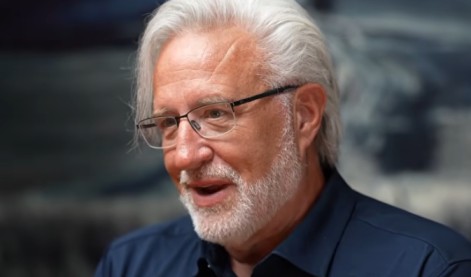
The following is the full transcript of death investigator Joseph Scott Morgan’s interview on Julian Dorey Podcast # 448, July 13, 2026.
Editor’s Note: In this episode of the Julian Dorey podcast, host Julian Dorey sits down with veteran death investigator and professor Joseph Scott Morgan to analyze high-profile homicide cases through a forensic and historical lens. The discussion covers the gravity and professional responsibility involved in death investigations, as well as the societal impact of true crime media and public desensitization to violence. Furthermore, the two provide a technical breakdown and expert commentary regarding the ongoing legal proceedings surrounding the Charlie Kirk case.
Introduction: The Reality of Death Investigation
JULIAN DOREY: I always get so goddamn pumped when you’re coming in, Scott Morgan.
JOSEPH SCOTT MORGAN: I hear you, baby.
JULIAN DOREY: Well, the problem is when you come in, that means people have died and we have to talk about it. That’s the one thing.
JOSEPH SCOTT MORGAN: It’s reality. But people are dying everywhere.
JULIAN DOREY: People do die everywhere, unfortunately, in all seriousness. I loved having you on the podcast back in the day, and it’s been cool to bring you on each step of the way since then. Obviously, for people who don’t know you, you’ve been the guy on every channel basically since 2011, talking about— 2011, 2012.
JOSEPH SCOTT MORGAN: Yeah.
JULIAN DOREY: Talking about any type of high-profile homicide case. And you’re even a great historian of homicide cases, as we’ve laid out in the past. You look at things that happened 2,000 years ago.
Nothing New Under the Sun: The History of Violence
JOSEPH SCOTT MORGAN: It’s fascinating. And it just goes to prove there is nothing new under the sun. Everybody says there is. Homicide and violence have existed forever and ever.
The way I approach it, and I think I’ve mentioned this before, the way I approach it is when I’m teaching my students as a professor, when I teach at a police academy, one of the things I leave them with is that it’s not just about the technical side of forensics and generating a report. Because in my world, in the world of medical examiners and coroners, you have a lot of people that die and they’re never remembered. At all.
And I tell my kids, look, 200 years from now, what you’re writing, people will go back and read. You’re literally a historian. You’re documenting that somebody actually existed. It’s not just the high-profile people, because we document deaths of little grandmas that die in their sleep, or some person that’s taken their own life that doesn’t make the news unless it’s a celebrity. All of those things, people will go back and read those records.
How you write and what your remembrance is of that moment in time is going to dictate what people in the future think about you. Because I’ve read some reports where you’re thinking, oh my Lord, this is going to be in the record forever and ever, amen. And so I take a lot of pride in that, the histrionics of it, because I’ve gotten to the point now after over 40 years of working in the field and then being a professor, I’ve got the long view now. What you leave behind.
Respecting the Dead: True Crime and Dehumanization
JULIAN DOREY: Yeah, I mention it every single time you’re in here, but even from our very first recording back in episode 146, the gravity and weight with which to this day you still treat every death notification you ever had to do — where you have to go tell a loved one the unthinkable, that their loved one is gone — and the types of reactions you had to put on the hard drive that you can’t undownload, if you will, over the years.
I think that’s really important because people want to see that, especially in a world now where unfortunately I think sometimes there’s a weird fangirly kind of thing going on with true crime, to the point that some people will dehumanize it in a way. You’ve got to remember, whether it’s a huge case or a small case, just like you said, these are people. They lived and they died. And there’s a level of respect that’s got to be given to that.
JOSEPH SCOTT MORGAN: Well, I got to tell you this. I’ve come across now a few podcasters that are doing true crime.
The Psychological Toll on True Crime Podcasters
JOSEPH SCOTT MORGAN: They’ve got the look in their eye now because of some of the stuff that they subjected themselves to, and they were not prepared for it. And they’re doing it day after day after day. It’s hard for them to contextualize it because a lot of people that comment on true crime and have podcasts — and God bless them, there’s enough room in the firmament for all the stars, right?
JULIAN DOREY: Right.
JOSEPH SCOTT MORGAN: But what they don’t count on is the stuff that they’re going to encounter, and you can’t leave it behind. I’ve got a callus built up. It’s something that I’ve done since I was 20 years old. And you have people that are stepping off into this at the midpoint in their life and they’re subjecting themselves to a lot of things out there that I don’t think they were able to plumb the depths of before they get into it.
They start filing FOIAs and they start seeing images and reading transcripts. Now, it doesn’t put them in the morgue and it didn’t put them at the scene, but they’re getting a real taste of it. And it’s an interesting little vein to follow, I think, from just an academic standpoint — perhaps how this is going to impact some of these podcasters going forward into the future, some of the things they’ve subjected themselves to.
The Charlie Kirk Shooting: A Landmark Moment
JULIAN DOREY: It’s one thing when you start chasing something because it’s something people want to know about, or it’s a lot of clicks and stuff like that. But then, like you said, when you get into the reality of it — and look, to be fair as well, the whole public was brought into the reality of the Charlie Kirk thing because people literally saw from 4 different angles immediately, a live execution of a guy.
And I’ll never forget it. It still gives me chills because we were recording in here when it happened, and I was recording with my friend Nate. You just saw this image and you’re like, “What the f*?” And Deef was like, “Hey guys, didn’t want to bother you, but Charlie Kirk just got hit.” And both of the guys I had in here a couple days later were Special Forces guys, and they’re like, “It doesn’t matter who you are. That affects everyone. Affects all of us.” How we see it — it’s just brutal.
JOSEPH SCOTT MORGAN: It’s a cold cup of coffee for anybody. I’ll tell you where I was. I was actually lecturing in my medical legal death investigation class and my grad assistant came in right in the middle of my lecture, and we put it up on the big screen and we had those first real-time images of that shot.
And I didn’t really hesitate to show my class at that point in time. I mean, it’s literally what we were discussing at that moment in time. I look back now and I think I may not should have done that at that particular time, but the gravity of it — because we couldn’t really understand it at that moment in time. You really don’t understand these things until you get a little distance.
But it was a landmark moment. And immediately I did a quick mental assessment. I tried to separate myself from the horror of it, which you always do as a death investigator, and then begin to view the image. I was asking myself, “Should I believe my lying eyes? Is this accurate? Am I missing something here?”
My initial blush on this thing — it was unlike anything else other than maybe Bud Dwyer from years and years ago, the former Secretary of Treasury for Pennsylvania that shot himself at a press conference. That’s been on the internet for years and years. But it raised itself to another level.
And of course, you had Trump that they tried to shoot in Butler, the ear thing. And we always forget about the poor man that was killed there in the audience. Very, very sad.
We’ve seen a lot of this level of violence. And again, I think this circles back into — are we becoming more and more desensitized to it? Yes, I really wonder about that. And I know what shape it left me in after everything I’ve borne witness to. And I wonder if there’s a ripple effect relative to the general public with being desensitized to it, where it’s like, “Well, yeah, public executions — let’s kick it up another notch,” and you just go on to the next thing. It’s like a feeding frenzy.
Desensitization: Then and Now
JULIAN DOREY: It’s strange. And when you really think about that historically, too — until even 150 years ago or 100 years ago, there’d be kids who would go to the square and watch a public execution, or they’d just see a guy die on the street much more commonly than they do today. And that would be in person. This was a normal rite of passage. You might be 9 years old and you see stuff like this.
And then eventually society graduated to a point where it’s like, “Hey, we shouldn’t do that. That’s kind of crazy. We value life more.” And so we took that away. But then the internet comes around.
JOSEPH SCOTT MORGAN: There it is.
JULIAN DOREY: And now you can go watch it. So you’re one step removed from it, but you can watch it in slow motion and replay from every angle regardless of who it is. You can go to these websites that are exclusively for that — LiveLeak and things like that — and actually see these things.
And I think there’s a digital desensitization that is maybe even more concerning than it would have been in the past, because in the past at least the gravity of it — even if you’re a child and you’re traumatized, you’re there, right? You see it, you understand a life just ended. When you’re watching it on a video, I think whether it’s kids or teenagers or even adults, there’s a video gamification of it. And that’s really — I don’t like that at all.
The Visceral Reality of Death Scenes
JOSEPH SCOTT MORGAN: Yeah, they’re missing that visceral part of it. And it’s almost rote to say that death has a smell, but it does. When you walk into a scene, blood has a smell. It’s got a sickly sweet kind of odor to it. Obviously, decomposing bodies have a smell. There’s that acrid thing that’s left behind relative to gunfire. The smells of a home — and again, my old adage is we’re always having to view the abnormal in the context of the normal. Walking into somebody’s house and you see a family obliterated at Christmas time, and this should not be part of it.
What happens in social media and out there where they’re viewing this stuff — I think there’s a level of shock when people are actually exposed to it in person. I was thinking, what was it in Charlotte, for instance, with the young lady that was on the bus and she caught the knife in the neck — the young Ukrainian girl. And I’m thinking, holy smokes. You talk about a public execution. You watch that — well, it was in real time. You’ve got that CCTV and you see her literally her life just ebb out of her. She’s stabbed in the throat.
But yet you’re not there to actually hear her whimpering. You’re not there to smell the blood, all those sorts of things that come along with physically being at a scene. And that is incredibly dangerous. Incredibly dangerous. People don’t realize that they’re really brushing up against evil.
The Charlie Kirk Case: Understanding the Evidence
JULIAN DOREY: Yeah, it’s a good way to put it. But we do have to discuss this and go through the Kirk case. We’re going to go through a few different cases today. Obviously Joseph covers literally everything, so we won’t get to all the cases you’re covering, but there are obviously some big ones out there.
That said, as we are recording this, and we’re going to put this out almost right away, so we’re up to date, but the Charlie Kirk trial is going on. And just to be perfectly frank with you, so you understand where I’m at with this thing, obviously the whole thing looked crazy when we saw it. And then there was a lot of weird s* that happened afterwards from an investigation standpoint. I’ll bring up a phone call you and I had in a few minutes that was a few days after that. That’ll certainly be relevant today.
But we have watched the whole internet turn into these factions with these people saying this, these people saying that. Oh, it’s this giant conspiracy. Oh, it’s not a conspiracy at all. It’s a lot of noise, a lot of things. So what I would really like to do today, as someone who is not an expert on the case by any stretch, we’ve only talked about it probably about 3 or 4 times on the podcast before for maybe 10 minutes max each time. But as someone who’s not coming from the expert lens, I’d really like to just go through the facts on the ground, which I know is literally what you do for a living, just to go through what we know, what’s now being presented at the preliminary hearing as well that maybe we haven’t seen, and what the biggest problems were from the jump.
JOSEPH SCOTT MORGAN: Well, what we have to understand is what’s going on right now is not actually a trial. It’s a preliminary hearing.
JULIAN DOREY: Right.
JOSEPH SCOTT MORGAN: And it is a 5-day-long process. And what they’re trying to do is present the evidence to the judge to determine if they have enough evidence to, in fact, move forward with a trial.
The Preliminary Hearing: What’s Being Revealed
JOSEPH SCOTT MORGAN: We’ve caught snatches along the way, but for the first time we’re kind of seeing this stuff revealed to us in real time where people are watching this and they’re hearing some of the stuff. There’s been so much speculation over lo these many months leading up to this moment in time.
You see the defendant in the courtroom. You see his counsel. You see prosecution. Erica Kirk has been in the courtroom. I think she left pretty quickly the first day they started talking about some things that were rather unsettling, which the whole lead-up to this is very unsettling because it’s so graphic.
You’re talking about the evidence that they have, the evidence that they’ve documented, collected, and tested to this point, what their conclusions are. And I guess what it comes down to when you’re doing the calculus on all this, do you have enough to make a case out of this?
It’s dense, dense material because we’re talking about things like DNA. We’re talking about firearms ballistics examinations. We’re talking about tool marks, which is kind of fascinating because a Dremel tool was used on the casings to write messages. And we’re talking about electronics. The list goes on and on.
And we haven’t even gotten to Charlie. We’ll learn more about what the ME found because, again, that’s been a big area of speculation. About the nature of the injury, coupled with the type of platform that was used to allegedly pull this off, what types of injuries he sustained, how devastating that was. There’s been all kinds of things floating around.
The people that are practitioners and that actually do this for a living, they don’t have time to sit out there and have a lot of speculative moments. They have to look at the data that they have in front of them and assess it in a logical way, because it really doesn’t matter what the public opinion is or what the current zeitgeist is. At the end of the day, their measure is going to be taken at trial. If this thing goes to trial — and I think that it probably will — they’re going to take a look at that and ask, is there enough meat on the bone here?
JULIAN DOREY: Do you think there’s enough meat on the bone?
The DNA Evidence
JOSEPH SCOTT MORGAN: Yes. Yeah, yeah. When they’re talking about numbers relative to the DNA, numbers that have been thrown out now are octillion and quintillion — that it could be anybody other than this person or persons. Because you’ve got 2 guys that are either directly involved or peripherally involved relative to DNA. And when I say involved, they’ve made contact with some of these items of evidence.
That’s one of the difficulties that defense attorneys have now because DNA is playing such a huge role in almost every case. If it’s not involved in the case, you have people saying, “Well, where’s the DNA?” They expect that DNA will be done in every case.
Well, here it’s something that really plays a part because from a biological standpoint, you’re talking about points of contact — everything from pressing live ammo into a magazine, placing your cheek on the stock of a weapon. Maybe you cycle the weapon or you haven’t, but you’ve touched the bolt at some point in time. You touch the trigger, you’ve touched the screwdriver that’s found there. You’ve got a towel that’s got deposition of DNA from 2 separate people.
It’s a tough hill to climb for the defense. And that’s just the DNA. So yeah, simply based on that, there’s enough for them to go forward with a trial, in my opinion, from a physical evidence standpoint.
The Wound and the .30-06 Round
JULIAN DOREY: Okay. Well, let’s start with the very beginning. Which is obviously everyone sees the shot, they see what happens. This was a brutal wound right away. Anyone I talked to who was even slightly an expert in any type of shooting or death investigating told me that the instant they saw it, they knew there was no saving the guy. Like, it was obviously an insane wound.
But what they’ve said is that the rifle that fired it — allegedly fired by Tyler — was a .30-06 bullet.
JOSEPH SCOTT MORGAN: Yes.
JULIAN DOREY: And one of the huge problems with this case, just in general, regardless of what the truth is or isn’t, is the complete f*-upery of every optic that you could have if you are trying to generate public trust in investigations.
Number one, you immediately just say this guy’s guilty. We’ve accepted that. Nothing else to see here. Number 2, you pave over the entire scene of the crime right away. Number 3, you’ve got people messing with the cameras right there and taking out hard drives or SIM cards immediately after the shots are fired. Number 4, you also don’t have — optically speaking — a great look when you’re doing a WWE-type f*ing funeral for the guy 9 days later. The list goes on. We’ll go through more today.
But one of the things that was like, “Oh my God, who on earth told you to press send on this tweet,” was 9 or 10 days afterwards, Andrew Colvett put out a tweet regarding what the doctors told him about Charlie’s wound. And I want to start with this because I want to break down the real possibilities of whether or not something like this could be true, or just what you saw and what the weaponry could actually be.
He said:
“I want to address some of the discussion about the lack of an exit wound with Charlie. I’m usually not interested in delving into most of this kind of online chatter, and I apologize, this is somewhat graphic, but in this case, the fact that there wasn’t an exit wound is probably another miracle and I want people to know. I just spoke with the surgeon who worked on Charlie in the hospital. He said the bullet ‘absolutely should have gone through,’ which is very, very normal for a high-powered, high-velocity round. ‘I’ve seen wounds from this caliber many times, and they always just go through everything. This would have taken a moose or two down, an elk, etc.’ But it didn’t go through. Charlie’s body stopped it. I mentioned to his doctor that there were dozens of staff, students, and special guests standing directly behind Charlie on the other side of the tent, and he replied, ‘It was an absolute miracle that someone else didn’t get killed.’ ‘His bone was so healthy and the density was so impressive that he’s like the Man of Steel. It should have just gone through and through. It likely would have killed those standing behind him too.’ In the end, the coroner did find the bullet just beneath the skin. Even in death, Charlie managed to save the lives of those around him. Remarkable. Miraculous.”
Joseph, even if this were true — we live in a country where Arlen Specter once told us there was something called a magic bullet that went through 8 different whatever definitions of physics that it just totally broke to kill John F. Kennedy, to make sure there was nothing to see here. I don’t believe this, to be clear. I think that’s insane.
Charlie Kirk was a big guy. He certainly wasn’t like Mr. fing America as far as bodybuilding goes. But even if on the off chance this were true, why would you ever tweet that out at a time where people were already going, “What the f with this case?”
JOSEPH SCOTT MORGAN: I know exactly what you mean. And he would have been advised to keep his freaking mouth shut at that point in time. And also one other thing — I don’t care what a surgeon has to say.
JULIAN DOREY: You don’t?
JOSEPH SCOTT MORGAN: No, I don’t. Their utility for me as a death investigator is: what did you see when you got in? Other than that, I don’t want to hear your freaking opinions about anything.
JULIAN DOREY: Really?
JOSEPH SCOTT MORGAN: Yeah, really. I want to know if you went in and took life-saving steps in order to stem bleeding, those sorts of things. Maybe your initial assessment of trauma is fine. I don’t want to hear about moose and I don’t want to hear about elk and I don’t want to hear about how many moose — or mooses, or whatever you want to call them — you think may have been taken down. That’s total garbage. This is not a miracle. This is physics.
JULIAN DOREY: It’s physics.
JOSEPH SCOTT MORGAN: It’s physics. And it also goes to the structure of the .30-06 round.
JULIAN DOREY: All right, let’s go there.
JOSEPH SCOTT MORGAN: Yeah. So first off, so we understand what a .30-06 round is — 30 is a designator of the caliber that’s measured at the bottom of the round. That’s the base of the projectile. The projectile itself is seated into a cartridge. The cartridge holds the .30-06 projectile. Once that primer is tapped off with this rifle, it sends that round downrange. It has certain ballistic characteristics. Do you know what the origin of the .30-06 round is?
JULIAN DOREY: No.
The .30-06 Round and Its History
JOSEPH SCOTT MORGAN: Okay, well, the beauty of the .30-06 round, we know a lot about it, and here’s why. .30 is caliber. Do you know what ’06 is? Most people don’t. It’s the year, the year that it was developed, 1906. Guess where we used this round to great effect? World War I. Yeah, it’s what the Doughboys carried.
JULIAN DOREY: No shit.
JOSEPH SCOTT MORGAN: Yeah. So when they’re cycling that weapon and it’s a bolt-action rifle, it’s not semi-automatic. You have to physically cycle it like this. It ejects a round and then you’re ready to rock and roll. Do you know what became the most popular hunting cartridge in the wake of World War I?
JULIAN DOREY: 30-06.
JOSEPH SCOTT MORGAN: 30-06. Yeah. Everybody’s grandpappy had one. They would take it and they would go deer hunting with it, which is the most prevalent. You can call deer large game, but they’re not actually large game, right? Kind of a mid-range. So people have used it to great effect for a long, long time.
JULIAN DOREY: How about Al Capone?
JOSEPH SCOTT MORGAN: Al Capone? Those were Tommy guns. I think that he had guns. Yeah, Tommy guns and .45 calibers.
JULIAN DOREY: I feel like he would have liked that .06.
JOSEPH SCOTT MORGAN: You know, he probably would have. It’s been chambered for a variety of different weapons. I think that the Browning, the BAR, was initially chambered in .30-06, which you’ve seen in all kinds of war movies over the years. I know it’s .308, but it doesn’t matter for our purposes though.
.30-06 is a very effective round, and Remington makes this cartridge, and several manufacturers do. You’ve got Remington, you’ve got Winchester, all these other— but Remington, and if I remember correctly, I think these are Remington rounds. Did you know that there is actually a round, and I think it’s like 150-grain, 155-grain round, that is utilized in this weapon? And there is a particular brand of this weapon that’s called the most deadly mushroom in the woods.
JULIAN DOREY: Most deadly mushroom in the woods.
JOSEPH SCOTT MORGAN: You know why? Because this particular round was designed so that when it impacted on target, the round actually mushroomed. But it doesn’t mushroom like a hollow point does, where you’ve got these little wings that kind of deploy. It turns into a fist. So you go from .30 caliber, maybe up to 40, 45, maybe up to 50, because it expands out and it cavitates as it goes through.
JULIAN DOREY: Cavitates?
The Wound Channel and Charlie Kirk’s Injury
JOSEPH SCOTT MORGAN: Yeah, it cavitates an area. It creates a channel. It actually creates a channel in whatever your target area is. And from what I’m seeing— and we’ll find out what the medical examiner sees, I can hold forth on that for a little bit— but from what I saw with the initial view, it entered and it’s to the left of the midline.
When I say the midline, if you find your Adam’s apple right here, your larynx sits right here. It’s entering right about here, which is right over where your external jugular is. Your carotids run through here.
JULIAN DOREY: Right.
JOSEPH SCOTT MORGAN: And for that horrific moment, you see— and I’ll get to this, too. You see Charlie do this, you see his shirt balloon, and then you see him begin to list to the left like this, falling down. If I remember correctly, he contracts his thumb like this. And that’s— yes, many times when you see this— if you watch an NFL game, it’s a fencing mechanism. You go like this if you see somebody with a head injury or neurological thing. Yeah, exactly. You’ll see that event.
And when I saw that initially, I’m thinking this has hit his spine. It’s hit his probably spinal cord. And then he goes down and they’re talking about— this goes back to the ballistics. They’re talking about that they recovered the round from his body, but it’s deformed to the point that they could not read ballistics on it. It cannot be excluded. So they haven’t excluded this round. The round first went to the FBI, which I found kind of weird.
JULIAN DOREY: Right. Isn’t that whole thing— the whole chain of command was a little odd. Right.
JOSEPH SCOTT MORGAN: And then it winds up going to the ATF. Let me tell you something. No offense to the FBI.
JULIAN DOREY: Here it comes.
The ATF and Ballistic Evidence
JOSEPH SCOTT MORGAN: But if I’m looking to do anything relative to ballistics, hands down, going to the ATF. Really? Alcohol, Tobacco, and Firearms. They have some of the top ballistic experts. And look, the FBI does too, but this is where they dance. That would have been my first stop.
JULIAN DOREY: Well, they were too busy in Valhalla.
JOSEPH SCOTT MORGAN: I’m just saying. That’s where I would have sent it. And I found that out, I think, yesterday. I’m saying yesterday. Hope that’s okay.
JULIAN DOREY: Yeah. So we’re recording this on Friday. The episode is going to come out Monday or Tuesday.
JOSEPH SCOTT MORGAN: Yeah. And the crime scene tech was giving her testimony relative to this, and she talked about the chain of custody relative to these rounds, where they went to be examined and all that sort of stuff. But they didn’t have enough to do the ballistics. And let me kind of break that down so that folks understand what that means.
Understanding Ballistic Striations
JOSEPH SCOTT MORGAN: So with this .30-06 round, you have the base which is circular, and this is fractured off to the point the shaft of the projectile, which would have been about that long— that fractured shaft, it’s not just fractured, it’s probably fragmented or mushroomed, who knows at this point. They were able to measure the caliber and they’re saying, okay, this fits within the parameters for a .30-06 round, but there’s not enough there for them to look at the striations on the sides of the projectile itself.
JULIAN DOREY: And can you explain the striations?
JOSEPH SCOTT MORGAN: Sure, absolutely. So within the barrel of the .30-06 rifle, you have what are referred to as lands and grooves. Grooves, exactly what they are— they’re twists. So grooves are kind of deep channels. Lands are flat. And so if you look at a barrel on cross-section, you’ve got a land like this and you’ve got a groove, land, groove, land, groove, land, groove, and they’re twisted. So when a round travels out of that barrel, it begins to spin. That’s why this is a rifled round.
And for folks that don’t understand what that means, if you’ve ever thrown a football with somebody, the more efficient you can make that spiral, the further it’s going to go. If you’ve ever heard the term a wounded duck, where quarterbacks will drop back and they’re getting hit right at the last moment and it just kind of flutters off, doesn’t have a tight spiral. Well, with a rifled round as opposed to smoothbore, which we had back in Revolutionary War, which is like a musket kind of bouncing down.
JULIAN DOREY: Goddamn right we did.
JOSEPH SCOTT MORGAN: Hell yeah. The rifled round is revolutionary. And so this round is transferring all of this energy that happens at that moment of explosion. It’s going downrange. It’s spinning. It also retains energy and it retains direction. So you’re talking about it going downrange and striking the target which you intend for it to hit. So when it delivers that energy, it’s going to be devastating.
Now, back to Charlie, when— this is just my opinion.
JULIAN DOREY: Pure spec here.
Kinetic Energy and the Shirt Balloon Effect
JOSEPH SCOTT MORGAN: When you see Charlie’s shirt— I’m talking about him like I know him. Oh, buddy. Oh, pal. When you’re talking about Charlie Kirk’s shirt. And people have made much of this.
JULIAN DOREY: Yes.
JOSEPH SCOTT MORGAN: Kind of balloons out like this. It’s called kinetic energy.
JULIAN DOREY: So when you see that, there’s nothing to you that looks abnormal of any type of gunshot from this type of weapon that you’ve seen in your career?
JOSEPH SCOTT MORGAN: Like an exploding microphone? No, it’s—
JULIAN DOREY: You’re out on the exploding microphone. Okay, here we go.
JOSEPH SCOTT MORGAN: I think I lost points off of my IQ just by saying exploding microphone anyway.
JULIAN DOREY: Well, let’s pretend it’s a high IQ point.
JOSEPH SCOTT MORGAN: Yeah.
JULIAN DOREY: And how you would break it down with another high IQ point, right?
JOSEPH SCOTT MORGAN: So with the kinetic energy delivery, which is part of the destructive nature of a weapon, it’s not just the projectile itself, it’s the energy that it delivers. So let’s just pretend that we’re on the shore of a beautifully placid pond. Maybe there’s a few ducks swimming over there. You can see the little fishies in the water. There’s a frog over there. And we pick up a stone and we throw it in the middle of it. What happens? Well, you have this wave that travels out, right? That’s kinetic energy. That’s the delivery of the energy.
So when people say, you know, I’ve shot people before and this sort of thing, and I’ve never seen a shirt do that— how have you seen people shot before and you’ve never seen a shirt move? It’s going to move when you get hit. He’s wearing kind of a loose-fitting t-shirt. So when he is hit, it balloons out like this. And when it balloons out, that’s that energy transfer.
There’s a great old black and white scene. If you’ve never seen it, look it up.
JULIAN DOREY: Okay.
JOSEPH SCOTT MORGAN: It may have been done up in the Northeast, like at Coney Island. I don’t know. The guy that catches the cannonball. Have you ever seen that?
JULIAN DOREY: The guy that catches—
JOSEPH SCOTT MORGAN: Have you seen that before?
JULIAN DOREY: You’ve seen it.
JOSEPH SCOTT MORGAN: Okay. So I knew it was coming. He’s standing, this rather rotund man, and he was known—
JULIAN DOREY: Rather rotund.
JOSEPH SCOTT MORGAN: Rather rotund.
JULIAN DOREY: It’s a nice way to say it.
JOSEPH SCOTT MORGAN: Yeah. Fat as hell. And he was healthy in a 30s and 40s sense. When you see him hit like that with that cannonball, you can see the ripple effect.
JULIAN DOREY: All right, let’s get that on the screen.
JOSEPH SCOTT MORGAN: That’s pretty good that it actually travels out. That’s kinetic energy and it disperses throughout his body.
JULIAN DOREY: Why is he doing this to himself?
JOSEPH SCOTT MORGAN: He didn’t have a smartphone, and so he couldn’t entertain himself. This is how people entertain themselves.
JULIAN DOREY: I thought he was getting tired.
JOSEPH SCOTT MORGAN: Office sentence. Yeah, no kidding. It’s rather impressive though. And yeah, here he is. Is this— yeah, this is a sledgehammer thing.
The Ballistics of Charlie Kirk’s Shooting: Wound Analysis
JULIAN DOREY: All right, you kind of did him dirty though. You made him sound like a real fat ass. He’s kind of like old school.
JOSEPH SCOTT MORGAN: He’s old school.
JULIAN DOREY: Yeah, he looks like he’s going to throw some hands with you.
JOSEPH SCOTT MORGAN: Yeah, like Robert Mitchum, you know? Yeah, look at that.
JULIAN DOREY: I mean, he’s got some liver protection.
JOSEPH SCOTT MORGAN: Look at this.
JULIAN DOREY: Yeah, this guy’s kind of a savage. You really did him dirty.
JOSEPH SCOTT MORGAN: It wasn’t my intention. Okay, my apologies. Look at that. He’s like, coming to all of his kith and kin. I didn’t mean to— okay, you know, anyway.
Transfer of Energy and Bullet Cavitation
JOSEPH SCOTT MORGAN: So you have this transfer of energy that takes place, and that explains the ballooning of the shirt. And if he had not had a shirt on and you were watching this in real time, you could probably see— and you were watching super slow-mo when it strikes this area, you could see a ripple effect in the skin as well. It’ll kind of balloon out like that, and then the elasticity will bring it back in.
So once it has created the defect, which is the hole, it begins this cavitation, as the round is traveling through the tissue. And if it fragments— there’s an old term referred to— it’s not old, but some rounds, 5.56 was known for this in Vietnam, is a frangible bullet.
JULIAN DOREY: So wait, say that again.
JOSEPH SCOTT MORGAN: Frangible bullet or projectile. Yeah. And on impact, it kind of shatters. So you don’t just have one projectile, you have multiple projectiles, and all the little vessels that are associated in that area are getting ripped and torn as this thing kind of cavitates through these structures in the neck.
Distance of the Shot
JULIAN DOREY: All right. How far away again exactly was Tyler Robinson allegedly with the— with—
JOSEPH SCOTT MORGAN: I’ve heard estimates. Some people have said 200 yards and then other people have said 180, 160.
JULIAN DOREY: I want to get what the reported consensus from law enforcement is if possible. That’s why I asked it that way. So we’ll pull it up just so we have it, because what I want to get at is— and Deef’s got it— what do we got? So it’s saying here that from Sergeant Jennifer Faramina of the Utah Department of Public Safety, it was 410 feet between the rooftop perch and the tent where he was. So they’re saying roughly 415 feet away. Yeah, that’s what, 100, 140-ish?
JOSEPH SCOTT MORGAN: It’s too early for math. Something like that. 138. 138. Okay. Well within. Okay. So with a .30-06, there are people out there that— and this is with a scoped version of this. Okay. A scoped version of this weapon. He had optics on it. There are people out there that easily— I’m a horrible marksman. I barely qualified in the Army years and years ago. Yeah, I’ve got terrible eyesight.
JULIAN DOREY: Don’t say that. I thought you were great.
JOSEPH SCOTT MORGAN: No, I like looking at bullets.
JULIAN DOREY: You look like a good shot.
JOSEPH SCOTT MORGAN: Yeah, well, there you go. So there are people out there that could easily score the shot with an iron sight.
JULIAN DOREY: With an iron sight?
JOSEPH SCOTT MORGAN: Yeah, with no scope on it whatsoever from that distance.
Why the Head Wasn’t “Taken Off”: Tissue Elasticity
JULIAN DOREY: Which leads to my question here, because that makes this even more relevant to me. With a .30-06 bullet from approximately 138 yards, how does that not exit? And to take it a step further above my pay grade here, just going off what some other guys who have shot a lot of weapons in my life has speculated with before. How does that not literally take his head almost clean off his neck?
JOSEPH SCOTT MORGAN: Over the course of my career, I’ve examined a lot of gunshot wounds, and particularly from high-velocity weapons. Hunting rifles, AK platforms, AR platforms, SCARs. I mean, you name it, I’ve seen them. Everything from .308, 7.56, 5.56, Win Mag, .300 Win Mags, .300 Blackout. I mean, you name it, I’ve seen.
And the entrance wound is not going to be blown out with every single case. That just doesn’t happen. I think people are expecting to see— it’s like the old Gallagher comedian up on stage with a watermelon. They have this expectation that you’re going to take this weapon and fire it and the watermelon is going to explode. That doesn’t happen with human tissue. So the elasticity of the tissue itself will absorb that round.
Now, I think that I don’t know if people are wanting to see it or they want to try to understand it. Because there’s this kind of interesting dichotomy out there. There’s certain people that I think actually want this to be— they want to see like his spine hanging out of the back of his neck for whatever reason, for whatever their interest is. But that’s not the reality in the morgue. You know, when you go to the morgue and you examine bodies, this ain’t Hollywood.
The Pond Analogy: Off-Center Impact
JULIAN DOREY: I’m just— I don’t want to get lost in this and forget about this, but you’re making me think about the kinetic energy that you were relating and what that looks like from a ripple effect, and then where the actual entrance wound would be and what that could cause as far as like an explosion or not explosion.
So please correct me if I’m completely wrong here, but if I— that pond example you gave where you throw a rock, if I throw the rock directly in the center of the pond, the ripple effect distributes in a circular motion all the way evenly across. Now, if I throw the rock off center to the right, a bigger wave ends up going over the rocks on the right.
JOSEPH SCOTT MORGAN: Yeah.
JULIAN DOREY: And the left, as it distributes across, gets less of an effect because the center is more—
JOSEPH SCOTT MORGAN: Yeah, you’re not hitting it center mass is what you’re saying. Exactly. And that’s a ballistic term and it’s a weapons term that’s used on the range. You’re aiming for center mass.
JULIAN DOREY: So my question would be, because he got hit here where the carotid artery is, and it was on— and the jugular vein, it was on his left side, our right if we’re looking at it— is part of the reason that there wouldn’t have been like an explosion or like head coming clean off, the fact that it’s hit off-center versus if he had been hit in the Adam’s apple, right? Perhaps it would.
JOSEPH SCOTT MORGAN: Yeah, in the larynx, this area here, the trachea. Because as we can feel, this has got— it’s cartilaginous in here, right?
JULIAN DOREY: Cartilaginous.
JOSEPH SCOTT MORGAN: Yeah. So a lot of cartilage. It’s formed up in here. If you hit this surface, you might see more of a dynamic entry area. But this is rather soft tissue right here. It can absorb a lot.
So you move to the left of the midline and this wound— let’s just say if we had 3 cases and you had people that were shot, one to the left of the midline, one in the midline, and maybe another that is over far to the right or far to the left, all of these wounds are going to look different depending upon the actual anatomical structure and the delivery of that energy and how it affects that particular spot.
Forensic Opinion: Fatal Impact Without Exit Wound
JULIAN DOREY: Okay, so going back to what you saw with Charlie, to summarize it, it is therefore, in your forensics opinion, very possible that he was shot with a .30-06 from approximately 140 yards away and that it did completely create a fatal impact upon hitting his arteries right there, but that it is possible therefore that it may not have made an exit wound and that it is also therefore even more possible by that point that like his head would not have been taken off.
JOSEPH SCOTT MORGAN: And let me tell you one more thing. So with the vertebral bodies here, you know, we start up here at C1, right? C1 is called the atlas, right? So it’s what supports our head, like Atlas. So we’ve got C1, C2, C3, C4, C5, C6. And so these are rather robust.
You know, this surgeon or this associate of his saying it’s a mirror, healthy bones, Superman, whatever. He’s a human being. All right. Let’s not paint it in any other way. He’s a human being.
And with this insult, this defect, there’s a strong possibility that it is traversing— the trajectory would be from above to below. Okay, so from higher to lower, right? Possibly from left to right. It could have been straight back, so above to below, from front to rear.
If it is traversing like this, there is a high probability that it hit one of the bony structures in the spine. Remember going back to the neurological response that we talked about. That would account for what we’re seeing here as he kind of slips off to the left side. It’s within those bony structures, or immediately adjacent, that they’ve recovered this round.
One other thing that’s going to be really fascinating at trial, and I don’t know if they’ll present this in the preliminary hearing, are going to be the x-rays. It’s going to be a marvel to see.
The Role of X-Rays and CT Scans at Trial
JULIAN DOREY: So they’ve said that they’re going to be putting those out.
JOSEPH SCOTT MORGAN: I don’t know if they will or not. It’s common practice now. As a matter of fact, it wouldn’t surprise me if they’d done a CT as well on his body and a full CAT scan. Well, certainly of head and neck.
We go back to the Gabby Petito case up there where she was found. They actually did a CT of her and she was in a moderate state of decomposition. They did a CT on her remains. And it’s becoming very, very prevalent. We’ve always done X-ray for people that could afford to have portable X-ray.
You know what the beauty of X-ray is in the morgue? One of the reasons that morgue photographs get excluded at trial is because they’re regarded to be very prejudicial because they’re so gory with a lot of blood and all that sort of stuff. Radiographs are not prejudicial, and what it’s going to show is a cavitated lead storm that will pass through here.
If this thing fragmented, you’ll see little bits distributed all the way through here, those little radio-opaque bits of metal traversing in whatever trajectory that they determined. And that still remains to be seen. And you’ll actually see the main body of that round, the biggest part that’s intact, where it’s lodged.
If they didn’t just do a standard X-ray and they did CT dimensionally, you’ll be able to actually appreciate the track of the wound where it actually sets up. So it takes it to a whole new level and those will be prominently displayed in the court.
The Autopsy Process in Utah: Chain of Custody and Command
JULIAN DOREY: Well, this gets to that actual process that I referred to earlier of what happens once someone is murdered and there’s a homicide in the state of Utah and how the autopsy happens, where it happens, who’s involved.
One of the things that was weird to me, and this is why I called you a couple days, a few days after the assassination, was how quickly his body was at least preliminarily prepared and by a first funeral home in Utah to then send it. And you explained this process to me, to the final funeral home that was going to handle arrangements in Arizona where he’s from.
But I was looking at the time, I’m like, okay, he’s shot at whatever it was, like 12:30 PM, something like that, local time in Utah. And then based upon when we saw JD Vance go and help hand off the body, and we knew that the family had spent time with the body because Erica Kirk had released some interesting social media posts over the casket and stuff, we knew that that was around 5, 5:30 PM Eastern time the next day, and they had been spending time with the body in the afternoon before.
And basically I got it down to like, okay, he’s shot at 12:30, and the funeral home is there, was obviously working on him and embalming him that morning, like the next morning, which is less than 24 hours. Like, that part was clear to me. And so I called you at the time because I’m like, well, Joe Scott Morgan’s the guy to go to with this.
And I said, okay, as a total novice here, that seems a little weird to me. Is that weird to you? And at first you explained it and you said, it doesn’t have to be. No, I’ll tell you why. And you proceeded to take me through the entire— I think you said it like this. You’re like, “Julian, are you aware of the chain of custody and command in the state of Utah when it comes to an autopsy?” And I’m like, do I sound like someone who’s aware of what happens? And you’re like, no.
And you then explained to me, gave me a play-by-play like Al f*ing Michaels in his heyday, as to where the body goes, what office it goes to, who’s in the room, who’s— you had some people by name, I think, at the time they’re supposed to be in the room, how long an autopsy like that could or would take, what time they’d be working on him.
So if you don’t mind, let’s just start there. Can you re-walk everyone else who wasn’t on that phone call that’s listening right now through what that process is supposed to be specifically in Utah for the body once it’s determined he is dead? The doctor has called it and now he’s handed over.
JOSEPH SCOTT MORGAN: Yeah. I’ve got a little preamble here, though.
JULIAN DOREY: Oh, please. I love a good preamble.
Utah’s Medical Examiner System: No Coroners Since 1972
JOSEPH SCOTT MORGAN: Who doesn’t like a good preamble? The state of Utah has not had a coroner since 1972. Since 1972. No coroners in Utah since 1972. Does everybody understand that?
JULIAN DOREY: Good. I was watching that. Now that that dumbassery is aside, you know when the hair gets flicked back, it’s about to go.
JOSEPH SCOTT MORGAN: Utah has a state medical examiner’s office, highly regarded. These are board-certified forensic pathologists. You say, “Well, Morgan, you’re splitting hairs, that’s merely semantics.” No, it’s not. It’s not. No, it’s not, because coroners are elected, medical examiners are appointed. In a lot of states, you don’t even have to be a physician to be a coroner. Matter of fact, there are some states where all you need is a GED.
JULIAN DOREY: Okay, that’s not reassuring.
JOSEPH SCOTT MORGAN: No, it’s not. We could do an entire episode on the coroner system. But I digress. They haven’t had coroners in a long, long time. They understood that they needed a state medical examiner’s office. And this is why this is so critical in this case, because it has been stated by a rather prominent person out there that the coroner— this is their words— was inexperienced.
I don’t know really what that means. I don’t know where that data came from, because they don’t have coroners. I don’t understand why that term would have been used. It shows a certain level of ignorance. Maybe that was intentional, I don’t know.
But the way the process would work is that his remains, Charlie Kirk’s remains, would in fact be turned over to the state medical examiner’s office. They would take him to their closest state medical examiner facility, a fully equipped forensic autopsy suite. That will have X-ray, it’s going to have all the instrumentation they need, and most importantly, it’s going to have a board-certified forensic pathologist, not an elected coroner.
JULIAN DOREY: Is this the one in Salt Lake City specifically? So everyone gets taken to Salt Lake City?
JOSEPH SCOTT MORGAN: Yeah, unless they have some satellite offices.
JULIAN DOREY: Okay.
JOSEPH SCOTT MORGAN: I know that I covered— I don’t know if you remember the Idaho cases with Chad and Tammy Daybell. Chad Daybell, it’s a long story anyway. Tammy Daybell died in Idaho and her body was taken to Utah. And they had to exhume her remains in Utah. Not a real good job of her death investigation up in Idaho at the time. She turned out she was probably poisoned and she was embalmed. And these people are responsible for a lot of deaths. And it’s this guy’s wife. Wife, Tammy. Anyway, the Utah State Medical Examiner worked that case.
And in the community in forensics, it’s very small, so you’re aware of the quality of work that’s turned out by particular offices. This is a stellar office. Every office is going to have its own personality, but the people there are highly trained scientists. This is not an elected coroner that’s doing this. I can’t emphasize that enough.
Because the fact that that came out early on, just like the tweet that you showed me— or whatever they call it, post or whatever, the posting, whatever they call it now.
JULIAN DOREY: We got Joseph off hashtags now. He’s not doing that.
JOSEPH SCOTT MORGAN: Yeah. Thank you. God bless you for that, by the way.
Why the Autopsy Was Completed So Quickly
JOSEPH SCOTT MORGAN: It’s important to understand that you would have had reliable professionals that would have taken charge of his remains at that point in time. Why was it done so quickly? Well, this is not like you’ve got a guy that has got multiple gunshot wounds. His body is riddled with all kinds of trauma. This is a single gunshot wound. At least that’s what they’re believing when his remains arrived there. It’s a pretty simple process.
I mean, right, it’s a homicide case. People throw around this term assassination a lot. If you want to call it an assassination, it’s fine. But the state of Utah is not going to prosecute an assassination case. This is a homicide, right?
JULIAN DOREY: Yeah, that’s how it’s categorized.
JOSEPH SCOTT MORGAN: And that’s how we have to look at it. So they’re going to process this case just like they do every other case that they handle, and there’s a certain procedure that they go through. Now, what might kick it up another level as far as speed is the profile of this case. They want to be as thorough as they possibly can and have as many people in the room. I can assure you that it wasn’t just the medical examiner and a technician and a photographer that was in there.
JULIAN DOREY: Could you understand why people out there— because by the way, I checked this before, they still haven’t gone through the exact details of what the chain of custody and command and what it all looked like yet. Maybe that’ll come out in the trial, maybe it won’t, I don’t know. But like, could you see why people who live in a country where they literally didn’t do that correctly with a president that they whacked in 1963, which I know you’ve covered that case— why they might be like, would they have everyone in the room for this if they wanted nothing to see here?
Comparing to JFK and RFK Autopsies
JOSEPH SCOTT MORGAN: Yeah, in Kennedy’s case, they had every damn person in the room, right? It was just all the wrong people.
JULIAN DOREY: That’s right. They had LeMay smoking a cigar over his body and watching it.
JOSEPH SCOTT MORGAN: But when you look at RFK’s case, Dr. Tom Noguchi— yeah, he had 8 pathologists in the room, I think maybe 9, including one of the guys that showed up late for John F. Kennedy’s autopsy, that was a wound ballistics guy that they forgot to consult. The doctors there forgot. They flew— Tom Noguchi knew about this, so he flew them out to California. He locked that down.
They say that RFK’s autopsy was arguably one of the best forensic autopsies that has ever been performed, and it’s because the community’s really small. Tom Noguchi saw what an abortion JFK’s autopsy was. He’s like, “This is not happening here. This is not happening.” And so he brings in a whole team of actually qualified people to observe that autopsy. And no, you don’t have generals sitting around smoking cigars and doing whatever, and people that are not credentialed to be there. They don’t do it in the amphitheater.
We talked about that with JFK. There were actually stands in there.
JULIAN DOREY: Yeah, it was like an episode of The Knick.
The Autopsy Procedure: Step by Step
JOSEPH SCOTT MORGAN: Yeah, it’s absurd. So in this particular case, they’re going to follow standard procedure relative to the autopsy. They will have done a thorough external examination. They will have collected his clothing. There was some kind of surgical intervention. Remember, the surgeon makes a comment about the— he’s seen the moose and the elk and all of that, right?
So they would have had to have collected his clothing, Charlie’s clothing, because all of that is going to have some trace evidence value either to include or exclude. Because even though you see it on camera, you’re not just going to assume that, okay, I’m going with what I see on camera. I’m going to examine this clothing. They would have collected his clothing if it was cut away or pulled off of him. That will go into evidence. Everything that he was wearing, period.
That may or may not be brought to the morgue. My suspicion is, if it was at the hospital, crime scene people would have gone to the hospital, collected said clothing, and entered that into evidence. Sometimes the pathologist will say, “I want to see the clothing.” Of course, in the case of JFK, those quote-unquote pathologists, these Navy guys that did the autopsy on JFK, they didn’t see his shirt for like 6 months.
JULIAN DOREY: That’s helpful.
JOSEPH SCOTT MORGAN: Anyway, times have changed. The evidence would have been collected relative to that. They would have done a thorough external examination on Charlie Kirk’s remains. They would have done all of the external imaging, everything, whatever radiography, regarding X-ray, they would have done. If they did a CT, they would have done that.
And the pathologist would have done all of the external measurements. We do things like with the defect in the neck— they’ll do the distance from here to the center of the defect to the top of the head, how far to the left of the midline it would be since it would be on the left, how far from any other kind of anatomical feature like, I don’t know, we’ll say the sternoclavicular joint that sits right here, how far superior is it to this point. So you kind of triangulate it to get an idea measurement-wise.
They’re going to examine the back of the head, see if there’s any trauma back there. There are many times— and I’ve actually had this happen, I wrote about this in my memoir, a chapter called “The Earache”— where I had a kid that was shot with an AK-47 in a drive-by, and the round came in through his jaw and lodged right behind his ear, and it was partially hanging out. And sometimes you’ll palpate that area and you’ll feel the round just beneath the surface. It won’t completely exit. That was an AK-47 that I just mentioned, 7.62×39. And that is lodged— his had partially exited right there, and that went through several bony structures there, went through the jaw and then through the base of the skull right here.
So back to Charlie Kirk, if this round is sitting back here, they still can’t appreciate it, but they will take these radiographs, all the imaging, they’ll put them up on a board, and they’re going to look at it before they ever pull out the cold steel to do the autopsy. And they’re going to look at this just like a doctor would relative to a fracture, right, before they go into surgery.
JULIAN DOREY: All right, a couple things just to get my timeline right.
JOSEPH SCOTT MORGAN: Yep.
The Autopsy Process: What Happened After Luigi Mangione Was Declared Dead
JULIAN DOREY: He’s declared dead— what was it, Deef? Maybe somewhere around 2:30-ish local time, something in that area. Okay. When a homicide victim has now been worked on officially in an emergency room, he is declared clinically dead. The doctor stopped working. I would imagine very quickly the medical examiner’s office takes custody of the body. That’s fair to say.
JOSEPH SCOTT MORGAN: Yeah, that body is the biggest piece. The body— no disrespect, but that body now is evidence. 100%. Yeah.
JULIAN DOREY: Okay. And we laid out that the office where in Utah this usually takes place is in Salt Lake City. Okay. What was it, Provo, Utah, where he was shot? Is that the name of the town? How far of a drive from Provo to Salt Lake City? Let’s look that up. I don’t want to miss any details because we’ll get lit up for that. Okay, I want to say it was at least a few hours. I just haven’t looked at this in a little while. It’s 44 miles away, so it’s a 44-minute drive. Okay, so that’s not that bad.
JOSEPH SCOTT MORGAN: No.
JULIAN DOREY: So Provo to Salt Lake, meaning they can get the body there in like an hour or less?
JOSEPH SCOTT MORGAN: Oh yeah, right. Yeah.
JULIAN DOREY: So that puts us at like 3:30, 4:00, something like that. They would start— would, in your experience, especially for something high profile like this, they’d start working on that pretty quickly, right?
JOSEPH SCOTT MORGAN: They’re going to get geared up. They’re going to go in probably immediately and begin to work this case.
JULIAN DOREY: Okay.
JOSEPH SCOTT MORGAN: And as quickly as they possibly can, they’ll set everything up and be ready to rock and roll. And all principals that are involved in this case— it’s always been my preference. I always invite, even though they don’t take us up on the invitation. You’d be surprised. We always want the police there and we also want their own photographer there in addition to the morgue photographer.
JULIAN DOREY: What about a video? And I mean this dead seriously. What about like a videographer or something like that to actually capture these days?
JOSEPH SCOTT MORGAN: Yeah, I guess videography could be useful, particularly now with the digital world that we’re in. And you would want as much documentation as you— you want too much. As a matter of fact, you want to do this because here’s the thing. It’s like you get one swing at it. And because once his body’s gone, it’s gone. Okay.
JULIAN DOREY: Right.
JOSEPH SCOTT MORGAN: So you have to touch all the bases relative to this the first time out or you’re going to run into some major problems. So everything has to be considered. They would have done— it sounds ridiculous, but this is kind of procedurally the way you do it. They probably would have even swabbed his hands for gunshot residue. Like in any gunfire-related case, many times you’ll bag the hands of the victims, and just to do it, just to do it, to say that you’ve done it, they would do that sort of thing in this particular case.
Breaking Down the Autopsy: Every Step of the Process
JULIAN DOREY: All right. Let me ask a broader question here for you, then get down in the weeds and explain all the details like that. For a one-shot victim, it’s not like there were 40 shots or stuff like that, for one wound area overall.
JOSEPH SCOTT MORGAN: Yep.
JULIAN DOREY: And everything you know about the case, let’s start here. How long do you think a full, proper, “we got everything we need” autopsy would have taken to do?
JOSEPH SCOTT MORGAN: For skilled forensic pathologists, no longer than probably 3 hours.
JULIAN DOREY: Okay, that’s what I thought you were going to say. So now including like the residue thing, can you just go through every single thing that they would have done?
JOSEPH SCOTT MORGAN: Yeah, sure.
JULIAN DOREY: Like if you were in charge of that office and you were running the perfect autopsy on Charlie Kirk based on what you saw, what’s everything you would have done?
JOSEPH SCOTT MORGAN: Well, all of the external stuff that I refer to, all the measurements. I mean, they do everything from height to weight. They do crown of head to the heel to do the height. All right. Height’s going to play into this, okay? Because dimensionally, what you’re thinking about. And they would actually do— I’ve seen forensic pathologists actually do what’s called— they do this on kids, but I’ve actually seen in shooting cases where they’ll do what’s referred to as a rump-to-crown height. So from the rear end to the top of the head. So if you’re in a seated position, how tall are you? So dimensionally, when you’re running through this thing and you’re trying to think, is this consistent with the round entering the body, that’s a measurement that they’re going to do.
You will do an anterior examination. That means all of the front. You’re going to do lateral examinations externally. You’re going to do posterior examinations, looking for anything on the body whatsoever. The body would have been photographed from stem to stern. And I mean probably tens and tens of images that will have been taken, maybe hundreds. I would imagine probably 150 to 200 photographs externally, probably, because with a digital camera you can just snap them off like that.
You’ll see them done with scale and without scale. What does that mean? So you have a static scale. You’ve seen these in crime scene images. We use them in the morgue. There’s something called an ABFO ruler, which is a right-angle ruler. It’s got a grayscale on it that was developed by the American Board of Forensic Odontologists many, many years ago. You’ll see it placed over an area. Let’s say you have an injury right here. It’ll be placed here. You’ll do macro to micro photography. You’ll do it with scale, you’ll do it without scale, and any other kind of anomalies he might have on his body. Even the most passive thing. Maybe he’s got a birthmark or he’s got an old scar. That’ll all be documented, and it should be in the autopsy report.
That’s just externally, okay? And when you’re working in a morgue with a forensic pathologist, they have this thing. It’s like a dance almost. Everybody knows their job. There are very specific things. Every forensic pathologist is different in the order in which they want to do stuff. But you do all of the external stuff first, and then you block the body. That is, you put the body up on the block between the shoulder blades and you break out the scalpel.
And the first thing they would have done is open the chest. Okay, they’re going to do an examination of all of the organs inside the chest cavity, the abdominal cavity, and then they’re going to make their way to the head. The head is always generally the last thing unless you’ve got 2 assistants working on a body with a single pathologist. In this case, they would have probably really taken their time and worked on the trunk first. All the organ weights, organ dissections, sampling of tissues, any kind of physical anomalies that he may have had, if they’re seeing any types of disease in his body, standard pathology kind of stuff.
Once they’re done here— this is really graphic, I can tell you— they would have gone into the neck. And here’s one other thing: before they opened the body, there is a high probability they would have taken a trajectory probe and put that into the neck.
The Trajectory Probe and Photographic Evidence
JULIAN DOREY: A trajectory— is that the green thing you were telling me about?
JOSEPH SCOTT MORGAN: Yeah. So there is a probe that can be inserted into a defect, and we use them, say for instance, at crime scenes. You use lasers a lot, but there’s a static probe. It’s a post. You can look it up on any crime scene supply, and they’ll come in like brilliant yellow, orange, lime green. And that rod will go into the defect, and you have to be very gentle with this. You insert it and leave it in the position. You don’t try to manipulate it in any way. You just kind of drop it down in there very, very slowly. You’re not moving it left to right or back to forward.
And what are they going to do then? Well, what they will have done is they will go in profile, okay? The photographer will move to the left of the body if the wound is here, okay? And in profile, they’re going to take a shot of the body with a trajectory rod coming out of it, okay? And it’ll give you an idea, if it’s what they’re saying it is. And again, it hasn’t been confirmed yet, right? We don’t see that report. It should have an indication of the rod being pitched up like this. So if he’s in this position seated, right, and he is shot, entering right here above to below, the rod is going to pitch up like that. And you’ll see that demonstrated at autopsy.
Here’s the question: if they have that image, is that something that they would show in court? Well, that might be rather prejudicial, right? But it’ll be a reference point for the DA. The defense would see these images, that sort of thing, and they’re going to move to try to get a lot of images excluded. So you’ll take it from the left side. You’ll also take it from the right side.
JULIAN DOREY: What’s the legality of getting images? Like, how, as a defense attorney, can you get images of, say, an autopsy that’s professionally done excluded?
Courtroom Battles Over Autopsy Images
JOSEPH SCOTT MORGAN: That’s a great question. I’ve actually sat in a 3-day hearing with images. This is a long, long time ago. This is back in the ’80s. I had a guy— had a triple execution shooting. It was an organized crime group out of Korea that executed a father and his 2 sons. And then the shooter tried to shoot himself and blew off his chin and the tip of his tongue and the tip of his nose. And he survived. He actually went to trial. I was involved in that nutty case.
Anyway, I think we had— get this straight— it was close to 1,600, 1,800 images. And the defense had filed a motion saying we had to literally go into court with the judge and each one of these images was displayed. And it was such a kind of a ticky-tack kind of legal thing. I remember sitting on the stand. They’ll ask you, “Is this image true to the best of your knowledge?” And I’d have to do the provenance of the image. “What’s the purpose of this image?” “To demonstrate so-and-so.” And then the 2 sides would argue. And it went on. I feel like it went on for 3 days.
JULIAN DOREY: But the defense would be arguing like he took it from the wrong angle and the jury could think— like that kind of thing.
JOSEPH SCOTT MORGAN: Yeah, they’ll talk about stuff like that and then they’ll talk about the graphic nature of it. Because look, if you’ve got Ma and Pa Kettle sitting on the jury—
JULIAN DOREY: Ma and Pa who?
JOSEPH SCOTT MORGAN: Kettle. That’s an old reference. All right. I’m old.
JULIAN DOREY: Gotcha. Dave’s an old soul.
JOSEPH SCOTT MORGAN: I’m an old soul. Yeah. There you go. Ma and Pa Kettle. Okay, there you go. So anyway, they’re used to sitting at home and about as close to a crime scene as they ever come is the ID channel or Oxygen.
JULIAN DOREY: Law and Order, right? Yeah.
JOSEPH SCOTT MORGAN: Now they’re in a courtroom and they’re sitting on a jury and you’ve got blood everywhere, you’ve got organs that are being demonstrated. You’ve got traumatized bodies, all these sorts of things. That is going to be incredibly impactful on their psyche.
JULIAN DOREY: That’s right.
JOSEPH SCOTT MORGAN: So will it prejudice them? And that’s what the defense consistently argues in photography cases, in cases involving images. That’s going to come up in this trial. I don’t know when it’ll be done, but they’ll talk about what images will be admitted or allowed.
And the reason I think that this is a salient point is because so many people want to see, so many people want to know, and they want to see every jot and tittle of information that is out there. And there’ll be certain things that are viewed in court, and certain things that won’t. Now, whether or not those would be broadcast to the public, probably not. They’ll black the screen at that particular time. They’ve done that in the preliminary hearing. There are certain things that they have not allowed. They have a single camera guy in that proceeding right now, and there are certain things that they block out when they’re discussing them in open court. So if you think that’s intense, wait till it gets to the trial.
JULIAN DOREY: Yeah, I think so. Going back to the timeline though of like the autopsy, it would appear to me that they could have been done with everything to your satisfaction by maybe 8, 8:30, 9, 10 that night, something like that.
JOSEPH SCOTT MORGAN: Oh yeah.
The Funeral Home Network and Body Release Process
JULIAN DOREY: Okay. So you also explained to me, because I was— I had been unfamiliar at the time, I referenced this earlier when I was giving that preamble, but you explained to me that like, do you know how funeral homes work when it’s out of state and things like that? And you said it’s like an Underground Railroad, if you will. Like, okay, we’re going to do this for you because we’re going to be releasing the body to you. So as you understand it, it would have been perfectly normal for a funeral home right there locally in Utah to do the initial embalming to the standards that the Arizona funeral home would have wanted as far as like what they communicated to them, and then release the body to be able to be put back to Arizona. That’s all perfectly kosher.
JOSEPH SCOTT MORGAN: I’ll give you an example. You familiar with FTD, the floral service? FTD, you know, tell me about this. Yeah, funeral homes work the same way, right? So if you go to FTD online and you order flowers for a person, those flowers are not going to come from far away, it’s going to come locally, right? So funeral homes are networked like that. So they have people that they are networked with in one state, and they’ll go to their big—
JULIAN DOREY: Got 3 bodies.
JOSEPH SCOTT MORGAN: How about you?
JULIAN DOREY: Oh, 4.
JOSEPH SCOTT MORGAN: Wow, what a day. Good one. So you’ve got this list and they will contact and they’ll say— and they’ll tell them what they want. They’ll say, go ahead and do this, as far as embalming or whatever it is.
And this conversation that we had, I remember now, it kind of stimulated me to ask this question because for years and years it’s been held that in order for a body to cross a state line, it has to be embalmed. People have stated that for a long, long time, and I can’t find any specific law that is a federal law that actually says that. And I think that it’s done state to state. So whether or not he was embalmed or not in Utah, I don’t know.
JULIAN DOREY: But I think he was. We have a video that clearly shows he was. I mean, maybe people out there can correct me, but if you look at the video that Erika Kirk herself released publicly at the time of her over the casket. I mean, he’s clearly embalmed and the body was still in Utah.
JOSEPH SCOTT MORGAN: Well, there you go. So they prepped his body there. They probably would have done the hair and the makeup, everything that they do. They would have had a suit.
JULIAN DOREY: So what’s left to do when he gets to Arizona?
JOSEPH SCOTT MORGAN: Bury him, and they’ll handle all of that. There are also legal requirements relative to a burial certificate. You have to have a death certificate or a preliminary death certificate that generally flips a switch on a burial certificate in order to get the body buried. And they’ll go through whatever procedures they have to go through that are dictated by the local government or the state government where you can dig a hole, place a crypt in there, and then place the casket inside the crypt in the ground. Or if they’re going to be in a mausoleum, or where were they going to be interred.
JULIAN DOREY: So at least on this point, everything to this day from what we know and timing of when it went down would appear to check out with how they handled it afterwards. And we’ll find out how good a job they did, I guess, at trial.
JOSEPH SCOTT MORGAN: Well, yeah, you very well might. I’ve never been in a situation where the activities of a funeral home came into play with a homicide, other than I’ve had funeral directors, God bless them, that have discovered trauma on bodies that turned out to be homicides that we didn’t know about.
JULIAN DOREY: Yeah.
JOSEPH SCOTT MORGAN: Which is kind of a— from an investigative standpoint, you were not notified about it. It just may have been, you know, Memaw passed away in her sleep, and then they go to prep her body and, well, Memaw’s got all of these bruises all over her body, choke marks. Or some kind of contusion in the back of the head or whatever it is. They do get involved there.
JULIAN DOREY: But can you imagine, like, you’re mid-embalm and you’re like, what? I know, Steve. Yeah, don’t say anything. She was 85. It’s not a big deal.
JOSEPH SCOTT MORGAN: Well, I have had funeral homes where they’ll say, stop, stop the process. We’re going to call the coroner, the medical examiner. And you have to roll out to— I’ve been called out to bodies that were just about to be put into the oven for cremation, where you had to do— there was something that they had seen that they picked up on.
Now, in a case like this, I don’t really see that happening. They would have been very, very thorough relative to their examination right down the line.
Holding the Body: Standard Practice vs. Deviation
JULIAN DOREY: All right, here’s another question then.
JOSEPH SCOTT MORGAN: Yep.
JULIAN DOREY: And how not normal would this be, even for something high profile like this? Would there be a reason once you’re done— you’re the medical examiner’s office, you just did the autopsy of your life, right? It’s 10 o’clock at night and you’re like, boss, we left it all on the floor, it’s all there, right?
Is there a reason to be like, hey, before we turn over this body, maybe we need to give it another day or something like that, in case, for example, the family wants an independent examiner to come in to do something, or something else comes up and they’re like, ooh, maybe we need to check this now because new information has come out?
Like, to me, it seems like my priority wouldn’t be to make sure the body’s ready to be embalmed within 24 hours of the guy being dead. My priority would be, let’s make sure we have turned over every rock here. Is that ever a normal priority?
JOSEPH SCOTT MORGAN: If the medical legal authority— and I’m saying that to say coroners and medical examiners— if the medical legal authority comes into some kind of information, or maybe even the police come into some kind of information relative to this particular event, that’s going to change their view of it. Let’s hold off. Let’s don’t release the body.
And there are tons of cases out there where you’ll see in the news where families are saying, we still haven’t gotten the body. Literally, where bodies have been held for a protracted period of time. That happens a lot with skeletal remains, those sorts of things.
But the fact that they did it within this window is not outside the norm for probably any other homicide case that they’re working. And this is where you get into a dangerous area here, because what you’re saying is, okay, you’ve worked other homicides. Why did you guys decide to go outside your standard practice here?
JULIAN DOREY: Mm-hmm.
JOSEPH SCOTT MORGAN: Yeah.
JULIAN DOREY: Why?
JOSEPH SCOTT MORGAN: Why this case? You don’t do this for everybody else, right? And that’s the devil’s playground relative to lawyers. So if you deviate from that normal practice, what is normally accepted practice, you run into trouble.
The Case for Videotaping Autopsies
JULIAN DOREY: Yeah. My thought, and again, totally from the outside here, I don’t— this is your world, it’s not mine. If there is one place where I would consider deviating, if this is in fact still a deviation these days, it would be— you mentioned all the photos they take of the autopsy. You know, there’s always the argument that, like, the FBI, when they interview someone, they don’t have to videotape it. But a detective who’s not FBI, a local detective, does. And then you have that video forever.
With an autopsy like this, with someone that prominent— I’m not saying for the public to get it or whatever, but just for the sake of knowing you have it. I would think you just video the whole thing so that you can see every little thing that happened in there. Now, that immediately in my head, and I’m sure you’ll say this, a devil’s advocate is like, then you can have a defense attorney pick apart every single thing that happened in there. But if you’re not doing anything wrong and you’re doing it by the book and doing it correctly, would there even be anything to pick apart?
JOSEPH SCOTT MORGAN: Potentially. And we’ll get to this eventually, I think, today. But let me just give you State’s Exhibit 1A here.
JULIAN DOREY: Okay.
JOSEPH SCOTT MORGAN: You look at what’s happening with the D4VD case, isn’t it? David.
JULIAN DOREY: David. Yeah, yeah. The singer.
JOSEPH SCOTT MORGAN: Well, just dropped this week. The medical examiner’s office, coroner’s office in LA County is under investigation right now because multiple investigators and staff have looked at all of those files, and there is even a hint that they’ve disseminated some of that stuff to the media—
JULIAN DOREY: TMZ and stuff. LA County medical examiner workers probed after leaks in David murder case. Employees are being interviewed over allegations they viewed the medical examiner’s investigation files without permission following media reports that included grisly details from the Celeste Rivas Hernandez case. And essentially what’s being alleged here is that this underage girl who’s like 14, he killed her and left her body in a car and abandoned her.
JOSEPH SCOTT MORGAN: Yeah. I mean, it goes— and I’d love to dig into this case with you because of the nature of it and the way it’s been handled. And now with this revelation relative to this, it really—
JULIAN DOREY: Quick sidebar on this. We’ll come back to Charlie. But let’s do this real quick.
The Risks of Videography in the Morgue
JOSEPH SCOTT MORGAN: Back to Charlie. Yeah, sure. But yeah, so you’re talking about documentation and that sort of thing. Who are you going to trust? Who are you going to trust with the videography, if it’s a single person doing it? And one of the things that you wonder about— if the defense has this, what are they going to do with it? And obviously you have to ask the same question about the prosecution if they’re driven by some kind of motivation.
But yeah, just from a practical standpoint, they could take it and break it down. Here’s one of the problems with using videography, and I came across this actually happening in a case that I covered several years ago— a homicide that was perpetrated by a cop killing his wife and his child. He drowned them both in the bathtub. And the police used videography and walked through the house with a camera— and this is an older case, so it was like a Handycam or whatever. And they didn’t turn the volume off. And when they got to her body in the bathtub, one of the officers was standing there and made a comment about this dead woman’s anatomy. And prosecution was not aware of it. And defense got that videotape and they heard it. I’m not going to say what they said. It was ghastly.
And with videography, if you are going to do videography in the morgue— are you just going to see images? Are you going to have volume and hear all of the conversations that are going on in the background? You know, “boys, go ahead and break out the saw,” or “put a little bit more pressure here,” or “let me dissect this out”— because that’s the kind of conversations we’re having in there.
JULIAN DOREY: Yeah.
JOSEPH SCOTT MORGAN: Is that what we’re going to do? I mean, it’s fine.
JULIAN DOREY: Take it apart.
JOSEPH SCOTT MORGAN: Yeah. So that’s— it’s—
JULIAN DOREY: God, you’re damned if you do, damned if you don’t.
The Autopsy Suite and the Future of Forensic Education
JOSEPH SCOTT MORGAN: Yeah, you really are. Particularly nowadays, you don’t know. And that’s why I think to a great extent I have students, you know, they’ll come to me, you know, Professor Morgan, let’s go to an autopsy. Can you take us to an autopsy? No, those days are gone. We don’t take students to autopsies anymore. It’s hard to get students into the door to go see an autopsy. That’s why I have my own anatomy lab now. I have cadavers at my university that I do dissections on or prosections on for my students. So that just started last year. And because I can’t get people into autopsy suites anymore, period.
First off, you can’t trust the people that you’re bringing into the autopsy suite. And then, you know, when you look at— when you look at the bodies themselves. What did I say about Charlie Kirk’s body? After the medical team is done with his body, that body is the biggest piece of evidence that you have in the case. Right. And it has to be treated in a manner in which, well, it’s kind of sacrosanct, I guess, but it has so much value. You’re not going to invite anybody into that space anymore.
JULIAN DOREY: Right. And yeah, it’s like then how do people who become the future of this stuff learn. It’s a hard spot to be in and everything, but yeah, like you got—
JOSEPH SCOTT MORGAN: I assisted with autopsies down in Macon, Georgia years and years ago with the state medical examiner in Georgia. And Julian, they were so— Mercer University, I’ll never forget this, they have a medical school. They had so few bodies for their gross anatomy program down there, and they eventually wound up going with— I think they wound up doing digital autopsy stuff where— I don’t know what the status of it is now. I’d have medical students lined up outside the door on a Saturday morning just so that they could see a body, because you have to see the bodies.
And we were working, you know, we were doing homicides and those sorts of things from all over the state of Georgia, and they would just want to be in there. They’d handle a mop just to clean up so that they could be around a body. And so from, you know, from that tree, you know, comes the knowledge, and you have to have this knowledge in order to work in the field. But it is truly a double-edged sword.
JULIAN DOREY: Hell yeah. Real quick, I gotta go to the bathroom. Yeah, we got a lot to talk about, about the actual scene and the aftermath. Sure, let’s do that when we get back.
JOSEPH SCOTT MORGAN: You bet.
Julius Caesar: The First Documented Autopsy
JULIAN DOREY: All right, we’re back. Before I get into it, by the way, every time I look at my knife holder, I think of you because I know you’d be proud of me. It’s historically accurate. As far as I know, because I know you’ve done a lot of work on the autopsy of Julius Caesar. So this is Julius Caesar. Yeah, but this is like where he got stabbed and everything, like where I put the knives in.
JOSEPH SCOTT MORGAN: Right. The first autopsy. First autopsy documented.
JULIAN DOREY: That’s right. And here it is.
JOSEPH SCOTT MORGAN: The beauty of this is that his attending physician— you’re looking at each other like I’m going to go off on a tangent. I like it.
JULIAN DOREY: I like a good tangent. I’m just enjoying my Julius Caesar knife. It was the first autopsy.
JOSEPH SCOTT MORGAN: The first documented. Yeah. And they did the autopsy allegedly in Caesar’s apartments and his personal physician did it. And here’s the beauty of it. Did you know that the physician constructed a wax 3D model of Caesar’s body? And put it on a rotating pedestal to demonstrate all of the injuries. And when he showed it to the crowd, he did a public demonstration. They wanted blood because he showed— because they couldn’t see, you know, they were his— he was their emperor, right? And he was beloved by the citizenry. And they wanted blood after they saw it.
It’s the first time, like, it’s demonstrative of what you can do in a public display to try to make people understand what happened in a dynamic event like him being stabbed. One other interesting little point to Caesar’s homicide is that his groin was attacked. Like, I think he was stabbed a couple of times in that area. They thought that that was like a sign of trying to emasculate him, right? Yeah. And other people have said that he knew that it was going to happen, he wanted it to happen.
JULIAN DOREY: Happen.
JOSEPH SCOTT MORGAN: He wanted to get killed because he had epilepsy and he saw himself as diminished and he was just going to let— but I don’t know, how do you validate?
JULIAN DOREY: I don’t know how you validate that, but I guess I gotta get some more knife holders down here.
JOSEPH SCOTT MORGAN: There you go. There you go. Yeah, it’s like a— I love this though.
JULIAN DOREY: If it’s a little high up, I don’t know if people can see it, but they’re kind of high up right here. But if we put— then it would be accurate.
JOSEPH SCOTT MORGAN: I gotta tell you, I would envy that. I would like to have a good time.
JULIAN DOREY: I’ll get you one.
JOSEPH SCOTT MORGAN: Thank you.
JULIAN DOREY: I literally thought about you when I bought it. I’m like, that looks f*ing awesome.
JOSEPH SCOTT MORGAN: That’s what you think about? Oh my God.
JULIAN DOREY: Well, you’re the bodies guy, the death guy. I know you’re into that. But that was also one of the coolest openings of an episode ever when you came in here the second time for 170 and 171, where we were talking about Julius Caesar or we were talking about JFK.
JOSEPH SCOTT MORGAN: Yeah.
JULIAN DOREY: And you’re like, reminds me of the assassination of Julius Caesar. I got an autopsy for that. I’m like, wait, what? Yeah, I just see you pouring through like the old, like ancient Roman texts.
The History of Forensics and Its Origin Stories
JOSEPH SCOTT MORGAN: Like, oh no, I really— it’s really hard. That was one of my favorite episodes of my podcast. And so I love going back and doing the histrionics. I’ve done Caesar, JFK. I’ve recently done RFK. Oh, I just did Michael Jackson a week ago to go over his autopsy, talk about it. And I’ve got a few others on the slate. I love going back and doing the history of things. I’m going to do a whole series on the history of forensics as well. Like, oh, let’s go. Every practice and how it impacts today. And so because every story, every practice within forensics has an origin story and it’s really pretty fascinating. You know, it’s like, what do we need in order to solve this? And so I’m looking forward to getting into that.
JULIAN DOREY: Is there a main character of that origin story, like a historical main character you think of as like, that’s the Godfather?
JOSEPH SCOTT MORGAN: Oh, well, for me, from a trace evidence standpoint, it’s going to be Locard.
JULIAN DOREY: What years did he live?
JOSEPH SCOTT MORGAN: Well, he was late, late 19th century into the 20th century. He formed the first known fully functional— yeah, fully functional, Edmond Locard, crime scene— or crime lab, and it was in Lyon, France.
JULIAN DOREY: I was going to say, he sounds— that’s a French-ass name.
JOSEPH SCOTT MORGAN: Yeah, he was called, back then he was called the French Sherlock Holmes, only he was real. And his— this is the principle that he talks about with Locard’s principle of exchange, and it’s “every contact leaves a trace.” And it even applies to digital. It applies certainly to DNA. And he came up with this theory a long, long time ago.
So just sitting here at this desk— wherever— I’m going to make you guys really aware of yourself right now. My students, I love to do this. So wherever we’re sitting right now where your hands are placed, you’re leaving a trace behind at a molecular level. So we’re sloughing skin cells.
JULIAN DOREY: We’re at a Clorox level like Matan did right there.
JOSEPH SCOTT MORGAN: There you go. Whoever sat in the seat prior to me, they have left a trace of themselves behind. All right. These are the— they’re behind. And now, you know, I’m contacting the surface and I’m going to take a little bit of them with me. Okay. So you begin to think about that. Yeah. If you’re on public transit, transportation, it opens up— Locard’s exchange principle opens up this entire world to really— if you’re an investigator, really, if you keep it in the forefront of your mind, it makes you a good investigator and it makes you very thoughtful about what you’re going to do when you walk into a crime scene.
Because anything you touch, anything you alter is going to leave a trace behind. So you want to create as little disruption in that environment as you possibly can. So for me, he’s the godfather in forensic pathology. Dr. Halpern from OCME, the original Mack Daddy of forensic pathologists.
JULIAN DOREY: Mack Daddy.
JOSEPH SCOTT MORGAN: Yeah.
JULIAN DOREY: I’m feeling a TV show getting ready.
JOSEPH SCOTT MORGAN: Here we go, baby. Let’s roll.
JULIAN DOREY: I got a pitch. Yeah.
The Giants of Forensic Pathology
JOSEPH SCOTT MORGAN: So, yeah, Dr. Milton Halpern, he was one of the forces behind modern forensic pathology. And, you know, this guy. Yeah. Yeah. There he is over on the left with the skull. Yeah.
JULIAN DOREY: Wow.
JOSEPH SCOTT MORGAN: Yeah. Fascinating character in and of himself. And he was something else. And then there’s a lot of people that descend. It’s interesting because forensic pathology is a small practice. There’s less than— I don’t know the number exactly now. I’m sure that there are less than 600 board-certified forensic pathologists nationwide. There’s more neurosurgeons.
It’s the only forensic practice that you go into with— the only medical practice that you go into with the more education you get, the less money you’re going to make. You wind up becoming a bureaucrat. Isn’t that interesting? But anyway, there are these specific kind of family trees, and I got to work— one of the guys that I worked with that was a big influence on me was Dr. Bill Eckert, that descended out of this family tree. I caught him late in his career, worked with him in the morgue. I’ve met a lot of these old guys. I knew Dr. Wecht really well.
JULIAN DOREY: Cyril Wecht.
JOSEPH SCOTT MORGAN: Yeah, he was JFK. He’s the only dissenting voice on the panel with JFK. He felt like that— yeah, there’s Dr. Eckert there, worked with him. Dr. Wecht, who was in Pittsburgh.
JULIAN DOREY: Didn’t he just die like he did?
JOSEPH SCOTT MORGAN: Yeah, we’ve lost several over the last couple of years I’ve talked about them. Werner Spitz. Yeah, there’s Dr. Wecht, God bless him. Very generous man. Very kind.
JULIAN DOREY: He was— when we did the JFK episodes, he was still alive.
JOSEPH SCOTT MORGAN: Do you know that Dr. Wecht was the first person that ever went into the JFK— to the School Book Depository Museum in Dallas? He was the first person that went in there with a dissenting view. You can’t go into that. The narrative that they paint inside of that museum is all about Lee Harvey Oswald did it. He’s the one that, you know, famously— “back and to the left”— you hear that, you know, kind of in the JFK movie with Oliver Stone. He did that demonstration for years and years. Dr. Wecht did. And just talking about the nuttiness of, you know, the magic bullet with Arlen Specter and all of that.
Yeah. So we lost Werner Spitz, who was another giant. He was on the CBS special— remember CBS got sued over the JonBenét case, and it was because of that series. The— yeah, they did like a limited series, and he appeared in that. Dr. Spitz wrote probably the seminal text, him and Dr. Fisher, who was from Baltimore, from the state medical examiners there. It’s called “Spitz and Fisher Medical Legal Death Investigation.” The first edition came out in ’66. And Spitz and Fisher. Spitz and Fisher. Yeah. And it’s like, it does sound like that. And so, yeah, we’ve begun to lose this generation now. You know, they’re gone.
JULIAN DOREY: Well, we still have you.
JOSEPH SCOTT MORGAN: No, I’m not a forensic pathologist. Don’t want to be one. I’ve had to work with them for a long, long time. But yeah. So, yeah, it’s certainly an interesting world, to say the very least. That’s for sure. Yeah.
JULIAN DOREY: Well, going back to the Kirk case, nice little tangent, right? I love your tangents. Don’t act like I don’t love those things.
JOSEPH SCOTT MORGAN: It’s not that I don’t think you love them.
JULIAN DOREY: That’s why I do them.
JOSEPH SCOTT MORGAN: It’s like, I think you’re trying to draw me in.
JULIAN DOREY: I always— that’s all I’m trying to do. Scott Morgan, we just got distracted with some good stories. But I do think a TV show is in your future writing about one of those guys. That could be really, really—
JOSEPH SCOTT MORGAN: Yeah, that could be fun.
The Charlie Kirk Assassination: Examining the Scene and Evidence
JULIAN DOREY: But with the actual scene of the crime with Charlie Kirk, you know, and obviously before I say that, some of the points you’ll see raised by a lot of people on the internet, obviously, like Candace Owens has raised these points and stuff. Who is that? Candace Owens.
JOSEPH SCOTT MORGAN: Who?
JULIAN DOREY: Candace Owens. Oh, if you say it 3 times in the mirror, something going to happen. Is that what you mean?
JOSEPH SCOTT MORGAN: No, I have— hopefully she won’t appear, but go ahead. Beetlejuice, Beetlejuice, Beetlejuice, right?
JULIAN DOREY: I know, like, as a death investigator, there’s some things obviously that I guess she’s done in her case, going through it, that you’re like, I don’t think that could happen, or things like that. But when you’re looking at some of the circumstantial things leading up to his death where she ties it to different people and looks at like, wow, that is real when I’m dead, or something like that, I do have to say there’s some weird s* there for sure.
You look at those text messages and things that were going back and forth. You look at all the people that he had stood by as it pertains to that issue, who in the last months of his life he was like, yeah, I don’t know about this anymore. Like, we got to stop this war over there. And they’re like, no, no, no. Then he got money pulled from him.
And, you know, now you have like guys like Ben Shapiro who he’s— Charlie’s on record like behind the scenes, he did not like him. He was not a fan of him. You know, Ben Shapiro was on a livestream, I believe, when Charlie Kirk was killed, acting like he was finding out all the information with the rest of us, like us being the world. And then he admitted a few days ago that— I don’t know if it’s a Freudian slip or whatever, but he was like, yeah, my security team was on the phone with his security team while he was in the car minutes after he was shot. Stuff like this is weird.
And so what I try to do— because again, I said at the beginning, this has not been my lane going through every single detail of this case or anything, so I’m not going to sit here and speak from a level of expertise— but what I try to do when I look at very complex things like this is come 30,000 feet out and ask myself, can there be a lot of things true at the same time? And sometimes, can some of those things be gross incompetence? Can they be conspiracy or all the above? For sure.
But the fact of the matter is, what you go off of is you are looking at what do I see at the scene and what do I see as to how it was handled. So I want to emphasize that to people out there today. What we’re not doing is doing a podcast with Joseph Scott Morgan about all the circumstantial things that happened long before September 10th. That’s for someone else to do.
JOSEPH SCOTT MORGAN: Yeah.
JULIAN DOREY: What we can do is figure out with the investigation at hand, trying to determine exactly who did it, if there were other people involved, things like that. What evidence do we have to go off of? So number one, we talked about this earlier and then we didn’t get to what happened after. We just talked about like the actual shot. Once the shot is there and Charlie’s body is being worked on.
JOSEPH SCOTT MORGAN: Yes.
CPR and Emergency Response: Was It Counterintuitive?
JULIAN DOREY: One of the things that’s come under scrutiny is like, do they do CPR? Do they not? Would you ever do CPR for someone who had a massive neck wound right there? Would that be kind of counterintuitive?
JOSEPH SCOTT MORGAN: I think that to a great degree it would be counterintuitive, because what are you doing if you do chest compressions with that?
JULIAN DOREY: Blood is pumping.
JOSEPH SCOTT MORGAN: Yeah, I mean, any chance that he might have— now you try to stem the bleeding, right? And apply direct pressure without choking him out, and then get him to medical services, because what you’ve got to do is stop this bleeding. Okay, that’s the most critical thing. And how are you going to do that? Well, somebody is going to have to do some kind of surgical intervention in order to get to those vessels. And it’s a tough decision that has to be made at that particular time if he goes into cardiac arrest. If you get it stemmed, then how much pressure are you going to apply in order to revive him if he goes under? And what drugs are you going to apply?
There’s a list of these things. And, you know, my suggestion to that is look at the standard procedures that are performed in advanced life-saving ACLS, you know, that emergency paramedics apply to, RNs apply to, the emergency room physicians, people on ICU. And there’s a standard process, and you have to factor that in with the level of trauma that you’re seeing.
So, you know, if you want to say, yeah, you need to hop on top of him and start doing chest compressions and doing respirations for him and these sorts of things, knock yourself out. I don’t know what good that’s going to do at that point in time because he would have been bleeding profusely if they didn’t get that stemmed immediately. This is a kill shot.
So I don’t know that there’s anything that they could have done. Now, whether or not they would have had that recognition at that point in time, I’d be interested to hear and see. And I think this is going to be one of the keys when you have firsthand accounts of people that were immediately adjacent to him. These individuals we called as witnesses. So a lot of speculation can maybe dissipate at that point in time. I don’t know. People like to have this as a hobby. They’ll continue to talk about it.
But what did they see at that particular time? Did they detect any kind of pulse at that particular time? What did the blood flow look like that was coming in? We saw the initial shot, right? And we saw the blood begin to issue from him. And that was a large volume of blood, a large volume that was coming from him at that moment in time.
And then what was the assessment of the emergency personnel that treated him initially when they first saw him? What were his vitals looking like at that point in time? And what was the emergency assessment that the physician, first hands-on physician, saw at that point in time? We need that data. We need that information in order to make a correct assessment about how he was eventually— in the initial onset, how he was treated then, then how he was triaged when he got to the facility. Okay.
JULIAN DOREY: So another question that arose is like—
JOSEPH SCOTT MORGAN: Oh, one other thing. I’m sorry. Going back to the autopsy. I’d be very interested to see if they could assess the level of blood loss as well.
JULIAN DOREY: Right.
Assessing Blood Loss and the Autopsy
JOSEPH SCOTT MORGAN: That’s going to be significant. And sometimes we can assess that at autopsy to a certain degree. A shot to the neck would kind of be difficult. You know, when we go to do blood draws, many times if we have an individual that has what’s referred to as having exsanguinated, which is a $10 term for bleeding out, we actually have a tough time doing blood draws and we’ll go directly into the heart, into the aorta. We call it a dry aorta. You go in and you draw blood, you can’t get any blood. And because they bled out that profusely, it’s hard to measure the volume of blood at a scene, particularly if you’re talking about a grassy area where it’s absorbed into. Yeah, it was a lot. Yeah, it was.
JULIAN DOREY: Well, actually, even a quick question. I should ask this earlier. If the carotid artery and the jugular are hit like that, is there any way you could possibly survive?
JOSEPH SCOTT MORGAN: Cancel Christmas. Yeah. It’s very difficult. I’m covering right now the Courtney Clenney case, which is—
JULIAN DOREY: Courtney Clenney.
JOSEPH SCOTT MORGAN: Yeah. She’s a real piece of work. She’s the OnlyFans model that had her boyfriend living down in Miami. She took— claims that she took a kitchen knife, a steak knife, and threw it and hit his subclavian, which is a major vessel that runs literally beneath his clavicle. You can actually hear him.
JULIAN DOREY: Let’s try it out.
JOSEPH SCOTT MORGAN: No, let’s don’t. Yeah, and you know, she’s like some kind of major assassin that took a knife and threw it, hit his subclavian vessel.
JULIAN DOREY: And those OnlyFans girls, man, they got a lot of talents.
JOSEPH SCOTT MORGAN: Well, she cray-cray. And so there you go, and she’s been cooling her heels in jail down in Florida for a while anyway. She hit the subclavian with this knife. He bled out. What a bloody scene this was. And she’s covered in blood when they get there. And it seems like you could hear him on the 911 call, and you can hear his voice kind of fading like this, you know, as he’s bleeding out. And unless you had like a team of like a cardiothoracic surgeon there that could open him and close that thing off, there’s no hope.
So now you’re talking about even here where, you know, the brain is the single most vascular organ in the body. It demands the most blood, period. Running right behind the brain is the liver. So it’s demanding so much from the blood supply. When that is interrupted— and we don’t know what structures were interrupted at this point in time— I’d say it’s a major structure because you’ve got such a volume of blood that appears to be coming out in that initial videography that we saw.
Oh, and by the way, that’s not the only videography. You had hundreds of people that were there with cameras, and we cannot even begin to fathom the data that they have pulled off of those phones from multiple different angles that the FBI may have taken. Who knows where it is? I don’t know. Is that going to pop up in trial? So you’ll have multiple perspectives on this thing.
The Scale of Video Evidence from the Scene
JULIAN DOREY: Yeah, because we’ve only had right now it’s like 4 or 5, I want to say, that have been publicly seen, be it iPhone. And then I think eventually there was footage that Candace Owens released that was from the camera behind. I’ll get to that in a minute. But like, to your point, you had whatever it was, 1,000 people.
JOSEPH SCOTT MORGAN: The world that we live in right now.
JULIAN DOREY: Yeah.
JOSEPH SCOTT MORGAN: I mean, you can just imagine.
JULIAN DOREY: I mean, everywhere we go, people are videotaping, meaning the cops were able to see that and went to the people and got the evidence, and it just has not been released.
JOSEPH SCOTT MORGAN: Yeah. Let me give you another indicator of this, why I know that there’s even more videography out there. The university police claimed that they were expecting a crowd of like 600 people. Well, this thing was published. How in the world? You know, because they only had very limited— you know, it’s campus police. You know, how much can you ask of these people? You know, I put that on his security team as well. You know, we should know better because we know that there’s threats out there. We know that there’s people that really don’t like him. They had thousands of people that showed up.
JULIAN DOREY: Yeah.
JOSEPH SCOTT MORGAN: And if you’ve got thousands of people that are driving to— I mean, I’ve never been there. Sounds like a lovely place, but you don’t wind up here by accident. You know, there’s people that are specifically coming to this location to see him. If people are going there to see him, guess what they’re doing? They’re going to be videotaping.
There’s people that go and watch the Pope now go by. There’s like this image of this little old lady standing on the side of the road. Have you ever seen this before? And everybody’s got their iPhones out and only the lady does. And the lady’s like extending her hand out to the Pope like this. I mean, you know, however you feel about the Pope, but I’m just saying most people don’t live in the moment. They’re going to videotape this. And so now you’ve got all of these lenses on this, and we don’t even know how much of the stuff is out there, what they have at this point in time.
The Ambulance Question and Scene Security
JULIAN DOREY: Yeah, well, what we did see in some videos after the fact is the body’s been taken out of there, and we also see the video as well of them carrying him through the back, which someone said this the other day, but I didn’t look into it at all. So I don’t remember this detail deep, but maybe we can look it up. Was there an ambulance on site? Because he got taken in the car by the security team. And again, things happen fast. They’re acting very quickly. So it’s not like, oh, can we do choice A, choice B, or choice C? But that said, how close would that ambulance have been, and should the people there whose literal job it would be to, if something happened, jump in — should they have jumped in? No ambulance at all. Okay.
JOSEPH SCOTT MORGAN: And again, yeah, even at a high school football game you have an ambulance. Yeah, that might — you know what I’m saying?
JULIAN DOREY: That might have been what I saw, because I’m remembering that out of the back of my head. It might have been someone saying, why wasn’t there an on-site ambulance when you have an enormous crowd like that on a college campus? But they were planning on 600 people. Or even for 600, you would think a bunch of people gathered, you know, it’s like a sports event in a way, right?
JOSEPH SCOTT MORGAN: Right. Yeah. For a school that size, in particular. And you would think that just for the elderly couple that comes out there and grandpa’s got diabetes and his sugar drops, or maybe he’s got a heart history or grandma’s got a heart history, at least you would have some kind of medical staff on site. And I think that’s a good question. And that’s something that would need to be answered. And I’m sure that maybe depositions or something that have taken place, some kind of interview, that question may have been asked of the security team and certainly of the campus police. I would think. Yeah.
JULIAN DOREY: Because you would think if they had been there, a couple of EMTs and stuff with an ambulance and they didn’t jump in, that would be crazy. But you would think it would have been like, oh, well, this is our moment. Let’s go pull that thing up.
JOSEPH SCOTT MORGAN: Yeah, we can’t stand by. And again, that goes to whoever’s doing the initial assessment. I don’t mean this in a medical sense, but whoever’s triaging him at that moment, maybe they’ve got some kind of background where they can assess trauma on some kind of limited basis. They’re seeing the amount of blood, right? It’s striking. And you’ve got this guy, you’ve just heard the crack of a rifle, the report of a firearm. You put 2 and 2 together, you see blood springing from this defect. You’re not thinking, “Hey, where’s the ambulance?”
JULIAN DOREY: Right.
JOSEPH SCOTT MORGAN: “Somebody call 911.” You’re not going to do that.
JULIAN DOREY: You’re moving.
JOSEPH SCOTT MORGAN: You’re moving, dude. You’re moving. Getting him in there, getting him to the hospital.
I’d be curious as well, if you look at presidential motorcades — I know it’s not the same thing — but most people that run security operations that are really class acts at what they do, and they have a principal that they’re protecting, they know where the closest hospital is. They know where to go, what route they’re going to take in order to get there.
So I would question, or would have to ask, what was the level of — what was his threat level? Did they have snatches of intel that had come into them? Because I got to tell you, if they were really worried about it, they would have put people up on the roof, I would think.
JULIAN DOREY: Sure.
JOSEPH SCOTT MORGAN: Looking around. But we’ve seen about roofs, right?
JULIAN DOREY: Yeah, something about roofs, you know, you forget they’re there. Maybe they’re a little too sloped, you know.
JOSEPH SCOTT MORGAN: No comment.
JULIAN DOREY: Yeah, okay, we forgot about him, huh? Yeah, hear nothing about that no more.
JOSEPH SCOTT MORGAN: And the empty apartment.
JULIAN DOREY: Yeah, case closed. Down doing shots outside DC with federal officers.
JOSEPH SCOTT MORGAN: Yeah, it’s nutty.
JULIAN DOREY: Hey, listen, they shot him.
JOSEPH SCOTT MORGAN: He’s dead.
JULIAN DOREY: Quote Bill Gates, “He’s dead.”
JOSEPH SCOTT MORGAN: So yeah, can we move on?
JULIAN DOREY: Yeah, can we move on from that?
Crime Scene Integrity and the Camera Removal
JULIAN DOREY: But when you look at the videos that people were taking once the body had been taken out there and they’re in the van and a lot of the crowd is dispersed, you see, for example, someone immediately taking down the camera angle behind him. Now, I do try to put myself in the shoes of chaos in the sense that we all look at this now. We’re looking for every little detail because we know what happened. Charlie Kirk was killed. We now know it was some form of assassination, someone trying to kill him for his beliefs, however you want to define that. And there were a lot of things going on. And so we can pick apart with hindsight being 20/20 every single thing.
JOSEPH SCOTT MORGAN: Yes.
JULIAN DOREY: What I try to remember is that people in the moment are in shock. It’s not like they showed up that day and they’re like, “Well, he’s going to get shot in 30 minutes. Everyone get in your place.”
JOSEPH SCOTT MORGAN: Yeah.
JULIAN DOREY: And so the guy — I forget who it was — but whoever was removing that camera that was lined up behind Charlie for content purposes, who then took it down and did something with it, he might hypothetically be in a state of shock where he’s like, “Oh yeah, I just moved it,” and not be thinking, “Oh, well, that’s kind of an important piece of evidence.”
JOSEPH SCOTT MORGAN: Or was he —
JULIAN DOREY: Was it —
JOSEPH SCOTT MORGAN: Was he —
JULIAN DOREY: Was he a part of covering up?
JOSEPH SCOTT MORGAN: Right, right.
JULIAN DOREY: Either question you’re asking is a reasonable question to ask.
JOSEPH SCOTT MORGAN: Yes.
JULIAN DOREY: Wouldn’t you say?
JOSEPH SCOTT MORGAN: Yes, it certainly is. And first off, let’s think about this. At that moment in time, was anybody considering scene security? Because people in that crowd, even his security team — I can’t get inside their minds — and even the campus cops, they’re not thinking about that as a crime scene at that moment in time.
You’re a lot more thoughtful in that period of time after the chaos has died down, where you’re beginning to think, “Is this in fact a crime scene at that point in time?” And then you go back and secure it. Well, it’s everything that happens before that’s declared that becomes a problem, right?
So to the little police department that’s handling this thing, they’re trying to manage a crowd. They’re running about. They’re not thinking about, “Well, we need to go and secure this point, this point, this point, and this point.” That’s easy for us to do in hindsight.
And there are all kinds of questions that have been asked about a multiplicity of cases that are not exactly like this but have some similarity. What were you thinking at the time? Why did you not do this at that particular time? Or why did you in fact do this? Do you realize how bad this looks?
Well, I don’t know what that guy’s purpose was for removing the camera itself, whatever it was he was doing. But here’s the beauty of it — I would imagine that that’s going to have to be explained. That’s why we have court, right? That’s why we go to trial. And some people have a particular interest in that. And I don’t know that the answers they’ll receive on that point will satisfy them, but it really doesn’t matter. What matters is — does it satisfy the court at this particular time?
The Paving Over of the Crime Scene
JULIAN DOREY: Okay. What about the fact that he’s on this platform area and they — the crime occurs? And then, as you say, at some point that day, within whatever it is, 15 minutes or at some point, it’s a crime scene.
JOSEPH SCOTT MORGAN: Yes.
JULIAN DOREY: Why are they paving over it and getting rid of the whole place like 4 or 5 days later or whatever it was? How soon was —
JOSEPH SCOTT MORGAN: I want to get that right.
JULIAN DOREY: How soon was it? But it was very quick.
JOSEPH SCOTT MORGAN: Okay. My understanding is the institution did this for whatever reason, kind of like the institution had the Idaho house torn down, which I have a major problem with.
JULIAN DOREY: You talked about —
JOSEPH SCOTT MORGAN: And I’ve talked about that extensively.
JULIAN DOREY: But that was like a month later.
JOSEPH SCOTT MORGAN: No, it was much longer than a month later. The thing hadn’t gone to trial yet.
JULIAN DOREY: Agreed.
JOSEPH SCOTT MORGAN: Okay.
JULIAN DOREY: They started paving over it 2 days later.
JOSEPH SCOTT MORGAN: Started 2 days. Yeah.
JULIAN DOREY: So you’re upset at one that was — I thought it was a month. You’re upset at one that was months later.
JOSEPH SCOTT MORGAN: Yeah.
JULIAN DOREY: This one’s 2 days later.
JOSEPH SCOTT MORGAN: Right. And so my question is, what’s your rationale for this? And if that decision — which I understand, or have an understanding at least — was made by the university to do that, that would tell me that the police, the investigative agency that was tasked with this, had released the scene.
And why would you do that? Well, the only thing I can think of is that this is an open public space. How are you going to secure it? I’m not saying that they should have done it. I’m saying that’s the argument that they’re going to make: “We don’t have the ability to secure this area.”
But why so soon? The appearance of it — this is one of the biggest things for me. The appearance of it is it stinks. It’s bad practice. You’re telling me that you have completely assessed this area within this short a period of time? That’s problematic.
What could you have done? Well, you could have cordoned off that area. Secured it. You could have called in any number of security forces that could have come in there, even if they’re hired security. Maybe they didn’t value it. Maybe they felt like they had assessed it at that point in time.
JULIAN DOREY: Crazy.
JOSEPH SCOTT MORGAN: It is nuts.
JULIAN DOREY: I mean, you have to know that this was the largest political assassination in a long time.
JOSEPH SCOTT MORGAN: Yeah. And one of the problems is, when you’re talking about going in and paving an area, there’s all kinds of prep work that has to be done for that in order to facilitate constructing this, right? It’s not like you’re going down to the local Home Depot or Lowe’s and you’re getting pavers and just kind of throwing them around.
You’re going in — if they want it to look nice, which is what I think they want to do in order to get rid of all the memories. That’s what the people in Idaho said, right? “It’s too ghastly, we don’t want it here.” And so they want to put as much distance — the optics are really bad here because you’re going in and you’re disrupting the topography of this.
Any kind of little nuanced area where you’re doing elevations on things — for instance, elevation is a big deal here because we’re talking about trajectory of a round that’s fired from a specific static point going down to that location. Now you’ve altered that. You’re not going to be able to go back out there and restructure this thing.
JULIAN DOREY: It reminds me of the first episode we ever did, episode 146, right after they found Murdaugh guilty. And now that’s a whole thing — that’d be a side tangent. But they took the jury on a field trip to the location and they got to look at everything.
JOSEPH SCOTT MORGAN: Yeah, they did.
JULIAN DOREY: Never going to be able to do that.
The Crime Scene and Investigation
JOSEPH SCOTT MORGAN: No, they’re not. And I talked about this with Idaho, comparing it to— it’s— I’m drawing a blank. Parkland. Parkland High School, where that moron went in and shot all those kids in that building in Parkland. You know what they did there? They put up a 12-foot-high fence and secured it for years.
JULIAN DOREY: For years.
JOSEPH SCOTT MORGAN: When they went in and they took the jury in there, you know, that happened on Valentine’s Day. We talked about this.
JULIAN DOREY: Yeah, 2018.
JOSEPH SCOTT MORGAN: Yeah. They— the pool reporters that were with them said that there were dried up roses and little teddy bears that were laying around. There was still blood everywhere, like old blood, degraded blood that was laying around. The jury walked into that environment and immediately it— they began to see this.
JULIAN DOREY: They were there.
JOSEPH SCOTT MORGAN: They were there for that moment in time. And even the 2 press pool guys that were part— you know, you’re selected if you’re going to be part of the press to go with a jury like that to document the things. They were shaken by it.
And look, it’s not— I understand it’s not the same thing, but when you look at the pace that they were moving to— I hate to use the word alter, but it is an alteration. Now, whether or not there’s specific intent relative to this alteration, that can be problematic. And it’s bubbling up. That’s a legitimate question, and it should be asked and it should be answered. Yeah.
Tyler Robinson’s Movements and the Rifle
JULIAN DOREY: Now, Tyler Robinson and all this, there’s— we saw the video from far away. Of, you know, someone that is purported to be him jumping off the building shortly after the shots would have fired out. I haven’t seen that video in a while, but wasn’t it like he had the broken up gun in his bag or something at the time?
JOSEPH SCOTT MORGAN: Well, he had it wrapped in a towel. Wrapped in a towel. Yeah. Okay. And he jumps. He looks like Spider-Man coming off the front of that building and falls to the ground. And they have videography of him egressing up the stairwell and he’s walking— well, moving up and moving toward that spot. And he’s walking with a noticeable limp, whereas they had videography of him earlier in the day in a different set of clothes, just kind of trucking down the street, you know, with no problems whatsoever.
The next scene you see, he’s fully clad and he’s walking with like a stiff leg. And they are opining that the rifle was stuck down his pants. Now, I don’t know, is that realistic? I think that it’s— because the weapon I’ve seen that has this scope on it is rather robust. Now, there was a screwdriver up there too, you know, that was found up there. I’ve heard a couple of people say it would have been difficult to break this weapon down in this short amount of time.
JULIAN DOREY: Yeah, I’ve heard a lot of people.
JOSEPH SCOTT MORGAN: So I don’t know. I don’t really understand what configuration it was in, if there was an attempt to break it down. I’ve heard people say that the screwdriver was utilized to jimmy a lock, perhaps, or to have it in place to try to get access. But I’ve heard other people say that, well, it’s— you just walk up there. You know, it’s no problem.
One of my questions is, had he ever at any point in time been there prior to Kirk’s arrival? I want to understand that. Had Twigs been there, the roommate? Yeah. Had he been up there at any point in time? They’re saying he has no knowledge of it. I mean, okay. Okay, that’s fine. But I want to know how accessible this is.
The Sniper’s Nest and Physical Evidence
JULIAN DOREY: How did you send those texts, by the way, before?
JOSEPH SCOTT MORGAN: I did. I think I did, didn’t I? Okay. All right.
JULIAN DOREY: Yeah. Please continue.
JOSEPH SCOTT MORGAN: Yeah. So I want to try to understand that they’re saying that some people have referred to it as a sniper’s nest. Some people have called it a sniper pad, which sniper pad is kind of a misnomer because pad implies that you have like a yoga mat to lay on or something like that to make yourself comfortable.
They’re saying that you can see contact points where for knees and feet, arms, hands, there’s— I think they found fingerprints that were up there, shoe prints, these sorts of things. He’s wearing a pair of Chuck Taylors, I believe. That’s an interesting story if you’ve never heard that. Converse Chuck Taylors. You know what the name for those are in police circles?
JULIAN DOREY: No idea.
JOSEPH SCOTT MORGAN: Felony Flyers.
JULIAN DOREY: Felony Flyers?
JOSEPH SCOTT MORGAN: Yeah, the— it used to be the old story was there have been more crimes committed by people wearing those shoes than any other shoe, and the FBI actually had a class on footprint impression stuff revolving around Felony Flyers, Chuck Taylors. And now they’re all the rage, you know. Well, I’ll say they’re all the rage. Everybody, they had a big comeback tour. Yeah, big comeback. A slab of rubber, most uncomfortable. But, you know, he apparently was wearing these.
JULIAN DOREY: So yeah, Steve’s got like 7 pairs of them.
JOSEPH SCOTT MORGAN: Yeah, my wife does too. I buy her a pair, you know, in a variety of different colors. I still want to get the ones with the skull crossbones online.
JULIAN DOREY: Yeah, you haven’t met the Mr. Hyde version of him at night.
JOSEPH SCOTT MORGAN: Yeah, I’m staying away. Yeah, yeah. But yeah, they’re very popular.
So we’re talking about a lot of things like impression evidence, putting him in that location that they are saying he was in, he fired from that position, how much pre-planning had gone into this, I think. Is something that they’re going to explore at trial. And even in the preliminary hearing, we’re getting little snatches of that, you know, any kind of prep that may have taken place because that you don’t— you don’t have to prove in court. You don’t have to prove motive. Okay. That’s not part of the calculus when you’re— it’s good to have it, but sometimes it’s intimated, you know, in a trial. They want it to be fact-based, and motive can be many times kind of nebulous.
It’s like people that ask, you know, I hate the question why, because it’s— why? You know, it’s one of those things that we— I mean, we can speculate as to why it was done, but I’m more interested in how. How was it pulled off? What was he purposed in, in all this from a physical science standpoint?
Clint Russell Joins the Conversation
JULIAN DOREY: Okay. Actually, if you don’t mind, I want to stop for one second because there’s someone I want to call. Yeah. On a couple of details and just get a— get his thoughts. And maybe if I can get him on, we can throw him on FaceTime real quick just to—
JOSEPH SCOTT MORGAN: Yeah, sure, no worries.
JULIAN DOREY: We’ll be right back. All right, we’re back. I got my boy Clint Russell on here. You remember him, he was on the show a couple months ago. Clint, Joseph, Joseph, Clint.
JOSEPH SCOTT MORGAN: Hey Clint.
JULIAN DOREY: Okay, so Clint has been all over this case like from the beginning, going through it from the whole build-up to it to the actual case itself and some of the investigative issues that have been raised publicly. And Joseph, you and I have obviously now been talking about this for a couple hours, and there are some— obviously you would agree there’s a lot of optics issues with how they’ve talked about this publicly, and it was the biggest political assassination in a long time. And I think the public has every right to be very upset at how things have been handled by people in and around the case.
But Clint, can you just lay out for us— you know, you have the floor here— your 3, 4, or 5 biggest issues with the actual investigation itself that you think are completely unanswered questions right now, and then we’ll have Joseph respond to some of that.
Clint Russell’s Key Questions About the Investigation
JOSEPH SCOTT MORGAN: Yeah, I really appreciate the opportunity, and thank you for taking my questions, Joseph. Oh yeah, sure. So I mean, there’s— I’ve got way more than 3 or 5, but I’ll give you kind of the primary concerns that I have.
I think first and foremost what has really bothered people is the crime scene itself, the stage or the ground beneath Charlie that was within 5 days was to the tune of 10 inches of soil was excavated, removed, and then immediately paved. That job was completed in Utah on a Sunday, the Sunday after the assassination, the highest profile political assassination of our lifetimes. People are really disturbed by that, including myself.
And this is the other thing that you may not be aware of. But according to one of the— I don’t know if he was the actual contractor or one of the employees of the contractor. But he went on a podcast and he talked about this. This came from the governor of Utah and the FBI to get it done, and I quote, “quickly and quietly.” So given your experience, I would like to know why in God’s name the governor of Utah and the FBI would be instructing them to, in my opinion, destroy a crime scene in less than a week. So that’s number one.
JULIAN DOREY: Yeah, Clint. Deef is writing these down as well so that when you’re off, Joseph’s going to go through them one by one. So keep going.
JOSEPH SCOTT MORGAN: Okay. Yep. All right, number 2. I would say I’ve had a really hard time understanding the nature of Tyler Robinson getting the rifle to the rooftop by which he took that shot. If you’ve looked at all of the surveillance footage, it is very hard to imagine a Mauser 98 is in his pant leg, slash in his backpack, slash under his shirt.
Now, to be clear, I have seen the video from the preliminary trial where he’s limping seemingly. I still find it very hard to believe that there is a rifle stock that is in those pants. They seem to be very skinny pants. If you have any opinion as to how he actually got that rifle up there.
Additionally, if the rifle was broken down, I’m very disturbed by how you would do so, put it all back together with a screwdriver within, I believe he had a 4-minute window before he goes prone and he takes a shot without re-zeroing the rifle and making sure that it’s actually targeted in or sighted in from 140 yards out. That seems a little unrealistic to me, so I’d like your feedback on that.
Also, the woman who lived across the street— there’s reports that Tyler Robinson went back to UVU, very bizarre story. I don’t know if you’re familiar with this, so this would actually be interesting for you to unpack. But Tyler leaves, drives away 3 or 4 hours, gets a monster steak dinner after having Dairy Queen. So he eats 2 massive meals within a few hours, and then he drives back to UVU at midnight. Most of us assume that it was probably because he was trying to recover the rifle, assuming that he had dumped it.
But the woman across the street who has the Ring camera, which allegedly catches Tyler Robinson exiting that vehicle, said that she believed that a bald man was driving that car and that car had 4 people in it. Tyler Robinson allegedly worked alone. So if that’s true, we’ve got a real problem on our hands because why the hell were 3 other people with Tyler Robinson?
And then I’ve got about 50 others. I’ll go with— why did he allegedly meet with a TPUSA representative around 11 AM the morning of the attack? That seems extraordinarily bizarre. And also, why did TPUSA withhold that information from us, given that Blake Neff has now acknowledged that— or he hasn’t said it explicitly, but he implied that he was aware that Tyler Robinson had met with TPUSA employees a few hours before the attack. I think that’s worth unpacking.
JULIAN DOREY: Clint, did you also— just to add one in there— did you also have questions around timing or content of the text messages with Tyler and his lover?
JOSEPH SCOTT MORGAN: Oh, I— yeah, I mean, I haven’t really had as many problems with the nature of the messages. People saying it’s too Shakespearean or whatever, it’s like, people are weird, you know?
JULIAN DOREY: So yeah, maybe he’s just a weird young guy.
The FBI’s Role and Evidence Handling
JOSEPH SCOTT MORGAN: Yeah. But I do have a problem with the conveyance of that information to the court. I don’t understand why we’re looking at photos of screenshots of text messages. I also don’t understand why the Discord chat, why Discord said that Tyler Robinson was not using their platform.
So maybe you could unpack that. That would be really helpful because that’s probably the most damning confession, because he’s like, “Hey guys, it’s me, I did it.” If he actually sent that and you can prove it through, I don’t know, IP or whatever, that would be very damning.
But the fact that Discord allegedly says he didn’t do it, he didn’t use it, I think that has to be proven in a much more valid way than photos of screens of him saying that. I think it’s the way they’re conveying his confessions and his messages that comes across very unusual to me.
So I would love to hear your explanation as to why they are doing it this way as opposed to, I don’t know, pinging Discord, getting them to prove out here’s what was said, here’s when it was said, here’s where it came from, here’s who we think that login belonged to. That seems like the much more normal way of actually taking a man’s life or putting him behind bars for the rest of his life if he’s in fact guilty.
JULIAN DOREY: All right, excellent stuff. Thanks so much for hopping on on that short notice, Clint. But we’re going to go through all that now, and I’ll let you know this is coming out in a couple days.
JOSEPH SCOTT MORGAN: Good to meet you, Clint.
JULIAN DOREY: Have fun on Twitter. Thanks, guys. Clint’s awesome. He’s a funny guy, but he’s also in this stuff. He’s looking at it all the time. So we have — there were like 5 there, right, Thief? Yeah, got them all.
JOSEPH SCOTT MORGAN: Yeah.
JULIAN DOREY: All right, so let’s start with the point because this is actually perfect because you and I just covered the paving over, but he added in a point that I don’t even think I was aware of. That the governor and FBI — is that what he said? Yeah. So I saw it when I was doing the Google search before. I just didn’t look at it yet, but I guess an employee of the contractor that was hired for this job went on some sort of podcast and said that the state government and the FBI told them to make it a quick and quiet job. Is that odd?
The Contractor and the Paving Job
JOSEPH SCOTT MORGAN: It would be very odd if you can validate that. What does the contractor say about it? Because I think that’s who you would really try to dig down into. This thing has got such a high profile at this point in time. I would — this guy’s saying that he worked for the contractor. So how does he have knowledge of this and from what font does it spring? I think that would be one of my big questions.
Now, going back to what Clint had said about the paving, the fact that they would have removed that much dirt, which I had heard, because there has to be kind of an underpinning. This is going to disrupt the topography, as I previously stated, relative to elevations and everything and how you go back out and reconstruct the crime scene.
Now, for all I know, they took every resource that they possibly had, both with the state police in Utah, and with the FBI, with their ERT, their evidence response team that shows up at the request of the locals, that would have come in and they would have applied their technology to it. Maybe they felt comfortable enough with their assessments out there, with the information they gleaned. But I cannot understand for the life of me what was the rush. I mean, literally, what was the rush in order to get this done?
And we’re not talking — again, I go back, you’re not going down to the hardware store and buying pavers and throwing them out there. You’re altering the landscape of this moment in time, which, let’s face it, I’ll put it to you this way. Decades from now, there will probably still be people that will go back and visit that spot for whatever their interest is, to have a photo made or to weep at it or do whatever it is that people choose to do. This is going to be something that will be memorialized publicly.
And it ain’t nothing like it looked at that particular time, because it’s been completely altered forever and ever. Amen.
FBI Jurisdiction and the Tyler Robinson Case
JULIAN DOREY: This actually just made me think of another thing — before we go to Clint’s second point — another thing I’d been thinking about earlier I forgot to ask you about. As we ended up finding out once they arrested Tyler Robinson, this is somebody who lived in Utah, drove from a place in Utah to another place in Utah to commit a crime in Utah, and that is why it is a state case now and is in state court and handled by state detectives because it’s their jurisdiction. However, right when the crime happened, the FBI came in and was handling everything. For a manhunt like that, would you say that that is standard or not?
JOSEPH SCOTT MORGAN: First off, the FBI has to be invited in. Think of them as a vampire.
JULIAN DOREY: It was a vampire.
JOSEPH SCOTT MORGAN: Yeah. You got to invite them into your house. So all due respect. And what did they do to you? Nothing. I’ve worked a lot of cases with them over the years. It’s one of those organizations where a lot of information goes in and nothing comes back out.
JULIAN DOREY: Right.
JOSEPH SCOTT MORGAN: So they do a great job in the things that they do, but they could also justify them being there because they view this as a terroristic act. This is a threat perhaps to Homeland Security — and I don’t mean the agency, I’m literally talking about homeland security. Such a high-profile individual. That could be a motivation.
There would have been a specific request that was put into the feds: “We need you here,” and they will oblige you. They will show up. Remember I talked about ERT? There’s probably an ERT in Salt Lake City, and many of these people that are on these teams are graduate-level forensic scientists that are also FBI agents, and they come out and specifically work these highly complex scenes, and they bring all the bells and whistles with them.
They have things at their disposal that the local constabulary does not, even at a state level, because they can bring force to bear that you cannot even begin to fathom, whether it’s digital technology, satellite technology, just boots on the ground, the latest cutting-edge stuff that they can bring to bear there. And they work really well in high-profile environments that are very dynamic and changing because that’s what they do. They’re called in to do these sorts of things.
So if you’ve got — no disrespect to Utah State Police, they’re a fine organization and they have their own crime scene people — but when you come into a situation like this that is so massive, massive in the sense of how it’s impacting the national conversation, you defer to them. And isn’t it interesting, you never hear about people with the FBI making comment on anything, do you? Isn’t that interesting?
JULIAN DOREY: That is interesting.
JOSEPH SCOTT MORGAN: Because they don’t do that. They work at their own pace. So let’s say that they come in involved in a case. You ask them to take the lead. Guess what? Automatically you lock down information because they’re processing it. And as they process it, they hold on to it. They hold on to that data and they don’t have press conferences. They’re not like the local sheriff that —
JULIAN DOREY: Oh, you know, Patel does.
JOSEPH SCOTT MORGAN: Well, yeah, he does. But what I’m saying is traditionally the everyday FBI SAC, the senior agent in charge, they’re not going to call a presser and come out. And Patel has made comments in the public, whatever his motivation is for making those said comments, I have no idea. I don’t know if he does either.
JULIAN DOREY: Yeah.
JOSEPH SCOTT MORGAN: Was he working the case? No, he wasn’t. He’s a bureaucrat. He is a political animal. Ministry of Silly Walks. So anyway, he’s out there doing his thing, but you don’t see the FBI making comments. So once you open that door to the FBI and they take the lead on things — mute. It goes dead silent because they are actually controlling everything at that point in time. They’re going to control the narrative. They’re going to control what is released and what is not going to be released.
JULIAN DOREY: Yeah, but they did give it back though, once they — meaning gave the state the lead on it once.
JOSEPH SCOTT MORGAN: Well, yeah, but there are certain conditions that you have to adhere to if you’re going to dance with them. There are conditions that you have to adhere to relative to the way they view things and they handle things.
Now, we’ve heard some of the stuff that’s come out in the preliminary hearings talking about how certain evidence was routed toward them, toward the ATF, and on a variety of different platforms relative to what was collected and who is handling it. But I don’t think you’re going to hear anything, say for instance, relative to data about how the ERT actually processed the scene out there. I don’t think that’s going to happen. They’re going to play it very close to the vest and all shall be revealed at trial because you will have —
JULIAN DOREY: Better be.
JOSEPH SCOTT MORGAN: You’re going to have FBI agents that are going to be subpoenaed. They’re going to give statements. They’re going to give testimony. They’re going to be asked very specific questions. You’re going to have not just the boots on the ground crime scene folks, you’re also going to have their digital people that are going to be there too. And there’s going to be specific information that they will have that will try to fill in the blanks, if you will, relative to just about any area of evidentiary collection, security, and assessment.
The Rifle, the Roof, and the 4-Minute Timeline
JULIAN DOREY: All right, Deef, what was the second thing Clint had there? Understanding the nature of how Tyler Robinson could have gotten the rifle onto the roof and just the logistics of all of that. And he says setting it up in 4 minutes, right? Yeah, 4 minutes and not even zeroing the sights or anything like that. You see an issue with that timeline?
JOSEPH SCOTT MORGAN: Yeah, if he broke it down, I’d see a serious — because everybody I’ve talked to has said that this is not the easiest weapon in the world to break down. Was it actually broken down? Well, when we see that image of —
JULIAN DOREY: Sorry, we lost Joseph’s mic for one second. So just from the top of what he was making the point on.
JOSEPH SCOTT MORGAN: Yeah, this Mauser is a rather robust weapon. I can in fact see why people would have trouble grasping the idea that he is walking stiff-legged up that stairwell with that weapon in his pants. And again, you see him being stiff-legged. You don’t really see the outline of the weapon, and you don’t know how far up it extends.
I think one of the most prohibitive things about that weapon is the size of this freaking scope that’s on the thing. It’s very robust. And I had wondered early on, and this is one of the reasons I’d asked those questions, had he been there before? Because I was thinking, at any point in time, did they ever get any indication that he had been up to that area? Would he have run the risk of taking a weapon and pre-planting it up there and having it there for his availability? So I think that it’s a legitimate question to ask because that weapon is in fact so large.
The Midnight Return and the Ring Camera Witness
JULIAN DOREY: All right, what do we have for number 3, Dief? Next one being, talking about the witness, the woman across the street with the Ring cam. So he brought up how Tyler Robinson, there are reports he went back at midnight, and that woman claims that she saw a bald man driving the vehicle with 3 others in there, so making a total of 4.
The Car, DNA Evidence, and Conspiracy Theories
JOSEPH SCOTT MORGAN: Yeah, I’ve seen the CCTV, I think, of that image where he stops and there’s a cop in the road. And the cop actually thought it was suspicious because he goes back, he gets a partial license plate, and that’s kind of what turned the case, I think, where they were able to come back to that car — the car had, I think it was registered to Robinson, if I’m not mistaken.
I’ve had questions about the car as well. What’s the status of the car? Where is the car? And if there were people in that vehicle, guess what you could do? It goes back to Locard’s principle. If there were 3 other people in that car and law enforcement secured that car, guess what I would urge anyone to do? I would go in there and I would sweep that car for DNA.
And because you talk about deposition of biological material — what is it, a Challenger or Charger, some kind of whatever the 2-door version of the Dodge vehicle is? I think they’re discontinued. You realize how small that back seat is? So if you’ve got — if you’re saying that there are 3 plus 1, right? So you’ve got the driver, you’ve got the other people everywhere in that vehicle, on that Challenger. They’re in the back seat. You’ve got 2 people that would be in that back seat. It’s like, like that. Yeah, they’re touching. You’re also touching all of the surfaces in there.
The person that would have been seated in the front passenger seat, they’re leaning on the center console, they’re leaning on the armrest. You’re worried, you’re perspiring, you’re sweating. You’re going to leave DNA in that space. So it’s a legitimate question. If they have the vehicle, how was it processed? Because that damn vehicle should have been processed.
I hope it was thoroughly processed because I’m going to be looking for things in there like rounds — live rounds, spent rounds. I’m going to be looking for any kind of biological sample that might be in there, whether it be blood. I want to know if there was anything going on in the back seat at any point in time. I don’t care what kind of medium it comes from, whether it’s blood, semen, feces, saliva. I don’t care if it’s back there. They should sample the entire area and say, okay, these are the profiles that we have. These are male profiles. And then if they really want to pursue this any further, they could do forensic genetic genealogy and find out specifically who these individuals are.
Reader Questions: The TPUSA Meeting and Robinson’s Behavior
JULIAN DOREY: Good breakdown. All right. What else we got, Steve? Why did he allegedly meet with the TPUSA rep around 11 a.m. the morning of the attack? And why would they withhold that information?
JOSEPH SCOTT MORGAN: You know, I can’t really — that’s kind of beyond my scope. If I was just kind of taking a stab at it, I would say to put up a front, you know, to validate his existence for being there, or maybe trying to check out positions or whatever it is. I have no idea.
They’re saying that he did in fact meet. I would assume that whoever those reps were from Turning Point that were there, they have probably been interviewed. I’d like to know what that conversation consisted of. What was his demeanor, his affect like, as they were talking to him? What questions had come up? Was there any kind of statement that was made? And that should also be on the record too, and it’s something that would be examined in court.
JULIAN DOREY: Yeah, and you always have to remember, if you’re dealing with — if this is in fact like Tyler Robinson worked alone and was like a deranged shooter, you’re dealing with someone who is mentally not like you and I. They’re unwell. Their brain processes differently, for all the wrong reasons in this case. So it’s hard to say like, well, if I were this, I would definitely be worried about being caught, or I would have definitely — if I wanted to do this, maybe I would have for sure killed myself afterwards and that would have been the whole point. You don’t know that. Like his brain’s operating differently.
And I don’t know if I’ve said this publicly before, but I did speak to someone the day after he was apprehended. So he was apprehended, I want to say Thursday night, late Thursday night. Friday morning, Trump went on Fox News and said, “We got him.” I believe that was the timeline. We can double-check that, Deef. And I remember on that Saturday, I was on the phone with someone who — and I did not see this for myself, but they had allegedly seen a picture of him from around the time of the apprehension. That’s what I’ll say.
JOSEPH SCOTT MORGAN: Yeah.
JULIAN DOREY: And this person described him as having a complete — and this is a person who would be able to describe this quite well based on their life experience — had a complete thousand-yard stare, like a 2,000-yard stare.
JOSEPH SCOTT MORGAN: Yeah.
JULIAN DOREY: And he described other people that he saw in the image — I’ll leave it at that — as not having that and being very distraught. And that always stuck with me because it’s like, you know, we’re living in a crazy world now where we don’t know what to believe anymore. We don’t know if what we see is even what it is. We have all this AI floating out there. We have the world in chaos all the time. We have more access at the click of a button to see things. And we’ve also seen the craziest things that would have previously been like, “Well, that’s a conspiracy theorist wet dream that could never be true,” actually turn out to have some truth to them.
What I try to be careful with is then not just suddenly recorrect on the other side and therefore make every single goddamn thing be like, “Well, it must automatically be the opposite of what they told us.” I feel like that’s how the powers that be win if we do that. So I always try to be very careful with that.
But sometimes I look at this — and this is going beyond your scope as a death investigator here — but I look at this and I wonder, like, you know, call me crazy, call me total tinfoil hat, but could this be like an MKUltra situation? Like where he’s just, you know, brain zapped and just — well, must kill.
JOSEPH SCOTT MORGAN: I know.
JULIAN DOREY: And like, does your mind, just on a spec level, when you go outside of looking at the facts, do you ever just go, “F*, man, this world’s so crazy? Maybe.”
The Book Chaos and the Limits of Forensic Science
JOSEPH SCOTT MORGAN: After I read Chaos — after Chaos, it made me question a lot of things in this world. Tom, right? Tom.
JULIAN DOREY: Yeah, Tom. What’s his last name?
JOSEPH SCOTT MORGAN: Tom O’Neill? Is it O’Neill?
JULIAN DOREY: Tom O’Neill.
JOSEPH SCOTT MORGAN: Tom O’Neill. Yeah. Holy smokes. Yeah, that had me twisted every—
JULIAN DOREY: Every great book.
JOSEPH SCOTT MORGAN: Fantastic read. Oh my, and you talk about dense.
In my world, the world that I previously inhabited and now that I teach, it’s an interesting thing. I think that a lot of people think that in forensics and death investigation, it’s like being in a Scooby-Doo episode — Mr. Chalmers, you know, and they rip the mask off and there’s some kind of dark entity. Most of the time you’ve got really, really troubled people that commit these acts.
In my experience — and I can be the biggest idiot in the room, okay — I’ve never walked into a scene and thought, “Wow, this has got Illuminati written all over it.” I just try to look at the science of it and try to explain the what and the how, and try to stay away from all of the other peripheral static that’s out there, because my Lord, there’s enough of it. I don’t see how you stay sane. I really don’t, my friend.
I mean, we’ve been doing this, we’ve known each other a long time now, and I know those worlds that you move around in, and it’s really hard to understand. And that’s a big problem. I think that we’re going to encounter more and more inference.
Forensics and crime scene investigation — you know the old adage, the old commercial: “Is it real or is it Memorex?” And most of the audience is too young to remember Memorex. But what do my lying eyes tell me? And can I go back to the science? It’s kind of like the DNA in the car. That’s got to be our baseline.
So as much as AI is advancing with everything and how we can be virtually fooled, concurrently you’ve got this rise of DNA technology as well, and it’s very damning, and it is rooted in reality — numerical reality — and it’s really, really difficult to escape that. It’s kind of this interesting little seesaw effect that we have right now.
The DNA Numbers: Quintillions and Octillions
JULIAN DOREY: Yeah. So they presented this — I guess at the preliminary hearing — that the DNA on the screwdriver that you reference. Yeah, the government has presented it at 30 quintillion to 1 of a probability.
JOSEPH SCOTT MORGAN: How many zeros is that, Dave?
JULIAN DOREY: It’s a lot. It’s a lot that it’s Robinson’s. There’s DNA on the rifle at 1.7 octillion to 1. Is this your friends, by the way, doing this?
JOSEPH SCOTT MORGAN: No, that would — that’s coming from the FBI.
JULIAN DOREY: Yeah, this wouldn’t be that. Okay. He told his family — referring to Robinson — that he did it. His parents helped him surrender. He texted his roommate, “I am sorry.” He engraved “pay fascist” on the ammunition a month before he used it.
But focusing on the hard evidence right there, like the DNA — when you’re presenting stuff like that, I do think for me that any idea that footage has changed or you’re not seeing what they’re showing you — it’s like, well, unless they can find a way to completely lie about that in court and get away with it, which I guess isn’t impossible, it would appear he was there. It would appear he was 140 meters away. It would appear that’s who we saw in the video. It would appear he at least was involved in a weapon that was firing the shot.
Now, if there’s more to the story beyond that as to how he got there, who put him there, what caused him to get there — okay, cool. I unfortunately got to be open to that these days. As you referenced, I’ve covered some stories that are so—
JOSEPH SCOTT MORGAN: I hope that you are. Yeah, I mean, I truly do.
JULIAN DOREY: You know, I cover some things that are so mind-blowing that it’s like you have to now ask questions like that. But it would appear that the basics of him being around and involved are pretty clear unless something massive changes. Pretty, pretty clear.
DNA Planting: Following the Logic
JOSEPH SCOTT MORGAN: Yeah, and I guess because I know the question of DNA planting has come up — how do you acquire his DNA in order to plant it in specific areas? In this specific dynamic, who was facilitating that? And then if you follow that logic, that begins to expand the universe that you’re talking about. You can go down all kinds of rabbit holes.
Is that even — and why him out of everybody else in this world? Why him? Why is it that they would collect his DNA and place it on all of these various surfaces that he’s been in contact with? And also place it on some of the items of his person that he’s involved in an intimate relationship with.
JULIAN DOREY: It’s a lot of—
JOSEPH SCOTT MORGAN: Yeah. And that’s why mathematically, just mathematically, it’s the numbers. And my friends that are DNA scientists, when I speak to these people — they live in a world that few can actually imagine, right? They’re working in these laboratories, and what person that would go out and do all of this work to achieve those levels would stick their neck out over this guy?
The Complexity of Truth and the Thomas Matthew Crooks Case
JULIAN DOREY: And that’s the thing. You have to look at this and be like, how many — if you’re going to look at it and be like, how many things have to line up for the case of like, this is far deeper than we ever thought to line up to be true, how many have to line up for your end?
I’m saying this a little wrong right now, but like, how much on the conspiracy end has to line up for all that to be true as well? You have to ask the question both ways, which means maybe a little bit of both is true. I don’t know, I’m not the expert, but I can feel that this year because of all the other bullshit unrelated to this that we’ve seen just happen this year.
And you’re referring to it, but Deef and I investigate the Epstein files like crazy. I’ve investigated it for years. What we saw in the latest tranche that came out in January was beyond my wildest dreams of how bad this could get though. And there are things that are just so blatantly insane that now you’re like, is anything I see —
JOSEPH SCOTT MORGAN: I know —
JULIAN DOREY: — real? But again, that’s where I pull myself back and I’m like, okay, what am I getting here? What is rooted in math? What is rooted in fact? What is rooted in footage that’s at least not digitally altered that we can see? And let’s go from there.
And if the truth ends up being somewhere in the middle, I don’t know if the word’s great, but like, all right, cool, fine. But I don’t want to sit here and suddenly be like, it is definitely this or definitely that. I will say like, this smells or that smells or that smells. And there’s a lot of that here, to be clear. But it’s helpful to have someone like you that’s going through just the step-by-step of the death investigation itself.
Crimes in Unexpected Places
JOSEPH SCOTT MORGAN: Yeah, I find it fascinating, particularly when you talk about major crimes and all these sorts of things, when you take it from Hollywood’s perspective and you think that these things only occur in some large town somewhere. I love training rural investigators. And one of the reasons is a case like this — who would have thought that in this little area of the country that something that is so — you feel the ground shift beneath your feet — could happen there, or in Moscow, Idaho?
How did you know that that was going to happen? Where you feel the ground kind of shift. Certainly, many people have not necessarily been following that case. Cases — you think about the Petito thing with Brian Laundrie, and that was one of those moments where, in our world, the ground kind of shifted. And those are things that are done in these small isolated areas.
Anything can happen anywhere. It’s not just going to be in some kind of a major crime-infested city, and you have to be prepared for that. Dollars to donuts, man, they woke up that morning, they knew he was coming to town. Do you think those cops at that little school said, “Yeah, well, we’re going to have this thing that’s going to happen here that is going to far exceed the impact of him speaking here? It’s going to be something that’s going to put the microscope on us for years and years and years to come.” Nobody expected that.
You don’t anticipate that anything — the little town up in Scotland, I can’t remember the name of it, when that was it, the Pan Am flight that just came raining down on that little town up there all those years ago and devastated the town, killed people on the ground. That was a terrorist bombing. They woke up that morning, they were going to the pub in the evening, just hanging out. They didn’t know that that was going to be this moment that was going to happen. It can happen in places of isolation.
JULIAN DOREY: And what was the last thing? I think there was one more thing.
JOSEPH SCOTT MORGAN: Deef brought up Discord.
JULIAN DOREY: He’s bringing up the Discord stuff.
Digital Forensics and the Discord Question
JOSEPH SCOTT MORGAN: Yeah, I won’t be able to answer this, I don’t think, to his satisfaction or anybody’s satisfaction relative to that. But what I will say is that, going back to the electronic or digital forensics, the powers that be that are investigators in that area — you’re going to see this kind of completely laid out by — I would imagine it’ll be somebody from the FBI that will have gotten access to a lot of these conversations.
And whether or not they’re going to be able to fill in the blanks or not, and whatever the people with Discord are saying, they’re going to try to explain that in some way. The prosecution will. They’ll try to explain it in some way, but will it pass the sniff test at the end of the day? What kind of electronic breadcrumbs were actually left behind in all of their communications that day and leading up to that day and then afterwards?
I don’t know, but I can tell you the people in digital forensics will be all over this, and they’re going to try to tell that story.
JULIAN DOREY: And I wonder if Discord had denied all this, and then it comes out that that’s not the case, and it was in fact all over that, and it’s provable, I wonder what the —
JOSEPH SCOTT MORGAN: Yeah, civil — yeah. At least this whole thing still remains a fantastic mystery if you’re trying to figure out a puzzle and you don’t have all of the pieces yet, because that’s what people are trying to do, and it’s really easy to insert yourself in it.
It’d be really easy for me to just absolutely positively say that this is the way it is. I don’t have that data. No one actually has that data outside of the prosecutor and the defense at this point in time. Probably there’s stuff that multiple investigators have been working on this from different perspectives, dependent upon their area of expertise. Some of the people involved in certain areas that involve specifically their expertise are not going to be aware of what other things were going on.
And that’s the job of the prosecutor — to take those little tiles and create this huge mosaic in court. The defense is going to try to pull down foundationally that whole thing and implant reasonable doubt into that to make that structure collapse. Kind of like My Cousin Vinny, right?
JULIAN DOREY: Yeah, yeah, a little bit. “Everything that guy just said, bullshit.” Yeah, that’s right. That’s my lawyer right there.
JOSEPH SCOTT MORGAN: There you go.
JULIAN DOREY: Anyway, that’s that movie. I think I saw that when I was like 12. I never wanted to be an attorney, to be clear, but I was certain after seeing that movie I didn’t want to be an attorney because I’d be like, I’d be held in contempt every goddamn day.
JOSEPH SCOTT MORGAN: And then you’d have to face Fred Gwynne.
JULIAN DOREY: Yeah, yeah.
JOSEPH SCOTT MORGAN: Great job he did.
JULIAN DOREY: But it’s like, you get a judge up there, they’re wearing the black suit or whatever, and then suddenly they say something that you think is bullshit. You see me do this show — I’m like, I think that’s bullshit. And they don’t like that when you —
JOSEPH SCOTT MORGAN: — you don’t look lawyerly.
Lance Twigs and the Tyler Robinson Hearing
JULIAN DOREY: That’s it. Yeah, well, I definitely don’t look lawyerly. But you were also telling me before when we were talking that you’ve been paying very close attention to the Lance Twigs early testimony happening in the hearing. And Lance Twigs is the alleged — is he back to being a guy now? Is that what it is? But he was trans or something. I don’t know.
JOSEPH SCOTT MORGAN: I have no idea.
JULIAN DOREY: But whatever’s going on there, he —
JOSEPH SCOTT MORGAN: I need a Playbill to kind of keep up. He’s kind of morphing in and out of things. I have no idea.
JULIAN DOREY: But he and Tyler Robinson were like an item. That’s what’s being reported and everything. But what has been most interesting about the early testimony you’ve gotten here from him?
JOSEPH SCOTT MORGAN: Just trying to understand the dynamic of that relationship — how long they’d been involved. They occupied the space in a townhouse together. What was said, what wasn’t said.
I found it kind of interesting, in the prelim stuff that we heard yesterday, they showed the videography of Twigs, and he’s dressed in a suit, wearing a tie. I think that was back in April when they were in Boise when they were interviewing. So when you’re listening to him, his testimony didn’t really reveal a lot — it was more the investigator that was kind of interpreting the stuff. They had him up on the stand.
I found it very interesting how it seemed as though Twigs rolled over on Robinson, essentially. He kind of put the cherry on top of the sundae, you know, with the whole thing. Trying to understand the dynamic — what was this relationship like? Not that it necessarily matters, but I think that if people are into the motivation behind things, they’d ask him questions.
Had he ever commented about being pro-LGBTQ at any point in time? And I think that Twigs had said in the interview, “We didn’t talk about politics, we didn’t talk about that sort of thing.” At all. Really?
JULIAN DOREY: That’s interesting.
JOSEPH SCOTT MORGAN: That’s fascinating. You’re dressed as a bunny rabbit, this is your identity, and you don’t — or whatever facsimile that was — and you don’t have conversations about the current zeitgeist in culture that you’re right in the middle of. I don’t — but is that —
JULIAN DOREY: — is that allegedly someone who was at the forefront of those cultural conversations?
JOSEPH SCOTT MORGAN: Yeah. I don’t understand that. I want to understand the measurement of it. It’s going to be interesting if they put Twigs on the stand though. I think that’s going to be in court if they can. Why wouldn’t they put him on the stand? Well, I think that they’re going to, because they’ve given him limited immunity.
JULIAN DOREY: Limited?
JOSEPH SCOTT MORGAN: Limited, yes. So if he says or does anything that could lead back to him relative to planning or anything like that, they’re going to say, “We’re going to hold you partially responsible perhaps.” So yeah, I’d have to have that more specifically defined for me relative to limited immunity. Who knows.
What the Preliminary Hearing Reveals
JULIAN DOREY: Now, just out of this preliminary hearing portion — which is obviously important for the public because we’re getting some previously unseen view into this — what are you most, at the end of the 5 days worth of hearing, looking to have cleared up? Or have those things already been cleared up for you?
Trajectory, Reconstruction, and Final Thoughts
JOSEPH SCOTT MORGAN: Well, selfishly, it comes down to the medical legal aspect. The medical examiner appears on the list as one of the individuals that’s supposed to be there. I had that list. I should have sent it to you guys, but you might have it. I don’t know what the order of appearances were going to be and the evidentiary concerns and that sort of thing.
I’m interested about the dynamics of that round. I want to know. I want to know to what degree was it intact anatomically? Where was it discovered? What was the nature of the track and the trajectory? That’s really, for me personally, I want to understand that. I want to know what the assessment of the back of the neck was like. What did they find back there? Was there any even partial defect where maybe a frag— because I’ve had that happen before where the body, the main body of the round will stay within the anatomical structure. But you can have these little satellite defects that appear externally and will create a little exit wound. And it’s not representative of the totality of the projectile itself. I want to understand that. I want to understand the dynamics of that.
Because I’ve heard, I think there was something about a camera at some point in time that some person’s holding a camera. And there have been people that have been saying that there was a round that was fired from some kind of hidden firearm contained within a camera.
One other thing that was kind of interesting — the responding officer — did you hear about the pistol holster that was found on the ground, that he noticed on the ground and it wasn’t collected? And he talked about this in the preliminary hearing. Interesting. But it’s interesting in the sense that because that was not secured and collected, that’ll always be a question, right? Because now you’ve got a fragmented round. Who would leave a pistol holster laying on the ground? What a random thing to find.
JULIAN DOREY: Again, you got weird stuff like George, the George Zinn guy being there, and then he finally goes down. He’s been arrested over the years for so many different things, but now they find CP on his stuff and he goes to prison for that, as you should, by the way, obviously. But a lot of weird stuff.
JOSEPH SCOTT MORGAN: Yeah.
JULIAN DOREY: And you wonder — like, you wonder if a kid like Tyler Robinson, whatever coerced him to do it himself, whatever, he really did want to kill Charlie Kirk and he went up there, but then he never — you know, it was like, maybe he’s not the one. Maybe the shot comes from somewhere else.
I only ask this because you look at the Kennedy assassination, look at these other ones where there’s diversions, right? Lee Harvey Oswald, I think it’s pretty clear, was up there in the depository. I think Lee Harvey Oswald probably fired a shot too, but we know there was more there as well. Are people used as a patsy diversionary tactic because they’re motivated to want to do the same thing, but you need to make sure it’s carried out clean?
Do you think there’s any possibility that something like that could have happened and there could have been a shot — like he was actually shot, but it was shot from somewhere else and Robinson didn’t actually get to fire the fatal shot?
JOSEPH SCOTT MORGAN: That’s why the trajectory rods are so important, because you have an individual that is allegedly firing from an elevated position, significantly elevated. That is a very specific trajectory signature that’s going to be left behind.
And the beauty of this is that one of the things that you will see in court here — and we haven’t really talked about this — they will do a complete and total digital reconstruction of this scene. And if this goes to trial, if he doesn’t plead, if it goes to trial, that will be displayed in the courtroom. And you’ll see the dynamicism of this, and it’ll be from different perspectives.
They have a camera system that is utilized at crime scenes now that takes thousands of images, spins like this. It’s got multiple little mirrors in it. It’s capturing images from all different perspectives, and they can take all of that data and plug it in. And I’m not going to say it’s like the holodeck on Star Trek: The Next Generation. However, it will transport that moment in time — it will transport the people in the court to that location, depending on how well it’s done. The FBI does this regularly. That’ll be displayed.
So in answer to your question — I’m sorry, I didn’t mean to go far afield with that — but that’s why determining trajectory, going back to the body, what do we say? The corpus delicti, right? The center of the case. That body, Charles Kirk’s body, is going to be the centerpiece to all of this. Where was he positioned at the time of the shot? We kind of know that from the videography if we believe our lying eyes, right?
And then what did they find at autopsy relative to the trajectory of this round? And one other thing I think that I’d like to know is how many other forensic pathologists came into that suite to speak to — who is the prosector? Did they have a bunch of eyes on this?
I know I’m kind of going back a little bit here, but the beauty of having a state medical examiner’s office with a staff of board-certified forensic pathologists that all come from different areas of their training and have different expertise — I can imagine that there was probably more than one forensic pathologist in that suite. And the guy that is the prosector, who is the primary guy doing the autopsy, he’s going to say, “What do you think about this? How’s this look to you?” That sort of thing.
Sometimes you can get in trouble with that because those people are subject to be subpoenaed as well, and you don’t want them having differing opinions. But it happens. They’ll come into the suite and they’ll talk. So I’d be interested to see what their perspective is.
Wrapping Up and What’s Next
JULIAN DOREY: It is going to be interesting to see it play out. You and I were talking before — there were some other huge cases we were probably going to dig into today.
JOSEPH SCOTT MORGAN: Sure.
JULIAN DOREY: We’ve been talking for over 3 hours, so I don’t think we’re going to get to them. I think what we’ve got to do is we’ll let the trial play out — if it goes to trial and all that — where we get even more information. And then some of these other cases also, there’s some active things playing out there. And then I’ll bring you back again maybe towards the end of this year and we can go through all of it. I think that’d be great.
But this — I really appreciate you doing this and giving just the academic breakdown of things. I know people get really heated about this one and the whole case, obviously, because there’s a lot of controversy around it. But we’re going to look at it as best we can here and let you guys decide for yourselves at home, and also decide for yourselves on the evidence that has yet to come out. So great stuff as always, my friend. Love having you in here.
JOSEPH SCOTT MORGAN: Thanks, brother. I love coming here.
JULIAN DOREY: All right, and you’ve got a great show, Body Bags with Joseph Scott Morgan, which is now on camera on YouTube.
JOSEPH SCOTT MORGAN: It is, dude.
JULIAN DOREY: Finally. Thank you.
JOSEPH SCOTT MORGAN: I haven’t broken the camera yet.
JULIAN DOREY: You have not broken the camera. You look great on there. But we will link that down below. So everyone go check that out if you are interested in any of the storytelling you’ve heard today from the great Joseph Scott Morgan or any of the breakdowns of any important case pretty much that’s happened in the last 15 years. Go to Body Bags because it’s in there, including the history of Julius Caesar and all the—
JOSEPH SCOTT MORGAN: Hey, there you go.
JULIAN DOREY: All the knives in his back. Great to see you as always, my friend. Talk again soon.
JOSEPH SCOTT MORGAN: All right, pal.
JULIAN DOREY: All right, everybody else, you know what it is. Give it a thought, get back to me. Peace.
Related Posts
- Stephen Semler Interview: Poverty and Inflation Crush Americans – Tucker Carlson Show
- Transcript of President Zelenskyy Interview: Diary Of A CEO Podcast
- Transcript of Megyn Kelly Interview: Cornell 7 Case on Tucker Carlson Show
- Transcript: Suhel Seth Interview – WTF Is Going On With India? – Azzallure Podcast
- Transcript: TRIGGERnometry Interview w/ Historian Andrew Roberts on Napoleon