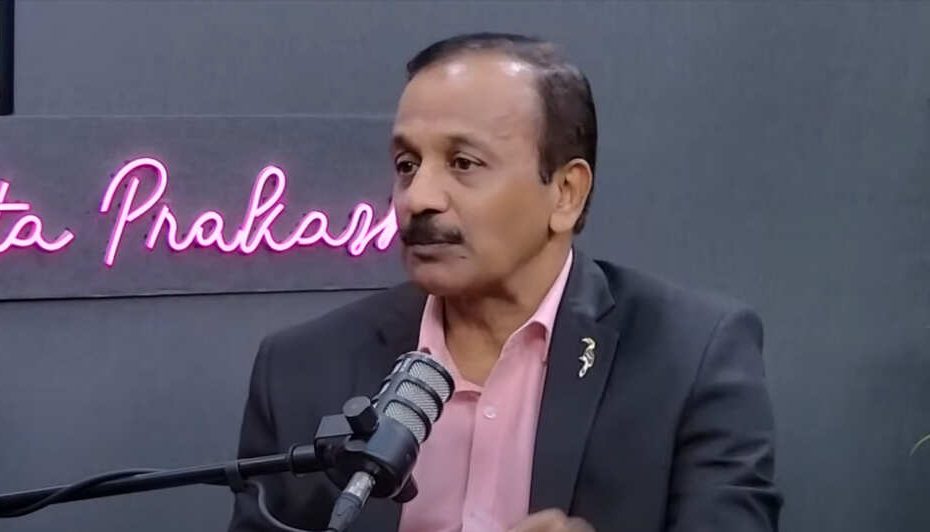
Read the full transcript of retired Lieutenant General PC Nair’s interview on ANI Podcast with Smita Prakash episode EP-304 titled “Yunus vs Bangladesh Army, China’s Strategy & US Plan for Myanmar”, premiered June 3, 2025.
Introduction
SMITA PRAKASH: You’re watching or listening to another edition of the ANI podcast with Smita Prakash. Today we turn towards Bangladesh which has become a playground for the superpowers who want access to its ports and proximity to Myanmar. Tensions between Bangladesh’s interim government and its military leadership have escalated over a so called humanitarian corridor, the Rakhine Corridor.
One section believes that the US will use the Rakhine or Rohingya corridor to arm the Arakan army against the Myanmar army. And why? Because big Chinese projects are located in that region. Today Bangladesh hosts more than 1.3 million Rohingyas in camps at Cox’s Bazaar. In the past few months, the fight between the Arakan army, the military junta in the Arakan province has pushed more and more Rohingyas into Bangladesh.
How does it concern India? India is impacted because the Indian states of Nagaland, Arunachal Pradesh, Manipur, Mizoram border Myanmar. India’s security and economic interests in the Northeast are impacted. Something that Muhammad Yunus, Chief Advisor to Bangladesh, said in China about what he called the landlocked area of the seven northeastern states of India.
To understand the security dynamics of this region, we have in the podcast today Lt. Gen. Nair. He is the former Director General of Assam Rifles and has served extensively in the Northeast. Lt. Gen. Pradeep Nair has commanded a brigade in Manipur where he was awarded the Yudhiseva Medal. He was Inspector General of the Assam Rifles north in Nagaland, for which he was decorated with the ATI Vishisht Seva Medal. He’s also worked in Nagaland, Manipur, Assam and Sikkim and been with the Defence Intelligence Agency looking into Myanmar and Bangladesh. Thank you, General Nair, for coming to the podcast.
LT GEN PC NAIR: Thank you.
Understanding the Rakhine State Situation
SMITA PRAKASH: It’s a very complicated area that we are talking about, but since you’ve served extensively in this region and you have been with the Defence Intelligence Agency, you’ve been looking after and looking at Bangladesh and Myanmar. So I want you to explain in complete layman terms what this Rakhine State, this Cox’s Bazaar, what is Bangladesh involved in this, in what manner the big powers game out here, America, China, what is happening in this Rakhine State area?
LT GEN PC NAIR: Okay, thank you. Firstly, let me express my deep gratitude to you for having me over.
SMITA PRAKASH: Thank you.
LT GEN PC NAIR: It’s good to be here again after my last visit. So coming to the issues that you asked me to speak about as an introductory part, let me start with, I mean let me go from north to south and Cox’s Bazaar where you marked, there is a port here, there’s a seaport here which is used for commercial purposes only. And this is also a port where there was a consignment of weapons which was dropped. Way back in 1993 there was this famous Operation Golden Bird undertaken. So those weapons were dropped. They came in that ship essentially for all our insurgent groups in the northeast, primarily the Naga insurgents. So that is the background of Cox’s Bazaar.
It also is adjoining Rakhine State which is there in Myanmar between the two. The boundary that is there, which you see marked in white is actually the Naf river. That’s the border between the two countries and the region which borders or is at Naaf river is generally area. That area is called Takenof. And across the river in Myanmar and Rakhine Strait that place is called. But why I’m referencing to these places are because much of the movement of the Rohingyas, the refugees which has happened in 2017-18 is astride this.
Again, for the information of your viewers, the Rakhine problem of these Rohingyas actually goes back almost to 1978. That is when the first batch of refugees came into Bangladesh. So from then on they have been coming at various times that you’re talking about Rohingya refugees. Yeah, Rohingya refugees coming from Rakhine into Bangladesh. So currently the figures are, that is in Bangladesh over 1 million people, put it at 1.2 million.
SMITA PRAKASH: 3.
The Rohingya Crisis
LT GEN PC NAIR: Yeah, 1.2, 1.3 million thereabouts. And these are the people who have largely come in after 2017. While these people have come. But you still have close to 6 lakh Rohingyas in Rakhine State. And traditionally the Rohingyas have never been accepted as citizens in Myanmar. In fact, there is also Citizenship act which was passed in sometimes in 1982 in Myanmar, whereby they were in some way ostracized, having no citizenship and they’re.
SMITA PRAKASH: Minority even in Rakhine State.
LT GEN PC NAIR: I’ll give you the demographics of that Rakhine is again a mixed composition. It has largely the Buddhists who are about 86%. Then you have the. Sorry, 76%, not 86%, about 21, 22% are the Rohingyas, the Muslims, whereas the other Arakanis are Buddhists. And then of course there are some Christians about 2% and others. So the atrocities, so called atrocities that have happened have always been against the Rohingyas, the Muslims.
If I can just take a minute and go back a little more in time they came. How the word Rohingya came, comes, evolves, is from an Arab word, rehem, a mercy. So somewhere in 1752 there was a ship load of Arabs would come here. It got shipwrecked and the local king there gave them succor, aid, help. And that’s how Rahim, so from Rahim that word then became Rahings and then Rohingyas. And gradually also some people from Bangladesh migrated here. They got mixed Muslims, which is why in Rakhine, in Myanmar, they call them Bengalis.
The Arakan Army and Military Control
Again, if you look, what is happening is this fight that is there between Myanmar army Tamadao and the Arakan army. Arakan army now is the strongest ethnic armed group there. It claims on its official website that it has a strength of close to 32,000 and usually armed. And mind you, they were raised only in 2009 and we can speak of that later.
But today the scene is Arakan army is fighting the Tamadao. Out of the 17 cities that are there in Rakhine State, there are only 14 which are, I mean 14 of them are with the Rohingyas, with the Arakan army, the Myanmar army Tamadao has only three cities under the control and two of which are situated largely independent. You would say largely independent, though they’ve not declared independent.
The point to notice this border which is there between Myanmar and Bangladesh is 271km. 270 is totally under the control of the Arakana army. Which means out of the five countries that Myanmar borders shares border with, this is the only border which is not with Myanmar army. It’s not under the control at all.
SMITA PRAKASH: So the pushing of the Rohingyas into Bangladesh is a stride. This is done by the Arakan army’s permission.
LT GEN PC NAIR: Traditionally been done by the Tamadao. But now since it’s in control of the Arakana, control of the Arakana, the Arakani, the Arakanami. Now in some way they have sobered a bit though they have also committed atrocities, excesses against the Rohingyas. So Rohingyas are in a very peculiar spot. They have, you know, people using for the Arakan army, the Tamada also. So they have their own militia, the Arakan Rohingya Salvation army for example. Then Arakan Rohingya group, that’s two, three small militias army.
Superpower Interests in the Region
SMITA PRAKASH: Where did it get its arms and the support from the Chinese, from the Americans. Now I’m talking about currently which way do they lean? Do they lean Chinese? Do they lean American? Because those are the two superpowers now in this area. One wanting control and one already in control or influence if not.
LT GEN PC NAIR: Yes, that is where I want to again go back a little in time and tell you about the Arakan army itself. Like I said a few moments ago, it was raised in 2009. Nowhere in any literature have I seen this, but it is my assumption that it was raised and it was raised in Kachin, which is the other extreme of Myanmar, is the northeast extreme of Myanmar. It was raised helped by the KIA Kachin Independent army which has huge connections with the Chinese. So that is where this got raised. And thereafter it kept fighting there. The Arakanami kept fighting there.
They have come to Rakhine only 2018. So between 2009 and 18, my guess is they were being trained for a purpose. And that purpose As I understand, is to offset our Kaladan multimodal project. Because our Kaladan multimodal project got signed by China. By China, By China. Khalidan multimodal project got signed. The deal got signed in 2008. A year later, our economy gets raised. 2009, again, the same year, the oil and gas pipeline, that agreement gets signed between China and Myanmar.
So China is now looking towards Bay of Bengal and Kaladan. Of course, Sitwe is the port. Port. Chowk Fu port is part of the oil and gas pipeline. So this agreement was signed in 2009 and it got, it became commercial in 2013. Got commissioned 2013.
SMITA PRAKASH: So while we were building our pipeline, this was happening.
LT GEN PC NAIR: Yeah, this deal was signed a year later. And then the BRI, of course came much later, but this got included as part of the BRI. So there is not anyone else here. That to my understanding, is the reason why Arakan army got raised. So while it has shifted here, it has taken control of Rakhine, but it still has connections with the Chinese. Given that this was one of the, it was part of that three brotherhood alliance, which you know, of 10, 20.
SMITA PRAKASH: Come to that in a bit about the three brotherhood. But first, so this is the, the Belt and Road initiative and the oil pipeline from, from Kunming, that road is to go all the way to the border. This is what they want, the port. So it wants that port.
LT GEN PC NAIR: A deep sea port.
SMITA PRAKASH: A deep sea port. So it wants that deep sea port. And that’s how they plan through Myanmar. But for that they needed the Arakan.
LT GEN PC NAIR: Army to capture that someone. They needed to cover not just the Chin. Yeah, not just the Chin. No, Chins are a little to the north. But they wanted somebody because given that it’s so far away from China, at the place where this oil and gas pipeline starts, you have the cocaine region and the WA Independent state, which are totally under the control of the Chinese. So they have no problem there. But at the other extreme, they didn’t have anyone. This is my hypothesis that is why probably the Arakan army got raised though. The call for Arakan sovereignty or an independent Arakan goes back in time.
American Interests in the Region
SMITA PRAKASH: Okay, so now tell me why does, why is this, why are the Americans interested in this now and this whole humanitarian corridor or whatever that they were planning UN assisted. What is their interest in this region?
LT GEN PC NAIR: Now the American interest primarily lies from the fact that today the major player here is China in Myanmar. And the major project of China which is coming is here. This deep sea port which we just spoke of is worth 7.3 billion. Then the oil and gas pipeline, it’s again 2.7 billion. Together it’s worth 10 billion. Then if you see the other special economic zone that has to come out, part of the China Myanmar economic corridor, that’s again worth almost 2.83 billion. So these are the major projects.
SMITA PRAKASH: Besides, their heart is bleeding for the.
LT GEN PC NAIR: Rohingya, not at all.
SMITA PRAKASH: It’s not just for that.
LT GEN PC NAIR: They want a foothold here.
SMITA PRAKASH: The Americans.
LT GEN PC NAIR: The Americans want because once this port or this oil and gas pipeline gets fully commercialized, which it has not, today it is operating just at 10% or 12% of its capacity and it is only catering for 2% of the energy needs of China. Why they want this is to. So that the Malacca dilemma which is there, you know, the ships have to come through the Malacca Straits. That is another 3,000 kilometers for them. So if all the energy needs which come from the Middle east, if they can be pumped from here, it saves that much of time for them. It also helps the development of Yunnan, which is a relatively undeveloped.
SMITA PRAKASH: So this is China, China’s needs. I’m talking about the American needs. So America wants to stop this.
LT GEN PC NAIR: America wants to stop this growth of this China-Myanmar Economic Corridor here. That’s why they want a foothold here. From nowhere else can they get into Myanmar, given that there are other countries, this is the only area from where they can get in.
Dr. Yunus and Bangladesh’s Role
SMITA PRAKASH: So did Dr. Yunus. Do you think that there was a backroom deal that he had with the Americans that I will allow you this thing to happen, your entry into Myanmar and was there some kind. And you set me up in Bangladesh, Was it that, do you think that was part of it?
LT GEN PC NAIR: I think there are two parts to this question. One is the interest that, you know, has in this project itself today, Yunus, interest is only to survive. You’ve seen what’s happening in Bangladesh lately. Last three, four days, there are huge protest rallies going around. Most of the political parties have kind of got around to tell him, please declare a date for elections.
SMITA PRAKASH: He’s in Tokyo.
LT GEN PC NAIR: He’s in Tokyo? Yes, he’s gone to Tokyo. That remind me, in the 10 months that he’s been there, this is the 11th country that he’s visiting to see.
SMITA PRAKASH: He’s a speaking assignment kind of a person, right? So when a speaking assignment comes, he has to go. Like he forgets, you know, that he’s in charge of Bangladesh. You’re in charge of a country now. But speaking engagement comes, he goes. This is a bizarre case. Anyway, sorry to interrupt. Yeah, go ahead.
LT GEN PC NAIR: That’s true. So while his interest is to stay in power no matter what, and mind you, he had political aspirations way back in 2012, he had launched a party which didn’t do too well. And thereafter, of course, he had issues with Sheikh Hasina for the past decade plus. So he wants to remain in power notwithstanding the age. Age not being on his side.
So that’s his interest, the American interest. Obviously, America cannot get into this directly, but there is sufficient media coverage of the role that the United States played to get him there in the first place. So today, if Yunus has to continue, surely he needs the American blessings. So that is kind of related to what you were alluding to, is it?
SMITA PRAKASH: That I will serve your geostrategic interests in this region, you engineer whatever has to be done. And it’s possible that that whole coup was engineered to get rid of Sheikh Hasina and place Mohammed Yunus out there.
LT GEN PC NAIR: Yes.
SMITA PRAKASH: That having been said, why has he started leaning China now?
LT GEN PC NAIR: If that was the case, I couldn’t get your…
SMITA PRAKASH: Why is he leaning China?
The Humanitarian Corridor and Regional Dynamics
LT GEN PC NAIR: Why is he leaning towards China? Yeah, actually, the Chinese are very upset with this humanitarian corridor because they see the presence of the US coming there. But let’s finish this corridor part so that it’s more clear to your viewers.
Now, whenever a corridor of this kind comes in the past, also there are some corridors by the United Nations at many of the places, Syria, some of the places. Those didn’t work. Now, whenever you talk of a corridor, first you have to establish from where to where. So if you look at the map, in all likelihood it’s not now anywhere given as to where is this going to come. But it is fair to assume it will be in the same area from where the refugees came to Bangladesh. So it means from Cox’s Bazaar it will go to Rakhine, that place which I told you, Maung Dao or Beitudang, that is the place where it will go. So that will be the extent.
Now, next question. Is this aid for whom? So today, who are the people there? It is the Buddhists we spoke of 76%. They’re okay. Nobody’s fighting them. It is those 21, 22% of Rohingyas for whom this aid is going. So it is supposed to go there.
Now, let us look at it this way. Is Rakhine the only state which is in trouble? No, there are so many other states which are in trouble. So why only in Myanmar? So why only aid? Humanitarian aid. Here then on the ground, the situation is the Arakan army has control of Rakhine. Unlikely that though people say it is to support the Arakan army weapons and all to go later. But I feel a little different given the Chinese connect that the Arakan army has. The Chinese will not allow this in the first place.
So I am looking at it this way. These weapons could well be for the, let’s say the ARSA. Again, this is not there in any media space. By my assessment in this, it may well possibly not be for Arakan army. These weapons, if it is planned to be sent later, could well be to arm the Rohingya militia, the Arakan Rohingya Salvation Army, which I said, by the way, the fellow who heads this is a fellow called Ataula who was born, brought up in Pakistan. He’s a Pakistani citizen.
SMITA PRAKASH: So he’s not a Rohingya or he’s a Rohingya living in Pakistan. Who lived in Pakistan.
LT GEN PC NAIR: Who lived in Pakistan. But now he’s here conveniently. So probably it could be to arm them because they are the people who are now oppressed in a way, so to speak, the Rohingyas. So ARSA again, what has happened is the people from ARSA have been picked up by the Myanmar army to fight the Arakan army.
SMITA PRAKASH: Okay?
LT GEN PC NAIR: That’s another interesting thing because it is the same ARSA who were, you know, attacked by the Myanmar army.
SMITA PRAKASH: Where are the ARSAs now?
LT GEN PC NAIR: They’re all over in Rakhine. They’re not at one particular place, okay. They are a loose.
SMITA PRAKASH: What is their skin in the game?
LT GEN PC NAIR: They are basically fighting for the Rohingyas, okay? They’re fighting for the Muslims who are there.
Bangladesh’s Reaction to American Presence
SMITA PRAKASH: Okay? Now why is it that the Americans in Cox’s Bazaar, the Americans being present in Cox’s Bazaar has got Bangladeshis annoyed. They don’t like it that they are there. Yunus might have agreed to it, but it’s got the Bangladesh army annoyed. It’s got. Even the Jamatis don’t like the idea of the Americans out there. If the Americans are there to aid the Rohingyas, why are the Jamatis angry?
LT GEN PC NAIR: Then again, you have to see the connect that Jamatis have with the ISI, with the other Islamic groups. So traditionally, they have never trusted the Americans, no matter where it was, Afghanistan or Pakistan, anywhere, traditionally, they don’t trust them. So that is where there is a difference between the two, i.e. Yunus and the Jamaat.
But insofar as the army you very rightly brought out that it’s not just the arrival of the Americans, there’s so many other decisions that Yunus has taken without keeping the army in the loop, which is what was raised by the Chief on 21st when he addressed his officers last Wednesday.
SMITA PRAKASH: He called it a bloody corridor.
LT GEN PC NAIR: He called it, yes, he used that word.
SMITA PRAKASH: He was quite clear. And I mean, I don’t know whether Yunus expected that kind of an open backlash where your army chief is openly saying something, because for a long time the Bangladesh army has been in the barracks. They have not spoken out openly. You know, even when Sheikh Hasina’s ouster was done, with the army playing a quiet role, like, you know, they didn’t come out openly to say that. So now this whole thing, this open saying that, no, this corridor is not in Bangladesh’s interest. Do you think that’s come as a shocker to Yunus?
Army’s Role and Political Tensions
LT GEN PC NAIR: It really would have come as a shocker because he would not have expected this. But then you have to look at. There have been phases when Bangladesh itself had army rule. 12 years, actually, if I remember correct, four years under Gen Z. Rahman initially, and later on Airshad, another eight years. So all those 12 years were very troubled times. There used to be huge rallies. There used to be a lot of violent activities that were being carried out. It was not very peaceful. The economic growth was very poor.
So their experience with the army at the helm is not too good. That Bangladesh army has learned that if they come to power, I mean, if they want to serve him, they could have done it anytime. In fact, last year, they could have taken power themselves. Why would they allow him? But they have learned from the mistake. They know it doesn’t work. And the mindset of the Bangladeshis is more democratic. They want democracy where they can express their own opinions. They’re not like what is there in Pakistan. They’re not like Pakistanis at all. That’s why they formed a separate country in the first place.
So since he’s wanting to be there at all costs, he was trying everything possible. But when the army chief, you know, called his officers, you would have noticed three things that happened which are very prominent. One is he had the navy and the air force chief also sitting with him, and he was addressing the officers. Second, he used this thing about the corridor. And what he was saying was that these kind of decisions, policy decisions, cannot be taken without us being in the loop. That is the second thing he was saying. And the third thing that he said was all these street protests, etcetera, have to go in because he is very sure that they have again been engineered by Yunus because they are the people who got to power in the first place, the youth, the Jamaat. Of course there are BNP people also out there, but for different reasons.
SMITA PRAKASH: So has he, you know, has he agreed with, do you think he’s on the same page with the army now and said yes, yes, I will tell the Americans not to get, not to be there at that humanitarian corridor, to back off or is it just a temporary truce now with both the Americans and the army?
LT GEN PC NAIR: So he’s not okay with what the army chief has said. While the army chief has given a clear statement that he wants the election by December this year, what he says is no, it will be any time between January and June because the country…
SMITA PRAKASH: Is not ready for it as yet. Systems are not in place. No, no, reforms haven’t taken place as yet.
Political Ambitions and Election Dynamics
LT GEN PC NAIR: That is the alibi, that is the excuse that he’s giving. But more importantly what he wants is the party that he has raised, the NCP, National Citizens Party to take roots. They have not truly established themselves. When he came to power itself, this was one of the thoughts that was being expressed by many people that he has political ambitions and to be at the helm he has to have a party of his own.
So when this party was launched, it was launched only in March this year, this NCP, all these students who supposed to have taken part in all those protests, June, July protests, now those are the people they don’t have traction in the rural areas where the votes lie.
SMITA PRAKASH: BNP still is.
LT GEN PC NAIR: No, actually in rural it is both BNP and Awami League both.
SMITA PRAKASH: Yeah, but if you declare Awami League that they can’t take part, ban them in the. You never know.
LT GEN PC NAIR: But when elections are announced, I’m sure they will have to. In fact even BNP is of the view that they want Awami League also knowing fully well that even if they come they’ll not win.
SMITA PRAKASH: But some experts are saying that even if Awami League they put up their candidates, the candidates will be killed. So they are already those rumors are floating that, you know, put up your candidates and we’ll see what happens to them.
LT GEN PC NAIR: That is said by the Jamaat actually.
SMITA PRAKASH: Yeah, because Awami League has done the same thing in the past with the BNP. So this is very to use again the word bloody but it’s blood soaked elections always, right? In the past whenever there has been an election where both were taking part.
LT GEN PC NAIR: Yeah, that’s true but the point is the BNP wants this election, whenever it happens, to look very legitimate, which is why they want an opposition. They want Awami League to take part in this and they’re very sure that they’ll win.
So this is a very difficult situation. If Awami League comes, then I don’t think this NCP stands any chance given the fact that it has no support anywhere in the rural areas. That is why he’s trying to postpone it, gain greater traction, embed himself, thereby make himself more popular.
SMITA PRAKASH: Do you think Jerusaman is now becoming stronger in his opposition to Muhammad Yunus? And is he able to assert himself more because who. For the past six months you saw that he was not really talking much, but now he seems to be asserting. Will he just call for an election regardless of what Mohammed Yunus says?
LT GEN PC NAIR: I think so, because that was a mandate he gave. When this government was brought in place, it was clearly conveyed that it had just one agenda, to have elections. Rest all were then engineered by Yunus. All these reforms, five, six reforms that he’s talking of, that is basically to buy time. But the agenda for the government was just singular, which is to have elections.
And as per the constitution, an interim government can only be there for 90 days. Okay, so he’s trying to rewrite that Constitution of 1972. You know, the famous July declaration last year where they said they have to do away with the constitution and all of that. Those protests that were there, they want to engineer a new constitution. So that is the point. But I think the army chief will stick to his guns and he will ask for election by December.
SMITA PRAKASH: So I want to come to that part about when we were talking about the two superpowers, which is China and America playing their games in this region, whether it is Bangladesh or Myanmar, a very assertive role now being played by both of them. And with Muhammad Yunus out there still in charge, what is the impact on India that this can have this Rakhine, this corridor that is happening? American and Chinese presence in this area. What is the impact on India?
The Kaladan Multimodal Project and Its Strategic Importance
LT GEN PC NAIR: Again, we have to look at one is the Indian economic interests that lie here and the connectivity things which we are trying to address. So the two flagship projects that we have here, Kaladan Multimodal project, it is in this disturbed area. It is through Rakhine. And the last part is in Chin State, where it gets into Mizoram. And this part of Chin State is also under the occupation of the Arakan Army. So the complete Kaladan multimodal project, if that has to come up, it has to have the confidence of the Arakan army, though the Arakan army has said that we will not stop the construction of.
SMITA PRAKASH: So if you could explain this Kaladan multimodal project.
LT GEN PC NAIR: So the Kaladan multimodal project is essentially, you know, to cater for connectivity in the northeast. Given that the current connectivity is only through the Siliguri corridor or Chicken’s Neck. So it involves movement of goods first by ship from Kolkata to Sittwe. That’s about 540km. Then it’s offloaded at.
SMITA PRAKASH: Sittwe is in.
LT GEN PC NAIR: Sittwe is in Rakhine State.
SMITA PRAKASH: Rakhine, okay, Sittwe, where it gets offloaded and from there it will go by.
SMITA PRAKASH: Sittwe is one of the ports where that belt and road is also going to come.
LT GEN PC NAIR: That is Kyaukpyu. That is 103km south of this.
SMITA PRAKASH: Okay, all right.
LT GEN PC NAIR: So that is south of this.
SMITA PRAKASH: So Sittwe is the Myanmar port, Rakhine area.
LT GEN PC NAIR: Correct, Correct.
SMITA PRAKASH: Which where our stuff is going to land out here. So connectivity to the northeast.
LT GEN PC NAIR: From there it will then get loaded onto boats and go on that Kolodine river or Kaladan River. From Sittwe Port it goes to the place called Paletwa, which is on to the north. You see Paletwa there it is offloaded again. And then it moves by road up to Zorinpui via Kaletwa. So this stretch is about 110km. And in this 110km, about 60% of work is already complete between kilometer stone 40 and 60 as we go from Paletwa side between kilometer 40 and 60, that is the only place where work is left. Otherwise, once this comes through the Indian part of from Zorinpui northwest still as well, it is connected already.
SMITA PRAKASH: So if anybody has bad intentions in the Chicken’s Neck area, we still have.
LT GEN PC NAIR: This option of this option.
SMITA PRAKASH: But then this option is also under threat.
LT GEN PC NAIR: Now you’re saying under threat in the sense it has not been. We have. We’ve not been able to succeed because of the continued disturb situation that exists in Myanmar.
SMITA PRAKASH: In Myanmar, especially in the Rakhine State.
LT GEN PC NAIR: Especially in the Rakhine State. You know, initially it was contracted to some Indian companies and then there was some protest and all that. It should be given to some locals. Thereafter the Arakan army had kidnapped some of the workers they will let off. But the last that the Arakan army has spoken about 10 months back is you please go ahead. Because it benefits the people, the Rakhine people also, which is quite unlike the projects of the Chinese which are there in Myanmar.
All projects that are there in Myanmar benefit only the Chinese. There’s hardly any benefit which is coming to. Whereas when this comes up, Rakhine, which happens to be one of the most backward states and Chin State, they will benefit hugely from not just this, what is coming by sea, but also goods which come from northeast. There’s a lot of goods which can come from the northeast to these people. So these areas are all very remote, not very well developed.
Security Concerns in the Northeast
SMITA PRAKASH: Okay, now in this, tell me the Indian interest in this area. You served in some of the northeastern states. So explain to me. One is trade. The second one is how this area is also militancy affected, that Indian militants are also working out there. So tell me about that region. So why is it important for us from a national security perspective?
LT GEN PC NAIR: Then you have to look at the complete northeast. One of the things that I started off, you know, initially I told you Cox’s Bazaar is the place where the weapon consignments came down. And in Bangladesh used to have all these militant camps earlier. But Sheikh Hasina, during her time, she removed all those camps, so it became free. But now there are certain intelligence reports to suggest that they are making overtures to some of our militant groups that you can come and establish camps. Though nothing is in media, but it is there, it’s being reported.
You have to look at Mizoram, which at one point of time was affected by insurgency for 20 years, from between 1966-86. For 20 years it bore the brunt of insurgency. But currently what is there is immediately to the north, northeast of this is Manipur and northeast of that is Nagaland. And further north is Arunachal. These are the places where militancy is still there.
SMITA PRAKASH: And a lot of this cross movement is happening between Myanmar and these four northeastern states.
LT GEN PC NAIR: So what happens increasingly when this area gets disturbed, there’s a lot of movement of weapons. Refugees as it is are coming. Today, Mizoram is the most troubled state in terms of refugees coming from Myanmar. So along with the refugees, you have weapons coming and again importantly, drugs. That’s a big problem which we are not noticing.
If I can give you some figures of the increased drug movement that is happening. Last year, Assam Rifle caught drugs worth 5000 crores. Year before last was again 4800 crores. So that is the kind of movement that is happening and it is all coming from the Golden Triangle, as you would be aware. 2023, in Afghanistan, Taliban stopped the production of opium. So that complete opium cultivation has shifted here to Golden Triangle. And a lot of it is coming in.
If you look at the movement in terms of the complete country, if you go by the NCB annual report in 2023-24 they have caught heroin worth 8000 kgs. Now compare this with 2022. 2022 as per the same report of the NCB, it was 5000 kgs. 2021, it was 3000 kgs. See the exponential increase that is happening.
SMITA PRAKASH: And that is also funding all the. That is funding the militants house political unrest. Military is all funded by this drug trade.
LT GEN PC NAIR: Largely funded, which is again not spoken of much. So all these figures which I told of the NCB, most of it is coming. A large part comes from Pakistan also. But there’s a huge increase that is happening from the northeast. People are only concerned more about the refugees, militants. But this is a bomb which is ticking.
Incidentally, if you see amongst the eight states of the northeast, per capita consumption of illegal drugs in the country amongst the top 10 there are six of them. They are small states, yet per capita consumption is highest. Why? Because there is so much of easy access of drugs which is coming and this problem is increasing.
Bangladesh-India Relations and Strategic Vulnerabilities
SMITA PRAKASH: Yeah. And so socio economic factors also leading to all these things. Absolutely. And it’s going to damage these seven northeastern states, not just the ones which are bordering Myanmar but also bordering Bangladesh. They will also get impacted.
I want to take you to that whole chicken neck corridor, that area as well as what the Assam Chief Minister tweeted, which became a little bit of a controversy. Firstly what Mohammed Yunus said when he was in China. He talked about the seven northeastern states and he keeps talking about them as if they are a different entity from India. And he talks about how China can trade with the seven northeastern states using Bangladesh. That got India very riled up.
And the Assam chief minister then tweeted in which he said people talk about the Siliguri corridor but they forget Bangladesh has two chicken necks too. One is an 80 kilometer wide and another one is 28 kilometers which he said that Bangladesh also has two chicken necks of their own. Now explain this, how strategically this has bothered us. The chicken neck that India has and the chicken neck corridor which Bangladesh has, which is the Chittagong. This one, the second is a 28 kilometer Chittagong corridor from South Tripura till the Bay of Bengal. The corridor is smaller than India’s chicken neck. It’s the only link between Bangladesh’s economic capital and political capital. So this is what he said. He talked about India’s chicken neck and Bangladesh’s chicken neck. So could you explain to this how.
LT GEN PC NAIR: These two things happen. Firstly, the viewers must know the context in which the statement was made by Yunus. He was visiting China for his four day visit and after having met everyone there he made the statement in which one of the things he also said was we are the guardians of the ocean there. Since these eight states are cut off, landlocked.
The point to understand the viewers must also know that while he may say that if they look at the map it is Bangladesh which is India locked, you know, 93% of their borders, land borders. I’m not talking of the coastal land borders. 93% they share with us. Out of the 57 rivers that flow into Bangladesh, 54 go from India. So we are an upper state. There is a lot of trouble that we can create, but that’s not our outlook. The present Yunus government to my understanding is just a blip. It’s a temporary.
SMITA PRAKASH: All that problem had almost got solved with Sheikh Hasina. The whole water dispute and all those things that almost. Even though Mamata Banerjee did not want it, in spite of that it had almost. When Manmohan Singh was the Prime Minister and Sheikh Hasina did almost sorted out exchange of enclaves, water, all that had almost got the Teesta issue and things.
LT GEN PC NAIR: Yeah, Teesta since you mentioned it was actually a project which we were to develop. Now he’s asked the Chinese to come here. How can Chinese develop? China can only be. And this Teesta project, what does it mean? It means creating series of barrages, making canals so that the water gets used to the optimal capacity rather than, you know, water not being available in dry seasons.
So this complete Rangpur area, the northern part, you know the head kind of a thing which you see of Bangladesh, that’s where. That’s where the Brahmaputra comes in. And also the Teesta.
SMITA PRAKASH: Yeah.
LT GEN PC NAIR: So these, other than the Brahmaputra part where the Teesta comes from, that area becomes totally dry. So while the that agreement and Yang.
SMITA PRAKASH: Se and comes down.
LT GEN PC NAIR: While that agreement couldn’t happen, the Teesta project would have surely addressed their issue. Now he’s just trying to play to the gallery by giving to Chinese how can Chinese create barrages in India? They’ll be able to only create barrages in Bangladesh. But we are the upper reference state so there is no sense in what he’s speaking on that. But coming to these two chicken necks that were commented upon.
SMITA PRAKASH: Three actually. One which we have and two which they have.
LT GEN PC NAIR: Of course I’m talking of the ones which they have. The Rangpur salient, for example. Now it is a vulnerability that they have. While both these vulnerabilities are there, I am looking at the larger picture. We are not a nation which goes around annexing countries. But if they try to get other players here who are inimical to interests, like, you know, that Lalmonirhat, the airstrip, airstrip air base which they’re trying to develop, they call the Chinese to come and invest here.
So if such provocative measures are, you know, initiated by them, then there would always be a counter to that. Like Bangladesh, for example. Like we did an IWT to Pakistan, people don’t understand the ramification. They will understand in times to come. But here, the other things that we have done to Bangladesh, you know, we banned, you know, export of their goods through our airports and seaports, which means if I to give it figuratively 1 kg of garments, for example, if shirt was exported from any of India’s airports, any could be Delhi, could be Calcutta, it would cost them $1 a kilogram. Now when they are doing it from their country, it’s costing them $3 a kilogram.
The context here also is that today almost 40% of the garment industry is stopped. It’s not functional after 5th of August. So the country which was a one industry country, largely garments and textiles, today, it’s taken a huge hit. And with this, you know, where the exports become so expensive and the trade tariffs which Trump is leaving on them is even much more. They have no choice but to temper down. They cannot.
SMITA PRAKASH: But also the yarn comes from India, right? So it impacts on our guys also who are exporting to Bangladesh. So it’s going to impact both countries.
LT GEN PC NAIR: But more to them, more to them than to us.
SMITA PRAKASH: Okay, okay, let’s get into the Lalmonirhat air base. Because of what? Now he has said that this air base he’s asked China to develop, it’s a bugbear for us, right? And the latest we’ve heard is that there’s a defunct air base in Tripura which we are now trying to, you know, it’s a World War II air base which is lying in Tripura and we are trying to revive that air base because of what Bangladesh is doing in Lalmonirhat now, not just asking China to do it, but I believe the contractor is a Pakistani or something like that.
LT GEN PC NAIR: That’s true.
SMITA PRAKASH: So he’s unnecessarily needling. And plus, tell me, this sudden warming of ties between Pakistan and Bangladesh, is it all because of this one man or two men? The Pakistan High Commissioner out there suddenly who’s disappeared because of some unsavoury honey trap or whatever. It was so much of complication which is happening. So tell me about the air base, the Lal Munirat Tripura Air base and what is Yunus planning with this? China and Pakistan.
Strategic Concerns About Bangladesh’s Air Bases
LT GEN PC NAIR: Okay, Lalmonirhat Airbase like you said was used in the World War. After that it was never used. So it’s more or less like a defunct airstrip which they want to now develop given the proximity to Siliguri corridor. Even if they don’t have aircrafts, they have radars, the other air defense stuff like that or anything else to gather intelligence from this very vulnerable, so called vulnerable corridor of ours. I don’t really feel it’s all that vulnerable. So they can develop it for that.
SMITA PRAKASH: And this is just about 20 km from Indian border. So it is vulnerable.
LT GEN PC NAIR: It is vulnerable in that sense, yes. But the second base that you spoke of, Tripura, that’s a place called Kailash Air. Kailash Air is again absolutely very close to the Bangladesh border and south of south east of this Lalmunirhat. So if they develop something there, obviously we have sent signals that we’ll also do something.
SMITA PRAKASH: But we have our Rafales and all.
LT GEN PC NAIR: In that General Rafales are well within the range. So I don’t think we need to develop this. What I’m trying to say is by the time all these things get Yunus will go, Yunus might not be there. That’s my understanding.
SMITA PRAKASH: So India has a Yunus problem, not a Bangladesh.
LT GEN PC NAIR: Because his platform to come to that position has been anti-India. Why anti-India? Because he was anti-Sheikh Hasina and she’s been anti-Sheikh Hasina since 2008. Last year he was framed for charges and he had to go in jail for six months and his lawyer says there were about 100 charges against him.
SMITA PRAKASH: So India has a Yunus problem, not a Bangladesh problem?
The Pakistan Factor in Bangladesh
LT GEN PC NAIR: Yes, or both. It is a Yunus problem. And the support base for him is the Jamaat largely. And the youth – their minds can swing anyway. It’s very volatile, very dynamic. But like most of us understand, after 1971 Pakistan really never left Bangladesh while the army and everything else must have gone. But they had their sleeper cells, their people there constantly keeping watch of what’s happening. And this complete episode of Sheikh Hasina going was engineered by multiple players in this, we all know that. And Pakistan was one of the important players in that.
SMITA PRAKASH: So while we are fighting in the west against them. With Operation Sindur still not yet officially been taken down, this is the strategic arm now in Bangladesh that they have. Right?
LT GEN PC NAIR: You cannot call it a strategic arm. These are all irritants. I would put it that way. They are all irritants and these won’t last. One factor, I was just mentioning this, you know, those rivers and all I mentioned, the land border. I mentioned it is geography which will eventually decide our relations as also the cultural connect that we have with the people there. A prime example of this was Durga Puja last October. You know, many people, Bangladesh watchers said maybe with all this hype anti-India hype and all that, Bangladesh and the atrocities that were committed against Hindus and you know, Shias and Christians and all of that, they said it will not be celebrated. And to everybody’s surprise, it was celebrated like it’s celebrated in West Bengal with as much pomp and show. So change of government and all has not affected the cultural connect that we have with.
Cultural Changes in Bangladesh
SMITA PRAKASH: But they’re saying that there is a subtle change which is happening and it’s sure enough. Earlier they used to say that you never used to see women wearing burqas or salwar kamis. It was basically sari. Bangladeshi women were in sarees, they used to wear bindis. And the pujas used to happen. And you know, the Muslims and the Hindus would go to each other’s homes for Eid and Durga Puja and it was a common thing which is happening. But slowly and steadily the Jamaat guys go and ensure that those road rallies don’t happen where the idol is taken out and all and there have been crackdowns. I mean, it is happening.
LT GEN PC NAIR: Yes, it is.
SMITA PRAKASH: So this cultural connect cannot be depended on as a long term strategy that India can have. Right.
LT GEN PC NAIR: I feel this point of religion which you said, it’s engulfing many other places also, but particularly in Bangladesh. Yes, the Jamaat has had a major role in this. You know, the fundamentalists were there, if you recollect 2017 though, this fundamentalist element was always there. But for the first time it came to light only in 2017, 1st of June or 1st of July, when that attack happened on that holy artisan bakery.
SMITA PRAKASH: Correct? Yes.
LT GEN PC NAIR: Where 22 people were killed. So that is when Bangladesh realized this, the role of fundamentalists, that and after that.
SMITA PRAKASH: But they’re not scared of the role of fundamentalists to such an extent that we’ll become another Pakistan. But there is that connect.
LT GEN PC NAIR: That connect is there, that uma connect.
Superpower Influence in Bangladesh and Myanmar
SMITA PRAKASH: Will remain. So that’s why I’m saying that for us to think that, oh, language is very important for Bangladesh. It was created in the name of language. So it is the only country in the world created in the name of language that is there. Yes. Democracy suddenly has become fragile though they were very proud of being an Islamic democratic nation. Islamic came later, but democratic nation, they were very proud of it. But you know, it’s enough for one change of government to disrupt everything. So anyway, that’s a different point. I want to come back to the superpowers playing games out there. Now that the gates have been opened for Americans and subtly for the Chinese to come, they’re never going to go away. Now you open the gates for superpowers, they don’t leave. They’re just waiting for that one instant. And that gate has been opened. Whether this corridor that we were talking about or whatever way the Chinese have entered, they’ve entered. Right. Bangladesh.
LT GEN PC NAIR: Chinese have been always there. Only thing is, Yunus is now legitimizing it even more, calling in more Chinese presence. But insofar as Myanmar goes, whether these superpowers have a, they don’t even have a toehold now. Whether they’ll get one with this corridor is I’m a little circumspect on that.
SMITA PRAKASH: Okay.
LT GEN PC NAIR: Given the stakeholders that are there because a corridor cannot come only if one country agrees, the other country also has to agree. And in that other country there are so many stakeholders. That’s the whole point.
SMITA PRAKASH: Okay. Is there any allergy towards the Americans in Myanmar like Bangladesh? Are the people suspicious of the Americans coming in through this corridor?
LT GEN PC NAIR: US is actually has not played as important a role as it should have in Myanmar for long periods of time. It was only when Hillary Clinton came and they had that brief period of democracy for six years, six, seven years.
SMITA PRAKASH: And they hoped Aung San Suu Kyi would do something for them.
LT GEN PC NAIR: They hoped she’ll do something. That is the only time when we saw some US presence. But how it has affected them, both Bangladesh and Myanmar, is this US aid going in a big way. It has affected the refugees in Bangladesh. The Rohingya refugees have gone there and here. The development of the country as such in Myanmar, given that it’s a war ridden country, it’s hugely impacted them. So now with this aid also going, and it is not military aid which will help them, it has to be more humanitarian. And like I said, this is again not understood by many amongst all the neighbors. For China, Myanmar is one of the most important neighbors, given the scarce population, the immense resources that it has, and rare earth in particular.
Myanmar’s Strategic Resources
SMITA PRAKASH: Okay, let’s talk about that. Yes.
LT GEN PC NAIR: So Kachin State, the one on the northeast, is where most of these mines are. In fact, people say Chinese have extracted so much of rare earth minerals from there that the landscape in Kachin State looks like a moon’s surface. It’s that bad.
SMITA PRAKASH: And if Trump comes to know about rare earths, maybe he knows about it.
LT GEN PC NAIR: Probably he knows about it already.
SMITA PRAKASH: Yeah. So he might also get interested because of rare earths. That’s what he’s shopping for everywhere. Let me come back to India. Out here. Now, we have crossed over to Myanmar. Our troops have crossed over at times to tackle with militancy the militants who operate in India and then rush over to Myanmar. Tell us about those factions of militants who do this. Where do they find refuge in Myanmar?
LT GEN PC NAIR: Now, if you look at the.
SMITA PRAKASH: Have you done that?
Militant Groups Operating in Myanmar
LT GEN PC NAIR: I can talk about a joint operation that was undertaken between us and the Myanmar army in 2019. I can talk of that because there were a few camps that were busted by the Myanmar army, not by us, but it was a huge success. But coming back to your question of which are the militant groups and where are they operating from? Firstly, there were about 20 to 22 camps of all these militant groups. The Nagas, the Manipuri militants, that is the Kukis, the Meiteis, everyone, they all had bases here in Myanmar.
There are 20, 22 camps which were there. They were in three clusters, called as the northern cluster, which was opposite, partly Arunachal, partly Nagaland. Then there’s a central cluster which was opposite Manipur. And then there’s a southern cluster which was south of Manipur. So these are the three clusters. And these were regions which were traditionally very, very peaceful areas for Myanmar until the Coup happened on the 1st of February 2021.
After that, it’s been a huge state of unrest. Most of these militants are now fighting alongside the Myanmar Army. The Kuki militants, for example, are fighting alongside the PDF.
SMITA PRAKASH: Fighting who?
LT GEN PC NAIR: The PDF is fighting the Myanmar Army. So the KNA.
SMITA PRAKASH: So they’re like mercenaries.
LT GEN PC NAIR: Yeah, they’re like mercenaries. KNA-B Burma, for example. Along with that, some of the Kukis from India also would have gone, probably, and they’re fighting the Myanmar Army. Similarly, the valley based insurgent groups, they are fighting with the Myanmar army against the PDF.
SMITA PRAKASH: Okay.
LT GEN PC NAIR: It’s a very complex web that is there.
SMITA PRAKASH: I’m trying to make sense of it.
LT GEN PC NAIR: It’s a very complex web. But given the fact that the levels of militancy has come down hugely, immensely. The violence levels have come down other than Manipur. Manipur is a different story. Will not talk about that because that’s not militancy related. Most of it is not. But the other militants, whether it is Alpha, Alpha by and large is gone, almost gone. But Paresh Baruah continues to be in Yunnan. So he still carries out few actions once in a way.
SMITA PRAKASH: How old is he? He must be.
LT GEN PC NAIR: He’ll be in his 70s. So Alpha is more or less gone. Then you come to the Naga militants, the NSCNK. One faction of the NSCNK which is fighting the Indian security forces, that is the NSCNK Yungang faction. Yungang is a fellow who belongs to Myanmar. So those people also, off and on they make, they do attack our security forces in South Arunachal Pradesh and parts of Nagaland. Again, nothing great as compared to what existed earlier.
Coming to the valley based insurgent groups. The biggest and the oldest group was of course the UNLF. One part of the UNLF has come on ceasefire now in Manipur. The other part is still there. PLA is still there, People’s Liberation Army, in fact, that is the group which ambushed the commanding officer of 46 Assam Rifles, if you recollect, in 2021, November. So PLA is still active, but their numbers are quite less.
SMITA PRAKASH: So they run over to Myanmar still or they don’t.
LT GEN PC NAIR: They’re based in Myanmar. They would come to India, carry out these attacks and go back. And you talking of that surgical.
SMITA PRAKASH: Are we allowed your surgical strike?
The 2015 Surgical Strike in Myanmar
LT GEN PC NAIR: No, you started with that surgical strike. This happened in 2015, 4th of June, when you had this column of 18 Dogras which was ambushed in Manipur. And as a retaliation few days later our troops went across and went to what is now what I was talking of that those clusters, one of those clusters went and attacked where these people were and it was in the news, some of the people were awarded also. It was quite successful.
Coming back to the other point you spoke of that where I was involved, this is 2019 again, one of the very important camps, which is across Nagaland was struck by the Myanmar army and there were huge number of casualties. Possibly this was an operation undertaken after many, many years by the Myanmar army in our favor. The previous one, previous one to this or some coming very close to this was that Operation Golden Bird which I.
SMITA PRAKASH: Spoke of 1990 in the earlier episode. Viewers and listeners, you can just go into episode number 214. And you can watch the details in this about what the general had to say about some of the operations. Anyway. Yes, go ahead.
LT GEN PC NAIR: So this was one of these successful operations in which large number. I won’t mention the number here because this is all. These are certain things which we don’t disclose. But surely most of the militant groups of the northeast took a hit because they had never expected the Myanmar army to be launching an operation against them, given that they were being sheltered by the Myanmar army. So it was. And after that, I don’t think any such operation has happened. And that happened primarily because we were able to gain their confidence in a manner that they agreed to do this.
India’s Strategic Patience with Bangladesh
SMITA PRAKASH: For us, for India. Which to come back again to this part one is of course what you said was the drug problem, the militancy problem. And then to have the situation where you have now the head of government, even if he’s not elected the head of government, making these threatening noises regarding China, America, all these things coming in. We are just playing a wait and watch game that one fine day Yunus will go. One fine day elections will be held. One fine day somebody will be elected out there who would be as pro India as Sheikh Hasina was. Is that all a. Is that a good strategic planning that India does, hoping to have a friendly regime in Bangladesh?
LT GEN PC NAIR: I would worry that it’s actually our maturity, our strategic patience.
SMITA PRAKASH: Okay.
LT GEN PC NAIR: And in case of Bangladesh that is required, given our size. I mean, we cannot compare our size with Bangladesh. It’s a much smaller country with linkages and all of that. And whenever there is a need to do something, we do that. We do it very succinctly. And we don’t kind of shout from the rooftops that this is what we’ve done to you. You just have to go to Bangladesh or speak to any Bangladesh. I give you an example of this garment industry, how terribly it’s hit them. They don’t. Because when this hits them tomorrow, it is the people of Bangladesh only who will throw them out eventually. And my understanding is something like this awakening amongst people will come because backyard.
SMITA PRAKASH: They actually took pride in the fact that they had some kind of a strategic neutrality with regard to China and with regard to the US they used to pride in that, you know, that they were somewhere the leaning towards India was because traditionally, because India helped in the creation of Bangladesh. So the leaning was that way. But they liked the idea of that strategic neutrality which Yunus has overturned completely. Am I right?
China’s Investment vs India’s Support
LT GEN PC NAIR: Or if you look at Sheikh Hasina’s regime also, she was playing a balancing act. There are a lot of Chinese investments that were coming in, but each of these investment was studied in some way as to whether it would in some way upset the relations with India. So that understanding was always there. But what they required then was investments. They needed the deep pockets that China had. But only later they realized that unlike India, there’s very little amount of grants that they give. No freebies. Everything is loans.
SMITA PRAKASH: Yeah, Transactional completely.
LT GEN PC NAIR: Now, even when Yunus went to China. Went to China, I wonder if you read that his major plea was please reduce the interest rate from 3.5% to bring it down to 1% because it will pinch us. It is fine to say that he’s come back with so much of aid and all that, but in that aid, what is the loan component? The loan component is huge. Grants is very less. When they give a press brief, they say in loans and grants and all the grant is not more than 10% of all the money that has been given to them.
Whereas India is not that way. If you look at the projects that are there, the connectivity projects, whether it is the ports, the rail projects, Akhada, Agathala project or any of these projects that we undertake in these are largely, you know, almost like grants. And it has hugely improved the infrastructure, their lifestyle, the GDP, everything has helped.
So what I am trying to tell you is if today India is not openly, you know, opposing or giving a counter statement to all that he says, I think it’s a very mature way of handling this. Sooner rather than later, this person is going to be out. It’s just a wait and watch game that we’re doing. And while there will be huge Pakistani and Chinese interventions to kind of derail the inter Bangladesh relationship, but if you are a person who’s been watching Bangladesh for long, I feel eventually things will be fine.
SMITA PRAKASH: All right. On that note, thank you so much for coming on the podcast and explaining this region where highly complicated region for us. Thank you.
LT GEN PC NAIR: Thank you so much. Thank you once again for having me.
SMITA PRAKASH: Thank you for watching or listening to this edition of the ANI podcast with Smita Prakash. Do like or subscribe on whichever channel you have seen this or heard this. Namaste Jai Hind.
Related Posts
- Transcript of Shawn Ryan Interview: Trump’s Betrayal – Tucker Carlson Show
- Transcript of Manish Tewari Interview: ANI Podcast with Smita Prakash
- Transcript of Annie Jacobsen Interview: Biological Warfare on Shawn Ryan Show #323
- Transcript: Mayor Mamdani Interview on Weekly Show
- Transcript: Tucker Interviews Dr. Chris Martenson on Global Energy Crisis