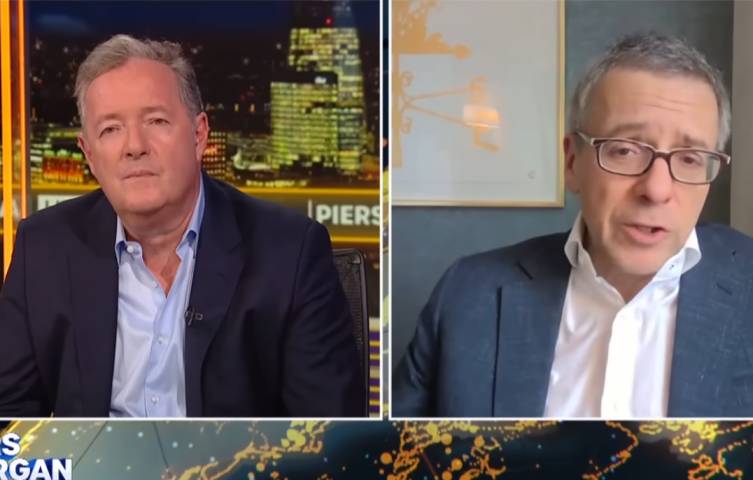
Here is the full transcript of Piers Morgan Uncensored episode, Jan 20, 2026, where host Piers Morgan sits down with geopolitical heavyweights Ian Bremmer and John Mearsheimer to dissect Donald Trump’s aggressive and unilateral “F around and find out” foreign policy strategy. The discussion explores the strategic and legal implications of the administration’s bold moves in Greenland, Iran, and Venezuela, debating whether these actions signal a new era of American strength or the final collapse of the post-WWII international order. As historic alliances are tested and territorial ambitions rise, the experts offer contrasting views on the long-term consequences for global stability and the future of America’s position in the world.
The New World Order Under Trump
PIERS MORGAN:
It’s a busy and confusing time for the people who try to make sense of the world. Historic alliances are being throttled by territorial ambition. American isolationism has become American imperialism. The cozy idea of a rules-based order governed by the messy patchwork of international law seems to collapse. And that was just the last two weeks.
Over the next hour, we’re going to try and make sense of it with some of the finest minds in geopolitics, each with very different views on what happens next. Later, I’ll be joined by international relations scholar Professor John Mearsheimer for his take. But first, let’s get the analysis of Ian Bremmer, the president of the Eurasia Group. Ian, welcome back to Uncensored.
IAN BREMMER:
Great to see you, Piers.
PIERS MORGAN:
I have one question for you. I’ve been waiting to ask this all of this year so far, all two weeks of it. What the hell is going on?
America’s Rejection of Its Own Rules-Based Order
IAN BREMMER:
Well, you kind of teased it by saying that the United States is rejecting its own previous rules-based order. Not that it was always consistently following it, but it was much more reliable in the eyes of its allies in promoting free trade, which it’s not particularly committed to anymore, in promoting U.S.-led collective security, which it is now focused much more transactionally on, and in promoting rule of law, democracy and foreign aid, which it’s less committed to.
And all of those things at a time when the United States is much more powerful than its allies. It’s the most powerful country in the world. Though I would argue Trump is not the most powerful leader because of the checks and balances on him compared to, say, Xi Jinping in China. Different story. But that’s the big thing that I think is going on.
PIERS MORGAN:
You had a very interesting statement from the Eurasian Group at the start of the year. 2026 is a tipping point year, the time of great geopolitical uncertainty. The United States itself is unwinding its own global order. The world’s most powerful country is in the throes of a political revolution. And that is certainly how a lot of people see it.
I mean, look, I would say I remember 2003 when the United States invaded Iraq, a sovereign democratic country, on what turned out to be completely bogus pretext of Saddam Hussein having weapons of mass destruction. I campaigned against it as editor of the Daily Mirror here in this country and sadly was unsuccessful in stopping it.
But, you know, that was, you could say that what America and the UK and its allies did with Iraq that year was a throwing up of the rule-based order. It was an illegal invasion of a sovereign democratic country. But my point being, is it really so different?
Comparing Trump’s Actions to Past U.S. Interventions
PIERS MORGAN:
I mean, this time, Trump goes into Venezuela in the dark of night in a brilliantly skilled military operation with no casualties on the American side, and snatches a very divisive corrupt leader who probably is a drug-running gangster, who certainly has defied the democratic rule of his country by refusing to leave office when he lost the election and so on.
And he would say, with Iran, you’ve got a vile regime that frankly needs toppling. The people clearly want it toppled. That’s why they’re hitting the streets in such big numbers. And he constructs an argument for Greenland, which is that, you know, this makes absolute military, strategic, economic and every other sense you could possibly wish to have. And if the Greenlanders do a deal with us, then what’s the problem?
In other words, is part of the thing here Trump’s rhetoric, more than the actual actions that he’s doing that makes you think the world order’s been thrown up?
IAN BREMMER:
Sure. Part of it is Trump’s rhetoric. I mean, just this morning I had a little back and forth with, I think it was David Frum on Twitter X, because he was saying that, you know, the United States is getting ready to assault Danish soldiers, which is absolutely not the case. It is American unilateralism. It is utterly unnecessary for American security. So I don’t think that. I think the argument is spurious and it weakens NATO, but it’s not like an invasion is being planned.
So I think that there are a lot of people that look at every single thing that Trump does and assume because it’s Trump, it’s a disaster. And a lot of what Trump has already done has been successful. Certainly the military operation in Venezuela, you and I would describe as successful. Certainly the first phase in Gaza you and I would describe as successful. Supported by the Security Council of the United Nations.
And many senior cabinet members of the Biden administration have begrudgingly, at least privately, said that Trump has accomplished more on Israel-Palestine than Biden was able to. So it’s not about that.
The Structural Changes in U.S. Foreign Policy
IAN BREMMER:
But again, I want to talk about the structure. The structure is that the United States was actively promoting global free trade architecture.
The Monroe Doctrine where the Americans, yes, not regime change in Venezuela, but going in unilaterally, not talking and coordinating with allies beforehand, planning similar things, perhaps in Nicaragua, in Cuba, maybe individual military strikes, even against drug cartels in Colombia and Mexico, and potentially willing to risk NATO in order to make a unilateral deal. Not with the Danes, who are an ally that supported the U.S. after 9/11 in Afghanistan, but with Greenland. All of that is new.
And all of that comes at a time where Trump is the most revolutionary domestic president, certainly since FDR, and I would argue, actually including FDR, trying to really control the administrative state and reduce or remove the checks and balances on the U.S. Executive for reasons that he finds very compelling, that his supporters find very compelling, but doesn’t make him any less revolutionary. So, yes, I do, Piers, think that this time is indeed different.
Stephen Miller on Strength and Power
PIERS MORGAN:
Stephen Miller, who is a very key figure at the White House, obviously, after the Venezuelan operation, was interviewed by Jake Tapper on CNN where he suggested the United States was now pursuing a policy based on might and power. Let’s take a look at this.
VIDEO CLIP BEGINS:
STEPHEN MILLER:
We live in a world in which you can talk all you want about international niceties and everything else, but we live in a world in the real world, Jake, that is governed by strength, that is governed by force, that is governed by power. These are the iron laws of the world.
JAKE TAPPER:
But are you saying at the beginning of time—
VIDEO CLIP ENDS:
PIERS MORGAN:
What did you make of that?
IAN BREMMER:
Well, it’s cute in the sense that it’s obviously true. The United States is the most powerful country in the world. And so therefore it has been able to set rules as it sees fit. Now, over the last 75 years, it used its dominant power position to set up alliances that it believed was advantageous not just for its allies, but for the U.S. Collective security with NATO, for example.
It’s used its power to extend free trade agreements with countries all over the world. Its allies and even its adversaries like China and the United States believed that using its power to make it seem reliable to allies over time ultimately created a stronger coalition that put countries like China more in the corner, that forced them to do more of what the United States wants.
The “F* Around and Find Out” Doctrine
IAN BREMMER:
Now, when you get rid of that, it is certainly true, Piers, that there’s a big difference between TACO countries and FAFO countries. Trump always chickens out on “f* around and find out” and Maduro thought he was more powerful than he was. He called Trump’s bluff and he’s now sitting in prison in New York. He FAFOed, right. He doesn’t have any influence.
China has been TACO. They’ve been able to force the Americans to back down not only on tariffs, but now exporting chips and backing down on drone restrictions just a couple days ago. And Trump can’t wait to meet with Xi Jinping in Beijing in April and he talks about a G2. I mean, that is absolutely true.
Stephen Miller has a point that President Trump can’t actually do much with the Chinese because they’re so powerful. The U.S. just announced 25% tariffs on everyone that does business with Iran. I assure you that the Chinese will not be included in those tariffs because the Chinese are much more powerful.
So Miller has a point that the Americans don’t have much leverage with China. But the way that the United States is deploying its dominant position is very different today than it was a year ago or in the first Trump administration. And that’s where the fact that Miller doesn’t mention that I think is convenient. It’s convenient for him, but it doesn’t actually hold water.
Trump’s Preparation and the G-Zero World
PIERS MORGAN:
I mean, Donald Trump, when he won in 2024, I rang him that morning, the morning after he won, and we had a reasonably short but very interesting and very telling conversation, I think, because he said the one thing, he spent four years out of office ruminating about what he could have done differently, what he could have done better.
And he came, he said, “We’re really prepared this time” in terms of the personnel he was going to use, the stuff he was going to do quickly, the use of executive orders, all that kind of thing, all the stuff that’s come out. I think Trump has planned all this in his head for four years with his team. I don’t think this is as scattergun as people think.
What’s interesting is in 2009 you coined a phrase, “G-Zero world,” where you predicted a world without global leadership, when no country or group of countries would be willing or able to lead the world. And if true, it would mean a breakdown of the post-World War II World Order based on international laws that came out of Nuremberg, the UN, NATO, and instead returning to a world where great powers got to do and get to do what they want.
The Dangerous Implications of Great Power Politics
PIERS MORGAN:
Is this a very dangerous moment? If what we’re seeing is Russia acting with impunity, the United States now acting with impunity because they believe the world order is no longer fit for purpose, and then for argument’s sake, hypothetically, China looks at all this, sees maybe United States take Greenland and says, “Okay, we’re taking Taiwan. You’ve lost your high moral ground. What are you going to say? We shouldn’t be allowed to do this, even though we want to do it for security reasons or whatever.”
So it seems to me, in a way what you were predicting has kind of come to fruition, isn’t it?
IAN BREMMER: Well, I mean, yeah, the fact that I wrote about that and the name of the book was called Every Nation for Itself, right. And that clearly defines kind of the way that the world seems now to America’s friends and adversaries. Didn’t mean I was rooting for it. I just thought it was over determined.
It was in part because the Russians weren’t integrated into the West. The NATO-Russia Council, the G7 plus 1 were fig leafs, but there was never any intention to make, to try to bring Russia into the West. The Chinese were integrated into the global economy on the assumption that as they got wealthier and more powerful, they would become more politically and economically like us. They’d become, they’d reform politically more democratic, they would reform economically more supportive of free markets.
The latter didn’t happen at all. Xi Jinping consolidated power. It’s still very much a dictatorship, and if anything, it’s more of a state capitalist country. And then the most important is the United States said, okay, we’re not interested in supporting all of the rules that we supported historically. We’re much more powerful than our allies. We don’t think we’re getting much out of it.
A lot of Americans felt like they certainly lost from the hollowing out of the country, from both free trade in terms of labor, from the wars that they fought in Iraq and Afghanistan and Vietnam that they didn’t get anything out of, and from open borders and immigration. So those are the three reasons why for me, a G0 world felt over determined.
But where I’ll push back is the idea that this suddenly is going to change Russian and Chinese behavior. So, I mean, the Russians, it’s not like the Russians have been restrained because the Americans had the high moral ground. The Russians are just incapable. If the Russians could have pulled off, you know, a tenth of what the US did in Venezuela, Zelensky would be in jail or dead. And you and I would be having a very different conversation about the future of Europe.
But because Russia is so incompetent, because they’re so kleptocratic and corrupt, because their military is so inadequate for what Putin thought they could do in a week or two, they’re still fighting a centimeter at a time on the ground in southeast Ukraine, having had a million casualties, Russian casualties in that meat grinder.
China is certainly playing the long game, and they’re much more capable. And I’m much more worried that what the U.S. right now is giving away the store in five and 10 years to the Chinese. But in the near term, they’re not restrained on invading Taiwan because the United States didn’t have the Don Row doctrine. They’re restrained because Taiwan is an incredibly well fortified island with a lot of military support from the US with utterly critical economic and technological capabilities that go to China. And the Chinese are smart enough not to take such a risk.
So I do think that there is a level of rationality on the part of the Chinese and a level of lack of capacity on the part of the Russians that make this a little bit more stable than you might otherwise think.
One other final point here in response to your question is there are a lot of countries around the world that don’t like the vulnerability they presently have to US unilateralism. So you’ve probably just seen that the EU MERCOSUR trade deal, after many, many years of fruitless negotiations, has just been agreed to between the Europeans and all the major South American economies.
That wouldn’t have gotten done without Trump. And it’s because of the US ripping up a lot of free trade agreements and putting on tariffs that the Europeans and the South Americans said we need to increase our trade as a hedgehog against all of our, you know, basically dependence on the US market. The Indians are trying to do the same with the EU and with Australia and with others.
And I see that kind of action happening technologically, economically, even militarily. As the Europeans spend more on their military capabilities, they’re also becoming more interdependent over the medium to long term for their own critical enablers. And they’re going to buy less from US defense companies.
So I do think the Americans have to worry that they’re making some decisions that are going to lead to a lot of headline wins in the next months or year or two, but that long term will actually undermine America’s position in the world.
The NATO Question: Would America Defend Its Allies?
PIERS MORGAN: I had a big animated debate with my team, which we often do in the meeting before the shows we’re doing today, and it was about what would happen if Putin or somebody else invaded a NATO country. Would the United States automatically, under Article 5, come to the help and defense of that NATO country?
And I was emphatic that I absolutely believe they would. That nothing that Donald Trump has said about any of this has made me think in that eventuality, the United States would not stand full square behind a NATO country.
I think it all goes back to when he used that phrase about NATO becoming obsolete, which he meant, and I knew what he meant at the time, and I clarified it with him in an interview. He meant that the structure would become obsolete if NATO countries simply carried on refusing to pay their dues. Most of them, I believe almost all of them now pay their dues. And he hasn’t used that word obsolete about NATO since then.
I think he’s been a very effective tool in making NATO more collectively responsible in terms of paying their money up. But, I mean, I’m interested in what you think. You know, a lot of my team do not share my confidence that that would happen and that this move towards unilateralism may put into question the United States actually coming to the rescue of a NATO country. What do you think?
IAN BREMMER: First of all, it’s a great question, Piers. I’m really glad you asked it. I think that you are absolutely right that it is because of Trump that the Europeans are spending a lot more money on defense. It’s also because of Putin, of course. But Trump has been pushing, and he wasn’t just pushing in the last year, he was pushing in his first term, too. And I think that matters.
So you can argue that NATO is stronger from a total defense spend perspective, and Trump deserves some credit for that. That’s number one.
Number two, whether or not the United States would come to allies’ aid is in part a matter of perception. And many frontline European states perceive that the United States is no longer as reliable and that they are much more vulnerable. And they don’t, they’re not convinced that Trump would come to their aid.
Particularly when Trump says, he doesn’t say they’re obsolete, but he does say, well, you know, if it’s a choice between Greenland and NATO, then, you know, maybe I’m going to have to walk away from NATO. If the Nordic states and Macron just today and others are saying that, you know, you take Greenland, that’s it for NATO, fine. So, I mean, it’s not like he’s not making threats about NATO.
PIERS MORGAN: One thing that I have in common with Harry and Meghan is that we all value privacy. If you’ve ever Googled your own name, discover bits of your address, phone number and employment details hanging around, you’ll be aware that your data privacy is under siege. That’s because your data is purchased and sold by data brokers without your consent.
Today’s sponsor has a solution. Incogni contacts those shady websites and gets your personal data removed automatically. No forms, no emails, no ransoms. They handle all the back and forth of these brokers and update you on their simple dashboard.
Incogni does not stop after the first sweep. They monitor and keep on removing your data if it pops up again. If you care about privacy and you want fewer spam calls, fewer junk emails, and a reduced risk of identity theft, this is a smart move.
We’ve teamed up to give you a 60% discount on an annual plan at incogni.com/piers. Use code PIERS when you check out. That’s incogni I-N-C-O-G-N-I.com/piers P-I-E-R-S. Use code PIERS when you check out.
The Strategic Case for Greenland
IAN BREMMER: Now, one other point I want to make. I’ve been trying to understand, why is it that Greenland has to be a part of the United States, which Trump continues to say? Why can’t the United States just expand the bases as is allowed in its existing relationship? Why can’t they work out deals to ensure if the US needs more listening posts in the region, if they want, you know, a rocket launch facility for SpaceX, for Elon, any of that would be on the table with Denmark. Why does Trump have to own it?
And I want to give, let’s give him the benefit of the doubt for a moment. Let’s say that it’s not because he just needs his name on it. This is more important strategically than just vainglory. It’s not the Trump Kennedy Center, right. It’s not just slapping his name on another Trump Tower in New York City. It actually matters.
So I’ve been asking a lot of people in and around the Trump administration, what is it that makes you have to have, have to own Greenland? And a couple of the arguments seem a little soft to me. Like, well, you know, the Greenlanders wouldn’t want the Americans to station offensive weapons on the ground and the Americans will need to do that as the Russians and the Chinese expand their capabilities. I don’t know about that.
They talk about bureaucracy and how much longer it takes to get to work through the Danish parliament to get some of these things in place. But you know, frankly, putting in the infrastructure would take longer than that.
But I’ve heard one argument that I find somewhat compelling, which is, do you think the Russians and the Chinese would actually take seriously that the Americans would defend Greenland if it’s not a part of the United States? If it’s just NATO, is that really going to stop them the way it would if Greenland were part of the US?
That’s an interesting argument. That of course in part is made stronger by the fact that the United States is not as trusted or reliable by NATO allies because of precisely what Trump is doing. So it is also a self-serving argument, but it’s not necessarily wrong analytically. And I think that’s an interesting partial answer to your question, Piers.
PIERS MORGAN: Yeah, I’ve been thinking a lot about the Greenland thing. I can absolutely understand the logic behind it becoming part of the United States. And in the end, as I said to someone earlier today, you’ve got a massive country, massively, strategically, militarily important country with very few people. There’s 60,000 Greenlanders in total.
If they’re made an offer they can’t refuse, you know, Trump just does a deal with them and they accept it. And you know, people say, well, they don’t, they don’t want a deal. And I was like, you know what this reminds me of?
I was a member of a golf club in southwest London. And I remember there were about 800 members. And the All England Tennis Club borders it. Well, they do Wimbledon tennis and they wanted to buy the golf club to do all the qualifying rounds, to just expand the empire during the club.
And I was categorically assured by some of the staff at the golf club, because I didn’t want to lose the golf club. It’s a lovely little club, lovely little course, and it was very near my home. It suited me very much. And they said, well, don’t worry, because the members, they’re not going to vote for this.
I said, well, they might if the money’s right. No, no, they’re not going to vote for it. Right up to the point of the vote, I was assured they’re not going to vote for this. In the end, they overwhelmingly voted to take the £80,000 or whatever it was each and sold the club.
And what it taught me is what people say publicly to pollsters or to people in, even in their little world can often bear little relation to reality. If the money is good enough, and it may well be, there’s an economic deal that suits the Greenlanders, again, very small number of people, 60,000 of them, and it suits the United States and they become part of the U.S. and, you know, look, next year is the 250th anniversary of the year that the Brits were kicked out of the United States.
You know, I viewed that as a terrible strategic error which should be reversed and I should be made king immediately of the United States. But you get my point. Stuff happens.
Trump’s Foreign Policy and the Future of Global Order
IAN BREMMER: I get your point. Let’s keep in mind that Trump really thought that that logic applied to Putin. He was utterly convinced that if he just treated Putin with respect, called him up, invited him to Anchorage, Biden even refused to talk to him, made him a real offer, you know, forced the Ukrainians to the table, forced them to accept, you know, sort of normal logic that Putin would be willing to deal because there’s a lot of money at stake here and Putin has not given him an inch.
And I think that Greenland is a different situation. You talk to people that are on the ground and they’ll tell you that there’s probably 30% of Greenlanders that would take whatever the best deal is on offer, irrespective of who it comes from. And over time, those numbers could change.
But I do know that for a piece of territory that the United States, and keep in mind, Denmark is a solid ally of the US when 9/11 happened and the Americans asked their allies to support them in Afghanistan, Denmark was first to the plate. They sent troops. They have sent more troops per capita than the Americans. They have had more casualties per capita than the Americans. I know Denmark’s a small country. I know it doesn’t matter very much compared to the United States.
But do we really want to be the country that truly does not care one whit, not one whit about what our allies have been willing to sacrifice for us historically? I will tell you, Piers, that does not sit well with me.
PIERS MORGAN: Yeah, he is an American. I don’t disagree at all. It’s going to be fascinating how that plays out just before I let you go and unfortunately run out of time. But just briefly, what’s going to happen in Iran, do you think?
The Iran Question
IAN BREMMER: I think that maybe by the time this airs, I suspect there’s going to be US Military strikes against Iran. The question is how big they’re going to be. Everything’s been pre-positioned at this point and the Iranians have obviously killed an awful lot of their civilians, a lot more than were killed by the US and Israel in the 12 day war last year. And this is clearly unacceptable.
And Trump has put them on notice and he’s not going to just stand by. But the fact that the United States is going to engage militarily, we’re not going to see boots on the ground. This isn’t, you’re not going to do regime change without a lot more blood. And I do worry that we’re going to see a lot more Iranians killed before the end of this regime. I worry a lot about that. So I think it’s a very dangerous time for the people living under the brutal repression of the Islamic Republic.
PIERS MORGAN: Ian Bremmer, great to talk to you as always. Thank you very much.
IAN BREMMER: You too, Piers.
PIERS MORGAN: Always all the best. Well, it’s fair to say that my next guest doesn’t always agree with Ian Bremmer’s analysis of geopolitics. So let’s ask how he sees 2026 playing out. Professor John Mearsheimer rejoins uncensored. Great to have you back.
JOHN MEARSHEIMER: Glad to be here as always, Piers.
PIERS MORGAN: I would say happy New Year, but it’s been so crazy the first two weeks, I’m not sure that happy is quite the right word. Do you feel happy about what’s happening?
Mearsheimer on the Collapse of World Order
JOHN MEARSHEIMER: No, I share your sentiments. Although I would note to you that 2025 was not that much different than 2026. And you can see what’s happened in these first few weeks as being part of a seamless trend going back to when President Trump moved into the White House almost a year ago.
PIERS MORGAN: Do you sense, as Ian Bremmer does, that we are seeing the beginning of the end of the conventional world order that was established after World War II?
JOHN MEARSHEIMER: I do. I think that Trump is a radical president both in terms of domestic politics and foreign policy. But let’s focus on foreign policy. Of course, I think rhetorically he uses language that none of his predecessors would have even countenanced using. When he dismisses international law and says that he’s pretty much free to do anything he wants on the international stage, there are no checks on him. This is the kind of rhetoric that none of his predecessors would have used and for good reasons, in my opinion.
Then when you look at his behavior, first of all, the tariffs, no recent president has employed tariffs in the aggressive and extensive way that he has. Furthermore, if you look at what’s happening on Ukraine, it’s a fundamental break from Biden’s policy. And when you talk about Ukraine, you’re not only talking about Ukraine, you’re talking about U.S. Russia relations where Trump has turned things upside down, but you’re also talking about U.S. NATO relations where he’s turned things upside down.
And then if you come to the Western hemisphere, he’s obviously put his gun sights on Venezuela, he’s threatened to take the Panama Canal back, he’s threatened to make Canada the 51st state. And we’re talking these days about whether or not he’s going to invade Greenland and make it part of the United States.
To take it a step further, he has used military force since taking office in a remarkably liberal way. By my count, he’s used military force against seven different countries. And he gets away with it in large part because he does it in a very light way. He uses limited military force, he uses it quickly. He doesn’t get bogged down anywhere around the world.
And furthermore, with regard to regime change, at first it looked like he was not going to do regime change because he promised that when he was running as a candidate. But if you look at what he’s doing, he’s quite deeply engaged in regime change. I think this whole business in Iran is basically a major league American Israel regime change operation. Same thing in places like Venezuela.
And he does it in a very different way than we have in the past. He’s not interested in using boots on the ground or employing boots on the ground to have regime change like we did in Afghanistan, like we did in Iraq and assorted other places. He likes to do regime change on the cheap without boots on the ground.
And furthermore, he’s not interested, once he does regime change in creating a liberal democracy with the new regime. Previous regimes were willing to put boots on the ground and they were willing to topple the regime on the guarantee that they would be able to put in place a liberal democracy. But he doesn’t care about fostering liberal democracy in a very important way. He’s interested in doing regime change on the cheap. And that’s a fundamental change. Here we go again.
The Venezuela Operation
PIERS MORGAN: Just to jump in on that. If you take Venezuela, is it even regime change? I mean, he’s got rid of the very unpopular leader of the country, but he’s let the regime stay in place with the vice president assuming control. And from all reports, she’s decided to be much more compliant with the American view of how Venezuela should behave than Maduro. And it looks like as things stand, the regime may just take over, albeit with different leadership. I mean, is that even regime change?
JOHN MEARSHEIMER: No, it’s not regime change. I think Iran, we’re shooting for regime change. I think you’re correct that what we did in Venezuela is we decapitated the regime, we removed the president, we helped promote the vice president to the presidency, but we want to keep that regime intact and we just want it to dance to our tune. And what we’re doing, Piers, is we’re using our tremendous economic leverage to get the regime to act the way we want it to act, which means to help us exploit Venezuela’s oil.
PIERS MORGAN: But if Trump can do that, professor, in a way where there was no loss of American military life in that operation, incredibly successful military operation, whatever you think of the merits behind it, if you can do that and you can get a better leader in place who’s not as against the interests of the United States as the predecessor, and the predecessor was hugely unpopular, facing indictments that were brought on him by Democratic President Biden with a $50 million bounty on his head and so on.
You know, if you put it all together, I’m not seeing many tears shed for Maduro either in or out of Venezuela. If it ends up with a better leadership from the American perspective, what’s the harm there? I mean, you know, you talk about the way Trump goes about these things. Could it end up the history will judge that as actually a pretty smart, pretty surgically precise shift of power, perhaps, but one that suited everybody?
JOHN MEARSHEIMER: Well, a couple points you want to remember that Trump is talking about, and these are his words, running Venezuela. This was not an operation. It was simply designed to get rid of Maduro. Once Maduro’s gone, he is interested in running Venezuela and he’s actually been talking about the fact that he is the de facto leader of Venezuela.
PIERS MORGAN: But doesn’t what he really mean by that. Look, I don’t know, but doesn’t mean what he’s really saying is we’ve now got control of the vice president who’s now the new leader, and so on. If she behaves herself and does the kind of stuff that we’re happy with, then that’s fine. Isn’t that what he means by running the country? In other words, exercising a lot of influence over the leadership of that current regime to dance to the American tune?
JOHN MEARSHEIMER: No, there’s no question about that. The question you have to ask yourself is whether you think he’s going to get away with that.
The Power of Nationalism
PIERS MORGAN: What do you think? He might. Because what they’ve seen is, you know, all these people, it seems to me, are power mad. In Venezuela’s case, probably pretty corrupt. And they’re now seeing that the option is they get taken off in the middle of a night to a prison cell in the United States from which they may never reemerge.
JOHN MEARSHEIMER: I think what you’re forgetting, Piers, is the power of nationalism. The idea that Venezuelans are going to tolerate President Trump coming in and running their country and stealing their oil is, in my opinion, not going to happen. There will be huge resistance over time. You want to remember going back to Iraq that shortly after we toppled Saddam Hussein from power, George Bush, George W. Bush landed on an aircraft carrier and he declared mission accomplished. You remember that?
PIERS MORGAN: Yeah.
JOHN MEARSHEIMER: And when I listen to you talk now, you sound like George W. Bush landing on that aircraft carrier. From your point of view, mission accomplished?
PIERS MORGAN: Well, no, I don’t actually believe. I don’t actually believe it is mission accomplished. I think it really depends how it plays out. It just seems to me that when Trump says something like, “we’re going to run Venezuela,” it may be that in his head, the way that manifests itself is they will just control the way the leadership now behaves on pain of removing them and sticking them in a cell in New York.
JOHN MEARSHEIMER: It’s not that easy to do regime change. As you correctly pointed out, he did not do regime change, he simply decapitated the regime.
PIERS MORGAN: Right. But he’s got a more compliant leader of the regime in place, which is in a way going back to what you said earlier, it’s a much simpler, easier form of changing a regime, albeit by keeping it in place, by having a leader with very different views of how it should be run.
JOHN MEARSHEIMER: You say that he has a much more compliant regime in place. How do you know that?
The Venezuela Situation and Regime Change
PIERS MORGAN: Well, I’m only basing that on the reports that I’ve read from authoritative media, which suggests that she deluded. But the reports I’ve read say that the Vice President has indicated to Donald Trump and to the United States administration that she’s going to be very different to Maduro, to the extent where people think she’s gone so far that way. Was she involved in the operation to get Maduro out in the first place? We don’t know.
But in other words, I’m only basing that on the reports I’ve read. And it may be it doesn’t play out like that. But if it does play out like that, I’m being hypothetical, then it seems to me a very surgical form of regime leadership change. It’s not even a regime change because it’s the same regime. You’re changing the leadership, which may then have a very pro-American benefit in terms of the way the regime then conducts itself.
JOHN MEARSHEIMER: I don’t think that’s going to happen. And the United States has a rich history of trying to do regime change and run the politics of other countries around the world, countries like Venezuela, and it fails in almost every case. You remember we were in Afghanistan for 20 years, we did regime change and we thought it would end up happily. We lost after 20 years.
Just think about what happened in Iraq. The idea that a bunch of gringos are going to come down into Venezuela, run their politics and steal their oil, and we’re going to get away with that, I would not bet much money on that.
PIERS MORGAN: It’s going to be interesting because he doesn’t believe in putting boots on the ground. I mean, he believes in flying a few boots in on choppers and maximum impact, very little involvement and get the hell out of there. Which is, as you said, a very different way of going about this. But it’s a very interesting way of going about it.
JOHN MEARSHEIMER: But look, you want to remember that the reason that we put boots on the ground in the past when we did regime change was in large part because we thought that was essential to run the politics of the country that we were dealing with. The question you have to ask yourself is what happens if the new president, President Rodriguez, does not dance to our tune? What are we going to do then? How does this work out?
How do you get Ms. Rodriguez to dance to your tune when she resists? And all sorts of other people in Venezuela resist? How do you exploit the oil industry if you have political instability in Venezuela, if you don’t have cooperation from the government? The answer is you don’t.
PIERS MORGAN: And what is interesting that you mentioned Rodriguez, because Rodriguez stated governments around the world are simply shocked that the Bolivarian Republic of Venezuela is the victim and target of an attack of this nature, which undoubtedly has Zionist undertones. What did you make of that?
JOHN MEARSHEIMER: I don’t think the Zionist dimension matters very much here. If we’re talking about Iran, it’s the Israelis and the Americans, they’re a tag team in Iran. And we’re doing everything we can to foment regime change there. But I think with regard to Venezuela, this is pretty much an all-American operation. This is not to say the Israelis might not be helping on the margins, but this is the United States. This is the Trump administration in action.
Iran Protests and Moral Hypocrisy
PIERS MORGAN: Is there a danger that people that have a distrust and dislike of Israel end up blaming it for absolutely everything? And let’s come to Iran here because I’m seeing a lot of, I think, moral hypocrisy and double standards and cowardice. Frankly, a lot of the people who have been so vocal, either by joining marches or Hollywood stars or wherever it may be, big media figures racing to be front and center in supporting the Palestinians, for example, in Gaza have been notable by their silence about the Iranian protesters risking their lives quite literally for freedom and democracy.
Now, it may well be, I’m sure it is, that obviously it suits Israel and America that this uprising is happening. Obviously they would like it to be successful and that the ayatollah gets removed and the mullahs are gone. I’m sure they would like that. I’m sure that they’re doing everything they can to promote it. But that doesn’t mean that there isn’t already an organic uprising going on, that the people of Iran have had enough after 47 years of this rule, of this religious rule, and they want to change. Those two things can be true at once, right?
JOHN MEARSHEIMER: I want to ask you a question, Piers. Don’t you think it’s quite remarkable that Israel and the United States, which have been deeply involved in executing a genocide in Gaza, think about that, a genocide in Gaza, are now making a lot of noise about how terribly the Iranian government is treating the protesters. Isn’t this remarkable hypocrisy in your mind?
PIERS MORGAN: Well, they’re very different circumstances because what you have in Iran is for sure—
JOHN MEARSHEIMER: That’s for sure.
PIERS MORGAN: Well, they are different circumstances in Iran. You have an uprising not dissimilar to what we’ve just seen in Syria, actually, which ended up toppling Assad very quickly, with Syrian people leading that to the extent that Putin just disappeared because he could feel that this was going to happen. And I feel my hope above the Iranian people that they are successful. I think they might be this time round, but I don’t see a comparison to what has happened in Gaza.
In Gaza, you know, notwithstanding the history of the conflict there, you had on October 7, 2023, you had one of the worst terror attacks of modern times, with 3,000 Hamas terrorists causing total mayhem across the border in Israel, murdering 1,200 people, kidnapping 250 people, including a baby, a Holocaust victim and so on, taking these people back into depravity in Gaza.
And then you’ve seen Israel perpetrate a retaliatory attack on Hamas, which I think has gone, had gone until the ceasefire, way too far. I think that they broke a lot of laws themselves in terms of starving the populace in Gaza, in terms of just killing way too many civilians, killing so many journalists, banning international media from getting in, so many things that they did, which I didn’t agree with at all. But I don’t see a comparison to what we’re seeing in Iran, do you?
Debating the Gaza Conflict
JOHN MEARSHEIMER: Piers, I’m shocked at your rhetoric. In the past when we have talked, you have readily recognized that the Israelis are committing genocide in Gaza.
PIERS MORGAN: I’ve never said that. I’ve never said that. Furthermore, I’ve never said that. I’ve never actually said I believe it constitutes a genocide. I think that you’ve heard genocidal language from people like Smotrich and Ben-Gvir, but I don’t think it can be constructed as a genocide because I don’t think people who actually wage a genocide are interested in doing ceasefires, which we’ve now had for, thank God, quite a few weeks and months. Why would you, if you’re waging an actual genocide against the populace?
JOHN MEARSHEIMER: So what do you call it? Mass murder? What’s the word you use to describe what’s going on?
PIERS MORGAN: I have phrased it as in Gaza. I believe it’s been a form of ethnic cleansing, but I’ve not gone as far as saying it’s a genocide.
JOHN MEARSHEIMER: You don’t think it’s mass murder?
PIERS MORGAN: I think that the Israel argument about calling it mass murder is that they believe they are responding to defend their people from actual genocidal maniacs, Hamas, who are wedded to the destruction of Israel and the death of all Jews and showed on October 7 that they intend to do just that.
And I think that my argument with the way Israel respond is that the response was completely disproportionate, went way too far, and like I said, they broke a number, I think they’ve broken a number of laws in the way that they responded. But I have not actually categorized it as a genocide, not least because no state has ever been found guilty of waging a genocide as a state.
JOHN MEARSHEIMER: I’m actually shocked at your rhetoric. I can’t believe that you don’t recognize that what the Israelis, with assistance from the Americans have done in Gaza is a genocide, or if not a genocide, an instance of mass murder. And when they, the Israelis and the Americans criticize the Iranian government for using violence against Iranian protesters, that that doesn’t represent hypocrisy of the first order.
PIERS MORGAN: Well, the analogy would be if the protesters had woken up one day and they had murdered well over 1,000 people in the regime in a six-hour period and the regime responded by killing a large number of the people who perpetrated that act. It would be a different argument, but that’s why I don’t think there’s a comparison to be made.
JOHN MEARSHEIMER: So it would be okay if, given the scenario you just described, it would be okay if the Iranian government engaged in mass murder against the protesters who killed a good number of government officials. That’s the argument you’re making.
PIERS MORGAN: No, that’s not the argument. No, no, because that’s not what’s happened.
JOHN MEARSHEIMER: No, I understand it’s not what’s happened. You were putting forth a hypothetical example.
PIERS MORGAN: You were putting the hypothetical, which you think it’s hypocritical of the Americans and Israelis to criticize the Iranian regime for targeting the protesters. And I’m saying they’re two completely different situations. I don’t actually think that’s necessarily hypocrisy.
You know, Israel was responding to one of the worst terror attacks of modern times. America is its main ally in the Middle East, and it has supported it. I’ve been heavily critical, as you know, of the way Israel in the last year in particular, has prosecuted the war against Hamas. I think way too many civilians have been killed. I think some of their cabinet have talked like genocidal maniacs. I completely accept that.
I have categorized it in my mind as a form of ethnic cleansing, that they want to displace people like Ben-Gvir and Smotrich, as many Palestinians out of Gaza as they possibly can. But for a genocide to be committed just according to the way a genocide is articulated, you would have to have an intent to kill all the Palestinians. I don’t think that has been what we’ve been witnessing, do you?
JOHN MEARSHEIMER: Yes, I think this is clearly a case of genocide. All of the major human rights organizations in the world, including B’Tselem, which is an Israeli human rights group, has said that it’s a genocide. The United Nations set up a special international commission to study this issue. They categorized it as a genocide. All sorts of scholars of the Holocaust, like Omer Bartov and scholars who study genocide have said it is a genocide.
And as I said to you before, if you don’t want to call it a genocide, I think you have to at least admit that it’s mass murder. And one other point on this. Nobody denies that the Palestinians in Gaza attacked the Israelis on October 7th. And almost everybody agrees that the Israelis had a right to retaliate, to defend themselves. That’s not the issue here. The issue is what they did in terms of that retaliation. And again, I believe the evidence is overwhelming that it’s a genocide. And I think you’re making light of that. And I think that that’s a bad thing to do.
PIERS MORGAN: I’m not making light of it. I just have not used that word. I don’t think that it is a correct assessment of what we’ve seen. Now listen, you’re a very expert man in history and world affairs and if you believe it is, I absolutely respect that. I know a lot of people have said it’s a genocide. Although my guests have tried to get me to say it is a genocide, I have said I believe what we’ve been looking at is a form of ethnic cleansing.
I think desire of many in that very hard-right Israeli government is to displace the Palestinian people from Gaza and from the West Bank. But that’s a form of ethnic cleansing. I do think their response to October 7th went way over the top and they killed way too many civilians. I know all their arguments that Hamas hid amongst all the civilian population. I know all that. I’m sure a lot of that is true. But a lot of the stuff they did I think has crossed the line and broken laws. I just personally do not think it reached the threshold of genocide. But I respect the right of other people like you to think it did.
JOHN MEARSHEIMER: I actually think you’re minimizing the horrors of Gaza and I’m actually quite surprised. But I want to switch the gears for a second and make another point. You talk as if these protests in Iran are simply due to the Iranians’ dissatisfaction with the government and that it has nothing to do with the United States.
The Economic Roots of Iranian Protests
PIERS MORGAN: No, I didn’t say that. The reason I didn’t say that, I said the two things can be true at once. It can be true that America and Israel have a vested interest in this regime being toppled and are very happy to see the protesters rising up against it. And it may well be that they have Mossad on the ground and they got American intelligence people on the ground. I’m sure all of that can be true as well. I’m not saying they’re not involved at all.
But I do happen to think that the overarching motivating factor for this uprising is the people of Iran have had enough of the state of this country. Under 47 years of very autocratic, religious controlled life, they’ve had enough of it.
JOHN MEARSHEIMER: I don’t think that’s the major reason that they’ve had enough. The major reason they’ve had enough is because of the state of the Iranian economy. And what has happened here is that over time with economic sanctions, we have wrecked the Iranian economy. We are principally responsible for driving these protests.
People are protesting the state of the Iranian economy which is in dire straits in large part because of American sanctions. Had there been no American sanctions, there would be no protest today.
PIERS MORGAN: But what about the appalling human rights record of this Iranian regime for 47 years? The appalling repression of women, the appalling repression of its people, the political prisoners, the way they treat their people.
JOHN MEARSHEIMER: I’m not defending how they treat their people, I’m just telling you. I think that how they treat their people is playing a small part in causing these uprisings today.
PIERS MORGAN: Really? How do you know? How do you know that? How do you know that?
JOHN MEARSHEIMER: Because if you hear virtually all the news accounts coming out of Iran where people are talking to Iranians, it’s quite clear that it’s the economy that’s driving the train here.
PIERS MORGAN: That’s not the only reason.
JOHN MEARSHEIMER: It’s not the only reason, but it’s the major reason.
PIERS MORGAN: Well, you counted all the variants. Your assessment is it’s the major reason. My assessment talking to Iranian people about this is it’s a whole series of reasons. But one of them and one of the, it seems to be the key motivating factor is the appallingly repressive side of this regime on their life.
If you go back to life in Iran in 1975 and compare it to today, it is chalk and cheese. It’s become a dark, depressing, repressive regime with extreme religious autocracy leveled against the people. And yes, the economy is in a terrible state, but that’s not just down to sanctions.
And the sanctions are as a direct result of the way the Iranian regime has behaved, particularly in the Middle East where it’s sponsored terrorism through the Houthis, through Hezbollah, through Hamas. It’s been one of the main organs for all the terrorism in that region ever since it came into power.
Sovereignty and Intervention
JOHN MEARSHEIMER: Piers, what you’re missing is that the previous regime you were talking about, going back to 1975, when the Shah was in control, the previous regime was repressive. It was hated by the population. And the reason you got a revolution in 1979 and you got Khomeini in charge was because Iran was such a repressive regime under the Shah.
I agree that the regime under Khomeini is repressive. My view is that’s the Iranians’ business. It’s not your business or my business to go in to Iran and rearrange the politics of Iran. I believe in sovereignty. I don’t like the idea of countries coming into the United States and interfering in our politics. And I’m sure you as a Brit, don’t want other countries interfering in British politics, the same basic message.
PIERS MORGAN: Do you feel that way about the way Vladimir Putin’s interfered with Ukrainian politics and life?
JOHN MEARSHEIMER: I think that Vladimir Putin went into Ukraine, as you know, because NATO was threatening to bring Ukraine—
PIERS MORGAN: Yeah, but he’s interfering directly. He’s interfering directly in the politics of his neighboring country. By your argument, you’ve just expressed to me you should be against that.
JOHN MEARSHEIMER: No, I think there are certain circumstances where you do that. I understand that full well. I understand that when we went to war against Nazi Germany and Imperial Japan in World War II, we were going to end up doing regime change once we won the war. You do that on occasion.
But the idea that a country like Iran, which is no threat to the United States or a country like Venezuela, which is no threat to the—
PIERS MORGAN: Iran is no threat to the United States?
JOHN MEARSHEIMER: No, it’s not. Why is it a threat to the United States?
PIERS MORGAN: Maybe because the Ayatollah has repeatedly threatened the United States publicly.
JOHN MEARSHEIMER: He can repeatedly threaten the United States till he’s blue in the face. Who cares? The question is, does he have the military capability to do harm to us?
PIERS MORGAN: Well, they’ve had the military capability, but what they have done, they funneled a huge amount of money into propping up terrorist organizations all around the Middle East, all of whom are wedded to the obliteration of Israel, which is America’s main ally in the region and has a lot of interest, mutual interests.
Now, you may not like it, but that’s the reality. And so, yes, they do present, they represent a threat to one of America’s main allies and to Americans who live in Israel, for example, to American service people who work with Israelis. Of course they do.
JOHN MEARSHEIMER: But you’re making the argument that they’re not a threat to the United States, they’re a threat to Israel. And because we’re joined at the hip with Israel, anything that’s a threat to Israel is a threat to the United States. I don’t buy that argument.
I’m an American firster. I care about the US national interest, and it is not in our national interest to have this conflictual relationship with Iran. And if it weren’t for the fact that the Israelis have so much power in the United States and insist that we keep Iran as an adversary, we would otherwise have good relations with the Iranians. And again, the Iranians are no threat to the United States, at least not a direct threat.
Predictions and Track Record
PIERS MORGAN: Every time I have you on the show, and I love having you on, we always have a very robust and interesting conversation. I get a huge reaction from your very sizable army of supporters and from critics who aren’t such fans of yours, some of whom have done this mashup of what they claim is your predictions that didn’t turn out to be right. Let’s take a look.
VIDEO CLIP BEGINS:
JOHN MEARSHEIMER: Russians are doing very well for themselves and I don’t think they’re going to invade. Putin is surely smart enough to know that invading Ukraine and owning it would be a prescription for huge trouble.
What about the state of Israel? And with regard to the axis of resistance, it’s in a long term war that shows no signs of going away. I don’t understand why Trump and company don’t understand that. Ukraine is going to lose and it’s going to lose reasonably soon.
Israel is the big loser. Israel is in really serious trouble today and there’s little hope of getting away from that moving forward. Second, that the Americans are also losers, but the winners are the Iranians. I find it hard to believe that he’s going to do anything substantial from a military point of view against Venezuela.
VIDEO CLIP ENDS:
PIERS MORGAN: Now, Professor Mearsheimer, I might put it to you that the evidence suggests you’re not always right. How do you plead?
JOHN MEARSHEIMER: Of course, I’m not always right. But I would refute almost all of those excerpts that you took out of context.
PIERS MORGAN: For example, to be fair, we didn’t take them out. We didn’t do anything. That’s just a mashup on the Internet.
JOHN MEARSHEIMER: Okay, well, those are taken out of context. And furthermore, I would defend what I said in most of those cases just to take Venezuela. I think that what we did in Venezuela was we did not launch a major military operation against Venezuela. We basically kidnapped the President.
PIERS MORGAN: That’s a pretty major operation, isn’t it? If somebody came into the United States and kidnapped Donald Trump in the White House and took him out of the country in the dead of night with several hundred planes, helicopters and special forces. I think you would describe it as a major military operation.
JOHN MEARSHEIMER: Not really. We were talking about bombing Venezuela or we’re talking about invading Venezuela. We were talking about using those military assets that we had arrayed in the Caribbean to launch a major operation on Venezuela. We didn’t do that. We simply went in and kidnapped the President.
PIERS MORGAN: We did bomb it as well.
JOHN MEARSHEIMER: We didn’t even do regime change. We did a minor bombing operation.
PIERS MORGAN: A minor—
JOHN MEARSHEIMER: No, it was a minor bomb—
PIERS MORGAN: I think every bombing operation, this was a—if every bombing operation in a foreign country—
JOHN MEARSHEIMER: You’re not letting—after you set me up with that video, you’re not letting me defend myself. You’re interrupting me at every turn. And you know what this tells me, Piers? You’re doing this because I got the better of you in the debate tonight.
Final Predictions on Iran
PIERS MORGAN: My team are telling me, in my ear, that it was a score draw today. A tie. Let’s end with one last prediction from you. Polymarket, who obviously know where the money goes on these things, has a $2 million market open with Polymarket asking simply, “Will the Iranian regime fall before the end of 2027?”
In November, there was a 15% chance. As we speak, that’s risen to 55% chance. And the markets are also showing a whopping 80% chance of US airstrikes before the end of this month. On those two points, do you think they’re right? Is the money going to the right conclusion?
JOHN MEARSHEIMER: So what was it? 80%?
PIERS MORGAN: 80% think there’ll be airstrikes in Iran before the end of this month. And 55% believe that by the end of 2027, this regime will have fallen.
JOHN MEARSHEIMER: What are you asking me? Whether you agree with those vintages?
PIERS MORGAN: Do you agree with those two majority predictions?
JOHN MEARSHEIMER: I don’t know. I honestly don’t know. I think that it is likely more than 50% that we will use military force against Iran within the next couple weeks. But I can make an argument both ways on the issue. It’s a complicated issue. It’s not open and shut in favor of military force.
And whether or not the regime lasts through 2027, I think it’s likely that it will. I think if you look at what’s happened with the protests in Iran since late December, the protests are now on the wane. There has been a major reduction in the number of protests, and the government is reasserting control.
And I think that tells you that this government in control in Iran is going to be very hard to displace, and therefore, it is likely not certain that it will be in place by the end of 2027. But again, can I say for sure that that’s the case? Absolutely not.
PIERS MORGAN: Do you know what I think, Professor Mearsheimer? I think following that mashup, you’ve now changed strategy and decided to sound less emphatic about these things.
JOHN MEARSHEIMER: I don’t think that’s true at all.
PIERS MORGAN: You know what? The world is an unpredictable place. But I, like I said, I love talking to you. It’s great to have you back on so early in the year. Please come back soon.
JOHN MEARSHEIMER: Okay, will do. Good talking to you, Piers.
PIERS MORGAN: All the best. Piers Morgan Uncensored is proudly independent. The only boss around here is me. If you enjoy our show, we offer only one simple thing. Hit subscribe on YouTube and follow Piers Morgan Uncensored on Spotify and Apple podcasts. And in return, we will continue our mission to inform, irritate, and entertain. And we’ll do it all for free. Independent, uncensored media has never been more critical, and we couldn’t do it without you.
Related Posts
- Transcript: President Trump’s Remarks at Sen. Lindsey Graham’s Funeral
- Transcript: Trump’s Michigan Rally Speech Ahead of Midterm Elections
- Transcript of Nick Fuentes Interview ft. Hunter Biden – Channel 5
- Transcript: Trump Remarks at White House Correspondents’ Association Dinner
- Transcript: President Trump Remarks at Wheeler High School in Marietta, GA