Share & Care!
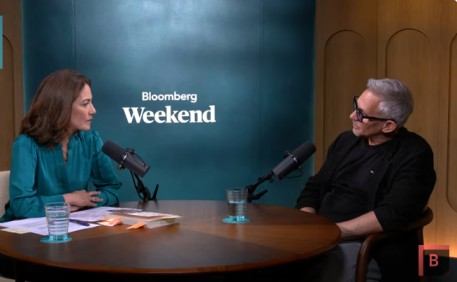
Read the full transcript of sports broadcaster Gary Lineker’s interview on The Mishal Husain Show, June 12, 2026.
Editor’s Note: In this episode of The Mishal Husain Show, former England striker and media mogul Gary Lineker joins Mishal Husain to discuss the atmospheric and logistical challenges surrounding the upcoming World Cup hosted by the U.S., Canada, and Mexico. Lineker also opens up about his transition from a long-standing career at the BBC to bringing his hit podcast, The Rest is Football, to Netflix.
Introduction
MISHAL HUSAIN: From Bloomberg Weekend, this is The Mishal Husain Show. I’m going to say right at the outset of this episode that when you hear the word football, which you will a lot, I don’t mean American football, but what you might know as soccer. I’m afraid I have to stick to football because that’s the way it is in my DNA. And that’s also the case for my guest Gary Lineker, who was a top goalscorer for England before he moved from competitive sport into sports broadcasting. He had a long career with the BBC, ending in a rather public falling out, which you’ll hear us discuss. But now his podcast, The Rest Is Football, is on Netflix.
So we wanted him to take us into the atmosphere of a big moment like this, a tournament hosted by the US, Canada, and Mexico, the organizers giving President Trump a peace prize, and the commercialization of the game, whether at the club level in England or at the World Cup. By the way, Gary Lineker is more podcast boss than mere podcaster because his company Goalhanger is right at the forefront of the audio industry. So that comes up too. We grabbed some time in his diary before he headed off to New York, and when he came into the studio, he spotted something on this table — a book from 2010, a World Cup diary of his. Except this is what happened.
The Forgotten World Cup Diary
GARY LINEKER: Is that actually me?
MISHAL HUSAIN: Seriously, you don’t remember this?
GARY LINEKER: No.
MISHAL HUSAIN: Well, you better have a quick flick through it yourself. I may be—
GARY LINEKER: No.
MISHAL HUSAIN: I may be quoting bits of it at you.
GARY LINEKER: My memory’s terrible.
MISHAL HUSAIN: Your World Cup diary that year.
GARY LINEKER: Really? Yeah.
MISHAL HUSAIN: Crikey. I did wonder why there was only one, because clearly you’ve been at plenty of World Cups since then, so maybe this is the only one.
GARY LINEKER: I have zero memory of that. It’s the first time I think I’ve ever seen that book.
MISHAL HUSAIN: Or even when it came out.
GARY LINEKER: I know. I didn’t know it even did come out. I have no memory that I did that.
MISHAL HUSAIN: You say — well, you definitely got talked into it. You say as much in the introduction. So here we are. “Thanks to all at Simon & Schuster, particularly Ian Chapman, who took me out for lunch and persuaded me that this was a good idea.”
GARY LINEKER: Oh wow. And I did. I have no memory of the lunch. That’s what happens when you get older, you forget everything.
MISHAL HUSAIN: So no desire to add books to the media empire?
GARY LINEKER: No, it’s not a plan.
Setting the Scene for the 2026 World Cup
MISHAL HUSAIN: I’d love to start, Gary, by just getting your expectations and thoughts on this particular World Cup, because you’ve seen many. I think your first as a player was 1986.
GARY LINEKER: You’ve done your research, Mishal.
MISHAL HUSAIN: Thank you. Well, that much I should know for starters. But you’ve seen them from different angles, so set the scene for this one for us.
GARY LINEKER: Well, football-wise, I think once it gets underway, it’ll hopefully be eventful and entertaining and live up to expectations. I think it’s more off the field where there are concerns. But that has been the case at every World Cup that I think I’ve covered and played in.
It’s hard to remember them that long ago, but even in ’86, it was the height of Mexican cartels and all that, and it was in Mexico. In 1990, we had a huge hooliganism problem, and Thatcher tried to pull us out of tournaments at one point. So it’s been ever thus in some ways.
Even in recent times, you’ve got Brazil 2014, with huge demonstrations on the streets about whether they should be spending this amount of money on stadiums when they could be helping the infrastructure of the country. Then we got 2018 — just 4 years before, Russia had invaded Crimea, so there was a lot of hullabaloo about that. 4 years on to Qatar, we were talking about LGBTQ rights and people dying in the building of the stadiums.
So I’m used to this. This is what the buildup is to a World Cup. It’s all about the problems, then once it starts, it focuses on the football. But there’s a distinct possibility at the moment that the host nation — or one of the three host nations, the main host nation obviously being America — could be at war with one of the teams that are in the tournament.
MISHAL HUSAIN: As things stand, Iran are coming.
GARY LINEKER: Yeah, exactly, they are coming. We don’t know from day to day what’s going to happen. So yeah, this is a little bit different. But hopefully a little bit like — I remember going to Russia and everything was cleaned up before they came, and a lot of the Russian people saying, “This is the best it’s ever been here, it’s amazing.” So I’m hoping it’ll be a little bit like that, and that people like ICE are not taking fans off the streets.
MISHAL HUSAIN: Well, that’s a good — who knows?
GARY LINEKER: Yeah, and there are some reports that some players are not getting visas. Hopefully it’ll all be okay for the World Cup. So I’m looking forward to the football starting.
FIFA, Infantino, and the Trump Peace Prize
MISHAL HUSAIN: Yeah, but this is the atmosphere that surrounds it, and there are other elements. For example, Gianni Infantino, FIFA’s close friendship with Donald Trump. Do you think that has gone beyond the norm when a country is about to host the World Cup and the way that FIFA has to interact with that host nation?
GARY LINEKER: I find it very peculiar and very odd, actually. I think we call him Sycophantino now — I think that’s the new name. But yeah, the whole thing — the Peace Prize and all that sort of nonsense — is a concern. And other things like that, you know, the pricing of the tickets is astronomical compared with previous World Cups. And obviously FIFA must be involved in the ticket pricing, and they’re supposed to be a not-for-profit organization. They’ve got billions in the bank and it’s supposed to go straight back into the sport. Hopefully it does, but the ticket pricing seems off the chart. It’s going to be really, really expensive.
And one of the great joys of a World Cup is seeing all the Brazilian fans and the Argentinian fans and the African fans — people from Senegal, and even from Europe, the Dutch turning up in orange. Are we going to see that? I don’t know. Is it just going to be purely corporate? Are we pricing out real supporters? So there are a lot of concerns going into the World Cup. I reiterate what I said before, this has often been the case, and once it gets going, it’s okay. So fingers crossed.
MISHAL HUSAIN: Gianni Infantino and Donald Trump, the Peace Prize which you mentioned — I want to just fill in the blanks a bit for anyone who didn’t follow that at the time.
GARY LINEKER: Can you fill them in for me?
MISHAL HUSAIN: Well, the basics were that not long after Donald Trump did not win the Nobel Prize, it was announced that he was going to win a FIFA Peace Prize.
GARY LINEKER: I just don’t understand why. I think it was partly ego.
MISHAL HUSAIN: Whose ego?
GARY LINEKER: Infantino’s. He wanted to do something, and obviously he seems to be cozying up very much to the president of the United States. Fair enough. But I thought that was a step too far. I mean, who’s going to win in 4 years’ time? Netanyahu or someone?
MISHAL HUSAIN: Well, at the time he said that Donald Trump deserved to win this prize, but there was clearly a kind of lack of transparency around what the criteria were.
GARY LINEKER: I’d love to know what the criteria were.
The Rest Is Football on Netflix
MISHAL HUSAIN: Are these questions that you can ask on air on the podcast? Because The Rest Is Football is going to be on Netflix every day through the World Cup. Do you envisage talking about this kind of thing?
GARY LINEKER: Absolutely, I would think so, yeah. I don’t think there’ll be any doubt that we can talk about whatever. That’s the beauty of a podcast. You’re doing one now — you can go anywhere you want.
MISHAL HUSAIN: But it’s new, isn’t it, Netflix putting a podcast like yours on? And I just wondered if there’s going to be a different vibe or even a different understanding with them.
GARY LINEKER: Netflix have said to us that the reason they wanted our podcast was to give them a part of the World Cup that they didn’t have 4 years ago, because they liked the way it was. So we’ll have a lot of fun, we’ll talk a lot about football, but we’ll naturally discuss, you know, if ordinary fans can’t get in, or if there are any issues going on outside. We’re doing a show every single day. So there will be some days where we might need something to talk about, but I’m hoping we don’t have to. But I fear we might have to.
MISHAL HUSAIN: But have you got a guarantee from Netflix that if you want to criticize President Trump on air, on Netflix, through the podcast, that’s okay with them? Because the American media is in a funny place overall on that topic.
GARY LINEKER: Well, I’ve not asked them that question. But I suspect that it’ll be okay.
MISHAL HUSAIN: But this is the backdrop to the tournament.
GARY LINEKER: Well, it is at the moment, but it was the same with Putin in 2018. But once the tournament started, there are 4 football matches a day. So hopefully there won’t be any issues to talk about, but if there are, of course we will.
A Bigger, Longer Tournament
MISHAL HUSAIN: And how do you feel about it being this long stretch, longer tournament than usual, bigger tournament than usual — the fact that there’s going to be 48 teams this time? Because I’ve heard people say, Infantino himself, that means it’s more inclusive, teams are making their World Cup debut, and other people saying it’s a money grab, it just shouldn’t be that big.
GARY LINEKER: Well, I think it’s a bit of both. There is part of me that says there are players and countries that will have an opportunity to play in a World Cup which they would never have been able to do. That’s a real positive. The number of games that the players are going to be asked to play in tough conditions will be really difficult and demanding. Players — at some point they’ve got to give somewhere with footballers. They’re playing too many games, and it’s just filling the calendar. There’s no break at all.
In this World Cup, it’s not the fact that you’ve got more teams necessarily, but the way they’ve structured it is that we now have a round of 32. So after the group stages, it’s pretty much impossible for any really good team not to get through to the knockout stage. But I actually quite like an extra round in that sense because there’s more drama, there’s more jeopardy. Because the group stages — you’ll get the odd upset, but generally the best teams will go through. And I think that’ll be the same.
I think a lot of the interest in the group stages will be these smaller nations playing for the first time — Curaçao and countries like that, and Jordan. There are a lot of others, and I think that’ll be special. But I think the World Cup will really start when it gets to the last 32.
MISHAL HUSAIN: But also the logistics, the distances involved, and the borders, because you are talking about a World Cup over 3 countries.
GARY LINEKER: Yeah, Canada.
MISHAL HUSAIN: Yeah, exactly. So I’m not sure that’s happened before.
GARY LINEKER: We’ve had 2 — we had South Korea and Japan shared it, and the next one will be 3 as well, won’t it? Morocco, Spain, and Portugal. I mean, it’s predominantly in the States. Certainly the finals are in the States. There are way more matches in the States, but America’s a very, very large country. But they’ve had a World Cup there before, so the travel is not too problematical. But yeah, logistically it’ll be difficult for both the teams, the players, and people covering it as well.
A Global Audience and a New Experience
MISHAL HUSAIN: Well, exactly. So for you, people in the UK will know you for being the voice on the BBC of football over such a long time. You’re now going to have this global audience, and you’re going to cover it for the duration wherever the tournament goes. How different an experience is it going to be for you?
The Netflix World Cup Show and Times Square Studio
GARY LINEKER: It will be quite different, although we got a sort of smidgen of the experience in Berlin in the Euros 2 years ago. But obviously this is a much higher-end production because not only is it a podcast, it’s also going to be a TV show that goes out sort of as live. We’ll be recording most of the shows in the evening, so it’s a lot of work, slightly daunting but incredibly exciting. There’s a lot of planning. We’ve been planning for a long time. We’ve got loads of great guests, which I can’t say yet, but our base studio is right above Times Square.
I’m genuinely — it’s something different for me as well. Obviously I’ve covered Lord knows how many World Cups for everyone since ’94 and played in two previous ones. So I’ve covered them all, but this will be different. Obviously we don’t have the football, we’re not showing any of the games. The BBC and ITV have the rights to show the matches, such is the nature of the World Cup and the way the rights are sold. They’re sold to individual countries, obviously, all around the world where they buy the rights.
I can’t see the World Cup. Who knows, the way the world is changing, the way television is changing, whether one entity, whether it be a Netflix or Amazon or whoever, could buy the whole World Cup rights to show everywhere. But it’ll be light-hearted, it’ll be fun, and sometimes it’ll be serious.
MISHAL HUSAIN: You know what it reminds me of, hearing you talk about it, is when you did the Olympics in 2012, because you and I were both part of the BBC lineup — not together, different points in the day. But I think that was a moment for you where you were going beyond football for the first time.
GARY LINEKER: Yeah, I’d done golf, and I also worked on the Olympics in — what was it? What was the one in Atlanta? Was it ’96? And that was kind of my first role, and that was an interesting experience because I wasn’t ready, really. But I had the night shift anyway. No one was watching.
MISHAL HUSAIN: Always good places to try things out. I was doing the primetime —
GARY LINEKER: Show, and it was — I mean, God, I had to do some studying for that.
MISHAL HUSAIN: Because you remember the book they gave us?
GARY LINEKER: They gave us like a massive file like that for the World Cup every time.
MISHAL HUSAIN: So you’d seen it before?
Preparing for the Olympics: Research and Live Interviews
GARY LINEKER: The football one I never really read. You didn’t need to. Yeah, I know all the players. I watched a million games a year. But with the Olympics, I had to do so much research into — not necessarily the people involved in them, but actually how the sports work. Because you can’t go on a show like that and not know your stuff.
But it was quite funny because I’d go in early, we’d watch the games all day, and we were doing really well, really successful. I think we did 7 o’clock till 10 o’clock, and we’d get guests in — someone who’d won the gold medal that day, or in the early days someone who’d won a medal, then it became so successful it was who’d won gold medals.
We were in there one night and I had 9 separate interviews, and you didn’t really know who we were going to get until late on because some people would pull out and cancel. Somebody would win a gold medal and they’d rush them into the studio. And I remember 4 lads were brought in, sat next to me, and we’ve got about 30 seconds to go. And the floor manager Chris — I looked at him and I went, “Help! Help!” And he went, “I don’t know, hang on.” And as I was introducing them, they were telling me their names in my ear, and it was like, what did they do? Meanwhile, they’d won a gold medal.
MISHAL HUSAIN: Meanwhile, they’re completely starstruck because they’re sitting on that sofa looking at you. But I do remember — because I was on in the morning, so very far away from prime time — I also remember at one point taekwondo coming on and realizing there was a moment where I had to talk over the live pictures of taekwondo and frantically trying to look up the relevance.
GARY LINEKER: Taekwondo in that book, I can tell you that now.
MISHAL HUSAIN: There was buried somewhere in that file. But I also remember once — speaking of the medal winners — the brilliant women rowers came on, who had done — all the rowers did really well. And I was talking to Katherine Grainger, who’s now very senior. Well, they were very much in the moment, but they came on.
GARY LINEKER: Your interview is much better.
MISHAL HUSAIN: And they came on, and at one point I very, very foolishly said to Katherine Grainger that I had once rowed at university. And when my husband heard me say this, he was like, “That was the most embarrassing question you ever asked. That is like saying to Gary Lineker, I once played football.” And so if you did, it’s embarrassing. And I thought, yeah, it wasn’t on the Thames, was it?
GARY LINEKER: In one of those little —
MISHAL HUSAIN: Oh no, nothing like that. But it was a very long time ago. It was a very lame thing to bring up. It was not a pedalo. How dare you! It’s not a pedalo. But I wasn’t very good, as probably you can expect.
Investment, Sovereign Wealth and the Future of English Football
MISHAL HUSAIN: I do want to ask you about the trend with funding and investment in English clubs over the last two decades, because you’ve seen this. It’s not just the individual wealthy owners, it’s now the sovereign wealth funds and private equity and asset managers of all kinds. What is the impact, do you think, of this on the game?
GARY LINEKER: It does concern me. I think particularly once we went down the line of sovereign states — but that train has left the station, so it’s difficult. It’s an odd one. I mean, most of our football clubs are owned by Americans. Premier League teams are owned by Americans, billionaires. Which is odd considering it’s not their sport really.
MISHAL HUSAIN: Becoming more their sport though. You can see that in demand — it is growing for tickets.
GARY LINEKER: The interest is growing. It’s funny though, American friends are going, “Do you think we’ve got a good chance?” I’m going, “Zero chance.” They went, “What do you mean?” I said, “You’ve got zero chance.” Sorry, any American listeners.
MISHAL HUSAIN: Someone has to break it to them.
GARY LINEKER: Yeah, it’s better to know because it’s the hope that destroys you. We’ve learned that. We’ve learned that.
MISHAL HUSAIN: They’re young in footballing terms.
GARY LINEKER: Yeah, yeah.
MISHAL HUSAIN: But there is an Americanism around the World Cup, isn’t there, that it’s dynamic pricing — probably trying to make the whole model more like American football or American sports more widely.
GARY LINEKER: But that’s concerning, I think. I mentioned it earlier, but the ticket pricing — if you’re pricing out real fans completely, that’s not going to be the same World Cup. So let’s see what transpires, but it’s a serious concern for me.
MISHAL HUSAIN: And going back to the English Premier League clubs — is the impact of money of that kind and from those quarters flowing in that players start to be treated more as commodities, or was that always the case?
GARY LINEKER: Well, it’s better than it used to be. The players actually have quite a bit of control now on things, and obviously they’re on huge, huge salaries. But when I was playing, you would basically be a piece of meat. You could be sold anywhere, and they basically threatened you that you’d be playing in the reserves if you don’t go. So they actually have more power than they used to, and obviously a lot more money. So it’s probably gone a bit out of control in some ways, but football’s big business now, huge business.
From the BBC to Netflix: A New Chapter
MISHAL HUSAIN: I do wonder if doing the World Cup on Netflix means something to you personally, because when you finally left the BBC, did you think that that kind of spotlight wouldn’t be on you anymore? I mean, you’re doing The Rest Is Football and you’re a media boss now, but does it mean something to you to be in demand for this?
GARY LINEKER: Well, I knew I’d be covering this World Cup. Didn’t know quite how. I knew we’d do the podcast. I think our intention was to go out anyway. So I knew I’d be covering it. But the Netflix thing obviously is really exciting, which I wouldn’t have been able to do otherwise. I feel really chuffed, actually.
I mean, obviously I was with the BBC a long time, and I think it was like a long marriage. In the end, we just kind of got fed up of each other. So I left, and at that point I was going to host the World Cup for them — that was going to be my kind of last hurrah. But I’ve ended up now doing it for Netflix, and I’ll be in New York. And the BBC, inexplicably, are based in Salford for the World Cup, which I don’t understand. And if I’d have been the main presenter, I would’ve been banging doors down about that.
MISHAL HUSAIN: In Greater Manchester, essentially, at the BBC Sports Base — not sending the anchors to the World Cup.
GARY LINEKER: Yeah, it’s really odd. I mean, the commentators will be there, and the co-commentators, obviously. And they may, if England go really well, go out to the semi or the final or something, I suppose. I just wouldn’t have been happy. So for me, it’s turned out really well, and I’m still talking about football.
The Instagram Post and Leaving the BBC
MISHAL HUSAIN: So that long marriage with the BBC — do you regret the way it came to an end?
GARY LINEKER: I regret it, yeah. I think it was unfortunate. Just to explain — there was an Instagram post that was talking about the Israeli issues, Zionism, etc., and then I missed it, but there was a little rat emoji on a post that I put on my story, and no one noticed for about 17 hours. And then somebody did. And then, I apologized because apparently it has connotations around Jewish tropes. And that’s not something I would ever do. I would never, for a minute, imagine that any kind of human being should be compared with a rat.
So it was really unfortunate. I apologized, and then I apologized again. I thought that should probably be enough. But it wasn’t. And in the end, I just thought, “Oh, come on, let’s just end this.” We’re not getting on very well at the moment. I don’t think anyone thought that I did that deliberately. I mean, I am stupid, but I’m not that stupid. So I regret the manner of that, and it was unfortunate. And if it upset anyone, I remain sorry to this day. But it was certainly not deliberate.
MISHAL HUSAIN: And in that period, that time after the first few hours — what’s happening? Like, there’s a flurry of phone calls to you, to your agent. What was the experience actually like?
Leaving the BBC and the Freedom That Followed
GARY LINEKER: I was actually just going down to Bournemouth to do an interview for the podcast. And I was in the car, my son was driving, and the phone went and it was my agent. He said, “We’ve just had a call from the Beeb and they said you’ve posted something with a rat emoji that is supposedly a Jewish trope.” And I went, “No, I haven’t.” He went, “I’ve just looked, there is one on there.” I went, “Really?” So then I checked and I just went, “Oh, s*.”
So I thought, this is not good. So I immediately deleted it and issued an apology. And then it went obviously up and above and it looked like it’d be all right for a few days. But actually, now maybe it was for the best. Not the way it happened, but the freedom. It’s just like the world’s off your shoulders and you’re not treading on eggshells anymore.
When you were— it’s very difficult at the BBC the last few years, the way the goalposts have moved as well. I know in news and current affairs you’ve always had that thing where you’ve got to be really careful and you’ve got to be evenly balanced. But that never applied to anyone outside News and Current Affairs until they decided to move the goalposts. And I’d already been on social media a few years, and I have views. And then suddenly they said, “Well, you can’t have any views anymore.” And I just thought, well, no, there’s nothing in my contract about that.
MISHAL HUSAIN: And do you think that is because of the power of the right-leaning press? I wonder if you’d had strong views for Brexit or, you know, for strong policies against immigration or that kind of thing, whether you think you would ever have got into the same kind of—
GARY LINEKER: Not a chance.
MISHAL HUSAIN: Because there was a whole lot of things before this, before Gaza, that certain papers were having a go at you for.
GARY LINEKER: Exactly. And basically there have always been humanitarian issues. I mean, I give my opinion on— I just told people I was voting not to leave, to stay, to remain. That was— I nearly forgot the word. It’s 10 years now. It’s 10 years, yeah. And that was it. I never told anyone else what to do. But that was probably the first time I’d ever aired any kind of political views.
And then subsequently, it’s always been humanitarian issues, and I think that’s different to politics. Or, well, politics is in everything. So when they say, “Just stick to your football and stay out of politics,” well, there’s a lot of politics in football as well, so you can’t always have it. But yeah, it was a difficult time. We kind of grew a little bit apart. If I’d have even said anything sort of Islamophobic or seemingly that way, I don’t think it would be treated in the same way, particularly by some of the newspapers who seem pretty obsessed.
Goldhanger and the Podcast Empire
MISHAL HUSAIN: In the time since, your media business, Goldhanger, has got more and more successful, even in this year since you’ve fully left the BBC. I mean, it had a record-breaking year last year, and amongst the stable are podcasts like The Rest Is Politics. And I just wondered if there’s anything that you see slightly differently now. Like, could you imagine, as Goldhanger presumably continues to grow, ever having rules for your hosts that go any way towards what you had at the BBC?
GARY LINEKER: Oh no, no, we don’t. We’re not cursed with that. At the BBC, it’s very, very difficult because people always see bias, but generally the bias is their own. So you can’t win. I love the BBC. I think it’s still an amazing institution. It’s got its issues, got its problems, and some of them are right at the top at the moment. And if you want impartiality, it has to start at the top, and it’s not right there at the moment. I don’t believe. That’s my personal view.
But when we come to Goldhanger, it’s completely up to them what they talk about. We’ve got hosts that know their stuff, and sometimes they’ll have strong views, and they don’t have to be balanced all the time. So I think it’s really important that it should be just the truth. Obviously, you don’t want to put out there things that lead people astray, and you’ve got to be kind of careful with that, but we never ever tell them what to say.
MISHAL HUSAIN: Do you suggest, how about doing such and such period in history or person on The Rest Is Politics?
GARY LINEKER: Oh, there’s lots of—
MISHAL HUSAIN: Because you’re a media boss now.
GARY LINEKER: Well, I am, yeah, I know, but I don’t feel like one. It’s been a crazy ride, it really has.
MISHAL HUSAIN: It is a form of power, and you are a very politically aware, astute, and engaged person. Do you relish having that power?
GARY LINEKER: I don’t see it like that. I relish what we’re giving to people and the amount of enjoyment that people are getting from our podcasts. And I find that really, really inspiring.
MISHAL HUSAIN: It’s interesting to think how almost full circle it is. So, Goldhanger started in the kind of meat you thought would be in sports documentaries. And then who knew that audio would have this incredible growth? But now all audio is visualized.
GARY LINEKER: It’s going back again. It’s turning full cycle in a way. Still the majority of our listeners— well, they are listeners.
MISHAL HUSAIN: You do members now, don’t you?
GARY LINEKER: Now your business model is all about— yeah, well, partly because you never know with advertising and stuff. So yeah, we’ve got a lot of members clubs for most of the podcasts. Not done one for football yet. I think we’ll hopefully launch that after the World Cup, possibly. Now we’ve had a bit on our hands lately the last few months, but yeah, business-wise it’s mad. I mean, it’s incredibly successful. And we’re just kind of creatives. We don’t really know what we’re doing, but we’ve blagged it.
MISHAL HUSAIN: Well, you’ve kickstarted or played a huge role in the growth of an entire industry, in which I’m hoping that there’s room for the younger, newer entrants. Not younger in age, newer entrants.
GARY LINEKER: You’re definitely younger in age. Well, that’s it. There’s plenty of room. It’s not like you’ve got a television schedule, is it? Where you’ve got ITV against BBC, and you go, “Oh, we’re up against Strictly, we’ve got no chance.” With the podcasting, you just do it — particularly from the Audible side of things — you can do it on the dog walk, or I do it when I’m cooking. And I’m all the time— I have to keep up to date with all our podcasts.
MISHAL HUSAIN: But one more question on this, which is, I do wonder, what if it ends up eating the news business, journalism? What if already loads of people will form their worldview from The Rest Is Politics and The Rest Is History? They might well be turning straight to opinion rather than getting their news elsewhere. It’s the creator economy. What happens if it destroys journalism in its traditional sense?
GARY LINEKER: I think that highly unlikely. I think journalism will always be there. It might move slightly, but I think it’s hard to imagine that. I mean, there’s so much news going on. I don’t think you can—
MISHAL HUSAIN: Yeah, except this probably means that the money is probably on your side rather than putting money into news.
GARY LINEKER: Not so much. I don’t know. I mean, television is changing, obviously. It’s shifting a little bit more towards streaming, but it’s still alive and kicking. And there’s a lot of people who still listen to radio and get their news in different ways. You know, there’s still a large percentage of people who have not discovered podcasts yet either, particularly the elderly — like me, like me. I got my bus pass now and everything. But I got into it early, thankfully, when I was in my mid-50s, not my mid-60s.
England and the World Cup Dream
MISHAL HUSAIN: I can’t let you go without asking you about England. England, not the country, the team, the men’s team, because this year it’s 60 years since, at a senior level, the men first won— 60 years of hell. Since they last won a major tournament. And I’m just keen to understand from you why you think that is. Like, how can we have this immense disconnect between that length of time without a major title and a country where football is so alive, which has got one of the most successful domestic leagues in the world?
GARY LINEKER: Well, there are a number of reasons. We won a World Cup in ’66 when it was in our own country. It’s the only time it’s been here. And that does give you an advantage. But since then, a lot of reasons. One, our development of young players was appalling up until probably 15 years ago when it started to change. You know, we used to play on full-size pitches. No one in the rest of the world could understand it. We used to play little kids of like 8, 9, 10, 11 on full-size pitches. So what you do then, you get the kid who’s the biggest and strongest at the back that could welly it, and we never really learned to play. That has changed.
And that is the reason now we are actually competitive in tournaments these days, because we are producing a lot more talent. We have had spells where we’ve produced talented players, but we’ve never been tactically clever because we weren’t brought up the right way. In recent years, we’ve been knocking on the door. We’ve got two finals, a semi-final, and a quarterfinal, and we’ve been really, really close, as close as you can get with the penalty shootout. So that is because we are producing better players again now, and we can compete.
But it’s worth pointing out, it’s very, very, very difficult to win a World Cup. There are a lot of great footballing nations that you end up having to play. I mean, at the last World Cup, “I thought we were the better team against France, but we lost.” I played in 1990, I thought we were the better team in the semi-final and we lost on penalties. So it’s tiny margins, but if you keep banging on the door, like England are doing— and I’m not overly confident for this particular World Cup, but I fancy us in the Euros in 2 years’ time. Because it’s in the UK and Ireland, so they’ll have half a chance.
MISHAL HUSAIN: But I do wonder whether you think there is a link to domestic football? Because is it the case that the playing for your country isn’t regarded by the clubs as that important, and the players are not necessarily there to train with the team and their teammates to the extent they should be?
GARY LINEKER: No, it’s not that. The players absolutely have a massive desire to play for their country. It’s the biggest honour you can get. They’re desperate to play for— do clubs like it? No, but they don’t like it in Italy either, in France or Spain or Argentina or Brazil. It’s something that clubs have to do. They have to let their players go for their national team a few times a year.
The one thing that is hard for us is that our league is incredibly competitive and incredibly physical. Not as physical as it used to be, but it’s still very physical. We play a lot of football and we don’t really help ourselves. In terms of World Cups, I know a lot of the players from around the world are in our league as well now, but it is tough for them going out. But they’ve got a bit of time, and I think the fact that England don’t play until about a week into the tournament is also quite helpful. I think I’ve spoken to Thomas Tuchel and he’s going to give them a good break, a week’s holiday or so, and I think they’ll recharge the batteries. And you never know, it’s going to happen. I just want it to happen before I die.
MISHAL HUSAIN: Yeah, I mean, because your own experiences at the World Cup, they were life-changing, right? In 1986 as a goalscorer, and then in 1990. You wouldn’t have had your broadcasting career without being so prominent and so loved as a player for England.
A Life-Changing World Cup and What Comes Next
GARY LINEKER: No, you know, you get those letters, and I’m sure you get them the same, or used to be letters, now it’s messages, etc., just saying, how do I get into broadcasting? I always say the same thing. I said, you know, try local radio, hospital radio, newspapers, local newspapers, or score loads of goals for England. I took the latter route, but it’s not quite — not so easy.
But it is true, and I know that would have happened. I mean, ’86 — God, it’s 40 years ago, not 30. Yeah, ’86 changed everything for me. I mean, I’d gone 5, 6 games without a goal. We lost our opening game against Portugal, we drew against Morocco. We needed to win, and one game changed my life, really. It’s Poland, hat-trick. After that, two more against Paraguay, and the goal no one remembers in the Hand of God game.
But I won a Golden Boot and I moved to Barcelona off the back of it. Everything’s suddenly different, and that’s what World Cups can do.
MISHAL HUSAIN: I wonder who’ll be the Gary Lineker of this World Cup on the field. There’ll be someone who might well have a similar life-changing experience. And you’ve got a new professional groove, as in with The Rest Is Football going to Netflix. So do you think you’ve got a lot more World Cups in you?
GARY LINEKER: I just hope I’ve got a few more years. I mean, I’ll take — what do they say? I use a football cliché — we’ll take one more cup at a time. I hope so. I just want to see us win more. That’s, you know, that’s always what I’ve wanted to see. I was 5 years old when we won in ’66, and I have no memory of that, zero memory. So that would be nice. But hopefully there’s a bit of life in the old dog, yeah.
MISHAL HUSAIN: Will you sort of keep The Rest Is Football going until that? I can see you like in 20 years’ time still doing it in case England win and you can be there to talk about it.
GARY LINEKER: 20 years’ time, maybe, who knows? I don’t know, maybe Alan and Michael have something to say about that.
MISHAL HUSAIN: Gary Lineker, thank you so much.
GARY LINEKER: My pleasure.
MISHAL HUSAIN: We did turn to FIFA afterwards and asked if they’d like to comment on Gary saying Gianni Infantino is cozying up to Donald Trump. They declined, but they directed us to an interview where Infantino described what he called his friendship with the president. And on World Cup ticket prices, FIFA say they are focused on ensuring fair access.
Related Posts
- Transcript: Roger Federer International Tennis Hall of Fame Induction Speech – ITHF 2026
- Transcript of Dustin Poirier Interview: Diary Of A CEO
- Transcript of Kobe Bryant’s Last Interview: On Purpose Podcast
- In Depth: w/ Kobe Bryant on NBA Journey (2012) (Transcript)
- Michael Jordan’s Basketball Hall of Fame Enshrinement Speech