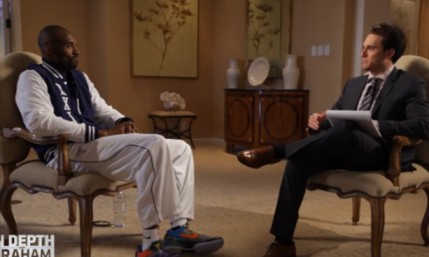
Read the full transcript of basketball legend Kobe Bryant’s interview on In Depth With Graham Bensinger, 2012.
Editor’s Note: In this candid 2012 interview, basketball legend Kobe Bryant opens up about his storied NBA journey, discussing the intense drive and competitiveness that fueled his career. From his upbringing in Italy to navigating intense rivalries and personal challenges, Bryant reflects on the lessons he learned both on and off the court. He also shares his insights into his evolving workout regimens, his focus on post-basketball aspirations, and his dedication to making a difference through his foundation.
The Kobe Bryant Foundation and Early Life
GRAHAM BENSINGER: I wanted to start by talking to you about your foundation. How did the idea for it even come about in the first place?
KOBE BRYANT: Well, it’s important to try to do something to help out in whatever way you can and whatever cause you choose to support. And for me, it was just about researching what cause I can kind of wrap my arms around and actually affect change. So I did some research, and the cause of homelessness was something that kind of jumped out. Because it’s been around us, it’s around everybody. I think it’s kind of become what I like to put, white noise, so to speak. We just kind of blend it in with everything else that we have going on instead of addressing the issue. And it’s such a prominent issue, particularly in California. So that became the issue that I became passionate about and still learning a great deal about, but it’s something that I can wrap my arms around and help out.
GRAHAM BENSINGER: How challenging was it for you to kind of identify what you wanted to do charity-wise to affect change? Because homelessness is your cause. There’s obviously so much out there.
KOBE BRYANT: It’s extremely, extremely difficult. And even now, even though homelessness is my center focus, there’s a myriad of other things that I do and try to help out wherever I can. Homelessness is just the cause that we chose to really lock in on because it is such a prominent issue. I mean, after I finish the game, leaving from Staples Center, Skid Row is 2 blocks up the street. And so this is something that I believe we can help.
Also, I mean, if you think about it, you and I, we both — our plans for the future were pretty much mapped out in the sense that we knew you go to high school, you go to college if you choose to, you get a job. So everything was kind of lined up for us and we knew exactly if we do A, B, and C, you will achieve A, B, and C. And for most of these kids that you meet that are homeless, they don’t have that option, never had that option. They only have a roof over their head. So it’s about kind of arming them with the tools necessary to have a better future, and it starts with having a roof over their head.
Witnessing Poverty Around the World
GRAHAM BENSINGER: You mentioned Skid Row. You’ve seen Skid Row before. We were talking before the interview how you travel globally. What have you seen in the places you’ve been with regards to poverty that really strikes you?
KOBE BRYANT: It’s a loss of hope. I think that’s the thing that’s been prominent no matter what country or what city you go to. You see people who are living in these impoverished neighborhoods. It’s just a loss of hope. It’s kind of a sense of, “Yeah, I had these dreams. I had these goals and these aspirations, but they’re long gone.” And they could be 15 years old. And you want to do whatever you can to try to instill that hope back into them, to show them that there are other people out here who believe in your dreams, believe in your goals, and we’re going to help you to achieve those.
My Friend’s Place
GRAHAM BENSINGER: Tell about My Friend’s Place.
KOBE BRYANT: Yeah, well, My Friend’s Place is a—
GRAHAM BENSINGER: A long time coming, too.
KOBE BRYANT: Yeah, it’s been a long time coming. We’ve been extremely excited about the project and giving kids a place to go, kind of a safe haven for them where they can come and just do things that we take for granted, like take a shower, have clean towels, use soap, to get a fresh meal, a warm meal. And it’s a place where we have counselors that can counsel them with whatever issues they may be facing. We’ve kind of been refurbishing the place, and it feels good now that it’s all done.
GRAHAM BENSINGER: Is there something you’re most excited about?
KOBE BRYANT: Well, yeah, I think just seeing the expression on kids’ faces now that they have a place to kind of go in and to kick back and to relax and to kind of feel at home. Yeah, I think that’s the most thrilling part.
The 2008 Olympics: Harry Potter Goes to Hogwarts
GRAHAM BENSINGER: I want to talk to you some about the Olympics, Olympic Village, Beijing. The 2008 Games. You said you felt like Harry Potter goes to Hogwarts.
KOBE BRYANT: How so? Well, I’m surrounded by a bunch of wizards. The Olympics is the spot to be if you love sports. If you’re an athlete that’s passionate about what you do, the Olympics is the spot to be in. I mean, you’re surrounded by athletes who are the best in the world at what they do. And it was just a huge honor for me to be around that and to kind of vibe off of that energy and to be able to interact with them.
GRAHAM BENSINGER: And what was the energy?
KOBE BRYANT: There’s such a great determination in the room because everybody wants that gold medal.
GRAHAM BENSINGER: How about your fondest Olympic memory to date?
KOBE BRYANT: I think interacting with all these athletes. I mean, I think that was the most special thing. Yeah, I mean, it’s fun for me. I love learning about what they do to prepare. I love learning about their stories and how they got to be in this place. And I think it’s extremely inspiring.
Coach K and the US National Team
GRAHAM BENSINGER: I was talking to Duke University basketball coach, Coach K, who’s also the head coach, obviously, of the US national team, about you the other day. And he said what really impressed him, dating back to the 2008 Olympics, aside from the fact that before the first practice was set to take place, you came 2 days early. But other than the shooting drills, you never even took a shot in the first practice, he said.
KOBE BRYANT: Why not? I just kind of worked out that way. I mean, I wasn’t really pressing the issue. I was really focused on the defensive end of the floor. On that particular team, we had — you wanted to guard the best perimeter. Yeah, I mean, we had our scorers, we had guys who could score the ball. I mean, obviously I could score the ball bunches, but I felt like — right, you’re coming in as the NBA scoring leader. Yeah, but I believe that my perimeter defense was the thing that was really going to get us over the top. I love to defend just as much as I love to score, so that was my responsibility.
GRAHAM BENSINGER: What do you most respect about him?
KOBE BRYANT: Well, I think his ability to communicate and also his versatility in communication. I mean, for a lot of coaches, it’s very difficult to coach at the collegiate level for years and years and years, and now you have to come and deal with professional players who play basketball for a living and have these huge egos and this, that, and the other. And for him to be able to change his mode of communication and go back and forth is very impressive.
Expectations for the 2012 London Games
GRAHAM BENSINGER: How about your expectations for the 2012 Games in London?
KOBE BRYANT: If we don’t win the gold medal, it’s going to be very difficult for us to come back to this country. It just seems like there’s so many expectations.
GRAHAM BENSINGER: What would it be like for you?
KOBE BRYANT: To win the gold medal?
GRAHAM BENSINGER: No, to come back without winning the gold medal.
KOBE BRYANT: You know what’s funny? To be honest, I don’t even think about it. Almost as if it’s not an option. I mean, it is an option, but you don’t think about it. You don’t let that enter into your mind. You just go out there and play for that goal.
Growing Up in Italy
GRAHAM BENSINGER: I want to take you back to when you were growing up. Your father Joe played 8 years in the NBA for a few teams, then 8 years internationally in Italy and other parts of Europe. While he was playing internationally, he brought you, your mom, your two sisters along. How about the biggest difference you noticed between the States and Europe, just in terms of lifestyle?
KOBE BRYANT: We didn’t live in any major cities, so I think we got the authenticity of Italy — mothers making lasagna from scratch and everybody kind of knowing everybody. And it was almost as if we lived in a typical Italian movie. And I remember one time my sister just had a brand new mountain bike. She’s got a brand new bright orange mountain bike. So you’re not missing this thing.
GRAHAM BENSINGER: It’s a big deal.
KOBE BRYANT: Yeah, it’s a big deal. I mean, back then, mountain bikes — you had to gear shift, right? It was a big deal. So we all rode our mountain bikes and we went to a store and her friends just happened to be there. She met up with her friends, started talking to them and forgot she had a mountain bike. So she took off with them and got home and I forgot my mountain bike. It was already too late, it was nighttime, we’re going to sleep. Come back the next day, the mountain bike’s still sitting there.
GRAHAM BENSINGER: Oh, that’s great.
KOBE BRYANT: Wasn’t chained up or anything, just leaned up against the wall, just sitting there.
A Kid Who Knew He’d Be in the NBA
GRAHAM BENSINGER: So can you sing one of the songs that the crowd used to sing for your father?
KOBE BRYANT: Oh man, they had a lot of them. Most of them I can’t repeat. Because the fans over there are extremely passionate, so things that they can kind of get away with saying in the crowd, in the NBA it won’t fly as much.
GRAHAM BENSINGER: You were pretty much certain from an early age as a kid that you were going to be an NBA player. Why did you feel so strongly about that?
KOBE BRYANT: Yeah, I’m not sure. And it wasn’t even—
GRAHAM BENSINGER: It didn’t even seem like as much that’s what you wanted to do as that’s what you knew you were going to do.
KOBE BRYANT: Yeah, well, I felt like I was born to play basketball. I mean, I started playing at the age of 2 and I love it. So when you kind of find that passion at an early age, I mean, that’s really the goal — is to kind of find whatever you’re passionate about at an early age and just kind of grow into it. But I just love to play the game and I never ever stopped. I just played all day, every day. So it just seemed like a natural progression to play in the NBA.
GRAHAM BENSINGER: Tell why you were scolded at a summer camp once for what you put on your application for what your job was going to be.
KOBE BRYANT: Well, I wanted to be an NBA player. And the counselor came to me and he said, well, you have to pick something a little more realistic.
GRAHAM BENSINGER: That angered you.
KOBE BRYANT: This is realistic to me. This is what I want to do. And he was like, “No, only 1 in whatever million players make it to the NBA. Take a look around you. Look at all these players here. Everybody wants to be in the NBA.” I said, “Well, I’m going to be there.” And as I grew older, I was like, man, if I wasn’t such a stubborn kid, that really would have crushed me. For a person to really — it was like taking a wet blanket and just throwing it over a kid’s head. Dreams. I mean, it just didn’t make any sense to me.
Being Recruited at Age 11
GRAHAM BENSINGER: When you were 11, did a team really try and buy you from your parents?
KOBE BRYANT: Yeah, yeah, yeah.
GRAHAM BENSINGER: What happened?
Growing Up: Europe, Magic Johnson, and Early Basketball Obsession
KOBE BRYANT: Yeah, well, that’s just the system, how it is in Europe, as it is with soccer. I mean, if you start playing at an early age, you play at the club level because they don’t have school teams like we do here in the States, and professional teams notice you, they want to purchase you. And then you grow up in their club system and then you eventually play on their elite professional level team.
GRAHAM BENSINGER: And so parents—
KOBE BRYANT: My parents obviously said no.
GRAHAM BENSINGER: Because you were in Europe, you weren’t able to, I guess, watch the NBA games live. So you had them sent over on videotape. How often would you watch those videotapes?
KOBE BRYANT: Every chance I got. I mean, my grandfather was— He used to record games and then he used to send them out to us. So I would watch them and that’s kind of where I became a basketball geek, sort of speak, because I got a chance to watch all the players.
GRAHAM BENSINGER: And then you’d go out in the backyard?
KOBE BRYANT: Oh yeah, I’d go out in the backyard and try to mimic everything. Let alone, I’d try to dunk but I couldn’t reach the basket. But still, in my mind I was dunking.
GRAHAM BENSINGER: Explain why you had no idea who Michael Jordan was at that time.
KOBE BRYANT: Well, basketball wasn’t as global then as it is now. So really the only two teams who got recognition were the Lakers and the Celtics because of their obvious robbery and the two players that they had. And when Michael came onto the scene, I was already back in Philadelphia, so I really didn’t hear about him until I was about 13, 14 years old.
GRAHAM BENSINGER: And your guy was Magic?
KOBE BRYANT: Well, yeah, I was a big, big Laker fan. Magic, Byron Scott, James Worthy, the whole crew.
Magic Johnson’s HIV Announcement
GRAHAM BENSINGER: Describe your reaction when you learned Magic had HIV.
KOBE BRYANT: I was devastated. I didn’t know, I didn’t understand what it was. I just knew it was going to stop him from doing what he loves to do. So I was devastated, and I had no idea what was going on. It was a tough day.
GRAHAM BENSINGER: And I mean, your parents said you were missing meals for a week. It was almost as if he was part of your family because of how much you idolized him. So how emotional was that for you?
KOBE BRYANT: It was extremely difficult. I mean, it’s like you have your hero and a person that you look up to, and all of a sudden he’s not there anymore. You can’t watch him perform anymore. It’s tough.
Family Competitiveness and Early Training
GRAHAM BENSINGER: Tell about when you were 14 and tried to dunk on your mom.
KOBE BRYANT: Well, I mean, she fouled me.
GRAHAM BENSINGER: She laid into you pretty good.
KOBE BRYANT: I understand. I get my competitiveness from my mother. That’s for sure.
GRAHAM BENSINGER: How so?
KOBE BRYANT: She’s the competitive one. My father is competitive, but he’s kind of, you know—
GRAHAM BENSINGER: And that’s amazing because your father was a professional athlete.
KOBE BRYANT: Yeah, but he’s kind of like, you know, he’s a very happy, go-lucky guy who has a mean streak in him. But he’s such an extrovert. My mom’s the real firecracker.
GRAHAM BENSINGER: How well do you recall the first time you beat your father in basketball?
KOBE BRYANT: Yeah, I remember it was a war. I remember that. And after I beat him, I remember he never played me again, ever. That was it. He didn’t want me to kind of get him back for all the years where he was kicking my butt in the backyard.
GRAHAM BENSINGER: You ever ask him to play again?
KOBE BRYANT: Oh sure, all the time. All the time.
GRAHAM BENSINGER: What does he say?
KOBE BRYANT: No.
GRAHAM BENSINGER: How physical was that last game?
KOBE BRYANT: It was extremely physical. My father, he’s always taught me the little tricks of the game.
GRAHAM BENSINGER: Like what?
KOBE BRYANT: I mean, like how to get away with a foul here, how to get a little extra step here, a little nudge here. But the only way to really show me was to do it to me. So I had a lot of bruises, man. A couple bloody lips.
GRAHAM BENSINGER: Really?
KOBE BRYANT: Oh yeah. Oh yeah.
Dedication to the Sport
GRAHAM BENSINGER: One of your high school friends said, “When I was partying, he was playing basketball. When I was waking up, Kobe was playing basketball before class.” How would you describe your dedication to the sport even back then?
KOBE BRYANT: Well, I tried to find a balance, right? I tried to do both. I had a great deal of energy, so if there was a school party going on or something like that, I mean, I’d play basketball for a few hours, I’d do what I have to do and have fun doing it, and then I’d go to the party and I’d show up and I’d have a good time, have fun, and I’d be up at 5 o’clock in the morning working hard, working out, and training the next day. So I tried to do both.
GRAHAM BENSINGER: But whether it be then or now, to what extent have you found yourself over the years having to forego hobbies, forego even in some instances close friendships to focus on basketball?
KOBE BRYANT: Yeah, well, there’s obviously a great amount of sacrifice because it is time-consuming. I mean, you do have to really focus on your craft a great deal.
GRAHAM BENSINGER: And do you realize it when you’re going through it? Or because you’re so focused on what you want to do, you’re just kind of oblivious to some of that?
KOBE BRYANT: It was probably different for me than most because it’s what I truly wanted to do. It’s what I enjoyed doing. So it wasn’t like I was— I didn’t feel like I was giving something up. I felt like I was gaining something. Because I enjoyed playing.
Evolving Workouts and Training Regimen
GRAHAM BENSINGER: Coach K says you’ve really changed your workouts over the years. As you’ve aged, you’ve changed the regimen. You’ve been innovative in many respects. In what ways?
KOBE BRYANT: Well, you have to evolve. So the things I was doing when I was 19 years old to prepare and to train, in terms of the explosiveness, the impact I would put on my body, the stress levels I put on my body to train and prepare — I can’t do the same things now at 33 years old, because it’d just be counterproductive. So you kind of have to evolve and do some cross-training.
GRAHAM BENSINGER: And how much of a difference do you notice between what you were able to do then and what you’re able to do now? Is it glaring?
KOBE BRYANT: When it becomes glaring is when you have practice in the morning, like a 10 AM practice, and you show up to practice and you kind of look up at the basket and you’re going, “Yeah, I probably couldn’t dunk right now.”
GRAHAM BENSINGER: Really?
KOBE BRYANT: Yeah, because your body’s just kind of tight and kind of hurting and stuff. When you’re 19, you go up and you’re just like, “Oh, that basket looks like it’s about this high.” You just wake up out of the bed and you start doing 360s and windmills and stuff. Yeah, not doing that anymore.
GRAHAM BENSINGER: What’s the average workout schedule like, whether you’re in season or out of season?
KOBE BRYANT: In season, we practice about 3 hours a day as a team. And then I do about an hour and a half of weights and extra work. In the offseason, right now I’m going about 2 hours a day. And then it kind of picks up progressively as the summer goes on. I start adding more features.
GRAHAM BENSINGER: How many shots do you think you take over the course of a summer?
KOBE BRYANT: Let’s see. Last summer, I was probably taking between 600 and 800 makes a day. In the past it was between 1,000 to about 1,500.
GRAHAM BENSINGER: And why the decline?
KOBE BRYANT: Because of my body. Because your body can’t take that much of a workload. You got to try to balance it out.
GRAHAM BENSINGER: How would you explain that mindset of just trying to continuously improve?
KOBE BRYANT: Like I said, I enjoy what I do. This is fun for me. I truly love what I do, and that’s where the passion comes from. That’s where the will to get better comes from. It’s just because I truly enjoy it. I enjoy the preparation.
The Basketball Nerd: Studying the Game
GRAHAM BENSINGER: As a kid, explain why you would study bubblegum basketball cards.
KOBE BRYANT: Well, because you could kind of see the little intricacies of each move. Is his toe pointing a little this way? Is it this way when he’s pivoting? So it’s just little things like that — body positioning, defensive stance, where the weight is on the defensive player, where the player’s head is when he’s shooting a basketball. You can kind of see all those little details.
GRAHAM BENSINGER: And why were you looking for that?
KOBE BRYANT: Because I was a nerd.
GRAHAM BENSINGER: Your high school coach, Greg Donner, says that you might actually be a little embarrassed by how much you love basketball. Is that true?
KOBE BRYANT: Probably. Yeah. I mean, it’s like anything. I just so happen to be playing basketball. If I was a computer kid in high school, people would have probably made fun of me. And it just so happened to be basketball that I’m passionate about. And my passion knows no bounds.
GRAHAM BENSINGER: But it embarrasses you?
KOBE BRYANT: Well, I mean, it’s just a little weird, a little strange. When you’re around, like in the Olympics, I’m around other athletes who kind of share that same mindset. It’s fun to be around them because you can have conversations about those things.
Learning from the Best: Hakeem’s Dream Shake
GRAHAM BENSINGER: Robert Ori says he’s never seen somebody who can see a move another guy does and pick it up as quickly as you. Explain what you’ll do.
KOBE BRYANT: Well, I know exactly what he’s referring to. We played against the Houston Rockets, and I was still a young kid, I was 18, 19 years old. I’m watching Hakeem Olajuwon up close, and he’s doing his Dream Shake, and I’m just kind of watching. And I asked Robert, “Hey Robert, how did Hakeem practice that move?” — because they played together and won a couple of championships together. So Robert kind of went through how he watched Hakeem practice and stuff like that. And then the next practice, I go right to the post and I start doing a Dream Shake and mimicking that exact move.
GRAHAM BENSINGER: Why do you think you were able to pick it up so quickly?
KOBE BRYANT: Because I’ve been playing since I was 2. Every move I’ve—
GRAHAM BENSINGER: But I mean, there are plenty of basketball players who’ve been playing a long time.
KOBE BRYANT: Yeah, not since 2 though. Not for as long as I have. Just by osmosis you pick up so many things and your muscle memory is such that you can watch something and just go out right away and do it.
Attention to Detail: The Shoe Modification
GRAHAM BENSINGER: Explain why you had Nike shave a couple millimeters off the bottom of your shoe.
KOBE BRYANT: Every detail counts, at least for me it does. And if you can make a shoe as light as possible without compromising fit, stability, and things of that nature, then it gives you an advantage. It gives you a clear advantage. It shaves seconds off of your ability to change directions, your ability to elevate, and things of that nature. I mean, every little bit counts.
GRAHAM BENSINGER: And are you able to feel that?
KOBE BRYANT: Oh, I definitely can feel it. Yeah, if the shoe’s lighter — like for example, what we’ve been able to do with our shoes and going to a low-cut shoe, we’re able to shave so much weight off the shoe and still keep its comfort that you can noticeably—
Competitiveness and Criticism
GRAHAM BENSINGER: In a difference, I mean, that minimal?
KOBE BRYANT: Yeah, I mean, in the weight of the shoe, absolutely. Like if you put on just whatever shoe that weighs 17, 18 ounces, whatever, and then you put on one of my shoes that’s 9 ounces, I mean, you can, it’s a noticeable difference.
GRAHAM BENSINGER: And why ask for the shoe and sock change?
KOBE BRYANT: Yeah, because, you know, I’m getting a little techie, but whatever. You get some tactile stimulation on the ankle, which kind of gives your ankle a sense of where it is in space. So, you know, sometimes when you jump up for a rebound, you come down awkwardly and you roll your ankle. When you have a little tactile stimulation, it kind of gives your ankle more of a sense of where it is, which hopefully will minimize the opportunity of you having a really, really bad sprained ankle.
GRAHAM BENSINGER: And it’s also, I mean, you didn’t like the fact that your foot would slide slightly in the shoe?
KOBE BRYANT: Oh yeah, inside the shoe itself. I thought you meant the wrap around the shoe. Yeah, inside the shoe itself, I wanted a shoe that kind of conforms to your foot.
GRAHAM BENSINGER: We’re talking about cutting off like a hundredth of a second.
KOBE BRYANT: Yeah, well, you know, how many times have you been playing basketball where your foot is like literally sliding inside of the shoe?
GRAHAM BENSINGER: Never, but I’ll take your word on it.
KOBE BRYANT: Your foot just constantly slides inside the shoe. Like, if you notice, if you put on a sock and you go in and you play, when you finish playing, you take the shoe off, and all of a sudden the sock is a little rotated. You know, that shows you how much you’ve been sliding inside the footbed of the shoe. So I wanted something that would kind of, you know, more fit like a glove so that your shoe and your foot are actually moving, you know, in the same motion. I think that’s really what a shoe should do.
Competitiveness On and Off the Court
GRAHAM BENSINGER: Coach K says you are as competitive as any athlete, period, in the world. How would you describe your level of competitiveness?
KOBE BRYANT: I’m not competitive in everything.
GRAHAM BENSINGER: Okay, you know, and you say that, and I found that funny because I’m reading an article about you the other day and you’re talking about how at the time you and your wife were reading the Harry Potter series and you were like speeding through it simply because you wanted to finish the set of books before her. So you say that, but—
KOBE BRYANT: No, it depends what it is. Like, if you’re a better ping pong player than I am, you know, I’m just not going to play you. I’m not really tripping off of it.
GRAHAM BENSINGER: And would you make a conscious decision not to play because of that?
KOBE BRYANT: Yeah, I’m not going to do it. I’m not going to set myself up to fail. I’m not going to, you know— nor am I going to go practice ping pong to beat you. I’m just not going to do it. Yeah, but if I’m good at it, you know, and we go head up, then—
GRAHAM BENSINGER: Because teammates have told the story— if somebody beats you in practice, or, you know, one-on-one, what’s the likelihood you would allow them to reasonably, like, decline a rematch?
KOBE BRYANT: Well, no, I mean, we play scrimmages and we play 5-on-5 and practice stuff like that, and our first team wins more times than not. But then when we lose, you know, the second team’s constantly talking trash. And, you know, the next day, we got to come back and give it to them.
GRAHAM BENSINGER: Will you, I mean, keep people on court though if they don’t want to?
KOBE BRYANT: Nah, not really. I’ll take my butt whooping like a man. I’ll take my butt whooping like a man. And then, you know, come back the next time and try to return the favor.
Handling Criticism and Early Career Challenges
GRAHAM BENSINGER: You know, so like any professional athlete, everybody is criticized, and I think the more successful the athlete you are, the more criticism you receive. And you obviously are the elite of the elite when it comes to athletic figures. So I guess I was interested in touching on a couple of the criticisms you’ve received over your career. You admitted, or you said, early on in an article I read, this is back from like your really young days in the league, that you were at the time confronted by veteran players over what they viewed as kind of selfish play on the basketball court. How much truth do you think there was to that then?
KOBE BRYANT: I think it probably was some, to the extent of when I would decide to be aggressive and when it was time to kind of more utilize my teammates, because I was full throttle all the time. And so, you know, they would view that as selfishness, but the reality was just decision-making of when to attack, when to pull back, when to trust your teammates, when to get this guy going, when to get that guy going, and then when to hit the throttle and attack. So I had to kind of figure out the balance of, you know, the game and then when to go and when not to go. Because at, you know, 19, 20 years old, man, I was full throttle, man.
GRAHAM BENSINGER: And what was that like for you, figuring out the balance of the game?
KOBE BRYANT: It was fun. I mean, it was a great challenge. And I think I was very fortunate to have to try to figure that out because most of my peers never learned that because they didn’t have to. You know, they were on a team that was happy to make it to the playoffs. And that wasn’t the situation I was in. They needed me to win a championship. And to do that, they needed me to figure out that balance. Figure it out ASAP. And I think because of that, it made me a much better player.
GRAHAM BENSINGER: What about figuring it out do you think made you a better player?
KOBE BRYANT: I had great coaching. Phil Jackson and Tex Winter. Tex Winter, who I call Master Yoda.
GRAHAM BENSINGER: And you called him even before Phil Jackson even came to coach.
KOBE BRYANT: Yeah, because I recognized his intelligence level, his genius, and I wanted to learn from him. And it just so happened he came and coached us the following year, and I had a chance to kind of really pick his brain and understand the game. And I think just my basketball IQ went to another level because of it.
GRAHAM BENSINGER: And what was it you’re trying to learn?
KOBE BRYANT: The momentum of the game and when to use your teammates and when to pick your spots and how to pick them, you know, and how to read the defense to take advantage of certain situations and scenarios and understanding the shot clock and the timing and all this other stuff. And I was very fortunate to have Phil and Tex. I couldn’t figure it out on my own.
The Relationship with Phil Jackson
GRAHAM BENSINGER: Phil Jackson, I had a chance to, you know, read through his memoir, and obviously that was written—
KOBE BRYANT: Which one?
GRAHAM BENSINGER: The Last Season. That was written preceding, you know, him returning to the Lakers. But I mean, at one point he apparently says to the then Lakers GM, “Look, if Kobe’s back next year, I’m not coming back.” Obviously the relationship’s since been repaired, but when it was kind of fractured the most, what were the factors you think were responsible for that?
KOBE BRYANT: I think the most challenging things for him, in dealing with our group, he had a couple. One of them being the dynamic between myself and Shaquille. And him having to deal with that relationship and kind of keeping me at arm’s distance so that in turn he could bring Shaq closer. And then the other thing is he’s dealing with a young racehorse that wanted to get to an elite level as an individual player and establish himself in the league. So he had to deal with that balancing act. And we both were extremely stubborn, all three of us. Phil’s extremely stubborn, so was Shaq, so am I. It was very, very difficult for him to find that balance, and I think he became frustrated because he couldn’t figure out a way to really reach me.
GRAHAM BENSINGER: And why do you think that was?
KOBE BRYANT: Well, because I told him, I said, “Phil, if you want me to do something, just tell me. You don’t have to go around the corner, drive around the block, and then kind of circle back around to your point and then kind of slide it in. Just tell me. Just tell me what it is you want me to do.” And I think that was a little different for him. He’s not a guy that really likes confrontation. He kind of likes subtly slipping messages in there, where for me, it’s just like, just tell me what it is you want. Don’t insult my intelligence by trying to backdoor it in there.
GRAHAM BENSINGER: I’m starting to smile because I was shocked in his book he said he was like seeing a therapist to talk about just how to deal with that sort of team dynamic.
KOBE BRYANT: I mean, I was just like, just tell me.
GRAHAM BENSINGER: How do you go about rebuilding a relationship like that, especially one that then goes on to have that much more success?
KOBE BRYANT: Well, you don’t carry baggage with you, you know. You have to drop it and let it go and move on. And once he decided to come back and he called me and, you know, we spoke, we didn’t have to address any of the issues. We were both of the same belief that you move on from the past. And, you know, once you make the decision to move forward, that’s exactly what you’re doing, is moving forward, not addressing the past.
The Dynamic with Shaquille O’Neal
GRAHAM BENSINGER: You mentioned Shaq. You guys obviously had a very, very successful working relationship. I mean, 3 consecutive titles, you know, what more could you ask for? But I mean, nobody makes any secrets, there just wasn’t the close relationship there that you might like with teammates. Why do you think you were unable to maintain that same working relationship for longer?
KOBE BRYANT: It just wasn’t going to happen. It’s just not in the cards. I mean, there’s things that I wanted to do with my career and take my career to another level that I was just incapable of doing as long as we were playing together. And which I was fine with doing until I heard him say a few times that, you know, “Kobe’s not going to be as successful without me,” and this, that and the other. And that kind of became the chatter. So once that became the chatter, it’s like, oh, wait, whoa, whoa, whoa, whoa, whoa. No, no, no, no, no.
GRAHAM BENSINGER: Especially for a guy who’s hyper competitive.
KOBE BRYANT: Yeah, yeah. It just wasn’t going to work. So, you know, no matter what happened, even if we had won that championship, just me being a free agent, there was just no way. I had to accept this challenge and had to see what I could do.
GRAHAM BENSINGER: And you said in some ways part of the friction came from you both being very similar type of people? In what ways?
KOBE BRYANT: Well, we’re both alpha males, man. We both don’t mess around. We don’t beat around the bush, you know. And one of the big problems that he had with me is that I’m extremely brutally honest with my guys, you know. And it’s just, you know, if a player’s not working as hard as he should, I’m going to tell him. And, you know, that includes somebody who’s 7’3″, 400 pounds.
GRAHAM BENSINGER: How does a conversation like that go?
KOBE BRYANT: Probably not the smartest thing in the world to do, but, you know, it is what it is.
GRAHAM BENSINGER: I mean, do you— I don’t pull any punches. Do you talk to somebody like him the same way you would any other teammate?
KOBE BRYANT: Oh yeah.
Notable Career Moments
KOBE BRYANT: I don’t pull any punches, man. And I think that’s why there’s such a great deal of respect still from him to me and vice versa, is that he knows what I’m about. He knows I’m not going to sugarcoat things and I’m going to be straight up and honest about them.
Scoring 63 Points at Age 8
GRAHAM BENSINGER: Notable moments from your career. 8 years old in the game, how many points did you score?
KOBE BRYANT: 63.
GRAHAM BENSINGER: Technically, at 8 years old, how do you score?
KOBE BRYANT: Well, I figured out that most kids that are right-handed can’t go left. So I just sit on their right hand. I got steal after steal after steal. I mean, that’s really how it happened. I just pressured the backcourt as soon as the kid started dribbling the ball, I jumped right in his right hand, and then I’d take it from him and lay it up, take it from him, lay it up, take it, lay it up. And it just went on, and there was nothing they could do about it.
GRAHAM BENSINGER: Do you remember that?
KOBE BRYANT: Oh yeah.
GRAHAM BENSINGER: Oh, you do?
KOBE BRYANT: Oh yeah.
GRAHAM BENSINGER: Did anything stick out?
KOBE BRYANT: Just the fact that I scored 63 points. My teammates were all just going crazy about it after the game. It was fun. Then we had the finals the next night, and I had a 40-point game the next game. Doing the same thing. My father always told me, he said, “Son, you gotta be able to use both hands. Gotta be able to use both hands at an early age.” And I could.
The 81-Point Game
GRAHAM BENSINGER: The 81-point game in the NBA, 81 points in a single game. What sticks out for you from that game?
KOBE BRYANT: Probably the fact that I had pepperoni pizza the night before the game.
GRAHAM BENSINGER: Is that common?
KOBE BRYANT: No, it’s not common at all. I was just kind of craving a pepperoni pizza and I had one.
GRAHAM BENSINGER: Start a trend?
KOBE BRYANT: No, I hope not. I hope they don’t follow that lead.
The day that I actually scored 81 was my grandfather’s birthday, who had passed away a few years before. And my grandmother, who had never seen me play in the NBA just because her nerves can’t take it, she flew out to California and she came to watch me play for the first time and the only time. And that just so happened to be the night I scored 81.
GRAHAM BENSINGER: What was that like for you with having your grandmother the first and only time sitting in the stands watching?
KOBE BRYANT: It was really special for me. My grandmother has always been there for me. We’re out of the family. We’re probably the most similar personalities. So it was really, really special. She was one of these grandmothers who, I would play like 8 games a day in the summertime for different summer leagues and stuff like that. She’d be like, “Boy, you need to slow down. You’re getting too tired. You’re exhausted.” It’s one of those grandmas who’s really caregiving, just a caretaker. So for her to be there at the Staples Center to watch me play at this ultimate level after seeing me play for so many years in high school and summer league was special.
GRAHAM BENSINGER: Those 81 points in a single game, second in history only to Wilt Chamberlain. It should be pointed out, even Michael Jordan only had 69 points in a game, and he needed overtime to get to that point. Kareem Abdul-Jabbar, 55 points in a game is what he tops out at, and you had that in the second half of that game alone. When you’re in the zone like that, how do you know?
KOBE BRYANT: It’s a strange feeling because you know you’re in the zone but you can’t afford to allow yourself to know you’re in the zone because once you do, then you lose it. Being in that moment, it’s all about being in that moment and not letting anything else enter into your mind emotionally or psychologically. And you just continue to go and go and go. For me as a player, when I get hot, I get blistering hot. And it’s something that I just had to kind of keep going and not let my focus shift to something else.
GRAHAM BENSINGER: What’s different about it though? When you’re in the zone like that relative to an average game?
KOBE BRYANT: It’s such a sense of calmness and focus. And it’s almost a sense of desperation where nothing else matters. Nothing. Nobody talking to you. Not a fan sitting over here. Nothing is relevant. The only thing that’s important is the moment that you’re in. And it’s tough to find that space on a consistent basis. But I think that’s what makes sports so compelling.
GRAHAM BENSINGER: I read somewhere after that game that you said it actually slowed down for you. How so?
KOBE BRYANT: Just because of the fact that I was so hot shooting the ball. I could pick and choose whatever I did out there on the floor. It’s almost like the defense was at my mercy, and because of that, I could anticipate everything that was going on because I was dictating everything that was going on because I was so hot. And so it kind of gives that feeling that everything slows down.
The All-Star Game: Kobe vs. Michael
GRAHAM BENSINGER: The All-Star Game — that was billed as Kobe versus Michael, basically. What part of that game do you really recall, or from that experience in general?
KOBE BRYANT: I remember being so tired before the game because during that All-Star weekend they had me doing so much. This event, that event, this interview, that interview, this party, that. It was so much going on before the game.
GRAHAM BENSINGER: Your face was plastered everywhere.
KOBE BRYANT: I was everywhere. I was 19. I literally went to sleep in the middle of the locker room on the floor before the game. I just crashed out. Probably snoring. I remember Clyde Drexler comes and taps me on the shoulder. “Hey, we’re about to go out there in like 5 minutes. Wake up, young fella. You okay?” I’m like, “Yeah, I’m okay.” He said, “See, you don’t learn your lesson, man. You can’t have them have you running around doing all these things all the time. You’ll learn.”
GRAHAM BENSINGER: What about with MJ?
KOBE BRYANT: I remember him being sick. I think he was sick during that weekend and I think he missed media day because of it. And when I checked in the game, I’m guarding him, I’m standing next to him and he coughs. And I remember going, “Oh man, cough that way.” He just started laughing. He’s probably looking at me like, this kid is crazy.
GRAHAM BENSINGER: How about the best advice you’ve ever gotten from him?
KOBE BRYANT: Probably the best advice was to be me. He’s faced a lot of criticism as well throughout his career about him shooting too much and being selfish and this, that, and the other. But he said, “Don’t change who you are, don’t change who you are, play your game and everybody will adjust to that, but you have to be yourself.”
GRAHAM BENSINGER: And how did that resonate with you?
KOBE BRYANT: Well, it kind of gave me the feeling that I was on the right track, because those were my thoughts and my feelings as well. Not exactly, but there are times where you kind of second-guess yourself and think, well, maybe I need to change my game. Maybe I need to be more of a pass-first type of a player and more of a Magic type of a player and this, that, and the other. You kind of start thinking through things a little bit. And then for him to say that was like, okay, you’re doing the right thing.
Doubt and Self-Questioning
GRAHAM BENSINGER: Is there a point in your career where you’ve really had that doubt creep in the most? Or when you started questioning if maybe you should change how you’re doing something?
KOBE BRYANT: Yeah, quite often. I think it’s human nature. As a young player coming up, we just continue to get swept and we just can’t seem to get over the hump. It’s like, man, am I costing my team the ability to win a championship? What do I need to do? Against the Celtics in 2008, I was like, man, I’m never going to win another championship. Maybe everybody was right. I can’t win without Shaq. It was like, this is my one opportunity and I blew it. And then it’s like, well, nah, maybe you’ll go down one day, but today’s not going to be that day. And you just got to bounce back and keep it going.
GRAHAM BENSINGER: We were taping an episode with Matt Kemp the other day, and obviously differing degrees of success, but he’s a young guy, and he said what really started enabling him to have success was when he stopped thinking about when he messed up, when he left that on the field and didn’t bring it home with him on the car ride home or when he got to his house. Any of that for you?
KOBE BRYANT: It depends on the game. I remember when we, in 2010, played the Celtics and lost Game 2. I remember being very upset, very angry, very sad. And I drove around before I came home. I literally just drove around for like 2 hours after the game, just trying to calm down and just trying to find that confidence. Because the Celtics were extremely tough to beat in Boston. The series is tied at 1-1, and here we are going to Boston. We might not ever come back to LA. So I remember just driving around for 2 hours just trying to find something where I can hang my hat on for myself and for my team and say, no, we’re going to do this, and this is why we’re going to do it, this is how we’re going to do it. But I just drove around, drove around, drove around.
Most Satisfying Victory and Career Highlights
GRAHAM BENSINGER: 5 championships, obviously. How about the most satisfying victory of your career?
KOBE BRYANT: Game 7 against the Celtics. That was the most satisfying one because that was the hardest one. We came back to LA from that series being down 3-2 against a great, great team, against 4 Hall of Famers. Game 7, being down 15 points in the fourth quarter. That was a tough one.
GRAHAM BENSINGER: Is there a moment during your career that you would love to go back to just to experience again?
KOBE BRYANT: Going back to draft day. That I would love to kind of relive that moment and be 17 years old and going through that process.
GRAHAM BENSINGER: What about it?
KOBE BRYANT: Just it being a new thing for me. I was 17, and here I am with Allen Iverson, Marcus Camby, and Ray Allen, and Steve Nash and all these great players. And I’m a teenager and I’m just kind of here for the ride.
GRAHAM BENSINGER: Would you still have the glasses on your head?
KOBE BRYANT: I didn’t have the glasses on my head. Once I saw how foolish that looked, I took them off. I was like, you know what, you’re a teenager, man. What are you going to do? That’s what teenagers do in 1996.
Overcoming Adversity
GRAHAM BENSINGER: I did an episode with Ray Lewis and ended up getting into talking to him about what happened to him, where here’s a guy, everything going in the right direction, ends up being charged with murder. Charges obviously later dismissed. But he really credits that part of his life with having gone through that, with really having a positive impact on him moving forward and just having made him a better individual in the long term. It’s been nearly a decade now since what you went through in Eagle with the sexual assault charges. Obviously similar to Lewis, dismissed. To what extent do you think having gone through that it had a positive impact on you and really made you better long term?
Facing Adversity and the Colorado Case
KOBE BRYANT: It challenges who you are as a person, to try to have to go through something like that, not only individually but as a family. And then for the organization, the Lakers organization, my teammates, it was extremely difficult. And you kind of had to do some soul-searching because you’re fighting numerous battles at the same time and you’re just kind of trying to figure your way through all of this mess.
The only thing that you can do is just put one foot in front of the other and just continue to move forward. There’s nothing else you can do. There’s times where it just seems like days are just endless. Like, this is never going to end. This feeling, this dark time is just never going to be over.
And I think once you go through something like that, you can’t help but be different. You can’t help but have a better sense of who you are. Yeah, Ray and I have had conversations about that. He’s really— yeah, he’s a good friend of mine, and we’ve had those type of conversations of going through things like that. And a lot of other players can’t relate to that sort of stuff, to that type of pressure. That’s real pressure. That’s life pressure. It’s not hitting the game-winning shot. If you make it, you win. If you miss it, you lose. That’s not pressure.
GRAHAM BENSINGER: What did you and Ray speak about when—
KOBE BRYANT: Yeah, exactly that, exactly that, about his time and what he went through and then how he was able to come out of it and how it made him more determined. And for me, it was much the same.
GRAHAM BENSINGER: With the court case, that was really the first time in your life where you didn’t have control over your fate, right? What was that experience like?
KOBE BRYANT: You have to give it up. You have to release yourself and just kind of let things be. And I think that helps your maturity a lot when you try not to control a situation. This is not a basketball game where I have a lot of control on the outcome. You really just got to let it go. And I think to do that, you instantly have to mature and to be able to put yourself in that emotional space where you can trust the process.
GRAHAM BENSINGER: What do you think you learned from the whole experience?
KOBE BRYANT: There’s a lot that I’ve learned through that experience and a lot of things specifically that I went through during that process that I wish I could dive into, but it’s just— I think as a person, it just really teaches you how to let go. And how to trust and not try to control everything. I think that decreases your stress levels tenfold when you’re not worrying about the next moment, you’re not worrying about what this person may say, you’re not worrying about what this outcome may be. Instead, you just kind of let go.
GRAHAM BENSINGER: Why do you think you were able to still play basketball so well during that time?
KOBE BRYANT: Probably because I’m stubborn.
GRAHAM BENSINGER: Because you’re stubborn?
KOBE BRYANT: That’s probably why.
GRAHAM BENSINGER: Why do you say that?
KOBE BRYANT: Because on these days, I’m not going to stop playing. Just because you guys think I should stop playing, just because you guys think that I won’t perform as well, I’m going to show you. And truthfully, it was stress release for me because I’ve been playing since I was 2. Basketball has always been my escape. It’s always been the place of refuge for me. So why should I take that away now? If anything, the game is going to keep me sane, keep me stable, and help me to be able to manage these various situations.
Motivation and Legacy
GRAHAM BENSINGER: 5 championships, more than a dozen All-Star appearances, an MVP. You’re at the top statistically in many NBA offensive categories. Been in the league since you were 17. What motivates you now?
KOBE BRYANT: I think it’s just the joy of the game, of playing. I can’t lie, man. It’s tough. It’s tough because you’re trying to constantly find things to kind of push you. Things that kind of motivate you to kind of give you that edge. And it’s like, I watch myself sometimes when I played when I was 21, 22, 23, and it’s like, whoa, you just look like a guy that’s just constantly going. Your motor is just endless. And now I don’t have the same motor. So you got to kind of try to pick your spots.
GRAHAM BENSINGER: And you can feel that, that you don’t have the same?
KOBE BRYANT: Oh yeah, for sure. And so your game kind of evolves and becomes a little bit more mature. But in terms of the motivation side, it’s just to continually get better. Even now, at 33 years old, going on 17 years in the league, I’m still trying to figure out how to get better.
GRAHAM BENSINGER: There was a quote that when I read it, I figured I had to bring this up. During your first year with the Lakers, you said, “When I’m 35 years old, I’m not going to be in the league. By then, I’ll be relaxing with my family overseas somewhere.”
KOBE BRYANT: Yeah.
GRAHAM BENSINGER: Your thoughts on that now?
KOBE BRYANT: It’s still probably accurate.
GRAHAM BENSINGER: Really?
KOBE BRYANT: Still probably accurate.
GRAHAM BENSINGER: Why do you say that?
KOBE BRYANT: My 18th year in the league. I mean, that’s a long time to be playing. It’ll be my last year of my contract, so I don’t know if I’ll play any longer than that. I don’t know.
GRAHAM BENSINGER: How strongly do you feel about that, that the 36th year?
KOBE BRYANT: It’s just a possibility. It’s not something I even gave much thought to, but it’s a possibility.
GRAHAM BENSINGER: Could happen. When do you think you give that more thought?
KOBE BRYANT: At the end of the year, that year, probably. I think you’ll know. I mean, I’m not sure. I’ve seen so many players retire and think they know and then come back and then retire and come back. And I don’t want to be one of those guys, but I know they’ve all said it too. It must be tougher than it sounds to be able to retire and know when that moment is actually there. So we’ll cross that bridge when we get to it, I guess.
GRAHAM BENSINGER: To what extent is there the concern of just being able to replicate that satisfaction or that adrenaline rush that you get from playing the game?
KOBE BRYANT: You mean after? When you’re finished playing? No, I’m pretty good about that, actually. I’ve never really played for the adrenaline rush or the hype or anything like that. I never really played for that. I played because I enjoy playing and somebody has to win, so I’d rather it be me because it’s a little bit more fun when you win, right? So that’s kind of why I play. I never really played for the hype or the fame that comes along with it.
GRAHAM BENSINGER: How would you like your career to be looked back on?
KOBE BRYANT: I would love for people to look at my career and say that I maximized everything that I possibly could. Every ounce of talent that I had, I got the most out of it. And if people can say that about me, then I’ll be very happy.
Lakers Outlook and the Nike Partnership
GRAHAM BENSINGER: Lakers this coming season, your expectations?
KOBE BRYANT: I have no idea what’s going to go on. It’s a big summer, obviously, for us as a team, for us as a franchise, in terms of tweaks that we made to the roster and who stays, who goes. Everything right now is kind of a moving target. So it’s hard for me to kind of sit down and give blind expectations because I don’t know what the roster’s going to be next year. But I expect us to be right there in the thick of things no matter what.
GRAHAM BENSINGER: So tell me about these shoes.
KOBE BRYANT: Yeah, well, Nike’s— that’s like family to me.
GRAHAM BENSINGER: Those are pretty good looking.
KOBE BRYANT: Yeah, so what they— they are amazing at coming up with all kinds of technology and things to really wrap up my vision for my particular shoe for that season. So I come to them with all of these things. I want the shoe to be lighter, but I want it to be stable. I want it to have great cushion when I’m running around. And they’re like, “Well, how are we supposed to make the shoe lighter and still keep all this cushion?” I’m like, “I don’t know, that’s what you do. I have no idea.”
GRAHAM BENSINGER: And how does this conversation go? Is it via email, on the phone, in person?
KOBE BRYANT: No, we meet in person. The designer extraordinaire is Eric Avar, who learned from the great Tinker Hatfield, who did all of Jordan’s shoes while he was playing. And so he’s just this brilliant mind. And our entire team at Nike is incredibly talented and brilliant. So I sit in a room with them and I throw all these inspirations at them. This is what I want the shoe to be technically. Aesthetically, this is my inspiration going into this season. And they do a phenomenal job of tying that all in. And they present a shoe that matches those inspirations.
GRAHAM BENSINGER: So how about the shoe right now that you’re most proud of?
KOBE BRYANT: Yeah, well, I’m most proud of the shoe because it gives me options, and that’s kind of one of the things that I wanted to do. I wanted to have, as I get older in my career—
GRAHAM BENSINGER: And is that the shoe?
KOBE BRYANT: This is the shoe, yeah, this is the shoe. So you have options of different inserts that you can put in. You can have a thicker sole, you can have a lighter sole. And the reason why I wanted that is because when I play and when I practice, I probably need to play with a thicker sole because it gives you more protection. It’s softer on your knees. But when I step out to perform and when I play, I want a lower sole, something that’s lighter to the floor where I can feel the floor underneath me and shave seconds off of my movements. So it’s just little things like that that really separates Nike and what they do.
Life Off the Court
GRAHAM BENSINGER: What do you recall from the first time you moved out of home way back when?
KOBE BRYANT: Being like, “Oh yes! Finally!” I’m like 18.
GRAHAM BENSINGER: Right.
KOBE BRYANT: But then it was like, clothes start piling up. The food’s not going to make itself. The bed’s not going to make itself. And you’re just kind of like, “Oh damn.” Doesn’t look too great anymore.
GRAHAM BENSINGER: Yeah, it’s like, “Oh, I really have to grow up right now.” The first time you were looking for a house for yourself, what do you recall from that process?
KOBE BRYANT: I remember just kind of looking in different areas, Beverly Hills being one of them, and all the hot spots that LA is known for. But at the time, that’s kind of when paparazzi and all that stuff started kind of emerging, and I didn’t want to deal with any of that stuff, so I chose to stay away from those areas.
GRAHAM BENSINGER: You don’t exactly have a bad setup. Newport, helicopter to the—
KOBE BRYANT: Yeah, well, it’s away from those areas where all of that stuff goes on. For a person that’s been in Hollywood for so many years, I’m the least Hollywood person you’ll probably find.
Fan Questions
GRAHAM BENSINGER: We had people submit questions online for you and just wanted to read 3 of them to you. The first of which is from Jonathan. What are your plans after you leave the game of basketball?
KOBE BRYANT: Well, for a couple years I’ll probably do absolutely nothing. And then the Nike business is something that really interests me in terms of how we put shoes together and apparel and kind of being a visionary behind that process.
Fan Questions & Advice for Young Players
GRAHAM BENSINGER: I mean, that’s something that’s extremely enjoyable. Robbie asks, what inspires you?
KOBE BRYANT: I draw inspirations from a lot of places, from nature, from other people who are great at their craft. So I try to look around me and find inspiration from all over the place.
GRAHAM BENSINGER: Jared, what can I do to get better as a 13-year-old guard?
KOBE BRYANT: Continue to play. Just play, play, play, play, play and have fun playing. I probably didn’t do a basketball drill, like a dribble through the cones, all that stuff. I probably didn’t do a basketball drill till I was like 16. Up until that point, it was just me going to parks, just playing by myself, using my imagination and just doing different things that I’ve probably saw on TV and playing pickup games and just kind of learning as I go, just having fun.
GRAHAM BENSINGER: Really a pleasure, Kobe.
KOBE BRYANT: My man.
Related Posts
- Transcript of Dustin Poirier Interview: Diary Of A CEO
- Transcript of Kobe Bryant’s Last Interview: On Purpose Podcast
- Michael Jordan’s Basketball Hall of Fame Enshrinement Speech
- Mishal Husain Show: w/ Gary Lineker – Netflix, FIFA and the Trump World Cup (Transcript)
- David Beckham Interview: Forbes Iconoclast Summit (Transcript)