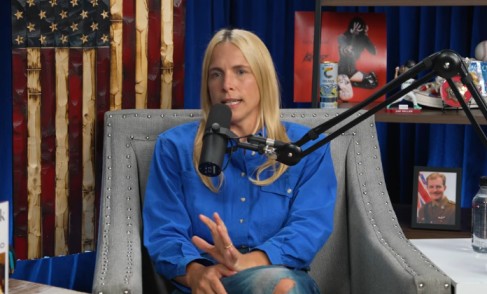
EDITOR’S NOTE: Laura Delano spent over a decade cycling through psychiatric diagnoses and medications, starting with a bipolar diagnosis at age 14 that led to five prescribed drugs, four psychiatric hospitalizations, and a near-fatal overdose at 25. In this conversation with Theo Von, she traces how she eventually came off her medications, what she’s learned about the science (and lack thereof) behind psychiatric diagnosis and long-term drug use, and why she now runs the Inner Compass Initiative to help others taper safely. Theo, who has struggled with his own long-term antidepressant use, brings his own story into the conversation throughout, making this as much a shared reckoning as an interview. Read the full transcript of this interview below:
INTRODUCTION
THEO VON: (00:00:00 – 00:00:42) Today’s guest is an author and founder of the Inner Compass Initiative. She wrote Unshrunk: A Story of Psychiatric Treatment Resistance. We talk about mental health, getting on the medicines, and then how to get off of them if you want to or need to. I had a fascinating conversation and I’m thankful for her time. Today’s guest is Miss Laura Delano. Laura Delano.
LAURA DELANO: (00:00:43 – 00:00:43) Yep.
THEO VON: (00:00:43 – 00:00:44) Am I saying that correctly?
LAURA DELANO: (00:00:44 – 00:00:44) Yep.
THEO VON: (00:00:45 – 00:00:45) Excellent.
LAURA DELANO: (00:00:45 – 00:00:46) Delano. Yep.
THEO VON: (00:00:46 – 00:01:13) Thank you for joining us today. You wrote a book called Unshrunk: A Story of Psychiatric Treatment Resistance. I want to talk about that today. I want to talk about my own journey with antidepressants and with trying to get off of the medications, and what that’s been like for me. Or I want to discuss that with you. I also want to iterate that 1 in 6 Americans right now are taking mental health drugs.
LAURA DELANO: (00:01:14 – 00:01:14) Yep.
THEO VON: (00:01:14 – 00:01:33) And that’s even higher amongst college students. And I want to talk about how to properly get off medication, what that’s like for people in that journey. But first I want to hear about your story. You’ve had kind of a, like, so far lifelong journey with mental health and medication. Is that fair to say?
LAURA DELANO: (00:01:34 – 00:01:35) Yeah. Going back to childhood.
THEO VON: (00:01:36 – 00:01:41) Okay. And is it okay if we start there just so our listeners are kind of clued in on how you got here?
Growing Up in Connecticut
LAURA DELANO: (00:01:42 – 00:02:15) Sure. Yeah. So I grew up in Connecticut in an affluent town. I was born to a family who had a lot of resources. So, private school, all my material needs met — on paper, I just had this really wonderful life. And I was always “good” at school. I could just sit down and do rote tasks well. It never bothered me or I never got bored with it. And so I just kind of was one of these girls who had it all together. Good student, I was a good athlete.
THEO VON: (00:02:16 – 00:02:17) What sport did you play?
LAURA DELANO: (00:02:18 – 00:02:26) Squash was my main sport through college, but when I was younger, tennis, field hockey — basically all the textbook prepster.
THEO VON: (00:02:26 – 00:02:27) Oh, rich sports.
LAURA DELANO: (00:02:27 – 00:04:12) WASPy. Yeah. Like picture the most stereotypical New England WASPy prepster, and that’s right here, literally down to the all-whites on the tennis court. That’s me.
So yeah, I just had it all together. And then when I was 13, there I was — I was president of the middle school, I had straight A’s, I was a nationally ranked squash player. I had it all together. And I was looking in the mirror one night brushing my teeth, and I just started looking deeper and deeper into my eyes. And then I just slowly, everything around me started to go black. And I left space and time, and I was just floating in what felt like outer space, looking at this girl in the mirror, and I was like, “Who is she? Who is she? Who is she?” And then I realized this is a stranger.
And when I came to, I was terrified by this out-of-body experience. I didn’t know what to make of it. And the only conclusion I could draw was I must not have a real self. I must be a robot programmed to perform well. But who am I? What do I care about? What really matters to me? And I realized I didn’t know the answer. And I felt immediately like my whole life had changed, and I was just aware suddenly that I was imprisoned by these adults around me.
I just freaked out and didn’t know what to do, knew I couldn’t tell anyone about this experience. And so I just pretended it hadn’t happened. And I just tried to continue on being the good — but that compartmentalization wasn’t sustainable. And so I eventually began spinning out. I started cutting myself. I was fantasizing about death. I started acting out at home, hitting my mom and screaming and cursing. And my parents were just like, “What has happened?”
THEO VON: (00:04:12 – 00:04:14) Did you think you were realizing something?
LAURA DELANO: (00:04:15 – 00:05:24) I love that you’re asking that, because in retrospect, I’m like, holy cow, I was having an ego death. What could have been this profoundly liberating — I’m so much more than the self — it could have gone that way. But I think because I grew up in this particular environment, no one was reading philosophy and into psychedelics. I had no frame of reference to head that way. So instead, I concluded I don’t have a real self.
I couldn’t bear that, what felt like my reality, for very long. And I did end up really spinning out at home.
THEO VON: (00:05:25 – 00:05:26) Oh yeah, it was such a taboo then.
LAURA DELANO: (00:05:26 – 00:05:43) Yeah. And, you know, my parents — God bless them — because they didn’t see anyone else having problems around them. They’re like, “Oh my gosh, we’re the only people in our town who have a daughter who’s going through this.” Of course, in retrospect, I’m like, we were all pretty messed up in this intense town that we were all in.
THEO VON: (00:05:43 – 00:05:46) But it felt like kind of a microcosm over there.
LAURA DELANO: (00:05:46 – 00:05:50) Yeah, it was a very Stepford Wives kind of place.
THEO VON: (00:05:50 – 00:05:50) Sure.
The Bipolar Diagnosis
LAURA DELANO: (00:05:50 – 00:06:26) And so they sent me to a therapist. The therapist sent me to a psychiatrist. I was 14 by that time. And in one hour, the psychiatrist told me, “All this anger and these outbursts and this irritability you’re having, these are symptoms of mania. And the fact that you’re cutting yourself and you’re depressed, these are symptoms of depression. You have a lifelong brain illness called bipolar disorder, but don’t worry, there are medications you can take. You can live a good life.” She’d seen me for one hour. I was 14 years old, and she put me on Depakote and Prozac.
THEO VON: (00:06:26 – 00:06:28) How did they diagnose that, just so I know?
LAURA DELANO: (00:06:29 – 00:06:53) Good question. It’s literally through just observation. So you just describe how you’re feeling, you describe what you’re doing, and then the psychiatrist, in their subjective opinion, runs through the kind of checklist that they’ve been trained to go through with the DSM, the Diagnostic and Statistical Manual. So it’s like, “Oh, 5 out of 7 is this.”
THEO VON: (00:06:53 – 00:06:53) You said the DSM. What is it?
LAURA DELANO: (00:06:53 – 00:07:32) The Diagnostic and Statistical Manual of Mental Disorders. It’s copyrighted by the American Psychiatric Association. There’s a lot of industry influence behind it. They get a lot of funding from drug companies, and it’s literally called the Bible of psychiatry. And these diagnoses from the DSM are what open doors for people to get treatment — for billing. It’s a very powerful book, but it’s completely subjective. This is not a scientific text. It’s literally the opinions of psychiatrists. That’s what these diagnoses are made on the basis of.
THEO VON: (00:07:33 – 00:07:38) Does that make it somewhat scientific though, that it’s at least — it’s not like just a random person guessing?
LAURA DELANO: (00:07:39 – 00:08:30) Yeah, well, for the DSM to be scientific, it would need to be both reliable and valid. So basically, the categories themselves would need to be real, meaningful, measurable categories, and the same person would need to be getting the same diagnosis from multiple clinicians. If those two factors were in place, you could say that this was a scientifically valid and reliable text, but it’s not. If you look at — clinicians will give all kinds of different diagnoses to the same person. Bipolar disorder, as an example — there’s no measurable pathology in your brain. There’s no abnormal blood tests. There’s no — it’s just based purely on observation.
THEO VON: (00:08:31 – 00:08:38) Were there any biological tests or medical tests that they ran to determine if you had bipolar disorder?
LAURA DELANO: (00:08:39 – 00:08:41) And there aren’t any for any of these diagnoses.
THEO VON: (00:08:41 – 00:08:42) No, there weren’t?
LAURA DELANO: (00:08:42 – 00:08:42) No.
THEO VON: (00:08:43 – 00:08:43) Wow.
LAURA DELANO: (00:08:43 – 00:08:58) To this day, there aren’t. Even for something like schizophrenia. None of these diagnoses have any valid, replicable — there’s no test of any kind, medical test of any kind.
THEO VON: (00:08:59 – 00:09:13) Yeah, it says right here, bipolar disorder cannot be measured with a single physical test like a blood test or an MRI. Instead, doctors and mental health professionals measure and diagnose it through a comprehensive clinical evaluation. And you’re saying after only one hour they had determined this?
LAURA DELANO: (00:09:13 – 00:09:43) Yeah. And a lot of people get a diagnosis in 15 minutes. And what’s amazing about it is that because we have all come to believe in these diagnoses as these lifelong incurable things — you can manage them, but once you have this diagnosis, you have it forever. If you pause and think about that for a minute — to tell a 14-year-old girl who you just met an hour ago, “You have a lifelong incurable disease in your brain,” it’s a pretty potent thing to say to someone.
THEO VON: (00:09:43 – 00:09:46) Yeah, especially at 14. She’s got enough going on.
LAURA DELANO: (00:09:47 – 00:09:58) And I mean, in retrospect, I see adolescence is literally when we have a crisis of self. Who the hell am I? How do I fit into this world? How do I socialize? What do I care about?
THEO VON: (00:09:58 – 00:10:03) Yeah, what do I listen to? Who am I? How do I dress? How do I find out what’s going on inside of me? All of that stuff.
LAURA DELANO: (00:10:03 – 00:10:13) Yeah. And I think because the crisis I was going through was this deep existential spiritual crisis of self, I was especially susceptible to being told who I was.
THEO VON: (00:10:14 – 00:10:14) Understood.
Harvard and the Breaking Point
LAURA DELANO: (00:10:14 – 00:11:59) Because I was — and I think a lot of us are, I don’t know if you relate to this too — but when I first got the bipolar diagnosis, I rejected it as that 14-year-old girl. I knew intuitively, this makes no sense. I’m having a healthy response to this really intense social environment I’m in. But a few years later, ’cause I was put on those meds, Depakote and Prozac, the so-called mood stabilizer — Depakote’s actually an anticonvulsant that’s not even to this day approved for psychiatric use in kids, but I was put on it back then, and it’s a very widely prescribed psych med in kids today. And Prozac at the time was not approved for use in kids, so I just was put right on it.
And for the following years, I managed to not really take them regularly. I went away to boarding school. I tried to run away from what that psychiatrist told me. But by 18, I was still playing the game, the performance game, and I’d gotten into Harvard, and I was going to play squash at Harvard. It’s almost cringeworthy how this Type A perfectionist New England girl — I was so trapped in this. I knew it was all nonsense, but I didn’t know how to get out.
And so there I was at Harvard, hoping that by then maybe I’d have figured it all out and I’d be okay. And of course I wasn’t. And so it was at that point that I was just so desperate for relief, because I was doing tons of coke and ecstasy, and I wasn’t sleeping, and I was so spun out freshman fall of college. I was a total mess. And I was like, what is wrong with me? I want to die. I can’t live this way anymore.
THEO VON: (00:12:00 – 00:12:01) So something was wrong.
LAURA DELANO: (00:12:01 – 00:12:10) Oh yeah, I mean, I was really struggling. This wasn’t like, oh, she was just having a little bump in the road. I was completely a mess.
THEO VON: (00:12:10 – 00:12:13) And were you still taking the medicines, the Depakote and the—
LAURA DELANO: (00:12:13 – 00:12:17) No, when I spun out that first fall of college, I was not on any meds.
THEO VON: (00:12:17 – 00:12:17) Okay.
LAURA DELANO: (00:12:18 – 00:12:23) But I was definitely drinking a lot, doing a lot of drugs, just overall not taking care of myself.
THEO VON: (00:12:23 – 00:12:28) What things were showing up in your life that were like, okay, now this is — things are getting too rough?
LAURA DELANO: (00:12:28 – 00:13:28) I mean, I think a lot of it was just I wasn’t sleeping. I was really reckless in my behaviors. I’d be super coked up and I’d climb to the top of a building and I’d be stuck on a roof, and it’d be 3 in the morning — just these ridiculous things. And I’d hang out with the bums in the square, in Harvard Square, and smoke with them. I just felt so far away from my peers. And I couldn’t stop thinking about dying. I just couldn’t see a way through it. I was so overwhelmed by this deep sense that I was this fraud who would never fit into the world around her. And my mind wouldn’t shut off. And paranoid thoughts like, “Everyone hates you. They’re just pretending to like you. You’re a piece of— You just—”
THEO VON: (00:13:28 – 00:13:29) Sounds like a nightmare.
LAURA DELANO: (00:13:30 – 00:13:48) Yeah. And you’ll get a kick out of this. My breaking point was I came out as a debutante the winter of my first year at Harvard. And I was in a wedding dress on stage at the Waldorf Astoria in New York City. And the whole thing is so absurd. The tradition of it is like—
THEO VON: (00:13:48 – 00:13:49) Well, it’s tradition.
LAURA DELANO: (00:13:49 – 00:14:01) Yeah, but it’s like a meat market. Historically, it was like your daughter is now ready to be married off or whatever. And you have to curtsy. It’s wild.
THEO VON: (00:14:01 – 00:14:04) Oh yeah, I’ll go to — sometimes they’ll have those in the South. They’ve had them over the years.
LAURA DELANO: (00:14:05 – 00:14:06) Have you been to them?
THEO VON: (00:14:06 – 00:14:12) I’ve been to — in Natchez, Mississippi, my little nephew was in one for a bit. And so I’d go over there and watch him.
LAURA DELANO: (00:14:13 – 00:14:15) Was he like an escort? Of one of the girls?
THEO VON: (00:14:15 – 00:14:17) Yeah, he was like, he had a sword or whatever.
LAURA DELANO: (00:14:17 – 00:14:20) Whoa, you had swords down there? We didn’t have swords. That’s cool.
THEO VON: (00:14:20 – 00:14:23) We — they wield weapons at the ones in the South, so it gets a little bit different.
LAURA DELANO: (00:14:23 – 00:14:25) Of course you did. I love it.
THEO VON: (00:14:25 – 00:14:30) Okay, so you’re a debutante, you have all this going on, on the outside looks one way, but you feel a total different way on the inside.
LAURA DELANO: (00:14:30 – 00:14:43) And that was the icing on the cake. I’m literally on a stage doing curtsies. This is a practical joke. How is this my life? And how do I get out of it? So it felt like the only way out.
THEO VON: (00:14:43 – 00:14:44) So it sounds like you had some psychosis going on.
Psychiatry as Relief — and the Prescription Cascade
LAURA DELANO: (00:14:45 – 00:15:59) I probably could have been given a diagnosis of psychotic disorder not otherwise specified, or something. I mean, I definitely had, especially when I wasn’t sleeping, these very expansive thoughts where I was deconstructing reality. And language is a social construction. So the words I’m using to think these thoughts, it’s all — I would just get totally swept up in all the postmodern stuff.
And so that winter, as an 18-year-old, I was just desperate for help. And to go back to this whole DSM diagnosis thing, that desperation drove me to just want to, of my own volition, go back to psychiatry and be like, “Tell me what is wrong with me. I need your help. I need to understand why I feel this way, and I need relief.” And I always try to pause on that whenever I’m talking about my story, because I don’t know if you felt the same when you were first diagnosed with whatever your diagnosis is — I can’t wait to dive in more into it — but I felt such relief. “I’m not a bad person. I’m not a failure. I’m not lazy. I’m sick. And now I have a treatment that’s going to help me get better.” Hallelujah. That’s how it felt.
THEO VON: (00:15:59 – 00:16:06) Oh yeah. I can relate to being like, okay, something is going to come and help me. Finally there’s help on the way.
LAURA DELANO: (00:16:06 – 00:16:07) Yep.
THEO VON: (00:16:07 – 00:16:16) I can certainly relate to that, and we’ll talk about some of my experience after a little bit. But I want to hear more. Okay, so you get this diagnosis and this feels helpful.
LAURA DELANO: (00:16:16 – 00:17:25) It feels so helpful. I feel such relief, like immediate relief. I don’t have to fight anymore. I don’t have to keep desperately searching for answers and to figure myself out. This doctor knows what’s wrong with me and he has the solution. I’m good to go.
And so, of course, the perfectionist type A person that I was, I immediately applied that to being a patient. So I was just so diligent about going to therapy and tracking how I was feeling and reporting symptoms. And it became very quickly like the void of meaning and purpose that my life had previously held was filled with a new purpose. Treatment. You’re a patient and your purpose is to get treatment. And so I was put back on meds, and then quickly 2 became 3. And I would be going in every week, sometimes twice a week, to do therapy. I was going to McLean Hospital, which is like a 20-minute bus ride from Harvard, and it’s one of the oldest, most established institutions in the country. It’s where Sylvia Plath went.
THEO VON: (00:17:25 – 00:17:29) Oh, I can imagine it’s prestigious if it’s there, ’cause the best doctors are right next door.
LAURA DELANO: (00:17:29 – 00:18:17) Exactly. And I think that’s, with my background coming from a family with socioeconomic means, I always had the best of the best care, which is an important part of my story that we’ll come back to. So yeah, I just had this new sense of purpose and momentum, and I was like, “We’re going to figure this out together, my psychiatrist and me.” But with the passage of time, inevitably, I’d be on some med and then I’d have sleep problems or panicky feelings, and then I’d get on another med, or they’d up the dose, or they’d switch. And before I knew it, I was on a handful of meds. But at the time, this felt like a really good thing because—
THEO VON: (00:18:17 – 00:18:18) Like progress?
LAURA DELANO: (00:18:18 – 00:18:28) Yeah, because more meds is better. The more they’re caring for me and the more they’re giving me, the better it’s going to be.
THEO VON: (00:18:29 – 00:18:35) And so, yeah, if you’re bleeding profusely, you would think that having more bandages would be helpful.
LAURA DELANO: (00:18:35 – 00:19:04) That’s such a good analogy. This is exactly it. And what was really insidious about that too, and now if you look at our culture of how girls and young women, in this kind of therapeuticized culture that we’re in, at the time, what started to happen for me is I began to feel like the more meds I was on, the more special I was, and the more people would understand how much pain I was in.
THEO VON: (00:19:04 – 00:19:07) Like the debutante of diazepam or something.
LAURA DELANO: (00:19:07 – 00:19:24) Gosh, yes, I love that. Totally. I’m up on this stage, look at me, I’m so sick, I have my bag of 5 pill bottles. And now I don’t only have bipolar disorder, I also have social anxiety disorder and eating disorders that eventually came.
THEO VON: (00:19:24 – 00:19:25) You became Elizabeth Taylor. Yes.
LAURA DELANO: (00:19:25 – 00:19:42) Like, I am so important. And that’s, I think now you’re seeing — ’cause this was again, back in the mid-late ’90s, early 2000s — now it’s like, this is how girls and young women grow up finding a sense of self and belonging and purpose and meaning, especially on TikTok.
THEO VON: (00:19:42 – 00:19:43) Oh, it’s like a character now.
LAURA DELANO: (00:19:43 – 00:20:09) Yes, totally. “Here’s my list of diagnoses. Here’s my list of meds.” It’s like, oh, now I know how to slot in and where I belong and who my tribe is. And so that was really just taking off back in the early 2000s. And it was very much a part of my journey through my teens and 20s — how much of an identity it gave me.
THEO VON: (00:20:09 – 00:20:12) Yeah, you were like the Amelia Earhart out there. You were just out there flying through the—
LAURA DELANO: (00:20:12 – 00:20:14) Flying through the psych wards.
THEO VON: (00:20:15 – 00:20:17) And landing who knows where. They still haven’t found her.
LAURA DELANO: (00:20:18 – 00:21:11) Oh yeah. And so of course, as I’m this good patient doing everything my doctor’s telling me, reporting my symptoms, we’re upping the meds — my life isn’t actually getting better. It’s actually falling more and more apart. And I did manage to graduate college, but by the time I did, I had to take a year off. I’d been hospitalized. I was super suicidal. But because this slow creep of meds — this “prescription cascade” is the term that a lot of people use — it was just this slow unfolding of it. I didn’t even really realize it was happening. And just because my journey with psychiatry started when I was a kid, I had no reference point. I had no baseline sense of who I was as a person prior to meds because, of course—
THEO VON: (00:21:11 – 00:21:12) You were just developing.
LAURA DELANO: (00:21:12 – 00:21:26) Yeah. And I was having an identity crisis to begin with that got me on all of it. And so through my 20s, I just kept falling more and more apart, and I gained literally 70 pounds by the time I was in my mid-20s.
THEO VON: (00:21:26 – 00:21:28) And was that attributed to medication, you think?
LAURA DELANO: (00:21:28 – 00:21:51) Well, certainly the antipsychotics that I was eventually on — those are well documented to cause all kinds of metabolic issues. And tons of people on long-term antipsychotics end up getting diabetes. But I think what the meds also did is they — and I didn’t realize this at the time — they disconnected me from my body’s signals. So—
THEO VON: (00:21:51 – 00:21:51) Your instincts.
LAURA DELANO: (00:21:51 – 00:22:09) Yeah. And I didn’t — am I hungry right now? Am I satiated? I don’t even know. But this tastes good, and I’m kind of numbed out, so I’m going to eat more of it. So I was definitely binge eating. It wasn’t like the weight just came on and I wasn’t changing what I was eating.
THEO VON: (00:22:09 – 00:22:38) Well, your sensory system gets kind of hijacked in a lot of ways, I find, by medication. You know, for years I couldn’t tell sometimes how I felt about things, which is one of the main reasons I’ve tried to get off so many times — because I want to know how I feel. If I’m going to choose to get married, or, you know, I don’t want to partner with my wife, and then one day I get off meds and I’m like, I don’t even like this person — it’s like you get scared. For me, I get scared of the choices I’m going to make ’cause I don’t know if they’re fully mine.
On Crying and Feeling
LAURA DELANO: (00:22:38 – 00:22:46) Yeah, oh my God. I cry all the time, by the way. So if I get teary, I had a feeling I would, because I’ve heard you speak about that.
THEO VON: (00:22:46 – 00:22:54) Yeah, I can’t cry anymore on the internet or somebody’s going to come and get me. So I have to take it easy, but I’m here for you if you do.
LAURA DELANO: (00:22:54 – 00:23:36) To me, crying is such an essential part. I actually think that when I authentically feel this urge to cry, I’m like, “Do it, sister.” I say it to myself, because people are so uncomfortable with crying. And, as you just said, people freak out, and they’re like, “What? Can’t compute what is happening.” And sometimes I’ll be giving a talk to a big room of psychiatrists and people, and if I feel myself getting teary, I’m like, “Oh yeah, let it rip,” because I know it’s going to make them so uncomfortable. And that’s part of our problem. That is part of why we’re in this crisis as a society — that we are so disconnected from what it means to be human, which is you emote and you cry sometimes.
THEO VON: (00:23:36 – 00:23:39) Yeah. Oh, I was crying this morning at a Bible study. Wow.
LAURA DELANO: (00:23:39 – 00:23:44) So you were moved to tears, or was it — what was it?
THEO VON: (00:23:44 – 00:24:36) People were sharing — different people sharing different stuff, or me talking about something, just a mix of things. And sometimes it’s not really crying. Sometimes it’s sweat, I feel like, from the heavy stuff I got in here. I’m holding up some heavy stuff in here, and sometimes you’ve got to sweat out of your eyes. This isn’t tears, this is sweat from just how heavy some of this stuff is sometimes. And I’m not even complaining about it. Sometimes it’s like, yes, part of it is this feeling that you have to look away if you’re tearing up or something. I don’t know how some of that became such a shame thing. Now, if you’re just being a crybaby about something, that’s kind of different. But I think if you’re just feeling something, that seems pretty normal to me. And sometimes feelings are heavy, and so your eyes have got to sweat.
LAURA DELANO: (00:24:37 – 00:25:58) Oh my gosh, that’s poetry. And it gets right to the heart of what I think the real crisis is that we’re in here. As a culture, we have forgotten what it means to be alive. And I think a lot of this has been fueled by the mental health industry, but it’s more broadly just consumer culture, where we’re just bombarded all the time with, “Do you feel uncomfortable? Buy this, eat this, do this.” We’ve been so inculcated into thinking that discomfort and pain is a problem to fix. And we don’t even realize that it’s happened to us. And when you have these — I do think crying is almost like political activism, it feels to me, because it is such a powerful experience to feel a room of people energetically unsettled when I’m crying with them, because they also feel me in my power. I am crying and incredibly centered in myself and integrated. And they’re almost like, “I don’t understand this.” And I think more of us who are in touch with tears, the sweat, the sweat of grief and rage and all of it.
THEO VON: (00:25:59 – 00:26:00) Yeah, confusion.
LAURA DELANO: (00:26:00 – 00:26:02) Totally. And alienation and loneliness.
THEO VON: (00:26:02 – 00:26:12) And dude, if I saw my brain somewhere on the side of the road, it would be sitting there. It would probably be smoking. I’m going to be honest with you, it wouldn’t chain smoke, but it would be having one.
LAURA DELANO: (00:26:12 – 00:26:14) And it would be slumped over?
THEO VON: (00:26:14 – 00:26:21) Oh no, it would be still hopeful. But it would be, I think — and it would probably be eating some peanuts or something, would have a little pocket full of peanuts.
LAURA DELANO: (00:26:22 – 00:26:23) No seed oils on the peanuts, I hope?
THEO VON: (00:26:23 – 00:26:31) No, not at all. These are ones that he just picked out of a field, dry roasted. They naturally grew dry roasted, those ones. God’s nuts.
LAURA DELANO: (00:26:32 – 00:26:33) And then that’s nuts.
THEO VON: (00:26:33 – 00:26:35) And then he might be tearing up a little.
LAURA DELANO: (00:26:35 – 00:26:40) That’s fair. That makes me tear up to think about your little brain on the side of the road.
THEO VON: (00:26:40 – 00:26:42) Hey, look, he’s hitchhiking. He’s headed somewhere.
LAURA DELANO: (00:26:42 – 00:26:53) Oh, and he is going to get picked up by a really cute old man in a pickup truck who’s like, “I’m going 20 miles south.” And your brain’s going to say, “That’s my direction. Get on in, kid.”
THEO VON: (00:26:53 – 00:26:55) That’s romantic. I like that a little bit.
The Scale of Psychiatric Medication in America
LAURA DELANO: (00:26:55 – 00:27:18) Oh my gosh. Here I am with the tears in my eyes. But I think, because I was put on meds as a teenager and so many people are right now — like you said at the start, 30% of college kids have been on psych meds. We have 8.2% of kids collectively on some kind of psych meds.
THEO VON: (00:27:18 – 00:27:19) That’s unbelievable when you think about it.
LAURA DELANO: (00:27:19 – 00:27:28) It’s wild. There are 4 million kids on psych meds, and this is age 5 and up — tiny children.
THEO VON: (00:27:28 – 00:27:34) Have we gotten lazy in how we try to solve psychiatric problems?
LAURA DELANO: (00:27:35 – 00:28:43) I wouldn’t call it our laziness as much as I would say that modern society — modern industrialized consumer society, this overly individualistic, it’s you on your own, you’re meant to succeed and perform — it’s this evolution of our modern culture itself that has actually made it impossible for us to really deeply understand suffering in the way that, in the grand scheme of human history, we used to understand it. So I don’t think it’s about laziness as much as it is there’s been a collective forgetting of what it means to suffer and how to bear suffering and how to make sense of suffering. But the world we live in also makes it impossible for so many people who might actually want to explore what they’re going through in a deeper way. It makes it impossible because you’ve got to pay the bills, 9-to-5 job, you have mouths to feed, you have rent to pay, right?
THEO VON: (00:28:43 – 00:30:35) We’ve made this society that’s so demanding of you to do that you don’t even have time to be or to self-reflect or to have a relationship with yourself. Or sometimes with other people.
If you can’t see this chart at home, it’s just showing that since 1985, on average rent prices have gone up 140%, whereas income has only gone up — it looks like about 38 to 40%.
LAURA DELANO: (00:30:36 – 00:31:22) Oh yeah. I’m so glad you pulled this up because this encapsulates the whole problem here. If you’re struggling to make ends meet, and there’s significant, there’s significant consequences to not being able to make ends meet — of course you’re going to feel depressed. Of course you’re going to feel anxious. But what happens right now, the way our mental health industry has unfolded, is if you go sit down in front of a diagnosing mental health professional, you’re going to be told you have an illness in your brain that needs pills, when in fact you’re actually having a healthy, logical, commonsensical, natural response to what is the actually sick situation, if you’re going to use that word.
THEO VON: (00:31:22 – 00:31:49) Right. Yeah. It’s more like that our society is sick, or that our environment has an illness that we then get diagnosed with by looking at our society and feeling how we feel within that society. And I’m not saying that some people do not have real diagnoses. I’m not saying that some people don’t have real issues. And I’m not denouncing anybody that’s on medication.
LAURA DELANO: (00:31:50 – 00:31:50) Of course.
THEO VON: (00:31:50 – 00:31:56) We’re just taking a look at things. That’s all we’re doing here. And we’re using our own journeys to kind of do that, right?
LAURA DELANO: (00:31:56 – 00:33:51) Of course, yeah. I think people often get confused when you’re critiquing the diagnostic paradigm. People sometimes think you’re saying that people aren’t really struggling, losing it, going crazy, having breakdowns. And it’s actually the opposite. By challenging this idea that all suffering is just faulty brain chemistry, you’re actually validating the reality of the suffering that people — and the madness and the breakdowns that people are going through — because you’re saying you’re having a very real response that may be completely derailing your life, but it’s a response. It’s not pathology. It’s not you that you need to fix. What needs to be fixed is the situation and the culture.
And I’m so glad you brought up the medication thing too, because people often hear me share my story or they read my book or whatever, and they’re like, “Oh, she’s anti-medication. She’s shaming people who take medication. She’s telling people to stop.” Like you just said, this is not about being against these medications. I know tons of people who’ve been greatly benefited by taking these drugs. But what I am trying to do in my work is get people to step back and question the information they’ve been given about the diagnoses and about the meds. And because I believe that this is a problem of informed choice — we haven’t been given all the information we need. And for people to make true choices for themselves, they need that information, which also includes information about not just the medications, but also alternatives to them. A lot of people don’t even have options because they can’t afford them, because they’re trying to pay their crazy rent, and they wish they had other options, but a lot of people don’t have them. And I completely get why meds have become the first-line choice for so many people, because they haven’t been given anything else.
THEO VON: (00:33:51 – 00:34:15) Yeah, yeah. There’s a lot of functional medicine options out there these days. I’m not saying that those are as good or not. I’m just starting to experiment with some of those myself, but I know that there are functional medicine options out there. And also, I believe that there’s bigger, darker entities at play that are happy if we are ill. It’s easier to subjugate. What does subjugate mean? Am I using it right?
LAURA DELANO: (00:34:15 – 00:34:18) Yeah, to control, to dominate, to control.
THEO VON: (00:34:18 – 00:34:23) Yeah, yeah. It’s easier to subjugate if we’re a little bit passive.
LAURA DELANO: (00:34:23 – 00:34:23) Yeah.
THEO VON: (00:34:23 – 00:34:37) If you’re chasing the carrot the whole time, it’s easier. And it’s interesting because we’ve come across some very huge things that have happened in society recently, and you don’t see a lot of — outrage?
LAURA DELANO: (00:34:37 – 00:34:38) Yes.
THEO VON: (00:34:38 – 00:35:03) You don’t see much. You see some, but I think all of us are kind of shocked — you know, with the Epstein files, with choices that our government’s making. When do people, when is there something that gets us to stand up? And has that thing inside of us that makes us want to stand up, has that been compromised at some level that we weren’t even aware of? It was such a lullaby that we’ve been within.
LAURA DELANO: (00:35:03 – 00:35:12) Yeah, well, everyone’s taking their outrage to their therapist instead of to the streets, instead of to their local politicians, instead of to the voting booth.
THEO VON: (00:35:13 – 00:35:15) Or everybody’s putting a pill in their outrage.
LAURA DELANO: (00:35:15 – 00:35:16) Oh yeah.
THEO VON: (00:35:16 – 00:36:15) That’s what I want to — sometimes it’s like, I just didn’t know how to — what am I? Are these even some of my feelings that I’m feeling? I just didn’t know. I haven’t known sometimes when I’m on medicine. And I didn’t know how I felt about so many things in some ways. I didn’t know what was being compromised inside of me at times — how I felt about family, how I felt about myself, if I could feel about myself. I’ve questioned even if antidepressants affect my relationship with my higher power too. And it’s all kind of — yeah. So then when you take on the ideas that these antidepressants could be doing that, that’s scarier than the reason why I got on them 20 years earlier, which was just because I was getting out of a relationship and it was kind of heartbreaking kind of stuff. So, okay, let’s get back into your story. You’ve gone through the debutante era. Where do you go from there?
Falling Apart in Her 20s
LAURA DELANO: (00:36:15 – 00:38:08) Yeah, well, once I had that total collapse, around that time, then I went back willingly to the mental health system, and I was basically just, “Tell me what’s wrong with me and give me whatever you think I need to fix it.” And so that was when I clicked into this new sense of purpose and meaning. This is what my life is about — just getting treatment so that I can finally one day feel okay in my skin. And so I really internalized this medicalized sense of myself, by which I mean this idea that I had a medical problem in my brain that had a medical solution, these prescriptions. And that just became the organizing principle of my life. I have a medical condition that I’m treating, and that’s my number one priority. Everything else comes after it.
And so the more I became this good patient, and the more treatment I sought, and the more therapy, more pills, my life is falling more and more apart. I’m getting physically sick — weight gain, digestive issues, skin issues, my hair’s falling out, sleep problems. I’m getting more and more dysfunctional in my social relationships — really toxic situations with guys. I’m losing friendships because I just can’t stay connected and I can’t feel bonded and I don’t feel — I can’t feel intimacy, and my creativity’s falling apart. Everything’s falling apart more and more as I move through my 20s, being the good psychiatric patient on all these meds that are accumulating. And hospitalizations start, and I’m taking myself into the hospital. I’m just so desperate to lock myself away from myself because I just feel — I can’t live anymore. It gets to those points.
THEO VON: (00:38:08 – 00:38:09) So it was feeling like that?
LAURA DELANO: (00:38:09 – 00:39:44) Oh yeah, totally. So multiple hospitalizations. And by the time I was 25, I’d managed to graduate from college years earlier, but ever since, I hadn’t been able to hold down a job, had been dependent on my family. And because I was born into a family who could take care of me — thank goodness — they kind of insulated me from what would have otherwise been — I don’t even know what, like a group home, a long-term institution. I don’t even know what.
And by age 25, there I was — totally disabled, almost 200 pounds, no friends. I’m constantly achy and getting sick all the time. I’m constantly thinking about how meaningless this life is. And my psychiatrist says, “Unfortunately, Laura, your bipolar disorder has progressed and you now have treatment-resistant bipolar disorder,” which was, to me, the most hopeless message I could possibly receive, because I had literally spent all of those years leading up to it focused on treatment because I believed it would one day help me. And I’d been told, “You have this brain disease, this is the only thing that’s really going to help you.” And now you’re telling me it’s not going to help me? And it was at that point that I overdosed. It was not — I’d been suicidal for years, but in many ways thinking about killing myself, similar to booze — when I was — thinking about killing myself, ironically, kept me going longer. Whether it was like, at least I could get—
THEO VON: (00:39:45 – 00:39:45) Like why?
LAURA DELANO: (00:39:45 – 00:40:37) Between alcohol and suicide, it was like, at least I can get plastered tonight so that I don’t care about what a mess my life is. And with suicide, it was, I always have that power — to end it — so I can go another day. So it was like these 2 dark companions on my shoulders that had ironically kept me going. And eventually it flipped, and I was like, it’s time. I have poured my heart into getting help — all these meds, all these hospitals, all these professionals. Look what I’ve put my family through. I’m a total mess. I can’t work. I can’t support myself. And if this is all that’s in store for me for the rest of my life because I have this incurable brain disease, this isn’t a life worth living. And when I flatlined and medevac’d—
THEO VON: (00:40:37 – 00:40:37) Really?
LAURA DELANO: (00:40:37 – 00:40:45) Oh yeah, my parents were told, “Sign a do-not-resuscitate, she’ll be a vegetable.” It was like — I mean, this was a God thing.
THEO VON: (00:40:45 – 00:40:46) And had you taken a lot of medicine that day?
LAURA DELANO: (00:40:47 – 00:40:47) Oh yeah, yeah.
THEO VON: (00:40:47 – 00:40:48) On purpose?
LAURA DELANO: (00:40:48 – 00:40:51) I took a month’s supply with a bottle of wine.
THEO VON: (00:40:52 – 00:40:54) What kind of wine was it? Do you remember?
LAURA DELANO: (00:40:54 – 00:40:56) It was red wine. I don’t know what kind.
THEO VON: (00:40:57 – 00:40:59) It was just like something nice if y’all were rich, I bet.
LAURA DELANO: (00:40:59 – 00:41:00) No, but weirdly, my—
THEO VON: (00:41:00 – 00:41:02) like something that came off a pirate ship or whatever.
LAURA DELANO: (00:41:03 – 00:41:09) Oh, that would be cool. No, it was like, you know, probably Barefoot. You know that one?
THEO VON: (00:41:09 – 00:41:10) Oh, those were good for a while.
LAURA DELANO: (00:41:11 – 00:41:14) That was the era, because this was 2008 when I tried to kill myself.
THEO VON: (00:41:15 – 00:41:15) Yeah, Barefoot was popping.
LAURA DELANO: (00:41:16 – 00:41:16) Yeah, yeah.
THEO VON: (00:41:16 – 00:41:18) And here you were barefoot, probably taking pills too.
LAURA DELANO: (00:41:18 – 00:41:21) Oh yeah. Oh my gosh, you were down to shoeless, dude.
THEO VON: (00:41:21 – 00:41:24) I don’t even think they let you keep your shoes because they have shoestrings in them.
LAURA DELANO: (00:41:25 – 00:41:30) Oh, oh yeah. If you’re locked up in a psych ward, that’s like — definitely they take any laces that you have.
THEO VON: (00:41:30 – 00:41:31) Did you go to a psych ward?
LAURA DELANO: (00:41:32 – 00:41:32) 4 times.
THEO VON: (00:41:32 – 00:41:33) No way.
LAURA DELANO: (00:41:33 – 00:41:33) Yeah, yeah.
THEO VON: (00:41:33 – 00:41:35) Can you take me into just what that’s like a little bit?
Inside the Psych Ward
LAURA DELANO: (00:41:36 – 00:42:05) Oh, I just laugh, because people have this — if you haven’t spent time yourself on a psych ward or visiting someone on a psych ward, you have this idea like, “Oh, it’s like the spa. Go away and get some rest. People are going to take care of you.” Any possession you have that they perceive as a potential weapon is gone. You’re on this thin plastic mattress. And by the way, I should clarify, all my psych ward experiences were in fancy private hospitals.
THEO VON: (00:42:05 – 00:42:05) Wow.
LAURA DELANO: (00:42:05 – 00:42:13) So I’ve been in state public institutions visiting people. I can talk about those in a minute.
THEO VON: (00:42:13 – 00:42:18) But my experience was the spa, the nicer spa, the nicer style, the top of the line.
LAURA DELANO: (00:42:19 – 00:42:20) And just a thin—
THEO VON: (00:42:21 – 00:42:21) It sounds nice.
LAURA DELANO: (00:42:23 – 00:42:29) Okay, well, if you want, let me walk you through the day. So you wake up in the morning on your stiff plasticky mattress.
THEO VON: (00:42:30 – 00:42:31) And do you have a celly or not?
LAURA DELANO: (00:42:32 – 00:42:36) Is a celly a roommate? A roommate, a celly. Like C-E-L-L-Y.
THEO VON: (00:42:36 – 00:42:36) Yeah.
LAURA DELANO: (00:42:39 – 00:43:53) Basically, yeah. So sometimes you’ll have a private room. One hospital I was in, you had your own private room. But at McLean, I had a roommate. And glaring fluorescent lights overhead. When you first get in, they check on you every 15 minutes, like through the whole night. They shine a flashlight in your face to make sure you’re still alive. And you’re like, really, dude? I was just in here 15 minutes ago.
But you wake up in the morning and you kind of stumble down to the nurse’s station to get your morning meds, go into the dining room, and — even at a fancy place like McLean — it’s not nice food. It’s dried-out French toast in cereal boxes and that kind of thing. And then you basically just spend your day being coerced into going to these super cheesy groups like emotion regulation and anxiety management and family skills. And you’re sitting there with 22-year-old, very bubbly young women for the most part, who are like, “Here’s the mood chart. Can you point the arrow to which one you resonate with most this morning?” And then you pick the sad face or the anxiety face.
THEO VON: (00:43:53 – 00:43:55) Or the vape face. That’s one.
LAURA DELANO: (00:43:55 – 00:44:01) Oh, I wonder if they have vape faces, ’cause I haven’t been locked up in so long. Vapes didn’t even exist. A vape face? What would it look like?
THEO VON: (00:44:02 – 00:44:07) It’d just be a regular face, just kind of nonchalant or mildly nonchalant, just hitting a vape.
LAURA DELANO: (00:44:07 – 00:44:08) Oh, nice.
THEO VON: (00:44:08 – 00:44:25) I think — anyway, I don’t know, I’m just thinking out loud, but that’s the one I’d probably pick most of the time. But I’d be aiming probably for the joyful face. Okay, so you’re in there, and is any of it like you’re doing family-of-origin work? Is there some more depth in there about it?
LAURA DELANO: (00:44:25 – 00:44:44) There’s no depth happening there. It’s all very superficial. Like, “My mom and I are getting into fights,” ’cause there’s a whole group of patients with you and it’s like a 30-minute — there’s no deep work. There’s no meaningful exploration.
THEO VON: (00:44:45 – 00:44:47) And is anybody chained up or anything like that in there?
LAURA DELANO: (00:44:47 – 00:44:52) People do get restrained if they are unruly.
THEO VON: (00:44:53 – 00:44:57) Who’s unruly in there? Was anybody? Any creeps in there?
LAURA DELANO: (00:44:57 – 00:46:10) Oh, thank goodness. There were definitely some — I mean, I crossed paths with some strange guys in some of my psych ward experiences. But one restraint story — I talk about it in my book — is she was this young woman who was a student at MIT. I can’t remember what part of Asia she was from, but she was from somewhere in Asia. She was really quiet. She’d gotten admitted because — I didn’t even know why she’d gotten admitted at the time, but she was admitted, and she didn’t talk to anyone. She was just very quiet.
And then one day someone delivered her flowers, and the nurses — they obviously will check to make sure there’s nothing bad in there — paraphernalia, that was the word I was looking for. They gave her the flowers and she read the card, and then she just threw them across the hallway and started screaming blood-curdling screams and she wouldn’t stop. The staff tried to get her to stop, and just screaming, screaming, screaming. And then eventually staff literally physically picked her up and carried her and put her in the quiet room, and she got quiet, which probably means she was injected with a tranquilizer.
THEO VON: (00:46:10 – 00:46:11) They hit her with that dart, huh?
LAURA DELANO: (00:46:12 – 00:46:13) Yeah.
THEO VON: (00:46:13 – 00:46:16) Were you able to find out what was in the card? What was so upsetting?
LAURA DELANO: (00:46:17 – 00:47:48) No, I never — because she never talked, to any of us afterwards. And I have tons of friends who I wasn’t locked up with but who I know from my work who’ve been restrained, put in 4-point restraints specifically. I’m thinking of one guy I know, this big hulking guy. He’d been put on meds in college because one of his best friends died of an overdose, an accidental overdose, and he was super spun out about it, as anyone would be. And so he wasn’t able to focus, and he started taking stimulants, and then he stopped sleeping. And any human being who stops sleeping is eventually going to get psychotic, because that’s literally what happens to any human brain.
So he ended up getting sucked into the mental health system that way and got a bipolar diagnosis and eventually a schizophrenia diagnosis. And he was just put on all these meds, and he’d take them for long periods of time, and then he’d stop them abruptly because he didn’t know about withdrawal — and we’re going to come back to that, I’m sure. And so he’d get all messed up, and then police would get involved, and then he’d be put — what will happen sometimes to patients on wards is they’ll get put in 4-point restraints. So your wrists are restrained and your ankles are restrained, and they pin you down on your stomach, and they pull your pants down, and they inject you with a so-called medicine in your butt cheek and just knock you out. And they’d leave him. He would tell me, “They’d leave me for hours. I’d piss myself.” That kind of thing happens.
THEO VON: (00:47:49 – 00:47:52) So sometimes if things got severe, they would medicate people right on the spot.
LAURA DELANO: (00:47:52 – 00:48:05) Yeah. Against their will. And that never happened to me because I was always so compliant and I always did what I was told. And so after my overdose, when I was in a coma, it was a wild thing.
THEO VON: (00:48:05 – 00:48:05) Really?
LAURA DELANO: (00:48:06 – 00:48:25) I was intubated. Yeah, it was crazy. Catheter, everything. I go into all of it in my book. I really want you to read my book, Theo, ’cause I feel like — just from hearing what you’ve shared online — I just, yeah. I love my book. I’m so proud of my book and I wrote it to help people.
THEO VON: (00:48:26 – 00:48:29) Check back in with me in 2 months. Give me 2 months to read it. Will you?
LAURA DELANO: (00:48:29 – 00:48:30) Totally.
THEO VON: (00:48:30 – 00:48:30) Is that a fair amount of time?
LAURA DELANO: (00:48:30 – 00:48:39) I also did the Audible recording. It’s my voice. So if you like to listen to stuff when you’re working out — but it’s heavy and dark, and I go into it.
THEO VON: (00:48:39 – 00:48:40) I’ve dated some heavy, dark women.
LAURA DELANO: (00:48:41 – 00:48:55) What? We heavy, dark women — we’re the way to go, I think. We’re intense, we’re a little — it takes a lot of energy to be with us. If my husband was here, he’d be like — but we—
THEO VON: (00:48:56 – 00:49:15) No, and I didn’t mean it like that. I meant I’ve dated some heavier, darker women. That’s what I meant. But I’ve also dated some women who have a lot more Eeyore in them than Tigger, I guess you would say. So, but anyway, we’ve got to move on.
LAURA DELANO: (00:49:15 – 00:49:31) Anyway, back to the psych ward. So there I was on the psych ward after my overdose, waking up from a coma, and that choice I made to kill myself I hold—
THEO VON: (00:49:31 – 00:49:33) So it was an active choice to take your life?
LAURA DELANO: (00:49:33 – 00:49:47) Oh yeah. And to this day, I have deep respect for that choice I made, because given the story I had been taught to believe about myself — that I had this treatment-resistant, incurable brain disease that I would never be able to manage — it was the logical choice to make.
THEO VON: (00:49:48 – 00:50:13) Right. So that’s something that I think as listeners we’ve got to understand a little bit more — or I’m not telling anybody to understand it, but this is something I would suggest, because I’m realizing this more now — is that you’re in this idea that there’s no way out. So you’re just kind of managing something and it’s getting worse. So at a certain point, you’ve kind of medicated yourself into a corner, and it’s like, what do you do then if there is no solution as far as you’ve known?
LAURA DELANO: (00:50:13 – 00:50:53) Well, exactly. You’ve been told there’s no other solution. And that’s the thing — I didn’t realize at the time that that was a story I had been told that wasn’t actually true. And I think too, the urge to die — ’cause I was suicidal for years, it was like a companion, it was part of my life — I realize now my urge to die was always actually a profound urge to live, just in an entirely different way from everything I knew. And so death felt like — I thought that meant death, but it actually meant really more a symbolic death of the life that I was living, not literal death.
THEO VON: (00:50:54 – 00:51:01) So you’re saying, “I want this version of life that I’m living, I don’t want to live anymore.”
LAURA DELANO: (00:51:01 – 00:51:31) Yeah. And so you think that means I have to kill myself. But I see now, I just didn’t know what else it could mean. And of course, all these years later — this is another place where I’ll get teary-eyed — you know, that was 18 years ago. Had you told me that at age 27, after my overdose, my life would look the way it looks now, I never would have believed you. No way. It’s not possible.
THEO VON: (00:51:31 – 00:51:31) Wow.
LAURA DELANO: (00:51:32 – 00:51:58) And so it took another 2 years after my overdose for my turning point to happen — for me to actually kind of wake up from all of this. Oh yeah, sorry, my suicide attempt was at 25. 27 was when I woke up. So yeah, I was 27. The previous 2 years after my overdose were more of the same. I was still a mess, living with family, totally disabled.
THEO VON: (00:51:59 – 00:52:01) Did you try and get any pets or what modalities did you do?
LAURA DELANO: (00:52:01 – 00:52:03) Oh, I couldn’t have handled a pet. I wouldn’t have been able to.
THEO VON: (00:52:04 – 00:52:04) Really?
LAURA DELANO: (00:52:04 – 00:52:04) Yeah.
THEO VON: (00:52:04 – 00:52:06) What about even a little gerbil or something like that?
LAURA DELANO: (00:52:06 – 00:52:10) Oh, gerbil. Wait, do you say gerbil down here? We say gerbil up there.
THEO VON: (00:52:10 – 00:52:10) Nuh-uh.
LAURA DELANO: (00:52:11 – 00:52:11) Gerbil.
THEO VON: (00:52:12 – 00:52:12) Yeah.
LAURA DELANO: (00:52:12 – 00:52:13) I like gerbil way better.
THEO VON: (00:52:14 – 00:52:14) Oh yeah, gerbil.
LAURA DELANO: (00:52:14 – 00:52:17) Gerbil. It doesn’t sound as nice as gerbil.
THEO VON: (00:52:17 – 00:52:21) Yeah, gerbil sounds like it’s from the streets or something. It sounds like he’s from Memphis, you know what I’m saying?
LAURA DELANO: (00:52:21 – 00:52:25) No, but I picture him with little spectacles on and a cup of tea.
THEO VON: (00:52:25 – 00:52:26) Oh yeah.
LAURA DELANO: (00:52:26 – 00:52:38) Mr. Gerbil. Yeah. But anyways, no, I couldn’t have had a gerbil. I couldn’t have had a plant. Taking a shower once a week was a really big deal.
THEO VON: (00:52:38 – 00:52:44) Oh, I’ve been that depressed before, a long time ago, but I’ve been that depressed where every moment feels so heavy.
The Turning Point
LAURA DELANO: (00:52:45 – 00:53:45) Yeah. It’s like a war. You are literally fighting a battle every day. And when you put your head on the pillow and you haven’t died, you’re like, “I did it. I won the battle today.” And it’s not sustainable. And that, of course, brings me back to just how — it’s not a coincidence that we have 65 million Americans on these meds, because you can only bear suffering for so long before you need relief. And that kind of sound of those pills in that capsule can really just — it brings so much promise until it doesn’t.
And so for me, that turning point happened in 2010. I was 27. I’d just gotten out of my last hospitalization, my second-to-last hospitalization. I’d quit drinking. Because by then, like I’d said earlier, booze became my go-to way of not killing myself — getting drunk every night.
THEO VON: (00:53:45 – 00:53:47) So you were on all these meds and drinking?
LAURA DELANO: (00:53:47 – 00:54:09) Oh yeah, 5 meds including 3 milligrams of Klonopin. I was on 2 mood stabilizers, an antipsychotic, and an antidepressant, plus the benzo. And drinking — for some reason I loved Harpoon IPA. Do you guys even have that down here? It’s a New England IPA beer. This was before the whole microbrewery thing happened. I’d either drink, you know, a 6-pack.
THEO VON: (00:54:10 – 00:54:14) I love how you’re on all these pills and you’re like, “And also I’m going to have a Harpoon IPA.”
LAURA DELANO: (00:54:15 – 00:54:21) 6 of them. I was a machine. I don’t know if with antidepressants, if your tolerance for alcohol—
THEO VON: (00:54:21 – 00:54:23) Bro, you’re like Ric Flair, dude.
LAURA DELANO: (00:54:24 – 00:54:24) I don’t know who that is.
THEO VON: (00:54:25 – 00:54:26) You’re like sick Flair.
LAURA DELANO: (00:54:26 – 00:54:27) Wait, tell me who he is.
THEO VON: (00:54:28 – 00:54:28) Ric Flair was like—
LAURA DELANO: (00:54:28 – 00:54:28) Is—
THEO VON: (00:54:29 – 00:54:37) Is — sorry, I’m saying was. Ric Flair is this famous wrestler. He’s actually — I’ve interviewed him and he’s actually—
LAURA DELANO: (00:54:37 – 00:54:38) Oh, him!
THEO VON: (00:54:38 – 00:54:43) He’s actually — oh yeah, and he’s also actually never taken drugs, but he just likes—
LAURA DELANO: (00:54:43 – 00:54:44) But he has a robust spot.
THEO VON: (00:54:44 – 00:54:48) Yeah, he has. He’s a blonde. He’s a blonde and he likes to drink.
LAURA DELANO: (00:54:48 – 00:54:49) That’s an amazing outfit.
THEO VON: (00:54:49 – 00:54:56) Yeah, and he loves alcohol being a part of his lifestyle and stuff. It’s always been a part of his lifestyle. That’s why I’m saying that. I love you, Rick.
LAURA DELANO: (00:54:56 – 00:55:57) Well, a lot of people who’ve been on long-term psych meds end up becoming total drunks like I did, and they’re told, “Oh, you have alcoholism.” But when they eventually come off their meds — and this was my experience too — I eventually realized the combination was kind of leading me to act in these crazy ways. Now that I’ve been off these meds for so long, and I’m in my body and I’m in touch with my body’s signals and needs, I couldn’t imagine ever drinking the way that I did back then. Sometimes I would drink like 2 bottles of wine in a night and I’d be totally blacked out. But apparently no one could ever tell. I would act normal until the very end, and then crazy stuff would happen and ambulances would get called on me, and I’d wake up with charcoal on my shirt in the emergency room. My stomach would be pumped — like, you’re like John Daly.
THEO VON: (00:55:57 – 00:55:58) It sounds like a barbecue.
LAURA DELANO: (00:55:58 – 00:56:00) Darn it, I don’t know who he is either.
THEO VON: (00:56:00 – 00:56:04) Oh, he’s a famous golfer who likes to party. Okay, there he is.
LAURA DELANO: (00:56:04 – 00:56:05) Oh, oh, he’s cute.
THEO VON: (00:56:06 – 00:56:06) Yeah, he is cute.
LAURA DELANO: (00:56:06 – 00:56:07) Look at that outfit.
THEO VON: (00:56:07 – 00:56:12) Yeah, he is handsome. He has a bar down here. He has a bar here in town, but he likes it.
LAURA DELANO: (00:56:12 – 00:56:13) Oh, he looks awesome.
THEO VON: (00:56:13 – 00:56:16) He used to live at a Hooters, but yeah, he likes to party, dude.
LAURA DELANO: (00:56:16 – 00:56:34) Yeah, well, I would have been with them, out all night. But I think the combination of all the meds and the alcohol was definitely — I don’t know how it interfered with metabolism, but it made me able to drink a lot more and black out.
THEO VON: (00:56:34 – 00:56:50) As you say that, I remember when I first got prescribed antidepressants, I got onto Zoloft and I could drink suddenly. I could go out to drink. I’d never even really liked drinking, but I was living in Charleston, South Carolina at the time, with some people I’d met in the ocean or whatever.
LAURA DELANO: (00:56:51 – 00:56:52) And in the ocean.
THEO VON: (00:56:52 – 00:57:02) Yeah. I met some folks in the ocean and they let me stay over with them. And then, but anyway, suddenly I could drink and I was drinking gin and tonics or whatever, dude.
LAURA DELANO: (00:57:02 – 00:57:04) Yeah, it’s interesting.
THEO VON: (00:57:04 – 00:57:07) I was like Jimmy Buffett’s godnephew or whatever.
LAURA DELANO: (00:57:07 – 00:58:33) I don’t know what is happening in the body to enable that, but I think this ends up happening for a lot of people. So in 2010, I eventually did make the decision to stop drinking, thinking that if I remove alcohol, maybe this treatment-resistant bipolar won’t be treatment-resistant anymore, and my meds will finally help me. Because I’d been self-medicating with alcohol and that’s why the meds haven’t helped. That was the headspace I was in. So I quit drinking, and within a month or two, I’d gotten enough clarity of mind from not being blackout every night to realize, holy cow, I’ve been on these meds since I was a kid. I don’t know who I am. Everything you talk about so powerfully — what do I really care about? What would my body actually look like? Would I actually be in this 200-pound body? Would I actually feel connected to people? I just started asking these questions because I felt such a difference from just not drinking anymore.
And that was when I began to bring it up with my doctor — maybe I could come off some of these 5 meds I’m on. I was literally on 5 meds prescribed by one doctor at literally the top psychiatric hospital in the country. The best of the best care. And the doctor didn’t want to do it. “We don’t want to rock the boat.” The boat is shipwrecked.
THEO VON: (00:58:33 – 00:58:44) The boat is the Andrea Gail. What are we even talking about? The boat just started a perfect storm with Mark Wahlberg — the boat ain’t doing well.
LAURA DELANO: (00:58:44 – 00:58:58) But what’s so tragic about it is that because the boat was like me showering more often and not being in the psych ward, it felt like the Queen Elizabeth on her first voyage.
THEO VON: (00:58:58 – 00:58:59) Okay, so we feel like the boat’s doing better.
LAURA DELANO: (00:58:59 – 00:59:05) It felt like I am rocking it. I’m not in the psych ward, I’m alive, I showered twice this week.
THEO VON: (00:59:05 – 00:59:05) Let’s go.
LAURA DELANO: (00:59:06 – 00:59:08) And I didn’t binge eat 2 boxes of cereal.
THEO VON: (00:59:09 – 00:59:10) Yeah, with your hand.
LAURA DELANO: (00:59:11 – 00:59:11) I’m doing great.
THEO VON: (00:59:12 – 00:59:14) Yeah. Oh yeah, when you hand-finish a box of cereal, dude?
LAURA DELANO: (00:59:14 – 00:59:18) It’s the hand, and you got your elbow up, and you’re just — and then you even get the power.
THEO VON: (00:59:18 – 00:59:25) Elbow up is a rich thing. That’s like having pinkies up when you drink a martini or whatever. If you eat a box of cereal elbow up with your hand—
LAURA DELANO: (00:59:25 – 00:59:26) How do you get to the bottom?
THEO VON: (00:59:26 – 00:59:29) Huh? You just get in there. You put your head in there like a man, like a warrior.
LAURA DELANO: (00:59:29 – 00:59:30) Oh, I see. You’re going like this.
THEO VON: (00:59:30 – 01:01:19) Well, you just do whatever. No, I don’t know if you even cut it open from the side and eat it from the side. Whatever you have to do, but you get in there.
So wait, you get diagnosed with treatment-resistant bipolar, but they keep you on medicines?
Discovering Anatomy of an Epidemic
LAURA DELANO: (01:01:20 – 01:02:09) Well, for me they did. But what is so wild about the whole treatment-resistant thing, and it’s why it’s in the subtitle of my book, because to me this is one of the core problems, is that there’s a whole industry of treating treatment resistance. For a lot of people, especially people who have a treatment-resistant depression diagnosis, that’s when you start getting told about electroconvulsive therapy, electroshock, or transcranial magnetic stimulation, TMS. That’s when you get into the medical device realm. “Oh, all these pills didn’t work, so now let’s put this giant magnet on your head and shoot powerful magnetic pulses through your brain.” Or, “Let’s put electrodes on your skull and shoot electric currents through you.”
THEO VON: (01:02:09 – 01:02:12) You have investigated those things before.
LAURA DELANO: (01:02:12 – 01:02:53) Yeah, I go into ECT in my book and some of the other medical devices, because it’s the treatment for treatment resistance. No one ever suggested those to me. And it just speaks to the illogical nature of a lot of this. But had they offered ECT to me, I probably would’ve said yes. But actually, the conventional protocol for people with a bipolar diagnosis is that ECT can induce mania. I doubt there’s any actual evidence base for that, but that’s probably why they didn’t.
THEO VON: (01:02:53 – 01:02:58) Okay, got it. How do you start to put the medicine in the rearview mirror?
LAURA DELANO: (01:02:59 – 01:05:26) So I began bringing it up with my doctor — I want to see what my baseline would be off of these meds I’ve been on since I was a kid. And he said no for a few months. And then this was May 2010. I stumbled upon a book that had this old phrenology head on the cover. You know, like those old, early 20th-century drawings where there are different compartments in the skull, and it had in each different compartment a different psychiatric drug name. And the cover pulled me in. I was like, whoa, I’ve been on that, I’ve been on that, I’m on that now. What’s this book? And it was called Anatomy of an Epidemic, and I just felt compelled to buy it.
So I bought it, and I started reading it, and it blew my mind. In a nutshell, this journalist sets out to answer the question of why, when you look at long-term outcomes of psychiatric medication use for schizophrenia, do people in “developing countries,” where they don’t have all these medications, do better than in the US and other “developed countries.” And he ends up discovering, if you actually look at what evidence base does exist for long-term medication use, it makes a pretty compelling case that, on the whole, these drugs, long-term, are making us sicker, physically more disabled.
And there I was on long-term meds, 5 of them, through all these years, my life falling apart, and it all clicked. I was like, oh my God, what if it’s not treatment-resistant mental illness — what if it’s the treatment? And once that was — I couldn’t unsee that realization, and it haunted me. And of course, I first went through this state of shock. It can’t be true. It can’t be true that all this medicine maybe has been hurting me, because it had never occurred to me. And that was what gave me the confidence to go back to my doctor and be like, “I don’t really care if you don’t want me to do this, I’m doing it. Are you going to help me or not?” And he was totally unsupportive and basically made me feel like this was the biggest mistake. But he was willing to bring me off.
THEO VON: (01:05:26 – 01:05:28) And was this the same doctor that had put you on them?
LAURA DELANO: (01:05:29 – 01:05:34) Yeah, I saw so many doctors over the years, but it was the one I was seeing with the 5-med regimen.
THEO VON: (01:05:34 – 01:05:34) Okay, got it.
Physical Dependence and Withdrawal
LAURA DELANO: (01:05:35 – 01:05:49) And this gets us to the topic that I’m so excited to connect with you more about here — when I made the decision to come off my meds, I had no idea how hard it would be to get off them.
THEO VON: (01:05:50 – 01:05:50) Amen.
LAURA DELANO: (01:05:50 – 01:06:12) No one told me. My doctor certainly had no idea. I had no idea that using these medications, which are psychoactive chemicals that work by altering how your central nervous system works — if you use them for months, especially years, your whole body is going to adapt to them.
THEO VON: (01:06:13 – 01:06:15) Is that true, that some of them alter how your central nervous system works?
LAURA DELANO: (01:06:15 – 01:06:46) All of them. All antidepressants, mood stabilizers, benzos — they cause, it’s basically they create physical dependence, which is different from addiction, in that when you’re addicted to something, you have cravings for it. You seek it out even though you know it’s causing problems. Physical dependence is a purely physiological state where your body changes itself to accommodate the presence of this drug, such that when you remove it, it’s destabilized.
THEO VON: (01:06:46 – 01:06:46) Oh yeah.
LAURA DELANO: (01:06:47 – 01:06:49) And so no one told me. No one told you either, I’m assuming.
THEO VON: (01:06:49 – 01:07:57) Well, I’m just shocked that there was never an exit strategy, like, when you get on the drugs. I’d been hitchhiking or whatever to see this girl that I was in love with or whatever, but she didn’t like me. And I was kind of heartbroken or whatever. And then, so I went to a doctor in town because I wasn’t doing that good. I was sneaking into people’s yards at night and petting their animals and stuff. I wasn’t doing great. And so this doctor put me on this medication because I was pretty heartbroken. I think a lot of it was other childhood stuff that I’d attached to this relationship, unknowingly. And so I was pretty heartbroken, but I was heartbroken in a bigger realm than just this specific thing. But this was the epicenter of it, sort of. This was the match, really.
And so I get on these meds, and then everything’s kind of fine, but there was never a check-up later. I ended up leaving South Carolina a few months after that, and there was never really a check-in back to figure out if you should stay on them. And so I was just on them for a long time.
LAURA DELANO: (01:07:57 – 01:08:01) Was it a psychiatrist who prescribed them, or a general, like your primary care doctor? Do you remember?
THEO VON: (01:08:01 – 01:08:33) I can’t remember. I think it was a psychiatrist. So I think I went to someone who could actually prescribe medicine — someone that at least knew what the medicines were. But then I got on it and I’ve just been on it for years, and there’s times where I’ve gotten off to try — I tried plant medicine a few times, which got me off, so I had to do plant medicine experiences. And some of that helped a lot. Doing ayahuasca helped a lot. But the thing that I didn’t realize was I wasn’t getting off of them correctly.
LAURA DELANO: (01:08:33 – 01:08:34) Yeah.
THEO VON: (01:08:34 – 01:08:43) And that’s the thing that I most recently, when I tried to get off, I didn’t get off of them correctly. And I was talking with this guy, Dr. Mark Horowitz is his name.
LAURA DELANO: (01:08:43 – 01:08:47) Oh, you’ve talked to him? Yeah, Mark’s a close friend and colleague. I was just talking with him earlier today.
THEO VON: (01:08:47 – 01:08:47) Oh, were you really?
LAURA DELANO: (01:08:47 – 01:08:50) Yeah, we’re very close. We’ve worked together on a lot of this.
THEO VON: (01:08:50 – 01:09:02) And he — out of the blue, one of my friends recommended him to come and podcast sometime. And so I’ve kind of just been emailing with him, in some mild consultation about medicine.
LAURA DELANO: (01:09:02 – 01:09:02) Great.
THEO VON: (01:09:03 – 01:09:10) And I got off, and I thought I titrated down well because I went from like 10 milligrams to 5 and then to nothing.
LAURA DELANO: (01:09:10 – 01:09:15) Oh, Theo! Oh my goodness. And which — was this Lexapro that you were on?
THEO VON: (01:09:15 – 01:09:56) This was escitalopram, the generic Lexapro, I think. And when I tell you I hit this thing that was like I didn’t care about really anything, and I started sleeping in, and things that I cared about became like I didn’t even know if I cared about them. And so I just kind of didn’t care about them. I started envisioning futures for myself that were kind of careless sort of, or mundane maybe. Not even peaceful — just nonchalant about everything. And that got a little bit spooky, because I knew that that wasn’t real or how I really felt. And it was too much.
LAURA DELANO: (01:09:56 – 01:09:57) Yeah.
THEO VON: (01:09:57 – 01:10:12) And just the sleeping in — I hadn’t slept in since I was really in my 20s. It was like, so what am I doing? And so he said that the titration has to be different. So I’m still in consultation with him, but I recently had to get back on. I’d been off for about 6 months and I really had tried my best.
LAURA DELANO: (01:10:12 – 01:10:16) And was 10 the dose that you had been at for a while, or had you been at a higher dose?
THEO VON: (01:10:16 – 01:10:41) I’d been at 20 before that for a while. And then at 10 for probably a year or two. But in the end, it’s like 25 years, 20-something years. So there’s a lot more to it, and I still — I’m going to try again at some point, but not without better consultation. But let’s get back — so that’s what’s been going on with me about it. But let’s get back into your story. What were the toughest parts about getting off of these for you?
LAURA DELANO: (01:10:42 – 01:10:48) Yeah, because my doctor had no idea what he was doing, and I didn’t know anything about physical dependence and withdrawal.
THEO VON: (01:10:48 – 01:10:49) And what year was this?
LAURA DELANO: (01:10:49 – 01:10:51) This was 2010. I was 27.
THEO VON: (01:10:51 – 01:10:51) Nobody knew.
LAURA DELANO: (01:10:51 – 01:10:57) No. Yeah. And so I came off 5 drugs in 6 months, which is cold turkey.
THEO VON: (01:10:57 – 01:11:00) Like, you’re like the Jesse Owens of getting off drugs, like a triathlete.
LAURA DELANO: (01:11:01 – 01:12:00) Well, and this again — I can’t not mention class here. The fact that I had the socioeconomic resources to be completely disabled for years. Coming off 5 meds in 6 months blew up my life for years. But I had a family who could take care of me. And so many people don’t have that.
So it was — just to describe a little bit about what it was like — things were bad on the meds. I had all kinds of health problems and super emotional instability and cognitive issues and all of that. But that all went into overdrive. I couldn’t talk. We’d be sitting down wanting to have a conversation, and I’d have an idea in my head that I’d want to speak out to you, but the words wouldn’t come out, or they’d come out and sound really weird. I just couldn’t translate thought to speaking. I couldn’t absorb words.
THEO VON: (01:12:00 – 01:12:01) You quit cold turkey?
LAURA DELANO: (01:12:01 – 01:12:08) In 6 months, 5 meds. So it’s basically cold turkey. That’s so fast.
THEO VON: (01:12:08 – 01:12:09) Yeah, many warm turkey.
LAURA DELANO: (01:12:09 – 01:12:36) I go back — just to paint a picture, Mark’s work you reference, he — we’ve worked closely, he’s a close colleague of mine. I come from the layperson world, the ex-patient world, and he comes from both that world, because he himself was on this stuff, and he’s also a psychiatrist. The protocols that he writes about and uses came from the layperson community because it was—
THEO VON: (01:12:36 – 01:12:37) What does a layperson mean?
LAURA DELANO: (01:12:37 – 01:12:41) Layperson means a non-doctor, a non-medical expert, a patient.
THEO VON: (01:12:41 – 01:12:43) Just a blue-collar pill taker.
How to Taper Safely
LAURA DELANO: (01:12:43 – 01:14:03) Totally. Just at the bottom of the social hierarchy, of the medical hierarchy — the patient. We patients ourselves basically had to — and I didn’t do it the right way because I didn’t know. But it’s been over decades that patients have had to figure out how to do it the right way, just through trial and error and figuring it out. And Mark’s tapering guidelines, and the very, very few number of other practitioners who know how to taper safely, all come from the ex-patient community, because what we realized is, to get off these meds successfully, if you go to your average doctor, they’ll say, A, “You can do this in 2 weeks or 4 weeks or 8 weeks,” and B, “You just cut it in half and then cut it in half again and then stop.” They’ll do a kind of linear thing where you’re on 100, now drop to 90, 80, 70, 60. But what people figured out through experience is, my gosh, at this higher dose, I can come down like that, but the lower the dose gets, the harder this feels. I’ve got to make smaller reductions in my dose and maybe space it out a little longer. So it ends up looking like this hyperbolic curve. For anyone listening, it’s—
THEO VON: (01:14:03 – 01:14:05) Like a ramp, almost like a skater’s ramp.
LAURA DELANO: (01:14:05 – 01:14:14) Yeah, exactly. Or like a bowl, the inside of a nice salad bowl. Just so you’re not making a straight, diagonal line.
THEO VON: (01:14:14 – 01:14:15) Or like a staircase.
LAURA DELANO: (01:14:15 – 01:15:19) Yeah, it’s not like that. It’s more of a gentle curve, and the lower you get in the overall dose, the smaller the reductions you make. This is literally the opposite of what most doctors tell their patients. They’re like, “Oh, you’re on a low dose, you can just pop off.” And the reason why this is the case — now research is verifying what patients figured out through experience — is that the effect that these drugs have on the central nervous system is not directly correlated with the dosage size. So if you go from 10 to 20 of Lexapro, you’re not doubling the effect that the drug is having on your brain. Going from 0 to 10 has a significant effect on your central nervous system. It disrupts your central nervous system in a much more significant way than going from 10 to 20 or 20 to 40. So the higher the dose, the less disruption is happening to your central nervous system.
THEO VON: (01:15:19 – 01:15:22) I see, but that last 10 or whatever, that’s severe.
LAURA DELANO: (01:15:22 – 01:15:33) Yeah, so the lower the dose you get when you’re coming off, the more of an effect the changes are having, which is why you experience going from 10 to 5 to 0 like — blue, blue, you know.
THEO VON: (01:15:33 – 01:15:52) Just melancholy. Everything was a melancholy thing. And it was very bizarre. I almost cannot even explain it. I tried to fight through it and was taking different — doing different things in the morning, trying different modalities. It was just too much and it just became too much. And so I just said, I’m going to live to fight another day, so I’m going to get back on my meds.
LAURA DELANO: (01:15:52 – 01:15:56) How long did it take for you to make that choice? How long were you off for?
THEO VON: (01:15:57 – 01:16:14) Well, for the first like 6 weeks, everything was kind of okay, it felt like. And then it got manageable — a little bit of depression here and there, but it was stuff that I’d done before that felt manageable. And then it just got too bizarre. The melancholy was a little too much.
LAURA DELANO: (01:16:14 – 01:16:20) But you knew it, like you said earlier — this feels otherworldly. This feels like this is not me.
THEO VON: (01:16:21 – 01:16:48) Right, I knew it wasn’t me. I knew it was something. I knew it was me experiencing something because of something that was going on medicinally. And so I thought it would go away. And I was emailing with Dr. Horowitz and he’s like, no, it could stay around for a long time. And at a certain point I said, I just can’t battle this anymore. It was causing me some troubles even with my sobriety — just being able to be in recovery and stuff like that, it was causing me a lot of confusion.
LAURA DELANO: (01:16:49 – 01:16:49) Yeah.
THEO VON: (01:16:49 – 01:16:54) So anyway, I’m back on, but okay, let’s get back into where you were talking about.
LAURA DELANO: (01:16:54 – 01:17:29) So yeah, I knew none of what we just talked about when I came off. So I came off really fast, and then intense magnification of all these cognitive problems and emotional upheaval and digestive issues and weird boils on my skin, weird smells coming out of my body. It was just crazy. Back then, I couldn’t have been under these lights. These bright lights would have set off a panic attack. I remember going to the grocery store, which was a big deal to go to the grocery store. And all the sounds and the movement and the colors.
THEO VON: (01:17:29 – 01:17:29) Yeah.
LAURA DELANO: (01:17:30 – 01:17:43) I’d be like — it would — my body — it was like my body thought I was being eaten by a tiger. Just being in a grocery store. So my whole fight-or-flight response was just completely on, on overdrive.
THEO VON: (01:17:43 – 01:17:43) Yeah.
LAURA DELANO: (01:17:44 – 01:18:27) And of course, most people who come off their meds fast — because there’s no, you know, until Bobby Kennedy, our country hasn’t really paid much attention to this — most people, when they feel that way off their meds, think they’re having a “relapse.” They think, “Oh my gosh, my illness is coming back. This is a sign I need my meds.” And everyone’s telling them that too. The doctor’s telling them that, their loved ones are telling them that — “You feel horrible off your meds, this means you need it, go back on it.” And then they go back on it and they feel better, quote unquote, because they’re not having a panic attack in the grocery store anymore. So then they think, “Oh wow, this medication is really helping me.”
THEO VON: (01:18:28 – 01:18:44) Yeah, but I didn’t feel — it’s so funny you say that, because I didn’t feel exactly — I didn’t feel like, “Oh man, that girl broke up with me again.” It’s not like I went back to that feeling. It was just, I feel like I’m off this thing that I can’t — that I need to have now. So I just felt addicted.
LAURA DELANO: (01:18:45 – 01:19:42) It’s amazing that you had that sense so strongly. I think some people definitely do. They know, “This is not me. This is these drugs.” A lot of people don’t have that. I think they are so disconnected from their instincts. And this was definitely the case for me too. I was so disconnected from my own intuition about stuff that I just couldn’t — when you describe how you felt those 6 weeks in, when you were like, “Something’s wrong, this is not me, this is not my usual down stuff” — that was your instinct ringing the bell. A lot of people don’t have that. And so then they go back on and they stay on for another 10, 20, whatever years, ’cause they’re like, “I don’t want to feel that way again.” ‘Cause they just don’t know — if you did it slower, it might look very different.
THEO VON: (01:19:43 – 01:19:50) Yeah, and that’s what I’m hopeful for in the future. What about — were you able to maintain a relationship during any of this? What was that like for you?
LAURA DELANO: (01:19:51 – 01:20:14) I mean, I basically dated guys who were as lost and destabilized as I was. So not a pretty picture. We were all just seeking relief. It wasn’t like multiple of them at a time. But in each of those dark relationships, we were basically just running away from pain together.
Medication, Intimacy, and PSSD
THEO VON: (01:20:15 – 01:20:28) And did medicines cause intimacy issues kind of? Because I know a lot of guys have fear — if I get on antidepressants, it can affect my — it can maybe cause intimacy disorder. Can you look that up, Trevin?
LAURA DELANO: (01:20:29 – 01:20:31) Well, yeah, it definitely causes sexual—
THEO VON: (01:20:31 – 01:20:56) Oh, this says right here, it says, yes, mental health medications can absolutely cause intimacy and sexual issues. This is a very common side effect, particularly with antidepressants and antipsychotics. It often happens because these drugs affect the brain chemicals that control mood, desire, and physical arousal. Does this similar stuff happen with women, kind of? And if it’s too personal, we can take it out.
LAURA DELANO: (01:20:56 – 01:22:49) Oh no. Oh my God, I will bare it all. To me, the more vulnerable we are in our stories, the more helpful it is. So no, yeah, I had my first orgasm at the age of 27. I had zero sexual function on psych drugs, and I didn’t even realize what I was missing because I’d been put on them so young. So I just assumed and was being told that my inability to feel bonded to God — bonded, intimate, aroused, all those things — was my illness, my quote-unquote mental illness. So I never put it together. And thank God when I got off, I regained my sexual function. And I talk about it in my book — of all the betrayals, of all the loss, of all the disconnection that I experienced from being on long-term psych meds, it was the taking of my sexuality, especially in my teenage and 20-something years, that was the hardest to make peace with. Because sexuality is about so much more than just sex. It’s how you are in the world, your vibrancy, your vitality. It’s how you create art. It’s how you appreciate beauty and music. It’s all tied into sexuality, and that does get suppressed and disconnected for a lot of people.
And I just want to name too that for a certain percentage of people — and we need more research to better understand this — when they come off antidepressants, they lose sexual function. So they don’t even necessarily have sexual problems on meds. When they stop, it goes away, and it’s called PSSD — post-SSRI sexual dysfunction — and it’s devastating. And there are a lot of — actually, can I call out a clip to look up?
THEO VON: (01:22:49 – 01:22:49) For sure.
LAURA DELANO: (01:22:49 – 01:22:52) Google PSSD Lauren Friedman.
THEO VON: (01:22:53 – 01:23:32) PSSD is a condition where sexual side effects such as genital numbness, low sex drive, and weak orgasms persist for months, years, or even decades after completely stopping selective serotonin reuptake inhibitors or related antidepressant medications.
I will say this, I did notice that my orgasms were different. They were different, man. They were just — I mean, it just — they were different, man. They were not — they were just — like the PSI on them was low. That’s — I just felt like the PSI on them was low.
LAURA DELANO: (01:23:33 – 01:23:35) And when you were off for those months, did it change?
THEO VON: (01:23:35 – 01:23:38) Oh, when I got off them, that’s what I’m talking about.
LAURA DELANO: (01:23:38 – 01:23:39) Oh, oh, oh, oh, yeah.
THEO VON: (01:23:39 – 01:23:54) When I got off the antidepressants, that was when it — yeah, there was just like — it was just — it wasn’t — it was just barely — just — it was not much. It was just — it was low. It was low, man.
LAURA DELANO: (01:23:55 – 01:24:18) Is there time? It’s a short clip. There it is. Lauren Friedman. Just to contextualize this, my organization, Inner Compass Initiative, we helped organize a summit on mental health and overmedicalization in DC on May 4th that Bobby Kennedy came and spoke at, and he made these big policy announcements about deprescribing at the event. And this panel was—
THEO VON: (01:24:18 – 01:24:19) About deprescribing?
LAURA DELANO: (01:24:20 – 01:24:46) Deprescribing, yep — about helping all these guidelines that don’t exist, that Mark Horowitz’s work and our work — that don’t exist in the government, in the public health system. Under Secretary Kennedy’s leadership, they want to focus on that and actually get good guidelines in and train doctors and all of that. So this was a panel of young people, and her clip — well, I’m going to talk about it another time, I’m going to cry, but you’ve got to listen to this.
THEO VON: (01:24:46 – 01:24:55) Yeah, let’s watch this. And I remember Joe Rogan sent me this one night. He sends me this stuff to kind of keep me updated on some of the awareness about this stuff. Let’s go ahead and watch it.
VIDEO CLIP BEGINS:
LAUREN FRIEDMAN: (01:24:57 – 01:26:59) PSSD is not just a loss of sexual function, but a loss for some people of emotional function as well. That has been the case for me. Before this, I was a super emotional, empathetic, loving, caring, like Sylvia Plath reading and resonating girl. And the day I woke up with this injury, I quite literally felt my soul leave my body. I’m so serious. It was the most unbelievable, inorganic thing I’ve ever experienced, and it’s a common symptom of people who have this condition.
To this day, it’s been years for me — I’m 23 now — I can’t feel love for my own mother, which is the hardest thing on earth. I can’t feel connection or love for my friends, or even pleasure in music, which was the bane of my existence. I was a songwriter since I was a child. It was my outlet. And it’s been completely neurologically severed from these medications.
And I’d just like to say there’s a reason that every song on the radio, every movie on your television, every piece of art since the beginning of humanity centers on sex and love. And not just romantic love, but platonic, familial love. And that is because these are the most central, intoxicating, worthwhile, and fulfilling parts of the human experience. These aren’t luxuries. And to remove someone’s ability to participate, not just physically through sex, which is completely horrific on its own, but to remove someone’s ability to emotionally connect with another human being is a crime against humanity.
And I say crime against humanity because there is evidence that Eli Lilly, who created the first SSRI, Prozac, knew their drugs could cause permanent sexual dysfunction and emotional numbness in children especially. And they withheld this from the public because they knew it would be a threat to the bottom line. I hope I’m not the only one who believes that there’s nothing more criminal or dystopian than to withhold from patients and parents of patients that your medication can permanently chemically castrate and emotionally numb its user for the rest of their life.
VIDEO CLIP ENDS
THEO VON: (01:27:00 – 01:27:03) Wow. Is that true that Eli Lilly was hiding information?
LAURA DELANO: (01:27:03 – 01:27:22) I didn’t know that until she shared that, but it would not surprise me, because drug companies have known all along as well about withdrawal, and they suppress that. It would not surprise me. We know, especially in the last 6 years, that pharmaceutical companies are happy to not give us the full story.
THEO VON: (01:27:23 – 01:27:49) I don’t believe that any of these drug companies can be trusted anymore. I don’t know how you could. I don’t know how any of us can trust them. I think that’s why there’s so much outside medicine and internal work. Outside medicine, like functional medicine, natural choices, homeopathic, and then internal work that people are trying to do now to steer clear of drug companies.
The Orange Book and the Evidence Base
LAURA DELANO: (01:27:49 – 01:28:45) Yeah, and I think just one thing that I didn’t know when I started my journey on these meds, nor did my parents, is that if you actually read the drug labels themselves — that are right on the .gov website, it’s called the Orange Book. If you Google FDA Orange Book, you can look up any FDA-approved drug and look at the drug approval package. They redact a lot of stuff, but even looking at the complete drug label, if you actually read the whole thing — which is not easy, some of these are 50 pages, this is not like the little pamphlet you get at the drugstore, but the actual comprehensive drug label — you’ll be shocked by what you read. As an example, if you were going to guess how long a psychiatric drug is studied for in humans, in the drug trials that get them approved as safe and effective, how long would you guess that a psychiatric drug is studied for?
THEO VON: (01:28:46 – 01:28:47) I would guess 10 years.
LAURA DELANO: (01:28:48 – 01:28:51) 6 to 8 weeks, sometimes 10, sometimes 12 weeks.
THEO VON: (01:28:52 – 01:29:06) Wow. That’s heartbreaking. It’s brave of her to just speak exactly what she’s feeling. It’s so rare that we’re hearing this voice, I guess. That’s what’s kind of surprising to me.
LAURA DELANO: (01:29:06 – 01:30:01) I think until recently it was rare to hear someone like this speaking out, but I’ve been doing this work for 16 years, and I feel something profound shifting in our culture. People are waking up, especially young people like Lauren, who are realizing the betrayal. And I want to be clear, this isn’t about bad doctors or mean doctors or evil doctors. This is about a massive information problem that is affecting us patients and our families and the doctors themselves. This is about prescribers who have not been given comprehensive information either. I bet if you asked your average psychiatrist how long they thought the evidence base was for the safety and effectiveness of your average antidepressant, they wouldn’t even realize it’s 6 to 8 weeks or 12 weeks.
THEO VON: (01:30:01 – 01:30:02) It’s unbelievable.
LAURA DELANO: (01:30:02 – 01:30:45) We have an information crisis that has made it impossible to be properly informed on the patient side and on the doctor side. And I think it’s a big part of why we are now in a situation where we have more suffering than ever before. Rates of suicide have shot up, especially in young people, in veterans — we have a suicide crisis. We have 23.1% of Americans with a psychiatric diagnosis of some kind. And so we have this mental health crisis, and everyone concludes, “Oh my gosh, people must not be getting enough treatment.” But if you actually look at the numbers, more people are getting more treatment than ever before.
Three Misunderstandings
THEO VON: (01:30:46 – 01:31:23) So what is the real problem, do you think? Do you feel like there are compromised institutions that are flooding us with pills that are trying to get us all hooked? Do you feel like it’s big pharma pressure from the top and compromised studies and documentation? Do you feel like it’s that we’ve all been convinced that there’s something wrong with us? What have you learned from looking at this? What is the real crisis? And I guess — the crisis is that we’re on the medication. The crisis isn’t that there’s a crisis.
LAURA DELANO: (01:31:23 – 01:32:03) I think the list you gave is a great starting point. It’s such a big — there’s so many reasons why people are suffering right now. Certainly socioeconomic reasons, political reasons, reasons tied into the food we’re eating, the screens we’re sitting in front of, the rigid kind of conventional schooling systems that young children are sent into every day through the most critical years of their lives. They’re just being sat in seats under fluorescent lights, expected to—
THEO VON: (01:32:03 – 01:32:36) Oh, you think about it all, it’s crazy. I was even thinking about this the other day. We were on a road trip and we stopped at a gas station. A lot of the things in the gas station, especially the candies — they’re more like plastic than they are like food. If you were to take real food and then you were to take a piece of plastic, something that was made with plastic, if you put some candy in between them, the candy is way more like the plastic. And just the fact that we haven’t even really thought about — we’ve just thought that all of this is okay. If you had a handful of plastic, would you just eat that?
LAURA DELANO: (01:32:36 – 01:32:38) Well, we are eating microplastics all day, every day.
THEO VON: (01:32:39 – 01:32:56) I know, but it’s just — it’s almost shocking to me that visually some of this stuff even looks the same. People would buy gummy worms, right? And I like gummy worms sometimes, but it’s also the same thing I’m using to fish with pretty much when I’m fishing, which is a plastic lure, right?
LAURA DELANO: (01:32:56 – 01:32:56) Yeah.
THEO VON: (01:32:56 – 01:33:01) But when you think that that’s how it’s like — I don’t know, some of it’s just baffling to me when I think about it.
LAURA DELANO: (01:33:01 – 01:34:44) Yeah, well, and your average kid — give them the choice between this glaring, shiny, plasticky piece of candy and a beautiful apple grown on a neighbor’s tree, which kid is going to pick the apple? I think it speaks to how — this has been unfolding for all of modernity, really, for all of industrialized society. This isn’t like, oh, a few years ago things got bad. We’ve been slowly and slowly and slowly over decades losing connection with our bodies, with each other, with neighborhoods, with communities, with meaning, with purpose, with spirituality, with God. As our culture becomes increasingly individualized, mechanized, systematized, industrialized, institutionalized. And it’s been like a frog in slow-boiling water, where we haven’t even realized what’s been happening to us because it’s unfolded over so much time.
So I think the reason we’re in this so-called mental health crisis is vast, and I’m not going to pretend to have an answer to that. But when it comes to the role that the mental health industry plays in it, there are 3 critical misunderstandings that our whole culture right now is having.
One is we are medicalizing problems that aren’t medical, like that heartbreak you felt. I’m going to get teary-eyed. The heartbreak you felt, like a young 20-something guy, you were in love — I don’t even know the details, I don’t even need to know — to have your heart broken, to feel that pain, that grief, that terror of, “What is my future going to hold?” To call that a medical problem? No, it’s a social problem, a relational—
THEO VON: (01:34:44 – 01:34:46) Yeah, I mean, it’s half a chapter of Romeo and Juliet.
LAURA DELANO: (01:34:46 – 01:34:48) Totally. Imagine if people in Shakespeare’s—
THEO VON: (01:34:48 – 01:34:50) Not the end chapter. Not the end chapter.
LAURA DELANO: (01:34:50 – 01:34:56) No, no. But imagine if people in Shakespearean times were going to doctors to—
THEO VON: (01:34:56 – 01:35:00) We wouldn’t even have Shakespeare if they had medicine. If they had antidepressants, we would not even have Shakespeare.
LAURA DELANO: (01:35:00 – 01:35:11) That is it right there. We wouldn’t have Van Gogh, Shakespeare. We wouldn’t have beautiful art, music. We wouldn’t have creative human expression.
THEO VON: (01:35:11 – 01:35:14) Yeah, he’d have been like, “Give me liberty or give me lithium.”
LAURA DELANO: (01:35:14 – 01:35:43) Yeah. Oh man, I was on lithium. That, out of all the drugs, that was — oh yeah, so tough. It totally messed up my thyroid. I reversed it when I got off everything. So we’re medicalizing — this 3-part misunderstanding that our culture is having, and this is what Bobby Kennedy is addressing at HHS right now, which is really exciting to me. And this is what I think our culture is waking up to. We’re medicalizing problems that aren’t medical. We are—
THEO VON: (01:35:43 – 01:35:45) When we say “we,” who do you mean though?
LAURA DELANO: (01:35:46 – 01:35:56) Your average teenage girl who’s convinced she has an incurable brain disease ’cause she feels insecure and she’s, you know, nervous—
THEO VON: (01:35:56 – 01:36:08) Right, just ’cause you’re having adolescent feelings or things that are part of just adolescence and of being human. We’ve taken things that are part of being human and made them into quote-unquote symptoms to treat, symptoms to be treated.
LAURA DELANO: (01:36:08 – 01:36:22) And don’t get me wrong, there can be — you could have a brain tumor that’s making you hallucinate, and you can have an actual physiological problem, but you would go to a neurologist and get the tumor treated. You wouldn’t be told you have an incurable mental illness, right?
THEO VON: (01:36:22 – 01:36:49) And some people may have some severe mental illnesses. I’m not talking about that, you know what I’m saying? If you’re out there, you know, doing something really out there, you might have something going on. Or if something really traumatic is happening, you could have some PTSD. I’m not a doctor. I’m not saying any of that. We’re just saying that there’s been an overabundance — even if you look at the numbers, there’s been an overabundance of things that are normal human feelings that have now been medicalized.
LAURA DELANO: (01:36:50 – 01:38:55) I want to — to what you just said, though, even in those cases that you think of as the most extreme, like the guy who’s talking to himself on the subway with his pants falling off — I’m thinking about a guy I knew. He lived in a group home that I used to work in years ago. He’d been living in group homes for decades. He was on tons of psych meds. He talked to himself all the time. He heard voices. He couldn’t live independently. He was what any average person would call a chronic mental patient. He wasn’t allowed to be around knives, all that stuff.
One day I was sitting with him on this stinky old fake-leather sofa in this ratty group home he lived in. I don’t want to say his name, I’ll make up a name — it’s like, “Hey Bill, how did you ever start medications? What was happening at the very beginning when you first went to a doctor?” And he was like, “Oh, I was 15 or 16, and I’d smoked some grass that got me really scared.” He was in his 50s when I was talking to him. “And I saw ants coming out of the television, and I told my parents, and they took me to Waltham State.” Waltham State Hospital was a state hospital in Massachusetts. They admitted this teenager on an adult ward, loaded him up on antipsychotics, and the rest is history. Decades later, he looks — if you saw him on the street, he had crazy hair everywhere, he was disheveled.
And I can’t help but wonder, if you actually go back to the beginning, for every person you see on the subway, on the street corner, who you think in your mind, “This person has severe mental illness, quote unquote,” if you go back to the beginning of their story, something happened to them at the very beginning, and they either didn’t get their needs met or they were given something that they shouldn’t have had. And then just systemic year after year after year of not getting what they actually needed and getting a lot of what they didn’t need. Who wouldn’t be that scary guy on the street corner?
THEO VON: (01:38:56 – 01:39:09) Yeah, you’d be out there pleading in whatever words you have left inside of you and whatever organizational abilities you have left, you’d be out there trying to show people something is wrong here. And it’s like—
LAURA DELANO: (01:39:10 – 01:39:25) Yeah, so I think we have this view that seriously suffering people are “sick” — that’s a deeply ingrained story that is just one story. There are multiple ways to see people who are in deep crisis.
THEO VON: (01:39:26 – 01:39:30) And that kid could have just been high and was telling his parents something that he thought when he was really high.
LAURA DELANO: (01:39:30 – 01:39:47) He literally was. And the rest is history. 40 years later, he’s a chronic mental patient who talks to himself. He wasn’t talking to himself prior to smoking the bad grass. And you might have a doctor say, “Oh, that triggered an underlying mental illness,” or “It was a bad reaction to pot.”
THEO VON: (01:39:47 – 01:39:49) Yeah. Which we’ve been there. Yeah.
LAURA DELANO: (01:39:49 – 01:39:51) Oh yeah. And so he—
THEO VON: (01:39:51 – 01:39:54) Oh, I locked my coworker in the freezer and called the police on him once.
LAURA DELANO: (01:39:54 – 01:39:54) You did?
THEO VON: (01:39:54 – 01:39:54) Yeah.
LAURA DELANO: (01:39:55 – 01:39:59) What did you think he was going to do? What was happening in your head that made you do that?
THEO VON: (01:39:59 – 01:40:08) I thought — well, we had smoked some weed together and we were working at a gas station together, and I thought that he had set me up and was going to do something bad to me.
LAURA DELANO: (01:40:08 – 01:40:10) I always got paranoid when I smoked pot.
THEO VON: (01:40:10 – 01:40:13) So I tricked him to go in there, and then I called the police on him.
LAURA DELANO: (01:40:13 – 01:40:15) Was he so cold when they came?
THEO VON: (01:40:15 – 01:40:26) Yeah, he was cold, but whatever. He was fine. He was a little upset, but he’d be all right. He’s still all right. Shout out Andrew. All right, my bad, bro. My bad. Still my bad.
LAURA DELANO: (01:40:27 – 01:40:31) But so we have this crisis where we’re medicalizing problems that aren’t medical.
THEO VON: (01:40:31 – 01:40:31) Okay, that’s number one.
LAURA DELANO: (01:40:32 – 01:42:46) Number 2, I think what’s also creating this massive misunderstanding is that long-term use of these medications is not actually evidence-based, if you actually look at what evidence does exist, and you factor in how corrupt the evidence base is. So we are oftentimes confusing adverse effects of medications for a worsening of the condition. The very thing that happened to me — I kept getting worse and worse and worse, and everyone saw that as, “Your illness is progressing. Now you have treatment-resistant mental illness.” No one ever said, “Maybe these 5 meds you’re on are messing you up a bit.” No one ever said that.
So that’s number 2. We are oftentimes misunderstanding that the worsening that people have on meds might actually be the meds, not an illness.
And then number 3 — we are mistaking what happens when you stop your meds for relapse, when it’s actually withdrawal, like we were talking about before. You get off your meds, you feel horrible, you’re told you need to get back on, you get back on, you feel better, you think, “Wow, my medication is helping me, I’m going to stay on it forever.” You don’t realize — no, actually, I was in withdrawal, and then I got out of withdrawal when I went back on it.
Part of this crisis that we’re in, I truly think, is tied into these 3 misunderstandings. But that’s changing. I really think we’re waking up to the realization that this isn’t working here. This mental health industry isn’t helping us in the way that we want it to, and it wants to. And maybe it’s because we’re looking at this in a distorted, misunderstood way. And the work of Inner Compass Initiative, which is the nonprofit I started a number of years back, is all about — we’re not anti-medication, we’re not telling people to stop their meds, we’re not shaming people for whom meds are helpful. What we provide is comprehensive information and resources so that people can make true choices for themselves, especially around tapering off safely if that’s what they decide to do.
THEO VON: (01:42:47 – 01:43:01) Yeah, you have to have some support in it. I thought even that I had a good strategy, a good plan. I was taking good medicines along with it, like some functional health choices, but I just didn’t do it well enough.
LAURA DELANO: (01:43:02 – 01:43:29) Well, you did the best you could with the information you had, just like I did, just like millions and millions of people who try to get off their meds do, because you didn’t have — of course you made the choice that you made to come off in the way that you did, ’cause no one gave you information otherwise. And that’s what we’re working hard to change. And I think it is changing. And what’s beautiful about tapering is that it’s open source. We have a free step-by-step tapering manual on our website.
THEO VON: (01:43:29 – 01:43:29) You do?
LAURA DELANO: (01:43:29 – 01:43:43) Oh yeah, we published it 8 years ago, it’s been sitting for free on the internet. We don’t market it well, which is not great — basically the protocol that psychiatrists like Mark Horowitz are now incredibly getting into the clinical world.
THEO VON: (01:43:45 – 01:43:49) What is the practice for tapering off of antidepressants or off of psychiatric meds?
LAURA DELANO: (01:43:49 – 01:43:54) Yeah, well, so the number one most important piece of it is that—
THEO VON: (01:43:55 – 01:43:57) And this is not doctor’s advice, also want you to know.
LAURA DELANO: (01:43:58 – 01:45:05) And we’re not telling people to do this, but the key thing is that it should be based on how you’re feeling. So everyone’s different. There’s not like, “Oh, this is the protocol, go follow it, good luck.” Depending on each person’s individual physiology and all of that, it’s going to look different for everyone. But the basic underlying philosophy that we’ve found in the layperson withdrawal community is that tapering between 5 to 10% per month of your dose — so let’s say you’re on 100 milligrams of Seroquel and you want to taper 10%, you want to see how that goes for you. You cut 10% of 100 in month 1, which is 10 milligrams. So you cut to 90 for the first month. Then in month 2, you cut 10% of 90, so you cut 9 milligrams. So now you’re down to 81. In month 3, you cut 8.1 milligrams. And you might be wondering, how the heck do you do 8.1? And that’s where it gets tricky, because drug companies aren’t required by law to manufacture psych drugs in taper-friendly forms and formulations.
THEO VON: (01:45:05 – 01:45:06) They’re not?
LAURA DELANO: (01:45:06 – 01:45:30) No. And that may change under Secretary Kennedy. I hope it does. But right now people have no choice but to make their own liquid mixtures and use slip-tip syringes and do this wacky stuff at home, because unless you go to a compounding pharmacy — which is expensive, and you need a psychiatrist who agrees to do it — there’s no way to make 8.1.
THEO VON: (01:45:31 – 01:45:34) Yeah, well, I’m even splitting my pill just like this, like any layperson.
LAURA DELANO: (01:45:34 – 01:45:35) Oh my gosh, Theo, I have to—
THEO VON: (01:45:35 – 01:45:40) Just splitting it with my thumbs, putting my thumbs in the middle of the pill, both thumbs, the thumbnails.
LAURA DELANO: (01:45:40 – 01:45:44) Oh my gosh, Theo, I want to nerd out with you on this, because that’s not a reliable way to make—
THEO VON: (01:45:44 – 01:45:46) I know it isn’t, trust me.
LAURA DELANO: (01:45:46 – 01:45:49) So you’re on a 10, is that right?
THEO VON: (01:45:49 – 01:45:52) I’m on a 10-milligram, and it’s that little white round tablet.
LAURA DELANO: (01:45:52 – 01:46:19) I remember it well. I was on it for a long time. So someone in your situation has a few options. You could either go to a compounding pharmacy and have them — if you were going to cut 1 milligram, make you a 9-milligram tablet, which you could do, but then you have to keep getting new prescriptions all the time each month. But you could do that. You could get the liquid from the manufacturer, which does come as a liquid.
THEO VON: (01:46:19 – 01:46:40) Okay, and let me just say really quick that I wasn’t aware that when you’re getting off antidepressants, some of them you can get in a liquid form, so that when you’re titrating off, you have the access to be able to measure kind of smaller and smaller amounts. Okay, just wanted to say that.
LAURA DELANO: (01:46:41 – 01:47:24) Yeah, but some people have a hard time switching, and there are all kinds of weird fillers and preservatives. What a lot of people in a situation like yours do — and this is not me telling people to do this, this is just describing the reality of what people do, hundreds of thousands of people around the world are doing this, they have no choice but to do this — they put their tablet in a measured glass of water, so you kind of figure out the ratio of, “I’m putting 10 milligrams of my tablet into X number of milliliters of water.” They break it down in the water. They stir it up and make it a suspension. And then they remove 10% of the water and then they drink it.
THEO VON: (01:47:25 – 01:47:27) And that’s how they start to titrate down.
LAURA DELANO: (01:47:28 – 01:47:34) And it shouldn’t have to be this way, but that’s how it has had to be for decades.
THEO VON: (01:47:34 – 01:47:37) Right, because the medical industry is not offering a solution.
LAURA DELANO: (01:47:37 – 01:47:40) Yeah, they’re not incentivized to get you off their products.
THEO VON: (01:47:40 – 01:47:49) Yeah, which is kind of crazy. And sometimes it’s like, sometimes I think I’ve just kind of put these feelings that I had 20 years ago, and I just kept kicking them down the road 20 years, you know?
LAURA DELANO: (01:47:50 – 01:47:50) Oh my gosh.
THEO VON: (01:47:50 – 01:48:25) So that’s one of the craziest things too — sometimes I’m like, why do I still have these old feelings? It’s just because I keep duct-taping them down with these antidepressants. Now that’s not scientific, that’s just me sharing how I feel. And we’re just stating that that’s what the state of medicine is right now — that people are having to figure things out for themselves, because it’s gotten so confusing out there, and so unhelpful out there, for people that want to be away from what feels a lot of times like a sentence.
LAURA DELANO: (01:48:26 – 01:49:52) It totally does. It’s a perfect way to put it. And I think what you just said is so powerful — it doesn’t need to be scientific for it to be valid and true and meaningful. This gets back to the medicalization crisis that we’re in. We live in this world where if it isn’t scientific and medical, it’s not legitimate. If it isn’t clinical research, it’s useless data. I can tell you right now that there are tens upon tens, if not hundreds of thousands, of data points out there in the layperson — i.e., the patient and ex-patient community — online, of very valid information about how to safely taper. It’s all out there for free on the internet, and until now, the medical industry hasn’t considered it legitimate because it’s not research. But I think returning to — there’s so many other — knowledge comes from all kinds of sources and can be valid from all kinds of sources. This idea that anecdotal information is invalid is preposterous to me. Your experience is the most important thing for you. What I went through — no one knows me better than I know myself. No one. I don’t care how many degrees they have after their name, no one could possibly understand what’s happening inside of me better than me.
THEO VON: (01:49:52 – 01:49:53) Yeah, I’m a researcher, dude.
LAURA DELANO: (01:49:53 – 01:49:54) Totally.
THEO VON: (01:49:54 – 01:50:26) People are like, “Oh, well, you’re not a scientist,” whatever, but science is so compromised. So many things are so compromised. It’s like the last — it’s like you need somebody just to wander in the woods and come out and tell you what they saw, right? And I’m not saying I’m that guy. I’m saying we’re all that person for ourselves, for sure. And then individually, we all have to be that person more than ever these days, as information gets owned and compromised and surveilled and censored and altered.
LAURA DELANO: (01:50:26 – 01:50:27) Oh, totally.
THEO VON: (01:50:27 – 01:50:51) It’s like the last thing we have is our voice, is the voice of someone who’s had an experience. And then you trust for yourself — do you believe their experience? Do you not? And that’s what we have. That’s all we’ve really ever had in a lot of ways. But yeah, I think a lot of people that want to get off medication, they don’t know what to do. And a lot of times we just throw our hands up at it. I’ve tried like 4 times.
Finding Community
LAURA DELANO: (01:50:51 – 01:51:01) Oh my gosh. Well, if I can be like a buddy to you in this, because you need friends and fellows who’ve walked the path.
THEO VON: (01:51:01 – 01:51:02) That’s what I was going to ask you.
LAURA DELANO: (01:51:02 – 01:51:15) It’s like the 12-step world — mutual aid. So part of our nonprofit, besides providing all kinds of information and resources, we have a community too, where people who’ve been through it themselves are all supporting one another.
THEO VON: (01:51:15 – 01:51:16) There is a community there?
LAURA DELANO: (01:51:16 – 01:51:17) Oh yeah, totally.
THEO VON: (01:51:18 – 01:51:20) Where are you finding that community? Just online?
LAURA DELANO: (01:51:20 – 01:51:56) Well, our nonprofit has one, but they’re all over Facebook, especially now. Back in 2010, I was like one of 3 people on the internet who was talking about getting off psych drugs. No one was talking about this back then. In forums, kind of weird Reddit-y secret forums, tons of people were messaging each other, but it wasn’t visible on the internet. Now there are hundreds of Facebook groups. People helping each other for each specific drug. You could totally Google “escitalopram withdrawal support,” and you would probably find like 5 groups with 10,000 people each in them.
THEO VON: (01:51:56 – 01:52:01) Yeah, I think part of me, I tried a little bit too much to just do it myself. I think you need that.
LAURA DELANO: (01:52:01 – 01:52:53) You definitely — because having friends who’ve been through it not only helps you get information that maybe you didn’t have before, but it also helps you stay connected to hope. When you’re in a really bad patch, if that ends up happening in the withdrawal process, it’s like having someone who’s been there, done that — they’re 5 years down the road, and they’d be like, “I see you, you’ve got this. There is a through-line here. Just keep putting one foot in front of the other.” You need that hope. And you also need the validation of, “Oh gosh, I wish I’d been able to be there for you,” like when you were 6 weeks in and suddenly things got really weird and wacky and you’re like, “What’s happening to me?” To have people who are like, “I’ve seen that 1,500 times. What you’re describing is not unusual. This is totally normal 6 weeks in.”
THEO VON: (01:52:53 – 01:52:56) Right, it changes the way you — changes your perspective. It helps your perspective.
LAURA DELANO: (01:52:57 – 01:52:57) Yeah.
THEO VON: (01:52:57 – 01:53:06) So what suggestion would you give somebody right now who’s thinking, “I would like to try to get off of antidepressants”? And again, we’re not doctors, so I’m not a doctor.
LAURA DELANO: (01:53:06 – 01:53:10) I’m not a doctor. I’m an ex-patient. That’s my resume. There you go. Totally.
THEO VON: (01:53:10 – 01:53:16) I’m someone who’s tried to get off antidepressants a lot, or 5 times, but hasn’t been successful yet.
Steps for Someone Wanting to Taper
LAURA DELANO: (01:53:17 – 01:55:10) Yet. Yeah, totally. What I would say is this is only — each person, him or herself, is the only person who should make this decision. Sometimes people really think I’m telling them to come off because I’m talking about withdrawal. I have no idea what’s best for you. You’re the only person who knows what’s best for you. But if you are someone who, in your heart of hearts, your instinct is telling you, “I need to see what life is like off the stuff,” or, “I don’t like this adverse effect,” or, “I want to have a baby in a few years,” or whatever it is — it starts with getting informed. Check out our website, theinnercompass.org. There’s tons of information all over the internet on physical dependence, understanding how these drugs change our brains and bodies, how to taper slowly and safely, understanding the evidence base that your drug was approved on the basis of. You need all this information to help you think clearly about what the next right step is.
So get informed. Once you’re informed, take a look at your life circumstances. Is this the right time, or do I have too much stress going on? Am I in a divorce? Am I about to move? Do I have a lot of work stress going on? If you can find a time where as many stressors as possible are removed.
Number 3, communicate with your doctor. Ideally, if you can get them on board, that’s great. A lot of people don’t have the support of their doctors, unfortunately. I hope that changes. But if you can help your doctor feel confident in supporting you by showing them you’re prepared and you know what you’re talking about with how to taper safely — having their support and partnership, especially because you need your prescriptions written differently when you’re tapering, that’s really important.
Building out a support system — family, friends, fellow withdrawal people, mutual aid — as much support as you can build.
THEO VON: (01:55:10 – 01:55:12) Are you a “withdrawer”? Some people call them withdrawers.
LAURA DELANO: (01:55:12 – 01:55:14) I love that. That’s so great.
THEO VON: (01:55:14 – 01:55:19) Yeah, I just made that up. I don’t know if it’s great or not. It seems a little cringy, but it’s also—
LAURA DELANO: (01:55:19 – 01:55:24) And it is. You are like every single person who’s a warrior who’s—
THEO VON: (01:55:24 – 01:55:30) This was wild, bro. I’ll say the last time I’d done it, it was — I was surprised.
LAURA DELANO: (01:55:31 – 01:55:41) I remember. Can I ask you about that? I remember it was last — was it last fall you had? And you talked about how hard it was and how you went back on.
THEO VON: (01:55:41 – 01:55:45) That was probably the previous time that I went back on. So this was just recently. I just got back on like 2 weeks ago.
LAURA DELANO: (01:55:46 – 01:55:52) Oh, it was that recently? Okay. And since you’ve gone back on, do you feel—
THEO VON: (01:55:52 – 01:55:53) I feel safer.
LAURA DELANO: (01:55:53 – 01:55:53) Yeah.
THEO VON: (01:55:53 – 01:56:06) I just feel like, you know, like you’re playing freeze tag or whatever and you’re off base, you can get tagged. But it’s like, I feel like I got back on base. So it’s like I have my foot on a base, you know? So it’s like, but I’ll get back out there, you know what I’m saying?
LAURA DELANO: (01:56:06 – 01:56:43) Oh, you totally will. You’ll know when the time is right. And yeah, all those things I said are important. And then also just the lifestyle piece — it sounds obvious, but just the food you’re putting in your body is going to shape how this experience goes for you, and ensuring you’re eating healthy fat and gut-friendly food. Maybe you already knew this, but 95% of our serotonin receptors are in the gut. So we have this idea that Lexapro is just targeting serotonin receptors in our brain. No, it’s influencing the entire body, especially the gut.
THEO VON: (01:56:43 – 01:56:53) Yeah, I had started buying — they got a little deal over here on the corner where they’re selling, you know, previously used cabbage or whatever it’s called. What is it called?
LAURA DELANO: (01:56:53 – 01:56:55) Oh, you can’t — sauerkraut.
THEO VON: (01:56:55 – 01:56:58) Sauerkraut. That’s what I’m talking about.
LAURA DELANO: (01:56:58 – 01:57:04) Or whatever it is. Fermented cabbage. Yeah. Nice. I love sauerkraut.
THEO VON: (01:57:04 – 01:57:17) I like to call it somebody else’s cabbage. That’s what it seems like. But yeah, I was eating that. I had a couple of good jars of that. So I had a strategy, but it just — I didn’t have the right strategy. So next time I’ll get a different one.
LAURA DELANO: (01:57:17 – 01:57:32) Well, the taper speed really is everything, how you’re actually making the reductions. Is everything. And that’s the beautiful thing — that’s all for free online right now. You don’t need some special medical expert to tell you how to do it. You can figure it out for yourself online.
THEO VON: (01:57:33 – 01:57:37) Amen. Laura, thanks so much for joining us today and chatting.
LAURA DELANO: (01:57:37 – 01:57:39) Oh, I’m so happy to be here.
RFK Jr. and the MAHA Institute
THEO VON: (01:57:39 – 01:57:59) I really appreciate it. I’ve heard you mention a few times RFK Jr. during this chat, and I know that you were working with the MAHA Institute, right? And that was this past May. What were you guys doing together? Take me through that, and take me through what he is doing, or what his movement is doing right now for mental health.
LAURA DELANO: (01:58:00 – 01:58:47) Yeah, well, Secretary Kennedy’s long been aware of and engaged with this crisis we’ve been talking about here. He’s long seen that we have so many millions of people on long-term meds with no off-ramps and all of that. So when he was confirmed as HHS Secretary, my husband Cooper and I, who work together at Inner Compass Initiative, we saw him talking about it at his confirmation hearing. And around that time, we realized it felt very surreal, because we’d been operating under the assumption, for me, for 15 years at the time, that the government’s never going to be a partner in this. We just have to work on building stuff outside.
THEO VON: (01:58:48 – 01:58:50) And yeah, we’re all realizing that on every facet.
LAURA DELANO: (01:58:50 – 01:59:27) Totally. So I’ve just been solely in that headspace through my career, and I still think that’s the most essential work to do — building new things outside of the system, so to speak. But when Bobby came in, we realized, wow, this is actually a surreal opportunity to partner with the federal government, to support them, to assist their efforts, to actually try to get policy changes around this overmedicalization crisis, as they’re calling it, and how to help people who have decided for themselves that they want to taper off, how to help them do it safely.
THEO VON: (01:59:27 – 01:59:29) What policy changes would actually help?
LAURA DELANO: (01:59:30 – 01:59:39) Well, what Kennedy announced on May 4th at this event that we organized with the MAHA Institute — yeah, here it is right here. So he laid out this plan.
THEO VON: (01:59:39 – 02:00:10) The U.S. Department of Health and Human Services on May 4th, 2026 announced efforts to curb psychiatric overprescribing at a MAHA Summit on Mental Health and Overmedicalization. As the closing speaker, Secretary Kennedy Jr. laid out a new action plan to promote appropriate psychiatric prescribing and drive deprescribing when clinically indicated. “Today we take clear and decisive action to confront our nation’s mental health crisis by addressing the overuse of psychiatric medications, especially among children.” What is actually happening here, do you find?
LAURA DELANO: (02:00:10 – 02:00:10) Yes.
THEO VON: (02:00:10 – 02:00:14) Or is this just like — is this just talk? Is this just rhetoric?
LAURA DELANO: (02:00:15 – 02:00:22) No. He announced a few specific next steps that HHS has set out to undertake.
THEO VON: (02:00:22 – 02:00:32) “We will support patient autonomy, require informed consent and shared decision-making, and shift the standard of care toward prevention, transparency, and a more holistic approach to mental health.”
LAURA DELANO: (02:00:33 – 02:01:04) There should be more — I don’t know if it’s on another page, but there should be more of an actual breakdown of — the announcements he made were around developing guidelines for SSRI tapering, training clinicians in how to do it safely, enabling through insurance the coverage of deprescribing, so that prescribers can get paid to deprescribe through billing codes and all that.
THEO VON: (02:01:04 – 02:01:04) Amen.
LAURA DELANO: (02:01:06 – 02:01:19) And I think getting federally funded health centers equipped to support people in deprescribing. So there are tangible policy next steps that HHS is—
THEO VON: (02:01:20 – 02:01:21) Aiming towards.
LAURA DELANO: (02:01:21 – 02:02:02) Has committed to work towards. And I think that — which really is surreal, I never thought this would be a possibility — that, in combination with this cultural awakening, leaves me feeling really hopeful that substantive change can happen. And of course, his announcements led to all kinds of media headlines — “Kennedy’s going to ban SSRIs,” “they’re going to deny access and remove them from the market,” and so on. None of that is true. None of what HHS has set out to do is about removing, banning, denying access. It’s literally about creating more options.
THEO VON: (02:02:02 – 02:03:07) I mean, 90% of the media is owned by the same groups, so I’m not surprised. I’m probably not surprised that Bayer Monsanto doesn’t own half of the media. It’s all a shell game. Right here it says: “The changes — new training, reimbursement mechanisms, and clinical guidelines — nudge clinicians to help patients get off medications and to consider non-pharmaceutical interventions like therapy, nutrition, and exercise. Psychiatric medications have a role in care, but we will no longer treat them as the default. We will treat them as one option to be used when appropriate, with full transparency and with a clear path off when they’re no longer needed.” Amen to that, man. I’ve known Bobby for a while. I’ve always believed that his heart is in the best spot, and I don’t know what it’s like when you take your heart into a den of spiders. But I love this idea because — oh, it says, “Let me be clear, if you’re taking psychiatric medication, we are not telling you to stop,” Mr. Kennedy said. “We are making sure you and your clinician have the information and support to make the right decision for you.”
LAURA DELANO: (02:03:07 – 02:03:08) Exactly.
THEO VON: (02:03:08 – 02:03:25) Agreed. Because here’s the thing, imagine you get onto an on-ramp onto a highway and you can never get off. And here’s the option you do have. You can pull your car over and park and get out and walk. You’re still on the highway though, and now you just don’t have the vehicle you were in. That’s what it feels like a lot of times.
LAURA DELANO: (02:03:25 – 02:03:32) It’s even worse. The only option people have now is to open their door and jump out while their car is going 80 miles an hour — AKA cold turkey withdrawal.
THEO VON: (02:03:33 – 02:04:00) But that’s it. So yes, there should be a way to get off of these. I applaud that you guys are doing this work, and the fact that it has to come from just a layperson trying to figure it out — that it’s come from, it’s almost a conspiracy theory to try to get off your medicine. What is your life like now? What is your medical regimen like now? And how are you feeling these days?
Life Without a Medical Regimen
LAURA DELANO: (02:04:01 – 02:04:04) Well, I don’t have a medical regimen.
THEO VON: (02:04:05 – 02:04:05) Really?
LAURA DELANO: (02:04:06 – 02:04:12) Yeah. It’s been a while since I’ve been to a doctor. And for me, when it comes—
THEO VON: (02:04:12 – 02:04:13) I don’t blame you, first of all.
LAURA DELANO: (02:04:14 – 02:04:39) I just find that for me, God bless the emergency room if I break a bone or have some kind of horrible medical crisis of some kind. But I grew up just thinking that the best way to care for myself was to see doctors. And I think a lot of, especially the generations above us — I’m an elder millennial, you’re like a young Gen Xer, right? So I think we—
THEO VON: (02:04:39 – 02:04:40) We’re semi-neighbors or whatever.
LAURA DELANO: (02:04:40 – 02:05:25) Yeah, totally. So the generation above us especially — this idea that “I’m taking good care of myself, I’m going to all my checkups and wellness visits, this, that.” People just have this idea that that’s how you take care of yourself. For some people, sure, that may be true, but there are so many other ways to care for oneself. And for me, my own philosophy for how I care for my body is: how did my hunter-gatherer ancestors live, and how can I get as close to that as possible in this modern industrial era that I’m in? Because we haven’t evolved for all this — bright lights, all these screens, all this factory food. Our bodies have not evolved for this.
THEO VON: (02:05:25 – 02:05:35) And so, oh yeah, in the timeline of history, if you were to look at history as a 24-hour clock, human beings, I guess, have been here for like since 11:59 PM.
LAURA DELANO: (02:05:35 – 02:05:38) Oh my gosh, is that right? I’m sure it’s something like that.
THEO VON: (02:05:38 – 02:05:46) If the 13.8-billion-year age of the universe were condensed into a single 24-hour day, humanity has been around for less than the final 2 seconds before midnight.
LAURA DELANO: (02:05:47 – 02:05:59) And then I wonder if — is there a way to calculate, in the scale of human — as long as humans have existed, how much on the clock would the industrial era be?
THEO VON: (02:06:00 – 02:06:07) If the entire existence of modern humans were condensed into a single 24-hour day, the industrial era would be less than 2 minutes at the very end of the night.
LAURA DELANO: (02:06:07 – 02:06:15) Wow. Which is profound when you think about it. We have not evolved for the world that we live in. It has escalated so rapidly.
THEO VON: (02:06:15 – 02:06:19) Yeah, we were so recently — we were basically raccoons.
LAURA DELANO: (02:06:19 – 02:06:25) Totally, totally. Women were birthing at riversides, and in bushes.
THEO VON: (02:06:25 – 02:06:36) And now it’s going to happen again just because our healthcare system’s so bad. So oddly enough, we are making our way back because of corporate greed. Unbelievable.
LAURA DELANO: (02:06:37 – 02:06:40) Full circle, full circle. But I think I keep that in my mind.
THEO VON: (02:06:41 – 02:06:41) Oh yeah.
Not Afraid of Pain Anymore
LAURA DELANO: (02:06:41 – 02:08:08) People often ask me, “So now everything’s great? You don’t have bipolar? You never had bipolar? Everything’s happy? You’re good now?” And I always have to say, no, no, no, no, no. I’m still the same me. I’m still the same dark, complex, slightly paranoid me that I’ve always been, just because of the way I grew up. And I’m not happy and balanced and put together and high-functioning all the time. The main difference is that I’m not afraid of my emotional pain anymore. I don’t view it as a problem to fix. I view it as a signal and a message to listen to. What is my anxiety telling me about my life? What is my despair telling me about my life? And sometimes it’s as obvious as, I literally haven’t been outside today. I’ve been on my computer. I need sunlight and to get off this screen that’s messing up my body. But sometimes there isn’t a clear reason. It’s just — thinking about how many potentially millions of people out there have stories like yours and mine, where we were sensitive, alive, vital young people, and things happened in our lives that left us hurting. And here you are, 20-plus years later, and here I am, after digging myself out of this near-death-like experience.
THEO VON: (02:08:08 – 02:08:09) Yeah, you went through it.
LAURA DELANO: (02:08:09 – 02:08:16) How many millions of people are having a similar experience and don’t even realize it, you know?
THEO VON: (02:08:17 – 02:08:34) Oh yeah, I also noticed this for sure about myself. I was hypersensitive for sure. So being hypersensitive and hyper-aware — yep, you’re basically a mouse. I’m a rat, but you’re a mouse, you know. I’m not like a rat like in prison, like a snitch or whatever, but I’m just a rat.
LAURA DELANO: (02:08:35 – 02:08:42) Rats are very smart and cute. When I lived in Boston, I used to go in the back alley and save the baby blind rats that were wandering around.
THEO VON: (02:08:42 – 02:08:44) That’s because you were on dope.
LAURA DELANO: (02:08:45 – 02:08:51) I was on a lot of meds, but I actually still would do the same thing. I love animals. But no, I think we’re all mad.
THEO VON: (02:08:51 – 02:08:53) Well, yeah, our whole group is — we’re all red.
LAURA DELANO: (02:08:53 – 02:09:17) I think all human beings are born this way. I think we are born as sensitive — can I read you — and maybe this is a way to tie it all together — can I read you the last, this is like a paragraph, 2 paragraphs? I have to see if I can find it in my book here. It ties in. This is towards the end of my book, it’s just a paragraph.
THEO VON: (02:09:17 – 02:09:18) Okay, take your time with it.
LAURA DELANO: (02:09:19 – 02:10:35) “What will it take for our society to begin questioning the collective assumption that the industries that have made trillions off our worsening pain — among them health, hospital, pharmaceutical, biotech, and tech — are the very ones we should trust to provide us resolution? Two things are undeniably true about our society today. We’re growing ever more unwell in mind, body, and spirit, and the business of health is thriving. Industry has subjugated the natural world around us through commodification and profitization. What’s left for it to conquer is the space between our ears. It is now a radical act in our medicalized, professionalized world to look in the mirror for answers and to turn to your neighbor in times of difficulty, and to open your door to them in return. Or, if you don’t yet know the person who’s living life next to you, to bring a pot of homemade soup over and introduce yourself. For thousands of years, we wrote poems and plays and made music and comedy and art out of our suffering that we shared with one another in community. Today, we take it to a doctor and the pharmacy under the false premise that it can and must be obliterated.”
THEO VON: (02:10:38 – 02:10:45) Yeah. I think one day a smile will be in a museum somewhere. And people are like, can you believe that people used to—
LAURA DELANO: (02:10:45 – 02:10:46) Totally.
THEO VON: (02:10:46 – 02:10:49) The edges of their mouths used to turn up when they used to feel something?
LAURA DELANO: (02:10:50 – 02:10:52) That was all the people cared about.
THEO VON: (02:10:52 – 02:11:02) Blasphemy. Thank you, Laura. That’s beautiful. And thank you for — yeah, thanks for caring. Thanks for sharing what your journey’s been like. Thank you.
LAURA DELANO: (02:11:02 – 02:11:40) Well, thank you also for sharing your journey with so many people. The more we share our own stories, especially the vulnerable parts of what we go through, I think the more it helps other people realize that the struggles they’ve had are not meaningless or wasted, that they have value. I often say, to me, the suffering that I went through, when I realized it was actually medicine for someone else. And this gets to the 12-step, the whole ethos of the 12-step world — you take your own pain, and you get out of yourself, and you use it in service to other people.
THEO VON: (02:11:41 – 02:11:42) Amen.
LAURA DELANO: (02:11:42 – 02:11:56) I think so many people don’t grow up with that opportunity, and it’s free and it’s available to all of us at all times. It’s not easy to be with your pain and to share it with people. But it’s medicine. It really is.
THEO VON: (02:11:57 – 02:12:02) Yeah. My friend James Bashara always says we are the keys to each other’s locks. That’s what he says.
LAURA DELANO: (02:12:02 – 02:12:02) That’s beautiful.
THEO VON: (02:12:03 – 02:12:03) It’s a nice statement.
LAURA DELANO: (02:12:04 – 02:12:05) That’s beautiful.
Advice for Parents
THEO VON: (02:12:06 – 02:12:42) And for a suggestion for parents who have a child that was like you, right? What suggestion do you give to parents who have a child that is going through some things that seem emotional, that they’re saying, “Okay, let’s take them to talk with someone, with a therapist or with a psychiatrist or with an LMHC, licensed mental health counselor,” or someone like that. What suggestions do you offer to them?
LAURA DELANO: (02:12:43 – 02:15:19) I think the most important one is: never let someone with letters after their name convince you they know your kid better than you. As a parent, no one knows your child better than you. Your parental instincts cannot and should not be violated. And I think that’s what happened to my parents and to so many parents. When your kid is struggling and you’re terrified and you’re in so much pain watching them in pain, and you’re confused, you’re at a very susceptible moment in your life as a parent. And well-meaning — because I want to be clear, these aren’t bad people. Mental health professionals are not bad people. They came to this work because they want to help. So I want to be clear about that.
But I think parents often end up disconnecting from their instincts about their kids because they believe that expertise comes from the institution. “I’m not a trained professional. I don’t know what to do here.” As a parent, you have deep, deep wisdom. That doesn’t mean you can just figure it out alone. Of course, support is necessary, but I think just keeping that in mind, and never losing touch with that through whatever lies ahead, is really important.
I think another thing that parents often get kind of trained to do is to see their kid from this perspective of “something is wrong with my kid, my kid has a problem to fix,” as opposed to seeing their kid from the place of, “What is happening to my kid, or what is happening around my kid in their environment, or what is happening in my kid’s body, what they’re eating, or what they’re watching, the screen exposure, whatever it might be.” So if parents can stay connected to a kind of curiosity of, “There’s a reason why my kid is having a hard time, and it isn’t because their brain is broken.” It might not be clear what the reason is, but to just be curious, and to remember that they’re having a response to the life they’re in — I think that’s really critical.
And then I think getting support from other parents. In the same spirit that we were talking about before, the 12-step world, the mutual aid world of withdrawal — parents finding one another in their own communities and supporting one another and mentoring one another, I think, is really — it used to be how it was. We all lived in little villages together.
THEO VON: (02:15:19 – 02:15:20) Yeah, there was community.
LAURA DELANO: (02:15:20 – 02:15:21) Totally.
THEO VON: (02:15:21 – 02:15:28) Community’s so important. It’s like if your grandmother’s around watching your children, or if your families live close to each other, then other family members are involved.
LAURA DELANO: (02:15:28 – 02:15:36) Human beings evolved that way. Like we said, until 2 minutes ago in Homo sapiens history, that was how we lived. And so just—
THEO VON: (02:15:36 – 02:15:40) Here we are in this outlier. We are like an astronaut right now.
LAURA DELANO: (02:15:40 – 02:15:41) Seriously.
THEO VON: (02:15:41 – 02:15:46) So far away from what we’re supposed to be like. The umbilical cord is stretched, yo.
LAURA DELANO: (02:15:47 – 02:15:59) Do you know that when I gave birth at home, my husband and I, we waited hours before we separated the umbilical cord from my placenta? And we burned it. We didn’t cut it.
THEO VON: (02:16:00 – 02:16:00) Did y’all smoke it?
LAURA DELANO: (02:16:01 – 02:16:18) No, but we did freeze my placenta. My husband, I asked him to chop it up into pieces, because in the kind of home birth world, a lot of women will be like — because mammals, female mammals will often eat their own placenta after they give birth. There’s a lot of—
THEO VON: (02:16:18 – 02:16:21) Some of them are also perverts as well. Probably dolphins are.
LAURA DELANO: (02:16:22 – 02:16:22) Probably.
THEO VON: (02:16:22 – 02:16:23) But go on.
LAURA DELANO: (02:16:23 – 02:16:35) But yeah, Cooper chopped up my placenta for me because I was thinking maybe if I want to do this down the line, I’ll put it in a smoothie or something. But then he put all the pieces in a big mass in our freezer. It’s almost 6 years later, it’s still in there.
THEO VON: (02:16:36 – 02:16:37) It’s still in there.
LAURA DELANO: (02:16:37 – 02:16:38) And then when we tried—
THEO VON: (02:16:38 – 02:16:39) I’ll buy a couple grams of it.
LAURA DELANO: (02:16:40 – 02:16:57) When we tried to burn the umbilical cord — our son was breastfeeding, the placenta’s in a stainless steel bowl that Cooper’s holding, we have this candle, we’re trying to burn it, and we didn’t think about — it got smoky, and we were like, “Oh please, fire alarm, don’t go off.”
THEO VON: (02:16:57 – 02:17:01) Yeah, because you’re like, it’s like grilling kind of a meat, sort of. It’s tripe kind of or something.
LAURA DELANO: (02:17:01 – 02:17:05) Yes, that’s what it is, dude. People act like it’s intestine.
THEO VON: (02:17:05 – 02:17:06) Wait, what?
LAURA DELANO: (02:17:06 – 02:17:07) Pig intestine, kind of.
THEO VON: (02:17:07 – 02:17:17) Well, I mean, people act like it’s kind of like a magical deal. Now I think if you chop it up and smoke a little bowl of it with your husband or with your stepdad or whatever, that’s kind of — that’s wild.
LAURA DELANO: (02:17:17 – 02:17:19) I bet you’ve never talked about this on your pod before.
THEO VON: (02:17:19 – 02:17:25) No, I haven’t, dude. It’s bizarre. I’m just trying to pretend like it’s normal stuff, but it’s—
LAURA DELANO: (02:17:25 – 02:17:30) But this is what life is about, just being your authentic full self.
THEO VON: (02:17:30 – 02:17:38) Oh dude, if I had like 7 pounds of placenta right now, I would definitely dry one out and smoke it with my boys or whatever. I don’t think that counts as a real life.
LAURA DELANO: (02:17:38 – 02:17:40) Probably sell it for something.
THEO VON: (02:17:40 – 02:17:50) Oh, you could trade it right now to one of our politicians for something good. Probably for a favor. What I did want to ask—
LAURA DELANO: (02:17:50 – 02:17:52) Anywho. Yeah.
THEO VON: (02:17:53 – 02:18:01) Anywho. Okay, so that is the first one. Did you have any other suggestions for parents?
LAURA DELANO: (02:18:02 – 02:19:11) I think just taking all the time you can to get informed. If you are taking your kid to a mental health professional of some kind, and your kid is being given a diagnosis and/or being put on a medication of some kind, just knowing that it’s your right to take whatever time you need to look into what’s being offered to you. Just because the doctor is saying something and telling you to do something doesn’t mean you shouldn’t take whatever time you need to first get educated. My parents were never told, “Well, we’re giving your daughter this bipolar diagnosis despite the fact that this is totally subjective. It’s just my opinion based on looking at her. It doesn’t mean she has anything wrong in her brain. I’m going to put her on these meds, but just so you know, we’ve only studied them for a few weeks.” They weren’t told that. And the chances are your doctor isn’t going to tell you those things. So take whatever time you need to inform yourself. Our website has a lot, but there are plenty of other resources out there too.
THEO VON: (02:19:12 – 02:19:13) And the website is?
LAURA DELANO: (02:19:13 – 02:19:14) theinnercompass.org.
No Resentment
THEO VON: (02:19:15 – 02:19:20) theinnercompass.org. Do you hold — did you hold a resentment against your parents?
LAURA DELANO: (02:19:20 – 02:21:05) Oh gosh, no. If I was in their shoes, I would’ve done the same thing. They were terrified. I was slicing my arms up and screaming and freaking out. And they saw no other option. I completely understand why they made the choices that they made. I wouldn’t change a minute of anything that happened to me. I don’t know if you feel the same way, but I feel like every painful experience I went through brought me to my purpose in life, which is this work, my writing, and this nonprofit, and just doing what I can to help inform policy.
What I’ve realized is that the objective to living isn’t the absence of pain, it’s purpose. It’s finding meaning. It’s connection to yourself, to your body and your instincts, to people around you, to nature, to God, to art. Stand-up comedy to me is such a — I can’t imagine the courage it takes, but I can imagine if you’re tapped into your flow, the gift that you have in this world to take your life experiences and turn them into art for people and to use your art to draw attention to the world around us. What a gift. And I imagine if you hadn’t had that horrible relationship and whatever other painful experiences you’ve been through in your life, you wouldn’t be the comedian that you are. I feel that way about my writing. Pain is what makes us fully human.
THEO VON: (02:21:06 – 02:21:26) I agree with that. I think it’s like — yeah, having some fuel. It’s kind of so dark to think that those types of things are fuel, but it’s also a blessing to know that they can turn around and be fuel like that, you know? That a worm can turn into a — what is it? Butterfly?
LAURA DELANO: (02:21:27 – 02:21:29) Caterpillar. Caterpillar.
THEO VON: (02:21:29 – 02:21:30) Caterpillar.
LAURA DELANO: (02:21:30 – 02:21:35) Maybe there are some worms that turn into stuff though. I don’t know. But yeah, I doubt it.
THEO VON: (02:21:35 – 02:21:36) But thanks for trying to help me.
LAURA DELANO: (02:21:36 – 02:22:10) And the whole analogy of the phoenix and the lotus — these symbols that have these ancient meanings in cultures around the world. It’s the burning of the bird, and it rises out of the ash. It’s the mud and the muck that this beautiful flower grows out of. This is not me being romantic and Pollyanna-ish or being like, “Everything happens for a reason, it’s all great.” It’s just naming what it is to be alive in this crazy, messed-up world where messed-up things happen all the time.
THEO VON: (02:22:10 – 02:22:26) And we’ve gotten so used to them, and this isn’t how it’s supposed to be. We all feel that this is not how it’s supposed to be, and we’re all mildly kind of pretending like this is how it’s supposed to be. But I think we’re just sick of pretending.
LAURA DELANO: (02:22:28 – 02:22:44) And yeah, the pain that we think is a symptom of illness — so much of it is, it’s like we’re the canaries, and those of us who get labeled mentally ill often are the canaries in the coal mine. We’re feeling, we’re sensing, “This is not okay, people.”
THEO VON: (02:22:44 – 02:23:27) Yeah, you’re an astronaut. If you were in 2010, thinking about this stuff and talking about it, you were like an astronaut. You were like Neil Armstrong. You were out there, like an emotional person, out in outer space trying to have some idea of what’s going on. And we need people to be out there to be like the Paul Reveres of something. And I think more than ever in our world, we need Paul Reveres and Paulette Reveres, you know. But I want to say thank you so much. Unshrunk, that’s the book. You gave me — you gave me 2 months to read it. I love this very Sense and Sensibility type of cover on it, Pride and Prejudice energy up front. I like that a lot.
LAURA DELANO: (02:23:27 – 02:23:28) Thank you, thank you.
THEO VON: (02:23:28 – 02:23:40) Or what is that book called, Little Women? It is a very Little Women energy on the front. I like that. Unshrunk: A Story of Psychiatric Treatment and Resistance. Can I keep this copy?
LAURA DELANO: (02:23:40 – 02:23:42) Yeah, I want to write you a message.
THEO VON: (02:23:42 – 02:23:45) Yeah, thank you. That’s very sweet of you, Laura Delano.
LAURA DELANO: (02:23:46 – 02:23:46) Yes.
THEO VON: (02:23:46 – 02:23:48) Yep. And Cooper Delano, that’s your husband?
LAURA DELANO: (02:23:48 – 02:23:48) Davis.
THEO VON: (02:23:49 – 02:23:51) Cooper Davis. He changed his name.
LAURA DELANO: (02:23:54 – 02:23:56) He’s untraditional. He kept his name.
THEO VON: (02:23:56 – 02:24:02) He kept his name. Okay, that’s cool, Coop. Tell him we said what’s up.
LAURA DELANO: (02:24:02 – 02:24:02) Oh, I will for sure.
Freedom From the Meds
THEO VON: (02:24:02 – 02:24:21) Inner Compass Initiative — you can find them out at theinnercompass.org, helping you make more informed choices about all things mental health, diagnoses, drugs, and drug withdrawal. Do you remember the day that you felt you were free from medicine? Was there one day or one thing that happened that made you be like—
LAURA DELANO: (02:24:23 – 02:25:59) I wouldn’t say it was when I felt free from medicine, but it was when I felt free. I was probably 2 years off meds, still really struggling. And I remember sitting on my couch, just so overwhelmed by physical and mental agitation. It felt excruciating, and I just wanted to rip my skin off, or binge eat, or just do something to get relief, to fix the problem. And something came over me as I was sitting there, and I realized, “They still own me.” This industry of mental health that trains us to think that discomfort is a problem to fix — it still owns me, even though I’ve been off the meds for a couple years now.
And I said, freedom is in — this is where freedom is. It’s not in getting off the meds. It’s in how am I with this pain? So I just decided to sit there, and I just sat there for like — at first it was just 10 minutes, and I just sat — I guess you could call it meditation. At the time, I wasn’t like, “I’m going to meditate.” I was just like, out of almost outrage, “I need to be with this because I’ve spent my entire life thinking I can’t and shouldn’t be with it.” And I just sat there and I did it. And 10 minutes later, I felt more centered in myself. The pain wasn’t gone, but I was like, “I did it. I’m powerful.” And I just kept doing it more and more, until eventually I was sitting for like an hour, and my mind’s going to all kinds of crazy places, paranoid stuff. It’s not peaceful, relaxing time. That was when I realized: I’m free.
THEO VON: (02:26:01 – 02:26:13) Amen. Yeah, we were one of the most powerful things that God created, and we outsource our power all the time. I do it all the time. I outsource my power.
LAURA DELANO: (02:26:13 – 02:26:24) It’s why I named the nonprofit Inner Compass Initiative — because to me it’s about taking that back, reclaiming it. The orientation you need to get you through your life is in here.
THEO VON: (02:26:25 – 02:26:30) And who is Unshrunk for? Is it someone who’s thinking about getting off of medicine, someone who’s just curious about your experience?
LAURA DELANO: (02:26:30 – 02:26:45) Anyone who is themselves engaged with the mental health system in some way — in therapy, on meds — or if you have someone you love who is. So it’s a big number, but really—
THEO VON: (02:26:45 – 02:26:48) No, that’s not that huge. That’s specific.
LAURA DELANO: (02:26:48 – 02:27:03) But it’s like 60 to 75 million people. Anyone whose life has been touched by mental health, mental illness — it’s a story to read.
THEO VON: (02:27:04 – 02:27:07) Laura Delano, thank you so much for your time today. I really appreciate it.
LAURA DELANO: (02:27:07 – 02:27:11) Oh, Theo, it’s so meaningful to be here. I’m so glad to do this.
THEO VON: (02:27:11 – 02:27:20) Yeah, it’s nice. I’m hopeful that I’ll get off of antidepressants at some point. I just have to — it’s almost like you went out on the battlefield and you came back.
LAURA DELANO: (02:27:20 – 02:27:20) Yeah.
THEO VON: (02:27:20 – 02:27:21) And so you’ve got to just—
LAURA DELANO: (02:27:21 – 02:27:29) You’re restocking your supplies, replenishing your reserves. And I’m here if I can help you. I really mean it. I nerd out on this stuff.
THEO VON: (02:27:30 – 02:27:32) Oh, I’m glad that I—
LAURA DELANO: (02:27:32 – 02:27:32) Anytime.
THEO VON: (02:27:32 – 02:27:53) I’m glad that I met you. I’m glad that I’m going to just continue to kind of share whatever’s going on as I navigate this. And I’ll see if I can’t do even a better job for listeners that are curious about it, or other people that are curious about it, even my friends. And yeah, I’m just happy that we got to speak today. Thank you so much for spending time with us.
LAURA DELANO: (02:27:53 – 02:27:54) Me too. Thanks.
THEO VON: (02:27:54 – 02:27:57) Thanks for having me.
LAURA DELANO: (02:27:58 – 02:28:01) You bet.
THEO VON: (02:28:06 – 02:28:11) But when I reach that ground, I’ll share this peace of mind I found.
LAURA DELANO: (02:28:11 – 02:28:17) I can feel it in my bones, but it’s going to take a little time.
Related Posts
- Transcript: Tucker and Saagar Enjeti on America’s Fastest-Growing Addictions – Tucker Carlson Show
- Transcript: NVIDIA’s .2B Quarter, China’s 200,000 Fake Accounts, & OpenAI’s New Chip – Moonshots EP #284
- Transcript: The Historians Who’ve Had Enough of Woke History – Nigel Biggar and Robert Tombs
- Tucker Carlson Interviews Missouri Farmer Joe Maxwell (Transcript)
- Transcript: David Friedberg Interview on Diary Of A CEO Podcast