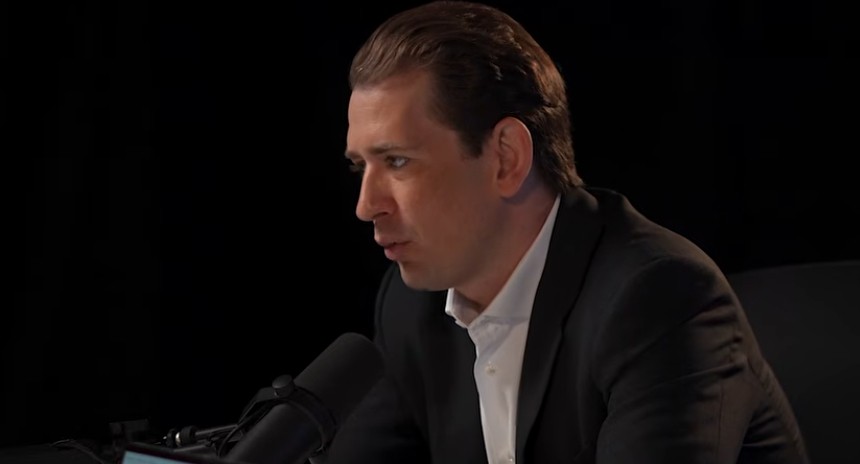
EDITOR’S NOTE: In this conversation, Raj Shamani sits down with Sebastian Kurz, the former Chancellor of Austria who became one of the world’s youngest national leaders at just 31. They cover his rise through politics, the 2015 migration crisis and his clash with Angela Merkel, the realities of holding power, and his later move into entrepreneurship with the AI and cybersecurity company DREAM. The interview offers a candid look at leadership, elections, geopolitics, and the personal cost of running a country. (August 28, 2026)
Becoming the Youngest Prime Minister in the World
RAJ SHAMANI: (00:02:10 – 00:03:13): For everyone who doesn’t know you and who’s watching you for the first time, okay, tell us, how did you become the youngest Prime Minister in the world? I don’t know anyone who’s been 30 and has become a Prime Minister at the age of 30. How did that happen?
SEBASTIAN KURZ: (00:03:14 – 00:04:45): I was 31. Second, it was not planned. To be honest, it was a long journey. But I started in politics more than ten years before that. So, to be honest, it was not planned at all.
I was at the age of sixteen, seventeen, like everybody else, going to school, enjoying going out. I played tennis, but I was also interested in politics. So at the age of 17, I started to volunteer in the youth organization of the Conservative Party in Austria. I enjoyed it. I went there for events twice a month or 3 times a month. And after a few years, I became the head of the youth organization.
I would say this was the starting point. I still didn’t want to become a professional politician, but things went very well. The youth organization became bigger and bigger, became more and more powerful. In the end, we nearly had 100,000 members, which is a lot for a small country like Austria with 9 million people. And when there was a change in the government, my party leader in these days invited me to become state secretary for integration, which is something like deputy minister.
RAJ SHAMANI: (00:04:46 – 00:04:54): And out of nowhere, he told you — because you were leading a youth party, the party leader just asked you to become state secretary?
SEBASTIAN KURZ: (00:04:55 – 00:06:56): Well, the youth organization was very sizable, and it was very successful. So it was like a powerful group within the party. I think it was not such a big surprise on one hand, because I was 24. So when he asked me to join the government, my first reaction was very negative.
I told him, look, I’m 24, I’m still at university, I’m by far too young, it’s not going to work out, media is going to kill me, it’s a bad idea. And he was patient with me and very friendly and said, look, you don’t have to decide immediately. Take your time, relax, sit down for a few hours, consult with a few people, and in a few hours we talk again and you tell me how you decide.
So I sat down, thought about it again, had the same feeling. It’s impossible. It’s not going to work. Media is going to kill me. But after 10 minutes, he came back and looked at me and said, ah, look, I feel a bit sorry for you because I told you, take your time, you have a few hours. The truth is, if you discuss something in politics with a few people, people cannot keep secrets. I have to inform you, it’s all over the news now that you are going to be State Secretary for Integration. So there is no way back.
I ended up at the age of 24 as a member of government without saying yes, without accepting the job. But a few days later, I was in this position. And unfortunately, I was right. The start was extremely tough. Media was very negative. Public opinion was very negative. And I probably had the toughest year of my life.
RAJ SHAMANI: (00:06:57 – 00:07:05): What was the worst line you read about yourself in the media when you became almost like a deputy prime minister at the age of 25?
SEBASTIAN KURZ: (00:07:05 – 00:08:14): A deputy minister. I don’t remember a single line because there were so many and all of them, or nearly all of them, were very negative. To be honest, unfortunately, most of it was even true. It was like saying that there’s not a lot of experience, that I’m super young. Most of the things were facts. And that is why it was so difficult.
So the first year in this position was really tough and it was extremely challenging. I think the only reason why I survived it was because there was no real way back. So once I was in this position, I had no other choice. I tried to do the best out of it. I tried to build the best team. I hired great people with a lot of experience around me. We worked extremely hard and tried to perform and to convince people with our performance day by day.
RAJ SHAMANI: (00:08:15 – 00:08:19): But were you the first one who became at the age of 24, became the minister as well in Austria?
SEBASTIAN KURZ: (00:08:19 – 00:08:20): Yeah.
RAJ SHAMANI: (00:08:20 – 00:08:26): So did you ask the party chief ever, like, why you? Why at the age of 24, you?
SEBASTIAN KURZ: (00:08:27 – 00:08:42): Well, I knew it was because of my position as the head of the youth organization. So this fact was not a big surprise. It was just the young age that was challenging.
RAJ SHAMANI: (00:08:42 – 00:09:02): So here’s what I’m trying to understand. The party chief appointed you because he wanted the influence of those 100,000 people who was supporting you. Or did he see a future politician in you and he wanted to recruit young people to join the party?
SEBASTIAN KURZ: (00:09:02 – 00:09:45): So he was probably more optimistic than I was.
RAJ SHAMANI: (00:09:46 – 00:09:53): And then you became, in next 4 years, the foreign minister. How did that happen?
SEBASTIAN KURZ: (00:09:53 – 00:11:29): Well, as I told you, the first year was super tough. The only thing that we were able to do was to work hard. And thank God, things got better step by step.
I will never forget that a good friend of mine called me in these days. And when I asked him for advice, he said, no, look, you don’t have a lot of choices. The only thing you can do is try to do your job. Don’t read everything which is in the media. Don’t take it too seriously. Just focus on your job. And it was great advice for these days because it was my only choice.
And then when things started to become better and better, this friend called me again and said, what I told you then is still correct. So try to do your job as good as possible. Don’t read everything that is in the media and don’t take it too seriously. So I think that’s the right approach. I think the best thing you can do in politics is you should try to do what you believe in. And if there’s a lot of criticism, try not to focus on it. Focus on your job, do your work. And if there’s a lot of applause, try not to focus on it. Just focus on your work and do your job. I think that’s the best advice I got, and that’s how I tried to do my job.
The Migration Crisis and Standing Against Merkel
RAJ SHAMANI: (00:11:29 – 00:11:42): Fair. But was there a turning point which made a young 20-year-old become the Foreign Minister? Everyone else in the ministry was probably twice your age.
SEBASTIAN KURZ: (00:11:43 – 00:12:13): Absolutely. So as I told you, the beginning was super tough. We were responsible for integration of foreigners in our country. I think what we did well is that we tried to change the whole debate. So what we said is you should not judge people by their origin or their religion, but by their performance.
RAJ SHAMANI: (00:12:13 – 00:12:13): Yeah.
SEBASTIAN KURZ: (00:12:13 – 00:13:18): So we said, focus on performance. Everybody who is in our country, no matter where he comes from, should contribute, should work hard, should learn the language, and should be somebody who contributes to society. And this approach was, I think, the right one, because it was not the left approach that all foreigners are victims and they should get a lot of social support and public money. And it was not a far-right racist approach. So I think it made a lot of sense.
With this approach, I think my team and I just did a good job in our field. And it was seen very positively by a growing number of people. And this was the main reason, I think, why we got a lot of support in the elections. And after that, I ended up in a new position.
RAJ SHAMANI: (00:13:19 – 00:13:25): So when you were the state secretary, at that time you introduced this immigration policy?
SEBASTIAN KURZ: (00:13:25 – 00:13:25): Yes.
RAJ SHAMANI: (00:13:26 – 00:13:27): And then that’s why you ended up—
SEBASTIAN KURZ: (00:13:28 – 00:13:28): Yeah.
RAJ SHAMANI: (00:13:29 – 00:13:56): What was this entire immigration policy? Because Europe generally is seen as very receptive of immigrants, right? Especially Germany. They’re very loud about it. You are very close with Germany, right? You speak the same language, and yet you were blocking the immigration and saying, if somebody is just coming to your country, they should not be welcomed if they’re not contributing to society, right?
SEBASTIAN KURZ: (00:13:56 – 00:13:57): Absolutely.
RAJ SHAMANI: (00:13:57 – 00:14:05): So how did you stand for it? Because comparatively to Germany, your country is very small, and you are a young person.
SEBASTIAN KURZ: (00:14:05 – 00:16:16): Absolutely. Look, in 2015, the migration crisis hit Europe, especially Germany, Austria, Sweden, and a few other countries. And I think the main problem in these days was that the German Chancellor Angela Merkel had the policy of open borders and welcoming everybody who wanted to move to Germany.
I think the main problem with this policy was that so many people felt invited that millions started to leave their home countries in order to end up in Germany, Austria, Sweden, or other Western European countries. And because of my experience in the work of integration, I always had the feeling that this is not going to end well. So from the beginning, I always had a different approach. We always were against the policy of open borders. We always said that illegal migration or massive migration is extremely problematic for Europe. And we also said that integration can only work successfully if there’s a limited amount of people that you have to integrate into your society.
So I was always on the other side, which was extremely tough because Merkel was very powerful in these days. She had a lot of public support for her position. All the media was supportive, and most of the other European countries too. So it was really tough in the year 2015 to have a different approach. Since then, times have changed. A lot of people changed their opinion, and many people now realize that the policy of open borders was wrong and very problematic for Europe. But in these days, it was really tough to have a different approach.
RAJ SHAMANI: (00:16:16 – 00:16:34): How do you feel today that the policy and the stuff that you were talking about in those days — you were seen as negative, you were seen as a rebel, you were seen as a person who’s standing against humanity and a stronger power — is the same approach now everybody is actually liking and following?
SEBASTIAN KURZ: (00:16:35 – 00:18:29): Yeah, but look, you said I was seen as negative, but it was much worse. They said that our approach is racist, and they compared us with Hitler and the dark days and the dark times in our continent. So it was really, really tough. And in these days, there was no room for rational debate. Everything was so emotional.
When we tried to argue that with the policy of open borders, we create a lot of problems in Europe, and at the same time, hundreds of thousands of people are in danger on their way to Europe and probably tens of thousands every year are drowning in the Mediterranean Sea because it’s dangerous — and we were arguing that the smugglers are earning a lot of money with that and we are supporting this industry — whenever we came with these arguments, there was no rational debate. It was just emotions. So it was very tough in these days.
It was a small group that we formed, supported by some Eastern European countries which had a very similar view. But the big majority in Europe was on the different side. Since then, I would say that most people have changed their mind. Public opinion has changed, but also most of the prime ministers today have a different view. And I think it’s now, thank God, common sense that Europe has to protect its external borders, and that the idea of a European Union without internal borders can only work if you have functional external borders.
RAJ SHAMANI: (00:18:29 – 00:18:46): True. And explain the scenario — now that you’re not in office, so you can probably speak more freely — that there’s a hidden rule, right, that whatever Germany says, Europe follows. Is that true?
SEBASTIAN KURZ: (00:18:49 – 00:19:39): I’m not sure if it’s hidden. Yeah, to a certain extent, I would agree. Germany is by far the most powerful country in the EU. I think what Germany normally tries to do is agree with France. And the moment the 2 countries agree on something, most of the others are pushed to follow this approach. It’s not always 100% like this, and of course on certain issues some countries are more influential. But in general, the 2 biggest countries are more or less leading within Europe.
RAJ SHAMANI: (00:19:39 – 00:20:01): And so now you know that Germany is the most powerful and everybody follows Germany, and Angela Merkel was the most powerful woman in the EU at that time. Were you ever scared to go against someone who’s the most powerful person in Europe when you’re a small minister in a small country?
SEBASTIAN KURZ: (00:20:01 – 00:20:01): Of course.
RAJ SHAMANI: (00:20:02 – 00:20:02): In front of her, at least.
SEBASTIAN KURZ: (00:20:02 – 00:20:12): Of course. We were absolutely scared in 2015, because we knew that they were trying to politically kill us.
RAJ SHAMANI: (00:20:12 – 00:20:15): So how did they try to politically kill you?
SEBASTIAN KURZ: (00:20:15 – 00:20:30): Well, it was difficult in the government. I think the chancellor and the vice chancellor were considering pushing me out of government.
RAJ SHAMANI: (00:20:31 – 00:20:31): Your own country’s?
SEBASTIAN KURZ: (00:20:32 – 00:20:32): Of course.
RAJ SHAMANI: (00:20:32 – 00:20:33): Because they were following you?
SEBASTIAN KURZ: (00:20:33 – 00:22:19): Yeah, of course. There was a huge media campaign against us. There was a lot of pressure in the meetings in Brussels. So it was really tough. But I think the main reason why we kept our position was really the experience that we had working in the area of integration in the years before.
Because if you work in this field, you figure out that a lot of positive outcomes are possible if the right people are entering a country. But you also see with your own eyes every day what can go wrong if you attract people that you don’t want to have in your country. And you also see very quickly that it’s all about numbers. So if you have a class of 25 schoolchildren, and 23 have German as their mother tongue and you have 2 immigrants that don’t have German as their mother tongue, it normally works very quickly that they catch up. But if you have a class of 25 children where 20 or 22 or 23 are not from Austria and don’t have German as their mother tongue, then it becomes very, very difficult.
So, with this knowledge, with this experience from our work in integration, we just felt that it was our duty to keep this position. And it was tough, but today I’m very thankful that we stayed strong and did not give up in these days.
RAJ SHAMANI: (00:22:20 – 00:22:37): Did you ever think that you should back up? That you should just not go against someone that powerful? Because that would have made you very close to her, or close to powerful people, and that would have helped you become better in your political career.
SEBASTIAN KURZ: (00:22:37 – 00:23:17): Of course, you can always argue you should choose your fights, and probably at the age of 27, 28, that’s not the right one. But to be honest, we were so clear and 100% sure that the idea of open borders would not work. We were 100% sure that this was going to end up in a big mess. We were so committed to our idea that there was no other path for us. And I would have rather resigned than give up this position.
RAJ SHAMANI: (00:23:18 – 00:23:50): Interesting. If you had to summarize one specific problem — what was the biggest concern? What did you see happening in the future that these guys didn’t get, that Europe at that time didn’t get?
SEBASTIAN KURZ: (00:23:50 – 00:26:13): I think there were so many aspects about it. The first is, we live in a world with more than 6 billion people. So there are unfortunately hundreds of millions of people that live in very poor conditions. And so there is a nearly unlimited amount of people that are ready to leave their country to move to a country like Germany, Austria, or Sweden. That’s number one.
Number 2, the fact that if you have a policy of open borders, the ones who profit the most are the smugglers and human traffickers — that’s something I didn’t want to swallow.
Third, if so many people leave and try to go through the Mediterranean Sea to Europe, tens of thousands every year lose their life on this journey, which is also something that is unacceptable, if you ask me.
And then for Europe, the way our countries are built is that we have very strong social welfare systems, which means we have extremely high standards. People who do not find a job or do not have work will end up with more than €1,000 a month, which is a few times the income for somebody who is full-time working in other parts of the world. But these systems only function if you always have a very high number of people who pay taxes and finance the system and a very limited number who get money out of the system. And if you open such a system to illegal migration and people from everywhere around the world can enter the system and get money out of it without having paid €1 in, then you just destroy the system. I think this was always clear, but because of all the emotions in these days, most politicians didn’t care about that.
RAJ SHAMANI: (00:26:14 – 00:26:22): And they had the famous saying in German, right? I forgot — “Wir…” something. “Wir schaffen das.” We will manage it.
SEBASTIAN KURZ: (00:26:22 – 00:26:43): Yeah, “we will manage it.” It was the motto of Angela Merkel. I think at a certain point in time, when it was obvious that it’s not going to work, she tried to tell people, okay, just keep on going, we will manage it, Wir schaffen das. Of course, this was a lie.
RAJ SHAMANI: (00:26:43 – 00:26:47): Yeah, I heard this one when I was first in Vienna.
SEBASTIAN KURZ: (00:26:48 – 00:26:48): Okay.
RAJ SHAMANI: (00:26:49 – 00:26:52): My first country ever which I visited outside India was Vienna.
SEBASTIAN KURZ: (00:26:52 – 00:26:53): Really?
RAJ SHAMANI: (00:26:53 – 00:26:55): Yeah, because I was at the United Nations.
SEBASTIAN KURZ: (00:26:55 – 00:26:57): That’s a privilege for us.
RAJ SHAMANI: (00:26:57 – 00:27:05): Thank you. That was why Vienna — because of the United Nations. So I got into UNIDO.
SEBASTIAN KURZ: (00:27:05 – 00:27:05): Yeah.
RAJ SHAMANI: (00:27:05 – 00:27:08): Which comes under the Vienna headquarters.
SEBASTIAN KURZ: (00:27:08 – 00:27:08): Yeah.
RAJ SHAMANI: (00:27:08 – 00:27:12): The UN. And I got an opportunity to go there to represent India, to do certain things.
SEBASTIAN KURZ: (00:27:12 – 00:27:13): Oh, great.
RAJ SHAMANI: (00:27:13 – 00:27:17): And it was 2015 or ’14, I remember.
SEBASTIAN KURZ: (00:27:17 – 00:27:23): We are very proud to host so many international organizations in Vienna, especially the UN.
RAJ SHAMANI: (00:27:23 – 00:27:32): Yes, thank you. And thank you so much for accepting because it was a training ground for me. This is where I learned so many things.
SEBASTIAN KURZ: (00:27:32 – 00:27:33): Have you enjoyed it?
RAJ SHAMANI: (00:27:33 – 00:27:42): Oh, I loved it. Vienna is by far one of my favorite cities because I just learned every little thing there.
SEBASTIAN KURZ: (00:27:42 – 00:27:44): Great. You’re always welcome.
RAJ SHAMANI: (00:27:44 – 00:27:54): While you were explaining all of this, tell me — did you ever think that cultural identity is something you want to preserve? Because a lot of people are talking about it now.
SEBASTIAN KURZ: (00:27:55 – 00:28:24): I, of course, think that cultural identity is important for a country and for a society. But that was not the main issue in these days. I think the main issue in these days was just to stop this massive flow of illegal migrants, which would cause so many different problems. Cultural identity is just one aspect out of it.
RAJ SHAMANI: (00:28:24 – 00:28:33): And it wasn’t like what’s happening to London right now, or what’s happening to the UK at this point. Do you think that’s something you worried about, because the UK is losing its ground?
SEBASTIAN KURZ: (00:28:34 – 00:29:12): Of course. But as you said, it’s one aspect — there are so many other problems as well. If you look at, for example, the social welfare system and many other areas — but it’s definitely one important aspect. You can see in many European cities what happens if you don’t control migration, if you don’t decide who is allowed to come and who is not allowed to come. And you can do it in a very smart way. Look at countries like Singapore or the UAE. They are attracting the best talent in the world.
RAJ SHAMANI: (00:29:12 – 00:29:12): Yeah.
SEBASTIAN KURZ: (00:29:12 – 00:29:35): And that’s of course attractive for a country, and that brings a lot of positive developments. But if you don’t control migration, if you allow the smugglers to decide who is able to come and who is not, and if it’s not a decision by the government, by the people, then you end up in a big mess.
RAJ SHAMANI: (00:29:35 – 00:29:41): True. Which city or country do you think is suffering the most because of—
SEBASTIAN KURZ: (00:29:42 – 00:30:12): Unfortunately, I think there are many examples. But if you look at Brussels today, if you look at certain cities in France — of course, you see that these cities have changed a lot, that there is not the same level of security. And if you look at the schools, you see that it has become very, very difficult to keep the standards.
RAJ SHAMANI: (00:30:13 – 00:30:25): What’s more important for getting international organizations together — where it happens, in Switzerland or Brussels? Which is the more important place?
SEBASTIAN KURZ: (00:30:26 – 00:30:53): It depends what you look at. If you look at the UN, then of course there are other headquarters than if you look at the European Union. For the European Union, most of the decision-making is happening in Brussels because that’s where the council meetings take place. That’s where the European Commission is based. That’s where the European institutions are.
From Foreign Minister to Prime Minister
RAJ SHAMANI: (00:30:54 – 00:31:07): Because what I’m trying to understand is, how does a 27-year-old all of a sudden get promoted to become a foreign minister? There must be something, right? So the student organization helped you become Secretary of State — that I understood.
SEBASTIAN KURZ: (00:31:08 – 00:31:42): But now, making me one of the youngest foreign ministers in the world — I think it was, first of all, the support of my party leader in these days. Second, I think it was my team and that we really did a good job in the area of integration. And third, of course, it’s always election in a democracy. So in these days, I ended up with a lot of personal votes.
RAJ SHAMANI: (00:31:43 – 00:31:44): What is a personal vote?
SEBASTIAN KURZ: (00:31:45 – 00:32:06): In our system, you vote for parties, but you can also support individuals if you write in their name. And we had a lot of support in this election. I think this was a driver within the party and for my party leader to offer me this position in these days.
RAJ SHAMANI: (00:32:06 – 00:32:07): Did you win the highest personal vote?
SEBASTIAN KURZ: (00:32:08 – 00:32:08): Yes.
RAJ SHAMANI: (00:32:09 – 00:32:15): And then how, in the next four years, did you become the prime minister?
SEBASTIAN KURZ: (00:32:16 – 00:32:19): That was a tough journey, to be honest.
RAJ SHAMANI: (00:32:19 – 00:32:20): What was the tough part?
SEBASTIAN KURZ: (00:32:21 – 00:35:17): Listening to you, it sounds like step by step, as if everything was very easy, but it was very different, to be honest. When I started in office as foreign minister, I was again super young in this position. It was not an easy start. I had a great team, thank God. And as we spoke, the main challenge was the migration crisis in these days. So there were a lot of internal fights around this issue. There was a lot of pressure. There were a lot of media campaigns against us. So it was not an easy one.
In the end, I think the answer is I took a lot of risk when I was foreign minister and when we were in the middle of the migration crisis. There were a lot of people who had a different view than us, also within my party. And so it ended up in a big conflict where it was unclear what the outcome would be. At a certain point in time, I ended up in a situation where my party leader stepped down and there was the question of whether I was ready to take over the party or not.
Of course, the easiest answer would have been to take over the party, to continue as junior partner of the Socialists, to become vice chancellor. But I was very frustrated with the coalition with the Socialists. I did not believe in these days that this coalition would provide the right answers on the question of migration. And also in all other aspects, I was very skeptical that this partnership was working.
So I took a lot of risk, took over the party, but at the same time stepped out of the coalition and asked for early elections, which was a lot of risk, which was in a way unexpected. And of course, the outcome was unclear. To be honest, the last thing I wanted in these days was just to have a governmental position to have it, without being able to do something positive or change something where I thought change was needed. So we took a lot of risk, asked for early elections, went all in, and in the end we were lucky and won.
RAJ SHAMANI: (00:35:17 – 00:35:30): Now I have 3 questions on this. You painted it out as if it was very easy — that you just took a risk and then this happened. I have a specific question. First, you said you went against the party chief of your own party.
SEBASTIAN KURZ: (00:35:30 – 00:35:32): But it was a different one. It changed.
RAJ SHAMANI: (00:35:32 – 00:35:33): Okay, not the one who—
SEBASTIAN KURZ: (00:35:33 – 00:35:35): Not the one in the past, no.
RAJ SHAMANI: (00:35:35 – 00:35:36): Okay, not the one who got you in.
SEBASTIAN KURZ: (00:35:36 – 00:35:39): No, no, it was a different person, yeah.
RAJ SHAMANI: (00:35:40 – 00:35:42): And why did you go against him? What was the main reason?
SEBASTIAN KURZ: (00:35:43 – 00:35:44): Well, I would say—
RAJ SHAMANI: (00:35:45 – 00:35:46): And how old was he, by the way?
SEBASTIAN KURZ: (00:35:47 – 00:35:54): He was much older, but I would say that I didn’t go against him — he went against me. That was my point of view.
RAJ SHAMANI: (00:35:55 – 00:35:57): What was he against?
SEBASTIAN KURZ: (00:35:57 – 00:37:41): He had a different perspective on migration. He was supporting Angela Merkel’s approach, which was the main issue for me. And besides that, in these days, I’m a conservative, and we were the junior partner of the Socialists in a coalition between the Socialists and the Conservatives — which is a coalition that, at least from my point of view, is a very difficult one, because both parties have completely different ideas on nearly everything.
So this coalition was in a way stuck in days where I thought it was necessary to do reforms and also fix migration, which was our biggest problem in these days. And that was the reason I was very controversial in these days, and it was very unclear how everything would end up. I think the main goal of my party leader in these days was to get rid of me and just continue the coalition. And when he saw that this did not work out, he resigned. I had the decision to make — either to take over and become Vice Chancellor and continue everything as it was, or to do something different. And of course, for me it was clear to do something different because I was very upset with the status of the coalition and the policy on migration in these days.
RAJ SHAMANI: (00:37:42 – 00:37:44): When you asked for early elections, were you confident? Be honest.
SEBASTIAN KURZ: (00:37:47 – 00:39:04): Well, in politics you never know. I was not sure at all. But I was willing to take the risk because I never wanted to be a professional politician. That was never my goal. I ended up as a member of government, as I told you before, more or less by accident. But I enjoyed it a lot. The thing I enjoyed is to fight for something that you believe in, to do something positive for your country, and to do what you think is good and right for the people in your country.
So for me, it was clear that it wouldn’t make any sense to just keep a position just to have it, without the power to change it. That was the reason I asked for early elections, why I was ready to take this big risk. And for me it was also clear that if you win, you can really change something. And if you lose, you leave and do something else.
RAJ SHAMANI: (00:39:05 – 00:39:09): At what point did you seriously think that you could lead this country?
SEBASTIAN KURZ: (00:39:10 – 00:39:17): Well, I think when I asked for early elections — that was the point of no return.
RAJ SHAMANI: (00:39:18 – 00:39:47): Almost nobody who’s alive today has run a country when they were thirty or thirty-one, right? What did you understand that your opponents didn’t? Because Austrians trusted — why did Austrians, why did people trust a 30-year-old to run the country? What was your winning leverage? Because people voted for you.
SEBASTIAN KURZ: (00:39:47 – 00:40:33): I think I always tried to have the best team. And what we did in my days is that we brought a lot of people in from outside politics — not only people who spent their whole life in politics, but people who were successful business people or managers or ran universities or other institutions. So I think we were able not only to create a big movement, but also to bring a lot of knowledge and experience into the inner circle of politics. And I think this was the main advantage that we had compared to other traditional parties.
RAJ SHAMANI: (00:40:34 – 00:40:38): So because your team was great, people voted for that as well?
SEBASTIAN KURZ: (00:40:38 – 00:42:02): I think that was a very important aspect. And I think the second thing was that after so many years of this coalition between the Socialists and the Conservative Party, where not a lot of change was possible because everything felt stuck, I think the country was ready — also for reforms and for something new. And this was exactly what we tried.
We partnered up for the first time in a long time with the far right. So it was a center-right coalition — my center-right party with a far-right party — which made it possible to have a new, tough approach on illegal migration, which made it possible to do some necessary reforms. We achieved a budget surplus instead of deficit spending. We were very business-friendly, which made the country more competitive. And we reduced taxes for working people. So I think we were able to change a lot in a short period of time, which was very much supported by the majority of people.
Power, Bureaucracy, and World Leaders
RAJ SHAMANI: (00:42:03 – 00:42:14): After you became Prime Minister — the day you became Prime Minister, or in the first couple of days — who did you discover had the most power, which you didn’t expect?
SEBASTIAN KURZ: (00:42:14 – 00:43:32): I think because I was Foreign Minister before, and Deputy Minister before that, I was young but I had a lot of experience and I knew the system quite well. So there weren’t so many surprises. What I would say is that there’s probably a lot of power in bureaucracy, which is not so much seen by most people. Most people believe that as a politician you take the decision, so it’s all about the politicians.
The truth is there’s a lot of room for politicians, especially if they are brave and ready to enter a fight. But bureaucracy is very strong, especially in the EU, which means that political decisions sometimes seem to be a bit limited because of this huge bureaucracy, where most people are not brave enough to fight it. And I would say this was not a real surprise because I knew about it, but it was even tougher than I thought.
RAJ SHAMANI: (00:43:33 – 00:44:09): But tell me — because you’ve been Prime Minister and you understand this about the world — who is the most powerful person? Is it the one leading the bureaucracy? Is it the agencies, like the CIA and FBI in the US? Or is it some group of 5, 6 billionaires running everything because they invest in infrastructure and control the money? Or is it the prime minister or the person sitting in that office? Who has the maximum power?
SEBASTIAN KURZ: (00:44:09 – 00:45:51): I think it depends whether you’re talking about Austria, the EU, or the world in general. So talking about the world, I would say it’s very easy to answer — there are only a few superpowers. That’s mainly still the US and China. India has become super important, and Russia is definitely a player. But the number of superpowers is limited.
You have to distinguish between Western liberal democracies, where you always have checks and balances and power is limited in a way, and other countries in the world with different systems, where one person can be much more a center of power than is possible in the Western world.
Of course, tech companies are getting more and more important. If you look at the numbers of users of social media platforms, of course their algorithms and other decisions they make have a lot of influence on public opinion, and probably in the end on elections too.
RAJ SHAMANI: (00:45:51 – 00:46:09): So if we keep China and their leader aside, because that’s where the concentrated power is and there are no checks and balances — who do you think would be the 2 or 3 people who have the maximum amount of power today in the world? Is it tech giants or the president of—
SEBASTIAN KURZ: (00:46:10 – 00:46:17): No, it’s definitely the president of the US, who is always the most powerful person in the world.
RAJ SHAMANI: (00:46:17 – 00:46:34): And isn’t it like how we read everywhere in random articles, or a lot of conspiracy theorists on the internet talk about — I heard one billionaire say it.
SEBASTIAN KURZ: (00:46:34 – 00:46:39): I think you should always enjoy conspiracy theories, but you should not believe them.
RAJ SHAMANI: (00:46:40 – 00:46:45): That’s why I’m asking you, right? I don’t believe a lot of them, but I enjoy a lot of them.
SEBASTIAN KURZ: (00:46:46 – 00:46:46): Okay, that’s fine.
RAJ SHAMANI: (00:46:47 – 00:46:57): I heard one billionaire say that the world is controlled by 100 people sitting on one table, and they decide who’s going to be the leader of the world next.
SEBASTIAN KURZ: (00:46:57 – 00:46:58): That’s bullshit.
RAJ SHAMANI: (00:46:58 – 00:46:59): That’s pure bullshit?
SEBASTIAN KURZ: (00:46:59 – 00:47:00): Pure bullshit.
RAJ SHAMANI: (00:47:01 – 00:47:08): It’s not decided by 100 men who are like behind the mask, and they decide how politicians appear as mere pawns and so on?
SEBASTIAN KURZ: (00:47:08 – 00:48:05): Absolutely not. Look, if you follow the public debate in the US, I think it’s obvious that nobody knows at the moment who will be the next nominees for the presidential campaign in 2 years. Nobody knows who is going to win. So it’s not a decision by a small group of people. In Western liberal democracies, it’s always a decision by the voters.
And to be honest, it’s very, very difficult to predict the outcome of these elections. In the US system, it’s even difficult to predict the outcome of the primaries. So if you ask me now who is going to run next time for the Republicans in the US, I would tell you it’s difficult to say if it’s Marco Rubio or JD Vance or somebody else.
RAJ SHAMANI: (00:48:06 – 00:48:24): And have you ever seen a sign that a few people invest in a certain candidate from a very young age and build them up, fund their entire political career and campaigns, and slowly end up making them one of the most powerful people in the world? Does that happen?
SEBASTIAN KURZ: (00:48:25 – 00:48:30): Well, I think it depends which country we’re talking about. So in most—
RAJ SHAMANI: (00:48:30 – 00:48:31): I was talking about democracies.
SEBASTIAN KURZ: (00:48:31 – 00:50:22): Yeah, in most European countries, especially in our system, for example, you have a lot of public money for political parties, and support from the business sector for political parties is very limited and not really relevant. So there is nothing like such a phenomenon.
In the US, of course, it’s a different story. They spend a lot of money on campaigns, and there’s a lot of support from individuals or certain businesses. But also here, I think this should not lead to a conspiracy theory. Why? Because if you look at the numbers, there was a lot of discussion about Elon Musk and other big supporters of the Republicans at the last election. I once looked at the numbers because I was interested, and I learned that the Democrats, for example, got even more money than the Republicans did. In the end, both parties spent more than $1 billion, but the amount the Democrats raised was even higher.
So if you look at these numbers in detail, you’ll find out there’s a lot of support for the political system, but in the end, the group of people that support parties is a very diverse group, and I would not overestimate their influence. I think the best example is the fight that Elon Musk and Trump had just a few months after he got into office. So I think that’s proof that all these theories are, to be honest, not really true.
RAJ SHAMANI: (00:50:22 – 00:50:42): Does this happen — certain media companies and powerful, rich individuals all come together, become friends with you, and form a certain narrative to sway the entire audience of people out there, or the world power? Does that happen?
SEBASTIAN KURZ: (00:50:43 – 00:50:43): No, in our—
RAJ SHAMANI: (00:50:43 – 00:50:49): You become friends with a lot of people who come and say, hey, we’re on your side and we’ll make sure nothing goes wrong against you.
SEBASTIAN KURZ: (00:50:50 – 00:51:38): Unfortunately, not at all. I think the moment you get into a political position, the first thing you learn is that there’s a lot of criticism from all sides. And no matter which decision you take, there is always a big amount of people on the other side.
In our system, we always have coalition governments. We have at the moment 5 political parties in the parliament. So there is a very wide range of opinions in the political system, which is good, but at the same time it makes it quite challenging.
RAJ SHAMANI: (00:51:38 – 00:51:48): But don’t they want to become your friends? Because I’m assuming the moment you become powerful, all these large media giants would want to become your friend and probably help you out.
SEBASTIAN KURZ: (00:51:49 – 00:53:31): No, I witnessed the opposite. I would say because I’m center-right, my feeling is you don’t get treated that well in the media, because most journalists — not all of them, but most — are more leaning to the left. I think that’s one part of the problem of the public debate that we have at the moment in many European countries, also in Germany, for example — that most of the traditional media is more on the left, and the far right has become very powerful on social media.
I think this is not ideal for our system, but it’s a fact. So you’ll have, for example, a lot of voters on the right who do not believe in what they read or hear or see in traditional media. And on the other hand, if you ask a lot of journalists, they would see social media, new media, some podcasts, or independent journalists as a problem for our public debate. So I think the system is changing. Nobody really knows where it’s going to end exactly. But it’s definitely not working very well. That’s what I would say.
RAJ SHAMANI: (00:53:32 – 00:53:57): How do you win an election? Do you have to control the media narrative? Is it political personality? Is it the speeches that people believe in? Is it internal politics and support because everyone’s supporting you and you end up winning? Or is it an extreme amount of money from large business corporations? What is the most important factor in winning an election?
SEBASTIAN KURZ: (00:53:58 – 00:55:30): You have to distinguish between the US and Europe. I think it’s very different in the US — you have a 2-party system, money is very important in the campaign. In Europe, you have a multi-party system. There’s a lot of public money and less support from businesses or individuals. So you cannot really compare it.
In our system in Europe, I would say you have a certain amount of people who always vote for the same party, no matter the election, no matter who the candidate is. And then of course you have people who always make a new decision at every single election. Here I would say the trend is that personalities become more and more important. So it’s more and more relevant who the party leader is, and whether people follow and trust him or not. So I would say that’s the new trend.
If you look at Europe in general, I would say there is also a shift to the right. At most of the last elections, there was a shift to center-right or far-right parties within Europe. Also at the next European election, I would expect a further shift to the center-right and far-right.
RAJ SHAMANI: (00:55:31 – 00:55:50): And what contributes to which individual wins? Let’s say the right is the sentiment of the audience right now — then there must be a lot of suitable candidates who want this, because it’s a multi-party system. What do people believe in? Who do people believe in — the one who is a very charming speaker?
SEBASTIAN KURZ: (00:55:50 – 00:57:20): No, I think it’s very difficult to find one aspect. If you ask me, most of the politicians that I met who are successful are quite different. Some are from rural areas, some are from cities, men and women, older, younger, experience outside politics, no experience at all. So I would say it’s very difficult to say.
If you look at Europe right now, some of them are professional politicians who spent all their life in politics. And then you have, for example, in our neighboring country, the Czech Republic, a businessman who became a billionaire and entered politics at the end of his career, and now won the elections a second time. In other countries, like Slovenia, another neighboring country — he’s been in politics all his life since he was a student. So it’s very difficult to say this is the one thing. I think it’s always the full picture of a party and of a person that matters.
RAJ SHAMANI: (00:57:20 – 00:57:24): Who are the world leaders you like today?
SEBASTIAN KURZ: (00:57:24 – 00:58:22): Well, I think there are many great personalities in Europe. For example, I always worked very well with Mark Rutte, who was Prime Minister of the Netherlands in these days. He’s now the Secretary General of NATO. I think he’s doing a great job in difficult days for NATO. A bunch of successful prime ministers are pushing their countries in the right direction. I think Meloni is doing a great job in Italy, for example. She did a lot of necessary reforms. The Italian economy is doing much better than many other countries. So I think there’s a number of very successful leaders.
Life as Prime Minister: The First Days
RAJ SHAMANI: (00:58:23 – 00:58:44): All right, let’s go to your life as Prime Minister when you first became one. Okay, like the first 24 hours, the moment it happened. The moment you got to know that now you’re 31, you won the elections and you’re going to become the Prime Minister — how were you feeling? What’s the first thought that comes to your head?
SEBASTIAN KURZ: (00:58:44 – 01:02:14): So the way you describe it, it sounds a bit like in a movie. The reality is, I would say, pretty much different. First of all, the day of the election is a tough day, because — in our case, it’s always on a Sunday — you get some opinion polling the day before, on a Saturday. So you get a feeling of how it could look, but nobody knows if the opinion polling is correct or not. And then during the day, you wait, and it feels very long.
In our case, it’s a much smaller country than India, of course, but still a few million people have to go vote. So around 5 o’clock in the afternoon, you have the first results. The whole day is a day you keep waiting to hear at 5 o’clock what the outcome is. And you have different emotions during the day. So a few hours you think everything will be fine and you’re going to win. A few hours you think everything will be terrible and you’re going to lose. So you don’t know till the end.
And then, of course, the moment you find out — in my case, it was very positive because I ran in 2 elections and both times we won. So 5 o’clock on these 2 Sundays was very emotional and positive. But then the minute after, you realize you have a lot of things in your mind that you have to do.
Before the first election, because the campaign was so tough and so intense, I agreed with my team that we were going to celebrate if we won and we were not going to work on Monday — we would only go back to work on Tuesday after elections. But the truth is that we won the elections, we were super happy about it for a few minutes, and then we realized that the next step is that we have to build a coalition. In these days, we had the feeling that probably the second and third parties would try to build a coalition against us. So the reality was that we were celebrating, but the idea to skip Monday and go back to work on Tuesday, of course, did not work out. Everybody was in the office Monday morning early in order to figure out how it’s possible to build a coalition and how to make it happen.
The reality, especially in a system like ours where you have to build coalitions, is that the election is the first step, but then you have to work hard, and it normally takes a few months to negotiate a governmental program with a coalition partner, which is also very tough and takes a lot of time and energy, and nearly feels like a second campaign that you have to run.
RAJ SHAMANI: This was the first time when you became Prime Minister? Yeah.
RAJ SHAMANI: (01:02:15 – 01:02:17): This was — we found out these.
SEBASTIAN KURZ: (01:02:17 – 01:02:23): That’s Elisabeth Köstinger. She was secretary of our party.
RAJ SHAMANI: (01:02:24 – 01:02:25): So this was your first ceremony?
SEBASTIAN KURZ: (01:02:28 – 01:02:38): It looks like it, yeah. The colors were always the same, so it could have been 2017 or 2019. But no, here it says 2017, so it was the first campaign.
RAJ SHAMANI: (01:02:39 – 01:02:43): Yeah, so it was the first campaign — first time you took the oath.
SEBASTIAN KURZ: (01:02:44 – 01:02:44): Yeah.
RAJ SHAMANI: (01:02:45 – 01:03:15): And after the oath, the reality must have hit in. Actually, before the oath, a lot of responsibility must have hit in, right — that you have to absolutely now do things. What are the first documents that you receive as a Prime Minister? The moment you become Prime Minister, what do you first receive? What information, what document, what classified things that nobody else gets? What’s the first briefing?
SEBASTIAN KURZ: (01:03:16 – 01:04:19): The first thing in our system, after the election, is that you have to negotiate with the other parties in order to build a coalition. The moment you’re able to build a coalition, you decide on the ministers, on the structure of the government, and then you get started. Of course, then you get a lot of briefings, and also intelligence briefings, and you try to do what you promised in the election campaigns.
Besides the politicians, you have a big bureaucracy in our system, and there are different systems around the world, but in ours, the bureaucracy does not change. They stay no matter who wins the elections. So I would say there’s no risk of losing information, because bureaucracy stays the same and these people keep their information no matter who takes over the ministry.
RAJ SHAMANI: (01:04:20 – 01:04:23): Who do you have the first meeting with? The bureaucrats?
SEBASTIAN KURZ: (01:04:24 – 01:04:58): After the negotiation, after you’ve become the Prime Minister and taken the oath, then there is a Council of Ministers, at the governmental meeting, which is the main meeting once a week. And besides that, you have your role within the parliament, you have to work with the bureaucracy. And in our case, as a member state of the European Union, the European Council and the interaction between the 27 member states and Brussels is an important one.
RAJ SHAMANI: (01:04:58 – 01:05:01): And that’s on day 1? All of this happens on day 1?
SEBASTIAN KURZ: (01:05:01 – 01:05:04): I would say all of them, to a certain extent, happen on day 1. Yeah.
RAJ SHAMANI: (01:05:05 – 01:05:08): Who decides what reaches your desk?
SEBASTIAN KURZ: (01:05:10 – 01:05:51): Well, that’s the most important thing. You have to build a great team around you. In our case, it’s called the cabinet, where every minister — and also the prime minister — has a small team of 10 to 20 people around him. This is key. I always tried to hire the best people for these positions, because if this team is performing, the minister or the prime minister can easily do a great job. If this team is not performing, then you can be the smartest person on earth and you will not succeed.
RAJ SHAMANI: (01:05:52 – 01:06:00): So you have ministers or cabinet ministers — I’m not talking about them. I’m talking about who are the people around you.
SEBASTIAN KURZ: (01:06:00 – 01:06:01): Yeah, that was what I meant. Yeah.
RAJ SHAMANI: (01:06:02 – 01:06:03): And how many people around you?
SEBASTIAN KURZ: (01:06:03 – 01:06:04): Like 10 to 20.
RAJ SHAMANI: (01:06:05 – 01:06:11): And do all 20 decide what comes to your desk, or only 2 or 3 people — like, you have one Chief of Staff?
SEBASTIAN KURZ: (01:06:12 – 01:06:44): No, there’s a structure like in every company. You have a head of office who is running this team, and then you have experts for different areas, and they work with the bureaucracy, which is huge. So this small group has to help you manage tens of thousands of people in the bureaucracy, and at the same time helps you be as well prepared as possible for your work.
RAJ SHAMANI: (01:06:44 – 01:06:49): So 10, 20 people — but do all 20 have equal access to you?
SEBASTIAN KURZ: (01:06:50 – 01:07:05): I would say in general, yes, but of course sometimes some issues are more important than others. It depends — during the days of COVID there was a different focus than during the migration crisis, or now when there is a war with Ukraine.
RAJ SHAMANI: (01:07:06 – 01:07:21): And throughout all your years in office, who are the 2 or 3 people you end up spending the most amount of time with? Is it the head of office, or head of press, or military guys, or defense intelligence?
SEBASTIAN KURZ: (01:07:21 – 01:07:36): It’s all of them. It’s definitely the head of office. It’s the head of communication. It’s the people responsible for different fields where you have a focus.
RAJ SHAMANI: (01:07:36 – 01:07:45): And who are the one or two people who are always with you no matter where you go, because you have your own people, right?
SEBASTIAN KURZ: (01:07:45 – 01:08:08): Yeah, but there’s not one person who is always with you. It always depends on what you’re dealing with. So, for example, there’s one advisor on foreign policy, one advisor on the EU, one advisor on the economy. It depends on what you’re working on or whom you’re meeting.
RAJ SHAMANI: (01:08:08 – 01:08:13): Okay, but not even your chief of staff or personal secretary is always with you?
SEBASTIAN KURZ: (01:08:14 – 01:08:45): No, because the chief of staff has to run the whole thing. If he’s with you in every meeting, he’s not able to do his job properly. So it’s always a mixture. These key people are people you need in many meetings, but at the same time, if they’re only in meetings with you the whole day, they can’t do the rest of their job. So you always have to find a good combination of how they spend their time in order to be efficient as a team.
RAJ SHAMANI: (01:08:45 – 01:09:13): Who’s one person who is a bizarre thing to have around you as a Prime Minister? Like, I was looking at US presidents’ pictures — there’s this one person who’s always with a printer around him. I think Donald Trump has one — this person who’s always with the printer, walking around with a printer in case the president needs anything. Is there anyone like that around you?
SEBASTIAN KURZ: (01:09:13 – 01:09:16): We are very digital also in these days.
RAJ SHAMANI: (01:09:16 – 01:09:23): Yeah, right now I’m just seeing — I think Donald Trump has it. Is there anyone like that who’s around you?
SEBASTIAN KURZ: (01:09:24 – 01:09:29): No, no, nothing bizarre, I would tell you. Not really. No.
RAJ SHAMANI: (01:09:29 – 01:09:37): Yeah. And did you keep all the people who were around you — were they all new, or were they from before?
SEBASTIAN KURZ: (01:09:37 – 01:10:05): No, they were all new. It was a combination of people I worked with at the beginning when I started in politics, people I worked with in the field of integration, people from my days in the Foreign Ministry, and then people that I hired in addition when I became Prime Minister. So it was a good combination from many different areas.
RAJ SHAMANI: (01:10:05 – 01:10:24): As a Prime Minister, when you hire a team around you, what is one or two traits you look for? Is it trust, or expertise to manage diplomacy and bureaucracy, or experience, or just being a revolutionary, rebel, new people, new ideas?
SEBASTIAN KURZ: (01:10:25 – 01:10:26): It’s always a combination because—
RAJ SHAMANI: (01:10:27 – 01:10:28): What’s the highest?
SEBASTIAN KURZ: (01:10:28 – 01:11:24): Look, to be honest, you need all of that. Because if you trust someone but he doesn’t perform, he can be a great friend, but he should not be somebody who works for you. If you trust someone and he performs, but he’s not brave enough to push necessary changes, he will not be able to make your life easier in achieving your goals. So you always need all these aspects. I think ideally it’s a combination of being loyal, being great in the area you work in, and being brave enough to push for necessary reforms even if people fight back.
RAJ SHAMANI: (01:11:25 – 01:11:27): How many intelligence agencies do you have?
SEBASTIAN KURZ: (01:11:27 – 01:11:28): Internal and external.
RAJ SHAMANI: (01:11:29 – 01:11:36): Internal and external. And do those people stay the same throughout, or do you change them as you become prime minister?
SEBASTIAN KURZ: (01:11:36 – 01:11:38): No, it’s part of the bureaucracy.
RAJ SHAMANI: (01:11:38 – 01:11:48): And you don’t have the power to change it? Because in the US, every president gets to choose their own candidate for head of the CIA or head of the FBI.
SEBASTIAN KURZ: (01:11:49 – 01:12:28): Yeah, look, in our system it’s different from the US. In many European systems, there is no automatic change in bureaucracy because of political elections. In the US, it’s a completely different system, which means that not only the ministers change, but as you said, also the key people in the bureaucracy, also the key players in intelligence agencies, or the diplomats — all their ambassadors are political appointees. So that’s a different system than ours and the system in most European countries.
Trust, Intelligence, and Decision-Making
RAJ SHAMANI: (01:12:28 – 01:12:32): So how do you know that the intelligence agencies are telling you the truth?
SEBASTIAN KURZ: (01:12:34 – 01:13:22): Well, you never know. But the main advantage of political positions, or the main advantage of being prime minister, is that you can speak to a lot of people — you can call a lot of people and they will pick up the phone. So what I always tried to do is get a lot of information from different people inside my country, outside my country, people who are politically with me, people who are politically on another side. I think if you do it like this, you always get different opinions, but in the end, you get the right view on every single issue. That was always my approach, and I was always very happy with that style.
RAJ SHAMANI: (01:13:22 – 01:13:42): And do you have a personal decision-making framework? Because as a prime minister, as head of state, you have to make decisions all the time, and you know that every decision will benefit a lot of people but also might affect a lot of people at the same time. There’s no one decision which is right.
SEBASTIAN KURZ: (01:13:42 – 01:14:19): The most important thing is to be aware that not all your decisions can be right, and you have to be okay with it. Because I know a lot of people who, because they know that not all decisions can be right, get very scared to take decisions, and I think that’s one of the main problems in politics. You have to be okay with the fact that not everything can be right, and you have to be brave to take decisions, because that’s the main thing you have to do in such a position. That’s what I always try to do.
RAJ SHAMANI: (01:14:20 – 01:14:29): But is there a framework or concept that you have in your mind before you take a decision, or is it always gut-driven in the end?
SEBASTIAN KURZ: (01:14:30 – 01:15:23): What I always tried is to talk with many different people who have different backgrounds and views on a certain issue, and this helped me get different information, and then, in the end, use this as a basis to take my decision. And I’m somebody who loves to work with people — I love to work within a team, so I was never lonely in this decision-making process. It was always something that happened within the team, and that always gave me a lot of comfort — to have intensive discussions within the team that sometimes took the whole day or till late at night, till we were at the point where we felt ready to take a decision.
RAJ SHAMANI: (01:15:24 – 01:15:26): Do you hire external consultants to help you?
SEBASTIAN KURZ: (01:15:27 – 01:16:06): I would say that’s the wrong framing, but yes, we tried to have a lot of people in our system from outside of politics. I always tried to have a lot of exchange with the private sector, with business people, with people from universities. This exchange is very important, very helpful. If you’re a politician and you only communicate with other politicians or the bureaucracy, I think that’s a key problem. So we always tried to do it differently.
RAJ SHAMANI: (01:16:06 – 01:16:15): But do you end up hiring, let’s say, the BCGs or McKinseys of the world? Not a lot of governments do that, right?
SEBASTIAN KURZ: (01:16:15 – 01:16:37): Not as companies, but yes — my head of cabinet worked at BCG, my deputy head of cabinet worked at McKinsey before. So I appreciate the structure and the skill set that people learn when they work at these companies.
RAJ SHAMANI: (01:16:38 – 01:16:39): Do you have friends when you become prime minister?
SEBASTIAN KURZ: (01:16:40 – 01:16:40): Of course.
RAJ SHAMANI: (01:16:41 – 01:16:42): Or is it very lonely?
SEBASTIAN KURZ: (01:16:43 – 01:17:03): No, not lonely at all. To be honest, my friends did not change. I have a few good friends from my days at school, from university, from my early days when I started in politics. So it’s a mixture, and they are always the same. It has not changed.
RAJ SHAMANI: (01:17:03 – 01:17:07): No, I mean new people — because now everybody in the country wants to become your friend.
SEBASTIAN KURZ: (01:17:07 – 01:17:56): I don’t know how it is in India. In Austria, I would say it’s very different. You have a few close friends who are your personal friends — in my case, as I told you, from school, from university, from my early days in politics. And then you have people that you like or that you work with, or that you have to deal with because of your job. But that’s not close friends or close personal friends. And of course, then you have to serve your country, so you have a lot of people you interact with, but that’s not deep friendship.
RAJ SHAMANI: (01:17:57 – 01:18:17): And as you become Prime Minister, do you trust new people? Because everyone who wants to become your friend would want some kind of transaction. How do you know who is just there for transaction and who’s there to genuinely become your friend?
SEBASTIAN KURZ: (01:18:17 – 01:18:41): I would say it depends on how you define friendship. For me, close personal friends are people I know for many years, that I would go on vacation with together. So that’s my close personal friends, and this group is very limited, and I think you keep this group very limited.
RAJ SHAMANI: (01:18:41 – 01:18:49): Tell me, security — how does it change when you’re not a Prime Minister versus when you become Prime Minister? There must be some protocol you must follow.
SEBASTIAN KURZ: (01:18:50 – 01:19:45): Of course there’s some protocol, but it’s not as most people think. If you look at people who are in office, all of them have an iPhone. So it’s not so different from yours or mine. All of them have normal conversations with people. And yes, of course, there is some kind of protocol if you have calls with the US or other superpowers. Sometimes in meetings within Brussels, they try to keep it confidential, which is not always easy. So sometimes there are meetings without phones. But in today’s world, it’s not so easy, I would say.
RAJ SHAMANI: (01:19:46 – 01:19:51): And when you meet or call other world leaders, is everything recorded?
SEBASTIAN KURZ: (01:19:51 – 01:19:52): No, not at all.
RAJ SHAMANI: (01:19:53 – 01:19:57): Everything is a secured line. But how do you know that the other country is not recording anything?
SEBASTIAN KURZ: (01:19:57 – 01:20:16): You mean whether other countries record? Of course, nobody knows. You can use an open line or you can use apps that you also use, like WhatsApp or Signal. Is it possible that somebody listens to that? Of course, it’s technically possible.
RAJ SHAMANI: (01:20:17 – 01:20:21): So are you always cautious when you talk to someone else, or do you trust other world leaders?
SEBASTIAN KURZ: (01:20:22 – 01:21:37): Well, I think it’s good to have a relaxed approach to that. If you do things that scare you to death if somebody knows, then you shouldn’t be in such a position. And in private conversations, people sometimes talk a bit differently than in a public statement — that’s also a reality. So I think a relaxed approach is the right thing.
Would you, in a private conversation, formulate things a bit differently than on your podcast? Sometimes, probably yes. Would you probably make a joke that you would not make in front of the camera? Sometimes, probably yes. If somebody found that out, would it kill you? No, because everybody is a human being, and that’s normal. I think the more often people find out that this is normal life, and that every person who has a powerful position is also a human being in the end, the more normal it will get.
A Day in the Life of a Prime Minister
RAJ SHAMANI: (01:21:37 – 01:21:50): Describe me step by step — tell me about your day as a prime minister. Give me one of your busiest days. What time would you wake up? What’s next? I want to know step by step, the most dumbed-down version.
SEBASTIAN KURZ: (01:21:50 – 01:21:57): I always stood up early in the morning. I did sports in the morning. Then I went to the office.
RAJ SHAMANI: (01:21:57 – 01:21:58): What time would you wake up?
SEBASTIAN KURZ: (01:22:00 – 01:22:02): Around 6, something like that.
RAJ SHAMANI: (01:22:03 – 01:22:04): Then you would go play tennis?
SEBASTIAN KURZ: (01:22:05 – 01:22:36): No, I went for a run or went to the gym, and then I went to the office. I always traveled a lot — I would say on average I was probably 2 days a week outside the country, probably 1 day a week traveling around within the country, and the rest of the week I was in the office. So probably normally half a day off, sometimes 1 day off. So, not so different to—
RAJ SHAMANI: (01:22:36 – 01:22:59): And what was your biggest priority as a prime minister? Because you must be getting bombarded with thousands of important matters every day — foreign relations, intelligence, immigration, NATO, public healthcare.
SEBASTIAN KURZ: (01:22:59 – 01:23:40): My biggest priority was always to get done what we promised in the election. I always tried to fulfill what we said before. So, for example, in my first government, we had a tough approach on migration, we cut red tape, we reduced taxes, we managed a governmental budget surplus. These were things that are easy to promise but difficult to deliver. I had a strong focus on getting these things done.
Meeting Putin, Trump, and Xi Jinping
RAJ SHAMANI: (01:23:40 – 01:23:45): Okay. And can a large, powerful country bully a smaller country?
SEBASTIAN KURZ: (01:23:46 – 01:23:46): Of course.
RAJ SHAMANI: (01:23:47 – 01:23:50): They do that? Like the US and China, can they bully?
SEBASTIAN KURZ: (01:23:51 – 01:24:17): Of course. But I think what we always managed quite well is to have a good relationship with most countries in the world, and especially with the superpowers. Austria is a neutral country. We are part of the European Union. We always had good relations with the West and the East. So I think we always managed this very well.
RAJ SHAMANI: (01:24:18 – 01:24:27): How do you manage to have a relationship with Russia and the US at the same time? You’re not a member of NATO, right? Austria is not a member of NATO.
SEBASTIAN KURZ: (01:24:27 – 01:24:52): Well, I would say in the past this was possible. Now, of course, it has changed completely because with the war in Ukraine, the position of the West and especially of the European Union is very clear, and there is no relationship at all with Russia. But 10 years ago, 15 years ago, of course, the world looked different.
RAJ SHAMANI: (01:24:52 – 01:25:05): You have met Vladimir Putin multiple times. You have met Donald Trump as head of state. So how are both of their approaches different when it comes to leadership or negotiation style or talking to people?
SEBASTIAN KURZ: (01:25:07 – 01:26:00): Very different. I would say Putin is very controlled, very prepared — I would say, in many aspects, as he’s described in the media. And Trump is a very untypical politician. He’s not diplomatic at all. Whoever meets him for the first time and expects a classical political conversation is surprised, because he’s just very different. I think that’s also one of the reasons why for some European leaders it feels so difficult to work with him, because he’s very different from most other politicians.
RAJ SHAMANI: (01:26:01 – 01:26:05): Did you find it difficult when you were having a conversation with him? Because you’ve described his negotiation tactics before.
SEBASTIAN KURZ: (01:26:07 – 01:26:44): Yeah, look, we are a small country, so there’s no negotiation between a 9 million country and the superpowers of the world. If there’s a negotiation, it’s between the US and the EU at this level. But I met Trump and Putin and Xi Jinping, and my meeting with Trump was not difficult at all. It was very interesting because he’s so different. My meeting with him was very friendly. It was not problematic at all. But yeah, it was different from typical political meetings.
RAJ SHAMANI: (01:26:45 – 01:26:50): What was the most interesting part? Tell me one thing about all 3 — the names you’ve mentioned.
SEBASTIAN KURZ: (01:26:52 – 01:27:32): Well, I think with Xi Jinping, you really feel that they are long-term thinking and that there is a very clear strategy for China and China’s role in the world. Putin is very cold, very prepared — nothing happens by accident. And Trump is very different, very undiplomatic, and always good for a surprise.
RAJ SHAMANI: (01:27:33 – 01:27:43): Always good for a surprise. And you said China has long-term thinking, right? What do you think is China’s ambition today?
SEBASTIAN KURZ: (01:27:44 – 01:29:23): Well, my feeling is that China believes they dominated the world most of the time in the past, and that they were always ahead — that the years where Europe or others were ahead were a mistake, or just a short period of time, and that they will always remain the dominant power in the world.
To be honest, when it comes to tech and AI, we have to admit that they are far ahead. There is a race between the US and China. Europe is playing no role in this race. And if you ask me today who is going to win this race, I think there are good chances that China will be ahead in the end.
Also, when you look at the rest of the world, China is very dominant in many countries with a totally different approach. While the West tried to work with development cooperation or humanitarian aid in Africa and other parts of the world, China had a totally different approach of investment and creating influence. And I would say they have been very successful with that so far.
Europe, America, and the Race for AI
RAJ SHAMANI: (01:29:26 – 01:29:39): And based on your experience — you said there’s a race going on, and Europe has clearly lost at this point. What is the first sign that a nation is losing?
SEBASTIAN KURZ: (01:29:40 – 01:30:30): I think the main problem is always if you lose competitiveness. In our globalized world, especially for wealthy European countries that are export-driven, if you lose competitiveness, that means you lose wealth. And if you lose wealth, that means you’re not able to finance anymore the social welfare system, the schools, the security, the pension system — everything where a lot of people still think Europe is attractive because of these systems. I think there’s a big risk for Europe that if we don’t change a lot of things, things will get worse.
RAJ SHAMANI: (01:30:31 – 01:30:36): Things will get worse for Europe. Do you think America is making similar mistakes?
SEBASTIAN KURZ: (01:30:37 – 01:31:06): I think the US is not really comparable, because if you look at the US, they still always manage to have very strong economic growth. It’s mainly tech and AI driven, and this is what Europe is missing. So I would say that in general, because of the strong economic growth, there’s always a reason to be very optimistic about the US.
RAJ SHAMANI: (01:31:07 – 01:31:36): But when you look from the inside, a lot of people are getting divided, and that was one of the key themes in Europe as well — that people were getting divided, and that’s why a lot of European leaders were responding to press and media for short-term gains, not thinking long-term strategically. You’ve said that before, right? So do you think the US is doing the same thing — responding to the immediate now and getting more and more polarized?
SEBASTIAN KURZ: (01:31:36 – 01:33:04): Of course, that’s always a risk in a Western liberal democracy. If you have elections every few years, and then you complain that politicians are thinking in election terms — it’s okay to complain, but it’s also a reality in our system. Of course, that’s different in other systems like China that are not democratic.
But I would say the main thing why I’m always optimistic about the US is because of the economy. It always manages to be a driver of innovation and to be extremely strong in tech and AI. If you look at AI, AI is not one sector of the economy — AI will dominate and change all sectors of our economy. And because it’s so disruptive, I think it’s really key to be strong in this field, and the US is managing it and is one of the two super nations in this field. So that’s the reason I’m very optimistic on the US economy for the next 10, 15 years compared to Europe and other parts of the world.
RAJ SHAMANI: (01:33:04 – 01:33:08): Which economy do you think is more predictable?
SEBASTIAN KURZ: (01:33:08 – 01:33:33): I think it’s very difficult to say, but on AI and tech, these are by far, at the moment, the 2 leading nations in the world. And then you have some smaller countries like Israel and others that are also hubs for talent and, compared to their size, extremely innovative. But the 2 main superpowers are definitely the US and China.
RAJ SHAMANI: (01:33:33 – 01:33:42): Forget AI for a second — just look at every sector, everything going on in the world. How do you see it today? What sense do you make of it?
SEBASTIAN KURZ: (01:33:44 – 01:34:04): Well, I think we will continue to live in a multipolar world, and the US and China will stay the superpowers. I don’t think there will be just one superpower in the end that dominates.
RAJ SHAMANI: (01:34:05 – 01:34:23): And do you think everything happening right now is good, bad, okay? Are we headed towards a crash, towards instability, towards unpredictability? Or is this just normal?
SEBASTIAN KURZ: (01:34:23 – 01:36:21): Look, people always easily become quite negative and think it has never been as tough as now, and now we live in such difficult times. I think the truth is there’s always something good and something bad — there’s always ups and downs.
If you look at the world today, of course, we live in a more insecure world. There’s a war going on in Ukraine, there’s a war in Iran, there are new geopolitical tensions. But on the other hand, so many people have been lifted out of poverty. There’s a lot of positive development in many countries around the world. A lot of countries are doing economically quite well. For others that have been successful for a long time, like Europe, it has become much more difficult. So I think it’s wrong to always believe that the days we live in are so difficult and the world was much better in the past. I think that’s the wrong approach.
If you ask me, I think the next few years will be extremely interesting because of AI, because AI will be so disruptive. I think we don’t even have a clue how strong this transformation will be. It will bring more productivity and lead to more wealth and growth. But at the same time, it will also change a lot of jobs dramatically, and a lot of people will need to adapt to that. I think this will really be transformative, and I think this will dominate the years to come.
RAJ SHAMANI: (01:36:22 – 01:37:01): Do you think a big change in world order is coming? Until now everybody followed the top 3, 4 institutions in the world, like the UN, and one country was dominating everything. Now we have 2 countries in some ways, and a lot of people argue that going forward, because of the rise of AI and technology, the change in order will happen and it will be run by tech billionaires.
SEBASTIAN KURZ: Yeah, I don’t believe in the last sentence, but of course we live in a multipolar world.
RAJ SHAMANI: You don’t believe that tech billionaires or large tech companies will run the world?
SEBASTIAN KURZ: (01:37:02 – 01:38:16): No, I think large tech companies will have a major role, but it will not be only them running the world. As you said, I think it will be geographic — we will have different centers. We will probably continue, since we have the war in Ukraine, to live in a way in a split, divided world. I feel since the war in Ukraine that we live in kind of a divided world, and I think this will probably continue.
As we said before, we will have superpowers like the US and China which will stay very dominant. I think we will have some countries that will do extremely well. For example, I’m very optimistic about the Gulf countries. Of course, it’s now difficult with the war in Iran, but in general, I’m very optimistic about the whole region. And of course, tech companies will have their role, but it’s not that they will alone dominate the world.
RAJ SHAMANI: (01:38:16 – 01:38:33): You spoke about Gulf countries. Do you think countries in West Asia have lost trust after the recent war? Everybody wanted to be there, everybody felt like that’s the safest place, everybody felt like that’s the future.
SEBASTIAN KURZ: (01:38:33 – 01:38:33): Yeah.
RAJ SHAMANI: (01:38:34 – 01:38:39): Everybody wanted to be in the UAE, involved with Dubai and Abu Dhabi especially.
SEBASTIAN KURZ: (01:38:40 – 01:38:42): It will stay like this. I’m very optimistic.
RAJ SHAMANI: (01:38:42 – 01:38:48): But have you seen any change—
SEBASTIAN KURZ: I have a very positive view of this part of the world.
RAJ SHAMANI: (01:38:48 – continuing)
SEBASTIAN KURZ: (01:38:48 – 01:39:18): And if you ask me, I think short-term there are difficulties for sure, but mid- and long-term, I’m very optimistic. I think what the UAE built is exceptional. And of course, some people left, but most of the people who left at the beginning of the war already came back. You will see that this will only have a short-term impact, not a long-term impact, on the UAE.
RAJ SHAMANI: (01:39:20 – 01:39:29): So you don’t feel it’ll be a problem at all? Or when you meet other world leaders now, do you sense some uncertainty?
SEBASTIAN KURZ: (01:39:29 – 01:40:29): Of course, there’s now some uncertainty, and as long as there’s a war in Iran and things are not solved, the situation is not perfect. But the UAE is an extremely resilient country. They managed to be super successful, exceptional in so many different aspects, and you will see that they will be very quick in adapting, in dealing with the situation, and that’s the reason I’m very optimistic.
And on Iran — look, this regime will not continue forever. And the moment there’s a regime change and this country of nearly 100 million people opens up, this will be another boost for the region. So in general, I’m very optimistic.
RAJ SHAMANI: (01:40:29 – 01:40:44): Where do you see better opportunities for a young person in terms of job, startup — let’s say if I’m young, 20-something, and I want to start my career and make a lot of money — America or West Asia?
SEBASTIAN KURZ: (01:40:46 – 01:41:23): I think both are great places. I took my decision — I started my business in the Middle East, or as you call it, West Asia. I spend at least a week a month in Abu Dhabi, and I really enjoy it. I think the combination of talent and capital you find in this region is exceptional. And I’m very happy that I started my company together with my co-founders between Tel Aviv, Abu Dhabi, and Vienna. For us, that’s the perfect fit.
Immigration Policy Revisited
RAJ SHAMANI: (01:41:26 – 01:41:49): Circling back to your policy against immigrants versus America — America is a great model where immigrants come in and it works, because we were talking about tech and AI, and largely every major company is run and led by immigrants, right? So this country has definitely shown a successful model of inviting immigrants and leading with it. What did America do right?
SEBASTIAN KURZ: (01:41:53 – 01:42:51): I think you have to be precise. It’s not in favor of or against immigrants. It’s not the question of who is allowed to come and who is not. It’s the question of who takes the decision. I was always against the policy where the smugglers decide who is allowed to enter the country, not the government.
So if you ask me, illegal immigration — that’s the big problem. Uncontrolled immigration — that’s the big problem. And within Europe, for example, you anyway have freedom of movement — people from other European countries can decide to work and live in Austria or Germany, and it’s super easy for them to move and get started there. But illegal migration and big flows of illegal migration — that’s a problem for our societies.
RAJ SHAMANI: (01:42:52 – 01:43:06): But what did America do right? Because for any country — China is an exception — attracting immigrants and talent from all around the world is a very essential part.
SEBASTIAN KURZ: (01:43:06 – 01:44:17): Yeah, I’m not sure if only America is a positive example. I would say all those countries who really control their immigration are successful. If you look at the UAE, for example, or Singapore or other countries — if you attract talent but at the same time don’t let anybody in who causes trouble, then you can build a great society out of it. But if you have too many troublemakers, everything falls apart.
If you look at the US, I think it’s a combination of both. They attracted a lot of talent, which was definitely good for the US, but also if you look at public opinion, there’s a lot of problem as well with illegal immigration. So I think it’s not about the question of migration, yes or no — it’s always the question of who is coming. Is it people who are contributing or not? Is it legal or illegal? I think these are the main questions that have to be discussed.
RAJ SHAMANI: (01:44:17 – 01:44:28): But you can never decide whether immigrants will contribute or not, right? In the beginning, you open doors, immigrants come, they struggle a lot, hustle a lot, and they end up becoming something.
SEBASTIAN KURZ: (01:44:28 – 01:44:31): I completely disagree. I completely disagree.
RAJ SHAMANI: (01:44:31 – 01:44:39): Why? Because a lot of immigrants who are probably billionaires today in America came as broke people who left their country out of—
SEBASTIAN KURZ: (01:44:39 – 01:45:35): Of course, you can always have positive examples, absolutely. But in general, it’s easy to say whether a model works or not. If you attract people who are well-educated, who have a job the moment they arrive, who have an income, who pay taxes, who learn the language — it’s different than if you attract people who don’t speak the language, don’t find a job, get paid through the welfare system. There’s a big difference.
I think the problem with the migration crisis in Europe was that, of course, you have a lot of examples where it went well, but you also have a large number of people where it was very difficult to integrate them into our societies.
RAJ SHAMANI: Got it.
Leaving Politics and Becoming an Entrepreneur
RAJ SHAMANI: (01:45:36 – 01:45:48): Okay, talking about entrepreneurship — you are an entrepreneur now. You left the office. Why did you leave politics? You were the Prime Minister. Why did you leave?
SEBASTIAN KURZ: (01:45:49 – 01:47:48): It was very complicated and not very pleasant. My first coalition was with the far right. My second coalition was with the Greens, which was very difficult. They controlled the Ministry for Justice, made a few personnel changes there at a top level, and after COVID, they started 2 investigations against me.
To be honest, it was very frustrating for me to do my work on one hand, and on the other hand, always have to fight back on these investigations. And I became a father for the first time exactly in these days. So I decided, after 10 years in government, to leave office and start a new chapter in my life.
To be honest, for me it was a great decision, because first of all, I had a court case out of these investigations which I won. Second, becoming a father and having a bit more time with my kid than I would have had in office was also a great experience. And third, I talked so much about entrepreneurship and the need for people to be brave and start a company and create jobs when I was in office, that at a certain point it felt right to do it myself. So it’s now 4 years since I left. To be honest, it was a very interesting journey in the last few years. I always loved serving my country, but I also enjoyed pretty much the last four years as an entrepreneur and the father of two kids now.
RAJ SHAMANI: (01:47:49 – 01:47:56): So the party put cases on you while you were the prime minister.
SEBASTIAN KURZ: (01:47:56 – 01:48:03): Yes, something that sounds a bit weird for many people, and it was, yeah.
RAJ SHAMANI: (01:48:04 – 01:48:10): Like, while you were still in office as prime minister, you were going to trials and fighting your court case.
SEBASTIAN KURZ: (01:48:10 – 01:49:13): I think if you look at many Western countries, unfortunately, these investigations have become political tools in many campaigns, or even in many political systems. And I think it’s not a positive development in our Western liberal democracies, because whenever something like this starts, you get a lot of attention — thousands of media articles, a lot of people who believe it — and in the end, it sometimes takes years, and the outcome is zero. I think this is a development that is not very helpful for our system. But unfortunately, if you look around in Europe and also in the US, it has become more and more part of the political fights and campaigns.
RAJ SHAMANI: (01:49:14 – 01:49:30): And do you think — they put a case on you and then you ended up winning, right, and in the end all those cases were thrashed, they were all wrong because you won the court case. Do you think you would have won the court case while you were still in office if you had not left politics?
SEBASTIAN KURZ: (01:49:31 – 01:49:35): Yeah, I — first of all, you never know, but yes, I think so.
RAJ SHAMANI: (01:49:36 – 01:49:41): Or do you think they would have made it impossible for you to win if you were still in politics?
SEBASTIAN KURZ: (01:49:41 – 01:50:08): No, I think I would have won anyway. But it’s very problematic that something like this takes years, and it needs a lot of money, a lot of time, and years till you can prove that everything was just made up and bullshit. But, unfortunately, that’s part of the reality of our system.
RAJ SHAMANI: (01:50:09 – 01:50:36): Now, what I’m trying to understand is — these were competitors who wanted office, right? They put cases on you, they wanted your party to lose, you to lose. And then, after the frustration of all of this, you decided to leave politics, and then a couple of years later, you ended up winning the case. Do you think it was possible for you to win if you had not left politics?
SEBASTIAN KURZ: I think so.
RAJ SHAMANI: Yeah. But then why did you leave?
SEBASTIAN KURZ: (01:50:37 – 01:53:06): Well, as I told you before, I think it was a bunch of reasons. First of all, if you do something for 10 years, especially if you’re a young person, that’s a long time. Second, I had 2 election campaigns, the migration crisis, COVID — so I also felt a bit tired and exhausted. Then I really felt it was unfair to have these investigations. I had a lack of trust in our system, which was also not a positive motivation to continue working. The birth of my son was also a main driver for why I thought, okay, it’s a good time to open a new chapter in life.
To be honest, looking back now, I’m very thankful that I took this decision, because I also learned so many new things in the last few years. It gave me a completely new perspective — to be an entrepreneur, to start a business, to spend most of my time outside of Austria, outside of the European Union, in totally different systems, to see the advantages and disadvantages of other regions of the world. So that was also a great time for me personally.
RAJ SHAMANI: Do you miss office?
SEBASTIAN KURZ: Well, I always try not to say no as an answer to this question, because if you say no, then it feels like politics is something negative. And I feel the opposite. So I always enjoyed it a lot. It was a huge privilege to serve Austria and the people of Austria, and I always enjoyed it. But at the same time, it was the right decision for me to do something new, and I also enjoy what I’m doing now. So I’m very thankful for both experiences.
RAJ SHAMANI: (01:53:06 – 01:53:16): Tell me one good thing about being a prime minister, or one perk which you don’t have anymore as an entrepreneur.
SEBASTIAN KURZ: (01:53:17 – 01:54:10): Well, I don’t know if you don’t have it anymore, but I would say what’s very positive about being in office is that if you’re interested in different opinions and perspectives, nearly everybody picks up the phone if you call. So if you have an issue where you need an answer or a solution, or you’re trying to take the right decision and want to hear a wide range of different perspectives, nearly everybody — even people who don’t like you or who don’t vote for you — nearly everybody picks up the phone and gives you an answer. So I think that’s something very positive. If you’re interested in different opinions, you can always get them and then try to take your decision.
RAJ SHAMANI: (01:54:11 – 01:54:14): And why did you decide to become an entrepreneur?
SEBASTIAN KURZ: (01:54:15 – 01:55:18): To be honest, it was a tough decision and I struggled with it a bit at the beginning. Why? Because I always worked in very big organizations, so at this time it felt most natural to take a management position in a big corporation. There were a few offers and I really considered it. But at the same time, a few friends told me, you always worked like an entrepreneur — you did it in politics, but the spirit was the same. So I thought it might make sense.
In the end, I think the main reason was I spoke so much about entrepreneurship when I was in politics. I always said we need people who start companies, who create jobs. So I felt, even if it’s tough, it’s the right thing to do. And in the end, thank God, I was brave enough to try it.
Building Dream: An AI Cybersecurity Company
RAJ SHAMANI: (01:55:18 – 01:55:26): What’s your story? How did you meet your co-founder? How did you get into this business?
SEBASTIAN KURZ: (01:55:26 – 01:59:48): To be honest, it was a great coincidence. So when I left office, the first company I started was an advisory firm where I worked with a few different organizations and individuals. I worked with Peter Thiel, and I worked in the UAE. I figured out very quickly that at a certain point I would like to do something more entrepreneurial than just being an advisor.
So I started to travel around and look for potential partners to start something with. I was at a few places in the US and also in the Middle East. And one day I went to Tel Aviv, and a friend of mine told me he would gather the most interesting tech people in Israel and arrange a dinner for me. When I arrived at the airport, he texted me, “I’m so sorry, my wife is in the hospital, I cannot come, but I sent somebody to pick you up.” So I was standing at the airport with this message on my phone, thinking, okay, 2 days, waste of time, because without him it will not really work out. So I already looked to see if there were earlier flights back.
But then there was the guy he sent, standing next to me at the airport, who looked at me and said, “Are you Sebastian?” And I said, “Yes.” And I said, “Who are you?” And he said, “I’m here to babysit you for the next 2 days.” I said, “What do you mean?” And he said, “I’m your driver.” So I entered his car, and we drove to the city center, and I did a phone call in the car, so we didn’t really talk a lot.
Then at the first meeting, I realized that everybody was very respectful and everybody knew him. So I told him, “Okay, so what do you do when you’re not driving me around or being my babysitter?” And he said, “Ah, you don’t know?” I said, “No, I don’t know.” He said, “I’m the founder of NSO. I invented the spy software Pegasus.”
So I did my meetings, met a lot of interesting people, but after the meetings I told him, “Look, give me a demo and show me what you built.” He’s a very charismatic person, so after the 2 days in Tel Aviv, I told him, “Look, thank you for taking care of me and helping out, because my friend was not able to arrange all that. I really enjoyed it. But what I’d really like to do is start something with you — but not offensive cyber.” He laughed and said, “That’s great, because I’d also like to do something with you. But what do you expect? I’m the founder of the biggest offensive cyber company in the world.” I told him, “Look, I was prime minister, now I’m not anymore, so probably something in your life is going to change as well. So give me a call.”
A few months later, he left the company, sold his shares, and I was literally the first person he called. He said, “Do you still want to do something together?” I said, “Of course.” So we met, and it took us a while to figure out exactly what to do. In the end, together with a third co-founder, we started Dream — an AI cyber company — with the idea that in the past, nations were super nations if they had nuclear weapons. We thought that in the future, nations will be super nations if they control cyber, AI, and quantum. Quantum is still very early, so we wanted to focus on AI and cyber. We started Dream, a company that now does sovereign AI and AI-based cybersecurity for countries in the Middle East, Southeast Asia, and Europe.
RAJ SHAMANI: Nice.
RAJ SHAMANI: (01:59:48 – 02:00:19): So earlier — this is very interesting — as prime minister, you were in a position where you wanted to protect your country, right? And your co-founder was in a position where he wanted to attack people and gather information. Now you’ve come together to defend and build a mechanism, because he was the one who would enter people’s computers and software — he understands the vulnerabilities. So now you’re building the defense mechanism.
SEBASTIAN KURZ: Yeah, absolutely.
SEBASTIAN KURZ: (02:00:19 – 02:02:33): He also, of course, only worked for governments — because it’s a very regulated business and industry. He worked for governments and agencies to fight crime with his offensive cyber products. When we started the company, the bet was that probably the best knowledge to defend critical infrastructure and governments is gathered by people who have offensive experience. Our idea was that if we combine the experience from offensive cyber with the superpower of AI, we can build a platform that is able to protect against the future risks of AI-based cyberattacks. This was the idea when we started.
To be honest, it happened exactly like this, because if you look at the big threats today, it’s not hackers anymore — the big threat today is that hackers have superpowers because they use AI. To give you an example: in the past, if somebody wanted to orchestrate a massive attack, he needed a big team, a lot of money, and months to find a few vulnerabilities — so-called zero days — in order to be able to start an attack. Today, if a hacker — just one person — has the right AI capacities, he gets not a few but hundreds of zero days, and not within a few months but within a few minutes. So I think we will see cyberattacks at a big scale in the future that nobody was thinking about a few years ago. And the only way to protect against it is with AI.
RAJ SHAMANI: (02:02:35 – 02:02:54): When you sit with potential partners and clients who are trusting you now, do they find it more difficult to trust your partner because he was earlier in the business of spying? Or do they find it more comforting because they feel like he knows everything and probably the best?
SEBASTIAN KURZ: (02:02:54 – 02:03:42): Absolutely — because if you work with somebody, especially in this field, you want to reduce your risk, and you can do that if you work with the best talent in the world. The best talent to defend will always be people who have a lot of experience on the other side. So I think one of the reasons the company is so successful is that we were really able to gather great talent and train a model which is exceptional — because of what is doable with AI today, but also because of the quality of the people working on it.
RAJ SHAMANI: (02:03:43 – 02:04:36): This is such an incredible startup, I would say. I don’t know the exact mechanics of what exactly you do, but just from the idea point of view, this sounds so exciting, because he was with Israel, the country known for its accuracy in cyber and in gathering information, and he was one of the key people in the world to help them do that. And Pegasus — we all know what that software has created in the world. In fact, India knows a lot, because there were a lot of people who were compromised because of that software, whatever you call that virus. He built that, and now he’s helping you build a defense mechanism around it. On paper, it sounds too good to be real.
SEBASTIAN KURZ: (02:04:37 – 02:06:36): No, it was a long journey, because the idea is easy, but to really build it is a lot of hard work. When we started Dream 3 and a half years ago, we started just us — then we hired management, we hired the first employees, and we built it step by step.
Now, one month ago, we closed our last round — we raised €260 million at a valuation of €3 billion — and we are now working in several countries in Europe and also in the Middle East and Southeast Asia. Besides the cybersecurity platform we offer, we also entered the field of sovereign AI. We built AI solutions that governments can own, operate, and control 100% themselves — solutions that also work on-prem and air-gapped, so with no connection to the internet, which is something you need, especially if you have sensitive data.
So I think, because of the world we live in and all the tensions we have, you’ll see more and more countries try to be more independent, to have their sovereign solutions when it comes to AI. Because, as we discussed before, AI is not just one aspect or one area — it’s so transformative that it will become part of the critical infrastructure. Just as every country controls its energy infrastructure or its water supply, every country will also try to be as independent as possible on its AI.
What Every Country Should Control
RAJ SHAMANI: (02:06:36 – 02:07:04): Okay, I have 2 or 3 last questions for you, probably short questions. In your experience as a prime minister and now as an entrepreneur, what are 3 things every country should control and keep to itself — not give to someone else — for a great future, for a great outcome, to truly protect their country?
SEBASTIAN KURZ: (02:07:05 – 02:08:07): I think it’s a difficult question, but I’ll try to give you my thoughts. First of all, I think for a country it really matters who lives there — what society are we talking about. So coming back to what we discussed before, I think every country should control who immigrates, who enters the country, who is part of the country, who is part of the society.
Second, security at a certain level — every country should be able to defend its internal and external security.
And third, I think in the modern world we’re living in, the third thing is probably to control its own data and also to make the maximum out of it.
RAJ SHAMANI: (02:08:08 – 02:08:15): Don’t you feel every country should have their own sources of energy and not be dependent on other countries for energy?
SEBASTIAN KURZ: (02:08:15 – 02:08:42): Ideally, yes, but it’s not so easy — because, of course, energy is relevant, rare earths are relevant, but if you look at the world, it’s not so easy for every single country. I think Austria is in a very privileged position when it comes to that.
The Closing Questions
RAJ SHAMANI: (02:08:42 – 02:08:51): I have 3 last questions which I ask everybody. First — when were you the most powerless in your life? When did you feel the most powerless?
SEBASTIAN KURZ: (02:08:54 – 02:10:37): I think in the days when they started the investigations against me, because I didn’t do anything wrong. I worked hard 24/7, and it was very difficult to fight back. I just knew it would take a long time, and I knew that in the meanwhile there’s not a lot I can do against these wrong accusations. And I lost a lot of trust in the system in these days.
RAJ SHAMANI: What scares a prime minister of a country?
SEBASTIAN KURZ: Well, I would say in my days it was definitely the first days of COVID, because there were so many decisions to be taken, and at the same time there was such a lack of knowledge. We did not have enough information, and it was super difficult to get information in these days because it was such a new phenomenon.
RAJ SHAMANI: So that scared you — losing lives, and what would you do in COVID?
SEBASTIAN KURZ: Yeah, and also being in a situation where you know you have to take decisions, and at the same time it’s impossible to get all the information you’d like to have in order to take the right decisions.
RAJ SHAMANI: (02:10:37 – 02:11:05): But my question was more specific — not a specific situation like COVID. I’m asking on an everyday basis. We all live with certain fears — sometimes fear of losing trust, losing money, losing a family member, security of ourselves, business loss, whatever. Everybody has their own fears, right? What was your biggest fear as a Prime Minister — not a specific situation?
SEBASTIAN KURZ: (02:11:06 – 02:11:50): I think my biggest fear was always losing control, because you have to manage such a big team, so many people involved — you cannot oversee everything, but at the same time you are responsible for everything. You cannot take every decision yourself, but at the same time, people will always hold you accountable for every single decision taken within your system somewhere. And that was, every day, I would say, my biggest fear.
RAJ SHAMANI: Would you wake up with that fear every day?
SEBASTIAN KURZ: I woke up with this fear every day, and I went to bed with this fear every day.
RAJ SHAMANI: (02:11:51 – 02:12:04): Okay, the last question — I ask this of everyone, and it’s about personal cost. What is the cost of becoming the youngest prime minister in the world?
SEBASTIAN KURZ: (02:12:06 – 02:12:40): To be honest, I think there was no real cost, and I do not regret it, because I’m very thankful for the 10 years in government. It was stressful, it was intense, it was a lot of pressure. But I don’t have the feeling that I missed something, or that I would have preferred to spend my time in a different way.
RAJ SHAMANI: (02:12:41 – 02:12:42): Do people still treat you differently?
SEBASTIAN KURZ: (02:12:43 – 02:12:45): What do you mean by differently?
RAJ SHAMANI: (02:12:45 – 02:12:54): Like, when you were in office, people would deal with you very differently — let’s say every restaurant owner would treat you very differently. Today, do they do the same thing or not?
SEBASTIAN KURZ: (02:12:55 – 02:13:27): So I don’t know if it’s really about being Prime Minister or the title or position — I think you also know this, no? If you’re a public figure and people know you, of course it’s a bit different. But we live a very normal life. I really enjoy it with my kids, with my family, with my friends. We don’t do anything special, but we have a great life.
Closing
RAJ SHAMANI: (02:13:28 – 02:14:08): Perfect. Thank you so much. Thank you for spending time with me and doing your first long-form conversation with me.
SEBASTIAN KURZ: Thank you, it’s an honor. I genuinely enjoyed all our interactions — first time in the car, then dinners, then probably everywhere. Every time I’ve spoken to you — I don’t say this very often, and my audience knows this very well — every time I meet you, I get such warm and humble energy. It makes me, it inspires me to do more and become a better version of myself. Thank you for doing that.
SEBASTIAN KURZ: (02:14:08 – 02:14:29): That’s very kind, but to be honest, I’m very impressed by what you built. Building the biggest podcast in India and many other countries around the world, and at your age, is very impressive and inspiring. And thank you for the conversation.
RAJ SHAMANI: Thank you so much.
RAJ SHAMANI: (02:14:31 – 02:15:19): Let me tell you my first impression of you and our first dinner. When we first met, in Abu Dhabi — so we were at a dinner table, and obviously we met in a car, but the first time we had a conversation was on a dinner table. It was a dinner table where I’m sitting next to the youngest prime minister of the world, then I’m sitting in front of another prime minister from another nation, then a health minister, and then there’s a lawyer who is working with private equity firms, and then there was me. So I was just so fascinated. Thank you so much for actually making me feel a part of all of you guys.
SEBASTIAN KURZ: (02:15:19 – 02:15:22): And, you know, you started one of the biggest podcasts in the world.
RAJ SHAMANI: (02:15:22 – 02:15:45): Thank you so much for watching this episode till the end. We would love to know what you liked or disliked about this episode, and which guest you would like to see again on this show, or which new guests you want to see. Let us know in the comments. Your feedback helps us improve and make every episode a little better. I’ll see you next time. Until then, keep figuring out.
Related Posts
- Transcript: Should A Democracy Control the Right to Protest – Arghya Sengupta vs Saurabh Kirpal
- Transcript: ‘China’s AI Revolution under Xi Jinping’ – Kevin Rudd’s ANU CIW Lecture, 2026
- Transcript: True History of the Middle East w/ Simon Sebag Montefiore on TRIGGERnometry
- Transcript: Abdul El-Sayed’s 2019 Commencement Address At The University Of Michigan
- Transcript: The MOU Is Dead! Can a Blockade Save Us? with John Mearsheimer