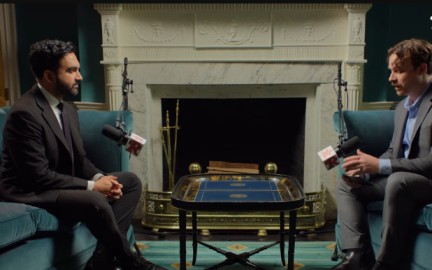
Editor’s Note: In a recent interview with Rolling Stone, New York City Mayor Zohran Mamdani reflects on his first six months in office, bridging the transition from an activist and campaign trail to actually governing. He discusses the political hardball of endorsing progressive candidates, navigating intense national media scrutiny, and implementing an ambitious affordability and housing agenda for working-class New Yorkers. Mamdani also touches on broader political themes, his relationship with the federal administration, and how his lifelong passions for music and sports shape his connection with the city’s diverse communities. (July 21, 2026)
TRANSCRIPT:
Introduction
JACK CROSBIE: Mayor Mamdani, thank you so much for being here today. Welcome to the Rolling Stone interview.
ZOHRAN MAMDANI: Oh, thank you so much for having me.
JACK CROSBIE: It’s been a full year since you won the primary and now you’ve been in office for about 6 months. So we’ve got a lot to talk about today. First, I want to address the elephant in the room, though. Taylor Swift’s wedding. How long did you know that she was planning a big event in the city?
ZOHRAN MAMDANI: I think we had some indication that there would be a permit application coming in, but it wasn’t until right before the wedding that that permit was actually submitted.
JACK CROSBIE: Okay, so she was last minute.
ZOHRAN MAMDANI: I think in terms of what the city had to respond to, that application came in just before the wedding. But I think our responsibility is also to plan for any eventuality and to make sure that we’re ready to respond to it.
The Primary Sweep and the Movement Behind It
JACK CROSBIE: You’re coming off of really this huge primary election day. It seemed like the news cycle leading up to this was really that you were kind of sticking your neck out politically for the first time early on into your term in office. It was a risk backing the candidates that you backed and kind of taking that kind of swing, committing that political capital. And you came away with a clean sweep, right? So I guess just take me into Tuesday night. What was that night like for you? How did it compare to that night a year ago now when you won your own primary?
ZOHRAN MAMDANI: I think it was an incredible evening. And it was one where we didn’t just see every one of the 3 congressional candidates that we endorsed win. We also saw the same for all 5 of the state legislative candidates as well. And to see what it meant to so many different parts of our city, to travel from Brad’s event to Claire’s event, Darializa‘s event, to see that no matter what neighborhood or borough you called home, New Yorkers were hungry for change and for a party that would not only stand up to federal policy and the cruelty that we’re seeing come out of Washington, but also stand for working people. It was incredible. And as you said, it was nearly a day to a year since the primary victory in the mayoral election.
JACK CROSBIE: Did you have any moments on that Tuesday night of sort of déjà vu? Did it feel like you were going through it again on behalf of other people?
ZOHRAN MAMDANI: There’s a little bit of being able to relive that because so many of the people who were at the heart of our campaign poured themselves into these congressional races and these state legislative races. And I think it speaks to the fact that for so many of us, it was never about one office. It was about one movement for working people. And you find that in the races that are being run right now and in the ones that are still to come.
And to be able to see what it means to so many— I mean, Darializa, for example, she was a field lead on our campaign.
JACK CROSBIE: Yeah.
ZOHRAN MAMDANI: And as I was walking through her district, we met one of her field leads who told me that they were a canvasser trained by Darializa more than a year ago. And that is what we are looking to build. It is a movement that wherever it finds a fight for working people, it is there on the front lines.
JACK CROSBIE: Did you talk to her after, after her win? Yes. What did you say to her?
ZOHRAN MAMDANI: Congratulations. It was incredible what she and her campaign built and everything that they won. They earned it and they built it over many, many months amidst an immense amount of skepticism. And I think it was the day before her election, or maybe 2 days, we were walking through her district, the 2 of us together, and people were just jumping out of bodegas, popping out of their cars, and some of them were just reciting her platform back to her.
There was this young West African man who jumped out of his car, and he looked at her, and he was like, “You were at my mosque, and you said you were going to do this, this, and this.” And it was just a beautiful example of her focus, and also the fact that she built something real, something that will endure.
Handling the “Boogeyman” Narrative
JACK CROSBIE: There’s another parallel with Darializa as well, in that leading up to the race to your primary, you were both treated in a similar way by the media, sort of made into this by the right and center into kind of this boogeyman of what scary socialism is going to do. What did you say to her about handling that? And what did you say to her about dealing with that kind of attention now that she assumedly is running in a general election but hopefully will be in office?
ZOHRAN MAMDANI: I told her first that this only happens when there’s a chance that you win, and this is a reflection of the desperation that some are feeling in the face of what would be a new chapter in our city’s politics.
The people of New York 13 want to know that they have a congressional representative that is willing to fight for them in the face of living in the most expensive city in the United States of America. It’s one of the poorest congressional districts across the country. And so much of what we saw, the fearmongering, the blatant racism, it was an attempt to distract from the fact that Darializa would deliver on exactly that vision for those same working people.
From Activists to Candidates: Building the Movement
JACK CROSBIE: The backbone of your movement, like you said, has been sort of the transition from field leads and activists to actually running for something. What advice do you give Darializa, and what advice do you give people like her when they’re thinking about making that transition?
ZOHRAN MAMDANI: Well, I think at this point, Darializa doesn’t need much advice from me. And what I would say is that to run for something, it’s not just elected office. This is not just a movement where people find worth in these kinds of positions. It’s one which is looking to make politics something that we do, not something that just happens to working people.
And so for some New Yorkers, that will be running to lead their tenant organizations. For others, that will be becoming a part of a co-op. For others, it will mean running for office. And I think at the heart of it has to be: why are you doing this? And if the answer is for working people, then you will find that there are far more people who are ready to stand alongside you in that fight.
And we saw that in these races for Congress. We saw that in these races for state legislative seats. And I think we’re going to continue to see that even beyond the 5 boroughs of New York City, because frankly, the issue of income inequality, the absence of affordability in people’s lives, it’s not unique to New York City. It is something that Americans are feeling across the country, and they are tired of a politics that has effectively been bankrupt, whether it’s politically bankrupt, morally bankrupt, or economically bankrupt. And they’re looking for something that actually speaks to their needs.
Playing Political Hardball: The Endorsement Decisions
JACK CROSBIE: This was kind of the most political hardball we’ve seen you play at this point. Several of the endorsements— Claire Valdez and Darializa, of course— came kind of against the wishes of that sort of centrist bloc of the party. I mean, endorsing against Adriano Espaillat was a big political move for you. I guess take me into that decision. Why did you think that this was the right time to take those shots and that that was what was needed for the movement you’re trying to build?
ZOHRAN MAMDANI: I made a promise a little more than a year ago to New Yorkers that I would use every tool at my disposal to deliver on an affordability agenda. And when I looked at these races and I saw Claire, Darializa, Brad, in each of them I saw candidacies that were not just compelling on what they were building, but also compelling in who they were speaking to and how they would fight for those same people.
And the consistency, the clarity, the conviction that characterized all 3 of these races in terms of the message that they were putting forth, it’s one that compelled me to make that decision. It’s not to say that there’s not risk involved in those decisions, but oftentimes when you are fighting for those who have been left behind, there will always be risk. It will always be easier to let that fight go.
I do often think about the words that Tim Walz said about political capital, to paraphrase him: “What is the use of having it if you’re not using it to help working people?” I think that’s what came back to me in that moment and continues to, is how do we actually make it easier to afford life in the city? And one of the ways is by having partners who are willing to fight just as hard in Washington as we’re fighting here in New York City.
The Battle for the Soul of the Democratic Party
JACK CROSBIE: Yeah. And that national battle, I think, has really come into center stage in a large part by your framing of the stakes of these races, but also in sort of the reaction to them. I think the most succinct encapsulation of it was the tweet by former DNC Chair Jaime Harrison on election night where he said, “I say this with no ill will or animosity. If you hate the Democratic Party, then please don’t run for our nomination.” He didn’t mention you by name. He didn’t mention any of these candidates. But it seems like a pretty pointed critique of, like you say, of spending that political capital. How do you respond to that? Or I guess, how does that make you feel when those kind of former party leaders take that stance?
ZOHRAN MAMDANI: I think usually if someone says this is not of any ill will or animosity, what they’re about to say is characterized by ill will and animosity. It’s a version of “no offense, but.”
Look, I think the question that I come back to is: what is the Democratic Party if not its voters? And if you look at what Democrats are voting for in New York 13, in New York 7, in New York 10, and you say that that is not representative of the party, it may not be representative of what has effectively become our party, which is something that’s run by well-paid consultants and big money interests, but it is representative of what Democrats themselves want to see.
And it’s representative of the fact that in this country there is just one majority, and that’s of the working class. And that’s not just true in this city, it’s not just true in another city, it’s true across the entirety of our nation. And people want to see a party that understands that and fights for that.
Six Months in Office: Governing vs. Campaigning
JACK CROSBIE: What has been a lot harder for you since coming into office than you thought it would be on the campaign trail?
ZOHRAN MAMDANI: I think it’s often framed that campaigning is that which is easy and governing is that which is hard. In campaigning, however, you are asking people to believe in something despite their own experiences. You’re asking people to believe that government can deliver for working people, and you’re asking them to do so in spite of the fact that oftentimes government has failed them whenever they have come to rely on it, whether at the city level, the state level, or the federal level.
And what I so appreciate about governing is that it comes with an opportunity to deliver. You don’t have to ask people to trust any longer without being able to feel something. And over the course of these past 6 months, we’ve taken what was previously an intellectual question of what does it look like to run a city with democratic socialism as part of its principles and delivered on it.
In these 6 months, we have paved over 165,000 potholes. We have returned tens of millions of dollars to tenants who were taken advantage of by their landlords. We have put our city on a path to universal childcare, saving parents more than $20,000 a year that they would otherwise have spent for childcare for 2-year-olds. We’ve done all of this while delivering the lowest recorded number of murders and shootings in New York City history, and with a commitment to put our city on a path to the most ambitious affordable housing agenda that we’ve seen in generations, building 200,000 new homes that will actually be affordable to New Yorkers and preserving 200,000 homes that are already affordable.
JACK CROSBIE: Are there ever moments where it’s difficult for you to feel like you have to compromise in areas that you didn’t want to or don’t want to in your heart?
From Campaigning to Governing
ZOHRAN MAMDANI: Yeah, I think that the job is difficult at its core because it’s a job where you are looking to deliver for 8.5 million people, many of whom have experienced politics as an act of disappointment with various stages. It is also, however, an opportunity. And for me, my North Star is thinking about those that have been priced out of this city. And what I’ve found over the last 6 months is when you build a team that has that same commitment, there’s a lot more that’s possible to do than what we’ve been told in the past.
JACK CROSBIE: Has being in office changed how you think about any of these things? Is there a specific situation where you got into office? Because, you know, you’re committed to this message, and you’re committed to what you want to do, and you’re— I think you’re committed to delivering what you promised on the campaign, right? But I think what’s interesting to me is finding out what changed for you, because yeah, that transition from campaigning to governing is, I think, really compelling, and it’s one of the things that gets brought up again and again and again when someone like you runs for office, right?
So it’s not so much that I’m trying to say, is there any credence to critiques that a democratic socialist can never effectively govern or something like that? I want to know, for you, what were the kind of welcome to reality moments or points of frustration?
ZOHRAN MAMDANI: I think I’ll push back on the framing a little bit.
JACK CROSBIE: Sure.
ZOHRAN MAMDANI: In that I think that sometimes the characterization of the difference between governing and campaigning is given as a justification for compromise. It’s given as a justification for the abandonment of what you ran on. And I am never going to say that this work is easy or it’s straightforward. It’s incredibly difficult.
However, there is a way to deliver on what you ran on, and it will mean that you have to push. It will mean that you will receive many a no and you have to ask why. And it will also mean inheriting longstanding city policies that the closer you look at them, the more you realize there isn’t much that this is actually grounded in other than the fact that it’s been done again and again and again.
But I find that this difference of characterization oftentimes it’s actually one that’s given in advance of the difficulty so as to explain why someone simply couldn’t try to fulfill those things. And our agenda, it’s an ambitious agenda because it’s an agenda that looks at the wealthiest city in the wealthiest country in the history of the world and says it’s unacceptable that 1 in 4 New Yorkers are living in poverty. And it will take time, but what we’ve shown is that even in 6 months you can put the city on a different path. And that’s a path that working people themselves can walk on, not just one they have to watch as others do.
The Democratic Party and Its Future
JACK CROSBIE: A lot of the things that you’ve run on would not have been so shocking, I think, to the political establishment in FDR’s era, right? Why do you think that those things are seen as political impossibilities now?
ZOHRAN MAMDANI: I think because for a long time, those kinds of ideas can only be found in a history book as to what the Democratic Party can stand for. What it can fight for. I mean, you even just think about the distillation of this vision into the Four Freedoms. That, if offered today, would be heard as if a radical vision of this country, when in fact, as you said, it’s very much grounded in why so many are proud to be Democrats, why I’m proud to be a Democrat.
And I think it also speaks to a recent history of our party becoming something that is more a reflection of the thoughts and concerns and hopes and desires of a consultant class and of special interests than one that is a reflection of what working people need.
JACK CROSBIE: You say you’re proud to be a Democrat, which sort of strikes right at where this national conversation is right now. It’s framed as this battle for sort of the heart and soul of the Democratic Party. But I do think that while there are a lot of voters who respond to what you have to say and who respond to the kind of policies that you’re proposing, there is still a voting wing that is, for whatever reason, more attached to the centrist factions of the Democratic Party. Do you think that your movement can ever coexist with those, or is this really sort of an existential battle for where the party is going to go?
ZOHRAN MAMDANI: I think we all belong to the big tent that is the Democratic Party. I think the question that is now in front of us is where do we want to go and what do we want this party to be? And I think for quite some time we’ve defined ourselves purely in response to what the Republican Party is, and they have this seemingly limitless ambition for what it is that they want to accomplish, whereas we seem to be constructing an ever-lowering ceiling of possibility.
And we know that in 2028, yes, we have an opportunity to move beyond the current federal administration, and that begs the question, to what? And I think that it is time to be able to not only have a vision but to deliver on that vision. And what we’re showing here in New York City is that it is possible to put working people back at the heart of our politics and then also deliver for them at the same time.
And I think we talk about this in the language of pothole politics to show that there’s no problem too big, no task too small, that yes, we can deliver on universal childcare while we also pave over 165,000 potholes. Because too often New Yorkers have been asked to choose between their quality of life and the quality of the city’s ambition. And it’s time to show that in fact both of these things can be fulfilled at once.
JACK CROSBIE: What does the National Democratic Party look like to you in your ideal world?
ZOHRAN MAMDANI: It looks like a party that is asking itself the question of what working people are struggling with and then answering that question with what they can do to make life easier for those same people. I believe that government’s responsibility is to deliver for working people, and I believe that our politics has to go beyond an intellectual exercise and has to be something that is material.
If we cannot describe our politics and how it helps people afford their rent, their groceries, their childcare, then it seems like a hobby that some people can afford to have. Politics has to be something that speaks to everyone no matter how much money is in their pocket, and frankly reflects the needs of those who have the least amount of money in that same pocket.
“Turns Out You Can Just Do Things”
JACK CROSBIE: The phrase I keep seeing online is “turns out you can just do things.” What’s one thing in these first 6 months that you’re proud of just having done that wasn’t a stated campaign promise, that wasn’t something you were thinking about? Was there ever a moment where you’re sitting around with your team and you’re like, hey, why don’t we just do this, and saw it through?
ZOHRAN MAMDANI: On the first day of our administration, after inauguration, I went to meet with a number of tenants who live in a building that is controlled by a real estate organization where they have filed complaint after complaint after complaint. And I went into one of the tenants’ homes and she showed me her bathroom, and it was just rust falling off the pipe, falling off the ceiling. And I asked her how long she’d been living with this, and then she turned around and she pointed to her son, and she said longer than he’d been alive, and he was more than 20 years old.
And we made the decision to file a lawsuit on behalf of those tenants. Just by virtue of filing that lawsuit, we got the next owner to agree to remedy all of the violations at that building and other buildings owned by that same real estate organization. And that, to me, shows the worth of fighting. Because if you aren’t willing to fight, it means you will never be able to win.
JACK CROSBIE: It’s probably incredible to be able to see your vision enacted so immediately and directly onto someone’s lives, but you have to enact—
ZOHRAN MAMDANI: And I just say our vision. I am not the mayor who is sitting in the room and I have every idea, and then I tell the team, go do it. I’m the mayor sitting in a room alongside so many incredible New Yorkers for whom their expertise has long been put as if a footnote in the conversations that are being had in City Hall. And so many of the accomplishments that we’ve seen over these last 6 months, it’s by virtue of this team. It’s by virtue of actually putting people in places of power where they can also help to create that vision together. Sorry, but you were asking a question.
JACK CROSBIE: I was just going to say, you need to enact those things systemically as well. I mean, as you know better than I do, NYCHA is one of the most complaint-ridden landlords in the city, right? So what do you take from those moments of just being able to go out and make an immediate effect?
ZOHRAN MAMDANI: I think sometimes the systemic nature of an issue has been used to justify why you cannot do anything in the short term. We have heard many who have come forward and said NYCHA has $80 billion in capital needs, it’s a federal responsibility, we need the federal government to act. All true. We also know that whether or not it’s a Democratic administration or a Republican administration, NYCHA has had those capital needs.
And if we are going to wait for DC before we take action, we are effectively leaving hundreds of thousands of public housing residents on the hook for the amount of years that it will take for DC to finally remember those same tenants. And so what we’ve made the decision to do is that we are going to put forward the kind of resources that go beyond what the city has done before to start to display what that commitment can look like.
And so we nearly doubled our city’s capital commitment to NYCHA. We are actually looking to take the few things that we’ve seen work in NYCHA over the last few years, the kinds of complaint systems like an ombudsman call center, and expand that. And to do all of this while saying that NYCHA can be a place where we are addressing multiple crises at the same time. One thing that I’m very excited about is that we’re going to be delivering heat pumps into a public housing development that both address quality of life concerns and address the concerns around the climate crisis.
Becoming the Face of a Movement
JACK CROSBIE: Part of the reason that you face questions like this is because when you have a political rise as quick as yours was, when you’re as outspoken on the issues as you are, you kind of become the face of a movement in American politics. But a trend that I’ve noticed as well is that obviously when you become the face of something, then all of a sudden you start becoming liable in some ways for everything that someone wants to pin on you, right? Where it’s like, “When will Zohran Mamdani respond to this?” How do you decide which of those critiques you feel like you have a responsibility to respond to?
ZOHRAN MAMDANI: I think if they affect working New Yorkers. And there’s a difference between the discourse and what people in this city are concerned about. And where that difference exists, I think it’s time to refocus back to the people. And where it is one and the same, then it’s worth engaging with. And I think the more you surround yourself with the people of your city, the more you realize what it is that they are concerned about.
JACK CROSBIE: You’re good at this. Everyone who has seen you, met you, interviewed you says the same thing. Sometimes it’s said kind of not as a compliment. Sometimes it is said as a genuine compliment, sometimes it’s not, right? What does being a good politician mean to you?
ZOHRAN MAMDANI: I think it means delivering. I think for a long time being a good politician has meant debating, and we want it to be something that means something. We want it to be material. If you knock on a New Yorker’s door right now and you ask them what they’re worried about, they’ll define it in terms of cost. And yet for a long time, politics has been defined as if it’s conversation. And we want to bridge that. And thank you, very kind.
Policing and the NYPD
JACK CROSBIE: I think right now there’s this big question of how will Zohran Mamdani deal with the NYPD? How will you deal with policing in the city and things like that? And I think a lot of that is still kind of to be written as your term as mayor goes along. But what was your relationship with the police growing up?
Safety, Justice, and the City
ZOHRAN MAMDANI: I grew up in our city with an experience of police in that there were some for whom there were people in their family who were serving on the force, others for whom it was only the experiences they would have with officers themselves. I don’t recall having any experiences in our city that really do stand out to me at a personal level.
But I think one thing that has stood out to me is that for quite some time in our city, New Yorkers have been made to feel as if they have to choose between safety and justice. And I think it’s critically important that we deliver both of them and show that in fact that isn’t a choice that has to be made any longer.
Israel, Gaza, and the Question of Conviction
JACK CROSBIE: The other national issue I think that has become increasingly relevant for every politician in this country is Israel and Gaza. Why do you think that it’s important for New York’s mayor to have a really clearly defined position on that subject?
ZOHRAN MAMDANI: I think it’s important to be honest with others and whenever asked to share that with New Yorkers. I’ve been clear about the fact that my politics is one that has no exception. When I’m speaking about the importance of dignity and international law and human rights, I speak about that with an application to everyone. And for a long time, what we’ve seen both in this city and across the country is a willingness to exempt Palestinians from those ideals. And the more willing you are to cut anyone out of a conviction, the more likely you are to lose that conviction altogether.
JACK CROSBIE: I found that with people that have such strongly held convictions about things, everything from Israel and Gaza to your economic message and things like that — when did those start to develop?
ZOHRAN MAMDANI: I think from a young age, if I could see a contradiction between that which we said we believed and that which we were willing to do, it was something that I just couldn’t let go. And especially going into high school and then into college, seeing the bridge was one that I couldn’t understand how it was both acceptable and tenable. To say that we believed in all of these things, and yet here we were clearly trampling them.
It also felt as if it is a uniquely — how do I put this? The more you’re in politics, the more you’re told this is just simply how it is. And to me, I just never think that’s a good enough answer.
The Personal Cost of Speaking Out
JACK CROSBIE: Your wife has come under some of the similar kinds of criticism as you have over her views on Israel and Gaza, over things that she posts on social media, etc. When you got into office, how were you two adjusting to that?
ZOHRAN MAMDANI: It is hard to prepare for death threats. It is hard to prepare for getting a phone call from a district attorney telling you that someone from another state is going to be charged for what they have said and hope to do about you. And I’ve also known for quite some time that when you are willing to speak up for all people, there are consequences that come from it.
It’s obviously at a different scale once I started running for mayor, once I won the nomination and then the general election, and now that I sit in front of you as the mayor. But even when I was an assembly member, and I would speak about how it’s unacceptable that we’re sending billions of dollars to kill innocent Palestinians, I would receive voicemails that threatened many of the same things. And the intent of those messages is to repress that belief in a universality, and that’s something that I will never let go. And I’ve come to accept it as part of the work that I do.
What will always be very difficult to accept is what it means for the people that I love. And you grow up, you hear politicians speak about it, and it initially reads as if it’s a cliché. And then when you start to live it, you fully understand the weight of what this work does to those that you love and those around you, and that it transforms everyone’s life. And I think that is something that will always be hard to contend with.
On Trump
JACK CROSBIE: We got to talk about Trump.
ZOHRAN MAMDANI: Okay.
JACK CROSBIE: What do you think about him constantly saying how handsome you are?
ZOHRAN MAMDANI: I — thank you.
JACK CROSBIE: We’ll take it, I guess. Let’s talk about your relationship with him. I think that was kind of one of the most striking parts of the very beginning of your tenure as mayor, was that meeting with Trump at the White House that went, I think, to pretty much any observer, really well for both of you. He probably felt the same way. What’s your current relationship now?
ZOHRAN MAMDANI: The relationship is as it was. It’s built around New York City. I think for all of the many disagreements that the president and I have, we have one thing in common, which is a love of this place. And whenever we speak, whenever we meet, it always comes back to that.
JACK CROSBIE: I think the fear has always been that something like what happened in Minneapolis, something like what happened in Los Angeles, is going to come to New York City. Do you feel like you need to stay on his good side in some ways to prevent that from happening, or is that a risk?
ZOHRAN MAMDANI: I think I need to continue to be honest with the president, and that honesty is in places of disagreement. I’ve spoken to him directly about how I think of ICE as a cruel agency that does nothing to serve the interests of public safety, and I’ve spoken about how I think that ICE should be abolished. We should have an immigration system that has humanity at the heart of it.
And also, the president, he is a New Yorker. In that first meeting, as much as we were having a conversation as the mayor and the president, we were also having a conversation as 2 New Yorkers, even at one point talking about community boards and zoning laws.
Trump’s Second Term and Its Impact on New York
JACK CROSBIE: New York, of course, is a microcosm for the country. It hasn’t escaped the ripple effects of what Trump has done. I spent some time last fall doing a story down at 26 Federal Plaza. When you think about his second term and how it’s affecting New York City, what’s been the most damaging, or how has that second term really affected the city?
ZOHRAN MAMDANI: You brought up 26 Federal Plaza. The cruelty of ICE is not an intellectual concern to our city. There are New Yorkers who’ve had their families split apart by this agency. I get texts on a regular basis from both people that I know and those that I’ve never spoken to before asking me for help, and it speaks to the fact that this has become almost a daily reality across our city and across our country.
And I, as someone who often speaks about the cost of living in this city, I’d also be remiss if I didn’t talk about the impact of these healthcare cuts. Whether we’re speaking about healthcare or we’re speaking about SNAP, federal policy is making it harder for people to afford to live in the city. And we’re trying to do everything we can to fight back against the effect of those cuts. We’re trying to do everything we can to ensure that those who are eligible can stay on SNAP and that those who depend on life-saving treatment can still find a way.
And yet there is a limit to what a city can do in the face of federal policy that is looking, frankly, to decimate these programs. And it’s going to have a real impact on an untold number of New Yorkers across the 5 boroughs.
New York’s Role in National Politics
JACK CROSBIE: What do you think New York’s role is in national politics?
ZOHRAN MAMDANI: I think we have an opportunity in our city to show that this politics can deliver for those that have been left out of it for a long time. So much of what we have fought for, we’ve been told this could never work, you could never do this. And now here in the biggest city in the country, we have an opportunity to show that in fact universal childcare and pothole politics are one and the same, that the worth of an ideology comes from its ability to deliver for people.
And we’ve learned that in this country for many years, especially through sewer socialism. And at a moment when people are being told this across the country, that there could never be a place which delivers on their needs, we have an opportunity to show that that is in fact the case right here in the city.
JACK CROSBIE: What are you privately, kind of worried that you’re not going to be able to deliver on?
ZOHRAN MAMDANI: I often go back to why so many New Yorkers knocked on doors for our campaign. What brought them out to do that? And many of them spoke of the campaign in the language of a hope for our city. And that hope is a responsibility. If you share that with others, it’s also a duty to deliver on it and to deliver on it in the same way that those same New Yorkers went to knock on those doors.
And so for me, when we talk about 2,000 seats of free childcare for 2-year-olds this year, 12,000 seats next year, a seat for every single 2-year-old by the end of 4 years, I always want to make clear that that is not my achievement. That is not even just, frankly, the achievement of our administration. It’s the achievement of everyone who walked up those 6th floor walk-ups and knocked on door after door after door and told people that there was a world we could win where childcare didn’t have to be $20,000.
And I want to measure our administration in whether we delivered for both the person who was knocking and the one whose door was getting knocked on. And stepping back and thinking about it in the material, because so much of politics gets distilled into the narrative, and the narrative doesn’t mean much for somebody who can’t afford to live in the city.
Music, Sports, and the City
JACK CROSBIE: Your upbringing was about as true New Yorker as it gets, right? For someone who came here at the age of 7, your references to music are kind of everywhere. It doesn’t seem like you can give a speech without dropping at least a line or a reference or something like that.
ZOHRAN MAMDANI: It’s part of how I understand the world and how I understand my place in the world. Some of my earliest memories are in New York City. I used to love going to Tower Records. I think it was on like 66th and Broadway, and they would have just floors of just incredible numbers of CDs. And for some reason, I loved The Offspring at the time.
JACK CROSBIE: Classic, classic of the era.
ZOHRAN MAMDANI: 3 to 4 albums. The first album I was given was the clean version of Jay-Z’s The Blueprint. And the funny thing was is that they used to sell bootleg CDs right outside of Tower Records, and that’s where I bought Eiffel 65’s seminal classic. A lot of people only know them for “Blue (Abbadie Abbadie).” “Too Much of Heaven.” Great song.
JACK CROSBIE: What are you listening to now?
ZOHRAN MAMDANI: I’ve been listening to a lot of Radio and Weasel, who are a duo from Uganda who were running the charts for a long, long time. One of them sadly passed away. I’ve also been listening to a Pakistani rapper named Shamoon Ismail, who I’ve listened to for a few years, but I’m also listening to a little bit more of his music. And if I’m feeling reflective, throw on some Kacey Musgraves.
JACK CROSBIE: New album was great.
ZOHRAN MAMDANI: I’m still listening to Golden Hour.
JACK CROSBIE: That’s a fantastic album. I know you’re a Knicks fan. I know you’re a soccer fan. What was your entry point to sports? Because for me, it was my dad who, as I told you, is English. And those were some of my earliest sports memories were my dad waking me up at 4 o’clock in the morning to watch Chelsea lose or something like that on the Spanish channel because it was the only place that was showing the game of the week or something.
ZOHRAN MAMDANI: But now you can watch Chelsea lose on Peacock.
JACK CROSBIE: You know, I can, and I’ve been doing a whole lot of that recently.
ZOHRAN MAMDANI: God bless you, man.
JACK CROSBIE: Yeah, well, I also saw the Champions League final, so that was some consolation.
ZOHRAN MAMDANI: Whatever.
JACK CROSBIE: Yeah.
ZOHRAN MAMDANI: You watched, we played.
JACK CROSBIE: What were some of your early memories of sports in the city? Who was the first person that got you into those fandoms?
ZOHRAN MAMDANI: Clearlake Capital.
JACK CROSBIE: Yeah.
ZOHRAN MAMDANI: It was 10-year amortized contracts.
JACK CROSBIE: They’re hard to resist.
ZOHRAN MAMDANI: Buying up a lot of young players. Thinking about the potential value of something.
Sports, Identity, and Connection
JACK CROSBIE: You thought you could be one of them?
ZOHRAN MAMDANI: No, I just thought that’s what the game is.
JACK CROSBIE: Yeah.
ZOHRAN MAMDANI: Like it’s a financial model and I gotta get in on it.
JACK CROSBIE: Yeah.
ZOHRAN MAMDANI: I have to credit my uncle. He introduced me to Arsenal and that was in the late ’90s, early 2000s. And a lot of that was — I was born in Uganda in East Africa. Arsenal I would argue is the most supported team in Uganda. And I think a lot of that has to do with the history of African talent on the team. Whether it’s Kanu or Lauren, or then went on to be Kolo Touré, Emmanuel Aboe, Alex Song — I’ll even name him even though forever hurt by Emmanuel Adebayor.
And those are so many of my memories. I mean, I think we still have like these fridge magnets from back in the day of David Seaman and Sylvain Wiltord and a lot of those players. And I think my first World Cup memory is probably around ’98 as well.
JACK CROSBIE: Yeah.
ZOHRAN MAMDANI: And Zidane and just falling in love with Zizou. What a player. And then, 2002, I was living in New York City at the time, and it was the first time my dad ever let me be late for school was when France was playing Senegal. His love of academia had no chance against Pan-Africanism. And stayed home, watched Papa Bouba Diop score on Fabien Barthez. And that’s one of my early memories.
JACK CROSBIE: It’s funny because you clearly know ball. You really know these sports. How do you use that to connect with people?
ZOHRAN MAMDANI: There are a lot of people for whom sports are effectively their first language. When you speak to someone for whom English is clearly a second or third or fourth language, you are in some ways speaking to a shadow of them. You’re missing the entirety of who this person is. And when you talk to someone about sports, whether it’s soccer or basketball or whatever else it may be, it’s as if the fullness of them is finally in view.
And I think even now, just thinking about the World Cup, so many New Yorkers are finally able to be their full selves as they celebrate what’s been a pretty incredible tournament so far.
JACK CROSBIE: Well, Mayor Mamdani, thank you so much for sitting for the Rolling Stone interview. I’m feeling good about it.
ZOHRAN MAMDANI: Feeling good about it.
JACK CROSBIE: Thank you.
ZOHRAN MAMDANI: Thank you, sir.
Related Posts
- Transcript: What It’s Really Like Inside Trump’s World w/ Maggie Haberman & Jonathan Swan
- Transcript of Tucker Carlson Interview: The Mishal Husain Show
- Transcript: President Trump Speaks at FIFA Reception in New York City
- Transcript: Marco Rubio’s Remarks On Far-Left Political Terrorism
- Transcript: Xi Jinping’s Keynote Speech at World AI Conference 2026