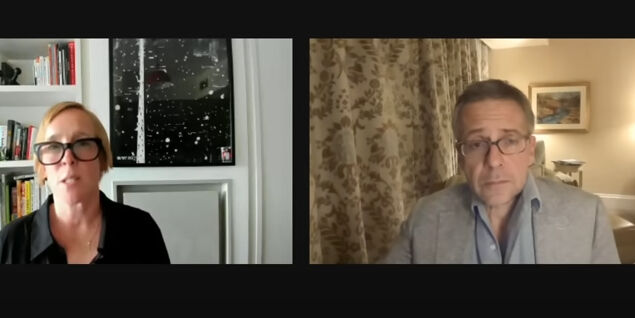
Here is the full transcript of Political scientist Ian Bremmer in conversation with TED’s Helen Walters on the topic titled “Why Ukraine’s Drone Attack on Russia Changes War Forever”, which was recorded on June 2, 2025.
Listen to the audio version here:
The Astonishing Drone Raid
HELEN WALTERS: Hello, everyone. Thank you for joining. It is Monday, June 2, the day after Ukraine unleashed an astonishing drone raid deep inside Russia and in doing so, essentially rewrote the rules of war. I’m Helen Walters. I am the head of media and curation at TED, and I am joined to make sense of it all by Eurasia Group founder Ian Bremmer. Ian, thank you so much for joining us.
IAN BREMMER: Helen, such a pleasure to be with you again.
HELEN WALTERS: Here we are. Okay, so much is still emerging about what took place, but here’s what I think we know. In an operation codenamed Spiderweb, Ukraine launched a bunch of drones off trucks which took out 41 of Russia’s most strategic military planes. The Economist called it Ukraine’s most audacious operation on Russian territory to date. So tell us, what do we really need to know about what happened here?
David vs. Goliath: The Unprecedented Strike
IAN BREMMER: Well, we don’t know exactly how many planes were taken out. The Ukrainians claim 41. They, as antagonists in both sides of wars, always tend to maximize the numeric exploits. So we can confirm probably almost half of that number. It’ll probably go up. We’ll see. But the point remains the same. In three and a half years now of this brutal war, this is by far the most spectacular strike that has been seen by either side.
This is David versus Goliath and Little Ukraine proves that they have the ability with drones that cost between 300 and $400 and only a couple hundred of them are able to take out individual strategic nuclear bombers that cost over $100 million for the Russians to build. And by the way, which they don’t have the military capability to build today. So we’ve never seen an asymmetric strike like this be pulled off against a major nuclear power. It’s never happened.
And there are, I think, big implications. There are big implications for war fighting going forward. There’s big implications for Putin and what he decides to do and how he responds. The future of the Russia, Ukraine war. There’s big implications for the United States and the role that President Trump is or is not going to play as a consequence. And it is essential, I think, to get deep under the hood around all of those things and not just rely on the, oh, my God, look at what just happened of the headlines.
How Ukraine Pulled Off the Operation
HELEN WALTERS: I think the phrase asymmetric warfare is really key for us to understand here, as you say. So I was reading that this operation took about a year and a half to plan. It was obviously extremely daring. But as we do try to understand the implications of what happened here. How do you think Ukraine actually managed to pull this off, playing, as you say, the David role in this David versus Goliath story?
IAN BREMMER: The Ukrainians have been working to develop their own homemade military capabilities. I mean, you see how much Europe is now saying we need to move to 3 to 4 to even 5% of GDP spend on defense. It’s not existential for them. This is the only thing that matters. For Ukrainians, it matters more than eating well, it matters more than educating your kids and it’s whether or not your country and therefore you have a future after the Russians invaded.
And so they’re putting everything they can into building military capabilities. And they don’t have as many people and they don’t have as much money, but they are better educated and they also have access to a very capable global Ukrainian diaspora. And I’ve met many young Ukrainian, ethnically Ukrainian technologists from Silicon Valley, from Canada, from Europe, who have worked with the Ukrainian military virtually and many who have traveled to Ukraine and resettled in Ukraine to help them there.
And that in addition to some of the money that’s been provided by Europe and the United States has helped the Ukrainians to build a world class, perhaps Israel would be also, you know, probably one or two, one of the best drone capabilities, military drone capabilities in the world. And that is exactly what just happened.
They hid these drones in the top of containers that were brought into Russia on trucks. Those containers were then sent all over Russia, some of which were very deep inside Russia. And then all at once in one day, or at least the ones that we’ve now seen, maybe there are more that are still in hiding. They were ordered, directed to be deployed against Russian military bases and other infrastructure.
And I mean this is not just close to the Russian front lines with Ukraine. I mean there was a military base that is on the Mongolian border. We’re talking thousands and thousands of miles away from the Ukrainian front. And they were able to destroy advanced Russian strategic bombers in that base. That is, it’s unprecedented.
It reminds me a bit of what we saw with Israel and Lebanon and Hezbollah, because Hezbollah we had for many years always been saying this is the most powerful non state armed forces in the world. And that Israel had to be very careful not to get involved in a war with them because it would be incredibly dangerous for Israel’s own national security. And then over a matter of days we find out that Israel has decapitated their leadership completely, taken out their communications systems and destroyed their military infrastructure, critically weakening Iran’s geopolitical position in the Middle east as a consequence, and leading to what is now the most progress that Trump has had in any diplomatic effort around the world, U.S.
Iran, which no one would have expected a few months ago, but started with a change in asymmetric warfare that Israel was able to perpetrate against Hezbollah.
This is now happening between Ukraine and Russia, obviously on a much more significant scale and with global, not just regional consequences.
Russia’s Strategic Losses and Response
HELEN WALTERS: So at the top, you said that we need to talk about three things in particular or dive into them. And one of them, of course, is Putin and the Russian response to this. Now, it seems, as you say, reports are differing as to the number of planes that were actually lost, but it seems like Russia has lost about about a third of its strategic bombers in the raid so far. That’s more than $7 billion in damage. I’m also curious. You said that they can’t rebuild these planes. Really stupid question, but why not?
IAN BREMMER: So the Russians rely on a triad, as the Americans do, to deliver a nuclear arsenal in the event of the unthinkable, a nuclear war. You have ballistic missiles, ICBMs, you have submarines that are nuclear capable, and you have the bomber fleet. The bomber fleet is the oldest of the three legs of the stool. And it’s really the least important. It’s the last resort. It’s what happens if there was a first strike by the Americans and NATO and you take out some of the most advanced capabilities.
And the bombers have been scrambled, they’re in the air, and they’re meant to be, you know, something that you can deploy if you have to. In the worst case, it’s a second strike capability is the way they think about it. Now, those bombers are Soviet era. The Russians are not making them anymore. And they certainly can’t do a lot of the replacement parts now because so much of their present military efforts are going towards fighting a very different kind of war.
But these strategic bombers are important. They are a part of ongoing arms control agreements. They are clearly part of the nuclear balance that the US has against the Russians and NATO has against the Russians. And if the Ukrainians can do this, and clearly Ukraine wanted to take out all of them, the intention was to basically cripple one leg of the nuclear triad and also one leg of Russia’s ability to use conventional missiles against Ukraine. And Ukraine is running low of Patriot missile battery artillery. And so therefore they need to have successes there. That’s why they don’t have so many of them, and that’s why they can’t rebuild them.
HELEN WALTERS: Thank you so much. So, clearly, whatever the final numbers, this has been extraordinarily damaging for Russia. And in response, on Sunday, they launched, as I’ve heard it, 472 drones, three ballistic missiles, and four cruise missiles at Ukraine. What should we also expect from Russia going forward? And do you think that Ukraine is actually ready for it?
Ukraine’s Drone Capabilities and Strategic Implications
IAN BREMMER: Ukraine is ready for everything at this point. The Russians have not shown restraint in a way that the Ukrainians have. Let’s keep in mind, Helen, that the fact that Ukraine was able to do this meant that Ukraine could have deployed those drones against Russian civilians and civilian architecture. They could have killed hundreds, if not thousands of Russian civilians in Moscow and in St. Petersburg. And they didn’t, and they haven’t.
And the Russians are the ones that have historically, for the last three and a half years, launched their own missiles and drones and bombers and attacked everything they can find that moves in Ukraine. They’re the ones targeting civilians. So the Ukrainians are ready for this.
But we have to think about what Putin is going to do, and we need to put ourselves in Putin’s head here. Why is it that Putin has believed that the longer this war goes on, the better for him? And what might Putin’s vulnerabilities be in his head? Because he’s the one that’s making the decisions himself. And those are two separate questions. So let me try to address both of them for you.
First, why has Putin believed that the war, the longer it goes, the better for him? And look, I think part of it is that Russia’s military is bigger. Part of it is that he doesn’t care as much about his own civilians. Putin runs a dictatorship. You know, the Ukrainians have to worry much more about popular response. I mean, they’ve got their conscription age was 27. It was really hard just to bring it down to 25.
Putin doesn’t have to worry about that kind of thing. If you’re Putin, you can keep raising thousands and hundreds of thousands of young men, and the Russian people can’t really do anything to you. They don’t have an ability to raise their voices in response. So he thinks he can throw more people at it. He can have stronger political stability. He’s got a bigger economy and a bigger war economy.
He also thinks that the Europeans will lose interest. He has seen a number of European governments less willing to provide support. And most importantly, he’s seen the Americans very inconsistent, much more internally divided over why it is that they’re supporting Ukraine, even willing to suspend for a period of time, intelligence and defense equipment, at a time that they were not willing to threaten Russia credibly with bigger consequences and more sanctions.
So if you’re Putin, you’ve believed that the longer you stick with this war, the weaker the Ukrainians will get, the more the Europeans will be divided, and the more likely the Americans are going to walk away. And even with Trump getting embarrassed by Putin stringing him along, there’s nothing that Trump has shown Putin that has changed that view.
Ukraine’s New Leverage
So the big question is whether Ukraine showing that they do have some cards to play, that they can actually damage Russia in ways that certainly Putin had never considered possible. And what else might they be able to do? How might they be able to weaken Russia critically on the global stage, its military capabilities? How might they make Putin look vulnerable with his own leaders showing that he misjudged, critically, Ukraine’s lack of capabilities?
Might they even be able to assassinate Putin? Might they be able to come after him individually? So those are all things that would make it more likely that Putin would negotiate in better faith that he might be willing to actually engage more with Ukraine and bring us to a ceasefire. Of course, there have been some meetings in the last 24 hours and we should come back and talk about that.
The Risk of Escalation
But I want to get to the second point because that’s what might make Putin feel like he needs to engage more. That’s the optimistic point. But there’s the pessimistic point, which is Putin has to also ask himself, why is it that the Europeans have been willing to continue to provide more and more weapons and allow the Ukrainians to strike deep inside Russia?
And there’s some debate over whether or not Trump knew, was told in advance by Zelensky, that these strikes were going to occur. I actually think Trump did know. I think, first of all, the Ukrainians have shown that they really need that intelligence. And also the Ukrainians have capitulated to Trump because they know they can’t anger him that much.
So, you know, you’ve seen that the Ukrainians accepted, without any conditions, a 30 day ceasefire because Trump demanded it. They accepted his critical minerals deal and pushed it through their own parliament, even though they were deeply uncomfortable because Trump demanded it. I have a hard time seeing Ukraine going ahead with these strikes and surprising Trump. I do. Especially because they came right after Trump was really angry and displayed that because Putin was engaging in all of these strikes against Kiev, killing all of these civilians. And Trump came out saying that.
So if you’re Putin, you see that NATO seems to be very comfortable allowing, not only giving Ukraine all of these weapons and this intelligence that’s facilitating Ukraine to take actions against Russia’s strategic nuclear forces. So if you’re Putin, what have you done wrong that has allowed NATO to persist in their belief that they can get away with that.
And here the issue is something that we shouldn’t be comfortable with, which is that Putin has to be thinking that he has not at all effectively deterred NATO. He has made them think that he is weak, that he won’t respond adequately to them, that when he threatens Sweden and Finland and says that if you join NATO there will be hell to pay, and then they join NATO and he does nothing, he looks weak. And when he tells the Germans, if you provide tanks and if you allow these weapons to go long range into Russia, they’ll be hell to pay, and he does nothing against them, nothing credible.
So I fear. But there’s also, just as there is a part of Putin that now sees that he is in a position where he might need to negotiate for a ceasefire, there’s also a part of Putin that feels like he’s in an environment where he needs to show that he’s much tougher, that he’s much more willing to exact pain on NATO than he has been historically, that there will be real consequences, especially for President Trump, who he knows is very scared of World War 3, is very scared of getting into a war himself.
And of course, if the optimistic take is that Russia is now more likely to go into a ceasefire, the pessimistic take is that Russia is now much more likely to escalate severely. And what that means, I fear, is more likely to consider a use of a tactical nuclear weapon against Ukraine. That is, and that’s why this is so important. It is so critical that we, that we really think all of this through and we get it right.
HELEN WALTERS: That is deeply unsettling. Obviously, the realistic, the Bremmer take on all of that, if you’re not playing optimist and you’re not playing pessimist, what, where do you think we really are and who is in the position, therefore, of trying to prevent nuclear disaster or this spilling into a bigger war, is that Trump.
The Realistic Assessment
IAN BREMMER: The realistic take is that this is an escalation, but it’s not a game changing escalation yet. That Putin will be careful, more careful about his forces than he has been, he will be more respectful of Ukraine’s capabilities than he has been, and that he will up the attacks on Kiev and exact more civilian damage to Ukrainians around the country. He’ll try to assassinate some senior leaders, some, you know, major defense leaders, that kind of thing. Maybe he’ll try to pull off something spectacular against Ukrainians officials when they visit other countries, that kind of thing.
But he doesn’t seriously consider a nuke because he knows that that would not just radically alienate and unify the Europeans. And he doesn’t know what it will do with Trump, even though probably his sense that it will make Trump more distant and hands off and try to end the war than fight against Russia. But he also knows that it will seriously antagonize his most important ally, and that is China. The Chinese really don’t want the Russians to make this worse. And they would be very, very opposed to him using a nuclear weapon. And they’ve told him that historically.
So I think he’s loathe to use it. But I understand that if that was a 1% likelihood, maybe it’s not 30 or 40 right now, but it’s not 1, it’s 5, it’s 10, it’s 20. And these are numbers that should be unthinkable and they’re not.
Now, I want to say one more thing, what realist Ian is thinking right now. Realist Ian remembers Mr. Prigozhin, who you and I have spoken about in the past, when the head of the Wagner group, one of the most important advisors to Putin, decided to go on a suicide run and took his senior most trusted troops and led a column of tanks from the Ukrainian front up to Moscow against Putin. And I mean, we all knew it was a suicide run. We all knew there was no way he could end up alive after that.
But what had happened was Prigozhin was put into a corner, into a no win situation where anything he did meant that he was going to end up in jail or dead. And what we have to understand is that when we’re fighting a war between Russia and Ukraine and a proxy war between Russia and NATO, and the stakes are getting higher and Ukraine’s own asymmetric capabilities are getting greater and Ukraine is absolutely willing, if they had a shot at Putin, they would take it in a second. If they had the ability to critically destroy Russia’s war fighting capabilities, they would do it in a second and NATO is helping them.
We have to understand that if Putin ever got into a position in his headspace like Prigozhin was, either because of external threat to him or internal threat to him, he’s not going to pull a Gorbachev where he sort of steps down without a fight, no. Putin would go down with guns blazing. And absolutely that means that nuclear use has gotten much closer today than it has been when I was growing up in the arms control age, in the day after age of the Cold war in the 70s and 80s. This is a much more dangerous environment than that. And the Russia, Ukraine war is the tip of the spear for what a major global war might eventually turn into.
HELEN WALTERS: So I’m curious about the connection between Russia and China and wonder if you can give us a little bit of context on how that relationship actually works. You say China does not want Russia to launch a nuke on Ukraine. How does that actually work? Just as a kind of a geopolitical kind of relationship. How do they make their intentions known? Why do they care what Russia does in Ukraine? Tell us more about that relationship and the kind of leverage that China has over Russia.
IAN BREMMER: Look, it’s a long standing relationship between these two men, these two dictators, these two leaders that are both leaders for life. You know, Russia nominally has elections, but not really. China nominally has a selection process, but Xi Jinping has ended that when it comes to himself. They’ve known each other now for decades and they meet continually on the global stage. I mean, Xi Jinping visits Putin on his birthday. It’s a big deal. And they trust each other in ways that go well beyond relations between traditional American presidents and European leaders. I mean, pre Trump.
And that’s because they understand that they have to have each other’s back because nobody else will. Now, there are limits to the relationship. It’s an asymmetrical relationship. China’s much more powerful economically. China’s much more powerful technologically. China wants stability on the global stage. Russia, like North Korea, is more of a chaos actor.
So when Russia invaded Ukraine and told Xi Jinping it was going to be over very quickly. The fact that it wasn’t and that it undermined China’s own relations with the East European countries that they were doing the best economic relations with, but suddenly became the most anti Russian because of the war. And China’s relationship with Russia undermined their own old 16 plus 1 relationship with all the east and southern Europeans. That was a problem.
So the Chinese aren’t happy with the fact that the North Koreans have provided over 10,000 troops to the front lines to Russia to fight. And the Chinese found out about that when it happened. It wasn’t like Putin gave China a heads up. So there are some of these issues where the Russians are acting as a chaos actor on the global stage, causing more instability and the Chinese are very uncomfortable with that.
China provides a lot of important technology to Russia, a lot of important, some of that’s dual use, a lot of important money to Russia, and they buy a lot of oil from Russia, but they don’t provide direct war fighting capabilities the way the Iranians do and the North Koreans do. And they also don’t recognize Russia’s invasion of Ukraine. They don’t recognize the annexation of four Ukrainian districts that the Russians have now put into their constitution as a basis of their negotiating platform. They don’t recognize the Russian annexation of Crimea in 2014. They say that it is the territorial integrity of Ukraine that has sway. And they’ve said that at the United Nations General assembly on many occasions, but because it’s consistent with their policy of Taiwan, which the Chinese see as an indelible part of the Chinese nation and the Chinese state.
So all of that is to say the Putin China relationship is very strong. Trump’s idea that he was going to pull a reverse Nixon and get the Russians to align with him over Xi Jinping was insanity and never going to happen. And his own advisors, most of them knew it, but were unprepared to tell Trump the truth about it because he doesn’t like it when people disagree with him. And as a consequence, that relationship is not going anywhere.
But again, when it comes to things that the Russians could really do to undermine China’s position globally, back in the beginning of the war, in the first year, when it was looking more likely that Russia would use a tactical nuke in southeast Ukraine because they were losing lots of territory, the Americans warned the Russians under Biden that if that were to happen, the United States would directly engage in military strikes against Russian military targets. They said that directly through intelligence channels. And they also told the Chinese and the Indians and China and India, both at the head of state level, told Putin, you have to absolutely not use a nuke. And the American position, I think, has changed dramatically from Biden to Trump on this, I fear has changed dramatically because the deterrent is weaker, but that I, I’m not at all convinced that India and China are less worried about it as a consequence.
Peace Talks and Negotiations
HELEN WALTERS: So you mentioned the peace talks, which strangely, I don’t know how much you think this was all timed. Obviously the operation was a year and a half in the making. The peace talks ended a couple of hours ago. Today. They ended pretty inconclusively, it seems. Do you think people new peace talks will happen as a result of this? Or what kind of negotiations do you think we should look for in the coming weeks.
IAN BREMMER: So according to Putin, this is still not a war. It’s a special military operation. According to Putin, these acts are acts of terrorism. They’re not direct acts of military war. Which means that he is not compelled to take military responses, including on his nuclear threat level, internally, that he would if it were a direct war. Helpful in that regard. Again, he’s dictator, so he can change the rules at a whim, but he likes to have Potemkin law in Russia. That, you know, at least implies that he’s going through a process, whether it’s a show trial or whether it’s, you know, sort of a vote in parliament, you name it, to approve an annexation, all of this stuff. So I think it’s helpful that that process goes through.
Now. It’s very clear to me that Ukraine was very well aware that they were. The decision of when to launch this attack was informed by the reality of negotiations happening the next day. Now, these are not Zelensky Putin negotiations, which at this point Zelensky says he welcomes. Trump says he wants, Putin refuses. Putin’s cabinet says no, but. But they were meaningful working level diplomatic discussions. And despite Ukraine’s extraordinary success, the Russians still showed up. And they didn’t just show up, they actively negotiated on the prospects of another round of prisoner exchanges, soldiers fighting that are seriously wounded. This has happened before, but it’s meaningful that it happened just now.
And the Russians have also provided in Russian But I took a quick look at it, some documents around what would be required for a ceasefire. It appears that there are two different options. One is that the Ukrainians would have to cede all the territory that the Russians have annexed, which includes territory that Russia right now does not actually occupy. A non starter. The second would be present lines of conflict. Ukraine doesn’t cede more territory, but they are not allowed to have any further intelligence or weapon systems of any sort from the west. And no weapons, no soldiers on the ground from the west going forward, also a non starter.
So, I mean, interestingly, there’s still no common ground. But Helen, I would tell you that today Russia and Ukraine on the diplomatic front are a small step closer than they were before the Ukrainian attacks. I would tell you on the military front, they are a slightly larger step towards significant escalation than they were a couple of days ago. And that’s the tension here. That’s the tension.
The Future of Drone Warfare
HELEN WALTERS: That is indeed a tension. So at TED 2025 back in April, we heard from Palmer Lucky, who’s the founder of Anduril, US Defense firm. And he actually shared a story in which there was a drone operated operation. He was talking about China and Taiwan as the antagonist in that story. But he was basically laying out the vision that unless militaries take drone capabilities and AI seriously, they are essentially being irresponsible to their nations. Because this technology is available. We should use it for deterrence and we should be serious about it and we should use it now. I wonder if you’re to take a step away from Russia and Ukraine and think about militaries more generally. Do you see any militaries that are really taking that seriously or that actually are kind of setting stock into that type of thinking? Because it’s just so astonishing to me that these $300 like super cheap drones are able to cause such massive damage on the kind of the old system.
IAN BREMMER: Yeah, it’s the countries that are using the drones effectively that are taking it most seriously. So it’s Israel, it’s Ukraine, it’s India, it’s the Gulf States. It’s countries that have seen these things directly in operation and it’s changing their lives. The United States is thankfully not in or near a war zone. Canada, Mexico, two big bodies of water. So if you’re going to have major drone threats, they’re going to be internal lone wolves. They’re not going to be coordinated militaries with those capabilities.
Now, you know, as you start moving and Palmer Lucky and they put out videos and it’s very compelling as you move from these 300, $400 individual drones to, you know, sort of large, much larger numbers of micro drone swarms that could, that are going to be incredibly cheap and can be controlled from afar, that could be easily put in a much smaller sort of in a FedEx box in something that can be shipped. It’s going to be very, very much harder to detect sort of how these things are being smuggled across borders.
Again, keep in mind, this Ukrainian attack, it’s not like Israel against Hezbollah where all those strikes came from Israel. This was attacks that came from inside Russia. The Ukrainians were able to smuggle these really inexpensive drones inside containers where the Russians didn’t think there were any drones in them. And so what does that tell you? It means that the Russians can’t have containers coming in. And if they do, they’ve got to spend a lot more money and be a lot more careful about what they’re doing on their security and their borders. Well, I mean, I promise you that the stealth capabilities and the miniaturization capabilities of the drones is moving a lot faster than government’s defense capabilities of their borders.
So again, what is really changing is that much weaker actors, whether states or whether non state actors, including terrorist organizations, are going to become a lot more powerful now. The danger here is that we are now living in a world that is radicalizing a lot of people, right? I mean, you know, this is a winner take all world. It’s a law of the jungle world. And it’s a world where the United States and a lot of other people don’t care about you. If you don’t have power, don’t care.
The Ukrainians are going to fight. We’ve done a lot for the Ukrainians, but the US might just cut it off. And the Palestinians, who cares about the Palestinians? Not even the Gulf states really care about the Palestinians. Not in a way they’re going to really do anything about it, or the Egyptians or the Jordanians. And who cares about Haiti, right? I mean, how far is Haiti from the United States? You know, it’s right in our backyard. Who cares about it? Who cares about South Sudan? Who cares about the DRC?
And so when relatively small numbers of people with access to advanced technology, but not all that much money can start causing the sorts of damage that we’re now seeing the Israelis and the Ukrainians engage in inside Gaza and inside Russia, then suddenly this becomes a national security issue for everyone, including the United States of America. It’s a very, very real issue.
HELEN WALTERS: And how does. Let’s take the U.S. how does the U.S. respond to that?
Trump’s Response to Ukraine’s Drone Attack
IAN BREMMER: Look, first of all, we haven’t talked about Trump’s response to this yet. And that’s the other piece of the equation that really matters, which is, does this make Trump more likely to engage because he’s worried about World War Three? Because he sees that the Russians need to be brought to bear? Ukraine is accepting a ceasefire, but Russia is not. Does this make Trump feel like he has more cards, that the Russians are weak and he needs to push them? He has displayed some willingness to criticize Putin over the past few weeks, but in his private meetings with heads of state, and I’ve gotten downloads on some of those directly, he said, well, I can threaten sanctions, but I really don’t want to have to implement them. That’s a problem, right?
So if Trump is ultimately not prepared to have a fist in his glove with Putin, then Putin knows that he can get away with a lot more. Because ultimately, the United States is the most important military power in the world and the most important underpinner of NATO as an alliance and supporter of Ukraine militarily as opposed to economically, where the Europeans all in are doing more.
I suspect that Trump is going to give up on this, that Trump is going to see it’s too hard. He’s already said, well, maybe the Pope can do something, maybe Erdogan can do something. He’s spending more time on Iran, which is in a much weaker position, engaging more in trying to get a deal there with some success, by the way. And I think he’s losing interest. Trump is not a patient person. He doesn’t like long briefs, he likes headlines, he likes watching TV and reading the news quickly.
And so this has been going on for a long time. Trump said it was going to take a day. Then he said, well, I was exaggerating when I said a day, but I mean, he doesn’t mean years. And he’s like, now it’s two weeks, I’ll give him two weeks and that’s it. He said that three separate times. Now he’s not going to say 10 separate times. So ultimately, if Putin’s not going to really engage, then I think Trump’s going to move on. And he’s likely to move on and say, I’ve washed my hands, I tried. And the Ukrainians and the Russians both aren’t willing to make this happen.
I don’t think he’ll cut off Ukrainian support. I think he will provide intelligence, he’ll allow the Ukrainians to buy military weaponry from the US he’ll see that the Europeans are spending most of the money, the NATO summit will be successful. He’s not going to pull out of NATO. So it’s not the worst case scenario for Ukraine. It’s not the worst case scenario for NATO where Trump does a deal with Putin and ignores the Europeans and the Ukrainians. But ultimately it’s someone else has to do this.
The Military-Industrial Complex and Technological Innovation
Now, you mentioned Palmer Luckey. I do think that there are a lot of people with a lot of power that are involved in the military industrial technological complex that are trying to make sure that new spend by the US Defense Department is on these issues, is on AI and is on defense capabilities with drones and all of those things. I think a lot is being spent there. But I also know that the DoD is a very slow moving entity and it’s got a lot of mouths to feed, a lot of constituents in Congress with jobs that are committed to legacy programs that are not relevant to US national security in another five years time, whether it’s submarines or last generation Bomber jets.
And the US is just not going to pivot fast enough. No way. You would need leadership that is much more willing to move fast and break things. And, you know, there are people like that that are giving a lot of money to the Trump campaign and whose companies are getting big contracts. That’s happening. But Pete Hegseth is not that. And most of the existing generals and admirals are not that. And Congress that is ultimately securing funds for defense is not that. So I suspect that the answer to this is going to be wait till there’s a crisis, and then we respond.
HELEN WALTERS: So what are you watching as we wrap this up? What are you watching that we should also be watching for? Like, what signs are the most important as we head into the next era of this conflict?
Key Developments to Watch
IAN BREMMER: Number one, Trump has not yet, as of this moment, responded to what Ukraine has done. There’ll be a press conference. He’ll be asked that question. So we need to know whether this was a surprise to Trump and he’s angry at the Ukrainians, or whether the Americans actually knew about it, had the intelligence, and may not have approved it, but certainly didn’t try to stop it. That is an important piece of information in determining how Trump is or is not going to deal with Zelensky going forward.
Secondly, we need to see what kind of direct response Putin is going to have militarily against Ukraine. Is he going to try to downplay this domestically? I mean, there are a lot of military and bloggers in Russia that have made a big deal over this. I mean, it’s not like it’s catastrophic, but if you’re reading the news in Russia, you know what’s happened over the last couple days. And so is Putin going to change that? Will he censor them? Will he even arrest a couple and suddenly make it seem like no big deal and I’m in charge and don’t worry about it, or is this something that people are going to be fired for in the chain of command, and Putin is going to go after the Ukrainians in a much more dramatic way?
And also, you know, what else do we see from the Ukrainians because they know that they cannot continue to fight a conventional trench warfare fight successfully against Putin for the next two years. They have been losing territory, albeit at a slow rate, over the past months. And the Russians in the territory of Sumy have recently begun a major offensive where they’re gaining territory more quickly. They’re also raising a lot more conscripts than the Ukrainians are. So the Ukrainians are going to have to show more capabilities like this going forward. I suspect they have such plans, and we’re going to watch them very carefully. Those are the things I think that are most important right now.
HELEN WALTERS: We also had a talk from this architect, Slava Baalbek, who is a Ukrainian architect. He had a small operation in Kiev that was designing cafes and commercial buildings and things like that. And he shared a talk. He now also works, going to the front line every one week in every month. And he shared this talk about this kind of dual reality that he lives in. And he shared the phrase war, work, life, balance, which is just this kind of chilling phrase that has become a reality for so many Ukrainians of having to mix reality or work and life and family and joy and fun and the things that you kind of want from being a human on earth with the reality of, you know, living under aggression from Russia. And it was a great talk that I recommend you watch. Ian, it is always a pleasure, an eye opening pleasure to talk to you. Thank you so much for sharing your wisdom with us, and I am glad that we will be able to be back here again soon where you can do the same again. Thank you so, so much.