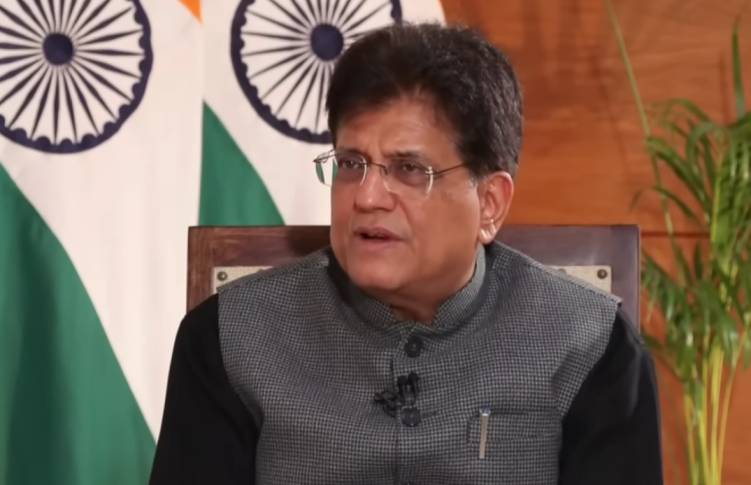
Editor’s Notes: In this detailed interview with ANI News, India’s Commerce Minister Piyush Goyal provides an in-depth breakdown of the landmark India–U.S. Trade Deal, describing it as a “win-win” outcome for both nations. He explains how the agreement was finalized during a crucial 48-hour negotiation period and highlights how it serves India’s long-term strategic goals for Viksit Bharat 2047. The discussion covers vital topics including safeguarding the interests of Indian farmers, opening up markets for the fisheries sector, and securing access to high-tech American equipment like AI chips. (Feb 8, 2026)
TRANSCRIPT:
The Final 48 Hours of Negotiations
SMITA PRAKASH: FTA, you signed? No. I’m being facetious. But then fabulous work and congratulations once again. But I have to ask you that you’re terming this as a win-win deal for India and the U.S. The contours you’ve discussed in various interviews and in the media briefing that you had. I would ask you to just break down the last 48 hours before this interim deal happened. What was going on in those last 48 hours, that crucial 48 hours?
PIYUSH GOYAL: Well, I think all negotiations are conversations in a very friendly manner. Both sides always look to protect their best interests, as they should, their sensitivities on every issue that we discuss. The U.S. may have some sensitivities, we may have some sensitivities. We have to respect those sensitivities on both sides. And the general approach is to come to an equitable, fair and balanced outcome.
Usually towards the end you are trying to bring that fine balance which really makes it a win-win for both parties. And I think just as in all the other FTAs we have done with developed countries, and all our FTAs, as you must have observed, are with countries who are not our competitors. They complement our economy.
Similarly, the U.S. is a country which has very deep strategic interests for India, as do we for the U.S. Our partnership encompasses much more than trade. We have a strong defense partnership. We are members of two quads. Both of us share interests in critical minerals, in the partnership on technology.
So for us, this is a trade agreement which will further cement the U.S.-India long-term strategic goals into outcomes. And I see that we have come up through the negotiations, whether earlier or in the last 48 hours, with a very, very good agreement which will serve both countries honorably, which will provide opportunities for both countries in their respective areas of strength, which are quite different. Our per capita income is $3,000. Their per capita income is $90,000. And therefore our interests will be pretty different, both on the sensitive side and on the offensive side.
SMITA PRAKASH: So were the sensitive sides, you know, was the culmination happened in those 48 hours, would you say that?
PIYUSH GOYAL: I don’t think so. I think a lot of the sensitive side on both sides were pretty much negotiated and well understood. There were a few issues which did get closed towards the end.
SMITA PRAKASH: Towards the end. Okay. I mean, you know, with Europe it took almost two decades and in between it got abandoned also. And it takes a long time to hammer out these deals. You have past experience in this. But like on February 2nd, President Trump calls Prime Minister Modi and he talks about this. And then there is Ambassador Sriram Krishnan. Did he in any way, his conversation with President Trump, did it give that, did it turbocharge the talks in any manner?
The Role of Ambassador Sriram Krishnan
PIYUSH GOYAL: Certainly, I have no hesitation in acknowledging that Ambassador Sriram Krishnan, who’s a dear friend, has been a well-wisher of this relationship. He did play a very important role in concluding the conversation towards finalization and announcement. And I would like to recognize and respect his contribution.
SMITA PRAKASH: And the call between President Trump and Prime Minister Modi?
PIYUSH GOYAL: Prime Minister Shri Narendra Modi ji and President Trump have been in regular dialogue all through. For this trade deal too? Well, they have multifarious discussions. I’m not privy to what they discuss with each other on different calls, but they are both friends. They both have been in active dialogue on a variety of subjects, both relevant to our two countries and other geopolitical issues across the world.
And I think in that spirit of friendship, as the negotiators continue to persevere towards a fair and equitable deal, the two leaders guided our teams, guided us to make sure that it’s a good deal that we come up with.
Trade Deal and Geopolitical Considerations
SMITA PRAKASH: Right. In multiple interviews and in your press conference, you’ve said that you will not discuss the contours of the negotiations on Russian oil. And you said that that’s not part of the trade deal. That’s a different ministry. That’s external affairs. But if there is a lack of bilateral consensus on Russian oil or on defense matters, doesn’t that impact in any way, doesn’t that impact in a great way on the trade deal too?
PIYUSH GOYAL: No, not at all.
SMITA PRAKASH: No. How can that be? Because it’s a major chunk of the trade that we do with the U.S.
PIYUSH GOYAL: Well, the buying of crude oil or LNG, LPG from the U.S. is in India’s own strategic interests as we diversify our oil sources. But the decisions are taken by the buyers, by the companies themselves. So the trade deal doesn’t discuss who will buy what and from where.
The trade deal ensures that the pathway to trade is smooth and shows preferential access. Trade FTAs are all about preferential access to your competition. So today when we’ve got an 18% reciprocal tariff, we have a preference over other developing nations who are usually our competition. And that’s why the free trade deal becomes very attractive.
SMITA PRAKASH: You talk about a preference of treatment and there’s a lot of talk that, you know, there’s such a lack of trust.
PIYUSH GOYAL: I don’t think there’s any trust deficit between the United States of America and India or between our leaders.
SMITA PRAKASH: So are they not dictating terms about how we should be dealing with Russia? It’s there, in there.
PIYUSH GOYAL: I don’t deal with that subject. You’ll probably have to direct a question to the Foreign Office.
SMITA PRAKASH: Because this is what is happening when, you know, it seems to most people that you’re all working in silos even though you’re all part of one government. So how can you not have collective responsibility?
PIYUSH GOYAL: It’s not working in silos. We all work together. But if there’s a nuance or a detail about the trade deal, obviously if you ask, let’s say the Agriculture minister, or you ask the Rural Development minister, or you ask the telecom minister, or you ask the Foreign Minister, he wouldn’t know the nuances of the trade deal. Obviously he will direct it to me just as I will direct the issues related to geopolitics to the Foreign Minister.
Addressing Sovereignty Concerns
SMITA PRAKASH: I’m going to ask you a question which I asked Dr. Manmohan Singh when the 1, 2, 3 nuclear deal was signed. The allegation is that you have ceded India’s sovereignty. What is your response to this?
PIYUSH GOYAL: Absolute nonsense. Whoever is articulating this must be a pretty ignorant person who doesn’t understand that this trade deal is truly a labor of love. It’s come out of intense negotiations on both sides in the best interests of our country’s stated goal to become a developed and prosperous country by 2047, Viksit Bharat, and will provide immense opportunities for our youth, our sisters, our women, provide huge opportunities for our farmers and fishermen.
Our MSMEs will flourish. They’ll become the provider of a lot of material that is required by the United States of America. Our textile sector, our footwear and leather sector, our toys sector, handloom, handicraft, auto components, furniture. Sky’s the limit. As Sriram mentioned, this is a partnership with unlimited potential.
Investment Flows and Economic Benefits
SMITA PRAKASH: Right? You’re talking about job creation, you’re talking about influx of foreign exchange. But the Americans are claiming and selling it to their public that Indian billions will flow into their country and their manufacturing sector, which is, you know, in a bad way, that that is going to be revived with the Indian billions which are coming, not vice versa.
PIYUSH GOYAL: Smita ji, every country is attracting investments across the world. And there’s certainly a possibility that some of the Indian companies also will find merit in investing in the U.S. for various reasons. TCS has huge investments in the U.S. in their IT services. Now I visited them in a very beautiful center, technology center that TCS has set up right outside New York. Now, does that mean that it’s bad for India? No, it’s great for India. It provides a lot of job opportunities, provides business and ultimately earnings. We have huge service sector earnings from exports.
So I think investments should flow both ways. The other day somebody was asking me in an interview that net FDI probably for a quarter was minus. So we invested more worldwide than what we received in that particular quarter. And he thought I will be paranoid or I’ll be worried about it. My response was that I welcome that. It shows today India has so much confidence. Our Indian businesses are raring to grow and are willing to go to international trade in a much bigger way with a lot of boldness.
And it’s nothing new. Indian traders and Indian businessmen are known to have traded with the whole world. What was the spice route? What was the imperative, let’s say at one point of time when so many businesspersons from different parts of India went all over the world and today make India proud with their achievements.
High-Tech Access and Agricultural Safeguards
SMITA PRAKASH: You mentioned one of the goals being that for Viksit Bharat all this is being done and you have mentioned in many of your interviews that we are going to have access to high-tech from the U.S. And in the give and take that we need to do, we have to understand or India has to understand that high-tech is, getting high-tech from the U.S. is one of our prime needs because that is going to help in the AI sector, in whatever, in doing all that. Because of that, did we have to bite the bullet and give concessions in agriculture?
PIYUSH GOYAL: Not at all. An agreement is a whole series of negotiations around variety of subjects, goods, different types of agricultural and non-agricultural products, services. It’s a very vast compass that you are dealing with. It was India’s offensive interest. We wanted technology products, GPUs, Nvidia chips or AI equipment and data center equipment. It’s obviously something we want. It’s necessary for our growth imperatives.
Likewise, the Americans need a lot of things from India which is good for their economy. So both countries will have opportunities, offensive and defensive interests and that’s how the package is built up. But there is no correlation that oh, I give up on agriculture, I give in on another area.
On agriculture, you’ll be happy to know all of India’s sensitivities and the interests of farmers and producers have been safeguarded 100%. I have absolutely no hesitation in sharing with you that amongst other things we have not opened or given any concession to meat, to poultry, to any kind of GM foods or their products, any soya meal, corn, maize, cereals like rice and wheat or millets like jowar, bajra, ragi, kodo or amaranth amongst others.
Sugar, fruits which are produced in India like banana, strawberry, cherries, citrus fruits, pulses like green peas, kabuli chana, moong where we have enough production, oilseeds, certain animal feed, groundnuts, honey, malt and its extracts, non-alcoholic beverages, flour and meals, starch, essential oils. I mean the list goes on and on. Ethanol for fuel, tobacco. These are sensitive to India. We have not given up.
SMITA PRAKASH: Like the hill states are worried about apples or about tree nuts. They’re worried that, and the basic question that we are a food surplus, fruit, food producing nation, why do we need foreign foods?
PIYUSH GOYAL: These are the products which I listed out on which we are surplus and therefore we have not opened it. We are not surplus in apples. The demand of apples is more than 25 to 26 lakh tonnes. We produce about 20 to 21 lakh tonnes as we speak. We import five and a half lakh tonnes of apple every year as we speak and a large quantity of that comes from the United States of America. We have not opened up apples. We have given them a quota on apples which is less than the current imports of apples from U.S.A.
SMITA PRAKASH: Okay.
Understanding Import Protections for Indian Farmers
PIYUSH GOYAL: Also it’s important to note we have been very cautious in our opening up. Today apple has a minimum import price of 50 rupees and there’s a 50% duty which adds 25 rupees. So 75 rupees is the base or the floor below which goods don’t come into the country. So in some sense that’s the protection that the apple farmers also get that nobody can dump material and make it so cheap that apples don’t get a fair value.
But even in the quota we have given to the U.S., the minimum import price is 80 rupees. They make high quality apples. There’s a duty on that of 20 rupees. So the landed price of that will be 100 rupees. It’s not in competition with our farmers, not doing cheaper apples, not hurting the apple industry over here apparently. And again limited to a quota which is less than what they are exporting even today to India. And certainly only a portion of the 5.5 lakh tonnes of apples that we are importing into India.
Tell me, which farmer in any hill state is hurt by this? Let any farmer explain to me what is the hurt in this.
Tree Nuts and Technology Collaboration
Similarly, tree nuts. We are importing tree nuts for years and years. You may remember in your childhood having had California almonds, pistachios are imported into the country. We import walnuts in India as we speak. And for years from the time the Congress was in power, we have been importing it. There is a shortage of these products. We continue to import. There’s not enough land in the hill states where this production can be expanded simultaneously.
We are talking of technology collaborations to help our farmers increase their productivity for which we are working with our farmers, our trading partners. I just tied up in New Zealand.
SMITA PRAKASH: Because we are not mechanized in our—
PIYUSH GOYAL: Well, we have talked to New Zealand to help them to bring their farmers to India and technology in India to help our, say, Kiwi growers to increase productivity. When I saw the Kiwi farms there, I was very impressed. I said I want to see that happen in India. And it’s a part of our FTA to get that technology and their farmers.
SMITA PRAKASH: But they’re highly perishable fruits. So you need food processing, you need all that, which is what our farmers say we don’t have.
PIYUSH GOYAL: But for which honorable Prime Minister Narendra Modi has already focused his effort on it. He’s provided a 1 lakh crore agri development fund. We are willing to support food processing in a big way because bear in mind, even today we are a net exporter of food and fish products. We export 5 lakh crores worth of products made by our farmers, produced by our farmers or the fish catch in India.
Our imports are less than that and we would like to double that 5 lakh crores to 10 lakh crores. So we are in fact on the contrary asking more and more of our farmers to increase production so that we have surplus capacities, we can process those and export those high quality products.
Excitement Among Fisheries Sector
SMITA PRAKASH: You did mention our farmers that you spoke with some of them in the coastal states. In Kerala you spoke with the fisheries.
PIYUSH GOYAL: So much excitement. Yeah, so much happiness. Across the coastal areas, Kerala, Tamil Nadu, Andhra Pradesh, Maharashtra, Gujarat, all of Odisha, they’re all celebrating these agreements between EU and U.S. fisheries because of that, because they have huge demand.
In fact, for your information, even when the reciprocal tariff was 50% and the fish seafood exporters were in serious concerns, we opened up doors for them in the European Union, got all of them listed there and other markets. I personally would talk to ministers around the world to look at diversifying our markets and our fish food. Fish exports grew by 20% even in the current. It’s currently on a growth phase despite all the problems we’ve had for so many months.
SMITA PRAKASH: Because also the agility of—
PIYUSH GOYAL: And I told them at that point of time this will be a double advantage for you. Now you have diversified market and now your U.S. market also is opened up. I promised that once the deal happens you can actually double your fish exports.
Consultation with States on Agriculture
SMITA PRAKASH: So coming back to what I said is that that’s the agility of the farmers, the fish farmers and their ability to speak with you and you helping in opening up the new market. But agriculture, you know states are sensitive when it comes to agriculture. Did you speak with the states with regard to issues like the corn, maize?
PIYUSH GOYAL: Wheat which we have all kept out?
SMITA PRAKASH: Correct. But did you speak?
PIYUSH GOYAL: We have kept every item of sensitivity out of the agreement. What we’ve opened is items where we have shortage, again calibrated opening, and I see absolutely no harm to our farmers. I’m happy to meet any farm delegations or any persons who may have any misgivings on this. I have an open door policy on this.
Our Agriculture Minister Mr. Shivraj Singh Chauhan even yesterday was in Madhya Pradesh with nine states agriculture ministers and they celebrated both these agreements, EU and U.S. I think farmers understand the huge potential and the possibilities of increasing their income thanks to the new markets that will open up for them.
Sadly, a few political elements do try to distort issues or misrepresent them or try to divert from all the support that we have got them in these agreements or mislead them into falsehoods. And I think it’s very sad that they are playing with the sentiments with these very simple and very well meaning farmers. I would appeal to everybody to desist from misleading farmers. And if anybody, any farm organization, any journalist, any newspaper, any expert on farm economy has any concerns, please reach out to us.
SMITA PRAKASH: The reason I’m asking—
Zero Tariffs on Multiple Agricultural Products
PIYUSH GOYAL: I suspect that’s a very small faction and it’s a breakaway faction which has given this call. Most farmers in the country understand that this is good for them. They are already exporting 5 lakh crores worth of farm and fish products. This can double in the next few years. They understand that we have opened up large opportunities.
Let me tell you, all our agri products now will have a lower reciprocal tariff than our competition at 18%. In addition to that, I’ll read out some items where we brought down the reciprocal tariffs to zero. Like tea and coffee and its extracts. There will be zero tariff on spices. There will be zero tariffs on copra, coconut or coconut oil. There’ll be zero tariffs on vegetable wax. Zero tariff.
Nuts like areca nut which we make in India. Brazil nuts, cashew nuts, chestnuts. Zero reciprocal tariff. Fruits and vegetables like avocados, banana, guavas, mangoes, kiwis, papayas, pineapple, shiitake mushroom. Zero reciprocal tariff. So Omar Abdullah Ji should actually be celebrating vegetable planting material.
SMITA PRAKASH: You would be worried about apples which you have clarified.
PIYUSH GOYAL: I’ve clarified shiitake mushroom. Yes. The hill states again you’re talking about. Certain roots like taro, Bambara beans, many products. I have a whole list here. Sesame seeds, processed foods like banana pulp, citrus juices, guava and mango paste, pineapple jam. Zero tariffs.
SMITA PRAKASH: You’re talking about coastal and northeast.
PIYUSH GOYAL: Everybody stands to benefit. Everybody. Across the country their interests have been enhanced to help them become large exporters. Their sensitivities have been respected. I think this is an agreement which calls for a celebration amongst our farmers and fishermen.
Clarifying Steel, Copper and Aluminum Tariffs
SMITA PRAKASH: Little bit of confusion about Indian exports on steel, copper and aluminum. Do they still have that 50%?
PIYUSH GOYAL: No, there’s no confusion. Everybody knows and that’s a Section 232 tariff. It’s not a reciprocal tariff. That’s a national security clause under which they have carried out an investigation. And these products are at 50% for the entire world. Nothing to do with India. So that we are on the same footing as any other country in the world.
SMITA PRAKASH: So what happens when we export goods which has steel and copper in that they have to—
PIYUSH GOYAL: They have given us certain exemptions like aircraft components that we export will get zero duty even under Section 232. There are certain auto components where we will get zero duty even if they come under 232. That’s right. Okay, so that’ll all come out when the final agreement is placed before. Should take about a month, a month and a half. It’s a part of the joint statement. Yeah, it’s declared and announced.
Pharmaceutical. They have not yet come with the final determination and it is also—
SMITA PRAKASH: Very confusing that they’re going to have. There is a wordage which is—
PIYUSH GOYAL: I’ll tell you why, not at all ambiguous. The problem is that they have not yet come up with a final determination under Section 232 which we don’t know what the determination will be. It could jolly well be zero also. Okay, so therefore that has been written. That we will negotiate and finalize after the 232.
SMITA PRAKASH: But don’t they have it in a blueprint in place? During COVID the same thing happened. They had a blueprint.
PIYUSH GOYAL: This is a legal regulation, regulatory process. Like we have anti-dumping duty under Director General of Trade Remedies. This is a section in their law, 232, under which when they see a threat to their national security, they can put a tariff universally on everybody, including pharmaceuticals. So pharmaceuticals is currently under investigation. They have not yet decided. But we have an assurance that our pharmaceuticals that we sell from India to—
SMITA PRAKASH: The U.S. generic drugs.
PIYUSH GOYAL: Generic drugs will get zero duty.
SMITA PRAKASH: Okay.
PIYUSH GOYAL: Our gem and diamonds have got a zero duty.
SMITA PRAKASH: Yeah.
PIYUSH GOYAL: Yes.
Trade vs. Defense Agreements
SMITA PRAKASH: Let me come to the defense deal. The ten year defense. How do you—everybody’s asking this. How do we bind ourselves like this with a country which of late in spite of what happened during Operation Sindur again is—
PIYUSH GOYAL: You are, you know, you’re going down a path. No, you’re going down a path. You can continue to ask questions, but I deal with trade and not with defense. This can best be answered by either the Defense Minister.
SMITA PRAKASH: But you did say that we’re going to be purchasing in that 5 billion that—
PIYUSH GOYAL: Please read it carefully in the three—
SMITA PRAKASH: Three years that we have to buy.
PIYUSH GOYAL: Do we have to? We intend to.
SMITA PRAKASH: Yeah. Intend to.
PIYUSH GOYAL: I’ve talked about aircraft, aircraft engines and aircraft parts. Isn’t that coming in from defense or civil aviation?
SMITA PRAKASH: So the defense deal doesn’t come into—
PIYUSH GOYAL: This trade doesn’t deal with defense. Trade deals with commercial requirements.
SMITA PRAKASH: So the GE engines will only be for the commercial ones.
PIYUSH GOYAL: I don’t know. That’s—you’ll have to direct your question to the right—
SMITA PRAKASH: So 100 billion is how much we have to buy is—
PIYUSH GOYAL: Don’t have to buy. I’m again repeating. I can give you a copy of the joint statement.
SMITA PRAKASH: If that’s 100 billion in five years, we have to do it right. No. 100 billion a year.
Understanding India’s Import Requirements
PIYUSH GOYAL: Let me explain to you. No, there’s no such limitation. We estimate that the requirements that we have for import of certain items where the United States has the ability to sell to us things like crude oil, LNG, LPG, airplanes, their engines, their spare parts, coking coal. You know, we have 140 million tonnes steel capacity. We’re going to increase that to 300 million tonnes. Our current coking coal requirement for steel is already $17 billion. That will become probably $30 billion.
SMITA PRAKASH: So 100 billion automatically.
PIYUSH GOYAL: So $30, $35 billion a year will be required only for coking coal. Now we have one or two countries.
SMITA PRAKASH: One or two engines in—
PIYUSH GOYAL: If we have one or two more countries supplying that, the more the merrier. We get a better deal, we can negotiate smarter and better. Planes are required by India. We already have orders of $50 billion to Boeing for planes plus orders for engines, plus orders for spare parts. I suspect we need anywhere between $80 and $100 billion of just civilization related products.
We continue to buy a lot of energy needs from all over the world and that grows every year 8 to 10%, 6 to 8%. Now we will require large quantities. Yeah, we are setting up data centers, we are developing the AI quantum computing economy in a big way. All of these will require huge amounts of ICT products.
When we estimate these products currently as we speak we are already importing $300 billion a year of these products from different parts of the world. In the next five years we estimate we will need $2 trillion of these products. Where America has very good capabilities and capacity to support the Indian economy with high quality at competitive prices. So we hope they will offer us very competitive prices. We intend to purchase a good volume of these products out of our $2 trillion. So read the joint statement.
SMITA PRAKASH: So, okay, I’m reading it out from the paper that you’ve given me in the event of any change to the agreement.
PIYUSH GOYAL: No, no, no, that is not the—
SMITA PRAKASH: I know, I’m just reading.
PIYUSH GOYAL: But first let’s close the loop on $500 billion. Okay, please read the $500 billion.
SMITA PRAKASH: Okay, fine. On the 500 billion itself.
PIYUSH GOYAL: Right.
SMITA PRAKASH: Now let me come to the point that I have.
PIYUSH GOYAL: So am I right?
SMITA PRAKASH: Yeah, okay, fine.
PIYUSH GOYAL: India intends to purchase.
SMITA PRAKASH: You think I’m going to negotiate with you? If the Americans couldn’t, where would, where do I stand?
Negotiating with Tough Countries
PIYUSH GOYAL: They have negotiated very hard and we’ve had a wonderful experience negotiating with tough countries across the globe. We’ve negotiated with Australia, with New Zealand, with 27 nation block of European Union countries.
SMITA PRAKASH: Correct.
PIYUSH GOYAL: With Oman, with UAE.
SMITA PRAKASH: I stand a chance with you with—
PIYUSH GOYAL: The four nation.
SMITA PRAKASH: Which the MEA uses usually they say free and candid discussions which means behind closed doors.
PIYUSH GOYAL: We have had such wonderful negotiations. I assure you we’ve had wonderful negotiations. We have always been smiling, cracking jokes, laughing, having a tea break where we jostle on the quality of cookies and pastries that are served when we are negotiating in their countries.
SMITA PRAKASH: What do you serve?
PIYUSH GOYAL: Where they are praising the wonderful Indian hospitality and our variety of cuisines.
SMITA PRAKASH: Did you serve millet samosas?
PIYUSH GOYAL: We have, by the way.
SMITA PRAKASH: Good heavens. Okay, good.
PIYUSH GOYAL: And we’ve offered them a number of millet products. And by the way, countries with whom we are talking are now asking us to support them to grow millets in their country for two reasons. It doesn’t take that much water.
SMITA PRAKASH: Yeah.
PIYUSH GOYAL: Grows very fast, is very high on nutrition. So millets is becoming the flavor of the world gradually.
SMITA PRAKASH: Yeah. And I think we can take a lead on that.
PIYUSH GOYAL: Oh, yes.
SMITA PRAKASH: So.
PIYUSH GOYAL: And our farmers will benefit.
Fighting for India’s Interests
SMITA PRAKASH: You’re talking about this “Sab Changasi” kind of, you know, mood. But tell me about this line. It really bothers me. But you are negotiating on my headline. But I am expecting that you will fight for me when you are speaking in that room. Right. As an Indian, I want you to fight for me.
PIYUSH GOYAL: But to get the best outcome, I don’t have to fight to get the best outcome. I have to be firm.
SMITA PRAKASH: Okay.
PIYUSH GOYAL: I have to be knowledgeable. I have to have adequate data to support my arguments. And I have to be persuasive.
SMITA PRAKASH: Okay. Sounds very sweet and nice. Tell me then, why is this line—
PIYUSH GOYAL: Why does it sound—
SMITA PRAKASH: It feels sweet. You’re not going to let me complete. “In the event of any changes to the agreed upon tariffs of either country, the United States and India agree that other country may modify its commitments.” It seems like both of you are giving each other that rule to walk away from a deal which you’re going to be signing.
PIYUSH GOYAL: Smita, it’s when you do a free trade agreement. And this is broadly a clause you’ll find in every free trade agreement.
SMITA PRAKASH: Yeah. Is this a part—that’s what I’m asking for.
PIYUSH GOYAL: Normal condition. Suppose we agree on a free trade agreement. Let’s say for argument’s sake that—
SMITA PRAKASH: Do you have this result?
PIYUSH GOYAL: They have allowed in all FTAs if anybody changes the terms of trade, either the import duty or brings in some barrier, because of which what benefit I was to get out of an FTA is taken away from me or I lose that benefit, I have the right to rebalance. It’s not a clause related to FTAs alone. It’s a WTO provision. Okay. That if any country discriminates or takes away the rights of another party, the affected party can rebalance their commitments so that they’re not a loser.
A free trade agreement is about balance. It’s about fairness, is about equity. And I would believe that our effort is that we should ensure stability and predictability and nobody should ever have to look at rebalancing.
Understanding the Balanced Trade Deal
SMITA PRAKASH: Okay, you know, those who are writing these columns now, analyzing it because it’s just been a couple of, just 48 hours now. In the event of any—when you say that this balanced trade deal, it’s a balanced trade deal, it’s a win-win situation. There’s 18%, once it’s signed, it’s still 25% and they are at zero. How is it balanced? Is what everybody’s—such a childish question.
PIYUSH GOYAL: The whole world knows that reciprocal tariffs have been put in by the United States to all the countries of the world.
SMITA PRAKASH: So if I may say so, it’s a former finance minister who’s saying this.
PIYUSH GOYAL: So yeah, because every country in the world, for example, India, had very high tariffs, right? On many products we have even tariffs as high as 110%. Now it’s a matter of fact that every country has to pay the same tariff. And if I give a concession to somebody, he gets a benefit.
Now in the case of the United States of America, they may have had some tariffs in the past, but the current tariff that every country pays includes a reciprocal tariff. So what you are negotiating is to get a benefit from what you are paying until four days ago. What is the benefit you are getting from that? And visa is that benefit. Do you become, relative to your competition, an attractive business case relative to your competition, do you get a preference?
SMITA PRAKASH: Who’s our competition?
PIYUSH GOYAL: Our competition, for example, is other labor-oriented countries like Bangladesh and textiles, Vietnam and electronic products, Indonesia, Malaysia, other developing nations who compete with us for the same kind of products that we are exporting.
SMITA PRAKASH: And who was competing with America? Was it China? Did we have that as a competition?
PIYUSH GOYAL: Well, the products that America supplies also would have competition from other European countries like Nvidia, from China, from every item you have to look at from a different lens. And which is why negotiations are very intense, very detailed. They go line by line and we have some 12,000 lines.
You have to crystal gaze into the future. You have to understand both sides, strengths and weaknesses, almost doing a SWOT analysis on every product. So it’s a very intense work, takes long, patient study, understanding and negotiation and never has to be done in a hurry. Which is why often we often say that we should have speed, not haste, should never negotiate with a deadline in our hands.
The UPA’s Failed Negotiations with Europe
SMITA PRAKASH: Well, that in India never gets blamed for that. I mean, if it’s taken 20 years to do an FTA with Europe, we are never doing—
PIYUSH GOYAL: Pardon me, no, I would like to join issue with you on that. It is the UPA, the Congress, this DMK, Samajwadi Party haphazard coalition which messed up the Indian economy between 2004-14. Taking us down from a strong economy to a fragile five economy which tried to negotiate with Europe. They started talking 2006, launched in 2007, aborted in 2013.
But they didn’t have the courage of conviction. They didn’t have clarity of vision. They didn’t have the confidence that India can do it. They didn’t have a vision for the future of India. They aborted it. In fact, the Europeans were so frustrated that didn’t even want to restart.
It is thanks to Prime Minister Narendra Modi’s personal relationship with all the European countries leaders. Thanks to the trust that India today enjoys. Prime Minister Modi has built a trusted partnership with most European countries that now they were eager to do a free trade deal with India. They felt that with a leader like Mr. Modi, a free trade deal can happen.
And India has lost so much opportunity in these last two decades, 20 years. I in fact blame the Congress, the DMK and plenum of Congress, Samajwadi Party and their ilk for having caused huge loss to India. It is an act which has betrayed our youth, betrayed our women, betrayed our MSMEs.
If they had done this deal 20 years ago, India would have been better off for it. We have taken the decision in the best interests of our people. This will create lakhs and lakhs of jobs. And collectively our engagement with the developed world will create crores of jobs. Will expand our economy, will bring foreign investment in large measure. Will help our services sector grow rapidly. Will provide better skills, high quality products for our local consumers also.
After all, 140 crore Indian consumers are also a stakeholder. We have a duty to give them high quality products at competitive prices. So we have a very holistic comprehensive view. When we enter into discussions. When we enter into discussions, we enter into it with our eyes open.
Usually before we launch or before we start negotiations, we even sort out the sensitivities broadly and understand each other. Explain the nuances of working between, let’s say a $90,000 economy in the US and a $3,000 per capita economy in India. These things, these ground rules or the gateway issues. The framework is set well in advance which really smoothens the process towards a good outcome.
The Timeline of European Negotiations
SMITA PRAKASH: It’s interesting that you say that one shouldn’t have haste in signing these deals. But many say that it’s the weapon of modernization of the tariff regime which Donald Trump did, which led to Europe and the others to—for the haste in which they signed with India.
PIYUSH GOYAL: I would tend to disagree with—I would disagree with that. After all, we decided in the Porto summit in 2021, which was held virtually because of COVID and by coincidence Minister de Costa was the Prime Minister of Portugal at that time, person of Indian origin. That summit, it was decided we should restart negotiations because the Europeans had got confidence in Mr. Modi and in the India growth story.
July or thereabouts, mid-2022, we launched, started discussions. 2024 there was a little gap. We went into elections in 2024. They also went into elections in 2024, the European Union. So there was a little period where negotiations were slow though the officials were talking to each other.
On the 1st of December 2024, Mr. Maroj Cirkovich got appointed as the Trade Commissioner, is one of the oldest serving commissioners, very experienced. He was appointed Trade Commissioner. At that time there was no—none of these issues or problems which you are assuming helped us to speed up negotiations. None of these were there.
And at that time, Ms. Von der Leyen has mentioned that “I’m appointing my best man for the job because I want to get the Indian trade deal done.” So I think it’s nothing to do with one relationship, has nothing to do with another other situation. Every trade deal stands on its own legs.
And we right since December 2024, until we close on the 27th of January 2026, it’s been a labor of love work with a lot of passion work with a collective effort of both sides and 27 governments on that side, the whole of the government in India working towards a fair and very, very balanced agreement between both geographies.
GCC Negotiations
SMITA PRAKASH: Are you doing the same thing with GCC when you’re talking to them?
PIYUSH GOYAL: It’s just launched three days back. We already have an agreement with Oman and with UAE. Saudi Arabia, Qatar, Bahrain and Kuwait were left out. Almost all of them have been coming to us individually also that look, if GCC level negotiations are not happening, let’s do it bilaterally. At least two out of these other four countries have already talked to us. But now that GCC has decided that they would like to do a collective agreement, all six countries we decided to launch.
Canada and Middle Powers
SMITA PRAKASH: So finally I have to ask you this question that you know the Canadian Prime Minister, Mr. Carney, when his speech in Davos, he talked about a rupture and he said that middle powers have to work together. Because trade is being used coercively. Do you think that that had an impact on President Donald Trump and do you think that that kind of gave the fillip to this trade deal with India?
PIYUSH GOYAL: I would not like to comment on one country’s leader’s comments and its impact on other countries’ leader. I can only say this much that Canada, Canadian Trade Minister and I have had a series of meetings, some in person, some virtually and we have both decided that we should finalize terms of reference quickly and would like to also have a free trade agreement between the two countries for the shared prosperity of the people of Canada and India and for mutual benefit.
Conclusion and Reflections on India-U.S. Relations
SMITA PRAKASH: You know, just in conclusion, an anecdote I want to share with you. When the 1, 2, 3 nuclear trade deal was being signed at that time, on the sidelines, off record, the Americans would speak with Indian journalists and say, “You know, we’re going to be signing the nuclear accord with you. Your nuclear apartheid ends. But when it actually comes to nuclear commerce, it will be the French who will come in and do the commerce with you guys before we do because we have so much red tapism in our country too.”
So now here you are signing the trade deal with America. A lot of expectations, a lot of controversies, and the Canadians are probably going to be getting the commerce with you going before the others.
PIYUSH GOYAL: I don’t think there’s any parallel in that.
SMITA PRAKASH: Okay.
PIYUSH GOYAL: To my mind, the United States is a great country to work with. We have wonderful relations at every level—between our leaders, at the ministerial level, between our businesses, and the people-to-people contact is fantastic relations. And the number of Indian persons of Indian origin who work there and who have adopted that as their country, they work as a living bridge and help nuance the relationship.
In fact, the United States is a great country to do business also. I myself, in my early days as a young man, exported a lot of—
SMITA PRAKASH: Products to the U.S. before you got into politics?
PIYUSH GOYAL: No, I was in politics right from my childhood, but I was not a full-time politician. I used to work for my party, the Bharatiya Janata Party, in my young days. But we have always believed that it’s good that we stand on our own feet. We provide for ourselves, we work for a few years in the commercial world and provide and make enough capital to be able to serve the nation when you do jump into it full time.
Parliamentary Opposition and Trade Deal Defense
SMITA PRAKASH: Are you ready with your ammo, sir? Because the parliament session is going to be difficult for you guys in the sense that the opposition is going to attack you a lot on the trade.
PIYUSH GOYAL: I have done a fantastic deal. We are celebrating the deal. They may attack on falsehoods about which I am not worried. But if there was any mistake about which I had to be embarrassed, if there was any loose end which I would have left behind, then I should have been worried.
I welcome any discussion on this. I welcome anybody to come and have a conversation with me on this, provided they are willing to let Parliament run. We can have it in Parliament, we can have it outside Parliament. But usually until the trade deal is complete in all respects and approved by the cabinet, it’s not placed in public domain. So we’ll have to wait for some time.
And in any case, there’s nothing in this that they can attack me with. I dare say they are very non-serious politicians. They have missed an opportunity to have a healthy debate on the President’s address to Parliament, which is absolutely sad. Probably the first time that we’ve had to abort a complete discussion because of the immaturity and behavior of some parliamentarians from the opposition.
I do hope they will see reason and understand that Parliament is a place for discussion, for debate, for dialogue. We want them to raise issues of public importance. Our MPs feel sad that they would like to raise issues of importance to their constituents in their constituencies who are also deprived because of this behavior that we are witnessing on television. In fact, the world must be seeing this and really wondering what kind of opposition leaders India has.
SMITA PRAKASH: Right. On that note, thank you very much, sir, for giving us the time.
PIYUSH GOYAL: Thank you. Namaste.
The Crucial 48 Hours of Negotiations
SMITA PRAKASH: Thank you so much for speaking to ANI and congratulations. I believe this is how many—the 300th FTA you signed? No, I’m being facetious. But then fabulous work and congratulations once again. But I have to ask you that you’re terming this as a win-win deal for India and the U.S. The contours you’ve discussed in various interviews and in the media briefing that you had. I would ask you to just break down the last 48 hours before this interim deal happened. What was going on in those last 48 hours, that crucial 48 hours?
PIYUSH GOYAL: Well, I think all negotiations are conversations in a very friendly manner. Both sides always look to protect their best interests, as they should. There are sensitivities on every issue that we discuss. The U.S. may have some sensitivities, we may have some sensitivities. We have to respect those sensitivities on both sides, and the general approach is to come to an equitable, fair, and balanced outcome.
Usually towards the end, you’re trying to bring that fine balance which really makes it a win-win for both parties. And I think just as in all the other FTAs we have done with developed countries—and all our FTAs, you must have observed, are with countries who are not our competitors. They complement our economy.
Similarly, the U.S. is a country which has very deep strategic interests for India, as do we for the U.S. Our partnership encompasses much more than trade. We have a strong defense partnership. We are members of two Quads. Both of us share interests in critical minerals, in the partnership on technology.
So for us, this is a trade agreement which will further cement the U.S.-India long-term strategic goals into outcomes. And I see that we have come up through the negotiations, whether earlier or in the last 48 hours, with a very, very good agreement which will serve both countries honorably, which would provide opportunities for both countries in their respective areas of strength, which are quite different. Our per capita income is $3,000. Their per capita income is $90,000. And therefore our interests will be pretty different, both on the sensitive side and on the offensive side.
SMITA PRAKASH: So were the sensitive sides—you know, was the culmination happened in those 48 hours? Would you say that?
PIYUSH GOYAL: I don’t think so. I think a lot of the sensitive side on both sides were pretty much negotiated and well understood. There were a few issues which did get closed towards the end.
SMITA PRAKASH: Towards the end. Okay.
Role of Ambassador Sergio Gore and President Trump
SMITA PRAKASH: I mean, you know, with Europe it took almost two decades, and in between it got abandoned also. And it takes a long time to hammer out these deals. Europe, you have past experience in this. But on February 2nd, President Trump calls Prime Minister Modi and he talks about this. And then there is Ambassador Sergio Gore. Did his conversation with President Trump give that—did it turbocharge the talks in any manner?
PIYUSH GOYAL: Certainly. I have no hesitation in acknowledging that Ambassador Sergio Gore, who is a dear friend, has been a well-wisher of this relationship. He did play a very important role in concluding the conversation towards finalization and announcement. And I would like to recognize and respect his contribution.
SMITA PRAKASH: And the call between President Trump and Prime Minister Modi?
PIYUSH GOYAL: Prime Minister Shri Narendra Modi ji and President Trump have been in regular dialogue all through. For this trade deal too—well, they have multifarious discussions. I’m not privy to what they discuss with each other on different calls, but they’re both friends. They both have been in active dialogue on a variety of subjects, both relevant to our two countries and other geopolitical issues across the world.
And I think in that spirit of friendship, as the negotiators continue to persevere towards a fair and equitable deal, the two leaders guided our teams, guided us, to make sure that it’s a good deal that we come up with.
Russian Oil and Bilateral Relations
SMITA PRAKASH: Right. In multiple interviews and in your press conference, you’ve said that you will not discuss the contours of the negotiations on Russian oil. And you said that that’s not part of the trade deal. That’s a different ministry, that’s external affairs. But if there is a lack of bilateral consensus on Russian oil or on defense matters, doesn’t that impact in any way? Doesn’t that impact in a great way on the trade deal too?
PIYUSH GOYAL: No, not at all.
SMITA PRAKASH: No. How can that be? Because it’s a major chunk of the trade that we do with the U.S.
PIYUSH GOYAL: Well, the buying of crude oil, or LNG, LPG from the U.S. is in India’s own strategic interests as we diversify our oil sources. But the decisions are taken by the buyers, by the companies themselves. So the trade deal doesn’t discuss who will buy what and from where. The trade deal ensures that the pathway to trade is smooth and shows preferential access. Trade FTAs are all about preferential access to your competition.
So today, when we’ve got an 18% reciprocal tariff, we have a preference over other developing nations who are usually our competition. And that’s why the free trade deal becomes very attractive.
SMITA PRAKASH: You talk about a preference and treatment, and there’s a lot of talk that, you know, there’s such a lack of trust. There’s a trust deficit with the U.S., even though we have partnered with the U.S. on several fields. But there is a trust deficit now with the Trump administration. How do you trust, especially on defense matters, how do you trust a country which is dictating to us about what we should do with a third country?
PIYUSH GOYAL: I don’t think there’s any trust deficit between the United States of America and India or between our leaders.
SMITA PRAKASH: So are they not dictating terms about how we should be dealing with Russia? It’s there in their—
PIYUSH GOYAL: I don’t deal with that subject. You’ll probably have to direct your question to the Foreign Office, because this is—
SMITA PRAKASH: What is happening when, you know, it seems to most people that you’re all working in silos, even though you’re all part of one government. So how can you not have collective responsibility?
PIYUSH GOYAL: It’s not working in silos. We all work together. But if there’s a nuance or a detail about the trade deal, obviously if you ask, let’s say, the Agriculture minister, or you ask the Rural Development minister, or you ask the Telecom minister, or you ask the Foreign Minister, he wouldn’t know the nuances of the trade deal. Obviously he will direct it to me, just as I will direct the issues related to geopolitics to the Foreign Minister.
Addressing Concerns About Software Sovereignty
SMITA PRAKASH: I’m going to ask you a question which I asked Dr. Manmohan Singh when the 1, 2, 3 nuclear deal was signed. The allegation is that you have ceded India’s software sovereignty. What is your response to this?
PIYUSH GOYAL: Absolute nonsense. Whoever is articulating this must be a pretty ignorant person who doesn’t understand that this trade deal is truly a labor of love. It’s come out of intense negotiations on both sides in the best interests of our country’s stated goal to become a developed and prosperous country by 2047—Viksit Bharat—and will provide immense opportunities for our youth, our sisters, our women, huge opportunities for our farmers and fishermen.
Our MSMEs will flourish. They’ll become the provider of a lot of material that is required by the United States of America. Our textile sector, our footwear and leather sector, our toys sector, handloom, handicraft, auto components, furniture—sky is the limit. As Sergio mentioned, this is a partnership with unlimited potential.
Investment Flows and Economic Opportunities
SMITA PRAKASH: You’re talking about job creation, you’re talking about influx of foreign exchange. But the Americans are claiming and selling it to their public that Indian billions will flow into their country and their manufacturing sector, which is, you know, in a bad way, that that is going to be revived with the Indian billions which are coming, not vice versa.
PIYUSH GOYAL: Smita, every country is attracting investments across the world, and there’s certainly a possibility that some of the Indian companies also will find merit in investing in the U.S. for various reasons. TCS has huge investments in the U.S. in their IT services. I visited a very beautiful center, a technology center that TCS has set up right outside New York.
Now does that mean that’s bad for India? No, it’s great for India. It provides a lot of job opportunities, provides business, and ultimately earnings. We have huge service sector earnings from exports. So I think investments should flow both ways.
The other day somebody was asking me in an interview that net FDI probably for a quarter was minus. So we invested more worldwide than what we received in that particular quarter. And he thought I would be paranoid or I’d be worried about it. My response was that I welcome that. It shows today India has so much confidence. Our Indian businesses are raring to grow and are willing to go to international trade in a much bigger way with a lot of boldness.
And it’s nothing new. Indian traders and Indian businessmen are known to have traded with the whole world. What was the spice route? What was the imperative, let’s say, at one point of time when so many businesspersons from different parts of India went all over the world and today make India proud with their achievements.
High-Tech Access and Agricultural Concessions
SMITA PRAKASH: You mentioned one of the goals being that for Viksit Bharat all this is being done and you have mentioned in many of your interviews that we are going to have access to high tech from the U.S. and in the give and take that we need to do, we have to understand or India has to understand that high tech, getting high tech from the U.S. is one of our prime needs because that is going to help in the AI sector in doing all that. Because of that, did we have to bite the bullet and give concessions in agriculture?
PIYUSH GOYAL: Not at all. An agreement is a whole series of negotiations around variety of subjects, goods, different types of agricultural and non-agricultural products, services. It’s a very vast compass that you are dealing with. It was India’s offensive interest. We wanted technology products, GPUs, Nvidia chips or AI equipment and data center equipment. It’s obviously something we want. It’s necessary for our growth imperatives.
Likewise, the Americans need a lot of things from India which is good for their economy. So both countries will have offensive and defensive interests and that’s how the package is built up. But there is no correlation that oh, I give up on agriculture, I give in on another area on agriculture.
You’ll be happy to know all of India’s sensitivities and the interests of farmers and producers have been safeguarded 100%. I have absolutely no hesitation in sharing with you that amongst other things we have not opened or given any concession to meat, to poultry, to any kind of GM foods or their products, any soya meal, corn, maize, makka, cereals like rice and wheat or millets like jowar, bajra, ragi, kodo or amaranth amongst others.
Sugar, fruits which are produced in India like banana, strawberries, cherries, citrus fruits, pulses like green peas, kabuli chana, moong, where we have enough production. Oilseeds, certain animal feed, groundnuts, honey, malt and its extracts, non-alcoholic beverages, flour and meals, starch, essential oil. The list goes on and on. Ethanol for fuel, tobacco. These are sensitive to India. We have not given up.
Concerns About Apples and Tree Nuts
SMITA PRAKASH: The hill states are worried about apples or about tree nuts. They’re worried that and the basic question that we are a food surplus, food producing nation, why do we need foreign foods?
PIYUSH GOYAL: These are the products which I listed out on which we are surplus and therefore we have not opened it. We are not surplus in apples. The demand of apples is more than 25, 26 lakh tonnes. We produce about 20, 21 lakh tonnes as we speak. We import 5.5 lakh tonnes of apple every year as we speak and a large quantity of that comes from the United States of America.
We have not opened up apples, we have given them a quota on apples which will accrue from there. That is less than the current imports of apples from U.S.A. Also it’s important to note we have been very cautious in our opening up. Today apple has a minimum import price of 50 rupees and there’s a 50% duty which adds 25 rupees. So 75 rupees is the base or the floor below which goods don’t come into the country.
So in some sense that’s the protection that the apple farmers also get, that nobody can dump material and make it so cheap that apples don’t get a fair value. But even in the quota we have given to the U.S., the minimum import price is 80 rupees. They make high quality apples, is 80 rupees. There’s a duty on that of 20 rupees. So the landed price of that will be 100 rupees.
It’s not in competition with our farmers, not in cheaper apples, not hurting the apple industry over here. And again limited to a quota which is less than what they are exporting even today to India. And certainly only a portion of the 5.5 lakh tonnes of apples that we are importing into India. Tell me, which farmer in any hill state is hurt by this? Let any farmer explain to me what is the hurt in this.
Similarly, tree nuts. We are importing tree nuts for years and years. You may remember in your childhood having had California almonds, pistachios are imported into the country. We import walnuts in India as we speak. And for years, from the time the Congress was in power, we have been importing it. There is a shortage of these products we continue to import. There’s not enough land in the hill states where this production can be expanded.
Simultaneously, we are talking of technology collaborations to help our farmers increase their productivity, for which we are working with our farmers, our trading partners. I’ve just tied up in New Zealand to help.
SMITA PRAKASH: Right. Because we are not mechanized in our…
PIYUSH GOYAL: Well we have talked to New Zealand to help them to bring their farmers to India and technology in India to help our say Kiwi growers to increase productivity. When I saw the Kiwi farms there, was very impressed. I said I want to see that happen in India and it’s a part of our FTA to get that technology and their farmers.
SMITA PRAKASH: But they’re highly perishable fruits. So you need food processing, you need all that which is what our farmers are saying that we don’t have.
PIYUSH GOYAL: Which honorable Prime Minister Narendra Modi has already focused his effort on it. He’s provided a 1 lakh crore to agri development fund. We are willing to support food processing in a big way because bear in mind even today we are a net exporter of food and fish products, right?
We export 5 lakh crores worth of products made by our farmers, produced by our farmers or the fish catch in India. Our imports are less than that and we would like to double that 5 lakh crores to 10 lakh crores. So we are in fact on the contrary asking more and more of our farmers to increase production so that we have surplus capacities. We can process those and export those high quality products.
Fisheries Sector Opportunities
SMITA PRAKASH: You did mention our farmers that you spoke with some of the, you know, the coastal states in Kerala and all. You spoke with officials.
PIYUSH GOYAL: So much excitement, so much happiness across the coastal areas. Kerala, Tamil Nadu, Andhra Pradesh, Maharashtra, Gujarat, all of the Odisha. They’re all celebrating this agreements between E.U. and U.S. fisheries because of that. Because they have huge demand.
In fact for your kind information, even when the reciprocal tariff was 50% and the fish seafood exporters were in serious concerns, we opened up doors for them in the European Union, got all of them listed there and other markets. I personally would talk to ministers around the world to look at diversifying our markets and our fish food.
Fish exports grew by 20% even in the current. It’s currently on a growth phase. Despite all the problems we’ve had for so many months when the agility of and I told them at that point of time this will be a double advantage for you. Now you have diversified market and then, and now your U.S. market also is opened up. I promise that once the deal happens you can actually double your fish exports.
Consultation with States on Agriculture
SMITA PRAKASH: So coming back to what is same is that that’s the agility of the farmers, the fish farmers and their ability to speak with you and you helping in opening up the new markets. But agriculture, you know states are sensitive when it comes to agriculture. Did you speak with the states with regard to these issues? Like the corn, maize, wheat which we…
PIYUSH GOYAL: Have all kept out.
SMITA PRAKASH: Correct. But did you speak?
PIYUSH GOYAL: We have kept every item of sensitivity out of the agreement. What we’ve opened is items where we have shortage again calibrated, opening. And I see absolutely no harm to our farmers. I’m happy to meet any farm delegations or any persons who may have any misgivings on this. I have an open door policy on this.
Our Agriculture Minister Mr. Shivraj Singh Chauhan even yesterday was in Madhya Pradesh with nine states agriculture ministers. And they celebrated both these agreements, E.U. and U.S. I think farmers understand the huge potential and the possibilities of increasing their income thanks to the new markets that will open up for them.
Sadly, a few political elements do try to distort issues or misrepresent them or try to divert from all the support that we have got them in these agreements or mislead them into falsehoods. And I think it’s very sad that they are playing with the sentiments with these very simple and very well meaning farmers.
I would appeal to everybody to desist from misleading farmers. And if anybody, any farm organization, any journalist, any newspaper, any expert on farm economy has any concerns, please reach out to us.
SMITA PRAKASH: The reason I’m asking is…
Export Opportunities for Indian Agriculture
PIYUSH GOYAL: I suspect that’s a very small faction and it’s a breakaway faction which has given this call. Most farmers in the country understand that this is good for them. They are already exporting 5 lakh crores worth of farm and fish products. This can double in the next few years. They understand that we’ve opened up large opportunities.
Let me tell you, all our agri products now will have a lower reciprocal tariff than our competition at 18%. In addition to that, I’ll read out some items where we brought down the reciprocal tariffs to zero. Like tea and coffee and its extracts. There will be zero tariff on spices. There will be zero tariff on coconut or coconut oil. There will be zero tariff on vegetable wax. Zero tariff.
Nuts like areca nut which we make in India. Brazil nuts, cashew nuts, chestnuts. Zero reciprocal tariff. Fruits and vegetables like avocados, banana, guavas, mangoes, kiwis, papayas, pineapple, shiitake mushroom. Zero reciprocal tariffs. So Omar Abdullah Ji should actually be celebrating vegetable planting material.
SMITA PRAKASH: Be worried about apples which you have clarified.
PIYUSH GOYAL: I’ve clarified shiitake mushroom.
SMITA PRAKASH: Yes, the hill states again you’re talking.
PIYUSH GOYAL: About certain roots like taro, bambra beans, many products. I have a whole list here. Sesame seeds, processed foods like banana pulp, citrus juices, guava and mango, mango paste, pineapple jam. Zero tariffs.
SMITA PRAKASH: You’re talking about coastal and northeast.
PIYUSH GOYAL: Everybody stands to benefit everybody. Across the country their interests have been enhanced to help them become large exporters. Their sensitivities have been respected. I think this is an agreement which calls for a celebration amongst our farmers and fishermen.
Steel, Copper, and Aluminum Exports
SMITA PRAKASH: A little bit of confusion about Indian exports on steel, copper and aluminum. Do they still have that 50%?
PIYUSH GOYAL: No, there’s no confusion. Everybody knows. And that’s a Section 232 tariff. It’s not a reciprocal tariff. That’s a national security clause under which they have carried out an investigation. And these products are at 50% for the entire world. Nothing to do with India. So we are on the same footing as any other country in the world.
SMITA PRAKASH: So what happens when we export goods which has steel and copper in that they have to…
PIYUSH GOYAL: They have given us certain exemptions. Like aircraft components that we export will get zero duty even under section 232. There are certain auto components where we will get zero duty even if they come under 232. That’s right. So that will all come out when the final agreement is placed before people. Should take about a month, a month and a half. It’s a part of the joint statement.
SMITA PRAKASH: Yeah.
PIYUSH GOYAL: It’s declared and announced. Pharmaceutical. They have not yet come with the final determination.
SMITA PRAKASH: And this article is also very confusing that they’re going to have. There is a wordage which is…
PIYUSH GOYAL: I tell you why, not at all ambiguous. The problem is they have not yet come up with a final determination under section 232. Which we don’t know what the determination will be. It could jolly well be zero also. So therefore that has been written that we will negotiate and finalize after the 232.
SMITA PRAKASH: But don’t they have it in a blueprint in place? During COVID the same thing happened. They had a blueprint.
PIYUSH GOYAL: This is a legal regulation, regulatory process. Like we have anti-dumping duty under Director General of Trade Remedies. This is a section India Law 232 under which when they see a threat to their national security, they can put a tariff universally on everybody, including pharmaceuticals.
So pharmaceuticals is currently under investigation. They have not yet decided. But we have an assurance that our pharmaceuticals that we sell from India to…
SMITA PRAKASH: The U.S., the generic drugs.
PIYUSH GOYAL: Generic drugs will get zero duty.
SMITA PRAKASH: Okay.
PIYUSH GOYAL: Our gem and diamonds have got a zero duty.
SMITA PRAKASH: Yeah.
PIYUSH GOYAL: Reciprocal tariff.
Defense Deal Questions
SMITA PRAKASH: Let me come to the defense deal. The ten year defense. How do you… Everybody’s asking this. How do we bind ourselves like this with a country which of late in spite of what happened during Operation Sindur?
PIYUSH GOYAL: Again it’s… You’re going down a path. No, you’re going down a path. You can continue to ask questions but I deal with trade and not with defense. This can best be answered by either the Defense Minister.
SMITA PRAKASH: But you did say that we’re going to be purchasing in that 5 billion. That in the three years that we have to buy.
PIYUSH GOYAL: Do we have to? We intend to.
SMITA PRAKASH: Yeah. So the…
The $500 Billion Trade Commitment
PIYUSH GOYAL: I’ve talked about aircraft, aircraft engines and aircraft parts. That’s a—isn’t that coming in from defense civil aviation?
SMITA PRAKASH: So the defense deal doesn’t come into—
PIYUSH GOYAL: This trade doesn’t deal with defense. Trade deals with commercial requirements.
SMITA PRAKASH: So the GE engines will only be for the commercial ones?
PIYUSH GOYAL: I don’t know. That’s—you’ll have to direct your question to the right—
SMITA PRAKASH: So 100 billion is how—how much we have to buy?
PIYUSH GOYAL: We don’t have to buy. I’m again repeating—
SMITA PRAKASH: Committed.
PIYUSH GOYAL: I can give you a copy of the joint statement.
SMITA PRAKASH: If that’s 100 billion in five years we have to do it, right? No. 100 billion a year we have—
PIYUSH GOYAL: Let me explain to you. No, there’s no such limitation. We estimate that the requirements that we have for import of certain items where the United States has the ability to sell to us—things like crude oil, LNG, LPG, airplanes, their engines, their spare parts, coking coal. You know, we have 140 million tonnes steel capacity. We’re going to increase that to 300 million tonnes. Our current coking coal requirement for steel is already $17 billion. That will become probably $30 billion.
SMITA PRAKASH: So 100 billion automatically.
PIYUSH GOYAL: So 30, 35 billion a year will be required only for coking coal. Now we have one or two countries—
SMITA PRAKASH: One or two engines.
PIYUSH GOYAL: If we have one or two more countries supplying that, the more the merrier. We get a better deal. We can negotiate smarter and better. Planes are required by India. We already have orders of 50 billion to Boeing for planes, plus orders for engines, plus orders for spare parts. I suspect we need anywhere between 80 and $100 billion of just civilization-related products.
We will continue to buy a lot of energy needs from all over the world, and that grows every year—8 to 10%, 6 to 8%. Now we will require large quantities. We are setting up data centers. We are developing the AI and quantum computing economy in a big way. All of these will require huge amounts of ICT products.
When we estimate these products, currently, as we speak, we are already importing 300 billion a year of these products from different parts of the world. In the next five years, we estimate we will need $2 trillion of these products where America has very good capabilities and capacity to support the Indian economy with high quality at competitive prices. So we hope they will offer us very competitive prices. We intend to purchase a good volume of these products out of our $2 trillion imports. So read the joint statement.
SMITA PRAKASH: So, okay, I’m reading it out from the paper that you’ve given me. In the event of any change to the agreement—
PIYUSH GOYAL: No, no, no. That is not the right—
SMITA PRAKASH: I know, I’m just reading, but I—
PIYUSH GOYAL: First, let’s close the loop on $500 billion. Okay? Please read the $500 billion.
SMITA PRAKASH: Okay, fine. On the 500 billion itself.
PIYUSH GOYAL: Right.
SMITA PRAKASH: Now let me come to the point that I have—
PIYUSH GOYAL: So am I right?
SMITA PRAKASH: Yeah. Okay, fine.
PIYUSH GOYAL: India intends to purchase—
SMITA PRAKASH: You think I’m going to negotiate with you? If the Americans couldn’t, where do I stand?
Negotiating with the World
PIYUSH GOYAL: They have negotiated very hard, and we’ve had a wonderful experience negotiating with tough countries across the globe. Negotiated with Australia, with New Zealand, with 27-nation bloc of European Union countries.
SMITA PRAKASH: Correct.
PIYUSH GOYAL: With Oman, with UAE.
SMITA PRAKASH: I stand a chance with you?
PIYUSH GOYAL: With four-nation bloc with EFTA countries.
SMITA PRAKASH: The MEA uses usually—they say “free and candid discussions,” which means behind closed doors—
PIYUSH GOYAL: We have had such wonderful negotiations. I assure you we’ve had wonderful negotiations. We have always been smiling, cracking jokes, laughing, having a tea break where we jostle on the quality of cookies and pastries that are served when we are in their countries.
SMITA PRAKASH: What do you serve?
PIYUSH GOYAL: Where they are praising the wonderful Indian hospitality and our variety of cuisines.
SMITA PRAKASH: Do you serve millet samosas?
PIYUSH GOYAL: We have, by the way.
SMITA PRAKASH: Good heavens. Okay, good for you.
PIYUSH GOYAL: And we’ve offered them a number of millet products. And by the way, countries with whom we are talking are now asking us to support them to grow millets in their country for two reasons. It doesn’t take that much water.
SMITA PRAKASH: Yeah.
PIYUSH GOYAL: Grows very fast, is very high on nutrition. So millets is becoming the flavor of the world gradually.
SMITA PRAKASH: Yeah. And I think we can take a lead on that.
PIYUSH GOYAL: Oh, yes.
SMITA PRAKASH: So—
PIYUSH GOYAL: And our farmers will benefit.
SMITA PRAKASH: You’re talking about this “sab changasi” kind of, you know, mood. But tell me about this line. It really bothers me.
PIYUSH GOYAL: Okay.
The Rebalancing Clause
SMITA PRAKASH: But you are negotiating on my behalf. But I am expecting that you will fight for me when you are speaking in that room. Right? As an Indian, I want you to fight for me.
PIYUSH GOYAL: But to get the best outcome, I don’t have to fight to get the best outcome. I have to be firm.
SMITA PRAKASH: Okay.
PIYUSH GOYAL: I have to be knowledgeable. I have to have adequate data to support my arguments, and I have to be persuasive.
SMITA PRAKASH: Okay. Sounds very sweet and nice. Tell me then, why is this line—
PIYUSH GOYAL: Why does it sound—
SMITA PRAKASH: You’re not going to let me complete. “In the event of any changes to the agreed upon tariffs of either country, the United States and India agree that the other country may modify its commitments.” It seems like both of you are giving each other that room to walk away from a deal which you’re going to be signing.
PIYUSH GOYAL: Smita, it’s when you do a free trade agreement. And this is broadly a clause you’ll find in every free trade agreement.
SMITA PRAKASH: Yeah. Is this a part—that’s what I’m asking for.
PIYUSH GOYAL: Normal conditions. Suppose we agree on a free trade agreement. Let’s say for argument’s sake—
SMITA PRAKASH: Do you have this clause?
PIYUSH GOYAL: They have it in all FTAs, okay? If anybody changes the terms of trade, either the import duty or brings in some barrier because of which what benefit I was to get out of an FTA is taken away from me or I lose that benefit, I have the right to rebalance. It’s not a clause related to FTAs alone. It’s a WTO provision, okay? That if any country discriminates or takes away the rights of another party, the affected party can rebalance their commitments so that they are not a loser.
A free trade agreement is about balance. It’s about fairness, is about equity. And I would believe that our effort is that we should ensure stability and predictability, and nobody should ever have to look at rebalance.
Understanding the Tariff Structure
SMITA PRAKASH: Okay. You know, those who are writing these columns now analyzing it—because it’s just been a couple of—just 48 hours now. In the event of any—when you say that this is a balanced trade deal, it’s a balanced trade deal, it’s a win-win situation. There’s 18%—once it’s signed, it’s still 25%, and they are at zero. How is it balanced is what everybody’s asking?
PIYUSH GOYAL: Such a childish question. The whole world knows that reciprocal tariffs have been put in by the United States to all the countries of the world.
SMITA PRAKASH: So if I may say so, it’s a former finance minister who’s saying this. So—
PIYUSH GOYAL: Yeah, because every country in the world—for example, India had very high tariffs, right, on many products. We have even tariffs as high as 110%. Now it’s a matter of fact that every country has to pay the same tariff. And if I give a concession to somebody, he gets a benefit.
Now in the case of the United States of America, they may have had some tariffs in the past, but the current tariff that every country pays includes a reciprocal tariff. So what you are negotiating is to get a benefit from what you are paying until four days ago. What is the benefit you’re getting from that? And vis-à-vis that benefit, do you become relative to your competition an attractive business case? Relative to your competition, do you get a preference?
SMITA PRAKASH: Who’s our competition?
PIYUSH GOYAL: Our competition, for example, is other labor-oriented countries like Bangladesh in textiles, Vietnam in electronic products, Indonesia, Malaysia, other developing nations who compete with us for the same kind of products that we are exporting.
SMITA PRAKASH: And who is competing with America? Was it China? Did we have that as a competition?
PIYUSH GOYAL: Well, the products that America supplies also would have competition from other European countries.
SMITA PRAKASH: Like Nvidia, from China?
PIYUSH GOYAL: Every item you have to look at from a different lens. And which is why negotiations are very intense, very detailed. They go line by line, and we have some 12,000 lines. You have to crystal gaze into the future. You have to understand both sides’ strengths and weaknesses. Almost doing a SWOT analysis on every product.
So it’s a very intense work. Takes long, patient study, understanding and negotiation. And it never has to be done in a hurry. Which is why I often say that we should have speed, not haste. Should never negotiate with a deadline in our head.
The European FTA Saga
SMITA PRAKASH: Well, India never gets blamed for that. I mean, if it’s taken 20 years to do an FTA with Europe, we are never—
PIYUSH GOYAL: Pardon me. Pardon me. No, I would like to join issue with you on that.
SMITA PRAKASH: Okay.
PIYUSH GOYAL: It is the UPA—the Congress, this DMK, Samajwadi Party, Trinamool Congress’s haphazard coalition which messed up the Indian economy between 2004-2014, taking us down from a strong economy to a “fragile five” economy, which tried to negotiate with Europe. They started talking in 2006, launched in 2007, aborted in 2013. But they didn’t have the courage of conviction. They didn’t have clarity of vision. They didn’t have the confidence that India can do it. They didn’t have a vision for the future of India. They aborted it.
In fact, the Europeans were so frustrated they didn’t even want to restart. It is thanks to Prime Minister Narendra Modi’s personal relationship with all the European countries’ leaders, thanks to the trust that India today enjoys—Prime Minister Modi has built a trusted partnership with most European countries—that now they were eager to do a free trade deal with India. They felt that with a leader like Mr. Modi, a free trade deal can happen.
And India has lost so much opportunity in these last two decades, 20 years. I in fact blame the Congress, the DMK and Trinamool Congress, Samajwadi Party and their ilk for having caused huge loss to India. It is an act which has betrayed our youth, betrayed our women, betrayed our MSMEs. If they had done this deal 20 years ago, India would have been better off for it.
We have taken the decision in the best interest of our people. This will create lakhs and lakhs of jobs. And collectively our engagement with the developed world will create crores of jobs, will expand our economy, will bring foreign investment in large measure, will help our services sector grow rapidly, will provide better skills, high quality products for our local consumers also.
After all, 140 crore Indian consumers are also a stakeholder. We have a duty to give them high quality products at competitive prices. So we have a very holistic, comprehensive view when we enter into discussions. When we enter into discussions, we enter into it with our eyes open.
Usually before we launch or before we start negotiations, we even sort out the sensitive issues broadly and understand each other, explain the nuances of working between, let’s say, a $90,000 economy in the US and a $3,000 per capita economy in India. These things, these ground rules or the gateway issues, the framework is set well in advance, which really smoothens the process towards a good outcome.
Speed vs. Haste
SMITA PRAKASH: So it’s interesting that you say that, you know, one shouldn’t have haste in signing these deals. But many say that it’s the weaponization of the tariff regime which Donald Trump did, which led to Europe and the others to—for the haste in which they signed with India.
The European Union Trade Deal Timeline
PIYUSH GOYAL: Well, I would tend to disagree. I would disagree with that. After all, we decided in the Porto summit in 2021, which was held virtually because of COVID and by coincidence, Mr. De Costa was the Prime Minister of Portugal at that time, person of Indian origin. That summit, it was decided we should restart negotiations because the Europeans had got confidence in Mr. Modi and in the India growth story.
July or thereabouts, mid-2022, we launched, started discussions. In 2024, there was a little gap. We went into elections in 2024. They also went into elections in 2024, the European Union. So there was a little period where negotiations were slow though the officials were talking to each other.
On 1st December 2024, Mr. Maraj Cirkovich got appointed as the trade commissioner, is one of the oldest serving commissioners, very experienced. He was appointed trade commissioner. At that time there was no, none of these issues or problems which you are assuming helped us to speed up negotiations. None of these were there. And at that time Ms. Von der Leyen mentioned that “I’m appointing my best man for the job because I want to get the Indian trade deal done.”
So I think it has nothing to do with one relationship, has nothing to do with another situation. Every trade deal stands on its own legs. And right since December 2024 until we closed on the 27th of January 2026, it’s been a labor of love, worked with a lot of passion, worked with a collective effort of both sides and 27 governments on that side. The whole of the government in India working towards a fair and very, very balanced agreement between both geographies.
Negotiations with the GCC
SMITA PRAKASH: Are you doing the same thing with GCC when you’re talking to them?
PIYUSH GOYAL: It’s just launched three days back. We already have an agreement with Oman and with UAE. Saudi Arabia, Qatar, Bahrain and Kuwait were left out. Almost all of them have been coming to us individually also that look, if GCC level negotiations are not happening, let’s do it bilaterally. At least two out of these other four countries have already talked to us. But now that GCC has decided that they would like to do a collective agreement also, six countries, we decided to launch.
Canada’s Position and Trade Relations
SMITA PRAKASH: So finally I have to ask you this question that you know the Canadian Prime Minister, Mr. Carney, when his speech in Davos, he talked about a rupture and he said that middle powers have to work together because trade is being used coercively. Do you think that that had an impact on President Donald Trump and do you think that that kind of gave the fillip to this trade deal with India?
PIYUSH GOYAL: I would not like to comment on one country’s leader’s comments and its impact on another country’s leader. I can only say this much that Canada, Canadian trade minister and I have had a series of meetings, some in person, some virtually and we have both decided that we should finalize terms of reference quickly and would like to also have a free trade agreement between the two countries for the shared prosperity of the people of Canada and India and for mutual benefit.
SMITA PRAKASH: You know, just in conclusion, just an anecdote I want to share with you that when the 1-2-3 nuclear trade deal was being signed at that time on the sidelines, off record, the Americans would speak with Indian journalists and say, you know, “We’re going to be signing the nuclear accord with you. Your nuclear apartheid ends. But when it actually comes to nuclear commerce it will be the French who will come in and do the commerce with you guys before we do because we have so much red tapism in our country too.”
So now here you are signing the trade deal with America. A lot of expectations, lot of controversies and the Canadians are probably going to be getting the commerce with you going before the others.
U.S. Trade Relations and Business Experience
PIYUSH GOYAL: I don’t think there’s any parallel in that. To my mind the United States is a great country to work with. We have wonderful relations at every level between our leaders, at the ministerial level, between our businesses and the people to people contact is fantastic relations. And the number of Indian persons of Indian origin who work there and who have adopted that as their country. So they work as a living breath and help nuance the relationship.
In fact, the United States is a great country to do business also. I myself in my early days as a young man exported a lot of products to the U.S.
SMITA PRAKASH: Before you got into politics.
PIYUSH GOYAL: No, I was in politics right from my childhood but I was not a full time politician. I used to work for my party, the Bharatiya Janata Party in my young days. But we have always believed that it’s good that we stand on our own feet. We provide for ourselves. We work for a few years in the commercial world and provide and make enough capital to be able to serve the nation when you do jump into it full time.
Parliamentary Session and Opposition Response
SMITA PRAKASH: Are you ready with your ammo, sir? Because the Parliament session is going to be difficult for you guys in the sense that the opposition is going to attack you a lot on the trade.
PIYUSH GOYAL: What is the difficulty? I’ve done a fantastic deal. We are celebrating the deal. They may attack on falsehoods about which I am not worried. But if there was any mistake about which I had to be embarrassed, if there was any loose end which I would have left behind, then I should have been worried.
I welcome any discussion on this. I welcome anybody to come and have a conversation with me on this. Provided they’re willing to let Parliament run, we can have it in Parliament, we can have it outside Parliament. But usually until the trade deal is complete in all respects and approved by the cabinet, it’s not placed in public domain. So we’ll have to wait. Yes, we’ll have to wait for some more time.
And in any case, there’s nothing in this that they can attack me with. I dare say they are very non-serious politicians. They missed an opportunity to have a healthy debate on the President’s address to Parliament which is an absolutely sad day for us. Probably the first time that we’ve had to abort a complete discussion because of the immaturity and behavior of some parliamentarians from the opposition.
I do hope they will see reason and understand that Parliament is a place for discussion, for debate, for dialogue. We want them to raise issues of public importance. Our MPs feel sad that they would like to raise issues of importance to their constituencies who are also deprived because of this behavior that we are witnessing on television. In fact, the world must be seeing this and really wondering what kind of opposition leaders India has.
SMITA PRAKASH: Right. On that note, thank you very much sir for giving us the time.
PIYUSH GOYAL: Thank you. Namaste.
Breaking Down the Final 48 Hours
SMITA PRAKASH: Thank you so much for speaking to ANI. And congratulations. I believe this is how many, the 300th FTA you signed? No, I’m being facetious. But then fabulous work and congratulations once again. But I have to ask you that you’re terming this as a win-win deal for India and the U.S. The contours, you’ve discussed it in various interviews and in the media briefing that you had. I would ask you that just break down the last 48 hours before this interim deal happened. What was going on in those last 48 hours, that crucial 48 hours?
PIYUSH GOYAL: Well, I think all negotiations are conversations in a very friendly manner. Both sides always look to protect their best interests, as they should. There are sensitivities on every issue that we discuss. The U.S. may have some sensitivities, we may have some sensitivities. We have to respect those sensitivities on both sides.
And the general approach is to come to an equitable, fair and balanced outcome. Usually towards the end you’re trying to bring that fine balance which really makes it a win-win for both parties. And I think just as in all the other FTAs we have done with developed countries and all our FTAs you must have observed, are with countries who are not our competitors, their competition, our economy. Similarly, the U.S. is a country which has very deep strategic interests for India, as.
Related Posts
- Transcript of Mohandas Pai Interview: Raj Shamani FO539 – Truth About India’s Tax System
- Transcript of Alex Hormozi Interview: The Diary Of A CEO – Jul 20, 2026
- Transcript of Scott Bessent Interview: The Way I Heard It with Mike Rowe
- How To Buy A Used Luxury Car Safely
- Only In America Interview: w/ Indra Nooyi (Transcript)