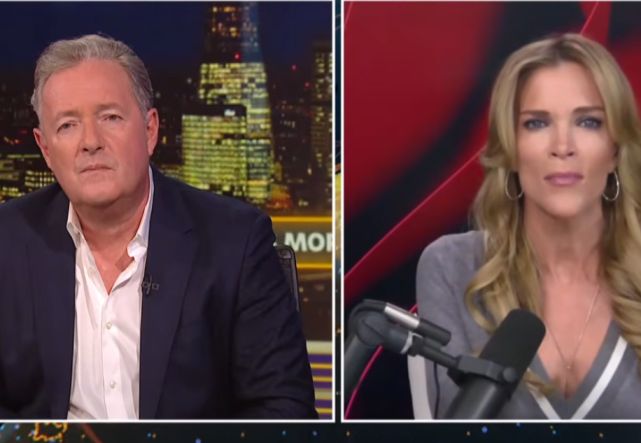
Editor’s Notes: In this episode of Piers Morgan Uncensored, Piers Morgan leads a heated debate following a tenuous ceasefire agreement between the United States and Iran, questioning whether the conflict resulted in a “historic victory” or a strategic surrender. Joined by guests Megyn Kelly and Joe Kent, the discussion explores allegations that the war was heavily influenced by Israeli Prime Minister Benjamin Netanyahu and examines the fractured state of the Trump coalition. The panel also dives into the ongoing military actions in Lebanon and the global economic fallout caused by the closure of the Strait of Hormuz. (April 9, 2026)
TRANSCRIPT:
Trump’s Iran Ceasefire: Was It a Victory or a Humiliation?
PIERS MORGAN: The furore about President Trump’s vow to end Iranian civilization was not about a fear he was about to do that or a hope that he would. It was about the foundational idea that the United States is a bulwark against exactly the kind of atrocities he foreshadowed. If the US is capable and willing to eradicate an entire population, how does it have the moral authority to be a global arbiter of right and wrong?
But Donald Trump doesn’t seem interested in that. Clearly, he sees the US as a muscular superpower, which can throw its weight around to get what it wants. And to be clear, many people support him about that. So amid the shrieking noise and spin about the eleventh hour ceasefire agreement, it’s worth asking a simple question. Did the US get what it wants?
Well, the Strait of Hormuz is open just as it was before the war began, but nobody is in any doubt about the fact that Iran controls it. In fact, some versions of the text refer to guaranteeing Iran’s dominance. The Iranian regime is wounded and weakened, but there’s no doubt that it’s the same regime. Several branches have been hacked off, but the trunk and the roots remain. Many of Iran’s military targets have been destroyed, but Iran still has its uranium, its ballistic missiles, and its proxies across the region.
The uranium plan, which Trump now calls a workable basis for talks, includes reparations for the damage caused, the lifting of all sanctions, and the release of Iranian funds seized by the United States. It’s a multibillion dollar windfall. What does he think they’ll do with it? And on the question of cost, the US has now spent more than $30 billion on the war so far. Fifteen US soldiers are dead.
Thousands of Iranian civilians are dead. Trump’s approval ratings are at a record low, and his base is at war with itself, all as the US prepares for elections, which could handicap or even end his presidency. We should all keep an open mind about what happens next. We should all be grateful for a pause in this war. But if this is what a historic victory looks like, well, Mr. President, I wouldn’t be so sure to claim that.
Megyn Kelly on the Folly of the Iran War
PIERS MORGAN: First tonight, I’m joined by Megyn Kelly, host of the Megyn Kelly Show. Megyn, what’s been the point of it all?
MEGYN KELLY: You gotta say, the deal sounds very much like surrender on our part, which I’m in favor of. I mean, great. We — this needed to end. Ugly or any other way. It needed to end. It was folly to begin with. It was folly throughout. It remains folly.
I’m sure Mark Levin and Lindsey Graham were feeling really, really good until the end part where we had to end it. And now they’re very, very angry. Mark Levin was practically in tears on Fox News last night because we didn’t see it through, I guess, with the nuclear bomb that we were going to drop on Iran. We didn’t go in commando style and seize all the uranium. We allowed, according to the Israelis — according to the Iranians, that is — the war against Hezbollah to stop, which he wants seen through.
He would love to see Lebanon completely bombed and to be made to look like Gaza. And there was really no point to going forward other than more death and destruction. The Iranians proved to be tough MFers, and they realized that they had something far more powerful than a nuclear bomb. They had control over the Strait of Hormuz. And Trump was warned prior to getting involved in this conflict by the chairman of the Joint Chiefs that they were not likely to collapse easily and that they probably would maintain control of the Strait and could cause a global economic panic.
And he didn’t listen. What he did with the Dan Cain warnings was rush to Truth Social — Trump did — saying, “All Dan Cain knows how to do is win. And if I tell him to invade, he’s going to win.” Well, that’s not really what happened. There was never any question we could decimate their navy or their air force.
Of course, no one would ever second guess the power of the US military. It’s pristine, and it’s impeccable, and it’s truly awe-striking. But these battles in the Middle East have been fought now for twenty plus years, and we continue to learn the same lesson over and over. It is not their overwhelming air power or their incredible navies that keep us mired in quagmires. It’s their insurgencies. It’s this desperate way of fighting that we don’t know how to handle. We can’t tamp down with the amazing power of an aircraft carrier, which, by the way, we had trouble getting anywhere close there after they figured out how to attack it.
Netanyahu’s Role: Was Trump Bamboozled?
MEGYN KELLY: And we’ve already learned this. Trump watched us learn it. And so what led Trump — what, at seventy-nine years old — to sit in there in that situation room when Bibi Netanyahu was seated as an equal?
Because he was told the next day by our own top advisers — from the chairman of the Joint Chiefs to the Secretary of State to the Vice President — that these are lies and that these objectives are not going to be attainable. Don’t believe him. We might be able to wipe out the Ayatollah. Not regime change. Ayatollah. And we might be able to decimate some portion of their missiles and their military. Okay. That’s true. But the goals, as stated by Trump when we actually did pull the trigger, were all over the board.
Into this moment, he’s pushing the BS claim that we affected regime change. No, we didn’t. It’s the same regime, just different players. There isn’t somebody more moderate in there at all. We have no reason to believe that. In fact, it looks like the Iranian Revolutionary Guard is in control now, which is far more radical.
And the fatwa that had allegedly been issued by the Ayatollah on developing nukes is gone. Iran is more powerful economically. It controls the strait and now is demanding the lifting of all sanctions against it. And what Trump did with that ten point plan was go from Monday saying, “No, not good,” to Tuesday saying, “Very workable. We can do it.” As a means of saving face to bail off of his insane threats about annihilating an entire civilization.
So I don’t know how we got here, Piers. I’d like to know just as much as anybody else, but all I can think in my head, based on what I’ve read in the paper, is we got here thanks to Bibi Netanyahu, Lindsey Graham, and Mark Levin. And ultimately, President Trump. That’s not to take agency away from the president, who was bamboozled. I don’t know why. He was too weak to say no. He was too gullible to see through the lies. One way or another, he allowed himself to be pushed into this insane conflict.
The Human and Political Cost of the War
MEGYN KELLY: Forget, you know, the blood and treasure we spilled. As you point out, at fifteen service personnel — I believe we were being lied to about the total number of dead and wounded. But we don’t know what the accurate death toll in Iran is. How many civilians in Iran died? How many died in our allies around Iran who now don’t trust us? What penalty do we pay other than the cost and the fifteen lives that we expended, which count for a lot?
But we didn’t take the brunt of Iran’s response. Our allies did, with whom we did not consult prior to starting this war, who are very, very angry — many of them — about what was done to them. What’s going to happen to the trillions of dollars Trump was touting that they were offered to donate to the United States just to be nice guys and have great relations? You think they’re going to spend that on us now? They’re going to spend it on themselves. They’ve got to rebuild massive portions of their own countries thanks to the bombing campaign unleashed against them, because they were within reach by Iran who couldn’t reach us.
So we’ve upset our allies. We’ve pleased Israel, although now they’re upset there’s a ceasefire. We’ve upset the American base. The Trump coalition that got him elected is completely fractured and in smithereens. And he doesn’t care, Piers, because he doesn’t care about the Republican Party. He cares about himself.
If Trump had to get reelected, he probably would have handled this a little differently. But he doesn’t care that the Republicans are going to lose the midterms. I think he thought that was a foregone conclusion. And I don’t think he cares that J.D. Vance or Marco Rubio wins the presidency next time around. I think there’s a piece of Trump that would like to say, “I’m the only one who could do it. The Republican Party’s nothing without me.” And the rest of us are going to be around to pick up the pieces.
A Netanyahu-Driven Operation?
PIERS MORGAN: I mean, a fascinating assessment. I remember early on you picking up — as I did — on what Rubio had said about the reason why America went in, and then the immediate backtracking the next day when they realized — panicked and realized — they’d let the cat out of the bag. This was clearly a Netanyahu-driven operation. He had persuaded Trump to come with him. Then we had Anthony Blinken saying, actually, he tried to do this when Biden was president, when Obama was president, and both times those two guys said no, we’re not going to come with you. And then he didn’t attack. So he clearly got third time lucky with an American president that would come with him.
But I remember early on, you and I and others who dared to suggest that we take Rubio at his word — that actually this was all Israel’s behest.
MEGYN KELLY: Yeah. Once again, we were anti-Semitic if we said that. This was a hatred of Israel that was driving our warped, crazed minds. And then you read this deep dive in the New York Times. Fascinating. I mean, what’s most fascinating to me, they’ve got somebody on the inside telling them exactly what happened in that situation room, which is fascinating. But when you see it all laid out, it’s crystal clear. That’s exactly what happened. Netanyahu got in that situation room at the White House — like you say, unprecedented. The way he had the guy from Mossad on the big screen, he had him there — it was like two equal partners — and he persuaded Trump in that room to go in.
I think Trump will regret this. Well, you’re right. He may not care. He may want to just say, “Moving on. It’s a big victory. Blah blah blah.” But the reality is nobody thinks this was a big victory for the United States. Nobody can see anything but actually a bit of a humiliation — not militarily, because America can beat anyone when it comes to a military punch up. But what Iran has now discovered is that as long as it can control the Strait of Hormuz, it can control the global economy, and therefore it can, if it has enough patience, play out the long game with the President of the United States, who will have to cave, because ultimately it’s going to cause him so much economic and political damage, he has no choice.
That’s what’s happened here. Trump hasn’t brought this to an end out of some great desire for peace. He’s brought it to an end because he could see that the economic and political damage was getting worse by the day. Because the Iranians wouldn’t fold. They realized what the pressure point was and that it was working, and they watched Trump’s poll numbers spiral downward in every piece of the coalition that elected him. And they realized that their ability to just withstand the beating was working, was getting them to where they needed to get.
The Collapse of MAGA Support for the War
MEGYN KELLY: Because, look, there was never majority support behind this war. There wasn’t some groundswell of support behind this war. There was Republican-based support for the war, but the Democrats didn’t support it. The independents didn’t support it. And very soon into the war, the Republicans stopped supporting it too. MAGA supported it — as MAGA dwindled, by the way. It was already only about fifteen percent of the population. It’s getting smaller by the day.
President Trump three weeks ago declared that to be MAGA, you have to support Mark Levin, whereupon multiple formerly diehard MAGA people who were dedicated to it said, “I’m out. I’m out. If those are the stakes, I’m out. Why would I support that warmonger who’s frothing at the mouth over the idea of lives being cost in Iran, civilian or otherwise? He’s a disgusting fool who’s well past his prime. We should not be listening to him.”
But President Trump is obsessed. On Sunday, he tweeted out that the Supreme Court should be listening to Mark Levin. All nine justices.
PIERS MORGAN: I don’t get it, because you’ve been loudly calling out the folly of this war from day one.
MEGYN KELLY: I have. Tucker has. Candace Owens has. Joe Rogan has. Theo Von has. I mean, there is a massive cross section of people in our world — which is what I call the unfiltered world, where you’re not controlled perhaps by other forces that own networks and so on, that sort of send out a directive about what you should and shouldn’t be saying. So in the free spirit world, where you can say what you really think, pretty much everyone has been agreed. This looked like madness.
There’s a very interesting piece — I think with Stephen Cheung — who pops up in the New York Times piece, who emerges as one of the smarter characters, actually, that Trump has around him, who said, “Well, how does all this sit with ‘we’re not going to go and wage war in the Middle East,’ which is what we campaigned on? How does this sit with America First?”
The Political Fallout for Trump
MEGYN KELLY: You know, this will have an obvious effect on prices, on inflation, on gas pump costs and so on. How does any of this work? And there’s no real answer according to New York Times and the room to that. He just raises this spectre of, this is the elephant in the room. This is exactly the opposite to what we campaigned on.
So I think, politically, it’s been disastrous for Donald Trump. And I just don’t understand, other than he got bamboozled by Netanyahu, why he took such a gigantic risk.
PIERS MORGAN: I don’t either. And it wasn’t just Steve Cheung, who is a master messenger and saw the storm coming. It was JD Vance, who, according to the New York Times, was in there specifically saying it’s going to fracture the coalition.
And boy, is that an understatement. Trump is now underwater, and he wasn’t before, with men. Don’t forget the gender divide that happened in 2024. The women went overwhelmingly for Kamala Harris, and men went for Trump. Now he’s underwater with men, including with young men and young people.
The young person coalition that Charlie Kirk delivered to the president is gone. They’ve abandoned Donald Trump. The working class, Piers. The latest poll that just came out showed he’s two points underwater with the working class. That’s been Trump’s base from the beginning.
They were the unshakable foundation that got him elected over and over, and they’re gone. They’re very angry. They care about what’s happening in Iowa, not Iran. They don’t want days and days and more weeks of debates over the Strait of Hormuz. No one cares.
They care about their own lives. They care about the fact that they can’t pay for health care. They can’t buy a home. Young people cannot get a home even though two people are working nonstop, round the clock, with no vacations in this country. President Trump promised he would do something about that.
Now we see the leaked soundbite saying, uh-uh. Can’t really worry about anything at the federal government level other than military. Everything else has to be done at the state. Then they pulled that down off the Internet because they didn’t mean to share it. He said it at an Easter breakfast that was supposed to be private.
Well, it’s going to be the campaign ad for every Democrat in these midterms. So he’s lost working class. He’s lost men. He’s lost young people. He lost Hispanics by some fifty points.
Every single gain with Hispanics is now gone. It’s eradicated. Blacks. He had made some inroads with Black voters. Done.
You name it. They’re all gone. The question is now not who has he lost. The question is who remains? And sure, it’s the diehard MAGA.
Trump can do no wrong. He’s some savant. Whatever he says is right, that’s great. He’ll always have those people. You can’t win national elections with some fraction of fifteen percent of the electorate.
The vast majority of Republicans would call themselves America First, but not necessarily MAGA, certainly not the way Trump is now defining that term. And he misunderstood his own base twice critically in the past year, and both times are really undermining him right now.
Trump’s Misreading of His Base: Epstein and the War
MEGYN KELLY: One was Epstein, thinking he could just say, “Epstein, who still cares about that? No one’s talking about Epstein.” He misread the base, which very much cared about Epstein. Not so much because they care about Jeffrey Epstein, but they care about elites being able to get away with murder and protect each other when the common man cannot.
And the unwillingness to turn over stones that the base had been demanding be turned over so we could figure out, is there some sort of child predator sex ring? Is there an elite cabal working to hurt people that gets protected because they have money and we don’t? And Trump could not get rid of that with a shrug of a shoulder, and ultimately, it resulted in legislation he had to pretend he favored that was crammed down his throat and he had to sign, though it had enough loopholes in it to drive a Mack truck through. But in any event, it was a step forward on Epstein that he didn’t want to make and was forced to.
And this is the second one. And this is a much, much bigger and more serious betrayal of what he ran on and of what was important to his base, which does include the America Firsters and not just MAGA. Or as Marjorie Taylor Greene has been saying, at this point, she’s not America First. She’s America Only. And I think a lot of us are getting to that point.
We are sick of being the policeman of the world, of being dragged into conflict after conflict by Bibi Netanyahu, by Israel, who’s supposed to be our special ally. But what they’re special at is getting us to fight their wars and get involved in their conflicts that they can’t fight by themselves.
That’s what Dan Cain said to President Trump the day after Netanyahu came for the seventh time and was sitting in that situation room like an equal. He said that they’re great on intelligence. That’s supposed to be the area in which they’re so special to us. They share their intelligence. They’re great on it. But that intelligence doesn’t always seem to pan out.
Like, the regime will fall easily. The Iranian people will revolt in the streets and take over. With how? They don’t have guns? Bombs would be raining down? Wasn’t this thought through? There isn’t regime change. The Iranian people are arguably worse off than they were before, and it’s all based on baby Netanyahu’s special intelligence, which caused at least fifteen American lives, the fracturing of the Trump coalition, probably at least the next two elections for Republicans, not to mention the amount of lives and blood and treasure that was spilled in the Middle East.
PIERS MORGAN: So great job. Megyn, going to leave it there. Wish I could talk to you for another hour because it’s blistering stuff, but you’re so right. You said at the start, one word, folly. What a folly it’s been, and I think the repercussions are going to be enormous. Thank you very much for joining me. Good to see you.
The Ceasefire and Its Contradictions
PIERS MORGAN: Just about everybody on all sides of the Iran war debate is taking a victory lap today. Everybody was right, it seems, and everybody has won. The notable exception is Israel, as we speak, is continuing to pound Lebanon.
Israeli officials say the ceasefire doesn’t include Lebanon, and the war must go on, a direct contradiction of the Pakistani and US position. Today, leader of Israel’s opposition said that if this ceasefire is as good as it gets, it will amount to “one of the most severe strategic failures in Israeli history.” None of this bodes well for a permanent end to the war, unless that is President Trump is about to break with Bibi Netanyahu.
Somewhat lost in the excitement of Trump’s vow to end Iranian civilization yesterday, New York Times released an extraordinary report on how Netanyahu made the case for war in the White House. The Israeli premier, it says, planned a simple mission with swift regime change, but it had to be now.
Well, General Caine, the top US military official, reportedly told the president, “Services in my experience, standard operating procedure for the Israelis. They oversell and their plans are not always well developed. They know they need us and that’s why they’re hard selling.”
All of this appears to echo the position of Vice President JD Vance and the former Secretary of State Antony Blinken. For several weeks now, we’ve been told it’s an anti-Semitic conspiracy theory to say that Israel dragged the US into this war. Perhaps the only people who could plausibly be declared victors today are those who said the evidence suggested otherwise.
Joe Kent and Will Chamberlain Debate the Ceasefire
PIERS MORGAN: To debate all of this, I’m joined by Joe Kent, the former director of the US National Counterterrorism Center, and Will Chamberlain, the senior counsel at the Article 3 Project. Well, to both of you. I mean, Joe Kent, a lot of what you said when you resigned appears to have been pretty much confirmed by that New York Times report, which is extremely detailed and paints a picture of Netanyahu in the White House in the situation room with the head of Mossad appearing on a screen next to him, in which he laid out a four point plan for why this would work, decapitating the regime, the people would rise up, they would be too powerless to shut the Strait of Hormuz and so on, most of which has not happened. What do you feel about the fact there’s now this ceasefire, albeit it seems quite a perilous one? Is it a recognition, do you think, by President Trump that he’s got to get out of this?
JOE KENT: Well, I think it’s a good thing that President Trump took the opportunity to enact a ceasefire and to get both sides to the negotiating table. I think what’s key though is that President Trump has to realize in order to accomplish our strategic goal, which is ending this conflict, reopening the Straits of Hormuz, and maintaining the alliances that we have in the gulf, he has got to restrain the Israelis.
The Israelis have a different strategic goal than we do. They want to take down the entire regime. They don’t care how long it takes. They don’t care how much we have to commit in terms of blood and treasure. So the Israelis and us have parted ways in terms of strategic objectives.
We have to be honest with ourselves. It sounds like, considering the fact that someone shared the origins of this war with the New York Times, that that is recognized now by this administration. So the first thing that President Trump has to do in order to make sure this lasts is actually restrain the Israelis, take away key components of the military aid that we give them so that they lack the capability to go on the offense and to spoil this ceasefire.
PIERS MORGAN: Will Chamberlain, your response to that?
WILL CHAMBERLAIN: I mean, I think that’s a completely incoherent idea, not merely wrong, but just incoherent. First off, it presupposes we have the ability to take away their offensive capabilities. News flash, they already have them. We can’t just seize them. Are we going to invade Israel and take their planes? We can’t. They have the F-35. They have these capabilities. Remember, they launched the twelve day war on their own.
PIERS MORGAN: But on that point, Will, the Americans could withdraw their funding. Sure. The billions of dollars that go to the Israelis, which they use to fund their own military, that could just be withdrawn. So America isn’t powerless. It can exercise that power.
WILL CHAMBERLAIN: Right. But the offensive capabilities they would need to strike around, they already have. They’re the second biggest air force in the world today. Even if we said that we’re not going to give you $4 billion a year going forward, that wouldn’t stop anything.
And then the second point is that this is an unbelievably silly approach to foreign policy because we haven’t hammered out final terms with the Iranians yet. We’re still in the middle of negotiations. The idea that we would restrain our ally, who, by the way, just helped us achieve one of the greatest military victories of the modern era, we would restrain them instead of trying to use the threat of continued belligerence from them to extract more punitive terms from the Iranians is silly. It’s just completely antithetical to how things should work.
The idea that we need to be worried about our gulf neighbors who would be upset if we didn’t restrain the Israelis is also absurd because our gulf neighbors are on our side, and this war has not only solidified our position militarily, it solidified it diplomatically because all those countries are furious with the Iranians and are on our side and want to strengthen cooperation with both us and Israel.
The New York Times Report and the Strait of Hormuz
PIERS MORGAN: But what is clear from that New York Times report? It seems to be incredibly well sourced. So somebody’s been talking who was in that room. What is clear from that is that the Israelis, maybe this was an honest mistake on their part, a misreading of the situation, but they certainly appeared to be of the belief that if you took out the Ayatollah and some of the top people with him, that this would then lead to an uprising by the people and that amid all this chaos there would be no ability to close the Strait of Hormuz.
Well, none of that has really happened. Yes, they got rid of the Ayatollah, but he’s just been replaced by other similarly minded people. And then there’s been no uprising by the Iranian people whatsoever. And of course, the Strait of Hormuz has been held in a kind of stranglehold by the Iranians in a very powerful way. It has to be conceded, which has caused enormous damage to the global economy. They’ve basically controlled that strait now for four or five weeks, and it’s caused hell. And none of that appears to have been predicted by the Israelis in their sales pitch to Trump to join them on this war.
WILL CHAMBERLAIN: Also, I think you’re overstating a number of things there. First off, the Iranian navy is gone. Right? They’re controlling the strait by threatening to shoot at people, but they don’t have any naval forces meaningfully in the area. And remember, they were thinking that card, which is their only trump card, that’s the maximum leverage they have. It’s a powerful card, and it’s one that the Israelis did not think they had the power to play. According to the Israelis, they might have made a slight misjudgment on that. It’s war.
I think the Iranians might have a bigger misjudgment overall when you talk about the complete destruction of their military capability. But if you take away the strait as the foremost issue, then you’ve got overwhelming military dominance by the Americans and Israelis. Yes, the Iranians would have still attacked the neighboring Gulf states, but that would be a military conflict, part of it.
The Strait of Hormuz and Iran’s Negotiating Position
PROFESSOR MARANDI: The fact that the Strait of Hormuz has been shut pretty much for five weeks, that has been an asymmetric war, which, you know, with the best one in the world, has been wielded very successfully by the Iranians for whatever at all.
JOE KENT: I think that’s actually been wielded quite poorly in prior years.
PROFESSOR MARANDI: Let me finish my point, Joe, and then you can speak. Two weeks ago, the Iranians were saying, we’re not going to give up the Strait of Hormuz unless we get a permanent peace deal, a permanent commitment to non aggression and reparations. What are they trading it for as of yesterday? Two weeks ceasefire. No promises. They can’t even extract a commitment from the Israelis to stop fighting Hezbollah. That’s how badly they’re beaten.
Joe Kent Responds
PIERS MORGAN: Well, Joe, he called you silly and incompetent, I think, earlier. So is this your chance to respond?
JOE KENT: Prior to this war, the Straits of Hormuz were transited by anybody trading oil for free. Post-war, the Iranians are going to be able to extract a fee. That’s one of their negotiating chips they have now.
Prior to the war, the Ayatollah that we killed was actually at the negotiating table with us. The reason why none of this was taken into account is because the Israelis didn’t really care about what would happen to the Straits of Hormuz. They didn’t care what would happen to our Gulf allies. Our Gulf allies right now still technically are with us, but the fact that we were unable to provide them with security guarantees lowers our status in the region, potentially could threaten the petrodollar in the region. And so right now, we’re in a weaker position because we listen to a foreign government that had a different strategic goal in mind than we did.
So it’s great that we got the ceasefire. We need to maintain that ceasefire, and we have to actually withhold things from the Israelis, which we can do. The Israelis do have a modern air force, but they rely on us for a lot of the logistics, the refueling in order to be able to reach into Iran. So we very much are in the driver’s seat of what we—
WILL CHAMBERLAIN: Well, that’s not true, Joe. That’s just obviously a whole thing.
JOE KENT: No. It’s a hundred percent true. They can’t reach into— they cannot reach into Israel. I’ve actually been in the military, man. I’ve been part of these operations.
WILL CHAMBERLAIN: Then explain how they did the twelve day war without refueling. Right? If we weren’t participating in the defense operations that were working out, they struck the hell out of—
JOE KENT: We helped them out a good deal with logistics. They can’t sustain operations without us. They wouldn’t be able to continue to sustain operations all the way into Iran with conventional military forces in any meaningful way without our support.
We have to pull that back. We also have to pull back their ability to go on the offense outside of their borders because it’s going to interfere with the peace that we’re trying to achieve. Right now, we’re paying for their defense. We’re paying for the offense. And also in terms of our status in the region and our ability to keep commerce and oil flow going out of the Straits of Hormuz and the Middle East, all of that is being negatively affected by us listening to a foreign government.
So we have to put Israel back in the junior partner role if we’re going to accomplish our strategic plan.
Debate Over U.S. Strategic Goals and Regime Change
PIERS MORGAN: Persuade Pete Hegseth of any of this?
JOE KENT: Well, I tried.
WILL CHAMBERLAIN: And so therefore, I had— agree with you. He used better intelligence than you. You weren’t privy to any of this stuff. That’s why you’re now on the outside doing podcasts instead of inside the administration trying to shape policy. You don’t know.
JOE KENT: Well, you didn’t persuade him. From the inside, look, man. My letter of resignation has been out there. What’s important right now is that we support President Trump in getting this peace deal and making sure it actually sticks. The problem is, as confirmed by The New York Times, that was well sourced from within the West Wing. The Israelis were in the driver’s seat for all of this.
WILL CHAMBERLAIN: Well, if you read the article, I think it’s pretty— that means that you know how we’re going to watch in DC.
PIERS MORGAN: Okay. Well—
WILL CHAMBERLAIN: With the New York Times.
JOE KENT: Well, if you say— if you say it wasn’t well sourced, well, which part are you contesting?
WILL CHAMBERLAIN: Oh, no. It was well sourced. You guys are just mischaracterizing how much influence Israel had based on what was written in that article. Which was— Israel gave a presentation.
JOE KENT: Yeah. I read it completely.
WILL CHAMBERLAIN: And then after the Israelis were offline, right, then you had the meeting between the US principals, in which John Ratcliffe and others were talking about, yeah, the Israelis are overselling their ability to achieve regime change. That’s probably not going to happen. But they said, you know, on what we’ve thought for a while is when it comes to missiles and when it comes to their ballistic shield, when it comes to their navy, we have the capability to do that, and we should do that. And so the idea that we didn’t get suckered into a regime change war— from the outset, American goals did not include regime change.
PIERS MORGAN: From the— Trump literally talked about regime change early on. Literally.
WILL CHAMBERLAIN: Trump literally said regime change was an objective of the war. Fact check me on that after. He never did.
PIERS MORGAN: You don’t think Donald Trump ever mentioned regime change?
WILL CHAMBERLAIN: Incorrect. I didn’t say that. I said it wasn’t a military objective of the war.
PIERS MORGAN: He said it would— missing out. Today. But it’s not the old one. He’s claiming today he’s affected regime change. What are you talking about?
WILL CHAMBERLAIN: He’s affected it. That’s because he’s basically saying we killed all the senior leadership, which we did, by the way, in an unprecedented fashion. So who’s running the country? That doesn’t mean it was an original military—
PIERS MORGAN: Who is running Iran right now?
WILL CHAMBERLAIN: Look at his original statements.
PIERS MORGAN: Who’s— I’m afraid to move— would be nice to have, but it’s not an objective of— changed his goalpost every ten seconds. That’s been— I mean, has been remarkably consistent from Hegseth, Rubio on down. Go look at their public statements. What did they say an official objective of operation— okay. Why did he— regime change. Why did America launch a preemptive strike against Iran, Will?
WILL CHAMBERLAIN: Oh, to essentially prevent them from building up a further ballistic missile capability as a shield behind which you would need to develop their nuclear weapon.
PIERS MORGAN: That was not the reason given by the Secretary of State, Marco Rubio. Go look it up, man. It’s— he said it over and over and over again. On camera, he said when he was first asked the reason the United States launched a preemptive strike against Iran was because another country, brackets Israel, had indicated they were going to attack Iran and therefore the Americans knew there would be attacks against some of their interests in the Middle East, so they got in first. Marco Rubio—
WILL CHAMBERLAIN: That was the reason for the timing. Not the reason for the strike. The strategic reason for the strike, which Rubio explained in the very same press— I remember the exact one you’re talking about. It’s like a gaggle in— I think he’s in Congress after, you know, having a meeting with people. This is very early in the war. He says the reason for the strike is to prevent them from developing their ballistic missile shield further. The reason for the timing, like, why today? Why February 28th? Was the fact that they had this intelligence about the meeting of Ayatollah Khamenei and everybody else and that Israel was going to go ahead with that under any circumstances, so we should do it now.
But, I mean, go again, go back and look at that. I know exactly what press conference you’re talking about, and I don’t think your memory— you are remembering one piece of it, but you’re not remembering—
PIERS MORGAN: It’s a pretty significant piece when the Secretary of State of the United States on record says that the reason for the preemptive strike by the United States—
WILL CHAMBERLAIN: For the timing.
PIERS MORGAN: —was because Israel was attacking Iran. And then we hear from Anthony Blinken, one of his predecessors, that Netanyahu had tried to sell this to both Biden and Obama, and when they both rejected the opportunity to join him in attacking Iran, guess what? Israel didn’t attack. So it looks like he got third time lucky with Trump who went along with it, but had Trump said no, I don’t think Israel would have attacked.
WILL CHAMBERLAIN: Well, but then why did they strike in the twelve day war?
The Twelve Day War and Its Aftermath
PIERS MORGAN: Only reason is that— I’m hearing you. Let’s talk about the twelve day war. Let me bring Joe back in this.
The twelve day war is fascinating because I distinctly remember— I’m sure Will will remember it differently to me— but I remember Donald Trump at the end of the twelve day war saying that this had put back any aspirations by the Iranians to build a nuclear weapon decades, that we had obliterated their nuclear capabilities, it was done, gone. And here we are nine months later having to launch a full fledged war in Iran because the threat remains apparently not just the same but so imminent that America had to act immediately. Now try and make sense of that for me, Joe.
JOE KENT: Well, this is what the Israelis do. They’ve always wanted this regime change war, and so they continually use their influence through official channels and then also through their echo chamber in the media to move the red line.
They did this with the enrichment issue. President Trump initially said, our policy is no nuclear weapons for Iran. The Iranian supreme leader agreed. There was a lot of space there for negotiations. There were negotiations that were taking place for several months.
Then the pro-Israel lobby basically came in and convinced President Trump that the new red line was zero enrichment. Twelve day war happens. Operation Midnight Hammer happens. We take away the ability for them to enrich. The Iranians withhold proxies. They don’t retaliate in any meaningful way. They get right back to the negotiating table. And then we’re hearing basically what Will just said. Oh, now we have to go in and attack Iran because of this ballistic missile capability. So the red line moves again every time Israel needs a new justification for the war, and they get the outcome that they want by using their pressure network and their media echo chamber and their official engagements with the US government.
They were still worried that we are going to get a deal with the Iranians. And so therefore, they went ahead and said, hey, we’re going to preemptively go into Iran and attack. And knowing that this attack would be against the regime, Iran’s reaction to an attack directly against the regime would be to enact their contingency plan, which would be targeting our bases in the region. So the only actual imminent threat that Iran posed— or that was posed— was the attack, a threat by the Israelis against Iran. There was no imminent Iranian threat attack against us.
Has Regime Change Actually Been Achieved?
PIERS MORGAN: No. I don’t think there was for a moment. Will Chamberlain, I mean, as we sit here today debating this, the regime remains in place. Trump wants to argue it’s different people. Therefore, it’s a new regime, but it’s the same people, it’s the same regime, it’s just the faces of—
WILL CHAMBERLAIN: Minus the hundred senior leaders who are all—
PIERS MORGAN: So a few of the leaders have gone, but they’ve been replaced by others from the same regime with the same ideology. It would be like saying you’ve decapitated the Trump regime but he’s replaced by a bunch of people called Trump. It’s kind of— I mean, that’s what happened in Venezuela, right? I mean, we’ve changed in Venezuela.
WILL CHAMBERLAIN: Always changed is the president got picked up in the middle of the night and put in a New York prison cell. But the regime’s continued. His own number two is running here.
PIERS MORGAN: So the regime is still there. Are we all okay? I think we should be clear about what regime change means. Right? With my quaint old head on, regime change means you change the regime, not that you just have a few people on the top of it and they get replaced by other people from the same regime.
Secondly, the enriched uranium remains in Iran. None of that has been secured by either the Americans or Israelis as we speak. Thirdly, the Straits of Hormuz remain under the control of the Iranians, which they weren’t— it wasn’t in control of it before this war started, and it is, despite what you say. They are now charging money. Apparently, they want to charge a dollar a barrel was the last thing I read, and Trump’s all for it because it’s going to make everyone rich. So they’ve got the control of that.
They’ve continued to fire rockets. It seems that some of their Gulf state neighbors— so I’m looking at this historic victory, and I’m thinking, well, where’s the victory? What is the victory? Because I don’t see it. And forgive me if I take with a pinch of salt this idea—
WILL CHAMBERLAIN: Alright. Well, let’s try this by historical analogy.
PIERS MORGAN: Let me finish my point. You can respond. Apparently, we’re now supposed to believe that rather like eight, nine months ago, Iran’s capability of building a nuclear weapon has been destroyed like it was nine months ago. Well, why can’t they just pop up again in nine months? They’ve still got all the enriched uranium. What’s going to stop them? So look, I put it to you that the charge sheet against the claim of historic victory is pretty big.
WILL CHAMBERLAIN: Alright. So I’ll deal first with that minor point on the enriched uranium. Right? President Trump has said—
PIERS MORGAN: Point. Untrue. No. No. I mean, in relation to you saying we lost the war. Right?
WILL CHAMBERLAIN: I didn’t say America’s lost the war.
The Debate Continues: Military Victory or Strategic Miscalculation?
PIERS MORGAN: I’m disputing the claim you didn’t think it’s a big victory. I’m disputing the claim to historic victory given the checklist I just presented.
WILL CHAMBERLAIN: Well, let’s imagine, if you will, it were January 1942, a month after Hitler declared war on the United States in the aftermath of Pearl Harbor. And the current military state of affairs is the entire German navy is at the bottom of the sea. The Luftwaffe is destroyed. There’s complete allied air superiority over Germany. Hitler, Goring, Bormann, and Himmler are all dead in a massive military strike, and yet the German press is claiming the Germans have managed to shut down trade via some rockets in the Danish straits. Who’s winning?
I mean, people have lost context about what it means to win war because it’s so long. In five weeks, we have just decimated Iranian military capability. We struck thirteen thousand targets, and they managed to hit a single plane, and they couldn’t even capture the soldiers that fell out of that plane. It’s one of the most lopsided military conflicts in history. Bringing Gulf Coast and heavy oil refineries, restraint trade in it, and increasing gas by a dollar a gallon for a month does not change that in the slightest.
PIERS MORGAN: Really?
WILL CHAMBERLAIN: Yes. A hundred percent. A massive military victory.
Joe Kent Pushes Back
PIERS MORGAN: Okay, Joe. This is a great victory, and I’ve lost the plot.
JOE KENT: The great victory is the fact that we have a ceasefire, and this could have been much, much worse. However, as opposed to making some obscure World War Two reference because everything always has to be about World War Two, let’s just compare the situation between now and just a month ago before this war.
The Straits of Hormuz, before this last iteration of war kicked off, were open for commerce. People and companies could transit that for free. Iran didn’t have a stranglehold on that. Our GCC alliance was completely intact. There was still a guarantee of American security that hadn’t been fractured. We had a regime inside of Iran, although they were not the best. It’s not exactly what we wanted. They had a prohibition on building a nuclear weapon, and they were involved in active negotiations with us. They were closely adhering to a strict escalation ladder. Their proxies were not attacking us.
WILL CHAMBERLAIN: No. That’s exactly what happened. They were not doing anything.
JOE KENT: What do you think they were using that for medical purposes?
WILL CHAMBERLAIN: If they wanted a bomb, they had decades long before President Trump ever became the president to develop a nuclear weapon.
JOE KENT: There was a prohibition by the Ayatollah, which was a reasonable and calculated approach. They didn’t want to become like Libya. They didn’t want to become like Saddam. They had reached a point where they would keep the capability, but not the weapon. Witkoff was saying they were in negotiations with us, and we were not at war.
WILL CHAMBERLAIN: Give up our enrichment rights, and we won’t give you anything militarily or diplomatically. But we were at the negotiating table with them. There was a potential for it, obviously.
JOE KENT: Iran’s nuclear program, which is what — now fast forward to where we’re at right now. Look at the streets. Look at the GCC.
The Nuclear Transparency Debate
PIERS MORGAN: Let me ask Will a question, which is, Will, does Israel have nuclear weapons?
WILL CHAMBERLAIN: Yes. Almost certainly. I mean, they haven’t officially claimed it.
PIERS MORGAN: Why don’t we know for a fact?
WILL CHAMBERLAIN: Because they don’t want to say so because there’s American statute of —
PIERS MORGAN: Why do they get a pass about that?
WILL CHAMBERLAIN: Well, because they’re our ally and Iran’s our enemy.
PROFESSOR MARANDI: Because we’re the good guys.
WILL CHAMBERLAIN: They’re from the good —
PIERS MORGAN: A very interesting admission. So our friends don’t need to be transparent about their nuclear capability, but our enemies do?
WILL CHAMBERLAIN: Yes. It’s going to be America’s friend.
PIERS MORGAN: Wow.
WILL CHAMBERLAIN: That’s exactly how it works.
PIERS MORGAN: That’s a right vote of hypocrisy, isn’t it?
WILL CHAMBERLAIN: No. It’s only hypocrisy if you don’t have a normative view of whether the United States is good and Iran is bad.
PROFESSOR MARANDI: I don’t think it’s a normative view. There is no single good reason why Israel should be allowed to refuse to admit whether it has nuclear weapons. There’s no reason. They should be called to account by the international law police. They should be — I mean, again, they’re a core ally of the United States, and the United States is the most powerful country in the world.
WILL CHAMBERLAIN: This whole multipolarity talk is just silly. There’s a unipolar hegemon in the world. It’s the United States, and we’re also very benevolent. And so Israel, our friend, gets —
Trump’s Threat to Annihilate Iran
PIERS MORGAN: When you say America is benevolent, how does that sit with the president of the United States two days ago talking about the imminent destruction of an entire civilization?
WILL CHAMBERLAIN: Oh, you mean, like “death to America, death to Israel?” Right?
PIERS MORGAN: No. No. We’ve dealt with Donald Trump.
WILL CHAMBERLAIN: One post out and everybody loses their crap in the middle of a negotiation and signs a ceasefire within eight hours.
PIERS MORGAN: Talking about Donald Trump threatening to annihilate ninety million people. He had it right yesterday. You guys all took an eight hour nap. Do you not care about that?
WILL CHAMBERLAIN: I just see it as negotiating bluster. Trump’s been doing this stuff for forty years.
PROFESSOR MARANDI: Genocide?
WILL CHAMBERLAIN: I mean, that’s exactly what the Iranians have been doing to us. They had a clock in the middle of their downtown saying there should be a war. The country of Israel, America should be as moral, if not as immoral, as its enemies.
PIERS MORGAN: Is that what you’re saying?
WILL CHAMBERLAIN: We should be sufficiently ruthless to get our negotiated pieces that actually make sense, which we seem to have done here. Apparently, this will use the Iranians’ minds to make them realize they should come to the table.
PIERS MORGAN: Are you aware that threatening to commit an act of genocide in itself could be presented as a war crime?
WILL CHAMBERLAIN: I think that would be frivolous. Again, send the international law police to the White House if you want.
Joe Kent: “I Thought It Was Disgraceful”
PIERS MORGAN: Joe Kent, what’s remarkable is there’s a kind of arrogance to the way Will is talking. Like, none of this matters.
JOE KENT: I think it does matter. I’ve known Trump a long time. I consider him a friend. But on this, I think he’s lost the plot. And I think the idea that from the White House, you issue a statement in your own words threatening the annihilation of an entire civilization, an entire country of ninety million Iranians, I thought was disgraceful, absolutely disgraceful, and could well be a crime.
I’m glad that President Trump’s tactic worked out and we have a ceasefire. I think what’s critical is that we make sure that we keep the Straits of Hormuz open and get to the negotiating table. We have to hold back Israel to make that happen.
If our goal was to make sure that Iran didn’t get a nuclear weapon, or that other states that were adversarial with us don’t get a nuclear weapon, we just set a horrible example here. Because Iran showed that they were going to play ball with us, that they were in the negotiation process, that they just wanted some enrichment, and yet we came in and we killed the leader that put that prohibition on.
The lesson that the other people who are coming up in the ranks of the Iranian regime have learned is that they better get a nuclear weapon. Otherwise, this is going to happen to them too. Actually, one of the most vindicated countries in this whole exchange has been North Korea, who obtained a nuclear weapon for this very reason.
So if we want to make sure that countries that are adversarial with us or rogue countries don’t try to develop a nuclear weapon, the second one of them gets to the negotiating table, the last thing that we should do is launch a regime change war, a decapitation strike against that leadership.
So I think the lesson learned here is that now this galvanized, harder generation of IRGC officers and Ayatollahs are going to take over Iran, they better get a nuclear weapon, and that’s going to be a major problem for us going forward. That’s why we need to take this round of negotiations very seriously.
I hope President Trump used that bluster to get them to the negotiating table, but there’s only so many different times that you can use that. So the next time, if these negotiations don’t go well and President Trump says he’s going to annihilate them, that might not have the exact same effect.
The “Boy Who Cried Wolf” Warning
PIERS MORGAN: We have to be very careful with our language. I made the point yesterday. You’ve become the boy that cried wolf, the emperor with no clothes. And if you say we’re going to wipe out an entire civilization and then nothing happens, well, you become a bit of a lame duck in terms of your threats.
WILL CHAMBERLAIN: Oh, did you want him to follow through?
PIERS MORGAN: No. Of course not.
WILL CHAMBERLAIN: Okay. Good. Just checking.
PIERS MORGAN: Of course not. But here’s what’s interesting. Trump welcomed the ten point plan as if it was somehow brand new, which it wasn’t. But the ten point plan, which he says is very workable in terms of the negotiations — let’s just go through this and I’ll ask you, how many of these do you think are acceptable? Number one, the Iranians want commitment to non aggression. Number two, Iran’s control over —
WILL CHAMBERLAIN: That’s just totally misconceived. From the outset, he said that the ten points — the ten points that the reporters are saying, the ones you’re quoting from, are not the basis on which he said —
PIERS MORGAN: Well, these are the ten points according to the Iranian media.
WILL CHAMBERLAIN: It’s not what Trump has agreed to, and that’s been repeatedly said. He’s repeatedly said this is not the thing he’s agreed to as workable. And he put out a slew of truths today saying he’s going to continue to insist on full dismantlement of the Iranian nuclear program, return of the highly enriched uranium, which — again, this whole idea that there was a peaceful fatwa. Remember, they had sixty percent enriched uranium, four hundred fifty kilograms worth of it, enough for eleven bombs.
PIERS MORGAN: So when Trump says he welcomes the ten point plan, in fact he doesn’t at all?
WILL CHAMBERLAIN: He’s looking for — I think the basis for the negotiations is something that’s much more favorable to the United States.
PIERS MORGAN: So why would he say that he welcomes the ten point plan?
WILL CHAMBERLAIN: Well, I think he was thinking of a different plan in his mind.
PIERS MORGAN: You know what? The worst thing about this — not what he was thinking. The worst thing about this is why on earth he would agree to that, and it doesn’t —
WILL CHAMBERLAIN: Just literally read his truth feed. He’s like —
PIERS MORGAN: It’s not his truth feed. It’s the House rapid response on this. They’ve been like, no, this —
WILL CHAMBERLAIN: Obviously, it’s not true because if Iran was getting these kind of concessions out of the United States, they’d have also been able to save Hezbollah, but they can’t even do that.
The Strait of Hormuz: A Powerful Leverage Point
PIERS MORGAN: Okay. Well, actually, it turns out that right now, Iran has closed the Strait of Hormuz again and says it will not reopen as long as Israel’s attacking Hezbollah in Lebanon. So who is —
WILL CHAMBERLAIN: It sounds like they’ve put a new condition on the deal. Perhaps they’ll get struck again. That’s probably very unwise of the Iranians.
PIERS MORGAN: Is it? Or is it wielding the most powerful tool in this whole war, which turns out to be a little piece of waterway, which they can exercise control over and strangle and paralyze the global economy?
WILL CHAMBERLAIN: That didn’t stop the United States from striking thirteen thousand targets over a period of five weeks, completely decimating the Iranian military. None of that — if it was that powerful, it should have been able to stop that from happening and force an earlier ceasefire. It wasn’t.
PIERS MORGAN: Okay. But the Strait of Hormuz remains closed. So how successful is it?
WILL CHAMBERLAIN: I mean, honestly, everybody’s just overblowing the Strait of Hormuz closure vis-à-vis the United States. We’re the one that’s really producing the world’s — good for us before prices go up.
PIERS MORGAN: Just to be clear, Will, the closure of the Strait of Hormuz by most experts’ analysis has been the single greatest shock in a negative way to the global economy ever.
WILL CHAMBERLAIN: Well, that can’t be true because oil prices were higher at the beginning of the Ukraine war. So that just can’t be true.
PIERS MORGAN: This has had a greater negative impact on the global economy, specific to energy, of anything we’ve seen ever, and it’s going to get worse.
WILL CHAMBERLAIN: Then why did the price spike even more at the beginning of the Ukraine —
PIERS MORGAN: I know you’re a facts guy. Go and check the facts.
WILL CHAMBERLAIN: I’m sure somebody said that. I’m just saying that if you can’t explain that —
PIERS MORGAN: All the economic analysts have said the same thing. This has been the worst energy shock that we’ve ever seen ever. But look, I’m sure you’re right. I’m sure it’s kind of a trivial detail. The complete destruction of the Iranian military.
Closing Thoughts
PIERS MORGAN: Alright. Look. I’ve got to leave it there. Joe, last word to you.
JOE KENT: Yeah. I’m just saying, now the Iranians are in an even stronger position than they were prior to this war. The last twenty plus years of the Global War on Terror has shown us that we can basically take out targets. We can strike targets all day, and our enemies will endure simply by not losing, and they will use the leverage of the geography that they have at their disposal to have an effect that we can’t sustain. And that’s the position we’re in right now.
Iran’s Perspective: Professor Marandi Responds
JOE KENT: That’s why exactly I hope that President Trump loses opportunity. They can be as mad as they want. If they’re throwing rocks, it doesn’t matter. But if they’re actually — all they have to do is be able to affect the straits, and they can have a strategic effect.
They understand that now. They probably didn’t understand that or weren’t willing to use it prior to this iteration of war. And that’s why President Trump is at the negotiating table right now because he realized the effect that was having on the American economy. He made the right decision.
I think President Trump made the right decision to get to the negotiating table. So now we have to pursue our objective, which is getting the straits open and maintaining the ceasefire and holding together the alliances that we have in the gulf. And so to do that, we’ve got to restrain our junior partner, the Israelis.
PIERS MORGAN: Okay. I’ve got to leave it there. Thank you both very much for your time. I appreciate it.
JOE KENT: Thank you.
PIERS MORGAN: Thank you.
Iran’s View on the Ceasefire
PIERS MORGAN: The US could not be clearer. Pete Hegseth, the Secretary of State for War, says Iran begged for a ceasefire under overwhelming pressure. My next guest may have a different interpretation with a view from Tehran. I’m joined again by Professor Mohammed Marandi. Professor Marandi, welcome back to Uncensored.
PROFESSOR MARANDI: Thank you very much for inviting me.
PIERS MORGAN: So the United States claiming overwhelming victory, but with a slight caveat on the battlefield. My take on this is that I think the United States and Israel have had overwhelming military success on the battlefield, but there’s been an asymmetric war going on, which has involved the Straits of Hormuz and also the neighboring gulf countries, gulf states, where Iran could legitimately lay claim to have been very successful in responding to the military threat by effectively paralyzing the globe economically in terms of the energy coming through that strait. What is your take on this?
PROFESSOR MARANDI: My take is somewhat different. I don’t think the United States won militarily, and of course the Israeli regime has a much smaller military.
The United States focused mostly on civilian targets. And since it failed to destroy any of Iran’s underground missile bases and it failed to destroy its underground drone bases or the factories that produce them, and that’s why for forty days, Iran’s missiles and drones were being fired twenty four hours a day. Because of that, they were frustrated, and they were constantly bombing civilian targets.
In fact, yesterday, they bombed a synagogue, and I think that has not been reported anywhere in the western media, but they completely demolished the synagogue in Tehran. And that’s just one of thousands of places that have been targeted. Very near my home, they destroyed a building with a bank, just apartment buildings above a branch of a bank, and they’ve been doing that across the city and across the country.
So I think it’s a military failure. I think it’s a political failure. And of course they forced Iran to shut down the Strait of Hormuz because those Arab family dictatorships in the Persian Gulf, they were complicit in this war. They provided the United States with bases. They allowed them to use their airspace. They allowed them to use areas outside the bases to attack Iran.
So Iran obviously would not allow their ships to go through the Strait of Hormuz. And when Iranian oil and gas and critical infrastructure was struck, they’d be hit in response. And of course, Iran was striking the Israeli regime twenty four hours a day as we all know.
So I think that the United States and Israelis, the Israeli regime failed catastrophically. It was they who changed their position. Trump said initially that he wanted unconditional surrender. Then after evolving his position, he gave a fifteen point plan. Iran rejected it. And then he ultimately, last night, accepted that framework, the ten point plan that Iran gave as a framework for negotiations.
That doesn’t mean we’ll have a deal. Iran is not naive. And Trump already attacked this twice as we were negotiating. So Iran is prepared for renewed war, but it is a major achievement. The major achievement is that the regime that rules in Iran remains intact.
The Question of Iran’s Leadership
PIERS MORGAN: And the issue I would certainly have with Hegseth and the others, including President Trump — when they say that it’s a different regime because it’s different people at the top, I would imagine it’s crystal clear that it’s IRGC. They remain the regime. It is just a question of different people, but they’re all part of the same regime. Would you agree with that?
PROFESSOR MARANDI: No. I think the Islamic Republic of Iran quite clearly has a constitution. The leader is the person in charge. In fact, he was the person who made changes to Iran’s proposal and ultimately turned out to be the ten point plan. We have a president. We have a chair for the Supreme National Security Council. All of these institutions are very important.
And I think the most important thing, though, Piers — which will ruffle your feathers — is that the Islamic Republic of Iran, whether you like it or not, has a high degree of popular legitimacy. And during the first week of the war after Ayatollah Khamenei was martyred, it was basically the people who were on the streets who kept everything running.
It took a week for us to elect a new leader. Of course, during that week, the constitution provided us with a three man leadership, but it was the people who were holding things together. There are no queues or lines at the gas station. No one rushed into supermarkets. Everything was as normal.
And every night, we’ve seen millions of people on the streets throughout the country, defending the armed forces, defending the leadership against this aggression.
Iran’s Nuclear Program and the Strait of Hormuz
PIERS MORGAN: Can you envisage a situation as part of a deal where Iran voluntarily gives up all its enriched uranium and where it cedes control of the Strait of Hormuz?
PROFESSOR MARANDI: No. Iran will continue to enrich uranium within the framework of international law. It will be willing to have a deal. We already had a deal to have extra supervision if anyone is truly worried.
But remember, Joe Kent, when he resigned, he wrote in his letter — and he wasn’t a Trump appointee, a senior intelligence official — he said that Iran was no threat to the United States. He said that Iran was not developing a nuclear weapon, and he said this war is about Zionist pressure in the United States and the Israeli regime putting pressure on the United States. This is a completely and was a completely unnecessary war where the Americans murdered many, many Iranians.
PIERS MORGAN: Donald Trump has said that these are red lines, particularly the enriched uranium. If what you say is true and Iran will not give up that enriched uranium, it sounds like there may not be a deal. So what happens then?
PROFESSOR MARANDI: Well, the Trump regime has said many things in the past, and we have been a victim of two wars due to the Trump regime and the Netanyahu regime. And we have come out on top on both occasions, and the world sees that.
And we are prepared to defend ourselves in future again. And Trump, by carrying out this war at the behest of the Zionist and Israeli regime, they have badly damaged the global economy, which is going to get a lot worse.
And as we speak, in fact, Piers, although Lebanon is a part of the agreement — and that is something that the Pakistani prime minister has said openly and in a tweet — Israelis have been slaughtering the people of Lebanon all morning, carpet bombing cities just out of rage. And yet Trump then goes out and says Lebanon was not a part of the deal, where in fact it was and the Pakistani prime minister said so.
So we’re dealing with ruthless people. We’re dealing with people who are utterly immoral, who have constantly said they will destroy Iran, obliterate Iran, send Iran back to the stone ages, and of course delete or erase an entire civilization. This is what we’re up against.
But ultimately, the Trump regime recognized that this war is going nowhere, and it is devastating the global economy, and it’s going to devastate the US economy if this continues.
Iran’s Ceasefire Warning Over Lebanon
PIERS MORGAN: Of course, all the things you’ve just said, many people would apply to your own regime. But Tehran has apparently said today in the last few hours it will withdraw from ceasefire if attacks on Lebanon continue, as from Iranian state media. Can you confirm that? That if these attacks in Lebanon continue, then Iran will withdraw from this agreement on the ceasefire for two weeks?
PROFESSOR MARANDI: Yes. Iran has already said that it is shutting down the Strait of Hormuz, and it will also punish the Israeli regime if this continues. And the talks won’t go anywhere if the terms of the ceasefire are not implemented.
You know, I invited you a few times before to come to Iran, Piers. You rejected to come for whatever reason.
PIERS MORGAN: Well, I’ve invited you to come to London. You’ve rejected that as well.
PROFESSOR MARANDI: I’ve lived in the UK. I’ve been there. Maybe I’ll go one day. I’ll come one day, but you should come for the first time.
But my advice to you and to analysts in the UK and the United States is to read a book called Going to Tehran written by two Americans who worked in the White House. One was the head of the Middle East under Condoleezza Rice of all people, and the other was the head of the Persian Gulf at that time. Flynt and Hillary Leverett, they wrote a book called Going to Tehran.
If US analysts had read books like this and dealt with Iran realistically, instead of listening to Zionists and Netanyahu, the world would be in a much better place, and probably Iran and the United States would have had normal ties, and there would be no war, obviously.
Iran and the Gulf States: A Fractured Relationship
PIERS MORGAN: How are relations now, do you think, going forward between Iran and the neighboring Gulf states, given that Iran has obviously been bombarding many of them with missile attacks using the fact that they themselves have been attacked as the excuse to do this, and that’s carried on post the ceasefire. What is going to happen between these relationships going forward?
PROFESSOR MARANDI: Well, they should not have allowed their territory to be used to slaughter thousands of Iranians. They wanted to have their cake and eat it too. They wanted to be friends with the United States and allow their territory to be used to slaughter Iranians, and they probably thought that Iran would capitulate within a day or two, something that I told you would never happen.
In fact, once upon a time, you told me that all the things that I was saying was bluster, but we saw during the past forty days what happened. These family dictatorships in the Persian Gulf misread the situation, misinterpreted Iran’s capabilities, and they made a major and catastrophic mistake.
They will have to pay reparations for what happened to Iranians. And from now on, the Strait of Hormuz will be used to ensure that happens and also to ensure that the Persian Gulf will never again be used as a platform for aggression, whether it’s against Iraq or Iran or Yemen or Syria.
These regimes have to behave like normal countries. Across Africa, we see countries that neighbor one another. They don’t have foreign bases there to be used to bomb their neighbors. These regimes have made this mistake, and they have to pay for it. We want good relations with them, but they helped wage a war against us. Without their territory, this war could not have happened.
PIERS MORGAN: And when it comes to paying reparations, what about reparations then to countries like Israel, for example, who have been peppered with missile attacks from Hezbollah, from the Houthis, a barbaric terror attack from Hamas, all funded by Iran. Is there any accountability and responsibility at your end and your regime for the mayhem that’s been wrought against Israel by those three terror proxies?
PROFESSOR MARANDI: I think if we look historically, Piers — and I think you’ve had very good guests who can explain this better than I — but if we look historically, if there are going to be reparations, then it would have to be the UK. It would have to be other European countries and the United States that helped with the ethnic cleansing of Palestine, with the colonization of Palestine, with the slaughter of the Palestinians, by pushing them into the slums of Gaza, the concentration camp of Gaza, by gradually taking more and more territory from the West Bank where the refugees from Palestine have gone to along with Gaza, and all those millions of Palestinians that are in refugee camps around the region. I think those countries are the ones who have to pay reparations to the Palestinian people.
And as long as we have ethnosupremacism, Piers, and as long as people other than Zionists are considered to be Amalek and inferior, this problem is not going to be solved. The Israeli regime yesterday, as I said earlier, bombed a synagogue in Tehran. Why did they bomb these Jews? Because they are non-Zionist Jews.
PIERS MORGAN: Professor Marandi, I’m going to have to leave it there, but thank you for joining me again on Uncensored.
PROFESSOR MARANDI: Thank you for having me.
Israel’s Continued Assault on Lebanon: Danny Danon Responds
PIERS MORGAN: Well, as we’ve been discussing, Israel’s assault on Lebanon continues to spud a ceasefire deal, which is supposed to cover every conflict in the region. The Iranians are warning that if Israel continues, the US backed ceasefire is in jeopardy. I’m joined now by Danny Danon, he’s Israeli ambassador to the United Nations. Danny, welcome back to Uncensored.
DANNY DANON: Thank you for having me again, Piers.
PIERS MORGAN: There’s a lot going on. As we’re talking, the Iranians have closed again the Strait of Hormuz and citing specifically that it’s because Israel is continuing its attacks on Lebanon, contradicting what we were told by the Pakistanis and by the Americans that as part of this ceasefire, that would also include Lebanon.
Israel’s Military Campaign in Lebanon
DANNY DANON: Why is Israel continuing to bombard Lebanon when there’s a ceasefire in the wider war? Well, first, I beg to differ with you about the narrative. We are not bombarding Lebanon. We are targeting Hezbollah that actually started this cycle of violence against Israel, after Iran started to attack Israel. So it’s not that we are bombarding Lebanon.
Actually, on the opposite. You know, the Lebanese government, they’re saying it in the last few weeks that they want to get rid of Hezbollah, but they’re not capable of doing it, and we are actually doing it now. We are dismantling the presence of Hezbollah next to our border, and we are making sure that they will not pose a threat to Israel anymore. And, you know, it’s interesting to see that the Iranians, they did look at Lebanon like they own Lebanon, but that’s not the case. Lebanon, it’s a sovereign state.
So Iran is not in a position to actually dictate what will happen, and we should look at the UN resolution that called for the Lebanese to take responsibility and to make sure that Hezbollah is not next to the border of Israel. Numerous resolutions passed on that.
Lebanon’s Prime Minister Condemns Israeli Strikes
PIERS MORGAN: Okay. But if, you know, if you believe that this is not an attack on Lebanon, why is Lebanon’s prime minister condemning what you’re doing, saying it disregards all peace efforts and humanitarian laws in the Middle East? Nawaz Salam said on X, Israel continues to expand its aggressions that have targeted densely populated residential neighborhoods. These strikes were, quote, “heedless of all regional and international efforts to stop the war” and showed a, quote, “utter disregard for the principles of international law and international humanitarian law.” That’s the prime minister of Lebanon directly accusing Israel of flagrantly breaching all international laws.
DANNY DANON: Well, we can agree on one issue, Piers, today, that the Lebanese government is a weak government. You know, in the morning, they would call Hezbollah to get out of southern Lebanon, and in the afternoon, they would call Israel to cease fire. It doesn’t work that way. Who is actually going to dismantle Hezbollah? Who is going to do that? You know, the UN peacekeepers in uniform, they’re not capable of doing much over there. The Lebanese government, you know, despite the fact they have a military of seventy thousand soldiers, they are not deploying them to the south, and this military is a very weak one.
So, basically, you know, all the responsibility is on our shoulders. We have to send our boys and girls to fight again and again in Lebanon in order to push the threat from our border. And I want to remind you that, you know, thousands of rockets were fired from southern Lebanon into Israeli cities. We didn’t attack southern Lebanon just because we wanted to. We had no choice.
And now we are dismantling the presence of Hezbollah in southern Lebanon, and we hope that they will be quiet for the people of Israel and for the people of Lebanon.
The Death Toll Debate
PIERS MORGAN: The death toll in Lebanon has reportedly now exceeded fifteen hundred. That’s more than the number of Israelis killed on October the seventh.
DANNY DANON: I don’t know why you got this number, but maybe you can let me know how many of those people are Hezbollah terrorists, because we actually —
PIERS MORGAN: Will you tell me?
DANNY DANON: So I think most of them. I tell you why. Because we asked —
PIERS MORGAN: Would you know how many? Do you know how many?
DANNY DANON: I will tell you that most of them, and I tell you why, because we asked the population to move out north of the Litani River, and they did. It wasn’t easy for them, but the population moved to the north. So, actually, the ones who stayed in southern Lebanon are Hezbollah terrorists. So I would estimate that most of the numbers you just quoted are Hezbollah terrorists.
PIERS MORGAN: Well, Lebanese authorities estimate that two hundred and fifty are women and children. Would you dispute that?
DANNY DANON: I have no knowledge of that number, but I can tell that the fact that people moved to the north, it saved their lives and we encourage them to stay up north until —
PIERS MORGAN: But out of interest, Danny, out of interest, why is it that Israel always knows exactly how many enemy combatants you’ve killed? You never know how many civilians you’ve killed.
DANNY DANON: I don’t know to answer both questions. You know, it’s hard for us to know —
PIERS MORGAN: No. But you told me most of the dead are Hezbollah. Lebanese authorities say two hundred and fifty are women and children. You’re now saying you don’t know, but at the same time you’re telling me most of them are Hezbollah. How can those two —
DANNY DANON: Actually, the number you just presented proves my case. If it’s two hundred and fifty civilians, and we regret the loss of life of every woman and child, to be specific. Let’s make it clear. We regret the loss of life of every civilian. And out of fifteen hundred that you mentioned earlier, so the majority, the vast majority were Hezbollah terrorists.
PIERS MORGAN: And how do you know that if you say you don’t actually know?
DANNY DANON: You said it. You just said that two hundred and fifty —
PIERS MORGAN: No. I said the Lebanese authorities said two hundred and fifty were believed to be women and children. That doesn’t mean they’re the only civilians killed, obviously. But you seem emphatic that the majority were Hezbollah, but at the same time, you admit you’ve no idea how many have been killed.
DANNY DANON: So, you know, we have had a discussion like that in the past many times about Gaza.
PIERS MORGAN: Yes.
DANNY DANON: We regret the loss of life of any civilian. You know, Israeli civilians are suffering and Lebanese —
PIERS MORGAN: I know, but the running theme in Gaza was always the same, which was always Israelis would come on the show representing the government in some capacity, and they would know exactly how many Hamas they said they killed. When I said well how many civilians have been killed, no idea. So I’m just wondering — who does the counting and why is it only the deaths of terrorists get counted apparently but not civilians? Seems weird.
DANNY DANON: Actually, we don’t have the exact number, not for the terrorists and not for the civilians. But we know one thing, that the overwhelming majority of civilians left south of Lebanon. It’s not easy for them. There are now most of them are in Beirut, and they are waiting for us to finish the job so they can go back to their communities.
And I would say one more point. You have Christian villages in southern Lebanon, and they stayed there. We didn’t — they stayed there because you don’t have Hezbollah presence in those villages. The Shiite villages, those are the ones that evacuated, and they know very well. If you stay in those villages, they are in danger.
Netanyahu’s Four-Point Plan and the Iran Ceasefire
PIERS MORGAN: Let us turn to Iran because we’ve got this ceasefire, and yet there’s this dispute. Obviously, the Pakistanis who seem to have facilitated this and the US both say that their understanding was that the ceasefire included Lebanon. Clearly, Israel has taken a different view. At the same time, we have this big piece in The New York Times that has come out, clearly very well sourced from inside the situation room at the White House where your prime minister Netanyahu has been there with the head of Mossad joining remotely on the big screen. And they’ve laid out a four-point plan for what they believed would happen in this war, most of which has clearly not happened.
It included regime change. Well, there hasn’t been regime change. There’s been a decapitation of the Ayatollah and some of the leaders of the country, but they’ve been replaced very quickly. Secondly, they believed, the Israelis, according to this report, that if that was done, then there would be an uprising from the people, which has also not happened. Thirdly, that because of the double-pronged effect of these two things, that would mean it would be highly unlikely that the Strait of Hormuz would be closed. That has obviously not happened either.
So it seems from the reporting on this, from inside that situation room, as your prime minister sold this war to Donald Trump, that a lot of the intelligence, presumably from Mossad, that was presented about the likely chain of events has simply not materialized. So did you guys just massively miscalculate?
DANNY DANON: Absolutely not. You know, everything is political. You know, I hear those voices here in the US, and I hear some of those voices in Israel, you know, people who want to criticize the Israeli government or Trump’s administration. I choose to look at the results and the achievements of this operation, and I think we can be very proud of what we achieved so far. And the main point is that we send a lesson and a clear message to the Iranian regime that we will not allow them to achieve nuclear capability. You know, for years, we spoke about it. We threatened and we spoke about it. But people say, yeah, you know, it’s only a declaration. And we decided to be serious about it.
And we learned the lesson from North Korea. When North Korea was playing the same game with the international community, you know, they were signing agreements, inspectors came in and out. One morning, we all woke up and we saw that they actually achieved the nuclear capabilities. So we decided it’s not going to happen with Iran, and that’s what happened in the last month. We decapitated that capability, and I think the Iranian regime, they know very carefully that we are not going anywhere. If we have to go back, we’ll go back against them, and we have the capability —
Assessing the Outcome: Victory or Miscalculation?
PIERS MORGAN: Okay. But look. From where I’m sitting, the regime remains intact, albeit with different people at the head, but they’re all the same ideology, same regime. The enriched uranium remains under the ground. None of that has been secured. The Strait of Hormuz is closed again, specifically because you guys are bombing Hezbollah in Lebanon. So I’m at a loss to understand where this claim of historic victory, which America is trying to claim this all is, is coming from.
Yair Lapid, who’s the leader of the opposition in Israel, said, “There’s never been such a political disaster in all of our history. The military carried out everything that was asked of it. The public demonstrated amazing resilience, but Netanyahu failed politically, failed strategically, and didn’t meet a single one of the goals he himself set. It will take us years to repair the political and strategic damage that Netanyahu wrought due to arrogance, negligence, and a lack of strategic planning.” What do you say to that?
DANNY DANON: Well, as I told you earlier, you know, you have a lot of politics in this game, but I would agree on one point, we haven’t finished it yet. We haven’t finished it yet. You still have the negotiations. You have to evaluate it when you finish the process, not in the middle of the process. But let me ask you one question. You think Iran is stronger today? And if you compare it to the point they were actually negotiating with the US —
PIERS MORGAN: I think it’s a very interesting question. I’ll be —
DANNY DANON: No. No. Let me finish the question.
PIERS MORGAN: Okay.
DANNY DANON: They were negotiating with the US. They were very arrogant when they came to Vienna and met with special envoy Witkoff and Mr. Kushner. I think when they will come to the negotiation in Islamabad on Friday, they will not be arrogant. They know the facts. It’s a weakened Iran. They don’t have the same capabilities. They understand that if they will continue to lie and play games —
PIERS MORGAN: Well, let me answer you. Continue to hammer them.
DANNY DANON: Okay.
PIERS MORGAN: Well, let me answer you. I would dispute your characterization of it, on this ground specifically. I think militarily, clearly, they have been weakened. I think that’s beyond any doubt. The American-Israeli forces have pulverized Iran for four or five weeks and caused a lot of damage to their military hardware. I think that’s indisputable.
However, there’s been a serious miscalculation, I think, driven by Israel in its negotiations with Trump to join this war, in which they have miscalculated the impact of decapitating the head of the regime and then thinking that the people would rise up, which they haven’t, and then not understanding, which the Iranians have clearly understood, that the closure of the Strait of Hormuz could be so disastrous to the global economy and to energy prices. And the fact that Iran’s been able to indiscriminately attack its neighboring Gulf states in a way that’s paralyzed the economies in those countries for the duration of this war, driven many people to leave, caused enormous damage to the future business model of getting tourists to go there, people to go and live there — safe, sunny, you know, tourism, sport, and so on. Enormous damage to that.
So if you’re the Iranian regime, yeah, you’ve had your military hardware significantly weakened. That is beyond doubt. But you’ve now got a very powerful belief, because you’ve proven it over five weeks, that by controlling the Strait of Hormuz, you can control the global economy, and by attacking your neighboring Gulf states, whether it’s oil refineries or tourism areas, you can actually paralyze their economic business model too. And that can end up making you stronger, not weaker.
DANNY DANON: I have to make two points. First, you know, when you imply that we actually dragged the US into this war, you know, with all due respect, we both know President Trump. No one can drag him anywhere. He knows exactly what he’s doing. He made it very clear when he pulled out from the JCPOA more than a decade ago that he will not allow Iran becoming a nuclear power, and I give him credit for standing behind this important position. And the second point about regime change, we never promised a regime change. We always said we want to create the conditions for a regime change.
DANNY DANON: And my personal opinion, I think it will happen. Maybe you want it to happen tomorrow or in a week time, and you want me to tell you when it will happen. But I think today when the regime is weakened, it will be easier to see a regime change. But when you look back in history, in different cases of revolutions, no one can actually anticipate the exact moment that you will have the revolution. It doesn’t work that way. It erupts, and I hope it will be sooner than later we will see the Iranian people rising up.
PIERS MORGAN: Danny Danon, I always appreciate you taking time to come on Uncensored. Thank you very much.
DANNY DANON: Thank you very much, Piers.
Piers Morgan Uncensored is proudly independent. The only boss around here is me. If you enjoy our show, we ask only one simple thing. Hit subscribe on YouTube and follow Piers Morgan Uncensored on Spotify and Apple Podcasts. And in return, we will continue our mission to inform, irritate, and entertain, and we’ll do it all for free. Independent uncensored media has never been more critical, and we couldn’t do it without you.
Related Posts
- Transcript: President Trump Hosts a Cabinet Meeting, Jul. 31, 2026
- Transcript: President Trump’s Remarks at Sen. Lindsey Graham’s Funeral
- Transcript: Trump’s Michigan Rally Speech Ahead of Midterm Elections
- Transcript of Nick Fuentes Interview ft. Hunter Biden – Channel 5
- Transcript: Trump Remarks at White House Correspondents’ Association Dinner