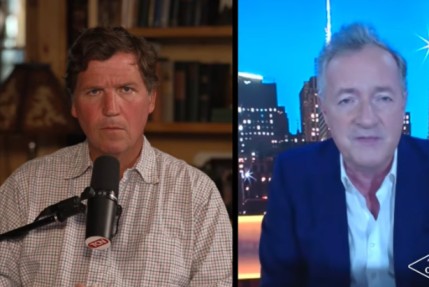
Editor’s Note: In this episode, Tucker Carlson analyzes a leaked memorandum of understanding between the United States and Iran, suggesting it signals a significant shift in the global order and a retreat for American influence in the Middle East. He examines the specific terms of the proposed agreement and argues that the war, originally framed around Iranian nuclear disarmament, has instead led to a humbling strategic loss for the U.S. and inadvertently empowered Iran. Tucker is joined by Piers Morgan to react to these developments and discuss the fallout among neoconservative commentators. (June 17, 2026)
TRANSCRIPT:
Tucker’s Opening Monologue
TUCKER CARLSON:
In your mind’s eye, you imagine the American Empire ending someday, probably in like a conflagration, in some sort of conflict with another great power. If you had to pick one, you would imagine the end might come in a dispute over Taiwan, formerly for most of the island off mainland China that China considers part of its country. There’s been a dispute about this for almost 80 years. And the United States has sort of informally suggested that it would defend Taiwan sovereignty and periodically that part of the world South China Sea pops into the news and you think, wow, that could be a big deal if we actually had a war with China, because every year they get stronger. They now have a bigger economy than ours and you can kind of imagine some reckless American leader destroying American power over Taiwan.
But you probably never imagine that the end of American empire would come in a little over 100 day conflict with a little rogue state on the Persian Gulf that has the 34th largest economy in the world, a country called Iran, which generations of Americans have been raised to believe is crazy and dangerous, but basically irrelevant and certainly not civilized and in no way capable of affecting America’s place in the global hierarchy.
You just couldn’t imagine that would happen. But something like that apparently has happened, and we know because we now have the text of the MOU, the memorandum of understanding between the United States and Iran, that unless something happens, is going to be signed in two days, this Friday, in Switzerland by both countries. Now, versions of this have been circulating for the past three days. And earlier today, apparently on background, members of the Trump administration read the 14 points in the MOU to a bunch of different reporters at a bunch of different news organizations. They immediately appeared online and you read this and you think, that can’t really be real.
And then within the last hour, sources in Iran released their version of the MOU and it turns out to be identical to the one that members of the administration, these unnamed officials, gave to American reporters.
So both countries releasing the same text of the agreement. Therefore, you can’t be certain really of anything, but you can be highly persuaded, you can consider it overwhelmingly likely that this document is real. At least as of right now, this MOU is real. 14 points to be signed on Friday. It’s pretty short and it’s worth reading at least in part because it tells you everything, not just about how this war might end — it’s not ended yet — but how it could end. But it tells you even more about the relative place of the United States and Iran in the global order going forward.
Breaking Down the MOU: Paragraph by Paragraph
And it’s really kind of an amazing document. And to get right to the point, you can see why neocons are upset. I mean, they have cause to be upset. Not taking their side, but just being honest here, wow. Here’s part of what it says, paragraph one.
“The United States of America and the Islamic Republic of Iran and their allies in the current war, by signing this MOU declare the immediate and permanent termination of military operations on all fronts, including Lebanon, and undertake from now on not to initiate any war or any military operation against each other, and to refrain from the threat or use of force against each other in ensuring the interterritorial integrity and sovereignty of Lebanon. The final deal will confirm with permanent termination of war on all fronts, including in Lebanon.”
Okay, so that’s the first paragraph of the agreement. Israel is not mentioned, but Lebanon is mentioned three times. Lebanon — what does Lebanon have to do with this war?
Well, strictly speaking, nothing. And when it began on February 28th, we were told by the administration this was purely about disarming Iran and preventing this rogue terror state from getting a nuclear weapon, which would be prima facie threat to the world. But very shortly after this war commenced, Israel decided, “Oh wait, we’re going to take this opportunity not to achieve the goals that they convinced President Trump to tell our nation about, but instead to do something we’ve wanted to do for a long time, which is steal Southern Lebanon.”
And so very shortly after this war began, Israel started a new war with American weapons paid for by American taxpayers, designed to take land from Lebanon — all the land south of the Latani River, which kind of bisects the country diagonally, and then starts hitting Beirut on the Mediterranean, an ancient and beautiful city, maybe the most beautiful city in the world. And Israeli warplanes started blowing up civilians in the middle of Beirut, while the United States was occupied, tied down really, both fighting this war that Israel inspired.
We followed Israel’s lead into the war, according to the Secretary of State Marco Rubio, and tied up defending mainland Israel from the response to that war from Iran. And Israel takes this opportunity to use our money to start a new war to steal land. So this agreement addresses that in the very first paragraph.
So while a lot of people in America didn’t even notice what was happening, Iran focused on it.
Sovereignty, Sanctions, and the Strait of Hormuz
Paragraph two: “The United States and the Islamic Republic of Iran undertake to respect each other’s sovereignty and territorial integrity and to refrain from interfering in one another’s affairs, internal affairs.”
Why is this significant? Well, because the United States is addressing the Islamic Republic of Iran not as a rogue terror state, the Third Reich reconstituted in the Middle East, but as a normal country. In fact, as a powerful sovereign country whose internal affairs will be, as a matter of record and agreement treaty, unmolested, because you don’t interfere in the internal affairs of powerful countries.
And so basically this is acknowledging, paragraph two, before we even get to the straight and forward moves and the nuclear program and all the rest, this document is acknowledging that Iran is not a rogue terror state. Iran is a sovereign nation, in fact, a great power, because it’s negotiating with the world’s greatest power, the United States. And the United States is acknowledging that, “Hey, you have a right to run your country as you like.”
And so that means almost 50 years of watching reports on television about how Iran is an out of control theocracy that murders gays for being gay and prevents women from getting educated or whatever they’ve been telling you — we’re okay with that now, because you’re a great power. And if you want to throw gays off buildings, it’s not really our business. Well, that’s quite a change, whatever you think of it.
Paragraph four: “Immediately upon signing this MOU, the United States of America will begin the removal of its naval blockade and any disturbances or impediments against the Islamic Republic of Iran and will fully end the naval blockade within 30 days.”
Retreat. Pull your troops out. Get your warships out of this area. Stop hassling us. That’s not a victory. That’s a surrender. That’s retreat, pull back. Just a fact, whether you like it or not. And to be clear, this is better than the alternative. Not complaining about it, just noting that, wow, this is not unconditional surrender by Iran. Hardly.
Paragraph five: “Upon signing this memorandum of understanding, the Islamic Republic of Iran will make arrangements using its best efforts for the safe passage of commercial vessels with no charge for 60 days only from the Persian Gulf to the Sea of Oman and vice versa.”
In other words, they’re going to open the Strait of Hormuz and not charge anybody anything for a month, and at that point we’ll talk. But Iran’s going to talk not to the United States, but to the Sultanate of Oman, which would be the country directly across the strait to the south, the oldest monarchy in the world. Iran and Oman will determine the terms on which shipping flows through the strait. Because after all, they’re the two countries on either side, the north and south sides of the strait. So like, it would be up to them. It’s not up to the United States, which has effectively controlled the Persian Gulf for your entire life. But not anymore.
Now it’s up to Iran and Oman and their allies or regional partners — the other five GCC countries, maybe Iraq at the Western end, who knows — but not the United States. And by the way, not China or Russia either, but the two countries whose territory touches the Strait of Hormuz. They’re in charge now. And by in charge, that means in charge of, in effect, the Persian Gulf. Because the overwhelming majority of the commodities — mostly oil and gas, but not just oil and gas, fertilizer, sulfur, the rest — you’ve heard so much about for the last 100 days, flow through that strait.
And so Iran is now at least an equal partner with Oman in determining how much it’s going to cost the rest of the world to get their commodities out of the Persian Gulf. How much oil producing, gas producing nations will pay to get their commodities out of the Persian Gulf. Iran — that was not true on February 27th. Apparently it’s going to be true into the future.
So that power, the power to determine who gets their commodities out of the most energy dense region on the planet, by definition makes you into a major player, if not a regional hegemon. You’re certainly a big deal. People can’t dismiss you as a rogue terrorist state at that point, because you control in effect a fifth of the world’s oil and gas.
Reconstruction, Sanctions Relief, and the Nuclear Question
Okay, now. And it goes on. Paragraph six: “The United States of America undertakes with its regional partners to develop a definitive, mutually agreed upon plan with at least USD $300 billion for the reconstruction and economic development of the Republic of Iran.”
Not just the reconstruction, not just rebuild the things that you blew up, but help our economy going forward. Economic development. The US has done a lot of that around the world, or said it does a lot of that around the world, and it has to some extent. But never in Iran, not since at least 1979 when its proxy the Shah got booted, and Iran has been a kind of top enemy in the world ever since.
And now the United States will somehow be involved in raising a fund, $300 billion. When this was leaked two days ago, most people, including me, assumed that this was disinformation. It was a lie spread by opponents of the agreement as a kind of poison pill, like, no way. $300 billion — isn’t that like bigger than the entire Iranian economy? Can’t remember, but it’s in that range anyway. That can’t be real.
Now US officials, including the vice president, have said, “We’re not — that’s not coming from American taxpayers.” And that’s probably true. That would be very hard to sell. But it’s coming from somewhere, and apparently according to the agreement, the United States will be involved in procuring the money, putting together the fund, who knows? But it says right there, the US is part of this. Huh.
Paragraph seven: “The United States of America undertakes to terminate all types of sanctions against the Islamic Republic of Iran, including the UN Security Council resolutions, the IAEA Board of Governors resolutions, and all unilateral sanctions, primary and secondary, in an agreed-upon schedule as part of the final deal.”
Maybe the most significant and most difficult to achieve point out of the 14 — ending the sanctions. Now those sanctions have been in place in one way or another for generations. They’ve crushed the economy of Iran, and they are, as sanctions always are, an active war. Soft war, but an active war that kills people, kills kids through poverty, through starvation, always and everywhere. Sanctions kill people.
Now you could make the case that the people being killed deserve it, I guess, but you can’t claim it’s anything other than an act of war. But Americans for generations have not had to face that reality. And occasionally you’ll see some report from some liberal international groups — “sanctions kill” — and everyone except liberals in the United States, everyone sort of dutifully ignores it. Sanctions seem like a really easy, low cost, nonviolent way to impose our will in other countries.
And we always do them under the pretext of like a moral crusade. “You’re getting sanctions because you’re like Hitler. And if we didn’t impose sanctions, we’d be like Chamberlain. And we don’t want to be appeasers. We want to be like Churchill and strong and morally clear. We want to be the right side of history. We’re good people. That’s why we’re sanctioning you.”
And Americans, the Congress has used that justification to sanction a whole bunch of different countries. And in no case have those sanctions helped the United States at all. In fact, they’ve done more than anything else to weaken the US dollar. Long term, they will impoverish the United States, those sanctions. There’s no question about that. That’s been acknowledged for a long time. But they’ve continued because no one has really pushed back, because no one could.
And now Iran apparently has successfully — and if it happens, it’ll be the first time at this scale that it’s ever happened — has pushed the US to roll back those sanctions. Now, there is a long distance between putting that in paragraph seven of the MOU, which is not even signed yet, and actually happening. Apparently it’s going to have to go through the Congress. Will that work? Hard to know, hard to believe. But the fact that it’s even up for discussion, and that the current administration is eager to agree to it, tells you that this is the biggest change diplomatically, well, in memory, at least. It’s incredible that they actually wrote this down.
Paragraph eight — they wait till the eighth paragraph out of 14: “The Islamic Republic of Iran reaffirms that it shall not procure or develop nuclear weapons.”
Now, keep in mind, the whole point of this, we were told, was to stop their nuclear weapons program, which didn’t actually exist. They had a nuclear program.
The MOU’s Impact on Iran’s Nuclear Program and Oil Exports
TUCKER CARLSON: Was it a nuclear weapons program? Maybe. Why wouldn’t it be? Who doesn’t want nuclear weapons? France has nuclear weapons. Pakistan does. I mean, everyone wants nukes, or else they get treated like this. But was Iran actually building a nuclear weapon? There’s no evidence of that. In fact, there’s quite a bit of countervailing evidence that they weren’t at the moment.
Will they now? Of course they will. Like who wouldn’t? You don’t see Trump or Lindsey Graham or Ted Cruz standing up and saying, we need to invade North Korea. We can’t, they have a nuke. So we treat them with respect, despite the fact the leader is very short. We treat them with respect because they have a nuke.
So the incentive to get nuclear weapons is overwhelming and all things being equal, countries that can get them will, and Iran is no different. But this does, let’s be honest, makes it a lot more likely they will, because among other things, they’ll be able to afford it, which brings us to paragraph 10.
“The United States of America undertakes that immediately upon the signing of this MOU and until the termination of sanctions, the U.S. Department of Treasury will issue waivers for the export of Iranian crude oil, petroleum products, and derivatives and all associated services, including banking transactions, insurances, transportation, et cetera.”
Now that sounds technical, but it is an incredible departure from where we were yesterday. Where again, we are at the end stage of a multi-decade effort to isolate Iran in the world, to make even going to Iran as a tourist verboten. You can, by the way, be prosecuted for spending money in Iran, subject to all these sanctions.
So this announcement that, oh, we’re getting rid of all that stuff, and like they can do banking and companies can do business with them and they can export their oil and they’re not going to have to put it into unmarked tankers and pretend it came from somewhere else — this is a sea change. That again connects to the other paragraphs in one way. It treats Iran like a global power, like a sovereign adult nation, not like a rogue terror state, just the opposite. It treats Iran with respect, it treats Iran like a nation to be reckoned with, and afforded sovereignty. Incredible.
Frozen Funds and What This Deal Really Means
Paragraph 11, and we’ll stop after this. “The United States of America undertakes to make fully available for use the frozen or unrestricted funds of the Islamic Republic of Iran upon the implementation of this memorandum of understanding.”
So there are many billions of dollars that belong to Iran that have been frozen, in some cases since 1979, in banks around the world. And Iran has consistently, without getting boring about it, demanded the return. And this was a sticking point during the famous Obama Iran deal. Iran wanted its money back. And in some cases they never got it back. The United States just ignored its promise to return the money, but it’s Iran’s money.
They think about it quite a bit. It’s not a rich country, number 34 in the GDP list, as noted, and they want their money back. And within Iran, this is considered a really significant question. And it’s also, of course, a matter of national pride. It’s their money, why can’t they have it? Well, because it’s in US dollars. That’s why.
So with this, they would be getting their money back. So there’s kind of no lying about this. This is maybe good for the United States long term. You could certainly argue that. And one hopes it will be, one prays that it will be. It’ll be better than what we have now, that’s for sure.
But it is impossible from this text, assuming this is real and we think that it is, it is absolutely impossible to say this is in any sense a win for the United States, because it’s not. This is a pretty humiliating loss for the United States. And as an American, certainly not gloating about that at all. This is a loss.
A Predictable Outcome: Why This War Should Never Have Started
This is, by the way, the reason that you wouldn’t want to start this war in the first place, because it could only end as it has ended. And the people, by the way, who pushed to start this, notably the Israelis and their unregistered agents in the United States, knew that of course, because diminishing the United States and reducing its footprint and power and influence in the Middle East was part of the plan.
Of course, you can’t really be in control of your region if you’re taking orders from a foreign power — that would be us, the US. And the Israelis wanted us out, they wanted us out of the Gulf. They wanted the destruction of our bases in the Gulf, and they got it.
But what they didn’t want, what they definitely didn’t want, was a resolution in which the United States, their patron, their only remaining ally on the planet, admitted out loud that, hey, actually Iran is a real country that will have a seat at the table going forward. It’s an ancient civilization. You can’t eliminate it. We just tried, didn’t work.
And henceforth, we’re going to treat them as not just a real place, but a steward of the most economically significant waterway on the planet. So with this, no matter what happens, even if this is not signed on Friday, with this, the United States has officially acknowledged that Iran is a player. And that changes everything.
The Suez Crisis Parallel: The End of an Empire
In the same way that the 1956 Suez Crisis — another crisis, another war over a narrow waterway through which commerce flows — ended the British Empire. Now, of course you could argue the British Empire really kind of ended with the armistice in 1918 at the end of the First World War. You could definitely argue that it was done by 1945 when they, air quotes, won World War II.
But like a lot of fading empires, it wasn’t obvious to the rest of us, so there was muscle memory involved, and Britain had ruled the world. And so it was fading, but not dead. But in the space of a very short period of time, with that fairly complex crisis, Britain was done.
Why? Because in the Suez Crisis of 1956, Britain made it really clear that no matter what they said or wanted, they couldn’t actually affect the outcome. They didn’t have the power to settle things the way they wanted. The US did. And so America, maybe not formally, but certainly practically, took Britain’s place as the ruler of the Middle East.
With this, the United States has shown that it does not have — despite possessing the world’s best, or biggest, or certainly most generously funded military — does not have the military power to impose its will on the 34th biggest economy in the world. That is not a lesson that we’re going to take decades to come to. That is an extremely obvious conclusion. In fact, that is the obvious conclusion of this document.
Again, for good or bad, and there’s something poignant about it, there’s something sad about it, there’s something also bitter about it, considering it was predictable. This is why people opposed a regime change war against Iran, because this was always going to happen. Because the question of Iran’s military might, its nuclear program, its ballistic missiles, was always secondary to what really mattered about Iran, which was its geography.
It sits on the northern side of the Strait of Hormuz. It could close the strait with mines. It’s not that hard. And because of where it sits on the globe, Iran was, and now is, universally acknowledged as a powerful nation, as a real place. It’s not Somalia, and it never will be Somalia, and this makes it official.
How We Got Here: Running Out of Weapons and Oil
So how do we get here? We didn’t get here because anyone in the administration decided, hey, let’s sign a deal that our last remaining political allies, the neocons, hate. And they have every reason to hate this, for sure. To extend them not grace necessarily, but just to be honest about what’s happening — they’re upset for good reason.
The administration didn’t do this to alienate its last remaining pocket of supporters. No, it did this because we had no choice. The two things you need to understand about the American negotiating position right now are these.
One, we’re running out of weapons. The United States has expended about half of all of its existing missile defense in seven weeks. Half of its THAAD interceptors, gone. So at a certain point, you can have whatever intention you want, but if you can’t defend yourself against ballistic missiles or even drone attacks, and you can’t defend your allies in the region from those attacks, you can’t continue. We have reached the limit of our industrial capacity. The United States actually can’t defend itself as of right now in a major conflict.
We’re assuming this is a less than major conflict — it is Iran after all, it’s not China, it’s not Russia. But the United States will be unable to defend itself, despite having a $1.5 billion a year Pentagon budget, because it doesn’t have the industrial capacity to replenish those stocks. So we are very vulnerable at this moment, and with every passing day become more vulnerable. Okay, that’s the first thing to know.
The second thing to know is that gas prices have gone up a lot — six bucks for 93 octane in a lot of places, more than that for non-ethanol, for the privilege of using non-ethanol gasoline that doesn’t wreck your motor. It could go a lot higher than that.
Rent crude prices, as the president said the other day, have actually not skyrocketed. Well, one of the reasons they haven’t is because the United States and other countries, especially China, have massive oil reserves. Ours is called the strategic petroleum reserve. And the US government draws down on that in order to keep prices from going crazy, from spiking, because that’s politically scary. And by the way, it’s real — as an economic factor, it can spur real inflation.
Our strategic petroleum reserve is at its lowest point since 1983, in 43 years, right now. So we are running out of oil and we’re running out of weapons. And it’s not because we were beaten in some sort of broadside artillery exchange between aircraft carriers. We famously destroyed their Navy and their Air Force, which most people didn’t know existed, but it doesn’t matter. Because the kind of conflict that is actually taking place is asymmetrical, and we have reached the limit of our ability to fight it, short of using weapons of mass destruction against Iran.
Which no normal person wants. Many people on television want, but no normal person wants that — not just because it’s the most immoral thing you could do, but because the downstream consequences are unimaginable. So we actually don’t have a choice.
Trump’s Realization and Netanyahu’s Miscalculation
The Trump administration is boxed in. We lost in a meaningful way. And this is probably, while not great for the United States — in fact, devastating in some ways — less bad, less devastating, than what would happen if we continued.
And it’s very clear that the Trump administration has understood this for a long time, within days of the beginning of the war back in February. Why? Because, as is now widely understood, the administration, the president, believed Israeli estimates about Iran’s nuclear program, its strength, and critically, how it would respond to the decapitation of its leadership class.
Kill the Ayatollah, kill the top 150 guys in charge of running the government and the military, and the place will collapse and something good will happen. That was the pitch. And it turned out to be wildly, comically wrong.
The Iranians, who are whatever else they are, not stupid, had thought this through and had created a system that was impervious to decapitation. You kill the first 150, another 150 rise up to take their place — probably a little more radical than the ones you just killed, but certainly clear about what their task is. So there was never going to be regime change on the cheap.
Regime change would require a land invasion of Iraq, and there is no stomach for that in the United States. There’s never been majority support for any kind of war with Iran in the United States. And if, by the way, if you cared about the promise of democracy, that would be a stumbling block for you. But the advocates of this don’t care at all what the public thinks, whether their children die — not of interest to them.
In any case, the Trump administration knew very early that this was not going to produce the easy win that the Israelis had promised. And there’s a lot of evidence that the president was angry about that. Now we’ve spent the last hundred or so days listening to him try to posture his way out of it, threaten the Iranians into submission. It didn’t work.
But underneath it all, it’s very obvious that the president — whose decision this was, by the way, and it’s unfair to pass the buck to Netanyahu, he’s not the president of the United States — but it’s very clear that the US president blamed Netanyahu for misleading him. And that’s why, which is very obvious in retrospect, he sent the Secretary of State out within days to say publicly in a stairwell in the US Congress that we followed Israel into this war. Trump blamed Netanyahu early, and he continues to.
The Neocon Response: Hysteria and Revealing Motives
So what’s the response from the people who pushed this war, including the ones who called Trump personally on the phone — and there are many of them who called him on the phone or who use their perches on Fox News to convince him to do this — what’s their response to this settlement? Well, it’s completely hysterical, but it’s also revealing of their motives and of their wisdom.
So here’s just one among many examples from Fox News. This is from two days ago. This was before we got the actual text of the MOU. This is when its basic deal points were being shared by text and it wasn’t clear how many were real, but it was pretty clear this was not a triumphant victory. And it was even more clear that the current Iranian regime would remain in place by the end of it. Here’s the response from a Fox News contributor to the deal. Watch.
Trump’s Bitter Reckoning and the Neocon Meltdown
TUCKER CARLSON: This deal and everything that we know about it, to the degree that it is being spun in public — you know, behind the scenes by the administration — everything about this deal seems bad to me. It all seems bad. It all seems like a setback. It doesn’t seem like it meets any of the measures that the president actually put out there of his goals when it came to this conflict.
And look, at some point, this Republican party needs to decide which kind of foreign policy it’s going to have. Is it going to be an America First foreign policy, one that is bold, that uses American power in key moments, decisively in order to affect what it wants to achieve? Or are we going to just backslide into being some kind of Hillbilly Obama kind of GOP? That is not something that is acceptable to me. It should not be acceptable to Republicans, and it should not be acceptable to any conservative who is interested in the success of America going forward.
It’s amazing to see that if you’re one of the overwhelming majority of Americans who no longer pays for a cable package and is sort of wondering, “Why are leaders doing these things?” — cause they’re watching stuff like that and they take it seriously. So you put someone on television who has no knowledge whatsoever of the region, hasn’t been there, doesn’t understand it, is taking almost all of his understanding of it from Fox News. You have the snake eating its tail. It’s a guy who’s believing the lies that he’s ingesting and then coming to absurd conclusions on the basis of them. So it’s like someone who has no authority to weigh in on this is telling you his august view of it. So there’s that. It’s childish.
What Does Victory Actually Look Like?
But then there’s the deeper question of, okay, you don’t like the deal. What’s the option? What does victory look like? The president articulated it pretty clearly. He wanted regime change. He wanted new people running Iran. He wanted an end to support for the proxies — the terror proxies, Hamas and Hezbollah and the Houthis. He wanted Iran to stop producing apparently ballistic missiles, stop having national defense. And he wanted, famously, total abject surrender. He wanted Iran to get on its back, all four paws in the air and say, “Do with me what you will.”
Well, none of those — and that analyst is correct in noting none of those goals have been achieved. The question is, how would you achieve them? So yeah, the United States is admitting defeat. We did not get what we thought we would get or wanted to get. Some of us never thought we’d get that, but it’s not what they promised us.
So what’s the bold, decisive action that we’re not using to get us those things? I’ll wait. And of course, there’s no answer. There’s no answer. Half our THAAD batteries and Patriots have been expended in seven weeks. Kind of gave it our best shot. What would you do if you were the president? Attack Carg Island? And that’s going to do what?
There are no options, is the truth. But no one advocating for this will admit that, because if they admit that, then they have to concede that the real goal has nothing to do with what the President of the United States articulated in public in February or March.
The Real Goal: Chaos and Destruction
No, the real goal is the Israeli goal. And the Israeli goal is not regime change or end of the nuclear program. The Israeli goal is chaos, is dysfunction, is an open, festering wound that lasts for generations. The real goal is Syria or Libya or Iraq, Somalia. The real goal is destruction for its own sake. Any potential rival to your power is so consumed with the tribal ethnic conflict in his own country that he has no ability to resist your territorial expansion. He has no ability even to notice you exist because he’s busy trying to stay alive in the middle of a generational civil war. That’s what they wanted in Iran, which is a country of almost a hundred million people.
So what would be the natural, obvious, well-documented effects of this? Well, migrant crises in Europe — further destroy Europe. Well, that’s always been an Israeli goal, destroy Europe. Still mad about Rome in 70 AD or something, who knows what? But that’s the actual goal.
But none of the advocates for this war — staying the course, exerting American power — no one in this country will admit it. And so instead, they hypnotize Trump voters with, “We have to be strong, we can’t appease the Iranians.” Okay, what’s your plan? No one ever asks that. And if asked — let’s say someone actually snuck onto a Fox News set and said, “Okay, tough guy, how would you do it? What would the next 30 days look like? At what cost? What do you think is likely to happen?” — you’re the same person who told us that killing the Ayatollah, murdering an 80-something-year-old religious leader, was going to collapse the regime. It didn’t work. So what do you think will work?
And they have no idea, because their real goal is so ugly that they can’t say it out loud.
Trump’s Bitter Reckoning with Netanyahu
So they were upset — really upset — when the news of this first broke, even before it was confirmed. But Trump made it much worse. Again, this is the last group of Americans who reliably support Trump: neocons. He did what they wanted. They’ve been talking about this war, as Netanyahu himself said, for 30-odd years. And Trump is the first American president who actually did it. He fell for it. They lured him into the trap and he just jumped, hoped for the best. “It’s going to be okay, I promise.”
So he did. And Trump understands how shafted he got. He understands just how fooled he was. And he’s clearly bitter about it. And he understands further that in order to get out of this, he needs to make this deal — bad as it may be — because there’s no option. And he knows that the only force that can prevent this deal from actually happening is not the US Congress. It’s the government of Israel. They will try to kill the deal, as they have so many times. They’ll try to blow it up.
And so Trump knows that he has to diminish Benjamin Netanyahu — and not just Netanyahu, but the state of Israel’s moral legitimacy in the United States — in order to keep going. And so amazingly, he’s done that.
Someone who knows Trump very well once said to me 15 years ago, long before he became president: “In the end, Trump disappoints everyone. Everyone who loves Trump is in the end disappointed — from his ex-wives to his former political allies, you name it, they’re all disappointed.” It looks like it’s Benjamin Netanyahu’s turn to be disappointed.
Trump at the G7: Rebuking Israel
Here’s Donald Trump today at the G7 in Europe, describing Israel’s behavior.
VIDEO CLIP BEGINS:
DONALD TRUMP: And you’ll see that when you see the agreement, but it’s appropriate that we have released the agreement. And we did send a copy to Israel, by the way. They’ve been a good partner. Again, I think they could do better with respect to Hezbollah. I’m not saying they shouldn’t protect themselves. I’m saying when two drones are shot into the desert and drop harmlessly, you don’t have to knock down buildings in Beirut. They could behave better. And frankly, they could do a better job. I love them as a partner. They were terrific. They could do a much better job with Hezbollah.
VIDEO CLIP ENDS:
TUCKER CARLSON: Wow. Consider that for a moment. And he said a lot of things like that in the last 24 hours. But just in that statement, he said, “By the way, we sent Israel a copy of the agreement.” Oh, you sent them a copy, did you? You BCC’d them? Didn’t consult Israel. They’re a participant. They’re our partner in this war. This is a joint war we’re waging with the government of Israel somehow. First time in American history that’s ever happened. Not a good idea, by the way. Note to self, don’t do that again.
But as of right now, we were waging a war with Israel, and we just reached the outline of a peace agreement with the country we are fighting with Israel — without consulting Israel. We sent them a copy. B. That’s exactly what that means. Adults are talking. It’s exactly what Trump is saying to Israel.
Then he goes on to say, “Yeah, I mean, I understand you’ve got to defend yourself and everything, but it’s brutal what they’re doing.” It’s brutal what they’re doing in Beirut, in Lebanon, blowing up apartment buildings. At one point — not in that clip, but in another from yesterday — he said, “I just think it’s just too much. It’s just too much.”
The Al-Qaeda Guy Is More Humane Than Netanyahu?
“I think going forward, we may leave the fight against Hezbollah to — I don’t know — Jolani, who runs Syria. He’s a good guy, let him handle it. He’ll do it in a more measured way.”
Now, Jolani, of course, is a former al-Qaeda leader who is running Syria — really — and thanks to Israeli pressure, because Assad, who is literally a practicing medical physician educated in Britain, he’s just too radical, meaning too anti-Israel. So we have to have the former al-Qaeda leader. Al-Qaeda, which they told us did 9/11 — I don’t know if you remember that. Remember those 19 Arabs with box cutters who killed 3,000 Americans? That was the story anyway. One of those guys is now our ally in Syria.
And by the way, that guy — the former al-Qaeda leader — he’s just a more reasonable person. He’s just more humane than Benjamin Netanyahu. I mean, I like them all, they’re all good guys, but really, if you’re looking for humane treatment of civilians, you’ve got to go to the al-Qaeda guy, not the Israeli prime minister. That’s what the president said. It’s unbelievable.
If I said that — which I don’t know if I would say that, is that even true? I don’t even know. I have maybe less faith in former al-Qaeda leaders than the president does — but if I said that, it’d be called anti-Semitism. What are you saying? Well, Trump is saying that the Israelis are such inhumane savages who do not consider non-Israeli life fully human — that’s true, by the way, obviously — that we’re going to trust the al-Qaeda guy over them.
Ben Shapiro’s Response
So again, watching all this stuff for the last couple of days, your instinct of course is always to enjoy the hysteria and the suffering of neocons, considering how much suffering they’ve imposed on the rest of us for the past 25 years. I mean, it’s almost incalculable. No group has done more damage to the United States. No group has come close to doing the amount of damage to the United States that the neocons have done over 25 years. So when you see them go totally bonkers and start rending their garments on Twitter, you’re like, “Ah, I kind of enjoy this.”
On the other hand, you just have to be honest and say, “I get it.” You went into this thinking this would be the war that allowed Israel to fully take over and control the Middle East. They would have no more real imminent threats. And yet, in one of those ironies that define life, the war ended up radically diminishing Israel, radically strengthening Iran — which you consider the existential threat to Israel, which is absurd, but they think that, they’ve talked themselves into believing that, some of them — and you lost the only president you had full control over. Trump went from being a slave to his real estate to comparing Benjamin Netanyahu disfavorably to al-Qaeda. Man, what a ride.
So we could pick a thousand different responses and enjoy every one of them. But in the interest of restraint and decency, we’re only going to play one. And it’s from Ben Shapiro. Here’s Ben Shapiro.
VIDEO CLIP BEGINS:
BEN SHAPIRO: So Trump, while characterizing the Iranians as “very reasonable,” says that Israeli Prime Minister Benjamin Netanyahu is “a very difficult guy.” Okay, I’m just going to be clear. One of these countries has been flying sorties next to the United States and putting the lives of its own soldiers at risk next to the United States. One of these countries has been trying to kill American soldiers. So probably we should be a little bit more measured in our critiques of our allies.
The one thing I will say with regard to the president and the vice president and the signals they are sending: if you keep sending the signal to a terror-backing regime that chants “Death to America” that you want to deal with them so badly that you’re going to tell our allies in the region to stand down, you are giving them an enormous amount of forward momentum. And that is a huge mistake that should not be done. And I hope that the president does not do that. Again, that signing ceremony in Switzerland should be canceled. It should not happen.
VIDEO CLIP ENDS:
TUCKER CARLSON: All right. Well, there are so many things to say, but we’ll just keep this limited, just because it’s just too easy.
But you’ll notice, big picture, that there is no distress at the truly harmful effect to the United States of this war — to the American economy, to our ability to project legitimate power, assuming there are times when you do need to project legitimate power around the world, in the Middle East specifically. The deaths — and we don’t know the real number. The number is 13, according to Grok, of Americans in this war. Is that the real number? No, it’s not the real number, actually. What is the real number? We don’t know. We will at some point know. But Americans have died for Israel in this war. No concern about that at all.
The concern is that Trump isn’t being appropriately respectful to a foreign head of state. He’s not showing enough respect or deference to a guy who runs a tiny country of 9 million people, an apartheid state with no natural resources at all, from which we derive nothing. Israel’s side of the ledger is just bright red. We’re not getting anything out of this at all. And Trump is treating him like the junior partner he is, in negotiating with a real country — Iran. And that’s just what sends this guy into orbit.
But you’ll notice that’s not enough to say, “How dare you criticize Netanyahu? How dare you?”
Israel, Gaza, and the Limits of American Loyalty
TUCKER CARLSON:
Because Israel’s interest, of course, is not the United States, it’s in Israel, obviously. It’s not a slur, slander, or blood libel. It’s just demonstrable from watching the guy. Come on now, stop lying. That’s all you care about.
Fine, but let’s not lie about it. But it’s not enough just to make that case. You also have to get self-righteous and, oh, they’re risking their lives for what? The second this war started, they used it as a pretext to steal land in a neighboring country, Lebanon. They used our money and our military and the lives of our service members to steal more land.
Okay, that literally happened. It’s happening now. And guess who paid for it? We did. Has Israel and the United States spent more money defending Israel in the last hundred days?
Oh, that’s an easy one. We have. We’re paying for their self-defense. We pay almost half of their entire military budget one way or the other. So don’t lecture me about how we owe you something.
Are you kidding? And then to the question of whether or not Israel’s our ally, in what sense? If Americans die, if the nation gets poorer, if pressing problems in the United States are ignored in favor of theoretical problems, ideological problems, or Israel’s problems thousands of miles away, if your average senator is more concerned about Islamic jihad than homelessness or housing prices in America, and that is true, how are they an ally?
If the Israeli intelligence service had foreknowledge of 9/11, which they did according to the American FBI, how is that an ally? You know it’s coming and you don’t tell us? That’s what the FBI said. That’s not an anti-Semitic conspiracy theory. That’s a provable fact because there are photographs from September 10th of Mossad operatives mocking the burning of the World Trade Centers. And you can look them up if you want.
And Fox News at one point, right after 9/11, ran that package. Wouldn’t do that now. The point is not to attack Israel, the point is to attack the idea that this is an ally. There’s nothing allied about that. That’s an opponent, a rival, a resentful dependent nation.
And of course, that shouldn’t surprise anybody. Dependency breeds resentment. People who take welfare hate the government. Adults who take money from their parents resent their parents. Dependency always causes resentment and they resent us.
I get it. That’s our fault, not theirs by the way. But the point is, it’s all ending. Many times today I got texts from people, including in the government, saying, you know, I hope this works, but there’s no way, honestly, that we can stay at peace as long as we maintain this relationship with Israel. And there are no signs despite Trump’s theatrics about not liking BB.
By the way, nobody likes BB, including Mrs. BB. So that’s not a unique position, right? He’s insufferable and everyone knows that. So a bunch of people texted to say, nothing’s going to change.
Just like after the 12-day war last June, we took out their nuclear sites and we’re done. But of course, everybody who follows this knows new then — this is just preparatory to a regime change effort, which it was, right? Took till February, but it happened. And so cynical people in Washington are convinced that this cycle will continue. But it won’t.
Gaza and the Reckoning
It may not end soon, but it will end for two reasons. First, in one word, Gaza. What’s happening in Gaza, what Israel has done in Gaza, which is ethnic cleansing, which is murdering people and moving them out because you don’t want them there. And by people, people on the basis of bloodline, not even on the basis of religion, this is happening to Christians and Muslims, but they’re Arabs, they’re Palestinians. And they’re being moved out of Gaza and the West Bank and Southern Lebanon because Israel wants the land — that is ethnic cleansing, it’s genocide, it’s the definition of genocide, it’s happened before, that is happening now.
It’s happening with U.S. tax dollars in the Middle East and Israel is doing it. Now, that fact wasn’t until recently very controversial in the United States. You couldn’t say that. You were somehow the criminal.
The people committing murder were fine. The people complaining about it were the criminals. That’s been kind of the status quo for a long, long time. It’s fine for you to commit genocide, it is totally evil for me to say something about it. But that’s nonsensical.
It’s actually totally unnatural. It’s crazy, really. And so that can’t continue, and now all of a sudden it’s not going to continue because too many people know what’s happening. Now they don’t know details because they can’t because there’s almost no access at all to Gaza. Over a hundred journalists have been murdered in Gaza by Israel in an effort to keep secret what they have done to the civilian population.
We have no even good guess as to the death toll, which is clearly over 100,000 Palestinians. Women and children being the majority of those deaths apparently, but we don’t know because Israel won’t allow any independent assessment of what has happened there. But images, including satellite images, make it really, really clear that Israel used the pretext of October 7th to just destroy Gaza. Over 2 million people live there. How many people live there now?
At some point, we’re going to know exactly what Israel did. And it will be very obvious, in fact, impossible to deny that what they did was genocide. And genocide is wrong. No matter who commits it, whether it’s the Nazis, whether it’s the Rwandans, whether it’s the Turks against the Armenians, it doesn’t matter. Killing entire populations because you don’t want them there, killing their children because you don’t want them to grow up into your opponents, that’s always wrong.
There is no special carve-out for that kind of behavior. Ethnic cleansing is never allowed, period, because it violates a universal standard that applies even to Israel. Now that’s not something that Americans have heard, except maybe on the kooky left. They’ve been mad about it for a long time.
But now normal people are like, yeah, well, why is that wrong? And the response has been unvarying: “Shut up, bigot, Nazi.” No, it’s like, I’m not the one who killed all those kids — you did — and you’re making excuses for it. That is a dawning realization on the world, including the United States.
And no amount of buying social media platforms or CBS News or CNN — it’s too late, people know. And at some point they’re going to know a lot more. And when they do know a lot more, the people who did it and made excuses for it will be punished. Because justice does exist because it’s organic. It’s part of nature.
We don’t create these standards of behavior. We’re born knowing them because they’re part of the natural order. God created those standards and no amount of pretending that he didn’t, or pretending that certain people don’t have to observe those standards because they’ve got a special deal — no amount of that kind of silly lying changes the fact that when you kill innocents you are punished for it. Certainly in the next life, but usually in this life too.
And they will be punished for it. Everybody who participated in this, and everybody who made excuses for it, or pretended it wasn’t happening, or attacked people who noted the truth about what was happening — all of those people will be reviled and in some cases they’ll be formally punished. Not celebrating that, just noting that that’s a fact. And you can tell when you listen to them talk, screech, when they get hysterical.
You know they know it too. They know it too. There will be no Holocaust Museum in the world that doesn’t note what happened in Gaza because it’s too absurd. Genocide is okay in one place, but bad in another? No one believes that.
And so that will make it absolutely impossible for the US Congress, no matter how much money they take from various lobbies, to continue to uncritically and without any strings attached at all — which is the status quo — send billions and billions of American tax dollars to Israel. That just can’t continue.
The Defenders of the Indefensible
And the second thing that has dawned on people, including people who sort of paid attention, like me — we didn’t really know until recently — was that the people advocating for the state of Israel are both dishonest and in some cases completely crazy. I’m not saying that in a pejorative way — I mean it sounds like that, but literally disconnected from reality. And not everyone who disagrees with me or you is crazy. I mean, there are legitimate disagreements.
We just see things differently, we have different interests, that’s okay. But there is a kind of style of argument that’s instantly recognizable as nuts because it has no reference point at all in reality. It’s all made up. And what it lacks in veracity, in verifiable truth — like, here’s why I think this is true, let me show you — it makes up for in vehemence. And so crazy people, in case you haven’t dealt with them before, religious nuts, keep repeating assertions that don’t make any sense with increasing vehemence, as if saying it again and again and again will somehow make it true.
It is like a spell in that way. And you don’t want to pick on him because he’s got enough problems. But Ambassador Mike Huckabee, the US ambassador to Israel, has been a nonstop generator of examples of this. Nice man, but something’s gone really wrong. And now everybody knows it.
So here’s Mike Huckabee’s latest defense of Israel, which is in fact an indictment of Israel and of himself. Watch this.
VIDEO CLIP BEGINS:
MIKE HUCKABEE: This is just another reminder that it is your heritage without a doubt. But minister, it is also the heritage of the United States. Without Israel, without the Jewish foundation, there would not be an America. We all are very existent for what happened in this land.
VIDEO CLIP ENDS:
“Without Israel, there would be no America?” So you almost want to just say, hold on for a second, Ambassador, what are you talking about? I mean, just not to be artistic or literal about it, but Israel was founded in 1948, America, well, now famously 250 years ago next month. So the timeline doesn’t seem to add up there.
Obviously you don’t mean it literally, you mean it conceptually or ideologically or theologically, but tell me how that works. Well, I tried a version of that with him. Just explain what you’re talking about. And the answer when you pressed was, “Shut up, Nazi.” That’s not an answer, of course.
And it doesn’t, in the end, stain the person at whom it’s aimed. It stains the person who throws it, who says something like that. It diminishes the accuser, not the accused. And it’s not just Mike Huckabee, of course. It’s almost every defender of the indefensible, which would be the behavior of the state of Israel over the past two years. Almost every single one of them has gotten to that place where rather than answer the question in a rational way — even if you disagree, but like, here’s my case — if you press them on the details, whether it’s Tom Cotton or Ted Cruz or any of them, Mark Levin, the answer pretty quickly is “Shut up, Nazi.”
And we know from the short but awful reign of terror by 50-year-old liberal white ladies a couple of years ago during BLM — these things burn bright but then burn out because there’s nothing underneath them. You can scream “racist” at someone and it works for the first six months or a year, but it doesn’t work for 10 years because that’s not an answer. This latest round of identity politics and liberal divorced lady politics has gotten us into the single least helpful war and maybe most momentously bad war the United States has ever been involved in, ever. That’s where it got us.
And everybody knows it. So while I understand the concern that this horrible cycle, which has been going on for decades now, where the United States gets abused by its proxy state, Israel, and then can continue to pretend it didn’t happen — no, no, they didn’t attack the USS Liberty on purpose or whatever. They had nothing to do with the Kennedy assassination. We just redacted all mentions of Israel from the Kennedy files just because.
Okay, now, where we pretended it didn’t happen, then attack anybody who asks about it — that’s over because too much has become public. And you know that, you know that they know that the defenders of the Netanyahu government know that, because they’ve doubled down on their truly counterproductive and morally disgusting effort to conflate the government of Israel with global Jewry: “Attack Israel, attack Netanyahu, you hate all Jews.” It’s totally irrational and wrong and it does nothing but inspire the anti-Semitism they claim to hate. Maybe they’re trying to inspire it.
Who knows what their motive is? It’s having the opposite of the supposedly intended effect. But you know they’re losing control because rather than train their fire on long-term, sincere critics of Israel, they have started, as all religious fanatics do in the end, reserving their harshest criticism for apostates — for people who are on their side, or sort of on their side, have always kind of been on their side, but who may differ on one minor detail. “I believe in the resurrection, but this transubstantiation thing, that’s tough for me.” That’s the guy we burn.
And they’re doing it because they are religious nuts. Not because they believe in Torah Judaism — they clearly don’t — but because the crazed irrational religious impulse has run away with them. By the way, the irony of them calling the Iranians theocratic fascists is not lost on the world. When Marc Levin calls you an extremist, it doesn’t hurt.
Piers Morgan Joins the Show
TUCKER CARLSON: Piers Morgan, thank you for doing this. I’ve known you for so long and I always have thought of you, correctly I think, as a very reasonable man, as pro-Israel, in fact as basically a Zionist, a defender of Israel. And then I wake up and I read from Mark Levin that you’re literally a Nazi. You’re a member of something called the woke Reich. And I wonder where you went wrong, what happened? Are you taking money?
PIERS MORGAN: Well, it was also news to me Tucker, I have to say. Not often you wake up and discover you were actually a member of Adolf Hitler’s Nazi party, but that appears to be what Mark Levin thinks I am.
Yeah, I mean, the guy, I don’t really know Mark Levin, you know him better than I do. I’ve watched his work, he seems to resort to ad hominem attacks on anyone that dares stand up to this particular Israeli government, which I think is an interesting strategy because most people I talk to of any political persuasion right now are pretty critical of this Israeli government.
And in the same way that Ben Shapiro and others have, I think, really caused themselves enormous reputational damage over this Iran war in particular. It comes down to their refusal to countenance any criticism of Benjamin Netanyahu, even when he’s doing things which most people think are completely wrong. And I don’t understand why they think that’s a winning strategy. It seems from the dwindling viewers that both of them have, that viewers don’t like it. I’m not quite sure who they’re doing this for other than their own egos, but it’s embarrassing, it’s ridiculous, and obviously I’m not a member of the Nazi Party and never had been.
And I don’t equate criticizing this very hardline Israeli government with, in my view, complete psychopaths like Ben Gvir and Smotrich saying and doing things which are utterly repellent. I just think the idea that criticism of that kind of thing, meaning that you become a member of the woke Reich, is patently ridiculous.
On Attacking Moderate Supporters of Israel
TUCKER CARLSON: What’s also weird, considering that the people being targeted, and honestly, I would include myself in this, are the more moderate people. Certainly you have been, I just want to say it again, a consistent and pretty loyal defender of Israel ever since I noticed your public career. Megyn Kelly, same thing.
Why attack those people? Why not make some effort to say to people like you or Megyn Kelly, “Look, I know you like Israel, you always have, there’s some lunatics in the current government, we can reform this.” Why the zero tolerance policy for any criticism? It seems counterproductive.
PIERS MORGAN: Well, it’s not just counterproductive, it’s actually deeply offensive.
Because as you rightly say, I have always supported Israel’s right to exist as a basic right. I’ve always supported their right after October the 7th to defend themselves. I thought they had a moral public duty to their people to defend themselves after that appalling terrorist attack. But I also questioned quite early on whether their response was proportionate, and I continued to question the proportionality of Israel’s response to all the threats that they face.
I don’t say for a moment that Israel has not been threatened and doesn’t remain threatened by a variety of terrorist groups, from Hezbollah to the Houthis to Hamas, and the tentacles of Iran spread along to all those groups. I don’t for any moment want to suggest that isn’t happening or it’s not a real thing. But how a country like Israel, which is pretty much the superpower of the region, which has an extraordinarily powerful military, it’s got itself into a really difficult place on this, where it is becoming increasingly a global pariah.
And that’s not your fault, or my fault, or Megyn Kelly’s fault. But increasingly, I think it is a situation exacerbated by the likes of Ben Shapiro and Mark Levin, because they conflate legitimate criticism of the actions of a government with, in many cases, they spray-gun people with the charge of anti-Semitism, or as we see now, “Well, you must be part of the woke Reich,” which of course would be ridiculously ironic if that was the case, given what they think I’m about.
So the whole thing to me seems completely absurd, dangerous, I think, for Israel and its reputation, dangerous for Jewish people around the world, many of whom have said to me they completely agree with my criticisms of this Israeli government.
The Iraq War Parallel
The conflation of criticism of any government with the people or the country, I think is always absurd. I mean, in 2003, I led the Daily Mirror newspaper in the UK, one of the biggest selling daily newspapers, in a relentless and very, very full on campaign to prevent, or try to prevent, Tony Blair going to war in Iraq over what turned out to be misinformation about Saddam Hussein having weapons of mass destruction.
The point about that was that The Daily Mirror was the Labour-supporting newspaper. We had been full square behind Tony Blair. We’d been very supportive of Tony Blair. But on that decision to go to war in 2003, and my own brother was fighting in the British Army at the time and was sent to Basra to fight on behalf of my country. So I think I had a right to have a view about this. And my view was that we had not proven the case against Saddam Hussein. And I stood up with the paper and day after day opposed it.
Now, does any of that visceral criticism of Tony Blair’s decision and that of his government mean that I hated the people of my country? No. Did it mean I hate my country? No. The opposite, in fact. I was doing this because I wanted to be supportive of my country, supportive of my country’s people, my fellow countrymen, by stopping something happening that I felt was detrimental to the interests of both my country and its people.
Netanyahu’s Case for War with Iran
I feel the same way about this decision to go to war in Iran. I think that Benjamin Netanyahu is pretty clear now, spent a lot of time trying to persuade Donald Trump that America should join Israel in attacking Iran. And he presented to him, we know this from a big New York Times deep dive on this, he presented to him a sequence of events that would happen if they decapitated the leadership, if they killed the Ayatollah and they had information that would allow them to be able to do that, and many of his top people.
Then the argument that Netanyahu and the head of Mossad presented in the White House Situation Room to Donald Trump face-to-face — the Mossad guy came in remotely, but Netanyahu was sitting there — was that if they did this, then what would happen is the regime and the IRGC would collapse from within. The Iranian people would rise up in rebellion and finally overthrow this regime after nearly five decades, and they would all be too distracted to concern themselves with the Strait of Hormuz.
Well, the only thing that happened after all that — because Donald Trump, I think, bought into this and thought this was achievable. And maybe that was a bit of hubris after what happened in Venezuela and other successful missions. Maybe the 12-day war last year, in fact, Iran didn’t really respond or retaliate, gave Trump a false sense of security about what may happen if he did this, but he went along with it.
I think that he believed what Netanyahu told him. Ultimately, though Trump is the president of the United States, decisions he takes on behalf of America are on him. And I don’t think he should be — no one should have any illusion about that part of this — but I do think Netanyahu persuaded him this is what would happen, and none of that has happened.
The Aftermath: A Bad Deal?
And now we have a deal which most people, including many people on the conservative right in America, think is a terrible deal that is no better, potentially worse than the deal that Obama got, which of course Donald Trump and many others trashed mercilessly at the time and have done ever since. And what was it all for?
The regime remains intact. The Ayatollah was killed, but his younger son — obviously younger son, but his son — has replaced him and is much more hardline and radical from reports I’ve seen. The IRGC remains in a complete vice-like grip of the country, so much so that there’d be no rebellions by the Iranian people whatsoever, and I think they’d been badly let down in this whole process.
Of course, there’s been this asymmetric war that’s been waged by the Iranian regime, where they worked out that if they controlled the flow of 20 percent of the world’s energy, gas and oil and fertilizer and other things through the Strait of Hormuz, if they turn that tap off, they could cause enormous economic damage to the whole world. And if they did it simultaneously with firing off missiles and rockets at their neighboring Gulf states, thereby causing those states enormous damage in terms of economic damage and stopping tourists going there and so on, which is very much their next business model, as you know.
We, you and I, had interviews together in Riyadh, and we know this is the way they want to take things away from reliance on oil to tourism and sport and entertainment and so on, opening things up that way. But it relies, of course, on safety. And the Iranians knew that.
So there’s been two wars going on. I don’t dispute for a moment that the Americans and Israelis have damaged Iran’s military capability in the short term. But if this report is true, Tucker, about this 14-point deal that’s being proposed, which apparently the Americans have signed up to, if the Iranians get $300 billion out of all this, notwithstanding wherever it comes from, if they get that amount of money, what are they going to do with it? They’re obviously just going to replace all the military hardware that’s been destroyed. And I suspect they will continue to try and develop the nuclear weapons, which this was all supposed to stop.
So I’m not sure whether there’s any kind of victory here. In fact, I think quite the opposite. And I think if Donald Trump was honest with himself, if you take him back to the day before he launched this attack with the Israelis, I think now, knowing everything that’s happened, he wouldn’t do it.
Israel’s Declining Global Support and Netanyahu’s Political Motivations
TUCKER CARLSON: It seems like the biggest loser, and I hate to agree with Mark Levin on this, but is Israel? I mean, Israel did not defend itself during this war.
The United States spent many billions defending Israel, much more than Israel spent defending itself. And Israel used this war, which it inspired, to start another war in Lebanon. So it behaved disgracefully. Everyone in the United States saw that. The US is its last remaining supporter, meaningful supporter on the globe.
And that’s clearly going away. Trump, who was Netanyahu’s closest partner in the world, who called for his pardon repeatedly, defended him against corruption charges, ridiculously, but vigorously. He’s attacking Netanyahu. So Israel, and I just want to ask you, since you live in a world of a lot of sort of center-right, center-left, but Israel-supporting people in the media, do you feel a change in what people are saying out loud about Israel? It feels like they’ve lost massive support.
PIERS MORGAN: 100%. And I think Netanyahu has become massively damaging to Israel and to the country’s reputation around the world. I mean, the statistics in all the polls speak for themselves. I’ve never seen polls quite like I’m seeing now about the view of Israel amongst Americans.
Nearly two-thirds of Americans now have a negative opinion of Israel. It’s never been like that in our lifetime, ever. It’s always been the opposite. There’s always been a majority support for Israel. This is the real-time damage that I believe Netanyahu, fueled by ministers like Ben-Gvir and Smotrich, have been causing.
Netanyahu, I’m afraid I’m very cynical about his motivations for all this warmongering. He knows that the warmongering is popular internally in Israel, makes him far more popular than anything else does. In fact, the rest of it makes him unpopular. So this is a politician, a canny politician, he’s very skilled at it, but he’s facing his own political future and his own liberty is at stake, because he’s obviously at the moment able to use all the warmongering as an excuse, as he has been, to keep delaying this criminal prosecution against him, which if he’s found guilty of the charges, he’ll go to prison.
So this is a guy fighting for his political future, and this is a career politician who loves and craves power, and he’s fighting for his actual liberty. Both of these things seem to me to be predicated on him continuing to attack other countries, whether it’s Iran, whether it’s Southern Lebanon, wherever it may be. He is using this, I think, from a personal standpoint. I’m cynical about it. I think that there’s a personal upside for Netanyahu in continuing to do these things.
Ben-Gvir, Smotrich, and the Palestinian Question
PIERS MORGAN: And I think in the case of Ben-Gvir and Smotrich, their agenda is even more insidious. I think it’s pretty crystal clear now that what they want to do is kick all the Palestinians out of Gaza, out of the West Bank, and take over both of those territories completely, bring them into Israel, and do the same with southern Lebanon. I think they’re pretty unashamed about it.
You know, these are people, Tucker. Ben-Gvir on his 50th birthday several weeks ago, his wife gave him a cake with a noose on it. And that video was put out. He’s somebody that when detainees from a flotilla, which was behaving perfectly peacefully, whatever people think of it, when a female detainee was pretty well brutalized on camera, Ben-Gvir posted it to his own X account proudly, with him smirking and encouraging it in the background. And that was too far even for Netanyahu, who had to condemn him for doing that.
So there’s a lot going on here, a lot of personal agendas, a lot of very big picture agendas. But the combined impact of all of this is that Israel is getting ever more unpopular. And I know from speaking to many of my Jewish friends around the world, whether it be London, New York, LA, or further afield, they’re all very concerned about this. So this idea that Netanyahu represents what most Jewish people think, for example, I think is for the birds.
TUCKER CARLSON: I’m not aware of a single Nazi official who was as openly bloodthirsty as Ben-Gvir, including Goebbels, who was a nutcase in my opinion. And they of course were all executed. The ones who survived the war were executed at Nuremberg.
We don’t actually have visibility into what’s happened in Gaza, because they’ve murdered so many journalists and no one’s allowed in to see it. But we know over a hundred thousand people have been killed, most of them non-combatants, tens of thousands of women and children. When all of that comes to light, which it will, I don’t see how we go back to the kind of status quo of even a year ago, where normal people like me, including me, would say, “No, I support Israel.” How could anyone support, once that comes out, people are going to be punished for that, no?
A Two-Tier Legal System and the Apartheid Comparison
PIERS MORGAN: I think that some of these people in that government are evil. I think Ben-Gvir and Smotrich are evil people. And you just judge them on what comes out of their mouths and their actions.
And it’s an interesting irony in what you just said, because they’ve literally just brought in a new law in the Knesset that was celebrated by Ben-Gvir because he drove it. And it’s basically a two-tier, apartheid-style new amendment to the law, where if they determine, the Israeli authorities, that a Palestinian is a terrorist, they can execute them. But the same rule will not apply if it’s an Israeli. Even though you’ve seen previously, you’ve seen Israeli prime ministers murdered by right-wing Israeli terrorists. So that killer who killed Rabin would not be held to the same account as a Palestinian they determined has committed an act of terrorism.
That is exactly the kind of two-tier legal system and apartheid system which we saw ravaging South Africa before Mandela was released from prison, which I think is part of the ongoing problem, which is what happens in the Middle East. It all comes back to Palestine. It all comes back to the view that many people around the world have that the Palestinians have been oppressed by the Israelis and that they have been treated as second-class, second-tier citizens.
When you bring in a law that only applies to Palestinians but not Israelis as a government, you are telling the world not that you deny a two-tier system, but that you’re actively encouraging it. So those who have been criticizing Israel for what many people view as an occupation of Gaza, for example, they’re now seeing in real-time new laws being brought in which prove the point that the Israeli government treats Palestinians in a different way, in a lower way, in a worse way than they would treat their own Israelis.
A Message to Ben Shapiro and Mark Levin
TUCKER CARLSON: Remarkable. I don’t think there’s any coming back from this. I would just end by asking, do you have a message for Ben Shapiro and Mark Levin, who’ve been engaging with you quite extensively online? What would you say to them right now?
PIERS MORGAN: I’d say you can have all the ad hominem attacks you like. I’ve been trading ad hominem blows with people for about 40 years. I used to do it in my local pub in southern England and be regularly banned by the landlady Mary for getting too garrulous on a Friday night and arguing too vehemently and getting too ad hominem. I’m more than broad-shouldered enough to deal with what comes out of Shapiro’s mouth or Levin’s mouth. I don’t care. I’m quite happy to trade those kind of blows and I find it quite enjoyable actually, which probably says a little about me.
But the bottom line I would say to them is, you’re not winning this, you’re losing. And you’ve put all your cards on the belief that everybody else is going to agree with you that if anyone criticizes the Israeli government, then they’re Nazis, or they are anti-Semitic, or they hate Jewish people. And that has been one of the most insidious false claims, widely repeated by people that follow the likes of Shapiro and Levin, certainly since October the 7th.
The idea that you cannot stand up to a government, even if it’s a government you support, it’s your own government in many cases. The idea that you can’t criticize that government means you’re not actually journalists. These people can’t be journalists who look at these things with an open mind and have intellectual honesty about it. You are just partisan activists and you’re propagandists for a government that is making Israel increasingly globally unpopular.
And so my message to them, not that they want to hear it or that they will listen to me, but my message to them is: stop the ad hominem attacks, stop attacking people simply for doing their job as journalists in rightly holding Netanyahu and his government to proper account. And maybe you should start doing that too. You would be doing Israel a favor, you’d be doing Israelis a favor, you’d be doing the world’s 15 million Jewish people a favor if you just got off this ridiculous propaganda wall that you’ve been perched on for all this time and actually started calling out what the rest of us can see is increasingly unconscionable action.
TUCKER CARLSON: Amen. Piers Morgan, I hope they listen to you. I don’t think they will, but I hope so.
PIERS MORGAN: They won’t, they won’t, but I feel better for getting it out there, Tucker.
TUCKER CARLSON: Amen. Great to see you. Thank you for doing this.
PIERS MORGAN: Pleasure. Nice to talk to you.
TUCKER CARLSON: And thanks for joining us. We will see you next Wednesday.
Related Posts
- Aaron Maté: How Iran Got the Best of Trump (Transcript)
- George Beebe: NATO Expansionism, War & Narrative Traps (Transcript)
- Transcript: Trump’s Bilateral Meeting w/ the Emir of the State of Qatar in Evian
- Jeffrey Sachs: US-Iran Deal Reached – Peace or Tactical Pause? (Transcript)
- Tucker Carlson Show: w/ Trita Parsi on Iran Peace Deal, Israel’s Nightmare (Transcript)