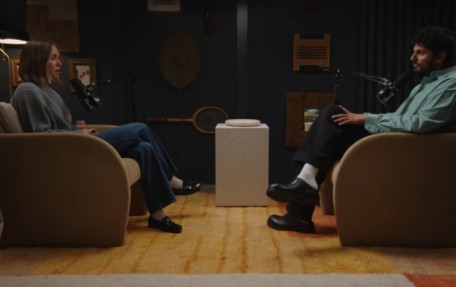
Read the full transcript of influencer Emilie Kiser’s interview on On Purpose Podcast, June 17, 2026.
Editor’s Note: In this emotionally powerful episode of On Purpose, Jay Shetty sits down with Emilie Kiser for an honest, heartbreaking, and ultimately healing conversation about navigating the loss of her son, Trigg. Emilie shares the profound challenges of managing grief while also parenting, maintaining her career, and navigating public perception during such a devastating time. Through her vulnerability, she offers crucial lessons on pool safety and the importance of taking preventative measures to protect children from accidents.
Welcome and Introduction
JAY SHETTY: Hey everyone, welcome back to On Purpose, the place you come to become happier, healthier, and more healed. You know, the thing that’s most important to me is sharing real stories that allow individuals to express their journeys, express their challenges, express the lives that they’ve lived in a way that uplifts, inspires, and most importantly, heals all of us.
Today I get to sit down with Emilie Kiser. Emilie has invited so many people into her life with honesty, warmth and openness. And over the past year, she’s walked through a life-altering experience, one that reshaped her world in ways no one is ever prepared for. Please welcome to On Purpose Emilie Kiser. Emilie, so wonderful to meet you.
EMILIE KISER: You too. I’m really grateful to be here.
JAY SHETTY: Your energy since you walked in this morning is so warm and cozy and comforting, and I felt like I’d known you forever.
EMILIE KISER: I appreciate that.
JAY SHETTY: It was just so sweet. But I wanted to start off by just asking you, how are you today?
EMILIE KISER: I’m nervous. I’m honored to be here. Yeah, I feel okay.
JAY SHETTY: What does your normal day-to-day look like right now?
Life After Loss: Finding a New Normal
EMILIE KISER: I’m a mom, so my priority day-to-day is taking care of my younger son Teddy. So my day-to-day is pretty normal. I wake up, I work out, I try to work out every day just because I know those good endorphins will help me mentally throughout the day, and I notice a really big difference if I don’t do that.
And then I kind of just spend the rest of my day with my son and just wherever it leads me. I’ve learned throughout a lot of my grief journey that I just can’t have too many expectations for myself. So I just have to set small intentions and go where the day leads me.
JAY SHETTY: Yeah. And what was your intention for coming here today? Like, what was going through your mind to want to come and share now and today?
EMILIE KISER: I have a large platform and going through what we’ve been through this past year, honestly nothing has felt like an appropriate place to talk about fully in depth what happened, what our family’s been through, just how much we miss Trigg, how much we love him. It just honestly hasn’t felt right, and I feel like when you asked me to come, I really felt like, okay, yeah, this is a person that I can sit down with and have a really in-depth, meaningful conversation that will hopefully help people spread awareness, help me to maybe heal in a way.
JAY SHETTY: Yeah. I really hope that this conversation is healing for all of us and kind and healing for you as well.
EMILIE KISER: Yeah.
Building a Community Online
JAY SHETTY: We’ll talk about the loss in a moment, but talk to me about what life was like before the loss. Talk to me about creating or sharing your life online in 2021. What did it look like? What was the motivation behind that? What was the inspiration behind all of that?
EMILIE KISER: The whole motivation always behind starting social media was honestly that I just needed an outlet. I think that’s why a lot of people start. I think that we crave human interaction, human connection, and I had lived in Utah at the time for already about, I think maybe 3 or 4 years. But when you become a mom, your whole world shifts, your life changes. Like nothing can even prepare you for that journey.
And I was just really deeply craving something to fulfill me in a deeper way. Obviously motherhood fulfills me so much, but I felt like I needed my own thing. And I think that’s so healthy and important. And I was like, I think I should just start sharing my day to day. Maybe people will relate to that. So I was sharing morning vlogs, day in the life vlogs, cleaning vlogs, and honestly, it deeply motivated me. I was home alone most days with Trigg, and so it really just helped me to get out of the house, get stuff done. That was my motivation, was just connecting with other moms and people.
JAY SHETTY: Yeah. And I know our team here are huge fans of yours.
EMILIE KISER: Oh, that’s nice.
JAY SHETTY: They’ve loved following you. What was your relationship like with your community during that time? It feels like you’ve just— it did exactly that. It made people feel connected to you, made people feel less alone.
EMILIE KISER: I feel like to me, my community just feels warm and kind, and I am just so grateful for my community and how much grace and love they always give me and my family, and especially going through what we’ve gone through. I could have never anticipated the support that I would receive, and it’s really always felt that way.
JAY SHETTY: When you’re so public like you are and then you go through a loss, everyone feels a part of that journey with you too. And I imagine that it’s affected the online community as well. It’s almost like you share your life with everyone.
EMILIE KISER: It’s definitely shifted my perspective on my boundaries and how much I choose to share. I don’t share my younger son anymore. I have a strict boundary of I don’t share Trigg anymore. I won’t share photos of him, videos of him. It’s definitely just shifted a lot of my perspective of, as much as I am so grateful for the community, it does kind of give you this perspective of people. I mean, yeah, they don’t actually know me. They don’t actually know my real life. And it’s a hard thing to learn, especially going through what we did so publicly. It really opens your eyes.
The Day Everything Changed
JAY SHETTY: Could you explain for those who may not know what you went through last May? Could you share in the best way you feel comfortable sharing that experience?
EMILIE KISER: I went out with my friends. I was 5 weeks postpartum and I went out to dinner for a little girls’ night out. And about maybe 10 minutes after I arrived, I got a phone call from my husband that our son Trigg had fallen in the pool and that he wasn’t breathing. And I could hear the pain and the just confusion in his voice. I knew immediately before he even said anything that something was wrong.
And so I rushed to the hospital to be by my son’s side, and our life just completely changed that day. And he passed away about a week later. And yeah, our whole world fell apart.
JAY SHETTY: I’m genuinely so sorry for your loss and I can’t imagine how much courage it takes to even share that with us today and the strength that you have being here. I can’t imagine what that loss feels like and it’s the most heartbreaking thing you could ever hear. And to add on to that, the public nature of your profile and your family and everything else, I can’t imagine how much stress that placed on you and your family and everyone else included, people that are close to you and those that love you.
EMILIE KISER: Yeah.
JAY SHETTY: What went through your head at the time and what’s been going through your head as you’ve had time?
Grief, Guilt, and the Questions That Never Stop
EMILIE KISER: I mean, your body just goes into fight or flight mode. So I feel like I’ve just been truly taking it minute by minute, hour by hour, and slowly kind of increasing from there. But I mean, the only thing that was going through my mind was just that I wanted him to be okay, that I wanted my old life back, that I wanted him to have his life back. I mean, it’s what he deserves.
And it’s just, you can’t even describe that feeling of when your child passes away from a preventable accident, a preventable tragedy. All that’s going through your mind is, where did I go wrong? Where did we go wrong? How did this happen? Why did this happen? Hindsight is playing in your head 24/7. And yeah, I mean, it’s terrible.
JAY SHETTY: That kind of rumination and spiraling of all those questions that you just shared and all those thoughts. It’s almost not even a question of trying to move on, it’s so all-encompassing and all-engulfing because it’s exactly what you said. You’re just wondering about the what ifs, the why nots.
EMILIE KISER: We had to make so many big decisions in a very short amount of time that no family should ever have to make. And I know that other people will relate to that, and it feels impossible. You’re truly going second by second because at any moment something could change, or you could be given different news. So it’s just truly just minute by minute.
What No One Sees
JAY SHETTY: What was the hardest part about that experience that no one sees? Because everyone tries to empathize, everyone obviously tries to understand. I always feel like when you haven’t been through a pain, you can be empathetic, you can be compassionate, you can be theoretically there, but when something happens to you, it’s very different than when you observe it through someone else. What’s the part of it that no one sees that you’ve been carrying, that affects you?
EMILIE KISER: I mean, just the heartbreak, the miss, the love that you have for that person. Nobody can, even if you have the most empathy in the world, nobody will ever be able to feel, even if they’ve been in a similar situation. Those are the people who can relate the most, but there is no way to describe to someone what it’s like losing a child and what that pain is like. And it feels unbearable. We did not think we would make it through that.
It’s like you constantly are looking back like, how have I done that? How have we done that? How are we even here right now? Time just feels so warped and confusing. And I feel like that’s the hardest thing that you can’t explain to someone — just what it’s actually like. You will never know what it’s actually like unless you are going through it.
Even you will be surprised by the decisions you make, your thought process, your grief. I mean, I had even heard similar stories before Trigg passed away. You always sit there with theoreticals of, “This is how I would handle it,” or “This is what I would do.” And you would literally never know. And it’s crazy thinking back that I ever felt that way or that I ever theoretically felt that way about other people’s tragedies because now I’m like, oh, you literally don’t know.
JAY SHETTY: I’ve had friends pass away or younger friends get diagnosed with cancer who’ve passed away. And it’s been really interesting when you get to that kind of age when people around you are starting to get diagnosed with certain things and you start learning how as friends you want to be there for each other, but how certain friends don’t quite get it. And it comes back down to exactly what you just said.
As humans, we’re so quick to judge someone’s experience and how we deal with it. And then when you go through something close to that, you realize how none of that mental faculty or reasoning even comes close to helping you deal with any of that, because the emotion is so strong and so overriding that you don’t have that function in your brain that you had before something like that happened.
EMILIE KISER: Your brain chemistry literally changes.
Navigating Grief in the Public Eye
JAY SHETTY: The hardest thing is your loss and what you are going through in love and the life you had and wanting it back. But then you’re also managing your career, which also has this public perception on it. How did everyone find out and how did that kind of go into the conversation there?
EMILIE KISER: When I first got the news that Trigg had fallen in the pool and went to the hospital, my mind was anywhere but “What are people going to say?” I wasn’t even in a mental space for that. I was only focused on him, and so was our entire family.
And the news broke because, I think, news cars started showing up, people started putting together that my house was my house. Little things, like furniture matched in news video footage, and people started to put together that it was Trigg based off of the descriptions that were being given. But I hadn’t even thought that far yet.
So when I found out that it had become public and that people were wondering what had happened — and I mean, we were still wondering what had happened in that moment — I didn’t even have details really on what had happened. We were in the depths of just figuring out what Trigg needed and what we could do to help him.
That’s kind of how it broke. And from there it just became a frenzy, to put it at the least. It was crazy. But I was just so uninvolved in that at the time that it wasn’t until after he had passed away that I think I really realized how big it was and how many people were talking about what had happened to him.
The Reality of Grief: No Finish Line
JAY SHETTY: And what you’re saying makes complete sense that of course when you’re going through something that tragic, you are just present there. Your mind is not anywhere else. Do you ever, in circumstances like this, ever find the answers that even help about what happened and how it felt? Like, do you even get there? Because it almost feels like when these things happen, there’s no— it’s almost like there’s no answer that can heal or soothe or solve because it’s just pain.
EMILIE KISER: There really is no answer for why it happened. At the end of the day, it happened because there were precautions that we didn’t take. I’m a very logical person and I go based off the facts and that’s what I had to do the entire time that we were in the hospital getting information, everything. And there’s no answer for why he’s not here. That’s some bigger thing or a lesson or anything. There’s, there’s nothing.
JAY SHETTY: It’s.
EMILIE KISER: We should have protected him better. And that’s why it happened.
Facing Public Reaction After Tragedy
JAY SHETTY: What broke my heart beyond learning about your story as I was preparing for our conversation today and to be with you was some of the reaction online. And of course, I want to talk about both because I think the negative always gets more precedence than the positive. And so I want to talk to you about both because I think there was a lot of love and there was a lot of support, and I want to talk to you about that, and I want to hear about that.
But the part that broke my heart was to see how when a human sees another human, whether we know you or don’t— and for those who follow you, they, they know you extremely well— to already know that someone’s going through something that is the worst thing that a parent could ever go through, to then have their own opinion, commentary, verdict on it feels heartless and painful. In a, in a way that I can’t understand why our human mind would even go there. Let’s talk about some of the support you felt from people online.
EMILIE KISER: When I came back, I honestly was fully preparing myself for any reaction I was possibly going to get. I was just so deeply craving, I think, a sense of normalcy. And when you’re grieving and when you go through something any sort of loss, honestly. I think that that’s what a lot of us grip onto is how can I find any sense of normalcy in my life to get me through the day?
For me, that kind of was starting to slowly return to my job that I love so much. Nothing could have prepared me for the support that I received. I was really just emotional and blown away and just so grateful. And I very often feel very undeserving just because of how sad and honestly guilty I feel, and sad for Trigg that he’s not here. Sometimes I feel undeserving of like, how are we able to still, in the best way we can, go on with our lives?
And I’m just really grateful that I had so many people that were just there for me. My community kind of just said, however slow you want to take it, whatever you choose to share, you can share it. That’s kind of what I prepared myself for turning was with the boundaries of I will just share what I’m comfortable with because I would rather be ripped apart for what I, what I don’t share and for not sharing enough than share too much. Of the pain and the heartbreak and the thoughts that I go through every day and be judged for that. It’s just, it’s too much.
Guilt, Shame, and the Weight of Support
JAY SHETTY: I appreciate you sharing the added layer of the emotional toll of experiencing loss, then experiencing grief, getting support, but then actually feeling guilty and a little bit of shame to even experience that support. And it’s the emotional toll of all of those extremely difficult emotions to carry all at the same time.
EMILIE KISER: It’s all the time.
JAY SHETTY: That’s really heavy for you to just hold all of those at the same time.
EMILIE KISER: I think people look at grief as stages, or at some point it’s going to end, the pain is going to end. We look at grief as this finish line. I feel like for a lot of people, of, I grieved for this amount of time, or I was sad for this amount of time, and then— that’s not how it works. It’s, it’s never-ending. Your grief is going to be with you for the rest of your life.
Very early on we had so many amazing health professionals that helped us because we would not have even gotten to the mental place we are in now without those people. And I feel like even though it was such a weight to hear at that time of this is never going to go away, like we’re going through the darkest thing we could ever possibly go through and we just lost our child. He’s never coming back. And to hear that you’re going to feel this forever was— it’s— it feels impossible. You’re like, okay, so it’s never going to get better. I’m never going to feel—
But that’s when the other lessons come in of everything is going to coexist with the grief. You could feel joy and feel so much sadness at the exact same time. You can feel support while also feeling guilty. You can feel sad while also feeling reminiscent on the memories. So many feelings coexist, and that is, that is forever.
And I feel like the longer I’ve gotten into my grief journey, even though I’m not very far in it at all in the grand scheme of things, the more I’ve just really learned that that is, is how I have to go through my life of just, I am allowed to feel whatever Brady is allowed to feel, whatever my family is allowed to feel, whatever. But it can all coexist, but the grief is never going away.
There Is No Finish Line
JAY SHETTY: You are completely right that that belief that we all have, or this hope that we all have, that there’s a finish line, there’s an endpoint, there’s a turning point for moments like this. You’re absolutely right. There is none. And that’s the hardest thing and the most helpful thing in one, because it’s almost lying to ourselves or lying to others saying it will go away one day is actually worse because then you’re just waiting for that day. Yeah. Or the stages of grief.
EMILIE KISER: You hear that all the time. Oh, there’s stages of grief. Stages of grief were designed— and I actually learned this from Joanne Cacciatore, who’s a doctor that we went to very early on. We went to a few of her— she owns a care farm, kind of like a grief place for parents who have gone through child loss. And she just basically said plain and simple, that’s designed for elderly people who are at the end of life, of the stages of accepting that your life is going to end. That is not made for parents who are, who have lost their child because there are no stages.
It is never ending. You could be in one stage at some point and then at the next point you’re in the complete opposite stage and, and you just have to accept that you have to feel what you feel when it comes. And that is just how you have to go about it forever.
Finding a Way Back to Routine
JAY SHETTY: You said that there was a part of you that obviously took a break, obviously after all of this. And the only reason you went back was to experience some normalcy and just getting into some routine and rhythm for your life, which is always encouraged when people go through difficult things to feel just like you’re moving your body, you’re helping yourself, you’re going back to doing things that felt familiar. How hard was it to even go back to doing that?
EMILIE KISER: We were— I mean, obviously barely able to get out of bed, barely able to get up and brush our teeth. I was— we were not in a position to even take care of our younger child. I’m so grateful for the support and the family we had around us because we just could not have done it. I mean, when we were first going through it and I was 5 weeks postpartum, so I wasn’t even in a headspace to get into a routine at all. I was still trying to get used to having two kids.
My dad was actually who came to me and was like, you gotta move your body. My stepmom actually teaches Pilates on the side, and he would just have her come over and help me. I would go on walks, but even at that beginning when we first lost him, we weren’t even leaving our house because we had people driving by, taking videos, helicopters going over our house. News were showing up constantly. I was basically just in my home, and I didn’t want to be anywhere else in terms of— I just want to be in my bed at that time.
It felt impossible to get back into any sort of routine, but then at some point, I think I felt like I don’t have any other choice. Like, I have to, I have to be the best version of myself that I can manage right now for Trigg, for my younger son Teddy, for myself, for Brady. Like, I have to, it’s not a choice.
The Invasion of Privacy During Grief
JAY SHETTY: I’ve never had that experience around what you’re saying around the news teams and the helicopters and the— is there a sense of like setting boundaries in that way? Like, can, can you be like, don’t come. It feels so invasive. Like, it just feels— it’s almost like this is a really tough, tragic time for someone, and I just, I don’t understand why that would— it’s fascinating to me how we as humans have normalized that.
EMILIE KISER: I think I’ve really mentally blocked out so much of that because I was just so focused on what we were dealing with inside of our home that my mind wasn’t even really there. But I think back, and I had PTSD pretty much from so many things, but hearing helicopters still go over my house, I’m constantly like, oh, is that going to end up on the news? It was completely invasive.
The Harm of Uninformed Commentary
JAY SHETTY: When people talk about or commentate on events that they don’t have the full details over or the actual insight over from the inside. What were the kind of things you were hearing that were hurtful and kind of dehumanizing to some degree as well? Because when someone’s far away from the problem but commentating on it without understanding it, what were the things that you were hearing or things that you saw that really affected you?
Living With Grief: Moving Forward Day by Day
EMILIE KISER: At the end of the day, it’s hard hearing anything that beats you up more than you’re already beating yourself up. Nobody could say— I really try to not focus on the negative because nobody could say anything, and I’ve heard a lot of things, to Brady and I that would make us feel any more hurt than how we already feel not having him here. Nothing.
When you lose your child, you really don’t care about anything else besides doing your best to get through it. And there’s not even a through it. You don’t get through it. Doing your best to move forward, I guess. Caring for your family. I have a younger son, so that was also just a huge, and stays a huge motivation for me of I have to keep going for him. Nobody could say anything that would ever hurt us more than we’re already hurting.
But it’s hard. Obviously I’m a human. It’s hard to hear people make their own assumptions, their own conclusions, draw their conclusions about Brady, draw their conclusions about me as a parent. But at the end of the day, I just have to remember that these people don’t know me and they’re never going to know me on a deep level because that’s impossible. Nobody’s ever going to know you on the deepest level as the people who love you and truly know your heart and know you.
And I think if anything, I find kind of peace in that, of the people who know us know us. That’s really the only people you genuinely need in your life and that you need to understand you is the people who know you and love you. And everyone’s entitled to their opinion. I think that’s a hard lesson I’ve had to learn so much at the beginning. I felt so much anger towards the public, and I mean, I still do. I think I have every right to, but I also put myself in the shoes of, unfortunately, I would probably do the same thing and have assumptions and have opinions and have thoughts about what happened.
And naturally, I think it’s natural human reaction to want to put blame on someone. It’s the only way that you can come up with a logical reason of why it happened or how it happened. Is to place blame. And I think in some ways it makes people feel better. I mean, I can’t fully blame people.
JAY SHETTY: The part that really connected or resonated, at least with me, was this idea that you’re already beating yourself up enough inside and you’re already hurting enough inside that there’s nothing anyone could say to you that could supersede that personal blame and personal responsibility or pain that you’re putting on yourself when you’ve gone through something like you have. And what else would you like people who may be filling in the gaps with their own commentary, or as you said, allowed to have their opinion, and what would you like to say to them? What would you like them to know from your perspective?
What Emilie Wants People to Know
EMILIE KISER: I could say a list of things that I wish people knew, or a list of things that I feel like were said wrong or assumed wrong or facts, but it just really doesn’t matter. I feel like all that matters that I want people to know is just how much we love Trigg and how much we miss him and how, trust me, we beat ourselves up every day. We know what we could have done differently. Hindsight really is 20/20, and I promise you, there are so many things now looking back that I wish we did differently.
The only thing I can do to honor Trigg and to show my love for him is take care of Teddy and hopefully help to spread awareness and do my best to make it so that hopefully less families have to go through what we’ve gone through. I would love to say that I can do my best to make sure this never happens again, but drowning is the leading cause of death in children 3 and under. I feel like there’s groups of people who hear about it often, but it’s not talked about enough.
And I really want to make an effort, especially going into this year and especially being where I am in my grief journey of I feel a little more ready. I think I’ve finally accepted that this is what took his life. I really just want people to know that this is preventable and it doesn’t have to happen to you. And I mean, that goes for so many preventable accidents. That’s what I really think matters, that people need to know. There’s nothing I can say that’s going to change people’s minds. And I’m not here to do that.
JAY SHETTY: When you say it took you 8 months to even accept that this was what tragically took his life, what were you wrestling with? What were you grappling with in order to accept that? What does that look like?
The Process of Acceptance
EMILIE KISER: I don’t think I’ll ever fully accept what happened to him because although it was preventable, it just feels so cruel. And especially that night and the way things happened. It really felt just like a series of, you know, you play it back and you’re like, how did I go wrong there? And why did I leave? And why did this happen? Why did that happen? It’s hindsight. You go back and you replay and think, what could I do differently? What could I change?
I just think that’s kind of the process. You just have to go through that. Just replaying it. To be honest, just over and over again, thinking about all the things that we could have done differently, thinking about the things that we will do differently. And I don’t really know if I have an answer for how you accept it. I think everybody does it in their own time, but I don’t think I’ll ever really accept that he’s gone. I don’t think I’ll ever really accept what took his life because it is just so terrible. And the pain that he went through is so terrible, but I’m just doing my best. And I don’t think I’ll ever fully accept it, but I acknowledge it and I know that I can just only do better from here.
JAY SHETTY: What kind of professionals did you go to? What did they talk about for people who may be going through something similar or struggling, who are listening right now, and I think we’re not even aware of the fact of how many people are suffering with something similar. We’re not conscious of it until it happens within your proximity. What were some of the therapies, the methods, or the healing practices and approaches that actually helped?
Healing Practices and Professional Support
EMILIE KISER: When we first lost Trigg, pretty much immediately, within about 2 weeks of us getting home. It was very quickly. My family found out through other people who had suffered through child loss, which I’m so grateful for the amount of resources that, that even though they weren’t directly reaching out to me because I was not on my phone, I was not on social media, I didn’t even have a phone, just for our mental health of like, you do not need to look at anything. You need to just focus on yourself and your family.
We immediately, after about 2 weeks, went to the Care Farm that I was kind of mentioning, and they use animal therapy, just basically interacting with animals. You speak with health professionals while you’re there, licensed therapists, licensed doctors. They’re not there to heal you. Nothing’s going to be able to heal you. They’re there so that they can teach you the best tools. And I feel like that’s where I really learned that it’s never going to go away, that I have to just coexist with this forever, that the pain, the hurt, the heartbreak is never going to go away. It’s just going to hopefully become a little more manageable.
I can’t shout out my family enough. They truly are what have carried us through this. They got us in with therapists, great grief therapists that specialize in loss and child loss. We’re in couples counseling weekly. We’ve just been doing as much work as we can because there was nothing else we could do.
I give so much credit to anybody who works in that space because I cannot imagine the weight that they carry hearing the amount of things that they do, the heartbreak, the stories. I’ve talked to my husband about this before of, I cannot imagine two parents coming into you telling you what they’ve been through and you having to try your best to either guide them together or help them heal a little bit, talk them through it, or if they choose to be apart, helping them through that in an amicable way. That has to be one of the hardest jobs. You guys are doing really important work.
JAY SHETTY: Did you meet and spend time with other parents who’d also gone through child loss? Was that helpful? Was that not helpful? Did it feel too close to home?
EMILIE KISER: I’ve had a couple moms that I’ve talked to that have been through some similar things and that has been helpful. But at the same time, I think that really, unless you talk to someone that is going through the exact same thing at the level of exposure that we did, it really just felt like there’s nobody to talk to. Who is going to relate to what I’m going through right now, what we’re going through, what Trigg went through? It really felt impossible. And so I really haven’t gotten to a point yet where I’ve reached out to support groups. But in the future, when I feel like a little bit more time has passed, I think I would feel more ready to do that.
Good Days and Bad Days: Living Minute by Minute
JAY SHETTY: What does a good day look like right now? A good day, your definition of one, and what does a bad day look like right now when you’re experiencing this grief?
EMILIE KISER: I honestly don’t really define my days by if it’s a good day or a bad day. I truly, I cannot stress enough that when you’re going through child loss or you’re going through loss in general, you’re really just living minute by minute. I can’t even think about my whole day when I wake up in the morning. I truly just go through it like, okay. I’m going to get it done what I can get done today. I’m going to do what I can do.
It’s kind of two scales. Your grief is on a scale of 1 to 10, and then your level of managing it is on a scale of 1 to 10. If my grief feels like an 8 that day, but my level of managing is a 10, that’s a goodish day for me. If I’m having more moments throughout the day where I just can’t do what I need to do, I’m okay with that too. But I would say just every day I truly wake up like whatever, however this day goes, whatever is thrown at me, I’ll get through it. And I literally just have to take it as it comes.
JAY SHETTY: Not even sure just how much you know how powerful that advice is. It’s so much better than our basic acknowledgement of whether it’s a good day or a bad day, because what you just said is the reality of, okay, grief is on a scale of 1 to 10 of how much the extremity I’m feeling it. And then what’s my ability to manage it? And that’s the reality. There’s not good and bad days. There’s good and bad moments.
EMILIE KISER: And that’s what makes up your days. Every day is hard. Every day is “quote unquote” bad without him here. It’s terrible. But I still have good moments in my day, and I would be lying if I said that I don’t still have some joy and some happiness. My younger son brings me so much joy and so much happiness, but I’m also simultaneously sad and empty. And that’s why I just say you really have to learn and you quickly do learn that everything coexists and that’s just the way it is.
Returning to Work While Grieving
JAY SHETTY: Sharing your life, sharing your journey, sharing everything online is your work, even though it may be joyful and fun in moments, it’s still work. What has it been like going back to work while still grieving and what do people misunderstand about that?
EMILIE KISER: I’ve had to set, kind of like I said at the beginning, a lot of boundaries of just really taking it day by day, of whatever I’m comfortable sharing, I’ll share, and if I’m not comfortable, I’m not sharing it. And it’s hard seeing people genuinely say, “Oh, you’re fine. Oh, you’ve already gotten over it. Oh, you seem like you’re doing great.” It’s like, this is my job. I’m going through it like a job. At any job, you have to show up. You have certain expectations that have to be met, and it’s also a creative outlet for me. So naturally, sometimes when I’m doing my job, I am in an okay headspace, and I’m just doing my best to kind of distract myself and get through it.
But that is not a representation of my whole day or my grief. Social media shouldn’t be anyone’s representation of anything because at the end of the day, it’s always— even if you share the good, the bad, the hard, it’s what you’re choosing to share. Always. Unless someone had a 24-hour camera going, you’ll just never understand what it’s like inside someone’s brain who’s lost a child.
JAY SHETTY: Yeah.
Grieving Together While Parenting
EMILIE KISER: I also can’t fault people for that because you’re seeing what I’m choosing to show you. And so I really do accept in a way, and it’s taken me time, the hate that I get, the feedback that I get, because I don’t expect people to understand. They never will understand. I would rather share “not enough” in their eyes, or I would rather look “not sad enough” or whatever their expectation is, and feel like I’m protecting myself and my family and my inner deepest darkest parts of my grief and save that for the people, the professionals that are truly going to understand and be able to walk me and talk me through it and support me.
JAY SHETTY: People on social media can’t be your therapist and can’t be your guides and can’t be—
EMILIE KISER: And they shouldn’t be.
JAY SHETTY: Yeah. And it’s not their role. Yeah, exactly what you just said. It’s a great mindset to have to understand that that’s not their role and that there are people that you are seeing in order to experience that. And at the same time, I do really, really wish for the world that especially in moments that are not divisive, it’s easier to be kinder. We’ve talked about you being someone who’s gone through extreme loss, grief, and going through guilt, shame. Then there’s the added component of your work, but then there’s the added component of parenting while you’re also grieving the loss of a child. Talk to me about that particular type of grief.
Parenting Through Loss
EMILIE KISER: I’ve gone through so many different emotions with parenting since we lost Trigg. And just being completely honest, feeling not good enough, feeling unfit, feeling scared. Losing a child really shows you in the scariest, most real way possible just how quickly life can change and how quickly life can be literally taken away. And I think that really scared me with Teddy.
There’s so many things in my control that I can do, preventative measures I can take, ways I can be better. I mean, there’s a list of things as a parent that you can do to protect your children, but there’s also so many stories and stories that I heard after we lost Trigg where I was like, that was completely freak accident, not preventable. And that’s an element that’s been hard in parenting him is realizing that there’s only so much I can control.
I always try to remind myself that I have a choice to make. I can either let this completely derail me more than it already has and not really feel like I’m fit or able to take care of my younger son, or I can do everything in my power to be the best mom I possibly can for him and give him the same love that Trigg had and has. And I made a promise to Trigg right before we lost him that I was going to take care of Teddy. That was actually like my final promise to him, was like, I will take care of your brother. Because at that time, I felt like I couldn’t. It really just was too much. It felt like I couldn’t even take care of myself. But that has kept me going, of I made a promise, I’m going to fulfill it, and I’m going to give Teddy the best life I possibly can. And that means showing up for him, showing up for myself, doing everything I possibly can to make sure that that happens.
This is actually something that did make me really sad when we lost Trigg, was so many people naturally said, “Oh, Teddy’s going to have such a terrible life. He’s never going to have the same parents that he did.” So many comments, and it’s true, he’s never going to have the same parents Trigg has. We are fundamentally changed by this. But I will be even better. And I think I almost took that as motivation of, I will give him the best life I possibly can. I will be the best mom I possibly can to him.
JAY SHETTY: I’m so sorry you had to go through that as well. I really love what you’re saying. You are accepting that you will be, that you are fundamentally different, but that doesn’t mean you can’t be better and can’t give more love. And those two things again can coexist, that you have changed, that you are different, that you won’t ever be the same person that you were before naturally. But that doesn’t take away from the fact that you absolutely love Teddy and want to give him the best life that he could possibly have.
When I was thinking about today and thinking about our conversation, I was just thinking about all the multiple layers of loss, grief, pain that exist in someone’s experience. And I think the other part of pain for you is having to go through grief while someone else is grieving too. Talk to me about how it feels for you grieving while the person that you are parenting with is also grieving.
Grieving as a Couple
EMILIE KISER: We’ve really done our best to grieve together. And to talk through every emotion and every feeling. And I really give Brady so much empathy and respect. I have so much respect for him, honestly. And I think that would maybe shock people, but he has allowed me to take out every emotion I’ve had throughout this process, whether it’s on him or talking to him or with other people. And I just have so much respect for that, of how much he has just let me feel every emotion, and he’s never made me feel bad for it.
He’s going through so much as well. And like I said, we are the only two people that can understand at all what the other person is going through. And so I just really, in a situation where a lot of people would say, “I could never forgive my husband, I could never stay married to him, I could never this, that, the other,” he let me feel all of those emotions.
It’s been really hard at times to grieve together. To be honest, there was a time where I was just, I mean, from the beginning, I felt so angry at him of literally, I don’t know if I will ever forgive this man. But I think the biggest thing that really kind of altered literally my brain chemistry and the way I thought about it was this could have just as easily happened to me. This could have just as easily been me in Brady’s position. Brady was taking care of our newborn child when I left for dinner that night. He was de-thawing my breast milk, trying to get Teddy settled, 5-week-old baby. And that doesn’t excuse anything. It doesn’t excuse what happened. It doesn’t excuse any of the series of events after that. But taking that accountability along with all the other things I know I could have changed gave me so much true, deep, real, raw empathy for him of this could have been me.
Even if I got to a point where I could not stay married to him, even if I accepted that, of if there is a chance that we don’t stay together — this was when we first lost Trigg that I felt this way — I would be able to forgive him because I would so deeply want him to forgive me and to know that I didn’t mean for it to happen. And that’s exactly how I feel for Brady. I really just have so much empathy and love for him, and he is so strong.
And I’m really proud of us, honestly, and how we’ve grieved together through all the therapy we’ve done, that I feel like we’ve really been given tools that even though our grief is so separate, we have really done our best to come together. And even if we grieve separately at times and we each have our moments, because I think that’s healthy too, you naturally don’t sit and really all the time grieve with your partner. You do, but there’s so many moments throughout the day where you guys are feeling different emotions. One’s at a 10, one’s at an 8, and it’s not each other’s job to balance it out. Your job is to let your partner feel what they need to feel and then be there for them through every emotion.
And I’m really proud of us that I feel like we’ve done that and just done our best truly to really remember that all we have is each other in terms of understanding what we’ve been through and how much we love and miss him.
JAY SHETTY: Thank you for being so transparent about the reality of every emotion that any human would feel naturally in that situation. And even the resolution that you’ve personally come to, where it being the respect and the empathy and the understanding. You’ve got such a big heart. You just got such a big heart. It’s actually really extremely healing listening to you because it’s something we’re all working on in our own way with the people closest to us. You’re just working on it in the most extreme way.
I’m happy and thankful that you feel that way with each other and that you’ve been able to express every feeling and be every version of yourself and even allow yourself to have the thought of, “Can I forgive? Is this going to work?” And then finding resolution through that. And I’m assuming that there’s been times when you’ve needed to rely on each other, as you said, because you’re the only ones who can understand, and times when you’ve needed to rely on family and beyond that.
EMILIE KISER: My husband really is the only person, one of the only people besides licensed professionals that I really feel comfortable feeling every emotion of grief. I think that’s natural because we raised Trigg. We love him with every fiber of our being. That’s the only possible person that’s going to understand the love and the miss and the hurt and the heartbreak and the void of losing your child. And so naturally we have the most deep, profound emotional conversations with each other because it’s usually us coming together about how much we miss him or a memory that made us think of him that day, or just all the conflicting emotions of what happened and what we’ve been through and the feelings that we feel. I would hope, and I think I’m the same way for him, is we’re really the only two people that we feel like we can truly be open and vulnerable with on that level every day.
Keeping Trigg’s Memory Alive
JAY SHETTY: Have you found that helpful to talk about Trigg naturally whenever he comes to both of your minds?
EMILIE KISER: And I love to talk about him. It obviously makes me sad, but he truly was and is such a light. And although so many people didn’t get the literal honor of meeting him, anyone he came across in his life — I mean, we still have his teachers reach out to us and they’re like, “We love him so much and this reminded us of him today.”
And yeah, it’s really helpful. From the beginning, Brady and I told our families like, “I never want a world, and I never want Teddy to grow up in a world where this is an avoided conversation.” Because even though it’s a hard conversation and it leads to a bigger conversation, I’m sure Teddy is going to have so many questions as he gets older. I never want a world where people don’t talk about him. And I feel the same way for sometimes negativity talked about us surrounding him, of if you’re talking about him and you’re spreading awareness, really that’s all that matters to me. I just don’t want him to ever be forgotten. And he won’t be.
And having daily conversations in our house, I’ve added so many photos around our house of him because I just want his face to be everywhere and I don’t want it to ever be something that Teddy or anybody is ever questioning what he looks like or who he is. We’ve really made an effort that he’s constantly brought up. My friends know it too. If I see something that reminds me of him, I’m always like, “Oh my gosh, Trigg would’ve loved that,” or “This is what he would be saying.” Because he really just was such a funny kid and so loving and just the best. And I know everyone says that about their kid, but he was just the best.
What to Say — and What Not to Say — to a Grieving Parent
JAY SHETTY: When you lose someone you so deeply love, what are, for you, hurtful things people say and what are helpful things people say? Because I think when people lose someone, no one knows really what to say.
EMILIE KISER: That’s a good question. I think one of the most hurtful and confusing things people can say is anything in the realm — and everyone has their own beliefs — but anything in the realm of, “He’s in a better place,” or, “This is just what was supposed to happen,” because it wasn’t. It was preventable. It wasn’t supposed to happen. The best place he could be is here with his family, with his little brother growing up. That’s the best place he could be.
I think that’s always hurtful, and people kind of use it as a band-aid of like, “He’s in a better place, it’s okay.” No, he’s not. This is a child that had an entire life ahead of him. So many memories, so many things that he was looking forward to, we were looking forward to, he didn’t get to experience yet. So saying that to any parent who’s gone through child loss, at least in my experience, is just very hurtful and unhelpful. That’s the last thing a grieving parent wants to hear.
All you want to hear when you lose your child is, “I’m so sorry,” and “He deserves to be here,” or “They deserve to be here,” and “I wish you weren’t having to go through this, and I wish he hadn’t had to go through this.” Those are the only things that don’t help, but they make you feel loved and comforted.
Pool Safety: Protecting Your Children
JAY SHETTY: Emily, why have I not asked you today that you wish I did?
EMILIE KISER: The main thing I hope people can take away from what Trey went through and what our family went through is just once again that it’s preventable. To please, if you have a pool and you have a young child, get a pool fence. I know there are other options. I was there. I chose a net. I regret it. Having as many barriers to entry is what’s important. So that’s swim lessons, that’s ISR lessons. I have Teddy starting ISR as soon as he possibly can.
JAY SHETTY: What is ISR? Sorry for—
EMILIE KISER: It’s swim training for young children so that they can learn survival techniques, whether that’s floating on their back. If they’re too young to be able to swim, they usually teach them it fully clothed so that they, if they’re in any situation, they can figure it out. And it just gives them the resources that there’s time, there’s more time for someone to come find them.
The biggest lesson is always going to be watch your kids. Don’t take your eye off them. I don’t care what anybody says, that’s not 100% realistic. Every parent gets distracted. Every parent has things that naturally— it could be going to the bathroom that you have a moment where your eye isn’t on your child. Make sure that you have every other barrier so that God forbid something happens, you’re able to act. And they’re not in a position where they can lose their life.
And I really feel like that is the most important thing I hope people take away from what happened to Trigg is just to please protect your kids.
The Reality of Parenting and Letting Go of Fear
JAY SHETTY: There were many reasons why I wanted to speak today. One was to truly get to understand what you’ve gone through and to expand our compassion and heart and empathy towards you and love towards you. And also just this wonderful service that you have and purpose that you have to want to make people aware, using your loss and pain that you’ve gone through to actually help others and keep them aware. And I think it’s really, really powerful that you’ve chosen to do that.
A loss like this can make you want to be 100% vigilant and 100%, just never leave Teddy’s side in this scenario. And obviously that’s not only not realistic, it’s not possible.
EMILIE KISER: Obviously that’s best case scenario. That’s the whole point of any sort of prevention or barriers or anything. I mean, I’m specifically talking about pool safety, but that’s not the only thing that can hurt children, that can affect them. That’s actually a tool that you can use in your favor — knowing and being honest with yourself, honestly, that there is no possible way for me to always have my eye on them.
And I know people might take that and be like, “No, I have my eye on my child 100% of the time.” I don’t know, you might think you do, but there’s always lapses in judgment. There’s always things that distract us in life. There’s always things that can happen. And that’s the biggest lesson — even if you think it will never happen to you, it can happen to you. It can. None of us are special. None of us can control little tiny choices and things that can make up the whole picture.
It’s hard when parenting. I did feel that, and I do feel that still, of I never want to take my eye off of him, and I will do my best, everything in my power to make sure I am always there when he needs me. But as a parent, you just can’t. Sometimes you have to go to work or leave your child in someone else’s care. And the only thing you can do is trust. Trust that you’ve done everything you can, they’ll do everything they can.
And that’s been a hard thing for me to process because it does feel, especially in those first few months, of “I’m never, I can’t leave his side.” But I also just have realized over time that’s not realistic. It’s not healthy. And I just have to trust that I’m going to do everything I can.
I do know a mom who went through a very similar situation. About a month after we lost Trigg, I talked to her for the first time and I asked her, “Are you so scared of water? Are you so scared of the pool?” And her answer shocked me — she was like, “No, because I know that I will do everything I possibly can to make sure that that never happens again.”
And that just kind of, again, just rewired me where I was like, as much as you wish this never happened, as much as you’re constantly overthinking everything you could have done differently, that’s all you can do — change, be better, make sure it doesn’t happen again. Same with other parents who aren’t even going through it, they’re bystanders or they’re hearing about the story. That’s all you can do is make sure it doesn’t happen to you because it can.
And when it does happen to you, that’s really what makes you realize, “Oh, this stuff can happen and it does happen all the time.” It will still scare you, but instead of letting that deter you, let it motivate you. You know it can happen, so do everything you can, fight like hell to make sure that it doesn’t happen again. Make sure that you have your kids in the swim lessons. Make sure that you have a pool fence. Make sure that you have a sensor in your pool. Make sure that you have door alarms. Make sure that you have automatic closers on your sliding doors. Make sure the handles are high up enough. Do everything you can so that it doesn’t happen again.
Closing Reflections
JAY SHETTY: Genuinely, I’m just so sorry for your loss. And also just, not only did Trigg deserve it, you didn’t either, and neither did your family. And so I really hope that parents who listen to this will share it with others, and people who want to be parents will be thoughtful about these things and really thankful that you’re using your voice and the challenges and struggle you’ve been through to help others because it’s so important, so needed. So thank you, Emilie. Thank you so much.
EMILIE KISER: Thank you for giving me the platform. You have a larger platform than I do, and I’m really grateful that I’m able to be here and talk about all of these really important things because I really do just hope it will get across more people and will be on their radar. And yeah, I’m just really grateful that you had me here and that I got to talk to you. I was excited to talk to you and just kind of hear your perspectives on different things.
JAY SHETTY: And the beautiful lessons you’ve given us today — in how grief never really goes away, how grief can coexist with joy, with love, with reminiscing, and how you want to continue to celebrate the light that Trigg is and continues to be in all the people that knew him and all the people that will continue to know him through his story. So thank you, Emilie.
EMILIE KISER: Thank you.
Related Posts
- On Purpose: w/ Dr. Ramani Durvasula on Family Estrangement (Transcript)
- Something Is Very Wrong With Modern Life – Arthur Brooks (Transcript)
- What My Mother’s Alzheimer’s Taught Me About Laughter – Dani Klein Modisett (Transcript)
- How Screens Stole Childhood — and How to Get It Back: Jonathan Haidt (Transcript)
- On Purpose: w/ Bridget Bahl – Choose Your Husband Like Your Life Depends On It (Transcript)