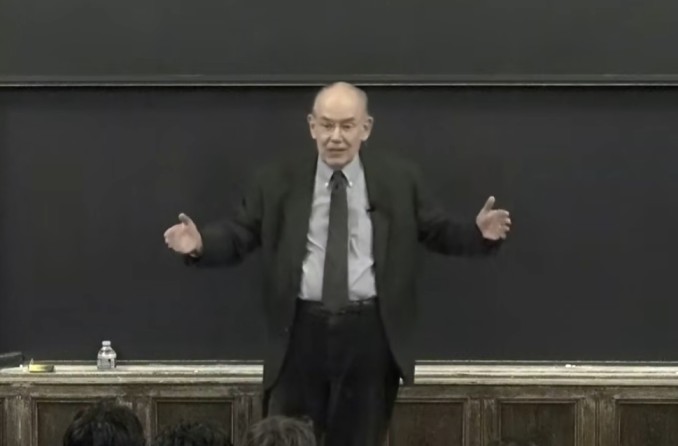
Editor’s Notes: In this lecture hosted by the Chicago Center for Contemporary Theory, renowned political scientist John Mearsheimer provides a critical analysis of U.S. foreign policy and the strategic motivations behind the invasion of Venezuela. He explores the “Trumpian” approach to military force, emphasizing a preference for “light-handed” interventions and the weaponization of economic leverage over direct “forever wars.” By framing these events within a modern interpretation of the Monroe Doctrine, Mearsheimer offers a compelling realist perspective on the shifting dynamics between great powers and the future of international interventionism. (March 11, 2026)
TRANSCRIPT:
Introduction
LISA WEDEEN: It is my pleasure to welcome you to our second 3CT event of winter quarter. I’m Lisa Wedeen, the Director of the Chicago Center for Contemporary Theory, or as we like to call it, 3CT for short. 3CT prides itself on being a nimble organization whose mandate in part is to theorize the present. One of the things that entails is being able to respond to current events in ways that speak to the urgencies of the moment without being presentist or sounding journalistic. It also requires a lot of talent and labor from colleagues and staff.
Before I introduce our speaker for today, I’d like to acknowledge 3CT staff for their absolutely stellar work in putting together events sometimes at the last minute. In particular, I would like to thank our student assistant, Lucy DeSilva, our program coordinator, Ryan Aecolt, and the extraordinary in every way associate director, Anna Searle Jones. Please give them a hand.
Now John told me to make the introduction on him short and sweet because he wants to start talking. So here it is, my succinct version.
John Mearsheimer is the R. Wendell Harrison Distinguished Service Professor of Political Science at the University of Chicago, where he’s taught since 1982. He’s the author of seven books, including How States Think: The Rationality of Foreign Policy with Sebastian Rosato, used to be a PhD student here — that’s 2023 — The Great Delusion: Liberal Dreams and International Realities, 2018, and Why Leaders Lie: The Truth About Lying in International Politics — that’s a little bit older, 2011.
Mearsheimer has also written many articles and has appeared in academic journals like International Security and popular magazines like Foreign Affairs and the London Review of Books. He’s also written op-eds for pieces like The New York Times and The Financial Times, dealing with topics such as Bosnia, nuclear proliferation, US policy towards India, the failure of Arab-Israeli peace efforts, the folly of invading Iraq, the Zionist lobby, the causes of the Ukrainian crisis, and the likelihood of Iran acquiring nuclear weapons.
Today, Professor Mearsheimer will be talking to us about the US invasion of Venezuela. John, thank you for being with us today and for being a marvelous colleague. Please join me in welcoming Professor Mearsheimer.
Opening Remarks
JOHN MEARSHEIMER: Thank you for the kind introduction, Lisa. Thank you for inviting me to give this talk. And thank you all for coming out on this cold day. I actually find it very humbling that so many people would come out to listen to me speak.
When I was young, I never dreamed that anything like this would happen. And if somebody told me it was going to happen, I would have told them that they were crazy. But here we are.
She asked me to speak about Venezuela. It’s very difficult to speak about Venezuela alone, in part because it’s woven into a bigger picture, but also just because events move so fast. When she asked me to speak about Venezuela, it was a front burner issue. But then there was Greenland, and then there was Iran. And it appears that Venezuela is not that important anymore — which is not true — and I will speak about Venezuela.
But I think given all that’s going on, it would be a good idea for me to talk about three different subjects, all very closely related. The first is I want to talk about Trump’s foreign policy. And what I want to do is talk about how Trump thinks about using military force. I want to give you the big picture on what I think is Trump’s worldview on how to use military force, how to be aggressive in the international system. So that’s the first part of the talk.
Then I’ll segue into talking about Venezuela, which will fit into that bigger story I tell you in the first part. So then I go to Venezuela. And then I want to go to Iran and talk about what recently happened in Iran between roughly December 28th and January 14th. And I think that’s very important to understand because it’s a similar yet different case from Venezuela. And talking about both Iran and Venezuela gives you a good sense of how they fit into the big picture.
Let me just say there are probably about fifteen topics that I’m not going to talk about today that I could give an hour and a half talk on off the top of my head and, truth be told, that I’d love to talk about. You can ask me questions about anything relating to foreign policy in the Q&A, and I’ll do my best to answer. But don’t feel that you just have to talk about Venezuela or Iran. If you want to talk about Ukraine, whatever — you name it, we’ll do it. Okay?
Trump’s Approach to Military Force
# Targets: Great Powers vs. Middle and Minor Powers
So I’m going to give you the big picture to start. And what I want to do is sort of get at the question of how Trump thinks about using military force. The first two dimensions that we have to talk about are what the targets are. You want to understand what his targets are. And then you want to talk about how he uses force vis-à-vis those targets.
When I think about targets, there’s a very simple dichotomy: great powers as possible targets, and what are sometimes called middle range powers and minor powers.
Now we went from a unipolar world to a multipolar world.
And the same thing is true with the Russians. You want to remember that Joe Biden had a very antagonistic relationship towards the Russians, especially over the Ukraine issue. Trump came in, he wanted to settle the Ukraine war, and Trump wants to have good relations with the Russians. The last thing Trump wants to do is pick a fight with Russia or, again, pick a fight with China.
So it’s just very important to understand that Trump pays little attention, from a military point of view, to the other great powers in the system. And where he focuses his attention is on the middle range powers — or as some people sometimes call them, the major powers — and the minor powers, not the great powers. And that’s where he threatens military force, and that’s where he uses military force.
# A Pattern of Aggression
The fact is that the guy has used military force seven times since coming to power. He’s attacked Nigeria, Iraq, Syria, Somalia, Yemen, Venezuela, Iran. He’s been highly aggressive. And he’s also threatened countries.
As hard as it is to believe, the Canadians are worried about the possibility that we may invade Canada. Really. There’s a big story in the Telegraph in Britain on this the other day. And of course, he was threatening to use military force against Greenland. Who knows what he’ll do with Panama?
He threatens a lot. And of course, he fully supports the genocide in Gaza, just like Joe Biden did. And he threatens the Palestinians. He’s recently told the Palestinians that if they don’t disarm, he’s going to blow them to kingdom come. So you see him constantly threatening different groups or countries, and you see him actually using military force quite liberally.
# How He Uses Force: A Light Touch
Now the second dimension of this is how he uses military force. And what I’m going to say, I think, is just very important, and it’s important for understanding how Trump differs from his predecessor, Biden, and his predecessors George W. Bush and Barack Obama as well.
When you think about how he uses military force, he’s very skillful. He’s got a game plan. And it’s that game plan that allows him to use military force so liberally.
Trump is deeply committed to making sure that he uses military force in a very light-handed way. He does not want boots on the ground. He does not want another forever war. He wants to go in and win a quick and decisive victory, get out, declare victory, and then march on to the next target.
You want to remember that his predecessors were deeply committed to regime change. And regime change alone was not their goal. They wanted to depose regimes and put a liberal democracy in place. So they had to do social engineering. And you cannot do social engineering of the sort that Joe Biden or George W. Bush was talking about without putting boots on the ground, without getting into a forever war.
And Trump’s intuition on this one is very good. He does not want a forever war. He does not want boots on the ground. So he’s not that often interested in regime change. We’ll talk about this. Venezuela is not regime change. And regime change in Iran — we were not doing the regime change. It was the protesters who were the boots on the ground. He’s not sending ground forces in. He does not want a forever war.
And as I’ll make clear, one of the two reasons he canceled the attack against Iran on January 14th was because his commanders told him they could not promise him that we would win a decisive victory if we used military force. That meant we would slam them, there would be no end to the conflict, and that’s not what he wants. He wants to go in and be done with it.
You all remember Iran last summer — June 22nd, 2025. Remember that bombing attack against Fordow, the Tans, and Isfahan. One day. One day. And he declared victory at the end of the day. That’s what he likes. No boots on the ground. No regime change. No building liberal democracies. He has no use for liberal democracy anyway. And the last thing he wants to do is get into the business of social engineering.
So you see what’s going on there. He’s using military force liberally, and he’s doing it with a light touch, and that allows him to use military force often.
# Floats Like a Butterfly, Stings Like a Bee
The third point you want to keep in mind — and it’s consistent with the second point — is that he floats like a butterfly and stings like a bee. To put it in slightly different terms, he deals with Venezuela one day, and then the next day he’s on to Iran, then he’s on to Greenland. And it becomes almost impossible for anybody to criticize the guy because he’s not only doing these attacks, he’s also making just so many outrageous statements that all sorts of people want to attack him, criticize him, want to pile on. But you can’t pile on with this guy because he moves so fast.
Greenland is now moving off the front burner. God knows what’s next. So with this light touch in terms of how he uses force, he allows himself to avoid significant criticism because people can’t keep up with him.
# Contempt for International Law and Institutions
Then the final point — which maybe we can talk more about in the Q&A period — which is very important: he has unmitigated contempt for international law and international institutions. He is completely unlike his predecessors.
Most people think that realists like me don’t think institutions and international law matter. That’s wrong. Great powers need institutions. They need laws to run the world. And the fact is great powers write the rules. They write the laws. That’s why they obey them most of the time. All his predecessors understood that. He doesn’t think that way.
He thinks that international law is a liability. He thinks that international institutions are a liability. You all understand that the Trump administration recently pulled out of sixty-six international organizations. This preposterous Board of Peace that he’s created is designed to wreck the United Nations, because he hates the United Nations. And what was going on in Davos is he’s trying to destroy the transatlantic alliance. He’s trying to destroy NATO. He hates the Europeans. He hates institutions. He hates international law. So you always want to keep that in mind when you watch him in operation.
To put this in slightly different terms, he’s a unilateralist. He dislikes allies almost as much as he dislikes adversaries. Maybe he dislikes allies more because he thinks they’re free riders. And you want to remember when we talk about institutions, we talk about multilateral institutions. Think about that word — multilateral institutions, multilateralism. As I said, he’s a unilateralist. So he wants to sort of run the world by himself, not be encumbered by laws and institutions or by allies.
He wants to use military force, but not against the great powers. He wants to use military force in a light-handed way, wants to avoid nation building, and so forth and so on. So that’s my understanding of what he’s all about in terms of the use of military force.
If I’m trying to explain his aggressiveness — and he is very aggressive — those are the main points I would make for the purposes of explaining his basic aggressiveness.
Venezuela: The Kidnapping of Maduro
So that’s the first part of my talk. The second part is I want to talk about Venezuela and how that fits in.
Now, as almost all of you know, what happened in Venezuela is we had this giant buildup in the Caribbean. And then we went in with a relatively small force, went in very quickly, and we kidnapped Maduro. We kidnapped the president of Venezuela. And we, in effect, elevated Ms. Rodriguez, who is the number two, the vice president, to the presidency. So she’s the president, and she is the one who deals with Trump.
Now, no regime change there. It’s just very important to understand that. No regime change. And in fact, Trump made it clear he was not interested in democracy.
The Monroe Doctrine and Economic Leverage
Right? He kept an authoritarian government that had effectively lost the last election in place instead of putting Machado, the woman who won the Nobel Prize, in power. He didn’t do that. And he didn’t do that because he’s interested in stability. He’s interested in avoiding a forever war.
Right? But at the same time, you want to remember, he has said explicitly, “I plan to run, R U N, I plan to run Venezuela.” And he said he’s going to run Venezuela for a long time. Furthermore, he’s in there to steal their oil, right? He does not think that oil underneath the ground in Venezuela belongs to the Venezuelans.
He thinks that’s our oil. Right? The fact that Venezuela nationalized that oil, oh my god, that’s just unacceptable. Right? So it’s our oil.
He’s going to exploit it, right? He’ll do it in conjunction with the Venezuelans, but he’s in charge, right? He’s in charge. And he’ll share the profits with them as he sees fit. And we will not have to go in on the ground.
In other words, we can do this from a distance because we believe we can use our tremendous economic leverage to coerce the Rodriguez government to do what we want.
I want to just make a quick digression to make an important point that I didn’t elaborate on earlier because it has to deal with economics. It’s very important to understand that during the unipolar moment, when the liberals were in charge, they were deeply committed to creating an open international economy, and they were deeply committed to integrating every country on the planet into that open international economy. Economic integration was the word of the day, or the words of the day. And the idea was that this was going to lead to peace, love, and dope.
It’s based basically on interdependence theory, economic interdependence theory. You integrate everybody into the international economy. Everybody’s getting richer, more prosperous. Who would start a war? Who would start any kind of meaningful conflict with another country. You just want to get rich. So that’s what we’re aiming to do.
But what you end up doing is you create a system where the United States is linked economically, integrated economically with every country on the planet, and the United States basically controls all the key institutions in this economy, this international economy. This gives us huge leverage, right? In many ways, it’s our economic leverage that is more potent than our military leverage.
And if you look at what we did, and I’ll talk more about this in Iran, and if you look at what we did in Venezuela, we basically wrecked the economies in those countries. We wrecked the economies because we have so much economic leverage, so much power. We have sanctioned probably three quarters of the countries on the planet. Right? So that economic leverage really matters.
Now why am I bringing this up now? Because when you look at the Rodriguez government, you have to ask yourself the question, how is Trump going to run Venezuela? How is he going to keep the Rodriguez government under his thumb? The answer is with economic leverage. They don’t dance to our tune, we’ll strangle them economically.
This is the basic message we’re sending to the Ayatollahs in Iran. “You don’t dance to our tune, we’ll wreck you economically.” And we have the capability to do it because we’re all part of this integrated international economy. By the way, the Russians and the Chinese and lots of other countries are doing everything they can to divorce themselves from this economy because they understand full well what I’m talking about.
So this is the basic game plan.
Why Did the United States Invade Venezuela?
Now I want to switch gears on Venezuela and talk about why we invaded Venezuela. This is a really fascinating question. And it’s especially fascinating to me because there was no threat from Venezuela.
You ask me, why did we invade Venezuela? I kind of scratch my head. What’s the reason to invade Venezuela? Their first explanation was narco terrorism. And the narco terrorism argument, you don’t even get out of the batter’s box with that argument.
If you’re interested in stopping narco terrorism, you invade Mexico, you invade Colombia. But Venezuela is way down the list of possible targets, if narcoterrorism. And what’s this terrorism argument? You can argue you have a narcotics problem, but a terrorism problem? And of course they use the word terrorism because we use the word terrorism to threaten flight all the time and get the American public all ginnyed up to support some sort of crazy military action.
That’s what’s going on here, narco terrorism. So they made that argument for a while, and it just didn’t go very far at all. And then you remember they were murdering people in small boats in the Caribbean. And they didn’t even know who those people were, but purportedly they were narco terrorists. I mean, who really believed that? They couldn’t prove they were narco terrorists.
So they began to move away from the narco terrorism argument. Then they moved to the Monroe Doctrine, or what he calls the Donro Doctrine.
The Monroe Doctrine Argument
So you’re to say to yourself, what’s going on here? The Monroe Doctrine is about great power politics. Right? And the Monroe Doctrine basically says that no distant great power can form a military alliance with a country in the Western Hemisphere, number one. And number two, no distant great power can move military forces into the Western Hemisphere.
I see there are a few people in the audience who are probably as old as I am, and we all remember the Cuban Missile Crisis. The Soviets actually put missiles in Cuba. It was an absolute no no from our point of view, direct violation of the Monroe Doctrine. And then after that, they talked about building a naval base at Cienfuegos. We told them in no uncertain terms, that ain’t happening. There’s going to be no Soviet military bases, no Soviet military forces in the Western Hemisphere, and you cannot have a military alliance with Cuba. That’s the Monroe Doctrine.
So the question you have to ask yourself is, what about China and Russia today? Is there any evidence that they are forming a military alliance with anybody in the Western Hemisphere so that Trump can legitimately invoke the Monroe Doctrine? And the answer is there’s zero evidence that China and Russia are forming a military alliance in the Western Hemisphere. That’s possible in the future, but it’s not happening now.
To be honest, it’s not possible now. So how can you make that threat? Now somebody may say to me, “Well, John, what you’re missing is that China especially is forming close economic ties with countries in the Western Hemisphere. That’s the threat.” But that’s not the Monroe Doctrine.
The Soviets had economic ties with a number of countries in the Western Hemisphere during the Cold War. And that did not bother us because it was not a violation of the Monroe Doctrine. The Monroe Doctrine is all about keeping a distant great power’s military forces out of our backyard, not preventing economic intercourse. So the Monroe Doctrine kind of went away as an argument. You really couldn’t get too far with it.
Ideology and Imperialism
My view on this at the time was that what was going on here was Venezuela is a country with a left wing government. All this trouble started when Chavez came to power. If you look at American intervention in Latin America since about 1900, I believe it can be explained in large part by ideology. It’s due in large part to the fact that you have governments that they don’t even have to be far left governments like Chile in 1973. You can just have a reasonably moderate government that looks like it’s leaning leftward and the American military will come in or the CIA will go in and they’ll try and effect the regime change.
We don’t want any leftist governments. And that word leftist is used, or I’m defining it broadly. So we have a rich history of intervening in countries all over the region because of ideology. And I thought that was what was going on here, right, because I couldn’t see the Monroe Doctrine argument and I thought the narco terrorism argument was nonsense. And I thought this was just another case of us trying to topple a left wing government.
But then once we went in, and once we’re on the verge of going in, oil all of a sudden became the issue. Oil wasn’t the issue right from the beginning. Right? So Trump says we’re going in because of the oil. That’s why we’re there.
A couple of points on that. This is good old fashioned imperialism, if you ask me. And because his rhetoric is so incredibly blunt, I mean usually when we engage in imperialistic ventures, right, we try to put a velvet glove over what we’re doing. We try to be sophisticated and say we’re really upholding international law, preventing this dangerous government from threatening its own people and so forth and so on. But Trump just said, “We’re going in, we’re going to steal their oil. We’re going to kidnap their leader, and I’m going to run the country forever.” Right? It was really quite remarkable just how blunt he was.
And if you look at what he was doing, right? And by the way, most people believe that the oil argument doesn’t really carry much water because it’s going to take a long time to bring the Venezuelan oil fields back online. Again, with our economic leverage, we’ve wrecked that economy. We’ve done enormous damage to their oil industry. Bringing it back online is going to be very difficult. And the idea that this is going to bring us great economic benefits, I don’t know about that. So I don’t even think that argument carries the day.
I think this was mainly a case of us not liking Maduro because he was a lefty and we wanted to topple him. And then we assembled all these forces in the Caribbean and what could Trump do? He couldn’t find a really good excuse, but he had to use those forces. Otherwise, he’d have mud all over his face. So we went into Venezuela and there we are.
Where Is This Headed? The Mission Accomplished Moment
Now the big question is where we are now, right, and where this train is headed. Just a couple points on that. First of all, Trump is enjoying what I call his mission accomplished moment. Most of you are probably too young to remember 2003 when we toppled the regime in Iraq. Right? George W. Bush landed on an aircraft carrier, and he got out of the plane. There were signs all over saying mission accomplished. And he announced mission accomplished in Iraq. You know how well that one went, right?
This is my view as to what’s going to happen in Latin America, excuse me, in Venezuela. Old fashioned imperialism of the sort that we see at play in Venezuela went away for the most part. It went away for very good reasons. It doesn’t work. It’s a losing enterprise.
First of all, the costs are enormous, mainly because of nationalism. The Venezuelans don’t want a bunch of gringos coming down into Venezuela and running their country and stealing their oil. You think they’re going to be happy about this? And by the way, Venezuela, talking about a proud people, nationalism is a really powerful force in that country, right? It’s eventually going to kick in, right?
As it did in Afghanistan. You remember in Afghanistan? You remember in Iraq? Right? You go in there, you get welcomed. It looks like you’ve reached the point where mission is accomplished. But then those forces that are sitting there below the surface begin to work their way up above the surface. So the costs are great and the benefits are not very great.
You don’t need old fashioned imperialism. We did not need to conquer Venezuela to exploit its oil to make the United States much richer. This is a ludicrous argument, right? It was foolish. So the benefits, in my opinion, are not very great, and the potential costs are really great.
Because the problem that Trump is going to face is when things eventually go south in Venezuela, what is he going to do? And there’s going to be a very powerful temptation to put boots on the ground, to go in there and fix the problem, because it’s very difficult to fix the problem from Mar-a-Lago, right? Temptation to go in, right? So I think this one is ultimately going to end up being a huge black mark on the United States and on the Trump administration in particular.
The Broader Regional Agenda
But I want to make one final point about this. I can’t get into it in any detail. But it’s very important to understand that they, meaning Trump and Marco Rubio, who’s a key player here, they are interested in doing social engineering, or knocking off governments if they can, without putting boots on the ground in other countries in Latin America.
Cuba is a really good example. They clearly have their gun sights on Cuba. I think they have their gun sights on Nicaragua, right, in large part because they think these are left wing governments. See, you don’t need, there’s no oil in Cuba. You don’t put your gun sights on Cuba because of oil. You put your gun sights on Cuba because it’s a left wing government.
So I think if they are successful for any period of time in Venezuela, they will then work to overthrow the regimes or decapitate the regimes in Cuba, Nicaragua, and maybe other countries as well. So that’s the Venezuela story.
Iran: A Similar but Different Case
Now let me say a few words about Iran, and then we can go to Q and A. And I’m going rather quickly here so we can talk about all the questions that you have on your mind.
Iran’s a similar but different case than Venezuela. Now, what’s going on in Iran? First of all, have to understand that when you talk about Iran you’re not talking about the United States alone. You’re talking about the Israelis. I refer to them as a tag team. They are joined at the hip. They’re operating together. And the Israelis really drive the train and the relationship for sure. And the Iranians, I mean, the Israelis are obsessed with regime change, with destroying Iran. And I’ll talk more about this.
The Iran Strategy: Maximum Pressure and Regime Change
And the United States goes along, we go along, mainly because of the power of the lobby here in the United States. As I’ve argued on countless occasions, if it were not for Israel, we’d have good relations with Iran. The Iranians have tried on countless occasions to have a rapprochement with the United States. And every time Israel and the lobby have moved in and put the kibosh on it. So but regardless, we have our gun sights on Iran.
Now, just you want to understand what we’re trying to do here. When we and the Israelis attacked in June, this is the twelve day war in June of 2025, okay? And the war starts on the thirteenth of June, ends on the twenty fourth. And we spend one day bombing those sites on the twenty second of June. That’s a twelve day war.
Okay? The goal, the main goal was to destroy their Iran’s nuclear enrichment capability. Okay? And also, it’s quite clear that the Israelis especially were interested in regime change. But it’s important to understand that the Israelis are interested in more than regime change.
The Israelis are interested in wrecking Iran. They want to do to Iran what the United States, Turkey, and Israel did to Syria. You understand we wrecked Syria. It’s another one of those cases where all that economic leverage we had wrecked Syria. And the three countries that played the key role in wrecking it were the Israelis and the Turks. They didn’t do much of the economic damage. We did the economic damage. But the Israelis and the Turks participated.
They broke apart Syria, and we’re working hard to make sure that Syria remains broken, fragmented. And what we, the United States and Israel, want to do in Iran is get rid of the regime and then break the country apart. No democratization here. Just break it apart. Okay? Because then it’s not a threat to Israel. That’s the basic argument.
The Twelve Day War and Its Aftermath
Now just to go back to the June war, the twelve day war in June, that war we spent a lot of time going after their nuclear sites. Nobody is now talking about going after their nuclear sites. What we’re talking about now, plain and simple, is taking out the regime in Iran, in Tehran, and then breaking the country apart.
So what happened here? Over the course of 2025, remember Trump wins in 2024. He takes the White House in 2025. And he implements his strategy of maximum pressure explicitly. What does maximum pressure mean?
Maximum pressure means we’re going to really wreck the Iranian economy. So we spend all of 2025 trying to destabilize the currency, wreck the economy. And by late December, things are looking really good, right? Because you all understand that if you wreck the economy, you wreck health services and so forth and so on, you’re almost certainly going to get protests from the street. And what we want are protests from the street.
So what happens is we’ve done so much damage to the economy that by late December 2025 protests are beginning to form. And then the second step in the process is Mossad teams, CIA teams, MI6 teams are inserted into Iran to fuel the protests. And the name of the game is to turn the protests violent. Because if you turn the protests violent, then the government responds with violence. The protesters respond with more violence. The government responds with more violence, and then things spin out of control.
So this is the basic goal. And it’s very clear that Mossad was in Iran and was doing everything it could to fuel the protests. The Israelis themselves admit it, right? Mossad sent a tweet into Iran that basically says, “We’re with you, we’ll be there inside Iran with you,” and so forth and so on. A remarkable tweet. Mike Pompeo says the same thing in a tweet that he issues, okay?
The Four-Part Strategy to Destabilize Iran
So first point is what you do is you foment protests. Then you send in Mossad, CIA, MI6 agents who help fuel those protests and turn them violent. And you work with Kurds, who you bring in to Iran and other people to use violent tactics. Okay? That’s the second thing.
And then what you do, the third part of the story is you rely on the American mainstream media, which as you know is pathetic, to basically tell the story that this is all about an evil regime built on protest, beating up on innocent protesters who are not engaged in violence. All the violence comes from the government. It’s exactly what you’d expect. And of course, these protesters are protesting simply for legitimate reasons. And I don’t want to deny that there are some legitimate reasons for protesting. But you have to understand that the United States has wrecked their economy for the purposes of creating protests. That’s the name of the game.
Again, we wreck the Venezuelan economy and so forth and so on, but we wrecked the economy. And then the name of the game is that we will come in at the last moment, right? This is the fourth part of the story. When the protests have built up, the government’s teetering, Uncle Sugar will come swooping in and finish off the government.
This is why on the morning of June fourteenth, Trump is chomping at the bit to turn the American military loose because he’s been led to believe that the protests have been so successful that the government is on the verge of falling. But as we know, Trump did not turn the American military loose. So the question is what happened?
The Collapse of the Protest Strategy
Here’s what happened. Protests started about December twenty eighth. And on January eighth, the government says these things are spinning out of control. See, they were spinning out of control. We were trying to make them spin out of control. The government in Tehran says they’re spinning out of control. And they shut down the Internet and they shut down the phones. And the reason you do that is if the protesters can’t communicate among themselves and they can’t communicate with the Israelis and the Americans and the British who are outside, right, if they can’t communicate, the protests will go nowhere. They’ll peter out.
Okay? We understood that. We understood beforehand, long beforehand, that the Iranians would shut down the Internet and shut down the phone system. So what we did is we put in probably somewhere on the order of 40,000 to 50,000 Starlink terminals. Think Elon Musk, Starlink terminals. We put in 40,000 to 50,000 Starlink terminals before December 2025 in anticipation of the Internet and the phone system being shut down.
Okay? But the Iranians, and I can’t get a lot of good information on this, but it’s quite clear from most of the reports that the Iranians working with the Chinese and the Russians shut down Starlink very quickly. They shut it down and they figured out who the people were who were leading the protest and they arrested them.
Remember I said, starts December twenty eighth. January eighth is when the government moves in. And then I told you on January fourteenth, that’s when Trump is gung ho to turn the dogs loose in the morning, but then he calls off the attack later in the day. What’s happened? The protests have melted away, and they’ve melted away in good part because of Starlink being taken away and because the government is also cracking down on the protesters in a violent way, mind you.
Okay? So Trump, on the fourteenth, midday, goes to his military commanders and says, “I want to attack Iran. Can you guarantee me that we can win a decisive victory?” And they tell him no. Because they understand that it’s game over. Because without the protests, you don’t have the boots on the ground. And bringing in air power, Tomahawk missiles, you name it, and pounding Iran will do a lot of damage to Iran, but it’s not going to topple the regime. You’re not going to break the country apart. In fact, the exact opposite is going to happen.
The historical record is very clear on this. When you bomb a country, what you do is you bring the population together. This is, again, nationalism coming to the fore. We bombed the living daylights out of Japan and Germany in World War II. It’s hard to believe how many people we murdered in those air campaigns in the Pacific and in Europe. But the idea that that led those populations to tell their government to stop the war, uh-uh, the exact opposite happened.
So the militaries tell him protests are over with and using military force is going to be counterproductive. So no decisive victory. And remember what I told you about Trump’s view on using military force. He’s no fool. He wants to be able to go in, whack somebody, and then be able to get out and say “I won,” but he couldn’t do that. That’s the first reason he backs off.
Netanyahu’s Role and Israel’s Vulnerabilities
Second reason, very interesting, is Netanyahu calls him, and Netanyahu asked him not to attack. It appears, I underline the word appears, it appears it was going to be us alone that delivered the coup de grace, right, on the fourteenth of January, not the Israelis. It does not look like the Israelis were going to attack. But the Israelis understood full well that the Iranians would hit them. In other words, if we hit the Iranians, the Iranians would launch cruise missiles, ballistic missiles, and drones into Israel. Okay? And what Netanyahu said to Trump is, “We can’t defend ourselves.”
Now let me just say a bit more about this because it’s a very interesting phenomenon. Again, if you read the mainstream media in the United States, which is really pathetic, the twelve day war is seen as a great victory for Israel and the United States. But that’s actually not true, especially for the Israelis.
The war ended after twelve days because the Israelis wanted it to end. The Israelis found, number one, that the Iranians were learning in the course of the war, and they were getting more and more ballistic missiles through their defenses. And Israel was really getting pounded. The second thing is the Israelis were running out of missiles.
I learned a long time ago when I was in the military that when it comes to missile exchanges, the offender is always at a great advantage over the defender. The cost exchange ratio clearly favors the offender. And in this case, the Iranians are the offender in the sense that they’re firing missiles at Israel and Israel is trying to defend itself. And they’re running out of these incredibly expensive missiles. And we’re helping them try to defend themselves against those Iranian ballistic missiles and cruise missiles. And we’re using huge numbers of very expensive defensive missiles.
So we tell the Israelis, “We can’t do much more.” They say, “We can’t do anything.” That’s why the war ends on June twenty fourth. And in fact, many people said at the time, again, you don’t see this in the mainstream media, but many people said at the time that the Iranians should not have quit on June twenty fourth, 2025. They should have continued to fight because they had the Israelis right where they wanted them.
Fast forward to January fourteenth, Netanyahu understands full well very little has changed since June twenty fourth, 2025. Israel is no better able to defend itself. So what happens to Trump is in the course of the day, January fourteenth, his military commanders tell him he can’t win a decisive victory, number one. And number two, the Israelis say, “Don’t do this.” So we back off, and here we are today.
The Ongoing Threat and Iran’s Nuclear Question
Finally, let me just make two more points about the Iran war and then we can go to Q&A. First point is you want to understand that the Israelis especially, the United States as well because we’re part of a tag team, right? We are not going to lose interest in breaking Iran apart. And that’s the principal goal here, right? When they talk about regime change, regime change is a step towards a different end, which is breaking the country apart. It’s the Syrianization of Iran, right? This is not going to end. And it may be the case that in two weeks we’ll hear that Trump launched a military attack against Iran because he came up with some idea on how it could work. I don’t know. But we, and the Israelis especially, are going to continue to have our gun sights on Iran.
The final point I’ll make to you is you really wonder why Iran has not gotten nuclear weapons up to now. Don’t you understand that nobody is threatening North Korea because North Korea has nuclear weapons, right? If Iran had nuclear weapons none of this would be happening, I can guarantee you that, because there would be a serious chance, not likely, but a serious chance that Israel would be turned into a smoking radiating ruin. And when that possibility is staring you in the face, it really tends to make you much more cautious than you otherwise would be.
But furthermore, and related to that, moving forward, what are the Iranians going to do? Are they going to now get a bomb? Let’s just go back to the twelve day war. Remember Trump, we bombed on June twenty second. And we had these B-2 bombers with these giant explosives. And Trump said after the attacks on June twenty second that we had completely obliterated Iran’s nuclear capabilities.
I don’t know about that. And most people you talk to agree that, number one, all of that fissile material that they had enriched up to sixty percent is still all there. And furthermore, they can easily rebuild their nuclear enrichment capabilities. It’s very easy. They’ve got the technical know how and actually building it is easy to do. We have no IAEA inspectors in there. There’s no hope of any sort of meaningful agreement to get inspectors in there at the moment. And again, what this has done is incentivize the Iranians to get nuclear weapons.
Venezuela, Iran, and the Limits of American Power
JOHN MEARSHEIMER: But certainly, even if they don’t do that, they are going to continue to resist. So all I would say is if you think about Venezuela and you think about Iran, I think Venezuela is going to go south. I think the idea that we pulled off this magical victory that’s going to be long lasting is wrongheaded. I think old fashioned imperialism of the sort that underpins that operation is dead, and we’re going to suffer there. And I think in terms of Iran, we’re never going to solve that problem.
And we constantly run the risk of turning Iran into a nuclear power, which for understandable reasons is Israel’s greatest nightmare and is not in our interest either. Anyway, that’s my basic story about Trump’s view towards military force, the Venezuela situation, and the Iran situation. I went a little bit longer than I wanted, but it’s impossible to resist talking about all the dimensions of this subject. But there’s still plenty more to talk about. So I’ll call on people.
I would ask that everybody ask one question and most importantly that I try to keep my answers short, which is very difficult to do. And we’ll go for as long as the organizers will allow us, okay?
Q&A Session
AUDIENCE QUESTION: Thank you so much for all of your insights. I was really curious if you see Israel as also having a vested interest in the destruction of Venezuela and the appropriation through, as you’ve called it, the old fashioned imperialist tactics of its oil resources.
JOHN MEARSHEIMER: I think that there’s no doubt that the Israelis have no love lost for the Venezuelan government, which is hostile to Israel and is pro Palestinian. But I don’t think that Israel was involved in any meaningful way in what happened in Venezuela.
I think this was almost exclusively an American operation. The fact is the Israelis have their hands full in the Middle East. They’ve started so many wars. They got so many conflicts going on, right? Lebanon, Syria, the West Bank, Gaza, Iran.
So I don’t think that they have a vested interest in getting too involved in Venezuela. The other thing is Netanyahu will support Trump almost no matter what he does, right, for all the obvious reasons. So I think the Israelis have been saying all the right things, which is in their interest to say. But I don’t think the Israelis were players in this one in any meaningful way.
The Kurdish Question and Syria
AUDIENCE QUESTION: Thank you so much, professor. I actually want to learn from you about Syria, what’s happening in Syria right now, and especially now — I’m from Turkey, a pro Kurdish Turk. In Syria now, there’s a siege to the autonomous region of Kurdistan by Turkey and the US. There’s apparently a collaboration — they are supporting al-Jolani, Ahmad al-Sharaa. But I was also curious about Israel’s role because Israel is ostensibly always supporting Kurdish rights. And there’s a kind of understanding that Kurds are feeling really betrayed by all parties. So we were kind of wondering what’s going on in Syria.
JOHN MEARSHEIMER: I think Lisa is the person to have talk about this, but I’ll just say just a couple of words. I think that the Kurds obviously feel betrayed by both the United States and the Israelis, as they should. They spent all that time fighting against ISIS. And it now appears that it was all for naught.
I think with regard to the Israelis, what the Israelis want is they want to carve out a big chunk of territory in southern Syria that they can have and integrate into a greater Israel. I think they’re doing the same basic thing in southern Lebanon. I think they’d like to take southern Lebanon up to the Litani River, and they’d like to take southern Syria to include the Golan Heights, for sure, but also all the way up to the outer suburbs of Damascus.
With regard to the Kurds, I think the Israelis and the Americans are willing to sell out their allies if they think it’s to their advantage. And I think the Americans thought it was in their advantage to work with the Jolani government. As you know, Trump has a special place in his heart for Jolani. And this is a case where he was willing to allow Jolani to turn on the Kurds. And here we are.
It just goes to show you that generally speaking in international relations you can never trust anybody, but you certainly can’t trust the United States and Israel.
Trump, Machado, and Regime Change in Venezuela
AUDIENCE QUESTION: Thank you so much for your time. As a Venezuelan national, I’m wondering — if Trump doesn’t want to change the regime, what was the purpose of his meeting with María Corina Machado, and what will be her role, if any?
JOHN MEARSHEIMER: This young woman is asking me why Trump met with Machado when he made it clear in the beginning after the regime change that Machado was not going to be the leader. I think the answer is quite simple. He wanted her Nobel Prize. I think to be honest, I think he had to show some respect for her. I think that he probably got a lot of criticism even from his allies for the way he treated her, because he really was nasty in his treatment toward her. And it cost him nothing to have her come to the White House. But he’s not going to put her in charge.
I think he’s afraid, number one, that she’s an independent variable, that he will not be able to use leverage on her like he can use on Rodríguez, where I think he’ll fail. But I think his thinking at this point is Machado is different. She’s kind of a Bolshevik. You got to be very careful with her.
And the other thing is — and there are a lot of people who say this is true, I’m not an expert on the country — there would be a lot of opposition to her in the country. And the opposition would come from the people who now control the government. And it’s just better to leave them there because these people know how to oppress the public and keep the protests in Venezuela from sprouting up and therefore allow Trump to run the country. That would be my answer to that one.
Venezuela as a Precedent for Taiwan?
AUDIENCE QUESTION: Again, thank you very much, professor. Do you think that Venezuela sets a precedent for China and Taiwan? And do you possibly think that if such a situation does occur, the US will intervene in any meaningful way?
JOHN MEARSHEIMER: I don’t think that what happened in Venezuela sets a precedent for Taiwan because I think the Chinese do not think about Taiwan the way they believe we think about Venezuela. From a Chinese point of view, Taiwan is sacred territory. It belongs to them. And they are determined to take it back. They understand full well that the United States and the Japanese — they’re the main two players at this point in time — have no interest in allowing Taiwan to fall into the hands of China, even if it is rightfully Chinese territory.
But Venezuela is a completely different story. It’s good old fashioned imperialism. If the Chinese take over Taiwan, this is not imperialism. They believe — and I think we believe — that it is ultimately Chinese territory, that ultimately there’s one China.
The problem that the Chinese face is that militarily it would be a wickedly difficult task to take Taiwan. And the reason is it would involve an amphibious operation. You’d have to come across the Strait of Taiwan, which is a big body of water. And amphibious operations are really very difficult. The Chinese military, unlike the American military, is not out fighting wars all the time. It doesn’t have a finely tuned military instrument like we do. The last time China fought a war was in 1979. Just think about that — 1979. That was a long time ago. So they don’t have a lot of experience. They would have to launch a really difficult military operation, an amphibious operation.
And then the question — your last question — is, would we get involved? If you look at the war games, you can go and push forward on this whole question of what happens in the war games. What you find — or at least what I find, and this is what I find talking to people — if the Americans and the Japanese come in, if we defend Taiwan, China basically doesn’t stand a chance. If we don’t come in, if Taiwan is on its own, it will be very tough for China. It will not be an easy haul, but it is doable. But with us and the Japanese in, it’s a different matter.
And I do believe that we would go in axiomatically, and I believe the Japanese would go in axiomatically. As you know, Japan just elected at the end of last year this new Prime Minister. And she said on November seventh that if China were to invade Taiwan, Japan was likely to view that as a threat to its survival. And the Chinese went ballistic. And they’re still going ballistic over this issue because she was basically saying that Japan would come to the defense of Taiwan.
And I’ve talked over the years to Japanese officials behind closed doors. Japanese officials will never say this publicly, but Taiwan to them is of enormous strategic importance. And I believe the Americans feel the same way. So I think we would go. And I think based on my conversations with people in China — you can never know for sure — I think they believe we would go, right, to the defense of Taiwan.
And you remember, sleepy Joe Biden said on four separate occasions that the United States would defend Taiwan. Now, if he does that once or even twice, you say he’s not all there. But he said it four separate times. He was sending a very clear signal to the Chinese, as did the new Japanese Prime Minister. So I think we would go.
Imperialism, the Monroe Doctrine, and Realism
AUDIENCE QUESTION: Thank you for that. I was wondering if you could put a finer point on and define what you mean by good old fashioned imperialism, and what you think the historical relationship is between imperialism and the Monroe Doctrine — whether the Monroe Doctrine was sort of an expression of imperialism, or are there two separate things?
JOHN MEARSHEIMER: The Monroe Doctrine, as I tried to make clear, was all about great power politics. And it’s all about keeping the great powers from Asia — East Asia, imperial Japan back in the day, China today — and Europe — imperial Germany, Nazi Germany, the Soviet Union — keeping them militarily out of the Western Hemisphere. That’s the Monroe Doctrine.
Teddy Roosevelt added this corollary in 1904, which is a corollary to the Monroe Doctrine. You can look it up on Google or Wikipedia. It’s all laid out. It’s basically an argument or a doctrine that makes the case for good old fashioned imperialism, right, or something close to that. It’s not about great power politics, in my view.
I don’t care whether Allende is a communist or he’s a fascist. I just don’t care. That’s up to the people of Chile to decide, right? Not my business. That’s my view. And the idea that we went in and overthrew Allende — it was foolish to do. It has nothing to do with great power politics or the Monroe Doctrine. There was no evidence that Allende was going to try and form an alliance with the Soviet Union.
But what the Roosevelt corollary does — and what Trump talks about with his own corollary, right, which is synonymous in my opinion with the Roosevelt corollary of 1904 — is very close to good old fashioned imperialism. Now you asked me quite correctly, what do I mean by that? Good old fashioned imperialism is where you go into a country or a region or a particular territory and you basically run the politics. You run the politics of that region, right? There’s no sense of sovereignty inside that region or inside that country. You take it over, you run its politics — number one. And number two, you exploit its resources. And this is what the British Empire, the French Empire, the Belgian Empire, all those great empires were all about, right? These countries back in the day were interested in exploiting these territories, these countries in all sorts of ways. And that to me is different than great power politics.
And I think it’s very interesting. I’m a realist, as you surely know. And most people think that realists are interested in fighting wars all the time. It’s very interesting, but almost every prominent realist was opposed to the Vietnam War. The two biggest thorns in LBJ’s side during the Vietnam years were Hans Morgenthau, who taught here, and Walter Lippmann, right — both card carrying realists. They were adamantly opposed.
And the Iraq War of 2003 — virtually all the realists were adamantly opposed. Steve Walt and I organized, along with Shibley Telhami, an ad in The New York Times opposing the war. Steve Walt and I wrote a piece in Foreign Policy opposing the war. We were on all sorts of shows. And there were not many people who opposed the war, right? And you paid a price for it, I can tell you. But we opposed the war. Almost all the realists opposed the war.
The one exception, by the way, is Henry Kissinger, who favored the Vietnam War and the Iraq War. And that’s because he’s not a realist. He’s an opportunist.
The Balance of Power and U.S. Foreign Policy
And he put his finger up, he knew which way the wind was blowing, and he favored the Vietnam War, and then he favored the Iraq War. But realists have little interest in behaving like imperial powers did, right? Want to stay out of those places, stay ahead of Vietnam, right? You’re just going to get yourself into a whole heck of a lot of trouble. So people like me worry about the balance of power between China and the United States.
We worry about the configuration between Russia, China and the United States. But we stay out of these imperial adventures. But the truth is, to get at the essence of your question, the truth is, remember what I said about Trump and the great powers. Because we live in a nuclear world, it’s very hard for great powers to fight each other. And the competition, the security competition is usually dampened by the presence of nuclear weapons.
So if you’re really hawkish, you’re like the neoconservatives or the liberal imperialists in this country, and you want to use your muscle to shape the world in ways that you think are all for the good, you pick on the major powers and the minor powers. And you end up in places like Vietnam, you end up in places like Iraq and Afghanistan, and so forth and so on.
Q&A Session
AUDIENCE QUESTION: Yes. This gentleman here with a gray shirt on. Hi, professor. Thanks for your talk. I know you spoke about it briefly earlier on how the U.S. is setting precedents for China or perhaps not. And I’m wondering how the broader actions of the U.S. are currently shaping how China is looking at foreign policy?
JOHN MEARSHEIMER: I think that — let me just go back to when Trump first took office in 2017. Before Trump took office, the United States had a policy of engagement with China. We had good relations with China. We had a huge amount of economic intercourse. And as you surely remember, we brought China into the World Trade Organization in 2001. We helped China grow. We applauded Chinese growth.
Trump came into office January 2017. He took engagement, the policy of engagement. He flushed it down the toilet bowl, and we adopted a policy of containment. He was tough on the Chinese from the beginning. And by the way, when Joe Biden came into office, although Joe Biden had been a proponent of engagement when he was Vice President, and when he was the head of the Senate Foreign Relations Committee, he did a one hundred eighty. And Joe Biden was actually tougher on the Chinese than Trump had been.
This gets back to my answer to the question over here about would we defend Taiwan. Joe Biden said four times we would. This did not make the Chinese happy.
Trump’s Economic Leverage Against China
So Trump comes back into power and Trump decides immediately, as you remember, this is last spring, he’s going to get tough with the Chinese. And how is he going to get tough with them? Not military force. Remember my point about military force. He’s going to get tough with tariffs.
But he doesn’t understand that in this highly integrated economy — remember I talked about the integrated economy, all this interdependence that we have — the weaponized interdependence can be used by China against you. And the Chinese said to Trump in no uncertain terms, “You jack up those tariffs, we’ll cut off the rare earths, we’ll cut off the rare earth magnets,” dot dot dot. Right? Trump backed right off. So actually, Trump has been kind of a pussycat with regard to China. He’s not threatening them militarily. The last thing he wants is a war in East Asia, as I said. And furthermore, the Chinese, they checked him in terms of tariffs.
I think what worries the Chinese, and I think this is what worries the Russians, is that they think Trump is a loose cannon. And they’re afraid that Trump is going to do something to cause a war and get them involved, right? Because Trump is unpredictable.
I can actually make a case, and I did somewhat here — I kind of hate to admit it, but I kind of made the case here — that he is relatively predictable. I told you the basic story about how he operates. And in a way, you could say that tells the Chinese and the Russians they don’t have much to worry about.
But again, you see Trump, he just flips from one conflict to another, and then he does one hundred and eighty degree turns. Before Davos, he was talking about buying Greenland. And if he couldn’t buy it, he’s going to conquer it. Then he goes to Davos. And at first at Davos, he says, “We’re not going to conquer it, but we’re going to buy it.” Right? That’s his speech. If you listen to his speech at Davos, he backs off on military force. And then afterwards, he talks to Mark Rutte, who’s the head of NATO. And he comes out of that meeting saying, “Now we’re not even talking about buying it,” right? And you’re kind of back to the status quo ante. The guy is just so unpredictable.
And if you think he’s unpredictable and you think he’s not that smart, you think he doesn’t pay attention to detail — and I think he could make an argument that he’s pretty smart, he has good intuitions, you can make that argument — but he does pay attention to detail and he’s unpredictable and he’s running the most powerful country in the world.
You all understand one of the reasons that Trump gets away with this is he is running what is by far the most powerful country in the world. We are incredibly powerful. And it goes back to my point, you never want to forget about this. We like to talk about military force. This is my forte, right, talking about strategy and military force. The key is our economic leverage. It’s the weaponized interdependence. And he uses that very skillfully. And again, if you don’t believe in international law, you don’t believe in norms, you don’t believe in rules, you have no moral values, you don’t believe in liberal values, you’re willing to use that economic leverage in all sorts of ways. And I think this scares the Russians.
The Ukraine War and Economic Sanctions
By the way, just one more point on this you don’t want to lose sight of. The Ukraine war. I’ve now studied the Ukraine war very carefully. And if you look at the period from roughly December 2021 — the war starts February 24, 2022 — you look at the period, let’s say from December 1, 2021, up to when the war starts three months later. What you see is that the Russians are trying desperately to get a peace negotiation, to get a settlement. The Russians do not want war.
We, on the other hand — I know you’re going to find this hard to believe because most of you have been brainwashed by the mainstream media, but I think I can prove it to you — we, on the other hand, are full of piss and vigor. It’s really quite amazing.
And then you remember the war breaks out, February 24th, and shortly thereafter, Putin sends a message to the Ukrainians, says, “Let’s negotiate.” And they start negotiating at Istanbul. This is in March, early April 2022, right after the war starts. Putin wants to shut it down. And who tells the Ukrainians to walk away from negotiations?
The negotiations are going — I’m choosing my words carefully here — they’re going quite well. We don’t know whether you would have got a deal, but the negotiations are going quite well. Zelenskyy at the time is interested in cutting a deal. Who tells him to walk, tells Zelenskyy to walk? We tell them to walk. Right?
Now the question is why is this the case? It’s because we thought we could beat the Russians. And what was our ace card? Our ace card was economic sanctions. For anybody who’s interested, if you go back and listen to how we were talking at the time, we were saying, “We’re going to put the worst sanctions that have ever been put on a country on the Russians, and we’re going to bring them to their knees. The Ukrainians are going to hold their own on the battlefield. And that coupled with the economic sanctions, the Russians were kaput.”
So you see the importance of that economic lever. And by the way, that’s a case where it didn’t work, right? It didn’t work at all. The economic lever, as I just said, did not work with China. This was my response to this gentleman. It didn’t work with China because the Chinese had rare earths. And it didn’t work with Russia because the Russians basically had smart people running their economy. They rationalized the economy. They did all the right things. And they lived to fight another day.
AUDIENCE QUESTION: Yes. This woman right here. Hi. I just wanted to ask about a particular case and how you see it fitting into the story you’ve explained of Trump always wanting a decisive, quick victory. How would you fit in the story with the Board of Peace and what’s happening in Gaza? Because it seems like it’s going to be a long and drawn out process, and it’s not something he can claim as an immediate victory even as much as he tries to.
The Board of Peace and the Gaza Crisis
JOHN MEARSHEIMER: Her question, just so everybody understands, is about this cockamamie idea of a Board of Peace. Just remember I said before that this is designed to undermine the United Nations.
Here’s what happens with the Board of Peace. It’s originally part of the plan that Trump comes up with to solve the Gaza genocide, to end the Gaza genocide and create a situation in Gaza that will lead to some sort of meaningful peace agreement. That’s the goal here. And what you have to do is first — you first have to get a ceasefire, right? And once you get a ceasefire, then the Board of Peace goes to work.
But what happens over time is that the Board of Peace morphs into an institution that deals not just with Gaza, but deals with international politics, solving crises all over the world. So as a number of people have pointed out, if you look at the present charter of the Board of Peace, it doesn’t even mention Gaza. So Trump has bigger fish to fry than Gaza.
And just let’s talk a little bit about the Board of Peace at a general level, then I’ll go down to Gaza. This Board of Peace — first of all, he’s the head. He’s the Chairman for Life of the Board of Peace. He gets to pick who’s on the Board. You get three years on if he picks you. And then if you want to stay on for life, you have to pay $1 billion. And then the question is, who controls the billions of dollars that come in? And the answer is he does. And the idea is that they’re going to go running around the world solving all the world’s problems.
And if you look at who’s on the Board of Peace, first of all, you have Tony Blair. He’s a key player. I mean, there has to be some accountability in international politics. This guy screwed up big time. Tony Blair. Oh my god. Anyway, he’s on. Benjamin Netanyahu is on the Board of Peace. And by the way, they were going to have a big signing ceremony at Davos. And the reason that Netanyahu could not go to the signing ceremony is because the ICC, the International Criminal Court, has issued an arrest warrant for him. And Switzerland told them that if he came to Switzerland, they would feel compelled to arrest him. And of course, Marco Rubio is on it. And Jared Kushner and Steve Witkoff, his fellow real estate moguls.
Is this really going to work? Now you want to understand that the Russians and others will play nice with him, right, because the United States is so powerful. And also, you don’t want to piss him off, as you know, right? So they’ll join the Board of Peace and they’ll do what they can to assuage him. But it’s not going to go anywhere. And as a substitute for the United Nations, come on. The United Nations is not perfect, but the United Nations is far superior to anything that he could do with this Board of Peace.
The Impossibility of Peace in Gaza
Then there’s the issue of Gaza. This is a joke, right? The idea that Donald Trump and company can solve the problem in Gaza is a joke, right?
Here’s the problem. Number one, the Israelis are committed to ethnically cleansing Gaza. That’s their goal. They are not interested in allowing the Palestinians to stay in Gaza and lead a nice life, even if they’re peaceful. They want them out. And they want them out for demographic reasons. There are roughly as many Israeli Jews as there are Israeli Arabs or Palestinians in Greater Israel. And they want to ethnically cleanse. And therefore, the Israelis are not going to cooperate.
Second thing is you’ve got to get Hamas to disarm, right? If Hamas doesn’t disarm, this one goes nowhere. You can’t send a peacekeeping force in, or what they call an international stabilization force. You can’t get that in there unless Hamas is disarmed, because these Hamas people are tough hombres. You understand that. And if you’re part of an international stabilization force and you try to get rough with Hamas, you’re probably going to die in pretty substantial numbers.
So the question is how do you get Hamas to disarm? There’s one simple way to do that. You have to give the Palestinians a political horizon. Another way of saying that is that there has to be self-determination for the Palestinians. And once you create a situation where the Palestinians have some hope of self-determination, of getting a sovereign piece of territory that they have control over, then you can talk seriously about Hamas disarming.
But that’s not happening, right? There is no evidence that that’s happening in any of the documents, in anything that Trump says. And in fact, the Israeli leadership — Benjamin Netanyahu, but certainly people like Ben-Gvir and Smotrich — there is going to be no Palestinian state. Political horizon? It’s the last thing they want to give to Palestinians.
U.S.-India Relations and the Impact of Trump’s Policies
AUDIENCE QUESTION: Thank you, Professor Mearsheimer. President Biden worked overtime to bring India into the United States’ alliance, I guess. But we’ve seen, especially in September, a big reversal by President Trump exerting force and economic leverage. What do you — how do you understand this?
JOHN MEARSHEIMER: Yes. This is a fascinating question. I often, I’d say about once a month, appear on CNN18, which is an Indian TV station. I do about a fifteen minute interview. So I really keep up with Indian politics in case they call me the night before, so I don’t make a fool of myself. Because as you can imagine, I don’t know that much about Indian politics. But they’re not interested so much in that. They weren’t talking about strategy.
And it’s very interesting. When Trump first came into the White House, Modi — Prime Minister Modi — was one of the first people to come visit him. And Modi and Trump had good relations. And by almost every account, it was not just President Biden, it was his predecessors as well. We had worked overtime starting in about 2000 up to the present to have good relations between India and the United States.
When Trump took over in January of last year, everybody thought things are just going to improve. And again, Modi came to the White House. Then things went south. And I can tell you this from my interviews on CNN18, right? The whole tone of the questions, the whole conversation, it just changed drastically.
There were some minor irritants that drove the train. One was, you remember in April, India and Pakistan got into a shooting match. There had been a terrorist attack in Kashmir. And fortunately, it didn’t go far up the escalation ladder. It ended. And Trump took credit for ending it. I know this will shock all of you. This is one of the eight wars that he’s purportedly ended. And Modi was furious. And the Indians, who are very proud people, especially given their history of living under British rule, right? They did not want to hear Donald Trump saying that he was responsible for ending the war when they felt they were responsible. So that was a real irritant. They had trouble in terms of trade relations and tariffs, but they were actually working that out.
But then what happened was this. This is the key. Trump wanted to get tough with sanctions on Russia. And we couldn’t put any more sanctions on Russia. We were sanctioned out. So we came up with this scheme called secondary sanctions. And secondary sanctions are not where you sanction Russia, right? But you sanction countries like China and India that buy oil from Russia.
So Trump is in deep panic mode in late spring, early summer of last year about how to get the Russians, how to coerce the Russians, right? And he goes to secondary sanctions. And he tells the Chinese and the Indians, you have to stop importing all this Russian oil because he thinks that will bring the Russians to their knees. The Chinese, of course, he’s not even close. He can’t do it because of the rare earths that we talked about before. But the Indians are a different matter. They don’t have rare earths.
So he decides he’s going to get rough with the Indians, right? I think we had twenty-five percent tariffs on them at the time, and we’re going to put twenty-five percent more tariffs on, so we have fifty percent tariffs. Now this is bad news under any circumstances. But given the love fest between Modi and Trump and given how much Indian-American relations had improved over the past twenty-five years, this was truly shocking. The Indians felt completely betrayed. Modi felt betrayed. And you also want to remember ideologically Modi and Trump are birds of a feather, right? So that just compounds the hurt.
And of course Trump in his usual fashion was just very cavalier about the Indians in ways he was not cavalier about the Chinese, because he couldn’t afford to be cavalier with the Chinese because they had economic leverage. They had weaponized interdependence. The Indians don’t have weaponized interdependence.
So the end result of all this is that we, in effect, forced the Indians to improve their relations with the Russians and to import more Russian oil, right? And we also pushed the Indians to basically begin to play kissy face with the Chinese. And one of the principal reasons the Americans and the Chinese have become so friendly was because India is so scared of China. And that’s played a key role in pushing us together. You all understand they have real problems up in the Himalayas, right? And in fact, there have been a series of articles, I think both of them were in The Wall Street Journal, talking about the buildup on both sides of the line of control. There’s a line of control up there. It’s a very dangerous place, right?
And the Indians know that. And the Indians want to be friendly with us. But Trump screwed things up big time. It was really stupid. But it was, again, it was the Ukraine war and it was him using economic leverage. But it backfired in the case of India. And we now have, well, bad relations with India. We’re trying to repair them, by the way. The last time I was on CNN18, I was talking to the people there beforehand and they were telling me that progress is being made behind the scenes. But this was a very foolish thing for Trump to do.
Thank you very much.
Related Posts
- Transcript: Maya Angelou’s Greatest Life Lessons on Oprah Podcast
- Transcript: The Next 50 Years: Humanity, AI, Power w/ Yuval Noah Harari
- How to Stand Out in an AI World by Thinking Better, Not Faster: Sol Rashidi (Transcript)
- Modern Wisdom: w/ Alex Petkas on True Story Of The Odyssey (Transcript)
- Reconstruction: Malcolm Gladwell Interviews Barack Obama (Transcript)