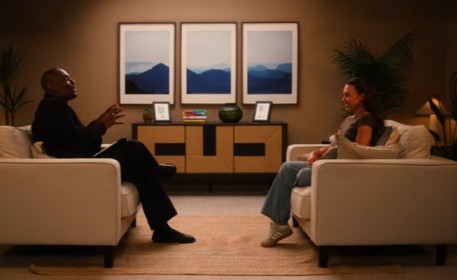
Read the full transcript of English singer Michelle Heaton’s interview on We Need To Talk Podcast, May 12, 2026.
Editor’s Notes: In this deeply moving episode of the We Need To Talk podcast, former Liberty X pop star Michelle Heaton opens up about her grueling journey through hidden addictions and eating disorders. She candidly shares details about the unrealistic realities of 2000s pop stardom, her painful struggles with body image, and how her dependencies later escalated into a life-threatening battle with alcohol and cocaine. Coinciding with Mental Health Awareness Week, the conversation explores the raw details of her downward spiral, the emotional toll it took on her marriage, and the pivotal intervention that ultimately led to her celebrating five years of hard-won sobriety.
Growing Up in Gateshead
PAUL C. BRUNSON: Michelle Heaton, we need to talk. Just like that, we’re talking. Okay. Where I think we should begin is ironically where I was yesterday.
MICHELLE HEATON: Oh.
PAUL C. BRUNSON: This is— is it Gateshead that you—
MICHELLE HEATON: Oh my God, were you in Gateshead? What were you doing in Gateshead?
PAUL C. BRUNSON: So, all right. So I was close by.
MICHELLE HEATON: Okay.
PAUL C. BRUNSON: What’s close? In Newcastle. Newcastle.
MICHELLE HEATON: All right. Okay. You can’t say that because Gateshead and Newcastle are separated by the River Tyne. So you can’t say you were in Gateshead when you weren’t in Gateshead. Okay. So different.
PAUL C. BRUNSON: So, okay, so help me understand this because it seems like there is a line.
MICHELLE HEATON: Yes.
PAUL C. BRUNSON: And also there’s a lot, the line also means if you are Geordie or not.
MICHELLE HEATON: That’s correct. Yes. So the line is, you know, Newcastle, you’re Geordie. And then there’s Gateshead after the River Tyne. And then there’s Sunderland. If you’re in Sunderland, you’re a Mackem.
PAUL C. BRUNSON: A Mackem?
MICHELLE HEATON: You call them Mackem. Now Gateshead’s that grey area. Where I think most of the people in there would say that they’re Geordie and they support Newcastle United, but it definitely infiltrates into Sunderland.
PAUL C. BRUNSON: So what do you consider yourself?
MICHELLE HEATON: I consider myself a Geordie, definitely. Yeah, no, I’ll— all my friends will be watching this. I’m definitely a Geordie. Yeah, yeah. But I was never really, you know, a massive football fan. And those terms came because of the football teams.
PAUL C. BRUNSON: Okay. All right. Fair, fair. But what was Gateshead like? What was— how would you describe it growing up?
MICHELLE HEATON: Oh, I mean, Gateshead was predominantly council estates. And so I got brought up on a council estate and my mum and dad managed to buy the house off the council. You know, back then I think it was like 15, 20 grand or something. You know, we’re talking like 1970s, 1980s.
I don’t know whether I’ve put, like, the blinkers on a lot of my childhood or not, because I can’t really articulate what it was like for me. I know that, you know, I had two great parents. They loved me and my brother David, and I had no problems at home. You know, the usual arguments. My mom and dad consequently broke up. But it wasn’t a bad house. I didn’t live in a house where there was addictions or alcoholism or abuse or anything like that. It was just normal.
My dad and his family, you know, and my mum, I suppose, you know, we didn’t really talk about things, especially my dad’s side of the family. He had a really tough upbringing, and I suppose he learned to, when things what were needed to be said or emotions to kind of dilat. And so we didn’t really talk ever so much about our feelings and what was going on. My head was always in the land of fantasy.
PAUL C. BRUNSON: Interesting.
Dreams of Stardom
MICHELLE HEATON: So I was always imagining what my life could or will look like. So what served me well, I think, growing up was that I had this absolute vision, like this tunnel vision of what I wanted out of life, and it was to be in a pop band.
My first ever memory was watching Bucks Fizz, Making Your Mind Up, where they whipped off the skirts and making your mind up, and they take the skirts off on Eurovision. I just held on to that, you know, car journeys, I would just listen to music, you know, on my Walkman and imagining I was in the music video and, you know, I was going to have these amazing boyfriends. All of them were really old at the time, you know, a 10-year-old girl thinking that I’m going to be Steven’s girlfriend was a bit weird, but to me it never felt weird.
PAUL C. BRUNSON: Yes.
MICHELLE HEATON: Because I saw myself in that position.
PAUL C. BRUNSON: Yes. Can I show you something?
MICHELLE HEATON: Yeah.
PAUL C. BRUNSON: Okay. I have lots of surprises for you, Michelle.
MICHELLE HEATON: Oh wow. Oh no. A lot.
PAUL C. BRUNSON: Yeah, lots of surprises.
MICHELLE HEATON: Okay.
PAUL C. BRUNSON: This is a good one.
MICHELLE HEATON: This is a good one.
PAUL C. BRUNSON: Okay. You ready for it?
MICHELLE HEATON: Yeah, thanks.
PAUL C. BRUNSON: I want you to tell me what is happening to this person in this moment.
Reflecting on the Past — School, Body Image, and Shame
MICHELLE HEATON: Oh my gosh. Oh.
PAUL C. BRUNSON: Yes. So who is this?
MICHELLE HEATON: Oh wow.
PAUL C. BRUNSON: And what is happening to her in that moment?
MICHELLE HEATON: Okay, so she is 16, I believe, because I recognize that blazer’s in the sixth form. And I’ve just won Miss Haven, and the talent show. So that’s Miss Haven, which is a beauty competition. And she has a perm.
PAUL C.
MICHELLE HEATON: She has what looks like a perm, and I have red hair. And I remember going into school with the awards, and it’s a very different reaction. At school, like, I wasn’t popular. I wasn’t popular. I had good friends that were in the unpopular group, kind of a drifter. Any boy I dated was in the year below or the year below that. So I dated younger boys because nobody in my year was interested.
So I, it doesn’t look it, but I was a little bit big, you know, a little bit big. But back then at school, they used to weigh us in PE, and all the girls had to wear these tiny shorts. And we were lined up, and I remember looking at the mirrors in what felt like the greatest big room in the world, but it was probably a tiny little dance studio. And I remember looking at all the girls’ legs, and mine was like the second to biggest. I was probably about 2.5 stone heavier than what I am now.
And I remember us all being weighed in front of each other. And that shame, like, probably shame is a lot to do with my then problems with eating and bingeing going forward. But that pivotal moment of being weighed in front of people and having to wear the same outfit as others, like, that’s really stuck in me.
And so I remember going to my mum and saying, “I feel really fat. I’m fat. I look awful. I feel fat.” And we weren’t the kind of family really to sit around and have big meals with each other. But my mum was a cook, she in the Navy. And so she would always make these big things, but I don’t really remember us sitting around together. But there was always like shepherd’s pie and everything, you know, massive big pies. A pie with everything. Pie with pie.
And so I remember saying to her that I really want to look good. I want to start this fresh new life at drama school and I really want to look good. And back then it was Weight Watchers.
PAUL C. BRUNSON: Yes.
MICHELLE HEATON: And it was massive. And, you know, a shake, a shake, and a tiny little bit of food. And I remember doing it for like 8 weeks. And I did, you know, I lost the puppy fat and the weight and my mum and I did it together.
And so I went to college and I felt like a new person and I repressed everything that had happened growing up in school. You know, the not getting the boyfriends, the being called Miss Piggy, nobody wanting to go out with me, being last picked for rounders, like everything was last. And then I was the shiny new girl at drama school and yeah, I had the best time.
The Road to Popstars
PAUL C. BRUNSON: So how do you get onto Popstars?
MICHELLE HEATON: So I continuously auditioned for things throughout my late teens and early 20s. I was in numerous girl bands that didn’t make it. I was managed by the same management company as Cheryl Cole, Cheryl Tweedy back then. We performed together in Metroland. We were on a little stage and performed People at Weekend.
And so my journey before that had been like that anyway. I would work a Saturday and Sunday job, work as many hours as I could in a store like Topshop or Toushi. There was all of these old stores back then, Tommy Girl. And then I would quit my job because I’ve got enough money now to jump on a train to go to London to audition at Pineapple or wherever, you know, Dance Attic. Pineapple Dance Studio. Yeah, Dance Attic, Dance City, wherever the old school. Auditions still get held today.
PAUL C. BRUNSON: Okay.
MICHELLE HEATON: And the reason that I knew auditions were on is because I bought The Stage newspaper. So The Stage newspaper was a biweekly paper, newspaper that listed all the auditions and what was happening in the industry. I remember it said, “Do you want to be the next Five or Spice Girls?” I think it said, “We’re looking for mixed group. Here’s the open auditions.” And I was like, “Right, right, I would need to save money for London.” But actually, they came to Newcastle.
PAUL C. BRUNSON: Ah, okay.
MICHELLE HEATON: So I went along to the audition. I had a song prepared. I was going to sing Everything I Do I Do It For You by Bryan Adams. That was like my go-to. So in that moment, it didn’t feel too weird. There was a lot of production around, more than what I was used to.
PAUL C. BRUNSON: Okay.
MICHELLE HEATON: But it wasn’t anything different.
PAUL C. BRUNSON: Okay.
MICHELLE HEATON: So the thought of it being a big, massive TV show hadn’t been on our horizon.
PAUL C. BRUNSON: Okay.
MICHELLE HEATON: ‘Cause it was the first one.
PAUL C. BRUNSON: Yes.
MICHELLE HEATON: We hadn’t seen anything like this before.
PAUL C. BRUNSON: That’s true, ’cause there’s no X Factor at this time. Popstars was the first television, what do you call it, show that produced—
MICHELLE HEATON: Manufactured band.
PAUL C. BRUNSON: Okay.
MICHELLE HEATON: Yeah.
PAUL C. BRUNSON: Okay.
MICHELLE HEATON: And so for me, it was another audition. And then you got through to the next round, and then you got given lyrics to sing. They chose everybody just sing Reach for the Stars from S Club 7. What was different about this was that we were all singing in front of each other.
PAUL C. BRUNSON: Okay.
MICHELLE HEATON: I was used to closed auditions, whereas this was open. Everybody was there, sat behind you, and people were cheering you along. And there was so much talent in that room. I thought I had absolutely no chance. And I wasn’t a professional anything. I was a professional blagger. I still am. Like, I always say, fake it till you make it. I think a lot of people are like that. They just don’t want to admit it.
And then there was a weekend in Birmingham where there was the final 50. And then London, and then that was a week. And then there was the final 10.
PAUL C. BRUNSON: Then the final 10. So now, was the show on air while you were going through? No. So it’s prerecorded?
Waiting in Silence — The NDA and Starting Over
MICHELLE HEATON: Yes. So it’s all prerecorded. And I had left my dancing gig at the nightclub to do this. And so about a week after they had their final 10, they come to our houses and tell us whether we’re in or not. So obviously, I didn’t get in. And it was 6 months before they aired the first episode. So we all signed a contract, obviously, saying that, you know, we wouldn’t talk about it.
PAUL C. BRUNSON: Okay.
MICHELLE HEATON: So I couldn’t say anything to anybody. And back then, you know, now I signed an NDA, I might tell a few people. But, well, obviously, I was like, I was scared. Like, I was scared about saying the wrong thing, so I didn’t say anything to anybody, and I had to beg for my job back. They didn’t want to give me my job back, and I was begging because I was like, that was it. Like, there was no money, you know? That was 5, 6 months of auditioning just ended, and then I’m back to square one.
PAUL C. BRUNSON: Yes.
MICHELLE HEATON: And I had no job, you know, no career. I was almost 21, and those were like, back in those days, the cutoff age at which they wanted people to audition.
PAUL C. BRUNSON: Okay.
Working at the Nightclub: Attention, Ego, and Unwanted Incidents
MICHELLE HEATON: So I knew it was kind of like the end. And it was never the same when I got my job back. It was— they didn’t treat me— they did not treat me right. And I can say that now. They— it was different. There was a lot of ego at that place at work. And there was a lot going on behind the scenes that should never have happened. Security guards taking their position of authority to places with us girls that they should never have.
Popstars was shown on TV. And so every Saturday night, which was our busiest night, it had just been on TV at 7, 7:30, and obviously I’m on it.
PAUL C. BRUNSON: Mm.
MICHELLE HEATON: Can’t say what I did, can’t say how far I went or whatever like that. And I’m at work. And so there’d be a lot of attention. Positive attention from boys because they’ve just seen me on TV, and it would get more and more each week as the series went on. It was obviously— I appeared more, and negative attention from girls. And girls are nasty. Girls are really nasty. And so I had that battle every night as well. And so at that point, there was a lot of, I’d say, wanted and unwanted attention. It felt good to be recognised for something other than just being dressed in a bikini.
PAUL C. BRUNSON: I see.
MICHELLE HEATON: Forgetting I was dressed in a bikini. There was this one time, we all had security men just in case people in the crowd got feisty with us because we were wearing bikinis. And I got a £50 tip, and the security guy turned around and said to me, “You’re having that with me.” And I thought he was joking. And I kind of laughed it off.
And then when we closed the nightclub, we have to go up, we have to count our tips and our money because it’s all cash-based. And he got me up against the wall and he said, “I meant it, I want that £25 now.” And there were people around, people saw it, turned a blind eye, didn’t say anything. And I remember just giving him the £50, and I had no option but to show up to work the next day. Like, I had to go back.
I don’t remember what happened to him. I obviously complained, and the fact that I was going out with the DJ, he may have said something to the manager, but everybody was so close and pally because the other things were happening, that I just cracked on.
PAUL C. BRUNSON: Yeah.
MICHELLE HEATON: And there was a lot that went on back then, not just with the men who worked there, with the girls. Yeah, it was a lot. It was nasty.
PAUL C. BRUNSON: Yeah.
MICHELLE HEATON: Yeah.
Moving On: Engagement and the Final Stages of Popstars
PAUL C. BRUNSON: How did that period then change you?
MICHELLE HEATON: I settled. I got engaged to the DJ. I wasn’t really in love. I said yes because I felt important. Because he was important at work. And so I felt accepted. I felt important myself because I was with him. Oh my God, I’ve got the DJ, I’ve got the main man. And so had others, there was a lot of other women who had the main man. I didn’t know. At the time.
PAUL C. BRUNSON: All the while you are appearing on the show and you’re getting closer and closer to the finals.
MICHELLE HEATON: Mm-hmm. That’s right.
PAUL C. BRUNSON: So then on the show, then on Popstars, you get to the final 10. And I find this very interesting because I’ve talked to Myleene Klass. She was in the final 10. And I understand what happens with her group. But tell me about what happens to you and the forming of Liberty X, because I find this to be really interesting.
MICHELLE HEATON: Well, I’m sure Kel is going to tell me I’ve got it wrong, because I think I have got it slightly wrong. I live in a bit of a bubble as well, Paul, so I kind of imagine things differently.
PAUL C. BRUNSON: Okay, so how do you remember it?
MICHELLE HEATON: So I remember it as, we all stayed in touch, the other 5, because the 5 in Hearsay blocked us.
PAUL C. BRUNSON: Oh really?
MICHELLE HEATON: But they were probably told that. But at the time, we were sore.
PAUL C. BRUNSON: But even before that, though, so because I wasn’t here during that time.
MICHELLE HEATON: Yes, okay, sure.
PAUL C. BRUNSON: I’ve only seen clips. So then the 5 that are then selected and win, that group becomes Hearsay.
MICHELLE HEATON: Yes.
PAUL C. BRUNSON: I would imagine they had a contract immediately. And they become quite popular.
MICHELLE HEATON: Yeah, yeah. I mean, huge. There was about 6 months between me being told I wasn’t in and when the first one was aired. And in that 6 months, I believe— obviously Myleene would have had a better account of it— that’s when they went somewhere, they got their shit together. They learned dance routines, they recorded music, they did the whole PR thing. They changed their phone numbers, which I knew— I knew who was in it as well because I tried to ring them straight after. Nasty Nigel said I wasn’t in, and obviously they weren’t picking up because their phones were gone.
PAUL C. BRUNSON: So this is where you think that they were told to block—
MICHELLE HEATON: Oh, absolutely. 100%.
PAUL C. BRUNSON: Yeah. But why? I know that was a different time period, but why?
MICHELLE HEATON: I think it was just all to do with exclusivity and privacy and NDAs flying around. I don’t want to put words in their mouths. They can answer that. I don’t know if they were told to block everybody, but we were. And so I believe, or I like to believe, that wasn’t from them. It was from the voices above.
PAUL C. BRUNSON: Management.
MICHELLE HEATON: Because we all got on really well. And I wanted to ring Suzanne and see how she got on and say, “Oh my God, well done.” And we didn’t get that opportunity to do that. And so I would imagine that wasn’t on them.
The Birth of Liberty X
PAUL C. BRUNSON: Okay, fair, fair. So then you are thinking about what your life is now going to be. What’s it going to look like? So how does Liberty X come about?
MICHELLE HEATON: We all stayed in touch, and then the time came around where ITV wanted us to come and do a bit of press for the show as the Five Losers. We weren’t called the Five Losers by ITV, but we subsequently were called that henceforward.
And I remember us— my memory of it is that we got together the night before we were due to do Good Morning Britain or one of those shows, or Lorraine, and we were at Kelly’s apartment, and Tony had arranged an Irish phone interview for radio. And I remember we all started— they asked us to sing, so we all sang Bridge Under Troubled Water, which was the song in which we sang at the auditions. They were like, “You guys should be a band.” This is my fluffy memory of it. And so we were like, yeah, why not?
And so the next day when we’re live on TV and we sang that again, we said we want to be a band, we’re going to be a band. We didn’t really know what that looked like. We was like, why not? We weren’t signed to ITV or Popstars. They never retained us.
PAUL C. BRUNSON: Okay.
MICHELLE HEATON: They let us go. That is basically the main reason why all of these participants in these shows henceforward are contracted to an inch of their life going forward, because they missed it with us.
PAUL C. BRUNSON: Interesting.
MICHELLE HEATON: They let us go.
PAUL C. BRUNSON: So you’re saying specifically because they missed your group?
MICHELLE HEATON: They missed an opportunity to micromanage and take commission from anybody else from that process or from that specific process.
PAUL C. BRUNSON: So Liberty X set a precedent there.
MICHELLE HEATON: Yeah.
PAUL C. BRUNSON: And therefore, everyone gets signed.
MICHELLE HEATON: Yeah, because we were told throughout the whole process until that moment that the losers couldn’t do anything. It was just the winners. It was just those 5 people. It was not us. We were done and that was it.
And so when we announced that we wanted to start it as a band, it was news to them. And my fluffy, kind of rainbow-covered memory is that when we announced it, Richard Branson was watching the TV show we were on. I believe it was Lorraine, but Kelly said it was another one. And he rang Lorraine or got in touch with her somehow and said that he loved the idea of an underdog, and he owned Virgin Records, V2 Records, and would love to sign us. And that was that day.
PAUL C. BRUNSON: Oh, wow.
MICHELLE HEATON: And so I never left London. Over the course of the next few weeks, Lorraine also, the lovely Lorraine, who’s been with my personal journey throughout my whole time, she put us in contact with a manager, Gary, who subsequently became Liberty X’s manager that day as well.
PAUL C. BRUNSON: Okay.
MICHELLE HEATON: And we got management in the next few weeks, who then helped financially relocate us to London until we started getting money from our advances.
PAUL C. BRUNSON: Yes.
MICHELLE HEATON: And we signed to a major record label.
PAUL C. BRUNSON: That’s incredible.
MICHELLE HEATON: And what was that? It was over the course of just maybe a few weeks.
PAUL C. BRUNSON: Yeah, that’s incredible.
MICHELLE HEATON: All of this happens and I’m like, this is mental. Like, we all thought this is absolutely insane. Like, we are literally in Richard Branson’s house, we are at his record label and we’re doing a press conference and he held me upside down and Jessica, he poured champagne over her head, all in this unrealistic, distorted reality we are living right then, and it was mega.
PAUL C. BRUNSON: Yeah, yeah. That’s incredible. I don’t know about the pouring the champagne over the head. But—
MICHELLE HEATON: Yeah, yeah, yeah, yeah, yeah, no.
PAUL C. BRUNSON: It all sounds— I mean, what also was so weird—
MICHELLE HEATON: You couldn’t make it up.
PAUL C. BRUNSON: Yeah, you can’t make it up. And also, those stories don’t happen. It feels like it doesn’t happen anymore.
MICHELLE HEATON: It just doesn’t happen.
PAUL C. BRUNSON: Just you’re on TV, he sees you.
MICHELLE HEATON: On TV.
PAUL C. BRUNSON: He’s like, hey.
MICHELLE HEATON: Yeah.
PAUL C. BRUNSON: I’m going to sign you to a deal.
MICHELLE HEATON: Okay.
PAUL C. BRUNSON: Yeah, okay. And you said you never left London.
MICHELLE HEATON: No, pretty much. I mean, I remember going back and grabbing my stuff. And at this point, I’m still engaged to the DJ, which was a whole different thing. Which didn’t last, obviously. Yeah.
The “Flop Stars” Label
PAUL C. BRUNSON: Yeah. So now, I want to ask you about this— I know that— who was it that called you all the flop stars? Because that seemed like that was a title that stuck.
MICHELLE HEATON: Yeah, from my memory, I believe it was Hearsay, but I think it was fueled by press. Okay, so ultimately press were the ones who labeled us the names.
PAUL C. BRUNSON: I see. It almost pinned you two against each other.
The Liberty X Years: Rivalry, Success, and the End of an Era
MICHELLE HEATON: Absolutely. So there was a war from the get-go. As soon as we released that we were going to be a band and start to release music, we were constantly battling against each other in a world that we were trying to navigate. You know, we didn’t have those 6 months prior like they had to adapt to what was coming, and a team around them. You know, we were signed to an indie label effectively. And, you know, we weren’t groomed. We didn’t have that team. And so we felt like we were almost set out to the lions. You know, we didn’t have media training.
I think what the attraction was for Liberty, towards Liberty— we were only Liberty at the time— was that we were raw, and that was quite evident because we didn’t know when to stop talking or what not to say. And we were able to bring our creative energy to what we put out there, which usually doesn’t happen to manufactured bands, actually. But the press battled us and HearSay off from the get-go. “Flop stars, wannabes, the five losers.” And it was evident that they wanted us to fail. Not just HearSay as a team, but the people around them. And so that would have then stirred up the pot with the HearSay members in order to add fuel to the fire when they did interviews about how they were bigger and better and we were not so. And that we were running on their coattails.
PAUL C. BRUNSON: Yeah.
MICHELLE HEATON: I mean—
PAUL C. BRUNSON: How did you feel? Because these were your friends, you know, a few months prior when you were filming.
MICHELLE HEATON: It felt really harsh. We didn’t know how to navigate it. It felt like it wasn’t the 5 people that we met in the audition process. And along all of this, all I kind of wanted to do was reach out to Susanne.
PAUL C. BRUNSON: Yeah.
MICHELLE HEATON: Because that’s one of the people that I got really close to, and be like, “How is it? What’s it like? I bet it’s amazing.” I really wanted to share that with her. And at no point did I see what we were doing as hanging on their coattails. And I have to say, my skin’s not— I say it’s thick, but it’s really paper thin. If it wasn’t for the rest of the Liberty X members, I don’t think I would have got through it as well as I did. But we had each other. And that’s what made our strength, I think, as a band.
The Highs of Pop Stardom
PAUL C. BRUNSON: Could you take me through some of the highs and lows? You know, if you think about the most surreal moment of being in a pop band, especially in the 2000s, where there’s big video budgets. It was a different era.
MICHELLE HEATON: It was just so different and so much fun. Yeah, there were dark times and, you know, I was struggling behind the scenes with my heart and just other stuff. And alcohol was present then, but I wouldn’t have called myself an alcoholic back then. It was just so much fun.
Oh God, there were so many times— like, we were in Southeast Asia and we were attending the MTV Asia Awards and we were given an award, and Mariah Carey’s there and Blue’s there, Pussycat Dolls before they kind of reduced their size.
PAUL C. BRUNSON: Yes.
MICHELLE HEATON: You had Black Eyed Peas, Sugababes, Gareth was there, and there were just loads and loads of people, and we were all staying in the same hotel and our particular rooms overlooked this big pool. So we had a massive pool party that night at the awards, and you’ve got Black Eyed Peas here, you got Pussycat Dolls here, and everyone’s necking on. Oh my God, I’m not going to say names. But that’s a—
PAUL C. BRUNSON: All right, hold on. Now, you know I have to go there. Don’t say names. Don’t say names.
MICHELLE HEATON: No, we can’t.
PAUL C. BRUNSON: Don’t say names. But let me ask this though.
MICHELLE HEATON: There are people in that pool that I will never tell. Never. That never came out.
PAUL C. BRUNSON: Oh my God. And you know, there were no cameras.
MICHELLE HEATON: That’s exactly what I was about to say. It never came out because we weren’t overrun by social media back then. And that’s why it was fun. Like, I’m not saying what we were doing was right, right? It was just never captured— what happened and the fun that we had didn’t go out because there wasn’t people taking pictures of it or discussing it online or it becoming something that it isn’t. Like, you know, it wasn’t an orgy. It was just fun times.
PAUL C. BRUNSON: Right. But also, in those moments, what about managers and assistants and other people? Or do you feel like because we didn’t have social media at that time, that even if someone saw something, it doesn’t spread?
MICHELLE HEATON: Yeah, that’s it. It was quite a close-knit community. Everybody knew each other. It was when pop was great, you know, we did everything together. The radio shows, there was CDUK, MTV, Top of the Pops, and Kick In. I mean, all of these outlets where you showcased your music and you got to hang out with all the same guys.
Like, the last show of MTV was where Kat and Dec got married, and it was on Chums. They got married, and Mariah Carey’s their bridesmaid.
PAUL C. BRUNSON: Goodness.
MICHELLE HEATON: And you’ve got HearSay on one side, and you’ve got Liberty X on the other, and you’ve got Blue, and we’re part of this wedding congregation, and we are just in that moment. And then it ended— SMTV ended, Chums finished. Top of the Pops was coming to the end of an era, and all these shows kind of just stopped and dropped out, and then it wasn’t fun anymore.
A lot of how we promoted our music was taken away. There was downloading happening, you know, you didn’t have to go into radio stations anymore, and that was half the fun of radio tour. And so the shift in the music industry ultimately, I think, ended our career as musicians and as artists.
The End of Liberty X
PAUL C. BRUNSON: Yes, yes.
MICHELLE HEATON: Navigating that transition in the mid to late ’90s was difficult. Record companies were folding. You know, V2 was sold. We went to another independent label, and that didn’t happen. And so it was like a vulnerable time in that moment.
And then, you know, when Liberty X ended, it just stopped. We were just together one day in the dressing room after a gig, and a couple of us had been drinking, and it was messy. It wasn’t one of our finest performances, and we had become lazy. And, you know, a couple of us wanted to start a family and get married, and we were all just tired of each other’s bullshit. I know a few people were tired of our bullshit, and it was vocalized, just the 5 of us. And then we stopped.
I think we had 1 or 2 last gigs to do, and we fulfilled our commitments and just walked away from each other. And that was it. There was no big dramatic press conference, and there was no big announcement. It just— we just thought nobody cared about us that much. Yeah, we were quite good at playing ourselves down. “Oh well, nobody’s going to give a shit anyway.”
PAUL C. BRUNSON: But do you think they did at that time?
MICHELLE HEATON: Looking back, yeah, looking back and knowing what our music meant for people. And, you know, me and the two girls have been able to go out for the last 9 years and perform as a three, and still bring that music that we recorded all those years ago to our generation and a new generation. That shows me now how important it was to those kids growing up. And we just thought nobody gave a shit because our last song didn’t do so well, and then we were dropped, and our performances became sloppy, and we just thought, well, that’s it.
PAUL C. BRUNSON: That’s it.
MICHELLE HEATON: Yeah.
Liberty X vs. HearSay: Setting the Record Straight
PAUL C. BRUNSON: You know, one thing about Liberty X— and I say Liberty X because you were Liberty. And then was it some other group had Liberty, or I don’t know.
MICHELLE HEATON: Yes, some man group got a bit sore at the subject and wanted their name back. So they were Liberty. I’m sure they’ve used it well.
PAUL C. BRUNSON: And so they took us to court, and then you become Liberty X.
MICHELLE HEATON: That’s right.
PAUL C. BRUNSON: Now, I don’t want to even stir up more issues between you and HearSay.
MICHELLE HEATON: Oh, no. As I can see Mylene’s picture in my eyeline right here.
PAUL C. BRUNSON: Because we love HearSay here, right? But one thing I didn’t realize was how successful Liberty X was. Liberty X achieved international success. The album featuring “Just a Little”— that single was the 9th best-selling single in 2002.
MICHELLE HEATON: Yeah.
PAUL C. BRUNSON: That’s major. Also, the group had 10 consecutive UK top 20 singles. So am I correct in saying that Liberty X sold more than HearSay?
MICHELLE HEATON: Yeah, that would be correct. Yep. Yeah, we did. We had 3 albums and we had a big massive sell-out tour. We won a Brit Award for our song and were up for 2 album awards. And we won an Ivor Novello Award. And so, yes. Putting it frankly, yeah, ultimately Liberty X were more successful than HearSay.
A Message from the Girls
PAUL C. BRUNSON: I have another surprise for you.
MICHELLE HEATON: What?
PAUL C. BRUNSON: You ready for this?
MICHELLE HEATON: Oh God, I don’t know. I thought it was just a little picture.
PAUL C. BRUNSON: This one is coming from this side. Oh no. You have to close your eyes on this one.
MICHELLE HEATON: Okay.
PAUL C. BRUNSON: You trust me. Trust me.
MICHELLE HEATON: Close your eyes.
PAUL C. BRUNSON: Okay. And when you open it, I would like you to read this. You can open.
MICHELLE HEATON: Okay, I’m getting upset already.
PAUL C. BRUNSON: This is beautiful. Aww.
MICHELLE HEATON: Do you want me to read it out?
PAUL C. BRUNSON: Please.
MICHELLE HEATON: Okay, I haven’t got my glasses. Okay. Dear Michelle— who would have— I can’t even read it and it’s only got the word Popstars on it. Okay.
“Dear Michelle, who would have known when we first met at the Popstars audition in 2000 that we’d still be pop stars in a band together all these years later? We’ve shared so many amazing memories together, making music, touring the world, and winning awards. But some of the best things are the little things that we’ve shared. The normal stuff like the gossiping in the car and the nights out on the town, or maybe not so normal actually. We’ve been through marriages, divorces, births, deaths, illnesses, and all that life throws at you together. And the fact that we still have a great working relationship too is nothing short of unbelievable. We’ve been so proud to watch you in recovery. Over the last 5 years, you’ve conquered some situations that most couldn’t handle, and that’s a testament to the strong woman that you are. You’ve built an amazing life with Hugh, Faith, and AJ. We love them too and feel blessed to be part of your life story. Here’s to exciting times ahead. As bandmates and friends, we love you. Jess and Cal.”
PAUL C. BRUNSON: What do those girls mean to you?
MICHELLE HEATON: I mean, we have been through so much together, and nobody knows stuff about me like those girls do. Even my husband, my best friends— the stuff that we’ve gone through, only us can understand.
Michelle’s Relationship with the Press
PAUL C. BRUNSON: I know that you have had a, should I say, tumultuous relationship with the press over the course of your career. If you could just almost give us the highlight reel of your up-and-down relationship with the press, because there are moments that I’ve read where it was just— it was hideous. What was done to you in the press.
MICHELLE HEATON: Yeah. There’s always a member of a band that the press horn in on. You know, you had— I suppose you had Geri with the Spice Girls and you had Rachel from S Club, and you had Kerry from Atomic Kitten.
PAUL C. BRUNSON: Yes.
MICHELLE HEATON: And you had Lee from Blue.
PAUL C. BRUNSON: Yes.
MICHELLE HEATON: And you had me from Liberty X. And we were in the category of the fun one or the pissed one. And so, that would be, you know, in my situation, the lack of confidence I have in my ability and my talent. And it wasn’t necessarily the bandmates making me feel like that, but I felt like that.
PAUL C. BRUNSON: Okay.
MICHELLE HEATON: And it was evident with producers and people who we were writing with and recording with that I was ultimately the bottom of the pile when it came to singing, and that I’m not good for that. So I had to find a place. So finding an area of which I was good at, which was going out and getting drunk or getting boyfriends, was a place I felt comfortable in because I felt uncomfortable with my talent.
PAUL C. BRUNSON: This is interesting. So are you saying that you were aware that this was the brand—
MICHELLE HEATON: Yeah.
PAUL C. BRUNSON: —that you were known for and you played it up?
MICHELLE HEATON: Yeah. I mean, and willingly so. Because I loved doing, you know, acting the way I was. I was young, I was single at the time. I had relationships with boys, famous men, boys that were on my wall growing up. Like, I was like— I mean, I say this a lot and I hate saying it all the time, but Gary Lucy, for example. Gary Lucy. Oh my gosh.
PAUL C. BRUNSON: Oh my gosh. I know Gary. Did you date Gary?
MICHELLE HEATON: Yeah, well, so Gary picked me up in a nightclub. Gary did. And, oh my goodness, we were in a nightclub and I was like, “Oh my God, it’s Gary Lucy!” And it was Gary Lucy! And I said to Kelly and Jess, “Oh God, it’s Gary Lucy!” And I was freaking out, like he’s like my top 3 at that moment in time.
PAUL C. BRUNSON: Yeah, yeah, he was— because he was in, it was a show that he was doing, like The Footballers.
MICHELLE HEATON: Yeah, Footballers’ Wives and Hollyoaks. And it was just— I was like, “Oh my God.” Anyway, he made a beeline for me, so I’m like, “Yeah, okay.” And we had a few dates. It didn’t get too serious, but we had fun, and it just didn’t work out.
The Andy Scott-Lee Marriage
PAUL C. BRUNSON: Can we talk about Andy? As much as you want to talk about Andy. But here’s—
MICHELLE HEATON: I’m sure Andy, if you’re watching this, is saying, “No, don’t talk about that.”
PAUL C. BRUNSON: Yeah, right now he’s saying, “Say no.”
MICHELLE HEATON: Yeah, no, I haven’t spoke to Andy since we divorced, apart from maybe once.
PAUL C. BRUNSON: Because here’s what I know about your relationship with Andy — it was quick. Yeah, quick marriage, a year and a half, almost 19 months. Very quick marriage. Tumultuous accusations. He said, she said. A lot. And then a cheating allegation. So on the cheating allegation, can you clarify from your position what happened?
MICHELLE HEATON: Okay, wow, no one’s asked me that direct.
PAUL C. BRUNSON: Oh God, I mean, okay, that’s why we need to talk, Michelle. We need to talk.
MICHELLE HEATON: Yeah, okay, okay. You’re right in saying that the relationship was tumultuous. There had been cheating allegations throughout on both parts. Some true, some not true. And that was kind of— we both knew, didn’t know, we just also wanted to be together. It wasn’t real love in that aspect, but we thought it was, you know. Well, I did anyway. I thought it was real love.
But the cheating happened when I was on holiday in Marbella. My cheating happened when I was in Marbella and I was out there on holiday with Bianca Gascoigne, Nikki Graham, Tanya Lloyd, you know, the crew that you remember back then in like the early noughties that all went out. There was the Big Brother lots and Callum Best, and we were all there for an opening of, I think it was The Ocean Club.
PAUL C. BRUNSON: Oh my gosh, Wayne Lineker’s?
MICHELLE HEATON: Well, yeah, yeah. So I was obviously drunk and I snogged somebody on the dance floor in front of the world press. I mean, I couldn’t have made it any more obvious. And we left together. We didn’t go home together, we left together. And so I freaked out. I had a freakout, like a real comedown. I think that’s the easiest way of describing it. I was absolutely freaking out.
And of course, by the time I got home, Andy knew something. Somebody from that party told him that I was seen on the dance floor snogging this particular person. And then I told him, we tried to work through it but didn’t try. And then I think there was maybe about a couple of months — I can’t remember, a few months — where we just weren’t there, you know. And then when we broke up, I broke up with Andy and I left and I moved in with a friend that I had made in Ireland. And Andy’s a great guy. I don’t want to say anything bad about him because I loved him.
Love, Infidelity, and What She Learned
PAUL C. BRUNSON: Can I ask a question on this? So cheating, infidelity comes up quite a bit in the conversations that we have here on the podcast. And I think that there’s a debate around whether or not you can love your partner and cheat on them. How do you answer that?
MICHELLE HEATON: Well, it’s a tough one. My husband now would say absolutely not, that’s it. And I would now say absolutely not, that’s it. But I did do that because I honestly — I know how I’ve heard how Andy describes our marriage, and that’s not what I thought it was. And I thought it was real.
PAUL C. BRUNSON: The love. The love, yeah.
MICHELLE HEATON: Yeah. And so that thing that happened in Marbella was by no means a reflection of me wanting that particular person. I acted out. And it was situational. I acted out. I shouldn’t have done it. I was drunk. God, it’s funny what alcohol puts you in — all these positions that you wouldn’t do if you weren’t drunk. It was just messy. And I don’t really want to go into too much because it implicates his family as well. And consequently, since then, I really have a lot of respect for his sister, Lisa. So we’ve remained in contact.
PAUL C. BRUNSON: Yeah. So how about this? Let’s not go into the messy piece, but how about having had that relationship, what did you learn about yourself that you then took into this next relationship, which is your marriage now?
MICHELLE HEATON: I suppose what real love is. You know, I thought I was in love maybe 4 times before Andy. I had a real love at school. And then I met somebody towards the end of that relationship. I’d be quite needy. And that never serves anybody well in this industry when there’s a load of people who just want to have fun and move on.
Michelle’s First Experience with Drugs
PAUL C. BRUNSON: Michelle, could you, as much as you’d like to, walk us through your addiction? In college is when you first tried— is it— did you try drugs for the first time in college?
MICHELLE HEATON: Yeah, speed. Yeah.
PAUL C. BRUNSON: Could you talk about your first time trying speed?
MICHELLE HEATON: I remember we were, I think we were watching a play from the older year and drum and bass was really big back then. My friends had some and so I tried it and wow — when people say “I’ve arrived,” people use that term a lot. I don’t really like that term, because later on in life with drugs and alcohol, I didn’t feel like I arrived anywhere. But that moment, that’s the closest place I can be to you to tell you I felt like I arrived. You know, my heart was pounding. I felt awake. I could study and have fun at the same time.
And that was kind of the course throughout my life at college, along with a big battle with binge eating, which I continued throughout my whole life. But speed was the first thing that I kind of noted didn’t make me hungry.
From Speed to Ephedrine: The Weight Loss Drug Spiral
PAUL C. BRUNSON: Just to clarify for everyone, it’s a street term, right? But it’s an amphetamine, as you said, that accelerates the central nervous system to increase energy, focus, and alertness while also suppressing not just appetite, but it also suppresses your sleep.
MICHELLE HEATON: Yeah. Yeah, of course it does. Yeah. Yeah. Interesting.
PAUL C. BRUNSON: Do you feel like you moved very quickly from casual use to regular use of speed?
MICHELLE HEATON: I would substitute one for another. So I suppose after college, speed wasn’t something that I went and picked up. I didn’t call it in or, you know, it was there from friends. Was then Ephedrine.
PAUL C. BRUNSON: Ephedrine? Yeah. Tell me about the Ephedrine.
MICHELLE HEATON: So Ephedrine is a, it’s kind of like a speed, it’s an amphetamine. And it was in a pill called Exandrin. And Exandrin is a weight loss drug. Now I’m pretty certain it’s banned now because it contained Ephedrine. So from speed, I wanted to keep the weight off. And so I went a bit, had a bit of research, and then at like a local gym, one of those that had, you know, the back door, said, “What about these? You can only get them from America.”
And I tried them and it gave me the same effect that speed did. But because it was legal, I was like, “Okay, great. It’s given me this buzz, this feeling. It’s not making me want to eat.” And so that was my next thing.
PAUL C. BRUNSON: And then they got banned. Oh, interesting. What year or how old were you?
MICHELLE HEATON: Oh, maybe 19, 20, maybe about then.
PAUL C. BRUNSON: Okay. And pre-Popstars. Okay. So you were 20, 21, Popstars. And then they got banned.
MICHELLE HEATON: But then on this back corner of the gym, they sold pure ephedrine tablets. And so then switched to Ephedrine, which was a purer form of what was in the Exandrin. And I abused them for many years. Yeah, for a long time, maybe about 5 years.
And I remember I stopped because I got rushed to hospital one day and my heart had stopped. I felt my heart stop and it was going erratic and there was loads of palpitations. And this was like, this was a couple of years after Liberty X started. And I was with my ex-husband Andy at the time and I got rushed to hospital and they found copious amounts of caffeine in my blood and traces of, well, they told me it was traces of cocaine. But I had never done cocaine actually at this point in life.
But that’s what’s down on my doctor’s report. And so I just, I was like, I don’t get it. And obviously they were asking, have I done anything? And I was like, no, I haven’t done anything. ‘Cause I didn’t do coke. I haven’t done anything. Not thinking about these pills that I was taking. So they were obviously laced with that. And I know it sounds like a cop-out, but I’ll tell you all, like, I did cocaine later on in life. That’s why I went to rehab. Like, this wasn’t that time. This was a moment where I was taking these pills I was buying from a gym, and that happened, and I stopped.
PAUL C. BRUNSON: But those pills were laced with cocaine?
MICHELLE HEATON: It must— that’s all I’ve took. Yeah, that’s what I was taking to stop me from eating. And that was, Michelle, so that was 5 years.
PAUL C. BRUNSON: Yeah. So that means, I didn’t realize, so you were then taking pills through Popstars? Yeah. Wow. Yeah. Okay, I didn’t know that. But you were not drinking?
MICHELLE HEATON: I mean, I was drinking, but I wasn’t, it wasn’t at all my crux.
PAUL C. BRUNSON: It wasn’t your crux? No. So how did you move to alcohol?
Binge Eating, Body Image, and the Liberty X Video Shoot
MICHELLE HEATON: Alcohol was always present. Definitely. And I loved going out. And I always— it’s really weird, like, I love a hangover. Oh my God. Because I knew that it was a day of binge. So my addictions and my obsessiveness with food became so intertwined that I had like this thing going on whereby I would start a new diet every Monday or new diet pills or whatever it might be. The cabbage soup diet, you know, the 1:1 diet or whatever it was, whatever it was every single week. And by Wednesday I’d failed.
I would binge eat and then I would go and get drunk and I’d go out and then I’d binge eat. And then I’d start again and my weight was creeping up instead of getting less. And this was early in Liberty X as well, where I was starting to have that pattern of binge eating, and it gave me comfort.
And I was outed by my manager at the Liberty X video shoot for Just a Little, our biggest video. And he said, “You’ve put on a bit of weight.” And I had, granted. And I knew I felt uncomfortable. And I was the only one of the, you know, the 3 girls in that shoot to wear a dress because I couldn’t fit into the catsuit. And so I knew my worth. I knew I just needed to be hidden. I felt like that’s what they were trying to do, to hide me. I’m sure they weren’t. But I felt that, you know, I felt like they just wanted to hide me in this big oversized dress. But in reality, you know, it was the only thing I fit in at that time.
And he said that to me, my manager said that to me the first night of the first day, that you’ve put on weight, people are starting to talk. Maybe you want to think about getting healthy or lose weight. And what that does for any addict is you do more of. So I went back home and I ordered 3 pizzas and I binge ate.
PAUL C. BRUNSON: Did you? That day?
MICHELLE HEATON: So the day of the video shoot? Yeah. And I had another day the next day and I knew I would feel swollen. I just couldn’t stop. I could not stop eating.
And I like have absolutely no filter when it comes to food. I still have that today. So the binge eating and, you know, the day of, the treat day, I will go physically all in. And it’s hard to talk about it because when people look at myself, like, I know I’m not fat. And I’ve worked really hard on myself to be really happy and comfortable with my body. I love going to the gym, I love eating healthy. We don’t drink anymore, obviously.
But I still have that on and off switch. So that obsession over something that makes me feel good for that split second is still there. I haven’t got it with alcohol and drugs anymore, but I have it with food. And with food, it’s very difficult to switch off because it’s something you have to eat. You have to eat to live. And so working through that is ever so difficult because I have triggers. And the triggers could be a piece of cake, one piece of chocolate bar. It could be another excuse, like my addictions with alcohol and drugs, a party, an event, the cinema, you know, all of these things were triggers for me to either call it in or get more alcohol. And so now I have the same application to food.
PAUL C. BRUNSON: But then at that point, especially during that video shoot, you then binged on 3 pizzas. Yeah. Then do you consume alcohol or no?
MICHELLE HEATON: Not at that point, no.
PAUL C. BRUNSON: Okay. No. So it’s the binging of the food.
MICHELLE HEATON: The binging of the food.
PAUL C. BRUNSON: And then you show up the next day.
MICHELLE HEATON: And I actually go back on Ephedrine after that.
PAUL C. BRUNSON: Interesting. So you’re back on the pills.
MICHELLE HEATON: Yeah, back on the pills. And they’re harder to source. Obviously, because they’re banned. But I didn’t feel like I was doing anything illegal because it’s found in diet pills. Where you can still pick up in America.
PAUL C. BRUNSON: Yeah, but it’s illegal here. And you’re a celebrity now. Yes. So I’m curious, as a celebrity, when you are acquiring illegal drugs, where do you get them from? Because—
MICHELLE HEATON: I mean, the ephedrine was quite easy to find from gyms.
PAUL C. BRUNSON: So still, but you’re known and then there’s paparazzi.
MICHELLE HEATON: Oh, I wouldn’t get it myself. I know, like, friends of friends and whatever. But I was so unhappy with how I had stopped. This is the insanity of it, right? I stopped because I have a heart problem, which I have today. I’ve just had a small operation last week.
PAUL C. BRUNSON: I see scarring.
MICHELLE HEATON: Yeah, and this is fresh. So this is something that I had last week, which I don’t make a big song and dance about, but I’ve just showed you the scars. Don’t know where my thinking is in that. And then I put on all this weight and it freaks me the f* out. And I’m being told to lose weight and I don’t know how to lose weight properly. I need to lose it fast. And the only way I know how to lose it is with drugs.
PAUL C. BRUNSON: Okay. Is this when you start using cocaine as well?
The Road to Cocaine: Housewives, Hysterectomy, and Lost Identity
MICHELLE HEATON: Cocaine was part of my story later on in life, Paul. It was around back then. It had been offered. I think I might have took it a few times, but it wasn’t something— I was petrified of, you know, after all of this, I’m petrified of drugs. I’m worried that if I took that, so I’ve never done a pill, right? I always worry that I’m that one person that gets that pill and I die from one pill. So hand me a pill, absolutely not. But I would take Ephedrine. And it’s just, that’s the insanity of addictions.
How you can validate and have acceptance over one drug or alcohol, which is a drug. And oh my God, I’d never touch that. And then a lot of the time, those nevers creep up on you because you’re not getting the same high you are from alcohol. And then that’s when cocaine came involved.
PAUL C. BRUNSON: So it went from Ephedrine to then alcohol. Yeah. And the alcohol you were using to basically numb yourself to go on stage, was it?
MICHELLE HEATON: It wasn’t so much numb myself to go on stage. I just didn’t know myself without alcohol. I was fun and I was energetic, and at this point, I looked good and getting some good press and, like, it’s in a good place. And so when I’m in that place, I’m like, “Well, if it’s not broke, don’t fix it.” And at this point, I had no issues with putting down alcohol. I wasn’t dependent on alcohol. There was no addiction with alcohol.
And I say that because I know the difference now. I was a big drinker. I couldn’t perform without a drink other than obviously up to 5 years ago, I don’t remember ever doing a gig sober. I was a big social drinker, but I never went home and drank by myself, and I didn’t hide it, manipulate for it, and do all these things that I then went on to in later life.
Cocaine came around when I had my children and became friendly with a community of wealthier housewives in my area. And so it wasn’t to do with the music industry. And at that moment in time, I had a total hysterectomy at a very young age, and I lost whatever I had built up for myself throughout the years. I lost all my identity. Everything I thought I knew about myself. I had no idea who I was.
PAUL C. BRUNSON: How old were you as well? You were in your mid-30s, weren’t you?
MICHELLE HEATON: 33.
PAUL C. BRUNSON: 33. Early 30s. Yeah. So you’re 33. Yeah. You have a hysterectomy and then you immediately go into menopause. Immediately. What is that like? What were the— Yeah. When you reflect back, what was happening for you? And how did it feel?
Menopause at 33: Numbness, Loss, and the Descent into Depression
MICHELLE HEATON: When I woke up, it’s not like you have this severe reaction to not having hormones in your body. Like, I wasn’t instantly different. It was over a period of time that I think my husband would’ve recognized way sooner than myself where I wasn’t myself. I lost my essence, my craziness, my get-up-and-go, my libido. I couldn’t talk to my friends about it, not because they didn’t want me to, but because I told myself they wouldn’t want to. I didn’t want to talk to my husband about it because I didn’t want to feel like I was unsexy.
And I think the easiest way of saying is that I was just numb for quite a while. I just didn’t want to get out of bed, just didn’t want to do anything. So whilst I wasn’t clinically diagnosed with depression, that’s the easiest way I can describe it, is that before I had testosterone, I felt in a mode of depression. And I couldn’t get out of it. And so that definitely had an impact and still does, this day. I was really scared and I was really sad and I didn’t like myself anymore.
The Hidden Reality Behind the Public Image
PAUL C. BRUNSON: What were you scared of, Michelle?
MICHELLE HEATON: God, just how I felt about myself, how other people saw me. How unrelatable I was now, especially to my peers, my friends. The unrelatability stems down to the fact that all I had on my mind was menopause and how I felt. And so when you’re bringing that to a night out with your girlfriends, it’s not exactly a hot topic. And I got my kick from drinking alcohol. I got it. I really got it. Like, I was licked. It was pre-COVID, so I was definitely gone before then, although COVID definitely exacerbated the situation in my relationship with alcohol and drugs.
And then I found that alcohol wasn’t really doing for me what I wanted it to do anymore, because I was drinking more of it. And how much alcohol were you consuming? It wasn’t yet at the point where I woke up and had to drink, but I’d say a good couple of bottles a day of wine. A few bottles of— a couple of bottles of wine per day. Well, yeah, okay. If you wanted to kind of roughly estimate it, sometimes it would just be spirits. But it wasn’t colored with cocaine at that point. And I say colored— it started to color it because it was around in the area where I lived, and there were other women doing what I was doing, not working. Husband was out all day. You know, you either got drunk and took coke, or you had an affair with a tennis coach at the gym. You know who you are.
And that was life living in the area at that point, or what I thought was life. I thought there was no other option. And I liked drinking and I didn’t want to give it up. And I liked the way that cocaine made me feel. It gave me that “I’ve arrived” moment that I had right back in my late teens that I got from speed.
PAUL C. BRUNSON: From speed?
MICHELLE HEATON: Yes. Yeah. That alcohol wasn’t giving me.
PAUL C. BRUNSON: And so you were addicted to alcohol and cocaine at the same time.
MICHELLE HEATON: It was. Yeah. Fundamentally, it was. And I think the last 2 to 3 years of my drinking was my drinking and using combined. But I never saw it. Towards the end, I could see I have a problem with alcohol. I knew I couldn’t stop when I tried. I knew I was dying. I was in hospital. I knew what the doctors were telling me. People were saying it. Hugh tried to get me to rehab 2 years previous. I didn’t understand fully what an alcoholic was. I didn’t have any idea. I thought I was the only person that behaved like this. Nobody would understand. That’s why I hid it. Alcohol was fundamentally killing me, but not coke, because nobody knew.
PAUL C. BRUNSON: So no one knew about the coke. It was only your friends abroad.
MICHELLE HEATON: Yeah. And they didn’t know, really, the extent. Nobody knew the extent of my drinking. And the pockets where I could get my cocaine from.
A Double Life: Career, Family, and Addiction
PAUL C. BRUNSON: And this part intrigues me because at this time, you are happily married. You have two children that you’re raising. You have a career. And you’re working, you’re gigging.
MICHELLE HEATON: Yeah, right, we’re gigging off the back of the big reunion. Three Girls Go Out, we do a tour in Australia, and yeah, we’re gigging, we’re working, life’s good, life’s good.
PAUL C. BRUNSON: You are a public figure. Looking from the outside in, you have it all.
MICHELLE HEATON: Yeah, looking from the outside in, yeah. And that’s how I look at other people’s lives, right? It’s easy to look at other people’s lives like that when yours is coming crumbling down and nobody can see that. You know?
PAUL C. BRUNSON: But what was actually happening is it was all crumbling for you. And I didn’t realize how low it actually got for you. So how do you manage that all? Like, how do you consume that much alcohol, acquire the drugs, do the gigs, be the mom, be the wife, be the friend? How do you do it all?
MICHELLE HEATON: I was doing it all. I don’t know. I was doing it all. With the cocaine thing, it’s like, I only did coke when somebody else was doing it too. And so that’s why I thought I didn’t have a problem. So in my head, because I wasn’t using it secretly— I was drinking secretly and manipulating secretly, but because I wasn’t so much hiding it, certain people knew I was doing cocaine. It wasn’t an addiction in my head. I didn’t see it like that because I could almost handle being an alcoholic, even though I couldn’t say the word. I certainly wasn’t a drug addict. You know, you have this visual of what a drug addict looks like. And these women, a couple of women that were not like that, were doing it recreationally. That kind of meant that, oh, it’s okay then, because they’re not like that, so we’re not addicts, so we don’t have a problem. And society accepts that.
PAUL C. BRUNSON: Did Hugh, your husband, know about the cocaine?
MICHELLE HEATON: No. No, but yes. No. He didn’t, but he did. I don’t think he wanted to admit it to himself. It must be so awful for him because he could see that I was killing myself with alcohol. And I just couldn’t see it. And there were moments where I got caught not doing drugs, but there was a wrap or there was a note with some residue, and I was becoming sloppy. And it was always because I had people over and there was a barbecue, and so I would blame them. But he knew. He knew it wasn’t them. He knew it was mine. And of course I wasn’t going to admit it, right? That meant facing up to everything else. Admitting that meant that I had to look at my alcohol abuse, and I wasn’t ready to give that up. I didn’t want to let go of my alcohol.
PAUL C. BRUNSON: And from what I understand, Hugh also didn’t drink.
MICHELLE HEATON: No, nothing. He’s never tasted alcohol before.
PAUL C. BRUNSON: Hasn’t tasted alcohol? So how—
MICHELLE HEATON: Which is mad, right?
PAUL C. BRUNSON: I was going to say, how did the relationship, especially during that time, how did it play out? Because he, as you said, he’s aware that you are literally killing yourself from the alcohol. He’s beginning to catch you out a little bit on the drugs.
Wanting to Be Caught: The Psychology of Addiction
MICHELLE HEATON: Getting sloppy and I am— it’s like I want to be caught. It’s the easiest way of saying it. I’m becoming sloppy, but I’m kind of subconsciously aware of it. I’m aware I’m sloppy because if my husband or somebody just literally broke in on me and found me in this compromising position, I couldn’t hide. But I couldn’t say the words. I couldn’t ask for help. And now we know about addiction, and since then, it’s very difficult, extremely impossible to help somebody who doesn’t want to be helped. And so whilst I kind of wanted to be caught, I certainly didn’t want to be caught, and I couldn’t say it out loud.
And I was so shameful of what I was doing that, like my relationship with food where I get comfort when I’m punishing myself, it was like that towards the end with drink and drugs. I would feel so, so negatively towards myself that I was in this situation and that I couldn’t stop drinking. And I was being sick, and it was blood, and I couldn’t get out of bed until I had a drink. That’s if I woke up. I would often not go to sleep. I was spending money. I was manipulating people in situations to get what I needed. I was lying all the time. And so my punishment would be to drink more.
And our marriage only worked because he was able to compartmentalize what was happening to me and focus on the kids and himself. So he was able to shut that off, and that was the only way he coped. And it sounds harsh, and I hated him for it because in my mind, I’m thinking he doesn’t love me. He’s not there for me. And so I’d push him further and further away. But the more I pushed him, the more I hurt him. And so he had no choice but to wait until I was ready.
PAUL C. BRUNSON: What made him wait? Because I find the relationship between you and Hugh so interesting, because in many occasions, when you have one partner with addiction and another partner not, the partner leaves. You know, because addiction also lends itself to other pieces. And you talked about it — manipulation. You’re lying to people. There’s money involved now, right? And so many partners see all that and say, “I’m out. I’m taking the kids. I’m gone.” Why do you believe he stayed?
MICHELLE HEATON: He’s a good man. He loves me. He saw that I was there when I didn’t— at the time I didn’t say any of that. I thought he hated me. And we do this a lot. When I say we, I mean addicts. We push away what’s good for us because we feel like we don’t deserve it. And he was too good for me. I know now that there were conversations he had with friends that I’ve asked not to— I don’t want to know about them now. And so there were conversations that he had with other people and my friends at that time while I was in the midst of it. And I know that certain friends, because they’ve told me, that they told him to walk away.
PAUL C. BRUNSON: Really?
MICHELLE HEATON: Really.
PAUL C. BRUNSON: Because they saw what you were doing. And when we even talk about things like manipulation, right? What were you doing?
Manipulation and Control: Enabling the Addiction
MICHELLE HEATON: You know how we had bubbles in COVID? I cleverly manipulated my bubbles to be people that I could drink and use with. Not all of the bubbles. But I cleverly manipulated why it should be those. And there was always a reason. If there wasn’t a party in the garden, a barbecue, a pub visit, or something like that every day, that would be absolutely extraordinary, because I would manipulate things happening to aid what I was doing so that people wouldn’t look at me as if it was different.
So, you know, if there was a kids’ party, say my kids’ parties, I would have alcohol for the adults, then it allowed me to drink. That’s a great example of my manipulation. Turning nothing good into using what I needed and manipulating other people around there just to literally do what I want to do. I see it. That’s a great example there. I hadn’t even thought about that.
PAUL C. BRUNSON: Yeah, I see it. So at that point, it was all about you?
MICHELLE HEATON: Yeah, totally. Yeah, it was all about my needs. But how dare you say that to me at that time? Right, right.
PAUL C. BRUNSON: Because at that time— oh, oh yeah.
MICHELLE HEATON: Oh, you say that to me, I’m fighting back. I am full of rage. How dare you make me look at myself — kind of attitude. And what do you know, Hugh? Like, you’ve never drank before. What do you know? You haven’t gone through the menopause, or whatever. I could blame— I would blame so many things. I would blame them. I would push Hugh away. I push my friends away. When they stopped inviting me out to places, I got so angry. And now I know, obviously, looking back, it’s because they didn’t want to be with me while I was killing myself.
PAUL C. BRUNSON: But they had to do something, which is why they’re talking.
MICHELLE HEATON: Yeah. But I just saw that as them going behind my back.
PAUL C. BRUNSON: Yeah. Now, did they eventually try to stage an intervention?
MICHELLE HEATON: They did.
PAUL C. BRUNSON: Did it work or no?
MICHELLE HEATON: No.
PAUL C. BRUNSON: It didn’t work?
MICHELLE HEATON: No.
PAUL C. BRUNSON: Why not?
MICHELLE HEATON: I talked my way out of it. There was a guy from rehab, there’s my husband, there was my manager, who is a very close family friend, and the three of them were there when I got home one day. And there were videos on Hugh’s phone from a best mate which I refused to watch. And they wanted me to go with this guy who I’d never met and go to rehab.
PAUL C. BRUNSON: That right there? Right there and then.
The Turning Point
MICHELLE HEATON: That moment. And I remember I didn’t like him anyway. And I had a sixth sense. And Hugh didn’t really like him either. And I’m glad it didn’t actually work out. But the reason it didn’t work out is because I talked my way out of it. I promised. And at that point, I really meant it because I hadn’t tried to stop at that point. I hadn’t tried to stop drinking. I loved it so much that I didn’t want to stop or try.
And so when I was caught out and this was a real thing, I didn’t want the public to know. I didn’t want anybody to know. I think the thought of the public knowing that I was an alcoholic or a drug addict was just too much. And I thought I’d never work again. But, you know, that wasn’t so much my thinking then. Maybe that was when I went to rehab, but it was just, f*, I need to do something now. I need to wise up. I am dying.
Like, the doctor told me my liver’s in a bad shape, but at that point I hadn’t been told it was failing yet. So I got told that I needed to reduce my alcohol intake, not stop. So I was given all of these little lights. And so I was able to, well, actually, okay, if I do what the doctor said, let’s do that. I promise I’ll work on it. I want to be better. And we kind of worked out. I said, no, you don’t need to show me those sad videos. I get it. It’s fine. And just what I do with everything, right? Let’s just crack on.
And I tried. I tried that half bottle for about a day. And the obsession was so on me that I just— I think that was the first time that I bought a bottle of vodka and necked it. Up to that point, I drank vodka neat. Sure, but like shots. So then I could excuse it, you know, it’s done in a mixer. I take trebles. What’s the point in having a double when you can have a treble. And so I could disregard the amount of vodka I was drinking at that point because it was always mixed.
But I think that week, definitely after I started to try to get better and I couldn’t, I was craving alcohol, and the strongest thing I could think of was vodka. And I bought a cheap flask of vodka and I downed it, and it hit the spot. You know, cocaine was around, but it wasn’t every day. It was there sociably if I wanted it. I knew where to get it if I needed it. But that vodka— in that moment became that next 2-year relationship with the vodka bottle.
PAUL C. BRUNSON: Oh, wow.
MICHELLE HEATON: Because I got that hit that I had been looking for. And I was chasing that hit that I had that day. Every time I tried to stop, I couldn’t. And every time I tried to stop, I was sick. I felt better when I drank alcohol. Like, the absences of not drinking, whether it be an hour or a couple of hours, because it was never a day, I would feel physically sick. And when I drank, it steadied me and I felt better.
Now, that’s a drunk. That is old school in the AA literature. All those old stories from Bill Wilson back in like 1944, that was a real drunk. And I’m that person. But of course, I couldn’t see it. But I’m now emulating the exact same behaviours as what my visual of an alcoholic looks like without being the visual.
And I remember there were many points in that where I just didn’t want to wake up. I just didn’t want to be here anymore. I couldn’t see a way out of it. I couldn’t stop. I couldn’t stop and I couldn’t ask for help and I couldn’t and I couldn’t and I couldn’t. All these couldn’ts. And I knew I was killing myself and so I thought one day I’m just going to die and I had no fight left.
Like, it’s all well and good looking back and oh my God, I got my beautiful husband and my beautiful children. But alcohol stripped me away of all of that. It stripped me the ability to care. And that sounds really harsh. But that’s the reality of what alcohol did.
PAUL C. BRUNSON: Yeah, that’s so— I mean, you can see how insidious— alcohol and drugs are, because here you are, someone who you love your partner, you love your children. But dare I say, in that moment, you love the alcohol more.
MICHELLE HEATON: Absolutely, yeah. In that moment, I loved alcohol more. That’s it. That’s the best way of putting it. Like I needed it. And I got down on my knees and was praying to God. And I was just crying out for help.
PAUL C. BRUNSON: What then becomes the turning point for you?
Katie Price and the Road to Rehab
MICHELLE HEATON: It was a really rough week, this particular week, and I had a really bad night out in London with some friends, and it became hostile between us, and it was just— I don’t really remember much, okay, you know, like towards the end, every— I was as drunk one day as the next, and it was all a big blur. And whether I was going out or not, I would have drunk copious amounts beforehand.
And I remember arranging a couple of days’ stay at a friend’s house, and Katie Price, being one of my good friends, was meeting me there, and we were going to hang out for a couple of days. And Kate’s not great at keeping up with promises when it comes to showing up to things. She’s either late or she just doesn’t come. And so I was like, she’s never going to go. I was like, something else is going to come along and I’ll just have a phone call with her instead. I was like, oh, she’s going to be late.
And I remember showing up to my friend’s house and I was in a rough way. And I continued to drink that day and the host wasn’t even drinking. And I was drinking everything that she had. She had an array of things and I was like, “Oh, Kate’s going to come soon. We’re going to have a great night,” you know? And she shows up. And on time. And I’m like, “Great, we’ve got more drinking time.”
And no, no, no, that wasn’t what I got from Kate. I don’t know whether she had spoke to Hugh or whether she had a sixth sense, but she had a feeling I needed help. And she said that it was a gut feeling. And she brought her book that she had written in the Priory. She had just came out of rehab.
PAUL C. BRUNSON: That’s right. That’s right. Remember, she was on. We talked about it.
MICHELLE HEATON: And I was a mess. And I said, are you not drinking? She says, no, I’m not drinking anymore. And it was like the old Kate was there in front of me, but I was then this person that I don’t even recognize. I see. And I recognize her. I recognize it’s Katie. She’s— that’s who I was friends with at the beginning in life, and that’s who I’ve known for all these years. And this is the Kate when she’s not drinking. And I was like, how the f* have you done that?
And she read out all these questions that she got told in the Priory, and I answered yes, yes, yes to every single one of them while crying and drinking. And she got the ball rolling in what would be then my last drink.
So, she took my phone off me, and Kate rang Hugh and told him that she was going to get me an appointment to go to rehab. And I’m freaking out. And he’s kind of met in one hand going, I asked her to do that 2 years ago. Why now? Why with Kate?
And the clearest way I can put it now is that Kate had something I didn’t. In that moment in time, which was sobriety. And I wanted to know how she did it. And so that made me intrigued because she drank like me, right? And so if she could do it, maybe I could do it.
It was the support I had around me and my husband and my friends was always there. Yes, but they weren’t like me. So in order to kind of wake up and listen and see what you’re doing, you have to be confronted with somebody who’s like you who’s now living a better way of life. And that is— it could have been Kate, it could have been anybody, but I was never in a position where I was with somebody who was an ex-alcoholic or an alcoholic. Or drug addicts, right? I was never with those people because the people that I drank and maybe used with put it down. Like, that’s crazy for me.
Three Guardian Angels
And from there, I had— it was a whirlwind of 48 hours. I had 3 guardian angels over that 48 hours, and I don’t speak about the other 2 much. But Kate got the ball rolling. My friend Jackie kept the ball rolling for me. She helped me financially and supported me and my family through a lot of times, and she’s still one of my best friends today, and I’ve been able to repay her in other ways.
And then I had Rochelle, who’s my bestie. Who took me into a home knowing the state that I was in, knowing I couldn’t go back to my house for that night before I went to rehab because I would have talked my way out of it. Whereas at the time, Hugh saw it as me not wanting to go back, I think, but my friends saw it as you going to convince Hugh you’re all right if you go back home.
PAUL C. BRUNSON: Oh, well, so Hugh thought you just didn’t want to be back home?
MICHELLE HEATON: Yeah. And I thought he didn’t want me there anyway. But actually it was my friend who saw that if I went home, she knew I’d talk myself out of it, talk him out of it. And she took me to the Priory. She delivered me on the doors with her child in the back seat because she was— she was just amazing.
And I took my last drink at her house. And it was so sad because I stopped the night before. So when I knew I was going into rehab, I actually stopped. And I didn’t drink that night. That’s the first time in years. But I just thought, I’ve got a chance, and I stopped. And I remember I was so ill that night.
And then the next morning, as I’m getting ready to go in the car to leave, I pick up a pink gin. Pink gin. I hated gin. Gin wasn’t— I didn’t even drink gin when I was desperate. But for some reason, this shiny bottle of pink gin just— and I saw it and I felt like I was going to die. And so I downed it and her son walked in and said, “Auntie Michelle, you’re not meant to be doing that, are you?” And that was low.
And then I got in the car and, you know, when I arrived at rehab, when I arrived at the Priory, it was difficult because I never got to say goodbye to the kids or Hugh. And he was starting a new job at the time, and it was just the most unideal time in married life that it could be for me to have took 4 weeks out.
PAUL C. BRUNSON: 4 weeks. Oh, 4 weeks. Yeah. Wow.
MICHELLE HEATON: But I was very lucky that he didn’t open up to me the chaos that was happening, you know, with having to get my mum down from Gateshead to come look after the kids so we could go to work. And that call that he had to make to my mum, my mum had no idea of anything.
PAUL C. BRUNSON: That’s right.
MICHELLE HEATON: She had no idea that I was this bad.
Advice for Those Battling Addiction
PAUL C. BRUNSON: So if someone believes they are facing addiction right now, they’re battling, they’re not sure, what would you like to say to them?
MICHELLE HEATON: Do you know what? I think one of the most helpful things that I had, and I did this after I came out of rehab, was I think it was on the AA websites or one of the affiliations for the 12-step program, because I follow a 12-step program, is there was like this really long questionnaire. It was quite a simple questionnaire.
And you know, the questions are things like, have you ever lied about how much you’ve drank? I mean, I’m sure almost 99% of us could tick that box, right? And then there’s like, have you ever manipulated a situation to get what you want? I think if we’re all honest, 99% of us have done that.
And so the questions went on, and the question, have you ever hidden alcohol so that you can drink it. Have you ever drank it alone? Have you ever shut yourself off so they can continue the party? And then these questions become more relevant to people who are maybe on the brink of alcoholism. And before you know it, you kind of tick them all. That was what happened to me. Have you had bad consequences? And the consequences for me were getting bigger and bigger daily. Can I show you something?
PAUL C. BRUNSON: Yeah.
The BRCA2 Diagnosis and Mastectomy Decision
PAUL C. BRUNSON: That I think you’ll love. Okay. You ready for this? Oh gosh. I think you’re going to love this. What’s happening in that photo right there? Tell me about that photo.
MICHELLE HEATON: I think this was 5 days before I got released from rehab. And I was doing really well. And Hugh brought the kids because he had brought them a couple of weeks before that, and it wasn’t pleasant for them, and I understood that. You know, Mummy’s in this big hospital, and— but I was doing really well, and I looked so much healthier. And these are on the steps of the Priory. For me, this picture just, it’s everything in my life that’s important to me and the reason why I went to rehab. And just, it screams just love, babe, just love. I think that I just see lots of love.
Just a heads up, this next part includes discussion of suicide. If you or someone you know needs support, we’ve included resources in the show notes. Please take care while watching.
PAUL C. BRUNSON: With the hysterectomy, there’s someone very close to me who is going through trying to figure out if a hysterectomy is the right thing for her. And I’m involved in this process. So from what I know now, is that when you have that removed, you’re talking about overnight testosterone, progesterone, estrogen— yes, stops. Exactly.
MICHELLE HEATON: Yes. Yeah, exactly. And while that was articulated to me, I didn’t understand it. Sure, sure. I didn’t think about it. I had just— so timeline-wise, I knew I was BRCA2 positive, which carries an 80-85% risk of breast cancer and 30-40% risk of ovarian cancer. I was pregnant with Faith when I found out I could have it. And then as soon as she was born, the midwife in the hospital said, “Do you have any, you know, have you inherited any genetic disorders?” And I remember my dad saying, “Oh, I might have this from him.” Put the letter away, didn’t even think about it. And she looked at me stony and just was like, “You could have passed that on to your daughter. You really should think about getting tested.”
Understanding the BRCA2 Variant
PAUL C. BRUNSON: This is the BRCA2 variant. Sorry? This is the BRCA2 variant. Yes. Okay. Yeah. Because also, before you coming in and I was doing my research, I had no idea about the BRCA1, BRCA2. And I find this to be fascinating. So, correct me if I’m wrong here, but we all have BRCA1, BRCA2. Yes. But there’s a variant. And that variant, if passed on, then it dramatically increases— That’s correct. The likelihood that to a woman—
MICHELLE HEATON: That these cancers are more likely. Yes. And they also take into consideration at what age the other women in my family had these cancers. So you’re not just tested randomly, you know, you’re— I was offered the test because my dad had the test after his mum died of ovarian and breast cancer, and her mum also had them. So there’s a direct link. And that’s how I got offered the test, because my dad was positive.
And so I decided to go for the test. Faith was a couple of weeks old. And I remember we, me and my husband, Faith was just a baby, and we went to get the results. And it was positive. And before she even finished her words, I had already decided what I was going to do. If it was positive. I already knew it was going to be positive. Yeah, of course it was. I was like, “Yeah, of course I’ve got it.” Not like a poor me attitude, but like, of course I’ve got it, you know. And this is just, this is another thing. And so I was like, “Right, when can I have my double mastectomy?” And so literally put the motion in check with that. I obviously had discussed it with Hugh, but the risks were really great, especially at my age. They can’t tell you what to do. They can recommend what you should be looking at.
PAUL C. BRUNSON: But the risks, if I can just underscore, because I think this is such important information for everyone, is that a person who inherits BRCA1 or BRCA2 variant has a 50% chance of passing that variant on to a child. That’s correct. Right. And then the BRCA variant gene, it increases your risk of breast cancer between 50 and 90%. So 50 to 90% higher than people without this.
MICHELLE HEATON: Yeah. And we’re already living in a world where so many people are affected by cancer.
PAUL C. BRUNSON: Yes. And then on top of this, 1 in 400 people have the faulty BRCA1 or BRCA2 genes. So I can now understand the position that you’re in. Immediately you find out, you think, “I’m going to have a mastectomy,” which is the removal of both breasts. Yep. But now, did you consult with anyone? No. No, didn’t talk to anyone?
The Double Mastectomy
MICHELLE HEATON: No. I mean, obviously, there were pamphlets, and when they told me about it, they talked through my options. But I was very, you know, I was visually prepared for just this. Let’s just get it done. This was before I had AJ, my second child. And let’s just get rid of the risk. I’m in that emotional, just given birth moment where I’m looking at Faith and I’m thinking, first of all, I could have passed it onto her now. And also, I don’t want her as a young child to go through watching her mum, what my dad did with his mum and so forth, what I looked like after it. Was in no way a talking point of the procedure.
PAUL C. BRUNSON: It was in no way. I mean, can we spend a moment on that? Because I understand the risk that you’re calculating. But— and I’m not a woman. So I can’t fully put myself in your shoes. But for someone who had placed so much value in external validation and how her body looked, to have a mastectomy seems to be a major decision.
MICHELLE HEATON: At the time, I think I was, you know, there wasn’t a career anyway, at that point I was being a mom and I wasn’t gigging. There wasn’t any Liberty X girls or anything like that at that moment in time. And I think I was just in a content, happy place, but overruled by emotion because I’d just given birth, that I just made it on an emotional decision. And didn’t think about the consequences. And I know I definitely made the hysterectomy on an emotional choice, and I definitely didn’t think about the consequences in that decision.
I knew that going in with the double mastectomy that there was a risk that I would wake up without anything had they found anything in there, like cancer cells or anything at all that they thought that they needed to further investigate. So I knew that there was a big risk there.
But what they did was they were able to reconstruct my breasts. What they used was a small implant, and they used something called Stratus. Which is kind of like— what’s the best way of doing it? Like, made-up flesh is probably the best way that I could describe it. So they make a flesh-like substance because after the mastectomy, double mastectomy, there’s nothing there. It’s just the skin, right? Yes. So they have to build up around this implant. You can’t just put an implant in without having any flesh around it. And so they were reconstructed. And so I woke up with what looked like breasts.
And yeah, so I mean, you know, that was done. And I was like, okay, I didn’t talk to anybody. Faith was young. Cracked on, you know, had the scars there. And I had no feeling in my breasts. I didn’t even think about the consequences of breastfeeding if I had another child. I had it done, and then within a matter of months, the opportunity for Liberty X to be reunited for the big reunion came along, and then I was back out on tour.
The Hysterectomy and AJ’s Meningitis
PAUL C. BRUNSON: Wow. So when you had your hysterectomy, did you talk to anyone, and were you aware of the consequences of it?
MICHELLE HEATON: Me and my husband were looking at having it done and what options that we had, and one of the options was keyhole surgery to get rid of just the ovaries. Which was what was going to happen. And I remember we were deciding whether to try for any more children or go ahead. And I think I was just so fearful. I didn’t know which way to turn.
Anyway, we had a moment on our couch at home, me and Hugh, one moment. And we actively were trying not to get pregnant because I was on tour, things were going great, I had a Christmas tour going, and we made every precaution necessary to not get pregnant. And I found out I was pregnant 2 weeks later. With AJ. And completely unexpected. Very blessed to have got pregnant so quickly. Both were. Faith was the first day trying, so very blessed. And we saw it as a sign just to calm things down for a bit and have this next child, and then maybe look at getting it done.
And so then I went into plan mode, which is what I do, and just plan things out. I knew when AJ was coming, you know, I had to have a C-section because I had an emergency C-section with Faith because of my heart. And so we didn’t want to run the risks. So Faith, because C-section, because of the risks involved. And so then that was told, that’s what I have to do for AJ, so I knew when I was having my new date. And then 6 months to that date, I had booked in my hysterectomy. And so I knew even before AJ was born that that was our plan, that was my plan. Right, getting this done, getting that done. And that’s kind of how I dealt with things.
And I had a really rough time with AJ. They put him on my chest to nuzzle, and I couldn’t give him any milk. And, you know, the most natural thing in the world. And I hated breastfeeding Faith anyway, so I was like, it’s not a big deal. But in that moment, I totally forgot that I couldn’t breastfeed. Then he starts crying. And I’m like, “Oh, f*, I can’t give him anything.” And then he was refusing the bottle and it was different and it was really hard.
And he gets sick. He gets meningitis. And he was only 6 weeks, I think. And I don’t want to say I’m going to blame myself, but I knew I fundamentally blame myself. I put a fundament—
PAUL C. BRUNSON: So with meningitis, it’s an infection of the protective membranes around the brain and the spinal cord. And if not treated, it can cause sepsis or permanent damage to the brain and nerves. And now I can connect it with your health history, thinking that you are in part, which— you know you’re not. You know you’re not. Do you still feel this way today? Michelle, do you still feel this way today?
MICHELLE HEATON: I mean, we’ll never know, right? That’s the thing. Like, you can’t tell me I wasn’t. Okay. Right?
PAUL C. BRUNSON: Well, can we unpack something then? What I feel like you are saying here is that you feel as if you were a cause to this, to the meningitis that AJ had, right? But do you also realize you were the cause of the life that AJ had? Do you know that? Do you realize that?
Guilt, Grace, and Self-Blame
MICHELLE HEATON: No. I think, you know, when you become a parent, you question every day, right? Yes. Like, I constantly question myself. And AJ’s now, like, he’s coming to himself, like, he’s flying. But he has dyslexia as well, and he’s got— he wears glasses, although he does wear contacts now. And so all of these little things that has occurred in little AJ’s life. Yes. Okay, I understand it doesn’t bear down to, “Oh, I couldn’t give him my breast milk.” I get that. I do understand the difference.
However, the meningitis was more likely to be a cause of these other things. And he got meningitis because he had a weak immune system at which I could not give him, ultimately, the right vitamins and minerals from my breast milk because I had chosen to have my breasts taken away. And that’s where it stems from.
PAUL C. BRUNSON: And you chose to have your breasts taken away so that you could be alive for your loved ones.
MICHELLE HEATON: And I get that. Yeah. But I am— is it easier to blame myself than feel pity?
PAUL C. BRUNSON: Yes. And I see a pattern of blame throughout your life. But I think grace is such a powerful, misunderstood word. Right? And it’s one of the most compelling, important things that we can give ourselves. And I think the big question that you have to answer— let me ask you this— is when you decided to have the mastectomy, when you just— let’s go back to that moment. What strikes me is you said you didn’t consult with anyone, right? Did you do the best you could at the time with the information you had?
MICHELLE HEATON: Yes.
A Letter from Hugh & Final Reflections
PAUL C. BRUNSON: Yes. Then you give yourself grace. That’s it. You did. And I know you did. Do you know more now? Absolutely. Are you more aware of consequences? Are you more aware of what you could and couldn’t do? Absolutely. Today. But at that moment, you did the best you could with the information you had. And for that, you give yourself grace.
MICHELLE HEATON: Thank you.
PAUL C. BRUNSON: And AJ and Faith right now, how old are they?
MICHELLE HEATON: AJ’s 12 and Faith is 14.
PAUL C. BRUNSON: They are 12 and 14, thriving.
MICHELLE HEATON: Can I give you another surprise? Oh God, I don’t know if I can take anymore.
PAUL C. BRUNSON: I want you to take a look at this.
A Message from the Kids
VIDEO CLIP BEGINS:
MICHELLE HEATON: Okay.
UNIDENTIFIED SPEAKER: Hi, Mum, we’re so proud of you and everything you’ve achieved over the past 5 years. You’re the best mum ever. Love hanging out with you, and even though you’re crazy, we love you, Mum. Love you. Bye.
VIDEO CLIP ENDS:
MICHELLE HEATON: Oh my God. Oh, they are so cute. I love it. They’re like auditioning for a role on soap opera. They’ve taken that request very literally.
PAUL C. BRUNSON: I can see that. You know, I was looking at this, I was saying, you know what?
MICHELLE HEATON: They are actors. Yeah, they are actors. That’s what they do. They are actors. I mean, AJ, he’s come on so much.
PAUL C. BRUNSON: Look how life can change. Look how beautiful life can be. This is a big week for you.
MICHELLE HEATON: It is. Yeah, I turn 5 years clean and sober this week. Thank you very much.
Hugh’s Letter: Five Years Later
PAUL C. BRUNSON: And 5 years ago, I understand, Hugh wrote you a letter. Yes. And this is you entering the Priory. Yes. From what I understand. Yes. And that had a profound impact on you. Yeah. And Hugh has written you another letter. This is it. And I’d love to read it to you if I could.
MICHELLE HEATON: Yeah. Because I remember that letter he did in the Priory. And it’s heartbreaking that I’ve become that woman.
PAUL C. BRUNSON: So this is what he has just written to you.
“Michelle, 5 years ago, I wrote you a letter from a place of fear and pain, hoping you would find your way back. Today, I write from a place of pure pride and love. You faced every demon and every challenge, rebuilt trust, and given our family back the warmth we’d almost lost. I’ve watched you come back to the woman I always knew was there. Resilient, kind, a little crazy, and an incredible mother. Our kids look at you now with admiration, knowing their mother is the strongest person in the room. You didn’t just overcome addiction, you reclaimed your life, and you’ve made our life full of love and happiness again. Every day I’m grateful for the laughter we share, the life we live, and most of all, for the woman you’ve never stopped being. My soulmate. We love you endlessly and we’re so proud of you.”
And I love how he ended it. Is it “your twat?”
MICHELLE HEATON: What’s he say? Look at this. “You’re twat.” Oh my God, he did that. I call him a twat every day. Oh my God.
PAUL C. BRUNSON: Oh, you do?
MICHELLE HEATON: That’s the kind of relationship that we have. Like, he’s a right twat. He never puts his seat down. He’s twat. Oh my gosh.
PAUL C. BRUNSON: That is your love name for him?
MICHELLE HEATON: That is so true. I didn’t even think about it. Oh my God. But my love language for Hughie, “you’re a twat.” Oh my gosh. Oh my God. How beautiful is he? I love that. Either that was a big typo, so either I find it funny or he’s going to be devastated. I’m going to give this to you when you leave. Oh, amazing. Thank you so much.
PAUL C. BRUNSON: How do you like these gifts?
MICHELLE HEATON: Not bad. Yeah, the gifts that keep on coming. And I mean, right now I can’t see straight, so all of the emotion and the tears have — Whoo! Yes. Swollen me right up.
PAUL C. BRUNSON: I tell you, it’s been a lot. We have gone on a ride, haven’t we? Wow. Are you ready for the final question then?
MICHELLE HEATON: Oh gosh, go on then.
PAUL C. BRUNSON: The final question. There’s one more question. Do you want one more question?
MICHELLE HEATON: What do I want to eat? Oh, Nando’s, mate. I’m starving. Are you hungry?
PAUL C. BRUNSON: That’s the question though.
MICHELLE HEATON: I’m always hungry.
The Most Memorable Conversation
PAUL C. BRUNSON: All right. The question is this. Everyone gets it. You’ve had — you definitely, Michelle, have had incredible conversations throughout your entire life. Which one stands out as the most memorable? Who was it with and what did you learn?
MICHELLE HEATON: Oh my God. The question is, what’s the most important conversation that you’ve had? You know, other than like the obvious, like with my kids, right, about my alcoholism, and my husband about what went on — other than that kind of stuff, what’s been the most impactful and what have I learned from it? Then I would wholeheartedly say this today.
Like, I’ve done podcasts before, I’ve spoke openly about things, but there’s been moments in here that I didn’t even think, I hadn’t even acknowledged, or spoke about or felt comfortable to. So being in the presence of someone who’s made me feel comfortable has allowed me to open up, and that’s not often. I’m comfortable with my husband, but you don’t just sit there with your partner and have really deep meaningful conversations all the time. You very rarely do. There’s not enough time in the day anyway.
And I think what I’ve took away from this and what I’ve learned is that it has been a colorful life. And there’s a lot that I hadn’t realized that I hadn’t dealt with, and what that might look like in the future. I need to look at myself and also just how blessed I am. Like, all these things that we’ve listed and all the things that’s going on with my heart and whatever — I ultimately have come away from this not feeling “poor me.” Like, yeah, I’ve had a s* show, but just how lucky I am.
I got to date Gary Lucy, and I got to be a pop star. Yes. And I get to marry the man of my dreams and I have — was it 2.2 children? And I’ve got 2 dogs, I’ve got 2 Labradors, I’ve got a beautiful home, we’ve got a gym in our garden, and I’m in a relationship who fully supports me and who still looks like Paul Walker and he’s gorgeous. And I get to do this amazing thing — I’m so lucky. I know I am. I’m so lucky.
And all these things in life — and I say it to people who have gone through tough times — they’re all meant to teach us something. And it’s hard to take your own advice, isn’t it? So like, I can say that to someone and make them believe it, and then I’m like, what’s the meaning of that? However, I do believe everything happens for a reason. That’s one thing I do believe in. I believe in those God moments. I do believe in a higher power, whatever that might look like. Not a religious God per se, but as a Mother Nature, as a fate. Everything happens for a reason in that order to make you the person that you are today.
And I believe that I was able to unearth some of those things today because of what’s happened in my past. Definitely. And I thank you for that.
PAUL C. BRUNSON: I am honored by what you just said. And I will just add one thing. You talked about how rich your life is, because I was telling you how I consider your life to be a rich life and all these incredible relationships that you have. But you are also loved by us. You know what I mean? You are loved and adored by us. And we all want you to continue to shine your light.
MICHELLE HEATON: Thank you so much.
PAUL C. BRUNSON: Yeah. Thank you. It’s been an incredible conversation.
MICHELLE HEATON: Yeah. It’s been a lot. It’s been amazing. It’s been emotional. And I want to thank you for getting some things out of me that I didn’t think I needed. But also you show me those little things, right? The surprises. Whilst I’ve seen that performance before and I’ve seen that photo before, the words that they express in the letters, especially Kelly and Jess and Hugh — even if they say that every day, you don’t hear it.
PAUL C. BRUNSON: Well, guess what? You get all of these.
MICHELLE HEATON: Yay! I can’t wait to ring — oh, by the way, Jessica from Liberty X adores you. She wanted me to specifically say she loves you and everything that you do. So I promised her I would say that.
Closing Thoughts
PAUL C. BRUNSON: Well, I greatly appreciate it. I absolutely adore Michelle. I knew I would. I may not have had the exact struggle. I’ve had the exact dilemma where friends and family have. And so, to me, she’s such a rock star. And what I mean by rock star is that she was a rock star — she was a pop icon and continues to be a pop icon. But she’s gone through so much turmoil, but become better as a result. That, to me, is beautiful.
Now hearing about her life, she’s had some of the most challenging, therefore profound conversations. And for her to say this is one of those among those many — I can only feel honored. And I think it speaks to everything that we do here and we try to do with the podcast. And hopefully people who watch will take this into their lives, especially with it being Mental Health Awareness Week. It’s so important that we have these conversations. It’s so important that we learn to hold space for our loved ones so that they can feel heard and they can feel seen. And that’s what eventually helps us to feel whole.