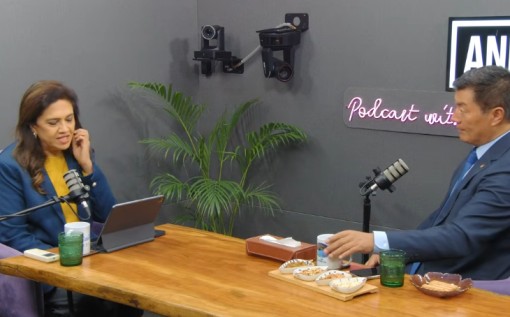
EDITOR’S NOTE: “China had 20 minutes to warn people of the glacial flash floods that devastated the Nepal–Tibet border, yet stayed silent, shut down internet access within a day, and has disclosed only a fraction of the death toll”, says Dr. Lobsang Sangay, former Sikyong (president) of the Central Tibetan Administration. In this conversation with Smita Prakash, Dr. Sangay discusses the Tibet-Nepal flood disaster, China’s information control and disaster response, the ecological fragility of the Tibetan Plateau, the weaponization of dams on the Brahmaputra, India-China border dynamics, the crackdown on Tibetan religious and cultural identity, the succession of the Dalai Lama, and his long-term outlook on China’s political and economic trajectory. This podcast episode was premiered September 2, 2026.
TRANSCRIPT:
SMITA PRAKASH: (00:02:00 – 00:03:57): Namaste, Jai Hind. You’re watching or listening to another edition of the ANI Podcast with Smita Prakash. Tibet is often seen through the lens of politics, occupation, or the Dalai Lama. But today, there’s another dimension to the Tibet story, and that is water, climate, and the fragile ecology of the Himalayas.
The catastrophic floods along the Tibet-Nepal border have once again raised questions about what is happening on the Tibetan Plateau, how much the outside world really knows about it, and what the consequences could be for the countries downstream.
My guest today knows both the politics of Tibet and the workings of China intimately. Dr. Lobsang Sangay is the former Sikyong, or president of the Central Tibetan Administration. He’s been on this podcast before, but a great deal has changed since then.
Dr. Sangay, thank you so much for coming back on the podcast. I wish it had been under better circumstances. And on behalf of Dr. Sangay and from me, we have condolences to give to the families of those who lost their loved ones. With prayer and hope, on our lips that those who are missing come back home and are rescued. And hope also that there are no more secondary and tertiary floods which happen downstream towards India and of course in Nepal and other areas of Nepal. So from both of us, prayers and hope for the coming days ahead.
Very difficult circumstances, Dr. Sangay. What are you hearing about the disaster which has occurred in Tibet and in Nepal. And from inside Tibet, what are you hearing? I’m sure you are not able to go back to Tibet because of restrictions on you, I’m sure. Or can you go back?
China’s information blackout
LOBSANG SANGAY: (00:03:58 – 00:05:19): No, I’m unfortunately banned from going to Tibet. So I talk about a country that I’m not allowed to go, and I talk about people that I’m not allowed to meet. Including, you know, my family members. So a lot of Tibetans have similar stories. I’ve talked to my uncle for, you know, several times. I knew I had an uncle, I could hear his voice, but I could never meet with him, and he died. So that is the story.
So with the recent major tragedy, you know, in Tibet-Nepal border, clearly on the first day, you know, we could talk to people on the Tibetan side. But right after the tragedy, flash floods, but a day after, suddenly internet is shut down. Clearly, Chinese government doesn’t want any alternate stories or narrative coming out. They want to control it.
So they also took 24 hours to 36 hours for President Xi Jinping to come out express condolences and 48 hours to come with a narrative saying, oh, the flash floods originated on the Nepal side, you know, it affected them as well.
SMITA PRAKASH: (00:05:20 – 00:05:35): So the communication lines collapsing, uh, you are saying that on the Tibetan side is not because of the devastation of the floods, but it could be done manually, it could be done deliberately by Chinese authorities?
LOBSANG SANGAY: (00:05:35 – 00:06:47): All the time. They do it all the time. If there’s a protest in one village or town, and within 24 hours, 48 hours, internet is shut down because they want to control. If there’s any kind of incidents that happened in Tibet.
So with the flash floods, it’s the same thing. The first 24 hours, you could talk to people and information could come out. And then suddenly it shut down and they have a good excuse to say, oh, the poles and all were taken away, um, you know, was swept away. Yet they say, oh, it was on the Nepal side, it affected part of their area. Other than that, nothing is affected. That means, you know, the internet line, all the poles on the Tibet side should not be affected, but internet shut down because they want to control the narrative.
You know, a lot of media talk a lot of things, but what is clear is that the tremor or the glacier, you know, fell at 8:37 AM, right? But it swept the immigration office on the Tibet side, I think 20-plus minutes later, you know.
SMITA PRAKASH: (00:06:47 – 00:06:49): Oh, okay. 10 o’clock, I think it fell.
LOBSANG SANGAY: (00:06:49 – 00:07:08): 9:02 or something. Sadhguru says, I could talk to our people, you know, at 9:02. And soon thereafter, you know, the phone didn’t work. So there is clearly 20-plus minutes of time when the flash floods started.
SMITA PRAKASH: (00:07:08 – 00:07:08): In Tibet?
LOBSANG SANGAY: (00:07:09 – 00:07:16): In Tibet. And then it swept. Now the question is, 20 minutes is a long time.
SMITA PRAKASH: (00:07:16 – 00:07:17): They could have warned.
LOBSANG SANGAY: (00:07:17 – 00:07:35): They could have warned. Why it was not warned? Because clearly there is a video of a tourist shooting the landslides, right? And there’s another Chinese who tracked it from Beijing, and they could all, you know—
SMITA PRAKASH: (00:07:35 – 00:07:38): They have satellite imagery. They have satellites all over the place.
LOBSANG SANGAY: (00:07:38 – 00:08:41): And then now, clearly, the Chinese army right there at the immigration office, they have, you know, communication system.
And then the source is disputed now. China says, oh, it’s on Nepal’s side, and Nepal says it’s on the other side. But like COVID, the origin of COVID China refused to share even today. Even the WHO is saying, please share us the data, raw data, so that we can prevent future pandemic. But China refuses to share, even though, you know, we know around 12 to 18 million people died. You know, it caused like around $20-some trillion damages to the whole world. That’s a lot of death and lots of money. Now, why don’t you share the origin of COVID right? If China is not to be blamed, why not?
SMITA PRAKASH: (00:08:42 – 00:08:52): And then the world will know. But here is satellite imagery. So it shouldn’t be difficult to see, you know, exact point when the glacier collapses and it moves. Everybody has satellites up there.
LOBSANG SANGAY: (00:08:52 – 00:08:52): Yes.
SMITA PRAKASH: (00:08:52 – 00:09:02): So you cannot hide it anymore. So what would China get by hiding something like this or misinforming or misrepresenting, uh, the glacier collapse?
LOBSANG SANGAY: (00:09:02 – 00:11:06): But they don’t want to be blamed. First of all, how come there’s 20-plus minutes from, you know, 8:37 to 9:02? That’s like, you know, 25 minutes. How come they— they should know. All right, and then they should be informing.
And the glacier melting and causing flash floods, it’s very common because of the urbanization, mining of Tibet, and the global warming. You know, there are around 2,000 glacier lakes on Nepal-Tibet border, and 20-plus of them are of high risk. Anytime it could burst. In that kind of situation, they all are monitored. They should be monitored by the Chinese government. And it should be informed.
Now also the death toll, they just talk a couple of dozens, right? They are hiding how many Tibetans died. At any given time in that office, immigration office, they are supposed to have 100+ officials monitoring it. And all the tourists and the pilgrims, the hikers pass through it, we are talking about hundreds. We can clearly see the whole building is swept. Still they say, oh, only 16 or 20-some people are confirmed dead, you know.
So they’re just trying to delay it so by the time it becomes, you know, old news, they will come up with certain data because they don’t want to show that China is a superpower, we track everything very well, and not many damages, not much damages happened on the Tibet-China side, what they’re saying. Not many people have died, and the blame is in Nepal’s and landslides. It’s caused in Nepal and damages are in Nepal, and we are the big brother who is coming to help you, you know. So that’s the narrative, that’s the image they want to build. So that’s why they are hiding, um, all these facts.
Tragically, I mean, we’re talking about human death. Even Sadhguru himself says his 84 people have been missing and essentially died. We know that. Now the Chinese government still— their toll is, you know, you know, a dozen or two.
SMITA PRAKASH: (00:11:06 – 00:11:24): So in your estimate, Dr. Sangay, what do you think would be a realistic figure about the number of missing? You know, I still don’t want to put the death toll as yet, but, uh, missing, would, would you say 700? Would you say 1,000 or more in Tibet? Um, not Nepal, just Tibet.
LOBSANG SANGAY: (00:11:24 – 00:11:31): On Tibet side, definitely several hundreds, um, just from the office only. And then, you know, the surrounding—
SMITA PRAKASH: (00:11:31 – 00:11:34): and down, God knows how many in the villages.
LOBSANG SANGAY: (00:11:34 – 00:11:40): Yes, I think, you know, yeah, yeah, in hundreds, definitely in Tibet. Okay, but the Chinese will not confirm death.
SMITA PRAKASH: (00:11:41 – 00:11:47): And there’s nothing on the social media in China either of people saying that we’ve lost our loved ones or whatever.
LOBSANG SANGAY: (00:11:48 – 00:12:47): Yeah, and in fact, uh, you know, they want this, you know, Chinese officer to go viral, right? He supposedly, you know, for 20 minutes showed people the way to, you know, um, walk or run. And then, you know, he stayed, he did his duty, you know, instead of escaping. And finally he ran with the people, you know. So he’s being valorized as, look at this Han Chinese guy who was posted there for 10 years, you know, even at the really, really high risk to his life, he was performing his duties, you know, to help people escape, then run away, you know.
So that’s what they’re trying to do, valorization of their people, hiding death and not confirming, you know, how come the warning signals did not work? If it did not work, then it looks bad on them. And how come they’re not explaining this 20-plus minutes of delay? Delay, yes. And then we’re talking about even a few minutes can save hundreds of lives, right?
SMITA PRAKASH: (00:12:47 – 00:12:54): These are questions not being asked even on Chinese state television, right? Because there is no private television, it’s state-owned.
LOBSANG SANGAY: (00:12:54 – 00:13:01): Now Nepal should be asking, but unfortunately Nepal, you know, it’s under tremendous pressure and China has too much influence.
SMITA PRAKASH: (00:13:01 – 00:13:24): Because this kind of devastation, why is it difficult for journalists, for scientists, for international observers to be able to move from Nepal towards Tibet to see where the devastation occurred, why it occurred? It should be something that geologists should be going there. Will China allow that to happen?
LOBSANG SANGAY: (00:13:25 – 00:13:38): Never. I don’t think so. Because I’ve attended some environment-related conferences, literally from Nepal, Bhutan, Ladakh, from Pakistan, and Burma.
SMITA PRAKASH: (00:13:38 – 00:13:39): Entire Himalayan belt.
LOBSANG SANGAY: (00:13:39 – 00:14:32): Whole of Himalayan belt. And I made some presentations. Obviously, I’m quite critical because I’m talking about facts. And almost all of them come and shake my hands and say, you’re speaking the truth, but none of us can ever raise this issue, because if you do, our entry to China will be cut, our access to funding and research will be denied.
So that’s why now actually, you know, the journalists should be allowed to go on the Tibet side of the border, right? CNN, let’s say any international including from yours, you know, your side should be going on Tibet side, assess the origin, how it happened, you know, um, and then we all know how to prevent it in the future.
Because I think right here, and you know, I’ve come twice and I’ve always said, as far as, you know, importance of Tibet is concerned, because it’s the source of water.
SMITA PRAKASH: (00:14:32 – 00:14:32): Yeah.
Tibet’s glaciers and the 2030 tipping point
LOBSANG SANGAY: (00:14:32 – 00:15:15): And there are around 40,000, you know, glaciers, uh, uh, in Tibet. And then many, 7,000 plus on high risk also. Now, I’ve often said this is a crucial turning point because amount of snow you will have over Himalayas, the Tibetan Mountains, cannot replenish the melting of glaciers. So the melting of glaciers will be faster than the replenishment. And then all this disaster that’s happening now will be worse. From 2030 onwards, it’s going to get worse, you’re saying? Definitely.
SMITA PRAKASH: (00:15:16 – 00:16:03): Okay, you are the environmentalist, right? Um, have we reached that point where ecologically, uh, the Tibetan area is so unsafe— those glacier lakes, those lakes fed by glaciers, they are so unsafe that it’s no longer just China’s problem? China controls Tibet, so it’s no longer just a Tibetan problem, no longer just a Chinese problem, but the entire belt— Nepal, India, Bangladesh, and maybe even Pakistan because it’s fed by that river system. And rest of Asia has to wake up to say that and tell China it’s no longer just your problem, it’s ours too. This Asia, at least this part of Asia. Do you think it’s time for the countries to wake up and say we can’t just be sitting ducks like this anymore, including Nepal? I missed Nepal. Nepal.
LOBSANG SANGAY: (00:16:03 – 00:16:28): Yes, yes. I mean, in fact, you know, it’s almost late because, you know, uh, 2030 is the turning point. It’s not just said by, you know, Tibetans, but also by Chinese environmentalists are also concerned because, you know, Tibet is headwater for China as well. You know, the Yangtze River, Yellow River, uh, you know, Mekong, Irrawaddy, you know, you just name it, and the Indus.
SMITA PRAKASH: (00:16:28 – 00:16:32): Are we forgetting Bhutan, Burma, all these countries also? Myanmar?
LOBSANG SANGAY: (00:16:32 – 00:18:06): Yes, 1.2 billion people in the region are dependent on water which originates from Tibet. And Tibet is the source of water. And 2030 onwards, the snow or the glaciers will melt faster than the replenishment. That means it will dry out. But in the meanwhile, more glacial lakes. Right? And then glacier lakes are formed artificially because there is no dam. And once that bursts, and if there is, you know, cloudburst, glacier, you know, burst, then it causes a lot of damages.
So, you know, I’ve also said on this, and I think show, that, you know, the damming leads to earthquakes. There’s a direct correlation between building dams and earthquakes. Now China has built 300, you know, mid-sized to major dams all over Tibetan Plateau and reservoirs also. And reservoir.
Now they’re building the biggest one on Brahmaputra River, right? 60,000 megawatts. The Three Gorges Dam is 30,000, uh, uh, you know, 30,000 megawatts, right? Double the size. Can you imagine? Now Tibetans don’t need any more dams at all. Because we have surplus of energy. But China is building all these dams so that they can generate energy for data centers and AI in the, in the AI competition. But then more, you know, the dams you have, more earthquakes you have. So 2015 earthquakes—
SMITA PRAKASH: (00:18:06 – 00:18:14): make the relation, uh, between earthquakes and dams in the sense that they’re blasting the mountains and that’s why it causes fragility of the mountain space, right?
LOBSANG SANGAY: (00:18:14 – 00:19:04): That, but also because once you build dams, you’re artificially holding water. And whole of Himalayan belt in Tibet is 3rd, no, 4th, 5th grade, okay? High-risk seismic zone in the whole world. Highest risk.
Now, so you hold water artificially because seismic zone, and then there’s always, there’s a crack and the water seeps through. And once it meets the seismic zone, there’s earthquake. So recent earthquake in Burma, you know, Afghanistan, Pakistan, we just name it, in, you know, Sikkim. In the last 10 years, that fissure gets widened. Yeah, widened because water cracks in, and then once it cracks in, you know, then it’s an earthquake-prone zone, right? And automatically, you know, it leads to earthquakes.
SMITA PRAKASH: (00:19:04 – 00:19:21): Because even this, uh, glacier, when the burst happened. The U.S. Seismological Institute, they’ve said first it’s an earthquake, and Nepal in its parliament also first said it’s an earthquake. It registered as it was that strong.
LOBSANG SANGAY: (00:19:21 – 00:20:08): There was a tremor. Obviously, there was a tremor, and then the glaciers that glacier fell down, right? And then there was a burst. Now, what caused that tremor is the issue.
Now, Kirung area. Because after the 2015 earthquake in Nepal, we used the border route from Nepal to Tibet, to Lhasa, was through Dam. The earthquake damaged that area. Now they started building this infrastructure in Kirong. So they’re bringing railway line from inside Tibet, Shigatse to Kirong. Plan is to bring all the way to Kathmandu. And 6-lane highways are building. So a lot of drilling, a lot of, you know, construction is already taking place in that area.
SMITA PRAKASH: (00:20:09 – 00:20:12): It’s part of the Chinese Belt and Road Initiative.
LOBSANG SANGAY: (00:20:12 – 00:20:26): So they want to make this a dry port, you know, and bring all the supplies and connect Kirong to Kathmandu through railway line and highways. So obviously there’s a lot of drilling in mountains going on. And also that particular mountain—
SMITA PRAKASH: (00:20:26 – 00:20:30): Already the mountains are fragile. Of course. And you are saying that more drilling is happening out there unchecked. Unchecked.
LOBSANG SANGAY: (00:20:32 – 00:21:01): And then mining is taking place in that same area as well, right? So this urbanization, artificial construction is causing tremor as well as heating up the very fragile ecosystem of Tibetan Plateau. So all these affects the natural state of glaciers and lakes and all that. So you can clearly see a disaster in the making and it’s already happening, sadly.
SMITA PRAKASH: (00:21:01 – 00:21:13): Don’t their ecologists, don’t their scientists worry about this? Because doesn’t it impact upon them? I mean, if they have control over Tibet now, willy-nilly Tibetans are Chinese for them.
LOBSANG SANGAY: (00:21:14 – 00:21:15): Yes, that’s why.
SMITA PRAKASH: (00:21:15 – 00:21:31): Would they want the Tibetans to rise in uprising saying that you are destroying us, you’re killing us? They wouldn’t want that. They don’t want political instability out there. So, and if this continues and the population there realizes it, won’t they rise up in arms?
LOBSANG SANGAY: (00:21:31 – 00:22:55): Yes, there’s a great danger because local Tibetans, right, mountains are sacred, lakes are sacred. Now there’s drilling going on, mining going on, and obviously polluting soil and polluting water. And we have a lot of, you know, evidence where fish, you know, are dead in Tau region when they’re mining, you know, gold and silver. And, you know, Tibet is also 70% of the lithium reserve of China is in Tibet, right? And the lithium extraction is very poisonous. You know, you have to use chemical, extract it, and then obviously it pollutes both soil, air, and, you know, and water.
So all these things are happening. That’s why, interestingly, Chinese environmentalists have petitioned to the Chinese government saying, let’s declare Tibet a natural park, you know, what they call Third Pole Park, and protect Tibet for our sake, because our water comes from there, our air comes from there, you know, and it’s very, very fragile and very important for us now.
But what has happened is the Chinese central government has given a contract to the local Chinese officials: you maintain stability in Tibet and do whatever you want. So that’s why all this exploitation, damming of rivers, exploitation of minerals, are the reward given to the Chinese officials, and it’s also Xi Jinping’s pet project—the Belt Road Initiative.
SMITA PRAKASH: (00:22:56 – 00:23:07): He wants that to, you know, it’s it’s his gem. He wants to show the world that we have these multi-lane highways and we are connecting all of South Asia or the Indian subcontinent.
Belt and Road, salami slicing, and border villages
LOBSANG SANGAY: (00:23:07 – 00:24:22): And also as part of the, you know, we now everybody quotes this: Tibet is the palm and we go after five fingers, right? Ladakh, Nepal, Bhutan, Sikkim, and Arunachal, and Uttarakhand and Himachal is included, right? So more Belt and Road, you know, connect through these highways.
So, um, unfortunately, on the Chinese side, all the way to the border of Tibet, wherever you, you just point, either Ladakh, Nepal, Sikkim, Bhutan, right to the border, there is 1-lane, 2-lane, 3-lane, 6-lane highway and helipads as well, right? Now, on the Indian side or Nepal-Bhutan side, there are no roads in this, in many cases, right?
So there are artificial villages, 300 villages from Afghanistan to Burma are being built right inside the border of India included, right? Right at the border and outside the border. And all these villages are manned by Tibetans included, who are paid to live in -50 degrees right in the mountains, even in winter. So that they can defend, not just defend, but also encroach upon the border areas of neighboring countries, you know, including Nepal and India.
SMITA PRAKASH: (00:24:23 – 00:24:30): So slowly get in more and more land, just move, crawl into the Indian territory.
LOBSANG SANGAY: (00:24:30 – 00:24:52): Yeah, this Chinese, you know, or Bhutanese territory, or yeah, Chinese strategy is very simple. Anyway, it’s what they call salami slice strategy, right? Do kadam age, ek kadam pichhe [two steps forward, one step back]. So they take two steps forward. And India pushes back and says, okay, we’ll take one step back. Or there’s a border resolution, but they have already taken one step up, I don’t know how many kilometers.
SMITA PRAKASH: (00:24:52 – 00:24:59): But they also endanger the lives and livelihoods of people out there because of these ecological disasters that happen out there.
LOBSANG SANGAY: (00:24:59 – 00:25:54): It’s a disaster for Tibetan Plateau, for Tibetan people, and whole of Himalayan region. So your original point, it’s time for Bhutan, Nepal, all the way from Afghanistan, Pakistan, you know, to come around. All of them should say, you know, we depend on this water. The fragility of Tibet has to be respected, not because whether we love them or not, but for our own sake.
But unfortunately, even the UN-sanctioned scientists, top scientists, when they write the reports, they mention Himalayan region and this and that. They don’t dare even mention Tibet in the report. You know, now you know actually, you know, journalists they all should be going on the Tibetan side. Yeah, that’s exactly. So we want to assess and we want to count death because you know we have to inform their family members, right? Chinese government denied.
A comparison: Nepal’s response versus China’s
SMITA PRAKASH: (00:25:54 – 00:30:09): I wanted to show you this tweet which was posted by a journalist. I think he’s based in the U.S., but he says: this Tibet-Nepal flood disaster has let the world see China’s true colours.
A comparison of the two countries’ national strength. Nepal’s GDP is $45.5 billion, just 2.3% of China’s. Nepal’s per capita GDP is $1,500, less than one-ninth of China’s. But within 60 hours of the disaster, Nepal issued 8 situation updates, while the CCP only issued 2. Nepal dispatched 20,000 troops and police for disaster relief, while the CCP sent 2,100— 10 times fewer. Nepal deployed 16 helicopters for rescue operations. Look how cash-strapped that country is, but still they had 16 helicopters for rescue operations, while the CCP claimed that roads were blocked. So the troops sent on the 3rd day only arrived then. Can’t you fly? But they didn’t.
Within 4 days, Nepal rescued 8,730 survivors by hand digging and people climbing through. The CCP rescued zero. Nepal recovered 752 bodies of the deceased, while CCP found 7. They didn’t even bother to take out the dead. Nepal not only updated data on deaths and missing persons, but its police website also posted photos of recovered bodies for identification. Western journalists can enter any part of the disaster zone to report, including Indian journalists who reached there within a couple of hours. While CCP deleted all flood videos, keeping only footage of relief efforts and leaders’ inspections, and barring any Western journalists from entering Tibet. Of course, even Indian journalists cannot go.
The only thing the CCP put any real effort into was training its own soldiers to shout in unison in the mud, “is anyone there?” It’s such an absurd video where they’re talking into mud. Anyone there? I mean, anyone there would be dead and gone by now, 3 days later. And filming a nice little rescue movie. This so-called world’s second superpower putting on this kind of show in front of a poor country ranked 103rd globally. This is the comparison that somebody has done.
There’s another post which I want you to see, and you can then comment on both these. Um, this is by Lord David Alton. He says: Nepal and Tibet tragedy. Once again, the CCP regime censors what its citizens may or may not see while simultaneously imposing mass surveillance on its people. Over the past few days, the CCP has been heavily censoring coverage of the Nepal-Tibet flooding disaster, preventing China’s citizens from seeing the scale of devastation. This is just like the systemic COVID cover-up, which you were talking about.
Read this report from Elizabeth Haig, the senior news reporter at The Mail. She says when the deadly tsunami from the sky cascaded down the Trishuli River on Wednesday, footage showing the muddy deluge washing away settlements in seconds went viral on social media. One of the first clips to emerge showed the annihilation of the Rasuwagadhi border crossing at Gyirong, located at one end of the Friendship Bridge on the border between Nepal and Tibet. CCTV footage showed people running for their lives before the waves, said to be hundreds of feet high in places, washed through the narrow valley, destroying everything.
But despite the destruction also hitting Tibet, an autonomous region within mainland China, many Chinese nationals could be forgiven for being completely unaware of the tragedy. Only one single picture of the flash floods or subsequent mudslides has been shown by state media and social media in the nation that contains almost no images of it either.
Now, this is what they say. And then further to say that persecution and things that happen in China for people who post stuff on their social media.
LOBSANG SANGAY: (00:30:09 – 00:31:31): I recently met and saw the head of WHO. You remember initially he was quite considerate of the Chinese government during COVID, you know. Now he openly says he’s so disappointed the Chinese government even refused to share the origin of COVID where millions of people died, trillions of dollars of damage has been caused, right?
This is their playbook. Similarly, don’t share the source, shut down everything, deny everything, and then, you know, um, death toll, everything— don’t make anything, don’t show anything or reveal anything that will make them look bad. If they say, oh, 500 people died on Tibet’s side or China’s side, it will make them look bad, right? Because they have to explain this 20-plus minutes of warning, you know, how come, you know, they didn’t know this, right?
So Rigden Galwan also remembered that there was a fight and they refused to share how many Chinese actually died. After 3 or 4 years and they come in, you know, then say, oh, you know, a couple of them died, right? So this is their playbook. They’re so conscious or paranoid about what would the world think? They’re not worried about what should I do for the world, rather than, I know, what would the world think of me, so I better prevent.
SMITA PRAKASH: (00:31:31 – 00:31:37): But it’s not just the world, no, Dr. Sangay. It’s about their own people. They don’t care what their people think about it?
LOBSANG SANGAY: (00:31:38 – 00:32:18): This is what I call Chinese world order. There’s a great debate going on. The Western-led world order has a lot of hypocrisy and double standards, but one thing no one can deny is you can criticize, complain, and challenge Western world order and you don’t have to worry about going to prison.
As far as Chinese world order is concerned, no one can. As I said, from our own experience, first 24 hours you could talk to people in the village neighboring area, get the sources. What happened after 24 hours? Oh, internet is shut down. You can’t reach anyone. If you ask them how come, they’ll say no, no, no. All the poles were swept, you know, in the landslides.
SMITA PRAKASH: (00:32:19 – 00:32:25): Isn’t there any international law whereby countries have to share data with countries downstream?
LOBSANG SANGAY: (00:32:25 – 00:33:04): Yeah, it’s obligated. But unfortunately, China has not signed the UN Convention on water sharing, right? So even to share data, even to share warning, it’s a favor that China would do to you, and you have to beg for them, and, and all in the form of charity, you know. So it’s a reward for your behavior rather than a friendly neighbor. You share data so that you can prevent disasters in each other’s country, you know.
So I feel very bad for Nepal, and thousands of them died, and 3 districts were affected, and 8 or 9 villages, you know. Completely ruined.
SMITA PRAKASH: (00:33:04 – 00:33:22): I mean, but what you’re saying is that this is not just something which is on, on glacial lakes. You’re talking about Mekong and you’re talking about, uh, you know, Yangtze, all these, this, this area. Um, it’s a security risk for the entire region, entire belt, entire belt.
LOBSANG SANGAY: (00:33:22 – 00:34:14): Because we talk about the major earthquake of Assam, Tibet-Assam earthquake of 1905. Thousands were killed. Okay, this is such a highly sensitive seismic zone. Um, and then now this— all these glacial lakes are recent developments because of global warming, because urbanization, mining in Tibet, right?
And in 2030, even Chinese scientists, Western scientists, all of them agree it’s a turning point. Now what you see in Nepal today is the beginning of the turning point. And all these glacier lakes, 7,800 or so, right, from, you know, from Ladakh to Arunachal, and hundreds of them of high risk, which means anytime it could burst and similar damages could happen.
SMITA PRAKASH: (00:34:15 – 00:34:27): Is it a national security risk? And should countries now make it a core issue if hundreds of people have died now in Nepal, which include foreigners. You know how it’s going to—
LOBSANG SANGAY: (00:34:27 – 00:34:28): A few thousands, few thousands, definitely.
SMITA PRAKASH: (00:34:29 – 00:35:19): So now if thousands of people have died in Nepal as a result of this glacier burst, it is a national security issue also, right? I mean, Nepal’s economy is going to be devastated, right? Because they depend on tourism. It’s a landlocked area. They depend on tourism, more than anything else. And that’s going to get hit so much because of this. Who’s going to climb mountains right now? It’s going to take a while for countries to allow their mountaineers to go to that area. Religious tourism is going to get hit. So it becomes economy hit, tourism hit, your security hit, everything gets hit. So every country now will have to reassess its national security parameters with regard to Tibet controlled by China right now.
LOBSANG SANGAY: (00:35:19 – 00:36:42): Even for the reconstruction of this, you know, 3 districts and 8 villages, you’re talking about $4 or $5 billion. Nepal’s GDP is $45 billion. You’re talking about 10% of your GDP has to be spent on reconstruction, right? That’s a 10%, in a way, wasted, you know, for as far as Nepal is concerned. And instead of investing on education and health and infrastructure to help people, unfortunately they have to take a step backward to spend, to divert 10% of the GDP on something else that is caused by this natural disaster, you know.
And China refused to share how and when, you know, the warning signs, you know, signals did not work. So, and this is an ongoing issue, and all the neighboring countries should be alarmed. I hope all the environmentalists of neighboring countries, hopefully through media, we can challenge and ask China this question, you know, how many earthquakes and flash floods, you know, do you need to be accountable for?
But I would say still they don’t care because with COVID we know. I mean, can you imagine even today they refuse to say the source? Why don’t you allow even Chinese scientists to go along with a couple of other international scientists and just find out the origin so that we can prevent another pandemic.
The Brahmaputra dam and India’s exposure
SMITA PRAKASH: (00:36:43 – 00:36:45): What should India be doing, Dr. Sangay?
LOBSANG SANGAY: (00:36:45 – 00:37:36): Um, with the construction of the major dam on the Brahmaputra River, yeah, India should be very, very, very much alarmed. You are holding artificially the largest amount of water in the whole world. This is the biggest dam, right? And right at the most delicate, sensitive area. And, you know, uh, on the worst-case scenario, uh, and even in the best-case scenario, China can weaponize the dam, meaning they can release water anytime they want and flood, uh, and, you know, all the highways and the railways down, and millions get affected. Millions get affected, right? So even in the best-case scenario, they can weaponize them. And the worst-case scenario, you know, there can be earthquakes and there can be floods.
SMITA PRAKASH: (00:37:36 – 00:37:39): Not a single weapon has to be fired. Not a single.
LOBSANG SANGAY: (00:37:39 – 00:38:55): And you can literally cut off all this, Northeast India. Yeah, definitely. Brahmaputra is a lifeline for Assam and Bangladesh and the northeast area. And it just runs through it. And on the other side is the northeastern states, including Bangladesh.
So, uh, you know, that’s a very dangerous development. Even many international environmentalists are alarmed about this. And China, as far as Tibet is concerned, we don’t need that dam because we don’t need any additional energy, but they’re doing it for their data centers.
Now interestingly, you know, talking about data centers in this AI competition, there’s one particular dam inside Tibet where they’re built data center inside the dam, including Three Gorges Dam. They have built a data center inside Three Gorges Dam because, you know, you need to cool, you need to maintain, you know, cool temperature. Inside the dam is cool, and then the energy generated, they use it, right? So it’s simply for Chinese data centers and Chinese in this AI competition, and at the cost of Tibet’s environment and, you know, and all the neighboring countries.
SMITA PRAKASH: (00:38:55 – 00:39:36): Yes, that’s what, um, you know, after COVID and after Galwan, I think, uh, India’s understanding of China fundamentally changed, just like in ’63 it changed. And I think COVID and, um, Galwan made India rethink about it. But, uh, do you think that again we have got to that point where India is excessively cautious about saying anything about Tibet? Um, is it recalibrating because of, you know, India’s relationship with the US has changed, the dynamics have changed in the past 2 or 3 years? How do you see this?
India’s recalibration on Tibet and the border
LOBSANG SANGAY: (00:39:37 – 00:41:24): Um, obviously, you know, uh, China and India, um, they need each other for a lot of things, right? So there can be codependency on certain things. But when it comes to geopolitics and security, Tibetans, we have been saying for the last almost 70 years, don’t trust them. And then many leaders in Indian governments did trust.
And then Tibet’s friend and India’s former Defense Minister George Fernandes was the first Defense Minister who said, our number one adversary is China. You know, and then no one dared say that, right? And now slowly some people are saying it, you know, and it is a major challenge.
Now with the recalibration going on, you know, so it’s so interesting when Doklam happened, right? Modi ji and Xi Jinping, they were meeting, you know, and then it happened. And then I do remember at that time, Subramanian Swamy ji, you know, he said, no, no, no, it’s just a renegade PLA general who did this. Otherwise, you know, being the government, they want to have friendly relationship with China. Now, Subramanian Swamy said recently, I heard him being very, very critical of China. You know, he says, oh, they don’t want anything good for us, right? Even he has changed his views, but he claims to know China very well.
Now, when Galwan happened, it’s the year of, I think, the 70th anniversary of diplomatic relationship between India and China. And there were 70 events in India and 70 events in China. They were supposed to celebrate and Galwan happened. Now Xi Jinping is coming and tension over Arunachal.
SMITA PRAKASH: (00:41:24 – 00:41:26): Well, he’s expected to come for BRICS.
LOBSANG SANGAY: (00:41:26 – 00:45:20): Yes. And then tension over Arunachal and claim over Arunachal is going on full throttle from the Chinese side and they’re not taking a step back. You know, so each time, you know, India tries to recalibrate and maintain some relationship, um, China is clearly signaling, you know, you can clearly see in Arunachal Pradesh, right? You know, there’s a lot of tension going on. They’re claiming, uh, uh, the whole renaming and things, renaming, they’re essentially saying, you know, Arunachal is South Tibet and it’s part of China, right?
And, uh, also they’re renaming, giving all Tibetan names, because till 1951, Tibet collected taxes in the Tawang region. So if you go by documentation, I mean, objectively, China has more documentation to prove that that area, you know, the Tawang area, uh, was part of Tibet, right?
Now India has a choice. If you want to go by documentation, China can clearly prove taxes collected, trade routes, and the officials who were appointed on the Tibet side, right? That’s how His Holiness the Dalai Lama escaped, because we knew the route very well. But Tibet did sign, you know, a McMahon Line Agreement in 1914 as part of the Simla Agreement, right? If India recognizes that similar agreement and McMahon Line as the border which was signed between, you know, British India and Tibet, then India can say, yes, we demarcated the border and this belongs to us.
Now India refuses to say that. That’s why China is saying, you refuse to say that, then I’ll name all these areas in Tibetan names. I’ll show all the documents. If they want to go to an international tribunal, they can win their case because they have evidence and facts to prove it was part of Tibet, right? So now India has a dilemma. You recalibrate and you don’t say anything, then China can prove, you know, on any platform. So when they have what they call, um, border post dialogue between, you know, Indian and Chinese troops, right? When they say, oh, this is our land, this is our land, China can have more documents to prove, you know.
In fact, till Galwan happened, after Doklam, I met some Indian military officials as well. And then they said, no, no, we have to train our military people and make them more sensitized about Tibet. Because I did tell them, when you cross over, let’s say you lose your way or you cross over if there’s a war, most of them were taught, many of them were taught Chinese language. Okay, how to greet? Ni hao, ni zenme yang, how are you? I want to— yeah. And I said, if you cross over, that’s Tibet. That’s Tibetan people. If you say ni hao, ni zenme yang, they won’t understand at all. They think you’re a Chinese spy. They’ll beat you up. Rather, if you say tashi delek, you know, nga ga ga gai, if you say tashi delek, Tibetan greeting, and I’m hungry and I want something to eat, they’ll welcome you, you know.
Then this whole sensitization of Tibetan culture and language started not many years ago. For decades it was neglected. So if you go to any of the universities, including our university, Delhi University, and other universities, they don’t have a major Tibetan program. All our civil services, they should know about Tibet. Army and military, they should know about Tibet. If they know, then if there’s a war, if the tension, anything happens, you know, they can, you know, use the language and communicate with local people. And ni hao and ni zenme yang is not going to get you anywhere.
Purges in the PLA
SMITA PRAKASH: (00:45:20 – 00:45:44): You mentioned Doklam. You must have seen that the PLA general who oversaw the Chinese operation during the Doklam standoff and even the Galwan standoff, he’s been purged by Xi Jinping. So what do you think is happening in the PLA? Is that— I mean, he’s gotten rid of 2 generals, in fact, recently.
LOBSANG SANGAY: (00:45:44 – 00:47:05): I think that has less to do with Doklam and Galwan. More is just a power struggle. Internal power in the PLA? Yes. The vice chair, who was the senior-most, in fact, his father and Xi Jinping’s father were friends, right? So even— and then they also, both of them grew up together, so they were like trusted friends for a long time. But Xi Jinping removed him. So there’s a mystery, you know.
A lot of people say, oh, uh, it was in the name of corruption, for sure, you know. Um, corruption is, uh, you know, uh, it’s a relative word, uh, in China, you know. So most of them are corrupt at some level, right? So who you remove is a matter of power struggle.
Some say that of the 7 or 9 members of China’s military commission, I think 2 are remaining, all others are removed. So some say now because they are removed, that means there’s so much corruption, which can be true. And some also say now they’re unprepared towards Taiwan as far as war is concerned.
My theory, I think there are a few who say this, is I think Xi Jinping is saying, are we ready to take over Taiwan by 2027? Because that’s the deadline he has given. We should be prepared. I think some of the generals are saying we are not prepared because they’re giving a real assessment, right?
SMITA PRAKASH: (00:47:05 – 00:47:08): What are they doing with such a huge budget that they have? They’re not ready? They are.
LOBSANG SANGAY: (00:47:08 – 00:47:48): They are not. I mean, what I’m saying, so they’re prepared. Of course they’re preparing, but prepared overwhelmingly. They can take Taiwan overwhelmingly and America and others cannot aid and challenge them. I think military generals are giving him honest assessments saying we are not yet ready. Those who say we are not yet ready, I think they’re removing them.
Similarly, on the whole of the Himalayan belt, five fingers, right? Are we ready on the Himalayan belt? Because if India makes a move, you know, are we ready? And all the generals are saying if they’re not ready, they will say we are not ready. And whoever says you are not ready, I think they are being purged. Purged. It has less to do with Galwan and, you know, Doklam. Obviously they were in charge.
SMITA PRAKASH: (00:47:48 – 00:48:01): The military objectives of Xi Jinping have to be met, and if they are not being met, uh, then they are being purged. Is that what you’re saying? Yes, definitely. So it’s not any, uh, reorganization, but it’s a military objective, you’re saying?
LOBSANG SANGAY: (00:48:01 – 00:48:05): Military. His autocratic, you know, ego.
SMITA PRAKASH: (00:48:06 – 00:48:28): Yeah. Okay. Um, but some are also saying that, uh, his, you know, those who are body language experts, they’re looking at him and saying he looks a little weak, and he’s gone for the SCO when he was getting down the stairs. He looks like, you know, a little wobbly. Do you see that, or do you see Xi Jinping still as strong as he was?
Xi Jinping’s health and succession
LOBSANG SANGAY: (00:48:30 – 00:49:32): I go to Taiwan once a year just to assess, because I do see there will be a war over Taiwan, right? I worry about it because I always say what happened to Tibet will happen to you. I always say this to Hong Kongers. And they said, no, no, no, what happened to you will never happen to us because we are also Chinese and the Chinese government will not treat us like you Tibetans who are of a different race. But it happened to Hong Kong. So I go to Taiwan to say that it will happen to you as well.
Now, I will not divulge who that person is, but a very, very senior official, a former senior official I met and spent more than an hour with. The person’s assessment is that Xi Jinping had, if not 3, then 2 heart strokes. So that’s why, remember, he went missing for 3 weeks and 5 weeks, and then suddenly he shows up. And according to that person, it’s like, yeah, he had heart attacks. So that’s why you just see his face, you know, puffy, puffy, you know, and then the way he walks, you know. And their assessment is that—
SMITA PRAKASH: (00:49:32 – 00:49:36): That could also be just age-related or something.
LOBSANG SANGAY: (00:49:36 – 00:50:26): Yeah, but then there’s a rapid, you know, you can obviously see a very stressful job, right? So the heart attack, it’s the stress that’s getting to him and these heart attacks that happened. And then that bit of a mental fog is letting him take these drastic decisions, like firing the majority of the members of the military commission who he appointed. And all the generals and foreign ministers disappear, and defense ministers, ministers keep getting appointed, getting disappeared. That shows sudden paranoia, you know. Um, he’s in this, you know, cloud now. He’s supposedly— his security guard and chief of staff are more powerful than any of the ministers of China, right? So that kind of a system, they believe, is not sustainable.
SMITA PRAKASH: (00:50:26 – 00:50:42): So is there any succession plan which is made public, uh, in China? Uh, has there been that kind of a thing in the Communist Party? That they have a succession plan in place. Do you think Xi Jinping would ever allow it to go public, a succession plan? I don’t think so.
LOBSANG SANGAY: (00:50:42 – 00:51:26): I think he’s going through the emperor’s dilemma, right? So when you’re emperor, if you appoint a successor, crown prince, the likelihood in China’s history, likelihood that the crown prince will kill you, overthrow you, and then take over, is very high. But if you don’t, you know, designate or appoint a crown prince, you can prolong your rule, but it will cause disability to the country because there will be a lot of infighting, you know, among princes, you know, and then there will be civil war and it causes damage to, you know, the country. And that’s the history of China, you know. So because of that, I think he’s not designating anyone as a successor.
SMITA PRAKASH: (00:51:26 – 00:51:56): Do you think that he’s going to at any point of time rethink his policy about Tibet? Do you see any signs at all? I don’t think so. Yeah, you’ve been watching Tibet. I mean, you are a Tibetan, you have a Western education, you have Indian education, but you are an avid China watcher. So tell me about it. Do you think there’s any kind of domestic pressure on him, or is his mental makeup the kind that will make him change his attitude towards Tibet?
LOBSANG SANGAY: (00:51:56 – 00:54:12): No, I think, you know, his ambition, uh, is to be equal with Mao or greater than Mao Zedong. He has already had his name mentioned in China’s constitution. No other living leader of China has done that— he has done it. So his ambition is to, you know, be greater than Mao. So that means he doesn’t want to give anything to anybody. He wants to take. And then, you know, so conciliation is not part of Xi Jinping’s mental makeup ever. No.
Now, his father was a very moderate leader. And he lost power also because he was punished. And then his family suffered, right? It’s almost like they were exiled to a distant province and his father was made to be the governor. So because of that, many people analyze, and I do subscribe to that, he saw his father’s weakness, being a moderate and being, you know, sent almost to an exile-type situation. So the lesson he learned is be strong, be ruthless, and be firm, and punish anyone who comes your way. That’s the lesson he learned from his father’s experience, and use the party as a tool for your own, you know, authority. And then, you know, go down in the history of China as the greatest leader, more than Mao.
Mao caused the death of millions of people. Yeah, millions, right? Cultural Revolution, you just name it. Would Xi Jinping take that path? It looks like that. Now, unfortunately, no one is there to criticize him and challenge him. You know, you are in this bubble, right? I mean, you can clearly see with Putin and the Ukraine war as well, right? I mean, it’s damaging Russia’s economy and taking Russia back 20 years in terms of both the military, economy, and politically, right? People are suffering, but you are, you know, on a path towards war and destruction. You keep moving forward. So that’s what I see, the building of the military of China and getting rid of anyone, even your closest friend and trusted allies, that shows the ruthlessness in his ambition.
Erasing Tibetan identity
SMITA PRAKASH: (00:54:12 – 00:54:37): In the earlier episode with you, we talked about China erasing, uh, Tibetan religious and cultural identity. Uh, since that episode and now, do you see any change, any moderation at all from the Chinese authorities, or have they systematically almost erased Tibetan religious motifs, religious icons? What do you see happening in Tibet? The worst has happened.
LOBSANG SANGAY: (00:54:38 – 00:55:29): In March, at the National People’s Congress, their parliament, they passed the Ethnic Unity Law and Progress, which is to unify all ethnic groups. So meaning from kindergarten onwards, everything has to be taught in the Chinese language. Tibetan culture will be sinicized, Tibetan tradition will be sinicized. And then one Tibetan recently in New York committed self-immolation on July 2nd, a day after the implementation of the law, Lobgar Rangzin, to protest against the ethnic unity law. He was also an independence activist, right? So you can clearly see now what— now not just Tibetans, Mongolians and Uyghurs and Koreans, quote unquote, all the other 54 minorities will have to be Chinese, speak Chinese, learn Chinese, everything.
SMITA PRAKASH: (00:55:29 – 00:55:46): So the Buddhist monasteries, the mosques, Uyghur mosques which are there, they’re all being, you know, that those domes are gone, the spirals are gone. They all need to unify and make it one way, right? Those monuments, that’s also there.
LOBSANG SANGAY: (00:55:46 – 00:56:29): Yeah, what they call the Chinese dream, or to be Chinese, is their number one priority. In one province in China, they demolished 400 crosses. This is an academic peer-reviewed paper. 400 crosses from churches. Now you can have a cross, but on top of the front door, but the painting of the wall has to be the same as the cross. So that means it’s almost invisible. So the minarets, the tops of the domes of the mosques are also being demolished. And now similarly with Buddhists as well. So this is what they call sinicization.
SMITA PRAKASH: (00:56:30 – 00:56:43): There was a Buddha, a 99-foot Buddha, in Drago county that was demolished also. And subsequently, have you seen other Buddhist icons, monuments being demolished in Tibet? All the time.
LOBSANG SANGAY: (00:56:43 – 00:58:25): It’s back and forth. They come and destroy, you know, half the monastery, let’s say in Serta, you know, where 20,000 monks and nuns were there. Half are demolished. And then now Tibetans do it and they go and build somewhere else, you know. And the statue of Buddha is being demolished, statue of, you know, Guru Rinpoche is being demolished. So that’s why I think this, you know, American citizen, Tibetan Lobgar Rangzin, he committed self-immolation in front of the UN headquarters to bring urgency to this law. Because can you imagine, the Chinese government has the audacity to pass a law and say, this is how we are going to commit cultural genocide among Tibetans and all other minorities. We’re going to wipe them out and make them Chinese.
So now, you know, I go to European countries and say, if you are for human rights, you always ask for evidence how Tibetan culture and monasteries and religion have been destroyed. Now here’s the evidence. There’s a law saying so. In fact, Article 63 is very dangerous. It says that any individual or organization that works against China on this Ethnic Unity Law can be penalized. So meaning, in their eyes, anyone of foreign citizenship, including Indians, right, if they criticize China’s actions on Tibetans and other China affairs, can be penalized. So this is what they call transnational repression. There’s a law that can penalize foreign nationals if they speak or do anything against China.
SMITA PRAKASH: (00:58:25 – 00:58:27): How do you penalize them?
LOBSANG SANGAY: (00:58:27 – 01:00:14): Not give them visas to come to— that, but you know, there was a Swedish book owner of Chinese descent, right? He’s a Swedish citizen. He was, you know, he was in Thailand on the beach enjoying himself. He just got picked up and taken to China, and he’s still in prison, you know. So the 2 Michaels of Canada, you know, they just disappeared in China and they were in prison for many years. So they can pick up foreign nationals in China, outside of China, and then, you know, imprison them in China.
So, you know, there are around 126 Chinese police stations all over the world. Illegal, obviously. Obviously illegal, but what they do is they register an association as an NGO that they have. So they book a room and then they have telephones and surveillance systems and they track, let’s say, Chinese dissidents or Hong Kong activists and Uyghur and Tibetan activists, track them and harass them, find out their family members back home, and then make them call them. I know it has happened to Tibetans as well.
So they have police, including in New York. A U.S. congressman went outside that Chinese police station in New York and had to protest to bring attention to it, and finally they found a legal way to shut it down, you know. So you could get picked up in San Francisco for all of that? Yes, yes, yes. There are like 16 Chinese police stations in Italy and Spain and things like that, all over Europe as well, you know. So that shows their audacity.
SMITA PRAKASH: (01:00:14 – 01:00:17): I’m not even Tibetan and I’m scared right now.
LOBSANG SANGAY: (01:00:17 – 01:00:26): I’m so sorry to say, because of this podcast, I get marked. Yeah, you are liable under Article 63 of the Ethnic Unity Law.
SMITA PRAKASH: (01:00:27 – 01:00:31): Okay. Yeah. All right. And now I have to come. It’s a badge of honor for you.
LOBSANG SANGAY: (01:00:32 – 01:00:33): Yes, I wear it with pride.
The next Dalai Lama
SMITA PRAKASH: (01:00:35 – 01:00:49): I need to ask you about the Dalai Lama question. He turns ninety-one this year. God give him a long and healthy life. He confirmed that the institution will continue. So can you tell me what is the succession process?
LOBSANG SANGAY: (01:00:51 – 01:04:08): Yes, last July, you know, he said the institution of the Dalai Lama has to continue, and he’ll be born outside of China. So he’ll be born in a free country, and obviously the one country he has lived the most of his life is India. And then he has also appointed, you know, 4 monks, high Rinpoche lamas, as part of the board of trustees of the Gaden Phodrang, his office. So, you know, his plan is in place, direction and indications are in place, but we hope, you know, as he said, he will live long, he will live long.
But now he has given a clear directive that he will not be born inside China. Now again, the Chinese Communist Party is an atheist party which destroys religion, but they claim they have the sole authority to select the next Dalai Lama, but not the Dalai Lama himself. Can you imagine the illogicality? It’s almost like, you know, tragic humor that the Chinese government is saying, His Holiness Dalai Lama, you have no right to choose your own successor, you know, but we will choose for you and we are the legitimate ones.
Now, reincarnation means avatar, right? You reincarnate. That person’s consciousness will, you know, travel to another mother’s womb and will be born, right? Or reborn. Is that person’s decision? Is that person’s consciousness, you know? Yet the Chinese government, an atheist government, says, no, no, no, no, no. We decide on that and you have no right to decide.
So, you know, but we have to create awareness and educate people, not just on reincarnation of the Dalai Lama, which is Buddhism. Selection of imams is also their prerogative. Now the Vatican, unfortunately, has an agreement with the Chinese government whereby now the Communist Party of China selects bishops and the Vatican stamps its seal on it. And they are the bishops in China now. But even they are put under restrictions if they want to celebrate Christmas or any Christian festivals.
Now, interestingly, the system is that the priest will be the registered one, the church will be in that person’s name, meaning that person also has to act as a Chinese Communist Party official. So before he gives a Sunday teaching, he has to first tell people in the church about the Chinese government’s directive. This week you can do this, you cannot do this. You have to act like an official and inform on any follower who works against the Chinese government. If you don’t, your license will be taken away, your priesthood certificate will be taken away, and they will shut down the church. So that person has to act both as a spy, informer, Chinese government official, and a Christian priest. So that’s the agreement they have signed.
SMITA PRAKASH: (01:04:08 – 01:04:13): And you don’t see any objection from Catholics around the world to this process?
LOBSANG SANGAY: (01:04:13 – 01:04:34): Unfortunately, because the Vatican is the one that has signed that agreement, right? Now, with Muslims, they have taken their right. And on reincarnation and Buddhism, they are saying, because we refuse to sign that kind of agreement, they are saying, no, we still have the right, we will do it our way, you know. So that is China’s world order for the people, you know, who would like to understand.
SMITA PRAKASH: (01:04:35 – 01:04:45): God forbid, at the situation where, um, will it come to the level that there’ll be 2 Dalai Lamas then? One Chinese-appointed and one what you people will have?
LOBSANG SANGAY: (01:04:45 – 01:05:17): There’ll be— now let me put it this way— there’ll be 2 in the sense there’ll be a fake one and the real one, because for people of faith, that person is the reincarnation, right? The reincarnated lama. So whoever the Gaden Phodrang, right, and the monks who lead the search process and finding process finds, for people of faith, that is the Dalai Lama. And then it doesn’t matter, it’s irrelevant what the Chinese government does because that one is a fake one.
SMITA PRAKASH: (01:05:17 – 01:05:21): Because yours is a rigorous religious process.
LOBSANG SANGAY: (01:05:21 – 01:06:24): Yes, because the Chinese government is more interested in the office than in the person. And when it comes to spirituality, the person is more important than the office. Now, recently I met this scholar who does research on Han Chinese people who follow Tibetan Buddhism.
Now, the Chinese government has abducted, you know, the one Panchen Lama endorsed by His Holiness the Dalai Lama, and they have appointed, unfortunately, a Tibetan boy as the Panchen Lama, Gyaincain Norbu. Now, even these Han Chinese people in China who follow Tibetan Buddhism, they say that boy appointed by the Chinese government is not acceptable. No, they say he’s an official. They don’t see him as the reincarnated lama. So clearly, when Chinese people don’t follow a Chinese government-appointed Panchen Lama, right? Buddhists around the world, right, will follow the one, you know, selected by the Gaden Phodrang and don’t care about the one appointed by the Chinese government. How many?
The missing Panchen Lama
SMITA PRAKASH: (01:06:24 – 01:06:29): It’s 30 years since the Panchen Lama disappeared. Yes, yes. Nobody still knows where he is.
LOBSANG SANGAY: (01:06:29 – 01:06:32): No, he has disappeared since 1995.
SMITA PRAKASH: (01:06:33 – 01:06:35): Yeah, and there’s no intelligence, nothing available.
LOBSANG SANGAY: (01:06:37 – 01:08:24): Today I’ll share you something I’ve never shared with somebody. When I was in my official position I got a message from, you know, our office in Moscow saying there are a few former KGB agents, they will help you find out where the Panchen Lama is, provided you give them some money. Obviously, they want to be paid for it. That was the offer I got.
Because I kind of knew, I have also reliable sources to say that Gedhun Choekyi Nyima, the real Panchen Lama, was adopted by a Chinese military family, and they moved from military town to military town. That’s how he grew up. He studied in a military school, he works in military companies. So that’s how it happened. And then they have separated all the family members, the parents in different cities, different provinces of China, adopted by another family. Two sisters are adopted by 2 Chinese families in 2 different provinces. That’s how they’re scattered. They’re allowed to meet, siblings are allowed to meet only once a year, and parents are allowed to meet 2, 3 times a year. Can you imagine that kind of paranoia? They don’t trust. So that was the system.
So this KGB, former KGB, supposedly offered to find out. Um, I thought about it, then I said, what’s the point of finding out? Because even if you find out where he is, you know, he’s likely to be, you know, moved. That place will be changed in a few months’ time. And then that process might put more danger, you know, more threat on, you know, Gedhun Choekyi Nyima because, you know, the process of finding could be leaked and, you know, could become known to the Chinese government, and that might bring unnecessary suspicion.
SMITA PRAKASH: (01:08:25 – 01:08:29): The Chinese Panchen Lama has gone back to Tibet? What is happening with him?
LOBSANG SANGAY: (01:08:29 – 01:09:11): He spent most of his childhood in Beijing. Because, you know, it’s tragic that the Chinese government’s insecurity and paranoia is such that he was not allowed to stay in his monastery in Tibet and be groomed in Tibet. That would bring some credibility. No, he spent most of his time in Beijing. So he does visit, you know, Tibet from time to time. And there is orchestrated teaching where all the family members are made to send one person from the family when he visits villages, things like that. So he visits once or twice in Tibetan areas, but most of the time he’s in Beijing.
SMITA PRAKASH: (01:09:12 – 01:09:17): But why do you think Beijing is keeping the real Panchen Lama alive? They could have easily eliminated him, right? They’ve eliminated—
LOBSANG SANGAY: (01:09:17 – 01:09:27): Then he will find reincarnation outside. You know, the moment we know he’s dead, then we’ll form a search party and finding party outside. We’ll find—
SMITA PRAKASH: (01:09:27 – 01:09:29): But then there’s no leaking that he’s still alive?
LOBSANG SANGAY: (01:09:30 – 01:10:46): Um, no, that I think we kind of know. If he has died, then we would know, okay? Because, you know, some of his bodyguards will be Tibetan, you know. Obviously their parents and siblings will also, you know, give some indication.
Now here, because of insecurity and paranoia, the Chinese government made the biggest mistake. When His Holiness the Dalai Lama endorsed Gedhun Choekyi Nyima as the Panchen Lama, this 5-year-old boy, the real Panchen Lama, the Chinese government had the real Panchen Lama in their possession, physical possession. Yeah. Had they accepted that and given him a proper education in a Tibetan monastery and groomed him, now he’ll be 35, 36 years old, right? An adult. The real Panchen Lama, endorsed by the Dalai Lama. He’s the legitimate religious leader of Tibetans. And Tibetans inside Tibet will happily follow him, including Tibetans outside and Buddhists around the world.
Now, he was to preside over the finding of the Dalai Lama, right? He could have brought some legitimacy. Now, in their paranoia, they kidnapped him and put a fake one in his place. Now, the fake one will preside over the selection of the fake Dalai Lama, and there will be a fake Dalai Lama, right? So they lost. Big time.
SMITA PRAKASH: (01:10:47 – 01:10:49): And I did challenge— there was a small window they could have taken.
LOBSANG SANGAY: (01:10:50 – 01:11:32): They could have. But then, you know, this is how the Chinese system works. Because of this paranoia, because of insecurity, they never give even a little bit of leeway. You know, it’s the same thing with, you know, um, uh, the flash flood and the tragedy in Nepal. They could have fully cooperated, come out, um, even with COVID, right? Yeah. But that’s not the way they function. Same thing, same blueprint, even with the Panchen Lama, right? They have to show they’re strong. Actually, it shows the insecurity and paranoia, you know, that they had to kidnap a 5-year-old boy and appoint a fake one, you know. And then actually, had they had— when they had the real one, you know, they would be in a much stronger position when it comes to reincarnation.
The Middle Way approach and its frustrations
SMITA PRAKASH: (01:11:32 – 01:12:15): So when we’ve talked about the Chinese way, let’s talk about the Tibetan way, the Middle Way approach that, uh, that the Tibetans have now. China is never going to guarantee that genuine autonomy. Do you feel frustrated, or do the people, the younger Tibetans who you meet around the world, do they feel frustrated that this Middle Path approach has not really resulted in any kind of rights or freedoms for Tibetans? So that nonviolence path. I’m not telling you to abandon it, I’m not asking you, but I’m asking whether when you meet with the younger Tibetans, do they feel that it’s really not paid dividends at all?
LOBSANG SANGAY: (01:12:15 – 01:14:36): Yes, and not just frustration, I think we have almost reached a boiling point, you know. Recently, the independence activist also, he, you know, burned himself saying we have to fight for independence. That was his call. So the youth, the students, you just go everywhere, there’s frustration.
Now, Rinpoche, the Middle Way, you have to divide it into 2: Middle Way as a policy and Middle Way as a strategy. As a policy, you can debate. The Chinese government, even I would say, they are not in the mood to give you anything. No matter how much you try, they don’t even want to have a dialogue with you, right? Now that we also know from India-China border talks, right? Even for talks, you have to beg and then you barely get concessions. Similarly for Tibet, right, it has gotten worse.
Um, so there’s a lot of frustration, but Middle Way as a strategy is very effective, um, because we advocate Middle Way, because we seek genuine autonomy within the framework of the Chinese Constitution, all that. It gives us space to travel around, advocate for the issue of Tibet.
For example, Taiwan is essentially an independent country, right? And they are very rich, right? But the president and vice president of Taiwan cannot travel to Delhi or to Washington, D.C. or Brussels. You just name any country in the world except for 7, I don’t know, a dozen or so island countries where they have, you know, a relationship. Because of the lack of mobility, right, the advocacy is constrained. Even though they’re very rich, they have semiconductors, the whole world is dependent on that, right?
Now imagine a Tibetan government in exile. The Sikyong, you know, the president and cabinet, are not able to travel outside of Dharamsala, right? And we are not rich, we are small in number. Our profile and support will be further diminished, right? So Middle Way as a strategy gives us space to travel around, even though under Chinese government pressure, we cannot go to, let’s say, Buddhist countries like Laos, Cambodia, Sri Lanka. No, because you’ve been president. Yes. No, we can’t. We can’t because of Chinese government pressure. Even though, even if you say Middle Way, they say no, they’re not Middle Way, they are independence-minded.
SMITA PRAKASH: (01:14:36 – 01:14:39): So as a former Sikyong, which are the countries that you cannot go to?
LOBSANG SANGAY: (01:14:40 – 01:14:44): Um, many countries. Really? Many, many countries. Yeah.
SMITA PRAKASH: (01:14:45 – 01:14:48): But what, your passport says that, or how do they know that you are?
LOBSANG SANGAY: (01:14:49 – 01:15:59): Because, you know, till 2013, I had an Indian government-issued travel document, so I had to apply for a visa. Even with an American passport, before I go to any country, I have to sensitize them because they come under Chinese pressure. Even Mongolia is under pressure, even Bhutan is under pressure, Nepal is under pressure, right? Laos, Cambodia, Sri Lanka, no. So very, very, very sensitive, these countries, because they are quite dependent on China for reasons. And then when the Chinese embassy raises an objection, they crack down on you.
So even a celebration of the birthday of His Holiness the Dalai Lama, there are only 7,000 Tibetans in Nepal, that has been controlled. Only this year, for the first time, they did allow it, but it’s an indoor event where all the— so many ambassadors went and participated. And that became a huge issue in Nepal created by pro-China, pro-Maoist members of parliament raising the issue even in the parliament, and then the present government coming under pressure. Even just a cultural event, an indoor event.
SMITA PRAKASH: (01:15:59 – 01:16:27): Actually, I don’t blame Nepal, such a small country, landlocked. Imagine being sandwiched between 2 major Asian powers and one being, you know, which everybody knows has been so cruel as to crack down on Tibet. So I can well imagine Nepal’s precarious condition right now. All they need to do is open up a couple of glacier lakes, what they have done, I mean, or what could have been done right now, you know, like, I can understand that.
LOBSANG SANGAY: (01:16:27 – 01:17:02): I grew up in Darjeeling, I speak Nepali fluently, you know, I really empathize with the situation. But some of the parliamentarians and their spokesperson, you know, pro-China spokesperson, I mean, you know, they’re like very, very disrespectful, you know. You can clearly say Nepal is under tremendous pressure. Sorry, we understand, you know, we can’t help you much. Please be careful. And they’re like ridiculing, you know, even criticizing His Holiness Dalai Lama’s name, things like that. That shows that they’re like a puppet, you know, the puppeteers are just moving them and then they’re just parroting things just to provoke people.
Looking 20 to 30 years ahead
SMITA PRAKASH: (01:17:02 – 01:17:40): Let me come to this, Dr. Sangay. Being a Tibetan, you have a long-term vision always, right? You look at 20 years from now, 30 years from now. What worries you most about the Tibetan situation, and where do you feel that it’s going to be next to impossible? Political freedom, is it that it’s going to be extremely difficult to get for your people? Is it the environmental condition that worries you the most? What is it? Or is it everything? Loss of language, religion, culture? What worries you most and where do you see even a glimmer of hope?
LOBSANG SANGAY: (01:17:41 – 01:20:05): Now, worry is on all fronts because that’s the Chinese government strategy, right? Degrade Tibetan identity, culture, language, religion, and sinicize religion. And obviously, exploit all the mineral resources in Tibet. Tap water resources. You know, essentially they want to make, you know, Tibet a Chinese Chinatown type and make it Chinese. So that’s the biggest worry.
But now recently I’ve been thinking, and you know, there’s a whole lot of debate as to is China going to be number one in the world and replace America or not, right? Now I have not just a glimmer of hope, I’m very hopeful because remember, 5, 7 years ago the debate was when China is going to take over America’s economy, right? Now, in the last few years, the debate is like, uh, the share of, you know, the US economy in the world has increased from 26% to 28.5%, right? And, uh, China’s share of the world economy has decreased from 18-plus% to 16-plus%, right? You know, it has gone down, and the domestic market is bad in China, right? The real estate bubble has burst, local governments are in debt, you know, and, uh, the debt-to-GDP ratio is 97% from official accounts. If you take the debt of, you know, China’s, uh, what they call state-owned enterprises and local government, it’s 300% of China’s GDP. So China’s GDP is $20-some trillion, you’re looking at, you know, uh, $40 or $60 trillion in real debt.
So with that, and then with the demographic decline, right? Now China’s population, by 2070, some say by 2100, from 1.3 to 1.4 billion, will be half, right? Now, interestingly, if you look at Japan and Korea, it’s an irreversible population decline. But with Korea and Japan, they got rich and there was a demographic decline. Now China is still poor, $10,000 per capita income, but America is $60,000 or $70,000 per capita income. Now China is poor, and then there’s demographic decline. Now with demographic decline, what happens— my biggest worry is that Tibet might be swarmed by Chinese migrants. Tibet is 2.5 million square kilometers of land, huge land, only 6 million people.
SMITA PRAKASH: (01:20:05 – 01:20:06): Demographic change there. Yes.
LOBSANG SANGAY: (01:20:06 – 01:22:57): And then if China sends 50 million or 20 million or even 10 million Chinese to Tibet, and then it’s irreversible, right? But now with this demographic decline, even those Chinese who are in Tibet would move back because of opportunities elsewhere than stay in Tibet, right?
So I have come up with this policy or strategy called 5-5-0 in 2015. By 2065, I really see China’s decline. Economically, it has peaked, that double-digit economic growth is gone. Now the domestic market is bad, but their exports, they’re really pushing it, but it has a limit. For example, EVs, they’re selling them everywhere, electric vehicles. They’re selling around 12 million vehicles a year, but the capacity they’re building is 50 million. Where will they sell? There is no market to sell that much because the premium markets, America and Europe, are all cutting down. Even Turkey, you can just go through the list. Latin America, Africa are also saying, hey, stop. You can’t dump all these Chinese goods and destroy our local factories and manufacturing capacity. 63 countries passed laws to prevent China from selling cheap steel because that was destroying local markets. So there’s a realization, there’s pushback.
So China is exporting more than a trillion dollars’ worth of exports. That is the only, uh, positive sign as far as their economy is concerned. But then the pushback is going to happen. So with that, you know, in decline, the economy has peaked, it’s only going to decline. Um, and then, you know, as I said, demographic decline and the Chinese political system— no one is going to buy the autocratic system. Some few leaders might adopt this, but the people will never, never adopt the autocratic system.
So the Chinese world order, in what sense? Politically, it’s not attractive. Economically, it has peaked. Demographically, it’s going down. And Chinese civilization is not exportable. You know, the downside with great ancient civilizations is that they’re very insular in nature. Correct. You know, and then I like Chinese food, but only once a month, you know.
But again, I might sound very pro-Western, but let’s say the American system, you know, it’s democratic. As I said, there is all the hypocrisy and double standard, and I’ve been at the receiving end. But what I see in America, it’s like when you say America, but actually a country of the world. All the best and the brightest can come and work and become millionaires and billionaires. Elon Musk came from South Africa and became the richest person in the world in America.
SMITA PRAKASH: (01:22:57 – 01:23:00): They’re not burdened by the civilizational ethos.
LOBSANG SANGAY: (01:23:01 – 01:24:32): And politically also, it has its own dynamism. You know, it always self-corrects itself. What you see in America, their strength lies in the corporations, the banks, the universities, and Hollywood. What the government does, you know, it’s, I think, a fraction of America. The rest are also controlled and influenced by the rest of the people around the world. Completely opposite to what China has. And China has no one— do you think a Tibetan or minority, forget Americans or Indians, would ever become a president or prime minister of China? Impossible, right?
So that’s why I just see this, you know, there’s no way that China can pick and replace and become number one in the world, with the rest following. Now, I think China has peaked at every level, it’s only going to decline. So by 2065, that’s my hope, is that the situation will be much, much better for Tibetans.
So in the meanwhile, preserving our identity, culture, language, and having more kids in Tibet, especially among nomads and farmers, is very, very important. And then giving them a good education. Get a good education, more people, then you join Chinese government offices, right? Whatever, mining, factories, anything. Because with the demographic decline, the Chinese are going to move back and we are going to take control of the situation in Tibet ourselves.
Nepal’s rescue operations and the road ahead
SMITA PRAKASH: (01:24:32 – 01:25:16): Okay, we began the conversation with the devastation in Nepal and Tibet. So I want to end with even a question related to that. You know, now the part about rebuilding Nepal is going to come up. But before that, the rescue and relief operations which are going on. Nepal says it needs foreign assistance, it needs specialized assistance, but not right now. They want it to be completely run by the Nepali side. Now, you have seen so many of these ecological disasters which have happened. What do you make of the Nepal Prime Minister’s decision to reject foreign rescue teams right now?
LOBSANG SANGAY: (01:25:18 – 01:25:51): You know, there is, and I’m sure there is an international standard, right? Whenever this kind of disaster happens, how you should act on it. Because it has happened all over the world. Earthquakes, floods, it happens all the time. But normally, you know, there’s this blueprint in place where you can divide, right? These are the areas where you can recover, you know, only dead people, you know, or their lives. So you can prioritize accordingly, delegate and distribute areas to foreign experts. Because some countries are very good at this, right?
SMITA PRAKASH: (01:25:52 – 01:25:57): Uh, and the Americans have said, the Australians said that we will give the assistance, but Nepal has said no. I know.
LOBSANG SANGAY: (01:25:58 – 01:26:55): Um, I just feel, you know, maybe that’s a, you know, bit of nationalism, you know, on their part. It’s a new government, a sense of new pride. Um, but then if you don’t recover all those family members, you know, you pay a price, a political price. I would have allowed it. But it should not be chaotic. Sometimes, right, so many groups go to one area and cause more damage. So it’s a restricted area, so understandable why they’re saying it, right? It’s 3 districts, it’s a narrow lane but long, not as huge as the 2015 earthquake’s 13 or 17 districts. So yet, you need— of course, Nepal has a lot of skills. But technology is very, very important, right? Yes. And, you know, a lot of countries are experts in this. They have high-tech, highly skilled people. They could have helped you save lives.
SMITA PRAKASH: (01:26:55 – 01:27:05): Especially those who are stuck in tunnels, those who might be stuck in debris, you know, if they can detect heartbeats and all those things, ambulances.
LOBSANG SANGAY: (01:27:05 – 01:29:07): Expertise comes from practice. Yes. Some of these countries, their teams have gone to many countries. They are very good at this, right? Yes. They could have helped a lot more. Um, but, you know, the Nepal government has decided this way. Now they are asking, you know, countries to come. But, you know, every hour counts in this kind of situation. So every hour you lose means more people dying. Yeah, very— so yes, um, yeah, our condolences, you know, uh, to all those people who have died and to their family members.
And, you know, especially in this kind of damage, even though we talk about immediate death, but for poor people to lose their house means to lose their life savings. And it will take them a generation or two to build their mud house. For them, from poverty to a deprived situation, they will suffer for so long. So that’s why I hope there will be international aid coming in time. And, you know, it’s not much in an international context, it’s $3 to $5 billion, you know, and it can, you know, bring that area back to life. And then it’s a new government, democratically elected, and a lot of the younger generation, they’re all excited. So from a karmic point of view, I think it’s not a good sign, you know.
But hopefully, um, they’ll get all the help that’s needed, you know. And I hope China will also, you know, share data and improve, uh, you know, warning time, because most of the glaciers are on their side. And then unfortunately, unfortunately, I want to be wrong, um, but these earthquakes and flash floods will be more and more common because of urbanization, because of the damming of rivers on the Tibetan Plateau by the Chinese government.
SMITA PRAKASH: (01:29:08 – 01:29:34): Okay, thank you so much, Dr. Sangay. Hopefully China will share data, as you said, and the countries in this region will be able to form some kind of a coalition on the ecological impact of this and how to mitigate, how to improve the circumstances for the people who are living in that area and the others. Thank you so much for being here on the podcast.
LOBSANG SANGAY: (01:29:34 – 01:30:06): Thank you so much. And then at least, you know, uh, this— environmentalists, you know, uh, would raise this issue, but through, um, media like you, you know, very, uh, courageous of you, Smita ji, to, you know, uh, give this platform and raise this issue through ANI, we can reach out to more people around the world, create this awareness, and there’s an alliance of all these neighboring countries, and, uh, you know, prevent more deaths and destruction in the future. So that’s the key. Yeah, thank you. Thank you so much. Thank you.
SMITA PRAKASH: (01:30:07 – 01:30:24): Thanks. Thank you for watching or listening to this edition of the ANI Podcast with Smita Prakash. Do like or subscribe on whichever channel you’ve seen this or heard this. Namaste, Jai Hind.
Related Posts
- Pepe Escobar: Rise of a Post-Western World at the SCO Summit (Transcript)
- Alexander Mercouris: Ukraine Unravelling – War Enters New & Dangerous Phase (Transcript)
- Transcript of Nepal Floods: China’s Silence, Medog Dam And India’s Himalayan Nightmare w/ Abhijit Iyer-Mitra
- Chas Freeman: U.S. & Iran Back at War & NATO’s Abuse of Ukraine (Transcript)
- Transcript of WW3 DEBATE: ‘We’re On the Brink of Global Collapse’ – Modern Wisdom