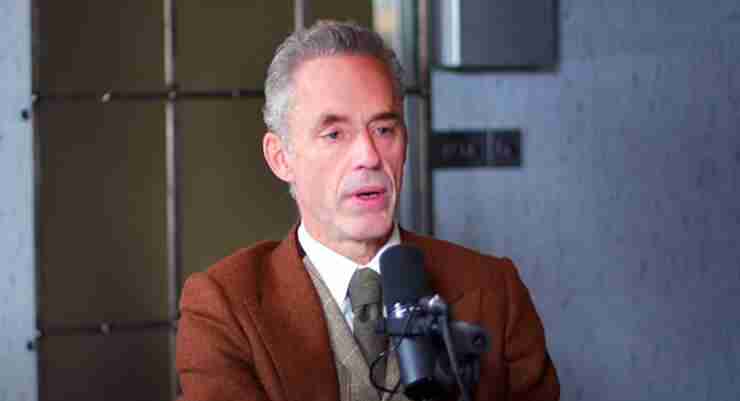
Read the full transcript of renowned psychologist Dr. Jordan B Peterson’s interview on The Diary Of A CEO (E113) episode titled “How To Become The Person You’ve Always Wanted To Be”, Jan 3, 2022.
TRANSCRIPT:
The Power of Truth in Relationships
STEVEN BARTLETT: The conversation you guys have been waiting for. I say that because of the thousands and thousands of messages I’ve had since I announced that Jordan Peterson, the man himself, all the way from Canada, came here to sit in my kitchen and have a conversation with me. And what a conversation it was. One of the most moving moments in the history of this podcast takes place in this conversation.
I think the thing that people love about Jordan Peterson is his unrelenting desire to just say what he believes to be true, not what he believes to be correct, not what people want to hear, not what people will be happy to hear. And it’s because of that—it’s because of his pursuit of truth that he’s managed to change millions and millions of people’s lives. That is absolutely no understatement.
I feel like I owe you a debt of gratitude, and I want to say thank you for the impact you’ve had on my life. And I’ll point at the specific impact you’ve had on my life. You asked me, before we start recording, why this podcast has been successful. One of the reasons is actually something I’ve gained from reading and listening to your work, and that’s this real commitment to trying to be your true self and trying to be your truth. This podcast wouldn’t be successful, and I wouldn’t have been successful in terms of pursuing myself had I not understood the importance of truth across all facets of life and in my relationships, which was a real pivotal thing for me.
DR. JORDAN B PETERSON: And so what’s changed in your relationships as a consequence of that?
STEVEN BARTLETT: So I believe it’s really difficult to truly connect with someone if you’re not speaking and being your truth. And I wasn’t. I think I was wearing a mask in my relationships in the context, if I didn’t express how I was thinking and feeling. I was trying to be who I thought my partner wanted me to be.
At the point when I let down the mask and I started speaking my truth—actually as I was departing from the relationship—the relationship got stronger than ever before. And it was like we were never actually connected until I was being true with her, with my feelings, with what I wanted, with my life. And since then, I would categorize my relationship as being the strongest thing I’ve ever seen in terms of a romantic connection with someone.
The Persona vs. Authenticity
DR. JORDAN B PETERSON: And so when you were starting to talk in your relationship in a more truthful manner, what did that mean that you had to admit? I mean, you just said that part of it was a disconnect between who you were trying to be and who you really were. So that’s a Persona issue, right?
So you think maybe, and everyone has this proclivity to some degree, they’re deeply self-conscious and uncertain. And so instead of allowing the person they’re with to connect with that underlying uncertainty and inadequacy, they act out a Persona. And then the problem is that, well, perhaps the person falls in love with that Persona, but there’s no real connection there. It’s an artifice.
And, you know, having said that, one of the things that Carl Jung, the great psychotherapist, said about a Persona is don’t be thinking that you’re better off if you never formed one. So for Jung, it was a voyage from, say, undifferentiated self in infancy and so forth through Persona to authenticity. Because you have to act out your ideals to some degree, right?
And you also have to formulate an avatar of yourself in some sense that’s a mediator between you and other people in casual social encounters. Like, you don’t want to walk into the bank and have the teller tell you about his or her day when you say, how are you doing? I mean, now and then that can happen, but generally it’s too much intimacy too quickly. And so you need this functional shell.
But the problem arises when that functional shell is all that there is. And then the real person underneath is just desperate and unhappy because nothing of what’s being acted out reflects a true underlying reality.
STEVEN BARTLETT: What is the consequence, the long-term consequence of acting? So many people, especially because of the world I live in, Instagram and social media, we kind of build out these Personas and then we almost follow the implicit instructions that come with those Personas.
The Puppet and the Actor
DR. JORDAN B PETERSON: Well, that’s the problem right there is that, well, I’m trying to get a hold of the Disney people at the moment because I want to do a lecture series on Pinocchio because I think Pinocchio is a brilliant work of art. And if you’re a puppet and an actor, and Pinocchio is both at times in that movie, both a puppet and an actor. So why an actor? Like, why is there something wrong with being an actor?
Well, the first question is, well, who sets your role? And then the second question is, who’s pulling your strings? So you put on this front that is there to make you popular and sexy and desirable and to mask from yourself your own inadequacies. But that’s a role. Well, who wrote it and for what purpose?
And so Jung said, for example, that we all acted out a myth and whether we knew it or not, and you know, maybe you’re acting out a tragedy, maybe you’re acting out Narcissus. You don’t know because you’ve put that on yourself in an attempt in some ways to deliver to people what they want, or more accurately, to look as though you’re delivering to people what they want.
And it’s not nothing to do that.
And it turns out that not only is what we want from each other the real thing, but that’s also the adventure of your life. And so if you aren’t truthful, and that means, unfortunately, especially at the beginning when you start to be truthful, it means deeply coming to terms with your inadequacies in humility. So it’s very painful. Without that, you don’t have the adventure of your life. You have the role that you’ve acquiesced to, and that’ll take all the meaning out of your life.
The Adventure of Your Life
STEVEN BARTLETT: The adventure of your life. You say, imagine who you could be and then aim single-mindedly at that. I encounter these young people who appear to know who they could be, or they’ve imagined who they could be. But for whatever reason, they seem to choose the certain misery of their current situation, the job that’s sucking their soul out, or that relationship over the uncertainty they’ll encounter as they go on the adventure of their life. So what would I say to these young people who always say to me, “Steve, I want to do this.” But you can see them stifled by fear because it’s like, yeah, well, it’s…
DR. JORDAN B PETERSON: Like, make a plan, man. When I was doing my clinical work, I did a lot of career work with my clients, both at a beginner level—I would say, like really a beginner level, with people who had no employment whatsoever, no history of employment, who were under-educated and who lacked every skill you could possibly imagine. These are people who were really in dire straits—up to people who were operating at the top of their profession, but who could still strategize forward.
So, for example, let’s say you’re at a dead end in your job. “I don’t find my work meaningful.” All right? So that’s a problem statement. It’s like, well, why not? “I find the work I do repetitive and boring and without spirit. I have a bad relationship or a neutral relationship with my boss who doesn’t know who I am. I have problems with co-workers.” All of that needs to be differentiated, right? And analyzed in detail.
So we might say, for example, let’s say you believe that you’re undervalued at work, and maybe you are. What you need to do is you have something to say. And we would have to figure out what it is that you have to say. But it would be some variant of “I’m bringing more value to the table than I am being compensated for. And that’s demoralizing me. And it’s also not good for you, you being my boss. Because if I’m actually more valuable than is being recognized, then the fact that you’re not valuing me properly means that I will become demoralized, I won’t work properly and you won’t get the best out of me. So it’s bad for both of us.”
And if your boss is in principle not amenable to such a discussion, then what you should seriously consider doing is finding another job. Okay, so let’s say we’re going to set you up for this. This isn’t like next week’s enterprise, man. This is your life.
Creating a Strategic Plan for Change
So the first thing I would ask is, well, do you have your resume or CV in order? “Well, I haven’t typed it up for three years.” Well, what do you think about bringing it up? “Well, I’m pretty nervous about that because there’s some holes in it and, you know, I didn’t do so well in college and I’m kind of embarrassed about my resume.”
It’s like, okay, bring it in. Let’s go through it. Let’s at least update it. Let’s look where the holes are. Let’s look at where the inadequacies are as far as you’re concerned, right? This isn’t my judgment, it’s your judgment. Let’s walk through those judgments and see if they’re warranted because maybe you’re just too guilty and ashamed and self-conscious and anxious. And you’re looking at your resume more critically than someone else would.
And maybe there’s some holes that you need to rectify. You know, you were two courses away from your BA and you dropped out or something like that. Well, maybe we need six months to address that. And at least even if you can’t be fully educated, you could be taking some courses online. And so when you went to a new job interview and they said, what about this hole? You’d say, “Well, I came to terms with that six months ago. And in an effort to rectify it, I’m taking the following courses, and here’s my plan for completion.”
That’s a really good answer. And anyone with any sense who’s interviewing will accept that as an indication that although you’re not perfect—and who is—that you have a good plan and that you’ve thought it through. Like, that’s the kind of answer that in all likelihood will cement your candidacy for the position.
Okay, so now you’re going to go to your boss. Well, you have to have your CV and your resume in order, and you have to be able to stand on it solidly. Which at least means that you’re prepared to address the inadequacies in a credible, realistic, believable and truthful manner.
All right? Now what you do is apply for like 10 jobs. You don’t have to take them, but maybe you have to go to an interview or two. Or three or four. And maybe there’s a bunch of opportunities out there for you that you didn’t even know about. And maybe someone offers you a job.
And so now you can go to your boss and say, “Here’s the situation I’m in here at work, here’s my evaluation of the problems in relationship to me. Here’s what I could do for you if you gave me a 40% raise and the opportunity to progress. But I’d like to see a plan for that. And I’ve been looking for other opportunities before conducting this discussion, and I have some.”
Well then, if your boss treats you with contempt at that point and doesn’t listen, then perhaps he or she is a little more narcissistic than might be optimal and it’s time to find a new job. But this isn’t something you do trivially.
And so when you’re doubtful, say you’re trapped, you ask yourself, well, why am I trapped? That’s a hard question, right? Because some of it’s your own inadequacy, a lot of it, and all of the part of it that you can deal with is your own inadequacy.
So even if it’s unfair, you know, even if you’re hemmed in for any number of reasons inappropriate, like ethnically predicated oppression, let’s say, or maybe you live at, you’re in a workplace that really is sexist in some fundamental sense, well, that’s not good. It’s not just, it’s not fair, it’s not meritorious, all of those things, man, maybe you shouldn’t be there, but what you can do to begin with is every bloody thing you possibly can do to put yourself in the most virtuous and powerful negotiating position possible.
And you have to think like a snake in some sense to do that. You got to get the details right. You have to be prepared to bite and you have to have your eyes on the prize, so to speak. And people aren’t taught this sort of thing ever really. They’re not taught how to negotiate, they’re not taught how to goal set. They’re not taught how to conceptualize appropriate success in some broad sense. In some sense, that’s what the humanities are supposed to teach people.
Building Self-Awareness
STEVEN BARTLETT: So on that point of understanding my inadequacies or someone’s inadequacies, I really believe that it’s really difficult to undergo self-development if you don’t have self-awareness. And I was really trying to understand from your writings how someone is to build their self-awareness. It’s almost like the unknown unknown. If you don’t have it, how do you build?
Finding Your Path Through Self-Reflection
DR. JORDAN B PETERSON: I know a good exercise for that. It’s like a prayer in some sense. In fact, I would say it’s proper prayer. If you want to know something about yourself, sit on your bed one night and say to yourself, you got to mean this. Like you got to be desperate. This is no game. It’s like, my life is not everything I want it to be. And perhaps it’s not everything that I need it to be.
And by need I mean my life is so unbearable that the suffering that’s attendant upon that is making me nihilistic, cynical, bitter, resentful, homicidal, genocidal, unable to have a good relationship, prone to punish people for their virtues because of my jealousy, driving the proclivity to see evil everywhere except within my own heart. Like, these are problems, man.
And you ask yourself, you sit on the bed and say, okay, man, I’m ready to learn something. Like, what’s one thing I’m doing wrong that I know I’m doing wrong that I could fix, that I would fix? It’s like you meditate on that, you’ll get an answer and it won’t be one you want, but it’ll be the necessary one, you know. And it’s often something that will point you to small things.
So Carl Jung said, people in the modern world don’t see God because they don’t look low enough. And so imagine you’re in your messy bedroom, you know, and you’re sitting on the edge of the bed, trying to have an honest dialogue with yourself. And the little voice says, you know, it’s pretty disgusting in here. And you think, well, I’m way above such trivial niceties as organizing my room. Like now that’s pride. That’s arrogance.
If you’re above organizing what’s actually yours, how in the world are you ever going to organize anything else? And so you get on your knees and you think, well, it’s time to take a brush to the toilet. And maybe that’s where you start. And that works, like that works. You start making those micro improvements, like real micro improvements, real on the ground, actual micro improvements to things that are wrong, you’ll improve unbelievably rapidly.
Arrogance and Privilege
STEVEN BARTLETT: What you’re talking about there sounds to me a lot like an overdose of arrogance and also the need for humility. Do you think the Western world suffers from arrogance because of our relative privilege and luxury that we kind of overlook?
DR. JORDAN B PETERSON: Well, that’s a temptation, right? I mean, when the radical, lefty types go after people for their unearned privilege, they have a point. Now the point is the existentialists called it “thrownness,” which is a Heideggerian term. And thrownness is the fact that we kind of experience life as if we’re tossed into it. Thrown into it.
You know, you’re male and not female. You’re Hindu and not Christian, you’re tall and not short. You have an arbitrary range of talents and an arbitrary range of limitations, none of which in some sense you chose. It’s the cards you’re dealt. Now some of those are cards of privilege. Maybe you’re born intelligent, maybe you’re born symmetrical, maybe you’re born healthy, maybe you’re born into a culture where it’s much easier not to be absolutely deprived. Maybe your parents are rich and so all of that in some sense is unearned.
Now along with that comes a good dose of existential guilt. Because at the same time, and this is true for anyone, regardless of their cultural background, the ground we walk on is soaked in the blood of historical atrocity. And so that’s on you because, you know, people think, well, who’s the Nazi? Well, it’s the fascist or who’s the radical communist? It’s the radical left wing ideologue. And the fundamental truth of the matter is that’s best dealt with as a spiritual matter is the adversary is within, really most profoundly. And so you have to take the responsibility for that historical atrocity onto yourself.
I was talking to Guy Ritchie this week about his movie King Arthur. It’s quite an interesting movie in many ways. And when Arthur, who could be the hero, takes the sword, he’s so overcome by visions of his murderous uncle that he can’t pick up the weapon. Well, think about that. Now you have weapons at your disposal, but they’ve been used by your murderous uncle. How dare you wield them? And the answer is, maybe it’s easy just to leave the sword on the ground because you don’t want to be responsible for atrocities going forward. And don’t think you couldn’t be and don’t think you might not enjoy it.
And so the way you pay for your privilege is with your virtue. I mean that most particularly you have these opportunities and this existential guilt and the way you expiate that and atone is by doing your best to live the best possible life, you can manage to speak the truth, to treat people with respect, to abide by the principles of the dignity of the individual and to put your house in order. And that’s how you pay for your unearned privilege.
All of us, and we all have our privileges and our curses, you know, all of us have that. That’s why it’s not useful to be envious of people. You know, you see some—you’re a young man, you see someone drive by in a Ferrari with a blonde and you think, my God, he’s got everything. And you know, the woman in the car is a prostitute who’s got a cocaine addiction and her life is just one catastrophe after another. And he’s had to lie and cheat his way into this position and he’s afraid that everything’s going to come crashing down on him. And that’s what you’re jealous of and it’s just not that profound.
You don’t want someone else’s fate, man. Your fate’s enough and your adventure’s enough. It’s plenty. It’s more than you can ever fully realize. And so that’s also part of the reason that we all believe that the individual has some intrinsic dignity. Don’t be so sure that your position and your room is so damn trivial. It might be your attitude towards it that’s trivial. And if you’re in dire straits and dire circumstances, just look at how much opportunity you have to make things better. So, not that it’s easy. You don’t even want it to be easy.
The Necessity of Struggle
STEVEN BARTLETT: On that point of you don’t want it to be easy. I’ve really contended with this idea of struggle and chaos in my life and the role it plays. And once upon a time I thought I was trying to rid my life of chaos and struggle. I thought that’s why I was trying to get rich and get the Ferrari and the blonde. I thought that would create a life free of struggle.
But then I looked at some studies and I heard about this thing called gold medal depression when Olympians come back from the Olympics and they’ve lost orientation. And then the day when someone offered to buy my company for a 8, 9 figure number. And it filled me with this emptiness. And I tried to understand the role that struggle would have to play for me to be a fulfilled human being for the rest of my life.
DR. JORDAN B PETERSON: Yeah, well, the observation with regard to your company, that’s a great observation. I mean, we’re built to walk uphill. And when you reach the pinnacle of the hill, you want to stop and appreciate the vision, but the next thing you want is a higher hill in the distance. Because it’s the uphill climb that—it’s from the uphill climb that we derive our value. And I mean this technically.
So almost all the positive emotion we feel, especially the emotion that fills us with enthusiasm, and that’s to be filled with the spirit of God, by the way, because that’s what enthusiasm means. That’s experienced in relationship to a goal. And so in some sense, and this is part of the religious enterprise, you want a goal that you can never attain, right? So you can always move closer to the goal that recedes as you move towards it.
You think, well, that’s frustrating. It’s like Sisyphus pushing the rock uphill. But it’s not. Because as you pursue that goal, you put yourself together and your life does get better and richer and more abundant. And that’s why the highest levels of virtue and goal are in some sense transcendent. You want them to be above everything you’re doing, so you can continually move towards something that’s more sublime and better. That’s what you are. You’re here to live, not to sleep.
And the problem with the vision of Mai Tais on the beach is that, well, first of all, that’s a vision of drug induced unconsciousness. Second, it’s only going to work for about a week. Third, you’re going to be a laughingstock in a month and depressed and aimless and goalless. You want a horizon of ever expanding possibility.
And so it does happen to people as they’ve staked their soul on the attainment of an instrumental goal. And it can be a pretty high order goal. It was in your case. But then you think, well, now I’m there, now what? Well, the answer can’t be, well, I’m going to live in the lap of luxury and never have to leave the fate. What do you want to be? A giant infant with a gold bottle. You never have to do anything but lay on your back and suck. It’s like, well, you see the problem with that as a conceptualization.
No, you want to be like an active warrior moving uphill with your sword in hand. And that’s dynamic, that’s exciting. And that’s why so many young men disappear into video games. That’s all acted out in the video game. So they have to act that out in their own life. Not that I despise video games, because I don’t. But they’re not a substitute for life. They might be good training under some conditions for life.
Remote Work and Human Connection
STEVEN BARTLETT: So one of the things I was also really, really keen to ask you was about what’s happened in the world over the last two years. One of the shifts we’ve seen in the business world is this move to remote working. And I hate it. And I hate it for a variety of reasons, because I feel like there’s very few institutions in my life where I have a chance to meaningfully connect with people.
Dating has become screens, socializing has become screens. And the office, the institution of the office in my life was one of the places, especially as a younger man, where I got to meet pretty much 90% of my current best friends and also partners. And I really worry about sitting behind a zoom doing my work for the next 10 years. What is your take on remote working?
The Virtual World vs. Reality
DR. JORDAN B PETERSON: Well, I like it and I don’t like it. I think it’s very difficult for us to understand our embodied environments well enough to duplicate them in a healthy and comprehensive manner in the virtual world, because we just don’t understand what it is that we’re doing when we actually do things rather than represent them.
For example, I thought a lot about online university. You can certainly imagine online lecture courses, and you could say the fact that they can be delivered on a large scale very inexpensively is a virtue. You can bring the knowledge to a very large number of people at a low cost. So why not do that? And that’s half the university. And then you could say, imagine that you generated a system of universal tests, which is a possibility. That means you could bring accreditation to everyone at a low cost as well. And that’s university online.
But that presumes that you know what the university is—and you don’t. Here’s some other things: the university is a credible excuse, socially sanctioned, for young people who have not yet established a career goal to adopt an identity of upward striving for four years away from their parents while they meet a new group of friends. That might be 90% of what university actually is, for all we know.
For me, when I went to college, I left home when I was 17 and I left this small town I had grown up in. In many ways, I left the peers that I had been associating with. Now a couple of them came to college with me, so I had a toehold there, but I made an entirely different group of friends. And they were friends whose goals were quite radically different from the friends that I, in some sense, left behind. The reformulation of my peer network might have been the most important part of the first part of my education.
I was fortunate at this place, Grand Prairie College. I had seven professors—seven, which is really good—who really loved to teach. So I also learned a lot in the formal sense. But while I was doing that, I was also negotiating: Well, how much partying do you actually do? Because zero isn’t the right amount, but every night till three in the morning isn’t the right amount either. You have to balance that with practicality and upward striving.
And how do I live with other people? My roommate—I had one roommate who’s a really good friend of mine still, and he walked a thousand miles with me this year when I was ill, literally. I really liked living with him because he was a tough guy, worked in lead smelters, and he was a cowboy. Three years older than me, he’d come back to school after bouncing around through these tough working-class occupations. He had his feet on the ground in lots of ways.
I really liked him as a roommate because I’d buy some groceries and then he’d buy some groceries, or I’d make dinner and he’d make breakfast. None of that was ever explicitly negotiated. He was just very aware of this reciprocal relationship. It’s reciprocal altruism, technically. We were both good at tracking our mutual obligations and fulfilling them, so we had a very peaceful relationship.
I lived with him for a year and then a little bit at different times and in different places. I learned to live with a whole variety of roommates. We had a kind of a frat house in the first college I went to, and anywhere from six to 20 people lived there, depending on the week. It was ridiculous. It was way too much fun, which was also a problem.
When I look back on that time in my life, I certainly can’t reduce the educational experience to virtual classes and virtual tests. That’s maybe 10% of it. We don’t know how to replicate those environments that are so formative, especially in their everydayness. You live with your roommates—that’s a 24-hour thing.
The problem with virtualization is that we don’t understand our environments well enough to be certain that we’re not excluding something vital when we concentrate only on what we think conceptually is important.
Now, I meet with my son pretty regularly for a project we’re working on, which is an app that will teach people to write while they write and use it. I meet with him virtually once a week, and it’s actually very efficient. He’s on the screen, we can see our project in front of us, we can do mutual editing of the underlying educational material. There’s a real place for it.
I have a cottage up north in Toronto where we set up a studio like your studio here, although ours isn’t quite as impressive. But I can have an interview and discussion with anyone, anywhere in the world, even in a foreign language. That’s unbelievably remarkable.
But that doesn’t mean that we know how to virtualize reality or that we should flee into it. These new technologies are unbelievably radical and very hard to master. We all have to be careful and try to keep our feet on the ground to some degree when we’re using them.
For example—and I’ve really only figured this out in the last three months—I get up and do a series of exercises that my wife taught me that are based in the Kundalini yoga tradition. That’s really helpful. Flexibility and breathing exercises reduce my anxiety during the day by about 25%. Then I try to reserve some time either for writing or for the artistic projects I’m working on. I’ll do one of those for a couple hours in the morning, and then maybe a walk with my wife and breakfast. Then I can turn to the connected world—email and podcasts and so forth.
There’s this balance between privacy, introverted privacy, and disconnect from everyone except for my wife, and then contemplated reconnection with the virtual world. That seems to be working out pretty well. You want to get a balance that’s actually sustainable. You want to hit your projects hard, but you have to leave room not for entertainment, but for culture, because those are not the same thing. Entertainment is an approximation to culture. You need to leave room for culture—that’s beauty and drama and art—and for intimate relationships and friendships.
It’s very difficult to get the balance correct, and it’s very difficult to do that virtually. But I certainly wouldn’t forego the technology, and neither would the rest of us. People complain about their phones, but they carry them everywhere they go. I’m not cynical about that. The phone—it’s not a phone, God only knows what it is, but it’s definitely not a phone. It’s not surprising that since it just appeared and it’s so insanely powerful, we don’t know what to do with it, and that might even wreck everything. Twitter itself could bring civilization to a halt. We don’t know how to manage the unintended consequences of our technological prowess.
STEVEN BARTLETT: And that’s exactly it. We invent technology often, it seems, for efficiency or to increase productivity. And it’s almost impossible, because of that ignorance to what the unintended consequences might be, to predict them ahead of time. So we optimize.
The Danger of Unintended Consequences
DR. JORDAN B PETERSON: The essential doctrine of conservative political philosophy is beware of unintended consequences. It’s like, “Oh, no, this thing will just do what I want it to do and nothing else.” No, even Marx knew that wasn’t true. Marx developed the concept of alienation. We get alienated from the products of our effort. That’s part of the reason he didn’t like factories. And fair enough, because factory work, which is repetitive in some sense, destroys our artisanal relationship with what we produce.
Now, the problem with Marx’s analysis is that factories are pretty damn efficient, and they lift people out of absolute poverty really quickly. But existential philosophers after Marx developed the concept of alienation to quite a high degree, and technology does alienate us because of its artificiality and its coldness and its mechanistic nature. We have to contend with that wisely.
And then you ask, well, how do you contend with things wisely? I would say, don’t pollute your thoughts with deceit. You compromise your own wisdom. How are you going to make wise decisions? That’s why you shouldn’t lie. It’s like you’re warping the mechanism that orients you in the world. Do you really want to do that?
This is a brutal world. I’ve seen this in my clinical practice—people whose houses are built on foundations of sand, and the wind starts to blow and the floods start to rise, and they are in such trouble. Such trouble. If you’re lucky and something terrible comes your way and you’re reasonably honest and your relationships are in good order, maybe you won’t end up in hell. And I mean hell. I don’t mean death. There’s lots of situations you can get yourself in where death would be far preferable to what you’re going through.
So you need to be afraid of that. Don’t lie. In my clinical practice, in 20 years working with every sort of person you could imagine, I never, ever saw anyone get away with anything even once. We’re all subject, not least to the judgment of our own conscience. Try to escape from that—no one can escape from that.
STEVEN BARTLETT: Over the last two years, the world has gone through this pandemic. For a lot of people, for a certain generation, this is the first time they’ve experienced such unpredictable tectonic destabilization in their lives. I didn’t even believe society was something that could close. I didn’t believe there were tectonic plates under my business that could shut down my business.
And also, over the last two years, you’ve undergone some really—I don’t even know what the right adjective is to use—tectonic…
DR. JORDAN B PETERSON: Not bad.
STEVEN BARTLETT: We’ll go with tectonic then.
DR. JORDAN B PETERSON: Sure.
STEVEN BARTLETT: Tectonic. You know, unfortunate challenges, I’ll say, in your life, but also with your family. What are the lessons we learn from the pandemic and from that type of tectonic suffering about what actually matters in our lives?
The Pandemic Response and Political Implications
DR. JORDAN B PETERSON: Well, we’ll see with regard to the pandemic, because although in some sense it is in some ways over, our reaction to it is by no means over. And part of the reason that we overreacted, I would say so precipitously to it, is that we were unprepared for such things in our naivety. And then we rushed to imitate a totalitarian society in the immediate aftermath of the pandemic emergence. And that’s something that everybody should think about a lot. And we’re not done with all that totalitarian nonsense yet.
A lot of that’s driven by, well, fear and naivety. I mean, 50% of Democrats in the United States believe you have a 50% chance of being hospitalized with COVID and 25% of Republicans believe the same thing. And you can point a finger at people and laugh at their ignorance, but you should really ask, well why is this overestimate of that magnitude and what does that mean in relationship to policy?
I’ve had conversations with people advising at the highest level of government, particularly in Canada, who’ve told me flat out, and they’re very reliable sources, that none of the COVID policy for the last year was driven by reliance on science. It’s all opinion poll. And that’s really pernicious because, well, who’s asking the questions and how do they set up the answer and who’s answering and in what emotional state? And so to what degree are we led by considerations of short-term propitiation of unwarranted fear? Well that’s no way for free people to live. It certainly won’t work in the long run.
We’re already seeing tremendous supply chain disruptions and likely the emergence of an inflationary pressure that we haven’t experienced since the 1970s in the aftermath of the oil shocks. And none of that has sorted itself out yet. I believe that we will conclude that our response to the pandemic caused more death and misery than the pandemic itself and we have no end game in sight.
Another thing I asked the people that I was speaking with, like when is this over? Well, we don’t know. Well what would over look like? Well, we don’t really know. And now what you see is this insistence on about a monthly basis that a new and radically different variant has emerged. And this virus. Viruses mutate all the time, but this virus particularly mutates. And there are small mutations and medium sized mutations, numbers let’s say, and also effect and larger scale mutations. When is that a variant? Well, how about whenever it’s convenient for the pharmaceutical companies?
Think, well that’s cynical. Is it? Now the biggest lawsuits in the history of the American judicial system have been levied against the largest pharmaceutical companies on a regular basis for the last 20 years. And since when has it been a proposition of the political left that pharmaceutical companies necessarily have our best interests in mind?
Now I’m not particularly cynical about pharmaceutical companies. I think they have a hard job both in terms of research and development and marketing and sales and they’re going to do what they can to market and sell. But that doesn’t mean that they are now to be the arbiters of all public policy because our politicians are too cowardly and incompetent to do anything but devolve their responsibilities to so-called experts, domain experts.
Politics is not public health, that’s medicine. Politics is the art of analyzing the entire situation and charting a course forward, all things considered. And for politicians to trot out the experts and say follow the science just means that they’ve abdicated their own responsibilities. And I think it’s appalling.
I’m not convinced that the evidence that masks work is scientifically credible. It’s certainly at least doubtful. And that’s just masks. I read a paper the other day suggesting that to prevent the transmission of one case of COVID you have to lock down 1,000 people. Like how is that justifiable? Especially given that the mortality rate of COVID is actually quite low, unless you have a pre-existent health problem, particularly obesity. And although old age also qualifies, as it does for most diseases, but not all.
And with regards to, let’s say, the issue of child vaccination, it’s like children have an unbelievably tiny chance of dying from COVID. I don’t think there’s any scientific justification for immunizing children under 12. Now, at least it’s debatable. And I’m not a domain expert, although I’m a decent scientist and I know how to read the research material.
So, well, we’ll see what we have to learn from these tectonic shifts underneath. And you know, you might ask yourself, well, was that a tectonic shift in dire physical necessity because the COVID virus was genuinely so dangerous, or was it an indication tectonically of our absolute inadequacy in the face of even a moderate existential challenge? And maybe it’s a little column A and a little column B, you know.
STEVEN BARTLETT: So I have to ask the question. If we were to make your Jordan Peterson the president of the world, and these were your decisions to make, do you know what you would have done differently or in response to this virus emerging in Wuhan?
Individual Encouragement Over Political Power
DR. JORDAN B PETERSON: I would say, well, thank you for the offer, but I decline the position. And the reason I would say that is because I think the right solution to the most serious problems is to be found at the level of the individual. So I don’t think if I wanted to pursue what I regarded as the ultimate goal, the ultimate goal for me is the encouragement of the individual. And that’s not essentially a political enterprise, it’s essentially a theological enterprise. And politics has to be subordinate to that.
I’ve debated throughout the entire course of my life whether I would adopt a political career. It was my initial ambition when I was very young, 14, I would say. But when push came to shove at every decision point in my life, if I had to choose between working on the encouragement of the individual or pursuing a political career, I always chose the former. And that’s happened every time the decision has come up.
I have been approached by people in Canada to involve myself more deeply in a practical role and also publicly as a political figure. But I’d rather do what I’m doing. I’m in contact with people working politically all the time, both on the people in the middle, people on the right, people on the left. I’m agnostic about that because I know full well that conservatives have something to say and left-leaning liberals have something to say. That’s basically predicated to some degree on their temperament.
So conservatives tend to be more conscientious. So that’s orderly and industrious, dutiful, patriotic, willing to make and keep verbal contracts, reliable, capable of implementation at the level of detail. That’s kind of conservative virtues there. But they tend to be lower in creativity, openness to experience. They don’t think as divergently and their conscientiousness tends to constrain their creativity.
Whereas the liberal types, they’re high in openness to experience, that’s the creativity dimension. But they tend to be lower in conscientiousness, particularly orderliness. And so what that means is those with a liberal temperament tend to be creative entrepreneurs and those with a conservative temperament tend to be managerial and administrative. That doesn’t mean they can’t run businesses. Well, you want a conservative person to run your business, you might want a more liberal person to pepper you with off-the-wall ideas, you know.
And then if you’re going to run an enterprise business or a society, there has to be a continual dialogue between people of different temperaments so that we can keep the ship of state, let’s say tracking to an ever-moving destination. That’s why free speech is so necessary. It’s not another right, it’s the right.
Because none of us know what’s going on in the final analysis, because the future is different than the past, really we have to talk about what to do all the time. Because even if we made wise decisions in the past, that doesn’t mean that we can mindlessly replicate those decisions right now in the present to deal with a changing future.
So I want to help encourage people to become the sort of people who can engage in that free dialogue. And I think that’s the best way forward, especially as we all become more technologically powerful. It’s like, you better be smart enough to use your iPhone, and that’s pretty damn smart. Let’s say wise, because that’s no trivial gadget. And if you’re not careful with it, it will turn on you. It will build authoritarian presumptions into our artificial intelligence systems, for example, and then look the hell out. So if you’re going to have a hydrogen bomb, you better be wise enough to wield it.
STEVEN BARTLETT: On that point of the encouragement of the individual. We all have people in our lives that we want to encourage.
DR. JORDAN B PETERSON: We hope.
STEVEN BARTLETT: Yeah, we hope. Right. And we sometimes fall foul of trying to force our own bias, our own intention for them on them. What is the best way? If I’ve got a friend in my life or, you know, partner that I want to encourage to come out of their place of despair into a better place, how do I effectively do that without overpowering them or stifling them or making them feel inadequate, which is sometimes the consequence of trying to change someone you love?
The Power of Listening
DR. JORDAN B PETERSON: Well, examples, good. But then I would say disabuse yourself of the notion that you know what is best for this person. You don’t. Not only do you not know, you actually don’t want that responsibility for two reasons.
Let’s say they do what you say and something good happens to them. Well, whose victory is that, yours or theirs? And if it’s yours, did you just steal it? And then let’s say they fail following your advice, well, they pay the price for that. And you can skip away merrily and say, well, I should have spoken more carefully. It’s like, you don’t mess about with people’s destiny. You do not know where they’re headed.
Now, having said that, you do what you’re doing in this interview, in this podcast, you ask people questions, real questions. You know, like, how are you feeling? I’m not doing so good today. Well, you know, what’s up, what’s going on? And you can’t think, well, I’m going to ask questions to lead this person in a particular direction, because that’s the same game, the same instrumental game. You have to see what it is that you want to know.
When people ask me questions after my lectures, now and then, people get up and they’ll ask a real question. It’s part of the ongoing dialogue. Something struck them. They stand up, there’s something they really want to know. So, honest question. And that goes real well, but not infrequently, someone stands up with a little prepared speech that’s packaged as a question.
I get this from Christian traditionalists fairly frequently. They get up and they ask me about my religious convictions, but really what they want to do is corner me into admitting that I should accept Jesus Christ as my savior and join a particular denomination. It’s not a question, it’s just a manipulation.
Your questions, like your statements, your questions should be honest. And if you ask people questions and you really listen, they will untangle themselves. And that’s partly why people love to be attended to.
If I meet people on the street, I ask them their name, they’re all usually flustered when they come up to me. They don’t really want to interrupt me, and then they’re flustered. And the first thing I do is shake their hand and ask them their name. And I listen. Not that good at remembering names, but I listen to it. And they know how to say their name. And so it kind of settles them down. And then it sort of marks them out as a person against the background.
And then if I pay attention to them and listen, they will tell me something in like 10 seconds that I need to know, because they have something to say. And then if you listen, people tell you what they have to say, and then you get wise because you collect all that.
So you want to help someone? Well, first of all, you decide that you’re aiming towards help, right? And that you do that in the spirit of ignorance. This is what every good clinician learns, is, I don’t know where you’re headed. I don’t know what’s wrong with you. This is a hard problem. It’s like, what’s your problem? I don’t know what your problem is. So let’s find that out first.
Resolving Conflicts Through Questions
One thing you can ask people—this is actually useful in an argument with someone you love. They’re upset with you. What are your preconditions for satisfaction? Now, I wouldn’t state it like that. It’s like, if I could give you what you wanted right now, in the context of this argument, and I wasn’t doing it in a manipulative way, what is it that I would have to say or do that would in principle satisfy you?
And that’s a hard question, you know, and the person might say, well, I think you should apologize about this. And I will say, what words should I use? And they’ll say, well, if you loved me, you’d know. And I would say, no, I’m stupid and ignorant and I don’t know what the right words are to satisfy you, so why don’t you give me a hand with that? And I’ll utter them inelegantly and awkwardly in a good faith demonstration of my commitment to peace.
And that won’t be so good, because maybe it would have been better if I came up with it myself, but maybe next time I can do slightly better. And that works. It requires the person who’s after you to think through the question even of whether there’s anything that could be said or done that would satisfy them. And if the answer to that is no, well, probably the relationship is over. But certainly the person that they’re accusing has been put in an absolutely impossible position.
But usually, almost inevitably, if the person meditates on it for a bit, there is something that would satisfy them, that can be negotiated as long as they’re willing to give you the opportunity to do it stupidly and badly.
The Art of Listening
Listening, man. Jimmy Carr. I talked to Jimmy Carr two weeks ago, the famous comedian. It was really interesting. He said, comedy is the most dialogical of the entertainment forms. And I thought, well, what do you mean by that? Because you’re just talking. It’s a monologue, right?
Now I do monologues, but I pay attention to the audience. I’m always talking to individual people in the audience and watching their reactions and listening to the audience as a whole. So even though it’s a lecture, let’s say, or a talk, I’m watching the audience and responding. So we’re in a kind of dance.
Well, Carr pointed out that comedians, before they hit the road, and this is virtually invariably the case, they have their new routines, their corpus of potentially funny jokes, and then they do 200 shows in front of small audiences, and the audience either laughs or doesn’t. And if you’re listening, you collect all the jokes that people laugh at. If you do that 200 times, you have nothing but hilarious material. But you listened, and then you can go out on the road.
And that was very interesting to me because humor is a mysterious phenomenon, experientially and conceptually, and it’s sort of precognitive and instinctual, but it’s also extremely sophisticated. Then there’s an element of transcendence about it. Because you can laugh at yourself. And that’s in some sense the highest form of humor.
And so it’s so interesting that we can criticize and elevate ourselves at the same time and that we find that intensely pleasurable. And so a good comedian collects ways to do that, shares them with the audience and he’s listening. And so if you want to help someone, the best way to help someone is not to give them advice, but to listen to them.
On Happiness
STEVEN BARTLETT: So I had a guest actually come on this podcast before Jimmy Carr. Jimmy Carr was on two weeks ago and we had a great conversation about happiness and the nature of happiness. And the guest before Jimmy Carr wrote in my diary, which is a tradition we have now, where all the guests that come on write a question for the next guest.
So there is a question there for you. But the guest wrote a question which changed his life, which is, are you happy? And from reading your work and understanding your position on happiness and it not being the thing to aim for, which really struck me because I thought life was the north star of our lives, was to try and be happy. I guess my question is, I was going to ask you that question.
DR. JORDAN B PETERSON: Aim to be good and pray for happiness.
STEVEN BARTLETT: So the question I was going to ask was pretty much that. What is a better question for me to ask you if I’m checking in on you because we asked that question with good intentions, “Are you happy?” What’s a better question for me to ask Jordan Peterson?
DR. JORDAN B PETERSON: How are you doing?
STEVEN BARTLETT: How are you doing? How are you doing?
DR. JORDAN B PETERSON: Brilliantly and terribly. That’s, you know, when you listen to a profound piece of music, one that sort of spans the whole emotional experience, it’s not happy. Happy is elevator music. And probably you just shouldn’t listen to that at all. Right? And you think, why? Well, it’s harmless, it’s treacly, it’s sweet, simple, it lacks depth, it’s shallow. That’s a problem. It doesn’t have that deep sense of awe and horror. I would say that is characteristic of the best of all music.
You know, you listen to some simple music, Hank Williams is a good example, the blues cowboy from the 50s who died of alcoholism when he was 27 and whose voice sounds like an 80-year-old man. Simple melody? No, but there’s nothing simple in the song and in the voice, it’s deep. You know, it’s like the blues, it’s like black blues in the States from the twenties. And this was certainly influenced by that tradition.
There’s this admission of a deep suffering at the same time as you get the beautiful transcendence of the music. And that’s meaning, you know, that’s awful in the most fundamental sense. But you need an antidote to suffering, and it has to be deep, and deep moves you tectonically and it’s not a trivial thing.
But that’s better than happiness. And maybe if you’re lucky, while you’re pursuing that and while you’re immersed in it, you get to be happy and you should fall on your knees and be grateful for that. When it happens, you know, it’s a gift. It really is a gift, and it comes upon you unexpectedly, your happiness, you know, but you aim to climb uphill to the highest peak you can possibly envision, and that’s better than happiness.
STEVEN BARTLETT: Why did you include terribly?
DR. JORDAN B PETERSON: Well, for example, now, when I go, wherever I go in the world, people come up to me and they’re usually—I wouldn’t say they’re happy to see me. They’re often in tears, you know, and they often have a pretty rough story to relate. They were suicidal or nihilistic or homicidal or trapped, desperate, and they tell me that real fast. And then they say, I’ve overcome that to a large degree and thank you for that.
And you think, well, that’s really something, to have that happen over and over. In some ways you might think, well, how could anything better possibly happen to you than to have people come up to you all over the world, strangers, and open themselves up like that, like they’re old friends, so quickly?
But at the same time, it’s an awful thing because, you see, even in the revelation of their triumph, the initial depth of their despair. So I wouldn’t change that. But it’s not nothing. It’s certainly not just happiness. It’s better than happiness, but it’s almost unbearable.
God, tears again. It’s been quite two weeks in the UK. It’s been amazing. Been amazing. Such a great country, this country, such a profound place. And it was so wonderful to see Cambridge and Oxford and to be welcomed by the students.
Why Do What You Do?
STEVEN BARTLETT: I saw the cues around the block and the reaction you got. I watched the talk in Cambridge and it was so wonderful to see, because I know that you don’t do what you do for credit. That kind of seems to be the antithesis of pursuing your truth and doing it in the cause of truth. But it was so wonderful to see someone that I know has had such a profound impact on so many be received in such a way.
We have a closing tradition. One of the really great CEOs in our country, young guys, bought a multi-billion dollar company, really great guy, sat here yesterday and I actually told him for the first time who he’s writing the question for. And I couldn’t believe his face. “Oh my God. That’s the one person I want to have dinner with.” This is probably the most successful young person in our country. And so he knew who he was writing the question for. So the question that the previous guest wrote for you is: why do you do what you do?
DR. JORDAN B PETERSON: To see what will happen. Some programs, you cannot predict, right? You cannot predict how they’re going to end. You have to run them.
Well, you know, I believe that truth will save the world. I believe that. So you speak truthfully and you watch what happens and you take your consequences, you know, and maybe you hope and have some faith that in the final analysis things will work out in your favor. But perhaps they will and perhaps they won’t. But that’s faith. Faith isn’t believing in things you regard as ridiculous, sacrificing your intellect. It’s a decision. Will truth, beauty and love save the world? Well, you can find out.
STEVEN BARTLETT: Thank you. Doesn’t seem to quite cut it for the impact you’ve had, even on me, and also for giving me your time. I know you understand the tremendous value of time. I’ve seen it so much in your work. So I’m going to say thank you. But I’m also going to make a commitment to do something which I think is more important, which is just to be truthful.
And I think with the platform I have and the years I have ahead of me, maybe that’s the greatest good that I can do to the world. So because you’ve come here, that’s a pledge and a commitment I want to make to you as my highest form of thanks that I can give in a karmic way. Hopefully that will make the world a better place for everybody.
DR. JORDAN B PETERSON: Well, at least it will help ensure that you won’t make the world a worse place.
DR. JORDAN B PETERSON: Much appreciated.
STEVEN BARTLETT: A huge honor. Thank you so much.
End of Interview
Note: This appears to be the conclusion of the interview between Dr. Jordan B Peterson and Steven Bartlett from “The Diary Of A CEO” episode.
Related Posts
- Transcript of David Senra Interview: 14 Patterns Behind the World’s Greatest Minds
- Transcript: Dr. Marc Brackett Interview on Emotional Mastery – Mel Robbins Podcast
- Transcript of Seth Godin Interview: Mel Robbins Podcast
- Transcript: David Epstein Interview: Modern Wisdom Podcast
- Transcript: Scale AI Co-founder Lucy Guo Interview – On Purpose Podcast