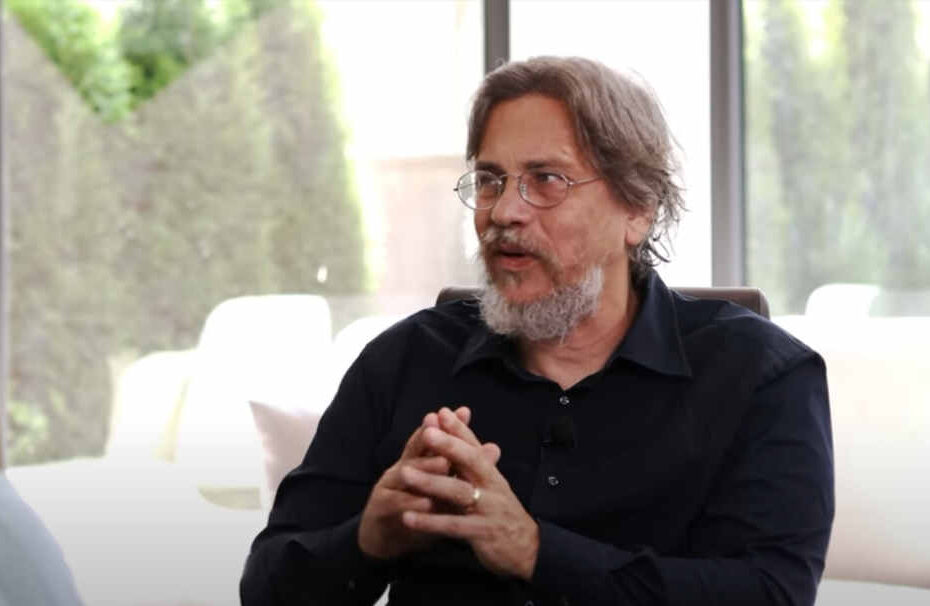
Read the full transcript of Ukraine War Q&A – Answering Your Questions with political science professor Dr. Roy Casagranda, July 29th, 2025.
Did NATO Expansion Provoke the War in Ukraine?
INTERVIEWER: All right, first question. Did NATO expansion provoke the war in Ukraine? How much did NATO’s eastward push factor into Russia’s decision to invade? And did the west break any post Cold War promises to Russia?
DR. ROY CASAGRANDA: Yeah. So the answer is yes and no. It’s a complicated situation.
So in the aftermath of the collapse of the Soviet Union, the United States and the UK decided that they were going to make it their life goal to denuclearize Ukraine, Belarus and Kazakhstan. Those three Soviet republics actually had ICBMs. So there was this sense of who’s in control of those ICBMs. Can they stay in those states? The Russians had the codes, so they were effectively inoperable. But maybe there was a way to overcome that and take control of them.
So the United States and Great Britain met with Russia and the other three Soviet republics that had ICBMs and sat down and worked out a deal. And the deal that they came up with said that the United States and Great Britain would take care of the security of those three states, Ukraine, Belarus and Kazakhstan, if they would hand over their nuclear material to the Russians. So that they denuclearized. I think if I remember correctly, the US actually also took some of the material. It wasn’t all handed over to the Russians.
In effect, what the Ukrainians heard, and they shouldn’t have heard this, they should have read some history and known that the United States is the greatest treaty breaking state in the history of humanity. What the Ukrainians unfortunately heard was “if we turn over our nukes, the United States will protect us and we won’t have to worry about a war in the future.” I think they thought it was something like NATO and they should have said, “no, we won’t do this unless we join NATO.” They should have made it like a hardcore thing. So that’s one piece of the equation. Another piece, and this was of course in the 90s.
# The Eastern Bloc Rebellion and Soviet Collapse
The Eastern bloc states, of course, go into a state of rebellion in 1989. When I say that, it’s muddled because Poland had actually been in a state of rebellion for years prior to that. Poland sort of led the way towards the Eastern Bloc states breaking away from Soviet influence. But by 1989, it’s like full fledged rebellion. Right? The Czechs are pouring into Germany and then the next thing you know, East Germans are pouring into Germany. And there is this huge event in 89.
And it became incredibly clear that the Soviet Union no longer had the ability to control the Eastern Bloc states and that they were losing them one after the other. Of course, East Germany then immediately wants to reunify with West Germany. George Bush Sr. was in a position where he needed to somehow smooth this over. And then the Soviet Union collapses. 1991, but before the Soviet Union collapsed. So Gorbachev is still in power. There’s still a Soviet Union.
George Bush Sr. goes to Gorbachev and he says, “look, we don’t have any ambition of expanding NATO eastward. We don’t want to get Poland and Romania and Hungary. That’s off the table. All we want to do is reunify Germany. It’s time to put Germany back together.” Which means you’d be losing East Germany and it would be joining NATO. “If you will clear the path for this and allow Germany to reunify, I promise that’s the last Eastern Bloc state that’ll end up in NATO.”
And so there was a promise made that there would be no eastward expansion. But then the next year, that was 1990, and the next year, 1991, the Soviet Union collapses. And I think in many ways the Clinton administration saw this as a reboot, that all previous agreements kind of went out the door. And there was sort of this start over event. And the Clinton administration very aggressively tried to move NATO eastward. The Bush Jr. Administration continued that policy. So this was a Clinton policy and a George Bush Jr. policy.
# The 2006 NATO Meeting and the Worst Possible Outcome
I’m trying to remember. I should have looked this up before we got on here, but I want to say it was 2006 and I want to say the meeting was in Bucharest in Romania. And what happened was NATO leaders got together and they got together with representatives from Georgia and Ukraine. And the reason was that they wanted to talk about the possibility of expanding NATO. By this point, NATO is all the way to the Ukraine border, right? Hungary and Romania are now part of NATO. By that point, Poland’s part of NATO. So the Soviet Union’s westernmost border is the edge of NATO.
The European states, the European NATO members don’t want anything to do with expanding NATO into Ukraine and Georgia. They’re just like, “this is not okay. We don’t want to poke the bear. Why are we going to make the Russians more angry than we already have? Latvia, Lithuania, Estonia are already part of NATO. What is the point in taking this one step further?”
George Bush Jr. is like, “no, Ukraine is joining NATO. This is a done deal. We’re going to get Georgia in NATO. This is going to happen.” And in the process of arguing, the European NATO members make a deal with the United States, they’re going to split the difference. And from a strategic standpoint, it’s our impulse to think compromise, negotiate compromise. And there’s definitely a moment when you want to. But sometimes from a strategic standpoint, you either want to do A or you want to do C.
So this is that situation. But it was the dumbest possible outcome imaginable. Instead of saying, “we’re definitely not letting Ukraine and Georgia in,” or saying, “we are definitely letting them in,” they agreed to, “we’re going to let them into NATO at some point in the future.” And then there would never be an actual entry for them, which is literally the worst of both possibilities. Because now you’ve just told the Russians, “yes, they are joining,” and then you’ve told them, “you will never join.” So now Russia is furious and they’re not going to get any reward for it.
# The 2008 Georgia War
So the result is that the Russians now have put their eyes on Ukraine and Georgia in a negative way. Now, Putin sees this as a threat to Russian sovereignty. And of course, in 2008, Georgia had two breakaway territories, South Ossetia and Abkhazia. And Georgia had been just sort of ignoring that these two territories had broken away. And George Bush Jr. said to the Georgians, “go ahead and reassert sovereignty over your breakaway territories. We’ll back you.” And so they do this.
And of course, Putin uses this as an excuse to invade Georgia. And so the Georgians immediately go, “okay, you said you would back us. What are you going to do?” And there were Georgian troops in Iraq helping part of the coalition of the willing. And George Bush Jr. put them on transports and flew them into Georgia. And the Georgians were like, “your definition of assistance was to transport our troops to their death. There’s nothing we can do to the Russians. They’re just going to run us over like a speed bump.”
And that’s how Russia then carved South Ossetia and Abkhazia permanently out of Georgia and said, “this matter is settled.”
# Russian Perspective and Historical Context
So there’s lots of missteps. There’s lots of stupidity in the buildup to this in the mind of Russia. Ukraine should definitely be part of Russia’s sphere of influence along with Belarus, because they’re fellow Slavs, they’re linguistically extremely similar. And Belarus means “white Russia.” Ukraine means “frontier.” And so in the mind of Russia and Russian nationalism, Belarus and Ukraine are inherent, integral parts of the greater Russian state.
But you also have to remember 120 years ago, there was this Pan Slavic movement where in Russia’s mind, Serbia and Slovakia and Slovenia and the Czech Republic, what ended up becoming Czechia today, the Czech Republic and Bulgaria, that was all Slavic land. And Poland, and it should eventually be part of a greater Slavic state. So the idea somehow that Ukraine and Belarus wouldn’t be part of Russian influences, anathema.
I think in a way it would have been like if Canada had joined the Warsaw Pact, it would have sent the United States into a mind. Look what happened with Cuba, how we freaked out. We were going to start World War three over Cuba. We had bombers with nukes on the way to Russia over Cuba. So you can imagine what would happen if Canada had joined the Warsaw Pact. It was just train wreck. And the United States did a really crappy job in the end of sort of making it okay dealing with Russian sensitivity.
# The Yugoslav Analogy and Ukraine’s Justified Concerns
But having said all that, it’s clear that Ukraine was right to be nervous. So I’ll give you an analogy. When Yugoslavia broke apart, I was heartbroken because in my mind, Yugoslavia was this really amazing place. Tito was a fantastic leader. He was obviously dead by this point and no longer the leader. But the legacy of Tito was really profound.
And what Yugoslavia was is it was this multinational attempt to create a single state, right? Slovenians and Croatians and Bosnians and Serbs and then North Macedonians, they’re just Western Bulgarians. And then there was even an Albanian population. And there was this sense of they were going to transcend nationalism, they were going to transcend religious bigotry because they’re Catholic and they’re Serbian Orthodox and they’re Muslim, and somehow they were going to get past all of that and they were going to make this work, and instead they blow up.
And my initial thought was, “what are you thinking, Slovenia? Why are you wrecking this incredible experiment?” And then Croatia breaks away and you’re like, “why? Why are you doing this?” And then Serbia unleashes this incredible violence, first on Croatia, and then they turn it on Bosnia, and you go, “oh, now I see.”
And so this is that. This is. The Ukrainians were trying to figure out how to create security. And then Putin’s response in 2014 is to literally invade. And then he invades a second time and expands his war in 2022, proving that Ukraine’s concerns were right and that Ukraine really did need to be part of NATO to prevent being overrun by the Russians.
So the answer is, yes, there were lots of missteps and lots of stupid policies coming, especially from the United States. But at the same time, Ukraine wasn’t wrong for wanting to look into its security.
Ukraine’s National Identity vs. Russian Claims
INTERVIEWER: Is Ukraine a distinct nation or part of Russia’s historical identity? Can you clarify the historical relationship between Ukraine and Russia and respond to Putin’s claim that Ukrainians and Russians are one people?
Historical Origins and Cultural Ties
DR. ROY CASAGRANDA: Yeah, that’s a tough one. Okay, so the answer is yes and no. That’s going to be the theme, I can tell. So the people, the Slavic peoples who were living in what is today Russia and Ukraine, if you were to run the clock back 13 centuries, you would have found that there was a lot of lawlessness and that the noble class, the lords, the warlords, had very little control.
And so, as a result, there was this sort of constant volume of raids and attacks. There was essentially very little security. And what had happened was actually, even before 13 centuries ago, what had happened was they began to bring in Vikings, who were some of the people doing the raiding and hiring them as mercenaries to create security.
And after a while, those Vikings went, “Why are we working for these guys when we can just take them out and take over?” And they do. The Viking tribe that did this were the Rus. And so if you’ve ever seen Kyiv and Rus, Kyiv became the capital of the Rus Viking state that was based in what is today Ukraine. And they expanded and eventually created Russia. That’s where we get the word Russia. The Russians are named after this Viking tribe.
The Irony of Russian Claims
And so in many, many ways, the Russians are wrong to look at Ukraine and Kyiv in a way that maybe people in the US look at the 13 colonies, the original 13 states, like this is the founding moment. It’s ironic though, because I love irony and human history is replete with irony that the Russians are so sensitive to this idea that Ukraine is their founding origin state or origin country, I should say, when they did this to Germany.
The state that created Germany is Prussia. Its capital was Königsberg. Prussia no longer exists. In 1947, the United States of America issued a decree to all mapmakers on the planet that they were never ever again to label a place Prussia unless it was on a historical map. Because the United States snapped its finger and Prussia no longer exists.
And one of the ways they made that a reality was they took Prussia away from Germany and they gave half of it to Poland and half of it to Russia. Russia has Königsberg and they renamed it, they ethnically cleansed the place and they brought in Russian colonists. And so the state that created Germany, Prussia, is literally de-Germanized.
Now people will, somebody’s going to do this. They’re going to go in the comments, “Well, it was originally Poland.” It is true that if you run the clock back far enough, it was Poland. What happened was Polish warlords in the area were having difficulty getting control over the area. There was a lot of lawlessness and raids. And so they hired German mercenaries to come help them establish some security.
And eventually those German mercenaries went, “Why are we working for these guys? We could just take…” Oh, do you see a repeating pattern? And then those are the guys who then will, in 1871, found the German state.
The Hypocrisy Argument
So on the one hand, I have sympathy for the Russians. On the other hand, I like to point out when you’re a hypocrite and this is that moment. I think that if they made the effort of giving Prussia back to Germany, maybe we could actually consider listening to them. Until then, I think they can just be really quiet.
Now, having said that, I am one of those people that believes that when you have cultural ties to a place, you should do everything you can to be linked economically and culturally. I don’t think it’s good that Ukraine is separate from Russia, like in a Cold War kind of way.
If you could imagine a city like, let’s pretend Berlin ended up occupied after World War II and then they built a wall. Oh my God, was that the Russians again? I’m seeing a pattern unfolding in front of my eyes. Or imagine if you had a state like let’s say Germany, and they cut it in two or three. Korea and cut it. Oh, wow. Is this the rooster coming home to roost? It feels very much like the rooster coming home to roost. Maybe there’s a little bit of karma in some of this.
Ukrainian Identity Evolution
Having said all that, Ukraine’s identity. Remember when we used to call it “the Ukraine,” and now it’s Ukraine? Its identity has evolved. It was “the Ukraine” because it was the frontier. Ukraine means frontier. So it was just that over the years, it’s just become Ukraine and we’ve stopped saying “the.” And it’s because their national identity has evolved into “We are now Ukrainian.”
They have a different… It’s… I’m reluctant to call it a different language. I’m sure there are linguists who have classified it as a different language. I think it’s a different language in the same way Dutch isn’t German. Dutch, Deutsch there, it’s Low German. Officially, it’s a dialect of German. I speak German. I have no idea what Dutch people are saying.
Having said that, I think Ukrainian is actually closer to Russian than Dutch is to German. So at the end of the day, I think there’s a real argument to be made that culturally these two places are profoundly linked. The problem is if your identity has evolved and you no longer see the linkages being as strong. Just because the other side does doesn’t mean it’s there.
Historical Precedents for Peaceful Separation
Norway and Sweden were in a kingdom together, and 122 years ago, something like that, Norway went, “We don’t want to be part of the kingdom of Sweden-Norway anymore.” And Sweden cried a little bit and drank some vodka and let Norway go.
And I think, you know, there was a Czechoslovakia once, and the Slovaks said, “We’re done with this.” And the Czechs cried a little bit, drank some vodka and let them go. That’s unfortunately, or fortunately, because maybe it’s a good thing, the way the world is.
If the Ukrainians don’t see themselves as Russians anymore and don’t want to be part of this, forcing them to do it is repression. It’s evil at some level. And so to me, that’s the problem.
The Problem with Forced Annexation
The problem isn’t… Imagine you’re Iraq. And the British carved a chunk of Iraq off, by the way, before there was an Iraq, but Iraq was part of the Ottoman Empire, and there was a Basra province, and part of that Basra province was a place called Kuwait. And then you invade it and attack it and forcibly annex it back in, and you’re saying “We’re just taking our land back.” But if the Kuwaiti population doesn’t want to be back, then you’re an aggressor. You’re an attacker.
So even if you’re an Arab nationalist and you want to see the Arab world put together into at least a confederacy, if not a federal system, it’s hard to justify Iraq conquering Kuwait because it’s not done through consensus. It was done through force. And that’s the problem.
The Need for Consensus, Not Force
If the Russians want Ukraine, what they need to do is woo Ukraine. They need to make it attractive. They need to show that this is a good thing. If Yugoslavia was going to stay intact, the Serbs needed to show the Croatians and the Slovenians and the Bosnians that they weren’t going to be their oppressors. And unfortunately, that’s not the history of it.
Egypt and Syria unified in 1958. In 1961, they broke apart. Why? Because Nasser mismanaged this and treated the Syrians poorly. The Syrians had a reason to break apart. Long term, it was a disaster because less unity for those two states meant wars like 1967 and ultimately the Syrian Civil War. But if you can’t convince the other guy to stay, then the divorce is necessary.
You know what I mean? There’s a reason why… I’m trying to remember who said this because I want to quote them. I won’t quote them because I can’t remember. There’s a reason why divorce is so expensive. It’s worth it. And we’ll just insert who said it later because I can’t remember. Dave Chappelle. It was a funny line because it was true.
Ukrainian Resistance as Evidence
There’s a reason the Ukrainians are fighting so hard, because it’s worth it to them. If this was somehow not Ukraine saying, “We exist, we’re separate, we’re a different thing,” they wouldn’t be fighting so hard. I think that’s what Putin thought would happen. I think he thought the armies would go in and the Ukrainians would go, “Well, we’re Russians anyway. It’s okay.” And that’s not what happened. They went, “No, we’re going to fight you tooth and nail.” So I think the answer is in the violence.
INTERVIEWER: All right, next question. What’s the real story behind Crimea? What’s the historical significance of Crimea, including Russia’s military presence there prior to 2014 and Ukraine’s denuclearization?
The Historical Context of Crimea
DR. ROY CASAGRANDA: Okay, so historically speaking, Crimea was a very contested place, right? At one point, the Genovese were there. At one point, the Mongols were there. There was a Crimean Khanate that was there, that was like a Mongol state. Tartars historically have lived there. So it’s been a multi-ethnic, multi-claimed place. There were Greek colonies, if you go back far enough that were there.
And one of the reasons is because it’s strategically in a fantastic place in the Black Sea. It’s this diamond-shaped peninsula that juts into the Black Sea. It’s great for trade. That’s why the Genovese were there. It of course, ends up in the Russian Empire and was in Russia until 1954.
What happened was in 1954, Joseph Stalin decided he wanted to give Ukraine a reward for the role that it played in World War II and saving the Soviet Union, saving Russia. So he gifted Ukraine, he gifted Crimea to Ukraine, to the Ukraine, because that’s what it was called back then. And so in 1954 it was absorbed into the Ukrainian SSR, Ukrainian Soviet Socialist Republic, and then of course, Sevastopol, the big major Soviet naval base.
That wasn’t a problem because Ukraine was part of the Soviet Union. So it was, in a way, I think Stalin saw it as a symbolic gesture because I’m assuming Stalin thought the Soviet Union would last forever. And it didn’t change anything legally. Like if you were a Russian, it was okay to be there because it was the Soviet Union. It would be like if, you know, Texas gave a chunk of land to Louisiana as a gift. I think most Texans would assume we’d still be part of the United States and it’s not a big deal. And that might have been what was going through Stalin’s mind.
The Post-Soviet Arrangement
In any case, after the collapse of the Soviet Union, it meant there was this awkwardness of Crimea is now in a different state, it’s no longer part of Russia. So the Russians went back and they made it. So Sevastopol is its own little province in Ukraine. That was done on purpose so that the Russians could have effectively an autonomous zone, so to speak, inside Ukraine, where they knew their naval base would be fine. It would be for all eternity a Russian naval base.
Now there’s also a Ukrainian naval base and they were right next to each other. And I think the assumption was that there was no reason for Ukraine and Russia not to cooperate going into the future. So there wasn’t a conflict in having this. And of course, the Russian navy was huge and the Ukrainian navy was tiny. So again, not a big deal. And it worked. That was the relationship.
Putin’s 2014 Annexation
Putin decides that’s no longer okay. And one of the reasons is the possibility that Ukraine will eventually join NATO meant that Russia’s naval base was going to be inside NATO territory in 2014. On this close to the 60th anniversary. I don’t know if he did it exactly on the 60th anniversary, but a nice clean 60 years. He invades Ukraine in a surprise. Like guys who aren’t even dressed in military uniforms suddenly pop up in Ukraine. And Crimea has suddenly popped out and annexes Crimea with the goal of ensuring that Sevastopol remains in Russia. And in saying “we’re taking the gift back.”
In principle, I’m always against violence. I don’t think it’s ever correct to invade another country. I’ll always take the defender side, but I think in this case it’s just messy enough that you can go, “well, I kind of see Russia’s point.” I still think what he did was wrong. It’s just, it’s not that it was 100% wrong, in part because I get why the Russians are nervous about Sevastopol. There’s a huge Russian community in Crimea. I could be wrong about this, but I’m pretty sure they’re the majority of the Crimean population. So there was an ethnic claim as well. And so the annexation takes place.
The Donetsk and Luhansk Situation
But then what was interesting was in Donetsk and Luhansk at the same time in 2014, they break away and Russian soldiers “volunteer” – I hate air quotes too, but I feel like I have to do them – to go in and help Donetsk and Luhansk try to break away and those. And they actually capture the capitals of both provinces. So they actually had the city Luhansk and the city Donetsk, but they only had about half the land area of those two provinces.
And they fought this eight-year long war until the Russians escalated and actually invaded. And when they did that, it made it clear that Putin was either doing this to force Ukraine to come to negotiation tables and accept the Crimean annexation, like, “we’ll give you Donetsk and Luhansk back if you accept the crime.” That might have been why he was doing it, or it was to see if he couldn’t get the ethnic Russian population inside Ukraine to join in a fight.
And I think what happened was the yes men surrounded himself with, told him that that is exactly what was happening. And the reality was it’s not what was happening. I mean, there were ethnic Russians who definitely did jump into the fight. By the way, there was an ethnic Texan who went and jumped into the fight and would post videos on YouTube talking about how great this was.
Putin’s Miscalculations
And so I think part of the 2022 escalation was this sort of miscalculation on how much sympathy there was in Ukraine to this idea of a Russian expansion into Ukraine. I think also there was a miscalculation on exactly what state the Ukrainian military was in. There was also clearly a miscalculation on how effective tanks are in combat and city fighting. And the Russians paid a really dear price for it.
Here we are, it’s three years later, and there’s no sign that the war is going to end. Yes, the Russians have made some land gains recently, but nothing is catastrophic. It’s not like they’ve captured a major city and that will cripple the Ukrainians ability to fight. And it’s turned into a proxy war.
And so at the end of the day, even if you have sympathy for what happened in 2014, the escalation has made it so that this is now way past that. This is now. This is in the zone of, “yeah, maybe you had some claim early, somebody stole something from you, you broke into the house, stole it back, and then decided, you know what, I’m just going to shoot the place up too while I’m here.” It doesn’t work anymore. Putin has ruined any sympathy he could have possibly had up until that moment.
INTERVIEWER: All right, next question. Is Ukraine’s war a proxy conflict? Has the war shifted from being about Ukrainian sovereignty to a broader power struggle between NATO, Russia, Russia, and even China?
Ukraine as a Proxy War
DR. ROY CASAGRANDA: Okay, this one is just. Yes. Yeah. So if in the beginning the war was “how do we defend Ukraine?” it’s definitely devolved into a proxy war. And if I was a NATO leader, I would want to keep it as long as possible, because as long as Russia is bogged down in Ukraine wrecking its own economy, it’s not doing anything else.
So in other words, in my mind, if you looked at Putin’s track record from 2000 to 2022, he had a pretty stellar set of successes and victories, and he was driving the United States completely bonkers with them. I think what he did in 2022 by invading Ukraine is he wrecked a bunch of those victories because he allowed himself to be put into a position where he doesn’t know how to back down, because he’s annexed all this territory, including territory he doesn’t physically control right now, which means that if he was to back down and try to negotiate a deal, he would have to surrender annexed territory because the Ukrainians are never going to accept what he’s annexed.
I mean, I could see Zelensky going, “okay, you can have Crimea, but we need all of the rest of it back.” I don’t know how Putin gets back to that state. So what it feels like is that Russia is locked into this war until Putin dies. And when Putin dies, probably the very next leader is going to immediately enter into negotiations and are going to try and work out a deal for Ukraine.
Ukraine’s Strategic Position
They’re locked in because they can’t afford to lose anything more than Crimea. And the reason they can’t afford it is because what’s to prevent Russia from attacking in 10 years and taking another piece? They need to make this a defeat for Russia so that they can discourage Russia from doing it again.
One of the interesting things to me is the dynamic of having small states in a world where there’s big bully states, like, how did that small state survive? And obviously, some of it is just random luck. Some of it is talented leaders, some of it is an economic answer. But frequently what it is is the answer of, “yes, you can physically conquer us and you can control us, but we will be in an uprising that will last decades and we will drain so much of your economy that it won’t be worth it for you to annex us.”
That’s why Finland is not part of Russia right now. They just made it so that it would be such a nightmare for Russia to try to hold onto it, that if Putin has his eyes on Finland, he’s an idiot who hasn’t read history. This is not going to work for the Russians. The Finns taught the Russians a really nasty lesson in the middle of World War II. And so somebody will go in the beginning. World War II started July 7, 1937. It did not start September 1, 1939.
NATO’s Strategic Advantage
What Putin has effectively done then is he’s put Russia in a position where NATO can pump money into Ukraine, keep the Ukrainians going, keep weapons going, hurt Russia in a way that they’ve been dreaming of doing since the year 2000, since Putin took over, without actually having to put their own people in harm’s way. And so, in a horrible, cynical moment, I would do the same if I was a NATO leader. Like, “thank you, thank you, enemy, for putting yourself into this really bad position that you don’t know how to extract yourself from.”
And again, I think it’s because Putin, in his narcissism, surrounded himself with a bunch of yes men. And when he said, “can we expand the war?” they went, “yeah, of course we can,” without giving him the truth of the matter. Because I imagine that there was some criticism in the lead up before the war. One of the politicians was like, “I think this is foolish.” And of course, Putin fired him. And you think, “oh, dude, no, listen to your advisors.” And so, in a way, Putin has destroyed his legacy by doing this.
Putin’s Failed China Strategy
There’s another part that’s even worse. When Putin took over in 2000, one of his number one objectives, he said it more than once, it was clear from his policy decisions, was to ensure that Russia never became a satellite state of the People’s Republic of China. He wanted Russia to be its own. Like, “we’re going to be in his mind, we’re going to be in a multipolar world where Russia was one of the poles.”
And in the last three years, after Germany severed economic ties, Germany was Russia’s number one trading partner. Russia was Germany’s number one trading partner. So it was painful for both sides, but Germany was like, “no, we’re not doing this. We can’t allow you to keep moving west. Just stay in your boundaries.” So Germany cut economic ties. When that happened, Russia had zero choice but to enslave itself to the People’s Republic of China.
So Putin’s legacy is double destroyed, not just because he’s allowed himself to be stuck in this proxy war, but because his entire goal of keeping Russia as a separate sovereign state is eroded. And so, yeah, I think in the end, he’s going to end up with, like, C minus, D plus for having screwed up so badly at the end of his life. And the only thing I can think happened that derailed him was he was. He knew he was nearing the end, and he wanted to do one last glorious thing to reassert Russian dominance. And he just catastrophically miscalculated. Oops. Nobody’s perfect.
INTERVIEWER: All right, so next question we have is, what are plausible endgames for the war? Will the war end in negotiation? A frozen conflict, or full military victory for one side? What might a realistic peace treaty look like?
The Duration of the Ukraine War
DR. ROY CASAGRANDA: Yeah, this is tough. So I was in a situation where I was in a meeting in 2023, and in the meeting, one of the people asked, “How long do you think the war is going to last?” And one more year. And a group of people raised their hand. Two more years. A group of people raised their hand three more years. And I really was reluctant to raise my hand at that point, but I went ahead and did it. And I’m going to admit why. It was a little bit of peer pressure. I felt like everybody was low balling this, and I was like, “Wow, I must be miscalculating,” because in my mind, I was trying to figure out when Putin’s going to die. And I figured he had at least five years left.
So to me, I wanted to raise my hand at the five year mark or the six year mark. I think the only way this war ends is Putin has to go. Because if Zelensky goes, he’s just going to be replaced by another guy who’s going to fight the war as hard as he can, unless it’s a Russian agent.
The reason I think Putin has to die is because I think first, Putin’s ego is in this. Second, he’s made so many demands of Ukraine that there’s no way Ukraine can accept. And then Ukraine has started to actually attack Russia itself. And you can’t blame them because you need to hurt the other guy and show them that, “Look, this is going to cost you. You’re not going to win. We’re going to make this so painful and economically not viable that in the end you’re going to want peace.”
That’s Ukraine’s only path to victory because there’s no way Ukraine’s going to send an army to Moscow. There’s no victory that looks like that. I mean, I shouldn’t say no way. It is possible that the Russian state will implode and collapse and an army does go to Moscow. It’s just in this moment with the current configuration, that’s not an option.
So for Ukraine to win, they have to somehow convince Russia that the cost of them winning is so high there’s no benefit in winning. And that’s been their strategy so far. And in a way, they’re winning because this war of attrition is costing the Russians. But because of Putin’s ego, I don’t think there’s any way for him to back out. So he just needs to go. And obviously he’s the emperor, he’s a tsar. And so there’s no, he’s not going to step down, he’s not going to not run for reelection.
So we’re just waiting for him to pass away, which is a really stupid political system. He dies. The Ukrainians and Russians, the next leader comes in and says, “Let’s negotiate.” Maybe the Russians get more than Crimea, maybe they get like Donetsk and Luhansk or maybe part of Donetsk and Luhansk.
But the Ukrainians can’t afford to give a big thing, not just because it hurts their state, but because it sets this horrible precedent of you can periodically attack us and carve off a piece of. That’s actually been what a huge chunk of history was like the kingdom of Granada, the last Muslim state in Spain, Castile and Leon would just keep doing little wars and carve out a little piece, carve off a little piece. And Granada just kept shrinking and shrinking and shrinking and shrinking until finally, in 1492, Isabella finishes it off.
And so you don’t want to be another kingdom of Granada. And I think that’s exactly what Ukraine is worried about their future will be if they concede anything meaningful. I think Crimea is a possible thing because you can say, “Well, it’s ethnically Russian. They have Sevastopol. It was a gift. We’re just giving the gift back.” Right? You can make it into an argument that Ukrainians could buy, and it’s expensive because the Russians already had it in 2014.
So there was no reason to do the second round of war. And then you can just say, “Well, everything from 2022 on was a waste. They could have had it with by just giving us Donetsk and Luhansk back. That’s all they had to do. And we would have just said, yes, it’s yours, and walked away.”
But anyway, I just think it’s also really interesting that a comedian who played in a TV series as a guy who accidentally becomes the president of Ukraine, then becomes the president of Ukraine in real life and ends up in this position where he has to fight. What is that?
The Role of Nationalism in the Ukraine War
INTERVIEWER: All right, question number six. What is the role of nationalism in this war? Has nationalism failed as a viable political model, and is the Ukraine conflict a reflection of that failure?
DR. ROY CASAGRANDA: Okay, so we need to define terms here. So people frequently get nationalism and patriotism mixed up. So patriotism is love of your country. So probably most people on Earth have some measure of patriotism because they have some sentimental attachment.
Nationalism is the belief that your nation and nation is not a physical thing. It is a group of people. It is a group of people with a common language identity, some traditions that they have in common, some DNA, and some history they have in common. So it is the belief that your nation is superior to all other nations, which means that all other nations are inferior to your nation.
So if you’re a German nationalist, let’s say you believe that everybody else is effectively subhuman. They are not as good as you. So the answer is yes, this is nationalism. This is nationalism in a really gross way. But there’s two nationalisms involved. There’s Ukrainian nationalism and Russian nationalism.
If Ukraine did not have a separate national identity from Russia, this wouldn’t probably have been much of a conflict, because Putin would have probably invaded, and a bunch of people would have said, “Well, we’re Russian anyway. Let’s just join.” That’s not what happened. He invaded and some of the Russians went, “We’re Russian anyway,” and joined him. A bunch of the Russians said, “No, I don’t care that I’m Russian. I’m actually going to fight you.”
Zelensky is one of those. He’s ethnically a Russian from Ukraine. He’s not an ethnic Ukrainian. He had to learn Ukrainian. So a bunch of ethnic Russians in Ukraine went, “No, we don’t want to be a part of your state. We like being Ukrainian.” And they ended up fighting alongside the people who identified as Ukrainian.
And so if nationalism wasn’t in play on the Ukrainian side, this wouldn’t be going on. If nationalism wasn’t in play on the Russian side, this probably wouldn’t have gone on either. Because part of Putin’s thinking is, “This is Russia, we need to reabsorb it into the Rodina, into the motherland.” And if he was operating in an internationalist way, he wouldn’t have been thinking along those lines.
It’s worth pointing out that the Russians could have very easily have gone to Ukraine and said, “Look, let’s make a strike, an economic deal, and we’ll create like a EU, but with us instead of them,” or made a deal that was somewhere in between. “We’ll have an EU with you and you can even join the EU.” And in a way that would have gotten the Russians a foot in.
There were so many ways you could have approached this, but because nationalism was the operating thing, instead of, say, expanding your interests, it ended up in a violent contest with annexations taking place. And so, yeah, nationalism has been around for 230 years, making the world a really crappy place, because right at the end of the day, we’re all equally worthless. There is no nation that is better than the next. And people who believe that are just stupid and haven’t traveled enough.
And so, unfortunately, it’s not defunct. Nationalism is healthy as ever and driving the world into a really stupid direction. Civil wars, wars like what we just saw between Thailand and Cambodia and maybe even World War 3, are the path that we’re on. We are on a path of stupidity that’s being led by this nonsensical.
Think about what nationalism does for you. You’re a mediocre person with mediocre IQ, mediocre life, but you’re from the master race and you can look down on everybody else because you go, “Well, you’re not from the master race.” And so it gives people who have a meaningless life, a false sense of meaning and a false sense of value. Because they’re running around screaming, “I’m a Finnish nationalist,” or whatever. I picked that because I’m part Finnish.
And you’re running around with that blue cross on the white background, trying to kill everybody who’s not Finnish, because you what? What are you getting out of that? So I’m not picking on Finland. I just wanted to pick on somebody other than Germany, since that’s what I usually do. I’m also part German, so it’s okay.
But in the case of Finland, I just, my stereotype of Finland is that it’s a group of people who are generally pretty happy, who have a lot of trees that they rake, apparently, according to the president. And it has no need to do anything beyond what it’s doing right now. And so there’s no reason on earth for Finnish nationalism to suddenly invade Russia and try and steal Karelia back or something, or Ingermanland, because Finland has serious land claims in Russia.
But what’s the point? You’re going to capture the Kola Peninsula and then what? Of course, how do you fight Russia if you’re Finland, you’re too small. But what’s the point in any of it? And so, at the end of the day, I think the answer is nationalism is healthy, it’s doing great, and it’s causing us tremendous harm. We should do cancer research and nationalism research and fight both.
But be patriotic. There’s nothing wrong with that. Because if I say I love my country, it doesn’t mean I hate yours. It doesn’t have to be off. But if I say my nation is superior to yours, then that means you’re automatically inferior. That’s the difference.
INTERVIEWER: The cancer analogy is pretty spot on.
DR. ROY CASAGRANDA: It spreads. I attack you, your response is going to be to become even more nationalist. We’re in Canada right now, and there are people driving around with cars with Canadian flags. You never saw Canadian flags before. Trump has fueled Canadian nationalism with his rhetoric.
Ukraine, I bet there were a bunch of Ukrainians who were like, “I don’t know,” Russia attacked. They’re like, “That’s it. I’m Ukrainian. I’m going to fight to the death.” And so the irony of nationalism is, is nationalism begets nationalism, just like violence begets violence. And it’s the reactionary force that, by the way, is necessary if you’re attacked.
You need to somehow convince your people that they should go and die to defend the country. You’re not going to convince them by making an intellectual argument. You need to convince them by going for their heartstrings. Nationalism. Very effective. It’s why the Soviet Union changed its national anthem in the middle of World War II. Because they realized the international wasn’t working.
And they ended up with probably the most beautiful national anthem ever. I mean, the Russians scored with that anthem. You hear it and you’re like, “Oh, my God, it’s so amazing. I want to learn the words. I don’t care that I’m not Russian. It’s beautiful. I love it.”
Russia’s Territorial Ambitions
INTERVIEWER: All right, you’ve kind of gone into this on the previous one. But what motivates Russia’s territorial ambition? Is Putin trying to rebuild the Russian empire or reassert control over former Soviet republics? How far might he go?
Russian Imperial Ambitions and the Soviet Collapse
DR. ROY CASAGRANDA: Yeah. So when the Soviet Union got in trouble, I think it was 1989, a group of Russians decided they were going to try and do something to hold on because they knew the Soviet Union was going bye bye. And the reason the Soviet Union went bye bye was the straws that broke the camel’s back. There were two. The Soviet Union was in trouble for other reasons as well. But the two death blows were Chernobyl and the war in Afghanistan.
Chernobyl was worse in many ways. In the war in Afghanistan, if it had just been one or the other, they probably would have been okay. But Chernobyl might have been enough that if there wasn’t a war in Afghanistan, it still would have taken down the Soviet Union. Now, once it became clear the Soviet Union’s finished, which, by the way, the CIA didn’t guess, the CIA had no clue. So completely useless organization.
The Russians had figured it out and they were trying to take steps. One of the things they did was they went to Moldova, the Moldovan SSR, and they used the Dniester river to create an artificial border in Moldova and created Transnistria. And they literally broke off everything east of the river. It’s a thin strip of land. There’s actually a point where it becomes so narrow, I’m not actually sure it’s connected because Ukraine basically comes up and touches the Dniester River.
So there’s this thin strip of land and it’s still there. They’ve kept it. I think they still even have the old Soviet flag as their flag. And it’s run by the Russian Communist Party. They’re holding on and there’s nothing Moldova can do to finish the job and just re-annex Transnistria in part because it’ll just incur the wrath of Russia. So in a weird way, on Ukraine’s western border is this thin strip of territory that nobody in the world recognizes as an independent state that’s been in this de facto war against Moldova for 36 years, even before the Soviet Union collapsed.
So I’m saying all this to say that there is a huge component of Russian nationalism that wants the Russian empire back, that wants the Soviet Union back in some way, shape or form. And Putin has definitely bought into that. It was his goal in 2000 to fix the Russian economy, which was a basket case. Russia’s GDP was the size of Portugal’s GDP. And of course, Portugal is the poorest European Union state. So when you think about how big Russia was and compare it to itty bitty little Portugal, you’re like, “Oh, my God.”
And he did it right. Russia’s economy definitely bounced back under his administration. The other thing that he wanted was to reassert Russia as a major player. And the easiest way to do that is to pick on your neighbors and sort of put back the empire, even if it’s in the way the United States does empire. Right. The United States doesn’t go and conquer, rarely goes and conquers. Obviously, Afghanistan and Iraq are exceptions to this, but the United States usually just goes and says, “We’ll lend you aid and military aid and you’ll basically do some of our bidding and we’ll be happy or else.” And that country does the quick math and goes, “Okay, yeah, we’ll take your aid.”
Putin’s Mixed Success in Regional Influence
And I think Putin definitely succeeded in doing that to a large degree with Belarus and Kazakhstan. He actually did, to a large degree succeed in Kazakhstan and Belarus, but he was failing in Ukraine and Georgia. And by the way, he’s actually got enormous amount of influence in Armenia too. So in this really interesting way, he’s had some successes in doing this.
But Uzbekistan went the other way. They actually have a de-russification program. A lot of the names were Persian or Turkish, and then they got “OV” attached to the end. So the goal has been to get rid of the “OVs.” And so a lot of children are born with different last names than their parents because they no longer have the “OV” on the end. And then they’re trying to push Uzbek, the Uzbek language, despite the fact that it’s just easier to use Russian often, because if you want to talk to, for example, the Persian speaking population in Uzbekistan, odds are you don’t speak Persian and they don’t speak Turkish. So you just go to Russian. And so there’s been, you know, Uzbekistan is a fail for the Russians.
So Putin hasn’t had the kind of victories that he’s been seeking. But where I get stuck is, and this always confuses me about empire. Okay, so you’re Russia. You stretch across 11 time zones. You already have a bunch of countries inside you. Dagestan and Tatarstan, right? Karelia and Ingermanland, there’s huge. Yakutsk, Siberia. There’s these huge chunks of countries that you’ve already absorbed. What do you need another little piece of territory for?
What will the Russians get if they own Donetsk? How will it improve the quality of life for the average Russian to own Donetsk? And of course, the answer is it’ll do nothing. It’s zero. And so at this point, it becomes almost like nationalistic greed. What is the value of oppressing Kazakhstan and forcing it to be a satellite state of yours? What are you getting out of it? You could just go buy everything you need from the Kazakhstanis. They need marketplace for their mineral wealth. They’ll happily sell it to you. They can’t wait to sell it.
So at some level, I don’t understand the cruelty of imperialism and the need to exert it. And so, yeah, the best explanation is this is just rampant nationalism that’s gone astray. And, you know, of course, the United States is the biggest imperialist state on the planet. So I’m not trying to pick on the Russians here. United States is obviously a much nastier empire. But again, I just don’t understand the impulse. What’s the point? Just trade. People want to trade. They can’t wait to trade. Buy their stuff, and then they get some money and they’ll buy your stuff because they’ll have some money to spend.
INTERVIEWER: All right, next question. What is the historical role of Ukraine’s natural resources? How has Ukraine’s mineral wealth and wheat economy influenced its geopolitical value over the centuries?
Ukraine’s Strategic Economic Value
DR. ROY CASAGRANDA: So I don’t know much about its mineral wealth. I didn’t even know it was a major mineral wealth player until Trump. Trump tried to do extortion on Ukraine. That’s when I was like, “Oh, my God, they have mineral wealth. That’s amazing. They’re so unlucky. It could have just been a proxy war, but now it’s an extortion event.” So Kazakhstan is where I think of mineral wealth for the region. So anyway, Ukraine has that. I don’t know anything about it.
Ukraine, on the other hand, though, is a major food producer. That food gets sent to Africa, Asia and Europe. And its nickname, when there was a Soviet Union is it was the breadbasket of the Soviet Union. I think this is true. I could be wrong, but they produce something like 60% of all the calories in the Soviet Union. So even though compared to the rest of the Soviet Union, it was a relatively small chunk of land, it was a critically important chunk of land.
The other part that’s important about Ukraine is it was industrialized. It was, per acre, the most industrialized part of the Soviet Union when there was the Soviet Union. So in the mind of Russian policymakers, they see Ukraine as this extremely valuable chunk of land. It’s got good ports. Odessa is a fantastic port for export. It has massive agricultural output. I now know it has mineral wealth. And then it was heavily industrialized.
In fact, the chunk of land that Russia has annexed is the industrial part. If Putin gets his way, especially if he annexes Odessa, I don’t think he has at this point. But if Putin annexes the entire south, which was clearly his original goal, at one point there was an army heading to Odessa. If he has that, he ends up with 75% of Ukraine’s industrial output. In terms of agriculture, he doesn’t end up with the majority of it, but he leaves behind an agriculture state, takes the industrial part and some of the agriculture.
I get it in the sense that, yeah, it would add to Russia’s GDP. I just don’t understand it from the sense of the cost is so high to try to annex that land that, I think it’s, at least in the short term, there’s no possible way the Russians would benefit. Maybe in a hundred years they could start to reap the reward. But I just don’t see how that’s worth it. The cost to Russia in terms of being basically vassalized by China and the loss in reputation and the loss of lives and economics. This was a disaster. There’s no way Ukraine makes up for their expenses.
INTERVIEWER: Okay, this next question is a little bit different than the others. What about Ukraine’s far right groups? Can you explain the reality behind claims of neo-Nazi groups in Ukraine and how that’s used in Russian propaganda?
The Neo-Nazi Narrative
DR. ROY CASAGRANDA: Yeah, I have no doubt there are neo-Nazi groups in Ukraine. I also have no doubt there are neo-Nazi groups in Germany and United States, in Russia, for that matter, in Sweden. I don’t get it. Who cares? So there’s neo-Nazis there. What do you… So by that standard, Putin needs to attack the entire planet, including Russia. I mean, okay, oh, well that’s sucky. Let’s call it a non-claim event. “Oh, there are Ukrainians who look down on Russians. We have to attack.” I don’t… Okay, there’s people in the US who look down on Russians. I guess he’d have to attack them too. Yeah, it just doesn’t make sense.
INTERVIEWER: All right, moving on. Question number 10. Who is really winning this war and can anyone win? Is there a path for Ukraine to retain territory and sovereignty without catastrophic loss, or will both sides ultimately lose?
The Real Winners and Losers of the Ukraine War
DR. ROY CASAGRANDA: Yeah, definitely. Ukraine and Russia are losing this war. There’s no way this ends up with either state better off. The loss of infrastructure that Ukraine has suffered, the loss of lives, the damage done to their economy – it’s going to be years for them to recover.
And then for Russia, even if they gain territory, it’ll be centuries before that territory pays off the cost. And who knows what the world will look like in 100 years. So there’s no point in planning out that far.
So in the end, I think China is winning this war. China has done really well, actually. Israel has done very well too. I mean, just look what happened to Syria and the fact that because Russia is so focused on Ukraine, it basically abandoned its ally Syria. And not that that was a bad outcome, it was definitely good for Israel, but it wasn’t necessarily bad for the Syrian people.
It’s just, if you’re balancing the equation, Russia has taken some serious losses internationally because of this. Iran is in a definitely weaker position as well because of this war. Having said that, one of the things Iran has benefited from is it sells Russia a lot of weaponry and a lot of equipment. Iran has become pretty good at making missiles and drones, and so they’re actually one of the top drone makers on the planet. And so their economy has been sort of bolstered a little bit by this.
China gets discounted oil because Russia has difficulty selling its oil now. And so the Chinese have definitely benefited from that. Putin has become very reliant on Chinese aid and support. So the Chinese have definitely benefited from that.
North Korea, ironically enough, has sent some soldiers to Ukraine and has also done a great deal of support work for the Russians. So in a way, North Korea is kind of flexing itself a little bit. And what North Korea has built recently is a group of resorts and they’re banking on that Russians will go there and spend some of their money and that’ll boost North Korea’s economy in the process because Russians are having a hard time going to other places because of the war. So weird things you wouldn’t think about.
Another place that’s definitely benefited from this war is the United Arab Emirates. When the war escalated in 2022, because it really broke out in 2014. But when it escalated in 2022, a bunch of wealthy Ukrainians and wealthy Russians moved to Dubai. Actually, the whole UAE, they’re in every emirate now, I think, and they’ve brought their money with and that’s been a serious boost to UAE’s tourism industry.
Germany’s New Role in European Defense
So there are benefits to other places. Even while Ukraine and Russia are getting hurt, the Federal Republic of Germany is in an interesting position because while this is going on, there’s been a President Trump who has proven that the United States is no longer a good ally. We are unreliable.
Europe has discovered that if Article 5 is activated, the United States might not be there. And so if Lithuania gets invaded by Russia and the United States doesn’t come to Lithuania’s aid, it’s just the rest of NATO coming to Lithuania’s aid, who’s going to fill the gap? And the Federal Republic of Germany has decided they have to step up and fill the gap.
That’s going to be a drain on the German economy because military doesn’t provide you with any meaningful benefits. So they’re going to have this drain, but they don’t have a choice. This is just how it is.
But if you’re a German nationalist, this is fantastic because in a really weird way, it means you kind of did win World War II in the end because the euro is just the German mark disguised as a pan European currency. And Germany is going to become the military defender of Europe. At the end of the day, in a really ironic twist, Russia has made it so that Germany is the heart of Europe.
But I don’t think the German population is excited about this. Maybe some German neo-Nazis are thrilled. But the average German is thinking, “Oh my God, this is a huge burden. It was nice when we were sharing it with the US. It’s too bad the US is gone and no longer a meaningful actor and will probably implode in a violent civil war here shortly. So how do we plan for the future? A future where we don’t have an economic relationship with Russia, who used to be our number one trading partner.”
There’s so many pieces going on. So in a way, Europe is also not winning. If I was a NATO leader, I would want to keep Russia bogged down in Ukraine for 150,000 years. I would just keep this proxy war going as long as I could, because it’s great. Russians took themselves off the table, but there are serious consequences for those NATO states at the same time.
So to me, the only guy who’s a clean winner is really the People’s Republic of China. They walked away with a prize. President Xi has to be, at some level, just laughing because he’s so happy about all of this.
I guess the United States could claim a little bit of a victory in the sense that there’s this proxy war and it doesn’t really cost the United States anything meaningful. All the aid we’re sending Ukraine, who cares when you’re 37 trillion dollars in debt? Who cares if you send somebody 100 billion dollars? It’s not going to have any impact.
So at that point, you could maybe claim that the US has a little bit of a victory, but because the US doesn’t have a foreign policy anymore, it’s just chaos. I don’t think I know how you would calculate the victory, because it’ll just – what’s happening now? There’s no coherence. It’s just random noise. One minute we hate Ukraine, next minute, we love Ukraine. Next minute we hate Ukraine. Next minute, if you’re Zelensky, you have to have whiplash. I’m surprised the guy doesn’t just walk around with a neck brace.
US Domestic Politics and Ukraine Policy
INTERVIEWER: All right, so you were just going into this. Question number 11. How does public opinion and US policy shape the outcome? What impact do US domestic politics, leaders like Trump and shifting support have on the war and its trajectory?
DR. ROY CASAGRANDA: Yeah. So if you’re Ukraine, you know that Germany is going to have a steady flow of aid coming to you. Poland is going to have a steady flow of aid. With the United States, it’s like rolling dice. You don’t know what’s coming, when it’s going to come. You just hope you get a big boon once in a while. And so if you’re Zelensky, you just wrote off the United States at some level.
Unfortunately, some of that is a function of the public’s perception of the war. So I think if you ask the average American, I haven’t seen a poll recently, but a few years ago it was the case. The average American definitely supported our intervention in Ukraine against Russia. But Trump came in saying that this was foolish and he won the election. So enough Americans were, at least they didn’t prioritize Ukraine enough that they were willing to go ahead and vote for Trump. Even if a majority of Americans supported Ukraine’s war. And so there is some public opinion component to this.
The big thing, I think, that drives American decisions is that there’s such a hatred of foreign aid in the United States. Foreign aid is 0.1% of the US’s budget, and yet somehow Americans have it wrapped in their mind that it’s this massive chunk of the budget and that money that should have rightfully belonged to them is being sent to Ukraine or whatever.
And it’s like, dude, you’re 37 trillion dollars in debt. The amount of money we send in foreign aid is minuscule compared to that. Don’t worry about it. It’s like your house is completely flooded and there’s this much space for your head to stick out of the water, and somebody poured a glass of water into the flooded house and you’re freaked out about the glass of water. It’s like, no, you have a bigger problem. Let’s go open the front door and let some of the water out would be a better fix, or maybe fix the plumbing. Whatever the source of your flood event was, move out of the floodplain. I don’t know. That’s the problem with these metaphors.
So at the end of the day, yeah, public opinion definitely affects, in part because Trump is the outcome and Trump doesn’t have a coherent foreign policy. But as NATO moves away from reliance on the United States, I think it’ll have less and less of an impact.
There is the danger that the European population will start to tire of supporting Ukraine and start to vote for politicians who are going to start to distance themselves from Ukraine. If I was Zelensky, that’s what I would be worried about. That will not happen for Finland, Romania, and Poland, right, because they’re on the front line. But I could totally see it happening in the UK or a place where there’s no historical care for humanity, and you just look at, “Can I plunder that country?”
And that could happen where they’re just like, “You know what? We’re going to Brexit again. We’ll Brexit from NATO or whatever.” But certainly the frontline won’t fatigue because they think they’re next and they’re in panic. And then, of course, Germany can’t afford the fatigue. But who knows, if AfD gets their way, maybe they’ll just derail the German system entirely.
The Possibility of Global Peace
INTERVIEWER: Final question. Is peace politically viable in today’s world? In an age of endless war and polarized narratives, is global peace still a real possibility, or is conflict too profitable to end?
Global Conflicts and the Decline of American Hegemony
DR. ROY CASAGRANDA: So that’s a good question, because there’s a part of me that wants to go back and count how many conflicts the world had, say, 40 years ago, and then compare it to today. I think one of the things we forget is the world was filled with conflicts 40 years ago.
And one of the reasons I think we forget that is during the 90s, there was a little bit of a sense of stability. With the collapse of the Soviet Union, there was kind of this United States has become the single hegemonic superpower, and there’s a Pax Americana kind of kicked in.
But then George Bush derails all of that by doing the war against Iraq, even the war against Afghanistan. Both were clearly crimes against humanity, war crimes. He even admits it in a speech. And you’re like, “thanks, George. Thanks for doing that.” I wish he could have just been a painter. Couldn’t he have just been a painter?
Anyway, this is my advice. If you’re a struggling artist, could you just keep being a struggling artist and don’t get into politics? I just feel like if your compulsion is to paint, please, just paint. Stay away from politics.
The Bush Doctrine’s Global Impact
So George Bush derailed that and wrecked the United States global reputation and created a lot of chaos, because at that point, then there were lots of other states going, “oh, the old system is out, and the United States is doing empire.” And it’s one of the reasons why Putin did feel the need to do empire. He thought it was the only way to counter the United States empire.
He felt like, “okay, if we don’t reassert the Russian empire, the Soviet Union, and kind of carefully reestablish ourselves, we’ll have enemies on our front doors. The United States will be in Uzbekistan, the United States will be deployed in Ukraine and will be attacked eventually.”
So one of the reasons we’re in this situation is 24 years ago, a maniac decided to do a series of unjustifiable wars from the United States. And of course, everybody forgets that and wants to blame everything on Obama or Trump, whomever you hate more. Reality is, we’ve been building up to this point for a long time.
Clinton’s Role in Militarization
Actually, to be fair to George Bush Jr., Clinton had a role in this. Prior to Clinton, the United States was spending a lot of money on the State Department, was spending a lot of money on soft influence. And during the Clinton administration, Clinton was like, “why? We’re the hegemonic superpower. We don’t need to do this. Nobody has a choice anymore. There’s no Soviet Union to run to.”
So he began to take money away from the State Department and he began spending it on defense, which is offense, because when was the last time the United States defended itself? So he starts spending on offense by pumping money into the military.
And that continued all the way through the Obama administration to the point where the United States military, the army, at one point, I want to say it was 2011, 2012, begged Congress to stop buying it tanks, because it’s like “we have so many tanks that we will never use. We have them in storage and it costs us money to keep them stored. Please stop.”
When was the last time a military ever said, “we have too many supplies?” That is… we are in a strange place when that’s a conversation. And so there was this emphasis on war that came out of Democratic and Republican administrations since the 1990s.
Trump’s Foreign Policy Incoherence
Trump comes in and Trump, because Trump doesn’t know anything, right? His first administration, the Republic of China calls. He picked up the phone. And then the president on the other side, the Taiwanese president on the other side goes, “oh, congratulations on your victory.” And Trump’s like, “oh, thank you. It was the greatest victory in human history. We blew out the other side.”
And he’s talking to him for 30 minutes, telling him what an incredible, amazing man he is. And the whole time, the president on the other side is freaked out because we don’t answer the phone for Taiwan, but because the president literally knows nothing, he answered the phone and created a diplomatic row with the Chinese.
The reason why Taiwan calls is so that the President knows they’re getting the congratulation. But you can’t answer the phone, so you don’t upset Beijing. You’re going to make an incoherent foreign policy, which is exactly what the United States has.
The Absence of Global Stability
And as a result, I don’t see a path for the United States to be the guy who stabilizes the world if there is no superpower stabilizing. There’s nothing to stop Cambodia and Thailand from going to war over an 1100 year old temple. Because why not? There’s nothing to keep you from being a bad actor.
There’s nothing to keep Israel from just genociding the Gaza Strip and randomly attacking Iran. Every single president through Biden told Israel, “we will not allow you to attack Iran.” Trump comes in with his incoherence. And now we have the potential for the Middle east to turn into a serious conflagration that might trigger World War Three for all we know. And it’s because there’s no coherent conversation.
Imagine you have a 350 pound wrestler with an assault rifle and a rocket launcher and a 30 IQ and you’re expecting that guy to somehow stabilize the global system. The United States has historically played a bad role and a good role. What we did in Vietnam and Iraq and Afghanistan, horrific. I’m against all of it. Wrong, wrong, wrong.
But at the same time, we did things like secure the UAE’s sovereignty, we secured Germany’s sovereignty, we secured Japan’s sovereignty, we secured South Korea’s sovereignty. There was also a stabilizing factor that we played, a role that we played, but it’s gone.
The Iran Nuclear Crisis
How do you make sense of this? And just the way Trump reacted to Israel attacking Iran. “We have nothing to do with this. Oh, no, it was my idea. I planned the whole thing. Okay, I’m going to consider attacking Iran. I’ll get back to you in one week.” Two days later, we’re bombing Iran and everybody’s like, “I don’t know what this means, what is this?”
And people are saying, “he’s playing eight dimensional chess.” He’s playing one dimensional chess. That’s nothing. That was just incoherent gibberish. It looked like he got jealous that Israel was getting a victory and he wasn’t and he wanted to participate in it.
And then he comes out, he says, “that’s it. It’s the end of Iran’s nuclear weapons program and the IAEA.” And then all the analysts who are looking at it are like, “maybe we postponed it for two, three months. We definitely didn’t end Iran’s nuclear weapons program.”
But the really scary part is the uranium that they had. What was it, 60% that uranium disappeared because the Iranians ran it off. So now we don’t know where that is. If I was the Islamic Republic of Iran, I would be doing everything I could to get it to North Korea because they can turn it into a nuke. I don’t even need a weapons program and then just buy nukes already made from North Korea.
Who’s going to stop them? The US isn’t paying attention because the US has no coherent foreign policy anymore. And Russia certainly could use having a stabilized Iran as an ally that doesn’t have to worry about being bombed. And what’s the best way to not be bombed? Have nuclear weapons. Everybody will leave you alone. Ask Kim Jong Un and Kim Jong Un would love to give Iran nukes.
So for all we know, they’re doing it right now as I’m speaking. And so what Trump did was he took a situation that was bad. I don’t want Iran to get nukes. That’s not a good outcome. I don’t blame the Islamic Republic for wanting nukes, but I don’t that government. So I really don’t want them to succeed. And they’ll just turn Iran into another North Korea. They’ll have nobody to be afraid of. So there’s no reason for them to do anything in terms of human rights for their own people.
A Pessimistic Global Outlook
So we took this bad situation where Iran was on this path. Trump derailed it by getting rid of the JCPOA. And then now he’s made it even worse because we’ve lost track of the uranium that they had that they had enriched to I think it was 60% enrichment. There’s still a ways away from the nuke, but not that far. And they don’t need it anymore if you don’t know where the uranium is.
Anyway, I guess the answer I’m giving you is right now I’m really pessimistic about the global future. The fact that people keep saying civil war in the United States, the fact that people keep saying World War 3 globally, the fact that we just saw this Thailand, Cambodia violence, the Iran thing, it looks to me like we’re on a path of escalating violence and escalating instability, but intentional destabilizing in the process.
Economic Instability and Capitalism’s Failures
Also, what happens with global economies? Lebanon’s economy is in ruins. It’s maybe coming back a little bit, but it’s not good. Where is Egypt going? It just recently went through a catastrophic inflation event. There’s no global plan for how we make a coherent economic system. Capitalism looks like it’s starting to fail in multiple places around the planet simultaneously.
In Egypt’s case, President Sisi built all these brand new cities, so there’s a new suite, a new Cairo, a new Alexandria. He’s done this mass, brand new roads, bridges, a massive… Usually when you do that, it stimulates the economy because all of a sudden people have jobs, they have more spending power and it creates more jobs. It’s a feedback loop.
Instead they ended up with this really out of control inflation event that feels like it broke some of the principles of capitalism. And you’re like, “wait a minute, what just happened? Why did this, why was this the outcome?” In a moment when it should have been, “oh, look, Egypt is really developing on a better path and is heading in a direction that should create more growth and more tourism.”
The Need for Global Coordination
And so one of the problems that we have is the world is so complicated. What we really need is more conversation, more conversation between political actors, more conversation between economic actors. There needs to be… It would be great if we had… Imagine if there was, I don’t know, an organization, say in New York, in a building with a bunch of flags in front that actually tried to coordinate some of the actions between states. That would be really weird. We should think about that.
We could have some of the headquarters for that organization in Switzerland, too, just to… Because we wouldn’t put them in Africa or something. You’re just going to keep it in a… Or South America or Asia. It’s got to be in Europe or United States.
What I would do is I would put the original headquarters of that organization, that hypothetical organization that clearly doesn’t exist. I would put it in San Francisco and then move it to New York. But I would use institutions that had existed in a previous organization that failed. I would use those ones in Switzerland. That way you kind of… But it’s all hypothetical. That’s just me dreaming, probably.
INTERVIEWER: Thanks, Roy, for answering those questions from our listeners, viewers, everyone out there, thank you all for submitting those questions. We really appreciate your involvement and the feedback. So we’ll keep doing this. And so you just keep looking out for questions and Roy will do his best to answer them. And I’ll try and pick your question because you are important.
DR. ROY CASAGRANDA: Yeah.
INTERVIEWER: Thanks, everyone.
DR. ROY CASAGRANDA: Bye bye.
Related Posts
- Transcript: President Trump Remarks at Wheeler High School in Marietta, GA
- Transcript: What It’s Really Like Inside Trump’s World w/ Maggie Haberman & Jonathan Swan
- Transcript of Rolling Stone Interview: Zohran Mamdani
- Transcript of Tucker Carlson Interview: The Mishal Husain Show
- Transcript: President Trump Speaks at FIFA Reception in New York City