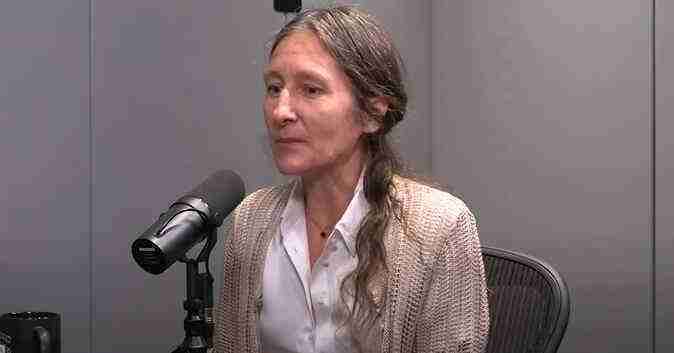
Read the full transcript of Huberman Lab podcast episode titled “Understanding & Treating Addiction” with Dr. Anna Lembke, a psychiatrist expert in treating addictions of all kinds: drugs, alcohol, food, sex, video games, gambling, food, medication, etc. (August 16, 2021)
Listen to the audio version here:
TRANSCRIPT:
DR. ANDREW HUBERMAN: Welcome to the Huberman Lab Podcast, where we discuss science and science-based tools for everyday life. I’m Andrew Huberman, and I’m a professor of neurobiology and ophthalmology at Stanford School of Medicine. Today, I have the pleasure of introducing Dr. Anna Lembke.
Dr. Lembke is a psychiatrist and the chief of the Addiction Medicine Dual Diagnosis Clinic at Stanford University School of Medicine. She’s a psychiatrist who treats patients struggling with addiction. She has successfully treated patients dealing with drug addiction, alcohol addiction, and behavioral addictions, such as gambling and sex addiction, as well as other types of addiction.
In fact, during our discussion, I learned that there are a huge range of behaviors and substances to which people can become addicted to, and that there is a common biological underpinning of all those addictions. I also learned that there’s a common path to the treatment and recovery from essentially all addictions. Dr. Lembke explained that to me and explained how to think about and conceptualize our own addictions, as well as the addictions of other people who are struggling to get treatment, move through treatment, and stay sober from their addictions.
In addition to treating patients, Dr. Lembke is an author and was featured in the 2020 Netflix documentary, The Social Dilemma. I’m excited to tell you that she has a new book coming out called Dopamine Nation, Finding Balance in the Age of Indulgence. The book comes out August 24th and is an absolutely fascinating read into addiction and ways to treat various types of addiction.
I’ve read the book cover to cover, and all I’ll tell you is that at the very first chapter and throughout, you are going to be absolutely blown away. The stories about her patients are extremely engaging. It brings forward the real struggle of addiction and the incredible I think it’s fair to say heroic battles that people fight in order to get through addictions of various kinds. And all of that is woven through with story, with science, and ways that make it very accessible to anyone, whether or not you have a science background or not.
I can’t recommend it highly enough. So again, the book is Dopamine Nation, Finding Balance in the Age of Indulgence. It comes out August 24th of this year, 2021, and you can pre-order that book by going to Amazon. We will provide a link to that in the show caption.
And now for my discussion with Dr. Anna Lembke.
What is Dopamine?
DR. ANDREW HUBERMAN: All right. Great to have you here.
DR. ANNA LEMBKE: Thank you for having me. I’m excited to be here.
DR. ANDREW HUBERMAN: Yeah, I have a lot of questions for you. I and many listeners of this podcast are obsessed with dopamine. And what is dopamine? How does it work? We all hear that dopamine is this molecule associated with pleasure. I think the term dopamine hits like I’m getting a dopamine hit from this from Instagram or from likes or from praise or from whatever is now commonly heard. What is dopamine? And what are maybe some things about dopamine that most people don’t know and probably that I don’t know either.
DR. ANNA LEMBKE: So dopamine is a neurotransmitter. And neurotransmitters are those molecules that bridge the gap between two neurons. So they essentially allow one neuron, the presynaptic neuron, to communicate with the postsynaptic neuron. Dopamine is intimately associated with the experience of reward, but also with movement, which I think is really interesting because movement and reward are linked, right? If you think about, you know, early humans, you had to move in order to go seek out the water or the meat or whatever it was. And even in the most primitive organisms, dopamine is released when food is sensed in the environment, for example, C. elegans, a very primitive worm.
So dopamine is this really powerful, important molecule in the brain that helps us experience pleasure. It’s not the only neurotransmitter involved in pleasure, but it’s a really, really important one. And if you want to think about something that most people don’t know about dopamine, which I think is really interesting, is that we are always releasing dopamine at a kind of tonic baseline rate. And it’s really the deviation from that baseline rather than like hits of dopamine in a vacuum that make a difference. So when we experience pleasure, our dopamine release goes above baseline. And likewise, dopamine can go below that tonic baseline. And then we experience a kind of pain.
DR. ANDREW HUBERMAN: Interesting. So is it fair to say that one’s baseline levels of dopamine, how frequently we are releasing dopamine in the absence of some, I don’t know, drug or food or experience, just sitting being is that associated with how happy somebody is their kind of baseline of happiness or level of depression?
DR. ANNA LEMBKE: There is evidence that shows that people who are depressed may indeed have lower tonic levels of dopamine. So that’s a really reasonable thought. And there’s some evidence to suggest that that may be true. The other thing that we know, and this is really kind of what the book is about, is that if we expose ourselves chronically to substances or behaviors that repeatedly release large amounts of dopamine in our brain’s reward pathway, that we can change our tonic baseline and actually lower it over time as our brain tries to compensate for all of that dopamine, which is more really than we were designed to experience.
DR. ANDREW HUBERMAN: Interesting. And is it the case that our baseline levels of dopamine are set by our genetics, by our heredity?
DR.
DR. ANDREW HUBERMAN: So if somebody’s disposition is one of constant excitement and anticipation, or easily excited, these are, I think, about the kind of people where you say, you want to check out this new place for tacos, and like, yeah, that’d be great. And other people are a little more cynical, harder to budge, like my bulldog Costello. Very, very stable, low levels of dopamine with big inflections in his case. Is that — do you think that’s a set in terms of our parents and obviously nature and nurture interact, but is that — is dopamine at the core of our temperament?
DR. ANNA LEMBKE: I don’t really think we know the answer to that. But I will say that people are definitely born with different temperaments. And those temperaments do affect their ability to experience joy. And, and, you know, we’ve known that for a long time. And we described that in many different ways.
One of the ways that we describe that in the modern era is to use psychiatric nomenclature, like this person has a dysthymic temperament, or, you know, this person has chronic major depressive disorder. In terms of looking specifically at who’s vulnerable to addiction, that’s an interesting sort of mixed bag. Because when you look at the research on risk factors for addiction, so what kind of temperament of a person makes them more vulnerable to addiction, you see some interesting findings.
First, you see that people who are more impulsive, are more vulnerable to addiction. So what is impulsivity, that means having difficulty putting space between the thought or desire to do something and actually doing it. And people who have difficulty putting a space there who are who have a thought to do something and just do it impulsively, are people who are more vulnerable to addiction.
DR. ANDREW HUBERMAN: Interesting. Could I, in terms of impulsivity, is this something that relates literally to the startle reflex, like I, for instance, as a lab director, I’m familiar with walking around my lab. And when I decide deciding I’m going to talk to my people, of course, when they knock on my door, it’s always like, wait, why am I being bothered right now, even though I love to talk to them. But I walk around my lab from time to time. And some people I notice I’ll say, do you have a moment and they’ll slowly turn around and say, yeah, or no. And other people will jump the moment I say their name, they actually have a kind of a heightened startle reflex, right? Is that related to impulsivity? Or is what you’re referring to an attempt to withhold behavior that’s very deliberate under very deliberate conditions?
DR. ANNA LEMBKE: Yeah, so I don’t think that that startle reflex is necessarily related to impulsivity that can be related to anxiety. So people who are high anxiety, people will tend to have more of a startle reflex. impulsivity is a little bit different. And by the way, impulsivity is not always bad, right?
impulsivity is, is that thing where there’s not a lot of self editing, or worrying about future consequences. You know, you have the idea to do something and you do it. And of course, we can imagine many scenarios where that’s absolutely wonderful. You know, there can be sort of, let’s say, intimate interactions between people where you wouldn’t really want to be super inhibited about it, right?
You would want to be disinhibited and impulsive. There, I can also like imagine, like, sort of fight or flight scenarios, like battle scenarios, right? Where, where it would really be good to be impulsive and just go, right, you know, where hesitation can cause, right?
DR. ANDREW HUBERMAN: Yes, that’s right. That’s right.
DR. ANNA LEMBKE: But you know, and I think this brings up a really interesting that I’ve come to believe that after 25 years of practicing psychiatry, is that what we now conceptualize in our current ecosystem as mental illness, are actually traits that in another ecosystem might be very advantageous, they’re just not advantageous right now, because of the world that we live in. And I think, you know, impulsivity is potentially one of those, right? Because we live in this world that sort of like, you have to constantly be thinking sort of rationally about the consequences of x, y, or z. And it’s such a sensory rich environment, right? That we’re being bombarded with all these opportunities, these sensory opportunities. And we have to constantly check ourselves. And so, so, so impulsivity is something that right now, can be a difficult trait, but isn’t in and of itself a bad thing.
What is Pleasure?
DR. ANDREW HUBERMAN: I see. Yeah, and it’s I’m beginning to realize that the fine line between spontaneity and impulsivity. What is pleasure? And how does it work at the biological level? And if it feels right at the psychological level, I think we and if you don’t mind painting a picture of sort of the the range of things that you have observed in your clinic or in life, that people can become addicted to. But just to start off really simply, what is this thing that we call pleasure?
DR. ANNA LEMBKE: Well, I think it’s it’s actually really hard to define pleasure in any kind of succinct way. Because certainly there is the seeking out of a high or a euphoria or I think, you know, the kind of experience that most anybody would associate with the word pleasure.
But but also, the seeking out of those same substances and behaviors is often a way to escape pain. So, for example, when I talk to people with addiction, sometimes their initial foray into using a drug is to get pleasure. But very often, it’s a way to escape their suffering, whatever their suffering may be. And certainly, as people become addicted, even those who initially were seeking out pleasure are ultimately just trying to avoid the pain of withdrawal, or the pain of the consequences of their drug use.
So I think it’s, you know, very hard to actually, you know, define it as this unitary thing. And it’s certainly not just getting a high, there are so many ways in which people sort of want to escape, which is not the same thing as sort of this hedonic, you know, wanting to feel pleasure.
DR. ANDREW HUBERMAN: So someone could decide that they want to go out and dance or get up and dance because of the pleasure of dancing, I can imagine that. But, and maybe it’s very difficult for them to stay seated when a particular song comes on, for instance, but seeking what we would call pleasure in order to eliminate pain that evokes a different picture in my mind that evokes a picture of somebody that feels lost or depressed or underwhelmed.
I definitely want to get into the precise and general description of addiction and what that is. But in a previous conversation we had, you said something that really rung in my mind, which is that many people who become addicted to things, let’s call them addicts, have this feeling that normal life isn’t interesting enough, that they are seeking a super normal experience and that the day to day routine, balance, which is actually in the title of your book, dopamine nation, finding balance in the age of indulgence, that the word balance itself can sometimes be a bit of an aversive term for people.
And I’m struck by this idea. And the reason I want to explore it is because so much of what I see online is about generating a lack of balance, about being tilted forward at all times, really leaning into life hard, experiencing life, living a full life. Even the commencement speech given by Steve Jobs on this campus was really about finding passion, digging. That’s so much in the narrative now.
So maybe you could just tell us a little bit about your experience with this association, if it really exists, between people’s sense of the normalcy or maybe even how boring life can be and their tendency to become addicts of some sort.
DR. ANNA LEMBKE: Yeah, well, I mean, I, I think that life for humans has always been hard. But I think that now it’s harder in unprecedented ways. And I think that the way that life is, is really hard now is that it actually is really boring. And the reason that it’s boring is because all of our survival needs are met, right?
I mean, we don’t even have to leave our homes to meet every single physical need, you know, as long as you’re of a certain level of financial well-being, which frankly, you know, we talked so much about, you know, the, the income gap, and certainly there is this enormous gap between rich and poor.
But that gap is smaller than it’s ever been in like the history of humans. Even the poorest of the poor have more excess income to spend on leisure goods than they ever have before in human history. If you look at leisure time, for example, so people without a high school education have 42% more leisure time than people with a college degree.
So, so what my point here is that life is hard now in this really weird way, in that we don’t really have anything that we have to do. So we’re all forced to make stuff up, you know, whether it’s being a scientist or being a doctor, or being an Olympic athlete, or, you know, climbing Mount Everest. And people really vary in their need for friction. And some people need a lot more than others. And if they don’t have it, they’re really, really unhappy.
And I do think that a lot of the people that I see with addiction and other forms of mental illness, are people who need more friction, like they’re unhappy, not necessarily because there’s something wrong with their brain, but because their brain is not suited to this world.
DR. ANDREW HUBERMAN: And do you think they have that sense, my brain isn’t suited to this world, or they simply feel a restlessness, and they’re constantly seeking stimulation?
DR. ANNA LEMBKE: I think that’s right. Yeah, I think it’s, it’s not really knowing what’s wrong with me. Why am I unhappy? How can I be happier? And of course, as you talk about what’s so pervasive in our narrative now, it’s like, find your passion, you know, you know, find your, you know, whatever it is to save the world.
And in a way, that’s good, because it has people out in the world and seeking. But in a way, it can also be misleading in the sense that I think people aren’t entirely aware that the world is a hard place, and that life is hard, and that, you know, like, we’re all kind of making it up. Do you know what I mean?
DR. ANDREW HUBERMAN: Yeah. Well, there’s a book by Cal Newport. I don’t know if you know Cal Newport’s work, but you guys are very symbiotic in your messages. He’s a professor of computer science at Georgetown. Yes, at Georgetown, and wrote a book some years ago, really ahead of its time, called So Good They Can’t Ignore You, which is about not meditating or doing much work to try and figure out what one’s passion is by thinking, but rather go out and acquire skills, right, and get develop a sense of passion for something by your experience of hard work and getting better and feedback, a little bit of the growth mindset thing, our colleague Carol Dweck. But he’s gone on to write books, deep work, and which is all about removing yourself from technology and doing deep work. And he’s been a big proponent of the evils of context switching too often throughout the day, for sake of productivity, mostly. His new book is called A World Without Email.
I’m beginning to realize as I cite off these books and your book, Dopamine Nation, Finding Balance in the Age of Indulgence, that maybe the reason why you two don’t know about one another is because neither of you are on social media.
DR. ANNA LEMBKE: That’s it. That’s it. Right.
DR. ANDREW HUBERMAN: You’re two of the most productive people that I know, including productive authors, so that’s a discussion unto itself.
Pleasure-Pain Balance and Addiction
DR. ANDREW HUBERMAN: But I find this fascinating. So let’s talk about the pleasure-pain balance and addiction. I’ve heard you use this seesaw or balance scale analogy before, and I think it’s a wonderful one that really, for me, clarified what addiction is, at least at the mechanistic level.
DR. ANNA LEMBKE: Yeah. So to me, one of the most significant findings in neuroscience in the last 75 years is that pleasure and pain are co-located, which means the same parts of the brain that process pleasure also process pain, and they work like a balance.
So when we feel pleasure, our balance tips one way. When we feel pain, it tips in the opposite direction. And one of the overriding rules governing this balance is that it wants to stay level, so it doesn’t want to remain tipped very long to pleasure or to pain. And with any deviation from neutrality, the brain will work very hard to restore a level balance, or what scientists call homeostasis. And the way the brain does that is with any stimulus to one side, there will be a tip in equal and opposite amount to the other side.
DR. ANDREW HUBERMAN: It’s like a principle laws of physics.
DR. ANNA LEMBKE: Yes, right, right. So like, I like to watch YouTube videos, when I watch YouTube videos of American Idol, you know, it tips to the side of pleasure. And then when I stop watching it, I have a come down, right, which is a tip to the equal and opposite amount on the other side. And that’s that moment of wanting to watch one more YouTube video, right?
DR. ANDREW HUBERMAN: Yeah. And I just want to interject there. So this moment of wanting to watch another that is associated with pain, I think, is, are we always aware of that happening? Because you just described in a very conscious way. But when I indulge in something I enjoy, I’m usually thinking about just wanting more of that thing. I don’t think about the pain, I just think about more.
DR. ANNA LEMBKE: Right. So really excellent point, because we’re mostly not aware of it. And it’s also reflective. So it’s not something that consciously happens, or that we’re aware of, unless we really begin to pay attention.
And, and when we begin to pay attention, we really can become very aware of it in the moment. Again, it’s like a falling away, like that moment, you know, you’re on social media, and you know, you get a good tweet of something. And then you can’t stop yourself because there’s this awareness, a latent awareness that as soon as I disengage from this behavior, I’m going to experience a kind of a pain, right, a falling away, a missing that feeling a wanting more of it.
And of course, one way to combat that is to do it more, right, and more and more and more. So I think I think that is really what I want people to tune into and get an awareness around because once you tune into it, you can see it a lot. And then when you begin to see it, you have and if you you know, keep the model of the balance in mind, I think it gives people kind of a way to imagine what they’re experiencing on a neurobiological level and understand it.
And in that understanding, get some mastery over it, which is really what this is all about. Because ultimately, we do need to disengage, right? We can’t live in that space all the time, right? We have other things we need to do. And there are also serious consequences that come with trying to repeat and continue that experience or that feeling.
DR. ANDREW HUBERMAN: Yeah, so if I understand this correctly, when we find something, or when something finds us, that we enjoy that feels pleasurable, social media, food, sex, gambling, whatever happens to be and we will explore the full range of these. There’s a some dopamine release when we engage in that behavior. And then what you’re telling me is that very quickly, yes. And beneath my conscious awareness, there’s a tilting back of the scale, where pleasure is reduced by way of increasing pain, right.
And I’ve heard you say before that the pain mechanism has some competitive advantages over the pleasure mechanism such that it doesn’t just bring the scale back to level, it actually brings pain higher than pleasure. Could you tell us a little bit more about that?
DR. ANNA LEMBKE: Yeah, yeah. So what happens, again, so the hallmark of any addictive substance or behavior is that it releases a lot of dopamine in our brain’s reward pathway, like broccoli just doesn’t release a lot of dopamine, just doesn’t, right?
DR. ANDREW HUBERMAN: I’m trying to imagine, I was about to say maybe, and I stopped myself because no, broccoli is good. It can be really good. But broccoli is never amazing.
DR. ANNA LEMBKE: Right. Broccoli is never amazing. Honestly, we can probably find somebody on the planet for whom broccoli is amazing. And of course, if I’m starving, broccoli is amazing.
DR. ANDREW HUBERMAN: Rich Roll. Rich Roll is big on plants and he has a good relationship to plants. Rich, tell us how to make broccoli amazing. If anyone could do it, it’d be Rich.
DR. ANNA LEMBKE: But what happens right after I do something that is really pleasurable and releases a lot of dopamine is, again, my brain is going to immediately compensate by down-regulating my own dopamine receptors, my own dopamine transmission to compensate for that, okay? And that’s that come down or the hangover, that after effect, that moment of wanting to do it more.
Now, if I just wait for that feeling to pass, then my dopamine will re-regulate itself, and I’ll go back to whatever my chronic baseline is. But if I don’t wait, and here’s really the key, if I keep indulging again and again and again, ultimately, I have so much on the pain side, right, that I’ve essentially reset my brain to what we call like an anhedonic or lacking in joy type of state, which is a dopamine deficit state.
So that’s really the way in which pain can become the main driver is because I’ve indulged so much in these high reward behaviors or substances that my brain has had to compensate by way down-regulating my own dopamine, such that even when I’m not doing that drug, I’m in a dopamine deficit state, which is akin to a clinical depression. I have anxiety, irritability, insomnia, dysphoria, and a lot of mental preoccupation with using again or getting the drug.
And so that’s the piece there. There’s the single use, which easily passes, but it’s the chronic use that can then reset really our dopamine threshold, and then nothing is enjoyable, right? Then everything sort of pales in comparison to this one drug that I want to keep doing.
DR. ANDREW HUBERMAN: And that one drug could be a person, right? I mean, I know people in my life that are still talking about this one relationship, this one person that was just so great, despite all the challenges of that thing, that it’s almost like they’re addicted to the narrative. They were, maybe still are addicted to the person.
So it could be to any number of things, video games, sex, gambling, a person, a narrative. To me, and because of the way you described this mechanism, this pleasure-pain balance, that all speaks to the kind of generalizability of our brain circuitry.
And this is something that fascinates me. And I know it fascinates you as well, which is that nature did not evolve 20 different mechanisms for 20 different types of addiction, just like anxiety is a couple of core sets of hormones and neurotransmitters and pathways. And one person is triggered by social interactions, another person is triggered by spiders, but the underlying response is identical.
It sounds like with addiction as well, there may be some nuance, but that they’re sort of a core set of processes. So it doesn’t really matter if it’s gambling or video games or sex or a narrative about a previous lover or partner or whatever. It’s the same addictive process underneath that. Is that correct?
DR. ANNA LEMBKE: Yes, exactly. And that’s where this whole idea of cross addiction comes in. So once you’ve been addicted to a substance, severely addicted, that makes you more vulnerable to addiction to any substance.
DR. ANDREW HUBERMAN: And when you say substance, does the same, is what you just said also true for behavior?
DR. ANNA LEMBKE: Yes. When I use the word drug, I’m talking about substances and behaviors, really. And I’m talking about behaviors like gambling, sex, gaming, porn, absolutely shopping, work.
DR. ANDREW HUBERMAN: You’ve accused me, for the record, Anna, Dr. Lembke has accused me, not accused me, has diagnosed me outside the clinic in a playful way of being work addicted. You’re probably right. The first thoughts I have when I wake up are typically about work, certainly within 50 milliseconds or so of waking. And probably the last thoughts I have, I would hope are not about work. But yeah, I work constantly. I do other things, but I have to actively turn that off.
DR. ANNA LEMBKE: Yes, that’s exactly right. And you’re certainly not alone in that.
DR. ANDREW HUBERMAN: At Stanford?
DR. ANNA LEMBKE: No, no, no, no. I mean, here in Silicon Valley, right? It’s highly rewarded, right? So that kind of…
DR. ANDREW HUBERMAN: It’s embedded in the culture.
DR. ANNA LEMBKE: Oh yeah, absolutely. Yeah.
DR. ANDREW HUBERMAN: And there’s this other city, I think it’s called New York, where they also work a lot here, and it’s heavily rewarded.
I once said, and I’m sure that I’m not the first person to say it, but I was thinking about addiction, and I was thinking about the underlying circuits, and I posted something to social media, which said that addiction is a progressive narrowing of the things that bring you pleasure. That was the way that I kind of crystallized the literature in my mind.
And then we met, and you, of course, came and gave these amazing lectures in the neuroanatomy course for the medical students, and the rest is history. But I tossed out a kind of mirroring statement for that as well, which was a bit overstepping, I admit, which I said, addiction is a progressive narrowing of the things that bring you pleasure. And I say, dare I say, enlightenment is a progressive expansion of the things that bring you pleasure. Not that anybody knows what enlightenment is, but it was my attempt to take a little bit of a jab at the fact that nobody knows. And so why not? Why wouldn’t I throw a neurobiological explanation? Just kind of sample the waters. And people had varying levels of response.
But the reason I bring that up is that I would imagine that being able to derive pleasure from many things would be a wonderful attribute. We know people like this that can experience pleasure in little things and in big events, not just the big milestones of life, but also the subtle, you know, as that, like the yogis who say the subtle ripples of life.
If such an ability exists, what do you think that that reflects a healthily tuned dopamine system, one that can engage and enjoy but then disengage? Is that what we should be seeking? And to underscore, I know nothing about enlightenment, meditation or, or any of it. I just, I use these as opportunities to explore.
DR. ANNA LEMBKE: Yeah, so it’s a great question. I mean, and I understand the question is, so where, what should we be striving for, right? Where, where should we settle out?
And, you know, in my book, I really hold out people in recovery from severe addiction, as sort of modern day prophets for the rest of us, because I do think that people who have been addicted, and then go get into recovery, do have a hard one wisdom that we can all benefit from. And the wisdom, I guess, you know, to distill it down, I mean, it’s many things. But in terms of, you know, dopamine, the wisdom is there are adaptive ways to get your dopamine, and there are less than adaptive ways.
And in general, you could describe the adaptive ways as not too potent. So not tipping that balance too hard or too fast to the side of pleasure.
DR. ANDREW HUBERMAN: So does that mean never allowing myself to be absolutely incomplete bliss? Or does it mean not allowing myself to stay in that state too long?
DR. ANNA LEMBKE: The latter, I think the latter. So and then that gets to temperament. So I’m gonna get that to a second.
So, so in general, what we want is some kind of flexibility in that balance and the ability to easily reassert homeostasis, we don’t want to break our balance, which is possible if we overindulge for enough period of time, and end up with a balanced tip to the side of pain, this dopamine deficit state we’ve been talking about.
We want to we want a flexible, resilient balance, right, which can be sensitive to things going on in the environment, which can experience pleasure and approach, which can experience pain and recoil, right? This is all adaptive and healthy and necessary and good.
We would never want a balance that doesn’t tilt, right? That would be a disaster, right? We wouldn’t be human. And we wouldn’t want that to be really, really boring. On the other hand, what people in recovery from addiction talk about is, to some extent, having to learn to live with things being a little boring a lot of the time, right? So trying to avoid some of this intensity and thrill seeking and escapism that really is at the core of addictive tendencies.
DR. ANDREW HUBERMAN: Sorry to interrupt, but when you say boring, can we add stressful and boring?
DR. ANNA LEMBKE: Yes.
DR. ANDREW HUBERMAN: Because there are days where I’m not, I have to, I’m one of these who have to remind myself to have fun, because I sort of forgot what the term is. Because I’ve, I like to think that I experience a lot of pleasure in little things, but I’m a pretty hard driving guy. I like goals and big milestones, all that stuff.
Anyway, the point being that many days, I’m not bored thinking, ah, there’s nothing to do. But I am kind of overwhelmed by the number of things that are really not pleasurable that I have to do. I won’t mention what they are. I don’t want my colleagues to be like, that’s why you don’t respond to emails. No, just your email. Not yours, Anna.
In any event, so anxiety and boredom can hang out together, right? Am I correct?
DR. ANNA LEMBKE: Oh, for sure. I mean, actually, boredom is highly anxiety provoking.
DR. ANDREW HUBERMAN: Okay, that’s good to know. Because I think people hear boredom, and they think, like, oh, there’s nothing to do here. I feel like we have a ton to do. We just don’t really want to do it, as opposed to something that we’re excited to do. Right. Okay.
Finding Your Passion vs. Doing What Needs to Be Done
DR. ANNA LEMBKE: So this gets to sort of some of the core things also we were talking about earlier, about finding your passion. So I’m going to try to link it all together.
But basically, is boredom, first of all, boredom is a rare experience for modern humans, because we’re constantly distracting ourselves from the present moment. And we have an infinite number of ways to do that, right? But boredom is really, I think, an important and necessary experience. But it is scary, because when you allow yourself to be bored, and let’s say you were had that list of all the things you hate to do, when you actually got them all done. Imagine that and you got your forthcoming book done, and you did all your interviews. It could happen, lightning could strike. And you watched your dog, and you cleaned your house, and you went shopping.
Imagine that for a moment, you would be sitting in your house. And my guess is you would be terrified. Because, wow, what am I supposed to do now? Right? There’s nothing I really have to do. And that is really, really scary. That can feel like freefall.
And yet, that’s really an important and good experience to have. And I think that is an experience out of which we can have a lot of creative initiative, but also really consider our priorities and values. Okay, here I am on planet Earth. What the heehaw am I going to do with my life? What do I really care about? How do I really want to spend my time when I’m not distracting myself, you know, in order to spend it?
And, you know, then this gets back to our conversation a little bit earlier about finding your passion. So I think that one of the big problems now that’s very misguided about this idea of finding your passion, it’s almost as if people are looking to fit the key into the lock of the thing that was meant for them to do. Right. And then everything will feel like a natural progression. Right. And then everything will be wonderful.
DR. ANDREW HUBERMAN: I can attest to the fact that is not how it works in any endeavor. Right.
DR. ANNA LEMBKE: And then you’ll have all this great success. And here’s where I really think the answer lies. And I really, really believe this. Stop looking for your passion. And instead, look around right where you are.
Stop distracting yourself, look around right where you are, and see what needs to be done. So not what do I want to do, but what is the work that needs to be done? And more importantly, it doesn’t have to be some grandiose work. Like, does the garbage need to be taken out? Right? Is there some garbage on your neighbor’s lawn that someone threw that you could actually bend over and pick up and put into the garbage can?
Look around you. There is so much work that needs to be done that nobody wants to do. That is really, really important. And if we all did that, I really think the world would be a much better place. And this is what people who have severe addiction who get into recovery realize. They’re like, it’s not about me and my will and what I’m going to will in my life or in the world. It’s about looking around what needs to be done. What is the work that I am called to do in this moment, which also is incredibly freeing because I don’t have to search for the perfect thing.
There’s a lot of burden now on young people that they have to find that perfect thing. And until they’ve found that perfect thing, they’re going to be miserable. You don’t have to do that. Look at the life you were given. Look at the people around you. Look at the jobs that present themselves to you and do that job simply and honorably one day at a time with a kind of humility.
I think this is really what’s so striking to me about the wisdom of people in recovery. There’s this incredible humility that comes out of that experience. You feel so broken, so ashamed, but you pick yourself up one day at a time and you build a life that’s around what can I do right in this moment that might benefit another person and thereby benefit me.
DR. ANDREW HUBERMAN: That’s a really important point. And if you’re willing, I’d like to actually stay on this issue of passion because I think the dopamine systems, if I understand them correctly, the dopamine systems merge with this work that you’re referring to, this immediacy of things calling to us like taking out the trash, which sounds frankly, really boring.
To be honest, I hate taking out the trash, but I do it because I like a clean home and I like a home that smells good or at least doesn’t smell bad. So we do these things and not that we want to offer some larger carrot as a consequence of doing those things. But if I understand correctly, what you’re saying is in the act of looking at one’s immediate environment, acting on that immediate environment, we cultivate a relationship to these circuits in our brain about action and reward that, at least to my mind, span the range of small things being rewarding and then lead us to bigger things being rewarding.
It’s not like all we’re going to do is take out trash and tend to house. We eventually will venture out and we eventually will find careers and work on those. But if I understand correctly, you’re talking about getting into a sort of functional or adaptive action step. And it’s the action step that these days we tend to overlook because most of our mindset is in things that are truly outside of our immediate reality. Do I have that correct?
DR. ANNA LEMBKE: Yeah, that was beautifully said. And I would just add to that, I see a lot of young people who, for example, spend most of their waking hours playing video games. And they come to me and they say, I’m anxious and depressed. I’m majoring in computer science. I hate it. I thought I would like it. If I could only find that thing that I was really meant to do, my life would be better.
And my first intervention for the many, many people like that that I see in clinical care is you have it backwards. I don’t say it quite like that. You are waiting for that thing to pull you out of the video game world. And you’re never going to find it as long as you’re playing video games. Because video games are so powerfully dopaminergic that you have this distorted sense of really pleasure and pain. And you will not be able to find that thing that you enjoy. And so, of course, the intervention is abstain from video games, reset your reward pathways, start with a level balance.
And what invariably happens, and I’ve just seen it over 20 years so many times, I’ve become really a believer in this. All of a sudden, it’s like, oh, wow, my computer science class is interesting this quarter. It’s like, okay. You have a receptivity then to experiencing pleasure and reward in a way you just don’t have when you’re bombarding your reward pathways with these high dopamine drugs.
DR. ANDREW HUBERMAN: Very interesting. And just to underscore this notion that tending to the immediate things can lead to super performance. I may have mentioned it earlier this episode. But if I didn’t, I’ll mention now, which is I have the great privilege of having some close friends that were in the SEAL teams and doing some work with those communities.
It’s a remarkable community for reasons I think most people don’t understand. People think they see the images carrying logs down the beach and all the stuff that’s fun for guys like that. But all of the guys I know who are in the SEAL teams have this sense of duty about immediate things. And not just holding the door and helping with the dishes and moving things around. They are constantly scanning their environment for what can be done. They essentially conquer every environment they’re in.
They are also some of the most competitive human beings in the world. And they do it unless they’re in the act of war fighting, which is their real job. They do it in every environment in a very benevolent way. And it’s a remarkable thing because I think it’s part of what they’re selected for. And there’s a range there.
But I think when we hear about tending to the immediate things or this phrase, how you do one thing is how you do anything. That’s a tricky one for me because there’s certain things I just don’t do well. But should we always be trying? I think that the tending to setting the horizon in closely and tending to things in one’s immediate environment, I think it is very powerful and translates.
Because again, I think the nervous system, it performs algorithms. It has action steps. The brain doesn’t evolve to do one thing. It evolves to be able to use the same approach to doing lots of different things.
DR. ANNA LEMBKE: Yes. I just want to ask, even beyond that, because that totally resonates for me and is very consistent with people in recovery from addiction who learn to take it one day at a time, which is one of the standard lingo from Alcoholics Anonymous and other 12-step groups.
But I think also, as you say, our brain is really wired for the 24-hour period. We’re not very good at sort of the 10-year, 20-year. I mean, we have this huge frontal lobe and yes, we’re great planners. But if we live too much in that space, we can really get very anxious and depressed and lost and either catastrophize or get grandiose.
But if you can chunk it down to a day, what people in recovery talk about is how, if I can just do today right, then I will get a chain of days that seem insignificant in their individual units. But after six months or a year or two years of those good days, I’ve got two very good years, right? And I look back and it’s like, oh, wow, I guess I did all that.
But I think that’s really one of the keys is really taking it one day at a time, which you’re sealed and also just connecting with the environment, right? So, being awake and alert to your environment and connecting with your environment, not trying to escape it.
And of course, escapism is what we all want and desire, that experience of non-being. And we get it from the internet or from drugs or whatever it is, but it’s the booby prize, because ultimately, it takes you further and further away from your immediate environment, which is where we really have to connect to get that sense of groundedness and authenticity and like of being in our own lives.
Resetting the Dopamine System
DR. ANDREW HUBERMAN: Well, I think the unit of the day is something that comes up again and again, in my discussions with colleagues who are extremely successful, and who also have balanced lives, right? This actually came up in the discussion with Karl Deisseroth, who is also a successful scientist and clinician and, you know, manages a family, etc. So the unit of the day, I think is fundamental. And those stack up, as you mentioned.
So along those lines, I’ve heard you say that in order to reset the dopamine system, essentially, in order to break an addictive pattern, to become unaddicted, 30 days of zero interaction with that substance, that person, etc. Is that correct?
DR. ANNA LEMBKE: Yeah. And 30 days is in my clinical experience, the average amount of time it takes for the brain to reset reward pathways for dopamine transition to regenerate itself. There’s also a little bit of science that suggests that that’s true.
Some imaging studies showing that our brains are still in a dopamine deficit state two weeks after we’ve been using our drug. And then a study by Schuckit and Brown, which took a group of depressed men who also were addicted to alcohol, put them in a hospital where they have received no treatment for depression, but they had no access to alcohol in that time. And after four weeks, 80% of them no longer met criteria for major depression.
So again, this idea that by depriving ourselves of this high dopamine, high reward substance or behavior, we allow our brains to regenerate its own dopamine to for the balance to really equilibrate. And then we’re in a place where we can sort of enjoy other things.
DR. ANDREW HUBERMAN: So that progressive narrowing of what brings one pleasure eventually expands.
So I’d like to dissect out that 30 days a little more finely. And I also want to address, how does one stop doing something for 30 days if the thing is a thought? So we’ll kind of put that on the shelf for a moment.
So days one through 10, I would imagine will be very uncomfortable. They’re going to suck, basically, to be quite honest, because the way you describe this pleasure-pain balance, to my mind says that if you remove what little pleasure one is getting, or a lot of pleasure from engaging in some behavior, that’s gone. The pain system is really ramped up, and nothing is making me feel good.
I’ll just use myself as an example. I’m not in recovery, but that 10 days is going to be miserable. Anxiety, trouble sleeping, physical agitation to the point where maybe impulsive, angry. Should one expect all of that? Should the family members of people expect all of that?
DR. ANNA LEMBKE: Yeah. So what I say to patients, and it’s a really important piece of this intervention, is that you will feel worse before you feel better.
DR. ANDREW HUBERMAN: For how long? Yeah. This is probably the first question they ask, right?
DR. ANNA LEMBKE: And I say, usually, in my clinical experience, you’ll feel worse for two weeks. But if you can make it through those first two weeks, the sun will start to come out in week three. And by week four, most people are feeling a whole lot better than they were before they stopped using their substance.
So yeah, it’s a hard thing. You have to sign up for it. And I will say, obviously, there are people with addictions that are so severe that as long as they have access to their drug or behavior, they’re not able to stop themselves. And that’s why we have higher levels of care or residential treatment. So this is not going to be for everybody, this intervention.
But it’s amazing how many people with really severe addictions to things like heroin, cocaine, very severe pornography addictions. I posit this, and I do it as an experiment. I said, you know what, let’s try this experiment. I’m always amazed, number one, how many of them are willing and number two, how many of them are actually able to do it, they are able to do it. And so that little nudge is sort of just what they need.
And the carrot is, you know, there’s a better life out there for you. And you’ll be able to taste it in a month, you really will be able to begin to see that you can feel better and that there’s another way.
DR. ANDREW HUBERMAN: So the way you describe it, seems like it’s hard, but it’s doable for most people, not everybody, right. And we’ll return to the that category of people who can’t do that on their own.
Well, then days 21 through 30. People are feeling better, the sun is starting to come out, as you mentioned, they, which translates in the narrative we’ve created here and support by biology, that dopamine is starting to be released in response to the taste of a really good cup of coffee.
DR. ANNA LEMBKE: Yes, exactly.
DR. ANDREW HUBERMAN: Whereas before it was only to insert, you know, addictive behavior, right? That’s what it whichever coffee can be addictive to but but we’ll leave that aside.
DR. ANNA LEMBKE: Yeah,
DR. ANDREW HUBERMAN: I feel like coffee has a kind of consumption limiting mechanism built in where at some point, you just can’t ingest anymore.
DR. ANNA LEMBKE: Yeah.
DR. ANDREW HUBERMAN: But maybe that’s wrong. Sorry to give a lift to the caffeine addicts out there.
DR. ANDREW HUBERMAN: As I as I watch my, my month. So days 21 through 30. I’ve seen a lot of people go through addiction and addiction treatment. I’ve spent a lot of time in those places actually looking at it researching. I’ve got friends in that community. I’m close with that community.
One thing I’ve seen over and over again, sadly, often in the same individuals is they get sober from whatever. They’re doing great. These are people with families, these are people that you discard your normal image of an addict and insert the most normal, typical, whatever healthy person you can imagine, because a lot of these people you wouldn’t know were addicts.
And then all of a sudden, you get this call, so and so’s back in jail, so and so’s wife is going to leave him because he drank two bottles of wine and took a Xanax at 7am, crashed his truck into a pole, he’s got two beautiful kids. Like, how did this happen again, to the point where by the fourth and fifth time, people are just done.
I mean, maybe people, you might be able to detect the frustration in my voice, I’m dealing with this with somebody that’s like, I don’t even know that I want to help this time. It’s been so many times, to the point where I’m starting to wonder, is this person just an addict? This is just kind of what they do and who they are.
And you never want to give up on people, and I’m hanging in there for them. But I will say that many people have given up on them. And so what I’d like to talk about in this context is what sorts of things help other people that we know that are addicted? What really helps? Like, not what could help, but what really helps? And are there certain people for whom it’s hopeless? I mean, I don’t like to hold the conversation that way. But I wouldn’t be close to the real life data. If I didn’t ask, is it hopeless? Are there people who just will not be able to quit their substance use or their addictive behavior, despite I have to assume really wanting to?
DR. ANNA LEMBKE: Yeah. Yeah. So there are people who will die of their disease of addiction. And I think conceptualizing it as a disease is a helpful frame. There are other frames that we could use. But I do think given the brain physiologic changes that occur with sustained heavy drug use, and what we know happens to the brain, it is really reasonable to think of it as a brain disease.
And for me, the real window of, let’s say, being able to access my compassion around people who are repeat relapsers, even when their life is so much better. Oh, yeah. Yeah. It’s like a no brainer, right? Is to conceptualize this balance and the dopamine deficit state and a balance tilted to the side of pain.
And to imagine that for some people, after a month or six months, or maybe even six years, their balance is still tipped to the side of pain that on some level, that balance has lost its resilience and its ability to restore homeostasis.
DR. ANDREW HUBERMAN: It’s almost like the hinge on that balance is messed up.
DR. ANNA LEMBKE: Exactly. And so I mean, for someone who’s never experienced addiction like yourself, maybe one way to conceptualize it is…
DR. ANDREW HUBERMAN: Well, I didn’t say that. To be clear, I was not referring to myself, but in this example I was given, if I were, I would come clean, I would reveal that. But I think that especially after hearing some of your lectures and descriptions of the range of things that are addictive, I think I’ve been fortunate that I don’t have a propensity for drugs or alcohol. I’m lucky in that way. Frankly, if they remove all the alcohol from the planet, I’ll just be relieved because no one will offer it to me.
DR. ANNA LEMBKE: Right, right.
DR. ANDREW HUBERMAN: So don’t send me any alcohol. It won’t go to me. But I don’t have that… I like to think I have the compassion, but I don’t have that empathy for taking a really good situation and what from the outside looks to be throwing it in the trash.
DR. ANNA LEMBKE: Yeah. And this is really, I think, important because I also had to come to an understanding of this and I feel that I have in my 20 years of seeing these patients. And of course, addiction is a spectrum disease, right? And so you’ve got the severe end of things.
Imagine that you had an itch somewhere on your body, okay? And it was… I mean, we’ve all had that, like, you know, whatever the source. It was super, super itchy. You can go for, you know, if you really focus, you could go for a pretty good amount of time not scratching it. But the moment you stopped focusing on not scratching it, you would scratch it. And maybe you do it while you were asleep, right?
And that is what happens to people with severe addiction. That balance is essentially broken. Homeostasis does not get restored despite sustained abstinence. They’re living with that constant specter of that pull. It never goes away.
So let me say there are lots of people with addiction for whom that does go away. And it goes away at four weeks for many of them. But in severe cases, that’s always there and it’s lingering. And it’s the moment when they’re not focusing on not using. It’s like a reflex. They fall back into it. It’s not purposeful. It’s not because they want to get high. It’s not because they value using drugs more than they do their family. None of that. It’s that really, they cannot not do it when given the opportunity and that moment when they’re not thinking about it. Does that make sense?
DR. ANDREW HUBERMAN: That’s a great description. And actually, in that description, I can feel a bit of empathy. Because the way you describe scratching an itch in your sleep, I’ve done that with mosquito bites and scratching. You wake up scratching that mosquito bite. And I also have to admit that I’ve experienced not feeling like I want to pick up my phone because it’s so rewarding, but just finding myself doing it.
DR. ANNA LEMBKE: Yes, of course.
DR. ANDREW HUBERMAN: I’m not going to use this thing. I’m not going to use this thing. And then just finding myself like, what am I doing here? Right?
DR. ANDREW HUBERMAN: So how did I get back? Yeah, again, right. And I, I know enough about brain function to understand that we have circuits that generate deliberate behavior. And we have circuits that generate reflexive behavior. And one of the goals of the nervous system is to make the deliberate stuff reflexive. So you don’t have to make the decision because decision making is a very costly thing to do that decision making of any kind.
DR. ANNA LEMBKE: Right, right.
Understanding Relapse
DR. ANDREW HUBERMAN: So I want to just try and weave together this, this dopamine puzzle, however, because if by week, so first phase of this 30 or 40 day detox, it’s like a dopamine fast, right? Okay. First 10 days are miserable, middle 10 days, the clouds are out, there may be some shards of sunlight coming through, and then all of a sudden, sun starts to come out, it gets brighter and brighter.
Why is it then that people will relapse not just after getting fired from a job or their spouse leaving them, but when things are going really well, is it this unconscious mechanism? Because I’ve seen this before is they have a great win. I have a friend who’s a really impressive creative. I don’t want to reveal any more than that. But and relapsed upon getting another really terrific opportunity to create for the entire world. And I was like, how can that happen? But now I’m beginning to wonder, was it the dopamine associated with that wind that opened the spigot on this dopamine system? Because it happened in a phase of a really great stretch of life.
DR. ANNA LEMBKE: Yeah, right. Yeah. So you raised that great point about triggers, right? And triggers are things that make us want to go back to using our drug. And the key thing about triggers, whatever they are, is they also release a little bit of dopamine, right? So just thinking about whatever the trigger is that we associate with drug use, or just thinking about drug use, can already release this anticipatory dopamine, this little mini spike.
But here’s the part that I think is really fascinating. That mini spike is followed by a mini deficit state. So it goes up, and then it doesn’t go back down the baseline, it goes below baseline tonic levels. And that’s craving, right? So that anticipation is immediately followed by wanting the drug. And it’s that dopamine deficit state that drives the motivation to go and get the drug.
So many people talk about dopamine is not really about pleasure, but about wanting and about motivation. And so it is that deficit state that then drives the locomotion to get it.
DR. ANDREW HUBERMAN: And earlier, your description of dopamine being involved in the desire for more, giving the sense of reward, but also movement. I have to assume that those things are braided together in our nervous system for the specific intention of when you feel something good, then you feel the pain, but maybe you don’t notice it. And then the next thing you know, you’re pursuing more of the thing that you’re looking for.
DR. ANNA LEMBKE: And I love the way you use the word braided together. That’s beautiful. And let me also just say something that I find also fascinating in my work with patients, and I see this all the time.
There are people for whom bad life experiences, loss, you know, in any form, stress, in many different forms, that’s a trigger. But there are absolutely people for whom the trigger is things going well. And the things going well can be like the reward of things going well. But very often, what it is, is the removal of the hypervigilant state that’s required to keep their use in check. So it’s this sense of, I want to celebrate, you know, or I want to, this reward happened, I want to put more reward on there.
And it’s really, really fascinating, because when people come to that realization about themselves, that they’re most vulnerable when things are going well, that’s really a valuable insight, because then they can put some, you know, things in place or barriers in place or go to more meetings or whatever it is that they do, you know, to protect themselves.
DR. ANDREW HUBERMAN: Along those lines, I have a friend, 40 years sober, was a severe drug and alcohol addict from a very young age, really impressive person does a lot of important work in the kind of at risk youth community out in Hawaii.
And he said something to me, he said, as former addicts often do, they got these great sayings. But I think it fits very well with what you’re describing. He said, you know, no matter how far you drive, you’re always the same distance. And I said, Well, that’s kind of depressing.
And he said, No, that’s actually what gives me peace. Yeah. Because what would happen is for so many years of relapsing and relapsing, getting recovering and relapsing, he felt like it was hopeless. And then somehow conceptualizing that the vigilance can never go away. Instead of making him feel burdened. Yeah, it made him feel relieved.
So I often think about that, that statement, you know, no matter how far you drive, you’re always the same distance from the ditch. Because in my mind, I conceptualize that as gosh, that’s a, that’s a tough way to drive down the road. But actually, on a road where you know where the ditches and where you know where the lane lines are, it’s actually a pretty nice drive. It’s when you don’t know where the shoulder is that you constantly have to be looking around.
So there’s this, we’re speaking now in analogies and, and imagery, and science, but I, one of the things I find so incredible about this community of 12 step, and there are a variety of them, or the, the communities that they create for themselves. And some of these things, which I do believe, link back to really core biological mechanism.
DR. ANNA LEMBKE: Yeah, yeah.
The Addiction to Recovery?
DR. ANDREW HUBERMAN: I do want to ask about those communities. I have a question, which might be a little bit controversial, which is, is it possible that people who were addicted to drugs or alcohol or some gambling or some other behavior, get addicted to the addiction community?
Because one thing that I think, I observe over and over is that there’s some circuit in the brain of human beings that has to tell you about the dream they had the night before, for whatever reason. There’s another circuit that leads people to wake you up if they themselves can’t sleep. I don’t know. I’m being facetious here.
But there does seem to also be a circuit in the brain of addicts to discuss and want to kind of talk about their recovery a lot.
DR. ANDREW HUBERMAN: And I mentioned this not to poke at them, but rather the opposite. Because I think that one thing that is challenging, at least for me and having friends that that have a propensity for drug or alcohol addiction, not all of them, but certainly some of them is when they’re talking about the recovery, I feel like it’s all they talk about this meeting that mean that way. How are we so what I’m really asking here is, is that some — can we become addicted to sobriety?
DR. ANNA LEMBKE: Right. So this is a great question. And it links into some of the other things we’ve been talking about having to do with where do we settle, settle out, you know, what is the way to live between pleasure and pain.
And I implied earlier that ultimately, we want a resilient balance that’s sensitive to pleasure and pain, but that can easily restore homeostasis after we indulge — even when we indulge greatly. But the truth of the matter is that people with severe addiction, I believe temperamentally, want those extremes, and they’re wired for that kind of intensity. That is more than just the slight adjustments around the fulcrum, right? It’s like they want the big highs and the big lows.
DR. ANDREW HUBERMAN: They’ll say great meeting. Yeah, right. Or they find a group. Yeah, find a group in a location. Yeah. Like we see I, this is almost an inside joke in those communities. Again, I’m not reporting, I’m not talking about a friend in quotes, this isn’t me reporting. Well, they’ll, they’ll talk about how attractive people are at a given meeting, or how, how bonded they feel at a given meeting, that the meetings themselves become their own form of dopamine.
DR. ANNA LEMBKE: Yeah, yeah.
DR. ANDREW HUBERMAN: And again, I’m not being disparaging, I just, I wanna understand that.
DR. ANNA LEMBKE: Right, so yes, so a lot of times patients will say to me, oh, you know, I don’t wanna go to AA, it’s a cult. And my response to that is, because it’s a cult is exactly why it works, okay?
Because yes, it is much better for you to be addicted to AA and to recovery than almost any other addiction I could think of. And we know from Rob Malenka’s work, who’s here at Stanford, that oxytocin, you know, is the hormone that’s involved in human pair bonding and relationships and love. And it directly links to dopamine neurons and causes the release of dopamine.
So yes, when we connect with other humans, especially in a kind of transcendent spiritual way, that’s a huge dopamine hit. And it does replace dopamine that people get from drugs. And for people who have this addiction temperament, they need it on a more intense level. They’re not gonna be generally satisfied with kind of, you know, sort of acquaintanceship, right? They want that intensity of the intimacy that you get with people when you’re cathartically exposing, you know, warts and all.
So yes, people can get addicted to recovery and good for them, go for it, you know? And of course, this can be disruptive for friendships and relationships where the one person is not in recovery, like you’re going to so many meetings, you’re always talking about recovery, but you know what? Much better than them being intoxicated, right? I mean, so although you may tire of your friends talking about their, you know, meeting all the time, I’m sure you would rather have them do that than, you know, be in their addiction, so.
DR. ANDREW HUBERMAN: Absolutely, and this is now the second time you’ve done this during this discussion, but now I have empathy because the way you describe their enthusiasm about meetings is probably the way that people feel about me and work.
And my, in neuroscience, I mean, I’ve been getting up in front of the class since I was eight years old and talking about things I read over the weekend. Now I just happen to have this thing called a podcast. I’ve been doing it since I was little and it annoys a lot of people, right?
I’ve learned to suppress it a little bit. Some people like it, but I’m poking fun at myself just to say that I now can understand that the way I feel about their reports about yet another amazing meeting, or for, there’s a different form of this, but there’s some people for which they just love intense experiences. They’re always like trying to pull me off to Bali because they’re talking about how sensual it is all the time.
I’m sure Bali’s wonderful, but there’s this kind of ratcheting up. It’s like seeking Burning Man all year long. I’ve never been to Burning Man, no desire to go to Burning Man. But inside of academia, I mean, if I were to just turn the mirror at myself, inside of academia or here in Silicon Valley, work and the pursuit of more success, even if money is kind of divorced from that, sometimes it is, sometimes it isn’t, academic work is, you know, for sake of pursuit of knowledge. It sounds to me like the same mechanism. In fact, it feels to me very much like the same mechanism.
DR. ANNA LEMBKE: So Andrew, here’s what I love about you. First of all, you’re willing to bring your own flaws and foibles to this conversation.
DR. ANDREW HUBERMAN: Well, they’re everywhere.
DR. ANNA LEMBKE: Well, you know what? It’s wonderful. And then you’re really open and curious and wanting to understand, because I can’t tell you how many people I have met who really see addiction as some kind of otherness. But the truth is, we’re all wired for addiction. And if you’re not addicted yet, it’s just, it’s right around the corner. Do you know what I mean? Especially with the incredible panoply of new drugs and behaviors that are out there.
So I love that you’re willing to take a moment and really try to understand this, because it is, we can all relate. And you’re relating it to your, essentially your work addiction is right and apt. You just happen to be addicted to something that is really socially rewarded. You know, you figured that out at an early age. Oh, when I do X, Y, and Z, all these people go, look at that smart kid or whatever it is, you know.
DR. ANDREW HUBERMAN: For me, it made me feel safe. Okay. I felt like, yeah, I just felt like this. And I paused there because it’s like, it’s like peace. I’m like, ah, I can relax for a moment.
DR. ANNA LEMBKE: When you’re talking about neuroscience.
DR. ANDREW HUBERMAN: No, or just when I’m, when I, when I feel like I’m on the right path. Yeah, okay. And I’m on to something, or if I see something that I’m excited about, I’m like, I feel filled with, it must be dopamine. I feel flooded with pleasure, literally from head to toe. And then my next thought is more.
DR. ANNA LEMBKE: So true, you’re really, you’re a true addict. You are, but you just got really, you really got lucky with the fact that, that what, you know, what you’re drawn to is adaptive essentially, you know. And then your challenge is going to be that your life doesn’t get too out of balance in the sense that you’re 24 seven work and you don’t stop and do some other things or think about it.
DR. ANDREW HUBERMAN: And my life, and my life admittedly is somewhat asymmetric. I mean, it has other components of physical health, et cetera, but it is somewhat asymmetric, which is why I got a dog. Although I talk about him an awful lot, so.
DR. ANNA LEMBKE: But the dog is good because that draws you out of yourself and a little bit away from the work.
But again, you know, I think the key here is for people who feel like they don’t, they’ve never experienced addiction or they don’t know anybody with addiction or if they do, they don’t get it. Just think of that one thing that is the most important thing in your life that you do that gives you pleasure and meaning and purpose. And then imagine if you couldn’t do it.
DR. ANDREW HUBERMAN: Oh yeah, let’s not talk about that. Right.
Unusual Addictions
DR. ANDREW HUBERMAN: Well, I appreciate the feedback and you can send me a bill at the end. What is the most ridiculous sounding addiction that you’ve ever witnessed that was actually a real addiction along these lines? Because I think we all know the standard heroin pill.
You’ve been very, I should mention, because it’s important in your previous book, and we will try to link to that as well, focused on the opioid crisis and what we thought was medication and turned out to be just as bad, if not worse, than a lot of so-called street drugs.
So we understand those gambling, sex addiction, porn addiction, now video games. We’ll talk about social media a little bit more in depth, but what’s the most like, wow, I didn’t realize people could get addicted to that?
DR. ANNA LEMBKE: Water.
DR. ANDREW HUBERMAN: Really? Really.
DR. ANNA LEMBKE: So I had a very lovely patient who had a severe alcohol addiction and she got into recovery from her alcohol addiction for many years, but she kind of had a sort of a polydipsia or an urge to be drinking something a lot. And so she drank a lot of water and slowly over time, she realized that if she drank enough water, she could become hyponatremic and delirious and be out of herself.
DR. ANDREW HUBERMAN: You can die from it, right?
DR. ANNA LEMBKE: Right, which is, she just wanted to be out of her own head. And so she would periodically, intentionally overdose on water in order to, I know it was so sad, so sad.
DR. ANDREW HUBERMAN: What happened to her?
DR. ANNA LEMBKE: She eventually took her own life. Yeah, it’s really. That’s rough. She was a lovely woman. She was so bright. She had so many interests and passions. And of course it was very sad when she died. But that was a wow to me. It was like, wow, if you have this disease of addiction, you can even get addicted to water.
DR. ANDREW HUBERMAN: Wow. And I think it just underscores the generalized ability of these circuits. Right. There isn’t a brain circuit for addiction to water that she happened to have. There’s a brain circuit for pleasure and pain and addiction and water plugged into that circuit. Right, right.
Wow, that’s intense.
Heroes in Recovery
DR. ANDREW HUBERMAN: In your book, Dopamine Nation, you also describe some amazing paths to recovery. People that, you know, from reading it, I won’t say which ones and who, because there’s some great surprises in the book too, both tragic and triumphant, as they say. You’ve often described your patients as your heroes. Yeah. Yeah, tell us a little bit more about that.
DR. ANNA LEMBKE: You know, when you think about how hard it is to give up a drug or a behavior that you’re addicted to, how much courage that takes and fortitude and discipline and stick-to-itiveness, these people are really amazing people. I mean, that’s, I don’t know that I could do it, what they do, you know.
It’s, and like, you know, we talked a little bit about, you know, just the constant, ever-present urge to use, even after sustained periods of abstinence for some people. That’s really, really hard. And of course, then you double down on the shame that they feel because of that urge, even when their lives are so much better.
I mean, these people are really, really remarkable. And you take their remarkable accomplishment, and then you imagine the world that we live in now, where we are constantly invited and tempted and really bombarded with opportunities to become addicted at every turn.
DR. ANDREW HUBERMAN: It’s like feeling an itch everywhere.
DR. ANNA LEMBKE: Oh yeah, I mean, you can’t escape it. You know, you cannot escape it, that you’ll get an email in your inbox inviting you to do X, Y, or Z. And if you’re addicted to that thing, you know, you tried to like delete all your apps and not go here, all of a sudden, your work inbox, you’re getting those images, let’s say. Really, really, really hard. And yet, these people find a way to do it. I think it’s absolutely amazing. And they’re really wise people. They have so much wisdom to offer. They’ve taught me a lot.
You know, as I talk about in my book, I have my own addictions, and I really just like took a page right out of there, but I was like, hey, what do I do now? All right, what did this patient do? Okay, I’m gonna try that.
The Importance of Truth-Telling
DR. ANDREW HUBERMAN: It is an amazing community of people that are very sage. I wanted to just touch on something that you mentioned, which is the shame. You know, you can’t go to a meeting or talk to addicts without detecting or hearing about like lies, shame, et cetera.
I heard you say in an interview with somebody else recently that truth-telling and secrets are sort of at the core of recovery. And yeah, tell us more about that.
DR. ANNA LEMBKE: Yeah, so one of the things that I found really fascinating about working with people in recovery was how telling the truth, even about the merest detail of their lives, was central to their recovery. And I became really curious about that. Like, why would truth-telling be so important?
And of course, there is the obvious thing that when people are in their addiction, they’re lying about using. You know, so part of getting into recovery is to stop lying to the people they care about about their use.
But it’s really more than that, because what people in recovery have taught me is that it’s not even just not lying about using drugs. I have to not lie about anything. I can’t lie about why I was late to work this morning, which we all do. Oh, I hit traffic. No, I didn’t hit traffic. I wanted to spend two more minutes reading the paper and drinking my coffee, right? Or just lying about, you know, I don’t know where I had dinner.
So people with addiction will get into the lying habit, where they’re lying about random stuff because they’re sort of in the habit of lying. And how recovery is really about telling the truth, you know, in all ways.
DR. ANNA LEMBKE: And so one of the things that I, what I had a lot of fun with in writing the book is sort of exploring the neuroscience around why truth-telling is important to leading a balanced life. And we know like every religion since the beginning of time is all about telling the truth. Well, why, right? And there’s really interesting neuroscience behind it that suggests that when we tell the truth, we actually potentially strengthen our prefrontal cortical circuits and their connections to our limbic brain and our reward brain.
And of course, these are the circuits that get disconnected when we’re in our addiction, right? Our balance in our reward pathway, our limbic brain, our emotion brain is doing one thing, and our cortical circuits are completely disengaged from that, ignoring what’s happening, which is easy to do because it’s reflexive. We don’t need to think about that balance for the balance to be happening.
But we have to re-engage those circuits, anticipate future consequences, think through the drink, you know, not just how am I gonna feel now if I use, but how am I gonna feel tomorrow or six months from now? And that telling the truth is in fact a way to do that, to make these connections stronger. And there, I talk about some studies in my book that kind of indirectly show that.
So I find that really fascinating. Plus, just that like being open and honest with people really does create very intimate connections. And those intimate connections create dopamine. So we were talking a little bit about how you know a bunch of people who need like intensity in their lives. For me, I need a lot of intensity in my human connections. Like I’m really not interested in and bored by and made anxious by casual interactions.
But you know, like having this kind of discussion with you that’s very intense and also intimate and self-disclosing is very rewarding for me. So that’s an important source of dopamine. Thank God I became a psychiatrist.
DR. ANDREW HUBERMAN: Yeah, absolutely.
DR. ANNA LEMBKE: Like I can’t disclose all my stuff, but I am quite transparent with my patients, which is a slightly unorthodox. But you know, when I think it’s right, I’m also transparent with them. So that’s, you know, that’s a source of dopamine too when we’re honest and we disclose. And that you think people are gonna run away from you if you tell them about all like your weird neuroses, but really they don’t. What they’re like is, oh, thank God, I’m not the only one, right?
DR. ANDREW HUBERMAN: Well, what I love about, I love many things about your book. I read it in one sweep.
DR. ANDREW HUBERMAN: Oh, thank you.
DR. ANDREW HUBERMAN: And I was like, wow, is, I was pleasantly surprised, but I was like, wow, she’s really opening up in this book from the very beginning. And I don’t wanna give it away, but it’s, yeah, you’re very open where it’s appropriate.
And also I think that this question about truth-telling, I always think about like tell the truth, be, you know, 100% about the truth, but there’s also this element about, do you report previous lies, right? Like what about prior behavior? And I’m fascinated by this, because to me, telling the truth has many facets, but the three sides of this thing in my mind are, one is reporting everything accurately. The other is, what do you withhold? What do you not withhold, right? Because some people will say, tell the truth or at least don’t lie. That’s sort of a-
DR. ANNA LEMBKE: Lies of omission, right? Lies of omission.
DR. ANDREW HUBERMAN: Lies of omission. And then there’s the, what I have to assume for most people is a small to enormous batch of things that they lied about in the past that still thread into the future. So how important is it for the addict or the every person really to, because it sounds like cultivating the circuitry between prefrontal cortex and the dopamine system would be great for anybody, since we’re all addicts, everyone should do it.
But in all seriousness, it sounds like a good thing for everybody to do. How much work needs to be done on all the priors, all the stuff we’ve hidden and, I mean, not me, but all the stuff that everybody else has hidden.
DR. ANNA LEMBKE: Yeah, so the steps of, the 12 steps of Alcoholics Anonymous, a good number of those steps are about that very thing, the past, the ways that we’ve harmed people in the past. And the fourth step is about making amends, by admitting the ways in which, that we’ve contributed to harming others.
And it is a really big piece of recovery. So how important, so for people with addiction, it’s really, really important to go back and make amends. And the key idea there is, you just go back and you apologize, you don’t have to get any particular kind of response, or you don’t need to be forgiven. It’s the act itself of apologizing about the ways in which we’ve harmed or lied to people in the past, that is cathartic and renewing, and allows us to kind of shed this skin and be new in our lives and begin again, sort of absolved of past sins, so to speak.
So it is really important. You know, are there situations when it’s maybe not a good idea because of that person or the nature? Sure, you know, there are always gonna be, it doesn’t have to be like, we’re talking about not like Kant’s idea, about like, never lie, but you know, robbers in your house, and you’re stowaway, you can’t lie even about that. It’s like, no, there are probably situations where, you know.
DR. ANDREW HUBERMAN: For sake of other people’s safety.
DR. ANNA LEMBKE: Right. Children’s safety. Right, right, right. I mean, you can think of a million scenarios, but in general, you know, when we’re taking stock, because I don’t know about you, but I have a lot of regrets and guilt about a lot of things in my life, and they kind of haunt me. You know, sometimes I’ll have nightmares, right? And I think that’s true for most people.
And I occasionally will meet somebody who’s like, I don’t have any regrets in my life. And I’m like, wow. Like, I cannot relate to that at all. So, you know, this idea of like catharsis, and well, I mean, in the 12 steps, it’s telling God or your higher power, telling another human being the ways in which you’ve wronged others, considering your own character defects and how those have contributed.
To me, that’s a really important piece and something that we don’t do enough in our current culture, especially in psychiatry, frankly, where there’s a lot of eternally empathizing with patients, but not a whole lot of like going, well, you know, actually, you kind of messed that up. Or like, that was really bad on you, you know?
And in my work, I don’t necessarily use that language, but, you know, patients may say like, I really feel badly about, you know, this thing. I’ll be like, yeah, I get it. I understand that you feel.
DR. ANDREW HUBERMAN: Well, guilt is a, there’s a circuit for that too.
DR. ANNA LEMBKE: Right, and it’s important, right? And it’s also important to recovery and to not becoming addicted. It’s, you know, experiencing a certain amount of appropriate shame for things that we have done. And, you know, feeling the pain that comes with shame, which is an incredibly painful emotion, right? And I think that may be the one that we all try to avoid more than any other is like that shame of not being liked or not being accepted or not being celebrated.
DR. ANDREW HUBERMAN: Or that the thing that we did is really despicable.
DR. ANNA LEMBKE: Right, it’s really, yeah, like, oh my God, I did that horrible thing, right, right. And then, so, I mean, I’ve done horrible things that I haven’t gone back and said, I did this horrible thing. But maybe I’ve tried to pay it forward. Like I’ve told my kids, you know, when I was younger, I did this horrible thing and it still haunts me. So if you’re ever tempted to do something like what I did, you might think about my situation.
So, you know, some kind of way. But I think wrestling with that is important.
DR. ANDREW HUBERMAN: I think it’s a really important element to all this. And there’s not, I love that there’s neuroscience being done on truth-telling and the value of truth-telling. I think if I were to predict a new and truly exciting area that people are gonna be really curious about in this huge sphere we call neuroscience, I hope they’ll continue to do more work. Also speaks to, I’m so glad to hear that’s happening here at Stanford.
DR. ANNA LEMBKE: No, that’s, well, the literature that I look at isn’t Stanford work, but there’s work. It might be people at Stanford.
DR. ANDREW HUBERMAN: Regardless of where it’s happening, more of that and all the rest, please.
Using Psychedelics to Treat Addiction
DR. ANDREW HUBERMAN: I wanna ask you about using drugs to treat drug addiction. These days, there’s a growing interest or at least discussion about Ibogaine. People going down, going out of country, because I think it’s still illegal here, or is illegal here, going out of country to, I don’t know, either inject it or smoke it or whatever it is, or people going and doing ayahuasca journeys or MDMA, which is still an illegal drug in this country, but there are clinical trials.
There are people on this campus doing experimental studies. I don’t know of clinical trials, but at Johns Hopkins, there are clinical trials, et cetera. So this is a vast area, right? Different chemistries for different drugs and different purposes, but the rationale, as I understand it, is take people who are in a pattern of addiction, launch them into a experience that’s also chemical and extreme, often of the extreme serotonin and or extreme dopamine type.
So MDMA, ecstasy, for instance, tons of serotonin dumped, tons of dopamine dumped, how neurotoxic, if neurotoxic, debatable, et cetera, et cetera, not the topic for now, but a lot. And then somehow that extreme experience wrapped inside of a supported network in there, whether or not there’s just someone there or whether or not they’re actively working through something with the patient, is supposed to eject the person into a life where drug use isn’t as much of interest.
This violates, at a purely rational level, this violates everything we’ve talked about in terms of dopamine biology. It would, if this arrangement is the way I described it, cause more addiction. It is anything but a dopamine fast. It’s a dopamine feast. So we hear about successful transitions through this, at least anecdotally, and maybe some clinical studies. What is going on? What is going on? Doesn’t make any sense to me.
DR. ANNA LEMBKE: Yeah. Yeah, so I think it’s good that you’re skeptical. I think we all should be skeptical. Having said that, there are clinical studies showing, and these are small studies and they’re short duration, small number of subjects, but taking people, for example, who are addicted to alcohol and then having them have this, let’s say, psychedelic experience in a very controlled setting.
DR. ANDREW HUBERMAN: So either, typically it’s a high dose psilocybin or three dose, as I saw it for the MAP study of MDMA, of ecstasy. Those are sort of the, seem to be the kind of bread and butter of this kind of work.
DR. ANNA LEMBKE: But the thing to really keep in mind is that this is completely interwoven with regular psychotherapy and that these are highly selected individuals.
DR. ANDREW HUBERMAN: And clinical trials. Right, right.
DR. ANNA LEMBKE: And these are clinical trials. We’re referring to legal clinical trials. Right, right. And so, you know, I think the metaphor that helps me think about this is there are many ways to the top of the mountain and these are sort of like taking the gondola instead of walking up.
It’s sort of, instead of doing like a year of psychoanalysis where you’re sitting on the couch every week reflecting on your life, it’s a condensed version of psychoanalysis or psychotherapy plus, you know, MDMA, which gets you there faster.
DR. ANDREW HUBERMAN: Creates the intimacy, presumably, because of this.
DR. ANNA LEMBKE: Well, I think the main thing that happens when it’s beneficial is it just allows the person to get outside of their own head and look at their lives on a much broader sweep. And to consider themselves not mired in the, you know, quotidian sort of details of their life, but rather as a human on the large planet Earth in the vast universe.
So I think it takes, it’s like, when it works, it’s a transformational experience because it gives the person another lens through which to view their lives, their lives, which I think, for some people, is positive and powerful because they can come back from that and be like, oh my gosh, I care about my family and I don’t, I want X, Y, or Z for them and I realize that my continuing to drink is not going to, you know, achieve that.
So it’s almost like a spiritual or values-based. So I think it can be very powerful, but having said that, I truly am quite skeptical because, you know, addiction is a chronic relapsing and remitting problem. It’s hard for me to imagine that there’s something that works very quickly, short-term, that’s going to work for a disease that’s really long-lasting.
DR. ANDREW HUBERMAN: Yeah, the two addicts I know that did MDMA-assisted psychotherapy as part of this thing both got worse.
DR. ANNA LEMBKE: Yeah.
DR. ANDREW HUBERMAN: But the people I know who had severe trauma, who did this, who took this approach, seemed to be doing better.
DR. ANNA LEMBKE: Okay, interesting.
DR. ANDREW HUBERMAN: And so I think that the discussion as we hear it now is just sort of psychedelics, which is a huge category that includes many different drugs and compounds with different effects. And we hear about trauma and addiction lumped together. And I think that I’m a splitter, not a lumper, as we say in science. And I think it’s going to be important for people to know that this is definitely not a one-size-fits-all kind of thing. But it sounds like it may have some utility under certain conditions.
DR. ANNA LEMBKE: Yeah, I think so. I think I’m trying to be very open-minded about its potential utility for certain individuals. But I can tell you in my clinical work, what is a very concerning unintended consequence of this narrative is I have a lot of people who are looking for some kind of spiritual awakening, who on their own, not in the context of any kind of therapeutic psychological work, you know, microdose or wanna try psilocybin or MDMA with a friend or wherever so they can have this spiritual experience that they can figure out their lives. That’s a disaster and almost never works out well.
And I’ve then had people who literally, supposedly you can’t get addicted to psychedelics because something with the biochemistry, which I don’t fully understand because it doesn’t make any sense to me. But I have patients clinically who definitely are addicted to MDMA, to microdosing. So that’s very concerning to me because like, you know, Pollan’s How to Change Your Mind, that, you know, I respect that work. But on the other hand, it’s penetrated the culture.
DR. ANDREW HUBERMAN: Michael Pollan’s book. Yeah, yeah. And I don’t know him. And so I don’t have a problem taking a stance. So I’ll just say my stance on that is the narrative of popular authors can expand and wick out so fast that pretty soon people are essentially taking their mental health into their own hands.
And I actually, I have great optimism for this business of clinical use of psychedelics, including MDMA. Matthew Johnson at Johns Hopkins is doing fabulous work on this. And there are others too, of course. But those are controlled settings. And the pharmacology is being tuned up.
And one thing that I think is coming, there are several papers published recently in great journals like Nature and Science, et cetera, where there are scientists who are removing the hallucinogenic components of these drugs and finding that they still have the antidepressant effects. And so the experience of a psychedelic and the long-term effects of the psychedelic might actually be dissociable.
And so I, again, and I’m always careful to say I’m neither for something or against it. I just think that treading carefully is what’s important.
DR. ANNA LEMBKE: I agree with you. And I can just tell you that the downstream effect for the average person, many of whom present in our clinic, is that they’ve misconstrued the data on the use of psychedelics for mental health conditions to this idea that they’re safe or that anybody can take them in any circumstance and have this kind of awakening. And that’s not what the data show, right? The data are these highly controlled settings, carefully selected patients. So that’s my worry.
DR. ANDREW HUBERMAN: Sure. And I’m gonna be sitting down with Matthew Johnson at some point and we’ll discuss this. And I think that that care and that cocoon of real clinical care does seem to be an important component.
Well, I’m glad we could touch on it. And, you know, I’m sure I’ll get a bunch of comments telling me about it, you know. But I think it is important to explore things from all sides. And that’s what we do as scientists. And if Michael Pollan wants to chat, we can do that too. That’s fine. I very much enjoyed the book actually. But I think that people run with ideas.
DR. ANNA LEMBKE: That’s right.
Social Media and Addiction
DR. ANDREW HUBERMAN: They don’t walk with them, they sprint. Right, yeah. There are a couple other things I just wanna touch on, but they all relate to social media. Okay. You were featured in the Social Dilemma. It was a powerful movie. I think many people avoided seeing that movie because it reflects back on us just how addicted we all are and how manipulated we all are. But it doesn’t seem to have changed behavior much.
I have to say that the movie changed my understanding and my perception, but not my behavior too much. If we look at addiction as a maladaptive thing, something that’s making our lives worse or us less functional at work and in relationships, I could imagine a version of social media where it’s making me more connected. I mean, this is a podcast after all. I post videos. This will show up on YouTube. And elements of it on Instagram as well.
So much like sugar or other things, I have to imagine that we need to regulate, not necessarily eliminate this behavior. So I wanna talk about what that looks like. And I wanna talk about what you’ve referred to as this narcissistic preoccupation that social media is creating, that we are all far more keenly aware of how we look and how we sound and how we are being perceived than we were 10 years ago.
So first of all, social media, how addicting is it really? And what is healthy social media behavior?
DR. ANNA LEMBKE: So the first message I would wanna get across about social media is that it really is a drug and it’s engineered to be a drug. And it’s based on potency, quantity, variety, the bottomless bowls, the likes, the way that it’s enumerated, all of that, which doesn’t mean that we can’t use it, but we need to be very thoughtful about the way we use it, just like we need to be thoughtful about the way we use any drug.
And so that means with intention and in advance planning our use, right? And trying to use it as a really awesome tool to potentially connect with other people and not to be used by it or get lost in it. And of course, people are gonna come with different propensities for addiction to any drug. And that’s true for social media too.
Some people will have no problem using it in moderation or using it in a way that’s adaptive and other people will immediately get sucked in. And the key thing about getting addicted is when it’s happening, nobody who’s getting addicted thinks they’re getting addicted, right? Let’s face it. It’s only after the fact that we go, whoops, what was that about?
DR. ANDREW HUBERMAN: Well, remember texting and driving? There are all these books about texting and driving, how terrible it was. Even the governments have largely given up. You see these billboards, like don’t text and drive or any text can wait or not worth dying for, but everybody’s texting and driving.
DR. ANNA LEMBKE: Right, and if you look at young people, teenagers, I mean, they’re basically cybernetically enhanced, that the phone is there. It’s like they’re talking to you and texting 12 friends at the same time and there’s no stopping it. I mean, the genie is out of the bottle, where it’s not, we’re not going back.
So we do need to figure out how to make this tool something that’s gonna be good for us and not ultimately harmful. And I don’t have all the answers by any stretch of the imagination, but I do think some of the wisdom that we have learned from using other drugs also applies to social media, which is to say that we have to, again, put barriers in place that allow us to remain in control of our use, which means not too much, not too often, not too potent.
DR. ANDREW HUBERMAN: Do you think in going back to this idea of the unit of the day being a good tractable unit, a manageable unit of time for most people? So you’re saying in advance, so allocating two hours in which you’re going to allow yourself to have free reign use of the phone and all its apps and all its things, or even more restricted than that, meaning, okay, I’m only gonna allow myself 30 minutes a day to post and comment and then that’s a closeout completely.
DR. ANNA LEMBKE: Yeah, so I think it depends on the person and it’s sort of a combination. We talked earlier about having an itch and scratching yourself at night. We’ve gotten to a point with smartphones, people are pulling them out and they are utterly unconscious of doing so. Pulling them out, a couple texts, a couple, they don’t know they’re doing it.
DR. ANDREW HUBERMAN: I have a friend who works and delivers babies and many pregnant mothers won’t actually deliver without their phone in hand. And this used to be the hand that was connected to their spouse. This may be a comment on spouses more than on phones, but it sounds like it’s a kind of a security blanket.
DR. ANNA LEMBKE: Right, like a transitional object.
DR. ANDREW HUBERMAN: Yeah, actually that reminds me, you’ve referred to the phone, I think it’s the phone, but maybe it’s our online persona or ourselves as we’ve become sort of infantile in our need for, it’s like a baby in a bottle.
And so I do wonder if we have regressed and I do think we’ve regressed a bit in terms of our online behavior, our inability to act. Like I always thought an adult was somebody that can control their behavior. That’s the difference between a baby and an adult. You don’t have to be a developmental neurobiologist for very long to understand that a young organism can’t control its behavior and older one can.
So to me, a mature organism, mature in years organism that can’t control its behavior is a baby. It’s an immature version of itself. And there’s neuroscience to support that statement. I look at my own behavior with the phone sometimes and I think I’m a grown man. Like what is the problem here? Right? I don’t eat baby food, but I’m acting like a baby with the phone.
All right. In the sense that I’m reflexively picking it up. I’m not being intentioned and deliberate with it. Do I need a full 30 days, Anna? 30 days away from my phone.
DR. ANNA LEMBKE: No, that’s my recommendation, full 30 days to reset. If you’re severely addicted, I recommend the 30 days. But if you’re just a little bit addicted like most of us, you probably don’t need 30 days. In fact, a single day not only would be challenging, but probably maybe sufficient.
DR. ANDREW HUBERMAN: My phone is off for substantial segments of the day.
DR. ANNA LEMBKE: Okay, that’s great.
DR. ANDREW HUBERMAN: And it drives other people crazy. People expect me to respond, but I don’t care. I really don’t. And I actually take a little bit of pleasure in the fact that, well, because I think the point I’m trying to make is the right one, which is that it’s not just right for me, but like why? I don’t see a clause on text messages or emails that say must be responded to within X amount of time or else, or else. So I take the liberty of replying when I’m able to.
DR. ANNA LEMBKE: Yeah, that’s right.
DR. ANDREW HUBERMAN: Or want to.
DR. ANNA LEMBKE: Right, which touches on one of the big challenges about social media is that as more and more of us are spending more and more time on social media, we’re divesting our libidinous energies, et cetera, from real life interactions. So that means even when we want to choose to not be online connecting, we go outside and there’s no there there, right? There’s nobody else there. So I think our collective challenge, and it should be our mission, is to make sure that we are preserving and maintaining offline ways to connect with each other. Because if we don’t do that, then we’ll be very lonely, right? If we were not online.
But if you have a tribe of folks that you can be with, none of whom are on their phones while you’re together for that discrete amount of time, then it’s wonderful and liberating. Nobody’s distracted. I think that’s really the key. And I think young people are figuring that out.
They’re trying to create these spaces or try to, let’s say instead of doing a dopamine fast by yourself, do it with your friends, right? Then there’s the FOMO is less if you’re missing out because you’re all doing the dopamine fast together. So these are some of the tricks that we can come up with.
DR. ANDREW HUBERMAN: I like that. Yeah, okay, good. I don’t allow, I have a home gym and I love working out. I just enjoy it and I always have. And I don’t allow my phone in my gym anymore. And I live in an area where I don’t get any reception, like two meters outside my door.
So all my dog walks now are just with my, and they were boring as hell. I also have a bulldog. He doesn’t like to walk. He’s really slow. And it was so boring for a while because I was so used to taking calls while I walk and it’s super efficient when I do that.
The walks now are some of my favorite part of the day and if the phone were, if I were to get a call on one of those and they brought reception in the area, I would be very dismayed. So I can attest to this and I don’t think I’m a phone addict but I do put work into regulating my phone behavior.
DR. ANNA LEMBKE: Yes, so this is the key. You have to, with intention, prior to being in that situation, think of literal physical and metacognitive barriers that you can put between yourself and your phone or whatever your drug is to create these intentional spaces where you’re not constantly interrupting yourself, essentially, and distracting yourself because I really do think, I think we talked just before we started with the interview, we’re losing the ability to have a sustained thought, right?
I mean, we get so far and then you get to that point in the thought where it’s a little bit hard to know what’s coming next and it’s very easy to check your phone or check your email or look something up on the internet and then you never get that opportunity to finish that thought, which is really the source of creative energy and an original thought, right? You’re not just reacting to what’s coming at you.
DR. ANDREW HUBERMAN: Right, and something that could contribute to the world.
DR. ANNA LEMBKE: That’s right.
DR. ANDREW HUBERMAN: I’m a big believer that you’re either consuming or you are creating. And there is, I should mention, it’s important. I do believe in neutral time. I think sleep is great. I’m a big proponent of sleep and I’ve talked a lot about it on the podcast. I care a lot about sleep and not just for sake of performance. I actually just really like sleep.
I think that being a constant consumer of visual information and the information of all kinds can be a problem, but there’s some really great sources of information on the internet and I certainly benefit from the fact that those channels exist.
Narcissism in the Age of Social Media
DR. ANDREW HUBERMAN: Narcissistic preoccupation. Am I a narcissist? First of all, there’s healthy- Or is the fact that I ask, does that take me out of, would a narcissist never ask that question?
DR. ANNA LEMBKE: Oh, yes, a highly sophisticated narcissist would know to do that.
DR. ANDREW HUBERMAN: Well, I’m not very sophisticated.
DR. ANNA LEMBKE: So there’s healthy narcissism, which means that we all invest our personal energies into things that we care about and if our competence in that arena is threatened, we would all experience a narcissistic injury and that’s normal and healthy.
But we are living in a narcissistic culture. I mean, that’s not news, this preoccupation with individual achievement and individual self-worth and individual self-confidence and I think all of that is just fueled by social media where we’re not just seeing ourselves, but we’re seeing people’s reactions to ourselves and every single thing we say or do, we get likes and this and that.
It’s really insidious and it contributes, I think, ultimately to a lot of personal shame because we’re not really meant to be individuals bouncing around in the universe, we’re social animals and we’re probably generally happiest, even for natural contrarians among us when we’re part of a tribe, right?
And if we do too much to kind of separate ourselves from that tribe, I think that the brain’s natural and instinctive corrective mechanism against that is self-loathing and shame. So, it’s so ironic because the culture tells us if we just achieve more, we’ll like ourselves more, but the truth is actually the opposite that I think when people get these pinnacles of personal achievement, you have things like the imposter syndrome or whatever.
DR. ANDREW HUBERMAN: Or you just, you know, we’re at Stanford after a lot of high achievers here, right? Some phenomenal, amazing people like yourself and other colleagues of mine, I’m always in awe. Like, it’s just amazing. Like, the mean is shifted so high. And also people who have amazing paths to get here coming from very little, accomplishing so much. But it’s also the pressure, right?
The way that this career was described to me the day I got my job was one colleague of mine, the late Ben Berra said, welcome to schizophrenia because you’re never going to be able to complete anything without getting interrupted. That was partially true, although I’ve created buffers.
And the other one, very successful scientist, a member of the National Academy, et cetera, said to me, you know, just remember it’s pinball. You never win. The best you can do is just keep playing. And I thought, wow, okay, okay. And then you just go.
But I think that as we achieve more, not just academics, of course, but as anyone achieves more, there’s the relishing in the accomplishment. There’s often the desire for more, but there’s also the pressure of, well, now I have to do this for the next 30 years, even though I love it. It’s the pressure of, well, if the mountain is this high, then how do I get here and here and here? And then you start shoveling more dirt on so you can keep climbing. And it’s a lot of work.
And I think that the perception of success is that there’s a roar of the crowd and you cruise. You don’t cruise. They just give you more to do. Or you give yourself more to do.
DR. ANNA LEMBKE: Well, what I think is, at least in my life experience, and I’ve heard this from other people as well, you know, it’s that prize that we’re going for that if we get it is so unsatisfying. And it’s the prize that we never imagined that we kind of go, well, how did that happen? But gee, you know, that feels good. And so I’m very, what’s the cure?
DR. ANDREW HUBERMAN: It’s like a mirage in the one case. And it’s like a, yeah, it’s on the one, it’s almost like dopamine can create these mirages. That there’s some place there.
DR. ANNA LEMBKE: That’s right. And if I just, it’s that pot of gold, right?
Constant dopamine. Right, that’s right, that’s right. And I think this, you know, this really, I think, is related to our discussion earlier about this taking it one day at a time or paying attention to that, you know, 24 hour period in your environment.
I am absolutely fascinated by the ways in which we accumulate success when we do that, totally independent of the desire for success. It’s really process oriented. It’s like, where am I today? How can I make today a good and meaningful day, a little bit better or as good as some other days I’ve had?
Constantly tweaking and experimenting with this experiment that we call, you know, our human existence. And when we do that in a way that’s authentic and paying attention and value driven, whatever our, you know, values are informed by, it is very, very interesting how those days, again, accumulate and you find, well, I guess I contributed something of value there, but I wasn’t trying to do that.
You know, I think that’s really, I mean, what I’m so amazed by is like, you know, 20 years ago when I went to Stanford Medical School 25 years ago, you know, I just, I was happy to just be a good doctor. I was like, I guess I’m just gonna try to figure out how to be a good doctor. I’m here to learn that.
And now I see these medical students and they’re wonderful. They’re brilliant and they’re well intentioned, all that. But they’re like, how can I, you know, write the great American novel, do my startup, go to Africa, apply for that grant. It’s like, really? I was just trying to learn how to be a doctor.
And it’s, as you say, it’s a lot of pressure on them. And it’s also kind of a weird leapfrogging of the real way to accomplish something, which isn’t about like, oh, how can I accomplish something? It’s like, what can I do today that would be of service? Right? And then finding that of trying to be of service, you know, and not really going for recognition can sometimes lead to what people call success. Although that wasn’t what you were aiming for.
DR. ANDREW HUBERMAN: And it’s all the more beautiful when it’s not what you’re aiming for.
DR. ANNA LEMBKE: Oh, so much better, so much better.
Aligning Compulsions with Service
DR. ANDREW HUBERMAN: Yeah, I’m a big believer that when one can align their compulsion with some greater good.
DR. ANNA LEMBKE: Yes.
DR. ANDREW HUBERMAN: And their service to humanity, or the planet, or animals, whatever it is, that that’s where the really good stuff emerges. Because there’s a lot of reciprocity there. The world starts to, you’re supporting the world, and then it starts to support you in a way that feels very fluid.
DR. ANNA LEMBKE: And that comes back, right. And I mean, that speaks to like, your generosity to me vis-a-vis my book. And I have to say-
DR. ANDREW HUBERMAN: Well, I love the book. There’s like, we’re not in a business deal, folks. It’s just purely that I heard Anna lecture in my course. I wanted to learn more about dopamine. She taught me. I asked her if she would come on the podcast. Turned out, she wrote this amazing book. She sent me a copy of the book. I read it in one sweep. It’s incredible. And I love it.
So, just like the eight-year-old version of me, now the 45 version of myself, I can’t stop blabbing about the things I love.
DR. ANNA LEMBKE: Well, it’s awesome, but I have to say, I have been surprised by your generosity. It’s not something I’ve encountered frequently at Stanford, which is a wonderful place, but there is a general sense that if I give away to somebody else, I’ve lost something, which is not the right way to think about it, not how you are, and also not how the world works. Because when we give away to other people, we get back so much more.
But it takes a long time, and it might not come through that path.
DR. ANDREW HUBERMAN: I never think about reciprocity. But I was weaned by good advisors.
Yeah, I think I just sort of got drilled into me that the more you give, the better your immediate life is. But I also don’t have a long-term vision. I’m just excited about the book. I’m excited that people are learning about the brain and dopamine. I have to admit, having grown up in neuroscience, essentially, I did not understand that pleasure and pain were orchestrated the way that they are. I’m very mindful of it now.
DR. ANNA LEMBKE: Oh, good.
Wrap Up
DR. ANDREW HUBERMAN: And it’s changed a number of my behaviors. I know a number of people are gonna have questions and wanna get in contact with you. You are not on social media.
DR. ANNA LEMBKE: That’s correct, yes.
DR. ANDREW HUBERMAN: You are true to your ideology. That’s great.
DR. ANNA LEMBKE: And the reason for that is just I wouldn’t be able to control myself. That really would be my drug. People are my drug. Intimacy is my drug. And I wouldn’t be able to manage it. And so, it was just easier for me to not do it at all rather than try to moderate it.
DR. ANDREW HUBERMAN: Well, the book, as you mentioned before, and as I can attest to, is it has a certain intimacy. People get to know you through the book. So definitely check out the book. If you have questions about the book, et cetera, you’re welcome to send them my way. I will buffer you from all those questions. I’ll filter them.
Anna, Dr. Lembke, I should be a formal, forgive me, I’ve been referring to you the whole way through because we’re colleagues. But thank you so much for sharing this information. And I know I learned a ton and I know everyone else is gonna learn a lot more about addiction and the good side of dopamine.
DR. ANNA LEMBKE: That’s right. Thank you for having me. It’s been really, really great to talk with you.
DR. ANDREW HUBERMAN: Great, thank you.
Thank you for joining me for my discussion with Dr. Anna Lembke. I hope you enjoyed it as much as I did. Please be sure to check out her new book, Dopamine Nation, Finding Balance in the Age of Indulgence. You can pre-order it on Amazon or any places where books are sold. It’s an absolutely fascinating and engaging read all about addiction and dopamine.
If you’re learning from and or enjoying this podcast, please follow us on YouTube by subscribing to the Huberman Lab channel. In addition, you can subscribe to the podcast on Apple and Spotify. And on Apple, you have the opportunity to leave us up to a five-star review.
If you have comments or suggestions for topics for future podcasts, please put those in the comment section below this episode on YouTube. In addition, we have a Patreon. That’s patreon.com/AndrewHuberman. And there you can support us at any level that you like.
Please also check out our sponsors that we mentioned at the beginning of the episode. That’s a terrific way to support our podcast and our ability to continue to bring you zero cost to consumer information about science and science-related tools.
And last but not least, thank you for your interest in science.
Related Posts
- Diary Of A CEO Interview: Neurologist Dr. Stasha Gominak (Transcript)
- Dr Stephen Porges Interview on Polyvagal Theory: Why You Feel So Anxious All The Time (Transcript)
- Transcript: Activate Your Ultimate Inner Doctor – Dr. B M Hegde
- Thomas Seyfried Interview on Cancer Origins: Diary Of A CEO (Transcript)
- Making Sense #485: w/ Siddhartha Mukherjee – The New Science of Cancer (Transcript)