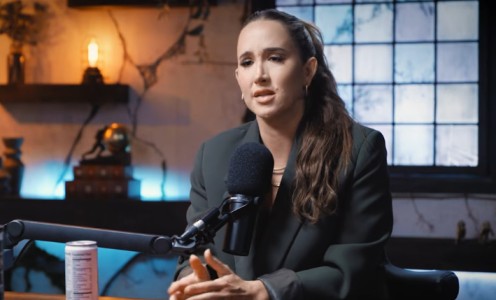
EDITOR’S NOTE: In this conversation, entrepreneur, investor, and author Codie Sanchez sits down with Chris Williamson to challenge one of the most persistent myths in business: that grinding harder is the path to wealth. She explains why owners often stay trapped in the day-to-day, how buying businesses can outperform starting from scratch, and what it actually takes to step back, build a team that runs without you, and move from founder to true owner. The discussion covers hiring, pricing as a confidence problem, the limited but useful role of AI in small companies, and the identity shift required to stop being the person who does everything. This Modern Wisdon episode was premiered September 3, 2026.
TRANSCRIPT:
CHRIS WILLIAMSON: (00:00:00 – 00:00:29): What’s the biggest lie that people are told about getting rich?
CODIE SANCHEZ: (00:00:31 – 00:01:20): That is actually about looking rich and not getting rich. I think especially for men these days, it’s all in your face on social media today. You can see just about everywhere what somebody’s success level is, except if you were to pull up the balance sheet, it would be something very different.
And so I think rich actually is 2 things. One, yes, do you have enough money, divided by 0.4, to have the life that you want? And then 2, it’s do you actually like the life you want. I love Naval’s quote, which is basically the definition of success is, do you have what you want out of life? The definition of happiness being the same. And I think we all kind of trauma bonded as business owners over the fact we should be miserable when we run our businesses. It’s hard, but I don’t think being rich or being an owner has to be miserable. And that’s a great lie.
The Myth of the Profitable Founder
CHRIS WILLIAMSON: (00:01:21 – 00:01:26): I wonder how many people love the idea of working for themselves until they realize that they end up being trapped by their own business?
CODIE SANCHEZ: (00:01:26 – 00:01:56): Interestingly enough, 46% of business owners actually aren’t profitable. So most business owners aren’t profitable ever. 64% of business owners are profitable, but they make less than minimum wage in California, which is actually wild. So if you think about it, the average business owner makes somewhere between $40K and $60K per year. Minimum wage, if you were to work full-time in California, shakes out to about $75,000, $78,000 a year. So yeah, I think it was—
CHRIS WILLIAMSON: (00:01:56 – 00:02:06): You don’t need to take your job home with you. You’re not stressing over whether or not you can make ends meet inside of the business. You’re not paying yourself in order to front-load the staff’s wages for next month.
CODIE SANCHEZ: (00:02:06 – 00:02:44): Yeah, and I get a lot of crap for talking about wanting to buy businesses instead, but it’s mostly because it’s really f*ing hard to start one and most of them fail. And sadly, the ones that do win, that means you paid for the right to one day eventually make some money for 3 to 4 years. And people don’t think about that.
And so if you actually have a business that makes money right now, you’re in the top 10%. If you have a business that makes $1 million a year, you’re well above the top 1%, even though you’re probably only taking home $150K a year. And if you have a business that’s a $10 million a year business, that’s 0.01% of all businesses. So it’s way harder than anybody thinks.
CHRIS WILLIAMSON: (00:02:45 – 00:02:50): Does that mean that very few people should start businesses or become business people?
CODIE SANCHEZ: (00:02:51 – 00:03:38): I think it means you got to know what you’re getting into. I think anybody who’s trying to sell you that you can have everything you want inside of 30, 60, or 90 days and you can do it with little or no money down and you can do it with no effort, it’s not going to work out.
The only time it works out is when you look at the math in most of these things. And I’m just a nerd. I look at the spreadsheets of buying a business and I say, what’s the lowest default rate you could have? That’s an SBA loan. 13% of those businesses fail per year. That’s just public math. Then I look at startups, 90% of them fail within a 5 to 10 year period. So you basically have these crazy 2 amounts of success rates. I think probably most people should go work in somebody else’s business that’s really successful first before you ever think about starting your own. You’d be much better off.
CHRIS WILLIAMSON: (00:03:38 – 00:04:36): It’s interesting, the question, could anybody become a business owner, is probably quite high. With enough childhood trauma and caffeine and sleep deprivation and obsession, probably anybody could. That doesn’t mean that anybody should.
And I saw this a lot when I was coming up doing nightlife stuff. Lots of people had the ability, but not the capacity, or the disposition maybe would be a better way to say it. You have all of the component parts of the talent, but what it does to you, what it requires from you in terms of a sacrifice, especially in the beginning, because for the most part, it’s hardest in the beginning and the challenges get more complex and more difficult in some ways.
But as you say, momentum is a hell of a drug. And the habit of, I’m a business person and I understand what time I get up and I understand how to switch off if I can and so on and so forth. Those are skills that take a long time. And the Dunning-Kruger messy middle bit is where it really hurts.
CODIE SANCHEZ: (00:04:36 – 00:05:37): Yeah.
But my flip side there is, you can own part of a business for almost anybody pretty quickly. I think people overestimate how hard that is. You must get thousands of applicants, right, for your business. And how often are you like, God, where are the competent people? Where are they? Aren’t you thinking that a lot? They don’t work hard as much. This generation’s not as tough. Every business owner I’ve ever met thinks that.
So I think you can actually go inside somebody else’s business, carve out a piece of equity in that business if you’re super valuable, and then you’re still a business owner. We don’t look at Sheryl Sandberg differently for that. We don’t look at Balaji Srinivasan different because he was CTO. The guy’s still worth hundreds of millions of dollars. So I think it’s actually totally feasible, but people just don’t think about it that way.
Turning Down Richard Branson
CHRIS WILLIAMSON: (00:05:38 – 00:05:40): What’s that story about when you turned down Richard Branson?
CODIE SANCHEZ: (00:05:40 – 00:06:30): Well, early on in my career in business, I was a terrible operator, and I had what I call the hero complex in business. You have to survive. If you’re not the savior in everything in your business, your business won’t survive. And most entrepreneurs tell ourselves that because we’re unemployable, and we do have a little bit of a god complex, and we have a little bit of trauma from whatever happened to us that put us into the masochism that is entrepreneurship.
And so in my business, I was a huge Branson fan, and I still am, but it was because he got to live this crazy life while he built a business. How many billionaires do you know go and, you know, travel in a hot air balloon across the world? I just thought that was really cool, and I like adventuring. So, and then he invited me to his island. Now I don’t go to billionaires’ islands. That’s our own side note.
CHRIS WILLIAMSON: (00:06:30 – 00:06:30): They got a bad rap.
CODIE SANCHEZ: (00:06:30 – 00:06:31): Yeah, yeah.
CHRIS WILLIAMSON: (00:06:31 – 00:06:32): I think you should bring them back.
CODIE SANCHEZ: (00:06:32 – 00:07:15): I don’t know. So now I would probably say no, I guess. No, I would go, but I got invited and I couldn’t. I told myself that I didn’t have time. If I left the business, it would fail. And I saw this activity list of like water biking, water bicycling, whatever that is, hanging out without your phone for multiple days. And there was just no way I could get away from my business for that.
And since then, I have had a bunch of friends go, they’ve done business deals, they’ve met power players, they did all this stuff that is asymmetric to business being in spreadsheets. And I missed out on it because I told myself a total lie about building businesses, which is that the business is centered around you, and you are the most important part. And if you don’t drive revenue, the business won’t make revenue. And now that’s not true at all.
CHRIS WILLIAMSON: (00:07:16 – 00:07:22): You told yourself that, didn’t go and see Branson. Meanwhile, Branson’s snorkeling and running billion-dollar businesses.
CODIE SANCHEZ: (00:07:22 – 00:07:34): Yeah, multiple. And I think at the time, this business was probably doing $5 million a year. It was not a big business at all, and it was growing, and it was profitable. There was no fire to put out. It was just a lie I told myself.
Identity, Ego, and the Founder’s Failure
CHRIS WILLIAMSON: (00:07:36 – 00:07:38): How much responsibility is really just ego, do you think?
CODIE SANCHEZ: (00:07:38 – 00:08:44): That’s an interesting question. I think when it comes to business building, we try to wrap up our identity so much in the thing that we call ourselves, CEO, founder, creator. And we don’t realize that one day your business will have a giant gaping hole of failure in it. And you’ll sit alone in the dark with no idea of what to do next, wondering why you ever started this thing. And really worried that it’s going to fail because of you.
We will all have that moment. And when that moment happens, if it’s your entire identity, then what do you do? Then you are a failure because you couldn’t figure out this one business issue. Branson’s had something like 60+ businesses over his career, multiple huge failures. And so how much of us wrapping our identity in one thing is the thing that’s holding us back? Probably a lot. And is that actually healthy for you at all? And what if actually the people who work for you are more competent than you think, and they might be better than you at something. But it’s taken me, I don’t know, 15 years to figure that out.
The 3 Founder Archetypes
CHRIS WILLIAMSON: (00:08:45 – 00:08:59): Take me through the story arc of the typical founder, business owner person, who they are, how they start, how they frame it, what that morphs into, the problems they face, and sort of what the path out is on the other side. What’s the story that we’ve got here?
CODIE SANCHEZ: (00:08:59 – 00:10:59): Yeah, well, I would say there’s really 12 types of owners, and the 3 most common owners or founders or entrepreneurs are what we call the Closer, the Founder, and the Visionary. And we’ve run about 15,000 people through a survey to figure out what are the 3 most common and what are their strengths and weaknesses.
What’s fascinating is the 3 most common all have a very similar story arc, which is, I worked for somebody else, they wouldn’t listen to me, I wanted to do it differently, they saw a different path for me, I didn’t fit into the mold, and so I had to go create my own thing because I became relatively unemployable, or I was faster, better, stronger than the other guys. And so I went and did my own thing.
And the founders typically have 3 characteristics. If you’re a Closer, they’re really good at selling anything. You could probably sell ice to an Eskimo. You’re like selling promotions, then you’re on Love Island selling yourself, then you’re here talking to an entire generation. You probably are a Closer. That’s like one of the most successful archetypes. We have lots of friends who are great salespeople.
The second one is the Founder, which is you will something to existence, like Nutonic, that just hasn’t existed before. You create a product that nobody else has had.
And the third is the Visionary, and the Visionary sells dreams. If you want to succeed as a CEO, you have to sell a vision that’s bigger than what your employees could see by themselves. You need to be able to raise them up, otherwise they don’t need you.
And so I think the arc for almost everybody is, you’re highly qualified, you’re good, you’re in business, you’re outperforming other people, they’re not listening to you, you go execute. The problem is all of that is about you. None of that is about you as a leader, as a builder of a real business, putting in systems and processes. That is actually usually for number 2s and number 3s. So you’ve got to learn that skill, and I had to too. And you have to learn it a lot more when you’re outside of an organization, you’re creating your own.
What Makes a Great Founder
CHRIS WILLIAMSON: (00:11:00 – 00:11:02): What are the component parts of those skills?
CODIE SANCHEZ: (00:11:03 – 00:12:33): Well, if I was going to break down what makes a great founder, what do the best founders have? One, they hate repeating themselves. How many times have you as a leader said, I swear to God, if I have to repeat this one more time, I’m going to lose it. That annoyance for repetition actually leads to systems, and systems are the only thing that allow you to scale. So you can be an incredible salesperson. If you’re a salesperson of one, you’ll only get to, I’ve seen some businesses get to a few million in sales with one salesperson, but that’s it.
So one, you hate repetition. Two is you love one thing about your business more than anybody else, which is selling the client on exactly not the product, but the problem you’re solving. Let’s take Nutonic again. It would be like, yeah, I don’t actually really know what’s in the drink, but you’re selling, hey, maybe I want to be like Chris Williamson. Maybe I want to be super productive. I have this brain fog. You have to be obsessed with this problem set. And I think the problem with a lot of young entrepreneurs today is they’re like, I’m starting an AI services business. You’re like, why? Are you obsessed with that? Can you not sleep for the want of it? If not, you shouldn’t start it.
And then the third thing they have to do is they have to be able to have other people believe that they might actually be able to follow through on the dream. And I think a lot of entrepreneurs fall down there. They’ll say there aren’t A-players anywhere. Well, how many times have you wanted to go work for a C player if you’re an A player? You’ve got to be a winner if you want to attract winners. And that’s really hard to look in the mirror and ask yourself.
Being Indispensable Is Not a Compliment
CHRIS WILLIAMSON: (00:12:33 – 00:12:39): Do you think being indispensable is a compliment to founders?
CODIE SANCHEZ: (00:12:40 – 00:13:31): No. If you could take one thing as a founder to heart, it would be your revenue should have nothing to do with you. The more that you are the driver of your revenue, the less you have a business, the more you have a highly paid job.
I think about it like an entrepreneur pyramid with 3 levels to the game. The bottom level of the pyramid, that’s the wantrepreneurs. This is like, we all do it together, but really I do everything. The next level is a manager, which is they do things kind of, but I micromanage and oversee them. And at the very top, it should actually be as a CEO, I do very few things and the team does everything else. It’s also called the generalist to specialist curve. You essentially move people from doing many things kind of well to having a few specialists that run everything really well.
CHRIS WILLIAMSON: (00:13:32 – 00:13:35): Yeah, you say that most dangerous addiction for a founder is being needed.
CODIE SANCHEZ: (00:13:37 – 00:14:41): I mean, it’s true. I think in your business, there’s nothing better than feeling like you can come in and save the day and make the money and do the close in your business, especially, I mean, we have a lot of entrepreneurs and founders who are men. That’s like 95% of the companies that we have. And I see it a lot with them. Women typically want to be needed by their employees. Men want to be needed for the business. And so if the business needs them to close and grow revenue, then they feel really excited about it. And the thing that got them the ability to be a founder ends up becoming the reason they’ll never succeed.
We have one founder that I adore, and he’s built a really big company, and the business is quite big now. It’s a 9-figure business. And if that business fails, it will be one person’s fault. And that is f*ing him because he will not get out of the way to hire people better than him. And I think a lot of times we get scared of hiring people better than us because what does that mean for us as a founder? Do we have guilt? Do we have shame? Could they take over our position? It’s kind of not normal.
CHRIS WILLIAMSON: (00:14:41 – 00:15:12): I mean, you might be right, that lots of founders have access to a talent pool which is better than them. I get the sense that finding people that are competent and hardworking and have initiative is an unbelievably rarefied skillset. And I would guess more founders struggle to find the candidates and the staff than find them and have some existential fear about bringing them into their organization. What do you think?
CODIE SANCHEZ: (00:15:12 – 00:15:45): I think the fear is subconscious, and so it’s hard to know. I think the fear’s subconscious, but the real problem is what Charlie Munger said, which is you or I are probably not good enough at setting up incentives properly. So the reason why you’re scared of somebody in your business being better than you is often because you don’t know how to corral them as a force inside of your business. Because if you are really good at incentives, you could hire just about anybody and point them in the right direction and get out of their way.
The 5 Incentives That Drive Every Employee
CHRIS WILLIAMSON: (00:15:45 – 00:15:49): Okay, how does a business owner get the most out of their staff?
CODIE SANCHEZ: (00:15:49 – 00:17:32): You nail the incentives. If you want to win, follow the incentives always. So first, I really think there’s only 5 reasons why anybody does anything in your business. They want to make money, one. Two, they want relevance. Three, they want to lead, they want a team and to not be a doer on top of it all the time. Four, they want not just relevance, but significance. Like, I’m higher than this person, I have a higher hierarchy or title than this person does. And five, they want work-life balance or freedom.
And so those are the 5 main levers we use in our business if we want to incentivize somebody. The biggest mistake you can make early on as a founder is thinking that everybody’s like you. I like money. So if I’m incentivizing me — insert Chamath and his sweater — if it’s me, you’re going to give me a comp plan that just shows me I can make millions of dollars, I’m going to fing run. If you show me a comp plan that gives me lots of work-life balance, Fridays off, foosball table, I don’t give a s. That’s not interesting. But if you’re in Austin, guess what’s more important? The freedom, than the money, actually, from the culture here writ large.
And so how you incentivize them, you’ve got to know your people. So we make all of them take a personality score. This comes from private equity. It’s not that I’m smart, I stole all of this. And private equity makes every single employee take personality tests and then drives their incentive comp plan to what they do. If you hire somebody who’s balance and freedom based, but they’re a genius at creative insight or engineering or product, that’s a win. But if you put them on a comp plan that’s only about money, you’re going to lose and so are they. And so it’s a dance, and I wish it was the same every single time. It’s not.
CHRIS WILLIAMSON: (00:17:32 – 00:17:35): What are the most overlooked from those 5?
CODIE SANCHEZ: (00:17:35 – 00:17:58): Probably significance and relevance. If you think about titles, there’s a lot of people today that will say you shouldn’t care about titles, don’t have title creep. I don’t know that that’s always true. If somebody wants to have a high title and that’s really important to them, you could pay somebody way less money, you could give them less time off, but you could give them a higher title. That’s just a lever.
CHRIS WILLIAMSON: (00:17:58 – 00:18:04): We all know of people in our industry that use the title game to compensate for the salary game.
CODIE SANCHEZ: (00:18:04 – 00:18:50): Oh, a lot. Most founders actually put founder or entrepreneur or visionary — that one makes me want to die — next to their name, but their business makes, you know, $30K a year, but that’s important to them, that sort of significance.
And then relevance is slightly different in that a lot of people, like my company, for instance, we have 100+ employees at the media company and advisory business, and I would say probably 15% of them really care about impact and relevance. They could have been in private equity, they were in private equity before, but they’re like, God, I don’t want to die on Wall Street doing deals. I want to feel like it meant something what I did. So you could pay that guy less. In fact, often we do, but they could have more impact and that might be a reason why they stay.
Founder Mode to Owner Mode
CHRIS WILLIAMSON: (00:18:50 – 00:22:13): What I’m interested in most, I think, is this transition from founder mode to owner mode over time. I’ve seen this 3 times now in my life. First, running the nightclubs, then running Modern Wisdom, and now also running Nutonic as well. Less so with Nutonic, I’ve been good with that.
But here’s the problem that I think a lot of people face. The founder initially has to become psychologically fused to the company. They are the company. They work harder than everyone. They know every customer. They take every checking-in call. And that intensity is what gets the company off the ground. That is the fuel.
And then at some point the rules reverse. And to become an owner, the founder has to dismantle that identity. They’ve built themselves into this identity. And they have to tolerate other people doing things differently. They’ve got to lose the dopamine of saving the day. They have to let other employees become more important or make mistakes, allow customers to form relationships with other people inside of their company that they don’t anymore. And then accept that the ultimate evidence of their success is that things can go perfectly well without them.
This is the arc, but the problem is entrepreneurship rewards narcissistic levels of self-belief in the beginning, and then ownership punishes narcissistic levels of self-importance when you grow up. How does an owner know when they have stopped being the hero and started being the bottleneck?
Because everyone, unless you buy the business — and I guess you can leapfrog and maybe basically get yourself out of a little bit of the founder mode because I wasn’t there at the very, very beginning — lots of people are going to found businesses. Many of them are going to fail. Some of them are going to succeed. For the ones that want to not fail, how do you coach people through relinquishing that control? They’ve wrapped their existential sense of wellbeing, their personality, their psychic resonance with the world, all contorted around this thing. I’m the guy. I took every f*ing call. This podcast, I did thousands and thousands and thousands of ad reads. I signed every single invoice. I made sure that every single guest was booked for 800 episodes with no assistance — scheduling, researching, booking things in, title, thumbnail, everything. And now I need to relinquish all of this stuff. How does a business owner know when to let go of being the hero because they’ve become the bottleneck?
CODIE SANCHEZ: (00:22:14 – 00:23:29): Yeah, well, first, our line at our company when we bring anybody on to advise them is being the hero is taking heroin. So you have an addiction, it is to your business. And if you continue to be the hero, that’s a 4-letter word at your company, actually. I think you need to flip the entire script. This is super unpopular, but you know how people used to say you have to serve your employees? Well, actually, the best way to serve your employees is make sure you don’t flame out miraculously and not be able to pay them and fail. And so your employees actually have to serve you in some ways, and they need to get on board with that.
So that would be first, realize that being the hero is actually heroin. The second is, I don’t like to talk about it as founder versus owner mode. I say, are you self-employed versus an owner? Self-employed is what 95% of businesses are. Most businesses don’t have any employees, and even the ones who do, you have such micromanagement oversight on the business that you’re addicted to Slack, your wife and your friends know it, and you feel good every time you get the dopamine hit of a ping.
And so if that is you, then the question is, well, what is the opposite of that? And the only reason I can own a ton of businesses today is because I never want to be self-employed again. It was miserable. I mean, it probably led to me not being able to get pregnant for so long and being—
CHRIS WILLIAMSON: (00:23:29 – 00:23:30): Congratulations.
CODIE SANCHEZ: (00:23:30 – 00:25:22): Oh, thank you. I think it led to stress of feeling like for the last 5 years, what if the business couldn’t go on without me? Meanwhile, it’s growing faster than ever.
So if you say the difference between self-employed and owner is really 2 things: one, if you’re self-employed, that means that either the fulfillment of the product, the sales of the product, or the distribution of the product falls entirely in your hands. If any one of those 3 falls entirely in your hands, you’re still self-employed. We’ve got to remove those first.
And then if you want to be an owner, that means you have to have the number one thing most business owners don’t have, which is transparency. I do not believe you should hire great people and get the f* out of their way. I used to. That’s actually a disaster because they’re never going to care totally as much as you about your business. So you need to have a way to see under the hood and see a dashboard. I think most owners are flying in an airplane without a cockpit and without a dashboard.
And so I think the way for you to move from founder mode and self-employed to owner mode would be, what if you could see inside of your business the most important metrics every single day? And you could see the 2 types of scorecards that matter: activity-based, which you can control — has my team reached out to all the people that they need to, has my team done a number of cold calls, emails — so that’s activity-based. And then outcome-based — are we hitting our revenue goals, are we hitting our close goals, is our conversion rate right, is our churn down, et cetera. Most people only measure the outcome-based goals with very few predictions, so it’s hard for them to project out what the future might look like. Very few people measure activity and outcome and have forward-looking projections. And so I think you’ll know you’re an owner when those 3 things aren’t completely reliant on you and you have a cockpit and a dashboard and you can actually see where the business is going.
Running a Business on Two Metrics
CHRIS WILLIAMSON: (00:25:23 – 00:25:34): This sounds really complex to build. It sounds like a big, unwieldy, huge f*-off database, and I’m tracking all of this stuff, and what, am I going to have to get McKinsey in to build this for me? What the hell do I do?
CODIE SANCHEZ: (00:25:34 – 00:26:56): Yeah, it’s a good question. Absolutely not. Your business should really run on 2 main oars in my mind. I don’t believe in north stars, because imagine you’re in a boat with your team. Have you ever talked to the team and they feel like, Chris, I feel whiplashed in my business. Like one day you say revenue, next day you’re like, where are our follower metrics? Our followers are down, but our revenue’s really up. We’re annoying them too much with our ads. And so the team’s like, come on.
It’s like you’re pulling a boat like this, left, right, left, right. If you actually want to win in business, you have to set expectations with your employees and you tell them, imagine you’re in a boat and you only have one oar. What happens? Well, you go in a f*ing circle. You can’t go anywhere. So we can’t only focus on revenue. That would be great if we could. We have to focus on some top-of-funnel metric. Maybe that’s followers, leads, et cetera.
And so most businesses have 2 metrics that you can run your entire business on. And if you find those, then your dashboard can actually be pretty chill. Takes a little work to figure out the 2 of them, but most businesses — and they’re not always revenue and followers — it might be, if you’re an auto mechanic, you might actually care about what is the average order value that every car has that comes through. And you might care about car count, how many cars come through in total. And if you just nail those 2 things, you’ll know if your business is winning or losing. And that should be it. But most business owners don’t even know that.
CHRIS WILLIAMSON: (00:26:56 – 00:27:18): That’s outcome, right? What about the other side? Because linking all of these together, maybe, okay, so what are the determinant factors that decide how many cars come through? Well, maybe it’s outbound calls that we’ve been sending. Maybe it’s the amount of money that we’ve spent on a home postal campaign. Maybe it’s how good this sign twirler dude out on the street is.
CODIE SANCHEZ: (00:27:18 – 00:28:40): Well, maybe, but usually it’s everything’s Pareto’s principle. The 80/20 rule is almost everywhere. Most of us get overwhelmed because we try to do 552 things and then realize that, no, Facebook ads typically, and cold calls, are going to drive most of my conversion and my leads.
So how we like to run scorecards is you have your 2 Rs up top — car count, plus average order value, so how much people give you each time they pay. Then those go down to each of your teams. And so every one of your teams, if it’s your sales team, they’re going to have 2 metrics, and that’s probably going to be leads and it’s probably going to be conversion rate or something like that. So you kind of think about it like a little dropdown.
But there are only really 7 parts or business units in every business, from finance to ops to marketing to sales. So that means you’re going to have 14 metrics, but you’re going to have a leader in charge of each one of them. That actually is a really clean way to run a business, and you’ll be wrong sometimes, and that’s okay. But at least you’ll know at any given point there’s 2 f*ing things we care about at the company overall, only 2, and everything number-wise that you guys care about needs to roll up to those 2. And if it doesn’t roll up to those 2, don’t talk to me about it until we’re hitting like $100 million in revenue, because we don’t have enough cash to do it. And that makes it a lot easier, at least from what we’ve seen from running businesses.
Where AI Actually Fits in Small Business
CHRIS WILLIAMSON: (00:28:40 – 00:29:26): How much are you thinking about the introduction of AI at the moment in businesses? Because as far as I can see, lots of people get very excited about it. It’s super, super sexy. There’s this stat, 76% of small businesses now use AI per Goldman Sachs’ 10,000 Small Business Voices survey, yet only 14% have it fully embedded in core operations. And from the same study, they said everyone’s dabbling and almost nobody has actually rebuilt their operations around it. I don’t know if trusting AI to run a business is a good idea right now because it might be a dangerous place to leverage. We don’t know where that’s going to go in future. There’s this Claude erased an entire company’s database and all of its backups. There’s still an awful lot of concern. Talk to me about how you think about using AI in new small businesses.
CODIE SANCHEZ: (00:29:26 – 00:30:15): Yes, you do. I mean, it would be a terrible idea to let AI run your entire business. It would be an absolutely awful idea. One, have you tried to have AI just write you something one-shotted? It’s the most AI slop. How much do you want to die every time from an employee? You get a list of questions and it’s not X, it’s Y, and it’s same, same, same, and it’s rules of 3. It’s awful. That is the number one way to not make more money as an employee — to one-shot writing to your boss.
I don’t know, the data says that actually AI is not that important for most small businesses, which is super counter to the narrative. You know what’s a lot more important? Answering your f*ing phone, responding to emails, answering text. Most small businesses respond on average 18 to 24 hours after they get a lead. And the crazy part is most small business owners will fight with me on that.
CHRIS WILLIAMSON: (00:30:15 – 00:30:18): Are they saying that that’s too long or too short?
CODIE SANCHEZ: (00:30:18 – 00:30:59): Oh, we respond right away, we respond immediately. No, you don’t. And so if it’s me and I’m choosing between AI and response time, it’s response time all day. What if all you need — so they say that most small businesses, 80% of the reason why you win versus somebody else is that you just respond faster or you come up quicker. That’s why point of sale is so important at the grocery store. That’s why the first plumber who responds back to you is going to win. And yet we spend all this time AI optimizing from all these nerds on Twitter. So I’m an absolute — for most small business owners, you need to earn the right to use AI by doing standard business practices. And then you can play around with all this fancy stuff.
Getting Paid Fast and Getting Your Foot in the Door
CHRIS WILLIAMSON: (00:30:59 – 00:34:08): Such a good point. It makes me think about one of the best hacks that we realized when we started running business, which is pay invoices as quickly as possible. Every business needs a graphic designer, you need some new stuff making for you. If the guy sends the final version of the flyer through and you’ve done a ton of amends and you say, I’m sorry, mate, it was a nightmare, I’m really, really glad that we got there, thank you, paid — that moment, that day, if you’re the person that pays quickly, the next time that you need to go back to that graphic designer, they will remember, I didn’t even need to chase him. Or if you’re pushing them for the invoice, hey, get it over now because I want to get it paid today. That, in my experience, has put us straight to the top of the list. Because even if we’re just getting charged the same rate as everybody else, they know that we’re easy to deal with. Maybe there was a little bit of pain on the back end. That’s one.
And here’s the other one, which is, I guess, I don’t know whether this puts you in the realm of owner, but certainly gets your foot in the door in rooms that you shouldn’t be in. And this was the way that most of the guys that I’ve worked with have ended up getting in with me. If you’re good at something and you say to someone, I’m going to come and work for you. I’m a videographer, I want to work for you as this particular person. I’m going to come across and I’m going to work for you for 30 days. I’m just going to do it. I’m going to give you everything. In 30 days’ time, if you’re as good as you say you are, they’re not going to be able to let you go. They’re going to have to pay you. And you can call it out.
We do this with partners. I don’t really talk about the way that I do deals on the show that much, but one of the ways that I’ve always done them is, hey, I’m going to do a probation period with you. I’ll do 90 days or 6 months. And once that’s done, I’m going to give you the deal of a lifetime. I’m going to give you way less than you should get. In 6 months’ time, I’m going to come to you with my hand out and you’re going to have to pay me, and I’m going to make you pay. But I’m going to tell you that this is what’s going to happen. I’m going to call out the game. And if I don’t deliver, I’ve taken on all of the risk. And this is the way that we used to get deals back in the day.
Between those 2 things, you’re someone that has a skill that you think this person needs. If you can go to them and say, I’m going to do it for you because I care about what you do and I’m going to show you that you need me, they can’t not pay you at the end. If you’re as good as you say you are, they can’t not pay you. Same thing goes for if you’re going to pitch somebody to go and give some sort of a service to their business. They don’t want to let you go. And there’s this weird karmic psychological debt that we have where you go, damn it, he put his money where his mouth was and he actually delivered what he said he did.
So that’s on both sides. If you’re somebody that wants to get into the room, just work for free for 30 days. Or if you’re trying to get a deal across the line, say, I’m going to give you the deal of a lifetime, and in 30, 60, 90, 6 months, whatever, I’m going to come with my hand out and I’m going to make you pay for it, but you’re going to want to. Or on the other side, if you’re somebody that pays invoices, just pay the f*ing thing straight away. Those, at least for me, have been step-change business hacks that have just kept on working. I can’t believe they keep on working 2 decades later, but they do.
The Law of Reciprocity and the Proof Vault
CODIE SANCHEZ: (00:34:08 – 00:36:42): Yeah, well, that goes back to the law of reciprocity. Why, when you go to the car dealership, do they give you a hot dog and a Coca-Cola, even though most of the time you don’t buy a car? Because actually there is an innate human belief that if somebody gives us something, we’ve got to give them something in return. And the higher the value of what you give, the higher the belief that I have to give you something in return. I think the law of reciprocity is super underused in both sales and employment.
We also have something, I think it’s chapter 7 in the book, which is all about pitch. And what I’ve realized is most people don’t show enough proof. We talk about having a proof vault. There is nothing you can say to me now, with how the internet is and the lack of trust that exists, that would be stronger than you showing me right now live what this tastes like, showing me right now live what somebody looks like who just had it. So why so often do we yap so much and show so little?
And I think if you want to get a job and you want to get paid really quickly, one of the best ways to do it, even if they don’t want to work for 30 days — because people will pillory us and say, it must be nice, Chris and Codie, you’re so rich, and so that’s why you could do that. I don’t think that’s true. I did a bunch of free work when I was super poor.
But I like people to show me in Loom videos. What’s the point of an interview anymore? There’s no point in submitting resumes. We get probably 2,000 resumes for individual jobs that we have open across our companies. That’s insane. So instead, I like when they show me. What would that mean? Well, let’s say you’re a salesperson. Show me what your calendar looks like. Just pull up Google and be like, these are all the calls I have every day, here’s how I stack them. Show me the list of people that you reached out to. Show me your process and your CRM for how that works. You don’t even have to do a project for me. Just show me how you work right now. Great. Most people can’t do that.
And then second would be, all right, now show me what you would do with what I got. And that would be like, give me a project. So most people that we hire have to do a project. We do it paid because I don’t want to mess with getting yelled at, but something really tiny to show — yeah, yeah, I can, watch me, here’s how I put together your 30-day sales process if I was going to do it.
So I think if you don’t sell enough right now in business, you don’t have enough proof, you don’t have enough show, don’t tell, and you probably don’t have enough “show me right now what you could do for me.” With AI, you could do almost all of that. Show me a clean house, take a photo of my house from Google Maps and show me what it’d look like if you painted it. This one step further than the next guy will help you close so much more. Maybe that’s one way to use AI really cheaply, fast.
Finding the Right Talent
CHRIS WILLIAMSON: (00:36:43 – 00:38:17): How do you advise people to go about finding the right talent? Because I do think that a big bottleneck that business owners feel is, this is my f*ing baby and I’m terrified of giving it over to someone that I don’t trust fully. And I’ve been burned in the past because people have made promises when I was earlier and greener in my business career. The first person that I hired, that was a nightmare. And then I tried to get a family member, and that was a nightmare. What’s the 80/20 rule of finding and training great staff?
CODIE SANCHEZ: (00:38:17 – 00:40:56): Yeah, well, I would say one, your first hires are almost always going to suck because you kind of suck when you start. So just don’t feel bad for hiring bad people in the beginning. That’s totally natural and you’re probably not going to do much about that.
We have something called the hiring matrix. There are 3 steps to finding great people. First, you’ve got to find them, but you can’t really find them until you know what they look like. And then you’ve got to know how to close them. So it’s, what do they look like? How do you find them? How do you close them? Those are the 3 steps to finding great people. Most people say, I can’t find great people anywhere. And that’s because they don’t know what they’re looking for. It’s like people on dating websites saying, I want someone who’s 6’5, blue eyes, whatever that whole thing was. That’s not actually what you want. So now you’re reverse optimizing for something that’s not good.
So first, we have something called the known candidate matrix. Basically it’s 5 things that will tell you whether this person has a high likelihood of being successful in your business or not. One is proven experience — they’ve already done this task before, they’ve been a CEO before, a CFO before. Two is sector experience — they’ve worked in your specific sector. Three is size — they didn’t work at Google and you’re a startup, because that would be a big jump. They have a problem set that they have already nailed — you could hire somebody from a startup that’s having proven experience that is in your sector, but they were in charge of a growth company and yours is a turnaround, you got shit sideways, somebody’s got to fix it. And then the last one is, does this person know anybody in your sphere so you can get a real gauge on if they’re good or not?
So that’s called known candidate. I like to rank those all as 5s. A top-performing candidate is going to be a 25. A bottom-performing one is going to be a 0. And what we’ve seen across hiring thousands of people for these companies is, the higher you can rank on that, the more likelihood you are to win over time. So that’s one. It’s like, how do you know what a cheetah looks like? You’ve got to figure out that it’s got spots.
And then the second is you’ve got to figure out if you want cheetahs or house cats. I think most employees are house cats. They’re 9 to 5, they work in this realm, they don’t want to work too much harder than that. They’re not going to go out and find their meals. The cheetah is going to be your 20%. Those are going to be your killers. They’re going to really go after it. But you don’t need a whole company full of cheetahs. I think that’s a misnomer. They’re really expensive, they’re hard to manage. You should hire divas every time you can, because actually divas are the ones that perform over time, but you’re going to hear the most complaints about them, because we’re impossible. Anybody who’s really good is impossible to manage.
CHRIS WILLIAMSON: (00:40:56 – 00:40:58): I’m a dream. I don’t know what you’re talking about.
CODIE SANCHEZ: (00:40:58 – 00:41:03): There’s no way. I bet you’re so — I love that you actively laughed. Shut up, dude.
CHRIS WILLIAMSON: (00:41:03 – 00:41:04): Shut up.
CODIE SANCHEZ: (00:41:04 – 00:41:59): We’re a nightmare, but you’re so good that you will put up with your bulls* when you’re a diva or an A-player, and that’s okay. So you couldn’t have a company of 80% of them, because you’d drive everybody crazy. And because most people fill roles, once you have a system and a set incentive stack, they don’t have to be amazing, because you go, you do this, and then you do this, and if you do that, you get that.
And then the third thing is, how do you now actually go out and figure out if these people exist in the world. That’s the hardest part. The only way that we’ve found to do it really consistently is, first, referrals, second, recruiters, then third, websites. I think recruiters are really underused right now. They’re expensive, but they’re so worth it. And your best recruiters ever will be your employees. And that will be because you’ve built a culture that isn’t terrible. And they will come because they want to work with other people just like you.
What Wastes Time in Hiring
CHRIS WILLIAMSON: (00:42:00 – 00:42:10): What are the biggest wastes of time in hiring? What are the unnecessary traditions or things that people feel like they need to do as a part of the process?
CODIE SANCHEZ: (00:42:10 – 00:43:24): That’s a great point. One, don’t do hour-long interviews ever. I would never ever have an hour-long meeting to recruit somebody until I know that I’m obsessed with them and I want to have them on. And even then, I’m probably setting it as a 30-45 minute meeting. And you can extend if you want to. But I think 15-minute meetings are totally underutilized. Isn’t it weird? Why, when you get into corporate, do they tell you, let’s follow up on that when? Next week. Why did we decide next week? Let’s set a meeting for that. Is it an hour or 30 minutes? Why? Is that what the meeting necessitated?
So I think half of this is getting to the first principles of everything in business, which is, how do I do the most amount of stuff in the least amount of time and kind of not apologize for it? And so in our hiring process, we’re very particular about, hey, these meetings are really short, to the point. When I get on, there’s not a lot of chit-chatting. I’m like, hey, how’s it going, you mind if I get right in? Amazing, bam, bam, bam, bam, bam.
The second thing is, you are really hiring wrong if you don’t have a list of questions that you ask. And everybody on the team has set questions. They’re not the same. And all the notes get accumulated. You could throw that into AI and they all get stack ranked and scored. Everybody says they do this for hiring. Nobody does this for hiring.
The Best Interview Question
CHRIS WILLIAMSON: (00:43:24 – 00:43:26): What are your favorite questions to ask candidates?
CODIE SANCHEZ: (00:43:26 – 00:44:42): Yeah, my favorite question, it’s not just a question, it’s, I want to get an answer. If you want to find an A-player, by and large, an A-player is determined by how hard of things have they ever done. Have you done something really hard?
Probably a month or two ago, we had one candidate I really liked, smart lady, going to be super competent in marketing. And I asked her, tell me about what’s the hardest thing that you’ve done lately? Give me the last 90 days. What has kept you up at night? What has pushed you farther than you thought? Just let me know. And she said, well, I went on a really hard hot yoga retreat. And I thought, well, you’re not going to make it. Because if that’s the hardest thing you’ve done is go on a hot yoga retreat, which I would deem a vacation you probably wouldn’t like this job very much.
And so I think you want to try to figure out when was the last time they stayed up all night, if you want a high performer. And so a lot of times, that’s a really good question to ask. When was the last time you couldn’t go to sleep because you wanted to work on something so badly? And you can just tell in their eyes if they’re slow to respond or if they’re like, well, yeah, I don’t know.
CHRIS WILLIAMSON: (00:44:42 – 00:44:47): My sister’s bachelorette party was — getting the flights were a little — sorry.
CODIE SANCHEZ: (00:44:48 – 00:45:05): That’s not a winner, and so that’s super unpopular. People don’t like to hear that, and I’ll probably get in trouble because people say it’s too hard to work in my company. But the flip side is, good. We also have something called the anti-sell. I learned this from Amjad, who I think you’ve had on here too, from Replit.
CHRIS WILLIAMSON: (00:45:06 – 00:45:06): No.
CODIE SANCHEZ: (00:45:06 – 00:46:09): Oh, he’s amazing. I can make an intro if you ever want. Fastest company from zero to a billion dollars in sales in that period of time — not since the beginning, since $0 in revenue. It was like 8 or 9 years he was at $0 in revenue.
But Amjad has something called the anti-sale for new employees. And I think this is super smart. If you go to his website, and now if you go to mine too, because I stole it, on there it will basically say, do not join if you do not love hard things that almost break you. Do not join if you do not want to be — because this is big in technology — on the frontier of open source as opposed to closed source. So stuff that would be really contentious, put it up front like a billboard.
I think one of the best examples of this, which people on the left wouldn’t like, is Daily Wire. On their website, it’s so good — go to their recruiting page and it will say, it literally has the most inappropriate meme that they’ve ever done, which, well, maybe not the most, but the him/hers bars is front and center and they make some joke about, you’re not going to like it here if you don’t think this is a hysterical joke.
CHRIS WILLIAMSON: (00:46:09 – 00:46:10): It’s like a shit test.
CODIE SANCHEZ: (00:46:11 – 00:46:11): Exactly.
CHRIS WILLIAMSON: (00:46:11 – 00:46:13): It’s a recruiting shit test.
CODIE SANCHEZ: (00:46:14 – 00:46:14): And I think a lot of—
CHRIS WILLIAMSON: (00:46:14 – 00:46:25): You could do the same thing on the left. You could do the exact same thing if you were part of like Novara Media in the UK or something. And you could have like, if you don’t think this meme of Elon Musk’s funny, then go f* yourself.
CODIE SANCHEZ: (00:46:25 – 00:46:45): Yeah, orange man, make him do something crazy on it. But I think, and now maybe you don’t want to go that polarizing, which is probably a good idea for most companies not to go that polarizing, but go with what do your top performers all agree with that your mid-performers would actually get ticked off about? And that should be what you put on your anti-sale.
Owning Your Intensity
CHRIS WILLIAMSON: (00:46:45 – 00:49:03): Yeah, I mean, it works for specific types of organizations. Probably if you’re hiring estheticians or salon workers and stuff, you maybe don’t need to have them be cheetah energy in quite the same way. But it would be something like, if you’re obsessed with the newest hairstyles that are coming out of Hollywood — if you think that Taylor Swift’s got swag, then this place isn’t where you should work. I don’t know, someone that’s like, that’s not cool.
But I remember this such a canonical example in my learning about business was when Elon bought Twitter and he posted basically the same thing. He said, I’m looking for people that want to try and attack the hardest problems in the world. There’s going to be very little rest. There’s going to be very little respite. You’re going to work harder on the biggest problems to try and create the new town square. If you’re interested, apply here, twitter.com/jobs or something.
And there was this big furor around it, him saying it’s going to be 80 or 90-hour weeks. You’re not going to get any spare time. There’s no PTO, there’s no nothing. You come here, your eyes bleed, you go home, or maybe you don’t go home, you just sleep under the desk and you get back up again. But what that didn’t account for is there is a cohort of people out there for whom that sounds like a good time. That actually is what you want.
And in the same way as, who are you to kink shame me? Don’t say that me being walked on a leash with a dog mask on is something that shouldn’t be allowed. That’s what I’m into. And yeah, the world is split into people who want to send it professionally and people that don’t. And the people that don’t kind of won’t really understand the people that do. And that, when I saw that, it really just reminded me, you’re allowed to own your intensity. You’re allowed to own your intensity and actively seek people by positioning yourself as not the opposite of it, as not gently, gently into the night. That’s a really great way to say, this is what we stand for, by, this is what we stand against.
CODIE SANCHEZ: (00:49:04 – 00:49:33): Yeah, and I think, do you really not like being intense, or do you just not like the things you’re doing right now? I actually would hazard to guess most people, if they could do the thing that they really want to do deeply inside, you would go full bore and do it. And everybody has had that feeling before where you get lost in something, you lose track of time, you get into flow state, you’re obsessed with the thing that you’re making, building, reading, watching, whatever, but you haven’t figured out a way yet to do that for a living. Or to have some aspect of that in what you do.
CHRIS WILLIAMSON: (00:49:33 – 00:49:34): That exists in your day-to-day life.
CODIE SANCHEZ: (00:49:34 – 00:49:47): Yeah, and I think you can. I don’t love everything about running a business. There’s so many things I hate about running a business, and I just try to do less of them. Are you burnt out, or are you just not doing enough of those things you actually like to do?
Discipline, Motivation, and Obsession
CHRIS WILLIAMSON: (00:49:48 – 00:50:28): I keep getting in trouble every time I try and say this on the internet, so I’m going to try and do it again and get in trouble again. I don’t think that introverts truly exist. I think that most people’s friends just suck. And every single time some f*ing midwit that once watched a psychology video goes, well, actually the way that it works with introversion and extroversion is it’s a measure of where you take your energy from, it’s whether you take your energy from being on your own or being around other people — I’m like, okay, I know. All right? I know the literature around introversion and extroversion. My point is that even the most introverted person on the planet, around the right group of friends, doesn’t want to leave the conversation. And I think it’s the same thing here.
CODIE SANCHEZ: (00:50:28 – 00:50:29): I think you’re right.
CHRIS WILLIAMSON: (00:50:30 – 00:53:16): Even the most work-shy, lackadaisical, laissez-faire, 3:00 PM wake-up, weed-smoking person, if you give them the right concoction of life, will want to send it. That being said, I also believe that there are some people who are serial obsessives and some people for whom the obsessions are kind of once in a blue moon.
I’m someone that’s been serially obsessive across my life. I was obsessed with getting in shape. I was obsessed with running nightclubs. I was obsessed with DJing. I was obsessed with business. I got obsessed with CrossFit and Thai boxing, and then yoga, and then podcasting, and then moving to America. I became obsessed with the country for a while, and became obsessed now with the beverage industry and CPG. And now I’m obsessed with cinematography.
And it’s just been stacking these things side by side. Fortunately for me, it’s been relatively linear. I haven’t bounced between whiplashing myself with very spurious pursuits. I’ve been relatively linear. So I’ve kind of been able to build a set of dominoes that have almost maybe even compounded. Some people are like that, other people less so.
But, and this is my pitch to people who have obsession. A lot of the time I get messages saying, I’m obsessed with this thing, and it’s kind of ruining my life and I can’t stop. I’m like, that’s not going to last forever. That fuel is going to run out at some point. And your fear is, I have no work-life balance and it’s never going to end. That’s the concern. But the freest discipline and motivation that you’re ever going to get is when you’re obsessed. This hierarchy of discipline, motivation, and obsession, it’s all to do with friction. So discipline is friction accepted — I will pay the price, it’s going to hurt, but I’ll pay it. Motivation is friction removed — it’s like, I want to do this thing. And obsession is friction inverted — I can’t not do this thing, I have to, I’m pulled toward it.
This is not going to last forever. Your level of obsession around CrossFit or Thai boxing or your business or your girlfriend is not going to last forever. So allow it to wear on you for a while. I think that it’s cool to be a serial obsessive, because this obsession’s going to cool down into — it’s going to harden and ossify into what looks from the outside a lot like your identity. After a while, what you are is the residue of your past obsessions. Previously you would’ve been obsessed with business in a manner that you’re not anymore, but there’s elements of that that aren’t still active, they’re just a bit of you. They’re just a part of my personality.
CODIE SANCHEZ: (00:53:17 – 00:54:57): No, I think I totally agree. The only thing that I would add to it is, have you done what you want to do or have you done what’s required? And I think a lot of times when you get obsessed, you get selfish on the part of it that you get obsessed with. And most people don’t think about how to connect the dots to have a series of dominoes that fall. So you get obsessed with one thing, but you don’t think at all about stacking a bunch of chains so that you actually build something that can create leverage or pull for you over time.
And so you wouldn’t be so freaked out about being obsessed with something if you saw that that obsession would lead to a little bit more freedom eventually, would lead to a little bit more money, would lead to not a have-to, but a still want-to. And I think I’ve been there. I’ve been in a business so miserable I wanted to, about making 7, many, many 7 figures a year, walk away from my equity entirely because I was so obsessed at some point and I never built the chain to where I had an out. I just built myself a really tall pedestal I could not jump down from.
And I think that’s the difference — yes, be obsessed, but think about the chain link. Yours is like that. You’re obsessed with cinematography, but you’re not like, oh, f* the podcast, I’m going to go start a documentary and never do this again. You link the two. Even if you have that moment, I call it a someday-maybe list. If you’re a little bit ADD, like I am, and you’re always adding things to your plate or you’re getting distracted, you’ve got the golden retriever thing. I keep a little list on my phone, it’s not so little actually, it’s huge. And on it, it’s called someday maybe. And on it is a bunch of stuff that I’d like to do one day that I’m just not going to do right now.
CHRIS WILLIAMSON: (00:54:57 – 00:54:58): What, like?
CODIE SANCHEZ: (00:54:58 – 00:55:10): Oh my God, everything. I do want to own a puppy farm. That’s like my rich people shit. Have you met a lot of rich people that do weird things? I never understand really, I’m not into fancy stuff.
CHRIS WILLIAMSON: (00:55:10 – 00:55:17): I’m looking for a golden retriever breeder at the moment. If you can hurry up and get that sorted before December, January time, that’d be great.
CODIE SANCHEZ: (00:55:17 – 00:55:54): That’s like my retirement plan. I want to be like Oprah Winfrey, not with golden retrievers, equal opportunity, we don’t have dog-specific races. But a lot of it would be like, write this next book, build this next business, buy this next business. I’ve bought a lot of businesses in my day. I had to stop buying so many because they didn’t make sense for our new ecosystem. And my team would yell at me, like, can we focus for a second? Because focus is like a laser — the wider it is, the less intense it is. And so if you can narrow your focus, you can really win. So that would be my only caveat — be f*ing obsessed, but try to figure out a way that can lead to some freedom or some money for you, because then it’ll be an option in the future.
Slowing Down Without Losing Yourself
CHRIS WILLIAMSON: (00:55:54 – 00:57:38): Let’s say someone who’s running their business has turned it into their identity. What do people do with their sense of self-importance if they slow down, or begin to use more leverage? Because I think this is one of the mistakes that people make when they think about scaling up inside of business. They assume that doing less spit-and-sawdust work means less importance, but it’s actually more leverage, and more leverage from the outside looks less busy. But it’s the first time that someone has to face themselves. Finally, they’ve got all of this self-importance, and now they’re slowing down, at least objectively. Talk to me about the emotional movement, the transition that people need to go through there.
CODIE SANCHEZ: (00:57:39 – 00:58:01): Well, one, I would say if you are an obsessive type of person, you’re probably never going to slow down. You’re just going to change lanes. So instead of going on the highway at 50 miles an hour when the speed limit’s 75, you might never like that, but you won’t feel like you have to go 75 on something that you don’t want to. So realize that you can always just change lanes.
CHRIS WILLIAMSON: (00:58:01 – 00:58:03): What would be an example of that?
CODIE SANCHEZ: (00:58:03 – 00:59:54): An example would be, in your business right now, you might be what we call a ball hog that closes every deal. Every deal has to go through you. You’re the one that gets the sponsors, you’re the one that gets the partnerships, you close all the deals. And if you stop doing that, are you going to be seen as a sales god anymore? Are you going to transition these relationships, and then you’re not going to have them anymore because other people are going to steal them from you? You just offload that one part of it. And instead you go, okay, I was pretty good at selling one-to-one. What about selling one-to-many? Let’s do content now. Could I figure out how to do that?
So just change slightly, add a new skill that has higher leverage. Because really, business only is so many things, which is really, can I sell something for more money than I pay for it? That’s kind of it. And so if that’s all business is, then we can just change the 7 segments of the business and do a different part of them. It could allow you to go and learn how to write more. It could allow you to go and hire people better.
But I guess the only thing I’ll say about that deep, dark part of you that feels like if you no longer are the man, you aren’t a man, or a woman at all anymore, I think for that, you’ve got to ask yourself, what do you think is more valuable? A business where you can take it and sell a job to another human — jobs aren’t transferable — or a business where it’s so good, you are so good, the business runs without you. And I think the way that I usually can get out of being upset about something like that or worried about my identity is I look at a person in the future that I’d like to be like in that business sense. The GOAT is obviously Warren Buffett. He sort of religiously talks about how little he does. Does anybody think less of the man? No. So it only takes one example to go, oh, that’s a complete mental fallacy I have. Why did I hold on for so long to something that is so not true?
The Puritan Work Ethic
CHRIS WILLIAMSON: (00:59:54 – 01:00:02): It’s interesting, the Puritan work ethic, which, coming from the northeast of the UK, is almost like a religion.
CODIE SANCHEZ: (01:00:02 – 01:00:03): Yeah.
CHRIS WILLIAMSON: (01:00:04 – 01:02:32): A good example of that from my last industry was, we would run nightclubs. And as a club promoter, you don’t own the venue, but you have marketing and networks and 500 staff that bring their friends down, and DJs and social media, and people think you’re cool. And then you have venues — venues have got a building and a license and door staff to punch people and, you know, speakers and DJs and stuff like that. And the gap in between a building with no one in it and people who want to party, that’s where the relationship lies.
There is no fing reason that I need to be on the front door of a nightclub. Certainly not on the front door. If anything, I need to be down in the DJ booth, so I can see what’s going on — what’s the atmosphere, did that most recent pyrotechnic show go off correctly, what’s happening with the till, have we got the rest of the stuff. My side, you sort the bar, keep the fing lights on, I’ll do everything else, just get out of my way.
Problem is, if it’s the middle of November, it’s freezing fing cold in Newcastle, and the manager of the venue is outside to make sure that his big hairy door staff don’t punch 7 shades of shit out of everybody, he expects me to be out there as well. Because there is this, if you’re not suffering along with me, you’re not in it with me, mentality. And that took so long to unwind. And lots of businesses, I think, still have this — if I achieved it but I didn’t suffer, it didn’t matter, or it doesn’t count. If I don’t see you proselytizing yourself, prostrating yourself on the fing crucifix altar of whatever this business is, you need to be the first person in and the last person out. And yes, for a very long time you do. And the kernels of truth that are in this are why it’s so pernicious, because you’re like, I do know that.
And also, by the way, I’m trying to hire the cheetah, the one that is staying up all night to do this thing. After a while you can’t lead from the front anymore. And that took a very long time for me to unwind, and also separating out — especially if you’ve got other parties that are in and around this, you’ve got maybe partnerships outside of that, like, working on the front door of a nightclub, it’s like, hey, I need to have a really serious conversation about where my value adds here. It is not my highest point of contribution for me to be stood on the front door at 1 in the morning freezing my tits off. My highest point of contribution is to be dealing with DJs and bookings and making sure that the accounts are right 9:00 AM tomorrow. So we need to change the way that this works. But that Puritan work ethic, and unwinding it, is very difficult. It’s very, very difficult.
Selling Your Team on Your Own Value
CODIE SANCHEZ: (01:02:33 – 01:03:26): If I might make a suggestion, I think it always works the best when you don’t make it about you, you make it about them. I try in my conversations with my team to almost say nothing about what my highest value is. Instead, my conversation with your doorman would probably go something like this. I’d be like, all right, Brad, dude, freezing out there today. It’s going to be intense, people are going to be rowdy, you’re probably going to want to hit them in the face. I feel like I should be out there, but I know that you’ve been doing this for X number of months now, you’re a pro. You don’t actually want me over your shoulder doing that with you, because you want us to earn more, bring more people in, get the club full. Is that right? You’d have to know that that is — yeah, I actually do want that. Or, you know, God, we’re having problems in the back end, I can’t get them to spend enough, I’m going to go back there, I’m going to try to get them to do bottles, sell it.
CHRIS WILLIAMSON: (01:03:26 – 01:03:27): This is what I’m going to do instead of.
CODIE SANCHEZ: (01:03:27 – 01:04:22): Exactly. And you are getting their buy-in to your highest and best use, as opposed to saying “my” highest and best use. What do we always like to hear? One, we like to hear ourselves talk. And two, we like to believe everything’s our idea, not somebody else’s idea. So if you can get your employees to think it is a good idea for you to not be there, that’s when you get them.
And then again, you go back to that 5 quadrant. If you know Brad really cares about money, you play with money with Brad. If you know Brad really cares about relevance, he’s like, Chris, I don’t need this, I don’t need you over my — you think you’re tough, listen, I’m not actually as tough as you, you do it. And so I think we don’t sell enough inside of our companies. We don’t sell enough to our bosses, to our coworkers. We try to do 2 things — I see it all the time — we try to be a dictator to our employees, you have to do this, why haven’t you done this, or we try to be a doormat, which is like, okay, I’ll do it, I’ll be fine. You’re either a dictator or you’re a doormat.
CHRIS WILLIAMSON: (01:04:22 – 01:04:23): Slip between the two extremes.
CODIE SANCHEZ: (01:04:23 – 01:05:49): Yeah, exactly. Probably most of us do that. And employees do it too. As opposed to, why aren’t you trying to be so persuasive to the people around you in business that you can get them to do the things they want to do without them even realizing that it was your idea, not theirs? That is when you really win in business.
And it takes a minute. In the beginning of this, I had to do a ton of psychological sales. I had to learn about priming — okay, when I have this conversation with Brad, I’m actually not going to do it when he’s outside and it’s cold and he’s already pissed. I’m going to do it when he’s inside, feels good. I’m going to bring him up a hot coffee. I’m going to be like, Brad, let’s sit down and have a conversation, take a seat for a second. That’s called set and setting. I’m going to prime him to feel like he’s really important. We’re having an intimate conversation, and then I’m going to send him off there.
It’s the same way with your significant other. How many times have you had a fight with your girlfriend, and she’s pissed and raging at you, and you’re like, let me rationally talk to you about this, and this is why all the reasons that I’m right — and she listens to you? That doesn’t happen. It doesn’t. So when would be a better time? You listen, and then the second she’s no longer pissed, you hand her a glass of wine, you two sit down, you’re like, let’s talk about this, this is kind of my perspective. So with your team, think about, do you really need to be the hero, and do they want that from you? Are you just not a good salesperson yet to them?
Having Hard Conversations
CHRIS WILLIAMSON: (01:05:50 – 01:06:06): What about the other side? What about disciplining staff, saying, hey, look, Brad, we need to have a really serious conversation here that things aren’t going well and I need to really tell you where I’m at. How do you think about broaching that?
CODIE SANCHEZ: (01:06:07 – 01:06:32): I think most people quit jobs because they have terrible bosses. And their terrible bosses are not bad because they overly discipline them. They’re bad because they never tell them the truth. They gaslight them. They tell you that you’re winning even when you’re not. They wuss out on tough conversations, and they don’t tell you how to win. They just tell you why you’re not winning. And I think we’ve all had that. I think most people don’t like conflict, and most people’s leaders are not good leaders because it takes a lot of training.
CHRIS WILLIAMSON: (01:06:32 – 01:06:35): What’s your advice for leaders that don’t like conflict then? How can they get better at it?
CODIE SANCHEZ: (01:06:35 – 01:07:31): You sit down and say, I want to have a conversation and I’d like us both to win. I’m the leader over this. I have these metrics for you as an employee. I have these metrics for me as a manager. You are not hitting these metrics, which means I can’t hit these metrics. What’s going on? Then you’re going to listen to a lot of stuff, and you’re going to say, well, at the company, you know that we work on 90-day plans. I run all of our businesses on 90-day sprints. It’s kind of like our core owner-be-owned. And the reason why is humans work in cycles — birth, growth, decay, winter, summer, spring, fall — and quarterly cycles work really well for businesses.
And so you would sit down and say, over this 90-day period, we’ve got to start hitting these numbers. And if we don’t, how do you think I could keep running a business in which our team doesn’t hit their 90-day numbers? Do you think we could keep doing that and paying everybody? What are they going to say?
CHRIS WILLIAMSON: (01:07:31 – 01:07:32): No.
CODIE SANCHEZ: (01:07:32 – 01:08:20): Okay, so over the next 90 days, we’re going to check in every 30 days. And if we don’t keep hitting these numbers, I can’t keep you here. That’s reasonable, right? Am I crazy? Should there be a way that I can keep you even if you don’t hit all the numbers? Well, what about this? What about this? Hey, listen, we have to be fair to everybody. You might be my favorite person, but if you’re not doing it, I can’t just say that’s okay for you. So we’re going to check in every 30 days and we’re going to see if we’re hitting these numbers or not. So it’s foreign to most people, because it’s a bunch of PC bulls* in corporations about, well, I don’t feel like you’re doing that well, and Sally said, and HR is in the middle. How often have you just sat down and said, here’s what you’re supposed to do, you’re not doing X, either why not, what can I do for it, and how do we fix it by 90 days? Otherwise, we’ve got to part ways, because maybe you’ll go be a superstar somewhere else.
What Founders Should Stop Approving
CHRIS WILLIAMSON: (01:08:22 – 01:08:26): What are the things that a founder should stop personally approving first?
CODIE SANCHEZ: (01:08:26 – 01:10:27): Oh God, yeah. Well, let’s do a general list. If you’re a founder doing this currently, you’re doing administrative work at a minimum wage of a virtual assistant, which would be responding to emails by and large — that needs to go immediately. If you are doing any sort of automated reporting for your business, so reading out of numbers, scorecards, et cetera — see that a lot in businesses. If you are approving any invoices that are less than, depending on the size of the business, 1 to 10% of your revenue — if it’s a really small business, that could go up to 10% — that’s probably not something you should be doing continuously. And you should be using something like Ramp, which I don’t have any affiliation with, but it can track all of your employees’ expenses instead.
And then probably the next thing that you need to be doing is thinking about how many employees. I also think we were told a big lie as leaders, and the lie was, you should have an open-door policy, you should be available for everybody on your team. But an open-door policy just means that you are on everybody else’s schedule, not your own. And as an employee, I think you should guard against it too. You shouldn’t allow people access to you every second of every day continuously. Instead, you need to set up ways and means to get to you only when they have what we call the 3, which is basically problem, potential solution, risks to potential solutions. Then, if you have those 3 things, let’s talk. And if you’re just bringing me a problem, you’re not ready, go back and work on it a little bit.
But all of this stuff is so hard, because you sound like a hard-ass when you say all of it. And then everybody’s like, she sucks, she’d be a terrible leader, that would be the worst. But I think the worst leaders actually are the ones that seem nice, and then never help you make more money, never help you progress in your career, never help you get better, never help you get promoted. What a tragedy. Who wants to work for that person? And I think that’s most people. And then they wonder why they hate their job and don’t make as much money as they want.
Why Entrepreneurs Are Afraid to Charge More
CHRIS WILLIAMSON: (01:10:28 – 01:11:33): Why do you think so many entrepreneurs are afraid to charge more?
CODIE SANCHEZ: (01:11:34 – 01:12:42): Oh yeah, well, I don’t think you have a pricing problem. I think you have a confidence problem. One of the first things I said to one of the business owners in our group was, I can tell about your lack of confidence in yourself and your business by your price. Because most people price according to market pricing — here’s what other people charge. Well, why do you think other people have any idea how to charge in your space? They don’t. Everybody’s just guessing by and large. And most people haven’t done any research at all.
So, one, people don’t have confidence. Two, they do market-based pricing. And three, they don’t understand value-based pricing, which is basically, I give this much value in savings or in revenue or in freedom or whatever it is, and I’m going to take somewhere between 10% and 30% of that value that I drive you. That’s just the number. But when you look at how many business owners actually do that — we all are so scared of getting told no, ever since our first high school date told us that we couldn’t — but I think it translates straight through to our prices. And perniciously, a lot of us as entrepreneurs have a martyr complex where we think it is good for us to not charge.
CHRIS WILLIAMSON: (01:12:42 – 01:12:43): Charitable.
CODIE SANCHEZ: (01:12:43 – 01:12:48): Yeah, that means I’m a good person, I don’t sell expensive things, so I’m good.
CHRIS WILLIAMSON: (01:12:48 – 01:12:49): Get the f*ing money.
CODIE SANCHEZ: (01:12:49 – 01:12:50): Get the f*ing money.
CHRIS WILLIAMSON: (01:12:51 – 01:12:51): Get the f*ing money.
CODIE SANCHEZ: (01:12:52 – 01:13:09): And don’t, now, don’t sell a shitty service, that’s what you should be worried about, do not provide enough value. But you should never worry about, do I charge too much? If you provide enough value, the price spectrum is unlimited. Last thing I’ll say on this, it’s kind of nerdy, but we break it down, is this wallet share phenomenon. Have you heard of this?
CHRIS WILLIAMSON: (01:13:09 – 01:13:09): No.
CODIE SANCHEZ: (01:13:10 – 01:14:46): So fascinating study that basically, you put a group of pricing experts in a room many, many times over and normal people in a room, and you knew a couple of things about them — you knew what they were worth, how much they made per year, net worth and income. You would think that the pricing experts, across net worth and income, would be better at determining the right price for something than a group of random people, right? That’s their job.
Well, it turns out those people were no better at pricing than the random group. In fact, they actually priced about 15% lower than the random group. Why? Because of something called the wallet share phenomenon, which is, most people will only price about 10 to 15% higher or lower than what they could afford. And this happens across almost every business. So you are actually restricted by the amount of money you make without even realizing it. It’s a subconscious bias. But sitting out there is somebody like Chamath, who would spend a bajillion dollars on a sweater, and you can’t even conceptualize why that would be worth it to somebody.
And so in business right now, you’ve got to ask yourself, one, what’s holding you back because of how much you make? But even more so, what about the other people on your team, because they’re probably — employees on average have a 30% lower pricing range than owners think they do. So your employees are dragging down your profits by 30% and you don’t even realize it, which is crazy. When I heard that, I went and analyzed our business and saw, oh my God, it was the same for me. And so that’s a good realization to have. You don’t have a pricing problem, you have a confidence problem.
CHRIS WILLIAMSON: (01:14:46 – 01:15:38): So many people are undercharging. God, almost all of my friends, especially people in service businesses, right, it is insane. I have a couple of friends who’ve done features on records. These records have gone on to do tens of millions or hundreds of millions of plays. So they’re an integral, unique part of a music track. And even in retrospect, they’re not thinking, I undercharged for that. This is one of the biggest things that’s ever happened, and you still can’t bring yourself, the next time that the opportunity comes around, to turn the screws on. It’s almost like you want to shake people and go, you don’t understand how good you are at what you do. You can charge more.
CODIE SANCHEZ: (01:15:39 – 01:17:24): Well, so that’s fascinating, because that’s why we do this thing called Owner Score that I was telling you about before this. If you go to ownerscore.com, you can do it. But basically those people are usually either the Artist or the Dreamer. And so it’s funny because they literally are an artist in this instance, but the Artist almost always underprices in everything that they do. And so even if they’re at the top of the food chain in their industry, they have a predilection to think charging more is actually greedy.
And so the interesting part about business, the part that kind of got me ticked off at some point, is I started thinking, have you ever started watching really good business people online, and you’re like, Elon Musk, and you’re like, well, if I just follow Elon’s directions, then my business will grow. I’m just going to listen to his advice because he’s a mega billionaire. Well, that’s sort of problematic for a lot of reasons, because one, you and I aren’t as good as Elon Musk. If we were, we’d be billionaires. We’re not. He’s an anomaly. Second is, I don’t want his life. With much love, we know a lot of people in common. I’m happily married, I’m going to have a kid, I like to hang out a little bit, I want to enjoy life, I want to be fit, not now, but again eventually. And so it doesn’t work on 2 fronts — I’m not Elon, plus I don’t want his life. And so if you take business advice from somebody whose life you don’t want and who has skill sets you don’t have, you’ll be messed up even if the business advice is great. And so I was like, God, we have these thousands of companies — why could I have an HVAC company, HVAC company, HVAC company, all the same information, same revenue, same team, and there’s total variance?
CHRIS WILLIAMSON: (01:17:24 – 01:17:25): Wildly different performance.
CODIE SANCHEZ: (01:17:25 – 01:17:50): It’s because of the founder, right? But if I know, hey, Founder A is an Artist, so he’s probably underpricing just at the gun, then I can have different advice for him than I can have for Closer Founder, which I know probably doesn’t have as good of fulfillment or creative in his business. So it seems like it should be standard, except nobody does it. Everybody starts with, what’s the best business advice I can do? As opposed to, who are you?
CHRIS WILLIAMSON: (01:17:50 – 01:17:51): As if it’s one size fits all.
CODIE SANCHEZ: (01:17:51 – 01:18:01): Yeah, and I just don’t think that works. And there are some core business principles, but you have to apply them to who you are as a human. Otherwise, you’ll be miserable even if you end up getting rich.
When Founders Should Start Paying Themselves
CHRIS WILLIAMSON: (01:18:01 – 01:18:05): Related to the price thing, when do you think a founder should start paying themselves properly?
CODIE SANCHEZ: (01:18:05 – 01:18:32): Immediately, like almost immediately, even if you can’t afford it. And what would that mean? Put it on your profit and loss statement. Write a little loan to yourself, or put it in a spreadsheet so you know going forward. I think a lot of times founders will spend years not making any money and thinking that they have a profitable business, but really the only profit is your labor. Basically, it’s slave labor at this point.
CHRIS WILLIAMSON: (01:18:32 – 01:18:37): Right, so the founder’s free labor is disguising bad economics inside of the business.
CODIE SANCHEZ: (01:18:37 – 01:18:40): 100%, and you can’t fix a business if you don’t understand the underlying math.
CHRIS WILLIAMSON: (01:18:40 – 01:18:40): Math.
CODIE SANCHEZ: (01:18:41 – 01:18:58): And so I always start with, pay yourself a market rate salary. It’s super easy to figure out what that is. Go online, say market rate, this size company, this industry, this location. Okay, I’m going to pay myself that. If I can’t pay myself that in year 1, okay, that’s okay. If I can’t pay myself that by year 2, that’s actually not okay.
CHRIS WILLIAMSON: (01:18:59 – 01:19:00): What are you doing?
CODIE SANCHEZ: (01:19:00 – 01:19:52): Yeah, then you’re doing something wrong. And that means that you either have to probably usually raise your prices, sell more expensive things, find rich people, they like to pay more. Last year there were 5 million businesses created. That’s the most businesses that have ever been created before in history. In 2019, we should check my math, I think it was a couple hundred thousand, somewhere between 200,000 and 500,000 businesses created. So we’ve had more businesses created than ever before, and yet we have less profitable businesses than we’ve ever had before. And entrepreneurs’ wages continue to go down. So you look online and everybody looks like they’re Gucci, Fendi, Prada, Lamborghini, whatever. And they’re not. And they’re actually poorer than most employees.
CHRIS WILLIAMSON: (01:19:52 – 01:19:54): So it would be better to work for you than to run it.
CODIE SANCHEZ: (01:19:55 – 01:20:03): It would be 1,000% better. And so why are we doing that to ourselves? Let’s look ourselves in the face and be honest and say, all right, I’m not quite ready for this game yet.
When Your Aspirations for the Business Exceed Your Ego
CHRIS WILLIAMSON: (01:20:05 – 01:22:04): I mean, if your company becomes enormous or reputable and it still owns your life, I don’t think you can class that as winning. I don’t think you can class that as being successful. And I’d love to ask a question of a lot of founders. I’d love to ask, if nobody ever knew that you founded the business, would you still want to own the company? And I think that a lot of them wouldn’t.
The best example of this, I had Ben Francis on the show a few years ago, Gymshark founder. 70% of the company is owned by him, completely bootstrapped. Took some advisory thing, a few people have got some percentages here and there. 70%, he’s worth like £2 billion — that’s like $3 billion. And he was co-founder, CEO, then stepped out of the business entirely from £100 million to £500 million, and the guy that used to run Reebok came in. And then at £500 million, he stepped back in. He gave me this line, and he said, when your aspirations for the business are bigger than your aspirations for yourself, you’ll become a successful entrepreneur. And I was like, that is so good.
I care more about the success of the business than my own ego. And you can say, this is actually an acceptable thing. It’s like, do you know what it is, I take so much pleasure from being a business owner, from playing the game of business, even if I’m playing it badly by most of the metrics that you would assess the business by. But I just love the impact. I love the significance, even like giving it to myself, being a business owner, being able to say that it’s my thing and my baby, and I get to do the obsession thing, that’s cool. But don’t kid yourself that you’re doing business, you are playing the game of business, and playing it at least by most metrics pretty well.
And yeah, if nobody knew that you founded the business, would you still want to own it? I think is a great question.
CODIE SANCHEZ: (01:22:05 – 01:23:06): And it took me 12 years of working for other people before I went and started my own thing. I actually, I was way more risk-averse than you and a lot of the people that we know who just went out and did this crazy thing. I didn’t like that idea. I wanted to sleep in my own bed. I didn’t believe in sleeping in closets and couches and garages. I wanted to be able to go on vacations and do all the things.
Eyebrow raise, I saw that. I know now I can actually eyebrow raise again, because when you’re pregnant, you can’t get Botox. So it’s a real tragedy. But it took me a long time to take the risk. And I actually think that’s totally fine. I think if you’re scared and you want to stack cash and you only want to build on the side, that’s totally fine. And you have to stop listening to people who try to get you into entrepreneur porn, when in fact you could just own a part of the business. You could invest in a bunch of businesses. You could be really successful as a number 2 and be way happier. And that is totally okay. And I think we’ve got to normalize some people saying that.
CHRIS WILLIAMSON: (01:23:06 – 01:24:22): Dude, in the same way as I mentioned before, you can go to somebody that has a business or is in an industry that you’re really desperate to go and work in, you could do the same thing. I bet that you could roll the dice and say, I’ve worked in a similar or completely symmetrical industry for a very long time. I think that you need an operator, I’m going to come in and I’m going to take, I’m going to be your right hand, I’m going to be the sword that cuts through all of this nonsense inside of this business, and I’m going to do it for next to nothing. And in 60 days, we’re going to have a little review, and I just want to see what happens. You could go to that person and say, I want to take a 50% market rate salary and I want 10% of the business over the next couple of years, let’s see how we get on. And then you build it up and build it up and build it up. And as long as you’ve got a good enough contract, guess what, you are a legitimate business owner with none of the issues of having to start it, find it, market position.
I think it makes sense. Ultimately, this challenge for most people that this relates to will come down to an emotional one. Can you relinquish your identity of being the person that was supposedly the one that fixes all of the things, keeping on top? Can you deal with problems occurring? Are you going to be able to have the hard conversations when you need to? And if you can do those things, I think you’ll be successful.
Investing in People Better Than You
CODIE SANCHEZ: (01:24:22 – 01:25:48): And if you can’t, I think you’re going to kind of be trapped in the same hamster wheel. I think it’s not just, do you want the business to win more? I think you really start winning in business when you want your customers to get bigger than you because of the things you did for them. You want to be the mentor that has a bunch of mentees who are way bigger than you are, and you want to be the employer who has a bunch of employees that you want to invest in in the future.
Many of the greats, like if you think about Antonio Gracias, head of Valor, one of the big ones — I think he made $40 billion on Elon Musk’s SpaceX transaction. That’s probably more than Antonio’s ever made in his life, and it’s because of Elon, because he invested in him. And also, Elon was an employee, kind of got ousted from PayPal by Peter Thiel and a bunch of the Founders Fund guys, and didn’t have an ego about it. I’m sure he was super pissed, could have felt like he could have taken that company to the moon, but he just ate it and said, I’m going to keep a relationship with these guys, they’re going to fund me in the future. They come in and save him later when they almost run out of capital. And because of that, Elon was able to continue his company and take it to new heights. And now Luke Nosek and a bunch of guys here in Austin are also going to make billions of dollars, not off of their own work, but off of Elon’s. And those are people that he used to report into or partner with.
CHRIS WILLIAMSON: (01:25:48 – 01:25:48): Stuff.
CODIE SANCHEZ: (01:25:49 – 01:27:00): Right. And so it’s one of my favorite parts about finance and investing, is it teaches you that you don’t always want to be better than your employees. You actually want winner employees, because when they leave, you should go, what are you doing, can I throw some pennies at that, what is that, let me in there. That’s how rich people, rich people do not think in terms of their labor. Rich people think, where can I put some money and leverage to play so I could do less and make more? And they feel no shame about it.
And you and I, because I came from nothing, and my entire identity — I’m what’s called a workhorse — my entire identity was wrapped up in “Codie’s good because Codie works a lot.” I feel bad when I don’t work. And because of that, I actually miss a ton of opportunities where I get to invest in somebody else and they work harder than me. I don’t even have to do anything, I get to make money from it. What a beautiful thing. So it’s totally changed my perspective on investing over the however many years, because when you’re an investor, you don’t look for where you can put — we have a portfolio of, let’s see, in Contrarian Thinking Capital, we have 33, 36 companies. Inside of there, there’s a crazy thing. The companies that want the most from us, do you think those are the winners or the losers?
CHRIS WILLIAMSON: (01:27:00 – 01:27:01): Losers.
CODIE SANCHEZ: (01:27:01 – 01:27:14): Those are the losers. The ones I have to work hardest on are really typically the ones that are going to give me the least money. The winners, I’m like, cool, just saw that you did another $100 million, and they’re not responding.
CHRIS WILLIAMSON: (01:27:14 – 01:27:15): Busy running the business.
CODIE SANCHEZ: (01:27:15 – 01:27:45): 100%. And you think about that with your top employees, the A-players in your business. Sadly, the worst leaders are bad leaders because they spend all their time with the losers, as opposed to, hey, you’re a stud, what else do you need, let me get out of your way. That’s what I think a real leader does increasingly — let’s get out of the way of the winners and stop spending all our time on the losers, and get more winners on board. But that’s probably not that profitable or popular either.
Building a Right Hand
CHRIS WILLIAMSON: (01:27:46 – 01:28:07): Yeah, the gifted and talented program for the people inside of your organization, as opposed to raising up the bottom percentages, is usually not where people apply their attention. Let’s say there’s somebody listening who is ready to relinquish some of that control and is ready to go from being owned to owning. What would you leave them with?
CODIE SANCHEZ: (01:28:08 – 01:31:25): Well, I would start with, there’s one hire I would highly consider, which is, who is going to be your right hand in business? Do you have a number 2 that you trust? Because I think it’s really hard in the beginning to just implement a ton of systems, et cetera. Typically, if you’re the founder, you’re the visionary, you’re the one with the crazy ideas. Your execution is probably not as good as it needs to be for most people who aren’t running multimillion-dollar businesses. If you don’t have a number 2, if you don’t have an assistant, you are one.
One of my mentors, Bill Perkins, who you know too, he famously told me, when I wanted him to invest in one of our companies, he wouldn’t do it unless I had not one but two assistants. And I said, that’s the most elitist thing I’ve ever heard in my life, Bill. And he said, I don’t give you my millions so that you can go do minimum wage work. So no, you need to have junior people. And again, it’s like, do you want to be right or do you want to win?
And so I think that would be the first thing. And then maybe the only other thing is a chief of staff, one of the most underrated hires out there for anybody who’s making 7 figures plus. If you don’t have a chief of staff, I highly recommend it. You’re going to train a number 2. They’re not much more expensive than an assistant. And ours, his name is Azad, he’s a stud. And we actually — Chris worked with him in Iraq, he was his interpreter when Chris, my husband, was in the military. He was a Navy SEAL in Iraq, and during the pullout of Iraq, Azad’s group was persecuted. So Chris had to call in a bunch of favors to get Azad out of the country, and we got him here.
The guy went and immediately upon coming in, went and worked at Starbucks and the grocery store, 2 jobs at the same time, just to pay rent. The second he got his green card, he went and applied for the Marines, joined the Marines, was first in his class, total stud, then goes and becomes an electrical engineer and was going to go work at Amex for an internship program. And we pulled him to be our chief of staff. He didn’t have any of the background, he didn’t have any of the knowledge of it, but I knew I was going to hire him because I remember we just got breakfast with him. And I was talking to Chris about it, my husband. I’m like, I think we should hire Azad, he’s just a killer, he wants it, he’s so hungry. He has none of the experience, but I think he’s going to grind and we can help him be really successful.
And so we called Azad and he was like 20 minutes away. And Chris just says, hey, can you come to the house? And he’s like, yes. He had just left us. Any normal person would’ve been like, why, what? He comes to the house, and we offer him — and I don’t even get out what the pay is and whatever — and he’s like, yeah, I’m in. And I was like, this guy’s going to win. And I think all around you, you don’t even realize it, but there’s some young gun or some hungry person, age unrelated, who would kill to just be next to the owner, to just be next to one of the winners at the company. And you don’t have to pay that much, but then the second they start outperforming, you start paying them more. And those people, almost every time for me, have become the people who have run my companies eventually. So I could see Azad doing that one day too.
Closing
CHRIS WILLIAMSON: (01:31:26 – 01:31:29): Unreal. Codie Sanchez, ladies and gentlemen. Codie, you rule. Where should people go?
CODIE SANCHEZ: (01:31:30 – 01:32:39): Ownerbook.com. We have a, this is kind of cool, we’re doing something a little crazy we’ve never done before. Ownerbook.com, we’re doing a massive giveaway. And the idea was, I don’t know, you want to get your book in everybody’s hands, but then it becomes about how many books you’ve sold as the author. And that’s cool, but I was like, what if we could give away $1 million in cash and prizes live at the book launch, so we could say people made money like right now, today, on here. And so we’re doing that. We’re going to try to, Oprah Winfrey, a bunch of business grants to business owners. We’re going to give a bunch of cool prizes actually while we’re there, things to help people with their productivity. And we’re going to try to help a bunch of business owners actually make some money live during the book launch, which I don’t think there’s ever been a million-dollar book launch before. So that’s kind of fun. And then we’re partnering up with all these charities, like the Navy SEAL Foundation. So some of these charities will have videos and access to things that they wouldn’t because of everybody coming and buying books. So anyway, could totally implode, but it’s going to be really fun to try.
CHRIS WILLIAMSON: (01:32:40 – 01:32:44): Unreal. I’m going to watch either the fireworks or dumpster fire depending on what direction it goes in.
CODIE SANCHEZ: (01:32:44 – 01:32:45): Yeah, exactly. You’re great.
CHRIS WILLIAMSON: (01:32:45 – 01:32:46): I appreciate you so much.
CODIE SANCHEZ: (01:32:46 – 01:32:46): Thanks for having me.
CHRIS WILLIAMSON: (01:32:47 – 01:32:49): All right. Goodbye, my beauties. Dude. Yes.
CODIE SANCHEZ: (01:32:49 – 01:32:50): This was great.
CHRIS WILLIAMSON: (01:32:50 – 01:32:59): Thank you. Congratulations, you made it to the end of a podcast episode without dying. Now, here’s another one. Go on, watch it.
Related Posts
- Transcript of Communication Coach Vinh Giang Interview: On Purpose Podcast
- Transcript of Seth Godin Interview: Diary Of A CEO Podcast
- Transcript of David Senra Interview: 14 Patterns Behind the World’s Greatest Minds
- Transcript: Dr. Marc Brackett Interview on Emotional Mastery – Mel Robbins Podcast
- Transcript of Seth Godin Interview: Mel Robbins Podcast