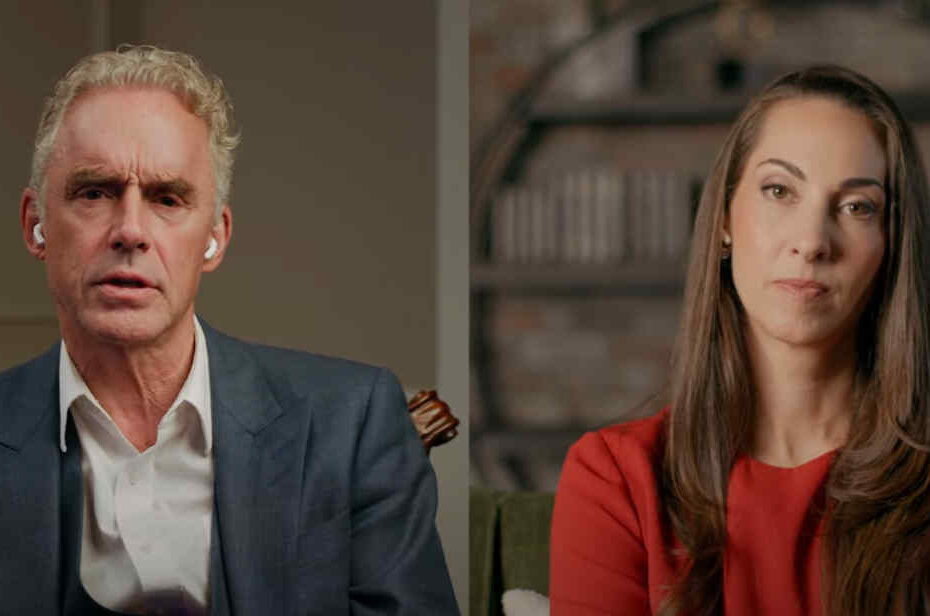
Read the full transcript of behavioral researcher and bestselling author Vanessa Van Edwards’ interview on The Dr. Jordan B. Peterson Podcast # EP 565 titled “Unlocking the Hidden Power Of Body Language.” This episode was filmed on July 16th, 2025.
Initial Assessment and Posture Analysis
DR. JORDAN B. PETERSON: Vanessa Van Edwards is a behavioral researcher, a bestselling author, an instructor at Harvard University, and a self-described recovering awkward person. She’s the author of “Master the Secret Language of Charismatic Communication” and her YouTube videos on body language and social skills have received more than 70 million views. We spoke to her today about decoding body language, overcoming awkwardness, and putting your best foot forward. So, Vanessa, tell me about my posture and seating in this to begin. You’re an expert in nonverbal communication, so size me up.
VANESSA VAN EDWARDS: Well, first of all, I love that we’re angled towards each other. I have a little bit of a pet peeve when people are angled halfway. You know, have you ever seen that where they have the setup where they’re angled away? The brain loves when we’re on parallel lines. So I love that even through a camera.
Also, a distance that most people don’t think about is the distance between our ears and our shoulders. It’s my favorite distance. And the reason for that is because when we’re anxious, when we’re afraid, we tend to take up as little space as possible. You’ll see people will turtle where they sink their head down. And they tend to creep their shoulder. Exactly. They tend to creep their shoulders up. It’s a cue that we don’t think about. In fact, we often do it in first impressions. We say, “Hey, nice to see you.”
DR. JORDAN B. PETERSON: Right, right. Compressed like that, eh? Yeah. You see people standing up sometimes when they do that, they’ll go, “Hi.” And they use that uplift. Is that what it’s called?
VANESSA VAN EDWARDS: Uptalk.
DR. JORDAN B. PETERSON: Uptalk.
VANESSA VAN EDWARDS: Yeah. So there’s…
DR. JORDAN B. PETERSON: Yeah, uptalk.
The Trifecta of Awkwardness
VANESSA VAN EDWARDS: There’s this trifecta of, I would say, awkwardness that can happen in a first impression. And they all are related to each other. First, we’re a little nervous in that first impression. And so we take up as little space as possible. We turtle down, we shrink up. That immediately shortens my vocal power. Right. It has less oxygen. I have more tension in my neck, I also tend to clench my jaw, which then creates a little bit less volume, which then makes me sound nervous.
And then I use, as you said, uptalk. So, “Good morning. How so? Happy to be here.” And what the brain does when it hears an accidental question inflection, it’s called a question inflection. So “My name is Vanessa. I’m here to talk about body language.” When you hear me accidentally use a question inflection, your brain goes from listening to scrutinizing.
The reason for this is because liars often accidentally use the question inflection because they’re asking, “Do you believe this?” So if I say to my daughter, you know, “Did you take the cookie from the cookie jar?” And she goes, “No?”
DR. JORDAN B. PETERSON: Right, right.
VANESSA VAN EDWARDS: That movement, it subconsciously, even if you’re not lying, it triggers the part of our brain that goes, “Oh, something’s off here.” And we don’t like to hear people who are questioning themselves because we don’t want to feel that we’re questioning. And so I think that that trifecta in that first impression.
And you do it, you did it beautifully. Maximizing this distance. That’s the most important one. Second, I can see space between your torso and your arm right now. And that is a very subtle signal of you’re comfortable enough that you’re not trying to block or protect your torso. Anytime we’re tight to the side or tight. Exactly. We’re tight to the side. That signals, “I feel a little bit of discomfort. I want to protect my vital organs,” even if we’re just cold.
And so what I say to people is, you could be doing this because you’re actually nervous, but you could be doing it as a bad habit. And a lot of our nonverbal pet peeves are bad habits. Or because you’re cold or because you’re allergic. It doesn’t matter your reason. All that matters is the people who are watching you. They’re making a very quick impression of you. And it often happens, I’m sad to say, in less than a second. I’m quickly seeing, “Are we aligned up? He’s taking space here. I see space. He’s not protective. Oh.” And we see a lot of vocal flexibility in that very first word.
And our verbal first impression usually happens on “Hello.”
The Psychology Behind Uptalk
DR. JORDAN B. PETERSON: Hmm. So that uptalk, I see a lot of people doing that. And it seems to me that that’s a sign of appeal to authority. It’s a sign of deference. It’s a sign. It’s also a way of signaling harmlessness because children use uplift a lot, uptalk a lot. What it indicates to me when I see someone doing that is it’s either a prolongation of immaturity or it can be manipulative. Right. To mask yourself in a way that, so you appear much more harmless than you actually are.
It’s, I suppose it’s a way of also forestalling aggression because if you signal that you’re immature, then what you’re doing is you’re asking for support from other people.
VANESSA VAN EDWARDS: Yeah, no, I think that’s right. I see any kind of negative nonverbal cue and cues are all contextual. But let’s use uptalk as an example. There’s actually two factors. There’s external and internal.
External is exactly what you just mentioned. Maybe you’re trying to show deference, maybe you’re trying to show submissiveness.
I hear uptalk a lot in sales contexts where someone asks their price. So they’re on the phone and they say, you know, “We’d love to work with you. And the price of this service is $5,000?” Now what they did there is they are internally thinking, “I’m not sure about this number and neither should you,” or “Are you going to say yes to this number? I’m worried you won’t.” And so that gives away your vocal competence because you’re saying to this person, “There is room to negotiate here.” Or we ask a boundary because we’re nervous about the external source.
The internal reasons though, and this is, I think where it gets more interesting, is if you don’t feel worthy, if you have self doubt, if you feel like you don’t belong, or you have imposter syndrome, which so many people do, you use uptalk regardless of the outside. And so you go into a presentation or a meeting or a date or an interview and you ask your name, you ask your value, you ask your salary, you ask your answer and people go, “Ugh, I can’t trust this person.” But it actually has, it’s not deceptive. They’re literally just so anxious they cannot deliver with vocal confidence.
The Accuracy of Nonverbal Assessment
DR. JORDAN B. PETERSON: Do you think that assessing the situation that way so people are going to make their assessments based on those nonverbal cues. Hypothetically, the assessments evolved and have functioned just like the behavioral demonstrations. And so one of the things that I was considering when I was reading, I was reading “Cues: Master the Secret Language of Charismatic Communication.” I was curious. You lay things out very explicitly. And it’s hard for people to learn to change their behavior as a consequence of mere explicit instruction, too.
But why would we presume that there’s actually a gap that needs to be closed between how someone is presenting themselves and the inference? Why shouldn’t I just assume that if someone is adopting a prey position, P-R-E-Y prey, and they’re indicating anxiety and they’re using uptalk, why shouldn’t I conclude that what that nonverbal behavior is telling me is actually correct? Now, you talked a little bit about bad habits, and maybe that’s part of the answer.
VANESSA VAN EDWARDS: Yes, this is such a great question. Bad habits is one, but I actually have a bigger one. And this is, I think, the reason why I wrote this book. Most people have very, very good ideas. They’re very well prepared. They have a lot of competence or book smarts, and they have no idea how to share that.
So their competence is there. Their ideas are very good. But when they get in the room, they have social anxiety, they have awkwardness, they’re not sure how to read cues. And so the prey behavior, the uptalk, the bad nonverbal habits come into play because they are anxious about their presence, but not their ideas. So what makes me angry is when you have someone who has a brilliant idea, a great presentation, they’d be a great hire in an interview, but they show up and they have no idea how to answer the questions, even though their competence is there. They are so nervous about their presence, they can’t show it.
High Achievers and Social Skills
DR. JORDAN B. PETERSON: Okay, so your primary target, let’s say, is people who subvert themselves unconsciously and portray themselves as less competent than they actually are. And so that would be likely associated with high trait neuroticism, my favorite personality trait. If you look at what predicts success, this is something else I wanted to talk to you about. You talked about warmth and competence and the best marker on the personality side for competence is conscientiousness. But warmth is more ambiguous, I would say.
And so we should delve into that because the literature that I read on management styles suggested that or management personality suggested generally that less agreeable managers are more effective. Now it’s a hard thing to parse apart, eh? Because that immature self presentation you described, that could be a consequence of neuroticism, but it could also be a consequence of agreeableness that’s too high. Right. And so if you’re agreeable, you don’t want to come across as a threat and so you can revert to behaviors that indicate that you’re harmless.
Okay. And so, all right, so we’re going to talk about people who are undermining their own ability to progress forward because they lack. What do they lack? They lack social skill or they’re just unconscious of the way they’re presenting themselves.
VANESSA VAN EDWARDS: It’s a bad combination of, you know, I call them high achieving, awkward folks. Right. They really want to do well, very smart. So it’s, yes, it can be a lack of social skill. It also could be an overemphasis on IQ over PQ where they were so focused for so long on developing test scores and book smarts and studying and they focus a lot on the data.
I work with a lot of engineers, very highly technical folks, and they’re very, very hyper focused on their numbers. But they get in the room and they have no idea how to make eye contact. They have no idea. So that’s a lack of knowledge where as long as if they’re told, “Hey, here are the cues for warmth and competence. I only want you to try cues on that actually work for you.” There’s 97 different cues I’ve sort of identified and there’s some that work for people and there’s some that don’t. Okay, you try on a couple of cues that work for you. Here’s the recipe of warmth and competence. If you add those cues, people are more likely to believe.
And this comes directly from the research. So Dr. Susan Fiske is sort of the pioneer in it’s called stereotype content model. Right, the warmth and competence model. And she said that competence without warmth is likely to leave us feeling suspicious and suspicious that is the killer. Because what happens is someone gets in the room, they’re over hyper focused on the numbers and the idea, which is great, but they get in the room, they think “My ideas will speak for themselves, I don’t need to add warmth.” And then they don’t even know what warmth would be.
So even when they get in the room and they can feel, “Uh oh, people are suspicious of me. They’re asking me really hard questions. They’re not making eye contact. They’re not believing my slides.” Then they’re like, “What do I do? What do I do?” And so then it creates this horrible cycle of awkwardness where it gets even worse.
The Power of Eye Contact and Oxytocin
DR. JORDAN B. PETERSON: Right, right. So people will note from the non verbal behavior of the audience members that they’re not being attended to. Right. So they lose the audience. So let me tell you some things that I do when I’m lecturing and you can comment on them if you would.
So I never use notes. So my sense of that is that if you have to use notes, then you actually don’t know what you’re talking about. And then someone might say, “Well, I have to discuss some very complicated material that I haven’t fully mastered. And so I need the details of the notes.” And my response to that usually is pitch at the level that you’re able to. Right.
And so then I also try to remember before I go on stage that I’m happy to be there and that I’m pleased that the audience is there. So I’m making a real effort not to regard them as adversaries or judgmental adversaries because I believe that people can tell if that’s your assumption, pretty much the moment that you walk on stage. Your nonverbal cues indicate fear of the audience. And then the audience is wondering what the hell you’re doing there, if you’re afraid of them.
And then I also make eye contact with people continually when I’m speaking. So I’m never or seldomly speaking to the crowd. It’s one person at a time with eye contact. And the advantage to that is that you can tell by watching the person that you’re making eye contact with whether they’re receiving the message.
VANESSA VAN EDWARDS: There’s also a chemical component there that’s going to help any presenter, which is, you know, we talk about warmth. Well, what does warmth mean? It’s one of the harder ones. I agree. Competence tied to conscientiousness. Yes. Warmth is hard because it’s tied to, chemically speaking, oxytocin.
Now, we know oxytocin is very complicated. It does a lot of things in our bodies, but the way that we produce it socially is two major ways. Touch. So handshake, high five, fist bump or eye contact. In fact, research even shows that you and I can make oxytocin even through a webcam, as long as I can see your face and you can see mine.
So when you get on stage and you’re trying to very quickly build trust, your competence is there, you’re going to speak without notes. Great. The way that you physically, physiologically produce warmth is by trying to make eye contact with individual people in the audience. And I will add a little tip on top of yours. Because I agree with you. I make eye contact with my nodders if someone’s in the audience.
DR. JORDAN B. PETERSON: Oh yes, that’s a good one.
VANESSA VAN EDWARDS: Yeah, I find.
DR. JORDAN B. PETERSON: Yeah, yeah. You want to make eye contact with people that are paying attention.
Finding Your Nodders and Managing Cognitive Load
VANESSA VAN EDWARDS: Paying attention. And I know I’m a recovering awkward person. Okay. I am the person that I try to help, which is a high achieving awkward person. If I’m on stage and I sense negative doubt, someone who’s not on my side, I can get in my own head and then all of a sudden my non verbals are off, my confidence is off.
But if I find my nodders, I know I’m with people, they are with me. And so I’m making eye contact with them. It’s a gift to them. I’m gifting them oxytocin. But more importantly, it’s a gift to me. I get oxytocin, which makes me feel connected, belonging and calm. Right. Which I need on stage. So eye contact with individual people and your nodders is extremely important.
The second thing that you mentioned was, or one of the things you mentioned was not having notes. So I’m going to add a nuance here. I very much agree that your notes are distracting for the audience. Right. If you’re shuffling around flashcards or you’re trying to look at notes in your podium, the audience is going to wonder, “Well, why, where’s their competence? Why didn’t they, why don’t they know this so well they can deliver it to me?”
I would add though, it’s really important to reduce your audience’s cognitive load. I think just like you, I’m presenting some very complex topics. You know, I’m going very fast on stage. I know that if I’m just delivering to them with one mode verbal, they’re having to take that all in just by listening.
So I will sometimes have notes for myself but also really for the audience with visuals or bullets behind me. So my slides are kind of my notes in terms of how I want to pace myself. But also I’m lowering listeners cognitive load by saying, “Hey, warmth and competence is 82% of your impressions.” And then behind me I have a giant slide that says “82% of our impressions are warmth and competence.”
That does two things. One, if, heaven forbid, I forgot the number because I got nervous, it would be behind me, but I know it. But more importantly, they see that with a visual of how much that is in a pie chart, and it doubles up the layer of understanding.
The Power of Hand Gestures
The other thing I’ll note here, if we’re talking about cognitive load, is the importance of hand gestures. I think as a presenter, and I don’t know how much you think about this on stage, I think it’s important that we. Dr. Susan Goldwyn Meadow, is the researcher behind this, that the more gestures you add, especially if they’re explanatory gestures, the more information is conveyed.
So if I say to you, “You know, Jordan, I have five, I have three different ideas,” and I hold up five, it’s even hard to misalign them. And I hold up the number, I hold up five. But I say, “I have three.” Your brain is like, “No, no, no, Vanessa, it’s five.” You’re actually more likely to believe my gesture over my words.
Or if I were to say, “Today I have a really big idea” and I hold up like I’m holding a little penny, your brain kind of goes, “No, it’s a small idea. It looks so small.” So if you can demonstrate concept phase one, phase two, we have three different things. That’s like giving notes to the audience. And so I think that notes is an interesting. You can be. You can be playful with it with visual notes, but also even gesture notes.
Conscious Development of Presentation Skills
DR. JORDAN B. PETERSON: So I tend to gesture a lot when I’m lecturing and I get parodied for that, which is fine. But I’m bringing that up because that indicates that it’s noticeable. Now you said that you’re a recovering awkward person, but you gesture quite a lot. And so how much of the persona that you have did you develop? Like consciously?
VANESSA VAN EDWARDS: Yes.
DR. JORDAN B. PETERSON: I mean, you come across, let me see you come across your. How would I say? Well, your shoulders are back, so that’s relevant to that concept of fronting that you described. So you’re not closed off. You’re very attentive in terms of eye contact and you use a lot of non verbal gestures.
Now my suspicions are that that would be rare among someone who’s awkward. And so how did you, would you say that you learned to let yourself use hand gestures? Or did you learn, did you actually practice? How much of the way that you’re presenting yourself would you say is a consequence of conscious practice?
Two Types of Awkwardness
VANESSA VAN EDWARDS: You know, awkwardness shows up a lot of different ways. And this is one of my favorite topics. The stereotype about awkwardness is still less gesture, less attentiveness, lack of eye contact. But that’s only one way that awkwardness or even social fear shows up. There’s also awkwardness in bigger, more gestures, over the top gestures. And in fact, that’s where I skew.
So I skew quite high on the gestures. In fact, there’s in nonverbal. I like to say there’s always too much of a good thing. So I love a gesture, but if I had hand gestures for every single word, it would be interpretive dance. I love nodding, but I actually nod too much. I’m an over nodder, so I skew very high on eye contact, gestures, movement, nodding. So I’ve had to just dial down a little bit.
So it’s always when people work with me, I’m like, “Okay, we got to figure out where are you? Are you on the low end where we have to dial up to your comfort level, but we have to add a little more gesture or are you too high?”
So I. When I was. For example, let’s take nodding. Nodding in western cultures. Actually, most cultures accept Bulgaria, India and Pakistan. This vertical nod is a yes and a horizontal nod is a no. So we recognize this and in those cultures as being affirmative or agreeing. Also, the research shows that if I triple nod while you’re speaking, you’re likely to speak 67% longer. So if I want you to open up and I go, mm, mm, mm, that tells you, “I’m here, tell me more.”
But if I’m in conversation with you and the entire time I’m, uh, huh, huh, huh, it actually takes away my competence. It makes me look like I am too agreeable or a people pleaser. So I’ve had to replace the nod with a head tilt because it’s physically impossible to do both at once. So I had some awkward moments there where I was like, “I have to nod less even. Especially if I don’t agree with someone.”
So what was happening for me, on a personal note is I was over nodding. I was over gesturing. I had too much movement and it was distracting. And I didn’t even agree with folks. I was just so nervous about being liked. I so wanted to be liked that, you know, I would, “Yes, Jordan, please like me.” You know, I would be nodding to you. And I realized that was not serving me because it actually made me look too, too trusting, too open.
And so what you see in front of you is me with calmed, calmed gestures and calm nodding. I also try really hard to not fake a cue because I think that you can’t fake it. I think that people pick up on it. They are inauthentic. So if I don’t actually like something, I will not smile. I, as a recovering awkward person, I would smile by default all the time because I wanted people to like me.
So the other way awkwardness dresses up is that sort of fake smile. “Do you like me?” And we read that as inauthentic. And so I have also, if I. I have the tendency, even with you, to smile for you. Like, I want to smile and say, “This is good.” But if I’m like, “Nope, I only smile if I actually feel excited about an answer or if I actually feel excited about something.” So awkwardness kind of dresses up in two, in two different extremes, right?
The Triple Nod Decoded
DR. JORDAN B. PETERSON: So that triple nod, that seems to me something like, I get it, then I think about it, then I agree. Maybe that’s the signaling of the trifecta.
VANESSA VAN EDWARDS: Oh, I like it. I never thought about that before. Maybe it’s “I hear you.” Right, like that. Acknowledgement. Yes. And yeah. And then you’re internalizing it. “Ah, yes, I agree with that.” Yeah. And then it’s like “keep going.”
DR. JORDAN B. PETERSON: Ah, yeah. And you’re signaling it.
VANESSA VAN EDWARDS: And then, by the way, look at the difference. So non verbal is so interesting. A slow triple nod, interest, curiosity, engagement. A fast triple nod, impatience. So watch the difference. So we go, “tell me more” versus.
DR. JORDAN B. PETERSON: Yeah, “get on with it.”
VANESSA VAN EDWARDS: Right.
DR. JORDAN B. PETERSON: That’s an indication to mimic my speed and to move more rapidly towards your goal. Right. To be the same as this. Yeah, yeah, yeah, yeah, yeah, yeah, yeah. Mm. So that, that smiling too. Yeah, that is a proclivity of women. More.
VANESSA VAN EDWARDS: Yes.
DR. JORDAN B. PETERSON: So if you look at men and women are approximately equal in extroversion, but you can break extroversion down into assertiveness and. And enthusiasm.
VANESSA VAN EDWARDS: Outgoing. Yeah, Enthusiasm, yeah.
The Impact of Gender Differences in Communication
DR. JORDAN B. PETERSON: And women score higher on enthusiasm, so they’re signaling more positive emotion as a general rule. And so they’ll smile more as well. So that up talk and the hunch combined with nodding, that definitely signals subordinate status.
And I suppose those are appeasement gestures in some way. Because if you signal that you’re harmless, or you’re signaling, even though you don’t know it, that you’re like a child, then you’re going to present yourself as an inappropriate target of aggression or perhaps even competition. And so maybe you want that in some circumstances. But if you’re attempting to market yourself as competent, that seems like a bad approach.
I wonder. You know, there is this trope which is mostly false, that women are underpaid compared to men, let’s say, in the same position. Now, most of that’s rubbish or can be accounted for by factors other than sex, but I’ve always had the suspicion that some of that might be agreeableness. Because women are higher in agreeableness than men. And it isn’t exactly obvious that the proper way to negotiate a raise, let’s say, is through excess agreeableness. Because what you’re signaling is that you’ll pretty much put up with anything because you’re dependent.
All those things we talked about, the uplift, the condensed body, too much nodding, too much smiling, that all indicates a state. It’s signaling dependency. And that’s not appropriate if you’re trying to sell something. And it’s not appropriate if you’re trying to bargain for a raise or a promotion. It signals exactly the opposite. So do you know of any research linking these immature styles of self presentation to wage to earnings?
VANESSA VAN EDWARDS: I haven’t seen anything directly related to wage. But we do know that your nonverbal cues in a salary negotiation directly impact your bottom line. So when they look at nonverbal cues, and we can say, yes, that if you’re using all those appeasement signals, people are going to doubt your competence because you have too much warmth.
And we know that even by watching silent videos of interviews, people can decide how competent someone is without hearing them speak. Which is horrifying.
For example, I think MIT did a study on mirroring in salary negotiation. And this is an interesting one because both men and women mirror and actually mirroring, you could argue, I’m going to argue it is a bit of an appeasement. It’s a “get along” kind of a nonverbal cue. The more mirroring that you have in a salary negotiation, so the more that the interviewee mirrors their interviewer, the higher the outcome of the salary.
And so we know that any kind of nonverbal cues or all different kinds of nonverbal cues affect that number. And so, yeah, I think that we can. While I haven’t seen direct research on warmth and competence or men and women, we know that those nonverbal cues are affecting your number.
Understanding Mirroring as Communication Strategy
DR. JORDAN B. PETERSON: Delve into mirroring a little bit. And I suppose the way I would think about it, I’ll set the question up, is that when you’re communicating with someone, you want to share the framework that a goal, a mutual goal provides. So you’re establishing a little space where communication can take place, but it’s in relationship to some mutually agreed upon end, otherwise you’re imposing on them.
And mirroring, which I’ll have you describe, indicates that your physiological tendencies are allied with them. With theirs. It means you’re going somewhere together because it’s movement oriented. And so. But describe mirroring and suggest to people how you think it might be attended to and perfected.
VANESSA VAN EDWARDS: So mirroring is the subtle mimicking or copying mirroring of someone’s cues. And actually I take a bigger approach to mirroring, which is it’s non verbal. It can be verbal, it can also be vocal. And I like to think about it in all three ways.
For example, if you’re with someone and mirroring showcases engagement, alignment, and I say it’s non verbal respect, you don’t have to agree with what someone is saying to mirror them. You’re basically following their energy. You’re saying, “I respect you so much that I’m going to align my verbal, vocal and nonverbal cues to match you as a sign of respect.”
It’s the same way where we would we dress up for a formal interview or we dress more casual for a casual interview. It’s the same. It’s a form of nonverbal respect, saying, “I’m meeting you where you’re at as opposed to you meeting me where I’m at.”
So we have three options with mirroring, and it’s a very powerful tool. First, non verbal. This is the most obvious one. So if you nod, maybe I nod. If you’re leaning forward in your chair, maybe I lean forward in my chair a little bit more too. If you’re making an eye contact pattern, there’s different eye contact patterns. But if you’re making an eye contact pattern where you brainstorm up here, you often see people will process complex ideas and they won’t make eye contact because they actually don’t want the oxytocin. They’re trying to have full focus. And then at the very end of their statement, then they deliver to you. That’s an eye contact pattern. And you can also use that if that feels comfortable.
But there’s caveats here. One, I never want you to use a cue that feels fake or inauthentic. It will come across as fake and authentic. So if you can match them and that feels good to you, great. Second, it must be subtle. The worst thing that we could possibly do is, like Simon says, they touch their face. You touch your face. You cross your arms. I cross my arms like that. That would be the worst. So this is a subtle following of energy.
My second favorite way to mirror and the one that I use the most often is vocal. Vocal is an underestimated channel that we have to communicate. And we’re already doing this subconsciously, and there’s some beautiful research on this, but we tend to mimic the resonance of the most powerful person in the room without realizing it. So already we are attuned to the vocal power.
So, for example, you speak more slowly than I do, Jordan. I’m a fast talker. And so for our interview, I want to respect the way that you communicate and also the way that your listeners probably prefer to listen. So I am like, whew. Like, take a breath. Calm down. You don’t have to be so rapid, nervous. You can just take a breath. So I’m doing that because, a, it feels actually really comfortable for me. Feels less nerve wracking. But also I want to show you that I want to speak at your same pace.
We also can do this verbally. This is called. I call it being a verbal chameleon. When I’m trying to bond or connect with someone and they use certain kinds of words, if I like those words, I will use those words as well. So, for example, when you’re asking me a question and you use the word alignment and I’m like, “that is a good word. I’m going to try to use that answer back to you to talk about alignment.” Or when you say, you know, I. When I’m on stage, I’m trying to connect with my audience one to one, I’m going to try to use those same words. That’s a very advanced way to do it, but it’s. I think that’s a way of showing nonverbal respect and building rapport beyond the ideas. Those are just the way that we’re communicating. Then it helps us when we get to the actual ideas.
The Concept of Fronting in Body Language
DR. JORDAN B. PETERSON: Let’s talk a little bit about some of the other phenomena that you mentioned. Fronting. Now, human beings are strange creatures because we walk upright. And so that means that unlike four legged animals, we aren’t protected by a suit of armor. Precisely. So the most vulnerable parts of us are full frontal. And so that accounts, at least to some degree, for why the concept of fronting is important. So do you want to delve into that to some degree?
VANESSA VAN EDWARDS: Yeah, you explained it perfectly. There’s two reasons why we like to front and why I think this is one of the easiest cues we can do. We can do it on video. So how we position our camera is actually very important for how we’re getting along with people. So making sure that your work camera or your zoom camera or your phone camera, if you’re propping it up, is exactly in line with the other person. I see very people with their setup where they’re off to the side. So video in person and even in chairs. Like if I’m in a conference room and I’m around a boardroom table, I love rotating chairs or rolling chairs because I will rotate my body to whoever is speaking as a way of showing novel respect.
What does this fronting do? One, it shows, as you said, “I feel comfortable enough with you that I don’t feel I have to block my vital organs.” But more importantly, I think there’s a synchronization that happens when our toes, torso and head are on the same level, that we are parallel. Literally our bodies are parallel. It is easier to open up to someone when we are physically on the same line.
There’s one exception to this that I think is important to note. Driving in a car, you’ll notice people will often open up next to each other. Sitting at a bar, you’ll often notice that especially men, they’ll open up. Sitting next to each other at a bar or walking together. Deep long walks on the beach, people will open up each other. Why? Sometimes when we’re feeling like we want to talk about something deep or vulnerable, fronting is too much. It’s like, “whoa, you know, you’re looking at all of me.”
And so sometimes, like I have two young daughters, sometimes it’s funny, you know, she’ll tell me a lot from the backseat of the car when we are the opposite of fronting because I think like she can say something without me fully looking at every single cue. So again, there’s always too much of a good thing. Sometimes with fronting, it can be too much. And so if you want someone to open up to, you start with that. But if they’re feeling uncomfortable or they’re awkward or they’re introverted, you could try actually the opposite of fronting and being side by side or in a car. Cause that might give them permission to feel they can open up without being judged.
DR. JORDAN B. PETERSON: So if you’re facing each other front to front that maximizes the possibility of self consciousness. Because I know that you’re looking at me completely and you can evaluate me. And so the circumstances where with your daughter, she’s in the back seat, she, I guess you’re doing her a favor in that situation by removing the pressure of your gaze.
That’s what Freud did, you know, in his famous therapy sessions. So he sat to the side, his patients would often lay down Freud’s famous couch and he sat to the side. And the reason he did that was because he wanted them to be able to speak freely without mirroring anything that he was broadcasting.
So maybe it’s the situation that if the purpose of the conversation is for the other person to reveal themselves, the rules are different than they are when the purpose is mutual and reciprocal exchange of information. So I wonder if that’s true. I mean look, account for what you just described.
Navigating Professional Interactions and Body Language
VANESSA VAN EDWARDS: I don’t want to make a hard and fast rule because yes, of course I want someone to feel comfortable, you know, sharing something vulnerable. But I also want someone to share with me where I can read their microexpressions, you know, where I can take a pulse of how they’re doing non-verbally. So there’s no hard and fast rule here. It depends on what your goals are.
Freud’s goal was to let people free associate, to let open up without judgment and to not bond with him. He didn’t need the oxytocin for himself. He needed them to be focused and just free associating. That’s a very different goal versus with my daughter. Sometimes I do just want her to free associate and just tell it all to me. But there are times where I’m wanting to talk to her and I want to see is her face sad? You know, is she blocking? Is she distancing from me? Is she all of a sudden leaning back? That’s going to give me more nuance.
So I don’t think we can have a hard and fast rule. But what we can know is that our cues are changing how people treat us. Our cues are changing how people act. The positioning of our face, our body, the sound of our voice, it’s going to trigger different effects in different people. And we have to be aware of how powerful those are. And I think if you’re aware of that, you can choose your cues based on your context and your goals.
The Psychology of Job Interviews and Negotiation
DR. JORDAN B. PETERSON: So if you’re in a job interview and you’re using the immature strategies that we described, like a prey posture up, talk too much, smiling. I think what you’re doing is you’re there as a supplicant and you’re asking the dominant primate to bequest something to you. It’s a favor. So you’re using signals of immaturity to curry favor with someone who’s dominant.
Now, the disadvantage to that is that that puts you in a subordinate position and that can be a major disadvantage. That’s a lot different attitude than a job interview where your goal is to portray your competence. Now, we could think a little bit about the different approaches there, because if you’re the supplicant asking for a favor, you’re not bringing anything to the table except the potentially implicit promise that you would return the favor. Right? And so the job that you’re being offered or the raise or the promotion, that’s now a favor.
Whereas if you configure your attitude to indicate competence, what you’re doing is signaling to the person that you’re talking to that you have something of value to bring to the table and that it would actually be in their interest to offer you what it is that you want. And it seems to me that that’s a much more appropriate and successful negotiating stance. Unless the person that you’re negotiating with is also hyper agreeable and will give it to you just to be liked. That’s quite unlikely, I would say, when you’re dealing with people who are extremely successful because they either don’t need to be liked because they have enough people who like them, or they’re not temperamentally inclined to go in that direction.
So what do you think the best signals are when you’re negotiating on your own behalf and what mistakes do you see in addition, perhaps to the ones that we’ve been describing?
The Trust-Competence Sequence in First Impressions
VANESSA VAN EDWARDS: Yeah, well, when you’re going to interview, and you said it, I think exactly right, is competence is going to be incredibly important for worth and your value. Right? Showing I have the skills to bring to this job and we pay for skills. But there is a time issue here, and the research shows that when we first meet someone, we’re trying to quickly answer two questions: can I trust you? And can I rely on you? And they’re chronological. Trust goes first, reliance goes second.
So in an interview situation or a date or a meeting, you actually want to show trust first. High warmth signals in the first minute, 30 seconds. So high warmth signals that are good is if you’re actually happy to be there. Say you’re happy to be there. I think you mentioned before you get on stage, you remind yourself that you’re happy to be there, that they’re on your side. Incredibly important because. Exactly. You want to be able to say, “I’m so happy to be here. Thank you so much for having me.” Great. That’s a genuine warmth.
Second, visible hands. And I think this goes back to, you know, our caveman days, right? When we were approached by a stranger. Caveman. We wanted to see their intention. Were they carrying a rock or a spear? So I recommend everyone shining have open palms upon first greeting. So you walk into the room or you hop on video. “Nice to see you. Good morning. Oh, so good to see you.” And then you reach out for the handshake. If you’re in person, open palm literally shows it signals the other person’s brain. I am not hiding anything. There’s a reason why we say, “get your hands up.” Palms show intention.
So first few seconds, you’re greeting with an open palm and ideally a handshake. If you’re in person, that physical touch is the way we produce oxytocin. Second, if you feel happy smiling, right? That’s a nice warmth cue. If you feel happy. Third, you’re engaging in eye contact to produce that oxytocin. Okay. Warmth. Got it. Right? That’s going to set the stage for. You can trust me. I’m not hiding anything. Just from an innate perspective.
Breaking Social Scripts for Better Connections
Then you want to go into reliance. And there’s this weird, I’ll even say, potentially awkward few minutes in every interaction, especially interview, where you’re transitioning from warmth to competence. And that is called small talk. This is why there are books written about small talk, is because it is very hard to go from, “oh, it’s so good to see you. Thanks so much for having me. Tell me your greatest strengths.” That gap is quite hard.
So to be highly charismatic, I think that you should be assertive with that transition. That’s what I teach. Okay. To be assertive, we’re going to break a social script. This is one way that we signal both warmth and competence. Do not say, “how are you?” Do not say, “how’s it been going?” I can tell you. You will socially script them. You engage the brain in. This is an autopilot interaction. So if you ask your interviewer, “so, how are you?” And they say, oh, this is what they’ll say. “Good. Busy, but good.”
DR. JORDAN B. PETERSON: Yeah.
VANESSA VAN EDWARDS: You’ve just shown them that this is going to be like every other interview. And part of this is like, breaking those scripts. So do not ask that. You’re going to ask for a positive primer. You’re going to try to cue with something positive, borrow excitement from other areas of their life. So you can ask, “what’s good today?” “What’s good today” is a very subtle shift. It makes the other person go, “oh, what’s good today?” You have just changed their thinking pattern from wherever they were before their inbox, their tasks to good, good, good, good, good, good, good, good. That is going to make them more optimistic. It also allows you to talk about good things, which is much better for warmth. Right.
So you’re going to ask, “what’s good?” You could also ask, you know, “have any fun plans for the weekend? Do anything fun this past weekend?” Right. I have a little joke that I like to share that is useful where on Mondays and Tuesdays you can ask everyone you meet, “did you anything fun?” On Thursdays and Fridays, you can ask, “have any fun and exciting plans this upcoming weekend?” On Wednesdays, you just don’t talk to anyone. Works great. Or you could ask, “have any fun, exciting plans this week?”
So you’re breaking the script, which creates a little bit of warmth. Then you can transition into competence with your answer. Because what they’re probably going to say is, “how about you?” Or “tell me about your week.” You should be ready to go with a story that shows a little bit about your behavior, that transitions into your prep for the interview. Right. Prep is a competence cue.
Nonverbal Competence Signals
And then we can go into nonverbal competence. Nonverbal competence is purposeful gestures. So no accidentally touching the face. We really don’t like that. There’s Cornell research that looked at behaviors that trigger feelings of mistrust. What’s hard about this research is we have to be very careful. These aren’t actual cues of deception. These are cues that people perceive are deception. So if you accidentally do them, you are triggering feelings of mistrust.
They are touching the face, touching the body, blocking the body, or distancing, leaning away or leaning back. Those behaviors, they tend to feel like disengagement. People don’t like them. So you want to make sure that you are doing the opposite of those things. You’re still, unless you’re using explanatory gestures, you’re not doing any kind of self touch. Self touch is either a flirtatious courtship behavior or it’s an anxious, self soothing behavior, pacifying behavior.
You want to make sure that you are on your level plane or you’re leaning in when you feel something important. You’re not leaning back or distancing or taking a step back. So in that way, we can then begin to build our competence cues. And then we answer really competent. On top of that.
The Drama of Professional Relationships
DR. JORDAN B. PETERSON: There’s a lot there. One of the things that I was considering while you were laying out those observations was that your nonverbal behavior is probably dramatizing and then signaling your interpretation of the place as a drama. So let’s say one of the things you might ask yourself, for example, when you go to speak to your boss for a raise, it might well be worth asking, who is this boss to you? What’s your narrative about them? What’s their characterization? And who are you in relationship to that figure? Because otherwise that’s going to take place unconsciously.
And so if your boss is intimidating and terrifying and you adopt the role of supplicant because that’s your conceptualization, then you’re going to dramatize that with your non verbal behavior and indicate it. So you want to get your attitude right so that you’re playing the right game. And so what’s the right attitude to have towards your boss? Well, if the situation is kosher, if it’s set up properly, then you’re each playing a mutually beneficial role in relationship to some shared end.
So even though that person might be superordinate to you in that hierarchical position, that doesn’t mean that you have no value or that you have nothing to offer. And so what behaviors are indicative? This would touch on the issue of competence. What are the behaviors that would be indicative of the fact that you have something to offer? Because you’re approaching a position of equality when you adopt that stance.
I mean, when I was coaching people to accelerate the growth of their career, I encouraged them to make the requests that were in line with that goal to actually let the boss know that they were interested in adopting more responsibility. It’s a very different idea than “I’m interested in having more money.” That’s not relevant. Everyone’s interested in having more money. So if the role of your boss in your raised drama is bestower of money, you’re not going to get anywhere. Because the proper attitude of any boss is, well, everybody always wants more money. So that doesn’t make you unique and it certainly doesn’t indicate that you’re bringing anything to the table.
A much more appropriate strategy is to put yourself in a position genuinely that where your services are both vital and productive and then to indicate that you know. And maybe this gets to the core question that we opened the conversation with is how do you know when your non verbal signaling, which would be the drama that you inhabit, is counterproductive? And the answer to that would be you do a lot of the work but you get none of the credit and that that’s genuine. And then someone else you’re leaving a space for, someone who’s more psychopathic so they can play dominance games and their non verbal behavior codes for confidence. They can steal all the credit from you because you’re not doing a good job of communicating your value.
So then when you go to ask for the raise, what you should have in mind is what the hell you’re good for and why it would be beneficial to the person that you’re speaking with to provide you with additional resources. And so what behaviors would go along with an attitude like that? Say rather than supplicant or questioner.
Approaching Your Boss: Two Key Narratives
VANESSA VAN EDWARDS: Yes. So when you are seeing your boss, I think you want to have two narratives going in either problem solver, which is I think a part of competence, where you’re going in saying my value here is solving whatever your problem is, whether that’s a personnel issue or a company issue or a value issue. Your narrative, that career narrative you’re going to go into is not, “I want more money,” because that doesn’t appeal to them. It’s, “I am so competent that I can solve this company’s problems, your problems, the team’s problems. I’m a problem solver.”
Competent is such a big word. No, it’s problem solving. We can rely on people who solve our problems. So your verbal answers, your evidence is all going to be around solving their problems. That’s the brainchild of competence.
Or if you’re like, “Ah, my value is not there.” The brainchild of warmth is being an ally. And there are bosses who need this and will give raises for this. This is, “I am empathetic. I am compassionate. I have high emotional intelligence. I have high interpersonal intelligence. My value on this team and to you is that I’m a wonderful listener. I have my pulse of the behavior that’s going on in this office. I’m a champion of you and your ideas. I can read you well.”
In a way, it’s sort of soft skills and hard skills. And I wish that we talked about this more. And I think this is the only choice we have in the age of AI. This is career insurance. You either have to know, “I excel in soft skills, the warmth side of things, where I can support people on the communication side,” or “I thrive in hard skills, specifically problem solving.”
Less so, unfortunately, the hard skills of programming or software development. Unfortunately, I think that those are going to start to be replaced. But we can have hard skills of, “I’m a problem solver in this office and I’m going to take problems off your plate.” That’s how people get raises rather than cause them.
How to Sound Smart: Verbal Acuity
And the behavior cues along with that. There’s so many ways that we could take it. First of all, of course, verbally using those words. I mean, literally saying, “I’m going to provide this value to you” with the reasoning. But how to sound smart is something I think about a lot because so many of my students are so smart, but they don’t sound it. And I’m like, what is the disconnect here? What is happening?
We talked about uptalk, which is an important one, but verbal acuity, verbally being able to organize your thoughts is a skill that can be learned. And if you have mental acuity, you can learn to verbalize it. This means the myth is speak in longer, more complex sentences with bigger words. We actually don’t think of that as smart. In fact, we like people who speak in short, declarative sentences with concise ideas and have shorter, more specific words.
So what smart people often do, the mistake they make, one of the biggest mistakes is they try to speak in more complex ways. That actually is the worst thing for your competence because it makes it sound like you actually don’t know what you’re talking about.
So practicing. How can I verbally organize this? “I want a raise for these three ideas.” And literally holding up the number three, first, second, third. That is all competence cues because you’re saying, “I know my content so well, I can speak to you on two tracks. I can speak to you with my words, but I can also speak to you with my gestures.” And boy, oh boy, do we like to rely on people who can speak to us on two different tracks.
And it organizes for us. So your boss, who’s probably doing a bunch of these meetings all day, their brain is half in their inbox. The more you can have clarity of the way that you speak, with your gestures, with your nonverbal, with your precision of movement, and I do mean precision of movement, the more smart you are going to sound.
DR. JORDAN B. PETERSON: And look, you talked about the fact that touching the face, for example, is a sign of disconnect. And I think it’s a sign of disconnect because if I’m attending to me in the course of a conversation, then I’m clearly not attending to you. It’s an indication of self consciousness, which is associated with doubt and fear, withdrawal. And you want to be talking to someone who’s engaged in the conversation and not self conscious.
Now, if you’re going in to ask for a raise, you could easily become self conscious, but that would be an indication, I think, that the story that you’re acting out is all about you right now. So the big five theorists showed that self consciousness and neuroticism were indistinguishable from one another. So the rule of thumb, and this is a terrible rule of thumb, is that if you’re thinking about yourself, you’re miserable. And that probably applies in some ways across the board.
What you want to be thinking about is what you’re going to do for the other person, and it has to be real. So if you’re going to your boss because you want a raise, you want to know and then thoroughly justify the fact that it’s in his or her best interest to give you a raise, and you need to provide them with the data that indicate that that’s self evident.
Now you talked about problem solving. What do you suppose the association is between precision of words and precision of gesture in relationship to competence? Does it show that you’re integrated?
VANESSA VAN EDWARDS: Yeah, it shows that you’re focused.
DR. JORDAN B. PETERSON: What do you think it’s indicating?
Clarity as a Symptom of Competence
VANESSA VAN EDWARDS: Well, if you think of someone who is highly competent, they know their stuff, they don’t need notes. In other words, they’re so clear on what their idea is, on what either the problem is or the solution is that they don’t have to waste words, they don’t have to waste movement. And so the clarity is the indication of the competence.
That is why when people are long winded or they are obfuscating the idea, you’re like, “I don’t know if they really know what they’re talking about.” And so clarity, I think is a symptom of competence. And that’s why you said if you don’t have, if you need notes on stage, you don’t know your stuff well enough.
It’s the same thing, I think when we’re talking to a boss, someone who has a clear idea of the problem and a clear idea of the solution. And by the way, this is the most overlooked one, knows what they don’t know. You can also have clarity around what you don’t know, right? We’re like, “Ha, I can rely on you.”
So you don’t have to know everything, but you have to know what you know so that when you have precision of word, you’re able to explain the problem, the solution and then you can say, “You know, the biggest question is going to be blank. Here’s how I want to solve that. What I don’t know is this. And here’s how I’m going to find out.” That way you’re showing I know every aspect of this problem, even what I don’t know.
DR. JORDAN B. PETERSON: Right? Right. Well, if you’re confident in what you don’t know, what you’re doing is indicating to the person that you’re communicating with that you know the difference between your ability and your lack of ability, so you won’t overstep. But it also indicates that you’re confident enough in what you know so that you don’t have to exaggerate it. And that indicates that you genuinely value what it is that you don’t know, and you’re not set back on your heels by the fact that there’s many things that you have to learn or still can’t do.
The Power of Narrative Identity and Luck
VANESSA VAN EDWARDS: I also think, you know, I love narrative identity, and we’re just kind of close to that topic, so if I can bring it up here. We also love people who have a clear idea of their own story. And so I think that going into your boss, going into a meeting, and knowing how your identity fits into this role and how you think it’s perfect for it is really important. That shows a kind of confidence that we really want in people.
I also think from a mindset perspective, it’s important to go into your interview, to walk on stage, to walk into a date thinking you are lucky. I believe in the power of luck. And if there’s a mindset routine, I could suggest gently to folks, you know, I love a power pose. Sure. You know, I love jumping up on a trampoline, that’s all great, but actually, I think the most powerful mental warmup you can do is reminding yourself of how lucky you are.
The luck factor has a major impact on how we come across. If you feel lucky as a person, it makes you feel more confident into your narrative. And we like people who are lucky. And so I think that having that idea that you’re the perfect person for this position, you’re in the perfect spot to get this raise, you’re in the perfect role to be there for your boss. That perception is also, I’m a high neurotic, and so I have trouble convincing myself to be optimistic. It just doesn’t really work for me. But I can very firmly believe I’m lucky. And so I think that luck is sort of a side door into that optimism that we really need in the confidence in these interviews.
DR. JORDAN B. PETERSON: Do you think that that’s luck, or is it better characterized potentially as gratitude? I think so. Gratitude is the opposite of envy. Well, gratitude means that you’ve searched the narrative territory with regards to the characterization of this event and that you’ve found a place to stand where you’re fortunate and pleased about it.
Because you could be terrified when you go in to ask for a raise, or you could think, “I’m fortunate to have a job. I’m fortunate enough to be able to. I’m fortunate to be able to communicate with my boss, and I’m fortunate to be in a position where I could ask for a raise or a promotion, so there’s some possibility for advancement where I sit.” And then you’re going to broadcast that.
Luck vs. Gratitude: A Subtle Difference
VANESSA VAN EDWARDS: This is a very personal thing, so if you don’t relate to it, that’s fine. But I think that gratitude, in a weird way, reminds me of a scarcity. So if I think “I’m lucky to have this job, I’m lucky to have what I get,” it almost makes me feel like I need to settle for what I have versus luck. I feel a lot more opportunity. There’s opportunity. There’s abundance.
If I say “I’m a lucky person,” there is an outward focus of maybe there’s more luck to be had versus if I do a gratitude exercise, it’s almost settling. It’s almost like, “Hey, you’re lucky to have what you have. I don’t know if you should ask for anything more. Be grateful for the role that you have.” And so emotionally, there’s a very subtle difference in the gratitude exercise versus luck. I love being grateful, but there are times where I think gratitude can almost stifle opportunity.
DR. JORDAN B. PETERSON: Well, so maybe what you’re pointing to is the idea that you should be grateful for the opportunity.
VANESSA VAN EDWARDS: There you go.
DR. JORDAN B. PETERSON: Right, right. Cause that would take away that danger of presuming that you should be satisfied with what you have, only. Right. I’m satisfied with what I have, but I want more. What? I want more opportunity. I want more adventure. I want more responsibility.
VANESSA VAN EDWARDS: I can do more.
DR. JORDAN B. PETERSON: Right. I want it.
VANESSA VAN EDWARDS: Yeah, exactly. Yes. And I think that that’s the attitude to walk into. “I can do more.”
First Impressions and Greetings
DR. JORDAN B. PETERSON: Right, I can do more. And that would be good for you too, to put me in a position where that was the case, not least because I would take a variety of potential problems off your plate and because certainly bosses are looking for that all the time and enable you to do what you’re best at more effectively.
Right, let’s talk about first greetings, first impressions. So I meet many people after my lectures. I have a meet and greet. So I’ve probably shaken hands with 20,000 people in the last four or five years, maybe more than that, could be 50,000. I’d have to do the mathematics, but. And I also learned to pay attention to this as a therapist because you want to put people at ease relatively quickly.
The first impressions matter because they set the stage right. So when someone new walks into your office, if you’re a therapist, you don’t want to be thinking, “oh my God, here comes another panoply of problems.” You want to be thinking, “this is going to be interesting and hopefully I can be helpful to this person and I would like them to.” I’d like to do that as quickly and efficiently as possible and it’d be good to get the ball rolling. That’s a good initial prayer you might say to sort yourself out.
Now, when I watch someone approach me to shake my hand, it’s like the introduction to a dance. And so you have to specify the space. So I guess you use your eyes and your body, you turn your body towards the person, you make eye contact with them, and that defines a shared space right away. And then I match my tempo to their tempo, so people will have a characteristic pace at which they approach, and that’s like the rhythm of their apprehension.
And if you put your hand out at the same rate they put their hand out when you shake hands, then you’ve indicated that you attended to them enough to adopt their tempo immediately. And then you shake hands with a firm grip, but you modulate that like you should have a default firmness of grip which should be tight enough to pick up a relatively, let’s say I don’t know, a ten pound object, something like that. But you should modulate that in accordance with the grip strength of the person that you’re communicating with. Right.
And then I ask people their name, because even the most nervous person can usually remember their name. And then I tell them that I’m happy that they’re there and pleased about that, and I mean it. And then that usually establishes a little bit of instantaneous intimacy and both players can walk away satisfied with the interaction, even though it’s brief. So tell me about introducing yourself and what’s most effective in that regard.
The Jerry Seinfeld Technique and Greeting Clarity
VANESSA VAN EDWARDS: I also wanted to share a little tip that I learned from Jerry Seinfeld, the comedian who said he meets thousands and thousands of people. And because he’s quite famous, he tends to intimidate people, which I don’t know if you have that with folks. He has a trick he uses where he finds if he asks them too big of a question, they get too nervous. Name is good. He always then asks a numbers based question because it kind of accesses a part of the brain that is very logical.
So he’ll say, “How long have you been married? How long have you lived in Toronto? How long have you been here? How far away do you live from the venue?” He asks a numbers based question, which is like a way for them to sort of find themselves to then be able to tell a story about their marriage or about how long they live there or how long it took to get there. So that’s a little tip for anyone who is talking to a nervous person. Sometimes numbers can be good.
You know, it’s funny, you walked me through your introduction process and there’s one piece that you missed for awkward people. So for awkward people like me, there’s a terrible moment that happens between eye contact and greeting, which is are we going to handshake, hug, cheek kiss or fist bump or wave. And for an awkward person, I agonize in those first few seconds and if you do it wrong, you’re going to end up in an awkward side hug.
And so what I say to people is, I actually don’t want you to match them in terms of the greeting. I think it’s better to be the assertive one and show them the kind of greeting you want. So if you want a handshake, clarity of signal, we know that that human to human. If I’m going to stick my hand out towards you and slightly blade my body, I want a handshake and I’m coming in for a handshake. If someone doesn’t want a handshake, they’ll go like this, they’ll wave at you and then you can change to “oh, yep, good to see you.”
So if I want a handshake, I’m coming at you. The moment I enter the room, I am. “Morning, Jordan. It’s so good to see you. I’m so happy to see you.” Even if that means I am holding it up so clearly. Signal. This is a handshake.
If you want a hug and this is for huggers. Please, please keep this in mind. Not everyone is a hugger and you don’t want to be stuck in the position of someone going and freezing up of creating that kind of prey behavior. So what I recommend, if you want to hug, do the open palm. We recognize universally if someone’s coming at us with two open palms, they are coming in for a more intimate embrace.
If you see fear in their eyes, so the whites of their eyes, upper whites of their eyes show, or they take a step back or taking a deep breath, I want you to pivot to “So good to see you.” So you’re going to start off by showing that hug cue. You’re coming in for the hug. If they immediately reciprocate it, great. You’re good for a hug. If they either freeze, hide their hands, slow down or show the fear response, you should then change to a handshake.
That little those two seconds, you have given them a gift of being clear with the kind of greeting you want. And you’re going to get more oxytocin from it. If unwanted touch happens or awkward touch happens, it’s worse than having no touch at all because you’re actually going to create cortisol. We’re going to make someone stressed or adrenaline even worse. So getting ready for that first touch is a really critical piece.
Handshake Mechanics
And then a couple notes on the handshake because I think I learned growing up how to handshake. Like my dad sat me down and said, “here’s how you handshake.” But I’m noticing a lot of my younger students, they haven’t had and they’re handshaking less. So if I could share. There’s a mechanics to a handshake, which is you always want to offer vertically, so up and down, thumb pointed towards the sky. You never want to offer your hand up. It’s a submissive gesture. You never want to offer your hand palm pointed down. It’s a dominance gesture.
So you’re going to offer it vertical, you’re going to grip them. I always say I liked your analogy of picking up a ten pound object. I say squeeze them like you’re squeezing a peach. Squeeze until you feel a little firmness, right? So you’re going to try to squeeze until you feel a little firmness.
Then interestingly, usually if you’re meeting someone for the first time, it’s three pumps. One, two, three. “Nice to meet you.” If you already know someone, often it’s one. “So good to see you.” So if you’re thinking about the kind of mechanics of that 1 to 3 is the appropriate amount. Save the double clasp for extra warm. So a lot of politicians will do that. The double clasp over. That’s cause it’s, it’s sort of double the oxytocin. It’s on the way to a hug. I say only do that if you’re super confident in doing it well. Otherwise it’s that one to one up and down vertical.
DR. JORDAN B. PETERSON: Right. What are you doing with your eyes?
VANESSA VAN EDWARDS: I like to make mutual eye contact during the handshake. But I don’t want to make 100% eye contact in the first few minutes of interaction. That’s a myth. I think people are told make more eye contact and eye contact is good. But 60 to 70% is ideal. 100%. 90% eye contact is considered invasive or territorial. It’s actually like a pre fighting kind of a cue.
So it’s a make eye contact in those first few seconds and then you know, you can look around the room. “Welcome. So happy to have you here.” When you’re processing, you should. And feel free to look away as you’re cognitively processing something. So 60 to 70% eye contact is great. You don’t need to go more than that.
Nonverbal Bridges and Proxemics
DR. JORDAN B. PETERSON: Nonverbal bridges. Let’s talk about. I like your analysis of the meaning of different distances. And also let’s talk a little bit about non verbal bridges.
VANESSA VAN EDWARDS: Yes. So when we look at human interaction, the space between us, how we interact in our environment, the fancy word is proxemics and it’s actually quite important for signaling intimacy. The reason for this is because what research shows is that the closer we feel to someone emotionally, the closer we’re able to get to them physically. And so oftentimes if you’re with a stranger, they stand further away from you because they don’t feel as close to you. This is just a kind of subconscious safety measure.
When we’re in interactions, it’s important to take these distances into account. There are four basic distances between people. The public zone, the social zone, the personal zone and the intimate zone. The zones that we should stick in the most are the personal and the social zone.
So the seven feet away is public. Right. We’re in an inter room with someone, we’re not going to have a deep conversation with them. If they’re seven feet away, we might say, “hey, good to see you. Nice. Nice to have you here.”
Social zone. Anywhere from 3 to 5ft or 4 to 7ft depending on the culture you’re in. That’s a great space for around a boardroom table, talking to colleagues in the break room. Having kind of casual friendships at a bar or a party or networking event. That’s. We can have conversation, but we’re not feeling super close to them.
The personal zone, one of my favorite zones. This is 18 inches to about 3ft away. That’s where we like to have most of our friend to friend conversations, Our good work conversations. In fact, I advise people to measure the distance between their nose and their camera. You should make sure that your camera is in that zone. 18 inches to 3ft away. If it’s too close, you hit the intimate zone and that’s what people are like, “whoa.” It’s almost the equivalent of a close talker digitally. So you want to make sure that you’re not accidentally going too close 18 inches away with your camera or in person.
A nonverbal bridge, which is this idea that I came up with as I observed people in interaction. I noticed that as they were getting closer, they would slowly cross into a closer zone. But we don’t like it when someone fully steps into the zone. So instead there are these non verbal bridges that we can actually use to create intimacy. Which is we reach out and shake hands. The moment we shake hands, our hands have crossed into the zone. It’s a bridge.
Or if I lean forward, I might just. The top of my body has gone a little bit closer into your zone to see how it goes. Maybe you scoot your chair forward or maybe you’re gesturing forward. You’ll notice that on like a really good date, my husband and I love to sit in a restaurant and watch other people’s dates and see if we can guess how they’re going. Really good dates, people are non verbal bridging all the time. They’re reaching out and touching each other’s arm. They’re reaching and gesturing into each other’s space. They’re leaning forward to each other. They’re whispering into someone. They’re saying something a little bit closer into their ear.
That is a way of warming them up to try to get into that next zone. I love this when you are trying to be closer to someone comfortably. So leaning is a great nonverbal bridge. Reaching out and shaking hands or handing someone something, that is a great nonverbal bridge. Scooting or sitting closer is a great nonverbal bridge to warm them up.
I work with a lot of physicians and I share with them. You need to do two or three nonverbal bridges before you have to go touch someone. Right. A lot of times people are nervous around doctors simply because they’re about to go in their intimate space. And so using those can really help warm someone up to that touch.
The Problem with Close Talkers
DR. JORDAN B. PETERSON: Talk about close talkers.
VANESSA VAN EDWARDS: Close talkers are breaking a social rule, and we don’t like that for two reasons. One, we do not like people who are not well versed in social etiquette. It makes us nervous. But second, what they’re doing is they’re crossing into the intimate zone. Close talkers, physically speaking, are less than 18 inches away from your face. And this is way too close, too fast, usually.
But also, there’s all kinds of. I think this comes from actually health reasons. We don’t like it when someone is literally breathing into our mouth. It grosses us out. Like, just basically we are breathing their air. We possibly will get their spittle on our face. And that gives us this kind of ick factor. And so I say to people, if you find that people are backing away from you, you are likely accidentally close talking and they’re not ready for it.
DR. JORDAN B. PETERSON: Right, right. Well. And one of the last responses that you want to trigger in someone is disgust. You know, that’s way worse than fear. It’s way worse than anger. There’s probably not a more destructive emotion that you can feel in relationship to someone than disgust.
The “Ick Factor” and Social Distance
VANESSA VAN EDWARDS: Have you heard, Jordan, of the ick factor? Have you heard of that?
DR. JORDAN B. PETERSON: Not specifically.
VANESSA VAN EDWARDS: What you said is exactly right. There’s a phrase, “it’s oh, he gave me the ick,” which means someone did something that gave you that feeling of disgust. And that is the ultimate crusher of attraction, of intimacy, of connection.
I think that sometimes awkward people are accidentally, without realizing it, giving people the ick and that disgust. So understanding some of these very small social rules, the difference between 19 inches and 18 inches is a big one. And so if we can understand those social rules, you’re not accidentally giving that the ick.
DR. JORDAN B. PETERSON: Right. Well, and you could also allow the other person to set the distance requirement rather than you doing it yourself.
VANESSA VAN EDWARDS: Yes. I don’t know about you, but when I’m greeting people at book signings, I usually plant and I let them decide how close they want to come to me.
DR. JORDAN B. PETERSON: Yeah, yeah. Well, I do that when I meet people in the meet and greets too. But I’m pretty much stationary. Right. And then they can make the adjustment as necessary.
Filler Words and Nonverbal Behavior
Is there any relationship between the use of filler words and unsophisticated nonverbal behavior?
VANESSA VAN EDWARDS: You know, it’s funny you ask this. The research is conflicting. It is actually not obvious. We think, and we’re told use of “ums” and “ahs” and “like” and “so” and “you knows” is bad. It takes away from your competence.
But there’s some research that shows it can be casual, it can be colloquial, it can show that someone is not robotic. And so what I say is, if you’re competent in your idea and that gives you verbal acuity, great. But if you need to or have a “like” or a “so,” you know, it’s not going to destroy your credibility.
Because sometimes we recognize as humans, “ah, they’re processing for a moment” or “they’re gathering that story” or “it’s a habit.” We have this nonverbal pet peeve. I know some very, very competent influencers who use a lot of fillers and people still love them and trust them. So it’s not a deal breaker if it’s authentic to your brand.
And I know that sounds crazy, but I think everyone has a personal flavor of charisma. And there are certain folks who have those as their nonverbal signature or their verbal signature. And if that feels natural to you and you know your stuff, I think it’s okay.
DR. JORDAN B. PETERSON: I wonder if it’s a warmth indicator but not a competence indicator.
VANESSA VAN EDWARDS: Yes. I think that, you know the pratfall effect, right? We know that people who make mistakes are likable. Well, I wonder. Because I have struggled with “likes” and “you knows,” what if verbal fillers are a pratfall effect, verbally, where you’re saying, “I know my stuff,” but you’re showing a little bit of humanity and warmth and vulnerability. It almost is like, “ah, this person is huge human and has mistakes and I can trust them more.”
Competence vs. Warmth
DR. JORDAN B. PETERSON: Right. Well, I guess the part of the problem with extremely high level of competence is that it’s intimidating.
VANESSA VAN EDWARDS: It leaves us feeling suspicious.
DR. JORDAN B. PETERSON: And you might think, yeah, talk about that. Talk about that. Because you write about the fact that leavening competence with warmth seems to be the most appropriate strategy. And I guess the thing about warmth, likely and agreeableness is that it indicates the probability of reciprocity. Right? We’re in this together.
You said that if you signal warmth, for example, when you’re speaking to your boss, then what you’re showing him or her is that you’re an ally that can be counted on. And that’s different than competent in the mechanical sense. So the use of those fillers, that might be. That’s a warmth manifestation.
VANESSA VAN EDWARDS: I agree. And I think, I guess part of…
DR. JORDAN B. PETERSON: Yeah, go ahead.
VANESSA VAN EDWARDS: Yes, I agree. Because when warmth, the outcome of warmth is, “you belong here, you are safe with me.” And that allows someone to open up, be vulnerable.
I joke with my highly warm folks. So if you’re very highly warm, you are constantly signaling warmth with your verbal, vocal and non verbal cues. And what happens to you, it changes your whole life because you sit down on a plane and the person next to you tells you their entire life story. You cannot have friendships where people don’t dominate the conversation by sharing everything they verbal vomit all over you.
And that is because you are cueing everyone, “open up to me, you’re safe here, tell me everything.” And so that is the symptom of warmth. Warm folks, their main goal is to be liked. Competent folks, their main goal is to be right. Neither of those are right or wrong, but it plays out differently in relationships.
A warm person who wants to be liked, they might be taken less seriously. They’re interrupted more. So highly warm folks are interrupted more because people think that they’ll be okay with it. Whereas highly competent folks, they have a totally different set of problems. They’re told they’re cold, intimidating, hard to talk to. They have some trouble getting buy in or getting friendships.
And that is because they’re so focused on being right that they’re willing to sacrifice the likability. You know you’re in a relationship with a highly competent person if they constantly Google fact check you because they want to make sure that it’s right, even if it’s going to offend you, they are more focused on that.
Neither of these are right or wrong. But if you want to get ahead, you have to couch, you have to lubricate your competence with warmth or else you cannot get buy in.
Personal Transformation Through Study
DR. JORDAN B. PETERSON: So you said, and I guess we should probably close with this because surprisingly enough, this is almost gone 90 minutes already. So I guess that’s the sign of an engrossing conversation. You said that you were, you intimated that you were awkward and I suspect competency focused, but perhaps that’s wrong. And you made a study of this. Why did you do that and what did you do to transform yourself?
VANESSA VAN EDWARDS: I had a moment in college. I went to Emory University and my professor assigned a group paper. And I was not good at working in groups. People made me nervous. And so I went to him in office hours and I said, “can I write double the amount of pages and do it by myself?”
And he said, “Vanessa, this paper is not about the technical skills, it’s about the people skills.” And I was so overwhelmed. I was like, “I don’t know how. I know how to write, but I don’t know how to collaborate.” I was never told. I was very focused on the competent side.
And he said to me, “listen, why don’t you study for people like you study for chemistry? Why don’t you study conversation and body language just like you study for subjects? Soft skills can be learned even if they don’t come naturally to you.”
And that is exactly what I did in the beginning. I started reading everything I could on nonverbal behavior. I read everything I could on conversation and interpersonal relationships, the amount of a pause, how long should a pause be, how many pumps, and a handshake.
And I realized that actually it freed me. If I knew the rules of a handshake, I didn’t worry about it. So all of a sudden, if I understood the blueprint, the rules of interactions, I no longer had anxiety about it. So if I came prepared with little flashcards of conversation starters that I had memorized, I had no anxiety about the conversation because I always knew that I had a question that I could ask in literally my back pocket.
And so the way that I felt transformed was that you can study soft skills, like hard skills, and that if you understand the blueprint of relationships, it actually gives you freedom to be able to be more yourself.
And it took many years. I started that at age 19. I posted my first blog a couple years later, and it went viral. There was other awkward people out there who also struggled with conversation. And I posted my very first YouTube video in 2007, when no one knew what YouTube was about conversation. And I realized that other people had this problem.
And so very slowly, I started to post more. And also through other awkward people, I’ve been able to transform. Oh, we’re not alone in this. And there are common pitfalls if we know how to avoid them. We can lay out your books for us.
Book Recommendations
DR. JORDAN B. PETERSON: Tell everybody the titles of your books.
VANESSA VAN EDWARDS: Sure. I started with “Captivate” in 2017 that is all about first impressions, how to be memorable, how to create lasting relationships through the first five minutes, the first five hours, and the first five days. That’s how I break down relationships. So how to turn strangers into friends, friends into soulmates or partners.
And so “Captivate” is a treatise of different people skills that I think everyone should have. Then I came out with “Cues” in 2022 that was all the non verbal behavior. So it’s 97 different cues. Non verbally, vocally, and verbally. I also have a last section on ornaments. I do think ornaments are quite important. The colors you wear, the cues behind you in your background, what you wear, how you wear things, how you wear your hair, your glasses. So there’s a small last section on ornaments and how that cues warmth and competence.
And then I’m working on my next book now called “Conversation.” I love those C words, which is all about what we’re talking about today. So working on that right now.
DR. JORDAN B. PETERSON: And when does conversation come out?
VANESSA VAN EDWARDS: Hoping 2026. If I’m on time. If I’m on time.
Closing Thoughts
DR. JORDAN B. PETERSON: So that’s a good place to close, I think. I think what we’ll do on the daily wire side is delve more into the relationship between competence, warmth and the big five personality traits. And so for everybody who’s watching and listening, you can join us for an additional 20 minutes or half an hour on the daily wire side, is there anything that you’d like to tell the awkward people in the audience who are listening?
VANESSA VAN EDWARDS: In closing, if you feel underestimated or overlooked, that is real and you are not alone. And there are very specific things you can do to still feel authentic and make sure that people actually see you for who you are and take you seriously.
DR. JORDAN B. PETERSON: Right, right. Well, now that that touches back on the dichotomy that we opened the conversation with, which was it’s one thing to be competent, but it’s another thing to have people aboard and to also have them know that you’re competent.
And it’s very painful watching people who are good at what they do and who have a lot to bring to the table who are unable to market themselves. And that’s not deception and it’s not advertising, it’s communication. And to be very effective and successful in your enterprise, you have to bring something to the table, but you also have to communicate the fact that you are bringing something to the table.
Otherwise you’ll be out there in overlooked hell watching the glib psychopaths take credit for everything you do and observing the enterprise collapse around you in consequence. So thank you very much for sharing your insights with us today. It’s much appreciated. And so we’ll put links up to your books, obviously in the description, and we’ll go to the daily wire side and talk about the big five in relationship to life and non verbal behavior.
VANESSA VAN EDWARDS: Love it. Thank you so much.
DR. JORDAN B. PETERSON: Very nice to talk to you. Yep, you bet.
Related Posts
- Transcript of David Senra Interview: 14 Patterns Behind the World’s Greatest Minds
- Transcript: Dr. Marc Brackett Interview on Emotional Mastery – Mel Robbins Podcast
- Transcript of Seth Godin Interview: Mel Robbins Podcast
- Transcript: David Epstein Interview: Modern Wisdom Podcast
- Transcript: Scale AI Co-founder Lucy Guo Interview – On Purpose Podcast