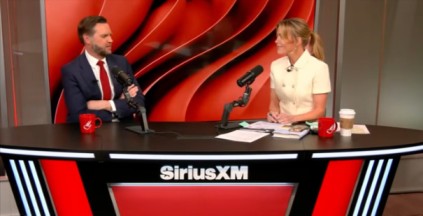
Editor’s Note: In this episode of The Megyn Kelly Show, host Megyn Kelly is joined by Vice President JD Vance to discuss key administration priorities, including the status of the ongoing peace deal with Iran and the Vice President’s new book, Communion: Finding My Way Back to Faith. The conversation highlights the administration’s strategic goals in the Middle East and addresses critical questions regarding the agreement’s terms and implementation. Additionally, the show features an interview with attorney Mario Williams representing an alleged January 6th defendant to discuss ongoing legal challenges and arguments surrounding presidential pardons. (June 16, 2026)
TRANSCRIPT:
VP JD Vance on the Iran Deal
MEGYN KELLY: Hey everyone, I’m Megyn Kelly. Welcome to The Megyn Kelly Show. We’ve got a great show for you today. We are live from the SiriusXM HQ in New York City with Vice President J.D. Vance, and we have a lot to talk about the potential end of the war in Iran and his excellent new book, which is out today. It’s called Communion: Finding My Way Back to Faith. It’s a great read, especially right now for anybody who’s having some of the same doubts that the vice president had about his own Christian faith not so long ago.
He is here with me. I just saw him in the SiriusXM HQ, but he is on the phone with the president, which is about the best excuse any guest has ever given me for being a little late to the show. That seems like something we shouldn’t interrupt, but it actually works out well because I didn’t really want to bore him with going over the reports of what’s in this Iran deal — because he knows — but you and I should go through it together so that you know when he and I are talking what the points are that we’re going over.
Breaking Down the Reported Iran Deal Terms
This is reportedly the deal, as reported by some sources who have been reliable on reporting previous points of negotiation between us and Iran.
Number 1, we’re going to stop fighting. This is my very simplified version. Everybody’s going to stop fighting, including, it says, Lebanon and Israel. Now, this has been confirmed by the administration. That’s one of the points of contention here, is that they haven’t told us exactly what’s in the memorandum — the Memorandum of Understanding. The critics of the deal already feel betrayed. They want to know why can’t we know, and so on.
But this is reportedly what’s in there: stop all fighting, including in Lebanon, lift the blockade of the Iranian ports, and in return, the Iranians open up the Strait of Hormuz. Nothing’s in the Memorandum of Understanding as we know it about the tolls that Iran’s been charging.
$300 billion to Iran — the MOU says the U.S. with its regional partners will come up with a plan for that. The administration has suggested already that that would be money from its regional partners to try to rebuild Iran. So $300 billion, not U.S. money, but that would go to Iran. That’s been criticized by some, but it’s to help them rebuild.
All sanctions to come to an end against Iran. That’s worth reportedly about $100 billion — sanctions that have been imposed by us, the UN, and the IAEA against Iran. No nukes ever for them — this is to be negotiated, but that we’re going to agree that they won’t develop a nuke. And that then the agreement suggests we may be negotiating their needs, their nuclear needs, which has got a big question mark over it.
The fate of the nuclear dust is to be negotiated, the enriched uranium. The Treasury will allow Iranian oil exports — that’s worth about $4 billion a month. Iran’s frozen money will be released — that’s worth about $24 billion. And then there’s a question of what exactly they have to do in order to get all this money.
Questions About Accountability
President Trump has made clear repeatedly that he’s not just going to give them all this dough. They have to do things in order to earn this relief of sanctions and the green light from the Treasury for them to export their oil. And that’s one of the questions we have — what exactly do they have to do? How will we know when they’ve done it? And how are we going to basically just hold them to account as opposed to just opening up the financial spigot and making Iran very, very rich while we peace out of there?
Now, the critics of the deal — they don’t want any of this. I mean, let’s be honest, what the critics of this deal want is more fighting. That’s what they want. They want us to bomb Iran to smithereens. I think they’d be fine with Israel growing and its hegemony in the Middle East. And they’re not going to be satisfied until we have what looks like military occupation over there.
How else could we ensure that they never do additional enrichment? They don’t want them to be able to do it for energy purposes. They certainly don’t want nuclear purposes, and they don’t like how much maneuvering, how much wiggle room there is in here for Iran to potentially resume its nuclear program.
The Nuclear Dust Question
They also want the nuclear dust, as Trump’s calling it. That’s basically the enriched uranium that they had in Iran prior to our bombing 12 months ago, June of 2025 — until, thanks to our bombing campaign, it’s now the equivalent of a skyscraper’s length underground, not too accessible. And this is what President Trump has been saying — they can’t really get to it. And if they were to try, we’ve got satellites watching them that would tell us immediately. And we have the capability of our airplanes to go back over there if they were to try such a thing.
So he has said from the beginning he’s not all that worried about this so-called nuclear dust, about them somehow digging it up and working from there to make a bomb.
Under the Obama deal, there was a question about what to do with their enriched uranium. And there they said something like 98% of it was going to be sent to Russia under the JCPOA, which Trump tore up. Now reportedly under this deal, it’s to be negotiated. We don’t have the explicit agreement yet, but there has been a statement.
Trump had suggested that we would be joining with Iran in down-blending it and then removing it. He told the New York Times that the U.S. will over time join with Iran in down-blending it — in other words, if it’s enriched beyond the point one would need for domestic energy and is looking more like it’s for a nuke, you would get it back down and then removal. And he also said this would require near-constant monitoring, any sort of engagement by Iran with uranium. So he’s not ruling it out.
That has his critics upset. That has neocons, hawks, whatever you want to call them, very upset because they don’t trust Iran. They don’t think we should trust them no matter what. And we had monitoring of them under the JCPOA. Obama’s defenders and Iran’s defenders say that they were complying with the JCPOA and its enrichment requirements back then, which was not beyond 3.67%, and that they were complying and that they didn’t start to enrich to weapons grade until Trump tore up the original deal.
In any event, they do have — I don’t know if you’d call it weapons-grade, but they have uranium that’s been enriched well beyond 3.67% deep in the earth at those three nuclear sites right now. And what to do about those is going to have to be decided.
Formal Signing Ahead
We’re still waiting on the vice president. He must be having quite the call with the president of the United States. What’s supposed to happen later this week is Vice President Vance is supposed to be heading to Switzerland for the formal signing of this Memorandum of Understanding. They did a DocuSign, so it’s already been signed, but they’re going to do a more formal signing this Friday. And so the vice president, shortly after today’s interview and some of the other ones that he’s going to have to do, is going to head to Switzerland and sign this deal. It looks like the president will stay stateside.
Okay. It looks like the VP is ready. We’re going to bring him in.
[Break]
MEGYN KELLY: Welcome back everybody. Sitting here with the Vice President of the United States, JD Vance. Mr. Vice President, thanks so much for being here.
JD VANCE: Good to see you.
MEGYN KELLY: All right. So what happened with the president in the phone call?
JD VANCE: Which president? Which phone call are you talking about? You mean just back there?
MEGYN KELLY: Yeah, just back there.
JD VANCE: Oh, okay. He’s at the G7. He’s about to go to dinner over in Switzerland. And so he just called me to check in on how things are going.
MEGYN KELLY: Which president?
JD VANCE: I meant which phone call? I was like, wait a second. Do you guys have me tapped in there? I didn’t think you were in there — who is feeding you intelligence?
MEGYN KELLY: They just told us that. That’s why you were going to be a little late to set.
JD VANCE: I see. Sorry, I was confused at that. But yeah, we had just a chat about how the G7 was going. And he was asking about what’s the progress of the deal, what’s going on, what are we hearing — just the things that you talk about when you’re the president and the vice president.
MEGYN KELLY: What is the progress of the deal? What are you hearing? How’s it going?
JD Vance Corrects Misinformation About the Iran Deal
JD VANCE: Well, the deal is done, at least the first step of it. And one of the things I’ve been doing for the past couple of days is correcting a lot of misinformation about the deal because I’ve heard so many conspiracies, so many things that just aren’t true. So let me kind of run you through what the deal is and what the deal isn’t.
MEGYN KELLY: Yeah.
JD VANCE: Okay, so number one, what it says is effectively the United States will open the Strait of Hormuz, lift the naval blockade, the Iranians will destroy the dust and then hand it over either to us or to an international organization.
MEGYN KELLY: So they agree to destroy the dust.
JD VANCE: Exactly. And the third part of it is assuming they comply with the terms of the agreement, there are all of these economic benefits that can flow to the Iranians.
So what happens? If you’re an Iranian hardliner and you want to be out of this and you want to make this deal, but you don’t want to pitch it a certain way to a domestic audience, what you do is you go through the document, you identify everything the Iranians could get, and you say, “We are getting it.” And then you underemphasize or don’t even talk about all the things that they have to give in order to get those benefits.
The Fork in the Road With Iran
So the way that I think about it is there’s sort of a fork in the road in this entire relationship with Iran. For 47 years, we’ve obviously had basically a terrible relationship with Iran. They funded a lot of terrorist organizations. There’s obviously the nuclear issue that’s been in the background, going back well before Donald Trump even got on the political scene.
And here’s where we are right now. Their nuclear facilities are destroyed — that is just objectively true. Their ability to enrich uranium, to build a nuclear bomb, completely destroyed. Number 2, their economy is currently in shambles. The blockade and all of the other sanctions have had a very profound effect. And number 3, they are in a position where what they’re saying is that they want to make long-term commitments to the United States and to the Gulf Arab countries to change their relationship.
So that’s true whether they comply with this deal or not. Now, if they comply with this deal, I think it’s much better for the United States and it’s going to be much better for Iran. But if they don’t comply with the deal, the Straits are still open, we’ve still done incredible damage to their nuclear program. And we can get on with our lives as a country — and they don’t get anything if they don’t do anything.
MEGYN KELLY: We turn off the financial spigot.
JD VANCE: Exactly. Well, the way I put it is the financial spigot has already turned off. It’s been turned off for a very long time. In fact, we’ve probably turned the screws even tighter, but we can either unscrew the financial spigot or we can keep it where it is right now, which is fundamentally just very bad for the people of Iran.
And I’m like, you know, as you know, I’m fundamentally an optimist about these things. I always try to think about what can do rather than just what can happen rather than just identify problems. But if we go down the option where the Iranians comply with their obligations under the deal, this totally transforms the Middle East.
It’s interesting. There’s always this question about how is this the same, how is this different from the JCPOA, the Obama deal that Republicans have been very critical of for 10, 15 years. I actually think I could walk you through the substantive differences between what we’re talking about and what the Obama deal did.
But fundamentally, how did the Gulf Arab countries, the Gulf Coast Coalition, how did they respond to the Obama JCPOA? They hated that deal. They thought it empowered Iran. They thought it did nothing for them. They weren’t consulted. They weren’t a participant in the process. How do they feel about this Trump peace plan? They love it because they see it as a genuine opportunity to transform how the Middle East has worked for the next couple of generations.
So I think we have a real opportunity here, but regardless, if it just ends in Iran’s nuclear program is destroyed, the war is over, the Straits of Hormuz are opened, that’s a great place for the United States to be in.
MEGYN KELLY: How is it though? Okay, how is that different from where we were before we launched this war? I get how it’s different thanks to the strikes we did last June. That was very helpful. Sure. But straits open and nuclear sites destroyed and we’re no longer fighting is where we were in February.
JD VANCE: Well, we did additional destruction to their nuclear facilities and particularly their capacity to rebuild. So if you look, while a lot of people were focused on, we want to replace the ayatollah with Reza Pahlavi or somebody like that, what the president always said is we want to destroy their ability to project power across the Middle East.
And obviously people always talk about Israel. I’m sure we’ll get into that during this conversation. But it was just the Israelis, but it was also the Gulf Coast Coalition, the Arab countries in the Gulf, who were frankly petrified of the role that Iran played, of their ability to project power, of their ability to launch missiles and hit some of these energy facilities. But then also that industrial base that produced missiles was also useful in rebuilding their nuclear capacity.
And so what we’ve done fundamentally is destroyed that conventional military capacity, also destroyed their ability to rebuild their nuclear program. And then what we have an option to do — and again, it really depends on what the Iranians respond with — what we have an option to do, I think, is fundamentally transform our relationship with Iran.
MEGYN KELLY: So — I mean, I liken it to what President Trump was doing in that Middle East summit with Saudi Arabia, with whom we didn’t used to have the greatest relationship, trying to say, what if we could get along economically? Like, what if we could help make you rich?
JD VANCE: Correct.
MEGYN KELLY: And it, like, for a US president to look at Iran and even suggest such a thing has many people upset, but if it worked out, would be transformative.
The Iran Deal: Comparing to Saudi Arabia
JD VANCE: Well, it would be transformative, and what the president has said is, “I want Iran to be a successful country.” But in order to do that, just like with Saudi Arabia, it’s actually a great example. If you went back 20, 25 years, one of our biggest concerns with Saudi Arabia is they were funding Islamic radicalism.
MEGYN KELLY: They sent all the 9/11 terrorists.
JD VANCE: Yeah, a lot of the ideas, the terrorists themselves, but also the ideas that were spreading all over the Middle East, all over the world, were funded not necessarily by the Saudi government, but certainly by people within Saudi Arabia. The Saudis completely cut down on that, transformed their country, have a great economic and political relationship with the United States of America. And the president’s saying if the Iranians are willing to change their behavior in the same way the Saudis did, then absolutely we want them to be a successful country.
MEGYN KELLY: But the two governments are very different.
JD VANCE: The two governments are very different, but there actually are similarities too. And again, we just have to go down this pathway, see where we get. If it works out, great. If it doesn’t work out, we’re still in a good place as an interconnection.
MEGYN KELLY: What do they have to do specifically to get us to turn on the financial spigot?
What Iran Must Do: The Terms of the Deal
JD VANCE: Yeah, so a lot of this stuff is to be negotiated at kind of the technical level of detail, but it’s basically — if you think about it — we care about their attempt to rebuild their enrichment capacity. We care about this enriched uranium, this nuclear dust, as the president calls it. We also care about, are they getting along well with their neighbors? Are they funding revolutions in their neighboring countries? Are they funding terrorist organizations, or are they being good partners with the Gulf Coast Coalition and of course other countries in the region?
And what we’re saying is the more that you do, the more we’re going to try to reintegrate you into the world economy. And that’s the basic template of the deal. I said I’d talk about what the deal is and what the deal isn’t. What the deal isn’t — we don’t list this stuff out specifically. We’ve been talking to them directly about what this might look like. They seem very interested. But again, we’ve also been very clear that if you guys don’t do this thing, none of the actual benefits are going to accrue to your country.
MEGYN KELLY: How about Hezbollah in Lebanon? Because that’s a proxy that they’re funding and that could easily queer this deal. It could queer this deal this week, people fear. Never mind on a go-forward basis, either side, Israel or Hezbollah.
JD VANCE: Sure. Look, it’s always delicate with these things. And what we’ve seen with the ceasefire in Lebanon — and to be clear, it’s been a dirty ceasefire. There’s been some shooting back and forth.
MEGYN KELLY: But frankly, it’s not very ceasefire.
JD VANCE: There’s way less shooting now than there was 2 weeks ago. There’s way less shooting 2 weeks ago than there was before. So with these things, as the president of the United States said a couple of weeks ago, he said, “Sometimes a ceasefire just means they’re shooting less.” And that’s the progress. And then you get to the next stage.
MEGYN KELLY: Is Lebanon included?
JD VANCE: Lebanon?
MEGYN KELLY: Hezbollah?
JD VANCE: It is a regional peace deal. It’s going to include the Gulf. It’s going to include Israel. It’s going to include Lebanon. The idea is this is a true regional peace deal because it guarantees the Iranians comply.
MEGYN KELLY: How do you do that without Netanyahu? Sorry, forgive me for interrupting.
JD VANCE: No, no, no. The idea is that if the Iranians comply, then we are going to have a true transformative deal for the Middle East. And if not, they don’t get any economic benefits. The United States, we got what we came to do and we’re done. And that’s the basic approach.
MEGYN KELLY: We would not turn on the spigot if Hezbollah hit Israel over and over.
No American Taxpayer Money Going to Iran
JD VANCE: Well, what I would say is, if Iran is funding Hezbollah, we’re not going to allow a bunch of unfrozen assets to flow to the Iranians right now. I want to be clear about this too, because those are not American assets. There’s been a lot of misreporting on this and people have said, “Oh, is the United States going to give Iran billions of dollars?” No. It will be very, very crystal clear. Even if the Iranians do everything contemplated by this deal, not a penny of American money flows to Iran.
But let me give you an example of one of these things that people again have misrepresented. Let’s say, for example, that the United Arab Emirates — who’ve been one of the best allies that we’ve had in the region — let’s say that they want to invest in a nuclear power plant in Iran. They really can’t do that without us lifting some of the sanctions that exist in the global financial system to make that possible. Now, are the Emiratis going to invest in Iran, or is America going to let the Emiratis invest in Iran unless the Iranians change their behavior?
MARIO WILLIAMS: No.
JD VANCE: So all these people say, “Well, you’re giving Iran money.” No, no, no. We’re saying that if the Iranians change their behavior, we’re going to let some of these other countries invest in rebuilding their country and creating some prosperity for their people. That’s a good thing, right? If the Iranians stop funding terrorism, if they’re behaving and their relationship is transformed, not just with us, but with the whole region, that’s a thing to celebrate.
Somebody said — I forget who — but somebody said, “This is like doing the Marshall Plan when the Nazis are still in control.” And that’s wrong in a few different ways. Number one, the Marshall Plan was a lot of American tax money. This is not American taxpayer money. Number 2, we’re saying you only get the benefits of the bargain if you change your behavior. If that happens, we’re talking about a transformed Middle East. That’s a great legacy for the president. But more importantly, it’s a great one for the American people.
MEGYN KELLY: Well, we have inspections of whatever they are or aren’t doing when it comes to nuclear enrichment. And is enrichment even on the table? Because I haven’t been able to totally understand what President Trump is saying on that.
JD VANCE: If they want the benefits of the bargain, enrichment is going to be on the table, and more importantly, verification and inspections is going to be on the table.
MEGYN KELLY: So that — but that means we’d let them do it a little? Like, what else are we inspecting?
Nuclear Inspections and Verification
JD VANCE: No, look, our plan is — well, what we would be inspecting is the full part of building a nuclear weapon. So I’m hardly a nuclear engineer, so forgive me — the scientists are going to have to forgive me for this summary. But building a nuclear weapon is the infrastructure to enrich uranium. It’s the infrastructure to turn enriched uranium into nuclear fuel. It’s the infrastructure to turn that nuclear fuel into a bomb that you can detonate. It’s the delivery mechanism for that bomb.
MEGYN KELLY: The cascades and the centrifuges.
JD VANCE: All of this stuff, right?
MEGYN KELLY: Can those stay or are those coming out?
MARIO WILLIAMS: No, no, no.
JD VANCE: Our plan under this deal is — again, the Iranians are getting a lot of benefits so long as they dismantle that nuclear weapons program. And again, people always ask me, “Why do you believe them this time?” I don’t believe them. I don’t trust — Megyn, I don’t trust anything that anybody says. I trust what people do. And the way this deal is structured is that as they do more, they receive more. As they do less, they receive less. And that’s the basic structure.
MEGYN KELLY: Now, the reaction to this from the neocons, from the hawks, has been negative already. They’re mad that they can’t see the memorandum of understanding, which I get, actually, in their defense. Why can’t they see — why can’t we all see the MOU right now?
Releasing the Memorandum of Understanding
JD VANCE: Well, the president said by the latest Friday, possibly as early as tomorrow, we’re going to release the memorandum of understanding text. The reason why we haven’t released it yet is there are some delicate diplomatic things going on where the Iranians — and not just the Iranians, but some of our mediators, the Pakistanis and the Qataris — have asked us to sequence this in the right way. I don’t frankly fully understand it, but there are sensitivities that exist in the Arab and Muslim world that we’re trying to be responsive to. Fundamentally, does it really matter if the deal comes out on Wednesday versus Friday? No. And that’s why we haven’t emphasized it so much, because at the very latest, the text is going to be out on Friday.
MEGYN KELLY: Okay. Yeah. I mean, you’ve already signed it, but it’s not like legally binding to where you can’t undo it. It’s a diplomatic agreement. Correct.
JD VANCE: So it’s —
MARIO WILLIAMS: Correct.
MEGYN KELLY: If people freak out, there’s an utter meltdown here in the United States, it could always be undone if you change your minds.
The Iran Deal: Reactions and Criticism
JD VANCE: Exactly. And again, Megyn, I could summarize this deal in like 2 or 3 sentences, which is that if the Iranians change the way that they behave, with regards to their nuclear weapon, with regards to their financing of terrorism, we are going to bring them into the world economy. If they don’t, we won’t. It’s really that simple.
MEGYN KELLY: OK, so here’s some of the reaction. Mark Thiessen said if the deal terms are accurate, as has been leaked, it’s a complete disaster. He’s calling this, by the way, the Vance deal.
JD VANCE: I wonder why he doesn’t call it the Trump deal.
MEGYN KELLY: I wonder too. There is Ben Domenech, who was on Special Report last night, called this the hillbilly Obama deal.
JD VANCE: I wonder who that’s a reference to.
MEGYN KELLY: Seems to be a shot at you, sir. Not bold foreign policy. There’s a guy named Yanan Magal, who is an Israeli journalist who’s very close with Netanyahu, who is basically his mouthpiece, who called you a lowlife, called Donald Trump a loser. The Israeli ambassador to the United States called this so disappointing.
Then there’s Mark Levin, who’s been rage tweeting about it every 5 minutes. He demands to see the memorandum. He demands that this be treated like a treaty to where now you have to get congressional approval for the MOU. The Constitution does say you need approval to declare war, which Trump doesn’t think he did and didn’t seek. But now — and he defended him on that. But now that we’re ending it, which you definitely don’t need congressional approval for, he wants this treated like a treaty and is demanding you go before Congress, sir.
JD Vance Responds to Critics
JD VANCE: Well, to be clear, I don’t think that congressional approval was required. I really firmly do believe that the president — this was never a full-scale war in the conventional or legal sense of it. So we definitely made sure that we dotted our i’s and crossed our t’s here. So I want to defend the administration on that point.
But it is kind of ironic that they’re really, really worried about stopping this thing, but they were completely gung-ho about starting this thing. And I want to be responsive and charitable to some of these concerns. So, first of all, why do they believe Iranian propaganda only about one thing, the peace deal? They don’t seem to believe Iranian propaganda, rightfully so, about anything else. So, if you’re in the position of endorsing Iranian propaganda only when it’s related to this peace deal, then maybe you should check yourself a little bit and question your sources.
The second thing that I’d say is, what is their alternative? If you look today, Brent crude is around $78 a barrel. West Texas crude is even lower, $75, $73 a barrel. The numbers float around a little bit, but what that means is lower gas prices for Americans, lower energy costs for Americans. That means that this little blip that we’ve had of an increase in energy costs, which has caused a lot of people some problems, we’re now getting back to normal.
And I think that fundamentally, if you look at what they’re proposing, they’re proposing an endless conflict. They want this to go on until every bomb has been dropped or until every Iranian is dead. That is not what the president of the United States wants. What he said is, I set about this to end their nuclear program, to eliminate their ability to threaten their neighbors and project power, and to fundamentally make sure that no future child would have to deal with a terrorist regime with an atomic bomb.
That’s why the president set out to do this. He feels, and he’s right, that he’s accomplished that goal, and now we can get to the negotiation to see what are the other benefits that we can get from this, and frankly, what are the benefits the Iranians could get from this if they behave.
I just don’t think that people who are criticizing this, one, they’re not actually dealing with the reality of what’s in it, and number two, they don’t have an alternative. If your alternative is just to drop bombs without any clear goal or any clear American interest implicated, then you’re not making the wise decisions on behalf of the American people. The president is. And that’s why we’re in this position.
John Podhoretz Reacts
MEGYN KELLY: I’m going to give you a sound on tape from John Podhoretz, who is the chief over at Commentary magazine, which is very pro-Israel, very neocon-y. Preview: He’s not happy. Here it is.
VIDEO CLIP BEGINS:
JOHN PODHORETZ: I honestly don’t know if it could be worse. America is going to be in a strategically, tactically, and militarily worse position than it was under Biden. He made a choice to test America’s resolve, and he has choked. He has chickened out. He has bled himself dry.
Trump, the crazy lunatic psychotic who doesn’t care about lives and will do anything, could not bear the idea of putting a boot on the ground anywhere in Iran and could not bear the idea of a single American possibly being taken hostage, which I understand. I’m not saying that either of those is a good thing, but if you’re going to go to war, you have to put boots on the ground.
Everyone in the military has volunteered to put their lives on the line for their country, and the country itself may have to sacrifice in the form of wildly higher oil prices if you think that the American national interest has to be engaged in this process. And if you go into the process and you lose it and it’s a complete war of choice, you have made things worse. The situation is worse.
VIDEO CLIP ENDS:
MEGYN KELLY: Thoughts on that?
JD VANCE: Well, there’s a lot to respond to in there, but I actually think, John, I appreciate that because John is kind of giving away the game. He’s saying he really doesn’t care that much about higher oil prices for Americans, doesn’t care about high gas prices, and he wants boots on the ground and doesn’t seem to care about casualties. Exactly. And wants boots on the ground and casualties in a country of 95 million people where, again, the president of the United States never said that his goal was to install Reza Pahlavi to become the new leader of Iran.
What he said is, if the Iranian people want to rise up, great. That’s their business. That’s between them and their government. What we want is a cessation of their nuclear program, either through diplomatic means or through military means, as he ultimately went down that pathway.
And I think, Megyn, there’s actually a deeper foreign policy debate that I think the last few months has sort of papered over here, which is when President Trump uses military power, he’s not an isolationist, right? He’s not a Rand Paul guy, Ron Paul guy. Clearly, he never has been, never was. But what he is, is a guy who says, if I’m going to use American military power, I want to accomplish a discrete objective.
And every single day I saw it very much on the inside. He was asking, have we accomplished that objective? Can we stop this? And once we got to the point where people were saying, yes, we feel like we are in a much stronger position, we feel like their nuclear program is destroyed, we feel like their conventional military, it’s going to be impossible for them to rebuild it for very, very many years — he said, okay, then I want you to go and negotiate a deal that transforms the Middle East. And that’s what he did.
The Strait of Hormuz Strategy
MEGYN KELLY: I mean, how integral was the sneaking of the oil out of the Strait of Hormuz overnight? Very important. Because that, to me, that was one of the best things we did. Correct. They thought they shut down the strait and had us by the neck. Correct. We closed up their ports, which gave them skin in the game, but we were secretly getting oil out of there because the biggest pressure point on us has been the energy prices.
JD VANCE: That’s absolutely right. And so for the first few weeks of this, there was this totally misaligned thing where the Iranians were getting oil out of the Strait of Hormuz, but literally nobody else was. And we kind of flipped that on its head a little bit. We shut down any access they had to the Strait of Hormuz. They couldn’t get anything in or out. But while that was happening, we were getting — sometimes it was 12 million barrels, sometimes it was 3 to 4 million barrels, but it averaged out to many millions of barrels every single day that us and the Arab allies were getting out of the Strait of Hormuz. Iran was getting nothing. And that leverage point did increase the pressure on them.
This idea of closing the Strait of Hormuz has obviously been in some ways the biggest strategic back and forth of the entire conflict. That’s a card you can play. But if you play it every day, it gets weaker and weaker and weaker. And again, I think that’s one of the reasons why we are in a stronger position here and why the Iranians are coming to the table.
John Podhoretz is basically calling — there was this Israeli journalist who said, “The president’s a loser and I’m a total lowlife,” or whatever he said, and Podhoretz wasn’t that far off. What these guys don’t realize is we fundamentally have all the cards. What is it that they wanted us to do besides put 300,000 ground troops on Iranian soil, which we were never going to do. The president felt like he could accomplish his objective using the means that he used. He was right about that, by the way.
MEGYN KELLY: Help is on the way, and they don’t think he sent it, and they think it’s the same leadership. And it was bad leadership either way. It’s not the same guy.
JD VANCE: By the way, that is different. People attack the president on this, but when the president says that we’re dealing with more reasonable people, he is actually right. Now again, my attitude is verification. I trust actions, not words. But we are dealing with people, some of whom our own intelligence agencies say are the super hardliners. And what they’re saying is, you know what, we are hardliners, but we’ve realized after 47 years that maybe this is a mistake.
Intelligence Reports and Internal Divisions
MEGYN KELLY: Well, there’s a report out today, though, saying that Ratcliffe, who runs the CIA, has been listening to their intel saying they don’t mean a word of what they’re saying. They’re not going to live up to any of this.
JD VANCE: Well, first of all, I’d be skeptical of that reporting. I always see sometimes with my own name on it, “administration officials who believe this or that.” I’d be very skeptical of this stuff. The inner team of the Trump administration — we’re actually very tight. We’re very close to each other. There isn’t nearly the factionalism that people say that there is. So I’d be skeptical about that report, but I’ll let John speak for himself.
MEGYN KELLY: Except Scott Massie and Bill Pulte. They’re not tight.
JD VANCE: Tom Massie and Bill Pulte are not super close. That is true. And I say that as admirers of both of them. You’ve admitted it. But fundamentally, that’s why the deal says verification and action.
MEGYN KELLY: Trust but verify.
JD VANCE: I’d say just verify. Just verify. What the president says is we don’t trust anybody. And I think that’s exactly right. He said we don’t trust our allies, we don’t trust our foes. We trust action. And that’s what we have to anchor ourselves to.
A Divided GOP Base
MEGYN KELLY: Let’s talk about what happened to the GOP base as a result of all this.
JD VANCE: Okay.
MEGYN KELLY: Because it’s divided. I know you’ve experienced it yourself. I’ve experienced it, too. It’s been sort of a sad, tumultuous, stressful time. It’s much more fun, I think, for most of us who lean right or right-leaning independents to be fighting with the left. But it’s been kind of civil war-y over on the conservative team since this whole thing got launched. And the non-interventionalist right feels very betrayed, very betrayed by it. Whether you agree with that they’ve been betrayed or not, Mr. Vice President, what do you say to those people?
JD VANCE: Well, what I’d say to them is, one, I think you can walk through all the ways in which this has led to a good place for the United States of America. And I’d ask them not to view this purely through the filter — I know a lot of these folks are frustrated with the role that Israel has in all this. We can talk about that. But don’t look at it from the lens of what is it that different people think about it. What do you think about it? Like, fundamentally, do you think —
MEGYN KELLY: They’re against it.
MARIO WILLIAMS: I’ve talked to a lot of them.
JD VANCE: But I’m saying, ask yourself, I think you can make the best argument that the nuclear program is destroyed. The Iranian conventional military is destroyed. We had, yes, a temporary rise in energy prices that’s already coming down substantially. And we didn’t get, as I said repeatedly, we were never going to get the quagmire that a lot of people were warning about because Donald Trump is just not George W. Bush.
So I would say first, the first argument I’d make is look at where we are right now. And I think you can make the best argument that where we are right now is a good place for the United States of America. And again, if we transform the Middle East, what else? This is fundamentally worth it.
The second argument I’d make, this is maybe is this: even if you disagree with this particular action, it’s completely ridiculous to pick up your marbles and go home. That’s not how politics works. And I’ve been very much on the inside of a lot of these debates and conversations. Some people have criticized our immigration policy, some people have criticized tax policy, or some people have criticized foreign policy. The way that politics works is that you have to stay engaged in the process. You absolutely have to make your voice heard.
But right now, right now, we have a very good deal for the American people. And importantly, we have a constituency right now that is saying that we’re going to send boots on the ground. They want Donald Trump to send hundreds of thousands of ground troops into Iran. The best thing—
MEGYN KELLY: Those are Republicans.
JD VANCE: But we need people to be pushing back from inside the tent.
MEGYN KELLY: Okay.
JD VANCE: So let me just push back.
MEGYN KELLY: And then we’re told, and I quote, “Those who speak ill of Mark Levin are not MAGA.”
JD VANCE: Well, the president, as he does, is pushing back at a criticism of yours that he thought was unfair.
MEGYN KELLY: Not just me. I mean, a lot of non-interventionalists.
JD VANCE: But I talked to him last night and I said, “Mr. President, I’m going to go on Megyn Kelly’s show and I’m going to defend the administration’s policies.” Absolutely. I love that. Because again, good.
MEGYN KELLY: Tell him he should do it next.
JD VANCE: He engages and he’s going to criticize you when he agrees or disagrees.
MEGYN KELLY: I don’t mind his criticism.
JD VANCE: He’s going to say nice things about you when he agrees with you. But that’s what I actually love about the president is he’s not like viewing these debates from the outside. He’s participating in them himself. And again, Megyn, the frustration that I’ve had with the non-interventionist side has been that the attitude seems to be, we disagree with the president on this policy. Look, we can have that debate, but fine, okay? You disagree with the president on this particular policy. That doesn’t mean you can give up on the entire enterprise.
MEGYN KELLY: Yeah, no, I agree with that.
JD VANCE: And the reason, Megyn, the reason why neocons are so much more effective in politics than the people on the other side in our coalition is because they play the game. They get disappointed, they make their criticisms, and they go back and they live to fight another day. Right now, right now, we need everybody who recognizes that this is a good deal for the American people and that we don’t want, like John Podhoretz is saying, hundreds of thousands of ground troops in Iran. Make your voice heard. This is where you’ve got to participate in the process. Disagree when you disagree, agree when you agree.
But I don’t like this idea of the president did something I don’t like— I’m out. I think it’s a very immature way to approach the political process. And it’s the way to ensure that your enemies always win.
MEGYN KELLY: I’ve been saying the same because a lot of people have been saying that they feel blackpilled by the whole experience, like I’m just out. And I have been trying to make the point that you can’t do that, right? You got to stay.
JD VANCE: You’re right.
MEGYN KELLY: But realistically, as we— because after these midterms are over—
Staying in the Coalition
JD VANCE: Sorry, yeah, this is very important. I’m sorry to interrupt, but it is. So look, the coalition that made Donald Trump the president of the United States and JD Vance the vice president of the United States, people have to remember this, it was Megyn Kelly and Tucker Carlson and Joe Rogan. It was also Mark Levin. It was also a lot of people like John Podhoretz, who want a more aggressive foreign policy.
What I think is important— I’m never going to say that John Podhoretz is not welcome in the Republican Party. He is. But just as he’s disappointed right now, sometimes other people are going to be disappointed at other times. You can’t just quit politics because the leader of a country of 330 million people makes a decision you disagree with.
MEGYN KELLY: I agree with you. I know a lot of people don’t agree with us here. They’re very, very angry over the Iran war.
JD VANCE: Sure.
MEGYN KELLY: It was like their number one issue. And they feel like Trump is not the man they thought he was because he betrayed that promise and didn’t explain much about it. And I understand their feeling too. But Podhoretz and Levin and all those guys, that’s the original Never Trump crew. They hated him, hated him. I was there. I had those people coming on my show saying, “Absolutely not. Never Trump.” And then they embraced him like a bear hug just as soon as he decided he was going to attack Iran and was cozying up with Israel. And that’s their main issue. And now they’re starting to get a little wobbly. And I wonder whether the president sees maybe his new best friends aren’t quite as in love with him and loyal as he thought.
JD VANCE: Yeah. And I would say the same thing to them that I’d say to the non-interventionists who have been a little blackpilled over the last few months. You don’t quit the political process just because the president, who by the way has way more information than any of his critics have, is making a decision that they don’t agree with. Disagree with it. We have the First Amendment in the United States of America. I’m not saying be a patsy. I’m not saying be a person who always falls in line. Make your viewpoint understood.
But I think this is a very important part in a coalition. We have a two-party system in this country. You’ve got what is it, 80 million people, 85 million people who voted for Donald Trump. Nobody is going to agree with the administration 100% of the time. So it actually doesn’t bother me that Mark Levin is criticizing this deal, even though I think this deal is great for the American people. I’m going to go on a show for the next few days. I’m going to defend it. What would bother me is if Mark Levin said, “You know what, the president just did something I didn’t like and I’m going to go home. I’m not part of this coalition. Screw that guy.” I think that’s the mistake that way too many people across our political system make.
A Possible Presidential Run?
MEGYN KELLY: Has any of this influenced your thoughts on a possible run? Don’t tell me you’re not thinking about it. I know you gave me that answer, but after these midterms are done, it’s on. You don’t have 3 years. You have about 6 months.
JD VANCE: I’m not thinking about it, Megyn.
MEGYN KELLY: You have to decide. You’re going to have to decide.
JD VANCE: I mean, you know me and you know that I’m kind of a procrastinator. I don’t make decisions until I have to. It probably frustrates my wife a lot of times. But we still don’t have a name for our baby. And every time my wife tries to talk to me about it, I’m like, “Well, let’s just figure it out when we actually see the baby and see what he looks like and what a name—”
MEGYN KELLY: You know it’s a boy, right?
JD VANCE: We know it’s a boy, but we don’t have really even a single name that we’ve picked out that both of us liked. And the baby’s coming in about 4 weeks. I just make decisions when I have to. Yes, after the midterms I will eventually have to make that decision.
MEGYN KELLY: Let’s make it then. If you don’t run, I mean, you represent more of the non-interventionalist wing. And you’re all over the New York Times as reportedly predicting this would be a disaster. It’s going to cause regional chaos. It’s going to break apart Trump’s coalition.
JD VANCE: Don’t believe everything you read in the New York Times.
MEGYN KELLY: Oh, that’s okay. There may be tapes now given to Maggie Haberman.
JD VANCE: Which is crazy, by the way. That was a very weird story.
MEGYN KELLY: Very weird.
JD VANCE: So you’re talking about the Epstein story— just for your audience’s sake, there was this story about Epstein that came out in the New York Times and like half of it or so was BS and about half of it, it’s the way it always goes. That’s how these stories always— there’s always an element of truth. There’s always an element of non-truth. But there were certain things in there that legitimately made me worried that people were taping.
MEGYN KELLY: Yeah, in the Situation Room.
JD VANCE: Which by the way is like a felony.
MEGYN KELLY: Yeah, it’s super dangerous.
JD VANCE: That story was very bizarre. It was sort of a nothing burger story in the sense that everybody sort of knew all those details anyway.
MEGYN KELLY: But the fact that somebody had taped. Well, where I was going with that list of predictions of yours that turned out to be true, was if you don’t run, who would run that would represent that wing of the party?
JD VANCE: Well, I think the committed non-interventionist, America First Ted Cruz could be a representative for that wing of the party.
MEGYN KELLY: Who else you got?
JD VANCE: He’s clearly running for president. I just think about how do I be successful in this job? There are a lot of interesting people out there. Some of them will run for president, some of them won’t. I really just don’t think about it. Part of it is I’m not— I’m not a sort of person who thinks of all, who are the people I have to be worried about, who are the people I have to not be worried about. I just live my life. It’ll all work out.
MEGYN KELLY: In our first conversations in 2017, you were offended that I said you could be a politician one day.
JD VANCE: I was.
MEGYN KELLY: I was right.
JD VANCE: I thought you gave off used car salesman vibes. Yeah. Now here I am.
MEGYN KELLY: Look at you now. Vice President of the United States. Secret Service everywhere.
JD Vance’s Book: “Communion”
MEGYN KELLY: All right, let’s talk a bit about your book because I actually do think it’s a great book. It’s called Communion. It’s called Finding My Way Back to Faith. Here it is right here. You can get it today. And I actually learned a lot about you in this book that I didn’t know.
I love that you begin it with Mamaw, who is everybody’s favorite person. And here is what you say: “Mamaw hardly fit the stereotype of a sweater-knitting, kindly old grandmother, and her faith wasn’t always, well, perfectly consistent with her own religious upbringing. She loved to say the f*-word.” I don’t, I can’t relate. “And when she died, she owned 19 loaded handguns. Mamaw’s God suited her, loving and forgiving, but tough, demanding, and possibly packing.”
So you credit her with giving you the gift of faith.
JD VANCE: That’s right.
MEGYN KELLY: How did you get to the point where for a time you lost it?
JD Vance on Faith, Family, and the January 5th Pipe Bomber
JD VANCE: Yeah, it just didn’t stick. And I think this is one of the many reasons that motivated me to write about this. I’ve got 3 little kids, I’ve got a 4th on the way. We take our kids to church every Sunday. And for some kids, even though their parents believe, even though they pray, even though they try to raise their kids to be followers of Jesus Christ, it just doesn’t stick. And part of this was sort of trying to understand why didn’t it stick for me?
And I think there are a couple reasons for that, Megyn. I mean, I think one of them is that fundamentally I started to care about things that were, if not anti-Christian, then just were totally separate from Christianity. I don’t know what it is. Maybe just an innate character flaw that I have, but I just cared so much about making as much money as possible, getting the best job, going to the best— I had this fever for rising. I wanted to rise above my circumstances. Which again, there is a legitimate urge there, right? Which is provide your kids stability, provide your kids some of the things that you didn’t have. I think that’s all well and good. But what I had was way more beyond that. It was ambition.
MEGYN KELLY: You describe it as a striver. You said I was a striver.
JD VANCE: I was a super striver. And I got to Yale Law School and I had all of these outward markers of success. I’d fallen in love with Usha. We were dating at the time, but not yet married. And I started to think to myself, am I a good person? And the answer that kept coming back is no. I care way too much about stuff that doesn’t matter and way too little about stuff that does matter.
And then at the same time, I have this self-impression— this is back in the era of Christopher Hitchens and Richard Dawkins, the new atheists. I have this impression of myself of like, I’m super rational, I form opinions based on reason and intellect, and there are all these bumpkins who believe in things like Jesus, and it’s just a superstition. But yet all of those people who believed in Jesus, or at least a lot of them, were very good people. They were much happier. They were much more well-adjusted than some of the people I saw in the elite circles that I was running in.
MEGYN KELLY: Yes, in the Selah Corps.
JD VANCE: They were like these— yeah, they were these rays. I call it rays of light where there were these little pieces of evidence that there was some deeper truth to Christianity and that it motivated something that was very good and very powerful. Like it wasn’t a conversion on the road to Damascus, but I just— I fell away from my faith, I think, because I cared too little about the things that mattered. And falling in love and getting married and becoming a father started making me care about the things that do matter.
The Light Bulb Moment in France
MEGYN KELLY: I’m thinking about Saint Michael, be our protection against the wickedness and snares of the devil. And there, maybe he was for you, right? In that church in France, is that where— yeah, so you had your light bulb moment?
JD VANCE: Yeah, we were on vacation, and at that point, I would have called myself a Christian, but I was kind of thinking, what kind of church is home for me? And I grew up in sort of a Pentecostal or evangelical tradition, a lot of speaking in tongues, really good music. My uncle was Catholic and I had some Southern Baptists in my friend circle. It was a hodgepodge of American Christianity. But what I was attracted to in Catholicism was just the sense that it was stable. Things didn’t change that much.
MEGYN KELLY: Never.
JD VANCE: That’s exactly right.
MEGYN KELLY: I love it. There’s always going to be a male priest up there. You know exactly what you’re going to get. There’s not going to be a homily on accepting trans children like I saw in the Episcopal Church.
JD VANCE: And you go to church in New York City, or you go to church while you’re on vacation in France, you go to church in rural Ohio, and it’s the same readings. The homily might differ from church to church, but like you said, there isn’t, you know, this is why we should have men playing in women’s sports.
MEGYN KELLY: There’s not going to be a pride flag hanging outside.
JD VANCE: And more importantly than that, there were just a lot of people, good friends of mine who were good Christians, who were good people, who were good role models to me. They were good husbands and good fathers. They had what I wanted to have and they were Catholics, and that kind of led me into the church.
But that said, even though I was sort of attracted to this church, that was in the peak of some of the sex abuse investigations that were going on. This is the summer of 2018. There was a really bad investigation that I think came out of Pennsylvania.
MARIO WILLIAMS: Yes.
JD VANCE: And I’ve got a little baby boy and I’m reading these things and I’m like, it felt like on the one hand, I’m really attracted to the stability of this church. On the other hand, this is some pretty icky stuff. And I just was thinking a lot about it and trying to reason my way through it.
And we’re in this church in France and Usha’s in the bathroom somewhere. She’s not even in the church. So it’s me, my son, he’s a year old, he’s asleep. And it’s just one of these beautiful old cathedrals. And it’s the perfect time of day. So the light is shining through this beautiful stained glass window, and you can kind of see the specks of dust in the light. And I just had this feeling of like, I belong here.
And it’s not always perfect. That’s one of the great lessons of the Bible is God takes these people who are deeply, profoundly sinful human beings. And he actually chooses to reveal himself through them. And you can’t just pick up your marbles and go home because there is a sex abuse scandal. The fact that there’s a sex abuse scandal means that you need better people, that you need people who are committed to what’s good in this institution so that you can actually try to fight against the bad. And that feeling of belonging is also what led me to get baptized about a year later. And we’ve been going to church every Sunday ever since.
MEGYN KELLY: And you’re raising the kids Catholic?
JD VANCE: We are.
Charlie’s Death and New Life
MEGYN KELLY: Okay. And I know you point out in the book— we only have about a minute left— but after Charlie’s death, you were both feeling devastated, you and Usha. And then that’s when you found out she was pregnant with your fourth child.
JD VANCE: Yeah. This makes me very emotional to talk about because after Charlie got killed, the next day it was 9/11. I’ll never forget that because I was supposed to go to New York for the 9/11 memorial service. And I flew out to pick up Charlie’s body. And then I flew he and Erica back to their home in Arizona. So I flew out to Utah and then to Arizona. And Erica was devastated. Both of them knew both of them very well and know Erica very well. And she was just crying and so upset. But she said something that really stuck out at me, which is, “I wish that we had had more kids.” And that just hit me like a ton of bricks. And a couple months later, Usha became pregnant with baby number 4.
MEGYN KELLY: Yeah, I don’t know— I’ll stay in my lane, but I wouldn’t be surprised to hear if that baby winds up with at least a middle name that sounds familiar to us from that family. All right, I’m going to stay out of it. I’m sending lots of love to her.
JD VANCE: Thank you.
MEGYN KELLY: In the last few weeks of this pregnancy, and to you as well. We’re praying for you both every day. God bless. Appreciate it. Thanks for coming on.
JD VANCE: Don’t forget, thanks.
MEGYN KELLY: Good to see you. Communion by J.D. Vance. Check it out.
The January 5th Pipe Bomber: Brian Cole Jr.
MEGYN KELLY: Back on December 4th, the Trump administration announced it had accomplished one of its primary law enforcement goals of its second term, arresting, they said, the alleged January 5th pipe bomber. Federal officials announced that 30-year-old Brian Cole Jr. of Woodbridge, Virginia, had been taken into custody and charged with interstate transportation of explosives and with malicious attempt to use explosives. The DOJ has since added attempting to use weapons of mass destruction and terrorism charges to the list, and Cole faces life in prison if convicted.
He’s been in custody since his arrest and is back in court for a status conference next month. He’s accused of planting pipe bombs near the Republican National Committee HQ and the Democratic National Committee HQ on the night of January 5th, 2021. That was the night before the riot at the Capitol, the night before the vote for the presidential election would be certified on Capitol Hill. The FBI has said the bombs were viable, but thankfully they did not go off. They were found the next day. The suspect eluded authorities for almost 5 years despite the FBI releasing surveillance footage to the public. Watch this.
VIDEO CLIP BEGINS:
UNIDENTIFIED SPEAKER: This footage shows the suspect sitting on the DNC bench before placing the first bomb. Here we see the suspect place the bomb at approximately 7:54 PM. This footage shows the suspect pass between the RNC and the Capitol Hill Club holding the backpack out to the side. The person continues between the RNC and the Capitol Hill Club, then continues north on First Street, east on C Street, back into the alley toward Rumsey Court, back onto Rumsey Court. They placed the second pipe bomb at approximately 8:16 PM. The suspect then turns back onto Rumsey Court, walking east until the person is last seen on camera at approximately 8:18 PM wearing the backpack on their shoulders. The bomb is believed to have been placed shortly before this video based on how the suspect is carrying the backpack.
VIDEO CLIP ENDS
The Evidence Against Brian Cole
MEGYN KELLY: Brian Cole was not an obvious suspect. He lived with his mother, worked for his family’s business, had no prior criminal history, and his lawyers say he is autistic. But the FBI and DOJ say the evidence against Cole is overwhelming. They say they have cell phone data showing that he was near the RNC and DNC when the bombs were planted, that his car passed through a license plate reader in D.C., and they even say he confessed. Here’s FBI Director Kash Patel talking about this case and detailing the evidence against Brian Cole.
The Alleged January 6th Pipe Bomber’s Lawyer Speaks Out
MARIO WILLIAMS: Watch. Obviously, we need to match the description of the suspect on video. The video has been publicized for years, but what this FBI did was came in and enhanced the video. I don’t know why the prior FBI didn’t do that. I don’t know why the prior FBI didn’t look at the 3 million lines of evidence. I don’t know why they didn’t use our cell phone capabilities and our technological capabilities at the FBI.
The only thing I can come up with is either they were too incompetent in terms of leadership or intentional, and I think it was intentional because it was a further weaponization of law enforcement. So when you match up the suspect’s height and physical appearance with things like a license plate reader that attributes to him and further information such as cell phone pings, you’re getting into a very small circle of people that it could be. And once we’re able to execute law enforcement process and search warrants over these last few months, we were able to produce what he bought, where he bought it, when he bought it, and the history of buying it and how often he bought it.
MEGYN KELLY: Director Patel said he had zero doubt that the FBI had arrested the right person. Let me ask you this, now having had 24 hours to process this since, post-arrest, is there any doubt in your mind you have the right man?
MARIO WILLIAMS: We’ve got the right guy, based on the totality of information and other information we haven’t publicly released yet that we just can’t right now.
MEGYN KELLY: But there is someone who says Cole is not the man who planted those two pipe bombs, and that’s his lawyer, Mario Williams. He says the FBI has arrested the wrong person, and regardless of that, that this case should be dismissed for another interesting reason. Joining me now, Mario Williams in the red studio. Mario, thanks so much for being here.
MARIO WILLIAMS: Hey, thank you for having me.
MEGYN KELLY: Yeah, I mean, this is a huge case.
MARIO WILLIAMS: That’s a large case. It’s a big deal.
MEGYN KELLY: How’d you get connected to this?
MARIO WILLIAMS: I actually had previously done some work for Brian Cole Sr. and my law partner, John Shorme, out of DC. We had done some work with him. He called us up and told us that his son, who I actually knew, had been arrested as a suspect in this case. And then there’s a third, Alex Little, is another lawyer on the case.
MEGYN KELLY: Do you do criminal mostly or civil mostly?
MARIO WILLIAMS: I do a variety of things. I do some commercial litigation. I do constitutional law, employment. I do self-defense, murder cases, stuff like that. So I do a variety of things. I’ve seen it on both sides, IRS tax defense, SEC defense, all kinds of stuff.
MEGYN KELLY: Okay. I mean, this one’s probably the most serious you’ve had, I would imagine.
Were the Devices Actually Viable Bombs?
MARIO WILLIAMS: It’s serious. I did want to correct something though that was said. So I know it’s easy to say bomb — J6 bomber, J5 bomber. But I like facts and I like to use facts to put things in context. So what I would like the public to understand is that even though what you said is that the government said that the bombs were viable, that’s not what the experts say.
Now we have on record an expert opinion, former FBI bomb expert. And so what I like to refer to — as what people say is a bomb — is a device based on expert testimony and science that never could have detonated, did not detonate, and did not harm each other, which is very different from felony assault, felony battery, of people convicted and then given a pardon regardless.
MEGYN KELLY: Okay. Now wait, when you say you have an expert opinion to that effect on record, you’re saying in the defense of this case, you’ve found that expert and you’ve submitted that testimony?
MARIO WILLIAMS: The opinion’s on record.
MEGYN KELLY: We filed it.
MARIO WILLIAMS: Okay. And based on what I believe, we haven’t gotten any pushback on it. The government will say, hey, but this, this, this, this. But no, those devices, it’s proven, could not have detonated, and they did not detonate.
MEGYN KELLY: So not to be obtuse, but why is that relevant? Like, what will that do to this case?
MARIO WILLIAMS: Well, first of all, it’s an intent charge. But second of all, as you know, you’re a lawyer, public opinion means so much. So when you call somebody a J6 bomber and you make it seem like, hey, these devices were about to explode and kill thousands of people, and then somebody finds out, hey, these are no more dangerous than a prop.
And then you have a video out here, and I respect Mr. Patel, I respect him, but you have a video out here and he tries his best to match that up to my client. But the bottom line on that video is that you can’t see anybody on that video.
The Law Enforcement Officer Who Failed Two Polygraph Tests
The bottom line, as far as suspects are concerned, you had a law enforcement officer who failed two polygraph tests. And you probably read about this because it was part of some motion practice in the case. Simple questions. “Are you the person on this video planting these devices?” No. Failed.
There are other suspects, but I can’t get too far into this because we’re trying to figure out the different avenues and different suspects that were in this case and why those investigations were shut down. But to just say, here’s a video, we have ping evidence from the cell phone, and we’re 100% sure it’s Brian Cole Jr., when you actually had other suspects, you’re fighting us as far as revealing the information and documentation to examine that situation — we’re far from determining and saying that that was Brian Cole Jr.
MEGYN KELLY: The person to whom you are referring is Shawnee Kirkoff.
MARIO WILLIAMS: Mm-hmm.
MEGYN KELLY: She was a Capitol Hill police officer on January 5th and 6th. She now works for the CIA. That’s right. And we first learned from a motion you filed in this case in defense of Brian that she had allegedly been given a polygraph by the FBI and allegedly failed it.
MARIO WILLIAMS: Mm-hmm.
MEGYN KELLY: And had been investigated by the FBI even prior to Brian Cole coming on their radar. She was also named by The Blaze as somebody who may have done this pipe bomb.
MARIO WILLIAMS: I believe she sued them.
MEGYN KELLY: And so, yes, so that’s what I’m getting. I want to make sure we’re super fair to Shawnee Kirkoff. She’s now sued The Blaze and Steve Baker, who’s the reporter who wrote the piece. The Blaze has retracted the article. Steve Baker says he stands by the article. It has officially been, quote, “debunked” because The Blaze says they don’t stand by it and that the thing that’s in there as their chief evidence against her is like gait analysis, like an analysis of how she walks, which is not scientific and it’s not reliable in court. And Steve Baker has not produced the name of the person he claims he relied upon for that.
However, Shawnee Kirkoff, in her — now she’s filed this defamation lawsuit. In her complaint, she herself says, “I was given a polygraph by the FBI and I was told that I failed it.” So I mean, we no longer have to rely on anybody other than Shawnee for this information. Now, in her complaint, she outlines how she alleges — she seems to be suggesting this is not a good poly because the examiner referred to some problems that he was having with the communication wires and was sending mixed messages to her. And that she was, of course, very nervous just being given a polygraph by the FBI. That’ll all play out.
But it is interesting that she’s now admitting that she was on the FBI’s radar and that she was told that she failed a polygraph. Now, the FBI says it’s not her. They’ve moved on from her. They’ve closed the case on her. It was not Shawnee Kirkoff. And that she has an alibi tape on which we can at least hear her voice, dealing with her dog on the night in question when the bombs were being planted. So why are you still focused on —
Other Suspects and the Fight for Evidence
MARIO WILLIAMS: Well, this is what I’ll say. I didn’t mention her name, so you brought the name into the place. So I just want to make sure she doesn’t think that I’m trying to put her name out there. But the issue is not necessarily all the evidence that, for example, the gait analysis. Well, initially we were told a gait analysis was done and it pointed to our guy. The FBI said that, or that’s what they told us, they did a gait analysis. Okay. And that helped support their case for our guy. Okay. And so now she’s saying the gait analysis was off, and so now we’re throwing the gait analysis out the window.
My issue with Miss Kirkoff — is her name, right — is, hey, look, there’s other people out there that you all suspected and that we’re trying to figure out, as to why you closed those investigations and what’s the evidence around it.
MEGYN KELLY: Let me ask this, would that typically be something you’d have access to? Like when the government goes investigating 3 other suspects before or around arresting the one suspect, is it usually fair game to have everything they know about?
MARIO WILLIAMS: Absolutely. Beyond a reasonable doubt exists for a reason. And the way you create reasonable doubt is to understand what other suspects were involved in the credibility of that — persons of interest. Yeah, persons of interest. And the credibility of that evidence. So it’s absolutely something that we feel we’re entitled to and we’re doing motion practice. But I want to bring up something about that.
Now, Mr. Patel went on TV to discuss the evidence, some of the evidence in this case. Now, as you know, there was a sanction motion filed saying that we had inappropriately put our subpoena on file and everything. Let me tell you something.
MEGYN KELLY: Just so the audience knows what we’re talking about, you wanted to subpoena some of these records and some of these people. And you asked the judge to give you sort of a fast track to getting those subpoenas. And you filed that motion in the public record, which is how most court documents are filed. That’s right.
MARIO WILLIAMS: But First Amendment rights.
MEGYN KELLY: But this one needed to be under seal because it revealed some addresses, I guess, of some of the people.
MARIO WILLIAMS: Well, and some other information that they were claiming, hey, we wanted to keep this under seal because — and then I’m getting to that point. Okay.
MEGYN KELLY: So anyway, so that’s the motion, the subpoenas and the motion to which you’re referring. You filed that. Go ahead.
The Government’s Double Standard on Confidentiality
MARIO WILLIAMS: So the government gives us literally over 700,000 files, documents, basically. And they mark them — and this is usual — they mark them all confidential, attorney’s eyes only. But somehow these confidential statements, confidential evidence, confidential video is put out in the press. That video that they keep talking about, that’s been marked confidential.
MEGYN KELLY: Oh, in the course of this case?
MARIO WILLIAMS: Of course it is. Of course it is. So you mark everything confidential, including these so-called statements that he’s made. You want us to go and say, oh, let’s follow this pattern and let’s go here and ask the judge for this. It’s okay, we have confidential orders for a reason, but you don’t abide by them. You come out and talk about statements. You come out and say, “Watch this video.” That’s not a public record. That was part of an FBI investigation. But because of the initiation of this situation, you thought it benefited you. It’s okay to break the rules for you, the government, but it’s not okay for us to do something that we believe is in our best interest.
MEGYN KELLY: I think — is that 54? Jeanine Pirro team, I believe this is one of the sound bites that you’re not happy about. This is Jeanine Pirro, U.S. Attorney for D.C. Let’s watch it.
VIDEO CLIP BEGINS:
UNIDENTIFIED SPEAKER: Okay, what was that moment where you were pretty confident the investigators were, to your mind, on the right path?
JEANINE PIRRO: In my mind, they were on the right path when it was clear that the cell phone was pinging in the exact locations where we had the video of the suspect walking along the area. Everywhere he walked, his cell phone was pinging at the cell tower. So it is unmistakable that he was the guy who was walking along and placing those items.
UNIDENTIFIED SPEAKER: You did the search warrant yesterday, the arrest. Have you found the sneakers? Have you found any items that match what we saw in the video?
JEANINE PIRRO: So you know about those Air Max Speed Turfs. He told us that he had those sneakers and that he got rid of them after he placed the pipe bombs.
VIDEO CLIP ENDS:
Challenging the Alleged Confession and Evidence
MARIO WILLIAMS: I want to talk about that. Yeah, please. That bothers me. Why? And I’ll tell you why. First of all, let’s put things in context. Number one, when Brian Cole Sr. was arrested, he wasn’t arrested at his house. Brian Cole Jr. — yeah — was not arrested at his house. They had been surveying him and following him and watching him for months. He’s autistic. They had — the FBI has some of the best behavioral specialists in the world, okay? I have DA experts, all kinds of people say, “Hey Mario, they didn’t believe this man was a danger.” Because if you think he’s a danger after you’ve watched him for months do the same thing — get up, go to the store, buy pizza, walk his dog, say hi to his neighbor — characteristics of autism. But if you think that, you go to his home, you surround it with probably every local law enforcement within a country mile and you say, “Come on out.”
But Bryan Sr. — his business, what he’s involved in — he has to know the law and he knows his rights. He knows to say, “Don’t speak, talk to a lawyer.” So what happened? Bryan Jr. goes down the street like he normally does. They surround him, they pick him up, they swoop him off. 48 hours of interrogation. Can’t talk to his family. Then they come and say leaking contents of confidential information. They say they cherry-pick, they put some stuff out there that will be the — sneakers. Yeah. And oh, “He admitted to this and he said this.” No context.
You don’t even know. I don’t even know if she saw the video. She probably was prepped on that. But the most I can say about that is we’re going to go ahead and do a motion to suppress evidence. I disagree with the context that she said that statement in, and that’s the most I can say right now. Are we talking about specifically the confession — the alleged, the alleged confession statements that they have attributed to Brian Jr. in that context of taking him under, arresting him down the street, taking him to an interrogation room with FBI agents? I think it was 48 hours. Without any contact with his parents, we are going to challenge that.
MEGYN KELLY: But he wasn’t a minor. I mean, he’s — how old is he?
MARIO WILLIAMS: 30 years old.
MEGYN KELLY: Yeah. So they don’t have to notify the parents.
MARIO WILLIAMS: They don’t really have to. That’s all right. But you — you know, you’re dealing with an autistic person. There’s no doubt about it.
MEGYN KELLY: Is there no doubt? Is there a medical diagnosis?
MARIO WILLIAMS: Yes, absolutely. 100%. And they know that.
MEGYN KELLY: So that can be backed up?
MARIO WILLIAMS: Absolutely. 100%. And they know that. They have the best behavioral specialists in the world. They understood that. They followed him around for months, according to them. They saw him do the exact same routine every day. That’s how they knew where he was. So we’re going to challenge that. We’re going to challenge those alleged confessions. We’re going to challenge a lot of things that I can’t — I’m not at liberty to say, “Hey, this is exactly what we’re going to do. This is false. This is —” I’m not at liberty to do that. But I feel very confident in challenging those statements.
MEGYN KELLY: I mean, when somebody has confessed in a criminal case, one of the grounds on which you could challenge it would be that it wasn’t actually voluntary, that he was coerced into giving the confession.
MARIO WILLIAMS: But that’s tricky. All of it’s tricky. This is very technical. I don’t really want to get into the legal aspects of it for the viewers and stuff, but I believe legally speaking we can challenge what they are presenting, quote unquote, as evidence of a confession.
MEGYN KELLY: Just to — and I understand you can’t reveal everything, so just you tell me what you can reveal. Are you suggesting that he didn’t say the words, “I did it,” or that he did say something that looks like a confession, but you don’t think it was obtained in a lawful manner?
MARIO WILLIAMS: Well, no, I don’t believe that he confessed. When you take what we see as evidence in its totality, I absolutely deny the fact that he confessed to doing this. So there’s no — 100%.
MEGYN KELLY: It’s not just that you object to the procedure.
MARIO WILLIAMS: That’s right.
MEGYN KELLY: It’s also you dispute the characterization.
MARIO WILLIAMS: Let me say this. I believe in Brian Jr.’s innocence in this situation.
MEGYN KELLY: Total factual innocence.
MARIO WILLIAMS: Factual innocence. Legal innocence. Look, the bottom line is you got to go into a court and prove beyond a reasonable doubt that he meets the legal criteria. Now, for some reason, people want to say, “Hey, look, even if he meets the legal criteria, if you can beat that, does that mean he wasn’t the person on the video that did that?”
Hey, he’s innocent. It’s not my burden. I do civil litigation. I know what the burden is on a plaintiff. It’s the government’s burden to say, legally speaking, he did this. And until we can prove that, he’s presumed innocent. So when everyone says, “Hey Mario, I want you to tell me, is that him on putting down those devices that they’re calling bombs?” I say the same thing every time. Can you tell me that’s him by looking at that video? No, you cannot. You can’t do it.
The Government’s Evidence and the Pardon Argument
MEGYN KELLY: Well, I agree, I can’t, but when I listened to the FBI do its presser after the arrest —
JD VANCE: But of course.
MEGYN KELLY: But I mean, if they found bomb-making components in his room, that’s where they get you.
MARIO WILLIAMS: That doesn’t mean he’s the — no, they don’t get me on that.
MEGYN KELLY: They get me.
MARIO WILLIAMS: Yeah, okay. But they don’t get me. That’s part of the process. Do you know how many people it appears that they might have done something? Then once you get into court, you have to meet legal standards. Other issues come up. “Oh, well, that person actually is innocent,” which we’ll get to the pardon. But just on that alone, you can’t just come in and say, “Hey, he’s guilty,” like Kash Patel and Bondi get on TV — “He’s guilty because XYZ” — before you’ve proven it in court. I can’t reveal all of our strategies, but we have them.
MEGYN KELLY: I mean, I don’t know the full extent of their evidence, but the things that have been highlighted as their best pieces are the confession — the alleged confession.
MARIO WILLIAMS: Alleged, because I really have to stress alleged. Okay.
MEGYN KELLY: And we’ll eventually see that tape and we’ll know.
MARIO WILLIAMS: Yeah. Once we — well, see, that’s another issue. Will you eventually see it if it’s not leaked? Because we have a motion to dismiss based on the plain language of the president’s pardon saying it applies to him. So if that gets granted, you’re never going to see it.
MEGYN KELLY: If it doesn’t get granted, you’re —
MARIO WILLIAMS: Then we’re going to trial. See it? Yeah.
MEGYN KELLY: So there’s the alleged confession. There’s the fact that he allegedly had these same bomb-making materials, as the government describes them, in his home, in his room at the time of arrest, and the license plate readers putting his car and him in the area when the bombs were being planted on the night in question, January 5th.
MARIO WILLIAMS: This is what I can say about that. All that they’re putting out is their side of the story. It’s not up to my team to come in and debunk that in public. But at trial we will.
MEGYN KELLY: Has there been any discussion of a possible plea?
MARIO WILLIAMS: Well, I’m glad you’re bringing up the good stuff. Now let’s talk about the government’s attempt to get a plea. Now you’re a lawyer, you know how this works. So he gets the initial charges, right? We go through this back and forth of whether or not you can get them in DC court for federal court and all this kind of stuff, but at the end of the day he’s in a federal court with the initial charges. We look at everything. We look at the pardon language. Pardon language is very clear. “Conduct related to the events that occurred —”
MEGYN KELLY: President Trump’s pardon of the January 6th defendants. And you guys are arguing that that should apply to Ryan Cole, whose alleged behavior happened the night before January 6th. But you argue it was connected and therefore he should be included in the pardon.
MARIO WILLIAMS: I don’t argue it was connected. The allegations by the government demonstrated it was connected.
MEGYN KELLY: Okay.
MARIO WILLIAMS: I didn’t say it’s only by coincidence — a so-called coincidence — that this happened on January 5th, the night of the certification. The government said that. Okay. I didn’t say — I wasn’t the police chief that said, “These devices were absolutely part of a strategic plan related to the certification within 12 hours.” The government said that. I didn’t hold committees — “J6 bomber” and all this kind of stuff. In fact, this whole “J5 bomber” only occurred after we started making the arguments, because it was always, “Hey, he’s the J6 bomber.” The government made those allegations. The government’s allegations tie him to the events that occurred at and near the Capitol on January 6th, 2021.
So what happened? We look at the language, say, “Oh, okay, based on the government’s own allegations, regardless of guilt or innocence, they’re tying him to this. So let’s seek the pardon.” Now we’re going to get to the police stuff. So what happens? Exercise his legal right, his entitlement to file a brief and argue for the pardon to apply and thus dismiss the charges. What does the government do? With no new facts — zero, zero new facts — they amend and go for the weapons of mass destruction, which we all know — the public, you all know — when you think of WMD, you say to yourself, “Nuclear warheads.” You do not think of a device based on expert testimony that could never have detonated, did not detonate, and didn’t harm a person.
But they go and do that anyways. They say, “Okay, you’re going to go out here and do this?” And I’ve dealt with the government. I’ve sued the United States and won in international court precautionary measures. I’ve dealt with this my whole adult career. So they say, “Okay, you’re going to do that? Watch this. I’m going to put this WMD charge on you, and then you’re going to be facing life.” So we’re going to raise the stakes, raise the risk for trial. You’re a lawyer, you know this tactic. Raise the risk for trial. And why? Because if the pardon does apply, we want to squeeze a plea deal out of it or something by raising the stakes so we can say we won and put some more pressure on them to get something out of this before a ruling comes down on the pardon.
MEGYN KELLY: I mean, I will say my government sources say they feel very confident in their case and that they think we’re going to be wowed by the amount of evidence against him.
MARIO WILLIAMS: Look, you can produce 2 million documents, you still got to meet the legal criteria. Okay, it’s a circumstantial case.
MEGYN KELLY: Yeah, they don’t have his fingerprints on the device.
MARIO WILLIAMS: That’s right. They’re talking about gym shoes and sneakers and, in my opinion, confessions that were unlawfully obtained but that are not really confessions — taken out of context. You’re showing me 30-second clips, which I’m glad you’re showing me because I want to talk about them. 30-second clips that are completely contextual. You can produce anything you want, but the bottom line is you got to prove it. In my opinion, in my legal team’s opinion, they’re not going to be able to prove this.
Who Is Bryan Cole Jr.?
MEGYN KELLY: Can you tell us a little bit about Bryan?
MARIO WILLIAMS: Yeah. And I want to tell you a little bit about Bryan in the context of why he’s still sitting in jail for no lawful reason, in my opinion. Because you wanted him out pre-trial.
MEGYN KELLY: Trial, and that’s been denied repeatedly by —
MARIO WILLIAMS: Yeah, so what’s going on — and in the context of that, I can tell you. So when you — anybody, any criminal lawyer knows this — when you go for the bond, this is a little bit different because there’s a rebuttable presumption because of the nature of the allegations.
MEGYN KELLY: But you are able to rebut the presumption — rebuttable presumption — that he would pose a danger to the community.
MARIO WILLIAMS: That’s right. And so they have all these factors. He meets every one of — zero criminal history, but more than zero criminal history, zero physical history of actually harming anybody. Because you can have zero criminal history but then have a reputation — let’s say in high school — that you were fighting everybody and doing all kinds of stuff.
MEGYN KELLY: If he did this, this is a big one.
MARIO WILLIAMS: But that — I’m glad you said that.
MEGYN KELLY: The argument would be started with a biggie.
The Case for Brian Cole Jr.’s Release on Bond
MARIO WILLIAMS: That’s the whole point. You don’t deny bond. Bond is the norm, not the exception. You don’t deny it based on the particular charge at the moment.
MEGYN KELLY: Well, look at Nick Reiner out in LA, the guy who allegedly killed Rob Reiner and Michelle, his parents, with a knife in their bedroom at night, horrific. He may have had some sort of a criminal history when it comes to drugs, but not in terms of hurting anybody. That judge is not going to let him out.
MARIO WILLIAMS: But see, he still had a criminal history.
MEGYN KELLY: Even if he hadn’t done drugs, it doesn’t matter. There’s no way that guy’s getting out because the nature of this crime tells the judge he’s a danger.
MARIO WILLIAMS: If you don’t— that’s not how the law works though on this. That’s how that might be the politics of it, and that’s the problem. That’s the problem. No, no, hear me out.
MEGYN KELLY: Let me just ask you this, okay? If Brian Cole actually did do it, do you think he should be out walking around?
MARIO WILLIAMS: Let me answer that. If I even believe that he did it, which I don’t, he met the statutory factors for release. And that’s what people don’t have— that people have a problem with. Hey, I didn’t make the law. I didn’t say, hey, we’re going to, because of the nature of allegations, but we’re going to still examine all these factors to see if you can get out regardless.
The punishment, legally speaking, on bond to try to deny bond is the rebuttable presumption. We’re going to assume you are a danger until you meet these factors. But once you meet these factors, including conditions of confinement, house arrest. Because see, that’s what it is. It’s not just— I’m sorry, Megyn. It’s not just the issue of what he did. If you can meet these factors, it’s not just not having a criminal history, it’s not just, hey, he doesn’t have a violent history, it’s not just, hey, he’s been working since he’s 16. It’s all those things plus house arrest.
So if you put him on house arrest with an ankle monitor and then you waive his Fourth Amendment rights, you can come in and check on him at any time. Where is he going? So if you meet all those factors, then you put the conditions of bond on them, and then a magistrate judge gives an order. I’m not talking negative about the court because I don’t want to be hauled in front of a judge. I’m just telling you, a magistrate judge gives an order that is just, as a matter of fact, was factually erroneous on some particular issues. It’s brought up on the objection to the district court judge. We’re waiting for an opinion, and it’s just a matter of fact that we didn’t get an opinion. We got two sentences that said, I’m going to uphold that. Okay, so then we go up to the Court of Appeals with a two-sentence affirmance, a docket entry. We’re waiting up on the Court of Appeals and we get barely more than that two-sentence affirmance.
MEGYN KELLY: I mean, that’s not unusual, right?
MARIO WILLIAMS: Very unusual. I do Court of Appeals all the time. They give opinions, and especially on something like this, they don’t just— you don’t have anything to fish with.
Examining the Pretrial Detention Statute
MEGYN KELLY: Well, just looking at the statute here on the pretrial detention, the governing statute, 18 U.S.C. 3142. Okay, factors to be considered. The judicial officer shall, in determining whether there are conditions of release that will reasonably assure the appearance of the person as required and the safety of any other person in the community, take into account the available information concerning, one, the nature and circumstances of the offense charged. So they can consider this— if true, this is a doozy.
MARIO WILLIAMS: Let me say something. I have to stop you. You’re taking that out of context. The law says that the weight of evidence as far as guilt and innocence—
MEGYN KELLY: That’s number two, the weight of the evidence against the person.
MARIO WILLIAMS: That’s right.
MEGYN KELLY: Number three— that’s not taken into consideration the way you’re— well, these are the four factors. They said that the judicial officer shall consider, in addition to whether there are conditions of release that would reasonably assure he’ll show up and that people will be safe in the community if we let him out, take into account the following information: nature and circumstances of the offense charged, weight of the evidence against the person, history and characteristics of the person, nature and seriousness of the danger to any person or the community that would be posed by the person’s release. So I mean, it is entirely appropriate for them to consider, do we think there’s a potential danger? And what’s the nature and circumstances of the offense charged?
MARIO WILLIAMS: I don’t want to get into a legal argument with you, but those are factors that are etched out by law. So when you talk about weight of evidence, the circuit court will tell you weight of evidence doesn’t mean his guilt or innocence. And we’re looking for a present danger and we’re looking for factors that we can actually apply to him, such as house arrest, waiver of Fourth Amendment, and an ankle monitor so we can know every move that he makes.
MEGYN KELLY: Is he not doing well in jail? Why are you so focused on this particular—
MARIO WILLIAMS: I’ll tell you why I’m so focused on it— and just think about anybody that you know, including yourself, that’s never been to jail.
MEGYN KELLY: Yeah, I don’t think I do very well.
Brian Cole Jr.’s Life Before His Arrest
MARIO WILLIAMS: There you go. So when people ask me, they say, hey, how’s Junior doing in prison or jail? There are two distinctions, but depending on the jail that you go to, you might think it’s prison, but that’s another story. But look, I say the same thing. Nobody who has zero history with jail and criminal offenses is going to be okay in jail. However, he talks to his parents every day. He talks to his grandmother every day. John Sherman, who lives in the DC area, goes and visits him, I’d say, once every 10 days, 14 days.
MEGYN KELLY: Who’s he?
MARIO WILLIAMS: He’s the other lawyer on the case. John Sherman’s another lawyer on the case. So he goes and visits him. To that extent, he has support, but I’m not going to say he’s doing well.
MEGYN KELLY: So how was he living his life before all of this?
MARIO WILLIAMS: He went to high school, graduated. His father has a bail bonds business and is national, very successful. So he worked with the family business since the age of 16. He went to work every day. He associated with his friends. He had a small community of friends in school. They played video games, stuff like that. And just got up every day, walked his dog, talked to his neighbors. Neighbors gave him affidavits in support of his release from bond, saying he’s a very nice person, no problems, no anger issues, nothing. And that was his day-to-day life.
Autism, OCD, and the Question of Criminal Intent
MEGYN KELLY: You say he’s autistic. Sometimes the folks who are on the spectrum can have serious genius. They can be socially not that functional, but very, very bright, capable of putting together a bomb.
MARIO WILLIAMS: Well, actually, let’s talk about that. Now, we want to assume that Brian Jr. had a serious genius and was capable of putting together a bomb. We have an expert that laughed at the ability of this bomb to even detonate. So I don’t want to really comment too much. I know that he’s diagnosed as autistic.
MEGYN KELLY: And before all this, was he diagnosed?
MARIO WILLIAMS: Well, see, that’s another thing. Before all this, I don’t think he was officially diagnosed because a lot of times, especially in the African-American community, I feel very comfortable in saying this— in the era that his parents grew up in. Now, nowadays, 2026, man, on the spectrum, I don’t even know what it means. It can mean anything. But back in the ’80s and ’90s, you had a child who you say, oh, okay, well, I’m just looking to see if he’s a problem. If he’s doing well in school, he’s not a problem. He has a small group of friends. Okay, well, he might be shy, he might be quiet, but we’re not going out to get psychiatric help and put him on medication.
So when all this happened, yes, he was definitely diagnosed as on the spectrum, as autistic. But the role that autism plays in forming sufficient criminal mens rea is something that I just have to leave to experts. I’m not an expert in that, and it’s an emerging field because autism and on the spectrum is an emerging field, especially in Europe.
MEGYN KELLY: Did they say what kind of autism? You know, there’s different levels.
MARIO WILLIAMS: I can’t remember the exact level that he is. But I know that it was represented in one of the briefs in court.
MEGYN KELLY: Was it like Asperger’s? Do you remember?
MARIO WILLIAMS: No, I don’t believe it was Asperger’s, but I can’t really comment completely on that. I’m trying to rack my brain to think about it, but I know what he was diagnosed with was represented in some of the briefing.
MEGYN KELLY: And how about the OCD? That’s another allegation, that he allegedly has it.
MARIO WILLIAMS: That has to deal with the doctors. I think it was two medical physicians that put him through a battery of tests, made these determinations, and there’s a report.
MEGYN KELLY: Hired by the defense?
MARIO WILLIAMS: Yeah.
MEGYN KELLY: Okay. I mean, that’s no problem. That’s standard.
MARIO WILLIAMS: Yeah. I mean, I know you get people on the stand and you want to say that to try to show bias, but I invite the government.
MEGYN KELLY: No, any defense lawyer would do it.
MARIO WILLIAMS: And I can assure you that these behavioral specialists for the FBI, they already made their diagnosis about the autism.
MEGYN KELLY: Just having watched him, you mean?
MARIO WILLIAMS: Having watched him, talked to him. Come on.
MEGYN KELLY: What’s he like to talk to?
MARIO WILLIAMS: I actually think he’s very pleasant.
MEGYN KELLY: Does he have an affect? How would I know in talking to him that he’s autistic?
MARIO WILLIAMS: Well, I don’t know the characteristics of autism. I can just say when I talk to him, I feel he’s just normal in the sense of he answers questions. He’ll say, hey, what are we doing on this? I don’t want to get into attorney-client privilege, but he just seems normal to me. But he’s been diagnosed that way. I just don’t feel comfortable saying, how would I know he’s autistic? Because I’m not a medical professional, and there’s nothing that really stood out to me to say, man, this guy has a problem.
MEGYN KELLY: And see, the FBI would have known that because they’re behavioral specialists.
MARIO WILLIAMS: They’re trained to detect minor details in people’s— for example, getting up every day or going to the same routine. I don’t know what that means in terms of the universe of autism.
MEGYN KELLY: What did that look like in terms of what he was doing? You mentioned the pizza every day. I didn’t watch it.
MARIO WILLIAMS: I didn’t see it. I just— these are in reports. But the thing about autism is, like I said, it’s just something that is going to have to take shape throughout the trial if we actually get there, through experts.
The Alleged Confession and the Events of January 5th, 2021
MEGYN KELLY: Will it be relevant outside of the argument over whether the alleged confession comes in?
MARIO WILLIAMS: To be honest with you, I don’t even place it in that argument. For me, the argument about the alleged confession and all these statements that Patel and Bondi said— that has everything to do with the manner in which he was arrested and interrogated.
MEGYN KELLY: Well, yeah, I mean, the reason that’s relevant is, so did they get something out of him that is not usable?
MARIO WILLIAMS: Because autism— the role that autism plays in that is something that at that stage when we get ready to file that motion, if we believe that we need some kind of expert opinion on it or that’s going to affect it, then we can take that up with our experts and the judges and file it in the motion. But I don’t have any kind of opinion on that at this point.
MEGYN KELLY: So what was he doing the evening of January 5th, 2021?
MARIO WILLIAMS: Now if I told you that, I’d give away the secret sauce.
MEGYN KELLY: Is there an alibi?
MARIO WILLIAMS: Hey, I’m not going to comment on that, but I am looking forward to the government trying to make this case.
Was He Planting Those Bombs?
MEGYN KELLY: Was he planting those bombs?
MARIO WILLIAMS: I am looking forward to the government trying to make this case. I’m not going to see— because if I get into that, this is the problem. If I get into that, that’s giving away our strategy. So I’m not going to do that. But what I am going to tell you wholeheartedly is that they have to make their case beyond a reasonable doubt. I don’t believe they can make their case beyond a reasonable doubt, and I’m looking forward to a trial if by chance we don’t get the pardon.
Now, you mentioned that your inside sources say they feel very strong about going to trial and winning. I want to know how they feel about the pardon, because the plain language of that pardon applies to them.
MEGYN KELLY: Yeah, we’ll talk about that in one second. But wait, I was going to ask you something about the trial. Who right now are you most looking forward to cross-examining?
MARIO WILLIAMS: My colleagues would hurt me if I said. I’m just being honest with you. I want to answer everything. You can see that I’m open enough.
MEGYN KELLY: You have somebody’s life in your hands.
MARIO WILLIAMS: I appreciate it. But man, my colleague, if I said that and they saw that, I would get called on the phone and they would abuse me.
MEGYN KELLY: We don’t want that.
MARIO WILLIAMS: I can’t give you that one, but let’s go to the next question.
Trial Date and Political Leanings
MEGYN KELLY: Do we have a trial date yet? We don’t. When would you guess this is likely to happen?
MARIO WILLIAMS: Well, we’re hoping the first of 2027, somewhere about that January, March. We keep on having to do continuances because of the discovery process and the judge being updated.
MEGYN KELLY: Federal court in DC right now. Yeah.
MARIO WILLIAMS: So we’re hoping, I would say, anywhere from January, March of 2027. We want to do that.
MEGYN KELLY: How about Bryan’s political leanings? Can you shed any light on that?
MARIO WILLIAMS: There’s been this big deal about him having voted for Trump. Okay, so let me address that first. In this country, technically speaking, you can just vote for who you want to, and you shouldn’t be attributing certain things to them. I know Trump is a very polarizing figure. I have never talked to Brian about that particular vote because I think it’s irrelevant to his innocence.
But what I can tell you, and I’d like to get back to this evidence, is that when we were doing the bond hearing, one of my biggest things was, “Hey, Your Honor, I know you asked the questions, but can we see some evidence of political affiliations here? Proud Boys and Oath Keepers? And can we see a history of political, quote-unquote, violence? Can we see a text message with anyone or saying anything that you would say, ‘That’s kind of disturbing from a political perspective, or this is right-wing or left-wing or whatever?'” Nothing.
See, and that gets back, to be honest with you, to getting the wrong guy. See, that stuff that was showed about Patel and Bondi was at the very beginning of the arrest. You don’t hear any of that anymore. And the reason why you don’t hear—
MEGYN KELLY: I thought you were the one who put out that he had voted for Trump twice.
MARIO WILLIAMS: No, they— everybody knew that.
MEGYN KELLY: Okay. So that was known.
MARIO WILLIAMS: That was known. Oh yeah. I’m not going to deny that. He— that’s just a fact. That’s a fact that’s been confirmed.
MEGYN KELLY: But that’s just— because the government was alleging that he was disgruntled because he was unhappy with the way the election was being handled. Well, let me ask you— this is obviously the 2020 election.
MARIO WILLIAMS: Well, let me ask you this then. If he was disgruntled according to them and he was unhappy in the certification process within 18 hours of what they allege he did, then it’s related to the J6 events. Then he gets the pardon.
The Pardon Argument
MEGYN KELLY: This is back to your pardon argument.
MARIO WILLIAMS: Yeah. See, there’s no way to escape it. You just said the government is alleging he was disgruntled with the outcome and he was upset about that, and then therefore he went there and did this because he was disgruntled— and the certification was within, I think, 18 hours of what they allege he did. Well, then it’s related to the events that occurred or happened on J6.
MEGYN KELLY: I do want to talk about the pardon and whether he falls within it. They’re making the argument right now that he does. But I’m just interested in a couple of these things that I know you gave one other interview. And I thought you said in that interview with Fox, with a D.C. reporter, that Brian had— you talked about how he’d wiped the data from his phone, right? The government had alleged that he—
MARIO WILLIAMS: The government alleged that he wiped almost 1,000 times. And then that came up on briefing. That’s when all the obsessive-compulsive— but what I morally said to him is, show me some data on it. Now, you’re saying he wiped the data starting on this day, which was well after January 2021. The date that they’re claiming all this data was wiped was years, right?
But my bigger thing is, just show— on one end you’re saying you got 2 million lines of data, a million documents. Well, then show me something. If you got all these text messages, all these documents, all this data, you got all the ability to restore data, ESI, native format, all this kind of stuff that you know of. All this CSI stuff, then show me the political affiliations. Show me the radicalism that you came out with. And the reason why you can never show it is because it’s not there.
MEGYN KELLY: To where he would drop two bombs or—
MARIO WILLIAMS: Yeah, you can’t show it. So you got the wrong guy. The image that you portrayed of Brian Jr. is completely antithetical to the image that you come to know. So then we’re saying, okay, well, where’s that evidence? This guy was the Unabomber according to you when you first came out. Where is that evidence? He’s not that person.
So for me it’s like, okay, you can keep telling Fox and CNN all kinds of crazy stuff, but what’s going to happen is you’re going to have to prove that. You’re going to have to get up beyond a reasonable doubt and prove that. And as far as this whole whether the pardon applies to him, which I’m very willing to talk about, it’s not— and I want to make sure the public understands this— it’s not me alleging that his conduct is related to January 6th.
MEGYN KELLY: It’s the government. It’s the government.
Race and the Case
MEGYN KELLY: This is a left-field question, but we’re just coming off of the verdict in the Carmelo Anthony case, a young man accused of— well, now found guilty of killing Austin Metcalf at this Texas— is that the tent? Yes. Okay, that’s the one.
MARIO WILLIAMS: And I’ve heard about it.
MEGYN KELLY: There was no evidence in the case at all that this had anything to do with race. None. The defendant happens to be Black and the victim happened to be white. But now that he’s been convicted, there are certain folks who are trying to make it about race. And this is a case involving a Black defendant and no clear victim. I mean, no one was hurt. These pipe bombs didn’t go off. But do you think race has anything to do with this case?
MARIO WILLIAMS: Okay, first of all, I want to talk about the Carmella case. I don’t know anything about that, so I don’t want to comment on that. I don’t want to offend the family. I don’t want to offend anybody’s family with stuff that I don’t even know about. I have never researched the facts of that case. I did not look at the trial. I didn’t even look at the little snippets that I saw. I would scroll up because I just didn’t look at it.
Now, to answer your question directly about race in this case, this is the problem I have, and I’m going to explain my experience growing up in New Orleans, Louisiana, and how race, in my experience as a lawyer who deals with constitutional employment discrimination cases— sex, race, national origin— so when we file a pardon motion, a motion to dismiss based on the pardon, and you then come back with no evidence to raise the stakes and you put a frivolous— and I will go to the mat saying you’re never going to prove this WMD charge. It was just a scare tactic, in my opinion, because you could have done it before. You didn’t. But then you got mad because he filed the motion to dismiss for the pardon and you raised the ante.
MEGYN KELLY: That does happen in prosecutions. I’m not saying it happened here, but that has been known to happen.
The J5 Bomber Argument
MARIO WILLIAMS: And so you do that. But see, what I focus on, and this is real big for me, is okay, he had the legal right to do it. You did that. But I’m focused on your arguments. So the first argument is now suddenly he’s the J5 bomber, when the whole time he’s been the J6 bomber. Now the argument is, oh, one of them— because it’s basically throw anything up on the wall to see what sticks— now one of the arguments is, “Oh, he wasn’t there on January 6th.”
But we know the Proud Boys guy wasn’t there on January 6th. He got convicted— we know multiple— got pardoned— pardon, we know multiple people who actually pled out and were convicted for conduct that happened on January 1st through 5th, and it didn’t matter if they were there on the 6th. But you’re still making that frivolous, unsupported, factually unsupported, legally unsupported argument.
MEGYN KELLY: So then you say, okay, well, but they had been indicted or convicted prior to the date of the pardon.
MARIO WILLIAMS: Okay, let’s talk about that because that came up in a different interview. So first, let me finish this. So you bring up— because that has— that’s a different argument. So the first argument has no weight at all that he wasn’t there on J6.
MEGYN KELLY: That has no weight. If what he did on J5 is related to— is directly related to January 6th, we have seen other people pardoned. That’s right.
The J6 Pardon, Race, and the Pipe Bomb Case
MARIO WILLIAMS: I get it. Okay. So that has no weight and they know it. So now they say, “Oh, well, wait a minute. This only applies to people who were convicted or a part of this situation prior to the date the pardon was issued.”
Okay, really? Because without being too technical, statutory construction — fundamental principles of statutory construction that apply to this pardon — easily say if the president wanted to say pending charges and reduce that down to only at the time of the pardon, he would’ve done that. He didn’t say it. That’s just another way to say, let’s just think of every single thing we can think of to say what is obvious. We’ve already put ourselves in a hole by relating his conduct, but now we got to get out of that, so we’re willing to say anything. That’s my personal opinion.
But here’s the thing about race. A lot of people will say women, Blacks, Latinos are — “Oh, you throwing out the race card?” No, that’s not really true in my experience. What happens is those groups, those demographics, find themselves in a situation where it’s not making sense, where they’re saying, “Hey, look, wait a minute, I know a guy that’s on video assaulting law enforcement officers. He was so out of control that a fellow J6er tried to stop him. He assaulted him, cracked open the shield of an officer that laid down and thought he was about to die, got convicted.”
And people need to understand this about clemency. Clemency is two things. You can get a commuted sentence, which just means you can’t spend any time in jail, but then you can turn around and get a full pardon, which restores all your rights — your rights to gun ownership and everything else that you might think of that you had before, you get them restored.
So this person gets convicted, 49-page memorandum by the government for his sentencing, and he gets a full pardon. Then you start saying, “Okay, that guy’s white.” Now let’s look at the most extreme people involved in this situation. Then some people start saying — and not necessarily me — some people are saying, “Hey, well, hold on. The government relates the conduct of my client to this. These other people actually got convicted for felony assault.”
See, some people say J6 is patriotic. I say convicted felon. Convicted felon. Pardon.
MEGYN KELLY: Is it your contention that all of the people who benefited from the J6 pardon are white?
MARIO WILLIAMS: No, not at all. What I’m saying is the most heinous acts that I’ve seen that were committed, and people got convicted on, draws the specter of race. I’m not saying — look, I said before, I don’t accuse him.
MEGYN KELLY: He pardoned the Blacks, he pardoned the whites, he pardoned everybody.
MARIO WILLIAMS: Hey, no, no. With a stroke of a pen. I have to disagree on one thing. The point I’m making is it brings the conversation to the table because you’re wondering — this African-American person who didn’t harm anybody, no matter what you say about the allegations and whether you feel he’s guilty or innocent, no one was harmed.
And then people say, “But that was just a stroke of luck.” It’s called felony murder. If you go into a bank and rob it and you don’t kill anybody, you’re going to get lesser charges. And when you kill somebody —
MEGYN KELLY: — so actually planted a viable bomb, which is what the government claims. I know you claim no, right? Then he’s got to go to prison for a very long time.
MARIO WILLIAMS: Well, see, that’s where I disagree, because these people — it doesn’t have to go off. No, hold on. These people who got convicted didn’t go to prison for a long time.
MEGYN KELLY: But it’s apples and oranges. They got a pardon, you know. Yeah, if your guy didn’t get a pardon.
MARIO WILLIAMS: So when you talk about race, we’re trying to figure out what’s the distinction.
MEGYN KELLY: But that’s like — if every single J6 defendant was white, that’d be one thing, but they weren’t. Blacks got pardoned too.
MARIO WILLIAMS: That’s not true. We’re talking about a sub — look, a lot of people feel if Blacks were on TV assaulting law enforcement officers, they were. Did you watch the BLM riots? I did.
MEGYN KELLY: Oh no, no. Yes, they absolutely were — talking about J6.
MARIO WILLIAMS: Okay, but I’m just saying, talking about J6 —
MEGYN KELLY: — we saw that and they got a pass.
MARIO WILLIAMS: I’m talking about J6. There is not one person that I know of convicted of 22 years — convicted of 22 years. When you say somebody got a pass, that means they didn’t get convicted.
MEGYN KELLY: We’re talking about — didn’t even get arrested.
MARIO WILLIAMS: Okay, we’re talking about people who got arrested, convicted, and were on video. I got it, I got it.
MEGYN KELLY: The pardon was very controversial for the reasons you’re laying out, but not race.
MARIO WILLIAMS: But you asked me about race. People start thinking about race when they see, “Hey, why is the government fighting the pardon with frivolous arguments?”
Debating the Scope of the J6 Pardon
MEGYN KELLY: Can it be his circumstances are different? I understand your argument that, okay, maybe they’re saying the motivation for dropping these bombs was allegedly disgruntled over how the election was playing out. But the truth is, January 5th is a whole different date than January 6th, and January 6th involved a very different situation. It was rioting at the Capitol — insurrection, if you ask the president’s detractors — and assaults on police officers, illegal entry. Those are the crimes that we’ve seen charged around J6, and then excessive treatment of some of the defendants versus how they’d normally treat a trespass case, for example.
This is something that was a prelude to it. I think the theory of the case has been — well, it actually depends on who you ask and who you’re looking at as the defendant — on the theory of why these bombs were placed there. When they thought it might be this other person, it was a training exercise allegedly to distract officers from what was happening on Capitol Hill. And with your client, I don’t actually fully know why they say he did it, but it didn’t happen on J6. And we don’t know the motivation was related to J6.
MARIO WILLIAMS: Well, let’s go back to what you said initially. You said the circumstances are entirely different, but that’s saying the same argument. “He wasn’t there on J6.” That’s been debunked because of the — I didn’t write the pardon. Hold on. Let me just finish this.
JD VANCE: Yeah.
MEGYN KELLY: But what about the fact that he wasn’t indicted or charged or convicted? Let me say this. Yeah.
MARIO WILLIAMS: Yeah, yeah. I didn’t write the pardon. The pardon says “conduct related to the events that occurred at or near the Capitol.”
MEGYN KELLY: Let me read it. You’re right. Okay. But here’s — but you left out an important word. “Grants a full, complete, and unconditional pardon to all other individuals convicted of offenses related to events that occurred at or near the U.S. Capitol on January 6th, 2021.”
MARIO WILLIAMS: Convicted. Convicted. Go down to the bottom.
MEGYN KELLY: And above that, it says “commute the sentences of the following individuals.” Go down to the bottom. “I further direct the Attorney General to pursue dismissal with prejudice to the government of all pending indictments against individuals for their conduct related to the events at or near the Capitol.”
MARIO WILLIAMS: There you go.
MEGYN KELLY: What do you mean? Read it again. This wasn’t a pending indictment at the time he issued this pardon.
MARIO WILLIAMS: No, you’re putting in “at the time he issued the pardon.” Pending forevermore? No. Look at the preamble. The preamble. President Trump said, “Hey, I just want to get past anything dealing with J6.” Did he say, “I want to get past — this is a moment in history we need to get past with anything dealing with J6?” It says if he wanted to limit it to the time that he issued it, he could have done that. Everybody’s trying to read in.
MEGYN KELLY: I think he did when he said “pending indictments.”
MARIO WILLIAMS: Pending indictments. That’s exactly — we have pending indictments and charges. You think that that’s a statutory construction thing. But I believe based on statutory construction that that doesn’t fly. I get it.
MEGYN KELLY: You’re making an argument. I’d be making the same argument. Here’s the thing.
MARIO WILLIAMS: Not only do I believe it doesn’t fly — to sit there and say the distinction is ultimately because that’s what you’re saying, “He just wasn’t there on J6.” As long as his conduct, as alleged by the government, related to J6, he falls squarely within the pardon’s plain language.
And let me say this — they have another person who pled out, I think, to 10 years. His whole charges were putting out, pushing in firearms, moving firearms from January 1st through 5th. On that alone, he was convicted.
MEGYN KELLY: On conspiracy in advance of January 6th, to be used on January 6th. That’s right. Very, very clearly tied to January 6th.
MARIO WILLIAMS: Well, according to them, this is clearly tied to January 6th. The police say that it was a distraction technique. The government has said that it’s no coincidence that it was done on the eve of January 6th. So we get back to the same arguments. It’s the allegations of the government. They put this at issue — not me, not Mario Williams. The government did.
MEGYN KELLY: When’s your hearing on this?
MARIO WILLIAMS: I don’t know. A lot of people mistakenly believe that federal courts give a lot of hearings. They don’t. So a lot of things are just decided on papers.
MEGYN KELLY: You might not get to argue it.
MARIO WILLIAMS: Yeah, we might not get to argue it. My understanding and my experience, especially at the Court of Appeals level, but even at district court levels, judges kind of come in with their mind made up on the whole argument. You might be able to say something, but the chances that you actually reverse a preconceived position are very slim. So I’m not so much worried about getting oral argument. I’m really worried about just sticking to the paper — what we argue versus what they argue — because they made that argument.
MEGYN KELLY: Their other argument is that the Attorney General should be the one who interprets executive intent as part of the executive branch, that their opinion of what President Trump meant is worth more than your opinion.
Chevron Deference and the Pardon’s Plain Language
MARIO WILLIAMS: Okay, so first of all, statutory construction — basic principles apply to the pardon. The DC Circuit has already come out and said, as long as we’re applying those statutory principles, the government has flip-flopped so many times on who they’re going to support and who they’re not going to support, that there are opinions out there that say, “Hey, look, this is getting crazy. If we base it on just what you all feel in a given moment, we’re going to be flip-flopping all the time.” This is the language of the pardon.
MEGYN KELLY: There has to be something that every party can go on.
MARIO WILLIAMS: Yeah, absolutely. This is the language of the pardon. Do the facts apply or not? We’re not going to sit here and say the pardon applies to charges in Kentucky and all this because you say it does. And that’s called Chevron deference. And Chevron deference — the Supreme Court put a nail in that pretty much in an immigration case about 6 or 7 years ago, but they really nailed it about 2 years ago, I think it was. You know that. Yeah. So that whole Chevron deference argument — again, you’re making an — technically speaking, you have a duty to actually talk about opinions that go against what you’re saying. So they come into court and argue Chevron deference knowing that the Supreme Court has already done away with it.
MEGYN KELLY: Right. And this term again, I mean, they did it again. You’re right. Yeah.
Identifying the Suspect on Tape
Back to those tapes — to the people who are looking at those tapes and this figure walking around, and he’s not identifiable, and we actually can’t even tell if it’s a he or a she. That’s right. But they’re going to play those tapes a lot if this thing goes to trial. That’s true. And they’re going to do a height analysis where they’re going to try to — I’m assuming, I don’t know, this is just my assumption — they’re going to try to look at the height of Brian Cole Jr., they’re going to try to look at the bricks on the ground and say it matches, and so on and so forth. Are you going to be able to dispute that that is Brian Cole Jr. in these videotapes?
MARIO WILLIAMS: I’m going to tell you the same thing I said before. We are looking forward to them going down that road. But that’s all I’m going to say because like I said, I do have to take serious that I can’t say certain things. I love talking to you and I really appreciate the opportunity. You’ve been great.
But I can’t say certain things because it just will undermine our case and it’ll give them a tip off to something. But what I can say is we’re looking forward to them going down that road and we’re actually in the discovery process. And one reason why my colleague, who I absolutely 100% stand behind, who filed those subpoenas and stuff. Now they argue that there was some procedural vagaries in there and stuff like that, but like I said, you all the one leaking all the stuff that you say is confidential. You’re on TV saying this stuff and making these allegations against Junior on stuff that I’m looking at confidential, attorney’s eyes only, but somehow is making it to the press acontextually.
MEGYN KELLY: So let me ask you this. In federal court in DC, if you are going to argue he has an alibi, do you have an obligation to admit that in advance of trial and give the government notice of it?
MARIO WILLIAMS: There’s an argument to be said for that.
MEGYN KELLY: I mean, well, that would just be a rule of civil procedure or criminal procedure that I— like, aren’t you required to tell them in advance if you’re going to argue alibi?
MARIO WILLIAMS: You know, we live in a country with 50 states and about a million cases, but I can say that generally speaking, you would have to do that. But there’s arguments saying that the timing of that and when you do it, basically the time is another issue.
MEGYN KELLY: How are his parents doing?
MARIO WILLIAMS: Horrible.
I mean, I know you read off those criteria, and that’s no problem. But I do say I stick by the fact that those criteria etched out in law to mean something a little bit different with the bond. But the issue with the parents, of course they’re going to feel bad because number one, he’s accused of this and then he’s stuck in jail when we as a team firmly believe that he met the conditions of release and that we could have crafted some conditions of release along with meeting those other factors that could have allowed him to be on home arrest.
So the idea that he’s still in jail— they just feel bad, but they do talk to him almost every day. And I go back with the father, so I know he’s a great guy.
MEGYN KELLY: And Brian Cole Jr. never had any trouble as a youth? No juvie record?
Brian Cole Jr.’s Background and the Case Against Him
MARIO WILLIAMS: That’s what I’m trying to tell you. So that’s my point. So it’s one thing as an adult not to have a criminal history. Our job, you know this, you do these mitigating factor analysis to try to humanize the person and all that. So I go back and say, okay, well, let me look at all the way back to elementary, junior high, high school. There’s just no history of being a problem child. There’s no juvie record. There’s no history of fighting. There’s no expulsions.
Some of these things that you think is a marker to say, hey, maybe this is a precursor to real problems, or like, this is a sociopath, animal torture. There’s nothing like that. Nothing. So I’m like, okay. So when we go into the bond hearing, I start challenging the government. You can’t prove anything from his past because trust and believe, if he had a juvie record, if he had animal— you would’ve known by now. So you can’t do that. So show me— I’m real big on show me these political affiliations. Show me the text messages and things with these other people that say, hey, get right with God, it’s ready, time to die.
MEGYN KELLY: Like, or when he got radicalized, you’re saying?
MARIO WILLIAMS: Yeah, exactly. But there is nothing. There’s nothing.
MEGYN KELLY: Can you speak at all to cell phone evidence? I mean, that’s what everybody wants to know because the cell phones tell everybody everything about us, where we were and when.
MARIO WILLIAMS: Okay, so the government says that they’re going to match up these pings, and that he swiped. We already talked about the swipe they’re talking about — years difference in the event. As far as the pings, all I can say is I really want you to do it. I want to see if you can do that one.
You know, it’s easy to come on TV as Kash Patel or Bondi. You have so much authority, your position is so high. I respect those people just for what they’ve been able to accomplish, regardless of what I think about their political thoughts or whatever. You made it up there, okay? So it’s easy for you to get on and just talk and people say, oh, Patel said this. It’s different to prove it. And so that’s what we’re looking forward to. I want to see you prove this.
The WMD Charge and Questions of Race
MEGYN KELLY: If they do prove it and your client is convicted of these charges, is it automatically life in prison?
MARIO WILLIAMS: If they prove the WMD charge, I mean, that’s what they raised the stakes to.
MEGYN KELLY: That’s the most serious one.
MARIO WILLIAMS: Yeah. But I know you can say that’s a tactic. I call it bullying. When you don’t check— now it’d be different if they said we have now discovered new factual evidence to demonstrate that this man should be charged with weapons of mass destruction. Nothing. They just straight up tried to bully him, and they did as far as putting the charge on to say, hey, you keep pushing the pardon thing, we’re going to push life in prison.
So you can go down as the only person who the government has said his conduct relates to J6, but you’re going to go down as the only person that spends life in prison. And see, that’s what I’m talking about. I know you kind of say, oh, well, I don’t know about race and all that, but people start thinking about race.
MEGYN KELLY: I mean, they may, they think about it. You need evidence.
MARIO WILLIAMS: You start thinking about race when you say, hey, Brian Cole Jr., they want to go down.
MEGYN KELLY: But let me ask you seriously though, Mario, seriously — you think that they wouldn’t be doing that if he were white, just to bully him? Oh, the WMD charge?
MARIO WILLIAMS: Yes. But not giving the pardon.
MEGYN KELLY: They’re like, this is our case, we’re going forward with our case.
MARIO WILLIAMS: Circumstances mean a lot. I’m not going to get into a situation of accusing anybody of racism, but I am explaining while some people start thinking about race. Whether you say you have to have more facts than that, that’s your personal opinion. But I can tell you, coming out of the Black community especially, they start thinking about race when things don’t add up.
Those arguments that are made by the government — he wasn’t there on J6. Oh, even though it says pending indictments and charges and all this kind of stuff, we’re going to say that it doesn’t apply because he wasn’t indicted and didn’t have a pending charge at the time, the pardon — even though it doesn’t say that. When you start talking, I get the pardon.
MEGYN KELLY: Yeah. Say, hey, what’s going on? But my question initially was more about, do you think they charged him — has he been charged because of the fact that he’s a Black man? Did that play into this at all?
MARIO WILLIAMS: Oh no, I’m not going to go and say that the actual allegations against him — we got much more discovery to go through. I’m not going to say he was charged just because he’s Black. No, I’d be crazy to say that. I’m talking about when things don’t add up. This pardon motion.
MEGYN KELLY: You don’t understand why he’s not getting the pardon.
MARIO WILLIAMS: Exactly. There’s no way in the world that this man does not qualify to have a dismissal motion granted, in my opinion, based on the plain language of the pardon. It just doesn’t make sense to me.
MEGYN KELLY: I will say this, if you get this case dismissed based on that pardon argument, it will be the greatest legal victory that we have seen in the past 10 years.
The Long Road Ahead
MARIO WILLIAMS: We already know we’re in a battle. Because, and you know this from civil litigation especially, I sue the government all the time. I was an elected official myself out in a small town, Clarkston, Georgia. I did opponent research, getting dirt on people, making media commercials, all kind of stuff, helping media commercials be made. And so I’ve been around politics a lot.
So for me, when I go into a case, I just think, even if we were to win, even if the district court were to say, I think he’s entitled to the pardon — we’re going up to the appeals court. And then if we were to win there, we’re going to the Supreme Court and possibly back and vice versa. So we’re in this for the long run. We’re in it thinking, hey, win or lose, we’re going to be litigating this probably for the next 3 to 5 years on this issue alone.
The issue is, will the trial courts stay? They normally don’t. So that’s why it’s so important to, as soon as we get it, we have to move quickly to try to get it up and see what the other courts are saying. And they have to do the same if they lose.
I just — it just doesn’t make sense to me. I’m just going to always say that the pardon issue makes no sense to me because I’m looking at that language and I’m saying, how is he not entitled to this? How could he be facing life in prison as the only person the government alleges conduct related to J6? That doesn’t make sense to me.
MEGYN KELLY: So interesting. Mario, thank you.
MARIO WILLIAMS: Thank you.
MEGYN KELLY: Thanks for coming in here. I appreciate it. Tell us a story. And I appreciate how upfront you were about everything. I know there’s certain things you can’t—
MARIO WILLIAMS: Certain things, these guys would kill me.
MEGYN KELLY: You got a man’s life in your hands.
MARIO WILLIAMS: They didn’t want me to come on here. They’d be like, hey, man, this lady’s going to destroy you. Mario, this is not local Channel 5. This lady, man, this lady’s going to argue with you and kill you. I said, but man, we can at least talk a little bit about the story.
MEGYN KELLY: Now you got to go back and tell them that they were wrong.
MARIO WILLIAMS: Well, you’re tough, but it was good. It was a good opportunity. I appreciate it.
MEGYN KELLY: Listen, we’re grateful to you.
Related Posts
- The Basement: w/ Bryce Zabel – Disclosure Day, Dark Skies, and Hollywood UFO Deals (Transcript)
- Raj Shamani FO521: w/ Nobel Laureate Abhijit Banerjee – India’s Economy, Poverty, GDP & AI (Transcript)
- Tucker Carlson Show: w/ Israeli Journalist Gideon Levy (Transcript)
- Diary of A CEO: w/ Graham Hancock – They Secretly Found Antarctica 300 Years Before Us (Transcript)
- Peter McCormack Show: AI’s Five Kings and Their 8 Billion Tenants w/ Liberman’s (Transcript)