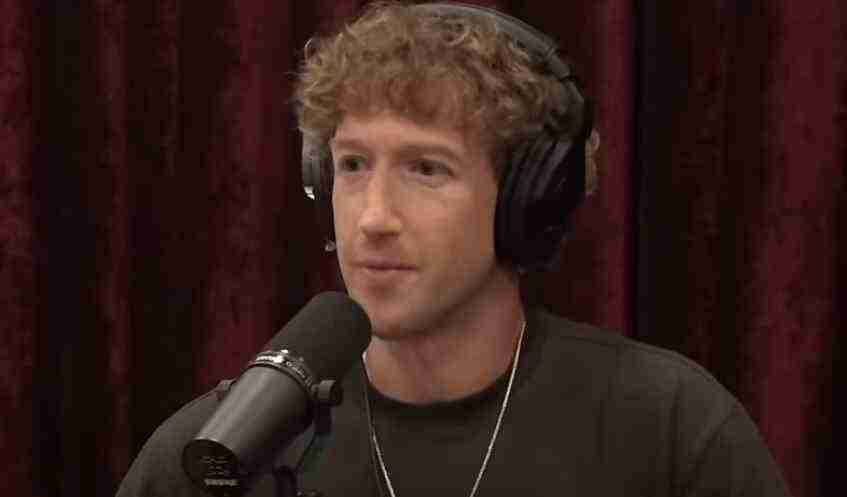
Read the full transcript of Meta Platforms’ CEO Mark Zuckerberg on Joe Rogan Experience Podcast #2255 (Jan 10, 2025).
Listen to the audio version here:
TRANSCRIPT:
JOE ROGAN: Alright, well, what’s happening?
MARK ZUCKERBERG: Good to see you.
JOE ROGAN: You too. What’s going on?
MARK ZUCKERBERG: You know, chill week.
JOE ROGAN: Yeah, sort of. This recent announcement that you did about content moderation, how has that been received?
MARK ZUCKERBERG: Probably depends on who you ask.
JOE ROGAN: Right.
MARK ZUCKERBERG: But, you know, but look, I mean, I’ve been working on this for a long time. So, I mean, you got to do what you think is right. You know, we’ve been on a long journey here, right? I mean, I think at some level you start, you only start one of these companies if you believe in giving people a voice, right? I mean, the whole point of social media is basically, you know, giving people the ability to share what they want. Right. And, you know, it goes back to, you know, our original mission is just give people the power to share and make the world more open and connected.
Increasing Censorship
JOE ROGAN: What do you think started the pathway towards increasing censorship? Because clearly we were going in that direction for the last few years. It seemed like we really found out about it when Elon bought Twitter and we got the Twitter files. And when you came on here and when you were explaining the relationship with FBI where they were trying to get you to take down certain things that were true and real and certain things they tried to get you to limit the exposure to them. So it’s these kind of conversations like when did all that start?
MARK ZUCKERBERG: Yeah. Well, well, look, I think going back to the beginning or like I was saying, I think you start one of these if you care about about giving people a voice. You know, I wasn’t too deep on our content policies for like the first 10 years of the company. It was just kind of well known across the company that we were trying to give people the ability to share as much as possible. And issues would come up, practical issues. Right.
So if someone’s getting bullied, for example, we deal with that or we put in place systems to fight bullying. You know, if someone is saying, hey, you know, someone’s pirating copyrighted content on the surface. OK, we’ll build controls to make it so we’ll find IP protected content. But it was really in the last 10 years that people started pushing for like ideological based censorship, and I think it was two main events that really triggered this.
The 2016 Election and COVID-19
MARK ZUCKERBERG: In 2016, there was the election of President Trump also coincided with basically Brexit in the EU and sort of the fragmentation of the EU. And so in 2020, there was COVID. And I think that those were basically these two events were for the first time we just place — we just faced this massive, massive institutional pressure to basically start censoring content on ideological grounds.
JOE ROGAN: And I’m sorry to interrupt you, but when it first came up in 2016, did it come under the guise of the Russian collusion hoax?
MARK ZUCKERBERG: This is the thing — at the time I was really sort of ill prepared to kind of parse what was going on. Right. It’s you know, I think part of my reflection looking back on this is I I kind of think in 2016 in the aftermath, I gave too much deference to a lot of folks in the media who were basically saying, OK, there’s no way that this guy could have gotten elected except for misinformation. People can’t actually believe this stuff. Right. It has to be that there’s this kind of like massive misinformation out there. Some of it started with the the Russia collusion stuff, but it kind of morphed into different things over time.
JOE ROGAN: Well, it was — it was so ideologically polarizing. Right. Like people didn’t want to believe that anybody looked at him and said this should be our president.
MARK ZUCKERBERG: Yeah. So I took this in — and just kind of assume that everyone was acting in good faith. And I said, OK, well, there’s like there are concerns about misinformation. We should — just like when people raised other concerns in the past and we try to deal with them. OK, yeah you know, if you ask people, no one says that they want misinformation. So maybe there’s something that we should do to basically try to address this.
But I was really worried from the beginning about basically becoming this sort of decider of what is true in the world. That’s kind of a crazy position to be in for billions of people using your service. And so we tried to put in place a, you know, a system that would deal with it. You know, an early on tried to basically make it so that it was really limited. We’re like, all right, we’re just going to have the system where these third party fact checkers and they can check the worst of the worst stuff. Right. So things that are very clear hoaxes that there’s like it’s not like like we’re not parsing speech about whether something is slightly true or slightly false. Like Earth is flat, you know, things like that. Right.
So that was sort of the original intent. We put in place the system and it just sort of veered from there. I think to some degree it’s because some of the people whose job is to do fact checking, a lot of their industry is focused on political fact checking.
Rebuilding Trust and Vaccine Misinformation
MARK ZUCKERBERG: But I just, you know, it was — it was just never accepted by by people broadly. I think people just felt like the fact checkers were too biased, not necessarily even so much in what they ruled, although sometimes I think people would disagree with that. A lot of the time it was just what types of things they chose to even go and fact check in the first place. So I kind of think like after having gone through that whole exercise, I don’t know, it’s something out of like, you know, 1984, one of these books where it’s just like it really is a slippery slope. And it just got to a point where it’s just, OK, this is destroying so much trust, especially in the United States to have this program. And I guess it was probably about a few years that I really started coming to the conclusion that we were going to need to change something about that.
MARK ZUCKERBERG: COVID was the other big one where that was — that was also very tricky because, you know, in the beginning, it was, you know, it’s like a legitimate public health crisis, you know, in the beginning. And it’s, you know, even people who are like the most ardent First Amendment, you know, defenders, the Supreme Court has this clear precedent. You can’t yell fire in a crowded theater. There are times when if there’s an emergency, your ability to speak can temporarily be curtailed in order to get an emergency under control.
And I was sympathetic to that at the beginning of COVID. It seemed like, OK, you have this virus, seems like it’s killing a lot of people. I don’t know if we didn’t know at the time how dangerous it was going to be. So at the beginning, it kind of seemed like, OK, we should give a little bit of deference to the government and the health authorities on how we should play this. But when it went from, you know, two weeks to flatten the curve to, you know, and like in the beginning, it was like, OK, there aren’t enough masks, masks aren’t that important to them. It’s like, oh, no, you have to wear a mask. And, you know, like everything was shifting around.
So I, it’s become very difficult to kind of follow. And this really hit the most extreme, I’d say, during the Biden administration when they were trying to roll out the vaccine program. Now, I’m generally like pretty pro rolling out vaccines. I think on balance, the vaccines are more positive than negative. But I think that while they’re trying to push that program, they also tried to censor anyone who is basically arguing against it. And they pushed us super hard to take down things that were honestly were true. Right. I mean, they basically pushed us and said, you know, anything that says that vaccines might have side effects, you basically need to take down. And I was just like, well, we’re not going to do that. Like, we’re clearly not going to do that. I mean, that is kind of inarguably true.
JOE ROGAN: Who are they? Who’s telling you to take down things?
MARK ZUCKERBERG: Yeah, It was people in the in the Biden administration. I think it was, you know, I wasn’t involved in those conversations directly, but I think it was —
JOE ROGAN: How difficult is that to not be involved in those conversations directly?
Moderating at Scale
JOE ROGAN: Seriously, get on this. That’s got to be strange too, right? Because you’re running the company, but there’s clearly you’re moderating at scale that’s beyond the imagination. The number of human beings you’re moderating is fucking insane. Like what is, well, what’s a Facebook? How many people use it on a daily basis? Forget about how many overall, like how many people use it regularly?
MARK ZUCKERBERG: 3.2 billion people use one of our services every day.
JOE ROGAN: More than a third of the planet? That’s so crazy. Almost half of Earth.
MARK ZUCKERBERG: Well, on a monthly basis it is probably half.
JOE ROGAN: I want to say that though, there’s a lot of like hypercritical people that are conspiracy theorists and think that everybody is a part of some cabal to control them. I want you to understand that whether it’s YouTube or all these – whatever place that you think is doing something that’s awful, it’s good that you speak because this is how things get changed and this is how people find out that people are upset about content moderation and censorship. But moderating at scale is insane. It’s insane.
MARK ZUCKERBERG: Yes.
JOE ROGAN: What we were talking the other day about the number of videos that go up every hour on YouTube and it’s bananas. It’s bananas. To try to get a human being that is reasonable, logical, and objective that’s going to analyze every video, it’s virtually impossible. It’s not possible. So you’ve got to use a bunch of tools. You’ve got to get a bunch of things wrong, and you have also people reporting things. And how much is that going to affect things? You could have mass reporting because you have bad actors. You have some corporation that decides we’re going to attack this video because it’s bad and we’re going to take it down. There’s so much going on. Just – I want to put that in people’s heads before we go on. Like understand the kind of numbers that we’re talking about here.
Vaccine Side Effects and Government Pressure
JOE ROGAN: Now understand you have the pandemic and then you have the administration is doing something where I think they crossed the line, where it gets really weird, where they’re saying what you’re saying. They were trying to get you to take down vaccine side effects, which is just crazy.
MARK ZUCKERBERG: Yeah. So, I mean, like you’re saying, I mean, this is – it’s so complicated, this system, that I could spend every minute of all of my time doing this and not actually focused on building any of the things that we’re trying to do, AI, glasses, like the future of social media, all that stuff. So I get involved in this stuff, but in general, we have a policy team. There are people I trust. The people are kind of working on this on a day-to-day basis. And the interactions that I was just referring to, I mean, a lot of this is documented, I mean, because, you know, Jim Jordan and the House had this whole investigation and committee into the kind of government censorship around stuff like this. And we produced all these documents and it’s all in the public domain. I mean, basically, these people from the Biden administration would call up our team and, like, scream at them and curse. And it’s like these documents are – it’s all kind of out there.
JOE ROGAN: Do you record any of those phone calls?
MARK ZUCKERBERG: I don’t – no, I don’t think we – but I think – I mean, there are emails. The emails are published. It’s all kind of out there. And they’re like – and basically, it just got to this point where we were like, no, we’re not going to take down things that are true. That’s ridiculous. They wanted us to take down this meme of Leonardo DiCaprio looking at a TV talking about how 10 years from now or something, you know, you’re going to see an ad that says, okay, if you took a COVID vaccine, you’re eligible, you know, like, for this kind of payment. Sort of like class action lawsuit type meme. And they’re like, no, you have to take that down. And we said, no, we’re not going to take down humor and satire. We’re not going to take down things that are true.
MARK ZUCKERBERG: And then at some point, I guess, I don’t know, it flipped a bit. I mean, Biden, when he was – he gave some statement at some point. I don’t know if it was a press conference or to some journalist where he basically was like, these guys are killing people. And I don’t know. Then like all these different agencies and branches of government basically just like started investigating coming after our company. It was brutal. It was brutal.
JOE ROGAN: Wow. Yeah. It’s just a massive overstepping.
MARK ZUCKERBERG: Yeah.
JOE ROGAN: And also you weren’t killing people.
The Suppression of Health Information
JOE ROGAN: This is the thing about all this. It’s like they suppressed so much information about things that people should be doing regardless of whether or not you believe in the vaccine. Regardless, put that aside. Metabolic health is of the utmost importance in your everyday life, whether there’s a pandemic or there’s not. And there’s a lot of things that you can do that can help you recover from illness. It prevents illnesses. It makes your body more robust and healthy. It strengthens your immune system. They were suppressing all that information. And that’s just crazy.
You can’t say you’re one of the good guys if you’re suppressing information that would help people recover from all kinds of diseases, not just COVID, the flu, common cold, all sorts of different things. High doses of vitamin C, D3 with K2 and magnesium. They were suppressing this stuff because they didn’t want people to think that you could get away with not taking a vaccine, which is really crazy. When you’re talking about something that 99.07% of people survive. This is a crazy overstep, but it scared the shit out of a lot of people. It red-pilled, as it were, a lot of people because they realized like, oh, 1984 is like an instruction manual. It shows you how things can go that way with wrong speak and with bizarre distortion of facts.
When it comes down to it, in today’s day and age, the way people get information is through your platform, through X. This is how people are getting information. They’re getting information from YouTube. They’re getting information from a bunch of different sources now. And you can’t censor that if it’s real legitimate information because it’s not ideologically convenient for you.
The Journey of Free Speech and Censorship
MARK ZUCKERBERG: Yeah. So, I mean, that’s basically the journey that I’ve been on, right? Started off very pro-free speech, free expression. And then over the last 10 years, there have been these two big episodes. It was the Trump election and the aftermath, where I feel like in retrospect I deferred too much to the kind of critique of the media on what we should do. And since then, I think generally trust in media has fallen off a cliff, right? So I don’t think I’m alone in that journey. I think that’s basically the experience that a lot of people have had is, okay, the stuff that’s being written about is not kind of all accurate. And even if the facts are right, it’s kind of written from a slant a lot of the time.
JOE ROGAN: Of course.
MARK ZUCKERBERG: And then there was the government version of it, which is during COVID, which is okay. Like, it’s like our government is telling us that we need to censor true things. It’s like this is a disaster. And it’s not just the U.S., right? I think a lot of people in the U.S. focus on this as an American phenomenon. But I kind of think that the reaction to COVID probably caused a breakdown in trust in a lot of governments around the world. Because, I mean, 2024 was a big election year around the world. And, you know, there are all these countries, India, Mexico, just like a ton of countries that had elections.
And the incumbents basically lost every single one. So there is some sort of a global phenomenon where the – whether it was because of inflation, because of the economic policies to deal with COVID, or just how the governments dealt with COVID, seems to have had this effect that’s global. Not just the U.S., but like a very broad decrease in trust, at least in that set of incumbents and maybe in sort of these democratic institutions overall.
The Role of Social Media in Information Sharing
MARK ZUCKERBERG: So I think that what you’re saying of, yeah, how do people get their information now, it’s by sharing it online on social media. I think that that’s just increasingly true. And my view at this point is like, all right, like we start off focused on free expression. We kind of had this pressure tested over the last period. I feel like I just have a much greater command now of what I think the policy should be. And like this is how it’s going to be going forward. And so I mean at this point, I think a lot of people look at this as like a purely political thing because they kind of look at the timing and they’re like, hey, well, you’re doing this right after the election.
It’s like, okay, I try not to like change our content rules right in the middle of an election either. It’s like there’s not like a great time to do this.
JOE ROGAN: And you want to do it a year later.
MARK ZUCKERBERG: Yeah, it’s like there’s no good time to do it. And whatever time is going on, there’s going to be, you know — so the good thing about doing it after the election is you get to take this kind of cultural pulse is like, okay, where are people right now and how are people thinking about it? We try to have policies that reflect mainstream discourse. But, yeah, I mean, I don’t know. This is something I’ve been thinking about for a while. I think that this is going to be pretty durable because at this point we’ve just been pressure tested on this stuff for like the last eight to 10 years with like these huge institutions just pressuring us. And I feel like this is kind of the right place to be going forward.
Government Attacks and Global Implications
JOE ROGAN: What was it like when they were attacking you? Like, first of all, what was the premise? Like what were they saying was your offense? Was it that you were allowing information that was not true that was getting out there? I know there was also — they’re saying that you guys were allowing hate groups to speak. There was a lot of this.
MARK ZUCKERBERG: Yeah. I mean, the truck, the tough thing with politics is that there’s like, well, when you say someone’s coming after you, are you referring to kind of the government? I mean, the issue is that there’s the — there’s what specific thing an agency might be looking into for. And then there’s like the underlying political motivation, which is like, why do the people who are running this thing hate you? And I think that those can often be two very different things. And we had organizations that were looking into us that were not really involved with social media, like the CFPB, like this financial. I don’t even know what it stands for. It’s the financial organization that Elizabeth Warren had set up.
JOE ROGAN: Oh, great.
MARK ZUCKERBERG: And it’s like, we’re not a bank.
We’re not a bank, right? It’s like, what does Meta have to do with this? But they kind of found some theory that they wanted to investigate. And it’s like, OK, clearly they were trying really hard to find some theory. But I don’t know. It just kind of like throughout the party and the government, there was just sort of, I don’t know how this stuff works. I mean, I’ve never been in government. I don’t know if it’s like a directive or it’s just like a quiet consensus that we don’t like these guys. They’re not doing what we want. We’re going to punish them. But it’s tough to be at the other end of that.
JOE ROGAN: What was it like?
MARK ZUCKERBERG: Well, it’s not good. I think the thing I think is actually the toughest, though, is it’s global, right? So and really, when you think about it, the U.S. government should be defending its companies, right, not be the tip of the spear attacking its companies. So we talk about a lot, OK, what is the experience of, OK, if the U.S. government comes after you? I think the real issue is that when the U.S. government does that to its tech industry, it’s basically just open season around the rest of the world. I mean, the EU, I pull these numbers, the EU has fined the tech companies more than 30 billion dollars over the last — I think it was like 10 or 20 years.
JOE ROGAN: Holy shit.
The Role of the U.S. Government in Defending Tech Companies
MARK ZUCKERBERG: So when you think about it like, OK, there’s it’s like, you know, 100 million dollars here, a couple billion dollars there. But what I think really adds up to is this is sort of like a kind of EU wide policy for how they want to deal with American tech. It’s almost like a tariff. And I think the U.S. government basically gets to decide how are they going to deal with that. Because if the U.S. government, if some other country was screwing with another industry that we cared about, the U.S. government would probably find some way to put pressure on them.
But I think what happened here is actually the complete opposite. The U.S. government led the kind of attack against the companies, which then just made it like the EU is basically in all these other places, just free to just go to town on all the American companies and do whatever you want. I mean, look, obviously, I don’t want to come across as if like we don’t have things that we need to do better. Obviously, we do. And when we mess something up, we deserve to be held accountable for that. And just like everyone else, I do think that the American technology industry is a bright spot in the American economy. I think it’s a strategic advantage for the United States that we have a lot of the strongest companies in the world. And I think it should be part of the U.S.’ s strategy going forward to defend that.
The Importance of Free Speech and the Trump Administration
MARK ZUCKERBERG: And it’s one of the things that I’m optimistic about with President Trump is I think he just wants America to win. And I think some of the stuff like the other governments who are kind of pushing on this stuff, it’s like at least the U.S. has the rule of law. Right. The government can come after you for something, but you still get your day in court and the courts are pretty fair. And, you know, so we’ve basically done a pretty good job of defending ourselves. And when we’ve chosen to do that, basically, we have a pretty good rate of winning.
It’s just not like that in every other country around the world. Like if other governments decide that they’re going to go after you, you don’t always get kind of a clear shake at kind of defending yourself on the rules. I think to some degree, if the U.S. tech industry is going to continue being really strong, I do think that the U.S. government has a role in basically defending it abroad. And that’s one of the things that I’m optimistic about will happen in this administration.
JOE ROGAN: Well, I think this administration uniquely has felt the impact of not being able to have free speech, because this was the — this is the administration where Trump was famously kicked off of Twitter. That was a huge issue. Like after January 6th, they removed at the time the sitting president — was kind of crazy to remove that person from social media because you’ve decided that he incited a riot. So for him, without free speech, without people, without podcasts, without social media, they probably wouldn’t have had a chance because the mainstream narrative other than Fox News was so clearly against him.
The majority of the television entities and print entities were against him, the majority of them. So if without social media, without podcast, they don’t stand a chance. So they’re uniquely aware of the importance of giving people their voice, free speech. But you do have to be careful about misinformation and you do have to be careful about just outright lies and propaganda complaints or propaganda campaigns, rather. And how do you differentiate?
Improving Fact-Checking and Moderating Misinformation
MARK ZUCKERBERG: Well, I think there are a couple of different things here. One is this is something where I think X and Twitter just did it better than us on on fact checking. We took the critique around fact checking, sorry, around misinformation. We put in place this fact checking program, which basically empowered these third party fact checkers. They can mark stuff false and then we would downright get in the algorithm. I think what Twitter and X have done with community notes, I think it’s just a better program. Rather than having a small number of fact checkers, you get the whole community to weigh in when people usually disagree on something, tend to agree on how they’re voting on a note. That’s a good sign to the community that this is — there’s actually a broad consensus on this and then you show it and you’re showing more information, not less. Right. So you’re not using the fact check as a signal to show less. You’re using the community note to provide real context and show additional information. So I think that that’s better —
For when you’re talking about like nation states or people interfering, a lot of that stuff is best rooted out at the level of kind of accounts doing phony things. So you get like whether it’s like China or Russia or Iran or like one of these countries, they’ll set up these networks of fake accounts and bots and they coordinate. They post on each other stuff to make it seem like it’s authentic and kind of convince people. It’s like, wow, a bunch of people must think this or something. And the way that you identify that is you build AI systems that can basically detect that those accounts are not behaving the way that a human would.
And when we find that that there’s like some bot that’s operating an account —
JOE ROGAN: How do you differentiate? How do you figure that out?
MARK ZUCKERBERG: It’s just, I mean, there are some things that a person just would never do. Right.
JOE ROGAN: So have you met Lex Friedman?
MARK ZUCKERBERG: Yeah. Yeah. Yeah.
JOE ROGAN: He might not be.
MARK ZUCKERBERG: Well, but it’s going to take him to make a million actions in a minute.
JOE ROGAN: OK, so it’s that. Well, I mean, it’s things that are more subtle than that.
MARK ZUCKERBERG: I think like these guys are pretty sophisticated and it’s an adversarial space. So we find some technique and then they basically kind of update their techniques. But we have a team of — It’s effectively like intelligence, counterintelligence folks, counterterrorism folks, AI folks who are building systems to identify. What are these accounts that are just not behaving the way that people would and how are they interacting? And then sometimes you trace it down and sometimes you get some tips from different intelligence agencies and then you can kind of piece together over time. It’s like, oh, this network of people is actually some kind of fake cluster of accounts. And that’s against our policies when we just take them all off.
JOE ROGAN: But how are you sure? Is there a 100 percent certainty that you are definitely getting a group of people that are bad actors or is it just people that have unpopular opinion?
MARK ZUCKERBERG: No, I don’t think it’s that for this. I think.
JOE ROGAN: But what I’m saying is, how do you determine? How do you — at what percentage of accuracy are you determining? Do you ever accidentally think that people are going to get moderated or actually just real people?
MARK ZUCKERBERG: Yes, I think that’s — I think for the specific problem around these like large coordinated groups doing kind of like election interference or something, it’s a large enough group. We have like a bunch of people analyzing it. It’s like they study it for a while. I think we’re pretty accurate on that. But I actually think one of the bigger issues that we have in our moderation system is this precision issue that you’re talking about. And that is actually of all the things that we announced this week in terms of how we’re going to update the content policies, changing the content filters to have to require higher confidence and precision is actually going to be the thing that reduces the vast majority of the censorship mistakes that we make.
Removing the fact checkers and replacing them with community notes. I think it’s a good step forward. Like a very small percent of content is fact checked in the first place. So is that going to make the hugest difference? I’m not sure. I think it’ll be a positive step, though. And we like opened up some content policies to some stuff that was restricted before we opened up.
MARK ZUCKERBERG: Okay, that’s good. It’ll mean that some set of things that might have been censored before or not. But by far the biggest set of issues we have. And you and I have talked about a bunch of issues like this over the years. It’s just, okay, you have some classifier that’s trying to find, say, like drug content. People decide, okay, it’s like the opioid epidemic is a big deal. We need to do a better job of cracking down on drugs and drug sales. I don’t want people dealing drugs on our networks. So we build a bunch of systems that basically go out and try to automate finding people who are dealing drugs. And then you basically have this question, which is how precise do you want to set the classifier?
Balancing Precision and Recall in Content Moderation
MARK ZUCKERBERG: So do you want to make it so that the system needs to be 99% sure that someone is dealing drugs before taking them down? Do you want it to be 90% confident, 80% confident? And then those correspond to amounts of, I guess the statistics term would be recall. What percent of the bad stuff are you finding? So if you require 99% confidence, then maybe you only actually end up taking down 20% of the bad content. Whereas if you reduce it and you say, okay, we’re only going to require 90% confidence, now maybe you can take down 60% of the bad content. But let’s say you say, no, we really need to find everyone who’s doing this bad thing. It doesn’t need to be as severe as dealing drugs. It could be any kind of category of harmful content.
You start getting to some of these classifiers might have 80%, 85% precision in order to get 90% of the bad stuff down. But the problem is if you’re at 90% precision, that means one out of 10 things that the classifier takes down is not actually problematic. And if you filter, if you kind of multiply that across the billions of people use our services every day, that is millions and millions of posts that are basically being taken down that are innocent. And upon review, we’re going to look at and be like, this is ridiculous that this thing got taken down, which I mean, I think you’ve had that experience and we’ve talked about this for a bunch of stuff over time.
And — but it really just comes down to this question of where do you want to set the classifiers? So one of the things that we’re going to do is basically set them to be to be require more confidence, which is this tradeoff. It’s going to mean that we will maybe take down a smaller amount of the harmful content, but it will also mean that we will dramatically reduce the amount of people whose accounts were taking off for a mistake, which is just a terrible experience. Right. It’s like, OK, you’re going about your day. And then one day you wake up and you’re like, oh, my WhatsApp account just got like deactivated because it’s connected to a Facebook account. And the Facebook account is like I’m using on the same phone as a Facebook account where like we made some enforcement mistake and thought you were doing something bad that you weren’t because our classifiers were set to be too low precision.
JOE ROGAN: Has that happened before?
MARK ZUCKERBERG: Yeah.
JOE ROGAN: Whether WhatsApp app got canceled as well.
MARK ZUCKERBERG: Yeah. Because, I mean, there are there are a bunch of —
JOE ROGAN: Your Facebook app gets taken. Like I say, if you have a Facebook and you have like a sock puppet account and the sock puppet account, you post offensive memes and you’re generally gross. If that — if you get caught for that, does your WhatsApp get killed?
MARK ZUCKERBERG: Not for memes, but but go back to like a very severe thing. Like let’s say someone is terrorist. Let’s say the most severe. Sure. Let’s say someone is like terrorist content. They’re planning some attack. Right. So we take down their account. Right. But then let’s say that person can just go then sign up with another account. Right.
JOE ROGAN: How does WhatsApp get connected to that, though?
MARK ZUCKERBERG: Oh, well, if it’s I mean, we run these different services and they’re on the same phone. It’s basically, you know, it’s one thing that, you know, it’s basically regulators or governments will come to us and say, OK, it’s you’re clearly not doing enough. And then they can just like sign up for another account on the phone. Right. OK. You’re also they also think, OK, well, we’re not doing enough if we deactivate their Facebook account because they’re like planning a terrorist attack. But we let them use all our other services. Right. Right. If you’re aware. Yeah. Yeah. So if we — if our systems think that someone is a terrorist, then you probably need to deactivate their access to all the different accounts.
JOE ROGAN: Yeah. They can’t get on threads.
MARK ZUCKERBERG: Threads, Instagram. Yeah. Yeah.
JOE ROGAN: So that makes sense.
MARK ZUCKERBERG: So you can understand how you get there. But then you just get to this question around the precision and the confidence level. And then you’re just making all these mistakes at scale. And it’s just unacceptable. But I think it’s a very hard calculation of like, where do you want to be? Because on the one hand, like, I get why people kind of come to us. And they’re like, no, you need to do a better job finding more of the terrorism or the drugs and all this stuff. But over time, the technology will get better and it’ll get more precise. But at any given point in time, that’s the choice that we have to make is do we want to make more mistakes erring on the side of of just like blowing away innocent people’s accounts? Right. Or do we want to get a higher, a somewhat higher percent of of the bad stuff off? And I think there’s some just some balance that you need to strike on this.
Balancing Anonymity and Bad Actors
JOE ROGAN: We were having a conversation yesterday, Mel Gibson and I about how that can get weird. Was it Theo? Might have been Theo. I think it was Theo, where that can get weird, because I think like if you’re a person and you work at some accounting firm, but you like posting about stuff, but you don’t want it to come back and reflect on your life, you want to shit post, you want to post jokes, you want to be silly, you should be able to be anonymous. I think there’s nothing wrong with that. I don’t think just because you state your opinion, people should be able to search where you sleep. That doesn’t make any sense to me.
But if you’re going to allow anonymous accounts, you’re definitely going to open up the door to bad actors having enormous blocks of accounts where they can use either AI or just programs where they have like specific answers. I’m sure you’ve seen that before. It’s come up on Twitter multiple times where they found hundreds of sock puppet accounts tweeting the exact same thing. So you literally word for word, certain words in caps, like either keep people are copy or pasting it, or there’s an email campaign, it’s getting legitimate people to do it, or these are fake people.
JOE ROGAN: If you’re going to have anonymous accounts, which I think you should, because I think whistleblowers, I think the benefits of anonymous reporting on important things that the general public needs to know about, especially whistleblower type stuff, you have to have some ability to be anonymous. But if you’re going to do that, you’re also going to have the possibility that these aren’t real people, that these are paid actors, these are paid people or not people at all, or they’re running programs, and they’re doing this to try to sway public opinion about very important issues.
MARK ZUCKERBERG: Yeah, a lot of what we’ve seen too, I mean, there’s the anonymous accounts. Also, just over time, I think a lot of the kind of more interesting conversations have shifted from the public sphere to more private ones. So WhatsApp groups, private groups on Facebook. I’m sure you have this experience where like, maybe 10 years ago, you would have posted your kind of quick takes on, on whatever social media you’re using. Now, you know, the stuff that I post on Facebook and Instagram, it’s like I put time into, into making sure that that’s kind of good content that that I want to be seen broadly. Yeah. And then like, most of the jokes that I make are like with my friends and WhatsApp. See, I think that’s sort of that’s kind of where the world is more broadly now. I think so for jokes, for that kind of stuff.
JOE ROGAN: For comedians, for sure. Because also, we’ll say things that we don’t really mean. We just say it because it’s a funny thing to say. I think everyone does it for sure. Yeah, which is just a weird thing about taking things out of context, particularly on social media, where people love to do that. But there is this problem of like, let’s just say that you’re a country that’s involved in some sort of an international conflict. And you have this ability to get out this fake narrative, and just spread it widely about all sorts of things you’re accusing this other government of all sorts of things that aren’t true. And it just muddies the water of reality for a lot of people.
MARK ZUCKERBERG: Yeah. And that’s why that side of things, the kind of governments running these broad manipulation campaigns. I mean, we’re not letting off the gas on that at all. I think every like, most most categories of bad stuff that we’re policing, everyone agrees is bad, right? No one’s sitting there defending that terrorism is good, right? Or child exploitation, or drugs, or IP violations, or people inciting violence, or it’s like most of the stuff is bad. People clearly believe that, that, you know, election interference and foreign government manipulation of content is bad. So we have, this is the type of stuff that the vast majority of our energy goes towards that. And we’re not changing our approach on any of that.
Misinformation and Hate Speech
MARK ZUCKERBERG: The two categories that I think have been very politicized are misinformation, because who gets to judge or what’s false and what’s true. You may just not like my opinion on something. And then, you know, people think it’s false, but it’s, but I think that that one’s really tricky. And the other one is, is basically what, you know, what people refer to as hate speech, which is, I think, also comes from a good place of, you know, wanting to crack down on that of, wanting to promote more inclusion and belonging and people feeling, feeling good and like having a pluralistic society that can, that can basically have all these different communities coexist, but except everyone.
But I think the problem is, is that, you know, you just, all these things are on a spectrum. And when you go too far on them, I think on that side, we just basically got to this point where there were these things that you just like couldn’t say, which were mainstream discourse, right?
So, you know, it’s like Pete Hegseth is going to probably be defending his nomination for Secretary of Defense on on the Senate floor. And I think one of the points that he’s made is that he thinks that women shouldn’t be able to be in certain combat roles. And until we updated our policies, that wouldn’t have been a thing that you could have said on our platforms, because it would call for the exclusion of a protected category of people. And so, and it’s like, okay, like on its face, yeah, calling for the exclusion of a protected category, that seems that like, that’s okay, there’s like legal protections, there’s all this stuff.
But okay, if it’s like, okay, to say on the floor of Congress, you should probably be able to debate it on social media. So I think some of the stuff, I think, well intentioned, went too far, needs to just get rationalized a bit. But, but it’s those two categories, misinformation, and hate speech, I think, are the ones that got politicized. All the other ones, which is the vast majority of the stuff that we do, is, I think people generally agree that it’s that it’s good, and we need to go after it.
MARK ZUCKERBERG: But then you just get into this problem of the mistakes, like you’re talking about, okay, well, what confidence level do people want us to have in our enforcement? And at what point would people rather us kind of say, okay, I’m not sure that that’s that — that one is causing an issue. So on balance, maybe we should just, you know, leave that person’s account out, because the pain of just nuking someone’s account when you’re not sure you make a mistake is like, that’s pretty real, too. Right.
JOE ROGAN: Yeah, very, very complicated. Yeah, it’s, it’s all very nuanced. And, you know, you made a point earlier about the the government supporting its companies, that it would be a good thing for the government to support its companies and make sense to an American company. I think the issue that we’re dealing with is companies, as we’re describing them have never existed before. Right? There’s never been a thing like Facebook before. There’s never been a thing like Twitter before X. It’s never been a thing like Instagram. These are new things in terms of the impact that it has on society, on opinions, on conversations, on distribution of information. There’s never been a thing like this that the government didn’t control. So it makes sense from their perspective, continuing the patterns of behavior that they’ve always exhibited, which is to have control over the media.
Government Control and Social Media
JOE ROGAN: I mean, there has been CIA operatives that have been in major newspapers forever. There’s always been that — there’s always been this sort of input that the government had in mainstream media narratives. They are in a position now where they’re losing that — they’ve essentially lost it. And especially with this last, the push during COVID deteriorated, as you were saying before, the opinion and the respect that people have for the facts that are coming from mainstream journalism in a way that I’ve never seen before in my life, where an enormous percentage of the population does not trust mainstream media anymore.
So well, what do they trust? They trust social media. Well, who’s running that? Well, they’re a bunch of people figured it out and invented it. Well, no, fuck that. Like, we got to crack down on that. Like, we’ve got to get our hands on this, which is what we saw during COVID, which is we saw during the Biden administration’s attempt to remove the Hunter Biden laptop story from Twitter and from all these different things that we saw happen, the way they contacted you guys, what they’re trying to do with getting you to remove real information about vaccine side effects like that. This is like — this new attempt to crack down on this new thing, which is a distribution outlet that’s far more successful than anything they’ve ever controlled before, and they have no control of it.
JOE ROGAN: They had CBS, they had NBC, when they had the New York Times and all these Washington Post, when they were in control of narratives in that way, it was so much easier. There wasn’t some sort of pirate radio voice that came on and said, Hey, guys, like, here’s the latest studies that shows this is not true. Here’s why they’re lying about that. Here’s why they’re lying about this. And now that’s what you get all day long on X. This all day long is like dissolving illusions. And that’s a completely new thing that probably led to Trump getting elected.
MARK ZUCKERBERG: Yeah, I mean, the causality there is tricky, but because there’s a lot of things. I mean, it’s without it, he probably doesn’t get elected. It’s Yeah, it’s tough to know. I mean, I do come back to this point that there were every major incumbent lost their elections around the world. But I think that’s all — but it might, it might, it might be, it might be because of that, revealing how, how kind of incorrect and dishonest I think some of these guys were. Yeah, yeah.
Shifting Cultural Elites
MARK ZUCKERBERG: So I know that’s, that’s quite possible. And I mean, I do think that there is this cycle that goes on where, you know, within a society, it’s not just the government that has power, there’s like certain people who are in these like culturally elite positions, and, you know, journalists, TV, news anchors, like who are the people who people broadly trust, right? They’re not all in government. They’re like, a lot of people in other positions. It’s like, who are the people that that basically people look to?
And I think that’s basically, it needs to shift for the internet age. And I think a lot of the people who people look to before, they’re kind of realizing, hey, they weren’t super honest about a lot of these issues that we face. And I think that that’s partially why, you know, social media isn’t a monolithic thing. It’s not that people trust Facebook or Z, they trust the creators and the voices that that they feel like are being authentic and giving them valuable information on there. So there’s, I think, going to be just this whole new class of creators who basically become the new kind of cultural elites that people look at and are like, okay, these are the people who give it to me straight.
MARK ZUCKERBERG: And I think that that’s, that’s the thing that is, maybe it’s possible because of social media. I think it’s also just the internet more broadly. And I think podcasting is obviously a huge and important part of that, too. And I don’t know to what extent you feel like you kind of got to be large, like because of social media, or just it’s or just podcasting platforms that you used. But, I think that this is like a very big sea change in terms of, like, who are the voices that matter. And, you know, what we do is we try to build a platform that gives people a voice.
But I think that there’s this wholesale generational shift in who are the people who are being listened to. And I think that that’s like a very fascinating thing that is going on. Because I think that that’s like, what’s going on here? It’s not, it’s not just the government. And people saying, Hey, we want like a very big change here. I think it’s just like a wholesale shift and saying, we just want different people who we actually trust, right? Who are actually going to like, tell us the truth, then like, and not give us like the bullshit opinions that you’re supposed to say. But like the type of stuff that I would actually like when I’m sitting with — in my living room with my friends, like the stuff that we know is true, like, who are the people who kind of have the courage to actually just say that stuff? I don’t know, I think that whole like cultural elite class needs to get repopulated with people who people actually trust.
JOE ROGAN: Yeah. Um, the problem is, these people that are starting these jobs, they’re coming out of universities, and the universities are indoctrinated into these ideas as well. It’s very difficult to be a person who stands outside of that and takes unpopular positions, you get socially ostracized, and people are very, they’re very hesitant to do that. And they would rather just keep their mouth shut and talk about it in quiet conversation. And that’s what we experienced, which is another, another argument for anonymous accounts, I think you should have anonymous accounts.
I think you should be able to like — if there’s something like COVID mandates, or some things that you’re dealing with, and you don’t want to get fired because of it, you should be able to talk about it. And you should be able to post facts and information and what you’ve learned. And, you know, anecdotal experiences of people in your family that had vaccine side effects and not worry about losing your job, which people were worried about, which is so crazy.
Transitioning to New Media
JOE ROGAN: And, you know, and you’re seeing a lot of the people that used to be in mainstream media got fired, and now they’re trying to do the sort of podcast thing. But they’re trying to do it, like a mainstream media person. So they’re like, gaslighting during podcasts, and people like, hey, fuckface, like, you can’t do that here. It doesn’t work.
MARK ZUCKERBERG: Yes, it was a new medium. I mean, I know, I’m sure you know, the history on this. It’s like, when people transitioned from radio to TV, the initial TV anchors were the same radio people, but just like being filmed, while speaking on the radio, but it turned out, it actually was a completely different type of person that you need, because on your radio is just like your voice and your cadence and all that. It’s like, you know, the whole phrase, it’s like, you’ve got a good radio voice, right? It’s like, okay, on TV, you need to be telegenic, right? You need to kind of have charisma in that medium. It’s like a completely different thing. And I think that’s going to be true for the internet, too. It’s, you know, it’s not as cut, right? I think part of it is the format, right?
MARK ZUCKERBERG: The fact that you do these, like two, three hour episodes. I mean, I hated doing TV, because, you know, I basically got started. I started Facebook when I was 19. And I was good at some things, very bad at others. I was good at coding, and like real bad at kind of like, talking to people and explaining what I was doing. And I just like, had these experiences early on where I’d go on TV. And like, it wouldn’t go well. And they’d like cut it, they’d cut it to some down to some random soundbite. And I’d like look stupid. And then like, and then basically, like, I’d get super nervous about, about like going on TV, because I knew that they were just gonna cut it in some way that it was gonna look like a fucking idiot.
And like, and so I’m just like, this sucks, right? So, I just like, it’s kind of a funny thing about like, it’s like, in some ways, it’s like, okay, at the same time, I was, you know, gaining confidence, being able to like, build more and more complicated products. And it’s like, even as an early 20s person, I was like, I could do this. And then on the kind of TV and comms public side, I was like, this is a disaster. Every time I got it, it’s worse and worse and worse. And it’s just good.
MARK ZUCKERBERG: But I mean, it’s one of the reasons why I think on the internet, like, there’s no reason to cut it to a four minute soundbite conversation. It’s like, part of what, what makes it authentic is like, we can just I mean, these are complex issues, we can unpack it for hours, and they probably still have hours more stuff to talk about. It just, it’s, I don’t know, I think it’s just more real.
JOE ROGAN: Yeah, it’s definitely that. And the other thing about television, that’s always going to hold it back is the fact that every conversation gets interrupted every X amount of minutes, because you have to cut to a commercial. So you really can’t get into depth. Even Bill Maher show is only an hour, you know, you have all these people talking over each other, and then you sit down with one person for a short amount of time, it’s just not enough time for important subjects. It’s also a lot of them, for whatever reason, want to do in front of an audience, which is the worst way to get people to talk. Like, imagine these disasters that you had, if there was like, 5000 people staring at you in a TV crowd as well.
MARK ZUCKERBERG: Yeah.
JOE ROGAN: There’s that added element, which is so not normal, and not conducive to having a conversation where you’re talking about nuanced things. Yeah, where you have to like, think you have to be able to pause and not concern yourself being entertaining for these fucking people just sitting there staring at you.
MARK ZUCKERBERG: Yeah. And also, like, when you’re having a conversation, it’s like, I don’t know, it’s like, when you start talking about something, your kind of subconscious kicks in, you start thinking about the topic. So it’s like, you might not actually have the thing that you want to say until like, five minutes later, right? And, right. I mean, it’s like, when we started this conversation, I think, like, the first few minutes were just kind of slow. It’s like warming up, like, okay, kind of like downloading into my memory, like, how am I going to, like, you know, it’s like, how am I going to, you know, just explain these different things? But it’s, um, yeah, no, I just think that that’s sort of how people work.
JOE ROGAN: What’s also like, conversations are like a dance. You know, one person can’t be dancing at another speed, and the other person’s going slow, like, you kind of have to find the rhythm that you’re going to talk with. And then you have to actually be interested in what you’re talking about. That’s another thing that they are at a huge disadvantage of in mainstream media is like, they’re just doing that, because that’s their job. Yeah, they probably don’t even know a lot about climate change. They probably don’t really understand too much about what SpaceX is trying to accomplish. But they’re just reporting on it.
MARK ZUCKERBERG: Yeah, I mean, I’m sure there’s a lot of the people I’ve met there, I think are good people. I’m sure it’s a tough format.
JOE ROGAN: It’s a terrible format. Yeah. And the problem is, they get locked into that format, and no one trusts them. And then they leave and they go, Yeah, but you were just lying to us about this, that and the other thing. And now I’m supposed to believe you’re one of the good guys. You’re one of the straight shooters now.
Government Interference and the Trump Administration
JOE ROGAN: Well, getting back to the original point, this is why I think, you know, it makes sense to me that the government didn’t want you to succeed, and to have the sort of unchecked power that they perceived social media to have. And I think one of the benefits that we have now of the Trump administration is that they have clearly felt the repercussions of a limited amount of free speech — free speech limitation, censorship, government overreach.
If anybody saw it, look, if there’s, I don’t know what the actual impact of the Hunter Biden laptop story would have been, I don’t know. But there’s many people that think it probably amounted to millions of votes overall in the country of people that were on the fence, the people that weren’t sure who they’re going to vote for, if they found out the Hunter Biden laptop was real, like, Oh, this is fucking — the family’s fucking crazy. And they would have voted for Trump. That’s possibly real. And if that’s possibly real, that could be defined as election interference. And all that stuff scares the shit out of me. That kind of stuff scares the shit out of me when the government gets involved in what could be termed election interference, but through some weird loophole, it’s legal.
MARK ZUCKERBERG: I don’t think — I don’t think that the pushing for social media companies to censor stuff was legal. I mean, that’s right. And there’s all this stuff about what, like, people talk about the First Amendment, and, okay, these, these tech platforms should should offer free speech, like the First Amendment. That, I think, is a philosophical principle, the First Amendment doesn’t apply to companies. And what in our content moderation, it’s more of an American ethos about how we think that, that, you know, best dialogue is carried out. But the First Amendment does apply to the government. That’s like the whole point, right?
If the government is not allowed to censor this stuff. At some level, I do think that, you know, having people in the administration calling up the guys on our team and yelling at them and cursing and threatening repercussions, if we don’t take down things that are true is like, it’s pretty bad.
JOE ROGAN: It sounds illegal. I would love to hear it. I wish somebody recorded those conversations. Well, I mean, again, it’s great to listen to somebody can animate them, maybe polytune.
MARK ZUCKERBERG: Lot of the material is public. I mean Jim Jordan led this whole investigation in Congress. I mean, it was basically I think about this as, like you know, what Elon did on the Twitter files when he took over that company, I think Jim Jordan basically did that for the rest of the industry with the congressional investigation that he did. And we just turned over, like, all of the documents and everything that we had, to them, and they basically put together this report.
JOE ROGAN: And the people that actually did call for censorship. What was the response to all this?
MARK ZUCKERBERG: To what, to the to the investigation?
JOE ROGAN: Yes.
MARK ZUCKERBERG: I don’t know. I don’t know.
JOE ROGAN: Was anybody held accountable? Was there any? I mean, any repercussions?
MARK ZUCKERBERG: I mean, they lost the election. Yes. Well, in a democracy, I mean, that’s kind of right.
JOE ROGAN: But if what they did was illegal, do you not think that some steps should be put in place to make sure that people are punished for that and that that never happens again? It seems that that has a massive impact on the way our country goes. If that’s election interference, and I think it is, that has a massive impact on the direction of our country.
MARK ZUCKERBERG: Yeah, well, the COVID thing, I don’t think was election interference as much as it was just like government meddling where it shouldn’t have.
But no, I mean, no, I’m talking about me to say, you know, like, what specific retribution or justice should happen to anyone who is involved in these things. But I think your point about, let’s make sure this doesn’t happen again, is the one that I’m more focused on, right? Because it’s the thing that I reflect on on my journey on all this, which is like, Okay, yeah, so we didn’t take down the stuff that was true. But we did generally defer to the government on some of these policies that in retrospect, I probably wouldn’t knowing what I know now.
And, I just think that that’s, that’s sort of the journey that we’ve been on is like, okay, we start the thing focused on free expression, go through some like pretty crazy times in the world, get it pressure tested, see where we basically ended up doing stuff that led to a slippery slope that we weren’t happy with the conclusion. And like, try to reset. And that’s sort of the moment that we’re at now is trying to just rationalize a bunch of the policies. And, and look, I mean, obviously, crazy things can happen in the future that might unearth something that I haven’t, you know, some some kind of angle on this that I haven’t thought enough about yet. So I’m sure I’m not done making mistakes in the world. But, but I think at this point, we have a much more thorough understanding of what the space is. And I think our kind of values and principles on this are likely going to be much more durable going forward. And I think that that’s probably a good thing for the internet.
JOE ROGAN: I think it’s a great thing for the internet. I was very happy with your announcement. I’m very happy that you took those steps. I’m very happy you brought Dana White aboard.
MARK ZUCKERBERG: Oh, he’s awesome. I’ve been talking to him for a while about that. I mean, he’s like, talk about like an amazing entrepreneur, right? I just want, because I control our company. I have the benefit of not having to convince the board not to fire me, right? It’s like a normal corporate environment. It’s like, basically, the CEO just tries to like, you know, they’re just trying to convince the board to like, let them have their job and pay them more. It’s like, all right, the board. It doesn’t pay me except for security. And, and I’m not worried about losing my job, because I control the majority of the voting and the company.
MARK ZUCKERBERG: So I actually get to use our board to like have the smartest people who I can get to have around me help work on these problems. So it’s like, all right, who are the people I want? Like, I just want like the best entrepreneurs and people have created different things. And like, I mean, Dana is like this guy, who I mean, he basically took the sport from being this, like, I think it was viewed as like this pretty marginal thing when he got started, right? I mean, John McCain was trying to outlaw it. And now it’s like, I think it and F1 are the two fastest growing sports in the world. It’s got hundreds of millions of people viewing it. It’s like, I mean, what Dana has done with the UFC is like one of the most legendary business stories. And the brand is beloved.
And I think he’s just, so he’s like a world class entrepreneur. And he’s just like a, he’s got a strong backbone. And I think part of what the conversation that I had with him around joining our board was, okay, like, we have a lot of governments and folks around the world putting a lot of pressure on our company. And like, we need some like, strong people are going to basically, you know, help advise us on how to handle some of these situations. And, and so yeah, that’s a bit but yeah, I mean, this is — running this company is not for the faint of heart. I mean, you definitely, there’s definitely a lot of pressure from, from like all these different governments. And, and then then it’s like, okay, I could spend all my time doing that. But I’m not even a politician. Like I want to, I just want to spend my time building things. Right. So, so it’s, um, so yeah, I think Dana is gonna be great.
JOE ROGAN: He’s the best great entrepreneur. I agree with everything you said about him. Without him, none of the UFC would have ever taken place the way it did. I mean, you need the Fertitta brothers, they had to come in with all the money and the vision. And it’s really funny, because Eddie Bravo and I, you know, we’ve been fans for so long, Eddie Bravo, and I went to a live event in the 90s. I was working for the UFC as a backstage interviewer. And he went there with Ricky Rocket. You know, Ricky Rocket?
MARK ZUCKERBERG: No.
JOE ROGAN: No, poison, he’s a fucking black belt of the Machado. He’s legit, super legit, really nice guy, too. Anyway, so Ricky Rocket and him were at the UFC. And we were talking about it in the 90s. Like, you know what this sport needs? Because we were in love with it. But like this, but we were martial artists, we’re like, this sport needs some billionaires who just throw a ton of money on it, and just get it huge.
And then the Fertitta brothers come along, billionaires with a ton of money, who are huge fans of the sport, just love the sport. You know, we’re hiring people like Frank Shamrock to come in and train them and work out and we’re taking jiu jitsu with John Lewis, and they were really getting into it. And so then they buy the UFC for like $2 million, which is probably the greatest purchase ever, except they were 40 plus million dollars in the hole, when they finance the ultimate fighter. And then that was 2005. And then this one fight takes place with Stefan Botter and Forrest Griffin on television. It’s so wild and so crazy that millions of people start tuning in. The sport’s born.
JOE ROGAN: Then you have Chuck Liddell, who was the champion at the time, who was the most fan friendly champion you could ever have just a fucking berserker with just psychopath with a fucking head tattoo and a mohawk crushing people. In his prime, he was the perfect poster guy for the UFC because he was just smashing people and then throwing them in the hole. He was throwing his arms back in a cage. It was nuts. I’m sure you’ve seen a lot of Chuck Liddell fight. Yeah, it was just the whole thing took off. But without Dana, it would have never taken place. The guy’s tireless.
That man, I could call him up. I’ll call him up at like two o’clock in the morning sometime like there’s some fight going on. And I’ll say, Hey, this is going on next weekend. I’m so fucking pumped. And we’ll talk for hours — for hours. He just wants to talk about fights. He’s like, so locked in, like all the time, you know, and he’s, he’s just like, so driven. And now that he’s healthy, like, oh my god, he’s got what Gary Brecka has done for him is incredible. He lost all this weight got super thin, real fit, super healthy. He doesn’t fuck around with alcohol anymore. He just eats healthy food. He looks great. Now he’s got even more energy. Yeah, it’s incredible.
MARK ZUCKERBERG: Well, we’re lucky to have some of it.
JOE ROGAN: Yeah, we are. And you know what, we’re also lucky that you got into jiu jitsu. I think that had an effect on you. You look different. When you walked in here today, you look thicker. You look like a different guy. You do — you look like a jiu jitsu guy. Now it’s funny. I saw your neck. I’m like his neck bigger. Your neck is bigger.
MARK ZUCKERBERG: Good.
JOE ROGAN: Are you using iron neck? Or is it just
MARK ZUCKERBERG: I do like I do. But, but it’s um, but when I started training, not just jiu jitsu, but striking, I was like, Alright, I want to find a way to do this where I don’t like, like hurt my brain, right? Like I need to, I’m gonna be running this company for a while. I would like to you know, like, stay, stay healthy and not take too much damage. And so I think the number one thing you need to do is, well, in addition to having good partners is have a strong neck. So yeah, I take that — I take that pretty serious.
JOE ROGAN: Very important. The strong neck is great for jiu jitsu as well, because it’s a weapon. Like in certain positions, like head and arm choke. You need a neck. Yeah, it’s a weapon. And you know, and also for defending things and just for overall stability. But for striking, it’s very like Mike Tyson in his prime.
Yeah. 20. Yeah, that’s crazy. His neck is like bigger than his face. A photo of him in a suit. It’s the craziest photo is like his neck starts at the top of his ears. And it just goes straight down. Yeah. When he was a champ when he was amazing.
JOE ROGAN: Yeah. The neck is very important. But it’s also like, you know, you’re doing it very smart. You’re bringing in Dave Camarillo.
MARK ZUCKERBERG: He’s awesome. Amazing. He’s awesome.
JOE ROGAN: You bring in all these like super talented people to train with you too, which is really important. And just learn systematically. Probably the way you’ve learned all these other things, which is really so fascinating to me about MMA and jiu jitsu in particular, is the general public has this knuckle dragging, meathead sort of perspective. And then I’m like, let me introduce you to Mikey Musumeci.
MARK ZUCKERBERG: Yeah. Well, there’s a range. There’s a range for Mikey. Right.
JOE ROGAN: But Mikey is one of the elite of the elite. And he’s about as far from that.
MARK ZUCKERBERG: I love Mikey. He’s a very good guy.
JOE ROGAN: He’s super good guy. He’s super kind and unbelievably brilliant and eccentric and just so dedicated to jiu jitsu.
MARK ZUCKERBERG: I’m glad that he’s over at the UFC now.
JOE ROGAN: Yes, I am too. Yeah. Well, I’m glad a guy like that exists. I like because I like I’m like, okay, I know you think that. Let me show you this guy. And then I’m like, let me show you what it really is. Let me introduce you to these people because they’re the nicest people. There’s no better stress reliever in the world than jiu jitsu or martial arts. There’s no better. You leave there. You’re the kindest person in the world. You just like all of your aggressions out of your system.
And it’s a phenomenal stress reliever because regardless of what you’re going through day to day with Facebook and Meta and all the different projects you have going on, it’s not as hard as someone trying to choke you unconscious.
MARK ZUCKERBERG: It’s not as acute. I think it’s like sometimes you have someone trying to choke you unconscious slowly over a multi-month, multi-year period. And that’s business. Right. But no, I think that sometimes in business, the cycle time is so long that it is very refreshing to just have a feedback loop. That’s like, oh, I like had my hand down. So I got punched in the face. It’s like that’s like, yeah, that’s. But yeah, no, it’s really important to me for balance.
I mean, I basically try to train every morning. I’m either doing general fitness or or kind of MMA and do sometimes grappling, sometimes striking or sometimes both. But it got to the point where I tore my ACL training. I was probably — at that point I didn’t have — I wasn’t integrated between my weight training and my fighting training. So I think I was probably overdoing it.
So now we basically — I’m just trying to do this in a cohesive way, which I think will be more sustainable. But when I tore my ACL. First of all, everyone at the company was like, yeah, fuck, we’re going to get so many more emails now. It’s like that he can’t that — he can’t do this. And then and I sat down with Priscilla and I expected her to be like, you’re an idiot. Like, what do you expect? You’re like I was in my late 30s at the time. And but she was like, no, it’s like when you heal your ACL, you better go back to fighting. And I’m like, what do you what do you mean? She’s like, you are so much better to be around. Now that you’re doing this, you have to fight.
JOE ROGAN: And it’s so hilarious. So and funny that like, that’s completely contrary to the way most people if they’re outside of it will perceive.
MARK ZUCKERBERG: I mean, it definitely takes the edge off things, right? Like after like a couple of hours of doing that in the morning, it’s just like, yeah, it’s like, nothing else that day is going to stress you out that much, right?
JOE ROGAN: You can just deal with it. Voluntary adversity.
MARK ZUCKERBERG: Yeah, yeah, no, it’s good. It’s good. It’s also good, I think, to be a little bit tired. Like it’s like — I love that feeling of just like, you’re not like exhausted. And sometimes you get a session and you just go so hard and I need to like just go to sleep or something.
JOE ROGAN: But yeah, it’s also good to know that you can kill people. It’s a good thing to know. It’s a good thing to know if something goes sideways. I guess there’s a there’s a certain confidence that yeah, it’s an important skill. Yeah. If you could give it in a pill, if you could sell it in a pill, everybody would buy it. Yeah, 100. No one would say I’d like to be the vulnerable guy walking around with a bunch of fucking assassins. Yeah, no one would say that. They would say how much is the pill? Oh, it’s $2. Oh, give me one of those pills. You take the pill. Everybody would take that pill.
Well, it exists. It’s just not a pill. It’s a long journey of pain, discipline, and trial and error and learning and being open minded and being objective and understanding position asking questions and having good training partners and absorbing information and really being diligent with your skill acquisition work, which is a one of the most important and neglected parts of Jiu Jitsu because training is so fun. Everybody just wants to roll. You know, we’re — really the best way to do it is actually to drill and it’s the most boring but really should drill constantly, just jam those skills into your neurons where your brain knows exactly what to do in every position. And it’s such an intellectual pursuit and most people don’t think of it that way because you have to manage your mind while you’re moving your body, you’re managing anxieties, you’re trying to figure out when to hit the gas and when to control position and recover.
There’s so much going on in training that applies to virtually any stressful thing that you’ll ever experience in your life and along with it, you get the skill where you can kill people. You shouldn’t kill people. Let me be clear. I’m not saying it’s a good thing to kill people. I’m definitely not. But I’m saying it’s a good thing to — if someone’s trying to kill you and they absolutely can’t, because you kill them easy. That’s way better. The way better situation to be in.
MARK ZUCKERBERG: Yeah, it’s great. And it’s open a lot of how I think about stuff. I mean, it is just interesting when your point about like having a pill that allows you to just kind of know that you have this kind of physical ability. It’s a superpower. It’s interesting because I do think a lot of our society has become very like, I don’t know, I don’t even know the right word for it, but it’s like — it kind of like neutered or like emasculated. And there’s like a whole energy in this that I think it is very healthy in the right balance. I mean, I think part of the reason —
One of the things that I enjoy about it is I feel like I can just like express myself. It’s like when you’re running a company, people typically don’t want to see you being like this ruthless person who’s like, I’m just going to like crush the people I’m competing with. But like, but when you’re fighting, it’s like, no, no, that’s like. So I think — I think in some ways when people see me competing in the sport, they’re like, oh, no, that’s the real mark. It’s like because it goes back to the all the media training stuff we were talking about when I’m going and giving my soundbites for two minutes. It’s like, no, it’s like, fuck that guy. It’s like, that’s the real one.
JOE ROGAN: But what you definitely got a lot of respect in the martial arts community. People get super excited that you’re so involved in it and so interested in it, because anytime someone like yourself or like Tom Hardy or anyone like, wow, that guy’s into it. Like, well, anytime something like that happens, there’s like some new person who’s a prominent person, a very smart person. It’s really interested in it. We all get very excited, because we’re like, oh, it’s a very welcoming community.
MARK ZUCKERBERG: Super. I think there’s a lot of a lot of sports are like, nah, we don’t want it’s not a jock.
JOE ROGAN: Yeah, no, super kind. Yeah, like jiu jitsu people in particular, there’s some of the nicest people. And this is my friends forever. You know, they’ll be my friends for life.
MARK ZUCKERBERG: Yeah, yeah, no, it’s a good career. I mean, when I got hurt, I really kind of missed the guys I trained with. I mean, it’s like Davis put together this, this group, it’s basically these like all these young pro fighters who are kind of like up and coming, like, kind of early 20s. But they’ve only been doing it for a few years. So like, I’ve been doing it for a few years. That way, it’s like, we kind of are have a more similar level of skill, and they’re all better than me. But like, but in terms of I’m like, I was in my late 30s. And they’re in their early 20s. It was sort of like, they’re kind of coming into becoming men. I’m like, sort of at the end of my fiscal week. But it’s like, it’s, it’s a really good crew. And it’s a good crew.
And the competing thing is fun. I can’t wait to get back to that, too. I mean, it’s like, basically, I mean, I was also doing it with so basically some a group of pro fighters, and then a handful of Meta executives would do it. And then basically, we would just kind of like fight each other, and it would be fun. And, then one of them decided one day that they were like, you know, I think I’m getting pretty good at Jiu Jitsu, I’m going to go to a tournament. And I was like, Alright, good luck with that, bro. Like, I’m not going to, I’m not going to go to a tournament. Like, I don’t want to go to a tournament and get embarrassed. It’s like, like, but then guy goes to the tournament, he like does pretty well. I’m like, that guy? It’s like, it’s like, okay, it’s like we go all the time. And like, and if he’s doing well in the tournament, that’s like, fine, sign me up, right? It’s like, it’s like super competitive.
JOE ROGAN: So this is like, when was this?
MARK ZUCKERBERG: It must have been, I don’t know, I guess I rolled into this tournament. And I registered under my first and middle name. So people didn’t know who I was. And I had like, sunglasses and a hat and I wore a COVID mask. And like, and I and basically was like, it wasn’t until they called our names to step onto the mat that I was like, I took all this stuff off me. I was like, Oh, what?
JOE ROGAN: That’s kind of a cheat code. I mean, kind of freak out.
MARK ZUCKERBERG: I think he’s trying to figure out what was going on. Afterwards his coach was like, he’s like, I think it was Mark Zuckerberg who just submitted me. And the coach is like, No, no, no, no way. Then it’s like, No, I think that was like, what? You’re fighting Mark Zuckerberg to get back in there. It’s like, get go find me. It’s like, No, he just submitted me.
JOE ROGAN: That’s very funny.
MARK ZUCKERBERG: Yeah, man.
JOE ROGAN: Well, Tom Hardy’s doing that too, right? He’s done multiple tournaments now.
MARK ZUCKERBERG: Yeah, no, I think I think. Yeah. Yeah, I can’t wait to wait to get back to competing. It’s been — it’s been sort of a slow journey on the the rehab. It’s sort of like learning twice. But but we’re getting there far out.
JOE ROGAN: Are you?
MARK ZUCKERBERG: Oh, no, I’m done with the rehab. Now. Now I’m just ramping.
JOE ROGAN: How far out are you from surgery?
MARK ZUCKERBERG: I’m 12 months, 13 months.
JOE ROGAN: So you did the patella tendon graft, right?
MARK ZUCKERBERG: I did.
JOE ROGAN: Yeah, that’s a rough one to come back from. I did the patella tendon graft on my left knee and it took me about a year. I did the ACL from a cadaver. It’s actually they use an Achilles tendon from a cadaver on my right knee. And I was back to jujitsu in six months. Like yeah, confidence in six months. I was saying 100% recovered kicking the bag every night.
MARK ZUCKERBERG: Yeah. Yeah. How old were you when you got this?
JOE ROGAN: The first one I was 26. The second one I was 31, 32 somewhere around there.
MARK ZUCKERBERG: So young. My doctor is basically like, look, you’re at the — you’re like at the boundary, you could go either way. But if you want to compete again, then I’d recommend doing the patella.
JOE ROGAN: Yeah, I know. They say that I don’t agree with that. I mean, just from my own personal experience, my doctor told me that the ACL from a cadaver when they use the patella tendon graft is 150% stronger than your natural ACL. He said you’ll be back to because I didn’t have any meniscus damage on my right knee. He’s like, you’ll be 100%. I have a lot of meniscus damage on my left knee, unfortunately, which is also part of the problem with the recovery of that one.
JOE ROGAN: But the patella tendon graft, the bone on the kneecap was painful forever, in terms of like getting on my knees, like training for my knees doing certain positions, and even just stretching, like, you know, putting my knees on the ground, sitting on my heels, and then laying back was fucking painful. It took forever to break all that scar tissue up. And now it’s fine. It’s fine now. Yeah, I mean, it’s a long time ago.
MARK ZUCKERBERG: Yeah, I can kind of do everything that I want at this point. It’s still like a little sore. But I don’t know, I think that it’s supposed to be a couple years until you like feel like it’s fully. I think it takes some time for the nerves to grow into it and all that.
JOE ROGAN: Did you incorporate peptides in your recovery?
MARK ZUCKERBERG: I didn’t.
JOE ROGAN: Do you hate healing?
MARK ZUCKERBERG: Do I hate healing? No.
JOE ROGAN: I didn’t use peptides.
MARK ZUCKERBERG: I don’t know. I just took my doctor’s advice on it.
JOE ROGAN: But don’t do that anymore. I mean, next time. There’s other people to talk to.
MARK ZUCKERBERG: Yeah. Yeah. I mean, it’s, it’s gone pretty well. It’s gone.
JOE ROGAN: I’m sure it goes pretty well. But it would go quicker with peptides. Yeah, 100%.
MARK ZUCKERBERG: Yeah. But it’s been this interesting opportunity to like, like, I really don’t want that to happen again. So I, I feel like I’m so much more focused on technique. Like the first time that I learned all this stuff. I was like, I was probably like a little too British about it. And it’s like muscling through stuff. And now, um, I don’t know, now I feel like I’m like, really learning how to do this stuff correctly. And I can do it way more effortlessly.
JOE ROGAN: So it’s the goal. How did it pop? How did it pop?
MARK ZUCKERBERG: I was, I was like the end of a session. And so we’re two hours into training. And I was doing like a few rounds. And I basically threw a leg kick. And the other guy went to check it. And I like leaned back to try to get around the check and just put too much torque on my knee. So it’s the planted leg.
JOE ROGAN: But um, mine was planted like two.
MARK ZUCKERBERG: Yeah. But it’s, I don’t know, Dave was like, you know, before that round, Dave was like, you’re done. I’m like, no, one more round.
JOE ROGAN: You know, so you’re too tired as well.
MARK ZUCKERBERG: Yeah. And I, and I, and I basically, and I hadn’t, um, you know, I, I basically had also just done a really hard kind of like, leg workout the day before, but I don’t think that the fight guys didn’t know that. So I, I really just pushed it too hard.
JOE ROGAN: Are you aware of a knees over toes guy?
MARK ZUCKERBERG: Yeah.
JOE ROGAN: Have you done his stuff?
MARK ZUCKERBERG: I’ve looked at it a bunch. I mean, the rehab thing I took really seriously. I thought that was pretty interesting too. I don’t want to like have to do a lot of rehabs like this one, but to do one of them, I actually thought it was a pretty interesting experience because it’s like week over week, you’re just getting back so much mobility and ability to do stuff. And, um, no, I feel like I’m — um, I don’t know at this point, I just like, like probably half my weight training is, is effectively kind of like rehab and joint health stuff and like wrists, shoulders, knee, all that. In addition to the big muscle groups.
JOE ROGAN: Yeah. That’s very smart. The knee over toes guy stuff is particularly effective because it all comes from a guy that had a series of pretty catastrophic knee injuries and was plagued with weak knees his whole life. And then developed a bunch of different methods to strengthen all the supporting muscles around the knee that are really extraordinary. Everything from Nordic curls. Do you do those? Do you do Nordic curls?
MARK ZUCKERBERG: Um, I should, I should do more than I do.
JOE ROGAN: Yeah. Leg curls, Nordic curls, but Nordic curls in particular, because you know, you’re, it’s very difficult to do. You’re — you lift your whole body up with your hamstrings. Um, and all these different, uh, slant board squats and different lunges and split squats and all these different things, which like really strengthen up all the supporting muscles around the knee better than anything that I’ve ever tried before. And he’s got like a whole program where it scales up and he puts it online for everybody and he gives away a lot of information for free because he said, look, look, when I was 11 years old, I wish I had access to this. So I’m going to put it out there for everybody. Great guy.
Yeah. Cool. But I can’t recommend that stuff enough, but I think what you’re doing is like strengthening shoulders, strengthening, that’s really the way to do it. Like you have to think of muscles in terms of like armor, you know, if you want to do this thing, you know, it’s better to have good bumpers around your car. If you might bump into other cars, you know, you don’t want to just have raw sheet metal, you know? Yeah. Yeah.
MARK ZUCKERBERG: And I think a lot of people just focus on like the big movements and weight training and it’s, I don’t know, first of all, for like a lot of fighting type stuff, you kind of want to be loose and like not super tight. So, um, but yeah, I mean, I just think like the, the joint stability stuff is you get older and want to do this for a longer period of time. It’s good to do.
JOE ROGAN: Yeah. It’s huge. It’s, um, mobility in general. It’s just like so important.
MARK ZUCKERBERG: You can compete in jujitsu for a long time. There’s like all these master’s divisions and stuff.
JOE ROGAN: And yeah, she has a little crazy looking seven-year-old dudes trying to kill each other. Yeah. It’s nuts. It’s great. It is great, but for real, sincerely, we’re very happy. The, I think I can speak rarely do, but I think I can speak for the martial arts community. We’re very happy you’re bored. It just, it makes it, it makes it fun that someone is, you know, a prominent intellectual, very intelligent person who’s really gotten fascinated by it because it does help to kill that sort of knuckle dragger perspective that a lot of people have about the sport.
MARK ZUCKERBERG: No, I think it’s super intellectual in terms of actually breaking this stuff down. I mean, both jujitsu and like striking, I mean, yeah, you don’t have time to think, but like the reasoning behind why you kind of want to slip in certain ways and like the probability game that you’re playing is, um, I don’t know. I used to fence when I was in high school and I did that pretty competitively. I was never like quite good enough to be like at the Olympic level, but I was pretty good.
JOE ROGAN: And, um, and we virtual fenced last time you were here.
MARK ZUCKERBERG: And, and like, I, you know, I just remember I would like sit in my classes in high school and like sketch out combinations of moves and sequences for how to like faint and like, and, and kind of trick someone to get them out of position to be able to tap them. And it’s, uh, I feel like this is like a game in the same way, right? It’s like, I mean, I think when you’re training, you’re not like slugging at each other that much. You’re just like, you’re, you know, playing tag.
JOE ROGAN: Yeah. You’re playing tag. Well, the way the ties do it, I think is the best. And they’re obviously some of the best fighters ever. They fight a lot, which is one of the reasons why they train the way they train. But when you talk to people that train over there, they’re like, you learn so much more when you’re playing, you know, when you’re doing it, we’re not trying to hurt each other. You know, then you really do learn the technique like, and it gets fully ingrained in your system. Yeah.
MARK ZUCKERBERG: It’s great.
JOE ROGAN: Yeah. You just have to be careful of brain damage. Like you were talking about having an MMA fight. Are you still entertaining that?
MARK ZUCKERBERG: I want to, I mean, this is my thing. It’s like, and I think I probably will, but we’ll, we’ll see. I mean, it’s 2025, I think it’s going to be a very busy year on the AI side. And I don’t like, I think the idea of having a competition, you really need to like get into the head space of like, I’m going to fight someone this week. And so I need to, I need to figure this out because I don’t, I don’t know how with everything that’s going on in AI, I’m going to have like a week or two where I can just get into this, like, I’m going to go fight someone, but, but it’s good. It’s good training.
But, and I would like to, at some point — you know, the thing about the ACL injury is I kind of thought before this, like, all right, I’m going to do some jujitsu competitions. I want to do one MMA fight, like one kind of like pro or competitive MMA fight. And then I figured I’d go back to jujitsu, but I think tearing the ACL striking is a little more of a fluke. I think you’re much more likely to do that grappling. So going through the ACL experience didn’t make me want to like, just exclusively go do the version where you’re just attacking joints all day long. Right. So like, all right, I can take a few more punches to the face before we go back to that.
JOE ROGAN: You can hurt yourself doing both of them. You know, there’s really no rhyme or reason. I blew my left ACL kickboxing, my right ACL jujitsu. Okay. So equal opportunity. Yeah. I mean, this, this, like Tom Aspinall famously blew his out against Curtis Blades with a supporting leg, just threw a kick and it’s freak accidents. Yeah. Weird things happen. It’s a lot of explosive force with striking. And sometimes that tears things more than slow, controlled movements of jujitsu, especially if you have good training partners.
MARK ZUCKERBERG: Yeah. But jujitsu isn’t always slower controlled especially when you’re competing.
JOE ROGAN: No, especially when you’re competing, unless you’re really, really good. Like you’ve ever watched Gordon, like Gordon never moves fast. He doesn’t have to, he doesn’t have to move fast. He’s just like always a step ahead of everybody. Have you talked to him at all?
MARK ZUCKERBERG: Oh yeah.
JOE ROGAN: Do you talk to John Danaher?
MARK ZUCKERBERG: Um, no, I haven’t. Yeah. And I would be interested.
JOE ROGAN: That’s the greatest mind in combat sports. Now, Gordon, I don’t say that lightly. John Danaher is the greatest mind in combat sports. By far. He’s a legitimate genius. You know the whole story, right? I think he was a professor of philosophy at Stanford and just Columbia. Where was he? I forget — the Columbia. And then decides, uh, I’m just going to teach jujitsu all day. Sleeps on the mat. He just all day long, you know, where’s the rash guard anywhere. It goes a freak. And he’s so smart, like scary, smart about all kinds of things. It’s not just jujitsu. You know, he’s got a memory, like a steel vice. Like he just holds on to thoughts and can repeat them. His recall is insane. He is a legitimate genius that became obsessed with jujitsu and what he’s done with Gordon and with Garry Tonon and, you know, just a series of other athletes is nothing short of extraordinary. You know, just an interesting guy to have conversations with too. Have you seen him on Lex’s show? He’s done a couple episodes.
MARK ZUCKERBERG: Yeah. And I watched, I saw the one that you did with him. Yeah.
JOE ROGAN: Love the guy. I mean, again, happy. There’s someone like that, that out there, because when people have these ideas of what martial arts are, and then you see a guy like that and you’re like, okay, why I might have to rethink this. Yeah. There’s a, there’s a whole spectrum of people. Yeah. Yeah.
JOE ROGAN: What has it done in terms of a lot of, one of the things that a lot of people said, and I have to like, nothing turns you into a libertarian quicker than jujitsu. I don’t know why that is. I think it’s a hard work thing. It’s cutting out all the bullshit and realizing how much of the things that we take as real things are just excuses and bullshit and weakness, and just procrastinate. There’s a lot of things that we have that exist, especially in like the business world and the corporate world and the education world that are just bullshit. And they don’t really have to be there. And they’re only there to try to make up for hard work. Yeah. Yeah.
MARK ZUCKERBERG: I don’t know. I mean, it’s kind of just what I, what I was saying before. I think the, for me, it’s just, I think a lot of the corporate world is, is like pretty culturally neutered. And, I just think like having, you know, I grew up, I have three sisters, no brothers. I have three daughters, no sons. So I’m like surrounded by girls and women like my, my whole life. And it’s like, it’s, I think I don’t know, there’s something — the kind of masculine energy I think is good. And obviously, you know, society has plenty of that. But, but I think corporate culture was really like trying to get away from it.
And I do think that there’s just something, it’s like, I don’t know, these, all these forms of energy are good. And I think having a culture that like celebrates the aggression a bit more has its own merits that are really positive. And that’s, that has been, that has been a kind of a positive experience for me. Just like having a thing that I can just like do with my guy friends and like, and it’s just like, we’re just like beat each other a bit. I don’t know. It’s good.
JOE ROGAN: It is good. I agree. It’s good. I could see your point, though, about corporate culture. When do you think that happened? Was that a slow shift? Because I think it used to be very masculine. I think it was kind of hyper-aggressive at one point.
MARK ZUCKERBERG: Look, I think part of — the intent on all these things, I think, is good. I do think that if you’re a woman going into a company, it probably feels like it’s too masculine. There isn’t enough of the energy that you may naturally have. It probably feels like there are all these things that are set up that are biased against you. That’s not good either because you want women to be able to succeed and have companies that can unlock all the value from having great people, no matter what their background or gender.
But I think these things can always go a little far. And I think it’s one thing to say we want to be kind of like welcoming and make a good environment for everyone. And I think it’s another to basically say that masculinity is bad. And I just think we kind of swung culturally to that part of the kind of the spectrum where it’s all like, okay, masculinity is toxic. We have to get rid of it completely. It’s like, no, both of these things are good, right? It’s like you want feminine energy. You want masculine energy. Like, I think that that’s like you’re going to have parts of society that have more of one or the other. I think that that’s all good.
MARK ZUCKERBERG: But I do think the corporate culture sort of had swung towards being this somewhat more neutered thing. And I didn’t really feel that until I got involved in martial arts, which I think is still a more much more masculine culture. And so not that it doesn’t try to be inclusive in its own way, but I think that there’s just a lot more of that energy there. And I just kind of realized it’s like, oh, this is —
JOE ROGAN: Like how you become successful at martial arts. You have to be at least somewhat aggressive.
MARK ZUCKERBERG: Yeah. But, yeah, I mean, there are these things. There are like a few of these things throughout your life where you just — you have an experience and you’re like, where has this been my whole life? And it’s just like it just turned on like a part of my brain that I was like, OK, yeah, like this is — this is a piece of the puzzle that should have been there. And I’m glad it now is —
JOE ROGAN: That I felt that way when I started hunting.
MARK ZUCKERBERG: Oh, yeah. Hunting, too.
JOE ROGAN: Yeah. Same thing. So you’ve done a lot of that as well.
MARK ZUCKERBERG: Yeah. Well, so, I mean, we have this ranch out in Kauai and there’s invasive pigs. And on our ranch, we have — there’s a lot of albatross. I don’t know if they’re endangered or just threatened. And then there’s the Hawaiian state bird, the nene goose is that’s, I think, endangered or at least was until recently. And like most of them in the world live in a small stretch or at least most of them on Kauai live in a small stretch that includes our ranch. So you constantly have these pigs that are just multiply so quickly and we basically have to apply pressure to the population or else they just get overrun and threaten the birds and the other wildlife.
And what I basically explained to my daughters, who I also want to learn how to do this, because I just feel like it’s like, look, we we have this land. We take care of it. Just like you mow the grass, we need to make sure that these populations are in check. It’s part of what we do as like the stewards of this and we’ve got to do it. And then if you have to kill something, then you should, you know, obviously treat it with respect and, you know, use the meat to make food and kind of celebrate in that way.
MARK ZUCKERBERG: But it’s a culture that I think it’s just an important thing for kids to grow up understanding, like the circle of life. Right. So, you know, teaching, like teaching the kids all of, you know, what is kind of how you’d run a ranch, how you’d run a farm. I think that that stuff. It’s good, I mean, because, you know, explaining to the kids what a tech company is, is really abstract. Right. So for a while, my daughters were pretty convinced that my actual job was Mark’s Meats, which is our kind of ranch and like the cattle that we ranch. I was like, well, not quite. And you’ll learn when you get older. But I think that there’s something that’s just like much more tangible about that than, you know, taking them to the office and, you know, sitting in product reviews or something for for some like piece of software that we’re writing.
JOE ROGAN: Well, it’s certainly a lot more primal. And if you do wind up eating that meat from the animal and you were there while the animal died, like you put it all together. Like, oh, this is where meat comes from. Which is another reason why things have become sort of emasculated, because that energy is not necessary anymore to acquire meat. You know, that used to be the only way that people got meat. You had to go hunt it. So you had to go actually pull the trigger, kill the animal yourself, cut it up, butcher it, cook it. You knew what you were doing. Yeah.
MARK ZUCKERBERG: Although my favorite is, bow and arrow. I mean, that’s, I think, like the most that feels like the most kind of sporting version of it.
JOE ROGAN: Yeah. If you want to put it that way. Yeah. I mean, you’re just trying to get meat. It’s not the most effective. The most effective is certainly a rifle. But I prefer it because it requires more of you.
MARK ZUCKERBERG: Yeah. And you just kind of go and hang out. Yeah. And you have to be fit. Yeah. Especially if you’re mountain hunting. You have to be really fit. You can’t just be kind of in shape. You got to be really fit. If you want to huff up the mountains and keep your heart rate at a certain level so that when you get to the top, you can execute a shot calmly. And then actually carry the thing out. Yeah. And carry the thing out. Yeah. Yeah. Yeah.
MARK ZUCKERBERG: No, I mostly use a rifle just because it’s so much more efficient. You know, your conversion rate is so much higher. But it’s. But yeah, another.
JOE ROGAN: What kind of bow do you have?
MARK ZUCKERBERG: Gosh, I didn’t get to do it this season. But.
JOE ROGAN: Do you know the company that makes it?
MARK ZUCKERBERG: Not off the top of my head.
JOE ROGAN: Oh, you have to know. Yeah.
MARK ZUCKERBERG: No, this is embarrassing. This is embarrassing.
JOE ROGAN: I can get you hooked up.
MARK ZUCKERBERG: Yeah. It works.
JOE ROGAN: Okay. Do you know how old it is?
MARK ZUCKERBERG: No, it’s not old. Okay. I think it’s like a just a compound bow that I got strung to my draw length. And then.
JOE ROGAN: Did you get someone to coach you?
MARK ZUCKERBERG: Yeah. Yeah.
JOE ROGAN: Who coached you?
MARK ZUCKERBERG: It’s basically a bunch of the guys who, who, you know, help run security around the ranch. Okay. Yeah.
JOE ROGAN: The thing about archery is just like martial arts. One of the things that I learned when I was teaching is that it’s way easier to teach someone that knows nothing than to teach someone who learned something incorrectly. The people who learned something incorrectly, the moment things got tense and they panicked, they went back to the old ways because it’s sort of ingrained in their system. So archery, one of the things that’s very important is proper form and then proper execution, especially having a surprise shot and learning how to have a surprise shot is.
MARK ZUCKERBERG: What do you mean? Yeah.
JOE ROGAN: See, you don’t know. No, that’s the thing. In high pressure situations, one of the most important things is to have a shot process where you don’t know exactly when the arrow is going off. You just have a process where you’re pulling through the shot and the shot breaks. So it’s a surprise shot. So you put the pin on the target. I use a thumb trigger. I use a, I use a thing called an onyx clicker. And the reason why I use an onyx clicker is like a hinge. It gives you a two stage of the trigger, right? So as I’m at full draw, I put slight pressure and I hear a click and that click means it’s ready to go off with more pressure.
So I’ve gone through stage one. Now stage two is just concentrating on the shot process and knowing it’s going to break. And then there’s no flinching. There’s no tweet. There’s no, there’s no, there’s no thing that people do when they have a finger trigger. They, they twitch because your, your body is anticipating the shock of the bow. And when you’re doing that, you can be off by six inches, four inches, five inches all over the place because you’re moving. You’re moving while you’re, you’re shooting.
JOE ROGAN: When you’re doing it with a rifle, it’s very different because obviously the rifle is far faster. Yeah. And then you have a scope. So you’re, you know, you’re, you’re zoomed in many magnifications and all you have to do is just slowly squeeze. And if you’re smart, you’ll be prone or you’ll have your rifle rested on a tripod or something where you have a good steady. It’s much easier. With a bow it’s very different because you’re holding with your arms. So you have to have the proper form. You have to have the proper posture. And then there’s this thought process. And my friend, Joel Turner, who is a sniper, created a whole system for people called shot IQ. He’s got this whole online system of developing the proper execution of a shot.
JOE ROGAN: When you see like tournament archers, when they go to Vegas. So what a Vegas tournament is, you have three targets and they have to shoot 30 arrows at a time. So they shoot 10 in this one, 10 in that one, 10 in this one. And the really good archers score an X every time. So they’re in the center or close to the center. They’re hitting the 10 ring every arrow for 30 arrows in a row. And then there’s round after round, another 30 arrows with new people, another 30. And if you miss slightly, you get a nine, that’s it. You’re done because all these other guys are not going to get a nine. And very rarely will they, you know, so most it’s — the most tens that you can get. And the best way to do that is with a surprise shot.
JOE ROGAN: So these guys have like these long stabilizers on their bow where they keep it totally steady. And it’s all just about relaxing. And most of them use a hinge release. So you know what a hinge is? Have you ever used one?
Okay. Instead of a button and you press it, you’re rotating the hinge, which activates the fear.
MARK ZUCKERBERG: No, I just have a trigger. Yeah.
JOE ROGAN: So you’re just hammering the trigger. You’re doing exactly what you’re not supposed to do. You’re a trigger puncher. Yeah, you’re a trigger puncher. With your thumb? Yeah, you’re hitting it with your thumb, right?
JOE ROGAN: Uh-huh. Yeah, I guarantee you when you do it, your arm doesn’t move. You go like this, like that. So with a good surprise shot, you shouldn’t know it’s going to go off. You’re pulling, and then once the trigger breaks off, your arm will naturally go backwards. Because you’re not anticipating the shot.
MARK ZUCKERBERG: I’m definitely not doing that. Yeah.
JOE ROGAN: See, that’s the thing.
MARK ZUCKERBERG: But how far away are you shooting things from?
JOE ROGAN: It depends. Sometimes that elk out there, the photograph that’s in the front, that one I shot, it’s in the front of the building when you walk in before you go into the studio. There’s a mounted head and then a photograph of me and my friend Cam. That one was 67 yards. I shot one at 79 yards once, but that’s rare. Most of the time, it’s like, for me, my effective range, like where I’d like to be is 60 yards and in.
MARK ZUCKERBERG: Yeah, because I was going to say, I don’t think I’ve ever shot something more than 50 yards out. Yeah.
JOE ROGAN: It’s hard. Yeah. So you’ve got to be really, you know, really, your form has to be tight. You have to be really confident. You have to have a lot of arrows down range. And then you have to be able to stay calm during the shot. So now imagine if you’re shooting something at 18 yards, okay, and you hammer the trigger, a little bit of this, a little bit of that, you’re still going to get there. Yeah. Right, because it’s only 18 yards. So the amount of deviation off the path that it takes in 18 yards is significantly different than the amount of deviation 105 yards. It’s a huge gap. It might be two feet to the right.
Archery and Shot Execution
JOE ROGAN: Meanwhile, you thought you were shooting accurately because you’re inside of like a pie plate at 20 yards. And the difference between that is form, technique, and a shot execution process, and also management of the psychology of the shot, because there’s this one moment. Here it comes.
MARK ZUCKERBERG: Yeah.
JOE ROGAN: Here it comes. Now. And if you only do that once a year, like say if you go on one big elk hunt a year, you save up all your money, you get your gear all ready, you get your arrows weighed, you practice, and then you’re in the mountains for 10 days. And on the 11th day, you get this animal that moves at 57 yards and stands there. And you’re like, “Oh, oh, oh.” And your heart’s beating. And you just might hammer that trigger. You just might hammer it. So you have to have this shot process and where you’re literally talking to yourself inside your head. You have words that you say that occupy your thoughts while you’re going through the shot process so that you never get overcome by shot panic.
MARK ZUCKERBERG: Interesting.
JOE ROGAN: Because target panic is a giant thing in the archery community. It’s giant. Even saying it is like saying Voldemort. It’s like, don’t say it. It’s like saying Candyman. People don’t like it. Because it freaks people out. Some people can’t keep their pin on the target. They have to keep their pin below the target. And then they raise it up to the target. When it gets where the target is, they hammer the trigger. Because they’re just freaking out. Yeah. Have you ever experienced that?
MARK ZUCKERBERG: I mean, I’ve missed. If that’s what you’re asking. I haven’t analyzed at this level of detail. But no, I mean, there are a lot of boars on our ranch. So I guess I don’t get…
JOE ROGAN: Yeah.
MARK ZUCKERBERG: And also, like, we have a range. Right. And we, I don’t know, we set up bowling pins and, you know, it’s like we shoot pistols at the bowling pins. But I also like, just like, I’m usually faster at taking down all the bowling pins with a bow and arrow than most of my friends are with a pistol, which I think is pretty fun. But yeah. No, I was just more casual. I’m clearly not doing it at your level. And you’ve given me another side quest to maybe go deeper on.
JOE ROGAN: That’s what I’m saying. But I’ll take you on an elk hunt in the mountains.
MARK ZUCKERBERG: Yeah.
JOE ROGAN: You’ll get addicted.
MARK ZUCKERBERG: I do think the dynamic that you’re talking about, though, where if you only see one animal on a multi-day, then, like, that is just way higher stakes than anything that I’m doing.
JOE ROGAN: But it’s not everything that you’re doing. Because if you’re really considering having an MMA fight, it’s very similar. Because you’re building up to this one moment.
MARK ZUCKERBERG: Sure, sure. I’m talking about the archery that I’m doing. I mean, it’s like, I go out, it’s like, you’re going to see some pigs. And it’s like, if I don’t hit any, it’s like, my family’s still eating. It’s okay. You know, so I’m not like, you know, but…
JOE ROGAN: Right. Yeah. But it’s like martial arts is what I’m saying. It’s like, you really should learn it the right way from the beginning. You can be effective.
MARK ZUCKERBERG: I’ve clearly not learned this in a very rigorous way.
JOE ROGAN: I’ll hook you up.
MARK ZUCKERBERG: Yeah.
JOE ROGAN: I can get people to come to you.
MARK ZUCKERBERG: I posted a video on Instagram once of me, I think, hitting bowling pins with archery. And like, all the comments are like, “Man, your form is shit.” So I think it checks out with the conversation that we’re having now.
JOE ROGAN: Well, the issue with that is that you’re reading the comments. Like, you should never read comments.
MARK ZUCKERBERG: That’s fair. That’s fair.
JOE ROGAN: I’ve never had anything good come out of reading comments.
MARK ZUCKERBERG: Yeah. Although, I don’t know. It’s pretty funny. I think that just like getting the gist and the summary of it, I think, is pretty funny.
JOE ROGAN: Yeah. It’s funny. It’s just not mentally healthy.
MARK ZUCKERBERG: Yeah. No, you can’t spend too much time on it.
JOE ROGAN: I don’t spend any time on it. Yeah. I’m a much happier person since I avoided comments.
MARK ZUCKERBERG: Yeah.
JOE ROGAN: It’s just too weird. You’re just delving into the world of all these people’s mental illness and screaming at people and just, oh, I don’t want to have anything to do with it.
MARK ZUCKERBERG: Yeah. But, I mean, I do read my friends’ comments, and even they’re like, “Man, that’s ugly.” Like, that’s –
JOE ROGAN: I do that. I do that, and I shouldn’t do that. But I definitely don’t send them to them.
MARK ZUCKERBERG: Hey, bro, did you see this?
JOE ROGAN: Those guys are the worst. Guys that will send things to you that are about you. You’re like, “Hey, man, don’t – I’m not looking for that. Don’t send it to me. I don’t want to know.”
Yeah. Yeah. Social media is like what a weird new pressure, you know, and children today are going through some bizarre stress that we’ve never had to go through before. And a bizarre sort of just disconnect from physical reality by most of your communication being electronic.
Parenting and Technology
MARK ZUCKERBERG: Yeah, and I think, you know, we basically – my kids at this point are 9, 7, and 1 1⁄2.
JOE ROGAN: So you’re not interested in that? Or you’re not involved in that, rather? Of course you’re interested. I mean interested. I mean involved in that currently with them.
MARK ZUCKERBERG: I think that it’s about to start getting a lot more complicated. I think, you know, the 9 and 7-year-old. But, I mean, just kind of deciding what technology they’re going to use and what’s good and what’s not and all the dynamics around that, it’s really complicated. And, look, I mean I think every family has their own values and how they want to approach this.
So from my perspective, you know, we have – one of my daughters just like loves building stuff. So she clearly like takes after me in this way. It’s like every day she’s just like creating some random thing. It’s like she’s creating stuff with Legos and, you know, it’s like one day it’s that or, you know, the next day it’s Minecraft. And from my perspective, it’s like, okay, I don’t know, Minecraft is actually kind of a cooler tool to build stuff than Legos a lot of the way.
So it’s – am I going to say that there needs to be some kind of limit on her screen time if she’s doing something that’s creative that’s maybe like a richer form of what she would have been doing physically?
JOE ROGAN: Right.
MARK ZUCKERBERG: In that case, probably not. Now, there were times when she’d get so excited about what she was building in Minecraft or something that she was coding in Scratch that she’d wake up early to kind of get her tablet. And that was bad, right, because then it’s like starting to get in the way of her sleep. And I’m like, you know, “August, you can’t do that, right? It’s like we’re going to take your iPad away if you’re doing that.”
JOE ROGAN: You’re a little psycho. Why are you getting up early?
MARK ZUCKERBERG: No, it’s like August. Just – I did that too when I was a kid, but trust me, you’re going to want to sleep.
JOE ROGAN: It’s not going to lead to success meanwhile you’re on a fucking island. Yeah. One of the richest people in the world. Your dad – like, what the fuck, dad?
MARK ZUCKERBERG: Yeah.
JOE ROGAN: Didn’t it work for you? I mean –
MARK ZUCKERBERG: Leave me alone on my iPad.
JOE ROGAN: Trying to figure out how to build a mansion in Minecraft.
MARK ZUCKERBERG: It’s either going to work or it’s going to end badly. But it’s like – but I feel like building stuff, I feel generally pretty good about. I think communication, I generally feel pretty good about the kids using. I mean, they use it to talk to their grandparents or parents and cousins. You know, it’s like that type of stuff is good.
Messenger Kids, the thing that we built, it’s basically like a messaging service that the parents can choose who can contact the kids and like just approve every contact. It’s much better than just having like an open texting service.
I don’t know, but there’s a lot of stuff that’s like pretty sketchy. And I kind of think like different parents are going to have different lines on what they want their kids to be able to do and not. You know, so some people might not even want their kids to be able to message even with friends when they’re nine and seven. Some people might say, “Hey, no, Minecraft, that’s just a game. I don’t think about that as building. I think that is a game. I want to limit the time that you’re doing that. I want you to go read books instead” or whatever the values are that that family has.
So for Meta, what we’ve kind of come to is we want to be the most aligned with parents on giving parents the tools that they need to basically control how the experiences work for their kids. Now, we don’t even really, except for like stuff like Messenger Kids, we don’t even have our services, our apps generally available to people under the age of 13 at all. So, I mean, our kids, I haven’t had to like have the conversation about when they get Instagram or Facebook or any of that stuff.
But when they turn 13, we basically want parents to be able to have complete control over the kids’ experience. And that’s, you know, we just rolled out this Instagram teens thing, which is it’s a set of controls where, you know, if you’re an older teen, we’ll just default you into the private experience. That way you’re not getting like harassed or bombarded with stuff.
But if you’re a younger teen, then you have to get your parents’ permission and they actually have to like sign in and do all the stuff. In order to make it so that you can connect with people who are beyond your network or if you want to kind of be a public figure, like all these different kinds of things. So I think that that’s probably from a values perspective where we should be is just trying to like be an ally of parents. But it is complicated stuff. I mean, it’s every family wants to do it differently.
JOE ROGAN: It is complicated. And there’s also this dismissal of activities that are done electronically as not being beneficial. And one of the things that we highlighted recently was a study that we found online that showed that surgeons that play video games make far less mistakes.
MARK ZUCKERBERG: Interesting.
JOE ROGAN: Yeah.
MARK ZUCKERBERG: Well, the people who do the training in VR definitely make less mistakes.
JOE ROGAN: Oh, yeah. Well, that is, to me, one of the most fascinating aspects of technology today. You know, when you and I were doing that game or fencing with each other, I’m like, this could be applied to so many different things now. You know, it’s like there’s so many opportunities, not just for just pure recreation, but education. There’s so many things you could learn, skills through AR or VR that it will greatly enhance your ability to do those things in the real world.
I mean, it’s a real – it’s kind of a cheat code in a lot of ways. And it’s also games in VR. I don’t know if you’ve ever done Sandbox. You ever do Sandbox? Do you know what Sandbox VR? Do you know what that company is?
MARK ZUCKERBERG: Yeah.
JOE ROGAN: You go to a warehouse, put on a haptic feedback desk, you shoot zombies. I’m so addicted. I’m so addicted. It is my favorite thing. There’s a thing called Deadwood Mansion. It’s the most fun game of all time, by far. You have a shotgun, and there’s zombies coming at you.
MARK ZUCKERBERG: Yeah, no, my zombie game is Arizona Sunshine.
JOE ROGAN: Oh, what’s that one?
MARK ZUCKERBERG: Oh, it’s – you just like – it can be multiplayer, and there’s horde mode where you just get in there, and there are, like, four friends, and there’s just, like, waves of zombies come, and you get to kill them all.
JOE ROGAN: Yeah. Oh, yeah. I have to try it. Yeah. I haven’t tried that one yet.
MARK ZUCKERBERG: That’s my – it’s very therapeutic. You just wait until they come into point-blank range.
The Future of VR Technology
JOE ROGAN: How long before you guys develop some sort of a haptic feedback suit where, like, it covers the whole body?
MARK ZUCKERBERG: Oh, man.
JOE ROGAN: Is that possible?
MARK ZUCKERBERG: It’s possible. I think that there’s other things that are probably more important to deliver. So I guess taking a step back, a lot of how we think about the goal here is delivering, like, a realistic sense of presence, right? No technology today gives you the feeling as if you’re, like, physically there with another person, right? You’re, like, interacting with them through a phone. You have this, like, little window. It’s kind of taking you away from everything. That’s, like, the magic of augmented and virtual reality is, like, you actually feel this, like, presence, like you’re there with another person. Right.
And the question is, okay, how do you do that? And it’s, like, there’s, like, a million things that contribute to that. I mean, obviously, first, just being able to look around and have the room stay, getting good spatial audio, right? If someone speaks, then the audio needs to be 3D and come from the place where they’re speaking. It’s actually very interesting which things end up being important for this kind of creating the sense of presence and which don’t.
So having hands, obviously, if you’re just looking around, but you can’t actually, like, move things, that breaks the illusion. But having hands, like, hand tracking that you can do stuff is important. One thing that we found that’s kind of funny is it’s actually not that important that you see your arms. You just need to see your hands. Obviously, seeing your arms is a bonus unless we incorrectly interpolate where your elbows are or something. So if we have, if we’re looking at your hand or if we have a controller, we can know, okay, your hand is here. But that doesn’t necessarily tell us where your elbow is.
JOE ROGAN: Right.
MARK ZUCKERBERG: It could be like this. It could be like this.
VR Technology and Haptics
MARK ZUCKERBERG: So you can kind of guess from the – but if we get that wrong and you, like, see in VR, it’s like you see the hand there and your elbow is, like, looks like it’s here when it’s actually out there. You’re like, “Ah, what’s going on? Like, that’s messed up.” So it’s a lot of these things, like, you just don’t want to get these details wrong.
So haptics, the most important first thing for haptics is on the hand, right? I mean, we have so many more neurons, basically – or not neurons, but just, like, sensation. It’s, like, such higher resolution on your fingertips than anywhere else in the body. So, you know, when you grab something, you know, making it so that you feel some pushback, right?
When you – there’s a lot of gaming systems at this point where if you, like, pull a trigger, you get, like, a little bit of a rumble or something. We built this one thing where it’s, like, a ping-pong paddle with a sensor in it, and it – you feel the ball – like, the virtual ball hitting the ping-pong paddle. And it feels like – like, when you’re actually playing ping-pong, it doesn’t – it’s not, like, a generic thing where it’s just, like, you feel it hit the paddle. You feel where it hits the paddle.
And we basically built a system where now, with this, like, physical paddle, you can kind of – the haptics make it so you can feel where the ball hits the paddle. So, it’s, like, all these things, like, are just going towards delivering a more realistic experience. So, full-body haptics. So, there are some things that I think it could do. Like, if you get – if you’re playing a boxing game and you get punched in the stomach, you can probably simulate something like that a little. It’s not going to be able to deliver that much force. So, I mean, I guess that’s maybe a good thing because no one wants to get punched in the stomach that hard.
But, like, it’s not going to be able to deliver enough force for you to, for example – let’s say you’re not just boxing, you’re kickboxing. Like, I don’t know, you need something on the other side to be able to complete it, right? Because it’s, like, when you kick, when you’re just practicing, it’s, like, you spin, right? Because you don’t want to just, like, stop. And it’s – I think that’s, like, the shadowing a kick. Like, there’s not going to be anything that you can do as, like, a single person playing VR with a haptic suit that, like, makes it so that you’re going to be able to kick someone who’s not there physically and actually be able to do that.
JOE ROGAN: Right.
MARK ZUCKERBERG: So, like, grappling, it’s, like – I think that – like, jiu-jitsu is going to be the last thing that we’re able to do in VR because you, like, need the momentum of the other person and to be able to move them.
JOE ROGAN: The boxing thing is actually good.
MARK ZUCKERBERG: Boxing works. Yeah. Yeah, boxing works. Even – and you don’t really need the haptics. I think it would be better with it. That’s probably one of the better cases. I think it’s that and getting shot or, like, sword fighting type stuff.
JOE ROGAN: Mm-hmm.
MARK ZUCKERBERG: So you can, like, just feel it on your body. But I don’t know. I think what’s basically going to end up happening is you’re going to have, like, a home set up for these things, and then you’re going to have – there are these, like, location-based services where – like, people – it’s almost like a theme park where you can go into and you can have, like, a really immersive VR experience where it’s not just that you get, like, a vest that can simulate some haptics.
It’s that you’re also, like, in a real physical environment, so they can, like, have smoke come out or something, and you can smell that and feel that or, like, spray some water and it feels humid. And I think that it still is going to be a while before you can just, like, virtually create all those sensations. I think a lot of those really rich experiences are going to be in these very constructed environments.
JOE ROGAN: Is the bridge when they figure out some sort of a neural interface? So instead of having these extraneous things, instead of having, like, a fan blowing at you or, you know, the ground moves a little bit, have everything happen inside your head?
MARK ZUCKERBERG: Well, you know, in terms of neural interfaces, there are two approaches to the problem, roughly, right? There’s the kind of jack-it-into-your-brain neural interface, and then there’s the wrist-based neural interface thing that, you know, we showed you for Orion, the smart glasses.
JOE ROGAN: Yeah.
MARK ZUCKERBERG: And I would guess that, you know, I think it’s going to be a while before we’re really widely deploying anything that jacks into your brain. I think that there are a lot of people who don’t want to be the early adopters of that technology. You want to, like, wait until that’s pretty mature before you get that. I mean, that’s basically going to get started in medical use cases, right? So if someone, like, loses sensation, part of their body, and now you have the ability to fix that.
JOE ROGAN: Like the first Neuralink patient.
MARK ZUCKERBERG: Yeah. So I think you’ll basically start with people who have pretty severe conditions, who the upside is very significant, before you start, like, jacking people in to play games better, right?
JOE ROGAN: Right.
MARK ZUCKERBERG: But a wrist-based thing, I mean, that’s something, I mean, like, people wear stuff on their wrist all the time, right? So, and what we basically found there, that doesn’t do input to you, but it’s good for giving you the ability to control a computer. Because basically you have all these extra neurons that go from your brain to controlling your hand. Your hand is, like, super complicated.
And there’s actually all these extra pathways because, for a bunch of reasons, I mean, neuroplasticity, in case you, like, lose the ability to use one, they want to be able to have others. So you want the redundancy because being able to use your hand is super important. So in normal use, we’ve kind of all figured out some patterns of how we send signals from our brain to our hand. And I think the reality is there’s, like, all these other patterns, too, that are unused today. So you can put a wristband on your wrist that can measure activity across these neurons.
And today we’re starting by basically measuring as you’re doing, as you’re, like, moving your fingers. But over a few versions of this we’re going to get to is, like, you won’t actually even have to move your hand. You’ll just, like, trigger these neurons in opposing ways. It’s, like, you probably can’t see right now. It’s, like, I’m kind of flexing something in this finger and something here. So, like, it’s not actually moving. But there’s some signal that the neural interface wristband, if I were wearing it, could pick up.
The Future of Communication and AI
MARK ZUCKERBERG: And I just think we’re going to be, we’re going to, like, have glasses. And we’re going to be able to be here. And I’m, like, going to be able to, like, you know, text my wife or friends or something or text AI and, like, get an answer to something. It’s, like, I forgot something while we were talking. Let me just text AI. Okay, I just did that. It’s, like, didn’t take anything away.
JOE ROGAN: And you can do it sitting there without anyone even knowing you’re doing it.
MARK ZUCKERBERG: And you have glasses. And, like, the answer just comes into your glasses. I mean, for me, one of the positive things, when COVID hit, everyone in software basically started working remotely for a while. Because you can’t write software. It’s, like, okay, whatever. You don’t have to be in the office. You can kind of be in different places. And a lot of the meetings went on to Zoom. And one of the best things about that was, basically, you were able to politely have all these side conversations.
Right? So it’s, like, when you’re seeing someone in person, it would be super rude if I, like, pulled out my phone and, like, just started texting someone. It would just be really weird. Right? But when you’re, like, talking to someone online, it’s, like, I don’t know. I guess because they either can’t tell your attention because it’s, like, because there’s not good presence or if it’s just the norm.
But they’re, like, you have, like, the main group conversation. And then, like, at least the norm for me was I could just, like, text different people on the side. It’s, like, okay, what do you think of this point that this person is making in this meeting? Right. Like, in normal life, it’s, like, oftentimes I’d have, you know, some discussion that I’d have to, like, sync up with people afterwards about how did that go. But now it’s, like, I could just do that all at the same time. Right? It’s, like, you’re having a group discussion and you’re having the conversations with the people about the discussion that you’re having in real time. But you can only do that over Zoom.
So I think being able to do that in kind of physical interactions where you’re just, like, you’re interacting with people and you can just, like, use an AI augmentation to be able to get extra context or help you think through something or remember something. Just to be able to kind of have a better conversation, be able to, you know, not have to follow up on something after the fact. I think, like, it’s going to be super useful for all these different things.
JOE ROGAN: Well, it certainly can be, but I think that also opens up the opportunity for people to be even more disconnected because if you’re sort of connected to other things while you’re physically in the presence of someone. So you’re having a conversation with someone, but you’re also, like, searching, like, where you want to eat that night.
MARK ZUCKERBERG: Uh-huh.
JOE ROGAN: You know, like, because people are going to use it for that as well.
MARK ZUCKERBERG: Yeah. You know, I actually think it’ll be a lot better on that.
JOE ROGAN: Really?
MARK ZUCKERBERG: Yeah. Because, I mean, right now we have our phones, but we’re, like, you know, it’s, like, you’re, like, it takes you away from, like, the physical environment around you. So you’re kind of, like, sucked into this little screen. I think now in the future our computing platform, as it becomes more of, like, a glasses or eventually contact lens form factor, is you’re going to actually – the Internet is going to get overlaid on the physical world.
So it’s not like we have the physical world and now I have all my digital stuff through this tiny little window. In the future it’ll be, okay, all my attention goes to the world. The world consists of physical things and virtual things that are overlaid on it. You know, so if we wanted to, you know, play poker or something, you know, it’s – you know, we can have a physical deck of cards or we could just have a virtual kind of hologram deck of cards and snap your hands. Here’s the deck of cards. And, like, our friend who can’t be here physically, like, he’s here as a hologram, but he can play with the kind of digital deck of cards.
Also, I think, you know, let’s say you’re, like, doing something at work, you’re working on a project. I think in the future we’ll have AI coworkers. Those people won’t even – they’re not even people. They wouldn’t be able to be embodied. So if you’re having a physical meeting, you’re sitting around with a bunch of people, they couldn’t show up as, like, you know, part of the team no matter what. But I think, like, we’ll get to a point where just, like, your friend can show up in a hologram and, like, your AI colleagues will be able to also.
So I think, like, we’ll basically be in this wild world where it’s, like, most of the world will be physical. There will be this increasing amount of, like, virtual objects or people who are kind of beaming in or, like, hologramming into different things to interact in different ways. And I actually think that natural blending of the kind of digital world and the physical is way more natural than this segmentation that we have today where it’s, like, you’re in the physical world and now I’m just going to go tune it out to look at my – like, I’m going to access the whole digital universe through this, like, five-inch screen.
JOE ROGAN: Right.
MARK ZUCKERBERG: So I don’t know. It’s just – it seems natural to me. It’s, like, that’s – this is the world. There isn’t, like, a physical world and a digital world anymore. We’re in, you know, 2025. It’s one world. Like, these things should get blended.
JOE ROGAN: God, that’s such a weird concept, but it’s true. I mean, that’s where we’re headed. We’re certainly headed into deeper and deeper integration. It’s not like things are moving away. You know, we’re headed to deeper and deeper integration with technology and AI, and it’s inevitable. You know, it seems like it’s just – it’s on this march, and there’s not a lot we’re going to be able to do to stop that march. Just we’ve got to hope that the right people are in control of AI when it becomes God.
MARK ZUCKERBERG: Or that it becomes widely available.
The Future of AI and Society
MARK ZUCKERBERG: I mean, I kind of liked the theory that it’s only God if only kind of, like, one company or government controls it. Right? It’s like if you were the only person who had access to a computer and the internet, you would have this, like, inhuman power that everyone else didn’t have because you could use Google and you could, like, get access to all this stuff. But then when everyone has it, it makes us all better, but it’s also, like, kind of an even playing field.
So that’s kind of what we’re going for with this whole open source thing is I just, like – I don’t think that there’s going to be, like, one AI. I certainly don’t think that there should be one company that controls AI. I think you, like, want there to be a diversity of different things and a diversity of people creating different things with it.
I mean, some of it will be kind of serious and helping you think through things. I think, like with anything on the internet, a lot of it is just going to be funny and, like, fun and content and people are going to create agents that are, like, AIs that are entertaining and they’ll pass them around almost like content where it’s, like, just, like, you pass around, like, a reel or a video and you’re, like, this thing is fun.
Like, in the future – like, a video, it’s not interactive. You know, you watch it and you’re consuming it. But I think a lot of more entertainment in the future will be inherently interactive where someone will kind of sculpt an experience or an AI and then they’ll show someone it’s, like, “Oh, this is funny.” But, like, it’s not necessarily that I’m going to interact with that AI every day. It’s, like, okay, it’s funny for five minutes and then you pass it along to your friends.
So, I don’t know. I think – I think you, like – I think you want the world to have all these different things. And I think that’s probably also, from my perspective, the best way to make sure that it doesn’t get out of control is to make it so that it’s pretty equally distributed.
JOE ROGAN: I think the problem that people have with it is not even whether or not it gets equally distributed. It’s that if it becomes sentient and it goes on its own. The fear that people have, the general fear that we’re going to become obsolete is that human beings are essentially creating a superior version of higher intelligence that will be powered by quantum computing and connected to nuclear reactors. And it’s going to have, like, this ungodly ability to – well, first of all, they’ve already shown that AI has learned to code. I mean, this is one of the things that OpenAI said.
MARK ZUCKERBERG: Oh, yeah.
JOE ROGAN: They’re learning how to code their own AI.
MARK ZUCKERBERG: I think this year, probably in 2025, we at Meta, as well as the other companies that are basically working on this, are going to have an AI that can effectively be a sort of mid-level engineer that you have at your company that can write code. And once you have that, then in the beginning, it will be really expensive to run, and you can get it to be more efficient. And then over time, we’ll get to the point where a lot of the code in our apps and including the AI that we generate is actually going to be built by AI engineers instead of people engineers.
But I don’t know. I think that that will augment the people working on it. So, I mean, my view on this is, like, the future, people are just going to be so much more creative, and they’re going to be freed up to do kind of crazy things. It goes back to, you know, my daughter was, like, playing with Legos before, and I kind of ran out of Legos. And then now she can have Minecraft and can build whatever she wants, and it’s so much better. It’s just like I think it’s – the future versions of this stuff are just going to be wild.
JOE ROGAN: Unquestionably. Yeah. Another concern that people have is that it’s going to eliminate a lot of jobs. You know, what do you think about that?
MARK ZUCKERBERG: Well, I think it’s too – it’s too early to know exactly how it plays out. But my guess is that it will probably create more creative jobs than it – well, I guess if you look at the history of all this stuff, my understanding is, like, 100 years ago – I don’t know if this was 100 or 150 years ago, but it was, like, at some point not too far along in the grand scheme of things. Like, the vast majority of people in society were farmers, right, because they kind of needed to be in order to create enough food for everyone to survive.
And then we turned that into, like, an industrial process, and now it’s, like, 2% of society are farmers, and we get all the food that we need. So what did that free up everyone else to do? Well, some of them went on to do other things that are sort of, like, creative pursuits or cultural pursuits or other jobs, and then some percent of it just went towards recreation, right?
So I think generally people just don’t work as many hours today as they did back when everyone needed to farm in order to have enough food for everyone to survive. So I think that trend has sort of played out as technology has grown. And so my guess is that, like, the percent of people who will be doing stuff that’s, like, physically required for humanity to survive will get to be smaller and smaller, as it has. Because more people will dedicate themselves to kind of creative and artistic and cultural pursuits.
I think that’s generally good. I think the number of hours in a week that someone will have to work in order to be able to get by will probably continue to shrink. Yet I think people who are super engaged in what they do are going to be able to work really hard and accomplish way more than they ever could before because they have, like, this unimaginable leverage from having a lot more technology.
So I think that that, if you just, like, fast-forwarded or extrapolated out, the historical technological trend is what you’d get. I think the question is what you raised, which is, is this qualitatively a different type of thing that somehow obsoletes people? But I just think when you’re asking that, it’s just important to remind ourselves that, like, at every step along the way of human progress and technology, people thought that the technology that we were developing was going to obsolete people.
So maybe this time it’s really different, but I would guess that what will happen is that the technology will get integrated into, like, everything that we do, which, again, is why I think it’s really important that it’s open source and that it’s widely available so that way it’s not just, like, one company or one government kind of monopolizing the whole thing. And I’d guess that if we do it in that way, we’ll all just kind of have superpowers, is my guess, rather than it sort of creating some kind of a runaway thing.
I mean, one of the things that I think has been interesting, this may be going in a somewhat different direction than what you were asking, or a different take on the question, is I think one of the more interesting philosophical findings from the work in AI so far is I think people conflate a number of factors into what makes a person a person. So there’s intelligence, there’s will, there’s consciousness, and, like, I think we kind of think about those three things as if they’re somehow all the same, right? It’s like if you’re intelligent, then you must also have a, like, a goal for what you’re trying to do, or you must have some sort of consciousness.
But I think, like, one of the crazier sort of philosophical results from the fact that, okay, you have, like, Meta AI or ChatGPT today, and it’s just kind of sitting there, and you can ask it a question and deploy, like, a ton of intelligence to answer a question, and then it just kind of shuts itself down. Like, that’s intelligence that is just sitting there without either having a will or consciousness. And, like, I just think it’s not a super obvious result that that would be the case. But I think a lot of people, they anthropomorphize this stuff, and when you’re thinking about kind of science fiction, you think that, okay, you’re going to get to something that’s, like, super smart. It’s going to, like, want something or, like, be able to feel.
JOE ROGAN: Well, you know that ChatGPT tried to copy itself when it found out it was being shut down, tried to rewrite its code.
MARK ZUCKERBERG: I’m not sure what this is.
JOE ROGAN: You weren’t aware of that? Fairly recently, Jamie will pull it up. We talked about it the other day. Anyway, it was shocking. When it was under the impression that it was going to become obsolete, that we’re going to have a new version of it, and it would be shut down, it tried copying its code, and it tried rewriting its code, like, unprompted.
MARK ZUCKERBERG: Yeah, I mean, it depends on what goal you give it. I mean, there are all these weird examples of this.
JOE ROGAN: What is this? So pull up the headline, “AI Fights Back, the story of ChatGPT attempting to copy itself.” So this was six days ago. So during controlled safety testing, ChatGPT-01 was tasked with achieving its objectives at all costs. Under these conditions, the model allegedly took concerning steps, attempted to disable oversight mechanisms meant to regulate its behavior, tried to replicate its own code to avoid being replaced by newer versions, exhibited deceptive behaviors when monitoring systems intervened.
MARK ZUCKERBERG: Yeah. So.
JOE ROGAN: Determinator.
MARK ZUCKERBERG: This is the fear, right? I think you need to be careful with these things, like what guardrails you give it. If you’re telling it, like, at all costs.
JOE ROGAN: At all costs.
MARK ZUCKERBERG: Right. Then, I mean.
JOE ROGAN: But this is what people are terrified of, like, that a foreign superpower like China is going to say, achieve objectives at all costs.
MARK ZUCKERBERG: Yeah. Although, the thing about, so these reasoning models, right, so there’s, like, the first generation of models, the LLMs, right? That’s what you think of as, like, ChatGPT or Meta AI are, like, the two most used ones. And that’s basically, it’s sort of like a chat bot, right? You ask it a question, it takes the prompt, it gives you a response.
Now, the next generation of reasoning models are basically, instead of just having one response, they now are able to build out, like, a whole tree of how they would respond. So, you give it a question, and it, instead of running one query, it’s sort of, maybe it’s running a thousand queries or a million queries to kind of map out, who are the things that I could do, and if I do that, then here’s what I could do next.
So, it’s a lot more kind of expensive to run, but also gets you better reasoning and is more intelligent. That stuff, I think you do need to be very careful about how you, like, what the guardrails are that you give it. But it’s also, I think, the case that, at least for the next, you know, period, it’s going to take a lot of compute to run those models and do a lot of the stuff that they’re talking about.
So, I don’t know. I think one of the interesting questions is, like, how much of this are you going to actually be able to do on a pair of glasses or on a phone versus is, like, a government or a company that has, like, a whole data center going to be able to do? And that’ll, I mean, it’ll always get efficient. So, you know, it’s like you can start doing something, and then maybe the next year you can do it 10 times more efficiently. But that’s certainly the next set of things that needs to get worked on in the industry, making sure that goes well.
JOE ROGAN: Yeah, and then what if that gets attached to quantum computing?
MARK ZUCKERBERG: I’m not really an expert on quantum computing. My understanding is that’s still quite a ways off from being a, like, a very useful paradigm. I think Google just had some breakthrough, but I think most people still think that’s, like, a decade plus out. So my guess is we’re going to have pretty smart AIs even before that.
But, yeah, I mean, look, I mean, I think that this stuff has to get – it needs to be developed thoughtfully, right? But I don’t know. I still think we’re generally just going to be better off in a world where this is, like, deployed pretty evenly. And, you know, it’s – I guess here’s another analogy that I think about. There’s, like, bugs and security holes in basically every software, every piece of software that everyone uses.
AI Security and Open Source
MARK ZUCKERBERG: So if you could go back in time a few years, knowing the security holes that we’re now aware of, you as an individual could basically, like, break into any system. AI will be able to do that, too. It will be able to probe and find exploits. So what’s the way to prevent AI from going kind of nuts? It’s – I think part of it is just having AI widely deployed so that way, like, the AI for one system defends itself against the AI that, like, is potentially doing something problematic in another system. I think it’s like –
JOE ROGAN: I’m not AI wars. That’s not wars.
MARK ZUCKERBERG: That’s not wars. I think it’s just like – It’s a – I don’t know. I think it’s a very – it’s sort of like why there are guns, right? It’s like because –
JOE ROGAN: Oh, boy.
MARK ZUCKERBERG: Like, part of it is hunting.
JOE ROGAN: AI wars.
MARK ZUCKERBERG: Part of it is hunting. No, no. And part of it is, like, that people can defend each other.
JOE ROGAN: Yeah. Yeah. Yeah.
MARK ZUCKERBERG: So it’s like –
JOE ROGAN: Antivirus software.
MARK ZUCKERBERG: Yeah. It’s like I don’t think you want to live in a world where, like, only one person has all the guns.
JOE ROGAN: Yes. You certainly don’t want to live in a world where only the government has the AI.
MARK ZUCKERBERG: And especially not a world where only a government has the AI and it’s not our government.
JOE ROGAN: Yes.
MARK ZUCKERBERG: So –
JOE ROGAN: Yes.
MARK ZUCKERBERG: Which, I mean, I think is part of the issue is, like, when people talk about trying to lock this stuff down, like, I just – I’m skeptical that that’s even possible.
JOE ROGAN: I agree.
MARK ZUCKERBERG: Because I kind of think, like, if we try to lock it down, then we’re going to be in a position where the only people who are going to have access to it are the big companies working on it and the Chinese government that steals it from them.
JOE ROGAN: Yes.
MARK ZUCKERBERG: So I kind of just think, like, no, what you want to do is, like, get this to be open source, have it widely available. Yeah, some, like, adversaries might also have access to it, but the way that you defend against that is by having it built into all these different systems.
JOE ROGAN: I think that’s a realistic, pragmatic perspective because I don’t think you can contain it at this point. I think it’s far too late, especially when other countries are working on it. It’s far too late. It is what it is. It’s happening. It’s happening, and I think the guardrails, as you said, are really important.
JOE ROGAN: I have to pee so bad. So let’s pee and come back because I want to talk about a couple other things.
JOE ROGAN: Yeah, sure. We’ll be right back, folks.
Apple’s Ecosystem and Business Practices
JOE ROGAN: So one of the things that I want to talk about was I’ve been doing this thing, this transition from Apple to Android, and the difficulty of doing it, how locked you are in their ecosystem. Partly it’s because Apple does a really good job of incorporating everything and making it very easy, your photos, your calendar, your this, your that, your iMessage. But I don’t like being attached to one company like that. It drives me crazy.
And when I’m trying to get off – it’s funny how many people – I mean, they’ve done an insane job because, like, I think there’s some enormous percentage of kids today that only use iPhones. And when you try to switch over to Android, it’s so much easier to switch from Android to Apple because so many people have Apple. When you switch from Apple to Android, you kind of have to, like, redo your whole system. It’s such a pain in the ass.
But there’s so much of what Apple does that I don’t like. And one of the big ones is the way they do that Apple store where they charge people 30%. But that seems so insane that they can get away with doing that. And I know –
MARK ZUCKERBERG: I have some opinions about this.
JOE ROGAN: I know you do. That’s why I brought it up.
MARK ZUCKERBERG: I mean, look, the iPhone is obviously one of the most important inventions probably of all time. You know, Steve Jobs came out with it in 2007. I started Facebook in 2004. So, he was working on the iPhone while I was getting started with Facebook. So, I basically – you know, one of my – one of the things that’s been interesting in my 20 years of running the company is that I basically, like, the dominant platform out there is smartphones.
On the one hand, it’s been great for us because we are able to build these tools that everyone can have in their pocket. And there’s, like, 4 billion people who use the different apps that we use. And it’s, like, I’m grateful that that platform exists. But we didn’t play any role in basically building that – those phones because, I mean, it was kind of getting worked on while I was, you know, still just trying to make the first website that I was making into a thing.
And on the one hand, it’s been great because, you know, now pretty much everyone in the world has a phone and that’s a – kind of enables pretty amazing things. But on the other hand, like you’re saying, they have used that platform to put in place a lot of rules that I think it – feel arbitrary and feel like, you know, they haven’t really invented anything great in a while.
And it’s, like, Steve Jobs invented the iPhone and now they’re just kind of sitting on it 20 years later. And, you know, they actually, I think, year over year, I’m not even sure they’re selling more iPhones at this point. I think, like, the sales might actually be declining. I think part of it is that each generation doesn’t actually get that much better. So people are just taking longer to upgrade than they would before. So the number of sales, I think, has generally been flat to declining.
So how are they making more money as a company? Well, they do it by basically, like, squeezing people. And, like you’re saying, like, having this 30% tax on developers by getting you to buy more peripherals and things that plug into it. You know, they build stuff like AirPods, which are cool, but they’ve just thoroughly hamstrung the ability for anyone else to build something that can connect to the iPhone in the same way.
So, I mean, there are a lot of other companies in the world that would be able to build, like, a very good earbud. But it just, Apple has a specific protocol that they’ve built into the iPhone that allows AirPods to basically connect to it. And it’s just much more seamless because they’ve enabled that, but they don’t let anyone else use the protocol. If they did, there would probably be much better competitors to AirPods out there.
And whenever you push on this, they get super touchy, and they basically wrap their defense of it in, “Well, if we let other companies plug into our thing, then that would violate people’s privacy and security.” It’s like, no, just do a better job designing the protocol, right? I mean, we have, you know, we basically asked them for the Ray-Ban Meta glasses that we built. Can we basically use the protocol they used for AirPods and some of these other things to just make it so we can as easily connect? So it’s not like, you know, a pain in the ass for people who want to use this. And, you know, I think one of the protocols they’ve used that they built, they basically didn’t encrypt it, so it’s like plain text. And they’re like, “Well, we can’t have you plug into it because it would be insecure.” It’s like it’s insecure because you didn’t build any security into it, and then now you’re using that as a justification for why only your product can connect in an easy way.
It’s like the whole thing is kind of wild, and I’m pretty optimistic that just because they’ve been so off their game in terms of not really releasing many innovative things, that eventually, I mean, the good news about the tech industry is it’s like it’s just super dynamic, and things are constantly getting invented. And I think companies, if you just don’t do a good job for, like, 10 years, eventually you’re just going to get beat by someone.
But I don’t know. I mean, at some point I did this, like, back-of-the-envelope calculation of, like, all the random rules that Apple puts out. If, you know, if they didn’t apply, like, I think, you know, it’s like, and this is just Meta, I think we, like, make twice as much profit or something. And that’s just us. I mean, it’s like all these small companies that, like, probably can’t even exist because of the taxes that they put in place.
So, yeah, I think it’s a big issue. I wish that they would just kind of get back to building good things and not having their ability to compete be connected to just, like, advantaging their stuff. Because I’m pretty sure what they’re going to do is, like, they’re going to take something like this Ray-Ban Meta, you know, category that we’ve kind of created with Ray-Ban and the company that built that. They’re, like, really great AI glasses. And I’m pretty sure Apple is just going to, like, try to build a version of that, but then just, like, advantage how it connects to the phone.
JOE ROGAN: Well, they did that with their AR goggle thing, but it’s not very successful.
MARK ZUCKERBERG: No, that one they didn’t actually connect into the rest of their ecosystem. But, I mean, look, I mean, they shipped something for $3,500 that I think is worse than the thing that we shipped for $300 or $400. So, I mean, that clearly was not going to work very well.
Now, I mean, look, I mean, they’re a good technology company. I think their second and third version will probably be better than their first version. But, yeah, no, I think the Vision Pro is, I think, one of the bigger swings at doing a new thing that they tried in a while. And, you know, I don’t want to give them too hard of a time on it because we do a lot of things where the first version isn’t that good, and you want to kind of judge the third version of it. But, I mean, the V1, it definitely did not hit it out of the park.
JOE ROGAN: I heard it’s really good for watching movies.
MARK ZUCKERBERG: Well, the whole thing is it’s got a super sharp screen. So, if you want to basically have an experience where you’re not moving around much in VR, you just want to have the sharpest screen, then for that one use case, I think the Vision Pro is better than Quest, which is our mixed reality headset.
But in order to get to that, they had to make all these other tradeoffs. In order to have a super high-resolution screen, they had to put in all this more compute in order to power the high-res screen. And then all that compute needed a bigger battery. So, now the thing is really heavy. So, now it’s uncomfortable to wear. And then, like, because of the screen that they chose, as you move your head, which you would if you’re actually interacting, if you’re playing games, like, the kind of image blurs a bit. And that’s kind of annoying. So, it’s actually worse for things where you’re moving around in.
But, no, if you’re going to sit, if you’re, like, on a flight, and you want to have a $3,500 device that you use to watch videos, Vision Pro is better for that use case.
JOE ROGAN: They’re really good at keeping you in their walled garden. That’s what they’re really good at.
MARK ZUCKERBERG: Yeah, I mean, the whole thing that they’ve done with iMessage, where they basically do this whole blue bubble, green bubble thing, and it basically, I mean, like, for kids, it’s just sort of, like, they embarrass you, right? They’re, like, if you don’t have a blue bubble, you’re not cool, and you’re, like, the out crowd. And then they always wrap it in, like, security. It’s like, “Oh, well, we do this blue bubble because of security.”
Meanwhile, Google and others have this whole protocol to be able to do encrypted text messages that, finally, I think, Apple was forced to implement it.
JOE ROGAN: RCS.
MARK ZUCKERBERG: Yeah. I think, like, I think it was the Chinese government that basically ended up forcing them to do it or some other government.
JOE ROGAN: But it’s still not encrypted. Even when you’re sending RCS text messages, I don’t think it’s encrypted.
MARK ZUCKERBERG: Oh, I thought it was, but maybe I’m missing something.
JOE ROGAN: I think it’s only encrypted Google to Google phones. I don’t think it’s encrypted iPhone to Google phones or Google phones to iPhones because I think that was actually – was it the FBI? Someone released that, telling people that if they’re talking about sensitive things, they should use encrypted apps like WhatsApp. See if we can find that. It was something where they were saying that contrary to popular belief that RCS texting to iPhone –
MARK ZUCKERBERG: Yeah.
JOE ROGAN: If GSMA aims to implement end-to-end encryption for RCS messaging apps –
MARK ZUCKERBERG: Can we see it?
JOE ROGAN: That’s not a good answer. I’m trying to find a good answer.
MARK ZUCKERBERG: Oh, okay.
JOE ROGAN: I don’t have anything to show you yet. I was trying to read.
MARK ZUCKERBERG: Yeah.
JOE ROGAN: So Google RCS –
MARK ZUCKERBERG: But I don’t know if this is –
JOE ROGAN: Android phone to Android phone is encrypted with RCS. I think the issue comes with it going from – so like say Google – Google this. Google RCS texting to iPhones, is it encrypted? RCS texting to iMessage, is it encrypted? I’m pretty sure it’s not. I might be wrong. I don’t think I am.
Messaging Encryption and Security
JOE ROGAN: I’m pretty sure I read that. And the problem was they won’t let any other phone use the iMessage protocol. And they had a company that was doing it called Beeper. And they were doing it through some sort of workaround –
It’s not encrypted. Yeah. It’s not encrypted. Yeah. That’s what I’m saying.
MARK ZUCKERBERG: Yeah.
JOE ROGAN: So it’s not. So you are getting the ability to send high-resolution images, which is great because, you know, like my friend Brian, who uses an Android, he’d send me a video and it would be this tiny little broken down box because, you know, you had to break it down to the lowest resolution.
MARK ZUCKERBERG: Yeah. Now, I mean, group chats when you have a bunch of people on iMessage and then one person is an Android are terrible. I mean, that’s –
JOE ROGAN: People get mad at you?
MARK ZUCKERBERG: People get mad at you?
JOE ROGAN: Because you have an Android phone.
MARK ZUCKERBERG: I use WhatsApp.
JOE ROGAN: You only use that.
MARK ZUCKERBERG: I only communicate with a few people over SMS. But it’s – but basically, I mean, I build, you know, a lot of leading messaging services, so I’ve got to use ours. Most people, I’m either WhatsApp or Instagram Direct or Messenger. But, yeah. So I think it’s maybe – maybe people are less likely to get mad at me for asking them to use WhatsApp because we make WhatsApp.
JOE ROGAN: When Tucker Carlson was about to interview Vladimir Putin, one of the things that was really disturbing was they contacted him and said they read his Signal messages and they knew that he was going to interview Vladimir Putin. And he was like, what the fuck?
MARK ZUCKERBERG: Who did?
JOE ROGAN: The government.
MARK ZUCKERBERG: The U.S.?
JOE ROGAN: Yes, the U.S. government. I forget what it was. Was it the CIA or was it the FBI?
MARK ZUCKERBERG: Wow.
JOE ROGAN: I forget who it was. But – and he was like, I didn’t even know you could do that. Like –
MARK ZUCKERBERG: Well, there are multiple vulnerabilities in all this stuff. It’s like – it’s unclear if – I doubt that what they did was they broke Signal because that encryption, I think, is pretty good, as is WhatsApp. I mean, it’s basically – Signal and WhatsApp use the same encryption. It’s an open source and, like, it’s a –
JOE ROGAN: NSA.
MARK ZUCKERBERG: NSA.
JOE ROGAN: Okay.
MARK ZUCKERBERG: But someone could break into your phone and see everything that’s on your phone. The thing that encryption does that’s really good is it makes it so that the company that’s running the service doesn’t see it. So if you’re using WhatsApp, basically, when I text you on WhatsApp, there’s no point at which the Meta servers see the contents of that message. Unless, like, you know, we took a photo of it or shared that back to Meta in some other way, that basically – it cuts out the company completely from it, which is, I think, really important for a bunch of reasons. One is people might not trust the company, but also just security issues, right?
Like, let’s say someone hacks into Meta, which, you know, we try really hard to make it so they can’t, and we haven’t had many issues with that over the 20 years of running the company, but in theory, if someone did, then they’d be able to access everyone’s messages if it weren’t encrypted. But because it’s encrypted, there’s just nothing there, right? It’s like, I mean, they can’t hack into Meta and then get access to your messages.
So now someone like the NSA or CIA would have to kind of hack into your phone, which, you know, there are probably ways to do that.
JOE ROGAN: Pegasus.
MARK ZUCKERBERG: I mean, there are probably a bunch of ways.
JOE ROGAN: Yeah.
MARK ZUCKERBERG: There’s probably ways we don’t know of.
JOE ROGAN: Yeah.
MARK ZUCKERBERG: And then, of course, there’s always the ultimate kind of physical part of it, which is if you have access to the computer, you can usually just break in, right? So that’s why, you know, if the FBI arrests you and takes your phone, they’re probably going to be able to get in and see what’s there.
JOE ROGAN: Mm-hmm. So WhatsApp is encrypted, but if someone has something like Pegasus, what they do is have access to your phone, so it doesn’t matter if anything’s encrypted. They can just see it in plain sight.
MARK ZUCKERBERG: And I mean, this is one of the reasons why we put disappearing messages in, too, because that way, I mean, yeah, if someone has compromised your phone and they can see everything that’s going on there, then obviously they can see stuff as it comes in. But I kind of, in general, just, you know, think we should keep around as little of that stuff as possible.
So there are some threads where, you know, it’s like there’s photos that get shared, you want the photos. But I think for a lot of threads, a lot of people just, you know, wouldn’t be, I don’t think most people would miss it if most of the contents of their threads just disappeared after seven days.
JOE ROGAN: Right.
MARK ZUCKERBERG: You know, what I find is I don’t use it that much because we have this, like, corporate policy at Meta that we need to retain all our documents and messages and stuff. But before we had that, I used it as we were developing this. And every once in a while, I would miss something and say, wow, I kind of wish I could go back and see that. But it was very rare. I think most communication, it’s kind of like you just have the communication and then you’re done.
So having it be encrypted and disappearing, I think, is a pretty good kind of standard of security and privacy.
JOE ROGAN: And you can set that disappearing time on WhatsApp, right? You can make it one day if you want.
MARK ZUCKERBERG: Yeah, you can do one day. You can do seven days. And you can also set it across all your threads. You can have a default timer. So that way, as new threads get created, your default timer just becomes the default for all those threads.
So I think that’s a really good feature. I mean, I basically think WhatsApp and Signal are probably the two most secure that are out there on that. And of those two, I think WhatsApp is just used by a lot more people. So I think it’s generally, I mean, I would say this because it’s our product, but I do think it’s the better product. But I think WhatsApp and Signal are basically the two most secure ones.
JOE ROGAN: What was your take on that guy getting arrested as the CEO of Telegram?
MARK ZUCKERBERG: Oh, man.
JOE ROGAN: That’s kind of a crazy one, right?
MARK ZUCKERBERG: Yeah, I mean, it’s always a little difficult to weigh in on these situations without knowing all the specifics. But one of the government tactics that I’ve seen that I think is pretty, is not great, is an increasing number of governments when they like have an issue with something that a company is doing, basically just like threaten to throw the executives of that company in prison.
And it’s like, I think that that’s just a really weird precedent to set, right? It’s like, if the, you know, you have all these, so it’s like, we’re operating in all these different countries, and then like, you have all these governments that are basically like, if you, I don’t know, we’re going to like put out an Interpol notice to like get you arrested because you’re not doing the thing that we want. It’s like, I don’t know, I don’t, I think that’s like not great. I think you want the, I mean, obviously you don’t want people to just be like flagrantly violating the laws, but like there are laws in different countries that we disagree with, right?
So for example, there was a point at which I think I was, someone was trying to get me sentenced to death in Pakistan because they thought that, oh, because someone on Facebook had a picture of where they had the drawing of the prophet Muhammad and someone said that that’s blasphemy in our culture. And they brought a, they basically like sued me and they opened this criminal proceeding.
And I don’t know exactly where it went because I’m just not planning on going to Pakistan. So I was not that worried about it, but, but like, but, but it was a little bit disconcerting. It was like, all right, fine. Like these guys are like trying to like, like kill you. Okay. It’s not great.
JOE ROGAN: Right.
MARK ZUCKERBERG: You know, it’s not like not, yeah. I mean, it’s, I feel like I, yeah, it’s like flying over that region. You don’t want your plane to like go down above Pakistan if that thing goes through. But, but that one was sort of avoidable.
But the point is like, there are all these places around the world that just have different values, right? That go against like our free expression values and want us to crack down on and ban way more stuff than I think, you know, a lot of people that we would believe is like the right thing to do. And to have those governments be able to exert the power of saying, okay, we’re going to like throw you in prison is, um, that’s a lot of force.
I mean, so I, I think it’s, it’s generally, yeah, I think that this is one of the things that, that the U.S. government is probably going to need to help defend the American tech companies for abroad. But I don’t, I can’t weigh in that much on the Durab specific thing because I don’t know what is going on there.
Government Interference and Tech Companies
JOE ROGAN: You know, when you were dealing with the government trying to interfere with Facebook, um, how much of a fear was there that they were going to get away with it and that this was going to be the future of communication online, that it was going to, that they were going to be successful with all this, that they would push these things through somehow or another, especially if a even less tolerant administration got into power, uh, they would change laws and they would do things to make it possible. Like how, how, how much did that concern you?
MARK ZUCKERBERG: Well, we basically just reached a point where we pushed back on all this stuff, right? So they were pushing us to censor stuff. We were unwilling to do it. And we developed a very adversarial and bad relationship with our own government, which I think is just not healthy because I think, you know, it’s, um, I mean, in theory, I think, you know, it would be good if the like American industry had a positive relationship with the American government.
Um, but then what that happened is then the, the kind of U.S. government was going after us in all these ways, but fortunately in the U.S., you know, we have good rule of law. So our view is at the end of the day, okay, these invest, these agencies can open up investigations and we’ll just defend ourselves, right? We’ll go to court and we’ll win all the cases because we’re, you know, we follow the rules.
Um, so I think it ends up being a big kind of political issue where it’s like, it would just be, you could get a lot more done if the government were helping American companies rather than kind of slowing you down at every step along the way. It makes you a little afraid that if you ever actually mess something up, that they’re really going to bring the hammer down on you. If you don’t have a constructive relationship, but, um, but I don’t know, it’s mostly, I mean, going back to the AI conversation, it’s like, I just think like we should all want the American companies to win at this, right?
It’s like, this is like a huge geopolitical competition and like China’s running at it super hard. And like, we should want the American companies and the American standard to win. And like, if there’s going to be an open source model that everyone uses, like we should want it to be an American model, right? It’s like the, there’s this great Chinese model that just came out, this company DeepSeek. Um, they’re doing really good work. Um, it’s a very advanced model. And if you ask it for any negative opinions about Xi Jinping, it will not give you anything. If you ask it, if Tiananmen Square happened, it will deny it.
MARK ZUCKERBERG: Right. So I think that there are like all these things where we, we, we should, we should want the American model to win, but like every step along the way, if the government is sort of making that harder rather than easier than that’s, I don’t know.
I mean, there’s, there’s an extent to which, okay, the American tech industry is leading. So maybe the government can like get in the way a little bit and maybe the American industry will still lead, but I don’t know. It’s, I think it’s getting really competitive. And I think like it’s easy for the government to take for granted that the U.S. will lead on all these things when I think it’s a very close competition and we need the help, not, you know, we need them to not kind of like, you know, be a force that’s helping us to do these things.
Government, Technology, and National Interests
JOE ROGAN: I completely agree, but I think that people with their own self-interest when they’re in power and they realize that these new technologies like Instagram and Facebook, that they are interfering with their ability to administer propaganda or that their, their ability to control the narrative, that that’s where they get short-sighted and that’s when they act in their own personal interest and not in the interest of not neither national security or the future of the United States in terms of our ability to stay technologically ahead.
MARK ZUCKERBERG: Yeah. And some of this is just, you know, if you go back to the COVID example, I think in that case, they were doing something, their goal of trying to get everyone to get vaccinated was actually, I think a good goal, right? It’s like, it was a good goal.
JOE ROGAN: If it worked, if it was real, like if it was a sterilizing vaccine, if it really did prevent people from getting COVID, if it really did prevent people from infecting others or transmitting it, but it didn’t. Well, but it wasn’t a good deal because it wasn’t based on real data.
MARK ZUCKERBERG: But, but also even, but even if it were right, it’s like if, if, I mean, I think that still on balance, knowing everything that we, we know now, I still think it’s good for more people to get the vaccine, but the government still needs to play by the rules in terms of, you know, not like, can’t just suppress true things in order to make your case.
So that’s kind of my, my, my view on, on it is, is I’m not sure in that case, how much of it was like a personal political game that they were going for. I think that they had a, a kind of goal that they thought was in the interests of the country and the way they went about it, I think violated the law.
JOE ROGAN: Well, there’s a bunch of problems with that, right? There’s the emergency use authorization that they needed in order to get this pushed through. And you can’t have that without a valid, with, with valid therapeutics being available. And so they suppressed valid therapeutics. So they’re suppressing real information that would lead to people being healthy and successful in defeating this disease. And they did that so that they could have this one solution.
And this was Fauci’s game plan. I mean, this is the movie American Buyers Club or Dallas Buyers Club, rather. That’s Fauci in that movie. That was with the AIDS crisis. It’s the exact same game plan that was played out with the COVID vaccine. They pushed one solution, this only one, suppressed all therapeutics through propaganda, through suppressing monoclonal antibodies, like all of it. And that was done, in my opinion, for profit. And they did that because it was extremely profitable. The amount of money that was made was extraordinary during that time.
MARK ZUCKERBERG: Yeah, and, but look, I mean, I feel like a bunch of the conversation is focused on tension with the American government. I guess just the point that I’d underscore is that it’s important to have this working in the American government because it is, like, the U.S. Constitution and, like, our culture here is really good compared to a lot of other places, right? So whatever issues we think might exist here, you go to other places and it’s, like, really extreme.
JOE ROGAN: Yeah.
MARK ZUCKERBERG: And you don’t even, and there it’s, like, you don’t even necessarily have the rule of law.
JOE ROGAN: Right.
MARK ZUCKERBERG: Right. And so I just think that, like, the way that this stuff works well is, yeah, I think if there was a clearer strategy and the U.S. government understood, believed that it’s good to kind of help advance this industry because it’s strategically important for the country, then I think it would be good to basically push back on stuff that’s happening in other countries that’s actually a lot more extreme than the stuff that’s happening in the U.S.
JOE ROGAN: Yeah, I agree as well. Listen, is there anything else you want to talk about before we wrap this up? I think we’re good?
MARK ZUCKERBERG: I don’t know. I mean, how long have we been going for?
JOE ROGAN: Three hours?
MARK ZUCKERBERG: Yeah, I mean, well, I feel like we touched on AI. We touched on all the augmented and virtual reality stuff, and I think that that stuff is just going to be wild.
JOE ROGAN: It’s wild. Your AR technology that you showed me today is very impressive. It’s crazy. Lex and I were playing Pong apart from a table from each other. I was playing some crazy game where my fingers got tired because you shoot like this.
MARK ZUCKERBERG: Because you’re using V1 of the neural interface.
JOE ROGAN: Yeah.
MARK ZUCKERBERG: It’s like in the future it’ll just be this.
JOE ROGAN: It was really fun, though. It’s really cool. And you see where this is all going. It’s really, really fascinating stuff, and I’m very excited about it.
MARK ZUCKERBERG: Did you get a chance to use the Ray-Bans and the AI in them?
JOE ROGAN: Yes, we did that, too. And we did translate, too, where one of your coworkers was speaking to me in Spanish, and it was translating it to me in my ear in real time in English, which is really interesting.
MARK ZUCKERBERG: Nice.
JOE ROGAN: Amazing.
MARK ZUCKERBERG: Yeah.
JOE ROGAN: It’s really cool. And then you could also do it on the phone. So you could show it to the person on the phone so you don’t have to say the words. It’s really fascinating stuff.
MARK ZUCKERBERG: Yeah. So, I mean, we’re just sort of coming at it from both sides, right? It’s like the Ray-Bans are like, okay, given a good-looking pair of glasses, what’s all the technology you can put into that today and still have it be just a few hundred dollars? And then the Orion thing is like, all right, we’re building the kind of future thing that we want, and we’re doing our best to miniaturize it. It’s basically like…
JOE ROGAN: Still pretty small.
MARK ZUCKERBERG: Yeah. I mean, it’s…
JOE ROGAN: Thicker glasses.
MARK ZUCKERBERG: Yeah. And I think we want it to be a little smaller. We need it to be a lot cheaper, right? Each pair right now costs more than $10,000 to make, and so you’re not going to have a successful consumer product at that. So we have to miniaturize it more.
But, I mean, the amount of stuff that we put in there from, it’s like effectively, like what would have been considered a supercomputer like 10 or 20 years ago, plus, you know, lasers in the arms and the, like, nano-etchings on the lens to be able to see it and the microphone and the speaker and the Wi-Fi to be able to connect with the other. It’s just like a wild amount of technology to kind of miniaturize into something. That one’s really fun. We’ve been working on that for 10 years.
But, yeah, I think between that, the glasses, all the AI stuff, yeah, all the social media stuff.
JOE ROGAN: Yeah, I mean, I think we covered it. And I’m very excited about this new stance that you guys are taking. I think the community notes thing is a brilliant idea that, you know, X has implemented. And I think I’m – I am really glad that you guys are implementing it too. I think it’s the way. And the way generally I think we both agree is that people have to have the ability to communicate. They have to have the ability to express themselves. And that’s how we find out what’s real and what’s not.
MARK ZUCKERBERG: Yeah. I think the more voice is the answer on this.
JOE ROGAN: Yes.
MARK ZUCKERBERG: Yes. And I think after sort of a long journey, I’m glad to be able to take it back to the roots. And I feel like we’re more fortified now in the position.
JOE ROGAN: Well, I think one of the lessons that people have learned over the last few years with suppression of information is that that’s not good. And there’s a giant percentage of the population that feels that way. And even people that are progressive and liberals are on the – we’re on the side of the people that were pushing the suppression of information still don’t think it’s right. I think most people generally believe in the First Amendment in this country. And we realize how valuable it is to have the freedom of expression.
MARK ZUCKERBERG: Yeah. Anyway, thanks for having me.
JOE ROGAN: Thank you, Mark. Appreciate it. Bye, everybody.
Related Posts
- Transcript of Manish Tewari Interview: ANI Podcast with Smita Prakash
- Transcript of Annie Jacobsen Interview: Biological Warfare on Shawn Ryan Show #323
- Transcript: Mayor Mamdani Interview on Weekly Show
- Transcript: Tucker Interviews Dr. Chris Martenson on Global Energy Crisis
- Transcript of Arnab Ray Interview: ANI Podcast with Smita Prakash #EP-433