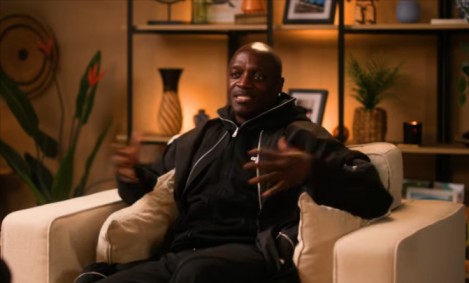
Read the full transcript of global music icon Akon’s interview on We Need To Talk podcast, May 19, 2026.
Editor’s Note: In this captivating episode of We Need To Talk, global music icon and entrepreneur Akon sits down for a deeply personal, wide-ranging conversation. The discussion dives into his early life, including the struggles that inspired his breakout hit “Locked Up,” alongside a candid look at his views on polyamory and the reality of his multiple wives. Beyond his musical legacy, Akon opens up about the real cost of fame, his business ventures, and his relentless dedication to empowering and showcasing African talent to the world. It is a rare, unfiltered exclusive that highlights the power of meaningful discourse despite differing viewpoints.
The Hamster Ball, The Pain Behind the Music, and the Meaning of Success
PAUL C. BRUNSON: Now, do you know what I think the first thing that I heard about you and Ne-Yo on tour was? I saw clips.
AKON: Uh-huh.
PAUL C. BRUNSON: You know what I saw clips of?
AKON: Oh yeah. Me in the Hamster ball. You know I’ve been doing that since 2008.
PAUL C. BRUNSON: No, I didn’t know it.
AKON: I’ve been doing it since 2008, man. But back then there was no social media. There was none of that. You know what I mean?
PAUL C. BRUNSON: Yeah.
AKON: And it was interesting because it really got famous when I did it in Africa.
PAUL C. BRUNSON: Okay.
AKON: ‘Cause for the first time I was able to perform in the stadiums in Africa. And I was like, oh, this is the perfect, like the perfect tool. Because before I would just crowd surf. I’d jump off the top speaker right into the audience. And they’d catch me, throw me around. But then, that was just too risky, people would get hurt. So then I got sued a few times, well more than a few times. Every time I did a show, I was damn near buying somebody a house. I said, I gotta figure something else out. And that’s how that came about. I said, okay, this is a way I can go into the crowd, it’s mad safe, and it’s an attraction.
PAUL C. BRUNSON: Yes, but is it safe though?
AKON: Yeah, super, super safe.
PAUL C. BRUNSON: Is it? Because honestly, when I see it, you look like you’re bouncing.
AKON: Oh bro, I’m like a little kid, literally. I’m literally in a plastic ball. That surrounding is as far as I go. I don’t go farther. So even if they was to drop me on the floor, I’m on my feet. Or if I’m not, the ball going to hit the ground first and then I’m right behind it. You feel what I’m saying? So it’s like the distance from me into the floor is like less than a foot.
PAUL C. BRUNSON: And then I guess for the fans, they get an opportunity—
AKON: It’s amazing. As close as they can see you. As close as they can ever get. They get a nice little photo in the process and they’re in the mix of all the fun and the craziness. Yeah, it’s really dope. It’s really dope.
Songs, Setlists, and Sharing the Stage with Ne-Yo
PAUL C. BRUNSON: So then on tour, because you’ve been on tour many times throughout your career.
AKON: Mm-hmm.
PAUL C. BRUNSON: Now, what are the songs that you most like to perform?
AKON: Man, I love all my songs, bro. Like when I wrote ’em, they was all experience-based songs. So they all mean something different. It’s not like a favorite. It’s all like a meaning. You know what I mean? Like every song has a specific feeling that it gives you. A specific place in your heart that actually, you know, you could say reside. It’s like, it’s hard to say, okay, which is my favorite song. If that makes sense.
PAUL C. BRUNSON: All right, so then let me hit you with a tougher question then, is which song carries almost the most pain with it?
AKON: Ooh, it’s a lot of those. The first album was all pain.
PAUL C. BRUNSON: Was it?
AKON: I mean, outside of “Bonanza.” Yeah. That was the, every, the whole album was pain. But I mean, when you look at “Locked Up,” that was a wake-up moment. I think that record is what saved my life in general. ‘Cause hadn’t I gotten locked up, I would’ve never wrote it. You know, “Mr. Lonely,” a lot of pain in that one. “Trouble Nobody.” Yeah, a lot of ’em is mainly earlier songs, to be honest. The first album, you know what I mean? ‘Cause yeah, when you start going into all of those records, “Ghetto,” like, this all pain. You know what I mean?
PAUL C. BRUNSON: Okay. And when you perform it, do you go back to that moment? Do you put yourself in that same place?
AKON: No, not actually in that place, but it actually reminds me how far I come. Like, what’s crazy is my first show in Dublin on this tour, I literally started, I had my glasses on, the audience ain’t see ’em, but when I sang “Ghetto,” I was literally crying behind my glasses. ‘Cause it was just surreal for me. ‘Cause I was like, damn, like, damn, like, you think 20 years later, I’m here not only singing this song, but I got all these white folks feeling my pain, hearing it, understanding it from a perspective in which they came from that I may not even understand, but it’s still the same vibe of what we go through as a people to struggle through certain things to get there. You know what I mean?
So it was just wild because I remember when I wrote the song, I didn’t know where my life was heading.
PAUL C. BRUNSON: That was the focus.
AKON: That was the focus.
PAUL C. BRUNSON: Just the money.
AKON: Like, get rich or die trying, literally. You know what I’m saying? It was like, man. So I knew what it was. I felt, I understood, man, it seemed like everything hit me at that, like hit me. And it happens a lot of time when I perform records like “Freedom.”
PAUL C. BRUNSON: Yes.
AKON: Or “Ghetto” or “Mama Africa,” like really records that’s cultured. I choke up literally on stage, but I play it off like ain’t nothing going on.
PAUL C. BRUNSON: See, I didn’t realize that you cried on stage. Or that you do cry on stage.
AKON: You feel the emotion. Oh yeah, some songs I be dead crying, but I be sweating so hard, you don’t even know if it’s a tear or if it’s a—
PAUL C. BRUNSON: You just see fluid.
AKON: You just see, you like, man, that boy sweating. But yeah, it happens a lot. Yeah, it happens a lot.
Two Different Worlds, One Stage
PAUL C. BRUNSON: All right, so then sharing the stage with Ne-Yo. You talked about how you two, you knew you had to be on tour together.
AKON: Right.
PAUL C. BRUNSON: But how special is it to you to share the stage with him?
AKON: Nah, it’s amazing because we kind of realized just how different our paths are. Like a lot of times you actually think that everybody shares the same pain and the paths are very similar. And when I say path, I mean musically, right? So, Ne-Yo has a different set list than mine. Mine stems from like reality. His is almost like there’s reality added, but it’s more like love and romance. Mine is like reality, pain, struggle. So it’s like two opposite worlds.
But then when we get to the overcoming of what our lives are, you can hear the difference in the music because the music gets more up-tempo, it gets more dance-driven, it gets more celebratory. You know what I’m saying? He starts off making love, I start off talking about pain. You know what I’m saying? He ends up partying and I end up fiestin’, you know what I mean? So it’s like, but they both, you could tell like they, it feels like life and you can like both sides can feel, the fellas understand, the women understand, the elders understand, the kids are enjoying. So it’s like, it’s literally from 7 to 70 in that demo, you know what I mean?
PAUL C. BRUNSON: Yeah, it’s not only 7 to 70, but you were talking about in Dublin you saw, you know, mostly white audience.
AKON: Yeah.
PAUL C. BRUNSON: It spans race, ethnicity.
AKON: No, you probably see, my shows, which is crazy, the only time I actually see black people in my audience is when I’m in Africa.
PAUL C. BRUNSON: Are you serious? Not even in the States?
AKON: In the States. Atlanta? It’s salt and pepper. DC? It don’t matter where I go. Whether I’m in America, Europe, like even in the Middle East, it’s just like, it’s all Caucasians. If I do see a few Africans in the building, they make sure I see them ’cause they had the flags up. And I can’t miss them ’cause there’s nothing but white people there. You know?
The Universal Language of Pain
PAUL C. BRUNSON: That does shock me.
AKON: Yeah.
PAUL C. BRUNSON: You know, because I was talking to my wife about you coming in, and I was saying, you know, I think that, like, we were debating what has made you so iconic, right? And I think a lot of people point to your voice. They talk about the moment you hear, like, you know, that tone.
AKON: That’s definitely God, you know what I’m saying?
PAUL C. BRUNSON: A lot of people talk, I think, about your ability to create hooks. Like, I think you’re one of the most masterful people ever in terms of a hook.
AKON: Right.
PAUL C. BRUNSON: But I also think what you’ve done that not a lot of people talk about is you’ve been able to take pain. You’ve been able to take a story that traditionally is centered in Black culture and make it accessible to everybody.
AKON: Right.
PAUL C. BRUNSON: And that to me, I think, is your special skill.
AKON: No, it is, ’cause that’s always been my focus. I was like, okay, how can I tell this story in a way to where every nationality, no matter where you from, you can understand it? ‘Cause one thing I do know is that we’re all going through something, right? And we’re all going through the same thing, just in different directions, or it’s being translated differently, or culturally it feels like you’re going through something different, but this is the exact same thing. You understand what I’m saying? Like, it’s no different no matter how you see it, because the pain, you’re going to feel it regardless of how it’s translated to you. That’s the one thing that we all have in common, we know how that feels.
PAUL C. BRUNSON: Yes, yes. But then, though, to not have, say, more Black representation in your audience, how does it feel? And let me even throw this out — so I don’t know if you’ve heard of Neville Garrick.
AKON: That name sounds really familiar.
PAUL C. BRUNSON: He was Bob Marley’s creative director. And so Neville is someone I was able to meet. He passed away unfortunately a few years ago.
AKON: Of cancer, right? Yeah. He was living in the DR. Yeah, yeah. I hung out with him.
PAUL C. BRUNSON: Oh, did you?
AKON: Yeah. Okay, yeah. I know exactly who you’re talking about.
PAUL C. BRUNSON: So Neville, he changed my life.
AKON: I’m bad with names, by the way, but faces, I’ll never forget. But when you said that, I know exactly who you’re speaking of. Man, we spent like 2 weeks together.
PAUL C. BRUNSON: Incredible.
AKON: No, unbelievable.
PAUL C. BRUNSON: Unbelievable, right? And I remember talking to him about, he would tell me about Bob Marley shows.
AKON: Same thing.
PAUL C. BRUNSON: Same thing.
AKON: Same thing.
PAUL C. BRUNSON: And I said, well, how do you feel? Like, how did Bob feel about that? He said he felt like Bob felt a certain way about it. So how do you, because he wanted to see more of, you know, his community represented at his shows.
AKON: Right, right, right, right.
PAUL C. BRUNSON: So how do you feel not having more Black representation?
AKON: Oh, I feel like I made it. They’re like, “Nigga, you made it.”
PAUL C. BRUNSON: All right, tell me how you really feel then.
The Black Experience and Mindset
AKON: No, that’s how I really feel. Because you got to think, Black people don’t want to hear the same story that they’re actually going through right now. Like, they’re actually living the story I’m telling. So it’s a difference. So me, the more of a group of people or a group of a culture that I felt haven’t experienced what we’re experiencing is what I want to see out there. Because I need that story to be told. I need them to understand the position that we hold, the reason why so much trauma, the reason why so much anger, the reason why so much divide.
We as Black people, we have a certain level of, like, our characteristics and mindset is flawed to other cultures, and they don’t understand why. We understand it, so it’s not flawed to us. But when you compare it to other cultures’ mindset, it’s completely flawed, because they understand, okay, why they can’t come together and do anything. Why every time a group of them come together, something has to go on. Or why is it that when we do something, it’s a discrimination when they’re not added or they’re not involved or not mentioned.
Because our whole life we’ve been, you can say, left out. Okay. If you can use that word. I don’t know if that’s the right analogy, but we just believe that we contribute so much that we don’t get credit for. We contribute so much that we’re not invited when the celebration happens. Like, we’ve invented countless amount of technology, we’ve contributed to countless amount of culture, sports, fashion, storytelling, history, you name it.
But we as a people, we’ve never took the time because of the mindset of how the history of pattern just continued moving forward, that we never had a chance to fix. To come together to maximize on it. We’re so busy still dwelling on the pain. Not celebrating it, but complaining about it versus, okay, how do we fix it? How do we bring it together and actually maximize it to where we’re all benefiting from it?
PAUL C. BRUNSON: Well, all right, so I didn’t know we would get into this topic.
AKON: Right.
PAUL C. BRUNSON: But we got it, I mean, we’re here.
AKON: We’re here.
PAUL C. BRUNSON: So let’s talk about it. It’s a conversation.
AKON: Yeah, let’s— hey, we need to talk. Right. Where the pick-a-side at?
PAUL C. BRUNSON: We need to bring ’em in. Just hold the sign up. All right, so my question on this is, I hear you in terms of mindset for some, right? But the way I always look at it is I look at it as systems, right? Especially systems in the West versus systems in, say, Africa, right? Especially sub-Saharan Africa, right? So do you think— and we don’t have to go too deep in it, but I’m just curious— how much of it you think is mindset versus system versus structure?
AKON: It’s all mindset, because the mindset is what creates the system.
PAUL C. BRUNSON: Okay.
Unity as the Foundation of a Strong System
AKON: Right? So if you come with a flawed mindset, your system’s going to be flawed. If you come with a struggling mindset, your system’s going to struggle. If you come with a weak mindset, your system is going to be weak. So ultimately, because our mindset hasn’t been mature enough to understand that unity is the power and is the strength and the muscle that we need to create a successful system, until we come together, that system will never exist.
Because think about it, in order for a system to work, there’s so many different departments, but all them departments have to see eye to eye. They all have to connect, they all have to unite. Yes, for it to be a strong system. But you got your system, I got my system, my homie got his system, my sister got his system, the Uncle Doug got his system, Cuzzo got his system, right? But none of them systems talking to each other. They’re all competing with each other, and because of the mindset of it and ultimately because of how the systems were created against us.
And we became a part of that system, not understanding it to create our own. We said, “No, how do I benefit and maximize the system that I’m in? ‘Cause I can’t change the system.” ‘Cause we’ve been taught that we can’t change the system when we really can.
PAUL C. BRUNSON: Yes. Is this why you— I feel like there’s a 10-year period where you stepped outside of the States and went to West Africa.
AKON: 100%.
PAUL C. BRUNSON: That’s why you went?
AKON: A thousand percent.
PAUL C. BRUNSON: Okay.
Taking African Music to the World
AKON: Because Africa had this black market system of music. We got all this talent, but nobody knows about it but the locals. Like, at what point are we going to inject ourselves into a system that allows our music to be spread globally? So I love using Nigeria as a perfect example because Nigeria had unlimited talent, unlimited population.
PAUL C. BRUNSON: Yes, yes.
AKON: And unlimited— man, the Nigerians are the smartest people on the planet.
PAUL C. BRUNSON: I mean, next to the Jamaicans.
AKON: No, I mean, y’all Jamaicans. No, no, no, but—
PAUL C. BRUNSON: No, no, yeah, yeah, yeah.
AKON: If you trace any Jamaican, they just going back to Nigeria.
PAUL C. BRUNSON: Yeah, yeah, it’s the same thing.
AKON: Their DNA goes right back to Nigeria. I don’t know no African ain’t got a Nigerian DNA somewhere locked in. But just the way they— man, they’re so brilliant mentally. But it’s because there’s so much competition within that system itself, no one took the time to say, “Okay, let me create an opportunity for who you may even deem your competitor to open the door for them because they may open the door for you.”
PAUL C. BRUNSON: Right.
AKON: I was in a position where I wasn’t looking to compete with my brothers and sisters. I needed them to be where I was at ’cause I’m tired of being there by myself. And I know that there’s people out there that sings and run circles around me. They exist in Africa. My tone is just the one you heard, but there’s more like me.
PAUL C. BRUNSON: Yes.
AKON: You know what I mean? And that was my goal. My goal was to make sure that everybody understood that I’m just one of almost 2 billion Africans that actually have some kind of talent that could be showcased to the rest of the world. So whatever opportunity, whatever platform I had to actually open the door for the rest of my brothers and sisters to get noticed, I gave it.
PAUL C. BRUNSON: Yeah. I mean, and you did. I think that, in terms of record sales, global impact, Wizkid has to be top 1%.
AKON: Oh, 100%.
PAUL C. BRUNSON: In that.
AKON: And as a kid, he was crazy as a kid.
PAUL C. BRUNSON: How old was he when you met him?
AKON: I would want to say that Wiz was like 14, maybe 15.
PAUL C. BRUNSON: Wow. Okay. So he was a kid.
AKON: No, he was a kid. Like, that’s why they called him Wizkid. He was a wizard, literally, at that age. Like, he was writing for other artists, including Banky W. The kid was— he’s brilliant.
PAUL C. BRUNSON: Yeah, yeah. And so you—
AKON: Do you—
PAUL C. BRUNSON: I mean, are you— humbly, right, do you believe that you were one of the key players to unlocking Afrobeats to the world?
AKON: I think everybody plays their role, right? I think oftentimes when a question like that is asked, it’s really only the people that can answer that for you. I know I played a huge contribution as to helping to showcase African talent.
PAUL C. BRUNSON: Okay.
AKON: Whether it’s Afrobeat or amapiano or Afrohouse, anything that’s culturally— I think has value, I want to be able to maximize it too, because I’m a businessman at the end of the day, right? So it doesn’t just help me, it helps everybody involved, right?
So I think when we have a specific ideal of how much or whether you’re the one to be crowned the GOAT or the reason for something to happen, I just believe that God gave all of us roles and I just try to play mine. I don’t count nobody’s money, I don’t do anything expecting anything back in return. Every African artist that you mentioned— none of them can tell you that I’ve ever enforced a contract, came after them for any money, or even presented them with a deal.
PAUL C. BRUNSON: Okay. Not even Wizkid?
AKON: Wiz, the only reason why me and Wiz had a contract was because it was with Banky W. And Banky had him.
PAUL C. BRUNSON: Okay.
AKON: But me and Wiz directly, we never had a contract. It was with Banky’s company that was signing Wiz. And we wanted to empower Banky’s company.
PAUL C. BRUNSON: Okay.
AKON: And Wiz was a part of that, ’cause we was like, “Okay, you could be the first joint venture that we do in Nigeria. And all the artists under your label can utilize this platform to push out.” And that’s how Wiz was able to get that opportunity.
PAUL C. BRUNSON: All right. Fair.
AKON: Fair.
The Business Mind Behind the Music
PAUL C. BRUNSON: So, because on this point— not only are you a musician artist, but also a manager of talent. And then a collaborator of talent. But you just said something that I found really interesting. You said, “I’m a businessman.” Right. So I’ve interviewed lots of, I say, exceptional musicians. And not all musicians qualify themselves as a business person.
AKON: Right.
PAUL C. BRUNSON: But the one thing that I was doing in my research that I said, “Nah, Akon’s a businessman,” is when I saw— or when you realized how much money you were making on ringtones. To me, that was fascinating. Could you talk about how that influenced your music?
AKON: Well, I would probably say that kind of gave me an understanding of where music was going business-wise.
PAUL C. BRUNSON: Okay.
AKON: I already saw it going digital. That’s why I always retained my digital rights, because I saw then, okay, technology’s changing and music is a part of that change, right? We were selling singles at the time for $1.99 for songs that was like at length 4 minutes, some 5, even 7 minutes at that time. There was no timeline for how long a song was.
PAUL C. BRUNSON: Yes.
AKON: Today, 2 minutes max. Right? And those was like $1.99. But then ringtones came up and those were $5.99 for 15 seconds. If that. That was the longest a song was, was $5.99. I said, “Wait, hold up. Something ain’t adding up.” Or maybe it needs to add up. 15 seconds for $4.99, which is $5, or $1.99 for 4 or 5 minutes. It just made complete business sense to me.
I said, “I need to be focusing on ringtones.” Every song that I make has to be ringtone friendly or I’m not releasing it. ‘Cause I’m going to utilize not only the ringtones to promote myself, ’cause every time the song rings, guess what? Somebody’s hearing the song, “Oh, what song is that?” And they go buy it.
PAUL C. BRUNSON: Yes.
AKON: So you got walking billboards all over the globe with your ringer on their phones every time it rings. And that could happen 5, 10, maybe 50 times a day.
PAUL C. BRUNSON: Yeah, yeah.
AKON: So I don’t need radio no more. I got ringtones. And then on top of radio? Oh, forget about it.
PAUL C. BRUNSON: So when you’re writing music, you’re thinking—
AKON: I’m thinking completely ringtones. Yep. I’m thinking ringtone, okay, which part of this are we going to push out for the actual song? So I always thought about the chorus. So when I wrote the chorus, I said, “Okay, this chorus has to be able to work on a ringtone.”
PAUL C. BRUNSON: Okay, that’s incredible.
AKON: Yeah.
PAUL C. BRUNSON: That’s incredible.
AKON: Yeah. Yeah.
PAUL C. BRUNSON: I mean, I could see that. I didn’t realize how many albums you’ve sold, not even till doing this research. Everything, it seemed like with the drop of your first album, everything just went platinum.
AKON: Yeah, it was, man, I was blessed to be honest. I think it was, but believe it or not, the Africans was the ones that supported the most. Like especially the first album, you couldn’t walk through Harlem without hearing Akon. Senegalese was up there, man. Oh, you broke it down. You know what I’m saying? And then from there it went to the West Indians ’cause I was doing a lot of dub plates. So between the Africans and the West Indians, it became like, they became like my mouthpiece, like my promotional tools. Like they, their word of mouth is really what got me even noticed, to be honest.
PAUL C. BRUNSON: Okay. But then from there there was the crossover.
AKON: Then it crossed over. When I got to “Mr. Lonely,” everything changed.
PAUL C. BRUNSON: Okay.
AKON: Like overnight.
PAUL C. BRUNSON: Overnight.
AKON: That’s what it felt like at least.
PAUL C. BRUNSON: And how did it change for you?
The Crossover and Global Recognition
AKON: Well, for me, I started noticing that I was traveling internationally. ‘Cause before then I was performing “Locked Up,” “I Trouble Nobody,” “Ghetto” domestically. And then I was getting a lot of dates in Africa. Those records was huge over there. And then I had a mixtape called “The Illegal Alien” where I had Senegal and I had all the hottest beats at the time. And I took those and freestyled over them. So the mixtape was just as popular as the album and the singles.
So with that, I was all over Africa. We was everywhere in Africa. And then when we dropped “Mr. Lonely,” then I was like, okay, this is different, ’cause now I’m getting called on pop stages. But what was crazy was the pop audience knew the urban records. Yes, they knew the “Locked Up” records, they knew the “Ghetto,” they knew— I was like, ooh, this is different.
Then we would go to places in Europe like Germany, Netherlands. You go to a place like Germany where nobody spoke English, but they sing the song from top to bottom. That’s when things got really interesting. I wouldn’t say weird, but it’s funny because I would think that after I got off stage I could have a regular English conversation with you, and they couldn’t understand nothing. I’m like, “But how are you singing my songs from top to bottom and we can’t speak English together?” So that weirded me out for a minute. I was like, “Wow, this is different.” That’s when I realized, okay, God is special.
PAUL C. BRUNSON: And you’re blessed. Yeah. And you’re blessed.
AKON: 100%.
PAUL C. BRUNSON: When you think about your career, what was the moment where you just looked at it and said, this is surreal. I can’t believe I’m doing this.
A Surreal Moment of Purpose
AKON: I would probably say when the first time it actually happened, where I actually had that moment, ’cause I kind of expected it in certain places, like home in Senegal, I expected it, but it was mania, almost like Michael Jackson status. That’s when I almost caught it. But I was like, well, I’m in Senegal, they’re supposed to support me this way. It’s like, you know.
PAUL C. BRUNSON: And when you say almost Michael Jackson status, you’re talking about?
AKON: No, like I couldn’t go out, I couldn’t go nowhere. Like literally I couldn’t walk down the street. I couldn’t go to the local store. It would always be thousands of people waiting outside.
PAUL C. BRUNSON: Thousands?
AKON: Like thousands. But when I went to Zimbabwe, it was like, wait a minute. Like, from the airport, we couldn’t leave the airport.
PAUL C. BRUNSON: Wow.
AKON: Like, we couldn’t literally leave the airport. Like, we couldn’t leave the airport. Like, the people would not leave until I showed my face. So they had a sunroof up there, and I popped my head out the sunroof. I felt like I was in 3 stadiums in one. It was so many people for as long as you can see people. And I literally had to ride all the way to the airport on the roof. ‘Cause that was the only way I had to be there. You know, I just tell people like—
PAUL C. BRUNSON: You tell people move out?
AKON: Just move. It was like a sea of people. It was unbelievable.
PAUL C. BRUNSON: I mean, how does it feel to have that response to music that you create?
AKON: That was another thing that was surreal. Like, damn. Like, my music is affecting this many people like this? That’s when I realized, okay, I got a major purpose. Like, it’s those moments that make you realize that, okay, everyone in life has a purpose, and your purpose is always going to be intangible with your gift. Whatever your gift is that God gave you, that’s what’s going to take you or walk you through the trail that you need to walk through to get to your purpose.
PAUL C. BRUNSON: Okay.
AKON: That’s when I realized, okay, music is just a vehicle for me to do what I need to do, and I’m almost positive that Africa is where I need to be doing it.
PAUL C. BRUNSON: Interesting. So what did you believe you needed to do if it wasn’t the music? The music was there.
AKON: At the time, I didn’t know. I just knew I need to be in Africa doing something, because the support here is overwhelming. There’s got to be something I’m supposed to be doing, and I don’t think it’s just to get rich. It ain’t about money no more. You know what I mean? Like, God pushed you through those stages where, okay, you want money? Okay, here’s the money. All right, you want popularity? Here’s popularity. Okay, now it’s like, okay, you got the popularity, you got the money, you got the respect. Okay, what are you supposed to do with that? You don’t just brag about it. Like, I know it’s something more.
PAUL C. BRUNSON: Right.
AKON: You gotta know it’s something more. Like, you can’t think that the blessings is just here for you to walk around and just say, I got, I got, I got. Like, to me it just didn’t make sense. And then that’s when we got into the charitable stuff. When I started Confidence Foundation, we started rebuilding schools and remodeling, giving computers and stuff like that. But it felt like it’s still something that needs to be bigger. And that seemed like the more I got into those things, more things were introduced. And that’s when we got into the electricity, ’cause I started going through those rural areas, realizing there was not even no lights.
And how I even got there, I was in Sierra Leone doing a concert.
PAUL C. BRUNSON: Okay.
The Concert That Changed Everything
AKON: This is how crazy, music walks you through your purpose, right? We got the huge stadium. Sierra Leone been waiting for this concert for I don’t know how long. We finally get there. The place is so packed that outside the stadium, there’s another 14, 15,000 people that couldn’t get in. And I was like, those people can’t get in, why? He said, well, they can’t afford the tickets. I said, okay, so all the tickets are sold out? Okay, we still have place. ‘Cause they did, they sold out all the seats.
PAUL C. BRUNSON: Okay.
AKON: But the field still had space, but the stage was in the center of the field. Me being who I am, I need everybody that couldn’t afford the tickets, put them on the field. So now the field is flooded with people, the seats is flooded with people, everybody’s happy, we start rocking. Boom, get into the third song, which is “Ghetto.” Right as we saying ghetto, lights go out. That was a sign. But what was crazy was the lights never came back on.
PAUL C. BRUNSON: Oh man, no generator?
AKON: No generator. It was the stadium electricity. Well, the country, it all went out to the point where everybody got rowdy. We ended up having to redo the show. But when I realized, okay, what happened? Like, what happened? He said, well, the power went out. It happens like this all the time. Like every night it happens at a certain time. We don’t know when, but we know it’s going to happen.
PAUL C. BRUNSON: Is that the power load sharing?
AKON: Yeah, it’s something like that. It was something, but they just didn’t have enough. So ultimately I was like, okay, we gotta figure this out ’cause I don’t want to be going to other countries and we having the same problem. That’s when I started getting interested in energy. I said, I gotta figure how we can fix the energy problem in Africa, starting in Sierra Leone.
PAUL C. BRUNSON: So that was it.
AKON: Yeah. And that’s what opened the door. Yeah.
PAUL C. BRUNSON: Look at that. Look at that. Yeah. You could see where music has guided you, right?
AKON: Yeah.
PAUL C. BRUNSON: So what do you believe your purpose is today?
Developing Africa: A Calling
AKON: To develop Africa, 100%. I know for sure that’s what it is.
PAUL C. BRUNSON: Okay.
AKON: Yeah, because anything that I’ve ever done that went towards the development of Africa, I never got no pushback. Like, everything went smooth sailing. Like, I’ll find the right partners, right investors, everything is rolling. And then when I realize, okay, development is coming on an abundance, on a level that Africa will never need anybody again, then you start seeing, okay, this now I understand. This is definitely my role. Somebody got to play it.
PAUL C. BRUNSON: Yes. So you’re willing to step up?
AKON: 100%.
PAUL C. BRUNSON: To that resistance?
AKON: Yes.
PAUL C. BRUNSON: Yeah.
AKON: Because if I don’t, I don’t think nobody else will.
PAUL C. BRUNSON: Yeah.
A Photo Worth a Thousand Words
PAUL C. BRUNSON: Tell me what’s happening in this photo and who are you with?
AKON: Ah, bro, this is my— this is my most proudest photo, bro. Is it? This photo?
PAUL C. BRUNSON: Yes.
AKON: Now, Mike, I’m a full-blown celebrity at this point.
PAUL C. BRUNSON: You’re big.
AKON: What?
PAUL C. BRUNSON: But you’re not that big at that point.
AKON: Man, listen, I’m a child compared to this man.
PAUL C. BRUNSON: Yeah.
AKON: I was so happy. I couldn’t, man, listen, ’cause I grew up my whole life looking up to Mike.
PAUL C. BRUNSON: Mike, yeah.
AKON: You know, he’s like everybody’s idol. Nobody can tell me that Mike didn’t have some kind of impact in your life. I don’t care who you are.
PAUL C. BRUNSON: He was my favorite growing up.
AKON: Yeah. Oh my goodness.
PAUL C. BRUNSON: Yeah. It was like growing up in New York, it was Prince versus Michael.
AKON: Right.
PAUL C. BRUNSON: I love Prince.
Working With Michael Jackson
AKON: Me, I never liked Prince because I love Mike. Okay, don’t say it. No, not like that, but I’m just saying, if I had to choose one, yo, Mike is my boy.
PAUL C. BRUNSON: Yeah.
AKON: So it was always that rivalry. Like, I would feel guilty listening to Prince, even though I loved his music, especially the Purple Rain album. Like, I love that album, but I could only play it once a month because the rest of the day’s got to go to Mike.
PAUL C. BRUNSON: Yes, yes.
AKON: I was a diehard Mike fan. As much as I loved Prince, I couldn’t support him openly because I rock with Mike.
PAUL C. BRUNSON: Yes. So with Michael, I mean, Michael Jackson, the way that I hear the story is that he wanted to work with you.
AKON: Mm-hmm. Yeah.
PAUL C. BRUNSON: You know, so that must be—
AKON: No, that was—
PAUL C. BRUNSON: —one of the top crowning moments. For sure. Yeah.
AKON: Without a question. Because like when I was locked up, I had this 10-year plan. I said, okay, this is what I want to be able to accomplish within now and the next 10 years. From the moment I get out, I’m starting. Hitting it running, starting over here. Mike was at the top of the list on the things that I would want to achieve. And normally at the top of your list, it’s always the things that you may deem impossible, but you say, you know what, if I don’t try, I won’t never go. But if I can reach half that, I’m successful.
PAUL C. BRUNSON: Right. So you said you had Michael Jackson almost on a vision board.
AKON: On a vision board. Like my goal is to work with Mike. Before all this is over, I need to work with Mike. Once I work with him, then I know I made it. It happened in 5 years. It didn’t even take 10. So I was already, like, blown away at that point.
PAUL C. BRUNSON: It was unbelievable. Yeah. And so you work with him now. I have to ask, right? Because I’m fresh off of seeing Michael in the theater, right? And first is, what was it like working with Mike? What was your biggest surprise working with him?
AKON: First of all, it was a surreal, unbelievable moment, electrifying to work with Mike in the studio. My biggest surprise though, working with him, was how easy it was to work with him. Working with him made me understand why he’s as big as he is. ‘Cause he had no ego. Literally no ego. He would do any and everything, or even try it, if I asked him to do it. He didn’t care.
He was like, “Listen, I called you in here because I believe in what you do, and I want you— I need that to rub off on what I’m doing. I need to do something that I wouldn’t think of doing.”
If I would have asked Mike to bark on the record, he would have did it just because I asked him to do it. And he would also want to see what it sounded like. He’s not even like, “Nah, man, ain’t no dog, I ain’t barking on that record.” He wouldn’t have did that. He would have been, “Roof roof. How did that sound? What’d you think?” Like, he gives you 100% trust. When he hires you to do something, he’s like, “It’s your ship, you tell me. Whatever you need me to do, I’m doing it.” That’s how much trust he has in it.
And not too many artists have that in either a producer or songwriter or someone that curates their sound or someone that’s already known for a specific sound. It was like to see that, I was like, wow, I remember working with artists that went wood in the hood. Like ain’t had a, ain’t sold no records. And you think you working with someone like Mike because of how they moving. But Mike, it was like he had so much passion for the art. He never questioned it. Like he already knew that the combination of us was going to be un— Like he didn’t have to think about it.
PAUL C. BRUNSON: So he just trusted it?
AKON: Yeah, he just trusted the process.
PAUL C. BRUNSON: And then after you two would create, would he then give opinion or he just trusted you in—
AKON: No, that’s exactly it, he would just trust. He would just trust. And me, because I trust the same way, I’d be like, “Mike, just do whatever you feel. We going to keep what’s good, we going to keep what’s not.”
I mean, he’s Michael Jackson. Everything ain’t always good though. That’s another thing that would surprise me. Some things weren’t as good as I— I’m like, damn, it’s Mike. But I realized even with me, everything ain’t always— there’s some records you ain’t never going to hear, ever going to hear. The stuff that I really, really believe in, boom. Like, there was times where I thought Mike couldn’t hit a bad note. But I realized Mike was human like we all was. But he was a perfectionist though. He wasn’t letting it go unless it was perfect.
Michael Jackson’s Death
PAUL C. BRUNSON: That’s for sure. Okay. And I have to ask, not to be on the controversial side, but just the more and more people that I talk to in the industry. I read once that you said he was the healthiest person that you knew?
AKON: Yeah, from what I’ve known of him, super, super healthy. Super, super healthy. Ate good, ate like he had a schedule for his food. Like, he was just very organized.
PAUL C. BRUNSON: How do you truly— how do you believe he died?
AKON: I just believe that— I mean, what I believe is what I believe. I just don’t feel like— I just feel like there’s a lot of holes. Like, it’s not a solid canvas on the explanation of his death. I just honestly believe that there should be a lot more investigating need to be done, without a question.
PAUL C. BRUNSON: So do you fear that, right? And the reason why I bring this up is truly not conspiracy theorist, but because I now understand more about power, right? And the threat that comes with it, right? So do you fear that as your power and influence grows, especially with projects in Africa, do you ever have the fear of a threat against your life?
Faith, Fear, and Death
AKON: Not really. Like, that’s the one thing I’ve never been afraid of is dying, ’cause I just feel like God’s disciples are meant to come back. Like, death is promise. The question is, once you die, how will you be remembered? What have you accomplished before then? Or was your purpose fulfilled before you died?
Like, death was never an issue for me. Even that’s why I was probably so successful in the street, because I always feel like God was protecting me at every moment. So even with stuff like this, that’s why I said I welcomed it. Like, because I know it’s coming, and I know that what I’m doing is something that was worth doing. That’s why I’m getting the resistance.
But death can’t be— if you’re a man of faith, death can’t ever be something that you fear, because then you really have to question your own faith and question yourself. The moment you’re afraid to die, now you have to ask yourself, like, why? Like, you’re supposed to be welcoming in that, to be honest. Like, if your faith is as true as if you say it is.
PAUL C. BRUNSON: And has your faith always been that level of strength? When you were younger?
AKON: No. I was scared because I didn’t know what I was going to face. Like, okay, what happens when you die? You ask all them questions. Like, you go to hell, you go to heaven? Like, what does it look like? Is it over? Like, is it black? Is it dark? Do you go— are you reincarnated into a tree, a cup? You don’t know. Like, it’s all these questions.
But then when you realize some things ain’t meant to be explained and there’s some things that our mind capacity will never be able to understand. Like, that’s just a part of the faith, the same way we’ve never met God, but we know he exists.
PAUL C. BRUNSON: Okay, okay.
AKON: Or whatever higher being it is that you worship. All right, can we unpack that piece?
Growing Up Between Senegal and America
PAUL C. BRUNSON: Right. Because in looking at interviews and research around you, the one part that I have a question mark on, like a curious piece on, is how you grew up. And the circumstances, because even to hear you talk about Senegal and you talked about how you lived with different religion and how there wasn’t conflict. I think a lot of people think Africa, conflict, conflict. Senegal was one of the few places where there was no significant conflict. And I think that that does shape.
AKON: No, it does. It shapes. Yeah.
PAUL C. BRUNSON: When you go back, you were born though in the States.
AKON: In St. Louis, yeah. Born in St. Louis.
PAUL C. BRUNSON: What do you remember about— so when you think earliest memory of childhood, what was that like for you?
AKON: Well, my earliest memories, I kind of wanted to go back to Senegal. Because, okay, so when we were born, my dad was a forward thinker. Like, I think I got that from him, always trying to vision the future. Every time one of us was born, he would fly my mom to the States, she would have us, and he would send us back to Africa. So we all came to the States to be born for our US citizenship, and he would send us back.
We went to school there until we were old enough to come to the States to finish school. So all of us came like around 7 or 8, between all of my brothers. And then we went back. Our earlier years, we were in Senegal. That’s why we all still speak Wolof. We all accustomed to our native tongue and everything else, culture and everything.
PAUL C. BRUNSON: And even on that, so how many, ’cause is it 19 of y’all?
AKON: Yeah, my dad, yeah, he’s king. Literally. Literally.
PAUL C. BRUNSON: Yeah, so you had 19 siblings or 18 siblings.
AKON: It’s something like that.
PAUL C. BRUNSON: Okay.
AKON: So you don’t even know the number. I don’t. It don’t even matter no more, like. Really? I swear it don’t. ‘Cause my dad, my pops is like about 89 now. And I got a 9-year-old brother. So he had a child at 80. Which that means the genes are that strong where I don’t have to worry about it. I know at 80 I’m going to still be pumping out babies.
PAUL C. BRUNSON: Okay. But are you though?
AKON: I don’t know. We’ll see. If I reach 80. God willing.
PAUL C. BRUNSON: So then born for the US citizenship in the States.
AKON: Right.
PAUL C. BRUNSON: But then you go back. Growing up in Senegal, how do you think that shaped you?
AKON: No, that shaped me, period. Like, I think those earlier years gave me, like, you know how they say you want to teach the child as much as you possibly can when they’re at that sponge years. And that was the one thing that, if my pop did nothing else right in his life, he did that right. ‘Cause he made sure while we were young, we learned multiple languages. We learned our culture. We knew where we came from.
And that mindset that came from the idea of treating everybody the same, no matter what your faith was, and just understanding life from a family perspective, that came with me. ‘Cause all my friends, I couldn’t understand when I got to the US how none of them had their fathers around. Like, where’s your dad though, bro? Or where’s your big brother? Or where’s your mom for that matter? You had single fathers raising kids. It was a lot of single parent way of life in America.
And I couldn’t understand like how this was possible or how my friends would be spending weeks at a time in my house and his parents don’t call to check on him. Where they at? So I understood that there was a huge displacement in family values in America. And I came with that. So I invited everybody. Like, even now, like, my brother Babs would tell me, “Yo, bro, you too nice. Like, you give everybody a chance.” But I don’t know how to not give them. Like, I’m the kind of person that give you 100% trust from the moment we meet until you pull those layers off and I don’t trust you no more.
PAUL C. BRUNSON: Right.
From Jersey City to Atlanta: The Hustle Years
AKON: But I’m not going to meet you not trusting you. Okay. It’s the other way around.
PAUL C. BRUNSON: I’m with you. So then you were in the States because your father was a musician, so he’s traveling. Right. And so where were you? Was it Newark that you spent most of the time?
AKON: Yeah, when I got to New Jersey, I was Jersey City. Oh, Jersey City. It was Jersey City, but I used to work in Newark. Okay. So I was back and forth between Jersey City and Newark, which was like the two craziest sides.
PAUL C. BRUNSON: You from Queens, you already know, I don’t have to tell you. I’m not going to say it, you say it. You get in trouble, I’m not going to say it.
AKON: You go ahead. Dirty Jersey, boy.
PAUL C. BRUNSON: But on the real, for all of us that know, it’s a rough spot.
AKON: Yeah, it’s a rough, rough spot. But what I think what helped me in Jersey was the fact that when I was in St. Louis, I lived in East St. Louis. Okay. Yeah. So East St. Louis is equivalent to what, I think East St. Louis is probably the reason why Chicago is what it is today. ‘Cause at that time in that area, it was so bad that the police went on strike for 30 days. Now, I don’t know an area that could be that bad where the cops go on strike. It was just, it was unbelievable.
But when I got to Jersey, it wasn’t as bad from how everyone seen it to be, ’cause I already came from a culture in Africa where I already experienced extreme poverty from a level of living out in the rural areas, drinking well water, and electricity was literally candles and kerosene lamps. We didn’t have the luxury that I got in the States. So everything in the States to me was luxury. Interesting. You know what I’m saying? Yeah, that’s interesting. It was different. Like, while they’re complaining about it, I’m like, “Man, this is what? This is it. We got lights on. Man, we got switches, clean water on the faucet. Like, y’all tripping.” Yeah. You know? So it was definitely different.
PAUL C. BRUNSON: And so in the States, were you, ’cause at a certain point, it was just what, you and your brother?
AKON: Yeah, just me and my brother Muhammad. Yeah, my older brother.
PAUL C. BRUNSON: So this is in Jersey? In Jersey City.
AKON: So we had a 3-story house in Jersey City on Kennedy Boulevard. Okay. And my dad had an opportunity to go to Atlanta, Clark Atlanta, on a cultural exchange program as a professor there. So he’s like, “Listen, Mo, you only got 1 year left. Ali,” which is me, “you got 2 years left. You decide if y’all want to stay,” you know, ’cause Mo was responsible. “So if your brother’s going to stay, then you guys could stay at the house next year. You graduate, you can come meet me in Atlanta.”
PAUL C. BRUNSON: This is in high school?
AKON: This was in high school. Okay. So me and my older brother Muhammad stayed at the house while my mom and my pop went off to Atlanta with my other brothers. Wow.
PAUL C. BRUNSON: So you were how old? Like 16 then? I was in high school.
AKON: 15, 16? Nah, I was older than that because when I came from Africa, I didn’t speak no English. I didn’t graduate high school till I was like 20, 21. Really? Yeah. Okay. Yeah. That’s older. So I was older. Yeah. That’s interesting. Yeah. So a lot of people was like, “How your parents going to leave y’all?” Man, I was actually— Oh, you were a man. —I was grown. But I was still in high school though. You know what I mean?
PAUL C. BRUNSON: Wow, I didn’t realize that.
AKON: So you were an older high school student. I was an older high school student.
PAUL C. BRUNSON: And it was because you didn’t speak English.
AKON: Because I had to learn how to speak English.
PAUL C. BRUNSON: Okay. Yeah. Okay. So that makes sense. They leave, but you’re still 20. Yeah, practically. Chillin’. You know, but you then grow up with your brother. Yeah. And you’re in Newark. Yeah.
The Car Theft Hustle
AKON: It was a hustle. ‘Cause now, because we’re a little, I wouldn’t want to say older, but because Pops gave us that opportunity to be mature, have our own space, we didn’t want, well, at least I didn’t want to be calling my dad for no money or calling him to pay the rent. I’m like, “Yo, he left us here with the house. Like, we should let him know that we got this.” Wow. So that’s when I get to hustling. ‘Cause I didn’t want Pop to even know that we was taking care of the bills. Last thing I want to do was call my dad for electricity or for a phone or water bill, for nothing. I want him to say, “Okay, my boy’s got this.” You know what I mean? So it was my pride really killing and kicking in.
But then that’s when I got to hustling. And in Newark at that time, it was like the car theft capital of the world. So stealing cars was like the thing. And I used to love cars. So that’s what I got into. So I would drive to school in like the most high-end vehicles. Wow. And all the girls thought that, you know, I was rich. So I would tell them all I was a prince in Africa. I come to school in a different car every week. They’re like, “Yo, you a prince.” Wow. But I mean— Hey, it worked. You know what I’m saying? Yeah, I see it. Hey, you gotta get it how you live.
PAUL C. BRUNSON: I see it. I see it. Yeah. So it was stealing cars. Yep. That was really—
AKON: ‘Cause I always felt like drug dealing was, gotta have been the dumbest hustle. ‘Cause it didn’t make sense, especially for the risk that came with it, right? Any moment you get stuck up, get shot and killed. You gotta constantly watch your back and you get caught with it. I mean, for a brick, you’re doing 25 to life. Like, and the profit on it’s only $2,500, $5,000 if you’re lucky. Right. You know what I mean? And you gotta sell it on the bulk to get it. I mean, you sell one, you may get close to a 5 if ain’t nobody supplying. But unless you doing some major heavyweight at $2,500 apiece, you ain’t seeing no money. For the risk that come with it, didn’t make sense.
So how much do you make selling cars? Cars? Man, for every car I got rid of, I’m making like $15,000, $20,000. Wow. And if I got the key to it and I get locked up, that’s a joyriding charge. It’s a misdemeanor. It goes right off your record.
PAUL C. BRUNSON: Wow.
AKON: $15,000 to $20,000. Think about it. And you get the perks. Driving through in the ride looking nice. Riding nice, shorties looking at you, so you get the perks of the beautiful women on top of that. Ain’t no risk. And if I get jacked, man, you can have that. I’m going to go pick up another one. Another car. You know? Yeah. Okay. It was a different level of thinking at that time.
PAUL C. BRUNSON: How much did you make, you think, stealing cars?
AKON: Ah, man, it was very successful for me. ‘Cause when I left New Jersey and went to Atlanta with my dad, it was a clean slate in Atlanta. They didn’t even know, they didn’t, they was slow on that hustle. So by the time I set up shop and was in Atlanta, I was making like $200,000, maybe $250,000 a week. It was unbelievable at that time. By yourself? Yeah. Yep.
To the point where I had to bring in some help, which was— that was the biggest mistake I should have ever made, because I should have just kept it by myself. But I was making so much money that I had to figure out how I’m going to launder it, like move it around, right? And that’s when I thought about it, because studios, music studios, was a cash business. So I was like, “You know what, let me build a few music studios.” A few? A few, ’cause I had 3 recording studios in Atlanta. So that became how I justified how I made my money. So I would let everybody use it just to keep it busy for free. Didn’t have to pay no money.
Atlanta in the ’90s: A City on Fire
PAUL C. BRUNSON: Ah, and I think too, people need to understand Atlanta. This is what year in Atlanta?
AKON: I would say from the moment I got there, like around late ’93 to ’98. Okay. That was my window.
PAUL C. BRUNSON: That was your window. All right. Yeah. So I think paint the picture because I mean, I remember Atlanta during that time. Right. Yeah.
AKON: Atlanta.
PAUL C. BRUNSON: Freaknik is what got me there. Okay, please, ’cause many people will not know, ’cause Freaknik is done. It’s over now.
AKON: Yeah, Freaknik is over. But what was it? Freaknik was probably the, it was the biggest high school, no, no, biggest college, the biggest college spring weekend festival. I mean, the flyest, the baddest chicks from everywhere in America, excuse me, would fly in, drive in, and it was like a fest. But it was like a fest with no filters. Girls would be twerking on top of the cars, drinking. I mean, it was, I mean, you had, I can understand now why they stopped it, ’cause literally girls would be butt naked on the hood of the car at a stoplight just twerking. Freak. That’s why they called it Freaknik.
PAUL C. BRUNSON: Yes. And there was no social media.
AKON: It was no social media. Yeah. Right now, if you go back, if you go on YouTube, you may see a few documentaries that was built around Freaknik, but it was all on camcorder shots that people that just happened to have camcorders. But man, when I tell you that experience, when I moved out, when I went to visit my pop and never went back to Jersey after Freaknik.
PAUL C. BRUNSON: Yeah. I mean, Atlanta was— so I mean, Freaknik was one thing. Yeah.
AKON: But Atlanta also. Oh, and then at that time it was like Atlanta was a huge population of just successful Black people.
PAUL C. BRUNSON: Yes. It was the same when I visited. Yeah. I’d never seen it.
AKON: Unbelievable. I mean, they got guys that own their own high rises. Everybody riding beautiful whips. Yes. Beautiful houses out in Alpharetta.
PAUL C. BRUNSON: First Bentley I ever saw was in Atlanta. But you know who was driving it? Who that?
AKON: Bishop Eddie Long. Oh yeah, Bishop Eddie Long.
PAUL C. BRUNSON: I gotta tell you this. No, no, no, I gotta tell you. We went to Atlanta, it was for a Hawks game. And I saw a Bentley drive around, right? Just the front of it, right? And then it stopped. Then the driver got out. It wasn’t raining, but somebody pulled out an umbrella.
AKON: Oh boy, Bishop used to show out. Open the door. Oh my God. Oh my goodness.
PAUL C. BRUNSON: Kane comes out, it’s Bishop Eddie Long. And I said, I was like, “Okay, I seen it all now.”
AKON: Nah, Bishop. Bishop Eddie Long. New Birth Church. Yeah, for those who don’t know, yeah, he was the preacher at New Birth.
PAUL C. BRUNSON: But I will say this, shout out to Pastor Jamal Bryant. I know him, I know he’s the pastor there now. Wow.
AKON: And he could probably tell you some stories, huh?
PAUL C. BRUNSON: Oh man. But I will say this, Pastor Jamal Bryant was the first person ever to pay me to speak publicly. Wow. He brought me to his church in Maryland. I’ll never forget it. Unbelievable. I had just written my book, brought me to the church, paid me, and then he ensured that the congregation bought my book. That’s amazing.
AKON: And it changed my life. Atlanta was so vibrant, man.
PAUL C. BRUNSON: And then the music. So was that Jermaine Dupri, So So Def? So So Def was founded in Atlanta.
AKON: LaFace was the biggest label that came out of Atlanta.
PAUL C. BRUNSON: That’s right. That’s right.
AKON: LaFace is actually what created the opportunity for all of what you see that’s coming out of Atlanta today. All of ’em starting with OutKast, TLC, you know, Usher, Raymond, Pink. I mean, you name it, man. It was like they were, they was like, Goody Mob. Like that, at that, it was around that time where my studios was jam-packed.
PAUL C. BRUNSON: Yes. And you had all those artists, I would imagine in there.
From the Streets to the Studio
AKON: It was so many artists that used to use my studios. For absolutely free. Wow. So we fast forward 4 or 5 years later, I get clipped and now I’m in jail. Okay, I’m not, this is never, this ain’t the life I want to live. That was a turning point when I realized, “Okay, I know what I need to be doing and it ain’t this.”
PAUL C. BRUNSON: Mm. All right, now how long were you locked up for?
From Jail to the Studio: Writing “Locked Up”
AKON: About 3 years. I got out in 2001. Then when I got out, the first thing I did was go and start recording all the songs that I wrote when I was in jail. And then I realized that “Locked Up” was the first record that I wanted to release, ’cause I felt like that was the moment that I was in at that time. And then Steve Rifkin, who I was signed to over SRC, kind of was with me, but Universal wanted to release “Bonanza.” That became the record that they felt like was the record.
PAUL C. BRUNSON: But how, but you had the deal already when you were locked up or no?
AKON: Nah.
PAUL C. BRUNSON: You had no deal when you were locked up?
AKON: I had no deal when I was locked up. So where does Fugees and Wyclef come in? That was all when I was doing Cars. So while I was in Newark doing Cars. ‘Cause Fugees are from Jersey. Yeah. We was right there on Clinton Ave. Like we had to book a basement. Well, they had to book a basement there and they welcomed all of us. Jerry Wonder’s uncle was the one that actually owned the house. And Jerry was an immaculate producer till this day. Me and him do a lot of records together. But we all used to work at the basement.
And me at that time, music wasn’t something that I took seriously. ‘Cause I was hustling. I was like, “Oh, I got it.” But whenever I was fleeing from the cops or something, I go straight to the studio. They won’t know to find me. Or I finish my day just going. Clef would always look at me like, “Man, you up to something, man. What you up to, bro?” He would see me coming in these different cars.
And then one day he sat me down, he said, “Yo, Con, I don’t know what you up to, man, but I’m just telling you, bro, whatever you doing, it ain’t going to amount to nothing, man. Figure out what you want. You know, you’re a talented writer, you dope producer, just come rock with us. Just, you know, spend time over here. Wear out that energy that you got over there, put that energy over here.”
And of course I hear it 2, 3 days later, I go out and get my bread, it go through one ear and out the other. So it was that. But I would always be at the basement. So they made me family. Every time there was a show, concert, yo, we got a performance over here, we going to be at such and such park, we got a show in Brooklyn, come. And I would always come to the show. And every time I come to the show, Clef would always bring me on stage and let me freestyle. Like, yeah, we got newest member of the Refugee Camp. He bring me on, I freestyle. And at that time they knew what it was. I didn’t even realize.
PAUL C. BRUNSON: So you were official?
AKON: Yeah, I was an official Refugee Camp member. I just didn’t take it as serious, you know? But that’s what it took. ‘Cause when I got locked up and I’m watching the television and I see the Fugees blowing up, “Killing Me Softly,” “Ready or Not,” going diamond. And I’m sitting there like, what am I doing here?
PAUL C. BRUNSON: That was another major motivation for me too. Was to see how well they climbed.
AKON: To see them, yeah. While I’m in jail, they up there. Blowing up and I’m like, man, I could have been over there with these guys. It changes everything.
The 10-Year Plan
PAUL C. BRUNSON: So now I see you’re motivated to write. And so tell me about the 10-year plan though, ’cause I think that’s really interesting how you created basically a vision statement.
AKON: Yeah, the vision board. So when I was in there, I would just write on strength, right? And then I was writing “Locked Up.” And as I’m writing “Locked Up,” every once in a while I just kind of sing it to myself to make sure I got what I want. And there was this older guy named Boonie who was like my cellmate. And he would sit there and be like, “Youngblood, man, what you doing here, man? All this talent, man. If you put all that energy that you had in them streets into your music, man, you’d be— you wouldn’t be here.”
PAUL C. BRUNSON: Right.
AKON: You know how big you could be, right? You know how big you could be. And I was like, man, you know what, you right. And then one day we just happened to be in the pod. We was playing Spades. And then Boonie was like, “Young Blood, sing that song, man. Sing that song for everybody you sung for me last night, man. Sing that song for me.” Right? And I’m singing, “I’m locked up, they won’t let me out.” So then they was like, “Oh, that shit hard, that shit hard.” So now every time a guard would walk past, we would sing the song out together. “I’m locked up, they won’t let me out, bitch. They won’t let me out of lockup. Won’t let me out, bitch.” That’s the original version, right?
So then it became an anthem where every pod would sing it every time a guard would walk past. And Boonie was like, “See what I’m saying? Look at this, man. You only sang this last week. This shit is an anthem in here now, bro. I’m telling you, boy, you better focus, man. You better focus.”
He was an older guy. He’s like 67. He’s like, “See, I’m telling you, man, if you don’t do nothing else, if you don’t get nothing else from here, just remember I told you, if you focus on that music, boy, you going to— that’s your freedom.”
And I thought about it. I said, you know what? You’re right. So I went out, I incorporated my company. I said, “Yo Boonie, I said, man, I took your advice. I started my company, man. What you think?” He said, “Yeah, what you named it?” I said, “Convict Music.” He said, “Why the f* would you do that? Convict Music, man. That’s the dumbest name I ever heard in my life.”
I said, “Nah, but think about it, Boonie. That’s what inspired me, man, to do this, man. This music is starting from here.” And I’m telling him what I’m going to do, and I’m showing him. So I’m sitting there, he said, “All right, well, put together a business plan and let me see it.” And I put together a whole business plan, and I wrote out what I wanted to do in the next 10 years.
PAUL C. BRUNSON: Okay, and what were some of those moments on the 10-year plan?
AKON: The first thing, I wanted to record these songs. That was the first thing. I got to get me another studio and record these songs. That’s going to be the first thing I do. Once I get these songs, then I’m going to go out and get me a record deal. Once I get this record deal, I’m going to get that money from a record deal, and I’m going to purchase a legitimate studio. And then from there, I’m just going to create catalog. I’m going to write for everybody that needs songs. I’m going to be a writer, a composer. And if the artist stuff work, that’s cool. But I know this part, it’s a no-brainer because I know I got this.
And then the next thing I’m going to do, I’m going to take all these songs, I’m going to take it to the Fugees, and I’m going to see how many songs they want. I’m just going to write for them and I’m going to stay on the road with them and all this. By that time they was so big. And then there was some friction going on within the family. Pryze, he’s the businessman moving. Clef and Lauren wasn’t getting along, seeing eye to eye. So it was a lot of little things. So I was like, okay, that can’t work. ‘Cause they gotta fix that before I could be a part of what’s going on. And then you had Spider and you had all these other members. They had their stuff going on. So we’re all kind of coming together, but we can’t be the nucleus without the 3 main members, right?
So then I was like, okay, I need to just focus. That’s when I ran into Lil Zane. Lil Zane used to live in my complex, and he was riding his bike, little kid.
PAUL C. BRUNSON: He was on— oh, so he was like—
AKON: He was only 13 years old.
PAUL C. BRUNSON: So this is like before he was real—
AKON: Yes, he was only 13 years old, and he rode past. He came to me, he said, “Man, I heard you produce.” I said, “Yeah, how you know?” He said, “Yeah, man, I heard you produce.” He said, “I rap.” I said, “You rap?” He said, “Yeah, rap for me.” He rapped for me, I was like, “Man, this little man, he hard.” Like super hard. So then he’s like, “Yeah, man, I’m signed and I’m with Naughty by Nature.” And I said, “Oh, they from Jersey, I know them.” So he told me about Vinny and what he was doing with them over there. And Tretch and all of them. And then come to find out they had a single deal with RCA.
So Lil Zane then introduced me to a guy named Divine Stevens, who was doing all of the artist development for LaFace in Atlanta. So even till this day when people say, well, who discovered you? I’d be like, it was Lil Zane, to be honest, because he was the one that put me in pocket to meet with Divine, who later brought me to Steve Rifkin. Yeah, that’s incredible.
PAUL C. BRUNSON: Isn’t that crazy? But also, I mean, it was definitely Lil Zane made the play, but if you hadn’t had the relationship with the Fugees—
AKON: Oh yeah, eventually I think it would’ve all came together. But I think that route was the route that was meant to be. ‘Cause what’s the odds of a 13-year-old kid taking me to a connect that puts me on? Like the odds of that. He’s 13. Yeah, it’s incredible.
The Darkest Moment
PAUL C. BRUNSON: And so, when you look at your career, we talked a lot about the career, but more so about the highlight of it. What do you believe was the darkest moment in your music career?
AKON: I think the darkest moment is when I got locked up, to be honest. That was the darkest moment, period. But then while I was in there, I kind of saw the light at the end of the tunnel. It’s almost like I had to sit down. Like I was out of control. Like I needed to be locked up, to be honest, because at that time I thought I was being punished. But later I realized God was preserving me for something because the other two guys that I was moving in with, they both doing life in prison right now to this day. And they got locked up while I was in jail. So he preserved me, you know what I mean? Yeah, it was that.
What Weighs Heavy
PAUL C. BRUNSON: Yeah, that’s heavy. What pains you today?
AKON: Nothing. There’s nothing. The only thing, but I don’t want to call it pain. The only thing that bothers me is that Africans can’t come together and unite. That’s the only thing that when I think about it makes me angry. ‘Cause we have the potential to be so much more if we came together.
PAUL C. BRUNSON: And I’m with that. Yeah. But just on you though, there must be moments where something feels heavy to you.
AKON: That’s the only thing that feels heavy. That’s the only— I swear to God, bro. That’s the only thing that feels heavy to you? That’s the only thing.
PAUL C. BRUNSON: But I mean, what about, I mean, you’ve got kids.
The Business of Entertainment and Relationships
AKON: Yeah, but my kids are fine. Like, my kids are great. Relationships are good. It’s all manageable. And those are things I can control.
PAUL C. BRUNSON: But it’s not, I mean, so, all right, so.
AKON: You know what I’m saying?
PAUL C. BRUNSON: I have two boys. Right. And I always say that my, and maybe this is not the right thing to say, but this is what I say, is that my happiness is based on their happiness. So if they’re in a situation where, like I know one is sick, then I’m not in the greatest moods because he’s sick. So my happiness is almost based on that.
AKON: But as a parent, that’s automatic. Right. That’s father, mother, like that’s automatic. I don’t even think you can count that because that’s just what it, that’s your seed. They’re connected to you, like, you know what I’m saying? Fair. But when it’s people that aren’t connected to you genealogically, you know what I mean? Genetically, whatever. Genetically. Genetically, there we go. I couldn’t find a word for nothing. Right?
When they’re genetically not connected to you, but there’s a spiritual connection, it hits a little harder, ’cause it’s in your soul. ‘Cause I honestly believe somehow, someway, like even sometimes, like I may say the dumbest thing online, ’cause I know people are going to comment about it to create a conversation about something that’s important.
PAUL C. BRUNSON: So do you intentionally do that?
AKON: 100%.
PAUL C. BRUNSON: All right, so would you put yourself as a, you would say you’re a ragebaiter then?
AKON: No, not quite. It’s a method. ‘Cause one thing I, like prime example, one of my earlier songs, right? The one album that I can say was true to me was my first album, Trouble. Okay. Right? After the Trouble album, I realized, okay, this is a business. The world ain’t going to always want to hear about my problems. So I’m experiencing different things that they also can relate to.
That’s when Convicted came in, right? Convicted was stories of success, but also stories not about me, but what other people felt and what other people saw. But there was also a lot of ignorance in that album that I knew would draw the people that I needed to hear me.
PAUL C. BRUNSON: Oh, interesting.
AKON: Right? So I got “I Wanna F You,” “Smack That,” the s I normally wouldn’t sing about, but I know it’s going to draw an audience that I need to talk to. Then I go into Freedom, which is a little bit different. You understand what I’m saying? Yeah. But it also opened up a platform for me to talk to certain people that normally wouldn’t listen.
PAUL C. BRUNSON: Interesting. So you saying you strategically dangled the carrot.
AKON: Oh, I, yeah. Yeah, I mean. 100%.
PAUL C. BRUNSON: So you talked about, where you say what, ignorant stuff?
AKON: Right. ‘Cause it’s going to create, it’s going to open up the comment. Okay. And guess what happens? It’s the best thing because when it does open those comments, I’m reading them. And it’s always somebody that asked a question where I’ll be like, bingo. And that’s who I respond to. And guess what that does? It opens up a whole conversation.
And my followers know, like they know. Yes. ‘Cause they’ve seen the threads. Of real conversations about what us as a people, what us as humans, the challenges that we need to face to have these certain discussions. Yes. Right? And also oftentimes it’s about culture building, right? And tradition building, because most African Americans don’t have a culture. Yeah. That they are aware of from an educational perspective. They know what they were raised around, but their background is very hazy because they wasn’t taught that because of the way the system was built in America to teach them Black history. Yeah.
PAUL C. BRUNSON: And also too is like your approach to this. Right. I mean, I can’t act like, oh, I’m shocked that you know.
AKON: That’s entertaining to me.
PAUL C. BRUNSON: Because every, I would say every uberly successful entertainer that I’ve ever talked to has been fully aware of the business of entertainment. And that the business of entertainment is to draw out emotion. 100%. Fear, joy, happiness, sadness. And then try to deliver the message. Throughout it. So I can’t act like I’m shocked, ’cause that makes sense.
AKON: I mean, that’s what it is. Like, you gotta know how to manipulate the algorithm. ‘Cause the attention span is only but small. Yep. And the average person is going to respond to something negative before they respond to something positive.
PAUL C. BRUNSON: Yes, yes. Right. All right, so then on that then, is there anything that you want to clarify?
AKON: No. I need it. He’s like, no, I need it. I need that, I need that.
What Is Akon’s Real Name?
PAUL C. BRUNSON: I need it. All right, so then can I ask you some questions that are lingering? And you don’t have to answer them. So first is, this is going to sound wild, is what is your name? What is your real name? I’m serious.
AKON: All right, yo, because I like you and you are my brother from another mother. I will give you a hint, but I can’t give you the full.
PAUL C. BRUNSON: Okay, okay. All right? All right.
AKON: And if I give you one word, you will, you, if you, if you feel my soul, you will understand. Okay. Entertainment. Why are you looking at me like that? Are you serious? But are you serious? Are you serious? Uh, what? I mean, what did I say?
PAUL C. BRUNSON: You said entertainment.
AKON: I’m an entertainer. Yes, I’m an entertainer.
PAUL C. BRUNSON: But, but your name though. What about it?
AKON: My name is Akon.
PAUL C. BRUNSON: But full name. Full name.
AKON: You want to hear it? Yes. All right, I will give you the backstory, but I can’t because I already gave you a hint. Okay. But it’s Aliaune Damala Bouga Time Puru Nacka Lu Lu Lu Badara Akon Thiam. Look at your face. Yeah. Okay, in 10 years I’m going to give you the full definition, story. Where it came from, how it came from, which family member, how, and how it became what it is.
PAUL C. BRUNSON: Okay, but in 10 years.
AKON: But I need people to search, research, understand.
PAUL C. BRUNSON: Okay, all right, I’m with it. I’m not mad at it because— because—
AKON: But you’re the closest to ever get me this close to explaining the meaning of that name.
PAUL C. BRUNSON: You know what, I appreciate it. I do, because I think that there are people who have questions, but then we have to understand what we were just talking about. And that is, is that you have been very successful at keeping our attention for a long period of time. Like, you’ve been in the business, you’ve been in the game for a minute. Yeah, for a while. And you are still selling out arenas.
AKON: Right.
PAUL C. BRUNSON: And so for you to do that, it’s, from what I understand about the music business is, it’s not just about the music, it’s about the business.
The Music Business: Popularity vs. Profit
AKON: No, it’s the businesses. I mean, it’s the music business. People forget the word business is even attached to music business, right? So this generation, they kind of did a leapfrog. They skipped the business and went straight to marketing, right? Before, in my generation, they ran with the music and forgot the business. And then this generation skipped the business and go straight to marketing. Okay.
So the interesting part about it is that they’re both in the same boat because you got these kids that go viral every week and wondering why their bank account is empty, not realizing that viral moment just generated millions for somebody, and you weren’t a part of it.
PAUL C. BRUNSON: Right, right.
AKON: Yeah. You know what I mean? Yeah. So the popularity will always win in human nature because everybody wants to be popular. But the problem is popularity comes with a cost. ‘Cause now when you’re popular, everybody thinks you’re rich. So when you popular with no money, mental awareness kicks in, depression kicks in. This is what all these kids are going through right now.
PAUL C. BRUNSON: Yeah. We just had James Sexton. He’s one of the most famous divorce attorneys in the world. Wow. He said the same thing. Interesting. He said that the worst thing you could be is popular and broke.
AKON: Oh my goodness.
PAUL C. BRUNSON: Yeah, it’s no joke. Have you been there?
AKON: Yeah. You would never know it though. We all been through it. The most famous, the most so-called rich, you have to go through. There’s no way around it.
PAUL C. BRUNSON: How? But how so?
AKON: It is just how the business goes, especially if you’re an investor or you’re a businessman. You’re going to take losses. That’s a part of the business. You’re going to take losses. The question is, how do you pad those losses to where you don’t— you’re not lost long enough to lose it. Okay. But you’re going to hit those little potholes, like the same way the stock market goes up and down. Yeah. You gotta pad it enough to where when the stock market drops, you got enough to hold you until that stock lift back up.
And it’s no different with being a celebrity, a businessman, or someone to claim to be a billionaire. Okay, that’s true. I mean, think about Trump. He been a billionaire for how many years that you’ve known him? For all your life, right? Yes. But he was a billionaire in the negative. He owed billions. Right, right. That ain’t a billionaire. Right, that’s true. Now he’s in the positive. Way up. Man, once you file bankruptcy, you’re no longer a billionaire. But once you hold that title, those decisions that you make can keep you there from a strategy or image perspective. But liquid, man, you’re working off and living off credit. Yes, yes, yes. Yeah.
Akon on Polyamory and Relationships
PAUL C. BRUNSON: Can we talk, if you’re open to talk about this, can we talk about relationships?
AKON: I’m always open to talk about relationships.
PAUL C. BRUNSON: All right, because this is my background, is that I was a matchmaker, and most of this conversation, this show, started with relationships. Interesting. And I see that your talks on relationships, when you talk about relationships, it gets a lot of attention. But let’s not necessarily clarify, but just get your opinion on certain things. Right. So first is you— and I would imagine that you’re— so you believe in polyamory?
AKON: Yeah, polyamory. Yeah.
PAUL C. BRUNSON: And one thing I will say that I think there’s a lot of people that’s like, oh, polyamory. I think we have to understand, because I’ve researched the hell out of polyamory, right, right, is that I’ve seen that 82 to 85% of societies around the world at some point have allowed, practiced polyamory. Right. Right. So I think we have to understand that the majority of the world at some point, right, society’s practiced it. That’s one.
AKON: Because polyamory is a natural behavior for men. This is a natural behavior. Now, because of the rules that are set around us, we control that behavior to, you could say, appease our partner because of the same rules that we’re living by and that we’re, you can say, agreeing upon. Does that make sense? It does. When you’re single, it’s not a problem. It’s only when you are attached or you’ve promised someone that this is a relationship that we’re supposed to hold in the rules that you decide to hold it in, if that makes sense.
PAUL C. BRUNSON: All right, but, but the only pushback I throw is that I think, I feel like men and women have evolved as both monogamous, you know, so monogamy, practicing monogamy, and non-ethical, or no, no, let me say monogamy and polyamorous. Just say creative. And creative, right? Because in the way that I see it is that there’s a lot of, you know, so pair bonding is natural. Pair bonding is you connect with one person, you feel the emotion, you feel jealous if they’re with somebody else.
AKON: It’s all human. It’s all human. That’s human genetics.
PAUL C. BRUNSON: But also, we have evolved from, let’s see how many people we can genetically pass our— or should we say, we can pass ourselves on genetically.
The Rules of Polygamy: Communication, Hierarchy, and Sacrifice
AKON: Now that’s different. That is different. Because that’s careless. Like, okay, you don’t just go out and say, okay, let me just see how many chicks I can get. Or how many homies I can smash, ballplayers, whatever, right? I think that behavior is completely careless.
Now, who you attracted to naturally, that’s a feeling that you can’t escape, you can’t deny, because it is what it is. A feeling is a real feeling. You can’t control who you’re attracted to, right? But you can control who you decide to approach that attraction towards. You follow what I’m saying?
That’s why I said single people, oh yeah, you guys are all day can move how you want to move, whether it’s in secret or it’s an open. If it’s going to be open, just be completely honest. Okay, that’s all I ever say. If you’re going to do it, be honest about it. Yes, that’s it. Yes, there’s nothing more.
The problem is majority of the critics are hypocritical because they’re saying that this ain’t right, but yet they’re doing it. ‘Cause there’s not a person, I promise you, that ever critiqued anything that I’ve ever said that if I went and did a background check on them right now, or hired a private investigator, that I wouldn’t find nothing. That’s just being real, right?
So the thing is, I think as humans, sometimes we find ourselves judging others, not understanding the pathway they went through, because most of the time, oftentimes, when I’m talking, I’m talking relating to culture. The culture that we came up in Africa, culture that certain people came up in the Middle East, and even in Asia, is just totally different from how it is in America and Europe.
PAUL C. BRUNSON: Yeah, but then also in America and Europe right now, polyamory is increasing, right?
AKON: No, they’re just more open with it. It’s always been there. It’s always been there. They just now just being open with it.
PAUL C. BRUNSON: Fair, fair. And also, I think it’s important for me to underscore that to marry multiple wives or husbands is illegal in the US and the UK, right? It is. However, is it practiced? Yes.
AKON: I mean, if you go to Utah, it’s illegal. It’s legal in Utah.
PAUL C. BRUNSON: But so I thought it was still illegal, but it’s practiced.
AKON: This is what I mean when I say it’s hypocritical. It doesn’t make sense. Like, how this— in the state of Utah, it’s legal because you can go through the courthouse and literally marry as many as you want, not even at least in Islam, you entitled to 4. And 4 is a heavy load on a man. Like, you can barely deal with 1, let alone 4, right?
So in Utah, you can marry as many as you like, but it’s not a conversation as to what that is, because there’s no explanation for it. You follow what I’m saying? And if you do create an explanation, then it becomes racist, and you don’t want to go that route. You want to keep it traditional from a cultural perspective.
So it’s just really a matter of understanding that there’s different cultures in the world. If you don’t understand it, learn it or find a way to understand it. Or if that’s not your cup of tea, it’s okay. That person can be able to exercise that culture without it affecting you. Unless you’re interested yourself and just can’t do it.
PAUL C. BRUNSON: And this is the culture that you grew up in. As a Muslim, yeah.
AKON: As a Muslim, right.
PAUL C. BRUNSON: And then in Senegal in particular, I would imagine that—
AKON: Oh yeah, our president right now, our president has 2 wives.
How Many Wives Does Akon Have?
PAUL C. BRUNSON: Yes. Yeah. Yes. All right, so now currently, can you say how many wives do you have?
AKON: I’ll just leave that to your imagination.
PAUL C. BRUNSON: Is it more than the president of Senegal? Okay. All right. So then how about this— you have recently, though, broken up with one of your wives.
AKON: That’s entertainment as well.
PAUL C. BRUNSON: That’s entertainment. Okay. All right. So then on this— and maybe this is entertainment too— is in polyamorous relationships, right? I’ve seen that there’s different setups. Some of the setups are, I think, and I could mispronounce this, but it’s sororal, so they are like sister wives, like they know each other, get on almost as family. Others, they don’t know each other. In your setup, do your wives know each other or no?
AKON: That’s definitely entertainment.
PAUL C. BRUNSON: That’s definitely entertainment. Okay. All right. How about this one then? Can you say how many children do you have?
AKON: That’s entertainment. Okay, okay. No, but I got the most amazing kids. I got 9 altogether. Okay. 7 boys and 2 girls. And then the setup, that all depends on the person and the understanding.
PAUL C. BRUNSON: All right. So then with the setup, we had Brie on, and she has a child with Nick Cannon. And she was telling me about her setup. And what’s interesting is she was saying how it is the most healthy relationship that she has had. But my question to her was, how does she deal with the communication? Because having one partner, that is hard enough. How do you deal with the communication with multiple partners?
AKON: It’s communication, literally. Like, it’s literally the answer and the solution. You got to be mature enough to know that if this is the situation that I’m going to park in, I have to communicate. Okay, okay. This I like, this I don’t like, this I’m for, this I’m not for, and this is what I’m willing to deal with, and this is what I’m not willing to deal with. And once y’all lay down those rules, just abide by them. It’s literally that simple.
The Structure of Akon’s Relationships
PAUL C. BRUNSON: So then in that scenario though, right, do your wives— can they have multiple partners?
AKON: No.
PAUL C. BRUNSON: So only you can have multiple partners?
AKON: I’m a married man.
PAUL C. BRUNSON: Yep. Okay, but in another setup, you’re fine with the wife having other partners?
AKON: I mean, if that’s a setup that works for them. Okay, cool. That’s exactly why I said it depends on a person. Cool. Because I’ve seen Europeans where you have a girl that has two boyfriends. I’ve seen it, like, literally in Ibiza. Yeah, I’ve seen it.
PAUL C. BRUNSON: Yeah, with my own eyes. Yeah. And I was looking at Tibet, up in the Himalayas, right? They have polyandry where the woman will have multiple husbands, right?
AKON: Yeah, 100%.
PAUL C. BRUNSON: All right, so what are the benefits then, do you think, to polyamory?
AKON: I think that would also depend on the situation as well. But oftentimes when the family is united in that way, the benefit is more for the woman than it is for the man, for sure.
PAUL C. BRUNSON: Really?
AKON: Yeah, because the man actually has to take care of all of them. He has to treat them all equally, and their responsibility bears on him as well. So it’s not just his responsibility, but all their responsibility is also his responsibility, right?
The women, they have partners in this case of unity and understanding where they can alternate roles because it’s 4 of them or 5 of them or 3 of them or 2. They can alternate those roles, whether it’s cooking, if it’s cleaning, whether it’s taking care of the kids. One may want to take a vacation, okay, cool, y’all go after Mommy, Sister, whatever, and vice versa.
So a woman’s role is really to manage the household. So picture one woman managing the whole household versus multiple, and they’re working together. Their job is cut in however many wives you may have. If it’s 4 times, then that’s 4 times less work you have to do because you have other sisters that can work with you on those situations.
PAUL C. BRUNSON: So in your structure, are all of the wives equal, or do you have—
AKON: That’s any structure, no matter what structure it is. It has to be. That’s the only way it could work. It can’t work if they’re not equally treated or treated equally.
PAUL C. BRUNSON: But do you have a— I mean, this is going to sound absurd, but like when I have to fill out a form, it’s like, who’s your emergency contact? And it’s my wife.
AKON: Always going to be the first wife, no matter what.
PAUL C. BRUNSON: So the first wife, which is the first one that was— Period.
AKON: You were married to. Period. Okay. That’s always, ’cause that one is the reason why you even got 1, 2, or 3. She’s the queen. Period. You gotta know that.
PAUL C. BRUNSON: So does the first wife have to approve?
AKON: Nobody violates wife number 1. The moment they violate, out the door. Okay. Hands down. If you don’t understand that, it’s entertainment. Okay. You know I’m going to use this. Oh, that’s our new line.
PAUL C. BRUNSON: I’m going to say, that’s entertainment. Look, I’m going to tell my kids this too.
AKON: Yeah, period. She comes first.
PAUL C. BRUNSON: Okay, but see, I didn’t know this. Yeah, period. I didn’t know this. So, okay, so I get it. So the structure is more hierarchical. Like, it’s she comes first, the others—
AKON: Yeah, ’cause there’s levels in the end, you know? Like, she’s the one that’s actually sacrificing in the end. You know what I mean? Because with new people a part of your family, there’s going to be new attitudes, new mindsets, new behaviors. And they got to deal with that only so that you can be able to do what you need to do as a man.
But more than anything, it’s a level of happiness that comes with that too. So they got to help preserve even that happiness so they can even stay happy. So yeah, they the queens for sure.
The Emotional Challenges of Polygamy
PAUL C. BRUNSON: Last question on this is, do you see any downsides though, especially for your wives in a dynamic like this?
AKON: Yeah, in a dynamic like that, you got to be able to put yourself in their shoes. Even though women have the tolerance, way more pain tolerance than men do. They also have emotional tolerance more than men do. But sometimes you could beg to differ with that because men, we’re not good at emotions. That’s why when we get emotional, we get violent, we get rowdy, we get dangerous, right?
Well, women, they can suppress those emotions and still be calm. Us, we can’t, right? So the one thing I would probably say in that question is that you got to be able to understand that when they’re going through a level of emotional distress, you got to be able to ease that. So you got to be the one to play the role to try to deconvent anything that you feel can create a problem.
You got to prethink that. Like, you got to already know, okay, to be in this position, I’m already blessed to be in it. Then I’m even more blessed that these people are sacrificing for me to be in this position. So I should never put them in that situation. Or never put them in a situation where they feel compromised, disrespected, or any kind of way feel unvalued. Does that make sense?
PAUL C. BRUNSON: It does, it does. And the only small pushback I’d throw on that is I think that men, we disproportionately have a hard time managing emotions, but we can.
AKON: No, we can. We’re capable. We’re capable, yes. They’re just better at— We’re socialized. They’re just better at that because they know how to multitask emotions. We don’t.
PAUL C. BRUNSON: Yeah, yeah.
AKON: Our emotion is drawn to one person at a time. They can love the whole family at the same time. You understand what I’m saying? When it comes to emotions. But when we’re angry, we go to the person we’re angry at. When they’re angry, they go to everybody that that anger affects.
PAUL C. BRUNSON: This is, this happens. You feel me? This happens.
AKON: Baby mad at you, they mad at the kids too, ’cause the kids came from you. And they look just like you. Just like you.
PAUL C. BRUNSON: But I think what’s great when I see conversations around masculinity today is that we’re talking about being able to showcase our emotions, being able to not be impulsive. ‘Cause I think that gets a lot of, in particular men, in trouble all the time.
AKON: ‘Cause we don’t stop and think about it before we react.
PAUL C. BRUNSON: Yeah, exactly.
AKON: You know what I mean? Women are planners. Like they don’t just react. They stop, they think about it, they plan it out, then they execute.
PAUL C. BRUNSON: Then they respond.
AKON: Us, the moment we feel it, we go right in, then be like, damn, why did I do that? Damn, I should have thought about that first. You know what I mean?
Akon’s New Album and Legacy Plans
PAUL C. BRUNSON: Yeah, true, true. Also, in Utah, polygamy was briefly decriminalized but made illegal again in 2022. Right. But we know it still happens. Yeah. And I think what happens— that’s just for the books. Exactly.
AKON: Is that you marry— they got TV shows on it.
PAUL C. BRUNSON: He’s like, I know, right? If I came out with a TV show, what would happen?
AKON: I mean, it would be well watched though.
PAUL C. BRUNSON: Bro, I’d be handcuffed. I’m going to tell you that right now. Yeah, yeah. They would implement that law. No, you’re— no. That’s why I never got married.
AKON: Interesting. So it’s not—
PAUL C. BRUNSON: You’re not married married. It’s entertainment. That’s entertainment.
AKON: See, I think you would just— I think you just answered it though. But all right. Now, is there anything that you want to talk about that we haven’t yet discussed that’s important to you, that’s on your heart?
Beautiful Day: The New Album
PAUL C. BRUNSON: Yes. My new album, Beautiful Day. Let’s do it. Yeah. So I dropped that. Well, I don’t know when this is going to be airing, but I dropped it. It’s out. Okay. The new album, Beautiful Day, is out now. And this is like my fourth official album. You can definitely hear the growth from Trouble to Convicted to Freedom to Beautiful Day. Like, you can— you’ll be able to see how they align with each other.
Yes. And influences and the culture, even on how I even bring back some of like the African rhythms leading into it. Like, it just feels— it makes music feel good again. Because for a while, music was very violent. Like, it was dark. Yes. A lot of drill rappers was dying over these songs. It was like— I was like, man, I need something that can just remind people that spirituality actually is, because that’s what we’re missing right now.
Yes. So I did it in a way to where it didn’t sound preachy, corny, but when you listen to the album, it’s going to make you reflect for sure. Yeah.
AKON: That’s interesting too, is that— so your spirituality, you believe, has guided you? Yeah. Throughout your entire career? 100%. Yeah, because that seems like that has been your through line. Yeah. Which I didn’t realize, before doing the research and having this conversation with you.
PAUL C. BRUNSON: Man, that’s what’s up. Yeah, yeah, man.
The Next 10-Year Plan
AKON: So then when you were locked up, you had a 10-year plan. Yeah. You basically accomplished it all. Yep. So now what’s your new 10-year plan?
PAUL C. BRUNSON: Oh yeah, it’s legacy building now. It’s definitely legacy building now. And at the top of my plan, I would tell you, but that’s the reason why I’ve been— you could say in the media a lot. You gotta give it to us. That’s why I feel like I’m a target right now because of that plan. Okay, what’s— I will tell you soon, but I’m going to get further down into it before I open up my mouth.
AKON: Okay, but so you’re building towards— Oh yeah, oh yeah.
PAUL C. BRUNSON: The next plan is going to cement my legacy like nothing. Nothing you’ve seen before in your life.
AKON: Because you have been in the media a lot. Yeah. So this is specifically around— It has a lot to do with the 10. Yeah. Is there anything on that 10-year plan that you can tell us?
PAUL C. BRUNSON: Not quite, because they kind of all connected. Okay. Yeah, this one is a silent plan. It’s a silent plan. But it’s going to be probably the most impactful thing that my generation has ever seen once it’s complete.
AKON: Yeah. And it deals with Africa for sure.
PAUL C. BRUNSON: It’s entertainment.
AKON: Well, I tell you what though, this is how I can help you with entertainment. Right. Is, you know, we’re one of the biggest podcasts now.
PAUL C. BRUNSON: That’s the reason why it has to be entertainment on your podcast. Yes. Because you’re too big of a podcast right now. Like, that’s the one time that your podcast may not work for me. It might help, it might f* me up. You’re too big. No, this could help you. This could be entertainment. This could be entertainment.
AKON: You could drop a little hint.
PAUL C. BRUNSON: Right. A little Easter egg. See, the thing about hints today, AI knows how to decipher those hints. Yeah, that’s true. It’s so smart. Yes. It’s so, so smart. I know because I have an AI company, so I’m telling you. Trust me. But I promise you though, when it’s time to announce— Yes. I’m giving you my word today, you’ll be the one I give the exclusive to. Duh. All right?
AKON: My man. My man. I appreciate it. I appreciate it. Absolutely. I hope you continue to change the world.
PAUL C. BRUNSON: Nah, that’s what’s up.
Akon’s Impact on the World
AKON: Because I think, you know, you are an artist that has touched everyone. And it’s really interesting because everybody knows you. And what I’ve noticed about you is I’ve dropped your name to different people. And you know when you say Akon, you know what everybody does? Mm. They smile.
PAUL C. BRUNSON: Ah, that’s what’s up, man. That’s powerful. That’s amazing.
AKON: ‘Cause not every artist does that.
PAUL C. BRUNSON: Nah, that’s true. That’s true.
AKON: Every time I say Akon, people smile. You know, so you gotta keep making people smile. That’s a blessing.
PAUL C. BRUNSON: Yeah, for sure.
Last question then. Every guest gets this. Mm-hmm. You’ve had some incredible conversations in your life. Right. When you think about the most impactful conversation, who was it with and what did you learn? Hmm.
Words of Wisdom from His Grandfather
AKON: It would definitely be my grandpa. Mm. Without a question, because those conversations till this day, I ride with them, like till this day, right? Because it was something that he told me that was just— that made me think every time, like, I either get in front of a platform or get on stage.
He would always tell me, he got two quotes. One was a quote and one was just something he said for me to think about. The quote was, he said, “Life is like a hotel room. We are just passing through.” In that quote, it basically tells me that from a perspective of where we stand in life, this is not where it ends. Like, this is just a test. After life, it continues somehow, some way. Spiritually, I know there’s answers to whatever those questions are that our minds just probably can’t process at the moment. The same way we can’t process the idea of how God looks like, feel like, smell like, whatever. Those are things that we know exist, but we can’t put a touch on it to prove it, right?
And the second thing he said, “You’re going to get to a point in your life when you’re going to be able to speak to billions of people, and you have to decide what do you say when you get there.” So I always use that as a platform for my entertainer friends to have all these social media hits, all these followers, constant people. And it was so interesting because this is something I always wanted to give to a very, very good friend of mine who just says whatever he wants to say whenever he wants to say it on camera. And I know when I say that, you already know who that is.
PAUL C. BRUNSON: I know. Is Kanye.
AKON: No, you said that. I didn’t say that. But Ye is in his truth. He’s in whatever he feels at that moment.
PAUL C. BRUNSON: But if you have the chance to speak to a billion people, what do you say?
AKON: That’s the responsibility that he told me that I will always have to carry no matter what. So strategically, always say something that’s going to lead to something that’s going to help humanity in some form, fashion, or some kind of way. Yes. You know what I mean? Yes.
PAUL C. BRUNSON: Is your grandfather still with us or—
AKON: Nah, he passed. He’s passed. Yeah.
PAUL C. BRUNSON: So then last, last question is that when he passed, how do you believe that changed you?
Gaining an Ally in the Spirit World
AKON: Oh no, it actually motivated me, believe it or not. Did it? It was the funniest, and I don’t want to say funny, but it was the craziest thing because when he passed, most people with the relationship I had with him, you would have thought I would be depressed and crying. I actually felt joy.
Did you? Yeah, because it just— I already knew that wherever he was going, he’s good. Like, and I know that at the end of the day, I had an ally in the spirit world that’s going to be looking out for me. So it was a joyful thing. And then I also knew that my time is coming, I’m going to be there too.
Yeah, I didn’t look at it like I lost anybody. I looked at it like I gained an ally in the spirit world. ‘Cause I know half the stuff that I be dealing with that I can’t figure out how I’mma go over it and get over it, I know for sure that my grandpa up there making moves. Like, I just feel that way. You know what I mean?
‘Cause when you have that kind of spiritual advisor on Earth talking to you like that, when they no longer exist, the advice is still there. It’s an instinct. ‘Cause sometimes, and how I know it’s an instinct is because when I want to make a decision, and all of a sudden my grandpa pops up, I know at that moment I’m having that conversation on which direction to go.
PAUL C. BRUNSON: Right, right.
AKON: Does that make sense?
PAUL C. BRUNSON: No, it does. And do you almost even— do you channel your grandfather when you’re making decisions or when you’re in certain environments?
AKON: Nah, but what’s interesting is I don’t physically channel him. It just— whenever I’m going through a difficult moment, I have to make a crazy decision, out of nowhere, his thought, like the thought of him pops up. So it almost feels like, okay, he’s guiding me in the direction I need to be going. If that makes sense. No, no, it does. It’s weird, right?
PAUL C. BRUNSON: No, no, I don’t think it’s weird. You know, I talk a lot about my best friend from Brooklyn who passed away. And I normally, like, I see him. And when I’m making a decision, I hear him.
AKON: Right, you can just pop up.
PAUL C. BRUNSON: Yeah, he’s like, yo, yo, that’s it. Yeah, you just know. Yeah, and then I know, then I lean into it. Yeah. Yeah, so yeah. Yeah, yeah, yeah, this is deep. I appreciate your time.
AKON: No, I appreciate you, man.
PAUL C. BRUNSON: Yeah, keep doing your thing, keep making people smile. Nah, for sure. You know, most importantly, and I can’t wait to hear what’s at the top of your 10-year plan.
AKON: Nah, you going to see it. You ain’t going to hear it this time. You going to see it.
PAUL C. BRUNSON: What’s it going to look like?
AKON: I can’t tell you. It’s entertainment. All right, done, done.
PAUL C. BRUNSON: But yeah, thank you for coming through, man.
AKON: Nah, hey, this, this, this segment of the show, I think you need to call it It’s Entertainment.
PAUL C. BRUNSON: Yeah, I think so. I think so. I think I’m going to start saying that’s entertainment, but— It makes sense. —Yeah, it does. Like, you need the entertainment.
AKON: Nah, you need it, man.
PAUL C. BRUNSON: It’s so important. Thank you.
AKON: Nah, thank you, brother. Thank you.
Paul’s Closing Thoughts on Akon
PAUL C. BRUNSON: Akon, one word, charismatic. He’s someone who I’ve heard his music throughout my entire life. And, you know, they say, don’t meet the people that you’ve looked up to or that you’ve admired from a distance. He surpassed my expectation. And also, I admire his relentless focus on Africa and unifying people. That’s something that is just super admirable because he doesn’t have to, right? He could just chill with his millions of dollars. But he is really dedicating his life to the empowerment of others.
One of the things that I loved about this conversation was the ability to have discourse. You know, there would be something that Akon said that I might not agree with. I would listen to what he had to say, and then I would present my opinion. He would listen to what I would have to say and would agree or disagree with it. And then we would go back and forth, and then at a certain point, stop. That is what we need more of in society, is conversation. It’s a great reminder that we can have different views on things and still get along. I’m still going to the concert.
What’s up, good people? If you’ve made it this far, let me tell you, I appreciate you. You are truly part of this community, and you like long episodes. But quite honestly, this doesn’t go unnoticed. Now, if you haven’t already, I want you to hit subscribe. It’s right here. And if you’ve really enjoyed this conversation, I know you’re going to love this one.
Related Posts
- Transcript of Nara Smith Interview: Call Her Daddy Podcast
- Transcript of Pop Base Interview: w/ Cherien Dabis on All That’s Left Of You
- Transcript of Actor Tim Robbins Interview: Joe Rogan Experience #2532
- Transcript of Paul Wesley Interview: Call Her Daddy Podcast
- Transcript of Madonna Interview: Howard Stern Show